EP2383998A1 - Display device, communication device, display method, and program recording medium - Google Patents
Display device, communication device, display method, and program recording medium Download PDFInfo
- Publication number
- EP2383998A1 EP2383998A1 EP10735742A EP10735742A EP2383998A1 EP 2383998 A1 EP2383998 A1 EP 2383998A1 EP 10735742 A EP10735742 A EP 10735742A EP 10735742 A EP10735742 A EP 10735742A EP 2383998 A1 EP2383998 A1 EP 2383998A1
- Authority
- EP
- European Patent Office
- Prior art keywords
- time
- frame
- reference frame
- video
- displaying
- Prior art date
- Legal status (The legal status is an assumption and is not a legal conclusion. Google has not performed a legal analysis and makes no representation as to the accuracy of the status listed.)
- Withdrawn
Links
- 238000000034 method Methods 0.000 title claims description 18
- 238000004891 communication Methods 0.000 title claims description 11
- 238000004904 shortening Methods 0.000 claims 6
- 230000006870 function Effects 0.000 description 33
- 238000005516 engineering process Methods 0.000 description 4
- 238000004590 computer program Methods 0.000 description 2
- 238000010586 diagram Methods 0.000 description 2
- 230000000694 effects Effects 0.000 description 2
- 238000013459 approach Methods 0.000 description 1
- 230000005540 biological transmission Effects 0.000 description 1
- 230000006835 compression Effects 0.000 description 1
- 238000007906 compression Methods 0.000 description 1
- 230000004069 differentiation Effects 0.000 description 1
- 239000000284 extract Substances 0.000 description 1
- 239000004973 liquid crystal related substance Substances 0.000 description 1
- 230000005236 sound signal Effects 0.000 description 1
- 230000001360 synchronised effect Effects 0.000 description 1
Images


Classifications
-
- H—ELECTRICITY
- H04—ELECTRIC COMMUNICATION TECHNIQUE
- H04N—PICTORIAL COMMUNICATION, e.g. TELEVISION
- H04N5/00—Details of television systems
- H04N5/04—Synchronising
-
- H—ELECTRICITY
- H04—ELECTRIC COMMUNICATION TECHNIQUE
- H04N—PICTORIAL COMMUNICATION, e.g. TELEVISION
- H04N21/00—Selective content distribution, e.g. interactive television or video on demand [VOD]
- H04N21/40—Client devices specifically adapted for the reception of or interaction with content, e.g. set-top-box [STB]; Operations thereof
- H04N21/43—Processing of content or additional data, e.g. demultiplexing additional data from a digital video stream; Elementary client operations, e.g. monitoring of home network or synchronising decoder's clock; Client middleware
- H04N21/4302—Content synchronisation processes, e.g. decoder synchronisation
- H04N21/4307—Synchronising the rendering of multiple content streams or additional data on devices, e.g. synchronisation of audio on a mobile phone with the video output on the TV screen
- H04N21/43072—Synchronising the rendering of multiple content streams or additional data on devices, e.g. synchronisation of audio on a mobile phone with the video output on the TV screen of multiple content streams on the same device
-
- H—ELECTRICITY
- H04—ELECTRIC COMMUNICATION TECHNIQUE
- H04N—PICTORIAL COMMUNICATION, e.g. TELEVISION
- H04N21/00—Selective content distribution, e.g. interactive television or video on demand [VOD]
- H04N21/40—Client devices specifically adapted for the reception of or interaction with content, e.g. set-top-box [STB]; Operations thereof
- H04N21/43—Processing of content or additional data, e.g. demultiplexing additional data from a digital video stream; Elementary client operations, e.g. monitoring of home network or synchronising decoder's clock; Client middleware
- H04N21/438—Interfacing the downstream path of the transmission network originating from a server, e.g. retrieving encoded video stream packets from an IP network
- H04N21/4383—Accessing a communication channel
- H04N21/4384—Accessing a communication channel involving operations to reduce the access time, e.g. fast-tuning for reducing channel switching latency
-
- H—ELECTRICITY
- H04—ELECTRIC COMMUNICATION TECHNIQUE
- H04N—PICTORIAL COMMUNICATION, e.g. TELEVISION
- H04N21/00—Selective content distribution, e.g. interactive television or video on demand [VOD]
- H04N21/40—Client devices specifically adapted for the reception of or interaction with content, e.g. set-top-box [STB]; Operations thereof
- H04N21/43—Processing of content or additional data, e.g. demultiplexing additional data from a digital video stream; Elementary client operations, e.g. monitoring of home network or synchronising decoder's clock; Client middleware
- H04N21/44—Processing of video elementary streams, e.g. splicing a video clip retrieved from local storage with an incoming video stream or rendering scenes according to encoded video stream scene graphs
- H04N21/44016—Processing of video elementary streams, e.g. splicing a video clip retrieved from local storage with an incoming video stream or rendering scenes according to encoded video stream scene graphs involving splicing one content stream with another content stream, e.g. for substituting a video clip
-
- H—ELECTRICITY
- H04—ELECTRIC COMMUNICATION TECHNIQUE
- H04N—PICTORIAL COMMUNICATION, e.g. TELEVISION
- H04N7/00—Television systems
- H04N7/24—Systems for the transmission of television signals using pulse code modulation
Definitions
- the present invention relates to a display apparatus, a communication apparatus, a displaying method and a program recording medium which displays a video obtained by digital broadcasting, and so on.
- a mobile phone will be considered as an example.
- Each mobile phone manufacturer has developed a mobile phone with not only a native function as a telephone, but also a plurality of advanced functions since the number of mobile phone owners is increasing rapidly. As a result, mobile phones have enhanced convenience.
- the functions equipped in the mobile phones are a digital camera function with megapixels, a navigation function using GPS (Global Positioning System) and a television (TV) function which receives TV broadcasting including digital broadcasting.
- GPS Global Positioning System
- TV television
- the mobile phone By using the TV function that a mobile phone has, when a user is watching TV broadcasting, the user may switch a channel to other channels. At this time, in a case of digital broadcasting, the mobile phone executes a synchronizing processing in a tuner, a processing which interprets program information, a waiting processing for data, or the like, before changing to other channels. Hence, the mobile phone cannot smoothly switch the channel in digital broadcasting compared with a case of analog broadcasting.
- a digital broadcasting system it is general to multiplex a coded video and a coded sound with a multiplexing format and deliver that multiplexed data.
- a method of coding video for example, there are MPEG (Moving Picture Experts Group)-2 video and H.264/AVC (Advanced Video Coding).
- MPEG Motion Picture Experts Group
- H.264/AVC Advanced Video Coding
- MPEG Motion Picture Experts Group-1 audio
- AAC Advanced Audio Coding
- the multiplexing format for example, there is MPEG-2 transport stream.
- IPTV Internet Protocol TeleVision
- IP Internet Protocol
- the mobile phone When the above-mentioned data is received, the mobile phone establishes synchronization for a physical layer (such as a TV tuner in the case of TV broadcasting), at first.
- the mobile phone interprets a stream configuration based on a broadcast stream (such as the MPEG-2 transport stream) obtained after establishing the synchronization for the physical layer. Based on this interpretation, the mobile phone separates a video signal and a sound signal, and executes a decoding processing.
- the mobile phone extracts a broadcast reference clock (PCR (Program Clock Reference) in the case of MPEG-2 transport stream) from the stream.
- PCR Program Clock Reference
- STC System Time Clock
- the mobile phone transmits the decoded video and the decoded sound data to a display and a speaker based on a time-stamp to which the decoded video and sound data are respectively attached.
- the display of the mobile phone begins to display a video of the selected channel, and the speaker of the mobile phone begins to output a sound of the selected channel. And then, the user can begin to watch the stream after the channel selection.
- the successive operations (that is, the processing which establishes the synchronization for the physical layer, the processing which interprets the stream configuration, the processing which separates each data, the processing which decodes each data and the synchronization processing which utilizes the time-stamp) take time, respectively.
- One Seg One Segment broadcasting, Partial reception service of one segment for mobile phone and mobile terminal
- a user is barely able to watch the video of the selected channel after passing longer than four seconds from the channel selection.
- Patent Literature 1 Japanese Patent Application Laid-Open No. 2006-74241
- an object of the present invention is mainly to provide a display apparatus, a communication apparatus, a displaying method and a program recording medium which can avoid the load increase and display rapidly the video of the selected channel.
- a display apparatus in the present invention includes:
- a communication apparatus in the present invention includes:
- a displaying method in the present invention includes:
- the display apparatus can avoid the load increase and display rapidly the video of the selected channel.
- Fig. 1 is a block diagram showing a display apparatus in the first exemplary embodiment.
- the display apparatus in the first exemplary embodiment includes a broadcast receiving unit (broadcast receiving means) 1, a decoding unit (decoding means) 2, a synchronizing unit (synchronizing means) 3, an output unit (output means) 4 and a channel selection unit (channel selection means) 5.
- a broadcast receiving unit broadcast receiving means
- decoding unit decoding means
- synchronizing unit synchronizing means
- output unit output means
- channel selection unit channel selection means
- the broadcast receiving unit 1 has a function of receiving a broadcast signal (digital television broadcasting, digital radio, IPTV, and so on) corresponding to a frequency or a channel designated by the channel selection unit 5 and transmitting the received signal to the decoding unit 2.
- a broadcast signal digital television broadcasting, digital radio, IPTV, and so on
- the decoding unit 2 has a function of extracting a video data and a sound data from the signal received from the broadcast receiving unit 1.
- the decoding unit 2 further has a function of discarding the video data (a video frame) sequentially during a period from starting to extract the video data after the channel selection until obtaining a video data which has become a predetermined key frame (a reference frame).
- the decoding unit 2 further has a function of decoding the extracted video data to the non-compressed data, in order that a display device can display a video based on the extracted video data after obtaining first the video data which becomes the key frame after the channel selection.
- the decoding unit 2 has a function of attaching a time-stamp to the decoded video frame and transmitting the video frame to the synchronizing unit 3.
- the key frame is a frame which can be watched by itself as a perfect video (image) by decoding and becoming the non-compression state like the MPEG-2, or like an I (Intra-coded) frame of H.264. Further, the key frame may be an IDR (Instantaneous Decoder Refresh) frame or may not be an IDR frame in H.264.
- IDR Intelligent Decoder Refresh
- the synchronizing unit 3 has a function of transmitting the video frame and the sound frame received from the decoding unit 2 to the output unit 4 based on a timing (a normal outputting time) when represented by the time-stamp attached in the frame.
- the synchronizing unit 3 further has a function of immediately outputting the video frame (the key frame) which is transmitted at first from the decoding unit 2 after the channel selection without matching the timing when represented by the time-stamp in a case of detecting that it is just after the channel selection based on information obtained from the channel selection unit 5.
- the output unit 4 includes a video displaying unit and a sound outputting unit.
- the video displaying unit has a function of displaying the video based on the video frame received from the synchronizing unit 3.
- the video displaying unit is LCD (Liquid Crystal Display).
- the sound outputting unit has a function of outputting the sound based on the sound frame.
- the sound outputting unit is a speaker.
- the output unit 4 has a function of outputting the video frame and the sound frame in a form that a user can understand.
- the channel selection unit 5 has a function of transmitting information which represents a frequency or a channel which a user selects for the broadcast receiving unit 1 when carrying out an operation changing from the channel being displayed to the other channels, or starting to display the TV broadcast.
- the channel selection unit 5 further has a function of informing the decoding unit 2 and the synchronizing unit 3 that it is just after the channel selection at the same time as transmitting the information.
- the display apparatus executes a normal processing, that is, the decoding unit 2 decodes a broadcast data received with the broadcast receiving unit 1 and the synchronizing unit 3 transmits the decoded video data and the decoded sound data to the output unit 4 at the timing represented by the time-stamp (Step 201).
- the channel selection unit 5 monitors whether or not a user selects the other channels (Step 202).
- the channel selection unit 5 transmits the information which represents the frequency or the channel selected by a user to the broadcast receiving unit 1 when it is detected that the user changes the channel to the other channels.
- the channel selection unit 5 transmits a notification which shows that the channel is newly selected to the decoding unit 2 and the synchronizing unit 3 (Step 203).
- the decoding unit 2 judges whether or not the video data received from the broadcasting unit 1 is the key frame data, that is, whether or not it is the key frame (the first key frame) received at first after the reception of the notification (after the channel selection) (Step 204).
- the decoding unit 2 deletes the frame (non-reference frame) which is not the key frame (Step 205).
- the decoding unit 2 decodes the first key frame and transmits the decoded key frame to the synchronizing unit 3 (Step 206).
- the synchronizing unit 3 immediately transmits the first key frame to the output unit 4 without matching the timing (normal displaying time) which the time-stamp attached to the first key frame represents when the first key frame is input from the decoding unit 2 after the notification is received from the channel selection unit 5 (after the channel selection) (Step 207). After the outputting, the display apparatus returns to Step 201 and performs the normal operation.
- the synchronizing unit 3 may immediately transmit the sound frame corresponding to the first key frame, in addition to the first key frame, to the output unit 4 after the channel selection.
- the output unit 4 displays the video based on the first key frame and also outputs the sound corresponding to the first key frame.
- the key frame is the frame which can be watched as a perfect video (image) with a single frame such as an I frame by demodulating.
- the key frame may be a frame which can be watched as a perfect video (image) with a part of a frame like an intra-micro block which needs no differentiation among P (Predictive) pictures of MPEG-2 by demodulating.
- the key frame is set suitably according to the communication system.
- the display apparatus starts to display the key frame (the reference frame) before the original displaying time. Hence, without waiting for a long time, just after the channel selection, a user can watch the first video frame.
- the second exemplary embodiment will be described below.
- the same reference numbers are used for the similar configurations as the first exemplary embodiment, and the detailed description will be omitted.
- the display apparatus starts to display the video based on the first key frame before the original displaying time (normal displaying time; normal displaying timing) after the channel selection.
- the display apparatus displays the video following the video frame by matching the normal displaying timing.
- the display apparatus displays the video of the first key frame and the video, which is received in a time period from a timing when the first key frame is displayed until a timing when a predetermined period finishes, earlier than the normal displaying time.
- the display apparatus gradually sets the display timing for the video frames closer to the normal displaying timing.
- the synchronizing unit 3 has a function of adjusting as follows the timing in which the video frame is transmitted to the output unit 4 during a time period from displaying the first key frame after the channel selection until finishing the predetermined period.
- a time span (a time period) from when the synchronizing unit 3 transmits earlier the first key frame to the output unit 4 after channel selection until that the synchronizing unit 3 transmits the video frame to the output unit 4 at the normal displaying timing is T (second).
- a time span (a time period) which is a time difference between a timing represented in the time-stamp attached to the first key frame and a timing represented in the time-stamp attached to the frame following the first key frame is n (second).
- the synchronizing unit 3 adjusts the timing in which the video frame is transmitted to the output unit 4 based on the T (second) and the n (second).
- the time when the synchronizing unit 3 transmits the first key frame to the output unit 4 can be set 1 second earlier than the normal displaying time by the hardware performance, or the like. It is assumed that the time span (predetermined period) T from the timing represented in the time-stamp attached to the first key frame until the timing when the synchronizing unit 3 transmits the video frame to the output unit 4 at the normal displaying time is 10 seconds. In such a case, a time when the video frame (hereinafter, it may be referred to as the video frame N) which will be displayed primarily at the n-th second from the timing represented in the time-stamp attached to the key frame is actually displayed can be obtained as described below.
- the video frame N a time when the video frame (hereinafter, it may be referred to as the video frame N) which will be displayed primarily at the n-th second from the timing represented in the time-stamp attached to the key frame is actually displayed can be obtained as described below.
- the time (displaying timing) t n when the video frame N is displayed can be calculated by the following equation (1), if the timing represented in the time-stamp attached to the key frame is 0 seconds.
- the frame (the key frame) of the 0th second is displayed at -1 second as compared to the original time.
- the following frame is displayed at the timing which approaches the original displaying time gradually, and the 10th frame is displayed at the timing which is the normal displaying time represented by the time-stamp.
- the synchronizing unit 3 transmits the video frame to the output unit 4 at the timing represented in the time-stamp after it begins to transmit the video frame at the timing represented in the time-stamp (here, after the tenth second).
- the synchronizing unit 3 may execute the following processing. For example, it is assumed that a time difference between the timing represented in the time-stamp and the timing when the first key frame is displayed earlier than it is set to L (second). It is assumed that the time span from the timing represented in the time-stamp attached to the first key frame until matching the timing when the synchronizing unit 3 transmits the video frame to the output unit 4 at the normal displaying time is T (second). The synchronizing unit 3 may transmit the frame to the output unit 4 every interval timing which is given by dividing a sum of the L (second) and the T (second) by the number of the frame displayed in the sum time period.
- the display apparatus adjusts the timing displaying the frame by using at least the time span (period, T (second)) from the timing represented in the time-stamp attached to the first key frame until matching the timing when the synchronizing unit 3 transmits the video frame to the output unit 4 at the normal displaying time. For this reason, even if the first key frame is displayed earlier after the channel selection, unnatural watching due to dropping the following video frame will be avoided. In this way, by using the display apparatus of this second exemplary embodiment, a user cannot only watch the first one frame early just after the channel selection, but the user can also watch the frame smoothly after that. And the user is enabled to watch the broadcast at the timing represented in the time-stamp after a moment.
- the third exemplary embodiment will be described below.
- the same reference numbers are used for the similar configurations as each exemplary embodiment, and the detailed description will be omitted.
- the synchronizing unit 3 includes the configuration that transmits not only the video frame but also the sound frame corresponding to the video frame after the channel selection.
- the synchronizing unit 3 includes the configuration which transmits the sound frame to the output unit 4 in the predetermined period after the channel selection, based on the same equation (2) as the equation (1) represented in the second exemplary embodiment.
- the t n represents the timing when the sound frame is actually output. That sound frame is originally output at the n-th second from the timing represented in the time-stamp attached to the first key frame after the channel selection. It is assumed that the timing is 0 seconds when represented in the time-stamp attached to the first key frame after the channel selection. It is assumed that the T represents the time span (the predetermined period) from the timing represented in the time-stamp attached to the first key frame after the channel selection until matching the timing when the synchronizing unit 3 transmits the sound frame to the output unit 4 at the normal displaying time.
- the synchronizing unit 3 may execute a processing concerning the sound frame as described below in the predetermined period after the channel selection. For example, it is assumed that a time interval is L (second) when the sound frame corresponding to the first key frame is shown earlier than the timing represented in the time-stamp. It is assumed that the time is T (second) from the timing represented in the time-stamp attached to the first key frame until matching the timing when the synchronizing unit 3 transmits the sound frame to the output unit 4 at the normal displaying time. The synchronizing unit 3 may transmit the sound frame to the output unit 4 for each time which is given by dividing the sum of those L (second) and T (second) by the number of the key frame displayed in the sum time period.
- the silent interval takes place between the sound frame, and the sound becomes intermittent. It is difficult to understand the content if the sound is not output continuously. Thus, the practicality of the display apparatus declines by the sound intermittence, as mentioned above. Accordingly, in order to prevent such problem, the partial sample of each sound frame may be repeated. The sound may be reproduced slowly by a filter processing for the repeated data. As a result, the sound intermittence can be avoided.
- the synchronizing unit 3 transmits the video frame and the sound frame by matching both of their timing. Instead of this, the synchronizing unit 3 immediately transmits only the sound frame corresponding to the key frame just after the channel selection. In contrast, the video frame may be transmitted at the time represented in the time-stamp.
- a user can begin to listen to the sound data just after the channel selection.
- the configuration of the display apparatus will be described, the configuration is to display a subtitle data immediately after the channel selection.
- the subtitle data is the data transmitted in text style, and is not the transmitted data with the difference information between the previous data like the video data. For this reason, the concept such as the key frame does not usually exist like the video data.
- a management data which constitutes the data structure is transmitted. If it is not after the timing of receiving this management data, the subtitle data cannot often be decoded.
- the decoding unit 2 has a function of deleting the received subtitle data during the period until receiving first the management data concerning the subtitle data after the channel selection.
- the synchronizing unit 3 has a function of executing the same processing for the subtitle data as the video frame processing in the first exemplary embodiment.
- the synchronizing unit 3 may execute the same processing for the subtitle data as the video frame processing in the second exemplary embodiment in addition to the above-mentioned subtitle processing.
- the synchronizing unit 3 transmits the subtitle data received in the predetermined period after the channel selection earlier than the normal displaying time based on the management data.
- the display apparatus displays the subtitles earlier than the normal displaying time.
- the synchronizing unit 3 matches the earlier transmission timing gradually towards the normal displaying time. As a result, the display apparatus can display the subtitles smoothly after the channel selection, and can realize the display with little difficulty.
- the fifth exemplary embodiment will be described below.
- the same reference numbers are used for the similar configuration as the exemplary embodiments mentioned above, and the detailed description will be omitted.
- the decoding unit 2 has a function of decoding as follows without deleting the video frame (non-reference frame) which is received until receiving the first key frame just after the channel selection.
- the video cannot be originally reproduced from the P picture (P frame) which is the difference information with the key frame.
- P frame which is the difference information with the key frame.
- a black I picture (I frame) has been transmitted as the key frame just after the channel selection, for example.
- the decoding unit 2 has a function of decoding the P frame referring to the dummy key frame.
- the display apparatus enables to display the video rather earlier after the channel selection.
- the display apparatus gradually displays the video frame which is not the key frame just after the channel selection even though it is the broadcast data whose key frame interval is long. As a result, the display apparatus can effectively reduce a waiting time for a user after the channel selection.
- the display apparatus in each above-mentioned exemplary embodiment cannot only be composed by hardware but also realized by computer program, as clearly explained above.
- the program is stored in the program memory (program recording medium).
- program memory program recording medium
- a processor operating with a program stored in the program memory the same function and operation as each of the exemplary embodiments mentioned above is realized.
- the partial function of the exemplary embodiment mentioned above can be realized by computer program.
- the present invention is not limited to the configuration of each above-mentioned exemplary embodiment, and may adopt various exemplary embodiments.
- the display apparatus in each of the above-mentioned exemplary embodiments may be included in the communication apparatus such as a mobile phone.
- the display apparatus in each of the exemplary embodiments may compose the communication apparatus.
- the configuration of a display apparatus 10 shown in Fig. 3 may also be adopted. That is, the display apparatus 10 includes a synchronizing means 11 as follows.
- the synchronizing means 11 has a function of displaying the video of the first predetermined reference frame which is received and decoded after the channel selection, earlier than the original displaying time based on the time information attached to the information of the reference frame.
- the display apparatus 10 employs an operation procedure for displaying as shown in Fig. 4 . That is, after the channel is selected (Step S1), the display apparatus 10 decodes a video signal of the first predetermined reference frame received after the channel selection (Step S2).
- the display apparatus 10 displays a video of the reference frame after decoding earlier than the original displaying time based on time information attached to the information of the reference frame (Step S3).
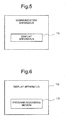
- the display apparatus 10 can compose the communication apparatus as shown in Fig. 5 .
- the function of the display apparatus 10 can be realized by a control operation based on a program which is recorded in a program recording medium 12 as shown in Fig. 6 .
- the program of the program recording medium 12 is for implementing the function to decode the video signal of the first predetermined reference frame which is received after the channel selection and the function to display the video of the decoded reference frame earlier than the original displaying time based on the time information attached to the information of the reference frame, to the display apparatus.
- a display apparatus in other exemplary embodiment decodes a first input reference frame (a video frame which becomes one video or a part of a video by decoding) after the channel selection, and displays the decoded video frame earlier than the original displaying time.
- a first input reference frame a video frame which becomes one video or a part of a video by decoding
- a display apparatus in other exemplary embodiment decodes the first input video frame after the channel selection in the case of being the reference frame (the video frame which becomes one video or a part of video by decoding), or decodes the first input video frame referring to the dummy frame in the case of being the frame representing the difference with the reference frame, and displays the decoded video frame earlier than the original displaying time.
- a display apparatus decodes a first input reference frame (a video frame which becomes one video or a part of a video by decoding) after the channel selection, and displays the decoded video frame earlier than the original displaying time.
- a first input reference frame a video frame which becomes one video or a part of a video by decoding
- a display apparatus decodes the first input video frame after the channel selection in the case of being the reference frame (the video frame which becomes one video or a part of a video by decoding), or decodes the first input video frame referring to the dummy frame in the case of being the frame representing the difference with the reference frame, and displays the decoded video frame earlier than the original displaying time.
- a display apparatus decodes the first input reference frame (video frame which becomes one video or a part of a video by decoding) after the channel selection and displays the decoded video frame earlier than the original displaying time.
- a display apparatus decodes the first input video frame after the channel selection in the case of being the reference frame (the video frame which becomes one video or a part of a video by decoding), or decodes the first input video frame referring to the dummy frame in the case of being the frame representing the difference with the reference frame, and displays the decoded video frame earlier than the original displaying time.
- the program stored in the display apparatus may make a display apparatus execute the processing of decoding the first input video frame after the channel selection in the case of being the reference frame (video frame which becomes one video or a part of a video by decoding), and may execute the processing of displaying the decoded video frame earlier than the original displaying time.
- the program stored in the display apparatus may make a display apparatus execute the processing of decoding the first input video frame after the channel selection in the case of being the reference frame (video frame which becomes one video or a part of a video by decoding), or may make a display apparatus execute the processing of decoding the first input video frame referring to the dummy frame in the case of being the frame representing the difference with the reference frame, and may make a display apparatus execute the processing of displaying the decoded video frame earlier than the original displaying time.
- the reference frame video frame which becomes one video or a part of a video by decoding
- the display apparatus can enjoy the effect that can avoid increase of load and begin to display a video selected promptly after channel selection, like each of the first to fifth exemplary embodiments.
- the present invention is effective for not only TV sets but also the display apparatus of the communication apparatus equipped with TV display function.
Landscapes
- Engineering & Computer Science (AREA)
- Multimedia (AREA)
- Signal Processing (AREA)
- Two-Way Televisions, Distribution Of Moving Picture Or The Like (AREA)
Abstract
Description
- The present invention relates to a display apparatus, a communication apparatus, a displaying method and a program recording medium which displays a video obtained by digital broadcasting, and so on.
- In recent years, portable electronic apparatuses have made remarkable progress for becoming multifunctional and having advanced functionality. A mobile phone will be considered as an example. Each mobile phone manufacturer has developed a mobile phone with not only a native function as a telephone, but also a plurality of advanced functions since the number of mobile phone owners is increasing rapidly. As a result, mobile phones have enhanced convenience.
- The functions equipped in the mobile phones, for example, are a digital camera function with megapixels, a navigation function using GPS (Global Positioning System) and a television (TV) function which receives TV broadcasting including digital broadcasting.
- By using the TV function that a mobile phone has, when a user is watching TV broadcasting, the user may switch a channel to other channels. At this time, in a case of digital broadcasting, the mobile phone executes a synchronizing processing in a tuner, a processing which interprets program information, a waiting processing for data, or the like, before changing to other channels. Hence, the mobile phone cannot smoothly switch the channel in digital broadcasting compared with a case of analog broadcasting.
- In a digital broadcasting system, it is general to multiplex a coded video and a coded sound with a multiplexing format and deliver that multiplexed data. As a method of coding video, for example, there are MPEG (Moving Picture Experts Group)-2 video and H.264/AVC (Advanced Video Coding). As a method of coding sound, for example, there are MPEG (Moving Picture Experts Group)-1 audio and AAC (Advanced Audio Coding). As the multiplexing format, for example, there is MPEG-2 transport stream.
- In an IPTV (Internet Protocol TeleVision) system, it becomes general to deliver a data multiplexed with the MPEG-2 transport stream by IP (Internet Protocol) protocol similarly to the above-mentioned.
- When the above-mentioned data is received, the mobile phone establishes synchronization for a physical layer (such as a TV tuner in the case of TV broadcasting), at first. The mobile phone interprets a stream configuration based on a broadcast stream (such as the MPEG-2 transport stream) obtained after establishing the synchronization for the physical layer. Based on this interpretation, the mobile phone separates a video signal and a sound signal, and executes a decoding processing. At this time, the mobile phone extracts a broadcast reference clock (PCR (Program Clock Reference) in the case of MPEG-2 transport stream) from the stream. Next, the mobile phone generates a clock (STC (System Time Clock)), which is synchronized with a broadcast wave, inside the receiver. Finally, in conformity with System Time Clock, the mobile phone transmits the decoded video and the decoded sound data to a display and a speaker based on a time-stamp to which the decoded video and sound data are respectively attached. As a result, the display of the mobile phone begins to display a video of the selected channel, and the speaker of the mobile phone begins to output a sound of the selected channel. And then, the user can begin to watch the stream after the channel selection.
- The successive operations (that is, the processing which establishes the synchronization for the physical layer, the processing which interprets the stream configuration, the processing which separates each data, the processing which decodes each data and the synchronization processing which utilizes the time-stamp) take time, respectively. For example, in a case of One Seg (One Segment broadcasting, Partial reception service of one segment for mobile phone and mobile terminal) in Japan, it generally takes longer than four seconds, so that the mobile phone displays the video based on the successive operations after a user selects. In other words, a user is barely able to watch the video of the selected channel after passing longer than four seconds from the channel selection.
- As technology for reducing a waiting time on the channel changing, for example, there is a technology disclosed in a
patent document 1. In the technology disclosed by thepatent document 1, a demodulated data regarding all channels is stored in a buffer for each channel. And when the channel is changed, the demodulated data is read from the buffer. - [Patent Literature 1] Japanese Patent Application Laid-Open No.
2006-74241 - When the technology disclosed in
patent document 1 is used, the following problem takes place. That is, because the buffer has to be prepared for each channel, it is necessary to increase a capacity of a memory in the mobile phone. In addition, because of demodulating the data about all channels, the mobile phone takes a heavy load. - In order to solve the above-mentioned problems, the present invention has been made. That is, an object of the present invention is mainly to provide a display apparatus, a communication apparatus, a displaying method and a program recording medium which can avoid the load increase and display rapidly the video of the selected channel.
- A display apparatus in the present invention includes:
- synchronizing means for adjusting a timing, in which a video is displayed based on a predetermined reference frame received and decoded at first after channel selection, toward shifting earlier than a time originally displaying the video based on a time information attached to the reference frame.
- A communication apparatus in the present invention includes:
- the display apparatus according to the present invention.
- A displaying method in the present invention includes:
- decoding a predetermined reference frame received at first after channel selection; and
- displaying a video based on the decoded reference frame earlier than a timing when the reference frame is displayed based on a time information attached to the non-reference frame.
- A program recording medium storing a program to make a display apparatus have a function, the function achieved by performing the program comprising:
- decoding a predetermined reference frame received at first after channel selection; and
- displaying a video based on the decoded reference frame earlier than a timing when the reference frame is displayed based on a time information attached to the non-reference frame.
- According to the present invention, the display apparatus can avoid the load increase and display rapidly the video of the selected channel.
-
-
Fig. 1 is a block diagram which shows an exemplary embodiment of a display apparatus according to the present invention. -
Fig. 2 is a flow chart which illustrates an operation example of the display apparatus in the exemplary embodiment. -
Fig. 3 is a drawing which illustrates another exemplary embodiment in the display apparatus. -
Fig. 4 is a drawing which illustrates another exemplary embodiment of the displaying method. -
Fig. 5 is a drawing which illustrates one embodiment of a communication apparatus. -
Fig. 6 is a drawing which shows a program recording medium implemented in the display apparatus. - The first exemplary embodiment according to the present invention will be described with reference to the drawings.
-
Fig. 1 is a block diagram showing a display apparatus in the first exemplary embodiment. - As shown in
Fig. 1 , the display apparatus in the first exemplary embodiment includes a broadcast receiving unit (broadcast receiving means) 1, a decoding unit (decoding means) 2, a synchronizing unit (synchronizing means) 3, an output unit (output means) 4 and a channel selection unit (channel selection means) 5. - The
broadcast receiving unit 1 has a function of receiving a broadcast signal (digital television broadcasting, digital radio, IPTV, and so on) corresponding to a frequency or a channel designated by thechannel selection unit 5 and transmitting the received signal to thedecoding unit 2. - The
decoding unit 2 has a function of extracting a video data and a sound data from the signal received from thebroadcast receiving unit 1. Thedecoding unit 2 further has a function of discarding the video data (a video frame) sequentially during a period from starting to extract the video data after the channel selection until obtaining a video data which has become a predetermined key frame (a reference frame). Thedecoding unit 2 further has a function of decoding the extracted video data to the non-compressed data, in order that a display device can display a video based on the extracted video data after obtaining first the video data which becomes the key frame after the channel selection. Furthermore, thedecoding unit 2 has a function of attaching a time-stamp to the decoded video frame and transmitting the video frame to thesynchronizing unit 3. The key frame is a frame which can be watched by itself as a perfect video (image) by decoding and becoming the non-compression state like the MPEG-2, or like an I (Intra-coded) frame of H.264. Further, the key frame may be an IDR (Instantaneous Decoder Refresh) frame or may not be an IDR frame in H.264. - The synchronizing
unit 3 has a function of transmitting the video frame and the sound frame received from thedecoding unit 2 to theoutput unit 4 based on a timing (a normal outputting time) when represented by the time-stamp attached in the frame. In this first exemplary embodiment, the synchronizingunit 3 further has a function of immediately outputting the video frame (the key frame) which is transmitted at first from thedecoding unit 2 after the channel selection without matching the timing when represented by the time-stamp in a case of detecting that it is just after the channel selection based on information obtained from thechannel selection unit 5. - The
output unit 4 includes a video displaying unit and a sound outputting unit. The video displaying unit has a function of displaying the video based on the video frame received from the synchronizingunit 3. For example, the video displaying unit is LCD (Liquid Crystal Display). The sound outputting unit has a function of outputting the sound based on the sound frame. For example, the sound outputting unit is a speaker. In other words, theoutput unit 4 has a function of outputting the video frame and the sound frame in a form that a user can understand. - The
channel selection unit 5 has a function of transmitting information which represents a frequency or a channel which a user selects for thebroadcast receiving unit 1 when carrying out an operation changing from the channel being displayed to the other channels, or starting to display the TV broadcast. Thechannel selection unit 5 further has a function of informing thedecoding unit 2 and the synchronizingunit 3 that it is just after the channel selection at the same time as transmitting the information. - Next, an example of an operation of the display apparatus in the first exemplary embodiment will be described with reference to the flowchart shown in
Fig. 2 . - The display apparatus executes a normal processing, that is, the
decoding unit 2 decodes a broadcast data received with thebroadcast receiving unit 1 and the synchronizingunit 3 transmits the decoded video data and the decoded sound data to theoutput unit 4 at the timing represented by the time-stamp (Step 201). - During its processing, the
channel selection unit 5 monitors whether or not a user selects the other channels (Step 202). - Then, the
channel selection unit 5 transmits the information which represents the frequency or the channel selected by a user to thebroadcast receiving unit 1 when it is detected that the user changes the channel to the other channels. In addition, thechannel selection unit 5 transmits a notification which shows that the channel is newly selected to thedecoding unit 2 and the synchronizing unit 3 (Step 203). - After the notification is received from the
channel selection unit 5, thedecoding unit 2 judges whether or not the video data received from thebroadcasting unit 1 is the key frame data, that is, whether or not it is the key frame (the first key frame) received at first after the reception of the notification (after the channel selection) (Step 204). - The
decoding unit 2 deletes the frame (non-reference frame) which is not the key frame (Step 205). - When it is detected that the video data of the first key frame is received after receiving the notification (after the channel selection), the
decoding unit 2 decodes the first key frame and transmits the decoded key frame to the synchronizing unit 3 (Step 206). - The synchronizing
unit 3 immediately transmits the first key frame to theoutput unit 4 without matching the timing (normal displaying time) which the time-stamp attached to the first key frame represents when the first key frame is input from thedecoding unit 2 after the notification is received from the channel selection unit 5 (after the channel selection) (Step 207). After the outputting, the display apparatus returns to Step 201 and performs the normal operation. - The synchronizing
unit 3 may immediately transmit the sound frame corresponding to the first key frame, in addition to the first key frame, to theoutput unit 4 after the channel selection. As a result, theoutput unit 4 displays the video based on the first key frame and also outputs the sound corresponding to the first key frame. - In the above-mentioned example, the key frame is the frame which can be watched as a perfect video (image) with a single frame such as an I frame by demodulating. In contrast, for example, the key frame may be a frame which can be watched as a perfect video (image) with a part of a frame like an intra-micro block which needs no differentiation among P (Predictive) pictures of MPEG-2 by demodulating. In this way, the key frame is set suitably according to the communication system.
- According to the first exemplary embodiment, the display apparatus starts to display the key frame (the reference frame) before the original displaying time. Hence, without waiting for a long time, just after the channel selection, a user can watch the first video frame.
- The second exemplary embodiment will be described below. In addition, the same reference numbers are used for the similar configurations as the first exemplary embodiment, and the detailed description will be omitted.
- According to the first exemplary embodiment mentioned above, the display apparatus starts to display the video based on the first key frame before the original displaying time (normal displaying time; normal displaying timing) after the channel selection. However, the display apparatus displays the video following the video frame by matching the normal displaying timing. In contrast, in this second exemplary embodiment, the display apparatus displays the video of the first key frame and the video, which is received in a time period from a timing when the first key frame is displayed until a timing when a predetermined period finishes, earlier than the normal displaying time. The display apparatus gradually sets the display timing for the video frames closer to the normal displaying timing.
- That is, according to this second exemplary embodiment, in addition to the first exemplary embodiment, the synchronizing
unit 3 has a function of adjusting as follows the timing in which the video frame is transmitted to theoutput unit 4 during a time period from displaying the first key frame after the channel selection until finishing the predetermined period. In other words, it is assumed that a time span (a time period) from when the synchronizingunit 3 transmits earlier the first key frame to theoutput unit 4 after channel selection until that the synchronizingunit 3 transmits the video frame to theoutput unit 4 at the normal displaying timing is T (second). Also, it is assumed, after the channel selection, that a time span (a time period) which is a time difference between a timing represented in the time-stamp attached to the first key frame and a timing represented in the time-stamp attached to the frame following the first key frame is n (second). The synchronizingunit 3 adjusts the timing in which the video frame is transmitted to theoutput unit 4 based on the T (second) and the n (second). - A specific example is described below. For example, it is assumed that the time when the synchronizing
unit 3 transmits the first key frame to theoutput unit 4 can be set 1 second earlier than the normal displaying time by the hardware performance, or the like. It is assumed that the time span (predetermined period) T from the timing represented in the time-stamp attached to the first key frame until the timing when the synchronizingunit 3 transmits the video frame to theoutput unit 4 at the normal displaying time is 10 seconds. In such a case, a time when the video frame (hereinafter, it may be referred to as the video frame N) which will be displayed primarily at the n-th second from the timing represented in the time-stamp attached to the key frame is actually displayed can be obtained as described below. That is, the time (displaying timing) tn when the video frame N is displayed can be calculated by the following equation (1), if the timing represented in the time-stamp attached to the key frame is 0 seconds.
- Based on the equation (1), the frame (the key frame) of the 0th second is displayed at -1 second as compared to the original time. The following frame is displayed at the timing which approaches the original displaying time gradually, and the 10th frame is displayed at the timing which is the normal displaying time represented by the time-stamp. By using the equation (1), the above-mentioned synchronizing processing can be realized. The synchronizing
unit 3 transmits the video frame to theoutput unit 4 at the timing represented in the time-stamp after it begins to transmit the video frame at the timing represented in the time-stamp (here, after the tenth second). - Further, in the predetermined period after the channel selection, the synchronizing
unit 3 may execute the following processing. For example, it is assumed that a time difference between the timing represented in the time-stamp and the timing when the first key frame is displayed earlier than it is set to L (second). It is assumed that the time span from the timing represented in the time-stamp attached to the first key frame until matching the timing when the synchronizingunit 3 transmits the video frame to theoutput unit 4 at the normal displaying time is T (second). The synchronizingunit 3 may transmit the frame to theoutput unit 4 every interval timing which is given by dividing a sum of the L (second) and the T (second) by the number of the frame displayed in the sum time period. - In the second exemplary embodiment, as mentioned above, the display apparatus adjusts the timing displaying the frame by using at least the time span (period, T (second)) from the timing represented in the time-stamp attached to the first key frame until matching the timing when the synchronizing
unit 3 transmits the video frame to theoutput unit 4 at the normal displaying time. For this reason, even if the first key frame is displayed earlier after the channel selection, unnatural watching due to dropping the following video frame will be avoided. In this way, by using the display apparatus of this second exemplary embodiment, a user cannot only watch the first one frame early just after the channel selection, but the user can also watch the frame smoothly after that. And the user is enabled to watch the broadcast at the timing represented in the time-stamp after a moment. - The third exemplary embodiment will be described below. In addition, the same reference numbers are used for the similar configurations as each exemplary embodiment, and the detailed description will be omitted.
- In this third exemplary embodiment, in addition to the second exemplary embodiment, the synchronizing
unit 3 includes the configuration that transmits not only the video frame but also the sound frame corresponding to the video frame after the channel selection. - That is, in this third exemplary embodiment, the synchronizing
unit 3 includes the configuration which transmits the sound frame to theoutput unit 4 in the predetermined period after the channel selection, based on the same equation (2) as the equation (1) represented in the second exemplary embodiment.
- Here, the tn represents the timing when the sound frame is actually output. That sound frame is originally output at the n-th second from the timing represented in the time-stamp attached to the first key frame after the channel selection. It is assumed that the timing is 0 seconds when represented in the time-stamp attached to the first key frame after the channel selection. It is assumed that the T represents the time span (the predetermined period) from the timing represented in the time-stamp attached to the first key frame after the channel selection until matching the timing when the synchronizing
unit 3 transmits the sound frame to theoutput unit 4 at the normal displaying time. - Further, the synchronizing
unit 3 may execute a processing concerning the sound frame as described below in the predetermined period after the channel selection. For example, it is assumed that a time interval is L (second) when the sound frame corresponding to the first key frame is shown earlier than the timing represented in the time-stamp. It is assumed that the time is T (second) from the timing represented in the time-stamp attached to the first key frame until matching the timing when the synchronizingunit 3 transmits the sound frame to theoutput unit 4 at the normal displaying time. The synchronizingunit 3 may transmit the sound frame to theoutput unit 4 for each time which is given by dividing the sum of those L (second) and T (second) by the number of the key frame displayed in the sum time period. - However, when the above-mentioned processing is executed, the silent interval takes place between the sound frame, and the sound becomes intermittent. It is difficult to understand the content if the sound is not output continuously. Thus, the practicality of the display apparatus declines by the sound intermittence, as mentioned above. Accordingly, in order to prevent such problem, the partial sample of each sound frame may be repeated. The sound may be reproduced slowly by a filter processing for the repeated data. As a result, the sound intermittence can be avoided.
- In the above-mentioned example, the synchronizing
unit 3 transmits the video frame and the sound frame by matching both of their timing. Instead of this, the synchronizingunit 3 immediately transmits only the sound frame corresponding to the key frame just after the channel selection. In contrast, the video frame may be transmitted at the time represented in the time-stamp. - According to the third exemplary embodiment, a user can begin to listen to the sound data just after the channel selection.
- The fourth exemplary embodiment will be described below. In addition, in the description of this fourth exemplary embodiment, the same reference numbers are used for the similar configuration as the exemplary embodiments mentioned above, and the detailed description will be omitted.
- In this fourth exemplary embodiment, the configuration of the display apparatus will be described, the configuration is to display a subtitle data immediately after the channel selection.
- That is, the subtitle data is the data transmitted in text style, and is not the transmitted data with the difference information between the previous data like the video data. For this reason, the concept such as the key frame does not usually exist like the video data. In the subtitle data, a management data which constitutes the data structure is transmitted. If it is not after the timing of receiving this management data, the subtitle data cannot often be decoded.
- Hence, in the fourth exemplary embodiment, in addition to each of the exemplary embodiments, the
decoding unit 2 has a function of deleting the received subtitle data during the period until receiving first the management data concerning the subtitle data after the channel selection. The synchronizingunit 3 has a function of executing the same processing for the subtitle data as the video frame processing in the first exemplary embodiment. As a result, the display apparatus enables to display the subtitles earlier just after the channel selection. - The synchronizing
unit 3 may execute the same processing for the subtitle data as the video frame processing in the second exemplary embodiment in addition to the above-mentioned subtitle processing. In other words, the synchronizingunit 3 transmits the subtitle data received in the predetermined period after the channel selection earlier than the normal displaying time based on the management data. As a result, the display apparatus displays the subtitles earlier than the normal displaying time. In the above-mentioned predetermined period, the synchronizingunit 3 matches the earlier transmission timing gradually towards the normal displaying time. As a result, the display apparatus can display the subtitles smoothly after the channel selection, and can realize the display with little difficulty. - The fifth exemplary embodiment will be described below. In addition, in the description of this fifth exemplary embodiment, the same reference numbers are used for the similar configuration as the exemplary embodiments mentioned above, and the detailed description will be omitted.
- In the fifth exemplary embodiment, in addition to each of the exemplary embodiments, the
decoding unit 2 has a function of decoding as follows without deleting the video frame (non-reference frame) which is received until receiving the first key frame just after the channel selection. - That is, in MPEG-2 video, the video cannot be originally reproduced from the P picture (P frame) which is the difference information with the key frame. In contrast, in this fifth exemplary embodiment, it is assumed that a black I picture (I frame) has been transmitted as the key frame just after the channel selection, for example. The
decoding unit 2 has a function of decoding the P frame referring to the dummy key frame. - In the fifth exemplary embodiment, the display apparatus enables to display the video rather earlier after the channel selection. The display apparatus gradually displays the video frame which is not the key frame just after the channel selection even though it is the broadcast data whose key frame interval is long. As a result, the display apparatus can effectively reduce a waiting time for a user after the channel selection.
- The display apparatus in each above-mentioned exemplary embodiment cannot only be composed by hardware but also realized by computer program, as clearly explained above. In case of such configuration, the program is stored in the program memory (program recording medium). By a processor operating with a program stored in the program memory, the same function and operation as each of the exemplary embodiments mentioned above is realized. Further, the partial function of the exemplary embodiment mentioned above can be realized by computer program.
- The present invention is not limited to the configuration of each above-mentioned exemplary embodiment, and may adopt various exemplary embodiments. For example, the display apparatus in each of the above-mentioned exemplary embodiments may be included in the communication apparatus such as a mobile phone. In other words, the display apparatus in each of the exemplary embodiments may compose the communication apparatus.
- In addition, as the other exemplary embodiment of the display apparatus, the configuration of a
display apparatus 10 shown inFig. 3 may also be adopted. That is, thedisplay apparatus 10 includes a synchronizing means 11 as follows. The synchronizing means 11 has a function of displaying the video of the first predetermined reference frame which is received and decoded after the channel selection, earlier than the original displaying time based on the time information attached to the information of the reference frame. - For example, the
display apparatus 10 employs an operation procedure for displaying as shown inFig. 4 . That is, after the channel is selected (Step S1), thedisplay apparatus 10 decodes a video signal of the first predetermined reference frame received after the channel selection (Step S2). - And the
display apparatus 10 displays a video of the reference frame after decoding earlier than the original displaying time based on time information attached to the information of the reference frame (Step S3). - The
display apparatus 10 can compose the communication apparatus as shown inFig. 5 . - For example, the function of the
display apparatus 10 can be realized by a control operation based on a program which is recorded in aprogram recording medium 12 as shown inFig. 6 . The program of theprogram recording medium 12 is for implementing the function to decode the video signal of the first predetermined reference frame which is received after the channel selection and the function to display the video of the decoded reference frame earlier than the original displaying time based on the time information attached to the information of the reference frame, to the display apparatus. - A display apparatus in other exemplary embodiment decodes a first input reference frame (a video frame which becomes one video or a part of a video by decoding) after the channel selection, and displays the decoded video frame earlier than the original displaying time.
- A display apparatus in other exemplary embodiment decodes the first input video frame after the channel selection in the case of being the reference frame (the video frame which becomes one video or a part of video by decoding), or decodes the first input video frame referring to the dummy frame in the case of being the frame representing the difference with the reference frame, and displays the decoded video frame earlier than the original displaying time.
- Furthermore, in a displaying method of other exemplary embodiment, a display apparatus decodes a first input reference frame (a video frame which becomes one video or a part of a video by decoding) after the channel selection, and displays the decoded video frame earlier than the original displaying time.
- Furthermore, in a display method of other exemplary embodiment, a display apparatus decodes the first input video frame after the channel selection in the case of being the reference frame (the video frame which becomes one video or a part of a video by decoding), or decodes the first input video frame referring to the dummy frame in the case of being the frame representing the difference with the reference frame, and displays the decoded video frame earlier than the original displaying time.
- In an exemplary embodiment of a display system, a display apparatus decodes the first input reference frame (video frame which becomes one video or a part of a video by decoding) after the channel selection and displays the decoded video frame earlier than the original displaying time.
- In other exemplary embodiment of a display system, a display apparatus decodes the first input video frame after the channel selection in the case of being the reference frame (the video frame which becomes one video or a part of a video by decoding), or decodes the first input video frame referring to the dummy frame in the case of being the frame representing the difference with the reference frame, and displays the decoded video frame earlier than the original displaying time.
- The program stored in the display apparatus may make a display apparatus execute the processing of decoding the first input video frame after the channel selection in the case of being the reference frame (video frame which becomes one video or a part of a video by decoding), and may execute the processing of displaying the decoded video frame earlier than the original displaying time.
- Furthermore, the program stored in the display apparatus may make a display apparatus execute the processing of decoding the first input video frame after the channel selection in the case of being the reference frame (video frame which becomes one video or a part of a video by decoding), or may make a display apparatus execute the processing of decoding the first input video frame referring to the dummy frame in the case of being the frame representing the difference with the reference frame, and may make a display apparatus execute the processing of displaying the decoded video frame earlier than the original displaying time.
- In other exemplary embodiment mentioned above, the display apparatus can enjoy the effect that can avoid increase of load and begin to display a video selected promptly after channel selection, like each of the first to fifth exemplary embodiments.
- While the invention has been particularly shown and described with reference to exemplary embodiments thereof, the invention is not limited to these embodiments. It will be understood by those of ordinary skill in the art that various changes in form and details may be made therein without departing from the spirit and scope of the present invention as defined by the claims.
- Further, this application is based upon and claims the benefit of priority from Japanese Patent Application No.
2009-017591, filed on January 29, 2009 - Concerning to a display apparatus or the like which displays a video received with digital broadcasting and so on, the present invention is effective for not only TV sets but also the display apparatus of the communication apparatus equipped with TV display function.
-
- 1
- broadcast receiving unit
- 2
- decoding unit
- 3
- synchronization unit
- 4
- output unit
- 5
- channel selection unit
Claims (24)
- A display apparatus comprising:synchronizing means for adjusting a timing, in which a video is displayed based on a predetermined reference frame received and decoded at first after channel selection, toward shifting earlier than a time originally displaying the video based on a time information attached to the reference frame.
- The display apparatus according to claim 1, wherein the synchronizing means shifts a timing, in which a video based on a video frame following the reference frame in a predetermined period is displayed, earlier than a normal displaying time based on the time information attached to the video frame, and shortens a time difference between the timing in which the video frame is actually displayed and the normal displaying time as time passes.
- The display apparatus according to claim 2, wherein the predetermined period is a time period between the timing when the video based on the reference frame starts to display and a timing when a predetermined time passed since starting to display the video.
- The display apparatus according to claim 1 or claim 2 or claim 3, wherein the synchronization means matches a timing when a sound based on a sound frame corresponding to the reference frame is output to the timing when the video based on the reference frame is displayed.
- The display apparatus according to claim 4, wherein the synchronization means shifts a timing, in which a sound is output based on the sound frame following the sound frame corresponding to the reference frame in a predetermined period, earlier than a normal outputting time based on a time information attached to the sound frame, and shortens a time difference between the timing in which the sound frame is actually output and the normal outputting time as time passes.
- The display apparatus according to any one of claims 1 to 5, wherein the synchronization means shifts a timing, in which a subtitle data received at first after receiving a management data managing a subtitle first after channel selection is displayed, earlier than a normal time when the subtitle data is displayed based on the management data.
- The display apparatus according to claim 6, wherein the synchronization means shifts a timing, in which the subtitle data received in a predetermined period following the subtitle data displayed at first after channel selection is displayed, earlier than a normal displaying time based on the management data, and shortens a time difference between a time in which the subtitle data is actually displayed and the normal displaying time as time passes.
- The display apparatus according to any one of claims 1 to 7, further comprising:decoding means for decoding a received signal corresponding to the video frame which meets a predetermined reference frame condition as reference frame and decoding a received signal corresponding to a non-reference frame which is a video frame not meeting the reference frame condition and received following the reference frame based on the reference frames; whereinthe decoding means decodes the non-reference frame referring to a predetermined dummy reference frame when receiving the non-reference frame prior to the reference frame after channel selection,the synchronization means shifts a timing, in which a video based on the decoded non-reference frame is displayed, earlier than a normal time when the video based on the non-reference frame is displayed based on a time information attached to the non-reference frame.
- A communication apparatus comprising:the display apparatus according to any one of claims 1 to 8.
- A displaying method comprising:decoding a predetermined reference frame received at first after channel selection; anddisplaying a video based on the decoded reference frame earlier than a timing when the reference frame is displayed based on a time information attached to the non-reference frame.
- The displaying method according to claim 10, further comprising:displaying a video based on a video frame following the reference frame in the predetermined period earlier than a normal displaying time based on a time information attached to the video frame, and shortening a difference between the time in which the video frame is actually displayed and the normal displaying time as time passes.
- The displaying method according to claim 11, wherein the predetermined period is a time period between the timing when the video based on the reference frame starts to display and a timing when a predetermined time passed since starting to display the video.
- The displaying method according to claim 10 or claim 11 or claim 12, further comprising:outputting a sound based on a sound frame corresponding to the reference frame in a timing which displays the video based on the reference frame.
- The displaying method according to claim 13, further comprising:outputting a sound based on a sound frame following the sound frame corresponding to the reference frame earlier than a normal outputting time based on a time information attached to the sound frame, and shortening a time difference between the timing in which the sound frame is actually output and the normal outputting time as time passes.
- The displaying method according to any one of claims 10 to 14, further comprising:displaying a subtitle data, which is received at first after receiving a management data managing a subtitle first after channel selection, earlier than a normal time when the subtitle data is displayed based on the management data.
- The displaying method according to claim 15, further comprising:displaying the subtitle data, which is displayed in a predetermined period following the subtitle data displayed at first after channel selection, earlier than a normal displaying time based on the management data, and shortening a time difference between a timing in which the subtitle data is actually displayed and the normal displaying time as time passes.
- The displaying method according to any one of claims 10 to 16, further comprising:decoding a predetermined non-reference frame referring to a predetermined dummy reference frame when receiving the non-reference frame prior to the reference frame after channel selection; anddisplaying a video based on the decoded non-reference frame earlier than a normal time displaying the video based on a time information attached to the non-reference frame.
- A program recording medium storing a program to make a display apparatus have a function, the function achieved by performing the program comprising:decoding a predetermined reference frame received at first after channel selection; anddisplaying a video based on the decoded reference frame earlier than a timing when the reference frame is displayed based on a time information attached to the non-reference frame.
- The program recording medium according to claim 18, the function achieved by performing the program further comprising:displaying a video based on a video frame following the reference frame in the predetermined period earlier than a normal displaying time based on a time information attached to the video frame, and shortening a time difference between the timing in which the video frame is displayed actually and the normal displaying time as time passes.
- A program recording medium according to claim 18 or claim 19, the function achieved by performing the program further comprising:outputting a sound based on a sound frame corresponding to the reference frame in a timing which displays the video based on the reference frame.
- A program recording medium according to claim 20, the function achieved by performing the program further comprising:outputting a sound based on a sound frame following the sound frame corresponding to the reference frame earlier than a normal outputting time based on a time information attached to the sound frame, and shortening a time difference between the timing in which the sound frame is actually output and the normal outputting time as time passes.
- A program recording medium according to any one of claims 18 to 21, the function achieved by performing the program further comprising:displaying a subtitle data, which is received at first after receiving a management data managing a subtitle first after channel selection, earlier than a normal time when the subtitle data is displayed based on the management data.
- A program recording medium according to claim 22, the function achieved by performing the program further comprising:displaying the subtitle data, which is displayed in a predetermined period following the subtitle data displayed at first after channel selection, earlier than a normal displaying time based on the management data, and shortening a time difference between a timing in which the subtitle data is actually displayed and the normal displaying time as time passes.
- A program recording medium according to any one of claims 18 to 23, the function achieved by performing the program further comprising:decoding a predetermined non-reference frame referring to a predetermined dummy reference frame in a case of receiving the non-reference frame prior to the reference frame after channel selection; anddisplaying a video based on the decoded non-reference frame earlier than a normal time displaying the video based on a time information attached to the non-reference frame.
Applications Claiming Priority (2)
| Application Number | Priority Date | Filing Date | Title |
|---|---|---|---|
| JP2009017591 | 2009-01-29 | ||
| PCT/JP2010/050740 WO2010087273A1 (en) | 2009-01-29 | 2010-01-15 | Display device, communication device, display method, and program recording medium |
Publications (2)
| Publication Number | Publication Date |
|---|---|
| EP2383998A1 true EP2383998A1 (en) | 2011-11-02 |
| EP2383998A4 EP2383998A4 (en) | 2013-01-16 |
Family
ID=42395535
Family Applications (1)
| Application Number | Title | Priority Date | Filing Date |
|---|---|---|---|
| EP10735742A Withdrawn EP2383998A4 (en) | 2009-01-29 | 2010-01-15 | Display device, communication device, display method, and program recording medium |
Country Status (5)
| Country | Link |
|---|---|
| US (2) | US8537280B2 (en) |
| EP (1) | EP2383998A4 (en) |
| JP (1) | JP5605572B2 (en) |
| CN (1) | CN102301733B (en) |
| WO (1) | WO2010087273A1 (en) |
Families Citing this family (5)
| Publication number | Priority date | Publication date | Assignee | Title |
|---|---|---|---|---|
| JP5672873B2 (en) * | 2010-09-08 | 2015-02-18 | 富士通株式会社 | Portable terminal device, frame receiving method, and frame receiving program |
| JP5743516B2 (en) * | 2010-12-09 | 2015-07-01 | 三菱電機株式会社 | Video display device and video display method |
| JP2012222511A (en) * | 2011-04-06 | 2012-11-12 | Panasonic Corp | Moving image decorder and digital television receiver |
| JP5226148B1 (en) * | 2011-12-13 | 2013-07-03 | シャープ株式会社 | Liquid crystal display device and liquid crystal television |
| US9584837B2 (en) | 2011-12-16 | 2017-02-28 | Sony Corporation | Receiving device and method of controlling the same, distribution device and distribution method, program, and distribution system |
Family Cites Families (15)
| Publication number | Priority date | Publication date | Assignee | Title |
|---|---|---|---|---|
| US7194032B1 (en) * | 1999-09-03 | 2007-03-20 | Equator Technologies, Inc. | Circuit and method for modifying a region of an encoded image |
| JP4712238B2 (en) * | 2001-07-30 | 2011-06-29 | パナソニック株式会社 | Video signal encoding apparatus, video signal transmitting apparatus, and video signal encoding method |
| US8745689B2 (en) * | 2002-07-01 | 2014-06-03 | J. Carl Cooper | Channel surfing compressed television sign method and television receiver |
| US20040160974A1 (en) * | 2003-02-13 | 2004-08-19 | Read Christopher Jensen | Method and system for rapid channel change within a transport stream |
| JP2005130330A (en) * | 2003-10-27 | 2005-05-19 | Sharp Corp | Stream reproducing apparatus, stream reproducing method, stream reproducing program, and machine-readable recording medium on which stream reproducing program is recorded |
| KR20070085203A (en) * | 2004-06-07 | 2007-08-27 | 슬링 미디어 인코퍼레이티드 | Personal media broadcasting system |
| KR100651894B1 (en) * | 2004-07-23 | 2006-12-06 | 엘지전자 주식회사 | Imaging Device and Control Method |
| JP2006074241A (en) | 2004-08-31 | 2006-03-16 | Toshiba Corp | Digital broadcast receiving apparatus and channel selection processing method thereof |
| US7668914B2 (en) * | 2005-03-28 | 2010-02-23 | Alcatel Lucent | Milestone synchronization in broadcast multimedia streams |
| US8340098B2 (en) * | 2005-12-07 | 2012-12-25 | General Instrument Corporation | Method and apparatus for delivering compressed video to subscriber terminals |
| EP1855478A1 (en) | 2006-05-09 | 2007-11-14 | Alcatel Lucent | Method for fast zapping between tv channels |
| JP4781290B2 (en) | 2007-01-31 | 2011-09-28 | 太平洋セメント株式会社 | Embedded formwork board |
| JP2008199117A (en) * | 2007-02-08 | 2008-08-28 | Sharp Corp | Digital broadcast receiver |
| JP4726251B2 (en) | 2008-09-18 | 2011-07-20 | キヤノン株式会社 | Imaging apparatus and image processing method |
| KR20100057217A (en) * | 2008-11-21 | 2010-05-31 | 삼성전자주식회사 | Method and apparatus for synchronizing digital multimedia broadcasting between terminals |
-
2010
- 2010-01-15 US US13/144,488 patent/US8537280B2/en active Active
- 2010-01-15 WO PCT/JP2010/050740 patent/WO2010087273A1/en not_active Ceased
- 2010-01-15 CN CN201080006154.1A patent/CN102301733B/en not_active Expired - Fee Related
- 2010-01-15 EP EP10735742A patent/EP2383998A4/en not_active Withdrawn
- 2010-01-15 JP JP2010548484A patent/JP5605572B2/en not_active Expired - Fee Related
-
2013
- 2013-07-22 US US13/947,609 patent/US8736771B2/en active Active
Also Published As
| Publication number | Publication date |
|---|---|
| EP2383998A4 (en) | 2013-01-16 |
| US8537280B2 (en) | 2013-09-17 |
| US8736771B2 (en) | 2014-05-27 |
| CN102301733B (en) | 2015-12-02 |
| JPWO2010087273A1 (en) | 2012-08-02 |
| CN102301733A (en) | 2011-12-28 |
| US20110273615A1 (en) | 2011-11-10 |
| US20130308050A1 (en) | 2013-11-21 |
| WO2010087273A1 (en) | 2010-08-05 |
| JP5605572B2 (en) | 2014-10-15 |
Similar Documents
| Publication | Publication Date | Title |
|---|---|---|
| KR20090038874A (en) | Electronic device and volume control method of electronic device | |
| US8736771B2 (en) | Display apparatus, communication apparatus, displaying method and program recording medium | |
| CN100548035C (en) | Receiving device, its control method, and semiconductor device | |
| JP2006345169A (en) | Digital TV receiving terminal device | |
| US20080225942A1 (en) | Contents reproducing apparatus | |
| CN1893383B (en) | Method of providing recordable time according to remaining memory capacity and terminal therefor | |
| CN100399815C (en) | TV broadcast receiving device and program information processing method | |
| JP5032179B2 (en) | Stream reproducing apparatus and media data decoding method | |
| US20100086284A1 (en) | Personal recording apparatus and control method thereof | |
| JP4277270B2 (en) | Broadcast receiving apparatus, display control method, and display control program | |
| JP2006310977A (en) | Channel switching auxiliary device, output signal switching method, and channel switching auxiliary program | |
| KR100735253B1 (en) | Digital broadcasting screen capture method of digital broadcasting receiving terminal | |
| JP5394248B2 (en) | Digital broadcast receiver | |
| JP4552200B2 (en) | Digital broadcast receiver | |
| JP4893205B2 (en) | Digital broadcast receiver | |
| JP4937716B2 (en) | Portable television terminal device and time shift reproduction method | |
| US20120218384A1 (en) | Image signal processing mode switching apparatus and image signal processing mode switching method | |
| JP4375389B2 (en) | Digital broadcast signal receiver | |
| JP4781690B2 (en) | Mobile broadcast receiving apparatus and broadcast receiving method for mobile broadcast receiving apparatus | |
| JP2008098955A (en) | Video recording apparatus and program | |
| KR100912557B1 (en) | Multiple display device of broadcast image, portable terminal having same and multiple display method of broadcast image | |
| KR20040024455A (en) | Process for controlling an audio/video digital decoder | |
| KR100896094B1 (en) | Digital broadcasting receiver | |
| JP2002101348A (en) | Digital broadcast receiver and image display method | |
| JP2007013820A (en) | Tuner module |
Legal Events
| Date | Code | Title | Description |
|---|---|---|---|
| PUAI | Public reference made under article 153(3) epc to a published international application that has entered the european phase |
Free format text: ORIGINAL CODE: 0009012 |
|
| 17P | Request for examination filed |
Effective date: 20110722 |
|
| AK | Designated contracting states |
Kind code of ref document: A1 Designated state(s): AT BE BG CH CY CZ DE DK EE ES FI FR GB GR HR HU IE IS IT LI LT LU LV MC MK MT NL NO PL PT RO SE SI SK SM TR |
|
| DAX | Request for extension of the european patent (deleted) | ||
| A4 | Supplementary search report drawn up and despatched |
Effective date: 20121218 |
|
| RIC1 | Information provided on ipc code assigned before grant |
Ipc: H04N 7/173 20110101AFI20121212BHEP |
|
| RAP1 | Party data changed (applicant data changed or rights of an application transferred) |
Owner name: LENOVO INNOVATIONS LIMITED (HONG KONG) |
|
| 17Q | First examination report despatched |
Effective date: 20150724 |
|
| STAA | Information on the status of an ep patent application or granted ep patent |
Free format text: STATUS: THE APPLICATION IS DEEMED TO BE WITHDRAWN |
|
| 18D | Application deemed to be withdrawn |
Effective date: 20170801 |