EP2383956A2 - Cloud-basiertes Verwaltungssystem für die Rechnungsstellung, Berechtigungen und gemeinsame Datennutzung - Google Patents
Cloud-basiertes Verwaltungssystem für die Rechnungsstellung, Berechtigungen und gemeinsame Datennutzung Download PDFInfo
- Publication number
- EP2383956A2 EP2383956A2 EP11163964A EP11163964A EP2383956A2 EP 2383956 A2 EP2383956 A2 EP 2383956A2 EP 11163964 A EP11163964 A EP 11163964A EP 11163964 A EP11163964 A EP 11163964A EP 2383956 A2 EP2383956 A2 EP 2383956A2
- Authority
- EP
- European Patent Office
- Prior art keywords
- cloud
- user
- access
- account
- credential
- Prior art date
- Legal status (The legal status is an assumption and is not a legal conclusion. Google has not performed a legal analysis and makes no representation as to the accuracy of the status listed.)
- Granted
Links
Images




Classifications
-
- H—ELECTRICITY
- H04—ELECTRIC COMMUNICATION TECHNIQUE
- H04L—TRANSMISSION OF DIGITAL INFORMATION, e.g. TELEGRAPHIC COMMUNICATION
- H04L63/00—Network architectures or network communication protocols for network security
- H04L63/10—Network architectures or network communication protocols for network security for controlling access to devices or network resources
- H04L63/101—Access control lists [ACL]
-
- H—ELECTRICITY
- H04—ELECTRIC COMMUNICATION TECHNIQUE
- H04L—TRANSMISSION OF DIGITAL INFORMATION, e.g. TELEGRAPHIC COMMUNICATION
- H04L63/00—Network architectures or network communication protocols for network security
- H04L63/08—Network architectures or network communication protocols for network security for authentication of entities
-
- H—ELECTRICITY
- H04—ELECTRIC COMMUNICATION TECHNIQUE
- H04L—TRANSMISSION OF DIGITAL INFORMATION, e.g. TELEGRAPHIC COMMUNICATION
- H04L63/00—Network architectures or network communication protocols for network security
- H04L63/10—Network architectures or network communication protocols for network security for controlling access to devices or network resources
- H04L63/105—Multiple levels of security
-
- H—ELECTRICITY
- H04—ELECTRIC COMMUNICATION TECHNIQUE
- H04L—TRANSMISSION OF DIGITAL INFORMATION, e.g. TELEGRAPHIC COMMUNICATION
- H04L67/00—Network arrangements or protocols for supporting network services or applications
- H04L67/2866—Architectures; Arrangements
- H04L67/30—Profiles
- H04L67/306—User profiles
Definitions
- Cloud computing provides computation capacity and storage on demand.
- Typical cloud computing service agreements are based on a self-service usage model which allows a virtually unlimited amount of computing resources to be dynamically requisitioned, on demand, from a pool of shared computing resources offered by a cloud computing vendor.
- a user requests a virtual server from a cloud computing vendor through the vendor's user interface (through a web application, for example) and the server may be available within a few short minutes. This eliminates the need to buy a significant portion of the capital equipment upfront.
- provisioned cloud computing resources are programmable. For instance, when an application needs additional capacity due to unexpected or peak consumer demand, the capacity may be dynamically and immediately requisitioned through a simple Application Programming Interface (API) call. There is no longer the need to over-provision to accommodate peak demand.
- API Application Programming Interface
- Cloud computing may include many different types of cloud services.
- One sample service is Infrastructure as a Service (laaS), where a user can request Virtual Machines (VM).
- Other services may include key value storage services, semi-structured storage services, or messaging services.
- laaS Infrastructure as a Service
- VM Virtual Machines
- Other services may include key value storage services, semi-structured storage services, or messaging services.
- the cloud computing model gives individuals quicker access to the resources, it also presents significant problems for enterprise management. These problems include, for example, a lack of control over resource usage, and difficulties in data sharing with other group or team members, even with access to the same cloud computing resources.
- the conventional purchasing model employed by many cloud computing vendors does not conform to the standard enterprise purchasing order process, which can result in additional complexities in budget allocations. According to a common cloud computing practice, individual developers employed by an enterprise may still requisition cloud resources separately during the course of employment.
- the developer may be billed by the cloud computing vendor personally, and may be subsequently reimbursed by the developer's employer.
- enterprise managers may not have control or even direct knowledge over the individual developer's resource usage until that usage is billed. Since developers may accrue cloud computing service charges personally, a manager may have little to no control on keeping usages within or under budget. Typically, managers and executives may see a total accrued cost only at the end of the month when the developer submits for reimbursement.
- sharing data stored in cloud resources with collaborating coworkers may be difficult.
- sharing data hosted in a cloud requires the proprietor of the cloud resource to be shared to acquire identification information within the system for each intended collaborating developer, such as an account ID, and assign data permissions to those IDs specifically.
- individual account IDs may be hard to keep track as often the account IDs do not correspond (intuitively) to a user's actual name.
- data sharing is often with a group of people, so managing data sharing at an individual user level is often cumbersome and time consuming when larger numbers of collaborators are desired.
- cloud computing resources are invoked through a web services API.
- a user must present valid credentials in order to successfully invoke these APIs.
- the ability to share certain provisioned cloud resources between multiple users may also compromise credential security.
- a requisitioned cloud virtual machine (VM) image may be shared between users. If a VM image needs to access other cloud services and/or services however, the VM image may have to embed the cloud credential in order to successfully proceed through embedded security protocols.
- the user's cloud credential may inadvertently be shared amongst the other users as well.
- a cloud management system includes a credential repository.
- the credential repository may be implemented, for example, as a graphical user interface, a web server, and a database. Users of the cloud management system may connect to and interact with the system through the graphical user interface (the portal client) in order to sign into the system and gain access to additional functionality. In order to gain access to the system, the user must supply credentials in order to verify the user's identity and level of authorization.
- the credentials supplied by the user are received by the web server, which queries the database, in which a log of credentials is stored.
- the user is granted access to one or more tiers of functionality.
- Users with administrative and/or executive access are granted access to the tier of functionality that is related to account management - such as billing, profile/payment information, policy enforcement and auditing.
- Users with program access are granted access to programmatic features only. These features may include access to access points of third party cloud computing providers and cloud service vendors, where the user is able to provision cloud computing resources or access and modify pre-provisioned cloud resources. Accordingly, this solution may provide an expansion of a management of cloud computing resources beyond an individual's exclusive control.
- a method for managing a plurality of user accounts in a cloud management system comprising: receiving, from a user, a request to access the cloud management system; prompting the user for credentials to access the cloud management system; obtaining user credentials from the user; comparing the user credentials according to a first and second identification protocol; granting access to a first tier of functionality in the cloud management system in response to successfully comparing the user credentials according to the first identification protocol; and granting access to a second tier of functionality in the cloud management system in response to successfully comparing the user credentials according to the second identification protocol, wherein the first tier of features comprises functionality for account management of a plurality of user accounts, further wherein the second tier of features comprises functionality for accessing a plurality of cloud provider services through a user account corresponding to the user.
- the receiving, the prompting, and the obtaining are performed via a web application corresponding to the cloud management system.
- granting access to a first tier of functionality comprises granting access to integrated billing information for a plurality of user accounts created in the cloud management system.
- granting access to the integrated billing information for a plurality of user accounts comprises displaying billing information corresponding to a usage level of services of a plurality of cloud providers by the plurality of user accounts.
- the billing information is obtained by downloading a plurality of billing statements corresponding to the user accounts corresponding to the plurality of cloud providers.
- the obtaining the billing information further comprises parsing a generated output of usage details generated by the cloud provider for the corresponding user account.
- a computer readable medium for executing a plurality of program instructions, which, when executed in a computing device, is operable to perform a method of managing a plurality of user accounts in an integrated cloud portal, the program instructions comprising: instructions to receive, from a user, a request to access an integrated cloud portal; instructions to solicit the user for credentials to access the integrated cloud portal; instructions to obtain user credentials from the user; instructions to compare the user credentials according to a first and second identification protocol; instructions to grant access to a first tier of functionality in the integrated cloud portal in response to a successful comparison of the user credentials according to the first identification protocol; and instructions to grant access to a second tier of functionality in the integrated cloud portal in response to a successful comparison of the user credentials according to the second identification protocol, wherein the first tier of features comprises functionality for account management of a plurality of user accounts, further wherein the second tier of features comprises functionality for accessing a plurality of cloud provider services through a user account corresponding to the user.
- the second identification protocol comprises verifying a user identity according to a username and access key.
- the second identification protocol further comprises verifying a user identity according to a secret key.
- the second identification protocol further comprises verifying a user identity according to an authorization token.
- access to the second tier of functionality is not granted to a user account unless authorized by a user through the first tier of functionality.
- the instructions to grant access to a first tier of functionality comprises instructions to allow auditing the integrated billing information.
- the instructions to grant access to a first tier of functionality comprises instructions to allow automatic policy enforcement for data stored in provisioned cloud computing resources by the plurality of user accounts.
- the instructions to allow automatic policy enforcement comprises instructions to allow automatic encryption for data stored in provisioned cloud computing resources by the plurality of user accounts according to a pre-defined security configuration.
- the instructions to access to a second tier of functionality comprises instructions to grant access to services provided by a plurality of cloud providers.
- the instructions to grant access to services provided by a plurality of cloud providers comprises instructions to provision cloud computing resources from the plurality of cloud providers.
- the instructions to grant access to services provided by a plurality of cloud providers comprises instructions to allow access provisioned cloud computing resources.
- the instructions to grant access to services provided by a plurality of cloud providers comprises instructions to share data contributed by other users in affiliated user accounts within the integrated cloud portal and stored in provisioned cloud computing resources corresponding to the affiliated user accounts.
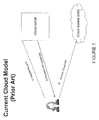
- FIG. 1 is an illustration of a typical cloud access model, in accordance with conventional practice.
- a user to access cloud resources, a user must first register for an account at a cloud vendor's portal page - such as a web page (e.g., at step 1).
- a cloud vendor's portal page - such as a web page (e.g., at step 1).
- the user establishes a username and password pair, which is used to login to the cloud portal, access services, and manage the cloud account.
- This username/password pair is commonly referred to as the "master credential.”
- a user can login to the cloud portal to obtain a second credential, commonly referred to as an API Credential - a credential needed to make programmatic API calls to access cloud resources.
- API Credential - a credential needed to make programmatic API calls to access cloud resources.
- API credentials may vary according to the cloud provider.
- the API credential may consist of an access key and a secret key.
- the API credential may consist of an API key and a shared secret.
- the API credential is an authorization token.
- the authorization token may not be obtainable directly from the cloud portal, and a user must first login to obtain a username and an API access key, then use them in a subsequent process to obtain the authorization token through an API.
- mere knowledge of the API credential is not enough to completely control the cloud account. For example, it is not generally possible to edit profiles and view/change the billing credit card with the API credential only, and without the master credential. However, knowing the API credential is enough to access cloud resources.
- the cloud portal will prompt the user to enter the API credential (e.g., at step 2).
- a user is granted access to the cloud provider's access point (typically the cloud provider's web interface) if the user successfully submits an API credential corresponding to the user's account (e.g., at step 3).
- FIG. 2 is an illustration of a typical data sharing process in a cloud, in accordance with conventional practice. Since each individual user account is largely exclusive and autonomous, data sharing within a conventional cloud access model may require a user obtaining the user ids of the users with which data sharing is desired, specifically identifying those user ids within the cloud provider's access point to grant access to the accounts corresponding to the user ids. This process may have to be done manually, and, consequently, may be extremely time consuming if data sharing is desired among many user accounts. Moreover, if the users with which data sharing is desired wish to share data themselves, the process must again be repeated for all desired data sharing recipients. Even more cumbersome, the user ids may be specific to a particular cloud vendor or provider. Thus, data sharing across multiple vendors or providers may become prohibitively inefficient and complex.
- this disclosure provides a novel solution that utilizes the two-credential characteristics of accessing cloud-hosted data in a portal-oriented enterprise-specific solution.
- Cloud computing resources may be accessed through a separate, enterprise-specific portal that clients may use to manage a set of cloud service accounts.
- Individuals e.g., employees of the enterprise or company
- Each portal client may also be configured to be compatible with any cloud service vendor.
- the master credential for each account is stored with the client and inaccessible to the individual. Since the master credential is removed from the individual user, control over the usage and billing may be maintained at the portal (enterprise) level. Likewise, access to data stored in a cloud may also be efficiently shared with other collaborators (e.g., through other instances of the same enterprise-specific portal) and managed by other enterprise officials or executives. Accordingly, this solution provides an expansion of a management of cloud computing resources beyond an individual's exclusive control.
- the claimed subject matter is directed to an approach for managing a plurality of cloud user accounts while abstracting oversight and management capability from individual users by employing a multi-tiered, multi-protocol account management system.
- the account management system may be implemented as credential vault, or repository, which may include features such as a database, a web server, and instantiable graphical user interface.
- a cloud management system is provided to manage usage and control data hosted in cloud computing resources.
- a cloud management system may be a portal solution specific to an enterprise. Specifically, the cloud management system is in charge of a set of cloud accounts, and for each account, it holds the master credential. Furthermore, a program simulating user access may be executed (e.g., via screen scraping technology) to create accounts with a specific vendor. According to some embodiments, accounts may be created on-demand. The cloud management system subsequently downloads the cloud (API) credential for each cloud account.
- the cloud management system may also facilitate a single billable account that includes multiple "threads" (each individual account). This allows cloud usage charges to be charged directly to the corporate account.
- the Cloud management system may also download usage reports from the cloud portal each month to keep track of the spending on each cloud account.
- An individual or employee may access cloud computing resources by registering for cloud access through the cloud management system. Once registered, the individual is assigned a dedicated cloud account and the individual is given access to the cloud credential corresponding to the individual's particular cloud account. However, access to the master credential is not granted to the individual. Since the individual would not have access to the cloud portal, tasks normally performed in cloud computing resources or on cloud hosted data can only be accessed through the Cloud management system (and by extension, through the portal).
- the master credential and the API credential may be separated to maintain singular control while extending access to multiple users.
- both credentials may be managed and stored in a secured software module.
- a unique cloud account may be generated for the user with API credentials.
- the user is only given the API credential so that the user is able to access cloud resources, but the master credential is not provided to the user.
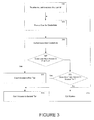
- FIG 3 is an illustration of a flowchart for managing a plurality of cloud user accounts in an integrated cloud portal, in accordance with an embodiment. Specifically, the method enables granting access to an individual tier of services in an integrated cloud management system according to separate identification protocols. Steps 301-315 describe the steps comprising the process depicted in the flowchart of Figure 3 in accordance with the various embodiments herein described. In one embodiment, the flowchart 300 is implemented as computer-executable instructions stored in a non-transitory computer-readable medium.
- a request from a user to access the cloud management system is received.
- the request from a user to access the cloud management system may be received as, for example, opening a connection (via a web browser) with the cloud management system or generating an instance of the graphical user interface of the cloud management system on a local computing system of the user.
- the user is prompted to submit credentials corresponding to a user account in the cloud management system.
- the credentials are provided to the user during or following registration within the system (or may be granted by an administrator such as an account with master credential access).
- a single cloud account with a cloud vendor may correspond to a plurality of enterprise-side user accounts.
- the enterprise may maintain a single cloud account with a cloud vendor, which integrates a plurality of employees or affiliated users of the enterprise.
- the user-supplied credentials are authenticated in step 307. Authenticating the user-supplied credentials may be performed by, for example, referencing the user-supplied credentials with a database of stored credentials (credential repository) to verify the user's identity and/or level of authorization.
- the system determines the level of access the user is granted at step 307. If the user-supplied credentials are authorized according to a first identification protocol corresponding to a master account (e.g., by supplying master credentials) the user may be granted access to a first tier of functionality at step 311.
- the first identification protocol consists of a username and password combination.
- a user supplying a paired username and password which matches master credential(s) stored in the credential repository may be granted access to the first tier of services.
- the first tier of services comprises account management features, such as, for example, viewing billing information corresponding to one or more user account(s), enabling or enforcing policy application, auditing charges, and billing or profile information management.
- Billing information may be stored in the database and may be viewable by a user by referencing the pre-stored billing information.
- billing information is periodically (e.g., once a month) acquired from the individual cloud providers by downloading the billing statement corresponding to the cloud account for each cloud vendor.
- the credentials may be submitted for authorization according to a second identification protocol at step 309.
- the second identification protocol may consist of a paired set of a username or user id and an access key (e.g., a first string of letters and integers).
- the second identification protocol may consist of a paired set of an access key and a secret key (e.g., a second string of letters and integers).
- the second identification protocol may consist of submitting an authorization token, which may be implemented as a file which may be uploaded to the cloud management system to verification, or according to a combination of two or more of the above specified protocol formats.
- access to the second tier of services comprises access to cloud resource services, such as provisioning cloud resources, storing data in pre-provisioned cloud resources, executing applications in provisioned cloud resources and modifying data stored in pre-provisioned cloud resources.
- a user granted access to the second tier of functionality may be directed to select from a plurality of cloud vendors or providers, after which a direct connection to the access point (e.g., web portal) of the selected cloud vendor or provider is facilitated through the graphical user interface of the cloud management system.
- users granted access to the first tier of functionality may also be granted access to the second tier of functionality automatically.
- the process may return to step 303 and prompt the user to re-submit credentials or, according to some embodiments, exit the system entirely at step 315.
- the process may maintain a counter of the number of user-credentials submitted (attempted accesses) for a single session. When the counter exceeds a pre-determined threshold, the user's connection to the system may be automatically closed, and subsequent attempts to connect to the system may be temporarily rejected.
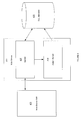
- FIG. 4 is a block diagram of a cloud management system, in accordance with various embodiments of the claimed subject matter.
- the cloud management system is implemented as a credential repository, and may include a web browser graphical user interface 403, a web server 401 which may comprise a plurality of servlets (407, 409) to process commands and/or perform actions.
- a servlet e.g., servlet 407
- a servlet is responsible for communicating with the web browser graphical user interface 403 to retrieve information.
- the servlet may be used to check (and authenticate if necessary) the user's identity, and then returns the appropriate information authorized for the user.
- communication with the user interface 403 may be performed through a remote procedure call (RPC) mechanism.
- RPC remote procedure call
- a separate servlet may be included in the credential repository that performs bulk actions that are not part of the web UI's request/response exchange. For example, periodically (e.g., once a month), the action module 409 may log into a cloud vendor portal, screen-scrap and download the billing statement for each account. Screen-scraping simulates a user accessing for information, and a program automatically parses the output for needed information. Screen scrapping may be performed, for example, by employing the accessibility layer of an operating system to access UI components.
- the action module 409 may access an individual cloud account with the individual's cloud credential, request (or view) billing information from the cloud vendor and parse the returned graphical output displayed on the user interface for the requested information.
- the web page of the cloud vendor itself may be parsed for relevant information.
- the action module 409 may also perform auditing and policy enforcement. For example, if a policy states that no cloud data should be unencrypted, the action module 409 may periodically take a sample, and check to see if any file conforms to the corporate policy. Since the cloud management system not only has the master credential, but also the API credential, it can easily invoke an API to perform the auditing. Information downloaded from the cloud portal, such as the billing statement and the credentials, may be stored in a database 405. In some embodiments, credentials may be encrypted before stored in the database 405 for security purposes. The servlet 407 itself does not keep any billing or credential data in memory. Credential verification and/or grants may be performed by querying the database for the latest information.
- FIG. 5 is an illustration of a cloud access model in accordance with various embodiments of the claimed subject matter.
- the cloud management system may be implemented as a web application, for which users can access directly from their web browser.
- the cloud management system may integrate with an enterprise's Lightweight Directory Access Protocol (LDAP) directory, to prevent multiple simultaneous usage of the same cloud account.
- LDAP Lightweight Directory Access Protocol
- the cloud management system interacts with the cloud portals of various cloud providers directly. Since the user no longer has access to the master credential of the cloud account, the user is no longer able to perform certain functions through the cloud account. For example, the user may not be able to obtain API credentials (e.g., API credentials must be granted by an account with master credentials). Other functionality which may be inaccessible to a user account may include downloading billing statements directly from the cloud service provider. According to some embodiments, the cloud management system may replicate those functions so that the user still has access to the same information, but may not have authorization to edit or modify certain fields. For example, to provide billing information to the user, the portal page may be screen-scrapped in order to download all billing statements.
- API credentials e.g., API credentials must be granted by an account with master credentials.
- Other functionality which may be inaccessible to a user account may include downloading billing statements directly from the cloud service provider.
- the cloud management system may replicate those functions so that the user still has access to the same information, but may not have authorization to edit or
- the cloud management system is well suited to support multiple cloud providers.
- the cloud management system may store the master credentials for multiple cloud providers, and may interact with each of the cloud portals.
- the cloud management system can generate cloud accounts (and API credentials) from multiple cloud vendors, depending on user requests.
- a user of the cloud management system can login to the system and perform all the customary cloud functions that the cloud portal is able to perform, such as requesting and downloading the API credential, viewing personal cloud usage, though account management features are still inaccessible to the user.
- the user can access cloud resources directly through the cloud access point.
- a user may log in to the cloud management system (step 1).
- the user's authorization may be verified (e.g., by comparing user-supplied credentials to the enterprise's LDAP) (step 2).
- a cloud access credential (API credential) may be automatically granted based on the verification of the user's authorization or, alternatively, may be manually granted by a user account with master credential access at step 3.
- the user may access cloud resources through the cloud's access point directly, with the granted API credential (step 4).
- FIG. 6 is an illustration of a process for billing integration within a cloud access model in accordance with various embodiments of the claimed subject matter.
- the cloud management system may be integrated with an enterprise's internal billing process. The cloud management system accomplishes this by acting as a broker between the internal billing system and the cloud. Within the cloud portal, the cloud management system configures each cloud account to use a corporate credit card, which is charged each month by the cloud vendor and then paid directly by the IT department.
- billing may be consolidated for all cloud accounts under the cloud management system's management. This may allow an enterprise to benefit from volume discounts.
- a user may submit corporate account information (step 1), which is relayed through the cloud management system to the portal of the cloud vendor (step 2).
- the cloud vendor may submit usage reports to the cloud management system (step 3), whereupon the cloud management system may audit or parse the submitted usage reports to determine individual usage levels.
- the user may query the cloud management system for the individual's usage report (step 4). Meanwhile, usage may be monitored and corporate policy may be enforced within the cloud by the cloud management system (step 5).
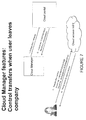
- FIG. 7 is an illustration of a process for transfer of control of a cloud account in a cloud access model in accordance with various embodiments of the claimed subject matter.
- the security of proprietary data can be more effectively maintained through implementation of a credential vault or repository.
- the Cloud management system can simply reclaim the cloud account by changing the cloud credential corresponding to the individual's account (step 1 and 2). Since the individual was granted access to only the old cloud credential but not the master credential, once the cloud credential is changed, the individual would no longer have access to the cloud resources.
- the cloud management system then further expands the list to include a list of cloud account IDs by checking the cloud account IDs associated with each user (step 4).
- the data or image may be then shared with the list of account IDs (step 5). This can be done automatically since the cloud management system is aware of which cloud account corresponds to each user in the group or department and also maintains the cloud credential corresponding to the cloud accounts to carry out the task.
- the cloud management system can automatically adjust the permission level(s) of the applicable accounts to accurately and immediately reflect which accounts should and should not have access to the data.
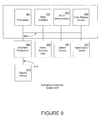
- computer system 900 can be communicatively coupled to other computer systems over a communication network such as, for example, the Internet or an intranet (e.g., a local area network), or can receive data (e.g., a digital television signal).
- a communication network such as, for example, the Internet or an intranet (e.g., a local area network), or can receive data (e.g., a digital television signal).
Landscapes
- Engineering & Computer Science (AREA)
- Computer Security & Cryptography (AREA)
- Computer Networks & Wireless Communication (AREA)
- Signal Processing (AREA)
- Computer Hardware Design (AREA)
- Computing Systems (AREA)
- General Engineering & Computer Science (AREA)
- Management, Administration, Business Operations System, And Electronic Commerce (AREA)
Applications Claiming Priority (2)
| Application Number | Priority Date | Filing Date | Title |
|---|---|---|---|
| US32844810P | 2010-04-27 | 2010-04-27 | |
| US12/948,065 US8984589B2 (en) | 2010-04-27 | 2010-11-17 | Cloud-based billing, credential, and data sharing management system |
Publications (3)
| Publication Number | Publication Date |
|---|---|
| EP2383956A2 true EP2383956A2 (de) | 2011-11-02 |
| EP2383956A3 EP2383956A3 (de) | 2016-04-20 |
| EP2383956B1 EP2383956B1 (de) | 2017-09-06 |
Family
ID=44117629
Family Applications (1)
| Application Number | Title | Priority Date | Filing Date |
|---|---|---|---|
| EP11163964.7A Active EP2383956B1 (de) | 2010-04-27 | 2011-04-27 | Cloud-basiertes verwaltungssystem für die rechnungsstellung, berechtigungen und gemeinsame datennutzung |
Country Status (2)
| Country | Link |
|---|---|
| US (2) | US8984589B2 (de) |
| EP (1) | EP2383956B1 (de) |
Cited By (2)
| Publication number | Priority date | Publication date | Assignee | Title |
|---|---|---|---|---|
| US9208267B2 (en) | 2013-01-28 | 2015-12-08 | GE Intelligent Platforms, Inc | Cloud based simulation and analysis for control appliances |
| WO2021195248A1 (en) | 2020-03-25 | 2021-09-30 | Schlumberger Technology Corporation | Integrated authentication system and method |
Families Citing this family (79)
| Publication number | Priority date | Publication date | Assignee | Title |
|---|---|---|---|---|
| WO2011159842A2 (en) | 2010-06-15 | 2011-12-22 | Nimbula, Inc. | Virtual computing infrastructure |
| US10715457B2 (en) | 2010-06-15 | 2020-07-14 | Oracle International Corporation | Coordination of processes in cloud computing environments |
| US20110313902A1 (en) * | 2010-06-18 | 2011-12-22 | International Business Machines Corporation | Budget Management in a Compute Cloud |
| US8775626B2 (en) | 2010-09-17 | 2014-07-08 | Microsoft Corporation | Using templates to configure cloud resources |
| US8468352B2 (en) * | 2010-09-17 | 2013-06-18 | Microsoft Corporation | Retrieving and using cloud based storage credentials |
| US9110976B2 (en) * | 2010-10-15 | 2015-08-18 | International Business Machines Corporation | Supporting compliance in a cloud environment |
| US20120278189A1 (en) * | 2011-04-13 | 2012-11-01 | Gmg Lifestyle Entertainment, Inc. | Digital currency card sale, redemption and activation system and method |
| US8869244B1 (en) * | 2011-05-03 | 2014-10-21 | Symantec Corporation | Techniques for providing role-based access control using dynamic shared accounts |
| US8806593B1 (en) * | 2011-05-19 | 2014-08-12 | Zscaler, Inc. | Guest account management using cloud based security services |
| US8521655B2 (en) * | 2011-06-06 | 2013-08-27 | Bizequity Llc | Engine, system and method for providing cloud-based business intelligence |
| JP5743786B2 (ja) * | 2011-07-28 | 2015-07-01 | キヤノン株式会社 | サーバー装置、情報処理方法及びプログラム |
| US11444936B2 (en) | 2011-07-29 | 2022-09-13 | Amazon Technologies, Inc. | Managing security credentials |
| US10362019B2 (en) | 2011-07-29 | 2019-07-23 | Amazon Technologies, Inc. | Managing security credentials |
| US9477530B2 (en) | 2011-07-29 | 2016-10-25 | Connectwise, Inc. | Automated provisioning and management of cloud services |
| US20130086234A1 (en) * | 2011-09-29 | 2013-04-04 | Michael A. Salsburg | Cloud management system and method |
| US8996350B1 (en) | 2011-11-02 | 2015-03-31 | Dub Software Group, Inc. | System and method for automatic document management |
| US20130117157A1 (en) * | 2011-11-09 | 2013-05-09 | Gravitant, Inc. | Optimally sourcing services in hybrid cloud environments |
| US10803152B1 (en) * | 2011-11-27 | 2020-10-13 | Charles Schwab & Co., Inc. | System and method for synchronizing account information on two different computer systems coupled via a network |
| US8725798B2 (en) | 2011-12-15 | 2014-05-13 | Microsoft Corporation | Provisioning high performance computing clusters |
| US20140369335A1 (en) * | 2011-12-16 | 2014-12-18 | Telefonaktiebolaget L M Ericsson (Publ) | Method and a network node for connecting a user device to a wireless local area network |
| US8863250B2 (en) | 2012-02-01 | 2014-10-14 | Amazon Technologies, Inc. | Logout from multiple network sites |
| US10326708B2 (en) | 2012-02-10 | 2019-06-18 | Oracle International Corporation | Cloud computing services framework |
| US9983759B1 (en) * | 2012-02-29 | 2018-05-29 | Google Llc | Method and system for sharing virtual collaboration objects |
| US20130262189A1 (en) * | 2012-04-02 | 2013-10-03 | International Business Machines Corporation | Analyzing metered cost effects of deployment patterns in a networked computing environment |
| CN103384237B (zh) * | 2012-05-04 | 2017-02-22 | 华为技术有限公司 | 一种共享IaaS业务云账号的方法、及共享平台和网络装置 |
| US8862883B2 (en) * | 2012-05-16 | 2014-10-14 | Cisco Technology, Inc. | System and method for secure cloud service delivery with prioritized services in a network environment |
| US20140040889A1 (en) | 2012-08-03 | 2014-02-06 | International Business Machines Corporation | Facilitating Customer-Initiated Virtual Machine Migration and Swapping |
| CN103685140B (zh) * | 2012-08-31 | 2018-05-22 | 腾讯科技(深圳)有限公司 | 基于云存储的资源共享方法及系统 |
| US9317522B2 (en) * | 2013-01-07 | 2016-04-19 | Google Inc. | Saving files from third-party systems directly to a cloud storage system |
| US9298502B2 (en) | 2013-01-31 | 2016-03-29 | Empire Technology Development Llc | Pausing virtual machines using API signaling |
| US20140279320A1 (en) * | 2013-03-15 | 2014-09-18 | Bracket Computing, Inc. | Allocating and pricing virtual resources |
| US9602540B1 (en) | 2013-06-13 | 2017-03-21 | Amazon Technologies, Inc. | Enforcing restrictions on third-party accounts |
| US9225704B1 (en) * | 2013-06-13 | 2015-12-29 | Amazon Technologies, Inc. | Unified management of third-party accounts |
| FR3007551A1 (fr) * | 2013-06-25 | 2014-12-26 | France Telecom | Procede et serveur de traitement d'une requete d'acces d'un terminal a une ressource informatique |
| US9619545B2 (en) | 2013-06-28 | 2017-04-11 | Oracle International Corporation | Naïve, client-side sharding with online addition of shards |
| US10033737B2 (en) * | 2013-10-10 | 2018-07-24 | Harmon.Ie R&D Ltd. | System and method for cross-cloud identity matching |
| US11348616B2 (en) | 2013-11-26 | 2022-05-31 | Google Llc | Collaborative video editing in a cloud environment |
| US10475018B1 (en) | 2013-11-29 | 2019-11-12 | Amazon Technologies, Inc. | Updating account data for multiple account providers |
| JP6461167B2 (ja) | 2014-01-21 | 2019-01-30 | オラクル・インターナショナル・コーポレイション | アプリケーションサーバ、クラウドまたは他の環境においてマルチテナンシをサポートするためのシステムおよび方法 |
| US10218633B2 (en) * | 2014-03-28 | 2019-02-26 | Amazon Technologies, Inc. | Implementation of a service that coordinates the placement and execution of containers |
| US9935934B1 (en) | 2014-03-31 | 2018-04-03 | Microstrategy Incorporated | Token management |
| US9679122B1 (en) | 2014-06-11 | 2017-06-13 | Red Hat, Inc. | Methods and apparatus for using credentials to access computing resources |
| US9619631B1 (en) | 2014-06-11 | 2017-04-11 | Ansible, Inc. | Role-based permissions for accessing computing resources |
| US9760952B2 (en) * | 2014-06-12 | 2017-09-12 | International Business Machines Corporation | Application service aggregation and management |
| US9426034B2 (en) | 2014-06-16 | 2016-08-23 | International Business Machines Corporation | Usage policy for resource management |
| US10027550B2 (en) * | 2014-06-23 | 2018-07-17 | Oracle International Corporation | System and method for multitenant-aware console for use in a multitenant application server environment |
| US10356651B2 (en) | 2014-07-17 | 2019-07-16 | Cirrent, Inc. | Controlled connection of a wireless device to a network |
| US9942756B2 (en) * | 2014-07-17 | 2018-04-10 | Cirrent, Inc. | Securing credential distribution |
| US10154409B2 (en) | 2014-07-17 | 2018-12-11 | Cirrent, Inc. | Binding an authenticated user with a wireless device |
| US10834592B2 (en) | 2014-07-17 | 2020-11-10 | Cirrent, Inc. | Securing credential distribution |
| US10318280B2 (en) | 2014-09-24 | 2019-06-11 | Oracle International Corporation | System and method for supporting patching in a multitenant application server environment |
| US20160098769A1 (en) * | 2014-10-02 | 2016-04-07 | Cloudian Holdings, Inc. | System and Method for Providing Centralized Usage and Billing Information |
| CN105827397B (zh) | 2015-01-08 | 2019-10-18 | 阿里巴巴集团控股有限公司 | 基于可信中继的量子密钥分发系统、方法及装置 |
| US10250512B2 (en) | 2015-01-21 | 2019-04-02 | Oracle International Corporation | System and method for traffic director support in a multitenant application server environment |
| US10382446B2 (en) * | 2015-05-28 | 2019-08-13 | Cameyo Inc. | Computerized system, method and computer program product, for managing a computer program's operations |
| US10489746B2 (en) | 2015-07-30 | 2019-11-26 | Espresa, Inc. | Cloud based platform for vehicle related services |
| US11816672B1 (en) | 2015-09-22 | 2023-11-14 | Wells Fargo Bank, N.A. | Flexible authentication |
| US10303653B2 (en) | 2016-04-22 | 2019-05-28 | Microsoft Technology Licensing, Llc | Automatic computer user account management on multi account computer system |
| US11265249B2 (en) * | 2016-04-22 | 2022-03-01 | Blue Armor Technologies, LLC | Method for using authenticated requests to select network routes |
| US10657239B2 (en) | 2017-05-25 | 2020-05-19 | Oracle International Corporation | Limiting access to application features in cloud applications |
| US10691779B2 (en) | 2017-07-24 | 2020-06-23 | Otis Elevator Company | Service tool credential management |
| FR3075422B1 (fr) * | 2017-12-19 | 2022-05-20 | Atos Information Tech Gmbh | Plate-forme de nuage public gere |
| FR3076364A1 (fr) * | 2017-12-29 | 2019-07-05 | Agarik Sas | Plate-forme cloud hybride orchestre pour environnement multi-cloud |
| TWI663556B (zh) * | 2018-01-30 | 2019-06-21 | Chunghwa Telecom Co., Ltd. | 具拆帳功能之資源權限管控系統及方法 |
| US10523493B2 (en) * | 2018-04-30 | 2019-12-31 | Oracle International Corporation | Cross-cloud operation management |
| TWI679541B (zh) * | 2018-06-08 | 2019-12-11 | 廣達電腦股份有限公司 | 共用擴充裝置、控制方法與應用其之電腦 |
| US10708270B2 (en) * | 2018-06-12 | 2020-07-07 | Sap Se | Mediated authentication and authorization for service consumption and billing |
| WO2020102822A1 (en) * | 2018-11-16 | 2020-05-22 | Arigato Machine, Inc., Dba Manifold | Flexible credential supported software service provisioning |
| CN109657494A (zh) * | 2018-12-18 | 2019-04-19 | 吉林化工学院 | 一种基于云计算平台的数据处理系统 |
| US11349846B2 (en) * | 2019-04-09 | 2022-05-31 | Twitter, Inc. | Managing user identities in a managed multi-tenant service |
| WO2021025721A1 (en) * | 2019-08-07 | 2021-02-11 | Acxiom Llc | Cloud architecture to secure privacy of personal data |
| CN111585967A (zh) * | 2020-04-08 | 2020-08-25 | 上海蓝云网络科技有限公司 | 一种云服务认证连接方法、系统、计算机和存储介质 |
| CA3112728A1 (en) | 2020-04-09 | 2021-10-09 | Carrier Corporation | Connected access control for managed services |
| AU2021299194A1 (en) * | 2020-06-29 | 2023-01-05 | Illumina, Inc. | Temporary cloud provider credentials via secure discovery framework |
| WO2022005912A1 (en) | 2020-06-29 | 2022-01-06 | Illumina, Inc. | Policy-based genomic data sharing for software-as-a-service tenants |
| CN114629732A (zh) * | 2020-12-11 | 2022-06-14 | 北京金山云网络技术有限公司 | 一种云资源的计费方法、装置、电子设备及介质 |
| CN113328862B (zh) * | 2021-06-15 | 2022-07-22 | 支付宝(杭州)信息技术有限公司 | 企业人员的认证方法、装置及系统 |
| US20230169126A1 (en) * | 2021-11-29 | 2023-06-01 | Goldman Sachs & Co. LLC | System and method for managed data services on cloud platforms |
| WO2024129935A1 (en) * | 2022-12-15 | 2024-06-20 | Schlumberger Technology Corporation | Integrating data access among disparate platforms over a cloud storage scheme |
Family Cites Families (10)
| Publication number | Priority date | Publication date | Assignee | Title |
|---|---|---|---|---|
| US6658254B1 (en) * | 1998-12-31 | 2003-12-02 | At&T Corp. | Method and apparatus for personalization of a public multimedia communications terminal |
| US7574496B2 (en) * | 2001-11-30 | 2009-08-11 | Surgient, Inc. | Virtual server cloud interfacing |
| US8365254B2 (en) * | 2005-06-23 | 2013-01-29 | Microsoft Corporation | Unified authorization for heterogeneous applications |
| US8418222B2 (en) * | 2008-03-05 | 2013-04-09 | Microsoft Corporation | Flexible scalable application authorization for cloud computing environments |
| US7636764B1 (en) * | 2008-09-29 | 2009-12-22 | Gene Fein | Cloud resource usage in data forwarding storage |
| US8307412B2 (en) * | 2008-10-20 | 2012-11-06 | Microsoft Corporation | User authentication management |
| US10025627B2 (en) * | 2008-11-26 | 2018-07-17 | Red Hat, Inc. | On-demand cloud computing environments |
| US20120011358A1 (en) * | 2009-10-13 | 2012-01-12 | Google Inc. | Remote administration and delegation rights in a cloud-based computing device |
| US8584221B2 (en) * | 2009-10-23 | 2013-11-12 | Microsoft Corporation | Authenticating using cloud authentication |
| US9389980B2 (en) * | 2009-11-30 | 2016-07-12 | Red Hat, Inc. | Detecting events in cloud computing environments and performing actions upon occurrence of the events |
-
2010
- 2010-11-17 US US12/948,065 patent/US8984589B2/en active Active
-
2011
- 2011-04-27 EP EP11163964.7A patent/EP2383956B1/de active Active
-
2015
- 2015-03-09 US US14/642,209 patent/US20150180877A1/en not_active Abandoned
Non-Patent Citations (1)
| Title |
|---|
| None |
Cited By (4)
| Publication number | Priority date | Publication date | Assignee | Title |
|---|---|---|---|---|
| US9208267B2 (en) | 2013-01-28 | 2015-12-08 | GE Intelligent Platforms, Inc | Cloud based simulation and analysis for control appliances |
| WO2021195248A1 (en) | 2020-03-25 | 2021-09-30 | Schlumberger Technology Corporation | Integrated authentication system and method |
| EP4128703A4 (de) * | 2020-03-25 | 2024-03-27 | Services Pétroliers Schlumberger | Integriertes authentifizierungssystem und -verfahren |
| US12495039B2 (en) | 2020-03-25 | 2025-12-09 | Schlumberger Technology Corporation | Integrated authentication system and method |
Also Published As
| Publication number | Publication date |
|---|---|
| EP2383956B1 (de) | 2017-09-06 |
| EP2383956A3 (de) | 2016-04-20 |
| US8984589B2 (en) | 2015-03-17 |
| US20110265147A1 (en) | 2011-10-27 |
| US20150180877A1 (en) | 2015-06-25 |
Similar Documents
| Publication | Publication Date | Title |
|---|---|---|
| EP2383956B1 (de) | Cloud-basiertes verwaltungssystem für die rechnungsstellung, berechtigungen und gemeinsame datennutzung | |
| US11216539B2 (en) | Authorization proxy platform | |
| CA2968248C (en) | Identity infrastructure as a service | |
| US9985969B1 (en) | Controlling use of computing-related resources by multiple independent parties | |
| US10162982B2 (en) | End user control of personal data in the cloud | |
| US8578452B2 (en) | Method for securely creating a new user identity within an existing cloud account in a cloud computing system | |
| US20150135275A1 (en) | Authorization server system, control method therefor, and storage medium | |
| EP3268889B1 (de) | Durchsetzung von lizenzbestimmungen unter verwendung eines anwendungswrappers | |
| DE112022000340T5 (de) | Attributgestützte verschlüsselungsschlüssel als schlüsselmaterial zum authentifizieren und berechtigen von benutzern mit schlüssel-hash-nachrichtenauthentifizierungscode | |
| CN108683626B (zh) | 一种数据访问控制方法及装置 | |
| EP3629209B1 (de) | Flexibles rollenbasiertes autorisierungsmodell | |
| DE102007044905A1 (de) | Verfahren und Vorrichtung zur Ermöglichung einer Dienstnutzung und Feststellung der Teilnehmeridentität in Kommunikationsnetzen mittels softwarebasierten Zugangsberechtigungsausweisen (vSIM) | |
| US12015606B2 (en) | Virtual machine provisioning and directory service management | |
| CN103563294A (zh) | 用于云计算平台安全性的认证和授权方法 | |
| KR20140014295A (ko) | 멀티-테넌트 서비스 제공자에 의한 동적 플랫폼 재구성 | |
| CN102457509A (zh) | 云计算资源安全访问方法、装置及系统 | |
| US12204631B2 (en) | Distributed quorum authorization enforcement through an API gateway | |
| WO2016134482A1 (en) | License management for device management system | |
| US11526633B2 (en) | Media exfiltration prevention system | |
| EP4446912A1 (de) | Steuerung der autorisierung durch lizenzierung und richtliniendurchsetzung von attributen | |
| US20250337599A1 (en) | System And Method For Managing Secure Shell Protocol Access In Cloud Infrastructure Environments | |
| Huawei Technologies Co., Ltd. | Database Security Fundamentals | |
| WO2026022333A1 (en) | Identity verification | |
| Liu | Cloud Credential Vault | |
| Piper et al. | Authentication and Authorization—AWS Identity and Access Management |
Legal Events
| Date | Code | Title | Description |
|---|---|---|---|
| AK | Designated contracting states |
Kind code of ref document: A2 Designated state(s): AL AT BE BG CH CY CZ DE DK EE ES FI FR GB GR HR HU IE IS IT LI LT LU LV MC MK MT NL NO PL PT RO RS SE SI SK SM TR |
|
| AX | Request for extension of the european patent |
Extension state: BA ME |
|
| RIN1 | Information on inventor provided before grant (corrected) |
Inventor name: LIU, HUAN |
|
| PUAI | Public reference made under article 153(3) epc to a published international application that has entered the european phase |
Free format text: ORIGINAL CODE: 0009012 |
|
| PUAL | Search report despatched |
Free format text: ORIGINAL CODE: 0009013 |
|
| AK | Designated contracting states |
Kind code of ref document: A3 Designated state(s): AL AT BE BG CH CY CZ DE DK EE ES FI FR GB GR HR HU IE IS IT LI LT LU LV MC MK MT NL NO PL PT RO RS SE SI SK SM TR |
|
| AX | Request for extension of the european patent |
Extension state: BA ME |
|
| RIC1 | Information provided on ipc code assigned before grant |
Ipc: H04L 29/06 20060101AFI20160311BHEP Ipc: H04L 29/08 20060101ALI20160311BHEP |
|
| 17P | Request for examination filed |
Effective date: 20161020 |
|
| RBV | Designated contracting states (corrected) |
Designated state(s): AL AT BE BG CH CY CZ DE DK EE ES FI FR GB GR HR HU IE IS IT LI LT LU LV MC MK MT NL NO PL PT RO RS SE SI SK SM TR |
|
| R17P | Request for examination filed (corrected) |
Effective date: 20161020 |
|
| GRAP | Despatch of communication of intention to grant a patent |
Free format text: ORIGINAL CODE: EPIDOSNIGR1 |
|
| INTG | Intention to grant announced |
Effective date: 20170315 |
|
| GRAS | Grant fee paid |
Free format text: ORIGINAL CODE: EPIDOSNIGR3 |
|
| GRAA | (expected) grant |
Free format text: ORIGINAL CODE: 0009210 |
|
| AK | Designated contracting states |
Kind code of ref document: B1 Designated state(s): AL AT BE BG CH CY CZ DE DK EE ES FI FR GB GR HR HU IE IS IT LI LT LU LV MC MK MT NL NO PL PT RO RS SE SI SK SM TR |
|
| REG | Reference to a national code |
Ref country code: GB Ref legal event code: FG4D |
|
| REG | Reference to a national code |
Ref country code: CH Ref legal event code: EP Ref country code: AT Ref legal event code: REF Ref document number: 927018 Country of ref document: AT Kind code of ref document: T Effective date: 20170915 |
|
| REG | Reference to a national code |
Ref country code: IE Ref legal event code: FG4D |
|
| REG | Reference to a national code |
Ref country code: DE Ref legal event code: R096 Ref document number: 602011041229 Country of ref document: DE |
|
| REG | Reference to a national code |
Ref country code: NL Ref legal event code: MP Effective date: 20170906 |
|
| REG | Reference to a national code |
Ref country code: LT Ref legal event code: MG4D |
|
| PG25 | Lapsed in a contracting state [announced via postgrant information from national office to epo] |
Ref country code: NO Free format text: LAPSE BECAUSE OF FAILURE TO SUBMIT A TRANSLATION OF THE DESCRIPTION OR TO PAY THE FEE WITHIN THE PRESCRIBED TIME-LIMIT Effective date: 20171206 Ref country code: FI Free format text: LAPSE BECAUSE OF FAILURE TO SUBMIT A TRANSLATION OF THE DESCRIPTION OR TO PAY THE FEE WITHIN THE PRESCRIBED TIME-LIMIT Effective date: 20170906 Ref country code: SE Free format text: LAPSE BECAUSE OF FAILURE TO SUBMIT A TRANSLATION OF THE DESCRIPTION OR TO PAY THE FEE WITHIN THE PRESCRIBED TIME-LIMIT Effective date: 20170906 Ref country code: LT Free format text: LAPSE BECAUSE OF FAILURE TO SUBMIT A TRANSLATION OF THE DESCRIPTION OR TO PAY THE FEE WITHIN THE PRESCRIBED TIME-LIMIT Effective date: 20170906 Ref country code: HR Free format text: LAPSE BECAUSE OF FAILURE TO SUBMIT A TRANSLATION OF THE DESCRIPTION OR TO PAY THE FEE WITHIN THE PRESCRIBED TIME-LIMIT Effective date: 20170906 |
|
| REG | Reference to a national code |
Ref country code: AT Ref legal event code: MK05 Ref document number: 927018 Country of ref document: AT Kind code of ref document: T Effective date: 20170906 |
|
| PG25 | Lapsed in a contracting state [announced via postgrant information from national office to epo] |
Ref country code: LV Free format text: LAPSE BECAUSE OF FAILURE TO SUBMIT A TRANSLATION OF THE DESCRIPTION OR TO PAY THE FEE WITHIN THE PRESCRIBED TIME-LIMIT Effective date: 20170906 Ref country code: GR Free format text: LAPSE BECAUSE OF FAILURE TO SUBMIT A TRANSLATION OF THE DESCRIPTION OR TO PAY THE FEE WITHIN THE PRESCRIBED TIME-LIMIT Effective date: 20171207 Ref country code: ES Free format text: LAPSE BECAUSE OF FAILURE TO SUBMIT A TRANSLATION OF THE DESCRIPTION OR TO PAY THE FEE WITHIN THE PRESCRIBED TIME-LIMIT Effective date: 20170906 Ref country code: BG Free format text: LAPSE BECAUSE OF FAILURE TO SUBMIT A TRANSLATION OF THE DESCRIPTION OR TO PAY THE FEE WITHIN THE PRESCRIBED TIME-LIMIT Effective date: 20171206 Ref country code: RS Free format text: LAPSE BECAUSE OF FAILURE TO SUBMIT A TRANSLATION OF THE DESCRIPTION OR TO PAY THE FEE WITHIN THE PRESCRIBED TIME-LIMIT Effective date: 20170906 |
|
| REG | Reference to a national code |
Ref country code: FR Ref legal event code: PLFP Year of fee payment: 8 |
|
| PG25 | Lapsed in a contracting state [announced via postgrant information from national office to epo] |
Ref country code: NL Free format text: LAPSE BECAUSE OF FAILURE TO SUBMIT A TRANSLATION OF THE DESCRIPTION OR TO PAY THE FEE WITHIN THE PRESCRIBED TIME-LIMIT Effective date: 20170906 |
|
| PG25 | Lapsed in a contracting state [announced via postgrant information from national office to epo] |
Ref country code: RO Free format text: LAPSE BECAUSE OF FAILURE TO SUBMIT A TRANSLATION OF THE DESCRIPTION OR TO PAY THE FEE WITHIN THE PRESCRIBED TIME-LIMIT Effective date: 20170906 Ref country code: CZ Free format text: LAPSE BECAUSE OF FAILURE TO SUBMIT A TRANSLATION OF THE DESCRIPTION OR TO PAY THE FEE WITHIN THE PRESCRIBED TIME-LIMIT Effective date: 20170906 Ref country code: PL Free format text: LAPSE BECAUSE OF FAILURE TO SUBMIT A TRANSLATION OF THE DESCRIPTION OR TO PAY THE FEE WITHIN THE PRESCRIBED TIME-LIMIT Effective date: 20170906 |
|
| PG25 | Lapsed in a contracting state [announced via postgrant information from national office to epo] |
Ref country code: SK Free format text: LAPSE BECAUSE OF FAILURE TO SUBMIT A TRANSLATION OF THE DESCRIPTION OR TO PAY THE FEE WITHIN THE PRESCRIBED TIME-LIMIT Effective date: 20170906 Ref country code: EE Free format text: LAPSE BECAUSE OF FAILURE TO SUBMIT A TRANSLATION OF THE DESCRIPTION OR TO PAY THE FEE WITHIN THE PRESCRIBED TIME-LIMIT Effective date: 20170906 Ref country code: AT Free format text: LAPSE BECAUSE OF FAILURE TO SUBMIT A TRANSLATION OF THE DESCRIPTION OR TO PAY THE FEE WITHIN THE PRESCRIBED TIME-LIMIT Effective date: 20170906 Ref country code: IS Free format text: LAPSE BECAUSE OF FAILURE TO SUBMIT A TRANSLATION OF THE DESCRIPTION OR TO PAY THE FEE WITHIN THE PRESCRIBED TIME-LIMIT Effective date: 20180106 Ref country code: SM Free format text: LAPSE BECAUSE OF FAILURE TO SUBMIT A TRANSLATION OF THE DESCRIPTION OR TO PAY THE FEE WITHIN THE PRESCRIBED TIME-LIMIT Effective date: 20170906 Ref country code: IT Free format text: LAPSE BECAUSE OF FAILURE TO SUBMIT A TRANSLATION OF THE DESCRIPTION OR TO PAY THE FEE WITHIN THE PRESCRIBED TIME-LIMIT Effective date: 20170906 |
|
| REG | Reference to a national code |
Ref country code: DE Ref legal event code: R097 Ref document number: 602011041229 Country of ref document: DE |
|
| PLBE | No opposition filed within time limit |
Free format text: ORIGINAL CODE: 0009261 |
|
| STAA | Information on the status of an ep patent application or granted ep patent |
Free format text: STATUS: NO OPPOSITION FILED WITHIN TIME LIMIT |
|
| PG25 | Lapsed in a contracting state [announced via postgrant information from national office to epo] |
Ref country code: DK Free format text: LAPSE BECAUSE OF FAILURE TO SUBMIT A TRANSLATION OF THE DESCRIPTION OR TO PAY THE FEE WITHIN THE PRESCRIBED TIME-LIMIT Effective date: 20170906 |
|
| 26N | No opposition filed |
Effective date: 20180607 |
|
| PG25 | Lapsed in a contracting state [announced via postgrant information from national office to epo] |
Ref country code: SI Free format text: LAPSE BECAUSE OF FAILURE TO SUBMIT A TRANSLATION OF THE DESCRIPTION OR TO PAY THE FEE WITHIN THE PRESCRIBED TIME-LIMIT Effective date: 20170906 |
|
| PG25 | Lapsed in a contracting state [announced via postgrant information from national office to epo] |
Ref country code: MC Free format text: LAPSE BECAUSE OF FAILURE TO SUBMIT A TRANSLATION OF THE DESCRIPTION OR TO PAY THE FEE WITHIN THE PRESCRIBED TIME-LIMIT Effective date: 20170906 |
|
| REG | Reference to a national code |
Ref country code: CH Ref legal event code: PL |
|
| REG | Reference to a national code |
Ref country code: BE Ref legal event code: MM Effective date: 20180430 |
|
| PG25 | Lapsed in a contracting state [announced via postgrant information from national office to epo] |
Ref country code: LU Free format text: LAPSE BECAUSE OF NON-PAYMENT OF DUE FEES Effective date: 20180427 |
|
| PG25 | Lapsed in a contracting state [announced via postgrant information from national office to epo] |
Ref country code: LI Free format text: LAPSE BECAUSE OF NON-PAYMENT OF DUE FEES Effective date: 20180430 Ref country code: CH Free format text: LAPSE BECAUSE OF NON-PAYMENT OF DUE FEES Effective date: 20180430 Ref country code: BE Free format text: LAPSE BECAUSE OF NON-PAYMENT OF DUE FEES Effective date: 20180430 |
|
| PG25 | Lapsed in a contracting state [announced via postgrant information from national office to epo] |
Ref country code: MT Free format text: LAPSE BECAUSE OF NON-PAYMENT OF DUE FEES Effective date: 20180427 |
|
| PG25 | Lapsed in a contracting state [announced via postgrant information from national office to epo] |
Ref country code: TR Free format text: LAPSE BECAUSE OF FAILURE TO SUBMIT A TRANSLATION OF THE DESCRIPTION OR TO PAY THE FEE WITHIN THE PRESCRIBED TIME-LIMIT Effective date: 20170906 |
|
| PG25 | Lapsed in a contracting state [announced via postgrant information from national office to epo] |
Ref country code: HU Free format text: LAPSE BECAUSE OF FAILURE TO SUBMIT A TRANSLATION OF THE DESCRIPTION OR TO PAY THE FEE WITHIN THE PRESCRIBED TIME-LIMIT; INVALID AB INITIO Effective date: 20110427 Ref country code: PT Free format text: LAPSE BECAUSE OF FAILURE TO SUBMIT A TRANSLATION OF THE DESCRIPTION OR TO PAY THE FEE WITHIN THE PRESCRIBED TIME-LIMIT Effective date: 20170906 |
|
| PG25 | Lapsed in a contracting state [announced via postgrant information from national office to epo] |
Ref country code: CY Free format text: LAPSE BECAUSE OF FAILURE TO SUBMIT A TRANSLATION OF THE DESCRIPTION OR TO PAY THE FEE WITHIN THE PRESCRIBED TIME-LIMIT Effective date: 20170906 Ref country code: MK Free format text: LAPSE BECAUSE OF NON-PAYMENT OF DUE FEES Effective date: 20170906 |
|
| PG25 | Lapsed in a contracting state [announced via postgrant information from national office to epo] |
Ref country code: AL Free format text: LAPSE BECAUSE OF FAILURE TO SUBMIT A TRANSLATION OF THE DESCRIPTION OR TO PAY THE FEE WITHIN THE PRESCRIBED TIME-LIMIT Effective date: 20170906 |
|
| REG | Reference to a national code |
Ref country code: DE Ref legal event code: R079 Ref document number: 602011041229 Country of ref document: DE Free format text: PREVIOUS MAIN CLASS: H04L0029060000 Ipc: H04L0065000000 |
|
| P01 | Opt-out of the competence of the unified patent court (upc) registered |
Effective date: 20230523 |
|
| PGFP | Annual fee paid to national office [announced via postgrant information from national office to epo] |
Ref country code: DE Payment date: 20250305 Year of fee payment: 15 |
|
| PGFP | Annual fee paid to national office [announced via postgrant information from national office to epo] |
Ref country code: GB Payment date: 20260312 Year of fee payment: 16 |
|
| PGFP | Annual fee paid to national office [announced via postgrant information from national office to epo] |
Ref country code: IE Payment date: 20260310 Year of fee payment: 16 |
|
| PGFP | Annual fee paid to national office [announced via postgrant information from national office to epo] |
Ref country code: FR Payment date: 20260309 Year of fee payment: 16 |