EP2382228B1 - Compositions and methods of treating inflammatory and autoimmune diseases - Google Patents
Compositions and methods of treating inflammatory and autoimmune diseases Download PDFInfo
- Publication number
- EP2382228B1 EP2382228B1 EP10733814.7A EP10733814A EP2382228B1 EP 2382228 B1 EP2382228 B1 EP 2382228B1 EP 10733814 A EP10733814 A EP 10733814A EP 2382228 B1 EP2382228 B1 EP 2382228B1
- Authority
- EP
- European Patent Office
- Prior art keywords
- variant
- juvenile
- cells
- disease
- foxp3
- Prior art date
- Legal status (The legal status is an assumption and is not a legal conclusion. Google has not performed a legal analysis and makes no representation as to the accuracy of the status listed.)
- Active
Links
Images


Classifications
-
- C—CHEMISTRY; METALLURGY
- C07—ORGANIC CHEMISTRY
- C07K—PEPTIDES
- C07K14/00—Peptides having more than 20 amino acids; Gastrins; Somatostatins; Melanotropins; Derivatives thereof
- C07K14/435—Peptides having more than 20 amino acids; Gastrins; Somatostatins; Melanotropins; Derivatives thereof from animals; from humans
- C07K14/52—Cytokines; Lymphokines; Interferons
- C07K14/54—Interleukins [IL]
- C07K14/55—IL-2
-
- A—HUMAN NECESSITIES
- A61—MEDICAL OR VETERINARY SCIENCE; HYGIENE
- A61P—SPECIFIC THERAPEUTIC ACTIVITY OF CHEMICAL COMPOUNDS OR MEDICINAL PREPARATIONS
- A61P11/00—Drugs for disorders of the respiratory system
- A61P11/06—Antiasthmatics
-
- A—HUMAN NECESSITIES
- A61—MEDICAL OR VETERINARY SCIENCE; HYGIENE
- A61P—SPECIFIC THERAPEUTIC ACTIVITY OF CHEMICAL COMPOUNDS OR MEDICINAL PREPARATIONS
- A61P19/00—Drugs for skeletal disorders
- A61P19/02—Drugs for skeletal disorders for joint disorders, e.g. arthritis, arthrosis
-
- A—HUMAN NECESSITIES
- A61—MEDICAL OR VETERINARY SCIENCE; HYGIENE
- A61P—SPECIFIC THERAPEUTIC ACTIVITY OF CHEMICAL COMPOUNDS OR MEDICINAL PREPARATIONS
- A61P29/00—Non-central analgesic, antipyretic or antiinflammatory agents, e.g. antirheumatic agents; Non-steroidal antiinflammatory drugs [NSAID]
-
- A—HUMAN NECESSITIES
- A61—MEDICAL OR VETERINARY SCIENCE; HYGIENE
- A61P—SPECIFIC THERAPEUTIC ACTIVITY OF CHEMICAL COMPOUNDS OR MEDICINAL PREPARATIONS
- A61P3/00—Drugs for disorders of the metabolism
- A61P3/08—Drugs for disorders of the metabolism for glucose homeostasis
- A61P3/10—Drugs for disorders of the metabolism for glucose homeostasis for hyperglycaemia, e.g. antidiabetics
-
- A—HUMAN NECESSITIES
- A61—MEDICAL OR VETERINARY SCIENCE; HYGIENE
- A61P—SPECIFIC THERAPEUTIC ACTIVITY OF CHEMICAL COMPOUNDS OR MEDICINAL PREPARATIONS
- A61P37/00—Drugs for immunological or allergic disorders
- A61P37/02—Immunomodulators
- A61P37/06—Immunosuppressants, e.g. drugs for graft rejection
-
- A—HUMAN NECESSITIES
- A61—MEDICAL OR VETERINARY SCIENCE; HYGIENE
- A61P—SPECIFIC THERAPEUTIC ACTIVITY OF CHEMICAL COMPOUNDS OR MEDICINAL PREPARATIONS
- A61P37/00—Drugs for immunological or allergic disorders
- A61P37/08—Antiallergic agents
-
- A—HUMAN NECESSITIES
- A61—MEDICAL OR VETERINARY SCIENCE; HYGIENE
- A61P—SPECIFIC THERAPEUTIC ACTIVITY OF CHEMICAL COMPOUNDS OR MEDICINAL PREPARATIONS
- A61P43/00—Drugs for specific purposes, not provided for in groups A61P1/00-A61P41/00
-
- A—HUMAN NECESSITIES
- A61—MEDICAL OR VETERINARY SCIENCE; HYGIENE
- A61K—PREPARATIONS FOR MEDICAL, DENTAL OR TOILETRY PURPOSES
- A61K38/00—Medicinal preparations containing peptides
Definitions
- IL-2 binds three transmembrane receptor subunits: IL-2R ⁇ and IL-2R ⁇ which together activate intracellular signaling events upon IL-2 binding, and CD25 (IL-2R ⁇ ) which serves to present IL-2 to the other 2 receptor subunits.
- the signals delivered by IL-2R ⁇ include those of the PI3-kinase, Ras-MAP-kinase, and STAT5 pathways.
- T cells require expression of CD25 to respond to the low concentrations of IL-2 that typically exist in tissues.
- T cells that express CD25 include both CD4 + FOXP3 + regulatory T cells (T-reg cells)-which are essential for suppressing autoimmune inflammation-and FOXP3 - T cells that have been activated to express CD25.
- FOXP3 - CD25 + T effector cells (T-eff) may be either CD4 + or CD8 + cells, both of which can be pro-inflammatory and may contribute to autoimmunity, organ graft rejection or graft-versus-host disease.
- IL-2-stimulated STAT5 signaling is crucial for normal T-reg cell growth and survival and for high FOXP3 expression.
- IL-2R ⁇ and/or IL-2R ⁇ could be offset by an increased affinity for CD25.
- Mutational variants of IL-2 have been generated that exhibit up to 170-fold higher affinity for CD25 ( US Patent Application Publication No. 2005/0142106 ; Rao et al., Biochemistry 44, 10696-701 (2005 )). These variants were reported to associate for several days with cell surface CD25 and to chronically promote growth of an IL-2-dependent cell line. The authors report that the mutants stimulate persistent T cell growth and, thus, may be useful in methods of viral immunotherapy and in treating cancer or other hyperproliferative disorders.
- IL-2 Proleukin
- US Pat. No. 6,955,807 describes IL-2 variants that are said to have reduced toxicity.
- the patent attributes the toxicity to IL-2-induced stimulation of natural killer (NK) cells, which only express IL-2R ⁇ and IL-2R ⁇ .
- NK natural killer
- the IL-2 variants described therein were said to have reduced toxicity because they selectively activate CD25 + T cells over NK cells.
- the IL-2 variants were said to be useful in therapeutic methods wherein it is beneficial to generally stimulate the immune system, e.g., the treatment of cancer or infectious diseases.
- immunosuppressive mutational variants of IL-2 that preferentially promote the growth/survival of FOXP3 + regulatory T cells (T-reg cells) over the growth/survival of potentially proinflammatory FOXP3 - CD25 + T cells.
- T-reg cells regulatory T cells
- FOXP3 - CD25 + T cells By increasing the ratio of T-reg to other T cells and/or by increasing FOXP3 expression in T-reg without activating FOXP3 - CD25 + T cells, these variants should suppress undesirable inflammation.
- the unique properties of these IL-2 variants stem from two sets of mutations.
- One set of mutations results in a reduced affinity for the signaling chains of the IL-2 receptor (IL-2R ⁇ /CD122 and/or IL-2Ry/CD132) and/or a reduced capacity to induce a signaling event from one or both subunits of the IL-2 receptor.
- the second set of mutations confers higher affinity for CD25 (IL-2R ⁇ ) and may include mutations described by Rao et al. (US Patent Application Publication No. 2005/0142106 ).
- certain IL-2 variants induce signaling events that preferentially induce survival, proliferation, activation and/or function of T-reg cells.
- the IL-2 variant retains the capacity to stimulate, in T-reg cells, STAT5 phosphorylation and/or phosphorylation of one or more of signaling molecules downstream of the IL-2R, e.g., p38, ERK, SYK and LCK.
- the IL-2 variant retains the capacity to stimulate, in T-reg cells, transcription or protein expression of genes or proteins, such as FOXP3 or IL-10, that are important for T-reg cell survival, proliferation, activation and/or function.
- the IL-2 variant exhibits a reduced capacity to stimulate endocytosis of IL-2/IL-2R complexes on the surface of CD25 + T cells.
- the IL-2 variant demonstrates inefficient, reduced, or absence of stimulation of PI3-kinase signaling , such as inefficient, reduced or absent phosphorylation of AKT and/or mTOR (mammalian target of rapamycin).
- the IL-2 variant retains the ability of wt IL-2 to stimulate STAT5 phosphorylation and/or phosphorylation of one or more of signaling molecules downstream of the IL-2R in T-reg cells, yet demonstrates inefficient, reduced, or absent phosphorylation of STAT5, AKT and/or mTOR or other signaling molecules downstream of the IL-2R in FOXP3 - CD4 + or CD8 + T cells or NK cells.
- the IL-2 variant is inefficient or incapable of stimulating survival, growth, activation and/or function of FOXP3 - CD4 + or CD8 + T cells or NK cells.
- variants of IL-2 for use in methods of treating an inflammatory or autoimmune disorder.
- the methods comprise administering a therapeutically effective amount of one or more immunosuppressive IL-2 variants to a subject.
- variants of IL-2 for use in methods of promoting proliferation, survival, growth, or activation of regulatory T cells.
- the methods comprising contacting a FOXP3-positive (FOXP3 + ) T cell with an immunosuppressive IL-2 variant.
- an immunosuppressive IL-2 variant in the preparation of a medicament for the treatment of an inflammatory or autoimmune disorder.
- compositions of IL-2 variants conjugated to additional protein sequences or other chemical that prolong the stability and/or half-life of the therapeutic in vivo.
- T-reg cells are essential for maintaining normal immune homeostasis and immune tolerance to self tissues, as well as for suppressing undesirable inflammation. T-reg cells exert their suppressor and regulatory functions through multiple mechanisms which are likely to be regulated by temporal and environmental factors.
- Current immunosuppressive therapeutics generally target individual proinflammatory pathways and as such often exhibit partial efficacy or are applicable to specific diseases.
- An alternative immunosuppressive modality might involve the elevation of the numbers and activation state of natural suppressor cells to better enable them to deliver appropriate suppressor molecules/activities at sites of inflammation.
- Described herein are therapeutic agents that selectively promote T-reg cell proliferation, survival, activation and/or function.
- selectively promote it is meant the therapeutic agent promotes the activity in T-reg cells but has limited or lacks the ability to promote the activity in non-regulatory T cells.
- assays to screen for agents that selectively promote T-reg cell proliferation, survival, activation and/or function include, but are not limited to, small molecules, peptides, polypeptides, proteins including antibodies, e.g., monoclonal, humanized, human, monovalent, bivalent, and multivalent antibodies.
- the agent of the invention is an IL-2 variant for use in treating an inflammatory disorder.
- the IL-2 variant promotes these activities of T-reg cell growth/survival but have a reduced ability, as compared to wild-type IL-2, to promote non-regulatory T-cell (FOXP3 - CD25 + ) and NK cell proliferation, survival, activation and/or function.
- such IL-2 variants function through a combination of elevated affinity for the IL-2R subunit IL-2R ⁇ (CD25) and a reduced affinity for the signaling subunits IL-2R ⁇ and/or IL-2R ⁇ .
- IL-2 and variants thereof have been used in the art as immunostimulatory agents, e.g., in methods of treating cancer or infectious diseases
- the IL-2 variants described herein are particularly useful as immunosuppressive agents, e.g., in methods of treating inflammatory disorders.
- IL-2 variants comprise a sequence of amino acids at least 80% identical to wild-type IL-2.
- wild-type IL-2 shall mean the polypeptide having the following amino acid sequence: wherein X is C, S, A or V (SEQ ID NO:1).
- Variants may contain one or more substitutions, deletions, or insertions within the wild-type IL-2 amino acid sequence and wherein the IL-2 variant comprises a mutation in the polypeptide sequence set forth in SEQ ID NO:1 at a position selected from the group consisting of amino acid 30, amino acid 31, amino acid 35, amino acid 69, amino acid 74 and amino acid 88 and wherein the mutation at position 30 is N30S, the mutation at position 31 is Y31H, the mutation at position 35 is K35R, the mutation at position 69 is V69A, the mutation at position 74 is Q74P and the mutation at position 88 is N88D.
- Residues are designated herein by the one letter amino acid code followed by the IL-2 amino acid position, e.g., K35 is the lysine residue at position 35 of SEQ ID NO:1. Substitutions are designated herein by the one letter amino acid code followed by the IL-2 amino acid position followed by the substituting one letter amino acid code., e.g., K35A is a substitution of the lysine residue at position 35 of SEQ ID NO:1 with an alanine residue.
- the invention provides immunosuppressive IL-2 variants that have a higher affinity for IL-2R ⁇ than wild-type IL-2.
- U.S. Published Patent Application No. 2005/0142106 describes IL-2 variants that have higher affinity for IL-2R ⁇ than does wild-type IL-2 and methods of making and screening for such variants.
- Preferred IL-2 variants contain one or more mutations in positions of the IL-2 sequence that either contact IL-2R ⁇ or alter the orientation of other positions contacting IL-2R ⁇ , resulting in higher affinity for IL-2R ⁇ .
- the mutations may be in or near areas known to be in close proximity to IL-2R ⁇ based on published crystal structures ( Xinquan Wang, Mathias Rickert, K. Christopher Garcia.
- IL-2 residues believed to contact IL-2R ⁇ include K35, R38, F42, K43, F44, Y45, E61, E62, K64, P65, E68, V69, L72, and Y107.
- IL-2 variants having greater affinity for IL-2R ⁇ can include a change in N29, N30, Y31, K35, T37, K48, E68, V69, N71, Q74, S75, or K76.
- Preferred variants include those having one or more of the following mutations: N29S, N30S, N30D, Y31H, Y31S, K35R, T37A, K48E, V69A, N71R, and Q74P.
- Immunosuppressive IL-2 variants also include variants that demonstrate altered signaling through certain pathways activated by wild-type IL-2 via the IL-2R and result in preferential proliferation/survival/activation of T-reg.
- Molecules known to be phosphorylated upon activation of the IL-2R include STAT5, p38, ERK, SYK, LCK, AKT and mTOR.
- the immunosuppressive IL-2 variant can possess a reduced PI3K signaling ability in FOXP3 - T cells, which can be measured by a reduction in the phosphorylation of AKT and/or mTOR as compared to wild-type IL-2.
- Such variants may include mutations in positions that either contact IL-2R ⁇ or IL-2R ⁇ or alter the orientation of other positions contacting IL-2R ⁇ or IL-2P ⁇ .
- IL-2 residues believed to contact IL-2R ⁇ include L12, Q13, H16, L19, D20, M23, R81, D84, S87, N88, V91, I92, and E95.
- IL-2 residues believed to contact IL-2P ⁇ include Q11, L18, Q22, E110, N119, T123, Q126, S127, 1129, S130, and T133.
- the IL-2 variant comprises a mutation at E15, H16, Q22, D84, N88, or E95. Examples of such mutations include E15Q, H16N, Q22E, D84N, N88D, and E95Q.
- the IL-2 variant comprises a combination of mutations.
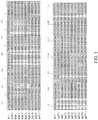
- Examples of IL-2 variants having a combination of mutations are provided in FIG. 1 and include haWT (SEQ ID NO:2), haD, (SEQ ID NO:3), haD.1 (SEQ ID NO:4), haD.2 (SEQ ID NO:5), haD.4 (SEQ ID NO:6), haD.5 (SEQ ID NO:7), haD.6 (SEQ ID NO:8), haD.8 (SEQ ID NO:9), and haD.1 1 (SEQ ID NO:10)d.
- the IL-2 variant stimulates STAT5 phosphorylation in FOXP3-positive regulatory T cells but has reduced ability to induce STAT5 and AKT phosphorylation in FOXP3-negative T cells as compared to wild-type IL-2.
- Preferred variants having such properties include haD, haD.1, haD.2, haD.4, haD.5, haD.6, and haD.8.
- the IL-2 variants may further comprise one or more mutations as compared to the wild-type IL-2 sequence that do not have an effect on the affinity for IL-2R ⁇ or IL-2R ⁇ , provided the IL-2 variant promotes the preferential proliferation, survival, activation or function of FOXP3 + T-reg over that of other T cells that do not express FOXP3.
- such mutations are conservative mutations.
- the IL-2 variant may comprise one or more compounds to increase the serum-half-life of the IL-2 variant when administered to a patient.
- Such half-life extending molecules include water soluble polymers (e.g., polyethylene glycol (PEG)), low- and high- density lipoproteins, antibody Fc (monomer or dimer), transthyretin (TTR), and TGF- ⁇ latency associated peptide (LAP).
- PEG polyethylene glycol
- TTR transthyretin
- LAP TGF- ⁇ latency associated peptide
- IL-2 variants comprising a combination of serum half-life extending molecules, such as PEGylated TTR ( US Pat. Appl. Publ. No. 2003/0195154 ).
- the immunosuppressive IL-2 variants can be produced using any suitable method known in the art, including those described in U.S. Pat. No. 6,955,807 for producing immunostimulatory IL-2 variants. Such methods include constructing a DNA sequence encoding the IL-2 variant and expressing those sequences in a suitably transformed host. This method will produce the recombinant variant of this invention. However, the variants may also be produced by chemical synthesis or a combination of chemical synthesis and recombinant DNA technology. Batch-wise production or perfusion production methods are known in the art. See Freshey, R. I. (ed), "Animal Cell Culture: A Practical Approach," 2nd ed., 1992, IRL Press. Oxford, Engl and; Mather, J. P.
- a DNA sequence is constructed by isolating or synthesizing a DNA sequence encoding the wild type IL-2 and then changing one or more codons by site-specific mutagenesis.
- This technique is well known. See, e.g., Mark et. al., "Site-specific Mutagenesis Of The Human Fibroblast Interferon Gene", Proc. Natl. Acad. Sci. USA 81, pp. 5662-66 (1984 ); and U.S. Pat. No. 4,588,585 .
- Another method of constructing a DNA sequence encoding the IL-2 variant would be chemical synthesis. This for example includes direct synthesis of a peptide by chemical means of the protein sequence encoding for an IL-2 variant exhibiting the properties described herein. This method may incorporate both natural and unnatural amino acids at positions that affect the interactions of IL-2 with the IL2R ⁇ , IL-2R ⁇ , or IL-2R ⁇ . Alternatively, a gene which encodes the desired IL-2 variant may be synthesized by chemical means using an oligonucleotide synthesizer.
- Such oligonucleotides are designed based on the amino acid sequence of the desired IL-2 variant, and preferably selecting those codons that are favored in the host cell in which the recombinant variant will be produced.
- the genetic code is degenerate--that an amino acid may be coded for by more than one codon.
- Phe (F) is coded for by two codons, TTC or TTT
- Tyr (Y) is coded for by TAC or TAT
- his (H) is coded for by CAC or CAT.
- Trp (W) is coded for by a single codon, TGG. Accordingly, it will be appreciated that for a given DNA sequence encoding a particular IL-2 variant, there will be many DNA degenerate sequences that will code for that IL-2 variant.
- the DNA sequence encoding the IL-2 variant may or may not also include DNA sequences that encode a signal sequence.
- Such signal sequence should be one recognized by the cell chosen for expression of the IL-2 variant. It may be prokaryotic, eukaryotic or a combination of the two. It may also be the signal sequence of native IL-2. The inclusion of a signal sequence depends on whether it is desired to secrete the IL-2 variant from the recombinant cells in which it is made. If the chosen cells are prokaryotic, it generally is preferred that the DNA sequence not encode a signal sequence. If the chosen cells are eukaryotic, it generally is preferred that a signal sequence be encoded and most preferably that the wild-type IL-2 signal sequence be used.
- Standard methods may be applied to synthesize a gene encoding an IL-2 variant.
- the complete amino acid sequence may be used to construct a back-translated gene.
- a DNA oligomer containing a nucleotide sequence coding for an IL-2 variant may be synthesized.
- several small oligonucleotides coding for portions of the desired polypeptide may be synthesized and then ligated.
- the individual oligonucleotides typically contain 5' or 3' overhangs for complementary assembly.
- the DNA sequences encoding an IL-2 variant will be inserted into an expression vector and operatively linked to an expression control sequence appropriate for expression of the IL-2 variant in the desired transformed host. Proper assembly may be confirmed by nucleotide sequencing, restriction mapping, and expression of a biologically active polypeptide in a suitable host. As is well known in the art, in order to obtain high expression levels of a transfected gene in a host, the gene must be operatively linked to transcriptional and translational expression control sequences that are functional in the chosen expression host. The choice of expression control sequence and expression vector will depend upon the choice of host. A wide variety of expression host/vector combinations may be employed.
- Any suitable host may be used to produce the IL-2 variant, including bacteria, fungi (including yeasts), plant, insect, mammal, or other appropriate animal cells or cell lines, as well as transgenic animals or plants. More particularly, these hosts may include well known eukaryotic and prokaryotic hosts, such as strains of E.coli, Pseudomonas, Bacillus, Streptomyces, fungi, yeast, insect cells such as Spodoptera frugiperda (Sf9), animal cells such as Chinese hamster ovary (CHO) and mouse cells such as NS/O, African green monkey cells such as COS 1, COS 7, BSC 1, BSC 40, and BNT 10, and human cells, as well as plant cells in tissue culture. For animal cell expression, CHO cells and COS 7 cells in cultures and particularly the CHO cell line CHO (DHFR-) or the HKB line are preferred.
- DHFR- CHO cell line CHO
- vectors and expression control sequences will function equally well to express the DNA sequences described herein. Neither will all hosts function equally well with the same expression system. However, one of skill in the art may make a selection among these vectors, expression control sequences and hosts without undue experimentation. For example, in selecting a vector, the host must be considered because the vector must replicate in it. The vectors copy number, the ability to control that copy number, and the expression of any other proteins encoded by the vector, such as antibiotic markers, should also be considered.
- preferred vectors for use in this invention include those that allow the DNA encoding the IL-2 variants to be amplified in copy number. Such amplifiable vectors are well known in the art.
- DHFR vectors able to be amplified by DHFR amplification
- vectors able to be amplified by DHFR amplification see, c.g., Kaufman, U.S. Pat. No. 4,470,461 , Kaufman and Sharp, "Construction Of A Modular Dihydrofolate Reductase cDNA Gene: Analysis Of Signals Utilized For Efficient Expression", Mol. Cell. Biol., 2, pp. 1304-19 (1982 )
- GS glutamine synthetase
- the IL-2 variants may be glycosylated or unglycosylated depending on the host organism used to produce the variant. If bacteria are chosen as the host, then the IL-2 variant produced will be unglycosylated. Eukaryotic cells, on the other hand, will glycosylate the IL-2 variant, although perhaps not in the same way as native IL-2 is glycosylated.
- the IL-2 variant produced by the transformed host can be purified according to any suitable method. Various methods are known for purifying IL-2. See, e.g Current Protocols in Protein Science, Vol 2. Eds: John E. Coligan, Ben M. Dunn, Hidde L. Ploehg, David W. Speicher, Paul T. Wingfield, Unit 6.5 (Copyright 1997, John Wiley and Sons, Inc ).
- the biological activity of the IL-2 variants can be assayed by any suitable method known in the art. Such assays include those described in the Examples below.
- Diseases, disorders, or conditions may be amenable to treatment with or may be prevented by administration of a T-reg-selective IL-2 variant to a subject.
- diseases, disorders, and conditions include, but are not limited to, inflammation, autoimmune disease, paraneoplastic autoimmune diseases, cartilage inflammation, fibrotic disease and/or bone degradation, arthritis, rheumatoid arthritis, juvenile arthritis, juvenile rheumatoid arthritis, pauciarticular juvenile rheumatoid arthritis, polyarticular juvenile rheumatoid arthritis, systemic onset juvenile rheumatoid arthritis, juvenile ankylosing spondylitis, juvenile enteropathic arthritis, juvenile reactive arthritis, juvenile Reiter's Syndrome, juvenile SEA Syndrome (Seronegativity, Enthesopathy, Arthropathy Syndrome), juvenile dermatomyositis, juvenile psoriatic arthritis, juvenile scleroderma, juvenile systemic lupus erythematosus, juvenile vasculitis, pa
- treatment encompasses alleviation or prevention of at least one symptom or other aspect of a disorder, or reduction of disease severity, and the like.
- a T-reg-selective IL-2 variant need not effect a complete cure, or eradicate every symptom or manifestation of a disease, to constitute a viable therapeutic agent.
- drugs employed as therapeutic agents may reduce the severity of a given disease state, but need not abolish every manifestation of the disease to be regarded as useful therapeutic agents.
- a prophylactically administered treatment need not be completely effective in preventing the onset of a condition in order to constitute a viable prophylactic agent.
- One embodiment of the invention is directed to a method comprising administering to a patient A T-reg-selective IL-2 variant in an amount and for a time sufficient to induce a sustained improvement over baseline of an indicator that reflects the severity of the particular disorder.
- the invention provides pharmaceutical compositions comprising a therapeutically effective amount of one or a plurality of T-reg-selective IL-2 variants of the invention together with a pharmaceutically acceptable diluent, carrier, solubilizer, emulsifier, preservative, and/or adjuvant.
- the invention provides methods of treating a patient by administering such pharmaceutical composition.
- patient includes human and animal subjects.
- acceptable formulation materials preferably are nontoxic to recipients at the dosages and concentrations employed.
- the pharmaceutical composition may contain formulation materials for modifying, maintaining or preserving, for example, the pH, osmolality, viscosity, clarity, color, isotonicity, odor, sterility, stability, rate of dissolution or release, adsorption or penetration of the composition.
- suitable formulation materials include, but are not limited to, amino acids (such as glycine, glutamine, asparagine, arginine or lysine); antimicrobials; antioxidants (such as ascorbic acid, sodium sulfite or sodium hydrogen-sulfite); buffers (such as borate, bicarbonate, Tris-HCl, citrates, phosphates or other organic acids); bulking agents (such as mannitol or glycine); chelating agents (such as ethylenediamine tetraacetic acid (EDTA)); complexing agents (such as caffeine, polyvinylpyrrolidone, beta-cyclodextrin or hydroxypropyl-beta-cyclodextrin); fillers; monosaccharides; disaccharides; and other carbohydrates (such as glucose, sucrose, mannose or dextrins); proteins (such as serum albumin, gelatin or immunoglobulins); coloring, flavoring and diluting agents; emuls
- amino acids
- T-reg-selective IL-2 variant-containing pharmaceutical composition to be employed will depend, for example, upon the therapeutic context and objectives.
- One skilled in the art will appreciate that the appropriate dosage levels for treatment will vary depending, in part, upon the molecule delivered, the indication for which the T-reg-selective IL-2 variant is being used, the route of administration, and the size (body weight, body surface or organ size) and/or condition (the age and general health) of the patient.
- the clinician may titer the dosage and modify the route of administration to obtain the optimal therapeutic effect.
- a typical dosage may range from about 0.1 ⁇ g/kg to up to about 30 mg/kg or more, depending on the factors mentioned above.
- the dosage may range from 0.1 ⁇ g/kg up to about 30 mg/kg, optionally from 1 ⁇ g/kg up to about 30 mg/kg or from 10 ⁇ g/kg up to about 5 mg/kg.
- Dosing frequency will depend upon the pharmacokinetic parameters of the particular T-reg-selective IL-2 variant in the formulation used.
- a clinician administers the composition until a dosage is reached that achieves the desired effect.
- the composition may therefore be administered as a single dose, or as two or more doses (which may or may not contain the same amount of the desired molecule) over time, or as a continuous infusion via an implantation device or catheter. Further refinement of the appropriate dosage is routinely made by those of ordinary skill in the art and is within the ambit of tasks routinely performed by them.
- the route of administration of the pharmaceutical composition is in accord with known methods, e.g., orally, through injection by intravenous, intraperitoneal, intracerebral (intra- parenchymal), intracerebroventricular, intramuscular, intra-ocular, intraarterial, intraportal, or intralesional routes; by sustained release systems or by implantation devices.
- the compositions may be administered by bolus injection or continuously by infusion, or by implantation device.
- T-reg-selective IL-2 variant is administered in combination with other agents useful for treating the condition with which the patient is afflicted.
- agents include both proteinaceous and non-proteinaceous drugs.
- dosages may be adjusted accordingly, as is recognized in the pertinent art.
- “Co-administration” and combination therapy are not limited to simultaneous administration, but also include treatment regimens in which a T-reg-selective IL-2 variant is administered at least once during a course of treatment that involves administering at least one other therapeutic agent to the patient.
- a T-reg-selective IL-2 variant is administered in combination with an inhibitor of the PI3-K/AKT/mTOR pathway, e.g., rapamycin (rapamune, sirolimus). Inhibitors of this pathway in combination with IL-2 favor T-reg enrichment.
- an inhibitor of the PI3-K/AKT/mTOR pathway e.g., rapamycin (rapamune, sirolimus).
- Inhibitors of this pathway in combination with IL-2 favor T-reg enrichment.
- Example 1 Panel of IL-2 mutants.
- variant haD, haD.1, haD.2, etc also contained mutations predicted to alter interactions with IL-2R ⁇ and/or IL-2R ⁇ .
- variant haD.1 1 was not capable of inducing any signal or altering any cellular phenotype and, as such, served as a control for CD25 binding without IL-2R signaling.
- All the IL-2 variants contained the C125S mutation for improved manufacturability and terminated with FLAG and HIS-tag sequences (DYKDDDDKGSSHHHHHH) (SEQ ID NO:11)
- Example 2 Enrichment of FOXP3 + cells and retention of FOXP3 upregulation during long term T cell culture.
- PBMC peripheral blood mononuclear cells
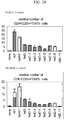
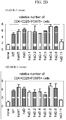
- CD8 + CD25 + T cells were especially responsive to WT IL-2 and variant haWT, however, all variants that contained mutated IL-2R ⁇ and/or ⁇ contact residues were very inefficient at promoting accumulation of activated CD8 + CD25 + T cells ( FIG. 2B ).
- FIG. 2C A similar trend was observed for CD4 + CD2S + FOXPT T cells ( FIG. 2C ).
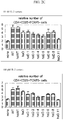
- the growth/survival of FOXP3 + CD4 + T cells was stimulated by several IL-2 variants to a degree similar to that of WT IL-2 ( FIG. 2D ).
- the ratio of FOXP3 + to FOXP3 - T cells among CD4 + CD25 + T cells was increased by several IL-2 variants with IL-2R ⁇ -contact residue mutations ( FIG. 2E ). Furthermore, the mutations did not impair IL-2-stimulated FOXP3 upregulation in T-reg ( FIG. 2F ).
- Example 3 Mutations that reduce signaling in FOXP3 - T cells but stimulate STAT5 signaling in T-reg.
- the IL-2 variants were screened for their ability to stimulate AKT and STAT5 phosphorylation in T cell subsets.
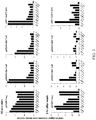
- Several IL-2 variants were as potent, or nearly as potent, as wt IL-2 at stimulating STAT5 in FOXP3 + T cells 10 min after stimulation.
- Three hours after washing IL-2 from the media some IL-2 variants (haD, haD.1, haD.2, haD.4, haD.6, and haD.8) continued to stimulate sustained STAT5 signaling at levels higher than that seen with wt IL-2.
- STAT5 and AKT responses to the haD variants after 10 min stimulation were not nearly as high as those stimulated by wt IL-2 or haWT.
- T cells Previously activated (with anti-CD3 for 2-3 days) and rested (in fresh culture medium for 2-5 days) T cells were exposed to 1 nM wt or mutant IL-2 for 10 min at 37°C. Cells were then stained (10 min timepoint) or washed and cultured for an additional 3 hrs (3 hr timepoint).
- a 50 ⁇ l culture was stopped by adding an equal volume of 2x lysis buffer and lysates were measured for phospho-AKT with multiplex ELISA plates according to the manufacturer's protocols (MesoScale Discovery, Gaithersburg, Maryland).
- a 50 ⁇ l culture was stopped by adding 1 ml of FOXP3 Fix/Perm Buffer (BioLegend, San Diego, CA), incubation at 25°C for 20 min, and staining for cell surface markers, FOXP3 and phospho-STAT5 according the BioLegend FOXP3 staining protocol.
- FOXP3 Fix/Perm Buffer BioLegend, San Diego, CA
Landscapes
- Health & Medical Sciences (AREA)
- Chemical & Material Sciences (AREA)
- Life Sciences & Earth Sciences (AREA)
- Organic Chemistry (AREA)
- General Health & Medical Sciences (AREA)
- Medicinal Chemistry (AREA)
- Veterinary Medicine (AREA)
- Animal Behavior & Ethology (AREA)
- Public Health (AREA)
- General Chemical & Material Sciences (AREA)
- Pharmacology & Pharmacy (AREA)
- Nuclear Medicine, Radiotherapy & Molecular Imaging (AREA)
- Engineering & Computer Science (AREA)
- Bioinformatics & Cheminformatics (AREA)
- Chemical Kinetics & Catalysis (AREA)
- Immunology (AREA)
- Diabetes (AREA)
- Pulmonology (AREA)
- Genetics & Genomics (AREA)
- Proteomics, Peptides & Aminoacids (AREA)
- Molecular Biology (AREA)
- Biophysics (AREA)
- Biochemistry (AREA)
- Gastroenterology & Hepatology (AREA)
- Zoology (AREA)
- Toxicology (AREA)
- Rheumatology (AREA)
- Pain & Pain Management (AREA)
- Obesity (AREA)
- Hematology (AREA)
- Endocrinology (AREA)
- Emergency Medicine (AREA)
- Transplantation (AREA)
- Orthopedic Medicine & Surgery (AREA)
- Physical Education & Sports Medicine (AREA)
- Medicines That Contain Protein Lipid Enzymes And Other Medicines (AREA)
- Peptides Or Proteins (AREA)
- Medicinal Preparation (AREA)
- Micro-Organisms Or Cultivation Processes Thereof (AREA)
Description
- IL-2 binds three transmembrane receptor subunits: IL-2Rβ and IL-2Rγ which together activate intracellular signaling events upon IL-2 binding, and CD25 (IL-2Rα) which serves to present IL-2 to the other 2 receptor subunits. The signals delivered by IL-2Rβγ include those of the PI3-kinase, Ras-MAP-kinase, and STAT5 pathways.
- T cells require expression of CD25 to respond to the low concentrations of IL-2 that typically exist in tissues. T cells that express CD25 include both CD4+ FOXP3+ regulatory T cells (T-reg cells)-which are essential for suppressing autoimmune inflammation-and FOXP3- T cells that have been activated to express CD25. FOXP3- CD25+ T effector cells (T-eff) may be either CD4+ or CD8+ cells, both of which can be pro-inflammatory and may contribute to autoimmunity, organ graft rejection or graft-versus-host disease. IL-2-stimulated STAT5 signaling is crucial for normal T-reg cell growth and survival and for high FOXP3 expression.
- Because of the low affinity IL-2 possesses for each of the three IL-2R chains, a further reduction in affinity for IL-2Rβ and/or IL-2Rγ could be offset by an increased affinity for CD25. Mutational variants of IL-2 have been generated that exhibit up to 170-fold higher affinity for CD25 (
US Patent Application Publication No. 2005/0142106 ; Rao et al., Biochemistry 44, 10696-701 (2005)). These variants were reported to associate for several days with cell surface CD25 and to chronically promote growth of an IL-2-dependent cell line. The authors report that the mutants stimulate persistent T cell growth and, thus, may be useful in methods of viral immunotherapy and in treating cancer or other hyperproliferative disorders. High doses of IL-2 (Proleukin) are administered to cancer patients to induce anti-tumor immunity, a treatment that is often associated with undesirable toxicity.US Pat. No. 6,955,807 describes IL-2 variants that are said to have reduced toxicity. The patent attributes the toxicity to IL-2-induced stimulation of natural killer (NK) cells, which only express IL-2Rβ and IL-2Rγ. The IL-2 variants described therein were said to have reduced toxicity because they selectively activate CD25+ T cells over NK cells. Again the IL-2 variants were said to be useful in therapeutic methods wherein it is beneficial to generally stimulate the immune system, e.g., the treatment of cancer or infectious diseases. - Lan, et al., (2008), Journal of Autoimmunity, vol. 31(1), pages 7-12, and Hoyer et al., (2008), Immunological Reviews, Vol. 226, pages 19-28, disclose the role of IL-2 in inflammatory disorders. Liston et al., (2007), Immunology and Cell Biology, vol. 85(4), pages 338-342, discloses the role of IL-2 in tolerance islet-specific antigens in diabetes. Wang et al., (2005), SCIENCE, vol. 310(5751), pages 1159-1163, discloses the three-dimensional structure and complex of IL-2 with its receptor proteins. Fujii et al., (1995), PNAS USA, vol. 92, pages 5482-5486, discloses that the activation of Stat5 by
interleukin 2 requires a carboxyl-terminal region of theinterleukin 2 receptor beta chain. Passerini et al., (2008), International Immunology, vol. 20(3), pages 421-431, discloses that STAT5-signaling cytokines regulate the expression of FOXP3 in CD4+CD25+ regulatory T cells and CD4+CD25- effector T cells. - Provided herein are immunosuppressive mutational variants of IL-2 that preferentially promote the growth/survival of FOXP3+ regulatory T cells (T-reg cells) over the growth/survival of potentially proinflammatory FOXP3- CD25+ T cells. By increasing the ratio of T-reg to other T cells and/or by increasing FOXP3 expression in T-reg without activating FOXP3- CD25+ T cells, these variants should suppress undesirable inflammation.
- The unique properties of these IL-2 variants stem from two sets of mutations. One set of mutations results in a reduced affinity for the signaling chains of the IL-2 receptor (IL-2Rβ/CD122 and/or IL-2Ry/CD132) and/or a reduced capacity to induce a signaling event from one or both subunits of the IL-2 receptor. The second set of mutations confers higher affinity for CD25 (IL-2Rα) and may include mutations described by
Rao et al. (US Patent Application Publication No. 2005/0142106 ). - As described herein, certain IL-2 variants induce signaling events that preferentially induce survival, proliferation, activation and/or function of T-reg cells. In certain embodiments, the IL-2 variant retains the capacity to stimulate, in T-reg cells, STAT5 phosphorylation and/or phosphorylation of one or more of signaling molecules downstream of the IL-2R, e.g., p38, ERK, SYK and LCK. In other embodiments, the IL-2 variant retains the capacity to stimulate, in T-reg cells, transcription or protein expression of genes or proteins, such as FOXP3 or IL-10, that are important for T-reg cell survival, proliferation, activation and/or function. In other parts of the disclosure, the IL-2 variant exhibits a reduced capacity to stimulate endocytosis of IL-2/IL-2R complexes on the surface of CD25+ T cells. In other parts of the disclosure, the IL-2 variant demonstrates inefficient, reduced, or absence of stimulation of PI3-kinase signaling , such as inefficient, reduced or absent phosphorylation of AKT and/or mTOR (mammalian target of rapamycin). In yet other embodiments, the IL-2 variant retains the ability of wt IL-2 to stimulate STAT5 phosphorylation and/or phosphorylation of one or more of signaling molecules downstream of the IL-2R in T-reg cells, yet demonstrates inefficient, reduced, or absent phosphorylation of STAT5, AKT and/or mTOR or other signaling molecules downstream of the IL-2R in FOXP3- CD4+ or CD8+ T cells or NK cells. In other parts of the disclosure, the IL-2 variant is inefficient or incapable of stimulating survival, growth, activation and/or function of FOXP3- CD4+ or CD8+ T cells or NK cells.
- Provided are variants of IL-2 for use in methods of treating an inflammatory or autoimmune disorder. The methods comprise administering a therapeutically effective amount of one or more immunosuppressive IL-2 variants to a subject.
- Further provided are variants of IL-2 for use in methods of promoting proliferation, survival, growth, or activation of regulatory T cells. The methods comprising contacting a FOXP3-positive (FOXP3+) T cell with an immunosuppressive IL-2 variant.
- Also provided is the use of an immunosuppressive IL-2 variant in the preparation of a medicament for the treatment of an inflammatory or autoimmune disorder.
- Also provided are compositions of IL-2 variants conjugated to additional protein sequences or other chemical that prolong the stability and/or half-life of the therapeutic in vivo.
-
-
FIG. 1 . Sequences of IL-2 variants. Sequences that vary from germline human IL-2 are not shaded in gray. -
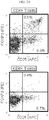
FIG. 2A-2F .FIG. 2A An example of flow cytometric data and gating strategy. Representative data is shown inFIG. 1A where 9.5% of CD4+ cells are CD25 +FOXP3+, 9.9% of CD4+ cells are CD25+FOXP3- and 6.7% of CD8+ cells are CD25+FOXP3-. FOXP3+CD8+ T cells are typically very infrequent.FIG. 2B . Relative number of CD8+CD25+FOXP3- T cells.FIG. 2C . Relative number of CD4+CD25+FOXP3- T cells.FIG. 2D . Relative number of CD4+CD25+FOXP3+ T cells.FIG. 2E . Ratio of FOXP3+/FOXP3- cells among CD25+CD4+ T cells.FIG. 2F . IL-2-mediated FOXP3 upregulation in FOXP3+CD4+ T cells. -
FIG 3 . IL-2 muteins stimulate phospho-STAT5 in T-reg but are inefficient at stimulating signals in other T cells. T cells were stimulated with IL-2 as described in Example 3. Phospho-STAT5 was measured by flow cytometry and phospho-AKT was measured by ELISA (MesoScale Discovery). Abbreviations are as follows: T-reg, FOXP3+CD4+ T cells; CD4 T-eff, CD4+CD25+FOXP3- "effector" T cells; CD8 T-eff, CD8+CD25+FOXP3- "effector" T cells. - FOXP3+ regulatory T cells (T-reg cells) are essential for maintaining normal immune homeostasis and immune tolerance to self tissues, as well as for suppressing undesirable inflammation. T-reg cells exert their suppressor and regulatory functions through multiple mechanisms which are likely to be regulated by temporal and environmental factors. Current immunosuppressive therapeutics generally target individual proinflammatory pathways and as such often exhibit partial efficacy or are applicable to specific diseases. An alternative immunosuppressive modality might involve the elevation of the numbers and activation state of natural suppressor cells to better enable them to deliver appropriate suppressor molecules/activities at sites of inflammation.
- Described herein are therapeutic agents that selectively promote T-reg cell proliferation, survival, activation and/or function. By "selectively promote," it is meant the therapeutic agent promotes the activity in T-reg cells but has limited or lacks the ability to promote the activity in non-regulatory T cells. Further described herein are assays to screen for agents that selectively promote T-reg cell proliferation, survival, activation and/or function. Agents that may be screened include, but are not limited to, small molecules, peptides, polypeptides, proteins including antibodies, e.g., monoclonal, humanized, human, monovalent, bivalent, and multivalent antibodies.
- The agent of the invention is an IL-2 variant for use in treating an inflammatory disorder. In particular, the IL-2 variant promotes these activities of T-reg cell growth/survival but have a reduced ability, as compared to wild-type IL-2, to promote non-regulatory T-cell (FOXP3-CD25+) and NK cell proliferation, survival, activation and/or function. In certain embodiments, such IL-2 variants function through a combination of elevated affinity for the IL-2R subunit IL-2Rα (CD25) and a reduced affinity for the signaling subunits IL-2Rβ and/or IL-2Rγ. Whereas IL-2 and variants thereof have been used in the art as immunostimulatory agents, e.g., in methods of treating cancer or infectious diseases, the IL-2 variants described herein are particularly useful as immunosuppressive agents, e.g., in methods of treating inflammatory disorders.
- IL-2 variants comprise a sequence of amino acids at least 80% identical to wild-type IL-2. As used herein, "wild-type IL-2" shall mean the polypeptide having the following amino acid sequence:wherein X is C, S, A or V (SEQ ID NO:1).

Variants may contain one or more substitutions, deletions, or insertions within the wild-type IL-2 amino acid sequence and wherein the IL-2 variant comprises a mutation in the polypeptide sequence set forth in SEQ ID NO:1 at a position selected from the group consisting ofamino acid 30, amino acid 31, amino acid 35, amino acid 69, amino acid 74 and amino acid 88 and wherein the mutation atposition 30 is N30S, the mutation at position 31 is Y31H, the mutation at position 35 is K35R, the mutation at position 69 is V69A, the mutation at position 74 is Q74P and the mutation at position 88 is N88D. Residues are designated herein by the one letter amino acid code followed by the IL-2 amino acid position, e.g., K35 is the lysine residue at position 35 of SEQ ID NO:1. Substitutions are designated herein by the one letter amino acid code followed by the IL-2 amino acid position followed by the substituting one letter amino acid code., e.g., K35A is a substitution of the lysine residue at position 35 of SEQ ID NO:1 with an alanine residue. - In one aspect, the invention provides immunosuppressive IL-2 variants that have a higher affinity for IL-2Rα than wild-type IL-2.
U.S. Published Patent Application No. 2005/0142106 describes IL-2 variants that have higher affinity for IL-2Rα than does wild-type IL-2 and methods of making and screening for such variants. Preferred IL-2 variants contain one or more mutations in positions of the IL-2 sequence that either contact IL-2Rα or alter the orientation of other positions contacting IL-2Rα, resulting in higher affinity for IL-2Rα. The mutations may be in or near areas known to be in close proximity to IL-2Rα based on published crystal structures (Xinquan Wang, Mathias Rickert, K. Christopher Garcia. Science 310:1159 2005). IL-2 residues believed to contact IL-2Rα include K35, R38, F42, K43, F44, Y45, E61, E62, K64, P65, E68, V69, L72, and Y107. - IL-2 variants having greater affinity for IL-2Rα can include a change in N29, N30, Y31, K35, T37, K48, E68, V69, N71, Q74, S75, or K76. Preferred variants include those having one or more of the following mutations: N29S, N30S, N30D, Y31H, Y31S, K35R, T37A, K48E, V69A, N71R, and Q74P.
- Immunosuppressive IL-2 variants also include variants that demonstrate altered signaling through certain pathways activated by wild-type IL-2 via the IL-2R and result in preferential proliferation/survival/activation of T-reg. Molecules known to be phosphorylated upon activation of the IL-2R include STAT5, p38, ERK, SYK, LCK, AKT and mTOR. Compared to wild-type IL-2, the immunosuppressive IL-2 variant can possess a reduced PI3K signaling ability in FOXP3- T cells, which can be measured by a reduction in the phosphorylation of AKT and/or mTOR as compared to wild-type IL-2. Such variants may include mutations in positions that either contact IL-2Rβ or IL-2Rγ or alter the orientation of other positions contacting IL-2Rβ or IL-2Pγ. IL-2 residues believed to contact IL-2Rβ include L12, Q13, H16, L19, D20, M23, R81, D84, S87, N88, V91, I92, and E95. IL-2 residues believed to contact IL-2Pγ include Q11, L18, Q22, E110, N119, T123, Q126, S127, 1129, S130, and T133. In certain parts of the disclosure, the IL-2 variant comprises a mutation at E15, H16, Q22, D84, N88, or E95. Examples of such mutations include E15Q, H16N, Q22E, D84N, N88D, and E95Q.
- In certain embodiments, the IL-2 variant comprises a combination of mutations. Examples of IL-2 variants having a combination of mutations are provided in
FIG. 1 and include haWT (SEQ ID NO:2), haD, (SEQ ID NO:3), haD.1 (SEQ ID NO:4), haD.2 (SEQ ID NO:5), haD.4 (SEQ ID NO:6), haD.5 (SEQ ID NO:7), haD.6 (SEQ ID NO:8), haD.8 (SEQ ID NO:9), and haD.1 1 (SEQ ID NO:10)d. In preferred embodiments, the IL-2 variant stimulates STAT5 phosphorylation in FOXP3-positive regulatory T cells but has reduced ability to induce STAT5 and AKT phosphorylation in FOXP3-negative T cells as compared to wild-type IL-2. Preferred variants having such properties include haD, haD.1, haD.2, haD.4, haD.5, haD.6, and haD.8. - The IL-2 variants may further comprise one or more mutations as compared to the wild-type IL-2 sequence that do not have an effect on the affinity for IL-2Rβ or IL-2Rγ, provided the IL-2 variant promotes the preferential proliferation, survival, activation or function of FOXP3+ T-reg over that of other T cells that do not express FOXP3. In preferred embodiments, such mutations are conservative mutations.
- The IL-2 variant may comprise one or more compounds to increase the serum-half-life of the IL-2 variant when administered to a patient. Such half-life extending molecules include water soluble polymers (e.g., polyethylene glycol (PEG)), low- and high- density lipoproteins, antibody Fc (monomer or dimer), transthyretin (TTR), and TGF-β latency associated peptide (LAP). Also contemplated are IL-2 variants comprising a combination of serum half-life extending molecules, such as PEGylated TTR (
US Pat. Appl. Publ. No. 2003/0195154 ). - The immunosuppressive IL-2 variants can be produced using any suitable method known in the art, including those described in
U.S. Pat. No. 6,955,807 for producing immunostimulatory IL-2 variants. Such methods include constructing a DNA sequence encoding the IL-2 variant and expressing those sequences in a suitably transformed host. This method will produce the recombinant variant of this invention. However, the variants may also be produced by chemical synthesis or a combination of chemical synthesis and recombinant DNA technology. Batch-wise production or perfusion production methods are known in the art. See Freshey, R. I. (ed), "Animal Cell Culture: A Practical Approach," 2nd ed., 1992, IRL Press. Oxford, England; Mather, J. P. "Laboratory Scaleup of Cell Cultures (0.5-50 liters)," Methods Cell Biolog 57: 219-527 (1998); Hu, W. S., and Aunins, J. G., "Large-scale Mammalian Cell Culture," Curr Opin Biotechnol 8: 148-153 (1997); Konstantinov, K. B., Tsai, Y., Moles, D., Matanguihan, R., "Control of long-term perfusion Chinese hamster ovary cell culture by glucose auxostat.," Biotechnol Prog 12:100-109 (1996). - In one embodiment of a recombinant method for producing a variant, a DNA sequence is constructed by isolating or synthesizing a DNA sequence encoding the wild type IL-2 and then changing one or more codons by site-specific mutagenesis. This technique is well known. See, e.g., Mark et. al., "Site-specific Mutagenesis Of The Human Fibroblast Interferon Gene", Proc. Natl. Acad. Sci. USA 81, pp. 5662-66 (1984); and
U.S. Pat. No. 4,588,585 . - Another method of constructing a DNA sequence encoding the IL-2 variant would be chemical synthesis. This for example includes direct synthesis of a peptide by chemical means of the protein sequence encoding for an IL-2 variant exhibiting the properties described herein. This method may incorporate both natural and unnatural amino acids at positions that affect the interactions of IL-2 with the IL2Rα, IL-2Rβ, or IL-2Rγ. Alternatively, a gene which encodes the desired IL-2 variant may be synthesized by chemical means using an oligonucleotide synthesizer. Such oligonucleotides are designed based on the amino acid sequence of the desired IL-2 variant, and preferably selecting those codons that are favored in the host cell in which the recombinant variant will be produced. In this regard, it is well recognized that the genetic code is degenerate--that an amino acid may be coded for by more than one codon. For example, Phe (F) is coded for by two codons, TTC or TTT, Tyr (Y) is coded for by TAC or TAT and his (H) is coded for by CAC or CAT. Trp (W) is coded for by a single codon, TGG. Accordingly, it will be appreciated that for a given DNA sequence encoding a particular IL-2 variant, there will be many DNA degenerate sequences that will code for that IL-2 variant.
- The DNA sequence encoding the IL-2 variant, whether prepared by site directed mutagenesis, chemical synthesis or other methods, may or may not also include DNA sequences that encode a signal sequence. Such signal sequence, if present, should be one recognized by the cell chosen for expression of the IL-2 variant. It may be prokaryotic, eukaryotic or a combination of the two. It may also be the signal sequence of native IL-2. The inclusion of a signal sequence depends on whether it is desired to secrete the IL-2 variant from the recombinant cells in which it is made. If the chosen cells are prokaryotic, it generally is preferred that the DNA sequence not encode a signal sequence. If the chosen cells are eukaryotic, it generally is preferred that a signal sequence be encoded and most preferably that the wild-type IL-2 signal sequence be used.
- Standard methods may be applied to synthesize a gene encoding an IL-2 variant. For example, the complete amino acid sequence may be used to construct a back-translated gene. A DNA oligomer containing a nucleotide sequence coding for an IL-2 variant may be synthesized. For example, several small oligonucleotides coding for portions of the desired polypeptide may be synthesized and then ligated. The individual oligonucleotides typically contain 5' or 3' overhangs for complementary assembly.
- Once assembled (by synthesis, site-directed mutagenesis or another method), the DNA sequences encoding an IL-2 variant will be inserted into an expression vector and operatively linked to an expression control sequence appropriate for expression of the IL-2 variant in the desired transformed host. Proper assembly may be confirmed by nucleotide sequencing, restriction mapping, and expression of a biologically active polypeptide in a suitable host. As is well known in the art, in order to obtain high expression levels of a transfected gene in a host, the gene must be operatively linked to transcriptional and translational expression control sequences that are functional in the chosen expression host. The choice of expression control sequence and expression vector will depend upon the choice of host. A wide variety of expression host/vector combinations may be employed.
- Any suitable host may be used to produce the IL-2 variant, including bacteria, fungi (including yeasts), plant, insect, mammal, or other appropriate animal cells or cell lines, as well as transgenic animals or plants. More particularly, these hosts may include well known eukaryotic and prokaryotic hosts, such as strains of E.coli, Pseudomonas, Bacillus, Streptomyces, fungi, yeast, insect cells such as Spodoptera frugiperda (Sf9), animal cells such as Chinese hamster ovary (CHO) and mouse cells such as NS/O, African green monkey cells such as
COS 1,COS 7,BSC 1,BSC 40, andBNT 10, and human cells, as well as plant cells in tissue culture. For animal cell expression, CHO cells andCOS 7 cells in cultures and particularly the CHO cell line CHO (DHFR-) or the HKB line are preferred. - It should of course be understood that not all vectors and expression control sequences will function equally well to express the DNA sequences described herein. Neither will all hosts function equally well with the same expression system. However, one of skill in the art may make a selection among these vectors, expression control sequences and hosts without undue experimentation. For example, in selecting a vector, the host must be considered because the vector must replicate in it. The vectors copy number, the ability to control that copy number, and the expression of any other proteins encoded by the vector, such as antibiotic markers, should also be considered. For example, preferred vectors for use in this invention include those that allow the DNA encoding the IL-2 variants to be amplified in copy number. Such amplifiable vectors are well known in the art. They include, for example, vectors able to be amplified by DHFR amplification (see, c.g., Kaufman,
U.S. Pat. No. 4,470,461 , Kaufman and Sharp, "Construction Of A Modular Dihydrofolate Reductase cDNA Gene: Analysis Of Signals Utilized For Efficient Expression", Mol. Cell. Biol., 2, pp. 1304-19 (1982)) or glutamine synthetase ("GS") amplification (see, e.g.,U.S. Pat. No 5,122,464 and European published application338,841 - The IL-2 variants may be glycosylated or unglycosylated depending on the host organism used to produce the variant. If bacteria are chosen as the host, then the IL-2 variant produced will be unglycosylated. Eukaryotic cells, on the other hand, will glycosylate the IL-2 variant, although perhaps not in the same way as native IL-2 is glycosylated. The IL-2 variant produced by the transformed host can be purified according to any suitable method. Various methods are known for purifying IL-2. See, e.g Current Protocols in Protein Science, ).
- The biological activity of the IL-2 variants can be assayed by any suitable method known in the art. Such assays include those described in the Examples below.
- Diseases, disorders, or conditions may be amenable to treatment with or may be prevented by administration of a T-reg-selective IL-2 variant to a subject. Such diseases, disorders, and conditions include, but are not limited to, inflammation, autoimmune disease, paraneoplastic autoimmune diseases, cartilage inflammation, fibrotic disease and/or bone degradation, arthritis, rheumatoid arthritis, juvenile arthritis, juvenile rheumatoid arthritis, pauciarticular juvenile rheumatoid arthritis, polyarticular juvenile rheumatoid arthritis, systemic onset juvenile rheumatoid arthritis, juvenile ankylosing spondylitis, juvenile enteropathic arthritis, juvenile reactive arthritis, juvenile Reiter's Syndrome, juvenile SEA Syndrome (Seronegativity, Enthesopathy, Arthropathy Syndrome), juvenile dermatomyositis, juvenile psoriatic arthritis, juvenile scleroderma, juvenile systemic lupus erythematosus, juvenile vasculitis, pauciarticular rheumatoid arthritis, polyarticular rheumatoid arthritis, systemic onset rheumatoid arthritis, ankylosing spondylitis, enteropathic arthritis, reactive arthritis, Reiter's Syndrome, SEA Syndrome (Seronegativity, Enthesopathy, Arthropathy Syndrome), dermatomyositis, psoriatic arthritis, scleroderma, vasculitis, myositis, polymyositis, osteoarthritis, polyarteritis nodosa, Wegener's granulomatosis, arteritis, polymyalgia rheumatica, sarcoidosis, scleroderma, sclerosis, primary biliary sclerosis, sclerosing cholangitis, Sjogren's syndrome, psoriasis, plaque psoriasis, guttate psoriasis, inverse psoriasis, pustular psoriasis, erythrodermic psoriasis, dermatitis, atopic dermatitis, atherosclerosis, lupus, Still's disease, Systemic Lupus Erythematosus (SLE), myasthenia gravis, inflammatory bowel disease (IBD), Crohn's disease, ulcerative colitis, celiac disease, multiple sclerosis (MS), asthma, COPD, Guillain-Barre disease, Type I diabetes mellitus, thyroiditis(e.g., Graves' disease), Addison's disease, Raynaud's phenomenon, autoimmune hepatitis, transplantation rejection, and the like. In specific embodiments, pharmaceutical compositions comprising a therapeutically effective amount of a T-reg-selective IL-2 variant are provided.
- The term "treatment" encompasses alleviation or prevention of at least one symptom or other aspect of a disorder, or reduction of disease severity, and the like. A T-reg-selective IL-2 variant need not effect a complete cure, or eradicate every symptom or manifestation of a disease, to constitute a viable therapeutic agent. As is recognized in the pertinent field, drugs employed as therapeutic agents may reduce the severity of a given disease state, but need not abolish every manifestation of the disease to be regarded as useful therapeutic agents. Similarly, a prophylactically administered treatment need not be completely effective in preventing the onset of a condition in order to constitute a viable prophylactic agent. Simply reducing the impact of a disease (for example, by reducing the number or severity of its symptoms, or by increasing the effectiveness of another treatment, or by producing another beneficial effect), or reducing the likelihood that the disease will occur or worsen in a subject, is sufficient. One embodiment of the invention is directed to a method comprising administering to a patient A T-reg-selective IL-2 variant in an amount and for a time sufficient to induce a sustained improvement over baseline of an indicator that reflects the severity of the particular disorder.
- In some embodiments, the invention provides pharmaceutical compositions comprising a therapeutically effective amount of one or a plurality of T-reg-selective IL-2 variants of the invention together with a pharmaceutically acceptable diluent, carrier, solubilizer, emulsifier, preservative, and/or adjuvant. In addition, the invention provides methods of treating a patient by administering such pharmaceutical composition. The term "patient" includes human and animal subjects.
- In certain embodiments, acceptable formulation materials preferably are nontoxic to recipients at the dosages and concentrations employed. In certain embodiments, the pharmaceutical composition may contain formulation materials for modifying, maintaining or preserving, for example, the pH, osmolality, viscosity, clarity, color, isotonicity, odor, sterility, stability, rate of dissolution or release, adsorption or penetration of the composition. In such embodiments, suitable formulation materials include, but are not limited to, amino acids (such as glycine, glutamine, asparagine, arginine or lysine); antimicrobials; antioxidants (such as ascorbic acid, sodium sulfite or sodium hydrogen-sulfite); buffers (such as borate, bicarbonate, Tris-HCl, citrates, phosphates or other organic acids); bulking agents (such as mannitol or glycine); chelating agents (such as ethylenediamine tetraacetic acid (EDTA)); complexing agents (such as caffeine, polyvinylpyrrolidone, beta-cyclodextrin or hydroxypropyl-beta-cyclodextrin); fillers; monosaccharides; disaccharides; and other carbohydrates (such as glucose, sucrose, mannose or dextrins); proteins (such as serum albumin, gelatin or immunoglobulins); coloring, flavoring and diluting agents; emulsifying agents; hydrophilic polymers (such as polyvinylpyrrolidone); low molecular weight polypeptides; salt-forming counterions (such as sodium); preservatives (such as benzalkonium chloride, benzoic acid, salicylic acid, thimerosal, phenethyl alcohol, methylparaben, propylparaben, chlorhexidine, sorbic acid or hydrogen peroxide); solvents (such as glycerin, propylene glycol or polyethylene glycol); sugar alcohols (such as mannitol or sorbitol); suspending agents; surfactants or wetting agents (such as pluronics, PEG, sorbitan esters, polysorbates such as polysorbate 20, polysorbate, triton, tromethamine, lecithin, cholesterol, tyloxapal); stability enhancing agents (such as sucrose or sorbitol); tonicity enhancing agents (such as alkali metal halides, preferably sodium or potassium chloride, mannitol sorbitol); delivery vehicles; diluents; excipients and/or pharmaceutical adjuvants. See, REMINGTON'S PHARMACEUTICAL SCIENCES, 18" Edition, (A.R. Genrmo, ed.), 1990, Mack Publishing Company.
- The therapeutically effective amount of T-reg-selective IL-2 variant-containing pharmaceutical composition to be employed will depend, for example, upon the therapeutic context and objectives. One skilled in the art will appreciate that the appropriate dosage levels for treatment will vary depending, in part, upon the molecule delivered, the indication for which the T-reg-selective IL-2 variant is being used, the route of administration, and the size (body weight, body surface or organ size) and/or condition (the age and general health) of the patient. The clinician may titer the dosage and modify the route of administration to obtain the optimal therapeutic effect. A typical dosage may range from about 0.1 µg/kg to up to about 30 mg/kg or more, depending on the factors mentioned above. The dosage may range from 0.1 µg/kg up to about 30 mg/kg, optionally from 1 µg/kg up to about 30 mg/kg or from 10 µg/kg up to about 5 mg/kg.
- Dosing frequency will depend upon the pharmacokinetic parameters of the particular T-reg-selective IL-2 variant in the formulation used. Typically, a clinician administers the composition until a dosage is reached that achieves the desired effect. The composition may therefore be administered as a single dose, or as two or more doses (which may or may not contain the same amount of the desired molecule) over time, or as a continuous infusion via an implantation device or catheter. Further refinement of the appropriate dosage is routinely made by those of ordinary skill in the art and is within the ambit of tasks routinely performed by them.
- The route of administration of the pharmaceutical composition is in accord with known methods, e.g., orally, through injection by intravenous, intraperitoneal, intracerebral (intra- parenchymal), intracerebroventricular, intramuscular, intra-ocular, intraarterial, intraportal, or intralesional routes; by sustained release systems or by implantation devices. In certain embodiments, the compositions may be administered by bolus injection or continuously by infusion, or by implantation device.
- In further parts of the disclosure, T-reg-selective IL-2 variant is administered in combination with other agents useful for treating the condition with which the patient is afflicted. Examples of such agents include both proteinaceous and non-proteinaceous drugs. When multiple therapeutics are co-administered, dosages may be adjusted accordingly, as is recognized in the pertinent art. "Co-administration" and combination therapy are not limited to simultaneous administration, but also include treatment regimens in which a T-reg-selective IL-2 variant is administered at least once during a course of treatment that involves administering at least one other therapeutic agent to the patient.
- In certain parts of the disclosure, a T-reg-selective IL-2 variant is administered in combination with an inhibitor of the PI3-K/AKT/mTOR pathway, e.g., rapamycin (rapamune, sirolimus). Inhibitors of this pathway in combination with IL-2 favor T-reg enrichment.
- The invention having been described, the following examples are offered by way of illustration, and not limitation.
- To examine the potential for generating IL-2 variants with reduced capacity to stimulate FOXP3- CD25+ "effector" T cells (T-eff) but not T-reg, a series of IL-2 mutants was generated in which amino acids predicted to interact with the IL-2Rβ and/or IL-2Rγ chain were altered. These variants also contained a set of previously described mutations that conferred high affinity for CD25 (variant "2-4" in Rao et al., Biochemistry 44, 10696-701 (2005)). This series of variants is shown in
Figure 1 . Variant haWT contained only the mutations that contributed to the high affinity for CD25. Variants haD, haD.1, haD.2, etc, also contained mutations predicted to alter interactions with IL-2Rβ and/or IL-2Rγ. In all assays, variant haD.1 1 was not capable of inducing any signal or altering any cellular phenotype and, as such, served as a control for CD25 binding without IL-2R signaling. All the IL-2 variants contained the C125S mutation for improved manufacturability and terminated with FLAG and HIS-tag sequences (DYKDDDDKGSSHHHHHH) (SEQ ID NO:11) - Several assays were used to assess the ability of the IL-2 variants to induce signaling events and T cell growth. These included assays to detect:
- 1. Growth and survival of T cell subsets and measurement of FOXP3 expression.
- 2. Cell signaling (e.g. detection of phosphorylated STAT5 and AKT using flow cytometric and ELISA-based methods).
- Total PBMC were activated in 24-well plates at 4x10⁶ cells per well with 100 ng/ml anti-CD3 (OKT3). On
day 3 of culture, cells were washed 3 times and rested in fresh media for 3 days. Cells were then washed and seeded in 96 well flat-bottom plates with IL-2 variants at either 10 nM or 100 pM. Three days later cells were counted and analyzed by flow cytometry. (FIG. 2A ) - As expected, CD8+CD25+ T cells were especially responsive to WT IL-2 and variant haWT, however, all variants that contained mutated IL-2Rβ and/or γ contact residues were very inefficient at promoting accumulation of activated CD8+CD25+ T cells (
FIG. 2B ). A similar trend was observed for CD4+CD2S+FOXPT T cells (FIG. 2C ). In contrast, the growth/survival of FOXP3+ CD4+ T cells was stimulated by several IL-2 variants to a degree similar to that of WT IL-2 (FIG. 2D ). As a result, the ratio of FOXP3+ to FOXP3- T cells among CD4+ CD25+ T cells was increased by several IL-2 variants with IL-2Rβγ-contact residue mutations (FIG. 2E ). Furthermore, the mutations did not impair IL-2-stimulated FOXP3 upregulation in T-reg (FIG. 2F ). - The IL-2 variants were screened for their ability to stimulate AKT and STAT5 phosphorylation in T cell subsets. Several IL-2 variants were as potent, or nearly as potent, as wt IL-2 at stimulating STAT5 in FOXP3+ T cells 10 min after stimulation. Three hours after washing IL-2 from the media, some IL-2 variants (haD, haD.1, haD.2, haD.4, haD.6, and haD.8) continued to stimulate sustained STAT5 signaling at levels higher than that seen with wt IL-2. In contrast, for FOXP3- T cells, STAT5 and AKT responses to the haD variants after 10 min stimulation were not nearly as high as those stimulated by wt IL-2 or haWT. After 3 hrs, weak STAT5 and AKT signals similar to those seen with wt IL-2 were observed in T-eff, however, at this late timepoint wt IL-2 signaling had diminished greatly. In FOXP3+ T cells, AKT signaling is not normally stimulated by IL-2 (Zeiser R, et al, 2008 Blood 111:453) thus the phospho-AKT signal observed in total T cell lysates can be attributed to T-eff.
- Methods: Previously activated (with anti-CD3 for 2-3 days) and rested (in fresh culture medium for 2-5 days) T cells were exposed to 1 nM wt or mutant IL-2 for 10 min at 37°C. Cells were then stained (10 min timepoint) or washed and cultured for an additional 3 hrs (3 hr timepoint). To measure phospho-AKT by ELISA, a 50 µl culture was stopped by adding an equal volume of 2x lysis buffer and lysates were measured for phospho-AKT with multiplex ELISA plates according to the manufacturer's protocols (MesoScale Discovery, Gaithersburg, Maryland). To measure phospho-STAT5 by flow cytometry, a 50 µl culture was stopped by adding 1 ml of FOXP3 Fix/Perm Buffer (BioLegend, San Diego, CA), incubation at 25°C for 20 min, and staining for cell surface markers, FOXP3 and phospho-STAT5 according the BioLegend FOXP3 staining protocol.
-
- <110> AMGEN INC.
Gavin, Marc A.
Li, Li - <120> COMPOSITIONS AND METHODS OF TREATING INFLAMMATORY AND AUTOIMMUNE DISEASES
- <130> A-1474-WO-PCT
- <140> -to be assigned-
<141> 2010-01-20 - <150>
US 61/146,111
<151> 2009-01-21 - <160> 11
- <170> PatentIn version 3.5
- <210> 1
<211> 133
<212> PRT
<213> Homo sapiens - <220>
<221> MISC_FEATURE
<222> (125)..(125)
<223> Xaa is Cysteine, Serine, Alanine or Valine - <400> 1


- <210> 2
<211> 133
<212> PRT
<213> Artificial - <220>
<223> IL-2 Variant - <400> 2

- <210> 3
<211> 133
<212> PRT
<213> Artificial - <220>
<223> IL-2 Variant - <400> 3


- <210> 4
<211> 133
<212> PRT
<213> Artificial - <220>
<223> IL-2 Variant - <400> 4


- <210> 5
<211> 133
<212> PRT
<213> Artificial - <220>
<223> IL-2 Variant - <400> 5

- <210> 6
<211> 133
<212> PRT
<213> Artificial - <220>
<223> IL-2 Variant - <400> 6

- <210> 7
<211> 133
<212> PRT
<213> Artificial - <220>
<223> IL-2 Variant - <400> 7


- <210> 8
<211> 133
<212> PRT
<213> Artificial - <220>
<223> IL-2 Variant - <400> 8

- <210> 9
<211> 133
<212> PRT
<213> Artificial - <220>
<223> IL-2 Variant - <400> 9

- <210> 10
<211> 133
<212> PRT
<213> Artificial - <220>
<223> IL-2 Variant - <400> 10


- <210> 11
<211> 17
<212> PRT
<213> Artificial - <220>
<223> FLAG-His - <400> 11

Claims (6)
- An IL-2 variant for use in a method of treating an inflammatory disorder selected from the group consisting of asthma, diabetes, arthritis, allergy, organ graft rejection, graft-versus-host disease, inflammation, autoimmune disease, paraneoplastic autoimmune diseases, cartilage inflammation, fibrotic disease, bone degradation, rheumatoid arthritis, juvenile arthritis, juvenile rheumatoid arthritis, pauciarticular juvenile rheumatoid arthritis, polyarticular juvenile rheumatoid arthritis, systemic onset juvenile rheumatoid arthritis, juvenile ankylosing spondylitis, juvenile enteropathic arthritis, juvenile reactive arthritis, juvenile Reiter's Syndrome, juvenile SEA Syndrome (Seronegativity, Enthesopathy, Arthropathy Syndrome), juvenile dermatomyositis, juvenile psoriatic arthritis, juvenile scleroderma, juvenile systemic lupus erythematosus, juvenile vasculitis, pauciarticular rheumatoid arthritis, polyarticular rheumatoid arthritis, systemic onset rheumatoid arthritis, ankylosing spondylitis, enteropathic arthritis, reactive arthritis, Reiter's Syndrome, SEA Syndrome (Seronegativity, Enthesopathy, Arthropathy Syndrome), dermatomyositis, psoriatic arthritis, scleroderma, vasculitis, myositis, polymyositis, osteoarthritis, polyarteritis nodosa, Wegener's granulomatosis, arteritis, polymyalgia rheumatica, sarcoidosis, scleroderma, sclerosis, primary biliary sclerosis, sclerosing cholangitis, Sjogren's syndrome, psoriasis, plaque psoriasis, guttate psoriasis, inverse psoriasis, pustular psoriasis, erythrodermic psoriasis, dermatitis, atopic dermatitis, atherosclerosis, lupus, Still's disease, Systemic Lupus Erythematosus (SLE), myasthenia gravis, inflammatory bowel disease (IBD), Crohn's disease, ulcerative colitis, celiac disease, multiple sclerosis (MS), COPD, Guillain-Barre disease, Type I diabetes mellitus, thyroiditis (e.g., Graves' disease), Addison's disease, Raynaud's phenomenon, autoimmune hepatitis and transplantation rejection in a subject, wherein said IL-2 variant(a) comprises a sequence of amino acids at least 80% identical to SEQ ID NO:1;(b) stimulates STAT5 phosphorylation in FOXP3-positive regulatory T cells; and(c) has a reduced ability compared to the polypeptide set forth as SEQ ID NO:1 to induce phosphorylation of STAT5 in FOXP3-negative T cells, andwherein the IL-2 variant comprises a mutation in the polypeptide sequence set forth in SEQ ID NO:1 at a position selected from the group consisting of amino acid 30, amino acid 31, amino acid 35, amino acid 69, amino acid 74 and amino acid 88 and wherein the mutation at position 30 is N30S, the mutation at position 31 is Y31H, the mutation at position 35 is K35R, the mutation at position 69 is V69A, the mutation at position 74 is Q74P and the mutation at position 88 is N88D.
- The IL-2 variant for use according to claim 1, wherein said IL-2 variant comprises a sequence of amino acids at least 95% identical to SEQ ID NO:1.
- The IL-2 variant for use according to claim 1, wherein the IL-2 variant has a higher affinity for IL-2Rα than does the polypeptide set forth as SEQ ID NO:1.
- The IL-2 variant for use according to claim 1, wherein the IL-2 variant promotes FOXP3-positive regulatory T cell growth or survival in vitro.
- The IL-2 variant for use according to claim 1, wherein the IL-2 variant induces STAT5 phosphorylation in ex vivo FOXP3-positive T cells comprising a functional IL-2 receptor complex but has a reduced ability to induce phosphorylation of STAT5.
- The IL-2 variant for use according to claim 1, wherein the IL-2 variant is conjugated to a chemical or polypeptide that extends the serum half-life of said IL-2 variant in vivo.
Applications Claiming Priority (2)
| Application Number | Priority Date | Filing Date | Title |
|---|---|---|---|
| US14611109P | 2009-01-21 | 2009-01-21 | |
| PCT/US2010/021519 WO2010085495A1 (en) | 2009-01-21 | 2010-01-20 | Compositions and methods of treating inflammatory and autoimmune diseases |
Publications (4)
| Publication Number | Publication Date |
|---|---|
| EP2382228A1 EP2382228A1 (en) | 2011-11-02 |
| EP2382228A4 EP2382228A4 (en) | 2013-01-09 |
| EP2382228B1 true EP2382228B1 (en) | 2020-08-26 |
| EP2382228B2 EP2382228B2 (en) | 2026-01-07 |
Family
ID=42356180
Family Applications (1)
| Application Number | Title | Priority Date | Filing Date |
|---|---|---|---|
| EP10733814.7A Active EP2382228B2 (en) | 2009-01-21 | 2010-01-20 | Compositions and methods of treating inflammatory and autoimmune diseases |
Country Status (8)
| Country | Link |
|---|---|
| US (5) | US20110274650A1 (en) |
| EP (1) | EP2382228B2 (en) |
| JP (7) | JP5766124B2 (en) |
| AU (1) | AU2010206840B2 (en) |
| CA (1) | CA2749539C (en) |
| ES (1) | ES2825173T3 (en) |
| MX (1) | MX2011007647A (en) |
| WO (1) | WO2010085495A1 (en) |
Cited By (8)
| Publication number | Priority date | Publication date | Assignee | Title |
|---|---|---|---|---|
| WO2023281485A1 (en) * | 2021-07-09 | 2023-01-12 | Bright Peak Therapeutics Ag | Modified il-2 polypeptides for treatment of inflammatory and autoimmune diseases |
| US11701407B2 (en) | 2017-08-03 | 2023-07-18 | Synthorx, Inc. | Cytokine conjugates for the treatment of proliferative and infectious diseases |
| US11945852B2 (en) | 2017-12-06 | 2024-04-02 | Pandion Operations, Inc. | IL-2 muteins and uses thereof |
| US12084484B2 (en) | 2019-07-26 | 2024-09-10 | Visterra, Inc. | Interleukin-2 agents and uses thereof |
| US12098178B2 (en) | 2020-12-04 | 2024-09-24 | Visterra, Inc. | Methods of using interleukin-2 agents |
| US12234271B2 (en) | 2019-09-10 | 2025-02-25 | Synthorx, Inc. | Il-2 conjugates and methods of use to treat autoimmune diseases |
| US12344648B2 (en) | 2019-08-23 | 2025-07-01 | Synthrox, Inc. | IL-15 conjugates and uses thereof |
| US12521437B2 (en) | 2019-02-06 | 2026-01-13 | Synthorx, Inc. | IL-2 conjugates and methods of use thereof |
Families Citing this family (85)
| Publication number | Priority date | Publication date | Assignee | Title |
|---|---|---|---|---|
| AU2010206840B2 (en) | 2009-01-21 | 2015-02-05 | Amgen Inc. | Compositions and methods of treating inflammatory and autoimmune diseases |
| CU23923B1 (en) * | 2010-11-12 | 2013-07-31 | Ct De Inmunología Molecular | POLYPEPTIDES DERIVED FROM IL-2 WITH AGONIST ACTIVITY |
| JP6093712B2 (en) | 2010-12-22 | 2017-03-08 | ザ ボード オブ トラスティーズ オブ ザ レランド スタンフォード ジュニア ユニバーシティー | Interleukin 2 superagonist and antagonist |
| US9266938B2 (en) | 2011-02-10 | 2016-02-23 | Roche Glycart Ag | Mutant interleukin-2 polypeptides |
| ES2811624T3 (en) * | 2011-03-11 | 2021-03-12 | Hopitaux Paris Assist Publique | IL-2 Dosage Regimen to Treat Systemic Lupus Erythematosus |
| DK2683395T3 (en) | 2011-03-11 | 2018-11-19 | Hopitaux Paris Assist Publique | USE OF LOW DOSAGE IL-2 FOR TREATMENT OF TYPE 1 DIABETES |
| EA201892619A1 (en) | 2011-04-29 | 2019-04-30 | Роше Гликарт Аг | IMMUNOCONJUGATES CONTAINING INTERLEUKIN-2 MUTANT POLYPETIPS |
| US9481866B2 (en) * | 2011-12-16 | 2016-11-01 | The United States Of America, As Represented By The Secretary, Department Of Health And Human Services | Methods of producing T cell populations enriched for stable regulatory T-cells |
| US20140044675A1 (en) | 2012-08-10 | 2014-02-13 | Roche Glycart Ag | Interleukin-2 fusion proteins and uses thereof |
| US9546203B2 (en) * | 2013-03-14 | 2017-01-17 | Amgen Inc. | Aglycosylated Fc-containing polypeptides with cysteine substitutions |
| WO2015042707A1 (en) | 2013-09-24 | 2015-04-02 | Medicenna Therapeutics Pte Ltd | Interleukin-2 fusion proteins and uses thereof |
| CN111423513A (en) * | 2014-02-06 | 2020-07-17 | 豪夫迈·罗氏有限公司 | Interleukin-2 fusion protein and use thereof |
| WO2015164815A1 (en) * | 2014-04-24 | 2015-10-29 | The Board Of Trustees Of The Leland Stanford Junior University | Superagonists, partial agonists and antagonists of interleukin-2 |
| MX378790B (en) * | 2014-07-21 | 2025-03-10 | Delinia Inc | MOLECULES THAT SELECTIVELY ACTIVATE REGULATORY T CELLS FOR THE TREATMENT OF AUTOIMMUNE DISEASES. |
| SG11201700629TA (en) | 2014-08-11 | 2017-02-27 | Delinia Inc | Modified il-2 variants that selectively activate regulatory t cells for the treatment of autoimmune diseases |
| IL283764B2 (en) | 2015-04-10 | 2024-01-01 | Amgen Inc | Interleukin for the expansion of myotonic control T-2 cells |
| SG10202007394VA (en) * | 2015-04-10 | 2020-09-29 | Amgen Inc | Interleukin-2 muteins for the expansion of t-regulatory cells |
| US20170204154A1 (en) | 2016-01-20 | 2017-07-20 | Delinia, Inc. | Molecules that selectively activate regulatory t cells for the treatment of autoimmune diseases |
| CN109071623B (en) * | 2016-05-04 | 2022-05-27 | 美国安进公司 | Interleukin-2 muteins for expansion of T regulatory cells |
| JP7071288B2 (en) | 2016-05-18 | 2022-05-18 | キュー バイオファーマ, インコーポレイテッド | T cell regulatory multimeric polypeptide and its usage |
| WO2018089420A1 (en) | 2016-11-08 | 2018-05-17 | Delinia, Inc. | Il-2 variants for the treatment of autoimmune diseases |
| MX2019007611A (en) | 2016-12-22 | 2020-07-29 | Cue Biopharma Inc | T-cell modulatory multimeric polypeptides and methods of use thereof. |
| EP3565829A4 (en) | 2017-01-09 | 2021-01-27 | Cue Biopharma, Inc. | MULTIMER POLYPEPTIDES T-LYMPHOCYTE MODULATORS AND THEIR METHODS OF USE |
| EP3596108A4 (en) | 2017-03-15 | 2020-12-23 | Pandion Operations, Inc. | TARGETED IMMUNTOLERANCE |
| CN118453840A (en) | 2017-03-15 | 2024-08-09 | 库尔生物制药有限公司 | Methods for modulating immune responses |
| AU2018273914A1 (en) | 2017-05-24 | 2019-11-14 | Pandion Operations, Inc. | Targeted immunotolerance |
| JP7433051B2 (en) | 2017-06-19 | 2024-02-19 | メディシナ セラピューティクス インコーポレイテッド | Uses and methods of IL-2 superagonists, agonists, and fusions thereof |
| TW202426655A (en) | 2017-07-11 | 2024-07-01 | 美商新索思股份有限公司 | Incorporation of unnatural nucleotides and methods thereof |
| AU2018328283A1 (en) * | 2017-09-07 | 2020-02-20 | Cue Biopharma, Inc. | Antigen-presenting polypeptides and methods of use thereof |
| US20200299349A1 (en) | 2017-11-21 | 2020-09-24 | The Board Of Trustees Of The Leland Stanford Junior University | Partial agonists of interleukin-2 |
| USRE50550E1 (en) | 2017-12-06 | 2025-08-26 | Pandion Operations, Inc. | IL-2 muteins and uses thereof |
| US10946068B2 (en) | 2017-12-06 | 2021-03-16 | Pandion Operations, Inc. | IL-2 muteins and uses thereof |
| EP3728302A1 (en) * | 2017-12-19 | 2020-10-28 | Xencor, Inc. | Engineered il-2 fc fusion proteins |
| KR102740971B1 (en) | 2017-12-27 | 2024-12-11 | 쿄와 기린 가부시키가이샤 | IL-2 variant |
| WO2019139896A1 (en) | 2018-01-09 | 2019-07-18 | Cue Biopharma, Inc. | Multimeric t-cell modulatory polypeptides and methods of use thereof |
| WO2019158764A1 (en) | 2018-02-16 | 2019-08-22 | Iltoo Pharma | Use of interleukin 2 for treating sjögren's syndrome |
| WO2019173832A2 (en) | 2018-03-09 | 2019-09-12 | AskGene Pharma, Inc. | Novel cytokine prodrugs |
| BR112020019639A2 (en) | 2018-03-28 | 2021-01-05 | Ascendis Pharma Oncology Division A/S | CONJUGATES OF IL-2 |
| BR112020018709A2 (en) | 2018-03-28 | 2021-01-05 | Bristol-Myers Squibb Company | ALPHA RECEPTOR PROTEINS, INTERLEUCIN-2 / INTERLEUCIN-2 AND METHODS OF USE |
| WO2020007937A1 (en) | 2018-07-03 | 2020-01-09 | Iltoo Pharma | Use of interleukin-2 for treating systemic sclerosis |
| WO2020023702A1 (en) | 2018-07-25 | 2020-01-30 | AskGene Pharma, Inc. | Novel il-21 prodrugs and methods of use thereof |
| US12403181B2 (en) | 2018-08-13 | 2025-09-02 | Iltoo Pharma | Combination of interleukin-2 with an interleukin 1 inhibitor, conjugates and therapeutic uses thereof |
| CN113260374A (en) | 2018-11-08 | 2021-08-13 | 新索思股份有限公司 | Interleukin 10 conjugates and uses thereof |
| EP3875475A4 (en) | 2018-12-21 | 2022-12-07 | Jiangsu Hengrui Pharmaceuticals Co., Ltd. | HUMAN INTERLEUKIN-2 VARIANT OR DERIVATIVE THEREOF |
| KR20210128443A (en) | 2019-02-15 | 2021-10-26 | 인테그럴 몰큘러 인코포레이티드 | Claudin 6 Antibodies and Uses Thereof |
| JP2022520632A (en) | 2019-02-15 | 2022-03-31 | インテグラル・モレキュラー・インコーポレイテッド | Antibodies containing a common light chain and their use |
| EP3946424A1 (en) * | 2019-03-29 | 2022-02-09 | Institut Curie | Interleukin-2 variants with modified biological activity |
| TW202110885A (en) | 2019-05-20 | 2021-03-16 | 美商潘迪恩治療公司 | Madcam targeted immunotolerance |
| WO2020247843A2 (en) * | 2019-06-05 | 2020-12-10 | Asher Biotherapeutics, Inc. | Fusions of mutant interleukin-2 polypeptides with antigen binding molecules for modulating immune cell function |
| WO2020252264A1 (en) | 2019-06-12 | 2020-12-17 | AskGene Pharma, Inc. | Novel il-15 prodrugs and methods of use thereof |
| MX2022001866A (en) | 2019-08-13 | 2022-03-11 | Amgen Inc | INTERLEUKIN-2 MUTEINS FOR THE EXPANSION OF REGULATORY T CELLS. |
| TW202128961A (en) | 2019-11-20 | 2021-08-01 | 美商安維塔生物科學股份有限公司 | Cytokine fusion proteins, and their pharmaceutical compositions and therapeutic applications |
| BR112022011414A2 (en) | 2019-12-12 | 2022-08-30 | Iltoo Pharma | CHIMERIC CONSTRUCTION, HOMODIMERIC PROTEIN, HETERODIMERIC PROTEIN, NUCLEIC ACID, VECTOR, HOST CELL, METHODS FOR PRODUCING A DIMERIC PROTEIN AND FOR PRODUCING A HETERODIMERIC PROTEIN |
| CN114867749A (en) | 2019-12-17 | 2022-08-05 | 安进公司 | Dual interleukin-2/TNF receptor agonists for use in therapy |
| TW202136317A (en) | 2019-12-20 | 2021-10-01 | 美商再生元醫藥公司 | Novel il2 agonists and methods of use thereof |
| US11633488B2 (en) | 2020-01-10 | 2023-04-25 | Bright Peak Therapeutics Ag | Modified IL-2 polypeptides and uses thereof |
| CA3166509A1 (en) | 2020-01-14 | 2021-07-22 | Synthekine, Inc. | Biased il2 muteins methods and compositions |
| MX2022008770A (en) * | 2020-01-14 | 2022-10-07 | Synthekine Inc | Il2 muteins. |
| WO2021168079A1 (en) | 2020-02-21 | 2021-08-26 | Pandion Operations, Inc. | Tissue targeted immunotolerance with a cd39 effector |
| IL297329A (en) | 2020-04-22 | 2022-12-01 | Merck Sharp & Dohme Llc | Human interleukin-2 conjugates biased for the interleukin-2 receptor beta gammac dimer and conjugated to a nonpeptidic, water-soluble polymer |
| EP4143329A4 (en) | 2020-04-28 | 2024-10-16 | Anwita Biosciences, Inc. | INTERLEUKIN-2 POLYPEPTIDES AND FUSION PROTEINS THEREOF, AS WELL AS THEIR PHARMACEUTICAL COMPOSITIONS AND THERAPEUTIC APPLICATIONS |
| TW202208395A (en) | 2020-05-12 | 2022-03-01 | 美商信號生物製藥公司 | Multimeric t-cell modulatory polypeptides and methods of use thereof |
| IL298642A (en) | 2020-06-03 | 2023-01-01 | Ascendis Pharma Oncology Div A/S | Il-2 sequences and uses thereof |
| US20220033784A1 (en) * | 2020-07-14 | 2022-02-03 | Pfizer Inc. | Recombinant vaccinia virus |
| TW202219060A (en) * | 2020-08-28 | 2022-05-16 | 丹麥商阿森迪斯腫瘤製藥有限公司 | Glycosylated il-2 proteins and uses thereof |
| JP2023541366A (en) | 2020-09-09 | 2023-10-02 | キュー バイオファーマ, インコーポレイテッド | MHC class II T cell modulating multimeric polypeptides and methods of use thereof to treat type 1 diabetes mellitus (T1D) |
| EP4232071A4 (en) | 2020-10-23 | 2024-08-28 | Asher Biotherapeutics, Inc. | Fusions with cd8 antigen binding molecules for modulating immune cell function |
| IL302114A (en) | 2020-10-29 | 2023-06-01 | Bristol Myers Squibb Co | Fusion proteins for the treatment of diseases |
| CN112279906B (en) * | 2020-10-30 | 2022-09-20 | 浙江新码生物医药有限公司 | Human interleukin 2-polyethylene glycol conjugate, preparation method and application thereof |
| AU2021379816A1 (en) | 2020-11-13 | 2023-06-22 | Jiangsu Hengrui Pharmaceuticals Co., Ltd. | Pharmaceutical composition comprising human interleukin 2 variant or derivative thereof and use thereof |
| CN113321722A (en) * | 2021-04-13 | 2021-08-31 | 苏州复融生物技术有限公司 | Interleukin-2 mutants and uses thereof |
| TW202317623A (en) | 2021-06-14 | 2023-05-01 | 美商再生元醫藥公司 | Il2-based therapeutics and methods of use thereof |
| US20230201364A1 (en) | 2021-07-09 | 2023-06-29 | Bright Peak Therapeutics Ag | Antibody conjugates and manufacture thereof |
| EP4357357A4 (en) | 2021-07-30 | 2025-01-08 | Dracoterpin Biomedicine LLC | HUMAN INTERLEUKIN-2 VARIANT AND ITS USE |
| KR20240113459A (en) | 2021-10-06 | 2024-07-22 | 일투 파마 | Interleukin 2 chimeric construct with targeting specificity to inflamed tissue |
| EP4463135A2 (en) | 2022-01-10 | 2024-11-20 | Sana Biotechnology, Inc. | Methods of ex vivo dosing and administration of lipid particles or viral vectors and related systems and uses |
| WO2023193015A1 (en) | 2022-04-01 | 2023-10-05 | Sana Biotechnology, Inc. | Cytokine receptor agonist and viral vector combination therapies |
| CA3265946A1 (en) | 2022-09-12 | 2024-03-21 | Sorbonne Universite | Interleukin-2 for use in treating autism spectrum disorder |
| KR20250114330A (en) | 2022-11-30 | 2025-07-29 | 인테그럴 몰큘러 인코포레이티드 | Antibodies targeting claudin 6 and their bispecific forms |
| WO2024151515A2 (en) | 2023-01-09 | 2024-07-18 | Odyssey Therapeutics, Inc. | Anti-tnfr2 antigen-binding proteins and uses thereof |
| WO2025217240A1 (en) | 2024-04-10 | 2025-10-16 | Odyssey Therapeutics, Inc. | Anti-tnfr2 antigen-binding proteins and uses thereof |
| US20260028384A1 (en) | 2024-04-17 | 2026-01-29 | Visterra, Inc. | Use of il-2 variant for treating kidney transplant rejection |
| WO2026006809A1 (en) | 2024-06-27 | 2026-01-02 | Odyssey Therapeutics, Inc. | Multispecific molecules binding tnfr2 and cd25 and uses thereof |
| EP4707295A1 (en) | 2024-09-05 | 2026-03-11 | Egle Therapeutics | Interleukin-2 variants with modified biological activity |
| EP4707296A1 (en) | 2024-09-05 | 2026-03-11 | Egle Therapeutics | Interleukin-2 variants with modified biological activity |
Citations (13)
| Publication number | Priority date | Publication date | Assignee | Title |
|---|---|---|---|---|
| EP0262802A2 (en) | 1986-09-01 | 1988-04-06 | Takeda Chemical Industries, Ltd. | Medicament for the treatment or improvement of rheumatoid arthritis or systemic lupus erythematosus |
| WO1993020849A1 (en) | 1992-04-14 | 1993-10-28 | Board Of Regents, The University Of Texas System | Low toxicity interleukin-2 analogues for use in immunotherapy |
| US5466447A (en) | 1988-06-29 | 1995-11-14 | Amgen Inc. | Method for treating psoriasis |
| WO1999060128A1 (en) | 1998-05-15 | 1999-11-25 | Bayer Corporation | Il-2 selective agonists and antagonists |
| WO2003015697A2 (en) | 2001-08-13 | 2003-02-27 | University Of Southern California | Interleukin-2 mutants with reduced toxicity |
| US20030195154A1 (en) | 2002-04-04 | 2003-10-16 | Kenneth Walker | Use of transthyretin peptide/protein fusions to increase the serum half-life of pharmacologically active peptides/proteins |
| WO2005007121A2 (en) | 2003-07-18 | 2005-01-27 | Massachusetts Institute Of Technology | Mutant interleukin-2(il-2) polypeptides |
| WO2005086798A2 (en) | 2004-03-05 | 2005-09-22 | Chiron Corporation | Improved interleukin-2 muteins |
| WO2008003473A2 (en) | 2006-07-06 | 2008-01-10 | Merck Patent Gmbh | Compositions and methods for enhancing the efficacy of il-2 mediated immune responses |
| WO2009061853A2 (en) | 2007-11-05 | 2009-05-14 | Massachusetts Institute Of Technology | Mutant interleukin-2 (il-2) polypeptides |
| WO2009135615A2 (en) | 2008-05-08 | 2009-11-12 | Aicuris Gmbh & Co. Kg | Means for the treatment and/or prophylaxis of an autoimmune disease and for the formation of regulatory t-cells |
| WO2010021519A2 (en) | 2008-08-21 | 2010-02-25 | Industry-Academic Cooperation Foundation, Yonsei University | T1-t2 dual modal mri contrast agents |
| WO2010085495A1 (en) | 2009-01-21 | 2010-07-29 | Amgen Inc. | Compositions and methods of treating inflammatory and autoimmune diseases |
Family Cites Families (24)
| Publication number | Priority date | Publication date | Assignee | Title |
|---|---|---|---|---|
| US4470461A (en) | 1982-09-30 | 1984-09-11 | Phillips Petroleum Company | Organic nitro compounds as cosurfactants in enhanced oil recovery processes |
| US4588585A (en) | 1982-10-19 | 1986-05-13 | Cetus Corporation | Human recombinant cysteine depleted interferon-β muteins |
| US4518584A (en) | 1983-04-15 | 1985-05-21 | Cetus Corporation | Human recombinant interleukin-2 muteins |
| GB8601597D0 (en) | 1986-01-23 | 1986-02-26 | Wilson R H | Nucleotide sequences |
| GB8809129D0 (en) | 1988-04-18 | 1988-05-18 | Celltech Ltd | Recombinant dna methods vectors and host cells |
| JPH03500415A (en) | 1988-07-05 | 1991-01-31 | アムジエン・インコーポレーテツド | interleukin 2 analogue |
| CA2062582C (en) | 1991-03-27 | 1996-03-26 | Tse-Wen Chang | Methods and substances for recruiting therapeutic agents to solid tissues |
| US6955807B1 (en) | 1998-05-15 | 2005-10-18 | Bayer Pharmaceuticals Corporation | IL-2 selective agonists and antagonists |
| US6737056B1 (en) | 1999-01-15 | 2004-05-18 | Genentech, Inc. | Polypeptide variants with altered effector function |
| US6348192B1 (en) | 1999-05-11 | 2002-02-19 | Bayer Corporation | Interleukin-2 mutein expressed from mammalian cells |
| DK1252192T3 (en) | 2000-02-11 | 2006-11-20 | Merck Patent Gmbh | Enhancement of the serum half-life of antibody-based fusion proteins |
| BR0214650A (en) | 2001-12-04 | 2005-05-03 | Merck Patent Gmbh | Modulated selectivity immunocytokines |
| AR043504A1 (en) | 2003-03-17 | 2005-08-03 | Novartis Ag | PHARMACEUTICAL COMPOSITIONS THAT INCLUDE RAPAMYCIN FOR THE TREATMENT OF INFLAMMATORY DISEASES |
| AU2006232374B2 (en) * | 2005-04-01 | 2011-08-25 | University Of Southern California | Preventing rejection of transplanted tissue using regulatory T cells |
| US20100310501A1 (en) | 2006-02-16 | 2010-12-09 | Onur Boyman | Methods for Improving Immune Function and Methods for Prevention or Treatment of Disease in a Mammalian Subject |
| LT2676967T (en) | 2006-02-28 | 2019-09-10 | Biogen Ma Inc. | Methods of treating inflammatory and autoimmune diseases with natalizumab |
| WO2008004373A1 (en) | 2006-07-06 | 2008-01-10 | Mitsubishi Electric Corporation | Navigation device |
| GB0623539D0 (en) | 2006-11-24 | 2007-01-03 | Avidex Ltd | Polypeptides |
| CA2679399A1 (en) | 2007-02-27 | 2008-09-04 | Genetech, Inc. | Antagonist ox40 antibodies and their use in the treatment of inflammatory and autoimmune diseases |
| CN101951940A (en) | 2007-03-15 | 2011-01-19 | 比奥根艾迪克Ma公司 | autoimmune disease treatment |
| SI2235064T1 (en) | 2008-01-07 | 2016-04-29 | Amgen Inc. | Method for making antibody fc-heterodimeric molecules using electrostatic steering effects |
| WO2010017220A1 (en) | 2008-08-04 | 2010-02-11 | The Trustees Of The University Of Pennsylvania | Methods for expanding regulatory t-cells |
| DK2683395T3 (en) | 2011-03-11 | 2018-11-19 | Hopitaux Paris Assist Publique | USE OF LOW DOSAGE IL-2 FOR TREATMENT OF TYPE 1 DIABETES |
| ES2668895T3 (en) | 2011-03-16 | 2018-05-23 | Amgen Inc. | Fc variants |
-
2010
- 2010-01-20 AU AU2010206840A patent/AU2010206840B2/en active Active
- 2010-01-20 MX MX2011007647A patent/MX2011007647A/en active IP Right Grant
- 2010-01-20 JP JP2011548074A patent/JP5766124B2/en active Active
- 2010-01-20 US US13/145,537 patent/US20110274650A1/en not_active Abandoned
- 2010-01-20 ES ES10733814T patent/ES2825173T3/en active Active
- 2010-01-20 CA CA2749539A patent/CA2749539C/en active Active
- 2010-01-20 EP EP10733814.7A patent/EP2382228B2/en active Active
- 2010-01-20 WO PCT/US2010/021519 patent/WO2010085495A1/en not_active Ceased
-
2012
- 2012-11-08 US US13/672,417 patent/US9732134B2/en active Active
-
2014
- 2014-04-15 JP JP2014083388A patent/JP2014133756A/en not_active Withdrawn
-
2016
- 2016-05-06 JP JP2016092985A patent/JP2016138140A/en not_active Withdrawn
-
2017
- 2017-07-13 US US15/649,520 patent/US11560415B2/en active Active
-
2018
- 2018-02-26 JP JP2018031926A patent/JP2018087244A/en not_active Withdrawn
-
2019
- 2019-10-18 JP JP2019191112A patent/JP2020023550A/en not_active Withdrawn
-
2021
- 2021-09-03 JP JP2021143804A patent/JP2021185191A/en not_active Withdrawn
-
2022
- 2022-12-20 US US18/068,970 patent/US12297248B2/en active Active
-
2024
- 2024-05-27 JP JP2024085664A patent/JP2024105721A/en active Pending
-
2025
- 2025-01-17 US US19/028,861 patent/US20250270271A1/en active Pending
Patent Citations (16)
| Publication number | Priority date | Publication date | Assignee | Title |
|---|---|---|---|---|
| EP0262802A2 (en) | 1986-09-01 | 1988-04-06 | Takeda Chemical Industries, Ltd. | Medicament for the treatment or improvement of rheumatoid arthritis or systemic lupus erythematosus |
| US5466447A (en) | 1988-06-29 | 1995-11-14 | Amgen Inc. | Method for treating psoriasis |
| WO1993020849A1 (en) | 1992-04-14 | 1993-10-28 | Board Of Regents, The University Of Texas System | Low toxicity interleukin-2 analogues for use in immunotherapy |
| WO1999060128A1 (en) | 1998-05-15 | 1999-11-25 | Bayer Corporation | Il-2 selective agonists and antagonists |
| WO2003015697A2 (en) | 2001-08-13 | 2003-02-27 | University Of Southern California | Interleukin-2 mutants with reduced toxicity |
| US20030195154A1 (en) | 2002-04-04 | 2003-10-16 | Kenneth Walker | Use of transthyretin peptide/protein fusions to increase the serum half-life of pharmacologically active peptides/proteins |
| WO2005007121A2 (en) | 2003-07-18 | 2005-01-27 | Massachusetts Institute Of Technology | Mutant interleukin-2(il-2) polypeptides |
| US20050142106A1 (en) | 2003-07-18 | 2005-06-30 | Wittrup K. D. | Mutant interleukin-2 (IL-2) polypeptides |
| WO2005086798A2 (en) | 2004-03-05 | 2005-09-22 | Chiron Corporation | Improved interleukin-2 muteins |
| WO2008003473A2 (en) | 2006-07-06 | 2008-01-10 | Merck Patent Gmbh | Compositions and methods for enhancing the efficacy of il-2 mediated immune responses |
| WO2009061853A2 (en) | 2007-11-05 | 2009-05-14 | Massachusetts Institute Of Technology | Mutant interleukin-2 (il-2) polypeptides |
| WO2009135615A2 (en) | 2008-05-08 | 2009-11-12 | Aicuris Gmbh & Co. Kg | Means for the treatment and/or prophylaxis of an autoimmune disease and for the formation of regulatory t-cells |
| US20110150826A1 (en) | 2008-05-08 | 2011-06-23 | Daniela Paulsen | Agent for the treatment and/or prophylaxis of an autoimmune disease and for the formation of regulatory t cells |
| WO2010021519A2 (en) | 2008-08-21 | 2010-02-25 | Industry-Academic Cooperation Foundation, Yonsei University | T1-t2 dual modal mri contrast agents |
| WO2010085495A1 (en) | 2009-01-21 | 2010-07-29 | Amgen Inc. | Compositions and methods of treating inflammatory and autoimmune diseases |
| EP2382228A1 (en) | 2009-01-21 | 2011-11-02 | Amgen Inc. | Compositions and methods of treating inflammatory and autoimmune diseases |
Non-Patent Citations (65)
| Title |
|---|
| "Regulatory Cells and Clinical Application", 2008, article JIANG: "Chapter 2, 3, 5, and 8", pages: 17, 19, 20, 29, 43. 58, 70 - 77-78, 80, 94, 97, 135-136 and 261, XP055813524 |
| ADRIAN LISTON ET AL: "Tracing the action of IL-2 in tolerance to islet-specific antigen", IMMUNOLOGY AND CELL BIOLOGY, vol. 85, no. 4, 20 March 2007 (2007-03-20), AU, pages 338 - 342, XP055440748, ISSN: 0818-9641, DOI: 10.1038/sj.icb.7100049 * |
| AHMADZADEH ET AL.: "IL-2 administration increases CD4+CD25hi Foxp3+ regulatory T cells in cancer patients", BLOOD, vol. 107, no. 6, 2006, pages 2409 - 2414, XP055597547 |
| ALBANESI, C. DE PITA, O. GIROLOMONI, G.: "Resident skin cells in psoriasis: a special look at the pathogenetic functions of keratinocytes", CLINICS IN DERMATOLOGY., J.B. LIPPINCOTT, PHILADELPHIA, PA., US, vol. 25, no. 6, 1 November 2007 (2007-11-01), US , pages 581 - 588, XP022342595, ISSN: 0738-081X, DOI: 10.1016/j.clindermatol.2007.08.013 |
| ALLAN ET AL.: "Activation-induced FOXP3 in human T effector cells does not suppress proliferation or cytokine production", INTERNATIONAL IMMUNOLOGY, vol. 19, no. 4, 2007, pages 345 - 354, XP055813484 |
| BACHMANN MARTIN F., ANNETTE OXENIUS: "Interleukin 2: from immunostimulation to immunoregulation and back again", EMBO REPORTS, vol. 8, 2007, pages 1142 - 1148, XP055813362 |
| BALAJI M RAO; IAN DRIVER; DOUGLAS A LAUFFENBURGER; DANE WITTRUP K: "High-affinity CD25-binding IL-2 mutants potently stimulate persistent T cell growth", BIOCHEMISTRY, vol. 44, 2005, pages 10696 - 10701, XP002628067 |
| BALAJI M RAO; IAN DRIVER; DOUGLAS A LAUFFENBURGER; DANE WITTRUP K: "High-affinity CD25-binding IL-2 mutants potently stimulate persistent T cell growth", BIOCHEMISTRY, vol. 44, no. 31, 2005, pages 10696 - 10701, XP002628067 |
| BALAJI M RAO; IAN DRIVER; DOUGLAS A LAUFFENBURGER; DANE WITTRUP K: "High-Affinity CD25-Binding IL-2 Mutants Potently Stimulate Persistent T cell Growth", PH.D THESIS, 2004, pages 10696 - 10701, XP002628067 |
| BALAJI RAO: "Interleukin-2 Engineering for Improved Therapeutic Effectiveness", MASSACHUSETTS INSTITUTE OF TECHNOLOGY PHD, 2004, pages 1 - 106, XP055813372 |
| BENSINGER ET AL.: "Distinct IL-2 receptor signaling pattern in CD4+CD25+ regulatory T cells", J. IMMUNOL., vol. 172, no. 9, 2009, pages 5287 - 5296, XP002493084 |
| BOYMAN ET AL.: "Potential use of IL-2/anti-IL-2 antibody immune complexes for the treatment of cancer and autoimmune disease", EXPERT OPIN. BIOL. THER., vol. 6, no. 12, 2006, pages 1323 - 1331, XP002457767 |
| BRUSKO ET AL.: "Human regulatory t-cells: role in autoimmune disease and therapeutic opportunities", IMMUNOLOGICAL REVIEWS, vol. 223, 2008, pages 371 - 390, XP002596194 |
| BRUSKO TODD M; PUTNAM AMY L; BLUESTONE JEFFREY A: "Human regulatory T cells: role in autoimmune disease and therapeutic opportunities", IMMUNOLOGICAL REVIEWS, vol. 223, 2008, pages 371 - 390, XP002596194 |
| CASSELL ET AL.: "THERAPEUTIC ENHANCEMENT OF IL-2 THROUGH MOLECULAR DESIGN", CURRENT PHARMACEUTICAL DESIGN, vol. 8, no. 24, 2002, pages 2171 - 2183, XP001205312 |
| CHEN; KHURANA HERSHEY W; G K: "Signal transducer and activator of transcription signals in allergic disease", J ALLERGY CLIN IMMUNOL, vol. 119, no. 3, 2007, pages 529 - 541, XP005906435 |
| DATABASE Geneseq [online] 1 December 2005 (2005-12-01), "Human mature interleukin-2 mutein N88D/C125S.", retrieved from EBI accession no. GSP:AEC77664 Database accession no. AEC77664 * |
| DENNIS ADEEGBE, ALLISON L. BAYER, ROBERT B. LEVY, THOMAS R. MALEK: "Cutting edge: Allogeneic CD4+CD25+Foxp3+ T regulatory cells suppress autoimmunity while establishing transplantation tolerance", J. IMMUNOL., vol. 176, 2006, pages 7149 - 7153, XP055811184 |
| EISENSTEIN ET AL.: "The T(reg)/Th17 cell balance: a new paradigm for autoimmunity", PEDIATR RES, vol. 65, no. 5, May 2009 (2009-05-01), pages 26R - 31R, XP055810888 |
| FUJI ET AL.: "Activation of Stat5 by interleukin 2 requires a carboxyl-terminal region of the interleukin 2 receptor beta chain but is not essential for the proliferative signal transmission", PNAS, vol. 92, 1995, USA, pages 5482 - 5486, XP055474692 |
| GILL ADAMS; VESSILLIER SANDRINE: "Targeting cytokines to inflammation sites", NAT BIOTECHNOL, vol. 21, no. 11, 2003, pages 1314 - 20, XP055676803 |
| GOODSON R J; NANDINI V KATRE: "SITE-DIRECTED PEGYLATION OF RECOMBINANT INTERLEUKIN-2 AT ITS GLYCOSYLATION SITE", BIOTECHNOLOGY, vol. 8, no. 4, 1990, N Y, pages 343 - 346, XP000563746 |
| HEATON ET AL.: "CHARACTERIZATION OF LYMPHOKINE-ACTIVATED KILLING BY HUMAN PERIPHERAL BLOOD MONONUCLEAR CELLS STIMULATED WITH INTERLEUKIN 2 (IL-2) ANALOGS SPECIFIC FOR THE INTERMEDIATE AFFINITY IL-2 RECEPTOR", CELLULAR IMMUNOLOGY, vol. 147, no. 1, 1993, pages 167 - 179, XP000565560 |
| HODAKA FUJII; NAKAGAWA YOKO; SCHINDLERI ULRIKE; KAWAHARA ATSUO; MORI HISASHI; GOUILLEUX FABRICE; GRONER BERND; IHLEI JAMES N; MINA: "Activation of Stat5 by interleukin 2 requires a carboxyl-terminal region of the interleukin 2 receptor beta chain but is not essential for the proliferative signal transmission", PROC NATL ACAD SCI USA, vol. 92, no. 12, 6 June 1995 (1995-06-06), pages 5482 - 5486, XP055474692 |
| HOYER KATRINA K., HANS DOOMS LUKE BARRON ABUL K. ABBAS: "Interleukin-2 in the development and control of inflammatory disease", IMMUNOL REV, vol. 226, 2008, pages 19 - 28, XP055440534 |
| HUMRICH ET AL.: "Homeostatic imbalance of regulatory and effector T cells due to IL-2 deprivation amplifies murine lupus", PROC NATL ACAD SCI USA, vol. 107, no. 1, 2010, pages 204 - 209, XP002787802 |
| IMAMICHI ET AL.: "IL-15 acts as a potent inducer of CD4(+)CD25(hi) cells expressing FOXP3", EUR. J. IMMUNOL, vol. 38, no. 6, 2008, pages 1621 - 1630, XP055811106 |
| J ADAM RINDFLEISCH: "Diagnosis and management of rheumatoid arthritis", AMERICAN FAMILY PHYSICIAN, AMERICAN ACADEMY OF FAMILY PHYSICIANS, US, vol. 72, no. 6, 15 September 2005 (2005-09-15), US , pages 1037 - 1047, XP093166849, ISSN: 0002-838X |
| JALAL A. JAZAYERI & GRAEME J. CARROLL: "Fc-based cytokines: Prospects for engineering superior therapeutics", BIODRUGS, vol. 22, no. 1, 2008, pages 11 - 26, XP009148905 |
| JAN J. WEENING: "The classification of glomerulonephritis in systemic lupus erythematosus revisited", KIDNEY INTERNATIONAL, ELSEVIER, vol. 65, no. 2, 1 February 2004 (2004-02-01), pages 521 - 530, XP093166856, ISSN: 0085-2538, DOI: 10.1111/j.1523-1755.2004.00443.x |
| JENS Y HUMRICH , HENNER MORBACH, REINMAR UNDEUTSCH, PHILIPP ENGHARD, STEFAN ROSENBERGER, OLIVIA WEIGERT, LUTZ KLOKE, JULIANE HEIMA: "Homeostatic imbalance of regulatory and effector T cells due to IL-2 deprivation amplifies murine lupus", PROCEEDINGS OF THE NATIONAL ACADEMY OF SCIENCES, 21 May 2021 (2021-05-21), pages 204 - 209, XP002787802 |
| KATRINA HOYER ET AL: "Interleukin-2 in the development and control of inflammatory disease", IMMUNOLOGICAL REVIEWS, 1 December 2008 (2008-12-01), pages 19 - 28, XP055440534, Retrieved from the Internet <URL:http://onlinelibrary.wiley.com/store/10.1111/j.1600-065X.2008.00697.x/asset/j.1600-065X.2008.00697.x.pdf?v=1&t=jcbyqatv&s=e7a02fe959ab86a7a631639395d9d53026d7ab2d> [retrieved on 20180112], DOI: 10.1111/j.1600-065X.2008.00697.x * |
| KATRINA HOYER; DOOMS HANS; BARRON LUKE; ABBAS ABUL K: "Interleukin-2 in the development and control of inflammatory disease", IMMUNOLOGICAL REVIEW, vol. 226, 2008, pages 19 - 28, XP055440534 |
| L. PASSERINI ET AL: "STAT5-signaling cytokines regulate the expression of FOXP3 in CD4+CD25+ regulatory T cells and CD4+CD25- effector T cells", INTERNATIONAL IMMUNOLOGY, vol. 20, no. 3, 12 February 2008 (2008-02-12), pages 421 - 431, XP055193539, ISSN: 0953-8178, DOI: 10.1093/intimm/dxn002 * |
| LAN ET AL.: "The regulatory, inflammatory, and T cell programming roles of interleukin-2 (IL-2)", J AUTOIMMUN, vol. 31, no. 1, 2008, pages 7 - 12, XP002687866 |
| LAN ET AL.: "The regulatory, inflammatory, and T cell programming roles of interleukin-2 (IL-2)", JOURNAL OF AUTOIMMUNITY, vol. 31, 2008, pages 7 - 12, XP002687866 |
| LAN ET AL.: "The regulatory, inflammatory, and T cell programming roles of interleukin-2 (IL-2)", JOURNAL OF AUTOIMMUNITY, vol. 31, no. 1, 2008, pages 7 - 12, XP002687866 |
| LANCE COHEN: "Epithelial Cell Proliferation Contributes to Airway Remodeling in Severe Asthma", AMERICAN THORACIC SOCIETY 2020 INTERNATIONAL CONFERENCE; MAY 15-20, 2020, AMERICAN THORACIC SOCIETY, vol. 176, no. 2, 15 July 2007 (2007-07-15), pages 138 - 145, XP093166852, ISSN: 1073-449X, DOI: 10.1164/rccm.200607-1062OC |
| LEIPE ET AL.: "Regulatory T cells in rheumatoid arthritis", ARTHRITIS RES THER., vol. 7, no. 3, 2005, pages 93 - 99, XP055813478 |
| LETOURNEAU S; KRIEG C; PANTALEO G; BOYMAN O: "IL-2- and CD25-dependent immunoregulatory mechanisms in the homeostasis of T-cell subsets", J ALLERGY CLIN IMMUNOL, vol. 123, no. 4, April 2009 (2009-04-01), pages 758 - 762, XP026068372 |
| LISTON ET AL.: "Tracing the action of IL-2 in tolerance to islet-specific antigen", IMMUNOLOGY AND CELL BIOLOGY, vol. 85, no. 4, 2007, pages 338 - 342, XP055440748 |
| LIU DAVID V; MAIER LISA M; HAFLER DAVID A; WITTRUP K DANE: "Engineered Interleukin-2 Antagonists for the Inhibition of Regulatory T Cells", J IMMUNOTHER, vol. 32, 2009, pages 887 - 894, XP009145853 |
| LUI ET AL.: "Engineered interleukin-2 antagonists for the inhibition of regulatory T cells", J. IMMUNOTHER., vol. 32, no. 9, 2009, pages 887 - 894, XP055811172 |
| MALEK ET AL.: "Tolerance, not immunity crucially depends on IL-2", ANNU. REV. IMMUNOL., vol. 26, 2008, pages 453 - 479, XP055314630 |
| MARK A. CROWTHER: "Pathogenesis of Atherosclerosis", AMERICAN SOCIETY OF HEMATOLOGY, AMERICAN SOCIETY OF HEMATOLOGY, WASHINGTON, DC, US, vol. 2005, no. 1, 1 January 2005 (2005-01-01), US , pages 436 - 441, XP093166854, ISSN: 1520-4391, DOI: 10.1182/asheducation-2005.1.436 |
| PANDIYAN ET AL.: "CD4+CD25+Foxp3+ regulatory T cells induce cytokine deprivation-mediated apoptosis of effector CD4+ T cells", NAT IMMUNOL., vol. 8, no. 12, December 2007 (2007-12-01), pages 1353 - 1362, XP055810877 |
| PASSERINI L; ALLAN S E; BATTAGLIA M; DI NUNZIO S; ALSTAD A N; LEVINGS M K; RONCAROLO M G; BACCHETTA R: "STAT5-signaling cytokines regulate the expression of FOXP3 in CD4+CD25+ regulatory T cells and CD4+CD25- effector T cells", INT IMMUNOL., vol. 20, no. 3, 2008, pages 421 - 431, XP055193539 |
| PASSERINI L; ALLAN S E; BATTAGLIA M; DI NUNZIO S; ALSTAD A N; LEVINGS M K; RONCAROLO M G; BACCHETTA R: "STAT5-signaling cytokines regulate the expression of FOXP3 in CD4+CD25+ regulatory T cells and CD4+CD25- effector T cells", INTERNATIONAL IMMUNOLOGY, vol. 20, no. 3, 1 March 2008 (2008-03-01), pages 421 - 431, XP055193539 |
| PASSERINI L; ALLAN S E; BATTAGLIA M; DI NUNZIO S; ALSTAD A N; LEVINGS M K; RONCAROLO M G; BACCHETTA R: "STAT5-signaling cytokines regulate the expression of FOXP3 in CD4+CD25+ regulatory T cells and CD4+CD25- effector T cells", INTERNATIONAL IMMUNOLOGY, vol. 20, no. 3, 2008, pages 421 - 431, XP055193539 |
| RIEDER, F. ; FIOCCHI, C.: "Intestinal fibrosis in inflammatory bowel disease - Current knowledge and future perspectives", JOURNAL OF CROHN'S AND COLITIS, ELSEVIER BV, NL, vol. 2, no. 4, 1 December 2008 (2008-12-01), NL , pages 279 - 290, XP025692409, ISSN: 1873-9946, DOI: 10.1016/j.crohns.2008.05.009 |
| SAKAGUCHI ET AL.: "Regulatory T cells and immune tolerance", CELL, vol. 133, no. 5, 2008, pages 775 - 787, XP002582219, DOI: 10.1016/j.cell.2008.05.009 |
| SHANAFELT ET AL.: "A T-cell-selective interleukin 2 mutein exhibits potent antitumor activity and is well tolerated in vivo", NATURE BIOTECHNOLOGY, vol. 18, no. 11, 2000, pages 1197 - 1202, XP002307306 |
| SHEVACH: "Mechanisms of Fop3+ T Regulatory Cell-Medieted Suppression", IMMUNITY, vol. 30, no. 5, 2009, pages 636 - 645, XP055813474 |
| SPORN, M.B. ; HARRIS, E.D.: "Proliferative Diseases", AMERICAN JOURNAL OF MEDICINE., EXCERPTA MEDICA, INC., UNITED STATES, vol. 70, no. 6, 1 June 1981 (1981-06-01), United States , pages 1231 - 1236, XP026386403, ISSN: 0002-9343, DOI: 10.1016/0002-9343(81)90832-9 |
| TANG ET AL.: "Central role of defective interleukin-2 production in triggering islet autoimmune destruction", IMMUNITY, vol. 28, no. 5, 2008, pages 687 - 697, XP055813498 |
| THOMAS R MALEK; ALLISON L BAYER: "Tolerance, not immunity, crucially depends on IL-2", NATURE REVIEWS: IMMUNOLOGY, vol. 4, no. 9, 2004, pages 665 - 674, XP055314630 |
| THOMAS R. MALEK & ALLISON L. BAYER: "Tolerance, not immunity, crucially depends on IL-2", ANNU REV IMMUNOL, vol. 26, 2008, pages 453 - 479, XP055314630 |
| TRAN D Q; RAMSEY H; SHEVACH E M: "Induction of FOXP3 expression in naive human CD4+FOXP3 T cells by T-cell receptor stimulation is transforming growth factor- dependent but does not confer a regulatory phenotype", BLOOD, vol. 110, no. 8, 2007, pages 2983 - 2990, XP055591396 |
| VALENCIA ET AL.: "CD4+CD25+FoxP3+ regulatory T cells in autoimmune diseases", NAT CLIN PRACT RHEUMATOL, vol. 3, no. 11, November 2007 (2007-11-01), pages 619 - 626, XP055810847 |
| WANG ET AL.: "Structure of the quaternary complex of interleukin-2 with its alpha, beta, and gamma(c) receptors", SCIENCE, vol. 310, 2005, pages 1159 - 1163, XP002628065 |
| WANG ET AL.: "Structure of the quaternary complex of interleukin-2 with its alpha, beta, and gamma(c) receptors", SCIENCE, vol. 310, no. 5751, 18 November 2005 (2005-11-18), pages 1159 - 1163, XP002628065 |
| WEBSTER K E; WALTERS S; KOHLER R E; MRKVAN T; BOYMAN O; SURH C D; GREY S T; SPRENT J: "In vivo expansion of T reg cells with IL-2-mAb complexes: induction of resistance to EAE and long-term acceptance of islet allografts without immunosuppression", J. EXP. MED., vol. 206, no. 4, 2009, pages 751, XP055183306 |
| WYNN THOMAS A: "Common and unique mechanisms regulate fibrosis in various fibroproliferative diseases.", THE JOURNAL OF CLINICAL INVESTIGATION, B M J GROUP, vol. 117, no. 3, 1 March 2007 (2007-03-01), pages 524 - 529, XP009137678 |
| ZEISER ET AL.: "Differential impact of mammalian target of rapamycin inhibition on CD4+CD25+Foxp3+ regulatory T cells compared with conventional CD4+ T cells", BLOOD, vol. 11, no. 1, 2008, pages 453 - 462, XP055811164 |
| ZORN EMMANUEL; ET AL: "IL-2 regulates FOXP3 expression in human CD4(+)CD25(+) regulatory T cells through a STAT-dependent mechanism and induces the expansion of these cells in vivo", BLOOD, vol. 108, no. 5, 2006, pages 1571 - 1579, XP002434925 |
Cited By (12)
| Publication number | Priority date | Publication date | Assignee | Title |
|---|---|---|---|---|
| US11701407B2 (en) | 2017-08-03 | 2023-07-18 | Synthorx, Inc. | Cytokine conjugates for the treatment of proliferative and infectious diseases |
| US12318431B2 (en) | 2017-08-03 | 2025-06-03 | Synthorx, Inc. | Cytokine conjugates for the treatment of proliferative and infectious diseases |
| US12377131B2 (en) | 2017-08-03 | 2025-08-05 | Synthorx, Inc. | Cytokine conjugates for the treatment of autoimmune diseases |
| US11945852B2 (en) | 2017-12-06 | 2024-04-02 | Pandion Operations, Inc. | IL-2 muteins and uses thereof |
| US12521437B2 (en) | 2019-02-06 | 2026-01-13 | Synthorx, Inc. | IL-2 conjugates and methods of use thereof |
| US12084484B2 (en) | 2019-07-26 | 2024-09-10 | Visterra, Inc. | Interleukin-2 agents and uses thereof |
| US12297249B2 (en) | 2019-07-26 | 2025-05-13 | Visterra, Inc. | Interleukin-2 agents and uses thereof |
| US12344648B2 (en) | 2019-08-23 | 2025-07-01 | Synthrox, Inc. | IL-15 conjugates and uses thereof |
| US12234271B2 (en) | 2019-09-10 | 2025-02-25 | Synthorx, Inc. | Il-2 conjugates and methods of use to treat autoimmune diseases |
| US12098178B2 (en) | 2020-12-04 | 2024-09-24 | Visterra, Inc. | Methods of using interleukin-2 agents |
| WO2023281485A1 (en) * | 2021-07-09 | 2023-01-12 | Bright Peak Therapeutics Ag | Modified il-2 polypeptides for treatment of inflammatory and autoimmune diseases |
| US12173062B2 (en) | 2021-07-09 | 2024-12-24 | Bright Peak Therapeutics Ag | Modified TNF-α antibodies and uses thereof |
Also Published As
| Publication number | Publication date |
|---|---|
| US20170313753A1 (en) | 2017-11-02 |
| JP2016138140A (en) | 2016-08-04 |
| EP2382228A4 (en) | 2013-01-09 |
| US20230139534A1 (en) | 2023-05-04 |
| US20250270271A1 (en) | 2025-08-28 |
| JP2018087244A (en) | 2018-06-07 |
| US9732134B2 (en) | 2017-08-15 |
| JP2020023550A (en) | 2020-02-13 |
| US11560415B2 (en) | 2023-01-24 |
| EP2382228A1 (en) | 2011-11-02 |
| JP2014133756A (en) | 2014-07-24 |
| JP2024105721A (en) | 2024-08-06 |
| JP2012515778A (en) | 2012-07-12 |
| JP5766124B2 (en) | 2015-08-19 |
| AU2010206840B2 (en) | 2015-02-05 |
| EP2382228B2 (en) | 2026-01-07 |
| JP2021185191A (en) | 2021-12-09 |
| WO2010085495A1 (en) | 2010-07-29 |
| ES2825173T3 (en) | 2021-05-14 |
| US12297248B2 (en) | 2025-05-13 |
| CA2749539A1 (en) | 2010-07-29 |
| CA2749539C (en) | 2022-07-19 |
| AU2010206840A1 (en) | 2011-07-21 |
| US20130195795A1 (en) | 2013-08-01 |
| US20110274650A1 (en) | 2011-11-10 |
| MX2011007647A (en) | 2011-09-01 |
Similar Documents
| Publication | Publication Date | Title |
|---|---|---|
| US12297248B2 (en) | Methods of treating graft versus host disease using IL-2 muteins | |
| JP7272663B2 (en) | Interleukin-2/interleukin-2 receptor alpha fusion proteins and methods of use | |
| KR100607609B1 (en) | IL-2 Selective Agonists And Antagonists | |
| US6955807B1 (en) | IL-2 selective agonists and antagonists | |
| CA3082904A1 (en) | Partial agonists of interleukin-2 | |
| CN110437339A (en) | A fusion protein type drug prodrug with interleukin 15 as the active ingredient | |
| KR20220008323A (en) | IL-2 mutant protein that proliferates immune cells | |
| KR20240099117A (en) | Novel conjugate of immune stimulating IL-2 analog and a preparation method thereof | |
| US20020150555A1 (en) | Osteoclastgenic inhibitory agent | |
| JP7796754B2 (en) | Interleukin-2 muteins and uses thereof |
Legal Events
| Date | Code | Title | Description |
|---|---|---|---|
| PUAI | Public reference made under article 153(3) epc to a published international application that has entered the european phase |
Free format text: ORIGINAL CODE: 0009012 |
|
| 17P | Request for examination filed |
Effective date: 20110726 |
|
| AK | Designated contracting states |
Kind code of ref document: A1 Designated state(s): AT BE BG CH CY CZ DE DK EE ES FI FR GB GR HR HU IE IS IT LI LT LU LV MC MK MT NL NO PL PT RO SE SI SK SM TR |
|
| AX | Request for extension of the european patent |
Extension state: AL BA RS |
|
| RIC1 | Information provided on ipc code assigned before grant |
Ipc: C12N 15/12 20060101ALI20121127BHEP Ipc: C07K 14/55 20060101AFI20121127BHEP Ipc: A61K 38/20 20060101ALI20121127BHEP |
|
| A4 | Supplementary search report drawn up and despatched |
Effective date: 20121207 |
|
| 17Q | First examination report despatched |
Effective date: 20160715 |
|
| STAA | Information on the status of an ep patent application or granted ep patent |
Free format text: STATUS: EXAMINATION IS IN PROGRESS |
|
| GRAP | Despatch of communication of intention to grant a patent |
Free format text: ORIGINAL CODE: EPIDOSNIGR1 |
|
| STAA | Information on the status of an ep patent application or granted ep patent |
Free format text: STATUS: GRANT OF PATENT IS INTENDED |
|
| INTG | Intention to grant announced |
Effective date: 20200417 |
|
| GRAJ | Information related to disapproval of communication of intention to grant by the applicant or resumption of examination proceedings by the epo deleted |
Free format text: ORIGINAL CODE: EPIDOSDIGR1 |
|
| STAA | Information on the status of an ep patent application or granted ep patent |
Free format text: STATUS: EXAMINATION IS IN PROGRESS |
|
| GRAR | Information related to intention to grant a patent recorded |
Free format text: ORIGINAL CODE: EPIDOSNIGR71 |
|
| GRAS | Grant fee paid |
Free format text: ORIGINAL CODE: EPIDOSNIGR3 |
|
| STAA | Information on the status of an ep patent application or granted ep patent |
Free format text: STATUS: GRANT OF PATENT IS INTENDED |
|
| GRAA | (expected) grant |
Free format text: ORIGINAL CODE: 0009210 |
|
| STAA | Information on the status of an ep patent application or granted ep patent |
Free format text: STATUS: THE PATENT HAS BEEN GRANTED |
|
| INTC | Intention to grant announced (deleted) | ||
| INTG | Intention to grant announced |
Effective date: 20200716 |
|
| RIN1 | Information on inventor provided before grant (corrected) |
Inventor name: LI, LI Inventor name: GAVIN, MARC, A. |
|
| AK | Designated contracting states |
Kind code of ref document: B1 Designated state(s): AT BE BG CH CY CZ DE DK EE ES FI FR GB GR HR HU IE IS IT LI LT LU LV MC MK MT NL NO PL PT RO SE SI SK SM TR |
|
| AX | Request for extension of the european patent |
Extension state: AL BA RS |
|
| REG | Reference to a national code |
Ref country code: GB Ref legal event code: FG4D |
|
| REG | Reference to a national code |
Ref country code: CH Ref legal event code: EP |
|
| REG | Reference to a national code |
Ref country code: AT Ref legal event code: REF Ref document number: 1306290 Country of ref document: AT Kind code of ref document: T Effective date: 20200915 |
|
| REG | Reference to a national code |
Ref country code: IE Ref legal event code: FG4D |
|
| REG | Reference to a national code |
Ref country code: DE Ref legal event code: R096 Ref document number: 602010065272 Country of ref document: DE |
|
| RAP2 | Party data changed (patent owner data changed or rights of a patent transferred) |
Owner name: AMGEN INC. |
|
| REG | Reference to a national code |
Ref country code: NL Ref legal event code: FP |
|
| REG | Reference to a national code |
Ref country code: LT Ref legal event code: MG4D |
|
| PG25 | Lapsed in a contracting state [announced via postgrant information from national office to epo] |
Ref country code: FI Free format text: LAPSE BECAUSE OF FAILURE TO SUBMIT A TRANSLATION OF THE DESCRIPTION OR TO PAY THE FEE WITHIN THE PRESCRIBED TIME-LIMIT Effective date: 20200826 Ref country code: HR Free format text: LAPSE BECAUSE OF FAILURE TO SUBMIT A TRANSLATION OF THE DESCRIPTION OR TO PAY THE FEE WITHIN THE PRESCRIBED TIME-LIMIT Effective date: 20200826 Ref country code: PT Free format text: LAPSE BECAUSE OF FAILURE TO SUBMIT A TRANSLATION OF THE DESCRIPTION OR TO PAY THE FEE WITHIN THE PRESCRIBED TIME-LIMIT Effective date: 20201228 Ref country code: LT Free format text: LAPSE BECAUSE OF FAILURE TO SUBMIT A TRANSLATION OF THE DESCRIPTION OR TO PAY THE FEE WITHIN THE PRESCRIBED TIME-LIMIT Effective date: 20200826 Ref country code: GR Free format text: LAPSE BECAUSE OF FAILURE TO SUBMIT A TRANSLATION OF THE DESCRIPTION OR TO PAY THE FEE WITHIN THE PRESCRIBED TIME-LIMIT Effective date: 20201127 Ref country code: NO Free format text: LAPSE BECAUSE OF FAILURE TO SUBMIT A TRANSLATION OF THE DESCRIPTION OR TO PAY THE FEE WITHIN THE PRESCRIBED TIME-LIMIT Effective date: 20201126 Ref country code: SE Free format text: LAPSE BECAUSE OF FAILURE TO SUBMIT A TRANSLATION OF THE DESCRIPTION OR TO PAY THE FEE WITHIN THE PRESCRIBED TIME-LIMIT Effective date: 20200826 Ref country code: BG Free format text: LAPSE BECAUSE OF FAILURE TO SUBMIT A TRANSLATION OF THE DESCRIPTION OR TO PAY THE FEE WITHIN THE PRESCRIBED TIME-LIMIT Effective date: 20201126 |
|
| REG | Reference to a national code |
Ref country code: AT Ref legal event code: MK05 Ref document number: 1306290 Country of ref document: AT Kind code of ref document: T Effective date: 20200826 |
|
| PG25 | Lapsed in a contracting state [announced via postgrant information from national office to epo] |
Ref country code: IS Free format text: LAPSE BECAUSE OF FAILURE TO SUBMIT A TRANSLATION OF THE DESCRIPTION OR TO PAY THE FEE WITHIN THE PRESCRIBED TIME-LIMIT Effective date: 20201226 Ref country code: PL Free format text: LAPSE BECAUSE OF FAILURE TO SUBMIT A TRANSLATION OF THE DESCRIPTION OR TO PAY THE FEE WITHIN THE PRESCRIBED TIME-LIMIT Effective date: 20200826 Ref country code: LV Free format text: LAPSE BECAUSE OF FAILURE TO SUBMIT A TRANSLATION OF THE DESCRIPTION OR TO PAY THE FEE WITHIN THE PRESCRIBED TIME-LIMIT Effective date: 20200826 |
|
| PG25 | Lapsed in a contracting state [announced via postgrant information from national office to epo] |
Ref country code: EE Free format text: LAPSE BECAUSE OF FAILURE TO SUBMIT A TRANSLATION OF THE DESCRIPTION OR TO PAY THE FEE WITHIN THE PRESCRIBED TIME-LIMIT Effective date: 20200826 Ref country code: CZ Free format text: LAPSE BECAUSE OF FAILURE TO SUBMIT A TRANSLATION OF THE DESCRIPTION OR TO PAY THE FEE WITHIN THE PRESCRIBED TIME-LIMIT Effective date: 20200826 Ref country code: DK Free format text: LAPSE BECAUSE OF FAILURE TO SUBMIT A TRANSLATION OF THE DESCRIPTION OR TO PAY THE FEE WITHIN THE PRESCRIBED TIME-LIMIT Effective date: 20200826 Ref country code: SM Free format text: LAPSE BECAUSE OF FAILURE TO SUBMIT A TRANSLATION OF THE DESCRIPTION OR TO PAY THE FEE WITHIN THE PRESCRIBED TIME-LIMIT Effective date: 20200826 Ref country code: RO Free format text: LAPSE BECAUSE OF FAILURE TO SUBMIT A TRANSLATION OF THE DESCRIPTION OR TO PAY THE FEE WITHIN THE PRESCRIBED TIME-LIMIT Effective date: 20200826 |
|
| REG | Reference to a national code |
Ref country code: ES Ref legal event code: FG2A Ref document number: 2825173 Country of ref document: ES Kind code of ref document: T3 Effective date: 20210514 |
|
| REG | Reference to a national code |
Ref country code: DE Ref legal event code: R026 Ref document number: 602010065272 Country of ref document: DE |
|
| PLBI | Opposition filed |
Free format text: ORIGINAL CODE: 0009260 |
|
| PG25 | Lapsed in a contracting state [announced via postgrant information from national office to epo] |
Ref country code: AT Free format text: LAPSE BECAUSE OF FAILURE TO SUBMIT A TRANSLATION OF THE DESCRIPTION OR TO PAY THE FEE WITHIN THE PRESCRIBED TIME-LIMIT Effective date: 20200826 |
|
| PLAX | Notice of opposition and request to file observation + time limit sent |
Free format text: ORIGINAL CODE: EPIDOSNOBS2 |
|
| 26 | Opposition filed |
Opponent name: MERCK SHARP & DOHME CORP. Effective date: 20210526 Opponent name: KOENIG SZYNKA TILMANN VON RENESSE Effective date: 20210526 Opponent name: SANOFI Effective date: 20210525 Opponent name: STRAWMAN LIMITED Effective date: 20210525 |
|
| PG25 | Lapsed in a contracting state [announced via postgrant information from national office to epo] |
Ref country code: SK Free format text: LAPSE BECAUSE OF FAILURE TO SUBMIT A TRANSLATION OF THE DESCRIPTION OR TO PAY THE FEE WITHIN THE PRESCRIBED TIME-LIMIT Effective date: 20200826 |
|
| PLAB | Opposition data, opponent's data or that of the opponent's representative modified |
Free format text: ORIGINAL CODE: 0009299OPPO |
|
| PG25 | Lapsed in a contracting state [announced via postgrant information from national office to epo] |
Ref country code: SI Free format text: LAPSE BECAUSE OF FAILURE TO SUBMIT A TRANSLATION OF THE DESCRIPTION OR TO PAY THE FEE WITHIN THE PRESCRIBED TIME-LIMIT Effective date: 20200826 Ref country code: MC Free format text: LAPSE BECAUSE OF FAILURE TO SUBMIT A TRANSLATION OF THE DESCRIPTION OR TO PAY THE FEE WITHIN THE PRESCRIBED TIME-LIMIT Effective date: 20200826 |
|
| R26 | Opposition filed (corrected) |
Opponent name: MERCK SHARP & DOHME CORP. Effective date: 20210526 |
|
| PLAS | Information related to reply of patent proprietor to notice(s) of opposition deleted |
Free format text: ORIGINAL CODE: EPIDOSDOBS3 |
|
| PLBB | Reply of patent proprietor to notice(s) of opposition received |
Free format text: ORIGINAL CODE: EPIDOSNOBS3 |
|
| GBPC | Gb: european patent ceased through non-payment of renewal fee |
Effective date: 20210120 |
|
| PG25 | Lapsed in a contracting state [announced via postgrant information from national office to epo] |
Ref country code: LU Free format text: LAPSE BECAUSE OF NON-PAYMENT OF DUE FEES Effective date: 20210120 |
|
| PLAF | Information modified related to communication of a notice of opposition and request to file observations + time limit |
Free format text: ORIGINAL CODE: EPIDOSCOBS2 |
|
| REG | Reference to a national code |
Ref country code: BE Ref legal event code: MM Effective date: 20210131 |
|
| PG25 | Lapsed in a contracting state [announced via postgrant information from national office to epo] |
Ref country code: GB Free format text: LAPSE BECAUSE OF NON-PAYMENT OF DUE FEES Effective date: 20210120 |
|
| PLBB | Reply of patent proprietor to notice(s) of opposition received |
Free format text: ORIGINAL CODE: EPIDOSNOBS3 |
|
| PG25 | Lapsed in a contracting state [announced via postgrant information from national office to epo] |
Ref country code: IE Free format text: LAPSE BECAUSE OF NON-PAYMENT OF DUE FEES Effective date: 20210120 |
|
| PG25 | Lapsed in a contracting state [announced via postgrant information from national office to epo] |
Ref country code: IS Free format text: LAPSE BECAUSE OF FAILURE TO SUBMIT A TRANSLATION OF THE DESCRIPTION OR TO PAY THE FEE WITHIN THE PRESCRIBED TIME-LIMIT Effective date: 20201226 |
|
| PLAB | Opposition data, opponent's data or that of the opponent's representative modified |
Free format text: ORIGINAL CODE: 0009299OPPO |
|
| PG25 | Lapsed in a contracting state [announced via postgrant information from national office to epo] |
Ref country code: BE Free format text: LAPSE BECAUSE OF NON-PAYMENT OF DUE FEES Effective date: 20210131 |
|
| R26 | Opposition filed (corrected) |
Opponent name: KOENIG SZYNKA TILMANN VON RENESSE Effective date: 20210526 |
|
| PLAB | Opposition data, opponent's data or that of the opponent's representative modified |
Free format text: ORIGINAL CODE: 0009299OPPO |
|
| R26 | Opposition filed (corrected) |
Opponent name: MERCK SHARP & DOHME LLC Effective date: 20210526 |
|
| PG25 | Lapsed in a contracting state [announced via postgrant information from national office to epo] |
Ref country code: HU Free format text: LAPSE BECAUSE OF FAILURE TO SUBMIT A TRANSLATION OF THE DESCRIPTION OR TO PAY THE FEE WITHIN THE PRESCRIBED TIME-LIMIT; INVALID AB INITIO Effective date: 20100120 Ref country code: CY Free format text: LAPSE BECAUSE OF FAILURE TO SUBMIT A TRANSLATION OF THE DESCRIPTION OR TO PAY THE FEE WITHIN THE PRESCRIBED TIME-LIMIT Effective date: 20200826 |
|
| P01 | Opt-out of the competence of the unified patent court (upc) registered |
Effective date: 20230527 |
|
| PG25 | Lapsed in a contracting state [announced via postgrant information from national office to epo] |
Ref country code: MK Free format text: LAPSE BECAUSE OF FAILURE TO SUBMIT A TRANSLATION OF THE DESCRIPTION OR TO PAY THE FEE WITHIN THE PRESCRIBED TIME-LIMIT Effective date: 20200826 |
|
| PG25 | Lapsed in a contracting state [announced via postgrant information from national office to epo] |
Ref country code: TR Free format text: LAPSE BECAUSE OF FAILURE TO SUBMIT A TRANSLATION OF THE DESCRIPTION OR TO PAY THE FEE WITHIN THE PRESCRIBED TIME-LIMIT Effective date: 20200826 |
|
| APBP | Date of receipt of notice of appeal recorded |
Free format text: ORIGINAL CODE: EPIDOSNNOA2O |
|
| APAH | Appeal reference modified |
Free format text: ORIGINAL CODE: EPIDOSCREFNO |
|
| APAW | Appeal reference deleted |
Free format text: ORIGINAL CODE: EPIDOSDREFNO |
|
| APBP | Date of receipt of notice of appeal recorded |
Free format text: ORIGINAL CODE: EPIDOSNNOA2O |
|
| PLAB | Opposition data, opponent's data or that of the opponent's representative modified |
Free format text: ORIGINAL CODE: 0009299OPPO |
|
| PG25 | Lapsed in a contracting state [announced via postgrant information from national office to epo] |
Ref country code: MT Free format text: LAPSE BECAUSE OF FAILURE TO SUBMIT A TRANSLATION OF THE DESCRIPTION OR TO PAY THE FEE WITHIN THE PRESCRIBED TIME-LIMIT Effective date: 20200826 |
|
| R26 | Opposition filed (corrected) |
Opponent name: MERCK SHARP & DOHME LLC Effective date: 20210526 |
|
| APBQ | Date of receipt of statement of grounds of appeal recorded |
Free format text: ORIGINAL CODE: EPIDOSNNOA3O |
|
| PLBP | Opposition withdrawn |
Free format text: ORIGINAL CODE: 0009264 |
|
| PGFP | Annual fee paid to national office [announced via postgrant information from national office to epo] |
Ref country code: DE Payment date: 20241218 Year of fee payment: 16 |
|
| PGFP | Annual fee paid to national office [announced via postgrant information from national office to epo] |
Ref country code: ES Payment date: 20250203 Year of fee payment: 16 |
|
| PGFP | Annual fee paid to national office [announced via postgrant information from national office to epo] |
Ref country code: CH Payment date: 20250201 Year of fee payment: 16 |
|
| PGFP | Annual fee paid to national office [announced via postgrant information from national office to epo] |
Ref country code: IT Payment date: 20250107 Year of fee payment: 16 |
|
| PLAB | Opposition data, opponent's data or that of the opponent's representative modified |
Free format text: ORIGINAL CODE: 0009299OPPO |
|
| APBU | Appeal procedure closed |
Free format text: ORIGINAL CODE: EPIDOSNNOA9O |
|
| R26 | Opposition filed (corrected) |
Opponent name: SANOFI Effective date: 20210525 |
|
| PUAH | Patent maintained in amended form |
Free format text: ORIGINAL CODE: 0009272 |
|
| STAA | Information on the status of an ep patent application or granted ep patent |
Free format text: STATUS: PATENT MAINTAINED AS AMENDED |
|
| REG | Reference to a national code |
Ref country code: CH Ref legal event code: M12 Free format text: ST27 STATUS EVENT CODE: U-0-0-M10-M12 (AS PROVIDED BY THE NATIONAL OFFICE) Effective date: 20251210 |
|
| 27A | Patent maintained in amended form |
Effective date: 20260107 |
|
| AK | Designated contracting states |
Kind code of ref document: B2 Designated state(s): AT BE BG CH CY CZ DE DK EE ES FI FR GB GR HR HU IE IS IT LI LT LU LV MC MK MT NL NO PL PT RO SE SI SK SM TR |
|
| REG | Reference to a national code |
Ref country code: DE Ref legal event code: R102 Ref document number: 602010065272 Country of ref document: DE |
|
| PGFP | Annual fee paid to national office [announced via postgrant information from national office to epo] |
Ref country code: NL Payment date: 20251217 Year of fee payment: 17 Ref country code: FR Payment date: 20251217 Year of fee payment: 17 |
|
| REG | Reference to a national code |
Ref country code: CH Ref legal event code: U11 Free format text: ST27 STATUS EVENT CODE: U-0-0-U10-U11 (AS PROVIDED BY THE NATIONAL OFFICE) Effective date: 20260201 |