EP2381620A1 - Method for retrieving object from device management client and associated device management system - Google Patents
Method for retrieving object from device management client and associated device management system Download PDFInfo
- Publication number
- EP2381620A1 EP2381620A1 EP11003072A EP11003072A EP2381620A1 EP 2381620 A1 EP2381620 A1 EP 2381620A1 EP 11003072 A EP11003072 A EP 11003072A EP 11003072 A EP11003072 A EP 11003072A EP 2381620 A1 EP2381620 A1 EP 2381620A1
- Authority
- EP
- European Patent Office
- Prior art keywords
- message
- client
- server
- chunks
- chunk
- Prior art date
- Legal status (The legal status is an assumption and is not a legal conclusion. Google has not performed a legal analysis and makes no representation as to the accuracy of the status listed.)
- Withdrawn
Links
Images
Classifications
-
- G—PHYSICS
- G06—COMPUTING OR CALCULATING; COUNTING
- G06F—ELECTRIC DIGITAL DATA PROCESSING
- G06F15/00—Digital computers in general; Data processing equipment in general
- G06F15/16—Combinations of two or more digital computers each having at least an arithmetic unit, a program unit and a register, e.g. for a simultaneous processing of several programs
-
- H—ELECTRICITY
- H04—ELECTRIC COMMUNICATION TECHNIQUE
- H04L—TRANSMISSION OF DIGITAL INFORMATION, e.g. TELEGRAPHIC COMMUNICATION
- H04L41/00—Arrangements for maintenance, administration or management of data switching networks, e.g. of packet switching networks
- H04L41/02—Standardisation; Integration
- H04L41/0233—Object-oriented techniques, for representation of network management data, e.g. common object request broker architecture [CORBA]
-
- H—ELECTRICITY
- H04—ELECTRIC COMMUNICATION TECHNIQUE
- H04W—WIRELESS COMMUNICATION NETWORKS
- H04W4/00—Services specially adapted for wireless communication networks; Facilities therefor
-
- H—ELECTRICITY
- H04—ELECTRIC COMMUNICATION TECHNIQUE
- H04W—WIRELESS COMMUNICATION NETWORKS
- H04W4/00—Services specially adapted for wireless communication networks; Facilities therefor
- H04W4/50—Service provisioning or reconfiguring
-
- H—ELECTRICITY
- H04—ELECTRIC COMMUNICATION TECHNIQUE
- H04L—TRANSMISSION OF DIGITAL INFORMATION, e.g. TELEGRAPHIC COMMUNICATION
- H04L67/00—Network arrangements or protocols for supporting network services or applications
- H04L67/01—Protocols
- H04L67/06—Protocols specially adapted for file transfer, e.g. file transfer protocol [FTP]
Definitions
- the present invention relates to device management (DM), and more particularly to a method for retrieving an object from a DM client and an associated DM system.
- DM device management
- the DM server and client communicate with each other by DM messages.
- the DM messages are exchanged between the server and client in a request/response form, that is, after the server/client transmits a message to the client/server, the server/client would not transmit another message until receiving a message in response to the previous-transmitted message from the client/server.
- the server When the server wants to deliver an object to the client, the server would send a DM message containing an Add command and the object to the client.
- the OMA DM Protocol also supports the large object mechanism to deliver a large object from the server to the client.
- the large object is an object whose data size is too large to be included and transmitted in a single DM message.
- the server would transmit the large object to the client by segmenting the large object into multiple chunks and transmitting each chunk by one message. That is, the server delivers the large object to the client by multiple messages instead of single message.
- the OMA DM Protocol cannot handle this case.
- the server sends a message containing a Get command to the client.
- the client replies a message containing a Result command to the server. If the retrieved object is too large to fit in a message, the server will receive only a message which just contains part of the retrieved object, or get a fail code to indicate the requested object size is too large.
- OMA DM MOs Management Object
- the large data may contain useful information for the server. If the server cannot retrieve the large data normally, the server may not well perform some functions because of lack of the useful information.
- DM device management
- a method for retrieving an object from a DM client to a DM server comprises steps of: receiving a first message issued from the DM server by the DM client, wherein the first message is used for retrieving the object; segmenting the object into a plurality of chunks by the DM client in response to receiving the first message; and transmitting each of the chunks in a respective second message to the DM server by the DM client, wherein the second message including the last one of the chunks comprises a first element to indicate that there is no more chunk to be transmitted, and the second message including any other one of the chunks includes a second element to indicate that there is at least one more chunk to be transmitted.
- a DM client comprises: a receiving unit for receiving a first message issued from a DM server, wherein the first message is used by the DM server to retrieve an object from the DM client; a segmenting unit for segmenting the object into a plurality of chunks in response to the received first message; and a transmitting unit for transmitting each of the chunks in a respective second message to the DM server, wherein the second message including the last one of the chunks comprises a first element to indicate that there is no more chunk to be transmitted, and the second message including any other one of the chunks includes a second element to indicate that there is at least one more chunk to be transmitted.
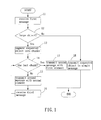
- Fig.1 is a flowchart of a method for retrieving an object from a device management (DM) client to a DM server according to an embodiment of the present invention.
- the DM client can be a mobile device such as a cellular phone, PDA device, portable computer, tablet computer, smart phone, handheld network device, or the like.
- the method in Fig.1 begins at step 11, where the DM client receives a first message issued from the DM server.
- the DM server wants to retrieve an object from the DM client, the DM server issues the first message to the DM client to request the retrieval of the object.
- the first message can comprise a Get command, which is defined in the OMA DM Protocol, to instruct the client to return the requested object.
- the method proceeds to step 12.
- the DM client determines whether the requested object is a large object.
- the DM client can, for example, check the size of the requested object to make the decision. That is, if the size of the requested object is too large to be included in a single message, then the requested object is a large object. If the requested object is the large object, the method proceeds to step 13; otherwise, the method proceeds to step 18.
- the DM client segments the requested object into a plurality of chunks, where the size of each chunk is small enough to fit into a single message for transmission. The method then proceeds to step 14.
- the DM client directly delivers the requested object to the DM server in a single DM message since the requested object is not a large object (i.e. can be included in a single DM message). After step 18 is executed, the method is completed.
- step 14 the DM client determines whether the next chunk to be transmitted is the last one of the chunks. If so, the method proceeds to step 17; otherwise, the method goes to step 15.
- step 17 since the next chunk is the last chunk, the DM client transmits the next chunk to the DM server in a second message which comprises a first element to indicate that there is no more chunk to be transmitted.
- the second message can comprise a Result command, which is also defined in the OMA DM Protocol, to reply to the Get command.
- the first element can be a Final element defined in the OMA DM Protocol.
- the DM server would know that the requested object has been wholly retrieved. After step 17 is executed, the method is completed.
- the DM client transmits the next chunk to the DM server in a second message which comprises a second element to indicate that there is still at least one more chunk to be transmitted.
- the second element can be a MoreData element defined in the OMA DM Protocol.
- the DM server would reply a third message to the DM client for requesting the next chunk.
- the third message can comprise an Alert command with an alert code 1222, which is used in the OMA DM Protocol to ask for more messages.
- the third message can further include a status response of the DM server to the received second message containing the second element.
- the status response can have a code of 213 to indicate that the chunked item is accepted and buffered, as defined in the OMA DM Protocol.
- step 16 the DM client receives the third message mentioned above from the DM server. Since the third message asks the DM client for the next chunk of the requested object, the method returns to step 14 to start the transmission of the next chunk.
- the third message received by the DM client in step 16 further comprises a Get command
- the second message including the next chunk of the requested object transmitted by the DM client in steps 15 and 17 comprises a Result command, which can be used to reply to the Get command of the third message.
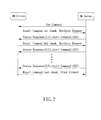
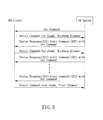
- Fig.2 and Fig.3 show two implementations of the message exchanging process between the DM server and client according to the embodiment in Fig.1 . Please note that these two implementations are just examples, not intended to limit the scope of the present invention.
- a large object is retrieved from the DM client to the DM server.
- the server first sends a message containing a Get command to the client, and the client replies with a message containing a Result command, the first chunk of the large object and a MoreData element.
- the server sends a message containing a status response with the code 213 and an alert command with the alert code 1222 to request the next chunk of the large object, and the client replies with a message containing a Result command, the second chunk of the large object and a MoreData element.
- the above request/response process would be repeated until the client sends a message containing a Result command, the last chunk of the large object and a Final element.
- Fig.3 is similar to Fig.2 except that the message sent by the DM server to request the next chunk further includes a Get command. Then, in Fig.3 , each Result command sent by the client can be considered as a response to a respective Get command sent by the server.
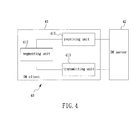
- Fig.4 shows a block diagram of an embodiment of a DM system implementing the method in Fig.1 according to the present invention.
- the DM system 40 comprises a DM client 41 and a DM server 42.
- the DM client 41 is for retrieving an object therefrom to the DM server 42, and comprises a receiving unit 411, a segmenting unit 412 and a transmitting unit 413.
- the receiving unit 411 receives from the DM server 42 the above first message for requesting the retrieval of an object.
- the first message can comprise a Get command.
- the segmenting unit 412 segments the object into a plurality of chunks in response to the received first message.
- the segmenting unit 412 determines whether to perform the segmentation according to whether the object requested by the received first message is a large object.
- the transmitting unit 413 transmits each chunk in a respective second message mentioned above to the DM server 42, where the second message including the last chunk comprises the first element to indicate that there is no more chunk to be transmitted, and the second message including any other chunk includes the second element to indicate that there is at least one more chunk to be transmitted.
- the second message can comprise a Result command
- the first element can be a Final element
- the second element can be a MoreData element.
- the receiving unit 411 receives a third message for requesting the next chunk sent from the DM server 42 when the DM server 42 receives the second message including the second element from the transmitting unit 413.
- the third message can comprise an Alert command with an alert code 1222.
- the third message can further include a status response of the DM server 42 to the received second message containing the second element.
- the status response can have a code of 213 to indicate that the chunked item is accepted and buffered.
- the transmitting unit 413 would transmit the second message including the next chunk to the DM server 42.
Landscapes
- Engineering & Computer Science (AREA)
- Computer Networks & Wireless Communication (AREA)
- Signal Processing (AREA)
- Computer Hardware Design (AREA)
- Theoretical Computer Science (AREA)
- General Engineering & Computer Science (AREA)
- Physics & Mathematics (AREA)
- General Physics & Mathematics (AREA)
- Software Systems (AREA)
- Computer And Data Communications (AREA)
- Information Transfer Between Computers (AREA)
- Data Exchanges In Wide-Area Networks (AREA)
- Communication Control (AREA)
- Telephonic Communication Services (AREA)
- Mobile Radio Communication Systems (AREA)
Abstract
A method for retrieving an object from a device management (DM) client and an associated DM system are disclosed to enable a DM server to retrieve a large object from the DM client. The method comprises receiving a first message issued from the DM server by the DM client, segmenting the object into a plurality of chunks by the DM client in response to receiving the first message, and transmitting each of the chunks in a respective second message to the DM server by the DM client. The first message is used for retrieving the object. The second message including the last chunk comprises a first element to indicate that there is no more chunk to be transmitted, and the second message including any other chunk includes a second element to indicate that there is at least one more chunk to be transmitted.
Description
- The present invention relates to device management (DM), and more particularly to a method for retrieving an object from a DM client and an associated DM system.
- In OMA (Open Mobile Alliance) DM (Device Management) Protocol specification, the DM server and client communicate with each other by DM messages. In particular, the DM messages are exchanged between the server and client in a request/response form, that is, after the server/client transmits a message to the client/server, the server/client would not transmit another message until receiving a message in response to the previous-transmitted message from the client/server.
- When the server wants to deliver an object to the client, the server would send a DM message containing an Add command and the object to the client. The OMA DM Protocol also supports the large object mechanism to deliver a large object from the server to the client. The large object is an object whose data size is too large to be included and transmitted in a single DM message. Thus, the server would transmit the large object to the client by segmenting the large object into multiple chunks and transmitting each chunk by one message. That is, the server delivers the large object to the client by multiple messages instead of single message.
- However, if the server needs to retrieve a large object from the client, the OMA DM Protocol cannot handle this case. When retrieving an object or data from the client, the server sends a message containing a Get command to the client. When receiving the Get command from the server, the client replies a message containing a Result command to the server. If the retrieved object is too large to fit in a message, the server will receive only a message which just contains part of the retrieved object, or get a fail code to indicate the requested object size is too large.
- Several OMA DM MOs (Management Object) are popularly implemented, and may contain large data in a node of the client (e.g. FUMO, SCOMO, DiagMonMO, etc.). The large data may contain useful information for the server. If the server cannot retrieve the large data normally, the server may not well perform some functions because of lack of the useful information.
- It is therefore one objective of the present invention to provide a method for retrieving an object from a device management (DM) client and an associated DM system, thereby enabling a DM server to retrieve a large object from the DM client.
- In one embodiment of the present invention, a method for retrieving an object from a DM client to a DM server is provided. The method comprises steps of: receiving a first message issued from the DM server by the DM client, wherein the first message is used for retrieving the object; segmenting the object into a plurality of chunks by the DM client in response to receiving the first message; and transmitting each of the chunks in a respective second message to the DM server by the DM client, wherein the second message including the last one of the chunks comprises a first element to indicate that there is no more chunk to be transmitted, and the second message including any other one of the chunks includes a second element to indicate that there is at least one more chunk to be transmitted.
- In another embodiment of the present invention, a DM client is provided. The DM client comprises: a receiving unit for receiving a first message issued from a DM server, wherein the first message is used by the DM server to retrieve an object from the DM client; a segmenting unit for segmenting the object into a plurality of chunks in response to the received first message; and a transmitting unit for transmitting each of the chunks in a respective second message to the DM server, wherein the second message including the last one of the chunks comprises a first element to indicate that there is no more chunk to be transmitted, and the second message including any other one of the chunks includes a second element to indicate that there is at least one more chunk to be transmitted.
-
-
Fig.1 is a flowchart of a method for retrieving an object from a DM client to a DM server according to an embodiment of the present invention. -
Fig.2 andFig.3 show two implementations of the message exchanging process between the DM server and client according to the embodiment inFig.1 . -
Fig.4 shows a block diagram of an embodiment of a DM system implementing the method inFig.1 according to the present invention. - Reference will now to be made in detail to embodiments of the present invention, which are illustrated in the accompanying drawings.
Fig.1 is a flowchart of a method for retrieving an object from a device management (DM) client to a DM server according to an embodiment of the present invention. Both the DM client and server can support the OMA DM Protocol. The DM client can be a mobile device such as a cellular phone, PDA device, portable computer, tablet computer, smart phone, handheld network device, or the like. The method inFig.1 begins atstep 11, where the DM client receives a first message issued from the DM server. When the DM server wants to retrieve an object from the DM client, the DM server issues the first message to the DM client to request the retrieval of the object. For example, the first message can comprise a Get command, which is defined in the OMA DM Protocol, to instruct the client to return the requested object. Next, the method proceeds tostep 12. - In
step 12, the DM client determines whether the requested object is a large object. The DM client can, for example, check the size of the requested object to make the decision. That is, if the size of the requested object is too large to be included in a single message, then the requested object is a large object. If the requested object is the large object, the method proceeds tostep 13; otherwise, the method proceeds tostep 18. Instep 13, the DM client segments the requested object into a plurality of chunks, where the size of each chunk is small enough to fit into a single message for transmission. The method then proceeds tostep 14. On the other hand, instep 18, the DM client directly delivers the requested object to the DM server in a single DM message since the requested object is not a large object (i.e. can be included in a single DM message). Afterstep 18 is executed, the method is completed. - In
step 14, the DM client determines whether the next chunk to be transmitted is the last one of the chunks. If so, the method proceeds tostep 17; otherwise, the method goes tostep 15. Instep 17, since the next chunk is the last chunk, the DM client transmits the next chunk to the DM server in a second message which comprises a first element to indicate that there is no more chunk to be transmitted. For example, if the first message received instep 11 comprises the Get command, the second message can comprise a Result command, which is also defined in the OMA DM Protocol, to reply to the Get command. Also, the first element can be a Final element defined in the OMA DM Protocol. When receiving the second message containing the first element, the DM server would know that the requested object has been wholly retrieved. Afterstep 17 is executed, the method is completed. - On the other hand, in
step 15, since the next chunk is not the last chunk, the DM client transmits the next chunk to the DM server in a second message which comprises a second element to indicate that there is still at least one more chunk to be transmitted. For example, the second element can be a MoreData element defined in the OMA DM Protocol. When receiving the second message containing the second element, the DM server would reply a third message to the DM client for requesting the next chunk. For example, the third message can comprise an Alert command with an alert code 1222, which is used in the OMA DM Protocol to ask for more messages. The third message can further include a status response of the DM server to the received second message containing the second element. For example, the status response can have a code of 213 to indicate that the chunked item is accepted and buffered, as defined in the OMA DM Protocol. Afterstep 15 is executed, the method then proceeds tostep 16. - In
step 16, the DM client receives the third message mentioned above from the DM server. Since the third message asks the DM client for the next chunk of the requested object, the method returns tostep 14 to start the transmission of the next chunk. - Preferably, the third message received by the DM client in
step 16 further comprises a Get command, and the second message including the next chunk of the requested object transmitted by the DM client insteps -
Fig.2 andFig.3 show two implementations of the message exchanging process between the DM server and client according to the embodiment inFig.1 . Please note that these two implementations are just examples, not intended to limit the scope of the present invention. InFig.2 , a large object is retrieved from the DM client to the DM server. The server first sends a message containing a Get command to the client, and the client replies with a message containing a Result command, the first chunk of the large object and a MoreData element. Then, the server sends a message containing a status response with the code 213 and an alert command with the alert code 1222 to request the next chunk of the large object, and the client replies with a message containing a Result command, the second chunk of the large object and a MoreData element. The above request/response process would be repeated until the client sends a message containing a Result command, the last chunk of the large object and a Final element.Fig.3 is similar toFig.2 except that the message sent by the DM server to request the next chunk further includes a Get command. Then, inFig.3 , each Result command sent by the client can be considered as a response to a respective Get command sent by the server. -
Fig.4 shows a block diagram of an embodiment of a DM system implementing the method inFig.1 according to the present invention. As shown inFig.4 , theDM system 40 comprises aDM client 41 and aDM server 42. TheDM client 41 is for retrieving an object therefrom to theDM server 42, and comprises a receivingunit 411, asegmenting unit 412 and a transmittingunit 413. The receivingunit 411 receives from theDM server 42 the above first message for requesting the retrieval of an object. For example, the first message can comprise a Get command. The segmentingunit 412 segments the object into a plurality of chunks in response to the received first message. Preferably, the segmentingunit 412 determines whether to perform the segmentation according to whether the object requested by the received first message is a large object. The transmittingunit 413 transmits each chunk in a respective second message mentioned above to theDM server 42, where the second message including the last chunk comprises the first element to indicate that there is no more chunk to be transmitted, and the second message including any other chunk includes the second element to indicate that there is at least one more chunk to be transmitted. For example, the second message can comprise a Result command, the first element can be a Final element, and the second element can be a MoreData element. - Furthermore, the receiving
unit 411 receives a third message for requesting the next chunk sent from theDM server 42 when theDM server 42 receives the second message including the second element from the transmittingunit 413. For example, the third message can comprise an Alert command with an alert code 1222. The third message can further include a status response of theDM server 42 to the received second message containing the second element. For example, the status response can have a code of 213 to indicate that the chunked item is accepted and buffered. When the receivingunit 411 receives the third message, the transmittingunit 413 would transmit the second message including the next chunk to theDM server 42. - While the present invention has been shown and described with reference to the preferred embodiments thereof and the illustrative drawings, it should not be considered as limited thereby. Various possible modifications and alterations can be conceived by persons skilled without departing from the scope and the spirit of the present invention.
Claims (15)
- A method for retrieving an object from a device management (DM) client to a DM server, the method comprising steps of:receiving a first message issued from the DM server by the DM client,wherein the first message is used for retrieving the object; segmenting the object into a plurality of chunks by the DM client in response
to receiving the first message; and transmitting each of the chunks in a respective second message to the DM
server by the DM client, wherein the second message including the last one of the chunks comprises a first element to indicate that there is no more chunk to be transmitted, and the second message including any other one of the chunks includes a second element to indicate that there is at least one more chunk to be transmitted. - The method of claim 1, wherein the segmenting step is executed when the object is a large object whose size is too large to be included in single second message.
- The method of claim 1, further comprising:receiving by the DM client a third message sent by the DM server when the DM server receives the second message including the second element, wherein the third message includes a status response of the DM server to the received second message including the second element.
- The method of claim 1, wherein the first message comprises a Get command.
- The method of claim 4, wherein the second message comprises a Result command.
- The method of claim 1, further comprising:receiving a third message for requesting a next one of the chunks by the DM client, wherein the third message is sent by the DM server when the DM server receives the second message including the second element.
- The method of claim 6, wherein the third message comprises an Alert command with an alert code.
- The method of claim 6, wherein the DM client transmits the second message including the next one of the chunks to the DM server when receiving the third message; and
the third message comprises a Get command, and the second message
including the next one of the chunks comprises a Result command. - A device management (DM) client comprising:a receiving unit for receiving a first message issued from a DM server, wherein the first message is used by the DM server to retrieve an object from the DM client;a segmenting unit for segmenting the object into a plurality of chunks in response to the received first message; anda transmitting unit for transmitting each of the chunks in a respective second message to the DM server, wherein the second message including the last one of the chunks comprises a first element to indicate that there is no more chunk to be transmitted, and the second message including any other one of the chunks includes a second element to indicate that there is at least one more chunk to be transmitted.
- The DM client of claim 9, wherein the segmenting unit segments the object into the chunks when the object is a large object whose size is too large to be included in single second message.
- The DM client of claim 9, wherein the receiving unit receives a third message sent by the DM server when the DM server receives the second message including the second element, wherein the third message includes a status response of the DM server to the received second message including the second element.
- The DM client of claim 9, wherein the first message comprises a Get command and the second message comprises a Result command.
- The DM client of claim 9, wherein the receiving unit receives a third message for requesting a next one of the chunks, wherein the third message is sent by the DM server when the DM server receives the second message including the second element.
- The DM client of claim 13, wherein the third message comprises an Alert command with an alert code.
- The DM client of claim 13, wherein the transmitting unit transmits the second message including the next one of the chunks to the DM server when the receiving unit receives the third message; and
the third message comprises a Get command, and the second message including the next one of the chunks comprises a Result command.
Applications Claiming Priority (2)
| Application Number | Priority Date | Filing Date | Title |
|---|---|---|---|
| US32727310P | 2010-04-23 | 2010-04-23 | |
| US13/017,798 US20110264763A1 (en) | 2010-04-23 | 2011-01-31 | Method for retrieving object from device management client and associated device management system |
Publications (1)
| Publication Number | Publication Date |
|---|---|
| EP2381620A1 true EP2381620A1 (en) | 2011-10-26 |
Family
ID=44358236
Family Applications (1)
| Application Number | Title | Priority Date | Filing Date |
|---|---|---|---|
| EP11003072A Withdrawn EP2381620A1 (en) | 2010-04-23 | 2011-04-12 | Method for retrieving object from device management client and associated device management system |
Country Status (6)
| Country | Link |
|---|---|
| US (1) | US20110264763A1 (en) |
| EP (1) | EP2381620A1 (en) |
| JP (1) | JP5162686B2 (en) |
| KR (1) | KR101258990B1 (en) |
| CN (1) | CN102238166A (en) |
| TW (1) | TW201203952A (en) |
Cited By (1)
| Publication number | Priority date | Publication date | Assignee | Title |
|---|---|---|---|---|
| EP2579621A1 (en) * | 2011-10-05 | 2013-04-10 | HTC Corporation | Method of reducing message transmission between DM client and DM server and related communication device |
Families Citing this family (2)
| Publication number | Priority date | Publication date | Assignee | Title |
|---|---|---|---|---|
| CN102340507A (en) * | 2011-10-18 | 2012-02-01 | 中兴通讯股份有限公司 | Large object transmission method and system |
| US10353754B2 (en) * | 2015-12-31 | 2019-07-16 | Entefy Inc. | Application program interface analyzer for a universal interaction platform |
Citations (2)
| Publication number | Priority date | Publication date | Assignee | Title |
|---|---|---|---|---|
| WO2008003355A1 (en) * | 2006-07-06 | 2008-01-10 | Telefonaktiebolaget Lm Ericsson (Publ) | Method of transmitting a multimedia message over a network |
| EP2079220A1 (en) * | 2008-01-08 | 2009-07-15 | New Act Ltd. | System and method for client synchronization for a communication device |
Family Cites Families (8)
| Publication number | Priority date | Publication date | Assignee | Title |
|---|---|---|---|---|
| JPH1117769A (en) * | 1997-06-20 | 1999-01-22 | Nec Corp | Confirmation type message communication system |
| AU2002359548B2 (en) * | 2001-12-03 | 2005-03-24 | Nokia Technologies Oy | Apparatus, and associated method, for retrieving mobile-node logic tree information |
| JP2003218936A (en) * | 2002-01-18 | 2003-07-31 | Nissan Motor Co Ltd | Variable length message transmission / reception method and transmission / reception device |
| JP2004240802A (en) * | 2003-02-07 | 2004-08-26 | Sony Corp | Data processing system, data processing method, and computer program |
| KR100508157B1 (en) * | 2003-04-01 | 2005-08-17 | 엘지엔시스(주) | Block data transmission method between client and server systems of multi-agent structure |
| FI116958B (en) * | 2003-07-01 | 2006-04-13 | Nokia Corp | Determination of management nodes in a device management system |
| US10339276B2 (en) * | 2006-07-24 | 2019-07-02 | Nokia Technologies Oy | Method, apparatus and computer program product for continuously providing a license to a network element via a remote connection |
| JP4983674B2 (en) * | 2008-03-24 | 2012-07-25 | セイコーエプソン株式会社 | Communication system, processing request device, processing response device, and program thereof |
-
2011
- 2011-01-31 US US13/017,798 patent/US20110264763A1/en not_active Abandoned
- 2011-02-09 TW TW100104214A patent/TW201203952A/en unknown
- 2011-02-14 CN CN2011100385744A patent/CN102238166A/en active Pending
- 2011-03-07 JP JP2011048619A patent/JP5162686B2/en not_active Expired - Fee Related
- 2011-03-14 KR KR1020110022512A patent/KR101258990B1/en not_active Expired - Fee Related
- 2011-04-12 EP EP11003072A patent/EP2381620A1/en not_active Withdrawn
Patent Citations (2)
| Publication number | Priority date | Publication date | Assignee | Title |
|---|---|---|---|---|
| WO2008003355A1 (en) * | 2006-07-06 | 2008-01-10 | Telefonaktiebolaget Lm Ericsson (Publ) | Method of transmitting a multimedia message over a network |
| EP2079220A1 (en) * | 2008-01-08 | 2009-07-15 | New Act Ltd. | System and method for client synchronization for a communication device |
Non-Patent Citations (2)
| Title |
|---|
| LAKSHMESHWAR S ET AL: "Suspend and Resume Feature for OMA DM Large Object Delivery", GRID AND PERVASIVE COMPUTING WORKSHOPS, 2008. GPC WORKSHOPS '08. THE 3RD INTERNATIONAL CONFERENCE ON, IEEE, PISCATAWAY, NJ, USA, 25 May 2008 (2008-05-25), pages 206 - 212, XP031270045, ISBN: 978-0-7695-3177-9 * |
| OMA OPEN MOBILE ALLIANCE: "OMA Device Management Protocol Approved Version 1.2", 9 February 2007 (2007-02-09), pages 1 - 53, XP002634038, Retrieved from the Internet <URL:http://member.openmobilealliance.org/ftp/Public_documents/DM/Permanent_documents/> [retrieved on 20110421] * |
Cited By (1)
| Publication number | Priority date | Publication date | Assignee | Title |
|---|---|---|---|---|
| EP2579621A1 (en) * | 2011-10-05 | 2013-04-10 | HTC Corporation | Method of reducing message transmission between DM client and DM server and related communication device |
Also Published As
| Publication number | Publication date |
|---|---|
| TW201203952A (en) | 2012-01-16 |
| CN102238166A (en) | 2011-11-09 |
| KR101258990B1 (en) | 2013-04-26 |
| KR20110118561A (en) | 2011-10-31 |
| US20110264763A1 (en) | 2011-10-27 |
| JP2011234345A (en) | 2011-11-17 |
| JP5162686B2 (en) | 2013-03-13 |
Similar Documents
| Publication | Publication Date | Title |
|---|---|---|
| EP1507363A3 (en) | Apparatus and method for managing home-devices remotely | |
| US8307062B2 (en) | Standardized mechanism of remote management of embedded radio modules | |
| EP2723024A1 (en) | Method, device and system for sharing microblog message | |
| CN102006568A (en) | Method, equipment and system for providing portrait service | |
| KR101809365B1 (en) | Message Fragmentation Method using a MQTT Protocol in M2M/IoT Platforms | |
| CN103488511A (en) | Method and device for inquiring file opening mode | |
| CN109151059A (en) | A kind of file uploading method, device, electronic equipment and storage medium | |
| RU2005120666A (en) | AGNOSTIC TRANSPORT SERVICE OF TRANSMISSION OF MESSAGES WITH EXTRACT MODE | |
| CN110912805B (en) | Synchronization method, terminal, server and system for message reading status | |
| JP6251927B2 (en) | Method and apparatus for sharing environmental context | |
| CN110166487B (en) | Local area network equipment information transmission method, main equipment, storage medium and intelligent equipment | |
| US20110264763A1 (en) | Method for retrieving object from device management client and associated device management system | |
| US9026582B2 (en) | Device management methods and related apparatus for enhancing applicability of status messages in response to commands | |
| CN101146130B (en) | A method and system for transmitting data between clients | |
| CN105681262A (en) | Interaction message allocating method and system | |
| CA2498438C (en) | Font data processing system and method | |
| JP4774275B2 (en) | Communication control system and control device | |
| CN106940675B (en) | System log query method | |
| CN101741889A (en) | Method, system and service for centralized management of network services | |
| JP4370954B2 (en) | Dictionary information automatic update system and method | |
| KR101529162B1 (en) | System of providing synchronization information and method thereof | |
| KR101319940B1 (en) | Push System using Session Relay Server and Method Therefor | |
| KR20190136499A (en) | Apparatus and method for messaging service | |
| JP3820260B2 (en) | Image transmission system and image transmission method | |
| US20140289372A1 (en) | Methods and systems for content delivery |
Legal Events
| Date | Code | Title | Description |
|---|---|---|---|
| 17P | Request for examination filed |
Effective date: 20110412 |
|
| AK | Designated contracting states |
Kind code of ref document: A1 Designated state(s): AL AT BE BG CH CY CZ DE DK EE ES FI FR GB GR HR HU IE IS IT LI LT LU LV MC MK MT NL NO PL PT RO RS SE SI SK SM TR |
|
| AX | Request for extension of the european patent |
Extension state: BA ME |
|
| 17Q | First examination report despatched |
Effective date: 20110928 |
|
| PUAI | Public reference made under article 153(3) epc to a published international application that has entered the european phase |
Free format text: ORIGINAL CODE: 0009012 |
|
| STAA | Information on the status of an ep patent application or granted ep patent |
Free format text: STATUS: THE APPLICATION IS DEEMED TO BE WITHDRAWN |
|
| 18D | Application deemed to be withdrawn |
Effective date: 20121106 |