EP2375673A2 - Mobile system and IP packet transferring method - Google Patents
Mobile system and IP packet transferring method Download PDFInfo
- Publication number
- EP2375673A2 EP2375673A2 EP20100012840 EP10012840A EP2375673A2 EP 2375673 A2 EP2375673 A2 EP 2375673A2 EP 20100012840 EP20100012840 EP 20100012840 EP 10012840 A EP10012840 A EP 10012840A EP 2375673 A2 EP2375673 A2 EP 2375673A2
- Authority
- EP
- European Patent Office
- Prior art keywords
- mobile terminal
- packet
- network
- mobile
- network node
- Prior art date
- Legal status (The legal status is an assumption and is not a legal conclusion. Google has not performed a legal analysis and makes no representation as to the accuracy of the status listed.)
- Withdrawn
Links
Images



Classifications
-
- H—ELECTRICITY
- H04—ELECTRIC COMMUNICATION TECHNIQUE
- H04L—TRANSMISSION OF DIGITAL INFORMATION, e.g. TELEGRAPHIC COMMUNICATION
- H04L47/00—Traffic control in data switching networks
- H04L47/70—Admission control; Resource allocation
- H04L47/82—Miscellaneous aspects
- H04L47/825—Involving tunnels, e.g. MPLS
-
- H—ELECTRICITY
- H04—ELECTRIC COMMUNICATION TECHNIQUE
- H04L—TRANSMISSION OF DIGITAL INFORMATION, e.g. TELEGRAPHIC COMMUNICATION
- H04L45/00—Routing or path finding of packets in data switching networks
- H04L45/302—Route determination based on requested QoS
-
- H—ELECTRICITY
- H04—ELECTRIC COMMUNICATION TECHNIQUE
- H04L—TRANSMISSION OF DIGITAL INFORMATION, e.g. TELEGRAPHIC COMMUNICATION
- H04L47/00—Traffic control in data switching networks
- H04L47/10—Flow control; Congestion control
- H04L47/24—Traffic characterised by specific attributes, e.g. priority or QoS
-
- H—ELECTRICITY
- H04—ELECTRIC COMMUNICATION TECHNIQUE
- H04L—TRANSMISSION OF DIGITAL INFORMATION, e.g. TELEGRAPHIC COMMUNICATION
- H04L47/00—Traffic control in data switching networks
- H04L47/70—Admission control; Resource allocation
-
- H—ELECTRICITY
- H04—ELECTRIC COMMUNICATION TECHNIQUE
- H04L—TRANSMISSION OF DIGITAL INFORMATION, e.g. TELEGRAPHIC COMMUNICATION
- H04L47/00—Traffic control in data switching networks
- H04L47/70—Admission control; Resource allocation
- H04L47/76—Admission control; Resource allocation using dynamic resource allocation, e.g. in-call renegotiation requested by the user or requested by the network in response to changing network conditions
- H04L47/765—Admission control; Resource allocation using dynamic resource allocation, e.g. in-call renegotiation requested by the user or requested by the network in response to changing network conditions triggered by the end-points
- H04L47/767—Admission control; Resource allocation using dynamic resource allocation, e.g. in-call renegotiation requested by the user or requested by the network in response to changing network conditions triggered by the end-points after changing the attachment point, e.g. after hand-off
-
- H—ELECTRICITY
- H04—ELECTRIC COMMUNICATION TECHNIQUE
- H04L—TRANSMISSION OF DIGITAL INFORMATION, e.g. TELEGRAPHIC COMMUNICATION
- H04L47/00—Traffic control in data switching networks
- H04L47/70—Admission control; Resource allocation
- H04L47/80—Actions related to the user profile or the type of traffic
- H04L47/805—QOS or priority aware
-
- H—ELECTRICITY
- H04—ELECTRIC COMMUNICATION TECHNIQUE
- H04L—TRANSMISSION OF DIGITAL INFORMATION, e.g. TELEGRAPHIC COMMUNICATION
- H04L47/00—Traffic control in data switching networks
- H04L47/70—Admission control; Resource allocation
- H04L47/82—Miscellaneous aspects
- H04L47/824—Applicable to portable or mobile terminals
-
- H—ELECTRICITY
- H04—ELECTRIC COMMUNICATION TECHNIQUE
- H04W—WIRELESS COMMUNICATION NETWORKS
- H04W36/00—Hand-off or reselection arrangements
- H04W36/0005—Control or signalling for completing the hand-off
- H04W36/0011—Control or signalling for completing the hand-off for data sessions of end-to-end connection
- H04W36/0019—Control or signalling for completing the hand-off for data sessions of end-to-end connection adapted for mobile IP [MIP]
-
- H—ELECTRICITY
- H04—ELECTRIC COMMUNICATION TECHNIQUE
- H04W—WIRELESS COMMUNICATION NETWORKS
- H04W40/00—Communication routing or communication path finding
- H04W40/34—Modification of an existing route
- H04W40/36—Modification of an existing route due to handover
-
- H—ELECTRICITY
- H04—ELECTRIC COMMUNICATION TECHNIQUE
- H04W—WIRELESS COMMUNICATION NETWORKS
- H04W28/00—Network traffic management; Network resource management
- H04W28/16—Central resource management; Negotiation of resources or communication parameters, e.g. negotiating bandwidth or QoS [Quality of Service]
- H04W28/24—Negotiating SLA [Service Level Agreement]; Negotiating QoS [Quality of Service]
-
- H—ELECTRICITY
- H04—ELECTRIC COMMUNICATION TECHNIQUE
- H04W—WIRELESS COMMUNICATION NETWORKS
- H04W36/00—Hand-off or reselection arrangements
- H04W36/14—Reselecting a network or an air interface
-
- H—ELECTRICITY
- H04—ELECTRIC COMMUNICATION TECHNIQUE
- H04W—WIRELESS COMMUNICATION NETWORKS
- H04W80/00—Wireless network protocols or protocol adaptations to wireless operation
- H04W80/04—Network layer protocols, e.g. mobile IP [Internet Protocol]
Definitions
- the present invention relates to a mobile network for allowing a mobile terminal to communicate with another terminal via a destination network and an IP (Internet Protocol) packet transferring method.
- IP Internet Protocol
- IP packet communication is extensively used for data communication using personal computers and other data processing units.
- IP packet communication a particular IP address is assigned to each terminal in accordance with a network to which the terminal is usually connected. Therefore, to allow a mobile terminal handed over to another network to hold communication via the network, it is necessary to reassign an IP address particular to the new network to the mobile terminal. However, the other terminals cannot identify the mobile terminal handed over and provided with the new IP address.
- IP Encapsulation For encapsulation, there are available IP in IP Encapsulation recommended in IETF RFC 2003, Minimal Encapsulation within IP recommended in RFC 2004, and Generic Routing Encapsulation recommended in RFC 1701. The IP in IP Encapsulation scheme transfers a given IP packet by inserting it in another IP packet.
- a conventional mobile network includes a fixed terminal, a notebook size, personal computer, handy phone or similar mobile terminal, a home agent for managing an IP address assigned to the mobile terminal, and foreign agents each for managing communication held on the mobile terminal at a particular destination.
- the fixed terminal is a personal computer or simi lar data processing unit situated at a fixed station.
- the home agent stores a binding table listing information for the transfer of encapsulated IP packets to the foreign agents.
- the conventional mobile network has some problems left unsolved, as follows. Assume that a fixed terminals sends a plurality of packets of different degrees of priority to a mobile terminal connected to any one of the foreign agents. Then, the home agent encapsulates an IP packet with a low degree of priority and an IP packet with a high degree of priority by the same processing and then sends them to the foreign agent in the same QoS (Quality of Service) class. This is because QoS information is not registered at the binding table of the home agent.
- QoS Quality of Service
- the binding table lists only a single destination for each home address or IP address assigned to the mobile terminal, limiting the transfer of encapsulated IP packets to a single destination. Consequently, when the foreign network is a mobile communication network, the mobile terminal cannot receive IP packets from a plurality of foreign agents at the same time. This makes, e.g., soft hand-over impracticable.
- a mobile network for communication between a plurality of terminals of the present invention includes a first IP node for generating, on receiving an IP packet meant for a mobile terminal usually connected to the first IP node, but handed over, an encapsulated IP packet for transferring the IP packet to the destination of the mobile terminal, and transfer ring the encapsulated IP packet to the destination via a path matching with the QoS class of the encapsulated IP packet.
- a second IP node separates, when the mobile terminal is connected to the second IP node at the destination, the IP packet from the encapsulated IP packet received from the first IP node and sends the IP packet to the mobile terminal.
- the mobile terminal handed over reports its destination to the first IP node together with QoS information for setting the QoS class of the encapsulated IP packet.
- the mobile network includes a fixed terminal 102 and a notebook size, personal computer, handy phone or similar mobile terminals 112.
- An HA (Home Agent) 202 manages an IP address assigned to the mobile terminal 112.
- FAs (Foreign Agents) 302 and 312 each manage communication held on the mobile terminal 112 at a destination.
- the HA 202 and FAs 302 and 312 are usually referred to as IP nodes.
- the fixed terminal 102 is a personal computer or similar data processing unit situated at a fixed station.
- the HA 202 and FAs 302 and 312 are servers or similar data processing units.
- the mobile terminal 112 is usually connected to a home network 412; which may be Ethernet, a radio LAN (Local Area Network) or a mobile communication network by way of example.
- the mobile terminal 112 is capable of accessing an IP network 402 via the home network 412.
- a foreign network 422 or 432 which may also be Ethernet, a radio LAN or a mobile communication network.
- the foreign networks 422 and 432 constitute networks for accessing the IP network 402.
- the HA 202 encapsulates the IP packet A to thereby produce an encapsulated IP packet B.
- the encapsulated IP packet B is transferred from the HA 202 to, e.g., the FA 302 to which the mobile terminal 112 is currently connected via the IP network 402.
- the FA 302 separates the IP packet A from the encapsulated IP packet B and sends the IP packet A to the mobile terminal 112.
- the HA 202 stores a binding table 212 listing information for the transfer of the encapsulated IP packet B to the FA 302 or 312.
- the binding table 212 has a plurality of pages each listing various kinds of information including an IP address or Care-of address and the term of validity of the page itself.
- information listed on the binding table 202 is valid only for a preselected term.
- the mobile terminal 112 immediately sends information for updating the binding table 202 to the HA 202 when handed over from, e.g., the FA 302 to the FA 312. Even when such hand-over does not occur, the mobile terminal 112 periodically sends the above information to the HA 202.
- a mobile network embodying the present invention includes a fixed terminal 100 and a mobile terminal 110.
- the fixed terminal 100 is a personal computer or similar fixed, data processing unit while the mobile terminal 110 is a notebook size, personal computer, handy phone or similar mobile data processing unit.
- An HA 200 receives an IP packet meant for the mobile terminal 110 from the fixed terminal 100, encapsulates the IP packet, and sends the encapsulated packet to the mobile terminal 110.
- FAs 300 and 310 each separate the IP packet meant for the mobile terminal 110 from the encapsulated IP packet.
- the HA 200 and FAs 300 and 310 constitute IP nodes.
- the HA 200 and FAs 300 and 310 are servers or similar data processing units.
- the fixed terminal 100, HA 200 and FAs 300 and 310 each include a processing device for executing various kinds of processing to be described later and a particular storage for storing preselected information, although not shown specifically.
- the mobile terminal 110 is usually connected to a home network 410, which may be Ethernet, a radio LAN or a mobile communication network by way of example.
- the mobile terminal 110 is capable of accessing an IP network 400 via the home network 410.
- a foreign network 420 or 430 which may also be Ethernet, a radio LAN or a mobile communication network.
- the foreign networks 422 and 432 constitute networks for accessing the IP network 402.
- the HA 200 assigns a particular IP address or home address to each of the fixed terminal 100 and mobile terminal 110. so that the terminals 100 and 110 can be unconditionally identified on the IP network 400. Also, a particular IP address or Care-of address is assigned to each of the FAs 300 and 310, so that the FAs 300 and 310 can be unconditionally identified on the IP network 400.
- the mobile terminal 110 is connected to, e.g., the FA 300
- at least one FA 300 reports its Care-of address to the mobile terminal 110.
- the Care-of address is written to a source address field or a destination address field included in the header of an IP packet.
- an IP packet may have a format described in IETF RFC 791.
- the FA 300 or 310 connected to the destination foreign network reports its Care-of address to the mobile terminal 110.
- the mobile terminal 110 sends the received Care-of address to the HA 200.
- the HA 200 manages the home address and Care-of address mobile terminal by mobile terminal and writes such information in a binding table 210, which is stored in the storage.
- FIG. 4 shows a specific configuration of the binding table 210.
- the binding table 210 has a plurality of pages each being assigned to the home address of a particular mobile terminal.
- Each page of the binding table 210 lists QoS to be assigned to encapsulated packets and a Care-of address on the basis of the QoS class of a received IP packet. It is to be noted that the Care-of address may differ from one QoS class to another QoS class or two or more Care-of addresses may be registered at each QoS class.
- the HA 200 encapsulates a received IP packet meant for the mobile terminal 110 in accordance with the information listed on the binding table 210.
- the HA 200 then transfers the encapsulated IP packet to the FA to which the mobile terminal 110 is currently connected.
- the HA 200 may use any one of the schemes recommended in IETF RFC 2003, IETF RFC 2004 and IETF RFC 1701 mentioned earlier.
- the FA 300 or 310 On receiving the encapsulated packet, the FA 300 or 310 separates the IP packet meant for the mobile terminal 110 from the encapsulated IP packet and sends the IP packet to the mobile terminal 110.
- the HA receives the IP packet A via the IP network 400.
- the HA 200 finds the page of the binding table 210 assigned to the mobile terminal 110 by using a destination address included in the IP packet A as a key.
- the destination address is identical with the home address assigned to the mobile terminal 110.
- the HA 200 determines a QoS class to be assigned to an encapsulated packet and a care-of address by using ToS (Type of Service) information also included in the IP packet A as QoS class information. For example, assume that the QoS class of the IP packet A is A as listed on the binding table 210, FIG. 4 . Then, the HA 200 determines that the QoS class of an encapsulated packet is A, and that the destination is the FA 300. Likewise, if the QoS class of the IP packet A is B, then the HA determines that the QoS class of an encapsulated packet is A, and that the destination is FA 300.
- ToS Type of Service
- the HA 200 encapsulates the IP packet A to thereby produce an encapsulated IP packet A' and then sends the IP packet A' to the IP network 400.
- the IP packet A' is transferred to the FA 300 via the IP network 400.
- each IP node on the IP network 400 transfers the IP packet A' toward the FA 300 while giving priority to the packet A' in accordance with the QoS class of the packet A'.
- the FA 300 separates the IP packet A meant for the mobile terminal 110 from the IP packet A' and sends the packet A to the mobile terminal 100.
- priority is given to one or more encapsulated IP packets A' being transferred from the HA 200 to the FA 300 via the IP network 400 in accordance with the QoS class of the packet A'.
- a procedure for the mobile terminal 110 to register its location at the HA 200 will be described hereinafter. Assume that the mobile terminal 110 is moved away from the home network 410 and connected to the foreign network 420. Then, the FA 300 managing the foreign network 420 sends its Care-of address to the mobile terminal 110 in accordance with the IP protocol recommended in IETF RFC 2002. The mobile terminal 110 sends the Care-of address to the HA 200. The HA 200 registers the received Care-of address at the page of the binding table 210 assigned to the mobile terminal 110. This processing is defined as Registration in IETF RFC 2002.
- the mobile terminal 110 in travel is handed over from the FA 300 to the FA 310.
- the FA 310 sends its Care-of address to the mobile terminal 110.
- the mobile terminal 110 again sends the new Care-of address to the HA 200.
- the HA 200 registers the new Care-of address at the binding table 210.
- the information registered at the binding table 210 is valid only for a preselected term.
- the mobile terminal 110 therefore causes the HA 200 to update the information recorded in the binding table 210 at preselected intervals without regard to the hand-over of the mobile terminal 110. This procedure is generally referred to as binding update processing.
- the mobile network 110 sends to the HA 200 QoS information for setting the QoS classes of encapsulated IP packets by using a control packet available for registration or binding update processing.
- the HA 200 sets the contents of the binding table 210 in accordance with the QoS information received from the mobile terminal 110.
- the QoS information may advantageously be implemented by ToS information particular to a Diff-serv (Differentiated Services) protocol.
- the mobile terminal 110 accesses both of the FAs 300 and 310 at the same time. Consequently, the mobile terminal 110 causes the HA 200 to register both of the FAs 300 and 310 at the binding table 210 as the destinations of IP packets.
- the HA 200 can update the destination registered at the binding table 210 on a QoS class basis. For example, as shown in FIG. 6 , the HA 200 can update the contents of the binding table 210 in such a manner as to transfer encapsulated packets belonging to some QoS classes to both of the FAs 300 and 310 while transferring encapsulated packets belonging to the other GoS class only to the FA 300.
- the mobile terminal 110 can also cause the HA 200 to register different FAs at the binding table 210 on a QoS class basis. Further, when the mobile station 110 is connected to three or more foreign networks, it can register three or more destinations at the binding table 210.
- the HA 200 When a plurality of destinations are registered at the binding table 210, the HA 200 generates identical encapsulated packets corresponding in number to the destinations and transfers them to the destinations. In the specific packet flow shown in FIG. 3 , the HA 200 encapsulates the IP packet A into two identical packets A' and A" and transfers each of them to particular one of the FAs 300 and 310 via a particular path.
- the QoS classes registered at the binding table 210 may be of a band guarantee type, a delay priority type, a best effort type or a resend control type.
- the HA 200 updates the contents of the binding table 200, i.e., registers a new FA at the table 200 in accordance with a control packet received from the mobile station, the HA 200 sets up a new path to the FA on a QoS class basis.
- the mobile station 110 holds data communication while designating an FA or FAs on a QoS class basis with a control packet, which is used for registration or binding update processing.
- the HA 200 produces encapsulated packets on a QoS class basis in accordance with information listed on the binding table 210 and thereby implements end-to-end data communication with guaranteed QoS even when the mobile terminal 110 is connected to a foreign network.
- the HA 200 can register a plurality of FAs at the binding table 210 as destinations and can therefore transfer identical IP packets to all of such FAs at the same time. It follows that the mobile station 110 can surely receive IP packets even in a soft hand-over state. Moreover, even when different communication qualities are required and when foreign networks satisfying the communication qualities are different from each other, FAs on the different networks can be registered at the binding table 210 as destinations on a QoS class basis. This successfully implements data communication with guaranteed QoS.
- FIG. 7 for describing an alternative embodiment of the present invention. While the embodiment described above uses the Mobile IPv4 protocol, the alternative embodiment to be described uses a Mobile IPv6 protocol.
- IP addresses called Collocated Care-of addresses are used as the Care-of addresses each being assigned to a particular mobile terminal. Specifically, particular Collocated Care-of address is assigned to each mobile terminal on a foreign network basis.
- the Collocated Care-of addresses are registered at the storage of an HA together with home addresses and managed as a binding table, as in the previous embodiment.
- the Mobile IPv6 protocol can unconditionally identify each terminal with the Collocated Care-of address and therefore makes FAs needless.
- the Mobile IPv6 protocol allows even a fixed terminal and a node terminating with the IPv6 protocol to have respective binding tables.
- the fixed terminal or the node terminating with the Mobile IPv6 protocol can directly communicate with each other without the intermediary of an HA except for a period necessary for the fixed terminal or the node to generate a binding table after the start of communication.
- the alternative embodiment differs from the previous embodiment in that it does not include FAs.
- the fixed terminal 101 also includes its own binding table 221. Further, a home network 411, foreign networks 421 and 431 and IP nodes all are implemented by equipment adaptive to the IPv6 protocol.
- the binding table 211 of the fixed terminal 101 and a binding table 211 stored in an HA 201 each are identical in format with the binding table 210 of the previous embodiment except that Collocated Care-of addresses are listed as destinations in place of FAs.
- a plurality of Collocated Care-of addresses may also be registered together on a QoS class basis.
- a mobile terminal executes registration at the HA 201 when moved away from the home network 411 and connected to the foreign network 421.
- the mobile terminal 111 executes binding update processing.
- the mobile terminal 111 registers QoS information at the HA 201 by using a control packet for registration or binding update processing, as in the previous embodiment.
- the packet A is transferred to the HA 201 via an IP network 401.
- the HA 201 searches the binding table 211 to find the Collocated Care-of address of the mobile terminal 111 on the basis of a destination address included in the IP packet.
- the HA 201 then updates the destination address of the IP packet A in accor dance with the Collocated Care-of address and generates an IP packet B.
- the HA 201 sets up a path to the mobile terminal 111 on a QoS class basis.
- the IP packet B is transferred from the HA 201 to the mobile terminal 111 via the above path.
- the former 111 executes binding update processing meant for the latter 101. More specifically, the binding list of the mobile e terminal 111 is registered at the binding table 221 included in the fixed terminal 101. After registering the binding list and QoS information of the mobile terminal 111, the fixed terminal 101 sends an IP packet to the mobile terminal 111 by using the Collocation Care-of address registered at the binding table 221. More specifically, as shown in FIG. 7 , an IP packet C is directly sent from the fixed terminal 101 to the mobile terminal 111. The QoS class of the IP packet C is based on a QoS class registered at the binding table 221.
- a plurality of Collocated Care-of addresses can be registered at the binding table 221 as destinations, as in the previous embodiment.
- the HA 201 or the fixed terminal 101 sets up paths to the mobile terminal 111 on a QoS class basis, copies the IP packet C by a number corresponding to the destinations, and sends the resulting packets C via the paths.
- the illustrative embodiment like the previous embodiment, allows the mobile terminal 111 to surely receive IP packets even in a soft hand-over state and therefore realizes end-to-end data communication with guaranteed QoS.
- a mobile terminal handed over from one network to another network reports its destination and QoS information to an IP node to which the mobile terminal is usually connected.
- the IP node transfers encapsulated IP packets or IP packets with an updated IP address to the destination of the mobile network via a path matching with a QoS class.
- the present invention therefore realizes a mobile network implementing end-to-end communication with guaranteed QoS.
- the present invention allows a plurality of IP nodes to be registered as the destinations of IP packets.
- the mobile terminal can therefore surely receive the IP packets even in a soft hand-over state.
- the present invention insures communication with guaranteed QoS by setting IP nodes on the foreign networks as destinations on a. QoS class basis.
Landscapes
- Engineering & Computer Science (AREA)
- Computer Networks & Wireless Communication (AREA)
- Signal Processing (AREA)
- Mobile Radio Communication Systems (AREA)
- Data Exchanges In Wide-Area Networks (AREA)
- Small-Scale Networks (AREA)
Abstract
Description
- The present invention relates to a mobile network for allowing a mobile terminal to communicate with another terminal via a destination network and an IP (Internet Protocol) packet transferring method.
- IP packet communication is extensively used for data communication using personal computers and other data processing units. For IP packet communication, a particular IP address is assigned to each terminal in accordance with a network to which the terminal is usually connected. Therefore, to allow a mobile terminal handed over to another network to hold communication via the network, it is necessary to reassign an IP address particular to the new network to the mobile terminal. However, the other terminals cannot identify the mobile terminal handed over and provided with the new IP address.
- Some different schemes have heretofore been proposed to implement data communication on a mobile terminal without changing an IP address when the terminal is handed over to a different network. IETF (Internet Engineering Task Force), for example, has recommended in RFC (Request for Comments) 2002 a mobile IP technology for encapsulating IP packets and transferring the encapsulated IP packets to a destination, i.e., transferring a given IP packet by using another IP packet. For encapsulation, there are available IP in IP Encapsulation recommended in IETF RFC 2003, Minimal Encapsulation within IP recommended in RFC 2004, and Generic Routing Encapsulation recommended in RFC 1701. The IP in IP Encapsulation scheme transfers a given IP packet by inserting it in another IP packet.
- A conventional mobile network includes a fixed terminal, a notebook size, personal computer, handy phone or similar mobile terminal, a home agent for managing an IP address assigned to the mobile terminal, and foreign agents each for managing communication held on the mobile terminal at a particular destination. The fixed terminal is a personal computer or simi lar data processing unit situated at a fixed station. The home agent stores a binding table listing information for the transfer of encapsulated IP packets to the foreign agents.
- The conventional mobile network has some problems left unsolved, as follows. Assume that a fixed terminals sends a plurality of packets of different degrees of priority to a mobile terminal connected to any one of the foreign agents. Then, the home agent encapsulates an IP packet with a low degree of priority and an IP packet with a high degree of priority by the same processing and then sends them to the foreign agent in the same QoS (Quality of Service) class. This is because QoS information is not registered at the binding table of the home agent.
- Further, the binding table lists only a single destination for each home address or IP address assigned to the mobile terminal, limiting the transfer of encapsulated IP packets to a single destination. Consequently, when the foreign network is a mobile communication network, the mobile terminal cannot receive IP packets from a plurality of foreign agents at the same time. This makes, e.g., soft hand-over impracticable.
- Technologies relating to the present invention are disclosed in, e.g., Japanese Patent Laid-Open Publication Nos.
7-129488 9-326805 10-313336 11-68842 2,960,349 - It is an object of the present invention to provide a mobile network capable of implementing end-to-end data communication with guaranteed QoS even when a terminal is handed over to a foreign network and allowing the terminal to receive IP packets from a plurality of IP nodes at the same time, and an IP packet transferring method.
- A mobile network for communication between a plurality of terminals of the present invention includes a first IP node for generating, on receiving an IP packet meant for a mobile terminal usually connected to the first IP node, but handed over, an encapsulated IP packet for transferring the IP packet to the destination of the mobile terminal, and transfer ring the encapsulated IP packet to the destination via a path matching with the QoS class of the encapsulated IP packet. A second IP node separates, when the mobile terminal is connected to the second IP node at the destination, the IP packet from the encapsulated IP packet received from the first IP node and sends the IP packet to the mobile terminal. The mobile terminal handed over reports its destination to the first IP node together with QoS information for setting the QoS class of the encapsulated IP packet.
- The above and other objects, features and advantages of the present invention will become more apparent from the following detailed description taken with the accompanying drawings in which:
-
FIG. 1 is a schematic block diagram showing a mobile network using a conventional mobile IP technology; -
FIG. 2 shows a binding table stored in a home agent included in the network ofFIG. 1 ; -
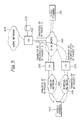
FIG. 3 is a schematic block diagram showing a mobile network embodying the present invention; -
FIG. 4 shows a specific configuration of a binding table stored in a home agent included in the illustrative embodiment; -
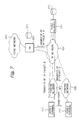
FIG. 5 is a schematic block diagram showing a modification of the illustrative embodiment; -
FIG. 6 shows a specific configuration of a binding table stored in a home agent included in the modification; and -
FIG. 7 is a schematic block diagram showing an alternative embodiment of the present invention. - To better understand the present invention, brief reference will be made to a conventional mobile network using a mobile IP technology, shown in
FIG. 1 . As shown, the mobile network includes afixed terminal 102 and a notebook size, personal computer, handy phone or similarmobile terminals 112. An HA (Home Agent) 202 manages an IP address assigned to themobile terminal 112. FAs (Foreign Agents) 302 and 312 each manage communication held on themobile terminal 112 at a destination. TheHA 202 andFAs fixed terminal 102 is a personal computer or similar data processing unit situated at a fixed station. The HA 202 andFAs - The
mobile terminal 112 is usually connected to ahome network 412; which may be Ethernet, a radio LAN (Local Area Network) or a mobile communication network by way of example. Themobile terminal 112 is capable of accessing anIP network 402 via thehome network 412. When themobile terminal 112 is moved to a destination, it is connected to aforeign network foreign networks IP network 402. - When the
fixed terminal 102 sends an IP packet A meant for themobile terminal 112. theHA 202 encapsulates the IP packet A to thereby produce an encapsulated IP packet B. The encapsulated IP packet B is transferred from theHA 202 to, e.g., theFA 302 to which themobile terminal 112 is currently connected via theIP network 402. The FA 302 separates the IP packet A from the encapsulated IP packet B and sends the IP packet A to themobile terminal 112. - The HA 202 stores a binding table 212 listing information for the transfer of the encapsulated IP packet B to the
FA FIG. 2 , the binding table 212 has a plurality of pages each listing various kinds of information including an IP address or Care-of address and the term of validity of the page itself. Usually, information listed on the binding table 202 is valid only for a preselected term. Themobile terminal 112 immediately sends information for updating the binding table 202 to theHA 202 when handed over from, e.g., theFA 302 to theFA 312. Even when such hand-over does not occur, themobile terminal 112 periodically sends the above information to theHA 202. - The conventional mobile network described above has some problems left unsolved, as discussed earlier.
- Referring to
FIG. 3 , a mobile network embodying the present invention is shown and includes afixed terminal 100 and amobile terminal 110. Again, thefixed terminal 100 is a personal computer or similar fixed, data processing unit while themobile terminal 110 is a notebook size, personal computer, handy phone or similar mobile data processing unit. An HA 200 receives an IP packet meant for themobile terminal 110 from thefixed terminal 100, encapsulates the IP packet, and sends the encapsulated packet to themobile terminal 110.FAs mobile terminal 110 from the encapsulated IP packet. The HA 200 andFAs FAs - The
fixed terminal 100, HA 200 andFAs - The
mobile terminal 110 is usually connected to ahome network 410, which may be Ethernet, a radio LAN or a mobile communication network by way of example. Themobile terminal 110 is capable of accessing anIP network 400 via thehome network 410. When themobile terminal 110 is moved to a destination, it is connected to aforeign network foreign networks IP network 402. - The
HA 200 assigns a particular IP address or home address to each of the fixedterminal 100 andmobile terminal 110. so that theterminals IP network 400. Also, a particular IP address or Care-of address is assigned to each of theFAs FAs IP network 400. When themobile terminal 110 is connected to, e.g., theFA 300, at least oneFA 300 reports its Care-of address to themobile terminal 110. The Care-of address is written to a source address field or a destination address field included in the header of an IP packet. In the case of a Mobile IPv4 protocol, an IP packet may have a format described in IETF RFC 791. - When the
mobile terminal 110 is handed over from one of theforeign networks FA mobile terminal 110. Themobile terminal 110 sends the received Care-of address to theHA 200. TheHA 200 manages the home address and Care-of address mobile terminal by mobile terminal and writes such information in a binding table 210, which is stored in the storage. -
FIG. 4 shows a specific configuration of the binding table 210. As shown, the binding table 210 has a plurality of pages each being assigned to the home address of a particular mobile terminal. Each page of the binding table 210 lists QoS to be assigned to encapsulated packets and a Care-of address on the basis of the QoS class of a received IP packet. It is to be noted that the Care-of address may differ from one QoS class to another QoS class or two or more Care-of addresses may be registered at each QoS class. - The
HA 200 encapsulates a received IP packet meant for themobile terminal 110 in accordance with the information listed on the binding table 210. TheHA 200 then transfers the encapsulated IP packet to the FA to which themobile terminal 110 is currently connected. For encapsulation, theHA 200 may use any one of the schemes recommended in IETF RFC 2003, IETF RFC 2004 and IETF RFC 1701 mentioned earlier. - On receiving the encapsulated packet, the
FA mobile terminal 110. - The operation of the illustrative embodiment will be described hereinafter. First, how IP packets flow on the mobile network will be described with reference to
FIG. 3 . As shown, when the fixedterminal 100 sends an IP packet A meant for themobile terminal 110, the HA receives the IP packet A via theIP network 400. TheHA 200 finds the page of the binding table 210 assigned to themobile terminal 110 by using a destination address included in the IP packet A as a key. The destination address is identical with the home address assigned to themobile terminal 110. - Subsequently, the
HA 200 determines a QoS class to be assigned to an encapsulated packet and a care-of address by using ToS (Type of Service) information also included in the IP packet A as QoS class information. For example, assume that the QoS class of the IP packet A is A as listed on the binding table 210,FIG. 4 . Then, theHA 200 determines that the QoS class of an encapsulated packet is A, and that the destination is theFA 300. Likewise, if the QoS class of the IP packet A is B, then the HA determines that the QoS class of an encapsulated packet is A, and that the destination isFA 300. - After the above-described processing, the
HA 200 encapsulates the IP packet A to thereby produce an encapsulated IP packet A' and then sends the IP packet A' to theIP network 400. The IP packet A' is transferred to theFA 300 via theIP network 400. At this instant, each IP node on theIP network 400 transfers the IP packet A' toward theFA 300 while giving priority to the packet A' in accordance with the QoS class of the packet A'. TheFA 300 separates the IP packet A meant for the mobile terminal 110 from the IP packet A' and sends the packet A to themobile terminal 100. - As stated above, priority is given to one or more encapsulated IP packets A' being transferred from the
HA 200 to theFA 300 via theIP network 400 in accordance with the QoS class of the packet A'. - A procedure for the
mobile terminal 110 to register its location at theHA 200 will be described hereinafter. Assume that themobile terminal 110 is moved away from thehome network 410 and connected to theforeign network 420. Then, theFA 300 managing theforeign network 420 sends its Care-of address to themobile terminal 110 in accordance with the IP protocol recommended in IETF RFC 2002. Themobile terminal 110 sends the Care-of address to theHA 200. TheHA 200 registers the received Care-of address at the page of the binding table 210 assigned to themobile terminal 110. This processing is defined as Registration in IETF RFC 2002. - Assume that the
mobile terminal 110 in travel is handed over from theFA 300 to theFA 310. Then, theFA 310 sends its Care-of address to themobile terminal 110. Themobile terminal 110 again sends the new Care-of address to theHA 200. TheHA 200 registers the new Care-of address at the binding table 210. The information registered at the binding table 210 is valid only for a preselected term. Themobile terminal 110 therefore causes theHA 200 to update the information recorded in the binding table 210 at preselected intervals without regard to the hand-over of themobile terminal 110. This procedure is generally referred to as binding update processing. - In the illustrative embodiment, the
mobile network 110 sends to theHA 200 QoS information for setting the QoS classes of encapsulated IP packets by using a control packet available for registration or binding update processing. TheHA 200 sets the contents of the binding table 210 in accordance with the QoS information received from themobile terminal 110. The QoS information may advantageously be implemented by ToS information particular to a Diff-serv (Differentiated Services) protocol. - As shown in
FIG. 5 , assume that theforeign networks mobile terminal 110 is in a soft hand-over state. Then, themobile terminal 110 accesses both of theFAs mobile terminal 110 causes theHA 200 to register both of theFAs - As stated above, the
HA 200 can update the destination registered at the binding table 210 on a QoS class basis. For example, as shown inFIG. 6 , theHA 200 can update the contents of the binding table 210 in such a manner as to transfer encapsulated packets belonging to some QoS classes to both of theFAs FA 300. - Assume that the
foreign networks mobile terminal 110 can also cause theHA 200 to register different FAs at the binding table 210 on a QoS class basis. Further, when themobile station 110 is connected to three or more foreign networks, it can register three or more destinations at the binding table 210. - When a plurality of destinations are registered at the binding table 210, the
HA 200 generates identical encapsulated packets corresponding in number to the destinations and transfers them to the destinations. In the specific packet flow shown inFIG. 3 , theHA 200 encapsulates the IP packet A into two identical packets A' and A" and transfers each of them to particular one of theFAs - The QoS classes registered at the binding table 210 may be of a band guarantee type, a delay priority type, a best effort type or a resend control type. When the
HA 200 updates the contents of the binding table 200, i.e., registers a new FA at the table 200 in accordance with a control packet received from the mobile station, theHA 200 sets up a new path to the FA on a QoS class basis. - As stated above, the
mobile station 110 holds data communication while designating an FA or FAs on a QoS class basis with a control packet, which is used for registration or binding update processing. TheHA 200 produces encapsulated packets on a QoS class basis in accordance with information listed on the binding table 210 and thereby implements end-to-end data communication with guaranteed QoS even when themobile terminal 110 is connected to a foreign network. - Further, the
HA 200 can register a plurality of FAs at the binding table 210 as destinations and can therefore transfer identical IP packets to all of such FAs at the same time. It follows that themobile station 110 can surely receive IP packets even in a soft hand-over state. Moreover, even when different communication qualities are required and when foreign networks satisfying the communication qualities are different from each other, FAs on the different networks can be registered at the binding table 210 as destinations on a QoS class basis. This successfully implements data communication with guaranteed QoS. - Reference will be made to
FIG. 7 for describing an alternative embodiment of the present invention. While the embodiment described above uses the Mobile IPv4 protocol, the alternative embodiment to be described uses a Mobile IPv6 protocol. In accordance with the Mobile IPv6 protocol, IP addresses called Collocated Care-of addresses are used as the Care-of addresses each being assigned to a particular mobile terminal. Specifically, particular Collocated Care-of address is assigned to each mobile terminal on a foreign network basis. The Collocated Care-of addresses are registered at the storage of an HA together with home addresses and managed as a binding table, as in the previous embodiment. The Mobile IPv6 protocol can unconditionally identify each terminal with the Collocated Care-of address and therefore makes FAs needless. - Further, the Mobile IPv6 protocol allows even a fixed terminal and a node terminating with the IPv6 protocol to have respective binding tables. In this case, the fixed terminal or the node terminating with the Mobile IPv6 protocol can directly communicate with each other without the intermediary of an HA except for a period necessary for the fixed terminal or the node to generate a binding table after the start of communication.
- As shown in
FIG. 7 , the alternative embodiment differs from the previous embodiment in that it does not include FAs. In the illustrative embodiment, the fixedterminal 101 also includes its own binding table 221. Further, ahome network 411,foreign networks - The binding table 211 of the fixed
terminal 101 and a binding table 211 stored in anHA 201 each are identical in format with the binding table 210 of the previous embodiment except that Collocated Care-of addresses are listed as destinations in place of FAs. A plurality of Collocated Care-of addresses may also be registered together on a QoS class basis. - In operation, a mobile terminal executes registration at the
HA 201 when moved away from thehome network 411 and connected to theforeign network 421. When themobile terminal 111 is handed over from theforeign network 421 to theforeign network 431, it executes binding update processing. In addition, themobile terminal 111 registers QoS information at theHA 201 by using a control packet for registration or binding update processing, as in the previous embodiment. - When the fixed
terminal 101 sends an IP packet A meant for themobile terminal 111, the packet A is transferred to theHA 201 via anIP network 401. TheHA 201 searches the binding table 211 to find the Collocated Care-of address of themobile terminal 111 on the basis of a destination address included in the IP packet. TheHA 201 then updates the destination address of the IP packet A in accor dance with the Collocated Care-of address and generates an IP packet B. At the same time, theHA 201 sets up a path to themobile terminal 111 on a QoS class basis. The IP packet B is transferred from theHA 201 to themobile terminal 111 via the above path. - When the
mobile terminal 111 communicates with the fixedterminal 101, the former 111 executes binding update processing meant for the latter 101. More specifically, the binding list of themobile e terminal 111 is registered at the binding table 221 included in the fixedterminal 101. After registering the binding list and QoS information of themobile terminal 111, the fixedterminal 101 sends an IP packet to themobile terminal 111 by using the Collocation Care-of address registered at the binding table 221. More specifically, as shown inFIG. 7 , an IP packet C is directly sent from the fixedterminal 101 to themobile terminal 111. The QoS class of the IP packet C is based on a QoS class registered at the binding table 221. - A plurality of Collocated Care-of addresses can be registered at the binding table 221 as destinations, as in the previous embodiment. In such a case, the
HA 201 or the fixedterminal 101 sets up paths to themobile terminal 111 on a QoS class basis, copies the IP packet C by a number corresponding to the destinations, and sends the resulting packets C via the paths. With this configuration, the illustrative embodiment, like the previous embodiment, allows themobile terminal 111 to surely receive IP packets even in a soft hand-over state and therefore realizes end-to-end data communication with guaranteed QoS. - In summary, in accordance with the present invention, a mobile terminal handed over from one network to another network reports its destination and QoS information to an IP node to which the mobile terminal is usually connected. The IP node transfers encapsulated IP packets or IP packets with an updated IP address to the destination of the mobile network via a path matching with a QoS class. The present invention therefore realizes a mobile network implementing end-to-end communication with guaranteed QoS.
- Further, the present invention allows a plurality of IP nodes to be registered as the destinations of IP packets. The mobile terminal can therefore surely receive the IP packets even in a soft hand-over state. Moreover, even when communication quality differs from one QoS class to another QoS class and when foreign networks satisfying the different qualities differ from each other, the present invention insures communication with guaranteed QoS by setting IP nodes on the foreign networks as destinations on a. QoS class basis.
- Various modifications will become possible for those skilled in the art after receiving the teachings of the present disclosure without departing from the scope thereof.
Claims (2)
- A system for a mobile communication via a network;
characterized in that
a network node connected with a mobile terminal, wherein the network node transfers a packet via a network path determined according to a service class corresponding to the packet when the mobile terminal moves to another network node;
wherein the mobile terminal notifies the service class to the network node when the mobile terminal moves to the other network node. - A method for a mobile communication via a network including a network node connected with a mobile terminal;
characterized in that
transferring a packet via a network path determined according to a service class corresponding to the packet when the mobile terminal moves to another network node; and
notifying the service class to the network node when the mobile terminal moves to the other network node.
Applications Claiming Priority (2)
| Application Number | Priority Date | Filing Date | Title |
|---|---|---|---|
| JP2000340624A JP3526032B2 (en) | 2000-11-08 | 2000-11-08 | Mobile network and IP packet transfer method |
| EP20010126602 EP1206098B1 (en) | 2000-11-08 | 2001-11-07 | Home agent and IP packet transferring method |
Related Parent Applications (2)
| Application Number | Title | Priority Date | Filing Date |
|---|---|---|---|
| EP01126602.0 Division | 2001-11-07 | ||
| EP20010126602 Division-Into EP1206098B1 (en) | 2000-11-08 | 2001-11-07 | Home agent and IP packet transferring method |
Publications (2)
| Publication Number | Publication Date |
|---|---|
| EP2375673A2 true EP2375673A2 (en) | 2011-10-12 |
| EP2375673A3 EP2375673A3 (en) | 2012-03-21 |
Family
ID=18815500
Family Applications (2)
| Application Number | Title | Priority Date | Filing Date |
|---|---|---|---|
| EP20100012840 Withdrawn EP2375673A3 (en) | 2000-11-08 | 2001-11-07 | Mobile system and IP packet transferring method |
| EP20010126602 Expired - Lifetime EP1206098B1 (en) | 2000-11-08 | 2001-11-07 | Home agent and IP packet transferring method |
Family Applications After (1)
| Application Number | Title | Priority Date | Filing Date |
|---|---|---|---|
| EP20010126602 Expired - Lifetime EP1206098B1 (en) | 2000-11-08 | 2001-11-07 | Home agent and IP packet transferring method |
Country Status (5)
| Country | Link |
|---|---|
| US (1) | US7068635B2 (en) |
| EP (2) | EP2375673A3 (en) |
| JP (1) | JP3526032B2 (en) |
| KR (1) | KR100460819B1 (en) |
| CN (1) | CN1353526A (en) |
Families Citing this family (35)
| Publication number | Priority date | Publication date | Assignee | Title |
|---|---|---|---|---|
| US7480272B2 (en) * | 2001-04-02 | 2009-01-20 | Toshiba America Research, Inc | Soft handoff in IP-based CDMA networks by IP encapsulation |
| US7512088B1 (en) * | 2002-07-12 | 2009-03-31 | Cisco Technology, Inc. | Routing data packets to a mobile node |
| KR100724908B1 (en) | 2002-08-06 | 2007-06-04 | 삼성전자주식회사 | Method and system for providing mobility of mobile node using local anchor point in next generation internet network |
| EP1396965A1 (en) * | 2002-09-04 | 2004-03-10 | Siemens Aktiengesellschaft | Method and apparatus for transmitting QoS and address information in a communication system using bidirectional communication |
| WO2004039029A1 (en) * | 2002-10-25 | 2004-05-06 | Ut Starcom (China) Co., Ltd. | A voice calling handling method using dynamic home agency technology at the whole ip framework |
| US20040085957A1 (en) * | 2002-11-01 | 2004-05-06 | Sanjeev Verma | Apparatus and method for providing IP connectivity to mobile nodes during handover |
| KR100511297B1 (en) * | 2002-11-21 | 2005-08-31 | 엘지전자 주식회사 | Internet protocol managing method for mobile communication system |
| CN1685637B (en) * | 2002-12-25 | 2010-06-09 | 富士通株式会社 | Wireless communication system, relay device and mobile terminal |
| US7441043B1 (en) * | 2002-12-31 | 2008-10-21 | At&T Corp. | System and method to support networking functions for mobile hosts that access multiple networks |
| JP4345565B2 (en) * | 2003-05-13 | 2009-10-14 | パナソニック株式会社 | Mobile router, location management server, mobile network management system, and mobile network management method |
| CN1310483C (en) * | 2003-08-19 | 2007-04-11 | 广东省电信有限公司科学技术研究院 | Network system and controlling method for assuring end to end IP telecommunication service quality |
| US7869435B2 (en) * | 2003-08-29 | 2011-01-11 | Fujitsu Limited | Communication control system |
| CN100344199C (en) * | 2003-11-19 | 2007-10-17 | 华为技术有限公司 | System of radio local network mobility management and its method |
| US20060013210A1 (en) * | 2004-06-18 | 2006-01-19 | Bordogna Mark A | Method and apparatus for per-service fault protection and restoration in a packet network |
| CN100512281C (en) * | 2004-06-18 | 2009-07-08 | 华为技术有限公司 | Safeguard method and system for interconnection protocol network between networks |
| BRPI0513976A (en) * | 2004-07-30 | 2008-05-20 | Matsushita Electric Industrial Co Ltd | rerouting method, mobile terminal and path management device |
| US8527790B2 (en) | 2004-09-21 | 2013-09-03 | Canon Kabushiki Kaisha | Communication apparatus and communication method |
| JP4336636B2 (en) | 2004-09-21 | 2009-09-30 | キヤノン株式会社 | Communication apparatus and communication method |
| US20060072532A1 (en) * | 2004-09-30 | 2006-04-06 | Motorola, Inc. | Method and system for proactive setup of multicast distribution tree at a neighbor cell or subnet during a call |
| KR100668596B1 (en) * | 2004-10-27 | 2007-01-12 | 에스케이 텔레콤주식회사 | Method and system for registering IP address in portable internet network when interworking with portable internet network |
| KR100645432B1 (en) | 2004-11-04 | 2006-11-15 | 삼성전자주식회사 | Signaling method for handover between access networks in IP-based mobile network environment |
| KR100693043B1 (en) * | 2004-11-26 | 2007-03-12 | 삼성전자주식회사 | Multicast System and Method in Deep Sub Using Encapsulation and Unicast Routing |
| JP4617911B2 (en) * | 2005-02-09 | 2011-01-26 | 株式会社日立製作所 | COMMUNICATION DEVICE, COMMUNICATION CONTROL DEVICE, AND COMMUNICATION SYSTEM |
| JP4616882B2 (en) * | 2005-03-29 | 2011-01-19 | パナソニック株式会社 | Communication control method, address management node, and mobile node |
| ES2381853T3 (en) | 2006-03-24 | 2012-06-01 | France Telecom | Transmission of internet packages according to a priority |
| JP4867806B2 (en) * | 2007-06-15 | 2012-02-01 | 株式会社日立製作所 | COMMUNICATION SYSTEM, SERVER, CONTROL DEVICE, AND COMMUNICATION DEVICE |
| EP2213081B1 (en) * | 2007-11-30 | 2014-10-08 | Telefonaktiebolaget L M Ericsson (publ) | Method and apparatus for handling a local breakout session |
| CN101222767B (en) * | 2008-01-23 | 2011-01-05 | 中兴通讯股份有限公司 | Method and system for implementing flow-based quality of service for mobile IP services |
| US9043862B2 (en) * | 2008-02-06 | 2015-05-26 | Qualcomm Incorporated | Policy control for encapsulated data flows |
| EP2101450A1 (en) * | 2008-03-13 | 2009-09-16 | Christer Åhlund | Quality of service signalling in mobile IP |
| WO2011063850A1 (en) * | 2009-11-27 | 2011-06-03 | Telefonaktiebolaget L M Ericsson (Publ) | Telecommunications method, protocol and apparatus for improved quality of service handling |
| CN102104915B (en) * | 2009-12-22 | 2016-01-27 | 中国移动通信集团公司 | A kind of QoS control method based on PMIP and system |
| JP5208182B2 (en) * | 2010-10-21 | 2013-06-12 | 京セラ株式会社 | Terminal device, network system, and server |
| RU2606063C2 (en) | 2012-06-30 | 2017-01-10 | Хуавей Текнолоджиз Ко., Лтд. | Data transmission method, network device and communication system |
| WO2015024598A1 (en) * | 2013-08-22 | 2015-02-26 | Telefonaktiebolaget L M Ericsson (Publ) | Mobility control function for user equipment |
Citations (5)
| Publication number | Priority date | Publication date | Assignee | Title |
|---|---|---|---|---|
| JPH07129488A (en) | 1993-11-05 | 1995-05-19 | Matsushita Electric Ind Co Ltd | Mobile terminal management device |
| JPH09326805A (en) | 1996-06-05 | 1997-12-16 | Mitsubishi Electric Corp | Wireless packet transmission equipment |
| JPH10313336A (en) | 1997-05-13 | 1998-11-24 | Hitachi Ltd | Mobile terminal, mobility support device and network system |
| JPH1168842A (en) | 1997-08-21 | 1999-03-09 | Mitsubishi Electric Corp | Packet routing method |
| JP2960349B2 (en) | 1996-03-14 | 1999-10-06 | 株式会社ワイ・アール・ピー移動通信基盤技術研究所 | Mobile communication network |
Family Cites Families (17)
| Publication number | Priority date | Publication date | Assignee | Title |
|---|---|---|---|---|
| KR100256608B1 (en) | 1996-04-10 | 2000-05-15 | 윤종용 | Paper Jam Error Handling Method of Image Forming Device |
| JP2980049B2 (en) * | 1997-02-25 | 1999-11-22 | 三菱電機株式会社 | ATM address management device |
| JP3529621B2 (en) * | 1997-05-12 | 2004-05-24 | 株式会社東芝 | Router device, datagram transfer method, and communication system |
| US6172986B1 (en) | 1997-05-13 | 2001-01-09 | Hitachi, Ltd. | Mobile node, mobile agent and network system |
| US6587882B1 (en) * | 1997-08-01 | 2003-07-01 | Kabushiki Kaisha Toshiba | Mobile IP communication scheme using visited site or nearby network as temporal home network |
| KR100248416B1 (en) * | 1997-12-22 | 2000-03-15 | 이계철 | Atm vlan service control method using b-isdn signal capacity |
| US6195705B1 (en) * | 1998-06-30 | 2001-02-27 | Cisco Technology, Inc. | Mobile IP mobility agent standby protocol |
| US6654359B1 (en) * | 1998-12-11 | 2003-11-25 | Lucent Technologies Inc. | Wireless access to packet-based networks |
| US6763007B1 (en) * | 1998-12-11 | 2004-07-13 | Lucent Technologies Inc. | Two phase local mobility scheme for wireless access to packet based networks |
| US6636498B1 (en) * | 1999-01-08 | 2003-10-21 | Cisco Technology, Inc. | Mobile IP mobile router |
| GB9900970D0 (en) * | 1999-01-15 | 1999-03-10 | British Telecomm | Communications network |
| US6973057B1 (en) * | 1999-01-29 | 2005-12-06 | Telefonaktiebolaget L M Ericsson (Publ) | Public mobile data communications network |
| EP1032179B1 (en) * | 1999-02-26 | 2005-09-14 | Lucent Technologies Inc. | Mobile IP supporting quality of service |
| KR100288755B1 (en) * | 1999-03-24 | 2001-04-16 | 윤종용 | Private network network interface routing method for considering connections currently being in progress of setup phase |
| KR100288756B1 (en) * | 1999-03-29 | 2001-04-16 | 윤종용 | Channel identifier assignment method for connection between nodes in atm network adopting atm adaptation layer type 2 |
| EP1047244A1 (en) | 1999-04-20 | 2000-10-25 | Lucent Technologies Inc. | Mobile IP supporting quality of service for data sent from mobile node to correspondent node |
| US6765892B1 (en) * | 2000-06-26 | 2004-07-20 | Cisco Technology, Inc. | Optimizing IP multicast data transmission in a mobile IP environment |
-
2000
- 2000-11-08 JP JP2000340624A patent/JP3526032B2/en not_active Expired - Fee Related
-
2001
- 2001-11-07 US US09/986,043 patent/US7068635B2/en not_active Expired - Fee Related
- 2001-11-07 EP EP20100012840 patent/EP2375673A3/en not_active Withdrawn
- 2001-11-07 EP EP20010126602 patent/EP1206098B1/en not_active Expired - Lifetime
- 2001-11-08 CN CN01143678A patent/CN1353526A/en active Pending
- 2001-11-08 KR KR10-2001-0069439A patent/KR100460819B1/en not_active Expired - Fee Related
Patent Citations (5)
| Publication number | Priority date | Publication date | Assignee | Title |
|---|---|---|---|---|
| JPH07129488A (en) | 1993-11-05 | 1995-05-19 | Matsushita Electric Ind Co Ltd | Mobile terminal management device |
| JP2960349B2 (en) | 1996-03-14 | 1999-10-06 | 株式会社ワイ・アール・ピー移動通信基盤技術研究所 | Mobile communication network |
| JPH09326805A (en) | 1996-06-05 | 1997-12-16 | Mitsubishi Electric Corp | Wireless packet transmission equipment |
| JPH10313336A (en) | 1997-05-13 | 1998-11-24 | Hitachi Ltd | Mobile terminal, mobility support device and network system |
| JPH1168842A (en) | 1997-08-21 | 1999-03-09 | Mitsubishi Electric Corp | Packet routing method |
Also Published As
| Publication number | Publication date |
|---|---|
| JP2002152277A (en) | 2002-05-24 |
| EP1206098A2 (en) | 2002-05-15 |
| US20020054584A1 (en) | 2002-05-09 |
| EP1206098A3 (en) | 2004-02-25 |
| KR20020035793A (en) | 2002-05-15 |
| CN1353526A (en) | 2002-06-12 |
| US7068635B2 (en) | 2006-06-27 |
| EP2375673A3 (en) | 2012-03-21 |
| JP3526032B2 (en) | 2004-05-10 |
| EP1206098B1 (en) | 2014-03-12 |
| KR100460819B1 (en) | 2004-12-09 |
Similar Documents
| Publication | Publication Date | Title |
|---|---|---|
| US7068635B2 (en) | Mobile network and IP packet transferring method | |
| KR100617426B1 (en) | Mobile terminal management system, mobile terminal, agent and program | |
| EP1011241B1 (en) | Wireless access to packet-based networks | |
| US7706301B2 (en) | Routing in a data communication network | |
| EP1422883B1 (en) | Base station, radio terminal unit, mobile communication system and handover control method | |
| JP3983976B2 (en) | Route data that can be moved | |
| EP1316174B1 (en) | Methods and apparatus for supporting mobility within a radio access network | |
| EP1032178B1 (en) | Non-encapsulation mobile IP | |
| US20040117508A1 (en) | Mobile body network | |
| US7298720B2 (en) | Packet communication system, communication network, and method for selecting IP address in mobile node | |
| JP4311895B2 (en) | Router and communication network device | |
| US20090003269A1 (en) | Router Selection Method, Home Agent Device, Mobile Router, and Mobile Network System | |
| JP3727309B2 (en) | Packet communication system | |
| EP1445898B1 (en) | Mobile communication control system | |
| US20100208663A1 (en) | Communication system, mobile terminal, and network node | |
| JP4175855B2 (en) | Mobile network and communication management method thereof | |
| JP3498210B2 (en) | Location information management system | |
| US20090052410A1 (en) | Mobile communication system, edge router, and transfer control method, program and recording medium used therefor | |
| CN1770780B (en) | Mobile terminal management system, mobile terminal, agent, and program | |
| US20090022161A1 (en) | Communication system and communication node | |
| JP2003060684A (en) | Mobile communication system, home agent, communication partner terminal, mobile terminal, mobile communication method, program, and recording medium | |
| CN108809934A (en) | A kind of mobility management protocol machinery of consultation in IPv6 networks | |
| JP2005295044A (en) | Home agent system |
Legal Events
| Date | Code | Title | Description |
|---|---|---|---|
| PUAI | Public reference made under article 153(3) epc to a published international application that has entered the european phase |
Free format text: ORIGINAL CODE: 0009012 |
|
| AC | Divisional application: reference to earlier application |
Ref document number: 1206098 Country of ref document: EP Kind code of ref document: P |
|
| AK | Designated contracting states |
Kind code of ref document: A2 Designated state(s): DE FR GB IT |
|
| PUAL | Search report despatched |
Free format text: ORIGINAL CODE: 0009013 |
|
| AK | Designated contracting states |
Kind code of ref document: A3 Designated state(s): DE FR GB IT |
|
| RIC1 | Information provided on ipc code assigned before grant |
Ipc: H04W 36/00 20090101ALI20120215BHEP Ipc: H04W 40/36 20090101AFI20120215BHEP |
|
| 17P | Request for examination filed |
Effective date: 20120914 |
|
| 17Q | First examination report despatched |
Effective date: 20140311 |
|
| STAA | Information on the status of an ep patent application or granted ep patent |
Free format text: STATUS: THE APPLICATION HAS BEEN WITHDRAWN |
|
| 18W | Application withdrawn |
Effective date: 20140711 |