EP2372569A1 - Method, system and apparatus for archiving data - Google Patents
Method, system and apparatus for archiving data Download PDFInfo
- Publication number
- EP2372569A1 EP2372569A1 EP10157245A EP10157245A EP2372569A1 EP 2372569 A1 EP2372569 A1 EP 2372569A1 EP 10157245 A EP10157245 A EP 10157245A EP 10157245 A EP10157245 A EP 10157245A EP 2372569 A1 EP2372569 A1 EP 2372569A1
- Authority
- EP
- European Patent Office
- Prior art keywords
- data
- server
- computing device
- mobile electronic
- electronic device
- Prior art date
- Legal status (The legal status is an assumption and is not a legal conclusion. Google has not performed a legal analysis and makes no representation as to the accuracy of the status listed.)
- Withdrawn
Links
Images



Classifications
-
- G—PHYSICS
- G06—COMPUTING OR CALCULATING; COUNTING
- G06Q—INFORMATION AND COMMUNICATION TECHNOLOGY [ICT] SPECIALLY ADAPTED FOR ADMINISTRATIVE, COMMERCIAL, FINANCIAL, MANAGERIAL OR SUPERVISORY PURPOSES; SYSTEMS OR METHODS SPECIALLY ADAPTED FOR ADMINISTRATIVE, COMMERCIAL, FINANCIAL, MANAGERIAL OR SUPERVISORY PURPOSES, NOT OTHERWISE PROVIDED FOR
- G06Q10/00—Administration; Management
- G06Q10/10—Office automation; Time management
- G06Q10/107—Computer-aided management of electronic mailing [e-mailing]
-
- G—PHYSICS
- G06—COMPUTING OR CALCULATING; COUNTING
- G06F—ELECTRIC DIGITAL DATA PROCESSING
- G06F16/00—Information retrieval; Database structures therefor; File system structures therefor
- G06F16/10—File systems; File servers
- G06F16/11—File system administration, e.g. details of archiving or snapshots
- G06F16/113—Details of archiving
Definitions
- the specification relates generally to archiving data, and specifically to a method, system and apparatus for archiving data.
- Methods and systems for archiving data managed by a server are limited and lead to data being lost when storage limits are reached. Specifically, archiving of data managed by a server is often triggered by a computing device; when the computing device is unable to trigger archiving, and storage limits are reached, further data received is discarded and/or lost.
- a first aspect of the specification provides a method for archiving data managed by a server.
- the method comprises determining that an amount of the data managed by the server meets a threshold condition.
- the method further comprises transmitting a message from the server to a mobile electronic device associated with the data, the message indicative that the threshold condition has been met.
- the method further comprises receiving a response at the server from the mobile electronic device indicative that the data is to be archived.
- the method further comprises causing at least a portion of the data to be archived thereby increasing memory available for storing further data.
- Determining that the amount of the data managed by the server meets the threshold condition can comprise at least one of: determining that the amount of data meets or exceeds a threshold amount of memory; determining that the amount of data meets or exceeds a threshold percentage of memory; and determining that the amount of data meets or exceeds a threshold number of files.
- Transmitting the message to the mobile electronic device can comprise transmitting an e-mail to the mobile electronic device, the e-mail comprising an option to trigger archiving of the data.
- Receiving a response from the mobile electronic device indicative that the data is to be archived can comprise receiving at least one of an e-mail, a text message, an SMS (short message service) message, MMS (multimedia message service) and wireless network data.
- the message can comprise a selectable option to trigger transmitting the response from the mobile electronic device.
- Causing at least the portion of the data to be archived can comprise: transmitting an archive command to a computing device causing a copy of the at least the portion stored at the computing device to be archived at the computing device; and deleting the at least the portion of the data managed by server.
- the method can further comprise transmitting the copy of the at least the portion to the computing device at least one of prior to the transmitting the archive command and with the archive command.
- the method can further comprise, when the computing device is in not communication with the server, waiting until the computing device is in communication with the server before the transmitting occurs.
- the method can further comprise transferring the at least the portion to an archive directory in association with the waiting such that the further data can be stored.
- the method can further comprise deleting the at least the portion from the archive directory when communications between the computing device and the server are established.
- Causing at least the portion of the data to be archived can comprise transferring at least the portion of the data to an archive directory at, at least one of the server and a second server.
- a second aspect of the specification can comprise a server for archiving data.
- the server comprises a processing unit interconnected with a communication interface.
- the processing unit enabled to: determine that an amount of the data managed by the server meets a threshold condition; transmit, via the communication interface, a message from the server to a mobile electronic device associated with the data, the message indicative that the threshold condition has been met; receive, via the communication interface, a response at the server from the mobile electronic device indicative that the data is to be archived; and cause at least a portion of the data to be archived thereby increasing memory available for storing further data.
- the processing unit can be further enabled to at least one of: determine that the amount of data meets or exceeds a threshold amount of memory; determine that the amount of data meets or exceeds a threshold percentage of memory; and determine that the amount of data meets or exceeds a threshold number of files.
- the processing unit can be further enabled to transmit, via the communication interface, an e-mail to the mobile electronic device, the e-mail comprising an option to trigger archiving of the data.
- the processing unit can be further enabled to receive at least one of an e-mail, a text message, an SMS (short message service) message, MMS (multimedia message service) and wireless network data.
- the message comprises a selectable option to trigger the mobile electronic device to transmit the response to the server.
- the processing unit can be further enabled to: transmit an archive command to a computing device causing a copy of the at least the portion stored at the computing device to be archived at the computing device; and delete the at least the portion of the data managed by server.
- the processing unit can be further enabled to transmit the copy of the at least the portion to the computing device at least one of: prior to transmitting the archive command; and with the archive command.
- the processing unit can be further enabled to, when the computing device is in not communication with the server, wait until the computing device is in communication with the server before the transmitting occurs.
- the processing unit can be further enabled to transfer the at least the portion to an archive directory, while waiting until the computing device is in communication with the server, such that the further data can be stored.
- the processing unit can be further enabled to delete the at least the portion from the archive directory when communications between the computing device and the server are established.
- the processing unit can be further enabled to transfer at least the portion of the data to an archive directory sbred at a memory device at, at least one of the server and a second server.
- a third aspect of the specification provides a mobile electronic device for archiving data.
- the mobile electronic device provides a processing unit interconnected with a communication interface.
- the processing unit is enabled to: receive, via the communication interface, a message from a server, the message indicative that an amount of the data managed by the server meets a threshold condition; and transmit, via the communication interface, a response to the server indicative that the data is to be archived, the response causing the server to archive at least the portion of the data thereby increasing an amount of memory managed by the server to be available for storing further data.
- a fourth aspect of the specification provides a computer program product, comprising a computer usable medium having a computer readable program code adapted to be executed to implement a method for archiving data managed by a server.
- the method comprises: determining that an amount of the data managed by the server meets a threshold condition; transmitting a message from the server to a mobile electronic device associated with the data, the message indicative that the threshold condition has been met; receiving a response at the server from the mobile electronic device indicative that the data is to be archived; and causing at least a portion of the data to be archived thereby increasing memory available for storing further data.
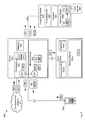
- Fig. 1 depicts a block diagram of a system for archiving data, according to the prior art
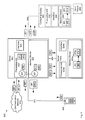
- Fig. 2 depicts a block diagram of a system for archiving data, according to non-limiting embodiments
- Fig. 3 depicts a block diagram of a mobile electronic device for triggering archiving of data, according to non-limiting embodiments
- Fig. 4 depicts a flow chart diagram of a method for archiving data, according to non-limiting embodiments
- Fig. 5 depicts a representation of a message for notifying that a threshold condition for archiving has been met, according to non-limiting embodiments.
- Figs. 6-9 depict block diagrams of systems for archiving data, according to non-limiting embodiments.
- Data intended for a computing device can be received and stored at a server for viewing at the computing device.
- a given computing device will generally be assigned a given amount of memory at the server for data storage.
- the threshold can be reached well in advance of the next event.
- an archive command can be initiated at the computing device, and transmitted to the server, which triggers the server to transit at least a portion of the data to the computing device for archiving in local storage. This situation becomes problematic during absences from the computing device (e.g. vacations): if the threshold is reached during the absence, as all further data received can be lost until access to the computing device resumes and the archiving command is transmitted.
- Fig. 1 depicts a system 100 for archiving data 101 managed by a server 103, according to the prior art.
- Server 103 is enabled for communication with a computing device 105, via a link 106 and a mobile electronic device 109, via a link 111.
- Server 103 is further enabled to receive data 101 via a communication network 113, which can be wired or wireless as desired
- data 101 can comprise any suitable number of e-mails, event data, etc., intended for transmission to computing device 105, and originally transmitted by at least one other computing device (not depicted) in communication with communication network 113.
- data 101 can comprise a subset 114 that can be archived; for example, subset 114 can comprise data that meets any suitable given criteria, such as e-mail, event data etc. received before a given date, e-mail, event data etc., that exceeds a given amount of memory, and the like.
- Server 103 generally comprises a processing unit 122 interconnected with a communication interface 124 and a memory device 125.
- data 101 is received and managed at server 103, including subset 114, in memory device 125.
- Data 101 is generally viewable at computing device 105 and/or mobile electronic device 109 either via a client/server session established between computing device 105 and server 103 (or between computing device 105 and server 103) or by transmitting data 101, or a copy thereof, to computing device 105 (and/or by transmitting data 101, or a copy thereof, to mobile electronic device 109) for viewing.
- Data 101 can either be requested by computing device 105 and/or mobile electronic device 109, respectfully, via links 106, 111, respectively, or pushed to the computing device 105 and/or mobile electronic device 109 by server 103 when links 106, 111 are active.
- data 101 can be requested and/or pushed periodically, and/or server 103 can push data 101 to computing device 105 and/or mobile electronic device 109 when data 101 is received at server 103.
- data 101, or copy thereof, is also maintained in memory device 125 at server 103.
- archiving of data 101 can occur.
- computing device 105 periodically, and/or upon receipt of input data, transmits an archive command 115 to server 103.
- Archive command 115 triggers server 103 to transmit the data to be archived, for example subset 114, or a copy thereof, to computing device 105 for storage, and delete subset 114 from server 103, thereby increasing the amount of memory available to store further data received at server 103.
- computing device 105 comprises a processing unit 162 interconnected with a communication interface 164, a memory device 165, and an input device 166.
- Processing unit 162 is enabled to control memory device 165 to store subset 114 in an archive portion 170 of memory device 165 for archiving data, for example an archive folder and/or an archive file, such that when archiving occurs, subset 114 is transferred from data 101 to archive portion 170.
- subset 114 is deleted from data 101 and copied and/or transferred to archive portion 170.
- archive command 115 triggers can server 103 to delete subset 114 from memory device 114, without an additional transmission of subset 114 to computing device 105; it is understood that subset 114 already stored at memory device 165 is copied and/or transferred to archive portion 170.
- Warning data 190 can be transmitted to computing device 105 and/or mobile electronic device 109 as the given threshold is approached and/or when and/or after the given threshold is met, warning data 190 comprising text for display at computing device 105 and/or mobile electronic device 109 indicating that the given threshold is being approached and/or has been met.
- warning data 190 can comprise the text "Your mailbox is over its size limit”.
- archive command 115 is transmitted from computing device 105 to server 103, archiving will not occur and the further data will be lost.
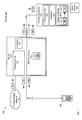
- Fig. 2 depicts a system 200 for archiving data, for example data 201 managed by a server 203, according to non-limiting embodiments.
- system 200 is similar to system 100 of Fig. 1 , with like elements having like numbers, however preceded by a "2" rather than a "1": for example server 203 is similar to server 103.
- server 203 is enabled to determine that an amount of data 201 managed by server 203 meets a threshold condition 252 and in response transmits a message 291 to mobile electronic device that threshold condition 252 has been met.
- Threshold condition 252 can comprise any suitable threshold data, including but not limited to: a given amount of memory occupied by data 201 on memory device 225; a given percentage of memory occupied by data 201 on memory device 225; a given number of files that can be present in data 201, including but not limited to a given number of e-mails and/or event data.
- threshold condition 252 can be less than a storage limit for data 201 on memory device 225, for example an amount of memory allotted to data 201 which, when reached or exceeded, further data received for storage is discarded.
- threshold condition can be similar to the storage limit.
- mobile computing device 209 is enabled to transmit a response 292 to message 291 indicative that data 201 is to be archived.
- Response 292 hence triggers an archiving event when received at server 203, which causes at least a portion of data 201 to be archived thereby increasing memory available at server 203 for storing further data.
- Various non-limiting embodiments for archiving will be described below with reference to Figs. 4-8 . However, system 200 will first be described in further detail.
- Link 211 generally comprises a wireless link between mobile electronic device 209 and server 203.
- Link 211 can hence comprise a wireless network, such as a wireless carrier network, including but not limited to any suitable cell phone network (1X, UMTS (Universal Mobile Telecommunications System), CDMA (code division multiple access), GSM (Global System for Mobile communications), 3G, EDGE, and the like), in combination with any suitable combination of wired or wireless networks as desired, including but not limited to a packet based network, the Internet, an analog network, the PSTN (public switched telephone network), a WiFi network, a WiMax network and the like.
- link 211 can comprise communication network 213, which can be wired or wireless as desired.
- link 206 can comprise any suitable combination of wired or wireless networks as desired, including but not limited to a packet based network, the Internet, an analog network, the PSTN, a WiFi network, a WiMax network and the like.
- link 206 can comprise communication network 213
- Mobile electronic device 209 can comprise any suitable mobile electronic device and/or mobile computing device and/or mobile communication device, including but not limited to a laptop or notebook computer, a PDA, a cellular or mobile phone, a portable electronic device, or the like. However, other suitable types ofmobile electronic devices are within the scope of present embodiments. Mobile electronic device 109 is described in more detail below with reference to Fig. 3 .
- Server 203 comprises a processing unit 222, a communications interface 224 and memory device 225 all in communication, for example, via a computing bus (not depicted).
- Server 203 comprises any suitable computing device for storing data 201.
- Server 203 can include but is not limited to any suitable combination of a computer, a mainframe computer, a server and the like. Other suitable types of computing devices are within the scope of present embodiments.
- Memory device 225 can be any suitable one of or combination of volatile memory, non-volatile memory, RAM, ROM, hard drive, optical drive, or the like.
- memory device 125 is enabled to data 201.
- memory device 225 can comprise an application 231 which, when processed by processing unit 222, causes processing unit 222 to determine when data 201 meets threshold condition 252 for transmitting message 291.
- Processing unit 222 can comprise any suitable processor, or combination of processors, including but not limited to a microprocessor, CPU (central processing unit), or the like.
- Processing unit 222 can comprise a comparator 272 for comparing values including but not limited to alphanumeric values, and a calculator 274 for performing mathematical operations on numerical values and/or performing textual operations on text values.
- calculator 274 can determine characteristic of data 201, such as the amount of memory device 225 occupied by data 201, and comparator 272 can determine when threshold condition 252 has been met by comparing a determined characteristic of data 201 with threshold condition 252.
- Communications interface 224 is enabled to communicate with computing device 205 via link 206, with mobile electronic device 209 via link 211, and with communication network 213. Accordingly, communications interface 224 is enabled to communicate according to any suitable protocol which is compatible with links 106, 111 and a communication network 213, including but not limited to packet based protocols, Internet protocols, analog protocols, cell phone protocols (1X, UTMS, CDMA, GMS, 3G, EDGE and the like), WiFi protocols, WiMax protocols and/or a combination of these. Other suitable protocols are within the scope of present embodiments.
- Computing device 205 comprises a processing unit 262, a communication interface 264, and a memory device 265, all in communication, for example, via a computing bus (not depicted).
- processing unit 262, communication interface 264, and memory device 265 can be respectively similar to processing unit 222, communication interface 224, and memory device 225 described above.
- computing device 105 is enabled to communicate with server 203, via link 206.
- computing device 205 is enabled to archive subset 214 of data 201 in archiving portion 270 upon receipt of an archive command 215 from server 203 as will be described below.
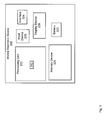
- Mobile electronic device 209 comprises a processing unit 322, a communication interface 324, and a memory device 325, an input device 326 and a display device 328, all in communication, for example, via a computing bus (not depicted), and powered by battery 330.
- processing unit 322, communication interface 324, and memory device 325 can be respectively similar to processing unit 222, communication interface 224, and memory device 225 described above. It is understood that communication interface 324 is enabled to communicate with server 103 via link 211 via any suitable wireless protocol.
- Mobile electronic device 109 is further enabled to generate response 292 to message 291.
- Response 292 can comprise any suitable data including but not limited to an e-mail, a text message, SMS (short message service) data, MMS (multimedia message service) data, and/or any suitable wireless network data.
- SMS short message service
- MMS multimedia message service
- response 292 triggers an archiving event at server 203 as described hereafter.
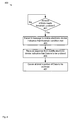
- Figure 4 depicts a method 400 for archiving data.
- method 400 is performed using system 200.
- system 200 and/or method 400 can be varied, and need not work exactly as discussed herein in conjunction with each other, and that such variations are within the scope of present embodiments.
- step 401 server 203 monitors the amount of data 201 stored in memory device 225.
- calculator 272 can calculate the amount of space that data 201 occupies in memory device 225, and comparator 274 can compare the amount with threshold condition 252. When the amount of space that data 201 occupies in memory device 225 meets threshold condition 252, then threshold condition 252 is met.
- step 401 includes at least one of determining that an amount of data 201 meets or exceeds a threshold amount of memory; determining that an amount of data 201 meets or exceeds a threshold percentage of memory; and determining that an amount of data 201 meets or exceeds a threshold number of files.
- step 401 is repeated.
- step 401 can be repeated periodically and/or when further data 201a arrives at server 203 and is stored in data 201.
- server 203 transmits message 291 to mobile electronic device 209.
- mobile electronic device 209 is associated with data 201 (e.g. server 203 is enabled to transmit data 201 to computing device 205 and mobile electronic device 201)
- message 291 is indicative that that threshold condition 252 has been met.
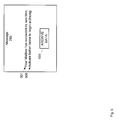
- Message 291 can hence comprise any suitable data indicative that the threshold condition 252 has been met, such as text 501 of Fig. 5 , described below.
- message 291 can comprise an option 293 to trigger archiving of data 201.
- message 291 can comprise an e-mail that includes text 501 indicative that threshold condition 252 has been met ("Your Mailbox has exceeded its size limit") and a selectable virtual button 503 that, when activated at mobile electronic device 209, causes mobile electronic device 209 to transmit response 292 to server 203 which in turn triggers archiving of data 201.
- option 293 can comprise button 503.
- message 291 can further comprise text 505 comprising instructions for using button 503.
- message 291 can comprise any suitable selectable option to trigger transmitting response 292 from mobile electronic device 209 and/or any suitable option to trigger archiving of data 201.
- response 292 can be generated at mobile electronic device 209 using any suitable method.
- response 292 can be generated by receiving input data via input device 326 indicative that response 292 is to be generated and transmitted; an e-mail, SMS, MMS, and the like can be generated and transmitted to server 203 indicating that archiving of data 201 is to occur.
- an e-mail, SMS, MMS and the like can be transmitted to server 203 with the command "Archive", or the like, in a subject line and/or a body of the e-mail/SMS/MMS etc.
- mobile electronic device 209 can comprise a dedicated application for generating response 292.
- Response 292 can comprise any suitable format including but not limited to e-mail, SMS, MMS, and wireless network data.
- response 292 comprises wireless network data
- data for causing server 203 to archive data 201 can be piggybacked on existing wireless network data.
- response 292 is received at server 203 from mobile electronic device 209, response 292 indicative that data 201 is to be archived.
- server 203 causes at least a portion of data 201 to be archived thereby increasing memory available at server 203 for storing further data, for example data 201 a which, in these embodiments, is understood to arrive after archiving has occurred.
- mobile electronic device 209 is enabled to trigger archiving of data 201 via response 292, such that further data arriving at server 203 for transmission to computing device 205 and/or mobile electronic device 209 is not lost due to a storage limit for data 201 at server 203 being reached or exceeded.
- Step 407 can comprise any suitable method for archiving data 201.
- server 203 transmits an archive command 215 to computing device 205, causing subset 214 stored at computing device 205, to be archived by transferring subset 214 from data 201 to archive portion 270.
- archive command 215 can comprise response 292 (e.g. response 292 is forwarded to computing device 205 by server 203).
- subset 214 is deleted from server 203. Note that this is in contrast to the prior art in Fig. 1 where archive command 115 is transmitted from computing device 105 to server 103: rather, in present embodiments, archive command 215 is transmitted from server 203 to computing device 205, triggered by response 292 received from mobile electronic device 209.
- transmission of archive command 215 is accompanied by transmission of subset 214, or a copy thereof.
- subset 214, or a copy thereof is already stored at computing device 205 (e.g. due to previous transmission of subset 214 or copy thereof, and/or synchronization event) and subset 214 is not transmitted to computing device 205 with archive command 215.
- Fig. 6 depicts a system 600, similar to system 200 of Fig. 2 , with like elements having like numbers.
- Method 400 can also be implemented in system 600.
- link 206 is not active when response 292 is received.
- link 206 can be down due to network problems and/or computing device 206 can be off and/or interface 264 can be experiencing problems.
- server 203 determines that computing device 205 cannot be communicated with, and stores archive command 215 in memory device 225 until computing device 205 is in communication with server 203. After communications are re-established (i.e. link 206 becomes active) transmission of archive command 215 occurs as described above with reference to Fig.
- transmission of data 201 and/or subset 214 and/or any other portion of data 201 received at server 204 while link 206 was inactive can occur prior to transmission of archive command 215.
- waiting to transmit archive command 215 can be accompanied by transferring subset 214 from data 201 to an archive portion 670 of memory device 225, thereby increasing memory available at server 203 for storing further data.
- link 206 and/or computing device 205 becomes available, and archive command 215 and subset 214 are transmitted sent to computing device 205, then subset 214 is deleted from memory device 225.
- Fig. 7 depicting a system 700, similar to system 600 of Fig. 6 , with like elements having like numbers, however preceded by a "7" rather than a "6".
- server 703 is similar to server 603.
- method 400 can be implemented in system 700.
- computing device 705 may or may not be present in system 700.
- memory device 725 at server 703 comprises an archive directory 714 for archiving data such that when response 792 is received from mobile electronic device 709, subset 714 of data 701 is transferred to archive directory 780.
- archiving command 715 can be transmitted to computing device 705 to cause further archiving (similar to that described with respect to Figs. 2 and 6 ), as a backup to data stored in archiving directory 780.
- Archive directory 780 can be accessed remotely from any suitable computing device, including but not limited to mobile electronic device 709 and computing device 705, if present.
- Fig. 8 depicting a system 800, similar to system 700 of Fig. 7 , with like elements having like numbers, however preceded by an "8" rather than a "7".
- server 803 is similar to server 703.
- method 400 can be implemented in system 800.
- system 800 comprises a second server 803a, similar to server 803, and in communication with server 803 via a link 804, which can be similar to link 206 described above.
- server 803a can comprise a processing unit 822a, a communication interface 824a and a memory device 825a, respectively similar to processing unit 822, communication interface 824 and memory device 825.
- server 803 upon receipt of response 892, server 803 causes archiving of data 801 by transmitting subset 814 to server 803a for storage therein.
- server 803a comprises at least one of an archive server and a mail server.
- memory device 825a further comprises a database.
- Fig. 9 depicting a system 900, similar to system 800 of Fig. 8 , with like elements having like numbers, however preceded by a "9" rather than an "8".
- server 903 is similar to server 803.
- method 400 can be implemented in system 800.
- server 903 manages data 901, but data 901 is stored at server 903a.
- server 903 transmits data 901 to server 903a for storage, including but not limited to subset 914.
- server 903 transmits archive command 915 to server 903a to cause server 903a to transfer subset 914 to an archiving directory 980a, similar to archiving directory 270 described above.
- a computing device that normally triggers archiving of data at a server can be unable to do so, and/or can be delayed in doing so.
- further data received is discarded or lost due to limits placed on the amount of storage available for the data at a server managing the data (or an associated database and/or second server).
- archiving of data is hence triggered by an associated mobile computing device upon notification from the server managing the data that a threshold condition for archiving has been met
- the mobile electronic device triggers archiving of data by transmitting a response and/or archive command to the server, triggering the server to cause archiving of the data, thereby increasing memory available for storing further data.
- further data received is not lost and/or discarded.
- server 203, 703, 803, 903, computing device 205, 705, 805, 905 and mobile electronic device 209, 709, 809, 909 can be implemented using pre-programmed hardware or firmware elements (e.g., application specific integrated circuits (ASICs), electrically erasable programmable read-only memories (EEPROMs), etc.), or other related components.
- ASICs application specific integrated circuits
- EEPROMs electrically erasable programmable read-only memories
- the functionality of server 203, 703, 803, 903, computing device 205, 705, 805, 905 and mobile electronic device 209, 709, 809, 909 can be achieved using a computing apparatus that has access to a code memory (not shown) which stores computer-readable program code for operation of the computing apparatus.
- the computer-readable program code could be stored on a computer readable storage medium which is fixed, tangible and readable directly by these components, (e.g., removable diskette, CD-ROM, ROM, fixed disk, USB drive).
- the computer-readable program code could be stored remotely but transmittable to these components via a modem or other interface device connected to a network (including, without limitation, the Internet) over a transmission medium.
- the transmission medium can be either a non-wireless medium (e.g., optical and/or digital and/or analog communications lines) or a wireless medium (e.g., microwave, infrared, free-space optical or other transmission schemes) or a combination thereof.
Landscapes
- Engineering & Computer Science (AREA)
- Business, Economics & Management (AREA)
- Theoretical Computer Science (AREA)
- Human Resources & Organizations (AREA)
- Entrepreneurship & Innovation (AREA)
- Physics & Mathematics (AREA)
- Strategic Management (AREA)
- General Physics & Mathematics (AREA)
- Data Mining & Analysis (AREA)
- Marketing (AREA)
- Quality & Reliability (AREA)
- Tourism & Hospitality (AREA)
- Operations Research (AREA)
- General Business, Economics & Management (AREA)
- Economics (AREA)
- Computer Hardware Design (AREA)
- Databases & Information Systems (AREA)
- General Engineering & Computer Science (AREA)
- Mobile Radio Communication Systems (AREA)
- Telephonic Communication Services (AREA)
Abstract
A method, server and mobile electronic device for archiving data are provided. The server determines that an amount of the data managed by the server meets a threshold condition and in response transmits a message to the mobile electronic device associated with the data, the message indicative that the threshold condition has been met. The mobile electronic device responds to the message with a response indicative that the data is to be archived. The response triggers the server to cause at least a portion of the data to be archived, thereby increasing memory available for storing further data.
Description
- The specification relates generally to archiving data, and specifically to a method, system and apparatus for archiving data.
- Methods and systems for archiving data managed by a server are limited and lead to data being lost when storage limits are reached. Specifically, archiving of data managed by a server is often triggered by a computing device; when the computing device is unable to trigger archiving, and storage limits are reached, further data received is discarded and/or lost.
- A first aspect of the specification provides a method for archiving data managed by a server. The method comprises determining that an amount of the data managed by the server meets a threshold condition. The method further comprises transmitting a message from the server to a mobile electronic device associated with the data, the message indicative that the threshold condition has been met. The method further comprises receiving a response at the server from the mobile electronic device indicative that the data is to be archived. The method further comprises causing at least a portion of the data to be archived thereby increasing memory available for storing further data.
- Determining that the amount of the data managed by the server meets the threshold condition can comprise at least one of: determining that the amount of data meets or exceeds a threshold amount of memory; determining that the amount of data meets or exceeds a threshold percentage of memory; and determining that the amount of data meets or exceeds a threshold number of files.
- Transmitting the message to the mobile electronic device can comprise transmitting an e-mail to the mobile electronic device, the e-mail comprising an option to trigger archiving of the data.
- Receiving a response from the mobile electronic device indicative that the data is to be archived can comprise receiving at least one of an e-mail, a text message, an SMS (short message service) message, MMS (multimedia message service) and wireless network data.
- The message can comprise a selectable option to trigger transmitting the response from the mobile electronic device.
- Causing at least the portion of the data to be archived can comprise: transmitting an archive command to a computing device causing a copy of the at least the portion stored at the computing device to be archived at the computing device; and deleting the at least the portion of the data managed by server. The method can further comprise transmitting the copy of the at least the portion to the computing device at least one of prior to the transmitting the archive command and with the archive command. The method can further comprise, when the computing device is in not communication with the server, waiting until the computing device is in communication with the server before the transmitting occurs. The method can further comprise transferring the at least the portion to an archive directory in association with the waiting such that the further data can be stored. The method can further comprise deleting the at least the portion from the archive directory when communications between the computing device and the server are established.
- Causing at least the portion of the data to be archived can comprise transferring at least the portion of the data to an archive directory at, at least one of the server and a second server.
- A second aspect of the specification can comprise a server for archiving data. The server comprises a processing unit interconnected with a communication interface. The processing unit enabled to: determine that an amount of the data managed by the server meets a threshold condition; transmit, via the communication interface, a message from the server to a mobile electronic device associated with the data, the message indicative that the threshold condition has been met; receive, via the communication interface, a response at the server from the mobile electronic device indicative that the data is to be archived; and cause at least a portion of the data to be archived thereby increasing memory available for storing further data.
- To determine that the amount of the data managed by the server meets the threshold condition, the processing unit can be further enabled to at least one of: determine that the amount of data meets or exceeds a threshold amount of memory; determine that the amount of data meets or exceeds a threshold percentage of memory; and determine that the amount of data meets or exceeds a threshold number of files.
- To transmit the message to the mobile electronic device the processing unit can be further enabled to transmit, via the communication interface, an e-mail to the mobile electronic device, the e-mail comprising an option to trigger archiving of the data.
- To receive a response from the mobile electronic device indicative that the data is to be archived, the processing unit can be further enabled to receive at least one of an e-mail, a text message, an SMS (short message service) message, MMS (multimedia message service) and wireless network data.
- The message comprises a selectable option to trigger the mobile electronic device to transmit the response to the server.
- To cause at least the portion of the data to be archived, the processing unit can be further enabled to: transmit an archive command to a computing device causing a copy of the at least the portion stored at the computing device to be archived at the computing device; and delete the at least the portion of the data managed by server. The processing unit can be further enabled to transmit the copy of the at least the portion to the computing device at least one of: prior to transmitting the archive command; and with the archive command. The processing unit can be further enabled to, when the computing device is in not communication with the server, wait until the computing device is in communication with the server before the transmitting occurs. The processing unit can be further enabled to transfer the at least the portion to an archive directory, while waiting until the computing device is in communication with the server, such that the further data can be stored. The processing unit can be further enabled to delete the at least the portion from the archive directory when communications between the computing device and the server are established.
- To cause at least the portion of the data to be archived, the processing unit can be further enabled to transfer at least the portion of the data to an archive directory sbred at a memory device at, at least one of the server and a second server.
- A third aspect of the specification provides a mobile electronic device for archiving data. The mobile electronic device provides a processing unit interconnected with a communication interface. The processing unit is enabled to: receive, via the communication interface, a message from a server, the message indicative that an amount of the data managed by the server meets a threshold condition; and transmit, via the communication interface, a response to the server indicative that the data is to be archived, the response causing the server to archive at least the portion of the data thereby increasing an amount of memory managed by the server to be available for storing further data.
- A fourth aspect of the specification provides a computer program product, comprising a computer usable medium having a computer readable program code adapted to be executed to implement a method for archiving data managed by a server. The method comprises: determining that an amount of the data managed by the server meets a threshold condition; transmitting a message from the server to a mobile electronic device associated with the data, the message indicative that the threshold condition has been met; receiving a response at the server from the mobile electronic device indicative that the data is to be archived; and causing at least a portion of the data to be archived thereby increasing memory available for storing further data.
- Embodiments are described with reference to the following figures, in which:
-
Fig. 1 depicts a block diagram of a system for archiving data, according to the prior art; -
Fig. 2 depicts a block diagram of a system for archiving data, according to non-limiting embodiments; -
Fig. 3 depicts a block diagram of a mobile electronic device for triggering archiving of data, according to non-limiting embodiments; -
Fig. 4 depicts a flow chart diagram of a method for archiving data, according to non-limiting embodiments; -
Fig. 5 depicts a representation of a message for notifying that a threshold condition for archiving has been met, according to non-limiting embodiments; and -
Figs. 6-9 depict block diagrams of systems for archiving data, according to non-limiting embodiments. - Data intended for a computing device (e.g. email and/or event data, etc.) can be received and stored at a server for viewing at the computing device. However, a given computing device will generally be assigned a given amount of memory at the server for data storage. When the amount of data at the server reaches a threshold, no further data can be stored until at least a portion of the existing data is archived. If archiving doesn't occur, further data received can be lost. While automatic archiving events can be scheduled, the threshold can be reached well in advance of the next event. To address this, an archive command can be initiated at the computing device, and transmitted to the server, which triggers the server to transit at least a portion of the data to the computing device for archiving in local storage. This situation becomes problematic during absences from the computing device (e.g. vacations): if the threshold is reached during the absence, as all further data received can be lost until access to the computing device resumes and the archiving command is transmitted.
- For example,
Fig. 1 depicts asystem 100 forarchiving data 101 managed by aserver 103, according to the prior art.Server 103 is enabled for communication with acomputing device 105, via alink 106 and a mobileelectronic device 109, via alink 111.Server 103 is further enabled to receivedata 101 via acommunication network 113, which can be wired or wireless as desired For example,data 101 can comprise any suitable number of e-mails, event data, etc., intended for transmission tocomputing device 105, and originally transmitted by at least one other computing device (not depicted) in communication withcommunication network 113. Furthermore,data 101 can comprise asubset 114 that can be archived; for example,subset 114 can comprise data that meets any suitable given criteria, such as e-mail, event data etc. received before a given date, e-mail, event data etc., that exceeds a given amount of memory, and the like.Server 103 generally comprises aprocessing unit 122 interconnected with acommunication interface 124 and amemory device 125. - In any event,
data 101 is received and managed atserver 103, includingsubset 114, inmemory device 125.Data 101 is generally viewable atcomputing device 105 and/or mobileelectronic device 109 either via a client/server session established betweencomputing device 105 and server 103 (or betweencomputing device 105 and server 103) or by transmittingdata 101, or a copy thereof, to computing device 105 (and/or by transmittingdata 101, or a copy thereof, to mobile electronic device 109) for viewing.Data 101 can either be requested by computingdevice 105 and/or mobileelectronic device 109, respectfully, vialinks computing device 105 and/or mobileelectronic device 109 byserver 103 whenlinks data 101 can be requested and/or pushed periodically, and/orserver 103 can pushdata 101 tocomputing device 105 and/or mobileelectronic device 109 whendata 101 is received atserver 103. However,data 101, or copy thereof, is also maintained inmemory device 125 atserver 103. - Furthermore, archiving of
data 101 can occur. For example,computing device 105 periodically, and/or upon receipt of input data, transmits anarchive command 115 toserver 103.Archive command 115 triggersserver 103 to transmit the data to be archived, forexample subset 114, or a copy thereof, tocomputing device 105 for storage, and deletesubset 114 fromserver 103, thereby increasing the amount of memory available to store further data received atserver 103. - Furthermore,
computing device 105 comprises aprocessing unit 162 interconnected with acommunication interface 164, amemory device 165, and aninput device 166.Processing unit 162 is enabled to controlmemory device 165 to storesubset 114 in anarchive portion 170 ofmemory device 165 for archiving data, for example an archive folder and/or an archive file, such that when archiving occurs,subset 114 is transferred fromdata 101 to archiveportion 170. In effect,subset 114 is deleted fromdata 101 and copied and/or transferred to archiveportion 170. - When
data 101 andsubset 114 are already stored atcomputing device 105 prior to transmission ofarchiving command 115, for example due to an earlier transmission ofdata 101, then archivecommand 115 triggers canserver 103 to deletesubset 114 frommemory device 114, without an additional transmission ofsubset 114 tocomputing device 105; it is understood thatsubset 114 already stored atmemory device 165 is copied and/or transferred to archiveportion 170. - It is generally understood that only a portion of
memory device 125 atserver 103 is allotted for storingdata 101. Oncedata 101 reaches a given threshold and/or storage limit, for example a total given amount and/or percentage ofmemory device 125, any further data received will either be discarded and/or not transmitted tocomputing device 105 and/or mobileelectronic device 109. Hence, further data transmitted tocomputing device 105 viaserver 103 is lost.Warning data 190 can be transmitted tocomputing device 105 and/or mobileelectronic device 109 as the given threshold is approached and/or when and/or after the given threshold is met, warningdata 190 comprising text for display atcomputing device 105 and/or mobileelectronic device 109 indicating that the given threshold is being approached and/or has been met. For example, warningdata 190 can comprise the text "Your mailbox is over its size limit". However, regardless ofwarning data 190, unlessarchive command 115 is transmitted fromcomputing device 105 toserver 103, archiving will not occur and the further data will be lost. - Attention is now directed to
Fig. 2 , which depicts asystem 200 for archiving data, forexample data 201 managed by aserver 203, according to non-limiting embodiments. In general,system 200 is similar tosystem 100 ofFig. 1 , with like elements having like numbers, however preceded by a "2" rather than a "1": forexample server 203 is similar toserver 103. However, insystem 200,server 203 is enabled to determine that an amount ofdata 201 managed byserver 203 meets athreshold condition 252 and in response transmits amessage 291 to mobile electronic device thatthreshold condition 252 has been met.Threshold condition 252 can comprise any suitable threshold data, including but not limited to: a given amount of memory occupied bydata 201 onmemory device 225; a given percentage of memory occupied bydata 201 onmemory device 225; a given number of files that can be present indata 201, including but not limited to a given number of e-mails and/or event data. In some embodiments,threshold condition 252 can be less than a storage limit fordata 201 onmemory device 225, for example an amount of memory allotted todata 201 which, when reached or exceeded, further data received for storage is discarded. In other embodiments, threshold condition can be similar to the storage limit. - Furthermore,
mobile computing device 209 is enabled to transmit aresponse 292 tomessage 291 indicative thatdata 201 is to be archived.Response 292 hence triggers an archiving event when received atserver 203, which causes at least a portion ofdata 201 to be archived thereby increasing memory available atserver 203 for storing further data. Various non-limiting embodiments for archiving will be described below with reference toFigs. 4-8 . However,system 200 will first be described in further detail. -
Link 211 generally comprises a wireless link between mobileelectronic device 209 andserver 203.Link 211 can hence comprise a wireless network, such as a wireless carrier network, including but not limited to any suitable cell phone network (1X, UMTS (Universal Mobile Telecommunications System), CDMA (code division multiple access), GSM (Global System for Mobile communications), 3G, EDGE, and the like), in combination with any suitable combination of wired or wireless networks as desired, including but not limited to a packet based network, the Internet, an analog network, the PSTN (public switched telephone network), a WiFi network, a WiMax network and the like. In some embodiments, link 211 can comprisecommunication network 213, which can be wired or wireless as desired. - Similarly, link 206 can comprise any suitable combination of wired or wireless networks as desired, including but not limited to a packet based network, the Internet, an analog network, the PSTN, a WiFi network, a WiMax network and the like. In some embodiments, link 206 can comprise
communication network 213 - Mobile
electronic device 209 can comprise any suitable mobile electronic device and/or mobile computing device and/or mobile communication device, including but not limited to a laptop or notebook computer, a PDA, a cellular or mobile phone, a portable electronic device, or the like. However, other suitable types ofmobile electronic devices are within the scope of present embodiments. Mobileelectronic device 109 is described in more detail below with reference toFig. 3 . -
Server 203 comprises aprocessing unit 222, acommunications interface 224 andmemory device 225 all in communication, for example, via a computing bus (not depicted).Server 203 comprises any suitable computing device for storingdata 201.Server 203 can include but is not limited to any suitable combination of a computer, a mainframe computer, a server and the like. Other suitable types of computing devices are within the scope of present embodiments. -
Memory device 225 can be any suitable one of or combination of volatile memory, non-volatile memory, RAM, ROM, hard drive, optical drive, or the like. In particular,memory device 125 is enabled todata 201. Furthermore,memory device 225 can comprise anapplication 231 which, when processed by processingunit 222, causes processingunit 222 to determine whendata 201 meetsthreshold condition 252 for transmittingmessage 291. -
Processing unit 222 can comprise any suitable processor, or combination of processors, including but not limited to a microprocessor, CPU (central processing unit), or the like.Processing unit 222 can comprise acomparator 272 for comparing values including but not limited to alphanumeric values, and acalculator 274 for performing mathematical operations on numerical values and/or performing textual operations on text values. In particular,calculator 274 can determine characteristic ofdata 201, such as the amount ofmemory device 225 occupied bydata 201, andcomparator 272 can determine whenthreshold condition 252 has been met by comparing a determined characteristic ofdata 201 withthreshold condition 252. - Communications interface 224 is enabled to communicate with
computing device 205 vialink 206, with mobileelectronic device 209 vialink 211, and withcommunication network 213. Accordingly,communications interface 224 is enabled to communicate according to any suitable protocol which is compatible withlinks communication network 213, including but not limited to packet based protocols, Internet protocols, analog protocols, cell phone protocols (1X, UTMS, CDMA, GMS, 3G, EDGE and the like), WiFi protocols, WiMax protocols and/or a combination of these. Other suitable protocols are within the scope of present embodiments. -
Computing device 205 comprises aprocessing unit 262, acommunication interface 264, and amemory device 265, all in communication, for example, via a computing bus (not depicted). Each ofprocessing unit 262,communication interface 264, andmemory device 265 can be respectively similar toprocessing unit 222,communication interface 224, andmemory device 225 described above. In particular,computing device 105 is enabled to communicate withserver 203, vialink 206. Furthermore,computing device 205 is enabled to archivesubset 214 ofdata 201 inarchiving portion 270 upon receipt of anarchive command 215 fromserver 203 as will be described below. - Attention is now directed to
Fig. 3 , which depicts mobileelectronic device 209, according to non-limiting embodiments. Mobileelectronic device 209 comprises aprocessing unit 322, acommunication interface 324, and amemory device 325, aninput device 326 and adisplay device 328, all in communication, for example, via a computing bus (not depicted), and powered by battery 330. Each ofprocessing unit 322,communication interface 324, andmemory device 325 can be respectively similar toprocessing unit 222,communication interface 224, andmemory device 225 described above. It is understood thatcommunication interface 324 is enabled to communicate withserver 103 vialink 211 via any suitable wireless protocol. - Mobile
electronic device 109 is further enabled to generateresponse 292 tomessage 291.Response 292 can comprise any suitable data including but not limited to an e-mail, a text message, SMS (short message service) data, MMS (multimedia message service) data, and/or any suitable wireless network data. In general it is understood thatresponse 292 triggers an archiving event atserver 203 as described hereafter. - Attention is now directed to
Figure 4 which depicts amethod 400 for archiving data. In order to assist in the explanation ofmethod 400, it will be assumed thatmethod 400 is performed usingsystem 200. Furthermore, the following discussion ofmethod 400 will lead to a further understanding ofsystem 200 and its various components. However, it is to be understood thatsystem 200 and/ormethod 400 can be varied, and need not work exactly as discussed herein in conjunction with each other, and that such variations are within the scope of present embodiments. - At
step 401,server 203 monitors the amount ofdata 201 stored inmemory device 225. For example, in some embodiments,calculator 272 can calculate the amount of space thatdata 201 occupies inmemory device 225, andcomparator 274 can compare the amount withthreshold condition 252. When the amount of space thatdata 201 occupies inmemory device 225 meetsthreshold condition 252, thenthreshold condition 252 is met. In some embodiments,step 401 includes at least one of determining that an amount ofdata 201 meets or exceeds a threshold amount of memory; determining that an amount ofdata 201 meets or exceeds a threshold percentage of memory; and determining that an amount ofdata 201 meets or exceeds a threshold number of files. - When
threshold condition 252 is not met, then step 401 is repeated. In some embodiments, step 401 can be repeated periodically and/or whenfurther data 201a arrives atserver 203 and is stored indata 201. - When
threshold condition 252 is met, then atstep 403,server 203 transmitsmessage 291 to mobileelectronic device 209. It is generally understood that mobileelectronic device 209 is associated with data 201 (e.g. server 203 is enabled to transmitdata 201 tocomputing device 205 and mobile electronic device 201) Furthermore,message 291 is indicative that thatthreshold condition 252 has been met.Message 291 can hence comprise any suitable data indicative that thethreshold condition 252 has been met, such astext 501 ofFig. 5 , described below. In some embodiments,message 291 can comprise anoption 293 to trigger archiving ofdata 201. - For example, as depicted in
Fig. 5 , which comprises a representation 500 ofmessage 291 displayed atdisplay device 328,message 291 can comprise an e-mail that includestext 501 indicative thatthreshold condition 252 has been met ("Your Mailbox has exceeded its size limit") and a selectablevirtual button 503 that, when activated at mobileelectronic device 209, causes mobileelectronic device 209 to transmitresponse 292 toserver 203 which in turn triggers archiving ofdata 201. Henceoption 293 can comprisebutton 503. In some embodiments, as also depicted inFig. 5 ,message 291 can further comprisetext 505 comprising instructions for usingbutton 503. However,message 291 can comprise any suitable selectable option to trigger transmittingresponse 292 from mobileelectronic device 209 and/or any suitable option to trigger archiving ofdata 201. - In other embodiments,
response 292 can be generated at mobileelectronic device 209 using any suitable method. For example, after receivingmessage 291,response 292 can be generated by receiving input data viainput device 326 indicative thatresponse 292 is to be generated and transmitted; an e-mail, SMS, MMS, and the like can be generated and transmitted toserver 203 indicating that archiving ofdata 201 is to occur. For example, an e-mail, SMS, MMS and the like can be transmitted toserver 203 with the command "Archive", or the like, in a subject line and/or a body of the e-mail/SMS/MMS etc. Furthermore, in some embodiments, mobileelectronic device 209 can comprise a dedicated application for generatingresponse 292. - As has been already described,
Response 292 can comprise any suitable format including but not limited to e-mail, SMS, MMS, and wireless network data. In embodiments whereresponse 292 comprises wireless network data, data for causingserver 203 to archivedata 201 can be piggybacked on existing wireless network data. - In any event, returning to
Fig. 4 , atstep 405,response 292 is received atserver 203 from mobileelectronic device 209,response 292 indicative thatdata 201 is to be archived. - At
step 407,server 203 causes at least a portion ofdata 201 to be archived thereby increasing memory available atserver 203 for storing further data, forexample data 201 a which, in these embodiments, is understood to arrive after archiving has occurred. - Hence, in present embodiments, mobile
electronic device 209 is enabled to trigger archiving ofdata 201 viaresponse 292, such that further data arriving atserver 203 for transmission tocomputing device 205 and/or mobileelectronic device 209 is not lost due to a storage limit fordata 201 atserver 203 being reached or exceeded. - Step 407 can comprise any suitable method for
archiving data 201. In some embodiments, as depicted inFig. 2 , assuminglink 206 is active andserver 203 can communicate withcomputing device 205,server 203 transmits anarchive command 215 tocomputing device 205, causingsubset 214 stored atcomputing device 205, to be archived by transferringsubset 214 fromdata 201 to archiveportion 270. In some embodiments,archive command 215 can comprise response 292 (e.g. response 292 is forwarded tocomputing device 205 by server 203). Furthermore,subset 214 is deleted fromserver 203. Note that this is in contrast to the prior art inFig. 1 wherearchive command 115 is transmitted fromcomputing device 105 to server 103: rather, in present embodiments,archive command 215 is transmitted fromserver 203 tocomputing device 205, triggered byresponse 292 received from mobileelectronic device 209. - In some embodiments, transmission of
archive command 215 is accompanied by transmission ofsubset 214, or a copy thereof. In other embodiments, it is understood thatsubset 214, or a copy thereof, is already stored at computing device 205 (e.g. due to previous transmission ofsubset 214 or copy thereof, and/or synchronization event) andsubset 214 is not transmitted tocomputing device 205 witharchive command 215. - Attention is now directed to
Fig. 6 which depicts asystem 600, similar tosystem 200 ofFig. 2 , with like elements having like numbers.Method 400 can also be implemented insystem 600. However, in these embodiments, link 206 is not active whenresponse 292 is received. For example, link 206 can be down due to network problems and/orcomputing device 206 can be off and/orinterface 264 can be experiencing problems. Hence,server 203 determines thatcomputing device 205 cannot be communicated with, and stores archivecommand 215 inmemory device 225 until computingdevice 205 is in communication withserver 203. After communications are re-established (i.e. link 206 becomes active) transmission ofarchive command 215 occurs as described above with reference toFig. 2 (as well as transmission ofsubset 214 if desired, and/or any other portion ofdata 201 received at server 204 whilelink 206 was inactive). In some embodiments, transmission ofdata 201 and/orsubset 214 and/or any other portion ofdata 201 received at server 204 whilelink 206 was inactive whilelink 206 was inactive can occur prior to transmission ofarchive command 215. - In some embodiments depicted in
Fig. 6 , waiting to transmitarchive command 215 can be accompanied by transferringsubset 214 fromdata 201 to anarchive portion 670 ofmemory device 225, thereby increasing memory available atserver 203 for storing further data. In some of these embodiments, whenlink 206 and/orcomputing device 205 becomes available, andarchive command 215 andsubset 214 are transmitted sent tocomputing device 205, thensubset 214 is deleted frommemory device 225. - Attention is now directed to
Fig. 7 depicting asystem 700, similar tosystem 600 ofFig. 6 , with like elements having like numbers, however preceded by a "7" rather than a "6". Forexample server 703 is similar to server 603. Furthermore,method 400 can be implemented insystem 700. However, in these embodiments,computing device 705 may or may not be present insystem 700. Hence,memory device 725 atserver 703 comprises anarchive directory 714 for archiving data such that whenresponse 792 is received from mobileelectronic device 709,subset 714 ofdata 701 is transferred to archivedirectory 780. In embodiments that comprisecomputing device 705,archiving command 715 can be transmitted tocomputing device 705 to cause further archiving (similar to that described with respect toFigs. 2 and6 ), as a backup to data stored inarchiving directory 780.Archive directory 780 can be accessed remotely from any suitable computing device, including but not limited to mobileelectronic device 709 andcomputing device 705, if present. - Attention is now directed to
Fig. 8 depicting asystem 800, similar tosystem 700 ofFig. 7 , with like elements having like numbers, however preceded by an "8" rather than a "7". Forexample server 803 is similar toserver 703. Furthermore,method 400 can be implemented insystem 800. However, in these embodiments,system 800 comprises asecond server 803a, similar toserver 803, and in communication withserver 803 via alink 804, which can be similar to link 206 described above. Furthermore,server 803a can comprise aprocessing unit 822a, acommunication interface 824a and amemory device 825a, respectively similar toprocessing unit 822,communication interface 824 andmemory device 825. In these embodiments, upon receipt ofresponse 892,server 803 causes archiving ofdata 801 by transmittingsubset 814 toserver 803a for storage therein. Hence, in these embodiments,server 803a comprises at least one of an archive server and a mail server. In some embodiments,memory device 825a further comprises a database. - Attention is now directed to
Fig. 9 depicting asystem 900, similar tosystem 800 ofFig. 8 , with like elements having like numbers, however preceded by a "9" rather than an "8". Forexample server 903 is similar toserver 803. Furthermore,method 400 can be implemented insystem 800. However, in these embodiments,server 903 managesdata 901, butdata 901 is stored atserver 903a. Hence,server 903 transmitsdata 901 toserver 903a for storage, including but not limited tosubset 914. Hence, in response to receivingresponse 992,server 903 transmits archivecommand 915 toserver 903a to causeserver 903a to transfersubset 914 to an archiving directory 980a, similar toarchiving directory 270 described above. - While various methods for archiving are described with reference to
Figs. 2 ,6 ,7 and8 , any suitable archiving method for archiving is within the scope of present embodiments. - In any event, a computing device that normally triggers archiving of data at a server can be unable to do so, and/or can be delayed in doing so. Thus, further data received is discarded or lost due to limits placed on the amount of storage available for the data at a server managing the data (or an associated database and/or second server). In present embodiments, archiving of data is hence triggered by an associated mobile computing device upon notification from the server managing the data that a threshold condition for archiving has been met The mobile electronic device triggers archiving of data by transmitting a response and/or archive command to the server, triggering the server to cause archiving of the data, thereby increasing memory available for storing further data. Hence, further data received is not lost and/or discarded.
- Those skilled in the art will appreciate that in some embodiments, the functionality of
server computing device electronic device server computing device electronic device - A portion of the disclosure of this patent document contains material which is subject to copyright protection. The copyright owner has no objection to the facsimile reproduction by any one the patent document or patent disclosure, as it appears in the Patent and Trademark Office patent file or records, but otherwise reserves all copyrights whatsoever.
- Persons skilled in the art will appreciate that there are yet more alternative implementations and modifications possible for implementing the embodiments, and that the above implementations and examples are only illustrations of one or more embodiments. The scope, therefore, is only to be limited by the claims appended hereto.
Claims (14)
- A method for archiving data managed by a server (203, 703, 803, 903), comprising:determining that an amount of said data managed by said server (203, 703, 803, 903) meets a threshold condition;transmitting a message from said server (203, 703, 803, 903) to a mobile electronic device (209, 709, 809, 909) associated with said data, said message indicative that said threshold condition has been met;receiving a response at said server (203, 703, 803, 903) from said mobile electronic device (209, 709, 809, 909) indicative that said data is to be archived; andcausing at least a portion of said data to be archived thereby increasing memory (225, 725, 825, 825a, 925, 925a) available for storing further data.
- The method of claim 1, wherein said determining that said amount of said data managed by said server (203, 703, 803, 903) meets said threshold condition comprises at least one of:determining that said amount of data meets or exceeds a threshold amount of memory (225, 725, 825, 825a, 925, 925a);determining that said amount of data meets or exceeds a threshold percentage of memory (225, 725, 825, 825a, 925, 925a); anddetermining that said amount of data meets or exceeds a threshold number of files.
- The method of claim 1 or 2, wherein said transmitting said message to said mobile electronic device (209, 709, 809, 909) comprises transmitting an e-mail to said mobile electronic device (209, 709, 809, 909), said e-mail comprising an option to trigger archiving of said data.
- The method of any of claims 1 to 3, wherein said receiving a response from said mobile electronic device (209, 709, 809, 909) indicative that said data is to be archived comprises receiving at least one of an e-mail, a text message, an SMS (short message service) message, MMS (multimedia message service) and wireless network data.
- The method of any of claims 1 to 4, wherein said message comprises a selectable option to trigger transmitting said response from said mobile electronic device (209, 709, 809, 909).
- The method of any of claims 1 to 5, wherein said causing at least a portion of said data to be archived comprises:transmitting an archive command to a computing device (205, 705, 805, 905) causing a copy of said at least a portion stored at said computing device (205, 705, 805, 905) to be archived at said computing device (205, 705, 805, 905); and deleting said at least said portion of said data managed by server (203, 703, 803, 903).
- The method of claim 6, further comprising transmitting said copy of said at least said portion to said computing device (205, 705, 805, 905) at least one of prior to said transmitting said archive command and with said archive command.
- The method of claim 6 or 7, further comprising when said computing device (205, 705, 805, 905) is in not communication with said server (203, 703, 803, 903), waiting until said computing device (205, 705, 805, 905) is in communication with said server (203, 703, 803, 903) before said transmitting occurs.
- The method of claim 8, further comprising transferring said at least said portion to an archive directory in association with said waiting such that said further data can be stored.
- The method of claim 9, further comprising deleting said at least said portion from said archive directory when communications between said computing device (205, 705, 805, 905) and said server (203, 703, 803, 903) are established.
- The method of any of claims 1 to 10, wherein said causing at least said portion of said data to be archived comprises transferring at least said portion of said data to an archive directory at, at least one of said server (203, 703, 803, 903) and a second server (803a, 903a).
- A server (203, 703, 803, 903) for archiving data, comprising:a processing unit (222, 722, 822, 922) interconnected with a communication interface (224, 724, 824, 924), said processing unit (222, 722, 822, 922) enabled to implement any of the steps of the method of claims 1 to 11.
- A mobile electronic device for archiving data, comprising:a processing unit (322) interconnected with a communication interface (324), said processing unit (322) enabled to:receive, via said communication interface (324), a message from a server(203, 703, 803, 903), said message indicative that an amount of said data managed by said server meets a threshold condition; andtransmit, via said communication interface (324), a response to said server (203, 703, 803, 903) indicative that said data is to be archived, said response causing said server (203, 703, 803, 903) to archive at least a portion of said data thereby increasing an amount of memory (225, 725, 825, 825a, 925, 925a) managed by said server (203, 703, 803, 903) to be available for storing further data.
- A computer program product, comprising a computer usable medium having a computer readable program code adapted to be executed to implementany of the steps of the method of claims 1 to 11.
Priority Applications (2)
| Application Number | Priority Date | Filing Date | Title |
|---|---|---|---|
| EP10157245A EP2372569A1 (en) | 2010-03-22 | 2010-03-22 | Method, system and apparatus for archiving data |
| CA2733115A CA2733115A1 (en) | 2010-03-22 | 2011-03-03 | Method, system and apparatus for archiving data |
Applications Claiming Priority (1)
| Application Number | Priority Date | Filing Date | Title |
|---|---|---|---|
| EP10157245A EP2372569A1 (en) | 2010-03-22 | 2010-03-22 | Method, system and apparatus for archiving data |
Publications (1)
| Publication Number | Publication Date |
|---|---|
| EP2372569A1 true EP2372569A1 (en) | 2011-10-05 |
Family
ID=42237273
Family Applications (1)
| Application Number | Title | Priority Date | Filing Date |
|---|---|---|---|
| EP10157245A Withdrawn EP2372569A1 (en) | 2010-03-22 | 2010-03-22 | Method, system and apparatus for archiving data |
Country Status (2)
| Country | Link |
|---|---|
| EP (1) | EP2372569A1 (en) |
| CA (1) | CA2733115A1 (en) |
Cited By (1)
| Publication number | Priority date | Publication date | Assignee | Title |
|---|---|---|---|---|
| WO2014085998A1 (en) * | 2012-12-05 | 2014-06-12 | 华为技术有限公司 | Error reporting method and device |
Citations (4)
| Publication number | Priority date | Publication date | Assignee | Title |
|---|---|---|---|---|
| EP1712990A2 (en) | 2005-04-12 | 2006-10-18 | Broadcom Corporation | Intelligent auto-archiving |
| US20070136397A1 (en) * | 2005-12-09 | 2007-06-14 | Interdigital Technology Corporation | Information life-cycle management architecture for a device with infinite storage capacity |
| WO2008070688A1 (en) * | 2006-12-04 | 2008-06-12 | Commvault Systems, Inc. | Systems and methods for creating copies of data, such as archive copies |
| US20090094297A1 (en) * | 2007-10-08 | 2009-04-09 | International Business Machines Corporation | Archiving tool for managing electronic data |
-
2010
- 2010-03-22 EP EP10157245A patent/EP2372569A1/en not_active Withdrawn
-
2011
- 2011-03-03 CA CA2733115A patent/CA2733115A1/en not_active Abandoned
Patent Citations (4)
| Publication number | Priority date | Publication date | Assignee | Title |
|---|---|---|---|---|
| EP1712990A2 (en) | 2005-04-12 | 2006-10-18 | Broadcom Corporation | Intelligent auto-archiving |
| US20070136397A1 (en) * | 2005-12-09 | 2007-06-14 | Interdigital Technology Corporation | Information life-cycle management architecture for a device with infinite storage capacity |
| WO2008070688A1 (en) * | 2006-12-04 | 2008-06-12 | Commvault Systems, Inc. | Systems and methods for creating copies of data, such as archive copies |
| US20090094297A1 (en) * | 2007-10-08 | 2009-04-09 | International Business Machines Corporation | Archiving tool for managing electronic data |
Cited By (1)
| Publication number | Priority date | Publication date | Assignee | Title |
|---|---|---|---|---|
| WO2014085998A1 (en) * | 2012-12-05 | 2014-06-12 | 华为技术有限公司 | Error reporting method and device |
Also Published As
| Publication number | Publication date |
|---|---|
| CA2733115A1 (en) | 2011-09-22 |
Similar Documents
| Publication | Publication Date | Title |
|---|---|---|
| US20130275387A1 (en) | Method, system and apparatus for archiving data | |
| US8364181B2 (en) | Electronic-mail filtering for mobile devices | |
| US8271683B2 (en) | Content push service | |
| EP4040297A1 (en) | System and method for automatic cloud-based full-data backup and restore on mobile devices | |
| US8693992B2 (en) | System and method for storage of electronic mail | |
| US8285799B2 (en) | Quota-based archiving | |
| EP2362594A1 (en) | Data storage method and mail relay method of storage system in mail system | |
| US20130124639A1 (en) | Mail delivery method and mail system for mobile terminal | |
| US20120296946A1 (en) | File management apparatus and file management apparatus controlling method | |
| US9456325B2 (en) | Transmission of a multimedia message doubled with the transmission of a text message | |
| US8848625B2 (en) | Method, server and system for propagating a wireless communication device state | |
| EP2372569A1 (en) | Method, system and apparatus for archiving data | |
| US9594760B1 (en) | Systems and methods for archiving email messages | |
| US10015651B1 (en) | Device switching service | |
| CA2723061C (en) | Method and portable electronic device for processing images | |
| CN107562889B (en) | Metadata aging method and device | |
| US20050198033A1 (en) | Method for moving data between folders within a data space | |
| EP2439906B1 (en) | Method, server and system for propagating a wireless communication device state | |
| JP3247668B2 (en) | E-mail management device and e-mail management method | |
| EP2490384A1 (en) | A communication device and method for overriding a message filter | |
| JP5480935B2 (en) | Mobile terminal and e-mail management method | |
| KR101763310B1 (en) | System and Method for Sending and Receiving Data, Terminal and Driving Method Thereof | |
| CA2564676C (en) | System and method for storage of electronic mail | |
| EP2631850A1 (en) | Method, system and apparatus for managing electronic subscriptions at a communication device |
Legal Events
| Date | Code | Title | Description |
|---|---|---|---|
| PUAI | Public reference made under article 153(3) epc to a published international application that has entered the european phase |
Free format text: ORIGINAL CODE: 0009012 |
|
| 17P | Request for examination filed |
Effective date: 20100322 |
|
| AK | Designated contracting states |
Kind code of ref document: A1 Designated state(s): AT BE BG CH CY CZ DE DK EE ES FI FR GB GR HR HU IE IS IT LI LT LU LV MC MK MT NL NO PL PT RO SE SI SK SM TR |
|
| RAP1 | Party data changed (applicant data changed or rights of an application transferred) |
Owner name: BLACKBERRY LIMITED |
|
| RAP1 | Party data changed (applicant data changed or rights of an application transferred) |
Owner name: BLACKBERRY LIMITED |
|
| STAA | Information on the status of an ep patent application or granted ep patent |
Free format text: STATUS: THE APPLICATION HAS BEEN WITHDRAWN |
|
| 18W | Application withdrawn |
Effective date: 20141202 |