EP2368709A2 - Window having a light transmittance adjusting layer - Google Patents
Window having a light transmittance adjusting layer Download PDFInfo
- Publication number
- EP2368709A2 EP2368709A2 EP10251956A EP10251956A EP2368709A2 EP 2368709 A2 EP2368709 A2 EP 2368709A2 EP 10251956 A EP10251956 A EP 10251956A EP 10251956 A EP10251956 A EP 10251956A EP 2368709 A2 EP2368709 A2 EP 2368709A2
- Authority
- EP
- European Patent Office
- Prior art keywords
- light transmittance
- heat transfer
- transfer medium
- window according
- window
- Prior art date
- Legal status (The legal status is an assumption and is not a legal conclusion. Google has not performed a legal analysis and makes no representation as to the accuracy of the status listed.)
- Granted
Links
Images

Classifications
-
- C—CHEMISTRY; METALLURGY
- C03—GLASS; MINERAL OR SLAG WOOL
- C03C—CHEMICAL COMPOSITION OF GLASSES, GLAZES OR VITREOUS ENAMELS; SURFACE TREATMENT OF GLASS; SURFACE TREATMENT OF FIBRES OR FILAMENTS MADE FROM GLASS, MINERALS OR SLAGS; JOINING GLASS TO GLASS OR OTHER MATERIALS
- C03C17/00—Surface treatment of glass, not in the form of fibres or filaments, by coating
- C03C17/22—Surface treatment of glass, not in the form of fibres or filaments, by coating with other inorganic material
- C03C17/23—Oxides
-
- E—FIXED CONSTRUCTIONS
- E06—DOORS, WINDOWS, SHUTTERS, OR ROLLER BLINDS IN GENERAL; LADDERS
- E06B—FIXED OR MOVABLE CLOSURES FOR OPENINGS IN BUILDINGS, VEHICLES, FENCES OR LIKE ENCLOSURES IN GENERAL, e.g. DOORS, WINDOWS, BLINDS, GATES
- E06B3/00—Window sashes, door leaves, or like elements for closing wall or like openings; Layout of fixed or moving closures, e.g. windows in wall or like openings; Features of rigidly-mounted outer frames relating to the mounting of wing frames
- E06B3/66—Units comprising two or more parallel glass or like panes permanently secured together
- E06B3/677—Evacuating or filling the gap between the panes ; Equilibration of inside and outside pressure; Preventing condensation in the gap between the panes; Cleaning the gap between the panes
-
- E—FIXED CONSTRUCTIONS
- E06—DOORS, WINDOWS, SHUTTERS, OR ROLLER BLINDS IN GENERAL; LADDERS
- E06B—FIXED OR MOVABLE CLOSURES FOR OPENINGS IN BUILDINGS, VEHICLES, FENCES OR LIKE ENCLOSURES IN GENERAL, e.g. DOORS, WINDOWS, BLINDS, GATES
- E06B3/00—Window sashes, door leaves, or like elements for closing wall or like openings; Layout of fixed or moving closures, e.g. windows in wall or like openings; Features of rigidly-mounted outer frames relating to the mounting of wing frames
- E06B3/66—Units comprising two or more parallel glass or like panes permanently secured together
-
- E—FIXED CONSTRUCTIONS
- E06—DOORS, WINDOWS, SHUTTERS, OR ROLLER BLINDS IN GENERAL; LADDERS
- E06B—FIXED OR MOVABLE CLOSURES FOR OPENINGS IN BUILDINGS, VEHICLES, FENCES OR LIKE ENCLOSURES IN GENERAL, e.g. DOORS, WINDOWS, BLINDS, GATES
- E06B3/00—Window sashes, door leaves, or like elements for closing wall or like openings; Layout of fixed or moving closures, e.g. windows in wall or like openings; Features of rigidly-mounted outer frames relating to the mounting of wing frames
- E06B3/66—Units comprising two or more parallel glass or like panes permanently secured together
- E06B3/67—Units comprising two or more parallel glass or like panes permanently secured together characterised by additional arrangements or devices for heat or sound insulation or for controlled passage of light
-
- E—FIXED CONSTRUCTIONS
- E06—DOORS, WINDOWS, SHUTTERS, OR ROLLER BLINDS IN GENERAL; LADDERS
- E06B—FIXED OR MOVABLE CLOSURES FOR OPENINGS IN BUILDINGS, VEHICLES, FENCES OR LIKE ENCLOSURES IN GENERAL, e.g. DOORS, WINDOWS, BLINDS, GATES
- E06B3/00—Window sashes, door leaves, or like elements for closing wall or like openings; Layout of fixed or moving closures, e.g. windows in wall or like openings; Features of rigidly-mounted outer frames relating to the mounting of wing frames
- E06B3/66—Units comprising two or more parallel glass or like panes permanently secured together
- E06B3/67—Units comprising two or more parallel glass or like panes permanently secured together characterised by additional arrangements or devices for heat or sound insulation or for controlled passage of light
- E06B3/6715—Units comprising two or more parallel glass or like panes permanently secured together characterised by additional arrangements or devices for heat or sound insulation or for controlled passage of light specially adapted for increased thermal insulation or for controlled passage of light
- E06B3/6722—Units comprising two or more parallel glass or like panes permanently secured together characterised by additional arrangements or devices for heat or sound insulation or for controlled passage of light specially adapted for increased thermal insulation or for controlled passage of light with adjustable passage of light
-
- G—PHYSICS
- G02—OPTICS
- G02F—OPTICAL DEVICES OR ARRANGEMENTS FOR THE CONTROL OF LIGHT BY MODIFICATION OF THE OPTICAL PROPERTIES OF THE MEDIA OF THE ELEMENTS INVOLVED THEREIN; NON-LINEAR OPTICS; FREQUENCY-CHANGING OF LIGHT; OPTICAL LOGIC ELEMENTS; OPTICAL ANALOGUE/DIGITAL CONVERTERS
- G02F1/00—Devices or arrangements for the control of the intensity, colour, phase, polarisation or direction of light arriving from an independent light source, e.g. switching, gating or modulating; Non-linear optics
- G02F1/01—Devices or arrangements for the control of the intensity, colour, phase, polarisation or direction of light arriving from an independent light source, e.g. switching, gating or modulating; Non-linear optics for the control of the intensity, phase, polarisation or colour
- G02F1/0147—Devices or arrangements for the control of the intensity, colour, phase, polarisation or direction of light arriving from an independent light source, e.g. switching, gating or modulating; Non-linear optics for the control of the intensity, phase, polarisation or colour based on thermo-optic effects
-
- C—CHEMISTRY; METALLURGY
- C03—GLASS; MINERAL OR SLAG WOOL
- C03C—CHEMICAL COMPOSITION OF GLASSES, GLAZES OR VITREOUS ENAMELS; SURFACE TREATMENT OF GLASS; SURFACE TREATMENT OF FIBRES OR FILAMENTS MADE FROM GLASS, MINERALS OR SLAGS; JOINING GLASS TO GLASS OR OTHER MATERIALS
- C03C2217/00—Coatings on glass
- C03C2217/20—Materials for coating a single layer on glass
- C03C2217/21—Oxides
- C03C2217/211—SnO2
-
- C—CHEMISTRY; METALLURGY
- C03—GLASS; MINERAL OR SLAG WOOL
- C03C—CHEMICAL COMPOSITION OF GLASSES, GLAZES OR VITREOUS ENAMELS; SURFACE TREATMENT OF GLASS; SURFACE TREATMENT OF FIBRES OR FILAMENTS MADE FROM GLASS, MINERALS OR SLAGS; JOINING GLASS TO GLASS OR OTHER MATERIALS
- C03C2217/00—Coatings on glass
- C03C2217/20—Materials for coating a single layer on glass
- C03C2217/21—Oxides
- C03C2217/212—TiO2
-
- C—CHEMISTRY; METALLURGY
- C03—GLASS; MINERAL OR SLAG WOOL
- C03C—CHEMICAL COMPOSITION OF GLASSES, GLAZES OR VITREOUS ENAMELS; SURFACE TREATMENT OF GLASS; SURFACE TREATMENT OF FIBRES OR FILAMENTS MADE FROM GLASS, MINERALS OR SLAGS; JOINING GLASS TO GLASS OR OTHER MATERIALS
- C03C2217/00—Coatings on glass
- C03C2217/20—Materials for coating a single layer on glass
- C03C2217/21—Oxides
- C03C2217/216—ZnO
-
- C—CHEMISTRY; METALLURGY
- C03—GLASS; MINERAL OR SLAG WOOL
- C03C—CHEMICAL COMPOSITION OF GLASSES, GLAZES OR VITREOUS ENAMELS; SURFACE TREATMENT OF GLASS; SURFACE TREATMENT OF FIBRES OR FILAMENTS MADE FROM GLASS, MINERALS OR SLAGS; JOINING GLASS TO GLASS OR OTHER MATERIALS
- C03C2217/00—Coatings on glass
- C03C2217/20—Materials for coating a single layer on glass
- C03C2217/21—Oxides
- C03C2217/218—V2O5, Nb2O5, Ta2O5
Definitions
- aspects of embodiments of the present invention relate to a window having a thermochromic or thermotropic layer.
- thermochromic or thermotropic layer tends to change light transmittance according to temperature or heat. Because air-conditioning and heating expenses may be reduced by adjusting light transmittance, a window including a thermochromic or thermotropic layer is environmentally-friendly.
- the present invention sets out to provide a window that includes a thermochromic or thermotropic layer that is configured such that a user may actively adjust light transmittance of the window.
- the present invention provides a window that includes: a plurality of transparent substrates spaced apart from each other in a thickness direction; a light transmittance-adjusting layer on a surface of at least one transparent substrate of the plurality of transparent substrates and having a thermochromic or thermotropic characteristic; and an air circulator configured to circulate a heat transfer medium in a space between the plurality of transparent substrates for changing a light transmittance of the light transmittance-adjusting layer, wherein the space between the plurality of transparent substrates is sealed from an exterior of the window.
- the light transmittance-adjusting layer may include at least one of a thermochromic material or a thermotropic material.
- the light transmittance-adjusting layer may include vanadium oxide.
- a stoichiometric ratio of vanadium to oxygen may be 1:2 or 2:5.
- the air circulator may be configured to circulate the heat transfer medium to a space between the surface of the at least one transparent substrate and another transparent substrate of the plurality of transparent substrates.
- the air circulator may be configured to adjust a temperature of the heat transfer medium to control the light transmittance of the light transmittance-adjusting layer according to a target light transmittance, the target light transmittance corresponding to a reference temperature at which the light transmittance of the light transmittance-adjusting layer is substantially changed.
- the air circulator may include an outlet for discharging the heat transfer medium to the space between the plurality of transparent substrates; an inlet for drawing in the heat transfer medium; an air pipe for transferring to the outlet the heat transfer medium drawn in from the inlet; and a temperature adjustor for adjusting a temperature of the heat transfer medium.
- the air circulator may be configured to control a target temperature of the heat transfer medium, heat or cool the heat transfer medium according to the target temperature and circulate the heat transfer medium to the space between the plurality of transparent substrates for adjusting the light transmittance of the light transmittance-adjusting layer.
- the air circulator may be configured to control the target temperature of the heat transfer medium in response to a control signal input from at least one of an air-conditioning system, a heating system, a lighting-adjusting system, and a user.
- the transparent substrates may be glass substrates.
- the window may further include a frame for supporting the plurality of transparent substrates in a multi-layered structure.
- the air circulator may be further configured to adjust a temperature of the heat transfer medium.
- the heat transfer medium may be dry air.
- the surface of the at least one transparent substrate may be facing a surface of another transparent substrate of the plurality of transparent substrates, and the space between the plurality of transparent substrates may be between the surface of the at least one transparent substrate and the surface of the another transparent substrate.
- the light transmittance-adjusting layer comprises a dielectric layer comprising at least one of tantalum oxide (Ta 2 O 5 ), zinc oxide (ZnO), tin oxide (SnO 2 ), niobium oxide (Nb 2 O 5 ), titanium oxide (TiO), and titanium dioxide (TiO 2 ).
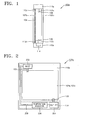
- FIG. 1 is a lateral cross-sectional schematic view of a window according to an embodiment of the present invention
- FIG. 2 is a front cross-sectional schematic view of the window of FIG. 1 ;
- FIG. 3 is a front cross-sectional schematic view of a window having an air circulator according to another embodiment of the present invention.
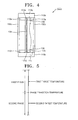
- FIG. 4 is a lateral cross-sectional schematic view of a window according to another embodiment of the present invention.
- FIG. 5 is a diagram for describing a method of adjusting temperature of dry air, wherein the method is performed by an air circulator of a window according to an embodiment of the present invention.
- thermochromic material in an infrared light region significantly change based on a phase transition temperature
- thermotropic material in a visible light region significantly changes based on a phase transition temperature
- thermochromic material include vanadium oxide.
- Thermochromic and thermotropic materials are environmentally-friendly because they operate according to an ambient temperature, but typically cannot be controlled by a user.
- light transmittance of the window having a light transmittance-adjusting layer formed of the thermochromic or thermotropic material may be adjusted as desired by a user or a system. More specifically, according to embodiments of a window of the present invention, dry air having adjusted temperature may be circulated in a sealed space of the window so as to change a phase of the thermochromic or thermotropic material, thereby quickly adjusting the light transmittance.
- FIG. 1 is a lateral cross-sectional schematic view of a window 100a according to an embodiment of the present invention.
- the window 100a includes a pair of glass substrates, or panels, 102a and 102b that are spaced apart from each other in a thickness direction, and a frame 110a supporting the glass substrates 102a and 102b.
- a light transmittance-adjusting layer 104 may be formed on a surface of at least one of the glass substrates 102a and 102b.
- the light transmittance-adjusting layer 104 is formed (e.g., coated or glazed with a thermochromic or thermotropic material) on a surface of the glass substrate 102a facing the glass substrate 102b.
- Spacers 112a, 112b, 112c, and 112d are disposed between the glass substrates 102a and 102b so as to maintain a distance between the glass substrates 102a and 102b and form a space (e.g., a space sealed from external air) between the glass substrate 102 and 102b.
- the window 100a includes an air circulator 114 for circulating dry air into the space between the glass substrates 102a and 102b.
- the air circulator 114 is configured to adjust the temperature of the dry air and circulate the dry air into the space between the glass substrates 102a and 102b.
- the dry air in one embodiment, is discharged through an outlet opening 106 and drawn in through an inlet opening 108.
- the glass substrates 102a and 102b are glass panels used for window panes, but are not limited thereto, despite being described as "glass substrates" herein, so long as they are transparent or substantially transparent (e.g., a flat and wide panel of a transparent material other than glass).
- a material, a thickness, a dimension, and a shape of the glass substrates 102a and 102b may be suitably determined according to a purpose.
- the light transmittance-adjusting layer 104 in one embodiment, is formed of a thermochromic or thermotropic material and configured such that a phase transition (e.g., a metal-insulator transition (MIT) phenomenon) may occur at a certain temperature.
- a phase transition e.g., a metal-insulator transition (MIT) phenomenon
- the light transmittance-adjusting layer 104 blocks or reflects infrared light when an ambient temperature is higher than a phase transition temperature of the thermochromic material.
- the light transmittance-adjusting layer 104 allows infrared light to pass through when the ambient temperature is lower than the phase transition temperature of the thermochromic material.
- the thermochromic material of the light transmittance-adjusting layer 104 in one embodiment, is vanadium oxide.
- the vanadium dioxide, VO 2 is known to have a phase transition temperature of about 68°C. More specifically, the VO 2 is in a metallic state at a temperature higher than 68°C and blocks or reflects infrared light. Also, the VO 2 is in a semiconducting state at a temperature lower than 68° C and passes infrared light through.
- a material for forming the light transmittance-adjusting layer 104 is not limited to vanadium oxide, and may include any material having infrared light transmission that significantly changes based on a phase transition temperature. Further, the light transmittance-adjusting layer 104 may include a plurality of vanadium oxide layers, or multiple layers of vanadium oxide layers and dielectric layers.
- a dielectric layer in one embodiment, includes at least one of tantalum oxide (Ta 2 O 5 ), zinc oxide (ZnO), tin oxide (SnO 2 ), niobium oxide (Nb 2 O 5 ), titanium oxide (TiO), and titanium dioxide (TiO 2 ).
- FIG. 2 is a front cross-sectional schematic view of the window 100a of FIG. 1 .
- the air circulator 114 includes an inlet 202, an outlet 204, a temperature adjustor 206, and an air pipe 208.
- the temperature adjustor 206 adjusts the temperature of dry air to be circulated between the glass substrates 102a and 102b.
- the temperature adjustor 206 includes a thermoelectric element.
- the outlet 204 is configured to discharge the dry air having a temperature adjusted by the temperature adjustor 206 to the space between the glass substrates 102a and 102b through the outlet opening 106.
- the inlet 202 is configured to draw in the dry air between the glass substrates 102a and 102b through the inlet opening 108. As shown in FIG. 2 , the inlet 202 may be spaced apart from the outlet 204 in a diagonal direction.
- the air pipe 208 is configured to transfer the dry air drawn in from the inlet 202 to the temperature adjustor 206. In one embodiment, a force for transferring the dry air in the air pipe 208 may be provided by the inlet 202 and/or the temperature adjustor 206.
- a force for transferring the dry air in the air pipe 208 may be provided, at least in part, by the outlet 204.
- the air circulator 114 circulates the dry air in the space (e.g., a sealed space) between the glass substrates 102a and 102b.
- FIG. 3 is a front cross-sectional schematic view illustrating a window 100a' having an air circulator 114' according to another embodiment of the present invention.
- the inlet 202, the outlet 204, and the temperature adjustor 206 are disposed adjacent to each other. That is, in the air circulator 114', the air pipe 208 is located upstream of the inlet 202, rather than between the inlet 202 and the outlet 204 and the inlet 202 being spaced apart from the outlet 204 in a diagonal direction as described above with respect to an embodiment of the air circulator 114.
- the air circulator 114, 114' is disposed inside the frame 110a in one embodiment; however the location of the air circulator 114, 114' is not limited thereto and, in other embodiments, the air circulator 114, 114' may be disposed outside the frame 110a.
- FIG. 4 is a lateral cross-sectional schematic view of a window 100b according to another embodiment of the present invention.
- the window 100b has a triple-panelled structure.
- a window may include four or more glass substrates.
- glass substrates 102a, 102b, and 102c are spaced apart from each other in a thickness direction and supported by a frame 110b, wherein spacers 112a, 112b, 112c, and 112d are disposed between the glass substrates 102a and 102b, and spacers 112e and 112f are disposed between the glass substrates 102a and 102c.
- the light transmittance-adjusting layer 104 is formed (e.g., coated or glazed with a thermochromic or thermotropic material) on a surface of at least one of the glass substrates 102a, 102b, and 102c.
- the light transmittance-adjusting layer 104 is formed on a surface of the glass substrate 102a that is facing the glass substrate 102b.
- the air circulator 114 circulates dry air having an adjusted temperature only into a space defined by, or contacting, the light transmittance-adjusting layer 104 (e.g., a sealed space between the glass substrates 102a and 102b) among spaces formed between the glass substrates 102a, 102b, and 102c.
- the window 100b includes the air circulator 114' described above and shown in FIG. 3 , rather than the air circulator 114.
- the light transmittance-adjusting layer 104 may be disposed on a surface of at least two of the glass substrates 102a, 102b, and 102c. Further the air circulator 114 may individually adjust the temperature of dry air in spaces between the glass substrates 102a, 102b, and 102c contacting the light transmittance-adjusting layers 104, so that the light transmittance of each of the light transmittance-adjusting layers 104 is individually controlled.
- FIG. 5 is a diagram for describing a method of adjusting temperature of dry air, wherein the method is performed by the air circulator 114, 114', according to an embodiment of the present invention.
- thermochromic or thermotropic material changes based on a phase transition temperature.
- the thermochromic or thermotropic material may have a first phase at a temperature above the phase transition temperature, and a second phase at a temperature below the phase transition temperature.
- the air circulator 114, 114' adjusts the temperature of dry air so that the thermochromic or thermotropic material has the first phase or the second phase.
- the air circulator 114, 114' adjusts the temperature of the dry air to a first target temperature.
- the air circulator 114, 114' adjusts the temperature of the dry air to a second target temperature.
- a control signal input to the air circulator 114, 114' may be input by a user. Accordingly, the user may actively adjust the light transmittance of the window 100a, 100a', or 100b when desired.
- the control signal may be input by an air-conditioning and/or heating system, a temperature adjusting system, or the like. By adjusting an indoor temperature by adjusting an amount of light incident through the window 100a, 100a', or 100b, an air-conditioning and/or heating system or a temperature adjusting system that is environmentally-friendly and has low air-conditioning and/or heating expenses may be provided.
- thermochromic or thermotropic layer may be quickly and actively adjusted whenever desired.
- the thermochromic or thermotropic layer may be heated up and/or cooled down.
Landscapes
- Engineering & Computer Science (AREA)
- Physics & Mathematics (AREA)
- Civil Engineering (AREA)
- Structural Engineering (AREA)
- Nonlinear Science (AREA)
- Chemical & Material Sciences (AREA)
- Materials Engineering (AREA)
- Geochemistry & Mineralogy (AREA)
- General Chemical & Material Sciences (AREA)
- Organic Chemistry (AREA)
- Chemical Kinetics & Catalysis (AREA)
- Life Sciences & Earth Sciences (AREA)
- General Physics & Mathematics (AREA)
- Optics & Photonics (AREA)
- Joining Of Glass To Other Materials (AREA)
- Electrochromic Elements, Electrophoresis, Or Variable Reflection Or Absorption Elements (AREA)
- Securing Of Glass Panes Or The Like (AREA)
- Optical Elements Other Than Lenses (AREA)
Abstract
Description
- Aspects of embodiments of the present invention relate to a window having a thermochromic or thermotropic layer.
- A window including a thermochromic or thermotropic layer tends to change light transmittance according to temperature or heat. Because air-conditioning and heating expenses may be reduced by adjusting light transmittance, a window including a thermochromic or thermotropic layer is environmentally-friendly.
- The present invention sets out to provide a window that includes a thermochromic or thermotropic layer that is configured such that a user may actively adjust light transmittance of the window.
- Accordingly, the present invention provides a window that includes: a plurality of transparent substrates spaced apart from each other in a thickness direction; a light transmittance-adjusting layer on a surface of at least one transparent substrate of the plurality of transparent substrates and having a thermochromic or thermotropic characteristic; and an air circulator configured to circulate a heat transfer medium in a space between the plurality of transparent substrates for changing a light transmittance of the light transmittance-adjusting layer, wherein the space between the plurality of transparent substrates is sealed from an exterior of the window.
- The light transmittance-adjusting layer may include at least one of a thermochromic material or a thermotropic material. The light transmittance-adjusting layer may include vanadium oxide. A stoichiometric ratio of vanadium to oxygen may be 1:2 or 2:5.
- The air circulator may be configured to circulate the heat transfer medium to a space between the surface of the at least one transparent substrate and another transparent substrate of the plurality of transparent substrates. The air circulator may be configured to adjust a temperature of the heat transfer medium to control the light transmittance of the light transmittance-adjusting layer according to a target light transmittance, the target light transmittance corresponding to a reference temperature at which the light transmittance of the light transmittance-adjusting layer is substantially changed.
- The air circulator may include an outlet for discharging the heat transfer medium to the space between the plurality of transparent substrates; an inlet for drawing in the heat transfer medium; an air pipe for transferring to the outlet the heat transfer medium drawn in from the inlet; and a temperature adjustor for adjusting a temperature of the heat transfer medium.
- The air circulator may be configured to control a target temperature of the heat transfer medium, heat or cool the heat transfer medium according to the target temperature and circulate the heat transfer medium to the space between the plurality of transparent substrates for adjusting the light transmittance of the light transmittance-adjusting layer. The air circulator may be configured to control the target temperature of the heat transfer medium in response to a control signal input from at least one of an air-conditioning system, a heating system, a lighting-adjusting system, and a user.
- The transparent substrates may be glass substrates. The window may further include a frame for supporting the plurality of transparent substrates in a multi-layered structure. The air circulator may be further configured to adjust a temperature of the heat transfer medium. The heat transfer medium may be dry air. The surface of the at least one transparent substrate may be facing a surface of another transparent substrate of the plurality of transparent substrates, and the space between the plurality of transparent substrates may be between the surface of the at least one transparent substrate and the surface of the another transparent substrate. The light transmittance-adjusting layer comprises a dielectric layer comprising at least one of tantalum oxide (Ta2O5), zinc oxide (ZnO), tin oxide (SnO2), niobium oxide (Nb2O5), titanium oxide (TiO), and titanium dioxide (TiO2).
- At least some of the above and other features of the invention are set out in the appended claims.
- The above and other features and aspects of embodiments of the present invention will become more apparent to and readily appreciated by those skilled in the art from the following description of some embodiments of the present invention, taken in conjunction with the accompanying drawings of which:
-
FIG. 1 is a lateral cross-sectional schematic view of a window according to an embodiment of the present invention; -
FIG. 2 is a front cross-sectional schematic view of the window ofFIG. 1 ; -
FIG. 3 is a front cross-sectional schematic view of a window having an air circulator according to another embodiment of the present invention; -
FIG. 4 is a lateral cross-sectional schematic view of a window according to another embodiment of the present invention; and -
FIG. 5 is a diagram for describing a method of adjusting temperature of dry air, wherein the method is performed by an air circulator of a window according to an embodiment of the present invention. - Some embodiments of the invention will now be described more fully hereinafter with reference to the accompanying drawings, wherein like reference numerals refer to the like elements throughout. Embodiments of the present invention may be embodied in different forms and should not be construed as limited to the embodiments illustrated and set forth herein. Rather, these embodiments are provided by way of example for understanding of the invention and to convey the scope of the invention to those skilled in the art.
- Light transmittance and reflectance of a thermochromic material in an infrared light region significantly change based on a phase transition temperature, and light transmittance or color of a thermotropic material in a visible light region significantly changes based on a phase transition temperature. Examples of such a thermochromic material include vanadium oxide. Thermochromic and thermotropic materials are environmentally-friendly because they operate according to an ambient temperature, but typically cannot be controlled by a user.
- In a window according to embodiments of the present invention, light transmittance of the window having a light transmittance-adjusting layer formed of the thermochromic or thermotropic material may be adjusted as desired by a user or a system. More specifically, according to embodiments of a window of the present invention, dry air having adjusted temperature may be circulated in a sealed space of the window so as to change a phase of the thermochromic or thermotropic material, thereby quickly adjusting the light transmittance.
-
FIG. 1 is a lateral cross-sectional schematic view of awindow 100a according to an embodiment of the present invention. - The
window 100a includes a pair of glass substrates, or panels, 102a and 102b that are spaced apart from each other in a thickness direction, and aframe 110a supporting theglass substrates layer 104 may be formed on a surface of at least one of theglass substrates layer 104 is formed (e.g., coated or glazed with a thermochromic or thermotropic material) on a surface of theglass substrate 102a facing theglass substrate 102b.Spacers glass substrates glass substrates glass substrate 102 and 102b. Thewindow 100a includes anair circulator 114 for circulating dry air into the space between theglass substrates layer 104, theair circulator 114 is configured to adjust the temperature of the dry air and circulate the dry air into the space between theglass substrates - The
glass substrates glass substrates - The light transmittance-adjusting
layer 104, in one embodiment, is formed of a thermochromic or thermotropic material and configured such that a phase transition (e.g., a metal-insulator transition (MIT) phenomenon) may occur at a certain temperature. For example, where the light transmittance-adjustinglayer 104 is formed of a thermochromic material, the light transmittance-adjustinglayer 104 blocks or reflects infrared light when an ambient temperature is higher than a phase transition temperature of the thermochromic material. On the other hand, the light transmittance-adjustinglayer 104 allows infrared light to pass through when the ambient temperature is lower than the phase transition temperature of the thermochromic material. - The thermochromic material of the light transmittance-adjusting
layer 104, in one embodiment, is vanadium oxide. Examples of the vanadium oxide include vanadium dioxide VxOy, wherein x:y=1:2 and a stoichiometric ratio of vanadium to oxygen is 1:2, vanadium oxide VOx, wherein x<2, and vanadium oxide VxOy, wherein x:y=2:5. The examples of the vanadium oxide include VOx, wherein x<2, because when the vanadium oxide has a homogeneous structure, the vanadium dioxide VxOy, wherein x:y=1:2, may exist, but when the vanadium oxide has a heterogeneous structure, relatively less vanadium may be oxidized, and thus a vanadium atom in a metal atom may be contained as it is. In particular, the vanadium dioxide, VO2, is known to have a phase transition temperature of about 68°C. More specifically, the VO2 is in a metallic state at a temperature higher than 68°C and blocks or reflects infrared light. Also, the VO2 is in a semiconducting state at a temperature lower than 68° C and passes infrared light through. - In other embodiments, a material for forming the light transmittance-adjusting
layer 104 is not limited to vanadium oxide, and may include any material having infrared light transmission that significantly changes based on a phase transition temperature. Further, the light transmittance-adjustinglayer 104 may include a plurality of vanadium oxide layers, or multiple layers of vanadium oxide layers and dielectric layers. A dielectric layer, in one embodiment, includes at least one of tantalum oxide (Ta2O5), zinc oxide (ZnO), tin oxide (SnO2), niobium oxide (Nb2O5), titanium oxide (TiO), and titanium dioxide (TiO2). -
FIG. 2 is a front cross-sectional schematic view of thewindow 100a ofFIG. 1 . - The
air circulator 114, according to one embodiment, includes aninlet 202, anoutlet 204, atemperature adjustor 206, and anair pipe 208. Thetemperature adjustor 206 adjusts the temperature of dry air to be circulated between theglass substrates glass substrates glass substrates temperature adjustor 206 includes a thermoelectric element. Theoutlet 204 is configured to discharge the dry air having a temperature adjusted by thetemperature adjustor 206 to the space between theglass substrates outlet opening 106. Theinlet 202 is configured to draw in the dry air between theglass substrates inlet opening 108. As shown inFIG. 2 , theinlet 202 may be spaced apart from theoutlet 204 in a diagonal direction. Theair pipe 208 is configured to transfer the dry air drawn in from theinlet 202 to thetemperature adjustor 206. In one embodiment, a force for transferring the dry air in theair pipe 208 may be provided by theinlet 202 and/or thetemperature adjustor 206. Alternatively, a force for transferring the dry air in theair pipe 208 may be provided, at least in part, by theoutlet 204. Theair circulator 114 circulates the dry air in the space (e.g., a sealed space) between theglass substrates -
FIG. 3 is a front cross-sectional schematic view illustrating awindow 100a' having an air circulator 114' according to another embodiment of the present invention. As shown inFIG. 3 , in the air circulator 114', theinlet 202, theoutlet 204, and thetemperature adjustor 206 are disposed adjacent to each other. That is, in the air circulator 114', theair pipe 208 is located upstream of theinlet 202, rather than between theinlet 202 and theoutlet 204 and theinlet 202 being spaced apart from theoutlet 204 in a diagonal direction as described above with respect to an embodiment of theair circulator 114. - As shown in
FIGS. 2 and3 , theair circulator 114, 114' is disposed inside theframe 110a in one embodiment; however the location of theair circulator 114, 114' is not limited thereto and, in other embodiments, theair circulator 114, 114' may be disposed outside theframe 110a. -
FIG. 4 is a lateral cross-sectional schematic view of awindow 100b according to another embodiment of the present invention. - The
window 100b according to this embodiment has a triple-panelled structure. Of course, the scope of embodiments of the present invention is not limited by the number of glass substrates included in a window. That is, in other embodiments of a window according to the present invention, a window may include four or more glass substrates. With reference toFIG. 4 glass substrates frame 110b, wherein spacers 112a, 112b, 112c, and 112d are disposed between theglass substrates spacers glass substrates adjusting layer 104 is formed (e.g., coated or glazed with a thermochromic or thermotropic material) on a surface of at least one of theglass substrates FIG. 4 , the light transmittance-adjusting layer 104 is formed on a surface of theglass substrate 102a that is facing theglass substrate 102b. Theair circulator 114 circulates dry air having an adjusted temperature only into a space defined by, or contacting, the light transmittance-adjusting layer 104 (e.g., a sealed space between theglass substrates glass substrates window 100b includes the air circulator 114' described above and shown inFIG. 3 , rather than theair circulator 114. - In another embodiment, the light transmittance-
adjusting layer 104 may be disposed on a surface of at least two of theglass substrates air circulator 114 may individually adjust the temperature of dry air in spaces between theglass substrates layers 104, so that the light transmittance of each of the light transmittance-adjustinglayers 104 is individually controlled. -
FIG. 5 is a diagram for describing a method of adjusting temperature of dry air, wherein the method is performed by theair circulator 114, 114', according to an embodiment of the present invention. - A crystallization phase of a thermochromic or thermotropic material changes based on a phase transition temperature. In other words, as shown in
FIG. 5 , the thermochromic or thermotropic material may have a first phase at a temperature above the phase transition temperature, and a second phase at a temperature below the phase transition temperature. According to embodiments of the present invention, theair circulator 114, 114' adjusts the temperature of dry air so that the thermochromic or thermotropic material has the first phase or the second phase. For example, , when the first phase has low light transmittance, the second phase has high light transmittance, and a control signal for changing a phase of the thermochromic or thermotropic material of the light transmittance-adjusting layer 104 from the second phase to the first phase is received, theair circulator 114, 114' adjusts the temperature of the dry air to a first target temperature. On the other hand, when a control signal for changing the phase of the thermochromic or thermotropic material from the first phase to the second phase is received, theair circulator 114, 114' adjusts the temperature of the dry air to a second target temperature. - A control signal input to the
air circulator 114, 114' may be input by a user. Accordingly, the user may actively adjust the light transmittance of thewindow window - As described above, according to an aspect of the present invention, light transmittance of a window including a thermochromic or thermotropic layer may be quickly and actively adjusted whenever desired. According to another aspect of the present invention, by circulating dry air having an adjusted temperature in a space of the window, the thermochromic or thermotropic layer may be heated up and/or cooled down.
- Some embodiments of the invention have been disclosed herein, and although specific terms are employed, they are used and are to be interpreted in a generic and descriptive sense only and not for purpose of limitation. Accordingly, it will be understood by those of ordinary skill in the art that various changes in form and details may be made without departing from the scope of the present invention as set forth in the following claims.
Claims (16)
- A window comprising:a plurality of transparent substrates spaced apart from each other in a thickness direction;a light transmittance-adjusting layer on a surface of at least one of the plurality of transparent substrates and having a thermochromic or thermotropic characteristic; anda circulator configured to circulate a heat transfer medium in a space between the plurality of transparent substrates for changing a light transmittance of the light transmittance-adjusting layer.
- A window according to claim 1, wherein the light transmittance-adjusting layer comprises at least one of a thermochromic material or a thermotropic material.
- A window according to claim 1 or 2, wherein the light transmittance-adjusting layer comprises vanadium oxide.
- A window according to claim 3, wherein a stoichiometric ratio of vanadium to oxygen of the vanadium oxide is 1:2 or 2:5.
- A window according to any preceding claim, wherein the circulator is configured to circulate the heat transfer medium to a space between the surface of the at least one transparent substrate and another transparent substrate of the plurality of transparent substrates.
- A window according to any preceding claim, wherein the circulator is configured to adjust a temperature of the heat transfer medium to control the light transmittance of the light transmittance-adjusting layer according to a target light transmittance, the target light transmittance corresponding to a reference temperature at which the light transmittance of the light transmittance-adjusting layer is substantially changed.
- A window according to any preceding claim, wherein the circulator comprises:an outlet for discharging the heat transfer medium to the space between the plurality of transparent substrates;an inlet for drawing in the heat transfer medium;an air pipe for transferring to the outlet the heat transfer medium drawn in from the inlet; anda temperature adjustor for adjusting a temperature of the heat transfer medium.
- A window according to any preceding claim, wherein the circulator is configured to control a target temperature of the heat transfer medium, heat or cool the heat transfer medium according to the target temperature and circulate the heat transfer medium to the space between the plurality of transparent substrates for adjusting the light transmittance of the light transmittance-adjusting layer.
- A window according to claim 8, wherein the circulator is configured to control the target temperature of the heat transfer medium in response to a control signal input from at least one of an air-conditioning system, a heating system, a lighting-adjusting system, and a user.
- A window according to any preceding claim, wherein the transparent substrates comprise glass.
- A window according to any preceding claim, further comprising a frame supporting the plurality of transparent substrates in a multi-layered structure.
- A window according to claim 1, wherein the circulator is further configured to adjust a temperature of the heat transfer medium.
- A window according to any preceding claim, wherein the heat transfer medium comprises dry air.
- The window of claim 1, wherein the surface of the at least one transparent substrate is facing a surface of another said transparent substrate of the plurality of transparent substrates, and the space between the plurality of transparent substrates is between the surface of the at least one transparent substrate and the surface of the another transparent substrate.
- A window according to any preceding claim, wherein the space between the plurality of transparent substrates is sealed from an exterior of the window.
- A window according to any preceding claim, wherein the light transmittance-adjusting layer comprises a dielectric layer comprising at least one of tantalum oxide (Ta2O5), zinc oxide (ZnO), tin oxide (SnO2), niobium oxide (Nb2O5). titanium oxide (TiO), and titanium dioxide (TiO2).
Applications Claiming Priority (1)
| Application Number | Priority Date | Filing Date | Title |
|---|---|---|---|
| KR1020090111539A KR101137370B1 (en) | 2009-11-18 | 2009-11-18 | Multi-sheet glazing unit |
Publications (3)
| Publication Number | Publication Date |
|---|---|
| EP2368709A2 true EP2368709A2 (en) | 2011-09-28 |
| EP2368709A3 EP2368709A3 (en) | 2013-01-30 |
| EP2368709B1 EP2368709B1 (en) | 2016-04-20 |
Family
ID=44011143
Family Applications (1)
| Application Number | Title | Priority Date | Filing Date |
|---|---|---|---|
| EP10251956.8A Not-in-force EP2368709B1 (en) | 2009-11-18 | 2010-11-18 | Window having a light transmittance adjusting layer |
Country Status (3)
| Country | Link |
|---|---|
| US (1) | US8373922B2 (en) |
| EP (1) | EP2368709B1 (en) |
| KR (1) | KR101137370B1 (en) |
Cited By (2)
| Publication number | Priority date | Publication date | Assignee | Title |
|---|---|---|---|---|
| CN104895462A (en) * | 2015-06-18 | 2015-09-09 | 南京二十六度建筑节能工程有限公司 | Intelligent hollow vanadium dioxide sunshade glass |
| CN110133841A (en) * | 2019-05-15 | 2019-08-16 | 河南科技大学 | Film with adjustable light transmittance and light transmittance adjusting device |
Families Citing this family (5)
| Publication number | Priority date | Publication date | Assignee | Title |
|---|---|---|---|---|
| DE102012208406A1 (en) * | 2012-05-21 | 2013-11-21 | P.R. Agentur für transparente Kommunikation GmbH | Device for heating and / or cooling a room |
| CN103388436B (en) * | 2013-08-02 | 2015-02-11 | 山东理工大学 | Lighting device capable of adjusting radiant heat flow direction as required |
| KR101895008B1 (en) | 2018-02-07 | 2018-09-04 | 고인선 | glass panel using nano material |
| KR102579285B1 (en) * | 2020-11-30 | 2023-09-15 | (사) 한국전자파학회 | Glass Window Device for Selective Transmission of Electromagnetic Waves |
| KR102570406B1 (en) * | 2021-08-10 | 2023-08-23 | 김선경 | The structure of dehumidifialble pair glass window |
Family Cites Families (13)
| Publication number | Priority date | Publication date | Assignee | Title |
|---|---|---|---|---|
| DE3117256C2 (en) * | 1981-04-30 | 1983-01-27 | DCL Glass Consult GmbH, 8000 München | Method for introducing a filling gas into an insulating glass unit and probe for carrying out the method |
| JP2735147B2 (en) | 1994-06-08 | 1998-04-02 | 工業技術院長 | Manufacturing method of thermochromic material |
| JP3240453B2 (en) * | 1995-02-24 | 2001-12-17 | 株式会社間組 | Large air-conditioning glass window |
| CA2178032A1 (en) * | 1995-06-09 | 1996-12-10 | Robert Terneu | Glazing panel having solar screening properties |
| JPH10152347A (en) | 1996-11-20 | 1998-06-09 | Nippon Sheet Glass Co Ltd | Multiple glass |
| IL122572A0 (en) * | 1997-12-11 | 1998-06-15 | Univ Ben Gurion | Reversible ventilated glazing system |
| GB9822338D0 (en) * | 1998-10-13 | 1998-12-09 | Glaverbel | Solar control coated glass |
| FR2809388B1 (en) | 2000-05-23 | 2002-12-20 | Saint Gobain Vitrage | GLAZING COMPRISING AT LEAST ONE LAYER WITH THERMOCHROMIC PROPERTIES |
| JP3849008B2 (en) * | 2001-09-20 | 2006-11-22 | 独立行政法人産業技術総合研究所 | High performance automatic light control window coating material |
| WO2008028099A2 (en) * | 2006-09-01 | 2008-03-06 | Pleotint, L.L.C. | Thermochromic window structures |
| WO2008087077A1 (en) * | 2007-01-16 | 2008-07-24 | Nv Bekaert Sa | A thermochromic device |
| JP5136976B2 (en) * | 2007-09-12 | 2013-02-06 | 独立行政法人産業技術総合研究所 | Vanadium oxide thin film pattern and manufacturing method thereof |
| KR101238125B1 (en) | 2007-12-29 | 2013-02-27 | (주)엘지하우시스 | Dual doors having ventilation function |
-
2009
- 2009-11-18 KR KR1020090111539A patent/KR101137370B1/en not_active Expired - Fee Related
-
2010
- 2010-10-12 US US12/903,148 patent/US8373922B2/en not_active Expired - Fee Related
- 2010-11-18 EP EP10251956.8A patent/EP2368709B1/en not_active Not-in-force
Non-Patent Citations (1)
| Title |
|---|
| None |
Cited By (2)
| Publication number | Priority date | Publication date | Assignee | Title |
|---|---|---|---|---|
| CN104895462A (en) * | 2015-06-18 | 2015-09-09 | 南京二十六度建筑节能工程有限公司 | Intelligent hollow vanadium dioxide sunshade glass |
| CN110133841A (en) * | 2019-05-15 | 2019-08-16 | 河南科技大学 | Film with adjustable light transmittance and light transmittance adjusting device |
Also Published As
| Publication number | Publication date |
|---|---|
| KR101137370B1 (en) | 2012-04-20 |
| KR20110054769A (en) | 2011-05-25 |
| US20110116155A1 (en) | 2011-05-19 |
| EP2368709B1 (en) | 2016-04-20 |
| EP2368709A3 (en) | 2013-01-30 |
| US8373922B2 (en) | 2013-02-12 |
Similar Documents
| Publication | Publication Date | Title |
|---|---|---|
| EP2368709B1 (en) | Window having a light transmittance adjusting layer | |
| US8422113B2 (en) | Panel including thermochromic layer | |
| TWI389864B (en) | Transparent appliance | |
| KR101660490B1 (en) | Substrate provided with a multilayer stack having thermal properties and an absorbent layer | |
| US20120263930A1 (en) | Thermochromic substrate and pair-glass with thermochromic thin film | |
| US8248683B2 (en) | Variable light transmittance window | |
| US9518319B2 (en) | Low-emissivity glass including spacer layers compatible with heat treatment | |
| JP5448610B2 (en) | Substrates with thermal management coatings for insulating glass units | |
| CN102421720B (en) | Substrate provided with a stack with thermal properties and comprising high refractive index layers | |
| CN102325732B (en) | Substrate provided with a multilayer stack having thermal properties and absorbent layers | |
| US7556868B2 (en) | Appliance with coated transparency | |
| US9028931B2 (en) | Double window/door system for blocking infrared light | |
| CN104884404B (en) | Decompression multi-layer glass panels | |
| KR20160048835A (en) | Ig window unit including double silver coating having increased shgc to u-value ratio, and corresponding coated article for use in ig window unit or other window | |
| KR20110069098A (en) | Use of antireflective coatings in multiple glazing units and multiple glazing units comprising at least one antireflective coating | |
| JP2016520031A (en) | Substrate provided with a laminate having thermal properties | |
| JP2008297177A (en) | Thermochromic glass and thermochromic double glazing glass | |
| JP2019531497A (en) | Substrate with a laminate having thermal properties comprising at least one layer comprising zirconium-rich silicon zirconium nitride, use and manufacture thereof | |
| WO2008087077A1 (en) | A thermochromic device | |
| US20140333984A1 (en) | Thermocromic window and method of fabricating the same | |
| US7998602B2 (en) | Appliance with coated transparency | |
| CN103171181A (en) | Reflective substrate and method of manufacturing the same | |
| EP3371121B1 (en) | Production of flash-treated indium tin oxide coatings | |
| EA034607B1 (en) | Substrate comprising a multilayer system including a discontinuous metal film, method of manufacture thereof and glazing unit comprising same | |
| CN104129121A (en) | Thermochromic window |
Legal Events
| Date | Code | Title | Description |
|---|---|---|---|
| PUAI | Public reference made under article 153(3) epc to a published international application that has entered the european phase |
Free format text: ORIGINAL CODE: 0009012 |
|
| 17P | Request for examination filed |
Effective date: 20101215 |
|
| AK | Designated contracting states |
Kind code of ref document: A2 Designated state(s): AL AT BE BG CH CY CZ DE DK EE ES FI FR GB GR HR HU IE IS IT LI LT LU LV MC MK MT NL NO PL PT RO RS SE SI SK SM TR |
|
| AX | Request for extension of the european patent |
Extension state: BA ME |
|
| PUAL | Search report despatched |
Free format text: ORIGINAL CODE: 0009013 |
|
| AK | Designated contracting states |
Kind code of ref document: A3 Designated state(s): AL AT BE BG CH CY CZ DE DK EE ES FI FR GB GR HR HU IE IS IT LI LT LU LV MC MK MT NL NO PL PT RO RS SE SI SK SM TR |
|
| AX | Request for extension of the european patent |
Extension state: BA ME |
|
| RIC1 | Information provided on ipc code assigned before grant |
Ipc: B32B 17/00 20060101AFI20121221BHEP Ipc: C03C 27/06 20060101ALI20121221BHEP |
|
| RBV | Designated contracting states (corrected) |
Designated state(s): AL AT BE BG CH CY CZ DE DK EE ES FI FR GB GR HR HU IE IS IT LI LT LU LV MC MK MT NL NO PL PT RO RS SE SI SK SM TR |
|
| GRAP | Despatch of communication of intention to grant a patent |
Free format text: ORIGINAL CODE: EPIDOSNIGR1 |
|
| INTG | Intention to grant announced |
Effective date: 20151023 |
|
| GRAS | Grant fee paid |
Free format text: ORIGINAL CODE: EPIDOSNIGR3 |
|
| GRAA | (expected) grant |
Free format text: ORIGINAL CODE: 0009210 |
|
| AK | Designated contracting states |
Kind code of ref document: B1 Designated state(s): AL AT BE BG CH CY CZ DE DK EE ES FI FR GB GR HR HU IE IS IT LI LT LU LV MC MK MT NL NO PL PT RO RS SE SI SK SM TR |
|
| REG | Reference to a national code |
Ref country code: GB Ref legal event code: FG4D |
|
| REG | Reference to a national code |
Ref country code: CH Ref legal event code: EP |
|
| REG | Reference to a national code |
Ref country code: AT Ref legal event code: REF Ref document number: 791957 Country of ref document: AT Kind code of ref document: T Effective date: 20160515 |
|
| REG | Reference to a national code |
Ref country code: IE Ref legal event code: FG4D |
|
| REG | Reference to a national code |
Ref country code: DE Ref legal event code: R096 Ref document number: 602010032433 Country of ref document: DE |
|
| REG | Reference to a national code |
Ref country code: LT Ref legal event code: MG4D |
|
| REG | Reference to a national code |
Ref country code: AT Ref legal event code: MK05 Ref document number: 791957 Country of ref document: AT Kind code of ref document: T Effective date: 20160420 |
|
| REG | Reference to a national code |
Ref country code: NL Ref legal event code: MP Effective date: 20160420 |
|
| PG25 | Lapsed in a contracting state [announced via postgrant information from national office to epo] |
Ref country code: NL Free format text: LAPSE BECAUSE OF FAILURE TO SUBMIT A TRANSLATION OF THE DESCRIPTION OR TO PAY THE FEE WITHIN THE PRESCRIBED TIME-LIMIT Effective date: 20160420 Ref country code: LT Free format text: LAPSE BECAUSE OF FAILURE TO SUBMIT A TRANSLATION OF THE DESCRIPTION OR TO PAY THE FEE WITHIN THE PRESCRIBED TIME-LIMIT Effective date: 20160420 Ref country code: NO Free format text: LAPSE BECAUSE OF FAILURE TO SUBMIT A TRANSLATION OF THE DESCRIPTION OR TO PAY THE FEE WITHIN THE PRESCRIBED TIME-LIMIT Effective date: 20160720 Ref country code: PL Free format text: LAPSE BECAUSE OF FAILURE TO SUBMIT A TRANSLATION OF THE DESCRIPTION OR TO PAY THE FEE WITHIN THE PRESCRIBED TIME-LIMIT Effective date: 20160420 Ref country code: FI Free format text: LAPSE BECAUSE OF FAILURE TO SUBMIT A TRANSLATION OF THE DESCRIPTION OR TO PAY THE FEE WITHIN THE PRESCRIBED TIME-LIMIT Effective date: 20160420 |
|
| REG | Reference to a national code |
Ref country code: FR Ref legal event code: PLFP Year of fee payment: 7 |
|
| PG25 | Lapsed in a contracting state [announced via postgrant information from national office to epo] |
Ref country code: ES Free format text: LAPSE BECAUSE OF FAILURE TO SUBMIT A TRANSLATION OF THE DESCRIPTION OR TO PAY THE FEE WITHIN THE PRESCRIBED TIME-LIMIT Effective date: 20160420 Ref country code: GR Free format text: LAPSE BECAUSE OF FAILURE TO SUBMIT A TRANSLATION OF THE DESCRIPTION OR TO PAY THE FEE WITHIN THE PRESCRIBED TIME-LIMIT Effective date: 20160721 Ref country code: SE Free format text: LAPSE BECAUSE OF FAILURE TO SUBMIT A TRANSLATION OF THE DESCRIPTION OR TO PAY THE FEE WITHIN THE PRESCRIBED TIME-LIMIT Effective date: 20160420 Ref country code: LV Free format text: LAPSE BECAUSE OF FAILURE TO SUBMIT A TRANSLATION OF THE DESCRIPTION OR TO PAY THE FEE WITHIN THE PRESCRIBED TIME-LIMIT Effective date: 20160420 Ref country code: AT Free format text: LAPSE BECAUSE OF FAILURE TO SUBMIT A TRANSLATION OF THE DESCRIPTION OR TO PAY THE FEE WITHIN THE PRESCRIBED TIME-LIMIT Effective date: 20160420 Ref country code: RS Free format text: LAPSE BECAUSE OF FAILURE TO SUBMIT A TRANSLATION OF THE DESCRIPTION OR TO PAY THE FEE WITHIN THE PRESCRIBED TIME-LIMIT Effective date: 20160420 Ref country code: PT Free format text: LAPSE BECAUSE OF FAILURE TO SUBMIT A TRANSLATION OF THE DESCRIPTION OR TO PAY THE FEE WITHIN THE PRESCRIBED TIME-LIMIT Effective date: 20160822 Ref country code: HR Free format text: LAPSE BECAUSE OF FAILURE TO SUBMIT A TRANSLATION OF THE DESCRIPTION OR TO PAY THE FEE WITHIN THE PRESCRIBED TIME-LIMIT Effective date: 20160420 |
|
| PG25 | Lapsed in a contracting state [announced via postgrant information from national office to epo] |
Ref country code: BE Free format text: LAPSE BECAUSE OF FAILURE TO SUBMIT A TRANSLATION OF THE DESCRIPTION OR TO PAY THE FEE WITHIN THE PRESCRIBED TIME-LIMIT Effective date: 20160420 Ref country code: IT Free format text: LAPSE BECAUSE OF FAILURE TO SUBMIT A TRANSLATION OF THE DESCRIPTION OR TO PAY THE FEE WITHIN THE PRESCRIBED TIME-LIMIT Effective date: 20160420 |
|
| REG | Reference to a national code |
Ref country code: DE Ref legal event code: R097 Ref document number: 602010032433 Country of ref document: DE |
|
| PG25 | Lapsed in a contracting state [announced via postgrant information from national office to epo] |
Ref country code: CZ Free format text: LAPSE BECAUSE OF FAILURE TO SUBMIT A TRANSLATION OF THE DESCRIPTION OR TO PAY THE FEE WITHIN THE PRESCRIBED TIME-LIMIT Effective date: 20160420 Ref country code: EE Free format text: LAPSE BECAUSE OF FAILURE TO SUBMIT A TRANSLATION OF THE DESCRIPTION OR TO PAY THE FEE WITHIN THE PRESCRIBED TIME-LIMIT Effective date: 20160420 Ref country code: SK Free format text: LAPSE BECAUSE OF FAILURE TO SUBMIT A TRANSLATION OF THE DESCRIPTION OR TO PAY THE FEE WITHIN THE PRESCRIBED TIME-LIMIT Effective date: 20160420 Ref country code: DK Free format text: LAPSE BECAUSE OF FAILURE TO SUBMIT A TRANSLATION OF THE DESCRIPTION OR TO PAY THE FEE WITHIN THE PRESCRIBED TIME-LIMIT Effective date: 20160420 Ref country code: RO Free format text: LAPSE BECAUSE OF FAILURE TO SUBMIT A TRANSLATION OF THE DESCRIPTION OR TO PAY THE FEE WITHIN THE PRESCRIBED TIME-LIMIT Effective date: 20160420 |
|
| PLBE | No opposition filed within time limit |
Free format text: ORIGINAL CODE: 0009261 |
|
| STAA | Information on the status of an ep patent application or granted ep patent |
Free format text: STATUS: NO OPPOSITION FILED WITHIN TIME LIMIT |
|
| PG25 | Lapsed in a contracting state [announced via postgrant information from national office to epo] |
Ref country code: SM Free format text: LAPSE BECAUSE OF FAILURE TO SUBMIT A TRANSLATION OF THE DESCRIPTION OR TO PAY THE FEE WITHIN THE PRESCRIBED TIME-LIMIT Effective date: 20160420 |
|
| 26N | No opposition filed |
Effective date: 20170123 |
|
| PG25 | Lapsed in a contracting state [announced via postgrant information from national office to epo] |
Ref country code: SI Free format text: LAPSE BECAUSE OF FAILURE TO SUBMIT A TRANSLATION OF THE DESCRIPTION OR TO PAY THE FEE WITHIN THE PRESCRIBED TIME-LIMIT Effective date: 20160420 |
|
| REG | Reference to a national code |
Ref country code: CH Ref legal event code: PL |
|
| PG25 | Lapsed in a contracting state [announced via postgrant information from national office to epo] |
Ref country code: CH Free format text: LAPSE BECAUSE OF NON-PAYMENT OF DUE FEES Effective date: 20161130 Ref country code: LI Free format text: LAPSE BECAUSE OF NON-PAYMENT OF DUE FEES Effective date: 20161130 |
|
| REG | Reference to a national code |
Ref country code: IE Ref legal event code: MM4A |
|
| PG25 | Lapsed in a contracting state [announced via postgrant information from national office to epo] |
Ref country code: LU Free format text: LAPSE BECAUSE OF NON-PAYMENT OF DUE FEES Effective date: 20161130 |
|
| REG | Reference to a national code |
Ref country code: FR Ref legal event code: PLFP Year of fee payment: 8 |
|
| PG25 | Lapsed in a contracting state [announced via postgrant information from national office to epo] |
Ref country code: IE Free format text: LAPSE BECAUSE OF NON-PAYMENT OF DUE FEES Effective date: 20161118 |
|
| PGFP | Annual fee paid to national office [announced via postgrant information from national office to epo] |
Ref country code: FR Payment date: 20171026 Year of fee payment: 8 Ref country code: DE Payment date: 20171114 Year of fee payment: 8 |
|
| PGFP | Annual fee paid to national office [announced via postgrant information from national office to epo] |
Ref country code: GB Payment date: 20171115 Year of fee payment: 8 |
|
| PG25 | Lapsed in a contracting state [announced via postgrant information from national office to epo] |
Ref country code: HU Free format text: LAPSE BECAUSE OF FAILURE TO SUBMIT A TRANSLATION OF THE DESCRIPTION OR TO PAY THE FEE WITHIN THE PRESCRIBED TIME-LIMIT; INVALID AB INITIO Effective date: 20101118 Ref country code: CY Free format text: LAPSE BECAUSE OF FAILURE TO SUBMIT A TRANSLATION OF THE DESCRIPTION OR TO PAY THE FEE WITHIN THE PRESCRIBED TIME-LIMIT Effective date: 20160420 |
|
| PG25 | Lapsed in a contracting state [announced via postgrant information from national office to epo] |
Ref country code: MC Free format text: LAPSE BECAUSE OF FAILURE TO SUBMIT A TRANSLATION OF THE DESCRIPTION OR TO PAY THE FEE WITHIN THE PRESCRIBED TIME-LIMIT Effective date: 20160420 Ref country code: IS Free format text: LAPSE BECAUSE OF FAILURE TO SUBMIT A TRANSLATION OF THE DESCRIPTION OR TO PAY THE FEE WITHIN THE PRESCRIBED TIME-LIMIT Effective date: 20160420 Ref country code: MK Free format text: LAPSE BECAUSE OF FAILURE TO SUBMIT A TRANSLATION OF THE DESCRIPTION OR TO PAY THE FEE WITHIN THE PRESCRIBED TIME-LIMIT Effective date: 20160420 Ref country code: TR Free format text: LAPSE BECAUSE OF FAILURE TO SUBMIT A TRANSLATION OF THE DESCRIPTION OR TO PAY THE FEE WITHIN THE PRESCRIBED TIME-LIMIT Effective date: 20160420 |
|
| PG25 | Lapsed in a contracting state [announced via postgrant information from national office to epo] |
Ref country code: BG Free format text: LAPSE BECAUSE OF FAILURE TO SUBMIT A TRANSLATION OF THE DESCRIPTION OR TO PAY THE FEE WITHIN THE PRESCRIBED TIME-LIMIT Effective date: 20160420 |
|
| PG25 | Lapsed in a contracting state [announced via postgrant information from national office to epo] |
Ref country code: MT Free format text: LAPSE BECAUSE OF NON-PAYMENT OF DUE FEES Effective date: 20161118 |
|
| PG25 | Lapsed in a contracting state [announced via postgrant information from national office to epo] |
Ref country code: AL Free format text: LAPSE BECAUSE OF FAILURE TO SUBMIT A TRANSLATION OF THE DESCRIPTION OR TO PAY THE FEE WITHIN THE PRESCRIBED TIME-LIMIT Effective date: 20160420 |
|
| REG | Reference to a national code |
Ref country code: DE Ref legal event code: R119 Ref document number: 602010032433 Country of ref document: DE |
|
| GBPC | Gb: european patent ceased through non-payment of renewal fee |
Effective date: 20181118 |
|
| PG25 | Lapsed in a contracting state [announced via postgrant information from national office to epo] |
Ref country code: FR Free format text: LAPSE BECAUSE OF NON-PAYMENT OF DUE FEES Effective date: 20181130 Ref country code: DE Free format text: LAPSE BECAUSE OF NON-PAYMENT OF DUE FEES Effective date: 20190601 |
|
| PG25 | Lapsed in a contracting state [announced via postgrant information from national office to epo] |
Ref country code: GB Free format text: LAPSE BECAUSE OF NON-PAYMENT OF DUE FEES Effective date: 20181118 |