EP2366804A1 - Identification of the microVar strain of Ostreid herpesvirus 1 (OsHV-1) - Google Patents
Identification of the microVar strain of Ostreid herpesvirus 1 (OsHV-1) Download PDFInfo
- Publication number
- EP2366804A1 EP2366804A1 EP10358001A EP10358001A EP2366804A1 EP 2366804 A1 EP2366804 A1 EP 2366804A1 EP 10358001 A EP10358001 A EP 10358001A EP 10358001 A EP10358001 A EP 10358001A EP 2366804 A1 EP2366804 A1 EP 2366804A1
- Authority
- EP
- European Patent Office
- Prior art keywords
- oshv
- seq
- instead
- determining
- strain
- Prior art date
- Legal status (The legal status is an assumption and is not a legal conclusion. Google has not performed a legal analysis and makes no representation as to the accuracy of the status listed.)
- Withdrawn
Links
- 241000048256 Ostreid herpesvirus 1 Species 0.000 title claims abstract description 102
- 238000000034 method Methods 0.000 claims abstract description 33
- 108020004707 nucleic acids Proteins 0.000 claims description 16
- 102000039446 nucleic acids Human genes 0.000 claims description 16
- 150000007523 nucleic acids Chemical class 0.000 claims description 16
- 241000237852 Mollusca Species 0.000 claims description 15
- 241000237502 Ostreidae Species 0.000 claims description 13
- 235000020636 oyster Nutrition 0.000 claims description 13
- 239000012472 biological sample Substances 0.000 claims description 7
- 208000015181 infectious disease Diseases 0.000 claims description 6
- 241000548230 Crassostrea angulata Species 0.000 claims description 5
- 108091034117 Oligonucleotide Proteins 0.000 claims description 5
- JLCPHMBAVCMARE-UHFFFAOYSA-N [3-[[3-[[3-[[3-[[3-[[3-[[3-[[3-[[3-[[3-[[3-[[5-(2-amino-6-oxo-1H-purin-9-yl)-3-[[3-[[3-[[3-[[3-[[3-[[5-(2-amino-6-oxo-1H-purin-9-yl)-3-[[5-(2-amino-6-oxo-1H-purin-9-yl)-3-hydroxyoxolan-2-yl]methoxy-hydroxyphosphoryl]oxyoxolan-2-yl]methoxy-hydroxyphosphoryl]oxy-5-(5-methyl-2,4-dioxopyrimidin-1-yl)oxolan-2-yl]methoxy-hydroxyphosphoryl]oxy-5-(6-aminopurin-9-yl)oxolan-2-yl]methoxy-hydroxyphosphoryl]oxy-5-(6-aminopurin-9-yl)oxolan-2-yl]methoxy-hydroxyphosphoryl]oxy-5-(6-aminopurin-9-yl)oxolan-2-yl]methoxy-hydroxyphosphoryl]oxy-5-(6-aminopurin-9-yl)oxolan-2-yl]methoxy-hydroxyphosphoryl]oxyoxolan-2-yl]methoxy-hydroxyphosphoryl]oxy-5-(5-methyl-2,4-dioxopyrimidin-1-yl)oxolan-2-yl]methoxy-hydroxyphosphoryl]oxy-5-(4-amino-2-oxopyrimidin-1-yl)oxolan-2-yl]methoxy-hydroxyphosphoryl]oxy-5-(5-methyl-2,4-dioxopyrimidin-1-yl)oxolan-2-yl]methoxy-hydroxyphosphoryl]oxy-5-(5-methyl-2,4-dioxopyrimidin-1-yl)oxolan-2-yl]methoxy-hydroxyphosphoryl]oxy-5-(6-aminopurin-9-yl)oxolan-2-yl]methoxy-hydroxyphosphoryl]oxy-5-(6-aminopurin-9-yl)oxolan-2-yl]methoxy-hydroxyphosphoryl]oxy-5-(4-amino-2-oxopyrimidin-1-yl)oxolan-2-yl]methoxy-hydroxyphosphoryl]oxy-5-(4-amino-2-oxopyrimidin-1-yl)oxolan-2-yl]methoxy-hydroxyphosphoryl]oxy-5-(4-amino-2-oxopyrimidin-1-yl)oxolan-2-yl]methoxy-hydroxyphosphoryl]oxy-5-(6-aminopurin-9-yl)oxolan-2-yl]methoxy-hydroxyphosphoryl]oxy-5-(4-amino-2-oxopyrimidin-1-yl)oxolan-2-yl]methyl [5-(6-aminopurin-9-yl)-2-(hydroxymethyl)oxolan-3-yl] hydrogen phosphate Polymers Cc1cn(C2CC(OP(O)(=O)OCC3OC(CC3OP(O)(=O)OCC3OC(CC3O)n3cnc4c3nc(N)[nH]c4=O)n3cnc4c3nc(N)[nH]c4=O)C(COP(O)(=O)OC3CC(OC3COP(O)(=O)OC3CC(OC3COP(O)(=O)OC3CC(OC3COP(O)(=O)OC3CC(OC3COP(O)(=O)OC3CC(OC3COP(O)(=O)OC3CC(OC3COP(O)(=O)OC3CC(OC3COP(O)(=O)OC3CC(OC3COP(O)(=O)OC3CC(OC3COP(O)(=O)OC3CC(OC3COP(O)(=O)OC3CC(OC3COP(O)(=O)OC3CC(OC3COP(O)(=O)OC3CC(OC3COP(O)(=O)OC3CC(OC3COP(O)(=O)OC3CC(OC3COP(O)(=O)OC3CC(OC3COP(O)(=O)OC3CC(OC3CO)n3cnc4c(N)ncnc34)n3ccc(N)nc3=O)n3cnc4c(N)ncnc34)n3ccc(N)nc3=O)n3ccc(N)nc3=O)n3ccc(N)nc3=O)n3cnc4c(N)ncnc34)n3cnc4c(N)ncnc34)n3cc(C)c(=O)[nH]c3=O)n3cc(C)c(=O)[nH]c3=O)n3ccc(N)nc3=O)n3cc(C)c(=O)[nH]c3=O)n3cnc4c3nc(N)[nH]c4=O)n3cnc4c(N)ncnc34)n3cnc4c(N)ncnc34)n3cnc4c(N)ncnc34)n3cnc4c(N)ncnc34)O2)c(=O)[nH]c1=O JLCPHMBAVCMARE-UHFFFAOYSA-N 0.000 claims description 5
- 230000003321 amplification Effects 0.000 claims description 4
- 238000003199 nucleic acid amplification method Methods 0.000 claims description 4
- 210000004872 soft tissue Anatomy 0.000 claims description 3
- 238000003780 insertion Methods 0.000 claims description 2
- 230000037431 insertion Effects 0.000 claims description 2
- 108020004414 DNA Proteins 0.000 description 29
- 102000054765 polymorphisms of proteins Human genes 0.000 description 15
- 238000003752 polymerase chain reaction Methods 0.000 description 11
- 102100031725 Cortactin-binding protein 2 Human genes 0.000 description 5
- 101710197985 Probable protein Rev Proteins 0.000 description 5
- 108091093088 Amplicon Proteins 0.000 description 3
- 150000001413 amino acids Chemical class 0.000 description 3
- 238000003745 diagnosis Methods 0.000 description 3
- 238000001962 electrophoresis Methods 0.000 description 3
- 239000012634 fragment Substances 0.000 description 3
- 239000013641 positive control Substances 0.000 description 3
- 239000000523 sample Substances 0.000 description 3
- 101100028161 Porcine circovirus 2 ORF4 gene Proteins 0.000 description 2
- 238000002105 Southern blotting Methods 0.000 description 2
- 238000004458 analytical method Methods 0.000 description 2
- 238000012512 characterization method Methods 0.000 description 2
- 239000003153 chemical reaction reagent Substances 0.000 description 2
- 238000001514 detection method Methods 0.000 description 2
- 238000009396 hybridization Methods 0.000 description 2
- 210000001519 tissue Anatomy 0.000 description 2
- 230000003612 virological effect Effects 0.000 description 2
- 229920000936 Agarose Polymers 0.000 description 1
- 241000237519 Bivalvia Species 0.000 description 1
- 241001301450 Crocidium multicaule Species 0.000 description 1
- 241000700586 Herpesviridae Species 0.000 description 1
- 108091092878 Microsatellite Proteins 0.000 description 1
- 101100521838 Nicotiana tabacum pbf1 gene Proteins 0.000 description 1
- 238000000636 Northern blotting Methods 0.000 description 1
- 101150006817 ORF43 gene Proteins 0.000 description 1
- 241000237503 Pectinidae Species 0.000 description 1
- 208000036142 Viral infection Diseases 0.000 description 1
- 235000020639 clam Nutrition 0.000 description 1
- 150000001875 compounds Chemical class 0.000 description 1
- 238000012217 deletion Methods 0.000 description 1
- 230000037430 deletion Effects 0.000 description 1
- 230000006862 enzymatic digestion Effects 0.000 description 1
- 230000002255 enzymatic effect Effects 0.000 description 1
- 238000002474 experimental method Methods 0.000 description 1
- 238000000605 extraction Methods 0.000 description 1
- 238000012268 genome sequencing Methods 0.000 description 1
- 238000011065 in-situ storage Methods 0.000 description 1
- 230000000366 juvenile effect Effects 0.000 description 1
- 239000011159 matrix material Substances 0.000 description 1
- 238000002844 melting Methods 0.000 description 1
- 230000008018 melting Effects 0.000 description 1
- 244000052769 pathogen Species 0.000 description 1
- 238000003753 real-time PCR Methods 0.000 description 1
- 238000007894 restriction fragment length polymorphism technique Methods 0.000 description 1
- 229910001112 rose gold Inorganic materials 0.000 description 1
- 235000020637 scallop Nutrition 0.000 description 1
- 239000013535 sea water Substances 0.000 description 1
- 238000012163 sequencing technique Methods 0.000 description 1
- 241000894007 species Species 0.000 description 1
- 238000006467 substitution reaction Methods 0.000 description 1
- 238000012360 testing method Methods 0.000 description 1
- 241001529453 unidentified herpesvirus Species 0.000 description 1
- 230000009385 viral infection Effects 0.000 description 1
Images
Classifications
-
- C—CHEMISTRY; METALLURGY
- C12—BIOCHEMISTRY; BEER; SPIRITS; WINE; VINEGAR; MICROBIOLOGY; ENZYMOLOGY; MUTATION OR GENETIC ENGINEERING
- C12Q—MEASURING OR TESTING PROCESSES INVOLVING ENZYMES, NUCLEIC ACIDS OR MICROORGANISMS; COMPOSITIONS OR TEST PAPERS THEREFOR; PROCESSES OF PREPARING SUCH COMPOSITIONS; CONDITION-RESPONSIVE CONTROL IN MICROBIOLOGICAL OR ENZYMOLOGICAL PROCESSES
- C12Q1/00—Measuring or testing processes involving enzymes, nucleic acids or microorganisms; Compositions therefor; Processes of preparing such compositions
- C12Q1/70—Measuring or testing processes involving enzymes, nucleic acids or microorganisms; Compositions therefor; Processes of preparing such compositions involving virus or bacteriophage
- C12Q1/701—Specific hybridization probes
- C12Q1/705—Specific hybridization probes for herpetoviridae, e.g. herpes simplex, varicella zoster
Definitions
- the present invention relates to mollusc infection by Herpes-like viral and is directed to oligonucleotides, methods and kits which are especially useful as an aid in the diagnosis of an infection with the ⁇ Var strain of Ostreid herpesvirus 1 (OsHV-1).
- OsHV-1 Ostreid herpesvirus 1
- Ostreid herpesvirus 1 is the only member of the Herpesviridae that has an invertebrate host and is associated with sporadic mortality in the Pacific oyster ( Crassostrea gigas ) and other bivalve species.
- ostreid herpesvirus 1 OsHV-1
- specific diagnostic tools have been developed based on conventional PCR techniques, in situ hybridisation and quantitative PCR.
- the present invention relates to a method for determining if a particular Ostreid herpesvirus 1 (OsHV-1) corresponds to the OsHV-1 ⁇ Var strain, which method comprises the step of (i) determining the sequence of the C region (SEQ ID n°1) and/or of the IA region (SEQ ID n°2) of the genomic DNA of said OsHV-1 virus, and (ii) determining if said OsHV-1 virus corresponds to the OsHV-1 ⁇ Var strain.
- OsHV-1 Ostreid herpesvirus 1
- the present invention further relates to a pair of oligobucleotides useful for determining if a particular Ostreid herpesvirus 1 (OsHV-1) corresponds to the OsHV-1 ⁇ Var strain, wherein said pair of oligobucleotides have the sequences GTG ATG GCT TTG GTC AAG GT (SEQ ID n°7) and CCC CGG GGA AAA AGT ATA AA (SEQ ID n°8).
- OsHV-1 Ostreid herpesvirus 1
- the present invention relates to a kit for determining if a particular Ostreid herpesvirus 1 (OsHV-1) corresponds to the OsHV-1 ⁇ Var strain.
- OsHV-1 Ostreid herpesvirus 1
- OsHV-1 ⁇ Var a new OsHV-1 genotype or strain in 40% of studied spat batches from 2008 called OsHV-1 ⁇ Var, which could be considered as an emerging viral genotype involved in oyster mortalities.
- polymorphisms of this genotype have been identified by the inventors, which polymorphisms are located in two targeted regions C and IA, with reference to OsHV-1 DNA.
- polymorphisms correspond as an example to a deletion in a microsatellite zone and to substitutions in coding zones of the ORF4 protein.
- the present invention relates to a method for determining if a particular Ostreid herpesvirus 1 (OsHV-1) corresponds to the OsHV-1 ⁇ Var strain, which method comprises the step of:
- Said particular OsHV-1 virus is isolated or not from a biological sample.
- said biological sample can correspond to plankton, mollusc or seawater.
- the step of determining if said OsHV-1 virus corresponds to a OsHV-1 ⁇ Var strain in view of its sequence can be simply done by the skilled person in view of the polymorphisms identified by the inventors.
- sequences SEQ ID n°4 and SEQ ID n°5 are characteristic of the C and IA regions respectively of the ⁇ Var C genotype.
- said determining step (ii) is done by identifying at least one of the previously disclosed polymorphisms.
- said method comprises the step of determining the sequence of the C region (SEQ ID n°1) of the genomic DNA of said OsHV-1 virus.
- said determining step (ii) is done by identifying the polymorphism corresponding to G instead of ACTACTACTACT6A (SEQ ID n°3) at position 360 of the C region (SEQ ID n°1) of the genomic DNA of said OsHV-1 virus.
- the method of the invention is a method for diagnosis an infection by an OsHV-1 ⁇ Var strain in a mollusc, wherein said method further comprises a previous step of determining the presence or the absence of an OsHV-1 virus in a biological sample of said mollusc.
- the biological sample is a mollusc, or a part thereof, and most preferably a soft tissue of said mollusc.
- the step of determining the presence or the absence of an OsHV-1 virus in a biological sample of said mollusc can be done by well known methods such as those disclosed in PEPIN et all. (J VirolMethods, vol.149(2), p:269-76, 2008 ).
- a mollusc is a bivalve mollusc selected in the group comprising oysters, scallops and clams.
- said mollusc is an oyster and most preferably a cupped oyster such as Crassostrea gigas
- the step (i) of determining the sequence of the C region (SEQ ID n°1) and/or of the IA region (SEQ ID n°2) of the genomic DNA of said OsHV-1 virus can be done directly by sequencing of these regions or indirectly by hybridization techniques such as DNA array or Southern blot, by enzymatic digestion techniques such as RFLP, by amplification techniques such as Polymerase Chain Reaction (PCR), Southern Blot, Northern Blot, or by enzymatic techniques such as PRA (PCR-restriction length polymorphism analysis).
- said determining step (i) is done by amplification techniques and most preferably by PCR.
- Useful primers for said amplification techniques have a length of at least 12 nucleic acids, preferably of at least 15 nucleic acids and most preferably of at least 20 nucleic acids.
- the determining step (i) is done by PCR using the pair of primers CR (GTG ATG GCT TTG GTC AAG GT, SEQ ID n°7) and CF (CCC CGG GGA AAA AGT ATA AA, SEQ ID n°8).
- Said pair of primers enables a simple and fast identification of a OsHV-1 virus corresponding to a ⁇ Var OsHV-1 strain by PCR, since samples comprising DNA of said strain result in a 158pb amplicon (SEQ ID n°9).
- a second aspect of the invention concerns a pair of oligobucleotides useful for determining if a particular Ostreid herpesvirus 1 (OsHV-1) corresponds to the OsHV-1 ⁇ Var strain, wherein said pair of oligobucleotides have the sequences GTG ATG GCT TTG GTC AAG GT. (SEQ ID n°7) and (CCC CGG GGA AAA AGT ATA AA (SEQ ID n°8).
- a third aspect of the invention concerns a kit for determining if a particular Ostreid herpesvirus 1 (OsHV-1) corresponds to the OsHV-1 ⁇ Var strain, wherein said kit comprises:
- such means can include primers for amplifying the C region (SEQ ID n°1) and/or of the IA region (SEQ ID n°2) of the genomic DNA of said OsHV-1 virus, or antibodies recognizing the ORF4 protein specifically expressed by the OsHV-1 ⁇ Var strain comprising at least a N instead of a D at position 40 and a K instead of a E at position 42 of ORF4 (SEQ ID n°6).
- said means corresponds to the previously described pair of oligonucleotides.
- the kit of the invention may comprise additional reagents useful for the extraction of nucleic acids from a tissue sample or for analyzing the nucleic acid extracted from a tissue sample such as polymerase chain reaction reagents.
- the kit may also comprise specific controls based on purified plasmidic DNA from clones containing insert C2/C6 fragments as targeted DNA matrix originating from reference or ⁇ Var genotype Oshv-1 isolates.
- DNA was extracted from Oyster soft tissue as disclosed in PEPIN et al. (abovementioned, 2008).
- the used DNA corresponds to 24 batches from field mortality events >70% in 2008, 4 batches previously used in study of challenge in 2008 and to 49 DNA samples from several years and different countries.
- OsHV-1 DNA were identified in said samples and regions of said OsHV-1 DNAs were sequenced.
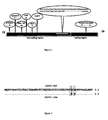
- the figure 1 shows the identified polymorphisms in C2/C6 fragment associated with increased mortality.
- the figure 3 shows identified polymorphisms in IA1-IA2 fragments also associated with increased mortality.
- polymorphisms are specific of the new OsHV-1 genotype (strain) ⁇ Var and their detections enable to diagnose an infection with this specific genotype.
- DNA was extracted from Oyster larvae infected with OsHV-1 ⁇ Var genotype. DNA is then diluted to a concentration comprised between 10 end 500ng DNA/ ⁇ l
- OsHV-1 reference genomic DNA (Accession Number : AY 509253) was used, which corresponds to the one purified from oyster larvae infected in 1995 by OsHV-1 virus.
- the concentration of this reference OsHV-1 genomic DNA was about 2 pg/ ⁇ l corresponding to 50.10 3 DNA copies/ ⁇ l.
- the obtained PCR products are loaded on a 2.5% Agarose electrophoresis gel.
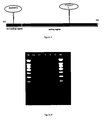
- the figure 4 shows an electrophoresis gel of PCR products obtained with CF/CR primers realized on 2 OsHV-1 isolates and 2 OsHV-1 ⁇ Var isolates. Only two genotype ⁇ Var (1a and 12) and two genotype reference OsHV-1 (3 and 4) are presented. C: positive control. M: DNA ladder.
Landscapes
- Chemical & Material Sciences (AREA)
- Life Sciences & Earth Sciences (AREA)
- Health & Medical Sciences (AREA)
- Organic Chemistry (AREA)
- Zoology (AREA)
- Engineering & Computer Science (AREA)
- Immunology (AREA)
- Wood Science & Technology (AREA)
- Proteomics, Peptides & Aminoacids (AREA)
- Virology (AREA)
- Biotechnology (AREA)
- Microbiology (AREA)
- Molecular Biology (AREA)
- Physics & Mathematics (AREA)
- Biophysics (AREA)
- Analytical Chemistry (AREA)
- Biochemistry (AREA)
- Bioinformatics & Cheminformatics (AREA)
- General Engineering & Computer Science (AREA)
- General Health & Medical Sciences (AREA)
- Genetics & Genomics (AREA)
- Measuring Or Testing Involving Enzymes Or Micro-Organisms (AREA)
Abstract
The present invention concerns a method for determining if a particular Ostreid herpesvirus 1 (OsHV-1) corresponds to the OsHV-1 µVar strain, which method comprises the steps of (i) determining the sequence of the C region (SEQ ID n°1) and/or of the IA region (SEQ ID n°2) of the genomic DNA of said OsHV-1 virus, and (ii) determining if said OsHV-1 virus corresponds to the OsHV-1 µVar strain; and a pair of primers and a kit useful for such a method.
Description
- The present invention relates to mollusc infection by Herpes-like viral and is directed to oligonucleotides, methods and kits which are especially useful as an aid in the diagnosis of an infection with the µVar strain of Ostreid herpesvirus 1 (OsHV-1).
- Herpes-like viral infections have been reported in different bivalve mollusc species throughout the world. More specifically, Ostreid herpesvirus 1 (OsHV-1) is the only member of the Herpesviridae that has an invertebrate host and is associated with sporadic mortality in the Pacific oyster (Crassostrea gigas) and other bivalve species.
- Following the characterisation and genome sequencing of ostreid herpesvirus 1 (OsHV-1), specific diagnostic tools have been developed based on conventional PCR techniques, in situ hybridisation and quantitative PCR.
- In France, the year 2008 displayed high mortality rate ranging from 80% to 100% affecting only cupped oyster, Crassostrea gigas and mainly juvenile oysters from May to September.
- According to devastating of losses, it appeared important to investigate if this high mortality rate could be associated to emerging or new pathogens.
- Because of preliminary tests for herpesvirus detection showed around 75% positive batches; the question was whether it could be related to the emergence of a new genotype of Ostreid Herpesvirus type 1 (OsHV-1).
- The present invention relates to a method for determining if a particular Ostreid herpesvirus 1 (OsHV-1) corresponds to the OsHV-1 µVar strain, which method comprises the step of (i) determining the sequence of the C region (SEQ ID n°1) and/or of the IA region (SEQ ID n°2) of the genomic DNA of said OsHV-1 virus, and (ii) determining if said OsHV-1 virus corresponds to the OsHV-1 µVar strain.
- The present invention further relates to a pair of oligobucleotides useful for determining if a particular Ostreid herpesvirus 1 (OsHV-1) corresponds to the OsHV-1 µVar strain, wherein said pair of oligobucleotides have the sequences GTG ATG GCT TTG GTC AAG GT (SEQ ID n°7) and CCC CGG GGA AAA AGT ATA AA (SEQ ID n°8).
- Finally, the present invention relates to a kit for determining if a particular Ostreid herpesvirus 1 (OsHV-1) corresponds to the OsHV-1 µVar strain.
-
- The
figure 1 shows the identified polymorphisms in C2/C6 fragment associated with increased mortality. - The
figure 2 shows the ORF4 amino acids changes associated with OsHV-1 µVar sequence. - The
figure 3 shows identified polymorphisms in IA1-IA2 fragments also associated with OsHV-1 µvar sequence. - The
figure 4 shows an electrophoresis gel of PCR products obtained with CF/CR primers realized on 2 OsHV-1 isolates and 2 OsHV-1 µVar isolates. Only two genotype µVar (1a and 12) and two genotype reference OsHV-1 (3 and 4) are presented. C: positive control. M: DNA ladder. - The inventors have now identified a new OsHV-1 genotype or strain in 40% of studied spat batches from 2008 called OsHV-1 µVar, which could be considered as an emerging viral genotype involved in oyster mortalities.
- Specific polymorphisms of this genotype have been identified by the inventors, which polymorphisms are located in two targeted regions C and IA, with reference to OsHV-1 DNA.
- These polymorphisms correspond as an example to a deletion in a microsatellite zone and to substitutions in coding zones of the ORF4 protein.
- Finally, the inventors have identified a PCR primers pair enabling a simple and fast diagnosis of oyster OsHV-1 µVar infection.
- Consequently, the present invention relates to a method for determining if a particular Ostreid herpesvirus 1 (OsHV-1) corresponds to the OsHV-1 µVar strain, which method comprises the step of:
- i) determining the sequence of the C region (SEQ ID n°1) and/or of the IA region (SEQ ID n°2) of the genomic DNA of said OsHV-1 virus, and
- ii) determining if said OsHV-1 virus corresponds to the OsHV-1 µVar strain.
- Said particular OsHV-1 virus is isolated or not from a biological sample.
- As used herein, said biological sample can correspond to plankton, mollusc or seawater.
- The step of determining if said OsHV-1 virus corresponds to a OsHV-1 µVar strain in view of its sequence can be simply done by the skilled person in view of the polymorphisms identified by the inventors.
- In fact, the inventors have established that the following nucleic acid polymorphisms are characteristic of the OsHV-1 µVar strain as compared to the reference DNA of OsHV-1:
- ● For SEQ ID n°1, at least an A instead of a G at position 151, a C instead of AA at position 223, an insertion of GC at position 249 instead of no nucleic acid, a G instead of C at position 253, an A instead of G at position 257, no nucleic acid instead of AC at position 306, G instead of ACTACTACTACTGA (SEQ ID n°3) at position 360, A instead of G at position 482, and/or a A instead of G at position 488.
- ● For SEQ ID n°2, no nucleic acid instead of an A at position 110 and/or a T instead of a C at position 526.
- Thus, the sequences SEQ ID n°4 and SEQ ID n°5 are characteristic of the C and IA regions respectively of the µVar C genotype.
- It should be further noticed that, as a result of some of the previously disclosed nucleic acid polymorphisms, the following amino acid polymorphisms are characteristic of the OsHV-1 µVar strain as compared to the reference DNA of OsHV-1:
- ● For ORF4 (SEQ ID n°6), at least a N instead of a D at position 40 and/or a K instead of a E at position 42.
- Advantageously, said determining step (ii) is done by identifying at least one of the previously disclosed polymorphisms.
- In a preferred embodiment, said method comprises the step of determining the sequence of the C region (SEQ ID n°1) of the genomic DNA of said OsHV-1 virus.
- In another preferred embodiment, said determining step (ii) is done by identifying the polymorphism corresponding to G instead of ACTACTACTACT6A (SEQ ID n°3) at position 360 of the C region (SEQ ID n°1) of the genomic DNA of said OsHV-1 virus.
- In a still preferred embodiment, the method of the invention is a method for diagnosis an infection by an OsHV-1 µVar strain in a mollusc, wherein said method further comprises a previous step of determining the presence or the absence of an OsHV-1 virus in a biological sample of said mollusc.
- Thus, the biological sample is a mollusc, or a part thereof, and most preferably a soft tissue of said mollusc.
- The step of determining the presence or the absence of an OsHV-1 virus in a biological sample of said mollusc can be done by well known methods such as those disclosed in PEPIN et all. (J VirolMethods, vol.149(2), p:269-76, 2008).
- As used herein, a mollusc is a bivalve mollusc selected in the group comprising oysters, scallops and clams.
- Preferably, said mollusc is an oyster and most preferably a cupped oyster such as Crassostrea gigas
- The step (i) of determining the sequence of the C region (SEQ ID n°1) and/or of the IA region (SEQ ID n°2) of the genomic DNA of said OsHV-1 virus can be done directly by sequencing of these regions or indirectly by hybridization techniques such as DNA array or Southern blot, by enzymatic digestion techniques such as RFLP, by amplification techniques such as Polymerase Chain Reaction (PCR), Southern Blot, Northern Blot, or by enzymatic techniques such as PRA (PCR-restriction length polymorphism analysis).
- Preferably, said determining step (i) is done by amplification techniques and most preferably by PCR.
- Useful primers for said amplification techniques have a length of at least 12 nucleic acids, preferably of at least 15 nucleic acids and most preferably of at least 20 nucleic acids.
- In a still preferred embodiment, the determining step (i) is done by PCR using the pair of primers CR (GTG ATG GCT TTG GTC AAG GT, SEQ ID n°7) and CF (CCC CGG GGA AAA AGT ATA AA, SEQ ID n°8).
- Said pair of primers enables a simple and fast identification of a OsHV-1 virus corresponding to a µVar OsHV-1 strain by PCR, since samples comprising DNA of said strain result in a 158pb amplicon (SEQ ID n°9).
- A second aspect of the invention concerns a pair of oligobucleotides useful for determining if a particular Ostreid herpesvirus 1 (OsHV-1) corresponds to the OsHV-1 µVar strain, wherein said pair of oligobucleotides have the sequences GTG ATG GCT TTG GTC AAG GT. (SEQ ID n°7) and (CCC CGG GGA AAA AGT ATA AA (SEQ ID n°8).
- A third aspect of the invention concerns a kit for determining if a particular Ostreid herpesvirus 1 (OsHV-1) corresponds to the OsHV-1 µVar strain, wherein said kit comprises:
- ● means for determining the sequence of the C region (SEQ ID n°1) and/or of the IA region (SEQ ID n°2) of the genomic DNA of said OsHV-1 virus.
- As an example, such means can include primers for amplifying the C region (SEQ ID n°1) and/or of the IA region (SEQ ID n°2) of the genomic DNA of said OsHV-1 virus, or antibodies recognizing the ORF4 protein specifically expressed by the OsHV-1 µVar strain comprising at least a N instead of a D at position 40 and a K instead of a E at position 42 of ORF4 (SEQ ID n°6).
- Advantageously, said means corresponds to the previously described pair of oligonucleotides.
- The kit of the invention may comprise additional reagents useful for the extraction of nucleic acids from a tissue sample or for analyzing the nucleic acid extracted from a tissue sample such as polymerase chain reaction reagents. The kit may also comprise specific controls based on purified plasmidic DNA from clones containing insert C2/C6 fragments as targeted DNA matrix originating from reference or µVar genotype Oshv-1 isolates.
- The following experiments are offered to illustrate embodiments of the invention and should not be viewed as limiting the scope of the invention.
- DNA was extracted from Oyster soft tissue as disclosed in PEPIN et al. (abovementioned, 2008).
- The used DNA corresponds to 24 batches from field mortality events >70% in 2008, 4 batches previously used in study of challenge in 2008 and to 49 DNA samples from several years and different countries.
- OsHV-1 DNA were identified in said samples and regions of said OsHV-1 DNAs were sequenced.
- The analysis of said sequences as compared with OsHV-1 reference DNA (AY509253, GenBank) revealed several polymorphisms in ORF4 and ORF43 regions.
- The
figure 1 shows the identified polymorphisms in C2/C6 fragment associated with increased mortality. - These nucleic acids polymorphisms result in ORF4 amino acids changes as shown in
Figure 2 . - The
figure 3 shows identified polymorphisms in IA1-IA2 fragments also associated with increased mortality. - These polymorphisms are specific of the new OsHV-1 genotype (strain) µVar and their detections enable to diagnose an infection with this specific genotype.
- DNA was extracted from Oyster larvae infected with OsHV-1 µVar genotype. DNA is then diluted to a concentration comprised between 10 end 500ng DNA/µl
- As a positive control, OsHV-1 reference genomic DNA (Accession Number : AY 509253) was used, which corresponds to the one purified from oyster larvae infected in 1995 by OsHV-1 virus. The concentration of this reference OsHV-1 genomic DNA was about 2 pg/µl corresponding to 50.103 DNA copies/µl.
- So as to identify OsHV-1 µVar genotype, specific primers CR (GTG ATG GCT TTG GTC AAG GT, SEQ ID n°7) and CF (CCC CGG GGA AAA AGT ATA AA, SEQ ID n°8) have been designed.
- The following melting on the basis of MIX RED GOLD STAR kit (EUROGENTEC) was prepared:
Compound Volume Buffer 10x 5µl MgC12 (25mM) 5µl dNTP (2mM) 5µl Primer CR (10µM) 1µl Primer CF (10µM) 1µl Taq RED (5U/µl) 0,5µl DNA sample (10 to 500 ng/ µl) 1µl H2O qs 50µl - The following PCR program was used:
Temperature (°C) Time
(min)Number of cycles 94 2 1 94 1 35 50 1 72 1 72 5 1 - The obtained PCR products are loaded on a 2.5% Agarose electrophoresis gel.
- The
figure 4 shows an electrophoresis gel of PCR products obtained with CF/CR primers realized on 2 OsHV-1 isolates and 2 OsHV-1 µVar isolates. Only two genotype µVar (1a and 12) and two genotype reference OsHV-1 (3 and 4) are presented. C: positive control. M: DNA ladder. - The results show that the µVar OsHV-1 strain samples show a 158 pb amplicon, whereas the reference OsHV-1 strain samples show a 173 pb amplicon enabling a simple and fast characterisation of OsHV-1 µVar strain (See
fig 4 ).


Claims (10)
- A method for determining if a particular Ostreid herpesvirus 1 (OsHV-1) corresponds to the OsHV-1 µVar strain, which method comprises the step of:i) determining the sequence of the C region (SEQ ID n°1) and/or of the IA region (SEQ ID n°2) of the genomic DNA of said OsHV-1 virus, andii) determining if said OsHV-1 virus corresponds to the OsHV-1 µVar strain.
- The method of claim 1, wherein said determining step (ii) is done by identifying at least one nucleic acid polymorphism characteristic of the OsHV-1 µVar strain selected in the group comprising:● For SEQ ID n°1, at least an A instead of a G at position 151, a C instead of AA at position 223, an insertion of GC at position 249 instead of no nucleic acid, a G instead of C at position 253, an A instead of G at position 257, no nucleic acid instead of AC at position 306, G instead of ACTACTACTACTGA (SEQ ID n°3) at position 360, A instead of G at position 482, and/or a A instead of G at position 488.● For SEQ ID n°2, no nucleic acid instead of an A at position 110 and/or a T instead of a C at position 526.
- The method of any of claim 1 or 2, wherein said method comprises the step of determining the sequence of the C region (SEQ ID n°1) of the genomic DNA of said OsHV-1 virus.
- The method of claim 3, wherein the determining step (ii) is done by identifying the polymorphism corresponding to G instead of ACTACTACTACTGA (SEQ ID n°3) at position 360 of the C region (SEQ ID n°1) of the genomic DNA of said OsHV-1 virus.
- The method of any of claims 1 to 4, wherein said method is for diagnosing an infection by an OsHV-1 µVar strain in a mollusc, wherein said method further comprises a previous step of determining the presence or the absence of an OsHV-1 virus in a biological sample of said mollusc, preferably said biological sample is a soft tissue of said mollusc.
- The method of claim 5, wherein said mollusc is an oyster and preferably Crassostrea gigas
- The method of any of claims 1 to 6, wherein the step (i) of determining the sequence of the C region (SEQ ID n°1) and/or of the IA region (SEQ ID n"2) of the genomic DNA of said OsHV-1 virus is done by nucleic acid amplification techniques and preferably by PCR.
- The method of claim 7, wherein the determining step (i) is done by PCR using the pair of primers CR (GTG ATG GCT TTG GTC AAG GT, SEQ ID n°7) and CF (CCC CGG GGA AAA AGT ATA AA, SEQ ID n°8).
- A pair of oligonucleotides useful for determining if a particular Ostreid herpesvirus 1 (OsHV-1) corresponds to the OsHV-1 µVar strain, wherein said pair of oligonucleotides have the sequences GTG ATG GCT TTG GTC AAG GT (SEQ ID n°7) and (CCC CGG GGA AAA AGT ATA AA (SEQ ID n°8).
- A kit for determining if a particular Ostreid herpesvirus 1 (OsHV-1) corresponds to the OsHV-1 µVar strain, wherein said kit comprises the pair of oligonucleotides as defined in claim 10.
Priority Applications (2)
| Application Number | Priority Date | Filing Date | Title |
|---|---|---|---|
| EP10358001A EP2366804A1 (en) | 2010-03-02 | 2010-03-02 | Identification of the microVar strain of Ostreid herpesvirus 1 (OsHV-1) |
| PCT/IB2011/000412 WO2011107850A1 (en) | 2010-03-02 | 2011-02-28 | Identification of the microvar strain of ostreid herpesvirus 1 (oshv-1) |
Applications Claiming Priority (1)
| Application Number | Priority Date | Filing Date | Title |
|---|---|---|---|
| EP10358001A EP2366804A1 (en) | 2010-03-02 | 2010-03-02 | Identification of the microVar strain of Ostreid herpesvirus 1 (OsHV-1) |
Publications (1)
| Publication Number | Publication Date |
|---|---|
| EP2366804A1 true EP2366804A1 (en) | 2011-09-21 |
Family
ID=42288980
Family Applications (1)
| Application Number | Title | Priority Date | Filing Date |
|---|---|---|---|
| EP10358001A Withdrawn EP2366804A1 (en) | 2010-03-02 | 2010-03-02 | Identification of the microVar strain of Ostreid herpesvirus 1 (OsHV-1) |
Country Status (2)
| Country | Link |
|---|---|
| EP (1) | EP2366804A1 (en) |
| WO (1) | WO2011107850A1 (en) |
Cited By (1)
| Publication number | Priority date | Publication date | Assignee | Title |
|---|---|---|---|---|
| CN105755175A (en) * | 2015-04-17 | 2016-07-13 | 山东出入境检验检疫局检验检疫技术中心 | Reagent kit for identifying ostreid herpesvirus or assisting in identifying ostreid herpesvirus and special primer for reagent kit |
Families Citing this family (4)
| Publication number | Priority date | Publication date | Assignee | Title |
|---|---|---|---|---|
| CN106755574B (en) * | 2016-12-26 | 2018-02-13 | 中国科学院北京基因组研究所 | A kind of real-time fluorescence quantitative PCR detection kits of highly sensitive OsHV 1 and method |
| CN108060265B (en) * | 2017-11-29 | 2021-05-07 | 中国水产科学研究院南海水产研究所 | Primer group and probe for detecting oyster herpesvirus infected with scapharca subcrenata and application of primer group and probe |
| CN113293239B (en) * | 2021-07-21 | 2021-11-09 | 中国水产科学研究院黄海水产研究所 | Universal RPA nucleic acid isothermal amplification primer and kit for bivalve herpesvirus OsHV-1 infection and application of primer and kit |
| CN118879706A (en) * | 2024-09-25 | 2024-11-01 | 中国科学院海洋研究所 | Oyster herpes virus ORF117 promoter and its recombinant expression vector and application |
Citations (1)
| Publication number | Priority date | Publication date | Assignee | Title |
|---|---|---|---|---|
| US20070282001A1 (en) * | 2004-06-30 | 2007-12-06 | Francis Chi | Materials And Methods For Improving Shellfish Health, Immunity And Growth |
-
2010
- 2010-03-02 EP EP10358001A patent/EP2366804A1/en not_active Withdrawn
-
2011
- 2011-02-28 WO PCT/IB2011/000412 patent/WO2011107850A1/en not_active Ceased
Patent Citations (1)
| Publication number | Priority date | Publication date | Assignee | Title |
|---|---|---|---|---|
| US20070282001A1 (en) * | 2004-06-30 | 2007-12-06 | Francis Chi | Materials And Methods For Improving Shellfish Health, Immunity And Growth |
Non-Patent Citations (6)
| Title |
|---|
| ANONYMOUS: "Implementing council directive 2006/88/EC as regards measures to control increased mortality in oysters of the species Crassostrea gigas in connection with the detection of ostreid herpes virus 1 microvar.", INTERNET ARTICLE, 3 March 2010 (2010-03-03), XP002590669, Retrieved from the Internet <URL:http://eur-lex.europa.eu/LexUriServ/LexUriServ.do?uri=OJ:L:2010:052:0001:0013:EN:PDF> [retrieved on 20100706] * |
| ARZUL ISABELLE ET AL: "Evidence for interspecies transmission of oyster herpesvirus in marine bivalves", JOURNAL OF GENERAL VIROLOGY, vol. 82, no. 4, April 2001 (2001-04-01), pages 865 - 870, XP002590668, ISSN: 0022-1317 * |
| BATISTA ET AL: "Detection of ostreid herpesvirus 1 DNA by PCR in bivalve molluscs: A critical review", JOURNAL OF VIROLOGICAL METHODS, ELSEVIER BV, NL LNKD- DOI:10.1016/J.JVIROMET.2006.09.005, vol. 139, no. 1, 6 December 2006 (2006-12-06), pages 1 - 11, XP005794339, ISSN: 0166-0934 * |
| COCHENNEC-LAUREAU N, BAUD JP, BEDIER E, BOUDRY P, HUVET A, NICOLAS JL, PEPIN JF, PETTON B: "Bilan des "journées surmortalité des huitres creuses, Crassotrea gigas" du programme P7 "Aquaculture durable" des 8 et 9 décembre 2009", INTERNET ARTICLE, January 2010 (2010-01-01), XP002590670, Retrieved from the Internet <URL:http://archimer.ifremer.fr/doc/2010/acte-7393.pdf> [retrieved on 20100707] * |
| PEPIN JEAN-FRANCOIS, SEGARRA AMELIE, FAURY NICOLE, SCHIKORSKI DAVID, COBRET LAËTITIA, RENAULT TRISTAN: "Summer mortality in 2008 and Ostreid Herpes virus investigations", INTERNET ARTICLE, 19 March 2009 (2009-03-19), XP002590667, Retrieved from the Internet <URL:http://en.scientificcommons.org/43814649> [retrieved on 20100706] * |
| PEPIN, J VIROLMETHODS, vol. 149, no. 2, 2008, pages 269 - 76 |
Cited By (1)
| Publication number | Priority date | Publication date | Assignee | Title |
|---|---|---|---|---|
| CN105755175A (en) * | 2015-04-17 | 2016-07-13 | 山东出入境检验检疫局检验检疫技术中心 | Reagent kit for identifying ostreid herpesvirus or assisting in identifying ostreid herpesvirus and special primer for reagent kit |
Also Published As
| Publication number | Publication date |
|---|---|
| WO2011107850A1 (en) | 2011-09-09 |
Similar Documents
| Publication | Publication Date | Title |
|---|---|---|
| Ioos et al. | Genomic variation within Monilinia laxa, M. fructigena and M. fructicola, and application to species identification by PCR | |
| ES2644576T3 (en) | Differentiation procedure for fertile and sterile plant lines by detection of polymorphic markers in chloroplast DNA | |
| Peng et al. | Mutation scanning‐coupled analysis of haplotypic variability in mitochondrial DNA regions reveals low gene flow between human and porcine Ascaris in endemic regions of China | |
| EP2635706B1 (en) | Method for detecting the presence of a dna minor contributor in a dna mixture | |
| Mugue et al. | Polymorphism of the mitochondrial DNA control region in eight sturgeon species and development of a system for DNA-based species identification | |
| Ling et al. | Sequencing and analysis of chromosome 1 of Eimeria tenella reveals a unique segmental organization | |
| WO2011107850A1 (en) | Identification of the microvar strain of ostreid herpesvirus 1 (oshv-1) | |
| Al-Mutairi et al. | Molecular characterization of Echinococcus granulosus in livestock of Al-Madinah (Saudi Arabia) | |
| KR101970264B1 (en) | CAPS marker for discriminating bacterial wilt-resistant pepper cultivar and uses thereof | |
| US12188090B2 (en) | Method for discriminating sex of yellowtail group | |
| Hummel et al. | AB0 blood group genotyping of ancient DNA by PCR-RFLP | |
| JP5065689B2 (en) | Shrimp detection primer set | |
| Rushdi et al. | Association between microsatellite markers and milk production traits in Egyptian buffaloes. | |
| Udina et al. | Polymorphism of Bovine Prolactin Gene: Microsatellites, PCR–RFLP | |
| CN106755320B (en) | Nucleic acid, kit and method for detecting human OPRM1 gene A118G site polymorphism | |
| EP2601305B1 (en) | A sequence specific for flavescence doree (fd) phytoplasma, uses thereof and fd diagnostic kits | |
| WO2006097347A2 (en) | Methods for detecting, identifying and differentiating species and vaccine strains of the brucella genus | |
| Zhang et al. | Validation of 17 microsatellite markers for parentage verification and identity test in Chinese Holstein cattle | |
| Zagrai et al. | Serological and molecular typing of Plum pox virus isolates in the North of Romania | |
| Stein et al. | A sex-linked microsatellite locus isolated from the Y chromosome of lake charr, Salvelinus namaycush | |
| KR101448121B1 (en) | Method for identifying duck using multiplex PCR | |
| US20120021427A1 (en) | Methods For Rapid Forensic DNA Analysis | |
| EP3315612A1 (en) | Set of primers and method for detecting and identifying mussel species of the genusmytilus | |
| Faria et al. | Molecular tools for species discrimination and detection of hybridization between two closely related Clupeid fishes Alosa alosa and A. fallax | |
| RU2528742C2 (en) | Synthetic oligonucleotide primers and method for genetic typing for personal identification by y-chromosome microsatellite dna markers system |
Legal Events
| Date | Code | Title | Description |
|---|---|---|---|
| PUAI | Public reference made under article 153(3) epc to a published international application that has entered the european phase |
Free format text: ORIGINAL CODE: 0009012 |
|
| AK | Designated contracting states |
Kind code of ref document: A1 Designated state(s): AT BE BG CH CY CZ DE DK EE ES FI FR GB GR HR HU IE IS IT LI LT LU LV MC MK MT NL NO PL PT RO SE SI SK SM TR |
|
| AX | Request for extension of the european patent |
Extension state: AL BA ME RS |
|
| 17P | Request for examination filed |
Effective date: 20120321 |
|
| 17Q | First examination report despatched |
Effective date: 20120627 |
|
| STAA | Information on the status of an ep patent application or granted ep patent |
Free format text: STATUS: THE APPLICATION IS DEEMED TO BE WITHDRAWN |
|
| 18D | Application deemed to be withdrawn |
Effective date: 20121108 |