EP2365762B2 - Improving the mouthfeel of beverages - Google Patents
Improving the mouthfeel of beverages Download PDFInfo
- Publication number
- EP2365762B2 EP2365762B2 EP09755842.3A EP09755842A EP2365762B2 EP 2365762 B2 EP2365762 B2 EP 2365762B2 EP 09755842 A EP09755842 A EP 09755842A EP 2365762 B2 EP2365762 B2 EP 2365762B2
- Authority
- EP
- European Patent Office
- Prior art keywords
- hydrocolloids
- beverage
- calorie
- mouthfeel
- ppm
- Prior art date
- Legal status (The legal status is an assumption and is not a legal conclusion. Google has not performed a legal analysis and makes no representation as to the accuracy of the status listed.)
- Active
Links
Images



Classifications
-
- A—HUMAN NECESSITIES
- A23—FOODS OR FOODSTUFFS; TREATMENT THEREOF, NOT COVERED BY OTHER CLASSES
- A23L—FOODS, FOODSTUFFS OR NON-ALCOHOLIC BEVERAGES, NOT OTHERWISE PROVIDED FOR; PREPARATION OR TREATMENT THEREOF
- A23L2/00—Non-alcoholic beverages; Dry compositions or concentrates therefor; Preparation or treatment thereof
- A23L2/52—Adding ingredients
Definitions
- the present invention relates to the field of altering the perceptional characteristics of beverages.
- the present invention relates to a method for improving the mouthfeel of beverages by adding hydrocolloids having a particular intrinsic viscosity.
- Bodyweight concerns are of paramount importance to the world population; to react to this, food manufacturers are eager to reduce calories in beverages (e.g. "reduced calories", “light beverages”, etc); however, these beverages often have a lower consumers' acceptance rate as they lack the mouthfeel, body and flavor of their regular equivalents.
- the addition of low calorie ingredients which can partially or totally substitute high calorie ingredients is therefore an important challenge for the beverage industry. The challenge is to maintain the flavor, the mouthfeel, the body and the taste of the regular beverage, and thus generate a similar sensory response.
- the present invention provides a method to improve the mouthfeel of beverages by adding a particular group of hydrocolloids.
- the invention relates to a method for improving the mouthfeel of beverages according to claim 1.
- the present invention relates to a calorie-reduced beverage composition having a lubricity which is about equal or higher than the lubricity of its equivalent full calorie beverage, according to claim 7.
- the present disclosure relates to the use of hydrocolloids for improving the mouthfeel of beverages.
- Beverage means a drinkable composition.
- Beverages include, but are not limited to the following: carbonated and non-carbonated, alcoholic and non-alcoholic drinks including but not limited to carbonated water, flavored water, carbonated flavored water, drinks containing juice (juice derived from any fruit or any combination of fruits, juice derived from any vegetable or any combination of vegetables) or nectar, milk obtained from animals, milk product derived from soy, rice, coconut or other plant material, sports drinks, vitamin enhanced sports drinks, high electrolyte sports drinks, highly caffeinated high energy drinks, coffee, decaffeinated coffee, tea, tea derived from fruit products, tea derived from herb products, decaffeinated tea, wine, champagne, malt liquor, rum, gin, vodka, other hard liquors, beer, reduced calorie beer-type beverages, non-alcoholic beer, and other beer-type beverages obtained from a cereal solution such as beer, ale, stout, lager, porter, low alcoholic beer, alcohol-free beer, k
- mouthfeel of a beverage according to the present invention is the tactile sensations perceived at the lining of the mouth, including the tongue, gums and teeth.
- body according to the present invention is the richness of flavour or impression of consistency given by a beverage.
- the present invention allows an "improved mouthfeel” without affecting the organoleptic characteristics in such a way that the beverage would be assessed as unpleasantly thick or sticky. This "improved mouthfeel” can be examined best by a taste panel consuming said beverage in comparison to the same beverage without the ingredient to be examined; or using a tribological device (see below).
- the inventors developed a method for improving the mouthfeel of beverages, which comprises the step of adding one or more hydrocolloids ("first hydrocolloids") with particular intrinsic viscosity to the beverage composition.
- first hydrocolloids hydrocolloids
- the mouthfeel can be improved by adding, in addition, further hydrocolloid.
- the first hydrocolloid is chosen from the group consisting of sugar beet pectin, apple pectin, gum Arabic or nOSA (n-octenyl succinic anhydride) maltodextrin, low molecular weight carboxymethylcellulose (having an intrinsic viscosity ⁇ 600 mL/g as measured by capillary flow viscosimetry) and mixtures thereof.
- nOSA n-octenyl succinic anhydride
- carboxymethylcellulose having an intrinsic viscosity ⁇ 600 mL/g as measured by capillary flow viscosimetry
- the first hydrocolloid acts as a lubricant.
- the lubricating effect of the first hydrocolloid results in a fluid-like cushion that can sustain pressure created inside the mouth cavity during swallowing. Hence, friction forces between the tongue, the gums teeth and the palate are reduced.
- Such lubricating effect can be measured for example via the tribology device, which is explained herein below.
- the method for improving the mouthfeel of beverages uses one or more first hydrocolloids having an intrinsic viscosity of from 5 to 600 mL/g as measured by capillary flow viscometry, preferably from 5 to 550 mL/g, more preferably from 10 to 500 mL/g, even more preferably from 10 to 450 mL/g, even more preferably from 50 to 450 mL/g, and most preferably from 100 to 450mL/g.
- Said first hydrocolloid(s) are included in an amount of from about 10 to about 1500 ppm of the finally obtained beverage. More preferably, the amount of hydrocolloid(s) is from about 20 ppm to about 1300 ppm, more preferably from about 100 ppm to about 1000 ppm, and even more preferably from about 120 ppm to about 800 ppm and most preferably the amount is from 260 ppm to 800 ppm of the final beverage composition.
- the method for improving the mouthfeel of beverages also involves other edible substances that enable a positive modification of the body.
- Such positive modification can be obtained through modifying the viscosity and/or the osmolality of the beverage.
- the viscosity of the beverage influences the impression of consistency of the beverage, while osmolality affects the richness sensation of the beverage.
- modifying viscosity and osmolality further contribute to the improved mouthfeel of the beverage.
- These edible substances are chosen from other hydrocolloids : "second hydrocolloids”. Bulking agents and mixtures of said bulking agents and said second hydrocolloids may also be used.
- the edible substance (second hydrocolloid or bulking agent) is added in a quantity suitable to match the body of the target beverage.
- the body modifying substance is added in order to obtain an increase of viscosity below 0.4 mPa.s (at 20°C), preferably an increase of 0.1 to 0.4 mPa.s (at 20°C).
- the viscosity can be measured with an Anton Paar MCR300 rheometer (cylinder, CC24 probe) at a constant shear rate of 25 s -1 at 20°C.
- These second hydrocolloids are guar gum, locust bean gum, cassia gum, pectin from botanical sources (e.g. apple, citrus, soy, potato, ...), high molecular weight carboxymethylcellulose (having an intrinsic viscosity > 600 mL/g, preferably > 700 mL/g as measured by capillary flow viscosimetry), carrageenan, alginate or xanthane and mixtures thereof.
- the second hydrocolloid is different from the first hydrocolloid (providing the lubricating effect).
- the second hydrocolloid is included in an amount of from about 10 to about 500 ppm, preferably from about 20 to about 450 ppm, and most preferably from about 30 to about 400 ppm.
- Bulking agents may be chosen from the group consisting of isomaltulose, polydextrose, trehalose, erythritol or oligodextrans and mixtures thereof.
- the bulking agent may be included in an amount of from about 100 to about 12000 ppm, preferably from about 200 to about 11000 ppm, and most preferably from about 300 to about 10000 ppm.
- the ratio of first hydrocolloid(s) to edible substance is from about 150:1 to about 1:1200, preferably from about 75:1 to about 1:600, and more preferably from about 40:1 to about 1:400.
- the ratio of first hydrocolloid to second hydrocolloid is from about 150:1 to about 1:50, preferably from about 75:1 to about 1:45, more preferably from about 40:1 to about 1:20, even more preferably from about 50:1 to about 1:20 and most preferably from about 40:1 to about 1:15.
- the ratio of (lubrifying) hydrocolloid to bulking agent is from about 15:1 to about 1:1200, preferably from about 7:1 to about 1:600, more preferably from about 3:1 to about 1:400.
- the inventive composition for improving the mouthfeel comprises sugar beet pectin alone or in combination with pectin from other sources such as apple pomace or citrus pulp, guar gum or mixtures thereof.
- the attractiveness of sugar beet pectin is not only based on its favorable price, but also on its ability to add body to the beverage without affecting the flavor or generating an unpleasant organoleptic impression.
- the hydrocolloids added for improving the mouthfeel is sugar beet pectin.
- the inventive composition for improving the mouthfeel comprises gum Arabic alone or in combination with guar gum, citrus pectin, high molecular weight carboxymethylcellulose or mixtures thereof. Most preferably the composition comprises a mixture of gum Arabic and guar gum.
- the inventive composition for improving the mouthfeel comprises apple pectin alone or in combination with citrus pectin, guar gum or mixtures thereof. Most preferably the composition comprises a mixture of apple pectin and citrus pectin.
- the inventive composition for improving the mouthfeel comprises nOSA maltodextrin alone or in combination with guar gum.
- the inventive composition for improving the mouthfeel comprises low molecular weight carboxymethylcellulose (having an intrinsic viscosity ⁇ 600 mUg as measured by capillary flow viscosimetry) alone or in combination with guar gum.
- the method for improving the mouthfeel is used to improve the mouthfeel of a calorie-reduced beverage;
- the calorie reduction may be from 1 to 100% reduction of the calorific value of the beverage; preferably from 30 to 100%, more preferably from 50 to 100%, most preferably from 80 to 100%.
- a calorie-reduced beverage could be a "light beverage” or "zero calorie beverage", as they are commonly known in the market.
- the improved mouthfeel can be assessed in comparison to an equivalent full calorie beverage or "regular" equivalent.
- the mouthfeel of the calorie-reduced beverage containing the mouthfeel enhancer resembles the mouthfeel of the corresponding regular equivalent.
- its lubricity is preferably about equal or higher than its equivalent full calorie beverage.
- the viscosity of the calorie-reduced beverage should be about equal to the viscosity of its equivalent full calorie beverage.
- equal it is meant that there is a difference within 5%, preferably within 3%, even more preferably within 1%.
- the method for improving the mouthfeel could also be used to improve the mouthfeel of a carbonated and/or non-carbonated beverage.
- This beverage could be a full calorie beverage or a calorie-reduced beverage.
- the method for improving the mouthfeel could also be used to improve the mouthfeel of alcoholic beverages.
- these alcoholic beverages could be calorie-reduced beverages such as "light beverages”.
- the beverage could also be a non-alcoholic beverage.
- the mouthfeel properties of a beverage had to be tested by a taste panel as there were no measuring tools which could reliably examine the mouthfeel behaviour of a low viscosity liquid.
- the current technology in rheology is not sensitive enough to be used as a tool for screening mouthfeel-enhancing ingredients for low viscosity beverages.
- the mouthfeel is influenced also by other forces than the viscosity, such as the lubrication.
- the present invention is directed to a calorie-reduced beverage composition having a lubricity which is about the same or higher than the lubricity of its equivalent full calorie beverage, said calorie-reduced beverage composition comprising one or more first hydrocolloids having an intrinsic viscosity of about 5 to about 600 mL/g as measured by capillary flow viscosimetry.
- Preferred ranges for intrinsic viscosity are those defined herein before.
- the first hydrocolloids are those defined hereinbefore.
- the calorie-reduced beverage composition further comprises one or more second hydrocolloids, provided that the second hydrocolloid is different from the first hydrocolloid.
- Said beverage composition may further comprise other edible substances, e.g. bulking agents, and mixtures of said edible substances and said second hydrocolloids.
- the second hydrocolloids are those defined hereinbefore.
- Preferred edible substances and ratio of first hydrocolloids to edible substances are those as defined hereinbefore.
- the present disclosure is directed to a carbonated and/or a non-carbonated-type beverage composition which comprises hydrocolloids having an intrinsic viscosity of 5-600mL/g as measured by capillary flow viscometry.
- the hydrocolloid added to the carbonated-type beverage composition can comprise sugar beet pectin, apple pectin, gum Arabic, nOSA maltodextrin, low molecular weight carboxymethylcellulose (having an intrinsic viscosity ⁇ 600 mL/g as measured by capillary flow viscosimetry) or mixtures thereof.
- Preferred edible substances and ratio of first hydrocolloids to edible substances are those as defined hereinbefore.
- the sugar beet pectin preferably added to the carbonated-type beverage composition can be added in any amount, depending on the desired alteration of the mouthfeel. Preferably it is included in an amount of up to about 1500 ppm of the finally obtained beverage, more preferably, from about 100 ppm to about 1000 ppm.
- the mouthfeel improvement according to the present invention may be measured by tribology as being a decrease of the maximum differential friction factor ( ⁇ )max of at least 0.08, preferably 0.10 and more preferably 0.12. For example, good results have been obtained for a carbonated-type beverage composition and a non-carbonated beverage composition wherein the amount of sugarbeet pectin added is 600 ppm of the final beverage composition.
- Example 1 Oasis® type non-carbonated beverages
- the density of the filtered solution was measured by pycnometry (10mL capacity pycnometers) at 25.00°C.
- Figure 1 show the UV/visible scan (0.1nm bandwidth) of sugarbeet pectin (174.9 ⁇ g/mL in 0.1M NaCl/0.02M acetate) recorded with a double beam Perkin-Elmer Lambda 650 spectrophotometer using 10,00mm quartz cuvettes (Suprasil ® , Hellma 100-QS).
- Spectrophotometric accuracy was checked with acidified potassium dichromate. Wavelength and spectral resolution were checked with holmium oxide filter. Stray light was checked with low bromide KCI solution.
- the Oasis ® type non-carbonated beverages have the following composition:
- Regular beverage water, juices from concentrate 15% (orange, apple), sugar, acidity regulator E330 (citric acid), aromas, preserver E211 (sodium benzoate), stabiliser E412 (guar gum), antioxidant E300 (ascorbic acid). 9 % sugar added
- Light beverage water, juices from concentrate 15% (orange, apple), acidity regulator E330 (citric acid), tested ingredient, high intensity sweeteners (acesulfame K, Aspartame), aromas, preserver E211 (sodiumbenzoate), 0 % sugar added
- tribology measurements were carried out on a MCR-301 rheometer (Anton Paar, Stuttgart, Germany) using a tribology device with a measuring system of the ball-on-three-plates geometry, which was temperature controlled by a Peltier and hood temperature control system.
- This tribology device employs stainless steel ball which is rotated over a contact area comprising 3 grooves, where 3 interchangeable strips of substrates are placed.
- the substrates are made of a thermoplastic elastomer (HTF 8654-94, available from KRAIBURG TPE GmbH, Waldkraiburg, Austria).
- the test temperature was set at 20°C with an initial non-recording pre-shear of 0.4 mm/s for 10 minutes followed by recording the friction coefficient as a function of sliding speed (0.4 to 250 mm/s) at constant load of 3 N.
- the friction force F R is measured as a function of sliding speed.
- the friction factor or coefficient ⁇ was calculated as the ratio of friction force to normal force F R /F N .
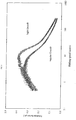
- Figure 2 show the friction profile (Stribeck curve) of a light and a regular Oasis ® type beverage.
- Figure 3 show the differential friction profile of a light and a regular Oasis-type beverage and the calculation of the maximum differential friction factor ( ⁇ ) max .
- Figure 4 show the effect of 600ppm hydrocolloid addition on viscosity and friction versus light reference.
- the potency of sugar beet pectin for mouthfeel perception is due to a combination of predominantly its lubrication properties and to a lower extent, its viscosity properties.
- Figure 4 show that there is still a gap in viscosity compared to the regular beverage. It is therefore recommended to fill the gap with a hydrocolloid or a bulking agent having a low impact on lubrication, filling this gap is improving the body of the beverage.
- Example 2 Fanta ® type carbonated beverages
- the Fanta ® type carbonated beverages have the following composition:
- Regular beverage carbonated water, sugar, orange juice from concentrate, acidity regulator E330 (citric acid), aromas, preserver E211 (sodiumbenzoate), stabilizer E412 (guar gum), antioxidant E300 (ascorbic acid).
- Light beverage carbonated water, orange juice from concentrate, acidity regulator E330 (citric acid), Tested ingredient, high intensity sweeteners (acesulfame K, Aspartame),aromas, preserver E211 (sodiumbenzoate),
- Fanta ® type carbonated beverages were prepared with hydrocolloids levels of 100, 600 and 1,000ppm.
- Table 3 tabulates sensory scores of the beverages ranking the hydrocolloids by potency for mouthfeel perception.
- Table 3 Sensory analysis mouthfeel data Hydrocolloids potency Sensory Score (ranking) 1.
- nOSA maltodextrin 100ppm ⁇ 600ppm ⁇ 1,000ppm ⁇ regular 4. carboxymethylcellulose 100ppm ⁇ 600ppm ⁇ 1,000ppm ⁇ regular
- Figure 5 show the effect of 50 to 1,000ppm sugarbeet pectin addition on viscosity and friction versus light reference. It is confirmed that the potency of sugarbeet pectin for mouthfeel perception is due to predominantly its lubrication properties and to a lower extent, its viscosity properties.
- Example 3 Influence of sugar beet pectin on the triboloctical properties of light soft drinks
- Table 4 Sample name Sugar beet pectin concentration (ppm, as is) Capillary viscosity at 20°C Friction factor ⁇ 10-100 mm/sec at 20°C Sensory mouthfeel at 20°C Light 0 1.122 0.231 Empty 200 ppm sugar beet pectin 200 1.150 0.201 Improved 600 ppm sugar beet pectin 600 1.210 0.187 High 800 ppm sugar beet pectin 800 1.244 0.169 Highest Regular 0 1.391 0.174 high
- flavoured water (Vitalinea ® Fraise-Framboise, Danone ® ): spring water (99.7%), acidifiers (citric acid, malic acid), magnesium sulphate, calcium lactate, calcium chloride, aroma, E212 (potassium benzoate), E242 (dimethyl dicarbonate), high intensity sweeteners (acesulfame K, sucralose).
- a light and a regular reference were prepared with 3 and 12g/100mL sucrose addition.
- Light flavoured water spiked with hydrocolloids were prepared to achieve the same viscosity as the regular reference (see table 4).
- the hydrocolloids were allowed to hydrate 1 hour at room temperature under gentle magnetic stirring. The beverages were then stored overnight at 4°C prior sensory analysis.
- the poor mouthfeel reference is the light beverage (3g sucrose per 100ml)
- the good mouthfeel reference is the regular beverage (12g sucrose per 100ml).
- the highest mouthfeel perception was obtained for the flavoured water spiked with sugar beet pectin.
Landscapes
- Health & Medical Sciences (AREA)
- Nutrition Science (AREA)
- Life Sciences & Earth Sciences (AREA)
- Chemical & Material Sciences (AREA)
- Engineering & Computer Science (AREA)
- Food Science & Technology (AREA)
- Polymers & Plastics (AREA)
- Non-Alcoholic Beverages (AREA)
Description
- The present invention relates to the field of altering the perceptional characteristics of beverages. In particular, the present invention relates to a method for improving the mouthfeel of beverages by adding hydrocolloids having a particular intrinsic viscosity.
- Bodyweight concerns are of paramount importance to the world population; to react to this, food manufacturers are eager to reduce calories in beverages (e.g. "reduced calories", "light beverages", etc); however, these beverages often have a lower consumers' acceptance rate as they lack the mouthfeel, body and flavor of their regular equivalents. The addition of low calorie ingredients which can partially or totally substitute high calorie ingredients is therefore an important challenge for the beverage industry. The challenge is to maintain the flavor, the mouthfeel, the body and the taste of the regular beverage, and thus generate a similar sensory response.
- Thus, there is a long felt need in the industry to find a possibility to improve the mouthfeel of beverages, particularly of calorie-reduced beverages such as for example light beverages, where consumers' acceptance is often compromised by their lack of body or mouthfeel as compared to their full-calorie equivalents. A typical example of this problem exists in the carbonated beverage industry, where light drinks often lack acceptance for their difference in body as compared to full-calorie drinks.
- In
WO 2007/066233 , novel oil phases for the preparation of beverage emulsions were disclosed. These oil-in-water emulsions were based on an oil phase having a density of 0.99 to 1.05 g/cm3 and a viscosity of 10 to 1500 cP (centipoises), an aqueous phase and pectin, and they were reported to show enhanced emulsifying properties and stability. However, only certain types of beverages can be prepared from such oil-in-water emulsions. In addition, no information on the mouthfeel properties of the final emulsion-based beverage is provided in this document. - In
EP 0 426 434 A1 food and drug products were disclosed whose physicochemical, rheological and nutritional properties were improved by incorporating sugar beet pectins therein. - So far, the research of improving the mouthfeel of beverages has mainly focused on density and viscosity.
- There remains a need to further improve the mouthfeel of beverages. The present invention provides a method to improve the mouthfeel of beverages by adding a particular group of hydrocolloids.
- According to a first aspect, the invention relates to a method for improving the mouthfeel of beverages according to
claim 1. - According to a second aspect, the present invention relates to a calorie-reduced beverage composition having a lubricity which is about equal or higher than the lubricity of its equivalent full calorie beverage, according to claim 7.
- According to a third aspect, the present disclosure relates to the use of hydrocolloids for improving the mouthfeel of beverages.
-
-
Figure 1 shows a spectrophotometric scan (0.1 nm bandwidth) of sugar beet pectin at a concentration of 174.9 □g/mL in 0.1M NaCl/0.02M acetate buffer. -
Figure 2 shows the Stribeck curves of a light and a regular non-carbonated Oasis® type beverage. -
Figure 3 shows the differential Stribeck curves ofFigure 2 with the determination of the maximum differential friction factor (Δµ)max. -
Figure 4 shows the rheological & tribological mapping of non-carbonated Oasis® type beverages (regular and beverages spiked with 600ppm hydrocolloids) versus light beverage reference (CMC = carboxymethyl cellulose). -
Figure 5 shows the rheological & tribological mapping of carbonated Fanta®-type beverages (regular beverage and light beverages spiked with 50, 150, 300, 600, 800 and 1,000 ppm sugarbeet pectin) versus light beverage reference. -
Figure 6 shows a tribological measurement of Fanta®, Fanta Light® and Fanta Light® with increasing concentrations of sugar beet pectin. - The term "beverage", as used herein, means a drinkable composition. Beverages include, but are not limited to the following: carbonated and non-carbonated, alcoholic and non-alcoholic drinks including but not limited to carbonated water, flavored water, carbonated flavored water, drinks containing juice (juice derived from any fruit or any combination of fruits, juice derived from any vegetable or any combination of vegetables) or nectar, milk obtained from animals, milk product derived from soy, rice, coconut or other plant material, sports drinks, vitamin enhanced sports drinks, high electrolyte sports drinks, highly caffeinated high energy drinks, coffee, decaffeinated coffee, tea, tea derived from fruit products, tea derived from herb products, decaffeinated tea, wine, champagne, malt liquor, rum, gin, vodka, other hard liquors, beer, reduced calorie beer-type beverages, non-alcoholic beer, and other beer-type beverages obtained from a cereal solution such as beer, ale, stout, lager, porter, low alcoholic beer, alcohol-free beer, kvass, rye-bread beer, shandy, malt drinks and the like. Cereal in this context refers to grains commonly used to make the beverages listed above and other similar beverages. However, the term "beverage" excludes 100% juice based-beverages.
- The term "mouthfeel" of a beverage according to the present invention is the tactile sensations perceived at the lining of the mouth, including the tongue, gums and teeth. The "body" according to the present invention is the richness of flavour or impression of consistency given by a beverage. The present invention allows an "improved mouthfeel" without affecting the organoleptic characteristics in such a way that the beverage would be assessed as unpleasantly thick or sticky. This "improved mouthfeel" can be examined best by a taste panel consuming said beverage in comparison to the same beverage without the ingredient to be examined; or using a tribological device (see below).
- In one aspect of the present invention, the inventors developed a method for improving the mouthfeel of beverages, which comprises the step of adding one or more hydrocolloids ("first hydrocolloids") with particular intrinsic viscosity to the beverage composition. By "adding" it is meant that if a beverage already contains hydrocolloids, its mouthfeel can be improved by adding, in addition, further hydrocolloid.
- The first hydrocolloid is chosen from the group consisting of sugar beet pectin, apple pectin, gum Arabic or nOSA (n-octenyl succinic anhydride) maltodextrin, low molecular weight carboxymethylcellulose (having an intrinsic viscosity < 600 mL/g as measured by capillary flow viscosimetry) and mixtures thereof. Without wishing to be bound by theory, it is believed that the first hydrocolloid acts as a lubricant. The lubricating effect of the first hydrocolloid results in a fluid-like cushion that can sustain pressure created inside the mouth cavity during swallowing. Hence, friction forces between the tongue, the gums teeth and the palate are reduced. Such lubricating effect can be measured for example via the tribology device, which is explained herein below.
- The method for improving the mouthfeel of beverages uses one or more first hydrocolloids having an intrinsic viscosity of from 5 to 600 mL/g as measured by capillary flow viscometry, preferably from 5 to 550 mL/g, more preferably from 10 to 500 mL/g, even more preferably from 10 to 450 mL/g, even more preferably from 50 to 450 mL/g, and most preferably from 100 to 450mL/g.
- Said first hydrocolloid(s) are included in an amount of from about 10 to about 1500 ppm of the finally obtained beverage. More preferably, the amount of hydrocolloid(s) is from about 20 ppm to about 1300 ppm, more preferably from about 100 ppm to about 1000 ppm, and even more preferably from about 120 ppm to about 800 ppm and most preferably the amount is from 260 ppm to 800 ppm of the final beverage composition.
- The method for improving the mouthfeel of beverages also involves other edible substances that enable a positive modification of the body. Such positive modification can be obtained through modifying the viscosity and/or the osmolality of the beverage. The viscosity of the beverage influences the impression of consistency of the beverage, while osmolality affects the richness sensation of the beverage. As such, modifying viscosity and osmolality further contribute to the improved mouthfeel of the beverage. These edible substances are chosen from other hydrocolloids : "second hydrocolloids". Bulking agents and mixtures of said bulking agents and said second hydrocolloids may also be used.
- When the body needs to be fine-tuned, the edible substance (second hydrocolloid or bulking agent) is added in a quantity suitable to match the body of the target beverage. Preferably, the body modifying substance is added in order to obtain an increase of viscosity below 0.4 mPa.s (at 20°C), preferably an increase of 0.1 to 0.4 mPa.s (at 20°C). The viscosity can be measured with an Anton Paar MCR300 rheometer (cylinder, CC24 probe) at a constant shear rate of 25 s-1 at 20°C.
- These second hydrocolloids are guar gum, locust bean gum, cassia gum, pectin from botanical sources (e.g. apple, citrus, soy, potato, ...), high molecular weight carboxymethylcellulose (having an intrinsic viscosity > 600 mL/g, preferably > 700 mL/g as measured by capillary flow viscosimetry), carrageenan, alginate or xanthane and mixtures thereof. The second hydrocolloid is different from the first hydrocolloid (providing the lubricating effect). The second hydrocolloid is included in an amount of from about 10 to about 500 ppm, preferably from about 20 to about 450 ppm, and most preferably from about 30 to about 400 ppm.
- Bulking agents may be chosen from the group consisting of isomaltulose, polydextrose, trehalose, erythritol or oligodextrans and mixtures thereof. The bulking agent may be included in an amount of from about 100 to about 12000 ppm, preferably from about 200 to about 11000 ppm, and most preferably from about 300 to about 10000 ppm.
- Preferably the ratio of first hydrocolloid(s) to edible substance is from about 150:1 to about 1:1200, preferably from about 75:1 to about 1:600, and more preferably from about 40:1 to about 1:400. If the edible substance only comprises a second hydrocolloid, the ratio of first hydrocolloid to second hydrocolloid is from about 150:1 to about 1:50, preferably from about 75:1 to about 1:45, more preferably from about 40:1 to about 1:20, even more preferably from about 50:1 to about 1:20 and most preferably from about 40:1 to about 1:15. If the other edible substance only comprises bulking agent, the ratio of (lubrifying) hydrocolloid to bulking agent is from about 15:1 to about 1:1200, preferably from about 7:1 to about 1:600, more preferably from about 3:1 to about 1:400.
- In a particularly preferred embodiment, the inventive composition for improving the mouthfeel comprises sugar beet pectin alone or in combination with pectin from other sources such as apple pomace or citrus pulp, guar gum or mixtures thereof. The attractiveness of sugar beet pectin is not only based on its favorable price, but also on its ability to add body to the beverage without affecting the flavor or generating an unpleasant organoleptic impression. Thus in a particularly preferred embodiment of the present invention, the hydrocolloids added for improving the mouthfeel is sugar beet pectin.
- In another particularly preferred embodiment, the inventive composition for improving the mouthfeel comprises gum Arabic alone or in combination with guar gum, citrus pectin, high molecular weight carboxymethylcellulose or mixtures thereof. Most preferably the composition comprises a mixture of gum Arabic and guar gum.
- In yet another particularly preferred embodiment, the inventive composition for improving the mouthfeel comprises apple pectin alone or in combination with citrus pectin, guar gum or mixtures thereof. Most preferably the composition comprises a mixture of apple pectin and citrus pectin.
- In yet another particularly preferred embodiment, the inventive composition for improving the mouthfeel comprises nOSA maltodextrin alone or in combination with guar gum.
- In yet another particularly preferred embodiment, the inventive composition for improving the mouthfeel comprises low molecular weight carboxymethylcellulose (having an intrinsic viscosity < 600 mUg as measured by capillary flow viscosimetry) alone or in combination with guar gum.
- According to one embodiment of the present invention, the method for improving the mouthfeel is used to improve the mouthfeel of a calorie-reduced beverage; the calorie reduction may be from 1 to 100% reduction of the calorific value of the beverage; preferably from 30 to 100%, more preferably from 50 to 100%, most preferably from 80 to 100%. Such a calorie-reduced beverage could be a "light beverage" or "zero calorie beverage", as they are commonly known in the market. In case of such calorie-reduced beverages, the improved mouthfeel can be assessed in comparison to an equivalent full calorie beverage or "regular" equivalent. Ideally, the mouthfeel of the calorie-reduced beverage containing the mouthfeel enhancer resembles the mouthfeel of the corresponding regular equivalent.
- In order to improve the mouthfeel of a calorie-reduced beverage, its lubricity is preferably about equal or higher than its equivalent full calorie beverage. Preferably, the viscosity of the calorie-reduced beverage should be about equal to the viscosity of its equivalent full calorie beverage. With the term "equal" it is meant that there is a difference within 5%, preferably within 3%, even more preferably within 1%.
- According to one embodiment of the present invention, the method for improving the mouthfeel could also be used to improve the mouthfeel of a carbonated and/or non-carbonated beverage. This beverage could be a full calorie beverage or a calorie-reduced beverage.
- According to one embodiment of the present invention, the method for improving the mouthfeel could also be used to improve the mouthfeel of alcoholic beverages. In particular, these alcoholic beverages could be calorie-reduced beverages such as "light beverages". Alternatively, the beverage could also be a non-alcoholic beverage.
- In the prior art, the mouthfeel properties of a beverage had to be tested by a taste panel as there were no measuring tools which could reliably examine the mouthfeel behaviour of a low viscosity liquid. The current technology in rheology is not sensitive enough to be used as a tool for screening mouthfeel-enhancing ingredients for low viscosity beverages. In particular, for low viscosity systems such as carbonated soft-drinks, non-carbonated soft drinks, flavored-water, beer, or fruit-juice drinks the mouthfeel is influenced also by other forces than the viscosity, such as the lubrication. Most recently, Cargill Global Food Research has developed a tribometer that can be used as a screening tool and method for beverages and other low viscosity systems, see
PCT/EP2008/004443 WO 2008/148536 ) andPCT/EP2008/004446 WO2008/148538 ). With this tribological device, it is possible to assess the influence of ingredients on the mouthfeel sensations, which are dependent on the overall texture of the beverage and its physical and chemical interactions in the mouth in combination with a standard rheometer. - In another aspect the present invention is directed to a calorie-reduced beverage composition having a lubricity which is about the same or higher than the lubricity of its equivalent full calorie beverage, said calorie-reduced beverage composition comprising one or more first hydrocolloids having an intrinsic viscosity of about 5 to about 600 mL/g as measured by capillary flow viscosimetry. Preferred ranges for intrinsic viscosity are those defined herein before. The first hydrocolloids are those defined hereinbefore.
- The calorie-reduced beverage composition further comprises one or more second hydrocolloids, provided that the second hydrocolloid is different from the first hydrocolloid. Said beverage composition may further comprise other edible substances, e.g. bulking agents, and mixtures of said edible substances and said second hydrocolloids. The second hydrocolloids are those defined hereinbefore. Preferred edible substances and ratio of first hydrocolloids to edible substances are those as defined hereinbefore.
- In yet another aspect the present disclosure is directed to a carbonated and/or a non-carbonated-type beverage composition which comprises hydrocolloids having an intrinsic viscosity of 5-600mL/g as measured by capillary flow viscometry. In particular, the hydrocolloid added to the carbonated-type beverage composition can comprise sugar beet pectin, apple pectin, gum Arabic, nOSA maltodextrin, low molecular weight carboxymethylcellulose (having an intrinsic viscosity < 600 mL/g as measured by capillary flow viscosimetry) or mixtures thereof. Preferred edible substances and ratio of first hydrocolloids to edible substances are those as defined hereinbefore.
- The sugar beet pectin preferably added to the carbonated-type beverage composition can be added in any amount, depending on the desired alteration of the mouthfeel. Preferably it is included in an amount of up to about 1500 ppm of the finally obtained beverage, more preferably, from about 100 ppm to about 1000 ppm. The mouthfeel improvement according to the present invention may be measured by tribology as being a decrease of the maximum differential friction factor (Δµ)max of at least 0.08, preferably 0.10 and more preferably 0.12. For example, good results have been obtained for a carbonated-type beverage composition and a non-carbonated beverage composition wherein the amount of sugarbeet pectin added is 600 ppm of the final beverage composition.
- The present invention is further illustrated by the examples provided below. It is understood that there examples are not intended to limit the scope of the present invention in any way.
- The flow time, dynamic viscosity, relative viscosity, specific viscosity, reduced viscosity and intrinsic viscosity at 25.00°C were measured and calculated in 0.1M NaCl/0.02M acetate (pH 5.5, ionic strength µ=0.111), at eight different concentrations (0.002 to 0.020g/mL) for each ingredient. Samples were allowed to hydrate overnight and were filtered through a Schott glass filter (10...100µm).
- Ubbelohde viscometer (Schott-Geräte) with capillaries 532 10 (constant K = 0,01018mm2/s2) and 532 13 (constant K = 0,02917mm2/s2) were employed. 15mL of solution was filled (after 2 successive rinses) and conditionned at 25.00°C for at least 15 minutes prior flow time measurement (in triplicate) with the ViscoClock (Schott-Geräte). Averaged flow times were then corrected using Hagenbach correction tables provided by the manufacturer.
- The density of the filtered solution was measured by pycnometry (10mL capacity pycnometers) at 25.00°C.
- Table 1 tabulates the intrinsic viscosity [η], calculated from the classical 3 extrapolations (Huggins, Kraemer and single point) as follows:
[η] is the intercept (when concentration c=0) of the equations: - Huggins

- Kraemer

- Single-point

-
Figure 1 show the UV/visible scan (0.1nm bandwidth) of sugarbeet pectin (174.9 µg/mL in 0.1M NaCl/0.02M acetate) recorded with a double beam Perkin-Elmer Lambda 650 spectrophotometer using 10,00mm quartz cuvettes (Suprasil®, Hellma 100-QS). - Spectrophotometric accuracy was checked with acidified potassium dichromate. Wavelength and spectral resolution were checked with holmium oxide filter. Stray light was checked with low bromide KCI solution.
- The Oasis® type non-carbonated beverages have the following composition:
- Regular beverage: water, juices from concentrate 15% (orange, apple), sugar, acidity regulator E330 (citric acid), aromas, preserver E211 (sodium benzoate), stabiliser E412 (guar gum), antioxidant E300 (ascorbic acid).
9 % sugar added - Light beverage: water, juices from concentrate 15% (orange, apple), acidity regulator E330 (citric acid), tested ingredient, high intensity sweeteners (acesulfame K, Aspartame), aromas, preserver E211 (sodiumbenzoate),
0 % sugar added - All tribology measurements were carried out on a MCR-301 rheometer (Anton Paar, Stuttgart, Germany) using a tribology device with a measuring system of the ball-on-three-plates geometry, which was temperature controlled by a Peltier and hood temperature control system. This tribology device employs stainless steel ball which is rotated over a contact area comprising 3 grooves, where 3 interchangeable strips of substrates are placed. The substrates are made of a thermoplastic elastomer (HTF 8654-94, available from KRAIBURG TPE GmbH, Waldkraiburg, Austria).
- The test temperature was set at 20°C with an initial non-recording pre-shear of 0.4 mm/s for 10 minutes followed by recording the friction coefficient as a function of sliding speed (0.4 to 250 mm/s) at constant load of 3 N. The friction force FR is measured as a function of sliding speed. The friction factor or coefficient µ was calculated as the ratio of friction force to normal force FR/FN.
-
Figure 2 show the friction profile (Stribeck curve) of a light and a regular Oasis® type beverage.Figure 3 show the differential friction profile of a light and a regular Oasis-type beverage and the calculation of the maximum differential friction factor (Δµ)max. - Oasis® type non-carbonated beverages were prepared with hydrocolloids levels of 100, 600 and 1,000ppm. Ranking test by trained panelists (n=3) focusing on mouthfeel perception were performed using regular Oasis as reference. Table 2 tabulates sensory scores of the beverages ranking the hydrocolloids by potency for mouthfeel perception.
Table 2: Sensory analysis mouthfeel data Hydrocolloids potency Sensory Score (ranking) 1. Sugarbeet Pectin 100ppm < 600ppm ∼ regular < 1,000ppm 2. Gum Arabic 100ppm < 600ppm < regular < 1,000ppm 3. nOSA maltodextrin 100ppm << 600ppm < 1,000ppm < regular 4. carboxymethyl cellulose 100ppm < 600ppm < 1,000ppm << regular -
Figure 4 show the effect of 600ppm hydrocolloid addition on viscosity and friction versus light reference. The potency of sugar beet pectin for mouthfeel perception is due to a combination of predominantly its lubrication properties and to a lower extent, its viscosity properties. - Although 600ppm sugarbeet pectin can provide a mouthfeel perception equivalent to the regular beverage,
Figure 4 show that there is still a gap in viscosity compared to the regular beverage. It is therefore recommended to fill the gap with a hydrocolloid or a bulking agent having a low impact on lubrication, filling this gap is improving the body of the beverage. - The Fanta® type carbonated beverages have the following composition:
- Regular beverage: carbonated water, sugar, orange juice from concentrate, acidity regulator E330 (citric acid), aromas, preserver E211 (sodiumbenzoate), stabilizer E412 (guar gum), antioxidant E300 (ascorbic acid).
- Light beverage: carbonated water, orange juice from concentrate, acidity regulator E330 (citric acid), Tested ingredient, high intensity sweeteners (acesulfame K, Aspartame),aromas, preserver E211 (sodiumbenzoate),
- 2.2 Sensory analysis (mouthfeel), rheology & tribology of Fanta® type carbonated beverages Similar to example 1 part 1.5, Fanta® type carbonated beverages were prepared with hydrocolloids levels of 100, 600 and 1,000ppm.
- Table 3 tabulates sensory scores of the beverages ranking the hydrocolloids by potency for mouthfeel perception.
Table 3: Sensory analysis mouthfeel data Hydrocolloids potency Sensory Score (ranking) 1. Sugarbeet Pectin 100ppm < 600ppm ∼ regular < 1,000ppm 2. Gum Arabic 100ppm < 600ppm < regular < 1,000ppm 3. nOSA maltodextrin 100ppm < 600ppm < 1,000ppm < regular 4. carboxymethylcellulose 100ppm < 600ppm < 1,000ppm << regular -
Figure 5 show the effect of 50 to 1,000ppm sugarbeet pectin addition on viscosity and friction versus light reference. It is confirmed that the potency of sugarbeet pectin for mouthfeel perception is due to predominantly its lubrication properties and to a lower extent, its viscosity properties. - Degassed mixtures of Fanta® Fanta Light® and Fanta Light with increasing concentrations of sugar beet pectin were examined by rheological measurements, tribological measurements and a test panel assessing the sensory mouthfeel of these compositions. The results are summarized in Table 4 below. The tribological data are also depicted in
Figure 6 .Table 4 Sample name Sugar beet pectin concentration (ppm, as is) Capillary viscosity at 20°C Friction factor µ 10-100 mm/sec at 20°C Sensory mouthfeel at 20°C Light 0 1.122 0.231 Empty 200 ppm sugar beet pectin 200 1.150 0.201 Improved 600 ppm sugar beet pectin 600 1.210 0.187 High 800 ppm sugar beet pectin 800 1.244 0.169 Highest Regular 0 1.391 0.174 high - Ingredients of flavoured water (Vitalinea® Fraise-Framboise, Danone®): spring water (99.7%), acidifiers (citric acid, malic acid), magnesium sulphate, calcium lactate, calcium chloride, aroma, E212 (potassium benzoate), E242 (dimethyl dicarbonate), high intensity sweeteners (acesulfame K, sucralose).
- A light and a regular reference were prepared with 3 and 12g/100mL sucrose addition. Light flavoured water spiked with hydrocolloids were prepared to achieve the same viscosity as the regular reference (see table 4). The hydrocolloids were allowed to hydrate 1 hour at room temperature under gentle magnetic stirring. The beverages were then stored overnight at 4°C prior sensory analysis.
-
- Temperature: 4°C (after overnight fridge refrigeration)
- viscosity (20°C) = 1.009mPa.s (capillary flow)
- pH (20°C) = 5.7
- conductivity (20°C) = 1,490mS
- Sensorial descriptor is mouthfeel sensation. The poor mouthfeel reference is the light beverage (3g sucrose per 100ml), the good mouthfeel reference is the regular beverage (12g sucrose per 100ml). As shown in the table below, the highest mouthfeel perception was obtained for the flavoured water spiked with sugar beet pectin.
Table 5: Sensory Analysis (mouthfeel) Beverage sucrose hydrocolloid ηrel Sensory score mouthfeel sensation (g/100ml) (g/100ml, as is) (calculated) Light 3 - 1.077 1 (low) nOSA maltodextrin C*Form 12672 (Cargill) 3 1.29 2 gum arabic Ultra VM (Caldic Belgium N.V.) 3 1.45 1.393 3 Regular 12 - sugar beet pectin Stal 1493 (Cargill) 3 0.22 4 (high)
| [η] | |
| (mL/g) | |
| gum arabic Ultra VM (from Caldic Belgium N.V., Hemiksem, Belgium) | 19.8 |
| nOSA maltodextrin C*Form 12672 ( from Cargill, Haubourdin, France) | 20.1 |
| sugar beet pectin Stal 1493 (Cargill, Redon, France) | 179 |
| Low molecular weight carboxymethylcellulose Cekol 30 (CP Kelco B.V., Nijmegen, the Netherlands) | 303 |
| Apple pectin (Cargill, Redon, France) | 532 |
Claims (9)
- A method for improving the mouthfeel of beverages comprising the step of adding from 10 to 1500 ppm of one or more first hydrocolloids and from 10 to 500 ppm of second hydrocolloids to said beverage, characterized in that the first hydrocolloids have an intrinsic viscosity of 5-600 mL/g as measured by capillary flow viscosimetry and are selected from the group consisting of sugar beet pectin, apple pectin, gum arabic, nOSA (n-octenyl succinic anhydride) maltodextrin, low molecular weight carboxymethylcellulose and mixtures thereof, and in that the second hydrocolloids are selected from the group consisting of guargum, locust bean gum, cassia gum, pectin from botanical sources, high molecular weight carboxymethylcellulose, carrageenan, alginate, xanthane and mixtures thereof, and in that said second hydrocolloids are different from the one or more first hydrocolloids.
- A method according to claim 1, wherein said intrinsic viscosity is from about 10 to about 450 mL/g.
- The method according to claims 1-2, wherein the ratio of first hydrocolloid to second hydrocolloid is from 150:1 to 1:50 with the proviso that no bulking agents were used.
- The method according to any of the preceding claims, characterized in that the addition of first hydrocolloids level to a calorie-reduced beverage, decreases the maximum differential friction factor (Δµ)max by at least 0.08 as measured by tribology.
- The method to any of the preceding claims, characterized in that the first hydrocolloids are added in an amount of from 100 ppm to 1000 ppm.
- The method according to any of the preceding claims, characterized in that the beverage is a calorie-reduced beverage having a lubricity which is about equal or higher than the lubricity of its equivalent full calorie beverage.
- A calorie-reduced beverage composition having a lubricity and a viscosity which is about the same or higher than the lubricity and the viscosity of its equivalent full calorie beverage, said calorie-reduced beverage composition comprising from 10 to 1500 ppm of one or more first hydrocolloids and from 10 to 500 ppm of second hydrocolloids, characterized in that the first hydrocolloids have an intrinsic viscosity of 5-600 mL/g as measured by capillary flow viscosimetry and are selected from the group consisting of sugar beet pectin, apple pectin, gum arabic, nOSA (n-octenyl succinic anhydride) maltodextrin, low molecular weight carboxymethylcellulose and mixtures thereof, and in that the second hydrocolloids are selected from the group consisting of guar gum, locust bean gum, cassia gum, pectin from botanical sources, high molecular weight carboxymethylcellulose, carrageenan, alginate, xanthane and mixtures thereof, and in that said second hydrocolloids are different from the one or more first hydrocolloids.
- A calorie-reduced beverage composition according to claim 7, wherein said intrinsic viscosity is from about 10 to about 450 mL/g.
- A calorie-reduced beverage composition according to claims 7-8, wherein the ratio of first hydrocolloid to second hydrocolloid is from 150:1 to 1:50 and wherein no bulking agents were used in said beverage composition.
Priority Applications (1)
| Application Number | Priority Date | Filing Date | Title |
|---|---|---|---|
| EP09755842.3A EP2365762B2 (en) | 2008-11-14 | 2009-11-13 | Improving the mouthfeel of beverages |
Applications Claiming Priority (3)
| Application Number | Priority Date | Filing Date | Title |
|---|---|---|---|
| EP2008009673 | 2008-11-14 | ||
| EP09755842.3A EP2365762B2 (en) | 2008-11-14 | 2009-11-13 | Improving the mouthfeel of beverages |
| PCT/EP2009/008091 WO2010054829A1 (en) | 2008-11-14 | 2009-11-13 | Improving the mouthfeel of beverages |
Publications (3)
| Publication Number | Publication Date |
|---|---|
| EP2365762A1 EP2365762A1 (en) | 2011-09-21 |
| EP2365762B1 EP2365762B1 (en) | 2016-11-02 |
| EP2365762B2 true EP2365762B2 (en) | 2019-10-16 |
Family
ID=44461953
Family Applications (1)
| Application Number | Title | Priority Date | Filing Date |
|---|---|---|---|
| EP09755842.3A Active EP2365762B2 (en) | 2008-11-14 | 2009-11-13 | Improving the mouthfeel of beverages |
Country Status (1)
| Country | Link |
|---|---|
| EP (1) | EP2365762B2 (en) |
Families Citing this family (3)
| Publication number | Priority date | Publication date | Assignee | Title |
|---|---|---|---|---|
| US10287366B2 (en) | 2017-02-15 | 2019-05-14 | Cp Kelco Aps | Methods of producing activated pectin-containing biomass compositions |
| US12029753B2 (en) * | 2017-09-19 | 2024-07-09 | The Hong Kong University Of Science And Technology | Biocompatible material and methods for making and using thereof |
| JP7826022B2 (en) * | 2022-01-25 | 2026-03-09 | サントリーホールディングス株式会社 | Lightly sweetened alcoholic beverages containing gin |
-
2009
- 2009-11-13 EP EP09755842.3A patent/EP2365762B2/en active Active
Also Published As
| Publication number | Publication date |
|---|---|
| EP2365762B1 (en) | 2016-11-02 |
| EP2365762A1 (en) | 2011-09-21 |
Similar Documents
| Publication | Publication Date | Title |
|---|---|---|
| US20110212246A1 (en) | Mouthfeel of beverages | |
| WO2010057030A2 (en) | Beer-type beverages | |
| JP5574662B2 (en) | Method for suppressing warming deterioration of fruit juice for warm sale, method for producing fruit juice for warm sale, and fruit juice drink for warm sale | |
| JP2017104046A (en) | Bottled low sweetness carbon dioxide beverage with enhanced carbonic acid feeling | |
| EP3245879B1 (en) | Beverage containing fruit juice of flavorful acidic citrus fruit | |
| EP3245878B1 (en) | Beverage containing fruit juice of flavorful acidic citrus fruit | |
| EP2365762B1 (en) | Improving the mouthfeel of beverages | |
| EP2965636B1 (en) | Beverage | |
| JP6845742B2 (en) | Beverages containing roasted plant extracts | |
| JP7009121B2 (en) | Enhancement of carbonated feeling in carbonated drinks containing cinnamaldehyde | |
| JP7394141B2 (en) | Carbonated beverage, method for producing the same, and method for improving refreshing feeling of carbonated beverage | |
| JP2026066203A (en) | Jelly drink, method for manufacturing a jelly drink, and method for improving the flavor of a jelly drink. | |
| EP2355671A1 (en) | Improving perceptional characteristics of beverages | |
| JP2024085180A (en) | Bottled carbonated beverage with enhanced flavor depth and complexity and method for producing same | |
| JP2026064320A (en) | beverage | |
| NZ733240B2 (en) | Beverage containing fruit juice of flavorful acidic citrus fruit | |
| NZ733223B2 (en) | Beverage containing fruit juice of flavorful acidic citrus fruit |
Legal Events
| Date | Code | Title | Description |
|---|---|---|---|
| PUAI | Public reference made under article 153(3) epc to a published international application that has entered the european phase |
Free format text: ORIGINAL CODE: 0009012 |
|
| 17P | Request for examination filed |
Effective date: 20110614 |
|
| AK | Designated contracting states |
Kind code of ref document: A1 Designated state(s): AT BE BG CH CY CZ DE DK EE ES FI FR GB GR HR HU IE IS IT LI LT LU LV MC MK MT NL NO PL PT RO SE SI SK SM TR |
|
| DAX | Request for extension of the european patent (deleted) | ||
| 17Q | First examination report despatched |
Effective date: 20130312 |
|
| GRAP | Despatch of communication of intention to grant a patent |
Free format text: ORIGINAL CODE: EPIDOSNIGR1 |
|
| INTG | Intention to grant announced |
Effective date: 20160708 |
|
| GRAS | Grant fee paid |
Free format text: ORIGINAL CODE: EPIDOSNIGR3 |
|
| GRAA | (expected) grant |
Free format text: ORIGINAL CODE: 0009210 |
|
| AK | Designated contracting states |
Kind code of ref document: B1 Designated state(s): AT BE BG CH CY CZ DE DK EE ES FI FR GB GR HR HU IE IS IT LI LT LU LV MC MK MT NL NO PL PT RO SE SI SK SM TR |
|
| REG | Reference to a national code |
Ref country code: GB Ref legal event code: FG4D |
|
| REG | Reference to a national code |
Ref country code: AT Ref legal event code: REF Ref document number: 840867 Country of ref document: AT Kind code of ref document: T Effective date: 20161115 Ref country code: CH Ref legal event code: EP |
|
| REG | Reference to a national code |
Ref country code: IE Ref legal event code: FG4D |
|
| REG | Reference to a national code |
Ref country code: FR Ref legal event code: PLFP Year of fee payment: 8 Ref country code: DE Ref legal event code: R096 Ref document number: 602009042108 Country of ref document: DE |
|
| REG | Reference to a national code |
Ref country code: NL Ref legal event code: FP |
|
| REG | Reference to a national code |
Ref country code: NO Ref legal event code: T2 Effective date: 20161102 |
|
| PG25 | Lapsed in a contracting state [announced via postgrant information from national office to epo] |
Ref country code: LV Free format text: LAPSE BECAUSE OF FAILURE TO SUBMIT A TRANSLATION OF THE DESCRIPTION OR TO PAY THE FEE WITHIN THE PRESCRIBED TIME-LIMIT Effective date: 20161102 |
|
| REG | Reference to a national code |
Ref country code: LT Ref legal event code: MG4D |
|
| REG | Reference to a national code |
Ref country code: AT Ref legal event code: MK05 Ref document number: 840867 Country of ref document: AT Kind code of ref document: T Effective date: 20161102 |
|
| PG25 | Lapsed in a contracting state [announced via postgrant information from national office to epo] |
Ref country code: GR Free format text: LAPSE BECAUSE OF FAILURE TO SUBMIT A TRANSLATION OF THE DESCRIPTION OR TO PAY THE FEE WITHIN THE PRESCRIBED TIME-LIMIT Effective date: 20170203 Ref country code: LT Free format text: LAPSE BECAUSE OF FAILURE TO SUBMIT A TRANSLATION OF THE DESCRIPTION OR TO PAY THE FEE WITHIN THE PRESCRIBED TIME-LIMIT Effective date: 20161102 Ref country code: SE Free format text: LAPSE BECAUSE OF FAILURE TO SUBMIT A TRANSLATION OF THE DESCRIPTION OR TO PAY THE FEE WITHIN THE PRESCRIBED TIME-LIMIT Effective date: 20161102 |
|
| PG25 | Lapsed in a contracting state [announced via postgrant information from national office to epo] |
Ref country code: PL Free format text: LAPSE BECAUSE OF FAILURE TO SUBMIT A TRANSLATION OF THE DESCRIPTION OR TO PAY THE FEE WITHIN THE PRESCRIBED TIME-LIMIT Effective date: 20161102 Ref country code: HR Free format text: LAPSE BECAUSE OF FAILURE TO SUBMIT A TRANSLATION OF THE DESCRIPTION OR TO PAY THE FEE WITHIN THE PRESCRIBED TIME-LIMIT Effective date: 20161102 Ref country code: IS Free format text: LAPSE BECAUSE OF FAILURE TO SUBMIT A TRANSLATION OF THE DESCRIPTION OR TO PAY THE FEE WITHIN THE PRESCRIBED TIME-LIMIT Effective date: 20170302 Ref country code: PT Free format text: LAPSE BECAUSE OF FAILURE TO SUBMIT A TRANSLATION OF THE DESCRIPTION OR TO PAY THE FEE WITHIN THE PRESCRIBED TIME-LIMIT Effective date: 20170302 Ref country code: AT Free format text: LAPSE BECAUSE OF FAILURE TO SUBMIT A TRANSLATION OF THE DESCRIPTION OR TO PAY THE FEE WITHIN THE PRESCRIBED TIME-LIMIT Effective date: 20161102 Ref country code: FI Free format text: LAPSE BECAUSE OF FAILURE TO SUBMIT A TRANSLATION OF THE DESCRIPTION OR TO PAY THE FEE WITHIN THE PRESCRIBED TIME-LIMIT Effective date: 20161102 |
|
| REG | Reference to a national code |
Ref country code: CH Ref legal event code: PL |
|
| PG25 | Lapsed in a contracting state [announced via postgrant information from national office to epo] |
Ref country code: SK Free format text: LAPSE BECAUSE OF FAILURE TO SUBMIT A TRANSLATION OF THE DESCRIPTION OR TO PAY THE FEE WITHIN THE PRESCRIBED TIME-LIMIT Effective date: 20161102 Ref country code: LI Free format text: LAPSE BECAUSE OF NON-PAYMENT OF DUE FEES Effective date: 20161130 Ref country code: RO Free format text: LAPSE BECAUSE OF FAILURE TO SUBMIT A TRANSLATION OF THE DESCRIPTION OR TO PAY THE FEE WITHIN THE PRESCRIBED TIME-LIMIT Effective date: 20161102 Ref country code: EE Free format text: LAPSE BECAUSE OF FAILURE TO SUBMIT A TRANSLATION OF THE DESCRIPTION OR TO PAY THE FEE WITHIN THE PRESCRIBED TIME-LIMIT Effective date: 20161102 Ref country code: CH Free format text: LAPSE BECAUSE OF NON-PAYMENT OF DUE FEES Effective date: 20161130 Ref country code: CZ Free format text: LAPSE BECAUSE OF FAILURE TO SUBMIT A TRANSLATION OF THE DESCRIPTION OR TO PAY THE FEE WITHIN THE PRESCRIBED TIME-LIMIT Effective date: 20161102 Ref country code: DK Free format text: LAPSE BECAUSE OF FAILURE TO SUBMIT A TRANSLATION OF THE DESCRIPTION OR TO PAY THE FEE WITHIN THE PRESCRIBED TIME-LIMIT Effective date: 20161102 |
|
| REG | Reference to a national code |
Ref country code: DE Ref legal event code: R026 Ref document number: 602009042108 Country of ref document: DE |
|
| PLBI | Opposition filed |
Free format text: ORIGINAL CODE: 0009260 |
|
| REG | Reference to a national code |
Ref country code: IE Ref legal event code: MM4A |
|
| PG25 | Lapsed in a contracting state [announced via postgrant information from national office to epo] |
Ref country code: BG Free format text: LAPSE BECAUSE OF FAILURE TO SUBMIT A TRANSLATION OF THE DESCRIPTION OR TO PAY THE FEE WITHIN THE PRESCRIBED TIME-LIMIT Effective date: 20170202 Ref country code: SM Free format text: LAPSE BECAUSE OF FAILURE TO SUBMIT A TRANSLATION OF THE DESCRIPTION OR TO PAY THE FEE WITHIN THE PRESCRIBED TIME-LIMIT Effective date: 20161102 |
|
| 26 | Opposition filed |
Opponent name: DOEHLER GMBH Effective date: 20170802 |
|
| PLAX | Notice of opposition and request to file observation + time limit sent |
Free format text: ORIGINAL CODE: EPIDOSNOBS2 |
|
| PG25 | Lapsed in a contracting state [announced via postgrant information from national office to epo] |
Ref country code: LU Free format text: LAPSE BECAUSE OF NON-PAYMENT OF DUE FEES Effective date: 20161130 Ref country code: MC Free format text: LAPSE BECAUSE OF FAILURE TO SUBMIT A TRANSLATION OF THE DESCRIPTION OR TO PAY THE FEE WITHIN THE PRESCRIBED TIME-LIMIT Effective date: 20161102 |
|
| REG | Reference to a national code |
Ref country code: FR Ref legal event code: PLFP Year of fee payment: 9 |
|
| PG25 | Lapsed in a contracting state [announced via postgrant information from national office to epo] |
Ref country code: SI Free format text: LAPSE BECAUSE OF FAILURE TO SUBMIT A TRANSLATION OF THE DESCRIPTION OR TO PAY THE FEE WITHIN THE PRESCRIBED TIME-LIMIT Effective date: 20161102 Ref country code: IE Free format text: LAPSE BECAUSE OF NON-PAYMENT OF DUE FEES Effective date: 20161113 |
|
| PLBB | Reply of patent proprietor to notice(s) of opposition received |
Free format text: ORIGINAL CODE: EPIDOSNOBS3 |
|
| PG25 | Lapsed in a contracting state [announced via postgrant information from national office to epo] |
Ref country code: CY Free format text: LAPSE BECAUSE OF FAILURE TO SUBMIT A TRANSLATION OF THE DESCRIPTION OR TO PAY THE FEE WITHIN THE PRESCRIBED TIME-LIMIT Effective date: 20161102 Ref country code: HU Free format text: LAPSE BECAUSE OF FAILURE TO SUBMIT A TRANSLATION OF THE DESCRIPTION OR TO PAY THE FEE WITHIN THE PRESCRIBED TIME-LIMIT; INVALID AB INITIO Effective date: 20091113 |
|
| PG25 | Lapsed in a contracting state [announced via postgrant information from national office to epo] |
Ref country code: MK Free format text: LAPSE BECAUSE OF FAILURE TO SUBMIT A TRANSLATION OF THE DESCRIPTION OR TO PAY THE FEE WITHIN THE PRESCRIBED TIME-LIMIT Effective date: 20161102 Ref country code: TR Free format text: LAPSE BECAUSE OF FAILURE TO SUBMIT A TRANSLATION OF THE DESCRIPTION OR TO PAY THE FEE WITHIN THE PRESCRIBED TIME-LIMIT Effective date: 20161102 |
|
| PLBP | Opposition withdrawn |
Free format text: ORIGINAL CODE: 0009264 |
|
| PG25 | Lapsed in a contracting state [announced via postgrant information from national office to epo] |
Ref country code: MT Free format text: LAPSE BECAUSE OF NON-PAYMENT OF DUE FEES Effective date: 20161113 |
|
| REG | Reference to a national code |
Ref country code: FR Ref legal event code: PLFP Year of fee payment: 10 |
|
| PUAH | Patent maintained in amended form |
Free format text: ORIGINAL CODE: 0009272 |
|
| STAA | Information on the status of an ep patent application or granted ep patent |
Free format text: STATUS: PATENT MAINTAINED AS AMENDED |
|
| 27A | Patent maintained in amended form |
Effective date: 20191016 |
|
| AK | Designated contracting states |
Kind code of ref document: B2 Designated state(s): AT BE BG CH CY CZ DE DK EE ES FI FR GB GR HR HU IE IS IT LI LT LU LV MC MK MT NL NO PL PT RO SE SI SK SM TR |
|
| REG | Reference to a national code |
Ref country code: DE Ref legal event code: R102 Ref document number: 602009042108 Country of ref document: DE |
|
| REG | Reference to a national code |
Ref country code: NL Ref legal event code: MP Effective date: 20161102 |
|
| PGFP | Annual fee paid to national office [announced via postgrant information from national office to epo] |
Ref country code: NL Payment date: 20191114 Year of fee payment: 11 Ref country code: NO Payment date: 20191115 Year of fee payment: 11 |
|
| REG | Reference to a national code |
Ref country code: NO Ref legal event code: MMEP |
|
| PGFP | Annual fee paid to national office [announced via postgrant information from national office to epo] |
Ref country code: ES Payment date: 20191202 Year of fee payment: 11 |
|
| PG25 | Lapsed in a contracting state [announced via postgrant information from national office to epo] |
Ref country code: NL Free format text: LAPSE BECAUSE OF FAILURE TO SUBMIT A TRANSLATION OF THE DESCRIPTION OR TO PAY THE FEE WITHIN THE PRESCRIBED TIME-LIMIT Effective date: 20161102 Ref country code: ES Free format text: LAPSE BECAUSE OF FAILURE TO SUBMIT A TRANSLATION OF THE DESCRIPTION OR TO PAY THE FEE WITHIN THE PRESCRIBED TIME-LIMIT Effective date: 20191016 |
|
| PG25 | Lapsed in a contracting state [announced via postgrant information from national office to epo] |
Ref country code: NL Free format text: THE PATENT HAS BEEN ANNULLED BY A DECISION OF A NATIONAL AUTHORITY Effective date: 20161102 |
|
| PG25 | Lapsed in a contracting state [announced via postgrant information from national office to epo] |
Ref country code: NO Free format text: THE PATENT HAS BEEN ANNULLED BY A DECISION OF A NATIONAL AUTHORITY Effective date: 20200116 |
|
| P01 | Opt-out of the competence of the unified patent court (upc) registered |
Effective date: 20230522 |
|
| PGFP | Annual fee paid to national office [announced via postgrant information from national office to epo] |
Ref country code: DE Payment date: 20251022 Year of fee payment: 17 |
|
| PGFP | Annual fee paid to national office [announced via postgrant information from national office to epo] |
Ref country code: GB Payment date: 20251023 Year of fee payment: 17 |
|
| PGFP | Annual fee paid to national office [announced via postgrant information from national office to epo] |
Ref country code: IT Payment date: 20251022 Year of fee payment: 17 |
|
| PGFP | Annual fee paid to national office [announced via postgrant information from national office to epo] |
Ref country code: FR Payment date: 20251022 Year of fee payment: 17 |
|
| PGFP | Annual fee paid to national office [announced via postgrant information from national office to epo] |
Ref country code: BE Payment date: 20251022 Year of fee payment: 17 |