EP2365668B1 - Fehlerschutzverfahren für ein Kommunikationsnetzwerk mit mehrfachen Fehlern - Google Patents
Fehlerschutzverfahren für ein Kommunikationsnetzwerk mit mehrfachen Fehlern Download PDFInfo
- Publication number
- EP2365668B1 EP2365668B1 EP11169532.6A EP11169532A EP2365668B1 EP 2365668 B1 EP2365668 B1 EP 2365668B1 EP 11169532 A EP11169532 A EP 11169532A EP 2365668 B1 EP2365668 B1 EP 2365668B1
- Authority
- EP
- European Patent Office
- Prior art keywords
- nodes
- backup paths
- paths
- backup
- instructions
- Prior art date
- Legal status (The legal status is an assumption and is not a legal conclusion. Google has not performed a legal analysis and makes no representation as to the accuracy of the status listed.)
- Expired - Lifetime
Links
- 238000004891 communication Methods 0.000 title claims description 30
- 238000000034 method Methods 0.000 claims description 51
- 230000015556 catabolic process Effects 0.000 claims description 25
- 238000006731 degradation reaction Methods 0.000 claims description 25
- 230000003287 optical effect Effects 0.000 claims description 18
- 230000002123 temporal effect Effects 0.000 claims description 10
- 238000004422 calculation algorithm Methods 0.000 claims description 5
- 238000001514 detection method Methods 0.000 claims description 3
- 238000012544 monitoring process Methods 0.000 claims 6
- 239000000835 fiber Substances 0.000 description 12
- 238000011084 recovery Methods 0.000 description 10
- 230000008569 process Effects 0.000 description 8
- 230000005540 biological transmission Effects 0.000 description 4
- 238000004364 calculation method Methods 0.000 description 4
- 230000006872 improvement Effects 0.000 description 4
- 239000011159 matrix material Substances 0.000 description 3
- 238000009826 distribution Methods 0.000 description 2
- 238000004088 simulation Methods 0.000 description 2
- 230000004913 activation Effects 0.000 description 1
- 230000002457 bidirectional effect Effects 0.000 description 1
- 230000000903 blocking effect Effects 0.000 description 1
- HPNSNYBUADCFDR-UHFFFAOYSA-N chromafenozide Chemical compound CC1=CC(C)=CC(C(=O)N(NC(=O)C=2C(=C3CCCOC3=CC=2)C)C(C)(C)C)=C1 HPNSNYBUADCFDR-UHFFFAOYSA-N 0.000 description 1
- 238000010276 construction Methods 0.000 description 1
- 230000002596 correlated effect Effects 0.000 description 1
- 230000008878 coupling Effects 0.000 description 1
- 238000010168 coupling process Methods 0.000 description 1
- 238000005859 coupling reaction Methods 0.000 description 1
- 230000007423 decrease Effects 0.000 description 1
- 230000006735 deficit Effects 0.000 description 1
- 230000001419 dependent effect Effects 0.000 description 1
- 238000010586 diagram Methods 0.000 description 1
- 230000007246 mechanism Effects 0.000 description 1
- 238000012986 modification Methods 0.000 description 1
- 230000004048 modification Effects 0.000 description 1
- 239000013307 optical fiber Substances 0.000 description 1
- 238000005457 optimization Methods 0.000 description 1
- 230000001681 protective effect Effects 0.000 description 1
- 230000011664 signaling Effects 0.000 description 1
Images





Classifications
-
- H—ELECTRICITY
- H04—ELECTRIC COMMUNICATION TECHNIQUE
- H04L—TRANSMISSION OF DIGITAL INFORMATION, e.g. TELEGRAPHIC COMMUNICATION
- H04L45/00—Routing or path finding of packets in data switching networks
- H04L45/28—Routing or path finding of packets in data switching networks using route fault recovery
-
- H—ELECTRICITY
- H04—ELECTRIC COMMUNICATION TECHNIQUE
- H04L—TRANSMISSION OF DIGITAL INFORMATION, e.g. TELEGRAPHIC COMMUNICATION
- H04L41/00—Arrangements for maintenance, administration or management of data switching networks, e.g. of packet switching networks
- H04L41/06—Management of faults, events, alarms or notifications
- H04L41/0631—Management of faults, events, alarms or notifications using root cause analysis; using analysis of correlation between notifications, alarms or events based on decision criteria, e.g. hierarchy, tree or time analysis
-
- H—ELECTRICITY
- H04—ELECTRIC COMMUNICATION TECHNIQUE
- H04L—TRANSMISSION OF DIGITAL INFORMATION, e.g. TELEGRAPHIC COMMUNICATION
- H04L41/00—Arrangements for maintenance, administration or management of data switching networks, e.g. of packet switching networks
- H04L41/06—Management of faults, events, alarms or notifications
- H04L41/0654—Management of faults, events, alarms or notifications using network fault recovery
- H04L41/0659—Management of faults, events, alarms or notifications using network fault recovery by isolating or reconfiguring faulty entities
-
- H—ELECTRICITY
- H04—ELECTRIC COMMUNICATION TECHNIQUE
- H04L—TRANSMISSION OF DIGITAL INFORMATION, e.g. TELEGRAPHIC COMMUNICATION
- H04L45/00—Routing or path finding of packets in data switching networks
- H04L45/22—Alternate routing
-
- H—ELECTRICITY
- H04—ELECTRIC COMMUNICATION TECHNIQUE
- H04L—TRANSMISSION OF DIGITAL INFORMATION, e.g. TELEGRAPHIC COMMUNICATION
- H04L41/00—Arrangements for maintenance, administration or management of data switching networks, e.g. of packet switching networks
- H04L41/06—Management of faults, events, alarms or notifications
- H04L41/0631—Management of faults, events, alarms or notifications using root cause analysis; using analysis of correlation between notifications, alarms or events based on decision criteria, e.g. hierarchy, tree or time analysis
- H04L41/064—Management of faults, events, alarms or notifications using root cause analysis; using analysis of correlation between notifications, alarms or events based on decision criteria, e.g. hierarchy, tree or time analysis involving time analysis
-
- H—ELECTRICITY
- H04—ELECTRIC COMMUNICATION TECHNIQUE
- H04L—TRANSMISSION OF DIGITAL INFORMATION, e.g. TELEGRAPHIC COMMUNICATION
- H04L41/00—Arrangements for maintenance, administration or management of data switching networks, e.g. of packet switching networks
- H04L41/08—Configuration management of networks or network elements
- H04L41/0803—Configuration setting
- H04L41/0823—Configuration setting characterised by the purposes of a change of settings, e.g. optimising configuration for enhancing reliability
- H04L41/083—Configuration setting characterised by the purposes of a change of settings, e.g. optimising configuration for enhancing reliability for increasing network speed
Definitions
- the present invention generally relates to telecommunications and data communications networks. More particularly, and not by way of any limitation, the present invention is directed to a protection scheme for such networks under multiple failures.
- restoration schemes there are three types of restoration schemes: dedicated restoration, shared restoration, and best effort restoration.
- dedicated restoration the capacity of a protection, or restoration, path is reserved for an individual demand.
- shared restoration the restoration capacity is reserved, but shared across multiple demands.
- best effort restoration no reservation is made and restoration capacity is allocated in real time on an as-available basis.
- the first two classes of restoration both have guaranteed restoration in the event of a single failure; however, they differ in restoration time, as shared restoration requires real-time path setup.
- XP_015001509 comprises an analysis of generalized MPLS-based recovery mechanisms including protection and restoration.
- XP 031969472 comprises a discussion of auto-discovery of shared risk link groups.
- the optical transport network 100 which may be implemented as a generalized multi-protocol label switched (GMPLS) optical transport network, includes a plurality of nodes or network elements 102A through 102F coupled by optical links 104.
- An optical link 104 is effectuated as a fiber carrying information between two nodes; for example, between Node A 102A and Node D 102D.
- the optical fiber is operable to carry information over a number of wavelengths or "channels", effectuated by means of such well-known techniques as wavelength division multiplexing (WDM) or dense WDM (DWDM), wherein different channels of information are modulated using respective frequencies or wavelengths.
- WDM wavelength division multiplexing
- DWDM dense WDM
- the number of wavelengths, N is dependent on implementation and may be different for each fiber.
- optical links 104 are unidirectional, typically a pair of links are disposed between any two adjacent nodes in order to facilitate bidirectional transport therebetween, each node receiving information on one link and transmitting information on the other link. It will be apparent that for purposes of illustration only one link is shown in FIG. 1 , it being understood that at least one link in each direction would normally be used in an actual implementation.
- an edge node i.e., an ingress node
- a path is computed between the ingress node and the destination node from which the information is to exit the transport network (i.e., the egress node).
- a path may be treated as a sequential concatenation of a number of links spanning between the ingress and egress nodes.
- a path may be designated as string of nodes disposed between the originating and destination nodes.
- the ordered sequence ⁇ A,D,C,F ⁇ designates a path between Node A as the ingress node and Node F as the egress node, Nodes D and C being intermediary nodes.
- a "connection" is a data transmission event over a path and is determined by a start time and a duration time.
- the connection may use different channels over different links.
- a connection between Node A 102A and Node E 102E may use path ⁇ A,D,E ⁇ wherein the information is passed from Node A to Node D over one wavelength ( i ) and is passed from Node D to Node E over another wavelength ( j ).
- a network administrator and manager (NAM) 108 may be disposed centrally or distributed over one or more nodes of the transport network 100.
- a quality monitor (QM) 110 provided with the NAM functionality 108 is operable to monitor the various network components, e.g., nodes and links, and apply suitable criteria to determine if a node or link will experience degradation (i.e., a failure).
- the NAM/QM functionality may be co-located as an administrative node 106 on the network operable to monitor the various network components, i.e., nodes and links, and take appropriate actions with respect to path selection, switching, and restoration.
- the NAM/QM integrated functionality is also capable of ascertaining spatial and temporal correlations among multiple failures that may afflict the network and accordingly effectuate one or more protective backup paths using the methodologies of the present invention.
- FIG. 2 depicts a block diagram of an embodiment of an exemplary optical network node 200.
- OXC optical crossconnect
- router 202 is responsible for control signaling in the network in which the node 200 is disposed, e.g., the optical transport network 100 shown in FIG. 1 , using appropriate routing logic 204.
- the global database 206 comprises one or more tables that provide a current topology of the network 100 for intelligent, dynamic creation of network paths under control of control logic 208.
- the global database 206 provides information regarding each channel of each link in the entire network domain. Status of each channel can be one of the following: (i) channel is used in a working path; (ii) channel is used in a protection or backup path, but not available for sharing; (iii) channel is used in a backup path and is available for sharing; and (iv) channel is not used for either working or protection paths. Further, where the NAM/QM functionality is distributed over network nodes, the global database may also include quality information relating to the network components.
- the OXC module 210 is responsible for passing information from a channel on an incoming fiber to a channel on an outgoing fiber using the switching matrix 212.
- two incoming fibers 214A and 214D and two outgoing fibers 214B and 214C are shown.
- Reference numerals 216A and 216D refer to a pair of DEMUXes operable to separate the incoming channels 218 and 222 ( 1 through N ) associated with the incoming fiber 214A and 214D, respectively, before being passed to the switching matrix 212.
- the switching matric 212 passes each incoming channel to an outgoing channel 220 as may be defined by a local database 228.
- a pair of MUXes 216B and 214C operate to multiplex the outgoing channels 220 and 224 for transmission onto fibers 214B and 214C respectively. Whereas the same number of wavelengths (i.e., optical channels 1 through N ) are shown for both incoming and outgoing links, different implementations are possible. Further, a regenerator module 226 may be used for coupling channels with different wavelengths.
- global database 206 includes information for determining the existence of links having channels currently used for protection paths, where the channels can be shared with other protection paths, and links having channels that are currently unused by either working paths or protection paths.
- FIGS. 3A and 3B depict two exemplary database portions for effectuating multiple backup paths in accordance with one embodiment of the present invention.
- a global shared protection table 300A contains entries for each channel in each link that is used for path protection.
- each channel is identified by the link and channel number fields. If there are multiple fibers between two nodes, each channel could be identified by link, fiber, and channel number within the fiber.
- the working path(s) associated with the channel are identified in the appropriate Working Path field which is set forth as a ⁇ NODES ⁇ field that lists all nodes on that Working Path.
- a global link allocation table 300B is shown in FIG. 3B , which maintains a record of the status of all channels for all links in the network domain.
- each channel on each of the links is identified by link and channel number (and, optionally, fiber number) fields.
- a Status field identifies the channel as being “Shared”, “In Use” or “Available”.
- "Shared” status is employed when a channel is currently used in a path, e.g., for a protection path, that could be used for shared protection.
- “In Use” identifies channels used for working paths.
- “In Use” status may also be applied for protection paths for which shared protection is not to be used. By way of illustration, for a high quality class of service, a working path may not be used using 1+1 protection, where sharing of the protect channels is not allowed.
- “Available” identifies channels that not currently used for protection or working paths.
- FIG. 4 is a flow chart of an embodiment of a method of the present invention for implementing a protection scheme capable of withstanding multiple failures.
- a connection request is received at an ingress node (step 402)
- a working path is computed based on the network topology acquired from the co-located global database or from a centralized administrative node (step 404).
- the working path may be calculated using a number of various well-known techniques.
- An exemplary embodiment is provided in the following co-pending commonly-owned U.S.
- one or more backup paths are computed using one of several methodologies set forth in detail below for purposes of providing protection against multiple failures (step 406). As will be seen, these methodologies vary depending upon link disjointedness, node disjointedness, and cost factors associated with spatial/temporal correlations among failures.
- appropriate setup and/or activation messages may be transmitted from the source node to the path nodes of the network (step 408). Again, additional details concerning message transmission and wavelength assignment process may be found in the cross-referenced U.S. patent application identified above.
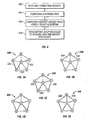
- FIGS. 5A-5E illustrate different topological stages of an exemplary network 500 wherein multiple backup paths may be computed in accordance with the teachings of the present invention depending on link disjointedness and/or node disjointedness.
- Network 500 comprises five nodes, A through F, wherein an exemplary working path from Node A to Node F is identified as Path ⁇ A,D,C,F ⁇ , denoted by reference numeral 502.
- Path ⁇ A,D,C,F ⁇ denoted by reference numeral 502.
- successive path computations involve network topologies wherein the links that make up previously computed paths are logically removed from the topology.
- a protection path 504 is shown in a dashed line between the source node (Node A) and the destination node (Node F), using links AB and BF. Thereafter, if the requested connection session between nodes A and F warranted more than one backup, another iteration of a protection path computation takes place. As shown in FIG. 5C , links AB and BF are also removed from the network topology for this calculation (i.e., AB and BF links are shown in wavy lines). A second protection path between Node A and Node F is computed, again using any known or heretofore unknown algorithm, after removing all previously calculated links from the topological graph. Reference numeral 506 refers to the exemplary second protection path comprising links AC and CF. Upon removal of these newly calculated links, the network graph results in a topology that will not permit any further paths between the source and destination nodes ( FIG. 5D ).
- a protection path may be calculated within the resulting graph using any technique, e.g., Dijkstra's Shortest Path First (SPF) algorithm.
- SPF Shortest Path First
- Reference numeral 508 refers to an exemplary backup path involving links AB and BF, as illustrated by the dashed line segments.
- a diverse set of backup paths can provide better protection against multiple failure events in the network. For instance, in the example of a working path being protected by two backup paths, the probability of failure is intuitively low, as even after the failure of the working path and one of the protection paths it is still possible to restore the connection between the end nodes.
- a single backup path may also provide protection against multiple failures as long as the failures do not affect the working and protection paths simultaneously. Accordingly, having multiple backup paths advantageously decreases the probability of simultaneous interruption of all backups.
- the overall benefits of multiple backup paths are clearly related to spatial and temporal distributions of the failures as well as the selected methodology for computing backup paths.
- FIG. 6 is a flow chart of an embodiment of a method of the present invention for computing multiple backup paths where the links are completely disjoint.
- a network topology is acquired (step 602), wherein all links in the network topology may be attributed the same cost.
- a working path is computed pursuant to a connection request between a pair of end-to-end (ETE) nodes, i.e., the source and destination nodes (step 604).
- ETE end-to-end
- any known or heretofore unknown routing technique may be employed that optimizes a suitable metric (e.g., hop count, path distance, et cetera).
- Working path links are then logically removed from the network topology (step 606) so as to ensure that they are not reused for subsequent paths.
- One or more backup paths between the ETE nodes may then be calculated in a similar fashion until the requisite number of paths are computed or the resultant topology does not sustain any more backups (step 608).
- FIG. 7 is a flow chart of an embodiment of a method of the present invention for computing multiple backup paths where the links and nodes are completely disjoint. Similar to the process set forth above, a network topology is acquired first by an ingress node of an ETE pair (step 702). Again, all links in the network topology may be attributed the same cost using an appropriate metric. A working path is computed thereafter pursuant to a connection request between the ingress and egress nodes of the ETE pair (step 704).
- step 720 If no additional ETE pairs are to be evaluated as well (decision block 710), the process flow then stops (step 720). Otherwise, operations similar to those described above are carried out (steps 712, 714, 716 and 718) to compute multiple backup paths that are completely link-disjoint as well as node-disjoint. The process flow may continue until no more ETE pairs are left.
- Subsequent multiple backup paths are computed thereafter by successively updating the link penalty costs after each backup path calculation (step 808).
- the methodology attempts to avoid the links that have already been used in a working path connection or a backup connection.
- the backup paths therefore, are the destination paths calculated with the new metric that is cost-aware for each iterative step. These steps may be repeated until the number of backup paths requested is reached or when the network topology no longer sustains any additional backup paths between the ETE node pair (decision block 810). If additional ETE node pairs are available that require path computations, the working path and backup paths may be computed by utilizing the process flow set forth above, wherein link penalty costs are properly taken into account for each pair and each path computation (step 812).
- both links as well as nodes may be treated as partially disjoint.
- network resources may be constrained enough that at least certain level of optimization is necessary with respect to the shared resources.
- another cost parameter (avoidance cost, C 2 ) can be introduced that quantifies the penalties associated with not sharing a link or node in the network.
- FIG. 9 is a flow chart of an embodiment of a method of the present invention for computing multiple backup paths where the links and/or nodes are partially disjoint and avoidance costs are also included.
- prior-use penalty costs (C 1 ) as well as sharing avoidance costs (C 2 ) associated with the network resources are initialized (step 904) upon acquiring the network's topology (step 902) pursuant to a connection request.
- a working path is then computed for the ingress and egress node pair associated with the connection request (step 906).
- subsequent multiple backup paths are computed by successively updating one or both costs after each backup path calculation (step 908).
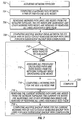
- a network quality manager is operable to monitor the quality of network components, e.g., nodes, links, et cetera (step 1002).
- Each component may be given a quality rating.
- a link could be given a rating with respect to an appropriate quality variable that is parameterized between 1 and 10. If the signal quality through that link is degraded or otherwise affected, or if the quality parameter is below a certain threshold, that condition exemplifies a "degradation event" in the network.
- a timer may be started with a duration in the order of a minute and all the subsequent degradations occurring on other links during the same time window may be used for defining a Shared Risk Link Group (SRLG).
- SRLG Shared Risk Link Group
- links that exhibit simultaneous degradation are more likely to fail at about the same time; which can help in early detection of multiple failures.
- two links belonging to the same SRLG are not used for the same lightpath connection (i.e., spatial diversification).
- the present invention advantageously provides a scheme for implementing shared protection under a scenario of multiple failures in an optical network. It is believed that the operation and construction of the present invention will be apparent from the foregoing Detailed Description. While the exemplary embodiments of the invention shown and described have been characterized as being preferred, it should be readily understood that various changes and modifications could be made therein without departing from the scope of the present invention as set forth in the following claims.
Landscapes
- Engineering & Computer Science (AREA)
- Computer Networks & Wireless Communication (AREA)
- Signal Processing (AREA)
- Data Exchanges In Wide-Area Networks (AREA)
Claims (15)
- Verfahren zum Bereitstelfen von Schutz in einem Kommunikationsnetzwerk, das eine Vielzahl von Knoten (102A, 102B) umfasst, die mittels Kommunikationsverbindungen (104) verkoppelt sind, umfassend:Berechnen (404) eines Arbeitspfades zwischen einem Zugangsknoten und einem Ausgangsknoten als Reaktion auf eine Verbindungsanfrage, die vom besagten Zugangsknoten empfangen wird; Überwachen (1002) einer Qualität der Knoten und der Kommunikationsverbindungen; Erkennen (1004) eines ersten Vorkomrnens eines Qualitätsverschiechterungsereignisses bei einem der Knoten oder einer der Kommunikationsverbindungen; als Reaktion auf das Erkennen (1004) des ersten Qualitätsverschlechterungsereignisses, das Überwachen (1006) von mindestens einem aus einer zeitlichen oder räumlichen Korrelation von weiteren Qualitätsverschlechterungsereignissen in Bezug auf das erkannte erste Qualitätsverschlechterungsereignis, um fähig zu sein, ein weiteres Qualitätsverschlechterungsereignis bei einem anderen der Knoten oder einer anderen der Kommunikationsverbindungen zu erkennen; und als Reaktion auf das Erkennen des weiteren Qualitätsverschlechterungsereignisses, das Berechnen (1008) einer Vielzahl von Sicherungspfaden zwischen den besagten Zugangs- und Ausgangsknoten, wobei höchstens einer der Knoten und/oder eine der Kornmunikationsverbindungen in Verbindung mit dem ersten oder weiteren Qualitätsverschlechterungsereignis in einem gleichen Sicherungspfad verwendet wird, wobei jeder der besagten Sicherungspfade aktivierbar ist nach einem Fehlerzustand in Verbindung mit mindestens einem des besagten Arbeitspfades und einem der besagten Sicherungspfade; und Übertragen von Nachrichten an Knoten, die den besagten Arbeitspfad und die besagten Sicherungspfade aufspannen, um den besagten Arbeitspfad und die besagten Sicherungspfade einzurichten.
- Verfahren zum Bereitstellen von Schutz in einem Kommunikationsnetzwerk, das eine Vielzahl von Knoten umfasst, die mittels Kommunikationsverbindungen verkoppelt sind, nach Anspruch 1, wobei der besagte Arbeitspfad zwischen dem besagten Zugangsknoten und dem besagten Ausgangsknoten basierend auf einem Shortest-Path-First (SPF)-Algorithmus berechnet wird.
- Verfahren zum Bereitstellen von Schutz in einem Kommunikationsnetzwerk, das eine Vielzahl von Knoten urnfasst, die mittels Kommunikationsverbindungen verkoppelt sind, nach Anspruch 1, wobei die besagten Sicherungspfade rekursiv berechnet werden, bis eine vorausbestimmte Anzahl von Sicherungspfaden in Bezug auf den besagten Arbeitspfad erreicht ist.
- Verfahren zum Bereitstellen von Schutz in einem Kommunikationsnetzwerk, das eine Vielzahl von Knoten umfasst, die mittels Kommunikationsverbindungen verkoppelt sind, nach Anspruch 1, wobei die besagten Sicherungspfade Pfade umfassen, die vollkommen verbindungsdisjunkt zueinander sind.
- Verfahren zum Bereitstellen von Schutz in einem Kommunikationsnetzwerk, das eine Vielzahl von Knoten umfasst, die mittels Kommunikationsverbindungen verkoppelt sind, nach Anspruch 1, wobei die besagten Sicherungspfade Pfade umfassen, die teilweise verbindungsdisjunkt zueinander sind.
- Verfahren nach Anspruch 1, wobei der besagte Schritt des Überwachens (1002) einer Qualität der Knoten und der Kommunikationsverbindungen mittels einer zentralen Entität (106) oder einer verteilten Entität ausgeführt wird.
- Verfahren nach Anspruch 1, wobei an jede überwachte Netzwerkkomponente eine Qualitätsbewertung in Bezug auf eine Qualitätsvariabie vergeben wird, und wobei ein Qualitätsverschlechterungsereignis erkannt wird, wenn die Qualitätsbewertung unter einem Grenzwert liegt.
- Netzwerkelement, das als Zugangsknoten in einem optischen Netzwerk angeordnet ist, das von einer Vielzahl von Knoten (102A, 102B) gebildet wird, die über optische Kommunikationsverbindungen (104) miteinander verkoppelt sind, wobei der besagte Zugangsknoten ein prozessorzugängliches Medium mit einer Vielzahl von Befehlen zur Ausführung von Netzwerkvorgängen aufweist, umfassend: Befehle zum Berechnen (404) eines Arbeitspfades zwischen dem besagten Zugangsknoten und einem Ausgangsknoten, wobei die besagten Befehle zum Berechnen des besagten Arbeitspfades als Reaktion auf eine Verbindungsanfrage wirken, die vom besagten Zugangsknoten empfangen wird; Befehle zum Überwachen (1002) einer Qualität der Knoten und der Kommunikationsverbindungen; Befehle zum Erkennen (1004) eines ersten Vorkommens eines Qualitätsverschlechterungsereignisses bei einem der Knoten oder einer der Kommunikationsverbindungen; Befehle zum Überwachen (1006) von mindestens einem aus einer zeitlichen oder räumlichen Korrelation von weiteren Qualitätsverschlechterungsereignissen in Bezug auf das erkannte erste Qualitätsverschlechterungsereignis, um fähig zu sein, ein weiteres Quaütätsverschlechierungsereignis bei einem anderen der Knoten oder einer anderen der Kornmunikationsverbindungen zu erkennen, wobei die besagten Befehle zum Überwachen (1006) von dem besagten mindestens einen aus einer zeitlichen oder räumlichen Korrelation wirken, als Reaktion auf ein Erkennen (1004) des ersten Qualitätsverschlechterungsereignisses; und Befehle zum Berechnen (1008) einer Vielzahl von Sicherungspfaden zwischen den besagten Zugangs- und Ausgangsknoten, wobei die besagten Befehle zum Berechnen (1008) der besagten Vielzahl von Sicherungspfaden wirken, als Reaktion auf ein Erkennen des weiteren Qualitätsverschlechterungsereignisses, wobei höchstens einer der Knoten und/oder eine der Kommunikationsverbindungen in Verbindung mit dem ersten oder weiteren Qualitätsverschlechterungsereignis in einem gleichen Sicherungspfad verwendet wird, wobei jeder der besagten Sicherungspfade aktivierbar ist nach einem Fehlerzustand in Verbindung mit mindestens einem des besagten Arbeitspfades und einem der besagten Sicherungspfade; und Befehle zum Übertragen von Nachrichten an Knoten, die den besagten Arbeitspfad und die besagten Sicherungspfade aufspannen, um den besagten Arbeitspfad und die besagten Sicherungspfade einzurichten.
- Netzwerkelement nach Anspruch 8, wobei die besagten Befehle zum Berechnen des besagten Arbeitspfades Befehle zum Bestimmen eines Arbeitspfades zwischen dem besagten Zugangsknoten und dem besagten Ausgangsknoten basierend auf einem Shortest-Path-First-Algorithmus umfassen.
- Netzwerkelement nach Anspruch 8, wobei die besagten Befehle zum Berechnen der besagten Sicherungspfade Befehle umfassen, die betriebsfähig sind, um mehrere Sicherungspfade unter Verwendung einer Methodik zu bestimmen, bei der die besagten Sicherungspfade vollkommen verbindungsdisjunkt zueinander sind.
- Netzwerkelement nach Anspruch 8, wobei die besagten Befehle zum Berechnen der besagten Sicherungspfade Befehle umfassen, die betriebsfähig sind, um mehrere Sicherungspfade unter Verwendung einer Methodik zu bestimmen, bei der die besagten Sicherungspfade vollkommen knotendisjunkt zueinander sind, außer für die besagten Zugangs- und Ausgangsknoten.
- Netzwerkelement nach Anspruch 8, wobei die besagten Befehle zum Berechnen der besagten Sicherungspfaden Befehle umfassen, die betriebsfähig sind, um mehrere Sicherungspfade unter Verwendung einer Methodik zu bestimmen, bei der die besagten Sicherungspfade teilweise knotendisjunkt zueinander sind, außer für die besagten Zugangs- und Ausgangsknoten.
- Netzwerkelement nach Anspruch 8, wobei die besagten Befehle zum Berechnen der besagten Sicherungspfade Befehle umfassen, die betriebsfähig sind, um mehrere Sicherungspfade unter Verwendung einer Methodik zu bestimmen, bei der die besagten Sicherungspfade teilweise verbindungsdisjunkt zueinander sind.
- Netzwerkelement nach Anspruch 8, wobei die besagten Befehle zum Berechnen der besagten Sicherungspfade und des besagten Arbeitspfades Befehle umfassen, die betriebsfähig sind, um Pfade basierend auf einem Kostenparameter in Verbindung mit den besagten Kommunikationsverbindungen zu berechnen, wobei der besagte Kostenparameter wirkt, um Kommunikationsverbindungen zu bestrafen, die das Teilen von Pfaden nicht gestatten.
- Netzwerkelement nach Anspruch 8, wobei die besagten Befehle zum Berechnen der besagten Sicherungspfade und des besagten Arbeitspfades Befehle umfassen, die betriebsfähig sind, um Pfade basierend auf einem Vorbenutzungs-Kostenparameter in Verbindung mit den besagten Kommunikationsverbindungen zu berechnen, wobei der besagte Vorbenutzungs-Kostenparameter wirkt, um Kommunikationsverbindungen zu bestrafen, die bereits benutzt werden.
Applications Claiming Priority (2)
| Application Number | Priority Date | Filing Date | Title |
|---|---|---|---|
| US10/426,145 US7352703B2 (en) | 2003-04-29 | 2003-04-29 | Protection scheme for a communications network under multiple failures |
| EP04007912A EP1473887A3 (de) | 2003-04-29 | 2004-04-01 | Fehlerschutzverfahren für ein Kommunikationsnetzwerk mit mehrfachen Fehlern |
Related Parent Applications (2)
| Application Number | Title | Priority Date | Filing Date |
|---|---|---|---|
| EP04007912.1 Division | 2004-04-01 | ||
| EP04007912A Division EP1473887A3 (de) | 2003-04-29 | 2004-04-01 | Fehlerschutzverfahren für ein Kommunikationsnetzwerk mit mehrfachen Fehlern |
Publications (3)
| Publication Number | Publication Date |
|---|---|
| EP2365668A2 EP2365668A2 (de) | 2011-09-14 |
| EP2365668A3 EP2365668A3 (de) | 2012-02-08 |
| EP2365668B1 true EP2365668B1 (de) | 2015-09-02 |
Family
ID=32990391
Family Applications (2)
| Application Number | Title | Priority Date | Filing Date |
|---|---|---|---|
| EP04007912A Withdrawn EP1473887A3 (de) | 2003-04-29 | 2004-04-01 | Fehlerschutzverfahren für ein Kommunikationsnetzwerk mit mehrfachen Fehlern |
| EP11169532.6A Expired - Lifetime EP2365668B1 (de) | 2003-04-29 | 2004-04-01 | Fehlerschutzverfahren für ein Kommunikationsnetzwerk mit mehrfachen Fehlern |
Family Applications Before (1)
| Application Number | Title | Priority Date | Filing Date |
|---|---|---|---|
| EP04007912A Withdrawn EP1473887A3 (de) | 2003-04-29 | 2004-04-01 | Fehlerschutzverfahren für ein Kommunikationsnetzwerk mit mehrfachen Fehlern |
Country Status (2)
| Country | Link |
|---|---|
| US (1) | US7352703B2 (de) |
| EP (2) | EP1473887A3 (de) |
Families Citing this family (63)
| Publication number | Priority date | Publication date | Assignee | Title |
|---|---|---|---|---|
| US7113481B2 (en) * | 2001-10-10 | 2006-09-26 | Alcatel | Informed dynamic path protection for optical networks |
| ITMI20022170A1 (it) * | 2002-10-14 | 2004-04-15 | Marconi Comm Spa | Sistema di telecomunicazioni |
| US7911937B1 (en) * | 2003-05-30 | 2011-03-22 | Sprint Communications Company L.P. | Communication network architecture with diverse-distributed trunking and controlled protection schemes |
| US20050008014A1 (en) * | 2003-07-07 | 2005-01-13 | Debasis Mitra | Techniques for network traffic engineering |
| US20070195701A1 (en) * | 2003-09-03 | 2007-08-23 | Michael Menth | Simple And Resource-Efficient Resilient Network Systems |
| US8099481B2 (en) * | 2003-12-16 | 2012-01-17 | Alcatel Lucent | System and method for resolving hubs and like devices in network topology |
| US7801857B2 (en) * | 2003-12-19 | 2010-09-21 | Solace Systems, Inc. | Implicit routing in content based networks |
| US7403473B1 (en) * | 2003-12-29 | 2008-07-22 | Nortel Networks Limited | Method and apparatus for accelerated protection switching in a multi-switch network element |
| US7564780B2 (en) * | 2004-01-15 | 2009-07-21 | Fujitsu Limited | Time constrained failure recovery in communication networks |
| US7697455B2 (en) * | 2004-02-17 | 2010-04-13 | Dynamic Method Enterprises Limited | Multiple redundancy schemes in an optical network |
| US7627243B2 (en) * | 2004-02-17 | 2009-12-01 | Dynamic Method Enterprises Limited | Methods and apparatuses for handling multiple failures in an optical network |
| US7620033B2 (en) * | 2004-05-21 | 2009-11-17 | Alcatel-Lucent Usa Inc. | Method for optimal path selection in traversal of packets through network address translators |
| US7561534B2 (en) * | 2004-06-30 | 2009-07-14 | Alcatel-Lucent Usa Inc. | Methods of network routing having improved resistance to faults affecting groups of links subject to common risks |
| US7990846B2 (en) * | 2004-12-30 | 2011-08-02 | Alcatel-Lucent Usa Inc. | Method and apparatus for provisioning a hop limited protection pathway in a network |
| CN100352223C (zh) | 2004-12-31 | 2007-11-28 | 华为技术有限公司 | 一种在城域传输网络中保护数据业务的方法 |
| US7623461B2 (en) * | 2005-02-09 | 2009-11-24 | Cisco Technology, Inc. | Trigger for packing path computation requests |
| US9497109B2 (en) * | 2005-02-11 | 2016-11-15 | Hewlett Packard Enterprise Development Lp | Switching mesh with user-configurable paths |
| US7535828B2 (en) * | 2005-03-18 | 2009-05-19 | Cisco Technology, Inc. | Algorithm for backup PE selection |
| CN100454830C (zh) | 2005-05-20 | 2009-01-21 | 华为技术有限公司 | 网络域中实现路径计算的方法 |
| CN101218794B (zh) | 2005-06-22 | 2013-03-27 | 艾利森电话股份有限公司 | 采用链路交互的路由成本确定和选择的方法及装置 |
| CN100369419C (zh) * | 2005-07-14 | 2008-02-13 | 广东省电信有限公司研究院 | 自动交换光网络中连接的增强型主备保护的实现方法 |
| CN100403734C (zh) * | 2005-11-02 | 2008-07-16 | 华为技术有限公司 | 一种业务流保护方法 |
| US8644137B2 (en) * | 2006-02-13 | 2014-02-04 | Cisco Technology, Inc. | Method and system for providing safe dynamic link redundancy in a data network |
| US8254263B2 (en) * | 2006-04-25 | 2012-08-28 | Rockstar Bidco, LP | Method and apparatus for simplifying the computation of alternate network paths |
| US20100238813A1 (en) | 2006-06-29 | 2010-09-23 | Nortel Networks Limited | Q-in-Q Ethernet rings |
| US8050560B2 (en) * | 2006-12-01 | 2011-11-01 | Electronics & Telecommunications Research Institute | Distributed resource sharing method using weighted sub-domain in GMPLS network |
| US8184971B2 (en) * | 2007-12-19 | 2012-05-22 | Cisco Technology, Inc. | Optimization mechanism for use with an optical control plane in a DWDM network |
| US7889666B1 (en) * | 2007-12-26 | 2011-02-15 | At&T Intellectual Property Ii, L.P. | Scalable and robust troubleshooting framework for VPN backbones |
| US7801024B2 (en) * | 2008-02-12 | 2010-09-21 | At&T Intellectual Property Ii, L.P. | Restoring aggregated circuits with circuit integrity checks in a hierarchical network |
| CN101646105B (zh) | 2008-08-07 | 2013-08-07 | 华为技术有限公司 | 业务恢复的方法、系统和设备 |
| JP5095823B2 (ja) | 2008-08-11 | 2012-12-12 | 株式会社日立製作所 | トランスポート制御サーバ、ネットワークシステム及びトランスポート制御方法 |
| US7974213B2 (en) * | 2008-11-21 | 2011-07-05 | At&T Intellectual Property I, L.P. | Methods and apparatus to select composite link cost-out thresholds |
| US20110134768A1 (en) * | 2009-12-08 | 2011-06-09 | At&T Intellectual Property I, L.P. | Network analysis using network event data |
| EP2337279B1 (de) | 2009-12-18 | 2013-02-20 | Alcatel Lucent | Verfahren zum Schutz einer Datenübertragung durch ein Netz |
| CN102143065B (zh) * | 2011-02-09 | 2014-02-19 | 华为技术有限公司 | 一种故障保护方法及设备 |
| US8842544B2 (en) * | 2011-02-17 | 2014-09-23 | Verizon Patent And Licensing Inc. | Trap-free shortest link-and-shared risk link group-disjoint paths |
| US8842543B2 (en) | 2011-02-17 | 2014-09-23 | Verizon Patent And Licensing Inc. | Trap-free shortest link-disjoint paths |
| US9001648B2 (en) * | 2011-03-29 | 2015-04-07 | Futurewei Technologies, Inc. | Apparatus and method for spare capacity allocation on dual link failures |
| EP2541416B1 (de) * | 2011-06-27 | 2019-07-24 | Alcatel Lucent | Schutz gegen einen Ausfall in einem Computernetzwerk |
| WO2013044967A1 (en) * | 2011-09-29 | 2013-04-04 | Telefonaktiebolaget L M Ericsson (Publ) | Adding new alternative paths for restoration in wson network |
| US8995827B2 (en) * | 2012-12-17 | 2015-03-31 | Futurewei Technologies, Inc. | System and method for finding partially disjoint paths for spare capacity allocation in shared backup path protection for dual fiber cuts |
| KR102126222B1 (ko) * | 2013-02-01 | 2020-06-24 | 한국전자통신연구원 | 연동 보호 절체 방법 및 장치 |
| US20140219080A1 (en) * | 2013-02-01 | 2014-08-07 | Electronics And Telecommunications Research Institute | Method and apparatus for interworking protection switching |
| US9473364B2 (en) * | 2014-01-06 | 2016-10-18 | Cisco Technology, Inc. | Learning machine-based granular segment/path characteristic probing technique |
| EP3082306A4 (de) * | 2014-01-07 | 2016-11-23 | Huawei Tech Co Ltd | Re-routing-verfahren und -system und netzwerkvorrichtung |
| EP3035572B1 (de) * | 2014-12-16 | 2019-01-30 | Alcatel Lucent | Verfahren und system zur bereitstellung von kanalschutz in optischen netzwerken |
| US10454877B2 (en) | 2016-04-29 | 2019-10-22 | Cisco Technology, Inc. | Interoperability between data plane learning endpoints and control plane learning endpoints in overlay networks |
| US10091070B2 (en) | 2016-06-01 | 2018-10-02 | Cisco Technology, Inc. | System and method of using a machine learning algorithm to meet SLA requirements |
| US10963813B2 (en) | 2017-04-28 | 2021-03-30 | Cisco Technology, Inc. | Data sovereignty compliant machine learning |
| JP2018201129A (ja) * | 2017-05-26 | 2018-12-20 | 富士通株式会社 | システム管理装置、システム管理方法及びプログラム |
| US10477148B2 (en) | 2017-06-23 | 2019-11-12 | Cisco Technology, Inc. | Speaker anticipation |
| US10608901B2 (en) | 2017-07-12 | 2020-03-31 | Cisco Technology, Inc. | System and method for applying machine learning algorithms to compute health scores for workload scheduling |
| US10091348B1 (en) | 2017-07-25 | 2018-10-02 | Cisco Technology, Inc. | Predictive model for voice/video over IP calls |
| US11411860B2 (en) * | 2017-08-31 | 2022-08-09 | Oracle International Corporation | System and method for on-demand unicast forwarding in a high performance computing environment |
| US10992538B2 (en) | 2017-08-31 | 2021-04-27 | Oracle International Corporation | System and method for using InfiniBand routing algorithms for ethernet fabrics in a high performance computing environment |
| US10432342B1 (en) | 2018-04-18 | 2019-10-01 | At&T Intellectual Property I, L.P. | Routing and regenerator planning in a carrier's core reconfigurable optical network |
| US10867067B2 (en) | 2018-06-07 | 2020-12-15 | Cisco Technology, Inc. | Hybrid cognitive system for AI/ML data privacy |
| US10446170B1 (en) | 2018-06-19 | 2019-10-15 | Cisco Technology, Inc. | Noise mitigation using machine learning |
| CN110858820A (zh) * | 2018-08-22 | 2020-03-03 | 中兴通讯股份有限公司 | 业务运行方法、装置、存储介质及电子装置 |
| CN111257700B (zh) * | 2020-03-31 | 2020-10-30 | 国网江苏省电力有限公司无锡供电分公司 | 一种基于边缘计算的配电网单相接地故障定位装置及方法 |
| US11652738B2 (en) * | 2021-01-08 | 2023-05-16 | Verizon Patent And Licensing Inc. | Systems and methods for utilizing segment routing over an internet protocol data plane for latency metrics reduction |
| CN113391161B (zh) * | 2021-05-18 | 2022-07-26 | 国网浙江省电力有限公司兰溪市供电公司 | 基于故障指示器的配电线路故障点定位方法及系统 |
| CN114125894A (zh) * | 2021-10-29 | 2022-03-01 | 漳州科华电气技术有限公司 | 数据传输方法及装置 |
Family Cites Families (13)
| Publication number | Priority date | Publication date | Assignee | Title |
|---|---|---|---|---|
| US5093824A (en) | 1990-03-27 | 1992-03-03 | Bell Communications Research, Inc. | Distributed protocol for improving the survivability of telecommunications trunk networks |
| US5182744A (en) * | 1991-01-03 | 1993-01-26 | At&T Bell Laboratories | Telecommunications network restoration architecture |
| US5179548A (en) | 1991-06-27 | 1993-01-12 | Bell Communications Research, Inc. | Self-healing bidirectional logical-ring network using crossconnects |
| US5889610A (en) | 1996-12-31 | 1999-03-30 | Lucent Technologies Inc. | Optical protection switching system |
| US5986783A (en) | 1997-02-10 | 1999-11-16 | Optical Networks, Inc. | Method and apparatus for operation, protection, and restoration of heterogeneous optical communication networks |
| US6633544B1 (en) * | 1998-06-24 | 2003-10-14 | At&T Corp. | Efficient precomputation of quality-of-service routes |
| US6498778B1 (en) * | 1998-12-17 | 2002-12-24 | At&T Corp. | Optimizing restoration capacity |
| US7039009B2 (en) * | 2000-01-28 | 2006-05-02 | At&T Corp. | Control of optical connections in an optical network |
| US6982951B2 (en) * | 2000-12-21 | 2006-01-03 | At&T Corp. | Method for selecting a restoration path in a mesh network |
| US6850705B2 (en) * | 2001-03-17 | 2005-02-01 | Fujitsu Limited | Online distributed path routing method and system |
| JP4145025B2 (ja) * | 2001-05-17 | 2008-09-03 | 富士通株式会社 | 予備パスの設定方法および装置 |
| US7187652B2 (en) * | 2001-12-26 | 2007-03-06 | Tropic Networks Inc. | Multi-constraint routing system and method |
| US7295510B2 (en) * | 2002-12-17 | 2007-11-13 | At&T Corporation | Method of estimating restoration capacity in a network |
-
2003
- 2003-04-29 US US10/426,145 patent/US7352703B2/en not_active Expired - Fee Related
-
2004
- 2004-04-01 EP EP04007912A patent/EP1473887A3/de not_active Withdrawn
- 2004-04-01 EP EP11169532.6A patent/EP2365668B1/de not_active Expired - Lifetime
Also Published As
| Publication number | Publication date |
|---|---|
| EP2365668A2 (de) | 2011-09-14 |
| US7352703B2 (en) | 2008-04-01 |
| EP1473887A2 (de) | 2004-11-03 |
| EP1473887A3 (de) | 2008-11-05 |
| EP2365668A3 (de) | 2012-02-08 |
| US20040218525A1 (en) | 2004-11-04 |
Similar Documents
| Publication | Publication Date | Title |
|---|---|---|
| EP2365668B1 (de) | Fehlerschutzverfahren für ein Kommunikationsnetzwerk mit mehrfachen Fehlern | |
| Zhu et al. | On-line approaches for provisioning connections of different bandwidth granularities in WDM mesh networks | |
| Zhang et al. | Availability-aware provisioning strategies for differentiated protection services in wavelength-convertible WDM mesh networks | |
| US6763190B2 (en) | Network auto-provisioning and distributed restoration | |
| US9525479B2 (en) | Apparatus and method for optimizing the reconfiguration of an optical network | |
| US20050237950A1 (en) | System, method and apparatus for dynamic path protection in networks | |
| US8718039B2 (en) | Signaling protocol for multi-domain optical networks | |
| US20030018812A1 (en) | Method and apparatus for provisioning working paths in shared protection mesh network | |
| US8184971B2 (en) | Optimization mechanism for use with an optical control plane in a DWDM network | |
| US7983558B1 (en) | Optical control plane determination of lightpaths in a DWDM network | |
| Ou et al. | Traffic grooming for survivable WDM networks: dedicated protection | |
| Li et al. | Fiber span failure protection in mesh optical networks | |
| Labourdette et al. | Fast approximate dimensioning and performance analysis of mesh optical networks | |
| CA2440515A1 (en) | Constraint based routing with non-transitive exceptions | |
| Huang et al. | A generalized protection framework using a new link-State availability model for reliable optical networks | |
| Wosinska et al. | Network resilience in future optical networks | |
| Carrozzo et al. | A pre-planned local repair restoration strategy for failure handling in optical transport networks | |
| Huang et al. | A new link-state availability model for reliable protection in optical WDM networks | |
| Jamhour et al. | A reversible CTMC model for availability analysis of shared mesh restoration schemes for WDM networks | |
| Doumith et al. | Double-link failure localization based on the monitoring trail concept in WDM networks | |
| Zhou et al. | Survivable alternate routing for WDM networks | |
| Lohani et al. | Resilience-Aware Dynamic Routing and Resource Assignment in WDM Over SDM and WDM Over WBDM Optical Networks | |
| Rejeb et al. | Fault management in transparent optical networks | |
| Huang et al. | A new protection model to provide availability-guaranteed service for reliable optical WDM networks | |
| Somani | Tradeoffs and comparison of restoration strategies in optical WDM networks |
Legal Events
| Date | Code | Title | Description |
|---|---|---|---|
| PUAI | Public reference made under article 153(3) epc to a published international application that has entered the european phase |
Free format text: ORIGINAL CODE: 0009012 |
|
| PUAL | Search report despatched |
Free format text: ORIGINAL CODE: 0009013 |
|
| AC | Divisional application: reference to earlier application |
Ref document number: 1473887 Country of ref document: EP Kind code of ref document: P |
|
| AK | Designated contracting states |
Kind code of ref document: A2 Designated state(s): AT BE BG CH CY CZ DE DK EE ES FI FR GB GR HU IE IT LI LU MC NL PL PT RO SE SI SK TR |
|
| AX | Request for extension of the european patent |
Extension state: AL HR LT LV MK |
|
| PUAF | Information related to the publication of a search report (a3 document) modified or deleted |
Free format text: ORIGINAL CODE: 0009199SEPU |
|
| RIC1 | Information provided on ipc code assigned before grant |
Ipc: H04L 12/56 20060101AFI20110818BHEP |
|
| AK | Designated contracting states |
Kind code of ref document: A3 Designated state(s): AT BE BG CH CY CZ DE DK EE ES FI FR GB GR HU IE IT LI LU MC NL PL PT RO SE SI SK TR |
|
| AX | Request for extension of the european patent |
Extension state: AL HR LT LV MK |
|
| D17D | Deferred search report published (deleted) | ||
| PUAL | Search report despatched |
Free format text: ORIGINAL CODE: 0009013 |
|
| AK | Designated contracting states |
Kind code of ref document: A3 Designated state(s): AT BE BG CH CY CZ DE DK EE ES FI FR GB GR HU IE IT LI LU MC NL PL PT RO SE SI SK TR |
|
| AX | Request for extension of the european patent |
Extension state: AL HR LT LV MK |
|
| RIC1 | Information provided on ipc code assigned before grant |
Ipc: H04L 12/24 20060101ALI20120105BHEP Ipc: H04L 12/56 20060101AFI20120105BHEP |
|
| 17P | Request for examination filed |
Effective date: 20120808 |
|
| 111Z | Information provided on other rights and legal means of execution |
Free format text: AT BE BG CH CY CZ DE DK EE ES FI FR GB GR HU IE IT LI LU MC NL PL PT RO SE SI SK TR Effective date: 20130410 |
|
| RAP1 | Party data changed (applicant data changed or rights of an application transferred) |
Owner name: ALCATEL LUCENT |
|
| D11X | Information provided on other rights and legal means of execution (deleted) | ||
| REG | Reference to a national code |
Ref country code: DE Ref legal event code: R079 Ref document number: 602004047839 Country of ref document: DE Free format text: PREVIOUS MAIN CLASS: H04L0012560000 Ipc: H04L0012240000 |
|
| GRAP | Despatch of communication of intention to grant a patent |
Free format text: ORIGINAL CODE: EPIDOSNIGR1 |
|
| RIC1 | Information provided on ipc code assigned before grant |
Ipc: H04L 12/703 20130101ALI20150309BHEP Ipc: H04L 12/707 20130101ALI20150309BHEP Ipc: H04L 12/24 20060101AFI20150309BHEP |
|
| INTG | Intention to grant announced |
Effective date: 20150331 |
|
| RIN1 | Information on inventor provided before grant (corrected) |
Inventor name: ELIE-DIT-COSAQUE, DAVID Inventor name: ALI, MAHER |
|
| GRAS | Grant fee paid |
Free format text: ORIGINAL CODE: EPIDOSNIGR3 |
|
| GRAA | (expected) grant |
Free format text: ORIGINAL CODE: 0009210 |
|
| AC | Divisional application: reference to earlier application |
Ref document number: 1473887 Country of ref document: EP Kind code of ref document: P |
|
| AK | Designated contracting states |
Kind code of ref document: B1 Designated state(s): AT BE BG CH CY CZ DE DK EE ES FI FR GB GR HU IE IT LI LU MC NL PL PT RO SE SI SK TR |
|
| REG | Reference to a national code |
Ref country code: GB Ref legal event code: FG4D |
|
| REG | Reference to a national code |
Ref country code: AT Ref legal event code: REF Ref document number: 747192 Country of ref document: AT Kind code of ref document: T Effective date: 20150915 Ref country code: CH Ref legal event code: EP |
|
| REG | Reference to a national code |
Ref country code: IE Ref legal event code: FG4D |
|
| REG | Reference to a national code |
Ref country code: DE Ref legal event code: R096 Ref document number: 602004047839 Country of ref document: DE |
|
| REG | Reference to a national code |
Ref country code: AT Ref legal event code: MK05 Ref document number: 747192 Country of ref document: AT Kind code of ref document: T Effective date: 20150902 |
|
| PG25 | Lapsed in a contracting state [announced via postgrant information from national office to epo] |
Ref country code: FI Free format text: LAPSE BECAUSE OF FAILURE TO SUBMIT A TRANSLATION OF THE DESCRIPTION OR TO PAY THE FEE WITHIN THE PRESCRIBED TIME-LIMIT Effective date: 20150902 Ref country code: GR Free format text: LAPSE BECAUSE OF FAILURE TO SUBMIT A TRANSLATION OF THE DESCRIPTION OR TO PAY THE FEE WITHIN THE PRESCRIBED TIME-LIMIT Effective date: 20151203 |
|
| REG | Reference to a national code |
Ref country code: NL Ref legal event code: MP Effective date: 20150902 |
|
| PG25 | Lapsed in a contracting state [announced via postgrant information from national office to epo] |
Ref country code: SE Free format text: LAPSE BECAUSE OF FAILURE TO SUBMIT A TRANSLATION OF THE DESCRIPTION OR TO PAY THE FEE WITHIN THE PRESCRIBED TIME-LIMIT Effective date: 20150902 Ref country code: ES Free format text: LAPSE BECAUSE OF FAILURE TO SUBMIT A TRANSLATION OF THE DESCRIPTION OR TO PAY THE FEE WITHIN THE PRESCRIBED TIME-LIMIT Effective date: 20150902 Ref country code: PL Free format text: LAPSE BECAUSE OF FAILURE TO SUBMIT A TRANSLATION OF THE DESCRIPTION OR TO PAY THE FEE WITHIN THE PRESCRIBED TIME-LIMIT Effective date: 20150902 Ref country code: AT Free format text: LAPSE BECAUSE OF FAILURE TO SUBMIT A TRANSLATION OF THE DESCRIPTION OR TO PAY THE FEE WITHIN THE PRESCRIBED TIME-LIMIT Effective date: 20150902 |
|
| REG | Reference to a national code |
Ref country code: FR Ref legal event code: PLFP Year of fee payment: 13 |
|
| PG25 | Lapsed in a contracting state [announced via postgrant information from national office to epo] |
Ref country code: EE Free format text: LAPSE BECAUSE OF FAILURE TO SUBMIT A TRANSLATION OF THE DESCRIPTION OR TO PAY THE FEE WITHIN THE PRESCRIBED TIME-LIMIT Effective date: 20150902 Ref country code: CZ Free format text: LAPSE BECAUSE OF FAILURE TO SUBMIT A TRANSLATION OF THE DESCRIPTION OR TO PAY THE FEE WITHIN THE PRESCRIBED TIME-LIMIT Effective date: 20150902 Ref country code: NL Free format text: LAPSE BECAUSE OF FAILURE TO SUBMIT A TRANSLATION OF THE DESCRIPTION OR TO PAY THE FEE WITHIN THE PRESCRIBED TIME-LIMIT Effective date: 20150902 Ref country code: SK Free format text: LAPSE BECAUSE OF FAILURE TO SUBMIT A TRANSLATION OF THE DESCRIPTION OR TO PAY THE FEE WITHIN THE PRESCRIBED TIME-LIMIT Effective date: 20150902 Ref country code: IT Free format text: LAPSE BECAUSE OF FAILURE TO SUBMIT A TRANSLATION OF THE DESCRIPTION OR TO PAY THE FEE WITHIN THE PRESCRIBED TIME-LIMIT Effective date: 20150902 |
|
| PG25 | Lapsed in a contracting state [announced via postgrant information from national office to epo] |
Ref country code: PT Free format text: LAPSE BECAUSE OF FAILURE TO SUBMIT A TRANSLATION OF THE DESCRIPTION OR TO PAY THE FEE WITHIN THE PRESCRIBED TIME-LIMIT Effective date: 20160104 Ref country code: RO Free format text: LAPSE BECAUSE OF FAILURE TO SUBMIT A TRANSLATION OF THE DESCRIPTION OR TO PAY THE FEE WITHIN THE PRESCRIBED TIME-LIMIT Effective date: 20150902 |
|
| REG | Reference to a national code |
Ref country code: DE Ref legal event code: R097 Ref document number: 602004047839 Country of ref document: DE |
|
| PLBE | No opposition filed within time limit |
Free format text: ORIGINAL CODE: 0009261 |
|
| STAA | Information on the status of an ep patent application or granted ep patent |
Free format text: STATUS: NO OPPOSITION FILED WITHIN TIME LIMIT |
|
| 26N | No opposition filed |
Effective date: 20160603 |
|
| PG25 | Lapsed in a contracting state [announced via postgrant information from national office to epo] |
Ref country code: BE Free format text: LAPSE BECAUSE OF NON-PAYMENT OF DUE FEES Effective date: 20160430 Ref country code: DK Free format text: LAPSE BECAUSE OF FAILURE TO SUBMIT A TRANSLATION OF THE DESCRIPTION OR TO PAY THE FEE WITHIN THE PRESCRIBED TIME-LIMIT Effective date: 20150902 Ref country code: SI Free format text: LAPSE BECAUSE OF FAILURE TO SUBMIT A TRANSLATION OF THE DESCRIPTION OR TO PAY THE FEE WITHIN THE PRESCRIBED TIME-LIMIT Effective date: 20150902 |
|
| REG | Reference to a national code |
Ref country code: CH Ref legal event code: PL |
|
| PG25 | Lapsed in a contracting state [announced via postgrant information from national office to epo] |
Ref country code: LU Free format text: LAPSE BECAUSE OF FAILURE TO SUBMIT A TRANSLATION OF THE DESCRIPTION OR TO PAY THE FEE WITHIN THE PRESCRIBED TIME-LIMIT Effective date: 20160401 Ref country code: BE Free format text: LAPSE BECAUSE OF FAILURE TO SUBMIT A TRANSLATION OF THE DESCRIPTION OR TO PAY THE FEE WITHIN THE PRESCRIBED TIME-LIMIT Effective date: 20150902 |
|
| REG | Reference to a national code |
Ref country code: IE Ref legal event code: MM4A |
|
| PG25 | Lapsed in a contracting state [announced via postgrant information from national office to epo] |
Ref country code: LI Free format text: LAPSE BECAUSE OF NON-PAYMENT OF DUE FEES Effective date: 20160430 Ref country code: CH Free format text: LAPSE BECAUSE OF NON-PAYMENT OF DUE FEES Effective date: 20160430 |
|
| REG | Reference to a national code |
Ref country code: FR Ref legal event code: PLFP Year of fee payment: 14 |
|
| PG25 | Lapsed in a contracting state [announced via postgrant information from national office to epo] |
Ref country code: IE Free format text: LAPSE BECAUSE OF NON-PAYMENT OF DUE FEES Effective date: 20160401 |
|
| REG | Reference to a national code |
Ref country code: FR Ref legal event code: PLFP Year of fee payment: 15 |
|
| PG25 | Lapsed in a contracting state [announced via postgrant information from national office to epo] |
Ref country code: HU Free format text: LAPSE BECAUSE OF FAILURE TO SUBMIT A TRANSLATION OF THE DESCRIPTION OR TO PAY THE FEE WITHIN THE PRESCRIBED TIME-LIMIT; INVALID AB INITIO Effective date: 20040401 Ref country code: CY Free format text: LAPSE BECAUSE OF FAILURE TO SUBMIT A TRANSLATION OF THE DESCRIPTION OR TO PAY THE FEE WITHIN THE PRESCRIBED TIME-LIMIT Effective date: 20150902 |
|
| PG25 | Lapsed in a contracting state [announced via postgrant information from national office to epo] |
Ref country code: TR Free format text: LAPSE BECAUSE OF FAILURE TO SUBMIT A TRANSLATION OF THE DESCRIPTION OR TO PAY THE FEE WITHIN THE PRESCRIBED TIME-LIMIT Effective date: 20150902 Ref country code: MC Free format text: LAPSE BECAUSE OF FAILURE TO SUBMIT A TRANSLATION OF THE DESCRIPTION OR TO PAY THE FEE WITHIN THE PRESCRIBED TIME-LIMIT Effective date: 20150902 |
|
| PG25 | Lapsed in a contracting state [announced via postgrant information from national office to epo] |
Ref country code: BG Free format text: LAPSE BECAUSE OF FAILURE TO SUBMIT A TRANSLATION OF THE DESCRIPTION OR TO PAY THE FEE WITHIN THE PRESCRIBED TIME-LIMIT Effective date: 20150902 |
|
| REG | Reference to a national code |
Ref country code: FR Ref legal event code: PLFP Year of fee payment: 17 |
|
| PGFP | Annual fee paid to national office [announced via postgrant information from national office to epo] |
Ref country code: GB Payment date: 20200325 Year of fee payment: 17 |
|
| PGFP | Annual fee paid to national office [announced via postgrant information from national office to epo] |
Ref country code: FR Payment date: 20200312 Year of fee payment: 17 |
|
| PGFP | Annual fee paid to national office [announced via postgrant information from national office to epo] |
Ref country code: DE Payment date: 20200317 Year of fee payment: 17 |
|
| REG | Reference to a national code |
Ref country code: DE Ref legal event code: R119 Ref document number: 602004047839 Country of ref document: DE |
|
| REG | Reference to a national code |
Ref country code: DE Ref legal event code: R079 Ref document number: 602004047839 Country of ref document: DE Free format text: PREVIOUS MAIN CLASS: H04L0012240000 Ipc: H04L0041000000 |
|
| GBPC | Gb: european patent ceased through non-payment of renewal fee |
Effective date: 20210401 |
|
| PG25 | Lapsed in a contracting state [announced via postgrant information from national office to epo] |
Ref country code: GB Free format text: LAPSE BECAUSE OF NON-PAYMENT OF DUE FEES Effective date: 20210401 Ref country code: FR Free format text: LAPSE BECAUSE OF NON-PAYMENT OF DUE FEES Effective date: 20210430 Ref country code: DE Free format text: LAPSE BECAUSE OF NON-PAYMENT OF DUE FEES Effective date: 20211103 |