EP2365009A1 - Radiopaque, non-biodegradable, water-insoluble iodinated benzyl ethers of poly(vinyl alcohol), preparation method thereof, injectable embolizing compositions containing thereof and use thereof - Google Patents
Radiopaque, non-biodegradable, water-insoluble iodinated benzyl ethers of poly(vinyl alcohol), preparation method thereof, injectable embolizing compositions containing thereof and use thereof Download PDFInfo
- Publication number
- EP2365009A1 EP2365009A1 EP10156039A EP10156039A EP2365009A1 EP 2365009 A1 EP2365009 A1 EP 2365009A1 EP 10156039 A EP10156039 A EP 10156039A EP 10156039 A EP10156039 A EP 10156039A EP 2365009 A1 EP2365009 A1 EP 2365009A1
- Authority
- EP
- European Patent Office
- Prior art keywords
- pva
- benzylether
- iodo
- composition
- vinyl alcohol
- Prior art date
- Legal status (The legal status is an assumption and is not a legal conclusion. Google has not performed a legal analysis and makes no representation as to the accuracy of the status listed.)
- Withdrawn
Links
Images


Classifications
-
- C—CHEMISTRY; METALLURGY
- C08—ORGANIC MACROMOLECULAR COMPOUNDS; THEIR PREPARATION OR CHEMICAL WORKING-UP; COMPOSITIONS BASED THEREON
- C08F—MACROMOLECULAR COMPOUNDS OBTAINED BY REACTIONS ONLY INVOLVING CARBON-TO-CARBON UNSATURATED BONDS
- C08F116/00—Homopolymers of compounds having one or more unsaturated aliphatic radicals, each having only one carbon-to-carbon double bond, and at least one being terminated by an alcohol, ether, aldehydo, ketonic, acetal or ketal radical
- C08F116/02—Homopolymers of compounds having one or more unsaturated aliphatic radicals, each having only one carbon-to-carbon double bond, and at least one being terminated by an alcohol, ether, aldehydo, ketonic, acetal or ketal radical by an alcohol radical
- C08F116/04—Acyclic compounds
- C08F116/06—Polyvinyl alcohol ; Vinyl alcohol
-
- A—HUMAN NECESSITIES
- A61—MEDICAL OR VETERINARY SCIENCE; HYGIENE
- A61K—PREPARATIONS FOR MEDICAL, DENTAL OR TOILETRY PURPOSES
- A61K49/00—Preparations for testing in vivo
- A61K49/04—X-ray contrast preparations
- A61K49/0433—X-ray contrast preparations containing an organic halogenated X-ray contrast-enhancing agent
- A61K49/0442—Polymeric X-ray contrast-enhancing agent comprising a halogenated group
-
- A—HUMAN NECESSITIES
- A61—MEDICAL OR VETERINARY SCIENCE; HYGIENE
- A61L—METHODS OR APPARATUS FOR STERILISING MATERIALS OR OBJECTS IN GENERAL; DISINFECTION, STERILISATION OR DEODORISATION OF AIR; CHEMICAL ASPECTS OF BANDAGES, DRESSINGS, ABSORBENT PADS OR SURGICAL ARTICLES; MATERIALS FOR BANDAGES, DRESSINGS, ABSORBENT PADS OR SURGICAL ARTICLES
- A61L24/00—Surgical adhesives or cements; Adhesives for colostomy devices
-
- A—HUMAN NECESSITIES
- A61—MEDICAL OR VETERINARY SCIENCE; HYGIENE
- A61L—METHODS OR APPARATUS FOR STERILISING MATERIALS OR OBJECTS IN GENERAL; DISINFECTION, STERILISATION OR DEODORISATION OF AIR; CHEMICAL ASPECTS OF BANDAGES, DRESSINGS, ABSORBENT PADS OR SURGICAL ARTICLES; MATERIALS FOR BANDAGES, DRESSINGS, ABSORBENT PADS OR SURGICAL ARTICLES
- A61L24/00—Surgical adhesives or cements; Adhesives for colostomy devices
- A61L24/04—Surgical adhesives or cements; Adhesives for colostomy devices containing macromolecular materials
- A61L24/043—Mixtures of macromolecular materials
-
- A—HUMAN NECESSITIES
- A61—MEDICAL OR VETERINARY SCIENCE; HYGIENE
- A61L—METHODS OR APPARATUS FOR STERILISING MATERIALS OR OBJECTS IN GENERAL; DISINFECTION, STERILISATION OR DEODORISATION OF AIR; CHEMICAL ASPECTS OF BANDAGES, DRESSINGS, ABSORBENT PADS OR SURGICAL ARTICLES; MATERIALS FOR BANDAGES, DRESSINGS, ABSORBENT PADS OR SURGICAL ARTICLES
- A61L24/00—Surgical adhesives or cements; Adhesives for colostomy devices
- A61L24/04—Surgical adhesives or cements; Adhesives for colostomy devices containing macromolecular materials
- A61L24/06—Surgical adhesives or cements; Adhesives for colostomy devices containing macromolecular materials obtained by reactions only involving carbon-to-carbon unsaturated bonds
-
- C—CHEMISTRY; METALLURGY
- C08—ORGANIC MACROMOLECULAR COMPOUNDS; THEIR PREPARATION OR CHEMICAL WORKING-UP; COMPOSITIONS BASED THEREON
- C08F—MACROMOLECULAR COMPOUNDS OBTAINED BY REACTIONS ONLY INVOLVING CARBON-TO-CARBON UNSATURATED BONDS
- C08F16/00—Homopolymers and copolymers of compounds having one or more unsaturated aliphatic radicals, each having only one carbon-to-carbon double bond, and at least one being terminated by an alcohol, ether, aldehydo, ketonic, acetal or ketal radical
- C08F16/02—Homopolymers and copolymers of compounds having one or more unsaturated aliphatic radicals, each having only one carbon-to-carbon double bond, and at least one being terminated by an alcohol, ether, aldehydo, ketonic, acetal or ketal radical by an alcohol radical
- C08F16/04—Acyclic compounds
- C08F16/06—Polyvinyl alcohol ; Vinyl alcohol
-
- C—CHEMISTRY; METALLURGY
- C08—ORGANIC MACROMOLECULAR COMPOUNDS; THEIR PREPARATION OR CHEMICAL WORKING-UP; COMPOSITIONS BASED THEREON
- C08F—MACROMOLECULAR COMPOUNDS OBTAINED BY REACTIONS ONLY INVOLVING CARBON-TO-CARBON UNSATURATED BONDS
- C08F8/00—Chemical modification by after-treatment
- C08F8/18—Introducing halogen atoms or halogen-containing groups
-
- C—CHEMISTRY; METALLURGY
- C09—DYES; PAINTS; POLISHES; NATURAL RESINS; ADHESIVES; COMPOSITIONS NOT OTHERWISE PROVIDED FOR; APPLICATIONS OF MATERIALS NOT OTHERWISE PROVIDED FOR
- C09D—COATING COMPOSITIONS, e.g. PAINTS, VARNISHES OR LACQUERS; FILLING PASTES; CHEMICAL PAINT OR INK REMOVERS; INKS; CORRECTING FLUIDS; WOODSTAINS; PASTES OR SOLIDS FOR COLOURING OR PRINTING; USE OF MATERIALS THEREFOR
- C09D129/00—Coating compositions based on homopolymers or copolymers of compounds having one or more unsaturated aliphatic radicals, each having only one carbon-to-carbon double bond, and at least one being terminated by an alcohol, ether, aldehydo, ketonic, acetal, or ketal radical; Coating compositions based on hydrolysed polymers of esters of unsaturated alcohols with saturated carboxylic acids; Coating compositions based on derivatives of such polymers
- C09D129/02—Homopolymers or copolymers of unsaturated alcohols
- C09D129/04—Polyvinyl alcohol; Partially hydrolysed homopolymers or copolymers of esters of unsaturated alcohols with saturated carboxylic acids
-
- A—HUMAN NECESSITIES
- A61—MEDICAL OR VETERINARY SCIENCE; HYGIENE
- A61L—METHODS OR APPARATUS FOR STERILISING MATERIALS OR OBJECTS IN GENERAL; DISINFECTION, STERILISATION OR DEODORISATION OF AIR; CHEMICAL ASPECTS OF BANDAGES, DRESSINGS, ABSORBENT PADS OR SURGICAL ARTICLES; MATERIALS FOR BANDAGES, DRESSINGS, ABSORBENT PADS OR SURGICAL ARTICLES
- A61L2400/00—Materials characterised by their function or physical properties
- A61L2400/06—Flowable or injectable implant compositions
-
- A—HUMAN NECESSITIES
- A61—MEDICAL OR VETERINARY SCIENCE; HYGIENE
- A61L—METHODS OR APPARATUS FOR STERILISING MATERIALS OR OBJECTS IN GENERAL; DISINFECTION, STERILISATION OR DEODORISATION OF AIR; CHEMICAL ASPECTS OF BANDAGES, DRESSINGS, ABSORBENT PADS OR SURGICAL ARTICLES; MATERIALS FOR BANDAGES, DRESSINGS, ABSORBENT PADS OR SURGICAL ARTICLES
- A61L2430/00—Materials or treatment for tissue regeneration
- A61L2430/36—Materials or treatment for tissue regeneration for embolization or occlusion, e.g. vaso-occlusive compositions or devices
Definitions
- the present invention relates to radiopaque, non-biodegradable, water-insoluble iodinated polymers, and more particularly to radiopaque, non-biodegradable, water-insoluble, iodinated benzyl ethers of poly(vinyl alcohol) and their use as embolizing agents, to a process for producing thereof, and to injectable embolizing compositions containing thereof and their use.
- the embolization of a blood vessel is important in preventing/controlling bleeding (e.g., organ bleeding, gastrointestinal bleeding, vascular bleeding, bleeding associated with an aneurysm) or to ablate diseased tissue (e.g., tumors, etc.) by cutting off its blood supply.
- bleeding e.g., organ bleeding, gastrointestinal bleeding, vascular bleeding, bleeding associated with an aneurysm
- ablate diseased tissue e.g., tumors, etc.
- Endovascular embolization of blood vessels is known to be conducted as alternative to surgical interventions for a variety of purposes including the endovascular treatment of tumors, the treatment of lesions such as aneurysms, arteriovenous malformations, arteriovenous fistula, uncontrolled bleeding and the like.
- Endovascular embolization of blood vessels is accomplished via catheter techniques which permit the selective placement of the catheter at the vascular site to be embolized.
- embolizing compositions in the treatment of aneurysms is advantageous since the polymeric materials fill the inside of the aneurysms and solidify in the shape of the aneurysm, therefore the aneurysm will be completely excluded from the blood circulation.
- injectable embolizing compositions containing polymeric materials as embolizing agents may be used for treating tumors by direct puncture.
- the embolizing composition is directly injected into the tumoral tissue or the vascular bed surrounding the tumor via a needle technology.
- Known polymeric materials employed in embolizing compositions include for example those wherein a preformed polymer in situ precipitates from a carrier solution at the vascular site or into the tumor.
- the preformed polymer In embolizing compositions, the preformed polymer must be selected to be capable of rapid precipitation to form a well defined cohesive solid or semi-solid mass, space-filling material upon contact with blood.
- compositions should be sterile, stable, biocompatible, and further highly radiopaque to allow for an efficient imaging using current radiology techniques.
- a number of documents disclose liquid formulations intended for the embolization of blood vessels and containing a water-insoluble, organo-soluble biocompatible preformed polymer dissolved in a biocompatible water-miscible organic solvent, and a solid water-insoluble biocompatible radiopaque contrast agent such as tantalum, tantalum oxide, tungsten, bismuth trioxide and barium sulfate.
- radiopaque embolizing compositions precipitating upon contact with blood, are simple physical mixtures of a preformed polymer dissolved in a water-miscible organic solvent and a conventional radiopaque contrast agent.
- compositions suitable for use in embolizing blood vessels which comprise a cellulose diacetate polymer, a biocompatible solvent such as DMSO and a water insoluble contrast agent such as tantalum, tantalum oxide and barium sulfate.
- compositions suitable for use in embolizing blood vessels which comprises an ethylene vinyl alcohol copolymer, a biocompatible solvent such as DMSO and a water insoluble contrast agent such as tantalum, tantalum oxide and barium sulfate.
- compositions for use in embolizing blood vessels which comprise a biocompatible polymer selected from cellulose acetates, cellulose acetate propionates, cellulose acetate butyrates, ethylene vinyl alcohol copolymers, hydrogels, polyacrylonitrile, polyvinylacetate, nitrocellulose, copolymers of urethane/carbonate, copolymers of styrene/maleic acid and mixtures thereof, a biocompatible solvent such as DMSO, ethanol and acetone, and a contrast agent such as tantalum, tantalum oxide, tungsten and barium sulfate.
- a biocompatible polymer selected from cellulose acetates, cellulose acetate propionates, cellulose acetate butyrates, ethylene vinyl alcohol copolymers, hydrogels, polyacrylonitrile, polyvinylacetate, nitrocellulose, copolymers of urethane/carbonate, copolymers of styrene/maleic acid and mixtures thereof,
- the radiopaque contrast agent is suspended in the polymer solution, so that these embolizing compositions are heterogeneous dispersions.
- ONYXTM a mixture of ethylene-vinyl alcohol copolymer (EVOH) dissolved in dimethylsulfoxide (DMSO), with micronized tantalum powder in the liquid polymer/DMSO mixture to provide fluoroscopic visualization.
- DMSO dimethylsulfoxide
- ONYXTM is delivered through a microcatheter to the target lesion under fluoroscopic control.
- DMSO dimethyl methacrylate
- ONYXTM is available in a range of liquid viscosities intended to have delivery and precipitation characteristics optimized for the type of lesion being treated.
- radiopaque contrast agent since the radiopaque contrast agent is suspended in the polymer solution, homogeneous radiopacity may not be ensured with respect to possible sedimentation during embolization.
- the radiopaque contrast agent also limits non-invasive follow-up imaging by CT scanning because of beam-hardening artifacts. Furthermore, the entrapment of the metallic radiopaque contrast agent is not ensured so that phase separation may occur.
- the radiopaque contrast agent does not reflect the position of the polymer and implant visibility may change during radiological imaging follow-up studies. Released metallic radiopaque contrast agents are potentially toxic.
- I-PVA iodinated poly(vinyl alcohol)
- I-PVA lacks stability with respect to hydrolysis, and when used as embolizing agent, undergoes partial degradation leading to potentially toxic degradation products in the body over time.
- embolic mass is expected to stand for a long duration, sustainable attachment of the iodinated markers is required.
- the present inventors have focused their research on the need to provide a new iodinated poly(vinyl alcohol) which has an improved stability, and have surprisingly found a new iodinated poly(vinyl alcohol) which has not only an improved stability with respect to hydrolysis, but which is also expected to provide liquid embolizing compositions having higher concentration of embolizing agent, and therefore lower volume of organic solvent due to its unexpected low viscosity in solution, and have thus achieved the present invention.
- the present invention provides a radiopaque, non-biodegradable, water-insoluble iodinated benzyl ether of poly(vinyl alcohol) (iodo-benzylether-PVA) consisting of a poly(vinyl alcohol) having covalently grafted thereon iodinated benzyl groups comprising 1 - 4 iodine atoms per benzyl group.
- poly(vinyl alcohol) iodo-benzylether-PVA
- the present invention provides a process for preparing the iodo-benzylether-PVA of the present invention, said process comprising reacting a 0 - 100 % hydrolyzed poly(vinyl alcohol) as a starting PVA with a iodinated benzyl derivative comprising 1 - 4 iodine atoms per benzyl group in a polar aprotic solvent in the presence of a base in anhydrous conditions.
- the present invention provides a use of the iodo-benzylether-PVA of the present invention as an embolic agent in an injectable embolizing composition.
- the present invention provides an injectable embolizing composition
- an injectable embolizing composition comprising the iodo-benzylether-PVA of the present invention and a water-miscible, biocompatible solvent solubilizing the iodo-benzylether-PVA, wherein the concentration of the iodo-benzylether-PVA in the composition is selected in the range of 5 - 65 w/w % so that the composition is capable of forming a cohesive mass upon contact with a body fluid by precipitation of the iodo-benzylether-PVA.
- the present invention provides a use of the injectable embolizing composition of the present invention for forming in-situ a cohesive mass in a blood vessel such as arteriovenous malformation (AVM's) or vascular aneurysms.
- AVM's arteriovenous malformation
- vascular aneurysms vascular aneurysms
- the present invention provides a use of the injectable embolizing composition of the present invention for forming in-situ a cohesive mass into a tumor.
- iodinated benzyl ether of poly(vinyl alcohol) of the present invention will be designed as " iodo-benzylether-PVA of the present invention”.
- the iodo-benzylether-PVA of the present invention is a radiopaque, non-biodegradable, water-insoluble iodinated benzyl ether of poly(vinyl alcohol) consisting of a poly(vinyl alcohol) having covalently grafted thereon iodinated benzyl groups comprising 1 - 4 iodine atoms per benzyl group via ether linkages.
- the degree of substitution (DS) of the iodo-benzylether-PVA of the present invention is not particularly limited.
- the degree of substitution (DS) is preferably of at least 0.2.
- the degree of substitution is of at least 0.4, and more preferably of at least 0.5.
- a grafted repeating unit may be represented by wherein n represents the number of iodine atoms on benzyl group, and a non-grafted repeating unit may be represented by
- the iodine content (% I) of the iodo-benzylether-PVA of the present invention is not particularly limited, but should preferably be of at least 20 % (w/w) for making it sufficiently radiopaque.
- the iodo-benzylether-PVA has a iodine content of at least 40 % (w/w).
- the iodine content (% I) of the iodo-benzylether-PVA of the present invention depends of the degree of substitution and of the number of iodine atoms per benzyl group.
- the iodine content may also be determined or confirmed by elemental analysis.
- the iodinated benzyl groups grafted on the poly(vinyl alcohol) must comprise 1 - 4 iodine atoms per benzyl group.
- the benzyl group may further comprise other substituents such as amino, amide, ester and/or carbamoyl groups in addition to iodine atom(s), but in a particularly prefered embodiment of the present invention, the benzyl group comprises only iodine atom(s) as substituent(s),
- each benzyl group comprises only one iodine atom as substituent, and more preferably one iodine atom on the C4-position of the benzyl group.
- each benzyl group comprises only three iodine atoms as substituents, and more preferably three iodine atoms on the C-2, C-3 and C-5 positions of the benzyl group.
- each benzyl group may comprises from 1 to 4 iodine atoms, in any positions on the benzyl group.
- the average molar mass (M) of iodo-benzylether-PVA of the present invention is not particularly limited, and has to be determined depending on the chosen application.
- Molar mass of the iodo-benzylether-PVA of the present invention may be easily controlled by appropriately selecting the molar mass (M) of the starting PVA polymer to be grafted in the process for preparing the iodo-benzylether-PVA of the present invention.
- a iodo-benzylether-PVA having a too high molar mass would not be appropriate for use as embolizing agent in an embolization composition because it would lead to an embolization composition too viscous for being injected via a catheter, and a iodo-benzylether-PVA having a too low molar mass would be not appropriate for use as embolizing agent in a liquid embolizing composition because the iodo-benzylether-PVA would not precipitate as a cohesive mass forming a solid or semi-solid embolic implant.
- a iodo-benzylether-PVA having a high molar mass and therefore providing a high viscosity in solution is not preferable when used as embolizing agent in an embolizing composition because the embolizing composition should have a low concentration of embolizing agents in a high volume of solvent, which is not advantageous.
- the average molar mass (M) of the iodo-benzylether-PVA of the present invention depends on the molar mass of the starting PVA polymer used to prepare the iodo-benzylether-PVA of the present invention and on the degree of substitution of the iodo-benzylether-PVA of the present invention.
- the iodo-benzylether-PVA of the present invention may be prepared by an etherification reaction of PVA with a iodinated benzyl derivative.
- the iodo-benzylether-PVA of the present invention may be prepared by a process comprising reacting a 0 - 100 % hydrolyzed poly(vinyl alcohol) (starting PVA) with a iodinated benzyl derivative comprising 1 - 4 iodine atoms per benzyl group in a polar aprotic solvent in the presence of a base in anhydrous conditions.
- Poly(vinyl alcohol) is a polymeric chain made of carbon atoms with pendent hydroxyl groups, which may also contain some pendent acetyl groups.
- a 0 % hydrolyzed poly(vinyl alcohol) means a PVA containing 0 % of pendent alcohol groups and 100 % of pendent acetyl groups on the polymeric chain.
- a 100 % hydrolyzed poly(vinyl alcohol) means a PVA containing only pendent alcohol groups.
- the iodo-benzylether-PVA of the present invention contains only pendent hydroxyl groups and pendent grafted iodinated benzyl ether groups.
- the process for preparing the iodo-benzylether-PVA of the present invention comprises reacting a 75 - 100 % hydrolyzed poly(vinyl alcohol) as the starting PVA with the iodinated benzyl derivative.
- the average molar mass (M) of the starting PVA used in the process of the present invention is not particularly limited, and has to be determined depending on the average molar mass (M) expected for the final iodo-benzylether-PVA, depending on the chosen application.
- the average molar mass (M) of the starting PVA for preparing a iodo-benzylether-PVA for use as embolizing agent in a liquid embolizing composition is preferably not smaller than 5'000 Daltons and not greater than 200'000 Daltons, more preferably in the range from 10'000 to 130'000 Daltons, and still more preferably in the range from 10'000 to 50'000 Daltons.
- a commercial PVA which may be used as starting PVA in the process of the present invention may be a PVA of pharmaceutical grade obtained from Sigma-Aldrich® Co. having an average molar mass (M) of 13'000-23'000 Daltons and a degree of hydrolysis of 87 - 89 %.
- any commercial PVA having any degree of hydrolysis may be used for preparing the iodo-benzylether-PVA of the present invention according to the process of the present invention.
- the iodinated benzyl derivative is selected as a reagent to be grafted depending on the iodo-benzylether-PVA to be obtained, and may be for example a iodinated benzyl chloride, a iodinated benzyl bromide or a iodinated benzyl mesylate.
- a iodo-benzylether-PVA comprising one iodine atom on the C4-position of the benzyl group may prepared by using commercial 4-iodobenzyl bromide (for example obtained from Sigma-Aldrich® Co.) as iodinated benzyl derivative.
- a iodo-benzylether-PVA comprising three iodine atoms on the C-2, C-3 and C-5 positions of the benzyl group may be prepared by using 2,3,5-triiodobenzyl bromide as iodinated benzyl derivative. 2,3,5-Triiodobenzyl derivatives may be easily prepared as reported in the experimental part in Preparation Examples.
- iodinated benzyl derivatives which may be used in the process of the present invention are either commercially available or may be easily prepared by the skilled person, for example from the corresponding iodinated benzoic acid or the corresponding iodinated benzyl alcohol according to conventional methods or according to methods based on those reported in the experimental part in Preparation Examples.
- Examples of the polar aprotic solvent for use in the synthesis process of the present invention may include DMSO (dimethylsulfoxide), NMP (N-methylpyrrolidone) and THF (tetrahydrofuran).
- DMSO dimethylsulfoxide
- NMP N-methylpyrrolidone
- THF tetrahydrofuran
- Examples of the base for use in the process of the present invention may include NaOH, KOH and NaH,
- the polar aprotic solvent is N-methylpyrrolidone (NMP) and the base is sodium hydroxide (NaOH).
- the iodo-benzylether-PVA of the present invention obtained by this process may be further purified by conventional techniques including precipitation/solubilization/precipitation cycles to reach the degree of purity required.
- the iodo-benzylether-PVA of the present invention is useful as embolizing agent in an injectable embolizing composition.
- the injectable embolizing composition of the present invention comprises the iodo-benzylether-PVA of the present invention and a water-miscible, biocompatible solvent solubilizing the iodo-benzylether-PVA of the present invention.
- the viscosity of a polymer solution is known to be very sensitive to polymer molar mass, particularly at high concentration, it is important to appropriately select the molar mass of the iodo-benzylether-PVA contained in the embolizing composition in order that it is not too high and not too low for this application.
- a preferable iodo-benzylether-PVA for use as embolic agent in an embolizing composition may be obtained by using, as starting PVA, a PVA having a molar mass not smaller than 5'000 Daltons and not greater than 200'000 Daltons, preferably in the range from 10'000 to 130'000 Daltons, and more preferably in the range from 10'000 to 50'000 Daltons.
- the concentration of a polymer in solution also affects both the viscosity of the polymer solution as well as the precipitation behaviour of the polymer.
- the concentration of the iodo-benzylether-PVA of the present invention in the embolizing composition is selected in the range of 5 - 65 w/w %, said selection being dependent on the targeted viscosity of the embolizing composition, which itself depends on the average molar mass of the iodo-benzylether-PVA of the present invention used in the embolizing composition.
- said selection of the concentration of the iodo-benzylether-PVA of the present invention must lead to an embolizing composition which is injectable, i.e. which is not too viscous for being injected, and further which is capable of forming a cohesive solid or semi-solid mass upon contact with an aqueous media such as a body fluid by precipitation of the iodo-benzylether-PVA.
- the concentration of the iodo-benzylether-PVA of the present invention is selected to be as high as possible in order to provide an embolizing composition having a reduced quantity of solvent.
- the concentration of the iodo-benzylether-PVA of the present invention in the embolizing composition is selected in the range of 20 - 50 w/w %.
- the iodo-benzylether-PVA of the present invention used in the injectable embolizing composition of the present invention has a iodine content (I %) of at least 20 % (w/w), and more preferably of at least 40 % (w/w) in order to provide an improved radiopacity to the embolizing composition and also to the embolic mass formed by precipitation of the -benzylether-PVA upon contact of the embolizing composition with a body fluid.
- the water-miscible, biocompatible solvent used in the injectable embolizing composition of the present invention is not particularly limited, provided that it solubilizes the iodo-benzylether-PVA to form an homogeneous solution.
- the water-miscible, biocompatible solvent is selected from dimethylsulfoxide, N-methylpyrrolidone, glycofurol, pyrrolidone, ethanol, propylene glycol, polyethylene glycol, solketalTM, glycerol formal, tetrahydrofurfuryl alcohol, dimethyl isosorbide, ethyl lactate, hydroxyethyllactamide and N,N-dimethylacetamide, and more preferably from dimethylsufoxide (DMSO), N-methylpyrrolidone (NMP) and glycofurol.
- DMSO dimethylsufoxide
- NMP N-methylpyrrolidone
- composition containing the selected concentration of the iodo-benzylether-PVA of the present invention and the selected water-miscible, biocompatible solvent is appropriate for use as an embolizing composition by carrying out a precipitation test of the composition in water.
- the injectable embolizing composition of the present invention is particularly useful when used for forming in-situ a cohesive solid or semi-solid mass in a blood vessel or into a tumor for treating human or other mammalian subjects.
- the embolizing composition of the present invention When used for embolizing blood vessels, in particular for treating lesions such as aneurysms, arteriovenous malformations, arteriovenous fistula, and tumors, it is introduced into the blood vessel via a catheter delivery means under fluoroscopy so that after precipitation of the iodo-benzylether-PVA, the blood vessel is embolized by the embolic mass formed by the precipitated iodo-benzylether-PVA.
- the embolizing composition of the present invention When used in the treatment of tumors by direct puncture, it is directly injected into the tumoral tissue via a needle technology so that after precipitation of the iodo-benzylether-PVA, tumor is filled with the embolic mass formed by the precipitated iodo-benzylether-PVA.
- the particular amount of the embolizing composition employed is dictated by the total volume of the vasculature or tissue to be embolized, the concentration of the iodo-benzylether-PVA, the rate of precipitation of the iodo-benzylether-PVA, etc.; the determination of such factors lies well within the competence of a person skilled in the art.
- the reactions can be monitored by thin layer chromatography (TLC) on silica with 1/3 ethyl acetate/hexane mixture as mobile phase and observation under UV, illumination at 254 nm wavelength.
- TLC thin layer chromatography
- the degree of substitutions were calculated from the integration of the NMR lines of the 1 H NMR spectra of the iodo-benzylether-PVA.
- the iodine contents were calculated based on the degree of substitution, as explained in the description and confirmed by elemental analysis.
- Radiopacities of iodo-benzylether-PVA were evaluated under X-ray visualization of powdered samples and solutions.
- Poly(vinyl alcohol) having an average molar mass (M) of 13'000-23'000 Daltons and a degree of hydrolysis of 87 - 89 % was purchased from Sigma-Aldrich® Co. (36,317-0).
- 2,3,5-triiodobenzoic acid was purchased from Changzhou Dahua Imp. And Exp. Corp. Ltd. (China).
- H 2 O means de-ionized water.
- the purity of grafted PVA was 97%.
- the paste material was dissolved in NMP (concentration: 17 wt %) and same volume of cold water was added.
- the solid precipitate was filtrated, washed with methanol to obtain the grafted PVA in the form of a beige solid with a purity of 100 %, as analyzed by NMR with a overall yield of 19 %.
- the grafted PVA was dissolved in THF (concentration: 13 wt %) and cold water was added. The grafted PVA has precipitated and was analyzed by 1 H NMR.
- the 1 H NMR spectrum is represented in Fig. 1 and shows traces of THF in the grafted PVA.
- the degree of substitution was measured from the height of peaks of the NMR spectrum, and as calculated from the integration of the NMR lines, was 0.54 (i.e 54 %).
- the expected iodine content as calculated from the DS was 69 %, and the iodine content as confirmed by elemental analysis was 64 %.
- the purity of grafted PVA was 95 %.
- the paste material was dissolved in THF (concentration: 28 wt%) and two volumes of cold methanol was added. A paste material has appeared, was filtrated, and washed with methanol. The purity was 98%.
- the grafted PVA was dissolved in THF (concentration: 29 wt %) and three volumes of cold water was added. A paste material has appeared, was filtrated, and washed with methanol. After drying, the grafted PVA was obtained in the form a an orange solid in an overall yield of 24%.
- the 1 H NMR spectrum of the 4-monoiodobenzyl ether of PVA is represented in Fig. 2 .
- the degree of substitution was measured from the height of peaks of the RMN spectrum, and as calculated from the integration of the NMR lines, was 0.56 (i.e 56 %).
- the expected iodine content as calculated from the DS was 43 %, and the iodine content confirmed by elemental analysis was 43 %.
- the 2,3,4-triiodobenzyl ether of poly(vinyl alcohol) obtained in Example 1 from PVA 13-23 kDa was dissolved in NMP at concentrations of 10 % w/w and 33 % w/w, and these two injectable compositions were precipitated in water using a syringe with a needle of 0.8 mm diameter.
- the results obtained are shown in Fig. 3a and Fig. 3b .
- the injectable composition containing 10 % w/w of 2,3,4-triiodobenzyl ether of poly(vinyl alcohol) (obtained from PVA 13-23 KDa) dissolved in NMP did not precipitate as a cohesive mass, and therefore is not appropriate as injectable embolizing composition of the present invention.
- the injectable composition containing 33 % of 2,3,4-triiodobenzyl ether of poly(vinyl alcohol) (obtained from PVA 13-23 kDa) dissolved in NMP precipitates as a cohesive mass, and therefore is appropriate as injectable embolizing composition of the present invention.
- Example 2 the 4-monoiodobenzyl ether of poly(vinyl alcohol) obtained in Example 2 (from PVA 13-23 kDa) was dissolved in DMSO at a concentration of 33 % w/w and this injectable composition was precipitated in water using a syringe of 1 ml with a needle of 0.9 mm.
- the injectable composition containing 33 % w/w of 4-monoiodobenzyl ether of poly(vinyl alcohol) (obtained from PVA 13-23 kDa) dissolved in DMSO precipitates as a cohesive mass, and therefore is appropriate as injectable embolizing composition of the present invention.
- compositions containing 2,3,4-triiodobenzyl ether of poly(vinyl alcohol) obtained from PVA 13-23 kDa dissolved in NMP or 4-monoiodobenzyl ether of poly(vinyl alcohol) obtained from PVA 13-23 kDa dissolved in DMSO precipitate as a cohesive mass for concentrations higher than 20 % (w/w).
- the 4-monoiodobenzyl ether of poly(vinyl alcohol) obtained in Example 2 from PVA 13-23 kDa was dissolved in DMSO at concentrations varying from 20 to 50 % w/w, and the viscosities of the solutions were measured.
- the 2,3,4-triiodobenzyl ether of poly(vinyl alcohol) obtained in Example 1 from PVA 13-23 kDa was dissolved in NMP at concentrations varying from 20 to 50 % w/w, and the viscosities of the solutions were measured.
- Viscosities were measured at a temperature of 25°C using a cone-plate rheometer (Bohlin CV0120 from Malvern Instruments).
- Fig. 5 shows the increase of the viscosity when the concentration of the iodo-benzylether-PVA obtained from PVA 13-23 kDA in the specified solvent increases.
- Fig 5 shows that the viscosity of the embolizing compositions can be tailored by iodo-benzylether-PVA concentration, iodo-benzylether-PVA type, and solvent nature to obtain the high viscosity (ca 500 mPa.s) required for aneurysm embolization as well as the lower viscosity (ca 50 mPa.s) adequate for embolization of small capillaries.
- OnyxTM 34 commercial embolizing composition has a viscosity of 55 mPa-s.
- the radiopacity of the composition containing 33 % w/w of 2,3,4-triiodobenzyl ether of poly(vinyl alcohol) in NMP is comparable to that of commercial liquid embolizing compositions (OnyxTM 34 and OnyxTM 18) containing 20 % of radiopaque tantalum.
- embolizing composition containing 33 % w/w of 4-monoiodobenzyl ether of poly(vinyl alcohol) in NMP shows lower radiopacity, as expected from its lower iodine content.
- compositions containing 55 % w/w of 4-monoiodobenzyl ether of poly(vinyl alcohol) in NMP would have a radiopacity comparable to the OnyxTM compositions.
- Two injectable embolizing compositions of the present invention and OnyxTM 34 commercial composition were tested for their ability to fill an aneurysm model.
- We used as a model a 10 mm-diameter sphere affixed to a glass tube.
- the model was flushed with saline using a rotary pump under a 30 cm/s flow speed mimicking blood flow.
- the injectable embolizing composition was injected into the aneurysm model with a 22G needle.
- Fig. 7a shows embolization of a aneurysm model with an injectable embolizing composition (A) of the present invention containing 33 % w/w of 2,3,4-triiodobenzyl ether of poly(vinyl alcohol) obtained in Example 1 in NMP.
- Fig. 7b shows embolization of a aneurysm model with an injectable embolizing composition (B) of the present invention containing 33 % w/w of 4-monoiodobenzyl ether of poly(vinyl alcohol) obtained in Example 2 in NMP.
- Fig. 7c shows embolization of a aneurysm model with OnyxTM 34 commercial embolizing composition.
- FIGs. 7a, 7b and 7c clearly illustrate the ability of the intrinsically radiopaque injectable embolizing compositions (A, B) to fill completely the sphere with a compact mass, in a manner comparable to existing commercial injectable embolizing composition OnyxTM 34. (C).
Landscapes
- Health & Medical Sciences (AREA)
- Chemical & Material Sciences (AREA)
- Chemical Kinetics & Catalysis (AREA)
- Life Sciences & Earth Sciences (AREA)
- Organic Chemistry (AREA)
- General Health & Medical Sciences (AREA)
- Veterinary Medicine (AREA)
- Epidemiology (AREA)
- Public Health (AREA)
- Animal Behavior & Ethology (AREA)
- Medicinal Chemistry (AREA)
- Polymers & Plastics (AREA)
- Surgery (AREA)
- General Chemical & Material Sciences (AREA)
- Engineering & Computer Science (AREA)
- Materials Engineering (AREA)
- Wood Science & Technology (AREA)
- Medicines Containing Antibodies Or Antigens For Use As Internal Diagnostic Agents (AREA)
- Medicinal Preparation (AREA)
- Materials For Medical Uses (AREA)
- Surgical Instruments (AREA)
Abstract
The invention concerns a radiopaque, non-biodegradable, water-insoluble iodinated benzyl ether of poly(vinyl alcohol) consisting of a PVA having covalently grafted thereon iodinated benzyl groups comprising 1 - 4 iodine atoms per benzyl group, a process for preparing the same comprising reacting a 0 - 100 % hydrolyzed PVA with a iodinated benzyl derivative comprising 1 - 4 iodine atoms per benzyl group in a polar aprotic solvent in the presence of a base in anhydrous conditions. Said iodo-benzylether-PVA is useful as embolic agent in an injectable embolizing composition. The invention also concerns an injectable embolizing composition comprising the iodo-benzylether-PVA and a water-miscible, biocompatible solvent solubilizing the iodo-benzylether-PVA, wherein the concentration of the iodo-benzylether-PVA in the composition is selected in the range of 5 - 65 w/w % so that the composition is capable of forming a cohesive mass upon contact with a body fluid by precipitation of the iodo-benzylether-PVA. Said injectable embolizing composition is particularly useful for forming in-situ a cohesive mass in a blood vessel or into a tumor
Description
- The present invention relates to radiopaque, non-biodegradable, water-insoluble iodinated polymers, and more particularly to radiopaque, non-biodegradable, water-insoluble, iodinated benzyl ethers of poly(vinyl alcohol) and their use as embolizing agents, to a process for producing thereof, and to injectable embolizing compositions containing thereof and their use.
- The embolization of a blood vessel is important in preventing/controlling bleeding (e.g., organ bleeding, gastrointestinal bleeding, vascular bleeding, bleeding associated with an aneurysm) or to ablate diseased tissue (e.g., tumors, etc.) by cutting off its blood supply.
- Endovascular embolization of blood vessels is known to be conducted as alternative to surgical interventions for a variety of purposes including the endovascular treatment of tumors, the treatment of lesions such as aneurysms, arteriovenous malformations, arteriovenous fistula, uncontrolled bleeding and the like.
- Endovascular embolization of blood vessels is accomplished via catheter techniques which permit the selective placement of the catheter at the vascular site to be embolized.
- Recent techniques proposed to embolize blood vessels by using injectable embolizing compositions including polymeric materials as embolizing agents.
- The use of embolizing compositions in the treatment of aneurysms is advantageous since the polymeric materials fill the inside of the aneurysms and solidify in the shape of the aneurysm, therefore the aneurysm will be completely excluded from the blood circulation.
- It is also known that injectable embolizing compositions containing polymeric materials as embolizing agents may be used for treating tumors by direct puncture. In such a case, the embolizing composition is directly injected into the tumoral tissue or the vascular bed surrounding the tumor via a needle technology.
- Known polymeric materials employed in embolizing compositions include for example those wherein a preformed polymer in situ precipitates from a carrier solution at the vascular site or into the tumor.
- In embolizing compositions, the preformed polymer must be selected to be capable of rapid precipitation to form a well defined cohesive solid or semi-solid mass, space-filling material upon contact with blood.
- Additionally, these compositions should be sterile, stable, biocompatible, and further highly radiopaque to allow for an efficient imaging using current radiology techniques.
- This last property is necessary in order to visualize the embolizing composition during injection, deposition into the vascular site, and clinical follow-up.
- A number of documents disclose liquid formulations intended for the embolization of blood vessels and containing a water-insoluble, organo-soluble biocompatible preformed polymer dissolved in a biocompatible water-miscible organic solvent, and a solid water-insoluble biocompatible radiopaque contrast agent such as tantalum, tantalum oxide, tungsten, bismuth trioxide and barium sulfate.
- These known radiopaque embolizing compositions, precipitating upon contact with blood, are simple physical mixtures of a preformed polymer dissolved in a water-miscible organic solvent and a conventional radiopaque contrast agent.
-
US-A-5,580,568 discloses compositions suitable for use in embolizing blood vessels which comprise a cellulose diacetate polymer, a biocompatible solvent such as DMSO and a water insoluble contrast agent such as tantalum, tantalum oxide and barium sulfate. -
US-A-5,8551,508 -
US-A-5,695,480 discloses compositions for use in embolizing blood vessels which comprise a biocompatible polymer selected from cellulose acetates, cellulose acetate propionates, cellulose acetate butyrates, ethylene vinyl alcohol copolymers, hydrogels, polyacrylonitrile, polyvinylacetate, nitrocellulose, copolymers of urethane/carbonate, copolymers of styrene/maleic acid and mixtures thereof, a biocompatible solvent such as DMSO, ethanol and acetone, and a contrast agent such as tantalum, tantalum oxide, tungsten and barium sulfate. - However, in these formulations, the radiopaque contrast agent is suspended in the polymer solution, so that these embolizing compositions are heterogeneous dispersions.
- Thus, permanent radiopacity may not be ensured with these compositions because chemical incorporation of the contrast agent into the polymer structure is not achieved and sedimentation of the contrast agent during catheterization or slow release with time in the surrounding areas could occur, which would be a major drawback for clinical follow-up and could lead to serious toxic-effects.
- A well-known commercially available formulation of this type is ONYX™, a mixture of ethylene-vinyl alcohol copolymer (EVOH) dissolved in dimethylsulfoxide (DMSO), with micronized tantalum powder in the liquid polymer/DMSO mixture to provide fluoroscopic visualization.
- ONYX™ is delivered through a microcatheter to the target lesion under fluoroscopic control.
- Upon contact with body fluid (i.e. blood), the solvent (DMSO) rapidly diffuses away causing in-situ precipitation of the polymer in the presence of the radiopaque contrast agent, thus forming a radiopaque polymeric implant.
- ONYX™ is available in a range of liquid viscosities intended to have delivery and precipitation characteristics optimized for the type of lesion being treated.
- However, these formulations have the following drawbacks.
- These formulations need careful preparation before use, which may lead to application errors.
- Further, since the radiopaque contrast agent is suspended in the polymer solution, homogeneous radiopacity may not be ensured with respect to possible sedimentation during embolization. The radiopaque contrast agent also limits non-invasive follow-up imaging by CT scanning because of beam-hardening artifacts. Furthermore, the entrapment of the metallic radiopaque contrast agent is not ensured so that phase separation may occur.
- As a consequence, the radiopaque contrast agent does not reflect the position of the polymer and implant visibility may change during radiological imaging follow-up studies. Released metallic radiopaque contrast agents are potentially toxic.
- To overcome the drawbacks of formulations containing a radiopaque agent in suspension in the polymer solution, some of the present inventors have focused on the need to provide an intrinsically radiopaque polymer for use as embolizing agent in liquid embolizing compositions.
- For this purpose, they have synthesized a iodinated poly(vinyl alcohol) (I-PVA) by grafting iodobenzoyl chloride to poly(vinyl alcohol) via ester linkages and tested such an I-PVA polymer.
- The results obtained when such an I-PVA is used in liquid embolizing compositions were reported in a number of publications (see O. Jordan et al., 19th European Conference on Biomaterials, 2005, Sorrento, Italia, "Novel organic vehicles for the embolization of vascular malformations and intracranial aneurysms "; O. Jordan et al., Transactions of the 7th World Biomaterials Congress, Sydney, Australia, 706, 2004, "Novel Radiopaque Polymer for Interventional Radiology "; O. Jordan et al., American Society of Neuroradiology 42nd annual meeting, Seattle, June 5-11, 2004, "Liquid Embolization of Experimental Wide-Necked Aneurysms with Polyvinyl Alcohol Polymer : A New, Nonadhesive, Iodine-Containing Liquid Embolic Agent'; O. Dudeck, O. Jordan et al., Am. J. Neuroradiol., 27, October 2006, "Organic solvents a s vehicles for precipitating liquid embolics "; O. Dudeck, O. Jordan et al.; Am. J. Neuroradiol., 27 : 1849-55, October 2006, "Embolization of Experimental Wide-Necked Aneurysm with Iodine-Containing Polyvinyl Alcohol Solubilized in a Low-Angiotoxicity Solvent "; O. Dudeck, O. Jordan et al., J. Neurosurg. 104 : 290-297, February 2006, "Intrinsically radiopaque iodine-containing polyvinyl alcohol as a liquid embolic agent : evaluation in experimental wide-necked aneurysms") without identifying the I-PVA used.
- However, this I-PVA lacks stability with respect to hydrolysis, and when used as embolizing agent, undergoes partial degradation leading to potentially toxic degradation products in the body over time.
- Since embolic mass is expected to stand for a long duration, sustainable attachment of the iodinated markers is required.
- Therefore, the present inventors have focused their research on the need to provide a new iodinated poly(vinyl alcohol) which has an improved stability, and have surprisingly found a new iodinated poly(vinyl alcohol) which has not only an improved stability with respect to hydrolysis, but which is also expected to provide liquid embolizing compositions having higher concentration of embolizing agent, and therefore lower volume of organic solvent due to its unexpected low viscosity in solution, and have thus achieved the present invention.
- According to a first aspect, the present invention provides a radiopaque, non-biodegradable, water-insoluble iodinated benzyl ether of poly(vinyl alcohol) (iodo-benzylether-PVA) consisting of a poly(vinyl alcohol) having covalently grafted thereon iodinated benzyl groups comprising 1 - 4 iodine atoms per benzyl group.
- According to a second aspect, the present invention provides a process for preparing the iodo-benzylether-PVA of the present invention, said process comprising reacting a 0 - 100 % hydrolyzed poly(vinyl alcohol) as a starting PVA with a iodinated benzyl derivative comprising 1 - 4 iodine atoms per benzyl group in a polar aprotic solvent in the presence of a base in anhydrous conditions.
- According to a third aspect, the present invention provides a use of the iodo-benzylether-PVA of the present invention as an embolic agent in an injectable embolizing composition.
- According to a fourth aspect, the present invention provides an injectable embolizing composition comprising the iodo-benzylether-PVA of the present invention and a water-miscible, biocompatible solvent solubilizing the iodo-benzylether-PVA, wherein the concentration of the iodo-benzylether-PVA in the composition is selected in the range of 5 - 65 w/w % so that the composition is capable of forming a cohesive mass upon contact with a body fluid by precipitation of the iodo-benzylether-PVA.
- According to a fifth aspect, the present invention provides a use of the injectable embolizing composition of the present invention for forming in-situ a cohesive mass in a blood vessel such as arteriovenous malformation (AVM's) or vascular aneurysms.
- According to a sixth aspect, the present invention provides a use of the injectable embolizing composition of the present invention for forming in-situ a cohesive mass into a tumor.
-
-
Fig. 1 shows the 1H-NMR spectrum of 2,3,5-triodobenzylether of poly(vinyl alcohol) of the present invention prepared according to Example 1. -
Fig. 2 shows the 1H-NMR spectrum of 4-iodobenzylether of poly(vinyl alcohol) of the present invention prepared according to Example 2. -
Fig. 3a is a photograph showing precipitation in water of 2,3,5-triodobenzylether of poly(vinyl alcohol) prepared according to Example 1 dissolved at a concentration of 10 % w/w in NMP (N-methylpyrrolidone). -
Fig. 3b is a photograph showing precipitation in water of 2,3,5-triodobenzylether of poly(vinyl alcohol) prepared from PVA 13-23 kDa according to Example 1, dissolved at a concentration of 33 % w/w in NMP. -
Fig. 4 is a photograph showing precipitation in water of 4-iodobenzylether of poly(vinyl alcohol) prepared from PVA 13-23 kDa according to Example 2, dissolved at a concentration of 33 % w/w in DMSO. -
Fig. 5 represents a graph showing the change of viscosity [mPa-s] of two solutions containing a iodo-benzylether-PVA of the present invention prepared from PVA 13-23 KDa in relation to a change of the concentration (% w/w) of the iodo-benzylether-PVA in solution. -
Fig. 6 represents a graph illustrating the radiopacity of two injectable embolizing compositions of the present invention, as compared with the radiopacity of Onyx™ 18 and Onyx™ 34. -
Fig. 7a is a photograph showing embolization of an aneurysm model with an injectable embolizing composition of the present invention containing 33 % w/w of 2,3,5-triodobenzylether of poly(vinyl alcohol) dissolved in NMP. -
Fig. 7b is a photograph showing embolization of an aneurysm model with an injectable embolizing composition of the present invention containing 33 % w/w of 4-iodobenzylether of poly(vinyl alcohol) dissolved in NMP. -
Fig. 7c is a photograph showing embolization of an aneurysm model with Onyx™ 34 commercial embolizing composition. - It is to be noted that in the present description and claims, the iodinated benzyl ether of poly(vinyl alcohol) of the present invention will be designed as " iodo-benzylether-PVA of the present invention".
- The iodo-benzylether-PVA of the present invention is a radiopaque, non-biodegradable, water-insoluble iodinated benzyl ether of poly(vinyl alcohol) consisting of a poly(vinyl alcohol) having covalently grafted thereon iodinated benzyl groups comprising 1 - 4 iodine atoms per benzyl group via ether linkages.
- The degree of substitution (DS) of the iodo-benzylether-PVA of the present invention is not particularly limited.
- However, in order to provide an appropriate radiopacity to the iodo-benzylether-PVA of the present invention, the degree of substitution (DS) is preferably of at least 0.2.
- In a prefered embodiment, the degree of substitution is of at least 0.4, and more preferably of at least 0.5.
- The degree of substitution (DS) is defined as

wherein
x represents the number of grafted repeating units, and x + y represents the total number of repeating units (grafted repeating units and non-grafted repeating units),
as calculated from the integration of the NMR lines of the iodo-benzylether-PVA of the present invention. - For clarifying what is meant by grafted and non-grafted repeating units in the iodo-benzylether-PVA of the present invention, a grafted repeating unit may be represented by


- The iodine content (% I) of the iodo-benzylether-PVA of the present invention is not particularly limited, but should preferably be of at least 20 % (w/w) for making it sufficiently radiopaque.
- In a preferred embodiment of the present invention, the iodo-benzylether-PVA has a iodine content of at least 40 % (w/w).
- The iodine content (% I) of the iodo-benzylether-PVA of the present invention depends of the degree of substitution and of the number of iodine atoms per benzyl group.
- Said iodine content may be calculated from the degree of substitution (DS) as follows :

wherein
M (Iodine) represents the atomic mass of iodine atom (i.e. ∼ 127)
n represents the number of iodine atoms per benzyl group (i.e. from 1 to 4)
M (non-grafted) represents the molar mass of a non-grafted repeating unit (i.e. ∼ 44)
M (grafted) represents the molar mass of a grafted repeating unit (for example - ∼260 when the benzyl group has only one iodine as substituent,
- ∼386 when the benzyl group has only two iodine atoms as substituents,
- ∼512 when the benzyl group has only three iodine atoms as substituents, and ∼ 638 when the benzyl group has only four iodine atoms as substituents).
- The iodine content may also be determined or confirmed by elemental analysis.
- According to the present invention, the iodinated benzyl groups grafted on the poly(vinyl alcohol) must comprise 1 - 4 iodine atoms per benzyl group.
- It is to be noted that in the present invention, the benzyl group may further comprise other substituents such as amino, amide, ester and/or carbamoyl groups in addition to iodine atom(s), but in a particularly prefered embodiment of the present invention, the benzyl group comprises only iodine atom(s) as substituent(s),
- In one prefered embodiment of the present invention, each benzyl group comprises only one iodine atom as substituent, and more preferably one iodine atom on the C4-position of the benzyl group.
- In another prefered embodiment of the present invention, each benzyl group comprises only three iodine atoms as substituents, and more preferably three iodine atoms on the C-2, C-3 and C-5 positions of the benzyl group.
- However, each benzyl group may comprises from 1 to 4 iodine atoms, in any positions on the benzyl group.
- The average molar mass (M) of iodo-benzylether-PVA of the present invention is not particularly limited, and has to be determined depending on the chosen application.
- Molar mass of the iodo-benzylether-PVA of the present invention may be easily controlled by appropriately selecting the molar mass (M) of the starting PVA polymer to be grafted in the process for preparing the iodo-benzylether-PVA of the present invention.
- It is to be noted that a iodo-benzylether-PVA having a too high molar mass would not be appropriate for use as embolizing agent in an embolization composition because it would lead to an embolization composition too viscous for being injected via a catheter, and a iodo-benzylether-PVA having a too low molar mass would be not appropriate for use as embolizing agent in a liquid embolizing composition because the iodo-benzylether-PVA would not precipitate as a cohesive mass forming a solid or semi-solid embolic implant.
- Further, it is to be noted that a iodo-benzylether-PVA having a high molar mass and therefore providing a high viscosity in solution is not preferable when used as embolizing agent in an embolizing composition because the embolizing composition should have a low concentration of embolizing agents in a high volume of solvent, which is not advantageous.
- The average molar mass (M) of the iodo-benzylether-PVA of the present invention depends on the molar mass of the starting PVA polymer used to prepare the iodo-benzylether-PVA of the present invention and on the degree of substitution of the iodo-benzylether-PVA of the present invention.
- The iodo-benzylether-PVA of the present invention may be prepared by an etherification reaction of PVA with a iodinated benzyl derivative.
- More particularly, the iodo-benzylether-PVA of the present invention may be prepared by a process comprising reacting a 0 - 100 % hydrolyzed poly(vinyl alcohol) (starting PVA) with a iodinated benzyl derivative comprising 1 - 4 iodine atoms per benzyl group in a polar aprotic solvent in the presence of a base in anhydrous conditions.
- Poly(vinyl alcohol) (PVA) is a polymeric chain made of carbon atoms with pendent hydroxyl groups, which may also contain some pendent acetyl groups.
- In the process of the present invention, a 0 % hydrolyzed poly(vinyl alcohol) means a PVA containing 0 % of pendent alcohol groups and 100 % of pendent acetyl groups on the polymeric chain.
- In the process of the present invention, a 100 % hydrolyzed poly(vinyl alcohol) means a PVA containing only pendent alcohol groups.
- It is to be noted that during the grafting reaction, pendent acetyl groups which may be present in the starting PVA are eliminated so that the iodo-benzylether-PVA of the present invention contains only pendent hydroxyl groups and pendent grafted iodinated benzyl ether groups.
- In a particularly prefered embodiment of the present invention, the process for preparing the iodo-benzylether-PVA of the present invention comprises reacting a 75 - 100 % hydrolyzed poly(vinyl alcohol) as the starting PVA with the iodinated benzyl derivative.
- The average molar mass (M) of the starting PVA used in the process of the present invention is not particularly limited, and has to be determined depending on the average molar mass (M) expected for the final iodo-benzylether-PVA, depending on the chosen application.
- However, performing the process of the present invention with a PVA having a too high molar mass or a too low molar mass would not lead to a iodo-benzylether-PVA appropriate for use as embolizing agent in a liquid embolizing composition.
- Therefore, the average molar mass (M) of the starting PVA for preparing a iodo-benzylether-PVA for use as embolizing agent in a liquid embolizing composition is preferably not smaller than 5'000 Daltons and not greater than 200'000 Daltons, more preferably in the range from 10'000 to 130'000 Daltons, and still more preferably in the range from 10'000 to 50'000 Daltons.
- For example, a commercial PVA which may be used as starting PVA in the process of the present invention may be a PVA of pharmaceutical grade obtained from Sigma-Aldrich® Co. having an average molar mass (M) of 13'000-23'000 Daltons and a degree of hydrolysis of 87 - 89 %.
- However, any commercial PVA having any degree of hydrolysis may be used for preparing the iodo-benzylether-PVA of the present invention according to the process of the present invention.
- In the process of the present invention, the iodinated benzyl derivative is selected as a reagent to be grafted depending on the iodo-benzylether-PVA to be obtained, and may be for example a iodinated benzyl chloride, a iodinated benzyl bromide or a iodinated benzyl mesylate.
- In a prefered embodiment, a iodo-benzylether-PVA comprising one iodine atom on the C4-position of the benzyl group may prepared by using commercial 4-iodobenzyl bromide (for example obtained from Sigma-Aldrich® Co.) as iodinated benzyl derivative.
- In another prefered embodiment, a iodo-benzylether-PVA comprising three iodine atoms on the C-2, C-3 and C-5 positions of the benzyl group may be prepared by using 2,3,5-triiodobenzyl bromide as iodinated benzyl derivative.
2,3,5-Triiodobenzyl derivatives may be easily prepared as reported in the experimental part in Preparation Examples. - The other iodinated benzyl derivatives which may be used in the process of the present invention are either commercially available or may be easily prepared by the skilled person, for example from the corresponding iodinated benzoic acid or the corresponding iodinated benzyl alcohol according to conventional methods or according to methods based on those reported in the experimental part in Preparation Examples.
- Examples of the polar aprotic solvent for use in the synthesis process of the present invention may include DMSO (dimethylsulfoxide), NMP (N-methylpyrrolidone) and THF (tetrahydrofuran).
- Examples of the base for use in the process of the present invention may include NaOH, KOH and NaH,
- In a prefered embodiment of the process of the present invention, the polar aprotic solvent is N-methylpyrrolidone (NMP) and the base is sodium hydroxide (NaOH).
- Kinetics studies have shown that the degree of substitution (DS) is dependent on the time of the grafting reaction and usually reaches a maximum value after approximately 1/2-15 hours so that the degree of substitution (DS) may be easily controlled by controlling the time of the grafting reaction.
- If required, the iodo-benzylether-PVA of the present invention obtained by this process may be further purified by conventional techniques including precipitation/solubilization/precipitation cycles to reach the degree of purity required.
- The iodo-benzylether-PVA of the present invention is useful as embolizing agent in an injectable embolizing composition.
- The injectable embolizing composition of the present invention comprises the iodo-benzylether-PVA of the present invention and a water-miscible, biocompatible solvent solubilizing the iodo-benzylether-PVA of the present invention.
- Because the viscosity of a polymer solution is known to be very sensitive to polymer molar mass, particularly at high concentration, it is important to appropriately select the molar mass of the iodo-benzylether-PVA contained in the embolizing composition in order that it is not too high and not too low for this application.
- For example, with respect to its molar mass, a preferable iodo-benzylether-PVA for use as embolic agent in an embolizing composition may be obtained by using, as starting PVA, a PVA having a molar mass not smaller than 5'000 Daltons and not greater than 200'000 Daltons, preferably in the range from 10'000 to 130'000 Daltons, and more preferably in the range from 10'000 to 50'000 Daltons.
- The concentration of a polymer in solution also affects both the viscosity of the polymer solution as well as the precipitation behaviour of the polymer.
- The concentration of the iodo-benzylether-PVA of the present invention in the embolizing composition is selected in the range of 5 - 65 w/w %, said selection being dependent on the targeted viscosity of the embolizing composition, which itself depends on the average molar mass of the iodo-benzylether-PVA of the present invention used in the embolizing composition.
- According to the present invention, said selection of the concentration of the iodo-benzylether-PVA of the present invention must lead to an embolizing composition which is injectable, i.e. which is not too viscous for being injected, and further which is capable of forming a cohesive solid or semi-solid mass upon contact with an aqueous media such as a body fluid by precipitation of the iodo-benzylether-PVA.
- Preferably, the concentration of the iodo-benzylether-PVA of the present invention is selected to be as high as possible in order to provide an embolizing composition having a reduced quantity of solvent.
- In a particularly prefered embodiment of the present invention, the concentration of the iodo-benzylether-PVA of the present invention in the embolizing composition is selected in the range of 20 - 50 w/w %.
- Further, it is preferable that the iodo-benzylether-PVA of the present invention used in the injectable embolizing composition of the present invention has a iodine content (I %) of at least 20 % (w/w), and more preferably of at least 40 % (w/w) in order to provide an improved radiopacity to the embolizing composition and also to the embolic mass formed by precipitation of the -benzylether-PVA upon contact of the embolizing composition with a body fluid.
- The water-miscible, biocompatible solvent used in the injectable embolizing composition of the present invention is not particularly limited, provided that it solubilizes the iodo-benzylether-PVA to form an homogeneous solution.
- In a prefered embodiment, the water-miscible, biocompatible solvent is selected from dimethylsulfoxide, N-methylpyrrolidone, glycofurol, pyrrolidone, ethanol, propylene glycol, polyethylene glycol, solketal™, glycerol formal, tetrahydrofurfuryl alcohol, dimethyl isosorbide, ethyl lactate, hydroxyethyllactamide and N,N-dimethylacetamide, and more preferably from dimethylsufoxide (DMSO), N-methylpyrrolidone (NMP) and glycofurol.
- A man skilled in the art will be capable to determine easily if the composition containing the selected concentration of the iodo-benzylether-PVA of the present invention and the selected water-miscible, biocompatible solvent is appropriate for use as an embolizing composition by carrying out a precipitation test of the composition in water.
- The injectable embolizing composition of the present invention is particularly useful when used for forming in-situ a cohesive solid or semi-solid mass in a blood vessel or into a tumor for treating human or other mammalian subjects..
- When the embolizing composition of the present invention is used for embolizing blood vessels, in particular for treating lesions such as aneurysms, arteriovenous malformations, arteriovenous fistula, and tumors, it is introduced into the blood vessel via a catheter delivery means under fluoroscopy so that after precipitation of the iodo-benzylether-PVA, the blood vessel is embolized by the embolic mass formed by the precipitated iodo-benzylether-PVA.
- When the embolizing composition of the present invention is used in the treatment of tumors by direct puncture, it is directly injected into the tumoral tissue via a needle technology so that after precipitation of the iodo-benzylether-PVA, tumor is filled with the embolic mass formed by the precipitated iodo-benzylether-PVA.
- The particular amount of the embolizing composition employed is dictated by the total volume of the vasculature or tissue to be embolized, the concentration of the iodo-benzylether-PVA, the rate of precipitation of the iodo-benzylether-PVA, etc.; the determination of such factors lies well within the competence of a person skilled in the art.
- The following examples are intended to illustrate the present invention. However, they cannot be considered in any case as limiting the scope of the present invention.
- The reactions can be monitored by thin layer chromatography (TLC) on silica with 1/3 ethyl acetate/hexane mixture as mobile phase and observation under UV, illumination at 254 nm wavelength.
- 1H and 13C NMR spectra were recorded on a Brucker 300MHz and Brucker 400 MHz spectrometer respectively. Chemical shifts are given in ppm (reference δ=7.27 (CDCl3), 2.50 (DMSO) for 1H NMR and δ=77.1 (CDCl3), 39.5 (DMSO) for 13C NMR).
- The degree of substitutions (DS) were calculated from the integration of the NMR lines of the 1H NMR spectra of the iodo-benzylether-PVA.
- The iodine contents were calculated based on the degree of substitution, as explained in the description and confirmed by elemental analysis.
- Radiopacities of iodo-benzylether-PVA were evaluated under X-ray visualization of powdered samples and solutions.
- Transmission IR spectra were recorded on a Nicolet 460 Spectrometer ESP. Pellets were prepared by pressing 1 mg of compound and 100 mg KBr powders.
- Melting points were determined by differential scanning calorimetry (DSC) on a Q200, TA Instrument.
- Poly(vinyl alcohol) having an average molar mass (M) of 13'000-23'000 Daltons and a degree of hydrolysis of 87 - 89 % was purchased from Sigma-Aldrich® Co. (36,317-0).
- 2,3,5-triiodobenzoic acid was purchased from Changzhou Dahua Imp. And Exp. Corp. Ltd. (China).
- 4-iodobenzyl bromide was purchased from Sigma-Aldrich® Co..
- Other reagents were purchased from commercial suppliers and used as received unless otherwise is noted.
- THF and CH2Cl2 were dried by passing them on a basic activated alumina, Al2O3
- H2O means de-ionized water.
-

- A solution (1 M) of BH3-tetrahydrofuran (75 ml, 75 mmol) was added dropwisely to a solution of 2,3,5-triiodobenzoic acid (5 g, 10 mmol) in dry tetrahydrofuran (10 ml) keeping the temperature inside the reactor below 2°C under dry nitrogen gas flow. The reaction mixture was stirred 1h15 at 0°C, then 1 h at room temperature (18°C), and a white precipitate was obtained. Then a cold solution tetrahydrofuran/H2O 13:2 (26 ml) was slowly added to the crude mixture (temperature monitored in cooling the reactor) for hydrolysis of excess boran and the crude mixture was neutralized by dilution in a cold solution of NaHCO3 (∼100 ml). A white precipitate appeared after a stirring of 1 h. The solid was recovered by filtration and washed with H2O and cold absolute ethanol. In order to eliminate traces of ethanol after evaporation, the white solid was dissolved in CH2Cl2 then evaporated then dried under vacuum. 2,3,5-triodobenzyl alcohol in the form of a white clean solid was obtained in quantitative yield (4.8 g).
- Mp: 156-159°C
- IR: 3186, 2904, 524, 400, 1368, 1235, 1144, 1047, 997, 859, 719, 675 cm-1 1H-NMR (DMSO-d6) : 8.16 (d, 1 H, J=2.OHz), 7.70 (d, 1H, J=2.0Hz), 5.69 (ls, 1 H, OH), 4.34 (s, 2H, CH2)
- 13C-NMR (DMSO-d6): 69.83 (CH2), 95.77 (Cq), 109.84 (Cq), 112.99 (Cq), 134.56 (CH), 144.13 (Cq), 149.27 (CH)
-

- Mesyl chloride (0.6 ml, 8 mmol) was added dropwisely to a suspension of 2,3,5-triiodobenzyl alcohol 1 (1.94 g, 4 mmol) in dry dichloromethane (30 ml) containing diisopropylethylamine (1.4 ml, 8 mmol) at 0°C under dry nitrogen gas flow. The reaction mixture was stirred 1h15 at 0°C, then cold H2O (40 ml) was added. The resulting aqueous phase was extracted with dichloromethane (10 ml). The combined organic extracts were washed with H2O (8 ml) then dried (Na2SO4), filtered and concentrated. The pale yellow solid was also washed with cold methanol (35 ml). 1.894 g of 2,3,5-triodobenzyl mesylate in the form of a white clean solid was obtained in 84% yield.
- Mp : 130 - 133°C
- IR : 3026, 1525, 1342, 1330, 1176, 1168, 1008, 975, 862, 836 cm-1
- 1H-NMR (CDCl3) : 8.23 (d, 1 H, J=1.5Hz), 7.69 (d, 1H, J=1.5Hz), 5.23 (s, 2H, CH2), 3.11 (s, 3H, Me)
- 13C-NMR (CDCl3) : 38.29 (Me), 76.32 (CH2), 94.72 (Cq), 110.98 (Cq), 112.29 (Cq), 136.96 (CH), 140.69 (Cq), 147.48 (CH)
-

- A solution of phosphorous tribromide (3.8 ml, 40 mmol) was added dropwise to a solution of 2,3,5-triiodobenzyl alcohol 1 (9.72 g, 20 mmol) in dry tetrahydrofuran (50 ml) at 0°C under dry nitrogen gas flow. The reaction mixture was stirred 5 minutes at 0°C, then 20 minutes at room temperature (18°C), then cold H2O/DCM (60/60 ml) was added. The resulting aqueous phase was extracted with dichloromethane (2 x 10 ml). The combined organic extracts were washed with NaHCO3aq (20 ml) and H2O (20 ml) then dried (Na2SO4), filtered and concentrated. The white solid was also washed with cold methanol (45 ml). 9.35g of 2,3,5-triodobenzyl bromide in the form of a white clean solid was obtained in 85% yield.
- Mp : 120 - 121 °C
- IR : 710, 866, 980, 1157, 1212, 1398, 1515, 3026 cm-1
- 1H-NMR (DMSO-d6): 4.81 (s, 2H, CH2), 7.95 (d, 1 H, J=2.1 Hz), 8.18 (d, 1 H, J=2.1 Hz)
- 13C-NMR (DMSO-d6): 42.33 (CH2), 95.77 (Cq), 113.95 (Cq), 114.97 (Cq), 137.69 (CH), 144.87 (Cq), 145.92 (CH)
-

- Mesyl chloride (4,24 ml, 56 mmol) was added dropwise into a suspension of 2,3,5-triiodobenzyl alcohol 1 (9.72 g, 20 mmol) in dry dichloromethane (140 ml) containing diisopropylethylamine (11 ml, 64 mmol) and lithium chloride (4.24 g, 100 mmol) at 0°C under dry nitrogen gas flow. The reaction mixture was stirred 5h at room temperature, then cold H2O (100mL) was added. The resulting aqueous phase was extracted with dichloromethane (2 x 10 ml). The combined organic extracts were washed with NaHCO3aq (20 ml) and H2O (20 ml) then dried (Na2SO4) filtered and concentrated. The pale yellow solid was also washed with cold absolute ethanol (25mL). 9.05g of 2,3,5-triodobenzyl chloride in the form of a white clean solid was obtained in 90% yield.
- Mp : 97 - 98°C
- IR : 680, 731, 859, 867, 1007, 1133, 1267, 1371, 1439, 1520 cm-1
- 1H-NMR (DMSO-d6) : 4.87 (s, 2H, CH2), 7.92 (d, 1 H, J=1.9Hz), 8.21 (d, 1H, J=1.9Hz)
- 13C-NMR (DMSO-d6):53.58 (CH2), 95.78 (Cq), 113.89 (Cq), 114.65 (Cq), 137.74 (CH), 144.48(Cq), 146.08 (CH)
-

- In order to eliminate residual traces of NMP contained in the grafted PVA, the grafted PVA was dissolved in THF (concentration: 13 wt %) and cold water was added. The grafted PVA has precipitated and was analyzed by 1H NMR.
- The 1H NMR spectrum is represented in
Fig. 1 and shows traces of THF in the grafted PVA. - 1H NMR (DMSO-d6): 1.51-1.85 (m, 3.8H, CH2 PVA chain (2(x+y)), 3.4-4.05 (m, 1.5H, CH PVA chain (x+y)), 4.18-4.52 (m, 2.4H, CH2 benzyl (2x)), 7.60 (s, 1 H, H aromatic (x)), 8.04 (s, 1 H, H aromatic (x))
- The degree of substitution (DS) was measured from the height of peaks of the NMR spectrum, and as calculated from the integration of the NMR lines, was 0.54 (i.e 54 %).
- The expected iodine content as calculated from the DS was 69 %, and the iodine content as confirmed by elemental analysis was 64 %.
-
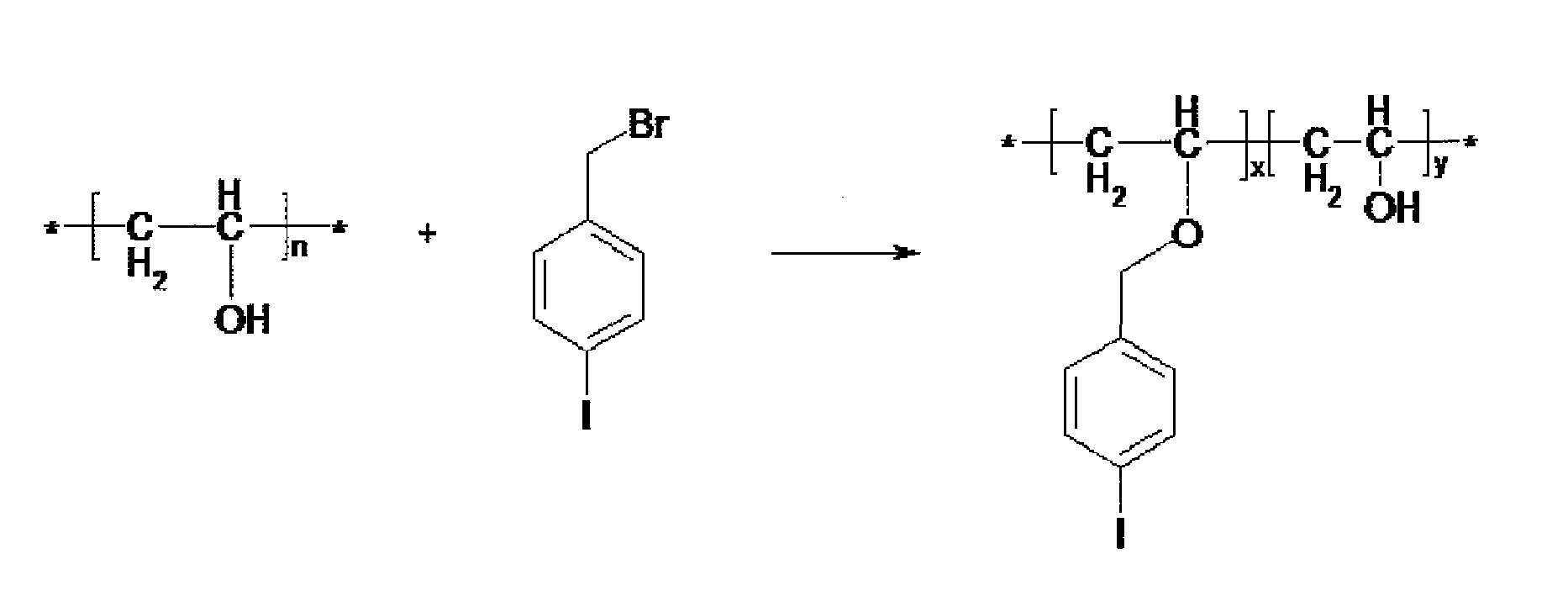
Fig. 2 . - 1H NMR (DMSO-d6): 1.34-1.90 (m, 3.8H, CH2 PVA chain (2(x+y)), 3.58-3.78 (m, 1.5H, CH PVA chain (x+y)), 4.23-4.48 (m, 2.4H, CH2 benzyl (2x)), 7.00 (s, 1 H, H aromatic (2x)), 7.54 (s, 1 H, H aromatic (2x))
- The degree of substitution (DS) was measured from the height of peaks of the RMN spectrum, and as calculated from the integration of the NMR lines, was 0.56 (i.e 56 %).
- The expected iodine content as calculated from the DS was 43 %, and the iodine content confirmed by elemental analysis was 43 %.
- The 2,3,4-triiodobenzyl ether of poly(vinyl alcohol) obtained in Example 1 from PVA 13-23 kDa was dissolved in NMP at concentrations of 10 % w/w and 33 % w/w, and these two injectable compositions were precipitated in water using a syringe with a needle of 0.8 mm diameter. The results obtained are shown in
Fig. 3a and Fig. 3b . - As shown in
Fig. 3a , the injectable composition containing 10 % w/w of 2,3,4-triiodobenzyl ether of poly(vinyl alcohol) (obtained from PVA 13-23 KDa) dissolved in NMP did not precipitate as a cohesive mass, and therefore is not appropriate as injectable embolizing composition of the present invention. - However, as shown in
Fig. 3b , the injectable composition containing 33 % of 2,3,4-triiodobenzyl ether of poly(vinyl alcohol) (obtained from PVA 13-23 kDa) dissolved in NMP precipitates as a cohesive mass, and therefore is appropriate as injectable embolizing composition of the present invention. - Further, the 4-monoiodobenzyl ether of poly(vinyl alcohol) obtained in Example 2 (from PVA 13-23 kDa) was dissolved in DMSO at a concentration of 33 % w/w and this injectable composition was precipitated in water using a syringe of 1 ml with a needle of 0.9 mm.
- As shown in
Fig. 4 , the injectable composition containing 33 % w/w of 4-monoiodobenzyl ether of poly(vinyl alcohol) (obtained from PVA 13-23 kDa) dissolved in DMSO precipitates as a cohesive mass, and therefore is appropriate as injectable embolizing composition of the present invention. - Additional experiments shown that all compositions containing 2,3,4-triiodobenzyl ether of poly(vinyl alcohol) obtained from PVA 13-23 kDa dissolved in NMP or 4-monoiodobenzyl ether of poly(vinyl alcohol) obtained from PVA 13-23 kDa dissolved in DMSO precipitate as a cohesive mass for concentrations higher than 20 % (w/w).
- As the viscosity is an important parameter for the choice of the concentration of the iodo-benzylether-PVA in injectable compositions for embolization, the following experiments have been performed.
- The 4-monoiodobenzyl ether of poly(vinyl alcohol) obtained in Example 2 from PVA 13-23 kDa was dissolved in DMSO at concentrations varying from 20 to 50 % w/w, and the viscosities of the solutions were measured.
- The 2,3,4-triiodobenzyl ether of poly(vinyl alcohol) obtained in Example 1 from PVA 13-23 kDa was dissolved in NMP at concentrations varying from 20 to 50 % w/w, and the viscosities of the solutions were measured.
- Viscosities were measured at a temperature of 25°C using a cone-plate rheometer (Bohlin CV0120 from Malvern Instruments).
-
Fig. 5 shows the increase of the viscosity when the concentration of the iodo-benzylether-PVA obtained from PVA 13-23 kDA in the specified solvent increases. - Therefore,
Fig 5 shows that the viscosity of the embolizing compositions can be tailored by iodo-benzylether-PVA concentration, iodo-benzylether-PVA type, and solvent nature to obtain the high viscosity (ca 500 mPa.s) required for aneurysm embolization as well as the lower viscosity (ca 50 mPa.s) adequate for embolization of small capillaries. - For comparison, the
Onyx™ 34 commercial embolizing composition has a viscosity of 55 mPa-s. - Solutions of 4-monoiodobenzyl ether of poly(vinyl alcohol) obtained in Example 2 and 2,3,4-triiodobenzyl ether of poly(vinyl alcohol) obtained in Example 1 at a concentration of 33 % w/w in NMP were poured in radiolucent 1 ml Eppendorfs. X-ray absorption was measured on a computerized tomograph scan (CT-scan, Skyscan 1076, Skyscan, Belgium) using a 0.5 mm aluminium window, under 50 kV and 200 µA. 180 degrees tomograms were acquired and reconstructed (Nrecon 1.5.1.4, Skyscan, Belgium), and pixel gray level was averaged over the whole embolic image (imageJ program, NIH). For calibration in Hounsfied degrees (HU), water (HU=0) and air (HU=-1000) were used.
- As shown in
Fig. 6 , the radiopacity of the composition containing 33 % w/w of 2,3,4-triiodobenzyl ether of poly(vinyl alcohol) in NMP is comparable to that of commercial liquid embolizing compositions (Onyx™ 34 and Onyx™ 18) containing 20 % of radiopaque tantalum. - However, the embolizing composition containing 33 % w/w of 4-monoiodobenzyl ether of poly(vinyl alcohol) in NMP shows lower radiopacity, as expected from its lower iodine content.
- Noteworthy, if left at rest for more than a few minutes, tantalum in Onyx™ sedimented, leading to highly inhomogeneous radiopacity.
- From these data, it is expected that a compositions containing 55 % w/w of 4-monoiodobenzyl ether of poly(vinyl alcohol) in NMP would have a radiopacity comparable to the Onyx™ compositions.
- Two injectable embolizing compositions of the present invention and
Onyx™ 34 commercial composition were tested for their ability to fill an aneurysm model. We used as a model a 10 mm-diameter sphere affixed to a glass tube. The model was flushed with saline using a rotary pump under a 30 cm/s flow speed mimicking blood flow. The injectable embolizing composition was injected into the aneurysm model with a 22G needle. -
Fig. 7a shows embolization of a aneurysm model with an injectable embolizing composition (A) of the present invention containing 33 % w/w of 2,3,4-triiodobenzyl ether of poly(vinyl alcohol) obtained in Example 1 in NMP. -
Fig. 7b shows embolization of a aneurysm model with an injectable embolizing composition (B) of the present invention containing 33 % w/w of 4-monoiodobenzyl ether of poly(vinyl alcohol) obtained in Example 2 in NMP. -
Fig. 7c shows embolization of a aneurysm model withOnyx™ 34 commercial embolizing composition. - These
Figs. 7a, 7b and 7c clearly illustrate the ability of the intrinsically radiopaque injectable embolizing compositions (A, B) to fill completely the sphere with a compact mass, in a manner comparable to existing commercial injectable embolizingcomposition Onyx™ 34. (C). - For all injectable embolizing compositions A, B and C, a cohesive mass was formed under flow within 3 minutes.
Claims (17)
- A radiopaque, non-biodegradable, water-insoluble iodinated benzyl ether of poly(vinyl alcohol) (iodo-benzylether-PVA) consisting of a poly(vinyl alcohol) having covalently grafted thereon iodinated benzyl groups comprising 1 - 4 iodine atoms per benzyl group.
- The iodo-benzylether-PVA according to claim 1, wherein the iodo-benzylether-PVA has a degree of substitution (DS) of at least 0.2.
- The iodo-benzylether-PVA according to claim 1 or 2, wherein the iodo-benzylether-PVA has a iodine content of at least 40 % (w/w).
- The iodo-benzylether-PVA according to anyone of claims 1 to 3, wherein each benzyl group comprises one iodine atom on C-4 position.
- The iodo-benzylether-PVA according to anyone of claims 1 to 3, wherein each benzyl group comprises 3 iodine atoms on C-2, C-3 and C-5 positions.
- A process for preparing the iodo-benzylether-PVA of anyone of claims 1 to 5, said process comprising reacting a 0 -100 % hydrolyzed poly(vinyl alcohol) as a starting PVA with a iodinated benzyl derivative comprising 1 - 4 iodine atoms per benzyl group in a polar aprotic solvent in the presence of a base in anhydrous conditions.
- The process according to claim 6, wherein said process comprises reacting a 75 - 100 % hydrolyzed poly(vinyl alcohol) as the starting PVA with said iodinated benzyl derivative.
- The process according to claim 6 or 7, wherein said starting PVA has an average molar mass (M) ranging from 5'000 to 200'000 Daltons.
- The process according to anyone of claims 6 to 8, wherein the iodinated benzyl derivative is the 4-iodobenzylbromide.
- The process according to anyone of claims 6 to 8, wherein the iodinated benzyl derivative is the 2,3,5-triiodobenzylbromide.
- The process according to anyone of claims 6 to 10, wherein the polar aprotic solvent is N-methylpyrrolidone (NMP) and the base is sodium hydroxide.
- Use of the iodo-benzylether-PVA as defined in anyone of claims 1-5, as an embolizing agent in an injectable embolizing composition.
- An injectable embolizing composition comprising the iodo-benzylether-PVA as defined in anyone of claims 1 to 5 and a water-miscible, biocompatible solvent solubilizing the iodo-benzylether-PVA, wherein the concentration of the iodo-benzylether-PVA in the composition is selected in the range of 5 - 65 w/w % so that the composition is capable of forming a cohesive mass upon contact with a body fluid by precipitation of the iodo-benzylether PVA.
- The injectable embolizing composition according to claim 13, wherein the concentration of the iodo-benzylether-PVA in the composition is selected in the range of 20-50 w/w %.
- The injectable embolizing composition according to claim 12 or 13,
wherein the solvent is selected from dimethylsufoxide (DMSO), N-methylpyrrolidone (NMP) and glycofurol. - Use of the injectable embolizing composition according to anyone of claims 13 to 15, for forming in-situ a cohesive mass in a blood vessel.
- Use of the injectable embolizing composition according to anyone of claims 13 to 15, for forming in-situ a cohesive mass into a tumor.
Priority Applications (15)
| Application Number | Priority Date | Filing Date | Title |
|---|---|---|---|
| EP10156039A EP2365009A1 (en) | 2010-03-10 | 2010-03-10 | Radiopaque, non-biodegradable, water-insoluble iodinated benzyl ethers of poly(vinyl alcohol), preparation method thereof, injectable embolizing compositions containing thereof and use thereof |
| JP2012556504A JP5696165B2 (en) | 2010-03-10 | 2011-03-09 | Radiopaque, non-biodegradable, water-insoluble, poly (vinyl alcohol) iodinated benzyl ether, process for its preparation, injectable embolic composition containing it, and process for its use |
| PCT/EP2011/053536 WO2011110589A1 (en) | 2010-03-10 | 2011-03-09 | Radiopaque, non- biodegradable, water - insoluble iodinated benzyl ethers of poly (vinyl alcohol), preparation method thereof, injectable embolizing compositions containing thereof and use thereof |
| EP11707664.6A EP2545085B1 (en) | 2010-03-10 | 2011-03-09 | Radiopaque, non-biodegradable, water-insoluble iodinated benzyl ethers of poly(vinyl alcohol), preparation method thereof, injectable embolizing compositions containing thereof and use thereof |
| PL11707664T PL2545085T3 (en) | 2010-03-10 | 2011-03-09 | Radiopaque, non-biodegradable, water-insoluble iodinated benzyl ethers of poly(vinyl alcohol), preparation method thereof, injectable embolizing compositions containing thereof and use thereof |
| CA2786398A CA2786398C (en) | 2010-03-10 | 2011-03-09 | Radiopaque, non- biodegradable, water - insoluble iodinated benzyl ethers of poly (vinyl alcohol), preparation method thereof, injectable embolizing compositions containing thereof and use thereof |
| BR112012019754-1A BR112012019754B1 (en) | 2010-03-10 | 2011-03-09 | radiopaque, non-biodegradable, water-insoluble iodinated benzyl ethers of poly (vinyl alcohol), preparation process, injectable embolic compositions containing the same, use of the same and radiopaque particles |
| ES11707664.6T ES2603607T3 (en) | 2010-03-10 | 2011-03-09 | Iodium benzyl ethers of radiopaque poly (vinyl alcohol), non-biodegradable and insoluble in water, method for preparing them, injectable embolizing compositions containing them and using them |
| KR1020127020233A KR101753441B1 (en) | 2010-03-10 | 2011-03-09 | Radiopaque, non―biodegradable, water―insoluble iodinated benzyl ethers of poly 〔vinyl alcohol〕, preparation method thereof, injectable embolizing compositions containing thereof and use thereof |
| DK11707664.6T DK2545085T3 (en) | 2010-03-10 | 2011-03-09 | RADIOPAKE, NON-BIODEGRADABLE, WATER-SOLUBLE, IODED BENZYLETHERS OF POLY (VINYL ALCOHOL), PROCEDURE FOR PREPARING THEREOF, INJECTABLE EMBOLIZING COMPOSITIVE COMPOSITIONING COMPOSITIVE COMPOSITION |
| US13/578,106 US9115230B2 (en) | 2010-03-10 | 2011-03-09 | Radiopaque, non-biodegradable, water-insoluble iodinated benzyl ethers of poly(vinyl alcohol), preparation method thereof, injectable embolizing compositions containing thereof and use thereof |
| CN201180011385.6A CN102781974B (en) | 2010-03-10 | 2011-03-09 | Radiopaque, non-biodegradable, water-insoluble iodinated benzyl ethers of poly(vinyl alcohol), processes for their preparation, injectable embolizing compositions containing them, and uses thereof |
| HK13103365.6A HK1176629B (en) | 2010-03-10 | 2011-03-09 | Radiopaque, non- biodegradable, water - insoluble iodinated benzyl ethers of poly (vinyl alcohol), preparation method thereof, injectable embolizing compositions containing thereof and use thereof |
| AU2011226138A AU2011226138B2 (en) | 2010-03-10 | 2011-03-09 | Radiopaque, non- biodegradable, water - insoluble iodinated benzyl ethers of poly (vinyl alcohol), preparation method thereof, injectable embolizing compositions containing thereof and use thereof |
| US14/794,134 US9434800B2 (en) | 2010-03-10 | 2015-07-08 | Method of embolization using a radiopaque, non-biodegradable, water-insoluble iodinated benzyl ether of polyl(vinyl alcohol) |
Applications Claiming Priority (1)
| Application Number | Priority Date | Filing Date | Title |
|---|---|---|---|
| EP10156039A EP2365009A1 (en) | 2010-03-10 | 2010-03-10 | Radiopaque, non-biodegradable, water-insoluble iodinated benzyl ethers of poly(vinyl alcohol), preparation method thereof, injectable embolizing compositions containing thereof and use thereof |
Publications (1)
| Publication Number | Publication Date |
|---|---|
| EP2365009A1 true EP2365009A1 (en) | 2011-09-14 |
Family
ID=42035808
Family Applications (2)
| Application Number | Title | Priority Date | Filing Date |
|---|---|---|---|
| EP10156039A Withdrawn EP2365009A1 (en) | 2010-03-10 | 2010-03-10 | Radiopaque, non-biodegradable, water-insoluble iodinated benzyl ethers of poly(vinyl alcohol), preparation method thereof, injectable embolizing compositions containing thereof and use thereof |
| EP11707664.6A Active EP2545085B1 (en) | 2010-03-10 | 2011-03-09 | Radiopaque, non-biodegradable, water-insoluble iodinated benzyl ethers of poly(vinyl alcohol), preparation method thereof, injectable embolizing compositions containing thereof and use thereof |
Family Applications After (1)
| Application Number | Title | Priority Date | Filing Date |
|---|---|---|---|
| EP11707664.6A Active EP2545085B1 (en) | 2010-03-10 | 2011-03-09 | Radiopaque, non-biodegradable, water-insoluble iodinated benzyl ethers of poly(vinyl alcohol), preparation method thereof, injectable embolizing compositions containing thereof and use thereof |
Country Status (12)
| Country | Link |
|---|---|
| US (2) | US9115230B2 (en) |
| EP (2) | EP2365009A1 (en) |
| JP (1) | JP5696165B2 (en) |
| KR (1) | KR101753441B1 (en) |
| CN (1) | CN102781974B (en) |
| AU (1) | AU2011226138B2 (en) |
| BR (1) | BR112012019754B1 (en) |
| CA (1) | CA2786398C (en) |
| DK (1) | DK2545085T3 (en) |
| ES (1) | ES2603607T3 (en) |
| PL (1) | PL2545085T3 (en) |
| WO (1) | WO2011110589A1 (en) |
Cited By (9)
| Publication number | Priority date | Publication date | Assignee | Title |
|---|---|---|---|---|
| GB2523863A (en) * | 2013-09-06 | 2015-09-09 | Biocompatibles Ltd | Imageable polymers |
| WO2017158482A1 (en) * | 2016-03-14 | 2017-09-21 | Biocompatibles Uk Limited | Emulsion comprising particles |
| WO2020202210A1 (en) * | 2019-04-03 | 2020-10-08 | Sree Chitra Tirunal Institute For Medical Sciences And Technology | A radiopaque polymeric liquid embolic system |
| CN114262279A (en) * | 2021-12-30 | 2022-04-01 | 上海汇禾医疗科技有限公司 | A kind of X-ray developable molecule, embolization microsphere and preparation method thereof |
| WO2022183926A1 (en) * | 2021-03-04 | 2022-09-09 | Accumedical Beijing Ltd. | Improved liquid embolic compositions and associated methods |
| WO2023083102A1 (en) * | 2021-11-12 | 2023-05-19 | 刘庄 | Active metal microspheres and composite embolic agent based on same |
| US11744916B2 (en) | 2019-07-18 | 2023-09-05 | Biocompatibles Uk Limited | Radiopaque polymers |
| US12098220B2 (en) * | 2018-06-29 | 2024-09-24 | Boston Scientific Medical Device Limited | Radiopaque polymers |
| RU2853267C1 (en) * | 2025-05-05 | 2025-12-22 | Акционерное общество "Институт фармацевтических технологий" | Iodine-containing radiopaque embolising agent based on cellulose acetate, method for its production and radiopaque embolising agent |
Families Citing this family (41)
| Publication number | Priority date | Publication date | Assignee | Title |
|---|---|---|---|---|
| JP2010500917A (en) | 2006-06-15 | 2010-01-14 | マイクロベンション, インコーポレイテッド | Embolization device composed of expandable polymer |
| AU2008345590B2 (en) | 2007-12-21 | 2014-10-30 | Microvention, Inc. | Hydrogel filaments for biomedical uses |
| US10716573B2 (en) | 2008-05-01 | 2020-07-21 | Aneuclose | Janjua aneurysm net with a resilient neck-bridging portion for occluding a cerebral aneurysm |
| US10028747B2 (en) | 2008-05-01 | 2018-07-24 | Aneuclose Llc | Coils with a series of proximally-and-distally-connected loops for occluding a cerebral aneurysm |
| BRPI1014645B1 (en) | 2009-04-30 | 2020-07-07 | Technip France | method and system for sharing mooring lines |
| CN102791183B (en) | 2009-10-26 | 2015-07-08 | 微排放器公司 | Embolization device constructed from expansile polymer |
| US9358140B1 (en) | 2009-11-18 | 2016-06-07 | Aneuclose Llc | Stent with outer member to embolize an aneurysm |
| US9456823B2 (en) | 2011-04-18 | 2016-10-04 | Terumo Corporation | Embolic devices |
| WO2013158781A1 (en) | 2012-04-18 | 2013-10-24 | Microvention, Inc. | Embolic devices |
| AU2013274199B2 (en) | 2012-06-14 | 2016-08-11 | Microvention, Inc. | Polymeric treatment compositions |
| WO2014062696A1 (en) | 2012-10-15 | 2014-04-24 | Microvention, Inc. | Polymeric treatment compositions |
| JP6420817B2 (en) * | 2013-03-15 | 2018-11-07 | バイオコンパティブルズ ユーケー リミテッド | Imageable embolic microspheres |
| GB2521997A (en) | 2013-09-06 | 2015-07-15 | Biocompatibles Uk Ltd | Radiopaque polymers |
| WO2015153996A1 (en) | 2014-04-03 | 2015-10-08 | Micro Vention, Inc. | Embolic devices |
| EP3137124B1 (en) | 2014-04-29 | 2019-01-09 | Microvention, Inc. | Polymers including active agents |
| US10092663B2 (en) | 2014-04-29 | 2018-10-09 | Terumo Corporation | Polymers |
| WO2016201250A1 (en) | 2015-06-11 | 2016-12-15 | Microvention, Inc. | Expansile device for implantation |
| US10368874B2 (en) | 2016-08-26 | 2019-08-06 | Microvention, Inc. | Embolic compositions |
| JP7362598B2 (en) | 2017-10-09 | 2023-10-17 | マイクロベンション インコーポレイテッド | radioactive liquid embolic material |
| CN107899064A (en) * | 2017-10-27 | 2018-04-13 | 华威(深圳)医疗器械有限责任公司 | A kind of medicine-carried and the preparation method and its usage for having the liquid embolizing agent of developability concurrently |
| CN107754007A (en) * | 2017-12-06 | 2018-03-06 | 华威(深圳)医疗器械有限责任公司 | The carrier compositions and preparation method of a kind of nucleic, liquid embolizing agent and application method and nucleic mixture |
| GB201810788D0 (en) | 2018-06-29 | 2018-08-15 | Biocompatibles Uk Ltd | Biodegradable polymer |
| TW202000189A (en) | 2018-06-29 | 2020-01-01 | 英商白康帝英國有限公司 | Radiopaque polymers |
| CN109224119B (en) * | 2018-10-30 | 2021-02-23 | 北京大学深圳医院 | Pi conjugated nano self-assembled particle intratumoral injection embolization tumor blood vessel anticancer agent |
| CN113348001B (en) * | 2018-11-13 | 2022-10-21 | 上海盛迪医药有限公司 | Polymer and composition thereof |
| JP7714466B2 (en) | 2019-03-11 | 2025-07-29 | バイオコンパティブルズ ユーケー リミテッド | Treatment methods for central nervous system tumors |
| CN110372484B (en) * | 2019-07-23 | 2020-05-22 | 赵修文 | Radiopaque polyvinyl alcohol microspheres |
| EP4061438B1 (en) * | 2019-11-20 | 2025-07-23 | The Regents of the University of California | Liquid embolic material composition |
| US20210290816A1 (en) * | 2020-03-17 | 2021-09-23 | Microvention, Inc. | Liquid embolics |
| CN113651906B (en) * | 2020-05-12 | 2024-02-20 | 上海盛迪医药有限公司 | A copolymer and its composition |
| EP4277891A1 (en) | 2021-01-12 | 2023-11-22 | Boston Scientific Scimed, Inc. | Iodinated compounds having radiocontrast properties |
| US20230021742A1 (en) | 2021-07-12 | 2023-01-26 | Boston Scientific Scimed, Inc. | Radiopaque compositions |
| CN113995884A (en) * | 2021-09-10 | 2022-02-01 | 苏州浩微生物医疗科技有限公司 | Liquid embolic agent and preparation method thereof |
| CN114146190B (en) * | 2021-12-30 | 2024-01-26 | 科睿驰(深圳)医疗科技发展有限公司 | A kind of highly suspended developing microsphere and preparation method thereof |
| KR102691672B1 (en) * | 2022-01-27 | 2024-08-05 | 주식회사 브러쉬텍 | Impurity analysis method and impurity analysis system in PVA brush |
| CN114805644B (en) * | 2022-06-24 | 2022-09-16 | 苏州美创医疗科技有限公司 | Nontransmissive polymer and preparation method and application thereof |
| US20240327335A1 (en) | 2022-08-25 | 2024-10-03 | Cardiolink Science (Shenzhen) Medical Technology Development Co., Ltd. | Amide compound having iodoaryl or iodoheteroaryl, preparation method therefor and use thereof |
| CN115490639B (en) * | 2022-09-19 | 2023-05-16 | 科睿驰(深圳)医疗科技发展有限公司 | X-ray developing compound and preparation method thereof, and X-ray developing embolic material and preparation method thereof |
| CN115590984B (en) * | 2022-09-22 | 2023-07-14 | 科睿驰(深圳)医疗科技发展有限公司 | X-ray developing compound and preparation method thereof, and X-ray developing microsphere and preparation method thereof |
| CN117586440B (en) * | 2024-01-17 | 2024-04-09 | 苏州美创医疗科技有限公司 | Iodinated polyhydroxy polymer, preparation method and liquid embolic agent prepared from iodinated polyhydroxy polymer |
| CN117582535B (en) * | 2024-01-18 | 2024-04-26 | 上海汇禾医疗科技股份有限公司 | Liquid embolic agent and preparation method thereof |
Family Cites Families (12)
| Publication number | Priority date | Publication date | Assignee | Title |
|---|---|---|---|---|
| US4406878A (en) * | 1978-08-02 | 1983-09-27 | Eastman Kodak Company | Iodinated contrast agent for radiography |
| US5580568A (en) | 1995-07-27 | 1996-12-03 | Micro Therapeutics, Inc. | Cellulose diacetate compositions for use in embolizing blood vessels |
| US5667767A (en) | 1995-07-27 | 1997-09-16 | Micro Therapeutics, Inc. | Compositions for use in embolizing blood vessels |
| US5695480A (en) | 1996-07-29 | 1997-12-09 | Micro Therapeutics, Inc. | Embolizing compositions |
| JP2001524096A (en) | 1997-04-24 | 2001-11-27 | ニコムド イメージング エイエス | Embolic treatment using insoluble microparticles or vesicles containing contrast agents |
| WO1999012577A1 (en) * | 1997-09-05 | 1999-03-18 | Nycomed Imaging As | Polymer particles made of polyvinyl alcohol and comprising a contrast agent for chemoembolization |
| AU737151B2 (en) * | 1997-11-07 | 2001-08-09 | Rutgers, The State University | Radio-opaque polymeric biomaterials government license rights |
| US6365169B1 (en) | 1999-09-30 | 2002-04-02 | Solomon Rosenblatt | Polymeric broad spectrum antimicrobial coatings |
| US20060292077A1 (en) * | 2005-03-18 | 2006-12-28 | Zhao Jonathon Z | Dendritic and star-shaped contrast agents for medical devices and bioabsorbable radiopaque bulk material and method for producing same |
| EP1883425A1 (en) | 2005-05-23 | 2008-02-06 | Universite De Geneve | Injectable superparamagnetic nanoparticles for treatment by hyperthermia and use for forming an hyperthermic implant |
| JP4344779B2 (en) * | 2007-03-20 | 2009-10-14 | 国立大学法人九州大学 | Iron complex and method for producing polymer using iron complex as catalyst |
| CN101513542B (en) * | 2009-03-27 | 2012-08-15 | 山东大正医疗器械股份有限公司 | Method for preparing iodic liquid embolic agent capable of self-developing for long-time |
-
2010
- 2010-03-10 EP EP10156039A patent/EP2365009A1/en not_active Withdrawn
-
2011
- 2011-03-09 PL PL11707664T patent/PL2545085T3/en unknown
- 2011-03-09 JP JP2012556504A patent/JP5696165B2/en not_active Expired - Fee Related
- 2011-03-09 AU AU2011226138A patent/AU2011226138B2/en not_active Ceased
- 2011-03-09 US US13/578,106 patent/US9115230B2/en active Active
- 2011-03-09 ES ES11707664.6T patent/ES2603607T3/en active Active
- 2011-03-09 WO PCT/EP2011/053536 patent/WO2011110589A1/en not_active Ceased
- 2011-03-09 BR BR112012019754-1A patent/BR112012019754B1/en active IP Right Grant
- 2011-03-09 KR KR1020127020233A patent/KR101753441B1/en not_active Expired - Fee Related
- 2011-03-09 DK DK11707664.6T patent/DK2545085T3/en active
- 2011-03-09 CN CN201180011385.6A patent/CN102781974B/en active Active
- 2011-03-09 CA CA2786398A patent/CA2786398C/en not_active Expired - Fee Related
- 2011-03-09 EP EP11707664.6A patent/EP2545085B1/en active Active
-
2015
- 2015-07-08 US US14/794,134 patent/US9434800B2/en active Active
Non-Patent Citations (1)
| Title |
|---|
| MAWAD DAMIA ET AL: "Synthesis and characterization of radiopaque iodine-containing degradable PVA hydrogels", BIOMACROMOLECULES, ACS, WASHINGTON, DC, US, vol. 9, no. 1, 30 November 2007 (2007-11-30), pages 263 - 268, XP002544191, ISSN: 1525-7797, [retrieved on 20071130] * |
Cited By (11)
| Publication number | Priority date | Publication date | Assignee | Title |
|---|---|---|---|---|
| GB2523863A (en) * | 2013-09-06 | 2015-09-09 | Biocompatibles Ltd | Imageable polymers |
| GB2523863B (en) * | 2013-09-06 | 2017-05-24 | Biocompatibles Uk Ltd | Imageable polymers |
| WO2017158482A1 (en) * | 2016-03-14 | 2017-09-21 | Biocompatibles Uk Limited | Emulsion comprising particles |
| US12098220B2 (en) * | 2018-06-29 | 2024-09-24 | Boston Scientific Medical Device Limited | Radiopaque polymers |
| WO2020202210A1 (en) * | 2019-04-03 | 2020-10-08 | Sree Chitra Tirunal Institute For Medical Sciences And Technology | A radiopaque polymeric liquid embolic system |
| US11986571B2 (en) | 2019-04-03 | 2024-05-21 | Sree Chitra Tirunal Institute For Medical Sciences And Technology | Radiopaque polymeric liquid embolic system |
| US11744916B2 (en) | 2019-07-18 | 2023-09-05 | Biocompatibles Uk Limited | Radiopaque polymers |
| WO2022183926A1 (en) * | 2021-03-04 | 2022-09-09 | Accumedical Beijing Ltd. | Improved liquid embolic compositions and associated methods |
| WO2023083102A1 (en) * | 2021-11-12 | 2023-05-19 | 刘庄 | Active metal microspheres and composite embolic agent based on same |
| CN114262279A (en) * | 2021-12-30 | 2022-04-01 | 上海汇禾医疗科技有限公司 | A kind of X-ray developable molecule, embolization microsphere and preparation method thereof |
| RU2853267C1 (en) * | 2025-05-05 | 2025-12-22 | Акционерное общество "Институт фармацевтических технологий" | Iodine-containing radiopaque embolising agent based on cellulose acetate, method for its production and radiopaque embolising agent |
Also Published As
| Publication number | Publication date |
|---|---|
| US9434800B2 (en) | 2016-09-06 |
| BR112012019754B1 (en) | 2020-10-20 |
| HK1176629A1 (en) | 2013-08-02 |
| JP2013521087A (en) | 2013-06-10 |
| PL2545085T3 (en) | 2017-08-31 |
| AU2011226138B2 (en) | 2015-01-22 |
| JP5696165B2 (en) | 2015-04-08 |
| ES2603607T3 (en) | 2017-02-28 |
| CA2786398C (en) | 2017-06-13 |
| BR112012019754A2 (en) | 2016-05-10 |
| DK2545085T3 (en) | 2016-12-05 |
| WO2011110589A1 (en) | 2011-09-15 |
| EP2545085A1 (en) | 2013-01-16 |
| AU2011226138A1 (en) | 2012-07-26 |
| US9115230B2 (en) | 2015-08-25 |
| KR101753441B1 (en) | 2017-07-03 |
| US20130108574A1 (en) | 2013-05-02 |
| KR20130051916A (en) | 2013-05-21 |
| EP2545085B1 (en) | 2016-10-19 |
| US20150335779A1 (en) | 2015-11-26 |
| CA2786398A1 (en) | 2011-09-15 |
| CN102781974A (en) | 2012-11-14 |
| CN102781974B (en) | 2014-10-15 |
Similar Documents
| Publication | Publication Date | Title |
|---|---|---|
| EP2365009A1 (en) | Radiopaque, non-biodegradable, water-insoluble iodinated benzyl ethers of poly(vinyl alcohol), preparation method thereof, injectable embolizing compositions containing thereof and use thereof | |
| US11672876B2 (en) | Imageable embolic microsphere | |
| EP3873547B1 (en) | A radiopaque polymeric liquid embolic system | |
| CN114805644B (en) | Nontransmissive polymer and preparation method and application thereof | |
| Agusti et al. | Radiopaque iodinated ethers of poly (vinyl iodobenzyl ether) s: Synthesis and evaluation for endovascular embolization | |
| CN113651906B (en) | A copolymer and its composition | |
| RU2853267C1 (en) | Iodine-containing radiopaque embolising agent based on cellulose acetate, method for its production and radiopaque embolising agent | |
| EP4376905B1 (en) | Compositions for embolization | |
| HK1176629B (en) | Radiopaque, non- biodegradable, water - insoluble iodinated benzyl ethers of poly (vinyl alcohol), preparation method thereof, injectable embolizing compositions containing thereof and use thereof | |
| WO2025196330A1 (en) | Polymer compositions for use in embolotherapy or for the preparation of injectable therapeutic depots |
Legal Events
| Date | Code | Title | Description |
|---|---|---|---|
| PUAI | Public reference made under article 153(3) epc to a published international application that has entered the european phase |
Free format text: ORIGINAL CODE: 0009012 |
|
| AK | Designated contracting states |
Kind code of ref document: A1 Designated state(s): AT BE BG CH CY CZ DE DK EE ES FI FR GB GR HR HU IE IS IT LI LT LU LV MC MK MT NL NO PL PT RO SE SI SK SM TR |
|
| STAA | Information on the status of an ep patent application or granted ep patent |
Free format text: STATUS: THE APPLICATION IS DEEMED TO BE WITHDRAWN |
|
| 18D | Application deemed to be withdrawn |
Effective date: 20120315 |