EP2363392A1 - Styrylpyridine derivatives and their use for binding and imaging amyloid plaques - Google Patents
Styrylpyridine derivatives and their use for binding and imaging amyloid plaques Download PDFInfo
- Publication number
- EP2363392A1 EP2363392A1 EP20110152124 EP11152124A EP2363392A1 EP 2363392 A1 EP2363392 A1 EP 2363392A1 EP 20110152124 EP20110152124 EP 20110152124 EP 11152124 A EP11152124 A EP 11152124A EP 2363392 A1 EP2363392 A1 EP 2363392A1
- Authority
- EP
- European Patent Office
- Prior art keywords
- alkyl
- hydroxy
- hydrogen
- compound
- halogen
- Prior art date
- Legal status (The legal status is an assumption and is not a legal conclusion. Google has not performed a legal analysis and makes no representation as to the accuracy of the status listed.)
- Granted
Links
- 0 *C(C*c1ccccc1)C(*)C(C(*=***(*)=PO)=*)=I Chemical compound *C(C*c1ccccc1)C(*)C(C(*=***(*)=PO)=*)=I 0.000 description 12
Images





Classifications
-
- C—CHEMISTRY; METALLURGY
- C07—ORGANIC CHEMISTRY
- C07D—HETEROCYCLIC COMPOUNDS
- C07D213/00—Heterocyclic compounds containing six-membered rings, not condensed with other rings, with one nitrogen atom as the only ring hetero atom and three or more double bonds between ring members or between ring members and non-ring members
- C07D213/02—Heterocyclic compounds containing six-membered rings, not condensed with other rings, with one nitrogen atom as the only ring hetero atom and three or more double bonds between ring members or between ring members and non-ring members having three double bonds between ring members or between ring members and non-ring members
- C07D213/04—Heterocyclic compounds containing six-membered rings, not condensed with other rings, with one nitrogen atom as the only ring hetero atom and three or more double bonds between ring members or between ring members and non-ring members having three double bonds between ring members or between ring members and non-ring members having no bond between the ring nitrogen atom and a non-ring member or having only hydrogen or carbon atoms directly attached to the ring nitrogen atom
- C07D213/60—Heterocyclic compounds containing six-membered rings, not condensed with other rings, with one nitrogen atom as the only ring hetero atom and three or more double bonds between ring members or between ring members and non-ring members having three double bonds between ring members or between ring members and non-ring members having no bond between the ring nitrogen atom and a non-ring member or having only hydrogen or carbon atoms directly attached to the ring nitrogen atom with hetero atoms or with carbon atoms having three bonds to hetero atoms with at the most one bond to halogen, e.g. ester or nitrile radicals, directly attached to ring carbon atoms
- C07D213/62—Oxygen or sulfur atoms
- C07D213/63—One oxygen atom
-
- C—CHEMISTRY; METALLURGY
- C07—ORGANIC CHEMISTRY
- C07D—HETEROCYCLIC COMPOUNDS
- C07D211/00—Heterocyclic compounds containing hydrogenated pyridine rings, not condensed with other rings
- C07D211/92—Heterocyclic compounds containing hydrogenated pyridine rings, not condensed with other rings with a hetero atom directly attached to the ring nitrogen atom
- C07D211/94—Oxygen atom, e.g. piperidine N-oxide
-
- A—HUMAN NECESSITIES
- A61—MEDICAL OR VETERINARY SCIENCE; HYGIENE
- A61K—PREPARATIONS FOR MEDICAL, DENTAL OR TOILETRY PURPOSES
- A61K51/00—Preparations containing radioactive substances for use in therapy or testing in vivo
- A61K51/02—Preparations containing radioactive substances for use in therapy or testing in vivo characterised by the carrier, i.e. characterised by the agent or material covalently linked or complexing the radioactive nucleus
- A61K51/04—Organic compounds
-
- A—HUMAN NECESSITIES
- A61—MEDICAL OR VETERINARY SCIENCE; HYGIENE
- A61K—PREPARATIONS FOR MEDICAL, DENTAL OR TOILETRY PURPOSES
- A61K51/00—Preparations containing radioactive substances for use in therapy or testing in vivo
- A61K51/02—Preparations containing radioactive substances for use in therapy or testing in vivo characterised by the carrier, i.e. characterised by the agent or material covalently linked or complexing the radioactive nucleus
- A61K51/04—Organic compounds
- A61K51/041—Heterocyclic compounds
- A61K51/044—Heterocyclic compounds having nitrogen as a ring hetero atom, e.g. guanethidine, rifamycins
- A61K51/0455—Heterocyclic compounds having nitrogen as a ring hetero atom, e.g. guanethidine, rifamycins having six-membered rings with one nitrogen as the only ring hetero atom
-
- A—HUMAN NECESSITIES
- A61—MEDICAL OR VETERINARY SCIENCE; HYGIENE
- A61P—SPECIFIC THERAPEUTIC ACTIVITY OF CHEMICAL COMPOUNDS OR MEDICINAL PREPARATIONS
- A61P21/00—Drugs for disorders of the muscular or neuromuscular system
-
- A—HUMAN NECESSITIES
- A61—MEDICAL OR VETERINARY SCIENCE; HYGIENE
- A61P—SPECIFIC THERAPEUTIC ACTIVITY OF CHEMICAL COMPOUNDS OR MEDICINAL PREPARATIONS
- A61P25/00—Drugs for disorders of the nervous system
-
- A—HUMAN NECESSITIES
- A61—MEDICAL OR VETERINARY SCIENCE; HYGIENE
- A61P—SPECIFIC THERAPEUTIC ACTIVITY OF CHEMICAL COMPOUNDS OR MEDICINAL PREPARATIONS
- A61P25/00—Drugs for disorders of the nervous system
- A61P25/28—Drugs for disorders of the nervous system for treating neurodegenerative disorders of the central nervous system, e.g. nootropic agents, cognition enhancers, drugs for treating Alzheimer's disease or other forms of dementia
-
- A—HUMAN NECESSITIES
- A61—MEDICAL OR VETERINARY SCIENCE; HYGIENE
- A61P—SPECIFIC THERAPEUTIC ACTIVITY OF CHEMICAL COMPOUNDS OR MEDICINAL PREPARATIONS
- A61P3/00—Drugs for disorders of the metabolism
-
- A—HUMAN NECESSITIES
- A61—MEDICAL OR VETERINARY SCIENCE; HYGIENE
- A61P—SPECIFIC THERAPEUTIC ACTIVITY OF CHEMICAL COMPOUNDS OR MEDICINAL PREPARATIONS
- A61P3/00—Drugs for disorders of the metabolism
- A61P3/08—Drugs for disorders of the metabolism for glucose homeostasis
- A61P3/10—Drugs for disorders of the metabolism for glucose homeostasis for hyperglycaemia, e.g. antidiabetics
-
- A—HUMAN NECESSITIES
- A61—MEDICAL OR VETERINARY SCIENCE; HYGIENE
- A61P—SPECIFIC THERAPEUTIC ACTIVITY OF CHEMICAL COMPOUNDS OR MEDICINAL PREPARATIONS
- A61P31/00—Antiinfectives, i.e. antibiotics, antiseptics, chemotherapeutics
-
- A—HUMAN NECESSITIES
- A61—MEDICAL OR VETERINARY SCIENCE; HYGIENE
- A61P—SPECIFIC THERAPEUTIC ACTIVITY OF CHEMICAL COMPOUNDS OR MEDICINAL PREPARATIONS
- A61P35/00—Antineoplastic agents
-
- A—HUMAN NECESSITIES
- A61—MEDICAL OR VETERINARY SCIENCE; HYGIENE
- A61P—SPECIFIC THERAPEUTIC ACTIVITY OF CHEMICAL COMPOUNDS OR MEDICINAL PREPARATIONS
- A61P43/00—Drugs for specific purposes, not provided for in groups A61P1/00-A61P41/00
-
- A—HUMAN NECESSITIES
- A61—MEDICAL OR VETERINARY SCIENCE; HYGIENE
- A61P—SPECIFIC THERAPEUTIC ACTIVITY OF CHEMICAL COMPOUNDS OR MEDICINAL PREPARATIONS
- A61P7/00—Drugs for disorders of the blood or the extracellular fluid
- A61P7/02—Antithrombotic agents; Anticoagulants; Platelet aggregation inhibitors
-
- A—HUMAN NECESSITIES
- A61—MEDICAL OR VETERINARY SCIENCE; HYGIENE
- A61P—SPECIFIC THERAPEUTIC ACTIVITY OF CHEMICAL COMPOUNDS OR MEDICINAL PREPARATIONS
- A61P9/00—Drugs for disorders of the cardiovascular system
-
- A—HUMAN NECESSITIES
- A61—MEDICAL OR VETERINARY SCIENCE; HYGIENE
- A61P—SPECIFIC THERAPEUTIC ACTIVITY OF CHEMICAL COMPOUNDS OR MEDICINAL PREPARATIONS
- A61P9/00—Drugs for disorders of the cardiovascular system
- A61P9/10—Drugs for disorders of the cardiovascular system for treating ischaemic or atherosclerotic diseases, e.g. antianginal drugs, coronary vasodilators, drugs for myocardial infarction, retinopathy, cerebrovascula insufficiency, renal arteriosclerosis
-
- C—CHEMISTRY; METALLURGY
- C07—ORGANIC CHEMISTRY
- C07D—HETEROCYCLIC COMPOUNDS
- C07D213/00—Heterocyclic compounds containing six-membered rings, not condensed with other rings, with one nitrogen atom as the only ring hetero atom and three or more double bonds between ring members or between ring members and non-ring members
- C07D213/02—Heterocyclic compounds containing six-membered rings, not condensed with other rings, with one nitrogen atom as the only ring hetero atom and three or more double bonds between ring members or between ring members and non-ring members having three double bonds between ring members or between ring members and non-ring members
- C07D213/04—Heterocyclic compounds containing six-membered rings, not condensed with other rings, with one nitrogen atom as the only ring hetero atom and three or more double bonds between ring members or between ring members and non-ring members having three double bonds between ring members or between ring members and non-ring members having no bond between the ring nitrogen atom and a non-ring member or having only hydrogen or carbon atoms directly attached to the ring nitrogen atom
- C07D213/06—Heterocyclic compounds containing six-membered rings, not condensed with other rings, with one nitrogen atom as the only ring hetero atom and three or more double bonds between ring members or between ring members and non-ring members having three double bonds between ring members or between ring members and non-ring members having no bond between the ring nitrogen atom and a non-ring member or having only hydrogen or carbon atoms directly attached to the ring nitrogen atom containing only hydrogen and carbon atoms in addition to the ring nitrogen atom
- C07D213/16—Heterocyclic compounds containing six-membered rings, not condensed with other rings, with one nitrogen atom as the only ring hetero atom and three or more double bonds between ring members or between ring members and non-ring members having three double bonds between ring members or between ring members and non-ring members having no bond between the ring nitrogen atom and a non-ring member or having only hydrogen or carbon atoms directly attached to the ring nitrogen atom containing only hydrogen and carbon atoms in addition to the ring nitrogen atom containing only one pyridine ring
Definitions
- This invention relates to novel styrylpyridine compounds, the uses thereof in diagnostic imaging and inhibiting amyloid- ⁇ aggregation, and methods of making these compounds.
- AD Alzheimer's disease
- SPs senile plaques
- a ⁇ amyloid- ⁇
- NFTs neurofibrillary tangles
- Amyloidosis is a condition characterized by the accumulation of various insoluble, fibrillar proteins in the tissues of a patient.
- An amyloid deposit is formed by the aggregation of amyloid proteins, followed by the further combination of aggregates and/or amyloid proteins. Formation and accumulation of aggregates of ⁇ -amyloid (A ⁇ ) peptides in the brain are critical factors in the development and progression of AD.
- a ⁇ ⁇ -amyloid
- amyloid deposits In addition to the role of amyloid deposits in Alzheimer's disease, the presence of amyloid deposits has been shown in diseases such as Mediterranean fever, Muckle-Wells syndrome, idiopathic myeloma, amyloid polyneuropathy, amyloid cardiomyopathy, systemic senile amyloidosis, amyloid polyneuropathy, hereditary cerebral hemorrhage with amyloidosis, Down's syndrome, Scrapie, Creutzfeldt-Jacob disease, Kuru, Gerstamnn-Straussler-Scheinker syndrome, medullary carcinoma of the thyroid, Isolated atrial amyloid, ⁇ 2 -microglobulin amyloid in dialysis patients, inclusion body myositis, ⁇ 2 -amyloid deposits in muscle wasting disease, and Islets of Langerhans diabetes Type II insulinoma.
- diseases such as Mediterranean fever, Muckle-Wells syndrome, idiopathic myeloma, amyloid
- the fibrillar aggregates of amyloid peptides are major metabolic peptides derived from amyloid precursor protein found in senile plaques and cerebrovascular amyloid deposits in AD patients ( Xia, W., et al., J. Proc. Natl. Acad. Sci. U.S.A. 97:9299-9304 (2000 )).
- Prevention and reversal of A ⁇ plaque formation are being targeted as a treatment for this disease ( Selkoe, D., J. JAMA 283:1615-1617 (2000 ); Wolfe, M.S., et al., J. Med. Chem. 41:6-9 (1998 ); Skovronsky, D.M., and Lee, V.M., Trends Pharmacol. Sci. 21:161-163 (2000 )).
- Familial AD is caused by multiple mutations in the A precursor protein (APP), presenilin 1 (PS1) and presenilin 2 (PS2) genes ( Ginsberg, S. D., et al., "Molecular Pathology of Alzheimer's Disease and Related Disorders," in Cerebral Cortex: Neurodegenerative and Age-related Changes in Structure and Function of Cerebral Cortex, Kluwer Academic/Plenum, NY (1999), pp. 603-654 ; Vogelsberg-Ragaglia, V., et al., “Cell Biology of Tau and Cytoskeletal Pathology in Alzheimer's Disease,” Alzheimer's Disease, Lippincot, Williams & Wilkins, Philadelphia, PA (1999), pp. 359-372 ).
- AD pathogenesis ( Selkoe, D. J., "Biology of ⁇ -amyloid Precursor Protein and the Mechanism of Alzheimer's Disease,” Alzheimer's Disease, Lippincot Williams & Wilkins, Philadelphia, PA (1999), pp. 293-310 ; Selkoe, D.
- the inhibition constants (K i ) for binding to fibrillar A ⁇ aggregates of CR, CG, and 3'-bromo- and 3'-iodo derivatives of CG are 2,800, 370, 300 and 250 nM, respectively ( Mathis, C. A., et al., Proc. XIIth Intl. Symp. Radiopharm. Chem., Uppsala, Sweden:94-95 (1997 )).
- a ⁇ aggregates in the brain There are several potential benefits of imaging A ⁇ aggregates in the brain.
- the imaging technique will improve diagnosis by identifying potential patients with excess A ⁇ plaques in the brain; therefore, they may be likely to develop Alzheimer's disease. It will also be useful to monitor the progression of the disease.
- imaging A ⁇ plaques in the brain may provide an essential tool for monitoring treatment.
- a simple, noninvasive method for detecting and quantitating amyloid deposits in a patient has been eagerly sought.
- detection of amyloid deposits involves histological analysis of biopsy or autopsy materials. Both methods have drawbacks. For example, an autopsy can only be used for a postmortem diagnosis.
- amyloid deposits in vivo are difficult, as the deposits have many of the same physical properties (e.g., density and water content) as normal tissues. Attempts to image amyloid deposits using magnetic resonance imaging (MRr) and computer-assisted tomography (CAT) have been disappointing and have detected amyloid deposits only under certain favorable conditions. In addition, efforts to label amyloid deposits with antibodies, serum amyloid P protein, or other probe molecules have provided some selectivity on the periphery of tissues, but have provided for poor imaging of tissue interiors.
- MRr magnetic resonance imaging
- CAT computer-assisted tomography
- ligands for detecting A ⁇ aggregates in the living brain must cross the intact blood-brain barrier. Thus brain uptake can be improved by using ligands with relatively smaller molecular size (compared to Congo Red) and increased lipophilicity.
- Highly conjugated thioflavins (S and T) are commonly used as dyes for staining the A ⁇ aggregates in the AD brain ( Elhaddaoui, A., et al., Biospectroscopy 1:351-356 (1995 )).
- [ 11 C]6-OH-BTA-1 retention was increased most prominently in the frontal cortex. Large increases also were observed in parietal, temporal, and occipital cortices and in the striatum. [ 11 C]6-OH-BTA-1 retention was equivalent in AD patients and comparison subjects in areas known to be relatively unaffected by amyloid deposition (such as subcortical white matter, pons, and cerebellum). Recently, another 11 C labeled A ⁇ plaque-targeting probe, a stilbene derivative- [ 11 C]SB-13, has been studied.
- the present invention provides novel compounds of Formulae I, Ia, II and III.
- the present invention also provides diagnostic compositions comprising a radiolabeled compound of Formulae I, Ia, II and III a pharmaceutically acceptable carrier or diluent.
- the invention further provides a method of imaging amyloid deposits, the method comprising introducing into a patient a detectable quantity of a labeled compound of Formulae I, Ia, II and III or a pharmaceutically acceptable salt, ester, amide or prodrug thereof.
- the present invention also provides a method for inhibiting the aggregation of amyloid proteins, the method comprising administering to a mammal an amyloid inhibiting amount of a compound Formulae I, Ia, II and III or a pharmaceutically acceptable salt, ester, amide, or prodrug thereof.
- a further aspect of this invention is directed to methods and intermediates useful for synthesizing the amyloid inhibiting and imaging compounds of Formulae I, Ia, II and III described herein.
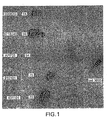
- Fig. 1 depicts a film resulting from the imaging of a compound of the present invention.
- Fig. 2 depicts brain and bone uptake of styrylpyridine 2 in comparison to a stilbene analog.
- Fig. 3 depicts film autoradiography comparing styrylpyridine 2 in comparison to a stilbene analog.
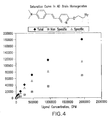
- Fig. 4 depicts a saturation curve of styrylpyridine 2 in AD brain homogenates.
- Fig. 5 depicts several compounds of the present invention and their respective binding data.
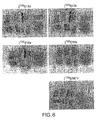
- Fig. 6 depicts in vitro autoradiography of macroarray brain sections.
- Fig. 7 depicts the in vitro stability of F-18 labeled tracers toward pooled human liver microsomal fractions. Tracers in PBS without microsomal fractions served as the control. Values (% of unchanged parent compound) were average of duplicates.
- Fig. 8 depicts specific binding of [ 18 F]2 to pooled AD and control brain tissue homogenates. Gray and white matters were dissected from the cortical regoins. High specific binding was detected mainly in gray matter. The values presented are the mean ⁇ SEM of six measurements. Relatively low binding was observed in white matter homogenates. In contrast, homogenates of control brain, either grey or white matters, showed significantly lower specific binding of [ 18 F]2.
- Fig. 9 depicts: (top) HPLC profile of compound [ 18 F]2; (bottom) UV trace of non-radioactive reference compound 2, (350 nm).
- HPLC condition Agilent 1100 series; Phenomenex Gemini C-18 column 5 ⁇ 250 x 4.6 mm, CH 3 CN/Ammonium formate buffer (1 mM) 8/2 v/v, 1 mL/min. Rt. 6.34 min (radioactive), 6.05 min (UV). Retention time gap was due to the detector configuration.
- a compound of Formula I or a pharmaceutically acceptable salt thereof; wherein, n is an integer from one to six; at least one, no more than three, of A 1 , A 2 , A 3 , A 4 and A 5 is N, the others are -CH or -CR 2 as permitted; R 1 is selected from the group consisting of:
- Preferred compounds include those where the halogen, in one or more occurrence on the structure, is a radiolabeled halogen. Also preferred are compounds wherein the halogen is selected from the group consisting of I, 123 I, 125 I, 131 I, Br, 76 Br, 77 Br, F or 18 F. Especially preferred compounds are those that contain 18 F. Compounds containing 123 I are also especially preferred.
- R 1 Useful values of R 1 are listed above. Preferred values are hydroxy or NR a R b (CH 2 ) p -, wherein p is an integer from 0 to 5, and R a and R b are independently hydrogen, C 1-4 alkyl or (CH 2 ) d X, where X is halogen, and d is an integer from 1 to 4
- Useful values of p include integers from 0 to 5.
- p is 0, 1 or 2.
- p is 0 such that R 1 represents NR a R b .
- R 1 is either in the meta or para position relative to the respective bridge.
- R 1 is NR a R b , wherein R a and R b are independently hydrogen or C 1-4 alkyl. In this embodiment, it is preferable that the C 1-4 alkyl is methyl. Preferably one of R a and R b is hydrogen, the other is C 1-4 alkyl, such as methyl. Most preferably, both R a and R b are methyl. Another preferred value of R 1 is hydroxy. Also preferred are any prodrug groups that after administration yield a preferred value of R 1 . Such prodrug groups are well-known in the art.
- n Useful values of n include integers from 1 to 6. Preferably, the value of n is from 1 to 4. Most preferably, the value of n is from 1 to 3. It is especially preferred that n is one.
- R 7 and R 8 are in each instance independently selected from the group consisting of hydrogen, hydroxy, amino, methylamino, dimethylamino, C 1-4 alkoxy, C 1-4 alkyl, and hydroxy(C 1-4 )alkyl.
- the value of n determines the number of R 7 and R 8 group(s) present in the compound. If present more than once in a particular compound, in each instance of R 7 and R 8 the value can be different from any other value of R 7 and R 8 .
- R 7 and R 8 are each hydrogen in every instance.
- R 2 Useful values of R 2 include substructures i, i', ii, ii', iii, iv, v, and vi, as depicted above. In preferred embodiments of Formula I, R 2 is either in the meta or para position relative to the respective bridge. Preferably, R 2 is substructure i or ii. Also preferred are substructures i' and ii'. In these embodiments, useful values of q include integers from one to ten. Preferably, in a compound where R 2 is i or i', q is an integer from 1 to 5. Most preferably, q is 1 to 4, especially 3 or 4.
- R 30 , R 31 , R 32 and R 33 independently include hydrogen, hydroxy, C 1-4 alkoxy, C 1-4 alkyl, and hydroxy(C 1-4 )alkyl.
- Preferred compounds include those where one or more of R 30 , R 31 , R 32 and R 33 are hydrogen. More preferred compounds include those where each of R 30 , R 31 , R 32 and R 33 is hydrogen.
- Useful compounds include those compounds where at least one, no more than three, of A 1 , A 2 , A 3 , A 4 and A 5 is N, and the others are -CH or -CR 2 as permitted. It is more preferred that N be in position A 4 .
- Preferred compounds of Formula I include those compounds wherein A 4 is N, having the following formula: wherein R a and R b are independently selected from hydrogen or C 1 -C 4 alkyl, Z is as described above and q is an integer from 1 to 5. Examples of preferred compounds include: wherein q is an integer from 1 to 4; such as,
- the present invention is directed to compounds of Formula I, having the following structure: or a pharmaceutically acceptable salt thereof, wherein: at least one, no more than three, of A 1 , A 2 , A 3 , A 4 and A 5 is N, the others are -CH, or -CR 2 as permitted; n is an integer from 1 to 6; R 1 includes all useful values described above, preferably hydroxy or NR a R b (CH 2 ) p -, wherein p is an integer from 0 to 5, and R a and R b are independently hydrogen, C 1-4 alkyl or (CH 2 ) d X, where X is halogen, and d is an integer from 1 to 6; R 2 is selected from the group consisting of:
- R P is hydrogen or a sulfhydryl protecting group
- R 9 R 10 , R 11 , R 12 , R 13 , R 14 , R 15 , R 16 , R 43 and R 44 are in each instance independently selected from the group consisting of hydrogen, hydroxy, amino, methylamino, dimethylamino, C 1-4 alkoxy, C 1-4 alkyl, and hydroxy(C 1-4 )alkyl.
- a metal such as 99m-Tc
- a rhenium radioisotope can be complexed with the tetradentate ligand, rather than technetium.
- R P are both hydrogen, or can be any of the variety of protecting groups available for sulfur, including methoxymethyl, methoxyethoxymethyl, p -methoxybenzyl or benzyl. Sulfur protecting groups are described in detail in Greene, T.W. and Wuts, P.G.M., Protective Groups in Organic Synthesis, 2nd Edition, John Wiley and Sons, Inc., New York (1991 ).
- Protecting group R P can be removed by appropriate methods well known in the art of organic synthesis, such as trifluoroacetic acid, mercuric chloride or sodium in liquid ammonia. In the case of Lewis acid labile groups, including acetamidomethyl and benzamidomethyl, R P can be left intact. Labeling of the ligand with technetium in this case will cleave the protecting group, rendering the protected diaminedithiol equivalent to the unprotected form.
- R 7 and R 8 are in each instance independently selected from the group consisting of hydrogen, hydroxy, amino, methylamino, dimethylamino, C 1-4 alkoxy, C 1-4 alkyl, and hydroxy(C 1-4 )alkyl.
- R 1 are hydroxy or NR a R b (CH 2 ) p -, wherein p is an integer from 0 to 5, and R a and R b are independently hydrogen, C 1-4 alkyl or (CH 2 ) d X, where X is halogen, and d is an integer from 1 to 4
- Useful values of p include integers from 0 to 5.
- p is 0, 1 or 2.
- R 1 is either in the meta or para position relative to the respective bridge.
- a preferred value of R 1 is NR a R b , wherein R a and R b are independently hydrogen or C 1-4 alkyl.
- the C 1-4 alkyl is methyl.
- one of R a and R b is hydrogen, the other is C 1-4 alkyl, such as methyl or both R a and R b are methyl.
- Another preferred value of R 1 is hydroxy.
- Also preferred for R 1 are any groups that after administration into the body metabolize or degrade to the preferred values of R 1 listed above. Such groups are known in the art to constitute a prodrug and the groups capable of forming prodrugs are well-known to one of ordinary skill in the art.
- n Useful values of n include integers from 1 to 6. Preferably, the value of n is from 1 to 4. Most preferably, the value of n is from 1 to 3. It is especially preferred that n is one.
- R 7 and R 8 are in each instance independently selected from the group consisting of hydrogen, hydroxy, amino, methylamino, dimethylamino, C 1-4 alkoxy, C 1-4 alkyl, and hydroxy(C 1-4 )alkyl.
- the value of n determines the number of R 7 and R 8 group(s) present in the compound. If present more than once in a particular compound, in each instance of R 7 and R 8 the value can be different from any other value of R 7 and R 8 .
- R 7 and R 8 are each hydrogen in every instance.
- R 2 Useful values of R 2 include substructures i, i', ii, iii and iii' as depicted above. In preferred embodiments of Formula I, R 2 is either in the meta or para position relative to the respective bridge. Preferably, in a compound where R 2 is i or i', q is an integer from 2 to 5. Most preferably, q is 3 or 4.
- useful values of R 30 , R 31 , R 32 and R 33 independently include hydrogen, hydroxy, C 1-4 alkoxy, C 1-4 alkyl, and hydroxy(C 1-4 )alkyl. Preferred compounds include those where one or more of R 30 , R 31 , R 32 and R 33 are hydrogen. More preferred compounds include those where each of R 30 , R 31 , R 32 and R 33 is hydrogen.
- Useful compounds include those compounds where one, no more than three, of A 1 , A 2 , A 3 , A 4 and A 5 is N, and the others are -CH or -CR 2 as permitted. It is preferred that if only one of A 1 , A 2 , A 3 , A 4 and A 5 is N, that it is A 4 .
- the present invention is directed to a compound of Formula II, having the following structure: or a pharmaceutically acceptable salt thereof, wherein: at least one, no more than three, of A 1 , A 2 , A 3 , A 4 and A 5 is N, the others are -CH, -CR 3 or -CR 4 as permitted; R 5 and R 5' are independently hydrogen or C 1-4 alkyl; R 1 and R 2 , in each instance, is independently selected from the group consisting of hydrogen, halogen, C 1-4 alkyl, cyano, carboxy(C 1-5 )alkyl, trifluoromethyl, nitro, halo(C 1-4 )alkyl, formyl and NR 6 R 7 (CH 2 ) p -, wherein p is an integer from 0 to 5, and R 6 and R 7 are independently hydrogen, C 1-4 alkyl or (CH 2 ) d X, where X is halogen, and d is an integer from 1 to 4; in addition to the values listed above
- R 5 and R 5' include all the values listed above.
- R 5 and R 5' are independently hydrogen or a C 1-4 alkyl such as methyl.
- R 1 and R 2 are independently hydroxy, monomethylamine or dimethylamine.
- R 3 is hydrogen, 18 Fluoromethyl, 18 Fluoroethyl, 18 Fluoropropyl, 125 I, 123 I, 131 I or 18 F.
- R 1 and R 2 include all the values listed above.
- R 1 and R 2 are independently hydrogen or a C 1-4 alkyl such as methyl.
- R 4 is methylthio, methylsulfonyl, hydroxy, methoxy or NR 6 R 7 (CH 2 ) p -.
- Useful values of X' include all those listed above. Preferred values include hydrogen, 18 Fluoromethyl, 18 Fluoroethyl or 18 Fluoropropyl, 125 I, 123 I, 131 I and 18 F.
- Representative compounds of the present invention include: wherein -Ch is an N 2 S 2 type chelating moiety, X, q, R a , R b , R 7 , R 8 , R 30 , R 31 , R 32 and R 33 are as described above. Most preferably, R a and R b are both methyl.
- compounds of Formula I'a having the following general structure: wherein at least one, no more than three, of A 1 , A 2 , A 3 , A 4 and A 5 is N, the others are -CH; q is an integer from 1 to 10; R' and R" are each independently hydrogen or C 1-4 alkyl and X is a radiolabeled halogen or -Ch moiety.
- An example of these compounds include compounds of Formula Ia having the following structure: wherein at least one, no more than three, of A 1 , A 2 , A 3 , A 4 and A 5 is N, the others are -CH; q is an integer from 1 to 10; and X is a radiolabeled halogen or -Ch moiety.
- a mono or di C 1-4 alkylamino more preferably monomethylamino or dimethylamino and PEG substituents are in the para position relative to the ethylene bridge.
- a 4 is N
- a 1 , A 2 , A 3 and A 5 are each -CH.
- Preferred values of q are integers from 2 to 5; and especially preferred values are 3 and 4.
- Preferred values of X include 123 I and 18 F. The most preferred value of X is 18 F.
- n is an integer from one to six; at least one, no more than three, of A 1 , A 2 , A 3 , A 4 and A 5 is N, the others are -CH, -CR 2 or -CR 3 as permitted;
- R 1 includes all the useful values listed above under Formula I, preferably hydroxy or NR a R b (CH 2 ) p -, wherein p is an integer from 0 to 5, and R a and R b are independently hydrogen, C 1-4 alkyl or (CH 2 ) d X, where X is halogen, and d is an integer from 1 to 4,
- R 3 is selected from the group of 125 I, 123 I, 131 I, 18 F, 18 F(C 1 -C 4 ) alkyl, 76 Br, 77 Br or Sn(alkyl) 3 ;
- R 2 is selected from the group consisting of:
- R 7 and R 8 are in each instance independently selected from the group consisting of hydrogen, hydroxy, amino, methylamino, dimethylamino, C 1-4 alkoxy, C 1-4 alkyl, and hydroxy(C 1-4 )alkyl.
- Preferred compounds include those where the halogen, in one or more occurrence on the structure, is a radiolabeled halogen. Also preferred are compounds wherein the halogen is selected from the group consisting of I, 123 I, 125 I, 131 I, Br, 76 Br, 77 Br, F or 18 F. Especially preferred compounds are those that contain 18 F. Compounds containing 123 I are also especially preferred.
- R 1 Useful values of R 1 are listed above. Preferred values are hydroxy or NR a R b (CH 2 ) p -, wherein p is an integer from 0 to 5, and R a and R b are independently hydrogen, C 1-4 alkyl or (CH 2 ) d X, where X is halogen, and d is an integer from 1 to 4
- Useful values of p include integers from 0 to 5.
- p is 0, 1 or 2.
- p is 0 such that R 1 represents NR a R b .
- R 1 is either in the meta or para position relative to the respective bridge.
- R 1 is NR a R b , wherein R a and R b are independently hydrogen or C 1-4 alkyl. In this embodiment, it is preferable that the C 1-4 alkyl is methyl. Preferably one of R a and R b is hydrogen, the other is C 1-4 alkyl, such as methyl. Most preferably, both R a and R b are methyl. Another preferred value of R 1 is hydroxy. Also preferred for R 1 are any groups that after administration into the body metabolize or degrade to the preferred values of R 1 listed above. Such groups are known in the art to constitute a prodrug and the groups capable of forming prodrugs are well-known to one of ordinary skill in the art.
- n Useful values of n include integers from 1 to 6. Preferably, the value of n is from 1 to 4. Most preferably, the value of n is from 1 to 3. It is especially preferred that n is one.
- R 7 and R 8 are in each instance independently selected from the group consisting of hydrogen, hydroxy, amino, methylamino, dimethylamino, C 1-4 alkoxy, C 1-4 alkyl, and hydroxy(C 1-4 )alkyl.
- the value of n determines the number of R 7 and R 8 group(s) present in the compound. If present more than once in a particular compound, in each instance of R 7 and R 8 the value can be different from any other value of R 7 and R 8 .
- R 7 and R 8 are each hydrogen in every instance.
- R 2 Useful values of R 2 include substructures i, i', ii, ii', iii, iv, v, and vi, as depicted above. In preferred embodiments of Formula I, R 2 is either in the meta or para position relative to the respective bridge. Preferably, R 2 is substructure i or ii. Also preferred are substructures i' and ii'. In these embodiments, useful values of q include integers from one to ten. Preferably, in a compound where R 2 is i or i', q is an integer from 1 to 5. Most preferably, q is 1 to 4, especially 3 or 4.
- R 30 , R 31 , R 32 and R 33 independently include hydrogen, hydroxy, C 1-4 alkoxy, C 1-4 alkyl, and hydroxy(C 1-4 )alkyl.
- Preferred compounds include those where one or more of R 30 , R 31 , R 32 and R 33 are hydrogen. More preferred compounds include those where each of R 30 , R 31 , R 32 and R 33 is hydrogen.
- Useful compounds include those compounds where at least one, no more than three, of A 1 , A 2 , A 3 , A 4 and A 5 is N, and the others are -CH or -CR 2 as permitted. It is more preferred that N be in position A 4 .
- Particularly useful compounds of Formula III include those compounds where A 4 is N, and the others are -CH, -CR 2 or -CR 3 as permitted.
- Especially preferred compounds of Formula III wherein A 4 is N include the following: wherein R a and R b are independently selected from hydrogen or C 1 -C 4 alkyl and q is an integer from 1 to 4 and R 3 is preferably 123 I or 18 F;
- R 2 is ii
- Y is selected from the group consisting of hydrogen and F.
- Compounds of Formula III when R 2 is i, or i' when t is 0, include hydroxy ethers such as: wherein R 1 and R 3 are as described above under Formula III.
- the compounds have the following general structure wherein there is at least one carbon-carbon bond between a substituent and the nitrogen-containing ring:
- the compounds of the present invention can also contain a radioactive isotope of carbon as the radiolabel.
- a radioactive isotope of carbon refers to a compound that comprises one or more radioactive carbon atoms, preferably 11 C, with a specific activity above that of the background level for that atom.
- naturally occurring elements are present in the form of varying isotopes, some of which are radioactive isotopes.
- the radioactivity of the naturally occurring elements is a result of the natural distribution or abundance of these isotopes, and is commonly referred to as a background level.
- the carbon labeled compounds of the present invention have a specific activity that is higher than the natural abundance, and therefore above the background level.
- the composition claimed herein comprising a carbon-labeled compound(s) of the present invention will have an amount of the compound such that the composition can be used for tracing, imaging, radiotherapy, and the like.
- a halogen, preferably 18 F, or a chelating agent is linked to the styrylpyridine backbone through a PEG chain, having a variable number of ethoxy groups.
- the fluorinated styrylpyridine, 2, displayed high binding affinity (Ki 2.5 ⁇ 0.4 nM).
- the dimethylamino analog showed the greatest affinity. This is in contrast to stilbene analogs, which tend to possess higher affinity when monomethylamino substituted.
- radiolabeling was successfully performed giving the target compounds.
- Preferable values under the scope of C 6-10 aryl include phenyl, naphthyl or tetrahydronaphthyl.
- Preferable values of under the scope of heteroaryl include thienyl, furyl, pyranyl, pyrrolyl, pyridinyl, indolyl, and imidazolyl.
- Preferable values under the scope of heterocycle include piperidinyl, pyrrolidinyl, and morpholinyl.
- a preferred embodiment of a C 6-10 aryl, heteroaryl, heterocycle, heterocycle(C 1-4 )alkyl or C 3-6 cycloalkyl contains a ring substituted with one of the following: C 1-4 alkylthio, C 1-4 alkyl sulfonyl, methoxy, hydroxy, dimethylamino or methylamino.
- the compounds of Formulae I, Ia, II, and III may also be solvated, especially hydrated. Hydration may occur during manufacturing of the compounds or compositions comprising the compounds, or the hydration may occur over time due to the hygroscopic nature of the compounds.
- the compounds of the present invention can exist in unsolvated as well as solvated forms with pharmaceutically acceptable solvents such as water, ethanol, and the like. In general, the solvated forms are considered equivalent to the unsolvated forms for the purposes of the present invention.
- alkyl as employed herein by itself or as part of another group refers to both straight and branched chain radicals of up to 8 carbons, preferably 6 carbons, more preferably 4 carbons, such as methyl, ethyl, propyl, isopropyl, butyl, t -butyl, and isobutyl.
- alkoxy is used herein to mean a straight or branched chain alkyl radical, as defined above, unless the chain length is limited thereto, bonded to an oxygen atom, including, but not limited to, methoxy, ethoxy, n- propoxy, isopropoxy, and the like.
- the alkoxy chain is 1 to 6 carbon atoms in length, more preferably 1-4 carbon atoms in length.
- dialkylamine as employed herein by itself or as part of another group refers to an amino group which is substituted with two alkyl groups as defined above.
- halo or halogen employed herein by itself or as part of another group refers to chlorine, bromine, fluorine or iodine and their isotopes.
- radiationohalogen refers specifically to radioactive halogen isotopes.
- haloalkyl refers to any of the above alkyl groups substituted by one or more chlorine, bromine, fluorine or iodine with fluorine and chlorine being preferred, such as chloromethyl, iodomethyl, trifluoromethyl, 2,2,2-trifluoroethyl, and 2-chloroethyl.
- alkylthio as employed herein by itself or as part of another group refers to a thioether of the structure: R-S, wherein R is a C 1-4 alkyl as defined above.
- alkylsulfonyl as employed herein by itself or as part of another group refers to a sulfone of the structure: R-SO 2 , wherein R is a C 1-4 alkyl as defined above.
- aryl as employed herein by itself or as part of another group refers to monocyclic or bicyclic aromatic groups containing from 6 to 12 carbons in the ring portion, preferably 6-10 carbons in the ring portion, such as phenyl, naphthyl or tetrahydronaphthyl.
- heterocycle or "heterocyclic ring”, as used herein except where noted, represents a stable 5- to 7- membered mono-heterocyclic ring system which may be saturated or unsaturated, and which consists of carbon atoms and from one to three heteroatoms selected from the group consisting of N, O, and S, and wherein the nitrogen and sulfur heteroatom may optionally be oxidized.
- rings contain one nitrogen combined with one oxygen or sulfur, or two nitrogen heteroatoms.
- heterocyclic groups include piperidinyl, pyrrolyl, pyrrolidinyl, imidazolyl, imidazinyl, imidazolidinyl, pyridyl, pyrazinyl, pyrimidinyl, oxazolyl, oxazolidinyl, isoxazolyl, isoxazolidinyl, thiazolyl, thiazolidinyl, isothiazolyl, homopiperidinyl, homopiperazinyl, pyridazinyl, pyrazolyl, and pyrazolidinyl, most preferably thiamorpholinyl, piperazinyl, and morpholinyl.
- heteroatom is used herein to mean an oxygen atom ("O"), a sulfur atom (“S”) or a nitrogen atom (“N”). It will be recognized that when the heteroatom is nitrogen, it may form an NRR moiety, wherein the R groups independently from one another may be hydrogen or C 1-4 alkyl, C 2-4 aminoalkyl, C 1-4 halo alkyl, halo benzyl, or R 1 and R 2 are taken together to form a 5- to 7-member heterocyclic ring optionally having O, S or NR c in said ring, where R c is hydrogen or C 1-4 alkyl.
- heteroaryl refers to groups having 5 to 14 ring atoms; 6, 10 or 14 ⁇ electrons shared in a cyclic array; and containing carbon atoms and 1, 2, 3 or 4 oxygen, nitrogen or sulfur heteroatoms (where examples of heteroaryl groups are: thienyl, benzo[b]thienyl, naphtho[2,3-b]thienyl, thianthrenyl, furyl, pyranyl, isobenzofuranyl, benzoxazolyl, chromenyl, xanthenyl, phenoxathiinyl, 2 H -pyrrolyl, pyrrolyl, imidazolyl, pyrazolyl, pyridyl, pyrazinyl, pyrimidinyl, pyridazinyl, indolizinyl, isoindolyl, 3 H -indolyl, indolyl, indazolyl, puriny
- aralkyl or "arylalkyl” as employed herein by itself or as part of another group refers to C 1-6 alkyl groups as discussed above having an aryl substituent, such as benzyl, phenylethyl or 2-naphthylmethyl.
- Another aspect of this invention is related to methods of preparing compounds of Formulae I, Ia, II and III.
- the tosylate 10 (Scheme 3) was used as the precursor.
- the preparation of 10 started with a microwave-assisted alkylation of 3 with triethylene glycol in DMF to obtain compound 7 (yield 77 %).
- the nitro group of 7 was then reduced to amine using stannous chloride to give compound 8 (yield 76 %) then followed by a dimethylation using paraformaldehyde, sodium cyanoborohydride in acetic acid to obtain compound 9 in a high yield (95 %).
- Mesylation of 9 was tried first, however, the mesylate of 9 was very unstable and decomposed during the preparation.
- Tosylation of 9 was accomplished successfully using tosylchloride in pyridine to give desired tosylate 10 (yield 41 %) as the precursor for making radiolabeled [ 18 F] 2 .
- Schemes 5-7 depict a synthetic route for compounds of Formula III.
- Scheme 5 depicts a synthesis of several intermediates useful for preparing the compounds of the invention.
- Scheme 6 and 7 depict the synthesis of radiolabeled and non-radiolabeled compounds of the invention.
- I7-I10 "I" in the compound name means "intermediate.”
- Tc-99m complexes can be prepared as follows. A small amount of non-radiolabeled compound (1-2 mg) is dissolved in 100 ⁇ L EtOH and mixed with 200 ⁇ L HCl (1 N) and 1 mL Sn-glucoheptonate solution (containing 8-32 ⁇ g SnCl 2 and 80-320 ⁇ g Na-glucoheptonate, pH 6.67) and 50 ⁇ L EDTA solution (0.1 N). [ 99m Tc]Pertechnetate (100-200 ⁇ L; ranging from 2-20 mCi) saline solution are then added. The reaction is heated for 30 min at 100E C, then cooled to room temperature. The reaction mixture is analyzed on TLC (EtOH:conc. NH 3 9:1) for product formation and purity check. The mixture can be neutralized with phosphate buffer to pH 5.0.
- the present invention further relates to a method of preparing a technetium-99m complex according to the present invention by reacting technetium-99m in the form of a pertechnetate in the presence of a reducing agent and optionally a suitable chelator with an appropriate Ch-containing compound.
- the reducing agent serves to reduce the Tc-99m pertechnetate which is eluted from a molybdenum-technetium generator in a physiological saline solution.
- Suitable reducing agents are, for example, dithionite, formamidine sulphinic acid, diaminoethane disulphinate or suitable metallic reducing agents such as Sn(II), Fe(II), Cu(I), Ti(III) or Sb(III). Sn(II) has proven to be particularly suitable.
- technetium-99m is reacted with an appropriate compound of the invention as a salt or in the form of technetium bound to comparatively weak chelators.
- the desired technetium-99m complex is formed by ligand exchange.
- suitable chelators for the radionuclide are dicarboxylic acids, such as oxalic acid, malonic acid, succinic acid, maleic acid, orthophtalic acid, malic acid, lactic acid, tartaric acid, citric acid, ascorbic acid, salicylic acid or derivatives of these acids; phosphorus compounds such as pyrophosphates; or enolates.
- Citric acid, tartaric acid, ascorbic acid, glucoheptonic acid or a derivative thereof are particularly suitable chelators for this purpose, because a chelate of technetium-99m with one of these chelators undergoes the desired ligand exchange particularly easily.
- the most commonly used procedure for preparing [Tc v O] +3 N 2 S 2 complexes is based on stannous (II) chloride reduction of [ 99m Tc]pertechnetate, the common starting material.
- the labeling procedure normally relies on a Tc-99m ligand exchange reaction between Tc-99m (Sn)-glucoheptonate and the N 2 S 2 ligand.
- Preparation of stannous (II) chloride and preserving it in a consistent stannous (II) form is critically important for the success of the labeling reaction.
- stannous ion is in a lyophilized powder form mixed with an excess amount of glucoheptonate under an inert gas like nitrogen or argon.
- the preparation of the lyophilized stannous chloride/sodium glucoheptonate kits ensures that the labeling reaction is reproducible and predictable.
- the N 2 S 2 ligands are usually air-sensitive (thiols are easily oxidized by air) and there are subsequent reactions which lead to decomposition of the ligands.
- the most convenient and predictable method to preserve the ligands is to produce lyophilized kits containing 100-500 ⁇ g of the ligands under argon or nitrogen.
- the compounds of this invention When the compounds of this invention are to be used as imaging agents, they must be labeled with suitable radioactive halogen isotopes.
- 125 I-isotopes are useful for laboratory testing, they will generally not be useful for actual diagnostic purposes because of the relatively long half-life (60 days) and low gamma-emission (30-65 Kev) of 125 I.
- the isotope 123 I has a half life of thirteen hours and gamma energy of 159 KeV, and it is therefore expected that labeling of ligands to be used for diagnostic purposes would be with this isotope.
- Other isotopes which may be used include 131 I (half life of 2 hours).
- Suitable bromine isotopes include 77 Br and 76 Br.
- Kits for forming the imaging agents can contain, for example, a vial containing a physiologically suitable solution of an intermediate of Formula I, Ia, II or III in a concentration and at a pH suitable for optimal complexing conditions.
- the user would add to the vial an appropriate quantity of the radioisotope, e.g., Na 123 I, and an oxidant, such as hydrogen peroxide.
- the resulting labeled ligand may then be administered intravenously to a patient, and receptors in the brain imaged by means of measuring the gamma ray or photo emissions therefrom.
- the present invention also relates to a kit, comprising:
- the pertechnetate solution can be obtained by the user from a molybdenum-technetium generator. Such generators are available in a number of institutions that perform radiodiagnostic procedures. As noted above the ingredients (1) and (2) may be combined, provided they are compatible. Such a monocomponent kit, in which the combined ingredients are preferably lyophilized, is excellently suitable to be reacted by the user with the pertechnetate solution in a simple manner.
- the radioactive diagnostic agent may contain any additive such as pH controlling agents (e.g., acids, bases, buffers), stabilizers (e.g., ascorbic acid) or isotonizing agents (e.g., sodium chloride).
- pH controlling agents e.g., acids, bases, buffers
- stabilizers e.g., ascorbic acid
- isotonizing agents e.g., sodium chloride
- pharmaceutically acceptable salt refers to those carboxylate salts or acid addition salts of the compounds of the present invention which are, within the scope of sound medical judgment, suitable for use in contact with the tissues of patients without undue toxicity, irritation, allergic response, and the like, commensurate with a reasonable benefit/risk ratio, and effective for their intended use, as well as the zwitterionic forms, where possible, of the compounds of the invention.
- salts refers to the relatively nontoxic, inorganic and organic acid addition salts of compounds of the present invention.
- salts derived from non-toxic organic acids such as aliphatic mono and dicarboxylic acids, for example acetic acid, phenyl-substituted alkanoic acids, hydroxy alkanoic and alkanedioic acids, aromatic acids, and aliphatic and aromatic sulfonic acids.
- aliphatic mono and dicarboxylic acids for example acetic acid, phenyl-substituted alkanoic acids, hydroxy alkanoic and alkanedioic acids, aromatic acids, and aliphatic and aromatic sulfonic acids.
- These salts can be prepared in situ during the final isolation and purification of the compounds or by separately reacting the purified compound in its free base form with a suitable organic or inorganic acid and isolating the salt thus formed.
- Further representative salts include the hydrobromide, hydrochloride, sulfate, bisulfate, nitrate, acetate, oxalate, valerate, oleate, palmitate, stearate, laurate, borate, benzoate, lactate, phosphate, tosylate, citrate, maleate, fumarate, succinate, tartrate, naphthylate mesylate, glucoheptonate, lactiobionate and laurylsulphonate salts, propionate, pivalate, cyclamate, isethionate, and the like.
- alkali and alkaline earth metals such as sodium, lithium, potassium, calcium, magnesium, and the like
- nontoxic ammonium, quaternary ammonium and amine cations including, but not limited to ammonium, tetramethylammonium, tetraethylammonium, methylamine, dimethylamine, trimethylamine, triethylamine, ethylamine, and the like.
- ammonium, tetramethylammonium, tetraethylammonium, methylamine, dimethylamine, trimethylamine, triethylamine, ethylamine, and the like See, for example, Berge S. M., et al., Pharmaceutical Salts, J. Pharm. Sci. 66:1-19 (1977 ) which is incorporated herein by reference.
- a labeled compound of Formula I, Ia, II or III is introduced into a tissue or a patient in a detectable quantity.
- the compound is typically part of a pharmaceutical composition and is administered to the tissue or the patient by methods well known to those skilled in the art.
- the administration of the labeled compound to a patient can be by a general or local administration route.
- the compound can be administered either orally, rectally, parenterally (intravenous, by intramuscularly or subcutaneously), intracisternally, intravaginally, intraperitoneally, intravesically, locally (powders, ointments or drops), or as a buccal or nasal spray.
- the labeled compound may be administered to the patient such that it is delivered throughout the body.
- the labeled compound can be administered to a specific organ or tissue of interest. For example, it is desirable to locate and quantitate amyloid deposits in the brain in order to diagnose or track the progress of Alzheimer's disease in a patient.
- One of the most desirable characteristics of an in vivo imaging agent of the brain is the ability to cross the intact blood-brain barrier after a bolus iv injection.
- the labeled compound is introduced into a patient in a detectable quantity and after sufficient time has passed for the compound to become associated with amyloid deposits, the labeled compound is detected noninvasively inside the patient.
- a radiolabeled compound of Formula I, Ia, II or III is introduced into a patient, sufficient time is allowed for the compound to become associated with amyloid deposits, and then a sample of tissue from the patient is removed and the labeled compound in the tissue is detected apart from the patient.
- a tissue sample is removed from a patient and a labeled compound of Formula I, Ia, II or III is introduced into the tissue sample. After a sufficient amount of time for the compound to become bound to amyloid deposits, the compound is detected.
- tissue means a part of a patient's body. Examples of tissues include the brain, heart, liver, blood vessels, and arteries.
- a detectable quantity is a quantity of labeled compound necessary to be detected by the detection method chosen. The amount of a labeled compound to be introduced into a patient in order to provide for detection can readily be determined by those skilled in the art. For example, increasing amounts of the labeled compound can be given to a patient until the compound is detected by the detection method of choice. A label is introduced into the compounds to provide for detection of the compounds.
- patient means humans and other animals. Those skilled in the art are also familiar with determining the amount of time sufficient for a compound to become associated with amyloid deposits. The amount of time necessary can easily be determined by introducing a detectable amount of a labeled compound of Formula I, Ia, II or III into a patient and then detecting the labeled compound at various times after administration.
- association means a chemical interaction between the labeled compound and the amyloid deposit. Examples of associations include covalent bonds, ionic bonds, hydrophilic-hydrophilic interactions, hydrophobic-hydrophobic interactions, and complexes.
- MRI magnetic resonance imaging
- PET positron emission tomography
- SPECT single photon emission computed tomography
- the label that is introduced into the compound will depend on the detection method desired. For example, if PET is selected as a detection method, the compound must possess a positron-emitting atom, such as 11 C or 18 F.
- the radioactive diagnostic agent should have sufficient radioactivity and radioactivity concentration which can assure reliable diagnosis.
- the radioactive metal being technetium-99m, it may be included usually in an amount of 0.1 to 50 mCi in about 0.5 to 5.0 ml at the time of administration.
- the amount of a compound of Formula I, Ia, II or III may be such as sufficient to form a stable chelate compound with the radioactive metal.
- the radioactive diagnostic agent may contain any additive such as pH controlling agents (e.g., acids, bases, buffers), stabilizers (e.g., ascorbic acid) or isotonizing agents (e.g., sodium chloride).
- pH controlling agents e.g., acids, bases, buffers
- stabilizers e.g., ascorbic acid
- isotonizing agents e.g., sodium chloride
- the imaging of amyloid deposits can also be carried out quantitatively so that the amount of amyloid deposits can be determined.
- Preferred compounds for imaging include a radioisotope such as 11 C, 123 I , 125 I , 131 I, 18 F, 76 Br or 77 Br.
- Another aspect of the invention is a method of inhibiting amyloid plaque aggregation.
- the present invention also provides a method of inhibiting the aggregation of amyloid proteins to form amyloid deposits, by administering to a patient an amyloid inhibiting amount of a compound of the above Formula I, Ia, II or III.
- an amyloid inhibiting amount by simply administering a compound of Formula I, Ia, II or III to a patient in increasing amounts until the growth of amyloid deposits is decreased or stopped.
- the rate of growth can be assessed using imaging as described above or by taking a tissue sample from a patient and observing the amyloid deposits therein.
- the compounds of the present invention can be administered to a patient at dosage levels in the range of about 0.1 to about 1,000 mg per day. For a normal human adult having a body weight of about 70 kg, a dosage in the range of about 0.01 to about 100 mg per kilogram of body weight per day is sufficient.
- the specific dosage used can vary. For example, the dosage can depend on a number of factors including the requirements of the patient, the severity of the condition being treated, and the pharmacological activity of the compound being used. The determination of optimum dosages for a particular patient is well known to those skilled in the art.
- standard workup refers to the following steps: addition of indicated organic solvent, washing the organic layer with water then brine, separation of the organic layer from the aqueous layer, drying off the combined the organic layers with anhydrous sodium sulfate, filtering off the sodium sulfate and removing the organic solvent under reduced pressure.
- 2-(2-(2-fluoroethoxy)-ethoxy)-ethanol a (60 mg, 0.39 mmol) was added into a mixture of sodium hydride (26.4 mg, 60 % dispersion in mineral oil, 0.66 mmol) in anhydrous DMF (5 ml) at 0 °C. The mixture was stirred at room temperature for half an hour and compound 3 (85.7 mg, 0.33 mmol) was added. The reaction mixture was then heated to 100 °C for 2 hours and cooled down. Ethyl acetate and water was added, organic layer was separated, washed with brine, dried over anhydrous sodium sulfate and evaporated.
- Compound 11c was prepared from 4-N-methyl-4- N -(tert-butyloxycarbonyl)aminostyrene (0.219 g, 0.94 mmol) and I9 (0.273 g, 0.63 mmol) as a white viscous liquid (0.319 g, 94% yield).
- Compound 14a was prepared from 4-dimethylaminostyrene (0.031 g, 0.212 mmol) and I10 (0.073 g, 0.212 mmol) as a light yellow solid (0.022 g, 29% yield).
- Compound 14b was prepared from 4-methylaminostyrene (0.140 g, 1.05 mmol) and I10 (0.241 g, 0.7 mmol) as a light yellow viscous liquid (0.149 g, 61% yield).
- Compound 16a was prepared from 15a (0.011 g, 0.019 mmol) as a light yellow solid (0.004 g, 50%).
- HRMS calcd for C 17 H 19 IN 2 O 2 (M + ), 410.0491; found, 410.0489.
- Radioiodinated compounds [ 125 I] 13a, 13b, 16a, 16b and 16e, were prepared via iododestannylation reactions from the corresponding tributyltin precursors according to the method described previously (ref).
- Hydrogen peroxide 50 ⁇ L, 3% w/v was added to a mixture of 50 ⁇ L of the tributyltin precursor (4 ⁇ g/ ⁇ L EtOH), 50 ⁇ L of 1N HCl and [ 125 I]NaI (1-5 mCi purchased from Perkin Elmer) in a sealed vial.
- the reaction was allowed to proceed for 5-10 min at room temperature and terminated by addition of 100 ⁇ L of sat. NaHSO 3 .
- the reaction mixture was extracted with ethyl acetate (3 x 1mL) after neutralization with 1.5 mL of saturated sodium bicarbonate solution. The combined extracts were evaporated to dryness. The residues were dissolved in 100 ⁇ L of EtOH and purified by HPLC using a reversed-phase column (Phenomenex Gemini C18 analytical column , 4.6 x 250 mm, 5 ⁇ m, CH 3 CN/Ammonium formate buffer (1 mM) 8/2 or 7/3; flow rate 0.5-1.0 mL/min). The no-carrier-added products were evaporated to dryness and redissolved in 100% EtOH (1 ⁇ Ci/ ⁇ L) to be stored at-20 °C up to 6 weeks for animal studies and autoradiography studies.
- [ 125 I]IMPY with 2,200 Ci/mmol specific activity and greater than 95% radiochemical purity was prepared using the standard iododestannylation reaction, and purified by a simplified C-4 mini-column as described previously in Kung, M.-P.; Hou, C.; Zhuang, Z.-P.; Cross, A. J.; Maier, D. L.; Kung, H. F., "Characterization of IMPY as a potential imaging agent for b-amyloid plaques in double transgenic PSAPP mice.” Eur. J. Nucl. Med. Mol. Imaging 2004, 31,1136-1145 . Competition binding assays were carried out in 12 x 75 mm borosilicate glass tubes.
- the reaction mixture contained 50 ⁇ l of pooled AD brain homogenates (20-50 ⁇ g), 50 ⁇ l of [ 125 I]IMPY (0.04-0.06 nM diluted in PBS) and 50 ⁇ l of inhibitors (10 -5 -10 -10 M diluted serially in PBS containing 0.1 % bovine serum albumin) in a final volume of 1 ml.
- Nonspecific binding was defined in the presence of 600 nM IMPY in the same assay tubes.
- the mixture was incubated at 37°C for 2 h and the bound and the free radioactivity were separated by vacuum filtration through Whatman GF/B filters using a Brandel M-24R cell harvester followed by 2 x 3 ml washes of PBS at room temperature.
- [ 18 F]tracers Brain sections from AD subjects were obtained by freezing the brain in powdered dry ice and cut into 20 micrometer-thick sections. The sections were incubated with [ 18 F]tracers (200,000-250,000 cpm/200 ⁇ l) for 1 hr at room temperature. The sections were then dipped in saturated Li 2 CO3 in 40% EtOH (two two-minute washes) and washed with 40% EtOH (one two-minute wash) followed by rinsing with water for 30 sec. After drying, the 18 F-labeled sections were exposed to Kodak MR film overnight. The results are depicted in the film in Fig. 2 .
- [ 125 I]tracers To compare different probes using similar sections of human brain tissue, human macro-array brain sections from 6 confirmed AD cases and one control subject were assembled. The presence and localization of plaques on the sections was confirmed with immunohistochemical staining with monoclonal A ⁇ antibody 4G8 (Sigma). The sections were incubated with [ 125 I]tracers (200,000-250,000 cpm/200 ⁇ L) for 1 h at room temperature. The sections were then dipped in saturated Li 2 CO 3 in 40% EtOH (two two-minute washes) and washed with 40% EtOH (one two-minute wash) followed by rinsing with water for 30 sec. After drying, the 125 I-labeled sections were exposed to Kodak Biomax MR film overnight.
Landscapes
- Health & Medical Sciences (AREA)
- Chemical & Material Sciences (AREA)
- Organic Chemistry (AREA)
- Life Sciences & Earth Sciences (AREA)
- Public Health (AREA)
- Pharmacology & Pharmacy (AREA)
- Veterinary Medicine (AREA)
- Animal Behavior & Ethology (AREA)
- Medicinal Chemistry (AREA)
- General Health & Medical Sciences (AREA)
- Nuclear Medicine, Radiotherapy & Molecular Imaging (AREA)
- Bioinformatics & Cheminformatics (AREA)
- General Chemical & Material Sciences (AREA)
- Chemical Kinetics & Catalysis (AREA)
- Engineering & Computer Science (AREA)
- Diabetes (AREA)
- Optics & Photonics (AREA)
- Epidemiology (AREA)
- Physics & Mathematics (AREA)
- Proteomics, Peptides & Aminoacids (AREA)
- Neurology (AREA)
- Hematology (AREA)
- Biomedical Technology (AREA)
- Neurosurgery (AREA)
- Heart & Thoracic Surgery (AREA)
- Cardiology (AREA)
- Obesity (AREA)
- Physical Education & Sports Medicine (AREA)
- Emergency Medicine (AREA)
- Communicable Diseases (AREA)
- Oncology (AREA)
- Orthopedic Medicine & Surgery (AREA)
- Urology & Nephrology (AREA)
- Endocrinology (AREA)
- Psychiatry (AREA)
- Hospice & Palliative Care (AREA)
- Vascular Medicine (AREA)
- Medicines Containing Antibodies Or Antigens For Use As Internal Diagnostic Agents (AREA)
- Pyridine Compounds (AREA)
- Pharmaceuticals Containing Other Organic And Inorganic Compounds (AREA)
Abstract
Description
- This invention relates to novel styrylpyridine compounds, the uses thereof in diagnostic imaging and inhibiting amyloid-β aggregation, and methods of making these compounds.
- Alzheimer's disease (AD) is a progressive neurodegenerative disorder characterized by cognitive decline, irreversible memory loss, disorientation, and language impairment. Postmortem examination of AD brain sections reveals abundant senile plaques (SPs) composed of amyloid-β (Aβ) peptides and numerous neurofibrillary tangles (NFTs) formed by filaments of highly phosphorylated tau proteins (for recent reviews and additional citations see Ginsberg, S. D., et al., "Molecular Pathology of Alzheimer's Disease and Related Disorders," in Cerebral Cortex: Neurodegenerative and Age-related Changes in Structure and Function of Cerebral Cortex, Kluwer Academic/Plenum, NY (1999), pp. 603-654; Vogelsberg-Ragaglia, V., et al., "Cell Biology of Tau and Cytoskeletal Pathology in Alzheimer's Disease," Alzheimer's Disease, Lippincot, Williams & Wilkins, Philadelphia, PA (1999), pp. 359-372).
- Amyloidosis is a condition characterized by the accumulation of various insoluble, fibrillar proteins in the tissues of a patient. An amyloid deposit is formed by the aggregation of amyloid proteins, followed by the further combination of aggregates and/or amyloid proteins. Formation and accumulation of aggregates of β-amyloid (Aβ) peptides in the brain are critical factors in the development and progression of AD.
- In addition to the role of amyloid deposits in Alzheimer's disease, the presence of amyloid deposits has been shown in diseases such as Mediterranean fever, Muckle-Wells syndrome, idiopathic myeloma, amyloid polyneuropathy, amyloid cardiomyopathy, systemic senile amyloidosis, amyloid polyneuropathy, hereditary cerebral hemorrhage with amyloidosis, Down's syndrome, Scrapie, Creutzfeldt-Jacob disease, Kuru, Gerstamnn-Straussler-Scheinker syndrome, medullary carcinoma of the thyroid, Isolated atrial amyloid, β2-microglobulin amyloid in dialysis patients, inclusion body myositis, β2-amyloid deposits in muscle wasting disease, and Islets of Langerhans diabetes Type II insulinoma.
- The fibrillar aggregates of amyloid peptides, Aβ1-40 and Aβ1-42, are major metabolic peptides derived from amyloid precursor protein found in senile plaques and cerebrovascular amyloid deposits in AD patients (Xia, W., et al., J. Proc. Natl. Acad. Sci. U.S.A. 97:9299-9304 (2000)). Prevention and reversal of Aβ plaque formation are being targeted as a treatment for this disease (Selkoe, D., J. JAMA 283:1615-1617 (2000); Wolfe, M.S., et al., J. Med. Chem. 41:6-9 (1998); Skovronsky, D.M., and Lee, V.M., Trends Pharmacol. Sci. 21:161-163 (2000)).
- Familial AD (FAD) is caused by multiple mutations in the A precursor protein (APP), presenilin 1 (PS1) and presenilin 2 (PS2) genes (Ginsberg, S. D., et al., "Molecular Pathology of Alzheimer's Disease and Related Disorders," in Cerebral Cortex: Neurodegenerative and Age-related Changes in Structure and Function of Cerebral Cortex, Kluwer Academic/Plenum, NY (1999), pp. 603-654; Vogelsberg-Ragaglia, V., et al., "Cell Biology of Tau and Cytoskeletal Pathology in Alzheimer's Disease," Alzheimer's Disease, Lippincot, Williams & Wilkins, Philadelphia, PA (1999), pp. 359-372).
- While the exact mechanisms underlying AD are not fully understood, all pathogenic FAD mutations studied thus far increase production of the more amyloidogenic 42-43 amino-acid long form of the Aβ peptide. Thus, at least in FAD, dysregulation of Aβ production appears to be sufficient to induce a cascade of events leading to neurodegeneration. Indeed, the amyloid cascade hypothesis suggests that formation of extracellular fibrillar Aβ aggregates in the brain may be a pivotal event in AD pathogenesis (Selkoe, D. J., "Biology of β-amyloid Precursor Protein and the Mechanism of Alzheimer's Disease," Alzheimer's Disease, Lippincot Williams & Wilkins, Philadelphia, PA (1999), pp. 293-310; Selkoe, D. J., J. Am. Med. Assoc. 283:1615-1617 (2000); Naslund, J., et al., J. Am. Med. Assoc. 283:1571-1577 (2000); Golde, T. E., et al., Biochimica et Biophysica Acta 1502:172-187 (2000)).
- Various approaches in trying to inhibit the production and reduce the accumulation of fibrillar Aβ in the brain are currently being evaluated as potential therapies for AD (Skovronsky, D. M. and Lee, V. M., Trends Pharmacol. Sci. 21:161-163 (2000); Vassar, R., et al., Science 286:735-741 (1999); Wolfe, M. S., et al., J. Med. Chem. 41:6-9 (1998); Moore, C. L., et al., J. Med. Chem.43:3434-3442 (2000); Findeis, M. A., Biochimica et Biophysica Acta 1502:76-84 (2000); Kuner, P., Bohrmann, et al., J. Biol. Chem. 275:1673-1678 (2000)). It is therefore of interest to develop ligands that specifically bind fibrillar Aβ aggregates. Since extracellular SPs are accessible targets, these new ligands could be used as in vivo diagnostic tools and as probes to visualize the progressive deposition of Aβ in studies of AD amyloidogenesis in living patients.
- To this end, several interesting approaches for developing fibrillar Aβ aggregate-specific ligands have been reported (Ashburn, T. T., et al., Chem. Biol. 3:351-358 (1996); Han, G., et al., J. Am. Chem. Soc. 118:4506-4507 (1996); Klunk, W. E., et al., Biol. Psychiatry 35:627 (1994); Klunk, W. E., et al., Neurobiol. Aging 16:541-548 (1995); Klunk, W. E., et al., Society for Neuroscience Abstract 23:1638 (1997); Mathis, C. A., et al., Proc. XIIth Intl. Symp. Radiopharm. Chem., Uppsala, Sweden:94-95 (1997); Lorenzo, A. and Yankner, B. A., Proc. Natl. Acad. Sci. U.S.A. 91:12243-12247 (1994); Zhen, W., et al., J. Med. Chem. 42:2805-2815 (1999)). The most attractive approach is based on highly conjugated chrysamine-G (CG) and Congo red (CR), and the latter has been used for fluorescent staining of SPs and NFTs in postmortem AD brain sections (Ashburn, T. T., et al., Chem. Biol. 3:351-358 (1996); Klunk, W. E., et al., J. Histochem. Cytochem. 37:1273-1281 (1989)). The inhibition constants (Ki) for binding to fibrillar Aβ aggregates of CR, CG, and 3'-bromo- and 3'-iodo derivatives of CG are 2,800, 370, 300 and 250 nM, respectively (Mathis, C. A., et al., Proc. XIIth Intl. Symp. Radiopharm. Chem., Uppsala, Sweden:94-95 (1997)). These compounds have been shown to bind selectively to Aβ (1-40) peptide aggregates in vitro as well as to fibrillar Aβ deposits in AD brain sections (Mathis, C. A., et al., Proc. XIIth Intl. Symp. Radiopharm. Chem., Uppsala, Sweden:94-95 (1997)).
- There are several potential benefits of imaging Aβ aggregates in the brain. The imaging technique will improve diagnosis by identifying potential patients with excess Aβ plaques in the brain; therefore, they may be likely to develop Alzheimer's disease. It will also be useful to monitor the progression of the disease. When anti-plaque drug treatments become available, imaging Aβ plaques in the brain may provide an essential tool for monitoring treatment. Thus, a simple, noninvasive method for detecting and quantitating amyloid deposits in a patient has been eagerly sought. Presently, detection of amyloid deposits involves histological analysis of biopsy or autopsy materials. Both methods have drawbacks. For example, an autopsy can only be used for a postmortem diagnosis.
- The direct imaging of amyloid deposits in vivo is difficult, as the deposits have many of the same physical properties (e.g., density and water content) as normal tissues. Attempts to image amyloid deposits using magnetic resonance imaging (MRr) and computer-assisted tomography (CAT) have been disappointing and have detected amyloid deposits only under certain favorable conditions. In addition, efforts to label amyloid deposits with antibodies, serum amyloid P protein, or other probe molecules have provided some selectivity on the periphery of tissues, but have provided for poor imaging of tissue interiors.
- Potential ligands for detecting Aβ aggregates in the living brain must cross the intact blood-brain barrier. Thus brain uptake can be improved by using ligands with relatively smaller molecular size (compared to Congo Red) and increased lipophilicity. Highly conjugated thioflavins (S and T) are commonly used as dyes for staining the Aβ aggregates in the AD brain (Elhaddaoui, A., et al., Biospectroscopy 1:351-356 (1995)).
- A highly lipophilic tracer, [18F]FDDNP, for binding both tangles (mainly composed of hyperphosphorylated tau protein) and plaques (containing Aβ protein aggregates) has been reported. (Shoghi-Jadid K, et al., Am J Geriatr Psychiatry. 2002;10:24-35). Using positron-emission tomography (PET), it was reported that this tracer specifically labeled deposits of plaques and tangles in nine AD patients and seven comparison subjects. (Nordberg A. Lancet Neurol. 2004;3:519-27). Using a novel pharmacokinetic analysis procedure called the relative residence time of the brain region of interest versus the pons, differences between AD patients and comparison subjects were demonstrated. The relative residence time was significantly higher in AD patients. This is further complicated by an intriguing finding that FDDNP competes with some NSAIDs for binding to Aβ fibrils in vitro and to Aβ plaques ex vivo (Agdeppa ED, et al. 2001; Agdeppa ED, et al., Neuroscience. 2003;117:723-30).
- Imaging β-amyloid in the brain of AD patients by using a benzothiazole aniline derivative, [11C]6-OH-BTA-1 (also referred to as [11C]PIB), was recently reported. (Mathis CA, et al., Curr Pharm Des. 2004;10:1469-92; Mathis CA, et al., Arch. Neurol. 2005, 62:196-200.). Contrary to that observed for [18F]FDDNP, [11C]6-OH-BTA-1 binds specifically to fibrillar Aβ in vivo. Patients with diagnosed mild AD showed marked retention of [11C]6-OH-BTA-1 in the cortex, known to contain large amounts of amyloid deposits in AD. In the AD patient group, [11C]6-OH-BTA-1 retention was increased most prominently in the frontal cortex. Large increases also were observed in parietal, temporal, and occipital cortices and in the striatum. [11C]6-OH-BTA-1 retention was equivalent in AD patients and comparison subjects in areas known to be relatively unaffected by amyloid deposition (such as subcortical white matter, pons, and cerebellum). Recently, another 11C labeled Aβ plaque-targeting probe, a stilbene derivative- [11C]SB-13, has been studied. In vitro binding using the [3H]SB-13 suggests that the compound showed excellent binding affinity and binding can be clearly measured in the cortical gray matter, but not in the white matter of AD cases. (Kung M-P, et al., Brain Res. 2004;1025:89-105. There was a very low specific binding in cortical tissue homogenates of control brains. The Kd values of [3H]SB-13 in AD cortical homogenates were 2.4±0.2 nM. High binding capacity and comparable values were observed (14-45 pmol/mg protein) (Id.). As expected, in AD patients [11C]SB-13 displayed a high accumulation in the frontal cortex (presumably an area containing a high density of Aβ plaques) in mild to moderate AD patients, but not in age-matched control subjects. (Verhoeff NP, et al., Am J Geriatr Psychiatry. 2004:12:584-95).
- It would be useful to have a noninvasive technique for imaging and quantitating amyloid deposits in a patient. In addition, it would be useful to have compounds that inhibit the aggregation of amyloid proteins to form amyloid deposits and a method for determining a compound's ability to inhibit amyloid protein aggregation.
- The present invention provides novel compounds of Formulae I, Ia, II and III.
- The present invention also provides diagnostic compositions comprising a radiolabeled compound of Formulae I, Ia, II and III a pharmaceutically acceptable carrier or diluent.
- The invention further provides a method of imaging amyloid deposits, the method comprising introducing into a patient a detectable quantity of a labeled compound of Formulae I, Ia, II and III or a pharmaceutically acceptable salt, ester, amide or prodrug thereof.
- The present invention also provides a method for inhibiting the aggregation of amyloid proteins, the method comprising administering to a mammal an amyloid inhibiting amount of a compound Formulae I, Ia, II and III or a pharmaceutically acceptable salt, ester, amide, or prodrug thereof.
- A further aspect of this invention is directed to methods and intermediates useful for synthesizing the amyloid inhibiting and imaging compounds of Formulae I, Ia, II and III described herein.
-
Fig. 1 depicts a film resulting from the imaging of a compound of the present invention. -
Fig. 2 depicts brain and bone uptake ofstyrylpyridine 2 in comparison to a stilbene analog. -
Fig. 3 depicts filmautoradiography comparing styrylpyridine 2 in comparison to a stilbene analog. -
Fig. 4 depicts a saturation curve ofstyrylpyridine 2 in AD brain homogenates. -
Fig. 5 depicts several compounds of the present invention and their respective binding data. -
Fig. 6 depicts in vitro autoradiography of macroarray brain sections. -
Fig. 7 depicts the in vitro stability of F-18 labeled tracers toward pooled human liver microsomal fractions. Tracers in PBS without microsomal fractions served as the control. Values (% of unchanged parent compound) were average of duplicates. -
Fig. 8 depicts specific binding of [18F]2 to pooled AD and control brain tissue homogenates. Gray and white matters were dissected from the cortical regoins. High specific binding was detected mainly in gray matter. The values presented are the mean ± SEM of six measurements. Relatively low binding was observed in white matter homogenates. In contrast, homogenates of control brain, either grey or white matters, showed significantly lower specific binding of [18F]2. -
Fig. 9 depicts: (top) HPLC profile of compound [18F]2; (bottom) UV trace ofnon-radioactive reference compound 2, (350 nm). HPLC condition: Agilent 1100 series; Phenomenex Gemini C-18 column 5µ 250 x 4.6 mm, CH3CN/Ammonium formate buffer (1 mM) 8/2 v/v, 1 mL/min. Rt. 6.34 min (radioactive), 6.05 min (UV). Retention time gap was due to the detector configuration. - A compound of Formula I,

- a. -(CH2)pNRaRb, wherein Ra and Rb are independently hydrogen, C1-4 alkyl, hydroxy(C1-4)alkyl or halo(C1-4)alkyl, and p is an integer from 0 to 5;
- b. hydroxy,
- c. C1-4 alkoxy,
- d. hydroxy(C1-4)alkyl,
- e. halogen,
- f. cyano,
- g. hydrogen,
- h. nitro,
- i. (C1-C4)alkyl,
- j. halo(C1-C4)alkyl,
- k. formyl,
- l. -NHCO(C1-4 alkyl), and
- m. -OCO(C1-4 alkyl);
- i

- i'

- ii

- ii'

- iii. NR'R", wherein at least one of R' and R" is (CH2)dX, where X is halogen, preferably F or 18F, and d is an integer from 1 to 4; the other of R' and R" is selected from the group consisting of hydrogen, C1-4 alkyl, halo(C1-4)alkyl, and hydroxy(C1-4)alkyl;
- iv. NR'R"-(C1-4)alkyl, wherein at least one of R' and R" is (CH2)dX, where X is halogen, preferably F or 18F, and d is an integer from 1 to 4; the other of R' and R" is selected from the group consisting of hydrogen, C1-4 alkyl, halo(C1-4)alkyl, and hydroxy(C1-4)alkyl;
- v. halo(C1-4)alkyl; and
- vi. an ether (R-O-R) having the following structure: [halo(C1-4)alkyl-O-(C1-4)alkyl]-; and
- Preferred compounds include those where the halogen, in one or more occurrence on the structure, is a radiolabeled halogen. Also preferred are compounds wherein the halogen is selected from the group consisting of I, 123I, 125I, 131I, Br, 76Br, 77Br, F or 18F. Especially preferred compounds are those that contain 18F. Compounds containing 123I are also especially preferred.
- Useful values of R1 are listed above. Preferred values are hydroxy or NRaRb(CH2)p-, wherein p is an integer from 0 to 5, and Ra and Rb are independently hydrogen, C1-4 alkyl or (CH2)dX, where X is halogen, and d is an integer from 1 to 4 Useful values of p include integers from 0 to 5. Preferably, p is 0, 1 or 2. Most preferably, p is 0 such that R1 represents NRaRb. In preferred embodiments, R1 is either in the meta or para position relative to the respective bridge. A preferred value of R1 is NRaRb, wherein Ra and Rb are independently hydrogen or C1-4 alkyl. In this embodiment, it is preferable that the C1-4 alkyl is methyl. Preferably one of Ra and Rb is hydrogen, the other is C1-4 alkyl, such as methyl. Most preferably, both Ra and Rb are methyl. Another preferred value of R1 is hydroxy. Also preferred are any prodrug groups that after administration yield a preferred value of R1. Such prodrug groups are well-known in the art.
- Useful values of n include integers from 1 to 6. Preferably, the value of n is from 1 to 4. Most preferably, the value of n is from 1 to 3. It is especially preferred that n is one.
- Useful values of R7 and R8 are in each instance independently selected from the group consisting of hydrogen, hydroxy, amino, methylamino, dimethylamino, C1-4 alkoxy, C1-4 alkyl, and hydroxy(C1-4)alkyl. The value of n determines the number of R7 and R8 group(s) present in the compound. If present more than once in a particular compound, in each instance of R7 and R8 the value can be different from any other value of R7 and R8. In preferred embodiments, R7 and R8 are each hydrogen in every instance.
- Useful values of R2 include substructures i, i', ii, ii', iii, iv, v, and vi, as depicted above. In preferred embodiments of Formula I, R2 is either in the meta or para position relative to the respective bridge. Preferably, R2 is substructure i or ii. Also preferred are substructures i' and ii'. In these embodiments, useful values of q include integers from one to ten. Preferably, in a compound where R2 is i or i', q is an integer from 1 to 5. Most preferably, q is 1 to 4, especially 3 or 4. In substructure i or i', useful values of R30, R31, R32 and R33 independently include hydrogen, hydroxy, C1-4 alkoxy, C1-4 alkyl, and hydroxy(C1-4)alkyl. Preferred compounds include those where one or more of R30, R31, R32 and R33 are hydrogen. More preferred compounds include those where each of R30, R31, R32 and R33 is hydrogen.
- In substructure ii or ii', useful values of Y, U and R34, R35, R36, R37, R38, R39 and R40 are described above. Preferred compounds include those where U is hydroxy.
- Useful compounds include those compounds where at least one, no more than three, of A1, A2, A3, A4 and A5 is N, and the others are -CH or -CR2 as permitted. It is more preferred that N be in position A4.
- Preferred compounds of Formula I include those compounds wherein A4 is N, having the following formula:


- Other preferred compounds of Formula I, when R2 is ii, include:


- In another aspect, the present invention is directed to compounds of Formula I, having the following structure:
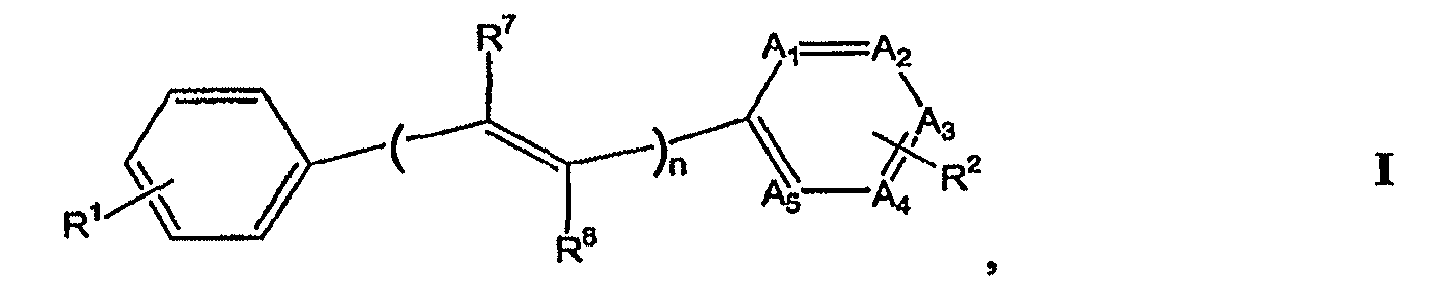
- i

- i'

- ii

- iii

- iii'

- iv. -(CH2)w-O-Ch, wherein w is an integer from 1 to 10;
- v. -Ch; and
- vi. -(CH2)w-Ch, wherein w is an integer from 1 to 10;
wherein, the moiety "-Ch" is a chelating ligand capable of complexing with a metal to form a metal chelate. Many ligands are known in the art and are suitable for use as a labeling moiety for the compounds of the present invention. Those of skill in the art will understand that such ligands provide a way to label compounds and the invention is not limited to particular ligands, many of which are interchangeable. Preferably, this ligand is a tri- or tetradentate ligand, such as N3, N2S, NS2, N4 and those of the N2S2 type, represented by, but not limited to, the following structure:
- wherein RP is hydrogen or a sulfhydryl protecting group, and R9 R10, R11, R12, R13, R14, R15, R16, R43 and R44 are in each instance independently selected from the group consisting of hydrogen, hydroxy, amino, methylamino, dimethylamino, C1-4 alkoxy, C1-4 alkyl, and hydroxy(C1-4)alkyl. When complexed with a metal such as 99m-Tc, -Ch has the following structure:

- Additionally, a rhenium radioisotope can be complexed with the tetradentate ligand, rather than technetium. When the chelating moiety is not complexed with a metal, RP are both hydrogen, or can be any of the variety of protecting groups available for sulfur, including methoxymethyl, methoxyethoxymethyl, p-methoxybenzyl or benzyl. Sulfur protecting groups are described in detail in Greene, T.W. and Wuts, P.G.M., Protective Groups in Organic Synthesis, 2nd Edition, John Wiley and Sons, Inc., New York (1991). Protecting group RP can be removed by appropriate methods well known in the art of organic synthesis, such as trifluoroacetic acid, mercuric chloride or sodium in liquid ammonia. In the case of Lewis acid labile groups, including acetamidomethyl and benzamidomethyl, RP can be left intact. Labeling of the ligand with technetium in this case will cleave the protecting group, rendering the protected diaminedithiol equivalent to the unprotected form. Further, several ligands of the general N2S2 type are known, and can be used interchangeably without changing the scope of the invention; and
R7 and R8 are in each instance independently selected from the group consisting of hydrogen, hydroxy, amino, methylamino, dimethylamino, C1-4 alkoxy, C1-4 alkyl, and hydroxy(C1-4)alkyl. - Preferred values of R1 are hydroxy or NRaRb(CH2)p-, wherein p is an integer from 0 to 5, and Ra and Rb are independently hydrogen, C1-4 alkyl or (CH2)dX, where X is halogen, and d is an integer from 1 to 4 Useful values of p include integers from 0 to 5. Preferably, p is 0, 1 or 2. Most preferably, p is 0 such that R1 represents NRaRb. In preferred embodiments, R1 is either in the meta or para position relative to the respective bridge. A preferred value of R1 is NRaRb, wherein Ra and Rb are independently hydrogen or C1-4 alkyl. In this embodiment, it is preferable that the C1-4 alkyl is methyl. Preferably one of Ra and Rb is hydrogen, the other is C1-4 alkyl, such as methyl or both Ra and Rb are methyl. Another preferred value of R1 is hydroxy. Also preferred for R1 are any groups that after administration into the body metabolize or degrade to the preferred values of R1 listed above. Such groups are known in the art to constitute a prodrug and the groups capable of forming prodrugs are well-known to one of ordinary skill in the art.
- Useful values of n include integers from 1 to 6. Preferably, the value of n is from 1 to 4. Most preferably, the value of n is from 1 to 3. It is especially preferred that n is one.
- Useful values of R7 and R8 are in each instance independently selected from the group consisting of hydrogen, hydroxy, amino, methylamino, dimethylamino, C1-4 alkoxy, C1-4 alkyl, and hydroxy(C1-4)alkyl. The value of n determines the number of R7 and R8 group(s) present in the compound. If present more than once in a particular compound, in each instance of R7 and R8 the value can be different from any other value of R7 and R8. In preferred embodiments, R7 and R8 are each hydrogen in every instance.
- Useful values of R2 include substructures i, i', ii, iii and iii' as depicted above. In preferred embodiments of Formula I, R2 is either in the meta or para position relative to the respective bridge. Preferably, in a compound where R2 is i or i', q is an integer from 2 to 5. Most preferably, q is 3 or 4. In substructure i or i', useful values of R30, R31, R32 and R33 independently include hydrogen, hydroxy, C1-4 alkoxy, C1-4 alkyl, and hydroxy(C1-4)alkyl. Preferred compounds include those where one or more of R30, R31, R32 and R33 are hydrogen. More preferred compounds include those where each of R30, R31, R32 and R33 is hydrogen.
- In substructure iii or iii', useful values of U and R34, R35, R36, R37, R38, R39 and R40 are described above. Preferred compounds include those where U is hydroxy.
- Useful compounds include those compounds where one, no more than three, of A1, A2, A3, A4 and A5 is N, and the others are -CH or -CR2 as permitted. It is preferred that if only one of A1, A2, A3, A4 and A5 is N, that it is A4.
- In another aspect, the present invention is directed to a compound of Formula II, having the following structure:

R4 is selected from the group consisting of: - a. C1-4 alkylthio,
- b. C1-4 alkylsulfonyl,
- c. hydroxy,
- d. C1-4 alkoxy,
- e. NR6R7(CH2)p-, wherein p is an integer from 0 to 5, and R6 and R7 are independently hydrogen, C1-4 alkyl or (CH2)dX, where X is halogen, and d is an integer from 1 to 4,
- f. phenyl(C1-4)alkyl,
- g. C6-10 aryl,
- h. heteroaryl,
- i. heterocycle,
- j. heterocycle(C1-4)alkyl, and
- k. C3-6cycloalkyl,
- Useful values of R5 and R5' include all the values listed above. Preferably, R5 and R5' are independently hydrogen or a C1-4 alkyl such as methyl. Also preferred, R1 and R2 are independently hydroxy, monomethylamine or dimethylamine.
- Useful values of R3 include all those values listed above. More preferably, R3 is hydrogen, 18Fluoromethyl, 18Fluoroethyl, 18Fluoropropyl, 125I, 123I, 131I or 18F.
- Useful values of R1 and R2 include all the values listed above. Preferably, R1 and R2 are independently hydrogen or a C1-4 alkyl such as methyl.
- Useful values of R4 include all those values listed above. Preferably, R4 is methylthio, methylsulfonyl, hydroxy, methoxy or NR6R7(CH2)p-.
- Useful values of X' include all those listed above. Preferred values include hydrogen, 18Fluoromethyl, 18Fluoroethyl or 18Fluoropropyl, 125I, 123I, 131I and 18F.
- In all compounds of the present invention wherein only one of A1, A2, A3, A4 and A5 is N, it is more preferred that A4 is N.
- Representative compounds of the present invention include:


- In another embodiment are compounds of Formula I'a having the following general structure:


- In another embodiment of the present invention are compounds of Formula III having the following structure:

- i

- i'

- ii
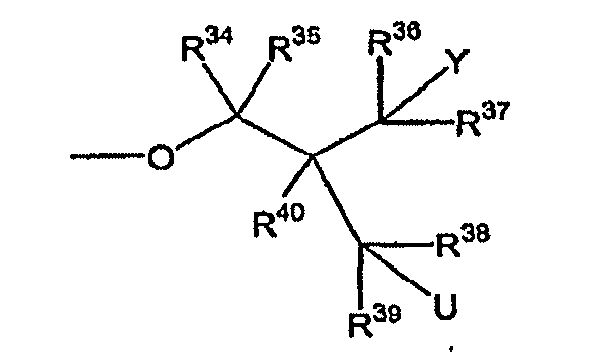
- ii'

- iii. NR'R", wherein at least one of R' and R" is (CH2)dX, where X is halogen, preferably F or 18F, and d is an integer from 1 to 4; the other of R' and R" is selected from the group consisting of hydrogen, C1-4 alkyl, halo(C1-4)alkyl, and hydroxy(C1-4)alkyl;
- iv. NR'R"-(C1-4)alkyl, wherein at least one of R' and R" is (CH2)dX, where X is halogen, preferably F or 18F, and d is an integer from 1 to 4; the other of R' and R" is selected from the group consisting of hydrogen, C1-4 alkyl, halo(C1-4)alkyl, and hydroxy(C1-4)alkyl;
- v. halo(C1-4)alkyl; and
- vi. an ether (R-O-R) having the following structure: [halo(C1-4)alkyl-O-(C1-4)alkyl]-; and
- R7 and R8 are in each instance independently selected from the group consisting of hydrogen, hydroxy, amino, methylamino, dimethylamino, C1-4 alkoxy, C1-4 alkyl, and hydroxy(C1-4)alkyl.
- Preferred compounds include those where the halogen, in one or more occurrence on the structure, is a radiolabeled halogen. Also preferred are compounds wherein the halogen is selected from the group consisting of I, 123I, 125I, 131I, Br, 76Br, 77Br, F or 18F. Especially preferred compounds are those that contain 18F. Compounds containing 123I are also especially preferred.
- Useful values of R1 are listed above. Preferred values are hydroxy or NRaRb(CH2)p-, wherein p is an integer from 0 to 5, and Ra and Rb are independently hydrogen, C1-4 alkyl or (CH2)dX, where X is halogen, and d is an integer from 1 to 4 Useful values of p include integers from 0 to 5. Preferably, p is 0, 1 or 2. Most preferably, p is 0 such that R1 represents NRaRb. In preferred embodiments, R1 is either in the meta or para position relative to the respective bridge. A preferred value of R1 is NRaRb, wherein Ra and Rb are independently hydrogen or C1-4 alkyl. In this embodiment, it is preferable that the C1-4 alkyl is methyl. Preferably one of Ra and Rb is hydrogen, the other is C1-4 alkyl, such as methyl. Most preferably, both Ra and Rb are methyl. Another preferred value of R1 is hydroxy. Also preferred for R1 are any groups that after administration into the body metabolize or degrade to the preferred values of R1 listed above. Such groups are known in the art to constitute a prodrug and the groups capable of forming prodrugs are well-known to one of ordinary skill in the art.
- Useful values of n include integers from 1 to 6. Preferably, the value of n is from 1 to 4. Most preferably, the value of n is from 1 to 3. It is especially preferred that n is one.
- Useful values of R7 and R8 are in each instance independently selected from the group consisting of hydrogen, hydroxy, amino, methylamino, dimethylamino, C1-4 alkoxy, C1-4 alkyl, and hydroxy(C1-4)alkyl. The value of n determines the number of R7 and R8 group(s) present in the compound. If present more than once in a particular compound, in each instance of R7 and R8 the value can be different from any other value of R7 and R8. In preferred embodiments, R7 and R8 are each hydrogen in every instance.
- Useful values of R2 include substructures i, i', ii, ii', iii, iv, v, and vi, as depicted above. In preferred embodiments of Formula I, R2 is either in the meta or para position relative to the respective bridge. Preferably, R2 is substructure i or ii. Also preferred are substructures i' and ii'. In these embodiments, useful values of q include integers from one to ten. Preferably, in a compound where R2 is i or i', q is an integer from 1 to 5. Most preferably, q is 1 to 4, especially 3 or 4. In substructure i or i', useful values of R30, R31, R32 and R33 independently include hydrogen, hydroxy, C1-4 alkoxy, C1-4 alkyl, and hydroxy(C1-4)alkyl. Preferred compounds include those where one or more of R30, R31, R32 and R33 are hydrogen. More preferred compounds include those where each of R30, R31, R32 and R33 is hydrogen.
- In substructure ii or ii', useful values of Y, U and R34, R35, R36, R37, R38, R39 and R40 are described above. Preferred compounds include those where U is hydroxy.
- Useful compounds include those compounds where at least one, no more than three, of A1, A2, A3, A4 and A5 is N, and the others are -CH or -CR2 as permitted. It is more preferred that N be in position A4.
Particularly useful compounds of Formula III include those compounds where A4 is N, and the others are -CH, -CR2 or -CR3 as permitted. - Especially preferred compounds of Formula III wherein A4 is N, include the following:

- Examples of most preferred compounds of Formula III include the following:


- Other preferred compounds of Formula III, when R2 is ii, include:


- Compounds of Formula III when R2 is i, or i' when t is 0, include hydroxy ethers such as:

- In all embodiments of Formulae I and III containing -(CRxRy)t where t is other than zero, the compounds have the following general structure wherein there is at least one carbon-carbon bond between a substituent and the nitrogen-containing ring:

- The compounds of the present invention can also contain a radioactive isotope of carbon as the radiolabel. This refers to a compound that comprises one or more radioactive carbon atoms, preferably 11C, with a specific activity above that of the background level for that atom. It is well known, in this respect, that naturally occurring elements are present in the form of varying isotopes, some of which are radioactive isotopes. The radioactivity of the naturally occurring elements is a result of the natural distribution or abundance of these isotopes, and is commonly referred to as a background level. The carbon labeled compounds of the present invention have a specific activity that is higher than the natural abundance, and therefore above the background level. The composition claimed herein comprising a carbon-labeled compound(s) of the present invention will have an amount of the compound such that the composition can be used for tracing, imaging, radiotherapy, and the like.
- In certain embodiments of the compounds disclosed herein, a halogen, preferably 18F, or a chelating agent is linked to the styrylpyridine backbone through a PEG chain, having a variable number of ethoxy groups. The fluorinated styrylpyridine, 2, displayed high binding affinity (Ki = 2.5±0.4 nM). The dimethylamino analog showed the greatest affinity. This is in contrast to stilbene analogs, which tend to possess higher affinity when monomethylamino substituted. As shown in Schemes 1-3 herein, radiolabeling was successfully performed giving the target compounds. The synthesis of
compound 2 inScheme 5 resulted in a preparation time of about 60 mins; radiochemical yield of ~35% (decay corrected); radiochemical purity of >98%; and specific activity of from about 1,000 to about 1,500 Ci/mmol. In vivo biodistribution of a 18F pegylated styrylpyridine in normal mice exhibited excellent brain penetrations and rapid washouts after an iv injection. Autoradiography of postmortem AD brain sections of 2 confirmed the specific binding related to the presence of Aβ plaques. - Preferable values under the scope of C6-10 aryl include phenyl, naphthyl or tetrahydronaphthyl. Preferable values of under the scope of heteroaryl include thienyl, furyl, pyranyl, pyrrolyl, pyridinyl, indolyl, and imidazolyl. Preferable values under the scope of heterocycle include piperidinyl, pyrrolidinyl, and morpholinyl. A preferred embodiment of a C6-10 aryl, heteroaryl, heterocycle, heterocycle(C1-4)alkyl or C3-6 cycloalkyl, contains a ring substituted with one of the following: C1-4 alkylthio, C1-4 alkyl sulfonyl, methoxy, hydroxy, dimethylamino or methylamino.
- The compounds of Formulae I, Ia, II, and III may also be solvated, especially hydrated. Hydration may occur during manufacturing of the compounds or compositions comprising the compounds, or the hydration may occur over time due to the hygroscopic nature of the compounds. In addition, the compounds of the present invention can exist in unsolvated as well as solvated forms with pharmaceutically acceptable solvents such as water, ethanol, and the like. In general, the solvated forms are considered equivalent to the unsolvated forms for the purposes of the present invention.
- When any variable occurs more than one time in any constituent or in Formula I, Ia, II or III its definition on each occurrence is independent of its definition at every other occurrence. Also combinations of substituents and/or variables are permissible only if such combinations result in stable compounds.
- The term "alkyl" as employed herein by itself or as part of another group refers to both straight and branched chain radicals of up to 8 carbons, preferably 6 carbons, more preferably 4 carbons, such as methyl, ethyl, propyl, isopropyl, butyl, t-butyl, and isobutyl.
- The term "alkoxy" is used herein to mean a straight or branched chain alkyl radical, as defined above, unless the chain length is limited thereto, bonded to an oxygen atom, including, but not limited to, methoxy, ethoxy, n-propoxy, isopropoxy, and the like. Preferably the alkoxy chain is 1 to 6 carbon atoms in length, more preferably 1-4 carbon atoms in length.
- The term "monoalkylamine" as employed herein by itself or as part of another group refers to an amino group which is substituted with one alkyl group as defined above.
- The term "dialkylamine" as employed herein by itself or as part of another group refers to an amino group which is substituted with two alkyl groups as defined above.
- The term "halo" or "halogen" employed herein by itself or as part of another group refers to chlorine, bromine, fluorine or iodine and their isotopes. The term "radiohalogen" refers specifically to radioactive halogen isotopes.
- The term "haloalkyl" as employed herein refers to any of the above alkyl groups substituted by one or more chlorine, bromine, fluorine or iodine with fluorine and chlorine being preferred, such as chloromethyl, iodomethyl, trifluoromethyl, 2,2,2-trifluoroethyl, and 2-chloroethyl.
- The term "alkylthio" as employed herein by itself or as part of another group refers to a thioether of the structure: R-S, wherein R is a C1-4 alkyl as defined above.
- The term "alkylsulfonyl" as employed herein by itself or as part of another group refers to a sulfone of the structure: R-SO2, wherein R is a C1-4 alkyl as defined above.
- The term "aryl" as employed herein by itself or as part of another group refers to monocyclic or bicyclic aromatic groups containing from 6 to 12 carbons in the ring portion, preferably 6-10 carbons in the ring portion, such as phenyl, naphthyl or tetrahydronaphthyl.
- The term "heterocycle" or "heterocyclic ring", as used herein except where noted, represents a stable 5- to 7- membered mono-heterocyclic ring system which may be saturated or unsaturated, and which consists of carbon atoms and from one to three heteroatoms selected from the group consisting of N, O, and S, and wherein the nitrogen and sulfur heteroatom may optionally be oxidized. Especially useful are rings contain one nitrogen combined with one oxygen or sulfur, or two nitrogen heteroatoms. Examples of such heterocyclic groups include piperidinyl, pyrrolyl, pyrrolidinyl, imidazolyl, imidazinyl, imidazolidinyl, pyridyl, pyrazinyl, pyrimidinyl, oxazolyl, oxazolidinyl, isoxazolyl, isoxazolidinyl, thiazolyl, thiazolidinyl, isothiazolyl, homopiperidinyl, homopiperazinyl, pyridazinyl, pyrazolyl, and pyrazolidinyl, most preferably thiamorpholinyl, piperazinyl, and morpholinyl.
- The term "heteroatom" is used herein to mean an oxygen atom ("O"), a sulfur atom ("S") or a nitrogen atom ("N"). It will be recognized that when the heteroatom is nitrogen, it may form an NRR moiety, wherein the R groups independently from one another may be hydrogen or C1-4 alkyl, C2-4 aminoalkyl, C1-4 halo alkyl, halo benzyl, or R1 and R2 are taken together to form a 5- to 7-member heterocyclic ring optionally having O, S or NRc in said ring, where Rc is hydrogen or C1-4 alkyl.
- The term "heteroaryl" as employed herein refers to groups having 5 to 14 ring atoms; 6, 10 or 14 Π electrons shared in a cyclic array; and containing carbon atoms and 1, 2, 3 or 4 oxygen, nitrogen or sulfur heteroatoms (where examples of heteroaryl groups are: thienyl, benzo[b]thienyl, naphtho[2,3-b]thienyl, thianthrenyl, furyl, pyranyl, isobenzofuranyl, benzoxazolyl, chromenyl, xanthenyl, phenoxathiinyl, 2H-pyrrolyl, pyrrolyl, imidazolyl, pyrazolyl, pyridyl, pyrazinyl, pyrimidinyl, pyridazinyl, indolizinyl, isoindolyl, 3H-indolyl, indolyl, indazolyl, purinyl, 4H-quinolizinyl, isoquinolyl, quinolyl, phthalazinyl, naphthyridinyl, quinazolinyl, cinnolinyl, pteridinyl, 4aH-carbazolyl, carbazolyl, α, β, or γ-carbolinyl, phenanthridinyl, acridinyl, perimidinyl, phenanthrolinyl, phenazinyl, isothiazolyl, phenothiazinyl, isoxazolyl, furazanyl and phenoxazinyl groups).
- The term "aralkyl" or "arylalkyl" as employed herein by itself or as part of another group refers to C1-6 alkyl groups as discussed above having an aryl substituent, such as benzyl, phenylethyl or 2-naphthylmethyl.
- Another aspect of this invention is related to methods of preparing compounds of Formulae I, Ia, II and III.
- The synthesis of dimethylamino substituted
styrylpyridine derivative 1 and itsfluoropegylated compound 2 is shown inscheme 1.Compound 1 was obtained by a Wittig reaction between diethyl 4-(dimethylamino)benzylphosphonate and 6-chloronicotinaldehyde at the present of potassium tert-butoxide in DMF (yield 62 %). A direct alkylation ofcompound 1 with 2-(2-(2-fluoroethoxy)ethoxy)ethanol2 using sodium hydride in THF obtained the fluoropegylated compound 2 (yield 33 %), which can be used as the cold standard for the radio-labeling. The preparation of monomethyl amino substitutedderivative 6 was accomplished through a route showing inScheme 2. A Wittig reaction between 4-nitro-benzylphosphonate and 6-chloronicotinaldehyde at the present of sodium methoxide in methanol under refluxing condition obtainedcompound 3 in a high yield (88 %).Compound 3 can be easily filtered out after the reaction and used directly for next step; no further purification is required. The alkylation of 3 with 2-(2-(2-fluoroethoxy)ethoxy)ethanol using sodium hydride in THF obtained compound 4 (yield 30 %). The nitro group ofcompound 4 was reduced using stannous chloride in ethanol to obtain compound 5 (yield 58 %). Monomethylation of 5 was achieved using paraformaldehyde, sodium methoxide and sodium borohydride to obtaincompound 6 in a relatively high yield (73 %). - To make desired F-18 labeled dimethylamino substituted styrylpyridine derivative [18F]2, the tosylate 10 (Scheme 3) was used as the precursor. The preparation of 10 started with a microwave-assisted alkylation of 3 with triethylene glycol in DMF to obtain compound 7 (yield 77 %). The nitro group of 7 was then reduced to amine using stannous chloride to give compound 8 (yield 76 %) then followed by a dimethylation using paraformaldehyde, sodium cyanoborohydride in acetic acid to obtain
compound 9 in a high yield (95 %). Mesylation of 9 was tried first, however, the mesylate of 9 was very unstable and decomposed during the preparation. Tosylation of 9 was accomplished successfully using tosylchloride in pyridine to give desired tosylate 10 (yield 41 %) as the precursor for making radiolabeled [18F]2.

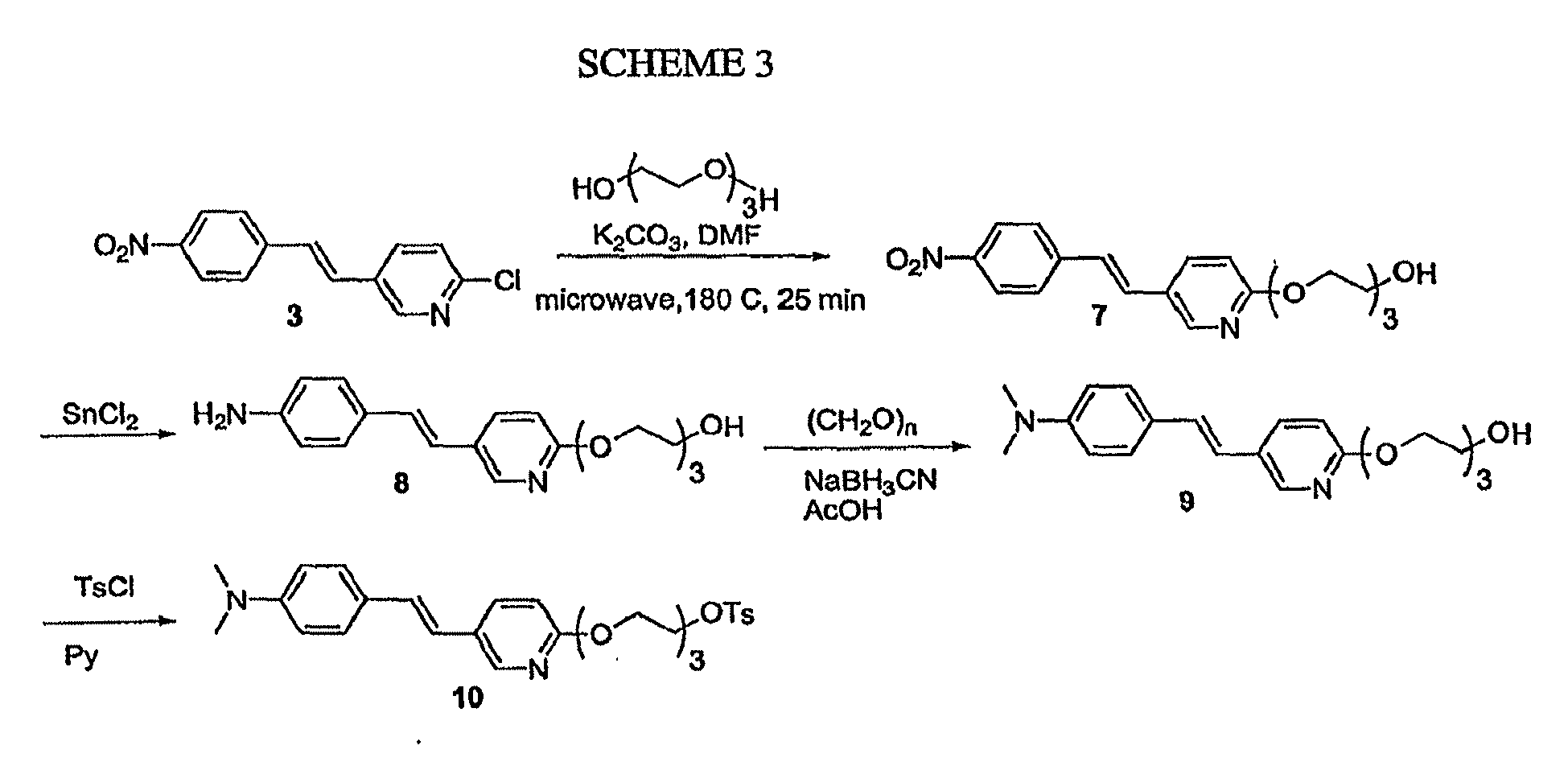

- Schemes 5-7 depict a synthetic route for compounds of Formula III.
Scheme 5 depicts a synthesis of several intermediates useful for preparing the compounds of the invention.Scheme 


- Tc-99m complexes can be prepared as follows. A small amount of non-radiolabeled compound (1-2 mg) is dissolved in 100 µL EtOH and mixed with 200 µL HCl (1 N) and 1 mL Sn-glucoheptonate solution (containing 8-32 µg SnCl2 and 80-320 µg Na-glucoheptonate, pH 6.67) and 50 µL EDTA solution (0.1 N). [99mTc]Pertechnetate (100-200 µL; ranging from 2-20 mCi) saline solution are then added. The reaction is heated for 30 min at 100E C, then cooled to room temperature. The reaction mixture is analyzed on TLC (EtOH:conc. NH3 9:1) for product formation and purity check. The mixture can be neutralized with phosphate buffer to pH 5.0.
- The present invention further relates to a method of preparing a technetium-99m complex according to the present invention by reacting technetium-99m in the form of a pertechnetate in the presence of a reducing agent and optionally a suitable chelator with an appropriate Ch-containing compound.
- The reducing agent serves to reduce the Tc-99m pertechnetate which is eluted from a molybdenum-technetium generator in a physiological saline solution. Suitable reducing agents are, for example, dithionite, formamidine sulphinic acid, diaminoethane disulphinate or suitable metallic reducing agents such as Sn(II), Fe(II), Cu(I), Ti(III) or Sb(III). Sn(II) has proven to be particularly suitable.
- For the above-mentioned complex-forming reaction, technetium-99m is reacted with an appropriate compound of the invention as a salt or in the form of technetium bound to comparatively weak chelators. In the latter case the desired technetium-99m complex is formed by ligand exchange. Examples of suitable chelators for the radionuclide are dicarboxylic acids, such as oxalic acid, malonic acid, succinic acid, maleic acid, orthophtalic acid, malic acid, lactic acid, tartaric acid, citric acid, ascorbic acid, salicylic acid or derivatives of these acids; phosphorus compounds such as pyrophosphates; or enolates. Citric acid, tartaric acid, ascorbic acid, glucoheptonic acid or a derivative thereof are particularly suitable chelators for this purpose, because a chelate of technetium-99m with one of these chelators undergoes the desired ligand exchange particularly easily.
- The most commonly used procedure for preparing [TcvO]+3N2S2 complexes is based on stannous (II) chloride reduction of [99mTc]pertechnetate, the common starting material. The labeling procedure normally relies on a Tc-99m ligand exchange reaction between Tc-99m (Sn)-glucoheptonate and the N2S2 ligand. Preparation of stannous (II) chloride and preserving it in a consistent stannous (II) form is critically important for the success of the labeling reaction. To stabilize the air-sensitive stannous ion it is a common practice in nuclear medicine to use a lyophilized kit, in which the stannous ion is in a lyophilized powder form mixed with an excess amount of glucoheptonate under an inert gas like nitrogen or argon. The preparation of the lyophilized stannous chloride/sodium glucoheptonate kits ensures that the labeling reaction is reproducible and predictable. The N2S2 ligands are usually air-sensitive (thiols are easily oxidized by air) and there are subsequent reactions which lead to decomposition of the ligands. The most convenient and predictable method to preserve the ligands is to produce lyophilized kits containing 100-500 µg of the ligands under argon or nitrogen.
- When the compounds of this invention are to be used as imaging agents, they must be labeled with suitable radioactive halogen isotopes. Although 125I-isotopes are useful for laboratory testing, they will generally not be useful for actual diagnostic purposes because of the relatively long half-life (60 days) and low gamma-emission (30-65 Kev) of 125I. The isotope 123I has a half life of thirteen hours and gamma energy of 159 KeV, and it is therefore expected that labeling of ligands to be used for diagnostic purposes would be with this isotope. Other isotopes which may be used include 131I (half life of 2 hours). Suitable bromine isotopes include 77Br and 76Br.
- The radiohalogenated compounds of this invention lend themselves easily to formation from materials which could be provided to users in kits. Kits for forming the imaging agents can contain, for example, a vial containing a physiologically suitable solution of an intermediate of Formula I, Ia, II or III in a concentration and at a pH suitable for optimal complexing conditions. The user would add to the vial an appropriate quantity of the radioisotope, e.g., Na 123I, and an oxidant, such as hydrogen peroxide. The resulting labeled ligand may then be administered intravenously to a patient, and receptors in the brain imaged by means of measuring the gamma ray or photo emissions therefrom.
- Since the radiopharmaceutical composition according to the present invention can be prepared easily and simply, the preparation can be carried out readily by the user. Therefore, the present invention also relates to a kit, comprising:
- (1) A non-radiolabeled compound of the invention, the compound optionally being in a dry condition; and also optionally having an inert, pharmaceutically acceptable carrier and/or auxiliary substances added thereto; and
- (2) a reducing agent and optionally a chelator;
- Examples of suitable reducing agents and chelators for the above kit have been listed above. The pertechnetate solution can be obtained by the user from a molybdenum-technetium generator. Such generators are available in a number of institutions that perform radiodiagnostic procedures. As noted above the ingredients (1) and (2) may be combined, provided they are compatible. Such a monocomponent kit, in which the combined ingredients are preferably lyophilized, is excellently suitable to be reacted by the user with the pertechnetate solution in a simple manner.
- When desired, the radioactive diagnostic agent may contain any additive such as pH controlling agents (e.g., acids, bases, buffers), stabilizers (e.g., ascorbic acid) or isotonizing agents (e.g., sodium chloride).
- The term "pharmaceutically acceptable salt" as used herein refers to those carboxylate salts or acid addition salts of the compounds of the present invention which are, within the scope of sound medical judgment, suitable for use in contact with the tissues of patients without undue toxicity, irritation, allergic response, and the like, commensurate with a reasonable benefit/risk ratio, and effective for their intended use, as well as the zwitterionic forms, where possible, of the compounds of the invention. The term "salts" refers to the relatively nontoxic, inorganic and organic acid addition salts of compounds of the present invention. Also included are those salts derived from non-toxic organic acids such as aliphatic mono and dicarboxylic acids, for example acetic acid, phenyl-substituted alkanoic acids, hydroxy alkanoic and alkanedioic acids, aromatic acids, and aliphatic and aromatic sulfonic acids. These salts can be prepared in situ during the final isolation and purification of the compounds or by separately reacting the purified compound in its free base form with a suitable organic or inorganic acid and isolating the salt thus formed. Further representative salts include the hydrobromide, hydrochloride, sulfate, bisulfate, nitrate, acetate, oxalate, valerate, oleate, palmitate, stearate, laurate, borate, benzoate, lactate, phosphate, tosylate, citrate, maleate, fumarate, succinate, tartrate, naphthylate mesylate, glucoheptonate, lactiobionate and laurylsulphonate salts, propionate, pivalate, cyclamate, isethionate, and the like. These may include cations based on the alkali and alkaline earth metals, such as sodium, lithium, potassium, calcium, magnesium, and the like, as well as, nontoxic ammonium, quaternary ammonium and amine cations including, but not limited to ammonium, tetramethylammonium, tetraethylammonium, methylamine, dimethylamine, trimethylamine, triethylamine, ethylamine, and the like. (See, for example, Berge S. M., et al., Pharmaceutical Salts, J. Pharm. Sci. 66:1-19 (1977) which is incorporated herein by reference.)
- In the first step of the present method of imaging, a labeled compound of Formula I, Ia, II or III is introduced into a tissue or a patient in a detectable quantity. The compound is typically part of a pharmaceutical composition and is administered to the tissue or the patient by methods well known to those skilled in the art.
- The administration of the labeled compound to a patient can be by a general or local administration route. For example, the compound can be administered either orally, rectally, parenterally (intravenous, by intramuscularly or subcutaneously), intracisternally, intravaginally, intraperitoneally, intravesically, locally (powders, ointments or drops), or as a buccal or nasal spray. The labeled compound may be administered to the patient such that it is delivered throughout the body. Alternatively, the labeled compound can be administered to a specific organ or tissue of interest. For example, it is desirable to locate and quantitate amyloid deposits in the brain in order to diagnose or track the progress of Alzheimer's disease in a patient. One of the most desirable characteristics of an in vivo imaging agent of the brain is the ability to cross the intact blood-brain barrier after a bolus iv injection.
- In a preferred embodiment of the invention, the labeled compound is introduced into a patient in a detectable quantity and after sufficient time has passed for the compound to become associated with amyloid deposits, the labeled compound is detected noninvasively inside the patient. In another embodiment of the invention, a radiolabeled compound of Formula I, Ia, II or III is introduced into a patient, sufficient time is allowed for the compound to become associated with amyloid deposits, and then a sample of tissue from the patient is removed and the labeled compound in the tissue is detected apart from the patient. In a third embodiment of the invention, a tissue sample is removed from a patient and a labeled compound of Formula I, Ia, II or III is introduced into the tissue sample. After a sufficient amount of time for the compound to become bound to amyloid deposits, the compound is detected.
- The term "tissue" means a part of a patient's body. Examples of tissues include the brain, heart, liver, blood vessels, and arteries. A detectable quantity is a quantity of labeled compound necessary to be detected by the detection method chosen. The amount of a labeled compound to be introduced into a patient in order to provide for detection can readily be determined by those skilled in the art. For example, increasing amounts of the labeled compound can be given to a patient until the compound is detected by the detection method of choice. A label is introduced into the compounds to provide for detection of the compounds.
- The term "patient" means humans and other animals. Those skilled in the art are also familiar with determining the amount of time sufficient for a compound to become associated with amyloid deposits. The amount of time necessary can easily be determined by introducing a detectable amount of a labeled compound of Formula I, Ia, II or III into a patient and then detecting the labeled compound at various times after administration.
- The term "associated" means a chemical interaction between the labeled compound and the amyloid deposit. Examples of associations include covalent bonds, ionic bonds, hydrophilic-hydrophilic interactions, hydrophobic-hydrophobic interactions, and complexes.
- Those skilled in the art are familiar with the various ways to detect labeled compounds. For example, magnetic resonance imaging (MRI), positron emission tomography (PET), or single photon emission computed tomography (SPECT) can be used to detect radiolabeled compounds. The label that is introduced into the compound will depend on the detection method desired. For example, if PET is selected as a detection method, the compound must possess a positron-emitting atom, such as 11C or 18F.
- The radioactive diagnostic agent should have sufficient radioactivity and radioactivity concentration which can assure reliable diagnosis. For instance, in case of the radioactive metal being technetium-99m, it may be included usually in an amount of 0.1 to 50 mCi in about 0.5 to 5.0 ml at the time of administration. The amount of a compound of Formula I, Ia, II or III may be such as sufficient to form a stable chelate compound with the radioactive metal.
- The thus formed chelate compound as a radioactive diagnostic agent is sufficiently stable, and therefore it may be immediately administered as such or stored until its use. When desired, the radioactive diagnostic agent may contain any additive such as pH controlling agents (e.g., acids, bases, buffers), stabilizers (e.g., ascorbic acid) or isotonizing agents (e.g., sodium chloride).
- The imaging of amyloid deposits can also be carried out quantitatively so that the amount of amyloid deposits can be determined.
- Preferred compounds for imaging include a radioisotope such as 11C, 123I, 125I, 131I, 18F, 76Br or 77Br.
- Another aspect of the invention is a method of inhibiting amyloid plaque aggregation. The present invention also provides a method of inhibiting the aggregation of amyloid proteins to form amyloid deposits, by administering to a patient an amyloid inhibiting amount of a compound of the above Formula I, Ia, II or III.
- Those skilled in the art are readily able to determine an amyloid inhibiting amount by simply administering a compound of Formula I, Ia, II or III to a patient in increasing amounts until the growth of amyloid deposits is decreased or stopped. The rate of growth can be assessed using imaging as described above or by taking a tissue sample from a patient and observing the amyloid deposits therein. The compounds of the present invention can be administered to a patient at dosage levels in the range of about 0.1 to about 1,000 mg per day. For a normal human adult having a body weight of about 70 kg, a dosage in the range of about 0.01 to about 100 mg per kilogram of body weight per day is sufficient. The specific dosage used, however, can vary. For example, the dosage can depend on a number of factors including the requirements of the patient, the severity of the condition being treated, and the pharmacological activity of the compound being used. The determination of optimum dosages for a particular patient is well known to those skilled in the art.
- The following examples are illustrative, but not limiting, of the method and compositions of the present invention. Other suitable modifications and adaptations of the variety of conditions and parameters normally encountered and obvious to those skilled in the art are within the spirit and scope of the invention.
- All reagents used in synthesis were commercial products and were used without further purification unless otherwise indicated. 1H NMR spectra were obtained on a Bruker DPX spectrometer (200 MHz) in CDCl3. Chemical shifts are reported as δ values (parts per million) relative to internal TMS. Coupling constants are reported in hertz. The multiplicity is defined by s (singlet), d (doublet), t (triplet), br (broad), m (multiplet). Elemental analyses were performed by Atlantic Microlab INC. For each procedure, "standard workup" refers to the following steps: addition of indicated organic solvent, washing the organic layer with water then brine, separation of the organic layer from the aqueous layer, drying off the combined the organic layers with anhydrous sodium sulfate, filtering off the sodium sulfate and removing the organic solvent under reduced pressure.
- Potassium tert-butoxide (99 mg, 0.89 mmol) was added to a solution of diethyl-(4-dimethylamino-benzyl)-phosphonate (80 mg, 0.30 mmol) in anhydrous DMF (5.0 ml) at 0 °C. 2-Chloro-5-pyridyl aldehyde (42 mg, 0.30 mmol) was then added. The reaction mixture was warmed to room temperature and stirred for 4 h. Water was added and mixture was extracted with MeOH/DCM (1: 9, v/v). Organic layer was separated, washed with brine, dried over sodium sulfate and evaporated. The residue was purified by PTLC (20 % Hexanes in DCM as developing solvent) to give product 1 (48 mg, Yield: 62 %). 1H NMR (200 MHz, CDCl3): δ.8.42 (1H, d, J = 2.2 Hz), 7.77 (1H, d, d, J1 = 8.4 Hz, J2 = 2.4 Hz), 7.41 (2H, d; J = 8.6 Hz), 7.27 (1H, d, J = 8.2 Hz), 7.08 (1H, d, J = 16.4 Hz), 6.77 (3H, m), HRMS (EI) m/z calcd. for [C13H9ClN2O2]+ 260.0353.
- Sodium hydride (95%, 10 mg, 0.39 mmol) was added to a solution of 2-(2-(2-fluoroethoxy)ethoxy)ethanol (39 mg, 0.26 mmol) in anhydrous DMF (5.0 ml). After stirring at room temperature for 20 min, compound 5 (35 mg, 0.13 mmol) was added and reaction mixture was heated to 100 °C for 2 h. After cooling down to room temperature, water was added and the reaction mixture was extracted with ethyl acetate. Organic layer was separated, washed with brine, dried over anhydrous sodium sulfate, and evaporated. The residue was purified by PTLC. (4% MeOH in DCM as developing solvent) to give product 2 (16 mg, Yield; 32.9%): 1H NMR (200 MHz, CDCl3): δ.8.14 (1H, d, J= 2.4 Hz), 7.76 (1H, d, d, J1 = 8.6 Hz, J2 = 2.4 Hz), 7.39 (2H, d, J= 8.8 Hz), 6.87 (2H, m), 6.76 (3H, m), 4.53 (2H, d, t, J1 = 47.6 Hz, J2 = 4.2 Hz), 4.50 (2H, t, J= 4.8 Hz), 3.85 (3H, m), 3.70 (5H, m), 2.99 (6H, s). HRMS (EI) m/z calcd. for [C21H28N2O4]+ 372.2049.
- Sodium methoxide (1 M in methanol, 5.0 ml) was added slowly into a solution of diethyl-(4-nitro-benzyl)-phosphonate (546 mg, 2.0 mmol) and 2-chloro-5-pyridyl aldehyde (283 mg, 2.0 mmol) in methanol (5.0 ml). The reaction mixture was then refluxed for 1 h. After cooled down to 0 °C, yellow precipitate was filtered and washed with cold methanol to obtain product 3 (458 mg, Yield: 88%), which was used directly for next step without further purification. 3: 1H NMR (200 MHz, CDCl3): δ.8.53 (1H, d, J = 2.4 Hz), 8.25 (2H, d, J = 8.8 Hz), 7.85 (1H, d, d, J1 = 8.4 Hz, J2 = 2.4 Hz), 7.65 (2H, d, J= 8.8 Hz), 7.36 (1H, d, J = 8.4 Hz), 7.19 (2H, s), HRMS (EI) m/z calcd. for [C13H9ClN2O2]+ 260.0353.
- Under the protection of nitrogen atmosphere, 2-(2-(2-fluoroethoxy)-ethoxy)-ethanola (60 mg, 0.39 mmol) was added into a mixture of sodium hydride (26.4 mg, 60 % dispersion in mineral oil, 0.66 mmol) in anhydrous DMF (5 ml) at 0 °C. The mixture was stirred at room temperature for half an hour and compound 3 (85.7 mg, 0.33 mmol) was added. The reaction mixture was then heated to 100 °C for 2 hours and cooled down. Ethyl acetate and water was added, organic layer was separated, washed with brine, dried over anhydrous sodium sulfate and evaporated. The residue was purified by PTLC (2% MeOH in DCM as developing solvent) to give product 4 (37 mg, Yield: 30%): 1H NMR (200 MHz, CDCl3): δ.8.22 (3H, d, J= 8.8 Hz), 7.84 (1H, d, d, J1 = 8.6 Hz, J2 = 2.4 Hz), 7.61 (2H, d, J= 8.8 Hz), 7.20 (1H, d, J= 16.4 Hz), 7.02 (1H, d, J = 16.4 Hz), 6.84 (1H, d, J = 8.6 Hz), 4.53 (2H, d, t, J1 = 47.6 Hz, J2 = 4.2 Hz), 4.52 (2H, t, J= 4.8 Hz), 3.85 (3H, m), 3.70 (5H, m); HRMS (EI) m/z calcd. for [C19H21FN2O5]+ 376.1435.
- Compound 4 (34 mg, 0.09 mmol) was dissolved in ethanol (5 ml) followed by the addition of stannous chloride (51.4 mg, 0.27 mmol) and concentrated HCl (0.25 ml). The reaction mixture was refluxed for 2 hours and cooled down. 2N NaOH was used to adjust pH to 10. Dichloromethane was added and the organic layer was separated, washed with brine, dried over anhydrous sodium sulfate and evaporated. The residue was purified by PTLC (3% MeOH in DCM as developing solvent) to give product 5 (18 mg, Yield: 58%): 1H NMR (200 MHz, CDCl3): δ.8.14 (1H, d, J = 2.2 Hz), 7.76 (1H, d, d, J1 = 8.6 Hz, J2 = 2.4 Hz), 7.32 (2H, d, J = 8.4 Hz), 6.80 (5H, m), 4.53 (2H, d, t, J1 = 47.6 Hz, J2 = 4.2 Hz), 4.49 (2H, t, J= 4.8 Hz), 3.85 (3H, m), 3.70 (5H, m), 1.8 -3.0 (2H, br); HRMS (EI) m/z calcd. for [C19H23FN2O3]+ 376.1693.
- Sodium methoxide (1M in methanol, 0.23 ml) was added to a solution of compound 5 (15.8 mg, 0.046 mmol) in methanol (5 ml) followed by the addition of paraformaldehyde (6.6 mg, 0.23 mmol). The reaction mixture was refluxed for 1.5 hour then cooled to 0 °C with an ice bath. Sodium borohydride (10.4 mg, 0.27 mmol) was added with caution. The mixture was refluxed again for 1 hour and cooled down. Dichloromethane and water was added. Organic layer was separated, washed with brine, dried over anhydrous sodium sulfate and evaporated. The residue was purified by PTLC (3% MeOH in DCM as developing solvent) to give product 6 (12 mg, Yield: 73%): 1H NMR (200 MHz, CDCl3): δ.8.14 (1H, d, J = 2.2 Hz), 7.76 (1H, d, d, J1 = 8.6 Hz, J2 = 2.4 Hz), 7.35 (2H, d, J= 8.6 Hz), 6.92 (1H, d, J=16.4 Hz), 6.80 (1H, d, J= 16.4 Hz), 6.76 (2H, d, J= 8.6 Hz), 4.53 (2H, d, t, J1 = 47.6 Hz, J2 = 4.2 Hz), 4.49 (2H, t, J= 4.8 Hz), 3.85 (3H, m), 3.70 (5H, m), 2.88 (3H, s). HRMS (EI) m/z calcd. for [C20H25FN2O3]+ 360.1849.
- The mixture of potassium carbonate (158.7 mg, 1.15 mmol), compound 3 (100 mg, 0.38 mmol) and triethylene glycol (576 mg, 3.8 mmol) in anhydrous DMF (5.0 ml) was sealed in a microwavable vial (from Biotage) and subjected to microwave irradiation (Biotage Initiator system) at 180 °C for 25 min. After cooling to room temperature, water was added and reaction mixture was extracted with ethyl acetate. Organic layer was separated, washed with brine, dried over anhydrous sodium sulfate and evaporated. The residue was purified with PTLC (4% MeOH in DCM as developing solvent) gave product 7 (110 mg, Yield: 77%): 1H NMR (200 MHz, CDCl3): δ.8.20 (3H, m), 7.83 (1H, d, d, J1 = 8.6 Hz, J2 = 2.4 Hz), 7.61 (2H, d, J = 8.8 Hz), 7.10 (2H, m) 6.84 (1H, d, J = 8.6 Hz), 4.53 (2H, t, J = 4.8 Hz), 3.88 (2H, t, J = 4.8 Hz), 3.71 (6H, m), 3.61 (2H, m), 2.10 (1H, b), HRMS (EI) m/z calcd. for [C19H22N2O6]+ 374.1478.
- Stannous chloride (202.8 mg, 1.07 mmol) was added to a solution of compound 7 (100 mg 0.27 mmol) in ethanol (10 ml) followed by the addition of concentrated HCl (0.5 ml). The reaction mixture was refluxed for 1.5 h and then cooled to 0 °C. Yellow precipitate was collected by filtration and then suspended in ethyl acetate. Saturated NaHCO3 was added to adjust pH to 9. Organic layer was separated, dried over anhydrous sodium sulfate and evaporated. The residue was purified by PTLC (5% MeOH in DCM as developing solvent) to give product 8 (70 mg, Yield: 76%): 1H NMR (200 MHz, CDCl3): δ 8.12 (1H, d, J = 2.4 Hz), 7.73 (1H, d, d, J1 = 8.6 Hz, J2 = 2.4 Hz), 7.29 (2H, d, J = 8.5 Hz), 6.84 (2H, m), 6.75 (1H, d, J = 8.6 Hz), 6.69 (2H, d, J = 8.5 Hz), 4.48 (2H, t, J = 4.8 Hz), 3.86 (2H, t, J= 4.8 Hz), 3.71 (6H, m), 3.60 (2H, m), 3.32 (3H, b), HRMS (EI) m/z calcd. for [C19H24N2O4]+ 344.1736.
- Sodium cyanoborohydride (36 mg, 0.57 mmol) was added to a solution of compound 8 (65 mg, 0.19 mmol) and paraformaldehyde (57 mg, 1.9 mmol) in acetic acid (10 ml). The reaction mixture was stirred at room temperature overnight and poured onto ice. Sodium bicarbonate was used to adjust pH to 9. Reaction mixture was extracted with ethyl acetate. Organic layer was separated, washed with brine, dried over anhydrous sodium sulfate and evaporated. The residue was purified with PTLC (5% MeOH in DCM as the developing solvent) to give product 9 (67 mg, Yield: 95%): 1H NMR (200 MHz, CDCl3): δ.8.14 (1H, d, J= 2.4 Hz), 7.76 (1H, d, d, J1 = 8.6 Hz, J2 = 2.4 Hz), 7.39 (2H, d, J= 8.8 Hz), 6.87 (2H, m), 6.76 (3H, m), 4.50 (2H, t, J= 4.8 Hz), 3.87 (2H, t, J = 4.8 Hz), 3.70 (6H, m), 3.61 (2H, m), 2.98 (6H, s), 2.49 (1H, b), HRMS (EI) m/z calcd. for [C21H28N2O4]+ 372.2049.
- Tosyl chloride (52 mg, 0.27 mmol) was added to a solution of compound 9 (43 mg, 0.116 mmol) in pyridine (5.0 ml) at 0 °C. The reaction mixture was stirred at 0 °C for 1 h and then warmed up to room temperature and stirred for 3 h. Water was added and reaction mixture was extracted with ethyl acetate. Organic layer was separated, washed with brine, dried over sodium sulfate and evaporated. The residue was purified by PTLC (4% MeOH in DCM as developing solvent) to give product 10 (25 mg, Yield: 41%): 1H NMR (200 MHz, CDCl3): δ.8.14 (1H, d, J= 2.0 Hz), 7.76 (3H, m), 7.39 (2H, d, J= 8.8 Hz), 7.32 (2H, d, J = 8.0 Hz), 6.87 (2H, m), 6.75 (3H, m), 4.46 (2H, t, J = 4.6 Hz), 4.16 (2H, t, J = 4.8 Hz), 3.81(2H, t, J = 4.8 Hz), 3.66 (6H, m), 2.99 (6H, s), 2.43 (3H, s), HRMS (EI) m/z calcd. for [C28H34N2O6S]+ 526.2138.
- Following a previously reported method (Meana A, et al, Synlett 2003, 1678-1682) compound I8 was prepared from N-iodosuccinimide (2.48 g, 11.0 mmol) and 3-bromo-2-hydroxypyridine I7 (1.74 g, 10.0 mmol) as a pale brown solid (2.55 g, 85%). 1H NMR (DMSO-d6) δ 12.27 (br s, 1H), 8.08 (d, 1H, J=2.3 Hz), 7.71 (d, 1H, J=2.3 Hz).
- To a stirring suspension of I8 (0.393 g, 1.3 mmol), 2-(2-(2-fluoroethoxy)ethoxy)ethanol (0.200 g, 1.3 mmol) and PPh3 (0.511 g,1.95 mmol) in 10 mL of THF at -10 °C was added dropwise of diisopropyl azodicaboxylate (DIAD, 0.394 g, 1.95 mmol) in 5 mL of THF. The ice-salt bath was removed and the reaction was kept at room temperature (r.t.) 2 h. The reaction solution was concentrated and purified by FC (MeOH/CHCl3, 1/99) to yield I9, a colorless viscous liquid (0.423 g, 75%). 1H NMR δ 8.21 (d, 1H, J = 2.0 Hz), 8.02 (d, 1H, J = 2.0 Hz), 4.66 (t, 1H, J = 4.1 Hz), 4.50-4.39 (m, 3H), 3.89-3.64 (m, 8H). 13C NMR δ 159.4, 151.2, 148.5, 108.5, 84.9, 81.6, 81.5, 71.1, 71.0, 70.8, 70.4, 69.3, 66.9. HRMS calcd for C11H14BrFINO3 (M+), 432.9186; found, 432.9173.
- A mixture of 4-dimethylaminostyrene (0.110 g, 0.75 mmol), I9 (0.217 g, 0.5 mmol), K2CO3 (0.173 g, 1.25 mmol), tetrabutylammonium bromide (TBAB, 0.322 g, 1.0 mmol) and palladium acetate (Pd(OAc)2, 0.006 g, 0.025 mmol) in 2 mL DMF was deoxygenated by purging into nitrogen for 15 min and then heated to 65 °C for 2 h. The reaction mixture was cooled to r.t. and submitted to standard workup with ethyl acetate (EtOAc). The crude product was purified by FC (EtOAc/Hexanes, 30/70) and resulted in 11a as a light yellow solid (0.178 g, 79%). 1H NMR δ 8.08 (d, 1H, J= 2.1 Hz), 8.00 (d, 1H, J = 2.1 Hz), 7.39 (d, 2H, J= 8.8 Hz), 6.92 (d, 1H, J = 16.3 Hz), 6.74 (d, 1H, J = 16.3 Hz), 6.72 (d, 2H, J= 8.1 Hz), 4.69 (t, 1H, J= 4.2 Hz), 4.55 (t, 2H, J = 4.8 Hz), 4.45 (t, 1H, J= 4.2 Hz), 3.94-3.68 (m, 8H), 3.00 (s, 6H). 13C NMR δ 158.3, 150.4, 143.5, 138.0, 129.6, 129.5, 127.7, 125.2, 118.8, 112.5, 107.5, 85.0, 81.6, 71.2, 71.0, 70.8, 70.4, 69.6, 66.7, 40.5. HRMS calcd for C21H26BrFN2O3 (M+), 452.1111; found, 452.1099.
-
Compound 11b was prepared from 4-methylaminostyrene (0.073 g, 0.55 mmol) and I9 (0.217 g, 0.50 mmol) as a light yellow viscous liquid (0.113g, 52% yield). 1H NMR δ 8.07 (d, 1H, J= 2.1 Hz), 8.00 (d, 1H, J= 2.1 Hz), 7.35 (d, 2H, J = 8.6 Hz), 6.91 (d, 1H, J = 16.3 Hz), 6.74 (d, 1H, J= 16.3 Hz), 6.60 (d, 2H, J= 8.6 Hz), 4.69 (t, 1H, J= 4.2 Hz), 4.55 (t, 2H, J= 4.8 Hz), 4.45 (t, 1H, J= 4.2 Hz), 3.94-3.68 (m, 8H), 2.88 (s, 3H). 13C NMR. δ 158.4, 149.5, 143.6, 138.0, 129.8, 129.5, 127.9, 126.1, 118.9, 112.6, 107.5, 85.0, 81.7, 71.2, 71.1, 70.8, 70.4, 69.6, 66.8, 30.7. HRMS calcd for C20H24BrFN2O3 (M+), 438.0954; found, 438.0967. - Compound 11c was prepared from 4-N-methyl-4-N-(tert-butyloxycarbonyl)aminostyrene (0.219 g, 0.94 mmol) and I9 (0.273 g, 0.63 mmol) as a white viscous liquid (0.319 g, 94% yield). 1H NMR δ 8.12 (d, 1H, J = 2.1 Hz), 8.03 (d, 1H, J = 2.1 Hz), 7.44 (d, 2H, J = 8.6 Hz), 7.25 (d, 2H, J = 9.0 Hz), 6.94 (d, 2H, J= 2.1 Hz), 4.69 (t, 1H, J = 4.2 Hz), 4.56 (t, 2H, J= 4.9 Hz), 4.45 (t, 1H, J = 4.2 Hz), 3.94-3.68 (m, 8H), 3.28 (s, 3H), 1.48 (s, 9H). 13C NMR δ 158.8, 154.5, 144.0, 143.5, 138.2, 133.6, 128.5, 128.4, 126.8, 126.6, 125.4, 122.9, 107.4, 84.8, 81.4, 80.4, 71.0, 70.9, 70.6, 70.2, 69.4, 66.7, 53.5, 37.1, 28.4. HRMS calcd for C25H32BrFN2O5 (M+), 538.1479; found, 538.1476.
- Compound 11d was prepared from 4-acetoxystyrene (0.122 g, 0.75 mmol) and I9 (0.217 g, 0.5 mmol) as a white viscous liquid (0.181 g, 77% yield). 1H NMR δ 8.12 (d, 1H, J = 2.1 Hz), 8.03 (d, 1H, J = 2.1 Hz), 7.50 (d, 2H, J = 8.6 Hz), 7.10 (d, 2H, J = 8.6 Hz), 6.94 (d, 2H, J = 3.3 Hz), 4.69 (t, 1H, J = 4.2 Hz), 4.56 (t, 2H, J = 4.9 Hz), 4.45 (t, 1H, J = 4.2 Hz), 3.94-3.68 (m, 8H), 2.32 (s, 3H), 1.48 (s, 9H). 13C NMR δ 169.3, 158.9, 150.3, 144.1, 138.2, 134.5, 128.24, 128.16, 127.4, 123.4, 121.9, 107.5, 84.8, 81.5, 71.0, 70.9, 70.6, 70.3, 69.4, 66.7, 21.1. HRMS calcd for C21H23BrFNO5 (M+), 467.0744; found, 467.0731.
- Acetate 11d (0.145 g, 0.31 mmol) and K2CO3 (0.064 g, 0.465 mmol) were placed in EtOH/THF (5 mL/5 mL) and the reaction mixture was stirred at r.t. 2 h. After standard workup with EtOAc, the crude product was purified by PTLC to give 11e as a white solid (0.128 g, 97%). 1H NMR δ 8.07 (d, 1H, J = 2.1 Hz), 7.99 (d, 1H, J = 2.1 Hz), 7.35 (d, 2H, J = 8.6 Hz), 6.96-6.74 (m, 4H), 5.22 (br s, 1H), 4.69 (t, 1H, J= 4.2 Hz), 4.54 (t, 2H, J = 4.8 Hz), 4.45 (t, 1H, J = 4.2 Hz), 3.94-3.68 (m, 8H). 13C NMR δ 158.5, 156.4, 143.6, 138.2, 129.2, 129.0, 127.9, 120.7, 116.0, 107.6, 84.9, 81.6, 71.1, 71.0, 70.8, 70.4, 69.6, 66.8. HRMS calcd for C19H21BrFNO4 (M+), 425.0638; found, 425.0651.
- Compound 12b was prepared from 11b (0.069 g, 0.156 mmol) as a light yellow oil (0.068 g, 68% yield). 1H NMR δ 8.10 (d, 1H, J = 2.5 Hz), 7.80 (d, 1H, J = 2.5 Hz), 7.36 (d, 2H, J = 8.6 Hz), 6.92 (d, 1H, J = 16.3 Hz), 6.80 (d, 1H, J = 16.3 Hz), 6.61 (d, 2H, J = 8.6 Hz), 4.69 (t, 1H, J = 4.2 Hz), 4.45 (t, 3H, J = 5.1 Hz), 3.83 (t, 3H, J = 4.4 Hz), 3.71-3.66 (m, 5H), 2.88 (s, 3H), 1.68-1.48 (m, 6H), 1.43-1.25 (m, 6H), 1.15-1.02 (m, 6H), 0.91 (t, 9H, J = 7.1 Hz). 13C NMR δ 166.8, 149.1, 145.4, 143.6, 127.8, 127.7, 127.0, 123.8, 121.2, 112.6, 85.0, 81.6, 71.1, 70.9, 70.8, 70.5, 70.1, 65.0, 30.8, 29.5, 29.3, 29.1, 28.1, 27.5, 26.9, 13.9, 13.4, 13.3, 9.9, 6.6, 6.4. HRMS calcd for C32H51FN2O3Sn (M+), 650.2906; found, 650.2894.
- Compound 12e was prepared from 11e (0.032 g, 0.075 mmol) as a white viscous liquid (0.040 g, 84% yield). 1H NMR δ 8.11 (d, 1H, J = 2.5 Hz), 7.82 (d, 1H, J = 2.5 Hz), 7.39 (d, 2H, J = 8.6 Hz), 6.98-6.74 (m, 4H), 5.19 (br s, 1H), 4.71-4.66 (m, 1H), 4.48-4.43 (m, 3H), 3.90-3.62 (m, 8H), 1.70-1.02 (m, 18H), 0.91 (t, 9H, J= 7.1 Hz). 13C NMR δ 166.9, 156.0, 145.4, 144.0, 130.1, 127.9, 127.6, 127.4, 124.3, 123.0, 115.9, 85.0, 81.6, 71.0, 70.9, 70.7, 70.5, 70.0, 65.2, 29.5, 29.3, 29.1, 28.0, 27.5, 26.9, 13.9, 13.4, 13.3, 9.9, 6.6, 6.4. HRMS calcd for C31H45FNO4Sn (M+), 637.2589; found, 637.2573.
- A mixture of 11a (0.052 g, 0.115 mmol), bis(tributyltin) ((Bu3Sn)2, 0.333 g, 0.57 mmol), and palladium tetrakistriphenylphosphine (Pd(PPh3)4, 0.013 g, 10 mol%) in toluene was heated at 110 °C for 18 h. The reaction solution was cooled to r.t. and treated with 5
mL 10% KF. After vigorously stirring for additional 0.5 h, the standard workup with EtOAc and following FC (EtOAc/Hexanes, 25/75) afforded 12a as a light yellow oil (0.052 g, 68%). 1H NMR δ 8.11 (d, 1H, J = 2.5 Hz), 7.81 (d, 1H, J = 2.5 Hz), 7.41 (d, 2H, J = 8.8 Hz), 6.93 (d, 1H, J= 16.5 Hz), 6.81 (d, 1H, J= 16.5 Hz), 6.72 (d, 2H, J= 8.7 Hz), 4.69 (t, 1H, J= 4.2 Hz), 4.46 (t, 3H, J= 4.9 Hz), 3.83 (t, 3H, J= 4.8 Hz), 3.71-3.66 (m, 5H), 3.00 (s, 6H), 1.68-1.48 (m, 6H), 1.43-1.21 (m, 6H), 1.15-1.02 (m, 6H), 0.91 (t, 9H, J= 7.1 Hz). 13C NMR δ 166.7, 150.2, 145.4, 143.6, 127.8, 127.7, 127.5, 126.0, 123.7, 121.2, 112.6, 85.0, 81.6, 71.0, 70.8, 70.7, 70.4, 70.0, 65.0, 40.6, 29.5, 29.3, 29.1, 28.1, 27.5, 26.9, 13.9, 13.4, 13.3, 9.9, 6.6, 6.4. HRMS calcd for C33H53FN2O3Sn (M+), 664.3062; found, 664.3037. - A solution of iodine (I2, 0.063 g, 0.24 mmol) in THF (2 mL) was added dropwise to an ice bath cooled solution of 12a (0.114 g, 0.172 mmol) in THF (3 mL). After the addition, the reaction was stirred at 0 °C for 1 h. Following standard workup with CH2Cl2, the crude product was purified by FC (EtOAc/Hexanes, 25/75) to give a light yellow solid 13a (0.037 g, 48%). 1H NMR δ 8.22 (d, 1H, J = 2.1 Hz), 8.10 (d, 1H, J = 2.1 Hz), 7.38 (d, 2H, J = 8.8 Hz), 6.92 (d, 1H, J= 16.3 Hz), 6.72 (d, 1H, J = 16.3 Hz), 6.71 (d, 2H, J= 8.8 Hz), 4.72-4.67 (m, 1H), 4.54-4.44 (m, 3H), 3.93-3.69 (m, 8H), 3.00 (s, 6H). 13C NMR δ 160.4, 150.5, 144.6, 144.55, 129.8, 129.5, 127.8, 125.3, 118.8, 112.6, 85.1, 81.7, 80.6, 71.3, 71.1, 70.8, 70.5, 69.6, 67.1, 40.6. HRMS calcd for C21H26FIN2O3 (M+), 500.0972; found, 500.0959.
- Compound 12c was prepared from 11c (0.072 g, 0.133 mmol) as a white viscous liquid (0.077 g, 77% yield). 1H NMR δ 8.14 (d, 1H, J= 2.5 Hz), 7.83 (d, 1H, J = 2.5 Hz), 7.46 (d, 2H, J = 8.6 Hz), 7.23 (d, 2H, J = 8.5 Hz), 6.96 (s, 2H), 4.70-4.66 (m, 1H), 4.49-4.42 (m, 3H), 3.86-3.66 (m, 8H), 3.28 (s, 3H), 1.80-1.02 (m, 27H), 0.90 (t, 9H, J = 7.1 Hz). 13C NMR δ 167.3, 146.1, 143.8, 143.2, 134.6, 127.0, 126.8, 126.6, 125.7, 125.4, 124.1, 85.0, 81.6, 80.6, 71.1, 70.9, 70.8, 70.5, 70.0, 65.1, 37.4, 29.5, 29.3, 29.1, 28.1, 27.5, 26.9, 13.9, 13.4, 9.9, 6.4. HRMS calcd for C37H59FN2O5Sn (M+), 750.343; found, 750.3425.
- Compound 13c was prepared from 12c (0.024 g, 0.032 mmol) as a white viscous liquid (0.018 g, 98%). 1H NMR δ 8.25 (d, 1H, J= 1.6 Hz), 8.13 (d, 1H, J= 1.6 Hz), 7.44 (d, 2H, J= 8.4 Hz), 7.24 (d, 2H, J= 8.4 Hz), 6.97 (d, 1H, J= 16.4 Hz), 6.86 (d, 1H, J = 16.4 Hz), 4.69 (t, 1H, J = 4.1 Hz), 4.53 (t, 2H, J = 4.8 Hz), 4.45 (t, 1H, J= 4.1 Hz), 3.94-3.69 (m, 8H), 3.28 (s, 3H), 1.47 (s, 9H). 13C NMR δ 161.0, 154.8, 145.3, 144.9, 143.7, 133.9, 128.9, 128.6, 126.8, 125.7, 123.1, 85.1, 81.7, 80.7, 77.4, 71.3, 71.1, 70.9, 70.5, 69.6, 67.2, 37.4, 28.6. HRMS calcd for C21H26FIN2O3 (M+), 500.0972; found, 500.0959.
- To a stirred solution of 13c (0.014 g, 0.024 mmol) and 2,6-lutidine (28 µL, 0.24 mmol) in 2 mL CH2Cl2 at 0 °C was added trimethylsilyl triflate (34 µL, 0.19 mmol). After 15 min, the reaction solution was submitted to the standard workup with CH2Cl2. The crude product was purified by PTLC to give a light yellow
viscous liquid 13b (0.010 g, 88%). 1H NMR δ 8.22 (d, 1H, J= 2.1 Hz), 8.10 (d, 1H, J = 2.1 Hz), 7.34 (d, 2H, J = 8.6 Hz), 6.91 (d, 1H, J= 16.3 Hz), 6.70 (d, 1H, J = 16.3 Hz), 6.60 (d, 2H, J = 8.6 Hz), 4.71-4.67 (m, 1H), 4.54-4.43 (m, 3H), 3.94-3.69 (m, 9H), 2.88 (s, 3H). 13C NMR δ 160.5, 149.5, 144.6, 129.8, 129.7, 128.0, 126.3, 118.9, 112.6, 85.1, 81.7, 80.6, 77.4, 71.3, 71.2, 70.9, 70.5, 69.7, 67.2, 30.8. HRMS calcd for C20H24FIN2O3 (M+), 486.0816; found, 486.0818. - Compound 12e was prepared from 11e (0.032 g, 0.075 mmol) as a white viscous liquid (0.040 g, 84% yield). 1H NMR δ 8.11 (d, 1H, J = 2.5 Hz), 7.82 (d, 1H, J = 2.5 Hz), 7.39 (d, 2H, J = 8.6 Hz), 6.98-6.74 (m, 4H), 5.19 (br s, 1H), 4.71-4.66 (m, 1H), 4.48-4.43 (m, 3H), 3.90-3.62 (m, 8H), 1.70-1.02 (m, 18H), 0.91 (t, 9H, J = 7.1 Hz). 13C NMR δ 166.9, 156.0, 145.4, 144.0, 130.1, 127.9, 127.6, 127.4, 124.3, 123.0, 115.9, 85.0, 81.6, 71.0, 70.9, 70.7, 70.5, 70.0, 65.2, 29.5, 29.3, 29.1, 28.0, 27.5, 26.9, 13.9, 13.4, 13.3, 9.9, 6.6,6.4. HRMS calcd for C31H48FNO4Sn (M+), 637.2589; found, 637.2573.
-
Compound 13e was prepared from 12e (0.012 g, 0.019 mmol) as a white solid (0.008 g, 90%). 1H NMR δ 8.21 (d, 1H, J= 2.1 Hz), 8.08 (d, 1H, J = 2.1 Hz), 7.33 (d, 2H, J = 8.6 Hz), 6.94-6.69 (m, 4H), 4.71-4.67 (m, 1H), 4.53-4.43 (m, 3H), 3.94-3.69 (m, 8H). HRMS calcd for C19H21FINO4 (M+), 473.0499; found, 473.0498. - To a stirring suspension of I8 (see Example 4 above) (0.906 g, 3.0 mmol), 2-(tert-butyl-dimethyl-silanyloxy)ethanol (0.554 g, 3.15 mmol) and PPh3 (0.944 g, 3.6 mmol) in 20 mL of THF at -10 °C was added dropwise of diisopropylazodicarboxylate (DIAD) (0.728 g, 3.6 mmol) in 10 mL of THF. The ice-salt bath was removed and the reaction was kept at r.t. 2 h. The reaction solution was concentrated and purified by FC (EtOAc/Hexanes, 5/95) to afford 2-(tert-butyl-dimethyl-silanyloxy)ethoxy-3-bromo-5-iodopyridine, a colorless viscous liquid (0.995 g, 72%). 1H NMR δ 8.23 (d, 1H, J= 2.0 Hz), 8.05 (d, 1H, J= 2.0 Hz), 4.42 (t, 2H, J= 4.9 Hz), 3.98 (t, 2H, J= 4.9 Hz), 0.90 (s, 9H), 0.10 (s, 6H). HRMS calcd for C12H18BrINO2Si (M-CH3 +), 441.9335; found, 441.9312.
-
Compound 14a was prepared from 4-dimethylaminostyrene (0.031 g, 0.212 mmol) and I10 (0.073 g, 0.212 mmol) as a light yellow solid (0.022 g, 29% yield). 1H NMR δ 8.07 (d, 1H, J = 2.1 Hz), 8.03 (d, 1H, J = 2.1 Hz), 7.39 (d, 2H, J = 8.8 Hz), 6.94 (d, 1H, J = 16.3 Hz), 6.78-6.69 (m, 3H), 4.57-4.52 (m, 2H), 3.99 (t, 2H, J = 4.3 Hz), 3.21 (br s, 1H), 3.00 (s, 6H). 13C NMR δ 158.3, 150.4, 143.0, 138.2, 129.9, 129.8, 127.6, 124.9, 118.3, 112.3, 107.5, 69.6, 62.1, 40.3. HRMS calcd for C17H19BrN2O2 (M+), 362.063; found, 362.0629. -
Compound 14b was prepared from 4-methylaminostyrene (0.140 g, 1.05 mmol) and I10 (0.241 g, 0.7 mmol) as a light yellow viscous liquid (0.149 g, 61% yield). 1H NMR δ 8.07 (d, 1H, J = 2.1 Hz), 8.03 (d, 1H, J = 2.1 Hz), 7.35 (d, 2H, J = 8.6 Hz), 6.93 (d, 1H, J = 16.3 Hz), 6.74 (d, 1H, J = 16.3 Hz), 6.61 (d, 2H, J = 8.6 Hz), 4.57-4.52 (m, 2H), 3.99 (br s, 2H), 3.18 (br s, 1H), 2.88 (s, 3H). 13C NMR δ 149.6, 143.3, 138.5, 130.1, 130.0, 128.0, 126.0, 118.6, 112.6, 107.7, 69.8, 62.2, 30.7. HRMS calcd for C17H19BrN2O2 (M+), 348.0473; found, 348.0468. - Compound 14d was prepared from 4-acetoxystyrene (0.130 g, 0.80 mmol) and 10 (0.244 g, 0.7 mmol) as a white viscous liquid (0.031 g, 12% yield). 1H NMR δ 8.12 (d, 1H, J = 2.1 Hz), 8.08 (d, 1H, J = 2.1 Hz), 7.50 (d, 2H, J = 6.8 Hz), 7.11 (d, 2H, J =6.8 Hz), 6.95 (d, 2H, J = 5.2 Hz), 4.58-4.54 (m, 2H), 4.01 (br s, 2H), 3.08 (br s, 1H), 2.32 (s, 3H).
- In a similar procedure as described in the preparation of 11e,
compound 14e was prepared from Acetate 14d (0.031 g, 0.082 mmol) as a white solid (0.020 g, 73%). 1H NMR (DMSO-d6) δ 9.60 (br s, 1H), 8.31 (s, 1H), 8.23 (s, 1H), 7.39 (d, 2H, J = 8.3 Hz), 7.19 (d, 1H, J = 16.8 Hz), 6.94 (d, 1H, J = 16.6 Hz), 6.77 (d, 2H, J = 8.3 Hz), 4.35 (t, 2H, J = 5.1 Hz), 3.73 (t, 2H, J = 5.1 Hz). 13C NMR (DMSO-d6) δ 157.9, 157.4, 143.7, 138.1, 129.2, 129.0, 127.8, 119.8, 115.6, 106.7, 68.4, 59.2. HRMS calcd for C15H14BrNO3 (M+), 335.0157; found, 335.0165. - Compound 15e was prepared from 14e (0.031 g, 0.092 mmol) as a white viscous liquid (0.012 g, 24% yield). 1H NMR δ 8.07 (d, 1H, J = 2.5 Hz), 7.85 (d, 1H, J = 2.5 Hz), 7.39 (d, 2H, J = 8.6 Hz), 6.99-6.80 (m, 4H), 5.97 (br s, 1H), 5.01 (br s, 1H), 4.50-4.46 (m, 2H), 3.98-3.94 (m, 2H), 1.69-1.01 (m, 18H), 0.91 (t, 9H, J = 7.1 Hz). 13C NMR δ 167.2, 156.0, 144.9, 144.7, 144.5, 130.1, 128.0, 127.96, 124.7, 122.8, 116.0, 69.9, 63.4, 29.9, 29.5, 29.3, 29.1, 28.1, 27.5, 26.9, 13.9, 13.6, 13.5, 10.1, 6.7, 6.6. HRMS calcd for C27H41NO3Sn (M+), 547.2108; found, 547.2112.
- Compound 15a was prepared from 14a (0.100 g, 0.275 mmol) as a light yellow oil (0.105 g, 66% yield). 1H NMR δ 8.10 (d, 1H, J = 2.5 Hz), 7.85 (d, 1H, J = 2.4 Hz), 7.41 (d, 2H, J = 8.7 Hz), 6.95 (d, 1H, J = 16.3 Hz), 6.81 (d, 1H, J = 16.6 Hz), 6.73 (d, 2H, J = 8.8 Hz), 4.48-4.44 (m, 2H), 3.96-3.92 (m, 2H), 2.99 (s, 6H), 1.68-1.01 (m, 18H), 0.92 (t, 9H, J = 7.2 Hz). 13C NMR δ 166.6, 150.1, 144.5, 144.1, 128.2, 128.1, 127.4, 125.6, 124.0, 120.5, 112.4, 69.4, 63.0, 40.4, 29.0, 27.2, 13.6, 9.8. HRMS calcd for C29H46N2O2Sn (M+), 574.2581; found, 574.2584.
-
Compound 16a was prepared from 15a (0.011 g, 0.019 mmol) as a light yellow solid (0.004 g, 50%). 1H NMR δ 8.25 (s, 1H), 8.10 (s, 1H), 7.39 (d, 2H, J = 8.6 Hz), 6.94 (d, 1H, J = 16.3 Hz), 6.76-6.70 (m, 3H), 4.51 (t, 2H, J = 4.2 Hz), 4.02-3.95 (m, 2H), 3.19 (s, 1H), 3.00 (s, 6H). HRMS calcd for C17H19IN2O2 (M+), 410.0491; found, 410.0489. - Compound 15b was prepared from 14b (0.052 g, 0.15 mmol) as a light yellow oil (0.059 g, 64% yield). 1H NMR δ 8.08 (d, 1H, J = 2.5 Hz), 7.84 (d, 1H, J = 2.4 Hz), 7.37 (d, 2H, J = 8.6 Hz), 6.93 (d, 1H, J = 16.3 Hz), 6.80 (d, 1H, J = 16.4 Hz), 6.61 (d, 2H, J = 8.6 Hz), 4.48-4.43 (m, 2H), 3.95-3.91 (m, 2H), 2.88 (s, 3H), 1.69-1.01 (m, 18H), 0.91 (t, 9H, J = 7.1 Hz). 13C NMR δ 166.9, 149.2, 144.7, 144.3, 128.4, 128.3, 127.8, 126.7, 124.2, 120.7, 112.6, 69.6, 63.2, 30.8, 29.5, 29.3, 29.1, 28.0, 27.5, 26.9, 13.9, 13.5, 13.4, 10.0, 6.6, 6.5. HRMS calcd for C28H44N2O2Sn (M+), 560.2425; found, 560.2419.
-
Compound 16b was prepared from 15b (0.032 g, 0.057 mmol) as a light yellow solid (0.005 g, 21%). 1H NMR δ 8.24 (d, 1H, J = 2.1 Hz), 8.09 (d, 1H, J = 2.0 Hz), 7.36 (d, 2H, J = 8.5 Hz), 6.92 (d, 1H, J = 16.3 Hz), 6.76-6.64 (m, 3H), 4.53-4.49 (m, 2H), 4.01-3.96 (m, 2H), 2.96 (s, 1H), 2.89 (s, 3H). HRMS calcd for C16H17IN2O2 (M+), 396.0335; found, 396.0335. - Radioiodinated compounds, [125I]13a, 13b, 16a, 16b and 16e, were prepared via iododestannylation reactions from the corresponding tributyltin precursors according to the method described previously (ref). Hydrogen peroxide (50 µL, 3% w/v) was added to a mixture of 50 µL of the tributyltin precursor (4 µg/µL EtOH), 50 µL of 1N HCl and [125I]NaI (1-5 mCi purchased from Perkin Elmer) in a sealed vial. The reaction was allowed to proceed for 5-10 min at room temperature and terminated by addition of 100 µL of sat. NaHSO3. The reaction mixture was extracted with ethyl acetate (3 x 1mL) after neutralization with 1.5 mL of saturated sodium bicarbonate solution. The combined extracts were evaporated to dryness. The residues were dissolved in 100 µL of EtOH and purified by HPLC using a reversed-phase column (Phenomenex Gemini C18 analytical column , 4.6 x 250 mm, 5 µm, CH3CN/Ammonium formate buffer (1 mM) 8/2 or 7/3; flow rate 0.5-1.0 mL/min). The no-carrier-added products were evaporated to dryness and redissolved in 100% EtOH (1 µCi/µL) to be stored at-20 °C up to 6 weeks for animal studies and autoradiography studies.
- [125I]IMPY with 2,200 Ci/mmol specific activity and greater than 95% radiochemical purity was prepared using the standard iododestannylation reaction, and purified by a simplified C-4 mini-column as described previously in Kung, M.-P.; Hou, C.; Zhuang, Z.-P.; Cross, A. J.; Maier, D. L.; Kung, H. F., "Characterization of IMPY as a potential imaging agent for b-amyloid plaques in double transgenic PSAPP mice." Eur. J. Nucl. Med. Mol. Imaging 2004, 31,1136-1145. Competition binding assays were carried out in 12 x 75 mm borosilicate glass tubes. The reaction mixture contained 50 µl of pooled AD brain homogenates (20-50 µg), 50 µl of [125I]IMPY (0.04-0.06 nM diluted in PBS) and 50 µl of inhibitors (10-5-10-10 M diluted serially in PBS containing 0.1 % bovine serum albumin) in a final volume of 1 ml. Nonspecific binding was defined in the presence of 600 nM IMPY in the same assay tubes. The mixture was incubated at 37°C for 2 h and the bound and the free radioactivity were separated by vacuum filtration through Whatman GF/B filters using a Brandel M-24R cell harvester followed by 2 x 3 ml washes of PBS at room temperature. Filters containing the bound I-125 ligand were counted in a gamma counter (Packard 5000) with 70% counting efficiency. Under the assay conditions, the specifically bound fraction was less than 15% of the total radioactivity. The results of inhibition experiments were subjected to nonlinear regression analysis using equilibrium binding data analysis from which Ki values were calculated.
Figures 1 and6 show Ki values for selected compounds of the present invention. - [18F]tracers : Brain sections from AD subjects were obtained by freezing the brain in powdered dry ice and cut into 20 micrometer-thick sections. The sections were incubated with [18F]tracers (200,000-250,000 cpm/200 µl) for 1 hr at room temperature. The sections were then dipped in saturated Li2CO3 in 40% EtOH (two two-minute washes) and washed with 40% EtOH (one two-minute wash) followed by rinsing with water for 30 sec. After drying, the 18F-labeled sections were exposed to Kodak MR film overnight. The results are depicted in the film in
Fig. 2 . - [125I]tracers : To compare different probes using similar sections of human brain tissue, human macro-array brain sections from 6 confirmed AD cases and one control subject were assembled. The presence and localization of plaques on the sections was confirmed with immunohistochemical staining with monoclonal Aβ antibody 4G8 (Sigma). The sections were incubated with [125I]tracers (200,000-250,000 cpm/200 µL) for 1 h at room temperature. The sections were then dipped in saturated Li2CO3 in 40% EtOH (two two-minute washes) and washed with 40% EtOH (one two-minute wash) followed by rinsing with water for 30 sec. After drying, the 125I-labeled sections were exposed to Kodak Biomax MR film overnight.
- While under isoflurane anesthesia, 0.15 mL of a 0.1% bovine serum albumin solution containing [125I]tracers (5-10 µCi) was injected directly into the tail vein of ICR mice (22-25 g, male). The mice (n = 3 for each time point) were sacrificed by cervical dislocation at designated time-points post injection. The organs of interest were removed and weighed, and the radioactivity was counted with an automatic gamma counter. The percentage dose per organ was calculated by a comparison of the tissue counts to suitably diluted aliquots of the injected material. The total activity of the blood was calculated under the assumption that it is 7% of the total body weight. The % dose/g of samples was calculated by comparing the sample counts with the count of the diluted initial dose.
Table 1. Biodistribution in ICR mice after iv injection of [18F]10 in 5% EtOH in saline (%dose/g, avg of 3 mice ± SD) Organ 2 min 30 min 1 hr 2 hr Blood 6.05 ±0.33 2.65 ±0.22 3.48 ±0.47 2.15 ±0.25 Heart 0.75 ±0.14 0.17 ±0.03 0.22 ±0.03 0.18 ±0.08 Muscle 7.03 ±1.30 8.58 ±0.26 10.62 ±2.59 5.96 ±0.06 Lung 1.07 ±0.20 0.30 ±0.01 0.35 ±0.07 0.20 ±0.36 Kidney 6.38 ±0.95 1.68 ±0.11 1.96 ±0.21 0.96 ±1.58 Spleen 0.43 ±0.11 0.15 ±0.05 0.13 ±0.03 0.10 ±0.17 Liver 24.90 ±1.49 9.26 ±0.83 10.52 ±2.18 6.86 ±0.59 Skin 2.52 ±0.24 3.99 ±0.34 4.42 ±0.65 2.91 ±0.16 Brain 3.49 ±0.58 0.48 ±0.07 0.55 ±0.10 0.37 ±0.08 Bone 5.97 ±0.56 2.52 ±0.34 4.39 ±0.40 6.49 ±0.08 Organ 2 min 30 min 1 hr 2 hr Blood 3.04 ±0.29 1.33 ±0.16 1.80 ±0.16 1.08 ±0.06 Heart 6.00 ±1056 1.28 ±0.16 1.66 ±0.24 1.32 ±0.33 Muscle 0.62 ±0.10 0.75 ±0.04 0.95 ±0.18 0.52 ±0.08 Lung 5.65 ±0.89 1.73 ±0.17 1.82 ±0.31 0.98 ±0.08 Kidney 14.19 ±2.34 3.77 ±0.36 4.29 ±0.52 2.19 ±0.36 Spleen 4.65 ±0.76 1.57 ±0.51 1.56 ±0.17 1.14 ±0.18 Liver 17.00 ±0.69 7.21 ±0.69 8.13 ±1.42 4.96 ±0.90 Skin 0.59 ±0.03 0.93 ±0.13 1.06 ±0.09 0.68 ±0.16 Brain 7.77 ±1.34 1.03 ±0.11 1.28 ±0.20 0.84 ±0.08 Bone 1.49 ±0.08 0.63 ±0.12 1.13 ±0.01 1.64 ±0.50 Table 2. Biodistribution in ICR mice after iv injections of [125I]-labeled tracers (%dose/g, avg of 3 mice ± SD) [125I]13a (logP = 2.59) Organ 2 min 30 min 1 hr 2 hr Blood 2.70 ±0.58 2.05 ±0.18 1.65 ±0.45 1.45 ±0.41 Heart 12.76 ±1.24 1.63 ±0.03 0.97 ±0.16 0.73 ±0.17 Muscle 0.90 ±0.20 1.00 ±0.08 0.59 ±0.13 0.53 ±0.08 Lung 10.08 ±2.15 2.50 ±0.14 1.62 ±0.46 1.33 ±0.39 Kidney 16.62 ±1.96 3.32 ±0.11 2.30 ± 0.54 1.71 ±0.24 Spleen 4.47 ±1.28 1.42 ±0.05 0.99 ±0.47 0.79 ±0.27 Liver 22.15 ±4.34 9.54 ±1.30 5.34 ±2.22 5.62 ±1.31 Skin 0.54 ±0.05 1.47 ±0.26 1.59 ±0.68 1.23 ±0.41 Brain 4.03 ±0.43 1.93 ±0.18 0.68 ±0.17 0.26 ±0.04 Thyroid 3.89 ±0.67 16.23 ±11.75 24.19 ±8.26 60.76 ±6.09 [125I]13b (log P = 2.54) Organ 2 min 30 min+ 1 hr 2 hr Blood 4.37 ±1.07 3.83 ±1.11 2.88 ±0.28 2.21 ±0.73 Heart 9.85 ±1.78 2.54 ±0.37 1.75 ±0.26 1.22 ±0.28 Muscle 1.04 ±0.25 1.11 ±0.34 0.85 ±0.06 0.44 ±0.19 Lung 6.85 ±0.27 3.01 ±0.96 2.37 ±0.29 1.85 ±0.74 Kidney 9.03 ±6.81 3.40 ±0.76 2.81 ±0.70 1.86 ±0.36 Spleen 4.41 ±1.05 2.49 ±0.75 1.75 ±0.33 1.27 ±0.24 Liver 26.24 ±4.47 11.47 ±2.10 7.70 ±1.22 6.25 ±1.79 Skin 1.48 ±0.07 2.95 ±0.81 2.46 ±0.16 1.32 ±0.41 Brain 6.22 ±1.01 1.23 ±0.13 0.62 ±0.17 0.26 ±0.01 Thyroid 5.74 ±0.42 24.09 ±27.44 38.09 ±6.37 215.05 ±74.59 [125I]16a (log P = 2.64) Organ 2 min 30 min 1 hr+ 2 hr Blood 2.71 ±0.07 2.24 ±0.38 2.18 ±0.66 1.01 ±0.02 Heart 10.24 ±0.45 1.93 ±0.27 1.12 ±0.02 0.62 ±0.12 Muscle 0.71 ±0.46 1.05 ±0.20 0.55 ±0.03 0.22 ±0.04 Lung 9.41 ±0.56 3.02 ±0.38 1.98 +0.21 1.00 ±0.15 Kidney 14.25 ±1.98 4.19 ±0.45 2.49 ±0.33 1.48 ±0.20 Spleen 4.40 ±1.89 1.94 ±0.19 1.32 ±0.10 0.80 ±0.11 Liver 19.12 ±2.68 12.38 ±1.29 6.22 ±0.96 4.87 ±0.46 Skin 0.46 ±0.13 1.18 ±0.26 1.16 ±0.00 0.40 ±0.05 Brain 5.43 ±0.85 3.56 ±0.32 1.32 ±0.00 0.46 ±0.05 Thyroid 4.15 ±0.43 11.21 ±7.88 59.13 ±6.26 24.81 ±0.62 [125I]16b (log P = 2.20) Organ 2 min 30 min 1 hr 2 hr Blood 4.14 ±0.41 3.08 ±0.35 1.81 ±0.56 1.96 ±0.14 Heart 7.16 ±1.16 1.50 ±0.18 0.88 ±0.30 0.76 ±0.03 Muscle 1.15 ±0.38 0.91 ±0.06 0.42 ±0.08 0.38 ±0.02 Lung 7.43 ±1.21 2.67 ±0.46 1.76 ±0.32 1.58 ±0.10 Kidney 11.51 ±1.48 3.73 ±0.75 2.16 ±0.08 1.53 ±0.20 Spleen 4.08 ±0.68 1.34 ±0.29 0.87 ±0.37 1.08 ±0.15 Liver 20.84 ±2.38 12.57 ±3.03 5.62 ±0.68 3.41 ±0.20 Skin 0.95 ±0.09 1.86 ±0.50 1.29 ±0.51 1.43 ±0.10 Brain 8.04 ± 0.82 0.88 ±0.30 0.26 ± 0.03 0.15 ±0.02 Thyroid 6.31 ±1.59 17.23 ±14.23 36.69 ±37.17 99.88 ±69.45 [125I]16e (log P = 1.98) Organ 2 min 30 min 1 hr 2 hr Blood 10.09 ±1.12 3.92 ±0.07 1.29 ±0.05 1.56 ±0.04 Heart 6.66 ±0.31 1.35 ±0.16 0.65 ±0.21 0.51 ±0.09 Muscle 1.01 ±0.34 0.59 ±0.05 0.21 ±0.02 0.12 ±0.01 Lung 14.22 ±0.92 3.10 ±0.05 1.34 ±0.11 1.02 ±0.01 Kidney 20.40 ±2.20 10.03 ±2.12 2.94 ±0.17 2.50 ±1.32 Spleen 4.20 ±0.31 1.28 ±0.44 0.50 ±0.03 0.50 ±0.06 Liver 18.27 ±1.29 5.15 ±0.61 2.38 ±0.58 2.63 ±130 Skin 0.64 ±0.20 1.36 ±0.07 0.62 ±0.01 0.37 ±0.08 Brain 0.99 ±0.24 0.26 ±0.03 0.09 ±0.01 0.06 ±0.01 Thyroid 4.38 ±0.46 3.99 ±3.56 13.02 ±8.11 16.02 ±11.52 - It will be understood to those of ordinary skill in the art that the same can be performed within a wide and equivalent range of conditions, formulations, and other parameters without affecting the scope of the invention or any embodiment thereof. All patents, patent applications, and publications cited herein are fully incorporated by reference herein in their entirety.
In view of the above, it will be appreciated that the invention also encompasses the following items: - 1. A compound of Formula I,

n is an integer from one to six;
at least one, no more than three, of A1, A2, A3, A4 and A5 is N, the others are -CH, or -CR2 as permitted;
R1 is selected from the group consisting of:- a. -(CH2)pNR'R", wherein R' and R" are independently hydrogen, C1-4 alkyl, hydroxy(C1-4)alkyl or halo(C1-4)alkyl, and p is an integer from 0 to 5;
- b. hydroxy,
- c. C1-4 alkoxy,
- d. hydroxy(C1-4)alkyl,
- e. halogen,
- f. cyano,
- g. hydrogen,
- h. nitro,
- i. (C1-C4)alkyl,
- j. halo(C1-C4)alkyl,
- k. formyl,
- l. -NHCO(C1-4 alkyl), and
- m. -OCO(C1-4 alkyl);
- i'

- ii'

Y is selected from the group consisting of halogen, halogen substituted benzoyloxy, halogen substituted phenyl(C1-4)alkyl, halogen substituted aryloxy, and halogen substituted C6-10 aryl;
U is selected from the group consisting of hydrogen, hydroxy, halogen, halogen substituted benzoyloxy, halogen substituted phenyl(C1-4)alkyl, halogen substituted aryloxy, and halogen substituted C6-10 aryl; and
R34, R35, R36, R37, R38, R39 and R40 are in each instance independently selected from the group consisting of hydrogen, halogen, hydroxy, C1-4 alkoxy, C1-4 alkyl, and hydroxy(C1-4)alkyl; - iii. NR'R", wherein at least one of R' and R" is (CH2)dX, where X is halogen, preferably F or 18F, and d is an integer from 1 to 4; the other of R' and R" is selected from the group consisting of hydrogen, C1-4 alkyl, halo(C1-4)alkyl, and hydroxy(C1-4)alkyl;
- iv. NR'R"-(C1-4)alkyl, wherein at least one of R' and R" is (CH2)dX, where X is halogen, preferably F or 18F, and d is an integer from 1 to 4; the other of R' and R" is selected from the group consisting of hydrogen, C1-4 alkyl, halo(C1-4)alkyl, and hydroxy(C1-4)alkyl;
- v. halo(C1-4)alkyl; and
- vi. an ether (R-O-R) having the following structure: [halo(C1-4)alkyl-O-(C1-4)alkyl]-;
R7 and R8 are in each instance independently selected from the group consisting of hydrogen, hydroxy, amino, methylamino, dimethylamino, C1-4 alkoxy, C1-4 alkyl, and hydroxy(C1-4)alkyl. - 2. The compound of
item 1 having the following structure:
n is an integer from one to six;
at least one, no more than three, of A1, A2, A3, A4 and A5 is N, the others are -CH, or -CR2 as permitted;
R1 is hydroxy or NRaRb(CH2)p-, wherein p is an integer from 0 to 5, and Ra and Rb are independently hydrogen, C1-4 alkyl or (CH2)dX, where X is halogen, and d is an integer from 1 to 4,
R2 is selected from the group consisting of:- i

- ii

- iii. NR'R", wherein at least one of R' and R" is (CH2)dX, where X is halogen, preferably F or 18F, and d is an integer from 1 to 4; the other of R' and R" is selected from the group consisting of hydrogen, C1-4 alkyl, halo(C1-4)alkyl, and hydroxy(C1-4)alkyl;
- iv. NR'R"-(C1-4)alkyl, wherein at least one of R' and R" is (CH2)dX, where X is halogen, preferably F or 18F, and d is an integer from 1 to 4; the other of R' and R" is selected from the group consisting of hydrogen, C1-4 alkyl, halo(C1-4)alkyl, and hydroxy(C1-4)alkyl;
- v. halo(Cl-4)alkyl; and
- vi. an ether (R-O-R) having the following structure: [halo(C1-4)alkyl-O-(C1-4)alkyl]-;
R7 and R8 are in each instance independently selected from the group consisting of hydrogen, hydroxy, amino, methylamino, dimethylamino, C1-4 alkoxy, C1-4 alkyl, and hydroxy(C1-4)alkyl. - i
- 3. The compound of
item 1 wherein n is one. - 4. The compound of
item 1, wherein said halogen, in each instance, is a radiolabeled halogen. - 5. The compound of
item 1, wherein said halogen, in each instance, is selected from the group consisting of I, 123I, 125I, 131I, Br, 76Br, 77Br, F or 18F. - 6. The compound of
item 5, wherein R1 is NRaRb(CH2)p-, wherein Ra and Rb are independently hydrogen or C1-4 alkyl and p is 0. - 7. The compound of
item 3, wherein R2 is- i

- i
- 8. The compound of
item 7, wherein q is an integer from 1 to 5. - 9. The compound of
item 7, wherein R7 and R8 are each hydrogen. - 10. The compound of
item 8, wherein R30, R31, R32 and R33 are, in each instance, hydrogen. - 11. The compound of
item 10, wherein A4 is N, having the following formula:
- 12. The compound of
item 10, having the following formula:
- 13. The compound of
item 10, having the formula:
- 14. The compound of
item 10, having the following formula:
- 15. The compound of
item 10, having the following formula:
- 16. The compound of
item 3, wherein R2 is- i

- i
- 17. The compound of item 16, wherein q is an integer from 1 to 5.
- 18. The compound of item 17, wherein R7 and R8 are each hydrogen.
- 19. The compound of
item 18, wherein R30, R31, R32 and R33 are, in each instance, hydrogen, and q is 1, 2 or 3. - 20. The compound of
item 1, wherein R2 is- iii

- iii
- 21. The compound of
item 20, wherein R34, R35, R36 and R37, R38, R39 and R40 are, in each instance, hydrogen. - 22. The compound of
item 20, having the following structure:
- 23. The compound of
item 20, having the following structure:
- 24. A compound having the following structure:

at least one, no more than three, of A1, A2, A3, A4 and A5 is N, the others are -CH, or -CR2 as permitted;
n is an integer from 1 to 6;
R1 is selected from the group consisting of:- a. -(CH2)pNR'R", wherein R' and R" are independently hydrogen, C1-4 alkyl, hydroxy(C1-4)alkyl or halo(C1-4)alkyl, and p is an integer from 0 to 5;
- b. hydroxy,
- c. C1-4 alkoxy,
- d. hydroxy(C1-4)alkyl,
- e. halogen,
- f. cyano,
- g. hydrogen,
- h. nitro,
- i. (C1-C4)alkyl,
- j. halo(C1-C4)alkyl,
- k. formyl,
- l. -NHCO(C1-4alkyl), and
- m. -OCO(C1-4alkyl);
- i'

- ii'

Y is selected from the group consisting of halogen, halogen substituted benzoyloxy, halogen substituted phenyl(C1-4)alkyl, halogen substituted aryloxy, and halogen substituted C6-10 aryl;
U is selected from the group consisting of hydrogen, hydroxy, halogen, halogen substituted benzoyloxy, halogen substituted phenyl(C1-4)alkyl, halogen substituted aryloxy, and halogen substituted C6-10 aryl; and
R34, R35, R36, R37, R38, R39 and R40 are in each instance independently selected from the group consisting of hydrogen, halogen, hydroxy, C1-4 alkoxy, C1-4 alkyl, and hydroxy(C1-4)alkyl; - iii. NR'R", wherein at least one of R' and R" is (CH2)dX, where X is halogen, preferably F or 18F, and d is an integer from 1 to 4; the other of R' and R" is selected from the group consisting of hydrogen, C1-4 alkyl, halo(C1-4)alkyl, and hydroxy(C1-4)alkyl;
- iv. NR'R"-(C1-4)alkyl, wherein at least one of R' and R" is (CH2)dX, where X is halogen, preferably F or 18F, and d is an integer from 1 to 4; the other of R' and R" is selected from the group consisting of hydrogen, C1-4 alkyl, halo(C1-4)alkyl, and hydroxy(C1-4)alkyl;
- v. halo(C1-4)alkyl; and
- vi. an ether (R-O-R) having the following structure: [halo(C1-4)alkyl-O-(C1-4)alkyl]-;
R7 and R8 are in each instance independently selected from the group consisting of hydrogen, hydroxy, amino, methylamino, dimethylamino, C1-4 alkoxy, C1-4 alkyl, and hydroxy(C1-4)alkyl. - 25. A compound of item 24, having the following structure:
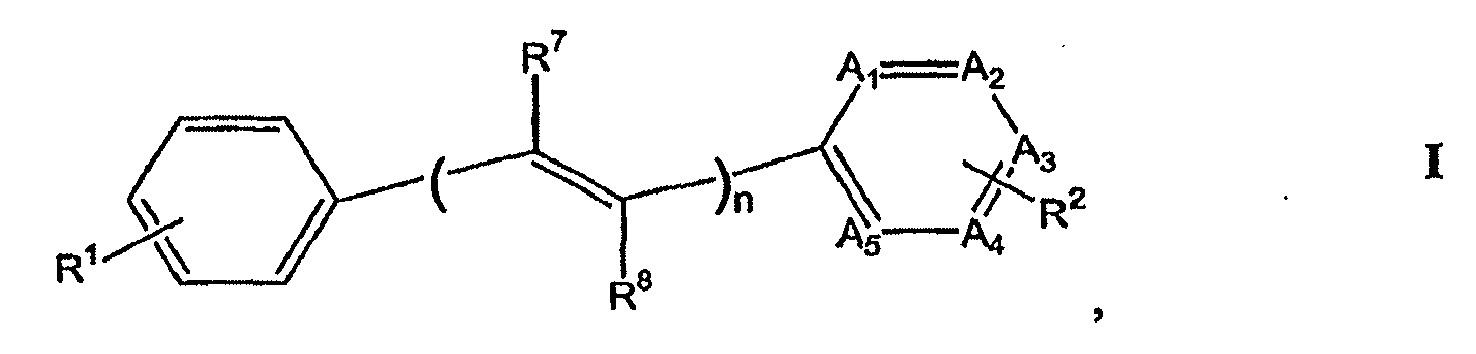
at least one, no more than three, of A1, A2, A3, A4 and A5 is N, the others are -CH, or -CR2 as permitted;
n is an integer from 1 to 6;
R1 is hydroxy or NRaRb(CH2)p-, wherein p is an integer from 0 to 5, and Ra and Rb are independently hydrogen, C1-4 alkyl or (CH2)dX, where X is halogen, and d is an integer from 1 to 6,
R2 is selected from the group consisting of:- i

- ii

- iii

U is selected from the group consisting of hydrogen, hydroxy, halogen, halogen substituted benzoyloxy, halogen substituted phenyl(C1-4)alkyl, halogen substituted aryloxy, and halogen substituted C6-10 aryl; and
R34, R35, R36, R37, R38, R39 and R40 are in each instance independently selected from the group consisting of hydrogen, halogen, hydroxy, C1-4 alkoxy, C1-4 alkyl, and hydroxy(C1-4)alkyl; - iv. -(CH2)w-O-Ch, wherein w is an integer from 1 to 10;
- v. -Ch; and
- vi. -(CH2)w-Ch, wherein w is an integer from 1 to 10;
R7 and R8 are in each instance independently selected from the group consisting of hydrogen, hydroxy, amino, methylamino, dimethylamino, C1-4 alkoxy, C1-4 alkyl, and hydroxy(C1-4)alkyl. - i
- 26. The compound of item 24 wherein, said N2S2 moiety has the following structure:
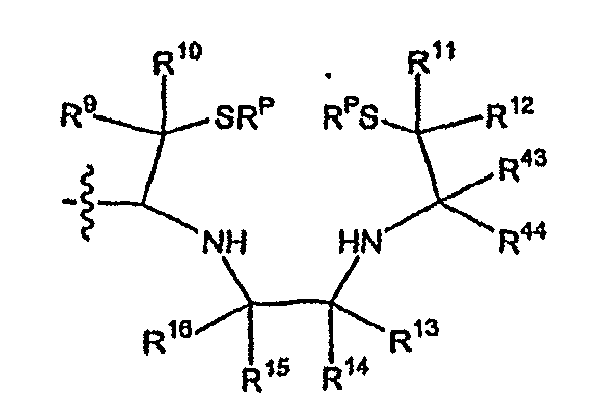
- 27. A radiometal complex of a compound of item 26, wherein said -Ch has the following structure:

- 28. A compound of Formula II, having the following structure:
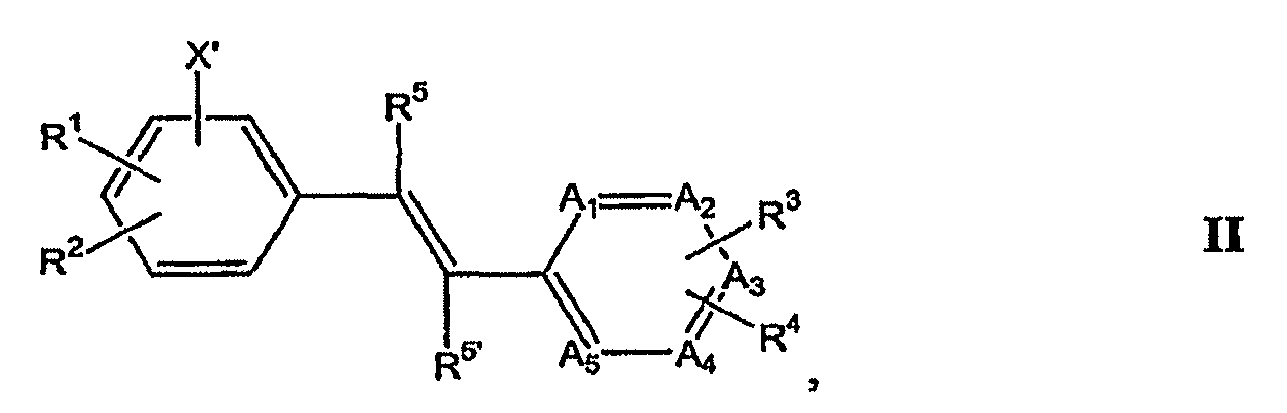
- at least one, no more than three, of A1, A2, A3, A4 and A5 is N, the others are -CH, -CR3 or -CR4 as permitted;
- R5 and R5' are independently hydrogen or C1-4 alkyl;
- R1 and R2, in each instance, is independently selected from the group consisting of hydrogen, hydroxy, halogen, C1-4 alkyl, cyano, carboxy(C1-5)alkyl, trifluoromethyl, nitro, halo(C1-4)alkyl, formyl and NR6R7(CH2)p-, wherein p is an integer from 0 to 5, and R6 and R7 are independently hydrogen, C1-4 alkyl or (CH2)dX, where X is halogen, and d is an integer from 1 to 4;
- R3 is selected from the group consisting of hydrogen, halogen, C1-4 alkyl, cyano, carboxy(C1-5)alkyl, trifluoromethyl, nitro, halo(C1-4)alkyl, formyl, NR6R7(CH2)p-, wherein p is an integer from 0 to 5, and R6 and R7 are independently hydrogen, C1-4 alkyl or (CH2)dX, where X is halogen, and d is an integer from 1 to 4, 18Fluoromethyl, 18Fluoroethyl, 18Fluoropropyl and Sn(alkyl)3;
- R4 is selected from the group consisting of:
- a. C1-4 alkylthio,
- b. C1-4 alkylsulfonyl,
- c. hydroxy,
- d. C1-4alkoxy,
- e. NR6R7(CH2)p-, wherein p is an integer from 0 to 5, and R6 and R7 are independently hydrogen, C1-4 alkyl or (CH2)dX, where X is halogen, and d is an integer from 1 to 4,
- f. phenyl(C1-4)alkyl,
- g. C6-10 aryl,
- h. heteroaryl,
- i. heterocycle,
- j. heterocycle(C1-4)alkyl, and
- k. C3-6 cyloalkyl,
and,
X' is hydrogen, 18Fluoromethyl, 18Fluoroethyl or 18Fluoropropyl, 125I, 123I, 131I, 18F, 76Br, 77Br or Sn(alkyl)3, provided that one of R1, R2, R3 and R4 is NR6R7(CH2)p- or one of R1, R2 and R4 is hydroxy.
- 29. A compound of item 28 wherein,
at least one, no more than three, of A1, A2, A3, A4 and A5 is N, the others are -CH, -CR3 or -CR4 as permitted;
R5 and R5' are independently hydrogen or C1-4 alkyl;
R1 and R2, in each instance, is independently selected from the group consisting of hydrogen, halogen, C1-4 alkyl, cyano, carboxy(C1-5)alkyl, trifluoromethyl, nitro, halo(C1-4)alkyl, formyl and NR6R7(CH2)p-, wherein p is an integer from 0 to 5, and R6 and R7 are independently hydrogen, C1-4 alkyl or (CH2)dX, where X is halogen, and d is an integer from 1 to 4;
R3 is selected from the group consisting of hydrogen, halogen, C1-4 alkyl, cyano, carboxy(C1-5)alkyl, trifluoromethyl, nitro, halo(C1-4)alkyl, formyl, NR6R7(CH2)p-, wherein p is an integer from 0 to 5, and R6 and R7 are independently hydrogen, C1-4 alkyl or (CH2)dX, where X is halogen, and d is an integer from 1 to 4, 18Fluoromethyl, 18Fluoroethyl, 18Fluoropropyl and Sn(alkyl)3;
R4 is selected from the group consisting of:- a. C1-4 alkylthio,
- b. C1-4 alkylsulfonyl,
- c. hydroxy,
- d. C1-4 alkoxy,
- e. NR6R7(CH2)p-, wherein p is an integer from 0 to 5, and R6 and R7 are independently hydrogen, C1-4 alkyl or (CH2)dX, where X is halogen, and d is an integer from 1 to 4,
- f. phenyl(C1-4)alkyl,
- g. C6-10 aryl,
- h. heteroaryl,
- i. heterocycle,
- j. heterocycle(C1-4)alkyl, and
- k. C3-6 cycloalkyl,
wherein said phenyl(C1-4)alkyl, C6-10 aryl, heteroaryl, heterocycle, heterocycle(C1-4)alkyl or C3-6 cycloalkyl is substituted with one of the following: C1-4 alkylthio, C1-4 alkyl sulfonyl, methoxy, hydroxy, dimethylamino or methylamino;
and,
X' is hydrogen, 18Fluoromethyl, 18Fluoroethyl or 18Fluoropropyl, 125I, 123I, 131I, 18F, 76Br, 77Br or Sn(alkyl)3, provided that one of R1, R2, R3 and R4 is NR6R7(CH2)p-.
- 30. A compound of item 28 wherein,
R5 is hydrogen or methyl;
R3 is hydrogen; and
R1 and R2 are hydrogen or C1-4 alkyl. - 31. A compound of item 28, wherein
R1 is hydrogen, and
R4 is NR6R7, wherein R6 and R7 are hydrogen or C1-4 alkyl. - 32. A compound of item 30, wherein X' is 123I.
- 33. A compound of item 30, wherein X' is 18Fluoromethyl, 18Fluoroethyl or 18Fluoropropyl.
- 34. A compound of item 30, wherein R3 is 18Fluoromethyl, 18Fluoroethyl 18Fluoropropyl, 125I, 123I, 131I, 18F, 76Br or 77Br.
- 35. A composition comprising a compound of Formula I, Ia, II or III, wherein said compound contains a 11C isotope, wherein said isotope is present in said composition in an amount above natural abundance, and said compound containing said 11C isotope has a specific activity above background level.
- 36. A compound of Formula Ia, having the following general structure:
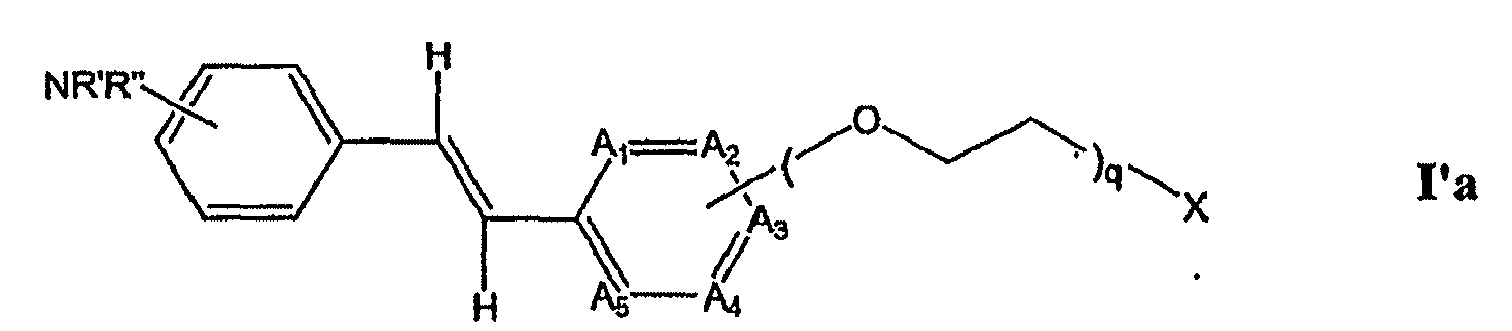
- 37. The compound of item 36, wherein one of R' and R" is hydrogen, the other is C1-4 alkyl.
- 38. A compound of Formula III, having the following general structure:

at least one, no more than three, of A1, A2, A3, A4 and A5 is N, the others are -CH, -CR2 or -CR3 as permitted;
n is an integer from 1 to 6;
R1 is selected from the group consisting of:- a. -(CH2)pNR'R", wherein R' and R" are independently hydrogen, C1-4 alkyl, hydroxy(C1-4)alkyl or halo(C1-4)alkyl, and p is an integer from 0 to 5;
- b. hydroxy,
- c. C1-4 alkoxy,
- d. hydroxy(C1-4)alkyl,
- e. halogen,
- f. cyano,
- g. hydrogen,
- h. nitro,
- i. (C1-C4)alkyl,
- j. halo(C1-C4)alkyl,
- k. formyl,
- l. -NHCO(C1-4 alkyl), and
- m. -OCO(C1-4 alkyl);
R2 is selected from the group consisting of:- i'

- ii
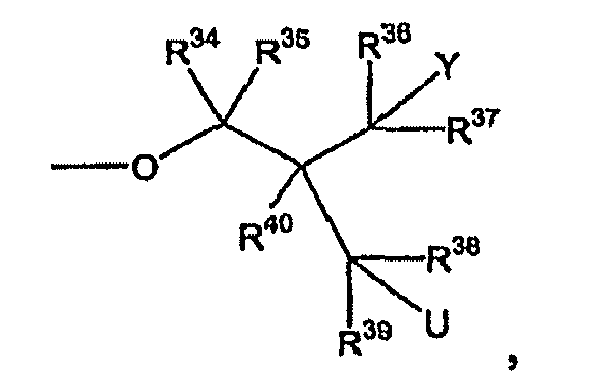
U is selected from the group consisting of hydrogen, hydroxy, halogen, halogen substituted benzoyloxy, halogen substituted phenyl(C1-4)alkyl, halogen substituted aryloxy, and halogen substituted C6-10 aryl; and
R34, R35, R36, R37, R38, R39 and R40 are in each instance independently selected from the group consisting of hydrogen, halogen, hydroxy, C1-4 alkoxy, C1-4 alkyl, and hydroxy(C1-4)alkyl; - ii'

- iii. NR'R", wherein at least one of R' and R" is (CH2)dX, where X is halogen, preferably F or 18F, and d is an integer from 1 to 4; the other of R' and R" is selected from the group consisting of hydrogen, C1-4 alkyl, halo(C1-4)alkyl, and hydroxy(C1-4)alkyl;
- iv. NR'R"-(C1-4)alkyl, wherein at least one of R' and R" is (CH2)dX, where X is halogen, preferably F or 18F, and d is an integer from 1 to 4; the other of R' and R" is selected from the group consisting of hydrogen, C1-4 alkyl, halo(C1-4)alkyl, and hydroxy(C1-4)alkyl;
- v. halo(C1-4)alkyl; and
- vi. an ether (R-O-R) having the following structure: [halo(C1-4)alkyl-O-(C1-4)alkyl]-;
R7 and R8 are in each instance independently selected from the group consisting of hydrogen, hydroxy, amino, methylamino, dimethylamino, C1-4 alkoxy, C1-4 alkyl, and hydroxy(C1-4)alkyl. - 39. The compound of item 38 wherein, R3 is selected from the group consisting of 125I, 123I, 131I, 18F, 18F(C1-4 alkyl), 16Br, 77Br and -Sn(C1-4 alkyl)3.
- 40. The compound of item 38 wherein, R1 is selected from the group consisting of hydroxy, -OCO(C1-4alkyl) and -(CH2)pNR'R", wherein R' and R" are independently hydrogen, C1-4 alkyl, hydroxy(C1-4)alkyl or halo(C1-4)alkyl, and p is an integer from 0 to 5.
- 41. The compound of item 38 wherein, R1 is hydroxy or -(CH2)pNR'R", wherein R' and R" are independently hydrogen or C1-4 alkyl, and p is 0.
- 42. The compound of item 38 wherein, A4 is N and A1, A2, A3 and A5 are each C.
- 43. The compound of item 38 wherein, R2 is
- i

- i
- 44. The compound of item 38 wherein, Z is fluoro and R30, R31, R32 and R33 are in each instance hydrogen.
- 45. The compound of item 38 wherein, R2 is
- iii

U is selected from the group consisting of hydrogen, hydroxy, halogen, halogen substituted benzoyloxy, halogen substituted phenyl(C1-4)alkyl, halogen substituted aryloxy, and halogen substituted C6-10 aryl; and
R34, R35, R36, R37, R38, R39 and R40 are in each instance independently selected from the group consisting of hydrogen, halogen, hydroxy, C1-4 alkoxy, C1-4 alkyl, and hydroxy(C1-4)alkyl.
- iii
- 46. The compound of ; item 45 wherein, U is hydroxy.
- 47. The compound of item 45 wherein, Y is halogen or hydrogen.
- 48. The compound of item 45 wherein, R34, R35, R36, R37, R38, R39 and R40 are in each instance hydrogen.
- 49. The compound of item 38 having one of the following structures:




- 50. A pharmaceutical composition comprising a compound of any one of
items - 51. A diagnostic composition for imaging amyloid deposits, comprising a radiolabeled compound of any one of
items - 52. A method of imaging amyloid deposits, comprising:
- a. introducing into a mammal a detectable quantity of a diagnostic composition of item 51;
- b. allowing sufficient time for the labeled compound to be associated with amyloid deposits; and
- c. detecting the labeled compound associated with one or more amyloid deposits.
- 53. A method of inhibiting amyloid plaque aggregation in a mammal, comprising administering a composition of
item 50 in an amount effective to inhibit amyloid plaque aggregation.
further wherein instructions for use with a prescription for carrying out the above-described method by reacting ingredients (1) and (2) with technetium-99m in the form of a pertechnetate solution may be optionally included.
Claims (16)
- A compound of Formula I,
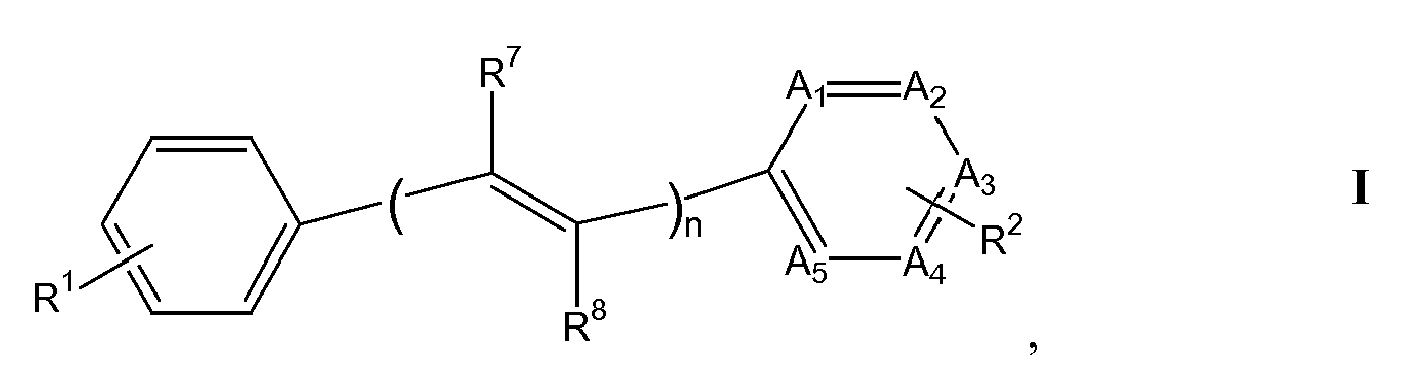
n is an integer from one to six;
at least one, no more than three, of A1, A2, A3, A4 and A5 is N, the others are -CH, or -CR2 as permitted;
R1 is selected from the group consisting of:C1-4 alkoxy,hydroxy(C1-4)alkyl,halogen,cyano,hydrogen,nitro,(C1-C4)alkyl,halo(C1-C4)alkyl,formyl,-NHCO(C1-4alkyl), and-OCO(C1-4alkyl);R2 is selected from the group consisting of:i' ii'and
Y is selected from the group consisting of halogen, halogen substituted benzoyloxy, halogen substituted phenyl(C1-4)alkyl, halogen substituted aryloxy, and halogen substituted C6-10 aryl;
U is selected from the group consisting of hydrogen, hydroxy, halogen, halogen substituted benzoyloxy, halogen substituted phenyl(C1-4)alkyl, halogen substituted aryloxy, and halogen substituted C6-10 aryl; and
R34, R35, R36, R37, R38, R39 and R40 are in each instance independently selected from the group consisting of hydrogen, halogen, hydroxy, C1-4 alkoxy, C1-4 alkyl, and hydroxy(C1-4)alkyl;
R7 and R8 are in each instance independently selected from the group consisting of hydrogen, hydroxy, amino, methylamino, dimethylamino, C1-4 alkoxy, C1-4 alkyl, and hydroxy(C1-4)alkyl. - The compound of claim 1 wherein(a) n is one;(b) said halogen, in each instance, is a radiolabeled halogen; or(c) said halogen, in each instance, is selected from the group consisting of I, 123I, 125I, 131I, Br, 76Br, 77Br, F or 18F.
- The compound of claim 2(a), wherein R2 isi

- The compound of claim 3, wherein(a) q is an integer from 1 to 5; or(b) R7 and R8 are each hydrogen; and optionally wherein R30, R31, R32 and R33 are, in each instance, hydrogen.
- The compound of claim 2(a), wherein R2 isi

- The compound of claim 5, wherein q is an integer from 1 to 5;
optionally wherein R7 and R8 are each hydrogen;
further optionally wherein R30, R31, R32 and R33 are, in each instance, hydrogen, and q is 1, 2 or 3. - The compound of claim 1, wherein R2 isii

- A composition comprising a compound of Formula I or III, wherein said compound contains a 11C isotope, wherein said isotope is present in said composition in an amount above natural abundance, and said compound containing said 11C isotope has a specific activity above background level.
- A compound of Formula III:

at least one, no more than three, of A1, A2, A3, A4 and A5 is N, the others are -CH, -CR2 or -CR3 as permitted;
n is an integer from 1 to 6;
R1 is selected from the group consisting of:C1-4 alkoxy,hydroxy(C1-4)alkyl,halogen,cyano,hydrogen,nitro,(C1-C4)alkyl,halo(C1-C4)alkyl,formyl,-NHCO(C1-4alkyl), and-OCO(C1-4alkyl);R3 is radiohalogen, radiohalo(C1-4)alkyl or -Sn(C1-4alkyl)3; and
R2 is selected from the group consisting of:i' ii
ii
U is selected from the group consisting of hydrogen, hydroxy, halogen, halogen substituted benzoyloxy, halogen substituted phenyl(C1-4)alkyl, halogen substituted aryloxy, and halogen substituted C6-10 aryl; and
R34, R35, R36, R37, R38, R39 and R40 are in each instance independently selected from the group consisting of hydrogen, halogen, hydroxy, C1-4 alkoxy, C1-4 alkyl, and hydroxy(C1-4)alkyl;ii'and
t is 0, 1, 2 or 3; and Y, U, R34, R35, R36, R37, R38, R39 and R40 are as described above;
R7 and R8 are in each instance independently selected from the group consisting of hydrogen, hydroxy, amino, methylamino, dimethylamino, C1-4 alkoxy, C1-4 alkyl, and hydroxy(C1-4)alkyl. - The compound of claim 9 wherein,(a) R3 is selected from the group consisting of 125I, 123I, 131I, 18F, 18F(C1-4 alkyl), 76Br, 77Br and -Sn(C1-4 alkyl)3;(b) A4 is N and A1, A2, A3 and A5 are each -CH, -CR2 or -CR3 as permitted;(c) R2 isi
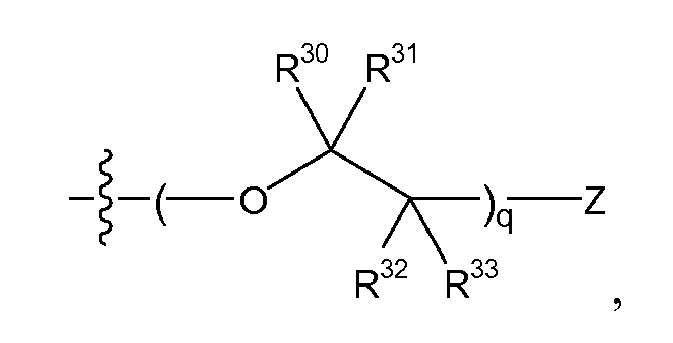 (d) Z is fluoro and R30, R31, R32 and R33 are in each instance hydrogen; or(e) R2 isii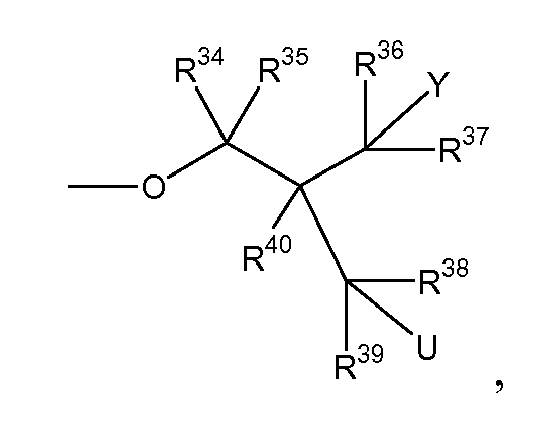
- The compound of claim 10(e) wherein,(a) U is hydroxyl;(b) Y is halogen or hydrogen; or(c) R34, R35, R36, R37, R38, R39 and R40 are in each instance hydrogen.
- A pharmaceutical composition comprising a compound of any one of claims 1 to 11.
- A diagnostic composition for imaging amyloid deposits, comprising a radiolabeled compound of any one of claims 1 to 11.
- A method of imaging amyloid deposits, comprising:a. introducing into a mammal a detectable quantity of a diagnostic composition of claim 13;b. allowing sufficient time for the labeled compound to be associated with amyloid deposits; andc. detecting the labeled compound associated with one or more amyloid deposits.
- A method of inhibiting amyloid plaque aggregation in a mammal, comprising administering a composition of claim 12 in an amount effective to inhibit amyloid plaque aggregation.
- A compound according to any of claims 1 to 11 wherein said compound contains a 11C isotope, wherein said isotope is present in said composition in an amount above natural abundance, and said compound containing said 11C isotope has a specific activity above background level.
Priority Applications (4)
| Application Number | Priority Date | Filing Date | Title |
|---|---|---|---|
| RS20170578A RS56171B1 (en) | 2006-03-30 | 2007-03-26 | STIRYLPYRIDINE DERIVATIVES AND THEIR USE FOR THE BINDING AND IMAGING OF AMYLOID PLACES |
| PL11152124T PL2363392T3 (en) | 2006-03-30 | 2007-03-26 | Styrylpyridine derivatives and their use for binding and imaging amyloid plaques |
| SI200731938T SI2363392T1 (en) | 2006-03-30 | 2007-03-26 | Styrylpyridine derivatives and their use for binding and imaging amyloid plaques |
| HRP20170857TT HRP20170857T1 (en) | 2006-03-30 | 2017-06-06 | Styrylpyridine derivatives and their use for binding and imaging amyloid plaques |
Applications Claiming Priority (2)
| Application Number | Priority Date | Filing Date | Title |
|---|---|---|---|
| US78715606P | 2006-03-30 | 2006-03-30 | |
| EP07753982A EP1999109B1 (en) | 2006-03-30 | 2007-03-26 | Styrylpyridine derivatives and their use for binding and imaging amyloid plaques |
Related Parent Applications (2)
| Application Number | Title | Priority Date | Filing Date |
|---|---|---|---|
| EP07753982A Division EP1999109B1 (en) | 2006-03-30 | 2007-03-26 | Styrylpyridine derivatives and their use for binding and imaging amyloid plaques |
| EP07753982.3 Division | 2007-03-26 |
Publications (2)
| Publication Number | Publication Date |
|---|---|
| EP2363392A1 true EP2363392A1 (en) | 2011-09-07 |
| EP2363392B1 EP2363392B1 (en) | 2017-05-03 |
Family
ID=38326579
Family Applications (3)
| Application Number | Title | Priority Date | Filing Date |
|---|---|---|---|
| EP11152124.1A Active EP2363392B1 (en) | 2006-03-30 | 2007-03-26 | Styrylpyridine derivatives and their use for binding and imaging amyloid plaques |
| EP11152115A Withdrawn EP2363391A1 (en) | 2006-03-30 | 2007-03-26 | Styrylpyridine derivatives and their use for binding and imaging amyloid plaques |
| EP07753982A Active EP1999109B1 (en) | 2006-03-30 | 2007-03-26 | Styrylpyridine derivatives and their use for binding and imaging amyloid plaques |
Family Applications After (2)
| Application Number | Title | Priority Date | Filing Date |
|---|---|---|---|
| EP11152115A Withdrawn EP2363391A1 (en) | 2006-03-30 | 2007-03-26 | Styrylpyridine derivatives and their use for binding and imaging amyloid plaques |
| EP07753982A Active EP1999109B1 (en) | 2006-03-30 | 2007-03-26 | Styrylpyridine derivatives and their use for binding and imaging amyloid plaques |
Country Status (35)
| Country | Link |
|---|---|
| US (3) | US7687052B2 (en) |
| EP (3) | EP2363392B1 (en) |
| JP (1) | JP5290954B2 (en) |
| KR (1) | KR101376807B1 (en) |
| CN (1) | CN101522624B (en) |
| AT (1) | ATE539060T1 (en) |
| AU (1) | AU2007243712B2 (en) |
| BE (1) | BE2013C044I2 (en) |
| BR (1) | BRPI0710225B1 (en) |
| CA (1) | CA2644530C (en) |
| CR (1) | CR10329A (en) |
| CY (3) | CY1113048T1 (en) |
| DK (2) | DK2363392T3 (en) |
| EA (1) | EA017898B1 (en) |
| EC (1) | ECSP088783A (en) |
| ES (2) | ES2628882T3 (en) |
| FR (1) | FR13C0034I2 (en) |
| GT (1) | GT200800201A (en) |
| HR (2) | HRP20120135T1 (en) |
| HU (2) | HUE032660T2 (en) |
| IL (1) | IL193567A (en) |
| LT (1) | LT2363392T (en) |
| LU (1) | LU92232I2 (en) |
| MX (1) | MX2008012527A (en) |
| NO (2) | NO342090B1 (en) |
| NZ (1) | NZ570887A (en) |
| PL (2) | PL1999109T3 (en) |
| PT (2) | PT2363392T (en) |
| RS (2) | RS56171B1 (en) |
| SG (1) | SG173338A1 (en) |
| SI (2) | SI2363392T1 (en) |
| TW (1) | TWI399366B (en) |
| UA (1) | UA97802C2 (en) |
| WO (1) | WO2007126733A2 (en) |
| ZA (1) | ZA200807955B (en) |
Families Citing this family (29)
| Publication number | Priority date | Publication date | Assignee | Title |
|---|---|---|---|---|
| PL1999109T3 (en) | 2006-03-30 | 2012-05-31 | Univ Pennsylvania | Styrylpyridine derivatives and their use for binding and imaging amyloid plaques |
| CA2699965A1 (en) * | 2007-07-04 | 2009-01-08 | Tohoku University | Pet probe having an alkoxy group substituted by fluorine and hydroxy group |
| US8557222B2 (en) * | 2008-04-04 | 2013-10-15 | Avid Radiopharmaceuticals, Inc. | Radiopharmaceutical imaging of neurodegenerative diseases |
| AU2009335049B2 (en) * | 2008-12-31 | 2015-07-16 | Avid Radiopharmaceuticals, Inc. | Synthesis of 18F-radiolabeled styrylpyridines from tosylate precursors and stable pharmaceutical compositions thereof |
| US8968701B2 (en) * | 2009-07-10 | 2015-03-03 | Piramal Imaging Sa | Usage of low to medium-pressure liquid chromatography for the purification of radiotracers |
| US20120263646A1 (en) | 2009-10-15 | 2012-10-18 | Guerbet | Imaging agents and their use for the diagnostic in vivo of neurodegenerative diseases, notably alzheimer's disease and derivative diseases |
| AU2010334929B2 (en) * | 2009-12-23 | 2015-04-23 | Lantheus Biosciences Ltd. | Formulations suitable for pet imaging with hydrophobic pet agents |
| WO2011141515A1 (en) | 2010-05-14 | 2011-11-17 | Bayer Pharma Aktiengesellschaft | Diagnostic agents for amyloid beta imaging |
| CA2801530C (en) | 2010-06-04 | 2017-09-12 | Piramal Imaging Sa | Method for production of f-18 labeled amyloid beta ligands |
| BR112012030946A2 (en) * | 2010-06-04 | 2016-11-01 | Piramal Imaging Sa | method for producing f-18-labeled beta amyloid binder |
| EA201201647A1 (en) * | 2010-06-04 | 2013-05-30 | Пирамаль Имэджинг Са | METHOD OF OBTAINING F-18 BUNGED LIGANDS OF BETA-AMYLOID |
| TWI504414B (en) | 2010-06-04 | 2015-10-21 | Bayer Schering Pharma Ag | Method for production of f-18 labeled aβ ligands |
| CN101891674B (en) * | 2010-06-24 | 2012-11-14 | 山东大学 | 4-styryl pyridine compound and preparation method as well as application thereof |
| EP3263136A1 (en) * | 2010-10-12 | 2018-01-03 | Mayo Foundation for Medical Education and Research | Imaging of meningiomas using stilbene, or biphenylalkyne derivatives |
| US20140079635A1 (en) * | 2011-03-30 | 2014-03-20 | Case Western Reserve University | Molecular probes for detecting lipid composition |
| WO2012145169A2 (en) | 2011-04-21 | 2012-10-26 | The Regents Of The University Of California | Functionalized magnetic nanoparticles and use in imaging amyloid deposits and neurofibrillary tangles |
| CA2852840A1 (en) | 2011-10-19 | 2013-04-25 | Piramal Imaging Sa | Improved method for production of f-18 labeled a.beta. ligands |
| CA2869398C (en) | 2012-04-10 | 2019-10-22 | Lantheus Medical Imaging, Inc. | Radiopharmaceutical synthesis methods |
| JP6099045B2 (en) * | 2013-04-30 | 2017-03-22 | 国立大学法人京都大学 | Triazolopyrimidine derivative compounds |
| JP2014218454A (en) * | 2013-05-07 | 2014-11-20 | 日本メジフィジックス株式会社 | Styrylpyridine derivative compounds |
| JP6041751B2 (en) * | 2013-05-07 | 2016-12-14 | 日本メジフィジックス株式会社 | Styrylpyridine derivative compound |
| CN103645254B (en) * | 2013-11-28 | 2015-01-07 | 江苏省原子医学研究所 | Method for analyzing content of A beta plaque developer precursor AV45 |
| MX376163B (en) * | 2014-05-13 | 2025-03-07 | Hoffmann La Roche | DEUTERATED HETEROCYCLIC COMPOUNDS AND THEIR USE AS IMAGING AGENTS. |
| JP7114074B2 (en) * | 2015-08-18 | 2022-08-08 | ザ リージェンツ オブ ザ ユニバーシティ オブ カリフォルニア | Amyloid binding agents including nitroxides for imaging and their therapeutic use |
| US10300155B2 (en) | 2015-12-31 | 2019-05-28 | Washington University | Alpha-synuclein ligands |
| CN109400615B (en) * | 2017-08-18 | 2021-07-16 | 上海交通大学医学院附属新华医院 | A kind of coumarin compound targeting β-amyloid and its preparation and application |
| CN108299287A (en) * | 2018-01-02 | 2018-07-20 | 北京师范大学 | There is the N of high-affinity with A β plaque block2S2Class pyridyl group distyryl compound |
| CN114805190A (en) * | 2022-06-08 | 2022-07-29 | 吉林大学第一医院 | Double-column synthesis method of methylaniline Abeta protein developer |
| KR20250107902A (en) | 2022-11-14 | 2025-07-14 | 일라이 릴리 앤드 캄파니 | Polymorphic forms of florbetapir precursor AV-105 |
Citations (1)
| Publication number | Priority date | Publication date | Assignee | Title |
|---|---|---|---|---|
| WO2003018070A1 (en) * | 2001-08-27 | 2003-03-06 | The Trustees Of The University Of Pennsylvania | Stilbene derivatives and their use for binding and imaging amyloid plaques |
Family Cites Families (15)
| Publication number | Priority date | Publication date | Assignee | Title |
|---|---|---|---|---|
| WO1992000963A1 (en) * | 1990-07-12 | 1992-01-23 | Yoshitomi Pharmaceutical Industries, Ltd. | Styryl compounds and use thereof as medicine |
| JPH0545875A (en) * | 1991-08-08 | 1993-02-26 | Konica Corp | Photosensitive composition |
| US6020436A (en) * | 1993-03-09 | 2000-02-01 | The Chromaline Corporation | Photosensitive resin composition |
| TW544448B (en) * | 1997-07-11 | 2003-08-01 | Novartis Ag | Pyridine derivatives |
| EP1266884A4 (en) * | 2000-03-22 | 2003-04-23 | Bf Res Inst Inc | Image diagnosis probe based on substituted azobenzene or analogue thereof for disease attributable to amyloid accumulation and composition for image diagnosis containing the same |
| US8007954B2 (en) | 2000-11-09 | 2011-08-30 | The Trustees Of The University Of Pennsylvania | Use of sulfur-containing fuels for direct oxidation fuel cells |
| JP2002182254A (en) | 2000-12-18 | 2002-06-26 | Fuji Photo Film Co Ltd | Nonlinear optical material and method for manufacturing the same |
| EP1530814A4 (en) | 2002-06-06 | 2009-05-27 | Univ Pennsylvania | CERAMIC ANODE AND MANUFACTURING METHOD THEREOF |
| WO2004016271A1 (en) * | 2002-08-14 | 2004-02-26 | Axxima Pharmaceuticals Ag | Pyrimidones as antiviral agents |
| JP4482352B2 (en) | 2004-03-11 | 2010-06-16 | 本田技研工業株式会社 | Polymer electrolyte fuel cell |
| WO2006078384A2 (en) * | 2004-12-17 | 2006-07-27 | The Trustees Of The University Of Pennsylvania | Stilbene derivatives and their use |
| CA2591534C (en) * | 2004-12-17 | 2013-08-06 | The Trustees Of The University Of Pennsylvania | Stilbene derivatives and their use for binding and imaging amyloid plaques |
| US20070031328A1 (en) * | 2005-06-24 | 2007-02-08 | Kung Hank F | Radiolabeled-pegylation of ligands for use as imaging agents |
| PL1999109T3 (en) * | 2006-03-30 | 2012-05-31 | Univ Pennsylvania | Styrylpyridine derivatives and their use for binding and imaging amyloid plaques |
| US20080253967A1 (en) | 2007-04-13 | 2008-10-16 | Kung Hank F | Halo-Stilbene Derivatives And Their Use For Binding And Imaging Of Amyloid Plaques |
-
2007
- 2007-03-26 PL PL07753982T patent/PL1999109T3/en unknown
- 2007-03-26 HR HR20120135T patent/HRP20120135T1/en unknown
- 2007-03-26 KR KR1020087023884A patent/KR101376807B1/en active Active
- 2007-03-26 JP JP2009502912A patent/JP5290954B2/en active Active
- 2007-03-26 UA UAA200812698A patent/UA97802C2/en unknown
- 2007-03-26 MX MX2008012527A patent/MX2008012527A/en active IP Right Grant
- 2007-03-26 HU HUE11152124A patent/HUE032660T2/en unknown
- 2007-03-26 SI SI200731938T patent/SI2363392T1/en unknown
- 2007-03-26 ES ES11152124.1T patent/ES2628882T3/en active Active
- 2007-03-26 PL PL11152124T patent/PL2363392T3/en unknown
- 2007-03-26 SI SI200730865T patent/SI1999109T1/en unknown
- 2007-03-26 AT AT07753982T patent/ATE539060T1/en active
- 2007-03-26 RS RS20170578A patent/RS56171B1/en unknown
- 2007-03-26 AU AU2007243712A patent/AU2007243712B2/en active Active
- 2007-03-26 LT LTEP11152124.1T patent/LT2363392T/en unknown
- 2007-03-26 EP EP11152124.1A patent/EP2363392B1/en active Active
- 2007-03-26 BR BRPI0710225-9A patent/BRPI0710225B1/en active IP Right Grant
- 2007-03-26 EP EP11152115A patent/EP2363391A1/en not_active Withdrawn
- 2007-03-26 SG SG2011048477A patent/SG173338A1/en unknown
- 2007-03-26 PT PT111521241T patent/PT2363392T/en unknown
- 2007-03-26 CN CN2007800116909A patent/CN101522624B/en active Active
- 2007-03-26 DK DK11152124.1T patent/DK2363392T3/en active
- 2007-03-26 NZ NZ570887A patent/NZ570887A/en unknown
- 2007-03-26 WO PCT/US2007/007400 patent/WO2007126733A2/en not_active Ceased
- 2007-03-26 EA EA200870389A patent/EA017898B1/en not_active IP Right Cessation
- 2007-03-26 DK DK07753982.3T patent/DK1999109T3/en active
- 2007-03-26 ES ES07753982T patent/ES2378785T3/en active Active
- 2007-03-26 US US11/727,401 patent/US7687052B2/en active Active
- 2007-03-26 PT PT07753982T patent/PT1999109E/en unknown
- 2007-03-26 RS RS20120077A patent/RS52222B/en unknown
- 2007-03-26 EP EP07753982A patent/EP1999109B1/en active Active
- 2007-03-26 CA CA2644530A patent/CA2644530C/en active Active
- 2007-04-26 TW TW096114833A patent/TWI399366B/en active
-
2008
- 2008-08-05 US US12/186,072 patent/US8506929B2/en active Active
- 2008-08-20 IL IL193567A patent/IL193567A/en active IP Right Grant
- 2008-09-16 ZA ZA2008/07955A patent/ZA200807955B/en unknown
- 2008-09-30 GT GT200800201A patent/GT200800201A/en unknown
- 2008-09-30 EC EC2008008783A patent/ECSP088783A/en unknown
- 2008-09-30 CR CR10329A patent/CR10329A/en unknown
- 2008-10-29 NO NO20084590A patent/NO342090B1/en active Protection Beyond IP Right Term
-
2012
- 2012-03-07 CY CY20121100225T patent/CY1113048T1/en unknown
-
2013
- 2013-01-07 US US13/735,609 patent/US8840866B2/en active Active
- 2013-06-26 LU LU92232C patent/LU92232I2/en unknown
- 2013-06-26 BE BE2013C044C patent/BE2013C044I2/fr unknown
- 2013-06-26 FR FR13C0034C patent/FR13C0034I2/en active Active
- 2013-06-27 HU HUS1300028C patent/HUS1300028I1/en unknown
- 2013-06-27 CY CY2013024C patent/CY2013024I1/en unknown
-
2017
- 2017-06-06 HR HRP20170857TT patent/HRP20170857T1/en unknown
- 2017-06-22 CY CY20171100664T patent/CY1119048T1/en unknown
-
2018
- 2018-09-11 NO NO2018030C patent/NO2018030I1/en unknown
Patent Citations (1)
| Publication number | Priority date | Publication date | Assignee | Title |
|---|---|---|---|---|
| WO2003018070A1 (en) * | 2001-08-27 | 2003-03-06 | The Trustees Of The University Of Pennsylvania | Stilbene derivatives and their use for binding and imaging amyloid plaques |
Non-Patent Citations (39)
| Title |
|---|
| AGDEPPA ED ET AL., NEUROSCIENCE, vol. 117, 2003, pages 723 - 30 |
| ASHBURN, T. T. ET AL., CHEM. BIOL., vol. 3, 1996, pages 351 - 358 |
| BERGE S. M. ET AL.: "Pharmaceutical Salts", PHARM. SCI., vol. 66, 1977, pages 1 - 19 |
| ELHADDAOUI, A. ET AL., BIOSPECTROSCOPY, vol. 1, 1995, pages 351 - 356 |
| FINDEIS, M. A., BIOCHIMICA ET BIOPHYSICA ACTA, vol. 1502, 2000, pages 76 - 84 |
| GINSBERG, S. D. ET AL.: "Cerebral Cortex: Neurodegenerative and Age-related Changes in Structure and Function of Cerebral Cortex", 1999, KLUWER ACADEMIC/PLENUM, article "Molecular Pathology of Alzheimer's Disease and Related Disorders", pages: 603 - 654 |
| GOLDE, T. E. ET AL., BIOCHIMICA ET BIOPHYSICA ACTA, vol. 1502, 2000, pages 172 - 187 |
| GREENE, T.W.; WUTS, P.G.M.: "Protective Groups in Organic Synthesis", 1991, JOHN WILEY AND SONS, INC. |
| HAN, G. ET AL., J. AM. CHEM. SOC., vol. 118, 1996, pages 4506 - 4507 |
| KLUNK, W. E. ET AL., BIOL. PSYCHIATRY, vol. 35, 1994, pages 627 |
| KLUNK, W. E. ET AL., J. HISTOCHEM. CYTOCHEM., vol. 37, 1989, pages 1273 - 1281 |
| KLUNK, W. E. ET AL., NEUROBIOL. AGING, vol. 16, 1995, pages 541 - 548 |
| KLUNK, W. E. ET AL., SOCIETY FOR NEUROSCIENCE ABSTRACT, vol. 23, 1997, pages 1638 |
| KUNER, P., BOHRMANN ET AL., J. BIOL. CHEM., vol. 275, 2000, pages 1673 - 1678 |
| KUNG M-P ET AL., BRAIN RES., vol. 1025, 2004, pages 89 - 105 |
| KUNG, M.-P.; HOU, C.; ZHUANG, Z.-P.; CROSS, A. J.; MAIER, D. L.; KUNG, H. F.: "Characterization of IMPY as a potential imaging agent for b-amyloid plaques in double transgenic PSAPP mice", EUR. J. NUCL. MED. MOL. IMAGING, vol. 31, 2004, pages 1136 - 1145 |
| LORENZO, A.; YANKNER, B. A., PROC. NATL. ACAD. SCI. U.S.A., vol. 91, 1994, pages 12243 - 12247 |
| MATHIS CA ET AL., ARCH. NEUROL., vol. 62, 2005, pages 196 - 200 |
| MATHIS CA ET AL., CURR PHARM DES., vol. 10, 2004, pages 1469 - 92 |
| MATHIS, C. A. ET AL., PROC. XIITH INTL. SYMP. RADIOPHARM. CHEM., 1997, pages 94 - 95 |
| MOORE, C. L. ET AL., J. MED. CHEM., vol. 43, 2000, pages 3434 - 3442 |
| NASLUND, J. ET AL., J. AM. MED. ASSOC., vol. 283, 2000, pages 1571 - 1577 |
| NORDBERG A., LANCET NEUROL., vol. 3, 2004, pages 519 - 27 |
| ONO M ET AL: "Synthesis and biological evaluation of (E)-3-styrylpyridine derivatives as amyloid imaging agents for Alzheimer's disease", NUCLEAR MEDICINE AND BIOLOGY, ELSEVIER, NY, US, vol. 32, no. 4, May 2005 (2005-05-01), pages 329 - 335, XP004881117, ISSN: 0969-8051 * |
| SELKOE, D. J., J. AM. MED. ASSOC., vol. 283, 2000, pages 1615 - 1617 |
| SELKOE, D. J.: "Alzheimer's Disease", 1999, LIPPINCOT WILLIAMS & WILKINS, article "Biology of p-amyloid Precursor Protein and the Mechanism of Alzheimer's Disease", pages: 293 - 310 |
| SELKOE, D., J. JAMA, vol. 283, 2000, pages 1615 - 1617 |
| SHOGHI-JADID K ET AL., AM J GERIATR PSYCHIATRY, vol. 10, 2002, pages 24 - 35 |
| SKOVRONSKY, D. M.; LEE, V. M., TRENDS PHARMACOL. SCI., vol. 21, 2000, pages 161 - 163 |
| SKOVRONSKY, D.M.; LEE, V.M., TRENDS PHARMACOL. SCI., vol. 21, 2000, pages 161 - 163 |
| VASSAR, R. ET AL., SCIENCE, vol. 286, 1999, pages 735 - 741 |
| VERHOEFF NP ET AL., AM J GERIATR PSYCHIATRY, vol. 12, 2004, pages 584 - 95 |
| VOGELSBERG-RAGAGLIA, V. ET AL.: "Alzheimer's Disease", 1999, LIPPINCOT, WILLIAMS & WILKINS, article "Cell Biology of Tau and Cytoskeletal Pathology in Alzheimer's Disease", pages: 359 - 372 |
| VOGELSBERG-RAGAGLIA, V. ET AL.: "Alzheimer's Disease", 1999, LIPPINCOT, WILLIAMS & WILLDNS, article "Cell Biology of Tau and Cytoskeletal Pathology in Alzheimer's Disease", pages: 359 - 372 |
| WENCHAO QU ET AL: "Novel Styrylpyridines as Probes for SPECT Imaging of Amyloid Plaques", JOURNAL OF MEDICINAL CHEMISTRY, vol. 50, no. 9, 1 May 2007 (2007-05-01), pages 2157 - 2165, XP055003743, ISSN: 0022-2623, DOI: 10.1021/jm070025+ * |
| WOLFE, M. S. ET AL., J. MED. CHEM., vol. 41, 1998, pages 6 - 9 |
| WOLFE, M.S. ET AL., J. MED. CHEM., vol. 41, 1998, pages 6 - 9 |
| XIA, W. ET AL., J. PROC. NATL. ACAD. SCI. U.S.A., vol. 97, 2000, pages 9299 - 9304 |
| ZHEN, W. ET AL., J. MED. CHEM., vol. 42, 1999, pages 2805 - 2815 |
Also Published As
Similar Documents
| Publication | Publication Date | Title |
|---|---|---|
| EP2363392B1 (en) | Styrylpyridine derivatives and their use for binding and imaging amyloid plaques | |
| US7297820B2 (en) | Stilbene derivatives and their use for binding and imaging amyloid plaques | |
| AU2002323417A1 (en) | Stilbene derivatives and their use for binding and imaging amyloid plaques | |
| US20110158907A1 (en) | Diphenyl-heteroaryl derivatives and their use for binding and imaging amyloid plaques |
Legal Events
| Date | Code | Title | Description |
|---|---|---|---|
| PUAI | Public reference made under article 153(3) epc to a published international application that has entered the european phase |
Free format text: ORIGINAL CODE: 0009012 |
|
| AC | Divisional application: reference to earlier application |
Ref document number: 1999109 Country of ref document: EP Kind code of ref document: P |
|
| AK | Designated contracting states |
Kind code of ref document: A1 Designated state(s): AT BE BG CH CY CZ DE DK EE ES FI FR GB GR HU IE IS IT LI LT LU LV MC MT NL PL PT RO SE SI SK TR |
|
| AX | Request for extension of the european patent |
Extension state: AL BA HR MK RS |
|
| 17P | Request for examination filed |
Effective date: 20120307 |
|
| 17Q | First examination report despatched |
Effective date: 20120705 |
|
| GRAP | Despatch of communication of intention to grant a patent |
Free format text: ORIGINAL CODE: EPIDOSNIGR1 |
|
| INTG | Intention to grant announced |
Effective date: 20160510 |
|
| GRAS | Grant fee paid |
Free format text: ORIGINAL CODE: EPIDOSNIGR3 |
|
| GRAJ | Information related to disapproval of communication of intention to grant by the applicant or resumption of examination proceedings by the epo deleted |
Free format text: ORIGINAL CODE: EPIDOSDIGR1 |
|
| GRAL | Information related to payment of fee for publishing/printing deleted |
Free format text: ORIGINAL CODE: EPIDOSDIGR3 |
|
| GRAP | Despatch of communication of intention to grant a patent |
Free format text: ORIGINAL CODE: EPIDOSNIGR1 |
|
| INTC | Intention to grant announced (deleted) | ||
| INTG | Intention to grant announced |
Effective date: 20161014 |
|
| GRAJ | Information related to disapproval of communication of intention to grant by the applicant or resumption of examination proceedings by the epo deleted |
Free format text: ORIGINAL CODE: EPIDOSDIGR1 |
|
| GRAL | Information related to payment of fee for publishing/printing deleted |
Free format text: ORIGINAL CODE: EPIDOSDIGR3 |
|
| STAA | Information on the status of an ep patent application or granted ep patent |
Free format text: STATUS: EXAMINATION IS IN PROGRESS |
|
| GRAR | Information related to intention to grant a patent recorded |
Free format text: ORIGINAL CODE: EPIDOSNIGR71 |
|
| STAA | Information on the status of an ep patent application or granted ep patent |
Free format text: STATUS: GRANT OF PATENT IS INTENDED |
|
| INTC | Intention to grant announced (deleted) | ||
| GRAA | (expected) grant |
Free format text: ORIGINAL CODE: 0009210 |
|
| STAA | Information on the status of an ep patent application or granted ep patent |
Free format text: STATUS: THE PATENT HAS BEEN GRANTED |
|
| INTG | Intention to grant announced |
Effective date: 20170306 |
|
| AC | Divisional application: reference to earlier application |
Ref document number: 1999109 Country of ref document: EP Kind code of ref document: P |
|
| AK | Designated contracting states |
Kind code of ref document: B1 Designated state(s): AT BE BG CH CY CZ DE DK EE ES FI FR GB GR HU IE IS IT LI LT LU LV MC MT NL PL PT RO SE SI SK TR |
|
| AX | Request for extension of the european patent |
Extension state: AL BA HR MK RS |
|
| REG | Reference to a national code |
Ref country code: GB Ref legal event code: FG4D |
|
| REG | Reference to a national code |
Ref country code: AT Ref legal event code: REF Ref document number: 889814 Country of ref document: AT Kind code of ref document: T Effective date: 20170515 Ref country code: CH Ref legal event code: EP |
|
| REG | Reference to a national code |
Ref country code: IE Ref legal event code: FG4D |
|
| REG | Reference to a national code |
Ref country code: HR Ref legal event code: TUEP Ref document number: P20170857 Country of ref document: HR |
|
| REG | Reference to a national code |
Ref country code: PT Ref legal event code: SC4A Ref document number: 2363392 Country of ref document: PT Date of ref document: 20170615 Kind code of ref document: T Free format text: AVAILABILITY OF NATIONAL TRANSLATION Effective date: 20170605 |
|
| REG | Reference to a national code |
Ref country code: RO Ref legal event code: EPE |
|
| REG | Reference to a national code |
Ref country code: DE Ref legal event code: R096 Ref document number: 602007050888 Country of ref document: DE |
|
| REG | Reference to a national code |
Ref country code: DK Ref legal event code: T3 Effective date: 20170628 |
|
| REG | Reference to a national code |
Ref country code: SE Ref legal event code: TRGR |
|
| REG | Reference to a national code |
Ref country code: NL Ref legal event code: FP |
|
| REG | Reference to a national code |
Ref country code: ES Ref legal event code: FG2A Ref document number: 2628882 Country of ref document: ES Kind code of ref document: T3 Effective date: 20170804 |
|
| REG | Reference to a national code |
Ref country code: EE Ref legal event code: FG4A Ref document number: E014034 Country of ref document: EE Effective date: 20170620 |
|
| REG | Reference to a national code |
Ref country code: HU Ref legal event code: AG4A Ref document number: E032660 Country of ref document: HU |
|
| REG | Reference to a national code |
Ref country code: SK Ref legal event code: T3 Ref document number: E 24576 Country of ref document: SK |
|
| REG | Reference to a national code |
Ref country code: GR Ref legal event code: EP Ref document number: 20170401891 Country of ref document: GR Effective date: 20171122 |
|
| REG | Reference to a national code |
Ref country code: HR Ref legal event code: T1PR Ref document number: P20170857 Country of ref document: HR |
|
| REG | Reference to a national code |
Ref country code: DE Ref legal event code: R097 Ref document number: 602007050888 Country of ref document: DE |
|
| PLBE | No opposition filed within time limit |
Free format text: ORIGINAL CODE: 0009261 |
|
| STAA | Information on the status of an ep patent application or granted ep patent |
Free format text: STATUS: NO OPPOSITION FILED WITHIN TIME LIMIT |
|
| REG | Reference to a national code |
Ref country code: FR Ref legal event code: PLFP Year of fee payment: 12 |
|
| 26N | No opposition filed |
Effective date: 20180206 |
|
| PGFP | Annual fee paid to national office [announced via postgrant information from national office to epo] |
Ref country code: LU Payment date: 20180327 Year of fee payment: 12 |
|
| PGFP | Annual fee paid to national office [announced via postgrant information from national office to epo] |
Ref country code: IE Payment date: 20180328 Year of fee payment: 12 Ref country code: GR Payment date: 20180329 Year of fee payment: 12 |
|
| REG | Reference to a national code |
Ref country code: HR Ref legal event code: ODRP Ref document number: P20170857 Country of ref document: HR Payment date: 20190314 Year of fee payment: 13 |
|
| PGFP | Annual fee paid to national office [announced via postgrant information from national office to epo] |
Ref country code: SI Payment date: 20190306 Year of fee payment: 13 Ref country code: TR Payment date: 20190319 Year of fee payment: 13 |
|
| PGFP | Annual fee paid to national office [announced via postgrant information from national office to epo] |
Ref country code: SK Payment date: 20190305 Year of fee payment: 13 |
|
| PGFP | Annual fee paid to national office [announced via postgrant information from national office to epo] |
Ref country code: MT Payment date: 20190304 Year of fee payment: 13 |
|
| REG | Reference to a national code |
Ref country code: AT Ref legal event code: UEP Ref document number: 889814 Country of ref document: AT Kind code of ref document: T Effective date: 20170503 |
|
| PG25 | Lapsed in a contracting state [announced via postgrant information from national office to epo] |
Ref country code: LU Free format text: LAPSE BECAUSE OF NON-PAYMENT OF DUE FEES Effective date: 20190326 |
|
| PG25 | Lapsed in a contracting state [announced via postgrant information from national office to epo] |
Ref country code: IE Free format text: LAPSE BECAUSE OF NON-PAYMENT OF DUE FEES Effective date: 20190326 |
|
| PG25 | Lapsed in a contracting state [announced via postgrant information from national office to epo] |
Ref country code: GR Free format text: LAPSE BECAUSE OF NON-PAYMENT OF DUE FEES Effective date: 20191007 |
|
| REG | Reference to a national code |
Ref country code: HR Ref legal event code: PBON Ref document number: P20170857 Country of ref document: HR Effective date: 20200326 |
|
| REG | Reference to a national code |
Ref country code: EE Ref legal event code: MM4A Ref document number: E014034 Country of ref document: EE Effective date: 20200331 |
|
| PG25 | Lapsed in a contracting state [announced via postgrant information from national office to epo] |
Ref country code: CY Free format text: LAPSE BECAUSE OF NON-PAYMENT OF DUE FEES Effective date: 20200326 Ref country code: RO Free format text: LAPSE BECAUSE OF NON-PAYMENT OF DUE FEES Effective date: 20200326 |
|
| PG25 | Lapsed in a contracting state [announced via postgrant information from national office to epo] |
Ref country code: LV Free format text: LAPSE BECAUSE OF NON-PAYMENT OF DUE FEES Effective date: 20200326 |
|
| REG | Reference to a national code |
Ref country code: SK Ref legal event code: MM4A Ref document number: E 24576 Country of ref document: SK Effective date: 20200326 |
|
| REG | Reference to a national code |
Ref country code: LT Ref legal event code: MM4D Effective date: 20200326 |
|
| REG | Reference to a national code |
Ref country code: SI Ref legal event code: KO00 Effective date: 20201113 |
|
| PG25 | Lapsed in a contracting state [announced via postgrant information from national office to epo] |
Ref country code: HU Free format text: LAPSE BECAUSE OF NON-PAYMENT OF DUE FEES Effective date: 20200327 Ref country code: EE Free format text: LAPSE BECAUSE OF NON-PAYMENT OF DUE FEES Effective date: 20200331 Ref country code: BG Free format text: LAPSE BECAUSE OF NON-PAYMENT OF DUE FEES Effective date: 20201130 Ref country code: LT Free format text: LAPSE BECAUSE OF NON-PAYMENT OF DUE FEES Effective date: 20200326 |
|
| PG25 | Lapsed in a contracting state [announced via postgrant information from national office to epo] |
Ref country code: SI Free format text: LAPSE BECAUSE OF NON-PAYMENT OF DUE FEES Effective date: 20200327 Ref country code: SK Free format text: LAPSE BECAUSE OF NON-PAYMENT OF DUE FEES Effective date: 20200326 |
|
| PG25 | Lapsed in a contracting state [announced via postgrant information from national office to epo] |
Ref country code: TR Free format text: LAPSE BECAUSE OF NON-PAYMENT OF DUE FEES Effective date: 20200326 Ref country code: MT Free format text: LAPSE BECAUSE OF NON-PAYMENT OF DUE FEES Effective date: 20200326 |
|
| P01 | Opt-out of the competence of the unified patent court (upc) registered |
Effective date: 20230523 |
|
| PG25 | Lapsed in a contracting state [announced via postgrant information from national office to epo] |
Ref country code: IS Free format text: LAPSE BECAUSE OF NON-PAYMENT OF DUE FEES Effective date: 20201007 |
|
| REG | Reference to a national code |
Ref country code: CH Ref legal event code: U11 Free format text: ST27 STATUS EVENT CODE: U-0-0-U10-U11 (AS PROVIDED BY THE NATIONAL OFFICE) Effective date: 20260401 |
|
| PGFP | Annual fee paid to national office [announced via postgrant information from national office to epo] |
Ref country code: SE Payment date: 20260327 Year of fee payment: 20 |
|
| PGFP | Annual fee paid to national office [announced via postgrant information from national office to epo] |
Ref country code: GB Payment date: 20260327 Year of fee payment: 20 |
|
| PGFP | Annual fee paid to national office [announced via postgrant information from national office to epo] |
Ref country code: MC Payment date: 20260305 Year of fee payment: 20 |
|
| PGFP | Annual fee paid to national office [announced via postgrant information from national office to epo] |
Ref country code: DK Payment date: 20260325 Year of fee payment: 20 Ref country code: DE Payment date: 20260327 Year of fee payment: 20 |
|
| PGFP | Annual fee paid to national office [announced via postgrant information from national office to epo] |
Ref country code: AT Payment date: 20260327 Year of fee payment: 20 |
|
| PGFP | Annual fee paid to national office [announced via postgrant information from national office to epo] |
Ref country code: BE Payment date: 20260327 Year of fee payment: 20 Ref country code: FI Payment date: 20260325 Year of fee payment: 20 Ref country code: IT Payment date: 20260319 Year of fee payment: 20 |
|
| PGFP | Annual fee paid to national office [announced via postgrant information from national office to epo] |
Ref country code: NL Payment date: 20260326 Year of fee payment: 20 |
|
| PGFP | Annual fee paid to national office [announced via postgrant information from national office to epo] |
Ref country code: FR Payment date: 20260325 Year of fee payment: 20 |
|
| PGFP | Annual fee paid to national office [announced via postgrant information from national office to epo] |
Ref country code: PT Payment date: 20260310 Year of fee payment: 20 Ref country code: CZ Payment date: 20260310 Year of fee payment: 20 |
|
| PGFP | Annual fee paid to national office [announced via postgrant information from national office to epo] |
Ref country code: PL Payment date: 20260311 Year of fee payment: 20 |
|
| PGFP | Annual fee paid to national office [announced via postgrant information from national office to epo] |
Ref country code: ES Payment date: 20260401 Year of fee payment: 20 |
|
| PGFP | Annual fee paid to national office [announced via postgrant information from national office to epo] |
Ref country code: CH Payment date: 20260401 Year of fee payment: 20 |