EP2355169A2 - Envelope material sheet for solar cell module and solar cell module including same - Google Patents
Envelope material sheet for solar cell module and solar cell module including same Download PDFInfo
- Publication number
- EP2355169A2 EP2355169A2 EP09830559A EP09830559A EP2355169A2 EP 2355169 A2 EP2355169 A2 EP 2355169A2 EP 09830559 A EP09830559 A EP 09830559A EP 09830559 A EP09830559 A EP 09830559A EP 2355169 A2 EP2355169 A2 EP 2355169A2
- Authority
- EP
- European Patent Office
- Prior art keywords
- solar cell
- hemispherical concave
- concave parts
- cell module
- depth
- Prior art date
- Legal status (The legal status is an assumption and is not a legal conclusion. Google has not performed a legal analysis and makes no representation as to the accuracy of the status listed.)
- Withdrawn
Links
Images


Classifications
-
- B—PERFORMING OPERATIONS; TRANSPORTING
- B32—LAYERED PRODUCTS
- B32B—LAYERED PRODUCTS, i.e. PRODUCTS BUILT-UP OF STRATA OF FLAT OR NON-FLAT, e.g. CELLULAR OR HONEYCOMB, FORM
- B32B17/00—Layered products essentially comprising sheet glass, or glass, slag, or like fibres
- B32B17/06—Layered products essentially comprising sheet glass, or glass, slag, or like fibres comprising glass as the main or only constituent of a layer, next to another layer of a specific material
- B32B17/10—Layered products essentially comprising sheet glass, or glass, slag, or like fibres comprising glass as the main or only constituent of a layer, next to another layer of a specific material of synthetic resin
- B32B17/10005—Layered products essentially comprising sheet glass, or glass, slag, or like fibres comprising glass as the main or only constituent of a layer, next to another layer of a specific material of synthetic resin laminated safety glass or glazing
- B32B17/1055—Layered products essentially comprising sheet glass, or glass, slag, or like fibres comprising glass as the main or only constituent of a layer, next to another layer of a specific material of synthetic resin laminated safety glass or glazing characterized by the resin layer, i.e. interlayer
- B32B17/10788—Layered products essentially comprising sheet glass, or glass, slag, or like fibres comprising glass as the main or only constituent of a layer, next to another layer of a specific material of synthetic resin laminated safety glass or glazing characterized by the resin layer, i.e. interlayer containing ethylene vinylacetate
-
- B—PERFORMING OPERATIONS; TRANSPORTING
- B32—LAYERED PRODUCTS
- B32B—LAYERED PRODUCTS, i.e. PRODUCTS BUILT-UP OF STRATA OF FLAT OR NON-FLAT, e.g. CELLULAR OR HONEYCOMB, FORM
- B32B17/00—Layered products essentially comprising sheet glass, or glass, slag, or like fibres
- B32B17/06—Layered products essentially comprising sheet glass, or glass, slag, or like fibres comprising glass as the main or only constituent of a layer, next to another layer of a specific material
- B32B17/10—Layered products essentially comprising sheet glass, or glass, slag, or like fibres comprising glass as the main or only constituent of a layer, next to another layer of a specific material of synthetic resin
- B32B17/10005—Layered products essentially comprising sheet glass, or glass, slag, or like fibres comprising glass as the main or only constituent of a layer, next to another layer of a specific material of synthetic resin laminated safety glass or glazing
- B32B17/10009—Layered products essentially comprising sheet glass, or glass, slag, or like fibres comprising glass as the main or only constituent of a layer, next to another layer of a specific material of synthetic resin laminated safety glass or glazing characterized by the number, the constitution or treatment of glass sheets
- B32B17/10018—Layered products essentially comprising sheet glass, or glass, slag, or like fibres comprising glass as the main or only constituent of a layer, next to another layer of a specific material of synthetic resin laminated safety glass or glazing characterized by the number, the constitution or treatment of glass sheets comprising only one glass sheet
-
- B—PERFORMING OPERATIONS; TRANSPORTING
- B32—LAYERED PRODUCTS
- B32B—LAYERED PRODUCTS, i.e. PRODUCTS BUILT-UP OF STRATA OF FLAT OR NON-FLAT, e.g. CELLULAR OR HONEYCOMB, FORM
- B32B17/00—Layered products essentially comprising sheet glass, or glass, slag, or like fibres
- B32B17/06—Layered products essentially comprising sheet glass, or glass, slag, or like fibres comprising glass as the main or only constituent of a layer, next to another layer of a specific material
- B32B17/10—Layered products essentially comprising sheet glass, or glass, slag, or like fibres comprising glass as the main or only constituent of a layer, next to another layer of a specific material of synthetic resin
- B32B17/10005—Layered products essentially comprising sheet glass, or glass, slag, or like fibres comprising glass as the main or only constituent of a layer, next to another layer of a specific material of synthetic resin laminated safety glass or glazing
- B32B17/1055—Layered products essentially comprising sheet glass, or glass, slag, or like fibres comprising glass as the main or only constituent of a layer, next to another layer of a specific material of synthetic resin laminated safety glass or glazing characterized by the resin layer, i.e. interlayer
- B32B17/10559—Shape of the cross-section
- B32B17/10577—Surface roughness
- B32B17/10587—Surface roughness created by embossing
-
- B—PERFORMING OPERATIONS; TRANSPORTING
- B32—LAYERED PRODUCTS
- B32B—LAYERED PRODUCTS, i.e. PRODUCTS BUILT-UP OF STRATA OF FLAT OR NON-FLAT, e.g. CELLULAR OR HONEYCOMB, FORM
- B32B17/00—Layered products essentially comprising sheet glass, or glass, slag, or like fibres
- B32B17/06—Layered products essentially comprising sheet glass, or glass, slag, or like fibres comprising glass as the main or only constituent of a layer, next to another layer of a specific material
- B32B17/10—Layered products essentially comprising sheet glass, or glass, slag, or like fibres comprising glass as the main or only constituent of a layer, next to another layer of a specific material of synthetic resin
- B32B17/10005—Layered products essentially comprising sheet glass, or glass, slag, or like fibres comprising glass as the main or only constituent of a layer, next to another layer of a specific material of synthetic resin laminated safety glass or glazing
- B32B17/1055—Layered products essentially comprising sheet glass, or glass, slag, or like fibres comprising glass as the main or only constituent of a layer, next to another layer of a specific material of synthetic resin laminated safety glass or glazing characterized by the resin layer, i.e. interlayer
- B32B17/10678—Layered products essentially comprising sheet glass, or glass, slag, or like fibres comprising glass as the main or only constituent of a layer, next to another layer of a specific material of synthetic resin laminated safety glass or glazing characterized by the resin layer, i.e. interlayer comprising UV absorbers or stabilizers, e.g. antioxidants
-
- H—ELECTRICITY
- H10—SEMICONDUCTOR DEVICES; ELECTRIC SOLID-STATE DEVICES NOT OTHERWISE PROVIDED FOR
- H10F—INORGANIC SEMICONDUCTOR DEVICES SENSITIVE TO INFRARED RADIATION, LIGHT, ELECTROMAGNETIC RADIATION OF SHORTER WAVELENGTH OR CORPUSCULAR RADIATION
- H10F19/00—Integrated devices, or assemblies of multiple devices, comprising at least one photovoltaic cell covered by group H10F10/00, e.g. photovoltaic modules
- H10F19/80—Encapsulations or containers for integrated devices, or assemblies of multiple devices, having photovoltaic cells
-
- Y—GENERAL TAGGING OF NEW TECHNOLOGICAL DEVELOPMENTS; GENERAL TAGGING OF CROSS-SECTIONAL TECHNOLOGIES SPANNING OVER SEVERAL SECTIONS OF THE IPC; TECHNICAL SUBJECTS COVERED BY FORMER USPC CROSS-REFERENCE ART COLLECTIONS [XRACs] AND DIGESTS
- Y02—TECHNOLOGIES OR APPLICATIONS FOR MITIGATION OR ADAPTATION AGAINST CLIMATE CHANGE
- Y02E—REDUCTION OF GREENHOUSE GAS [GHG] EMISSIONS, RELATED TO ENERGY GENERATION, TRANSMISSION OR DISTRIBUTION
- Y02E10/00—Energy generation through renewable energy sources
- Y02E10/50—Photovoltaic [PV] energy
-
- Y—GENERAL TAGGING OF NEW TECHNOLOGICAL DEVELOPMENTS; GENERAL TAGGING OF CROSS-SECTIONAL TECHNOLOGIES SPANNING OVER SEVERAL SECTIONS OF THE IPC; TECHNICAL SUBJECTS COVERED BY FORMER USPC CROSS-REFERENCE ART COLLECTIONS [XRACs] AND DIGESTS
- Y10—TECHNICAL SUBJECTS COVERED BY FORMER USPC
- Y10T—TECHNICAL SUBJECTS COVERED BY FORMER US CLASSIFICATION
- Y10T156/00—Adhesive bonding and miscellaneous chemical manufacture
- Y10T156/10—Methods of surface bonding and/or assembly therefor
- Y10T156/1002—Methods of surface bonding and/or assembly therefor with permanent bending or reshaping or surface deformation of self sustaining lamina
- Y10T156/1039—Surface deformation only of sandwich or lamina [e.g., embossed panels]
-
- Y—GENERAL TAGGING OF NEW TECHNOLOGICAL DEVELOPMENTS; GENERAL TAGGING OF CROSS-SECTIONAL TECHNOLOGIES SPANNING OVER SEVERAL SECTIONS OF THE IPC; TECHNICAL SUBJECTS COVERED BY FORMER USPC CROSS-REFERENCE ART COLLECTIONS [XRACs] AND DIGESTS
- Y10—TECHNICAL SUBJECTS COVERED BY FORMER USPC
- Y10T—TECHNICAL SUBJECTS COVERED BY FORMER US CLASSIFICATION
- Y10T156/00—Adhesive bonding and miscellaneous chemical manufacture
- Y10T156/10—Methods of surface bonding and/or assembly therefor
- Y10T156/1002—Methods of surface bonding and/or assembly therefor with permanent bending or reshaping or surface deformation of self sustaining lamina
- Y10T156/1039—Surface deformation only of sandwich or lamina [e.g., embossed panels]
- Y10T156/1041—Subsequent to lamination
-
- Y—GENERAL TAGGING OF NEW TECHNOLOGICAL DEVELOPMENTS; GENERAL TAGGING OF CROSS-SECTIONAL TECHNOLOGIES SPANNING OVER SEVERAL SECTIONS OF THE IPC; TECHNICAL SUBJECTS COVERED BY FORMER USPC CROSS-REFERENCE ART COLLECTIONS [XRACs] AND DIGESTS
- Y10—TECHNICAL SUBJECTS COVERED BY FORMER USPC
- Y10T—TECHNICAL SUBJECTS COVERED BY FORMER US CLASSIFICATION
- Y10T428/00—Stock material or miscellaneous articles
- Y10T428/24—Structurally defined web or sheet [e.g., overall dimension, etc.]
- Y10T428/24479—Structurally defined web or sheet [e.g., overall dimension, etc.] including variation in thickness
Definitions
- the present invention relates to an encapsulant sheet for solar cell module and a solar cell module comprising the same.
- Solar cells are the main component of a solar photovoltaic system that converts the energy of sunlight directly into electrical energy, and can be prepared by using monocrystalline, polycrystalline or amorphous silicon-based semiconductors.
- a typical solar cell module is composed of a glass substrate (11) as a protective transparent unit on the front, a back protective film (14) as a protective unit on the back, and a solar cell (13) encapsulated by two encapsulant sheets (12a, 12b).
- Such solar cell module is prepared by sequentially laminating a glass substrate (11), an encapsulant sheet (12a), a solar cell (13), an encapsulant sheet (12b), and a back protective film (14), followed by heating and pressing the stacked components to harden the encapsulant sheets (12a, 12b) by cross-linking so that an integrated module can be obtained.
- the encapsulation process of the solar cell module is conducted by heating the stacked components to melt the encapsulant sheets, applying pressure and degassing.
- the encapsulant sheets containing cross-linking agents are subjected to a cross-linking reaction by heat so that the solar cell is combined between the glass substrate and the back protective film to obtain a solar cell module.
- a transparent soft resin sheet e.g., an ethylene-vinyl acetate (EVA) copolymer, comprising cross-linking agents is used as an encapsulant sheet for solar cell modules.
- EVA ethylene-vinyl acetate
- Japanese Patent Laid-open Publication No. 2000-183388 discloses an encapsulant sheet for solar cell modules comprising continuous embossed parts having a height of 15 to 50 ⁇ m formed on the surface. The embossed parts are formed to improve fusion-adhesive or pressure-adhesive properties during a lamination process and to cushion solar cells when they are combined with encapsulant sheets.
- Japanese Patent Laid-open Publication No. 2002-185027 discloses an encapsulant sheet having a plurality of concave and/or convex parts formed on the surface by embossing. Particularly, it is disclosed that the convex parts formed on the encapsulant sheet may have a hemispherical shape having a diameter ranging from 0.1 to 2 mm and a height ranging from 20 to 95 % of the thickness of the film and the total area of the convex parts is preferably 1 to 50 % of the film area.
- an encapsulant sheet for solar cell modules comprising a transparent soft resin film and a plurality of hemispherical concave parts of varying sizes formed on one or both surfaces of the transparent soft resin film.
- a solar cell module comprising the encapsulant sheet for solar cell modules.
- the encapsulant sheet for solar cell modules of the present invention which comprises a plurality of hemispherical concave parts of varying sizes formed on one or both surfaces thereof, can disperse pressure applied in the process of combining the encapsulant sheets with a solar cell to prevent solar cell damage and suppress air bubble generation by allowing air to escape easily.
- the hemispherical concave parts formed on the encapsulant sheet have a circle or oval shape depending upon the ratio of a long axis length (L1) to a short axis length (L2).
- the long axis length (L1) preferably ranges from 100 to 1500 ⁇ m, particularly from 500 to 1200 ⁇ m
- the short axis length (L2) preferably ranges from 100 to 1500 ⁇ m, particularly from 500 to 1200 ⁇ m.
- a depth of the hemispherical concave part is preferably half the short axis length (L2) or less.
- a diameter (d1) of the hemispherical concave part preferably ranges from 100 to 1500 ⁇ m, particularly from 500 to 1200 ⁇ m, and a depth (h) preferably ranges from 50 to 750 ⁇ m, particularly from 200 to 600 ⁇ m.
- a thickness (d) of the encapsulant sheet preferably ranges from 200 to 1000 ⁇ m, particularly from 300 to 800 ⁇ m.
- the hemispherical concave parts comprises 10 to 50 % of hemispherical concave parts having a diameter (d1) of 500 to 750 ⁇ m and a depth (h) of 200 to 300 ⁇ m; 45 to 60 % of hemispherical concave parts having a diameter (d1) of 750 to 1000 ⁇ m and a depth (h) of 300 to 400 ⁇ m; and 5 to 30 % of hemispherical concave parts having a diameter (d1) of 1000 to 1200 ⁇ m and a depth (h) of 400 to 450 ⁇ m, based on the total number of the hemispherical concave parts.
- the hemispherical concave parts comprises 30 to 60 % of hemispherical concave parts having a diameter (d1) of 750 to 1000 ⁇ m and a depth (h) of 300 to 400 ⁇ m; and 40 to 70 % of hemispherical concave parts having a diameter (d1) of 1000 to 1200 ⁇ m and a depth (h) of 400 to 450 ⁇ m, based on the total number of the hemispherical concave parts
- the encapsulant sheet for solar cell modules of the present invention has a plurality of hemispherical concave parts whose sizes are different from one another formed on one or both surfaces of a transparent soft resin film. Further, as shown in FIG. 3 , the hemispherical concave parts are preferably arranged in a random pattern.
- the solar cell module of the present invention may be prepared by sequentially laminating glass substrate (41), an encapsulant sheet (42a), a solar cell (43), an encapsulant sheet (42b) and a back protective film (44).
- the hemispherical concave parts of varying sizes formed on the encapsulant sheet (42a, 42b) disperse the pressure applied to the solar cell (43), thereby only a low pressure is applied to the solar cell to prevent solar cell damage.
- the hemispherical concave parts allow air to escape easily through the concave spaces to suppress air bubble generation.
- the encapsulant sheets (42a, 42b) are then heat-treated under pressure and cured by cross-linking so that an integrated solar cell module can be obtained.
- an ethylene-vinyl acetate (EVA) resin may be used as the transparent soft resin of the encapsulant sheet.
- the EVA resin composition used in the present invention preferably has a melt flow rate of 0.7 to 50 g/10min, particularly 10 to 45 g/10min.
- the EVA resin composition used in the present invention may comprise a cross-linking agent, for example, organic peroxides which generate radicals at 100°C or more and preferably have a half-life of at least 10 hours and a decomposition temperature of at least 70°C when considering the stability of mixing.
- a cross-linking agent for example, organic peroxides which generate radicals at 100°C or more and preferably have a half-life of at least 10 hours and a decomposition temperature of at least 70°C when considering the stability of mixing.
- organic peroxides are 2,5-dimethylhexane-2,5-dihydroperoxide, 2,5-dimethyl-2,5-di( t- butylperoxy)hexane, 3-di- t- butylperoxide, ⁇ , ⁇ '-bis( t -butylperoxyisopropyl)benzene, n-butyl-4,4-bis( t- butylperoxy)butane, 2,2-bis( t -butylperoxy)butane, 1,1-bis( t- butylperoxy)cyclohexane, 1,1-bis( t -butylperoxy)-3,3,5-trimethylcyclohexane, t- butylperoxybenzoate, benzoyl peroxide, etc.
- Such organic peroxides may be added in an amount of 5 parts by weight or less, preferably 0.3 to 2 parts by weight, based on 100 parts by weight of the EVA
- a silane coupling agent may be added to the EVA resin.
- a typical silane coupling agent such as ⁇ -chloropropyl trimethoxysilane, vinyl trichlorosilane, vinyl-tris-( ⁇ -methoxyethoxy)silane, ⁇ -methoxypropyl trimethoxysilane, ⁇ -(3,4-ethoxycyclohexyl)ethyl trimethoxysilane and ⁇ -mercaptopropyl trimethoxysilane may be used.
- Such silane coupling agent may be added in an amount of 5 parts by weight or less, preferably 0.1 to 2 parts by weight, based on 100 parts by weight of the EVA resin.
- a crosslinking coagent may be added to the EVA resin.
- a crosslinking coagent having three functional groups e.g., triallyl isocyanurate and triallyl isocyanate, and a crosslinking coagent having one functional group, e.g., ester, may be used.
- Such crosslinking coagent may be added in an amount of 10 parts by weight or less, preferably 0.1 to 3 parts by weight, based on 100 parts by weight of the EVA resin.
- the EVA resin may comprise hydroquinone, methylethylhydroquinone, p-benzoquinone, methyl hydroquinone and the like, in an amount of 5 parts by weight or less, based on 100 parts by weight of the EVA resin.
- coloring agents are an inorganic pigment such as a metal oxide and a metal powder; and an organic pigment such as an azo lake, a phthalocyanine lake, and an acidic or basic dye lake.
- Exemplary UV absorbents are a benzophenone-based compound such as 2-hydroxy-4-octoxybenzophenone and 2-hydroxy-4-methoxy-5-sulfonylbenzophenone; a benzotriazole-based compound such as 2-(2-hydroxy-5-methylphenyl)benzotriazole; and a salicylate-based compound such as phenyl salicylate and p- t- butylphenyl salicylate.
- Exemplary anti-aging agents are an amine-based compound, a phenol-based compound and a bisphenyl-based compound, such as t- butyl-p-cresol and bis-(2,2,6,6-tetramethyl-4-piperazyl)sebacate.
- the encapsulant sheet of the present invention can be prepared by casting an EVA resin composition through T-die extrusion or calendering process to obtain a sheet having a thickness of 200 to 1000 ⁇ m, followed by embossing one or both surfaces of the sheet in a desired pattern.
- a solar cell module comprising the encapsulant sheet of the present invention can be prepared by sequentially laminating a glass substrate, the encapsulant sheet, a solar cell, the encapsulant sheet, and a back protective film, followed by heating and pressing the resulting laminate using a vacuum laminator under predetermined conditions such as a temperature of 100 to 150 °C, a degassing time of 4 to 12 minutes, a pressing pressure of 0.5 to 1 atm, and a pressing time of 8 to 45 minutes.
- the encapsulant sheet of the present invention can effectively prevent solar cell damage during heating and pressing processes by cushioning the solar cell so that a high-quality product can be obtained in a high yield.
- EV150 Mitsubishi Chemicals Inc.; melt flow index: 30g/10min
- Luporox101 Alchema Ltd.
- Z-6030 Dow-Corning Inc.
- UV531 UV531
- Tinuvin770 Tinuvin770
- Irganox1076 Irganox1076
- the resin composition for self-adhesive surface protective films was subjected to a T-die extrusion or a calendering process to obtain an encapsulant sheet having a size of 1000 ⁇ m x 1000 ⁇ m and a thickness (d) of 600 ⁇ m, one surface of the sheet having hemispherical concave parts arranged in a random pattern.
- the hemispherical concave parts formed on one surface of the sheet comprises 50% of hemispherical concave parts having a diameter (d1) of 500 to 750 ⁇ m and a depth (h) of 200 to 300 ⁇ m; 45% of hemispherical concave parts having a diameter (d1) of 750 to 1000 ⁇ m and a depth (h) of 300 to 400 ⁇ m; and 5% of hemispherical concave parts having a diameter (d1) of 1000 to 1200 ⁇ m and a depth (h) of 400 to 450 ⁇ m.
- a low-iron tempered glass substrate, the encapsulant sheet, a solar cell (Q6LM, Q-Cell), the encapsulant sheet, and a back protective film (Dunsolar 700, Dunmore Corp.) were sequentially laminated so that the solar cell contacts with the hemispherical concave parts and then the laminate was heat-treated at a temperature of 150 °C, degassed for 4 minutes and pressed under 1 atm for 15 minutes to obtain 100 samples of the solar cell module.
- Example 1 The procedure of Example 1 was repeated except that the hemispherical concave parts formed on one surface of the sheet comprises 10% of hemispherical concave parts having a diameter (d1) of 500 to 750 ⁇ m and a depth (h) of 200 to 300 ⁇ m; 60% of hemispherical concave parts having a diameter (d1) of 750 to 1000 ⁇ m and a depth (h) of 300 to 400 ⁇ m; and 30% of hemispherical concave parts having a diameter (d1) of 1000 to 1200 ⁇ m and a depth (h) of 400 to 450 ⁇ m, based on the total number of the hemispherical concave parts, to obtain 100 samples of the solar cell module.
- the hemispherical concave parts formed on one surface of the sheet comprises 10% of hemispherical concave parts having a diameter (d1) of 500 to 750 ⁇ m and a depth (h) of 200 to 300 ⁇ m; 60% of hem
- Example 1 The procedure of Example 1 was repeated except that the hemispherical concave parts formed on one surface of the sheet comprises 60% of hemispherical concave parts having a diameter (d1) of 750 to 1000 ⁇ m and a depth (h) of 300 to 400 ⁇ m; and 40% of hemispherical concave parts having a diameter (d1) of 1000 to 1200 ⁇ m and a depth (h) of 400 to 450 ⁇ m, based on the total number of the hemispherical concave parts, to obtain 100 samples of the solar cell module.
- the hemispherical concave parts formed on one surface of the sheet comprises 60% of hemispherical concave parts having a diameter (d1) of 750 to 1000 ⁇ m and a depth (h) of 300 to 400 ⁇ m; and 40% of hemispherical concave parts having a diameter (d1) of 1000 to 1200 ⁇ m and a depth (h) of 400 to 450 ⁇ m, based
- Example 1 The procedure of Example 1 was repeated except that the hemispherical concave parts formed on one surface of the sheet comprises 50% of hemispherical concave parts having a diameter (d1) of 750 to 1000 ⁇ m and a depth (h) of 300 to 400 ⁇ m; and 50% of hemispherical concave parts having a diameter (d1) of 1000 to 1200 ⁇ m and a depth (h) of 400 to 450 ⁇ m, based on the total number of the hemispherical concave parts, to obtain 100 samples of the solar cell module.
- the hemispherical concave parts formed on one surface of the sheet comprises 50% of hemispherical concave parts having a diameter (d1) of 750 to 1000 ⁇ m and a depth (h) of 300 to 400 ⁇ m; and 50% of hemispherical concave parts having a diameter (d1) of 1000 to 1200 ⁇ m and a depth (h) of 400 to 450 ⁇ m, based
- Example 2 The procedure of Example 1 was repeated except that the hemispherical concave parts formed on one surface of the sheet comprises 30% of hemispherical concave parts having a diameter (d1) of 750 to 1000 ⁇ m and a depth (h) of 300 to 400 ⁇ m; and 70% of hemispherical concave parts having a diameter (d1) of 1000 to 1200 ⁇ m and a depth (h) of 400 to 450 ⁇ m, based on the total number of the hemispherical concave parts, to obtain 100 samples of the solar cell module.
- the hemispherical concave parts formed on one surface of the sheet comprises 30% of hemispherical concave parts having a diameter (d1) of 750 to 1000 ⁇ m and a depth (h) of 300 to 400 ⁇ m; and 70% of hemispherical concave parts having a diameter (d1) of 1000 to 1200 ⁇ m and a depth (h) of 400 to 450 ⁇ m, based
- Example 1 The procedure of Example 1 was repeated except that an encapsulant sheet having a size of 1000 ⁇ m x 1000 ⁇ m and a thickness (d) of 600 ⁇ m was prepared to have flat surfaces, to obtain 100 samples of the solar cell module.
- Example 1 The procedure of Example 1 was repeated except that an encapsulant sheet having a size of 1000 ⁇ m x 1000 ⁇ m and a thickness (d) of 600 ⁇ m was prepared to have pyramidal concave parts (see FIG. 5 ) having a depth of 400 ⁇ m at an interval of 100 ⁇ m on one surface of the sheet, to obtain 100 samples of the solar cell module.
Landscapes
- Life Sciences & Earth Sciences (AREA)
- Chemical & Material Sciences (AREA)
- Biochemistry (AREA)
- Photovoltaic Devices (AREA)
- Manufacture Of Macromolecular Shaped Articles (AREA)
- Sealing Material Composition (AREA)
Abstract
Description
- The present invention relates to an encapsulant sheet for solar cell module and a solar cell module comprising the same.
- Solar cells are the main component of a solar photovoltaic system that converts the energy of sunlight directly into electrical energy, and can be prepared by using monocrystalline, polycrystalline or amorphous silicon-based semiconductors.
- Several or dozens of solar cells are usually interconnected in series or parallel and packaged to form a solar cell module with other units to protect the cells for a long period.
- Recently, in consideration of environmental or energy problems, solar cells are becoming more important and extensive research and development have been carried out. A typical solar cell module, as shown in
FIG. 1 , is composed of a glass substrate (11) as a protective transparent unit on the front, a back protective film (14) as a protective unit on the back, and a solar cell (13) encapsulated by two encapsulant sheets (12a, 12b). Such solar cell module is prepared by sequentially laminating a glass substrate (11), an encapsulant sheet (12a), a solar cell (13), an encapsulant sheet (12b), and a back protective film (14), followed by heating and pressing the stacked components to harden the encapsulant sheets (12a, 12b) by cross-linking so that an integrated module can be obtained. - The encapsulation process of the solar cell module is conducted by heating the stacked components to melt the encapsulant sheets, applying pressure and degassing. In the process, the encapsulant sheets containing cross-linking agents are subjected to a cross-linking reaction by heat so that the solar cell is combined between the glass substrate and the back protective film to obtain a solar cell module.
- Generally, a transparent soft resin sheet, e.g., an ethylene-vinyl acetate (EVA) copolymer, comprising cross-linking agents is used as an encapsulant sheet for solar cell modules.
- However, conventional methods have the problem that a solar cell module may crack by applied pressure during the process for adhering encapsulant sheets to solar cells. Further, when cross-linking reactions are carried out under insufficient degas levels, air bubbles can be generated in the solar cell module, leading to a lower generation efficiency and deterioration of reliability. In order to solve such problems, Japanese Patent Laid-open Publication No.
2000-183388 - Further, Japanese Patent Laid-open Publication No.
2002-185027 - However, such encapsulant sheets are still insufficient to prevent solar cell damage and air bubble generation, and therefore, more improved encapsulant sheets are required.
- Accordingly, it is an object of the present invention to provide an improved encapsulant sheet which can prevent cell damage and air bubble generation, and a solar cell module comprising the same.
- In accordance with one aspect of the present invention, there is provided an encapsulant sheet for solar cell modules, comprising a transparent soft resin film and a plurality of hemispherical concave parts of varying sizes formed on one or both surfaces of the transparent soft resin film. In accordance with another aspect of the present invention, there is provided a solar cell module comprising the encapsulant sheet for solar cell modules.
- The encapsulant sheet for solar cell modules of the present invention, which comprises a plurality of hemispherical concave parts of varying sizes formed on one or both surfaces thereof, can disperse pressure applied in the process of combining the encapsulant sheets with a solar cell to prevent solar cell damage and suppress air bubble generation by allowing air to escape easily.
- The above and other objects and features of the present invention will become apparent from the following description of the invention, when taken in conjunction with the accompanying drawings, which respectively show:
-
FIG. 1 : a schematic view of a solar cell module comprising conventional encapsulant sheets; -
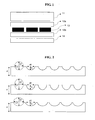
FIG. 2 : a cross-sectional view of the hemispherical concave parts according to an embodiment of the present invention; -
FIG. 3 : a plane view of the hemispherical concave parts according to an embodiment of the present invention; -
FIG. 4 : a schematic view of the solar cell module comprising the inventive encapsulant sheets; and -
FIG. 5 : a plane view of pyramidal concave parts which are provided as a comparative example. -
- 11, 41: glass substrate
- 12a, 12b: conventional encapsulant sheet
- 42a, 42b: encapsulant sheet according to an embodiment of the present invention
- 13, 43: solar cell
- 14, 44: back protective film
- d1: diameter of the hemispherical concave part
- h: depth of the hemispherical concave part
- L1: long axis length of the hemispherical concave part
- L2: short axis length of the hemispherical concave part
- d: thickness of the sheet
- Hereinafter, the present invention is described in detail.
- As shown in
FIG. 2 , the hemispherical concave parts formed on the encapsulant sheet have a circle or oval shape depending upon the ratio of a long axis length (L1) to a short axis length (L2). In the hemispherical concave part, the long axis length (L1) preferably ranges from 100 to 1500 µm, particularly from 500 to 1200 µm, and the short axis length (L2) preferably ranges from 100 to 1500 µm, particularly from 500 to 1200 µm. A depth of the hemispherical concave part is preferably half the short axis length (L2) or less. A diameter (d1) of the hemispherical concave part preferably ranges from 100 to 1500 µm, particularly from 500 to 1200 µm, and a depth (h) preferably ranges from 50 to 750 µm, particularly from 200 to 600 µm. A thickness (d) of the encapsulant sheet preferably ranges from 200 to 1000 µm, particularly from 300 to 800 µm. - According to one embodiment of the present invention, the hemispherical concave parts comprises 10 to 50 % of hemispherical concave parts having a diameter (d1) of 500 to 750 µm and a depth (h) of 200 to 300 µm; 45 to 60 % of hemispherical concave parts having a diameter (d1) of 750 to 1000 µm and a depth (h) of 300 to 400 µm; and 5 to 30 % of hemispherical concave parts having a diameter (d1) of 1000 to 1200 µm and a depth (h) of 400 to 450 µm, based on the total number of the hemispherical concave parts.
- According to another embodiment of the present invention, the hemispherical concave parts comprises 30 to 60 % of hemispherical concave parts having a diameter (d1) of 750 to 1000 µm and a depth (h) of 300 to 400 µm; and 40 to 70 % of hemispherical concave parts having a diameter (d1) of 1000 to 1200 µm and a depth (h) of 400 to 450 µm, based on the total number of the hemispherical concave parts
- As shown in
FIG. 3 , the encapsulant sheet for solar cell modules of the present invention has a plurality of hemispherical concave parts whose sizes are different from one another formed on one or both surfaces of a transparent soft resin film. Further, as shown inFIG. 3 , the hemispherical concave parts are preferably arranged in a random pattern. - As shown in
FIG. 4 , the solar cell module of the present invention may be prepared by sequentially laminating glass substrate (41), an encapsulant sheet (42a), a solar cell (43), an encapsulant sheet (42b) and a back protective film (44). In the process of lamination, the hemispherical concave parts of varying sizes formed on the encapsulant sheet (42a, 42b) disperse the pressure applied to the solar cell (43), thereby only a low pressure is applied to the solar cell to prevent solar cell damage. Further, the hemispherical concave parts allow air to escape easily through the concave spaces to suppress air bubble generation. The encapsulant sheets (42a, 42b) are then heat-treated under pressure and cured by cross-linking so that an integrated solar cell module can be obtained. - In the present invention, an ethylene-vinyl acetate (EVA) resin may be used as the transparent soft resin of the encapsulant sheet.
- The EVA resin composition used in the present invention preferably has a melt flow rate of 0.7 to 50 g/10min, particularly 10 to 45 g/10min.
- In order to improve the weatherability, the EVA resin composition used in the present invention may comprise a cross-linking agent, for example, organic peroxides which generate radicals at 100°C or more and preferably have a half-life of at least 10 hours and a decomposition temperature of at least 70°C when considering the stability of mixing. Exemplary organic peroxides are 2,5-dimethylhexane-2,5-dihydroperoxide, 2,5-dimethyl-2,5-di(t-butylperoxy)hexane, 3-di-t-butylperoxide, α,α'-bis(t-butylperoxyisopropyl)benzene, n-butyl-4,4-bis(t-butylperoxy)butane, 2,2-bis(t-butylperoxy)butane, 1,1-bis(t-butylperoxy)cyclohexane, 1,1-bis(t-butylperoxy)-3,3,5-trimethylcyclohexane, t-butylperoxybenzoate, benzoyl peroxide, etc. Such organic peroxides may be added in an amount of 5 parts by weight or less, preferably 0.3 to 2 parts by weight, based on 100 parts by weight of the EVA resin.
- Further, in order to enhance the adhesive property of the encapsulant sheet, a silane coupling agent may be added to the EVA resin. As the silane coupling agent, a typical silane coupling agent such as γ-chloropropyl trimethoxysilane, vinyl trichlorosilane, vinyl-tris-(β-methoxyethoxy)silane, γ-methoxypropyl trimethoxysilane, β-(3,4-ethoxycyclohexyl)ethyl trimethoxysilane and γ-mercaptopropyl trimethoxysilane may be used.
- Such silane coupling agent may be added in an amount of 5 parts by weight or less, preferably 0.1 to 2 parts by weight, based on 100 parts by weight of the EVA resin.
- Further, in order to increase the gel fraction of the EVA resin and improve the durability, a crosslinking coagent may be added to the EVA resin. A crosslinking coagent having three functional groups, e.g., triallyl isocyanurate and triallyl isocyanate, and a crosslinking coagent having one functional group, e.g., ester, may be used. Such crosslinking coagent may be added in an amount of 10 parts by weight or less, preferably 0.1 to 3 parts by weight, based on 100 parts by weight of the EVA resin.
- Further, in order to enhance the stability, the EVA resin may comprise hydroquinone, methylethylhydroquinone, p-benzoquinone, methyl hydroquinone and the like, in an amount of 5 parts by weight or less, based on 100 parts by weight of the EVA resin.
- Besides, if necessary, coloring agents, UV absorbents, anti-aging agents, anti-discoloration agents may be added to the EVA resin. Exemplary coloring agents are an inorganic pigment such as a metal oxide and a metal powder; and an organic pigment such as an azo lake, a phthalocyanine lake, and an acidic or basic dye lake. Exemplary UV absorbents are a benzophenone-based compound such as 2-hydroxy-4-octoxybenzophenone and 2-hydroxy-4-methoxy-5-sulfonylbenzophenone; a benzotriazole-based compound such as 2-(2-hydroxy-5-methylphenyl)benzotriazole; and a salicylate-based compound such as phenyl salicylate and p-t-butylphenyl salicylate. Exemplary anti-aging agents are an amine-based compound, a phenol-based compound and a bisphenyl-based compound, such as t-butyl-p-cresol and bis-(2,2,6,6-tetramethyl-4-piperazyl)sebacate.
- The encapsulant sheet of the present invention can be prepared by casting an EVA resin composition through T-die extrusion or calendering process to obtain a sheet having a thickness of 200 to 1000 µm, followed by embossing one or both surfaces of the sheet in a desired pattern.
- A solar cell module comprising the encapsulant sheet of the present invention can be prepared by sequentially laminating a glass substrate, the encapsulant sheet, a solar cell, the encapsulant sheet, and a back protective film, followed by heating and pressing the resulting laminate using a vacuum laminator under predetermined conditions such as a temperature of 100 to 150 °C, a degassing time of 4 to 12 minutes, a pressing pressure of 0.5 to 1 atm, and a pressing time of 8 to 45 minutes. The encapsulant sheet of the present invention can effectively prevent solar cell damage during heating and pressing processes by cushioning the solar cell so that a high-quality product can be obtained in a high yield.
- Hereinafter, the present invention is described more particularly with the following examples. However, the following examples are intended to further illustrate the present invention without limiting its scope.
- 100 parts by weight of EV150 (Mitsui-Dupont Chemicals Inc.; melt flow index: 30g/10min) as an EVA resin, 1.5 parts by weight of Luporox101 (Alchema Ltd.) as a crosslinking agent, 0.5 parts by weight of Z-6030 (Dow-Corning Inc.) as a silane coupling agent, and 0.2 parts by weight of UV531 (Cytec Inc.) as a stabilizing agent, 0.2 parts by weight of Tinuvin770 (Ciba Specialty Chemicals Inc.), and 0.2 parts by weight of Irganox1076 (Ciba Specialty Chemicals Inc.) were mixed to obtain a resin composition for self-adhesive surface protective films (EVA).
- The resin composition for self-adhesive surface protective films (EVA) was subjected to a T-die extrusion or a calendering process to obtain an encapsulant sheet having a size of 1000 µm x 1000 µm and a thickness (d) of 600 µm, one surface of the sheet having hemispherical concave parts arranged in a random pattern.
- The hemispherical concave parts formed on one surface of the sheet comprises 50% of hemispherical concave parts having a diameter (d1) of 500 to 750 µm and a depth (h) of 200 to 300 µm; 45% of hemispherical concave parts having a diameter (d1) of 750 to 1000 µm and a depth (h) of 300 to 400 µm; and 5% of hemispherical concave parts having a diameter (d1) of 1000 to 1200 µm and a depth (h) of 400 to 450 µm.
- Next, a low-iron tempered glass substrate, the encapsulant sheet, a solar cell (Q6LM, Q-Cell), the encapsulant sheet, and a back protective film (Dunsolar 700, Dunmore Corp.) were sequentially laminated so that the solar cell contacts with the hemispherical concave parts and then the laminate was heat-treated at a temperature of 150 °C, degassed for 4 minutes and pressed under 1 atm for 15 minutes to obtain 100 samples of the solar cell module.
- The procedure of Example 1 was repeated except that the hemispherical concave parts formed on one surface of the sheet comprises 10% of hemispherical concave parts having a diameter (d1) of 500 to 750 µm and a depth (h) of 200 to 300 µm; 60% of hemispherical concave parts having a diameter (d1) of 750 to 1000 µm and a depth (h) of 300 to 400 µm; and 30% of hemispherical concave parts having a diameter (d1) of 1000 to 1200 µm and a depth (h) of 400 to 450 µm, based on the total number of the hemispherical concave parts, to obtain 100 samples of the solar cell module.
- The procedure of Example 1 was repeated except that the hemispherical concave parts formed on one surface of the sheet comprises 60% of hemispherical concave parts having a diameter (d1) of 750 to 1000 µm and a depth (h) of 300 to 400 µm; and 40% of hemispherical concave parts having a diameter (d1) of 1000 to 1200 µm and a depth (h) of 400 to 450 µm, based on the total number of the hemispherical concave parts, to obtain 100 samples of the solar cell module.
- The procedure of Example 1 was repeated except that the hemispherical concave parts formed on one surface of the sheet comprises 50% of hemispherical concave parts having a diameter (d1) of 750 to 1000 µm and a depth (h) of 300 to 400 µm; and 50% of hemispherical concave parts having a diameter (d1) of 1000 to 1200 µm and a depth (h) of 400 to 450 µm, based on the total number of the hemispherical concave parts, to obtain 100 samples of the solar cell module.
- The procedure of Example 1 was repeated except that the hemispherical concave parts formed on one surface of the sheet comprises 30% of hemispherical concave parts having a diameter (d1) of 750 to 1000 µm and a depth (h) of 300 to 400 µm; and 70% of hemispherical concave parts having a diameter (d1) of 1000 to 1200 µm and a depth (h) of 400 to 450 µm, based on the total number of the hemispherical concave parts, to obtain 100 samples of the solar cell module.
- The procedure of Example 1 was repeated except that an encapsulant sheet having a size of 1000 µm x 1000 µm and a thickness (d) of 600 µm was prepared to have flat surfaces, to obtain 100 samples of the solar cell module.
- The procedure of Example 1 was repeated except that an encapsulant sheet having a size of 1000 µm x 1000 µm and a thickness (d) of 600 µm was prepared to have pyramidal concave parts (see
FIG. 5 ) having a depth of 400 µm at an interval of 100 µm on one surface of the sheet, to obtain 100 samples of the solar cell module. - The samples obtained in Examples 1 to 5 and Comparative Examples 1 and 2, were respectively measured on the number of samples having defects due to air bubble generation or solar cell damage, and the results are summarized in Table 1 below.
Table 1 Ex. 1 Ex. 2 Ex. 3 Ex. 4 Ex. 5 Comp. Ex. 1 Comp. Ex. 2 Samples having defects due to air bubble generation 0 0 0 0 0 15 0 Samples having defects due to solar cell damage 0 0 0 0 0 2 4 - As shown in Table 1, it is found that although the samples of Comparative Example 2 did not show any defects due to air bubble generation, the number of samples having defects due to solar cell damage was higher than that of Comparative Example 1. In contrast, the solar cell module samples obtained in Examples 1 to 5 did not have an defects due to air bubble generation as well as solar cell damage, unlike Comparative Examples 1 and 2.
- While the invention has been described with respect to the above specific embodiments, it should be recognized that various modifications and changes may be made to the invention by those skilled in the art which also fall within the scope of the invention as defined by the appended claims.
Claims (7)
- An encapsulant sheet for solar cell modules comprising a transparent soft resin film having a plurality of hemispherical concave parts of varying sizes formed on one or both surfaces of the transparent soft resin film.
- The encapsulant sheet for solar cell modules of claim 1, wherein the hemispherical concave parts have a diameter (d1) ranging from 100 to 1500 µm and a depth (h) ranging from 50 to 750 µm.
- The encapsulant sheet for solar cell modules of claim 1, wherein the hemispherical concave parts comprises 10 to 50 % of hemispherical concave parts having a diameter (d1) of 500 to 750 µm and a depth (h) of 200 to 300 µm; 45 to 60 % of hemispherical concave parts having a diameter (d1) of 750 to 1000 µm and a depth (h) of 300 to 400 µm; and 5 to 30 % of hemispherical concave parts having a diameter (d1) of 1000 to 1200 µm and a depth (h) of 400 to 450 µm, based on the total number of the hemispherical concave parts.
- The encapsulant sheet for solar cell modules of claim 1, wherein the hemispherical concave parts comprises 30 to 60 % of hemispherical concave parts having a diameter (d1) of 750 to 1000 µm and a depth (h) of 300 to 400 µm; and 40 to 70 % of hemispherical concave parts having a diameter (d1) of 1000 to 1200 µm and a depth (h) of 400 to 450 µm, based on the total number of the hemispherical concave parts.
- The encapsulant sheet for solar cell modules of claim 1, wherein the transparent soft resin film has a thickness of 200 to 1000 µm.
- The encapsulant sheet for solar cell modules of claim 1, wherein the hemispherical concave parts are arranged in a random pattern.
- A solar cell module comprising the encapsulant sheet for solar cell modules according to any one of claims 1 to 6.
Applications Claiming Priority (2)
| Application Number | Priority Date | Filing Date | Title |
|---|---|---|---|
| KR1020080121324A KR100984136B1 (en) | 2008-12-02 | 2008-12-02 | Encapsulant sheet for solar cell module and solar cell module comprising same |
| PCT/KR2009/007096 WO2010064821A2 (en) | 2008-12-02 | 2009-12-01 | Envelope material sheet for solar cell module and solar cell module including same |
Publications (2)
| Publication Number | Publication Date |
|---|---|
| EP2355169A2 true EP2355169A2 (en) | 2011-08-10 |
| EP2355169A4 EP2355169A4 (en) | 2012-02-29 |
Family
ID=42233717
Family Applications (1)
| Application Number | Title | Priority Date | Filing Date |
|---|---|---|---|
| EP09830559A Withdrawn EP2355169A4 (en) | 2008-12-02 | 2009-12-01 | ENVELOPE SHEET FOR SOLAR MODULE AND SOLAR MODULE PROVIDED WITH SAID SHEET |
Country Status (6)
| Country | Link |
|---|---|
| US (1) | US8263854B2 (en) |
| EP (1) | EP2355169A4 (en) |
| JP (1) | JP5090570B2 (en) |
| KR (1) | KR100984136B1 (en) |
| CN (1) | CN102177590B (en) |
| WO (1) | WO2010064821A2 (en) |
Cited By (1)
| Publication number | Priority date | Publication date | Assignee | Title |
|---|---|---|---|---|
| TWI672334B (en) * | 2017-03-30 | 2019-09-21 | 南韓商愛思開希高新環保材料有限公司 | Encapsulant for solar cells and solar cell module comprising the same |
Families Citing this family (6)
| Publication number | Priority date | Publication date | Assignee | Title |
|---|---|---|---|---|
| KR20110048406A (en) * | 2009-11-02 | 2011-05-11 | 엘지이노텍 주식회사 | Solar cell and manufacturing method thereof |
| CN102339910A (en) * | 2011-09-27 | 2012-02-01 | 牡丹江旭阳太阳能科技有限公司 | Preparation method of amorphous silicon thin film solar cell module |
| JP5780209B2 (en) * | 2012-05-29 | 2015-09-16 | 信越化学工業株式会社 | Manufacturing method of solar cell module |
| JP5862536B2 (en) | 2012-10-04 | 2016-02-16 | 信越化学工業株式会社 | Manufacturing method of solar cell module |
| JP5867356B2 (en) * | 2012-10-04 | 2016-02-24 | 信越化学工業株式会社 | Manufacturing method of solar cell module |
| US10618264B2 (en) | 2014-11-26 | 2020-04-14 | The Boeing Company | Apparatuses and methods to prevent or minimize the effect of voids in bonded systems |
Family Cites Families (31)
| Publication number | Priority date | Publication date | Assignee | Title |
|---|---|---|---|---|
| US4035549A (en) * | 1975-05-19 | 1977-07-12 | Monsanto Company | Interlayer for laminated safety glass |
| JPS57150532A (en) * | 1981-03-12 | 1982-09-17 | Mitsubishi Monsanto Chem Co | Intermediate membrane made of thermoplastic resin |
| US4925725A (en) * | 1984-03-30 | 1990-05-15 | Sekisui Kagaku Kogyo Kabushiki Kaisha | Interlayer for laminated glass |
| US5425977A (en) * | 1993-08-16 | 1995-06-20 | Monsanto Company | Rough-surfaced interlayer |
| EP0769818A3 (en) | 1995-10-17 | 1998-10-28 | Canon Kabushiki Kaisha | Solar cell module having a surface side covering material with a specific nonwoven glass fiber member |
| US6075202A (en) * | 1997-05-07 | 2000-06-13 | Canon Kabushiki Kaisha | Solar-cell module and process for its production, building material and method for its laying, and electricity generation system |
| US6335479B1 (en) * | 1998-10-13 | 2002-01-01 | Dai Nippon Printing Co., Ltd. | Protective sheet for solar battery module, method of fabricating the same and solar battery module |
| JP2000183388A (en) * | 1998-12-17 | 2000-06-30 | Bridgestone Corp | Sealing film for solar cell |
| US6093471A (en) * | 1999-02-08 | 2000-07-25 | Solutia Inc. | Polyvinyl butyral sheet |
| EP1233007B1 (en) * | 1999-07-01 | 2008-06-18 | Sekisui Chemical Co., Ltd. | Interlayer for Laminated Glass |
| WO2001061763A1 (en) * | 2000-02-18 | 2001-08-23 | Bridgestone Corporation | Sealing film for solar cell and method for manufacturing solar cell |
| JP4513204B2 (en) | 2000-12-18 | 2010-07-28 | 株式会社ブリヂストン | Sealing film for solar cell |
| JP2003204074A (en) * | 2001-10-29 | 2003-07-18 | Sharp Corp | Solar cell sealing film and method for manufacturing solar cell panel using the same |
| CN100391011C (en) * | 2001-12-13 | 2008-05-28 | 旭硝子株式会社 | Cover glass for solar cell |
| US6602021B1 (en) * | 2002-01-14 | 2003-08-05 | Kwung-Chul Kim | Pavement marker and method for manufacturing the same |
| KR20040024638A (en) * | 2002-09-12 | 2004-03-22 | 주식회사지엠피 | Laminate frim |
| EP1560272B1 (en) * | 2004-01-29 | 2016-04-27 | Panasonic Intellectual Property Management Co., Ltd. | Solar cell module |
| KR100589322B1 (en) | 2004-02-03 | 2006-06-14 | 삼성에스디아이 주식회사 | High efficiency dye-sensitized solar cell and its manufacturing method |
| EP2402392B1 (en) * | 2004-11-25 | 2013-09-18 | Mitsui Chemicals, Inc. | Propylene resin composition and use thereof |
| WO2007037649A1 (en) * | 2005-09-29 | 2007-04-05 | Skc Haas Display Films Llc. | Light diffusive sheet for backlight unit and preparation thereof |
| US20090044853A1 (en) * | 2005-11-25 | 2009-02-19 | Hiroshi Hoya | Composite Sheet and Use Thereof |
| CN101047211B (en) * | 2006-03-31 | 2012-05-02 | 三洋电机株式会社 | solar cell module |
| US7851694B2 (en) * | 2006-07-21 | 2010-12-14 | E. I. Du Pont De Nemours And Company | Embossed high modulus encapsulant sheets for solar cells |
| US20080053516A1 (en) * | 2006-08-30 | 2008-03-06 | Richard Allen Hayes | Solar cell modules comprising poly(allyl amine) and poly (vinyl amine)-primed polyester films |
| US20080099064A1 (en) * | 2006-10-27 | 2008-05-01 | Richard Allen Hayes | Solar cells which include the use of high modulus encapsulant sheets |
| US8080726B2 (en) * | 2007-04-30 | 2011-12-20 | E. I. Du Pont De Nemours And Company | Solar cell modules comprising compositionally distinct encapsulant layers |
| CN101431115B (en) * | 2007-11-07 | 2011-05-18 | E.I.内穆尔杜邦公司 | Solar cell panel and manufacturing method thereof |
| US20090126780A1 (en) * | 2007-11-15 | 2009-05-21 | Chang-Chih Sung | Solar Cell and Method of Manufacturing a Transparent Cover Plate |
| JP5163943B2 (en) * | 2008-02-26 | 2013-03-13 | 住友化学株式会社 | Anti-glare film, anti-glare polarizing plate and image display device |
| US8080727B2 (en) * | 2008-11-24 | 2011-12-20 | E. I. Du Pont De Nemours And Company | Solar cell modules comprising an encapsulant sheet of a blend of ethylene copolymers |
| JP2010221673A (en) | 2009-03-25 | 2010-10-07 | Asahi Kasei E-Materials Corp | Resin sealing sheet |
-
2008
- 2008-12-02 KR KR1020080121324A patent/KR100984136B1/en not_active Expired - Fee Related
-
2009
- 2009-12-01 JP JP2011533123A patent/JP5090570B2/en not_active Expired - Fee Related
- 2009-12-01 WO PCT/KR2009/007096 patent/WO2010064821A2/en not_active Ceased
- 2009-12-01 CN CN2009801405483A patent/CN102177590B/en not_active Expired - Fee Related
- 2009-12-01 US US13/126,590 patent/US8263854B2/en not_active Expired - Fee Related
- 2009-12-01 EP EP09830559A patent/EP2355169A4/en not_active Withdrawn
Cited By (1)
| Publication number | Priority date | Publication date | Assignee | Title |
|---|---|---|---|---|
| TWI672334B (en) * | 2017-03-30 | 2019-09-21 | 南韓商愛思開希高新環保材料有限公司 | Encapsulant for solar cells and solar cell module comprising the same |
Also Published As
| Publication number | Publication date |
|---|---|
| JP5090570B2 (en) | 2012-12-05 |
| KR100984136B1 (en) | 2010-09-28 |
| JP2012506159A (en) | 2012-03-08 |
| US20110203642A1 (en) | 2011-08-25 |
| EP2355169A4 (en) | 2012-02-29 |
| WO2010064821A2 (en) | 2010-06-10 |
| WO2010064821A4 (en) | 2010-10-21 |
| KR20100062606A (en) | 2010-06-10 |
| CN102177590B (en) | 2013-05-01 |
| WO2010064821A3 (en) | 2010-08-26 |
| CN102177590A (en) | 2011-09-07 |
| US8263854B2 (en) | 2012-09-11 |
Similar Documents
| Publication | Publication Date | Title |
|---|---|---|
| US6660556B2 (en) | Method of manufacturing a solar battery | |
| CN102333786B (en) | Solar cell module comprising low haze encapsulant | |
| KR101623603B1 (en) | Solar cell module having a low haze encapsulant layer | |
| EP2505595B1 (en) | Sealing film for solar cells, and solar cells | |
| EP2355169A2 (en) | Envelope material sheet for solar cell module and solar cell module including same | |
| CN102272946B (en) | Solar cell module including encapsulating sheet having low haze and high moisture resistance | |
| WO2014100301A1 (en) | Cross-linked polymers and their use in photovoltaic modules | |
| CN102037570A (en) | Solar cell laminates having colored multi-layer encapsulant sheets | |
| EP2720278A1 (en) | Solar cell module manufacturing method | |
| EP2685508B1 (en) | Sealing film for solar cells and solar cell using same | |
| CN102196911A (en) | Improved non-autoclave lamination process for manufacturing solar cell modules | |
| JP5359393B2 (en) | Solar cell module sealing sheet and solar cell module | |
| JP6013726B2 (en) | A pair of sealing films for solar cells | |
| JP2011119475A (en) | Method of manufacturing solar cell module | |
| KR20130095537A (en) | Solar battery module comprising high viscosity white eva resin layer | |
| KR20130130156A (en) | Solar cell module containing white EV resin layer | |
| KR101343884B1 (en) | Solar battery module | |
| JP5860227B2 (en) | Manufacturing method of solar cell module | |
| JP2012231048A (en) | Solar cell module sealing sheet and solar cell module | |
| KR20120058346A (en) | Seaing Material Sheet for Photovoltaic Module and Photovoltaic Module Comprising the same |
Legal Events
| Date | Code | Title | Description |
|---|---|---|---|
| PUAI | Public reference made under article 153(3) epc to a published international application that has entered the european phase |
Free format text: ORIGINAL CODE: 0009012 |
|
| 17P | Request for examination filed |
Effective date: 20110525 |
|
| AK | Designated contracting states |
Kind code of ref document: A2 Designated state(s): AT BE BG CH CY CZ DE DK EE ES FI FR GB GR HR HU IE IS IT LI LT LU LV MC MK MT NL NO PL PT RO SE SI SK SM TR |
|
| A4 | Supplementary search report drawn up and despatched |
Effective date: 20120201 |
|
| RIC1 | Information provided on ipc code assigned before grant |
Ipc: H01L 31/048 20060101AFI20120126BHEP |
|
| DAX | Request for extension of the european patent (deleted) | ||
| 17Q | First examination report despatched |
Effective date: 20121220 |
|
| GRAP | Despatch of communication of intention to grant a patent |
Free format text: ORIGINAL CODE: EPIDOSNIGR1 |
|
| INTG | Intention to grant announced |
Effective date: 20130717 |
|
| STAA | Information on the status of an ep patent application or granted ep patent |
Free format text: STATUS: THE APPLICATION IS DEEMED TO BE WITHDRAWN |
|
| 18D | Application deemed to be withdrawn |
Effective date: 20131128 |