EP2351825A1 - Three-dimensional object manufactured by stereolithography and to which cytocompatibility process is applied - Google Patents
Three-dimensional object manufactured by stereolithography and to which cytocompatibility process is applied Download PDFInfo
- Publication number
- EP2351825A1 EP2351825A1 EP09823714A EP09823714A EP2351825A1 EP 2351825 A1 EP2351825 A1 EP 2351825A1 EP 09823714 A EP09823714 A EP 09823714A EP 09823714 A EP09823714 A EP 09823714A EP 2351825 A1 EP2351825 A1 EP 2351825A1
- Authority
- EP
- European Patent Office
- Prior art keywords
- post
- microstereolithography
- dimensional
- structures
- hours
- Prior art date
- Legal status (The legal status is an assumption and is not a legal conclusion. Google has not performed a legal analysis and makes no representation as to the accuracy of the status listed.)
- Granted
Links
Images


Classifications
-
- B—PERFORMING OPERATIONS; TRANSPORTING
- B29—WORKING OF PLASTICS; WORKING OF SUBSTANCES IN A PLASTIC STATE IN GENERAL
- B29C—SHAPING OR JOINING OF PLASTICS; SHAPING OF MATERIAL IN A PLASTIC STATE, NOT OTHERWISE PROVIDED FOR; AFTER-TREATMENT OF THE SHAPED PRODUCTS, e.g. REPAIRING
- B29C71/00—After-treatment of articles without altering their shape; Apparatus therefor
- B29C71/02—Thermal after-treatment
-
- B—PERFORMING OPERATIONS; TRANSPORTING
- B29—WORKING OF PLASTICS; WORKING OF SUBSTANCES IN A PLASTIC STATE IN GENERAL
- B29C—SHAPING OR JOINING OF PLASTICS; SHAPING OF MATERIAL IN A PLASTIC STATE, NOT OTHERWISE PROVIDED FOR; AFTER-TREATMENT OF THE SHAPED PRODUCTS, e.g. REPAIRING
- B29C64/00—Additive manufacturing, i.e. manufacturing of three-dimensional [3D] objects by additive deposition, additive agglomeration or additive layering, e.g. by 3D printing, stereolithography or selective laser sintering
- B29C64/10—Processes of additive manufacturing
- B29C64/106—Processes of additive manufacturing using only liquids or viscous materials, e.g. depositing a continuous bead of viscous material
- B29C64/124—Processes of additive manufacturing using only liquids or viscous materials, e.g. depositing a continuous bead of viscous material using layers of liquid which are selectively solidified
- B29C64/129—Processes of additive manufacturing using only liquids or viscous materials, e.g. depositing a continuous bead of viscous material using layers of liquid which are selectively solidified characterised by the energy source therefor, e.g. by global irradiation combined with a mask
- B29C64/135—Processes of additive manufacturing using only liquids or viscous materials, e.g. depositing a continuous bead of viscous material using layers of liquid which are selectively solidified characterised by the energy source therefor, e.g. by global irradiation combined with a mask the energy source being concentrated, e.g. scanning lasers or focused light sources
-
- B—PERFORMING OPERATIONS; TRANSPORTING
- B33—ADDITIVE MANUFACTURING TECHNOLOGY
- B33Y—ADDITIVE MANUFACTURING, i.e. MANUFACTURING OF THREE-DIMENSIONAL [3D] OBJECTS BY ADDITIVE DEPOSITION, ADDITIVE AGGLOMERATION OR ADDITIVE LAYERING, e.g. BY 3D PRINTING, STEREOLITHOGRAPHY OR SELECTIVE LASER SINTERING
- B33Y70/00—Materials specially adapted for additive manufacturing
-
- C—CHEMISTRY; METALLURGY
- C12—BIOCHEMISTRY; BEER; SPIRITS; WINE; VINEGAR; MICROBIOLOGY; ENZYMOLOGY; MUTATION OR GENETIC ENGINEERING
- C12M—APPARATUS FOR ENZYMOLOGY OR MICROBIOLOGY; APPARATUS FOR CULTURING MICROORGANISMS FOR PRODUCING BIOMASS, FOR GROWING CELLS OR FOR OBTAINING FERMENTATION OR METABOLIC PRODUCTS, i.e. BIOREACTORS OR FERMENTERS
- C12M23/00—Constructional details, e.g. recesses, hinges
- C12M23/20—Material Coatings
-
- B—PERFORMING OPERATIONS; TRANSPORTING
- B29—WORKING OF PLASTICS; WORKING OF SUBSTANCES IN A PLASTIC STATE IN GENERAL
- B29C—SHAPING OR JOINING OF PLASTICS; SHAPING OF MATERIAL IN A PLASTIC STATE, NOT OTHERWISE PROVIDED FOR; AFTER-TREATMENT OF THE SHAPED PRODUCTS, e.g. REPAIRING
- B29C35/00—Heating, cooling or curing, e.g. crosslinking or vulcanising; Apparatus therefor
- B29C35/02—Heating or curing, e.g. crosslinking or vulcanizing during moulding, e.g. in a mould
- B29C35/08—Heating or curing, e.g. crosslinking or vulcanizing during moulding, e.g. in a mould by wave energy or particle radiation
- B29C35/0805—Heating or curing, e.g. crosslinking or vulcanizing during moulding, e.g. in a mould by wave energy or particle radiation using electromagnetic radiation
- B29C2035/0827—Heating or curing, e.g. crosslinking or vulcanizing during moulding, e.g. in a mould by wave energy or particle radiation using electromagnetic radiation using UV radiation
-
- B—PERFORMING OPERATIONS; TRANSPORTING
- B29—WORKING OF PLASTICS; WORKING OF SUBSTANCES IN A PLASTIC STATE IN GENERAL
- B29C—SHAPING OR JOINING OF PLASTICS; SHAPING OF MATERIAL IN A PLASTIC STATE, NOT OTHERWISE PROVIDED FOR; AFTER-TREATMENT OF THE SHAPED PRODUCTS, e.g. REPAIRING
- B29C71/00—After-treatment of articles without altering their shape; Apparatus therefor
- B29C71/04—After-treatment of articles without altering their shape; Apparatus therefor by wave energy or particle radiation, e.g. for curing or vulcanising preformed articles
-
- B—PERFORMING OPERATIONS; TRANSPORTING
- B29—WORKING OF PLASTICS; WORKING OF SUBSTANCES IN A PLASTIC STATE IN GENERAL
- B29K—INDEXING SCHEME ASSOCIATED WITH SUBCLASSES B29B, B29C OR B29D, RELATING TO MOULDING MATERIALS OR TO MATERIALS FOR MOULDS, REINFORCEMENTS, FILLERS OR PREFORMED PARTS, e.g. INSERTS
- B29K2995/00—Properties of moulding materials, reinforcements, fillers, preformed parts or moulds
- B29K2995/0037—Other properties
- B29K2995/0094—Geometrical properties
-
- B—PERFORMING OPERATIONS; TRANSPORTING
- B29—WORKING OF PLASTICS; WORKING OF SUBSTANCES IN A PLASTIC STATE IN GENERAL
- B29L—INDEXING SCHEME ASSOCIATED WITH SUBCLASS B29C, RELATING TO PARTICULAR ARTICLES
- B29L2031/00—Other particular articles
- B29L2031/753—Medical equipment; Accessories therefor
- B29L2031/7532—Artificial members, protheses
-
- Y—GENERAL TAGGING OF NEW TECHNOLOGICAL DEVELOPMENTS; GENERAL TAGGING OF CROSS-SECTIONAL TECHNOLOGIES SPANNING OVER SEVERAL SECTIONS OF THE IPC; TECHNICAL SUBJECTS COVERED BY FORMER USPC CROSS-REFERENCE ART COLLECTIONS [XRACs] AND DIGESTS
- Y10—TECHNICAL SUBJECTS COVERED BY FORMER USPC
- Y10T—TECHNICAL SUBJECTS COVERED BY FORMER US CLASSIFICATION
- Y10T428/00—Stock material or miscellaneous articles
- Y10T428/24—Structurally defined web or sheet [e.g., overall dimension, etc.]
Definitions
- the present invention relates to the fabrication of free-form solid objects by Microstereolithography, the photocurable materials used therein, and the technology to render materials cytocompatible.
- the present invention in particular relates to objects that are nontoxic, in terms of cytocompatibility, while remaining in contact with isolated cells for long periods.
- Microstereolithography is a precision machining technology to fabricate structures of an arbitrary shape by exposing photocurable resins to laser light.
- Ikuta et al. the inventors of the present invention, achieved the world's first 5 ⁇ m three-dimensional resolutions (Non-patent Literature 1).
- Many research studies followed and papers were published after the announcement (Non-patent Literature 2).
- Nano-stereolithography at sub-micro resolutions has also been developed.
- microstereolithography is being applied to ⁇ -TAS for studying and analyzing chemical reactions occurring in microchannels, and to the development of MEMS devices (Non-patent Literature 3 - 5).
- commercial photocurable resins do not have biocompatibility, so microstereolithography has not been applied to devices that need to be in direct contact with cells or living organisms (Non-patent Literature 6 - 8).
- the inventors of the present invention decided to develop a new post process to add cytocompatibility to commercial microstereolithographic epoxy photocurable resins which already have proven stable photocurable and other characteristics. They chose this approach as it is more versatile and applicative than trying to develop new photocurable resins with the required biocompatibility, curing characteristics and accuracy.
- Non-patent Literature 14 Thirdly, cell culturing on the surfaces of three-dimensional lattice structures made of commercial photocurable resins has been reported, however cell cultures on planar structures failed.
- Three-dimensional structures fabricated by conventional microstereolithography have been known to exhibit, as described above, cytotoxicity due to non-uniform reaction and hardening, and due to the effects of monomers, oligomers, photo-polymerization initiators, free radicals, polyol, and stabilizers remaining in the photo curing materials (Patent Literature 1).
- Patent Literature 2 Many biodegradable materials have been proposed as biocompatible materials for applications where the end product contacts the living body for a long time
- Patent Literature 2 and Non-patent literature 10 and 12 Conventional technologies have placed emphasis on manufacturing nontoxic materials rather than detoxifying existing materials.
- the product has biocompatibility at least when in contact with the skin and can be used for a long period of time while in direct contact with the skin.
- the inventors of the present invention have estimated that uncured monomers and photopolymerization initiators remaining in the microstereolithographic object are responsible for the cytotoxicity of the microstereolithographic object.
- the inventors therefore investigated various post-curing processes (promoting polymerization and curing of uncured monomers after microstereolithography) to promote polymerization of the uncured monomers and suppress the effect of the photopolymerization initiators eventually to reduce the cytotoxicity of the microstereolithographic object.
- Three-dimensional structures formed by microstereolithography have a limited range of applications due to their inherent cytotoxicity.
- a process to detoxify the materials must be added.
- the addition of such a process is industrially more favorable than newly developing a nontoxic photocuring material because conventional materials, even though they may be toxic, have proven three-dimensional processing accuracy.
- the objective of the present invention is to detoxify three-dimensional structures fabricated by microstereolithography and provide cytocompatible three-dimensional structures.
- Cytocompatibility is a property of a material which means that the material is non-toxic to cells and does not have an adverse effect on the activities of living cells.
- the present invention has an objective to provide minute three-dimensional structures fabricated by microstereolithography, wherein said structures are detoxified and cytocompatible at least to the extent that cells isolated and cultured outside living organisms can be cultured on the surfaces of and in contact with said structures; and said detoxification is achieved by heating said structures to at least their glass transition temperature after UV-curing.
- the structures are mainly formed from photocuring materials selected from the group of acrylate, epoxy, acrylate-epoxy complex, and oxetane.
- the above glass transition temperature is about 175 to 200°C, and the heating time is 6 to 24 hours.
- One of the dimensions x, y, and z of at least one portion of said structures is less than 1 mm, and deformation of a structure due to its own weight when heated above its glass transition temperature is reduced due to the size effect.
- the three-dimensional structure fabricated by microstereolithography according to the present invention has the same cytocompatibility level as that of commercial cell culture dishes.
- This invention makes it possible to use three-dimensional structures fabricated by microstereolithography in the production of cytocompatible products.
- This technology can be applied to the design of tailor-made implant devices using microstereolithography which had never been possible previously. It further makes it possible for three-dimensionally configured cell devices and micro-chemical devices, such as chemical IC chips, to be used as cells. This process would become a key technology that substantializes a new approach to biomedical studies.
- Three-dimensional microstereolithographic objects fabricated by microstereolithography were exposed to UV light for one hour to accelerate hardening.
- the structures were then heated at 175°C or above for at least 24 hours, or at 200°C or above for 6 hours.
- the heating temperature may exceed the glass transition temperature, which is the index of thermal softening temperature for materials.
- the present invention relates to three-dimensional microstructures formed by microstereolithography. Deformation due to a structure's own weight, which generally poses a problem in heat treatment, is reduced when dealing with microstructures (that is, for example, when one of the dimensions x, y, and z of at least one portion of a structure is less than 1 mm) due to the size effect. As a result, the dimensions of the three-dimensional structure fabricated by the present invention remained almost unchanged before and after heat treatment. We performed cytocompatibility tests on this three-dimensional structure and found that it is cytocompatible.
- Figure 1 shows the procedure used to fabricate three-dimensional structures according to the present invention.
- microstereolithographic objects thus fabricated were washed in glycol ether ester and then in 99.5% ethanol for 3 minutes, respectively, in an ultrasound bath.
- the microstereolithographic objects were then stored in a desiccator.
- a He-Cd laser (325 nm, Kimmon Koha Co., Ltd.) was used as the light source.
- microstereolithography parameters were laser power, 15 mW; laser scanning speed, 800 mm/sec; scanning distances, 15 ⁇ m; and layer thickness, 100 ⁇ m.
- Cell culture wells were fabricated to evaluate the cytocompatibility of the photocurable resins.
- the size of the wells were outside diameter, 16 mm; inside diameter, 15 mm; bottom thickness, 0.8 mm; and height of surrounding wall, 2 mm.
- epoxy-type universal photocurable resins SCR-751, D-Mec; critical exposure, 20 mj/cm2; glass transition temperature after hardening, 108 °C
- photocuring materials selected from the group of acrylate, epoxy, acrylate-epoxy complex, and oxetane can also be used as photocurable resins.
- Rat adrenal pheochromocytoma cell line (PC12, RBC0009, Riken Cell Bank, Tsukuba) was used in the cytocompatibility test because this is the cell line typically used in neurological toxicity tests 15).
- the cell culture medium was DMEM (MED-006, Iwaki) including 10% fetal bovine serum and 10% horse serum.
- the cell suspension was adjusted to 5.1 x 10² cells/mm 2 , and cultured at 37 °C, in a 5% CO 2 atmosphere.
- the positive controls were cultured in a commercial 96-well Micro Well Plate (3860-096, Iwaki).
- the interiors of the cell culture wells fabricated by microstereolithography were observed using a phase contrast microscope. Micrographs were taken at 3 mm, 4 mm, 5 mm, and 6 mm from center of the well using a CCD camera. Cell morphology was observed and cell density counted from these micrographs. To reduce the effects of initial concentration dispersion, the cell proliferation rate was defined to evaluate the correlation between this rate and the post-curing parameters.
- Cytocompatibility in this report was defined to be the condition in which cells could proliferate and adhere to the bottom of the wells made of photocurable resins.
- the derived cell proliferation rate data were statistically processed using the student's t-test. It was assumed that there was a significant difference for ⁇ 0.05 compared with the positive control.
- the sample size n was 12.
- post-curing processes used to finish polymerization in microstereolithography.
- One is the post-exposure process in which the microstructures after microstereolithography are exposed in a mercury lamp, etc.
- the other is the post-bake process in which the environmental temperature is increased to promote hardening.
- the cell culture wells which were fabricated by microstereolithography, were both post-exposed and post-baked (hereafter termed "post-cured”). Specifically, after the structures were exposed with a xenon lamp (L2423, Hamamatsu Photonics) for 1 hour, they were heated in an oven (DRD360DA, Advantec) at respective temperatures (room temperature, 150 °C, 175 °C, and 200 °C) for respective heating times (0.5, 3, 6, 9, 12, and 24 hours) ( Fig. 4 ). These wells were then exposed in UV light for 1 hour to sterilize them before the cell culture.
- a xenon lamp L2423, Hamamatsu Photonics
- DDRD360DA Advantec
- the culture plates which were hardened under a xenon lamp, were post-baked at 200 °C for 6 hours.
- the cell culture wells which had 496.8 mm 2 surface areas and 135.9 mm 3 volumes were fabricated by microstereolithography. The other parameters remained the same as those in the preceding paragraph "Microstereolithography" in page 6. These wells were post-cured at 175 °C or above for at least 24 hours, or at 200 °C or above for 6 hours, which were determined to be the optimum parameters as described in the preceding chapter.
- the temperature of our post-bake process was higher than the glass transition temperature of the photocurable resins. As such, the structures would be deformed due to their own weight if the structures were heavy, or due to the load applied during the post-bake process. But the microstructures fabricated using our microstereolithography method were mostly small in size ranging from few ⁇ m to 1 mm. In this size range, the volume force is sufficiently small compared with the surface force due to scale effect, and thermal deformation is small enough to be neglected. Our post-bake process can therefore be applied to microscale objects without restrictions on their geometry.
- Each of the above three photocurable resins was set in a silicone gum mold, and the circular plates of 16 mm in diameter and 0.8 mm in thickness were exposed to a xenon lamp for hardening. The plates were then post-baked at 200 °C for 6 hours for use in the cell culture tests (21 - 26, Figure 4 ). The cell morphology was observed 48 hours after seeding under a phase contrast microscope.
- Non-patent Literature 8 Popov et al have reported that cytotoxicity was removed by supercritical carbon dioxide treatment from hydroxyapatite composites fabricated by stereolithography (Non-patent Literature 8). Arcaute et al have reported the relationship between the concentration of the photo-polymerization initiator and cytotoxicity (Non-patent Literature 13). Lee et al have reported that the geometry of scaffolds fabricated by stereolithography changed cell activities (Non-patent Literature 14). All of these reports, however, do not compare their results with cell activities observed using ordinary cell culture methods, and simply propose one condition to improve the cell culture method. These reports, therefore, cannot compare with our result in which the same level of cytocompatibility as in routinely used cell culture dishes has been achieved.
- the above post-bake temperature was higher than the glass transition temperature of the photocurable resins. As such, the structures would be deformed due to their own weight if the structures were heavy, or due to the load applied during the post-bake process, however the microstructures fabricated by our microstereolithography were mostly small in size ranging from few ⁇ m to 1 mm.
- the volume force such as gravity
- the surface force due to the scale effect is small compared with the surface force due to the scale effect, and thermal deformation is greatly reduced in the post-curing process.
- Our post-bake process can therefore be applied to microscale objects without restrictions on their geometry.
- Three-dimensional cell culture wells were fabricated by microstereolithography. Specifically, cell culture wells measuring 16 mm and 15 mm in outside and inside diameter, respectively, 2 mm wall height, and 0.8 mm bottom thickness were fabricated. The materials used were SCR751 (glass transition temperature, 108 °C; D-Mec, Chuo-ku, Tokyo). The wells were exposed to a mercury xenon lamp (L2423, Hamamatsu Photonics, Hamamatsu City, Shizuoka Prefecture) for one hour to accelerate hardening. The wells were then heated under 18 different combined conditions of temperature (150 °C, 175 °C, and 200 °C) and time (0.5, 3, 6, 9, 12, and 24 hours).
- Rat adrenal pheochromocytoma cell line (PC12) was seeded in the wells, and the number of cells after 48 hours was counted and compared ( Figure 2 ). According to the result of the student's t-test, there was no significant difference between the ratio of the number of cells on the cell culture wells, which were heated at 200 °C for 6 hours or more, or at 175 °C for 24 hours, after 48 hours to the number of cells on said wells immediately after seeding, and the ratio of the number of cells separately cultured on commercial cell culture dishes after 48 hours to the number of cells on said dishes immediately after seeding. This relationship is shown by the asterisks in Figure 3 . This indicates that cytocompatibility was added to the cell culture wells fabricated by microstereolithography when the wells were heat treated at 200 °C for 6 hours or more.
- the present invention provides a general process to add cytocompatibility to microstereolithographic objects, and its efficacy was verified. It was also demonstrated that the microstereolithographic objects fabricated according to the present invention had almost the same cytocompatibility comparable with commercial cell culture dishes. It was clarified by ultraviolet absorption spectroscopy that the internal composition of the microstereolithographic object was changed in the post-curing process of the present invention, which explains why the cytotoxicity of the microstereolithographic object was reduced.
- the present invention can be applied to the design of tailor-made implant devices, and fabrication of cell devices set in three-dimensional alignment and microchemical devices including biochemical IC chips, which have not been achievable with conventional microstereolithography.
- the present invention would provide key technology to substantialize a new approach to microstereolithography in the biomedical field. Claims
Landscapes
- Engineering & Computer Science (AREA)
- Chemical & Material Sciences (AREA)
- Health & Medical Sciences (AREA)
- Physics & Mathematics (AREA)
- Materials Engineering (AREA)
- Life Sciences & Earth Sciences (AREA)
- Bioinformatics & Cheminformatics (AREA)
- Organic Chemistry (AREA)
- Wood Science & Technology (AREA)
- Zoology (AREA)
- Optics & Photonics (AREA)
- Manufacturing & Machinery (AREA)
- General Engineering & Computer Science (AREA)
- Biomedical Technology (AREA)
- Clinical Laboratory Science (AREA)
- General Health & Medical Sciences (AREA)
- Genetics & Genomics (AREA)
- Sustainable Development (AREA)
- Immunology (AREA)
- Biochemistry (AREA)
- Microbiology (AREA)
- Biotechnology (AREA)
- Thermal Sciences (AREA)
- Mechanical Engineering (AREA)
- Apparatus Associated With Microorganisms And Enzymes (AREA)
- Treatments Of Macromolecular Shaped Articles (AREA)
- Micro-Organisms Or Cultivation Processes Thereof (AREA)
Abstract
Description
- The present invention relates to the fabrication of free-form solid objects by Microstereolithography, the photocurable materials used therein, and the technology to render materials cytocompatible. The present invention in particular relates to objects that are nontoxic, in terms of cytocompatibility, while remaining in contact with isolated cells for long periods.
- Microstereolithography is a precision machining technology to fabricate structures of an arbitrary shape by exposing photocurable resins to laser light. In 1992, Ikuta et al., the inventors of the present invention, achieved the world's first 5 µm three-dimensional resolutions (Non-patent Literature 1). Many research studies followed and papers were published after the announcement (Non-patent Literature 2). Nano-stereolithography at sub-micro resolutions has also been developed. Recently, microstereolithography is being applied to µ-TAS for studying and analyzing chemical reactions occurring in microchannels, and to the development of MEMS devices (Non-patent Literature 3 - 5). But commercial photocurable resins do not have biocompatibility, so microstereolithography has not been applied to devices that need to be in direct contact with cells or living organisms (Non-patent Literature 6 - 8).
- To solve this problem, the inventors of the present invention decided to develop a new post process to add cytocompatibility to commercial microstereolithographic epoxy photocurable resins which already have proven stable photocurable and other characteristics. They chose this approach as it is more versatile and applicative than trying to develop new photocurable resins with the required biocompatibility, curing characteristics and accuracy.
- So far, the following reports have introduced the application of microstereolithography to devices that are in direct contact with living cells or organs:
- Firstly, photo initiators, which are highly cytotoxic materials, are avoided and biodegradable polymers, for example caprolactone or poly(propylene fumarate), are adopted to synthesize new photocurable resins for microstereolithography (Non-patent literature 8 - 11). This approach necessitates a resin synthesis and blending process. Furthermore, the approach is designed to fabricate biodegradable scaffolds for cells in tissue engineering. As such, this approach cannot be used to fabricate non-degradable devices to be used in the present invention.
- Secondly, hydrogels such as polyethylene glycol are used in microstereolithography to fabricate scaffolds for cells (Non-patent
Literature 7 and 13). It is possible to culture cells on hydrogel surfaces and inside hydrogels, but this method is difficult to apply to the fabrication of devices because of the insufficient strength of the hydrogels. - Furthermore, low processing accuracy due to desiccation shrinkage is a large problem, and this approach does not meet the objectives of our present research.
- Thirdly, cell culturing on the surfaces of three-dimensional lattice structures made of commercial photocurable resins has been reported, however cell cultures on planar structures failed (Non-patent Literature 14).
- 1) Non-patent Literature: Ikuta K, Hirowatari K, Real three-dimensional microfabrication using stereo lithography and metal molding. Proceedings of the IEEE Workshop on Microelectromechanical Systems, MEMS' 93. 1993: 42-47.
- 2) Non-patent Literature: Bertsch A, Jiguet S, Bernhard P, Renaud P, Microstereolithography: a Review. Mat. Res. Soc. Symp. Proc. 2003, OO1.1.1-LL1.1.13
- 3) Non-patent Literature: Maruo S, Ikuta K, Korogi H. Submicron manipulation tools driven by light in a liquid. Appl Phys Lett 2003; 82: 133-135
- 4) Non-patent Literature: Kawata S, Sun HB, Tanaka T, Takada K. Finer features for functional microdevices. Nature 2001; 412: 697-698
- 5) Non-patent Literature: Maruo S, Ikuta K. Submicron stereolithography for the production of freely movable mechanism by using single-photon polymerization. Sensor Actuat A-phys 2002; 100: 70-76
- 6) Non-patent Literature: Lu , Chen SC. Micro and nano-fabrication of biodegradable polymers for drug delivery. Adv Drug Deliv Rev. 2004; 11: 1621-33
- 7) Non-patent Literature: Tsang VL, Bhatia SN. Three-dimensional tissue fabrication. Adv Drug Deliv Rev. 2004; 11: 1635-47
- 8) Non-patent Literature: Popov VK, Evseev AV, Ivanov AL, Roginski VV, Volozhin AI, Howdle SM. Laser stereolithography and supercritical fluid processing for custom-designed implant fabrication. J Mater Sci Mater Med. 2004; 2: 123-8
- 9) Non-patent Literature: Lee JW, Lan PX, Kim B, Lim G, Cho DW. 3D scaffold fabrication with PPF/DEF using macro-stereolithography. Microelectron Eng 2007; 84: 1702-1705
- 10) Non-patent Literature: Matsuda T, Mizutani M. Liquid acrylate-endcapped biodegradable poly(e-caprolacton-co-trimethyrene carbonate). II. Computer-aided stereolithographic microarchitectual surface photoconstructs. J Biomed Mater Res. 2002; 3: 395-403
- 11) Non-patent Literature: Lee KW, Wang S, Fox BC, Ritman EL, Yaszemski MJ, Lu L. Poly(propylene fumarate) bone tissue engineering scaffold fabrication using stereolithography: effects of resin formulations and laser parameters. Biomacromolecules. 2007; 4: 1077-84
- 12) Non-patent Literature: Cooke MN, Fisher JP, Dean D, Rimnac C, Mikos AG Use of stereolithography to manufacture critical-sized 3D biodegradable scaffolds for bone ingrowth. J Biomed Mater Res B Appl Biomater. 2003; 2: 65-9
- 13) Non-patent Literature: Arcaute K, Mann BK, Wicker RB. Stereolithography of Three-Dimensional Bioactive Poly(Ethylene Glycol) Constructs with Encapsulated Cells. Ann Biomed Eng 2006; 34; 1429-1441
- 14) Non-patent Literature: Lee SJ, Kang HW, Kang TY, Kim B, Lim G, Rhie JW, Cho DW, Development of scaffold fabrication system using an axiomatic approach. J Micromech Microeng 2007; 17: 147-153
- 15) Non-patent Literature: Jones CE, Underwood CK, Coulson EJ, Taylor PJ. Copper induced oxidation of serotonin: analysis of products and toxicity. J Neurochem 2007; 102: 1035-1043
- Three-dimensional structures fabricated by conventional microstereolithography have been known to exhibit, as described above, cytotoxicity due to non-uniform reaction and hardening, and due to the effects of monomers, oligomers, photo-polymerization initiators, free radicals, polyol, and stabilizers remaining in the photo curing materials (Patent Literature 1).
- Many biodegradable materials have been proposed as biocompatible materials for applications where the end product contacts the living body for a long time (
Patent Literature 2 andNon-patent literature 10 and 12). Conventional technologies have placed emphasis on manufacturing nontoxic materials rather than detoxifying existing materials. Research has been conducted to detoxify three-dimensional structures fabricated by microstereolithography by adding a post process to the product (Patent Literature 1). The product has biocompatibility at least when in contact with the skin and can be used for a long period of time while in direct contact with the skin. - [Patent Literature 1] Publication of unexamined patent application No. 10312-2003
- [Patent Literature 2] Publication of unexamined patent application No.
284550-2007 - From above previous reports, the inventors of the present invention have estimated that uncured monomers and photopolymerization initiators remaining in the microstereolithographic object are responsible for the cytotoxicity of the microstereolithographic object. The inventors therefore investigated various post-curing processes (promoting polymerization and curing of uncured monomers after microstereolithography) to promote polymerization of the uncured monomers and suppress the effect of the photopolymerization initiators eventually to reduce the cytotoxicity of the microstereolithographic object.
- Three-dimensional structures formed by microstereolithography have a limited range of applications due to their inherent cytotoxicity. When any toxic materials are to be used in the production of devices that may be in contact with the human body, a process to detoxify the materials must be added. The addition of such a process, however, is industrially more favorable than newly developing a nontoxic photocuring material because conventional materials, even though they may be toxic, have proven three-dimensional processing accuracy.
- In consideration of the above factors, the objective of the present invention is to detoxify three-dimensional structures fabricated by microstereolithography and provide cytocompatible three-dimensional structures. Cytocompatibility is a property of a material which means that the material is non-toxic to cells and does not have an adverse effect on the activities of living cells.
- With a view to solving these conventional problems, the present invention has an objective to provide minute three-dimensional structures fabricated by microstereolithography, wherein said structures are detoxified and cytocompatible at least to the extent that cells isolated and cultured outside living organisms can be cultured on the surfaces of and in contact with said structures; and said detoxification is achieved by heating said structures to at least their glass transition temperature after UV-curing.
- The structures are mainly formed from photocuring materials selected from the group of acrylate, epoxy, acrylate-epoxy complex, and oxetane.
- The above glass transition temperature is about 175 to 200°C, and the heating time is 6 to 24 hours. One of the dimensions x, y, and z of at least one portion of said structures is less than 1 mm, and deformation of a structure due to its own weight when heated above its glass transition temperature is reduced due to the size effect.
- It has been confirmed that the three-dimensional structure fabricated by microstereolithography according to the present invention has the same cytocompatibility level as that of commercial cell culture dishes. This invention makes it possible to use three-dimensional structures fabricated by microstereolithography in the production of cytocompatible products.
- This technology can be applied to the design of tailor-made implant devices using microstereolithography which had never been possible previously. It further makes it possible for three-dimensionally configured cell devices and micro-chemical devices, such as chemical IC chips, to be used as cells. This process would become a key technology that substantializes a new approach to biomedical studies.
-
-
Figure 1 illustrates the fabrication of a three-dimensional structure by microstereolithography. -
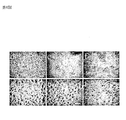
Figure 2 is a series of phase-contrast micrographs of cells 48 hours after seeding. P shows positive control cells on a commercial cell culture dish. The upper images show cells post-cured at 150°C for 6 hours (a-1) and 12 hours (a-2). b-1), 2), and 3) show cells post-cured at 175°C for 6, 12, and 24 hours. c-1), 2), and 3) show cells post-cured at 200°C for 3, 6, and 12 hours. The cell proliferation rate of b-3), c-2), and c-3) are almost same as the positive controls in statistical data. All bars in the photographs are 50 µm. -
Figure 3 shows the cell proliferation rate of cells on a post-cured cell culture dish fabricated by microstereolithography with 48 hours of cell culture. Asterisks (*) mean that there is not significant statistical difference compared with positive controls cultured on a commercial cell culture dish (a=0.05). -
Figure 4 shows the experimental parameters of the post-curing process. These post-curing conditions were used in the Embodiments. -
Figure 5 shows the absorbance spectra of water in which the microstereolithographic objects were immersed for 40 hours. The peaks of the spectra were found at around 249 nm and 200 nm for water in which non-post-cured microstereolithographic objects were immersed. This means that the microstereolithographic objects eluted some substances, and the absorbance spectra of these substances were measured. It was confirmed that the post-cured microstereolithographic objects did not give off substances having such an absorbance spectrum. -
Figure 6 shows phase-contrast micrographs of cells 48 hours after seeding. To evaluate different photocurable resins, culture tests were conducted for d) SCR751, e) SCR701, and f) SCR11120.Suffix number 1 indicates resins without post-curing and 2 are those with post-cure. It is known from these photos that post-curing is effective for all resin types. All bars in the photos are 50 µm. -
- 1 UV laser
- 2 Liquid resins
- 3 Solid polymer
- Three-dimensional microstereolithographic objects fabricated by microstereolithography were exposed to UV light for one hour to accelerate hardening. The structures were then heated at 175°C or above for at least 24 hours, or at 200°C or above for 6 hours. The heating temperature may exceed the glass transition temperature, which is the index of thermal softening temperature for materials. The present invention relates to three-dimensional microstructures formed by microstereolithography. Deformation due to a structure's own weight, which generally poses a problem in heat treatment, is reduced when dealing with microstructures (that is, for example, when one of the dimensions x, y, and z of at least one portion of a structure is less than 1 mm) due to the size effect. As a result, the dimensions of the three-dimensional structure fabricated by the present invention remained almost unchanged before and after heat treatment. We performed cytocompatibility tests on this three-dimensional structure and found that it is cytocompatible.
- [Experiments of cytocompatibility with post cure]
-
Figure 1 shows the procedure used to fabricate three-dimensional structures according to the present invention. - The steps of the microstereolithography procedure are described below.
- 1. Inputting the 3-D shape model into 3-D CAD based on design data.
- 2. Converting the 3-D shape model to x-y cross-sectional n slice data perpendicular to the z-axis.
- 3. Hardening of the photocurable resins using a scanning ultraviolet laser in the x-y plane from the first layer of the slice data.
- 4. Forming a thin film of the liquid photocurable resins after scanning the laser on the first layer and repeating the process to the nth layer (
Figure 1 ). - The microstereolithographic objects thus fabricated were washed in glycol ether ester and then in 99.5% ethanol for 3 minutes, respectively, in an ultrasound bath. The microstereolithographic objects were then stored in a desiccator.
- In our microstereolithography system, a He-Cd laser (325 nm, Kimmon Koha Co., Ltd.) was used as the light source.
- The microstereolithography parameters were laser power, 15 mW; laser scanning speed, 800 mm/sec; scanning distances, 15 µm; and layer thickness, 100 µm.
- Cell culture wells were fabricated to evaluate the cytocompatibility of the photocurable resins. The size of the wells were outside diameter, 16 mm; inside diameter, 15 mm; bottom thickness, 0.8 mm; and height of surrounding wall, 2 mm.
- For the microstereolithography, epoxy-type universal photocurable resins (SCR-751, D-Mec; critical exposure, 20 mj/cm2; glass transition temperature after hardening, 108 °C) were adopted.
- For the purpose of studying the characteristics with various resins, we used two other resins in the culture tests in addition to the above universal photocurable resins: epoxy-type universal humidity-resistant photocurable resins (SCR-701, D-Mec; critical exposure, 33 mj/cm2; glass transition temperature after hardening, 81 °C) and epoxy-type water-resistant high toughness photocurable resins (SCR-11120, D-Mec; critical exposure, 12 mj/cm; glass transition temperature, 43 °C). These three types of resins were hardened by the Xenon lamp to use in the cell culture test.
- In addition to the above resins, photocuring materials selected from the group of acrylate, epoxy, acrylate-epoxy complex, and oxetane can also be used as photocurable resins.
- Rat adrenal pheochromocytoma cell line (PC12, RBC0009, Riken Cell Bank, Tsukuba) was used in the cytocompatibility test because this is the cell line typically used in neurological toxicity tests 15). The cell culture medium was DMEM (MED-006, Iwaki) including 10% fetal bovine serum and 10% horse serum. The cell suspension was adjusted to 5.1 x 10² cells/mm2, and cultured at 37 °C, in a 5% CO2 atmosphere.
- The positive controls were cultured in a commercial 96-well Micro Well Plate (3860-096, Iwaki).
- The interiors of the cell culture wells fabricated by microstereolithography were observed using a phase contrast microscope. Micrographs were taken at 3 mm, 4 mm, 5 mm, and 6 mm from center of the well using a CCD camera. Cell morphology was observed and cell density counted from these micrographs. To reduce the effects of initial concentration dispersion, the cell proliferation rate was defined to evaluate the correlation between this rate and the post-curing parameters. The cell proliferation rate γ was calculated as the rate of the density of the 48 hour cell culture: y to the initial density of a 1 hour cell culture: x, or γ= y/
x x 100. - Cytocompatibility in this report was defined to be the condition in which cells could proliferate and adhere to the bottom of the wells made of photocurable resins.
- The derived cell proliferation rate data were statistically processed using the student's t-test. It was assumed that there was a significant difference for α< 0.05 compared with the positive control. The sample size n was 12.
- There are generally two types of post-curing processes used to finish polymerization in microstereolithography. One is the post-exposure process in which the microstructures after microstereolithography are exposed in a mercury lamp, etc. The other is the post-bake process in which the environmental temperature is increased to promote hardening.
- In the present study, the cell culture wells, which were fabricated by microstereolithography, were both post-exposed and post-baked (hereafter termed "post-cured"). Specifically, after the structures were exposed with a xenon lamp (L2423, Hamamatsu Photonics) for 1 hour, they were heated in an oven (DRD360DA, Advantec) at respective temperatures (room temperature, 150 °C, 175 °C, and 200 °C) for respective heating times (0.5, 3, 6, 9, 12, and 24 hours) (
Fig. 4 ). These wells were then exposed in UV light for 1 hour to sterilize them before the cell culture. - The culture plates, which were hardened under a xenon lamp, were post-baked at 200 °C for 6 hours.
- The cell culture wells after the post-exposure and post-bake began browning. Although the wells were transparent pale yellow when they were photo-hardened before the post-bake, the wells became browner and had lower transmittance with higher temperatures or with longer heating times.
- The results of the cell culture tests are described below.
- 1) In the cell culture wells without the post-curing process, almost all of the cells died within 3 hours after cell seeding.
- 2) Surviving cells were confirmed in some post-cured wells depending on the test conditions as shown in
Figure 2 . The cells in the positive control condition were confluent in the 48 hour cell culture. The cells in the wells post-cured at 175 °C for 24 hours and those in the wells post-cured at 200 °C for 6 hours or longer were confluent in the same manner (b-3, c-2, and c-3,Figure 2 ). - 3) In
Figure 3 (a) , there was a significant difference in the cell proliferation rate between the positive controls and those post-baked at 150 °C. - 4) At the 175 °C post-bake temperature, there was no significant difference between the positive control and those after 24 hours of post-bake time although there was significant difference between positive control and those with 12 hours or less post-bake time (
Figure 3 (b) ). - 5) In
Figure 3 (c) , or at the 200 °C post-bake temperature, there was no significant difference in the cell proliferation rate between the positive control and those with 6 hours or more of post-bake time. - The above results show that the optimum post-bake conditions are 200 °C and 6 hours post-bake time to attain the same cell proliferation rate as commercial cell culture dishes with the shortest heating time.
- We held the hypothesis that removing polymerization initiators from the photocurable resins would be the condition for said resins to achieve cytocompatibility. The above experiments have shown the effectiveness of post-curing to prove this hypothesis, and the relevant necessary conditions. The substance eluted from the photo substances into water is investigated in this chapter to verify the parameters of the post-curing process more precisely.
- The cell culture wells which had 496.8 mm2 surface areas and 135.9 mm3 volumes were fabricated by microstereolithography. The other parameters remained the same as those in the preceding paragraph "Microstereolithography" in
page 6. These wells were post-cured at 175 °C or above for at least 24 hours, or at 200 °C or above for 6 hours, which were determined to be the optimum parameters as described in the preceding chapter. - For comparison purposes, post-cured and non-post-cured wells were dipped in 5 ml milliQ water for 40 hours under the condition of one (Vol. = 135.9 mm3) and two (Vol. = 271.8 mm3) wells at a time, respectively. The absorbance spectra of the milliQ water were measured using a UV absorption spectrophotometer (BioSpec-1600, Shimadzu). The spectra were compensated for the spectrum of the pure water as the base line. The optical path in the measurement was 1 cm long.
- When the hardening of the photocurable resins was actually accelerated by the post-curing process, the elution into water of photopolymerization initiators and uncured monomers, which are assumed to be the cause of cytotoxicity, should be suppressed. Since the conditions for making photocurable resins cytocompatible are determined in the above cytocompatibility tests, we studied the relationship between the post-curing process and elution of substances from photocurable resins into water using ultraviolet absorption spectroscopy. It was confirmed that substances having absorption spectra at around 249 nm and around 200 nm had eluted from the hardened but non-post-baked photocurable resins as shown in
Figure 5 . Since the size of the absorbance peak of the absorption spectrum is correlated with the volume of the resins in the solvent, it is thought that these substances eluted from the resins. In contrast, these absorption spectra were not detected from the post-cured photocurable resins. - The temperature of our post-bake process was higher than the glass transition temperature of the photocurable resins. As such, the structures would be deformed due to their own weight if the structures were heavy, or due to the load applied during the post-bake process. But the microstructures fabricated using our microstereolithography method were mostly small in size ranging from few µm to 1 mm. In this size range, the volume force is sufficiently small compared with the surface force due to scale effect, and thermal deformation is small enough to be neglected. Our post-bake process can therefore be applied to microscale objects without restrictions on their geometry.
- As discussed above, absorption spectra peaking at around 249 nm and around 200 nm were detected in the water in which non-post-cured photocurable wells were immersed. The absorbance increased with the increasing volume of the photocurable resins, or the concentration of the eluted substances increased (
Figure 5 ). - In contrast, these two peaks were not detected from the water in which the post-cured photocurable wells were immersed. These results indicate that the eluted substances interfered with the cell proliferation on the photocurable resins and verify our hypothesis and our suggested solutions to be correct.
- Whether the post-curing process is effective for other photocurable resins was verified by experiments.
- In addition to the above photocurable resins SCR-751, two types of epoxy microstereolithography resins that were the general-purpose epoxy humidity-resistant photocurable resins (SCAR-701, D-Mec; critical exposure, 33 mj/cm2; glass transition temperature after hardening, 81 °C) and water-resistant and high-toughness epoxy photocurable resins (SCR-11120, D-Mec; 12 mj/cm2, 43 °C) were hardened using a xenon lamp for use in the cell culture tests.
- Each of the above three photocurable resins was set in a silicone gum mold, and the circular plates of 16 mm in diameter and 0.8 mm in thickness were exposed to a xenon lamp for hardening. The plates were then post-baked at 200 °C for 6 hours for use in the cell culture tests (21 - 26,
Figure 4 ). The cell morphology was observed 48 hours after seeding under a phase contrast microscope. - When post-curing was not performed, all cells on all plates made of the three photocurable resins did not adhere to the surface of the plate and were dead within hours as shown in
Figure 6 : d-1, e-1, and f-1. In contrast, all cells cultured on the post-cured plates adhered to the surface and were alive as shown inFigure 6 : d-2, e-2, and f-2. The general versatility of the post-curing process was verified by these results. - It was discovered that cytocompatibility can be added to epoxy-type photocurable resins by post-curing them at 200 °C for 6 hours. This result was the world's first report that the same level of cell culture directly adhered to photocurable resins and proliferated to cell numbers comparable with commercial polystyrene dishes. The photocurable resins changed to brown and rejected observation of the inside of the wells if post-baked at over 200 °C. The shortest post-bake time to add cytocompatibility to the photocurable resins while reducing the color change was 6 hours at 200 °C. Popov et al have reported that cytotoxicity was removed by supercritical carbon dioxide treatment from hydroxyapatite composites fabricated by stereolithography (Non-patent Literature 8). Arcaute et al have reported the relationship between the concentration of the photo-polymerization initiator and cytotoxicity (Non-patent Literature 13). Lee et al have reported that the geometry of scaffolds fabricated by stereolithography changed cell activities (Non-patent Literature 14). All of these reports, however, do not compare their results with cell activities observed using ordinary cell culture methods, and simply propose one condition to improve the cell culture method. These reports, therefore, cannot compare with our result in which the same level of cytocompatibility as in routinely used cell culture dishes has been achieved.
- The above post-bake temperature was higher than the glass transition temperature of the photocurable resins. As such, the structures would be deformed due to their own weight if the structures were heavy, or due to the load applied during the post-bake process, however the microstructures fabricated by our microstereolithography were mostly small in size ranging from few µm to 1 mm.
- In this microsize range, the volume force, such as gravity, is small compared with the surface force due to the scale effect, and thermal deformation is greatly reduced in the post-curing process. Our post-bake process can therefore be applied to microscale objects without restrictions on their geometry.
- As shown in
Figure 5 , the considerable reduction of substances eluted from the photocurable resins into water after the post-curing process was verified by measuring the absorbance spectra. This result meant that our hypothesis is correct: unhardened monomers, photo-polymerization initiators and other low molecules stop eluting from the photocurable resins when they are post-cured. - Cytocompatibility was added to all three of the commercial epoxy-type photocurable resins by means of the same post-curing parameters. This test has thus shown that our post-curing process has general versatility and applicability for photocurable resins.
- Three-dimensional cell culture wells were fabricated by microstereolithography. Specifically, cell culture wells measuring 16 mm and 15 mm in outside and inside diameter, respectively, 2 mm wall height, and 0.8 mm bottom thickness were fabricated. The materials used were SCR751 (glass transition temperature, 108 °C; D-Mec, Chuo-ku, Tokyo). The wells were exposed to a mercury xenon lamp (L2423, Hamamatsu Photonics, Hamamatsu City, Shizuoka Prefecture) for one hour to accelerate hardening. The wells were then heated under 18 different combined conditions of temperature (150 °C, 175 °C, and 200 °C) and time (0.5, 3, 6, 9, 12, and 24 hours). Rat adrenal pheochromocytoma cell line (PC12) was seeded in the wells, and the number of cells after 48 hours was counted and compared (
Figure 2 ). According to the result of the student's t-test, there was no significant difference between the ratio of the number of cells on the cell culture wells, which were heated at 200 °C for 6 hours or more, or at 175 °C for 24 hours, after 48 hours to the number of cells on said wells immediately after seeding, and the ratio of the number of cells separately cultured on commercial cell culture dishes after 48 hours to the number of cells on said dishes immediately after seeding. This relationship is shown by the asterisks inFigure 3 . This indicates that cytocompatibility was added to the cell culture wells fabricated by microstereolithography when the wells were heat treated at 200 °C for 6 hours or more. - Experiments were performed to confirm that the process of the present invention actually prevented elution of toxic substances from the cell culture wells fabricated by microstereolithography. Cell culture wells fabricated by microstereolithography and heat treated at 200 °C for 6 hours and those that were not heat treated were immersed in water for 40 hours. The absorption spectrum of the water in which these cell culture wells were immersed was measured using ultraviolet absorption spectroscopy. The result is shown in
Figure 3 . As shown inFigure 5 , for the water in which the cell culture wells fabricated by unpost-baked microstereolithography were immersed, peaks were found on the absorption spectra at wavelengths of around 249 nm and around 200 nm (Figure 5 ). These peaks were not found for the water in which the heat-treated cell culture wells were immersed (Figure 5 ). This indicates that elution of toxic substances from said three-dimensional structures into water was prevented by the heat-treatment of the present invention. - For the purpose of verifying the effectiveness of the present invention for other photocurable resins, we studied the effects of the present invention on SCR11120 (glass transition temperature 43 °C; D-Mec) and SCR701 (81 °C; D-Mec), in addition to SCR751. These three types of resins were hardened using mercury xenon lamps and then heat treated at 200 °C for 6 hours. Cell culture tests were performed on these photocurable resins, and the effect of the present invention was confirmed.
- As described in detail above, the present invention provides a general process to add cytocompatibility to microstereolithographic objects, and its efficacy was verified. It was also demonstrated that the microstereolithographic objects fabricated according to the present invention had almost the same cytocompatibility comparable with commercial cell culture dishes. It was clarified by ultraviolet absorption spectroscopy that the internal composition of the microstereolithographic object was changed in the post-curing process of the present invention, which explains why the cytotoxicity of the microstereolithographic object was reduced.
- The present invention has been explained by citing working examples, but these embodiments are only a few examples and should not be construed as limiting.
- The present invention can be applied to the design of tailor-made implant devices, and fabrication of cell devices set in three-dimensional alignment and microchemical devices including biochemical IC chips, which have not been achievable with conventional microstereolithography. The present invention would provide key technology to substantialize a new approach to microstereolithography in the biomedical field.
Claims
Claims (4)
- Minute three-dimensional structures fabricated by microstereolithography, wherein said structures are detoxified and cytocompatible at least to the extent that cells isolated and cultured outside living organisms can be cultured on the surfaces of and in contact with said structures; and said detoxification is achieved by heating said structures to at least their glass transition temperature after UV-curing.
- Minute three-dimensional structures claimed in Claim 1 wherein said structures are mainly formed from photo-curing materials selected from the group of acrylate, epoxy, acrylate-epoxy complex, and oxetane.
- Minute three-dimensional structures claimed in Claim 1 or 2 wherein said glass transition temperature is about 175 °C to 200 °C, and heating time is 6 to 24 hours.
- Minute three-dimensional structures as claimed in Claim 1 wherein one of the dimensions x, y, and z of at least one portion of said structure is less than 1 mm, and deformation of a structure due to its own weight when heated above the glass transition temperature is reduced due to the size effect.
Applications Claiming Priority (2)
| Application Number | Priority Date | Filing Date | Title |
|---|---|---|---|
| JP2008279411A JP5114362B2 (en) | 2008-10-30 | 2008-10-30 | 3D object made by stereolithography and cell-adapted |
| PCT/JP2009/068734 WO2010050604A1 (en) | 2008-10-30 | 2009-10-26 | Three-dimensional object manufactured by stereolithography and to which cytocompatibility process is applied |
Publications (3)
| Publication Number | Publication Date |
|---|---|
| EP2351825A1 true EP2351825A1 (en) | 2011-08-03 |
| EP2351825A4 EP2351825A4 (en) | 2013-11-06 |
| EP2351825B1 EP2351825B1 (en) | 2017-05-10 |
Family
ID=42128963
Family Applications (1)
| Application Number | Title | Priority Date | Filing Date |
|---|---|---|---|
| EP09823714.2A Not-in-force EP2351825B1 (en) | 2008-10-30 | 2009-10-26 | Three-dimensional object manufactured by stereolithography and to which cytocompatibility process is applied |
Country Status (4)
| Country | Link |
|---|---|
| US (1) | US8845948B2 (en) |
| EP (1) | EP2351825B1 (en) |
| JP (1) | JP5114362B2 (en) |
| WO (1) | WO2010050604A1 (en) |
Cited By (1)
| Publication number | Priority date | Publication date | Assignee | Title |
|---|---|---|---|---|
| CN103407162A (en) * | 2013-06-05 | 2013-11-27 | 王奉瑾 | A plastic melting furnace for a 3D printer |
Families Citing this family (9)
| Publication number | Priority date | Publication date | Assignee | Title |
|---|---|---|---|---|
| JP2012031269A (en) * | 2010-07-30 | 2012-02-16 | Japan Science & Technology Agency | Method for biocompatibilizing treatment of resin structure and biocompatibilized resin structure |
| CN104416902B (en) * | 2013-08-23 | 2017-03-01 | 三纬国际立体列印科技股份有限公司 | Three-dimensional printing device |
| US9332035B2 (en) | 2013-10-10 | 2016-05-03 | The Nielsen Company (Us), Llc | Methods and apparatus to measure exposure to streaming media |
| CN103895223B (en) * | 2014-03-06 | 2016-08-24 | 珠海天威飞马打印耗材有限公司 | Printhead and three-dimensional printer |
| JP6357006B2 (en) * | 2014-04-18 | 2018-07-11 | 東京応化工業株式会社 | Photosensitive resin composition for forming cell culture substrate |
| JP6607557B2 (en) * | 2015-06-06 | 2019-11-20 | 株式会社シントー | Additive molding mold and injection molding method using the mold |
| US10596754B2 (en) * | 2016-06-03 | 2020-03-24 | The Boeing Company | Real time inspection and correction techniques for direct writing systems |
| JP7051336B2 (en) * | 2016-09-20 | 2022-04-11 | ナガセケムテックス株式会社 | Patterning material for 3D stereolithography and casting method using it |
| JP6861408B2 (en) | 2016-12-27 | 2021-04-21 | 東京応化工業株式会社 | Method for manufacturing cell culture chips |
Family Cites Families (4)
| Publication number | Priority date | Publication date | Assignee | Title |
|---|---|---|---|---|
| JPH08183820A (en) * | 1994-12-28 | 1996-07-16 | Takemoto Oil & Fat Co Ltd | Optical three-dimensional modeling resin and optical three-dimensional modeling resin composition |
| JPH106346A (en) * | 1996-06-19 | 1998-01-13 | Takemoto Oil & Fat Co Ltd | Manufacturing method of plastic mold and plastic mold |
| US6660208B2 (en) * | 2001-03-30 | 2003-12-09 | 3D Systems, Inc. | Detoxification of solid freeform fabrication materials |
| JP4969137B2 (en) | 2006-04-17 | 2012-07-04 | シーメット株式会社 | Optical three-dimensional resin composition |
-
2008
- 2008-10-30 JP JP2008279411A patent/JP5114362B2/en not_active Expired - Fee Related
-
2009
- 2009-10-26 WO PCT/JP2009/068734 patent/WO2010050604A1/en not_active Ceased
- 2009-10-26 EP EP09823714.2A patent/EP2351825B1/en not_active Not-in-force
- 2009-10-26 US US12/998,553 patent/US8845948B2/en active Active
Cited By (2)
| Publication number | Priority date | Publication date | Assignee | Title |
|---|---|---|---|---|
| CN103407162A (en) * | 2013-06-05 | 2013-11-27 | 王奉瑾 | A plastic melting furnace for a 3D printer |
| CN103407162B (en) * | 2013-06-05 | 2015-11-25 | 王奉瑾 | Plastic smelting furnace of 3D printer |
Also Published As
| Publication number | Publication date |
|---|---|
| WO2010050604A1 (en) | 2010-05-06 |
| EP2351825B1 (en) | 2017-05-10 |
| EP2351825A4 (en) | 2013-11-06 |
| JP5114362B2 (en) | 2013-01-09 |
| US8845948B2 (en) | 2014-09-30 |
| US20110268948A1 (en) | 2011-11-03 |
| JP2010104285A (en) | 2010-05-13 |
Similar Documents
| Publication | Publication Date | Title |
|---|---|---|
| EP2351825B1 (en) | Three-dimensional object manufactured by stereolithography and to which cytocompatibility process is applied | |
| Appuhamillage et al. | 110th anniversary: vat photopolymerization-based additive manufacturing: current trends and future directions in materials design | |
| Xu et al. | From soft lithography to 3D printing: current status and future of microfluidic device fabrication | |
| Melchels et al. | A review on stereolithography and its applications in biomedical engineering | |
| Shaukat et al. | A review of multi-material 3D printing of functional materials via vat photopolymerization | |
| Arifin et al. | A comprehensive review of biopolymer fabrication in additive manufacturing processing for 3D-tissue-engineering scaffolds | |
| Field et al. | A tuneable, photocurable, poly (caprolactone)-based resin for tissue engineering—synthesis, characterisation and use in stereolithography | |
| Sandmeier et al. | Solvent-free three-dimensional printing of biodegradable elastomers using liquid macrophotoinitiators | |
| Chan-Park et al. | Fabrication of high aspect ratio poly (ethylene glycol)-containing microstructures by UV embossing | |
| Lu et al. | Micro and nano-fabrication of biodegradable polymers for drug delivery | |
| Robles Martinez et al. | The history, developments and opportunities of stereolithography | |
| Choi et al. | Fabrication of 3D biocompatible/biodegradable micro-scaffolds using dynamic mask projection microstereolithography | |
| US12214104B2 (en) | Photo-reactive inks and thermal-curable materials made therefrom | |
| Stampfl et al. | Photopolymers with tunable mechanical properties processed by laser-based high-resolution stereolithography | |
| Cui et al. | 3D printing of a dual-curing resin with cationic curable vegetable oil | |
| Zhang et al. | Microrobotics and MEMS‐based fabrication techniques for scaffold‐based tissue engineering | |
| Lee et al. | Fabrication and characteristic analysis of a poly (propylene fumarate) scaffold using micro‐stereolithography technology | |
| Malinauskas et al. | 3D artificial polymeric scaffolds for stem cell growth fabricated by femtosecond laser | |
| Heller et al. | Vinylcarbonates and vinylcarbamates: Biocompatible monomers for radical photopolymerization | |
| EP3676003A1 (en) | Systems and methods for fabricating microfluidic devices | |
| Beke et al. | 3D scaffold fabrication by mask projection excimer laser stereolithography | |
| Schmidleithner et al. | High resolution dual material stereolithography for monolithic microdevices | |
| Oliaei et al. | Stereolithography and its applications | |
| Seleznev et al. | Hybrid 3D–2D printing for bone scaffolds fabrication | |
| Kang et al. | Development of an indirect solid freeform fabrication process based on microstereolithography for 3D porous scaffolds |
Legal Events
| Date | Code | Title | Description |
|---|---|---|---|
| PUAI | Public reference made under article 153(3) epc to a published international application that has entered the european phase |
Free format text: ORIGINAL CODE: 0009012 |
|
| 17P | Request for examination filed |
Effective date: 20110527 |
|
| AK | Designated contracting states |
Kind code of ref document: A1 Designated state(s): AT BE BG CH CY CZ DE DK EE ES FI FR GB GR HR HU IE IS IT LI LT LU LV MC MK MT NL NO PL PT RO SE SI SK SM TR |
|
| DAX | Request for extension of the european patent (deleted) | ||
| A4 | Supplementary search report drawn up and despatched |
Effective date: 20131008 |
|
| RIC1 | Information provided on ipc code assigned before grant |
Ipc: B29C 71/00 20060101ALI20131001BHEP Ipc: B29C 67/00 20060101ALI20131001BHEP Ipc: C08J 7/00 20060101ALI20131001BHEP Ipc: C12M 3/00 20060101AFI20131001BHEP |
|
| REG | Reference to a national code |
Ref country code: DE Ref legal event code: R079 Ref document number: 602009046067 Country of ref document: DE Free format text: PREVIOUS MAIN CLASS: C12M0003000000 Ipc: B29C0067000000 |
|
| GRAP | Despatch of communication of intention to grant a patent |
Free format text: ORIGINAL CODE: EPIDOSNIGR1 |
|
| STAA | Information on the status of an ep patent application or granted ep patent |
Free format text: STATUS: GRANT OF PATENT IS INTENDED |
|
| RIC1 | Information provided on ipc code assigned before grant |
Ipc: B29L 31/00 20060101ALI20161018BHEP Ipc: B29C 71/00 20060101ALI20161018BHEP Ipc: B29C 71/04 20060101ALI20161018BHEP Ipc: B29C 35/08 20060101ALI20161018BHEP Ipc: C12M 3/00 20060101ALI20161018BHEP Ipc: B29C 67/00 20060101AFI20161018BHEP Ipc: C08J 7/00 20060101ALI20161018BHEP Ipc: B29C 71/02 20060101ALI20161018BHEP |
|
| INTG | Intention to grant announced |
Effective date: 20161123 |
|
| GRAS | Grant fee paid |
Free format text: ORIGINAL CODE: EPIDOSNIGR3 |
|
| GRAA | (expected) grant |
Free format text: ORIGINAL CODE: 0009210 |
|
| STAA | Information on the status of an ep patent application or granted ep patent |
Free format text: STATUS: THE PATENT HAS BEEN GRANTED |
|
| AK | Designated contracting states |
Kind code of ref document: B1 Designated state(s): AT BE BG CH CY CZ DE DK EE ES FI FR GB GR HR HU IE IS IT LI LT LU LV MC MK MT NL NO PL PT RO SE SI SK SM TR |
|
| REG | Reference to a national code |
Ref country code: GB Ref legal event code: FG4D |
|
| REG | Reference to a national code |
Ref country code: AT Ref legal event code: REF Ref document number: 891842 Country of ref document: AT Kind code of ref document: T Effective date: 20170515 Ref country code: CH Ref legal event code: EP |
|
| REG | Reference to a national code |
Ref country code: IE Ref legal event code: FG4D |
|
| REG | Reference to a national code |
Ref country code: DE Ref legal event code: R096 Ref document number: 602009046067 Country of ref document: DE |
|
| REG | Reference to a national code |
Ref country code: NL Ref legal event code: MP Effective date: 20170510 |
|
| REG | Reference to a national code |
Ref country code: LT Ref legal event code: MG4D |
|
| REG | Reference to a national code |
Ref country code: AT Ref legal event code: MK05 Ref document number: 891842 Country of ref document: AT Kind code of ref document: T Effective date: 20170510 |
|
| REG | Reference to a national code |
Ref country code: FR Ref legal event code: PLFP Year of fee payment: 9 |
|
| PG25 | Lapsed in a contracting state [announced via postgrant information from national office to epo] |
Ref country code: AT Free format text: LAPSE BECAUSE OF FAILURE TO SUBMIT A TRANSLATION OF THE DESCRIPTION OR TO PAY THE FEE WITHIN THE PRESCRIBED TIME-LIMIT Effective date: 20170510 Ref country code: GR Free format text: LAPSE BECAUSE OF FAILURE TO SUBMIT A TRANSLATION OF THE DESCRIPTION OR TO PAY THE FEE WITHIN THE PRESCRIBED TIME-LIMIT Effective date: 20170811 Ref country code: NO Free format text: LAPSE BECAUSE OF FAILURE TO SUBMIT A TRANSLATION OF THE DESCRIPTION OR TO PAY THE FEE WITHIN THE PRESCRIBED TIME-LIMIT Effective date: 20170810 Ref country code: LT Free format text: LAPSE BECAUSE OF FAILURE TO SUBMIT A TRANSLATION OF THE DESCRIPTION OR TO PAY THE FEE WITHIN THE PRESCRIBED TIME-LIMIT Effective date: 20170510 Ref country code: ES Free format text: LAPSE BECAUSE OF FAILURE TO SUBMIT A TRANSLATION OF THE DESCRIPTION OR TO PAY THE FEE WITHIN THE PRESCRIBED TIME-LIMIT Effective date: 20170510 Ref country code: FI Free format text: LAPSE BECAUSE OF FAILURE TO SUBMIT A TRANSLATION OF THE DESCRIPTION OR TO PAY THE FEE WITHIN THE PRESCRIBED TIME-LIMIT Effective date: 20170510 Ref country code: HR Free format text: LAPSE BECAUSE OF FAILURE TO SUBMIT A TRANSLATION OF THE DESCRIPTION OR TO PAY THE FEE WITHIN THE PRESCRIBED TIME-LIMIT Effective date: 20170510 |
|
| PG25 | Lapsed in a contracting state [announced via postgrant information from national office to epo] |
Ref country code: LV Free format text: LAPSE BECAUSE OF FAILURE TO SUBMIT A TRANSLATION OF THE DESCRIPTION OR TO PAY THE FEE WITHIN THE PRESCRIBED TIME-LIMIT Effective date: 20170510 Ref country code: BG Free format text: LAPSE BECAUSE OF FAILURE TO SUBMIT A TRANSLATION OF THE DESCRIPTION OR TO PAY THE FEE WITHIN THE PRESCRIBED TIME-LIMIT Effective date: 20170810 Ref country code: SE Free format text: LAPSE BECAUSE OF FAILURE TO SUBMIT A TRANSLATION OF THE DESCRIPTION OR TO PAY THE FEE WITHIN THE PRESCRIBED TIME-LIMIT Effective date: 20170510 Ref country code: NL Free format text: LAPSE BECAUSE OF FAILURE TO SUBMIT A TRANSLATION OF THE DESCRIPTION OR TO PAY THE FEE WITHIN THE PRESCRIBED TIME-LIMIT Effective date: 20170510 Ref country code: PL Free format text: LAPSE BECAUSE OF FAILURE TO SUBMIT A TRANSLATION OF THE DESCRIPTION OR TO PAY THE FEE WITHIN THE PRESCRIBED TIME-LIMIT Effective date: 20170510 Ref country code: IS Free format text: LAPSE BECAUSE OF FAILURE TO SUBMIT A TRANSLATION OF THE DESCRIPTION OR TO PAY THE FEE WITHIN THE PRESCRIBED TIME-LIMIT Effective date: 20170910 |
|
| PG25 | Lapsed in a contracting state [announced via postgrant information from national office to epo] |
Ref country code: CZ Free format text: LAPSE BECAUSE OF FAILURE TO SUBMIT A TRANSLATION OF THE DESCRIPTION OR TO PAY THE FEE WITHIN THE PRESCRIBED TIME-LIMIT Effective date: 20170510 Ref country code: SK Free format text: LAPSE BECAUSE OF FAILURE TO SUBMIT A TRANSLATION OF THE DESCRIPTION OR TO PAY THE FEE WITHIN THE PRESCRIBED TIME-LIMIT Effective date: 20170510 Ref country code: DK Free format text: LAPSE BECAUSE OF FAILURE TO SUBMIT A TRANSLATION OF THE DESCRIPTION OR TO PAY THE FEE WITHIN THE PRESCRIBED TIME-LIMIT Effective date: 20170510 Ref country code: RO Free format text: LAPSE BECAUSE OF FAILURE TO SUBMIT A TRANSLATION OF THE DESCRIPTION OR TO PAY THE FEE WITHIN THE PRESCRIBED TIME-LIMIT Effective date: 20170510 Ref country code: EE Free format text: LAPSE BECAUSE OF FAILURE TO SUBMIT A TRANSLATION OF THE DESCRIPTION OR TO PAY THE FEE WITHIN THE PRESCRIBED TIME-LIMIT Effective date: 20170510 |
|
| REG | Reference to a national code |
Ref country code: DE Ref legal event code: R097 Ref document number: 602009046067 Country of ref document: DE |
|
| PG25 | Lapsed in a contracting state [announced via postgrant information from national office to epo] |
Ref country code: IT Free format text: LAPSE BECAUSE OF FAILURE TO SUBMIT A TRANSLATION OF THE DESCRIPTION OR TO PAY THE FEE WITHIN THE PRESCRIBED TIME-LIMIT Effective date: 20170510 Ref country code: SM Free format text: LAPSE BECAUSE OF FAILURE TO SUBMIT A TRANSLATION OF THE DESCRIPTION OR TO PAY THE FEE WITHIN THE PRESCRIBED TIME-LIMIT Effective date: 20170510 |
|
| PLBE | No opposition filed within time limit |
Free format text: ORIGINAL CODE: 0009261 |
|
| STAA | Information on the status of an ep patent application or granted ep patent |
Free format text: STATUS: NO OPPOSITION FILED WITHIN TIME LIMIT |
|
| 26N | No opposition filed |
Effective date: 20180213 |
|
| PG25 | Lapsed in a contracting state [announced via postgrant information from national office to epo] |
Ref country code: SI Free format text: LAPSE BECAUSE OF FAILURE TO SUBMIT A TRANSLATION OF THE DESCRIPTION OR TO PAY THE FEE WITHIN THE PRESCRIBED TIME-LIMIT Effective date: 20170510 Ref country code: MC Free format text: LAPSE BECAUSE OF FAILURE TO SUBMIT A TRANSLATION OF THE DESCRIPTION OR TO PAY THE FEE WITHIN THE PRESCRIBED TIME-LIMIT Effective date: 20170510 |
|
| REG | Reference to a national code |
Ref country code: CH Ref legal event code: PL |
|
| REG | Reference to a national code |
Ref country code: IE Ref legal event code: MM4A |
|
| PG25 | Lapsed in a contracting state [announced via postgrant information from national office to epo] |
Ref country code: LI Free format text: LAPSE BECAUSE OF NON-PAYMENT OF DUE FEES Effective date: 20171031 Ref country code: CH Free format text: LAPSE BECAUSE OF NON-PAYMENT OF DUE FEES Effective date: 20171031 Ref country code: LU Free format text: LAPSE BECAUSE OF NON-PAYMENT OF DUE FEES Effective date: 20171026 |
|
| REG | Reference to a national code |
Ref country code: BE Ref legal event code: MM Effective date: 20171031 |
|
| PG25 | Lapsed in a contracting state [announced via postgrant information from national office to epo] |
Ref country code: BE Free format text: LAPSE BECAUSE OF NON-PAYMENT OF DUE FEES Effective date: 20171031 |
|
| PG25 | Lapsed in a contracting state [announced via postgrant information from national office to epo] |
Ref country code: MT Free format text: LAPSE BECAUSE OF NON-PAYMENT OF DUE FEES Effective date: 20171026 |
|
| REG | Reference to a national code |
Ref country code: FR Ref legal event code: PLFP Year of fee payment: 10 |
|
| PG25 | Lapsed in a contracting state [announced via postgrant information from national office to epo] |
Ref country code: IE Free format text: LAPSE BECAUSE OF NON-PAYMENT OF DUE FEES Effective date: 20171026 |
|
| PG25 | Lapsed in a contracting state [announced via postgrant information from national office to epo] |
Ref country code: HU Free format text: LAPSE BECAUSE OF FAILURE TO SUBMIT A TRANSLATION OF THE DESCRIPTION OR TO PAY THE FEE WITHIN THE PRESCRIBED TIME-LIMIT; INVALID AB INITIO Effective date: 20091026 |
|
| PG25 | Lapsed in a contracting state [announced via postgrant information from national office to epo] |
Ref country code: CY Free format text: LAPSE BECAUSE OF NON-PAYMENT OF DUE FEES Effective date: 20170510 |
|
| PG25 | Lapsed in a contracting state [announced via postgrant information from national office to epo] |
Ref country code: MK Free format text: LAPSE BECAUSE OF FAILURE TO SUBMIT A TRANSLATION OF THE DESCRIPTION OR TO PAY THE FEE WITHIN THE PRESCRIBED TIME-LIMIT Effective date: 20170510 |
|
| PG25 | Lapsed in a contracting state [announced via postgrant information from national office to epo] |
Ref country code: TR Free format text: LAPSE BECAUSE OF FAILURE TO SUBMIT A TRANSLATION OF THE DESCRIPTION OR TO PAY THE FEE WITHIN THE PRESCRIBED TIME-LIMIT Effective date: 20170510 |
|
| PG25 | Lapsed in a contracting state [announced via postgrant information from national office to epo] |
Ref country code: PT Free format text: LAPSE BECAUSE OF FAILURE TO SUBMIT A TRANSLATION OF THE DESCRIPTION OR TO PAY THE FEE WITHIN THE PRESCRIBED TIME-LIMIT Effective date: 20170510 |
|
| PGFP | Annual fee paid to national office [announced via postgrant information from national office to epo] |
Ref country code: GB Payment date: 20220905 Year of fee payment: 14 |
|
| PGFP | Annual fee paid to national office [announced via postgrant information from national office to epo] |
Ref country code: FR Payment date: 20220905 Year of fee payment: 14 |
|
| PGFP | Annual fee paid to national office [announced via postgrant information from national office to epo] |
Ref country code: DE Payment date: 20220905 Year of fee payment: 14 |
|
| REG | Reference to a national code |
Ref country code: DE Ref legal event code: R119 Ref document number: 602009046067 Country of ref document: DE |
|
| GBPC | Gb: european patent ceased through non-payment of renewal fee |
Effective date: 20231026 |
|
| PG25 | Lapsed in a contracting state [announced via postgrant information from national office to epo] |
Ref country code: GB Free format text: LAPSE BECAUSE OF NON-PAYMENT OF DUE FEES Effective date: 20231026 |
|
| PG25 | Lapsed in a contracting state [announced via postgrant information from national office to epo] |
Ref country code: GB Free format text: LAPSE BECAUSE OF NON-PAYMENT OF DUE FEES Effective date: 20231026 Ref country code: FR Free format text: LAPSE BECAUSE OF NON-PAYMENT OF DUE FEES Effective date: 20231031 Ref country code: DE Free format text: LAPSE BECAUSE OF NON-PAYMENT OF DUE FEES Effective date: 20240501 |