EP2351612A1 - Porous object of raney metal, process for producing the same, and catalyst - Google Patents
Porous object of raney metal, process for producing the same, and catalyst Download PDFInfo
- Publication number
- EP2351612A1 EP2351612A1 EP09814353A EP09814353A EP2351612A1 EP 2351612 A1 EP2351612 A1 EP 2351612A1 EP 09814353 A EP09814353 A EP 09814353A EP 09814353 A EP09814353 A EP 09814353A EP 2351612 A1 EP2351612 A1 EP 2351612A1
- Authority
- EP
- European Patent Office
- Prior art keywords
- metal
- raney
- alloy
- catalyst
- porous material
- Prior art date
- Legal status (The legal status is an assumption and is not a legal conclusion. Google has not performed a legal analysis and makes no representation as to the accuracy of the status listed.)
- Withdrawn
Links
Images



Classifications
-
- B—PERFORMING OPERATIONS; TRANSPORTING
- B01—PHYSICAL OR CHEMICAL PROCESSES OR APPARATUS IN GENERAL
- B01J—CHEMICAL OR PHYSICAL PROCESSES, e.g. CATALYSIS OR COLLOID CHEMISTRY; THEIR RELEVANT APPARATUS
- B01J25/00—Catalysts of the Raney type
-
- B—PERFORMING OPERATIONS; TRANSPORTING
- B01—PHYSICAL OR CHEMICAL PROCESSES OR APPARATUS IN GENERAL
- B01J—CHEMICAL OR PHYSICAL PROCESSES, e.g. CATALYSIS OR COLLOID CHEMISTRY; THEIR RELEVANT APPARATUS
- B01J25/00—Catalysts of the Raney type
- B01J25/02—Raney nickel
-
- B—PERFORMING OPERATIONS; TRANSPORTING
- B01—PHYSICAL OR CHEMICAL PROCESSES OR APPARATUS IN GENERAL
- B01J—CHEMICAL OR PHYSICAL PROCESSES, e.g. CATALYSIS OR COLLOID CHEMISTRY; THEIR RELEVANT APPARATUS
- B01J35/00—Catalysts, in general, characterised by their form or physical properties
- B01J35/60—Catalysts, in general, characterised by their form or physical properties characterised by their surface properties or porosity
- B01J35/61—Surface area
- B01J35/613—10-100 m2/g
-
- B—PERFORMING OPERATIONS; TRANSPORTING
- B01—PHYSICAL OR CHEMICAL PROCESSES OR APPARATUS IN GENERAL
- B01J—CHEMICAL OR PHYSICAL PROCESSES, e.g. CATALYSIS OR COLLOID CHEMISTRY; THEIR RELEVANT APPARATUS
- B01J37/00—Processes, in general, for preparing catalysts; Processes, in general, for activation of catalysts
- B01J37/02—Impregnation, coating or precipitation
- B01J37/0201—Impregnation
-
- B—PERFORMING OPERATIONS; TRANSPORTING
- B01—PHYSICAL OR CHEMICAL PROCESSES OR APPARATUS IN GENERAL
- B01J—CHEMICAL OR PHYSICAL PROCESSES, e.g. CATALYSIS OR COLLOID CHEMISTRY; THEIR RELEVANT APPARATUS
- B01J37/00—Processes, in general, for preparing catalysts; Processes, in general, for activation of catalysts
- B01J37/16—Reducing
- B01J37/18—Reducing with gases containing free hydrogen
-
- B—PERFORMING OPERATIONS; TRANSPORTING
- B22—CASTING; POWDER METALLURGY
- B22F—WORKING METALLIC POWDER; MANUFACTURE OF ARTICLES FROM METALLIC POWDER; MAKING METALLIC POWDER; APPARATUS OR DEVICES SPECIALLY ADAPTED FOR METALLIC POWDER
- B22F1/00—Metallic powder; Treatment of metallic powder, e.g. to facilitate working or to improve properties
- B22F1/06—Metallic powder characterised by the shape of the particles
-
- C—CHEMISTRY; METALLURGY
- C01—INORGANIC CHEMISTRY
- C01B—NON-METALLIC ELEMENTS; COMPOUNDS THEREOF; METALLOIDS OR COMPOUNDS THEREOF NOT COVERED BY SUBCLASS C01C
- C01B3/00—Hydrogen; Gaseous mixtures containing hydrogen; Separation of hydrogen from mixtures containing it; Purification of hydrogen; Reversible storage of hydrogen
- C01B3/02—Production of hydrogen; Production of gaseous mixtures containing hydrogen
- C01B3/32—Production of hydrogen; Production of gaseous mixtures containing hydrogen by reaction of gaseous or liquid organic compounds with gasifying agents, e.g. water, carbon dioxide or air
- C01B3/323—Catalytic reaction of gaseous or liquid organic compounds other than hydrocarbons with gasifying agents
- C01B3/326—Catalytic reaction of gaseous or liquid organic compounds other than hydrocarbons with gasifying agents characterised by the catalysts
-
- C—CHEMISTRY; METALLURGY
- C22—METALLURGY; FERROUS OR NON-FERROUS ALLOYS; TREATMENT OF ALLOYS OR NON-FERROUS METALS
- C22C—ALLOYS
- C22C1/00—Making non-ferrous alloys
- C22C1/04—Making non-ferrous alloys by powder metallurgy
- C22C1/0475—Impregnated alloys
-
- C—CHEMISTRY; METALLURGY
- C22—METALLURGY; FERROUS OR NON-FERROUS ALLOYS; TREATMENT OF ALLOYS OR NON-FERROUS METALS
- C22C—ALLOYS
- C22C1/00—Making non-ferrous alloys
- C22C1/08—Alloys with open or closed pores
-
- C—CHEMISTRY; METALLURGY
- C22—METALLURGY; FERROUS OR NON-FERROUS ALLOYS; TREATMENT OF ALLOYS OR NON-FERROUS METALS
- C22C—ALLOYS
- C22C19/00—Alloys based on nickel or cobalt
- C22C19/002—Alloys based on nickel or cobalt with copper as the next major constituent
-
- C—CHEMISTRY; METALLURGY
- C22—METALLURGY; FERROUS OR NON-FERROUS ALLOYS; TREATMENT OF ALLOYS OR NON-FERROUS METALS
- C22C—ALLOYS
- C22C19/00—Alloys based on nickel or cobalt
- C22C19/03—Alloys based on nickel or cobalt based on nickel
-
- C—CHEMISTRY; METALLURGY
- C22—METALLURGY; FERROUS OR NON-FERROUS ALLOYS; TREATMENT OF ALLOYS OR NON-FERROUS METALS
- C22C—ALLOYS
- C22C5/00—Alloys based on noble metals
- C22C5/04—Alloys based on a platinum group metal
-
- C—CHEMISTRY; METALLURGY
- C22—METALLURGY; FERROUS OR NON-FERROUS ALLOYS; TREATMENT OF ALLOYS OR NON-FERROUS METALS
- C22C—ALLOYS
- C22C9/00—Alloys based on copper
- C22C9/06—Alloys based on copper with nickel or cobalt as the next major constituent
-
- H—ELECTRICITY
- H01—ELECTRIC ELEMENTS
- H01M—PROCESSES OR MEANS, e.g. BATTERIES, FOR THE DIRECT CONVERSION OF CHEMICAL ENERGY INTO ELECTRICAL ENERGY
- H01M4/00—Electrodes
- H01M4/86—Inert electrodes with catalytic activity, e.g. for fuel cells
- H01M4/98—Raney-type electrodes
-
- B—PERFORMING OPERATIONS; TRANSPORTING
- B01—PHYSICAL OR CHEMICAL PROCESSES OR APPARATUS IN GENERAL
- B01J—CHEMICAL OR PHYSICAL PROCESSES, e.g. CATALYSIS OR COLLOID CHEMISTRY; THEIR RELEVANT APPARATUS
- B01J2235/00—Indexing scheme associated with group B01J35/00, related to the analysis techniques used to determine the catalysts form or properties
- B01J2235/15—X-ray diffraction
-
- B—PERFORMING OPERATIONS; TRANSPORTING
- B01—PHYSICAL OR CHEMICAL PROCESSES OR APPARATUS IN GENERAL
- B01J—CHEMICAL OR PHYSICAL PROCESSES, e.g. CATALYSIS OR COLLOID CHEMISTRY; THEIR RELEVANT APPARATUS
- B01J35/00—Catalysts, in general, characterised by their form or physical properties
- B01J35/30—Catalysts, in general, characterised by their form or physical properties characterised by their physical properties
-
- B—PERFORMING OPERATIONS; TRANSPORTING
- B22—CASTING; POWDER METALLURGY
- B22F—WORKING METALLIC POWDER; MANUFACTURE OF ARTICLES FROM METALLIC POWDER; MAKING METALLIC POWDER; APPARATUS OR DEVICES SPECIALLY ADAPTED FOR METALLIC POWDER
- B22F2998/00—Supplementary information concerning processes or compositions relating to powder metallurgy
- B22F2998/10—Processes characterised by the sequence of their steps
-
- C—CHEMISTRY; METALLURGY
- C01—INORGANIC CHEMISTRY
- C01B—NON-METALLIC ELEMENTS; COMPOUNDS THEREOF; METALLOIDS OR COMPOUNDS THEREOF NOT COVERED BY SUBCLASS C01C
- C01B2203/00—Integrated processes for the production of hydrogen or synthesis gas
- C01B2203/02—Processes for making hydrogen or synthesis gas
- C01B2203/0205—Processes for making hydrogen or synthesis gas containing a reforming step
- C01B2203/0227—Processes for making hydrogen or synthesis gas containing a reforming step containing a catalytic reforming step
- C01B2203/0233—Processes for making hydrogen or synthesis gas containing a reforming step containing a catalytic reforming step the reforming step being a steam reforming step
-
- C—CHEMISTRY; METALLURGY
- C01—INORGANIC CHEMISTRY
- C01B—NON-METALLIC ELEMENTS; COMPOUNDS THEREOF; METALLOIDS OR COMPOUNDS THEREOF NOT COVERED BY SUBCLASS C01C
- C01B2203/00—Integrated processes for the production of hydrogen or synthesis gas
- C01B2203/02—Processes for making hydrogen or synthesis gas
- C01B2203/0266—Processes for making hydrogen or synthesis gas containing a decomposition step
- C01B2203/0277—Processes for making hydrogen or synthesis gas containing a decomposition step containing a catalytic decomposition step
-
- C—CHEMISTRY; METALLURGY
- C01—INORGANIC CHEMISTRY
- C01B—NON-METALLIC ELEMENTS; COMPOUNDS THEREOF; METALLOIDS OR COMPOUNDS THEREOF NOT COVERED BY SUBCLASS C01C
- C01B2203/00—Integrated processes for the production of hydrogen or synthesis gas
- C01B2203/10—Catalysts for performing the hydrogen forming reactions
- C01B2203/1041—Composition of the catalyst
-
- C—CHEMISTRY; METALLURGY
- C01—INORGANIC CHEMISTRY
- C01B—NON-METALLIC ELEMENTS; COMPOUNDS THEREOF; METALLOIDS OR COMPOUNDS THEREOF NOT COVERED BY SUBCLASS C01C
- C01B2203/00—Integrated processes for the production of hydrogen or synthesis gas
- C01B2203/10—Catalysts for performing the hydrogen forming reactions
- C01B2203/1041—Composition of the catalyst
- C01B2203/1047—Group VIII metal catalysts
- C01B2203/1052—Nickel or cobalt catalysts
- C01B2203/1058—Nickel catalysts
-
- Y—GENERAL TAGGING OF NEW TECHNOLOGICAL DEVELOPMENTS; GENERAL TAGGING OF CROSS-SECTIONAL TECHNOLOGIES SPANNING OVER SEVERAL SECTIONS OF THE IPC; TECHNICAL SUBJECTS COVERED BY FORMER USPC CROSS-REFERENCE ART COLLECTIONS [XRACs] AND DIGESTS
- Y02—TECHNOLOGIES OR APPLICATIONS FOR MITIGATION OR ADAPTATION AGAINST CLIMATE CHANGE
- Y02E—REDUCTION OF GREENHOUSE GAS [GHG] EMISSIONS, RELATED TO ENERGY GENERATION, TRANSMISSION OR DISTRIBUTION
- Y02E60/00—Enabling technologies; Technologies with a potential or indirect contribution to GHG emissions mitigation
- Y02E60/30—Hydrogen technology
- Y02E60/50—Fuel cells
-
- Y—GENERAL TAGGING OF NEW TECHNOLOGICAL DEVELOPMENTS; GENERAL TAGGING OF CROSS-SECTIONAL TECHNOLOGIES SPANNING OVER SEVERAL SECTIONS OF THE IPC; TECHNICAL SUBJECTS COVERED BY FORMER USPC CROSS-REFERENCE ART COLLECTIONS [XRACs] AND DIGESTS
- Y02—TECHNOLOGIES OR APPLICATIONS FOR MITIGATION OR ADAPTATION AGAINST CLIMATE CHANGE
- Y02P—CLIMATE CHANGE MITIGATION TECHNOLOGIES IN THE PRODUCTION OR PROCESSING OF GOODS
- Y02P20/00—Technologies relating to chemical industry
- Y02P20/50—Improvements relating to the production of bulk chemicals
- Y02P20/52—Improvements relating to the production of bulk chemicals using catalysts, e.g. selective catalysts
Definitions
- the present invention relates to a novel Raney-type metal porous material and its production method, and further relates to its use as a catalyst.
- Raney-type metals have been investigated for their application to electrode materials, catalysts, etc.
- electrode materials there are proposed porous Raney metals of which the surface area has been increased, and those of which the surface including the inner surface of the pores therein has been coated or plated with a different type of metal or alloy to thereby enhance the durability and the activity thereof (Patent References 1 to 3).
- Raney-type Cu-Ni-Zn catalyst by developing a Cu-Ni-Zn alloy with an alkali solution followed by alloying it through hydrogen gas reduction, and to use it as a catalyst for methanol reforming (Patent Reference 4).
- non-supported porous metal catalysts such as typically Raney-type catalysts have been known through the ages.
- the ingredient that takes actual catalytic activity thereof accounts for only a few percentage of the surface area of the entire catalyst; while on the other hand, a Raney catalyst is efficient in that the entire surface area thereof exhibits catalytic activity.
- almost all conventional Raney catalysts are single metal catalysts, and therefore have a serious problem with thermal stability in that at a high temperature at which the catalytic reaction goes on, the surface area of the catalyst greatly reduces owing to sintering.
- Raney catalysts are expected to have only the catalytic function of a single metal alone.
- the present invention is to make it possible to alloy a Raney-type metal with a porous structure, to realize a novel method of enabling remarkable enhancement of the function and the activity of the alloy based on the porous structure thereof, and to use it for solving the problem with thermal stability of conventional Raney catalysts and for enhancing the catalytic function thereof and adding further diversity thereto.
- the present invention is characterized by the following, for solving the above-mentioned problems.
- a method for producing the Raney-type metal porous material which comprises at least the following steps:
- a catalyst comprising the above first Raney-type metal porous material as the catalyst active ingredient.
- the invention makes it possible to alloy a Raney-type metal with a porous structure and, based on the porous structure thereof, makes it possible to remarkably enhance the function and the activity of the Raney-type metal porous material as catalysts, electrode materials, etc.
- the invention solves the problem with thermal stability of Raney catalysts and can provide improvement and diversification of the catalytic function and activity of the catalysts.
- the inner surface of the pores constituting the porous structure is an alloy of the skeletal metal constituting it and a metal differing from the skeletal metal.
- a part or all of the inner surface of the pores is an alloy of the skeletal metal constituting the porous structure having the pores and a metal differing from the skeletal metal, or along with a part or all of the inner surface of the pores and not limited to the inner surface of the pores, the porous material is formed of an alloy of the skeletal metal constituting the porous structure having the pores and a metal differing from the skeletal metal.
- the Raney-type metal porous material of the invention is, as a whole, a porous material that is partly or entirely alloyed, and at least a part or all of the inner surface of the pores is alloyed.
- the production method includes at least the above-mentioned steps (1) and (2), and its embodiment is considered to comprise, for example, the following steps.
- the second step for example, an aqueous solution of a metal salt including a metal element C (C: Fe, Co, Ni, Cu, Ru, Rh, Pd, Ag, Pt, Au, Zn) applied to or infiltrated into the thus-obtained porous metal B power to thereby make the metal element held by the pores of the porous metal B powder.
- a metal element C C: Fe, Co, Ni, Cu, Ru, Rh, Pd, Ag, Pt, Au, Zn
- the coated or infiltrated, supported metal alloy powder is heat-treated in a hydrogen atmosphere for alloying the metal B and the metal C.
- a porous alloy powder having a high specific surface area and comprising two types of metals of B and C is produced.
- the second step and the third step are repeated.
- the alkaline solution in the first step may be any of various aqueous alkaline solutions of, for example, typically NaOH or KOH, or other various solutions such as water/alcohol solutions, etc.
- the same may apply to the aqueous solution of the metal salt in the second step.
- Usable are various water-soluble substances such as metal chlorides, organic salts, complex salts and others, as well as water-base solutions thereof.
- the processing condition in the third step may be determined in consideration of the type of the metals and the degree of alloying thereof, etc.
- the degree in alloying to give the intended Raney-type metal porous material shall be determined.
- binary Raney-type metal porous materials such as typically Ni-Cu, Ni-Zn, Co-Cu, Fe-Ni, Fe-Co, Ni-Pd, Ni-Ru, Ni-Pt, Fe-Cu, Fe-Rh, Fe-Pd, Cu-Ag, etc.; and also ternary ones such as Ni-Cu-Pd, Ni-Cu-Co, Ni-Co-Rh, Ni-Fe-Ag, Co-Ru-Ag, etc.; and other more polynary Raney-type metal porous materials.
- the Raney-type metal porous material of the invention is by itself usable as electrode materials and catalysts, and in addition, when its surface including the surface of the pores thereof is coated or plated with any other metal or alloy, or when an inorganic substance is stuck thereto, then the resulting materials can exhibit further various functions and activities.
- the Raney-type metal porous material of the invention is useful as a catalyst for methanol reforming or decomposition reaction, which has a large surface area and a high activity and has good heat resistance. It has been confirmed that the catalyst has an extremely high CO (carbon monoxide) selectivity.
- the catalyst of the Raney-type metal porous material of the invention does not have any selectivity to CO 2 in methanol-water vapor reforming reaction but has a high reaction selectivity to CO (carbon monoxide); and the catalyst has a high selectivity to CO (carbon monoxide) in methanol decomposition reaction (to produce H 2 and CO).
- the Raney-type metal porous material of the invention has such remarkable characteristics.
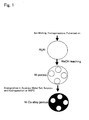
- Fig. 1 schematically shows a production process.
- pure Al and pure Ni prepared as samples were arcmelted, then sealed up in vacuum, and annealed at 700°C for 24 hours. Subsequently, this is milled into a fine powder, and then put in an NaOH solution (20% by weight, 12 hours) for dissolving Al alone to give a Raney-type Ni.
- a salt CuCl 2 was infiltrated into it so as to add Cu thereto, and then this was alloyed in a hydrogen atmosphere (500°C, 12 hours).
- both the samples with the atomic number ratio Ni/Cu 5/1 or 1/1 had the peak position shifted toward the low angle side, which confirmed the formation of a solid solution of Ni-Cu.
- the alloying formed mesopores having a large surface area.
- Example 2 In the same manner as in Example 1, an ingot of an Al-based intermetallic compound Al 3 Ni (orAl 2 Cu) was produced according to an arc melting method in an Ar atmosphere, then annealed and single-phased, and thereafter this was milled according to a ball milling method to prepare a fine powdery sample.
- the sample was processed in an aqueous 20% NaOH solution for selective leaching treatment to produce a porous metal catalyst. This was impregnated in an aqueous solution of a Cu-containing metal salt, CuCl 2 so as to carry it, then dried and alloyed (in H 2 , at 500°C for 12 hours).
- the product was analyzed through on-line GC (TCD).
- Fig. 3 shows the BET surface area before and after reaction of conventional Raney Cu and Raney Ni, and the porous Ni-Cu alloy produced in the above, used in methanol-water vapor reforming reaction (CH 3 OH + H 2O ⁇ 3H 2 + CO 2 ).
- Fig. 4 shows the reaction selectivity in the water vapor reforming reaction of the above three samples.
- Raney Cu is known as a catalyst for methanol-water vapor reforming reaction; however, as shown in the left-side view in Fig. 4 , only H 2 and CO 2 are formed, and the CO 2 selectivity (CO 2 /(CO 2 + CO)) reached around 100%, while on the other hand, the CO selectivity is nearly 0%.
- Raney Ni is shown in the right-side view in Fig. 4 . This has a high CO selectivity at a low temperature, but with methanation to give methane (CH 4 ) at about 320°C, the methane selectivity increased.
- the selectivity change characterizes the Ni catalyst, of which the catalyst property is contrary to that of the Raney Cu catalyst.
- the porous Ni-Cu alloy of the invention (the center view in Fig. 4 ) had almost 100% CO selectivity in the entire temperature range, or that is, it has 0% CO 2 selectivity.
- the reaction conversion ratio was 6.7% (240°C), 14.5% (280°C), 26.5% (320°C), 42% (360°C).
- the XRD data shown in Fig. 5 confirm shifting of the peak position to the low angle side and solid solution of Zn in the alloy.
- the case of Ni/Zn 1/1 confirmed L1 0 structure.
- the Ni-Cu alloy had a large surface area.
- methanol decomposition reaction CO 3 OH ⁇ CO+2H 2
- used was a fixed bed circulation reactor. After pretreatment in an H2 gas atmosphere (240°C) for 1 hour, a reaction gas of methanol/N 2 (30 cm 3 .min -1 ) was introduced into the reactor and reacted at a temperature of 240°C to 360°C
- Fig. 6 The result of the reaction is shown in Fig. 6 , in which the data with Raney Ni are shown for comparison.
- the hydrogen formation speed is proportional to the temperature, and the catalyst was confirmed to have a high CO (carbon monoxide) formation selectivity; and it was also confirmed that the property of this catalyst quite differs from that of Raney Ni.
Landscapes
- Chemical & Material Sciences (AREA)
- Engineering & Computer Science (AREA)
- Organic Chemistry (AREA)
- Materials Engineering (AREA)
- Chemical Kinetics & Catalysis (AREA)
- Mechanical Engineering (AREA)
- Metallurgy (AREA)
- Health & Medical Sciences (AREA)
- Nanotechnology (AREA)
- General Health & Medical Sciences (AREA)
- Combustion & Propulsion (AREA)
- Inorganic Chemistry (AREA)
- Electrochemistry (AREA)
- General Chemical & Material Sciences (AREA)
- Catalysts (AREA)
- Hydrogen, Water And Hydrids (AREA)
- Cell Electrode Carriers And Collectors (AREA)
- Inert Electrodes (AREA)
Abstract
Description
- The present invention relates to a novel Raney-type metal porous material and its production method, and further relates to its use as a catalyst.
- Heretofore, based on the characteristic function and activity thereof, Raney-type metals have been investigated for their application to electrode materials, catalysts, etc. For example, regarding electrode materials, there are proposed porous Raney metals of which the surface area has been increased, and those of which the surface including the inner surface of the pores therein has been coated or plated with a different type of metal or alloy to thereby enhance the durability and the activity thereof (Patent References 1 to 3).
- Regarding catalysts, for example, it is proposed to prepare a Raney-type Cu-Ni-Zn catalyst by developing a Cu-Ni-Zn alloy with an alkali solution followed by alloying it through hydrogen gas reduction, and to use it as a catalyst for methanol reforming (Patent Reference 4).
- However, for Raney-type metals, it is difficult to constitute porous structure-having alloys that have heretofore been investigated; and in fact, no one has heretofore succeeded in developing a practicable method of enhancing the function and the activity of the metals based on the porous structure thereof. Regarding use as catalysts, the relationship between the porous structure that is considered effective in point of increasing the surface area and the catalytic activity thereof is as yet investigated little in the art.
- In fact, non-supported porous metal catalysts such as typically Raney-type catalysts have been known through the ages. Of an ordinary supported catalyst, the ingredient that takes actual catalytic activity thereof accounts for only a few percentage of the surface area of the entire catalyst; while on the other hand, a Raney catalyst is efficient in that the entire surface area thereof exhibits catalytic activity. However, almost all conventional Raney catalysts are single metal catalysts, and therefore have a serious problem with thermal stability in that at a high temperature at which the catalytic reaction goes on, the surface area of the catalyst greatly reduces owing to sintering. Regarding supported catalysts, it is possible to produce alloy catalysts of which the composition differs from that of metals, according to an impregnation method or coprecipitation method of using different types of metal salts; however, almost all conventional Raney catalysts are single metal catalysts. Accordingly, Raney catalysts are expected to have only the catalytic function of a single metal alone.
- In the known technique for the above-mentioned Cu-Ni-Zn Raney-type catalyst composed of different types of metals, any substantial investigation about the alloy formation and the porous structure is not made. In the case of this catalyst, the three-dimensional alloy of Ni-Cu-Zn is processed for leaching therefore forming a significant concentration fluctuation (inhomogeneousness) of the ingredients, and composition control and porous structure formation for increasing the surface area would be substantially difficult. Therefore, the technique is problematic in that it lacks developability and practicability.
- [Patent Reference 1]
JP-A 11-111304 - [Patent Reference 2]
JP-A 58-46553 - [Patent Reference 3]
JP-A 59-94377 - [Patent Reference 4]
JP-A 63-256136 - In the background as above, the present invention is to make it possible to alloy a Raney-type metal with a porous structure, to realize a novel method of enabling remarkable enhancement of the function and the activity of the alloy based on the porous structure thereof, and to use it for solving the problem with thermal stability of conventional Raney catalysts and for enhancing the catalytic function thereof and adding further diversity thereto.
- The present invention is characterized by the following, for solving the above-mentioned problems.
- First: A Raney-type metal porous material of which at least the inner surface of the pores constituting the porous structure is an alloy of the skeletal metal constituting it and a metal differing from the skeletal metal.
- Second: A method for producing the Raney-type metal porous material, which comprises at least the following steps:
- (1) A step of applying onto or infiltrating into a Raney-type metal porous material formed of a skeletal metal, a solution of a metal salt of a metal that differs from the skeletal metal.
- (2) A step of heating the resulting coated material or infiltrated material to reduce the metal salt, thereby forming an alloy of the skeletal metal and the metal constituting the metal salt in the inner surface of the pores of the Raney-type metal porous material.
- Third: A catalyst comprising the above first Raney-type metal porous material as the catalyst active ingredient.
- As described above, the invention makes it possible to alloy a Raney-type metal with a porous structure and, based on the porous structure thereof, makes it possible to remarkably enhance the function and the activity of the Raney-type metal porous material as catalysts, electrode materials, etc. In addition, the invention solves the problem with thermal stability of Raney catalysts and can provide improvement and diversification of the catalytic function and activity of the catalysts.
-
- [
Fig. 1 ] It schematically shows one embodiment of the production method of the invention. - [
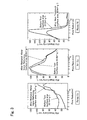
Fig. 2 ] It is a view showing the data in XRD and the surface area of the Raney-Type Ni-Cu porous material in Example 1 and comparative Ni. - [
Fig. 3 ] It is a view showing the found data of the BET surface area before and after methanol/water vapor reforming reaction in Example 3. - [
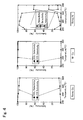
Fig. 4 ] It is a view showing the data of the reaction selectivity in methanol/water vapor reforming reaction in Example 3. - [
Fig. 5 ] It is a view showing the data in XRD and the surface area of the Ni-Zn alloy in Example 4 and comparative Ni. - [
Fig. 6 ] It is a view illustrating the data of methanol decomposition reaction in Example 4. - In the Raney-type metal porous material of the first aspect of the invention, at least the inner surface of the pores constituting the porous structure is an alloy of the skeletal metal constituting it and a metal differing from the skeletal metal. Specifically, a part or all of the inner surface of the pores is an alloy of the skeletal metal constituting the porous structure having the pores and a metal differing from the skeletal metal, or along with a part or all of the inner surface of the pores and not limited to the inner surface of the pores, the porous material is formed of an alloy of the skeletal metal constituting the porous structure having the pores and a metal differing from the skeletal metal.
- It may be said that the Raney-type metal porous material of the invention is, as a whole, a porous material that is partly or entirely alloyed, and at least a part or all of the inner surface of the pores is alloyed.
- The production method includes at least the above-mentioned steps (1) and (2), and its embodiment is considered to comprise, for example, the following steps.
- Specifically, an alloy of a metal A soluble in acid or alkali and a metal B insoluble in acid or alkali is prepared according to a dissolution method to have a composition typically represented by a chemical formula of AxB (x = 1 to 10) (A: Al, B: Fe, Co, Ni, Cu, Ru, Rh, Pd, Ag, Pt, Au), then heat-treated and ground, and thereafter the alloy powder is impregnated in an acid or alkaline liquid to remove the metal A according to a Raney method (leaching), thereby giving a porous metal B powder. This is the first step.
- In the second step, for example, an aqueous solution of a metal salt including a metal element C (C: Fe, Co, Ni, Cu, Ru, Rh, Pd, Ag, Pt, Au, Zn) applied to or infiltrated into the thus-obtained porous metal B power to thereby make the metal element held by the pores of the porous metal B powder. Subsequently, the coated or infiltrated, supported metal alloy powder is heat-treated in a hydrogen atmosphere for alloying the metal B and the metal C. This is the third step. Accordingly, a porous alloy powder having a high specific surface area and comprising two types of metals of B and C is produced. For controlling the alloy composition, the second step and the third step are repeated.
- The alkaline solution in the first step may be any of various aqueous alkaline solutions of, for example, typically NaOH or KOH, or other various solutions such as water/alcohol solutions, etc. The same may apply to the aqueous solution of the metal salt in the second step. Usable are various water-soluble substances such as metal chlorides, organic salts, complex salts and others, as well as water-base solutions thereof. The processing condition in the third step may be determined in consideration of the type of the metals and the degree of alloying thereof, etc.
- By selecting the condition in the above steps, especially by selecting the amount (concentration) of the metal salt to be used for coating or infiltration and by selecting the condition of the subsequent heat treatment (firing in a hydrogen atmosphere), the degree in alloying to give the intended Raney-type metal porous material shall be determined.
- According to the production method of the invention, there can be easily produced binary Raney-type metal porous materials such as typically Ni-Cu, Ni-Zn, Co-Cu, Fe-Ni, Fe-Co, Ni-Pd, Ni-Ru, Ni-Pt, Fe-Cu, Fe-Rh, Fe-Pd, Cu-Ag, etc.; and also ternary ones such as Ni-Cu-Pd, Ni-Cu-Co, Ni-Co-Rh, Ni-Fe-Ag, Co-Ru-Ag, etc.; and other more polynary Raney-type metal porous materials.
- The Raney-type metal porous material of the invention is by itself usable as electrode materials and catalysts, and in addition, when its surface including the surface of the pores thereof is coated or plated with any other metal or alloy, or when an inorganic substance is stuck thereto, then the resulting materials can exhibit further various functions and activities.
- For example, as demonstrated in Examples, the Raney-type metal porous material of the invention is useful as a catalyst for methanol reforming or decomposition reaction, which has a large surface area and a high activity and has good heat resistance. It has been confirmed that the catalyst has an extremely high CO (carbon monoxide) selectivity. For example, the catalyst of the Raney-type metal porous material of the invention does not have any selectivity to CO2 in methanol-water vapor reforming reaction but has a high reaction selectivity to CO (carbon monoxide); and the catalyst has a high selectivity to CO (carbon monoxide) in methanol decomposition reaction (to produce H2 and CO). Thus, the Raney-type metal porous material of the invention has such remarkable characteristics.
- Examples are given below, by which the invention is described in more detail. Needless-to-say, the invention is not limited to those Examples.
-
Fig. 1 schematically shows a production process. According to the process inFig. 1 , first, pure Al and pure Ni prepared as samples were arcmelted, then sealed up in vacuum, and annealed at 700°C for 24 hours. Subsequently, this is milled into a fine powder, and then put in an NaOH solution (20% by weight, 12 hours) for dissolving Al alone to give a Raney-type Ni. A salt CuCl2 was infiltrated into it so as to add Cu thereto, and then this was alloyed in a hydrogen atmosphere (500°C, 12 hours). - Through the process, there were produced a Raney-type metal porous material having an atomic number ratio Ni/Cu = 5/1, and a Raney-type metal porous material with Ni/Cu = 1/1.
- As in
Fig. 2 showing the results of XRD, both the samples with the atomic number ratio Ni/Cu = 5/1 or 1/1 had the peak position shifted toward the low angle side, which confirmed the formation of a solid solution of Ni-Cu. In addition, the alloying formed mesopores having a large surface area. - A Raney-type metal porous material having an atomic number ratio Cu/Ni = 1/1 was produced in the same manner as in Example 1, except that a pure Cu was used in place of the pure Ni and that a salt NiCl2 was used in place of the salt CuCl2.
- As a result of XRD analysis, the formation of a Cu-Ni solid solution was confirmed like in Example 1; and it was also confirmed that the alloying formed mesopores having a large surface area.
- In the same manner as in Example 1, an ingot of an Al-based intermetallic compound Al3Ni (orAl2Cu) was produced according to an arc melting method in an Ar atmosphere, then annealed and single-phased, and thereafter this was milled according to a ball milling method to prepare a fine powdery sample. The sample was processed in an aqueous 20% NaOH solution for selective leaching treatment to produce a porous metal catalyst. This was impregnated in an aqueous solution of a Cu-containing metal salt, CuCl2 so as to carry it, then dried and alloyed (in H2, at 500°C for 12 hours). Of the obtained Raney-type metal porous material, the alloy having an atomic number ratio of Ni/Cu = 5/1 was evaluated for the catalytic performance thereof in methanol-water vapor reforming reaction. For the reaction, used was an ordinary-pressure fixed bed circulation reactor; and methanol was introduced into the catalyst layer via a micropump (LHSV = 30 h-1). The product was analyzed through on-line GC (TCD).
-
Fig. 3 shows the BET surface area before and after reaction of conventional Raney Cu and Raney Ni, and the porous Ni-Cu alloy produced in the above, used in methanol-water vapor reforming reaction (CH3OH + H2O→ 3H2 + CO2). After the methanol-water vapor reforming reaction, it was confirmed that the surface area of Raney Cu greatly reduced, and that, though there was no significant change in the surface area of Raney Ni, the pores having a peak at 3 nm reduced therein. On the other hand, there was little change in the surface area and in the pore size distribution of the Ni-Cu porous alloy after the methanol-water vapor reforming reaction. These results confirm high thermal stability of the Ni-Cu porous alloy. -
Fig. 4 shows the reaction selectivity in the water vapor reforming reaction of the above three samples. Raney Cu is known as a catalyst for methanol-water vapor reforming reaction; however, as shown in the left-side view inFig. 4 , only H2 and CO2 are formed, and the CO2 selectivity (CO2/(CO2 + CO)) reached around 100%, while on the other hand, the CO selectivity is nearly 0%. Raney Ni is shown in the right-side view inFig. 4 . This has a high CO selectivity at a low temperature, but with methanation to give methane (CH4) at about 320°C, the methane selectivity increased. The selectivity change characterizes the Ni catalyst, of which the catalyst property is contrary to that of the Raney Cu catalyst. On the other hand, the porous Ni-Cu alloy of the invention (the center view inFig. 4 ) had almost 100% CO selectivity in the entire temperature range, or that is, it has 0% CO2 selectivity. The reaction conversion ratio was 6.7% (240°C), 14.5% (280°C), 26.5% (320°C), 42% (360°C). - From the above results, it is known that the selectivity of the porous Ni-Cu alloy significantly differs from that of Raney Cu and Raney Ni. This means that the porous Ni-Cu alloy exhibits a catalytic function quite differing from that of Ni and Cu.
- In the same manner as in Example 1, Raney-type Ni was produced, then a salt ZnCl was infiltrated thereinto (100°C) for alloying. Accordingly, there was produced an alloy having an atomic number ratio Ni/Zn = 7/1 and Ni/Zn = 1/1.
- The XRD data shown in
Fig. 5 confirm shifting of the peak position to the low angle side and solid solution of Zn in the alloy. The case of Ni/Zn = 1/1 confirmed L10 structure. In addition, it was known that the Ni-Cu alloy had a large surface area. - The alloy with Ni/Zn = 7/1 was used as the catalyst in methanol decomposition reaction (CO3OH → CO+2H2). For the reaction, used was a fixed bed circulation reactor. After pretreatment in an H2 gas atmosphere (240°C) for 1 hour, a reaction gas of methanol/N2 (30 cm3.min-1) was introduced into the reactor and reacted at a temperature of 240°C to 360°C
- The result of the reaction is shown in
Fig. 6 , in which the data with Raney Ni are shown for comparison. The hydrogen formation speed is proportional to the temperature, and the catalyst was confirmed to have a high CO (carbon monoxide) formation selectivity; and it was also confirmed that the property of this catalyst quite differs from that of Raney Ni. - In the same manner as in Example 1, a Raney-type metal porous material of Pd-Zn was produced. XRD analysis of the product confirmed solid solution of Pd-Zn therein.
Claims (3)
- A Raney-type metal porous material of which at least the inner surface of the pores constituting the porous structure is an alloy of the skeletal metal constituting it and a metal differing from the skeletal metal.
- A method for producing the Raney-type metal porous material as stated in claim 1, which comprises at least the following steps:(1) a step of applying onto or infiltrating into a Raney-type metal porous material formed of a skeletal metal, a solution of a metal salt of a metal that differs from the skeletal metal;(2) a step of heating the resulting coated material or infiltrated material to reduce the metal salt, thereby forming an alloy of the skeletal metal and the metal constituting the metal salt in the inner surface of the pores of the Raney-type metal porous material.
- A catalyst comprising the Raney-type metal porous material as stated in claim 1, as the catalyst active ingredient thereof.
Applications Claiming Priority (2)
| Application Number | Priority Date | Filing Date | Title |
|---|---|---|---|
| JP2008242965A JP5605984B2 (en) | 2008-09-22 | 2008-09-22 | Catalyst for methanol reforming reaction or catalyst for methanol decomposition reaction |
| PCT/JP2009/055998 WO2010032508A1 (en) | 2008-09-22 | 2009-03-25 | Porous object of raney metal, process for producing the same, and catalyst |
Publications (2)
| Publication Number | Publication Date |
|---|---|
| EP2351612A1 true EP2351612A1 (en) | 2011-08-03 |
| EP2351612A4 EP2351612A4 (en) | 2014-05-21 |
Family
ID=42039355
Family Applications (1)
| Application Number | Title | Priority Date | Filing Date |
|---|---|---|---|
| EP09814353.0A Withdrawn EP2351612A4 (en) | 2008-09-22 | 2009-03-25 | RANEY METAL POROUS OBJECT, PROCESS FOR PRODUCING THE SAME, AND CATALYST |
Country Status (4)
| Country | Link |
|---|---|
| US (1) | US8614163B2 (en) |
| EP (1) | EP2351612A4 (en) |
| JP (1) | JP5605984B2 (en) |
| WO (1) | WO2010032508A1 (en) |
Cited By (2)
| Publication number | Priority date | Publication date | Assignee | Title |
|---|---|---|---|---|
| EP2883607A4 (en) * | 2012-08-08 | 2016-03-30 | Mitsubishi Gas Chemical Co | OXYGEN ABSORBENT |
| EP2606959B1 (en) * | 2011-01-31 | 2017-06-07 | Mitsubishi Gas Chemical Company, Inc. | Use of an oxygen absorber and method for storing the same |
Families Citing this family (11)
| Publication number | Priority date | Publication date | Assignee | Title |
|---|---|---|---|---|
| CN104513130B (en) * | 2013-09-30 | 2016-04-27 | 中国石油化工股份有限公司 | A kind of aldehyde selec-tive hydrogenation prepares the method for alcohol |
| JP6903324B2 (en) * | 2017-08-10 | 2021-07-14 | 国立研究開発法人物質・材料研究機構 | Hydrogen production catalyst, its production method, and hydrogen production equipment using it |
| JP6933337B2 (en) * | 2017-08-22 | 2021-09-08 | 国立研究開発法人物質・材料研究機構 | Low temperature methane reforming catalyst active material |
| JP2019220340A (en) * | 2018-06-20 | 2019-12-26 | 株式会社グラヴィトン | electrode |
| JP6864706B2 (en) * | 2019-01-30 | 2021-04-28 | 星和電機株式会社 | Porous copper and its manufacturing method |
| JP6633794B1 (en) * | 2019-04-04 | 2020-01-22 | 山田 榮子 | Method for producing porous metal body having porous surface |
| JP2021030180A (en) * | 2019-08-28 | 2021-03-01 | 時空化学株式会社 | Production method of voc removal catalyst, voc removal catalyst, and voc removal method |
| EP3826789A1 (en) | 2019-09-25 | 2021-06-02 | Evonik Operations GmbH | Metal foam element containing cobalt and method for producing same |
| EP3797901B1 (en) * | 2019-09-25 | 2021-09-08 | Evonik Operations GmbH | Metal foam body and method for its production |
| WO2021058704A1 (en) | 2019-09-25 | 2021-04-01 | Evonik Operations Gmbh | Metal-foam body and method for the production thereof and the use thereof as a catalyst |
| CN114450109B (en) | 2019-09-25 | 2024-05-17 | 赢创运营有限公司 | Metal body and method for producing same |
Family Cites Families (48)
| Publication number | Priority date | Publication date | Assignee | Title |
|---|---|---|---|---|
| US2673189A (en) * | 1949-02-10 | 1954-03-23 | Ici Ltd | Preparation of copper-nickel-aluminum catalysts |
| US3184417A (en) * | 1960-12-29 | 1965-05-18 | Gen Aniline & Film Corp | Method of preparing a copper modified nickel catalyst composition |
| US3431220A (en) * | 1964-07-06 | 1969-03-04 | Exxon Research Engineering Co | Particulate metal catalysts obtained by support removal and a base activation treatment |
| GB1053937A (en) * | 1965-07-23 | 1900-01-01 | ||
| US3448060A (en) * | 1966-05-02 | 1969-06-03 | Inst Gas Technology | Supported skeletal nickel catalyst |
| DE2713373C3 (en) * | 1977-03-25 | 1979-11-29 | Bayer Ag, 5090 Leverkusen | Process for depyrophorising pyrophoric Raney catalysts |
| DE2829901A1 (en) * | 1978-07-07 | 1980-01-24 | Metallgesellschaft Ag | METHOD FOR PRODUCING A SHEET OR STRIP WITH A SURFACE CATALYST STRUCTURE |
| US4153578A (en) * | 1978-07-31 | 1979-05-08 | Gaf Corporation | Catalyst comprising Raney nickel with adsorbed molybdenum compound |
| US4375003A (en) * | 1978-07-13 | 1983-02-22 | Nalco Chemical Company | Method for the hydrogenation of nitriles to primary amines |
| US4214954A (en) * | 1978-12-04 | 1980-07-29 | Olin Corporation | Plated metallic cathode with porous copper subplating |
| US4323595A (en) * | 1979-01-24 | 1982-04-06 | Ppg Industries, Inc. | Nickel-molybdenum cathode |
| US4370361A (en) * | 1979-03-29 | 1983-01-25 | Olin Corporation | Process of forming Raney alloy coated cathode for chlor-alkali cells |
| US4240895A (en) * | 1979-03-29 | 1980-12-23 | Olin Corporation | Raney alloy coated cathode for chlor-alkali cells |
| US4824482A (en) * | 1979-03-30 | 1989-04-25 | Alloy Surfaces Company, Inc. | Pyrophoric iron product and process of making |
| US4251478A (en) * | 1979-09-24 | 1981-02-17 | Ppg Industries, Inc. | Porous nickel cathode |
| AU535073B2 (en) * | 1979-12-17 | 1984-03-01 | Unisearch Limited | Methanol synthesis catalyst and use thereof |
| US4287096A (en) * | 1980-03-18 | 1981-09-01 | United Technologies Corporation | Process for producing supported skeletal catalytic materials |
| US4510034A (en) * | 1982-08-31 | 1985-04-09 | Asahi Kasei Kogyo Kabushiki Kaisha | Coating type insoluble lead dioxide anode |
| US4584139A (en) * | 1983-01-31 | 1986-04-22 | Olin Corporation | Hydrogenation of long chain olefinic oils with Raney catalyst |
| US4584085A (en) * | 1983-05-31 | 1986-04-22 | The Dow Chemical Company | Preparation and use of electrodes |
| US4970094A (en) * | 1983-05-31 | 1990-11-13 | The Dow Chemical Company | Preparation and use of electrodes |
| US4760041A (en) * | 1983-05-31 | 1988-07-26 | The Dow Chemical Company | Preparation and use of electrodes |
| US4572770A (en) * | 1983-05-31 | 1986-02-25 | The Dow Chemical Company | Preparation and use of electrodes in the electrolysis of alkali halides |
| US4499204A (en) * | 1984-01-03 | 1985-02-12 | Exxon Research & Engineering Co. | Leached catalyst for ammonia synthesis |
| JPS63256136A (en) * | 1987-04-14 | 1988-10-24 | Idemitsu Kosan Co Ltd | Methanol reforming catalyst |
| DE3743354A1 (en) * | 1987-12-21 | 1989-06-29 | Kernforschungsanlage Juelich | METHOD FOR PRODUCING POROUS ELECTRODES |
| US4826799A (en) * | 1988-04-14 | 1989-05-02 | W. R. Grace & Co.-Conn. | Shaped catalyst and process for making it |
| JP2768971B2 (en) * | 1989-03-30 | 1998-06-25 | 科学技術振興事業団 | Ammonia production catalyst |
| JPH02280838A (en) * | 1989-04-21 | 1990-11-16 | Mitsubishi Heavy Ind Ltd | Preparation of reaction tube for catalytic methanol reforming |
| JP3273055B2 (en) * | 1992-03-10 | 2002-04-08 | 千代田化工建設株式会社 | Methanol synthesis catalyst and method for producing methanol |
| BR9408459A (en) * | 1993-12-28 | 1997-08-05 | Rhone Poulenc Chimie | Process for preparing nitrile hydrogenation catalysts in amines and process for catalytic hydrogenation of nitriles in amines |
| CN1085560C (en) * | 1993-12-28 | 2002-05-29 | 罗纳布朗克化学公司 | Catalyst for hydrogenating nitriles into amines, method for its preparation and hydrogenation method using said catalyst |
| US5645930A (en) * | 1995-08-11 | 1997-07-08 | The Dow Chemical Company | Durable electrode coatings |
| DE19643126A1 (en) * | 1996-10-18 | 1998-04-23 | Basf Ag | Raney metal fixed bed catalyst, process for its preparation and a process for the hydrogenation of polymers using this catalyst |
| US6051117A (en) * | 1996-12-12 | 2000-04-18 | Eltech Systems, Corp. | Reticulated metal article combining small pores with large apertures |
| JPH115032A (en) * | 1997-06-04 | 1999-01-12 | China Petrochem Corp | Amorphous alloy catalyst containing phosphorus, its preparation and use |
| US6265451B1 (en) * | 1999-09-21 | 2001-07-24 | Hydrocarbon Technologies, Inc. | Skeletal iron catalyst and its preparation for Fischer-Tropsch synthesis processes |
| US6156694A (en) * | 1998-11-05 | 2000-12-05 | E. I. Dupont De Nemours & Company | Raney cobalt catalyst and a process for hydrogenating organic compounds using said catalyst |
| DE60032767T2 (en) * | 1999-04-29 | 2007-10-31 | China Petrochemical Corp. | CATALYST FOR HYDROGENATION AND ITS MANUFACTURE |
| US6309758B1 (en) * | 1999-05-06 | 2001-10-30 | W. R. Grace & Co.-Conn. | Promoted porous catalyst |
| US6277895B1 (en) * | 1999-09-21 | 2001-08-21 | Hydrocarbon Technologies, Inc. | Skeletal iron catalyst having improved attrition resistance and product selectivity in slurry-phase synthesis processes |
| DE19963443A1 (en) * | 1999-12-28 | 2001-07-05 | Basf Ag | Thin film catalysts based on Raney alloys and process for their production |
| US20020038051A1 (en) * | 2000-02-18 | 2002-03-28 | Degussa-Huls Ag | Raney copper |
| US6376708B1 (en) * | 2000-04-11 | 2002-04-23 | Monsanto Technology Llc | Process and catalyst for dehydrogenating primary alcohols to make carboxylic acid salts |
| EP1551755A1 (en) * | 2002-10-18 | 2005-07-13 | Monsanto Technology LLC | Use of metal supported copper catalysts for reforming alcohols |
| US7375053B2 (en) * | 2003-04-07 | 2008-05-20 | W. R. Grace & Co.- Conn. | Nickel and cobalt plated sponge catalysts |
| CA2523462C (en) * | 2003-04-22 | 2013-09-24 | Benedetto Anthony Iacovelli | Fuel cell, components and systems |
| US7709541B2 (en) * | 2006-07-14 | 2010-05-04 | Headwaters Technology Innovation, Llc | Fischer-Tropsch catalysts incorporating promoter for increasing yields of C5+ hydrocarbons and methods for making and using same |
-
2008
- 2008-09-22 JP JP2008242965A patent/JP5605984B2/en not_active Expired - Fee Related
-
2009
- 2009-03-25 WO PCT/JP2009/055998 patent/WO2010032508A1/en not_active Ceased
- 2009-03-25 US US13/063,976 patent/US8614163B2/en not_active Expired - Fee Related
- 2009-03-25 EP EP09814353.0A patent/EP2351612A4/en not_active Withdrawn
Cited By (2)
| Publication number | Priority date | Publication date | Assignee | Title |
|---|---|---|---|---|
| EP2606959B1 (en) * | 2011-01-31 | 2017-06-07 | Mitsubishi Gas Chemical Company, Inc. | Use of an oxygen absorber and method for storing the same |
| EP2883607A4 (en) * | 2012-08-08 | 2016-03-30 | Mitsubishi Gas Chemical Co | OXYGEN ABSORBENT |
Also Published As
| Publication number | Publication date |
|---|---|
| EP2351612A4 (en) | 2014-05-21 |
| JP5605984B2 (en) | 2014-10-15 |
| JP2010070835A (en) | 2010-04-02 |
| US8614163B2 (en) | 2013-12-24 |
| WO2010032508A1 (en) | 2010-03-25 |
| US20110281723A1 (en) | 2011-11-17 |
Similar Documents
| Publication | Publication Date | Title |
|---|---|---|
| US8614163B2 (en) | Porous object of Raney metal, process for producing the same, and catalyst | |
| US8273504B2 (en) | Method for manufacture of noble metal alloy catalysts and catalysts prepared therewith | |
| Lu | Nanoporous noble metal-based alloys: a review on synthesis and applications to electrocatalysis and electrochemical sensing | |
| Bracey et al. | Application of copper–gold alloys in catalysis: current status and future perspectives | |
| EP1838480B1 (en) | Hydrogen absorption induced metal deposition on palladium and palladium-alloy particles | |
| Smith et al. | The preparation of skeletal catalysts | |
| Cermenek et al. | Novel highly active carbon supported ternary PdNiBi nanoparticles as anode catalyst for the alkaline direct ethanol fuel cell | |
| Wang et al. | Ternary PtRuCu aerogels for enhanced methanol electrooxidation | |
| US20080220296A1 (en) | PtRu core-shell nanoparticles for heterogeneous catalysis | |
| Shen et al. | Gas-phase selective oxidation of alcohols: In situ electrolytic nano-silver/zeolite film/copper grid catalyst | |
| CN110267909A (en) | core shell | |
| Pérez-Rodríguez et al. | Noble metal-free catalysts supported on carbon for CO2 electrochemical reduction | |
| KR101359766B1 (en) | Method for preparing Pt-Pd bimetallic hollow catalyst, and catalyst and PEMFC using the same | |
| JP6230126B2 (en) | Solid support-supported iron group solid solution type alloy composite and catalyst using the same | |
| US11607679B2 (en) | Materials plated with precious metals and making and using same | |
| Akinola et al. | Electrocatalytic hydrogenation of phenol on platinum-cobalt alloys | |
| JP2019034256A (en) | Hydrogen production catalyst, production method thereof, and hydrogen production apparatus using the same | |
| EP2817093B1 (en) | Metal powderdous catalyst for hydrogenation processes | |
| US9698427B2 (en) | Particle exhibiting catalytic activity | |
| US7687428B1 (en) | Method of synthesizing and processing carbon-supported, gold and gold-based multimetallic nanoparticles for use as catalysts | |
| Xu et al. | One-pot synthesis of lotus-shaped Pd–Cu hierarchical superstructure crystals for formic acid oxidation | |
| JP2012091109A (en) | Reduction catalyst comprising palladium-gold alloy | |
| Obradović et al. | Alkaline electrochemical oxygen reduction boosted by trimetallic palladium–copper–gold nanoparticles | |
| JP4701455B2 (en) | Catalyst for hydrogen production, method for producing the same, and method for producing hydrogen | |
| EP1721666A1 (en) | INTERMETALLIC COMPOUND Ni SB 3 /SB Al CATALYST FOR METHANOL REFORMING AND METHOD FOR REFORMING METHANOL USING SAME |
Legal Events
| Date | Code | Title | Description |
|---|---|---|---|
| PUAI | Public reference made under article 153(3) epc to a published international application that has entered the european phase |
Free format text: ORIGINAL CODE: 0009012 |
|
| 17P | Request for examination filed |
Effective date: 20110414 |
|
| AK | Designated contracting states |
Kind code of ref document: A1 Designated state(s): AT BE BG CH CY CZ DE DK EE ES FI FR GB GR HR HU IE IS IT LI LT LU LV MC MK MT NL NO PL PT RO SE SI SK TR |
|
| DAX | Request for extension of the european patent (deleted) | ||
| A4 | Supplementary search report drawn up and despatched |
Effective date: 20140423 |
|
| RIC1 | Information provided on ipc code assigned before grant |
Ipc: H01M 4/80 20060101ALI20140415BHEP Ipc: B01J 25/00 20060101AFI20140415BHEP Ipc: C01B 3/40 20060101ALI20140415BHEP Ipc: C22C 1/08 20060101ALI20140415BHEP Ipc: B01J 25/02 20060101ALI20140415BHEP |
|
| 17Q | First examination report despatched |
Effective date: 20160609 |
|
| GRAP | Despatch of communication of intention to grant a patent |
Free format text: ORIGINAL CODE: EPIDOSNIGR1 |
|
| INTG | Intention to grant announced |
Effective date: 20161221 |
|
| STAA | Information on the status of an ep patent application or granted ep patent |
Free format text: STATUS: THE APPLICATION IS DEEMED TO BE WITHDRAWN |
|
| 18D | Application deemed to be withdrawn |
Effective date: 20170503 |