EP2345976A1 - Image processing apparatus, authentication system, and computer-readable storage medium - Google Patents
Image processing apparatus, authentication system, and computer-readable storage medium Download PDFInfo
- Publication number
- EP2345976A1 EP2345976A1 EP10197178A EP10197178A EP2345976A1 EP 2345976 A1 EP2345976 A1 EP 2345976A1 EP 10197178 A EP10197178 A EP 10197178A EP 10197178 A EP10197178 A EP 10197178A EP 2345976 A1 EP2345976 A1 EP 2345976A1
- Authority
- EP
- European Patent Office
- Prior art keywords
- application
- screen
- operation screen
- applications
- transitionable
- Prior art date
- Legal status (The legal status is an assumption and is not a legal conclusion. Google has not performed a legal analysis and makes no representation as to the accuracy of the status listed.)
- Granted
Links
Images







Classifications
-
- G—PHYSICS
- G06—COMPUTING OR CALCULATING; COUNTING
- G06F—ELECTRIC DIGITAL DATA PROCESSING
- G06F21/00—Security arrangements for protecting computers, components thereof, programs or data against unauthorised activity
- G06F21/60—Protecting data
- G06F21/606—Protecting data by securing the transmission between two devices or processes
- G06F21/608—Secure printing
-
- G—PHYSICS
- G06—COMPUTING OR CALCULATING; COUNTING
- G06F—ELECTRIC DIGITAL DATA PROCESSING
- G06F21/00—Security arrangements for protecting computers, components thereof, programs or data against unauthorised activity
- G06F21/30—Authentication, i.e. establishing the identity or authorisation of security principals
- G06F21/31—User authentication
-
- G—PHYSICS
- G06—COMPUTING OR CALCULATING; COUNTING
- G06F—ELECTRIC DIGITAL DATA PROCESSING
- G06F2221/00—Indexing scheme relating to security arrangements for protecting computers, components thereof, programs or data against unauthorised activity
- G06F2221/21—Indexing scheme relating to G06F21/00 and subgroups addressing additional information or applications relating to security arrangements for protecting computers, components thereof, programs or data against unauthorised activity
- G06F2221/2149—Restricted operating environment
Definitions
- the present invention generally relates to image processing apparatuses, authentication systems, and computer-readable storage media, and more particularly to an image processing apparatus having a display unit suited to display operation screens of a plurality of application software to be implemented in the image processing apparatus to realize installed features, an authentication system that includes such an image processing apparatus, and a computer-readable storage medium that stores a program for causing a computer to execute a process of the image processing apparatus or the authentication system.
- the present invention also relates to display units and display control methods that may be employed in such an image processing apparatus or authentication system.
- Recent image processing apparatuses may be used in various environments, and are thus installed with a plurality of application software (hereinafter simply referred to as applications) to realize certain installed features (or functions), such as copy, scanner, facsimile, and printer features.
- the image processing apparatus includes a display unit or an operation panel that displays an operation screen (or application screen) for each application in order to conveniently provide the features.
- the image processing apparatus described above may include a feature to manage the applications, and may further include a feature to manage the application screens or to control transitions of the application screens.
- a Japanese Laid-Open Patent Publication No. 2007-49677 proposes a system that integrally forms a management mechanism to manage the applications installed in the image processing apparatus, by realizing the transitions of the application screens via an application selection screen that is displayed by a screen manager.
- the proposed system described above requires a relatively large number of operations to be performed when realizing the transition of the application screen. For example, if the user wishes to use the facsimile feature after using the copy feature, the proposed system requires a transition from a copy screen back to an application selection screen, and then a transition from the application selection screen to a facsimile screen. In other words, the screen transition cannot be made from the copy screen directly to the facsimile screen. For this reason, although the user is only making one selection of the feature, namely, the facsimile feature, the user must perform two operations, namely, a first operation to cause the transition from the copy screen back to the application selection screen and a second operation to cause the transition from the application selection screen to the facsimile screen.
- the proposed system described above may not provide a user-friendly user interface that is simple and easy to use.
- an image processing apparatus an authentication system, and a computer-readable storage medium, that enable a direct transition from an operation screen of an application to an operation screen of another application.
- an image processing apparatus installable with a plurality of applications to realize installed functions, comprising a display unit configured to perform an information input and output function, including displaying an operation screen of an application; and a processing unit configured to control the image processing apparatus, characterized in that the processing unit comprises a retaining part configured to retain management information, including data related to a screen transition and including a transitionable application list of applications amongst which the screen transition may be made, and data related to GUI (Graphical User Interface) parts to select an application on the operation screen; and a managing part configured to manage the operation screen of the applications, by displaying the GUI parts for selecting other applications to which the screen transition may be made on the operation screen of the application displayed on the display unit based on the transitionable application list, and making the screen transition to the operation screen of a selected application when a corresponding GUI part is selected on the operation screen, and wherein the managing part controls the selected application based on the transitionable application list excluding the selected application, in order to display the GUI parts for selecting the other
- an authentication system comprising an image processing apparatus installable with a plurality of applications to realize installed functions; and an authentication management apparatus, coupled to the image processing apparatus via a predetermined data channel, and configured to manage equipment use restrictions of users based on user authentication received from the image processing apparatus, characterized in that the authentication management apparatus comprises a control unit configured to send a response, including a use-permitted application list that includes applications permitted for use by an authenticated user, in response to a user authentication request from the image processing apparatus, and the image processing apparatus comprises a display unit configured to perform an information input and output function, including displaying an operation screen of an application; and a processing unit configured to control the image processing apparatus, and comprising a retaining part configured to retain management information, including data related to a screen transition and including a transitionable application list of applications amongst which the screen transition may be made, and data related to GUI (Graphical User Interface) parts to select an application on the operation screen, and a managing part configured to manage the operation screen of the applications, by
- GUI Graphic User Interface
- a computer-readable storage medium which stores a program which, when executed by a computer, causes the computer to perform a process of an image processing apparatus that is installable with a plurality of applications to realize installed functions and includes a display unit to perform an information input and output function including displaying an operation screen of an application, characterized in that the process comprises a retaining procedure causing the computer to retain management information, including data related to a screen transition and including a transitionable application list of applications amongst which the screen transition may be made, and data related to GUI (Graphical User Interface) parts to select an application on the operation screen; and a managing procedure causing the computer to manage the operation screen of the applications, by displaying the GUI parts for selecting other applications to which the screen transition may be made on the operation screen of the application displayed on the display unit based on the transitionable application list, and making the screen transition to the operation screen of a selected application when a corresponding GUI part is selected on the operation screen, and wherein the managing procedure causes the computer to control the selected application
- FIG. 1 is a diagram illustrating an example of a structure of an authentication system in an embodiment of the present invention.
- An authentication system 1000 includes at least one image processing apparatus 100 and an authentication management apparatus (or authentication server) 200 that are connected via a predetermined data channel N, such as a network including a LAN (Local Area Network).
- a predetermined data channel N such as a network including a LAN (Local Area Network).
- the image processing apparatus 100 may be formed by an equipment having an image processing function used for office work, for example, such as a MFP (Multi-Function Peripheral) and a LP (Laser Printer).
- the authentication management apparatus 200 may be formed by an information processing apparatus that centrally manages equipment use restrictions of users, based on user authentication received from the image processing apparatus 100, for example.
- the user authentication information may include a user ID (IDentifier) and a password.
- the authentication management apparatus 200 may carry out an authentication process described hereunder.
- the authentication management apparatus 200 judges whether the use of the equipment is to be permitted with respect to a user who wishes to use the image processing apparatus 100, based on the user authentication information that is received, and notifies a judgement result (or authentication result) indicating whether the use is permitted or prohibited with respect to the user via the image processing apparatus 100.
- the user authentication information may be input to the image processing apparatus 100 by a manual input from an operation panel (not illustrated) of the image processing apparatus 100 or, by reading an authentication card (not illustrated) that includes an IC (Integrated Circuit) tag by a card reader (not illustrated) that may be coupled to the image processing apparatus 100 or provided in the image processing apparatus 100, for example.
- the authentication management apparatus 200 retains user information, that is registered information of authenticated users who are permitted to use the image processing apparatus 100.
- the user information includes, in addition to the user authentication information described above, information (that is, use-permitted application list) that restricts the use for each of the installed functions (or installed applications) of the image processing apparatus 100.
- the authentication system 1000 having the system structure described above may provide an authentication management service (or authentication management function) to prevent unauthorized use of the image processing apparatus 100.
- FIG. 2 is a block diagram illustrating an example of the hardware structure of the image processing apparatus 100 in the embodiment of the present invention.
- the image processing apparatus 100 includes a controller 110, an operation panel 120, a plotter 130, and a scanner 140 that are connected via a bus B.
- the operation panel 120 includes a display part to provide various information, such as equipment information, to the user, and an input part to accept various user operations, such as operation settings and operation instructions.
- the plotter 130 includes an image forming part to form an output image on a recording medium, such as paper.
- the output image may be formed by an electrophotography process or, an inkjet recording process, for example.
- the scanner 140 optically reads a document and generates image data of the read document.
- the controller 110 includes a CPU (Central Processing Unit) 111, a storage unit 112, a network interface (I/F) 113, and an external storage interface (I/F) 114 that are connected via the bus B.
- CPU Central Processing Unit
- storage unit 112 a storage unit 112
- network interface I/F
- I/F external storage interface
- the CPU 111 executes programs to control the entire image processing apparatus 100.
- the storage unit 112 stores the programs and various data, including the image data, for example.
- the storage unit 112 may be formed by a volatile memory such as a RAM (Random Access Memory), a non-volatile memory such as a ROM (Read Only Memory), a HDD (Hard Disk Drive) having a relatively large storage capacity, and the like, for example.
- the RAM may function as a work area for the CPU 111, that is, a storage area to which the programs and the data are temporarily written.
- the ROM and the HDD may function as a storage location for the programs and the various data.
- the CPU 111 reads the program stored in the ROM, temporarily writes the read program into the RAM, and executes the program written in the RAM.
- the network I/F 113 connects the image processing apparatus 100 to the predetermined data channel, such as the network.
- the external storage I/F 114 connects the image processing apparatus 100 to an external storage unit, such as a storage medium 114a.
- the storage medium 114a may be formed by a SD (Secure Digital) memory card, a USB (Universal Serial Bus) memory, and the like.
- the image processing apparatus 100 may read programs and data stored in the storage medium 114a via the external storage I/F 114.
- the image processing apparatus 100 having the hardware structure described above may provide image processing services (or image processing functions).
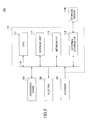
- FIG. 3 is a block diagram illustrating an example of a hardware structure of the operation panel 120 in the embodiment of the present invention.
- the operation panel 120 includes a control board 10, and a dedicated CPU 1, that is independent of the CPU 111 provided in the controller 110, is provided on the control board 10.
- the control board 10 and the controller 110 may be connected via a synchronous serial communication unit (or communication means) 11, such as a USB.
- the communication unit 11 may enable communication of a display request from the image processing apparatus 100 and various information such as key inputs received from the operation panel 120.
- the operation panel 120 may display various information of the image processing apparatus 100, and the image processing apparatus 100 may perform operations based on the information input from the operation panel 120.
- the CPU 1 is connected to a ROM 2, a RAM 3, a LCD (Liquid Crystal Display) controller 4, a touch-screen panel 7, and a driver 9.
- the ROM stores various programs related to display processes and input processes, and data related to the various programs.
- the RAM 3 functions as a work area for the CPU 1.
- the LCD controller 4 is connected to and controls a LCD module 6, and the touch-screen panel 7 is provided on a display screen of the LCD module 6.
- the driver 9 is connected to a keyboard 8.
- the CPU 1 reads the programs stored in the ROM 2, temporarily writes the read programs into the RAM 3, and executes the read programs in order to perform a hardware control described hereunder, for example.
- the CPU 1 reads data from and writes data to a SDRAM (Synchronous Dynamic RAM) 5 via the LCD controller 4.
- the SDRAM 5 may function as a VRAM (Video RAM) to retain display pixel data to be supplied to the LCD module 6, for example.
- the CPU 1 performs a back light control with respect to the LCD module 6 via the LCD controller 4.
- the CPU 1 detects operation (or pressing) of keys or switches (SW) of the keyboard 8, and performs an ON/OFF control with respect to LEDs (Light Emitting Diodes) to turn the LEDs ON or OFF.
- LEDs Light Emitting Diodes
- the LCD controller 4 controls a refresh process of the SDRAM 5, and a display data transfer (or display signal output) from the SDRAM 5 to the LCD module 6.
- the LCD controller 4 controls the output of the display signal based on a setting to an internal register.
- the LCD controller 4 includes a touch-screen panel interface function to send an interrupt signal from the LCD controller 4 with respect to the CPU 1 when the touch-screen panel 7 is pressed.
- the operation panel 120 having the hardware structure described above may provide information processing services including information display and information input (that is, input and output of information).
- the control board 10 includes an external storage I/F (not illustrated) that is similar to the external storage I/F 114 of the controller 110. Hence, the operation panel 120 may make an access to a storage medium via the external storage I/F.
- the image processing apparatus 100 of this embodiment retains data related to screen transitions, including management information that may include a list of applications capable of making a screen transition (that is, a transitionable application list), and data related to selection buttons (or GUI (Graphical User Interface) parts) for selecting the applications of the image processing apparatus 100.
- the image processing apparatus 100 displays the selection button of at least one other application on the operation screen of the selected application, based on the transitionable application list, and makes a screen transition to the operation screen of the other application when the selection button on the operation screen is pressed.
- the image processing apparatus 100 displays on the operation screen of the selected application the selection button of at least one other application to which the screen transition may be made from the selected application, based on the transitionable application list that excludes the selected application.
- the image processing apparatus 100 has the application screen display function to display the operation screen of one application and the selection button of at least one other application, in the manner described above.
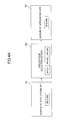
- FIGS. 4A and 4B are diagrams for explaining examples of transitions of the application screens.
- FIG. 4A illustrates an example of a conventional screen transition between the applications.
- the operation screen of the application makes the following transition.
- an operation screen W1 of the application (hereinafter referred to as the "application AP1 screen") makes a transition to return to an application selection screen WS, and after selecting the application AP2, the application selection screen WS makes a transition to an operation screen W2 of the application AP2 (hereinafter referred to as the "application AP2 screen").
- the screen transition is conventionally made via the application selection screen WS.
- the number of operations conventionally performed to make the screen transition from the application AP1 screen W1 to the application AP2 screen W2 is one greater than a case where the screen transition is made directly from the application AP1 screen W1 to the application AP2 screen W2. Consequently, the user must perform a large number of operations that are troublesome, if the user wishes to use a plurality of functions for a process.
- the operation screen of the application displays the selection button of at least one other application to which the screen transition may be made.
- the selection button is pressed, the screen transition is made to the operation screen of the application selected by the selection button.
- FIG. 4B illustrates an example a screen transition between the applications in this embodiment. For example, if the user wishes to use the function of the application AP2 after using the function of the application AP1, the operation screen of the application makes a transition from the application AP1 screen W1 directly to the application AP2 screen W2.
- the transition may be made from the operation screen of one application directly to the operation screen of another application.
- the number of operations required to make the screen transition from one application to another application may be reduced, and the user does not need to perform a troublesome operation to make the screen transition.
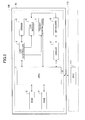
- FIG. 5 is a block diagram illustrating an example of a functional structure of the image processing apparatus 100 in the embodiment of the present invention.
- the image processing apparatus 100 includes an equipment information managing part 21, an application screen managing part 22, and a display control part 23. More particularly, the image processing apparatus 100 includes the equipment information managing part 21, and the operation panel 120 of the image processing apparatus 100 includes the application screen managing part 22 and the display control part 23.
- the equipment information managing part 21 forms a function part to manage equipment information related to the image processing apparatus 100.
- the equipment information includes operation state information of hardware or software of the image processing apparatus 100, install information of an application AP, and the like.
- the equipment information managing part 21 retains the equipment information acquired (or notified) from the image processing apparatus 100 (and installed functions) in a predetermined storage region of the storage unit provided within the image processing apparatus 100, such as the HDD.
- FIG. 5 illustrates an application information retaining part 211 as one example of the function part to retain the equipment information.
- the application information retaining part 211 retains data illustrated in FIG. 6 , for example.
- FIG. 6 is a diagram illustrating an example of the data of the application information in the embodiment of the present invention.
- Data of application information 211D illustrated in FIG. 6 include an application ID (or application identification information) to identify the application AP, an application name (or application name information) to indicate the name of the application AP, and install information, such as a date and time (or date and time information) when the application AP is installed (or updated).
- Each information item forming the application information 211D is provided in correspondence with each application AP.
- the equipment information managing part 21 acquires information from the application AP that is a processing target, when performing an install, update or uninstall, in order to update the application information 211D in units of applications by adding, modifying or deleting the data of each information item.
- the equipment information managing part 21 may provide the equipment information including the application information 211D.
- the equipment information managing part 21 may provide the equipment information by responding with requested information in response to an information acquisition request from other function parts such as the application screen managing part 22 that will be described later.
- the other function parts may confirm the application AP, that is, the installed function of the image processing apparatus 100.
- the application screen managing part 22 forms a function part to manage the operation screen of one or a plurality of applications AP (hereinafter referred to as an application screen W) of the image processing apparatus 100.
- the application screen managing part 22 acquires the application information 211D from the equipment information managing part 21, in order to confirm the one or plurality of applications AP installed in the image processing apparatus 100, and to manage the application screen W of each installed application AP.
- the application screen managing part 22 retains, as management information, data related to the selection buttons (or GUI parts) to be selected by the user on the operation screen when selecting the applications AP to be used, data related to the screen transition of the application screen W, and the like, in order to manage the display operation of the application screen W and the transition operation between the applications.
- the application screen managing part 22 retains the management information in a predetermined storage region of the storage unit provided within the image processing apparatus 100, such as the HDD.
- FIG. 5 illustrates a management information retaining part 221 within the application screen managing part 22, as one example of the function part to retain the management information.
- the management information retaining part 221 retains data illustrated in FIGS. 7A and 7B .
- FIGS. 7A and 7B are diagrams illustrating examples of data of the management information in the embodiment of the present invention.
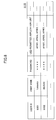
- management information 221D may be categorized into two kinds of data, one being the data related to the selection buttons (or GUI parts) (hereinafter referred to as GUI part management information) illustrated in FIG. 7A , and the other being the data related to the screen transitions (hereinafter referred to as screen transition management information) illustrated in FIG. 7B .
- the data of GUI part management information 221D 1 includes an application ID (or application identification information), and a display application name (or display application name information) indicating the application name displayed on the selection button.
- the data of the GUI part management information 221D 1 further includes an icon storage location (or icon storage location information) indicating a storage location of icon data corresponding to the selection button, and a display index (or relative layout position information) indicating a relative layout position of the selection button on the screen.
- Each information item forming the GUI part management information 221D 1 is provided in correspondence with each application AP.
- the application screen managing part 22 adds, modifies or deletes the data of each information item via a predetermined setting screen, in order to update the GUI part management information 221D 1 in units of applications. For example, the application screen managing part 22 adds or modifies the data of each information item, based on an input value, such as an item value of the application name or the display index, that is input from the setting screen for each information item.
- the information item "application ID" is updated by the item value of the application ID of the application information 211D acquired by the application screen managing part 22.
- the GUI part management information 221D 1 may be updated based on setting information that is obtained by reading a file, for example.
- the file may be created or prepared in advance by the user.
- the user retains the GUI part management information 221D 1 (information item name and its item value), icon data (GUI part data), and the like corresponding to the updated application in a predetermined data format, and creates the file to be read.
- the image processing apparatus 100 may read such a file that is created or prepared, from a storage medium via an external storage I/F (not illustrated) provided in the operation panel 120, for example.
- the application screen managing part 22 may update the GUI part management information 221D 1 and install the new icon data, based on the setting information that is acquired by reading the file.
- the image processing apparatus 100 may acquire the data related to the selection buttons from the file, the display structure (for example, the layout of the selection buttons), the display format (for example, the coloring of the selection buttons), and the like of the application screen W may easily be customized in order to display the application screen W that is convenient and easy to use and is easily recognizable by the user.
- the display structure for example, the layout of the selection buttons
- the display format for example, the coloring of the selection buttons
- the data of screen transition management information 221D 2 includes a transitionable application list (or transitionable control information) indicating the applications AP among which the screen transition may be made, a non-transitionable application list (or non-transitionable control information) indicating the applications AP among which the screen transition may not be made, and the like.
- the application screen managing part 22 adds, modifies or deletes the data of each information item via the predetermined setting screen, in order to update the screen transition management information 221D 2 .
- the application screen managing part 22 adds or modifies the data of each information item, based on the input value that is input from the predetermined setting screen for each information item, such as the item value of the application ID.
- the data of the information item to which the input value is to be allocated may be determined by the user when setting the use, purpose, function characteristic and the like of the application AP.
- the user may select the application AP to be allocated from the application list (that is, the list of applications installed in the image processing apparatus 100) that is displayed on the setting screen based on the application information 211D acquired by the application screen managing part 22 from the equipment information managing part 21.
- the updating of the screen transition management information 221D 2 may be performed based on user information that is obtained from the authentication management apparatus 200, for example.
- the authentication management apparatus 200 includes an authentication information managing part 31 to manage the authentication information for each user, and performs an authentication process related to the use of the image processing apparatus 100. For this reason, the authentication management apparatus 200 may retain the authentication information in a predetermined storage region of a storage unit, such as the HDD, provided in the authentication management apparatus 200.
- FIG. 5 illustrates an example of a function part to retain the authentication information, which is formed by a user information retaining part 311 that retains user information, such as registered information of authenticated users.
- the user information retaining part 311 retains data illustrated in FIG. 8 , for example.
- FIG. 8 is a diagram illustrating an example of the data of the user information 311D in the embodiment of the present invention.
- the data of the user information 311D includes a user ID (or user identification information) to identify the user, and a user name (or user name information) indicating the name of the user.
- the data of the user information 311D further includes a password (or authentication collating information) to be collated (or matched) at the time of the authentication, and a list (or use-permitted application list) of applications AP whose use is permitted after the authentication.
- Each information item forming the user information 311D is provided in correspondence with each user.
- the application screen managing part 22 updates the screen transition management information 221D 2 for each user, based on the information item (or use-permitted application list) of the user information 311D.
- the application screen managing part 22 obtains, as a use permit response (or authentication result) to the use authentication, the corresponding user information 311D from the authentication information managing part 31 of the authentication management apparatus 200.
- the application screen managing part 22 updates the screen transition management information 221D 2 based on the item value of the use-permitted application list.
- the application screen managing part 22 sets the item value of the use-permitted application list, that is, the application AP whose use is permitted with respect to the authenticated user, as the item value of the transitionable application list.
- the application screen managing part 22 sets the application AP whose use is not permitted with respect to the authenticated user and is judged from the applications AP of the image processing apparatus 100, as the item value of the non-transitionable application list, based on the item value of the use-permitted application list.
- the application screen managing part 22 may dynamically update the screen transition management information 221D 2 based on the user information 311D obtained from the authentication management apparatus 200, when the user makes a log-in to the image processing apparatus 100.
- FIG. 7B illustrates an example of the data of the screen transition management information 221D 2 corresponding to the user who is registered as having the user ID U002 and the user name SUZUKI in the user information 311D illustrated in FIG. 8 by the updating method described above.
- the image processing apparatus 100 may link and cooperate with the authentication management apparatus 200 and reflect the permission condition related to the use of the functions for each user to the data related to the screen transition, in order to secure security of the installed functions by preventing unauthorized use, for example.
- the image processing apparatus 100 may provide with respect to the user an environment in which the screen transition is only possible among the applications whose use by the user is permitted.
- the application screen managing part 22 When the application screen managing part 22 accepts from the application AP the selection notification on the function to be used by the user, the application screen managing part 22 transfers the management information 221D with respect to the selected application and instructs generation of the screen data, in order to manage the display operation of the application screen W. For this reason, the application screen managing part 22 includes a screen data generation instructing part 222.
- the screen data generation instructing part 222 forms a function part to transfer the management information 221D (that is, the GUI part management information 221D 1 and the screen transition management information 221D 2 ) to the selected application, and to instruct generation of the screen data.
- the screen data generation instructing part 222 specifies the application ID corresponding to the selected application, from the GUI part management information 221D 1 , and acquires the item value of each information item corresponding to the application ID. In addition, the screen data generation instructing part 222 acquires icon data of the selection button, according to the item value of the acquired item storage location. The screen data generation instructing part 222 transfers, to the selected application, the acquired icon data and the acquired item values of the application name and the display index corresponding to the selected application.
- the screen data generation instructing part 222 deletes the item value of the application ID corresponding to the selected application, from the screen transition management information 221D 2 , based on the selection notification. In other words, the image data generation instructing part 222 excludes the selected application from the applications AP that are registered in the screen transition management information 221D 2 .
- the screen data generation instructing part 222 transfers the screen transition management information 221D 2 (the item values of the transitionable application list and the non-transitionable application list), from which the selected application is excluded, to the selected application.
- the application screen managing part 22 may display the application screen W in which the selection button of the other application AP to which the screen transition may be made, with respect to the selected application, based on the transitionable application list from which the selected application is excluded.
- the image processing apparatus 100 may have a structure in which the application software is independent of (or the dependency relationship is weak) the operating environment (or platform), in order to realize extended or expanded functions, reduce the function developing time to speed up the product providing time, and reduce the developing cost or reduce the cost of product.
- the manufacturer of the image processing apparatus 100 provides, with respect to the software vendors (or software developers) a SDK (Software Developer Kit) for realizing the software structure described above.
- the processes dependent on the application AP such as the application screen data generating process and the application screen rendering process, which were conventionally performed in the image processing apparatus 100, may be performed by the application AP itself.
- the image processing apparatus 100 of this embodiment only instructs generation of the application screen data and graphics rendering of the application screen data, with respect to the selected application, in order to manage the display operation of the application screen W.
- the application AP of this embodiment thus includes a screen data generating part 41 and a graphics rendering instructing part 231.
- the screen data generating part 41 forms a function part to generate the application screen data, based on each item value of the management information 221D (the transitionable application list and the non-transitionable application list) and each item value of the application name and the display index transferred from the application screen managing part 22.
- the screen data generating part 41 specifies the application AP (screen transitionable application) to which the screen transition may be made from the selected application, based on the item value of the transitionable application list.
- the screen data generating part 41 generates the screen data in which the selection button of the screen transitionable application is arranged at a predetermined position (or layout position) on the application screen W, based on the icon data and each item value of the application name and the display index corresponding to the specified screen transitionable application.
- Data related to the detailed display format and display structure of the application screen W in the screen data may be generated based on display specifications of the application.
- the screen data generating part 41 specifies the application AP (screen non-transitionable application) to which the screen transition may not be made from the selected application, based on each item value of the non-transitionable application list.
- the screen data generating part 41 sets the display format of the selection button for the screen non-transitionable application to a display format different from that of the selection button of the screen transitionable application, and generates the screen data in which the selection button of the screen non-transitionable application is arranged at a predetermined position (or layout position) on the application screen W.
- the screen data generating part 41 may generate screen data that does not display the selection button of the screen non-transitionable application on the application screen W.
- the graphics rendering part 42 forms a function part to perform rendering of the screen data generated by the screen data generating part 41 on the display screen of the operation panel 120.
- the graphics rendering part 42 performs the rendering of the display screen based on the generated screen data, according to a graphics rendering instruction from the display control part 23 that will be described later.
- the graphics rendering part 42 may transfer the screen data with respect to a Flash Player of the operation panel 120, and perform the rendering of the screen data on the display screen by instructing reproduction of the screen data.
- the display control part 23 forms a function part to instruct the display of the application screen W with respect to the selected application.
- the display control part 23 includes a graphics rendering instructing part 231.
- the graphics rendering instructing part 231 forms the function part to instruct rendering of the screen data, with respect to the graphics rendering part 42 of the application AP.
- the graphics rendering instructing part 231 instructs the rendering of the screen data according to a display instruction form the application screen managing part 22.
- the application screen managing part 22 links to and cooperates with the application AP and the display control part 23, and manages the display of the application screen W in the following manner.
- the selection button of the screen transitionable application is displayed on the application screen W based on the transitionable application list, and the selection button is pressed, the screen transition is made to the application screen W of the selected application.
- the image processing apparatus 100 displays the selection button of the screen transitionable application on the application screen W of the selected application, based on the transitionable application list from which the selected application is excluded.
- the application screen display function of this embodiment may be realized by the operations of the function parts which link and cooperate in the manner described above.
- the application screen display function may be realized when the program (software part realizing the application screen display function) to be installed in the operation panel 120 is read by the CPU 1 from a storage location (for example, the ROM 2) and written into the RAM 3, and the following processes are executed.
- the processing procedure of the application screen display function may be roughly categorized into a management information registering and updating process (or initial process) and an application screen display process. Hence, these two processes will be described in this order.
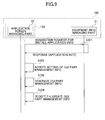
- FIG. 9 is a sequence diagram illustrating an example of a processing procedure to register and update the management information 311D of the display screen in the embodiment of the present invention.
- the application screen managing part 22 of the operation panel 120 provided in the image processing apparatus 100 makes an acquisition request for the install application information with respect to the equipment information managing part 21, in a step S101.
- the equipment information managing part 21 sends a response, including the application information 211D retained in the application information retaining part 211, to the application screen managing part 22 at the request source.
- the application screen managing part 22 accepts the setting of the GUI part management information 221D 1 via the predetermined setting screen, in a step S102.
- the application screen managing part 22 reads the setting file from the storage medium that is connected to the external storage I/F of the operation panel, based on the storage location information (or file path) of the setting file specified by the setting screen.
- the application screen managing part 22 accepts the setting value corresponding to each information item of the GUI part management information 221D 1 .
- the GUI part management information 221D 1 may be accepted as the setting value corresponding to each information item, by accepting the input value from the setting screen.
- the application screen managing part 22 generates the GUI part management information 221D 1 , based on the acquired application information 211D and the setting value, in a step S103.
- the application screen managing part 22 confirms the installed or uninstalled application, based on the application information 211D, and performs an add, update or delete operation with respect to the GUI part management information 221D 1 , for each application AP of the image processing apparatus 100.
- the application screen managing part 22 may generate the GUI part management information 221D 1 in units of applications, in which the application ID of the application AP specified of the setting is made to correspond to the setting value of each information value.
- the application screen managing part 22 registers the generated information in the management information retaining part 221, and updates the GUI part management information 221D 1 , in a step S104.
- the application screen managing part 22 stores the setting value of each information item corresponding to the application ID, as the item value, in the management information retaining part 221 (that is, the predetermined storage region) that retains the GUI part management information 221D 1 .
- the application screen managing part 22 stores the icon data of the selection button, and the like in the management information retaining part 221.
- the storage location (or storage destination) of the icon data may be a directory specified in the GUI part management information 221D 1 as the icon storage location.
- the image processing apparatus 100 may set and register in advance the display format and the display structure of the selection button of the screen transitionable application to be displayed on the application screen W, and the GUI part data (or icon data).
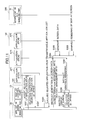
- FIG. 10 is a sequence diagram illustrating an example of a processing procedure to display the application screen W in this embodiment.
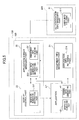
- FIGS. 13A and 13B are diagrams illustrating examples of the transition of the application screen W in the embodiment of the present invention.
- FIG. 10 illustrates an example of the processing procedure in which the user makes a log-in to the image processing apparatus 100 and the initial screen, such as an application screen having a relatively high frequency of use (that is, the rate of use is relatively high), is displayed.
- the initial screen such as an application screen having a relatively high frequency of use (that is, the rate of use is relatively high)
- the following conditions are assumed.
- the application AP1 (hereinafter also referred to as an owner application AP1) is allocated for the application AP having the relatively high frequency of use, and the screen transition may be made from the owner application AP1 to each of the applications AP3 and AP5.
- the image processing apparatus 100 is notified of the user authentication result (or use permission authentication) from the authentication information managing part 31 of the authentication management apparatus 200, together with the use-permitted application information of the user, in a step S201.
- the authentication information managing part 31 transfers the use-permitted application list of the user with respect to the application screen managing part 22 of the operation panel 120, based on the user information 311D of the authenticated user retained in the user information retaining part 311.
- the application screen managing part 22 Based on the acquired use-permitted application list, the application screen managing part 22 generates the screen transition management information 221D 2 , in a step S202.
- the application screen managing part 22 sets the application ID within the use-permitted application list as the item value of the transitionable application list of the screen transition management information 221D 2 .
- the application screen managing part 22 sets the application ID of the previously acquired application information 211D, not included in the use-permitted application list, as the item value of the non-transitionable application list.
- the screen transition management information 221D 2 that is generated in this manner is retained in the management information retaining part 221.
- the application screen managing part 22 makes an acquisition request for the identification information (or application ID) of the owner application AP1 (that is, the application of the initial screen), with respect to the display control part 23 of the operation panel 120, in a step 203.
- the display control part 23 makes a response, including the preset application ID AP001 of the owner application AP1, to the application screen managing part 22 at the request source.
- the application screen managing part 22 excludes the owner application AP1 from the transitionable application list of the generated screen transition management information 221D 2 , in a step S204.
- An upper portion of FIG. 13A illustrates an example of the data operation in this state.
- the application screen managing part 22 copies the screen transition management information 221D 2 retained in the management information retaining part 221 in the memory (for example, the RAM 3).
- the application screen managing part 22 deletes the application ID AP001 corresponding to the owner application AP1 from the transitionable application list of the application IDs AP001, AP003, and AP005 in the copied screen transition management information 221D 2 , and updates the transitionable application list to include the application IDs AP003 and AP005 and not the application ID AP001.
- the application screen managing part 22 instructs, by the screen data generation instructing part 222, the generation of the application screen data with respect to the owner application AP1 installed in the image processing apparatus 100, in a step S205.
- the screen data generation instructing part 222 transfers to the screen data generating part 41 of the owner application AP1 the item value of the updated screen transition management information 221D 2 (such as the transitionable application list and the non-transitionable application list) and the item value of the GUI part management information 221D1 retained in the management information retaining part 221 (such as the application name and the display index of the non-transitionable application).
- the application screen managing part 22 instructs the generation of the application screen data with respect to the owner application AP1.
- the owner application AP1 generates the application screen data by the screen data generating part 41 based on each item value of the received management information 221D, in a step S206.
- the screen data generating part 41 first specifies the screen transitionable application (the applications AP3 and AP5 in this example), based on the item values of the transitionable application list of the application IDs AP003 and AP005 in the screen transition management information 221D 2 .
- the screen data generating part 41 generates the screen data in which the selection buttons of the applications AP3 and AP5 are arranged at predetermined positions on the application screen of the application AP1, from each item value of the application names APLN1 and APLN3 and the display indexes 1, 3 and 1, 5 corresponding to the specified screen transitionable application and the icon data (ap003.ico, ap005.ico). Further, the screen data generating part 41 specifies the screen non-transitionable applications AP4, AP5, and AP6 based on each item value of the non-transitionable application list of the application IDs AP002, AP004, and AP006, and generates the screen data that does not display the selection buttons of the applications AP2, AP4, and AP6.
- the application screen managing part 22 instructs the display of the application AP1 screen W1 (that is, the operation screen of the owner application) with respect to the display control part 23 of the operation panel 120, in a step S207.
- the application screen managing part 22 transfers and instructs the display of the application ID AP001 of the owner application AP1 with respect to the display control part 23.
- the display control part 23 instructs the graphics rendering of the screen data from the graphics rendering instructing part 231 with respect to the graphics rendering part 42 of the owner application AP1, according to the display instruction (or based on the transferred application ID), in a step S208.
- the owner application AP1 performs the graphics rendering of the generated screen data on the display screen of the operation panel 120 by the graphics rendering part 42, according to the graphics rendering instruction from the display control part 23, in a step S209.
- An upper portion of FIG. 13B illustrates an example of the display screen that is obtained by the graphics rendering in this state.
- the application AP1 screen W1 includes the selection buttons of the applications AP3 and AP5, having the application names APLN3 and APLN5, to which the screen transition may be made from the application AP1.
- the selection buttons are displayed at predetermined positions on the application AP1 screen W1 in a superimposed or overlapping manner.
- the image processing apparatus 100 may provide, with respect to the authenticated user, an environment in which the use-permitted applications AP3 and AP5 for the authenticated user are selectable without having to use the application selection screen SW.
- the screen transition may be made to the application AP3 screen W3 by pressing the selection button of the application AP3 indicated by the hatching in the upper portion of FIG. 13B .
- FIG. 11 is a sequence diagram illustrating an example of the processing procedure to display the application screen for a case where the authenticated user uses the function of the application AP3 after using the function of the owner application AP1, and the operation screen makes a transition from the application AP1 screen W1 to the application AP3 screen W3.
- the conditions that are assumed are the same as those assumed for the processing procedure illustrated in FIG. 10 .
- the image processing apparatus 100 accepts the selection instruction (for example, the pressing of the selection button of the application AP3) of the using function (for example, the application AP3) from the user, via the application AP1 screen W1, in a step S301.
- the owner application AP1 notifies the selection of the application AP3 with respect to the application screen managing part 22 of the operation panel 120, in a step S302.
- the owner application AP1 transfers the identification information, namely, the application ID AP003, of the selected application AP3 with respect to the application screen managing part 22.
- the application screen managing part 22 excludes the selected application AP3 from the transitionable application list of the generated screen transition management information 221D 2 , in a step S303.
- a middle portion of FIG. 13A illustrates an example of the data operation in this state.
- the application screen managing part 22 deletes the application ID AP003 corresponding to the selected application AP3, from the transitionable application list including the application IDs AP001, AP003, and AP005 of the screen transition management information 221D 2 that is copied in the memory, and updates the transitionable application list to include the application IDs AP001 and AP005.
- the application screen managing part 22 instructs, by the screen data generation instructing part 222, the generation of the application screen data with respect to the selected application AP3 of the image processing apparatus 100, in a step S304.
- the screen data generation instructing part 222 transfers the item value of the updated screen transition management information 221D 2 (the transitionable application list and the non-transitionable application list) and the item value of the GUI part management information 221D 1 retained in the management information retaining part 221 (the application name and the display index of the non-transitionable application), to the screen data generating part 41 of the selected application AP3.
- the application screen managing part 22 instructs the generation of the application screen data with respect to the selected application AP3.
- the selected application AP3 generates, by the screen data generating part 41, the application screen data based on each item value of the received management information 221D, in a step S305.
- the screen data generating part 41 first specifies the screen transitionable applications (the applications AP1 and AP5 in this example), based on the item values of the transitionable application list including the application IDs AP001 and AP005 in the screen transition management information 221D 2 .
- the screen data generating part 41 generates the screen data in which the selection buttons of the applications AP1 and AP5 are arranged at predetermined positions on the application screen of the application AP3, from each item value of the application names APLN1 and APLN3 and the display indexes 1, 1 and 1, 5 corresponding to the specified screen transitionable application and the icon data (ap001.ico, ap005.ico).
- the application screen managing part 22 instructs the display of the application AP3 screen W3 (that is, the operation screen of the selected application) with respect to the display control part 23 of the operation panel 120, in a step S306. In this state, the application screen managing part 22 transfers and instructs the display of the application ID AP003 of the selected application AP3 with respect to the display control part 23.
- the display control part 23 instructs the graphics rendering of the screen data from the graphics rendering instructing part 231 with respect to the graphics rendering part 42 of the selected application AP3, according to the display instruction (or based on the transferred application ID), in a step S307.
- the selected application AP3 performs the graphics rendering of the generated screen data on the display screen of the operation panel 120 by the graphics rendering part 42, according to the graphics rendering instruction from the display control part 23, in a step S308.
- a middle portion of FIG. 13B illustrates an example of the display screen that is obtained by the graphics rendering in this state.
- the application AP3 screen W3 includes the selection buttons of the applications AP1 and AP5, having the application names APLN1 and APLN5, to which the screen transition may be made from the application AP3.
- the selection buttons are displayed at predetermined positions on the application AP3 screen W3 in a superimposed or overlapping manner.
- the image processing apparatus 100 may provide, with respect to the authenticated user, an environment in which the use-permitted applications AP1 and AP5 for the authenticated user are selectable without having to use the application selection screen SW.
- the screen transition may be made to the application AP5 screen W5 by pressing the selection button of the application AP5 indicated by the hatching in the middle portion of FIG. 13B .
- FIG. 12 is a sequence diagram illustrating an example of the processing procedure to display the application screen for a case where the authenticated user uses the function of the application AP5 after using the function of the application AP3, and the operation screen makes a transition from the application AP3 screen W3 to the application AP5 screen W5.
- the conditions that are assumed are the same as those assumed for the processing procedure illustrated in FIG. 10 .
- Steps S401 through S408 illustrated in FIG. 12 are the same as the steps S301 through S308 illustrated in FIG. 11 , and a detailed description thereof will be omitted. A brief description will only be given with respect to the steps S403 and S408.
- FIG. 13A illustrates an example of the data operation in the step S403.
- the application screen managing part 22 deletes the application ID AP005 corresponding to the selected application AP5, from the transitionable application list including the application IDs AP001, AP003, and AP005 of the screen transition management information 221D 2 that is copied in the memory, and updates the transitionable application list to include the application IDs AP001 and AP003.
- FIG. 13B illustrates an example of the display screen that is obtained by the graphics rendering in the step S408.
- the application AP5 screen W5 includes the selection buttons of the applications AP1 and AP3, having the application names APLN1 and APLN3, to which the screen transition may be made from the application AP5.
- the selection buttons are displayed at predetermined positions on the application AP5 screen W5 in a superimposed or overlapping manner.
- the image processing apparatus 100 may provide, with respect to the authenticated user, an environment in which the use-permitted applications AP1 and AP3 for the authenticated user are selectable without having to use the application selection screen SW.
- the screen transition may be made to the application AP1 screen W1 by pressing the selection button of the application AP1 indicated by the hatching in the lower portion of FIG. 13B .
- the application screen managing part 22 of the operation panel 120 retains, as the management information 221D, the screen transition management information 221D 2 including the list of screen transitionable applications (or transitionable application list) and the GUI part management information 221D 1 for selecting the application AP of the image processing apparatus 100.
- the application screen managing part 22 displays the selection buttons of the screen transitionable applications on the application screen W, based on the transitionable application list. If the selection button is pressed, the screen transition is made to the application screen W of the selected application corresponding to the pressed selection button. In this state, the application screen managing part 22 of the image processing apparatus 100 displays the selection buttons of the screen transitionable applications on the application screen W of the selected application, based on the transitionable application list from which the selected application is excluded.
- the image processing apparatus 100 may make a transition from one application screen W directly to an application screen W of a different application AP.
- the number of operations that need to be performed when making the screen transition between the applications may be reduced, to thereby reduce the load on the user to perform the troublesome operation on the operation screen to make the screen transition.
- the application screen display function of the image processing apparatus 100 may be realized by a program that is written in a programming language suited for the operating environment (or platform) to perform each processing procedure described above in conjunction with the drawings, and causes the CPU 111 of the image processing apparatus 100 and the CPU 1 of the operation panel 120 to execute each processing procedure.
- the program may be stored in a suitable non-transitory or tangible computer-readable storage medium, such as the storage medium 114a illustrated in FIG. 2 , for example.
- the storage medium 114 may be formed by a SD (Secure Digital) memory card, a USB (Universal Serial Bus) memory, and the like.
- the program stored in the computer-readable storage medium may be installed in the image processing apparatus 100 and/or the operation panel 120 via an external storage interface that is configured to read the storage medium, such as the external storage I/F 114 illustrated in FIG. 2 , for example.
- the program may be downloaded and installed into the image processing apparatus 100 using an electrical communication line such as the Internet.
- the authentication management apparatus 200 includes the user information 311D of registered authenticated users.
- the application screen managing part 22 may carry out the process of determining the owner application in the step S203 illustrated in FIG. 10 in the following manner. That is, instead of acquiring the application ID of the owner application from the display control part 23, the application screen managing part 22 may acquire the application ID of the owner application from the priority application of the user information 311D that is acquired from the authentication management apparatus 200. In this case, the image processing apparatus 100 may display, as an initial screen after the log-in, the application screen W of the application AP depending on the frequency of use by the authenticated user.
- the use permission authentication function is performed by the information processing apparatus (that is, the authentication management apparatus 200) which is different from the image processing apparatus 100
- the apparatus that performs the use permission authentication function is not limited to such an apparatus.
- the image processing apparatus 100 itself may form the authentication information managing part and perform the use permission authentication function.
Landscapes
- Engineering & Computer Science (AREA)
- Theoretical Computer Science (AREA)
- Computer Security & Cryptography (AREA)
- Software Systems (AREA)
- Computer Hardware Design (AREA)
- Physics & Mathematics (AREA)
- General Engineering & Computer Science (AREA)
- General Physics & Mathematics (AREA)
- General Health & Medical Sciences (AREA)
- Health & Medical Sciences (AREA)
- Bioethics (AREA)
- Facsimiles In General (AREA)
- User Interface Of Digital Computer (AREA)
- Stored Programmes (AREA)
Abstract
Description
- The present invention generally relates to image processing apparatuses, authentication systems, and computer-readable storage media, and more particularly to an image processing apparatus having a display unit suited to display operation screens of a plurality of application software to be implemented in the image processing apparatus to realize installed features, an authentication system that includes such an image processing apparatus, and a computer-readable storage medium that stores a program for causing a computer to execute a process of the image processing apparatus or the authentication system. The present invention also relates to display units and display control methods that may be employed in such an image processing apparatus or authentication system.
- Recent image processing apparatuses may be used in various environments, and are thus installed with a plurality of application software (hereinafter simply referred to as applications) to realize certain installed features (or functions), such as copy, scanner, facsimile, and printer features. In addition, the image processing apparatus includes a display unit or an operation panel that displays an operation screen (or application screen) for each application in order to conveniently provide the features.
- The image processing apparatus described above may include a feature to manage the applications, and may further include a feature to manage the application screens or to control transitions of the application screens. For example, a Japanese Laid-Open Patent Publication No.
2007-49677 - However, the proposed system described above requires a relatively large number of operations to be performed when realizing the transition of the application screen. For example, if the user wishes to use the facsimile feature after using the copy feature, the proposed system requires a transition from a copy screen back to an application selection screen, and then a transition from the application selection screen to a facsimile screen. In other words, the screen transition cannot be made from the copy screen directly to the facsimile screen. For this reason, although the user is only making one selection of the feature, namely, the facsimile feature, the user must perform two operations, namely, a first operation to cause the transition from the copy screen back to the application selection screen and a second operation to cause the transition from the application selection screen to the facsimile screen.
- As a result, as the number of features the user wishes to use increases, the number of operations the user must perform increases considerably and the user is required to perform troublesome operations in order to change an application that is being used to another application. Consequently, the proposed system described above may not provide a user-friendly user interface that is simple and easy to use.
- Accordingly, it is a general object in one embodiment of the present invention to provide a novel and useful image processing apparatus, authentication system, and computer-readable storage medium, in which the problem described above may be suppressed.
- According to one embodiment of the present invention, there are provided an image processing apparatus, an authentication system, and a computer-readable storage medium, that enable a direct transition from an operation screen of an application to an operation screen of another application.
- According to one aspect of the present invention, there is provided an image processing apparatus installable with a plurality of applications to realize installed functions, comprising a display unit configured to perform an information input and output function, including displaying an operation screen of an application; and a processing unit configured to control the image processing apparatus, characterized in that the processing unit comprises a retaining part configured to retain management information, including data related to a screen transition and including a transitionable application list of applications amongst which the screen transition may be made, and data related to GUI (Graphical User Interface) parts to select an application on the operation screen; and a managing part configured to manage the operation screen of the applications, by displaying the GUI parts for selecting other applications to which the screen transition may be made on the operation screen of the application displayed on the display unit based on the transitionable application list, and making the screen transition to the operation screen of a selected application when a corresponding GUI part is selected on the operation screen, and wherein the managing part controls the selected application based on the transitionable application list excluding the selected application, in order to display the GUI parts for selecting the other applications on the operation screen of the selected application.
- According to one aspect of the present invention, there is provided an authentication system comprising an image processing apparatus installable with a plurality of applications to realize installed functions; and an authentication management apparatus, coupled to the image processing apparatus via a predetermined data channel, and configured to manage equipment use restrictions of users based on user authentication received from the image processing apparatus, characterized in that the authentication management apparatus comprises a control unit configured to send a response, including a use-permitted application list that includes applications permitted for use by an authenticated user, in response to a user authentication request from the image processing apparatus, and the image processing apparatus comprises a display unit configured to perform an information input and output function, including displaying an operation screen of an application; and a processing unit configured to control the image processing apparatus, and comprising a retaining part configured to retain management information, including data related to a screen transition and including a transitionable application list of applications amongst which the screen transition may be made, and data related to GUI (Graphical User Interface) parts to select an application on the operation screen, and a managing part configured to manage the operation screen of the applications, by displaying the GUI parts for selecting other applications to which the screen transition may be made on the operation screen of the application displayed on the display unit based on the transitionable application list, and making the screen transition to the operation screen of a selected application when a corresponding GUI part is selected on the operation screen, and wherein the managing part generates the transitionable application list based on application identification information of the use-permitted application list included in the response from the authentication management apparatus, and controls the selected application based on the transitionable application list excluding the selected application, in order to display the GUI parts for selecting the other applications on the operation screen of the selected application.
- According to one aspect of the present invention, there is provided a computer-readable storage medium which stores a program which, when executed by a computer, causes the computer to perform a process of an image processing apparatus that is installable with a plurality of applications to realize installed functions and includes a display unit to perform an information input and output function including displaying an operation screen of an application, characterized in that the process comprises a retaining procedure causing the computer to retain management information, including data related to a screen transition and including a transitionable application list of applications amongst which the screen transition may be made, and data related to GUI (Graphical User Interface) parts to select an application on the operation screen; and a managing procedure causing the computer to manage the operation screen of the applications, by displaying the GUI parts for selecting other applications to which the screen transition may be made on the operation screen of the application displayed on the display unit based on the transitionable application list, and making the screen transition to the operation screen of a selected application when a corresponding GUI part is selected on the operation screen, and wherein the managing procedure causes the computer to control the selected application based on the transitionable application list excluding the selected application, in order to display the GUI parts for selecting the other applications on the operation screen of the selected application.
- Other objects and further features of the present invention will be apparent from the following detailed description when read in conjunction with the accompanying drawings.
-
-
FIG. 1 is a diagram illustrating an example of a structure of an authentication system in an embodiment of the present invention; -
FIG. 2 is a block diagram illustrating an example of a hardware structure of an image processing apparatus in the embodiment of the present invention; -
FIG. 3 is a block diagram illustrating an example of a hardware structure of an operation panel in the embodiment of the present invention; -
FIGS. 4A and4B are diagrams for explaining examples of transitions of application screens; -
FIG. 5 is a block diagram illustrating an example of a functional structure of the image processing apparatus in the embodiment of the present invention; -
FIG. 6 is a diagram illustrating an example of data of application information in the embodiment of the present invention; -
FIGS. 7A and7B are diagrams illustrating examples of data of management information in the embodiment of the present invention; -
FIG. 8 is a diagram illustrating an example of data of user information in the embodiment of the present invention; -
FIG. 9 is a sequence diagram illustrating an example of a processing procedure to register and update the management information of a display screen in the embodiment of the present invention; -
FIG. 10 is a sequence diagram illustrating an example of a processing procedure to display the application screen; -
FIG. 11 is a sequence diagram illustrating an example of the processing procedure to display the application screen; -
FIG. 12 is a sequence diagram illustrating an example of the processing procedure to display the application screen; and -
FIGS. 13A and13B are diagrams illustrating examples of the transition of the application screen in the embodiment of the present invention. - A description will be given of embodiments of the image processing apparatus, an authentication system, and a computer-readable storage medium, by referring to the drawings.
-
FIG. 1 is a diagram illustrating an example of a structure of an authentication system in an embodiment of the present invention. Anauthentication system 1000 includes at least oneimage processing apparatus 100 and an authentication management apparatus (or authentication server) 200 that are connected via a predetermined data channel N, such as a network including a LAN (Local Area Network). - The
image processing apparatus 100 may be formed by an equipment having an image processing function used for office work, for example, such as a MFP (Multi-Function Peripheral) and a LP (Laser Printer). Theauthentication management apparatus 200 may be formed by an information processing apparatus that centrally manages equipment use restrictions of users, based on user authentication received from theimage processing apparatus 100, for example. The user authentication information may include a user ID (IDentifier) and a password. Theauthentication management apparatus 200 may carry out an authentication process described hereunder. - The
authentication management apparatus 200 judges whether the use of the equipment is to be permitted with respect to a user who wishes to use theimage processing apparatus 100, based on the user authentication information that is received, and notifies a judgement result (or authentication result) indicating whether the use is permitted or prohibited with respect to the user via theimage processing apparatus 100. For example, the user authentication information may be input to theimage processing apparatus 100 by a manual input from an operation panel (not illustrated) of theimage processing apparatus 100 or, by reading an authentication card (not illustrated) that includes an IC (Integrated Circuit) tag by a card reader (not illustrated) that may be coupled to theimage processing apparatus 100 or provided in theimage processing apparatus 100, for example. - In order to perform the authentication process described above, the
authentication management apparatus 200 retains user information, that is registered information of authenticated users who are permitted to use theimage processing apparatus 100. The user information includes, in addition to the user authentication information described above, information (that is, use-permitted application list) that restricts the use for each of the installed functions (or installed applications) of theimage processing apparatus 100. - The
authentication system 1000 having the system structure described above may provide an authentication management service (or authentication management function) to prevent unauthorized use of theimage processing apparatus 100. - Next, a description will be given of a hardware structure of the
image processing apparatus 100. -
FIG. 2 is a block diagram illustrating an example of the hardware structure of theimage processing apparatus 100 in the embodiment of the present invention. As illustrated inFIG. 2 , theimage processing apparatus 100 includes acontroller 110, anoperation panel 120, aplotter 130, and ascanner 140 that are connected via a bus B. - The
operation panel 120 includes a display part to provide various information, such as equipment information, to the user, and an input part to accept various user operations, such as operation settings and operation instructions. Theplotter 130 includes an image forming part to form an output image on a recording medium, such as paper. The output image may be formed by an electrophotography process or, an inkjet recording process, for example. Thescanner 140 optically reads a document and generates image data of the read document. - The
controller 110 includes a CPU (Central Processing Unit) 111, astorage unit 112, a network interface (I/F) 113, and an external storage interface (I/F) 114 that are connected via the bus B. - The
CPU 111 executes programs to control the entireimage processing apparatus 100. Thestorage unit 112 stores the programs and various data, including the image data, for example. Thestorage unit 112 may be formed by a volatile memory such as a RAM (Random Access Memory), a non-volatile memory such as a ROM (Read Only Memory), a HDD (Hard Disk Drive) having a relatively large storage capacity, and the like, for example. The RAM may function as a work area for theCPU 111, that is, a storage area to which the programs and the data are temporarily written. The ROM and the HDD may function as a storage location for the programs and the various data. Hence, in theimage processing apparatus 100, theCPU 111 reads the program stored in the ROM, temporarily writes the read program into the RAM, and executes the program written in the RAM. - The network I/
F 113 connects theimage processing apparatus 100 to the predetermined data channel, such as the network. The external storage I/F 114 connects theimage processing apparatus 100 to an external storage unit, such as astorage medium 114a. For example, thestorage medium 114a may be formed by a SD (Secure Digital) memory card, a USB (Universal Serial Bus) memory, and the like. Hence, theimage processing apparatus 100 may read programs and data stored in thestorage medium 114a via the external storage I/F 114. - The
image processing apparatus 100 having the hardware structure described above may provide image processing services (or image processing functions). -
FIG. 3 is a block diagram illustrating an example of a hardware structure of theoperation panel 120 in the embodiment of the present invention. As illustrated inFIG. 3 , theoperation panel 120 includes acontrol board 10, and adedicated CPU 1, that is independent of theCPU 111 provided in thecontroller 110, is provided on thecontrol board 10. Thecontrol board 10 and thecontroller 110 may be connected via a synchronous serial communication unit (or communication means) 11, such as a USB. For example, thecommunication unit 11 may enable communication of a display request from theimage processing apparatus 100 and various information such as key inputs received from theoperation panel 120. Hence, theoperation panel 120 may display various information of theimage processing apparatus 100, and theimage processing apparatus 100 may perform operations based on the information input from theoperation panel 120. - The
CPU 1 is connected to aROM 2, aRAM 3, a LCD (Liquid Crystal Display)controller 4, a touch-screen panel 7, and adriver 9. The ROM stores various programs related to display processes and input processes, and data related to the various programs. TheRAM 3 functions as a work area for theCPU 1. TheLCD controller 4 is connected to and controls aLCD module 6, and the touch-screen panel 7 is provided on a display screen of theLCD module 6. Thedriver 9 is connected to akeyboard 8. TheCPU 1 reads the programs stored in theROM 2, temporarily writes the read programs into theRAM 3, and executes the read programs in order to perform a hardware control described hereunder, for example. - The
CPU 1 reads data from and writes data to a SDRAM (Synchronous Dynamic RAM) 5 via theLCD controller 4. TheSDRAM 5 may function as a VRAM (Video RAM) to retain display pixel data to be supplied to theLCD module 6, for example. In addition, theCPU 1 performs a back light control with respect to theLCD module 6 via theLCD controller 4. Further, theCPU 1 detects operation (or pressing) of keys or switches (SW) of thekeyboard 8, and performs an ON/OFF control with respect to LEDs (Light Emitting Diodes) to turn the LEDs ON or OFF. - The
LCD controller 4 controls a refresh process of theSDRAM 5, and a display data transfer (or display signal output) from theSDRAM 5 to theLCD module 6. TheLCD controller 4 controls the output of the display signal based on a setting to an internal register. In addition, theLCD controller 4 includes a touch-screen panel interface function to send an interrupt signal from theLCD controller 4 with respect to theCPU 1 when the touch-screen panel 7 is pressed. - The
operation panel 120 having the hardware structure described above may provide information processing services including information display and information input (that is, input and output of information). - The
control board 10 includes an external storage I/F (not illustrated) that is similar to the external storage I/F 114 of thecontroller 110. Hence, theoperation panel 120 may make an access to a storage medium via the external storage I/F. - Next, a description will be given of an application screen display function in the embodiment of the present invention.
- The
image processing apparatus 100 of this embodiment retains data related to screen transitions, including management information that may include a list of applications capable of making a screen transition (that is, a transitionable application list), and data related to selection buttons (or GUI (Graphical User Interface) parts) for selecting the applications of theimage processing apparatus 100. Theimage processing apparatus 100 displays the selection button of at least one other application on the operation screen of the selected application, based on the transitionable application list, and makes a screen transition to the operation screen of the other application when the selection button on the operation screen is pressed. In this case, theimage processing apparatus 100 displays on the operation screen of the selected application the selection button of at least one other application to which the screen transition may be made from the selected application, based on the transitionable application list that excludes the selected application. Theimage processing apparatus 100 has the application screen display function to display the operation screen of one application and the selection button of at least one other application, in the manner described above. -
FIGS. 4A and4B are diagrams for explaining examples of transitions of the application screens. -
FIG. 4A illustrates an example of a conventional screen transition between the applications. For example, if the user wishes to use the function of an application AP2 after using the function of an application AP1, the operation screen of the application makes the following transition. First, an operation screen W1 of the application (hereinafter referred to as the "application AP1 screen") makes a transition to return to an application selection screen WS, and after selecting the application AP2, the application selection screen WS makes a transition to an operation screen W2 of the application AP2 (hereinafter referred to as the "application AP2 screen"). In other words, the screen transition is conventionally made via the application selection screen WS. - For this reason, the number of operations conventionally performed to make the screen transition from the application AP1 screen W1 to the application AP2 screen W2 is one greater than a case where the screen transition is made directly from the application AP1 screen W1 to the application AP2 screen W2. Consequently, the user must perform a large number of operations that are troublesome, if the user wishes to use a plurality of functions for a process.
- On the other hand, in the
image processing apparatus 100 of this embodiment, the operation screen of the application displays the selection button of at least one other application to which the screen transition may be made. When the selection button is pressed, the screen transition is made to the operation screen of the application selected by the selection button. -
FIG. 4B illustrates an example a screen transition between the applications in this embodiment. For example, if the user wishes to use the function of the application AP2 after using the function of the application AP1, the operation screen of the application makes a transition from the application AP1 screen W1 directly to the application AP2 screen W2. - Accordingly, in the
image processing apparatus 100 of this embodiment, the transition may be made from the operation screen of one application directly to the operation screen of another application. As a result, the number of operations required to make the screen transition from one application to another application may be reduced, and the user does not need to perform a troublesome operation to make the screen transition. - Next, a description will be given of the structure of the application screen display function, by referring to
FIG. 5. FIG. 5 is a block diagram illustrating an example of a functional structure of theimage processing apparatus 100 in the embodiment of the present invention. - As illustrated in
FIG. 5 , theimage processing apparatus 100 includes an equipmentinformation managing part 21, an applicationscreen managing part 22, and adisplay control part 23. More particularly, theimage processing apparatus 100 includes the equipmentinformation managing part 21, and theoperation panel 120 of theimage processing apparatus 100 includes the applicationscreen managing part 22 and thedisplay control part 23. - The equipment
information managing part 21 forms a function part to manage equipment information related to theimage processing apparatus 100. For example, the equipment information includes operation state information of hardware or software of theimage processing apparatus 100, install information of an application AP, and the like. - The equipment
information managing part 21 retains the equipment information acquired (or notified) from the image processing apparatus 100 (and installed functions) in a predetermined storage region of the storage unit provided within theimage processing apparatus 100, such as the HDD.FIG. 5 illustrates an applicationinformation retaining part 211 as one example of the function part to retain the equipment information. The applicationinformation retaining part 211 retains data illustrated inFIG. 6 , for example. -
FIG. 6 is a diagram illustrating an example of the data of the application information in the embodiment of the present invention. Data ofapplication information 211D illustrated inFIG. 6 include an application ID (or application identification information) to identify the application AP, an application name (or application name information) to indicate the name of the application AP, and install information, such as a date and time (or date and time information) when the application AP is installed (or updated). Each information item forming theapplication information 211D is provided in correspondence with each application AP. - Returning now to the description of
FIG. 5 , the equipmentinformation managing part 21 acquires information from the application AP that is a processing target, when performing an install, update or uninstall, in order to update theapplication information 211D in units of applications by adding, modifying or deleting the data of each information item. - In addition, the equipment
information managing part 21 may provide the equipment information including theapplication information 211D. The equipmentinformation managing part 21 may provide the equipment information by responding with requested information in response to an information acquisition request from other function parts such as the applicationscreen managing part 22 that will be described later. Based on theapplication information 211D provided via the equipmentinformation managing part 21, the other function parts may confirm the application AP, that is, the installed function of theimage processing apparatus 100. - The application
screen managing part 22 forms a function part to manage the operation screen of one or a plurality of applications AP (hereinafter referred to as an application screen W) of theimage processing apparatus 100. The applicationscreen managing part 22 acquires theapplication information 211D from the equipmentinformation managing part 21, in order to confirm the one or plurality of applications AP installed in theimage processing apparatus 100, and to manage the application screen W of each installed application AP. - The application
screen managing part 22 retains, as management information, data related to the selection buttons (or GUI parts) to be selected by the user on the operation screen when selecting the applications AP to be used, data related to the screen transition of the application screen W, and the like, in order to manage the display operation of the application screen W and the transition operation between the applications. - The application
screen managing part 22 retains the management information in a predetermined storage region of the storage unit provided within theimage processing apparatus 100, such as the HDD.FIG. 5 illustrates a managementinformation retaining part 221 within the applicationscreen managing part 22, as one example of the function part to retain the management information. For example, the managementinformation retaining part 221 retains data illustrated inFIGS. 7A and7B . -
FIGS. 7A and7B are diagrams illustrating examples of data of the management information in the embodiment of the present invention. As illustrated inFIGS. 7A and7B , management information 221D may be categorized into two kinds of data, one being the data related to the selection buttons (or GUI parts) (hereinafter referred to as GUI part management information) illustrated inFIG. 7A , and the other being the data related to the screen transitions (hereinafter referred to as screen transition management information) illustrated inFIG. 7B . - As illustrated in
FIG. 7A , the data of GUI part management information 221D1 includes an application ID (or application identification information), and a display application name (or display application name information) indicating the application name displayed on the selection button. The data of the GUI part management information 221D1 further includes an icon storage location (or icon storage location information) indicating a storage location of icon data corresponding to the selection button, and a display index (or relative layout position information) indicating a relative layout position of the selection button on the screen. Each information item forming the GUI part management information 221D1 is provided in correspondence with each application AP. - Returning now to the description of
FIG. 5 , the applicationscreen managing part 22 adds, modifies or deletes the data of each information item via a predetermined setting screen, in order to update the GUI part management information 221D1 in units of applications. For example, the applicationscreen managing part 22 adds or modifies the data of each information item, based on an input value, such as an item value of the application name or the display index, that is input from the setting screen for each information item. The information item "application ID" is updated by the item value of the application ID of theapplication information 211D acquired by the applicationscreen managing part 22. - The GUI part management information 221D1 may be updated based on setting information that is obtained by reading a file, for example. In this case, the file may be created or prepared in advance by the user. The user retains the GUI part management information 221D1 (information item name and its item value), icon data (GUI part data), and the like corresponding to the updated application in a predetermined data format, and creates the file to be read. The
image processing apparatus 100 may read such a file that is created or prepared, from a storage medium via an external storage I/F (not illustrated) provided in theoperation panel 120, for example. Hence, the applicationscreen managing part 22 may update the GUI part management information 221D1 and install the new icon data, based on the setting information that is acquired by reading the file. - Accordingly, because the
image processing apparatus 100 may acquire the data related to the selection buttons from the file, the display structure (for example, the layout of the selection buttons), the display format (for example, the coloring of the selection buttons), and the like of the application screen W may easily be customized in order to display the application screen W that is convenient and easy to use and is easily recognizable by the user. - As illustrated in
FIG. 7B , the data of screen transition management information 221D2 includes a transitionable application list (or transitionable control information) indicating the applications AP among which the screen transition may be made, a non-transitionable application list (or non-transitionable control information) indicating the applications AP among which the screen transition may not be made, and the like. - Returning now to the description of
FIG. 5 , the applicationscreen managing part 22 adds, modifies or deletes the data of each information item via the predetermined setting screen, in order to update the screen transition management information 221D2. For example, the applicationscreen managing part 22 adds or modifies the data of each information item, based on the input value that is input from the predetermined setting screen for each information item, such as the item value of the application ID. The data of the information item to which the input value is to be allocated may be determined by the user when setting the use, purpose, function characteristic and the like of the application AP. The user may select the application AP to be allocated from the application list (that is, the list of applications installed in the image processing apparatus 100) that is displayed on the setting screen based on theapplication information 211D acquired by the applicationscreen managing part 22 from the equipmentinformation managing part 21. - In addition, the updating of the screen transition management information 221D2 may be performed based on user information that is obtained from the
authentication management apparatus 200, for example. - The
authentication management apparatus 200 includes an authenticationinformation managing part 31 to manage the authentication information for each user, and performs an authentication process related to the use of theimage processing apparatus 100. For this reason, theauthentication management apparatus 200 may retain the authentication information in a predetermined storage region of a storage unit, such as the HDD, provided in theauthentication management apparatus 200.FIG. 5 illustrates an example of a function part to retain the authentication information, which is formed by a userinformation retaining part 311 that retains user information, such as registered information of authenticated users. The userinformation retaining part 311 retains data illustrated inFIG. 8 , for example. -
FIG. 8 is a diagram illustrating an example of the data of theuser information 311D in the embodiment of the present invention. As illustrated inFIG. 8 , the data of theuser information 311D includes a user ID (or user identification information) to identify the user, and a user name (or user name information) indicating the name of the user. The data of theuser information 311D further includes a password (or authentication collating information) to be collated (or matched) at the time of the authentication, and a list (or use-permitted application list) of applications AP whose use is permitted after the authentication. Each information item forming theuser information 311D is provided in correspondence with each user. - Returning now to the description of
FIG. 5 , the applicationscreen managing part 22 updates the screen transition management information 221D2 for each user, based on the information item (or use-permitted application list) of theuser information 311D. First, the applicationscreen managing part 22 obtains, as a use permit response (or authentication result) to the use authentication, thecorresponding user information 311D from the authenticationinformation managing part 31 of theauthentication management apparatus 200. The applicationscreen managing part 22 updates the screen transition management information 221D2 based on the item value of the use-permitted application list. The applicationscreen managing part 22 sets the item value of the use-permitted application list, that is, the application AP whose use is permitted with respect to the authenticated user, as the item value of the transitionable application list. On the other hand, the applicationscreen managing part 22 sets the application AP whose use is not permitted with respect to the authenticated user and is judged from the applications AP of theimage processing apparatus 100, as the item value of the non-transitionable application list, based on the item value of the use-permitted application list. Hence, the applicationscreen managing part 22 may dynamically update the screen transition management information 221D2 based on theuser information 311D obtained from theauthentication management apparatus 200, when the user makes a log-in to theimage processing apparatus 100. For example,FIG. 7B illustrates an example of the data of the screen transition management information 221D2 corresponding to the user who is registered as having the user ID U002 and the user name SUZUKI in theuser information 311D illustrated inFIG. 8 by the updating method described above. - Accordingly, the
image processing apparatus 100 may link and cooperate with theauthentication management apparatus 200 and reflect the permission condition related to the use of the functions for each user to the data related to the screen transition, in order to secure security of the installed functions by preventing unauthorized use, for example. In other words, theimage processing apparatus 100 may provide with respect to the user an environment in which the screen transition is only possible among the applications whose use by the user is permitted. - When the application
screen managing part 22 accepts from the application AP the selection notification on the function to be used by the user, the applicationscreen managing part 22 transfers the management information 221D with respect to the selected application and instructs generation of the screen data, in order to manage the display operation of the application screen W. For this reason, the applicationscreen managing part 22 includes a screen datageneration instructing part 222. - The screen data
generation instructing part 222 forms a function part to transfer the management information 221D (that is, the GUI part management information 221D1 and the screen transition management information 221D2) to the selected application, and to instruct generation of the screen data. - First, the screen data
generation instructing part 222 specifies the application ID corresponding to the selected application, from the GUI part management information 221D1, and acquires the item value of each information item corresponding to the application ID. In addition, the screen datageneration instructing part 222 acquires icon data of the selection button, according to the item value of the acquired item storage location. The screen datageneration instructing part 222 transfers, to the selected application, the acquired icon data and the acquired item values of the application name and the display index corresponding to the selected application. - Moreover, the screen data
generation instructing part 222 deletes the item value of the application ID corresponding to the selected application, from the screen transition management information 221D2, based on the selection notification. In other words, the image datageneration instructing part 222 excludes the selected application from the applications AP that are registered in the screen transition management information 221D2. The screen datageneration instructing part 222 transfers the screen transition management information 221D2 (the item values of the transitionable application list and the non-transitionable application list), from which the selected application is excluded, to the selected application. - Therefore, the application
screen managing part 22 may display the application screen W in which the selection button of the other application AP to which the screen transition may be made, with respect to the selected application, based on the transitionable application list from which the selected application is excluded. - The
image processing apparatus 100 may have a structure in which the application software is independent of (or the dependency relationship is weak) the operating environment (or platform), in order to realize extended or expanded functions, reduce the function developing time to speed up the product providing time, and reduce the developing cost or reduce the cost of product. Thus, the manufacturer of theimage processing apparatus 100 provides, with respect to the software vendors (or software developers) a SDK (Software Developer Kit) for realizing the software structure described above. - Accordingly, in the
image processing apparatus 100, the processes dependent on the application AP, such as the application screen data generating process and the application screen rendering process, which were conventionally performed in theimage processing apparatus 100, may be performed by the application AP itself. In other words, when the application selection notification is accepted from the user via theoperation panel 120, theimage processing apparatus 100 of this embodiment only instructs generation of the application screen data and graphics rendering of the application screen data, with respect to the selected application, in order to manage the display operation of the application screen W. - The application AP of this embodiment thus includes a screen
data generating part 41 and a graphicsrendering instructing part 231. - The screen
data generating part 41 forms a function part to generate the application screen data, based on each item value of the management information 221D (the transitionable application list and the non-transitionable application list) and each item value of the application name and the display index transferred from the applicationscreen managing part 22. - First, the screen
data generating part 41 specifies the application AP (screen transitionable application) to which the screen transition may be made from the selected application, based on the item value of the transitionable application list. The screendata generating part 41 generates the screen data in which the selection button of the screen transitionable application is arranged at a predetermined position (or layout position) on the application screen W, based on the icon data and each item value of the application name and the display index corresponding to the specified screen transitionable application. Data related to the detailed display format and display structure of the application screen W in the screen data may be generated based on display specifications of the application. - In addition, the screen
data generating part 41 specifies the application AP (screen non-transitionable application) to which the screen transition may not be made from the selected application, based on each item value of the non-transitionable application list. The screendata generating part 41 sets the display format of the selection button for the screen non-transitionable application to a display format different from that of the selection button of the screen transitionable application, and generates the screen data in which the selection button of the screen non-transitionable application is arranged at a predetermined position (or layout position) on the application screen W. Of course, the screendata generating part 41 may generate screen data that does not display the selection button of the screen non-transitionable application on the application screen W. - The
graphics rendering part 42 forms a function part to perform rendering of the screen data generated by the screendata generating part 41 on the display screen of theoperation panel 120. Thegraphics rendering part 42 performs the rendering of the display screen based on the generated screen data, according to a graphics rendering instruction from thedisplay control part 23 that will be described later. In a case where the screen data is generated by Flash (registered trademark) data (xx, swf, xx.flv), for example, thegraphics rendering part 42 may transfer the screen data with respect to a Flash Player of theoperation panel 120, and perform the rendering of the screen data on the display screen by instructing reproduction of the screen data. - The
display control part 23 forms a function part to instruct the display of the application screen W with respect to the selected application. Hence, thedisplay control part 23 includes a graphicsrendering instructing part 231. - As described above, the graphics rendering instructing
part 231 forms the function part to instruct rendering of the screen data, with respect to thegraphics rendering part 42 of the application AP. The graphicsrendering instructing part 231 instructs the rendering of the screen data according to a display instruction form the applicationscreen managing part 22. - Hence, in the
image processing apparatus 100 of this embodiment, the applicationscreen managing part 22 links to and cooperates with the application AP and thedisplay control part 23, and manages the display of the application screen W in the following manner. When the selection button of the screen transitionable application is displayed on the application screen W based on the transitionable application list, and the selection button is pressed, the screen transition is made to the application screen W of the selected application. In this case, theimage processing apparatus 100 displays the selection button of the screen transitionable application on the application screen W of the selected application, based on the transitionable application list from which the selected application is excluded. - Therefore, the application screen display function of this embodiment may be realized by the operations of the function parts which link and cooperate in the manner described above.
- Next, a more detailed description will be given of the operation of the application screen display function, namely, the linked operation of the function part group, by referring to sequence diagrams illustrating the processing procedure.
- The application screen display function may be realized when the program (software part realizing the application screen display function) to be installed in the
operation panel 120 is read by theCPU 1 from a storage location (for example, the ROM 2) and written into theRAM 3, and the following processes are executed. - The processing procedure of the application screen display function may be roughly categorized into a management information registering and updating process (or initial process) and an application screen display process. Hence, these two processes will be described in this order.
-
FIG. 9 is a sequence diagram illustrating an example of a processing procedure to register and update themanagement information 311D of the display screen in the embodiment of the present invention. - As illustrated in
FIG. 9 , the applicationscreen managing part 22 of theoperation panel 120 provided in theimage processing apparatus 100 makes an acquisition request for the install application information with respect to the equipmentinformation managing part 21, in a step S101. As a result, the equipmentinformation managing part 21 sends a response, including theapplication information 211D retained in the applicationinformation retaining part 211, to the applicationscreen managing part 22 at the request source. - Then, the application
screen managing part 22 accepts the setting of the GUI part management information 221D1 via the predetermined setting screen, in a step S102. For example, the applicationscreen managing part 22 reads the setting file from the storage medium that is connected to the external storage I/F of the operation panel, based on the storage location information (or file path) of the setting file specified by the setting screen. Thus, the applicationscreen managing part 22 accepts the setting value corresponding to each information item of the GUI part management information 221D1. The GUI part management information 221D1 may be accepted as the setting value corresponding to each information item, by accepting the input value from the setting screen. - Next, the application
screen managing part 22 generates the GUI part management information 221D1, based on the acquiredapplication information 211D and the setting value, in a step S103. The applicationscreen managing part 22 confirms the installed or uninstalled application, based on theapplication information 211D, and performs an add, update or delete operation with respect to the GUI part management information 221D1, for each application AP of theimage processing apparatus 100. Hence, the applicationscreen managing part 22 may generate the GUI part management information 221D1 in units of applications, in which the application ID of the application AP specified of the setting is made to correspond to the setting value of each information value. - Thereafter, the application
screen managing part 22 registers the generated information in the managementinformation retaining part 221, and updates the GUI part management information 221D1, in a step S104. The applicationscreen managing part 22 stores the setting value of each information item corresponding to the application ID, as the item value, in the management information retaining part 221 (that is, the predetermined storage region) that retains the GUI part management information 221D1. In this state, the applicationscreen managing part 22 stores the icon data of the selection button, and the like in the managementinformation retaining part 221. In a case where the data management method of the storage region employs a file system, the storage location (or storage destination) of the icon data may be a directory specified in the GUI part management information 221D1 as the icon storage location. - Accordingly, the
image processing apparatus 100 may set and register in advance the display format and the display structure of the selection button of the screen transitionable application to be displayed on the application screen W, and the GUI part data (or icon data). -
FIG. 10 is a sequence diagram illustrating an example of a processing procedure to display the application screen W in this embodiment. In addition,FIGS. 13A and13B are diagrams illustrating examples of the transition of the application screen W in the embodiment of the present invention. -
FIG. 10 illustrates an example of the processing procedure in which the user makes a log-in to theimage processing apparatus 100 and the initial screen, such as an application screen having a relatively high frequency of use (that is, the rate of use is relatively high), is displayed. In this example of the processing sequence described hereunder, the following conditions are assumed. First, applications AP1 through AP6 (or APN, where N = 1, 2, ...) having the application names APLN1 through APLN6 are installed in theimage processing apparatus 100. In addition, the application AP1 (hereinafter also referred to as an owner application AP1) is allocated for the application AP having the relatively high frequency of use, and the screen transition may be made from the owner application AP1 to each of the applications AP3 and AP5. - The
image processing apparatus 100 is notified of the user authentication result (or use permission authentication) from the authenticationinformation managing part 31 of theauthentication management apparatus 200, together with the use-permitted application information of the user, in a step S201. In this state, the authenticationinformation managing part 31 transfers the use-permitted application list of the user with respect to the applicationscreen managing part 22 of theoperation panel 120, based on theuser information 311D of the authenticated user retained in the userinformation retaining part 311. - Based on the acquired use-permitted application list, the application
screen managing part 22 generates the screen transition management information 221D2, in a step S202. The applicationscreen managing part 22 sets the application ID within the use-permitted application list as the item value of the transitionable application list of the screen transition management information 221D2. In addition, the applicationscreen managing part 22 sets the application ID of the previously acquiredapplication information 211D, not included in the use-permitted application list, as the item value of the non-transitionable application list. The screen transition management information 221D2 that is generated in this manner is retained in the managementinformation retaining part 221. - Next, the application
screen managing part 22 makes an acquisition request for the identification information (or application ID) of the owner application AP1 (that is, the application of the initial screen), with respect to thedisplay control part 23 of theoperation panel 120, in astep 203. As a result, thedisplay control part 23 makes a response, including the preset application ID AP001 of the owner application AP1, to the applicationscreen managing part 22 at the request source. - In addition, the application
screen managing part 22 excludes the owner application AP1 from the transitionable application list of the generated screen transition management information 221D2, in a step S204. An upper portion ofFIG. 13A illustrates an example of the data operation in this state. First, the applicationscreen managing part 22 copies the screen transition management information 221D2 retained in the managementinformation retaining part 221 in the memory (for example, the RAM 3). Then, the applicationscreen managing part 22 deletes the application ID AP001 corresponding to the owner application AP1 from the transitionable application list of the application IDs AP001, AP003, and AP005 in the copied screen transition management information 221D2, and updates the transitionable application list to include the application IDs AP003 and AP005 and not the application ID AP001. - Next, the application
screen managing part 22 instructs, by the screen datageneration instructing part 222, the generation of the application screen data with respect to the owner application AP1 installed in theimage processing apparatus 100, in a step S205. The screen datageneration instructing part 222 transfers to the screendata generating part 41 of the owner application AP1 the item value of the updated screen transition management information 221D2 (such as the transitionable application list and the non-transitionable application list) and the item value of the GUI part management information 221D1 retained in the management information retaining part 221 (such as the application name and the display index of the non-transitionable application). Hence, the applicationscreen managing part 22 instructs the generation of the application screen data with respect to the owner application AP1. - The owner application AP1 generates the application screen data by the screen
data generating part 41 based on each item value of the received management information 221D, in a step S206. The screendata generating part 41 first specifies the screen transitionable application (the applications AP3 and AP5 in this example), based on the item values of the transitionable application list of the application IDs AP003 and AP005 in the screen transition management information 221D2. Then, the screendata generating part 41 generates the screen data in which the selection buttons of the applications AP3 and AP5 are arranged at predetermined positions on the application screen of the application AP1, from each item value of the application names APLN1 and APLN3 and thedisplay indexes data generating part 41 specifies the screen non-transitionable applications AP4, AP5, and AP6 based on each item value of the non-transitionable application list of the application IDs AP002, AP004, and AP006, and generates the screen data that does not display the selection buttons of the applications AP2, AP4, and AP6. - After instructing the generation of the screen data, the application
screen managing part 22 instructs the display of the application AP1 screen W1 (that is, the operation screen of the owner application) with respect to thedisplay control part 23 of theoperation panel 120, in a step S207. In this state, the applicationscreen managing part 22 transfers and instructs the display of the application ID AP001 of the owner application AP1 with respect to thedisplay control part 23. - The
display control part 23 instructs the graphics rendering of the screen data from the graphics rendering instructingpart 231 with respect to thegraphics rendering part 42 of the owner application AP1, according to the display instruction (or based on the transferred application ID), in a step S208. - The owner application AP1 performs the graphics rendering of the generated screen data on the display screen of the
operation panel 120 by thegraphics rendering part 42, according to the graphics rendering instruction from thedisplay control part 23, in a step S209. An upper portion ofFIG. 13B illustrates an example of the display screen that is obtained by the graphics rendering in this state. InFIG. 13B , the application AP1 screen W1 includes the selection buttons of the applications AP3 and AP5, having the application names APLN3 and APLN5, to which the screen transition may be made from the application AP1. The selection buttons are displayed at predetermined positions on the application AP1 screen W1 in a superimposed or overlapping manner. Hence, theimage processing apparatus 100 may provide, with respect to the authenticated user, an environment in which the use-permitted applications AP3 and AP5 for the authenticated user are selectable without having to use the application selection screen SW. For example, the screen transition may be made to the application AP3 screen W3 by pressing the selection button of the application AP3 indicated by the hatching in the upper portion ofFIG. 13B . -
FIG. 11 is a sequence diagram illustrating an example of the processing procedure to display the application screen for a case where the authenticated user uses the function of the application AP3 after using the function of the owner application AP1, and the operation screen makes a transition from the application AP1 screen W1 to the application AP3 screen W3. In the processing procedure illustrated inFIG. 11 , the conditions that are assumed are the same as those assumed for the processing procedure illustrated inFIG. 10 . - The
image processing apparatus 100 accepts the selection instruction (for example, the pressing of the selection button of the application AP3) of the using function (for example, the application AP3) from the user, via the application AP1 screen W1, in a step S301. As a result, the owner application AP1 notifies the selection of the application AP3 with respect to the applicationscreen managing part 22 of theoperation panel 120, in a step S302. In this state, the owner application AP1 transfers the identification information, namely, the application ID AP003, of the selected application AP3 with respect to the applicationscreen managing part 22. - The application
screen managing part 22 excludes the selected application AP3 from the transitionable application list of the generated screen transition management information 221D2, in a step S303. A middle portion ofFIG. 13A illustrates an example of the data operation in this state. The applicationscreen managing part 22 deletes the application ID AP003 corresponding to the selected application AP3, from the transitionable application list including the application IDs AP001, AP003, and AP005 of the screen transition management information 221D2 that is copied in the memory, and updates the transitionable application list to include the application IDs AP001 and AP005. - Next, the application
screen managing part 22 instructs, by the screen datageneration instructing part 222, the generation of the application screen data with respect to the selected application AP3 of theimage processing apparatus 100, in a step S304. The screen datageneration instructing part 222 transfers the item value of the updated screen transition management information 221D2 (the transitionable application list and the non-transitionable application list) and the item value of the GUI part management information 221D1 retained in the management information retaining part 221 (the application name and the display index of the non-transitionable application), to the screendata generating part 41 of the selected application AP3. Hence, the applicationscreen managing part 22 instructs the generation of the application screen data with respect to the selected application AP3. - The selected application AP3 generates, by the screen
data generating part 41, the application screen data based on each item value of the received management information 221D, in a step S305. The screendata generating part 41 first specifies the screen transitionable applications (the applications AP1 and AP5 in this example), based on the item values of the transitionable application list including the application IDs AP001 and AP005 in the screen transition management information 221D2. Then, the screendata generating part 41 generates the screen data in which the selection buttons of the applications AP1 and AP5 are arranged at predetermined positions on the application screen of the application AP3, from each item value of the application names APLN1 and APLN3 and thedisplay indexes - After instructing the generation of the screen data, the application
screen managing part 22 instructs the display of the application AP3 screen W3 (that is, the operation screen of the selected application) with respect to thedisplay control part 23 of theoperation panel 120, in a step S306. In this state, the applicationscreen managing part 22 transfers and instructs the display of the application ID AP003 of the selected application AP3 with respect to thedisplay control part 23. - The
display control part 23 instructs the graphics rendering of the screen data from the graphics rendering instructingpart 231 with respect to thegraphics rendering part 42 of the selected application AP3, according to the display instruction (or based on the transferred application ID), in a step S307. - The selected application AP3 performs the graphics rendering of the generated screen data on the display screen of the
operation panel 120 by thegraphics rendering part 42, according to the graphics rendering instruction from thedisplay control part 23, in a step S308. A middle portion ofFIG. 13B illustrates an example of the display screen that is obtained by the graphics rendering in this state. InFIG. 13B , the application AP3 screen W3 includes the selection buttons of the applications AP1 and AP5, having the application names APLN1 and APLN5, to which the screen transition may be made from the application AP3. The selection buttons are displayed at predetermined positions on the application AP3 screen W3 in a superimposed or overlapping manner. Hence, theimage processing apparatus 100 may provide, with respect to the authenticated user, an environment in which the use-permitted applications AP1 and AP5 for the authenticated user are selectable without having to use the application selection screen SW. For example, the screen transition may be made to the application AP5 screen W5 by pressing the selection button of the application AP5 indicated by the hatching in the middle portion ofFIG. 13B . -
FIG. 12 is a sequence diagram illustrating an example of the processing procedure to display the application screen for a case where the authenticated user uses the function of the application AP5 after using the function of the application AP3, and the operation screen makes a transition from the application AP3 screen W3 to the application AP5 screen W5. In the processing procedure illustrated inFIG. 12 , the conditions that are assumed are the same as those assumed for the processing procedure illustrated inFIG. 10 . - Steps S401 through S408 illustrated in
FIG. 12 are the same as the steps S301 through S308 illustrated inFIG. 11 , and a detailed description thereof will be omitted. A brief description will only be given with respect to the steps S403 and S408. - A lower portion of
FIG. 13A illustrates an example of the data operation in the step S403. The applicationscreen managing part 22 deletes the application ID AP005 corresponding to the selected application AP5, from the transitionable application list including the application IDs AP001, AP003, and AP005 of the screen transition management information 221D2 that is copied in the memory, and updates the transitionable application list to include the application IDs AP001 and AP003. - A lower portion of
FIG. 13B illustrates an example of the display screen that is obtained by the graphics rendering in the step S408. InFIG. 13B , the application AP5 screen W5 includes the selection buttons of the applications AP1 and AP3, having the application names APLN1 and APLN3, to which the screen transition may be made from the application AP5. The selection buttons are displayed at predetermined positions on the application AP5 screen W5 in a superimposed or overlapping manner. Hence, theimage processing apparatus 100 may provide, with respect to the authenticated user, an environment in which the use-permitted applications AP1 and AP3 for the authenticated user are selectable without having to use the application selection screen SW. For example, the screen transition may be made to the application AP1 screen W1 by pressing the selection button of the application AP1 indicated by the hatching in the lower portion ofFIG. 13B . - Therefore, according to the
image processing apparatus 100 of the above described embodiment, the applicationscreen managing part 22 of theoperation panel 120 retains, as the management information 221D, the screen transition management information 221D2 including the list of screen transitionable applications (or transitionable application list) and the GUI part management information 221D1 for selecting the application AP of theimage processing apparatus 100. - In the
image processing apparatus 100, the applicationscreen managing part 22 displays the selection buttons of the screen transitionable applications on the application screen W, based on the transitionable application list. If the selection button is pressed, the screen transition is made to the application screen W of the selected application corresponding to the pressed selection button. In this state, the applicationscreen managing part 22 of theimage processing apparatus 100 displays the selection buttons of the screen transitionable applications on the application screen W of the selected application, based on the transitionable application list from which the selected application is excluded. - For this reason, the
image processing apparatus 100 may make a transition from one application screen W directly to an application screen W of a different application AP. As a result, the number of operations that need to be performed when making the screen transition between the applications may be reduced, to thereby reduce the load on the user to perform the troublesome operation on the operation screen to make the screen transition. - The application screen display function of the
image processing apparatus 100 may be realized by a program that is written in a programming language suited for the operating environment (or platform) to perform each processing procedure described above in conjunction with the drawings, and causes theCPU 111 of theimage processing apparatus 100 and theCPU 1 of theoperation panel 120 to execute each processing procedure. - The program may be stored in a suitable non-transitory or tangible computer-readable storage medium, such as the
storage medium 114a illustrated inFIG. 2 , for example. Thestorage medium 114 may be formed by a SD (Secure Digital) memory card, a USB (Universal Serial Bus) memory, and the like. - The program stored in the computer-readable storage medium may be installed in the
image processing apparatus 100 and/or theoperation panel 120 via an external storage interface that is configured to read the storage medium, such as the external storage I/F 114 illustrated inFIG. 2 , for example. In addition, because theimage processing apparatus 100 is provided with the network I/F 113, the program may be downloaded and installed into theimage processing apparatus 100 using an electrical communication line such as the Internet. - In the described embodiment, the
authentication management apparatus 200 includes theuser information 311D of registered authenticated users. For example, in a case where theuser information 311D includes an information item, such as a priority application, to indicate the application AP having a high frequency of use for each user, the applicationscreen managing part 22 may carry out the process of determining the owner application in the step S203 illustrated inFIG. 10 in the following manner. That is, instead of acquiring the application ID of the owner application from thedisplay control part 23, the applicationscreen managing part 22 may acquire the application ID of the owner application from the priority application of theuser information 311D that is acquired from theauthentication management apparatus 200. In this case, theimage processing apparatus 100 may display, as an initial screen after the log-in, the application screen W of the application AP depending on the frequency of use by the authenticated user. - Moreover, although the use permission authentication function is performed by the information processing apparatus (that is, the authentication management apparatus 200) which is different from the
image processing apparatus 100, the apparatus that performs the use permission authentication function is not limited to such an apparatus. For example, theimage processing apparatus 100 itself may form the authentication information managing part and perform the use permission authentication function. - Further, the present invention is not limited to these embodiments, but various variations and modifications may be made without departing from the scope of the present invention.
Claims (15)
- An image processing apparatus installable with a plurality of applications to realize installed functions, comprising:a display unit configured to perform an information input and output function, including displaying an operation screen of an application; anda processing unit configured to control the image processing apparatus,characterized in that the processing unit comprises:a retaining part configured to retain management information, including data related to a screen transition and including a transitionable application list of applications amongst which the screen transition may be made, and data related to GUI (Graphical User Interface) parts to select an application on the operation screen; anda managing part configured to manage the operation screen of the applications, by displaying the GUI parts for selecting other applications to which the screen transition may be made on the operation screen of the application displayed on the display unit based on the transitionable application list, and making the screen transition to the operation screen of a selected application when a corresponding GUI part is selected on the operation screen, andwherein the managing part controls the selected application based on the transitionable application list excluding the selected application, in order to display the GUI parts for selecting the other applications on the operation screen of the selected application.
- The image processing apparatus as claimed in claim 1, characterized in that the managing part generates the transitionable application list based on application identification information of a use-permitted application list that includes applications permitted for use by a user, and excludes the selected application from the transitionable application list by deleting the application identification information of the selected application from the generated transitionable application list.
- The image processing apparatus as claimed in claim 1 or 2, characterized in that the managing part includes:an instructing part configured to instruct generation of operation screen data of an application,wherein the instructing part instructs the generation of the operation screen data by transferring, to the selected application, data related to the screen transition and including the transitionable application list excluding the selected application, and data related to the GUI parts of the other applications.
- The image processing apparatus as claimed in claim 3, characterized in that each of the plurality of applications includes:a generating part configured to generate operation screen data; anda graphics rendering part configured to perform graphics rendering of the operation screen data,wherein the generating part generates the operation screen data based on the data related to the screen transition and the data related to the GUI parts transferred according to an instruction to generate the operation screen data received from the managing part, andthe graphics rendering part performs the graphics rendering of the generated operation screen data on a display screen of the display unit.
- The image processing apparatus as claimed in any of claims 1 to 4, characterized in that there is further provided:a storage unit configured to store the plurality of applications.
- An authentication system comprising:an image processing apparatus installable with a plurality of applications to realize installed functions; andan authentication management apparatus, coupled to the image processing apparatus via a predetermined data channel, and configured to manage equipment use restrictions of users based on user authentication received from the image processing apparatus,characterized in that the authentication management apparatus comprises:a control unit configured to send a response, including a use-permitted application list that includes applications permitted for use by an authenticated user, in response to a user authentication request from the image processing apparatus, andthe image processing apparatus comprises:a display unit configured to perform an information input and output function, including displaying an operation screen of an application; anda processing unit configured to control the image processing apparatus, and comprising a retaining part configured to retain management information, including data related to a screen transition and including a transitionable application list of applications amongst which the screen transition may be made, and data related to GUI (Graphical User Interface) parts to select an application on the operation screen, and a managing part configured to manage the operation screen of the applications, by displaying the GUI parts for selecting other applications to which the screen transition may be made on the operation screen of the application displayed on the display unit based on the transitionable application list, and making the screen transition to the operation screen of a selected application when a corresponding GUI part is selected on the operation screen, andwherein the managing part generates the transitionable application list based on application identification information of the use-permitted application list included in the response from the authentication management apparatus, and controls the selected application based on the transitionable application list excluding the selected application, in order to display the GUI parts for selecting the other applications on the operation screen of the selected application.
- The authentication system as claimed in claim 6, characterized in that the managing part excludes the selected application from the transitionable application list by deleting the application identification information of the selected application from the generated transitionable application list.
- The authentication system as claimed in claim 6 or 7, characterized in that the managing part includes:an instructing part configured to instruct generation of operation screen data of an application,wherein the instructing part instructs the generation of the operation screen data by transferring, to the selected application, data related to the screen transition and including the transitionable application list excluding the selected application, and data related to the GUI parts of the other applications.
- The authentication system as claimed in claim 8, characterized in that each of the plurality of applications includes:a generating part configured to generate operation screen data; anda graphics rendering part configured to perform graphics rendering of the operation screen data,wherein the generating part generates the operation screen data based on the data related to the screen transition and the data related to the GUI parts transferred according to an instruction to generate the operation screen data received from the managing part, andthe graphics rendering part performs the graphics rendering of the generated operation screen data on a display screen of the display unit.
- The authentication system as claimed in any of claims 6 to 9, characterized in that the image processing apparatus further comprises:a storage unit configured to store the plurality of applications.
- A computer-readable storage medium which stores a program which, when executed by a computer, causes the computer to perform a process of an image processing apparatus that is installable with a plurality of applications to realize installed functions and includes a display unit to perform an information input and output function including displaying an operation screen of an application, characterized in that said process comprises:a retaining procedure causing the computer to retain management information, including data related to a screen transition and including a transitionable application list of applications amongst which the screen transition may be made, and data related to GUI (Graphical User Interface) parts to select an application on the operation screen; anda managing procedure causing the computer to manage the operation screen of the applications, by displaying the GUI parts for selecting other applications to which the screen transition may be made on the operation screen of the application displayed on the display unit based on the transitionable application list, and making the screen transition to the operation screen of a selected application when a corresponding GUI part is selected on the operation screen, andwherein the managing procedure causes the computer to control the selected application based on the transitionable application list excluding the selected application, in order to display the GUI parts for selecting the other applications on the operation screen of the selected application.
- The computer-readable storage medium as claimed in claim 11, characterized in that the managing procedure causes the computer to generate the transitionable application list based on application identification information of a use-permitted application list that includes applications permitted for use by a user, and exclude the selected application from the transitionable application list by deleting the application identification information of the selected application from the generated transitionable application list.
- The computer-readable storage medium as claimed in claim 11 or 12, characterized in that the managing procedure includes:an instructing procedure causing the computer to instruct generation of operation screen data of an application,wherein the instructing procedure causes the computer to instruct the generation of the operation screen data by transferring, to the selected application, data related to the screen transition and including the transitionable application list excluding the selected application, and data related to the GUI parts of the other applications.
- The computer-readable storage medium as claimed in claim 13, characterized in that each of the plurality of applications includes:a generating part configured to generate operation screen data; anda graphics rendering part configured to perform graphics rendering of the operation screen data,wherein the generating part generates the operation screen data based on the data related to the screen transition and the data related to the GUI parts transferred according to an instruction to generate the operation screen data received from the managing part, andthe graphics rendering part performs the graphics rendering of the generated operation screen data on a display screen of the display unit.
- The computer-readable storage medium as claimed in any of claims 11 to 14, wherein the image processing apparatus further includes a processing unit,
characterized in that:the retaining procedure is executed by a computer of the display unit; andthe managing procedure is executed by a computer of the processing unit.
Applications Claiming Priority (1)
| Application Number | Priority Date | Filing Date | Title |
|---|---|---|---|
| JP2010001469A JP2011141683A (en) | 2010-01-06 | 2010-01-06 | Image processing apparatus, display device, authentication system, display control method, display control program and recording medium recording the same |
Publications (2)
| Publication Number | Publication Date |
|---|---|
| EP2345976A1 true EP2345976A1 (en) | 2011-07-20 |
| EP2345976B1 EP2345976B1 (en) | 2018-02-07 |
Family
ID=43908742
Family Applications (1)
| Application Number | Title | Priority Date | Filing Date |
|---|---|---|---|
| EP10197178.6A Not-in-force EP2345976B1 (en) | 2010-01-06 | 2010-12-28 | Image processing apparatus, authentication system, and computer-readable storage medium |
Country Status (4)
| Country | Link |
|---|---|
| US (1) | US20110164269A1 (en) |
| EP (1) | EP2345976B1 (en) |
| JP (1) | JP2011141683A (en) |
| CN (1) | CN102164213A (en) |
Cited By (1)
| Publication number | Priority date | Publication date | Assignee | Title |
|---|---|---|---|---|
| WO2019176217A1 (en) * | 2018-03-16 | 2019-09-19 | Ricoh Company, Ltd. | Image forming apparatus, method of controlling display, and recording medium |
Families Citing this family (59)
| Publication number | Priority date | Publication date | Assignee | Title |
|---|---|---|---|---|
| US8943580B2 (en) | 2007-09-24 | 2015-01-27 | Apple Inc. | Embedded authentication systems in an electronic device |
| US8600120B2 (en) | 2008-01-03 | 2013-12-03 | Apple Inc. | Personal computing device control using face detection and recognition |
| US8638385B2 (en) | 2011-06-05 | 2014-01-28 | Apple Inc. | Device, method, and graphical user interface for accessing an application in a locked device |
| JP5768570B2 (en) | 2011-08-01 | 2015-08-26 | 株式会社リコー | Information processing apparatus and program |
| US8769624B2 (en) | 2011-09-29 | 2014-07-01 | Apple Inc. | Access control utilizing indirect authentication |
| US9002322B2 (en) | 2011-09-29 | 2015-04-07 | Apple Inc. | Authentication with secondary approver |
| JP5858750B2 (en) * | 2011-11-25 | 2016-02-10 | キヤノン株式会社 | Image processing apparatus, image processing apparatus control method, and program |
| KR101421489B1 (en) | 2012-03-28 | 2014-07-23 | (주)네오위즈게임즈 | Apparatus and method for deleting program |
| WO2014143776A2 (en) | 2013-03-15 | 2014-09-18 | Bodhi Technology Ventures Llc | Providing remote interactions with host device using a wireless device |
| JP6236816B2 (en) * | 2013-03-15 | 2017-11-29 | 株式会社リコー | Image processing system, information processing apparatus, and program |
| JP6351225B2 (en) * | 2013-09-02 | 2018-07-04 | キヤノン株式会社 | Image processing apparatus, information processing system, control method therefor, and program for information processing apparatus and image processing apparatus |
| US9898642B2 (en) | 2013-09-09 | 2018-02-20 | Apple Inc. | Device, method, and graphical user interface for manipulating user interfaces based on fingerprint sensor inputs |
| JP5910603B2 (en) * | 2013-10-17 | 2016-04-27 | コニカミノルタ株式会社 | Setting object display control device, setting object display method, and computer program |
| JP6116514B2 (en) * | 2014-04-15 | 2017-04-19 | 京セラドキュメントソリューションズ株式会社 | Electronic device, display control program, and display method |
| US9324067B2 (en) | 2014-05-29 | 2016-04-26 | Apple Inc. | User interface for payments |
| US9967401B2 (en) | 2014-05-30 | 2018-05-08 | Apple Inc. | User interface for phone call routing among devices |
| EP3654163B1 (en) | 2014-05-30 | 2023-12-13 | Apple Inc. | Transition from use of one device to another |
| US10339293B2 (en) | 2014-08-15 | 2019-07-02 | Apple Inc. | Authenticated device used to unlock another device |
| US20160224973A1 (en) | 2015-02-01 | 2016-08-04 | Apple Inc. | User interface for payments |
| JP6452538B2 (en) * | 2015-03-20 | 2019-01-16 | キヤノン株式会社 | Information processing apparatus and program |
| JP6455401B2 (en) * | 2015-11-16 | 2019-01-23 | 京セラドキュメントソリューションズ株式会社 | Image forming apparatus |
| EP3200112B1 (en) | 2016-02-01 | 2020-04-29 | Tata Consultancy Services Limited | Usage based authentication system |
| JP2017191355A (en) * | 2016-04-11 | 2017-10-19 | 株式会社リコー | Information processing apparatus, information processing system, information processing method, and information processing program |
| DK179186B1 (en) | 2016-05-19 | 2018-01-15 | Apple Inc | REMOTE AUTHORIZATION TO CONTINUE WITH AN ACTION |
| US10621581B2 (en) | 2016-06-11 | 2020-04-14 | Apple Inc. | User interface for transactions |
| CN109313759B (en) | 2016-06-11 | 2022-04-26 | 苹果公司 | User interface for transactions |
| DK201670622A1 (en) | 2016-06-12 | 2018-02-12 | Apple Inc | User interfaces for transactions |
| JP6784537B2 (en) * | 2016-08-09 | 2020-11-11 | キヤノン株式会社 | Image forming device, its control method, and program |
| US20180068313A1 (en) | 2016-09-06 | 2018-03-08 | Apple Inc. | User interfaces for stored-value accounts |
| DK179978B1 (en) | 2016-09-23 | 2019-11-27 | Apple Inc. | IMAGE DATA FOR ENHANCED USER INTERACTIONS |
| US10496808B2 (en) | 2016-10-25 | 2019-12-03 | Apple Inc. | User interface for managing access to credentials for use in an operation |
| US10992795B2 (en) | 2017-05-16 | 2021-04-27 | Apple Inc. | Methods and interfaces for home media control |
| US11431836B2 (en) | 2017-05-02 | 2022-08-30 | Apple Inc. | Methods and interfaces for initiating media playback |
| CN111343060B (en) | 2017-05-16 | 2022-02-11 | 苹果公司 | Method and interface for home media control |
| US12526361B2 (en) | 2017-05-16 | 2026-01-13 | Apple Inc. | Methods for outputting an audio output in accordance with a user being within a range of a device |
| KR102143148B1 (en) | 2017-09-09 | 2020-08-10 | 애플 인크. | Implementation of biometric authentication |
| KR102185854B1 (en) | 2017-09-09 | 2020-12-02 | 애플 인크. | Implementation of biometric authentication |
| US11170085B2 (en) | 2018-06-03 | 2021-11-09 | Apple Inc. | Implementation of biometric authentication |
| US11100349B2 (en) | 2018-09-28 | 2021-08-24 | Apple Inc. | Audio assisted enrollment |
| US10860096B2 (en) | 2018-09-28 | 2020-12-08 | Apple Inc. | Device control using gaze information |
| JP6638791B2 (en) * | 2018-10-22 | 2020-01-29 | 京セラドキュメントソリューションズ株式会社 | Image forming device |
| US11620103B2 (en) | 2019-05-31 | 2023-04-04 | Apple Inc. | User interfaces for audio media control |
| US11010121B2 (en) | 2019-05-31 | 2021-05-18 | Apple Inc. | User interfaces for audio media control |
| US11816194B2 (en) | 2020-06-21 | 2023-11-14 | Apple Inc. | User interfaces for managing secure operations |
| US11392291B2 (en) | 2020-09-25 | 2022-07-19 | Apple Inc. | Methods and interfaces for media control with dynamic feedback |
| EP4675470A3 (en) | 2021-01-25 | 2026-02-25 | Apple Inc. | Implementation of biometric authentication |
| US12210603B2 (en) | 2021-03-04 | 2025-01-28 | Apple Inc. | User interface for enrolling a biometric feature |
| US12216754B2 (en) | 2021-05-10 | 2025-02-04 | Apple Inc. | User interfaces for authenticating to perform secure operations |
| US11847378B2 (en) | 2021-06-06 | 2023-12-19 | Apple Inc. | User interfaces for audio routing |
| WO2022260876A1 (en) | 2021-06-06 | 2022-12-15 | Apple Inc. | User interfaces for audio routing |
| US11784956B2 (en) | 2021-09-20 | 2023-10-10 | Apple Inc. | Requests to add assets to an asset account |
| US12563299B2 (en) | 2022-04-04 | 2026-02-24 | Apple Inc. | User interfaces for camera sharing |
| US11836205B2 (en) | 2022-04-20 | 2023-12-05 | Meta Platforms Technologies, Llc | Artificial reality browser configured to trigger an immersive experience |
| US20230419617A1 (en) | 2022-06-22 | 2023-12-28 | Meta Platforms Technologies, Llc | Virtual Personal Interface for Control and Travel Between Virtual Worlds |
| US12277301B2 (en) | 2022-08-18 | 2025-04-15 | Meta Platforms Technologies, Llc | URL access to assets within an artificial reality universe on both 2D and artificial reality interfaces |
| US12615491B2 (en) | 2022-09-06 | 2026-04-28 | Apple Inc. | Interfaces for device interactions |
| US12175603B2 (en) * | 2022-09-29 | 2024-12-24 | Meta Platforms Technologies, Llc | Doors for artificial reality universe traversal |
| US12218944B1 (en) | 2022-10-10 | 2025-02-04 | Meta Platform Technologies, LLC | Group travel between artificial reality destinations |
| US12547237B1 (en) | 2022-10-24 | 2026-02-10 | Meta Platforms Technologies, Llc | Artificial reality input for two-dimensional virtual objects |
Citations (3)
| Publication number | Priority date | Publication date | Assignee | Title |
|---|---|---|---|---|
| US20060256370A1 (en) * | 2005-05-10 | 2006-11-16 | Konica Minolta Business Technologies, Inc. | Image processing device, control method thereof and computer program product |
| JP2007049677A (en) | 2005-07-11 | 2007-02-22 | Ricoh Co Ltd | Image forming apparatus, information processing apparatus, information processing method, information processing program, and recording medium |
| US20070103712A1 (en) * | 2005-11-04 | 2007-05-10 | Fatima Corona | System and method for limiting access to a shared multi-functional peripheral device based on preset user privileges |
Family Cites Families (19)
| Publication number | Priority date | Publication date | Assignee | Title |
|---|---|---|---|---|
| JPH04205138A (en) * | 1990-11-30 | 1992-07-27 | Hitachi Ltd | Automatic decision system for relative picture |
| JPH11288344A (en) * | 1998-04-03 | 1999-10-19 | Sharp Corp | Information processing device |
| JP3626710B2 (en) * | 2000-07-31 | 2005-03-09 | 京セラミタ株式会社 | Operation device, image forming apparatus including operation device, and image reading apparatus including operation device |
| JP4420421B2 (en) * | 2001-03-19 | 2010-02-24 | キヤノン株式会社 | Information processing apparatus and control method thereof |
| JP2003330732A (en) * | 2002-05-17 | 2003-11-21 | Canon Inc | Image forming apparatus, control method, control program |
| US20080027830A1 (en) * | 2003-11-13 | 2008-01-31 | Eplus Inc. | System and method for creation and maintenance of a rich content or content-centric electronic catalog |
| US20050108075A1 (en) * | 2003-11-18 | 2005-05-19 | International Business Machines Corporation | Method, apparatus, and program for adaptive control of application power consumption in a mobile computer |
| US8264717B2 (en) * | 2005-07-11 | 2012-09-11 | Ricoh Company, Ltd. | Image forming apparatus, information processing apparatus, information processing method, information processing program and storage medium |
| US7536646B2 (en) * | 2006-06-14 | 2009-05-19 | Kabushiki Kaisha Toshiba | System and method for customizing user interfaces on a document processing device |
| JP2008213339A (en) * | 2007-03-05 | 2008-09-18 | Canon Inc | Image forming apparatus and data processing method |
| JP4921218B2 (en) * | 2007-03-27 | 2012-04-25 | キヤノン株式会社 | Image forming apparatus and control method thereof |
| JP2009017507A (en) * | 2007-07-09 | 2009-01-22 | Kyocera Mita Corp | Image forming apparatus |
| JP5385138B2 (en) * | 2007-07-12 | 2014-01-08 | オリンパスメディカルシステムズ株式会社 | Image processing apparatus, operation method, and program |
| JP5028252B2 (en) * | 2007-12-26 | 2012-09-19 | キヤノン株式会社 | Image processing apparatus and control method thereof |
| JP2009200700A (en) * | 2008-02-20 | 2009-09-03 | Pfu Ltd | Image processor, image processing method, and image processing program |
| JP2009249106A (en) * | 2008-04-04 | 2009-10-29 | Canon Inc | Printing device, controlling method of printing device, and recording medium and program |
| JP5049875B2 (en) * | 2008-05-22 | 2012-10-17 | 京セラドキュメントソリューションズ株式会社 | Image forming apparatus and image forming system |
| JP4621759B2 (en) * | 2008-07-30 | 2011-01-26 | シャープ株式会社 | Image processing apparatus and preview display method |
| JP2010135910A (en) * | 2008-12-02 | 2010-06-17 | Canon Inc | System and method for managing user-setting information, program, and storage medium |
-
2010
- 2010-01-06 JP JP2010001469A patent/JP2011141683A/en active Pending
- 2010-12-28 EP EP10197178.6A patent/EP2345976B1/en not_active Not-in-force
-
2011
- 2011-01-03 US US12/983,519 patent/US20110164269A1/en not_active Abandoned
- 2011-01-06 CN CN201110005171XA patent/CN102164213A/en active Pending
Patent Citations (3)
| Publication number | Priority date | Publication date | Assignee | Title |
|---|---|---|---|---|
| US20060256370A1 (en) * | 2005-05-10 | 2006-11-16 | Konica Minolta Business Technologies, Inc. | Image processing device, control method thereof and computer program product |
| JP2007049677A (en) | 2005-07-11 | 2007-02-22 | Ricoh Co Ltd | Image forming apparatus, information processing apparatus, information processing method, information processing program, and recording medium |
| US20070103712A1 (en) * | 2005-11-04 | 2007-05-10 | Fatima Corona | System and method for limiting access to a shared multi-functional peripheral device based on preset user privileges |
Non-Patent Citations (1)
| Title |
|---|
| SANDHU R S ET AL: "ACCESS CONTROL: PRINCIPLES AND PRACTICE", IEEE COMMUNICATIONS MAGAZINE, IEEE SERVICE CENTER, PISCATAWAY, US, vol. 32, no. 9, 1 September 1994 (1994-09-01), pages 40 - 48, XP000476554, ISSN: 0163-6804, DOI: 10.1109/35.312842 * |
Cited By (2)
| Publication number | Priority date | Publication date | Assignee | Title |
|---|---|---|---|---|
| WO2019176217A1 (en) * | 2018-03-16 | 2019-09-19 | Ricoh Company, Ltd. | Image forming apparatus, method of controlling display, and recording medium |
| US11601561B2 (en) | 2018-03-16 | 2023-03-07 | Ricoh Company, Ltd. | Image forming apparatus, method of controlling display, and recording medium |
Also Published As
| Publication number | Publication date |
|---|---|
| CN102164213A (en) | 2011-08-24 |
| JP2011141683A (en) | 2011-07-21 |
| US20110164269A1 (en) | 2011-07-07 |
| EP2345976B1 (en) | 2018-02-07 |
Similar Documents
| Publication | Publication Date | Title |
|---|---|---|
| EP2345976B1 (en) | Image processing apparatus, authentication system, and computer-readable storage medium | |
| US9052799B2 (en) | Image forming apparatus, customization control method and recording medium | |
| US20090031252A1 (en) | Information processing apparatus, menu screen controlling method, and menu screen controlling program | |
| US20100037156A1 (en) | Program as development tool kit for supporting application development | |
| JP6520404B2 (en) | Mobile terminal and output program | |
| US8307304B2 (en) | Screen processing apparatus, information processing method, and computer program product | |
| JP5031183B2 (en) | Information processing apparatus, display control method, and computer-readable storage medium | |
| JP5280488B2 (en) | Account management apparatus, image processing system, image processing method, program, and recording medium | |
| WO2016208134A1 (en) | Apparatus, information processing system, information processing method, and computer program product | |
| US20150149923A1 (en) | Image processing apparatus, method of controlling the same, and storage medium | |
| JP5741665B2 (en) | Image processing apparatus, display apparatus, authentication system, display control method, and display control program. | |
| JP5561017B2 (en) | Image processing apparatus, editing program, and editing system | |
| JP2013003625A (en) | Image processing system, screen update method and screen update program | |
| JP6819196B2 (en) | Information processing equipment and programs | |
| CN105229604B (en) | Information processing equipment, information processing method and program | |
| JP2013254290A (en) | Electronic apparatus and display program | |
| JP2008041057A (en) | Image processing apparatus, image forming apparatus, program management method, and management program for managing program | |
| US20130070291A1 (en) | Image processing apparatus | |
| JP6102317B2 (en) | Image processing apparatus, control method therefor, program, and image processing system | |
| US20190286316A1 (en) | Operation apparatus, image forming apparatus and method of displaying screen | |
| JP2011104843A (en) | Image forming apparatus, method and program for processing information | |
| JP6520403B2 (en) | Mobile terminal and output program | |
| EP2584455A1 (en) | Electronic apparatus, management system, and recording medium | |
| EP3245593B1 (en) | Information processing apparatus, information processing system, information processing method, computer program, and storage medium | |
| US12401651B2 (en) | Information processing system, setting change method, and non-transitory recording medium |
Legal Events
| Date | Code | Title | Description |
|---|---|---|---|
| PUAI | Public reference made under article 153(3) epc to a published international application that has entered the european phase |
Free format text: ORIGINAL CODE: 0009012 |
|
| 17P | Request for examination filed |
Effective date: 20101228 |
|
| AK | Designated contracting states |
Kind code of ref document: A1 Designated state(s): AL AT BE BG CH CY CZ DE DK EE ES FI FR GB GR HR HU IE IS IT LI LT LU LV MC MK MT NL NO PL PT RO RS SE SI SK SM TR |
|
| AX | Request for extension of the european patent |
Extension state: BA ME |
|
| 17Q | First examination report despatched |
Effective date: 20170322 |
|
| REG | Reference to a national code |
Ref country code: DE Ref legal event code: R079 Ref document number: 602010048395 Country of ref document: DE Free format text: PREVIOUS MAIN CLASS: G06F0021000000 Ipc: G06F0021600000 |
|
| GRAP | Despatch of communication of intention to grant a patent |
Free format text: ORIGINAL CODE: EPIDOSNIGR1 |
|
| RIC1 | Information provided on ipc code assigned before grant |
Ipc: G06F 21/31 20130101ALI20170725BHEP Ipc: G06F 21/60 20130101AFI20170725BHEP |
|
| INTG | Intention to grant announced |
Effective date: 20170814 |
|
| GRAS | Grant fee paid |
Free format text: ORIGINAL CODE: EPIDOSNIGR3 |
|
| GRAA | (expected) grant |
Free format text: ORIGINAL CODE: 0009210 |
|
| RAP1 | Party data changed (applicant data changed or rights of an application transferred) |
Owner name: RICOH COMPANY, LTD. |
|
| AK | Designated contracting states |
Kind code of ref document: B1 Designated state(s): AL AT BE BG CH CY CZ DE DK EE ES FI FR GB GR HR HU IE IS IT LI LT LU LV MC MK MT NL NO PL PT RO RS SE SI SK SM TR |
|
| REG | Reference to a national code |
Ref country code: GB Ref legal event code: FG4D |
|
| REG | Reference to a national code |
Ref country code: AT Ref legal event code: REF Ref document number: 969060 Country of ref document: AT Kind code of ref document: T Effective date: 20180215 Ref country code: CH Ref legal event code: EP |
|
| REG | Reference to a national code |
Ref country code: IE Ref legal event code: FG4D |
|
| REG | Reference to a national code |
Ref country code: DE Ref legal event code: R096 Ref document number: 602010048395 Country of ref document: DE |
|
| REG | Reference to a national code |
Ref country code: NL Ref legal event code: MP Effective date: 20180207 |
|
| REG | Reference to a national code |
Ref country code: AT Ref legal event code: MK05 Ref document number: 969060 Country of ref document: AT Kind code of ref document: T Effective date: 20180207 |
|
| PG25 | Lapsed in a contracting state [announced via postgrant information from national office to epo] |
Ref country code: ES Free format text: LAPSE BECAUSE OF FAILURE TO SUBMIT A TRANSLATION OF THE DESCRIPTION OR TO PAY THE FEE WITHIN THE PRESCRIBED TIME-LIMIT Effective date: 20180207 Ref country code: NL Free format text: LAPSE BECAUSE OF FAILURE TO SUBMIT A TRANSLATION OF THE DESCRIPTION OR TO PAY THE FEE WITHIN THE PRESCRIBED TIME-LIMIT Effective date: 20180207 Ref country code: CY Free format text: LAPSE BECAUSE OF FAILURE TO SUBMIT A TRANSLATION OF THE DESCRIPTION OR TO PAY THE FEE WITHIN THE PRESCRIBED TIME-LIMIT Effective date: 20180207 Ref country code: NO Free format text: LAPSE BECAUSE OF FAILURE TO SUBMIT A TRANSLATION OF THE DESCRIPTION OR TO PAY THE FEE WITHIN THE PRESCRIBED TIME-LIMIT Effective date: 20180507 Ref country code: LT Free format text: LAPSE BECAUSE OF FAILURE TO SUBMIT A TRANSLATION OF THE DESCRIPTION OR TO PAY THE FEE WITHIN THE PRESCRIBED TIME-LIMIT Effective date: 20180207 Ref country code: FI Free format text: LAPSE BECAUSE OF FAILURE TO SUBMIT A TRANSLATION OF THE DESCRIPTION OR TO PAY THE FEE WITHIN THE PRESCRIBED TIME-LIMIT Effective date: 20180207 Ref country code: HR Free format text: LAPSE BECAUSE OF FAILURE TO SUBMIT A TRANSLATION OF THE DESCRIPTION OR TO PAY THE FEE WITHIN THE PRESCRIBED TIME-LIMIT Effective date: 20180207 |
|
| PG25 | Lapsed in a contracting state [announced via postgrant information from national office to epo] |
Ref country code: BG Free format text: LAPSE BECAUSE OF FAILURE TO SUBMIT A TRANSLATION OF THE DESCRIPTION OR TO PAY THE FEE WITHIN THE PRESCRIBED TIME-LIMIT Effective date: 20180507 Ref country code: AT Free format text: LAPSE BECAUSE OF FAILURE TO SUBMIT A TRANSLATION OF THE DESCRIPTION OR TO PAY THE FEE WITHIN THE PRESCRIBED TIME-LIMIT Effective date: 20180207 Ref country code: PL Free format text: LAPSE BECAUSE OF FAILURE TO SUBMIT A TRANSLATION OF THE DESCRIPTION OR TO PAY THE FEE WITHIN THE PRESCRIBED TIME-LIMIT Effective date: 20180207 Ref country code: RS Free format text: LAPSE BECAUSE OF FAILURE TO SUBMIT A TRANSLATION OF THE DESCRIPTION OR TO PAY THE FEE WITHIN THE PRESCRIBED TIME-LIMIT Effective date: 20180207 Ref country code: LV Free format text: LAPSE BECAUSE OF FAILURE TO SUBMIT A TRANSLATION OF THE DESCRIPTION OR TO PAY THE FEE WITHIN THE PRESCRIBED TIME-LIMIT Effective date: 20180207 Ref country code: IS Free format text: LAPSE BECAUSE OF FAILURE TO SUBMIT A TRANSLATION OF THE DESCRIPTION OR TO PAY THE FEE WITHIN THE PRESCRIBED TIME-LIMIT Effective date: 20180607 Ref country code: SE Free format text: LAPSE BECAUSE OF FAILURE TO SUBMIT A TRANSLATION OF THE DESCRIPTION OR TO PAY THE FEE WITHIN THE PRESCRIBED TIME-LIMIT Effective date: 20180207 Ref country code: GR Free format text: LAPSE BECAUSE OF FAILURE TO SUBMIT A TRANSLATION OF THE DESCRIPTION OR TO PAY THE FEE WITHIN THE PRESCRIBED TIME-LIMIT Effective date: 20180508 |
|
| PG25 | Lapsed in a contracting state [announced via postgrant information from national office to epo] |
Ref country code: RO Free format text: LAPSE BECAUSE OF FAILURE TO SUBMIT A TRANSLATION OF THE DESCRIPTION OR TO PAY THE FEE WITHIN THE PRESCRIBED TIME-LIMIT Effective date: 20180207 Ref country code: IT Free format text: LAPSE BECAUSE OF FAILURE TO SUBMIT A TRANSLATION OF THE DESCRIPTION OR TO PAY THE FEE WITHIN THE PRESCRIBED TIME-LIMIT Effective date: 20180207 Ref country code: EE Free format text: LAPSE BECAUSE OF FAILURE TO SUBMIT A TRANSLATION OF THE DESCRIPTION OR TO PAY THE FEE WITHIN THE PRESCRIBED TIME-LIMIT Effective date: 20180207 Ref country code: AL Free format text: LAPSE BECAUSE OF FAILURE TO SUBMIT A TRANSLATION OF THE DESCRIPTION OR TO PAY THE FEE WITHIN THE PRESCRIBED TIME-LIMIT Effective date: 20180207 |
|
| REG | Reference to a national code |
Ref country code: DE Ref legal event code: R097 Ref document number: 602010048395 Country of ref document: DE |
|
| PG25 | Lapsed in a contracting state [announced via postgrant information from national office to epo] |
Ref country code: DK Free format text: LAPSE BECAUSE OF FAILURE TO SUBMIT A TRANSLATION OF THE DESCRIPTION OR TO PAY THE FEE WITHIN THE PRESCRIBED TIME-LIMIT Effective date: 20180207 Ref country code: SM Free format text: LAPSE BECAUSE OF FAILURE TO SUBMIT A TRANSLATION OF THE DESCRIPTION OR TO PAY THE FEE WITHIN THE PRESCRIBED TIME-LIMIT Effective date: 20180207 Ref country code: CZ Free format text: LAPSE BECAUSE OF FAILURE TO SUBMIT A TRANSLATION OF THE DESCRIPTION OR TO PAY THE FEE WITHIN THE PRESCRIBED TIME-LIMIT Effective date: 20180207 Ref country code: SK Free format text: LAPSE BECAUSE OF FAILURE TO SUBMIT A TRANSLATION OF THE DESCRIPTION OR TO PAY THE FEE WITHIN THE PRESCRIBED TIME-LIMIT Effective date: 20180207 |
|
| PLBE | No opposition filed within time limit |
Free format text: ORIGINAL CODE: 0009261 |
|
| REG | Reference to a national code |
Ref country code: CH Ref legal event code: PK Free format text: BERICHTIGUNGEN |
|
| STAA | Information on the status of an ep patent application or granted ep patent |
Free format text: STATUS: NO OPPOSITION FILED WITHIN TIME LIMIT |
|
| RIC2 | Information provided on ipc code assigned after grant |
Ipc: G06F 21/60 20130101AFI20170725BHEP Ipc: G06F 21/31 20130101ALI20170725BHEP |
|
| 26N | No opposition filed |
Effective date: 20181108 |
|
| REG | Reference to a national code |
Ref country code: CH Ref legal event code: PK Free format text: BERICHTIGUNGEN |
|
| RIC2 | Information provided on ipc code assigned after grant |
Ipc: G06F 21/31 20130101ALI20170725BHEP Ipc: G06F 21/60 20130101AFI20170725BHEP |
|
| PG25 | Lapsed in a contracting state [announced via postgrant information from national office to epo] |
Ref country code: SI Free format text: LAPSE BECAUSE OF FAILURE TO SUBMIT A TRANSLATION OF THE DESCRIPTION OR TO PAY THE FEE WITHIN THE PRESCRIBED TIME-LIMIT Effective date: 20180207 |
|
| REG | Reference to a national code |
Ref country code: CH Ref legal event code: PL |
|
| PG25 | Lapsed in a contracting state [announced via postgrant information from national office to epo] |
Ref country code: LU Free format text: LAPSE BECAUSE OF NON-PAYMENT OF DUE FEES Effective date: 20181228 Ref country code: MC Free format text: LAPSE BECAUSE OF FAILURE TO SUBMIT A TRANSLATION OF THE DESCRIPTION OR TO PAY THE FEE WITHIN THE PRESCRIBED TIME-LIMIT Effective date: 20180207 |
|
| REG | Reference to a national code |
Ref country code: IE Ref legal event code: MM4A |
|
| REG | Reference to a national code |
Ref country code: BE Ref legal event code: MM Effective date: 20181231 |
|
| PG25 | Lapsed in a contracting state [announced via postgrant information from national office to epo] |
Ref country code: IE Free format text: LAPSE BECAUSE OF NON-PAYMENT OF DUE FEES Effective date: 20181228 |
|
| PG25 | Lapsed in a contracting state [announced via postgrant information from national office to epo] |
Ref country code: BE Free format text: LAPSE BECAUSE OF NON-PAYMENT OF DUE FEES Effective date: 20181231 |
|
| PG25 | Lapsed in a contracting state [announced via postgrant information from national office to epo] |
Ref country code: LI Free format text: LAPSE BECAUSE OF NON-PAYMENT OF DUE FEES Effective date: 20181231 Ref country code: CH Free format text: LAPSE BECAUSE OF NON-PAYMENT OF DUE FEES Effective date: 20181231 |
|
| PG25 | Lapsed in a contracting state [announced via postgrant information from national office to epo] |
Ref country code: MT Free format text: LAPSE BECAUSE OF NON-PAYMENT OF DUE FEES Effective date: 20181228 |
|
| PG25 | Lapsed in a contracting state [announced via postgrant information from national office to epo] |
Ref country code: TR Free format text: LAPSE BECAUSE OF FAILURE TO SUBMIT A TRANSLATION OF THE DESCRIPTION OR TO PAY THE FEE WITHIN THE PRESCRIBED TIME-LIMIT Effective date: 20180207 |
|
| PG25 | Lapsed in a contracting state [announced via postgrant information from national office to epo] |
Ref country code: PT Free format text: LAPSE BECAUSE OF FAILURE TO SUBMIT A TRANSLATION OF THE DESCRIPTION OR TO PAY THE FEE WITHIN THE PRESCRIBED TIME-LIMIT Effective date: 20180207 |
|
| PG25 | Lapsed in a contracting state [announced via postgrant information from national office to epo] |
Ref country code: MK Free format text: LAPSE BECAUSE OF NON-PAYMENT OF DUE FEES Effective date: 20180207 Ref country code: HU Free format text: LAPSE BECAUSE OF FAILURE TO SUBMIT A TRANSLATION OF THE DESCRIPTION OR TO PAY THE FEE WITHIN THE PRESCRIBED TIME-LIMIT; INVALID AB INITIO Effective date: 20101228 |
|
| PGFP | Annual fee paid to national office [announced via postgrant information from national office to epo] |
Ref country code: FR Payment date: 20211224 Year of fee payment: 12 Ref country code: GB Payment date: 20211222 Year of fee payment: 12 Ref country code: DE Payment date: 20211210 Year of fee payment: 12 |
|
| REG | Reference to a national code |
Ref country code: DE Ref legal event code: R119 Ref document number: 602010048395 Country of ref document: DE |
|
| GBPC | Gb: european patent ceased through non-payment of renewal fee |
Effective date: 20221228 |
|
| PG25 | Lapsed in a contracting state [announced via postgrant information from national office to epo] |
Ref country code: GB Free format text: LAPSE BECAUSE OF NON-PAYMENT OF DUE FEES Effective date: 20221228 Ref country code: DE Free format text: LAPSE BECAUSE OF NON-PAYMENT OF DUE FEES Effective date: 20230701 |
|
| PG25 | Lapsed in a contracting state [announced via postgrant information from national office to epo] |
Ref country code: FR Free format text: LAPSE BECAUSE OF NON-PAYMENT OF DUE FEES Effective date: 20221231 |