EP2343924A1 - Methods and system to configure proximity indication in wireless communication systems - Google Patents
Methods and system to configure proximity indication in wireless communication systems Download PDFInfo
- Publication number
- EP2343924A1 EP2343924A1 EP11000052A EP11000052A EP2343924A1 EP 2343924 A1 EP2343924 A1 EP 2343924A1 EP 11000052 A EP11000052 A EP 11000052A EP 11000052 A EP11000052 A EP 11000052A EP 2343924 A1 EP2343924 A1 EP 2343924A1
- Authority
- EP
- European Patent Office
- Prior art keywords
- rat
- message
- proximity indication
- handover
- wireless device
- Prior art date
- Legal status (The legal status is an assumption and is not a legal conclusion. Google has not performed a legal analysis and makes no representation as to the accuracy of the status listed.)
- Granted
Links
Images




Classifications
-
- H—ELECTRICITY
- H04—ELECTRIC COMMUNICATION TECHNIQUE
- H04W—WIRELESS COMMUNICATION NETWORKS
- H04W36/00—Hand-off or reselection arrangements
- H04W36/0005—Control or signalling for completing the hand-off
-
- H—ELECTRICITY
- H04—ELECTRIC COMMUNICATION TECHNIQUE
- H04W—WIRELESS COMMUNICATION NETWORKS
- H04W36/00—Hand-off or reselection arrangements
- H04W36/0005—Control or signalling for completing the hand-off
- H04W36/0055—Transmission or use of information for re-establishing the radio link
- H04W36/0058—Transmission of hand-off measurement information, e.g. measurement reports
-
- H—ELECTRICITY
- H04—ELECTRIC COMMUNICATION TECHNIQUE
- H04W—WIRELESS COMMUNICATION NETWORKS
- H04W36/00—Hand-off or reselection arrangements
- H04W36/14—Reselecting a network or an air interface
- H04W36/144—Reselecting a network or an air interface over a different radio air interface technology
- H04W36/1443—Reselecting a network or an air interface over a different radio air interface technology between licensed networks
-
- H—ELECTRICITY
- H04—ELECTRIC COMMUNICATION TECHNIQUE
- H04W—WIRELESS COMMUNICATION NETWORKS
- H04W36/00—Hand-off or reselection arrangements
- H04W36/24—Reselection being triggered by specific parameters
- H04W36/32—Reselection being triggered by specific parameters by location or mobility data, e.g. speed data
- H04W36/326—Reselection being triggered by specific parameters by location or mobility data, e.g. speed data by proximity to another entity
-
- H—ELECTRICITY
- H04—ELECTRIC COMMUNICATION TECHNIQUE
- H04W—WIRELESS COMMUNICATION NETWORKS
- H04W76/00—Connection management
- H04W76/20—Manipulation of established connections
- H04W76/27—Transitions between radio resource control [RRC] states
-
- Y—GENERAL TAGGING OF NEW TECHNOLOGICAL DEVELOPMENTS; GENERAL TAGGING OF CROSS-SECTIONAL TECHNOLOGIES SPANNING OVER SEVERAL SECTIONS OF THE IPC; TECHNICAL SUBJECTS COVERED BY FORMER USPC CROSS-REFERENCE ART COLLECTIONS [XRACs] AND DIGESTS
- Y02—TECHNOLOGIES OR APPLICATIONS FOR MITIGATION OR ADAPTATION AGAINST CLIMATE CHANGE
- Y02D—CLIMATE CHANGE MITIGATION TECHNOLOGIES IN INFORMATION AND COMMUNICATION TECHNOLOGIES [ICT], I.E. INFORMATION AND COMMUNICATION TECHNOLOGIES AIMING AT THE REDUCTION OF THEIR OWN ENERGY USE
- Y02D30/00—Reducing energy consumption in communication networks
- Y02D30/70—Reducing energy consumption in communication networks in wireless communication networks
Definitions
- an evolved universal terrestrial radio access network includes a plurality of evolved Node-Bs (eNBs) and communicates with a plurality of mobile stations, also referred to as user equipments (UEs).
- eNBs evolved Node-Bs
- UEs user equipments
- a femtocell is a small cellular base station, typically designed for use in a home or small business. Femtocells generally connect to the service provider's network via broadband (such as DSL or cable); current designs typically support 2 to 4 active UEs in a residential setting and 8 to 16 active mobile phones in enterprise settings. A femtocell allows service providers to extend service coverage indoors, especially where access would otherwise be limited or unavailable. In LTE terms, femtocells are called Home eNode Bs (HeNBs) and are one type of RAT object.
- HeNBs Home eNode Bs
- a RAT object, or measurement object generally is an object on which the UE shall measure measurement quantities and corresponding object information.
- the RAT object may include a single cell, or a list of cells to be considered as well as associated parameters, e.g. frequency-specific offsets or cell-specific offsets.
- HeNBs are typically associated with uncoordinated large-scale deployments of several HeNBs in one or more closed subscriber groups (CSGs) and, therefore, the connection to the operator's core network needs to be realized efficiently.
- CSG is a specific group of UEs permitted access to a femtocell.
- a CSG-ID is broadcast from the femtocell in a system information block (SIB) message and only those UEs who are members of this group, as defined by a CSG white list of CSG IDs (generally stored on the UE), will attempt to select the cell.
- SIB system information block
- the eNB Before deciding to hand over a UE to a CSG, the eNB (or Macro eNB) generally needs to acquire UE measurement information related to the target CSG cell. In order to allow the UE to make those measurements efficiently, a newly defined proximity report can be configured within the UE via a radio resource control (RRC) connection reconfiguration message. This proximity report will allow the UE to send a so-called "proximity indication" to the source eNB whenever it is entering or leaving the proximity of one or more cells with CSG IDs in the UE's CSG whitelist. A UE that is able to determine that it is near its CSG cell can thus tell the network to take the necessary actions for measurement or handover preparation.
- RRC radio resource control
- An RRC connection reconfiguration procedure is used by the RRC layer of the EUTRAN to modify a UE's RRC connection, e.g., to establish/modify/release radio bearers, to perform handover, or to set up/modify/release measurements.
- the UE receives an RRC connection reconfiguration message
- the UE performs an RRC connection reconfiguration procedure based on information within the message.
- the EUTRAN can configure the UE to report measurement information to support the control of UE mobility to a CSG.
- the EUTRAN can configure, via an RRC connection reconfiguration message, the UE for an inter-RAT handover from a legacy wireless network (GPRS, UTRA, CDMA2000) to the EUTRAN.
- GPRS GPRS, UTRA, CDMA2000
- the eNB includes proximity indication configuration information in the RRC connection reconfiguration message used by the EUTRAN as part of the inter-RAT handover from a non-EUTRAN.
- the proximity configuration information is added to preexisting information within the message.
- the message is sent to the UE via a node within a non-EUTRAN, and the non-EUTRAN transparently forwards the message to the UE.
- the UE upon the receipt of the message by the UE, substantially simultaneously performs the inter-RAT handover procedure and the proximity indication configuration. Based on the proximity indication information in the message, the EUTRAN can configure the UE to report measurement information to support UE mobility.
- the UE upon the receipt of the proximity indication information in the RRC connection reconfiguration message, the UE can detect and report on one or more HeNBs and/or CSGs within radio proximity of the UE.
- the reported information can be used by the eNB to perform a second handover of the UE from the source eNB to the HeNB or CSG cell.
- the solution presented here overcomes the time and power consumption limitations of prior art methods that establish multiple separate messaging instances to handover the UE to the EUTRAN and to configure the UE to report proximity indications.
- Figure 1 illustrates a user equipment (UE).
- UE user equipment
- Figure 2 is a high-level diagram showing communication flow between different RATs and the UE.
- Figure 3 is a high-level block diagram showing an example of the hardware architecture of a UE.
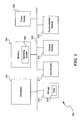
- Figure 4 illustrates an example of the communication between a non-EUTRAN, a EUTRAN, and a UE during an inter-RAT handover of the UE.
- FIG. 5a illustrates an example of the RRC connection reconfiguration messaging details.
- Figure 5b illustrates an example of a Handover Command from a non-EUTRAN used to send the RRC connection reconfiguration message of Figure 5a to a UE.
- Figure 6 is a flow diagram illustrating a process for configuring proximity indication reporting within a UE to perform an inter-RAT handover of the UE, based on the creation of proximity indication information within the RRC connection reconfiguration message.
- LTE Long Term Evolution
- Non-EUTRAN legacy wireless network
- EUTRAN LTE wireless network
- a separate, second RRC connection reconfiguration message is additionally required after the handover of the UE to the EUTRAN to configure proximity indication reporting in the UE.
- the necessity of the EUTRAN to configure proximity indication reporting via a separate RRC connection reconfiguration message different from the message used during the inter-RAT handover to EUTRAN procedure is not efficient, causing both delays and undue power consumption from the limited capacity of the UE's battery.
- the delay and power consumption problems are amplified with the introduction of a plethora of CSGs spread throughout the LTE network because after an inter-RAT handover to the EUTRAN, the UE must be configured to detect the proximity of one or more HeNBs or CSGs.
- FIG. 1 shows a user equipment (UE) 100 in which the techniques introduced here can be implemented.
- UE user equipment
- the UE described here is an illustration of one type of a wireless device in which the techniques can be implemented and that other wireless devices can be used for implementing the techniques.
- UEs may include a cell phone, a personal digital assistant (PDA), a portable email device (e.g., a Blackberry® device), a portable media player (e.g., an Apple iPod Touch®), a tablet or slate computer (e.g., an Apple iPad®), a netbook computer, a notebook computer, an e-reader, or any other device having wireless communication capability.
- PDA personal digital assistant
- a portable email device e.g., a Blackberry® device
- a portable media player e.g., an Apple iPod Touch®
- a tablet or slate computer e.g., an Apple iPad®
- netbook computer e.g., a notebook computer, an e-reader, or any
- the UE 100 includes a display 110 used to make and to receive telephone calls and to display data services.
- the display 110 is a touch screen that allows for the direct manipulation of displayed data.
- the UE has a multifunction input module 104 to operate the UE, navigate the display, and perform selections on data.
- the input module 104 can be, for example, a keyboard, mouse, trackball, touch screen, or any other input module capable of communicating a user selection.
- the UE operates an antenna system 106 to send and receive information to a wireless network.
- FIG 2 is an illustration of communication flow 212 and 216 between the UE 100, a non-EUTRA core network infrastructure 202 ("non-EUTRAN"), and the EUTRA core network infrastructure (“EUTRAN ”) 204.
- the non-EUTRAN 202 is any wireless communication technology that implements a different RAT than the RAT used by the EUTRAN 204.
- the non-EUTRAN 202 can utilize CDMA2000, UMTS, GPRS, or WiMAX standards and technology.
- the non-EUTRAN 202 contains one or more base transceiver stations (or "Node Bs" in 3G networks) 206 to communicate to other base transceivers and network core components (not shown) within the non-EUTRAN 202. Additionally, the core components of the non-EUTRAN 202 can communicate via a communication infrastructure 214 to base transceivers and core components using other RATs.
- One such other RAT is that used by the EUTRAN 204.
- the EUTRAN 204 is a wireless communication network utilizing the air interface of 3GPP's LTE upgrade path for mobile networks.
- "EUTRAN” is the abbreviation for "evolved UMTS Terrestrial Radio Access Network”, also referred to as the 3GPP work item on the Long Term Evolution and is also known as the evolved universal terrestrial radio access (EUTRA) in early drafts of the 3GPP LTE specification.
- the EUTRAN is a radio access network standard meant to be a replacement of the UMTS, HSDPA, and HSUPA technologies specified in 3GPP releases 5 and beyond.
- LTE's EUTRA is an entirely new air interface system. It provides higher data rates and lower latency and is optimized for packet data.
- EUTRAN 204 includes an evolved Node B (eNB) 208 that communicates with the UE using orthogonal frequency-division multiple access (OFDMA) radio access for the downlink and single-carrier frequency-division multiple access (SC-FDMA) on the uplink and additionally communicates with other core technologies (not shown) within the EUTRAN 204.
- eNB evolved Node B
- OFDMA orthogonal frequency-division multiple access
- SC-FDMA single-carrier frequency-division multiple access
- the EUTRAN 204 is connected via the communication infrastructure 214 to the non-EUTRAN 202.
- the communication infrastructure 214 interconnects non-EUTRAN 202 and EUTRAN 204.
- the communication infrastructure 214 is an interface that is standardized in order to allow multivendor interoperability.
- the communication infrastructure 214 is the Internet (not shown), which allows for the transformation of information in packets over a TCP/IP protocol.
- the communication infrastructure 214 is a serial or parallel transmission line allowing for the transfer of analog and/or digital information between the non-EUTRAN 202 and the EUTRAN 204.
- FIG. 3 is a block diagram of one embodiment of the internal structure of the UE 100 that can implement one or more features of the invention.
- the UE architecture 300 is a computer system that includes a processor subsystem 302 that further includes one or more processors.
- the UE architecture 300 further includes a memory 304, a storage module 310, an input module 104, a display module 314, and a communication module 316 each interconnected by an interconnect 306 and powered by a power supply 309.
- the UE architecture 300 can be embodied as a single- or multi-processor system that preferably implements a high-level module to receive data 318 from a base transceiver station 206 and/or 208.
- the received data 318 is communicated via the communication module 316, which includes a single or multiple antenna system capable of receiving and transmitting data based on one or more frequencies.
- the data 318 can be stored in the storage module 310 for retrieval by the processor subsystem 302 and memory 304.
- the processor subsystem 302 is configured by the data 318 to perform the features of the invention, such as configuring the UE 100 to perform an inter-RAT handover and configuring the UE 100 to perform proximity indication reporting.
- the communication module 316 upon the receipt of an RRC connection reconfiguration message from the eNB, the communication module 316, in conjunction with the processor subsystem 302, relays the message to the storage module 310, via the interconnect 306.
- the subsystem 302 Based on the inter-RAT information of the message, the subsystem 302 is configured based on the data 318 of the message to perform a handover from the non-EUTRAN 202 to the EUTRAN 204. Additionally and based on the proximity indication information of the message, the subsystem 302 is configured to perform a measurement on nearby network objects and report the measurements to the EUTRAN 204.
- the display module 314 is configured to connect to the display 110 ( Figure 1 ) to illustrate information for viewing on the display 110.
- Information for display can consist of textual, graphical, and/or multimedia information and is presentable in a graphical user interface.
- the display 110 is a touch screen that allows for the direct manipulation of displayed information.
- the displayed information is additionally manipulable by the input module 104.
- the input module 311 is configured to receive data from a signal originating from input module 104.
- the signal may include a user selection transmitted to the input module 311 that conveys the signal to the processor subsystem 302 and an operating system 308, via the interconnect 306.
- the memory 304 illustratively comprises storage locations that are addressable by the processor subsystem 302 and components 309, 310, 311, 314, and 316 for storing software program code and data structures associated with the present invention.
- the processor subsystem 302 and components may, in turn, comprise processing elements and/or logic circuitry configured to execute the software code and manipulate the data structures.
- the above system 300 has a structure similar to that used to operate base transceiver stations 206 and 208.
- the internal architecture of the base transceiver stations 206 and 208 include a communication module 316, processor subsystem 302, memory 304, and storage module 310, each configured to communicate via interconnected 306.
- FIG 4 is an illustration of the inter-RAT communication flow between a non-EUTRAN 202, EUTRAN 204 and UE 100.
- the non-EUTRAN 202 initiates the handover to EUTRAN procedure, in accordance with the specifications applicable for that RAT, by sending an Relocation Request message 402 to the EUTRAN 204.
- Inter-RAT handover is a backwards handover, i.e., radio resources are prepared in the (target) EUTRAN 204 before the UE 100 is commanded by the (source) non-EUTRAN 202 to handover to the EUTRAN 204.
- the EUTRAN 204 Upon receipt of and based on the message 402, the EUTRAN 204 generates proximity indication information to include in an RRCConnectionReconfiguration message 406 sent to the UE 100 via the Non-EUTRAN 202.
- the Non-EUTRAN transparently sends to the UE 100 a non-EUTRAN command message 408 having the RRCConnectionReconfiguration message 406, i.e. and as further explained below, the non-EUTRAN does not modify or add to the message 406.
- the non-EUTRAN command message 408 utilizes a format common to the non-EUTRAN and without changing the content of the message.
- the UE then sends an RRCConnectionReconfigurationComplete message 410 to the EUTRAN 204.
- the UE 100 configures its internal architecture 300 for the handover to the EUTRAN 204 and configures its internal architecture to enable proximity indication reporting before or after sending the 410 message.
- the UE 100 can perform measurements 412 on objects, such as HeNBs and CSGs, and report this information 414 to the EUTRAN 204.
- FIG 5a illustrates one embodiment of the RRCConnectionReconfiguration message 406 sent from the non-EUTRAN 202 to the EUTRAN 204.
- the message contains RAT handover configuration data 502 that is sent from the non-EUTRAN 202 for handing over the UE 100.
- proximity indication report configuration data 504 is generated in the message to enable the UE 100 to take measurements of telecommunication objects, such as a macro eNB, a HeNB or a CSG.
- the illustration shows one embodiment of the layout of data 502 and 504, but other layouts and formats are contemplated and known to those familiar with the art.
- Proximity indication report configuration data 504 can further contain a varying amount of sub-elements 505-508.
- Each sub-element 505-508 can contain more specific proximity indication information. Some examples include whether to report proximity (“reportProximityConfig”) while in the EUTRAN 204 ("allowed” or “disallowed”) or the non-EUTRAN 202("allowed” or “not allowed”), whether autonomous searching by the UE 100 is enabled, and whether "mobilityControlInfo" is defined.
- Figure 5b illustrates an example of a Handover Command message from a non-EUTRAN used to send the RRC connection reconfiguration message of Figure 5a to a UE.
- the RRCConnectionReconfiguration message 408 is sent by the non-EUTRAN 202 to the UE in a format common to the Non-EUTRAN.
- Message 408 contains the message 406 and other configuration data 510 that is used by the non-EUTRAN 202 to hand over the UE 100.
- the message 408 is a packet switched (PS) HANDOVER COMMAND message used by GPRS networks to hand over the UE 100 to another RAT network.
- the message 408 is a Universal Mobile Telecommunications System Terrestrial Radio Access Network (UTRAN) message utilizing a HANDOVER FROM UTRAN COMMAND message.
- PS packet switched
- UTRAN Universal Mobile Telecommunications System Terrestrial Radio Access Network
- Other message formats from other RATs known in the art can additionally be used.
- FIG. 6 is a flow diagram 600 illustrating a process for configuring proximity indication reporting within a UE.
- the first RAT system such as the non-EUTRAN 202 delivers to a second RAT system (such as the EUTRAN 204) a first message to request preparing a packet switched service at the second RAT for a wireless device (such as UE 100).
- the second RAT system generates an RRCConnectionReconfiguration message containing the proximity indication configuration information.
- Step 612 describes generating, at the second RAT system, inter-RAT handover information to configure the UE from receiving service at the first RAT system to receiving the packet switched service of the second RAT.
- Step 614 describes the process of sending a second message from the second RAT to the first RAT where the message is encapsulated in a third message, at step 616, into a format used by the first RAT for inter-RAT handover.
- the format of the third message is based on the underlying technology of the RAT.
- the UE receives the RRCConnectionReconfiguration message and uses the contents of the message to perform an inter-RAT handover and to configure proximity indication reporting within the UE.
Landscapes
- Engineering & Computer Science (AREA)
- Computer Networks & Wireless Communication (AREA)
- Signal Processing (AREA)
- Mobile Radio Communication Systems (AREA)
Abstract
Description
- In the past few decades, telephone systems have evolved continuously at an accelerated rate. A long term evolution (LTE) system, initiated by the third generation partnership project (3GPP), is now being regarded as a new radio access technology (RAT) and core radio network architecture that provides a high data rate, low latency, packet optimization, and improved system capacity and coverage. In the LTE system, an evolved universal terrestrial radio access network (EUTRAN) includes a plurality of evolved Node-Bs (eNBs) and communicates with a plurality of mobile stations, also referred to as user equipments (UEs).
- Another evolution in telecommunications is the introduction of femtocells. A femtocell is a small cellular base station, typically designed for use in a home or small business. Femtocells generally connect to the service provider's network via broadband (such as DSL or cable); current designs typically support 2 to 4 active UEs in a residential setting and 8 to 16 active mobile phones in enterprise settings. A femtocell allows service providers to extend service coverage indoors, especially where access would otherwise be limited or unavailable. In LTE terms, femtocells are called Home eNode Bs (HeNBs) and are one type of RAT object. A RAT object, or measurement object, generally is an object on which the UE shall measure measurement quantities and corresponding object information. The RAT object may include a single cell, or a list of cells to be considered as well as associated parameters, e.g. frequency-specific offsets or cell-specific offsets. HeNBs are typically associated with uncoordinated large-scale deployments of several HeNBs in one or more closed subscriber groups (CSGs) and, therefore, the connection to the operator's core network needs to be realized efficiently. A CSG is a specific group of UEs permitted access to a femtocell. A CSG-ID is broadcast from the femtocell in a system information block (SIB) message and only those UEs who are members of this group, as defined by a CSG white list of CSG IDs (generally stored on the UE), will attempt to select the cell.
- Before deciding to hand over a UE to a CSG, the eNB (or Macro eNB) generally needs to acquire UE measurement information related to the target CSG cell. In order to allow the UE to make those measurements efficiently, a newly defined proximity report can be configured within the UE via a radio resource control (RRC) connection reconfiguration message. This proximity report will allow the UE to send a so-called "proximity indication" to the source eNB whenever it is entering or leaving the proximity of one or more cells with CSG IDs in the UE's CSG whitelist. A UE that is able to determine that it is near its CSG cell can thus tell the network to take the necessary actions for measurement or handover preparation.
- An RRC connection reconfiguration procedure is used by the RRC layer of the EUTRAN to modify a UE's RRC connection, e.g., to establish/modify/release radio bearers, to perform handover, or to set up/modify/release measurements. When the UE receives an RRC connection reconfiguration message, the UE performs an RRC connection reconfiguration procedure based on information within the message. For example, the EUTRAN can configure the UE to report measurement information to support the control of UE mobility to a CSG. Additionally, the EUTRAN can configure, via an RRC connection reconfiguration message, the UE for an inter-RAT handover from a legacy wireless network (GPRS, UTRA, CDMA2000) to the EUTRAN. However, receiving and processing the RRC connection reconfiguration message is costly in terms of delays and the amount of battery power required by the UE to comply with RRC messages.
- Introduced herein are methods and systems for configuring a UE for proximity indication reporting as part of an inter-RAT handover procedure by utilizing a single RRC connection reconfiguration message for both the handover and proximity indication configuration processes.
- In one embodiment, the eNB includes proximity indication configuration information in the RRC connection reconfiguration message used by the EUTRAN as part of the inter-RAT handover from a non-EUTRAN. The proximity configuration information is added to preexisting information within the message. The message is sent to the UE via a node within a non-EUTRAN, and the non-EUTRAN transparently forwards the message to the UE.
- In some embodiments, upon the receipt of the message by the UE, the UE substantially simultaneously performs the inter-RAT handover procedure and the proximity indication configuration. Based on the proximity indication information in the message, the EUTRAN can configure the UE to report measurement information to support UE mobility.
- In a further embodiment, upon the receipt of the proximity indication information in the RRC connection reconfiguration message, the UE can detect and report on one or more HeNBs and/or CSGs within radio proximity of the UE. The reported information can be used by the eNB to perform a second handover of the UE from the source eNB to the HeNB or CSG cell.
- The solution presented here overcomes the time and power consumption limitations of prior art methods that establish multiple separate messaging instances to handover the UE to the EUTRAN and to configure the UE to report proximity indications.
- One or more embodiments of the present invention are illustrated by way of example and not limitation in the figures of the accompanying drawings, in which like references indicate similar elements.
-
Figure 1 illustrates a user equipment (UE). -
Figure 2 is a high-level diagram showing communication flow between different RATs and the UE. -
Figure 3 is a high-level block diagram showing an example of the hardware architecture of a UE. -
Figure 4 illustrates an example of the communication between a non-EUTRAN, a EUTRAN, and a UE during an inter-RAT handover of the UE. -
Figure 5a illustrates an example of the RRC connection reconfiguration messaging details. -
Figure 5b illustrates an example of a Handover Command from a non-EUTRAN used to send the RRC connection reconfiguration message ofFigure 5a to a UE. -
Figure 6 is a flow diagram illustrating a process for configuring proximity indication reporting within a UE to perform an inter-RAT handover of the UE, based on the creation of proximity indication information within the RRC connection reconfiguration message. - Current implementations of LTE require the successful delivery of one RRC connection reconfiguration message to a UE for handing over the UE from a legacy wireless network (non-EUTRAN) to an LTE wireless network (EUTRAN). A separate, second RRC connection reconfiguration message is additionally required after the handover of the UE to the EUTRAN to configure proximity indication reporting in the UE.
- The necessity of the EUTRAN to configure proximity indication reporting via a separate RRC connection reconfiguration message different from the message used during the inter-RAT handover to EUTRAN procedure is not efficient, causing both delays and undue power consumption from the limited capacity of the UE's battery. The delay and power consumption problems are amplified with the introduction of a plethora of CSGs spread throughout the LTE network because after an inter-RAT handover to the EUTRAN, the UE must be configured to detect the proximity of one or more HeNBs or CSGs. The problems of prior art are solved by the invention presented herein.
-
Figure 1 shows a user equipment (UE) 100 in which the techniques introduced here can be implemented. It is noted that the UE described here is an illustration of one type of a wireless device in which the techniques can be implemented and that other wireless devices can be used for implementing the techniques. For example, UEs may include a cell phone, a personal digital assistant (PDA), a portable email device (e.g., a Blackberry® device), a portable media player (e.g., an Apple iPod Touch®), a tablet or slate computer (e.g., an Apple iPad®), a netbook computer, a notebook computer, an e-reader, or any other device having wireless communication capability. - The UE 100 includes a
display 110 used to make and to receive telephone calls and to display data services. In some embodiments, thedisplay 110 is a touch screen that allows for the direct manipulation of displayed data. The UE has amultifunction input module 104 to operate the UE, navigate the display, and perform selections on data. Theinput module 104 can be, for example, a keyboard, mouse, trackball, touch screen, or any other input module capable of communicating a user selection. Additionally, the UE operates anantenna system 106 to send and receive information to a wireless network. -
Figure 2 is an illustration ofcommunication flow - The non-EUTRAN 202 contains one or more base transceiver stations (or "Node Bs" in 3G networks) 206 to communicate to other base transceivers and network core components (not shown) within the non-EUTRAN 202. Additionally, the core components of the non-EUTRAN 202 can communicate via a
communication infrastructure 214 to base transceivers and core components using other RATs. One such other RAT is that used by the EUTRAN 204. - The EUTRAN 204 is a wireless communication network utilizing the air interface of 3GPP's LTE upgrade path for mobile networks. "EUTRAN" is the abbreviation for "evolved UMTS Terrestrial Radio Access Network", also referred to as the 3GPP work item on the Long Term Evolution and is also known as the evolved universal terrestrial radio access (EUTRA) in early drafts of the 3GPP LTE specification. The EUTRAN is a radio access network standard meant to be a replacement of the UMTS, HSDPA, and HSUPA technologies specified in 3GPP releases 5 and beyond. LTE's EUTRA is an entirely new air interface system. It provides higher data rates and lower latency and is optimized for packet data. Included within the
EUTRAN 204 is an evolved Node B (eNB) 208 that communicates with the UE using orthogonal frequency-division multiple access (OFDMA) radio access for the downlink and single-carrier frequency-division multiple access (SC-FDMA) on the uplink and additionally communicates with other core technologies (not shown) within theEUTRAN 204. TheEUTRAN 204 is connected via thecommunication infrastructure 214 to thenon-EUTRAN 202. - The
communication infrastructure 214 interconnects non-EUTRAN 202 andEUTRAN 204. Thecommunication infrastructure 214 is an interface that is standardized in order to allow multivendor interoperability. In one embodiment, thecommunication infrastructure 214 is the Internet (not shown), which allows for the transformation of information in packets over a TCP/IP protocol. In another environment, thecommunication infrastructure 214 is a serial or parallel transmission line allowing for the transfer of analog and/or digital information between the non-EUTRAN 202 and theEUTRAN 204. -
Figure 3 is a block diagram of one embodiment of the internal structure of theUE 100 that can implement one or more features of the invention. In the illustrated embodiment, theUE architecture 300 is a computer system that includes aprocessor subsystem 302 that further includes one or more processors. TheUE architecture 300 further includes amemory 304, astorage module 310, aninput module 104, adisplay module 314, and acommunication module 316 each interconnected by aninterconnect 306 and powered by apower supply 309. - The
UE architecture 300 can be embodied as a single- or multi-processor system that preferably implements a high-level module to receivedata 318 from abase transceiver station 206 and/or 208. The receiveddata 318 is communicated via thecommunication module 316, which includes a single or multiple antenna system capable of receiving and transmitting data based on one or more frequencies. Thedata 318 can be stored in thestorage module 310 for retrieval by theprocessor subsystem 302 andmemory 304. Theprocessor subsystem 302 is configured by thedata 318 to perform the features of the invention, such as configuring theUE 100 to perform an inter-RAT handover and configuring theUE 100 to perform proximity indication reporting. - For example and as further explained below, upon the receipt of an RRC connection reconfiguration message from the eNB, the
communication module 316, in conjunction with theprocessor subsystem 302, relays the message to thestorage module 310, via theinterconnect 306. Based on the inter-RAT information of the message, thesubsystem 302 is configured based on thedata 318 of the message to perform a handover from the non-EUTRAN 202 to theEUTRAN 204. Additionally and based on the proximity indication information of the message, thesubsystem 302 is configured to perform a measurement on nearby network objects and report the measurements to theEUTRAN 204. - The
display module 314 is configured to connect to the display 110 (Figure 1 ) to illustrate information for viewing on thedisplay 110. Information for display can consist of textual, graphical, and/or multimedia information and is presentable in a graphical user interface. In some embodiments, thedisplay 110 is a touch screen that allows for the direct manipulation of displayed information. The displayed information is additionally manipulable by theinput module 104. - The
input module 311 is configured to receive data from a signal originating frominput module 104. The signal may include a user selection transmitted to theinput module 311 that conveys the signal to theprocessor subsystem 302 and anoperating system 308, via theinterconnect 306. - The
memory 304 illustratively comprises storage locations that are addressable by theprocessor subsystem 302 andcomponents processor subsystem 302 and components may, in turn, comprise processing elements and/or logic circuitry configured to execute the software code and manipulate the data structures. Theoperating system 308, portions of which are typically resident in memory and executed by theprocessor subsystem 302, functionally organizes theUE architecture 300 by (among other things) configuring theprocessor subsystem 302 to invoke handover and proximity indication related operations in support of the present invention. It will be apparent to those skilled in the art that other processing and memory implementations, including various computer readable storage media, may be used for storing and executing program instructions pertaining to the technique introduced here. - One skilled in the art will appreciate that the
above system 300 has a structure similar to that used to operatebase transceiver stations base transceiver stations communication module 316,processor subsystem 302,memory 304, andstorage module 310, each configured to communicate via interconnected 306. -
Figure 4 is an illustration of the inter-RAT communication flow between a non-EUTRAN 202,EUTRAN 204 andUE 100. Thenon-EUTRAN 202 initiates the handover to EUTRAN procedure, in accordance with the specifications applicable for that RAT, by sending anRelocation Request message 402 to theEUTRAN 204. Inter-RAT handover is a backwards handover, i.e., radio resources are prepared in the (target)EUTRAN 204 before theUE 100 is commanded by the (source) non-EUTRAN 202 to handover to theEUTRAN 204. Upon receipt of and based on themessage 402, theEUTRAN 204 generates proximity indication information to include in anRRCConnectionReconfiguration message 406 sent to theUE 100 via theNon-EUTRAN 202. Upon receiving theRRCConnectionReconfiguration message 406, the Non-EUTRAN transparently sends to the UE 100 anon-EUTRAN command message 408 having theRRCConnectionReconfiguration message 406, i.e. and as further explained below, the non-EUTRAN does not modify or add to themessage 406. Thenon-EUTRAN command message 408 utilizes a format common to the non-EUTRAN and without changing the content of the message. The UE then sends anRRCConnectionReconfigurationComplete message 410 to theEUTRAN 204. Based on themessage 408, theUE 100 configures itsinternal architecture 300 for the handover to theEUTRAN 204 and configures its internal architecture to enable proximity indication reporting before or after sending the 410 message. Once proximity indication is enabled in theUE 100, theUE 100 can performmeasurements 412 on objects, such as HeNBs and CSGs, and report thisinformation 414 to theEUTRAN 204. -
Figure 5a illustrates one embodiment of theRRCConnectionReconfiguration message 406 sent from the non-EUTRAN 202 to theEUTRAN 204. The message contains RAThandover configuration data 502 that is sent from the non-EUTRAN 202 for handing over theUE 100. Additionally, proximity indicationreport configuration data 504 is generated in the message to enable theUE 100 to take measurements of telecommunication objects, such as a macro eNB, a HeNB or a CSG. The illustration shows one embodiment of the layout ofdata report configuration data 504 can further contain a varying amount of sub-elements 505-508. Each sub-element 505-508 can contain more specific proximity indication information. Some examples include whether to report proximity ("reportProximityConfig") while in the EUTRAN 204 ("allowed" or "disallowed") or the non-EUTRAN 202("allowed" or "not allowed"), whether autonomous searching by theUE 100 is enabled, and whether "mobilityControlInfo" is defined. -
Figure 5b illustrates an example of a Handover Command message from a non-EUTRAN used to send the RRC connection reconfiguration message ofFigure 5a to a UE. TheRRCConnectionReconfiguration message 408 is sent by the non-EUTRAN 202 to the UE in a format common to the Non-EUTRAN.Message 408 contains themessage 406 and other configuration data 510 that is used by the non-EUTRAN 202 to hand over theUE 100. In one embodiment, themessage 408 is a packet switched (PS) HANDOVER COMMAND message used by GPRS networks to hand over theUE 100 to another RAT network. In yet another embodiment, themessage 408 is a Universal Mobile Telecommunications System Terrestrial Radio Access Network (UTRAN) message utilizing a HANDOVER FROM UTRAN COMMAND message. Other message formats from other RATs known in the art can additionally be used. -
Figure 6 is a flow diagram 600 illustrating a process for configuring proximity indication reporting within a UE. Atstep 602, the first RAT system (such as the non-EUTRAN 202) delivers to a second RAT system (such as the EUTRAN 204) a first message to request preparing a packet switched service at the second RAT for a wireless device (such as UE 100). Atstep 610, the second RAT system generates an RRCConnectionReconfiguration message containing the proximity indication configuration information. Step 612 describes generating, at the second RAT system, inter-RAT handover information to configure the UE from receiving service at the first RAT system to receiving the packet switched service of the second RAT. This handover information is added to the RRCConnectionReconfiguration message along with the proximity indication configuration information. Step 614 describes the process of sending a second message from the second RAT to the first RAT where the message is encapsulated in a third message, atstep 616, into a format used by the first RAT for inter-RAT handover. As described above, the format of the third message is based on the underlying technology of the RAT. Atstep 618, the UE receives the RRCConnectionReconfiguration message and uses the contents of the message to perform an inter-RAT handover and to configure proximity indication reporting within the UE.
Claims (15)
- A method for configuring proximity indication reporting in a wireless device as part of an inter-radio access technology (inter-RAT) handover procedure, the method comprising:receiving a HO command, containing a message generated by a second RAT system, from a first RAT system as part of an inter-RAT handover procedure to hand over the wireless device from the first RAT system to the second RAT system,
wherein the message contains a plurality of data sets,
wherein a first data set of the plurality of data sets contains information tohand over the wireless device from the first RAT system to the second RAT system, andwherein a second data set of the plurality of data sets contains proximityindication reporting information to configure proximity indication reporting in the wireless device as part of the inter-RAT handover procedure; andas part of the Inter-RAT handover procedure, in response to receiving the message, the wireless device configures the proximity indication reporting; andperforming a handover of the wireless device from the first RAT to the second RAT. - The method of claim 1, wherein the first RAT system is a non-EUTRAN system such as a GSM, GPRS, UTRA, or CDMA2000 system, and wherein the second RAT system is a long term evolution (LTE) system.
- The method of claim 1, wherein the message is an RRCConnectionReconfiguration message.
- The method of claim 1, wherein the proximity indication reporting information includes a parameter to enable or disable proximity indication reporting at the wireless device, and when the information indicates enabling proximity indication reporting, the wireless device enables proximity indication reporting.
- A method for configuring proximity indication reporting for a wireless device as part of an inter-radio access technology (inter-RAT) handover procedure, the method comprising:receiving, at a second radio access technology (RAT) system, from a first RAT system a handover (HO) preparation request message,generating, at the second RAT system, a first data set into a message, wherein the first data set contains information to handover the wireless device from the first RAT system to the second RAT system;generating, at the second RAT system, a second data set into the message, wherein the second data set contains proximity indication reporting information, and wherein the second data set is used by a second RAT system to configure proximity indication reporting in the wireless device as part of the inter-RAT handover procedure;transmitting, at the second RAT system, the message to the first RAT system;encapsulating, at the first RAT system, the message into a HO command;transmitting, at the first RAT system, the HO command to the wireless device;configuring, at the wireless device" proximity indication reporting based on the second data set; andperforming, at the wireless device, a handover from the first RAT system to the second RAT system.
- The method of claim 5, wherein the message is an RRCConnectionReconfiguration message.
- The method of claim 6, wherein the proximity indication reporting information includes a parameter to enable or disable proximity indication reporting at the wireless device, and when the parameter indicates enabling proximity indication reporting, the wireless device enables proximity indication reporting.
- The method of claim 5, wherein the proximity indication reporting information includes a ReportProximityConfig message.
- The method of claim 8, wherein the ReportProximityConfig message reports a proximity of a closed subscriber group.
- A system to configure proximity indication reporting in a mobile device utilizing an inter-radio access technology (inter-RAT) handover communication process, the system comprising:a first radio access technology (RAT) system, the first RAT system further comprising:a processor configured to generate a first handover request,wherein the first handover request contains a first data set and a second data set, the first data set containing information to cause a mobile device to receive service from the first RAT system, the second data set containing information to cause the mobile device to configure proximity indication reporting in the mobile device, anda communication module configured to send the first handover request for delivery to the mobile device; anda second RAT system, the second RAT system further comprising:a communication module configured to receive the first handover request for delivery to the mobile device and to send a second handover request to the mobile device, anda processor configured to create the second handover request,wherein the second handover request includes the first handover request, andwherein the mobile device is configured to enable the mobile device to detect a RAT object in the first RAT system and receive packet switched service from the first RAT system, based on the second data set.
- The system of claim 10, wherein the second RAT system is a non-EUTRAN system such as a GSM, GPRS, UTRA, or CDMA2000 system and the first RAT system is a long term evolution (LTE) system.
- The system of claim 10, wherein the first handover request is an RRCConnectionReconfiguration message.
- The system of claim 10, wherein the second handover request is a packet switched (PS) HANDOVER COMMAND message or a HANDOVER FROM UTRAN COMMAND message.
- The system of claim 10, wherein when the information of the second data set indicates enabling the proximity indication reporting, the mobile device enables proximity indication reporting.
- The system of claim 10, wherein the proximity indication reporting information includes a reportProximityConfig message to report the proximity of a closed subscriber group.
Applications Claiming Priority (2)
| Application Number | Priority Date | Filing Date | Title |
|---|---|---|---|
| US29249710P | 2010-01-06 | 2010-01-06 | |
| US12/984,597 US8086236B2 (en) | 2010-01-06 | 2011-01-04 | Methods to configure proximity indication in wireless communications systems |
Publications (2)
| Publication Number | Publication Date |
|---|---|
| EP2343924A1 true EP2343924A1 (en) | 2011-07-13 |
| EP2343924B1 EP2343924B1 (en) | 2012-11-07 |
Family
ID=43733966
Family Applications (1)
| Application Number | Title | Priority Date | Filing Date |
|---|---|---|---|
| EP11000052A Revoked EP2343924B1 (en) | 2010-01-06 | 2011-01-05 | Methods and system to configure proximity indication in wireless communication systems |
Country Status (6)
| Country | Link |
|---|---|
| US (1) | US8086236B2 (en) |
| EP (1) | EP2343924B1 (en) |
| JP (1) | JP4988935B2 (en) |
| KR (1) | KR101151913B1 (en) |
| CN (1) | CN102118788A (en) |
| TW (1) | TWI416968B (en) |
Cited By (2)
| Publication number | Priority date | Publication date | Assignee | Title |
|---|---|---|---|---|
| WO2013017729A1 (en) * | 2011-08-04 | 2013-02-07 | Nokia Corporation | Method and apparatus for improved signaling |
| US12075428B2 (en) | 2017-01-05 | 2024-08-27 | Nec Corporation | Methods and apparatuses for configuring radio terminal with numerology of second RAT via first RAT |
Families Citing this family (20)
| Publication number | Priority date | Publication date | Assignee | Title |
|---|---|---|---|---|
| GB2465664B (en) * | 2008-11-27 | 2011-02-09 | Lg Electronics Inc | Method of determining an access mode of cell in a wireless communication system |
| US8630642B2 (en) * | 2009-10-30 | 2014-01-14 | Htc Corporation | Method of handling proximity information transmission and related communication device |
| US8391871B2 (en) * | 2009-10-30 | 2013-03-05 | Htc Corporation | Method of handling proximity information transmission and related communication device |
| US8838117B2 (en) | 2010-04-23 | 2014-09-16 | Qualcomm Incorporated | Active macro-femto hand-in with help from out-of-band proxy |
| US8954051B2 (en) | 2010-04-23 | 2015-02-10 | Qualcomm Incorporated | Uniquely identifying target femtocell to facilitate femto-assisted active hand-in |
| US20120094666A1 (en) * | 2010-10-15 | 2012-04-19 | Qualcomm Incorporated | Uniquely identifying target femtocell to facilitate femto-assisted active hand-in |
| US8547932B2 (en) * | 2010-11-01 | 2013-10-01 | Intel Corporation | Handover architecture for non-integrated radio access technologies |
| US20140011519A1 (en) * | 2011-04-03 | 2014-01-09 | Lg Electronics Inc. | Method for transmitting location information and user equipment |
| US8848701B2 (en) * | 2011-06-30 | 2014-09-30 | Verizon Patent And Licensing Inc. | Split usage of radio access networks with IMS |
| KR102071695B1 (en) | 2011-07-12 | 2020-01-31 | 인터디지탈 패튼 홀딩스, 인크 | Method and apparatus for multi-rat access mode operation |
| WO2013028559A1 (en) | 2011-08-19 | 2013-02-28 | Interdigital Patent Holdings, Inc. | Method and apparatus for using non-access stratum procedures in a mobile station to access resources of component carriers belonging to different radio access technologies |
| US8705490B2 (en) | 2011-12-23 | 2014-04-22 | Verizon Patent And Licensing Inc. | Handing over a user device from one technology to another |
| KR101502135B1 (en) * | 2012-04-09 | 2015-03-13 | 주식회사 케이티 | Terminal, gateway and data transmission reception method of the same |
| KR20150048129A (en) * | 2012-07-26 | 2015-05-06 | 엘지전자 주식회사 | Method of supporting communication using two or more radio access technologies and apparatus for same |
| KR101670622B1 (en) * | 2012-11-27 | 2016-10-28 | 엘지전자 주식회사 | Method and apparatus for registering access point through wifi network by using information obtained from common device in celluar-wifi convergence system |
| CN105453648B (en) * | 2013-08-09 | 2020-04-17 | 三菱电机株式会社 | Communication system |
| US20150049672A1 (en) * | 2013-08-14 | 2015-02-19 | Qualcomm Incorporated | Methods and apparatus for avoiding or escaping cell range expansion (cre) in a heterogeneous network |
| KR102132190B1 (en) * | 2014-01-03 | 2020-07-09 | 삼성전자 주식회사 | Method and apparatus for proximity estimation for femto cell in wireless communication system |
| CN105101314A (en) * | 2014-04-29 | 2015-11-25 | 北京三星通信技术研究有限公司 | A method and device for sending handover report and RLF report |
| CN113692778B (en) * | 2019-02-14 | 2025-03-21 | 谷歌有限责任公司 | Restoring radio connections in communications networks |
Family Cites Families (23)
| Publication number | Priority date | Publication date | Assignee | Title |
|---|---|---|---|---|
| CN1365587A (en) * | 1999-07-30 | 2002-08-21 | 高通股份有限公司 | System for tracking base stations in a wireless communication network |
| US6836471B2 (en) * | 2001-02-02 | 2004-12-28 | Nokia Mobile Phones Ltd. | Method and system for inter-operator handover between WCDMA and GSM |
| US7181218B2 (en) * | 2001-04-10 | 2007-02-20 | Telefonaktiebolaget Lm Ericsson (Publ) | Commanding handover between differing radio access technologies |
| US6795686B2 (en) * | 2001-12-05 | 2004-09-21 | Quicksilver Technology | Method and system for increasing availability and proximity of base stations for cellular communications via mobile base stations |
| ATE388589T1 (en) * | 2003-04-11 | 2008-03-15 | Ericsson Telefon Ab L M | METHOD FOR SYNCHRONIZING IN A MOBILE RADIO TERMINAL |
| EP1467584A1 (en) * | 2003-04-11 | 2004-10-13 | Telefonaktiebolaget LM Ericsson (publ) | Method and apparatus for wireless intersystem handover |
| US7382750B2 (en) * | 2003-07-02 | 2008-06-03 | High Tech Computer Corp. | Inter-RAT handover to UTRAN with simultaneous PS and CS domain sevices |
| US7970399B2 (en) * | 2004-03-17 | 2011-06-28 | Telefonaktiebolaget Lm Ericsson (Publ) | Method and arrangement for improved inter-RAT handover |
| DE102005005254B4 (en) * | 2005-02-04 | 2007-05-10 | Infineon Technologies Ag | A mobile radio communication system, method for operating a mobile radio communication system, core network switching layer unit and method for operating a core network network layer unit |
| US20070026866A1 (en) * | 2005-05-27 | 2007-02-01 | Govindarajan Krishnamurthi | Mobile node, method and computer program product for handing off from one type of network to another type of network |
| KR20080109892A (en) * | 2006-03-09 | 2008-12-17 | 인터디지탈 테크날러지 코포레이션 | Wireless communication method and system for performing handover between two radio access technologies |
| FI20065467A0 (en) * | 2006-06-30 | 2006-06-30 | Nokia Corp | Neighbor Cell Measurement and Reporting in a Multiple Radio Access Technology (RAT) environment |
| US9532399B2 (en) | 2006-11-30 | 2016-12-27 | Kyocera Corporation | Apparatus, system and method for managing wireless local area network service to a multi-mode portable communication device |
| CN101617548A (en) * | 2007-02-21 | 2009-12-30 | 高通股份有限公司 | Method and device for switching between systems |
| CN101395935B (en) | 2007-04-28 | 2012-12-19 | 华为技术有限公司 | Method and system for interference reduction through proximity based transmission mode change |
| US8842632B2 (en) * | 2008-02-14 | 2014-09-23 | Alcatel Lucent | Pre-registration, storing of pre-registration session information and session transfer in a wireless communication system |
| EP2248356B1 (en) | 2008-02-21 | 2015-05-27 | Alcatel Lucent | Inter-rat handover in 3g lte |
| KR20090098638A (en) | 2008-03-14 | 2009-09-17 | 엘지전자 주식회사 | Heterogeneous Handover Method |
| US8948768B2 (en) * | 2008-04-28 | 2015-02-03 | Intel Mobile Communications GmbH | Radio communication device and method for controlling resource allocations |
| WO2009142963A2 (en) | 2008-05-23 | 2009-11-26 | Commscope, Inc. Of North Carolina | System and method for locating wimax or lte subscriber stations |
| US9094880B2 (en) * | 2008-06-19 | 2015-07-28 | Qualcomm Incorporated | Access terminal assisted node identifier confusion resolution using a time gap |
| US8285289B2 (en) * | 2008-07-15 | 2012-10-09 | Alcatel Lucent | Method for triggering inter-RAT idle handoff |
| US8537863B2 (en) * | 2009-11-03 | 2013-09-17 | Apple Inc. | Methods and apparatus for reception of dynamic information by inactive receivers |
-
2011
- 2011-01-04 US US12/984,597 patent/US8086236B2/en active Active
- 2011-01-05 EP EP11000052A patent/EP2343924B1/en not_active Revoked
- 2011-01-06 JP JP2011001218A patent/JP4988935B2/en active Active
- 2011-01-06 TW TW100100501A patent/TWI416968B/en active
- 2011-01-06 CN CN2011100023372A patent/CN102118788A/en active Pending
- 2011-01-06 KR KR1020110001555A patent/KR101151913B1/en active Active
Non-Patent Citations (3)
| Title |
|---|
| HTC CORPORATION: "On the need of proximity and likely/unlikely indicators", 3GPP DRAFT; R2-097104_ON_NEED_PROXIMITY_LIKELY_INDICATORS, 3RD GENERATION PARTNERSHIP PROJECT (3GPP), MOBILE COMPETENCE CENTRE ; 650, ROUTE DES LUCIOLES ; F-06921 SOPHIA-ANTIPOLIS CEDEX ; FRANCE, no. Jeju; 20091109, 9 October 2009 (2009-10-09), XP050391429 * |
| MOTOROLA ET AL: "Draft CR capturing HeNB inbound mobility agreements", 3GPP DRAFT; R2-096401_CR HENB 36_300 AGREEMENTS_V7, 3RD GENERATION PARTNERSHIP PROJECT (3GPP), MOBILE COMPETENCE CENTRE ; 650, ROUTE DES LUCIOLES ; F-06921 SOPHIA-ANTIPOLIS CEDEX ; FRANCE, no. Jeju; 20091109, 9 November 2009 (2009-11-09), XP050391033 * |
| NOKIA SIEMENS NETWORKS ET AL: "CSG inbound mobility", 3GPP DRAFT; R2-097023 CSG PAPER, 3RD GENERATION PARTNERSHIP PROJECT (3GPP), MOBILE COMPETENCE CENTRE ; 650, ROUTE DES LUCIOLES ; F-06921 SOPHIA-ANTIPOLIS CEDEX ; FRANCE, no. Jeju; 20091109, 9 November 2009 (2009-11-09), XP050391395 * |
Cited By (4)
| Publication number | Priority date | Publication date | Assignee | Title |
|---|---|---|---|---|
| WO2013017729A1 (en) * | 2011-08-04 | 2013-02-07 | Nokia Corporation | Method and apparatus for improved signaling |
| US9699608B2 (en) | 2011-08-04 | 2017-07-04 | Nokia Technologies Oy | Method and apparatus for improved signaling |
| US12075428B2 (en) | 2017-01-05 | 2024-08-27 | Nec Corporation | Methods and apparatuses for configuring radio terminal with numerology of second RAT via first RAT |
| US12349161B2 (en) | 2017-01-05 | 2025-07-01 | Nec Corporation | Radio access network node, radio terminal, and methods and non-transitory computer-readable media therefor |
Also Published As
| Publication number | Publication date |
|---|---|
| TWI416968B (en) | 2013-11-21 |
| US20110165875A1 (en) | 2011-07-07 |
| JP4988935B2 (en) | 2012-08-01 |
| CN102118788A (en) | 2011-07-06 |
| TW201141259A (en) | 2011-11-16 |
| KR20110081101A (en) | 2011-07-13 |
| US8086236B2 (en) | 2011-12-27 |
| EP2343924B1 (en) | 2012-11-07 |
| KR101151913B1 (en) | 2012-07-13 |
| JP2011151801A (en) | 2011-08-04 |
Similar Documents
| Publication | Publication Date | Title |
|---|---|---|
| EP2343924B1 (en) | Methods and system to configure proximity indication in wireless communication systems | |
| CN106489282B (en) | Procedures for 3GPP Circuit Switched Fallback | |
| US8185116B2 (en) | Methods and system for handling proximity indication and detection in a wireless communication system | |
| US10880853B2 (en) | Delaying cellular re-registration during critical conditions | |
| US9973981B2 (en) | Configuration of handovers in communication systems | |
| KR102319800B1 (en) | Resolution of system information between EPS and 5GS | |
| EP2369869B1 (en) | Apparatuses and methods for measurement reporting in a wireless communications system | |
| US10362635B2 (en) | Method and apparatus for reporting dual mode capabilities in a long term evolution network | |
| CN112399488A (en) | Continuous conditional switching | |
| EP2512180A2 (en) | Method and apparatus for handling srvcc in an inter radio access technology handover | |
| EP2433445B1 (en) | Systems, methods, and apparatuses for facilitating a circuit switched connection | |
| KR20210153718A (en) | Communication methods, devices and systems | |
| CN106535247B (en) | The UE performance enhanced in the weak covering scene of HetNet | |
| US9560507B2 (en) | Method to improve emergency call continuity by allowing inbound mobility towards non-member CSG cells | |
| EP2959727B1 (en) | Method and apparatus for distributing load | |
| CN114451009A (en) | Conditional switching for pre-forwarded data packets | |
| KR20250043557A (en) | double connection | |
| EP2822306B1 (en) | Handover method and apparatus | |
| EP2365708B1 (en) | Method and apparatus for handling SRVCC in an inter radio access technology handover |
Legal Events
| Date | Code | Title | Description |
|---|---|---|---|
| PUAI | Public reference made under article 153(3) epc to a published international application that has entered the european phase |
Free format text: ORIGINAL CODE: 0009012 |
|
| 17P | Request for examination filed |
Effective date: 20110105 |
|
| AK | Designated contracting states |
Kind code of ref document: A1 Designated state(s): AL AT BE BG CH CY CZ DE DK EE ES FI FR GB GR HR HU IE IS IT LI LT LU LV MC MK MT NL NO PL PT RO RS SE SI SK SM TR |
|
| AX | Request for extension of the european patent |
Extension state: BA ME |
|
| RIC1 | Information provided on ipc code assigned before grant |
Ipc: H04W 36/14 20090101AFI20120223BHEP |
|
| GRAP | Despatch of communication of intention to grant a patent |
Free format text: ORIGINAL CODE: EPIDOSNIGR1 |
|
| GRAS | Grant fee paid |
Free format text: ORIGINAL CODE: EPIDOSNIGR3 |
|
| GRAA | (expected) grant |
Free format text: ORIGINAL CODE: 0009210 |
|
| AK | Designated contracting states |
Kind code of ref document: B1 Designated state(s): AL AT BE BG CH CY CZ DE DK EE ES FI FR GB GR HR HU IE IS IT LI LT LU LV MC MK MT NL NO PL PT RO RS SE SI SK SM TR |
|
| REG | Reference to a national code |
Ref country code: GB Ref legal event code: FG4D |
|
| REG | Reference to a national code |
Ref country code: AT Ref legal event code: REF Ref document number: 583429 Country of ref document: AT Kind code of ref document: T Effective date: 20121115 Ref country code: CH Ref legal event code: EP |
|
| REG | Reference to a national code |
Ref country code: IE Ref legal event code: FG4D |
|
| REG | Reference to a national code |
Ref country code: DE Ref legal event code: R096 Ref document number: 602011000388 Country of ref document: DE Effective date: 20130103 |
|
| REG | Reference to a national code |
Ref country code: NL Ref legal event code: T3 |
|
| REG | Reference to a national code |
Ref country code: AT Ref legal event code: MK05 Ref document number: 583429 Country of ref document: AT Kind code of ref document: T Effective date: 20121107 |
|
| REG | Reference to a national code |
Ref country code: LT Ref legal event code: MG4D |
|
| PG25 | Lapsed in a contracting state [announced via postgrant information from national office to epo] |
Ref country code: LT Free format text: LAPSE BECAUSE OF FAILURE TO SUBMIT A TRANSLATION OF THE DESCRIPTION OR TO PAY THE FEE WITHIN THE PRESCRIBED TIME-LIMIT Effective date: 20121107 Ref country code: IS Free format text: LAPSE BECAUSE OF FAILURE TO SUBMIT A TRANSLATION OF THE DESCRIPTION OR TO PAY THE FEE WITHIN THE PRESCRIBED TIME-LIMIT Effective date: 20130307 Ref country code: FI Free format text: LAPSE BECAUSE OF FAILURE TO SUBMIT A TRANSLATION OF THE DESCRIPTION OR TO PAY THE FEE WITHIN THE PRESCRIBED TIME-LIMIT Effective date: 20121107 Ref country code: NO Free format text: LAPSE BECAUSE OF FAILURE TO SUBMIT A TRANSLATION OF THE DESCRIPTION OR TO PAY THE FEE WITHIN THE PRESCRIBED TIME-LIMIT Effective date: 20130207 Ref country code: HR Free format text: LAPSE BECAUSE OF FAILURE TO SUBMIT A TRANSLATION OF THE DESCRIPTION OR TO PAY THE FEE WITHIN THE PRESCRIBED TIME-LIMIT Effective date: 20121107 Ref country code: SE Free format text: LAPSE BECAUSE OF FAILURE TO SUBMIT A TRANSLATION OF THE DESCRIPTION OR TO PAY THE FEE WITHIN THE PRESCRIBED TIME-LIMIT Effective date: 20121107 |
|
| PG25 | Lapsed in a contracting state [announced via postgrant information from national office to epo] |
Ref country code: BE Free format text: LAPSE BECAUSE OF FAILURE TO SUBMIT A TRANSLATION OF THE DESCRIPTION OR TO PAY THE FEE WITHIN THE PRESCRIBED TIME-LIMIT Effective date: 20121107 Ref country code: LV Free format text: LAPSE BECAUSE OF FAILURE TO SUBMIT A TRANSLATION OF THE DESCRIPTION OR TO PAY THE FEE WITHIN THE PRESCRIBED TIME-LIMIT Effective date: 20121107 Ref country code: PT Free format text: LAPSE BECAUSE OF FAILURE TO SUBMIT A TRANSLATION OF THE DESCRIPTION OR TO PAY THE FEE WITHIN THE PRESCRIBED TIME-LIMIT Effective date: 20130307 Ref country code: GR Free format text: LAPSE BECAUSE OF FAILURE TO SUBMIT A TRANSLATION OF THE DESCRIPTION OR TO PAY THE FEE WITHIN THE PRESCRIBED TIME-LIMIT Effective date: 20130208 Ref country code: PL Free format text: LAPSE BECAUSE OF FAILURE TO SUBMIT A TRANSLATION OF THE DESCRIPTION OR TO PAY THE FEE WITHIN THE PRESCRIBED TIME-LIMIT Effective date: 20121107 Ref country code: SI Free format text: LAPSE BECAUSE OF FAILURE TO SUBMIT A TRANSLATION OF THE DESCRIPTION OR TO PAY THE FEE WITHIN THE PRESCRIBED TIME-LIMIT Effective date: 20121107 |
|
| PG25 | Lapsed in a contracting state [announced via postgrant information from national office to epo] |
Ref country code: AT Free format text: LAPSE BECAUSE OF FAILURE TO SUBMIT A TRANSLATION OF THE DESCRIPTION OR TO PAY THE FEE WITHIN THE PRESCRIBED TIME-LIMIT Effective date: 20121107 |
|
| PG25 | Lapsed in a contracting state [announced via postgrant information from national office to epo] |
Ref country code: RS Free format text: LAPSE BECAUSE OF FAILURE TO SUBMIT A TRANSLATION OF THE DESCRIPTION OR TO PAY THE FEE WITHIN THE PRESCRIBED TIME-LIMIT Effective date: 20121107 Ref country code: EE Free format text: LAPSE BECAUSE OF FAILURE TO SUBMIT A TRANSLATION OF THE DESCRIPTION OR TO PAY THE FEE WITHIN THE PRESCRIBED TIME-LIMIT Effective date: 20121107 Ref country code: BG Free format text: LAPSE BECAUSE OF FAILURE TO SUBMIT A TRANSLATION OF THE DESCRIPTION OR TO PAY THE FEE WITHIN THE PRESCRIBED TIME-LIMIT Effective date: 20130207 Ref country code: DK Free format text: LAPSE BECAUSE OF FAILURE TO SUBMIT A TRANSLATION OF THE DESCRIPTION OR TO PAY THE FEE WITHIN THE PRESCRIBED TIME-LIMIT Effective date: 20121107 Ref country code: CZ Free format text: LAPSE BECAUSE OF FAILURE TO SUBMIT A TRANSLATION OF THE DESCRIPTION OR TO PAY THE FEE WITHIN THE PRESCRIBED TIME-LIMIT Effective date: 20121107 Ref country code: SK Free format text: LAPSE BECAUSE OF FAILURE TO SUBMIT A TRANSLATION OF THE DESCRIPTION OR TO PAY THE FEE WITHIN THE PRESCRIBED TIME-LIMIT Effective date: 20121107 |
|
| PLBI | Opposition filed |
Free format text: ORIGINAL CODE: 0009260 |
|
| PG25 | Lapsed in a contracting state [announced via postgrant information from national office to epo] |
Ref country code: RO Free format text: LAPSE BECAUSE OF FAILURE TO SUBMIT A TRANSLATION OF THE DESCRIPTION OR TO PAY THE FEE WITHIN THE PRESCRIBED TIME-LIMIT Effective date: 20121107 Ref country code: IT Free format text: LAPSE BECAUSE OF FAILURE TO SUBMIT A TRANSLATION OF THE DESCRIPTION OR TO PAY THE FEE WITHIN THE PRESCRIBED TIME-LIMIT Effective date: 20121107 Ref country code: MC Free format text: LAPSE BECAUSE OF NON-PAYMENT OF DUE FEES Effective date: 20130131 |
|
| PLAX | Notice of opposition and request to file observation + time limit sent |
Free format text: ORIGINAL CODE: EPIDOSNOBS2 |
|
| 26 | Opposition filed |
Opponent name: NOKIA SIEMENS NETWORKS OY Effective date: 20130807 |
|
| PLAB | Opposition data, opponent's data or that of the opponent's representative modified |
Free format text: ORIGINAL CODE: 0009299OPPO |
|
| REG | Reference to a national code |
Ref country code: IE Ref legal event code: MM4A |
|
| PG25 | Lapsed in a contracting state [announced via postgrant information from national office to epo] |
Ref country code: ES Free format text: LAPSE BECAUSE OF FAILURE TO SUBMIT A TRANSLATION OF THE DESCRIPTION OR TO PAY THE FEE WITHIN THE PRESCRIBED TIME-LIMIT Effective date: 20130218 |
|
| REG | Reference to a national code |
Ref country code: DE Ref legal event code: R026 Ref document number: 602011000388 Country of ref document: DE Effective date: 20130807 |
|
| R26 | Opposition filed (corrected) |
Opponent name: NOKIA SOLUTIONS AND NETWORKS OY Effective date: 20130807 |
|
| PG25 | Lapsed in a contracting state [announced via postgrant information from national office to epo] |
Ref country code: CY Free format text: LAPSE BECAUSE OF FAILURE TO SUBMIT A TRANSLATION OF THE DESCRIPTION OR TO PAY THE FEE WITHIN THE PRESCRIBED TIME-LIMIT Effective date: 20121107 |
|
| PLBB | Reply of patent proprietor to notice(s) of opposition received |
Free format text: ORIGINAL CODE: EPIDOSNOBS3 |
|
| PG25 | Lapsed in a contracting state [announced via postgrant information from national office to epo] |
Ref country code: IE Free format text: LAPSE BECAUSE OF NON-PAYMENT OF DUE FEES Effective date: 20130105 Ref country code: AL Free format text: LAPSE BECAUSE OF FAILURE TO SUBMIT A TRANSLATION OF THE DESCRIPTION OR TO PAY THE FEE WITHIN THE PRESCRIBED TIME-LIMIT Effective date: 20121107 |
|
| PG25 | Lapsed in a contracting state [announced via postgrant information from national office to epo] |
Ref country code: MT Free format text: LAPSE BECAUSE OF FAILURE TO SUBMIT A TRANSLATION OF THE DESCRIPTION OR TO PAY THE FEE WITHIN THE PRESCRIBED TIME-LIMIT Effective date: 20121107 |
|
| REG | Reference to a national code |
Ref country code: CH Ref legal event code: PL |
|
| PG25 | Lapsed in a contracting state [announced via postgrant information from national office to epo] |
Ref country code: LI Free format text: LAPSE BECAUSE OF NON-PAYMENT OF DUE FEES Effective date: 20140131 Ref country code: CH Free format text: LAPSE BECAUSE OF NON-PAYMENT OF DUE FEES Effective date: 20140131 |
|
| RAP2 | Party data changed (patent owner data changed or rights of a patent transferred) |
Owner name: HTC CORPORATION |
|
| APBM | Appeal reference recorded |
Free format text: ORIGINAL CODE: EPIDOSNREFNO |
|
| APBP | Date of receipt of notice of appeal recorded |
Free format text: ORIGINAL CODE: EPIDOSNNOA2O |
|
| APAH | Appeal reference modified |
Free format text: ORIGINAL CODE: EPIDOSCREFNO |
|
| PG25 | Lapsed in a contracting state [announced via postgrant information from national office to epo] |
Ref country code: SM Free format text: LAPSE BECAUSE OF FAILURE TO SUBMIT A TRANSLATION OF THE DESCRIPTION OR TO PAY THE FEE WITHIN THE PRESCRIBED TIME-LIMIT Effective date: 20121107 |
|
| PG25 | Lapsed in a contracting state [announced via postgrant information from national office to epo] |
Ref country code: TR Free format text: LAPSE BECAUSE OF FAILURE TO SUBMIT A TRANSLATION OF THE DESCRIPTION OR TO PAY THE FEE WITHIN THE PRESCRIBED TIME-LIMIT Effective date: 20121107 |
|
| APBQ | Date of receipt of statement of grounds of appeal recorded |
Free format text: ORIGINAL CODE: EPIDOSNNOA3O |
|
| PG25 | Lapsed in a contracting state [announced via postgrant information from national office to epo] |
Ref country code: MK Free format text: LAPSE BECAUSE OF FAILURE TO SUBMIT A TRANSLATION OF THE DESCRIPTION OR TO PAY THE FEE WITHIN THE PRESCRIBED TIME-LIMIT Effective date: 20121107 Ref country code: LU Free format text: LAPSE BECAUSE OF NON-PAYMENT OF DUE FEES Effective date: 20130105 Ref country code: HU Free format text: LAPSE BECAUSE OF FAILURE TO SUBMIT A TRANSLATION OF THE DESCRIPTION OR TO PAY THE FEE WITHIN THE PRESCRIBED TIME-LIMIT; INVALID AB INITIO Effective date: 20110105 |
|
| REG | Reference to a national code |
Ref country code: FR Ref legal event code: PLFP Year of fee payment: 6 |
|
| REG | Reference to a national code |
Ref country code: FR Ref legal event code: PLFP Year of fee payment: 7 |
|
| REG | Reference to a national code |
Ref country code: FR Ref legal event code: PLFP Year of fee payment: 8 |
|
| PLAB | Opposition data, opponent's data or that of the opponent's representative modified |
Free format text: ORIGINAL CODE: 0009299OPPO |
|
| R26 | Opposition filed (corrected) |
Opponent name: NOKIA SOLUTIONS AND NETWORKS OY Effective date: 20130807 |
|
| PGFP | Annual fee paid to national office [announced via postgrant information from national office to epo] |
Ref country code: FR Payment date: 20191216 Year of fee payment: 10 |
|
| PGFP | Annual fee paid to national office [announced via postgrant information from national office to epo] |
Ref country code: NL Payment date: 20200130 Year of fee payment: 10 Ref country code: GB Payment date: 20191230 Year of fee payment: 10 Ref country code: DE Payment date: 20191224 Year of fee payment: 10 |
|
| REG | Reference to a national code |
Ref country code: DE Ref legal event code: R064 Ref document number: 602011000388 Country of ref document: DE Ref country code: DE Ref legal event code: R103 Ref document number: 602011000388 Country of ref document: DE |
|
| APBU | Appeal procedure closed |
Free format text: ORIGINAL CODE: EPIDOSNNOA9O |
|
| RDAF | Communication despatched that patent is revoked |
Free format text: ORIGINAL CODE: EPIDOSNREV1 |
|
| STAA | Information on the status of an ep patent application or granted ep patent |
Free format text: STATUS: PATENT REVOKED |
|
| RDAG | Patent revoked |
Free format text: ORIGINAL CODE: 0009271 |
|
| REG | Reference to a national code |
Ref country code: FI Ref legal event code: MGE |
|
| 27W | Patent revoked |
Effective date: 20200908 |
|
| GBPR | Gb: patent revoked under art. 102 of the ep convention designating the uk as contracting state |
Effective date: 20200908 |