EP2343126A1 - Photocatalytic material, method of decomposing organic substance, interior member, air cleaner, and device for producing oxidizing agent - Google Patents
Photocatalytic material, method of decomposing organic substance, interior member, air cleaner, and device for producing oxidizing agent Download PDFInfo
- Publication number
- EP2343126A1 EP2343126A1 EP09823658A EP09823658A EP2343126A1 EP 2343126 A1 EP2343126 A1 EP 2343126A1 EP 09823658 A EP09823658 A EP 09823658A EP 09823658 A EP09823658 A EP 09823658A EP 2343126 A1 EP2343126 A1 EP 2343126A1
- Authority
- EP
- European Patent Office
- Prior art keywords
- titanium oxide
- photocatalytic material
- visible light
- potential
- metal ion
- Prior art date
- Legal status (The legal status is an assumption and is not a legal conclusion. Google has not performed a legal analysis and makes no representation as to the accuracy of the status listed.)
- Withdrawn
Links
Images
Classifications
-
- B—PERFORMING OPERATIONS; TRANSPORTING
- B01—PHYSICAL OR CHEMICAL PROCESSES OR APPARATUS IN GENERAL
- B01J—CHEMICAL OR PHYSICAL PROCESSES, e.g. CATALYSIS OR COLLOID CHEMISTRY; THEIR RELEVANT APPARATUS
- B01J23/00—Catalysts comprising metals or metal oxides or hydroxides, not provided for in group B01J21/00
- B01J23/70—Catalysts comprising metals or metal oxides or hydroxides, not provided for in group B01J21/00 of the iron group metals or copper
- B01J23/72—Copper
-
- A—HUMAN NECESSITIES
- A61—MEDICAL OR VETERINARY SCIENCE; HYGIENE
- A61L—METHODS OR APPARATUS FOR STERILISING MATERIALS OR OBJECTS IN GENERAL; DISINFECTION, STERILISATION OR DEODORISATION OF AIR; CHEMICAL ASPECTS OF BANDAGES, DRESSINGS, ABSORBENT PADS OR SURGICAL ARTICLES; MATERIALS FOR BANDAGES, DRESSINGS, ABSORBENT PADS OR SURGICAL ARTICLES
- A61L9/00—Disinfection, sterilisation or deodorisation of air
- A61L9/01—Deodorant compositions
-
- A—HUMAN NECESSITIES
- A61—MEDICAL OR VETERINARY SCIENCE; HYGIENE
- A61L—METHODS OR APPARATUS FOR STERILISING MATERIALS OR OBJECTS IN GENERAL; DISINFECTION, STERILISATION OR DEODORISATION OF AIR; CHEMICAL ASPECTS OF BANDAGES, DRESSINGS, ABSORBENT PADS OR SURGICAL ARTICLES; MATERIALS FOR BANDAGES, DRESSINGS, ABSORBENT PADS OR SURGICAL ARTICLES
- A61L9/00—Disinfection, sterilisation or deodorisation of air
- A61L9/16—Disinfection, sterilisation or deodorisation of air using physical phenomena
- A61L9/18—Radiation
- A61L9/20—Ultraviolet radiation
- A61L9/205—Ultraviolet radiation using a photocatalyst or photosensitiser
-
- B—PERFORMING OPERATIONS; TRANSPORTING
- B01—PHYSICAL OR CHEMICAL PROCESSES OR APPARATUS IN GENERAL
- B01J—CHEMICAL OR PHYSICAL PROCESSES, e.g. CATALYSIS OR COLLOID CHEMISTRY; THEIR RELEVANT APPARATUS
- B01J21/00—Catalysts comprising the elements, oxides, or hydroxides of magnesium, boron, aluminium, carbon, silicon, titanium, zirconium, or hafnium
- B01J21/06—Silicon, titanium, zirconium or hafnium; Oxides or hydroxides thereof
- B01J21/063—Titanium; Oxides or hydroxides thereof
-
- B—PERFORMING OPERATIONS; TRANSPORTING
- B01—PHYSICAL OR CHEMICAL PROCESSES OR APPARATUS IN GENERAL
- B01J—CHEMICAL OR PHYSICAL PROCESSES, e.g. CATALYSIS OR COLLOID CHEMISTRY; THEIR RELEVANT APPARATUS
- B01J23/00—Catalysts comprising metals or metal oxides or hydroxides, not provided for in group B01J21/00
- B01J23/70—Catalysts comprising metals or metal oxides or hydroxides, not provided for in group B01J21/00 of the iron group metals or copper
- B01J23/74—Iron group metals
- B01J23/745—Iron
-
- B—PERFORMING OPERATIONS; TRANSPORTING
- B01—PHYSICAL OR CHEMICAL PROCESSES OR APPARATUS IN GENERAL
- B01J—CHEMICAL OR PHYSICAL PROCESSES, e.g. CATALYSIS OR COLLOID CHEMISTRY; THEIR RELEVANT APPARATUS
- B01J23/00—Catalysts comprising metals or metal oxides or hydroxides, not provided for in group B01J21/00
- B01J23/70—Catalysts comprising metals or metal oxides or hydroxides, not provided for in group B01J21/00 of the iron group metals or copper
- B01J23/76—Catalysts comprising metals or metal oxides or hydroxides, not provided for in group B01J21/00 of the iron group metals or copper combined with metals, oxides or hydroxides provided for in groups B01J23/02 - B01J23/36
- B01J23/83—Catalysts comprising metals or metal oxides or hydroxides, not provided for in group B01J21/00 of the iron group metals or copper combined with metals, oxides or hydroxides provided for in groups B01J23/02 - B01J23/36 with rare earths or actinides
-
- B—PERFORMING OPERATIONS; TRANSPORTING
- B01—PHYSICAL OR CHEMICAL PROCESSES OR APPARATUS IN GENERAL
- B01J—CHEMICAL OR PHYSICAL PROCESSES, e.g. CATALYSIS OR COLLOID CHEMISTRY; THEIR RELEVANT APPARATUS
- B01J35/00—Catalysts, in general, characterised by their form or physical properties
- B01J35/30—Catalysts, in general, characterised by their form or physical properties characterised by their physical properties
- B01J35/39—Photocatalytic properties
Definitions
- the present invention relates to a photocatalytic material having visible light activity, to a method of decomposing an organic substance using this photocatalytic material, to an interior member formed using this photocatalytic material, to an air cleaning device, and to a device for producing an oxidizing agent.
- photocatalytic materials Because they can oxidize and decompose organic materials and some inorganic materials such as nitrogen oxides using light, which is cheap and has an extremely low environmental impact, photocatalytic materials have been applied in recent years to environmental cleanup, deodorization, soil prevention, sterilization and other applications, and a variety of photocatalytic materials are being developed and studied.
- Photocatalysts include titanium oxide, which is responsive to ultraviolet radiation, but for use in residential interiors and other environments with little ultraviolet radiation there is a need for photocatalytic materials that are responsive to visible light, and these are being studied and developed.
- Patent Document 1 discloses a photocatalytic material having visible light activity, in which the oxygen atom sites of titanium oxide crystals are partially substituted with nitrogen atoms.
- visible light activity is achieved by the formation of a new isolated energy level on the negative side of the valence band of titanium oxide when the oxygen atom sites of the titanium oxides crystals are partially substituted with nitrogen atoms.
- the electrons at the isolated level are exposed to photons having energy equal to or greater than the bandgap energy between the isolated level and the conduction band, they are excited to the conduction band of titanium oxide, while holes are created in the isolated level, resulting in visible light activity.
- the isolated level formed in this way on the negative side of the valence band of titanium oxide has low potential, so the oxidative power of the holes resulting from photoexcitation of electrons by exposure to visible light is low, and the movement of holes produced at the isolated level is also restricted, so reactivity with the substrate to be oxidized is low.
- the problem with the photocatalytic material disclosed in Patent Document 1 has been that it has visible light activity but low oxidative decomposition activity.
- Visible light absorption can also be achieved by doping the titanium ion sites of titanium oxide with another metal ion, thereby shifting the conduction band minimum potential of titanium oxide to the positive side or forming an isolated energy level on the positive potential side of the conduction band minimum potential.
- the photoexcited electrons recombine with the resulting holes and lose their oxidative decomposition activity, and because of this metal ion-doped titanium oxide has exhibited only very low oxidative decomposition activity.
- Patent Document 1 Japanese Patent No. 3601532
- a conduction band minimum potential is shifted towards a positive potential or an isolated energy level is formed on a positive potential side of the conduction band minimum potential by doping the titanium oxide with metal ions, without changing the potential of the titanium oxide valence band.
- the present invention exploits the fact that divalent copper salts and trivalent iron salts function as catalysts for multi-electron reduction of oxygen. That is, when a photocatalytic material formed by carrying a divalent copper salt or trivalent iron salt on the surface of a metal ion-doped titanium oxide is exposed to light having energy equal to or greater than the bandgap energy of the metal ion-doped titanium oxide, electrons photoexcited from the valence band of the metal ion-doped titanium oxide move from the conduction band of the metal ion-doped titanium oxide to the Cu (II) ions of the divalent copper salt or the Fe (III) ions of the trivalent iron salt supported on the metal ion-doped titanium oxide, reducing the Cu (II) ions to Cu (I) ions or the Fe (III) ions to Fe (II) ions.
- the Cu (I) ions and Fe (II) ions perform multi-electron reduction of oxygen atoms in the environment, producing hydrogen peroxide in the case of 2-electron reduction or water in the case of 4-electron reduction, and restoring the Cu (II) and Fe (III) to their original states.
- the photocatalytic material of the present invention provides oxidative decomposition activity with high efficiency.
- an amount of the divalent copper salt and/or trivalent iron salt supported on the metal ion-doped titanium oxide is preferably in a range of 0.0001 to 1% as a mass ratio of copper element and/or iron element to metal ion-doped titanium oxide.
- the divalent copper salt or trivalent iron salt will be able to function adequately as a multi-electron reduction catalyst without blocking light irradiation of the metal ion-doped titanium oxide.
- anions of the divalent copper salt or trivalent iron salt are preferable hydroxide ions. Good photocatalytic activity can be obtained with such hydroxide ions.
- the aforementioned photocatalytic material having visible light activity is exposed to visible light to decompose an organic substance.
- the photocatalytic material of the present invention has strong oxidative decomposition activity when exposed to visible light, and can oxidatively decompose an organic substance with which it comes in contact.
- the interior member of the present invention includes the aforementioned photocatalytic material having visible light activity in a surface layer, while the air cleaning device and device for producing an oxidizing agent of the present invention are formed using the aforementioned photocatalytic material having visible light activity.
- the photocatalytic material of the present invention When the photocatalytic material of the present invention is exposed to visible light having energy equal to or greater than the bandgap energy of the metal ion-doped titanium oxide, holes with strong oxidative power are produced, and hydrogen peroxide having oxidative power is also produced by means of the divalent copper salt or trivalent iron salt.
- the absorption wavelength end of the metal ion-doped titanium oxide is about 450 nm, while the absorption wavelength end of ordinary photocatalytic titanium oxide is about 400 nm.
- the photocatalytic material of the present invention can provide strong oxidative decomposition activity in response to visible light at these wavelengths in interior environments for example, something that is not provided by conventional titanium oxide photocatalysts.
- the photocatalytic material of the present invention has the advantage of not producing superoxide anions, which are an active oxygen species.
- the photocatalytic material of the present invention has the advantages of exhibiting strong oxidative decomposition activity in response to visible light, and not producing superoxide anions, which are a harmful active oxygen species. This means that it has the properties of visible light activity and safety that are especially valued when photocatalytic materials are used in interior members in residences, and the photocatalytic material of the present invention is especially suited to use in interior members in residences.
- a residential interior member formed with a surface layer of the photocatalytic material of the present invention has strong visible light activity and safety.
- the photocatalytic material of the present invention is suited to use in air cleaning devices. That is, in air cleaning devices using conventional titanium oxide and other catalysts, the catalyst must be activated using an expensive UV light sources, but with the photocatalytic material of the present invention it is possible to prepare an inexpensive air cleaning device because strong oxidative decomposition activity can be achieved using a cheap fluorescent light source.
- the photocatalytic material of the present invention produces hydrogen peroxide as discussed above when exposed to visible light.
- Hydrogen peroxide is a stable oxidizing agent, and because it is also relatively long-lived, it has the potential to retain the oxidative decomposition activity of the photocatalyst of the present invention for some time after the end of light exposure.
- the hydrogen peroxide thus produced could be transported via a suitable medium, the oxidative decomposition activity could be used at a location other than the surface of the photocatalytic material of the present invention. Consequently, a stable and long-lived oxidizing agent can be produced if a device for producing an oxidizing agent is formed using the photocatalytic material of the present invention.
- the present invention provides a metal ion-doped titanium oxide photocatalytic material that exhibits strong oxidative decomposition activity when exposed to visible light.
- a method of decomposing an organic substance, an interior member, an air cleaning device and a device for producing an oxidizing agent can also be provided that make use of this strong oxidative decomposition activity.
- the titanium oxide in the present invention is not particularly limited, and fine particle titanium oxide or thin-film titanium oxide can be used. Fine particles are especially desirable because a large specific surface area of the photocatalyst is advantageous in photocatalytic reactions.
- the crystal structure of the titanium oxide is also not particularly limited, and may be rutile, anatase, brookite or the like.
- the present invention uses metal ion-doped titanium oxide, which is titanium oxide doped with metal ions.
- the method of manufacturing the metal ion-doped titanium oxide by doping titanium oxide with metal ions is not particularly limited, and a sol-gel method, solid-phase method, hydrothermal method, or lamination method using sputtering or CVD can be used.
- the photocatalytic material of the present invention can then be obtained by supporting a divalent copper salt and/or trivalent iron salt on the surface of the metal ion-doped titanium oxide.
- a divalent copper salt or a trivalent iron salt may be supported, or both a divalent copper salt and a trivalent ion salt may be supported.
- the method of supporting the divalent copper salt or trivalent iron salt on the metal ion-doped titanium oxide is not particularly limited, and aqueous solution impregnation may be used for example.
- the divalent copper salt or trivalent iron salt is not particularly limited, and for example cupric chloride (CuCl 2 ⁇ 2H 2 O), ferric chloride (FeCl 3 ) or the like can be used as the starting material for the divalent copper salt or trivalent iron salt.
- cupric chloride CuCl 2 ⁇ 2H 2 O
- ferric chloride FeCl 3
- an anion of the divalent copper salt or trivalent iron salt is preferable a hydroxide ion. This is because the photocatalytic activity may be less with other ion species.
- cupric chloride CuCl 2 ⁇ 2H 2 O
- ferric chloride FeCl 3
- the anions are converted to hydroxide ions as the divalent copper salt or trivalent iron salt becomes supported in the form of highly dispersed fine particles on the surface of the metal ion-doped titanium oxide by means of a process of heating and impregnating the metal ion-doped titanium oxide in an aqueous solution.
- Cu (II) is presumed to be in a six-coordinate state, and the specific divalent copper salt is presumed to be Ti-O-Cu(OH) 2 ⁇ 3H 2 O for example when bound to the oxygen atoms of the metal ion-doped titanium oxide, or Cu(OH) 2 ⁇ 4H 2 O for example when adsorbed.
- the amount of the divalent copper salt or trivalent iron salt that is supported on the metal ion-doped titanium oxide is preferably such that the amount of the copper element in the divalent copper salt or the iron element in the trivalent iron salt is within the range of 0.0001 to 1% as a mass percentage of the metal ion-doped titanium oxide.
- a divalent copper salt and trivalent iron salt are each supported independently, it is set so that the copper element in the divalent copper salt is within the range of 0.0001 to 1% and the iron element in the trivalent iron salt is within the range of 0.0001 to 1%, while if both a divalent copper salt and trivalent iron salt are supported, it is set so that the total of the copper element in the divalent copper salt and the iron element in the trivalent iron salt is within the range of 0.0001 to 1%.
- the photocatalytic material of the present invention since it is the metal ion-doped titanium oxide that is photoexcited, photocatalytic activity may be reduced if light irradiation of the metal ion-doped titanium oxide is blocked when the metal ion-doped titanium oxide is broadly covered with a divalent copper salt or trivalent iron salt. Moreover, because the divalent copper salt or trivalent iron salt functions as a catalyst for multi-electron reduction of oxygen, it is preferably supported on the metal ion-doped titanium oxide in the form of highly-dispersed fine particles rather than being aggregated, in order to achieve higher catalytic efficiency.
- the supported amount of the divalent copper salt or trivalent iron salt is preferably such that the amount of the copper element or iron element is 1% or less as a mass percentage of the metal ion-doped titanium oxide.
- the amount of the copper element or iron element is preferably 0.0001% or more as a mass percentage of the metal ion-doped titanium oxide.
- a photocatalytic material of the present invention obtained in this way is exposed to visible light having energy equal to or greater than the bandgap of the metal ion-doped titanium oxide, holes with strong oxidizing power are produced and hydrogen peroxide is also produced by means of the divalent copper salt or trivalent iron salt, and both of these can be used to oxidatively decompose an organic material.
- the absorption wavelength edge of the metal ion-doped titanium oxide is about 450 nm, and since the white fluorescent lamps commonly used in interiors have strong luminance at about 400 to 450 nm, the photocatalytic material of the present invention can be used to provide strong oxidative decomposition activity under visible light in interior environments for example.
- the organic material that is decomposed by the photocatalytic material of the present invention is not particularly limited, and examples include ketones and aldehydes such as acetaldehyde and formaldehyde (a cause of "sick house syndrome"), as well as toluene and other volatile organic compounds (VOCs).
- Other organic materials that can be oxidatively decomposed include methyl mercaptane, trimethylamine and other odoriferous materials, sebum, soap residue, grease, flavorings and other contaminants; and E. coli, Staphylococcus aureus and other bacteria and the like.
- the photocatalytic material of the present invention has the functions of environmental cleanup, deodorization, soil prevention, sterilization and the like, and can be used for applications requiring these functions.
- the photocatalytic material of the present invention has excellent oxidative decomposition activity in response to ultraviolet light as well as visible light, and can also be used favorably in applications for which existing photocatalytic materials are used. Of these, application to interior members and air cleaning devices is preferred.
- the photocatalytic material of the present invention has the properties of exhibiting strong oxidative decomposition activity in response to visible light, and not producing superoxide anions, which are a harmful active oxygen species.
- the properties are especially valued for photocatalytic materials used in interior members in residences, so the photocatalytic material of the present invention is especially applicable to interior members used in residences.
- interior members can be accomplished by including the photocatalytic material of the present invention in the surface layer of an interior member.
- the method of including the photocatalytic material in the surface layer of an interior member is not particularly limited, and for example the photocatalytic material may be compounded with a coating material, and this coating material can be coated on the surface of the interior member to thereby form a surface layer containing the photocatalytic material.
- interior members containing the photocatalytic material of the present invention in the surface layer are not particularly limited, but may include doors, cupboard doors, ceiling materials, wall materials, floor materials, partitions, fixtures, stairs, railings, banisters, window frames, sinks, and kitchen, lavatory and bath fixtures and the like.
- the photocatalytic material of the present invention exhibits strong oxidative decomposition activity in response to visible light as discussed above, it is also applicable to air cleaning devices. That is, in air cleaning devices using conventional titanium oxide and other photocatalysts, the catalyst must be activated with an expensive UV light source, but with the photocatalytic material of the present invention it is possible to prepare an inexpensive air cleaning device because strong oxidative decomposition activity can be achieved using a cheap fluorescent light source.
- the method of using the photocatalytic material of the present invention in an air cleaning device is not particularly limited, but for example the photocatalytic material can be carried on an air filter that is incorporated into an air cleaning device.
- Another feature of the photocatalytic material of the present invention is that it produces hydrogen peroxide when exposed to visible light. Hydrogen peroxide is a stable oxidizing agent, and since it also has a relatively long life, it has the potential to retain the oxidative decomposition activity of the photocatalyst of the present invention for some time after the end of light exposure. In addition, if the hydrogen peroxide thus produced could be transported via a suitable medium, the oxidative decomposition activity could be used at a location other than the surface of the photocatalytic material of the present invention. Thus, the photocatalytic material of the present invention can also be applied to a device for producing an oxidizing agent.
- the method of using the photocatalytic material of the present invention as a device for producing an oxidizing agent is not particularly limited, but one example is a method of manufacturing a device for producing an oxidizing agent equipped with a light source and a member with the photocatalytic material of the present invention supported thereon.
- This device for producing an oxidizing agent could be incorporated into a washing machine, which would produce hydrogen peroxide inside the washing machine using water as the medium for hydrogen peroxide, and soil and odors inside the washing machine would then be oxidatively decomposed by the hydrogen peroxide.
- This cerium ion-doped titanium oxide was then suspended and dispersed in distilled water so that the ratio of TiO 2 to distilled water was 10 mass%.
- CuCl 2 ⁇ 2H 2 O (Wako Pure Chemical Industries, Ltd.) was added so that the ratio of Cu (II) to TiO 2 was 0.1 mass%, and the mixture was heated with agitation to 90°C and maintained at that temperature for 1 hour.
- the resulting suspension was filtered by suction filtration, and the residue was washed with distilled water and heat dried at 110°C to obtain a cerium ion-doped titanium oxide with a supported divalent copper salt as a sample for evaluation.
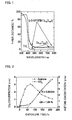
- Fig. 1 shows the UV-visible diffuse reflectance spectra of titanium oxide (TiO 2 ) cerium ion-doped titanium oxide (Ce 0.005 Ti 0.995 O 2 ) and Cu (II)-supporting cerium ion-doped titanium oxide. It can be seen from Fig. 1 that the bandgap is narrowed and the absorption wavelength end is shifted to a longer wavelength by means of cerium ion doping.
- Cerium ion-doped titanium oxide was obtained as in Example 1. This cerium ion-doped titanium oxide was then suspended and dispersed in distilled water so that the ratio of TiO 2 to distilled water was 10 mass%. FeCl 3 ⁇ 2H 2 O (Wako Pure Chemical Industries, Ltd.) was then added so that the ratio of Fe (III) to TiO 2 was 0.1 mass%, and the mixture was heated with agitation to 90°C and maintained at that temperature for 1 hour. The resulting suspension was filtered by suction filtration, and the residue was washed with distilled water and heat dried at 110°C to obtain cerium ion-doped titanium oxide with a supported trivalent ion salt as a sample for evaluation.
- Anatase-type titanium oxide (ST-01, Ishihara Sangyo Kaisha Ltd.) was used as the evaluation sample.
- Anatase-type titanium oxide (ST-01, Ishihara Sangyo Kaisha Ltd.) was annealed for 3 hours at 550°C in an ammonia gas flow (1 SCCM) to obtain nitrogen-doped titanium oxide as a sample for evaluation.
- the gas inside the vessel was then sampled at fixed intervals during irradiation, and IPA and its decomposition products acetone and CO 2 were assayed with a hydrogen flame ionization gas chromatograph (GC-8A, Shimadzu Corporation). However, the CO 2 was assayed via a methanizer (MT-N, Shimadzu Corporation), which methanizes using a metal Ni catalyst in a flow of hydrogen. The intensity of the irradiating light was measured for each wavelength with a spectral irradiance illuminance meter (USR-30V, Ushio Inc.), and adjusted to 1.00 ⁇ 10 3 mWcm -2 .
- a spectral irradiance illuminance meter USR-30V, Ushio Inc.
- FIG. 2 shows one example of IPA decomposition results for Cu (II)-supporting cerium ion-doped titanium oxide in Example 1.
- Table 1 shows the QE values from the evaluation results for Examples 1 and 2 and Comparative Examples 1 and 2.
- N.D means below the detection limit.
- Example 1 Example 2 Comparative Example 1 Comparative Example 2 Quantum yield QE 1.38% 1.12% N.D. 0.08%
- Example 2 As shown in Fig. 2 , an increase in CO 2 production attributable to acetone production and acetone reduction is seen in Example 1, confirming the presence of visible light activity. Also, as shown in Table 1, quantum yield QE is high in Examples 1 and 2, confirming an increase in light use efficiency.
Landscapes
- Chemical & Material Sciences (AREA)
- Chemical Kinetics & Catalysis (AREA)
- Engineering & Computer Science (AREA)
- Materials Engineering (AREA)
- Organic Chemistry (AREA)
- Health & Medical Sciences (AREA)
- Epidemiology (AREA)
- Life Sciences & Earth Sciences (AREA)
- Animal Behavior & Ethology (AREA)
- General Health & Medical Sciences (AREA)
- Public Health (AREA)
- Veterinary Medicine (AREA)
- Catalysts (AREA)
- Disinfection, Sterilisation Or Deodorisation Of Air (AREA)
Abstract
Description
- The present invention relates to a photocatalytic material having visible light activity, to a method of decomposing an organic substance using this photocatalytic material, to an interior member formed using this photocatalytic material, to an air cleaning device, and to a device for producing an oxidizing agent.
- Because they can oxidize and decompose organic materials and some inorganic materials such as nitrogen oxides using light, which is cheap and has an extremely low environmental impact, photocatalytic materials have been applied in recent years to environmental cleanup, deodorization, soil prevention, sterilization and other applications, and a variety of photocatalytic materials are being developed and studied.
- Well-known photocatalysts include titanium oxide, which is responsive to ultraviolet radiation, but for use in residential interiors and other environments with little ultraviolet radiation there is a need for photocatalytic materials that are responsive to visible light, and these are being studied and developed.
- For example,
Patent Document 1 discloses a photocatalytic material having visible light activity, in which the oxygen atom sites of titanium oxide crystals are partially substituted with nitrogen atoms. - In the photocatalytic material disclosed in this
Patent Document 1, visible light activity is achieved by the formation of a new isolated energy level on the negative side of the valence band of titanium oxide when the oxygen atom sites of the titanium oxides crystals are partially substituted with nitrogen atoms. When the electrons at the isolated level are exposed to photons having energy equal to or greater than the bandgap energy between the isolated level and the conduction band, they are excited to the conduction band of titanium oxide, while holes are created in the isolated level, resulting in visible light activity. - However, the isolated level formed in this way on the negative side of the valence band of titanium oxide has low potential, so the oxidative power of the holes resulting from photoexcitation of electrons by exposure to visible light is low, and the movement of holes produced at the isolated level is also restricted, so reactivity with the substrate to be oxidized is low. As a result, the problem with the photocatalytic material disclosed in
Patent Document 1 has been that it has visible light activity but low oxidative decomposition activity. - Visible light absorption can also be achieved by doping the titanium ion sites of titanium oxide with another metal ion, thereby shifting the conduction band minimum potential of titanium oxide to the positive side or forming an isolated energy level on the positive potential side of the conduction band minimum potential. However, when the conduction band minimum potential of titanium oxide is shifted to the positive side sufficiently to provide visible light absorption, or when an isolated level is formed on the positive potential side of the conduction band minimum potential, the potential of the shifted conduction band minimum or resulting isolated level is larger than the one-electron reduction potential of oxygen (-0.046 Vvs. SHE, pH = 0), and the photoexcited electrons are no longer capable of one-electron reduction of oxygen. The photoexcited electrons recombine with the resulting holes and lose their oxidative decomposition activity, and because of this metal ion-doped titanium oxide has exhibited only very low oxidative decomposition activity.
- Patent Document 1: Japanese Patent No.
3601532 - In light of this, it is an object of the present invention to provide a metal ion-doped titanium oxide photocatalytic material exhibiting strong oxidative decomposition activity in response to visible light, as well as a method of decomposing an organic substance using this strong oxidative decomposition activity, an interior member, an air cleaning device and a device for producing an oxidizing agent.
- In the photocatalytic material having visible light activity of the present invention, a divalent copper salt and/or trivalent iron salt is supported on a surface of a metal ion-doped titanium oxide obtained by doping titanium oxide with metal ions to give a metal ion-doped titanium oxide with a valence band potential of 3 V or more (vs. SHE, pH = 0) and a bandgap of 3 V or less between the valence band and an energy level of electrons excited from the valence band (including conduction band minimum potential and isolated potential).
- In order to control the valence band potential and bandgap in this way, either a conduction band minimum potential is shifted towards a positive potential or an isolated energy level is formed on a positive potential side of the conduction band minimum potential by doping the titanium oxide with metal ions, without changing the potential of the titanium oxide valence band.
- The present invention exploits the fact that divalent copper salts and trivalent iron salts function as catalysts for multi-electron reduction of oxygen. That is, when a photocatalytic material formed by carrying a divalent copper salt or trivalent iron salt on the surface of a metal ion-doped titanium oxide is exposed to light having energy equal to or greater than the bandgap energy of the metal ion-doped titanium oxide, electrons photoexcited from the valence band of the metal ion-doped titanium oxide move from the conduction band of the metal ion-doped titanium oxide to the Cu (II) ions of the divalent copper salt or the Fe (III) ions of the trivalent iron salt supported on the metal ion-doped titanium oxide, reducing the Cu (II) ions to Cu (I) ions or the Fe (III) ions to Fe (II) ions. Then, as shown in the formulae below, the Cu (I) ions and Fe (II) ions perform multi-electron reduction of oxygen atoms in the environment, producing hydrogen peroxide in the case of 2-electron reduction or water in the case of 4-electron reduction, and restoring the Cu (II) and Fe (III) to their original states.
- : 2-electron reduction
2Cu (I) + O2 + 2H+→ 2Cu (II) + H2O2
2Fe (II) + O2 + 2H → 2Fe (III) + H2O2
: 4-electron reduction
4Cu (I) + O2 + 4H → 4Cu (II) + 2H2O
4Fe (II) + O2 + 4H+ → 4Fe (III) + 2H2O
OR
3Cu (I) + O2 + 4H+ → 2Cu (II) + Cu (III) + 2H2O
4Fe (II) + O2 + 2H2O → 4Fe (III) + 4OH-
In this way, the Cu (II) ions of the divalent copper salt or the Fe (III) ions of the trivalent iron salt supported on the metal ion-doped titanium oxide function as catalysts for multi-electron reduction of oxygen. - By this mechanism, because photoexcited electrons excited from the valence band of the metal ion-doped titanium oxide are efficiently consumed, producing water or hydrogen peroxide (an oxidizing species), the problem of low activity of the photoexcited electrons which has occurred with conventional metal ion-doped titanium oxides is resolved, and the photocatalytic material of the present invention provides oxidative decomposition activity with high efficiency in response to visible light.
- Moreover, the potential of the valence band of the metal ion-doped titanium oxide is high, 3.0 V or more (vs. SHE, pH = 0) as in the case of titanium oxide, and the holes produced in the valence band by light irradiation have the same strong oxidative power as holes produced in the valence band by exposure to ultraviolet light in ordinary photocatalytic titanium oxide. As a result, while in nitrogen-doped titanium oxide such as that disclosed in
Patent Document 1 the holes produced in the isolated energy level have only weak oxidative power, the photocatalytic material of the present invention provides oxidative decomposition activity with high efficiency. - Another feature of the present invention is that a potential of the positively-shifted conduction band minimum or a potential of the isolated level formed on the positive side of the conduction band minimum potential is 0 V or more (vs. SHE, pH = 0) but 0.8 V or less (vs. SHE, pH = 0).
- The reason why it is desirable for the positively-shifted conduction band minimum potential or the potential of the isolated level formed on the positive side of the conduction band minimum to be within this range is that this makes it easier for photoexcited electrons excited from the valence band of the metal ion-doped titanium oxide to move from the valence band of the metal ion-doped titanium oxide to the Cu (II) ions of the divalent copper salt and/or the Fe (III) ions of the trivalent iron salt supported on the metal ion-doped titanium oxide, given that the oxidation-reduction potential of Cu (I) and Cu (II) ions is 0.16 V (vs. SHE, pH = 0) while the oxidation-reduction potential of Fe (II) and Fe (III) ions is 0.77 V (vs. SHE, pH = 0).
- Moreover, in the present invention, an amount of the divalent copper salt and/or trivalent iron salt supported on the metal ion-doped titanium oxide is preferably in a range of 0.0001 to 1% as a mass ratio of copper element and/or iron element to metal ion-doped titanium oxide.
- If the supported amount of the divalent copper salt or trivalent iron salt is set within this range, the divalent copper salt or trivalent iron salt will be able to function adequately as a multi-electron reduction catalyst without blocking light irradiation of the metal ion-doped titanium oxide.
- In the present invention, anions of the divalent copper salt or trivalent iron salt are preferable hydroxide ions. Good photocatalytic activity can be obtained with such hydroxide ions.
- In the method of decomposing an organic substance of the present invention, the aforementioned photocatalytic material having visible light activity is exposed to visible light to decompose an organic substance.
- As discussed above, the photocatalytic material of the present invention has strong oxidative decomposition activity when exposed to visible light, and can oxidatively decompose an organic substance with which it comes in contact.
- The interior member of the present invention includes the aforementioned photocatalytic material having visible light activity in a surface layer, while the air cleaning device and device for producing an oxidizing agent of the present invention are formed using the aforementioned photocatalytic material having visible light activity.
- When the photocatalytic material of the present invention is exposed to visible light having energy equal to or greater than the bandgap energy of the metal ion-doped titanium oxide, holes with strong oxidative power are produced, and hydrogen peroxide having oxidative power is also produced by means of the divalent copper salt or trivalent iron salt. Depending on the potential of the positively-shifted conduction band or the potential of the isolated level formed on the positive side of the conduction band minimum, the absorption wavelength end of the metal ion-doped titanium oxide is about 450 nm, while the absorption wavelength end of ordinary photocatalytic titanium oxide is about 400 nm. Because the white fluorescent lamps commonly used in interiors have strong luminance at about 400 to 450 nm, the photocatalytic material of the present invention can provide strong oxidative decomposition activity in response to visible light at these wavelengths in interior environments for example, something that is not provided by conventional titanium oxide photocatalysts.
- Because the conductive band minimum potential of the titanium oxide is so small in conventional titanium oxide photocatalysts, oxygen in the environment undergoes one-electron reduction, producing superoxide anions (·O2 -), which are an active oxygen species.
- : One-electron reduction
O2 + e- → ·O2 -
However, in the photocatalytic material of the present invention the photoexcited electrons that are excited by exposure to visible light are consumed by multi-electron reduction of oxygen via the Cu (II) ions or Fe (III) ions, producing hydrogen peroxide or water as discussed above. Thus, from a safety standpoint the photocatalytic material of the present invention has the advantage of not producing superoxide anions, which are an active oxygen species. - That is, the photocatalytic material of the present invention has the advantages of exhibiting strong oxidative decomposition activity in response to visible light, and not producing superoxide anions, which are a harmful active oxygen species. This means that it has the properties of visible light activity and safety that are especially valued when photocatalytic materials are used in interior members in residences, and the photocatalytic material of the present invention is especially suited to use in interior members in residences. In other words, a residential interior member formed with a surface layer of the photocatalytic material of the present invention has strong visible light activity and safety.
- Because it exhibits strong oxidative decomposition activity in response to visible light, moreover, the photocatalytic material of the present invention is suited to use in air cleaning devices. That is, in air cleaning devices using conventional titanium oxide and other catalysts, the catalyst must be activated using an expensive UV light sources, but with the photocatalytic material of the present invention it is possible to prepare an inexpensive air cleaning device because strong oxidative decomposition activity can be achieved using a cheap fluorescent light source.
- Moreover, the photocatalytic material of the present invention produces hydrogen peroxide as discussed above when exposed to visible light. Hydrogen peroxide is a stable oxidizing agent, and because it is also relatively long-lived, it has the potential to retain the oxidative decomposition activity of the photocatalyst of the present invention for some time after the end of light exposure. In addition, if the hydrogen peroxide thus produced could be transported via a suitable medium, the oxidative decomposition activity could be used at a location other than the surface of the photocatalytic material of the present invention. Consequently, a stable and long-lived oxidizing agent can be produced if a device for producing an oxidizing agent is formed using the photocatalytic material of the present invention.
- The present invention provides a metal ion-doped titanium oxide photocatalytic material that exhibits strong oxidative decomposition activity when exposed to visible light.
- A method of decomposing an organic substance, an interior member, an air cleaning device and a device for producing an oxidizing agent can also be provided that make use of this strong oxidative decomposition activity.
-
-
Fig. 1 is a graph showing the UV-visible diffuse reflectance spectra; and -
Fig. 2 is a graph showing the results of IPA analysis in Example 1. - The best mode for carrying out the present invention is explained below.
- The titanium oxide in the present invention is not particularly limited, and fine particle titanium oxide or thin-film titanium oxide can be used. Fine particles are especially desirable because a large specific surface area of the photocatalyst is advantageous in photocatalytic reactions. The crystal structure of the titanium oxide is also not particularly limited, and may be rutile, anatase, brookite or the like.
- The present invention uses metal ion-doped titanium oxide, which is titanium oxide doped with metal ions. The metal ions used for doping the titanium oxide are not particularly limited so long as they yield a valence band potential of 3 V or more (vs. SHE, pH = 0) and a bandgap of 3 V or less between the valence band and the energy level of electrons excited from the valence band, specifically by shifting the conduction band minimum potential of the titanium oxide to the positive side or by forming an isolated level on the positive potential side of the conduction band minimum, but examples include Ce (IV), Ge (IV), V (V), Ga (III) and the like. The higher the potential of the valence band, the greater the oxidizing power of the holes produced in the valence band, but if the potential is too high the bandgap will spread and visible light absorption will be lost, so about 3 to 3.3 V (equivalent to titanium oxide) is desirable. The smaller the bandgap, the more the wavelength of absorbable light will shift towards longer wavelengths, expanding the effective wavelength range, but the size of the bandgap is also restricted by the desirable range of potential between the valence band and the positively-shifted conduction band minium potential, or the potential of the isolated level formed on the positive side of the conduction band minimum in the metal ion-doped titanium oxide, and is therefore preferably in the range of 2.2 to 3 V.
- The method of manufacturing the metal ion-doped titanium oxide by doping titanium oxide with metal ions is not particularly limited, and a sol-gel method, solid-phase method, hydrothermal method, or lamination method using sputtering or CVD can be used.
- The photocatalytic material of the present invention can then be obtained by supporting a divalent copper salt and/or trivalent iron salt on the surface of the metal ion-doped titanium oxide. Either a divalent copper salt or a trivalent iron salt may be supported, or both a divalent copper salt and a trivalent ion salt may be supported.
- The method of supporting the divalent copper salt or trivalent iron salt on the metal ion-doped titanium oxide is not particularly limited, and aqueous solution impregnation may be used for example.
- In the present invention, the divalent copper salt or trivalent iron salt is not particularly limited, and for example cupric chloride (CuCl2·2H2O), ferric chloride (FeCl3) or the like can be used as the starting material for the divalent copper salt or trivalent iron salt.
- Of these, an anion of the divalent copper salt or trivalent iron salt is preferable a hydroxide ion. This is because the photocatalytic activity may be less with other ion species. As the starting material, cupric chloride (CuCl2·2H2O) can be used in the case of a divalent copper salt and ferric chloride (FeCl3) can be used in the case of a trivalent iron salt, and when the photocatalytic material of the present invention is produced, the anions are converted to hydroxide ions as the divalent copper salt or trivalent iron salt becomes supported in the form of highly dispersed fine particles on the surface of the metal ion-doped titanium oxide by means of a process of heating and impregnating the metal ion-doped titanium oxide in an aqueous solution. Cu (II) is presumed to be in a six-coordinate state, and the specific divalent copper salt is presumed to be Ti-O-Cu(OH)2·3H2O for example when bound to the oxygen atoms of the metal ion-doped titanium oxide, or Cu(OH)2·4H2O for example when adsorbed.
- The amount of the divalent copper salt or trivalent iron salt that is supported on the metal ion-doped titanium oxide is preferably such that the amount of the copper element in the divalent copper salt or the iron element in the trivalent iron salt is within the range of 0.0001 to 1% as a mass percentage of the metal ion-doped titanium oxide. When a divalent copper salt and trivalent iron salt are each supported independently, it is set so that the copper element in the divalent copper salt is within the range of 0.0001 to 1% and the iron element in the trivalent iron salt is within the range of 0.0001 to 1%, while if both a divalent copper salt and trivalent iron salt are supported, it is set so that the total of the copper element in the divalent copper salt and the iron element in the trivalent iron salt is within the range of 0.0001 to 1%.
- In the photocatalytic material of the present invention, since it is the metal ion-doped titanium oxide that is photoexcited, photocatalytic activity may be reduced if light irradiation of the metal ion-doped titanium oxide is blocked when the metal ion-doped titanium oxide is broadly covered with a divalent copper salt or trivalent iron salt. Moreover, because the divalent copper salt or trivalent iron salt functions as a catalyst for multi-electron reduction of oxygen, it is preferably supported on the metal ion-doped titanium oxide in the form of highly-dispersed fine particles rather than being aggregated, in order to achieve higher catalytic efficiency. For these reasons, the supported amount of the divalent copper salt or trivalent iron salt is preferably such that the amount of the copper element or iron element is 1% or less as a mass percentage of the metal ion-doped titanium oxide. Conversely, if too little divalent copper salt or trivalent iron salt is supported it will not function adequately as a multi-electron reduction catalyst, so the amount of the copper element or iron element is preferably 0.0001% or more as a mass percentage of the metal ion-doped titanium oxide.
- As discussed above, when a photocatalytic material of the present invention obtained in this way is exposed to visible light having energy equal to or greater than the bandgap of the metal ion-doped titanium oxide, holes with strong oxidizing power are produced and hydrogen peroxide is also produced by means of the divalent copper salt or trivalent iron salt, and both of these can be used to oxidatively decompose an organic material. The absorption wavelength edge of the metal ion-doped titanium oxide is about 450 nm, and since the white fluorescent lamps commonly used in interiors have strong luminance at about 400 to 450 nm, the photocatalytic material of the present invention can be used to provide strong oxidative decomposition activity under visible light in interior environments for example.
- The organic material that is decomposed by the photocatalytic material of the present invention is not particularly limited, and examples include ketones and aldehydes such as acetaldehyde and formaldehyde (a cause of "sick house syndrome"), as well as toluene and other volatile organic compounds (VOCs). Other organic materials that can be oxidatively decomposed include methyl mercaptane, trimethylamine and other odoriferous materials, sebum, soap residue, grease, flavorings and other contaminants; and E. coli, Staphylococcus aureus and other bacteria and the like. Thus, the photocatalytic material of the present invention has the functions of environmental cleanup, deodorization, soil prevention, sterilization and the like, and can be used for applications requiring these functions.
- There are no particular limits on the members, equipment and the like in which the photocatalytic material of the present invention can be used. The photocatalytic material of the present invention has excellent oxidative decomposition activity in response to ultraviolet light as well as visible light, and can also be used favorably in applications for which existing photocatalytic materials are used. Of these, application to interior members and air cleaning devices is preferred.
- As discussed above, the photocatalytic material of the present invention has the properties of exhibiting strong oxidative decomposition activity in response to visible light, and not producing superoxide anions, which are a harmful active oxygen species. The properties are especially valued for photocatalytic materials used in interior members in residences, so the photocatalytic material of the present invention is especially applicable to interior members used in residences.
- Application to interior members can be accomplished by including the photocatalytic material of the present invention in the surface layer of an interior member. The method of including the photocatalytic material in the surface layer of an interior member is not particularly limited, and for example the photocatalytic material may be compounded with a coating material, and this coating material can be coated on the surface of the interior member to thereby form a surface layer containing the photocatalytic material.
- Specific examples of interior members containing the photocatalytic material of the present invention in the surface layer are not particularly limited, but may include doors, cupboard doors, ceiling materials, wall materials, floor materials, partitions, fixtures, stairs, railings, banisters, window frames, sinks, and kitchen, lavatory and bath fixtures and the like.
- Since the photocatalytic material of the present invention exhibits strong oxidative decomposition activity in response to visible light as discussed above, it is also applicable to air cleaning devices. That is, in air cleaning devices using conventional titanium oxide and other photocatalysts, the catalyst must be activated with an expensive UV light source, but with the photocatalytic material of the present invention it is possible to prepare an inexpensive air cleaning device because strong oxidative decomposition activity can be achieved using a cheap fluorescent light source.
- The method of using the photocatalytic material of the present invention in an air cleaning device is not particularly limited, but for example the photocatalytic material can be carried on an air filter that is incorporated into an air cleaning device.
- Another feature of the photocatalytic material of the present invention is that it produces hydrogen peroxide when exposed to visible light. Hydrogen peroxide is a stable oxidizing agent, and since it also has a relatively long life, it has the potential to retain the oxidative decomposition activity of the photocatalyst of the present invention for some time after the end of light exposure. In addition, if the hydrogen peroxide thus produced could be transported via a suitable medium, the oxidative decomposition activity could be used at a location other than the surface of the photocatalytic material of the present invention. Thus, the photocatalytic material of the present invention can also be applied to a device for producing an oxidizing agent.
- The method of using the photocatalytic material of the present invention as a device for producing an oxidizing agent is not particularly limited, but one example is a method of manufacturing a device for producing an oxidizing agent equipped with a light source and a member with the photocatalytic material of the present invention supported thereon. This device for producing an oxidizing agent could be incorporated into a washing machine, which would produce hydrogen peroxide inside the washing machine using water as the medium for hydrogen peroxide, and soil and odors inside the washing machine would then be oxidatively decomposed by the hydrogen peroxide.
- Next, the present invention is explained in detail by means of examples. The present invention is not limited to these examples, however.
- Titanium oxide (TiO2) powder (rutile, Tayca) and cerium oxide (CeO2, Wako Pure Chemical Industries, Ltd.) were mixed at a molar ratio of 0.995:0.005, and baked for 5 hours at 1200°C to obtain cerium ion-doped titanium oxide. The valence band maximum potential of this cerium ion-doped titanium oxide was 3 V (vs. SHE, pH = 0) as measured by ultraviolet photoelectron spectroscopy. The valence band minimum potential was 0.05 V (vs. SHE, pH = 0) as measured by flat band potential measurement.
- This cerium ion-doped titanium oxide was then suspended and dispersed in distilled water so that the ratio of TiO2 to distilled water was 10 mass%. Next, CuCl2·2H2O (Wako Pure Chemical Industries, Ltd.) was added so that the ratio of Cu (II) to TiO2 was 0.1 mass%, and the mixture was heated with agitation to 90°C and maintained at that temperature for 1 hour. The resulting suspension was filtered by suction filtration, and the residue was washed with distilled water and heat dried at 110°C to obtain a cerium ion-doped titanium oxide with a supported divalent copper salt as a sample for evaluation.
- When this Cu (II)-supporting cerium ion-doped titanium oxide with supported divalent copper salt was subjected to inductively-coupled plasma emission spectrometry and atomic absorption analysis, 0.03 mass% (vs. TiO2) of Cu (II) was found to be supported.
-
Fig. 1 shows the UV-visible diffuse reflectance spectra of titanium oxide (TiO2) cerium ion-doped titanium oxide (Ce0.005Ti0.995O2) and Cu (II)-supporting cerium ion-doped titanium oxide. It can be seen fromFig. 1 that the bandgap is narrowed and the absorption wavelength end is shifted to a longer wavelength by means of cerium ion doping. - Cerium ion-doped titanium oxide was obtained as in Example 1. This cerium ion-doped titanium oxide was then suspended and dispersed in distilled water so that the ratio of TiO2 to distilled water was 10 mass%. FeCl3·2H2O (Wako Pure Chemical Industries, Ltd.) was then added so that the ratio of Fe (III) to TiO2 was 0.1 mass%, and the mixture was heated with agitation to 90°C and maintained at that temperature for 1 hour. The resulting suspension was filtered by suction filtration, and the residue was washed with distilled water and heat dried at 110°C to obtain cerium ion-doped titanium oxide with a supported trivalent ion salt as a sample for evaluation.
- When this Fe (III)-supporting cerium ion-doped titanium oxide with supported trivalent iron salt was subjected to inductively-coupled plasma emission spectrometry and atomic absorption analysis, 0.02 mass% (vs. TiO2) Fe (III) was found to be supported.
- Anatase-type titanium oxide (ST-01, Ishihara Sangyo Kaisha Ltd.) was used as the evaluation sample.
- Anatase-type titanium oxide (ST-01, Ishihara Sangyo Kaisha Ltd.) was annealed for 3 hours at 550°C in an ammonia gas flow (1 SCCM) to obtain nitrogen-doped titanium oxide as a sample for evaluation.
- The photocatalytic activity of the evaluation samples of Examples 1 and 2 and Comparative Examples 1 and 2 above was evaluated by assaying the concentrations of acetone and CO2 produced as a result of vapor-phase oxidative decomposition of 2-propanol (IPA) by exposure to visible light. The details are given below.
- First, 300 mg of each evaluation sample was spread uniformly on a Petri dish (area 5.51 cm2) having an inner diameter of 26.5 mm, and this was enclosed in a 500 ml quartz vessel. Synthetic air was supplied to the vessel, which was then exposed to an all-optic Xe lamp (Luminar Ace 251, Hayashi Watch-Works Co., Ltd.) to decompose residual organic substances on the surface of the evaluation sample. Once CO2 emission from the residual organic substances was confirmed to have ended, synthetic air was once again supplied inside the vessel.
- Meanwhile, reactive IPA gas was passed through dry nitrogen gas, and then collected as vaporized IPA inside a tedra pack. The equivalent of 300 ppmv (6.1 µmol) of the collected IPA was introduced into a vessel supplied with synthetic air. This vessel was then left in a dark place, the degree to which the introduced IPA was adsorbed on the surface was observed for 10 hours or more, and absorption equilibrium was confirmed. After absorption equilibrium had been confirmed, the vessel was irradiated from the top with a Xe lamp as the light source with the irradiating light wavelength range controlled at 400 to 530 nm by means of glass filters (L-42, B47, C-40C, AGC Techno Glass Co., Ltd.). The gas inside the vessel was then sampled at fixed intervals during irradiation, and IPA and its decomposition products acetone and CO2 were assayed with a hydrogen flame ionization gas chromatograph (GC-8A, Shimadzu Corporation). However, the CO2 was assayed via a methanizer (MT-N, Shimadzu Corporation), which methanizes using a metal Ni catalyst in a flow of hydrogen. The intensity of the irradiating light was measured for each wavelength with a spectral irradiance illuminance meter (USR-30V, Ushio Inc.), and adjusted to 1.00 × 10³ mWcm-2. The number of photons absorbed per unit time (absorbed photons) was determined by multiplying the irradiated area (Petri dish area 5.51 cm2) times the absorbed ratio (1-reflectance), which was determined using the diffuse radiation spectrum of each evaluation sample. The Co2 production rate was determined by the least-square method, and the quantum yield QE was determined by the following formula.
- QE = 6 × CO2 production rate/absorbed photons
Fig. 2 shows one example of IPA decomposition results for Cu (II)-supporting cerium ion-doped titanium oxide in Example 1. Table 1 shows the QE values from the evaluation results for Examples 1 and 2 and Comparative Examples 1 and 2. In Comparative Example 1, "N.D." means below the detection limit. -
[Table 1] Example 1 Example 2 Comparative
Example 1Comparative
Example 2Quantum yield QE 1.38% 1.12% N.D. 0.08% - As shown in
Fig. 2 , an increase in CO2 production attributable to acetone production and acetone reduction is seen in Example 1, confirming the presence of visible light activity. Also, as shown in Table 1, quantum yield QE is high in Examples 1 and 2, confirming an increase in light use efficiency.
Claims (9)
- A photocatalytic material having visible light activity, wherein a divalent copper salt and/or trivalent iron salt is supported on a surface of a metal ion-doped titanium oxide obtained by doping titanium oxide with metal ions to give a metal ion-doped titanium oxide with a valence band potential of 3 V or more (vs. SHE, pH = 0), and a bandgap of 3 V or less between the valence band and an energy level of electrons excited from the valence band (including conduction band minimum potential and isolated potential).
- The photocatalytic material having visible light activity according to Claim 1, wherein a divalent copper salt and/or trivalent iron salt is supported on a surface of metal ion-doped titanium oxide in which a conduction band minimum potential is shifted towards a positive potential or an isolated energy level is formed on a positive potential side of the conduction band minimum potential by doping the titanium oxide with metal ions.
- The photocatalytic material having visible light activity according to Claim 1 or 2, wherein an amount of the divalent copper salt and/or trivalent iron salt supported on the metal ion-doped titanium oxide is in a range of 0.0001% to 1% as a mass ratio of copper element and/or iron element to metal ion-doped titanium oxide.
- The photocatalytic material having visible light activity according to any one of Claims 1 to 3, wherein a potential of the positively-shifted conduction band minimum or a potential of the isolated energy level formed on the positive potential side of the conduction band minimum of the metal ion-doped titanium oxide is 0 V or more (vs. SHE, pH = 0) but 0.8 V or less (vs. SHE, pH = 0).
- The photocatalytic material having visible light activity according to any one of Claims 1 to 4, wherein anions of the divalent copper salt and/or trivalent iron salt are hydroxide ions.
- A method of decomposing an organic substance by exposing the photocatalytic material having visible light activity according to any one of Claims 1 to 5 to visible light to decompose an organic substance.
- An interior member comprising a photocatalytic material having visible light activity according to any one of Claims 1 to 5 in a surface layer.
- An air cleaning device formed using the photocatalytic material having visible light activity according to any one of Claims 1 to 5.
- A device for producing an oxidizing agent, formed by using the photocatalytic material having visible light activity according to any one of Claims 1 to 5.
Applications Claiming Priority (2)
| Application Number | Priority Date | Filing Date | Title |
|---|---|---|---|
| JP2008279828A JP5498009B2 (en) | 2008-10-30 | 2008-10-30 | Photocatalyst material, organic matter decomposition method, interior member, air cleaning device, oxidizer manufacturing device |
| PCT/JP2009/068572 WO2010050548A1 (en) | 2008-10-30 | 2009-10-29 | Photocatalytic material, method of decomposing organic substance, interior member, air cleaner, and device for producing oxidizing agent |
Publications (2)
| Publication Number | Publication Date |
|---|---|
| EP2343126A1 true EP2343126A1 (en) | 2011-07-13 |
| EP2343126A4 EP2343126A4 (en) | 2014-10-01 |
Family
ID=42128907
Family Applications (1)
| Application Number | Title | Priority Date | Filing Date |
|---|---|---|---|
| EP09823658.1A Withdrawn EP2343126A4 (en) | 2008-10-30 | 2009-10-29 | PHOTOCATALYTIC MATERIAL, METHOD FOR DECOMPOSING ORGANIC SUBSTANCE, INTERIOR MEMBER, AIR CLEANER, AND DEVICE FOR PRODUCING OXIDIZING AGENT |
Country Status (7)
| Country | Link |
|---|---|
| US (1) | US8603302B2 (en) |
| EP (1) | EP2343126A4 (en) |
| JP (1) | JP5498009B2 (en) |
| KR (1) | KR101334967B1 (en) |
| CN (1) | CN102202789B (en) |
| TW (1) | TWI404567B (en) |
| WO (1) | WO2010050548A1 (en) |
Cited By (1)
| Publication number | Priority date | Publication date | Assignee | Title |
|---|---|---|---|---|
| WO2018149980A1 (en) * | 2017-02-17 | 2018-08-23 | Roberto Benedini | System for disinfecting and sanitizing environments |
Families Citing this family (26)
| Publication number | Priority date | Publication date | Assignee | Title |
|---|---|---|---|---|
| CN1780657A (en) | 2002-08-30 | 2006-05-31 | 阿罗国际公司 | Dual Y-shaped multilumen catheter with selectively attached socket |
| JP5567828B2 (en) * | 2009-11-30 | 2014-08-06 | パナソニック株式会社 | Visible light responsive photocatalyst coating material, coated product and allergen inactivation method |
| JP5591683B2 (en) * | 2010-01-09 | 2014-09-17 | 株式会社ダイセル | Metal ion-supported titanium oxide particles having an exposed crystal face and method for producing the same |
| JP5627006B2 (en) * | 2010-06-10 | 2014-11-19 | 三井化学株式会社 | Photocatalyst and method for producing the same |
| KR101478234B1 (en) * | 2010-08-20 | 2014-12-31 | 후지코 가부시키가이샤 | Method for producing photocatalyst coating film, and photocatalyst coating film |
| US9144237B2 (en) | 2012-08-10 | 2015-09-29 | Tsukasa Sakurada | Sterilizing and deodorizing agents, their method of manufacture and uses |
| EP3006523B1 (en) * | 2013-06-04 | 2017-08-02 | Panasonic Intellectual Property Management Co., Ltd. | Cold-curing photocatalytic coating material, cold-curing coating composition and interior material |
| US20150037787A1 (en) * | 2013-07-31 | 2015-02-05 | International Business Machines Corporation | Polynucleotide configuration for reliable electrical and optical sensing |
| JP6342225B2 (en) * | 2014-06-09 | 2018-06-13 | 国立研究開発法人物質・材料研究機構 | Photocatalyst composite material and method for producing the same |
| WO2016152487A1 (en) | 2015-03-23 | 2016-09-29 | 信越化学工業株式会社 | Visible-light-responsive photocatalytic-titanium-oxide-particulate dispersion liquid, manufacturing method therefor, and member having thin photocatalytic film on surface thereof |
| JP6552090B2 (en) * | 2015-05-08 | 2019-07-31 | 国立研究開発法人物質・材料研究機構 | Photocatalyst composite material and method for producing the same |
| JP6759565B2 (en) * | 2015-11-27 | 2020-09-23 | 東洋紡株式会社 | Aldehyde removal catalyst and its manufacturing method, aldehyde gas removal method |
| CN107398302A (en) * | 2016-05-20 | 2017-11-28 | 伦慧东 | Micro-loading type titanium dioxide photocatalyst and preparation method thereof |
| CN107469762B (en) * | 2016-06-20 | 2020-09-01 | 伦慧东 | Composite material of micro-supported titanium oxide and silica gel and preparation method thereof |
| CN109477337B (en) | 2016-07-14 | 2021-01-12 | 信越化学工业株式会社 | Interior material having surface layer having visible light-responsive photocatalytic activity and method for producing same |
| CN109789396B (en) | 2016-09-12 | 2022-04-05 | 信越化学工业株式会社 | Visible light-responsive photocatalytic titanium oxide particle mixture, dispersion thereof, method for producing dispersion, photocatalyst film, and member having photocatalyst film on surface |
| JP7088082B2 (en) | 2019-03-04 | 2022-06-21 | 信越化学工業株式会社 | A method for producing a titanium oxide fine particle mixture, a dispersion thereof, a photocatalyst thin film, a member having a photocatalyst thin film on the surface, and a titanium oxide fine particle dispersion. |
| JP7070474B2 (en) | 2019-03-04 | 2022-05-18 | 信越化学工業株式会社 | Titanium oxide fine particles, their dispersion, and a method for producing the dispersion. |
| CN111411510B (en) * | 2020-04-28 | 2022-10-21 | 同曦集团有限公司 | An antibacterial, anti-mite and anti-virus finishing agent, plush fabric and preparation method and application thereof |
| US20230356196A1 (en) | 2020-09-15 | 2023-11-09 | Shin-Etsu Chemical Co., Ltd. | Titanium oxide particles, dispersion liquid thereof, photocatalyst thin film, member having photocatalyst thin film on surface, and method for producing titanium oxide particle dispersion liquid |
| WO2022059512A1 (en) | 2020-09-15 | 2022-03-24 | 信越化学工業株式会社 | Titanium oxide particles, dispersion liquid of same, photocatalyst thin film, member having photocatalyst thin film on surface, and method for producing dispersion liquid of titanium oxide particles |
| TWI915544B (en) | 2021-04-21 | 2026-02-21 | 日商信越化學工業股份有限公司 | Titanium oxide particle/metal particle composition and its manufacturing method |
| TWI914521B (en) | 2021-04-21 | 2026-02-11 | 日商信越化學工業股份有限公司 | Titanium oxide particle/metal particle composition and its manufacturing method |
| CN113398752B (en) * | 2021-06-22 | 2022-01-11 | 深圳特沃德环保科技有限公司 | A kind of air purification material with formaldehyde removal effect and preparation method thereof |
| CN114162856B (en) * | 2021-12-07 | 2023-12-05 | 贵州民族大学 | Method for doping titanium oxide by using Cheng Tie under high temperature and high pressure |
| JP7537706B2 (en) * | 2021-12-24 | 2024-08-21 | 株式会社オペス | Air purifying unit and air purifying device |
Family Cites Families (7)
| Publication number | Priority date | Publication date | Assignee | Title |
|---|---|---|---|---|
| TW431907B (en) * | 1994-02-07 | 2001-05-01 | Ishihara Sangyo Kaisha | Method of removing harmful materials |
| TW365547B (en) * | 1994-12-26 | 1999-08-01 | Takeda Chemical Industries Ltd | Catalytic compositions and a deodorizing method using the same |
| JP3624722B2 (en) * | 1998-11-18 | 2005-03-02 | 本田技研工業株式会社 | Methanol reforming catalyst and methanol reforming catalyst apparatus using the same |
| DE19911738A1 (en) * | 1999-03-16 | 2000-09-28 | Fraunhofer Ges Forschung | Titanium dioxide photocatalyst doped with Fe · 3 ·· + · ions |
| JP3601532B2 (en) | 1999-08-05 | 2004-12-15 | 株式会社豊田中央研究所 | Photocatalyst substance, photocatalyst body and production method thereof |
| WO2001010552A1 (en) | 1999-08-05 | 2001-02-15 | Kabushiki Kaisha Toyota Chuo Kenkyusho | Photocatalytic material, photocatalytic article and method for their preparation |
| CN1308069C (en) * | 2004-08-31 | 2007-04-04 | 中国建筑材料科学研究院 | High activity photo catalyzed air purifying powder material and its preparation method and application |
-
2008
- 2008-10-30 JP JP2008279828A patent/JP5498009B2/en not_active Expired - Fee Related
-
2009
- 2009-10-29 EP EP09823658.1A patent/EP2343126A4/en not_active Withdrawn
- 2009-10-29 WO PCT/JP2009/068572 patent/WO2010050548A1/en not_active Ceased
- 2009-10-29 KR KR1020117010475A patent/KR101334967B1/en not_active Expired - Fee Related
- 2009-10-29 US US13/124,669 patent/US8603302B2/en not_active Expired - Fee Related
- 2009-10-29 CN CN200980143495.0A patent/CN102202789B/en not_active Expired - Fee Related
- 2009-10-30 TW TW098136945A patent/TWI404567B/en not_active IP Right Cessation
Cited By (1)
| Publication number | Priority date | Publication date | Assignee | Title |
|---|---|---|---|---|
| WO2018149980A1 (en) * | 2017-02-17 | 2018-08-23 | Roberto Benedini | System for disinfecting and sanitizing environments |
Also Published As
| Publication number | Publication date |
|---|---|
| KR101334967B1 (en) | 2013-12-02 |
| WO2010050548A1 (en) | 2010-05-06 |
| CN102202789A (en) | 2011-09-28 |
| JP2010104913A (en) | 2010-05-13 |
| US8603302B2 (en) | 2013-12-10 |
| CN102202789B (en) | 2014-03-12 |
| JP5498009B2 (en) | 2014-05-21 |
| KR20110069847A (en) | 2011-06-23 |
| TWI404567B (en) | 2013-08-11 |
| TW201026384A (en) | 2010-07-16 |
| US20110198210A1 (en) | 2011-08-18 |
| EP2343126A4 (en) | 2014-10-01 |
Similar Documents
| Publication | Publication Date | Title |
|---|---|---|
| US8603302B2 (en) | Photocatalytic material, method of decomposing organic substance, interior member, air cleaning device, and device for producing oxidizing agent | |
| KR101334970B1 (en) | Photocatalyst material, method for decomposition of organic material, interior member, air purification device, and appatarus for preparation of oxidizing agent | |
| JP5129897B1 (en) | Copper compound-supported titanium oxide photocatalyst and method for producing the same | |
| JP6342225B2 (en) | Photocatalyst composite material and method for producing the same | |
| TWI476043B (en) | Photocatalyst material and method of manufacturing same | |
| JP6995334B2 (en) | Photocatalyst and how to use it | |
| US20070193875A1 (en) | Photocatalyst materials having semiconductor characteristics and methods for manufacturing and using the same | |
| US10507454B2 (en) | Photocatalyst material and method for producing same | |
| JP4878141B2 (en) | Composite photocatalyst | |
| US10576459B2 (en) | Photocatalyst material | |
| JP2006198464A (en) | Visible light response type photocatalyst and its production method | |
| CN103079703B (en) | The manufacture method of photochemical catalyst tunicle and photochemical catalyst tunicle | |
| JP4842607B2 (en) | Visible light responsive photocatalyst, visible light responsive photocatalyst composition, and method for producing the same | |
| JP2011020009A (en) | Photocatalyst body for decomposing volatile aromatic compound, and functional product of photocatalyst | |
| JPWO2007097220A1 (en) | Visible light responsive photocatalyst | |
| KR101046313B1 (en) | Method for preparing nano metal supported metal oxide catalyst and nano metal supported metal oxide catalyst produced thereby | |
| JP2006198465A (en) | Photocatalyst and its production method | |
| JP2005095804A (en) | Mixed catalyst and honeycomb using the same | |
| Janardhana et al. | Bandgap Engineering as a Potential Tool for Quantum Efficiency Enhancement |
Legal Events
| Date | Code | Title | Description |
|---|---|---|---|
| PUAI | Public reference made under article 153(3) epc to a published international application that has entered the european phase |
Free format text: ORIGINAL CODE: 0009012 |
|
| 17P | Request for examination filed |
Effective date: 20110412 |
|
| AK | Designated contracting states |
Kind code of ref document: A1 Designated state(s): AT BE BG CH CY CZ DE DK EE ES FI FR GB GR HR HU IE IS IT LI LT LU LV MC MK MT NL NO PL PT RO SE SI SK SM TR |
|
| AX | Request for extension of the european patent |
Extension state: AL BA RS |
|
| RIN1 | Information on inventor provided before grant (corrected) |
Inventor name: TAKAHAMA, KOICHI Inventor name: IRIE, HIROSHI Inventor name: MIKI, SHINICHIRO Inventor name: HASHIMOTO, KAZUHITO Inventor name: YU, HUOGEN Inventor name: KAMIYA, KAZUHIDE Inventor name: YAGUCHI, MITSUO |
|
| RIN1 | Information on inventor provided before grant (corrected) |
Inventor name: HASHIMOTO, KAZUHITO Inventor name: YAGUCHI, MITSUO Inventor name: YU, HUOGEN Inventor name: TAKAHAMA, KOICHI Inventor name: MIKI, SHINICHIRO Inventor name: KAMIYA, KAZUHIDE Inventor name: IRIE, HIROSHI |
|
| DAX | Request for extension of the european patent (deleted) | ||
| RAP1 | Party data changed (applicant data changed or rights of an application transferred) |
Owner name: PANASONIC CORPORATION Owner name: THE UNIVERSITY OF TOKYO |
|
| RIN1 | Information on inventor provided before grant (corrected) |
Inventor name: HASHIMOTO, KAZUHITO Inventor name: YU, HOUGEN Inventor name: YAGUCHI, MITSUO Inventor name: MIKI, SHINICHIRO Inventor name: IRIE, HIROSHI Inventor name: KAMIYA, KAZUHIDE Inventor name: TAKAHAMA, KOICHI |
|
| A4 | Supplementary search report drawn up and despatched |
Effective date: 20140828 |
|
| RIC1 | Information provided on ipc code assigned before grant |
Ipc: A61L 9/00 20060101ALI20140822BHEP Ipc: B01J 35/02 20060101AFI20140822BHEP Ipc: B01J 23/72 20060101ALI20140822BHEP Ipc: B01J 23/745 20060101ALI20140822BHEP Ipc: A61L 9/01 20060101ALI20140822BHEP |
|
| STAA | Information on the status of an ep patent application or granted ep patent |
Free format text: STATUS: THE APPLICATION HAS BEEN WITHDRAWN |
|
| 18W | Application withdrawn |
Effective date: 20170612 |