EP2342264B1 - Methods and kits for the determining the presence or absence of cyanobacteria toxins - Google Patents
Methods and kits for the determining the presence or absence of cyanobacteria toxins Download PDFInfo
- Publication number
- EP2342264B1 EP2342264B1 EP09824083.1A EP09824083A EP2342264B1 EP 2342264 B1 EP2342264 B1 EP 2342264B1 EP 09824083 A EP09824083 A EP 09824083A EP 2342264 B1 EP2342264 B1 EP 2342264B1
- Authority
- EP
- European Patent Office
- Prior art keywords
- cyanobacterial
- sample
- toxin
- alkaloid
- cyclic peptide
- Prior art date
- Legal status (The legal status is an assumption and is not a legal conclusion. Google has not performed a legal analysis and makes no representation as to the accuracy of the status listed.)
- Active
Links
Images
Classifications
-
- C—CHEMISTRY; METALLURGY
- C12—BIOCHEMISTRY; BEER; SPIRITS; WINE; VINEGAR; MICROBIOLOGY; ENZYMOLOGY; MUTATION OR GENETIC ENGINEERING
- C12Q—MEASURING OR TESTING PROCESSES INVOLVING ENZYMES, NUCLEIC ACIDS OR MICROORGANISMS; COMPOSITIONS OR TEST PAPERS THEREFOR; PROCESSES OF PREPARING SUCH COMPOSITIONS; CONDITION-RESPONSIVE CONTROL IN MICROBIOLOGICAL OR ENZYMOLOGICAL PROCESSES
- C12Q1/00—Measuring or testing processes involving enzymes, nucleic acids or microorganisms; Compositions therefor; Processes of preparing such compositions
- C12Q1/02—Measuring or testing processes involving enzymes, nucleic acids or microorganisms; Compositions therefor; Processes of preparing such compositions involving viable microorganisms
- C12Q1/04—Determining presence or kind of microorganism; Use of selective media for testing antibiotics or bacteriocides; Compositions containing a chemical indicator therefor
-
- G—PHYSICS
- G01—MEASURING; TESTING
- G01N—INVESTIGATING OR ANALYSING MATERIALS BY DETERMINING THEIR CHEMICAL OR PHYSICAL PROPERTIES
- G01N30/00—Investigating or analysing materials by separation into components using adsorption, absorption or similar phenomena or using ion-exchange, e.g. chromatography or field flow fractionation
- G01N30/02—Column chromatography
- G01N30/04—Preparation or injection of sample to be analysed
- G01N30/06—Preparation
- G01N30/08—Preparation using an enricher
-
- G—PHYSICS
- G01—MEASURING; TESTING
- G01N—INVESTIGATING OR ANALYSING MATERIALS BY DETERMINING THEIR CHEMICAL OR PHYSICAL PROPERTIES
- G01N30/00—Investigating or analysing materials by separation into components using adsorption, absorption or similar phenomena or using ion-exchange, e.g. chromatography or field flow fractionation
- G01N30/96—Investigating or analysing materials by separation into components using adsorption, absorption or similar phenomena or using ion-exchange, e.g. chromatography or field flow fractionation using ion-exchange
-
- G—PHYSICS
- G01—MEASURING; TESTING
- G01N—INVESTIGATING OR ANALYSING MATERIALS BY DETERMINING THEIR CHEMICAL OR PHYSICAL PROPERTIES
- G01N33/00—Investigating or analysing materials by specific methods not covered by groups G01N1/00 - G01N31/00
- G01N33/48—Biological material, e.g. blood, urine; Haemocytometers
- G01N33/50—Chemical analysis of biological material, e.g. blood, urine; Testing involving biospecific ligand binding methods; Immunological testing
-
- G—PHYSICS
- G01—MEASURING; TESTING
- G01N—INVESTIGATING OR ANALYSING MATERIALS BY DETERMINING THEIR CHEMICAL OR PHYSICAL PROPERTIES
- G01N33/00—Investigating or analysing materials by specific methods not covered by groups G01N1/00 - G01N31/00
- G01N33/48—Biological material, e.g. blood, urine; Haemocytometers
- G01N33/50—Chemical analysis of biological material, e.g. blood, urine; Testing involving biospecific ligand binding methods; Immunological testing
- G01N33/68—Chemical analysis of biological material, e.g. blood, urine; Testing involving biospecific ligand binding methods; Immunological testing involving proteins, peptides or amino acids
- G01N33/6803—General methods of protein analysis not limited to specific proteins or families of proteins
- G01N33/6848—Methods of protein analysis involving mass spectrometry
-
- B—PERFORMING OPERATIONS; TRANSPORTING
- B01—PHYSICAL OR CHEMICAL PROCESSES OR APPARATUS IN GENERAL
- B01J—CHEMICAL OR PHYSICAL PROCESSES, e.g. CATALYSIS OR COLLOID CHEMISTRY; THEIR RELEVANT APPARATUS
- B01J39/00—Cation exchange; Use of material as cation exchangers; Treatment of material for improving the cation exchange properties
- B01J39/04—Processes using organic exchangers
- B01J39/07—Processes using organic exchangers in the weakly acidic form
-
- B—PERFORMING OPERATIONS; TRANSPORTING
- B01—PHYSICAL OR CHEMICAL PROCESSES OR APPARATUS IN GENERAL
- B01J—CHEMICAL OR PHYSICAL PROCESSES, e.g. CATALYSIS OR COLLOID CHEMISTRY; THEIR RELEVANT APPARATUS
- B01J41/00—Anion exchange; Use of material as anion exchangers; Treatment of material for improving the anion exchange properties
- B01J41/04—Processes using organic exchangers
- B01J41/07—Processes using organic exchangers in the weakly basic form
-
- G—PHYSICS
- G01—MEASURING; TESTING
- G01N—INVESTIGATING OR ANALYSING MATERIALS BY DETERMINING THEIR CHEMICAL OR PHYSICAL PROPERTIES
- G01N1/00—Sampling; Preparing specimens for investigation
- G01N1/28—Preparing specimens for investigation including physical details of (bio-)chemical methods covered elsewhere, e.g. G01N33/50, C12Q
- G01N1/40—Concentrating samples
-
- G—PHYSICS
- G01—MEASURING; TESTING
- G01N—INVESTIGATING OR ANALYSING MATERIALS BY DETERMINING THEIR CHEMICAL OR PHYSICAL PROPERTIES
- G01N2333/00—Assays involving biological materials from specific organisms or of a specific nature
- G01N2333/195—Assays involving biological materials from specific organisms or of a specific nature from bacteria
-
- Y—GENERAL TAGGING OF NEW TECHNOLOGICAL DEVELOPMENTS; GENERAL TAGGING OF CROSS-SECTIONAL TECHNOLOGIES SPANNING OVER SEVERAL SECTIONS OF THE IPC; TECHNICAL SUBJECTS COVERED BY FORMER USPC CROSS-REFERENCE ART COLLECTIONS [XRACs] AND DIGESTS
- Y10—TECHNICAL SUBJECTS COVERED BY FORMER USPC
- Y10T—TECHNICAL SUBJECTS COVERED BY FORMER US CLASSIFICATION
- Y10T436/00—Chemistry: analytical and immunological testing
- Y10T436/17—Nitrogen containing
Definitions
- Embodiments of the present invention are directed to kits and methods for the detection of toxins produced by cyanobacteria.
- Cyanobacteria are commonly found in surface fresh water.
- Toxic cyanobacteria blooms are problems where such blooms may cause toxins to be released in water supplies.
- the major cyanobacterial toxins comprise cyclic peptides, alkaloids and lipopolysaccharides.
- the major cyclic peptides comprising cyanobacterial toxins are nodulin, microcystin-LR, microcystin RR, and microcystin YR.
- the formula for nodulin is set forth below:
- microcystin LR The formula for microcystin LR is set forth below:
- microcystin RR The formula for microcystin RR is set forth below:
- microcystin YR The formula for microcystin YR is set forth below:
- microcystin LA The formula for microcystin LA is set forth below:
- microcystin LY is set forth below:
- microcystin LW The formula for microcystin LW is set forth below:
- microcystin LF The formula for microcystin LF is set forth below:
- the alkaloid cyanobacterial toxins comprise, by way of example, without limitation, anaroxins and saxitoxins.
- Anaroxins comprise, by way of example, without limitation, anatoxin a, anatoxin a(S), homoanatoxin-a, cylindrospermopsin.
- FIG. Chemical structures of anatoxins. Anatoxin-a, homoanatoxin-a, and anatoxin-a(s).
- the cyanobacterial lipopolysccharides toxins are not as well characterized and appear to be less toxic than the cyclic peptides, alkaloids.
- sample a material which one desires to test for the presence or absence of ergot alkaloids.
- the sample may be obtained as tissues or fluids from animals or plants.
- the sample may comprise leaves, seeds or other plant tissues or blood, urine, saliva or tissues obtained from animal sources.
- An “extract” is a solution obtained by subjecting a sample to a solvent such that one or more compounds held in the sample are dissolved in the solution.
- An "aliquot” is used to denote a subpart or fraction of a sample.
- Chromatography is a method of separating compounds in a solution. Chromatography can be performed in different devices. This paper will use the term "cartridge” to refer to low pressure devices comprising a column and/or funnel in which a solid phase is placed. The sample is applied to the solid phase and passes through under low pressure or gravity. These devices are typically used to prepare a sample by removing particulates and concentrating desired compounds.
- the term "column” will be used in the sense of a high pressure device in which solutions are forced through a solid phase matrix under pressure.
- the solid phase can be particulate or a porous monolith.
- Mass spectrometry is used to determine the mass to charge ratio of ions formed by compounds. Mass spectrometers are used to form fragments of larger molecules and such fragments and complete ions are used to identify such compounds.
- Standards are solutions with known amounts of compounds which solutions are used to compare data to data derived from non-standard samples.
- Standards can use compounds with labels comprising heavy isotopes which allow the operator of the mass spectrometer to differentiate between the standard and the analyte.
- Embodiments of the present invention are directed to reliable and fast analysis of cyanobacterial toxins. Embodiments of the present invention have utility for monitoring water supplies, protecting public health and fisheries. Embodiments of the present invention are directed to methods and kits for the detection of cyanobacterial toxins.
- the present invention provides a method of determining the presence or absence of cyclic peptide and alkaloid cyanobacterial toxins in a sample comprising the steps of:
- the present invention provides a kit for performing an analysis of a sample for the presence or absence of cyclic peptide and alkaloid cyanobacterial toxins, comprising:
- Embodiments of the present method can be performed from said steps of placing the sample extract on the head of a chromatographic column to eluting and placing said cyanobacterial toxin in a mass spectrometer in a time period of less than fifteen minutes, and, preferably, ten minutes.
- the mass spectrometer forms one or more fragments of the cyanobacterial toxin and the spectra of the fragments are used to identify and determine the presence or absence of the cyanobacterial toxin.
- the method comprises comparing the spectra from the parent ions and fragments to those obtained with standards.
- the particle is selected from the group consisting of a bridged ethyl hybrid and high strength silica.
- Preferred particles have a mean average diameter of less than three micrometers (microns).
- a preferred resin capable of being functionalized with weak anionic and weak cationic functional groups comprises poly(divinylbenzene-co-N-vinylpyrrolidone).
- Kit refers to an article of manufacture, an assembly of parts, reagents, and components for performing a method. Kits are typically packaged in suitable packaging such a wrap, box, clam shell or bag with instructions for use.
- a preferred column of the kit has a packing of particles having an average size of 1 - 3 ⁇ m (microns).
- a preferred particle has a chromatographic surface selected from the group consisting of a bridged ethyl hybrid and high strength silica.
- a preferred column has an operating pressure of 41.37 to 103.4 MPa (6,000 to 15,000 psi).
- Embodiments of the present invention will be described in detail as methods and kits for the detection of cyclic peptide and alkaloid cyanobacterial toxins. Embodiments of the present invention have utility for monitoring water supplies, protecting public health and fisheries, as well as food testing.
- the descriptions that follow are preferred embodiments reflecting what the inventors now consider is the best mode to practice their invention. Such descriptions are capable of modification and alteration by those skilled in the art without departing from the teaching hereof.
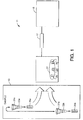
- One embodiment of the present invention directed to a method for detecting the presence or absence of cyclic peptide and alkaloid cyanobacterial toxins in a sample is depicted in schematic form in Figure 1 with respect to an instrument generally designated by the numeral 11.
- the instrument generally designated by the numeral 11, has the following major elements: sample preparation means 13, a chromatography system 15, a column 17 and a mass spectrometer 19.
- sample preparation means 13 comprises at least one sample extraction cartridge 21a, preferably two sample extraction cartridges 21a and 21b, and comprises a weak cationic exchange resin and a weak anionic exchange resin.
- Sample extraction cartridges 21a and 21b are depicted in cross section. Each sample extraction cartridge 21a and 21b has a solid phase 23a and 23b.
- a solid phase may comprise a bed of particles or a porous monolith resin.
- a preferred solid phase is particular and has a surface chemistry of poly(divinylbenzene-co-N-vinylpyrrolidone). That is, the particles may totally comprise the polymer or such polymer is carried as a surface layer on a substrate that is selected from a different material.
- Common materials which may be used as a substrate include, by way of example, without limitation, silica, aluminium and titanium oxides and other polymeric compounds.
- the surface chemistry of poly(divinylbenzene-co-N-vinylpyrrolidone) allows the particles of the sample extraction column to retain cyanobacterial toxins on a water wettable surface or allow the surface to be functionalized in a manner to capture cyanobacterial toxins more selectively or efficiently.
- Sample extraction cartridges having a surface chemistry of poly(divinylbenzene-co-N-vinylpyrrolidone) are sold by Waters Corporation (Milford, Massachusetts, USA) under the trademark OASIS®. Sample extraction cartridges without a surface chemistry of poly(divinylbenzene-co-N-vinylpyrrolidone) may also be used. Such sample extraction cartridges are sold by Waters Corporation (Milford, Massachusetts, USA) under the trademark SEP-PAK.
- Particles having a functionalized surface are functionalized as weak cationic exchange resins and weak anionic exchange resins for the preferential or efficient capture of cyanobacterial toxins.
- the sample extract is formed by extracting on weak anionic exchange resin to favor alkaloid cyanobacterial toxins and formed on weak cationic exchange resins to favor cyclic peptide cyanobacterial toxins.
- the sample is divided into two or more parts with one part directed to a first sample extraction cartridge 21a having a particle bed 23a comprising a weak anionic exchange resin to favor alkaloid cyanobacterial toxins.
- a second sample extraction cartridge 21b has a particle bed 23b comprising a weak cationic exchange resin to favor cyclic peptide cyanobacterial toxins.
- sample extraction cartridges 21a and 21b having weak cationic or weak anionic exchange resins are sold by several venders including those sold by Waters Corporation (Milford, MA) under the trademark OASIS® WCX and OASIS® WAX.
- sample preparation means is depicted as sample extraction cartridges 21a and 21b as single well type devices with the understanding that such devices may have many forms comprising, by way of example, without limitation, single columns, cartridges and well devices as well as multiple well devices, such as 96 well plates and the like.
- the method comprises the step of forming at least one sample extract with both a weak cationic exchange resin and a weak anionic exchange resin.
- the sample extract from sample extraction cartridge 21a is eluted and placed in a vial 25a and the sample extract from sample extraction cartridge 21b is eluted placed in vial 25b.
- the sample extraction cartridges 21a and 21b retain the cyanobacterial toxin and release the cyanobacterial toxin upon elution with a mobile phase in a more concentrated form. This sample extract is placed and held in vials 25a and 25b.
- the vials 25a and 25b are placed in a chromatography system 15 autosampler, depicted in schematic form as a circular tray 27 holding vials 25', 25", and 25"'.
- Chromatography systems are well known in the art. Such chromatography systems 15 are sold by Waters Corporation (Milford, Massachusetts, USA) under the trademark ACQUITY®.
- the method comprises the step of placing the sample extract on the head of chromatographic column 17.
- Chromatographic column 17 is packed with particles having a mean particle size of 1 to 3 ⁇ m (microns).
- Chromatographic column 17 has an operating pressure of 41.37 to 103.4 MPa (6,000 to 15,000 psi).
- a preferred column has particles with a chromatographic surface of a bridged ethyl hybrid composition or a high strength silica.
- the one or more retained compounds are eluted under a gradient of organic solvent to form an eluted compound.
- eluted compound is a toxin.
- a preferred gradient comprises a first solvent comprising 0.1% formic acid (H 2 O) and a second solvent comprising 0.1 % formic acid (acetonitrile). The gradient is applied at a flow rate of 0.1 to 1.0ml/min, and more preferably, at about 0.45ml/min over a period of approximately six minutes moving from 2% of the first solvent to 80% of the second solvent.
- the mass spectrometer 19 forms one or more fragments of the cyanobacterial toxin.
- the formation of fragments in mass spectroscopy is sometimes denoted as MS/MS and is known to those skilled in the art.
- the spectra of the fragments are used to identify and determine the presence or absence of a cyanobacterial toxin.
- Mass spectrometers are sold by several venders including Waters Corporation (Milford, Massachusetts, USA) under the trademark MICROMASS® TQD.
- the identification of the cyclic peptide and alkaloid cyanobacterial toxin, if present, is facilitated by placing one or more standards comprising a known labeled cyanobacterial toxin or closely related compound on the head of a column to be retained and eluted in the manner of sample cyanobacterial toxin.
- the eluted standard cyanobacterial toxin is placed in a mass spectrometer 19 to form a known spectra of the standard cyanobacterial toxin to which sample spectra are compared.
- Such labeled cyanobacterial toxin or closely related compound is used in a deuterated form known to individuals skilled in the art.
- the examples feature cyclo(Arg-Ala-Asp-D-Phe-Val) and [Leu5]-Enkephalin.
- the small particle column and high pressure performance of the chromatography system allow the method steps of placing the sample extract on the head of a chromatographic column, eluting and placing the cyanobacterial toxin in a mass spectrometer to be performed in a time period of three to fifteen minutes, and routinely in a period of approximately eight to nine minutes.
- the mass spectrometer forms one or more fragments of the cyanobacterial toxin and the spectra of the fragments are used to identify and determine the presence or absence of the cyanobacterial toxin.
- the method comprises comparing the spectra from the parent ions and fragments to those obtained with standards.
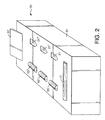
- Kit 51 comprises one or more standard vials, of which three are depicted and designated 55', 55" and 55"', containing standard solutions for calibrating and facilitating the identification of one or more cyclic peptide and alkaloid cyanobacterial toxins by mass spectroscopy.
- the kit 51 further comprises one or more sample preparation devices in the form of extraction cartridges, of which three are depicted and designated 21', 21", and 21"' for forming a sample extract.
- the kit further comprises a column 17 for separating the compounds of the sample extract and upon application of a gradient releasing the cyanobacterial toxins, if present, such that the cyanobacterial toxins are released to a mass spectrometer for identification.
- the kit 51 further comprises instructions 57 for the use of these parts and reagents in the method as previously described.
- the kit is depicted with suitable packaging, which is known in the art, and may comprise plastic wraps and bubble shells, boxes, wrapping and the like.
- Cartridges are initially conditioned, equilibrated and loaded in series (OASIS®WCX on top followed by OASIS®WAX cartridge with a union connecting the two). Once loaded they are separated and processed individually and run as two separate runs.
- WAX (6cc 150mg Waters part number 186002493) - This is for cylindrospermopsin enrichment (this is on the bottom).
- WCX (6cc 150mg Waters part number 186002498) - This is for anatoxin-a, and microcystins enrichment (this is on the top).
- This example features the separation and mass spectral analysis of anatoxin-a, cylindrospermopsin, and several microcystins by high performance liquid chromatography and mass spectrometry.
Landscapes
- Life Sciences & Earth Sciences (AREA)
- Health & Medical Sciences (AREA)
- Engineering & Computer Science (AREA)
- Chemical & Material Sciences (AREA)
- Molecular Biology (AREA)
- Immunology (AREA)
- Physics & Mathematics (AREA)
- Analytical Chemistry (AREA)
- Biochemistry (AREA)
- General Health & Medical Sciences (AREA)
- Biomedical Technology (AREA)
- Urology & Nephrology (AREA)
- Hematology (AREA)
- General Physics & Mathematics (AREA)
- Pathology (AREA)
- Biotechnology (AREA)
- Microbiology (AREA)
- Bioinformatics & Cheminformatics (AREA)
- Proteomics, Peptides & Aminoacids (AREA)
- Organic Chemistry (AREA)
- Food Science & Technology (AREA)
- Biophysics (AREA)
- Medicinal Chemistry (AREA)
- Wood Science & Technology (AREA)
- Zoology (AREA)
- Cell Biology (AREA)
- Bioinformatics & Computational Biology (AREA)
- Toxicology (AREA)
- General Engineering & Computer Science (AREA)
- Genetics & Genomics (AREA)
- Spectroscopy & Molecular Physics (AREA)
- Other Investigation Or Analysis Of Materials By Electrical Means (AREA)
Description
- Embodiments of the present invention are directed to kits and methods for the detection of toxins produced by cyanobacteria. Cyanobacteria are commonly found in surface fresh water. Toxic cyanobacteria blooms are problems where such blooms may cause toxins to be released in water supplies. The major cyanobacterial toxins comprise cyclic peptides, alkaloids and lipopolysaccharides.
- By way of example, without limitation, the major cyclic peptides comprising cyanobacterial toxins are nodulin, microcystin-LR, microcystin RR, and microcystin YR. The formula for nodulin is set forth below:
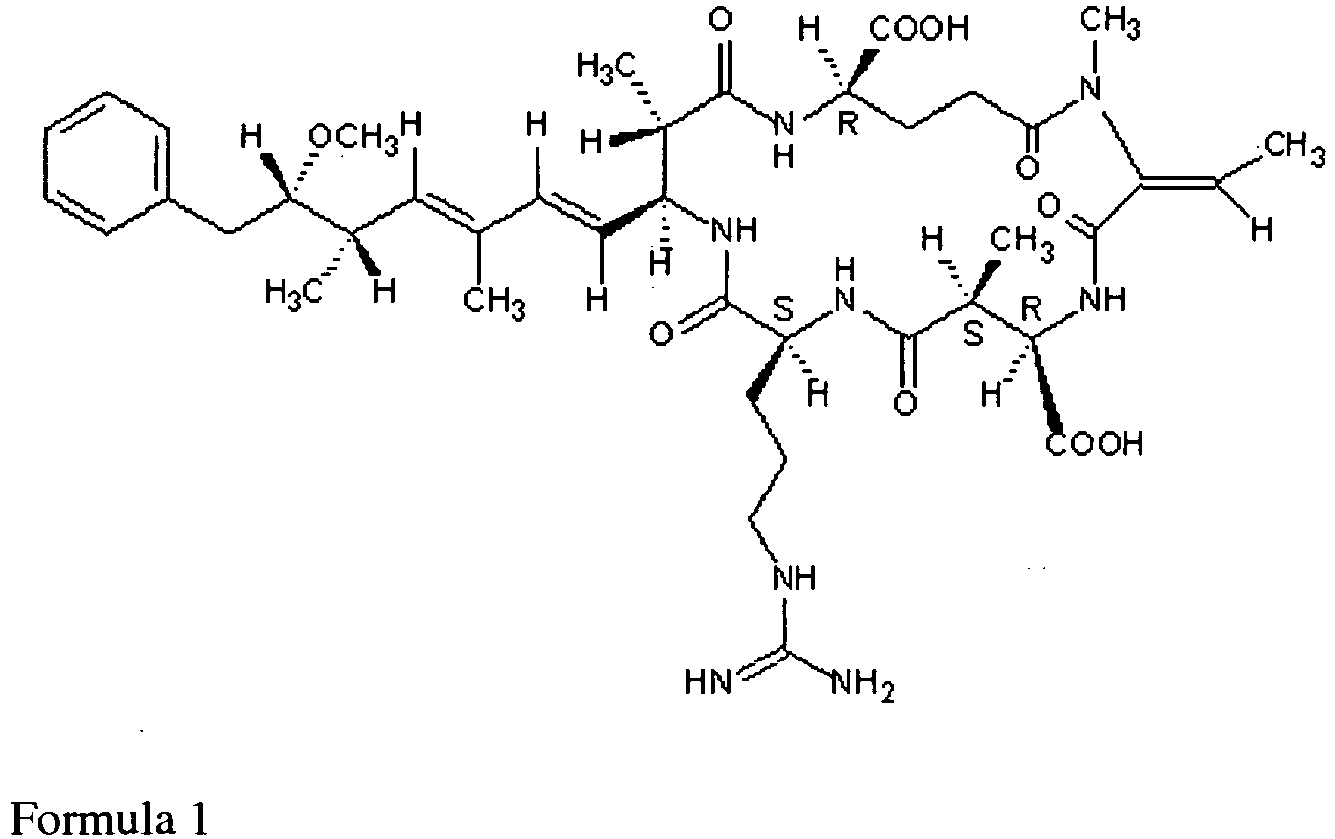
- The formula for microcystin LR is set forth below:

- The formula for microcystin RR is set forth below:

- The formula for microcystin YR is set forth below:

- The formula for microcystin LA is set forth below:

- The formula for microcystin LY is set forth below:

- The formula for microcystin LW is set forth below:

- The formula for microcystin LF is set forth below:

- The alkaloid cyanobacterial toxins comprise, by way of example, without limitation, anaroxins and saxitoxins. Anaroxins comprise, by way of example, without limitation, anatoxin a, anatoxin a(S), homoanatoxin-a, cylindrospermopsin.
- The formula for anatoxin a is set forth below:
-

- The formula for cylindrospermopsin is set forth below:

- The cyanobacterial lipopolysccharides toxins are not as well characterized and appear to be less toxic than the cyclic peptides, alkaloids.
- This paper will use the term "analyte" to denote a compound which one desires to determine the presence or absence of.
- This paper will use the term "sample" to mean a material which one desires to test for the presence or absence of ergot alkaloids. The sample may be obtained as tissues or fluids from animals or plants. For example, without limitation, the sample may comprise leaves, seeds or other plant tissues or blood, urine, saliva or tissues obtained from animal sources.
- An "extract" is a solution obtained by subjecting a sample to a solvent such that one or more compounds held in the sample are dissolved in the solution.
- An "aliquot" is used to denote a subpart or fraction of a sample.
- Chromatography is a method of separating compounds in a solution. Chromatography can be performed in different devices. This paper will use the term "cartridge" to refer to low pressure devices comprising a column and/or funnel in which a solid phase is placed. The sample is applied to the solid phase and passes through under low pressure or gravity. These devices are typically used to prepare a sample by removing particulates and concentrating desired compounds.
- For the purpose of this paper, the term "column" will be used in the sense of a high pressure device in which solutions are forced through a solid phase matrix under pressure. The solid phase can be particulate or a porous monolith.
- Mass spectrometry is used to determine the mass to charge ratio of ions formed by compounds. Mass spectrometers are used to form fragments of larger molecules and such fragments and complete ions are used to identify such compounds.
- Standards are solutions with known amounts of compounds which solutions are used to compare data to data derived from non-standard samples. Standards can use compounds with labels comprising heavy isotopes which allow the operator of the mass spectrometer to differentiate between the standard and the analyte.
- Interest in reliable and fast analysis of cyanobacterial toxins is needed to monitor water supplies, protect public health and fisheries. Prior to the present invention, the methods used to detect cyanobacterial toxins were not specific or sensitive to analyze for these compounds in the environment. Prior to the present invention, the methods were time consuming and labor intensive. Wang et al. (Toxicon 49 (2007), 1120-1128) describe an ultra-performance liquid chromatography-tandem mass spectrometry (UPLC-MS/MS) method for the determination of microcystins occurrence in surface water, wherein water samples are concentrated and cleaned with solid phase extraction with Oasis HLB cartridge.
- Embodiments of the present invention are directed to reliable and fast analysis of cyanobacterial toxins. Embodiments of the present invention have utility for monitoring water supplies, protecting public health and fisheries. Embodiments of the present invention are directed to methods and kits for the detection of cyanobacterial toxins.
- In a first aspect, the present invention provides a method of determining the presence or absence of cyclic peptide and alkaloid cyanobacterial toxins in a sample comprising the steps of:
- preparing a water sample potentially comprising cyclic peptide and alkaloid cyanobacterial toxins to form a retained or concentrated toxin sample on a solid phase extraction device comprising a weak cationic exchange resin and a weak anionic exchange resin;
- eluting or reconstituting said retained or concentrated toxin sample in a mobile phase to form a sample extract;
- placing said sample extract on the head of a chromatographic column packed with particles having a mean particle size of 1 to 3 µm (microns) under pressure of 41.37 to 103.4 MPa (6,000 to 15,000 psi) to form a retained sample potentially comprising a cyclic peptide or alkaloid cyanobacterial toxin in the event said sample extract contained such cyanobacterial toxin;
- eluting compounds from said retained sample potentially comprising a cyclic peptide or alkaloid cyanobacterial toxin from said chromatographic column under a gradient of organic solvent to form at least one eluted compound comprising a cyclic peptide or alkaloid cyanobacterial toxin, in the event said sample extract contained such cyanobacterial toxin; and
- placing said eluted compound potentially comprising a cyclic peptide or alkaloid cyanobacterial toxin in a mass spectrometer to form a mass spectra and determining the presence or absence of said cyanobacterial toxin from the mass spectra.
- In a second aspect, the present invention provides a kit for performing an analysis of a sample for the presence or absence of cyclic peptide and alkaloid cyanobacterial toxins, comprising:
- standards for calibrating and facilitating the identification of one or more cyclic peptide and alkaloid cyanobacterial toxins by mass spectroscopy,
- sample preparation devices for forming a sample extract, wherein said devices comprise a weak cationic exchange resin and a weak anionic exchange resin, and
- a column for separating the compounds of the sample extract and upon application of a gradient releasing said cyanobacterial toxins, if present, such that said cyanobacterial toxins are released to a mass spectrometer for identification.
- Preferred embodiments of the aspects of the invention are set forth in
claims 2 to 8 and 10 to 12. - Embodiments of the present method can be performed from said steps of placing the sample extract on the head of a chromatographic column to eluting and placing said cyanobacterial toxin in a mass spectrometer in a time period of less than fifteen minutes, and, preferably, ten minutes.
- Preferably, the mass spectrometer forms one or more fragments of the cyanobacterial toxin and the spectra of the fragments are used to identify and determine the presence or absence of the cyanobacterial toxin. Preferably, the method comprises comparing the spectra from the parent ions and fragments to those obtained with standards.
- Preferably, the particle is selected from the group consisting of a bridged ethyl hybrid and high strength silica. Preferred particles have a mean average diameter of less than three micrometers (microns).
- A preferred resin capable of being functionalized with weak anionic and weak cationic functional groups comprises poly(divinylbenzene-co-N-vinylpyrrolidone).
- As used herein, the term "kit" refers to an article of manufacture, an assembly of parts, reagents, and components for performing a method. Kits are typically packaged in suitable packaging such a wrap, box, clam shell or bag with instructions for use.
- A preferred column of the kit has a packing of particles having an average size of 1 - 3 µm (microns). A preferred particle has a chromatographic surface selected from the group consisting of a bridged ethyl hybrid and high strength silica. A preferred column has an operating pressure of 41.37 to 103.4 MPa (6,000 to 15,000 psi).
- Other features and advantages of the present invention will be apparent to individuals skilled in the arts upon viewing the figures and the detailed description that follow.
-
-
Figure 1 depicts in schematic form an instrument for performing the method of the present invention; -
Figure 2 depicts a kit embodying features of the present invention; and -
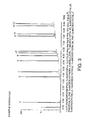
Figure 3 depicts a separation and mass chromatogram of cyanobacterial toxins. - Embodiments of the present invention will be described in detail as methods and kits for the detection of cyclic peptide and alkaloid cyanobacterial toxins. Embodiments of the present invention have utility for monitoring water supplies, protecting public health and fisheries, as well as food testing. The descriptions that follow are preferred embodiments reflecting what the inventors now consider is the best mode to practice their invention. Such descriptions are capable of modification and alteration by those skilled in the art without departing from the teaching hereof.
- One embodiment of the present invention, directed to a method for detecting the presence or absence of cyclic peptide and alkaloid cyanobacterial toxins in a sample is depicted in schematic form in
Figure 1 with respect to an instrument generally designated by the numeral 11. The instrument, generally designated by the numeral 11, has the following major elements: sample preparation means 13, a chromatography system 15, acolumn 17 and amass spectrometer 19. - The method comprises the step of preparing a water sample potentially comprising cyclic peptide and alkaloid cyanobacterial toxins with respect to sample preparation means 13. As depicted, sample preparation means 13 comprises at least one
sample extraction cartridge 21a, preferably twosample extraction cartridges -
Sample extraction cartridges sample extraction cartridge solid phase - Sample extraction cartridges having a surface chemistry of poly(divinylbenzene-co-N-vinylpyrrolidone) are sold by Waters Corporation (Milford, Massachusetts, USA) under the trademark OASIS®. Sample extraction cartridges without a surface chemistry of poly(divinylbenzene-co-N-vinylpyrrolidone) may also be used. Such sample extraction cartridges are sold by Waters Corporation (Milford, Massachusetts, USA) under the trademark SEP-PAK.
- Particles having a functionalized surface are functionalized as weak cationic exchange resins and weak anionic exchange resins for the preferential or efficient capture of cyanobacterial toxins. For example, without limitation, the sample extract is formed by extracting on weak anionic exchange resin to favor alkaloid cyanobacterial toxins and formed on weak cationic exchange resins to favor cyclic peptide cyanobacterial toxins.
- Thus, as depicted, the sample is divided into two or more parts with one part directed to a first
sample extraction cartridge 21a having aparticle bed 23a comprising a weak anionic exchange resin to favor alkaloid cyanobacterial toxins. A secondsample extraction cartridge 21b has aparticle bed 23b comprising a weak cationic exchange resin to favor cyclic peptide cyanobacterial toxins. Suchsample extraction cartridges - The sample preparation means is depicted as
sample extraction cartridges - The method comprises the step of forming at least one sample extract with both a weak cationic exchange resin and a weak anionic exchange resin. The sample extract from
sample extraction cartridge 21a is eluted and placed in avial 25a and the sample extract fromsample extraction cartridge 21b is eluted placed invial 25b. Thesample extraction cartridges vials - The
vials circular tray 27 holdingvials 25', 25", and 25"'. Chromatography systems are well known in the art. Such chromatography systems 15 are sold by Waters Corporation (Milford, Massachusetts, USA) under the trademark ACQUITY®. - Next, as depicted in
Figure 1 , the method comprises the step of placing the sample extract on the head ofchromatographic column 17.Chromatographic column 17 is packed with particles having a mean particle size of 1 to 3 µm (microns).Chromatographic column 17 has an operating pressure of 41.37 to 103.4 MPa (6,000 to 15,000 psi). A preferred column has particles with a chromatographic surface of a bridged ethyl hybrid composition or a high strength silica.Columns 17, having a 1.7 µm (micron) particle size, are sold by Waters Corporation (Milford, Massachusetts, USA) under the trademark ACQUITY® with a BEH designation with respect to a bridged ethyl hybrid chemistry and a HSS designation with respect to high strength silica chemistry. In the event the sample extract held invials 25', 25" or 25"' has one or more cyanobacterial toxin, a retained cyanobacterial toxin is held on the particles until eluted under gradient conditions. The compounds of the sample are retained on the column to form one or more retained compounds. - Next, the one or more retained compounds are eluted under a gradient of organic solvent to form an eluted compound. And, in the event said sample extract contained such cyclic peptide and alkaloid cyanobacterial toxins, such eluted compound is a toxin. A preferred gradient comprises a first solvent comprising 0.1% formic acid (H2O) and a second solvent comprising 0.1 % formic acid (acetonitrile). The gradient is applied at a flow rate of 0.1 to 1.0ml/min, and more preferably, at about 0.45ml/min over a period of approximately six minutes moving from 2% of the first solvent to 80% of the second solvent.
- This eluted cyclic peptide and alkaloid cyanobacterial toxin, if present, is placed in a
mass spectrometer 19 to form a mass spectra. The presence or absence of the cyanobacterial toxin is determined from the mass spectra. - Preferably, the
mass spectrometer 19 forms one or more fragments of the cyanobacterial toxin. The formation of fragments in mass spectroscopy is sometimes denoted as MS/MS and is known to those skilled in the art. The spectra of the fragments are used to identify and determine the presence or absence of a cyanobacterial toxin. Mass spectrometers are sold by several venders including Waters Corporation (Milford, Massachusetts, USA) under the trademark MICROMASS® TQD. - The identification of the cyclic peptide and alkaloid cyanobacterial toxin, if present, is facilitated by placing one or more standards comprising a known labeled cyanobacterial toxin or closely related compound on the head of a column to be retained and eluted in the manner of sample cyanobacterial toxin. The eluted standard cyanobacterial toxin is placed in a
mass spectrometer 19 to form a known spectra of the standard cyanobacterial toxin to which sample spectra are compared. Such labeled cyanobacterial toxin or closely related compound is used in a deuterated form known to individuals skilled in the art. The examples feature cyclo(Arg-Ala-Asp-D-Phe-Val) and [Leu5]-Enkephalin. - The small particle column and high pressure performance of the chromatography system allow the method steps of placing the sample extract on the head of a chromatographic column, eluting and placing the cyanobacterial toxin in a mass spectrometer to be performed in a time period of three to fifteen minutes, and routinely in a period of approximately eight to nine minutes.
- Preferably, the mass spectrometer forms one or more fragments of the cyanobacterial toxin and the spectra of the fragments are used to identify and determine the presence or absence of the cyanobacterial toxin. Preferably, the method comprises comparing the spectra from the parent ions and fragments to those obtained with standards.
- Turning now to
Figure 2 , a kit embodying features of the present invention, generally designated by the numeral 51, is illustrated. The kit is a collection of parts and reagents bundled together with suitable packaging and instructions for their use in the method described above.Kit 51 comprises one or more standard vials, of which three are depicted and designated 55', 55" and 55"', containing standard solutions for calibrating and facilitating the identification of one or more cyclic peptide and alkaloid cyanobacterial toxins by mass spectroscopy. Thekit 51 further comprises one or more sample preparation devices in the form of extraction cartridges, of which three are depicted and designated 21', 21", and 21"' for forming a sample extract. The kit further comprises acolumn 17 for separating the compounds of the sample extract and upon application of a gradient releasing the cyanobacterial toxins, if present, such that the cyanobacterial toxins are released to a mass spectrometer for identification. Thekit 51 further comprisesinstructions 57 for the use of these parts and reagents in the method as previously described. The kit is depicted with suitable packaging, which is known in the art, and may comprise plastic wraps and bubble shells, boxes, wrapping and the like. - Further features of the present invention are described with respect to the following examples.
- This discussion is focused on an analysis of cylindrospermopsin, anatoxin-a and microcystins from lake or process water or water extracts from filters or other surfaces.
- Cartridges are initially conditioned, equilibrated and loaded in series (OASIS®WCX on top followed by OASIS®WAX cartridge with a union connecting the two). Once loaded they are separated and processed individually and run as two separate runs.
- WAX (6cc 150mg Waters part number 186002493) - This is for cylindrospermopsin enrichment (this is on the bottom).
Condition: 3mL MeOH Equilibrate: 5mL H2O Load: Up to 500mL of sample water (pH the water to pH 5.5 with formic acid) -
Wash: 2mL 1% formic acid in DI H2OWash 2: 2mL MeOH Elute: 3mL 1 % ammonium hydroxide in DI H2O - Run "as is" or evaporate to dryness and reconstitute in mobile phase.
- WCX (6cc 150mg Waters part number 186002498) - This is for anatoxin-a, and microcystins enrichment (this is on the top).
Condition: 3mL MeOH Equilibrate: 5mL H2O Load: Up to 500mL of sample water (pH the water to pH 5.5 with formic acid) -
Wash: 2mL pH 9 ammonium hydroxide or ammonium bicarbonate in DI H2OWash 2: 2mL MeOH Elute: 3mL 1% formic acid in DI H2O - These cartridges are run "as is" or evaporated to dryness and reconstituted in mobile phase.
- This example features the separation and mass spectral analysis of anatoxin-a, cylindrospermopsin, and several microcystins by high performance liquid chromatography and mass spectrometry.
- Column Used: HSS T3 2.1X100mm @35C
or BEH C18 2.1X100mm @35C - Solvent A: 0.1% formic acid in H2O
- Solvent B: 0.1% formic acid in acetonitrile
-
Time(min) Flow Rate %A %B Curve Initial 0.450 98.0 2.0 ---- 0.80 0.450 98.0 2.0 6 9.00 0.450 30.0 70.0 6 9.05 0.450 20.0 80.0 6 9.90 0.450 20.0 80.0 6 9.91 0.450 98.0 2.0 6 12.00 0.450 98.0 2.0 6 - These results are set forth in
Figure 3 . These results suggest that the compounds identified can be separated and identified in less than nine minutes. -
Retention window (mins): 1.000 to 2.220 Ionization mode: ES+ Data type: MRM data Function type: MRM of 3 channels Chan Reaction Dwell(secs) Cone Volt. Col.Energy Delay(secs) Compound 1 : 416.20 > 176.23 0.060 45.0 39.0 Auto Cylindro (C1) 2 : 416.20 > 194.25 0.060 45.0 37.0 Auto Cylindro (Q) 3 : 416.20 > 416.20 0.060 45.0 5.0 Auto Cylindro (C2) -
- Retention window (mins): 2.220 to 3.000
- Ionization mode: ES+
- Data type: MRM data
- Function type: MRM of 3 channels
-
- Retention window (mins): 4.150 to 4.550
- Ionization mode: ES+
- Data type: MRM data
- Function type: MRM of 3 channels
-
- Retention window (mins): 4.500 to 5.000
- Ionization mode: ES+
- Data type: MRM data
- Function type: MRM of 3 channels
-
- Retention window (mins): 5.400 to 6.000
- Ionization mode: ES+
- Data type: MRM data
- Function type: MRM of 3 channels
-
- Retention window (mins): 6.100 to 6.400
- Ionization mode: ES+
- Data type: MRM data
- Function type: MRM of 2 channels
-
- Retention window (mins): 6.150 to 6.550
- Ionization mode: ES+
- Data type: MRM data
- Function type: MRM of 2 channels
-
- Retention window (mins): 7.400 to 7.750
- Ionization mode: ES+
- Data type: MRM data
- Function type: MRM of 2 channels
-
- Retention window (mins): 7.600 to 8.000
- Ionization mode: ES+
- Data type: MRM data
- Function type: MRM of 2 channels
-
- Retention window (mins): 8.200 to 8.700
- Ionization mode: ES+
- Data type: MRM data
- Function type: MRM of 2 channels
-
- Retention window (mins): 8.430 to 8.700
- Ionization mode: ES+
- Data type: MRM data
- Function type: MRM of 2 channels
| Chan Reaction | Dwell(secs) | ConeVolt. | Col.Energy | Delay(secs) | Compound |
| 1 : 166.13 > 43.03 | 0.060 | 20.0 | 23.0 | Auto | Anatoxin (Q) |
| 2 : 166.13 > 149.14 | 0.060 | 20.0 | 15.0 | Auto | Anatoxin (C1) |
| 3 : 166.13 > 166.13 | 0.060 | 25.0 | 5.0 | Auto | Anatoxin (C2) |
| Chan Reaction | Dwell(secs) | Cone Volt. | Col.Energy | Delay(secs) | Compound |
| 1 : 589.47 > 72.77 | 0.050 | 55.0 | 73.0 | Auto | Cyclo (IS)-C2 |
| 2 : 589.47 > 120.16 | 0.050 | 55.0 | 57.0 | Auto | Cyclo (IS) |
| 3 : 589.47 > 589.47 | 0.050 | 55.0 | 5.0 | Auto | Cyclo (IS)-C1 |
| Chan Reaction | Dwell(secs) | Cone Volt. | Col.Energy | Delay(secs) | Compound |
| 1 : 556.42 > 120.16 | 0.050 | 35.0 | 53.0 | Auto | Enk (IS)-C2 |
| 2 : 556.42 > 136.17 | 0.050 | 35.0 | 53.0 | Auto | Enk (IS) |
| 3 : 556.42 > 556.42 | 0.050 | 35.0 | 5.0 | Auto | Enk (IS)-C1 |
| Chan Reaction | Dwell(secs) | Cone Volt. | Col.Energy | Delay(secs) | Compound |
| 1 : 519.99 > 135.10 | 0.070 | 45.0 | 32.0 | Auto | RR (Q) |
| 2 : 519.99 > 519.99 | 0.070 | 45.0 | 5.0 | Auto | RR (C1) |
| 3 : 1038.69 > 135.10 | 0.070 | 90.0 | 80.0 | Auto | RR (C2) |
| Chan Reaction | Dwell(secs) | Cone Volt. | Col.Energy | Delay(secs) | Compound |
| 1 : 1045.60 > 135.18 | 0.050 | 95.0 | 50.0 | Auto | YR (Q) |
| 2 : 1045.60 > 1045.60 | 0.050 | 95.0 | 5.0 | Auto | YR (C1) |
| Chan Reaction | Dwell(secs) | Cone Volt. | Col.Energy | Delay(secs) | Compound |
| 1 : 995.66 > 135.11 | 0.050 | 85.0 | 50.0 | Auto | LR (Q) |
| 2 : 995.66 > 995.66 | 0.050 | 50.0 | 5.0 | Auto | LR (C1) |
| Chan Reaction | Dwell(secs) | Cone Volt. | Col.Energy | Delay(secs) | Compound |
| 1 : 910.57 > 135.11 | 0.050 | 45.0 | 50.0 | Auto | LA (Q) |
| 2 : 910.57 > 910.57 | 0.050 | 45.0 | 5.0 | Auto | LA (C1) |
| Chan Reaction | Dwell(secs) | Cone Volt. | Col.Energy | Delay(secs) | Compound |
| 1 : 1002.63 > 135.18 | 0.050 | 50.0 | 50.0 | Auto | LY (Q) |
| 2 : 1002.63 > 1002.63 | 0.050 | 50.0 | 5.0 | Auto | LY (C) |
| Chan Reaction | Dwell(secs) | Cone Volt. | Col.Energy | Delay(secs) | Compound |
| 1 : 1025.63 > 135.05 | 0.070 | 45.0 | 42.0 | Auto | LW (Q) |
| 2 : 1025.63 > 1025.63 | 0.070 | 45.0 | 5.0 | Auto | LW (C1) |
| Chan Reaction | Dwell(secs) | Cone Volt. | Col.Energy | Delay(secs) | Compound |
| 1 : 986.63 > 135.05 | 0.050 | 40.0 | 50.0 | Auto | LF (Q) |
| 2 : 986.63 > |
Claims (12)
- A method of determining the presence or absence of cyclic peptide and alkaloid cyanobacterial toxins in a sample comprising the steps of:preparing a water sample potentially comprising cyclic peptide and alkaloid cyanobacterial toxins to form a retained or concentrated toxin sample on a solid phase extraction device comprising a weak cationic exchange resin and a weak anionic exchange resin;eluting or reconstituting said retained or concentrated toxin sample in a mobile phase to form a sample extract;placing said sample extract on the head of a chromatographic column packed with particles having a mean particle size of 1 to 3 µm (microns) under pressure of 41.37 to 103.4 MPa (6,000 to 15,000 psi) to form a retained sample potentially comprising a cyclic peptide or alkaloid cyanobacterial toxin in the event said sample extract contained such cyanobacterial toxin;eluting compounds from said retained sample potentially comprising a cyclic peptide or alkaloid cyanobacterial toxin from said chromatographic column under a gradient of organic solvent to form at least one eluted compound comprising a cyclic peptide or alkaloid cyanobacterial toxin, in the event said sample extract contained such cyanobacterial toxin; andplacing said eluted compound potentially comprising a cyclic peptide or alkaloid cyanobacterial toxin in a mass spectrometer to form a mass spectra and determining the presence or absence of said cyanobacterial toxin from the mass spectra.
- The method of claim 1 wherein said mass spectrometer forms one or more fragments of the cyanobacterial toxin and said spectra of said fragments is used to identify and determine the presence or absence of said cyanobacterial toxin.
- The method of claim 1 or 2 wherein said steps of placing said sample extract on the head of a chromatographic column, eluting and placing said cyanobacterial toxin in a mass spectrometer is performed in a time period of less than fifteen minutes.
- The method of claim 1 wherein said particle is selected from the group consisting of a bridged ethyl hybrid and high strength silica.
- The method of claim 1 wherein said particles have a mean average diameter of less than two micrometers (microns).
- The method of claim 1 wherein said sample extract is formed by extracting alkaloid cyanobacterial toxins on the weak anionic exchange resin.
- The method of claim 1 wherein said sample extract is formed by extracting cyclic peptide cyanobacterial toxins on the weak cationic exchange resin.
- The method of claim 1 wherein said solid phase extraction device has particles comprising poly(divinylbenzene-co-N-vinylpyrrolidone).
- A kit for performing an analysis of a sample for the presence or absence of cyclic peptide and alkaloid cyanobacterial toxins, comprising:standards for calibrating and facilitating the identification of one or more cyclic peptide and alkaloid cyanobacterial toxins by mass spectroscopy,sample preparation devices for forming a sample extract, wherein said devices comprise a weak cationic exchange resin and a weak anionic exchange resin, anda column for separating the compounds of the sample extract and upon application of a gradient releasing said cyanobacterial toxins, if present, such that said cyanobacterial toxins are released to a mass spectrometer for identification.
- The kit of claim 9 wherein said column is packed with particles having an average particle size of 1 - 3 µm (microns).
- The kit of claim 10 wherein said particle has a chromatographic surface selected from the group consisting of a bridged ethyl hybrid and high strength silica.
- The kit of claim 11 wherein said column has an operating pressure of 41.37 to 103.4 MPa (6,000 to 15,000 psi).
Applications Claiming Priority (2)
| Application Number | Priority Date | Filing Date | Title |
|---|---|---|---|
| US11002108P | 2008-10-31 | 2008-10-31 | |
| PCT/US2009/062299 WO2010051295A1 (en) | 2008-10-31 | 2009-10-28 | Methods and kits for the determining the presence or absence of cyanobacteria toxins |
Publications (3)
| Publication Number | Publication Date |
|---|---|
| EP2342264A1 EP2342264A1 (en) | 2011-07-13 |
| EP2342264A4 EP2342264A4 (en) | 2013-06-12 |
| EP2342264B1 true EP2342264B1 (en) | 2015-03-18 |
Family
ID=42129235
Family Applications (1)
| Application Number | Title | Priority Date | Filing Date |
|---|---|---|---|
| EP09824083.1A Active EP2342264B1 (en) | 2008-10-31 | 2009-10-28 | Methods and kits for the determining the presence or absence of cyanobacteria toxins |
Country Status (5)
| Country | Link |
|---|---|
| US (1) | US9284592B2 (en) |
| EP (1) | EP2342264B1 (en) |
| JP (1) | JP2012507720A (en) |
| CN (2) | CN103940895B (en) |
| WO (1) | WO2010051295A1 (en) |
Families Citing this family (1)
| Publication number | Priority date | Publication date | Assignee | Title |
|---|---|---|---|---|
| RU2620388C1 (en) * | 2015-11-30 | 2017-05-25 | Иван Викторович Бессонов | Macroporous sorbents for the removal of cyanobacteria from the aqueous medium |
Family Cites Families (7)
| Publication number | Priority date | Publication date | Assignee | Title |
|---|---|---|---|---|
| US20020009394A1 (en) * | 1999-04-02 | 2002-01-24 | Hubert Koster | Automated process line |
| EP1182439B1 (en) | 2000-08-23 | 2016-04-13 | TA Instruments - Waters LLC | Power compensation differential scanning calorimeter |
| JP3768442B2 (en) | 2001-12-28 | 2006-04-19 | オルガノ株式会社 | Analytical sample preparation method and element quantification method |
| US7311829B2 (en) * | 2003-02-13 | 2007-12-25 | H2Q Water Industries, Ltd. | Water conversion device |
| DE10322701B4 (en) * | 2003-05-20 | 2006-12-28 | Humboldt-Universität Zu Berlin | Sample carriers using a porous film comprising metal oxide particles, methods for producing a sample carrier, use of the sample carrier and methods for the selective detection of phosphorylated / sulfated biopolymers, in particular peptides / proteins |
| WO2006127973A2 (en) * | 2005-05-24 | 2006-11-30 | Waters Inverstments Limited | Methods for separating and analyzing anionic compounds |
| WO2007140251A2 (en) * | 2006-05-26 | 2007-12-06 | Waters Investments Limited | Apparatus and method for performing mass spectroscopy |
-
2009
- 2009-10-28 EP EP09824083.1A patent/EP2342264B1/en active Active
- 2009-10-28 CN CN201410107802.2A patent/CN103940895B/en active Active
- 2009-10-28 JP JP2011534696A patent/JP2012507720A/en not_active Withdrawn
- 2009-10-28 CN CN2009801529626A patent/CN102264803A/en active Pending
- 2009-10-28 US US13/126,311 patent/US9284592B2/en active Active
- 2009-10-28 WO PCT/US2009/062299 patent/WO2010051295A1/en not_active Ceased
Also Published As
| Publication number | Publication date |
|---|---|
| EP2342264A4 (en) | 2013-06-12 |
| HK1200213A1 (en) | 2015-07-31 |
| WO2010051295A1 (en) | 2010-05-06 |
| US9284592B2 (en) | 2016-03-15 |
| CN102264803A (en) | 2011-11-30 |
| JP2012507720A (en) | 2012-03-29 |
| CN103940895B (en) | 2017-03-01 |
| CN103940895A (en) | 2014-07-23 |
| US20110269241A1 (en) | 2011-11-03 |
| EP2342264A1 (en) | 2011-07-13 |
Similar Documents
| Publication | Publication Date | Title |
|---|---|---|
| EP3234585B1 (en) | Device for solid phase extraction | |
| Chen et al. | Isolation of acidic, neutral, and basic drugs from whole blood using a single mixed-mode solid-phase extraction column | |
| EP2247933B1 (en) | Methods for the determination of the presence and quantity of vitamin d analogs in samples | |
| Quilliam | Chemical methods for domoic acid, the amnesic shellfish poisoning (ASP) toxin | |
| US11998893B2 (en) | Columns and methods of use for analytical standards and compounds | |
| Cao et al. | Hydrophilic molecularly imprinted melamine-urea-formaldehyde monolithic resin prepared in water for selective recognition of plant growth regulators | |
| CN104965035A (en) | Method for screening toxic substances in sample by using solid phase support liquid-liquid extraction-GC MS | |
| CN110849988A (en) | Method for detecting 33 alkaloids in honey | |
| Hua et al. | Development of a method Sin-QuEChERS for the determination of multiple pesticide residues in oilseed samples | |
| US9284592B2 (en) | Methods for the determining the presence or absence of cyanobacteria toxins | |
| US20130186186A1 (en) | Methods and kits for the determination of the presence and quantity of vitamin d analogs in samples | |
| CN111323510B (en) | Method for determining quinolone veterinary drug residues in chicken | |
| US20110263029A1 (en) | Methods And Kits For The Determining The Presence Or Absence Of Ergot Alkaloids | |
| HK1200213B (en) | Methods and kits for the determining the presence or absence of cyanobacteria toxins | |
| HK1160875A (en) | Methods and kits for the determining the presence or absence of cyanobacteria toxins | |
| CN114113424A (en) | A kind of HPLC analysis method for the determination of related substances in regorafenib tablets | |
| US12269012B2 (en) | Columns and methods of use for analytical standards and compounds | |
| CN109212105B (en) | Liquid chromatography-mass spectrometry detection method for textile salicylate ultraviolet-proof finishing agent | |
| Wang et al. | Chiral resolution of cypermethrin on cellulose-tris (3, 5-dimethylphenyl-carbamate) chiral stationary phase | |
| Zhang et al. | Fast simultaneous detection of three diterpenoids in Herba Siegesbeckiae using solid phase extraction followed by HPLC-UV with a core–shell particle column | |
| Lu et al. | On‐line concentration of neomycin and screening aminoglycosides in milk by short capillary column and tandem mass spectrometry | |
| CN103558300A (en) | Soporific and sedative drug inspection method for treating biological detection material by using gel permeation chromatography | |
| US20240286110A1 (en) | Carbon microsphere chromatographic material | |
| Chen et al. | Reusability of Bond Elut Certify columns for the extraction of drugs from plasma | |
| CN116297901A (en) | Application of a triazine-bithiophene covalent organic framework for the enrichment and detection of nitrofuran metabolites in meat products |
Legal Events
| Date | Code | Title | Description |
|---|---|---|---|
| PUAI | Public reference made under article 153(3) epc to a published international application that has entered the european phase |
Free format text: ORIGINAL CODE: 0009012 |
|
| 17P | Request for examination filed |
Effective date: 20110427 |
|
| AK | Designated contracting states |
Kind code of ref document: A1 Designated state(s): AT BE BG CH CY CZ DE DK EE ES FI FR GB GR HR HU IE IS IT LI LT LU LV MC MK MT NL NO PL PT RO SE SI SK SM TR |
|
| AX | Request for extension of the european patent |
Extension state: AL BA RS |
|
| DAX | Request for extension of the european patent (deleted) | ||
| REG | Reference to a national code |
Ref country code: DE Ref legal event code: R079 Ref document number: 602009030097 Country of ref document: DE Free format text: PREVIOUS MAIN CLASS: C08H0001000000 Ipc: C12Q0001040000 |
|
| RIC1 | Information provided on ipc code assigned before grant |
Ipc: G01N 33/68 20060101ALI20130426BHEP Ipc: C12Q 1/04 20060101AFI20130426BHEP Ipc: G01N 33/50 20060101ALI20130426BHEP |
|
| A4 | Supplementary search report drawn up and despatched |
Effective date: 20130514 |
|
| 17Q | First examination report despatched |
Effective date: 20140128 |
|
| GRAP | Despatch of communication of intention to grant a patent |
Free format text: ORIGINAL CODE: EPIDOSNIGR1 |
|
| INTG | Intention to grant announced |
Effective date: 20141013 |
|
| GRAS | Grant fee paid |
Free format text: ORIGINAL CODE: EPIDOSNIGR3 |
|
| GRAA | (expected) grant |
Free format text: ORIGINAL CODE: 0009210 |
|
| AK | Designated contracting states |
Kind code of ref document: B1 Designated state(s): AT BE BG CH CY CZ DE DK EE ES FI FR GB GR HR HU IE IS IT LI LT LU LV MC MK MT NL NO PL PT RO SE SI SK SM TR |
|
| REG | Reference to a national code |
Ref country code: GB Ref legal event code: FG4D |
|
| REG | Reference to a national code |
Ref country code: CH Ref legal event code: EP |
|
| REG | Reference to a national code |
Ref country code: IE Ref legal event code: FG4D |
|
| REG | Reference to a national code |
Ref country code: AT Ref legal event code: REF Ref document number: 716622 Country of ref document: AT Kind code of ref document: T Effective date: 20150415 |
|
| REG | Reference to a national code |
Ref country code: DE Ref legal event code: R096 Ref document number: 602009030097 Country of ref document: DE Effective date: 20150430 |
|
| REG | Reference to a national code |
Ref country code: NL Ref legal event code: VDEP Effective date: 20150318 |
|
| REG | Reference to a national code |
Ref country code: NL Ref legal event code: VDEP Effective date: 20150318 |
|
| PG25 | Lapsed in a contracting state [announced via postgrant information from national office to epo] |
Ref country code: HR Free format text: LAPSE BECAUSE OF FAILURE TO SUBMIT A TRANSLATION OF THE DESCRIPTION OR TO PAY THE FEE WITHIN THE PRESCRIBED TIME-LIMIT Effective date: 20150318 Ref country code: LT Free format text: LAPSE BECAUSE OF FAILURE TO SUBMIT A TRANSLATION OF THE DESCRIPTION OR TO PAY THE FEE WITHIN THE PRESCRIBED TIME-LIMIT Effective date: 20150318 Ref country code: FI Free format text: LAPSE BECAUSE OF FAILURE TO SUBMIT A TRANSLATION OF THE DESCRIPTION OR TO PAY THE FEE WITHIN THE PRESCRIBED TIME-LIMIT Effective date: 20150318 Ref country code: SE Free format text: LAPSE BECAUSE OF FAILURE TO SUBMIT A TRANSLATION OF THE DESCRIPTION OR TO PAY THE FEE WITHIN THE PRESCRIBED TIME-LIMIT Effective date: 20150318 Ref country code: NO Free format text: LAPSE BECAUSE OF FAILURE TO SUBMIT A TRANSLATION OF THE DESCRIPTION OR TO PAY THE FEE WITHIN THE PRESCRIBED TIME-LIMIT Effective date: 20150618 |
|
| REG | Reference to a national code |
Ref country code: AT Ref legal event code: MK05 Ref document number: 716622 Country of ref document: AT Kind code of ref document: T Effective date: 20150318 |
|
| REG | Reference to a national code |
Ref country code: LT Ref legal event code: MG4D |
|
| PG25 | Lapsed in a contracting state [announced via postgrant information from national office to epo] |
Ref country code: GR Free format text: LAPSE BECAUSE OF FAILURE TO SUBMIT A TRANSLATION OF THE DESCRIPTION OR TO PAY THE FEE WITHIN THE PRESCRIBED TIME-LIMIT Effective date: 20150619 Ref country code: LV Free format text: LAPSE BECAUSE OF FAILURE TO SUBMIT A TRANSLATION OF THE DESCRIPTION OR TO PAY THE FEE WITHIN THE PRESCRIBED TIME-LIMIT Effective date: 20150318 |
|
| PG25 | Lapsed in a contracting state [announced via postgrant information from national office to epo] |
Ref country code: NL Free format text: LAPSE BECAUSE OF FAILURE TO SUBMIT A TRANSLATION OF THE DESCRIPTION OR TO PAY THE FEE WITHIN THE PRESCRIBED TIME-LIMIT Effective date: 20150318 |
|
| REG | Reference to a national code |
Ref country code: FR Ref legal event code: PLFP Year of fee payment: 7 |
|
| PG25 | Lapsed in a contracting state [announced via postgrant information from national office to epo] |
Ref country code: ES Free format text: LAPSE BECAUSE OF FAILURE TO SUBMIT A TRANSLATION OF THE DESCRIPTION OR TO PAY THE FEE WITHIN THE PRESCRIBED TIME-LIMIT Effective date: 20150318 Ref country code: EE Free format text: LAPSE BECAUSE OF FAILURE TO SUBMIT A TRANSLATION OF THE DESCRIPTION OR TO PAY THE FEE WITHIN THE PRESCRIBED TIME-LIMIT Effective date: 20150318 Ref country code: PT Free format text: LAPSE BECAUSE OF FAILURE TO SUBMIT A TRANSLATION OF THE DESCRIPTION OR TO PAY THE FEE WITHIN THE PRESCRIBED TIME-LIMIT Effective date: 20150720 Ref country code: RO Free format text: LAPSE BECAUSE OF FAILURE TO SUBMIT A TRANSLATION OF THE DESCRIPTION OR TO PAY THE FEE WITHIN THE PRESCRIBED TIME-LIMIT Effective date: 20150318 Ref country code: CZ Free format text: LAPSE BECAUSE OF FAILURE TO SUBMIT A TRANSLATION OF THE DESCRIPTION OR TO PAY THE FEE WITHIN THE PRESCRIBED TIME-LIMIT Effective date: 20150318 Ref country code: SK Free format text: LAPSE BECAUSE OF FAILURE TO SUBMIT A TRANSLATION OF THE DESCRIPTION OR TO PAY THE FEE WITHIN THE PRESCRIBED TIME-LIMIT Effective date: 20150318 |
|
| PG25 | Lapsed in a contracting state [announced via postgrant information from national office to epo] |
Ref country code: IS Free format text: LAPSE BECAUSE OF FAILURE TO SUBMIT A TRANSLATION OF THE DESCRIPTION OR TO PAY THE FEE WITHIN THE PRESCRIBED TIME-LIMIT Effective date: 20150718 Ref country code: AT Free format text: LAPSE BECAUSE OF FAILURE TO SUBMIT A TRANSLATION OF THE DESCRIPTION OR TO PAY THE FEE WITHIN THE PRESCRIBED TIME-LIMIT Effective date: 20150318 Ref country code: PL Free format text: LAPSE BECAUSE OF FAILURE TO SUBMIT A TRANSLATION OF THE DESCRIPTION OR TO PAY THE FEE WITHIN THE PRESCRIBED TIME-LIMIT Effective date: 20150318 |
|
| REG | Reference to a national code |
Ref country code: DE Ref legal event code: R097 Ref document number: 602009030097 Country of ref document: DE |
|
| PG25 | Lapsed in a contracting state [announced via postgrant information from national office to epo] |
Ref country code: IT Free format text: LAPSE BECAUSE OF FAILURE TO SUBMIT A TRANSLATION OF THE DESCRIPTION OR TO PAY THE FEE WITHIN THE PRESCRIBED TIME-LIMIT Effective date: 20150318 |
|
| PLBE | No opposition filed within time limit |
Free format text: ORIGINAL CODE: 0009261 |
|
| STAA | Information on the status of an ep patent application or granted ep patent |
Free format text: STATUS: NO OPPOSITION FILED WITHIN TIME LIMIT |
|
| PG25 | Lapsed in a contracting state [announced via postgrant information from national office to epo] |
Ref country code: DK Free format text: LAPSE BECAUSE OF FAILURE TO SUBMIT A TRANSLATION OF THE DESCRIPTION OR TO PAY THE FEE WITHIN THE PRESCRIBED TIME-LIMIT Effective date: 20150318 |
|
| 26N | No opposition filed |
Effective date: 20151221 |
|
| PG25 | Lapsed in a contracting state [announced via postgrant information from national office to epo] |
Ref country code: SI Free format text: LAPSE BECAUSE OF FAILURE TO SUBMIT A TRANSLATION OF THE DESCRIPTION OR TO PAY THE FEE WITHIN THE PRESCRIBED TIME-LIMIT Effective date: 20150318 |
|
| PG25 | Lapsed in a contracting state [announced via postgrant information from national office to epo] |
Ref country code: LU Free format text: LAPSE BECAUSE OF FAILURE TO SUBMIT A TRANSLATION OF THE DESCRIPTION OR TO PAY THE FEE WITHIN THE PRESCRIBED TIME-LIMIT Effective date: 20151028 |
|
| REG | Reference to a national code |
Ref country code: CH Ref legal event code: PL |
|
| PG25 | Lapsed in a contracting state [announced via postgrant information from national office to epo] |
Ref country code: MC Free format text: LAPSE BECAUSE OF FAILURE TO SUBMIT A TRANSLATION OF THE DESCRIPTION OR TO PAY THE FEE WITHIN THE PRESCRIBED TIME-LIMIT Effective date: 20150318 |
|
| REG | Reference to a national code |
Ref country code: IE Ref legal event code: MM4A |
|
| PG25 | Lapsed in a contracting state [announced via postgrant information from national office to epo] |
Ref country code: CH Free format text: LAPSE BECAUSE OF NON-PAYMENT OF DUE FEES Effective date: 20151031 Ref country code: LI Free format text: LAPSE BECAUSE OF NON-PAYMENT OF DUE FEES Effective date: 20151031 |
|
| PG25 | Lapsed in a contracting state [announced via postgrant information from national office to epo] |
Ref country code: BE Free format text: LAPSE BECAUSE OF FAILURE TO SUBMIT A TRANSLATION OF THE DESCRIPTION OR TO PAY THE FEE WITHIN THE PRESCRIBED TIME-LIMIT Effective date: 20150318 |
|
| REG | Reference to a national code |
Ref country code: FR Ref legal event code: PLFP Year of fee payment: 8 |
|
| PG25 | Lapsed in a contracting state [announced via postgrant information from national office to epo] |
Ref country code: IE Free format text: LAPSE BECAUSE OF NON-PAYMENT OF DUE FEES Effective date: 20151028 |
|
| PG25 | Lapsed in a contracting state [announced via postgrant information from national office to epo] |
Ref country code: SM Free format text: LAPSE BECAUSE OF FAILURE TO SUBMIT A TRANSLATION OF THE DESCRIPTION OR TO PAY THE FEE WITHIN THE PRESCRIBED TIME-LIMIT Effective date: 20150318 Ref country code: BG Free format text: LAPSE BECAUSE OF FAILURE TO SUBMIT A TRANSLATION OF THE DESCRIPTION OR TO PAY THE FEE WITHIN THE PRESCRIBED TIME-LIMIT Effective date: 20150318 Ref country code: HU Free format text: LAPSE BECAUSE OF FAILURE TO SUBMIT A TRANSLATION OF THE DESCRIPTION OR TO PAY THE FEE WITHIN THE PRESCRIBED TIME-LIMIT; INVALID AB INITIO Effective date: 20091028 |
|
| PG25 | Lapsed in a contracting state [announced via postgrant information from national office to epo] |
Ref country code: CY Free format text: LAPSE BECAUSE OF FAILURE TO SUBMIT A TRANSLATION OF THE DESCRIPTION OR TO PAY THE FEE WITHIN THE PRESCRIBED TIME-LIMIT Effective date: 20150318 |
|
| PG25 | Lapsed in a contracting state [announced via postgrant information from national office to epo] |
Ref country code: TR Free format text: LAPSE BECAUSE OF FAILURE TO SUBMIT A TRANSLATION OF THE DESCRIPTION OR TO PAY THE FEE WITHIN THE PRESCRIBED TIME-LIMIT Effective date: 20150318 Ref country code: MT Free format text: LAPSE BECAUSE OF FAILURE TO SUBMIT A TRANSLATION OF THE DESCRIPTION OR TO PAY THE FEE WITHIN THE PRESCRIBED TIME-LIMIT Effective date: 20150318 |
|
| REG | Reference to a national code |
Ref country code: FR Ref legal event code: PLFP Year of fee payment: 9 |
|
| REG | Reference to a national code |
Ref country code: DE Ref legal event code: R082 Ref document number: 602009030097 Country of ref document: DE Representative=s name: FORRESTERS SKYGARDEN, DE Ref country code: DE Ref legal event code: R082 Ref document number: 602009030097 Country of ref document: DE Representative=s name: FORRESTERS IP LLP, DE Ref country code: DE Ref legal event code: R082 Ref document number: 602009030097 Country of ref document: DE Representative=s name: WEISS, ADILKA, DIPL.-BIOL., DE Ref country code: DE Ref legal event code: R082 Ref document number: 602009030097 Country of ref document: DE Representative=s name: WINKLER IP, DE |
|
| PG25 | Lapsed in a contracting state [announced via postgrant information from national office to epo] |
Ref country code: MK Free format text: LAPSE BECAUSE OF FAILURE TO SUBMIT A TRANSLATION OF THE DESCRIPTION OR TO PAY THE FEE WITHIN THE PRESCRIBED TIME-LIMIT Effective date: 20150318 |
|
| REG | Reference to a national code |
Ref country code: FR Ref legal event code: PLFP Year of fee payment: 10 |
|
| PGFP | Annual fee paid to national office [announced via postgrant information from national office to epo] |
Ref country code: FR Payment date: 20180920 Year of fee payment: 10 |
|
| REG | Reference to a national code |
Ref country code: DE Ref legal event code: R082 Ref document number: 602009030097 Country of ref document: DE Representative=s name: KUEHR, VERA, DIPL.-BIOL., DE Ref country code: DE Ref legal event code: R082 Ref document number: 602009030097 Country of ref document: DE Representative=s name: FORRESTERS SKYGARDEN, DE Ref country code: DE Ref legal event code: R082 Ref document number: 602009030097 Country of ref document: DE Representative=s name: FORRESTERS IP LLP, DE Ref country code: DE Ref legal event code: R082 Ref document number: 602009030097 Country of ref document: DE Representative=s name: WEISS, ADILKA, DIPL.-BIOL., DE |
|
| REG | Reference to a national code |
Ref country code: DE Ref legal event code: R082 Ref document number: 602009030097 Country of ref document: DE Representative=s name: FORRESTERS IP LLP, DE Ref country code: DE Ref legal event code: R082 Ref document number: 602009030097 Country of ref document: DE Representative=s name: KUEHR, VERA, DIPL.-BIOL., DE Ref country code: DE Ref legal event code: R082 Ref document number: 602009030097 Country of ref document: DE Representative=s name: WEISS, ADILKA, DIPL.-BIOL., DE |
|
| PG25 | Lapsed in a contracting state [announced via postgrant information from national office to epo] |
Ref country code: FR Free format text: LAPSE BECAUSE OF NON-PAYMENT OF DUE FEES Effective date: 20191031 |
|
| REG | Reference to a national code |
Ref country code: DE Ref legal event code: R082 Ref document number: 602009030097 Country of ref document: DE Representative=s name: FORRESTERS IP LLP, DE Ref country code: DE Ref legal event code: R082 Ref document number: 602009030097 Country of ref document: DE Representative=s name: KUEHR, VERA, DIPL.-BIOL., DE |
|
| P01 | Opt-out of the competence of the unified patent court (upc) registered |
Effective date: 20230612 |
|
| REG | Reference to a national code |
Ref country code: DE Ref legal event code: R082 Ref document number: 602009030097 Country of ref document: DE Representative=s name: FORRESTERS IP LLP, DE |
|
| PGFP | Annual fee paid to national office [announced via postgrant information from national office to epo] |
Ref country code: GB Payment date: 20250923 Year of fee payment: 17 |
|
| PGFP | Annual fee paid to national office [announced via postgrant information from national office to epo] |
Ref country code: DE Payment date: 20250923 Year of fee payment: 17 |