EP2341177A1 - Laundry treatment appliance and control method thereof - Google Patents
Laundry treatment appliance and control method thereof Download PDFInfo
- Publication number
- EP2341177A1 EP2341177A1 EP10196388A EP10196388A EP2341177A1 EP 2341177 A1 EP2341177 A1 EP 2341177A1 EP 10196388 A EP10196388 A EP 10196388A EP 10196388 A EP10196388 A EP 10196388A EP 2341177 A1 EP2341177 A1 EP 2341177A1
- Authority
- EP
- European Patent Office
- Prior art keywords
- transmission
- vibration
- laundry treatment
- treatment appliance
- detecting
- Prior art date
- Legal status (The legal status is an assumption and is not a legal conclusion. Google has not performed a legal analysis and makes no representation as to the accuracy of the status listed.)
- Withdrawn
Links
- 238000000034 method Methods 0.000 title claims abstract description 15
- 230000005540 biological transmission Effects 0.000 claims abstract description 86
- 238000006073 displacement reaction Methods 0.000 claims description 9
- 238000001035 drying Methods 0.000 abstract description 19
- 238000005406 washing Methods 0.000 abstract description 16
- 230000000694 effects Effects 0.000 abstract description 4
- 238000010438 heat treatment Methods 0.000 description 7
- 238000010412 laundry washing Methods 0.000 description 5
- 230000003068 static effect Effects 0.000 description 4
- 230000006698 induction Effects 0.000 description 3
- 230000002452 interceptive effect Effects 0.000 description 2
- XLYOFNOQVPJJNP-UHFFFAOYSA-N water Substances O XLYOFNOQVPJJNP-UHFFFAOYSA-N 0.000 description 2
- 230000009286 beneficial effect Effects 0.000 description 1
- 238000002474 experimental method Methods 0.000 description 1
- 239000011521 glass Substances 0.000 description 1
- 230000005484 gravity Effects 0.000 description 1
- 238000012423 maintenance Methods 0.000 description 1
- 230000002633 protecting effect Effects 0.000 description 1
- 239000000725 suspension Substances 0.000 description 1
- 239000002699 waste material Substances 0.000 description 1
Images
Classifications
-
- D—TEXTILES; PAPER
- D06—TREATMENT OF TEXTILES OR THE LIKE; LAUNDERING; FLEXIBLE MATERIALS NOT OTHERWISE PROVIDED FOR
- D06F—LAUNDERING, DRYING, IRONING, PRESSING OR FOLDING TEXTILE ARTICLES
- D06F37/00—Details specific to washing machines covered by groups D06F21/00 - D06F25/00
- D06F37/30—Driving arrangements
-
- D—TEXTILES; PAPER
- D06—TREATMENT OF TEXTILES OR THE LIKE; LAUNDERING; FLEXIBLE MATERIALS NOT OTHERWISE PROVIDED FOR
- D06F—LAUNDERING, DRYING, IRONING, PRESSING OR FOLDING TEXTILE ARTICLES
- D06F34/00—Details of control systems for washing machines, washer-dryers or laundry dryers
- D06F34/14—Arrangements for detecting or measuring specific parameters
- D06F34/16—Imbalance
-
- D—TEXTILES; PAPER
- D06—TREATMENT OF TEXTILES OR THE LIKE; LAUNDERING; FLEXIBLE MATERIALS NOT OTHERWISE PROVIDED FOR
- D06F—LAUNDERING, DRYING, IRONING, PRESSING OR FOLDING TEXTILE ARTICLES
- D06F2103/00—Parameters monitored or detected for the control of domestic laundry washing machines, washer-dryers or laundry dryers
- D06F2103/26—Imbalance; Noise level
-
- D—TEXTILES; PAPER
- D06—TREATMENT OF TEXTILES OR THE LIKE; LAUNDERING; FLEXIBLE MATERIALS NOT OTHERWISE PROVIDED FOR
- D06F—LAUNDERING, DRYING, IRONING, PRESSING OR FOLDING TEXTILE ARTICLES
- D06F2105/00—Systems or parameters controlled or affected by the control systems of washing machines, washer-dryers or laundry dryers
- D06F2105/58—Indications or alarms to the control system or to the user
- D06F2105/60—Audible signals
-
- D—TEXTILES; PAPER
- D06—TREATMENT OF TEXTILES OR THE LIKE; LAUNDERING; FLEXIBLE MATERIALS NOT OTHERWISE PROVIDED FOR
- D06F—LAUNDERING, DRYING, IRONING, PRESSING OR FOLDING TEXTILE ARTICLES
- D06F2105/00—Systems or parameters controlled or affected by the control systems of washing machines, washer-dryers or laundry dryers
- D06F2105/62—Stopping or disabling machine operation
-
- D—TEXTILES; PAPER
- D06—TREATMENT OF TEXTILES OR THE LIKE; LAUNDERING; FLEXIBLE MATERIALS NOT OTHERWISE PROVIDED FOR
- D06F—LAUNDERING, DRYING, IRONING, PRESSING OR FOLDING TEXTILE ARTICLES
- D06F37/00—Details specific to washing machines covered by groups D06F21/00 - D06F25/00
- D06F37/42—Safety arrangements, e.g. for stopping rotation of the receptacle upon opening of the casing door
-
- D—TEXTILES; PAPER
- D06—TREATMENT OF TEXTILES OR THE LIKE; LAUNDERING; FLEXIBLE MATERIALS NOT OTHERWISE PROVIDED FOR
- D06F—LAUNDERING, DRYING, IRONING, PRESSING OR FOLDING TEXTILE ARTICLES
- D06F58/00—Domestic laundry dryers
- D06F58/02—Domestic laundry dryers having dryer drums rotating about a horizontal axis
- D06F58/04—Details
- D06F58/08—Driving arrangements
-
- D—TEXTILES; PAPER
- D06—TREATMENT OF TEXTILES OR THE LIKE; LAUNDERING; FLEXIBLE MATERIALS NOT OTHERWISE PROVIDED FOR
- D06F—LAUNDERING, DRYING, IRONING, PRESSING OR FOLDING TEXTILE ARTICLES
- D06F58/00—Domestic laundry dryers
- D06F58/32—Control of operations performed in domestic laundry dryers
- D06F58/34—Control of operations performed in domestic laundry dryers characterised by the purpose or target of the control
- D06F58/50—Responding to irregular working conditions, e.g. malfunctioning of blowers
Definitions
- the present invention relates to a laundry treatment appliance and a control method thereof, and more particularly to a laundry treatment appliance and a control method thereof capable of detecting whether an abnormity occurs in a transmission system or not.
- a conventional household laundry treatment appliance may include a cabinet system formed by a cabinet, a door and a control panel, a vibration system formed by a drum, a tub and a balance module, a transmission system formed by a belt and a belt roller, a driving system for driving the drum to rotate at a high speed through the transmission system, and a control system for controlling operation of the laundry treatment appliance.
- the drum is connected with a motor of the driving system through the belt of the transmission system.
- the drum rotates at the high speed under the drive of the motor, and therefore, the belt and even the whole transmission system are very important for the normal operation of the laundry treatment appliance.
- the motor transmission belt may drop or break after being used for a period of time, and in this situation, the drum of the laundry treatment appliance cannot be driven by the motor to run, that is, the drum is in a static status, so that the laundry treatment appliance fails to work normally.
- the laundry treatment appliance While in a user's house, once the situation occurs, the laundry treatment appliance itself cannot detect the abnormity, and instead of reporting to the user or taking a relevant protecting action, the laundry treatment appliance still continues working according to selected programs. However, since the drum does not run normally, the laundry is not cleaned while resources are wasted. Moreover, if the laundry treatment appliance is in a drying process, the uneven distribution of temperature caused by the static status of the drum may damage the laundry, or even lead to the danger that the laundry treatment appliance is burnt.
- the temperature rise of the heating pipe reflects the working status of the transmission belt to a certain extent
- the temperature rise of the heating pipe is attributed to many factors, for example, the temperature detected by the temperature sensor of the heating pipe surely rises gradually when the laundry is almost dried, or when the laundry is not so much, or when an external temperature is high and a moisture content of the laundry is low. Therefore, determining whether the abnormity occurs in the transmission belt by using the temperature sensor to detect the temperature rise of the heating pipe has relatively low reliability, and is easily affected by other interfering factors.
- the present invention is directed to an improved laundry treatment appliance, which is capable of accurately determining whether a working abnormity occurs in a transmission system, thereby ensuring normal operation of the laundry treatment appliance and avoiding possible damages caused by the abnormity of the transmission system.
- a laundry treatment appliance which includes a cabinet system, a vibration system, a driving system, a transmission system, and a control system.
- the vibration system is disposed in the cabinet system, the control system controls the driving system to drive the vibration system to work through the transmission system.
- the laundry treatment appliance further includes a transmission detecting system for determining whether an abnormity occurs in the transmission system or not by detecting the vibration system.
- control system determines whether the abnormity occurs in the transmission system or not by the transmission detecting system detecting a displacement of the vibration system relative to the cabinet system.
- control system determines whether the abnormity occurs in the transmission system or not by the transmission detecting system detecting a vibration amplitude of the vibration system.
- the transmission system includes a belt, and the abnormity occurring in the transmission system includes belt breaking.
- the transmission detecting system includes a displacement sensing device.
- the transmission detecting system includes a first sensing element and a second sensing element; the first sensing element is disposed on the vibration system, and the second sensing element is disposed on the cabinet system.
- the first sensing element is a magnet
- the second sensing element is a 3D sensor
- the vibration amplitude is reflected by a magnetic field variance of the first sensing element.
- the present invention is further directed to a control method for a laundry treatment appliance.
- the transmission system of the appliance can be detected, and therefore when an abnormity occurs in the transmission system, a user is prompted of corresponding abnormity information, so that the user takes measures in time, thus avoiding the damage of the machine or laundry caused by the abnormity in the transmission system.
- a control method for a laundry treatment appliance includes a cabinet system, a vibration system, a driving system, a transmission system and a control system.
- the vibration system is disposed in the cabinet system, and the control system controls the driving system to drive the vibration system to work through the transmission system.
- the laundry treatment appliance further includes a transmission detecting system for determining whether an abnormity occurs in the transmission system or not by detecting the vibration system.
- the control method includes a step of the control system detecting a vibration amplitude of the vibration system through the transmission detecting system; a step of comparing the vibration amplitude of the vibration system with a preset reference vibration amplitude in the control system; and a step of determining whether an abnormity occurs in the transmission system or not according to a comparison result.
- the vibration amplitude of the vibration system when the vibration amplitude of the vibration system is smaller than the reference vibration amplitude, it is determined that the abnormity occurs in the transmission system; otherwise, it is determined that the transmission system works normally.
- control method further includes stopping programs currently running on the laundry treatment appliance, and prompting a user of corresponding abnormity information.
- the beneficial effects of the present invention include that the displacement sensor disposed on the cabinet system and the vibration system can be used for detecting the displacement of the vibration system relative to the cabinet system or the vibration amplitude of the vibration system, and by comparing the relative displacement or the vibration amplitude of the vibration system, the working status of the vibration system can be accurately determined, thereby determining whether the abnormity occurs in the transmission system or not.
- the detecting method is simple and reliable, and is not easily affected by other interfering factors, thus effectively ensuring the normal operation of the appliance.
- the user is prompted in time, thereby avoiding disadvantages that the appliance fails to complete washing or the drying effect is not satisfactory since the abnormity occurs in the transmission system, or that the appliance or laundry is unnecessarily damaged since the appliance continues performing the programs currently running.
- a laundry treatment appliance 1 may be a drum washing machine with only the washing function, or a drum laundry washing and drying machine with a washing function and a drying function, or a dryer with only the drying function.
- the drum laundry washing and drying machine 1 is taken as an example, which includes a relatively static cabinet system 2, a vibration system 3 suspended in the cabinet system 2, a driving system 4 for driving the vibration system 3, a transmission system 5 for transmitting power of the driving system 4 to the vibration system 3, and a control system 6 for controlling the operation of the appliance; the vibration system 3 is connected with the driving system 4 through the transmission system 5. Further referring to FIG.
- the cabinet system 2 includes a cabinet 10, a glass door 11 for a user to put laundry to be washed or dried, and a control panel 12 for the user to select an operation program.
- the vibration system 3 includes a drum 13 for the user to put the laundry to be washed or dried, a tub 14 for accommodating the drum 13 and washing water, a balance module 15 disposed on the tub 14 for ensuring that the vibration system 3 is in balance when rotating at a high speed, and a suspension and support system 16 disposed at an upper part and a lower part of the tub 14 for suspending the vibration system 3 inside the cabinet 10.
- the driving system 4 includes a motor 17 for driving the drum 13 to rotate at the high speed.
- the transmission system 5 includes a transmission belt 18 connecting the motor 17 and the drum 13 for rotating at the high speed under the drive of the motor 17, and a belt roller combination 19 for installing the transmission belt 18.
- the control system 6 drives the motor 17 according to a program instruction selected by the user through the control panel 12 to drive the drum 13 to rotate at the high speed through the transmission belt 18.
- the drum 13 continuously lifts and drops the laundry put into the drum 13 by the user, and at the same time implements the washing or drying function by combining effects of water flows or heated air.
- the laundry treatment appliance 1 further includes a transmission detecting system 7.
- the control system 6 detects the vibration system 3 through the transmission detecting system 7; when the abnormity occurs in the vibration system 3, the control system 6 prompts the user of corresponding abnormity information according to abnormity information detected by the transmission detecting system 7, so that the user takes corresponding measures in time, and at the same time the control system 6 controls the driving system to stop working, so as to prevent the appliance and the laundry from being damaged or prevent a normal washing or drying program from being interrupted because the vibration system 3 continues working when the abnormity occurs in the transmission system 5.
- the transmission detecting system 7 is a displacement sensing device 19 including a first sensing element 20 disposed on the vibration system 3 and a second sensing element 21 disposed on the cabinet system 2.
- the second sensing element 21 senses a signal change of the first sensing element 20, and converts the signal change to a signal recognizable to the control system 6 and transmits the signal to the control system 6.
- the control system 6 determines whether the abnormity occurs in the vibration system 3 or not according to the signal transmitted by the second sensing element 21.
- the displacement sensing device 19 is a 3D sensor;
- the first sensing element 20 is a magnet having a strong magnetic field, and the second sensing element 21 includes a sensor containing an induction electronic circuit.
- the control system 6 can collect an output signal of the sensor.
- the magnet is fixed on the vibration system 3, for example, fixed on the tub 14.
- the sensor containing the induction electronic circuit is fixed on the cabinet system 2, for example, fixed on the cabinet 10.
- the power of the motor 17 drives the connected drum 13 to rotate at a high speed through the transmission belt 18. Due to the function of the center of gravity and inertia, the high-speed rotation of the drum 13 drives the whole vibration system 3 to vibrate at a high frequency.
- the magnet fixed on the tub 14, as a magnetic field source vibrates along with the vibration of the vibration system, and the sensor containing the induction electronic circuit fixed on the cabinet 10 may sense a changing magnetic field at this time.
- the sensor converts a magnetic field variance to the signal recognizable to the control system 6 for the control system 6 to collect.
- the control system 6 analyzes the signal, so as to obtain a vibration amplitude of the vibration system 3.
- the motor 17 fails to normally drive the drum 13 to rotate, and therefore, the drum 13 and the whole vibration system 3 have very small vibration, and are almost static.
- the vibration system 3 generates a certain degree of vibration.
- the vibration amplitude of the vibration system 3 under various possible normal operation statuses can be detected through experiments, and a minimum vibration amplitude can be found to serve as a reference vibration amplitude to determine whether the abnormity occurs in the transmission system.
- the detected vibration amplitude is smaller than the reference vibration amplitude, it is determined that the vibration amplitude of the vibration system is small and already lower than the minimum vibration amplitude of the normal operation, that is, the abnormity occurs in the transmission system.
- the accuracy of the determination can be improved by performing the determination for more times.
- the control method for the laundry treatment appliance 1 is briefly described below with reference to FIG. 2 .
- a user selects corresponding washing or drying programs through a control panel.
- the control system controls the appliance to perform the corresponding programs according to an instruction input by the user.
- the control system detects a vibration amplitude of the vibration system through the transmission detecting system, and then compares the detected vibration amplitude of the vibration system with a preset reference vibration amplitude in the system; when the actually detected vibration amplitude is smaller than the reference vibration amplitude, it is determined that an abnormity occurs in the transmission system; otherwise, when the actually detected vibration amplitude is higher than or equal to the reference vibration amplitude, it is determined that the transmission system works normally.
- the control system cuts off power supply of the driving system, that is, making the appliance stop working, so as to prevent the situation that the abnormity occurs in the transmission system while the motor still continues operating and heating, and all the washing or drying programs are still performed, which burns the appliance, or causes a waste of resources; or although the appliance completes the corresponding washing or drying programs, the washing or drying effect is not satisfactory, or the corresponding washing or drying programs are not actually performed. Meanwhile, the control system prompts the user of corresponding abnormity information through error codes or alarm sounds, so that the user takes the corresponding measures in time to stop the machine, or to ask maintenance personnel to exchange the belt.
Landscapes
- Engineering & Computer Science (AREA)
- Textile Engineering (AREA)
- Control Of Washing Machine And Dryer (AREA)
Abstract
A laundry treatment appliance 1 and a control method thereof are provided. The laundry treatment appliance 1 includes a cabinet system 2, a vibration system 3, a driving system 4, a transmission system 5 and a control system 6. The vibration system 3 is disposed in the cabinet system 2. The control system 6 controls the driving system 4 that drives the vibration system 3 to work through the transmission system 5. The laundry treatment appliance 1 further includes a transmission detecting system 7 for determining whether an abnormity occurs in the transmission system 5 or not by detecting the transmission system 5, thereby effectively avoiding the disadvantage that the appliance 1 and the laundry being processed therein are damaged or the actual washing or drying effect is not satisfactory since the appliance 1 continues performing a program after the abnormity occurs in the transmission system 5.
Description
- The present invention relates to a laundry treatment appliance and a control method thereof, and more particularly to a laundry treatment appliance and a control method thereof capable of detecting whether an abnormity occurs in a transmission system or not.
- A conventional household laundry treatment appliance, no matter if it is a washing machine, or a laundry washing and drying machine combining a laundry drying function with the washing function, or a dryer only with a laundry drying function, may include a cabinet system formed by a cabinet, a door and a control panel, a vibration system formed by a drum, a tub and a balance module, a transmission system formed by a belt and a belt roller, a driving system for driving the drum to rotate at a high speed through the transmission system, and a control system for controlling operation of the laundry treatment appliance. The drum is connected with a motor of the driving system through the belt of the transmission system. When the laundry treatment appliance works normally, the drum rotates at the high speed under the drive of the motor, and therefore, the belt and even the whole transmission system are very important for the normal operation of the laundry treatment appliance. However, in the actual operation, it is found that the motor transmission belt may drop or break after being used for a period of time, and in this situation, the drum of the laundry treatment appliance cannot be driven by the motor to run, that is, the drum is in a static status, so that the laundry treatment appliance fails to work normally.
- While in a user's house, once the situation occurs, the laundry treatment appliance itself cannot detect the abnormity, and instead of reporting to the user or taking a relevant protecting action, the laundry treatment appliance still continues working according to selected programs. However, since the drum does not run normally, the laundry is not cleaned while resources are wasted. Moreover, if the laundry treatment appliance is in a drying process, the uneven distribution of temperature caused by the static status of the drum may damage the laundry, or even lead to the danger that the laundry treatment appliance is burnt.
- In order to detect whether the transmission belt breaks during work, International Patent Application
WO 2008/077968 A1 discloses a laundry washing and drying machine using a temperature sensor to detect whether the transmission belt breaks or not. According to that patent application, the temperature sensor near a heating pipe of the laundry washing and drying machine determines whether the transmission belt breaks or not according a detected temperature rise. When the temperature of the heating pipe rises to a particular value, it is determined that the transmission belt breaks, and thus the power supply is cut off. Although the temperature rise of the heating pipe reflects the working status of the transmission belt to a certain extent, the temperature rise of the heating pipe is attributed to many factors, for example, the temperature detected by the temperature sensor of the heating pipe surely rises gradually when the laundry is almost dried, or when the laundry is not so much, or when an external temperature is high and a moisture content of the laundry is low. Therefore, determining whether the abnormity occurs in the transmission belt by using the temperature sensor to detect the temperature rise of the heating pipe has relatively low reliability, and is easily affected by other interfering factors. - In view of the above problems, the present invention is directed to an improved laundry treatment appliance, which is capable of accurately determining whether a working abnormity occurs in a transmission system, thereby ensuring normal operation of the laundry treatment appliance and avoiding possible damages caused by the abnormity of the transmission system.
- To achieve the above objective, the present invention is implemented as follows. A laundry treatment appliance is provided, which includes a cabinet system, a vibration system, a driving system, a transmission system, and a control system. The vibration system is disposed in the cabinet system, the control system controls the driving system to drive the vibration system to work through the transmission system. The laundry treatment appliance further includes a transmission detecting system for determining whether an abnormity occurs in the transmission system or not by detecting the vibration system.
- As a preferred embodiment of the present invention, the control system determines whether the abnormity occurs in the transmission system or not by the transmission detecting system detecting a displacement of the vibration system relative to the cabinet system.
- As another preferred embodiment of the present invention, the control system determines whether the abnormity occurs in the transmission system or not by the transmission detecting system detecting a vibration amplitude of the vibration system.
- As a further preferred embodiment of the present invention, the transmission system includes a belt, and the abnormity occurring in the transmission system includes belt breaking.
- As yet another preferred embodiment of the present invention, the transmission detecting system includes a displacement sensing device.
- As yet a further preferred embodiment of the present invention, the transmission detecting system includes a first sensing element and a second sensing element; the first sensing element is disposed on the vibration system, and the second sensing element is disposed on the cabinet system.
- As still another preferred embodiment of the present invention, the first sensing element is a magnet, and the second sensing element is a 3D sensor.
- As still a further preferred embodiment of the present invention, the vibration amplitude is reflected by a magnetic field variance of the first sensing element.
- The present invention is further directed to a control method for a laundry treatment appliance. Through the control method, the transmission system of the appliance can be detected, and therefore when an abnormity occurs in the transmission system, a user is prompted of corresponding abnormity information, so that the user takes measures in time, thus avoiding the damage of the machine or laundry caused by the abnormity in the transmission system.
- The above objective of the present invention is achieved as follows. A control method for a laundry treatment appliance is provided. The laundry treatment appliance includes a cabinet system, a vibration system, a driving system, a transmission system and a control system. The vibration system is disposed in the cabinet system, and the control system controls the driving system to drive the vibration system to work through the transmission system. The laundry treatment appliance further includes a transmission detecting system for determining whether an abnormity occurs in the transmission system or not by detecting the vibration system. The control method includes a step of the control system detecting a vibration amplitude of the vibration system through the transmission detecting system; a step of comparing the vibration amplitude of the vibration system with a preset reference vibration amplitude in the control system; and a step of determining whether an abnormity occurs in the transmission system or not according to a comparison result.
- As a preferred embodiment of the present invention, when the vibration amplitude of the vibration system is smaller than the reference vibration amplitude, it is determined that the abnormity occurs in the transmission system; otherwise, it is determined that the transmission system works normally.
- As another preferred embodiment of the present invention, the control method further includes stopping programs currently running on the laundry treatment appliance, and prompting a user of corresponding abnormity information.
- The beneficial effects of the present invention include that the displacement sensor disposed on the cabinet system and the vibration system can be used for detecting the displacement of the vibration system relative to the cabinet system or the vibration amplitude of the vibration system, and by comparing the relative displacement or the vibration amplitude of the vibration system, the working status of the vibration system can be accurately determined, thereby determining whether the abnormity occurs in the transmission system or not. The detecting method is simple and reliable, and is not easily affected by other interfering factors, thus effectively ensuring the normal operation of the appliance. When the abnormity occurs in the transmission system, the user is prompted in time, thereby avoiding disadvantages that the appliance fails to complete washing or the drying effect is not satisfactory since the abnormity occurs in the transmission system, or that the appliance or laundry is unnecessarily damaged since the appliance continues performing the programs currently running.
-
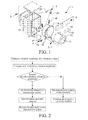
FIG. 1 is a schematic view of a laundry treatment appliance according to an embodiment of the present invention; and -
FIG. 2 is a flow chart of a control method for the laundry treatment appliance shown inFIG. 1 . - As shown in
FIG. 1 , a laundry treatment appliance 1 may be a drum washing machine with only the washing function, or a drum laundry washing and drying machine with a washing function and a drying function, or a dryer with only the drying function. The drum laundry washing and drying machine 1 is taken as an example, which includes a relativelystatic cabinet system 2, avibration system 3 suspended in thecabinet system 2, adriving system 4 for driving thevibration system 3, atransmission system 5 for transmitting power of thedriving system 4 to thevibration system 3, and a control system 6 for controlling the operation of the appliance; thevibration system 3 is connected with thedriving system 4 through thetransmission system 5. Further referring toFIG. 1 , thecabinet system 2 includes acabinet 10, aglass door 11 for a user to put laundry to be washed or dried, and a control panel 12 for the user to select an operation program. Thevibration system 3 includes adrum 13 for the user to put the laundry to be washed or dried, atub 14 for accommodating thedrum 13 and washing water, abalance module 15 disposed on thetub 14 for ensuring that thevibration system 3 is in balance when rotating at a high speed, and a suspension andsupport system 16 disposed at an upper part and a lower part of thetub 14 for suspending thevibration system 3 inside thecabinet 10. Thedriving system 4 includes amotor 17 for driving thedrum 13 to rotate at the high speed. Thetransmission system 5 includes atransmission belt 18 connecting themotor 17 and thedrum 13 for rotating at the high speed under the drive of themotor 17, and a belt roller combination 19 for installing thetransmission belt 18. During work, the control system 6 drives themotor 17 according to a program instruction selected by the user through the control panel 12 to drive thedrum 13 to rotate at the high speed through thetransmission belt 18. Thedrum 13 continuously lifts and drops the laundry put into thedrum 13 by the user, and at the same time implements the washing or drying function by combining effects of water flows or heated air. To detect whether an abnormity occurs when thetransmission system 5 works, the laundry treatment appliance 1 further includes a transmission detecting system 7. During work, the control system 6 detects thevibration system 3 through the transmission detecting system 7; when the abnormity occurs in thevibration system 3, the control system 6 prompts the user of corresponding abnormity information according to abnormity information detected by the transmission detecting system 7, so that the user takes corresponding measures in time, and at the same time the control system 6 controls the driving system to stop working, so as to prevent the appliance and the laundry from being damaged or prevent a normal washing or drying program from being interrupted because thevibration system 3 continues working when the abnormity occurs in thetransmission system 5. Preferably, the transmission detecting system 7 is a displacement sensing device 19 including afirst sensing element 20 disposed on thevibration system 3 and a second sensing element 21 disposed on thecabinet system 2. The second sensing element 21 senses a signal change of thefirst sensing element 20, and converts the signal change to a signal recognizable to the control system 6 and transmits the signal to the control system 6. The control system 6 determines whether the abnormity occurs in thevibration system 3 or not according to the signal transmitted by the second sensing element 21. More preferably, the displacement sensing device 19 is a 3D sensor; thefirst sensing element 20 is a magnet having a strong magnetic field, and the second sensing element 21 includes a sensor containing an induction electronic circuit. The control system 6 can collect an output signal of the sensor. The magnet is fixed on thevibration system 3, for example, fixed on thetub 14. The sensor containing the induction electronic circuit is fixed on thecabinet system 2, for example, fixed on thecabinet 10. When the laundry treatment appliance 1 works, the power of themotor 17 drives the connecteddrum 13 to rotate at a high speed through thetransmission belt 18. Due to the function of the center of gravity and inertia, the high-speed rotation of thedrum 13 drives thewhole vibration system 3 to vibrate at a high frequency. At this time, the magnet fixed on thetub 14, as a magnetic field source, vibrates along with the vibration of the vibration system, and the sensor containing the induction electronic circuit fixed on thecabinet 10 may sense a changing magnetic field at this time. The sensor converts a magnetic field variance to the signal recognizable to the control system 6 for the control system 6 to collect. The control system 6 analyzes the signal, so as to obtain a vibration amplitude of thevibration system 3. When the abnormity occurs in thetransmission system 5, for example, a transmission belt breaking, themotor 17 fails to normally drive thedrum 13 to rotate, and therefore, thedrum 13 and thewhole vibration system 3 have very small vibration, and are almost static. Thus, whether the abnormity occurs in thetransmission system 5 or not is determined according to the detected vibration amplitude of thevibration system 3. However, during the actual operation of the appliance, as long as the motor runs normally, thevibration system 3 generates a certain degree of vibration. To improve the accuracy of the transmission detecting system, the vibration amplitude of thevibration system 3 under various possible normal operation statuses can be detected through experiments, and a minimum vibration amplitude can be found to serve as a reference vibration amplitude to determine whether the abnormity occurs in the transmission system. Then, in the actual operation, if the detected vibration amplitude is smaller than the reference vibration amplitude, it is determined that the vibration amplitude of the vibration system is small and already lower than the minimum vibration amplitude of the normal operation, that is, the abnormity occurs in the transmission system. The accuracy of the determination can be improved by performing the determination for more times. - The control method for the laundry treatment appliance 1 is briefly described below with reference to
FIG. 2 . A user selects corresponding washing or drying programs through a control panel. The control system controls the appliance to perform the corresponding programs according to an instruction input by the user. When performing the washing or drying programs, the control system detects a vibration amplitude of the vibration system through the transmission detecting system, and then compares the detected vibration amplitude of the vibration system with a preset reference vibration amplitude in the system; when the actually detected vibration amplitude is smaller than the reference vibration amplitude, it is determined that an abnormity occurs in the transmission system; otherwise, when the actually detected vibration amplitude is higher than or equal to the reference vibration amplitude, it is determined that the transmission system works normally. When it is determined that the abnormity occurs in the transmission system, the control system cuts off power supply of the driving system, that is, making the appliance stop working, so as to prevent the situation that the abnormity occurs in the transmission system while the motor still continues operating and heating, and all the washing or drying programs are still performed, which burns the appliance, or causes a waste of resources; or although the appliance completes the corresponding washing or drying programs, the washing or drying effect is not satisfactory, or the corresponding washing or drying programs are not actually performed. Meanwhile, the control system prompts the user of corresponding abnormity information through error codes or alarm sounds, so that the user takes the corresponding measures in time to stop the machine, or to ask maintenance personnel to exchange the belt. - The above embodiments are merely preferred embodiments of the present invention. The present invention may have many other embodiments. Any equivalent replacement made by persons of ordinary skill in the art shall fall within the scope of the present invention.
Claims (11)
- A laundry treatment appliance (1), comprising a cabinet system (2), a vibration system (3), a driving system (4), a transmission system (5), and a control system (6), wherein the vibration system (3) is disposed in the cabinet system (2), the control system (6) controls the driving system (4) to drive the vibration system (3) to work through the transmission system (5), characterized in that the laundry treatment appliance (1) further comprises a transmission detecting system (7) for determining whether an abnormity occurs in the transmission system (5) or not by detecting the vibration system (3).
- The laundry treatment appliance (1) according to claim 1, characterized in that the control system (6) determines whether the abnormity occurs in the transmission system (5) or not by the transmission detecting system detecting (7) a displacement of the vibration system (3) relative to the cabinet system (2).
- The laundry treatment appliance (1) according to claim 2, characterized in that the control system (6) determines whether the abnormity occurs in the transmission system (5) or not by the transmission detecting system (7) detecting a vibration amplitude of the vibration system (3).
- The laundry treatment appliance (1) according to any one of claims 1 to 3, characterized in that the transmission system (5) comprises a belt (18), and the abnormity occurred in the transmission system (5) comprises breaking the belt (18).
- The laundry treatment appliance (1) according to any one of claims 1 to 4, characterized in that the transmission detecting system (7) comprises a displacement sensing device (19).
- The laundry treatment appliance (1) according to claim 5, characterized in that the transmission detecting system (7) comprises a first sensing element (20) and a second sensing element (21), wherein the first sensing element (20) is disposed on the vibration system (3), and the second sensing element (21) is disposed on the cabinet system (2).
- The laundry treatment appliance (1) according to claim 6, characterized in that the first sensing element (20) is a magnet (20), and the second sensing element (21) is a 3D sensor (21).
- The laundry treatment appliance (1) according to claim 6, characterized in that the vibration amplitude is reflected by a magnetic field variance of the first sensing element (20).
- A control method of a laundry treatment appliance (1) according to any one of claims 1 to 8, comprising:detecting a vibration amplitude of the vibration system (3) by the control system (6) through the transmission detecting system (7);comparing the vibration amplitude of the vibration system (3) with a reference vibration amplitude preset in the control system (6); anddetermining whether the abnormity occurs in the transmission system (5) or not according to a comparison result.
- The control method according to claim 9, characterized in that when the vibration amplitude of the vibration system (3) is smaller than the reference vibration amplitude, it is determined that the abnormity occurs in the transmission system (5); otherwise, it is determined that the transmission system (5) works normally.
- The control method according to one of claims 9 and 10, further comprising stopping a program currently running on the laundry treatment appliance (1), and prompting a user of corresponding abnormity information.
Applications Claiming Priority (1)
| Application Number | Priority Date | Filing Date | Title |
|---|---|---|---|
| CN200910265600XA CN102108613A (en) | 2009-12-24 | 2009-12-24 | Clothes processing equipment and control method thereof |
Publications (1)
| Publication Number | Publication Date |
|---|---|
| EP2341177A1 true EP2341177A1 (en) | 2011-07-06 |
Family
ID=43927958
Family Applications (1)
| Application Number | Title | Priority Date | Filing Date |
|---|---|---|---|
| EP10196388A Withdrawn EP2341177A1 (en) | 2009-12-24 | 2010-12-22 | Laundry treatment appliance and control method thereof |
Country Status (2)
| Country | Link |
|---|---|
| EP (1) | EP2341177A1 (en) |
| CN (1) | CN102108613A (en) |
Families Citing this family (5)
| Publication number | Priority date | Publication date | Assignee | Title |
|---|---|---|---|---|
| CN104342877B (en) * | 2013-08-08 | 2018-04-06 | 博西华电器(江苏)有限公司 | Laundry machine |
| CN104088119B (en) * | 2014-06-17 | 2016-08-24 | 松下家电研究开发(杭州)有限公司 | A kind of detection washing machine drives abnormal method and detecting system |
| CN110241593B (en) * | 2018-03-09 | 2022-11-25 | 青岛海尔洗涤电器有限公司 | Clothes treatment equipment control method and clothes treatment equipment |
| CN108755022B (en) * | 2018-06-01 | 2021-04-06 | 宁波思朗智能科技发展有限公司 | Intelligent dry cleaning machine |
| CN114318766B (en) * | 2022-01-04 | 2024-03-01 | 海信冰箱有限公司 | Fault detection method and device based on vibration device, and readable storage medium |
Citations (7)
| Publication number | Priority date | Publication date | Assignee | Title |
|---|---|---|---|---|
| DE1288053B (en) * | 1969-01-30 | |||
| EP1067232A1 (en) * | 1999-07-09 | 2001-01-10 | Ciapem | Washing and/or drying machine with a drum speed controller |
| DE10202252C1 (en) * | 2002-01-21 | 2003-03-20 | Miele & Cie | Speed regulation and control method, for washing machine, determines drum speed by evaluation of dynamic component of movement or acceleration signal for self-regulation of regulation and control unit |
| US20050016013A1 (en) * | 2003-07-25 | 2005-01-27 | Bang Jong Chul | Control method and system for clothes dryer |
| US20060042328A1 (en) * | 2004-08-26 | 2006-03-02 | Matsushita Electric Industrial Co., Ltd. | Washing machine |
| WO2007049190A1 (en) * | 2005-10-25 | 2007-05-03 | Arcelik Anonim Sirketi | A dryer |
| WO2008077968A1 (en) | 2006-12-26 | 2008-07-03 | Arcelik Anonim Sirketi | A washer / dryer with drive belt breakage detection |
-
2009
- 2009-12-24 CN CN200910265600XA patent/CN102108613A/en active Pending
-
2010
- 2010-12-22 EP EP10196388A patent/EP2341177A1/en not_active Withdrawn
Patent Citations (7)
| Publication number | Priority date | Publication date | Assignee | Title |
|---|---|---|---|---|
| DE1288053B (en) * | 1969-01-30 | |||
| EP1067232A1 (en) * | 1999-07-09 | 2001-01-10 | Ciapem | Washing and/or drying machine with a drum speed controller |
| DE10202252C1 (en) * | 2002-01-21 | 2003-03-20 | Miele & Cie | Speed regulation and control method, for washing machine, determines drum speed by evaluation of dynamic component of movement or acceleration signal for self-regulation of regulation and control unit |
| US20050016013A1 (en) * | 2003-07-25 | 2005-01-27 | Bang Jong Chul | Control method and system for clothes dryer |
| US20060042328A1 (en) * | 2004-08-26 | 2006-03-02 | Matsushita Electric Industrial Co., Ltd. | Washing machine |
| WO2007049190A1 (en) * | 2005-10-25 | 2007-05-03 | Arcelik Anonim Sirketi | A dryer |
| WO2008077968A1 (en) | 2006-12-26 | 2008-07-03 | Arcelik Anonim Sirketi | A washer / dryer with drive belt breakage detection |
Also Published As
| Publication number | Publication date |
|---|---|
| CN102108613A (en) | 2011-06-29 |
Similar Documents
| Publication | Publication Date | Title |
|---|---|---|
| CA2400688C (en) | Pump cycling control system for a washing machine | |
| US11180883B2 (en) | Washing machine and method for controlling washing machine | |
| US20110000100A1 (en) | Laundry treatment appliance comprising a drum and a sensor, and method for the operation thereof | |
| US10934652B2 (en) | Washing machine and control method thereof | |
| JP2004344338A (en) | Washing machine | |
| TWI799641B (en) | Washing machines and washing machine systems | |
| EP2864537A1 (en) | Control mechanism for washing machine drive with acceleration sensing | |
| JP5010431B2 (en) | Washing machine | |
| JP2017080410A (en) | Cleaner and cleaner operation method | |
| CN104342877B (en) | Laundry machine | |
| JP2008061856A (en) | Drum-type washing machine and drum-type washing machine | |
| CN102108613A (en) | Clothes processing equipment and control method thereof | |
| CN104088119A (en) | Method and system for detecting driving abnormity of washing machine | |
| JP4581922B2 (en) | Drum washing machine | |
| WO2008077968A1 (en) | A washer / dryer with drive belt breakage detection | |
| CN111101318A (en) | Braking detection method and device of clothes treatment device and computer equipment | |
| CN111575984B (en) | Laundry care appliance with control device | |
| CN110318241B (en) | Method for controlling clothes dryer and clothes dryer | |
| JP2017536140A (en) | Hanging rod drop-off detection device for washing machine and safe operation method of washing machine | |
| CN109183352B (en) | Washing apparatus and control method thereof | |
| CN112899985A (en) | Washing machine | |
| JP4460557B2 (en) | Drum washing machine | |
| WO2020251505A1 (en) | A washing machine comprising a belt-pulley and the operation method thereof | |
| US20230416964A1 (en) | Washing machine and controlling method of washing machine | |
| KR20050050260A (en) | Method and apparatus for detecting amount of clothes of washing machine |
Legal Events
| Date | Code | Title | Description |
|---|---|---|---|
| PUAI | Public reference made under article 153(3) epc to a published international application that has entered the european phase |
Free format text: ORIGINAL CODE: 0009012 |
|
| AK | Designated contracting states |
Kind code of ref document: A1 Designated state(s): AL AT BE BG CH CY CZ DE DK EE ES FI FR GB GR HR HU IE IS IT LI LT LU LV MC MK MT NL NO PL PT RO RS SE SI SK SM TR |
|
| AX | Request for extension of the european patent |
Extension state: BA ME |
|
| STAA | Information on the status of an ep patent application or granted ep patent |
Free format text: STATUS: THE APPLICATION IS DEEMED TO BE WITHDRAWN |
|
| 18D | Application deemed to be withdrawn |
Effective date: 20120110 |