EP2336209A2 - Fire-resistant polyurethane foam and fabrication method thereof - Google Patents
Fire-resistant polyurethane foam and fabrication method thereof Download PDFInfo
- Publication number
- EP2336209A2 EP2336209A2 EP10013896A EP10013896A EP2336209A2 EP 2336209 A2 EP2336209 A2 EP 2336209A2 EP 10013896 A EP10013896 A EP 10013896A EP 10013896 A EP10013896 A EP 10013896A EP 2336209 A2 EP2336209 A2 EP 2336209A2
- Authority
- EP
- European Patent Office
- Prior art keywords
- fire
- fire retardant
- polyurethane foam
- hydroxyl
- resistant polyurethane
- Prior art date
- Legal status (The legal status is an assumption and is not a legal conclusion. Google has not performed a legal analysis and makes no representation as to the accuracy of the status listed.)
- Granted
Links
- 230000009970 fire resistant effect Effects 0.000 title claims abstract description 44
- 229920005830 Polyurethane Foam Polymers 0.000 title claims abstract description 42
- 239000011496 polyurethane foam Substances 0.000 title claims abstract description 42
- 238000000034 method Methods 0.000 title claims description 27
- 238000004519 manufacturing process Methods 0.000 title description 13
- 239000003063 flame retardant Substances 0.000 claims abstract description 91
- 239000005056 polyisocyanate Substances 0.000 claims abstract description 34
- 229920001228 polyisocyanate Polymers 0.000 claims abstract description 34
- 125000002887 hydroxy group Chemical group [H]O* 0.000 claims abstract description 33
- 239000002245 particle Substances 0.000 claims abstract description 28
- 229920005862 polyol Polymers 0.000 claims abstract description 27
- 150000003077 polyols Chemical class 0.000 claims abstract description 27
- WNROFYMDJYEPJX-UHFFFAOYSA-K aluminium hydroxide Chemical compound [OH-].[OH-].[OH-].[Al+3] WNROFYMDJYEPJX-UHFFFAOYSA-K 0.000 claims description 30
- 238000005187 foaming Methods 0.000 claims description 14
- 239000002270 dispersing agent Substances 0.000 claims description 12
- 239000004814 polyurethane Substances 0.000 claims description 11
- 229920002635 polyurethane Polymers 0.000 claims description 10
- 239000000126 substance Substances 0.000 claims description 8
- VTYYLEPIZMXCLO-UHFFFAOYSA-L Calcium carbonate Chemical compound [Ca+2].[O-]C([O-])=O VTYYLEPIZMXCLO-UHFFFAOYSA-L 0.000 claims description 6
- 239000003054 catalyst Substances 0.000 claims description 6
- 239000004604 Blowing Agent Substances 0.000 claims description 5
- 239000003365 glass fiber Substances 0.000 claims description 5
- VTHJTEIRLNZDEV-UHFFFAOYSA-L magnesium dihydroxide Chemical compound [OH-].[OH-].[Mg+2] VTHJTEIRLNZDEV-UHFFFAOYSA-L 0.000 claims description 4
- 239000000347 magnesium hydroxide Substances 0.000 claims description 4
- 229910001862 magnesium hydroxide Inorganic materials 0.000 claims description 4
- OAICVXFJPJFONN-UHFFFAOYSA-N Phosphorus Chemical compound [P] OAICVXFJPJFONN-UHFFFAOYSA-N 0.000 claims description 3
- VYPSYNLAJGMNEJ-UHFFFAOYSA-N Silicium dioxide Chemical compound O=[Si]=O VYPSYNLAJGMNEJ-UHFFFAOYSA-N 0.000 claims description 3
- GWEVSGVZZGPLCZ-UHFFFAOYSA-N Titan oxide Chemical compound O=[Ti]=O GWEVSGVZZGPLCZ-UHFFFAOYSA-N 0.000 claims description 3
- 229910000019 calcium carbonate Inorganic materials 0.000 claims description 3
- 238000003763 carbonization Methods 0.000 claims description 3
- 239000003795 chemical substances by application Substances 0.000 claims description 3
- QJGQUHMNIGDVPM-UHFFFAOYSA-N nitrogen group Chemical group [N] QJGQUHMNIGDVPM-UHFFFAOYSA-N 0.000 claims description 3
- 229910052698 phosphorus Inorganic materials 0.000 claims description 3
- 239000011574 phosphorus Substances 0.000 claims description 3
- 229910052814 silicon oxide Inorganic materials 0.000 claims description 3
- OGIDPMRJRNCKJF-UHFFFAOYSA-N titanium oxide Inorganic materials [Ti]=O OGIDPMRJRNCKJF-UHFFFAOYSA-N 0.000 claims description 3
- 239000006260 foam Substances 0.000 abstract description 36
- 239000007788 liquid Substances 0.000 description 20
- 230000000052 comparative effect Effects 0.000 description 16
- 229910021502 aluminium hydroxide Inorganic materials 0.000 description 9
- 229910001679 gibbsite Inorganic materials 0.000 description 9
- 230000008569 process Effects 0.000 description 9
- LYCAIKOWRPUZTN-UHFFFAOYSA-N Ethylene glycol Chemical compound OCCO LYCAIKOWRPUZTN-UHFFFAOYSA-N 0.000 description 8
- 238000007706 flame test Methods 0.000 description 6
- 239000004615 ingredient Substances 0.000 description 6
- 239000000203 mixture Substances 0.000 description 6
- 238000009413 insulation Methods 0.000 description 5
- IMNIMPAHZVJRPE-UHFFFAOYSA-N triethylenediamine Chemical compound C1CN2CCN1CC2 IMNIMPAHZVJRPE-UHFFFAOYSA-N 0.000 description 5
- 239000004114 Ammonium polyphosphate Substances 0.000 description 4
- 229920000877 Melamine resin Polymers 0.000 description 4
- UKLDJPRMSDWDSL-UHFFFAOYSA-L [dibutyl(dodecanoyloxy)stannyl] dodecanoate Chemical compound CCCCCCCCCCCC(=O)O[Sn](CCCC)(CCCC)OC(=O)CCCCCCCCCCC UKLDJPRMSDWDSL-UHFFFAOYSA-L 0.000 description 4
- 235000019826 ammonium polyphosphate Nutrition 0.000 description 4
- 229920001276 ammonium polyphosphate Polymers 0.000 description 4
- WGCNASOHLSPBMP-UHFFFAOYSA-N hydroxyacetaldehyde Natural products OCC=O WGCNASOHLSPBMP-UHFFFAOYSA-N 0.000 description 4
- 239000012784 inorganic fiber Substances 0.000 description 4
- JDSHMPZPIAZGSV-UHFFFAOYSA-N melamine Chemical compound NC1=NC(N)=NC(N)=N1 JDSHMPZPIAZGSV-UHFFFAOYSA-N 0.000 description 4
- WXZMFSXDPGVJKK-UHFFFAOYSA-N pentaerythritol Chemical compound OCC(CO)(CO)CO WXZMFSXDPGVJKK-UHFFFAOYSA-N 0.000 description 4
- UPMLOUAZCHDJJD-UHFFFAOYSA-N 4,4'-Diphenylmethane Diisocyanate Chemical compound C1=CC(N=C=O)=CC=C1CC1=CC=C(N=C=O)C=C1 UPMLOUAZCHDJJD-UHFFFAOYSA-N 0.000 description 3
- ZMANZCXQSJIPKH-UHFFFAOYSA-N Triethylamine Chemical compound CCN(CC)CC ZMANZCXQSJIPKH-UHFFFAOYSA-N 0.000 description 3
- 150000001875 compounds Chemical class 0.000 description 3
- 238000010586 diagram Methods 0.000 description 3
- 239000007789 gas Substances 0.000 description 3
- 238000010438 heat treatment Methods 0.000 description 3
- 230000004048 modification Effects 0.000 description 3
- 238000012986 modification Methods 0.000 description 3
- ALQLPWJFHRMHIU-UHFFFAOYSA-N 1,4-diisocyanatobenzene Chemical compound O=C=NC1=CC=C(N=C=O)C=C1 ALQLPWJFHRMHIU-UHFFFAOYSA-N 0.000 description 2
- 229920000742 Cotton Polymers 0.000 description 2
- 239000005057 Hexamethylene diisocyanate Substances 0.000 description 2
- 239000012975 dibutyltin dilaurate Substances 0.000 description 2
- RRAMGCGOFNQTLD-UHFFFAOYSA-N hexamethylene diisocyanate Chemical compound O=C=NCCCCCCN=C=O RRAMGCGOFNQTLD-UHFFFAOYSA-N 0.000 description 2
- 229910010272 inorganic material Inorganic materials 0.000 description 2
- 239000011147 inorganic material Substances 0.000 description 2
- 210000004072 lung Anatomy 0.000 description 2
- 239000000463 material Substances 0.000 description 2
- 239000011368 organic material Substances 0.000 description 2
- 239000011541 reaction mixture Substances 0.000 description 2
- 150000003512 tertiary amines Chemical class 0.000 description 2
- KSBAEPSJVUENNK-UHFFFAOYSA-L tin(ii) 2-ethylhexanoate Chemical compound [Sn+2].CCCCC(CC)C([O-])=O.CCCCC(CC)C([O-])=O KSBAEPSJVUENNK-UHFFFAOYSA-L 0.000 description 2
- DVKJHBMWWAPEIU-UHFFFAOYSA-N toluene 2,4-diisocyanate Chemical compound CC1=CC=C(N=C=O)C=C1N=C=O DVKJHBMWWAPEIU-UHFFFAOYSA-N 0.000 description 2
- 238000012546 transfer Methods 0.000 description 2
- HVCNXQOWACZAFN-UHFFFAOYSA-N 4-ethylmorpholine Chemical compound CCN1CCOCC1 HVCNXQOWACZAFN-UHFFFAOYSA-N 0.000 description 1
- SVYKKECYCPFKGB-UHFFFAOYSA-N N,N-dimethylcyclohexylamine Chemical compound CN(C)C1CCCCC1 SVYKKECYCPFKGB-UHFFFAOYSA-N 0.000 description 1
- 239000002202 Polyethylene glycol Substances 0.000 description 1
- 239000004721 Polyphenylene oxide Substances 0.000 description 1
- 238000004220 aggregation Methods 0.000 description 1
- 230000002776 aggregation Effects 0.000 description 1
- 125000001931 aliphatic group Chemical group 0.000 description 1
- 125000003118 aryl group Chemical group 0.000 description 1
- 239000002131 composite material Substances 0.000 description 1
- 239000004035 construction material Substances 0.000 description 1
- 238000005336 cracking Methods 0.000 description 1
- 239000012973 diazabicyclooctane Substances 0.000 description 1
- 125000005442 diisocyanate group Chemical group 0.000 description 1
- 230000000694 effects Effects 0.000 description 1
- 230000001747 exhibiting effect Effects 0.000 description 1
- 239000011521 glass Substances 0.000 description 1
- 125000000623 heterocyclic group Chemical group 0.000 description 1
- 230000006872 improvement Effects 0.000 description 1
- 239000012948 isocyanate Substances 0.000 description 1
- IQPQWNKOIGAROB-UHFFFAOYSA-N isocyanate group Chemical group [N-]=C=O IQPQWNKOIGAROB-UHFFFAOYSA-N 0.000 description 1
- 150000002513 isocyanates Chemical class 0.000 description 1
- NIMLQBUJDJZYEJ-UHFFFAOYSA-N isophorone diisocyanate Chemical compound CC1(C)CC(N=C=O)CC(C)(CN=C=O)C1 NIMLQBUJDJZYEJ-UHFFFAOYSA-N 0.000 description 1
- 239000004816 latex Substances 0.000 description 1
- 229920000126 latex Polymers 0.000 description 1
- 229940049964 oleate Drugs 0.000 description 1
- ZQPPMHVWECSIRJ-KTKRTIGZSA-N oleic acid Chemical compound CCCCCCCC\C=C/CCCCCCCC(O)=O ZQPPMHVWECSIRJ-KTKRTIGZSA-N 0.000 description 1
- ISWSIDIOOBJBQZ-UHFFFAOYSA-N phenol group Chemical group C1(=CC=CC=C1)O ISWSIDIOOBJBQZ-UHFFFAOYSA-N 0.000 description 1
- 229920005906 polyester polyol Polymers 0.000 description 1
- 229920000570 polyether Polymers 0.000 description 1
- 229920001223 polyethylene glycol Polymers 0.000 description 1
- 229920001451 polypropylene glycol Polymers 0.000 description 1
- -1 polytetramethylene Polymers 0.000 description 1
- 239000000843 powder Substances 0.000 description 1
- 238000012545 processing Methods 0.000 description 1
- 238000005728 strengthening Methods 0.000 description 1
- YFTHZRPMJXBUME-UHFFFAOYSA-N tripropylamine Chemical compound CCCN(CCC)CCC YFTHZRPMJXBUME-UHFFFAOYSA-N 0.000 description 1
- XLYOFNOQVPJJNP-UHFFFAOYSA-N water Substances O XLYOFNOQVPJJNP-UHFFFAOYSA-N 0.000 description 1
Images




Classifications
-
- C—CHEMISTRY; METALLURGY
- C08—ORGANIC MACROMOLECULAR COMPOUNDS; THEIR PREPARATION OR CHEMICAL WORKING-UP; COMPOSITIONS BASED THEREON
- C08J—WORKING-UP; GENERAL PROCESSES OF COMPOUNDING; AFTER-TREATMENT NOT COVERED BY SUBCLASSES C08B, C08C, C08F, C08G or C08H
- C08J9/00—Working-up of macromolecular substances to porous or cellular articles or materials; After-treatment thereof
- C08J9/0066—Use of inorganic compounding ingredients
-
- C—CHEMISTRY; METALLURGY
- C08—ORGANIC MACROMOLECULAR COMPOUNDS; THEIR PREPARATION OR CHEMICAL WORKING-UP; COMPOSITIONS BASED THEREON
- C08G—MACROMOLECULAR COMPOUNDS OBTAINED OTHERWISE THAN BY REACTIONS ONLY INVOLVING UNSATURATED CARBON-TO-CARBON BONDS
- C08G18/00—Polymeric products of isocyanates or isothiocyanates
- C08G18/06—Polymeric products of isocyanates or isothiocyanates with compounds having active hydrogen
- C08G18/08—Processes
- C08G18/10—Prepolymer processes involving reaction of isocyanates or isothiocyanates with compounds having active hydrogen in a first reaction step
-
- C—CHEMISTRY; METALLURGY
- C08—ORGANIC MACROMOLECULAR COMPOUNDS; THEIR PREPARATION OR CHEMICAL WORKING-UP; COMPOSITIONS BASED THEREON
- C08G—MACROMOLECULAR COMPOUNDS OBTAINED OTHERWISE THAN BY REACTIONS ONLY INVOLVING UNSATURATED CARBON-TO-CARBON BONDS
- C08G18/00—Polymeric products of isocyanates or isothiocyanates
- C08G18/06—Polymeric products of isocyanates or isothiocyanates with compounds having active hydrogen
- C08G18/28—Polymeric products of isocyanates or isothiocyanates with compounds having active hydrogen characterised by the compounds used containing active hydrogen
- C08G18/30—Low-molecular-weight compounds
- C08G18/38—Low-molecular-weight compounds having heteroatoms other than oxygen
- C08G18/3878—Low-molecular-weight compounds having heteroatoms other than oxygen having phosphorus
-
- C—CHEMISTRY; METALLURGY
- C08—ORGANIC MACROMOLECULAR COMPOUNDS; THEIR PREPARATION OR CHEMICAL WORKING-UP; COMPOSITIONS BASED THEREON
- C08K—Use of inorganic or non-macromolecular organic substances as compounding ingredients
- C08K3/00—Use of inorganic substances as compounding ingredients
- C08K3/01—Use of inorganic substances as compounding ingredients characterized by their specific function
- C08K3/016—Flame-proofing or flame-retarding additives
-
- C—CHEMISTRY; METALLURGY
- C08—ORGANIC MACROMOLECULAR COMPOUNDS; THEIR PREPARATION OR CHEMICAL WORKING-UP; COMPOSITIONS BASED THEREON
- C08K—Use of inorganic or non-macromolecular organic substances as compounding ingredients
- C08K3/00—Use of inorganic substances as compounding ingredients
- C08K3/18—Oxygen-containing compounds, e.g. metal carbonyls
- C08K3/20—Oxides; Hydroxides
-
- C—CHEMISTRY; METALLURGY
- C08—ORGANIC MACROMOLECULAR COMPOUNDS; THEIR PREPARATION OR CHEMICAL WORKING-UP; COMPOSITIONS BASED THEREON
- C08K—Use of inorganic or non-macromolecular organic substances as compounding ingredients
- C08K3/00—Use of inorganic substances as compounding ingredients
- C08K3/18—Oxygen-containing compounds, e.g. metal carbonyls
- C08K3/20—Oxides; Hydroxides
- C08K3/22—Oxides; Hydroxides of metals
-
- C—CHEMISTRY; METALLURGY
- C08—ORGANIC MACROMOLECULAR COMPOUNDS; THEIR PREPARATION OR CHEMICAL WORKING-UP; COMPOSITIONS BASED THEREON
- C08G—MACROMOLECULAR COMPOUNDS OBTAINED OTHERWISE THAN BY REACTIONS ONLY INVOLVING UNSATURATED CARBON-TO-CARBON BONDS
- C08G2101/00—Manufacture of cellular products
Definitions
- the present invention relates to a polyurethane (PU) foam, and in particular relates to a low-density, fire-resistant polyurethane foam and a fabrication method thereof.
- PU polyurethane
- Fire-resistant construction materials are classified into three groups: inorganic fiber board, inorganic fiber cotton, and organic fire-retardant foam.
- Inorganic fiber board is relatively heavy and has a fixed shape which restricts its use and the thermal insulation is unsatisfactory.
- Inorganic fiber cotton has superior fire resistance and thermal insulation, but has no mechanical strength.
- Organic fire-retardant foam such as phenolic foam, is light and has good thermal insulation. However, organic foam generally has poor fire resistance, and tends to shrink and gasify under exposure to flames.
- a polyurethane foam incorporated with inorganic fire retardant combines the advantages of organic and inorganic materials, which are, high processability, light-weight, and high thermal insulation for organic materials and excellent fire resistance for an inorganic materials.
- an inorganic fire retardant is merely physically blended in polyurethane, exhibiting limited improvement in fire resistance.
- the additional amount of the inorganic fire retardant has restriction. For example, the maximum permissible amount for a 1 ⁇ m aluminum hydroxide in polyurethane is only 36.5 wt% (based on the total weight of the fire resistant foam). If the amount exceeds the value, the resulting mixture would not be processable due to unusually high viscosity.
- Fig. 1 illustrates a fabrication scheme of a fire-resistant polyurethane foam disclosed by Canadian Patent No. 1222599A1 and US Patent No. 4317889 , wherein a fire retardant is first added to a polyol, which is then mixed with a polyisocyanate to cause a foaming reaction. Because the fire retardant is only present in the polyol, the amount of the fire retardant (and therefore the fire resistance) is limited by the volume of the polyol solution.
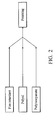
- Fig. 2 illustrates another fabrication scheme of a fire-resistant polyurethane foam disclosed by US 6010565 and GB 1472245 , wherein a fire retardant, a polyisocyanate, and a polyol are mixed together simultaneously. Because the contact of the polyisocyanate and the polyol initiates the foaming reaction immediately, it is not possible to incorporate a large amount of the fire retardant in such a short period.
- Fig. 3 illustrates a further fabrication scheme of a fire-resistant polyurethane foam disclosed by GB 1499168 and EP0308769B1 , wherein an open-cell polyurethane foam is impregnated with a cross-linkable latex solution including aluminum hydroxide.
- a method for fabricating a fire-resistant polyurethane foam comprises premixing a polyisocyanate and a hydroxyl-containing inorganic fire retardant to form a first premixture, wherein the polyisocyanate reacts with the hydroxyl-containing inorganic fire retardant to form a chemical bond; premixing a polyol, a blowing agent, and the hydroxyl-containing inorganic fire retardant to form a second premixture; and mixing the first premixture and the second premixture to proceed with a foaming reaction to obtain a fire-resistant polyurethane foam.
- a fire-resistant polyurethane foam which comprises a polyurethane; about 50-80 wt% of a hydroxyl-containing inorganic fire retardant, based on the weight of the fire-resistant polyurethane foam, wherein the hydroxyl-containing inorganic fire retardant reacts with the polyurethane to form a chemical bond; wherein the fire-resistant polyurethane foam has a density of about 0.05-0.7 g/cm 3 .
- Figs. 1-3 illustrate three conventional fabrication schemes of a fire-resistant polyurethane foam
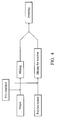
- Fig. 4 illustrates a fabrication scheme of a fire-resistant polyurethane foam according to an embodiment of the invention
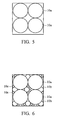
- Fig. 5 is a schematic view showing the use of a single particle size for an inorganic fire retardant
- Fig. 6 is a schematic view showing the combination of different particle sizes for an inorganic fire retardant
- Fig. 7 is a diagram showing the backside temperature of the foams of Example 1 and Comparative Example 1 as a function of heating time;
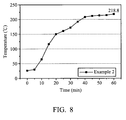
- Fig. 8 is a diagram showing the backside temperature of the foam of Example 2 as a function of heating time.
- Fig. 9 is a diagram showing the backside temperature of the foams of Comparative Examples 3-5 as a function of heating time.
- Embodiments of the invention provide a low-density, low-cost, high-strength, high-thermal insulation fire resistant foam by taking advantages of the low density of polyurethane foam and the fire resistance of inorganic fire retardants.
- the fire-resistant foam is capable of withstanding flame temperatures of about 1000°C for more than 1 hour without losing its structural integrity, which effectively prevents direct heat transfer (to the interior materials or objects).
- Fig. 4 illustrates a fabrication scheme of a fire-resistant polyurethane foam according to an embodiment of the invention.
- a hydroxyl-containing inorganic fire retardant e.g., aluminum hydroxide
- a polyisocyanate and a polyol respectively
- the two premixtures are mixed for reaction to form a fire-resistant polyurethane foam.
- the amount of inorganic fire retardant can be significantly increased to above 40wt%, or preferably about 50-80wt%.
- the hydroxyl group of the fire retardant will react with the isocyanate (-NCO) group of the polyisocyanate; thereby increasing the permissible additional amount of the fire retardant.
- the reaction forms a chemical bond between the fire retardant and the polyurethane; thus strengthening structural integrity of the composite.
- the resulting fire-resistant foam does not melt, shrink or produce flaming drops under exposure to flame or ignition sources.
- a combination of different particle sizes of the fire retardant is employed to maximize the amount of the fire retardant and increase the fire resistance of the foam.
- a smaller fire retardant particle can result in an abrupt increase of viscosity when added to the polyurethane reaction mixture due to the larger surface area, and therefore its additional amount is rather limited. Meanwhile, a larger fire retardant particle allows a greater additional amount, but the fire resistance is relatively poor.
- a combination of different particle sizes of the fire retardant can maximize the amount of the fire retardant without sacrificing the fire resistance.
- Fig. 5 shows the use of an inorganic fire retardant 10a having a single particle size
- Fig. 6 shows the use of inorganic fire retardants 10a, 10b, 10c having different particle sizes. It can be seen that the combination of different particle sizes can fill up a given space more efficiently; thereby increasing the additional amount.
- the polyisocyanate suitable for use herein is a compound having two or more isocyanate groups per molecule, including but not limited to: aromatic polyisocyanates, aliphatic polyisocyanates, cycloaliphatic polyisocyanates, heterocyclic polyisocyanates, and so on. A mixture of the above is also suitable for use.
- the polyisocyanate preferably has an NCO content of about 5-50 wt%.
- polyisocyanate examples include: toluene diisocyanate (TDI), diphenylmethane-4,4'-diisocyanate (MDI), isophorone diisocyanate (IPDI), hexamethylene diisocyanate (HDI), 4,4'-dicyclohexylmethane diisocyanate (H 12 MDI), p-phenylene diisocyanate (PPDI), and (p,p'-bisphenyl diisocyanate (BPDI).
- TDI toluene diisocyanate
- MDI diphenylmethane-4,4'-diisocyanate
- IPDI isophorone diisocyanate
- HDI hexamethylene diisocyanate
- HDI 4,4'-dicyclohexylmethane diisocyanate
- PPDI p-phenylene diisocyanate
- BPDI p,p'-bisphenyl di
- the polyol suitable for use herein is a polyol having two more active groups, including polyether polyols and polyester polyols.
- Representative examples of the polyol include: poly(butanediol-co-adipate) glycol (PBA), polytetramethylene glycol (PTMEG), Poly(hexanediol-co-adipate) glycol (PHA), poly(ethylene-co-adipate) glycol (PEA), polypropylene glycol, and polyethylene glycol.
- PBA poly(butanediol-co-adipate) glycol
- PTMEG polytetramethylene glycol
- PHA Poly(hexanediol-co-adipate) glycol
- PDA poly(ethylene-co-adipate) glycol
- PEA polypropylene glycol
- polyethylene glycol polyethylene glycol.
- the polyol may have a number average molecular weight ranging from about 200 to about 6000,
- the polyol is first mixed with a blowing agent, a catalyst and a dispersing agent, followed by addition of a fire retardant to proceed with premixing.
- Water is the most commonly used blowing agent for polyurethane.
- the catalyst suitable for use herein includes metallic compounds and tertiary amines, wherein the metallic compounds are, for example, dibutyltin dilaurate (T-12), stannous octoate (T-9), and stannous oleate, and the tertiary amines are, for example, triethylenediamine, triethylamine, tripropylamine, N-ethyl morpholine, and N,N-dimethyl cyclohexanamine.
- the dispersing agent suitable for use herein includes Disperbyk series manufactured by BYK Chemie.
- the blowing agent, the catalyst, and the dispersing agent may be present in amounts of 1wt%, 0.1wt%, and 2.5wt%, respectively, based on the weight of the polyol. It will be appreciated, however, the other ratios may be used.
- the hydroxyl-containing inorganic fire retardant which is suitably used herein includes, but is not limited to, aluminum hydroxide, magnesium hydroxide, silicon oxide, titanium oxide, calcium carbonate, or combinations thereof, wherein aluminum hydroxide and magnesium hydroxide are particularly preferred.
- the fire retardant may inherently have the hydroxyl group or have the hydroxyl group after surface modification.
- the hydroxyl-containing inorganic fire retardant may have a particle size ranging from about 0.5 ⁇ m to about 100 ⁇ m. Preferably, a combination of two or more different particle sizes is employed to maximize the amount of the fire retardant and increase the fire resistance. It should be noted that, however, using a fire retardant of a single particle size is permissible in the invention.
- a combination of particles sizes of 0.5-5 ⁇ m, 5-20 ⁇ m, and 20-100 ⁇ m in a weight ratio of 1: 0.1-2: 0.1-2, or preferably 3:2:4, is employed.
- the hydroxyl-containing inorganic fire retardant may be present in an amount of about 50-80 wt%, based on the total weight of the fire-resistant polyurethane foam.
- the weight ratio of the fire retardant in the polyisocyanate premixture to the fire retardant in the polyol premixture is about 1:9 to about 9:1, or preferably about 1.5:1.
- the fire-resistant polyurethane foam may further contain 0-10 wt% of a phosphorus-containing fire retardant (such as ammonium polyphosphate), 0-5wt% of a nitrogen-containing fire retardant (such as melamine), 0-5wt% of a carbonization agent (such as pentaerythritol), and 0-15 wt% of a glass fiber (such as short glass fiber), based on the total weight of the fire-resistant polyurethane foam.
- a phosphorus-containing fire retardant such as ammonium polyphosphate
- a nitrogen-containing fire retardant such as melamine
- a carbonization agent such as pentaerythritol
- a glass fiber such as short glass fiber
- the hydroxyl-containing inorganic fire retardant is premixed with a polyisocyanate and a polyol, respectively, to form two premixtures.
- the premixing can be carried out at a mixing speed of about 100-400 rpm for a period of about 5-30 minutes to insure a thorough mixing.
- the two premixtures are mixed at a higher speed, for example, about 1000-3000 rpm for a period of about 5-30 seconds.
- the resulting mixture is then placed into a mold to proceed with the foaming process.
- the fire-resistant polyurethane foam thus obtained may have a density of about 0.05-0.7 g/cm 3 .
- the fire-resistant polyurethane foam is capable of withstanding flame temperature of about 1000°C for more than 1 hour without losing its structural integrity; effectively preventing direct heat transfer to the interior.
- polyol UR-398A from Kuang Lung Shing Corp.
- phosphorus-containing fire retardant ammonium polyphosphate
- carbonization agent pentaerythritol
- MIA4 denotes a mixture of melamine, ammonium polyphosphate, and pentaerythritol in a weight ratio of 3: 16: 1.
- the ingredients and amounts thereof given in Table 1 were dried mixed to provide Fire Retardant Powder C.
- the ingredients and amounts thereof given in Table 2 were thoroughly mixed to provide Liquid A.
- 116.2g of the Fire Retardant Powder C was added to 68.7g of polyisocyanate (UR398B, Liquid B) and thoroughly mixed at a speed of 250 rpm for 7 minutes; thus, providing a first premixture.
- 65.2g of the Fire Retardant Powder C was added to Liquid A and thoroughly mixed at a speed of 250 rpm for 7 minutes; thus, providing a second premixture.
- the first and second premixtures were mixed at a speed of 1200 rpm for about 10 seconds, and then placed into a mold to proceed with the foaming process.
- the Fire Retardant Powder C, Liquid A, and Liquid B as in the Example 1 were mixed simultaneously at a speed of 1200 rpm for about 10 seconds.
- the Fire Retardant Powder C could not be uniformly dispersed in the liquid mixture and lumps caused by aggregation of powers were observed; making it impossible to introduce the reaction mixture into a mold to proceed with the foaming process.
- the mixing of Liquid A and Liquid B promptly initiated the foaming process, it was impossible to fully disperse the fire retardant powder by increasing the mixing time.
- a flame test was conducted on the foams obtained in the Example 1 and Comparative Example 1 by a gas torch (burner diameter: 1.5 inches) with a flame temperature of 950°C, during which the backside temperature of the foams was measured, wherein the results are shown in Fig. 7 .
- the foam of the Example 1 was capable of withstanding the flame temperature for more than 1 hour and maintaining its structural integrity, while the foam of the Comparative Example 1 lost its structural integrity in less than 20 minutes due to cracking.
- the ingredients and amounts thereof given in Table 4 were dried mixed to provide Fire Retardant Powder E.
- the ingredients and amounts thereof given in Table 5 were thoroughly mixed to provide Liquid F.
- 86g of the Fire Retardant Powder E was added to 50.9g of polyisocyanate (UR398B, Liquid B) and thoroughly mixed at a speed of 250 rpm for 7 minutes; thus, providing a first premixture.
- 48.3g of the Fire Retardant Powder E was added to Liquid F and thoroughly mixed at a speed of 250 rpm for 7 minutes; thus, providing a second premixture.
- the first and second premixtures were mixed at a speed of 1200 rpm for about 10 seconds, and then placed into a mold to proceed with the foaming process.
- a 10cm*20cm*4cm foam with a density of 0.27g/cm 3 was obtained.
- H-32 90g was added to the Liquid G as in the Comparative Example 3 and thoroughly mixed at a speed of 250 rpm for 7 minutes; thus, providing a first premixture.
- 125g of H-32 was added to 101.8g of polyisocyanate (UR398B, Liquid B) and thoroughly mixed at a speed of 250 rpm for 7 minutes; thus, providing a second premixture.
- the first and second premixtures were mixed at a speed of 1200 rpm for about 10 seconds, and then placed into a mold to proceed with the foaming process.
- a 4cm*10cm*10cm foam with a density of 0.32g/cm 3 was obtained.
- the fire retardant present in the foam was 55.3%.
- H-10 was added to the Liquid G as in the Comparative Example 3 and thoroughly mixed at a speed of 250 rpm for 7 minutes; thus, providing a first premixture.
- 144g of H-10 was added to 101.8g of polyisocyanate (UR398B, Liquid B) and thoroughly mixed at a speed of 250 rpm for 7 minutes; thus, providing a second premixture.
- the first and second premixtures were mixed at a speed of 1200 rpm for about 10 seconds, and then placed into a mold to proceed with the foaming process.
- a 4cm*10cm*10cm foam with a density of 0.34g/cm 3 was obtained.
- the fire retardant present in the foam was 60.8%.
- the invention provides a low-density, fire-resistant polyurethane foam which is capable of withstanding flame temperature of about 1000°C for more than 1 hour without losing its structural integrity.
- the fire resistance is higher than that produced by the conventional fabrication schemes or by a single-particle-size fire retardant.
Landscapes
- Chemical & Material Sciences (AREA)
- Health & Medical Sciences (AREA)
- Chemical Kinetics & Catalysis (AREA)
- Medicinal Chemistry (AREA)
- Polymers & Plastics (AREA)
- Organic Chemistry (AREA)
- Engineering & Computer Science (AREA)
- Materials Engineering (AREA)
- Inorganic Chemistry (AREA)
- Polyurethanes Or Polyureas (AREA)
- Compositions Of Macromolecular Compounds (AREA)
- Fireproofing Substances (AREA)
- Manufacture Of Porous Articles, And Recovery And Treatment Of Waste Products (AREA)
Abstract
Description
- This application claims priority of Taiwan Patent Application No.
098139458, filed on November 20, 2009 - The present invention relates to a polyurethane (PU) foam, and in particular relates to a low-density, fire-resistant polyurethane foam and a fabrication method thereof.
- Fire-resistant construction materials are classified into three groups: inorganic fiber board, inorganic fiber cotton, and organic fire-retardant foam. Inorganic fiber board is relatively heavy and has a fixed shape which restricts its use and the thermal insulation is unsatisfactory. Inorganic fiber cotton has superior fire resistance and thermal insulation, but has no mechanical strength. Organic fire-retardant foam, such as phenolic foam, is light and has good thermal insulation. However, organic foam generally has poor fire resistance, and tends to shrink and gasify under exposure to flames.
- A polyurethane foam incorporated with inorganic fire retardant combines the advantages of organic and inorganic materials, which are, high processability, light-weight, and high thermal insulation for organic materials and excellent fire resistance for an inorganic materials. However, in the conventional art, an inorganic fire retardant is merely physically blended in polyurethane, exhibiting limited improvement in fire resistance. Furthermore, the additional amount of the inorganic fire retardant has restriction. For example, the maximum permissible amount for a 1 µm aluminum hydroxide in polyurethane is only 36.5 wt% (based on the total weight of the fire resistant foam). If the amount exceeds the value, the resulting mixture would not be processable due to unusually high viscosity.
-
Fig. 1 illustrates a fabrication scheme of a fire-resistant polyurethane foam disclosed by Canadian Patent No.1222599A1 andUS Patent No. 4317889 , wherein a fire retardant is first added to a polyol, which is then mixed with a polyisocyanate to cause a foaming reaction. Because the fire retardant is only present in the polyol, the amount of the fire retardant (and therefore the fire resistance) is limited by the volume of the polyol solution. -
Fig. 2 illustrates another fabrication scheme of a fire-resistant polyurethane foam disclosed byUS 6010565 andGB 1472245 -
Fig. 3 illustrates a further fabrication scheme of a fire-resistant polyurethane foam disclosed byGB 1499168 EP0308769B1 , wherein an open-cell polyurethane foam is impregnated with a cross-linkable latex solution including aluminum hydroxide. - It should be noted that the conventional art uses a single particle size for the inorganic fire retardant. None of the above cited references address the effect of using inorganic fire retardants having different particle sizes.
- According to one aspect of the invention, a method for fabricating a fire-resistant polyurethane foam is provided, which comprises premixing a polyisocyanate and a hydroxyl-containing inorganic fire retardant to form a first premixture, wherein the polyisocyanate reacts with the hydroxyl-containing inorganic fire retardant to form a chemical bond; premixing a polyol, a blowing agent, and the hydroxyl-containing inorganic fire retardant to form a second premixture; and mixing the first premixture and the second premixture to proceed with a foaming reaction to obtain a fire-resistant polyurethane foam.
- According to another aspect of the invention, a fire-resistant polyurethane foam is provided, which comprises a polyurethane; about 50-80 wt% of a hydroxyl-containing inorganic fire retardant, based on the weight of the fire-resistant polyurethane foam, wherein the hydroxyl-containing inorganic fire retardant reacts with the polyurethane to form a chemical bond; wherein the fire-resistant polyurethane foam has a density of about 0.05-0.7 g/cm3.
- A detailed description is given in the following embodiments with reference to the accompanying drawings.
- The present invention can be more fully understood by reading the subsequent detailed description and examples with references made to the accompanying drawings, wherein:
-
Figs. 1-3 illustrate three conventional fabrication schemes of a fire-resistant polyurethane foam; -
Fig. 4 illustrates a fabrication scheme of a fire-resistant polyurethane foam according to an embodiment of the invention; -
Fig. 5 is a schematic view showing the use of a single particle size for an inorganic fire retardant; -
Fig. 6 is a schematic view showing the combination of different particle sizes for an inorganic fire retardant; -
Fig. 7 is a diagram showing the backside temperature of the foams of Example 1 and Comparative Example 1 as a function of heating time; -
Fig. 8 is a diagram showing the backside temperature of the foam of Example 2 as a function of heating time; and -
Fig. 9 is a diagram showing the backside temperature of the foams of Comparative Examples 3-5 as a function of heating time. - The following description is of the best-contemplated mode of carrying out the invention. This description is made for the purpose of illustrating the general principles of the invention and should not be taken in a limiting sense. The scope of the invention is best determined by reference to the appended claims.
- Embodiments of the invention provide a low-density, low-cost, high-strength, high-thermal insulation fire resistant foam by taking advantages of the low density of polyurethane foam and the fire resistance of inorganic fire retardants. In preferred embodiments, the fire-resistant foam is capable of withstanding flame temperatures of about 1000°C for more than 1 hour without losing its structural integrity, which effectively prevents direct heat transfer (to the interior materials or objects).
-
Fig. 4 illustrates a fabrication scheme of a fire-resistant polyurethane foam according to an embodiment of the invention. As shown, to maximize the additional amount of inorganic fire retardant to improve fire resistance, a hydroxyl-containing inorganic fire retardant (e.g., aluminum hydroxide) is premixed with a polyisocyanate and a polyol, respectively, to form two premixtures. Then, the two premixtures are mixed for reaction to form a fire-resistant polyurethane foam. As such, the amount of inorganic fire retardant can be significantly increased to above 40wt%, or preferably about 50-80wt%. - According to an important feature of the invention, during the premixing procedure with polyisocyanate, the hydroxyl group of the fire retardant will react with the isocyanate (-NCO) group of the polyisocyanate; thereby increasing the permissible additional amount of the fire retardant. Moreover, the reaction forms a chemical bond between the fire retardant and the polyurethane; thus strengthening structural integrity of the composite. The resulting fire-resistant foam does not melt, shrink or produce flaming drops under exposure to flame or ignition sources.
- Meanwhile, in the conventional fabrication schemes of
Figs. 1-2 , since the reaction between polyisocyanate and polyol is much faster than the reaction between polyisocyanate and aluminum hydroxide, polyisocyanate will first react with polyol before it has the chance to react with aluminum hydroxide. As a result, the conventional foam is likely to shrink and produce flaming drops under exposure to flame. In the conventional fabrication scheme ofFig. 3 , aluminum hydroxide is only physically coated on the outer surface of polyurethane (without chemical bonding), which necessitates an additional process step and its structural integrity of the foam is not increased thereby. - According to another important feature of the invention, a combination of different particle sizes of the fire retardant is employed to maximize the amount of the fire retardant and increase the fire resistance of the foam. A smaller fire retardant particle can result in an abrupt increase of viscosity when added to the polyurethane reaction mixture due to the larger surface area, and therefore its additional amount is rather limited. Meanwhile, a larger fire retardant particle allows a greater additional amount, but the fire resistance is relatively poor. A combination of different particle sizes of the fire retardant can maximize the amount of the fire retardant without sacrificing the fire resistance.
- Referring to
Figs. 5-6, Fig. 5 shows the use of an inorganic fire retardant 10a having a single particle size, whileFig. 6 shows the use ofinorganic fire retardants - In the following, details of the fabrication method and composition of the fire-resistant polyurethane foam will be described.
- The polyisocyanate suitable for use herein is a compound having two or more isocyanate groups per molecule, including but not limited to: aromatic polyisocyanates, aliphatic polyisocyanates, cycloaliphatic polyisocyanates, heterocyclic polyisocyanates, and so on. A mixture of the above is also suitable for use. The polyisocyanate preferably has an NCO content of about 5-50 wt%. Representative examples of the polyisocyanate include: toluene diisocyanate (TDI), diphenylmethane-4,4'-diisocyanate (MDI), isophorone diisocyanate (IPDI), hexamethylene diisocyanate (HDI), 4,4'-dicyclohexylmethane diisocyanate (H12MDI), p-phenylene diisocyanate (PPDI), and (p,p'-bisphenyl diisocyanate (BPDI).
- The polyol suitable for use herein is a polyol having two more active groups, including polyether polyols and polyester polyols. Representative examples of the polyol include: poly(butanediol-co-adipate) glycol (PBA), polytetramethylene glycol (PTMEG), Poly(hexanediol-co-adipate) glycol (PHA), poly(ethylene-co-adipate) glycol (PEA), polypropylene glycol, and polyethylene glycol. The polyol may have a number average molecular weight ranging from about 200 to about 6000, or preferably from about 600 to about 3000. The above polyols are used either alone or in combination.
- The polyol is first mixed with a blowing agent, a catalyst and a dispersing agent, followed by addition of a fire retardant to proceed with premixing. Water is the most commonly used blowing agent for polyurethane. The catalyst suitable for use herein includes metallic compounds and tertiary amines, wherein the metallic compounds are, for example, dibutyltin dilaurate (T-12), stannous octoate (T-9), and stannous oleate, and the tertiary amines are, for example, triethylenediamine, triethylamine, tripropylamine, N-ethyl morpholine, and N,N-dimethyl cyclohexanamine. The dispersing agent suitable for use herein includes Disperbyk series manufactured by BYK Chemie. In a specific embodiment, the blowing agent, the catalyst, and the dispersing agent may be present in amounts of 1wt%, 0.1wt%, and 2.5wt%, respectively, based on the weight of the polyol. It will be appreciated, however, the other ratios may be used.
- The hydroxyl-containing inorganic fire retardant which is suitably used herein includes, but is not limited to, aluminum hydroxide, magnesium hydroxide, silicon oxide, titanium oxide, calcium carbonate, or combinations thereof, wherein aluminum hydroxide and magnesium hydroxide are particularly preferred. The fire retardant may inherently have the hydroxyl group or have the hydroxyl group after surface modification. The hydroxyl-containing inorganic fire retardant may have a particle size ranging from about 0.5µm to about 100µm. Preferably, a combination of two or more different particle sizes is employed to maximize the amount of the fire retardant and increase the fire resistance. It should be noted that, however, using a fire retardant of a single particle size is permissible in the invention. In a specific embodiment, a combination of particles sizes of 0.5-5µm, 5-20µm, and 20-100µm in a weight ratio of 1: 0.1-2: 0.1-2, or preferably 3:2:4, is employed. The hydroxyl-containing inorganic fire retardant may be present in an amount of about 50-80 wt%, based on the total weight of the fire-resistant polyurethane foam. The weight ratio of the fire retardant in the polyisocyanate premixture to the fire retardant in the polyol premixture is about 1:9 to about 9:1, or preferably about 1.5:1.
- In addition to the hydroxyl-containing inorganic fire retardant, other fire retardants may be optionally used. For example, the fire-resistant polyurethane foam may further contain 0-10 wt% of a phosphorus-containing fire retardant (such as ammonium polyphosphate), 0-5wt% of a nitrogen-containing fire retardant (such as melamine), 0-5wt% of a carbonization agent (such as pentaerythritol), and 0-15 wt% of a glass fiber (such as short glass fiber), based on the total weight of the fire-resistant polyurethane foam. The above fire retardants may be premixed with the hydroxyl-containing inorganic fire retardant and then added to the polyisocyanate or polyol.
- According to the fabrication method of the invention, the hydroxyl-containing inorganic fire retardant is premixed with a polyisocyanate and a polyol, respectively, to form two premixtures. The premixing can be carried out at a mixing speed of about 100-400 rpm for a period of about 5-30 minutes to insure a thorough mixing. Thereafter, the two premixtures are mixed at a higher speed, for example, about 1000-3000 rpm for a period of about 5-30 seconds. The resulting mixture is then placed into a mold to proceed with the foaming process. The fire-resistant polyurethane foam thus obtained may have a density of about 0.05-0.7 g/cm3. In preferred embodiments, the fire-resistant polyurethane foam is capable of withstanding flame temperature of about 1000°C for more than 1 hour without losing its structural integrity; effectively preventing direct heat transfer to the interior.
- Materials
- a. polyisocyanate: UR-398B (polymeric MDI) from KUANG LUNG SHING CORPORATION
- b. polyol: UR-398A from Kuang Lung Shing Corp.
- c. dispersing agent: 2280 from Marvel Chemical
- d. dispersing agent: Disperbyk-110 from BYK Chemie
- e. catalyst: T-12 (dibutyltin dilaurate)
- f. catalyst: DABCO 33-LV (triethylenediamine solution) from Air Products and Chemicals.
- g. aluminum hydroxide: H-42M (particle size: 1µm) from Showa Denko K.K.
- h. aluminum hydroxide: H-32 (particle size: 8µm) from Showa Denko K.K.
- i. aluminum hydroxide: H-10 (particle size: 55µm) from Showa Denko K.K.
- j. nitrogen-containing fire retardant: melamine
- k. phosphorus-containing fire retardant: ammonium polyphosphate
- 1. carbonization agent: pentaerythritol
- m. short glass fiber: 202P 3.2 from Taiwan Glass Inc.
- n. "MIA4": denotes a mixture of melamine, ammonium polyphosphate, and pentaerythritol in a weight ratio of 3: 16: 1.
- In the following examples and comparative examples, all percentages are by weight unless otherwise specified.
- The ingredients and amounts thereof given in Table 1 were dried mixed to provide Fire Retardant Powder C. The ingredients and amounts thereof given in Table 2 were thoroughly mixed to provide Liquid A. 116.2g of the Fire Retardant Powder C was added to 68.7g of polyisocyanate (UR398B, Liquid B) and thoroughly mixed at a speed of 250 rpm for 7 minutes; thus, providing a first premixture. Meanwhile, 65.2g of the Fire Retardant Powder C was added to Liquid A and thoroughly mixed at a speed of 250 rpm for 7 minutes; thus, providing a second premixture. The first and second premixtures were mixed at a speed of 1200 rpm for about 10 seconds, and then placed into a mold to proceed with the foaming process. A 10cm*20cm*4cm foam with a density of 0.335g/cm3 was obtained, which contained 60.2% of the fire retardant.
Table 1 weight (g) Al(OH)3 (H-42M) 32.7 Al(OH)3 (H-32) 21.8 Al(OH)3 (H-10) 43.7 MIA4 10.9 Table 2 weight (g) Polyol (UR398A) 45.8 Dispersing agent (2280) 2.17 Dispersing agent (Disperbyk-110) 0.58 - The ingredients and amounts thereof given in Table 3 were dried mixed to provide Fire Retardant Powder D. All of the Fire Retardant Powder D was added to 68.7g of polyisocyanate (UR398B, Liquid B) and thoroughly mixed at a speed of 250 rpm for 7 minutes to provide a premixture. Thereafter, the premixture and the Liquid A as in the Example 1 were mixed at a speed of 1200 rpm for about 10 seconds, and then placed into a mold to proceed with the foaming process. A 10cm*20cm*4cm foam with a density of 0.339g/cm3 was obtained. The fire retardant present in the foam was 36.5%, which was the maximum amount permissible for processing.
Table 3 weight (g) Al(OH)3 (H-42M) 20.2 Al(OH)3 (H-32) 13.5 Al(OH)3 (H-10) 27 MIA4 6.7 - The Fire Retardant Powder C, Liquid A, and Liquid B as in the Example 1 were mixed simultaneously at a speed of 1200 rpm for about 10 seconds. As a result, the Fire Retardant Powder C could not be uniformly dispersed in the liquid mixture and lumps caused by aggregation of powers were observed; making it impossible to introduce the reaction mixture into a mold to proceed with the foaming process. In addition, since the mixing of Liquid A and Liquid B promptly initiated the foaming process, it was impossible to fully disperse the fire retardant powder by increasing the mixing time.
- A flame test was conducted on the foams obtained in the Example 1 and Comparative Example 1 by a gas torch (burner diameter: 1.5 inches) with a flame temperature of 950°C, during which the backside temperature of the foams was measured, wherein the results are shown in
Fig. 7 . The foam of the Example 1 was capable of withstanding the flame temperature for more than 1 hour and maintaining its structural integrity, while the foam of the Comparative Example 1 lost its structural integrity in less than 20 minutes due to cracking. - The ingredients and amounts thereof given in Table 4 were dried mixed to provide Fire Retardant Powder E. The ingredients and amounts thereof given in Table 5 were thoroughly mixed to provide Liquid F. 86g of the Fire Retardant Powder E was added to 50.9g of polyisocyanate (UR398B, Liquid B) and thoroughly mixed at a speed of 250 rpm for 7 minutes; thus, providing a first premixture. Meanwhile, 48.3g of the Fire Retardant Powder E was added to Liquid F and thoroughly mixed at a speed of 250 rpm for 7 minutes; thus, providing a second premixture. The first and second premixtures were mixed at a speed of 1200 rpm for about 10 seconds, and then placed into a mold to proceed with the foaming process. A 10cm*20cm*4cm foam with a density of 0.27g/cm3 was obtained.
- A flame test was conducted on the foam by a gas torch (burner diameter: 1.5 inches) with a flame temperature of 950°C, during which the backside temperature of the foam was measured, wherein the results are shown in
Fig. 8 . After the flame test, the thickness of the foam shrunk from 4cm to 3.8cm.Table 4 weight (g) Al(OH)3 (H-42M) 37.4 Al(OH)3 (H-32) 25 Al(OH)3 (H-10) 50 melamine 1.9 ammonium polyphosphate 10 pentaerythritol 0.6 Short glass fiber 9.4 Table 5 weight (g) Polyol (UR398A) 33.9 Dispersing agent
(2280)1.61 Dispersing agent
(Disperbyk-110)0.86 - In the Comparative Examples 3-5, aluminum hydroxide of three different particle sizes (H-42M (1µm), H-32 (8µm), H-10 (55µm)) were used individually. In each of the Comparative Examples, the additional amount of the aluminum hydroxide was maximized as much as possible (before incurring unprocessable high viscosity). Therefore, the additional amount of the smaller particle was less than that of the larger particle.
- The ingredients and amounts thereof given in Table 6 were thoroughly mixed to provide Liquid G. 60g of H-42M was added to Liquid G and thoroughly mixed at a speed of 250 rpm for 7 minutes; thus, providing a first premixture. Meanwhile, 65g of H-42M was added to 101.8g of polyisocyanate (UR398B, Liquid B) and thoroughly mixed at a speed of 250 rpm for 7 minutes; thus, providing a second premixture. The first and second premixtures were mixed at a speed of 1200 rpm for about 10 seconds, and then placed into a mold to proceed with the foaming process. A 4cm*10cm*10cm foam with a density of 0.31g/cm3 was obtained. The fire retardant present in the foam was 41.8%.
Table 6 weight (g) Polyol (UR398A) 67.8 Dispersing agent
(2280)3.22 Dispersing agent
(Disperbyk-110)0.86 - 90g of H-32 was added to the Liquid G as in the Comparative Example 3 and thoroughly mixed at a speed of 250 rpm for 7 minutes; thus, providing a first premixture. Meanwhile, 125g of H-32 was added to 101.8g of polyisocyanate (UR398B, Liquid B) and thoroughly mixed at a speed of 250 rpm for 7 minutes; thus, providing a second premixture. The first and second premixtures were mixed at a speed of 1200 rpm for about 10 seconds, and then placed into a mold to proceed with the foaming process. A 4cm*10cm*10cm foam with a density of 0.32g/cm3 was obtained. The fire retardant present in the foam was 55.3%.
- 126g of H-10 was added to the Liquid G as in the Comparative Example 3 and thoroughly mixed at a speed of 250 rpm for 7 minutes; thus, providing a first premixture. Meanwhile, 144g of H-10 was added to 101.8g of polyisocyanate (UR398B, Liquid B) and thoroughly mixed at a speed of 250 rpm for 7 minutes; thus, providing a second premixture. The first and second premixtures were mixed at a speed of 1200 rpm for about 10 seconds, and then placed into a mold to proceed with the foaming process. A 4cm*10cm*10cm foam with a density of 0.34g/cm3 was obtained. The fire retardant present in the foam was 60.8%.
- A flame test was conducted on the foams obtained in the Comparative Examples 3-5 by a gas torch (burner diameter: 1.5 inches) with a flame temperature of 950 °C, during which the backside temperature of the foams was measured, wherein the results are shown in
Fig. 9 . All of the foams prepared by the Comparative Examples 3-5 cracked under the same flame test applied for the Example 1. - Accordingly, the invention provides a low-density, fire-resistant polyurethane foam which is capable of withstanding flame temperature of about 1000°C for more than 1 hour without losing its structural integrity. The fire resistance is higher than that produced by the conventional fabrication schemes or by a single-particle-size fire retardant.
- While the invention has been described by way of example and in terms of the preferred embodiments, it is to be understood that the invention is not limited to the disclosed embodiments. To the contrary, it is intended to cover various modifications and similar arrangements (as would be apparent to those skilled in the art). Therefore, the scope of the appended claims should be accorded the broadest interpretation so as to encompass all such modifications and similar arrangements.
Claims (20)
- A method for fabricating a fire-resistant polyurethane foam, comprising
premixing a polyisocyanate and a hydroxyl-containing inorganic fire retardant to form a first premixture, wherein the polyisocyanate reacts with the hydroxyl-containing inorganic fire retardant to form a chemical bond;
premixing a polyol, a blowing agent, and the hydroxyl-containing inorganic fire retardant to form a second premixture; and
mixing the first premixture and the second premixture to proceed with a foaming reaction to obtain a fire-resistant polyurethane foam. - The method as claimed in claim 1, wherein the polyisocyanate has an NCO content of about 5-50 wt%.
- The method as claimed in claim 1, wherein the hydroxyl-containing inorganic fire retardant comprises aluminum hydroxide, magnesium hydroxide, silicon oxide, titanium oxide, calcium carbonate, or combinations thereof.
- The method as claimed in claim 1, wherein the hydroxyl-containing inorganic fire retardant is present in an amount of about 50-80 wt%, based on the weight of the fire-resistant polyurethane foam.
- The method as claimed in claim 1, wherein a weight ratio of the hydroxyl-containing inorganic fire retardant in the first premixture to the hydroxyl-containing inorganic fire retardant in the second premixture is about 1:9 to about 9:1.
- The method as claimed in claim 1, wherein the hydroxyl-containing inorganic fire retardant comprises at least two different particle sizes.
- The method as claimed in claim 6, wherein the hydroxyl-containing inorganic fire retardant has particle sizes ranging from about 0.5µm to about 100µm.
- The method as claimed in claim 7, wherein the hydroxyl-containing inorganic fire retardant comprises particles sizes of 0.5-5µm, 5-20µm, and 20-100µm in a weight ratio of 1: 0.1-2: 0.1-2.
- The method as claimed in claim 1, wherein the second premixture further comprises a dispersing agent and a catalyst.
- The method as claimed in claim 1, wherein the fire-resistant polyurethane foam has a density of about 0.05-0.7 g/cm3.
- The method as claimed in claim 1, wherein the fire-resistant polyurethane foam is capable of withstanding flame temperature of about 1000°C for more than 1 hour.
- A fire-resistant polyurethane foam, comprising
a polyurethane; and
about 50-80 wt% of a hydroxyl-containing inorganic fire retardant, based on the weight of the fire-resistant polyurethane foam, wherein the hydroxyl-containing inorganic fire retardant reacts with the polyurethane to form a chemical bond,
wherein the fire-resistant polyurethane foam has a density of about 0.05-0.7 g/cm3 . - The fire-resistant polyurethane foam as claimed in claim 12, capable of withstanding flame temperature of about 1000°C for more than 1 hour.
- The fire-resistant polyurethane foam as claimed in claim 12, which is prepared by:premixing the hydroxyl-containing inorganic fire retardant with a polyisocyanate and a polyol, respectively, to form two premixtures; andmixing the two premixture to proceed with a foaming reaction.
- The fire-resistant polyurethane foam as claimed in claim 14, wherein the polyisocyanate has an NCO content of about 5-50 wt%.
- The fire-resistant polyurethane foam as claimed in claim 12, wherein the hydroxyl-containing inorganic fire retardant comprises aluminum hydroxide, magnesium hydroxide, silicon oxide, titanium oxide, calcium carbonate, or combinations thereof.
- The fire-resistant polyurethane foam as claimed in claim 12, wherein the hydroxyl-containing inorganic fire retardant comprises at least two different particle sizes.
- The fire-resistant polyurethane foam as claimed in claim 17, wherein the hydroxyl-containing inorganic fire retardant has particle sizes ranging from about 0.5µm to about 100µm.
- The fire-resistant polyurethane foam as claimed in claim 18, wherein the hydroxyl-containing inorganic fire retardant comprises particles sizes of 0.5-5µm, 5-20µm, and 20-100µm in a weight ratio of 1: 0.1-2: 0.1-2.
- The fire-resistant polyurethane foam as claimed in claim 12, further comprising a phosphorus-containing fire retardant, a nitrogen-containing fire retardant, a carbonization agent, glass fiber, or combinations thereof.
Applications Claiming Priority (1)
| Application Number | Priority Date | Filing Date | Title |
|---|---|---|---|
| TW098139458A TWI394764B (en) | 2009-11-20 | 2009-11-20 | Fire-resistant polyurethane foam and fabrication method thereof |
Publications (3)
| Publication Number | Publication Date |
|---|---|
| EP2336209A2 true EP2336209A2 (en) | 2011-06-22 |
| EP2336209A3 EP2336209A3 (en) | 2014-08-20 |
| EP2336209B1 EP2336209B1 (en) | 2017-09-20 |
Family
ID=43302718
Family Applications (1)
| Application Number | Title | Priority Date | Filing Date |
|---|---|---|---|
| EP10013896.5A Not-in-force EP2336209B1 (en) | 2009-11-20 | 2010-10-22 | Fire-resistant polyurethane foam and fabrication method thereof |
Country Status (4)
| Country | Link |
|---|---|
| US (2) | US8604093B2 (en) |
| EP (1) | EP2336209B1 (en) |
| JP (1) | JP6166011B2 (en) |
| TW (1) | TWI394764B (en) |
Families Citing this family (22)
| Publication number | Priority date | Publication date | Assignee | Title |
|---|---|---|---|---|
| CN103687886B (en) * | 2011-06-29 | 2016-08-31 | 陶氏环球技术有限责任公司 | Fire-retardant combination, including the fibre-reinforced compound polyurethane material and application thereof of this fire-retardant combination |
| TWI477552B (en) * | 2012-06-28 | 2015-03-21 | Fireproof polyurethane material and fireproof structure | |
| JP2014047251A (en) * | 2012-08-30 | 2014-03-17 | Mamoru Maeda | Fireproof powder and foam type fire prevention composition containing the same |
| DE102012109500A1 (en) * | 2012-10-05 | 2014-04-10 | Dr. Neidlinger Holding Gmbh | Heat-dissipating polymer and resin compositions for producing the same |
| TWI481664B (en) * | 2012-12-14 | 2015-04-21 | Ind Tech Res Inst | Flexible non-combustible fire-resistant material |
| US9422394B2 (en) | 2013-06-28 | 2016-08-23 | Sabic Global Technologies B.V. | Thermoplastic polyurethane and associated method and article |
| US9169368B2 (en) * | 2013-07-30 | 2015-10-27 | Sabic Global Technologies B.V. | Rigid foam and associated article |
| US9266997B2 (en) | 2013-09-20 | 2016-02-23 | Sabic Global Technologies B.V. | Polyurethane foam and associated method and article |
| TWI504734B (en) | 2013-12-31 | 2015-10-21 | Ind Tech Res Inst | Flame retardant composite material, plate and coating |
| JP5863934B1 (en) * | 2014-11-21 | 2016-02-17 | サンユレック株式会社 | Polyurethane resin composition |
| JP6537300B2 (en) * | 2015-03-03 | 2019-07-03 | デンカ株式会社 | Thermal insulation material and method of manufacturing the same |
| JP6567295B2 (en) * | 2015-03-03 | 2019-08-28 | デンカ株式会社 | Insulating material and manufacturing method thereof |
| CA2989598A1 (en) * | 2015-06-18 | 2016-12-22 | Dow Global Technologies Llc | Viscoelastic polyurethane foam with aqueous polymer dispersant |
| CN106279629A (en) * | 2016-08-25 | 2017-01-04 | 谢松芬 | Nano-wear-resistant polyurethane external-wall heat-insulation material |
| CN107383310B (en) * | 2017-07-24 | 2020-05-12 | 应瑶琪 | Preparation method of phosphated flame-retardant polyurethane material |
| CN107325260A (en) * | 2017-08-08 | 2017-11-07 | 桂林电子科技大学 | A kind of modified phosphorus nitrogen expansion type combustion inhibitor fire-retardant polyurethane foam and preparation method |
| DE102018209444B3 (en) * | 2018-06-13 | 2019-07-25 | Fresenius Medical Care Deutschland Gmbh | Process for casting hollow-fiber membranes, hollow-fiber membrane filters and isocyanate group-containing adduct |
| CN108997549A (en) * | 2018-06-27 | 2018-12-14 | 扬中市天正合成材料研究中心 | The environmental protection flame retardant polyurethane foam material and preparation method tried to get to the heart of a matter for car fuel tank |
| JP2020037681A (en) * | 2018-08-31 | 2020-03-12 | 株式会社エフコンサルタント | Curable composition |
| CN109503792A (en) * | 2018-11-08 | 2019-03-22 | 青岛正能交通装备有限公司 | A kind of polyurethane foam standard EMU operation bench mask and preparation method thereof |
| WO2023036801A1 (en) | 2021-09-07 | 2023-03-16 | Basf Se | Ionic monomer- based polyurethane foams and use thereof in trench breakers or pipeline pillows or thermally insulative material |
| CN119119409B (en) * | 2024-11-13 | 2025-03-04 | 蚌埠壹石通聚合物复合材料有限公司 | Fireproof heat-insulating polyurethane microporous rubber and preparation method and application thereof |
Citations (6)
| Publication number | Priority date | Publication date | Assignee | Title |
|---|---|---|---|---|
| GB1472245A (en) | 1975-06-16 | 1977-05-04 | Gaf Corp | Production of polyurethane foam materials |
| GB1499168A (en) | 1976-11-01 | 1978-01-25 | Hairlok Ltd | Flame resistant foams |
| US4317889A (en) | 1980-10-24 | 1982-03-02 | Tenneco Chemicals, Inc. | Intumescent flexible polyurethane foam |
| CA1222599A (en) | 1983-04-22 | 1987-06-02 | John F. Szabat | Combustion modified flexible polyurethane foam |
| EP0308769B1 (en) | 1987-09-24 | 1995-12-13 | Metzeler Schaum Gmbh | Process for preparing difficultly inflammable polyurethane foams |
| US6010565A (en) | 1996-07-16 | 2000-01-04 | Metallgesellschaft Aktiengesellschaft | Foamed material for fireproofing and/or insulating |
Family Cites Families (10)
| Publication number | Priority date | Publication date | Assignee | Title |
|---|---|---|---|---|
| JPS561329B2 (en) | 1974-09-09 | 1981-01-13 | ||
| US4374207A (en) | 1980-10-24 | 1983-02-15 | G.F.C. Foam Corporation | Intumescent flexible polyurethane foam |
| JP2826906B2 (en) * | 1994-04-08 | 1998-11-18 | エコマット インコーポレイテッド | Cured unsaturated polyester-polyurethane hybrid highly filled resin foam |
| WO1998044016A1 (en) * | 1997-04-02 | 1998-10-08 | Sanyo Chemical Industries, Ltd. | Polyurethane foam, process for producing the same, and foam forming composition |
| DE19726502C1 (en) * | 1997-06-23 | 1998-07-30 | Peter Silbernagel | Imitation stone slabs comprising polyurethane foam filled with natural or synthetic powdered stone |
| JPH11269296A (en) * | 1998-03-19 | 1999-10-05 | Sanyo Chem Ind Ltd | Manufacturing method of inorganic-organic composite foam |
| CN1177886C (en) | 1999-02-02 | 2004-12-01 | 陶氏环球技术公司 | Open-cell semi-rigid foams with exfoliated graphite |
| EP1219677B1 (en) * | 1999-07-09 | 2010-12-08 | Daihachi Chemical Industry Co., Ltd. | Flame retardants for resins and flame-retarded resin compositions containing the same |
| DE10007980B4 (en) * | 2000-02-22 | 2007-07-12 | Hilti Ag | Two-component local foam system and its use for foaming openings for the purpose of fire protection |
| ITMC20070008A1 (en) | 2007-01-17 | 2008-07-18 | Diasen Srl | WATERPROOFING REDUCING PROPAGATION OF FIRE. |
-
2009
- 2009-11-20 TW TW098139458A patent/TWI394764B/en active
-
2010
- 2010-10-08 US US12/900,478 patent/US8604093B2/en active Active
- 2010-10-22 EP EP10013896.5A patent/EP2336209B1/en not_active Not-in-force
- 2010-11-22 JP JP2010260224A patent/JP6166011B2/en not_active Expired - Fee Related
-
2013
- 2013-11-06 US US14/073,805 patent/US8865782B2/en active Active
Patent Citations (6)
| Publication number | Priority date | Publication date | Assignee | Title |
|---|---|---|---|---|
| GB1472245A (en) | 1975-06-16 | 1977-05-04 | Gaf Corp | Production of polyurethane foam materials |
| GB1499168A (en) | 1976-11-01 | 1978-01-25 | Hairlok Ltd | Flame resistant foams |
| US4317889A (en) | 1980-10-24 | 1982-03-02 | Tenneco Chemicals, Inc. | Intumescent flexible polyurethane foam |
| CA1222599A (en) | 1983-04-22 | 1987-06-02 | John F. Szabat | Combustion modified flexible polyurethane foam |
| EP0308769B1 (en) | 1987-09-24 | 1995-12-13 | Metzeler Schaum Gmbh | Process for preparing difficultly inflammable polyurethane foams |
| US6010565A (en) | 1996-07-16 | 2000-01-04 | Metallgesellschaft Aktiengesellschaft | Foamed material for fireproofing and/or insulating |
Also Published As
| Publication number | Publication date |
|---|---|
| US8604093B2 (en) | 2013-12-10 |
| US20140058006A1 (en) | 2014-02-27 |
| US20110124760A1 (en) | 2011-05-26 |
| US8865782B2 (en) | 2014-10-21 |
| TWI394764B (en) | 2013-05-01 |
| TW201118108A (en) | 2011-06-01 |
| EP2336209B1 (en) | 2017-09-20 |
| JP2011105940A (en) | 2011-06-02 |
| JP6166011B2 (en) | 2017-07-19 |
| EP2336209A3 (en) | 2014-08-20 |
Similar Documents
| Publication | Publication Date | Title |
|---|---|---|
| EP2336209B1 (en) | Fire-resistant polyurethane foam and fabrication method thereof | |
| EP1894955B1 (en) | Process for the production of rigid polyurethane foams with low thermal conductivity | |
| EP1165674B1 (en) | Foamed thermoplastic polyurethanes | |
| EP1630192B1 (en) | Process for producing water blown flexible polyurethane foam containing metal hydrate salts | |
| EP3412746A1 (en) | Heat storage particles, method for producing same, and heat storage material | |
| CN102093531B (en) | Fireproof polyurethane foam material and its preparation method | |
| KR101726700B1 (en) | Thermoplastic polyurethane with cross-linking sites and Cross-linking foam method using the same | |
| EP2743297B1 (en) | Flexible non-combustible fire-resistant material | |
| KR102049107B1 (en) | Method for producing rigid polymeric foams | |
| CN101910265A (en) | The powdery thermoplastic polyurethane resin composition is used having of its double-deck sheet urethane resin moulded product and manufacture method thereof | |
| US9926479B2 (en) | Materials comprising a matrix and process for preparing them | |
| US20130004770A1 (en) | Materials comprising a matrix and process for preparing them | |
| EP1647565B1 (en) | Polyurethane foam and process for producing the same | |
| WO2002053615A1 (en) | Rigid urethane-modified polyisocyanurate foams and processes for their preparation | |
| KR102065251B1 (en) | A manufacturing method of semi-inflammable insulation material | |
| US5162386A (en) | Amine catalyst system for water-blown polyurethane foam | |
| KR102055666B1 (en) | Manufacturing method of semi-non-combustible hard polyurethane foam | |
| US20080161437A1 (en) | Novel polyisocyanurate foam materials containing CaCO3 filler | |
| JP2021014513A (en) | Flame-retardant resin composition | |
| JP3608363B2 (en) | Polyol composition for thin panel and method for producing polyurethane foam for thin panel | |
| EP3456783A1 (en) | Thermoplastic polyurethane having cross-linking site, and cross-linking foaming method using same | |
| KR102238884B1 (en) | Composition for polyurethane foam having excellent thermal insulation property using eco-friendly foaming agent and method for manufacturing thereof | |
| US20080161434A1 (en) | Novel polyisocyanurate foam materials | |
| KR20250082238A (en) | Rigid polyurethane resin composition with enhanced semi-non-combustible performance and rigid polyurethane foam comprising cured material of the same | |
| WO2024171817A1 (en) | Polyurethane foam and cushioning material |
Legal Events
| Date | Code | Title | Description |
|---|---|---|---|
| PUAI | Public reference made under article 153(3) epc to a published international application that has entered the european phase |
Free format text: ORIGINAL CODE: 0009012 |
|
| AK | Designated contracting states |
Kind code of ref document: A2 Designated state(s): AL AT BE BG CH CY CZ DE DK EE ES FI FR GB GR HR HU IE IS IT LI LT LU LV MC MK MT NL NO PL PT RO RS SE SI SK SM TR |
|
| AX | Request for extension of the european patent |
Extension state: BA ME |
|
| PUAL | Search report despatched |
Free format text: ORIGINAL CODE: 0009013 |
|
| AK | Designated contracting states |
Kind code of ref document: A3 Designated state(s): AL AT BE BG CH CY CZ DE DK EE ES FI FR GB GR HR HU IE IS IT LI LT LU LV MC MK MT NL NO PL PT RO RS SE SI SK SM TR |
|
| AX | Request for extension of the european patent |
Extension state: BA ME |
|
| RIC1 | Information provided on ipc code assigned before grant |
Ipc: C08J 9/00 20060101ALI20140716BHEP Ipc: C08G 18/10 20060101AFI20140716BHEP Ipc: C08G 18/38 20060101ALI20140716BHEP Ipc: C08K 3/20 20060101ALI20140716BHEP Ipc: C08K 3/22 20060101ALI20140716BHEP Ipc: C08K 3/00 20060101ALI20140716BHEP |
|
| 17P | Request for examination filed |
Effective date: 20150202 |
|
| RBV | Designated contracting states (corrected) |
Designated state(s): AL AT BE BG CH CY CZ DE DK EE ES FI FR GB GR HR HU IE IS IT LI LT LU LV MC MK MT NL NO PL PT RO RS SE SI SK SM TR |
|
| 17Q | First examination report despatched |
Effective date: 20160901 |
|
| GRAP | Despatch of communication of intention to grant a patent |
Free format text: ORIGINAL CODE: EPIDOSNIGR1 |
|
| INTG | Intention to grant announced |
Effective date: 20170425 |
|
| GRAS | Grant fee paid |
Free format text: ORIGINAL CODE: EPIDOSNIGR3 |
|
| GRAA | (expected) grant |
Free format text: ORIGINAL CODE: 0009210 |
|
| AK | Designated contracting states |
Kind code of ref document: B1 Designated state(s): AL AT BE BG CH CY CZ DE DK EE ES FI FR GB GR HR HU IE IS IT LI LT LU LV MC MK MT NL NO PL PT RO RS SE SI SK SM TR |
|
| REG | Reference to a national code |
Ref country code: GB Ref legal event code: FG4D |
|
| REG | Reference to a national code |
Ref country code: CH Ref legal event code: EP |
|
| REG | Reference to a national code |
Ref country code: AT Ref legal event code: REF Ref document number: 930060 Country of ref document: AT Kind code of ref document: T Effective date: 20171015 |
|
| REG | Reference to a national code |
Ref country code: IE Ref legal event code: FG4D |
|
| REG | Reference to a national code |
Ref country code: DE Ref legal event code: R096 Ref document number: 602010045319 Country of ref document: DE Ref country code: FR Ref legal event code: PLFP Year of fee payment: 8 |
|
| REG | Reference to a national code |
Ref country code: NL Ref legal event code: MP Effective date: 20170920 |
|
| PG25 | Lapsed in a contracting state [announced via postgrant information from national office to epo] |
Ref country code: NO Free format text: LAPSE BECAUSE OF FAILURE TO SUBMIT A TRANSLATION OF THE DESCRIPTION OR TO PAY THE FEE WITHIN THE PRESCRIBED TIME-LIMIT Effective date: 20171220 Ref country code: HR Free format text: LAPSE BECAUSE OF FAILURE TO SUBMIT A TRANSLATION OF THE DESCRIPTION OR TO PAY THE FEE WITHIN THE PRESCRIBED TIME-LIMIT Effective date: 20170920 Ref country code: SE Free format text: LAPSE BECAUSE OF FAILURE TO SUBMIT A TRANSLATION OF THE DESCRIPTION OR TO PAY THE FEE WITHIN THE PRESCRIBED TIME-LIMIT Effective date: 20170920 Ref country code: LT Free format text: LAPSE BECAUSE OF FAILURE TO SUBMIT A TRANSLATION OF THE DESCRIPTION OR TO PAY THE FEE WITHIN THE PRESCRIBED TIME-LIMIT Effective date: 20170920 |
|
| REG | Reference to a national code |
Ref country code: LT Ref legal event code: MG4D |
|
| REG | Reference to a national code |
Ref country code: AT Ref legal event code: MK05 Ref document number: 930060 Country of ref document: AT Kind code of ref document: T Effective date: 20170920 |
|
| PG25 | Lapsed in a contracting state [announced via postgrant information from national office to epo] |
Ref country code: RS Free format text: LAPSE BECAUSE OF FAILURE TO SUBMIT A TRANSLATION OF THE DESCRIPTION OR TO PAY THE FEE WITHIN THE PRESCRIBED TIME-LIMIT Effective date: 20170920 Ref country code: BG Free format text: LAPSE BECAUSE OF FAILURE TO SUBMIT A TRANSLATION OF THE DESCRIPTION OR TO PAY THE FEE WITHIN THE PRESCRIBED TIME-LIMIT Effective date: 20171220 Ref country code: LV Free format text: LAPSE BECAUSE OF FAILURE TO SUBMIT A TRANSLATION OF THE DESCRIPTION OR TO PAY THE FEE WITHIN THE PRESCRIBED TIME-LIMIT Effective date: 20170920 Ref country code: GR Free format text: LAPSE BECAUSE OF FAILURE TO SUBMIT A TRANSLATION OF THE DESCRIPTION OR TO PAY THE FEE WITHIN THE PRESCRIBED TIME-LIMIT Effective date: 20171221 |
|
| PG25 | Lapsed in a contracting state [announced via postgrant information from national office to epo] |
Ref country code: NL Free format text: LAPSE BECAUSE OF FAILURE TO SUBMIT A TRANSLATION OF THE DESCRIPTION OR TO PAY THE FEE WITHIN THE PRESCRIBED TIME-LIMIT Effective date: 20170920 |
|
| PG25 | Lapsed in a contracting state [announced via postgrant information from national office to epo] |
Ref country code: PL Free format text: LAPSE BECAUSE OF FAILURE TO SUBMIT A TRANSLATION OF THE DESCRIPTION OR TO PAY THE FEE WITHIN THE PRESCRIBED TIME-LIMIT Effective date: 20170920 Ref country code: ES Free format text: LAPSE BECAUSE OF FAILURE TO SUBMIT A TRANSLATION OF THE DESCRIPTION OR TO PAY THE FEE WITHIN THE PRESCRIBED TIME-LIMIT Effective date: 20170920 Ref country code: CZ Free format text: LAPSE BECAUSE OF FAILURE TO SUBMIT A TRANSLATION OF THE DESCRIPTION OR TO PAY THE FEE WITHIN THE PRESCRIBED TIME-LIMIT Effective date: 20170920 Ref country code: RO Free format text: LAPSE BECAUSE OF FAILURE TO SUBMIT A TRANSLATION OF THE DESCRIPTION OR TO PAY THE FEE WITHIN THE PRESCRIBED TIME-LIMIT Effective date: 20170920 |
|
| PG25 | Lapsed in a contracting state [announced via postgrant information from national office to epo] |
Ref country code: SM Free format text: LAPSE BECAUSE OF FAILURE TO SUBMIT A TRANSLATION OF THE DESCRIPTION OR TO PAY THE FEE WITHIN THE PRESCRIBED TIME-LIMIT Effective date: 20170920 Ref country code: AT Free format text: LAPSE BECAUSE OF FAILURE TO SUBMIT A TRANSLATION OF THE DESCRIPTION OR TO PAY THE FEE WITHIN THE PRESCRIBED TIME-LIMIT Effective date: 20170920 Ref country code: IT Free format text: LAPSE BECAUSE OF FAILURE TO SUBMIT A TRANSLATION OF THE DESCRIPTION OR TO PAY THE FEE WITHIN THE PRESCRIBED TIME-LIMIT Effective date: 20170920 Ref country code: SK Free format text: LAPSE BECAUSE OF FAILURE TO SUBMIT A TRANSLATION OF THE DESCRIPTION OR TO PAY THE FEE WITHIN THE PRESCRIBED TIME-LIMIT Effective date: 20170920 Ref country code: EE Free format text: LAPSE BECAUSE OF FAILURE TO SUBMIT A TRANSLATION OF THE DESCRIPTION OR TO PAY THE FEE WITHIN THE PRESCRIBED TIME-LIMIT Effective date: 20170920 Ref country code: IS Free format text: LAPSE BECAUSE OF FAILURE TO SUBMIT A TRANSLATION OF THE DESCRIPTION OR TO PAY THE FEE WITHIN THE PRESCRIBED TIME-LIMIT Effective date: 20180120 |
|
| REG | Reference to a national code |
Ref country code: CH Ref legal event code: PL |
|
| REG | Reference to a national code |
Ref country code: DE Ref legal event code: R097 Ref document number: 602010045319 Country of ref document: DE |
|
| PG25 | Lapsed in a contracting state [announced via postgrant information from national office to epo] |
Ref country code: MC Free format text: LAPSE BECAUSE OF FAILURE TO SUBMIT A TRANSLATION OF THE DESCRIPTION OR TO PAY THE FEE WITHIN THE PRESCRIBED TIME-LIMIT Effective date: 20170920 |
|
| REG | Reference to a national code |
Ref country code: IE Ref legal event code: MM4A |
|
| PLBE | No opposition filed within time limit |
Free format text: ORIGINAL CODE: 0009261 |
|
| STAA | Information on the status of an ep patent application or granted ep patent |
Free format text: STATUS: NO OPPOSITION FILED WITHIN TIME LIMIT |
|
| PG25 | Lapsed in a contracting state [announced via postgrant information from national office to epo] |
Ref country code: LU Free format text: LAPSE BECAUSE OF NON-PAYMENT OF DUE FEES Effective date: 20171022 Ref country code: DK Free format text: LAPSE BECAUSE OF FAILURE TO SUBMIT A TRANSLATION OF THE DESCRIPTION OR TO PAY THE FEE WITHIN THE PRESCRIBED TIME-LIMIT Effective date: 20170920 Ref country code: LI Free format text: LAPSE BECAUSE OF NON-PAYMENT OF DUE FEES Effective date: 20171031 Ref country code: CH Free format text: LAPSE BECAUSE OF NON-PAYMENT OF DUE FEES Effective date: 20171031 |
|
| REG | Reference to a national code |
Ref country code: BE Ref legal event code: MM Effective date: 20171031 |
|
| 26N | No opposition filed |
Effective date: 20180621 |
|
| PG25 | Lapsed in a contracting state [announced via postgrant information from national office to epo] |
Ref country code: BE Free format text: LAPSE BECAUSE OF NON-PAYMENT OF DUE FEES Effective date: 20171031 |
|
| PG25 | Lapsed in a contracting state [announced via postgrant information from national office to epo] |
Ref country code: MT Free format text: LAPSE BECAUSE OF NON-PAYMENT OF DUE FEES Effective date: 20171022 |
|
| REG | Reference to a national code |
Ref country code: FR Ref legal event code: PLFP Year of fee payment: 9 |
|
| PG25 | Lapsed in a contracting state [announced via postgrant information from national office to epo] |
Ref country code: IE Free format text: LAPSE BECAUSE OF NON-PAYMENT OF DUE FEES Effective date: 20171022 |
|
| PG25 | Lapsed in a contracting state [announced via postgrant information from national office to epo] |
Ref country code: SI Free format text: LAPSE BECAUSE OF FAILURE TO SUBMIT A TRANSLATION OF THE DESCRIPTION OR TO PAY THE FEE WITHIN THE PRESCRIBED TIME-LIMIT Effective date: 20170920 |
|
| PG25 | Lapsed in a contracting state [announced via postgrant information from national office to epo] |
Ref country code: HU Free format text: LAPSE BECAUSE OF FAILURE TO SUBMIT A TRANSLATION OF THE DESCRIPTION OR TO PAY THE FEE WITHIN THE PRESCRIBED TIME-LIMIT; INVALID AB INITIO Effective date: 20101022 |
|
| PG25 | Lapsed in a contracting state [announced via postgrant information from national office to epo] |
Ref country code: CY Free format text: LAPSE BECAUSE OF NON-PAYMENT OF DUE FEES Effective date: 20170920 |
|
| PG25 | Lapsed in a contracting state [announced via postgrant information from national office to epo] |
Ref country code: MK Free format text: LAPSE BECAUSE OF FAILURE TO SUBMIT A TRANSLATION OF THE DESCRIPTION OR TO PAY THE FEE WITHIN THE PRESCRIBED TIME-LIMIT Effective date: 20170920 |
|
| PG25 | Lapsed in a contracting state [announced via postgrant information from national office to epo] |
Ref country code: TR Free format text: LAPSE BECAUSE OF FAILURE TO SUBMIT A TRANSLATION OF THE DESCRIPTION OR TO PAY THE FEE WITHIN THE PRESCRIBED TIME-LIMIT Effective date: 20170920 |
|
| PG25 | Lapsed in a contracting state [announced via postgrant information from national office to epo] |
Ref country code: PT Free format text: LAPSE BECAUSE OF FAILURE TO SUBMIT A TRANSLATION OF THE DESCRIPTION OR TO PAY THE FEE WITHIN THE PRESCRIBED TIME-LIMIT Effective date: 20170920 |
|
| PG25 | Lapsed in a contracting state [announced via postgrant information from national office to epo] |
Ref country code: AL Free format text: LAPSE BECAUSE OF FAILURE TO SUBMIT A TRANSLATION OF THE DESCRIPTION OR TO PAY THE FEE WITHIN THE PRESCRIBED TIME-LIMIT Effective date: 20170920 |
|
| PGFP | Annual fee paid to national office [announced via postgrant information from national office to epo] |
Ref country code: FR Payment date: 20221025 Year of fee payment: 13 |
|
| PGFP | Annual fee paid to national office [announced via postgrant information from national office to epo] |
Ref country code: GB Payment date: 20221027 Year of fee payment: 13 Ref country code: FI Payment date: 20221027 Year of fee payment: 13 Ref country code: DE Payment date: 20221027 Year of fee payment: 13 |
|
| REG | Reference to a national code |
Ref country code: DE Ref legal event code: R119 Ref document number: 602010045319 Country of ref document: DE |
|
| GBPC | Gb: european patent ceased through non-payment of renewal fee |
Effective date: 20231022 |
|
| PG25 | Lapsed in a contracting state [announced via postgrant information from national office to epo] |
Ref country code: GB Free format text: LAPSE BECAUSE OF NON-PAYMENT OF DUE FEES Effective date: 20231022 |
|
| PG25 | Lapsed in a contracting state [announced via postgrant information from national office to epo] |
Ref country code: GB Free format text: LAPSE BECAUSE OF NON-PAYMENT OF DUE FEES Effective date: 20231022 Ref country code: FR Free format text: LAPSE BECAUSE OF NON-PAYMENT OF DUE FEES Effective date: 20231031 Ref country code: FI Free format text: LAPSE BECAUSE OF NON-PAYMENT OF DUE FEES Effective date: 20231022 Ref country code: DE Free format text: LAPSE BECAUSE OF NON-PAYMENT OF DUE FEES Effective date: 20240501 |