EP2333767A2 - Verfahren und Systeme zum Durchlaufen von auf Graphen basierenden Netzen - Google Patents
Verfahren und Systeme zum Durchlaufen von auf Graphen basierenden Netzen Download PDFInfo
- Publication number
- EP2333767A2 EP2333767A2 EP10251914A EP10251914A EP2333767A2 EP 2333767 A2 EP2333767 A2 EP 2333767A2 EP 10251914 A EP10251914 A EP 10251914A EP 10251914 A EP10251914 A EP 10251914A EP 2333767 A2 EP2333767 A2 EP 2333767A2
- Authority
- EP
- European Patent Office
- Prior art keywords
- arcs
- active
- self
- states
- loop
- Prior art date
- Legal status (The legal status is an assumption and is not a legal conclusion. Google has not performed a legal analysis and makes no representation as to the accuracy of the status listed.)
- Granted
Links
Images


Classifications
-
- G—PHYSICS
- G10—MUSICAL INSTRUMENTS; ACOUSTICS
- G10L—SPEECH ANALYSIS TECHNIQUES OR SPEECH SYNTHESIS; SPEECH RECOGNITION; SPEECH OR VOICE PROCESSING TECHNIQUES; SPEECH OR AUDIO CODING OR DECODING
- G10L15/00—Speech recognition
- G10L15/06—Creation of reference templates; Training of speech recognition systems, e.g. adaptation to the characteristics of the speaker's voice
- G10L15/063—Training
-
- G—PHYSICS
- G10—MUSICAL INSTRUMENTS; ACOUSTICS
- G10L—SPEECH ANALYSIS TECHNIQUES OR SPEECH SYNTHESIS; SPEECH RECOGNITION; SPEECH OR VOICE PROCESSING TECHNIQUES; SPEECH OR AUDIO CODING OR DECODING
- G10L15/00—Speech recognition
- G10L15/28—Constructional details of speech recognition systems
- G10L15/34—Adaptation of a single recogniser for parallel processing, e.g. by use of multiple processors or cloud computing
-
- G—PHYSICS
- G06—COMPUTING OR CALCULATING; COUNTING
- G06N—COMPUTING ARRANGEMENTS BASED ON SPECIFIC COMPUTATIONAL MODELS
- G06N7/00—Computing arrangements based on specific mathematical models
- G06N7/01—Probabilistic graphical models, e.g. probabilistic networks
-
- G—PHYSICS
- G10—MUSICAL INSTRUMENTS; ACOUSTICS
- G10L—SPEECH ANALYSIS TECHNIQUES OR SPEECH SYNTHESIS; SPEECH RECOGNITION; SPEECH OR VOICE PROCESSING TECHNIQUES; SPEECH OR AUDIO CODING OR DECODING
- G10L15/00—Speech recognition
- G10L15/02—Feature extraction for speech recognition; Selection of recognition unit
-
- G—PHYSICS
- G10—MUSICAL INSTRUMENTS; ACOUSTICS
- G10L—SPEECH ANALYSIS TECHNIQUES OR SPEECH SYNTHESIS; SPEECH RECOGNITION; SPEECH OR VOICE PROCESSING TECHNIQUES; SPEECH OR AUDIO CODING OR DECODING
- G10L15/00—Speech recognition
- G10L15/08—Speech classification or search
- G10L15/083—Recognition networks
-
- G—PHYSICS
- G10—MUSICAL INSTRUMENTS; ACOUSTICS
- G10L—SPEECH ANALYSIS TECHNIQUES OR SPEECH SYNTHESIS; SPEECH RECOGNITION; SPEECH OR VOICE PROCESSING TECHNIQUES; SPEECH OR AUDIO CODING OR DECODING
- G10L15/00—Speech recognition
- G10L15/08—Speech classification or search
- G10L15/18—Speech classification or search using natural language modelling
- G10L15/183—Speech classification or search using natural language modelling using context dependencies, e.g. language models
- G10L15/19—Grammatical context, e.g. disambiguation of the recognition hypotheses based on word sequence rules
Definitions
- Speech feature extractors have been developed to generate a stream of feature vectors representative of an audio stream.
- Graph-based speech recognition networks have been developed to relate a stream of speech-based feature vectors to a sequence of words of a written language.
- Inference engines have been developed to iteratively traverse states of a graph-based speech recognition network in response to a stream of speech-based feature vectors to identify a corresponding sequence of words.
- WFSTs weighted finite state transducers
- LVCSR large vocabulary continuous speech recognition
- State-based network traversal techniques have been implemented in a multi-thread fashion and in a single instruction, multiple data (SIMD) fashion.
- States of a speech recognition network may include self-loops, which are conventionally treated as an additional incoming loop to the corresponding states.
- synchronization may thus be necessary even where a state includes only one incoming arc plus a self-loop.
- state based SIMD traversal techniques may not fully utilize SIMD processing lanes, which may result in vector inefficiencies. This may offset benefits of SIMD processing.
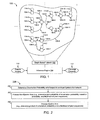
- FIG. 1 is a block diagram of a system 100, including a graph-based network 102 and an inference engine 104.
- Network 102 includes a plurality of states 106 and arcs 108 amongst states 106 to translate input labels of arcs 108, corresponding to a sequence of states of the network, to a list of output grammar elements of arcs 108, corresponding to a sequence of grammar elements.
- Inference engine 104 is configured to iteratively traverse network 102 in response to a stream of feature vectors 110.
- Feature vectors 110 may represent one or more of continuous speech, a sequence of images, such as a sequence of video frames or a video clip, and continuous text. Feature vectors 110 may be generated from one or more continuous and/or discrete signals, which may include one or more of speech embedded within an acoustic signal, visual images embedded in a video signal, and text characters and formatting information embedded within a computer readable signal.
- An audio based feature vector 110 may represent an utterance, a portion of a word, or a sound.
- a video based feature vector 110 may represent one or more of motion, color, objects, and/or changes thereto between frames. Each feature vector 110 may include a plurality of fields to hold information associated with a corresponding portion or frame of a signal.
- the grammar may correspond to a written language, which may include one or more of a human readable language and a computer readable language.
- System 100 may correspond to a speech and/or video recognition system to translate audio and/or video to a written language. Alternatively, or additionally, system 100 may correspond to a language translation system to translate from a first written language to a second written language. One or more of the first and second written languages may correspond to a spoken language and/or a computer readable language.
- Inference engine 104 may be configured to identify, and iteratively refine one or more sequences of states 106 and corresponding arcs 108, together referred to herein as a path, in response to a stream of feature vectors 110.
- States 106 and/or arcs 108 identified during a given iteration as potentially corresponding to feature vector stream 110 are referred to herein as active states 106 and active arcs 108 of the iteration.
- a set of active states 106 may be identified that are reachable through multiple sets of active arcs 108.
- multiple paths may include a common set of states 106, traversed along non-identical sets of arcs 108.
- Inference engine 104 may be configured to associate probability measures with states 106 and arcs 108, representative of a likelihood of the states 106 and arcs 108 corresponding to feature vector stream 110.
- Inference engine 104 may be configured to represent states 106 and/or arcs 108 with one or more data objects, and may be configured to update the corresponding data objects as network 102 is traversed. Processing of a state 106 and/or an arc 108, may include processing the corresponding data object.
- a state 106 from which an arc 108 originates is referred to herein as an originating state 106.
- a state 106 to which an arc 108 is directed is referred to herein as a destination state 106.
- System 100 may correspond to a large vocabulary continuous speech recognition (LVCSR), to recognize words from a relatively large vocabulary, which may include exponential permutations and unknown boundary segmentation between words.
- LVCSR large vocabulary continuous speech recognition
- W ) P ( W ), may be computed using a dynamic programming recurrence, such as with a Viterbi search algorithm.
- Inference engine 104 may process the algorithm iteratively over a sequence of time steps, where the likelihood of a word or grammar element sequence in each time step depends on the likelihood computed in a preceding time step. In each iteration there may be multiple, perhaps thousands of active states 106, which represent most likely alternative interpretations of feature vectors 110. A most likely set of states 106 may be selected at the end of stream of feature vectors 110.
- Network 102 may be generated in accordance with a weighted finite state transducer (WFST).
- WFST is a Mealy finite state machine (FSM) represented by a list of arcs 108, Each include a plurality of properties, such as described further below.
- FSM Mealy finite state machine
- Network 102 may include multiple hierarchical knowledge sources or models, which may include one or more of a Hidden Markov Model (HMM) acoustic model H, a context model C, a pronunciation lexicon of words L, and a language model G , which may be composed into a H-C-L-G WFST, referred to herein as an H-level network.
- HMM Hidden Markov Model
- the combined WFST may be optimized using FSM minimization techniques, and used as a flattened FSM representation for the recognition network.
- WFST may simplify the recognition process by flattening the hierarchical knowledge sources offline into a single level FSM to traverse at run time.
- individual arcs 108 may be associated with corresponding elements of the grammar.
- Inference engine 104 may translate a sequence of HMM states, as a list of input labels on arcs, to a sequence of words, as a list of output words on arcs.
- one or more arcs 108 may include:
- One or more states 106 may include:
- Epsilon arcs are described below with respect to FIG. 2 .
- Arcs 108 may be maintained in an array, and may be grouped by originating states 106.
- a set of most likely paths through network 102 may be tracked for a set of input symbols or feature vectors 110.
- Information for each path may be associated with a head of the corresponding path.
- the information may include a set of output symbols along the path, such as words identified as potentially matching feature vectors 110, and a corresponding accumulated likelihood of the path.
- the information may be maintained in a data structure, which may include a pointer to a set of output symbols, and an accumulated likelihood value.
- the data structure may be associated with a state 106, such as where one or more states 106 include a self-loop 114.
- the data structure may be associated with a corresponding arc 108, such as where self-loop information is modeled within one or more arcs 108, described below with respect to FIGS. 6-9 .
- a WFST-based inference engine may be application agnostic, such that it may be employed in other domains such as text and image processing.
- Arcs 108 may include epsilon arcs and non-epsilon arcs, illustrated in FIG. 1 with hashed lines and solid lines, respectively. Epsilon arcs are traversed without consuming any input symbols. Non-epsilon arcs consume one input symbol to perform a state transition. For an H-level WFST recognition network, input labels of network 102 represent context-dependent HMM states.
- FIG. 2 is a process flowchart of a method 200 of traversing network 102 in response to an input frame or feature vector 110 during an iteration.
- an observation probability is determined with respect to an input symbol of network 102.
- the observation probability may include a likelihood measure of an input feature vector matching an acoustic input symbol, such as by computing a distance function.
- the observation probability may be determined in accordance with a Gaussian mixture model of context-dependent states. Determination of the observation probability at 202 may include, and may consist essentially or solely of computing input symbols on outgoing arcs of active states. Determination of the observation probability may include referencing an acoustic model of network 102.
- non-epsilon arcs are processed. Processing of non-epsilon arcs may include computing a joint probability of:
- the joint probability may be determined at 204 as a product of the observation probability, the transition probability, and the likelihood.
- the joint probability may be determined at 204 as an addition of logarithmic values.
- epsilon arcs are processed. Since epsilon arcs do not have input symbols, probabilities may be computed as a product of a transition probability and a likelihood of prior sequences.
- a cost of a destination state may be updated with a cost of the most likely incoming corresponding non-epsilon and epsilon arcs for that state.
- the cost may be determined in accordance with a Viterbi approximation.
- Network 102 may include a chain of consecutive epsilon arcs, such as epsilon arcs 108-7 and 108-10 in FIG. 1 .
- Processing of epsilon arcs at 206 may include traversing all outgoing epsilon arcs from each destination state until a state with no outgoing epsilon arcs is reached.
- Multiple input symbols such as thousands of input symbols, may be utilized to compute the observation probability at 202.
- Multiple arc transitions such as tens of thousands of arc transitions, may be traversed through network 102 during processing of non-epsilon arcs at 204 and epsilon arcs at 206.
- Method 200 may be repeated for additional input frames or feature vectors 110.
- Inference engine 104 may be configured to traverse network 102 with respect to active states and/or active arcs.
- Active state traversal operates on a state-by-state basis. Active state traversal may be performed with respect outgoing arcs 108 of active states 106, referred to herein as active state propagation. Alternatively, or additionally, active state traversal may be performed with respect to incoming arcs 108 of candidate active states 106 of a next iteration, referred to herein as active state aggregation.
- a state 106 may be defined as a candidate active state of a next iteration when an incoming arc 108 to the state originates from an active state 106 of a current iteration.
- incoming arcs 108 of candidate active states 106 are evaluated and the corresponding candidate active states 106 are updated in accordance with results of the evaluating.
- Active arc traversal operates on an arc-by-arc basis, wherein active arcs 108 are updated with parameters retrieved from corresponding originating states, and the updated active arcs 108 are used to update corresponding destination states 106. Active arc traversal may be performed with respect to outgoing arcs of active states, referred to herein as active arc propagation, or with respect to incoming arcs of candidate active states, referred to herein as active arc aggregation. Methods and systems to perform active arc traversal are disclosed below with respect to FIGS. 3-5 .
- Inference engine 104 may be configured to iteratively traverse network 102 with data level parallelism, such as in a single-instruction, multiple-data (SIMD) environment, and/or thread level parallelism, such as in a multi-processor or multi-core environment.
- data level parallelism such as in a single-instruction, multiple-data (SIMD) environment
- SIMD single-instruction, multiple-data
- thread level parallelism such as in a multi-processor or multi-core environment.
- arcs 108 associated with a state 106 may be associated with a SIMD work unit or vector, and the arcs 108 may be processed in parallel SIMD processing lanes.
- some states may have a relatively large number of outgoing arcs while other states may have relatively few outgoing arcs. This may result in relatively low and/or inconsistent SIMD utilization.
- a plurality of arcs 108 may be associated with a SIMD work unit or vector, independent of the corresponding source or destination states 106. This may provide relatively consistent SIMD vector unit efficiency.
- arcs 108 associated a first active state 106 may be assigned to a first one of a plurality of processing threads
- arcs 108 associated with a second active state 106 may be assigned to a second one of the processing threads
- the first and second threads may be processed in parallel.
- active arcs 108 may be assigned to processing threads independent of the corresponding states 106.
- tasks may be pre-assigned to particular threads prior to run-time.
- a dynamic task manager may be configured to assign tasks to the threads at run-time based at least in part on data location information, such as disclosed below with reference to FIGS. 9-12.
- write conflict resolution may be provided from an underlying platform, such as atomic updates.
- a corresponding update of the active state may include a reduction of evaluation results of the incoming arcs 108.
- the reduction may explicitly manage potential write conflicts with additional algorithmic steps such that write conflict resolution support is not needed from an underlying platform.
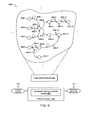
- FIG. 3 is a block diagram of system 100, wherein inference engine 104 includes an active arc traversal system 302 to traverse or iterate over active arcs 108 of network 102.
- active arc traversal system 302 may be configured to traverse active arcs using SIMD computations across arcs from multiple active states, which may permit substantially full utilization of even very wide vector units.
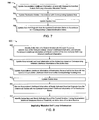
- FIG. 4 is a process flowchart of a method 400 of processing active arcs. Method 400 is described below with respect to system 100 as illustrated in FIG. 3 . Method 400 is not, however, limited to the example of FIG. 3 .
- a feature vector 110 is received at inference engine 104.
- active arcs 108 of network 102 are identified by active arc traversal system 302. Active arcs may be identified as outgoing arcs of active states, or active arc propagation, and/or as incoming arcs of candidate active states, or active arc aggregation.
- destination states 106 of the identified active arcs 108 are updated by active arc traversal system 302, in response to the feature vector 110 received at 402.
- processing may return to 402 to receive one or more additional feature vectors 110.
- a sequence of grammar elements 112, corresponding to a highest likelihood path through network 102, is output by inference engine 104.
- FIG. 5 is a process flowchart of a method 500 of updating a destination state 106, such as described above with respect to 406.
- information is retrieved from originating states 106 of the active arcs 108, including likelihood measures associated with the originating states 106.
- the active arcs are updated with the corresponding information retrieved at 502 and the one or more feature vectors 110 received at 402.
- Inference engine 104 may be configured to process active arcs 108 in a SIMD fashion. For example, the retrieving of information at 502 and the updating of the active arcs at 504 may be performed with respect to multiple arcs in a SIMD fashion.
- a work unit manager may be configured to associate a plurality of arcs 108 as a unit of work to be processed in across a set of SIMD processing lanes. Arcs 108 from multiple source states 106, directed to a common destination state, may be processed in a SIMD fashion.
- Processing of active arcs in a SIMD fashion may permit substantially full use of a corresponding vector unit, and may provide greater vector efficiency relative to processing of active states in a SIMD fashion.
- multiple active states 106 and/or active arcs 108 may propagate information to a common destination state 106 during a traversal iteration.
- the multiple active states 106 and/or active arcs 108 are processed simultaneously or in parallel, such as in thread-level and/or data-level parallel processing, synchronization of the updates of the corresponding destination state may be necessary.
- One or more states 106 of network 102 may include a self-loop 114.
- a WFST search graph for example, may include self-loops 114 due to characteristics of an underlying hidden Markov Model (HMM).
- HMM hidden Markov Model
- Self-loops 114 may be processed as incoming arcs of corresponding states 106, which may necessitate synchronization of updates to a state 106 even where the state 106 has only one incoming active arc 108.
- Synchronization may be performed in conjunction with atomic update hardware. Alternatively, or additionally, a privatization scheme may be employed. A privatization scheme may involve an additional process to merge private results. Synchronization and privatization operations may consume processing resources and time.
- self-loops 114 may be omitted or removed from one or more states 106, and modeled within one or more corresponding outgoing arcs 108.
- Self-loops 114 may be omitted or removed from all states 106 having self-loops 114, or a subset thereof, such as from states 106 having only one incoming arc 108. Self-loops 114 may be modeled only within non-epsilon arcs 108. Removal or omission of self-loops 114 from a state 106 having only one incoming arc 108 may reduce or eliminate a need to synchronize an update to the state 106.
- Modeling of a self-loop 114 within an outgoing arc 108 may include modifying a data structure associated with the arc 108 to store self-loop information.
- Self-loop information may include inherent likelihood or probability information.
- Self-loop inherent likelihood information may be implicitly modeled within an outgoing arc 108, such as by modifying inherent likelihood information of the outgoing arc 108 with self-loop inherent likelihood information.
- self-loop inherent likelihood information may be explicitly modeled within an outgoing arc 108, such as by modifying the outgoing arc 108 to include a field to store an indication of whether the arc 108 includes self-loop information, and one or more additional fields to store self-loop information.
- Traversal of a corresponding network may include one or more additional computations during each iteration to process self-loop information within outgoing arcs 108.
- the additional computations may be performed when processing the corresponding outgoing arcs 108, such as described below with respect to FIGS. 6-9 .
- Network 102 may be initially generated with self-loops 114, and one or more of the self-loops 114 may be removed and remodeled within corresponding outgoing arcs 108.
- Network 102 may be optimized subsequent to removal and remodeling of self-loop information within outgoing arcs 108. The subsequent optimization may merge relatively large numbers of states 106, which may improve traversal efficiency. Optimization may include one or more FSM minimization techniques, such as described above.
- an H transducer may be generated at the outset without explicit self-loops 114, and with self-loop information modeled within outgoing arcs 108. Composition and/or other optimization procedures may then be performed to provide a WFST network 102. Optimization may merge relatively large numbers of states 106.
- FIG. 6 is a block diagram of a graph-based network and inference system 600 including a network 602, wherein self-loop information is modeled within outgoing non-epsilon arcs 608-1 through 608-5, 608-8, and 608-11 of corresponding states 606. Self-loops 114 of FIG. 1 are omitted from corresponding states 606.
- An inference engine 604 may include an arc-based self-loop update system 604 to update self-loop information modeled within arcs of network 602, such as described below with respect to one or more of FIGS. 7 through 9 .
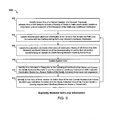
- FIG. 7 is a process flowchart of a method 700 of traversing a network when self-loop information is modeled within at least a portion of arcs of the network.
- accumulated likelihood information is updated, at least with respect to arcs that have self-loop inherent likelihood information modeled therein.
- some arcs 108 such as epsilon arcs 608-6, 608-7, and 608-8 in FIG. 6 , may not include self-loop information, and may thus may omitted from the updating at 702.
- destination states of the updated arcs are updated in accordance with the corresponding updated arcs. Updating of the destination states at 704 may be performed subsequent to the updating at 702. Where a destination state is to be updated in response to multiple incoming arcs at 704, updating at 704 may include synchronizing of the updates.
- epsilon arcs may be updated.
- arcs that originate from destination states updated at 704, are updated in accordance with the updated destination states. Updating of the arcs at 708 may be performed subsequent to updating of all destination states at 704.
- FIG. 8 is a process flowchart of a method 800 of traversing a network when inherent likelihood information of at least a portion of the arcs is modified to include self-loop inherent likelihood information.
- accumulated likelihood information of all of the active arcs, or of at least all of the active non-epsilon arcs, is updated based on corresponding inherent likelihood information. This essentially performs self-loop updating with respect to arcs that include self-loop inherent likelihood information.
- accumulated likelihood information of destination states of the active arcs is updated with the updated accumulated likelihood information of the corresponding active arcs.
- updating of destination states at 806 may include synchronizing updates associated with multiple incoming arcs. Since self-loop information is modeled within arcs rather than states, synchronization may be omitted with respect to states that are updated in response to a single incoming active arc.
- epsilon arcs may be updated.
- the updating of accumulated likelihood information at 806 may activate one or more outgoing arcs of the updated destination states. Such arcs are referred to herein as newly activated arcs.
- accumulated likelihood information of newly activated arcs is updated with the updated accumulated information of the corresponding destination states updated at 806. Updating of newly activated arcs at 810 may be performed subsequent to processing of all active arcs at 806.
- Method 800 may be iteratively repeated until all active arcs and corresponding destination states are updated.
- processing of active arcs at 804 and 806 may include newly activated arcs identified in a prior iteration at 812.
- One or more active arcs may be omitted from further processing in subsequent iterations, such as when a corresponding accumulated likelihood value is below a threshold.
- FIG. 9 is a process flowchart of a method 900 of traversing a network when arcs of the network include a plurality of fields to hold self-loop inherent likelihood information and an indication of a presence of the self-loop inherent likelihood information.
- accumulated likelihood information of active arcs that include the indication of the presence of self-loop inherent likelihood information is updated based on corresponding self-loop inherent likelihood information within the arc. This essentially performs self-loop updating only with respect to arcs that include the indication of the presence of self-loop inherent likelihood information.
- accumulated likelihood information of destination states of all of the active arcs, or of at least all of the active non-epsilon arcs is updated with the updated accumulated likelihood information of the corresponding active arcs.
- Updating of destination states at 906 may include synchronizing updates associated with multiple incoming arcs, such as described above with respect to method 800.
- epsilon arcs may be updated.
- accumulated likelihood information of newly activated arcs is updated with the updated accumulated information of the corresponding destination states updated at 906, such as described above with respect to 810.
- Method 900 may be iteratively repeated until all active arcs and corresponding destination states are updated, such as describe above with respect to method 800.
- dynamic task scheduling may be utilized to balance a workload amongst multiple processing threads.
- Conventional task scheduler heuristics may not be optimal in some environments, such as WFST-based searches. For example, where a data object, such as an active state or an active arc is to be processed in a current iteration or frame, and where the data object was processed in a prior iteration, data associated with the data object may remain cached at a location associated with a thread to which the data object was previously processed. It would be useful to process the data object in the same thread in the current iteration, as the existing cached data may reduce or eliminate the need to re-retrieve or re-calculate the cached data. Conventional dynamic task scheduler heuristics do not, however, attempt to assign a data object to the same thread to which the data object was previously assigned.
- Dynamic cache-aware task ordering associates tasks with threads based at least in part on data cache locality of corresponding data objects.
- Cache-aware dynamic task ordering may include implicit cache-aware task scheduling or explicit cache-aware task scheduling.
- Implicit cache-aware task scheduling may order tasks in a queue to implicitly or indirectly cause a dynamic task manager to assign the tasks to particular threads. Queue ordering may be based on a heuristic of the task manager, such as described below with respect to FIGS. 10 and 12 .
- Explicit cache-aware task scheduling may identify a thread to which a data object was previously processed, and explicitly assign a new task associated with the data object to the same thread, such as described below with respect to FIGS. 11 and 13 .
- FIG. 10 is a block diagram of an implicit cache-aware environment 1000, including a queue manager 1004 to order tasks 1002 in a task queue 1006, and a dynamic task manager 1008 to schedule tasks 1002 from task queue 1006 amongst a plurality of processing threads 1010.
- Tasks 1002 may be associated with active states 106 and/or active arcs 108. During processing of tasks 1002, threads 1010 may generate lists 1012 of active states 106 and/or active arcs 108 of a subsequent iteration. Corresponding new tasks 1002 may be defined with respect to the active states 105 and/or active arcs 108 identified in lists 1012.
- At least a portion of the active states 106 and/or active arcs 108 of the subsequent iteration, as identified in lists 1012, may already be active in a current iteration with the corresponding threads 1010.
- Queue manager 1004 may be configured to arrange tasks 1002 within queue 1006, based on lists 1012 in which corresponding states 106 and/or arcs 108 are identified, to cause dynamic task manager 1008 to assign tasks 1002 to the threads 1012 that initiated the tasks 1002. Where a state 106 and/or arc 108 is active in consecutive iterations, corresponding tasks 1002 may thus be assigned to the same thread 1010.
- a task 1002 associated with an arc 108 may be assigned to thread 1010-1 during a current iteration.
- thread 1010-1 may generate list 1012-1 to indicate that the arc 108 is to be active in the subsequent iteration.
- a new task 1002 corresponding to the arc 108 may be invoked for the subsequent iteration, and queue manager 1004 may place the new task 1002 in queue 1006 to cause dynamic task scheduler to assign the new task 1002 to thread 1010-1.
- Queue manager 1004 may include a heuristic system 1014 to order tasks 1002 in queue 1002 in accordance with a heuristic used by dynamic task manager 1008, so as to influence thread assignment of dynamic task manager 1008.
- task manager 1008 may be configured to assign tasks 1002 to threads 1010 in a round-robin fashion, wherein a first task 1002 is assigned to thread 1010-1, a second task 1002 is assigned to a thread 1010-2, and subsequent tasks 1002 are assigned to subsequent threads 1010, in a circular fashion.
- queue manager 1004 may be configured to place tasks 1002 in queue 1006 in a round-robin fashion, and in accordance with lists 1012. For example, a task 1002 from list 1012-1 may be assigned to queue 1006 first, followed by a task 1002 from a list 1012-2, followed by subsequent tasks 1002 from subsequent lists 1012.
- dynamic task manager 1008 may be configured to retrieve a group of tasks 1002 from queue 1006, to separate the group of tasks 1002 into multiple sets of contiguous tasks 1002, and to sequentially assign each set of contiguous tasks 1002 to threads 1010 in a round robin fashion.
- queue 1006 includes eight tasks 1002, A through H, for example, and where threads 1010 include four threads, 1010-1 through 1010-4
- dynamic task manager 1008 may assign tasks A and B to thread 1010-1, tasks C and D to thread 1010-2, tasks E and F to thread 1010-3, and tasks G and H to thread 1010-4.
- Queue manager 1004 may be configured to arrange tasks A through H in queue 1006, in view of the lists 1012 from which tasks A through H are initiated.
- FIG. 11 is a block diagram of an explicit cache-aware environment 1100, including a cache-aware system 1104 to manage data locality information, and a dynamic task manager 1008 to assign tasks 1002 to processing threads 1110 based at least in part on the data locality information.
- Cache aware system 1104 may include a record system 1106 to receive data locality information 1108 from dynamic task manager 1108 when a task 1102 is assigned to a thread 1110.
- Data locality information 1108 may identify the thread 1110 to which the task 1102 is assigned, which may correspond to a cache location where data associated with a corresponding data object 1116 is cached.
- Record system 1106 may be configured to associate the data locality information 1108 with the data object 1116 to which the task 1102 is directed.
- the data object 1116 may represent a state 106 and/or an arc 108, and may include a field to record corresponding data locality identification 1108.
- Cache aware system 1104 may include a retrieve system 1112 to retrieve data locality information 1114 associated with a data object 1116, when a task 1102 associated with the data object 1116 is to be assigned to a thread 1110.
- Dynamic task manager 1108 may be configured to assign tasks 1102 to threads 1110 based at least in part on retrieved data locality information 1114.
- Dynamic task manager 1108 may be configured to take into account one or more other factors in assigning tasks 1102 to threads 1110, such as to balance processing loads amongst threads 1110.
- Cache aware system 1104 and dynamic task manager 1108 may be implemented separately or may be integrated together.
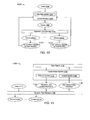
- FIG. 12 is a process flowchart of a method 1200 of ordering tasks based at least in part on data locality information. Method 1200 may be implemented as described above with respect to FIG. 10 . Method 1200 is not, however, limited to the example of FIG. 10 .
- a list of active data objects of a subsequent iteration is received from each of a plurality of processing threads.
- the data objects may represent arcs and/or states of a graph-based network.
- the tasks are associated with processing threads based on the lists in which the corresponding data objects are identified.
- the tasks are ordered in accordance with a task manager heuristic to direct the tasks to the associated processing threads.
- the tasks may be ordered within a task queue, from which the task manager assigns the tasks to the threads.
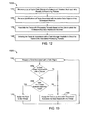
- FIG. 13 is a process flowchart of a method 1300 of assigning tasks to processing threads based at least in part on data locality information.
- Method 1300 may be implemented as described above with respect to FIG. 11 .
- Method 1300 is not, however, limited to the example of FIG. 11 .
- a task is received.
- the task may be associated with a data object representative of a state or an arc of a graph-based network.
- processing proceeds to 1306, described further below.
- the task is assigned to the thread at 1310. If the thread cannot accommodate the task, or where another thread is better suited for the task based on one or more other considerations, processing proceeds to 1306.
- the data object is assigned to a thread based on one or more other factors, and corresponding cache data locality information is associated with the data object.
- the cache data locality information may include an indication of the thread to which the task is assigned.
- the task may be assigned to the same thread at 1310.
- Active arc based traversal, processing of self-loop information modeled within arcs, cache-aware dynamic task ordering, may be implemented alone and/or in various combinations with one another.
- One or more features disclosed herein may be implemented in hardware, software, firmware, and combinations thereof, including discrete and integrated circuit logic, application specific integrated circuit (ASIC) logic, and microcontrollers, and may be implemented as part of a domain-specific integrated circuit package, or a combination of integrated circuit packages.
- the term software, as used herein, refers to a computer program product including a computer readable medium having computer program logic stored therein to cause a computer system to perform one or more features and/or combinations of features disclosed herein.
- FIG. 14 is a block diagram of a computer system 1400, configured to traverse a graph-based network.
- Computer system 1400 may include one or more computer instruction processing units, illustrated here as a processor or core 1402, to execute computer program logic.
- processor or core 1402 to execute computer program logic.
- Computer system 1400 may further include cache, memory, and/or storage (hereinafter “memory”) 1404, including a computer readable medium having computer program product logic or instructions 1406 stored thereon, to cause processor 1402 to perform one or more functions in response thereto.
- memory including a computer readable medium having computer program product logic or instructions 1406 stored thereon, to cause processor 1402 to perform one or more functions in response thereto.
- Memory 1404 further includes data 1408 to be used by processor 1402 in executing instructions 1406, and/or generated by processor 1402 in response to execution of instructions 1406.
- logic 1406 includes inference engine logic 1410 to cause processor 1404 to traverse a graph-based network 1412, such as described in one or more examples above.
- Network 1412 may correspond to network 102 in FIG. 1 , or network 602 in FIG. 6 .
- Network 1412 may include data objects 1414 to represent one or more of states and arcs of network 1412.
- Inference engine logic 1410 may include active arc traversal logic 1416 to cause processor 1402 to traverse active arcs of network 1412, such as described above with respect to one or more of FIGS. 1-5 .
- inference engine logic 1410 may include arc-based self-loop update logic 1418 to cause processor 1402 to update the self-loop information, such as described above with respect to one or more of FIGS. 6-9 .
- Computer system 1400 may include a dynamic task manager 1420 to schedule or assign tasks to processing threads at run-time.
- Dynamic task manager 1422 may correspond to one or more of dynamic task manager 1008 in FIG. 10 and dynamic task manager 1108 in FIG. 11 .
- inference engine logic 1410 may include cache-aware ordering logic 1420 to cause processor 1402 to order tasks associated with data objects based on processing threads to which prior tasks associated with the data objects are assigned.
- Cache-aware ordering logic 1420 may include logic to order the threads in accordance with a heuristic of task manager 1422, to cause task manager 1422 to assign the tasks to the corresponding threads, such as described above with respect to one or more of FIGS. 10 and 12 .
- Cache-aware ordering logic 1418 may correspond to queue manager 1004 in FIG. 10 .
- Cache-aware ordering logic 1418 may be implemented external of inference engine logic 1410, and may be implemented independent of inference engine logic 1410.
- dynamic task manager 1422 may be explicitly configured to assign tasks to threads based on data locality information associated with data objects 1414, and computer system 1400 may further include a data-locality management system 1424 to associate the data locality information with data object 1414, and to retrieve and provide the data locality information to dynamic task manager 1422, such as described above with respect to one or more of FIGS. 11 and 13 .
- Data-locality management system 1424 may correspond to cache-aware system 1104 in FIG. 11 .
- Data-locality management system 1424 may be implemented in hardware, firmware, logic 1406, and combinations thereof.
- Computer system 1400 may include a communications infrastructure 1426 to provide one or more communication paths within computer system 1400.
- Computer system 1400 may include an input/output controller 1428 to provide one or more communication paths between computer system 1400 and one or more other systems.
Landscapes
- Engineering & Computer Science (AREA)
- Physics & Mathematics (AREA)
- Multimedia (AREA)
- Acoustics & Sound (AREA)
- Human Computer Interaction (AREA)
- Audiology, Speech & Language Pathology (AREA)
- Health & Medical Sciences (AREA)
- Computational Linguistics (AREA)
- Theoretical Computer Science (AREA)
- Computing Systems (AREA)
- Mathematical Physics (AREA)
- Artificial Intelligence (AREA)
- General Physics & Mathematics (AREA)
- Computer Vision & Pattern Recognition (AREA)
- Data Mining & Analysis (AREA)
- Software Systems (AREA)
- General Engineering & Computer Science (AREA)
- Evolutionary Computation (AREA)
- Mathematical Optimization (AREA)
- Computational Mathematics (AREA)
- Mathematical Analysis (AREA)
- Algebra (AREA)
- Probability & Statistics with Applications (AREA)
- Pure & Applied Mathematics (AREA)
- Information Retrieval, Db Structures And Fs Structures Therefor (AREA)
- Mobile Radio Communication Systems (AREA)
- Machine Translation (AREA)
Applications Claiming Priority (1)
| Application Number | Priority Date | Filing Date | Title |
|---|---|---|---|
| US12/637,228 US8484154B2 (en) | 2009-12-14 | 2009-12-14 | Methods and systems to traverse graph-based networks |
Publications (3)
| Publication Number | Publication Date |
|---|---|
| EP2333767A2 true EP2333767A2 (de) | 2011-06-15 |
| EP2333767A3 EP2333767A3 (de) | 2012-12-26 |
| EP2333767B1 EP2333767B1 (de) | 2014-04-23 |
Family
ID=43824625
Family Applications (1)
| Application Number | Title | Priority Date | Filing Date |
|---|---|---|---|
| EP10251914.7A Not-in-force EP2333767B1 (de) | 2009-12-14 | 2010-11-10 | Verfahren und Systeme zum Durchlaufen von auf Graphen basierenden Netzen |
Country Status (4)
| Country | Link |
|---|---|
| US (2) | US8484154B2 (de) |
| EP (1) | EP2333767B1 (de) |
| JP (1) | JP2011123494A (de) |
| CN (1) | CN102110437B (de) |
Families Citing this family (32)
| Publication number | Priority date | Publication date | Assignee | Title |
|---|---|---|---|---|
| US8515052B2 (en) | 2007-12-17 | 2013-08-20 | Wai Wu | Parallel signal processing system and method |
| EP2484054A4 (de) | 2009-09-30 | 2014-11-05 | Evan V Chrapko | Systeme und verfahren zur analyse von sozialen grafikdaten zur bestimmung der zusammenhänge in einer gemeinschaft |
| US20110099164A1 (en) | 2009-10-23 | 2011-04-28 | Haim Zvi Melman | Apparatus and method for search and retrieval of documents and advertising targeting |
| US20170358027A1 (en) | 2010-01-14 | 2017-12-14 | Www.Trustscience.Com Inc. | Scoring trustworthiness, competence, and/or compatibility of any entity for activities including recruiting or hiring decisions, composing a team, insurance underwriting, credit decisions, or shortening or improving sales cycles |
| WO2011106897A1 (en) | 2010-03-05 | 2011-09-09 | Chrapko Evan V | Systems and methods for conducting more reliable assessments with connectivity statistics |
| WO2011134086A1 (en) * | 2010-04-30 | 2011-11-03 | Evan V Chrapko | Systems and methods for conducting reliable assessments with connectivity information |
| WO2013033119A1 (en) * | 2011-08-29 | 2013-03-07 | Accumente, Llc | Utilizing multiple processing units for rapid training of hidden markov models |
| JP5672199B2 (ja) * | 2011-09-01 | 2015-02-18 | 富士通株式会社 | 情報処理装置、情報処理方法及び情報処理プログラム |
| WO2013097026A1 (en) | 2011-12-28 | 2013-07-04 | Chrapko Evan V | Systems and methods for visualizing social graphs |
| KR101970041B1 (ko) * | 2012-09-07 | 2019-04-18 | 카네기 멜론 유니버시티 | 하이브리드 지피유/씨피유(gpu/cpu) 데이터 처리 방법 |
| US9286289B2 (en) * | 2013-04-09 | 2016-03-15 | Softwin Srl Romania | Ordering a lexicon network for automatic disambiguation |
| JP6315980B2 (ja) | 2013-12-24 | 2018-04-25 | 株式会社東芝 | デコーダ、デコード方法およびプログラム |
| JP6404564B2 (ja) | 2013-12-24 | 2018-10-10 | 株式会社東芝 | デコーダ、デコード方法およびプログラム |
| US9196243B2 (en) * | 2014-03-31 | 2015-11-24 | International Business Machines Corporation | Method and system for efficient spoken term detection using confusion networks |
| US9672810B2 (en) | 2014-09-26 | 2017-06-06 | Intel Corporation | Optimizations to decoding of WFST models for automatic speech recognition |
| US9530404B2 (en) * | 2014-10-06 | 2016-12-27 | Intel Corporation | System and method of automatic speech recognition using on-the-fly word lattice generation with word histories |
| US11170313B2 (en) * | 2014-10-10 | 2021-11-09 | Analog Devices International Unlimited Company | Pipelining and parallelism for implementing a mixture model |
| JP6453631B2 (ja) * | 2014-11-28 | 2019-01-16 | 株式会社東芝 | 認識システム、認識方法およびプログラム |
| US10255911B2 (en) * | 2014-12-17 | 2019-04-09 | Intel Corporation | System and method of automatic speech recognition using parallel processing for weighted finite state transducer-based speech decoding |
| CN104572028B (zh) * | 2014-12-26 | 2017-06-20 | 中国科学院自动化研究所 | 一种状态机等价变换的方法和装置 |
| US9578043B2 (en) | 2015-03-20 | 2017-02-21 | Ashif Mawji | Calculating a trust score |
| US20170235792A1 (en) | 2016-02-17 | 2017-08-17 | Www.Trustscience.Com Inc. | Searching for entities based on trust score and geography |
| US9438619B1 (en) | 2016-02-29 | 2016-09-06 | Leo M. Chan | Crowdsourcing of trustworthiness indicators |
| US9679254B1 (en) | 2016-02-29 | 2017-06-13 | Www.Trustscience.Com Inc. | Extrapolating trends in trust scores |
| US9721296B1 (en) | 2016-03-24 | 2017-08-01 | Www.Trustscience.Com Inc. | Learning an entity's trust model and risk tolerance to calculate a risk score |
| JP6611346B2 (ja) * | 2016-06-01 | 2019-11-27 | 日本電信電話株式会社 | 文字列認識装置、方法、及びプログラム |
| US10878309B2 (en) * | 2017-01-03 | 2020-12-29 | International Business Machines Corporation | Determining context-aware distances using deep neural networks |
| US10180969B2 (en) | 2017-03-22 | 2019-01-15 | Www.Trustscience.Com Inc. | Entity resolution and identity management in big, noisy, and/or unstructured data |
| CN108962271B (zh) * | 2018-06-29 | 2021-06-22 | 广州视源电子科技股份有限公司 | 多加权有限状态转换器合并方法、装置、设备及存储介质 |
| CN108735201B (zh) * | 2018-06-29 | 2020-11-17 | 广州视源电子科技股份有限公司 | 连续语音识别方法、装置、设备和存储介质 |
| CN110390948B (zh) * | 2019-07-24 | 2022-04-19 | 厦门快商通科技股份有限公司 | 一种快速语音识别的方法及系统 |
| CN116030379B (zh) * | 2022-12-09 | 2025-12-12 | 微梦创科网络科技(中国)有限公司 | 视频处理方法、训练方法、装置、处理设备及存储介质 |
Family Cites Families (4)
| Publication number | Priority date | Publication date | Assignee | Title |
|---|---|---|---|---|
| JPH07302246A (ja) | 1994-05-09 | 1995-11-14 | Toshiba Corp | スケジューリング方式 |
| JP2001256107A (ja) | 2000-03-10 | 2001-09-21 | Matsushita Electric Ind Co Ltd | データ処理装置 |
| CN1238834C (zh) | 2004-03-09 | 2006-01-25 | 北京沃克斯科技有限责任公司 | 一种口语识别理解的识别分析方法 |
| JP5065693B2 (ja) * | 2007-01-29 | 2012-11-07 | 独立行政法人情報通信研究機構 | 空間−時間パターンを同時に学習し認識するためのシステム |
-
2009
- 2009-12-14 US US12/637,228 patent/US8484154B2/en not_active Expired - Fee Related
-
2010
- 2010-11-10 EP EP10251914.7A patent/EP2333767B1/de not_active Not-in-force
- 2010-12-10 JP JP2010276067A patent/JP2011123494A/ja active Pending
- 2010-12-14 CN CN2010106101012A patent/CN102110437B/zh not_active Expired - Fee Related
-
2013
- 2013-06-24 US US13/925,150 patent/US10229670B2/en active Active
Non-Patent Citations (1)
| Title |
|---|
| None |
Also Published As
| Publication number | Publication date |
|---|---|
| EP2333767A3 (de) | 2012-12-26 |
| US20110145184A1 (en) | 2011-06-16 |
| US10229670B2 (en) | 2019-03-12 |
| CN102110437A (zh) | 2011-06-29 |
| JP2011123494A (ja) | 2011-06-23 |
| EP2333767B1 (de) | 2014-04-23 |
| CN102110437B (zh) | 2013-10-16 |
| US20140156274A1 (en) | 2014-06-05 |
| US8484154B2 (en) | 2013-07-09 |
Similar Documents
| Publication | Publication Date | Title |
|---|---|---|
| US10229670B2 (en) | Methods and systems to traverse graph-based networks | |
| US11769493B2 (en) | Training acoustic models using connectionist temporal classification | |
| CN104903849B (zh) | 用于混合gpu/cpu数据处理的方法 | |
| KR102333939B1 (ko) | 절단 어텐션에 기반하는 실시간 음성 인식 방법, 장치, 기기 및 컴퓨터 판독 가능 저장 매체 | |
| US6249761B1 (en) | Assigning and processing states and arcs of a speech recognition model in parallel processors | |
| US8566259B2 (en) | Method and system for parallel statistical inference on highly parallel platforms | |
| US10127902B2 (en) | Optimizations to decoding of WFST models for automatic speech recognition | |
| US4977598A (en) | Efficient pruning algorithm for hidden markov model speech recognition | |
| CN110070859B (zh) | 一种语音识别方法及装置 | |
| WO2011037562A1 (en) | Probabilistic representation of acoustic segments | |
| Bai et al. | End-to-end keywords spotting based on connectionist temporal classification for mandarin | |
| JP3634863B2 (ja) | 音声認識システム | |
| US20110191100A1 (en) | Language model score look-ahead value imparting device, language model score look-ahead value imparting method, and program storage medium | |
| CN113939868B (zh) | 一种用于使用无监督学习来生成自动语音识别模型的方法和相关装置 | |
| KR20050076696A (ko) | 스위칭 상태 스페이스 모델과의 멀티모덜 변동 추정을이용한 스피치 인식 방법 | |
| Srikanthan et al. | Implementing the dynamic time warping algorithm in multithreaded environments for real time and unsupervised pattern discovery | |
| Bataev et al. | NGPU-LM: GPU-Accelerated N-Gram Language Model for context-biasing in greedy ASR decoding | |
| JP2012108429A (ja) | 音声選択装置、発話選択装置、音声選択システム、音声選択方法および音声選択プログラム | |
| WO2012076895A1 (en) | Pattern recognition | |
| Heymann et al. | Improving ctc using stimulated learning for sequence modeling | |
| WO2009078665A1 (en) | Method and apparatus for lexical decoding | |
| Savitha | Deep recurrent neural network based audio speech recognition system | |
| Lee et al. | Learning Speed Improvement Using Multi-GPUs on DNN-Based Acoustic Model Training in Korean Intelligent Personal Assistant. | |
| Seward | A fast HMM match algorithm for very large vocabulary speech recognition | |
| Yang et al. | Investigating The Effect of Language Models in Sequence Discriminative Training For Neural Transducers |
Legal Events
| Date | Code | Title | Description |
|---|---|---|---|
| PUAI | Public reference made under article 153(3) epc to a published international application that has entered the european phase |
Free format text: ORIGINAL CODE: 0009012 |
|
| 17P | Request for examination filed |
Effective date: 20101126 |
|
| AK | Designated contracting states |
Kind code of ref document: A2 Designated state(s): AL AT BE BG CH CY CZ DE DK EE ES FI FR GB GR HR HU IE IS IT LI LT LU LV MC MK MT NL NO PL PT RO RS SE SI SK SM TR |
|
| AX | Request for extension of the european patent |
Extension state: BA ME |
|
| RIN1 | Information on inventor provided before grant (corrected) |
Inventor name: HUGHES, CHRISTOPHER J. Inventor name: YOU, KISUN Inventor name: CHEN, YEN-KUANG |
|
| PUAL | Search report despatched |
Free format text: ORIGINAL CODE: 0009013 |
|
| RIC1 | Information provided on ipc code assigned before grant |
Ipc: G10L 15/18 20060101AFI20121115BHEP Ipc: G10L 15/14 20060101ALI20121115BHEP |
|
| AK | Designated contracting states |
Kind code of ref document: A3 Designated state(s): AL AT BE BG CH CY CZ DE DK EE ES FI FR GB GR HR HU IE IS IT LI LT LU LV MC MK MT NL NO PL PT RO RS SE SI SK SM TR |
|
| AX | Request for extension of the european patent |
Extension state: BA ME |
|
| RIC1 | Information provided on ipc code assigned before grant |
Ipc: G10L 15/18 20060101AFI20121116BHEP Ipc: G10L 15/14 20060101ALI20121116BHEP |
|
| 17Q | First examination report despatched |
Effective date: 20130110 |
|
| REG | Reference to a national code |
Ref country code: DE Ref legal event code: R079 Ref document number: 602010015340 Country of ref document: DE Free format text: PREVIOUS MAIN CLASS: G10L0015180000 Ipc: G10L0015340000 |
|
| GRAP | Despatch of communication of intention to grant a patent |
Free format text: ORIGINAL CODE: EPIDOSNIGR1 |
|
| RIC1 | Information provided on ipc code assigned before grant |
Ipc: G10L 15/34 20130101AFI20131128BHEP |
|
| INTG | Intention to grant announced |
Effective date: 20131211 |
|
| GRAS | Grant fee paid |
Free format text: ORIGINAL CODE: EPIDOSNIGR3 |
|
| GRAA | (expected) grant |
Free format text: ORIGINAL CODE: 0009210 |
|
| AK | Designated contracting states |
Kind code of ref document: B1 Designated state(s): AL AT BE BG CH CY CZ DE DK EE ES FI FR GB GR HR HU IE IS IT LI LT LU LV MC MK MT NL NO PL PT RO RS SE SI SK SM TR |
|
| REG | Reference to a national code |
Ref country code: GB Ref legal event code: FG4D |
|
| REG | Reference to a national code |
Ref country code: CH Ref legal event code: EP |
|
| REG | Reference to a national code |
Ref country code: AT Ref legal event code: REF Ref document number: 664239 Country of ref document: AT Kind code of ref document: T Effective date: 20140515 |
|
| REG | Reference to a national code |
Ref country code: IE Ref legal event code: FG4D |
|
| REG | Reference to a national code |
Ref country code: DE Ref legal event code: R096 Ref document number: 602010015340 Country of ref document: DE Effective date: 20140605 |
|
| REG | Reference to a national code |
Ref country code: AT Ref legal event code: MK05 Ref document number: 664239 Country of ref document: AT Kind code of ref document: T Effective date: 20140423 |
|
| REG | Reference to a national code |
Ref country code: NL Ref legal event code: VDEP Effective date: 20140423 |
|
| REG | Reference to a national code |
Ref country code: LT Ref legal event code: MG4D |
|
| PG25 | Lapsed in a contracting state [announced via postgrant information from national office to epo] |
Ref country code: NL Free format text: LAPSE BECAUSE OF FAILURE TO SUBMIT A TRANSLATION OF THE DESCRIPTION OR TO PAY THE FEE WITHIN THE PRESCRIBED TIME-LIMIT Effective date: 20140423 Ref country code: FI Free format text: LAPSE BECAUSE OF FAILURE TO SUBMIT A TRANSLATION OF THE DESCRIPTION OR TO PAY THE FEE WITHIN THE PRESCRIBED TIME-LIMIT Effective date: 20140423 Ref country code: CY Free format text: LAPSE BECAUSE OF FAILURE TO SUBMIT A TRANSLATION OF THE DESCRIPTION OR TO PAY THE FEE WITHIN THE PRESCRIBED TIME-LIMIT Effective date: 20140423 Ref country code: NO Free format text: LAPSE BECAUSE OF FAILURE TO SUBMIT A TRANSLATION OF THE DESCRIPTION OR TO PAY THE FEE WITHIN THE PRESCRIBED TIME-LIMIT Effective date: 20140723 Ref country code: IS Free format text: LAPSE BECAUSE OF FAILURE TO SUBMIT A TRANSLATION OF THE DESCRIPTION OR TO PAY THE FEE WITHIN THE PRESCRIBED TIME-LIMIT Effective date: 20140823 Ref country code: GR Free format text: LAPSE BECAUSE OF FAILURE TO SUBMIT A TRANSLATION OF THE DESCRIPTION OR TO PAY THE FEE WITHIN THE PRESCRIBED TIME-LIMIT Effective date: 20140724 Ref country code: LT Free format text: LAPSE BECAUSE OF FAILURE TO SUBMIT A TRANSLATION OF THE DESCRIPTION OR TO PAY THE FEE WITHIN THE PRESCRIBED TIME-LIMIT Effective date: 20140423 Ref country code: BG Free format text: LAPSE BECAUSE OF FAILURE TO SUBMIT A TRANSLATION OF THE DESCRIPTION OR TO PAY THE FEE WITHIN THE PRESCRIBED TIME-LIMIT Effective date: 20140723 |
|
| PG25 | Lapsed in a contracting state [announced via postgrant information from national office to epo] |
Ref country code: RS Free format text: LAPSE BECAUSE OF FAILURE TO SUBMIT A TRANSLATION OF THE DESCRIPTION OR TO PAY THE FEE WITHIN THE PRESCRIBED TIME-LIMIT Effective date: 20140423 Ref country code: AT Free format text: LAPSE BECAUSE OF FAILURE TO SUBMIT A TRANSLATION OF THE DESCRIPTION OR TO PAY THE FEE WITHIN THE PRESCRIBED TIME-LIMIT Effective date: 20140423 Ref country code: ES Free format text: LAPSE BECAUSE OF FAILURE TO SUBMIT A TRANSLATION OF THE DESCRIPTION OR TO PAY THE FEE WITHIN THE PRESCRIBED TIME-LIMIT Effective date: 20140423 Ref country code: LV Free format text: LAPSE BECAUSE OF FAILURE TO SUBMIT A TRANSLATION OF THE DESCRIPTION OR TO PAY THE FEE WITHIN THE PRESCRIBED TIME-LIMIT Effective date: 20140423 Ref country code: SE Free format text: LAPSE BECAUSE OF FAILURE TO SUBMIT A TRANSLATION OF THE DESCRIPTION OR TO PAY THE FEE WITHIN THE PRESCRIBED TIME-LIMIT Effective date: 20140423 Ref country code: PL Free format text: LAPSE BECAUSE OF FAILURE TO SUBMIT A TRANSLATION OF THE DESCRIPTION OR TO PAY THE FEE WITHIN THE PRESCRIBED TIME-LIMIT Effective date: 20140423 Ref country code: HR Free format text: LAPSE BECAUSE OF FAILURE TO SUBMIT A TRANSLATION OF THE DESCRIPTION OR TO PAY THE FEE WITHIN THE PRESCRIBED TIME-LIMIT Effective date: 20140423 |
|
| PG25 | Lapsed in a contracting state [announced via postgrant information from national office to epo] |
Ref country code: PT Free format text: LAPSE BECAUSE OF FAILURE TO SUBMIT A TRANSLATION OF THE DESCRIPTION OR TO PAY THE FEE WITHIN THE PRESCRIBED TIME-LIMIT Effective date: 20140825 |
|
| REG | Reference to a national code |
Ref country code: DE Ref legal event code: R097 Ref document number: 602010015340 Country of ref document: DE |
|
| PG25 | Lapsed in a contracting state [announced via postgrant information from national office to epo] |
Ref country code: SK Free format text: LAPSE BECAUSE OF FAILURE TO SUBMIT A TRANSLATION OF THE DESCRIPTION OR TO PAY THE FEE WITHIN THE PRESCRIBED TIME-LIMIT Effective date: 20140423 Ref country code: RO Free format text: LAPSE BECAUSE OF FAILURE TO SUBMIT A TRANSLATION OF THE DESCRIPTION OR TO PAY THE FEE WITHIN THE PRESCRIBED TIME-LIMIT Effective date: 20140423 Ref country code: EE Free format text: LAPSE BECAUSE OF FAILURE TO SUBMIT A TRANSLATION OF THE DESCRIPTION OR TO PAY THE FEE WITHIN THE PRESCRIBED TIME-LIMIT Effective date: 20140423 Ref country code: DK Free format text: LAPSE BECAUSE OF FAILURE TO SUBMIT A TRANSLATION OF THE DESCRIPTION OR TO PAY THE FEE WITHIN THE PRESCRIBED TIME-LIMIT Effective date: 20140423 Ref country code: CZ Free format text: LAPSE BECAUSE OF FAILURE TO SUBMIT A TRANSLATION OF THE DESCRIPTION OR TO PAY THE FEE WITHIN THE PRESCRIBED TIME-LIMIT Effective date: 20140423 Ref country code: BE Free format text: LAPSE BECAUSE OF FAILURE TO SUBMIT A TRANSLATION OF THE DESCRIPTION OR TO PAY THE FEE WITHIN THE PRESCRIBED TIME-LIMIT Effective date: 20140423 |
|
| PLBE | No opposition filed within time limit |
Free format text: ORIGINAL CODE: 0009261 |
|
| STAA | Information on the status of an ep patent application or granted ep patent |
Free format text: STATUS: NO OPPOSITION FILED WITHIN TIME LIMIT |
|
| PG25 | Lapsed in a contracting state [announced via postgrant information from national office to epo] |
Ref country code: IT Free format text: LAPSE BECAUSE OF FAILURE TO SUBMIT A TRANSLATION OF THE DESCRIPTION OR TO PAY THE FEE WITHIN THE PRESCRIBED TIME-LIMIT Effective date: 20140423 |
|
| 26N | No opposition filed |
Effective date: 20150126 |
|
| REG | Reference to a national code |
Ref country code: DE Ref legal event code: R097 Ref document number: 602010015340 Country of ref document: DE Effective date: 20150126 |
|
| PG25 | Lapsed in a contracting state [announced via postgrant information from national office to epo] |
Ref country code: LU Free format text: LAPSE BECAUSE OF FAILURE TO SUBMIT A TRANSLATION OF THE DESCRIPTION OR TO PAY THE FEE WITHIN THE PRESCRIBED TIME-LIMIT Effective date: 20141110 Ref country code: MC Free format text: LAPSE BECAUSE OF FAILURE TO SUBMIT A TRANSLATION OF THE DESCRIPTION OR TO PAY THE FEE WITHIN THE PRESCRIBED TIME-LIMIT Effective date: 20140423 |
|
| REG | Reference to a national code |
Ref country code: CH Ref legal event code: PL |
|
| PG25 | Lapsed in a contracting state [announced via postgrant information from national office to epo] |
Ref country code: CH Free format text: LAPSE BECAUSE OF NON-PAYMENT OF DUE FEES Effective date: 20141130 Ref country code: SI Free format text: LAPSE BECAUSE OF FAILURE TO SUBMIT A TRANSLATION OF THE DESCRIPTION OR TO PAY THE FEE WITHIN THE PRESCRIBED TIME-LIMIT Effective date: 20140423 Ref country code: LI Free format text: LAPSE BECAUSE OF NON-PAYMENT OF DUE FEES Effective date: 20141130 |
|
| REG | Reference to a national code |
Ref country code: IE Ref legal event code: MM4A |
|
| REG | Reference to a national code |
Ref country code: FR Ref legal event code: ST Effective date: 20150731 |
|
| PG25 | Lapsed in a contracting state [announced via postgrant information from national office to epo] |
Ref country code: IE Free format text: LAPSE BECAUSE OF NON-PAYMENT OF DUE FEES Effective date: 20141110 |
|
| PG25 | Lapsed in a contracting state [announced via postgrant information from national office to epo] |
Ref country code: FR Free format text: LAPSE BECAUSE OF NON-PAYMENT OF DUE FEES Effective date: 20141201 |
|
| PG25 | Lapsed in a contracting state [announced via postgrant information from national office to epo] |
Ref country code: SM Free format text: LAPSE BECAUSE OF FAILURE TO SUBMIT A TRANSLATION OF THE DESCRIPTION OR TO PAY THE FEE WITHIN THE PRESCRIBED TIME-LIMIT Effective date: 20140423 |
|
| PG25 | Lapsed in a contracting state [announced via postgrant information from national office to epo] |
Ref country code: HU Free format text: LAPSE BECAUSE OF FAILURE TO SUBMIT A TRANSLATION OF THE DESCRIPTION OR TO PAY THE FEE WITHIN THE PRESCRIBED TIME-LIMIT; INVALID AB INITIO Effective date: 20101110 Ref country code: TR Free format text: LAPSE BECAUSE OF FAILURE TO SUBMIT A TRANSLATION OF THE DESCRIPTION OR TO PAY THE FEE WITHIN THE PRESCRIBED TIME-LIMIT Effective date: 20140423 Ref country code: MT Free format text: LAPSE BECAUSE OF FAILURE TO SUBMIT A TRANSLATION OF THE DESCRIPTION OR TO PAY THE FEE WITHIN THE PRESCRIBED TIME-LIMIT Effective date: 20140423 |
|
| PG25 | Lapsed in a contracting state [announced via postgrant information from national office to epo] |
Ref country code: MK Free format text: LAPSE BECAUSE OF FAILURE TO SUBMIT A TRANSLATION OF THE DESCRIPTION OR TO PAY THE FEE WITHIN THE PRESCRIBED TIME-LIMIT Effective date: 20140423 |
|
| PG25 | Lapsed in a contracting state [announced via postgrant information from national office to epo] |
Ref country code: AL Free format text: LAPSE BECAUSE OF FAILURE TO SUBMIT A TRANSLATION OF THE DESCRIPTION OR TO PAY THE FEE WITHIN THE PRESCRIBED TIME-LIMIT Effective date: 20140423 |
|
| PGFP | Annual fee paid to national office [announced via postgrant information from national office to epo] |
Ref country code: GB Payment date: 20200925 Year of fee payment: 11 |
|
| GBPC | Gb: european patent ceased through non-payment of renewal fee |
Effective date: 20211110 |
|
| PG25 | Lapsed in a contracting state [announced via postgrant information from national office to epo] |
Ref country code: GB Free format text: LAPSE BECAUSE OF NON-PAYMENT OF DUE FEES Effective date: 20211110 |
|
| PGFP | Annual fee paid to national office [announced via postgrant information from national office to epo] |
Ref country code: DE Payment date: 20221018 Year of fee payment: 13 |
|
| P01 | Opt-out of the competence of the unified patent court (upc) registered |
Effective date: 20230518 |
|
| REG | Reference to a national code |
Ref country code: DE Ref legal event code: R119 Ref document number: 602010015340 Country of ref document: DE |
|
| PG25 | Lapsed in a contracting state [announced via postgrant information from national office to epo] |
Ref country code: DE Free format text: LAPSE BECAUSE OF NON-PAYMENT OF DUE FEES Effective date: 20240601 |
|
| PG25 | Lapsed in a contracting state [announced via postgrant information from national office to epo] |
Ref country code: DE Free format text: LAPSE BECAUSE OF NON-PAYMENT OF DUE FEES Effective date: 20240601 |