EP2333689A2 - Apparatus and methods for protecting network resources - Google Patents
Apparatus and methods for protecting network resources Download PDFInfo
- Publication number
- EP2333689A2 EP2333689A2 EP10186372A EP10186372A EP2333689A2 EP 2333689 A2 EP2333689 A2 EP 2333689A2 EP 10186372 A EP10186372 A EP 10186372A EP 10186372 A EP10186372 A EP 10186372A EP 2333689 A2 EP2333689 A2 EP 2333689A2
- Authority
- EP
- European Patent Office
- Prior art keywords
- organization
- certificate
- client
- network
- authenticator
- Prior art date
- Legal status (The legal status is an assumption and is not a legal conclusion. Google has not performed a legal analysis and makes no representation as to the accuracy of the status listed.)
- Ceased
Links
Images


Classifications
-
- H—ELECTRICITY
- H04—ELECTRIC COMMUNICATION TECHNIQUE
- H04L—TRANSMISSION OF DIGITAL INFORMATION, e.g. TELEGRAPHIC COMMUNICATION
- H04L63/00—Network architectures or network communication protocols for network security
- H04L63/08—Network architectures or network communication protocols for network security for authentication of entities
- H04L63/0823—Network architectures or network communication protocols for network security for authentication of entities using certificates
-
- G—PHYSICS
- G06—COMPUTING OR CALCULATING; COUNTING
- G06F—ELECTRIC DIGITAL DATA PROCESSING
- G06F21/00—Security arrangements for protecting computers, components thereof, programs or data against unauthorised activity
- G06F21/50—Monitoring users, programs or devices to maintain the integrity of platforms, e.g. of processors, firmware or operating systems
- G06F21/57—Certifying or maintaining trusted computer platforms, e.g. secure boots or power-downs, version controls, system software checks, secure updates or assessing vulnerabilities
-
- H—ELECTRICITY
- H04—ELECTRIC COMMUNICATION TECHNIQUE
- H04L—TRANSMISSION OF DIGITAL INFORMATION, e.g. TELEGRAPHIC COMMUNICATION
- H04L9/00—Cryptographic mechanisms or cryptographic arrangements for secret or secure communications; Network security protocols
- H04L9/006—Cryptographic mechanisms or cryptographic arrangements for secret or secure communications; Network security protocols involving public key infrastructure [PKI] trust models
-
- H—ELECTRICITY
- H04—ELECTRIC COMMUNICATION TECHNIQUE
- H04L—TRANSMISSION OF DIGITAL INFORMATION, e.g. TELEGRAPHIC COMMUNICATION
- H04L9/00—Cryptographic mechanisms or cryptographic arrangements for secret or secure communications; Network security protocols
- H04L9/32—Cryptographic mechanisms or cryptographic arrangements for secret or secure communications; Network security protocols including means for verifying the identity or authority of a user of the system or for message authentication, e.g. authorization, entity authentication, data integrity or data verification, non-repudiation, key authentication or verification of credentials
- H04L9/3263—Cryptographic mechanisms or cryptographic arrangements for secret or secure communications; Network security protocols including means for verifying the identity or authority of a user of the system or for message authentication, e.g. authorization, entity authentication, data integrity or data verification, non-repudiation, key authentication or verification of credentials involving certificates, e.g. public key certificate [PKC] or attribute certificate [AC]; Public key infrastructure [PKI] arrangements
-
- H—ELECTRICITY
- H04—ELECTRIC COMMUNICATION TECHNIQUE
- H04L—TRANSMISSION OF DIGITAL INFORMATION, e.g. TELEGRAPHIC COMMUNICATION
- H04L2209/00—Additional information or applications relating to cryptographic mechanisms or cryptographic arrangements for secret or secure communication H04L9/00
- H04L2209/80—Wireless
Definitions
- This invention relates to the fields of computer systems and data security. More particularly, apparatus and methods are provided for protecting network resources from unauthorized access, while allowing a new client device access to the network resources.
- securing an organization's network resources from unauthorized access is a critical task that can easily be performed in an incomplete or ineffective manner. Due to the complexity of the problem, the lack of effectiveness may not be apparent to the organization until the network has been breached. The amount of data stored electronically is prodigious and grows daily, and makes network security all the more important.
- Each new type of resource may be configured in a different way to access permitted resources, apply a desired level of security, etc.
- Securing an organization's network resources is just one of many tasks and, without adequate IT staffing, this task may receive short shrift in the face of users' demands for real-time assistance.
- configuring and monitor network security must compete with tasks such as helping users configure their equipment for use within the organization.
- Some organizations choose to use automated provisioning to prepare new devices for use within their network. However, if an organization's security policies do not encompass the automated provisioning equipment and utilities, and cooperate with the configuration of a new device's security profile, security vulnerabilities may be introduced into an organization along with the new device. Or, if the provisioning is performed in a haphazard or hurried manner, security policies may not be applied correctly or completely.
- apparatus and methods are provided for protecting an organization's network resources, particularly in association with automatic provisioning of new client devices within the organization. Securing the resources from unauthorized access, while fully supporting access to all authorized personnel, is based in the use of two cooperating PKI (Public Key Infrastructure) schemes that enable certificate-based authentication of all entities attempting to use the resources.
- PKI Public Key Infrastructure
- a first, global, PKI scheme is rooted at a globally available authentication server (e.g., a server that is accessible via the Internet).
- a globally available authentication server e.g., a server that is accessible via the Internet.
- Network devices, authenticators, which are used to validate clients and grant access to an organization's network, and client device enablers (CDEs), which are used to provision new client devices, are issued certificates within the global PKI. This is done to enable network devices, client devices, and authenticators to be provisioned prior to knowing what organization they will be used by if desirable for operational reasons.
- Identities of network devices, authenticators and CDEs bound to a particular organization are recorded and shared among the organization's authenticators to help limit network access to authorized personnel and devices.
- An authenticator may be a stand-alone network component or may be co-located with an access point (e.g., a wireless access point), a switch or other communication equipment.
- a second, per-organization, PKI scheme is also rooted at the authentication server or other resource with high availability.
- a separate root CA (Certificate Authority) is maintained for each organization.
- An organization's authenticators are issued organization sub-root (intermediate) CA certificates, which allow them to issue client certificates to new client devices, within the organization's PKI This enables the authenticators to issue new certificates even if the root CA is temporarily unavailable or offline.
- a CDE bound to that organization mutually authenticates with one of the organization's authenticators, using certificates issued under the global PKI. After successful authentication, the CDE requests and the authenticator issues a new organization client certificate to the client device, within the organizational PKI.
- a client device After a client device is provisioned, it uses the organization certificate to authenticate itself to an authenticator and access the organization's network.
- the client's certificate (or a fingerprint thereof) is added to a whitelist shared among the organization's authenticators. This whitelists may be shared with the global administration server if and when it is reachable, or may be shared via local means.
- the identities (e.g., certificates, certificate fingerprints, other identifiers) of the organization's authenticators and CDEs may also be disseminated as whitelists.
- This whitelist may be disseminated via the global administration server if and when it is available, or via other local means. A component or device that is lost, stolen or otherwise missing is removed from its whitelist and/or placed in a blacklist in order to prevent it from being used.
- the provisioning authenticator's intermediate CA certificate (within the organization PKI) and the provisioning CDE's client certificate (within the global PKI) are replaced or updated after use, if or when a connection to the global root CA is available. For example, a counter or other distinguishing data field may be altered in the new certificate.
- corrective action can be easily applied if an authenticator or CDE is lost, stolen or compromised (i.e. the appropriate certificates are removed from the whitelists and added to a blacklist).
- By rolling over the CDE client certificate and authenticator intermediate CA certificates whenever possible after use the number of client certificates issued under each one is minimized, and so the impact of revoking or blacklisting them is minimized. In addition duplication of a CDE is more rapidly detected.
- FIG. 1 is a block diagram depicting a computing environment in which some embodiments of the invention may be implemented.
- FIG. 2 is a flow chart demonstrating a method of provisioning a new client device while protecting network resources from unauthorized access, according to some embodiments of the invention.
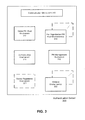
- FIG. 3 is a block diagram of hardware apparatus for protecting access to an organization's network resources, according to some embodiments of the invention.
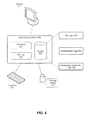
- FIG. 4 is a block diagram of an authentication server, according to some embodiments of the invention.
- apparatus and methods are provided for protecting an organization's network resources from unauthorized access, without requiring substantial expertise and effort on the part of the organization.
- individual devices e.g., new client devices
- PKIs Public Key Infrastructures
- a cloud-based authentication server supervises the infrastructures, which can continue to function even if the server is unavailable.
- certificates are issued and components must pass a certificate-based authentication scheme before accessing an organization's network.
- a global PKI scheme distributes certificates to an organization's client device enablers (CDEs), which operate to provision the organization's new client computing devices, and to the organization's authenticators (e.g., wireless access points, switches), which mutually authenticate with CDEs and client devices before they can access the organization's network.
- CDEs client device enablers
- authenticators e.g., wireless access points, switches
- authentication between a CDE and an authenticator is performed using global PKI certificates, and is done for the purpose of authenticating a new client.
- a table is maintained in the global administration server tracking the ownership of any CDE.
- a per-organization PKI scheme distributes intermediate CA (Certificate Authority) certificates and server certificates to the organization's authenticators, and may distribute client certificates to the organizations clients. Regular use of the organization's network thus requires mutual authentication with the organization certificates.
- a network device may be issued with multiple organization certificates for different purposes - e.g. an intermediate CA cert to allow it to issue client certificates and also a server cert to allow it to mutually authenticate the network with clients).
- FIG. 1 is a diagram of a computing environment in which some embodiments of the invention may be implemented.
- global server 110 manages PKIs for one or more organizations, and is accessible via networks 140, which may include the Internet, organizational intranets and/or other public and/or private networks.
- networks 140 may include the Internet, organizational intranets and/or other public and/or private networks.
- organizations' networks and network resources are protected and fully accessible to authorized users even when the global server is unavailable (e.g., because of an outage of a network 140).
- Global server 110 may be referred to as an authentication server, because it serves as the root of one or more PKIs.
- functions of server 110 e.g., authentication, PKI management, device registration
- WAP wireless access points 130a - 130m
- the organization's resources also include any number and type of client devices 132, such as laptop and notebook computers, personal digital assistants (PDAs), netbooks, desktop computers, workstations, etc.
- client devices 132 such as laptop and notebook computers, personal digital assistants (PDAs), netbooks, desktop computers, workstations, etc.
- Access points 130 may be referred to as authenticators, because they participate in mutual authentication schemes to limit access to network resources to authorized entities.
- Access points 130 are merely illustrative forms of authenticators that may be employed by an organization to provide and protect access to network resources.
- Other types of equipment that may act as authenticators to protect access to network resources include switches, routers, VPN gateways, etc.
- Client device enabler (CDE) 120 is configured to help provision a new client device for operation within the organization, by executing provisioning logic 122.
- CDE 120 comprises a USB (Universal Serial Bus) device, compact disc or other removable storage media.
- CDE 120 comprises a collection of logic that may be delivered to a device via network download, electronic mail, instant message or other means.
- the CDE When a new device is to be configured, the CDE is coupled to or installed on the device.
- the provisioning logic then executes to configure the device for operation within the organization's network, which may involve installing one or more digital certificates.
- a client device enabler may be used multiple times, to provision multiple client devices. Each time it is to be used, it must mutually authenticate itself with one of the organization's authenticators.
- the authenticator will not only authenticate a digital certificate supplied by the CDE, but will also check the CDE's identity (e.g., a serial number in its certificate) against a list of CDEs approved for use within the organization (e.g., a whitelist). This authentication and verification may also be performed by simply checking a fingerprint of the CDE's certificate against a list of acceptable fingerprints (which has been distributed to all the organization's authenticators by the global administration server or other local means).
- Some client device enablers may be limited to a maximum number of uses (e.g., 1, 5, 10).
- a counter may be incremented in a central database (e.g., on global server 110) and/or a list shared among the organization's APs 130. After the CDE has been used for the approved number of times, it is removed from the database and/or acceptable list so that it will not be accepted as a valid CDE in the future.
- access points within an organization's network may support two modes of operation.
- One mode provides full use of network resources to authorized, authenticated devices. This mode is available to client devices that have been provisioned and configured with a client digital certificate issued within the organization's PKI
- a second mode allows limited use of some network resources.
- a "guest" client e.g., a new client device that has not yet been provisioned
- a software-based CDE possibly via electronic mail, network download or other transmission.
- the device After the CDE is downloaded and executed to provision the client device, the device will be able to operate under the first mode of operation for full network access.
- global server 110 comprises database(s) 112 and various PKI certificates.
- Database(s) 112 store(s) identities of devices and equipment authorized to participate in an organization's network. For example, as new network resources such as access points and client device enablers are authorized for use in an organization's network, their identities are associated with the organization and are stored in the database(s).
- the global server stores the organization's CA root certificate 170a - 170n.
- the global PKI rooted at CA root certificate 150, provides an overall framework of digital certificates for implementing a global security scheme that prevents unauthorized devices from using network resources while allowing a CDE and an authenticator to provision a new client device within an organization. This may be termed a "global" PKI.
- Additional PKIs are rooted at their respective CA root certificates and are used to build a framework of digital certificates for use within the corresponding organization.
- the per-organization certificates are used post-provisioning to adjudicate regular access to the organization's network. These PKIs may be termed "organization" PKIs.
- the global server For each root certificate it maintains, the global server also possesses the corresponding private key. This allows the server to issue new certificates for equipment and devices. It may be noted that by managing the global PKI and organization PKIs at the global server, individual organizations need not dedicate efforts and resources to managing their PKI.
- An organization's authenticators (e.g., wireless access point 130m of organizationA) also store various digital certificates. These certificates may include a server certificate 154, signed by global root certificate 150, for authenticating itself to a client device enabler when the CDE attempts to provision a new client device.
- AP 130m further includes a global client certificate 156, also signed by global root certificate 150, with which to authenticate itself to global server 110.
- AP 130m includes a copy of the organization's root certificate 170a (incorporating the corresponding public key). These allow the AP to authenticate a client. If a whitelist for clients is in use then the AP will also contain either a list of acceptable client certificates or a list of fingerprints of acceptable client certificates). This list is updated by the global administration server whenever connectivity is available.
- AP 130m also includes a intermediate CA certificate for organizationA (certificate 172a), which is signed by and is subordinate to organization CA root certificate 170a. This allows the AP to issue client digital certificates within the organization PKI) without involving the global server (and so enables new clients to be enabled when the server is offline). Finally, the AP also has server certificate 174, signed by root certificate 170a, which allows the AP to authenticate itself to client devices.
- client device enabler (CDE) 120 possesses global client certificate 158 (signed by global root certificate 150), for authenticating itself to an access point when the CDE operates to provision a new client device.
- CDE 120 has a copy of root certificate 170a and the corresponding public key, with which it can authenticate an organization access point 130.
- Access point 130m and/or CDE 120 also store copies of global CA root certificate 150.
- individual clients 132 possess only certificates issued within the organization's PKI.
- a client has a copy of organizationA's root CA certificate 170a, so that it can authenticate an AP when connecting to the organization's network.
- the client also possesses a client certificate 176a, which is signed by intermediate CA certificate 172a (and, by extension, by root certificate 170a) and the issuing authenticator's intermediate CA certificate 172a; these certificates allow the device to authenticate itself to the AP.
- This configuration of certificates on an organization's client device 132 is assembled when the device is provisioned by a client device enabler. Before provisioning, the client device may have no organization certificates and may be unable to access the organization network (except possibly in a limited "guest" mode).
- a client device may be received by an organization already equipped with a global client certificate signed by global CA root certificate 150.
- This certificate may be used to enable initial authentication with an authenticator, after which it may be provisioned using software that is already installed on the client, or that is downloaded from the authenticator or other network location.
- the global PKI is used to enable trusted communications between client device enablers and an organization's authenticators (e.g., access points), in order to allow secure provisioning of a new client device.
- the global PKI also allows the authenticators and the global server to mutually authenticate themselves to each other.
- An organization's PKI is used to authorize use of the organization's network resources.
- the client is configured to use a certificate issued within the organization PKI to authenticate itself to an access point.
- an organization's authenticators share one or more whitelists 190 and/or blacklists to help determine which entities can and cannot access the organization's network.
- a new client is provisioned and accepted into the network, its client certificate and/or other identity are added to a client whitelist. Once the whitelist is distributed to all authenticators, they can authenticate that client directly (i.e., without validating it through its certificate chain).
- the client whitelist may comprise fingerprints (e.g., hashes) of approved client's certificates and, when a client submits its certificate for authentication, an authenticator may simply generate a comparison fingerprint from the submitted certificate and compare it to the one in the whitelist to verify the client's identity and authorization.
- fingerprints e.g., hashes
- an authenticator can authenticate the client in the normal fashion - through its certificate chain. If a client is deemed to be invalid, its certificate can simply be removed from the whitelist and/or added to a blacklist to prevent it from accessing the network.
- Another whitelist that may be shared among an organization's authenticators is a list of the authenticators' organization intermediate CA certificates (or fingerprints thereof). This helps an individual authenticator validate an organization client certificate issued to a new client device by another authenticator before the client's certificate is added to the client whitelist.
- Yet another whitelist that may be shared comprises global client certificates (or fingerprints thereof) of valid client device enablers.
- a CDE becomes invalid, such as after provisioning a predetermined number of clients, or is lost/stolen, it can be removed from the CDE whitelist, which will prevent an authenticator from recognizing the CDE and allowing it to provision another device.
- a separate CDE management server may be implemented to register an organization's CDEs.
- the CMS may be located within the organization's network or external to the network (e.g., with global server 110 of FIG. 1 ).
- Each CDE bound to the organization may have to be registered at the CMS, and/or the CMS may be configured to generate or issue new CDEs - such as by downloading or emailing the CDE logic, or by storing the software on a USB drive, compact disc or other portable storage device.
- FIG. 2 is a flow chart demonstrating a method of provisioning a new client device while protecting network resources from unauthorized access, according to some embodiments of the invention.
- EAP-TLS Extensible Authentication Protocol - Transport Layer Security
- TLS Transport Layer Security
- EAP-TLS provides or supports the "organization" PKI described above; the "global” PKI is maintained outside the EAP-TLS scheme.
- the method described in conjunction with FIG. 2 uses a single organization PKI, one skilled in the art will appreciate how use of dual PKIs, as provided for in the EAP-TLS specification, may be applied without exceeding the scope of the present invention.
- a global authentication server is configured with a CA root certificate of a global PKI.
- the global server will also be populated with CA root certificates of individual organizations' PKIs as the organizations choose to have their networks protected as described herein.
- the authentication server is managed by a security facilitator or other entity that can be dedicated to protection of organizations' networks and resources. This obviates the organizations from having to maintain constant awareness of their security posture, manage the issuance and rescission of digital certificates, configure CDEs, etc.
- the authentication server issues appropriate digital certificates to selected authenticator devices (e.g., wireless access points, switches) within the global PKI.
- authenticator devices e.g., wireless access points, switches
- an authenticator may be issued a client global certificate for purposes of authenticating itself to the global server, and a server global certificate to allow it to authenticate itself to other equipment, such as client device enablers that operate to provision client devices.
- an authenticator - an access point (AP) - is used to describe operation of the method of the invention presented in FIG. 2 .
- Other embodiments of the invention may employ other types of authenticators.
- the authentication server issues appropriate digital certificates to client device enablers.
- the CDEs are issued client global certificates, with which they will be able to authenticate themselves to deployed access points.
- the access points and/or the CDEs may also be populated with copies of the authentication server's global root certificate and corresponding public key.
- the access points and client device enablers that receive global digital certificates in operations 202 - 204 are not yet in use, are not yet associated with an organization, and are not yet issued any organization digital certificates. However, because they have appropriate global certificates, they can be deployed as needed (e.g., when requested by an organization), authenticate themselves within the global PKI, and then receive the necessary organization certificates, as described shortly.
- one or more APs and CDEs are selected for deployment to and within an organization.
- the entity that operates the global authentication server may maintain this equipment until needed by an organization.
- the APs and CDEs can be sent immediately, even before receiving any certificates issued through the organization PKI.
- a CDE is an article comprising both hardware and software - such as a USB thumb drive that stores the necessary provisioning logic and data.
- a CDE comprises software that can be readily copied, emailed, downloaded or otherwise transmitted between network entities.
- one or more CDEs are shipped with each access point.
- an organization receives all the equipment necessary to get one or more client devices up and running within the organization's network.
- the global administration server stores mapping of which CDEs shipped with which Aps, so when an AP is registered to a particular organization the CDEs that shipped with it are also automatically registered to that organization.
- identities of the selected APs and CDEs are stored at the global server and bound to the organization. For example, their serial numbers, IP (Internet Protocol) addresses, MAC (Medium Access Control) addresses or other identifying indicia are stored.
- the global server can verify that the equipment has been associated with and connected to the correct organization, that the equipment was not surreptitiously switched for a different item, etc.
- a CDE whitelist for the organization may be initialized with the client global certificates of the selected CDE, or fingerprints thereof, and an AP whitelist may be initialized with certificates (or certificate fingerprints) of the APs. These whitelists (or data with which to assemble the lists) may be managed at the authentication server. Also in operation 208, the APs and CDEs are shipped or delivered to the organization.
- the organization receives and deploys the selected access point(s).
- a newly deployed AP will attempt to contact the global server.
- the two entities Upon connection, the two entities will mutually authenticate themselves using their global certificates.
- the AP may receive copies of any relevant whitelists (or updates thereto) while connected to the global authentication server.
- the global server issues the AP a set of organization certificates that are used to specifically protect the organization's network resources. Except possibly for CDEs acting to provision new client devices, only equipment having certificates issued within the organization PKI will be able to fully use the organization's network.
- the AP receives a copy of the organization's CA root certificate (and corresponding public key), a new intermediate CA certificate issued in a name of the AP (with which it will issue organization client certificates to client devices), and an organization server certificate with which it will authenticate itself to client devices attempting to access the organization network.
- a CDE is plugged into a client device that is to be provisioned for network access or, in the case of a software-only CDE, is loaded onto the device.
- client devices comprise primarily portable computing devices, but may also or instead include stationary (e.g., desktop, workstation) computers.
- the client device is physically configured as necessary (e.g., with a wireless network card, one or more USB ports, data storage devices).
- the CDE may configure the client device in any way necessary to enable it to function securely within the organization network. For example, it may load network drivers, configure a network connection, set security parameters, install anti-virus or other protective software, etc.
- the provisioning process may be considered to be complete when the new client device can communicate with an access point, or the provisioning may be considered to continue through additional operations (e.g., operations 214 through 218 or 220), until the client device is configured to fully participate within the organization network.
- the CDE makes a connection with one of the organization's access points, and the CDE and the AP mutually authenticate themselves.
- the authentication is performed using their digital certificates issued within the global PKI (e.g., a server certificate for the AP and a client certificate for the CDE).
- mutual authentication allows the CDE and AP to open an encrypted TLS communication session.
- the CDE runs a standard key management protocol, within the TLS session, to request an organization client digital certificate for the client from the AP.
- the AP In operation 218, the AP generates and signs a client certificate for the client (using its organization intermediate CA certificate), and transmits it to the client, along with a copy of the organization root certificate and corresponding public key.
- the new client certificate thus has a chain of signatures including the AP (its organization intermediate CA certificate) and the authentication server (acting as the organization CA root certificate).
- the AP adds the client to the organization's client whitelist.
- this is done by opening a secure communication session with the global authentication server (e.g., using the global PKI) and adding the client's new certificate (or a fingerprint thereof) to a database or central copy of the whitelist; the whitelist may also include some identity (e.g., serial number, network address) of the new client.
- the updated whitelist is then distributed among the organization's APs. Such updates may be distributed every time the whitelist is modified, or at regular intervals (e.g., 10 minutes, 1 hour).
- the new client device can be provisioned and provided with a valid organization client digital certificate even while the AP is unable to communicate with the global authentication server.
- new organization client devices can be configured and put into operation.
- the new client's certificate is disseminated to all APs, if the client connects to the organization network via an AP other than the one that issued its certificate, that certificate may need to be fully authenticated by the other AP.
- the other AP may only need to generate a fingerprint of the client's certificate (received during the authentication process) and compare it to the fingerprint stored in the whitelist.
- the new client device is able to open secure communication sessions with organization access points, mutually authenticate using its new organization client certificate, and access the organization's network.
- digital certificates for one or more entities may be updated or rolled-over.
- each time an AP signs a new organization client digital certificate it will contact the global authentication server to request a new/updated organization Intermediate CA certificate.
- the updated/replacement certificate may comprise an updated counter, a new timestamp or some other data value that allows the certificate to be differentiated from other organization Intermediate CA certificates issued to the AP.
- this may be done in parallel or as part of updating one or more whitelists.
- updating the AP's organization intermediate CA certificate on a regular basis means that if the AP is lost, stolen or otherwise unaccounted for, any client certificates it issues after disappearing can be easily identified. Thus, if an AP is lost, it will be removed from the organization's AP whitelist (and/or placed in a blacklist), and any client certificates later generated by the AP and presented to a valid organization AP will be recognized as being invalid.
- a CDE's global client certificate may be updated, rolled-over or replaced each time it is used to provision a client device.
- a CDE may only be valid for a limited number of uses. After that number of uses (which may be tracked at the global server and/or elsewhere), it may not receive a new certificate, and it may be removed from the organization's CDE whitelist (and/or placed in a blacklist).
- the CDE can be disabled if it is lost or stolen.
- a CDE is determined to be missing, it is removed from the organization's CDE whitelist (and/or placed in a blacklist), so that no organization APs will allow the CDE to provision a new client (i.e., will not issue a new organization client certificate in response to a request from the CDE).
- any clients that may have been provisioned after the CDE was compromised can be identified and isolated.
- the global authentication server may be unreachable at some times (e.g., when the organization's connection to the Internet is interrupted), updates to digital certificates for APs, CDEs and/or other equipment may be postponed until the server is available.
- the affected component e.g., an AP, a CDE
- the affected component may continue to be used normally in the meantime.
- an AP may distribute new client certificates (or fingerprints thereof) directly to other organization APs (e.g., if the global server is unreachable).
- a client device enabler's credentials must be approved by the global authentication server before it can be used to provision a client device, and they are updated or rolled-over at that time.
- the CDE first authenticates itself to an authenticator, wherein a fingerprint generated from the certificate presented by the CDE is compared to a whitelist fingerprint. If the CDE passes this step, its credentials are passed to the authentication server.
- the authentication server searches its CDE records for this CDE, validates and updates the CDE's credentials, signs them, updates its organization CDE records, and returns the updated credentials to the authenticator for return to the CDE.
- the authentication server also distributes the updated fingerprint to all organization APs.
- FIG. 3 is a block diagram of apparatus for protecting access to an organization's network resources, according to some embodiments of the invention.
- Global administration server 300 comprises communication mechanism 310, global PKI root mechanism 312, per-organization PKI root mechanism(s) 314, authentication mechanism 316, PKI management mechanism 318. optional device registration mechanism 320 and whitelist mechanism(s) 322. Any or all of these mechanisms may be combined or subdivided in other embodiments of the invention.
- Communication mechanism 310 is adapted to exchange communications with an organization's authenticators (e.g., access points, switches).
- the communication mechanism may be associated with a user interface that can be manipulated by an operator of the authentication server to facilitate configuration and/or operation of the server.
- the communications are protected by mutual authentication and encryption, such as TLS or HTTPS.
- Global PKI root mechanism 312 is adapted to act as a root CA (Certificate Authority) for a global PKI through which client device enablers (CDEs) and authenticators can mutually authenticate themselves prior to provisioning a new client device.
- CA Certificate Authority
- Per-organization PKI root mechanism(s) 314 are adapted to act as root CAs for individual organizations. Each mechanism 314 serves as the root for issuing organization digital certificates to devices and equipment that will operate within the corresponding organization's network.
- Authentication mechanism 316 is adapted to authenticate an authenticator, CDE or other external device attempting to open a secure communication session with authentication server 300. Depending on the nature or purpose of the session, a digital certificate proffered by an authenticator or other entity may be authenticated using either global PKI root mechanism 312 or a per-organization PKI root mechanism 314.
- PKI management mechanism 318 is adapted to manage PKI root mechanism 312 and/or mechanism(s) 314.
- the PKI management mechanism may facilitate issuance of updated or replacement digital certificates (e.g., an authenticator's organization intermediate CA certificate, a CDE's global client certificate), possibly with cooperation of the corresponding PKI root mechanism.
- updated or replacement digital certificates e.g., an authenticator's organization intermediate CA certificate, a CDE's global client certificate
- Optional device registration mechanism 320 is adapted to register one or more types of devices or equipment for operation within the global PKI and/or a per-organization PKI.
- device registration mechanism 320 may register CDEs and/or authenticators for use within an organization, or such registration may be performed by another entity.
- the server may also be configured to download software-based CDEs to authenticators and/or client devices.
- Whitelist mechanism(s) 322 are adapted to identify devices or equipment authorized to operate within an organization's network. Thus, for a given organization, one or more whitelists may be maintained for identifying valid authenticators, CDEs and/or client devices. These components may be identified by digital certificates (or fingerprints or other artifacts thereof), serial number or other indicia.
- Whitelist mechanism(s) 322 may comprise one or more distinct whitelists, for distribution among an organization's network resources, or may comprise a collection of data (e.g., databases, tables) from which such whitelists may be generated.
- one or more blacklist mechanism(s) may also be operated to identify authenticators, CDEs and/or other entities specifically prohibited from operating within one or more organizations' networks.
- FIG. 4 is a block diagram of an authentication server, according to some embodiments of the invention.
- Authentication server 400 of FIG. 4 comprises processor 402, memory 404 and storage 406, which may comprise one or more optical and/or magnetic storage components. Authentication server 400 may be coupled (permanently or transiently) to keyboard 412, pointing device 414 and display 416.
- Storage 406 of the authentication server stores logic that may be loaded into memory 404 for execution by processor 402.
- Such logic includes PKI logic 422, authentication logic 424 and component identification logic 426.
- PKI logic 422 comprises processor-executable instructions for operating one or more public key infrastructures, including issuing certificates, replacing certificates, creating new PKIs, etc.
- Authentication logic 424 comprises processor-executable instructions for authenticating a digital certificate presented to authentication server 400.
- Component identification logic 426 comprises processor-executable instructions for identifying valid organization components (e.g., authenticators, clients, client device enablers) to those components' peers. Such information may illustratively be disseminated in the form of whitelists and/or blacklists.
- an authentication server may include additional logic, such as for registering individual components, managing operation of the server, replicating server data to other instances of the authentication server, etc.
- the environment in which a present embodiment of the invention is executed may incorporate a general-purpose computer or a special-purpose device such as a hand-held computer. Details of such devices (e.g., processor, memory, data storage, display) may be omitted for the sake of clarity.
- Computer-readable storage medium which may be any device or medium that can store code and/or data for use by a computer system.
- the computer-readable storage medium includes, but is not limited to, volatile memory, non-volatile memory, magnetic and optical storage devices such as disk drives, magnetic tape, CDs (compact discs), DVDs (digital versatile discs or digital video discs), and other media capable of storing computer-readable media now known or later developed.
- Methods and processes described in the detailed description can be embodied as code and/or data, which can be stored in a computer-readable storage medium as described above.
- a computer system reads and executes the code and/or data stored on the computer-readable storage medium, the computer system performs the methods and processes embodied as data structures and code and stored within the computer-readable storage medium.
- modules or apparatus may include, but are not limited to, an application-specific integrated circuit (ASIC) chip, a field-programmable gate array (FPGA), a dedicated or shared processor that executes a particular software module or a piece of code at a particular time, and/or other programmable logic devices now known or later developed.
- ASIC application-specific integrated circuit
- FPGA field-programmable gate array
- the hardware modules or apparatus When activated, they perform the methods and processes included within them.
Landscapes
- Engineering & Computer Science (AREA)
- Computer Security & Cryptography (AREA)
- Computer Networks & Wireless Communication (AREA)
- Signal Processing (AREA)
- Computer Hardware Design (AREA)
- General Engineering & Computer Science (AREA)
- Software Systems (AREA)
- Theoretical Computer Science (AREA)
- Physics & Mathematics (AREA)
- General Physics & Mathematics (AREA)
- Computing Systems (AREA)
- Storage Device Security (AREA)
Abstract
Description
- This invention relates to the fields of computer systems and data security. More particularly, apparatus and methods are provided for protecting network resources from unauthorized access, while allowing a new client device access to the network resources.
- The level of knowledge needed to effectively configure and operate networked computer systems can be quite high. Large organizations typically maintain a relatively large IT (Information Technology) staff to configure new equipment, maintain existing equipment, assist users with operation of their equipment, apply security policies, monitor network security, etc. However, some organizations, particularly those that are smaller, cannot afford sufficient experienced full-time IT staff for performing the same functions, and whoever may be tasked with IT responsibilities within such an organization may be unprepared for the myriad problems that may arise.
- For example, securing an organization's network resources from unauthorized access is a critical task that can easily be performed in an incomplete or ineffective manner. Due to the complexity of the problem, the lack of effectiveness may not be apparent to the organization until the network has been breached. The amount of data stored electronically is prodigious and grows daily, and makes network security all the more important.
- One reason it can be difficult to adequately secure network resources is the tension between the need to permit legitimate use of the resources without unreasonable difficulty, and the desire to prevent all illegitimate use. This tension increases as the number and type of resources deployed increases.
- Each new type of resource may be configured in a different way to access permitted resources, apply a desired level of security, etc. Securing an organization's network resources is just one of many tasks and, without adequate IT staffing, this task may receive short shrift in the face of users' demands for real-time assistance. Thus, configuring and monitor network security must compete with tasks such as helping users configure their equipment for use within the organization.
- Some organizations choose to use automated provisioning to prepare new devices for use within their network. However, if an organization's security policies do not encompass the automated provisioning equipment and utilities, and cooperate with the configuration of a new device's security profile, security vulnerabilities may be introduced into an organization along with the new device. Or, if the provisioning is performed in a haphazard or hurried manner, security policies may not be applied correctly or completely.
- In short, installation or configuration of a new network device is too often performed without proper application of appropriate security policies, especially if the organization does not have sufficient full-time and well-trained IT personnel.
- In some embodiments of the invention, apparatus and methods are provided for protecting an organization's network resources, particularly in association with automatic provisioning of new client devices within the organization. Securing the resources from unauthorized access, while fully supporting access to all authorized personnel, is based in the use of two cooperating PKI (Public Key Infrastructure) schemes that enable certificate-based authentication of all entities attempting to use the resources.
- A first, global, PKI scheme is rooted at a globally available authentication server (e.g., a server that is accessible via the Internet). Network devices, authenticators, which are used to validate clients and grant access to an organization's network, and client device enablers (CDEs), which are used to provision new client devices, are issued certificates within the global PKI. This is done to enable network devices, client devices, and authenticators to be provisioned prior to knowing what organization they will be used by if desirable for operational reasons.
- Identities of network devices, authenticators and CDEs bound to a particular organization (e.g., by serial numbers, client certificates) are recorded and shared among the organization's authenticators to help limit network access to authorized personnel and devices. An authenticator may be a stand-alone network component or may be co-located with an access point (e.g., a wireless access point), a switch or other communication equipment.
- A second, per-organization, PKI scheme is also rooted at the authentication server or other resource with high availability. A separate root CA (Certificate Authority) is maintained for each organization. An organization's authenticators are issued organization sub-root (intermediate) CA certificates, which allow them to issue client certificates to new client devices, within the organization's PKI This enables the authenticators to issue new certificates even if the root CA is temporarily unavailable or offline.
- To provision a new client device for a particular organization, a CDE bound to that organization mutually authenticates with one of the organization's authenticators, using certificates issued under the global PKI. After successful authentication, the CDE requests and the authenticator issues a new organization client certificate to the client device, within the organizational PKI.
- After a client device is provisioned, it uses the organization certificate to authenticate itself to an authenticator and access the organization's network. In some embodiments, the client's certificate (or a fingerprint thereof) is added to a whitelist shared among the organization's authenticators. This whitelists may be shared with the global administration server if and when it is reachable, or may be shared via local means.
- The identities (e.g., certificates, certificate fingerprints, other identifiers) of the organization's authenticators and CDEs may also be disseminated as whitelists. This whitelist may be disseminated via the global administration server if and when it is available, or via other local means. A component or device that is lost, stolen or otherwise missing is removed from its whitelist and/or placed in a blacklist in order to prevent it from being used.
- In some embodiments, after a new client is provisioned, the provisioning authenticator's intermediate CA certificate (within the organization PKI) and the provisioning CDE's client certificate (within the global PKI) are replaced or updated after use, if or when a connection to the global root CA is available. For example, a counter or other distinguishing data field may be altered in the new certificate. By regularly updating these certificates, corrective action can be easily applied if an authenticator or CDE is lost, stolen or compromised (i.e. the appropriate certificates are removed from the whitelists and added to a blacklist). By rolling over the CDE client certificate and authenticator intermediate CA certificates whenever possible after use the number of client certificates issued under each one is minimized, and so the impact of revoking or blacklisting them is minimized. In addition duplication of a CDE is more rapidly detected.
-
FIG. 1 is a block diagram depicting a computing environment in which some embodiments of the invention may be implemented. -
FIG. 2 is a flow chart demonstrating a method of provisioning a new client device while protecting network resources from unauthorized access, according to some embodiments of the invention. -
FIG. 3 is a block diagram of hardware apparatus for protecting access to an organization's network resources, according to some embodiments of the invention. -
FIG. 4 is a block diagram of an authentication server, according to some embodiments of the invention. - In some embodiments of the invention, apparatus and methods are provided for protecting an organization's network resources from unauthorized access, without requiring substantial expertise and effort on the part of the organization. In these embodiments, individual devices (e.g., new client devices) join the security scheme when they are provisioned for operation within the network.
- Multiple PKIs (Public Key Infrastructures) are employed to authenticate network devices and allow operation of the network, but the organization need not maintain a server dedicated to PKI management and operation. Instead, a cloud-based authentication server supervises the infrastructures, which can continue to function even if the server is unavailable. Under the rubric of the PKIs, certificates are issued and components must pass a certificate-based authentication scheme before accessing an organization's network.
- More specifically, a global PKI scheme distributes certificates to an organization's client device enablers (CDEs), which operate to provision the organization's new client computing devices, and to the organization's authenticators (e.g., wireless access points, switches), which mutually authenticate with CDEs and client devices before they can access the organization's network. Thus, authentication between a CDE and an authenticator is performed using global PKI certificates, and is done for the purpose of authenticating a new client. This allows CDEs to be provisioned prior to knowing which organization they will be used by if so desired for operational reasons. A table is maintained in the global administration server tracking the ownership of any CDE.
- A per-organization PKI scheme distributes intermediate CA (Certificate Authority) certificates and server certificates to the organization's authenticators, and may distribute client certificates to the organizations clients. Regular use of the organization's network thus requires mutual authentication with the organization certificates. (A network device may be issued with multiple organization certificates for different purposes - e.g. an intermediate CA cert to allow it to issue client certificates and also a server cert to allow it to mutually authenticate the network with clients).
-
FIG. 1 is a diagram of a computing environment in which some embodiments of the invention may be implemented. - In these embodiments,
global server 110 manages PKIs for one or more organizations, and is accessible vianetworks 140, which may include the Internet, organizational intranets and/or other public and/or private networks. As will be discussed below, organizations' networks and network resources are protected and fully accessible to authorized users even when the global server is unavailable (e.g., because of an outage of a network 140). -
Global server 110 may be referred to as an authentication server, because it serves as the root of one or more PKIs. In other embodiments, functions of server 110 (e.g., authentication, PKI management, device registration) may be divided among multiple entities. - Coupled to
global server 110 by network(s) 140 are organizations' access points (AP) and/or other communication equipment and network devices. For example, wireless access points (WAP) 130a - 130m operate on behalf of an individual organization (i.e., OrganizationA) to provide network access and communication between resources. The organization's resources also include any number and type ofclient devices 132, such as laptop and notebook computers, personal digital assistants (PDAs), netbooks, desktop computers, workstations, etc. - Access points 130 may be referred to as authenticators, because they participate in mutual authentication schemes to limit access to network resources to authorized entities.
- Access points 130 are merely illustrative forms of authenticators that may be employed by an organization to provide and protect access to network resources. Other types of equipment that may act as authenticators to protect access to network resources include switches, routers, VPN gateways, etc.
- Client device enabler (CDE) 120 is configured to help provision a new client device for operation within the organization, by executing
provisioning logic 122. In some embodiments of the invention,CDE 120 comprises a USB (Universal Serial Bus) device, compact disc or other removable storage media. In other embodiments,CDE 120 comprises a collection of logic that may be delivered to a device via network download, electronic mail, instant message or other means. - When a new device is to be configured, the CDE is coupled to or installed on the device. The provisioning logic then executes to configure the device for operation within the organization's network, which may involve installing one or more digital certificates.
- In some embodiments of the invention, a client device enabler may be used multiple times, to provision multiple client devices. Each time it is to be used, it must mutually authenticate itself with one of the organization's authenticators. The authenticator will not only authenticate a digital certificate supplied by the CDE, but will also check the CDE's identity (e.g., a serial number in its certificate) against a list of CDEs approved for use within the organization (e.g., a whitelist). This authentication and verification may also be performed by simply checking a fingerprint of the CDE's certificate against a list of acceptable fingerprints (which has been distributed to all the organization's authenticators by the global administration server or other local means).
- Some client device enablers may be limited to a maximum number of uses (e.g., 1, 5, 10). When such a CDE is used to provision a client, a counter may be incremented in a central database (e.g., on global server 110) and/or a list shared among the organization's APs 130. After the CDE has been used for the approved number of times, it is removed from the database and/or acceptable list so that it will not be accepted as a valid CDE in the future.
- In some embodiments of the invention, access points within an organization's network may support two modes of operation. One mode provides full use of network resources to authorized, authenticated devices. This mode is available to client devices that have been provisioned and configured with a client digital certificate issued within the organization's PKI
- A second mode allows limited use of some network resources. In this second mode of operation, a "guest" client (e.g., a new client device that has not yet been provisioned) is able to establish sufficient access to receive a software-based CDE, possibly via electronic mail, network download or other transmission. After the CDE is downloaded and executed to provision the client device, the device will be able to operate under the first mode of operation for full network access.
- For purposes of securing networks and network resources,
global server 110 comprises database(s) 112 and various PKI certificates. Database(s) 112 store(s) identities of devices and equipment authorized to participate in an organization's network. For example, as new network resources such as access points and client device enablers are authorized for use in an organization's network, their identities are associated with the organization and are stored in the database(s). - Among the PKI certificates stored by the global server are global CA (Certificate Authority)
root certificate 150 and, for each organization served by the global server, a CA root certificate 170 unique to that organization. For example, for organizations A - N, the global server stores the organization'sCA root certificate 170a - 170n. - Thus, multiple PKIs are anchored at the global server. The global PKI, rooted at
CA root certificate 150, provides an overall framework of digital certificates for implementing a global security scheme that prevents unauthorized devices from using network resources while allowing a CDE and an authenticator to provision a new client device within an organization. This may be termed a "global" PKI. - Additional PKIs, one for each organization, are rooted at their respective CA root certificates and are used to build a framework of digital certificates for use within the corresponding organization. The per-organization certificates are used post-provisioning to adjudicate regular access to the organization's network. These PKIs may be termed "organization" PKIs.
- For each root certificate it maintains, the global server also possesses the corresponding private key. This allows the server to issue new certificates for equipment and devices. It may be noted that by managing the global PKI and organization PKIs at the global server, individual organizations need not dedicate efforts and resources to managing their PKI.
- An organization's authenticators (e.g.,
wireless access point 130m of organizationA) also store various digital certificates. These certificates may include aserver certificate 154, signed byglobal root certificate 150, for authenticating itself to a client device enabler when the CDE attempts to provision a new client device.AP 130m further includes a global client certificate 156, also signed byglobal root certificate 150, with which to authenticate itself toglobal server 110. - As for organizationA's PKI,
AP 130m includes a copy of the organization'sroot certificate 170a (incorporating the corresponding public key). These allow the AP to authenticate a client. If a whitelist for clients is in use then the AP will also contain either a list of acceptable client certificates or a list of fingerprints of acceptable client certificates). This list is updated by the global administration server whenever connectivity is available. -
AP 130m also includes a intermediate CA certificate for organizationA (certificate 172a), which is signed by and is subordinate to organizationCA root certificate 170a. This allows the AP to issue client digital certificates within the organization PKI) without involving the global server (and so enables new clients to be enabled when the server is offline). Finally, the AP also has server certificate 174, signed byroot certificate 170a, which allows the AP to authenticate itself to client devices. - In the embodiments of the invention depicted in
FIG. 1 , client device enabler (CDE) 120, possesses global client certificate 158 (signed by global root certificate 150), for authenticating itself to an access point when the CDE operates to provision a new client device. As for the organization PKI,CDE 120 has a copy ofroot certificate 170a and the corresponding public key, with which it can authenticate an organization access point 130. -
Access point 130m and/orCDE 120 also store copies of globalCA root certificate 150. - In embodiments of the invention reflected in
FIG. 1 ,individual clients 132 possess only certificates issued within the organization's PKI. In particular, a client has a copy of organizationA'sroot CA certificate 170a, so that it can authenticate an AP when connecting to the organization's network. The client also possesses a client certificate 176a, which is signed byintermediate CA certificate 172a (and, by extension, byroot certificate 170a) and the issuing authenticator'sintermediate CA certificate 172a; these certificates allow the device to authenticate itself to the AP. - This configuration of certificates on an organization's
client device 132 is assembled when the device is provisioned by a client device enabler. Before provisioning, the client device may have no organization certificates and may be unable to access the organization network (except possibly in a limited "guest" mode). - However, in other embodiments of the invention, a client device may be received by an organization already equipped with a global client certificate signed by global
CA root certificate 150. This certificate may be used to enable initial authentication with an authenticator, after which it may be provisioned using software that is already installed on the client, or that is downloaded from the authenticator or other network location. - Thus, in embodiments of the invention described herein, the global PKI is used to enable trusted communications between client device enablers and an organization's authenticators (e.g., access points), in order to allow secure provisioning of a new client device. The global PKI) also allows the authenticators and the global server to mutually authenticate themselves to each other.
- An organization's PKI is used to authorize use of the organization's network resources. Thus, after a CDE is permitted to provision a new client device, the client is configured to use a certificate issued within the organization PKI to authenticate itself to an access point.
- In some embodiments of the invention, an organization's authenticators share one or more whitelists 190 and/or blacklists to help determine which entities can and cannot access the organization's network.
- For example, after a new client is provisioned and accepted into the network, its client certificate and/or other identity are added to a client whitelist. Once the whitelist is distributed to all authenticators, they can authenticate that client directly (i.e., without validating it through its certificate chain).
- Illustratively, the client whitelist may comprise fingerprints (e.g., hashes) of approved client's certificates and, when a client submits its certificate for authentication, an authenticator may simply generate a comparison fingerprint from the submitted certificate and compare it to the one in the whitelist to verify the client's identity and authorization.
- For the period of time between provisioning of a new client and distribution of an updated whitelist, an authenticator can authenticate the client in the normal fashion - through its certificate chain. If a client is deemed to be invalid, its certificate can simply be removed from the whitelist and/or added to a blacklist to prevent it from accessing the network.
- Another whitelist that may be shared among an organization's authenticators is a list of the authenticators' organization intermediate CA certificates (or fingerprints thereof). This helps an individual authenticator validate an organization client certificate issued to a new client device by another authenticator before the client's certificate is added to the client whitelist.
- Yet another whitelist that may be shared comprises global client certificates (or fingerprints thereof) of valid client device enablers. When a CDE becomes invalid, such as after provisioning a predetermined number of clients, or is lost/stolen, it can be removed from the CDE whitelist, which will prevent an authenticator from recognizing the CDE and allowing it to provision another device.
- In some embodiments of the invention, a separate CDE management server (or CMS) may be implemented to register an organization's CDEs. The CMS may be located within the organization's network or external to the network (e.g., with
global server 110 ofFIG. 1 ). Each CDE bound to the organization may have to be registered at the CMS, and/or the CMS may be configured to generate or issue new CDEs - such as by downloading or emailing the CDE logic, or by storing the software on a USB drive, compact disc or other portable storage device. -
FIG. 2 is a flow chart demonstrating a method of provisioning a new client device while protecting network resources from unauthorized access, according to some embodiments of the invention. - In these embodiments, EAP-TLS (Extensible Authentication Protocol - Transport Layer Security) is employed to provide a secure certificate-based scheme for mutual authentication between network entities. The TLS portion of the EAP-TLS security scheme is not used to encrypt a client's data connection within an organization's network, but rather to authenticate the client and the network and allowing secure exchange of other encryption keys that will be used to encrypt the client's data connection.
- EAP-TLS provides or supports the "organization" PKI described above; the "global" PKI is maintained outside the EAP-TLS scheme. Although the method described in conjunction with
FIG. 2 uses a single organization PKI, one skilled in the art will appreciate how use of dual PKIs, as provided for in the EAP-TLS specification, may be applied without exceeding the scope of the present invention. - In
operation 200, a global authentication server is configured with a CA root certificate of a global PKI. The global server will also be populated with CA root certificates of individual organizations' PKIs as the organizations choose to have their networks protected as described herein. - Advantageously, the authentication server is managed by a security facilitator or other entity that can be dedicated to protection of organizations' networks and resources. This obviates the organizations from having to maintain constant awareness of their security posture, manage the issuance and rescission of digital certificates, configure CDEs, etc.
- In
operation 202, the authentication server issues appropriate digital certificates to selected authenticator devices (e.g., wireless access points, switches) within the global PKI. For example, an authenticator may be issued a client global certificate for purposes of authenticating itself to the global server, and a server global certificate to allow it to authenticate itself to other equipment, such as client device enablers that operate to provision client devices. - One example of an authenticator - an access point (AP) - is used to describe operation of the method of the invention presented in
FIG. 2 . Other embodiments of the invention may employ other types of authenticators. - In
operation 204, the authentication server issues appropriate digital certificates to client device enablers. Specifically, in these embodiments, the CDEs are issued client global certificates, with which they will be able to authenticate themselves to deployed access points. In some embodiments, the access points and/or the CDEs may also be populated with copies of the authentication server's global root certificate and corresponding public key. - It may be noted that the access points and client device enablers that receive global digital certificates in operations 202 - 204 are not yet in use, are not yet associated with an organization, and are not yet issued any organization digital certificates. However, because they have appropriate global certificates, they can be deployed as needed (e.g., when requested by an organization), authenticate themselves within the global PKI, and then receive the necessary organization certificates, as described shortly.
- In
operation 206, one or more APs and CDEs are selected for deployment to and within an organization. For example, the entity that operates the global authentication server may maintain this equipment until needed by an organization. When the organization orders the equipment, the APs and CDEs can be sent immediately, even before receiving any certificates issued through the organization PKI. - In these embodiments of the invention, a CDE is an article comprising both hardware and software - such as a USB thumb drive that stores the necessary provisioning logic and data. In other embodiments of the invention, however, a CDE comprises software that can be readily copied, emailed, downloaded or otherwise transmitted between network entities.
- In some embodiments of the invention, one or more CDEs are shipped with each access point. Thus, in these embodiments of the invention, an organization receives all the equipment necessary to get one or more client devices up and running within the organization's network. The global administration server stores mapping of which CDEs shipped with which Aps, so when an AP is registered to a particular organization the CDEs that shipped with it are also automatically registered to that organization.
- In
operation 208, identities of the selected APs and CDEs are stored at the global server and bound to the organization. For example, their serial numbers, IP (Internet Protocol) addresses, MAC (Medium Access Control) addresses or other identifying indicia are stored. - Later, when the equipment connects to the server (e.g., after being connected to the organization's network for the first time), the global server can verify that the equipment has been associated with and connected to the correct organization, that the equipment was not surreptitiously switched for a different item, etc.
- Yet further, in operation 208 a CDE whitelist for the organization may be initialized with the client global certificates of the selected CDE, or fingerprints thereof, and an AP whitelist may be initialized with certificates (or certificate fingerprints) of the APs. These whitelists (or data with which to assemble the lists) may be managed at the authentication server. Also in
operation 208, the APs and CDEs are shipped or delivered to the organization. - In operation 210, the organization receives and deploys the selected access point(s). Upon connection to the organization's network, a newly deployed AP will attempt to contact the global server. Upon connection, the two entities will mutually authenticate themselves using their global certificates. The AP may receive copies of any relevant whitelists (or updates thereto) while connected to the global authentication server.
- Then, the global server issues the AP a set of organization certificates that are used to specifically protect the organization's network resources. Except possibly for CDEs acting to provision new client devices, only equipment having certificates issued within the organization PKI will be able to fully use the organization's network.
- In these embodiments of the invention, the AP receives a copy of the organization's CA root certificate (and corresponding public key), a new intermediate CA certificate issued in a name of the AP (with which it will issue organization client certificates to client devices), and an organization server certificate with which it will authenticate itself to client devices attempting to access the organization network.
- In
operation 212, a CDE is plugged into a client device that is to be provisioned for network access or, in the case of a software-only CDE, is loaded onto the device. In these embodiments, client devices comprise primarily portable computing devices, but may also or instead include stationary (e.g., desktop, workstation) computers. Before the CDE is connected, the client device is physically configured as necessary (e.g., with a wireless network card, one or more USB ports, data storage devices). - As part of its provisioning of the client, the CDE may configure the client device in any way necessary to enable it to function securely within the organization network. For example, it may load network drivers, configure a network connection, set security parameters, install anti-virus or other protective software, etc. The provisioning process may be considered to be complete when the new client device can communicate with an access point, or the provisioning may be considered to continue through additional operations (e.g., operations 214 through 218 or 220), until the client device is configured to fully participate within the organization network.
- In operation 214, via the client device, the CDE makes a connection with one of the organization's access points, and the CDE and the AP mutually authenticate themselves. In these embodiments of the invention, the authentication is performed using their digital certificates issued within the global PKI (e.g., a server certificate for the AP and a client certificate for the CDE). Mutual authentication allows the CDE and AP to open an encrypted TLS communication session.
- In
operation 216, the CDE runs a standard key management protocol, within the TLS session, to request an organization client digital certificate for the client from the AP. - In
operation 218, the AP generates and signs a client certificate for the client (using its organization intermediate CA certificate), and transmits it to the client, along with a copy of the organization root certificate and corresponding public key. The new client certificate thus has a chain of signatures including the AP (its organization intermediate CA certificate) and the authentication server (acting as the organization CA root certificate). - In
operation 220, the AP adds the client to the organization's client whitelist. In some embodiments, this is done by opening a secure communication session with the global authentication server (e.g., using the global PKI) and adding the client's new certificate (or a fingerprint thereof) to a database or central copy of the whitelist; the whitelist may also include some identity (e.g., serial number, network address) of the new client. - The updated whitelist is then distributed among the organization's APs. Such updates may be distributed every time the whitelist is modified, or at regular intervals (e.g., 10 minutes, 1 hour).
- It may be noted that the new client device can be provisioned and provided with a valid organization client digital certificate even while the AP is unable to communicate with the global authentication server. Thus, even without network connectivity outside the organization, new organization client devices can be configured and put into operation.
- However, until the new client's certificate is disseminated to all APs, if the client connects to the organization network via an AP other than the one that issued its certificate, that certificate may need to be fully authenticated by the other AP. Once the updated whitelist is distributed, the other AP may only need to generate a fingerprint of the client's certificate (received during the authentication process) and compare it to the fingerprint stored in the whitelist.
- Therefore, after
operation 220, the new client device is able to open secure communication sessions with organization access points, mutually authenticate using its new organization client certificate, and access the organization's network. - In
optional operation 222, digital certificates for one or more entities may be updated or rolled-over. For example, in some embodiments of the invention, each time an AP signs a new organization client digital certificate, it will contact the global authentication server to request a new/updated organization Intermediate CA certificate. The updated/replacement certificate may comprise an updated counter, a new timestamp or some other data value that allows the certificate to be differentiated from other organization Intermediate CA certificates issued to the AP. Illustratively, this may be done in parallel or as part of updating one or more whitelists. - In these embodiments of the invention, updating the AP's organization intermediate CA certificate on a regular basis (e.g., after every new client is provisioned) means that if the AP is lost, stolen or otherwise unaccounted for, any client certificates it issues after disappearing can be easily identified. Thus, if an AP is lost, it will be removed from the organization's AP whitelist (and/or placed in a blacklist), and any client certificates later generated by the AP and presented to a valid organization AP will be recognized as being invalid.
- Similarly, a CDE's global client certificate may be updated, rolled-over or replaced each time it is used to provision a client device. As described previously, in some embodiments of the invention a CDE may only be valid for a limited number of uses. After that number of uses (which may be tracked at the global server and/or elsewhere), it may not receive a new certificate, and it may be removed from the organization's CDE whitelist (and/or placed in a blacklist).
- By regularly updating or replacing the CDE's global client certificate, the CDE can be disabled if it is lost or stolen. In particular, when a CDE is determined to be missing, it is removed from the organization's CDE whitelist (and/or placed in a blacklist), so that no organization APs will allow the CDE to provision a new client (i.e., will not issue a new organization client certificate in response to a request from the CDE). In addition, because of the updates to the CDE's certificate, any clients that may have been provisioned after the CDE was compromised can be identified and isolated.
- Because the global authentication server may be unreachable at some times (e.g., when the organization's connection to the Internet is interrupted), updates to digital certificates for APs, CDEs and/or other equipment may be postponed until the server is available. Illustratively, the affected component (e.g., an AP, a CDE) may continue to be used normally in the meantime.
- Also, in some embodiments of the invention, an AP may distribute new client certificates (or fingerprints thereof) directly to other organization APs (e.g., if the global server is unreachable).
- In some embodiments of the invention, a client device enabler's credentials must be approved by the global authentication server before it can be used to provision a client device, and they are updated or rolled-over at that time. In these embodiments, the CDE first authenticates itself to an authenticator, wherein a fingerprint generated from the certificate presented by the CDE is compared to a whitelist fingerprint. If the CDE passes this step, its credentials are passed to the authentication server.
- The authentication server searches its CDE records for this CDE, validates and updates the CDE's credentials, signs them, updates its organization CDE records, and returns the updated credentials to the authenticator for return to the CDE. The authentication server also distributes the updated fingerprint to all organization APs.
-
FIG. 3 is a block diagram of apparatus for protecting access to an organization's network resources, according to some embodiments of the invention. -
Global administration server 300 comprisescommunication mechanism 310, global PKI root mechanism 312, per-organization PKI root mechanism(s) 314,authentication mechanism 316,PKI management mechanism 318. optionaldevice registration mechanism 320 and whitelist mechanism(s) 322. Any or all of these mechanisms may be combined or subdivided in other embodiments of the invention. -
Communication mechanism 310 is adapted to exchange communications with an organization's authenticators (e.g., access points, switches). The communication mechanism may be associated with a user interface that can be manipulated by an operator of the authentication server to facilitate configuration and/or operation of the server. The communications are protected by mutual authentication and encryption, such as TLS or HTTPS. - Global PKI root mechanism 312 is adapted to act as a root CA (Certificate Authority) for a global PKI through which client device enablers (CDEs) and authenticators can mutually authenticate themselves prior to provisioning a new client device.
- Per-organization PKI root mechanism(s) 314 are adapted to act as root CAs for individual organizations. Each
mechanism 314 serves as the root for issuing organization digital certificates to devices and equipment that will operate within the corresponding organization's network. -
Authentication mechanism 316 is adapted to authenticate an authenticator, CDE or other external device attempting to open a secure communication session withauthentication server 300. Depending on the nature or purpose of the session, a digital certificate proffered by an authenticator or other entity may be authenticated using either global PKI root mechanism 312 or a per-organizationPKI root mechanism 314. -
PKI management mechanism 318 is adapted to manage PKI root mechanism 312 and/or mechanism(s) 314. For example, the PKI management mechanism may facilitate issuance of updated or replacement digital certificates (e.g., an authenticator's organization intermediate CA certificate, a CDE's global client certificate), possibly with cooperation of the corresponding PKI root mechanism. - Optional
device registration mechanism 320 is adapted to register one or more types of devices or equipment for operation within the global PKI and/or a per-organization PKI. For example,device registration mechanism 320 may register CDEs and/or authenticators for use within an organization, or such registration may be performed by another entity. Illustratively, if CDEs are registered atauthentication server 300, the server may also be configured to download software-based CDEs to authenticators and/or client devices. - Whitelist mechanism(s) 322 are adapted to identify devices or equipment authorized to operate within an organization's network. Thus, for a given organization, one or more whitelists may be maintained for identifying valid authenticators, CDEs and/or client devices. These components may be identified by digital certificates (or fingerprints or other artifacts thereof), serial number or other indicia. Whitelist mechanism(s) 322 may comprise one or more distinct whitelists, for distribution among an organization's network resources, or may comprise a collection of data (e.g., databases, tables) from which such whitelists may be generated.
- In some embodiments of the invention, one or more blacklist mechanism(s) may also be operated to identify authenticators, CDEs and/or other entities specifically prohibited from operating within one or more organizations' networks.
-
FIG. 4 is a block diagram of an authentication server, according to some embodiments of the invention. -
Authentication server 400 ofFIG. 4 comprisesprocessor 402,memory 404 andstorage 406, which may comprise one or more optical and/or magnetic storage components.Authentication server 400 may be coupled (permanently or transiently) tokeyboard 412, pointingdevice 414 anddisplay 416. -
Storage 406 of the authentication server stores logic that may be loaded intomemory 404 for execution byprocessor 402. Such logic includesPKI logic 422,authentication logic 424 andcomponent identification logic 426. -
PKI logic 422 comprises processor-executable instructions for operating one or more public key infrastructures, including issuing certificates, replacing certificates, creating new PKIs, etc. -
Authentication logic 424 comprises processor-executable instructions for authenticating a digital certificate presented toauthentication server 400. -
Component identification logic 426 comprises processor-executable instructions for identifying valid organization components (e.g., authenticators, clients, client device enablers) to those components' peers. Such information may illustratively be disseminated in the form of whitelists and/or blacklists. - In other embodiments of the invention, an authentication server may include additional logic, such as for registering individual components, managing operation of the server, replicating server data to other instances of the authentication server, etc.
- The environment in which a present embodiment of the invention is executed may incorporate a general-purpose computer or a special-purpose device such as a hand-held computer. Details of such devices (e.g., processor, memory, data storage, display) may be omitted for the sake of clarity.
- Data structures and code described in this detailed description are typically stored on a computer-readable storage medium, which may be any device or medium that can store code and/or data for use by a computer system. The computer-readable storage medium includes, but is not limited to, volatile memory, non-volatile memory, magnetic and optical storage devices such as disk drives, magnetic tape, CDs (compact discs), DVDs (digital versatile discs or digital video discs), and other media capable of storing computer-readable media now known or later developed.
- Methods and processes described in the detailed description can be embodied as code and/or data, which can be stored in a computer-readable storage medium as described above. When a computer system reads and executes the code and/or data stored on the computer-readable storage medium, the computer system performs the methods and processes embodied as data structures and code and stored within the computer-readable storage medium.
- Furthermore, methods and processes described herein can be included in hardware modules or apparatus. These modules or apparatus may include, but are not limited to, an application-specific integrated circuit (ASIC) chip, a field-programmable gate array (FPGA), a dedicated or shared processor that executes a particular software module or a piece of code at a particular time, and/or other programmable logic devices now known or later developed. When the hardware modules or apparatus are activated, they perform the methods and processes included within them.
Claims (15)
- A method of protecting an organization's network resources, comprising:maintaining a root certificate of a first cryptographic infrastructure;maintaining a root certificate of a second cryptographic infrastructure associated with the organization;issuing, to each authenticator within a network operated by the organization, an initial intermediate CA certificate within the second cryptographic infrastructure; andafter a given authenticator issues to a new client computing device a client certificate within the second cryptographic infrastructure, issuing to the given authenticator a replacement intermediate CA certificate.
- The method of claim 1, further comprising:issuing, to each client device enabler configured to provision a client computing device within the organization network, an initial client certificate within the first cryptographic infrastructure.
- The method of claim 2, further comprising:after a given client device enabler is operated to provision a client computing device, issuing a replacement client certificate within the first cryptographic infrastructure to the given client device enabler.
- The method of claim 2 or claim 3, further comprising:recording identifiers of authenticators and client device enablers authorized to operate in the organization network, and preferably disseminating the recorded identifiers to all authenticators operating in the organization network.
- The method of any of the preceding claims, further comprising:recording identifiers of client computing devices authorized to access the organization network, and preferably disseminating the recorded identifiers to all authenticators operating in the organization network.
- The method of claim 5, wherein the identifiers comprise digital certificates issued to the client computing devices, or fingerprints of digital certificates issued to the client computing devices.
- The method of any of the preceding claims, wherein an authenticator is configured to:authenticate a client device enabler prior to provisioning of a client computing device by the client device enabler, the authenticator preferably being further configured to:authenticate the client computing device after said provisioning.
- The method of any of the preceding claims, further comprising:issuing server certificates within the first cryptographic infrastructure to all authenticators operating in the organization network.
- A computer-readable medium storing instructions that, when executed by a computer, cause the computer to perform a method of protecting an organization's network resources, the method comprising:maintaining a root certificate of a first cryptographic infrastructure;maintaining a root certificate of a second cryptographic infrastructure associated with the organization;issuing, to each authenticator within a network operated by the organization, an initial intermediate CA certificate within the second cryptographic infrastructure; andafter a given authenticator issues to a new client computing device a client certificate within the second cryptographic infrastructure, issuing to the given authenticator a replacement intermediate CA certificate.
- An apparatus for protecting an organization's network, the apparatus comprising:a certificate authority for a first cryptographic infrastructure, wherein digital certificates signed by the certificate authority for the first cryptographic infrastructure are issued to authenticators and client device enablers operating within multiple organizations' network; andfor each of the multiple organizations:a certificate authority for a second cryptographic infrastructure, wherein digital certificates signed by the certificate authority for the second cryptographic infrastructure of a given organization are issued to every authenticator and every client device authorized to operate within the organization; andidentifiers of entities authorized to access the organization's network;wherein said identifiers are disseminated to all authenticators operating within the organization's network.
- The apparatus of claim 10, further comprising:authorization logic for mutually authenticating an authenticator operating within an organization's network.
- The apparatus of claim 10 or claim 11, wherein:digital certificates issued by the certificate authority for the second cryptographic infrastructure to an authenticator include a intermediate CA certificate usable by the authenticator to issue client digital certificates to client computing devices.
- The apparatus of claim 12, wherein:digital certificates issued by the certificate authority for the second cryptographic infrastructure to an authenticator further include a replacement intermediate CA certificate;wherein a replacement intermediate CA certificate is issued to the authenticator after the authenticator issues a client digital certificate to a client computing device.
- The apparatus of any of claims 10 to 13, wherein:digital certificates issued by the certificate authority for the first cryptographic infrastructure to a client device enabler includes a client digital certificate with which the client device enabler may authenticate itself to an authenticator prior to provisioning a new client computing device.
- The apparatus of claim 14, wherein:digital certificates issued by the certificate authority for the first cryptographic infrastructure to a client device enabler further include a replacement client certificate;wherein a replacement client certificate is issued to the client device enabler after the client device enabler provisions the new client computing device.
Applications Claiming Priority (1)
| Application Number | Priority Date | Filing Date | Title |
|---|---|---|---|
| US12/577,684 US8555054B2 (en) | 2009-10-12 | 2009-10-12 | Apparatus and methods for protecting network resources |
Publications (2)
| Publication Number | Publication Date |
|---|---|
| EP2333689A2 true EP2333689A2 (en) | 2011-06-15 |
| EP2333689A3 EP2333689A3 (en) | 2011-08-31 |
Family
ID=43505145
Family Applications (1)
| Application Number | Title | Priority Date | Filing Date |
|---|---|---|---|
| EP10186372A Ceased EP2333689A3 (en) | 2009-10-12 | 2010-10-04 | Apparatus and methods for protecting network resources |
Country Status (6)
| Country | Link |
|---|---|
| US (2) | US8555054B2 (en) |
| EP (1) | EP2333689A3 (en) |
| JP (1) | JP2011082983A (en) |
| KR (1) | KR20110040690A (en) |
| CN (1) | CN102045342A (en) |
| TW (1) | TW201140366A (en) |
Families Citing this family (44)
| Publication number | Priority date | Publication date | Assignee | Title |
|---|---|---|---|---|
| US20100313262A1 (en) * | 2009-06-03 | 2010-12-09 | Aruba Networks, Inc. | Provisioning remote access points |
| US8626871B2 (en) * | 2010-05-19 | 2014-01-07 | Cleversafe, Inc. | Accessing a global vault in multiple dispersed storage networks |
| US10042997B2 (en) * | 2010-08-20 | 2018-08-07 | Nxp B.V. | Authentication device and system |
| US20120066750A1 (en) * | 2010-09-13 | 2012-03-15 | Mcdorman Douglas | User authentication and provisioning method and system |
| KR101091697B1 (en) * | 2011-05-27 | 2011-12-08 | 주식회사 시큐클라우드 | How to defend against undetectable DDoS attacks |
| US9936441B2 (en) * | 2011-08-01 | 2018-04-03 | Aruba Networks, Inc. | Infrastructure-assisted client management using synthesized beacon reports |
| US10848979B2 (en) | 2011-08-01 | 2020-11-24 | Hewlett Packard Enterprise Development Lp | System, apparatus and method for managing client devices within a wireless network |
| US9326313B2 (en) | 2011-08-01 | 2016-04-26 | Aruba Networks, Inc. | System, apparatus and method for managing client devices within a wireless network |
| KR20130048807A (en) | 2011-11-03 | 2013-05-13 | 한국전자통신연구원 | System for clouding computing and methord for managing cloud servers thereof |
| KR101286177B1 (en) * | 2011-12-06 | 2013-07-30 | 한전케이디엔주식회사 | Security system and method for mobile office |
| US10484355B1 (en) | 2017-03-08 | 2019-11-19 | Amazon Technologies, Inc. | Detecting digital certificate expiration through request processing |
| DE102013010171A1 (en) * | 2013-06-19 | 2014-12-24 | Airbus Defence and Space GmbH | Computer network, network nodes and method for providing certification information |
| KR101534476B1 (en) * | 2013-10-29 | 2015-07-07 | 삼성에스디에스 주식회사 | Method and apparatus for detecting unauthorized access point |
| US9430649B2 (en) * | 2013-12-17 | 2016-08-30 | Microsoft Technology Licensing, Llc | Automatic strong identity generation for cluster nodes |
| US9258117B1 (en) | 2014-06-26 | 2016-02-09 | Amazon Technologies, Inc. | Mutual authentication with symmetric secrets and signatures |
| US10218692B2 (en) * | 2014-08-21 | 2019-02-26 | International Business Machines Corporation | Management of digital certificates |
| US20160105528A1 (en) * | 2014-10-08 | 2016-04-14 | Microsoft Corporation | Client-assisted fulfillment of a resource request |
| US10270651B2 (en) * | 2014-11-19 | 2019-04-23 | Parallel Wireless, Inc. | HealthCheck access point |
| US9923764B2 (en) * | 2014-11-19 | 2018-03-20 | Parallel Wireless, Inc. | HealthCheck access point |
| US10298404B1 (en) * | 2014-12-12 | 2019-05-21 | Amazon Technologies, Inc. | Certificate echoing for session security |
| US9780952B1 (en) | 2014-12-12 | 2017-10-03 | Amazon Technologies, Inc. | Binding digitally signed requests to sessions |
| US10057067B2 (en) | 2015-05-27 | 2018-08-21 | International Business Machines Corporation | Automatic root key rollover during digital signature verification |
| US10122692B2 (en) | 2015-06-16 | 2018-11-06 | Amazon Technologies, Inc. | Handshake offload |
| US10122689B2 (en) | 2015-06-16 | 2018-11-06 | Amazon Technologies, Inc. | Load balancing with handshake offload |
| US9819653B2 (en) | 2015-09-25 | 2017-11-14 | International Business Machines Corporation | Protecting access to resources through use of a secure processor |
| DE102016205203A1 (en) * | 2016-03-30 | 2017-10-05 | Siemens Aktiengesellschaft | Data structure for use as a positive list in a device, method for updating a positive list and device |
| US11184344B2 (en) * | 2016-07-18 | 2021-11-23 | Telefonaktiebolaget Lm Ericsson (Publ) | Authorization of user equipment for mobile communications network that has previously been authorized by trusted traffic authority |
| JP6776689B2 (en) * | 2016-07-22 | 2020-10-28 | 富士ゼロックス株式会社 | Information processing equipment, security systems and programs |
| US10771261B1 (en) * | 2016-09-29 | 2020-09-08 | EMC IP Holding Company LLC | Extensible unified multi-service certificate and certificate revocation list management |
| EP3337119B1 (en) * | 2016-12-13 | 2019-09-11 | Nxp B.V. | Updating and distributing secret keys in a distributed network |
| CN106897631B (en) * | 2017-02-03 | 2020-01-17 | Oppo广东移动通信有限公司 | Data processing method, device and system |
| US10615987B2 (en) * | 2017-03-08 | 2020-04-07 | Amazon Technologies, Inc. | Digital certificate usage monitoring systems |
| US10516542B2 (en) * | 2017-03-08 | 2019-12-24 | Amazon Technologies, Inc. | Digital certificate issuance and monitoring |
| GB2561822B (en) * | 2017-04-13 | 2020-02-19 | Arm Ip Ltd | Reduced bandwidth handshake communication |
| US11487868B2 (en) * | 2017-08-01 | 2022-11-01 | Pc Matic, Inc. | System, method, and apparatus for computer security |
| AU2019256002B2 (en) * | 2018-04-20 | 2023-08-17 | Vishal Gupta | Decentralized document and entity verification engine |
| TW202019189A (en) * | 2018-11-05 | 2020-05-16 | 財團法人資訊工業策進會 | Cloud platform for connecting device and device connecting method |
| KR20200082944A (en) | 2018-12-31 | 2020-07-08 | 주식회사 에스씨솔루션 | Device authenticating system |
| EP3681102B1 (en) | 2019-01-10 | 2022-03-16 | Siemens Aktiengesellschaft | Method for validation of a digital user certificate |
| US11265325B2 (en) * | 2019-07-22 | 2022-03-01 | Whitestar Communications, Inc. | Systems and methods of salutation protocol to communicate using a private overlay peer to peer network |
| CN112287313A (en) * | 2019-07-24 | 2021-01-29 | 鸿富锦精密电子(天津)有限公司 | Device authentication system and method |
| US11601288B1 (en) * | 2019-08-21 | 2023-03-07 | Cox Communications, Inc. | On-demand security certificates for improved home router security |
| EP4462728B1 (en) * | 2020-11-10 | 2026-01-28 | St. Jude Medical, Cardiology Division, Inc. | Centralized ledger system for device authentication |
| EP4542920A1 (en) * | 2023-10-18 | 2025-04-23 | Rosemount Tank Radar AB | Field device system and method of establishing communication with a field device system |
Citations (1)
| Publication number | Priority date | Publication date | Assignee | Title |
|---|---|---|---|---|
| US20060159269A1 (en) * | 2005-01-20 | 2006-07-20 | Matsushita Electric Industrial Co., Ltd. | Cryptographic system for resource starved CE device secure upgrade and re-configuration |
Family Cites Families (40)
| Publication number | Priority date | Publication date | Assignee | Title |
|---|---|---|---|---|
| US5491796A (en) | 1992-10-23 | 1996-02-13 | Net Labs, Inc. | Apparatus for remotely managing diverse information network resources |
| US7761910B2 (en) * | 1994-12-30 | 2010-07-20 | Power Measurement Ltd. | System and method for assigning an identity to an intelligent electronic device |
| CA2347176A1 (en) | 1998-10-23 | 2000-05-04 | L-3 Communications Corporation | Apparatus and methods for managing key material in heterogeneous cryptographic assets |
| US20020007346A1 (en) | 2000-06-06 | 2002-01-17 | Xin Qiu | Method and apparatus for establishing global trust bridge for multiple trust authorities |
| JP4626033B2 (en) | 2000-08-31 | 2011-02-02 | ソニー株式会社 | Public key certificate utilization system, public key certificate utilization method, information processing apparatus, and program providing medium |
| US20020073310A1 (en) * | 2000-12-11 | 2002-06-13 | Ibm Corporation | Method and system for a secure binding of a revoked X.509 certificate to its corresponding certificate revocation list |
| US7325140B2 (en) | 2003-06-13 | 2008-01-29 | Engedi Technologies, Inc. | Secure management access control for computers, embedded and card embodiment |
| JP2004102558A (en) | 2002-09-09 | 2004-04-02 | Murata Mach Ltd | Server device |
| US7366906B2 (en) * | 2003-03-19 | 2008-04-29 | Ricoh Company, Ltd. | Digital certificate management system, digital certificate management apparatus, digital certificate management method, program and computer readable information recording medium |
| US7395428B2 (en) * | 2003-07-01 | 2008-07-01 | Microsoft Corporation | Delegating certificate validation |
| US20050081029A1 (en) * | 2003-08-15 | 2005-04-14 | Imcentric, Inc. | Remote management of client installed digital certificates |
| US7500100B1 (en) * | 2003-09-10 | 2009-03-03 | Cisco Technology, Inc. | Method and apparatus for verifying revocation status of a digital certificate |
| JP2005107707A (en) | 2003-09-29 | 2005-04-21 | Canon Inc | Information processing device |
| EP1668815B1 (en) * | 2003-09-29 | 2019-06-12 | Ayman, LLC | Delegated certificate authority |
| EP1784943A4 (en) | 2004-08-31 | 2011-08-03 | Ntt Docomo Inc | REVOCATION OF CRYPTOGRAPHIC DIGITAL CERTIFICATES |
| US8181017B2 (en) * | 2004-10-22 | 2012-05-15 | Nds Limited | Certificate renewal |
| DE602004003503T2 (en) * | 2004-10-29 | 2007-05-03 | Research In Motion Ltd., Waterloo | System and method for verification of digital signatures of certificates |
| US8266424B2 (en) | 2005-03-30 | 2012-09-11 | Arris Group, Inc. | Method and system for in-field recovery of security when a certificate authority has been compromised |
| JP4750515B2 (en) | 2005-09-07 | 2011-08-17 | 株式会社エヌ・ティ・ティ・ドコモ | A system for building a secure ad hoc network |
| US20070086449A1 (en) | 2005-10-18 | 2007-04-19 | Aten International Co., Ltd | System and method for remote management |
| US8225313B2 (en) | 2005-10-19 | 2012-07-17 | Ca, Inc. | Object-based virtual infrastructure management |
| US7929703B2 (en) * | 2005-12-28 | 2011-04-19 | Alcatel-Lucent Usa Inc. | Methods and system for managing security keys within a wireless network |
| GB2435362B (en) | 2006-02-20 | 2008-11-26 | Cramer Systems Ltd | Method of configuring devices in a telecommunications network |
| US7904909B1 (en) | 2006-03-31 | 2011-03-08 | Emc Corporation | Architecture for using a model-based approach for managing resources in a networked environment |
| US7483978B2 (en) | 2006-05-15 | 2009-01-27 | Computer Associates Think, Inc. | Providing a unified user interface for managing a plurality of heterogeneous computing environments |
| US7913084B2 (en) | 2006-05-26 | 2011-03-22 | Microsoft Corporation | Policy driven, credential delegation for single sign on and secure access to network resources |
| JP5464794B2 (en) * | 2006-07-24 | 2014-04-09 | コニカミノルタ株式会社 | Network management method and network management system |
| WO2008096825A1 (en) | 2007-02-07 | 2008-08-14 | Nippon Telegraph And Telephone Corporation | Certificate authenticating method, certificate issuing device, and authentication device |
| JP5078422B2 (en) | 2007-05-07 | 2012-11-21 | 株式会社リコー | Server apparatus, information processing apparatus, program, and recording medium |
| JP2009048329A (en) | 2007-08-16 | 2009-03-05 | Canon Inc | Network device control method and system, and network device constituting the system |
| US20090126001A1 (en) * | 2007-11-08 | 2009-05-14 | Microsoft Corporation | Techniques to manage security certificates |
| US8407769B2 (en) | 2008-02-22 | 2013-03-26 | Telefonaktiebolaget Lm Ericsson (Publ) | Methods and apparatus for wireless device registration |
| US9479339B2 (en) | 2008-02-29 | 2016-10-25 | Blackberry Limited | Methods and apparatus for use in obtaining a digital certificate for a mobile communication device |
| KR20100098124A (en) | 2009-02-27 | 2010-09-06 | 삼성전자주식회사 | Apparatus for processing digital image and method for controlling thereof |
| KR101552907B1 (en) | 2009-02-27 | 2015-09-14 | 삼성전자주식회사 | A digital photographing apparatus, a control method therefor, and a recording medium storing a program for executing the control method |
| JP2010226314A (en) | 2009-03-23 | 2010-10-07 | Casio Computer Co Ltd | Movie processing apparatus, movie processing method, and movie processing program |
| JP2010229523A (en) | 2009-03-27 | 2010-10-14 | Bridgestone Corp | Deposition method of conductive transparent compound thin film and conductive transparent compound thin film |
| US8131850B2 (en) | 2009-10-12 | 2012-03-06 | Palo Alto Research Center Incorporated | Apparatus and methods for managing network resources |
| US8954732B1 (en) * | 2012-06-27 | 2015-02-10 | Juniper Networks, Inc. | Authenticating third-party programs for platforms |
| US9614833B1 (en) * | 2014-10-31 | 2017-04-04 | Symantec Corporation | Automated certificate management for a website associated with multiple certificates |
-
2009
- 2009-10-12 US US12/577,684 patent/US8555054B2/en active Active
-
2010
- 2010-10-04 EP EP10186372A patent/EP2333689A3/en not_active Ceased
- 2010-10-06 JP JP2010226314A patent/JP2011082983A/en active Pending
- 2010-10-08 TW TW099134289A patent/TW201140366A/en unknown
- 2010-10-08 KR KR1020100098123A patent/KR20110040690A/en not_active Withdrawn
- 2010-10-12 CN CN2010105180587A patent/CN102045342A/en active Pending
-
2015
- 2015-10-07 US US14/877,503 patent/USRE48821E1/en active Active
Patent Citations (1)
| Publication number | Priority date | Publication date | Assignee | Title |
|---|---|---|---|---|
| US20060159269A1 (en) * | 2005-01-20 | 2006-07-20 | Matsushita Electric Industrial Co., Ltd. | Cryptographic system for resource starved CE device secure upgrade and re-configuration |
Non-Patent Citations (1)
| Title |
|---|
| ADAMS C ET AL: "UNDERSTANDING PUBLIC-KEY INFRASTRUCTURE", UNDERSTANDING PUBLIC-KEY INFRASTRUCTURE: CONCEPTS, STANDARDS ANDDEPLOYMENT CONSIDERATIONS, XX, XX, 1 January 1999 (1999-01-01), pages 12 - 72,188, XP002905964 * |
Also Published As
| Publication number | Publication date |
|---|---|
| USRE48821E1 (en) | 2021-11-16 |
| EP2333689A3 (en) | 2011-08-31 |
| TW201140366A (en) | 2011-11-16 |
| US8555054B2 (en) | 2013-10-08 |
| JP2011082983A (en) | 2011-04-21 |
| US20110087882A1 (en) | 2011-04-14 |
| CN102045342A (en) | 2011-05-04 |
| KR20110040690A (en) | 2011-04-20 |
Similar Documents
| Publication | Publication Date | Title |
|---|---|---|
| USRE48821E1 (en) | Apparatus and methods for protecting network resources | |
| US8412927B2 (en) | Profile framework for token processing system | |
| US8627083B2 (en) | Online secure device provisioning with online device binding using whitelists | |
| US8392702B2 (en) | Token-based management system for PKI personalization process | |
| US9525666B2 (en) | Methods and systems for managing concurrent unsecured and cryptographically secure communications across unsecured networks | |
| US8856530B2 (en) | Data storage incorporating cryptographically enhanced data protection | |
| US11121876B2 (en) | Distributed access control | |
| US20110258434A1 (en) | Online secure device provisioning with updated offline identity data generation and offline device binding | |
| EP2559219B1 (en) | Online secure device provisioning framework | |
| US20110276490A1 (en) | Security service level agreements with publicly verifiable proofs of compliance | |
| US20110138177A1 (en) | Online public key infrastructure (pki) system | |
| US8826457B2 (en) | System for enterprise digital rights management | |
| US9160545B2 (en) | Systems and methods for A2A and A2DB security using program authentication factors | |
| EP3042331B1 (en) | Software revocation infrastructure | |
| BR112013012356A2 (en) | METHOD FOR DETECTING A CLONED SOFTWARE | |
| KR102162108B1 (en) | Lw_pki system for nfv environment and communication method using the same | |
| Krishnan et al. | Enforcement architecture and implementation model for group-centric information sharing | |
| Wiese | Preliminary analysis of a trusted platform module (TPM) initialization process |
Legal Events
| Date | Code | Title | Description |
|---|---|---|---|
| PUAI | Public reference made under article 153(3) epc to a published international application that has entered the european phase |
Free format text: ORIGINAL CODE: 0009012 |
|
| AK | Designated contracting states |
Kind code of ref document: A2 Designated state(s): AL AT BE BG CH CY CZ DE DK EE ES FI FR GB GR HR HU IE IS IT LI LT LU LV MC MK MT NL NO PL PT RO RS SE SI SK SM TR |
|
| AX | Request for extension of the european patent |
Extension state: BA ME |
|
| PUAL | Search report despatched |
Free format text: ORIGINAL CODE: 0009013 |
|
| AK | Designated contracting states |
Kind code of ref document: A3 Designated state(s): AL AT BE BG CH CY CZ DE DK EE ES FI FR GB GR HR HU IE IS IT LI LT LU LV MC MK MT NL NO PL PT RO RS SE SI SK SM TR |
|
| AX | Request for extension of the european patent |
Extension state: BA ME |
|
| RIC1 | Information provided on ipc code assigned before grant |
Ipc: G06F 21/00 20060101AFI20110728BHEP Ipc: H04L 12/24 20060101ALI20110728BHEP Ipc: H04L 9/32 20060101ALI20110728BHEP Ipc: H04L 29/06 20060101ALI20110728BHEP Ipc: H04L 29/08 20060101ALI20110728BHEP |
|
| 17P | Request for examination filed |
Effective date: 20120229 |
|
| 17Q | First examination report despatched |
Effective date: 20120420 |
|
| RAP1 | Party data changed (applicant data changed or rights of an application transferred) |
Owner name: POWERCLOUD SYSTEMS, INC. |
|
| APBK | Appeal reference recorded |
Free format text: ORIGINAL CODE: EPIDOSNREFNE |
|
| APBN | Date of receipt of notice of appeal recorded |
Free format text: ORIGINAL CODE: EPIDOSNNOA2E |
|
| APBR | Date of receipt of statement of grounds of appeal recorded |
Free format text: ORIGINAL CODE: EPIDOSNNOA3E |
|
| APAF | Appeal reference modified |
Free format text: ORIGINAL CODE: EPIDOSCREFNE |
|
| APBT | Appeal procedure closed |
Free format text: ORIGINAL CODE: EPIDOSNNOA9E |
|
| STAA | Information on the status of an ep patent application or granted ep patent |
Free format text: STATUS: THE APPLICATION HAS BEEN REFUSED |
|
| 18R | Application refused |
Effective date: 20180109 |