EP2333279A2 - Rotating valve assembly for high temperature and high pressure operation - Google Patents
Rotating valve assembly for high temperature and high pressure operation Download PDFInfo
- Publication number
- EP2333279A2 EP2333279A2 EP10192882A EP10192882A EP2333279A2 EP 2333279 A2 EP2333279 A2 EP 2333279A2 EP 10192882 A EP10192882 A EP 10192882A EP 10192882 A EP10192882 A EP 10192882A EP 2333279 A2 EP2333279 A2 EP 2333279A2
- Authority
- EP
- European Patent Office
- Prior art keywords
- valve assembly
- cup
- inner cup
- rotating valve
- assembly according
- Prior art date
- Legal status (The legal status is an assumption and is not a legal conclusion. Google has not performed a legal analysis and makes no representation as to the accuracy of the status listed.)
- Withdrawn
Links
- 238000005474 detonation Methods 0.000 claims abstract description 52
- 238000007789 sealing Methods 0.000 claims abstract description 21
- 238000001816 cooling Methods 0.000 claims abstract description 18
- 238000002485 combustion reaction Methods 0.000 claims abstract description 13
- 230000004888 barrier function Effects 0.000 claims abstract description 8
- 239000007800 oxidant agent Substances 0.000 claims description 7
- 239000011248 coating agent Substances 0.000 claims description 4
- 238000000576 coating method Methods 0.000 claims description 4
- 239000002826 coolant Substances 0.000 claims description 4
- 230000010355 oscillation Effects 0.000 description 6
- 238000011144 upstream manufacturing Methods 0.000 description 6
- 239000000446 fuel Substances 0.000 description 5
- 238000000034 method Methods 0.000 description 5
- 239000012530 fluid Substances 0.000 description 3
- 239000000203 mixture Substances 0.000 description 3
- 230000009471 action Effects 0.000 description 2
- 230000008901 benefit Effects 0.000 description 2
- 230000015572 biosynthetic process Effects 0.000 description 2
- 238000004200 deflagration Methods 0.000 description 2
- 238000011161 development Methods 0.000 description 2
- 238000005516 engineering process Methods 0.000 description 2
- 230000008569 process Effects 0.000 description 2
- 235000015842 Hesperis Nutrition 0.000 description 1
- 235000012633 Iberis amara Nutrition 0.000 description 1
- 238000011109 contamination Methods 0.000 description 1
- 230000008878 coupling Effects 0.000 description 1
- 238000010168 coupling process Methods 0.000 description 1
- 238000005859 coupling reaction Methods 0.000 description 1
- 238000013461 design Methods 0.000 description 1
- 239000004519 grease Substances 0.000 description 1
- 230000007774 longterm Effects 0.000 description 1
- 230000007257 malfunction Effects 0.000 description 1
- 230000004048 modification Effects 0.000 description 1
- 238000012986 modification Methods 0.000 description 1
- 238000010248 power generation Methods 0.000 description 1
- 238000010926 purge Methods 0.000 description 1
- VEMKTZHHVJILDY-UHFFFAOYSA-N resmethrin Chemical compound CC1(C)C(C=C(C)C)C1C(=O)OCC1=COC(CC=2C=CC=CC=2)=C1 VEMKTZHHVJILDY-UHFFFAOYSA-N 0.000 description 1
- 230000035939 shock Effects 0.000 description 1
- 238000012546 transfer Methods 0.000 description 1
Images

Classifications
-
- F—MECHANICAL ENGINEERING; LIGHTING; HEATING; WEAPONS; BLASTING
- F02—COMBUSTION ENGINES; HOT-GAS OR COMBUSTION-PRODUCT ENGINE PLANTS
- F02K—JET-PROPULSION PLANTS
- F02K7/00—Plants in which the working fluid is used in a jet only, i.e. the plants not having a turbine or other engine driving a compressor or a ducted fan; Control thereof
- F02K7/02—Plants in which the working fluid is used in a jet only, i.e. the plants not having a turbine or other engine driving a compressor or a ducted fan; Control thereof the jet being intermittent, i.e. pulse-jet
- F02K7/06—Plants in which the working fluid is used in a jet only, i.e. the plants not having a turbine or other engine driving a compressor or a ducted fan; Control thereof the jet being intermittent, i.e. pulse-jet with combustion chambers having valves
-
- F—MECHANICAL ENGINEERING; LIGHTING; HEATING; WEAPONS; BLASTING
- F02—COMBUSTION ENGINES; HOT-GAS OR COMBUSTION-PRODUCT ENGINE PLANTS
- F02C—GAS-TURBINE PLANTS; AIR INTAKES FOR JET-PROPULSION PLANTS; CONTROLLING FUEL SUPPLY IN AIR-BREATHING JET-PROPULSION PLANTS
- F02C5/00—Gas-turbine plants characterised by the working fluid being generated by intermittent combustion
- F02C5/10—Gas-turbine plants characterised by the working fluid being generated by intermittent combustion the working fluid forming a resonating or oscillating gas column, i.e. the combustion chambers having no positively actuated valves, e.g. using Helmholtz effect
Definitions
- This invention relates to pulse detonation systems, and more particularly, to a rotating valve for high temperature and high pressure operation in a pulse detonation combustor.
- PDCs pulse detonation combustors
- PDEs engines
- PDC/E devices into "hybrid" type engines, which use a combination of both conventional gas turbine engine technology and PDC/E technology in an effort to maximize operational efficiency.
- Other examples include use in aircrafts, missiles, and rockets.
- Pulse detonation combustors are used, for example, in pulse detonation engines.
- thrust is generated by the supersonic detonation of fuel in a detonation chamber.
- the supersonic detonation wave increases the pressure and temperature in the detonation chamber until it is released resulting in thrust.
- inlet stability is an important aspect of maintaining proper operation of a pulse detonation engine. This presents a particular challenge in pulse detonation engines, which use open inlet tubes.
- pulse detonation engines creates extremely high-pressure peaks and oscillations within the combustor that may travel to upstream components, and generates high heat within the combustor and surrounding components resulting in damage and malfunction of the upstream components. Consequently, various valve techniques are being developed to provide inlet control and prevent the high-pressure peaks from traveling to the upstream components.
- a rotating valve assembly comprises an inner cup having at least one inlet port; an outer cup having at least one inlet port, the outer cup rotatably mounted concentric with the inner cup by a bearing arrangement; and a cooling system located between the inner cup and the bearing arrangement for providing a thermal barrier therebetween.
- a rotating valve assembly comprises an inner cup having at least one inlet port; an outer cup having at least one inlet port, the outer cup rotatably mounted concentric with the inner cup by a bearing arrangement; and a sealing arrangement located around the at least one inlet port of one of the inner and outer cups for preventing leakage of pressure waves generated by detonations or quasi-detonations of the rotating valve assembly.
- a pulse detonation combustor is understood to mean any device or system that produces both a pressure rise and velocity increase from a series of repeated detonations or quasi-detonations within the device.
- a “quasi-detonation” is a supersonic turbulent combustion process that produces a pressure rise and velocity increase higher than the pressure rise and velocity increase produced by a deflagration wave.
- Embodiments of PDCs include a means of igniting a fuel/oxidizer mixture, for example a fuel/air mixture, and a detonation chamber, in which pressure wave fronts initiated by the ignition process coalesce to produce a detonation or quasi-detonation.
- Each detonation or quasi-detonation is initiated either by external ignition, such as spark discharge or laser pulse, or by gas dynamic processes, such as shock focusing, auto ignition or by another detonation (i.e. cross-fire).
- PDCs are used in pulse detonation engines (PDEs), for example.
- engine means any device used to generate thrust and/or power.
- detonation means either a detonation or a quasi-detonation.
- the valve assembly 10 includes an inner cup 12 that is concentric with an annular rotating outer cup 14 about a central axis 16. Detonations or quasi-detonations occur within a combustion chamber 18 of the inner cup 12 that travel in the direction of the arrow 20 to provide thrust and/or work energy out of a downstream of the inner cup 12.
- an outer surface of the inner cup 12, an inner surface of the outer cup 14, or both has a thin coating 19 ( FIG. 2 ).
- the purpose of the thin coating 19 is to provide an abradable surface or a low-friction surface and to prevent possible damage to the valve assembly 10 in case the inner cup 12 and the outer cup 14 briefly contact each other.
- the outer cup 14 is coupled to a drive means that includes a shaft 22 operably coupled to a drive coupling 24, which in turn, is operably coupled to a motor 26.
- the motor 26 comprises a dc servomotor with a maximum power of about 5 hp, depending on the application.
- the outer cup 14 is rotatably mounted on a housing member 15 using a bearing arrangement 28 of a type well-known in the art.
- the bearing arrangement 28 comprises a ball bearing arrangement that includes a first roller ball and track 28a and a second roller ball and track 28b. As shown in FIG.
- the first roller ball and track 28a is closer to the detonations generated in the inner cup 12 than the second roller ball and track 28b.
- the first and second roller ball and tracks 28a, 28b can be designed for the same or different bearing loads.
- the bearing arrangement 28 can be designed for about 50-200 lbs of radial load and about 500-1500 lbs of axial load on the shaft.
- a well-known roller ball and track arrangement is shown in the illustrated embodiment, it will be appreciated that the outer cup 14 can be rotatably mounted using any other well-known means in the art.
- the roller bearing arrangement 28 may comprise air-bearings, magnetic bearings, and the like.
- the valve assembly 10 also includes a cooling system, shown generally at 32, located between the inner cup 12 and the bearing arrangement 28.
- the cooling system 32 includes one or more inlet and/or outlet ports 34 to introduce a cooling medium (not shown), such as air, and the like, into the valve assembly 10 and to exhaust warmer air from the cooling system 32.
- a cooling medium such as air, and the like
- the primary source of heat in the valve assembly 10 is from the inlet air 42 entering the housing 15.
- the inlet air 42 may have a temperature of between about 500°F and about 900°F.
- high temperatures are generated by the detonations or quasi-detonations occurring in the inner cup 12.
- the purpose of the cooling system 32 is to provide a thermal barrier between the inner cup 12 and the bearing arrangement 28.
- the cooling system 32 being located between the inner cup 12 and the bearing arrangement 28 greatly reduces the transfer of heat from the inner cup 12 to the bearing arrangement 28, thereby prolonging the life of the bearing arrangement 28 and the valve assembly 10.
- the cooling system 32 also includes a plurality of labyrinth seals 33 located between the inner cup 12 and the bearing arrangement 28.
- the labyrinth seals 33 are located between each of the inlet/outlet ports 34 of the cooling system 32 to form chambers for the flow of fluid to/from the valve assembly 10.
- the valve assembly 10 further includes a plurality of seals 30, such as grease lip seals, and the like, to seal the housing 15 and the shaft 22 (or outer cup 14) at appropriate locations along the housing member 15.
- the purpose of the seals 30 is to seal the pressurized inlet air 42 within the plenum 36 and to prevent contamination of the bearing arrangement 28.
- at least one seal 30 is located between the inner cup 12 and the bearing arrangement 28, and in more particular, between the cooling system 32 and the bearing arrangement 28 to further provide a thermal barrier from the heat generated in the inner cup 12 during operation and the heat from the inlet air 42.
- the valve assembly 10 also includes a plenum 36 between the housing 15 and the outer cup 14 that introduces air (or any oxidizer) through at least one inlet port 38 of the rotating outer cup 14, through at least one inlet port 40 of the inner cup 12, and into the combustion chamber 18.
- the valve assembly 10 is designed for temperatures and pressures generated by a compressor of a gas turbine engine.
- the valve assembly 10 can be designed for inlet air temperatures of about 500-1000°F and pressures of about 5-30 atm.
- the plenum 36 has a volume of about two to three times the volume of the inner cup 12 and combustion chamber (not shown).
- the plenum 36 has a Helmholtz resonance frequency less than about 10 Hz, which is less than the lowest operating frequency of the inner cup 12 so that cavity oscillations do not affect fill of the inner cup 12 with inlet air 42.
- the inner cup 12 and the outer cup 14 include two inlet ports 38, 40 separated from each other by about 180 degrees that repeatedly radially align with one another during rotation of the outer cup 14 such that the inlet ports 38, 40 radially align with each other twice for each complete rotation of the outer cup 14.
- This radial alignment allows for air flow (or any oxidizer) in the direction of arrows 42 to enter the plenum 36, pass through the inlet ports 38, 40, and into the chamber 18.
- the inlet ports 38, 40 are radially aligned with each other to allow for the flow of oxidizer and/or fuel into the chamber 18.
- the rotational speed of the outer cup 14 is selected such that at the completion of the fill stage, the chamber 18 becomes closed, at which time a detonation (and/or quasi-detonation) occurs within the chamber 18 and the detonation wave (and/or quasi-detonation wave) of combusted fuel/air mixture travels in the chamber 18 in the direction of the arrow 20.
- the outer cup 14 rotates at a rotational speed of between about 1200 rpm to about 1800 rpm.
- the overall shape and size of the inlet ports 38, 40 are optimized based on design and performance parameters for the desired valve timing. As seen in FIG. 3 , the walls 39, 41 of the inlet ports 38, 40 have a rounded contour to improve air flow through the inlet ports 38, 40.
- one of the inner and outer cups 12, or both includes a sealing arrangement, shown generally at 44, surrounding the inlet port(s) 40.
- the sealing arrangement 44 may comprise a labyrinth sealing arrangement, as shown in the illustrated embodiment.
- the labyrinth sealing arrangement 44 provides a non-contact sealing action by controlling the passage of pressure waves through a pattern of chambers by centrifugal force, as well as by the formation of controlled fluid vortices.
- the chambers for the labyrinth sealing arrangement 44 comprise a pattern of grooves 46 arranged around the inlet port(s) 40 of the inner cup 12. As shown in FIG. 2 , the pattern of grooves 46 completely encircles the inlet port(s) 40 of the inner cup 12. That is, the pattern of grooves 46 extends in a direction substantially parallel to the longitudinal axis 16 and substantially perpendicular to the longitudinal axis 16 so as to completely encircle or surround the inlet port(s) 40 of the inner cup 12.
- the pattern of grooves 46 comprises three grooves in which each groove 46 has a width 48 of about 0.060 inches (1.524 mm) and a depth 50 of about 0.040 inches (1.016 mm).
- the aspect ratio of width/depth of each groove 46 is approximately 1.50 (0.060/0.040).
- the width 52 of the crest 54 (or teeth) between each groove 46 is approximately 0.020 inches (0.508 mm).
- the purpose of the labyrinth sealing arrangement 44 is to severely attenuate or prevent the pressure waves passing through the inlet port(s) 40 from leaking in the direction of the arrow 43, as shown in FIG. 4 . This aspect ratio is unique because of space constraints associated with the inner and outer cup 12, 14.
- any pressure wave has passed through the inlet port(s) 40 becomes entrapped in one or more grooves 46 where it is forced into a vortex-like motion.
- This vortex-like motion acts to prevent the escape of pressure waves, and also acts to repel any other pressure wave.
- the dimensions of the grooves 46 do not limit the invention, and that the invention can be practiced with any dimensions that adequately prevent the escape of pressure waves between the inner and outer cups 12, 14.
- a gap 56 of about 0.012 inches (0.305 mm) exists between the inner cup 12 and the outer cup 14. Because the inner cup 12 does not contact the outer cup 14, the labyrinth seal arrangement 44 does not wear out.
- the rotating valve assembly 10 of the invention provides improved cooling of the bearing arrangement 28 by locating the bearing arrangement 28 further away from the high temperatures located in the vicinity of the inner cup 12.
- the cooling system 32 is located between the inner cup 12 and the bearing arrangement 28 to provide a thermal barrier between the inner cup 12 and the bearing arrangement 28 and to prevent an undesirable increase of the temperature of the bearing arrangement 28. As a result, the overall lifetime of the valve assembly 10 is increased.
- the rotating valve assembly 10 of the invention provides improved sealing of the inlet port(s) 38, 40 of one or both of the inner and outer cups 12, 14. This is accomplished by providing the labyrinth sealing arrangement 44 having a plurality of grooves 46 that completely encircle or surround the inlet port(s) 38, 40 to provide a non-contact sealing action that controls the passage of pressure waves through the use of centrifugal force, as well as by the formation of controlled fluid vortices. As a result of this improved sealing, the overall lifetime of the valve assembly 10 is further increased.
Landscapes
- Engineering & Computer Science (AREA)
- Chemical & Material Sciences (AREA)
- Combustion & Propulsion (AREA)
- Mechanical Engineering (AREA)
- General Engineering & Computer Science (AREA)
- Fluidized-Bed Combustion And Resonant Combustion (AREA)
- Details Of Valves (AREA)
- Sealing Using Fluids, Sealing Without Contact, And Removal Of Oil (AREA)
- Taps Or Cocks (AREA)
- Lift Valve (AREA)
Abstract
Description
- This invention relates to pulse detonation systems, and more particularly, to a rotating valve for high temperature and high pressure operation in a pulse detonation combustor.
- With the recent development of pulse detonation combustors (PDCs) and engines (PDEs), various efforts have been underway to use PDC/Es in practical applications, such as in aircraft engines and/or as means to generate additional thrust/propulsion. Further, there are efforts to employ PDC/E devices into "hybrid" type engines, which use a combination of both conventional gas turbine engine technology and PDC/E technology in an effort to maximize operational efficiency. Other examples include use in aircrafts, missiles, and rockets.
- Pulse detonation combustors are used, for example, in pulse detonation engines. In pulse detonation engines, thrust is generated by the supersonic detonation of fuel in a detonation chamber. The supersonic detonation wave increases the pressure and temperature in the detonation chamber until it is released resulting in thrust. As with any engine that intakes air, inlet stability is an important aspect of maintaining proper operation of a pulse detonation engine. This presents a particular challenge in pulse detonation engines, which use open inlet tubes.
- The operation of pulse detonation engines creates extremely high-pressure peaks and oscillations within the combustor that may travel to upstream components, and generates high heat within the combustor and surrounding components resulting in damage and malfunction of the upstream components. Consequently, various valve techniques are being developed to provide inlet control and prevent the high-pressure peaks from traveling to the upstream components.
- Because of the recent development of PDCs and an increased interest in fmding practical applications and uses for these devices, there is an increasing interest in increasing their operational and performance efficiencies, as well as incorporating PDCs in such a way so as to make their use practical.
- In some applications, attempts have been made to replace standard combustion stages of gas turbine engines with a single PDC. However, it is known that the operation of PDCs creates extremely high-pressure peaks and oscillations both within the PDC and upstream components, as well as generating high heat within the PDC tubes and surrounding components. Because of these high temperatures and pressure peaks and oscillations during PDC operation, it is difficult to develop operational systems, which can sustain long-term exposure to these repeated high temperature and pressure peaks/oscillations.
- Further, because of the need to block the pressure peaks from upstream components, various valving techniques are being developed to prevent high pressure peaks from traveling upstream to the compressor stage. However, because of the frequencies, pressures and temperatures experienced from PDC operation the use of traditional valving is insufficient. Inadequate valving can cause unsteady pressure oscillations that can cause less than optimal compressor operation.
- In addition, high reliability and long life (5000 to 10000 hrs life) for commercial applications is a challenge for PDE applications and has not yet been demonstrated.
- Therefore, there exists a need for an improved method of implementing PDCs in turbine based engines and power generation devices, which address the drawbacks discussed above.
- In one aspect of the invention, a rotating valve assembly comprises an inner cup having at least one inlet port; an outer cup having at least one inlet port, the outer cup rotatably mounted concentric with the inner cup by a bearing arrangement; and a cooling system located between the inner cup and the bearing arrangement for providing a thermal barrier therebetween.
- In another aspect of the invention, a rotating valve assembly comprises an inner cup having at least one inlet port; an outer cup having at least one inlet port, the outer cup rotatably mounted concentric with the inner cup by a bearing arrangement; and a sealing arrangement located around the at least one inlet port of one of the inner and outer cups for preventing leakage of pressure waves generated by detonations or quasi-detonations of the rotating valve assembly.
- The advantages, nature and various additional features of the invention will appear more fully upon consideration of the illustrative embodiment of the invention which is schematically set forth in the figures, in which:
-
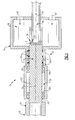
FIG. 1 is a cross-sectional view of a rotating valve assembly according to an exemplary embodiment of the invention; -
FIG. 2 is a perspective view of an inner cup of the rotating valve assembly according to an exemplary embodiment of the invention; -
FIG. 3 is a cross-sectional view of the inner cup taken along line 3-3 ofFIG. 2 ; and -
FIG. 4 is an enlarged cross-sectional view of a labyrinth sealing arrangement of the inner cup shown inFIG. 3 . - As used herein, a "pulse detonation combustor" (PDC) is understood to mean any device or system that produces both a pressure rise and velocity increase from a series of repeated detonations or quasi-detonations within the device. A "quasi-detonation" is a supersonic turbulent combustion process that produces a pressure rise and velocity increase higher than the pressure rise and velocity increase produced by a deflagration wave. Embodiments of PDCs include a means of igniting a fuel/oxidizer mixture, for example a fuel/air mixture, and a detonation chamber, in which pressure wave fronts initiated by the ignition process coalesce to produce a detonation or quasi-detonation. Each detonation or quasi-detonation is initiated either by external ignition, such as spark discharge or laser pulse, or by gas dynamic processes, such as shock focusing, auto ignition or by another detonation (i.e. cross-fire). PDCs are used in pulse detonation engines (PDEs), for example. As used herein, "engine" means any device used to generate thrust and/or power. As used herein, "detonation" means either a detonation or a quasi-detonation.
- Embodiments of the present invention will be explained in further detail by making reference to the accompanying drawings in which like reference numerals indicate corresponding parts. The drawings do not limit the scope of the invention in any way.
- Referring now to
FIG. 1 , a rotating valve assembly is shown generally at 10 according to an embodiment of the invention. Thevalve assembly 10 includes aninner cup 12 that is concentric with an annular rotatingouter cup 14 about acentral axis 16. Detonations or quasi-detonations occur within acombustion chamber 18 of theinner cup 12 that travel in the direction of thearrow 20 to provide thrust and/or work energy out of a downstream of theinner cup 12. In one embodiment, an outer surface of theinner cup 12, an inner surface of theouter cup 14, or both, has a thin coating 19 (FIG. 2 ). The purpose of thethin coating 19 is to provide an abradable surface or a low-friction surface and to prevent possible damage to thevalve assembly 10 in case theinner cup 12 and theouter cup 14 briefly contact each other. - To rotate the
outer cup 14, theouter cup 14 is coupled to a drive means that includes ashaft 22 operably coupled to adrive coupling 24, which in turn, is operably coupled to amotor 26. In one embodiment, themotor 26 comprises a dc servomotor with a maximum power of about 5 hp, depending on the application. To facilitate rotation of theouter cup 14, theouter cup 14 is rotatably mounted on ahousing member 15 using abearing arrangement 28 of a type well-known in the art. In the illustrated embodiment, thebearing arrangement 28 comprises a ball bearing arrangement that includes a first roller ball andtrack 28a and a second roller ball andtrack 28b. As shown inFIG. 1 , the first roller ball andtrack 28a is closer to the detonations generated in theinner cup 12 than the second roller ball andtrack 28b. The first and second roller ball andtracks bearing arrangement 28 can be designed for about 50-200 lbs of radial load and about 500-1500 lbs of axial load on the shaft. Although a well-known roller ball and track arrangement is shown in the illustrated embodiment, it will be appreciated that theouter cup 14 can be rotatably mounted using any other well-known means in the art. For example, the roller bearingarrangement 28 may comprise air-bearings, magnetic bearings, and the like. - The
valve assembly 10 also includes a cooling system, shown generally at 32, located between theinner cup 12 and thebearing arrangement 28. Thecooling system 32 includes one or more inlet and/oroutlet ports 34 to introduce a cooling medium (not shown), such as air, and the like, into thevalve assembly 10 and to exhaust warmer air from thecooling system 32. It will be understood that the primary source of heat in thevalve assembly 10 is from theinlet air 42 entering thehousing 15. In some embodiments, theinlet air 42 may have a temperature of between about 500°F and about 900°F. It will also be understood that high temperatures are generated by the detonations or quasi-detonations occurring in theinner cup 12. The purpose of thecooling system 32 is to provide a thermal barrier between theinner cup 12 and thebearing arrangement 28. Thecooling system 32 being located between theinner cup 12 and thebearing arrangement 28 greatly reduces the transfer of heat from theinner cup 12 to thebearing arrangement 28, thereby prolonging the life of thebearing arrangement 28 and thevalve assembly 10. - The
cooling system 32 also includes a plurality of labyrinth seals 33 located between theinner cup 12 and thebearing arrangement 28. In addition, the labyrinth seals 33 are located between each of the inlet/outlet ports 34 of thecooling system 32 to form chambers for the flow of fluid to/from thevalve assembly 10. - The
valve assembly 10 further includes a plurality ofseals 30, such as grease lip seals, and the like, to seal thehousing 15 and the shaft 22 (or outer cup 14) at appropriate locations along thehousing member 15. The purpose of theseals 30 is to seal the pressurizedinlet air 42 within theplenum 36 and to prevent contamination of thebearing arrangement 28. In addition, at least oneseal 30 is located between theinner cup 12 and thebearing arrangement 28, and in more particular, between thecooling system 32 and thebearing arrangement 28 to further provide a thermal barrier from the heat generated in theinner cup 12 during operation and the heat from theinlet air 42. - The
valve assembly 10 also includes aplenum 36 between thehousing 15 and theouter cup 14 that introduces air (or any oxidizer) through at least oneinlet port 38 of the rotatingouter cup 14, through at least oneinlet port 40 of theinner cup 12, and into thecombustion chamber 18. Thevalve assembly 10 is designed for temperatures and pressures generated by a compressor of a gas turbine engine. For example, thevalve assembly 10 can be designed for inlet air temperatures of about 500-1000°F and pressures of about 5-30 atm. It is desirable that theplenum 36 has a volume of about two to three times the volume of theinner cup 12 and combustion chamber (not shown). As a consequence, theplenum 36 has a Helmholtz resonance frequency less than about 10 Hz, which is less than the lowest operating frequency of theinner cup 12 so that cavity oscillations do not affect fill of theinner cup 12 withinlet air 42. - In an exemplary embodiment, the
inner cup 12 and theouter cup 14 include twoinlet ports outer cup 14 such that theinlet ports outer cup 14. This radial alignment allows for air flow (or any oxidizer) in the direction ofarrows 42 to enter theplenum 36, pass through theinlet ports chamber 18. Thus, during at least the purge and fill stages of PDC operation, theinlet ports chamber 18. Then, as theinlet port 38 of the rotatingouter cup 14 passes theinlet port 40 of theinner cup 12, theinner cup 12 and thechamber 18 become closed, so that a detonation or a quasi-detonation may occur within thechamber 18. Thus, during operation, the rotational speed of theouter cup 14 is selected such that at the completion of the fill stage, thechamber 18 becomes closed, at which time a detonation (and/or quasi-detonation) occurs within thechamber 18 and the detonation wave (and/or quasi-detonation wave) of combusted fuel/air mixture travels in thechamber 18 in the direction of thearrow 20. In one embodiment, theouter cup 14 rotates at a rotational speed of between about 1200 rpm to about 1800 rpm. The overall shape and size of theinlet ports FIG. 3 , thewalls inlet ports inlet ports - During operation, it is possible that pressure waves from detonations or quasi-detonations pass outward through
inlet port 40 of theinner cup 12 and attempt to leak between the inner andouter cups FIGS. 2-4 , one aspect of the invention is that one of the inner andouter cups 12, or both, includes a sealing arrangement, shown generally at 44, surrounding the inlet port(s) 40. In one example, the sealingarrangement 44 may comprise a labyrinth sealing arrangement, as shown in the illustrated embodiment. Thelabyrinth sealing arrangement 44 provides a non-contact sealing action by controlling the passage of pressure waves through a pattern of chambers by centrifugal force, as well as by the formation of controlled fluid vortices. - In the illustrated embodiment shown in
FIGS. 2-4 , the chambers for thelabyrinth sealing arrangement 44 comprise a pattern ofgrooves 46 arranged around the inlet port(s) 40 of theinner cup 12. As shown inFIG. 2 , the pattern ofgrooves 46 completely encircles the inlet port(s) 40 of theinner cup 12. That is, the pattern ofgrooves 46 extends in a direction substantially parallel to thelongitudinal axis 16 and substantially perpendicular to thelongitudinal axis 16 so as to completely encircle or surround the inlet port(s) 40 of theinner cup 12. In an exemplary embodiment, the pattern ofgrooves 46 comprises three grooves in which eachgroove 46 has awidth 48 of about 0.060 inches (1.524 mm) and adepth 50 of about 0.040 inches (1.016 mm). In other words, the aspect ratio of width/depth of eachgroove 46 is approximately 1.50 (0.060/0.040). Thewidth 52 of the crest 54 (or teeth) between eachgroove 46 is approximately 0.020 inches (0.508 mm). The purpose of thelabyrinth sealing arrangement 44 is to severely attenuate or prevent the pressure waves passing through the inlet port(s) 40 from leaking in the direction of thearrow 43, as shown inFIG. 4 . This aspect ratio is unique because of space constraints associated with the inner andouter cup more grooves 46 where it is forced into a vortex-like motion. This vortex-like motion acts to prevent the escape of pressure waves, and also acts to repel any other pressure wave. It will be appreciated that the dimensions of thegrooves 46 do not limit the invention, and that the invention can be practiced with any dimensions that adequately prevent the escape of pressure waves between the inner andouter cups FIG. 4 , agap 56 of about 0.012 inches (0.305 mm) exists between theinner cup 12 and theouter cup 14. Because theinner cup 12 does not contact theouter cup 14, thelabyrinth seal arrangement 44 does not wear out. - As described above, the rotating
valve assembly 10 of the invention provides improved cooling of the bearingarrangement 28 by locating the bearingarrangement 28 further away from the high temperatures located in the vicinity of theinner cup 12. In addition, thecooling system 32 is located between theinner cup 12 and the bearingarrangement 28 to provide a thermal barrier between theinner cup 12 and the bearingarrangement 28 and to prevent an undesirable increase of the temperature of the bearingarrangement 28. As a result, the overall lifetime of thevalve assembly 10 is increased. - Further, the rotating
valve assembly 10 of the invention provides improved sealing of the inlet port(s) 38, 40 of one or both of the inner andouter cups labyrinth sealing arrangement 44 having a plurality ofgrooves 46 that completely encircle or surround the inlet port(s) 38, 40 to provide a non-contact sealing action that controls the passage of pressure waves through the use of centrifugal force, as well as by the formation of controlled fluid vortices. As a result of this improved sealing, the overall lifetime of thevalve assembly 10 is further increased. - Although a pulse detonation device is described above, it is noted that the invention is not limited to this specific device, and that the principles of the invention can be in any similar detonation/deflagration device in which the benefits of the invention are desirable.
- While the invention has been described in terms of various specific embodiments, those skilled in the art will recognize that the invention can be practiced with modification within the scope of the claims.
- 1. A rotating valve assembly, comprising:
- an inner cup having at least one inlet port;
- an outer cup having at least one inlet port, the outer cup rotatably mounted concentric with the inner cup by a bearing arrangement; and
- a cooling system located between the inner cup and the bearing arrangement for providing a thermal barrier therebetween.
- 2. The rotating valve assembly according to clause 1, wherein the cooling system comprises a plurality of input ports and output ports for providing a cooling medium to the rotating valve assembly.
- 3. The rotating valve assembly according to clause 1, further comprising a sealing arrangement located around the at least one inlet port of one of the inner and outer cups for preventing leakage of pressure waves generated by detonations or quasi-detonations within a combustion chamber of the inner cup.
- 4. The rotating valve assembly according to clause 1, wherein one of an outer surface of the inner cup and an inner surface of the outer cup is an abradable surface in the form of a thin coating.
- 5. The rotating valve assembly according to clause 1, further comprising a gap between the inner cup and an outer cup.
- 6. The rotating valve assembly according to clause 1, wherein the inner cup and the outer cup include two inlet ports separated from each other by about 180 degrees that repeatedly radially align with one another during rotation of the outer cup such that the inlet ports radially align with each other twice for each complete rotation of the outer cup.
- 7. The rotating valve assembly according to clause 1, wherein the at least one inlet port of the inner cup has a rounded contour to improve air flow through the at least one inlet port.
- 8. The rotating valve assembly according to clause 1, wherein the inner cup further comprises a combustion chamber, and wherein a plenum introduces an oxidizer through the at least one inlet port of the outer cup, through the at least one inlet port of the inner cup, and into the combustion chamber.
- 9. The rotating valve assembly according to clause 8, wherein the plenum has a volume that is greater than a volume of the inner cup.
- 10. The rotating valve assembly according to clause 8, wherein the plenum has a Helmholtz resonance frequency that is less than a lowest operating frequency of the inner cup.
- 11. A rotating valve assembly, comprising:
- an inner cup having at least one inlet port;
- an outer cup having at least one inlet port, the outer cup rotatably mounted concentric with the inner cup by a bearing arrangement; and
- a sealing arrangement located around the at least one inlet port of one of the inner and outer cups for preventing leakage of pressure waves generated by detonations or quasi-detonations within a combustion chamber of the inner cup.
- 12. The rotating valve assembly according to clause 11, wherein the sealing arrangement comprises a labyrinth sealing arrangement.
- 13. The rotating valve assembly according to clause 11, further comprising a gap between the inner cup and an outer cup.
- 14. The rotating valve assembly according to clause 11, further comprising a cooling system located between the inner cup and the bearing arrangement for providing a thermal barrier therebetween.
- 15. The rotating valve assembly according to
clause 14, wherein the cooling system comprises a plurality of input ports and output ports for providing a cooling medium to the rotating valve assembly. - 16. The rotating valve assembly according to clause 11, wherein the inner cup and the outer cup include two inlet ports separated from each other by about 180 degrees that repeatedly radially align with one another during rotation of the outer cup such that the inlet ports radially align with each other twice for each complete rotation of the outer cup.
- 17. The rotating valve assembly according to clause 11, wherein the at least one inlet port of the inner cup has a rounded contour to improve air flow through the at least one inlet port.
- 18. The rotating valve assembly according to clause 11, wherein a plenum introduces an oxidizer through the at least one inlet port of the outer cup, through the at least one inlet port of the inner cup, and into the combustion chamber of the inner cup.
- 19. The rotating valve assembly according to
clause 18, wherein the plenum has a volume that is greater than a volume of the inner cup. - 20. The rotating valve assembly according to
clause 18, wherein the plenum has a Helmholtz resonance frequency that is less than a lowest operating frequency of the inner cup.
Claims (11)
- A rotating valve assembly (10), comprising:an inner cup (12) having at least one inlet port (40);an outer cup (14) having at least one inlet port (38), the outer cup rotatably mounted concentric with the inner cup by a bearing arrangement (28); anda sealing arrangement (44) located around the at least one inlet port of one of the inner and outer cups for preventing leakage of pressure waves generated by detonations or quasi-detonations within a combustion chamber (18) of the inner cup.
- The rotating valve assembly according to claim 1, wherein the sealing arrangement comprises a labyrinth sealing arrangement.
- The rotating valve assembly according to claim 1 or 2, further comprising a gap between the inner cup and an outer cup.
- The rotating valve assembly according to any of the preceding claims, further comprising a cooling system located between the inner cup and the bearing arrangement for providing a thermal barrier therebetween.
- The rotating valve assembly according to claim 4, wherein the cooling system comprises a plurality of input ports and output ports for providing a cooling medium to the rotating valve assembly.
- The rotating valve assembly according to any of the preceding claims, wherein one of an outer surface of the inner cup and an inner surface of the outer cup is an abradable surface in the form of a thin coating (19).
- The rotating valve assembly according to any of the preceding claims, wherein the inner cup and the outer cup include two inlet ports (38, 40) separated from each other by about 180 degrees that repeatedly radially align with one another during rotation of the outer cup such that the inlet ports radially align with each other twice for each complete rotation of the outer cup.
- The rotating valve assembly according to any of the preceding claims, wherein the at least one inlet port (40) of the inner cup (12) has a rounded contour to improve air flow through the at least one inlet port.
- The rotating valve assembly according to any of the preceding claims, wherein a plenum (36) introduces an oxidizer through the at least one inlet port of the outer cup, through the at least one inlet port of the inner cup, and into the combustion chamber of the inner cup.
- The rotating valve assembly according to any of the preceding claims, wherein the plenum has a volume that is greater than a volume of the inner cup.
- The rotating valve assembly according to any of the preceding claims, wherein the plenum has a Helmholtz resonance frequency that is less than a lowest operating frequency of the inner cup.
Applications Claiming Priority (1)
| Application Number | Priority Date | Filing Date | Title |
|---|---|---|---|
| US12/627,640 US8661782B2 (en) | 2009-11-30 | 2009-11-30 | Rotating valve assembly for high temperature and high pressure operation |
Publications (2)
| Publication Number | Publication Date |
|---|---|
| EP2333279A2 true EP2333279A2 (en) | 2011-06-15 |
| EP2333279A3 EP2333279A3 (en) | 2014-03-05 |
Family
ID=43640560
Family Applications (1)
| Application Number | Title | Priority Date | Filing Date |
|---|---|---|---|
| EP10192882.8A Withdrawn EP2333279A3 (en) | 2009-11-30 | 2010-11-29 | Rotating valve assembly for high temperature and high pressure operation |
Country Status (4)
| Country | Link |
|---|---|
| US (1) | US8661782B2 (en) |
| EP (1) | EP2333279A3 (en) |
| JP (1) | JP5779337B2 (en) |
| CA (1) | CA2721564A1 (en) |
Cited By (1)
| Publication number | Priority date | Publication date | Assignee | Title |
|---|---|---|---|---|
| WO2018156587A1 (en) | 2017-02-21 | 2018-08-30 | Deltavalve, Llc | Fluid catalytic cracking unit valve |
Families Citing this family (9)
| Publication number | Priority date | Publication date | Assignee | Title |
|---|---|---|---|---|
| US8955303B2 (en) * | 2010-03-04 | 2015-02-17 | General Electric Company | Pulse detonation system |
| FR2991721B1 (en) * | 2012-06-07 | 2016-07-08 | Michel Aguilar | METHOD AND SINGLE-VALVE PROPULSION THERMOREACTOR WITH MULTIPLE INJECTION AND COMBUSTION BY ROTATION CYCLE |
| CN103375604B (en) * | 2013-07-23 | 2015-09-16 | 浙江石化阀门有限公司 | Superhigh temperature rigidity seal ball valve |
| CN106065830B (en) * | 2016-06-01 | 2017-11-24 | 南京航空航天大学 | A kind of pulse detonation combustor device combined based on rotary valve with pneumatic operated valve |
| CN106640420B (en) * | 2016-12-30 | 2017-12-29 | 上海洲跃生物科技有限公司 | A kind of pulse-knocking engine of side air inlet |
| CN112483258B (en) * | 2019-09-11 | 2022-03-18 | 南京理工大学 | Water and gas cooling self-circulation rotation detonation turbine driving device |
| JP7262364B2 (en) | 2019-10-17 | 2023-04-21 | 三菱重工業株式会社 | gas turbine combustor |
| US11261987B2 (en) * | 2020-02-19 | 2022-03-01 | Medical Instrument Development Laboratories, Inc. | Rotary valve |
| CN113464312B (en) * | 2021-08-12 | 2022-07-22 | 哈尔滨工程大学 | A U-shaped tube structure negative pressure air-breathing pulse engine |
Family Cites Families (16)
| Publication number | Priority date | Publication date | Assignee | Title |
|---|---|---|---|---|
| DE2053325A1 (en) | 1970-10-30 | 1972-05-04 | Daimler Benz Ag, 7000 Stuttgart | Device for generating a rotary movement in a valve of an internal combustion engine |
| US4778150A (en) | 1987-03-06 | 1988-10-18 | Autoclave Engineers, Inc. | Non-rotating stem valve |
| JPS63268938A (en) * | 1987-04-27 | 1988-11-07 | Nec Corp | Gas turbine engine |
| JPH0395029U (en) * | 1990-01-19 | 1991-09-27 | ||
| US5181580A (en) * | 1990-02-06 | 1993-01-26 | Burg Donald E | Cyclical variable aperture valve for air cushion vehicles |
| SE500519C2 (en) * | 1992-02-11 | 1994-07-11 | Sven Linderoth | Pressure regulator for controlling the spray pressure to a number of nozzles in relation to the pump capacity |
| US5901550A (en) * | 1993-04-14 | 1999-05-11 | Adroit Systems, Inc. | Liquid fueled pulse detonation engine with controller and inlet and exit valves |
| US5473885A (en) * | 1994-06-24 | 1995-12-12 | Lockheed Corporation | Pulse detonation engine |
| JP2001324036A (en) * | 2000-05-15 | 2001-11-22 | Opton Co Ltd | Rotary valve |
| US6886325B2 (en) * | 2002-12-30 | 2005-05-03 | United Technologies Corporation | Pulsed combustion engine |
| JP2004286184A (en) * | 2003-03-25 | 2004-10-14 | Honda Motor Co Ltd | Check valve |
| JP3952202B2 (en) * | 2004-02-19 | 2007-08-01 | 独立行政法人 宇宙航空研究開発機構 | Pulse detonation engine |
| JP3994284B2 (en) * | 2004-02-19 | 2007-10-17 | 独立行政法人 宇宙航空研究開発機構 | Valve for pulse detonation engine |
| WO2006024086A1 (en) * | 2004-09-01 | 2006-03-09 | Bishop Innovation Limited | Port sealing in a rotary valve |
| US7950233B2 (en) * | 2006-03-31 | 2011-05-31 | Pratt & Whitney Canada Corp. | Combustor |
| US20090139203A1 (en) * | 2007-11-15 | 2009-06-04 | General Electric Company | Method and apparatus for tailoring the equivalence ratio in a valved pulse detonation combustor |
-
2009
- 2009-11-30 US US12/627,640 patent/US8661782B2/en active Active
-
2010
- 2010-11-18 CA CA2721564A patent/CA2721564A1/en not_active Abandoned
- 2010-11-18 JP JP2010257664A patent/JP5779337B2/en not_active Expired - Fee Related
- 2010-11-29 EP EP10192882.8A patent/EP2333279A3/en not_active Withdrawn
Non-Patent Citations (1)
| Title |
|---|
| None |
Cited By (4)
| Publication number | Priority date | Publication date | Assignee | Title |
|---|---|---|---|---|
| WO2018156587A1 (en) | 2017-02-21 | 2018-08-30 | Deltavalve, Llc | Fluid catalytic cracking unit valve |
| CN110809683A (en) * | 2017-02-21 | 2020-02-18 | 德尔塔瓦尔夫有限责任公司 | Fluid Catalytic Cracking Unit Valve |
| EP3586046A4 (en) * | 2017-02-21 | 2021-01-13 | Deltavalve, LLC | Fluid catalytic cracking unit valve |
| CN110809683B (en) * | 2017-02-21 | 2022-06-24 | 德尔塔瓦尔夫有限责任公司 | Rotary valve for use in fluid catalytic cracking unit |
Also Published As
| Publication number | Publication date |
|---|---|
| JP5779337B2 (en) | 2015-09-16 |
| US8661782B2 (en) | 2014-03-04 |
| CA2721564A1 (en) | 2011-05-30 |
| JP2011117717A (en) | 2011-06-16 |
| US20110127456A1 (en) | 2011-06-02 |
| EP2333279A3 (en) | 2014-03-05 |
Similar Documents
| Publication | Publication Date | Title |
|---|---|---|
| US8661782B2 (en) | Rotating valve assembly for high temperature and high pressure operation | |
| US20090139199A1 (en) | Pulse detonation combustor valve for high temperature and high pressure operation | |
| CN111502864B (en) | Open-cycle liquid oxygen kerosene engine system and use method thereof | |
| US11143106B2 (en) | Combustion section heat transfer system for a propulsion system | |
| US11067003B2 (en) | Fluid cooling structure for an electric machine of a gas turbine engine | |
| CN109028149B (en) | Variable geometry rotary detonation combustor and method of operating same | |
| US6505462B2 (en) | Rotary valve for pulse detonation engines | |
| EP1582697B1 (en) | Turbine cooling air injection | |
| CN109028144B (en) | Integral vortex rotary detonation propulsion system | |
| US20060260291A1 (en) | Pulse detonation assembly with cooling enhancements | |
| US11255544B2 (en) | Rotating detonation combustion and heat exchanger system | |
| US20180356093A1 (en) | Methods of operating a rotating detonation combustor at approximately constant detonation cell size | |
| US20190128529A1 (en) | Multi-can annular rotating detonation combustor | |
| US10947858B2 (en) | Sealing structure for blade tip and gas turbine having the same | |
| US10801347B2 (en) | Sealing assembly and gas turbine including the same | |
| US20190360695A1 (en) | Rotating Detonation Combustion System | |
| US20190242582A1 (en) | Thermal Attenuation Structure For Detonation Combustion System | |
| JP7587512B2 (en) | Rotary internal combustion engine | |
| KR102866620B1 (en) | Exhaust duct assembly and gas turbine engine comprising the same | |
| US10662790B2 (en) | Vane assembly and gas turbine including the same | |
| KR20210106658A (en) | Sealing assembly and gas turbine comprising the same | |
| KR101914879B1 (en) | Blade of turbine and turbine and gas turbine comprising the same | |
| KR102314661B1 (en) | Apparatus for cooling liner, combustor and gas turbine comprising the same | |
| US10876419B2 (en) | Conjunction assembly and gas turbine comprising the same | |
| KR20230045874A (en) | Sealing assembly and turbo-machine comprising the same |
Legal Events
| Date | Code | Title | Description |
|---|---|---|---|
| PUAI | Public reference made under article 153(3) epc to a published international application that has entered the european phase |
Free format text: ORIGINAL CODE: 0009012 |
|
| AK | Designated contracting states |
Kind code of ref document: A2 Designated state(s): AL AT BE BG CH CY CZ DE DK EE ES FI FR GB GR HR HU IE IS IT LI LT LU LV MC MK MT NL NO PL PT RO RS SE SI SK SM TR |
|
| AX | Request for extension of the european patent |
Extension state: BA ME |
|
| PUAL | Search report despatched |
Free format text: ORIGINAL CODE: 0009013 |
|
| AK | Designated contracting states |
Kind code of ref document: A3 Designated state(s): AL AT BE BG CH CY CZ DE DK EE ES FI FR GB GR HR HU IE IS IT LI LT LU LV MC MK MT NL NO PL PT RO RS SE SI SK SM TR |
|
| AX | Request for extension of the european patent |
Extension state: BA ME |
|
| RIC1 | Information provided on ipc code assigned before grant |
Ipc: F02K 7/06 20060101ALI20140124BHEP Ipc: F02C 5/10 20060101AFI20140124BHEP |
|
| 17P | Request for examination filed |
Effective date: 20140905 |
|
| RBV | Designated contracting states (corrected) |
Designated state(s): AL AT BE BG CH CY CZ DE DK EE ES FI FR GB GR HR HU IE IS IT LI LT LU LV MC MK MT NL NO PL PT RO RS SE SI SK SM TR |
|
| GRAP | Despatch of communication of intention to grant a patent |
Free format text: ORIGINAL CODE: EPIDOSNIGR1 |
|
| INTG | Intention to grant announced |
Effective date: 20171109 |
|
| STAA | Information on the status of an ep patent application or granted ep patent |
Free format text: STATUS: THE APPLICATION IS DEEMED TO BE WITHDRAWN |
|
| 18D | Application deemed to be withdrawn |
Effective date: 20180320 |