EP2332933A1 - Epithelial sodium channel (ENaC) inhibitors - Google Patents
Epithelial sodium channel (ENaC) inhibitors Download PDFInfo
- Publication number
- EP2332933A1 EP2332933A1 EP11152559A EP11152559A EP2332933A1 EP 2332933 A1 EP2332933 A1 EP 2332933A1 EP 11152559 A EP11152559 A EP 11152559A EP 11152559 A EP11152559 A EP 11152559A EP 2332933 A1 EP2332933 A1 EP 2332933A1
- Authority
- EP
- European Patent Office
- Prior art keywords
- bis
- diyl
- alkyl
- azanediyl
- alkylene
- Prior art date
- Legal status (The legal status is an assumption and is not a legal conclusion. Google has not performed a legal analysis and makes no representation as to the accuracy of the status listed.)
- Withdrawn
Links
- 102000003837 Epithelial Sodium Channels Human genes 0.000 title claims abstract description 11
- 108090000140 Epithelial Sodium Channels Proteins 0.000 title claims abstract description 11
- 239000003112 inhibitor Substances 0.000 title 1
- 150000001875 compounds Chemical class 0.000 claims abstract description 126
- 150000003839 salts Chemical class 0.000 claims abstract description 37
- 239000012453 solvate Substances 0.000 claims abstract description 9
- -1 C1-C8-alkoxy Chemical group 0.000 claims description 99
- 229910052757 nitrogen Inorganic materials 0.000 claims description 85
- 125000004209 (C1-C8) alkyl group Chemical group 0.000 claims description 75
- UYTQEWLAYXCJEC-UHFFFAOYSA-N 3,5-diamino-6-chloropyrazine-2-carboxamide Chemical compound NC(=O)C1=NC(Cl)=C(N)N=C1N UYTQEWLAYXCJEC-UHFFFAOYSA-N 0.000 claims description 63
- 125000002837 carbocyclic group Chemical group 0.000 claims description 62
- 125000000623 heterocyclic group Chemical group 0.000 claims description 56
- 125000003118 aryl group Chemical group 0.000 claims description 47
- 229910052736 halogen Inorganic materials 0.000 claims description 26
- 150000002367 halogens Chemical class 0.000 claims description 26
- 208000006673 asthma Diseases 0.000 claims description 23
- 238000000034 method Methods 0.000 claims description 22
- IJGRMHOSHXDMSA-UHFFFAOYSA-N Atomic nitrogen Chemical compound N#N IJGRMHOSHXDMSA-UHFFFAOYSA-N 0.000 claims description 19
- WSFSSNUMVMOOMR-UHFFFAOYSA-N formaldehyde Natural products O=C WSFSSNUMVMOOMR-UHFFFAOYSA-N 0.000 claims description 19
- 125000003178 carboxy group Chemical group [H]OC(*)=O 0.000 claims description 17
- 239000002904 solvent Substances 0.000 claims description 17
- 239000003814 drug Substances 0.000 claims description 16
- 125000002924 primary amino group Chemical group [H]N([H])* 0.000 claims description 14
- 125000004093 cyano group Chemical group *C#N 0.000 claims description 13
- 125000000449 nitro group Chemical group [O-][N+](*)=O 0.000 claims description 13
- 125000001821 azanediyl group Chemical group [H]N(*)* 0.000 claims description 12
- 208000037265 diseases, disorders, signs and symptoms Diseases 0.000 claims description 12
- 201000010099 disease Diseases 0.000 claims description 11
- 201000003883 Cystic fibrosis Diseases 0.000 claims description 9
- 230000003182 bronchodilatating effect Effects 0.000 claims description 7
- 230000002757 inflammatory effect Effects 0.000 claims description 7
- 238000002360 preparation method Methods 0.000 claims description 7
- 230000003110 anti-inflammatory effect Effects 0.000 claims description 6
- 206010006451 bronchitis Diseases 0.000 claims description 6
- 238000004519 manufacturing process Methods 0.000 claims description 6
- 125000004433 nitrogen atom Chemical group N* 0.000 claims description 6
- 239000008194 pharmaceutical composition Substances 0.000 claims description 6
- 230000008569 process Effects 0.000 claims description 6
- RJNWCPABKWVJAR-UHFFFAOYSA-N 3,5-diamino-6-chloro-n-[n'-(3,5-diamino-6-chloropyrazine-2-carbonyl)carbamimidoyl]pyrazine-2-carboxamide Chemical compound N=1C(Cl)=C(N)N=C(N)C=1C(=O)N=C(N)NC(=O)C1=NC(Cl)=C(N)N=C1N RJNWCPABKWVJAR-UHFFFAOYSA-N 0.000 claims description 5
- 125000005330 8 membered heterocyclic group Chemical group 0.000 claims description 5
- 208000006545 Chronic Obstructive Pulmonary Disease Diseases 0.000 claims description 5
- 208000027771 Obstructive airways disease Diseases 0.000 claims description 5
- 125000002947 alkylene group Chemical group 0.000 claims description 5
- 239000000739 antihistaminic agent Substances 0.000 claims description 5
- 125000002887 hydroxy group Chemical group [H]O* 0.000 claims description 5
- 125000004169 (C1-C6) alkyl group Chemical group 0.000 claims description 4
- 206010027654 Allergic conditions Diseases 0.000 claims description 4
- 206010006458 Bronchitis chronic Diseases 0.000 claims description 4
- GUGOEEXESWIERI-UHFFFAOYSA-N Terfenadine Chemical compound C1=CC(C(C)(C)C)=CC=C1C(O)CCCN1CCC(C(O)(C=2C=CC=CC=2)C=2C=CC=CC=2)CC1 GUGOEEXESWIERI-UHFFFAOYSA-N 0.000 claims description 4
- 230000001387 anti-histamine Effects 0.000 claims description 4
- 229940124623 antihistamine drug Drugs 0.000 claims description 4
- 229940124584 antitussives Drugs 0.000 claims description 4
- 125000001797 benzyl group Chemical group [H]C1=C([H])C([H])=C(C([H])=C1[H])C([H])([H])* 0.000 claims description 4
- 125000003917 carbamoyl group Chemical group [H]N([H])C(*)=O 0.000 claims description 4
- 208000007451 chronic bronchitis Diseases 0.000 claims description 4
- 206010013781 dry mouth Diseases 0.000 claims description 4
- 239000003960 organic solvent Substances 0.000 claims description 4
- 125000004043 oxo group Chemical group O=* 0.000 claims description 4
- 125000004178 (C1-C4) alkyl group Chemical group 0.000 claims description 3
- 208000025678 Ciliary Motility disease Diseases 0.000 claims description 3
- 206010058467 Lung neoplasm malignant Diseases 0.000 claims description 3
- 206010057190 Respiratory tract infections Diseases 0.000 claims description 3
- 208000005946 Xerostomia Diseases 0.000 claims description 3
- 239000003434 antitussive agent Substances 0.000 claims description 3
- 206010023332 keratitis Diseases 0.000 claims description 3
- 201000010666 keratoconjunctivitis Diseases 0.000 claims description 3
- 201000005296 lung carcinoma Diseases 0.000 claims description 3
- 201000009266 primary ciliary dyskinesia Diseases 0.000 claims description 3
- 208000020029 respiratory tract infectious disease Diseases 0.000 claims description 3
- 239000000126 substance Substances 0.000 claims description 3
- 208000027866 inflammatory disease Diseases 0.000 claims description 2
- 150000007530 organic bases Chemical class 0.000 claims description 2
- OSKMCSQAJZFMCS-UHFFFAOYSA-N 1-[4,6-bis[4-[[amino-[(3,5-diamino-6-chloropyrazine-2-carbonyl)amino]methylidene]amino]piperidin-1-yl]-1,3,5-triazin-2-yl]piperidine-4-carboxylic acid Chemical compound N1=C(Cl)C(N)=NC(N)=C1C(=O)NC(=N)NC1CCN(C=2N=C(N=C(N=2)N2CCC(CC2)NC(=N)NC(=O)C=2C(=NC(N)=C(Cl)N=2)N)N2CCC(CC2)C(O)=O)CC1 OSKMCSQAJZFMCS-UHFFFAOYSA-N 0.000 claims 1
- YXVRUXIHUJKGAT-UHFFFAOYSA-N 2,6-diamino-6-chloro-1H-pyrazine-3-carboxamide Chemical compound NC1=C(N=CC(N1)(Cl)N)C(=O)N YXVRUXIHUJKGAT-UHFFFAOYSA-N 0.000 claims 1
- 230000036571 hydration Effects 0.000 abstract description 4
- 238000006703 hydration reaction Methods 0.000 abstract description 4
- OKKJLVBELUTLKV-UHFFFAOYSA-N Methanol Chemical compound OC OKKJLVBELUTLKV-UHFFFAOYSA-N 0.000 description 42
- 239000000543 intermediate Substances 0.000 description 42
- 239000000203 mixture Substances 0.000 description 42
- 239000007787 solid Substances 0.000 description 35
- ZMANZCXQSJIPKH-UHFFFAOYSA-N Triethylamine Chemical compound CCN(CC)CC ZMANZCXQSJIPKH-UHFFFAOYSA-N 0.000 description 28
- 239000000243 solution Substances 0.000 description 28
- 239000000725 suspension Substances 0.000 description 24
- XLYOFNOQVPJJNP-UHFFFAOYSA-N water Substances O XLYOFNOQVPJJNP-UHFFFAOYSA-N 0.000 description 24
- WEVYAHXRMPXWCK-UHFFFAOYSA-N Acetonitrile Chemical compound CC#N WEVYAHXRMPXWCK-UHFFFAOYSA-N 0.000 description 23
- YMWUJEATGCHHMB-UHFFFAOYSA-N dichloromethane Natural products ClCCl YMWUJEATGCHHMB-UHFFFAOYSA-N 0.000 description 19
- VEXZGXHMUGYJMC-UHFFFAOYSA-N Hydrochloric acid Chemical compound Cl VEXZGXHMUGYJMC-UHFFFAOYSA-N 0.000 description 18
- LFQSCWFLJHTTHZ-UHFFFAOYSA-N Ethanol Chemical compound CCO LFQSCWFLJHTTHZ-UHFFFAOYSA-N 0.000 description 16
- 239000011541 reaction mixture Substances 0.000 description 16
- QTBSBXVTEAMEQO-UHFFFAOYSA-N Acetic acid Chemical compound CC(O)=O QTBSBXVTEAMEQO-UHFFFAOYSA-N 0.000 description 15
- DTQVDTLACAAQTR-UHFFFAOYSA-M Trifluoroacetate Chemical compound [O-]C(=O)C(F)(F)F DTQVDTLACAAQTR-UHFFFAOYSA-M 0.000 description 13
- HEMHJVSKTPXQMS-UHFFFAOYSA-M Sodium hydroxide Chemical compound [OH-].[Na+] HEMHJVSKTPXQMS-UHFFFAOYSA-M 0.000 description 12
- 238000003756 stirring Methods 0.000 description 12
- 210000004027 cell Anatomy 0.000 description 11
- 239000000047 product Substances 0.000 description 11
- RYHBNJHYFVUHQT-UHFFFAOYSA-N 1,4-Dioxane Chemical compound C1COCCO1 RYHBNJHYFVUHQT-UHFFFAOYSA-N 0.000 description 10
- 0 CC(N*)NC(C)=O Chemical compound CC(N*)NC(C)=O 0.000 description 9
- UIIMBOGNXHQVGW-UHFFFAOYSA-M Sodium bicarbonate Chemical compound [Na+].OC([O-])=O UIIMBOGNXHQVGW-UHFFFAOYSA-M 0.000 description 9
- 238000006243 chemical reaction Methods 0.000 description 9
- 238000003786 synthesis reaction Methods 0.000 description 9
- 108010079245 Cystic Fibrosis Transmembrane Conductance Regulator Proteins 0.000 description 8
- RTZKZFJDLAIYFH-UHFFFAOYSA-N Diethyl ether Chemical compound CCOCC RTZKZFJDLAIYFH-UHFFFAOYSA-N 0.000 description 8
- VYPSYNLAJGMNEJ-UHFFFAOYSA-N Silicium dioxide Chemical compound O=[Si]=O VYPSYNLAJGMNEJ-UHFFFAOYSA-N 0.000 description 8
- 238000001914 filtration Methods 0.000 description 8
- 125000006239 protecting group Chemical group 0.000 description 8
- 102000012605 Cystic Fibrosis Transmembrane Conductance Regulator Human genes 0.000 description 7
- CPELXLSAUQHCOX-UHFFFAOYSA-N Hydrogen bromide Chemical compound Br CPELXLSAUQHCOX-UHFFFAOYSA-N 0.000 description 7
- WYURNTSHIVDZCO-UHFFFAOYSA-N Tetrahydrofuran Chemical compound C1CCOC1 WYURNTSHIVDZCO-UHFFFAOYSA-N 0.000 description 7
- DTQVDTLACAAQTR-UHFFFAOYSA-N Trifluoroacetic acid Chemical compound OC(=O)C(F)(F)F DTQVDTLACAAQTR-UHFFFAOYSA-N 0.000 description 7
- 239000002713 epithelial sodium channel blocking agent Substances 0.000 description 7
- 238000000746 purification Methods 0.000 description 7
- 125000000999 tert-butyl group Chemical group [H]C([H])([H])C(*)(C([H])([H])[H])C([H])([H])[H] 0.000 description 7
- XEKOWRVHYACXOJ-UHFFFAOYSA-N Ethyl acetate Chemical compound CCOC(C)=O XEKOWRVHYACXOJ-UHFFFAOYSA-N 0.000 description 6
- CSNNHWWHGAXBCP-UHFFFAOYSA-L Magnesium sulfate Chemical compound [Mg+2].[O-][S+2]([O-])([O-])[O-] CSNNHWWHGAXBCP-UHFFFAOYSA-L 0.000 description 6
- JGFZNNIVVJXRND-UHFFFAOYSA-N N,N-Diisopropylethylamine (DIPEA) Chemical compound CCN(C(C)C)C(C)C JGFZNNIVVJXRND-UHFFFAOYSA-N 0.000 description 6
- NQRYJNQNLNOLGT-UHFFFAOYSA-N Piperidine Chemical compound C1CCNCC1 NQRYJNQNLNOLGT-UHFFFAOYSA-N 0.000 description 6
- JUJWROOIHBZHMG-UHFFFAOYSA-N Pyridine Chemical compound C1=CC=NC=C1 JUJWROOIHBZHMG-UHFFFAOYSA-N 0.000 description 6
- RWRDLPDLKQPQOW-UHFFFAOYSA-N Pyrrolidine Chemical compound C1CCNC1 RWRDLPDLKQPQOW-UHFFFAOYSA-N 0.000 description 6
- 239000002253 acid Substances 0.000 description 6
- 238000007792 addition Methods 0.000 description 6
- 239000005557 antagonist Substances 0.000 description 6
- 229940088679 drug related substance Drugs 0.000 description 6
- 238000009472 formulation Methods 0.000 description 6
- 239000002244 precipitate Substances 0.000 description 6
- 150000001412 amines Chemical class 0.000 description 5
- 239000012298 atmosphere Substances 0.000 description 5
- 229910052799 carbon Inorganic materials 0.000 description 5
- 229940079593 drug Drugs 0.000 description 5
- 230000009466 transformation Effects 0.000 description 5
- 238000000844 transformation Methods 0.000 description 5
- YNAVUWVOSKDBBP-UHFFFAOYSA-N Morpholine Chemical compound C1COCCN1 YNAVUWVOSKDBBP-UHFFFAOYSA-N 0.000 description 4
- KYQCOXFCLRTKLS-UHFFFAOYSA-N Pyrazine Chemical compound C1=CN=CC=N1 KYQCOXFCLRTKLS-UHFFFAOYSA-N 0.000 description 4
- 239000008186 active pharmaceutical agent Substances 0.000 description 4
- XSDQTOBWRPYKKA-UHFFFAOYSA-N amiloride Chemical compound NC(=N)NC(=O)C1=NC(Cl)=C(N)N=C1N XSDQTOBWRPYKKA-UHFFFAOYSA-N 0.000 description 4
- 229960002576 amiloride Drugs 0.000 description 4
- 239000002585 base Substances 0.000 description 4
- WPYMKLBDIGXBTP-UHFFFAOYSA-N benzoic acid Chemical compound OC(=O)C1=CC=CC=C1 WPYMKLBDIGXBTP-UHFFFAOYSA-N 0.000 description 4
- PISDIGQPNHJJFC-UHFFFAOYSA-N benzyl n-[n-(3,5-diamino-6-chloropyrazine-2-carbonyl)-n'-piperidin-4-ylcarbamimidoyl]carbamate Chemical compound N1=C(Cl)C(N)=NC(N)=C1C(=O)NC(NC1CCNCC1)=NC(=O)OCC1=CC=CC=C1 PISDIGQPNHJJFC-UHFFFAOYSA-N 0.000 description 4
- 150000001721 carbon Chemical group 0.000 description 4
- 125000004432 carbon atom Chemical group C* 0.000 description 4
- 108010067396 dornase alfa Proteins 0.000 description 4
- 238000002651 drug therapy Methods 0.000 description 4
- 239000012530 fluid Substances 0.000 description 4
- 125000000524 functional group Chemical group 0.000 description 4
- WGYKZJWCGVVSQN-UHFFFAOYSA-N propylamine Chemical compound CCCN WGYKZJWCGVVSQN-UHFFFAOYSA-N 0.000 description 4
- 229920006395 saturated elastomer Polymers 0.000 description 4
- 239000000377 silicon dioxide Substances 0.000 description 4
- 125000001424 substituent group Chemical group 0.000 description 4
- CKXZPVPIDOJLLM-UHFFFAOYSA-N tert-butyl n-piperidin-4-ylcarbamate Chemical compound CC(C)(C)OC(=O)NC1CCNCC1 CKXZPVPIDOJLLM-UHFFFAOYSA-N 0.000 description 4
- DHKVXVZLRSYGTM-UHFFFAOYSA-N 3,5-diamino-6-chloro-n-(n'-piperidin-4-ylcarbamimidoyl)pyrazine-2-carboxamide;hydrochloride Chemical compound Cl.N1=C(Cl)C(N)=NC(N)=C1C(=O)NC(=N)NC1CCNCC1 DHKVXVZLRSYGTM-UHFFFAOYSA-N 0.000 description 3
- XCKCNAOKYISCFH-UHFFFAOYSA-N 4-amino-n-[4-[(4-aminopiperidine-1-carbonyl)amino]butyl]piperidine-1-carboxamide Chemical compound C1CC(N)CCN1C(=O)NCCCCNC(=O)N1CCC(N)CC1 XCKCNAOKYISCFH-UHFFFAOYSA-N 0.000 description 3
- QGZKDVFQNNGYKY-UHFFFAOYSA-N Ammonia Chemical compound N QGZKDVFQNNGYKY-UHFFFAOYSA-N 0.000 description 3
- 102100035875 C-C chemokine receptor type 5 Human genes 0.000 description 3
- 101710149870 C-C chemokine receptor type 5 Proteins 0.000 description 3
- IAZDPXIOMUYVGZ-UHFFFAOYSA-N Dimethylsulphoxide Chemical compound CS(C)=O IAZDPXIOMUYVGZ-UHFFFAOYSA-N 0.000 description 3
- WMFOQBRAJBCJND-UHFFFAOYSA-M Lithium hydroxide Chemical compound [Li+].[OH-] WMFOQBRAJBCJND-UHFFFAOYSA-M 0.000 description 3
- DNIAPMSPPWPWGF-UHFFFAOYSA-N Propylene glycol Chemical compound CC(O)CO DNIAPMSPPWPWGF-UHFFFAOYSA-N 0.000 description 3
- FAPWRFPIFSIZLT-UHFFFAOYSA-M Sodium chloride Chemical compound [Na+].[Cl-] FAPWRFPIFSIZLT-UHFFFAOYSA-M 0.000 description 3
- YXFVVABEGXRONW-UHFFFAOYSA-N Toluene Chemical compound CC1=CC=CC=C1 YXFVVABEGXRONW-UHFFFAOYSA-N 0.000 description 3
- 206010047924 Wheezing Diseases 0.000 description 3
- XNJDLOAPYOQOKY-UHFFFAOYSA-N [4-(4-aminopiperidine-1-carbonyl)phenyl]-(4-aminopiperidin-1-yl)methanone Chemical compound C1CC(N)CCN1C(=O)C1=CC=C(C(=O)N2CCC(N)CC2)C=C1 XNJDLOAPYOQOKY-UHFFFAOYSA-N 0.000 description 3
- NEFIUEHZZHLGED-UHFFFAOYSA-N [4-(4-aminopiperidine-1-carbonyl)phenyl]-(4-aminopiperidin-1-yl)methanone;dihydrochloride Chemical compound Cl.Cl.C1CC(N)CCN1C(=O)C1=CC=C(C(=O)N2CCC(N)CC2)C=C1 NEFIUEHZZHLGED-UHFFFAOYSA-N 0.000 description 3
- 230000001154 acute effect Effects 0.000 description 3
- 239000000443 aerosol Substances 0.000 description 3
- SHGAZHPCJJPHSC-YCNIQYBTSA-N all-trans-retinoic acid Chemical compound OC(=O)\C=C(/C)\C=C\C=C(/C)\C=C\C1=C(C)CCCC1(C)C SHGAZHPCJJPHSC-YCNIQYBTSA-N 0.000 description 3
- QIPMNKBHLQWDKW-UHFFFAOYSA-N benzyl n-[[(3,5-diamino-6-chloropyrazine-2-carbonyl)amino]-methylsulfanylmethylidene]carbamate Chemical compound C=1C=CC=CC=1COC(=O)N=C(SC)NC(=O)C1=NC(Cl)=C(N)N=C1N QIPMNKBHLQWDKW-UHFFFAOYSA-N 0.000 description 3
- 230000033228 biological regulation Effects 0.000 description 3
- 230000015572 biosynthetic process Effects 0.000 description 3
- MZLADHZLVUEJTC-UHFFFAOYSA-N bis(4-aminopiperidin-1-yl)methanone Chemical compound C1CC(N)CCN1C(=O)N1CCC(N)CC1 MZLADHZLVUEJTC-UHFFFAOYSA-N 0.000 description 3
- 239000003153 chemical reaction reagent Substances 0.000 description 3
- 239000003795 chemical substances by application Substances 0.000 description 3
- 239000000460 chlorine Substances 0.000 description 3
- KRKNYBCHXYNGOX-UHFFFAOYSA-N citric acid Chemical compound OC(=O)CC(O)(C(O)=O)CC(O)=O KRKNYBCHXYNGOX-UHFFFAOYSA-N 0.000 description 3
- 238000002425 crystallisation Methods 0.000 description 3
- 238000010511 deprotection reaction Methods 0.000 description 3
- 239000003085 diluting agent Substances 0.000 description 3
- 230000000694 effects Effects 0.000 description 3
- 150000002148 esters Chemical class 0.000 description 3
- 235000019439 ethyl acetate Nutrition 0.000 description 3
- 230000035874 hyperreactivity Effects 0.000 description 3
- RAXXELZNTBOGNW-UHFFFAOYSA-N imidazole Natural products C1=CNC=N1 RAXXELZNTBOGNW-UHFFFAOYSA-N 0.000 description 3
- 150000002576 ketones Chemical class 0.000 description 3
- 239000007788 liquid Substances 0.000 description 3
- 210000004072 lung Anatomy 0.000 description 3
- 229910052943 magnesium sulfate Inorganic materials 0.000 description 3
- 239000000843 powder Substances 0.000 description 3
- 230000000069 prophylactic effect Effects 0.000 description 3
- UMJSCPRVCHMLSP-UHFFFAOYSA-N pyridine Natural products COC1=CC=CN=C1 UMJSCPRVCHMLSP-UHFFFAOYSA-N 0.000 description 3
- 230000002829 reductive effect Effects 0.000 description 3
- 238000010992 reflux Methods 0.000 description 3
- 229930002330 retinoic acid Natural products 0.000 description 3
- 229910000030 sodium bicarbonate Inorganic materials 0.000 description 3
- 238000002560 therapeutic procedure Methods 0.000 description 3
- OHLKMGYGBHFODF-UHFFFAOYSA-N 1,4-bis(isocyanatomethyl)benzene Chemical compound O=C=NCC1=CC=C(CN=C=O)C=C1 OHLKMGYGBHFODF-UHFFFAOYSA-N 0.000 description 2
- ACEIQDXKNHXFJN-UHFFFAOYSA-N 1-[4,6-bis[4-[[amino-[(3,5-diamino-6-chloropyrazine-2-carbonyl)amino]methylidene]amino]piperidin-1-yl]-1,3,5-triazin-2-yl]piperidine-4-carboxylic acid;2,2,2-trifluoroacetic acid Chemical compound OC(=O)C(F)(F)F.C1CN(C=2N=C(N=C(N=2)N2CCC(CC2)N=C(N)NC(=O)C=2C(=NC(N)=C(Cl)N=2)N)N2CCC(CC2)C(O)=O)CCC1N=C(N)NC(=O)C1=NC(Cl)=C(N)N=C1N ACEIQDXKNHXFJN-UHFFFAOYSA-N 0.000 description 2
- BAXOFTOLAUCFNW-UHFFFAOYSA-N 1H-indazole Chemical compound C1=CC=C2C=NNC2=C1 BAXOFTOLAUCFNW-UHFFFAOYSA-N 0.000 description 2
- WUIIHJUMEFZKHI-UHFFFAOYSA-N 3,5-diamino-6-chloropyrazine-2-carboxylic acid;lithium Chemical compound [Li].NC1=NC(N)=C(C(O)=O)N=C1Cl WUIIHJUMEFZKHI-UHFFFAOYSA-N 0.000 description 2
- FJKROLUGYXJWQN-UHFFFAOYSA-N 4-hydroxybenzoic acid Chemical compound OC(=O)C1=CC=C(O)C=C1 FJKROLUGYXJWQN-UHFFFAOYSA-N 0.000 description 2
- ZOVIYWYFBOQKIA-UHFFFAOYSA-N 5,6-diethyl-2,3-dihydro-1h-inden-2-amine;hydrochloride Chemical compound Cl.C1=C(CC)C(CC)=CC2=C1CC(N)C2 ZOVIYWYFBOQKIA-UHFFFAOYSA-N 0.000 description 2
- IHOXNOQMRZISPV-YJYMSZOUSA-N 5-[(1r)-1-hydroxy-2-[[(2r)-1-(4-methoxyphenyl)propan-2-yl]azaniumyl]ethyl]-2-oxo-1h-quinolin-8-olate Chemical compound C1=CC(OC)=CC=C1C[C@@H](C)NC[C@H](O)C1=CC=C(O)C2=C1C=CC(=O)N2 IHOXNOQMRZISPV-YJYMSZOUSA-N 0.000 description 2
- ZCYVEMRRCGMTRW-UHFFFAOYSA-N 7553-56-2 Chemical compound [I] ZCYVEMRRCGMTRW-UHFFFAOYSA-N 0.000 description 2
- RZVAJINKPMORJF-UHFFFAOYSA-N Acetaminophen Chemical compound CC(=O)NC1=CC=C(O)C=C1 RZVAJINKPMORJF-UHFFFAOYSA-N 0.000 description 2
- QTBSBXVTEAMEQO-UHFFFAOYSA-M Acetate Chemical compound CC([O-])=O QTBSBXVTEAMEQO-UHFFFAOYSA-M 0.000 description 2
- APKFDSVGJQXUKY-KKGHZKTASA-N Amphotericin-B Natural products O[C@H]1[C@@H](N)[C@H](O)[C@@H](C)O[C@H]1O[C@H]1C=CC=CC=CC=CC=CC=CC=C[C@H](C)[C@@H](O)[C@@H](C)[C@H](C)OC(=O)C[C@H](O)C[C@H](O)CC[C@@H](O)[C@H](O)C[C@H](O)C[C@](O)(C[C@H](O)[C@H]2C(O)=O)O[C@H]2C1 APKFDSVGJQXUKY-KKGHZKTASA-N 0.000 description 2
- XKRFYHLGVUSROY-UHFFFAOYSA-N Argon Chemical compound [Ar] XKRFYHLGVUSROY-UHFFFAOYSA-N 0.000 description 2
- 239000005711 Benzoic acid Substances 0.000 description 2
- FERIUCNNQQJTOY-UHFFFAOYSA-N Butyric acid Chemical compound CCCC(O)=O FERIUCNNQQJTOY-UHFFFAOYSA-N 0.000 description 2
- 101150015280 Cel gene Proteins 0.000 description 2
- 108091006146 Channels Proteins 0.000 description 2
- ZAMOUSCENKQFHK-UHFFFAOYSA-N Chlorine atom Chemical compound [Cl] ZAMOUSCENKQFHK-UHFFFAOYSA-N 0.000 description 2
- 108010053770 Deoxyribonucleases Proteins 0.000 description 2
- 102000016911 Deoxyribonucleases Human genes 0.000 description 2
- 239000006144 Dulbecco’s modified Eagle's medium Substances 0.000 description 2
- KRHYYFGTRYWZRS-UHFFFAOYSA-N Fluorane Chemical compound F KRHYYFGTRYWZRS-UHFFFAOYSA-N 0.000 description 2
- YCKRFDGAMUMZLT-UHFFFAOYSA-N Fluorine atom Chemical compound [F] YCKRFDGAMUMZLT-UHFFFAOYSA-N 0.000 description 2
- YLQBMQCUIZJEEH-UHFFFAOYSA-N Furan Chemical compound C=1C=COC=1 YLQBMQCUIZJEEH-UHFFFAOYSA-N 0.000 description 2
- 239000007821 HATU Substances 0.000 description 2
- SIKJAQJRHWYJAI-UHFFFAOYSA-N Indole Chemical compound C1=CC=C2NC=CC2=C1 SIKJAQJRHWYJAI-UHFFFAOYSA-N 0.000 description 2
- GUBGYTABKSRVRQ-QKKXKWKRSA-N Lactose Natural products OC[C@H]1O[C@@H](O[C@H]2[C@H](O)[C@@H](O)C(O)O[C@@H]2CO)[C@H](O)[C@@H](O)[C@H]1O GUBGYTABKSRVRQ-QKKXKWKRSA-N 0.000 description 2
- TWRXJAOTZQYOKJ-UHFFFAOYSA-L Magnesium chloride Chemical compound [Mg+2].[Cl-].[Cl-] TWRXJAOTZQYOKJ-UHFFFAOYSA-L 0.000 description 2
- AFVFQIVMOAPDHO-UHFFFAOYSA-N Methanesulfonic acid Chemical compound CS(O)(=O)=O AFVFQIVMOAPDHO-UHFFFAOYSA-N 0.000 description 2
- PCNDJXKNXGMECE-UHFFFAOYSA-N Phenazine Natural products C1=CC=CC2=NC3=CC=CC=C3N=C21 PCNDJXKNXGMECE-UHFFFAOYSA-N 0.000 description 2
- NBIIXXVUZAFLBC-UHFFFAOYSA-N Phosphoric acid Chemical compound OP(O)(O)=O NBIIXXVUZAFLBC-UHFFFAOYSA-N 0.000 description 2
- GLUUGHFHXGJENI-UHFFFAOYSA-N Piperazine Chemical compound C1CNCCN1 GLUUGHFHXGJENI-UHFFFAOYSA-N 0.000 description 2
- ZLMJMSJWJFRBEC-UHFFFAOYSA-N Potassium Chemical compound [K] ZLMJMSJWJFRBEC-UHFFFAOYSA-N 0.000 description 2
- KAESVJOAVNADME-UHFFFAOYSA-N Pyrrole Chemical compound C=1C=CNC=1 KAESVJOAVNADME-UHFFFAOYSA-N 0.000 description 2
- SMWDFEZZVXVKRB-UHFFFAOYSA-N Quinoline Chemical compound N1=CC=CC2=CC=CC=C21 SMWDFEZZVXVKRB-UHFFFAOYSA-N 0.000 description 2
- NINIDFKCEFEMDL-UHFFFAOYSA-N Sulfur Chemical group [S] NINIDFKCEFEMDL-UHFFFAOYSA-N 0.000 description 2
- QAOWNCQODCNURD-UHFFFAOYSA-N Sulfuric acid Chemical compound OS(O)(=O)=O QAOWNCQODCNURD-UHFFFAOYSA-N 0.000 description 2
- AUYYCJSJGJYCDS-LBPRGKRZSA-N Thyrolar Chemical compound IC1=CC(C[C@H](N)C(O)=O)=CC(I)=C1OC1=CC=C(O)C(I)=C1 AUYYCJSJGJYCDS-LBPRGKRZSA-N 0.000 description 2
- 230000002159 abnormal effect Effects 0.000 description 2
- 238000009825 accumulation Methods 0.000 description 2
- 150000007513 acids Chemical class 0.000 description 2
- 239000012190 activator Substances 0.000 description 2
- 230000010933 acylation Effects 0.000 description 2
- 238000005917 acylation reaction Methods 0.000 description 2
- NDAUXUAQIAJITI-UHFFFAOYSA-N albuterol Chemical compound CC(C)(C)NCC(O)C1=CC=C(O)C(CO)=C1 NDAUXUAQIAJITI-UHFFFAOYSA-N 0.000 description 2
- 125000000217 alkyl group Chemical group 0.000 description 2
- 230000029936 alkylation Effects 0.000 description 2
- 238000005804 alkylation reaction Methods 0.000 description 2
- 230000000172 allergic effect Effects 0.000 description 2
- APKFDSVGJQXUKY-INPOYWNPSA-N amphotericin B Chemical compound O[C@H]1[C@@H](N)[C@H](O)[C@@H](C)O[C@H]1O[C@H]1/C=C/C=C/C=C/C=C/C=C/C=C/C=C/[C@H](C)[C@@H](O)[C@@H](C)[C@H](C)OC(=O)C[C@H](O)C[C@H](O)CC[C@@H](O)[C@H](O)C[C@H](O)C[C@](O)(C[C@H](O)[C@H]2C(O)=O)O[C@H]2C1 APKFDSVGJQXUKY-INPOYWNPSA-N 0.000 description 2
- 229960003942 amphotericin b Drugs 0.000 description 2
- 229940124599 anti-inflammatory drug Drugs 0.000 description 2
- 238000011914 asymmetric synthesis Methods 0.000 description 2
- 125000004429 atom Chemical group 0.000 description 2
- QVGXLLKOCUKJST-UHFFFAOYSA-N atomic oxygen Chemical group [O] QVGXLLKOCUKJST-UHFFFAOYSA-N 0.000 description 2
- 208000010668 atopic eczema Diseases 0.000 description 2
- 230000008901 benefit Effects 0.000 description 2
- 235000010233 benzoic acid Nutrition 0.000 description 2
- 102000014974 beta2-adrenergic receptor activity proteins Human genes 0.000 description 2
- 108040006828 beta2-adrenergic receptor activity proteins Proteins 0.000 description 2
- 210000000424 bronchial epithelial cell Anatomy 0.000 description 2
- 239000002775 capsule Substances 0.000 description 2
- 125000002915 carbonyl group Chemical group [*:2]C([*:1])=O 0.000 description 2
- CFBUZOUXXHZCFB-OYOVHJISSA-N chembl511115 Chemical compound COC1=CC=C([C@@]2(CC[C@H](CC2)C(O)=O)C#N)C=C1OC1CCCC1 CFBUZOUXXHZCFB-OYOVHJISSA-N 0.000 description 2
- 229910052801 chlorine Inorganic materials 0.000 description 2
- 238000004587 chromatography analysis Methods 0.000 description 2
- 230000001684 chronic effect Effects 0.000 description 2
- 238000004440 column chromatography Methods 0.000 description 2
- 238000007796 conventional method Methods 0.000 description 2
- 239000012043 crude product Substances 0.000 description 2
- 239000013078 crystal Substances 0.000 description 2
- XBDQKXXYIPTUBI-UHFFFAOYSA-N dimethylselenoniopropionate Natural products CCC(O)=O XBDQKXXYIPTUBI-UHFFFAOYSA-N 0.000 description 2
- 238000007598 dipping method Methods 0.000 description 2
- 238000009826 distribution Methods 0.000 description 2
- 229960000533 dornase alfa Drugs 0.000 description 2
- 230000009977 dual effect Effects 0.000 description 2
- 239000003480 eluent Substances 0.000 description 2
- 210000004955 epithelial membrane Anatomy 0.000 description 2
- 210000000981 epithelium Anatomy 0.000 description 2
- 230000005713 exacerbation Effects 0.000 description 2
- 238000002474 experimental method Methods 0.000 description 2
- 239000000706 filtrate Substances 0.000 description 2
- 239000011737 fluorine Substances 0.000 description 2
- 229910052731 fluorine Inorganic materials 0.000 description 2
- 238000001640 fractional crystallisation Methods 0.000 description 2
- 239000012458 free base Substances 0.000 description 2
- 150000004677 hydrates Chemical class 0.000 description 2
- 125000001183 hydrocarbyl group Chemical group 0.000 description 2
- JYGXADMDTFJGBT-VWUMJDOOSA-N hydrocortisone Chemical compound O=C1CC[C@]2(C)[C@H]3[C@@H](O)C[C@](C)([C@@](CC4)(O)C(=O)CO)[C@@H]4[C@@H]3CCC2=C1 JYGXADMDTFJGBT-VWUMJDOOSA-N 0.000 description 2
- 150000005828 hydrofluoroalkanes Chemical class 0.000 description 2
- XMBWDFGMSWQBCA-UHFFFAOYSA-N hydrogen iodide Chemical compound I XMBWDFGMSWQBCA-UHFFFAOYSA-N 0.000 description 2
- 238000011065 in-situ storage Methods 0.000 description 2
- 230000005764 inhibitory process Effects 0.000 description 2
- NOESYZHRGYRDHS-UHFFFAOYSA-N insulin Chemical compound N1C(=O)C(NC(=O)C(CCC(N)=O)NC(=O)C(CCC(O)=O)NC(=O)C(C(C)C)NC(=O)C(NC(=O)CN)C(C)CC)CSSCC(C(NC(CO)C(=O)NC(CC(C)C)C(=O)NC(CC=2C=CC(O)=CC=2)C(=O)NC(CCC(N)=O)C(=O)NC(CC(C)C)C(=O)NC(CCC(O)=O)C(=O)NC(CC(N)=O)C(=O)NC(CC=2C=CC(O)=CC=2)C(=O)NC(CSSCC(NC(=O)C(C(C)C)NC(=O)C(CC(C)C)NC(=O)C(CC=2C=CC(O)=CC=2)NC(=O)C(CC(C)C)NC(=O)C(C)NC(=O)C(CCC(O)=O)NC(=O)C(C(C)C)NC(=O)C(CC(C)C)NC(=O)C(CC=2NC=NC=2)NC(=O)C(CO)NC(=O)CNC2=O)C(=O)NCC(=O)NC(CCC(O)=O)C(=O)NC(CCCNC(N)=N)C(=O)NCC(=O)NC(CC=3C=CC=CC=3)C(=O)NC(CC=3C=CC=CC=3)C(=O)NC(CC=3C=CC(O)=CC=3)C(=O)NC(C(C)O)C(=O)N3C(CCC3)C(=O)NC(CCCCN)C(=O)NC(C)C(O)=O)C(=O)NC(CC(N)=O)C(O)=O)=O)NC(=O)C(C(C)CC)NC(=O)C(CO)NC(=O)C(C(C)O)NC(=O)C1CSSCC2NC(=O)C(CC(C)C)NC(=O)C(NC(=O)C(CCC(N)=O)NC(=O)C(CC(N)=O)NC(=O)C(NC(=O)C(N)CC=1C=CC=CC=1)C(C)C)CC1=CN=CN1 NOESYZHRGYRDHS-UHFFFAOYSA-N 0.000 description 2
- QWXYZCJEXYQNEI-OSZHWHEXSA-N intermediate I Chemical compound COC(=O)[C@@]1(C=O)[C@H]2CC=[N+](C\C2=C\C)CCc2c1[nH]c1ccccc21 QWXYZCJEXYQNEI-OSZHWHEXSA-N 0.000 description 2
- 239000011630 iodine Substances 0.000 description 2
- 229910052740 iodine Inorganic materials 0.000 description 2
- JVTAAEKCZFNVCJ-UHFFFAOYSA-N lactic acid Chemical compound CC(O)C(O)=O JVTAAEKCZFNVCJ-UHFFFAOYSA-N 0.000 description 2
- 239000008101 lactose Substances 0.000 description 2
- HQKMJHAJHXVSDF-UHFFFAOYSA-L magnesium stearate Chemical compound [Mg+2].CCCCCCCCCCCCCCCCCC([O-])=O.CCCCCCCCCCCCCCCCCC([O-])=O HQKMJHAJHXVSDF-UHFFFAOYSA-L 0.000 description 2
- 238000005259 measurement Methods 0.000 description 2
- BDAGIHXWWSANSR-UHFFFAOYSA-N methanoic acid Natural products OC=O BDAGIHXWWSANSR-UHFFFAOYSA-N 0.000 description 2
- 239000003607 modifier Substances 0.000 description 2
- 230000000420 mucociliary effect Effects 0.000 description 2
- 229940066491 mucolytics Drugs 0.000 description 2
- 210000003097 mucus Anatomy 0.000 description 2
- 239000003149 muscarinic antagonist Substances 0.000 description 2
- 229910052760 oxygen Inorganic materials 0.000 description 2
- 239000001301 oxygen Chemical group 0.000 description 2
- 239000002245 particle Substances 0.000 description 2
- YZTJYBJCZXZGCT-UHFFFAOYSA-N phenylpiperazine Chemical compound C1CNCCN1C1=CC=CC=C1 YZTJYBJCZXZGCT-UHFFFAOYSA-N 0.000 description 2
- 238000012877 positron emission topography Methods 0.000 description 2
- 229910052700 potassium Inorganic materials 0.000 description 2
- 239000011591 potassium Substances 0.000 description 2
- 230000002285 radioactive effect Effects 0.000 description 2
- 238000001953 recrystallisation Methods 0.000 description 2
- 208000023504 respiratory system disease Diseases 0.000 description 2
- 230000000717 retained effect Effects 0.000 description 2
- 230000002441 reversible effect Effects 0.000 description 2
- 229960002052 salbutamol Drugs 0.000 description 2
- YGSDEFSMJLZEOE-UHFFFAOYSA-N salicylic acid Chemical compound OC(=O)C1=CC=CC=C1O YGSDEFSMJLZEOE-UHFFFAOYSA-N 0.000 description 2
- 150000003335 secondary amines Chemical class 0.000 description 2
- 239000011780 sodium chloride Substances 0.000 description 2
- 239000007858 starting material Substances 0.000 description 2
- 150000003431 steroids Chemical class 0.000 description 2
- 239000011550 stock solution Substances 0.000 description 2
- 238000006467 substitution reaction Methods 0.000 description 2
- 239000000758 substrate Substances 0.000 description 2
- KDYFGRWQOYBRFD-UHFFFAOYSA-N succinic acid Chemical compound OC(=O)CCC(O)=O KDYFGRWQOYBRFD-UHFFFAOYSA-N 0.000 description 2
- 239000004094 surface-active agent Substances 0.000 description 2
- 208000011580 syndromic disease Diseases 0.000 description 2
- LXEJRKJRKIFVNY-UHFFFAOYSA-N terephthaloyl chloride Chemical compound ClC(=O)C1=CC=C(C(Cl)=O)C=C1 LXEJRKJRKIFVNY-UHFFFAOYSA-N 0.000 description 2
- QNNVPHNPWRBCKH-UHFFFAOYSA-N tert-butyl (ne)-n-[amino(methylsulfanyl)methylidene]carbamate Chemical compound CSC(=N)NC(=O)OC(C)(C)C QNNVPHNPWRBCKH-UHFFFAOYSA-N 0.000 description 2
- PRTOSCJDXUSVMP-UHFFFAOYSA-N tert-butyl 4-[[[(3,5-diamino-6-chloropyrazine-2-carbonyl)amino]-(phenylmethoxycarbonylamino)methylidene]amino]piperidine-1-carboxylate Chemical compound C1CN(C(=O)OC(C)(C)C)CCC1NC(NC(=O)C=1C(=NC(N)=C(Cl)N=1)N)=NC(=O)OCC1=CC=CC=C1 PRTOSCJDXUSVMP-UHFFFAOYSA-N 0.000 description 2
- LZRDHSFPLUWYAX-UHFFFAOYSA-N tert-butyl 4-aminopiperidine-1-carboxylate Chemical compound CC(C)(C)OC(=O)N1CCC(N)CC1 LZRDHSFPLUWYAX-UHFFFAOYSA-N 0.000 description 2
- 229940124597 therapeutic agent Drugs 0.000 description 2
- 230000001225 therapeutic effect Effects 0.000 description 2
- 210000001519 tissue Anatomy 0.000 description 2
- 229960001727 tretinoin Drugs 0.000 description 2
- 229940035722 triiodothyronine Drugs 0.000 description 2
- UCPYLLCMEDAXFR-UHFFFAOYSA-N triphosgene Chemical compound ClC(Cl)(Cl)OC(=O)OC(Cl)(Cl)Cl UCPYLLCMEDAXFR-UHFFFAOYSA-N 0.000 description 2
- 238000005406 washing Methods 0.000 description 2
- XWTYSIMOBUGWOL-UHFFFAOYSA-N (+-)-Terbutaline Chemical compound CC(C)(C)NCC(O)C1=CC(O)=CC(O)=C1 XWTYSIMOBUGWOL-UHFFFAOYSA-N 0.000 description 1
- SFWLDKQAUHFCBS-AOEYGKNYSA-N (1S,4S,13S,16S,19S,22S,25S,28R,31S,37S,40S,41S,44R,47S,50S,53S,56R,65S,70S)-44-amino-47-(4-aminobutyl)-4,16,22-tribenzyl-31-[(R)-carboxy(hydroxy)methyl]-2,5,14,17,20,23,26,29,32,35,38,45,48,51,54,57,67-heptadecahydroxy-37-(2-hydroxy-2-iminoethyl)-50-(3-hydroxy-3-iminopropyl)-41,70-dimethyl-8-oxo-25-propan-2-yl-42,69,72-trithia-3,6,9,15,18,21,24,27,30,33,36,39,46,49,52,55,58,60,66-nonadecazapentacyclo[38.18.9.319,56.328,53.09,13]triheptaconta-2,5,14,17,20,23,26,29,32,35,38,45,48,51,54,57,66-heptadecaene-65-carboxylic acid Chemical compound CC(C)[C@@H]1\N=C(O)/[C@H](Cc2ccccc2)\N=C(O)/[C@@H]2\N=C(O)/[C@H](Cc3ccccc3)\N=C(O)/[C@@H]3CCCN3C(=O)C\N=C(O)/[C@H](Cc3ccccc3)\N=C(O)/[C@@H]3CNCCCC[C@H](\N=C(O)\[C@@H]4\N=C(O)\[C@H](CC(O)=N)\N=C(O)\C\N=C(O)/[C@@H](\N=C(O)\[C@H](CSC[C@@H](N=C(O)[C@H](CCC(O)=N)N=C(O)[C@H](CCCCN)N=C(O)[C@@H](N)CS[C@H]4C)C(O)=N[C@@H](CS[C@H]2C)C(O)=N3)\N=C1\O)[C@@H](O)C(O)=O)C(O)=O SFWLDKQAUHFCBS-AOEYGKNYSA-N 0.000 description 1
- CNPVJJQCETWNEU-CYFREDJKSA-N (4,6-dimethyl-5-pyrimidinyl)-[4-[(3S)-4-[(1R)-2-methoxy-1-[4-(trifluoromethyl)phenyl]ethyl]-3-methyl-1-piperazinyl]-4-methyl-1-piperidinyl]methanone Chemical compound N([C@@H](COC)C=1C=CC(=CC=1)C(F)(F)F)([C@H](C1)C)CCN1C(CC1)(C)CCN1C(=O)C1=C(C)N=CN=C1C CNPVJJQCETWNEU-CYFREDJKSA-N 0.000 description 1
- 125000004191 (C1-C6) alkoxy group Chemical group 0.000 description 1
- 125000000171 (C1-C6) haloalkyl group Chemical group 0.000 description 1
- 125000006552 (C3-C8) cycloalkyl group Chemical group 0.000 description 1
- AFDXODALSZRGIH-QPJJXVBHSA-N (E)-3-(4-methoxyphenyl)prop-2-enoic acid Chemical compound COC1=CC=C(\C=C\C(O)=O)C=C1 AFDXODALSZRGIH-QPJJXVBHSA-N 0.000 description 1
- WRIDQFICGBMAFQ-UHFFFAOYSA-N (E)-8-Octadecenoic acid Natural products CCCCCCCCCC=CCCCCCCC(O)=O WRIDQFICGBMAFQ-UHFFFAOYSA-N 0.000 description 1
- UCTWMZQNUQWSLP-VIFPVBQESA-N (R)-adrenaline Chemical compound CNC[C@H](O)C1=CC=C(O)C(O)=C1 UCTWMZQNUQWSLP-VIFPVBQESA-N 0.000 description 1
- 229930182837 (R)-adrenaline Natural products 0.000 description 1
- BJEPYKJPYRNKOW-REOHCLBHSA-N (S)-malic acid Chemical compound OC(=O)[C@@H](O)CC(O)=O BJEPYKJPYRNKOW-REOHCLBHSA-N 0.000 description 1
- PMGQWSIVQFOFOQ-BDUVBVHRSA-N (e)-but-2-enedioic acid;(2r)-2-[2-[1-(4-chlorophenyl)-1-phenylethoxy]ethyl]-1-methylpyrrolidine Chemical compound OC(=O)\C=C\C(O)=O.CN1CCC[C@@H]1CCOC(C)(C=1C=CC(Cl)=CC=1)C1=CC=CC=C1 PMGQWSIVQFOFOQ-BDUVBVHRSA-N 0.000 description 1
- FPYGTMVTDDBHRP-UPHRSURJSA-N (z)-but-2-ene-1,4-diamine Chemical compound NC\C=C/CN FPYGTMVTDDBHRP-UPHRSURJSA-N 0.000 description 1
- YFMFNYKEUDLDTL-UHFFFAOYSA-N 1,1,1,2,3,3,3-heptafluoropropane Chemical compound FC(F)(F)C(F)C(F)(F)F YFMFNYKEUDLDTL-UHFFFAOYSA-N 0.000 description 1
- JYEUMXHLPRZUAT-UHFFFAOYSA-N 1,2,3-triazine Chemical compound C1=CN=NN=C1 JYEUMXHLPRZUAT-UHFFFAOYSA-N 0.000 description 1
- XSCLFFBWRKTMTE-UHFFFAOYSA-N 1,3-bis(isocyanatomethyl)cyclohexane Chemical compound O=C=NCC1CCCC(CN=C=O)C1 XSCLFFBWRKTMTE-UHFFFAOYSA-N 0.000 description 1
- ALQLPWJFHRMHIU-UHFFFAOYSA-N 1,4-diisocyanatobenzene Chemical compound O=C=NC1=CC=C(N=C=O)C=C1 ALQLPWJFHRMHIU-UHFFFAOYSA-N 0.000 description 1
- OVBFMUAFNIIQAL-UHFFFAOYSA-N 1,4-diisocyanatobutane Chemical compound O=C=NCCCCN=C=O OVBFMUAFNIIQAL-UHFFFAOYSA-N 0.000 description 1
- JBYHSSAVUBIJMK-UHFFFAOYSA-N 1,4-oxathiane Chemical compound C1CSCCO1 JBYHSSAVUBIJMK-UHFFFAOYSA-N 0.000 description 1
- CXUCKELNYMZTRT-UHFFFAOYSA-N 1-Ethyl-2-benzimidazolinone Chemical compound C1=CC=C2NC(=O)N(CC)C2=C1 CXUCKELNYMZTRT-UHFFFAOYSA-N 0.000 description 1
- VKHZERSZCFWTSH-UHFFFAOYSA-N 1-[4-(4-aminopiperidin-1-yl)-1,3,5-triazin-2-yl]piperidin-4-amine Chemical compound C1CC(N)CCN1C1=NC=NC(N2CCC(N)CC2)=N1 VKHZERSZCFWTSH-UHFFFAOYSA-N 0.000 description 1
- ZZLLCRPOSJZGHX-UHFFFAOYSA-N 1-[4-(4-aminopiperidin-1-yl)-1,3,5-triazin-2-yl]piperidin-4-amine;hydrochloride Chemical compound Cl.C1CC(N)CCN1C1=NC=NC(N2CCC(N)CC2)=N1 ZZLLCRPOSJZGHX-UHFFFAOYSA-N 0.000 description 1
- SJJCQDRGABAVBB-UHFFFAOYSA-N 1-hydroxy-2-naphthoic acid Chemical compound C1=CC=CC2=C(O)C(C(=O)O)=CC=C21 SJJCQDRGABAVBB-UHFFFAOYSA-N 0.000 description 1
- YBYIRNPNPLQARY-UHFFFAOYSA-N 1H-indene Natural products C1=CC=C2CC=CC2=C1 YBYIRNPNPLQARY-UHFFFAOYSA-N 0.000 description 1
- DCYGAPKNVCQNOE-UHFFFAOYSA-N 2,2,2-triphenylacetic acid Chemical compound C=1C=CC=CC=1C(C=1C=CC=CC=1)(C(=O)O)C1=CC=CC=C1 DCYGAPKNVCQNOE-UHFFFAOYSA-N 0.000 description 1
- OMRXVBREYFZQHU-UHFFFAOYSA-N 2,4-dichloro-1,3,5-triazine Chemical compound ClC1=NC=NC(Cl)=N1 OMRXVBREYFZQHU-UHFFFAOYSA-N 0.000 description 1
- SLWIPPZWFZGHEU-UHFFFAOYSA-N 2-[4-(carboxymethyl)phenyl]acetic acid Chemical compound OC(=O)CC1=CC=C(CC(O)=O)C=C1 SLWIPPZWFZGHEU-UHFFFAOYSA-N 0.000 description 1
- SPCKHVPPRJWQRZ-UHFFFAOYSA-N 2-benzhydryloxy-n,n-dimethylethanamine;2-hydroxypropane-1,2,3-tricarboxylic acid Chemical compound OC(=O)CC(O)(C(O)=O)CC(O)=O.C=1C=CC=CC=1C(OCCN(C)C)C1=CC=CC=C1 SPCKHVPPRJWQRZ-UHFFFAOYSA-N 0.000 description 1
- WBJWXIQDBDZMAW-UHFFFAOYSA-N 2-hydroxynaphthalene-1-carbonyl chloride Chemical compound C1=CC=CC2=C(C(Cl)=O)C(O)=CC=C21 WBJWXIQDBDZMAW-UHFFFAOYSA-N 0.000 description 1
- LQJBNNIYVWPHFW-UHFFFAOYSA-N 20:1omega9c fatty acid Natural products CCCCCCCCCCC=CCCCCCCCC(O)=O LQJBNNIYVWPHFW-UHFFFAOYSA-N 0.000 description 1
- BCHZICNRHXRCHY-UHFFFAOYSA-N 2h-oxazine Chemical compound N1OC=CC=C1 BCHZICNRHXRCHY-UHFFFAOYSA-N 0.000 description 1
- OFRCTUJNFAFQFA-UHFFFAOYSA-N 3,6-diamino-6-chloro-1H-pyrazine-2-carboxamide Chemical compound NC1=C(NC(C=N1)(Cl)N)C(=O)N OFRCTUJNFAFQFA-UHFFFAOYSA-N 0.000 description 1
- DDYUBCCTNHWSQM-UHFFFAOYSA-N 3-(3-cyclopentyloxy-4-methoxyphenyl)-3-(1,3-dioxoisoindol-2-yl)propanamide Chemical compound COC1=CC=C(C(CC(N)=O)N2C(C3=CC=CC=C3C2=O)=O)C=C1OC1CCCC1 DDYUBCCTNHWSQM-UHFFFAOYSA-N 0.000 description 1
- ALKYHXVLJMQRLQ-UHFFFAOYSA-N 3-Hydroxy-2-naphthoate Chemical compound C1=CC=C2C=C(O)C(C(=O)O)=CC2=C1 ALKYHXVLJMQRLQ-UHFFFAOYSA-N 0.000 description 1
- BMYNFMYTOJXKLE-UHFFFAOYSA-N 3-azaniumyl-2-hydroxypropanoate Chemical compound NCC(O)C(O)=O BMYNFMYTOJXKLE-UHFFFAOYSA-N 0.000 description 1
- KWGPBDBAAXYWOJ-UHFFFAOYSA-N 3-naphthalen-2-ylprop-2-enoic acid Chemical compound C1=CC=CC2=CC(C=CC(=O)O)=CC=C21 KWGPBDBAAXYWOJ-UHFFFAOYSA-N 0.000 description 1
- LZKGFGLOQNSMBS-UHFFFAOYSA-N 4,5,6-trichlorotriazine Chemical compound ClC1=NN=NC(Cl)=C1Cl LZKGFGLOQNSMBS-UHFFFAOYSA-N 0.000 description 1
- SACFASUHQGNXOD-UHFFFAOYSA-N 4,6-dichloro-n-phenyl-1,3,5-triazin-2-amine Chemical compound ClC1=NC(Cl)=NC(NC=2C=CC=CC=2)=N1 SACFASUHQGNXOD-UHFFFAOYSA-N 0.000 description 1
- OSWFIVFLDKOXQC-UHFFFAOYSA-N 4-(3-methoxyphenyl)aniline Chemical compound COC1=CC=CC(C=2C=CC(N)=CC=2)=C1 OSWFIVFLDKOXQC-UHFFFAOYSA-N 0.000 description 1
- XRHGYUZYPHTUJZ-UHFFFAOYSA-N 4-chlorobenzoic acid Chemical compound OC(=O)C1=CC=C(Cl)C=C1 XRHGYUZYPHTUJZ-UHFFFAOYSA-N 0.000 description 1
- 229940090248 4-hydroxybenzoic acid Drugs 0.000 description 1
- LSLYOANBFKQKPT-DIFFPNOSSA-N 5-[(1r)-1-hydroxy-2-[[(2r)-1-(4-hydroxyphenyl)propan-2-yl]amino]ethyl]benzene-1,3-diol Chemical compound C([C@@H](C)NC[C@H](O)C=1C=C(O)C=C(O)C=1)C1=CC=C(O)C=C1 LSLYOANBFKQKPT-DIFFPNOSSA-N 0.000 description 1
- SDDSJMXGJNWMJY-BRHAQHMBSA-N 7-[(2r,4ar,5r,7ar)-2-[(3s)-1,1-difluoro-3-methylpentyl]-2-hydroxy-6-oxo-3,4,4a,5,7,7a-hexahydrocyclopenta[b]pyran-5-yl]heptanoic acid Chemical compound O1[C@](C(F)(F)C[C@@H](C)CC)(O)CC[C@@H]2[C@@H](CCCCCCC(O)=O)C(=O)C[C@H]21 SDDSJMXGJNWMJY-BRHAQHMBSA-N 0.000 description 1
- HBAQYPYDRFILMT-UHFFFAOYSA-N 8-[3-(1-cyclopropylpyrazol-4-yl)-1H-pyrazolo[4,3-d]pyrimidin-5-yl]-3-methyl-3,8-diazabicyclo[3.2.1]octan-2-one Chemical class C1(CC1)N1N=CC(=C1)C1=NNC2=C1N=C(N=C2)N1C2C(N(CC1CC2)C)=O HBAQYPYDRFILMT-UHFFFAOYSA-N 0.000 description 1
- QSBYPNXLFMSGKH-UHFFFAOYSA-N 9-Heptadecensaeure Natural products CCCCCCCC=CCCCCCCCC(O)=O QSBYPNXLFMSGKH-UHFFFAOYSA-N 0.000 description 1
- 229940123053 Adenosine A2b receptor antagonist Drugs 0.000 description 1
- 206010003557 Asthma exercise induced Diseases 0.000 description 1
- 102100022718 Atypical chemokine receptor 2 Human genes 0.000 description 1
- MBUVEWMHONZEQD-UHFFFAOYSA-N Azeptin Chemical compound C1CN(C)CCCC1N1C(=O)C2=CC=CC=C2C(CC=2C=CC(Cl)=CC=2)=N1 MBUVEWMHONZEQD-UHFFFAOYSA-N 0.000 description 1
- 208000035143 Bacterial infection Diseases 0.000 description 1
- 241000283690 Bos taurus Species 0.000 description 1
- WKBOTKDWSSQWDR-UHFFFAOYSA-N Bromine atom Chemical compound [Br] WKBOTKDWSSQWDR-UHFFFAOYSA-N 0.000 description 1
- VOVIALXJUBGFJZ-KWVAZRHASA-N Budesonide Chemical compound C1CC2=CC(=O)C=C[C@]2(C)[C@@H]2[C@@H]1[C@@H]1C[C@H]3OC(CCC)O[C@@]3(C(=O)CO)[C@@]1(C)C[C@@H]2O VOVIALXJUBGFJZ-KWVAZRHASA-N 0.000 description 1
- 102100031172 C-C chemokine receptor type 1 Human genes 0.000 description 1
- 101710149814 C-C chemokine receptor type 1 Proteins 0.000 description 1
- 102100031151 C-C chemokine receptor type 2 Human genes 0.000 description 1
- 101710149815 C-C chemokine receptor type 2 Proteins 0.000 description 1
- 102100024167 C-C chemokine receptor type 3 Human genes 0.000 description 1
- 101710149862 C-C chemokine receptor type 3 Proteins 0.000 description 1
- 102100037853 C-C chemokine receptor type 4 Human genes 0.000 description 1
- 101710149863 C-C chemokine receptor type 4 Proteins 0.000 description 1
- 102100036302 C-C chemokine receptor type 6 Human genes 0.000 description 1
- 101710149871 C-C chemokine receptor type 6 Proteins 0.000 description 1
- 102100036301 C-C chemokine receptor type 7 Human genes 0.000 description 1
- 101710149858 C-C chemokine receptor type 7 Proteins 0.000 description 1
- 102100036305 C-C chemokine receptor type 8 Human genes 0.000 description 1
- 101710149872 C-C chemokine receptor type 8 Proteins 0.000 description 1
- 102100036303 C-C chemokine receptor type 9 Human genes 0.000 description 1
- 101710149857 C-C chemokine receptor type 9 Proteins 0.000 description 1
- 102100036166 C-X-C chemokine receptor type 1 Human genes 0.000 description 1
- 102100028989 C-X-C chemokine receptor type 2 Human genes 0.000 description 1
- 102100028990 C-X-C chemokine receptor type 3 Human genes 0.000 description 1
- 102100031650 C-X-C chemokine receptor type 4 Human genes 0.000 description 1
- 102100031658 C-X-C chemokine receptor type 5 Human genes 0.000 description 1
- AOPZUFSLDMQOFI-UHFFFAOYSA-N CC1=NC(C)=NC(N(C)C)N1C Chemical compound CC1=NC(C)=NC(N(C)C)N1C AOPZUFSLDMQOFI-UHFFFAOYSA-N 0.000 description 1
- LPPNZDOECBSMCG-UHFFFAOYSA-N CNc(c(C(NC(NC(CC1)CCN1c1ncnc(N(CC2)CCC2NC(NC(c2nc(I)c(NC)nc2N)=O)=N)n1)=N)=O)n1)nc(N)c1Cl Chemical compound CNc(c(C(NC(NC(CC1)CCN1c1ncnc(N(CC2)CCC2NC(NC(c2nc(I)c(NC)nc2N)=O)=N)n1)=N)=O)n1)nc(N)c1Cl LPPNZDOECBSMCG-UHFFFAOYSA-N 0.000 description 1
- UXVMQQNJUSDDNG-UHFFFAOYSA-L Calcium chloride Chemical compound [Cl-].[Cl-].[Ca+2] UXVMQQNJUSDDNG-UHFFFAOYSA-L 0.000 description 1
- OKTJSMMVPCPJKN-UHFFFAOYSA-N Carbon Chemical compound [C] OKTJSMMVPCPJKN-UHFFFAOYSA-N 0.000 description 1
- OKTJSMMVPCPJKN-NJFSPNSNSA-N Carbon-14 Chemical compound [14C] OKTJSMMVPCPJKN-NJFSPNSNSA-N 0.000 description 1
- YAOWGRMFZCJNHT-UHFFFAOYSA-N Cc1nc(C)nc(NCC(c2ccccc2)c2ccccc2)n1 Chemical compound Cc1nc(C)nc(NCC(c2ccccc2)c2ccccc2)n1 YAOWGRMFZCJNHT-UHFFFAOYSA-N 0.000 description 1
- VJBIRWLUYDEXEV-UHFFFAOYSA-N Cc1nc(NC2CCCCCC2)nc(C)n1 Chemical compound Cc1nc(NC2CCCCCC2)nc(C)n1 VJBIRWLUYDEXEV-UHFFFAOYSA-N 0.000 description 1
- KEPHRJXFOPIEFC-UHFFFAOYSA-N Cc1nc(NC2CCCCCCC2)nc(C)n1 Chemical compound Cc1nc(NC2CCCCCCC2)nc(C)n1 KEPHRJXFOPIEFC-UHFFFAOYSA-N 0.000 description 1
- ZKLPARSLTMPFCP-UHFFFAOYSA-N Cetirizine Chemical compound C1CN(CCOCC(=O)O)CCN1C(C=1C=CC(Cl)=CC=1)C1=CC=CC=C1 ZKLPARSLTMPFCP-UHFFFAOYSA-N 0.000 description 1
- 102000009410 Chemokine receptor Human genes 0.000 description 1
- 108050000299 Chemokine receptor Proteins 0.000 description 1
- 241000819038 Chichester Species 0.000 description 1
- 108010062745 Chloride Channels Proteins 0.000 description 1
- 102000011045 Chloride Channels Human genes 0.000 description 1
- LUKZNWIVRBCLON-GXOBDPJESA-N Ciclesonide Chemical compound C1([C@H]2O[C@@]3([C@H](O2)C[C@@H]2[C@@]3(C[C@H](O)[C@@H]3[C@@]4(C)C=CC(=O)C=C4CC[C@H]32)C)C(=O)COC(=O)C(C)C)CCCCC1 LUKZNWIVRBCLON-GXOBDPJESA-N 0.000 description 1
- 206010011763 Cystic fibrosis lung Diseases 0.000 description 1
- FBPFZTCFMRRESA-KVTDHHQDSA-N D-Mannitol Chemical compound OC[C@@H](O)[C@@H](O)[C@H](O)[C@H](O)CO FBPFZTCFMRRESA-KVTDHHQDSA-N 0.000 description 1
- LKHRMULASXZCLG-UHFFFAOYSA-N DCEBIO Chemical compound ClC1=C(Cl)C=C2NC(=O)N(CC)C2=C1 LKHRMULASXZCLG-UHFFFAOYSA-N 0.000 description 1
- 108020004414 DNA Proteins 0.000 description 1
- YZCKVEUIGOORGS-OUBTZVSYSA-N Deuterium Chemical compound [2H] YZCKVEUIGOORGS-OUBTZVSYSA-N 0.000 description 1
- 229920002307 Dextran Polymers 0.000 description 1
- FEWJPZIEWOKRBE-JCYAYHJZSA-N Dextrotartaric acid Chemical compound OC(=O)[C@H](O)[C@@H](O)C(O)=O FEWJPZIEWOKRBE-JCYAYHJZSA-N 0.000 description 1
- IAZDPXIOMUYVGZ-WFGJKAKNSA-N Dimethyl sulfoxide Chemical compound [2H]C([2H])([2H])S(=O)C([2H])([2H])[2H] IAZDPXIOMUYVGZ-WFGJKAKNSA-N 0.000 description 1
- 208000003556 Dry Eye Syndromes Diseases 0.000 description 1
- 206010013774 Dry eye Diseases 0.000 description 1
- 208000000059 Dyspnea Diseases 0.000 description 1
- 206010013975 Dyspnoeas Diseases 0.000 description 1
- 206010014561 Emphysema Diseases 0.000 description 1
- 102000009024 Epidermal Growth Factor Human genes 0.000 description 1
- 101800003838 Epidermal growth factor Proteins 0.000 description 1
- 208000004657 Exercise-Induced Asthma Diseases 0.000 description 1
- RRJFVPUCXDGFJB-UHFFFAOYSA-N Fexofenadine hydrochloride Chemical compound Cl.C1=CC(C(C)(C(O)=O)C)=CC=C1C(O)CCCN1CCC(C(O)(C=2C=CC=CC=2)C=2C=CC=CC=2)CC1 RRJFVPUCXDGFJB-UHFFFAOYSA-N 0.000 description 1
- CEAZRRDELHUEMR-URQXQFDESA-N Gentamicin Chemical compound O1[C@H](C(C)NC)CC[C@@H](N)[C@H]1O[C@H]1[C@H](O)[C@@H](O[C@@H]2[C@@H]([C@@H](NC)[C@@](C)(O)CO2)O)[C@H](N)C[C@@H]1N CEAZRRDELHUEMR-URQXQFDESA-N 0.000 description 1
- 229930182566 Gentamicin Natural products 0.000 description 1
- WQZGKKKJIJFFOK-GASJEMHNSA-N Glucose Natural products OC[C@H]1OC(O)[C@H](O)[C@@H](O)[C@@H]1O WQZGKKKJIJFFOK-GASJEMHNSA-N 0.000 description 1
- VPNYRYCIDCJBOM-UHFFFAOYSA-M Glycopyrronium bromide Chemical compound [Br-].C1[N+](C)(C)CCC1OC(=O)C(O)(C=1C=CC=CC=1)C1CCCC1 VPNYRYCIDCJBOM-UHFFFAOYSA-M 0.000 description 1
- XLYOFNOQVPJJNP-ZSJDYOACSA-N Heavy water Chemical compound [2H]O[2H] XLYOFNOQVPJJNP-ZSJDYOACSA-N 0.000 description 1
- 101000678892 Homo sapiens Atypical chemokine receptor 2 Proteins 0.000 description 1
- 101000777558 Homo sapiens C-C chemokine receptor type 10 Proteins 0.000 description 1
- 101000947174 Homo sapiens C-X-C chemokine receptor type 1 Proteins 0.000 description 1
- 101000916050 Homo sapiens C-X-C chemokine receptor type 3 Proteins 0.000 description 1
- 101000922348 Homo sapiens C-X-C chemokine receptor type 4 Proteins 0.000 description 1
- 101000922405 Homo sapiens C-X-C chemokine receptor type 5 Proteins 0.000 description 1
- UFHFLCQGNIYNRP-UHFFFAOYSA-N Hydrogen Chemical compound [H][H] UFHFLCQGNIYNRP-UHFFFAOYSA-N 0.000 description 1
- DGAQECJNVWCQMB-PUAWFVPOSA-M Ilexoside XXIX Chemical compound C[C@@H]1CC[C@@]2(CC[C@@]3(C(=CC[C@H]4[C@]3(CC[C@@H]5[C@@]4(CC[C@@H](C5(C)C)OS(=O)(=O)[O-])C)C)[C@@H]2[C@]1(C)O)C)C(=O)O[C@H]6[C@@H]([C@H]([C@@H]([C@H](O6)CO)O)O)O.[Na+] DGAQECJNVWCQMB-PUAWFVPOSA-M 0.000 description 1
- 102100023915 Insulin Human genes 0.000 description 1
- 108090001061 Insulin Proteins 0.000 description 1
- 108010018951 Interleukin-8B Receptors Proteins 0.000 description 1
- PWWVAXIEGOYWEE-UHFFFAOYSA-N Isophenergan Chemical compound C1=CC=C2N(CC(C)N(C)C)C3=CC=CC=C3SC2=C1 PWWVAXIEGOYWEE-UHFFFAOYSA-N 0.000 description 1
- 239000007836 KH2PO4 Substances 0.000 description 1
- FYYHWMGAXLPEAU-UHFFFAOYSA-N Magnesium Chemical compound [Mg] FYYHWMGAXLPEAU-UHFFFAOYSA-N 0.000 description 1
- 229930195725 Mannitol Natural products 0.000 description 1
- PVLJETXTTWAYEW-UHFFFAOYSA-N Mizolastine Chemical compound N=1C=CC(=O)NC=1N(C)C(CC1)CCN1C1=NC2=CC=CC=C2N1CC1=CC=C(F)C=C1 PVLJETXTTWAYEW-UHFFFAOYSA-N 0.000 description 1
- UCHDWCPVSPXUMX-TZIWLTJVSA-N Montelukast Chemical compound CC(C)(O)C1=CC=CC=C1CC[C@H](C=1C=C(\C=C\C=2N=C3C=C(Cl)C=CC3=CC=2)C=CC=1)SCC1(CC(O)=O)CC1 UCHDWCPVSPXUMX-TZIWLTJVSA-N 0.000 description 1
- 229940121948 Muscarinic receptor antagonist Drugs 0.000 description 1
- 239000007832 Na2SO4 Substances 0.000 description 1
- JAUOIFJMECXRGI-UHFFFAOYSA-N Neoclaritin Chemical compound C=1C(Cl)=CC=C2C=1CCC1=CC=CN=C1C2=C1CCNCC1 JAUOIFJMECXRGI-UHFFFAOYSA-N 0.000 description 1
- GRYLNZFGIOXLOG-UHFFFAOYSA-N Nitric acid Chemical compound O[N+]([O-])=O GRYLNZFGIOXLOG-UHFFFAOYSA-N 0.000 description 1
- 239000005642 Oleic acid Substances 0.000 description 1
- ZQPPMHVWECSIRJ-UHFFFAOYSA-N Oleic acid Natural products CCCCCCCCC=CCCCCCCCC(O)=O ZQPPMHVWECSIRJ-UHFFFAOYSA-N 0.000 description 1
- ZCQWOFVYLHDMMC-UHFFFAOYSA-N Oxazole Chemical compound C1=COC=N1 ZCQWOFVYLHDMMC-UHFFFAOYSA-N 0.000 description 1
- 229940123932 Phosphodiesterase 4 inhibitor Drugs 0.000 description 1
- 239000004793 Polystyrene Substances 0.000 description 1
- 208000004880 Polyuria Diseases 0.000 description 1
- 206010036790 Productive cough Diseases 0.000 description 1
- OFOBLEOULBTSOW-UHFFFAOYSA-N Propanedioic acid Natural products OC(=O)CC(O)=O OFOBLEOULBTSOW-UHFFFAOYSA-N 0.000 description 1
- WTKZEGDFNFYCGP-UHFFFAOYSA-N Pyrazole Chemical compound C=1C=NNC=1 WTKZEGDFNFYCGP-UHFFFAOYSA-N 0.000 description 1
- CZPWVGJYEJSRLH-UHFFFAOYSA-N Pyrimidine Chemical compound C1=CN=CN=C1 CZPWVGJYEJSRLH-UHFFFAOYSA-N 0.000 description 1
- 208000037656 Respiratory Sounds Diseases 0.000 description 1
- 206010039085 Rhinitis allergic Diseases 0.000 description 1
- 239000012891 Ringer solution Substances 0.000 description 1
- RUOGJYKOQBFJIG-UHFFFAOYSA-N SCH-351591 Chemical compound C12=CC=C(C(F)(F)F)N=C2C(OC)=CC=C1C(=O)NC1=C(Cl)C=[N+]([O-])C=C1Cl RUOGJYKOQBFJIG-UHFFFAOYSA-N 0.000 description 1
- 229920002536 Scavenger resin Polymers 0.000 description 1
- GIIZNNXWQWCKIB-UHFFFAOYSA-N Serevent Chemical compound C1=C(O)C(CO)=CC(C(O)CNCCCCCCOCCCCC=2C=CC=CC=2)=C1 GIIZNNXWQWCKIB-UHFFFAOYSA-N 0.000 description 1
- PMZURENOXWZQFD-UHFFFAOYSA-L Sodium Sulfate Chemical compound [Na+].[Na+].[O-]S([O-])(=O)=O PMZURENOXWZQFD-UHFFFAOYSA-L 0.000 description 1
- PRXRUNOAOLTIEF-ADSICKODSA-N Sorbitan trioleate Chemical compound CCCCCCCC\C=C/CCCCCCCC(=O)OC[C@@H](OC(=O)CCCCCCC\C=C/CCCCCCCC)[C@H]1OC[C@H](O)[C@H]1OC(=O)CCCCCCC\C=C/CCCCCCCC PRXRUNOAOLTIEF-ADSICKODSA-N 0.000 description 1
- 239000004147 Sorbitan trioleate Substances 0.000 description 1
- 239000005864 Sulphur Chemical group 0.000 description 1
- FEWJPZIEWOKRBE-UHFFFAOYSA-N Tartaric acid Natural products [H+].[H+].[O-]C(=O)C(O)C(O)C([O-])=O FEWJPZIEWOKRBE-UHFFFAOYSA-N 0.000 description 1
- DHXVGJBLRPWPCS-UHFFFAOYSA-N Tetrahydropyran Chemical compound C1CCOCC1 DHXVGJBLRPWPCS-UHFFFAOYSA-N 0.000 description 1
- YPWFISCTZQNZAU-UHFFFAOYSA-N Thiane Chemical compound C1CCSCC1 YPWFISCTZQNZAU-UHFFFAOYSA-N 0.000 description 1
- FZWLAAWBMGSTSO-UHFFFAOYSA-N Thiazole Chemical compound C1=CSC=N1 FZWLAAWBMGSTSO-UHFFFAOYSA-N 0.000 description 1
- 102000004338 Transferrin Human genes 0.000 description 1
- 108090000901 Transferrin Proteins 0.000 description 1
- YZCKVEUIGOORGS-NJFSPNSNSA-N Tritium Chemical compound [3H] YZCKVEUIGOORGS-NJFSPNSNSA-N 0.000 description 1
- TVXBFESIOXBWNM-UHFFFAOYSA-N Xylitol Natural products OCCC(O)C(O)C(O)CCO TVXBFESIOXBWNM-UHFFFAOYSA-N 0.000 description 1
- YEEZWCHGZNKEEK-UHFFFAOYSA-N Zafirlukast Chemical compound COC1=CC(C(=O)NS(=O)(=O)C=2C(=CC=CC=2)C)=CC=C1CC(C1=C2)=CN(C)C1=CC=C2NC(=O)OC1CCCC1 YEEZWCHGZNKEEK-UHFFFAOYSA-N 0.000 description 1
- YPFLFUJKZDAXRA-UHFFFAOYSA-N [3-(carbamoylamino)-2-(2,4-dichlorobenzoyl)-1-benzofuran-6-yl] methanesulfonate Chemical compound O1C2=CC(OS(=O)(=O)C)=CC=C2C(NC(N)=O)=C1C(=O)C1=CC=C(Cl)C=C1Cl YPFLFUJKZDAXRA-UHFFFAOYSA-N 0.000 description 1
- CJKMDLYWDMECFM-UHFFFAOYSA-N [4-(4-aminopiperidine-1-carbonyl)phenyl]-(4-aminopiperidin-1-yl)methanone;dihydrobromide Chemical compound Br.Br.C1CC(N)CCN1C(=O)C1=CC=C(C(=O)N2CCC(N)CC2)C=C1 CJKMDLYWDMECFM-UHFFFAOYSA-N 0.000 description 1
- CSCPPACGZOOCGX-WFGJKAKNSA-N acetone d6 Chemical compound [2H]C([2H])([2H])C(=O)C([2H])([2H])[2H] CSCPPACGZOOCGX-WFGJKAKNSA-N 0.000 description 1
- 230000002378 acidificating effect Effects 0.000 description 1
- 230000009471 action Effects 0.000 description 1
- 239000003449 adenosine A2 receptor antagonist Substances 0.000 description 1
- 239000000048 adrenergic agonist Substances 0.000 description 1
- 239000000556 agonist Substances 0.000 description 1
- 150000001298 alcohols Chemical class 0.000 description 1
- 150000001299 aldehydes Chemical class 0.000 description 1
- 229910052783 alkali metal Inorganic materials 0.000 description 1
- 150000001340 alkali metals Chemical class 0.000 description 1
- 229910052784 alkaline earth metal Inorganic materials 0.000 description 1
- 125000004450 alkenylene group Chemical group 0.000 description 1
- 125000003545 alkoxy group Chemical group 0.000 description 1
- 201000010105 allergic rhinitis Diseases 0.000 description 1
- BJEPYKJPYRNKOW-UHFFFAOYSA-N alpha-hydroxysuccinic acid Natural products OC(=O)C(O)CC(O)=O BJEPYKJPYRNKOW-UHFFFAOYSA-N 0.000 description 1
- PYHXGXCGESYPCW-UHFFFAOYSA-N alpha-phenylbenzeneacetic acid Natural products C=1C=CC=CC=1C(C(=O)O)C1=CC=CC=C1 PYHXGXCGESYPCW-UHFFFAOYSA-N 0.000 description 1
- 229910000147 aluminium phosphate Inorganic materials 0.000 description 1
- 150000001408 amides Chemical class 0.000 description 1
- 125000006242 amine protecting group Chemical group 0.000 description 1
- 125000003277 amino group Chemical group 0.000 description 1
- 125000004202 aminomethyl group Chemical group [H]N([H])C([H])([H])* 0.000 description 1
- 229910021529 ammonia Inorganic materials 0.000 description 1
- 230000000954 anitussive effect Effects 0.000 description 1
- 125000004653 anthracenylene group Chemical group 0.000 description 1
- 230000001078 anti-cholinergic effect Effects 0.000 description 1
- 230000002924 anti-infective effect Effects 0.000 description 1
- 229960005475 antiinfective agent Drugs 0.000 description 1
- 239000004599 antimicrobial Substances 0.000 description 1
- 229910052786 argon Inorganic materials 0.000 description 1
- GVTLDPJNRVMCAL-UHFFFAOYSA-N arofylline Chemical compound C1=2N=CNC=2C(=O)N(CCC)C(=O)N1C1=CC=C(Cl)C=C1 GVTLDPJNRVMCAL-UHFFFAOYSA-N 0.000 description 1
- 229950009746 arofylline Drugs 0.000 description 1
- 238000003556 assay Methods 0.000 description 1
- GXDALQBWZGODGZ-UHFFFAOYSA-N astemizole Chemical compound C1=CC(OC)=CC=C1CCN1CCC(NC=2N(C3=CC=CC=C3N=2)CC=2C=CC(F)=CC=2)CC1 GXDALQBWZGODGZ-UHFFFAOYSA-N 0.000 description 1
- 229960004574 azelastine Drugs 0.000 description 1
- 229960004099 azithromycin Drugs 0.000 description 1
- MQTOSJVFKKJCRP-BICOPXKESA-N azithromycin Chemical compound O([C@@H]1[C@@H](C)C(=O)O[C@@H]([C@@]([C@H](O)[C@@H](C)N(C)C[C@H](C)C[C@@](C)(O)[C@H](O[C@H]2[C@@H]([C@H](C[C@@H](C)O2)N(C)C)O)[C@H]1C)(C)O)CC)[C@H]1C[C@@](C)(OC)[C@@H](O)[C@H](C)O1 MQTOSJVFKKJCRP-BICOPXKESA-N 0.000 description 1
- 230000001580 bacterial effect Effects 0.000 description 1
- 208000022362 bacterial infectious disease Diseases 0.000 description 1
- SRSXLGNVWSONIS-UHFFFAOYSA-N benzenesulfonic acid Chemical compound OS(=O)(=O)C1=CC=CC=C1 SRSXLGNVWSONIS-UHFFFAOYSA-N 0.000 description 1
- 229940092714 benzenesulfonic acid Drugs 0.000 description 1
- MJSHDCCLFGOEIK-UHFFFAOYSA-N benzyl (2,5-dioxopyrrolidin-1-yl) carbonate Chemical compound O=C1CCC(=O)N1OC(=O)OCC1=CC=CC=C1 MJSHDCCLFGOEIK-UHFFFAOYSA-N 0.000 description 1
- 150000003939 benzylamines Chemical class 0.000 description 1
- 125000002619 bicyclic group Chemical group 0.000 description 1
- 150000005350 bicyclononyls Chemical group 0.000 description 1
- 230000003115 biocidal effect Effects 0.000 description 1
- 239000004305 biphenyl Substances 0.000 description 1
- JDFYBCWICPCLQZ-UHFFFAOYSA-N bis(4-aminopiperidin-1-yl)methanone;hydrochloride Chemical compound Cl.C1CC(N)CCN1C(=O)N1CCC(N)CC1 JDFYBCWICPCLQZ-UHFFFAOYSA-N 0.000 description 1
- 239000012267 brine Substances 0.000 description 1
- GDTBXPJZTBHREO-UHFFFAOYSA-N bromine Substances BrBr GDTBXPJZTBHREO-UHFFFAOYSA-N 0.000 description 1
- 229910052794 bromium Inorganic materials 0.000 description 1
- 239000004044 bronchoconstricting agent Substances 0.000 description 1
- 230000003435 bronchoconstrictive effect Effects 0.000 description 1
- 229960004436 budesonide Drugs 0.000 description 1
- 239000004067 bulking agent Substances 0.000 description 1
- 239000006227 byproduct Substances 0.000 description 1
- 239000001110 calcium chloride Substances 0.000 description 1
- 229910001628 calcium chloride Inorganic materials 0.000 description 1
- 159000000007 calcium salts Chemical class 0.000 description 1
- 239000011203 carbon fibre reinforced carbon Substances 0.000 description 1
- 150000001732 carboxylic acid derivatives Chemical class 0.000 description 1
- 229950010713 carmoterol Drugs 0.000 description 1
- 230000003197 catalytic effect Effects 0.000 description 1
- 238000000423 cell based assay Methods 0.000 description 1
- 238000004113 cell culture Methods 0.000 description 1
- 230000010261 cell growth Effects 0.000 description 1
- 229960004342 cetirizine hydrochloride Drugs 0.000 description 1
- 239000000812 cholinergic antagonist Substances 0.000 description 1
- 229960003728 ciclesonide Drugs 0.000 description 1
- 229950001653 cilomilast Drugs 0.000 description 1
- 235000013985 cinnamic acid Nutrition 0.000 description 1
- WBYWAXJHAXSJNI-UHFFFAOYSA-N cinnamic acid group Chemical class C(C=CC1=CC=CC=C1)(=O)O WBYWAXJHAXSJNI-UHFFFAOYSA-N 0.000 description 1
- 235000015165 citric acid Nutrition 0.000 description 1
- 229960002689 clemastine fumarate Drugs 0.000 description 1
- 239000012141 concentrate Substances 0.000 description 1
- 238000001816 cooling Methods 0.000 description 1
- 239000003246 corticosteroid Substances 0.000 description 1
- 239000006184 cosolvent Substances 0.000 description 1
- 238000005859 coupling reaction Methods 0.000 description 1
- 239000006071 cream Substances 0.000 description 1
- 125000001995 cyclobutyl group Chemical group [H]C1([H])C([H])([H])C([H])(*)C1([H])[H] 0.000 description 1
- 125000000582 cycloheptyl group Chemical group [H]C1([H])C([H])([H])C([H])([H])C([H])([H])C([H])(*)C([H])([H])C1([H])[H] 0.000 description 1
- 125000000113 cyclohexyl group Chemical group [H]C1([H])C([H])([H])C([H])([H])C([H])(*)C([H])([H])C1([H])[H] 0.000 description 1
- 125000000640 cyclooctyl group Chemical group [H]C1([H])C([H])([H])C([H])([H])C([H])([H])C([H])(*)C([H])([H])C([H])([H])C1([H])[H] 0.000 description 1
- NLUNLVTVUDIHFE-UHFFFAOYSA-N cyclooctylcyclooctane Chemical group C1CCCCCCC1C1CCCCCCC1 NLUNLVTVUDIHFE-UHFFFAOYSA-N 0.000 description 1
- 125000001511 cyclopentyl group Chemical group [H]C1([H])C([H])([H])C([H])([H])C([H])(*)C1([H])[H] 0.000 description 1
- 125000001559 cyclopropyl group Chemical group [H]C1([H])C([H])([H])C1([H])* 0.000 description 1
- DEZRYPDIMOWBDS-UHFFFAOYSA-N dcm dichloromethane Chemical compound ClCCl.ClCCl DEZRYPDIMOWBDS-UHFFFAOYSA-N 0.000 description 1
- 230000007547 defect Effects 0.000 description 1
- 238000001514 detection method Methods 0.000 description 1
- 230000006866 deterioration Effects 0.000 description 1
- 229910052805 deuterium Inorganic materials 0.000 description 1
- 150000004985 diamines Chemical class 0.000 description 1
- 150000001991 dicarboxylic acids Chemical class 0.000 description 1
- 230000004069 differentiation Effects 0.000 description 1
- 238000009792 diffusion process Methods 0.000 description 1
- 238000010790 dilution Methods 0.000 description 1
- 239000012895 dilution Substances 0.000 description 1
- VDALIBWXVQVFGZ-UHFFFAOYSA-N dimethyl-[[4-[[3-(4-methylphenyl)-8,9-dihydro-7h-benzo[7]annulene-6-carbonyl]amino]phenyl]methyl]-(oxan-4-yl)azanium;chloride Chemical compound [Cl-].C1=CC(C)=CC=C1C1=CC=C(CCCC(=C2)C(=O)NC=3C=CC(C[N+](C)(C)C4CCOCC4)=CC=3)C2=C1 VDALIBWXVQVFGZ-UHFFFAOYSA-N 0.000 description 1
- UXGNZZKBCMGWAZ-UHFFFAOYSA-N dimethylformamide dmf Chemical compound CN(C)C=O.CN(C)C=O UXGNZZKBCMGWAZ-UHFFFAOYSA-N 0.000 description 1
- ZZVUWRFHKOJYTH-UHFFFAOYSA-N diphenhydramine Chemical compound C=1C=CC=CC=1C(OCCN(C)C)C1=CC=CC=C1 ZZVUWRFHKOJYTH-UHFFFAOYSA-N 0.000 description 1
- 229960000525 diphenhydramine hydrochloride Drugs 0.000 description 1
- MKRTXPORKIRPDG-UHFFFAOYSA-N diphenylphosphoryl azide Chemical compound C=1C=CC=CC=1P(=O)(N=[N+]=[N-])C1=CC=CC=C1 MKRTXPORKIRPDG-UHFFFAOYSA-N 0.000 description 1
- ZPWVASYFFYYZEW-UHFFFAOYSA-L dipotassium hydrogen phosphate Chemical compound [K+].[K+].OP([O-])([O-])=O ZPWVASYFFYYZEW-UHFFFAOYSA-L 0.000 description 1
- 229910000396 dipotassium phosphate Inorganic materials 0.000 description 1
- 230000035619 diuresis Effects 0.000 description 1
- CETRZFQIITUQQL-UHFFFAOYSA-N dmso dimethylsulfoxide Chemical compound CS(C)=O.CS(C)=O CETRZFQIITUQQL-UHFFFAOYSA-N 0.000 description 1
- 231100000673 dose–response relationship Toxicity 0.000 description 1
- 108010067071 duramycin Proteins 0.000 description 1
- 229960001971 ebastine Drugs 0.000 description 1
- MJJALKDDGIKVBE-UHFFFAOYSA-N ebastine Chemical compound C1=CC(C(C)(C)C)=CC=C1C(=O)CCCN1CCC(OC(C=2C=CC=CC=2)C=2C=CC=CC=2)CC1 MJJALKDDGIKVBE-UHFFFAOYSA-N 0.000 description 1
- 238000000132 electrospray ionisation Methods 0.000 description 1
- 229940116977 epidermal growth factor Drugs 0.000 description 1
- 229960003449 epinastine Drugs 0.000 description 1
- WHWZLSFABNNENI-UHFFFAOYSA-N epinastine Chemical compound C1C2=CC=CC=C2C2CN=C(N)N2C2=CC=CC=C21 WHWZLSFABNNENI-UHFFFAOYSA-N 0.000 description 1
- 229960005139 epinephrine Drugs 0.000 description 1
- OCLXJTCGWSSVOE-UHFFFAOYSA-N ethanol etoh Chemical compound CCO.CCO OCLXJTCGWSSVOE-UHFFFAOYSA-N 0.000 description 1
- 150000002169 ethanolamines Chemical class 0.000 description 1
- OJCSPXHYDFONPU-UHFFFAOYSA-N etoac etoac Chemical compound CCOC(C)=O.CCOC(C)=O OJCSPXHYDFONPU-UHFFFAOYSA-N 0.000 description 1
- 230000007717 exclusion Effects 0.000 description 1
- 208000024695 exercise-induced bronchoconstriction Diseases 0.000 description 1
- 230000001747 exhibiting effect Effects 0.000 description 1
- 229960001022 fenoterol Drugs 0.000 description 1
- 229960000354 fexofenadine hydrochloride Drugs 0.000 description 1
- 238000003818 flash chromatography Methods 0.000 description 1
- WMWTYOKRWGGJOA-CENSZEJFSA-N fluticasone propionate Chemical compound C1([C@@H](F)C2)=CC(=O)C=C[C@]1(C)[C@]1(F)[C@@H]2[C@@H]2C[C@@H](C)[C@@](C(=O)SCF)(OC(=O)CC)[C@@]2(C)C[C@@H]1O WMWTYOKRWGGJOA-CENSZEJFSA-N 0.000 description 1
- 229960000289 fluticasone propionate Drugs 0.000 description 1
- 230000004907 flux Effects 0.000 description 1
- 235000019253 formic acid Nutrition 0.000 description 1
- 229960002848 formoterol Drugs 0.000 description 1
- BPZSYCZIITTYBL-UHFFFAOYSA-N formoterol Chemical compound C1=CC(OC)=CC=C1CC(C)NCC(O)C1=CC=C(O)C(NC=O)=C1 BPZSYCZIITTYBL-UHFFFAOYSA-N 0.000 description 1
- 210000001035 gastrointestinal tract Anatomy 0.000 description 1
- 239000000499 gel Substances 0.000 description 1
- 229940124750 glucocorticoid receptor agonist Drugs 0.000 description 1
- 239000008103 glucose Substances 0.000 description 1
- 229940015042 glycopyrrolate Drugs 0.000 description 1
- 239000001963 growth medium Substances 0.000 description 1
- 125000005843 halogen group Chemical group 0.000 description 1
- 230000026030 halogenation Effects 0.000 description 1
- 238000005658 halogenation reaction Methods 0.000 description 1
- 230000036541 health Effects 0.000 description 1
- 125000005842 heteroatom Chemical group 0.000 description 1
- 238000004128 high performance liquid chromatography Methods 0.000 description 1
- 229960000890 hydrocortisone Drugs 0.000 description 1
- 229910052739 hydrogen Inorganic materials 0.000 description 1
- 239000001257 hydrogen Substances 0.000 description 1
- 229940071870 hydroiodic acid Drugs 0.000 description 1
- 230000001077 hypotensive effect Effects 0.000 description 1
- 230000006872 improvement Effects 0.000 description 1
- 238000001727 in vivo Methods 0.000 description 1
- 238000010348 incorporation Methods 0.000 description 1
- 229960004078 indacaterol Drugs 0.000 description 1
- QZZUEBNBZAPZLX-QFIPXVFZSA-N indacaterol Chemical compound N1C(=O)C=CC2=C1C(O)=CC=C2[C@@H](O)CNC1CC(C=C(C(=C2)CC)CC)=C2C1 QZZUEBNBZAPZLX-QFIPXVFZSA-N 0.000 description 1
- 125000003392 indanyl group Chemical group C1(CCC2=CC=CC=C12)* 0.000 description 1
- 125000003454 indenyl group Chemical group C1(C=CC2=CC=CC=C12)* 0.000 description 1
- PZOUSPYUWWUPPK-UHFFFAOYSA-N indole Natural products CC1=CC=CC2=C1C=CN2 PZOUSPYUWWUPPK-UHFFFAOYSA-N 0.000 description 1
- RKJUIXBNRJVNHR-UHFFFAOYSA-N indolenine Natural products C1=CC=C2CC=NC2=C1 RKJUIXBNRJVNHR-UHFFFAOYSA-N 0.000 description 1
- 230000002401 inhibitory effect Effects 0.000 description 1
- 229940125396 insulin Drugs 0.000 description 1
- 150000002500 ions Chemical class 0.000 description 1
- SYJRVVFAAIUVDH-UHFFFAOYSA-N ipa isopropanol Chemical compound CC(C)O.CC(C)O SYJRVVFAAIUVDH-UHFFFAOYSA-N 0.000 description 1
- 229960001361 ipratropium bromide Drugs 0.000 description 1
- KEWHKYJURDBRMN-ZEODDXGYSA-M ipratropium bromide hydrate Chemical compound O.[Br-].O([C@H]1C[C@H]2CC[C@@H](C1)[N@@+]2(C)C(C)C)C(=O)C(CO)C1=CC=CC=C1 KEWHKYJURDBRMN-ZEODDXGYSA-M 0.000 description 1
- 239000012948 isocyanate Substances 0.000 description 1
- 150000002513 isocyanates Chemical class 0.000 description 1
- FZWBNHMXJMCXLU-BLAUPYHCSA-N isomaltotriose Chemical compound O[C@@H]1[C@@H](O)[C@H](O)[C@@H](CO)O[C@@H]1OC[C@@H]1[C@@H](O)[C@H](O)[C@@H](O)[C@@H](OC[C@@H](O)[C@@H](O)[C@H](O)[C@@H](O)C=O)O1 FZWBNHMXJMCXLU-BLAUPYHCSA-N 0.000 description 1
- QXJSBBXBKPUZAA-UHFFFAOYSA-N isooleic acid Natural products CCCCCCCC=CCCCCCCCCC(O)=O QXJSBBXBKPUZAA-UHFFFAOYSA-N 0.000 description 1
- ZLTPDFXIESTBQG-UHFFFAOYSA-N isothiazole Chemical compound C=1C=NSC=1 ZLTPDFXIESTBQG-UHFFFAOYSA-N 0.000 description 1
- CTAPFRYPJLPFDF-UHFFFAOYSA-N isoxazole Chemical compound C=1C=NOC=1 CTAPFRYPJLPFDF-UHFFFAOYSA-N 0.000 description 1
- 210000003734 kidney Anatomy 0.000 description 1
- 239000004310 lactic acid Substances 0.000 description 1
- 235000014655 lactic acid Nutrition 0.000 description 1
- SFWLDKQAUHFCBS-WWXQEMPQSA-N lancovutide Chemical compound C([C@H]1C(=O)N[C@H](C(N[C@@H]2C(=O)N[C@H](C(=O)NCC(=O)N[C@@H](CC(N)=O)C(=O)N[C@H]3C(=O)N[C@@H](CCCCNC[C@H]4C(=O)N[C@@H](CC=5C=CC=CC=5)C(=O)NCC(=O)N5CCC[C@H]5C(=O)N[C@@H](CC=5C=CC=CC=5)C(=O)N[C@H]([C@@H](SC[C@H](NC(=O)[C@H](NC(=O)[C@H](CCC(N)=O)NC(=O)[C@H](CCCCN)NC(=O)[C@@H](N)CSC3C)CSC2)C(=O)N4)C)C(=O)N1)C(O)=O)[C@@H](O)C(O)=O)=O)C(C)C)C1=CC=CC=C1 SFWLDKQAUHFCBS-WWXQEMPQSA-N 0.000 description 1
- YEESKJGWJFYOOK-IJHYULJSSA-N leukotriene D4 Chemical compound CCCCC\C=C/C\C=C/C=C/C=C/[C@H]([C@@H](O)CCCC(O)=O)SC[C@H](N)C(=O)NCC(O)=O YEESKJGWJFYOOK-IJHYULJSSA-N 0.000 description 1
- QHIJANTUHTWLCS-UHFFFAOYSA-N lithium;dihydrate Chemical compound [Li].O.O QHIJANTUHTWLCS-UHFFFAOYSA-N 0.000 description 1
- 229960003088 loratadine Drugs 0.000 description 1
- JCCNYMKQOSZNPW-UHFFFAOYSA-N loratadine Chemical compound C1CN(C(=O)OCC)CCC1=C1C2=NC=CC=C2CCC2=CC(Cl)=CC=C21 JCCNYMKQOSZNPW-UHFFFAOYSA-N 0.000 description 1
- 230000004199 lung function Effects 0.000 description 1
- 239000003120 macrolide antibiotic agent Substances 0.000 description 1
- 239000011777 magnesium Substances 0.000 description 1
- 229910052749 magnesium Inorganic materials 0.000 description 1
- 229910001629 magnesium chloride Inorganic materials 0.000 description 1
- 235000019359 magnesium stearate Nutrition 0.000 description 1
- 238000012423 maintenance Methods 0.000 description 1
- VZCYOOQTPOCHFL-UPHRSURJSA-N maleic acid Chemical compound OC(=O)\C=C/C(O)=O VZCYOOQTPOCHFL-UPHRSURJSA-N 0.000 description 1
- 239000011976 maleic acid Substances 0.000 description 1
- 239000001630 malic acid Substances 0.000 description 1
- 235000011090 malic acid Nutrition 0.000 description 1
- 239000000594 mannitol Substances 0.000 description 1
- 235000010355 mannitol Nutrition 0.000 description 1
- 238000001819 mass spectrum Methods 0.000 description 1
- 239000000463 material Substances 0.000 description 1
- BCVXHSPFUWZLGQ-UHFFFAOYSA-N mecn acetonitrile Chemical compound CC#N.CC#N BCVXHSPFUWZLGQ-UHFFFAOYSA-N 0.000 description 1
- 239000002609 medium Substances 0.000 description 1
- COTNUBDHGSIOTA-UHFFFAOYSA-N meoh methanol Chemical compound OC.OC COTNUBDHGSIOTA-UHFFFAOYSA-N 0.000 description 1
- HEBKCHPVOIAQTA-UHFFFAOYSA-N meso ribitol Natural products OCC(O)C(O)C(O)CO HEBKCHPVOIAQTA-UHFFFAOYSA-N 0.000 description 1
- 230000002503 metabolic effect Effects 0.000 description 1
- 229910052751 metal Inorganic materials 0.000 description 1
- 239000002184 metal Substances 0.000 description 1
- LMOINURANNBYCM-UHFFFAOYSA-N metaproterenol Chemical compound CC(C)NCC(O)C1=CC(O)=CC(O)=C1 LMOINURANNBYCM-UHFFFAOYSA-N 0.000 description 1
- 229940098779 methanesulfonic acid Drugs 0.000 description 1
- KOOBYHRLTYIPTH-UHFFFAOYSA-N methyl 3,5-diamino-6-chloropyrazine-2-carboxylate Chemical compound COC(=O)C1=NC(Cl)=C(N)N=C1N KOOBYHRLTYIPTH-UHFFFAOYSA-N 0.000 description 1
- NNBBQNFHCVVQHZ-UHFFFAOYSA-N methyl carbamimidothioate;sulfuric acid Chemical compound CSC(N)=N.OS(O)(=O)=O NNBBQNFHCVVQHZ-UHFFFAOYSA-N 0.000 description 1
- OKNSUWJNTAEWEN-UHFFFAOYSA-N methyl n'-(3,5-diamino-6-chloropyrazine-2-carbonyl)carbamimidothioate Chemical compound CSC(=N)NC(=O)C1=NC(Cl)=C(N)N=C1N OKNSUWJNTAEWEN-UHFFFAOYSA-N 0.000 description 1
- FPJBJFLCMMEBPC-UHFFFAOYSA-N methyl n'-(3,5-diamino-6-chloropyrazine-2-carbonyl)carbamimidothioate;hydroiodide Chemical compound I.CSC(=N)NC(=O)C1=NC(Cl)=C(N)N=C1N FPJBJFLCMMEBPC-UHFFFAOYSA-N 0.000 description 1
- 150000007522 mineralic acids Chemical class 0.000 description 1
- 229960001144 mizolastine Drugs 0.000 description 1
- 230000004048 modification Effects 0.000 description 1
- 238000012986 modification Methods 0.000 description 1
- WOFMFGQZHJDGCX-ZULDAHANSA-N mometasone furoate Chemical compound O([C@]1([C@@]2(C)C[C@H](O)[C@]3(Cl)[C@@]4(C)C=CC(=O)C=C4CC[C@H]3[C@@H]2C[C@H]1C)C(=O)CCl)C(=O)C1=CC=CO1 WOFMFGQZHJDGCX-ZULDAHANSA-N 0.000 description 1
- 229960002744 mometasone furoate Drugs 0.000 description 1
- 229910000402 monopotassium phosphate Inorganic materials 0.000 description 1
- 229960005127 montelukast Drugs 0.000 description 1
- 239000012452 mother liquor Substances 0.000 description 1
- 230000035772 mutation Effects 0.000 description 1
- DPHDSIQHVGSITN-UHFFFAOYSA-N n-(3,5-dichloropyridin-4-yl)-2-[1-[(4-fluorophenyl)methyl]-5-hydroxyindol-3-yl]-2-oxoacetamide Chemical compound C1=C(C(=O)C(=O)NC=2C(=CN=CC=2Cl)Cl)C2=CC(O)=CC=C2N1CC1=CC=C(F)C=C1 DPHDSIQHVGSITN-UHFFFAOYSA-N 0.000 description 1
- WOOWBQQQJXZGIE-UHFFFAOYSA-N n-ethyl-n-propan-2-ylpropan-2-amine Chemical compound CCN(C(C)C)C(C)C.CCN(C(C)C)C(C)C WOOWBQQQJXZGIE-UHFFFAOYSA-N 0.000 description 1
- 125000001624 naphthyl group Chemical group 0.000 description 1
- 125000004957 naphthylene group Chemical group 0.000 description 1
- 229910017604 nitric acid Inorganic materials 0.000 description 1
- QJGQUHMNIGDVPM-UHFFFAOYSA-N nitrogen group Chemical group [N] QJGQUHMNIGDVPM-UHFFFAOYSA-N 0.000 description 1
- 229910000069 nitrogen hydride Inorganic materials 0.000 description 1
- VWBWQOUWDOULQN-UHFFFAOYSA-N nmp n-methylpyrrolidone Chemical compound CN1CCCC1=O.CN1CCCC1=O VWBWQOUWDOULQN-UHFFFAOYSA-N 0.000 description 1
- 230000000414 obstructive effect Effects 0.000 description 1
- 208000007892 occupational asthma Diseases 0.000 description 1
- 239000002674 ointment Substances 0.000 description 1
- ZQPPMHVWECSIRJ-KTKRTIGZSA-N oleic acid Chemical compound CCCCCCCC\C=C/CCCCCCCC(O)=O ZQPPMHVWECSIRJ-KTKRTIGZSA-N 0.000 description 1
- 239000006186 oral dosage form Substances 0.000 description 1
- 229960002657 orciprenaline Drugs 0.000 description 1
- 210000004789 organ system Anatomy 0.000 description 1
- 150000007524 organic acids Chemical class 0.000 description 1
- 235000005985 organic acids Nutrition 0.000 description 1
- 150000002894 organic compounds Chemical class 0.000 description 1
- 239000002357 osmotic agent Substances 0.000 description 1
- WCPAKWJPBJAGKN-UHFFFAOYSA-N oxadiazole Chemical compound C1=CON=N1 WCPAKWJPBJAGKN-UHFFFAOYSA-N 0.000 description 1
- 230000003647 oxidation Effects 0.000 description 1
- 238000007254 oxidation reaction Methods 0.000 description 1
- LCELQERNWLBPSY-KHSTUMNDSA-M oxitropium bromide Chemical compound [Br-].C1([C@@H](CO)C(=O)O[C@H]2C[C@@H]3[N+]([C@H](C2)[C@@H]2[C@H]3O2)(C)CC)=CC=CC=C1 LCELQERNWLBPSY-KHSTUMNDSA-M 0.000 description 1
- 229960001609 oxitropium bromide Drugs 0.000 description 1
- 125000004430 oxygen atom Chemical group O* 0.000 description 1
- AFDXODALSZRGIH-UHFFFAOYSA-N p-coumaric acid methyl ether Natural products COC1=CC=C(C=CC(O)=O)C=C1 AFDXODALSZRGIH-UHFFFAOYSA-N 0.000 description 1
- 229960005489 paracetamol Drugs 0.000 description 1
- 210000003695 paranasal sinus Anatomy 0.000 description 1
- 239000000546 pharmaceutical excipient Substances 0.000 description 1
- 239000000825 pharmaceutical preparation Substances 0.000 description 1
- 229940127557 pharmaceutical product Drugs 0.000 description 1
- 230000000144 pharmacologic effect Effects 0.000 description 1
- AHWALFGBDFAJAI-UHFFFAOYSA-N phenyl carbonochloridate Chemical compound ClC(=O)OC1=CC=CC=C1 AHWALFGBDFAJAI-UHFFFAOYSA-N 0.000 description 1
- 125000001997 phenyl group Chemical group [H]C1=C([H])C([H])=C(*)C([H])=C1[H] 0.000 description 1
- 239000002587 phosphodiesterase IV inhibitor Substances 0.000 description 1
- 230000035479 physiological effects, processes and functions Effects 0.000 description 1
- 230000001817 pituitary effect Effects 0.000 description 1
- 239000004033 plastic Substances 0.000 description 1
- 239000004417 polycarbonate Substances 0.000 description 1
- 229920000515 polycarbonate Polymers 0.000 description 1
- 229920002223 polystyrene Polymers 0.000 description 1
- GNSKLFRGEWLPPA-UHFFFAOYSA-M potassium dihydrogen phosphate Chemical compound [K+].OP(O)([O-])=O GNSKLFRGEWLPPA-UHFFFAOYSA-M 0.000 description 1
- 238000001556 precipitation Methods 0.000 description 1
- 239000002243 precursor Substances 0.000 description 1
- 238000002953 preparative HPLC Methods 0.000 description 1
- 229960002288 procaterol Drugs 0.000 description 1
- FKNXQNWAXFXVNW-BLLLJJGKSA-N procaterol Chemical compound N1C(=O)C=CC2=C1C(O)=CC=C2[C@@H](O)[C@@H](NC(C)C)CC FKNXQNWAXFXVNW-BLLLJJGKSA-N 0.000 description 1
- 229960003910 promethazine Drugs 0.000 description 1
- 230000001737 promoting effect Effects 0.000 description 1
- 239000003380 propellant Substances 0.000 description 1
- 235000019260 propionic acid Nutrition 0.000 description 1
- 230000001681 protective effect Effects 0.000 description 1
- 239000003464 purinergic P2 receptor agonist Substances 0.000 description 1
- PBMFSQRYOILNGV-UHFFFAOYSA-N pyridazine Chemical compound C1=CC=NN=C1 PBMFSQRYOILNGV-UHFFFAOYSA-N 0.000 description 1
- HNJBEVLQSNELDL-UHFFFAOYSA-N pyrrolidin-2-one Chemical compound O=C1CCCN1 HNJBEVLQSNELDL-UHFFFAOYSA-N 0.000 description 1
- IUVKMZGDUIUOCP-BTNSXGMBSA-N quinbolone Chemical compound O([C@H]1CC[C@H]2[C@H]3[C@@H]([C@]4(C=CC(=O)C=C4CC3)C)CC[C@@]21C)C1=CCCC1 IUVKMZGDUIUOCP-BTNSXGMBSA-N 0.000 description 1
- 150000003254 radicals Chemical class 0.000 description 1
- 102000005962 receptors Human genes 0.000 description 1
- 108020003175 receptors Proteins 0.000 description 1
- 210000005000 reproductive tract Anatomy 0.000 description 1
- 229920005989 resin Polymers 0.000 description 1
- 239000011347 resin Substances 0.000 description 1
- 230000000241 respiratory effect Effects 0.000 description 1
- 230000004044 response Effects 0.000 description 1
- MNDBXUUTURYVHR-UHFFFAOYSA-N roflumilast Chemical compound FC(F)OC1=CC=C(C(=O)NC=2C(=CN=CC=2Cl)Cl)C=C1OCC1CC1 MNDBXUUTURYVHR-UHFFFAOYSA-N 0.000 description 1
- 229960002586 roflumilast Drugs 0.000 description 1
- 229960004017 salmeterol Drugs 0.000 description 1
- 239000012266 salt solution Substances 0.000 description 1
- 229930195734 saturated hydrocarbon Natural products 0.000 description 1
- 238000011894 semi-preparative HPLC Methods 0.000 description 1
- 239000011734 sodium Substances 0.000 description 1
- 229910052708 sodium Inorganic materials 0.000 description 1
- 229910052938 sodium sulfate Inorganic materials 0.000 description 1
- HPALAKNZSZLMCH-UHFFFAOYSA-M sodium;chloride;hydrate Chemical compound O.[Na+].[Cl-] HPALAKNZSZLMCH-UHFFFAOYSA-M 0.000 description 1
- 235000019337 sorbitan trioleate Nutrition 0.000 description 1
- 229960000391 sorbitan trioleate Drugs 0.000 description 1
- 208000024794 sputum Diseases 0.000 description 1
- 210000003802 sputum Anatomy 0.000 description 1
- 239000003381 stabilizer Substances 0.000 description 1
- 230000000707 stereoselective effect Effects 0.000 description 1
- 230000003637 steroidlike Effects 0.000 description 1
- 239000012258 stirred mixture Substances 0.000 description 1
- 239000001384 succinic acid Substances 0.000 description 1
- 150000003460 sulfonic acids Chemical class 0.000 description 1
- 230000006103 sulfonylation Effects 0.000 description 1
- 238000005694 sulfonylation reaction Methods 0.000 description 1
- 229910052717 sulfur Inorganic materials 0.000 description 1
- 239000011593 sulfur Substances 0.000 description 1
- YBBRCQOCSYXUOC-UHFFFAOYSA-N sulfuryl dichloride Chemical class ClS(Cl)(=O)=O YBBRCQOCSYXUOC-UHFFFAOYSA-N 0.000 description 1
- 239000013589 supplement Substances 0.000 description 1
- 208000024891 symptom Diseases 0.000 description 1
- 238000010189 synthetic method Methods 0.000 description 1
- 239000011975 tartaric acid Substances 0.000 description 1
- 235000002906 tartaric acid Nutrition 0.000 description 1
- 229960000195 terbutaline Drugs 0.000 description 1
- DYHSDKLCOJIUFX-UHFFFAOYSA-N tert-butoxycarbonyl anhydride Chemical compound CC(C)(C)OC(=O)OC(=O)OC(C)(C)C DYHSDKLCOJIUFX-UHFFFAOYSA-N 0.000 description 1
- 238000012360 testing method Methods 0.000 description 1
- WHRNULOCNSKMGB-UHFFFAOYSA-N tetrahydrofuran thf Chemical compound C1CCOC1.C1CCOC1 WHRNULOCNSKMGB-UHFFFAOYSA-N 0.000 description 1
- RAOIDOHSFRTOEL-UHFFFAOYSA-N tetrahydrothiophene Chemical compound C1CCSC1 RAOIDOHSFRTOEL-UHFFFAOYSA-N 0.000 description 1
- PASYJVRFGUDDEW-WMUGRWSXSA-J tetrasodium;[[(2r,3s,5r)-5-(4-amino-2-oxopyrimidin-1-yl)-3-hydroxyoxolan-2-yl]methoxy-oxidophosphoryl] [[[(2r,3s,4r,5r)-5-(2,4-dioxopyrimidin-1-yl)-3,4-dihydroxyoxolan-2-yl]methoxy-oxidophosphoryl]oxy-oxidophosphoryl] phosphate Chemical compound [Na+].[Na+].[Na+].[Na+].O=C1N=C(N)C=CN1[C@@H]1O[C@H](COP([O-])(=O)OP([O-])(=O)OP([O-])(=O)OP([O-])(=O)OC[C@@H]2[C@H]([C@@H](O)[C@@H](O2)N2C(NC(=O)C=C2)=O)O)[C@@H](O)C1 PASYJVRFGUDDEW-WMUGRWSXSA-J 0.000 description 1
- 150000003536 tetrazoles Chemical class 0.000 description 1
- WROMPOXWARCANT-UHFFFAOYSA-N tfa trifluoroacetic acid Chemical compound OC(=O)C(F)(F)F.OC(=O)C(F)(F)F WROMPOXWARCANT-UHFFFAOYSA-N 0.000 description 1
- VLLMWSRANPNYQX-UHFFFAOYSA-N thiadiazole Chemical compound C1=CSN=N1.C1=CSN=N1 VLLMWSRANPNYQX-UHFFFAOYSA-N 0.000 description 1
- 150000003568 thioethers Chemical class 0.000 description 1
- LERNTVKEWCAPOY-DZZGSBJMSA-N tiotropium Chemical class O([C@H]1C[C@@H]2[N+]([C@H](C1)[C@@H]1[C@H]2O1)(C)C)C(=O)C(O)(C=1SC=CC=1)C1=CC=CS1 LERNTVKEWCAPOY-DZZGSBJMSA-N 0.000 description 1
- 229960000707 tobramycin Drugs 0.000 description 1
- NLVFBUXFDBBNBW-PBSUHMDJSA-S tobramycin(5+) Chemical compound [NH3+][C@@H]1C[C@H](O)[C@@H](C[NH3+])O[C@@H]1O[C@H]1[C@H](O)[C@@H](O[C@@H]2[C@@H]([C@@H]([NH3+])[C@H](O)[C@@H](CO)O2)O)[C@H]([NH3+])C[C@@H]1[NH3+] NLVFBUXFDBBNBW-PBSUHMDJSA-S 0.000 description 1
- 238000011200 topical administration Methods 0.000 description 1
- VZCYOOQTPOCHFL-UHFFFAOYSA-N trans-butenedioic acid Natural products OC(=O)C=CC(O)=O VZCYOOQTPOCHFL-UHFFFAOYSA-N 0.000 description 1
- 230000037317 transdermal delivery Effects 0.000 description 1
- 239000012581 transferrin Substances 0.000 description 1
- 230000032258 transport Effects 0.000 description 1
- 150000003852 triazoles Chemical class 0.000 description 1
- CSRZQMIRAZTJOY-UHFFFAOYSA-N trimethylsilyl iodide Substances C[Si](C)(C)I CSRZQMIRAZTJOY-UHFFFAOYSA-N 0.000 description 1
- 229910052722 tritium Inorganic materials 0.000 description 1
- 238000001665 trituration Methods 0.000 description 1
- 229930195735 unsaturated hydrocarbon Natural products 0.000 description 1
- VBEQCZHXXJYVRD-GACYYNSASA-N uroanthelone Chemical compound C([C@@H](C(=O)N[C@H](C(=O)N[C@@H](CS)C(=O)N[C@@H](CC(N)=O)C(=O)N[C@@H](CS)C(=O)N[C@H](C(=O)N[C@@H]([C@@H](C)CC)C(=O)NCC(=O)N[C@@H](CC=1C=CC(O)=CC=1)C(=O)N[C@@H](CO)C(=O)NCC(=O)N[C@@H](CC(O)=O)C(=O)N[C@@H](CCCNC(N)=N)C(=O)N[C@@H](CS)C(=O)N[C@@H](CCC(N)=O)C(=O)N[C@@H]([C@@H](C)O)C(=O)N[C@@H](CCCNC(N)=N)C(=O)N[C@@H](CC(O)=O)C(=O)N[C@@H](CC(C)C)C(=O)N[C@@H](CCCNC(N)=N)C(=O)N[C@@H](CC=1C2=CC=CC=C2NC=1)C(=O)N[C@@H](CC=1C2=CC=CC=C2NC=1)C(=O)N[C@@H](CCC(O)=O)C(=O)N[C@@H](CC(C)C)C(=O)N[C@@H](CCCNC(N)=N)C(O)=O)C(C)C)[C@@H](C)O)NC(=O)[C@H](CO)NC(=O)[C@H](CC(O)=O)NC(=O)[C@H](CC(C)C)NC(=O)[C@H](CO)NC(=O)[C@H](CCC(O)=O)NC(=O)[C@@H](NC(=O)[C@H](CC=1NC=NC=1)NC(=O)[C@H](CCSC)NC(=O)[C@H](CS)NC(=O)[C@@H](NC(=O)CNC(=O)CNC(=O)[C@H](CC(N)=O)NC(=O)[C@H](CC(C)C)NC(=O)[C@H](CS)NC(=O)[C@H](CC=1C=CC(O)=CC=1)NC(=O)CNC(=O)[C@H](CC(O)=O)NC(=O)[C@H](CC=1C=CC(O)=CC=1)NC(=O)[C@H](CO)NC(=O)[C@H](CO)NC(=O)[C@H]1N(CCC1)C(=O)[C@H](CS)NC(=O)CNC(=O)[C@H]1N(CCC1)C(=O)[C@H](CC=1C=CC(O)=CC=1)NC(=O)[C@H](CO)NC(=O)[C@@H](N)CC(N)=O)C(C)C)[C@@H](C)CC)C1=CC=C(O)C=C1 VBEQCZHXXJYVRD-GACYYNSASA-N 0.000 description 1
- 230000003612 virological effect Effects 0.000 description 1
- 239000003643 water by type Substances 0.000 description 1
- 239000000811 xylitol Substances 0.000 description 1
- HEBKCHPVOIAQTA-SCDXWVJYSA-N xylitol Chemical compound OC[C@H](O)[C@@H](O)[C@H](O)CO HEBKCHPVOIAQTA-SCDXWVJYSA-N 0.000 description 1
- 235000010447 xylitol Nutrition 0.000 description 1
- 229960002675 xylitol Drugs 0.000 description 1
- 229960004764 zafirlukast Drugs 0.000 description 1
Classifications
-
- C—CHEMISTRY; METALLURGY
- C07—ORGANIC CHEMISTRY
- C07D—HETEROCYCLIC COMPOUNDS
- C07D401/00—Heterocyclic compounds containing two or more hetero rings, having nitrogen atoms as the only ring hetero atoms, at least one ring being a six-membered ring with only one nitrogen atom
- C07D401/14—Heterocyclic compounds containing two or more hetero rings, having nitrogen atoms as the only ring hetero atoms, at least one ring being a six-membered ring with only one nitrogen atom containing three or more hetero rings
-
- A—HUMAN NECESSITIES
- A61—MEDICAL OR VETERINARY SCIENCE; HYGIENE
- A61K—PREPARATIONS FOR MEDICAL, DENTAL OR TOILETRY PURPOSES
- A61K31/00—Medicinal preparations containing organic active ingredients
- A61K31/33—Heterocyclic compounds
- A61K31/395—Heterocyclic compounds having nitrogen as a ring hetero atom, e.g. guanethidine or rifamycins
- A61K31/495—Heterocyclic compounds having nitrogen as a ring hetero atom, e.g. guanethidine or rifamycins having six-membered rings with two or more nitrogen atoms as the only ring heteroatoms, e.g. piperazine or tetrazines
- A61K31/4965—Non-condensed pyrazines
- A61K31/497—Non-condensed pyrazines containing further heterocyclic rings
-
- A—HUMAN NECESSITIES
- A61—MEDICAL OR VETERINARY SCIENCE; HYGIENE
- A61P—SPECIFIC THERAPEUTIC ACTIVITY OF CHEMICAL COMPOUNDS OR MEDICINAL PREPARATIONS
- A61P1/00—Drugs for disorders of the alimentary tract or the digestive system
- A61P1/02—Stomatological preparations, e.g. drugs for caries, aphtae, periodontitis
-
- A—HUMAN NECESSITIES
- A61—MEDICAL OR VETERINARY SCIENCE; HYGIENE
- A61P—SPECIFIC THERAPEUTIC ACTIVITY OF CHEMICAL COMPOUNDS OR MEDICINAL PREPARATIONS
- A61P11/00—Drugs for disorders of the respiratory system
-
- A—HUMAN NECESSITIES
- A61—MEDICAL OR VETERINARY SCIENCE; HYGIENE
- A61P—SPECIFIC THERAPEUTIC ACTIVITY OF CHEMICAL COMPOUNDS OR MEDICINAL PREPARATIONS
- A61P11/00—Drugs for disorders of the respiratory system
- A61P11/06—Antiasthmatics
-
- A—HUMAN NECESSITIES
- A61—MEDICAL OR VETERINARY SCIENCE; HYGIENE
- A61P—SPECIFIC THERAPEUTIC ACTIVITY OF CHEMICAL COMPOUNDS OR MEDICINAL PREPARATIONS
- A61P11/00—Drugs for disorders of the respiratory system
- A61P11/08—Bronchodilators
-
- A—HUMAN NECESSITIES
- A61—MEDICAL OR VETERINARY SCIENCE; HYGIENE
- A61P—SPECIFIC THERAPEUTIC ACTIVITY OF CHEMICAL COMPOUNDS OR MEDICINAL PREPARATIONS
- A61P11/00—Drugs for disorders of the respiratory system
- A61P11/16—Central respiratory analeptics
-
- A—HUMAN NECESSITIES
- A61—MEDICAL OR VETERINARY SCIENCE; HYGIENE
- A61P—SPECIFIC THERAPEUTIC ACTIVITY OF CHEMICAL COMPOUNDS OR MEDICINAL PREPARATIONS
- A61P13/00—Drugs for disorders of the urinary system
- A61P13/02—Drugs for disorders of the urinary system of urine or of the urinary tract, e.g. urine acidifiers
-
- A—HUMAN NECESSITIES
- A61—MEDICAL OR VETERINARY SCIENCE; HYGIENE
- A61P—SPECIFIC THERAPEUTIC ACTIVITY OF CHEMICAL COMPOUNDS OR MEDICINAL PREPARATIONS
- A61P27/00—Drugs for disorders of the senses
- A61P27/02—Ophthalmic agents
-
- A—HUMAN NECESSITIES
- A61—MEDICAL OR VETERINARY SCIENCE; HYGIENE
- A61P—SPECIFIC THERAPEUTIC ACTIVITY OF CHEMICAL COMPOUNDS OR MEDICINAL PREPARATIONS
- A61P29/00—Non-central analgesic, antipyretic or antiinflammatory agents, e.g. antirheumatic agents; Non-steroidal antiinflammatory drugs [NSAID]
-
- A—HUMAN NECESSITIES
- A61—MEDICAL OR VETERINARY SCIENCE; HYGIENE
- A61P—SPECIFIC THERAPEUTIC ACTIVITY OF CHEMICAL COMPOUNDS OR MEDICINAL PREPARATIONS
- A61P31/00—Antiinfectives, i.e. antibiotics, antiseptics, chemotherapeutics
- A61P31/04—Antibacterial agents
-
- A—HUMAN NECESSITIES
- A61—MEDICAL OR VETERINARY SCIENCE; HYGIENE
- A61P—SPECIFIC THERAPEUTIC ACTIVITY OF CHEMICAL COMPOUNDS OR MEDICINAL PREPARATIONS
- A61P35/00—Antineoplastic agents
-
- A—HUMAN NECESSITIES
- A61—MEDICAL OR VETERINARY SCIENCE; HYGIENE
- A61P—SPECIFIC THERAPEUTIC ACTIVITY OF CHEMICAL COMPOUNDS OR MEDICINAL PREPARATIONS
- A61P37/00—Drugs for immunological or allergic disorders
- A61P37/08—Antiallergic agents
-
- A—HUMAN NECESSITIES
- A61—MEDICAL OR VETERINARY SCIENCE; HYGIENE
- A61P—SPECIFIC THERAPEUTIC ACTIVITY OF CHEMICAL COMPOUNDS OR MEDICINAL PREPARATIONS
- A61P43/00—Drugs for specific purposes, not provided for in groups A61P1/00-A61P41/00
-
- A—HUMAN NECESSITIES
- A61—MEDICAL OR VETERINARY SCIENCE; HYGIENE
- A61P—SPECIFIC THERAPEUTIC ACTIVITY OF CHEMICAL COMPOUNDS OR MEDICINAL PREPARATIONS
- A61P9/00—Drugs for disorders of the cardiovascular system
- A61P9/12—Antihypertensives
Definitions
- This invention relates to organic compounds, their preparation and use as pharmaceuticals.
- the present invention provides compounds of formula (1): or tautomers, or stereoisomers, or solvates, or pharmaceutically acceptable salts thereof, wherein M 1 and M 2 are independently R 1 , R 2 , R 3 , and R 4 are independently selected from H, C 1 -C 6 -alkyl, C 1 -C 8 -alkyl-carboxy, C 1 -C 8 -haloalkyl, C 3 -C 15 -carbocyclic group, C 1 -C 8 -alkylcarbonyl, C 1 -C 8 -alkoxycarbonyl, a C 6 -C 15 -membered aromatic carbocyclic group, a 4- to 14-membered heterocyclic group, a C 1 -C 8 -alkyl substituted by a 4- to 14-membered heterocyclic group, and a C 1 -C 8 -alkyl substituted by a C 6 -C 15 -membered aromatic carbocyclic group, wherein
- Another aspect of the present invention provides compounds of formula (Ia): or tautomers, or stereoisomers, or pharmaceutically acceptable salts thereof, wherein A is selected from:
- the present invention provides for the use of a compound of formula (I) in any of the aforementioned embodiments, in free or pharmaceutically acceptable salt form, for the manufacture of a medicament for the treatment of an inflammatory or allergic condition, particularly an inflammatory or obstructive airways disease or mucosal hydration.
- a preferred embodiment of the present invention provides for the use of a compound of formula (I) in any of the aforementioned embodiments, in free or pharmaceutically acceptable salt form, for the manufacture of a medicament for the treatment of an inflammatory or allergic condition selected from cystic fibrosis, primary ciliary dyskinesia, chronic bronchitis, chronic obstructive pulmonary disease, asthma, respiratory tract infections, lung carcinoma, xerostomia and keratoconjunctivitis.
- an inflammatory or allergic condition selected from cystic fibrosis, primary ciliary dyskinesia, chronic bronchitis, chronic obstructive pulmonary disease, asthma, respiratory tract infections, lung carcinoma, xerostomia and keratoconjunctivitis.
- the compounds represented by formula (I) may be capable of forming acid addition salts, particularly pharmaceutically acceptable acid addition salts.
- Pharmaceutically acceptable acid addition salts of the compound of formula (I) include those of inorganic acids, e.g., hydrohalic acids, such as hydrofluoric acid, hydrochloric acid, hydrobromic acid or hydroiodic acid, nitric acid, sulfuric acid, phosphoric acid; and organic acids, e.g., aliphatic monocarboxylic acids, such as formic acid, acetic acid, trifluoroacetic acid, propionic acid and butyric acid; aliphatic hydroxy acids, such as lactic acid, citric acid, tartaric acid or malic acid; dicarboxylic acids, such as maleic acid or succinic acid; aromatic carboxylic acids, such as benzoic acid, p-chlorobenzoic acid, diphenylacetic acid, para-biphenyl benzoic acid or triphenylacetic acid; aromatic hydroxy acids,
- Compounds of formula (I) which may contain acidic, e.g., carboxyl, groups, are also capable of forming salts with bases, in particular, pharmaceutically acceptable bases, such as those well-known in the art; suitable such salts include metal salts, particularly alkali metal or alkaline earth metal salts, such as sodium, potassium, magnesium or calcium salts; or salts with ammonia or pharmaceutically acceptable organic amines or heterocyclic bases, such as ethanolamines, benzylamines or pyridine. These salts may be prepared from compounds of formula (I) by known salt-forming procedures.
- solvates in accordance with the invention include those wherein the solvent of crystallisation may be isotopically substituted e.g. D 2 O, d 6 -acetone or d 6 -DMSO.
- Compounds of formula I in free form may be converted into salt form, and vice versa, in a conventional manner.
- the compounds in free or salt form can be obtained in the form of hydrates or solvates containing a solvent used for crystallisation.
- Compounds of formula I can be recovered from reaction mixtures and purified in a conventional manner.
- Isomers, such as enantiomers may be obtained in a conventional manner, e.g. by fractional crystallisation or asymmetric synthesis from correspondingly asymmetrically substituted, e.g. optically active, starting materials.
- Some compounds of the invention contain at least one asymmetric carbon atom and thus they exist in individual optically active isomeric forms or as mixtures thereof, e.g. as racemic mixtures. In cases where additional asymmetric centres exist the present invention also embraces both individual optically active isomers as well as mixtures, e.g. diastereomeric mixtures, thereof.
- the invention includes all such forms, in particular the pure isomeric forms.
- the different isomeric forms may be separated or resolved one from the other by conventional methods, or any given isomer may be obtained by conventional synthetic methods or; by stereospecific or asymmetric syntheses.
- the compounds of the invention are intended for use in pharmaceutical compositions it will readily be understood that they are each preferably provided in substantially pure form, for example at least 60% pure, more suitably at least 75% pure and preferably at least 85%, especially at least 98% pure (% are on a weight for weight basis).
- Impure preparations of the compounds may be used for preparing the more pure forms used in the pharmaceutical compositions; these less pure preparations of the compounds should contain at least 1%, more suitably at least 5% and preferably from 10 to 59% of a compound of the invention.
- the invention includes all pharmaceutically acceptable isotopically-labelled compounds of formula I wherein one or more atoms are replaced by atoms having the same atomic number, but an atomic mass or mass number different from the atomic mass or mass number usually found in nature.
- isotopes suitable for inclusion in the compounds of the invention include isotopes of hydrogen e.g. 2 H and 3 H, carbon e.g. 11 C, 13 C and 14 C, chlorine e.g. 36 Cl, fluorine e.g. 18 F, iodine e.g. 123 I and 125 I, nitrogen e.g. 13 N and 15 N, oxygen e.g. 15 O, 17 O and 18 O, and sulfur e.g. 35 S.
- Certain isotopically-labelled compounds of formula I are useful in drug and/or substrate tissue distribution studies.
- the radioactive isotopes tritium ( 3 H) and carbon-14 ( 14 C) are particularly useful for this purpose in view of their ease of incorporation and ready means of detection.
- Substitution with heavier isotopes such as deuterium ( 2 H) may afford certain therapeutic advantages that result from greater metabolic stability, for example increased in vivo half-life or reduced dosage requirements, and hence may be preferred in some circumstances.
- Substitution with positron emitting isotopes, such as 11 C, 18 F, 15 O, and 13 N can be useful in Positron Emission Topography (PET) studies for examining substrate receptor occupancy.
- PET Positron Emission Topography
- Isotopically-labelled compounds of formula I can generally be prepared by conventional techniques known to those skilled in the art or by processes analogous to those described in the accompanying examples using an appropriate isotopically-labelled reagent in place of the non-labelled reagent previously used.
- Tautomers are one of two or more structural isomers that exist in equilibrium and are readily converted from one isomeric form to another.
- Examples of tautomers include but are not limited to those described in the claims and also include compounds of formula (II): where M 1 , M 2 , W 1 , W 2 , X 1 , X 2 , Y 1 , Y 2 and A are as described hereinbefore; and L 1 and L 2 are , where R x , R 6 and R 6a are independently selected from H, C 1 -C 8 alkyl, C 1 -C 8 -alkyl-carboxy, C 1 -C 8 -alkyl-alkoxy,C 1 -C 8 -haloalkyl, C 3 -C 15 -carbocyclic group, C 1 -C 8 -alkylcarbonyl, C 1 -C 8 -alkoxycarbonyl, nitro, cyano, a C 6 -C 15 -membered aromatic carbocyclic group, a 4- to 14-membered heterocyclic group, a C 1 -C 8 -alkyl
- the compounds of the invention may exist in both unsolvated and solvated forms.
- solvate is used herein to describe a molecular complex comprising the compound of the invention and one or more pharmaceutically acceptable solvent molecules, e.g., ethanol.
- solvent molecules e.g., ethanol.
- hydrate is employed when said solvent is water.
- An embodiment of the present invention provides a process for the preparation of compounds of formula (I): or tautomers, or stereoisomers, or pharmaceutically acceptable salts thereof, wherein M 1 , M 2 , L 1 , L 2 , NR 5 , NR 5a , W 1 , W 2 , X 1 , X 2 , Y 1 , Y 2 , and A are as defined hereinbefore, which comprises the steps of:
- the compounds of formula (I) can be prepared, e.g., using the reactions and techniques described below and in the Examples.
- the reactions may be performed in a solvent appropriate to the reagents and materials employed and suitable for the transformations being effected. It will be understood by those skilled in the art of organic synthesis that the functionality present on the molecule should be consistent with the transformations proposed. This will sometimes require a judgment to modify the order of the synthetic steps or to select one particular process scheme over another in order to obtain a desired compound of the invention.
- compounds of formula (Ib) can be prepared according to the processes described by Cragoe et al., J Med Chem, Vol. 10, pp. 66-73 (1967 ); and European Patent EP 0 017 152 and U.S. Patent No. 3,544,571 .
- the free base can then be converted to a salt form by treatment with an appropriate acid.
- the coupling reaction may be performed in the presence of a BoC or CBz protection.
- Intermediates can be prepared from methods known by those skilled in the art or are commercially-available.
- A, Y 2 , X 2 , W 2 , L 2 , R 5 , and M 2 are hereinbefore defined.
- P represents a standard amine protecting group, e.g., Boc, CBz, acetate and deprotection is by standard means.
- J 1 , J 2 and J 3 in conjunction with group A independently provide functionality capable of reacting with amines, e.g., halogen, thioether, carboxylic acid, isocyanate, sulfonyl chlorides, aldehydes and ketones.
- intermediate 1 may also be protected by a suitable N protecting group, e.g., Boc, CBz utilising methods known in the literature and by those skilled in the art.
- Compounds of formula (I), in free form, may be converted into salt form, and vice versa, in a conventional manners understood by those skilled in the art.
- the compounds in free or salt form can be obtained in the form of hydrates or solvates containing a solvent used for crystallisation.
- Compounds of formula (I) can be recovered from reaction mixtures and purified in a conventional manner. Isomers, such as stereoisomers, may be obtained in a conventional manner, e.g., by fractional crystallisation or asymmetric synthesis from correspondingly asymmetrically substituted, e.g., optically active, starting materials.
- compounds of formula (I), in free or pharmaceutically acceptable salt form hereinafter alternately referred to as "agents of the invention" are useful in the treatment of conditions which respond to the blockade of the epithelial sodium channel, particularly conditions benefiting from mucosal hydration.
- Diseases treatable by blockade of the epithelial sodium channel include diseases associated with the regulation of fluid volumes across epithelial membranes.
- the volume of airway surface liquid is a key regulator of mucociliary clearance and the maintenance of lung health.
- the blockade of the epithelial sodium channel will promote fluid accumulation on the mucosal side of the airway epithelium thereby promoting mucus clearance and preventing the accumulation of mucus and sputum in respiratory tissues (including lung airways).
- diseases include respiratory diseases, such as cystic fibrosis, primary ciliary dyskinesia, chronic bronchitis, chronic obstructive pulmonary disease (COPD), asthma, respiratory tract infections (acute and chronic; viral and bacterial) and lung carcinoma.
- COPD chronic obstructive pulmonary disease
- Diseases influenced by blockade of the epithelial sodium channel also include diseases other than respiratory diseases that are associated with abnormal fluid regulation across an epithelium, perhaps involving abnormal physiology of the protective surface liquids on their surface, e.g., xerostomia (dry mouth) or keratoconjunctivitis sire (dry eye).
- diseases other than respiratory diseases that are associated with abnormal fluid regulation across an epithelium, perhaps involving abnormal physiology of the protective surface liquids on their surface, e.g., xerostomia (dry mouth) or keratoconjunctivitis sire (dry eye).
- blockade of the epithelial sodium channel in the kidney could be used to promote diuresis and thereby induce a hypotensive effect.
- Treatment in accordance with the invention may be symptomatic or prophylactic.
- Cystic fibrosis includes disease of the lung, including atypical, mild, moderate, and severe cystic fibrosis lung disease, as well as exacerbation of airways hyperreactivity consequent to other drug therapy, in particular, other inhaled drug therapy. Cystic fibrosis also includes disease of other organ systems affected by cystic fibrosis, e.g., the nasal sinuses, gastrointestinal tract, and reproductive tract.
- Chronic obstructive pulmonary disease includes chronic bronchitis or dyspnea associated therewith, emphysema, as well as exacerbation of airways hyperreactivity consequent to other drug therapy, in particular, other inhaled drug therapy.
- the invention is also applicable to the treatment of bronchitis of whatever type or genesis including, e.g., acute, arachidic, catarrhal, croupus, chronic or phthinoid bronchitis.
- Asthma includes both intrinsic (non-allergic) asthma and extrinsic (allergic) asthma, mild asthma, moderate asthma, severe asthma, bronchitic asthma, exercise-induced asthma, occupational asthma and asthma induced following bacterial infection.
- Treatment of asthma is also to be understood as embracing treatment of subjects, e.g., of less than 4 or 5 years of age, exhibiting wheezing symptoms and diagnosed or diagnosable as "whez infants", an established patient category of major medical concern and now often identified as incipient or early-phase asthmatic. (For convenience this particular asthmatic condition is referred to as "whez-infant syndrome".)
- Prophylactic efficacy in the treatment of asthma will be evidenced by reduced frequency or severity of symptomatic attack, e.g., of acute asthmatic or bronchoconstrictor attack, improvement in lung function or improved airways hyperreactivity. It may further be evidenced by reduced requirement for other, symptomatic therapy, i.e., therapy for or intended to restrict or abort symptomatic attack when it occurs, e.g., anti-inflammatory (e.g., corticosteroid) or bronchodilatory. Prophylactic benefit in asthma may, in particular, be apparent in subjects prone to "morning dipping".
- “Morning dipping” is a recognized asthmatic syndrome, common to a substantial percentage of asthmatics and characterized by asthma attack, e.g., between the hours of about 4-6 am, i.e., at a time normally substantially distant from any previously administered symptomatic asthma therapy.
- the suitability of epithelial sodium channel blocker as a treatment of a disease benefiting from mucosal hydration may be tested by determining the inhibitory effect of the channel blocker on ENaC in a suitable cell-based assay.
- ENaC a suitable cell-based assay.
- single cells or confluent epithelia endogenously expressing or engineered to overexpress ENaC can be used to assess channel function using electrophysiological techniques or ion flux studies. See methods described in: Hirsh et al., J Pharm Exp Ther (2004 ); Moody et al., Am J Physiol Cell Physiol (2005 ).
- Epithelial sodium channel blockers including the compounds of formula (I), are also useful as co-therapeutic agents for use in combination with other drug substances, such as anti-inflammatory, bronchodilatory, anti-infective, chloride-secretagogue, alternative mucokinetic, antihistamine or anti-tussive drug substances, particularly in the treatment of cystic fibrosis, asthma or obstructive or inflammatory airways diseases such as those mentioned hereinbefore, e.g., as potentiators of therapeutic activity of such drugs or as a means of reducing required dosaging or potential side effects of such drugs.
- drug substances such as anti-inflammatory, bronchodilatory, anti-infective, chloride-secretagogue, alternative mucokinetic, antihistamine or anti-tussive drug substances, particularly in the treatment of cystic fibrosis, asthma or obstructive or inflammatory airways diseases such as those mentioned hereinbefore, e.g., as potentiators of therapeutic activity of such drugs or as a means of
- the epithelial sodium channel blocker may be mixed with the other drug substance in a fixed pharmaceutical composition or it may be administered separately, before, simultaneously with or after the other drug substance.
- the invention includes as a further aspect a combination of epithelial sodium channel blocker with inhaled osmotic agents (e.g. hypertonic saline, dextran, mannitol, xylitol).
- epithelial sodium channel blocker with inhaled osmotic agents (e.g. hypertonic saline, dextran, mannitol, xylitol).
- osmotic agents e.g. hypertonic saline, dextran, mannitol, xylitol.
- Cystic Fibrosis Transmembrane Conductance Regulator CFTR includes normal or "wild-type" CFTR and also mutated CFTR (e.g. ⁇ F508 CFTR, G551D CFTR).
- Modifiers of CFTR function refer to both potentiators of CFTR channel function and also compounds that correct the misfolding and trafficking defect observed with Class 3 mutations of CFTR e.g., those described in WO 2007/021982 , WO 2006/099256 , WO 2006/127588 , WO 2004/080972 , WO 2005/026137 , WO 2005/035514 , WO 2005/075435 , WO 2004/111014 , WO 2006/101740 , WO 2004/110352 , WO 2005/120497 and US 2005/0176761 .
- Suitable mucokinetic agents with distinct modes of action such as purinergic P2-receptor agonists (e.g. INS 37217), activators of alternative chloride channels (e.g. Moli-1901 [duramycin], SPI-8811), activators of a basolateral potassium conductance such as HiK1 (e.g. EBIO, DCEBIO) are included in this invention.
- purinergic P2-receptor agonists e.g. INS 372157
- activators of alternative chloride channels e.g. Moli-1901 [duramycin], SPI-8811
- activators of a basolateral potassium conductance e.g. EBIO, DCEBIO
- Suitable anti-infective agents such as macrolide antibiotics (e.g. tobramycin, azithromycin) an anti-inflammatory, bronchodilatory, antihistamine, anti-tussive, antibiotic or DNase drug substance, said epithelial sodium channel blocker and said drug substance being in the same or different pharmaceutical composition.
- suitable DNase drug substances include dornase alfa (PulmozymeTM), a highly-purified solution of recombinant human deoxyribonuclease I (rhDNase), which selectively cleaves DNA.
- Dornase alfa is used to treat cystic fibrosis.
- epithelial sodium channel blockers with anti-inflammatory drugs are those with antagonists of chemokine receptors, e.g., CCR-1, CCR-2, CCR-3, CCR-4, CCR-5, CCR-6, CCR-7, CCR-8, CCR-9 and CCR10, CXCR1, CXCR2, CXCR3, CXCR4, CXCR5, particularly CCR-5 antagonists, such as Schering-Plough antagonists SC-351125, SCH-55700 and SCH-D; Takeda antagonists, such as N -[[4-[[[[6,7-dihydro-2-(4-methylphenyl)-5 H -benzo-cyclohepten-8-yl]carbonyl]amino]phenyl]-methyl]tetrahydro- N , N -dimethyl-2 H -pyran-4-amin-ium chloride (TAK-770); and CCR-5 antagonists described in USP 6,166,037 (particularly claims 18 and 19), WO
- Suitable anti-inflammatory drugs include steroids, in particular, glucocorticosteroids, such as budesonide, beclamethasone dipropionate, fluticasone propionate, ciclesonide or mometasone furoate, or steroids described in WO 02/88167 , WO 02112266 , WO 02/100879 , WO 02/00679 (especially those of Examples 3, 11, 14, 17, 19, 26, 34, 37, 39, 51, 60, 67, 72, 73, 90, 99 and 101), WO 03/35668 , WO 03/48181 , WO 03/62259 , WO 03/64445 , WO 03/72592 , WO 04/39827 and WO 04/66920 ; non-steroidal glucocorticoid receptor agonists, such as those described in DE 10261874 , WO 00/00531 , WO 02/10143 , WO 03/82280 , WO 03/82787 , WO 03
- WO 04/000814 WO 04/000839 , WO 041005258 , WO 04/018450 , WO 04/018451 , WO 04/018457 , WO 04/018465 , WO 04/018431 , WO 04/018449 , WO 04/018450 , WO 04/018451 , WO 04/018457 , WO 04/018465 , WO 04/019944 , WO 04/019945 , WO 04/045607 and WO 04/037805 ; adenosine A2B receptor antagonists such as those described in WO 02/42298 ; and beta-2 adrenoceptor agonists, such as albuterol (salbutamol), metaproterenol, terbutaline, salmeterol fenoterol, procaterol, and especially, formoterol, carmoterol and pharmaceutically acceptable salts thereof, and compounds (in free or salt
- Suitable bronchodilatory drugs include anticholinergic or antimuscarinic agents, in particular, ipratropium bromide, oxitropium bromide, tiotropium salts and CHF 4226 (Chiesi), and glycopyrrolate, but also those described in EP 424021 , USP 3,714,357 , USP 5,171,744 , WO 01/04118 , WO 02/00652 , WO 02/51841 , WO 02/53564 , WO 03/00840 , WO 03/33495 , WO 03/53966 , WO 03/87094 , WO 04/018422 and WO 04/05285 .
- anticholinergic or antimuscarinic agents in particular, ipratropium bromide, oxitropium bromide, tiotropium salts and CHF 4226 (Chiesi), and glycopyrrolate, but also those described in EP 424021 , USP 3,714,357 , US
- Suitable dual anti-inflammatory and bronchodilatory drugs include dual beta-2 adrenoceptor agonist/muscarinic antagonists such as those disclosed in USP 2004/0167167 , WO 04/74246 and WO 04/74812 .
- Suitable antihistamine drug substances include cetirizine hydrochloride, acetaminophen, clemastine fumarate, promethazine, loratidine, desloratidine, diphenhydramine and fexofenadine hydrochloride, activastine, astemizole, azelastine, ebastine, epinastine, mizolastine and tefenadine, as well as those disclosed in JP 2004107299 , WO 03/099807 and WO 04/026841 .
- the invention also provides as a further aspect a method for the treatment of a condition responsive to blockade of the epithelial sodium channel, e.g., diseases associated with the regulation of fluid volumes across epithelial membranes, particularly an obstructive airways disease, which comprises administering to a subject, particularly a human subject, in need thereof a compound of formula (I), in free form or in the form of a pharmaceutically acceptable salt.
- a condition responsive to blockade of the epithelial sodium channel e.g., diseases associated with the regulation of fluid volumes across epithelial membranes, particularly an obstructive airways disease
- the invention provides a compound of formula (I), in free form or in the form of a pharmaceutically acceptable salt, for use in the manufacture of a medicament for the treatment of a condition responsive to blockade of the epithelial sodium channel, particularly an obstructive airways disease, e.g., cystic fibrosis and COPD.
- a condition responsive to blockade of the epithelial sodium channel particularly an obstructive airways disease, e.g., cystic fibrosis and COPD.
- the agents of the invention may be administered by any appropriate route, e.g. orally, e.g., in the form of a tablet or capsule; parenterally, e.g., intravenously; by inhalation, e.g., in the treatment of an obstructive airways disease; intranasally, e.g., in the treatment of allergic rhinitis; topically to the skin; or rectally.
- the invention also provides a pharmaceutical composition comprising a compound of formula (I), in free form or in the form of a pharmaceutically acceptable salt, optionally together with a pharmaceutically acceptable diluent or carrier therefor.
- compositions may contain a co-therapeutic agent, such as an anti-inflammatory, broncho-dilatory, antihistamine or anti-tussive drug as hereinbefore described.
- a co-therapeutic agent such as an anti-inflammatory, broncho-dilatory, antihistamine or anti-tussive drug as hereinbefore described.
- Such compositions may be prepared using conventional diluents or excipients and techniques known in the galenic art.
- oral dosage forms may include tablets and capsules.
- Formulations for topical administration may take the form of creams, ointments, gels or transdermal delivery systems, e.g., patches.
- Compositions for inhalation may comprise aerosol or other atomizable formulations or dry powder formulations.
- the composition comprises an aerosol formulation
- it preferably contains, e.g., a hydro-fluoro-alkane (HFA) propellant, such as HFA134a or HFA227 or a mixture of these, and may contain one or more co-solvents known in the art, such as ethanol (up to 20% by weight), and/or one or more surfactants, such as oleic acid or sorbitan trioleate, and/or one or more bulking agents, such as lactose.
- HFA hydro-fluoro-alkane
- the composition comprises a dry powder formulation, it preferably contains, e.g., the compound of formula (I) having a particle diameter up to 10 microns, optionally together with a diluent or carrier, such as lactose, of the desired particle size distribution and a compound that helps to protect against product performance deterioration due to moisture, e.g., magnesium stearate.
- a diluent or carrier such as lactose
- the composition comprises a nebulised formulation, it preferably contains, e.g., the compound of formula (I) either dissolved, or suspended, in a vehicle containing water, a co-solvent, such as ethanol or propylene glycol and a stabilizer, which may be a surfactant.
- Dosages of compounds of formula (I) employed in practising the present invention will of course vary depending, e.g., on the particular condition to be treated, the effect desired and the mode of administration.
- suitable daily dosages for administration by inhalation are of the order of 0.005-10 mg, while for oral administration suitable daily doses are of the order of 0.05-100 mg.
- compositions of formula (I) and their pharmaceutically acceptable salts are useful as pharmaceuticals.
- the compounds have good ENaC blocker activity and may be tested in the following assays.
- HBECs Human Bronchial Epithelial cells
- HBECs were cultured using a modification of the method described by Gray and colleagues (Gray et al., 1996). Cells were seeded in plastic T-162 flasks and were grown in bronchial epithelial cell growth medium (BEGM; Cambrex) supplemented with bovine pituitary extract (52 ⁇ g/ml), hydrocortisone (0.5 ⁇ g/ml), human recombinant epidermal growth factor (0.5 ng/ml), epinephrine (0.5 ⁇ g/ml), transferrin (10 ⁇ g/ml), insulin (5 ⁇ g/ml), retinoic acid (0.1 ⁇ g/ml), triiodothyronine (6.5 ⁇ g/ml), gentamycin (50 ⁇ g/ml) and amphotericin B (50 ng/ml).
- BEGM bronchial epithelial cell growth medium
- Cambrex bronchial epithelial cell growth medium
- Amphotericin B was removed from all media 3 feeds prior to use in the Ussing Chambers. Cells were used between days 7 and 21 after establishment of the apical-air interface. At all stages of culture, cells were maintained at 37°C in 5% CO 2 in an air incubator.
- ISC Short circuit current
- Snapwell inserts were mounted in Vertical Diffusion Chambers (Costar) and were bathed with continuously gassed Ringer solution (5% CO 2 in O 2 ; pH 7.4) maintained at 37°C containing (in mM): 120 NaCl, 25 NaHCO 3 3.3 KH 2 PO 4 , 0.8 K 2 HPO 4 , 1.2 CaCl 2 , 1.2 MgCl 2 , and 10 glucose.
- the solution osmolarity was between 280 and 300 mOsmol/kg H 2 O for all physiological salt solutions used.
- Cells were voltage clamped to 0 mV (model EVC4000; WPI).
- RT was measured by applying a 1- or 2-mV pulse at 30-s intervals and calculating RT by Ohm's law. Data were recorded using a PowerLab workstation (ADlnstruments).
- Test compounds were prepared as a 10 mM stock solution in DMSO (95%). Serial 3-fold dilutions were freshly prepared in an appropriate vehicle (distilled H 2 O or Ringers solution). The initial concentration was added to the apical chamber as a 1000x concentrate in 5 ⁇ l, resulting in a final 1x concentration the 5 ml volume of the Ussing chamber. Subsequent additions of compound were added in a 3.3 ⁇ l volume of the 1000x serially diluted stock solution. At the completion of the concentration-response experiment, amiloride (10 ⁇ M) was added into the apical chamber to enable the total amiloride-sensitive current to be measured. An amiloride control IC 50 was established at the start of each experiment.
- Results are expressed as the mean % inhibition of the amiloride-sensitive ISC. Concentration-response curves were plotted and IC 50 values generated using GraphPad Prism 3.02. Cell inserts were typically run in duplicate and the IC 50 calculated on the mean % inhibition data.
- Compounds of the Examples, herein below, generally have IC 50 values in the data measurements described above below 10 ⁇ M.
- the compounds of Examples 2, 4, 7 , 13 and 23 have IC 50 values of 0.0015, 0.010, 0.006, 0.001 and 0.0016 ⁇ M, respectively,
- Mass spectra are run on an open access Waters 600/ZQ HPLC/Mass Spectrometer system using electrospray ionization.
- [M+H] + and [M+2H] 2+ refer to monoisotopic molecular weight.
- salt forms of compounds are specified, the stoichiometry of the counterion is omitted.
- the compound is not limited to the mono salt form and that it may exist as a disalt, trisalt or other compound:counterion stoichiometries.
- Step 1 Benzyl (1,1'-(1,4-phenylenebis(methylene))bis(azanediyl)bis (oxomethylene) bis(piperidine-4,1-diyl))bis(azanediyl)bis((3,5-diamino-6-chloro pyrazine-2-carboxamido)methan-1-yl-1-ylidene)dicarbamate
- Step 2 N,N'-(1,1'-(1,4-phenylenebis(methylene))bis(azanediyl)bis(oxomethylene)bis (piperidine-4,1-diyl))bis(azanediyl)bis(iminomethylene)bis(3,5-diamino-6-chloropyrazine-2-carboxamide)hydrobromide
- step 1 A suspension of benzyl (1,1'-(1,4-phenylenebis(methylene))bis(azanediyi)bis (oxomethylene) bis(piperidine-4,1-diyl))bis(azanediyl)bis((3,5-diamino-6-chloro pyrazine-2-carbo xamido)methan-1-yl-1-ylidene)dicarbamate (step 1) (0.2 g, 0.18 mmol) in 33% HBr in acetic acid (5 mL) is heated at 45°C for 5 hours. After cooling to room temperature, the solvent is removed in vacuo and the crude is treated slowly with water (approx. 20 mL) until a solid precipitates. The solid is collected by filtration and washed with water, MeOH and ether to afford the title compound. [M+H] + 813
- Step 1 tert-butyl (1,1'-(1,4-phenylene)bis(oxomethylene)bis(piperidine-4,1-diyl))bis(azanediyl)bis((3,5-diamino-6-chloropyrazine-2-carboxamido)methan-1-yl-1-ylidene)dicarbamate
- step 1 The product from step 1 is suspended in 4.0 HCl in 1,4-dioxane (2.15 ml, 8.6 mmol) and 1,4 dioxane (1 mL) at room temperature for 2 days. The solvent is removed in vacuo and the solid is freeze dried to afford the title compound. [M+H] + 755.
- Step 1 tert-Butyl (1,1'-carbonylbis(piperidine-4,1-diyl)bis(azanediyl))bis((3,5-diamino-6-chloropyrazine-2-carboxamido)methan-1-yl-1-ylidene)dicarbamate hyrochloride
- An intermediate F 43 mg, 0.11 mmol
- Intermediate A 90 mg, 0.25 mmol
- DMF 1.5 mL
- TEA 100 mg, 1.0 mmol
- Step 2 N,N'-(1,1'-carbonylbis(piperidine-4,1-diyl)bis(azanediyl)) bis(iminomethylene)bis(3,5-diamino-6-chloropyrazine-2-carboxamide) hydrochloride
- Step 1 N,N'-(1,1'-(Butane-1,4-diylbis(azanediyl))bis(oxomethylene)bis(piperidine-4,1-diyl))bis(azanediyl)bis((benzyloxycarbonylamino)methan-1-yl-1-ylidene)bis(3,5-diamino-6-chloropyrazine-2-carboxamide)
- scavenger resin aminomethyl polystyrene
- Step 2 N,N'-(1,1'-(Butane-1,4-diylbis(azanediyl))bis(oxomethylene) bis(piperidine-4,1-diyl))bis(azanediyl)bis(aminomethan-1-yl-1-ylidene)bis(3,5-diamino-6-chloro pyrazine-2-carboxamide) hyrobromide
- N,N'-(1,1'-(6-chloro-1,3,5-triazine-2,4-diyl)bis(piperidine-4,1-diyl))bis(azanediyl) bis(iminomethylene)bis(3,5-diamino-6-chloropyrazine-2-carboxamide) (Example 5) (250 mg, 0.34 mmol) and 5,6-diethylindan-2-ylamine hydrochloride (225 mg, 1.00 mmol; see Prashad et al., Org Process Res Dev, Vol. 10, No. 1, pp.
- Step 1 Lithium 3,5-diamino-6-chloro-pyrazine-2-carboxylic acid
- Step 3 tert-Butyl (3,5-diamino-6-chloropyrazine-2-carboxamido)(methylthio) methylene carbamate
- Step 1 tert-Butyl 4-(2-(benzyloxycarbonyl)-3-(3,5-diamino-6-chloropyrazine-2-carbonyl)guanidino)piperidine-1-carboxylate
- Step 2 Benzyl (3,5-diamino-6-chloropyrazine-2-carboxamido)(piperidin-4-ylamino)methylenecarbamate
- Step 2 [4-(4-Amino-piperidine-1-carbonyl)-phenyl]-(4-amino-piperidin-1-yl)-methanone dihydrochloride
- Step 2 can be carried out in the presence of TMSI in DCM at room temperature to afford [4-(4-amino-piperidine-1-carbonyl)-phenyl]-(4-amino-piperidin-1-yl)-methanone
- Step 2 [4-(4-Amino-piperidine-1-carbonyl)-phenyl]-(4-amino-piperidin-1-yl)-methanone dihydrobromide
- Step 2 can be carried out in the presence of 4 M HCl in dioxane to afford [4-(4-amino-piperidine-1-carbonyl)-phenyl]-(4-amino-piperidin-1-yl)-methanone dihydrochloride.
- Step 1 tert-Butyl 1,1'-carbonylbis(piperidine-4,1-diyl)dicarbamate
- Step 2 Bis(4-aminopiperidin-1-yl)methanone
- This compound is prepared analogously to Intermediate F by replacing triphosgene with 2,4-dichloro-1,3,5-triazine. Step 1 is carried out in THF.
- Step 1 tert-Butyl 1,1'-(butane-1,4-diylbis(azanediyl))bis(oxomethylene)bis(piperidae-4,1-diyl)dicarbamate
- Step 2 N,N'-(Butane-1,4-diyl)bis(4-aminopiperidine-1-carboxamide)
Landscapes
- Health & Medical Sciences (AREA)
- Chemical & Material Sciences (AREA)
- Organic Chemistry (AREA)
- Public Health (AREA)
- Medicinal Chemistry (AREA)
- Pharmacology & Pharmacy (AREA)
- Life Sciences & Earth Sciences (AREA)
- Animal Behavior & Ethology (AREA)
- General Health & Medical Sciences (AREA)
- Veterinary Medicine (AREA)
- Chemical Kinetics & Catalysis (AREA)
- General Chemical & Material Sciences (AREA)
- Nuclear Medicine, Radiotherapy & Molecular Imaging (AREA)
- Bioinformatics & Cheminformatics (AREA)
- Engineering & Computer Science (AREA)
- Pulmonology (AREA)
- Immunology (AREA)
- Oncology (AREA)
- Pain & Pain Management (AREA)
- Rheumatology (AREA)
- Epidemiology (AREA)
- Ophthalmology & Optometry (AREA)
- Communicable Diseases (AREA)
- Urology & Nephrology (AREA)
- Cardiology (AREA)
- Heart & Thoracic Surgery (AREA)
- Pharmaceuticals Containing Other Organic And Inorganic Compounds (AREA)
- Plural Heterocyclic Compounds (AREA)
- Hydrogenated Pyridines (AREA)
- Acyclic And Carbocyclic Compounds In Medicinal Compositions (AREA)
Abstract

wherein M1, M2, L1, L2, W1, W2, X1, X2, Y1, Y2, A, R5 and R5a are as defined herein for the for treatment of conditions treatable by the blockade of an epithelial sodium channel, particularly conditions benefiting from mucosal hydration.
Description
- This invention relates to organic compounds, their preparation and use as pharmaceuticals.
- In one aspect, the present invention provides compounds of formula (1):

M1 and M2 are independently
R1 and R2 with the nitrogen atom to which they are attached form a C3-C14-membered heterocyclic group optionally substituted by R14, or
R3 and R4 with the nitrogen atom to which they are attached form a C3-C14-membered heterocyclic group optionally substituted by R14;
L1 and L2 are independently selected from:
W1 and W2 are independently selected from C0-C8-alkylene;
X1 and X2 are independently selected from a 4- to 14-membered heterocyclic group;
Y1 and Y2 are independently -C0-C8-alkylene-; or C1-C8-alkylamino;
A is selected from a C6-C15-membered aromatic carbocyclic group, -CONR11a-(C1-C8-alkylene)-NR11aCO-, -CO-(C1-C8-alkylene)-CO-, -CO-(C1-C8-alkenylene)-CO-,-(C=O), -CO-(C0-C8-alkylene)-Z-(C0-C8-alkylene)-CO-, -CO NR11a-(C0-C8-alkylene)-Z-(C0-C8-alkylene)- NR11aCO-, C3-C15-carbocyclic group and a 4- to 14-membered heterocyclic group;
Z is selected from C6-C15-membered aromatic carbocyclic group, C3-C15-carbocyclic group and a 4- to 14-membered heterocyclic group;
T is selected from H, halogen, C1-C8-alkyl, C1-C8-haloalkyl, C1-C8-haloalkoxy, C3-C15-carbocyclic group, nitro, cyano, a C6-C15-membered aromatic carbocyclic group, a and a C1-C8-alkyl substituted by a C6-C15-membered aromatic carbocyclic group;
wherein each C6-C15-membered aromatic carbocyclic group and each 4- to 14-membered heterocyclic group or 5- to 14-membered heterocyclic group, unless otherwise specified is independently optionally substituted by one or more groups selected from OH, C1-C8-alkoxy, C1-C8-alkyl, halogen, SO2NR11R12, hydroxyC1-C8-alkoxy optionally substituted by hydroxyl, (C0-C4-alkylene) CONR11R12, (C0-C4-alkylene)-N=C(NR11R12)2, -O-(C1-C4-alkylene)-N=C(NR11R12)2, -O-(C1-C4-alkylene)-CONR11R12, C7-C10-aralkoxy, C7-C10-aralkyl, SH, S(C1-C8-alkylene), SO2(C1-C8-alkylene), SO(C1-C8-alkylene), NR11R12, NR11(C3-C12-carbocyclic group) where the carbocyclic group is optionally substituted by halogen or C1-C8-alkyl, R15, a C1-C8-alkyl substituted by R15, R16, a C1-C8-alkyl substituted by R16, O(C1-C8-alkylene)-NR11-(C=O)O-(C0-C4-alkylene)-R15, cyano, oxo, carboxy, nitro, C1-C8-alkylcarbonyl, hydroxy-C1-C8-alkyl, C1-C8-haloalkyl, amino-C1-C8-alkyl, amino(hydroxy)C1-C8-alkyl and C1-C8-alkoxy optionally substituted by aminocarbonyl, where R15 is a C6-C15-membered aromatic carbocyclic group, optionally substituted by OH, C1-C8-alkoxy, C1-C8-alkyl, halogen and C1-C8-haloalkyl, R16 is a 4- to 14-membered heterocyclic group, optionally substituted by OH, C1-C8-alkoxy, C1-C8-alkyl, C6-C15-membered aromatic carbocyclic group, CO2H, (C=O)-3 to 14-membered heterocyclic group, halogen and C1-C8-haloalkyl,
and wherein each alkylene group, unless otherwise specified, is optionally substituted by C1-C8-alkyl, halogen, C1C8-alkoxy, carboxy, C1-C8-alkyl-carboxy, C1-C8-haloalkyl, C1-C8-haloalkoxy, C3-C15-carbocyclic group, C1-C8-alkylcarbonyl, C1-C8-alkoxycarbonyl, nitro, cyano, R15, a C1-C8-alkyl substituted by R15, R16 or a C1-C8-alkyl substituted by R16;
each R11 and R12, are independently selected from H, C1-C8-alkyl, C1-C8-haloalkyl, C3-C15-carbocyclic group, C8-C15-aromatic carbocyclic group and a 4- to 14-membered heterocyclic group optionally substituted by -COOH or C1-C8-alkyl, or R11 and R12, together with the nitrogen they are attached, form a 5- to 14-membered heterocyclic group optionally substituted by CO2H, C1-C8-alkyl, (C=O)-4- to 14-membered heterocyclic group or a C6-C15-membered aromatic carbocyclic group, when R11 or R12 are C1-C8-alkyl they may be optionally mono- or di-substituted by C6-C15-aromatic carbocyclic group, 5- to 14-membered heterocyclic group, C1-C8-alkylamino optionally substituted by OH or a di(C1-C8-alkyl)amino optionally substituted by OH;
R11a is selected from H and C1-C8-alkyl; and
R14 is selected from H, halogen, C1-C8-alkyl, OH, C6-C15-membered aromatic carbocyclic group, C7-C14-aralkyl, and O-C7-C14-aralkyl. - Terms used in the specification have the following meanings:
- "Optionally substituted" means the group referred to can be substituted at one or more positions by any one or any combination of the radicals listed thereafter.
- "Halo" or "halogen", as used herein, may be fluorine, chlorine, bromine or iodine.
- "C1-C8-Alkyl", as used herein, denotes straight chain or branched alkyl having 1-8 carbon atoms.
- "C1-C8-Alkoxy", as used herein, denotes straight chain or branched alkoxy having 1-8 carbon atoms.
- The term "alkylene" denotes a straight chain or branched saturated hydrocarbon chain.
- The term "alkenylene" denotes a straight chain or branched partially unsaturated hydrocarbon chain containing one or more carbon-carbon double bonds.
- "Amino-C1-C8-alkyl" and "amino-C1-C8-alkoxy" denote amino attached by a nitrogen atom to C1-C8-alkyl, e.g., NH2(C1-C8)-, or to C1-C8-alkoxy, e.g., NH2(C1-C8)-O-.
- "C1-C8-Alkylamino" and "di(C1-C8-alkyl)amino" denote C1-C8-alkyl, as hereinbefore defined, attached by a carbon atom to an amino group. The C1-C8-aikyl groups in di(C1-C8-alkyl)amino may be the same or different.
- "Amino-(hydroxy)-C1-C8-alkyl" denotes amino attached by a nitrogen atom to C1-C8-alkyl and hydroxy attached by an oxygen atom to the same C1-C8-alkyl.
- "C1-C8-Alkylcarbonyl" and "C1-C8-alkoxycarbonyl", as used herein, denote C1-C8-alkyl or C1-C8-alkoxy, respectively, as hereinbefore defined, attached by a carbon atom to a carbonyl group.
- "C3-C8-Cycloalkylcarbonyl", as used herein, denotes C3-C8-cycloalkyl, as hereinbefore defined, attached by a carbon atom to a carbonyl group.
- "C7-C14-Aralkyl", as used herein, denotes alkyl, e.g., C1-C4-alkyl, as hereinbefore defined, substituted by a C6-C10-aromatic carbocyclic group, as herein defined.
- "C3-C15-Carbocyclic group", as used herein, denotes a carbocyclic group having 3- to 15-ring carbon atoms that is saturated or partially saturated, such as a C3-C8-cydoalkyl. Examples of C3-C15-carbocyclic groups include but are not limited to cyclopropyl, cyclobutyl, cyclopentyl, cyclohexyl, cycloheptyl or cyclooctyl or a bicyclic group, such as bicyclooctyl, bicyclononyl including indanyl and indenyl and bicyclodecyl.
- "C6-C15-Aromatic carbocyclic group", as used herein, denotes an aromatic group having 6- to 15-ring carbon atoms. Examples of C6-C15-aromatic carbocyclic groups include, but are not limited to, phenyl, phenylene, benzenetriyl, naphthyl, naphthylene, naphthalenetriyl or anthrylene.
- "4- to 8-Membered heterocyclic group", "3- to 14-membered heterocyclic group", "4-to 14-membered heterocyclic group" and "5- to 14-membered heterocyclic group", refers, respectively, to 4- to 8-membered, 3- to 14-membered, 4- to 14-membered and 5- to 14-membered heterocyclic rings containing at least one ring heteroatom selected from the group consisting of nitrogen, oxygen and sulphur, which may be saturated, partially saturated or unsaturated (aromatic). Examples of such heterocyclic groups include, but are not limited to, furan, pyrrole, pyrrolidine, pyrazole, imidazole, triazole, isotriazole, tetrazole, thiadiazole, isothiazole, oxadiazole, pyridine, piperidine, pyrazine, oxazole, isoxazole, pyrazine, pyridazine, pyrimidine, piperazine, pyrrolidine, pyrrolidinone, morpholine, triazine, oxazine, tetrahyrofuran, tetrahydrothiophene, tetrahydrothiopyran, tetrahydropyran, 1,4-dioxane, 1,4-oxathiane, indazole, quinoline, indazole, indole or thiazole.
- Another embodiment of he invention provides compounds of formula (I), or tautomers, or stereoisomers, or pharmaceutically acceptable salts thereof,
wherein
M1 and M2 are
L1 and L2 are independently selected from: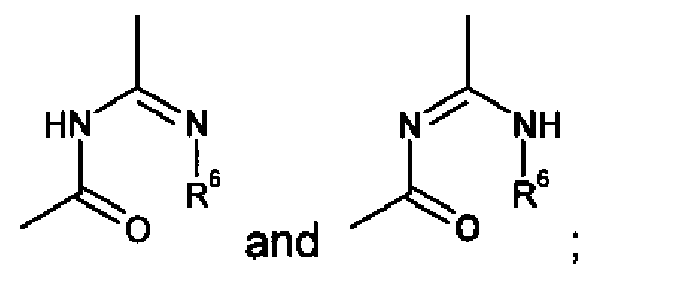
X1 and X2 are independently selected from a 4- to 14-membered heterocyclic group;
Y1 and Y2 are independently -C0-C8-alkylene- or C1-C8-alkylamino-;
A is selected from a C6-C15-membered aromatic carbocyclic group, -CONR11a-(C1-C8-alkylene)-NR11aCO-, -(C=O), -CO-(C1-C8-alkylene)-CO-, -CO-(C1-C8-alkenylene)-CO-, -CO-(C0-C8-Ce-alkylene)-Z-(C0-C8-alkylene)-CO-, -CO NR11a-(C0-C8-alkylene)-Z-(C0-C8-alkylene)- NR11aCO-, C3-C15-carbocyclic group and a 4- to 14-membered heterocyclic group;
Z is selected from C6-C15-membered aromatic carbocyclic group, C3-C15-carbocyclic group and a 4- to 14-membered heterocyclic group;
T is selected from H, halogen, C1-C8-alkyl, C1-C8-haloalkyl, C1-C8-haloalkoxy, C3-C15-carbocyclic group, nitro, cyano, a C6-C15-membered aromatic carbocyclic group, a and a C1-C8-alkyl substituted by a C6-C15-membered aromatic carbocyclic group;
wherein each C6-C15-membered aromatic carbocyclic group and each 4- to 14-membered heterocyclic group, unless otherwise specified is independently optionally substituted by one or more groups selected from OH, C1-C6-alkoxy, C1-C6-alkyl, halogen, SO2NR11R12, hydroxyC1-C8-alkoxy, optionally substituted by hydroxyl, (C0-C4-alkylene) CONR11R12, (C0-C4-alkylene) N=C(NR11R12)2, -O-(C1-C4-alkylene)-N=C(NR11R12)2, -O-(C1-C4-alkylene)-CONR11R12, C7-C10-aralkoxy, C7-C10-aralkyl, SH, S(C1-C8-alkylene), SO2(C1-C8-alkylene) SO(C1-C8-alkylene), NR11R12, NR11(C3-C12-carbocyclic group) where the carbocyclic group is optionally substituted by halogen or C1-C8-alkyl, R15, a C1-C8-alkyl substituted by R15, R16, a C1-C8-alkyl substituted by R16, O(C1-C8-alkylene)-NR11C(C=O)O-(C0-C4-alkylene)-R15, cyano, oxo, carboxy, nitro, C1-C8-alkylcarbonyl, hydroxy-C1-C8-alkyl, C1-C8-haloalkyl, amino-C1-C8-alkyl, amino(hydroxy)C1-C8-alkyl and C1-C8-alkoxy optionally substituted by aminocarbonyl, where R15 is a C6-C15-membered aromatic carbocyclic group, optionally substituted by OH, C1-C8-alkoxy, C1-C6-alkyl, halogen and C1-C8-haloalkyl, R16 is a 3- to 14-membered heterocyclic group, optionally substituted by OH, C1-C8-alkoxy, C1-C8-alkyl, C8-C15-membered aromatic carbocyclic group, CO2H, (C=O)-3-to 14-membered heterocyclic group, halogen and C1-C8-haloalkyl;
each R11 and R12, are independently selected from H, C1-C8-alkyl, C3-C15-carbocyclic group, C6-C15-aromatic carbocyclic group, or R11 and R12, together with the nitrogen they are attached, form a 4- to 8-membered heterocyclic group optionally substituted by CO2H, C1-C4-alkyl, (C=O)-4- to 8-membered heterocyclic group or a C6-C10-membered aromatic carbocyclic group, when R11 or R12 are C1-C8-alkyl they may be optionally mono- or di-substituted by C6-C10-aromatic carbocyclic group, C3-C8-membered heterocyclic group, or a di(C1-C8-alkyl)amino optionally substituted by OH; and R11a is selected from H and C1-C8-alkyl. - In compounds of formula (I), the following meanings are preferred independently, collectively or in any combination:
- According to formula (I), L1 and L2 are suitably

are
- According to formula (I), R1 is suitably H.
- According to formula (I), R2 is suitably H.
- According to formula (I), R3 is suitably H.
- According to formula (I), R4 is suitably H. M1, and M2 are suitably
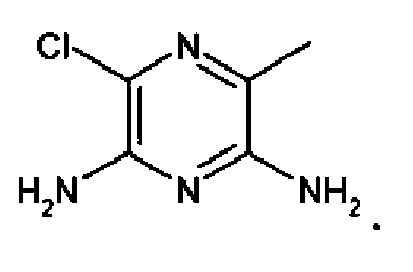
- According to formula (I), W1 and W2 are suitably C0 alkylene.
- According to formula (I), X1 and X2 are suitably piperidine.
- According to formula (I), Y1 and Y2 are suitably C0 alkylene.
- According to formula (I), suitably R5 and R5a are H.
- According to formula (I), R6 is suitably H.
- A is suitably selected from a C6-C15-membered aromatic carbocyclic group, -CONH-(C1-C8-alkylene)-NHCO-, -CO-(C1-C8-alkylene)-CO-, -CO-(C1-C8-alkenylene)-CO-, -(C=O), - CO-(C0-C8-alkylene)-Z-(C0-C8-alkylene)-CO-, -CONH-(C0-C8-alkylene)-Z-(C0-C8-alkylene)-NHCO-, C3-C15-carbocyclic group and a 4- to 14-membered heterocyclic group, e.g.,

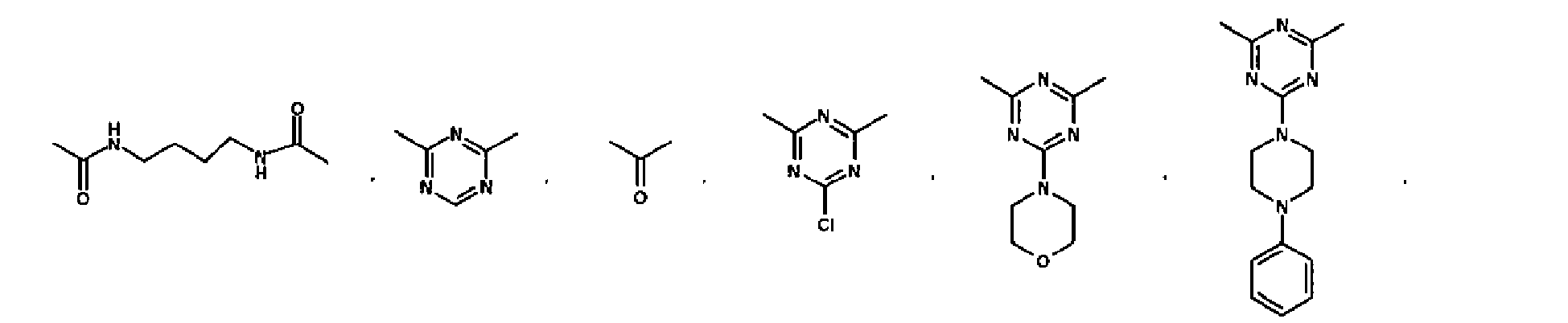

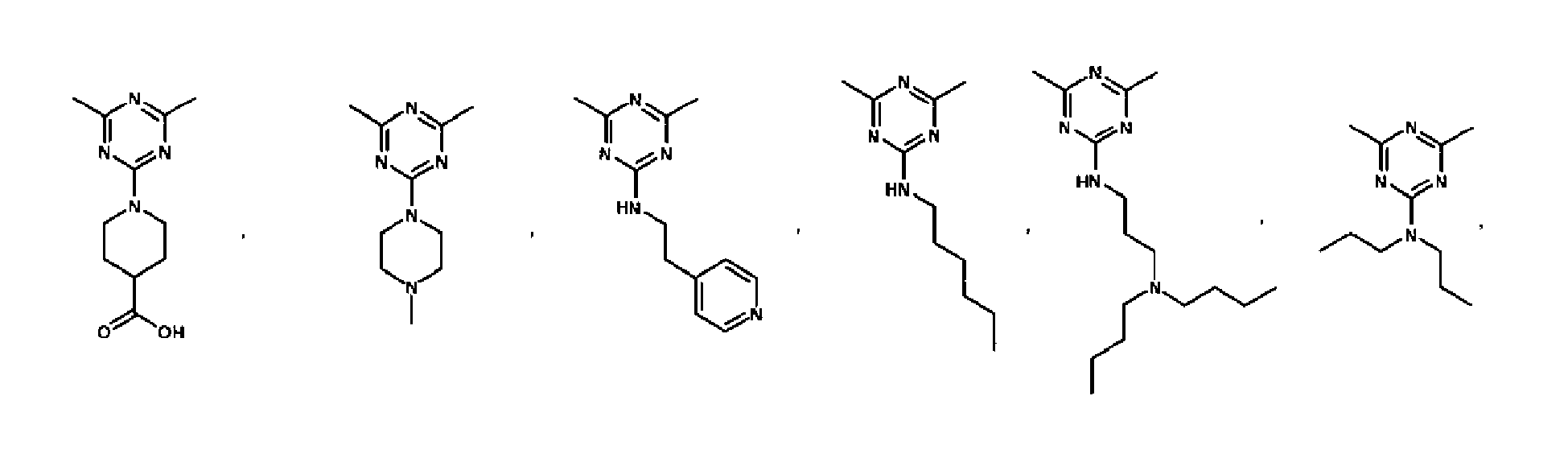


- Another aspect of the present invention provides compounds of formula (Ia):


- In another embodiment, the present invention provides for the use of a compound of formula (I) in any of the aforementioned embodiments, in free or pharmaceutically acceptable salt form, for the manufacture of a medicament for the treatment of an inflammatory or allergic condition, particularly an inflammatory or obstructive airways disease or mucosal hydration.
- A preferred embodiment of the present invention provides for the use of a compound of formula (I) in any of the aforementioned embodiments, in free or pharmaceutically acceptable salt form, for the manufacture of a medicament for the treatment of an inflammatory or allergic condition selected from cystic fibrosis, primary ciliary dyskinesia, chronic bronchitis, chronic obstructive pulmonary disease, asthma, respiratory tract infections, lung carcinoma, xerostomia and keratoconjunctivitis.
- It is understood that any and all embodiments of the present invention may be taken in conjunction with any other embodiment to describe additional embodiments of the present invention. Furthermore, any elements of an embodiment are meant to be combined with any and all other elements from any of the embodiments to describe additional embodiments. It is understood by those skilled in the art that combinations of substituents where not possible are not an aspect of the present invention.
- Throughout this specification and in the claims that follow, unless the context requires otherwise, the word "comprise", or variations, such as "comprises" or "comprising", will be understood to imply the inclusion of a stated integer or step or group of integers or steps but not the exclusion of any other integer or step or group of integers or steps.
- Especially preferred specific compounds of formula (I) are those described hereinafter in the Examples.
- The compounds represented by formula (I) may be capable of forming acid addition salts, particularly pharmaceutically acceptable acid addition salts. Pharmaceutically acceptable acid addition salts of the compound of formula (I) include those of inorganic acids, e.g., hydrohalic acids, such as hydrofluoric acid, hydrochloric acid, hydrobromic acid or hydroiodic acid, nitric acid, sulfuric acid, phosphoric acid; and organic acids, e.g., aliphatic monocarboxylic acids, such as formic acid, acetic acid, trifluoroacetic acid, propionic acid and butyric acid; aliphatic hydroxy acids, such as lactic acid, citric acid, tartaric acid or malic acid; dicarboxylic acids, such as maleic acid or succinic acid; aromatic carboxylic acids, such as benzoic acid, p-chlorobenzoic acid, diphenylacetic acid, para-biphenyl benzoic acid or triphenylacetic acid; aromatic hydroxy acids, such as o-hydroxybenzoic acid, p-hydroxybenzoic acid, 1-hydroxynaphthalene-2-carboxylic acid or 3-hydroxynaphthalene-2-carboxylic acid; cinnamic acids, such as 3-(2-naphthalenyl)propenoic acid, para-methoxy cinnamic acid or para-methyl cinnamic acid; and sulfonic acids, such as methanesulfonic acid or benzenesulfonic acid. These salts may be prepared from compounds of formula (I) by known salt-forming procedures.
- Compounds of formula (I) which may contain acidic, e.g., carboxyl, groups, are also capable of forming salts with bases, in particular, pharmaceutically acceptable bases, such as those well-known in the art; suitable such salts include metal salts, particularly alkali metal or alkaline earth metal salts, such as sodium, potassium, magnesium or calcium salts; or salts with ammonia or pharmaceutically acceptable organic amines or heterocyclic bases, such as ethanolamines, benzylamines or pyridine. These salts may be prepared from compounds of formula (I) by known salt-forming procedures.
- Pharmaceutically acceptable solvates in accordance with the invention include those wherein the solvent of crystallisation may be isotopically substituted e.g. D2O, d6-acetone or d6-DMSO.
- Compounds of formula I in free form may be converted into salt form, and vice versa, in a conventional manner. The compounds in free or salt form can be obtained in the form of hydrates or solvates containing a solvent used for crystallisation. Compounds of formula I can be recovered from reaction mixtures and purified in a conventional manner. Isomers, such as enantiomers, may be obtained in a conventional manner, e.g. by fractional crystallisation or asymmetric synthesis from correspondingly asymmetrically substituted, e.g. optically active, starting materials.
- Some compounds of the invention contain at least one asymmetric carbon atom and thus they exist in individual optically active isomeric forms or as mixtures thereof, e.g. as racemic mixtures. In cases where additional asymmetric centres exist the present invention also embraces both individual optically active isomers as well as mixtures, e.g. diastereomeric mixtures, thereof.
- The invention includes all such forms, in particular the pure isomeric forms. The different isomeric forms may be separated or resolved one from the other by conventional methods, or any given isomer may be obtained by conventional synthetic methods or; by stereospecific or asymmetric syntheses. Since the compounds of the invention are intended for use in pharmaceutical compositions it will readily be understood that they are each preferably provided in substantially pure form, for example at least 60% pure, more suitably at least 75% pure and preferably at least 85%, especially at least 98% pure (% are on a weight for weight basis). Impure preparations of the compounds may be used for preparing the more pure forms used in the pharmaceutical compositions; these less pure preparations of the compounds should contain at least 1%, more suitably at least 5% and preferably from 10 to 59% of a compound of the invention.
- The invention includes all pharmaceutically acceptable isotopically-labelled compounds of formula I wherein one or more atoms are replaced by atoms having the same atomic number, but an atomic mass or mass number different from the atomic mass or mass number usually found in nature. Examples of isotopes suitable for inclusion in the compounds of the invention include isotopes of hydrogen e.g. 2H and 3H, carbon e.g. 11C, 13C and 14C, chlorine e.g. 36Cl, fluorine e.g. 18F, iodine e.g. 123I and 125I, nitrogen e.g. 13N and 15N, oxygen e.g. 15O, 17O and 18O, and sulfur e.g. 35S.
- Certain isotopically-labelled compounds of formula I, for example those incorporating a radioactive isotope, are useful in drug and/or substrate tissue distribution studies. The radioactive isotopes tritium (3H) and carbon-14 (14C) are particularly useful for this purpose in view of their ease of incorporation and ready means of detection. Substitution with heavier isotopes such as deuterium (2H) may afford certain therapeutic advantages that result from greater metabolic stability, for example increased in vivo half-life or reduced dosage requirements, and hence may be preferred in some circumstances. Substitution with positron emitting isotopes, such as 11C, 18F, 15O, and 13N can be useful in Positron Emission Topography (PET) studies for examining substrate receptor occupancy.
- Isotopically-labelled compounds of formula I can generally be prepared by conventional techniques known to those skilled in the art or by processes analogous to those described in the accompanying examples using an appropriate isotopically-labelled reagent in place of the non-labelled reagent previously used.
- Tautomers are one of two or more structural isomers that exist in equilibrium and are readily converted from one isomeric form to another.
- Examples of tautomers include but are not limited to those described in the claims and also include compounds of formula (II):
where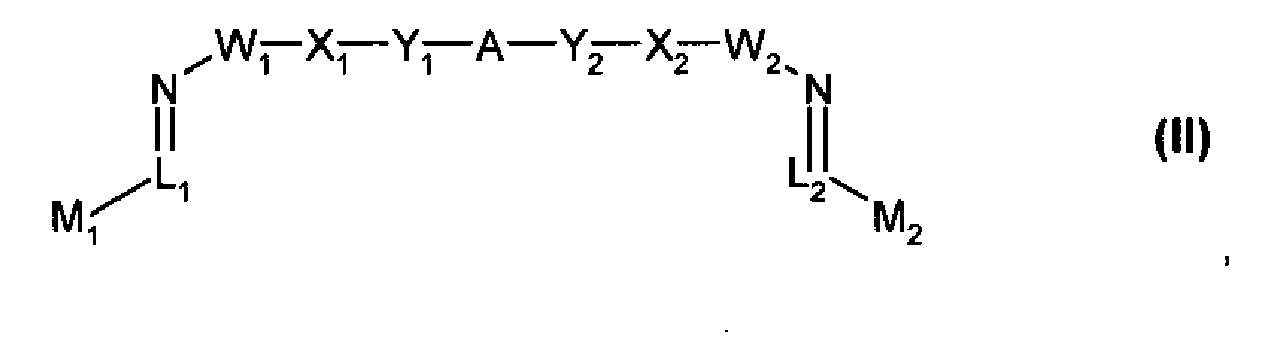
L1 and L2 are
- The compounds of the invention may exist in both unsolvated and solvated forms. The term "solvate" is used herein to describe a molecular complex comprising the compound of the invention and one or more pharmaceutically acceptable solvent molecules, e.g., ethanol. The term "hydrate" is employed when said solvent is water.
- An embodiment of the present invention provides a process for the preparation of compounds of formula (I):

M1, M2, L1, L2, NR5, NR5a, W1, W2, X1, X2, Y1, Y2, and A are as defined hereinbefore, which comprises the steps of: - (i) reacting a compound of formula (IV)
wherein
L* is L1 or L2; and
M1, M2, L1, L2 and T are as hereinbefore defined,
with compounds of formula (V):
optionally in the presence of a base, e.g., an organic base; and in an organic solvent, e.g., a non-protic dipolar solvent; and - (ii) recovering the resultant compound of formula (I), in free or pharmaceutically acceptable salt form.
- The compounds of formula (I) can be prepared, e.g., using the reactions and techniques described below and in the Examples. The reactions may be performed in a solvent appropriate to the reagents and materials employed and suitable for the transformations being effected. It will be understood by those skilled in the art of organic synthesis that the functionality present on the molecule should be consistent with the transformations proposed. This will sometimes require a judgment to modify the order of the synthetic steps or to select one particular process scheme over another in order to obtain a desired compound of the invention.
- The various substituents on the synthetic intermediates and final products shown in the following reaction schemes can be present in their fully elaborated forms, with suitable protecting groups where required as understood by one skilled in the art, or in precursor forms which can later be elaborated into their final forms by methods familiar to one skilled in the art. The substituents can also be added at various stages throughout the synthetic sequence or after completion of the synthetic sequence. In many cases, commonly used functional group manipulations can be used to transform one intermediate into another intermediate, or one compound of formula (I) into another compound of formula (I). Examples of such manipulations are conversion of an ester or a ketone to an alcohol; conversion of an ester to a ketone; interconversions of esters, acids and amides; alkylation, acylation and sulfonylation of alcohols and amines; and many others. Substituents can also be added using common reactions, such as alkylation, acylation, halogenation or oxidation. Such manipulations are well-known in the art, and many reference works summarize procedures and methods for such manipulations. Some reference works which gives examples and references to the primary literature of organic synthesis for many functional group manipulations, as well as other transformations commonly used in the art of organic synthesis are March's Organic Chemistry, 5th Edition, Wiley and Chichester, Eds. (2001); Comprehensive Organic Transformations, Larock, Ed., VCH (1989); Comprehensive Organic Functional Group Transformations, Katritzky et al. (series editors), Pergamon (1995); and Comprehensive Organic Synthesis, Trost and Fleming (series editors), Pergamon (1991). It will also be recognized that another major consideration in the planning of any synthetic route in this field is the judicious choice of the protecting group used for protection of the reactive functional groups present in the compounds described in this invention. Multiple protecting groups within the same molecule can be chosen such that each of these protecting groups can either be removed without removal of other protecting groups in the same molecule, or several protecting groups can be removed using the same reaction step, depending upon the outcome desired. An authoritative account describing many alternatives to the trained practitioner is Greene and Wuts, Protective Groups in Organic Synthesis, Wiley and Sons (1999).
- Generally, compounds described in the scope of this patent application can be synthesized by the routes described in Scheme 1 and Scheme 2 and the Examples.
- In Scheme 1, compounds of formula (Ib) can be prepared according to the processes described by Cragoe et al., J Med Chem, Vol. 10, pp. 66-73 (1967); and European Patent
EP 0 017 152 andU.S. Patent No. 3,544,571 . For instance, intermediate 1 (R=H) can be reacted with intermediate 2, where A is as defined hereinbefore, in the presence of triethylamine in organic solvent to provide compound (Ib) as the free base. The free base can then be converted to a salt form by treatment with an appropriate acid. Alternatively the coupling reaction may be performed in the presence of a BoC or CBz protection. Intermediates can be prepared from methods known by those skilled in the art or are commercially-available.
- Compounds of formula (Ic) can also be prepared according to Scheme 2, where Y1 or X1 in intermediate 2 contains a primary or secondary amine protected by group P by reacting intermediate 1 with a mono protected diamine (intermediate 2) in the presence of triethylamine in organic solvent to provide intermediate 3. Subsequent deprotection of intermediate 3 using conventional deprotection techniques affords Intermediate 4. Intermediate 4 may be reacted with AJ1J2(J3)n and intermediate 4a, where Y2 or X2 in intermediate 4a contains a primary or secondary amine, to provide compound (Ic). Where n=1, A may be additionally substituted to provide compound (Ic). A, Y2, X2, W2, L2, R5, and M2 are hereinbefore defined. P represents a standard amine protecting group, e.g., Boc, CBz, acetate and deprotection is by standard means. J1, J2 and J3 in conjunction with group A independently provide functionality capable of reacting with amines, e.g., halogen, thioether, carboxylic acid, isocyanate, sulfonyl chlorides, aldehydes and ketones. In either case intermediate 1 may also be protected by a suitable N protecting group, e.g., Boc, CBz utilising methods known in the literature and by those skilled in the art.

- Compounds of formula (I), in free form, may be converted into salt form, and vice versa, in a conventional manners understood by those skilled in the art. The compounds in free or salt form can be obtained in the form of hydrates or solvates containing a solvent used for crystallisation. Compounds of formula (I) can be recovered from reaction mixtures and purified in a conventional manner. Isomers, such as stereoisomers, may be obtained in a conventional manner, e.g., by fractional crystallisation or asymmetric synthesis from correspondingly asymmetrically substituted, e.g., optically active, starting materials.
- Having regard to their blockade of the epithelial sodium channel (ENaC), compounds of formula (I), in free or pharmaceutically acceptable salt form, hereinafter alternately referred to as "agents of the invention", are useful in the treatment of conditions which respond to the blockade of the epithelial sodium channel, particularly conditions benefiting from mucosal hydration.
- Diseases treatable by blockade of the epithelial sodium channel, include diseases associated with the regulation of fluid volumes across epithelial membranes. For example, the volume of airway surface liquid is a key regulator of mucociliary clearance and the maintenance of lung health. The blockade of the epithelial sodium channel will promote fluid accumulation on the mucosal side of the airway epithelium thereby promoting mucus clearance and preventing the accumulation of mucus and sputum in respiratory tissues (including lung airways). Such diseases include respiratory diseases, such as cystic fibrosis, primary ciliary dyskinesia, chronic bronchitis, chronic obstructive pulmonary disease (COPD), asthma, respiratory tract infections (acute and chronic; viral and bacterial) and lung carcinoma. Diseases influenced by blockade of the epithelial sodium channel also include diseases other than respiratory diseases that are associated with abnormal fluid regulation across an epithelium, perhaps involving abnormal physiology of the protective surface liquids on their surface, e.g., xerostomia (dry mouth) or keratoconjunctivitis sire (dry eye). Furthermore, blockade of the epithelial sodium channel in the kidney could be used to promote diuresis and thereby induce a hypotensive effect.
- Treatment in accordance with the invention may be symptomatic or prophylactic.
- Cystic fibrosis includes disease of the lung, including atypical, mild, moderate, and severe cystic fibrosis lung disease, as well as exacerbation of airways hyperreactivity consequent to other drug therapy, in particular, other inhaled drug therapy. Cystic fibrosis also includes disease of other organ systems affected by cystic fibrosis, e.g., the nasal sinuses, gastrointestinal tract, and reproductive tract.
- Chronic obstructive pulmonary disease includes chronic bronchitis or dyspnea associated therewith, emphysema, as well as exacerbation of airways hyperreactivity consequent to other drug therapy, in particular, other inhaled drug therapy. The invention is also applicable to the treatment of bronchitis of whatever type or genesis including, e.g., acute, arachidic, catarrhal, croupus, chronic or phthinoid bronchitis.
- Asthma includes both intrinsic (non-allergic) asthma and extrinsic (allergic) asthma, mild asthma, moderate asthma, severe asthma, bronchitic asthma, exercise-induced asthma, occupational asthma and asthma induced following bacterial infection. Treatment of asthma is also to be understood as embracing treatment of subjects, e.g., of less than 4 or 5 years of age, exhibiting wheezing symptoms and diagnosed or diagnosable as "wheezy infants", an established patient category of major medical concern and now often identified as incipient or early-phase asthmatic. (For convenience this particular asthmatic condition is referred to as "wheezy-infant syndrome".)
- Prophylactic efficacy in the treatment of asthma will be evidenced by reduced frequency or severity of symptomatic attack, e.g., of acute asthmatic or bronchoconstrictor attack, improvement in lung function or improved airways hyperreactivity. It may further be evidenced by reduced requirement for other, symptomatic therapy, i.e., therapy for or intended to restrict or abort symptomatic attack when it occurs, e.g., anti-inflammatory (e.g., corticosteroid) or bronchodilatory. Prophylactic benefit in asthma may, in particular, be apparent in subjects prone to "morning dipping". "Morning dipping" is a recognized asthmatic syndrome, common to a substantial percentage of asthmatics and characterized by asthma attack, e.g., between the hours of about 4-6 am, i.e., at a time normally substantially distant from any previously administered symptomatic asthma therapy.
- The suitability of epithelial sodium channel blocker as a treatment of a disease benefiting from mucosal hydration, may be tested by determining the inhibitory effect of the channel blocker on ENaC in a suitable cell-based assay. For example single cells or confluent epithelia, endogenously expressing or engineered to overexpress ENaC can be used to assess channel function using electrophysiological techniques or ion flux studies. See methods described in: Hirsh et al., J Pharm Exp Ther (2004); Moody et al., Am J Physiol Cell Physiol (2005).
- Epithelial sodium channel blockers, including the compounds of formula (I), are also useful as co-therapeutic agents for use in combination with other drug substances, such as anti-inflammatory, bronchodilatory, anti-infective, chloride-secretagogue, alternative mucokinetic, antihistamine or anti-tussive drug substances, particularly in the treatment of cystic fibrosis, asthma or obstructive or inflammatory airways diseases such as those mentioned hereinbefore, e.g., as potentiators of therapeutic activity of such drugs or as a means of reducing required dosaging or potential side effects of such drugs.
- The epithelial sodium channel blocker may be mixed with the other drug substance in a fixed pharmaceutical composition or it may be administered separately, before, simultaneously with or after the other drug substance.
- Accordingly, the invention includes as a further aspect a combination of epithelial sodium channel blocker with inhaled osmotic agents (e.g. hypertonic saline, dextran, mannitol, xylitol). Furthermore, combination with modifiers of the function of the Cystic Fibrosis Transmembrane Conductance Regulator (CFTR) are included in the invention. CFTR includes normal or "wild-type" CFTR and also mutated CFTR (e.g. ΔF508CFTR, G551DCFTR). Modifiers of CFTR function refer to both potentiators of CFTR channel function and also compounds that correct the misfolding and trafficking defect observed with Class 3 mutations of CFTR e.g., those described in
WO 2007/021982 ,WO 2006/099256 ,WO 2006/127588 ,WO 2004/080972 ,WO 2005/026137 ,WO 2005/035514 ,WO 2005/075435 ,WO 2004/111014 ,WO 2006/101740 ,WO 2004/110352 ,WO 2005/120497 andUS 2005/0176761 . - In addition, combination with suitable mucokinetic agents with distinct modes of action such as purinergic P2-receptor agonists (e.g. INS 37217), activators of alternative chloride channels (e.g. Moli-1901 [duramycin], SPI-8811), activators of a basolateral potassium conductance such as HiK1 (e.g. EBIO, DCEBIO) are included in this invention.
- Combination with suitable anti-infective agents such as macrolide antibiotics (e.g. tobramycin, azithromycin) an anti-inflammatory, bronchodilatory, antihistamine, anti-tussive, antibiotic or DNase drug substance, said epithelial sodium channel blocker and said drug substance being in the same or different pharmaceutical composition. Suitable DNase drug substances include dornase alfa (Pulmozyme™), a highly-purified solution of recombinant human deoxyribonuclease I (rhDNase), which selectively cleaves DNA. Dornase alfa is used to treat cystic fibrosis.
- Other useful combinations of epithelial sodium channel blockers with anti-inflammatory drugs are those with antagonists of chemokine receptors, e.g., CCR-1, CCR-2, CCR-3, CCR-4, CCR-5, CCR-6, CCR-7, CCR-8, CCR-9 and CCR10, CXCR1, CXCR2, CXCR3, CXCR4, CXCR5, particularly CCR-5 antagonists, such as Schering-Plough antagonists SC-351125, SCH-55700 and SCH-D; Takeda antagonists, such as N-[[4-[[[6,7-dihydro-2-(4-methylphenyl)-5H-benzo-cyclohepten-8-yl]carbonyl]amino]phenyl]-methyl]tetrahydro-N,N-dimethyl-2H-pyran-4-amin-ium chloride (TAK-770); and CCR-5 antagonists described in
USP 6,166,037 (particularly claims 18 and 19),WO 00/66558 WO 00/66559 WO 04/018425 WO 04/026873 - Suitable anti-inflammatory drugs include steroids, in particular, glucocorticosteroids, such as budesonide, beclamethasone dipropionate, fluticasone propionate, ciclesonide or mometasone furoate, or steroids described in
WO 02/88167 WO 02112266 WO 02/100879 WO 02/00679 WO 03/35668 WO 03/48181 WO 03/62259 WO 03/64445 WO 03/72592 WO 04/39827 WO 04/66920 DE 10261874 ,WO 00/00531 WO 02/10143 WO 03/82280 WO 03/82787 WO 03/86294 WO 03/104195 WO 03/101932 WO 04/05229 WO 04/18429 WO 04/19935 WO 04/26248 WO 92/19594 WO 93/19749 WO 93/19750 WO 93/19751 WO 98/18796 WO 99/16766 WO 01/13953 WO 03/104204 WO 031104205 WO 03/39544 WO 04/000814 WO 04/000839 WO 041005258 WO 04/018450 WO 04/018451 WO 04/018457 WO 04/018465 WO 04/018431 WO 04/018449 WO 04/018450 WO 04/018451 WO 04/018457 WO 04/018465 WO 04/019944 WO 04/019945 WO 04/045607 WO 04/037805 WO 02/42298 WO 0075114 
WO 04/16601 EP 1440966 ,JP 05025045 WO 93/18007 WO 99/64035 USP 2002/0055651 ,WO 01142193 WO 01/83462 WO 02/66422 WO 02/70490 WO 02/76933 WO 03/24439 WO 03/42160 WO 03/42164 WO 03/72539 WO 03191204 WO 03/99764 WO 04/16578 WO 04/22547 WO D4132921 WO 04/33412 WO 04/37768 WO 04/37773 WO 04/37807 WO 04/39762 WO 04/39766 WO 04/45618 WO 04/46083 WO 04/80964 WO 04/108765 WO 04/108676 - Suitable bronchodilatory drugs include anticholinergic or antimuscarinic agents, in particular, ipratropium bromide, oxitropium bromide, tiotropium salts and CHF 4226 (Chiesi), and glycopyrrolate, but also those described in
EP 424021 USP 3,714,357 ,USP 5,171,744 ,WO 01/04118 WO 02/00652 WO 02/51841 WO 02/53564 WO 03/00840 WO 03/33495 WO 03/53966 WO 03/87094 WO 04/018422 WO 04/05285 - Suitable dual anti-inflammatory and bronchodilatory drugs include dual beta-2 adrenoceptor agonist/muscarinic antagonists such as those disclosed in
USP 2004/0167167 ,WO 04/74246 WO 04/74812 - Suitable antihistamine drug substances include cetirizine hydrochloride, acetaminophen, clemastine fumarate, promethazine, loratidine, desloratidine, diphenhydramine and fexofenadine hydrochloride, activastine, astemizole, azelastine, ebastine, epinastine, mizolastine and tefenadine, as well as those disclosed in
JP 2004107299 WO 03/099807 WO 04/026841 - In accordance with the foregoing, the invention also provides as a further aspect a method for the treatment of a condition responsive to blockade of the epithelial sodium channel, e.g., diseases associated with the regulation of fluid volumes across epithelial membranes, particularly an obstructive airways disease, which comprises administering to a subject, particularly a human subject, in need thereof a compound of formula (I), in free form or in the form of a pharmaceutically acceptable salt.
- In another aspect the invention provides a compound of formula (I), in free form or in the form of a pharmaceutically acceptable salt, for use in the manufacture of a medicament for the treatment of a condition responsive to blockade of the epithelial sodium channel, particularly an obstructive airways disease, e.g., cystic fibrosis and COPD.
- The agents of the invention may be administered by any appropriate route, e.g. orally, e.g., in the form of a tablet or capsule; parenterally, e.g., intravenously; by inhalation, e.g., in the treatment of an obstructive airways disease; intranasally, e.g., in the treatment of allergic rhinitis; topically to the skin; or rectally. In a further aspect, the invention also provides a pharmaceutical composition comprising a compound of formula (I), in free form or in the form of a pharmaceutically acceptable salt, optionally together with a pharmaceutically acceptable diluent or carrier therefor. The composition may contain a co-therapeutic agent, such as an anti-inflammatory, broncho-dilatory, antihistamine or anti-tussive drug as hereinbefore described. Such compositions may be prepared using conventional diluents or excipients and techniques known in the galenic art. Thus oral dosage forms may include tablets and capsules. Formulations for topical administration may take the form of creams, ointments, gels or transdermal delivery systems, e.g., patches. Compositions for inhalation may comprise aerosol or other atomizable formulations or dry powder formulations.
- When the composition comprises an aerosol formulation, it preferably contains, e.g., a hydro-fluoro-alkane (HFA) propellant, such as HFA134a or HFA227 or a mixture of these, and may contain one or more co-solvents known in the art, such as ethanol (up to 20% by weight), and/or one or more surfactants, such as oleic acid or sorbitan trioleate, and/or one or more bulking agents, such as lactose. When the composition comprises a dry powder formulation, it preferably contains, e.g., the compound of formula (I) having a particle diameter up to 10 microns, optionally together with a diluent or carrier, such as lactose, of the desired particle size distribution and a compound that helps to protect against product performance deterioration due to moisture, e.g., magnesium stearate. When the composition comprises a nebulised formulation, it preferably contains, e.g., the compound of formula (I) either dissolved, or suspended, in a vehicle containing water, a co-solvent, such as ethanol or propylene glycol and a stabilizer, which may be a surfactant.
- Further aspects of the invention include:
- (a) a compound of formula (I) in inhalable form, e.g., in an aerosol or other atomisable composition or in inhalable particulate, e.g., micronised form;
- (b) an inhalable medicament comprising a compound of formula (I) in inhalable form;
- (c) a pharmaceutical product comprising a compound of formula (I) in inhalable form in association with an inhalation device; and
- (d) an inhalation device containing a compound of formula I in inhalable form.
- Dosages of compounds of formula (I) employed in practising the present invention will of course vary depending, e.g., on the particular condition to be treated, the effect desired and the mode of administration. In general, suitable daily dosages for administration by inhalation are of the order of 0.005-10 mg, while for oral administration suitable daily doses are of the order of 0.05-100 mg.
- Compounds of formula (I) and their pharmaceutically acceptable salts, hereinafter referred to alternatively as "agents of the invention", are useful as pharmaceuticals. In particular, the compounds have good ENaC blocker activity and may be tested in the following assays.
- Human Bronchial Epithelial cells (HBECs) (Cambrex) were cultured under air-liquid interface conditions to provide a well differentiated mucociliary phenotype.
- HBECs were cultured using a modification of the method described by Gray and colleagues (Gray et al., 1996). Cells were seeded in plastic T-162 flasks and were grown in bronchial epithelial cell growth medium (BEGM; Cambrex) supplemented with bovine pituitary extract (52 µg/ml), hydrocortisone (0.5 µg/ml), human recombinant epidermal growth factor (0.5 ng/ml), epinephrine (0.5 µg/ml), transferrin (10 µg/ml), insulin (5 µg/ml), retinoic acid (0.1 µg/ml), triiodothyronine (6.5 µg/ml), gentamycin (50 µg/ml) and amphotericin B (50 ng/ml). Medium was changed every 48 hours until cells were 90% confluent. Cells were then passaged and seeded (8.25 x 10⁴ cells/insert) on polycarbonate Snapwell inserts (Costar) in differentiation media containing 50% DMEM in BEGM with the same supplements as above but without triiodothyronine and a final retinoic acid concentration of 50 nM (all-trans retinoic acid). Cells were maintained submerged for the first 7 days in culture, after which time they were exposed to an apical air interface for the remainder of the culture period. At this time, media was changed to DMEM:F12 media containing 2% v/v Ultroser G for the remainder of culture. Amphotericin B was removed from all media 3 feeds prior to use in the Ussing Chambers. Cells were used between days 7 and 21 after establishment of the apical-air interface. At all stages of culture, cells were maintained at 37°C in 5% CO2 in an air incubator.
- Snapwell inserts were mounted in Vertical Diffusion Chambers (Costar) and were bathed with continuously gassed Ringer solution (5% CO2 in O2; pH 7.4) maintained at 37°C containing (in mM): 120 NaCl, 25 NaHCO3 3.3 KH2PO4, 0.8 K2HPO4, 1.2 CaCl2, 1.2 MgCl2, and 10 glucose. The solution osmolarity was between 280 and 300 mOsmol/kg H2O for all physiological salt solutions used. Cells were voltage clamped to 0 mV (model EVC4000; WPI). RT was measured by applying a 1- or 2-mV pulse at 30-s intervals and calculating RT by Ohm's law. Data were recorded using a PowerLab workstation (ADlnstruments).
- Test compounds were prepared as a 10 mM stock solution in DMSO (95%). Serial 3-fold dilutions were freshly prepared in an appropriate vehicle (distilled H2O or Ringers solution). The initial concentration was added to the apical chamber as a 1000x concentrate in 5 µl, resulting in a final 1x concentration the 5 ml volume of the Ussing chamber. Subsequent additions of compound were added in a 3.3 µl volume of the 1000x serially diluted stock solution. At the completion of the concentration-response experiment, amiloride (10 µM) was added into the apical chamber to enable the total amiloride-sensitive current to be measured. An amiloride control IC50 was established at the start of each experiment.
- Results are expressed as the mean % inhibition of the amiloride-sensitive ISC. Concentration-response curves were plotted and IC50 values generated using GraphPad Prism 3.02. Cell inserts were typically run in duplicate and the IC50 calculated on the mean % inhibition data.
- Compounds of the Examples, herein below, generally have IC50 values in the data measurements described above below 10 µM. For example, the compounds of Examples 2, 4, 7 , 13 and 23 have IC50 values of 0.0015, 0.010, 0.006, 0.001 and 0.0016 µM, respectively,
- The invention is illustrated by the following Examples.
- Compounds of formula (I) which are also of formula (X):

Table 1 Ex. Structure M/z [M+H]+ or [M+2H]2+ 1 
813 2 
785 3 
819 4 
378 [M+2H]2+ 5 
739 6 
651 7 
701 8 
432 [M+2H]2+ 9 
787 10 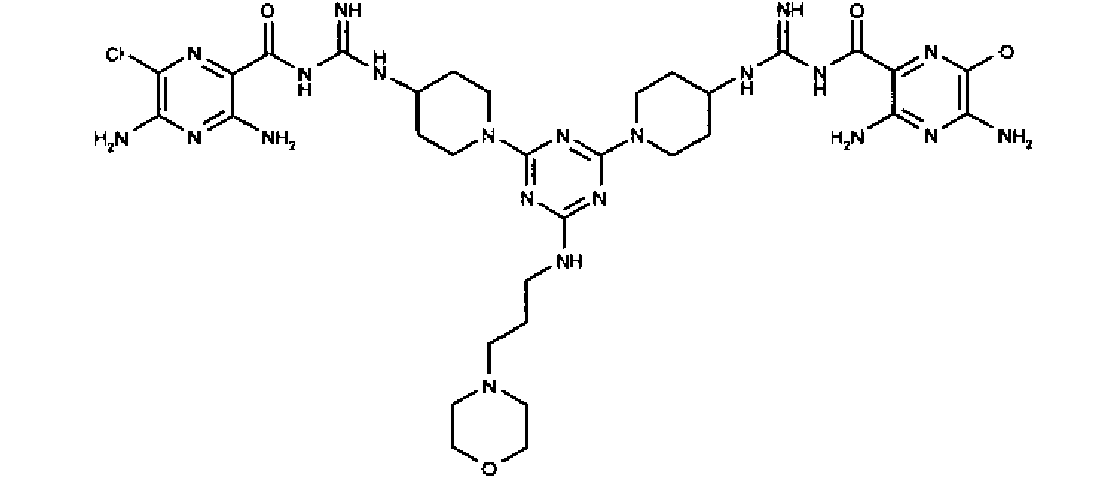
846 11 
849 12 
910 13 
887 34 
824 15 
801 16 
829 17 
800 18 
801 19 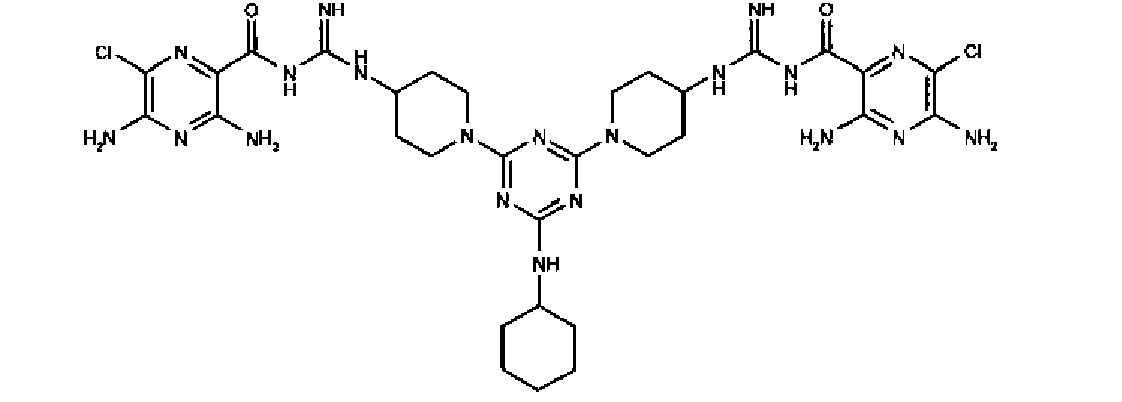
799 20 
800 21 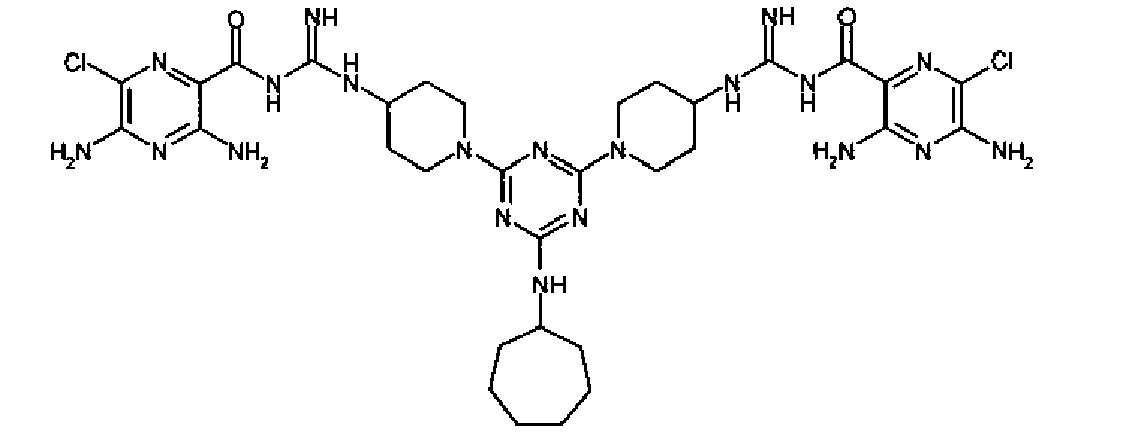
813 22 
827 23 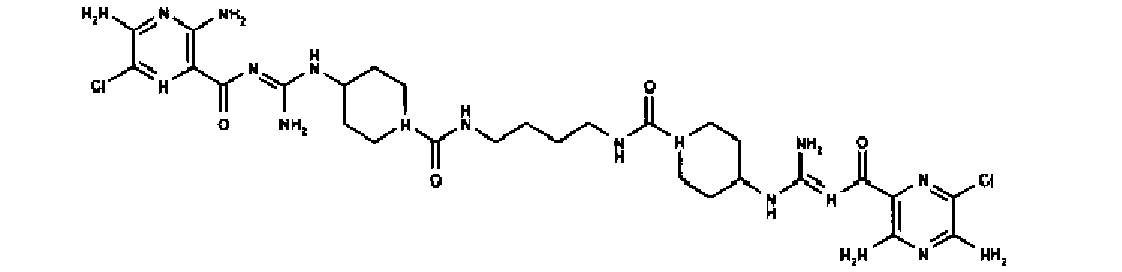
765 24 
25 
890 26 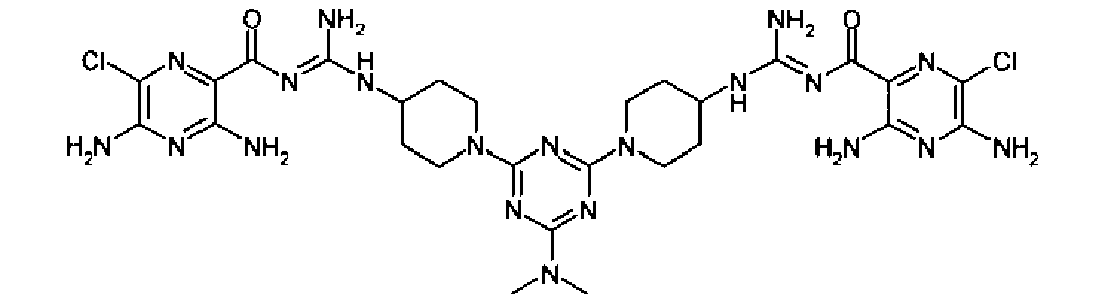
745 27 
833 28 
898 29 
442 [M+2H]2+ 30 
1031 - Mass spectra are run on an open access Waters 600/ZQ HPLC/Mass Spectrometer system using electrospray ionization. [M+H]+ and [M+2H]2+ refer to monoisotopic molecular weight.
- DCM dichloromethane
- DIPEA diisopropylethylamine
- DMF dimethylformamide
- DMSO dimethyl sulfoxide
- EtOAc ethyl acetate
- EtOH ethanol
- HATU dimethylamino-([1,2,3]triazolo[4,5-b]pyridin-3-yloxy)-methylene]-dimethylammonium; hexafluorophosphate
- IPA iso-propanol
- MeCN acetonitrile
- MeOH methanol
- NMP N-methylpyrrolidone
- TEA triethylamine
- TFA trifluoroacetic acid
- THF tetrahydrofuran
- Where salt forms of compounds are specified, the stoichiometry of the counterion is omitted. The skilled person will appreciate that the compound is not limited to the mono salt form and that it may exist as a disalt, trisalt or other compound:counterion stoichiometries.
- Step 1: Benzyl (1,1'-(1,4-phenylenebis(methylene))bis(azanediyl)bis (oxomethylene) bis(piperidine-4,1-diyl))bis(azanediyl)bis((3,5-diamino-6-chloro pyrazine-2-carboxamido)methan-1-yl-1-ylidene)dicarbamate
- To a suspension of (4-carboxymethyl-phenyl)-acetic acid (0.5 g, 2.57 mmol) in dry DCM (10 mL) under an inert atmosphere of nitrogen is added TEA (0.7 mL, 5.14 mmol) followed by diphenylphosphoryl azide (1.1 mL, 5.14 mmol). After stirring at reflux for 2 hours, the mixture is treated with a solution of benzyl (3,5-diamino-6-chloropyrazine-2-carboxamido)(piperidin-4-ylamino)methylenecarbamate (Intermediate C) (1.72 g, 3.9 mmol) and TEA (0.7 mL, 5.14 mmol) in DCM/DMF (10 mL). The resulting mixture is heated at 38°C overnight and then allowed to cool to room temperature. The solvent is removed in vacuo and purification of the crude product by chromatography on silica eluting with 9:1 DCM/MeOH affords the title compound.
- Step 2: N,N'-(1,1'-(1,4-phenylenebis(methylene))bis(azanediyl)bis(oxomethylene)bis (piperidine-4,1-diyl))bis(azanediyl)bis(iminomethylene)bis(3,5-diamino-6-chloropyrazine-2-carboxamide)hydrobromide
- A suspension of benzyl (1,1'-(1,4-phenylenebis(methylene))bis(azanediyi)bis (oxomethylene) bis(piperidine-4,1-diyl))bis(azanediyl)bis((3,5-diamino-6-chloro pyrazine-2-carbo xamido)methan-1-yl-1-ylidene)dicarbamate (step 1) (0.2 g, 0.18 mmol) in 33% HBr in acetic acid (5 mL) is heated at 45°C for 5 hours. After cooling to room temperature, the solvent is removed in vacuo and the crude is treated slowly with water (approx. 20 mL) until a solid precipitates. The solid is collected by filtration and washed with water, MeOH and ether to afford the title compound. [M+H]+ 813
- This compound is prepared analogously to Example 1 by replacing 1,4-bis-isocyanatomethyl-benzene (prepared in situ) with 1,4-phenylenediisocyanate. [M+H]+785
- This compound is prepared analogously to Example 1 by replacing 1,4-bis-isocyanatomethyl-benzene (prepared in situ) with 1,3-bis-isocyanatomethyl-cyclohexane. [M+H]+ 819
- Step 1 : tert-butyl (1,1'-(1,4-phenylene)bis(oxomethylene)bis(piperidine-4,1-diyl))bis(azanediyl)bis((3,5-diamino-6-chloropyrazine-2-carboxamido)methan-1-yl-1-ylidene)dicarbamate
- A stirred suspension of [4-(4-amino-piperidine-1-carbonyl)-phenyl]-(4-amino-piperidin-1-yl)-methanone dihydrochloride (Intermediate D) (1.1 g, 3.32 mmol) in DMF (27.5 ml) is treated with TEA (8.5 ml) and then stirred at room temperature.. Intermediate A (2.5 g, 6.99 mmol) is added and the resulting mixture is heated at 60°C for 2 days. The reaction mixture is then filtered whilst still warm under vacuum and the resulting solid is dried under vacuum to afford the product as a white solid, [M+H]+ 955
- The product from step 1 is suspended in 4.0 HCl in 1,4-dioxane (2.15 ml, 8.6 mmol) and 1,4 dioxane (1 mL) at room temperature for 2 days. The solvent is removed in vacuo and the solid is freeze dried to afford the title compound. [M+H]+ 755.
- A solution of 3,5-diamino-6-chloro-N-(N-piperidin-4-ylcarbamimidoyl)pyrazine-2-carboxamide hydrochloride (Intermediate E) (8.0 g, 20.7 mmol) and dry DIPEA (25 mL) in DMF (80 mL) is cooled to 0°C and treated with a solution of trichlorotriazine (1.9 g, 10.4 mmol) in DMF (20 mL). After stirring at 0°C for 1 hour, the reaction mixture is allowed to warm to room temperature overnight. The mixture is then treated with MeCN (500 mL) added dropwise whilst stirring vigorously over 1 hour. The resulting fine suspension is collected by filtration under vacuum and washed with MeCN (2 x 250 mL). The solid is then sonicated in MeCN at 0°C, filtered and dried under vacuum to afford the title compound. [M+H]+ 739
- Step 1: tert-Butyl (1,1'-carbonylbis(piperidine-4,1-diyl)bis(azanediyl))bis((3,5-diamino-6-chloropyrazine-2-carboxamido)methan-1-yl-1-ylidene)dicarbamate hyrochloride A suspension of bis(4-aminopiperidin-1-yl)methanone (Intermediate F) (43 mg, 0.11 mmol) and Intermediate A (90 mg, 0.25 mmol) in DMF (1.5 mL) is treated with TEA (100 mg, 1.0 mmol) and heated at 70°C for 48 hours. Purification of the reaction mixture by reverse phase column chromatography (Isolute™ C18, 0-100% acetonitrile in water - 0.1% HCl) affords the title compound in solution is 30 ml eluent (acetonitrile in water - 0.1% HCl). [M+H]+ 850
- Step 2: N,N'-(1,1'-carbonylbis(piperidine-4,1-diyl)bis(azanediyl)) bis(iminomethylene)bis(3,5-diamino-6-chloropyrazine-2-carboxamide) hydrochloride
- tert-Butyl (1,1'-carbonylbis(piperidine-4,1-diyl)bis(azanediyl))bis((3,5-diamino-6-chloropyrazine-2-carboxamido)methan-1-yl-1-ylidene)dicarbamate hyrochloride (0.25 mmol) in 30 mL eluent (acetonitrile in water -0.1% HCl) is treated with TFA (4 mL) and the mixture is stirred at room temperature for 3 days. The solvent is removed in vacuo and purification by reverse phase column chromatography (Isolute™ C18, 0-100% acetonitrile in water-0.1% HCl) affords the title compound. [M+H]+ 651
- This compound is prepared analogously to Example 6 by replacing bis(4-aminopiperidin-1-yl)methanone 4HCl (Intermediate F) with 1,1'-(1,3,5-triazine-2,4-diyl)dipiperidin-4-amine. 4HCl. [M+H]+ 701
- A solution of N,N'-(1,1'-(6-chloro-1,3,5-triazine-2,4-diyl)bis(piperidine-4,1-diyl))bis(azanediyl)bis(iminomethylene)bis(3,5-diamino-6-chloropyrazine-2-carboxamide) (Example 5) (0.25 g, 0.34 mmol) in DMF (2 mL) is treated with N-phenylpiperazine (0.275 g, 1.70 mmol) and stirred at 30°C overnight. MeCN (3 mL) is added dropwise to the stirred mixture and the resulting yellow precipitate is collected by filtration. The precipitate is dissolved in MeOH and dry loaded onto silica. Purification by flash chromatography on silica eluting with 1:MeOH/DCM -4% NH3 yields a solid which is further purified by recrystallisation from acetic acid/EtOH to afford the title compound. [M+2H]2+ 432
- This compound is prepared analogously to Example 8 by replacing N-phenylpiperazine with morpholine. [M+H]+ 787
- A solution of N,N'-(1,1'-(6-chloro-1,3,5-triazine-2,4-diyl)bis(piperidine-4,1-diyl))bis(azanediyl)bis(iminomethylene)bis(3,5-diamino-6-chloropyrazine-2-carboxamide) (Example 5) (0.15 mg, 20 µmol) in NMP (0.5 mL) is treated with 3-(N-morpholino)propylamine (29 mg, 0.2 mmol) and then stirred at 50°C overnight. Purification by mass directed semi-preparative HPLC affords the title compound. [M+H]+ 846
- These compounds namely,
- N,N'-(1,1'-(6-(2-(bis(2-hydroxyethyl)amino)ethylamino)-1,3,5-triazine-2,4-diyl)bis(piperidine-4,1-diyl))bis(azanediyl)bis(iminomethylene)bis(3,5-diamino-6-chloropyrazine-2-carboxamide) trifluoroacetate (Example 11);
- N,N'-(1,1'-(6-(4-(azepane-1-carbonyl)piperidin-1-yl)-1,3,5-triazine-2,4-diyl)bis(piperidine-4,1-diyl))bis(azanediyl)bis(iminomethylene)bis(3,5-diamino-6-chloropyrazine-2-carboxamide) trifluoroacetate (Example 12);
- N,N'-(1,1'-(6-(3-(dibutylamino)propylamino)-1,3,5-triazine-2,4-diyl)bis(piperidine-4,1-diyl))bis(azanediyl)bis(iminomethylene)bis(3,5-diamino-fi-chioropyrazine-2-carboxamide) trifluoroacetate (Example 13);
- N,N'-(1,1'-(6-(2-(pyridin-4-yl)ethylamino)-1,3,5-triazine-2,4-diyl)bis(p)peperidine-4,1-diyl))bis(azanediyl)bis(iminomethylene)bis(3,5-diamino-6-chloropyrazine-2-carboxamide) trifluoroacetate (Example 14);
- N,N'-(1,1'-(6-(hexylamino)-1,3,5-triazine-2,4-diyl)bis(piperidine-4,1-diyl))bis(azanediyl)bis(iminomethylene)bis(3,5-diamino-6-chloropyrazine-2-carboxamide) trifluoroacetate (Example 15);
- 1-(4,6-bis(4-(3-(3,5-diamino-6-chloropyrazine-2-carbonyl)guanidino)piperidin-1-yl)-1,3,5-triazin-2-yl)piperidine-4-carboxylic acid trifluoroacetate (Example 16);
- N,N'-(1,1'-(6-(4-methylpiperazin-1-yl)-1,3,5-triazine-2,4-diyl)bis(piperidine-4,1-diyl))bis(azanediyl)bis(iminomethylene)bis(3,5-diamino-6-chloropyrazine-2-carboxamide) trifluoroacetate (Example 17);
- N,N'-(1,1'-(6-(dipropylamino)-1,3,5-triazine-2,4-diyl)bis(piperidine-4,1-diyl))bis(azanediyl)bis(iminomethylene)bis(3,5-diamino-6-chloropyrazine-2-carboxamide) trifluoroacetate (Example 18);
- N,N'-(1,1'-(6-(cyclohexylamino)-1,3,5-triazine-2,4-diyl)bis(piperidine-4,1-diyl))bis(azanediyl)bis(iminomethylene)bis(3,5-diamino-6-chloropyrazine-2-carboxamide) trifluoroacetate (Example 19);
- N, N'-(1,1 '-(6-(azepan-1-yl)-1,3,5-triazine-2,4-diyl)bis(piperidine-4,1-diyl))bis(azanediyl)bis(iminomethylene)bis(3,5-diamino-6-chloropyrazine-2-carboxamide) trifluoroacetate (Example 20);
- N,N'-(1,1'-(6-(cyclohexylamino)-1,3,5-triazine-2,4-diyl)bis(piperidine-4,1-diyl)) bis(azanediyl)bis(iminomethylene)bis(3,5-diamino-6-chloropyrazine-2-carboxamide)) trifluoroacetate (Example 21); and
- N,N'-(1,1'-(6-(cyclooctylamino)-1,3,5-triazine-2,4-diyl)bis(piperidine-4,1-diyl)) bis(azanediyl)bis(iminomethylene)bis(3,5-diamino-6-chloropyrazine-2-carboxamide) (Example 22),
- Step 1: N,N'-(1,1'-(Butane-1,4-diylbis(azanediyl))bis(oxomethylene)bis(piperidine-4,1-diyl))bis(azanediyl)bis((benzyloxycarbonylamino)methan-1-yl-1-ylidene)bis(3,5-diamino-6-chloropyrazine-2-carboxamide)
- A mixture comprising benzyl (3,5-diamino-6-chloropyrazine-2-carboxamido) (methylthio)methylenecarbamate (Intermediate B) (18.6 g, 45.0 mmol) and N,N'-(butane-1,4-diyl)bis(4-aminopiperidine-1-carboxamide) (Intermediate F) (6.3 g, 15.4 mmol) in DMF (420 mL) under an inert atmosphere of nitrogen is stirred at 50°C over 3 days. The reaction mixture is hot filtered, aminomethyl polystyrene (scavenger resin) is added and the mixture stirred at 50°C overnight. The resin is filtered and washed with DMF, the filtrate is then concentrated in vacuo to give a solid residue which is re-dissolved up in the minimum quantity of DMF, and is added dropwise to a stirred MeCN solution at room temperature, producing a solid. This is filtered, washing with MeCN to afford the title compound as a solid. [M+H]+ 1033
- Step 2: N,N'-(1,1'-(Butane-1,4-diylbis(azanediyl))bis(oxomethylene) bis(piperidine-4,1-diyl))bis(azanediyl)bis(aminomethan-1-yl-1-ylidene)bis(3,5-diamino-6-chloro pyrazine-2-carboxamide) hyrobromide
- N,N'-(1,1'-(Butane-1,4-diylbis(azanediyl))bis(oxomethylne)bis(piperidine-4,1-diyl))bis(azanediyl)bis((benzyloxycarbonylamino)methan-1-yl-1-ylidene)bis(3,5-diamino-6-chloropyrazine-2-carboxamide) (646 mg) and 33% HBr in acetic acid (6 mL) in water (1.5 mL) is stirred at 50°C overnight. The solvent is removed in vacuo and the resulting crude residue is purified by recrystallisation from MeOH/PA. The residue is further purified by triturating with MeOH/EtOH followed by MeOH/PA to afford the title compound. [M+H]+ 765
- A solution of 3,5-diamino-6-chloro-N-(N-piperidin-4-ylcarbamimidoyl)pyrazine-2-carboxamide hydrochloride (Intermediate E) (200 mg, 0.52 mmol), (4,6-dichloro-[1,3,5]triazin-2-yl)-phenyl-amine (60 mg, 0.25 mmol) and DIPEA (205 mg, 1.6 mmol) in NMP (4 mL) is stirred at 35°C overnight. The reaction mixture is then added dropwise to MeCN and the resulting white solid is collected by filtration. The solid is dissolved in 1:1 MeCN:water (0.1 % TFA) (60 mL), cooled and allowed to stand for 4 days. The resulting suspension is filtered to afford the title compound as a solid.
- N,N'-(1,1'-(6-chloro-1,3,5-triazine-2,4-diyl)bis(piperidine-4,1-diyl))bis(azanediyl) bis(iminomethylene)bis(3,5-diamino-6-chloropyrazine-2-carboxamide) (Example 5) (250 mg, 0.34 mmol) and 5,6-diethylindan-2-ylamine hydrochloride (225 mg, 1.00 mmol; see Prashad et al., Org Process Res Dev, Vol. 10, No. 1, pp. 135-141 (2006)) are suspended in DMF (1 ml) with DIPEA (350 µl, 260 mg, 2.00 mmol) in a 0.5-2.0 ml Biotage microwave vial. The vial is sealed and, the reaction heated using microwave irradiation for 24 hours 60°C, followed by 22.5 hours at 70°C. Precipitation by addition of the reaction mixture to acetonitrile (50 ml) affords a mixture of the title compound and N,N'-(1,1'-(6-(dimethylamino)-1,3,5-triazine-2,4-diyl)bis(piperidine-4,1-diyl))bis(azanediyl)bis (aminomethan-1-yl-1-ylidene)bis(3,5-diamino-6-chloropyrazine-2-carboxamide) as a grey solid. Purification by mass-directed preparative HPLC followed by trituration with diethyl ether affords the title compound as a pale yellow powder. [M+H]+ 890
- This compound is prepared as a by-product in the synthesis of Example 25. [M+H]+ 745
- These compounds namely,
- N,N'-(1,1'-(6-(2,3-dihydro-1H-inden-2-ylamino)-1,3,5-triazine-2,4-diyl)bis(piperidine-4,1-diyl))bis(azanediyl)bis(aminomethan-1-yl-1-ylidene)bis(3,5-diamino-6-chloropyrazine-2-carboxamide) (Example 27);
- N,N'-(1,1'-(6-(2,2-diphenylethylamino)-1,3,5-triazine-2,4-diyl)bis(piperidine-4,1-diyl))bis(azanediyl)bis(aminomethan-1-yl-1-ylidene)bis(3,5-diamino-6-chloropyrazine-2-carboxamide) (Example 28); and
- N,N'-(1,1'-(6-(cyclododecylamino)-1,3,5-triazine-2,4-diyl)bis(piperidine-4,1-diyl))bis(azanediyl)bis(aminomethan-1-yl-1-ylidene)bis(3,5-diamino-6-chloropyrazine-2-carboxamide) (Example 29),
- A solution of ((Z)-4-phenoxycarbonylamino-but-2-enyl)-carbamic acid phenyl ester (Intermediate J) (325 mg, 1.0 mmol), benzyl (3,5-diamino-6-chloropyrazine-2-carboxamido)(piperidin-4-ylamino)methylenecarbamate (Intermediate C) (1.25 g, 2.2 mmol) and TEA (0.6 ml, 4.4 mmol) in DMF (4 ml) is heated at 60° C overnight. The mixture is treated with water and allowed to stand at room temperature for 10 minutes. IPA (20 ml) is added to the resulting solid and the mixture is filtered to afford the title compound as a solid. [M+H]+ 1031
- Step 1: Lithium 3,5-diamino-6-chloro-pyrazine-2-carboxylic acid
- A stirred suspension of 3,5-diamino-6-chloro-pyrazine-2-carboxylic acid methyl ester (110 g, 542.9 mmol) in MeOH (500 mL) at 5-10°C (ice-bath) is treated dropwise with a suspension of lithium hydroxide (46.6 g, 1111 mmol) in water (500 mL). The reaction mixture is heated to 50°C for 5 hours then cooled to room temperature and stirred overnight. The resulting precipitate is collected by filtration and dried in a vacuum oven to afford the title compound as the lithium salt (di-hydrate). [M-Li]- 187
- Step 2: tert-Butyl amino(methylthio)methylenecarbamate
- A stirred suspension of S-methyl-iso-thiourea sulphate (10 g, 35.9 mmol) in toluene (75 mL) is treated with 4 M NaOH (15 mL) at room temperature. To the two-phase mixture is added di-tert.butyl dicarbonate (3.27 g, 15 mmol) in one portion. The reaction mixture is stirred at room temperature for 1 hour, then heated to 60°C overnight. The organic portion is separated, washed with brine solution, then dried over Na2SO4, filtered and concentrated in vacuo to a viscous oil, which crystallised under high vacuum to afford the title compound as a colourless solid.
- Step 3 : tert-Butyl (3,5-diamino-6-chloropyrazine-2-carboxamido)(methylthio) methylene carbamate
- A stirring suspension of lithium 3,5-diamino-6-chloro-pyrazine-2-carboxylic acid (22.6 g, 98.03 mmol) in DMF (400 mL) is treated portionwise with HATU (41 g, 107.83 mmol), under an inert atmosphere of nitrogen. The reaction mixture is stirred at room temperature for 2 hours and then tert-butyl amino(methylthio)methylenecarbamate (20.5 g, 107.83 mmol) is added portion wise over a period of 10 minutes. The reaction mixture is stirred at room temperature for a further 1.5 hours then heated to 50°C and stirred overnight. The resulting precipitate is hot filtered, washing with water and dried in a vacuum oven (40°C) overnight to afford the title compound. [M+H]+ 361
- To a stirred solution of 1-(3,5-diamino-6-chloro-pyrazine-2-carbonyl)-2-methyl-isothiourea hydroiodide (Intermediate I) (50 g, 0.129 mol) in dry THF (1 L) is added TEA (18 mL, 0.129 mol), followed by N-(benzyloxycarbonyloxy)-succinimide (32.1 g, 0.129 mol). The reaction mixture is then heated to reflux (66°C) for 6 hours. The reaction is allowed to cool to room temperature, then concentrated in vacuo to a yellow solid. The crude is suspended in EtOAc (500 mL) and water (500 mL) and is triturated vigorously for a period of 30 minutes. The resulting suspension is filtered and dried in a vacuum oven (40°C) over P2O5 to give the product as a pale yellow solid. [M+H]+ 395
- Step 1 : tert-Butyl 4-(2-(benzyloxycarbonyl)-3-(3,5-diamino-6-chloropyrazine-2-carbonyl)guanidino)piperidine-1-carboxylate
- A suspension of benzyl (3,5-diamino-6-chloropyrazine-2-carboxamido)(methylthio) methylenecarbamate (Intermediate B) (6.7 g, 17 mmol) and 4-amino-1-Boc-piperidine (4.1 g, 20.4 mmol) in dry THF (150 mL) is heated at reflux overnight. The solvent is removed in vacuo and a solid forms on concentration. The solid is separated and retained and the remaining mother liquor is concentrated to form a solid. The solid is partitioned between EtOAc and water and the organic portion is dried (MgSO4) and part concentrated in vacuo and then left to crystallise. The crystals are filtered and combined with the retained solid to afford the title product. [M+H]+ 547
- Step 2: Benzyl (3,5-diamino-6-chloropyrazine-2-carboxamido)(piperidin-4-ylamino)methylenecarbamate
- A suspension of tert-butyl 4-(2-(benzyloxycarbonyl)-3-(3,5-diamino-6-chloropyrazine-2-carbonyl)guanidino)piperidine-1-carboxylate (Step 1) (6.3 g, 11.5 mmol) in dioxane (250 mL) and MeOH (small volume) is treated with 4 M HCl in dioxane (40 mL) and left to stir overnight at 40°C. The resulting suspension is filtered and the solid is partitioned between water (800 mL) and EtOAc (800 mL). 1 M NaOH is added to adjust the pH to pH 8 and the organic portion is separated, dried (MgSO4) and concentrated in vacuo to afford the title compound. [M+H]+447
- Step 1:

- Under an inert atmosphere of nitrogen a solution of terephthaloyl chloride (50.7 g, 0.249 mol) in DMF (200 mL) is added slowly to a mixture of 4-(N-Boc-amino)piperidine (100 g, 0.499 mol) and triethylamine (104 mL, 0.749 mol) in DMF (800 mL). The reaction mixture is allowed to stir at room temperature overnight. A white suspension forms and the resulting mixture is quenched slowly with saturated NaHCO3 solution (500 mL) and water (500 mL). The resulting suspension is stirred for 30 minutes and is filtered under vacuum to afford a white solid. The solid is dried under vacuum at 45°C to yield the required product. [M+H]+ 531
- Step 2: [4-(4-Amino-piperidine-1-carbonyl)-phenyl]-(4-amino-piperidin-1-yl)-methanone dihydrochloride
- A mixture comprising the product from Step 1 (50 g, 0.09 mol) in 1,4-dioxane (236 ml, is treated with 4 M HCl in dioxane (236 ml). The resulting suspension is allowed to stir at room temperature overnight. The resulting suspension is filtered under vacuum and washed with diethyl ether (3 x 200 ml) to yield the desired product. The recovered solid is dried under vacuum for 2 days to afford the title compound. [M+H]+ 331
- Alternatively, Step 2 can be carried out in the presence of TMSI in DCM at room temperature to afford [4-(4-amino-piperidine-1-carbonyl)-phenyl]-(4-amino-piperidin-1-yl)-methanone
- [4-(4-Amino-piperidine-1-carbonyl)-phenyl]-(4-amino-piperidin-1-yl)-methanone
- Steep 1:

- A solution of terephthaloyl chloride (1.02 g, 5.0 mmol) in DMF (10 mL) under an inert atmosphere of argon is treated dropwise with a solution of 4-(N-Boc-amino)piperidine (2.00 g, 10.0 mmol) over 20 minutes. The reaction mixture is allowed to stir at room temperature for 40 minutes and then TEA (2.09 mL, 15.0 mmol) is added dropwise. A white suspension forms and stirring continues for 2 hours. The resulting mixture is washed with saturated NaHCO3 solution (50 mL) and water (100 mL). The resulting mixture is filtered under vacuum using phase separating paper to afford a white solid. The solid is dried under vacuum at 45°C to yield the required product. [M+H]+ 531
- Step 2: [4-(4-Amino-piperidine-1-carbonyl)-phenyl]-(4-amino-piperidin-1-yl)-methanone dihydrobromide
- A mixture comprising the product from Sfep 1 (1.34 g, 2.53 mmol) in 33% HBr in acetic acid (13.4 mL, 25.3 mmol) is stirred at room temperature overnight. The resulting suspension is diluted with DCM (10-20 mL) and filtered under vacuum. The recovered solid is dried under vacuum for 2 days to afford the title compound. [MH+ 331.16]
- Alternatively, Step 2 can be carried out in the presence of 4 M HCl in dioxane to afford [4-(4-amino-piperidine-1-carbonyl)-phenyl]-(4-amino-piperidin-1-yl)-methanone dihydrochloride.
- A solution of 1-(3,5-diamino-6-choro-pyrazine-2-carbonyl)-2-methy)-isothiourea hydroiodide (7.2 g, 18.4 mmol) and 4-amino-1-Boc-piperidine (5.5 g, 27.5 mmol) in DMF (40 mL) is stirred and heated at 50°C for 4 hours. The mixture is diluted with water (150 mL) and sonicated for 2 hours. The resulting suspension is collected by filtration and suspended in 4 M HCl in dioxane (40 mL). MeOH (20 mL) is added and the mixture is stirred at room temperature overnight and then filtered. The solid is washed with EtOH (2 x 10 mL) and dried to afford the title compound. [M+H]+313
- Step 1 : tert-Butyl 1,1'-carbonylbis(piperidine-4,1-diyl)dicarbamate
- A cooled (0°C), stirred solution of 4-N-Boc-amino-piperidine (2.0 g, 10.2 mmol) in DCM (8 mL) is treated dropwise with a solution of triphosgene (0.503 g, 1.7 mmol) in DCM (8 mL). The mixture is allowed to warm to room temperature and then stirring continued for a further 2 hours after which time the mixture is partitioned between DCM and 1 M NaOH. The organic portion is separated, washed with 1 M HCl, water, saturated NaHCO3 dried and concentrated in vacuo to afford the title compound. MH+ 427
- Step 2 : Bis(4-aminopiperidin-1-yl)methanone
- A solution of tert-butyl 1,1'-carbonyibis(piperidine-4,1-diyl)dicarbamate (1.0 g, 2.3 mmol) in 4 M HCl in dioxane (3 mL) and MeOH (5 mL) is stirred at room temperature overnight. The solvent is removed in vacuo to afford the title compound as a white solid. [M+H]+ 227
- This compound is prepared analogously to Intermediate F by replacing triphosgene with 2,4-dichloro-1,3,5-triazine. Step 1 is carried out in THF.
- Step 1: tert-Butyl 1,1'-(butane-1,4-diylbis(azanediyl))bis(oxomethylene)bis(piperidae-4,1-diyl)dicarbamate
- A solution of 4-N-Boc-aminopiperidine (1.0 g, 4.99 mmol) and dry DCM (20 mL) is treated with 1,4-diisocyanatobutane (317 µL, 2.49 mmol) and allowed to stir at room temperature overnight. The resulting suspension is filtered and washed with DCM to afford the title compound. [M+H]+541
- Step 2: N,N'-(Butane-1,4-diyl)bis(4-aminopiperidine-1-carboxamide)
- A suspension of tert-butyl 1,1'-(butane-1,4-diylbis(azanediyl))bis(oxomethylene) bis(piperidine-4,1-diyl)dicarbamate (1.26 g, 2.33 mmol) in MeOH (10 mL) is treated with TFA (25 mL) followed by water (catalytic amount) and the resulting solution is stirred at room temperature for 5 days. DCM, MeOH and TFA are removed in vacuo and the residue is diluted with a small volume of water and neutralised by addition of 4 M NaOH. The mixture is left to crystallise in a cool environment (fridge) overnight to resulting crystals are filtered and dried in vacuo to afford the title compound. [M+H]+ 341
- A stirring suspension of tert-butyl (3,5-diamino-6-chloropyrazine-2-carboxamido) (methylthio)methylene carbamate (Intermediate A) (200 mg, 0.554 mmol) in DCM (10 mL) is treated dropwise with TFA (0.412 mL, 5.543 mmol) dissolved in DCM (5 mL), resulting in a yellow solution. The reaction mixture is stirred at room temperature for 4 hours, the solvents are removed in vacuo to give a yellow oil which contains a small amount of solid. The oil is dissolved in water and the undissolved solid is removed by filtration. The aqueous filtrate is basified to pH 9 with NaHCO3 and the resulting precipitate is collected by filtration and dried in a vacuum oven (40°C) overnight to afford the title compound. [M+H]+ 261
- A stirred solution of phenyl chloroformate (3.4 g, 22 mmol) in DCM (70 ml) is treated dropwise with a solution of pyridine (1.9 g, 24 mmol) in DCM (10 ml). To this mixture is added (Z)-but-2-ene-1,4-diamine (prepared according to the procedure of Fabiano et al, Synthesis, (2), 190(2); 1987) in DCM (20ml) dropwise over 15 minutes. The resulting mixture is stirred at room temperature for 4 hours and partitioned between DCM and water. The organic portion is separated and washed with water, 0.5M HCl (2x), NaHCO3(aq) (2x), dried (MgSO4) and concentrated in vacuo. Purification of the crude product by chromatography on silica eluting with 0-1 % MeOH in DCM affords the title compound; [M+H]+ 327.
(Example 5) analogously to Example 25 by replacing 5,6-diethylindan-2-ylamine hydrochloride with the appropriate amine.
Claims (12)
- A compound of formula (I):
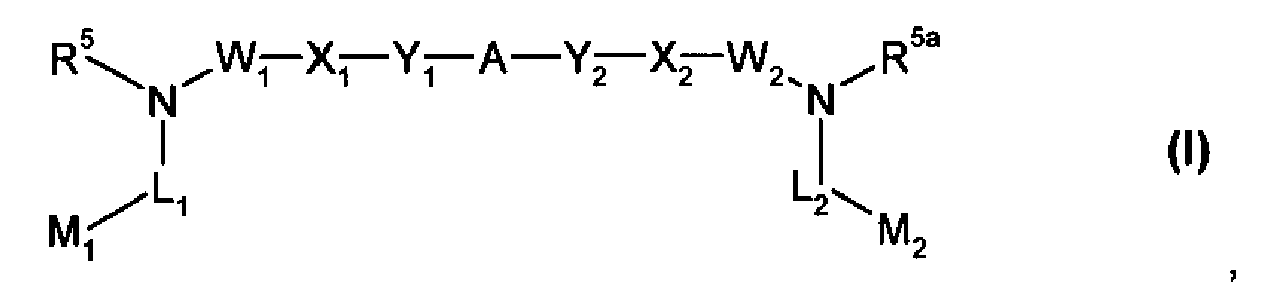
M1 and M2 are independently
C1-C8-haloalkyl, C3-C15-carbocyclic group, C1-C8-alkylcarbonyl, C1-C8-alkoxycarbonyl, a C6-C15-membered aromatic carbocyclic group, a 4- to 14-membered heterocyclic group, a C1-C8-alkyl substituted by a 4- to 14-membered heterocyclic group, and a C1-C8-alkyl substituted by a C8-C15-membered aromatic carbocyclic group, or
R1 and R2, with the nitrogen atom to which they are attached, form a C3-C14-membered heterocyclic group optionally substituted by R14, or
R3 and R4, with the nitrogen atom to which they are attached, form a C3-C14-membered heterocyclic group optionally substituted by R14;
L1 and L2 are independently selected from:
W1 and W2 are independently selected from C0-C8-alkylene;
X1 and X2 are independently selected from a 4- to 14-membered heterocyclic group; Y1 and Y2 are independently -C0-C8-alkylene-; or C1-C8-alkylamino;
A is selected from a C6-C15-membered aromatic carbocyclic group, -CONR11a-(C1-C6-alkylene)-NR11aCO-, -CO-(C1-C8-alkylene)-CO-, -CO-(C1-C8-alkenylene)-CO-, - (C=O), -CO-(C0-C8-alkylene)-Z-(C0-C8-alkylene)-CO-, -CO NR11a-(C0-C8-alkylene)-Z-(C0-C8-alkylene)- NR11aCO-, C3-C15-carbocyclic group and a 4- to 14-membered heterocyclic group;
Z is selected from C6-C15-membered aromatic carbocyclic group, C3-C15-carbocyclic
group and a 4- to 14-membered heterocyclic group;
T is selected from H, halogen, C1-C8-alkyl, C1-C8-haloalkyl, C1-C8-haloalkoxy, C3-C15-carbocyclic group, nitro, cyano, a C6-C15-membered aromatic carbocyclic group, a and a C1-C8-alkyl substituted by a C6-C15-membered aromatic carbocyclic group;
wherein each C6-C15-membered aromatic carbocyclic group and each 4- to 14-membered
heterocyclic group or 5- to 14-membered heterocyclic group, unless otherwise specified is independently optionally substituted by one or more groups selected from OH, C1-C8-alkoxy, C1-C8-alkyl, halogen, SO2NR11R12, hydroxyC1-C8-alkoxy optionally substituted by hydroxyl, (C0-C4-alkylene)CONR11R12, (C0-C4-alkylene)-N=C(NR11R12)2, -O-(C1-C4-alkylene)-N=C(NR11R12)2, -O-(C1-C4-alkylene)-CONR11R12, C7-C10-aralkoxy, C7-C10-aralkyl, SH, S(C1-C8-alkylene), SO2 (C1-C8-alkylene), SO(C1-C8-alkylene), NR11R12, NR11(C3-C12-carbocyclic group) where the carbocyclic group is optionally substituted by halogen or C1-C8-alkyl, R15, a C1-C8-alkyl substituted by R15, R16, a C1-C8-alkyl substituted by R16, O(C1-C8-alkylene)-NR11-(C=O)O-(C0-C4-alkylene)-R15, cyano, oxo, carboxy, nitro, C1-C8-alkylcarbonyl, hydroxy-C1-C8-alkyl, C1-C8-haloalkyl, amino-C1-C8-alkyl, amino(hydroxy)C1-C8-alkyl and C1-C8-alkoxy optionally substituted by aminocarbonyl, where R15 is a C6-C15 membered aromatic carbocyclic group, optionally substituted by OH, C1-C8-alkoxy, C1-C8-alkyl, halogen and C1-C8-haloalkyl, R16 is a 4- to 14-membered heterocyclic group, optionally substituted by OH, C1-C8-alkoxy, C1-C8-alkyl, C6-C15-membered aromatic carbocyclic group, CO2H, (C=O)-3 to 14-membered heterocyclic group, halogen and C1-C8-haloalkyl; and
wherein each alkylene group, unless otherwise specified, is optionally substituted by
C1-C8-alkyl, halogen, C1-C8-alkoxy, carboxy, C1-C8-alkyl-carboxy, C1-C8-haloalkyl, C1-C8-haloalkoxy, C3-C15-carbocyclic group, C1-C8-alkylcarbonyl, C1-C8-alkoxycarbonyl, nitro, cyano, R15, a C1-C8-alkyl substituted by R15, R16 or a C1-C8-alkyl substituted by R16;
each R11 and R12, are independently selected from H, C1-C8-alkyl, C1-C8-haloalkyl, C3-C15-carbocyclic group, C6-C15-aromatic carbocyclic group and a 4- to 14-membered heterocyclic group optionally substituted by -COOH or C1-C8-alkyl, or R11 and R12, together with the nitrogen they are attached form, a 5- to 14-membered heterocyclic group optionally substituted by CO2H, C1-C8-alkyl, (C=O)-4-to 14-membered heterocyclic group or a C6-C15-membered aromatic carbocyclic group, when R11 or R12 are C1-C8-alkyl they may be optionally mono- or di-substituted by C5-C15-aromatic carbocyclic group, 5- to 14-membered heterocycic group, C1-C8-alkylamino optionally substituted by OH or a di(C1-C8-alkyl)amino optionally substituted by OH;
R11a is selected from H and C1-C8-alkyl; and
R14 is selected from H, halogen, C1-C8-alkyl, OH, C6C15-membered aromatic carbocyclic group, C7-C14-aralkyl, and O-C7-C14-aralkyl. - A compound of formula (I) according to Claim 1, or tautomers, or stereoisomers, or pharmaceutically acceptable salts thereof,
wherein
M1 and M2 are
L1 and L2 are independently selected from:
W1 and W2 are independently selected from C0-C8-alkylene;
X1 and X2 are independently selected from a 4- to 14-membered heterocyclic group; Y1 and Y2 are independently -C0-C8-alkylene- or C1-C8-alkylamino-;
A is selected from a C6-C15-membered aromatic carbocyclic group, -CONR11a-(C1-C8-alkylene )-NR11aCO-, -(C=O), -CO-(C1-C8-alkylene)-CO-, -CO-(C1-C8-alkenylene)-CO , -CO-(C0-C8-alkylene)-Z-(C0-C8-alkylene)-CO-, -CO NR11a-(C0-C8-alkylene)-Z-(C0-C8-alkylene)- NR11a-CO-, C3-C15-carbocyclic group and a 4- to 14-membered heterocyclic group;
Z is selected from C6-C15-membered aromatic carbocyclic group, C3-C15-carbocyclic group and a 4- to 14-membered heterocyclic group;
each R11 and R12, are independently selected from H, C1-C8-alkyl, C3-C15-carbocyclic group, C6-C15-aromatic carbocyclic group, or
R11 and R12, together with the nitrogen they are attached, form a 4- to 8-membered heterocyclic group optionally substituted by CO2H, C1-C4-alkyl, (C=O)-4 to 8-membered heterocyclic group or a C6-C10-membered aromatic carbocyclic group, when R11 or R12 are C1-C8-alkyl they may be optionally mono- or di-substituted by C6-C10-aromatic carbocyclic group, C3-C8-membered heterocyclic group, or a di(C1-C8-alkyl)amino optionally substituted by OH;
T is selected from H, halogen, C1-C8-alkyl, C1-C8-haloalkyl, C1-C8-haloalkoxy, C3-C15 carbocyclic group, nitro, cyano, a C6-C15-membered aromatic carbocyclic group, a and a C1-C8-alkyl substituted by a C6-C15-membered aromatic carbocyclic group;
wherein each C6-C15-membered aromatic carbocyclic group and each 4- to 14-membered
heterocyclic group, unless otherwise specified is independently optionally substituted by one or more groups selected from OH, C1-C8-alkoxy, C1-C8-alkyl, halogen, SO2NR11R12, hydroxyC1-C8-alkoxy, optionally substituted by hydroxyl, (C0-C4-alkylene)CONR11R12, (C0-C4-alkylene)N=C(NR11R12)2, -0-(C1-C4-alkylene)-N=C(NR11R12)2, -0-(C1-C4-alkylene)-CONR11R12, C7-C10-aralkoxy, C7-C10-aralkyl, SH, S(C1-C8-alkylene), SO2(C1-C8-alkylene), SO(C1-C8-alkylene), NR11R12, NR11(C3-C12-carbocyclic group) where the carbocyclic group is optionally substituted by halogen or C1-C8-alkyl, R15, a C1-C8-alkyl substituted by R15, R16, a C1-CB-alkyl substituted by R16, 0(C1-C8-alkylene)-NR11C(C=O)O-(C0-C4-alkylene)-R15, cyano, oxo, carboxy, nitro, C1-C8-alkylcarbonyl, hydroxy-C1-C8-alkyl, C1-C8-haloalkyl, amino-C1-C8-alkyl, amino(hydroxy)C1-C8-alkyl and C1-C8-alkoxy optionally substituted by aminocarbonyl, where R15 is a C6-C15-membered aromatic carbocyclic group, optionally substituted by OH, C1-C8-alkoxy, C1-C8-alkyl, halogen and C1-C8-haloalkyl, R16 is a 3- to 14-membered heterocyclic group, optionally substituted by OH, C1-C8-alkoxy, C1-C6-alkyl, C6-C15- membered aromatic carbocyclic group, CO2H, (C=O)-3-to 14-membered heterocyclic group, halogen and C1-C8-haloalkyl; and
R11a is H. - A compound according to Claim 1 or Claim 2, wherein A is selected from:

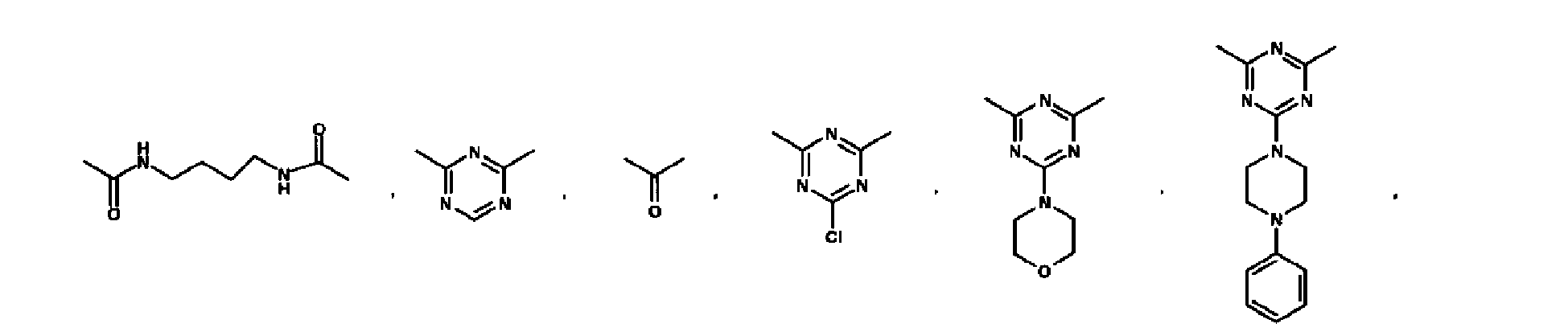


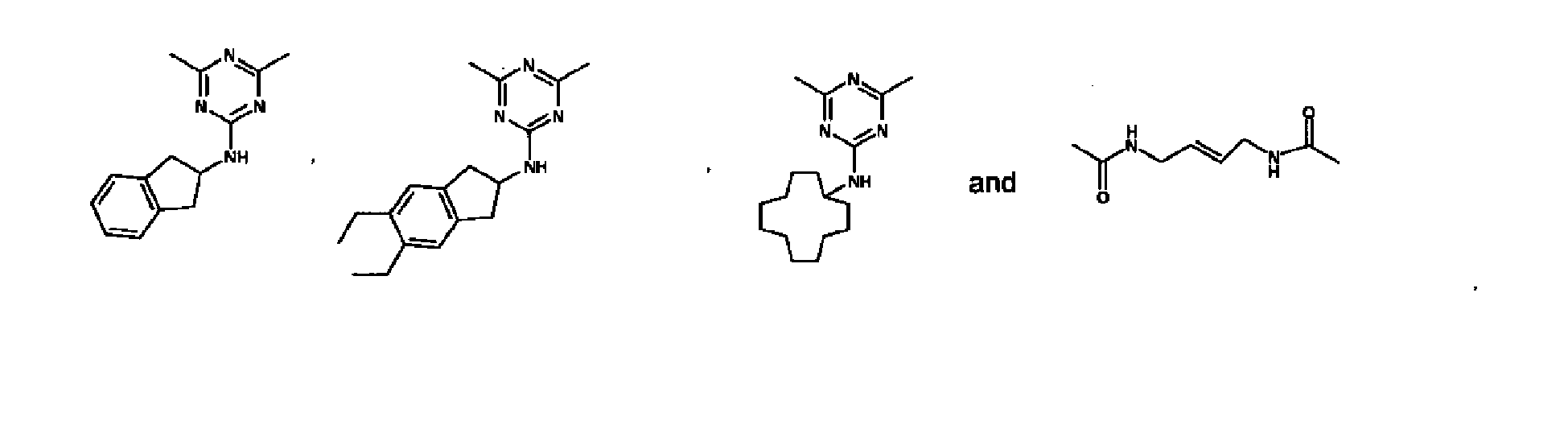
- A compound of formula (I) according to Claim 1, wherein the compound is of formula (Ia):

wherein A is selected from:
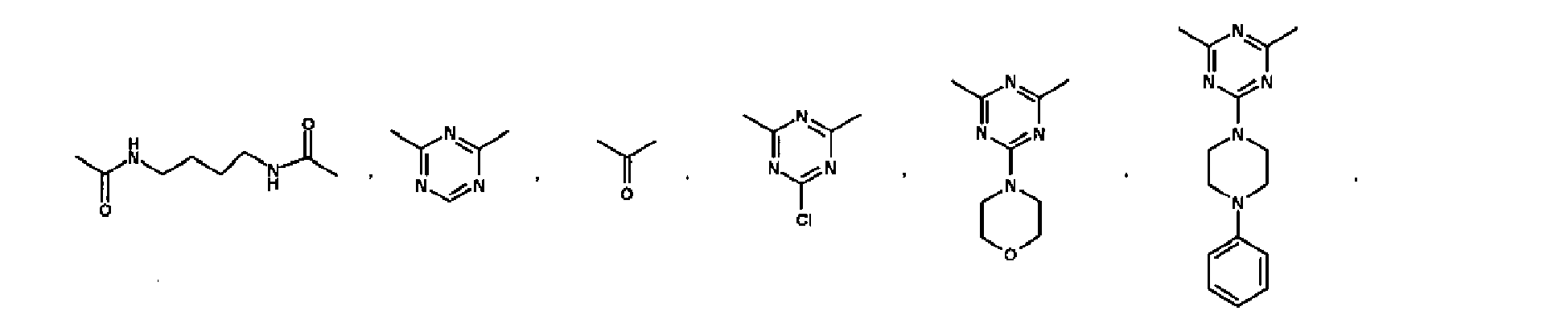


- A compound according to Claim 1, selected from
N,N'-(1,1'-(1,4-phenylenebis(methylene))bis(azanediyl) bis(oxomethylene)bis(piperidine-4,1-diyl))bis(azanediyl) bis(iminomethylene)bis(3,5-diamino-6-chloropyrazine-2-carboxamide);
N, N'-(1,1'-(1,4-phenylenebis(azanediyl))bis(oxomethylene)bis(piperidine-4,1-diyl))bis(azanediyl)bis(iminomethylene)bis(3,5-diamino-6-chloropyrazine-2-carboxamide);
N,N'-(1,1'-(cyclohexane-1,3-diylbis(methylene))bis(azanediyl)bis (oxomethylene)bis(piperidine-4,1-diyl))bis(azanediyl)bis (iminomethylene)bis(3,5-diamino-6-chloropyrazine-2-carboxamide);
N,N'-(1,1'-(1,4-phenylene)bis(oxomethylene)bis(piperidine-4,1-diyl))bis(azanediyl)bis(iminomethylene)bis(3,5-diamino-6-chloropyrazine-2-carboxamide);
N,N'-(1,1'-(6-chloro-1,3,5-triazine-2,4-diyl)bis(piperidine-4,1-diyl))bis(azanediyl)bis(iminomethylene)bis(3,5-diamino-6-chloropyrazine-2-carboxamide);
N,N'-(1,1'-carbonylbis(piperidine-4,1-diyl)bis(azanediyl))bis (iminomethylene)bis(3,5-diamino-6-chloropyrazine-2-carboxamide);
N,N'-(1,1'-(1,3,5-triazine-2,4-diyl)bis(piperidine-4,1-diyl))bis(azanediyl) bis(iminomethylene)bis(3,5-diamino-6-chloropyrazine-2-carboxamide);
N,N'-(1,1'-(6-(4-phenylpiperazin-1-yl)-1,3,5-triazine-2,4-diyl)bis(piperidine-4,1-diyl))bis(azanediyl)bis(iminomethylene)bis(3,5-diamino-6-chloropyrazine-2-carboxamide);
N,N'-(1,1'-(6-morpholino-1,3, 5-triazine-2,4-diyl)bis(piperidine-4,1-diyl))bis(azanediyl)bis(iminomethylene)bis(3,5-diamino-6-chloropyrazine-2-carboxamide);
N,N'-(1,1'-(6-(3-morpholinopropylamino)-1,3,5-triazine-2,4-diyl)bis(piperidine-4,1-diyl))bis(azanediyl)bis(iminomethylene)bis(3,5-diamino-6-chloropyrazine-2-carboxamide);
N,N'-(1,1'-(6-(2-(bis(2-hydroxyethyl)amino)ethylamino)-1,3,5-triazine-2,4-diyl)bis(piperidine-4,1-diyl))bis(azanediyl)bis(iminomethylene)bis(3,5-diamino-6-chloropyrazine-2-carboxamide);
N,N'-(1,1'-(6-(4-(azepane-1-carbonyl)piperidin-1-yl)-1,3,5-triazine-2,4-diyl)bis(piperidine-4,1-diyl))bis(azanediyl)bis(iminomethylene)bis(3,5-diamino-6-chloropyrazine-2-carboxamide);
N, N'-(1,1'-(6-(3-(dibutylamino)propylamino)-1,3,5-triazine-2,4-diyl)bis(piperidine-4,1-diyl))bis(azanediyl)bis(iminomethylene)bis(3,5-diamino-6-chloropyrazine-2-carboxamide);
N,N'-(1,1'-(6-(2-(pyridin-4-yl)ethylamino)-1,3,5-triazine-2,4-diyl)bis(piperidine-4,1-diyl))bis(azanediyl)bis(iminomethylene)bis(3,5-diamino-6-chloropyrazine-2-carboxamide);
N,N'-(1,1'-(6-(hexylamino)-1,3,5-triazine-2,4-diyl)bis(piperidine-4,1-diyl))bis(azanediyl)bis(iminomethylene)bis(3,5-diamino-5-chloropyrazine-2-carboxamide); 1-(4,6-bis(4-(3-(3,5-diamino-6-chloropyrazine-2-carbonyl)guanidino)piperidin-1-yl)-1,3,5-triazin-2-yl)piperidine-4-carboxylic acid;
N,N'-(1,1'-(6-(4-methy)piperazin-1-yl)-1,3,5-triazine-2,4-diyl)bis(piperidine-4,1-diyl))bis(azanediyl)bis(iminomethylene)bis(3,5-diamino-6-chloropyrazine-2-carboxamide);
N,N'-(1,1'-(6-(dipropylamino)-1,3,5-triazine-2,4-diyl)bis(piperidine-4,1-diyl))bis(azanediyl)bis(iminomethylene)bis(3,5-diamino-6-chloropyrazine-2-carboxamide);
N,N'-(1,1'-(6-(cyclohexylamino)-1,3,5-triazine-2,4-diyl)bis(piperidine-4,1-diyl))bis(azanediyl)bis(iminomethylene)bis(3,5-diamino-6-chloropyrazine-2-carboxamide);
N,N'-(1,1'-(6-(azepan-1-yl)-1,3,5-triazine-2,4-diyl)bis(piperidine-4,1-diyl))bis(azanediyl)bis(iminomethylene)bis(3,5-diamino-6-chloropyrazine-2-carboxamide);
N,N'-(1,1'-(6-(cyclohexylamino)-1,3,5-triazine-2,4-diyl)bis(piperidine-4,1-diyl)) bis(azanediyl)bis(iminomethylene)bis(3,5-diamino-6-chloropyrazine-2-carboxamide));
N,N'-(1,1'-(6-(cyclooctylamino)-1,3,5-triazine-2,4-diyl)bis(piperidine-4,1-diyl)) bis(azanediyl)bis(iminomethylene)bis(3,5-diamino-6-chloropyrazine-2-carboxamide);
N,N'-(1,1'-(Butane-1,4-diylbis(azanediyl))bis(oxomethylene)bis(piperidine-4,1-diyl))bis(azanediyl)bis(aminomethan-1-yl-1-ylidene)bis(3,5-diamino-6-chloropyrazine-2-carboxamide);
N,N'-(1,1'-(6-(phenylamino)-1,3,5-triazine-2,4-diyl)bis(piperidine-4,1-diyl)) bis(azanediyl)bis(iminomethylene)bis(3,5-diamino-6-chloropyrazine-2-carbox amide);
N,N'-(1,1'-(6-(5,6-diethyl-2,3-dihydro-1 H-inden-2-ylamino)-1,3,5-triazine-2,4-diyl)bis (piperidine-4,1-diyl))bis(azanediyl)bis(aminomethan-1-yl-1-ylidene)bis(3,5-diamino-6-chloropyrazine-2-carboxamide);
N,N'-(1,1'-(6-(Dimethylamino)-1,3,5-triazine-2,4-diyl)bis(piperidine-4,1-diyl)) bis(azanediyl)bis (aminomethan-1-yl-1-ylidene)bis(3,5-diamino-6-chloropyrazine-2-carboxamide);
N,N'-(1,1'-(6-(2,3-dihydro-1H-inden-2-ylamino)-1,3,5-triazine-2,4-diyl)bis(piperidine-4,1-diyl))bis(azanediyl)bis(aminomethan-1-yl-1-ylidene)bis(3,5-diamino-6-chloropyrazine-2-carboxamide);
N,N'-(1,1'-(6-(2,2-diphenylethylamino)-1,3,5-triazine-2,4-diyl)bis(piperidine-4,1-diyl))bis(azanediyl)bis(aminomethan-1-yl-1-ylidene)bis(3,5-diamino-6-chloropyrazine-2-carboxamide);
N,N'-(1,1'-(6-(cyclododecylamino)-1,3,5-triazine-2,4-diyl)bis(piperidine-4,1-diyl))bis(azanediyl)bis(aminomethan-1-yl-1-ylidene)bis(3,5-diamino-6-chloropyrazine-2-carboxamide); and
Benzyl (1,1'-(Z)-but-2-ene-1,4-diylbis(azanediyl)bis(oxomethylene)bis (piperidine-4,1-diyl))bis(azanediyl)bis((3,5-diamino-6-chloropyrazine-2-carbox amido)methan-1-yl-1-ylidene)dicarbamate. - A compound according to any one of Claims 1-5 for use as a pharmaceutical.
- Pharmaceutical compositions comprising a compound according to any one of Claims 1-5.
- The use of a compound according to any one of Claims 1-5, in the manufacture of a medicament for treatment of a disease treatable by the blockade of an epithelial sodium channel.
- The use of a compound according to any one of Claims 1-5, in the manufacture of a medicament for treatment of an inflammatory or allergic condition, particularly an inflammatory or obstructive airways disease.
- The use of a compound according to any of Claims 1-5, in the manufacture of a medicament for the treatment of an inflammatory or allergic condition selected from cystic fibrosis, primary ciliary dyskinesia, chronic bronchitis, chronic obstructive pulmonary disease, asthma, respiratory tract infections, lung carcinoma, xerostomia, and keratoconjunctivitis.
- A combination of a compound according to any one of Claims 1-5 with an anti-inflammatory, bronchodilatory, antihistamine or anti-tussive drug substance.
- A process for the preparation of compounds of formula (I):

M1, M2, L1, L2, NR5, NR5a, W1, W2, X1, X2, Y1, Y2 and A are as defined hereinbefore, which
comprises the steps of:(i) reacting a compound of formula (IV):wherein M* is M1 or M2;L* is L1 or L2; andM1, M2, L1, L2 and T are as hereinbefore defined, with compounds of formula (V):
optionally in the presence of a base, e.g., an organic base; and in an organic solvent, e.g., a non-protic dipolar solvent; and(ii) recovering the resultant compound of formula (I), in free or pharmaceutically acceptable salt form.
Priority Applications (1)
| Application Number | Priority Date | Filing Date | Title |
|---|---|---|---|
| EP11152559A EP2332933A1 (en) | 2007-05-07 | 2008-05-05 | Epithelial sodium channel (ENaC) inhibitors |
Applications Claiming Priority (3)
| Application Number | Priority Date | Filing Date | Title |
|---|---|---|---|
| EP07107654 | 2007-05-07 | ||
| EP08759419A EP2155721B1 (en) | 2007-05-07 | 2008-05-05 | Organic compounds |
| EP11152559A EP2332933A1 (en) | 2007-05-07 | 2008-05-05 | Epithelial sodium channel (ENaC) inhibitors |
Related Parent Applications (1)
| Application Number | Title | Priority Date | Filing Date |
|---|---|---|---|
| EP08759419.8 Division | 2008-05-05 |
Publications (1)
| Publication Number | Publication Date |
|---|---|
| EP2332933A1 true EP2332933A1 (en) | 2011-06-15 |
Family
ID=38581916
Family Applications (2)
| Application Number | Title | Priority Date | Filing Date |
|---|---|---|---|
| EP11152559A Withdrawn EP2332933A1 (en) | 2007-05-07 | 2008-05-05 | Epithelial sodium channel (ENaC) inhibitors |
| EP08759419A Active EP2155721B1 (en) | 2007-05-07 | 2008-05-05 | Organic compounds |
Family Applications After (1)
| Application Number | Title | Priority Date | Filing Date |
|---|---|---|---|
| EP08759419A Active EP2155721B1 (en) | 2007-05-07 | 2008-05-05 | Organic compounds |
Country Status (31)
| Country | Link |
|---|---|
| US (1) | US8318935B2 (en) |
| EP (2) | EP2332933A1 (en) |
| JP (1) | JP5244904B2 (en) |
| KR (1) | KR20100005730A (en) |
| CN (1) | CN101687851B (en) |
| AR (1) | AR066458A1 (en) |
| AT (1) | ATE499363T1 (en) |
| AU (1) | AU2008248598B2 (en) |
| BR (1) | BRPI0811562A2 (en) |
| CA (1) | CA2685546A1 (en) |
| CL (1) | CL2008001301A1 (en) |
| CO (1) | CO6290667A2 (en) |
| CR (1) | CR11091A (en) |
| DE (1) | DE602008005140D1 (en) |
| EA (1) | EA200901489A1 (en) |
| EC (1) | ECSP099718A (en) |
| ES (1) | ES2361595T3 (en) |
| GT (1) | GT200900289A (en) |
| HN (1) | HN2009003214A (en) |
| IL (1) | IL201828A0 (en) |
| MA (1) | MA31400B1 (en) |
| MX (1) | MX2009012077A (en) |
| NZ (1) | NZ580737A (en) |
| PE (1) | PE20090733A1 (en) |
| PL (1) | PL2155721T3 (en) |
| PT (1) | PT2155721E (en) |
| SV (1) | SV2009003406A (en) |
| TN (1) | TN2009000469A1 (en) |
| TW (1) | TWI351402B (en) |
| WO (1) | WO2008135557A1 (en) |
| ZA (1) | ZA200907491B (en) |
Families Citing this family (32)
| Publication number | Priority date | Publication date | Assignee | Title |
|---|---|---|---|---|
| US6858615B2 (en) | 2002-02-19 | 2005-02-22 | Parion Sciences, Inc. | Phenyl guanidine sodium channel blockers |
| ES2485642T3 (en) | 2008-02-26 | 2014-08-14 | Parion Sciences, Inc. | Poly-aromatic sodium channel blockers |
| KR20110085768A (en) | 2010-01-21 | 2011-07-27 | 삼성전자주식회사 | An electronic system comprising a CMOS image sensor, a data readout method of the image sensor, and the image sensor |
| US9050339B2 (en) | 2010-09-17 | 2015-06-09 | Novartis Ag | Pyrazine derivatives as ENaC blockers |
| US8372845B2 (en) * | 2010-09-17 | 2013-02-12 | Novartis Ag | Pyrazine derivatives as enac blockers |
| AR086745A1 (en) | 2011-06-27 | 2014-01-22 | Parion Sciences Inc | 3,5-DIAMINO-6-CHLORINE-N- (N- (4- (4- (2- (HEXIL (2,3,4,5,6-PENTAHYDROXIHEXIL)) AMINO) ETOXI) PHENYL) BUTIL) CARBAMIMIDOIL) PIRAZINA -2-CARBOXAMIDE |
| KR102006612B1 (en) * | 2011-11-02 | 2019-08-02 | 베링거 인겔하임 인터내셔날 게엠베하 | Heterocyclic compounds, medicaments containing said compounds, use thereof and processes for the preparation thereof |
| CA2854221A1 (en) | 2011-11-02 | 2013-05-10 | Boehringer Ingelheim International Gmbh | Novel process for the preparation of acylguanidines and acylthioureas |
| US8859559B2 (en) | 2011-12-20 | 2014-10-14 | Boehringer Ingelheim International Gmbh | Substituted pyrazines and their use in the treatment of disease |
| US10774132B2 (en) | 2012-01-09 | 2020-09-15 | The Scripps Research Instittue | Ultralong complementarity determining regions and uses thereof |
| EP2861577B1 (en) | 2012-05-25 | 2017-01-04 | Boehringer Ingelheim International GmbH | Tertiary amines, medicaments containing said amines, use thereof and processes for the preparation thereof |
| US8841309B2 (en) | 2012-09-24 | 2014-09-23 | Boehringer Ingelheim International Gmbh | Substituted pyrazines and their use in the treatment of disease |
| EP2914248B2 (en) | 2012-11-02 | 2023-10-18 | Vertex Pharmaceuticals Incorporated | Pharmaceutical compositions for the treatment of cftr mediated diseases |
| CA2895512C (en) | 2012-12-17 | 2021-10-19 | Parion Sciences, Inc. | Chloro-pyrazine carboxamide derivatives useful for the treatment of diseases favoured by insufficient mucosal hydration |
| CN108658876A (en) | 2012-12-17 | 2018-10-16 | 帕里昂科学公司 | The chloro- N- of 3,5- diamino -6- (N- (4- phenyl butyls) carbonamidine base) pyrazine -2- benzamide compounds |
| EP2991981B1 (en) | 2013-04-30 | 2017-03-01 | Boehringer Ingelheim International GmbH | Diaminopyrazine compounds, medicaments containing said compounds, use thereof and processes for the preparation thereof |
| AU2014284268A1 (en) * | 2013-07-02 | 2016-01-07 | The California Institute For Biomedical Research | Compounds for treatment of cystic fibrosis |
| US9102633B2 (en) | 2013-12-13 | 2015-08-11 | Parion Sciences, Inc. | Arylalkyl- and aryloxyalkyl-substituted epithelial sodium channel blocking compounds |
| UY36034A (en) | 2014-03-18 | 2015-09-30 | Astrazeneca Ab | DERIVATIVES OF 3,5-DIAMINO-6-CHLORINE-PIRAZINA-2-CARBOXAMIDE AND PHARMACEUTICALLY ACCEPTABLE SALTS OF THESE |
| KR20160137543A (en) | 2014-03-27 | 2016-11-30 | 노파르티스 아게 | Spray-dried solid-in-oil-in-water dispersions for inhalation of active pharmaceutical ingredients |
| GB201412545D0 (en) * | 2014-07-15 | 2014-08-27 | Univ Manchester The And Manchester Metropolitan University | Enzymatic processes and uses |
| HK1246718A1 (en) * | 2015-01-07 | 2018-09-14 | 斯克利普斯研究所 | Compounds for treatment of cystic fibrosis |
| EP3245199B1 (en) * | 2015-01-12 | 2020-01-01 | Boehringer Ingelheim International GmbH | Substituted benzimidazolium compounds useful in the treatment of respiratory diseases |
| WO2016113169A1 (en) * | 2015-01-12 | 2016-07-21 | Boehringer Ingelheim International Gmbh | Tetra- and pentasubstituted benzimidazolium compounds useful in the treatment of respiratory diseases |
| US9932324B2 (en) * | 2015-01-12 | 2018-04-03 | Boehringer Ingelheim International Gmbh | Substituted benzimidazolium compounds useful in the treatment of respiratory diseases |
| US10291868B2 (en) * | 2016-01-29 | 2019-05-14 | SK Hynix Inc. | Image sensing device |
| GB201610854D0 (en) | 2016-06-21 | 2016-08-03 | Entpr Therapeutics Ltd | Compounds |
| GB201619694D0 (en) | 2016-11-22 | 2017-01-04 | Entpr Therapeutics Ltd | Compounds |
| WO2018175302A1 (en) | 2017-03-20 | 2018-09-27 | Sienna Biopharmaceuticals, Inc. | Polymer conjugates targeting c-src with reduced exposure |
| WO2018175340A1 (en) | 2017-03-20 | 2018-09-27 | Sienna Biopharmaceuticals, Inc. | Reduced exposure conjugates modulating therapeutic targets |
| GB201717051D0 (en) | 2017-10-17 | 2017-11-29 | Enterprise Therapeutics Ltd | Compounds |
| GB201808093D0 (en) | 2018-05-18 | 2018-07-04 | Enterprise Therapeutics Ltd | Compounds |
Citations (116)
| Publication number | Priority date | Publication date | Assignee | Title |
|---|---|---|---|---|
| US3544571A (en) | 1968-09-04 | 1970-12-01 | Merck & Co Inc | Process for making pyrazinoylthiourea compounds |
| US3714357A (en) | 1968-07-15 | 1973-01-30 | Rech D Applic Scient Sogeras S | Pharmaceutical compositions comprising quinuclidinol derivatives |
| EP0017152A1 (en) | 1979-03-27 | 1980-10-15 | Merck & Co. Inc. | Novel heterocyclic substituted pyrazinoylguanidines, processes for preparing and a pharmaceutical composition containing the same |
| EP0424021A1 (en) | 1989-10-19 | 1991-04-24 | Pfizer Limited | Antimuscarinic bronchodilators |
| WO1992019594A1 (en) | 1991-05-02 | 1992-11-12 | Smithkline Beecham Corporation | Pyrrolidinones |
| JPH0525045B2 (en) | 1985-08-09 | 1993-04-09 | Noritoshi Nakabachi | |
| WO1993018007A1 (en) | 1992-03-13 | 1993-09-16 | Tokyo Tanabe Company Limited | Novel carbostyril derivative |
| WO1993019750A1 (en) | 1992-04-02 | 1993-10-14 | Smithkline Beecham Corporation | Compounds useful for treating allergic or inflammatory diseases |
| WO1993019751A1 (en) | 1992-04-02 | 1993-10-14 | Smithkline Beecham Corporation | Compounds useful for treating inflammatory diseases and inhibiting production of tumor necrosis factor |
| WO1993019749A1 (en) | 1992-04-02 | 1993-10-14 | Smithkline Beecham Corporation | Compounds useful for treating allergic and inflammatory diseases |
| WO1998018796A1 (en) | 1996-10-28 | 1998-05-07 | Novartis Ag | Naphthyridine derivatives |
| WO1999016766A1 (en) | 1997-10-01 | 1999-04-08 | Kyowa Hakko Kogyo Co., Ltd. | Benzodioxole derivatives |
| WO1999064035A1 (en) | 1998-06-08 | 1999-12-16 | Advanced Medicine, Inc. | β2-ADRENERGIC RECEPTOR AGONISTS |
| WO2000000531A1 (en) | 1998-06-30 | 2000-01-06 | The Dow Chemical Company | Polymer polyols and a process for the production thereof |
| WO2000066559A1 (en) | 1999-05-04 | 2000-11-09 | Schering Corporation | Piperidine derivatives useful as ccr5 antagonists |
| WO2000066558A1 (en) | 1999-05-04 | 2000-11-09 | Schering Corporation | Piperazine derivatives useful as ccr5 antagonists |
| WO2000075114A1 (en) | 1999-06-04 | 2000-12-14 | Novartis Ag | Beta2-adrenoceptor agonists |
| US6166037A (en) | 1997-08-28 | 2000-12-26 | Merck & Co., Inc. | Pyrrolidine and piperidine modulators of chemokine receptor activity |
| WO2001004118A2 (en) | 1999-07-14 | 2001-01-18 | Almirall Prodesfarma S.A. | Quinuclidine derivatives and their use as muscarinic m3 receptor ligands |
| WO2001005773A1 (en) * | 1999-07-19 | 2001-01-25 | The University Of North Carolina At Chapel Hill | Conjugates of sodium channel blockers and methods of using the same |
| WO2001013953A2 (en) | 1999-08-21 | 2001-03-01 | Byk Gulden Lomberg Chemische Fabrik Gmbh | Synergistic combination of pde inhibitors and beta 2 adrenoceptor agonist |
| WO2001042193A1 (en) | 1999-12-08 | 2001-06-14 | Theravance, Inc. | β2-ADRENERGIC RECEPTOR AGONISTS |
| WO2001083462A1 (en) | 2000-04-27 | 2001-11-08 | Boehringer Ingelheim Pharma Kg | Novel, slow-acting betamimetics, a method for their production and their use as medicaments |
| WO2002000652A1 (en) | 2000-06-27 | 2002-01-03 | Laboratorios S.A.L.V.A.T., S.A. | Carbamates derived from arylalkylamines |
| WO2002000679A2 (en) | 2000-06-28 | 2002-01-03 | Novartis Ag | 9.alpha.-chloro-6.alpha.-fluoro-17.alpha.-hydroxy-16-methyl-17-beta-methoxycarbonyl-androst-1,4-dienes esterified in position 17.alpha. by a cyclic acyl group |
| WO2002010143A1 (en) | 2000-07-28 | 2002-02-07 | Schering Aktiengesellschaft | Non-steroidal inflammation inhibitors |
| WO2002012266A1 (en) | 2000-08-05 | 2002-02-14 | Glaxo Group Limited | 17.beta.-carbothioate 17.alpha.-arylcarbonyloxyloxy androstane derivative as anti-inflammatory agents |
| WO2002042298A1 (en) | 2000-11-21 | 2002-05-30 | Novartis Ag | Aminothiazoles and their use as adenosine receptor antagonists |
| WO2002051841A1 (en) | 2000-12-22 | 2002-07-04 | Almirall Prodesfarma Ag | Quinuclidine carbamate derivatives and their use as m3 antagonists |
| WO2002053564A2 (en) | 2000-12-28 | 2002-07-11 | Almirall Prodesfarma Ag | Quinuclidine derivatives and their use as m3 antagonists |
| WO2002066422A1 (en) | 2001-02-14 | 2002-08-29 | Glaxo Group Limited | Phenethanolamine derivatives for treatment of respiratory diseases |
| WO2002070490A1 (en) | 2001-03-08 | 2002-09-12 | Glaxo Group Limited | Agonists of beta-adrenoceptors |
| WO2002076933A1 (en) | 2001-03-22 | 2002-10-03 | Glaxo Group Limited | Formailide derivatives as beta2-adrenoreceptor agonists |
| WO2002088167A1 (en) | 2001-04-30 | 2002-11-07 | Glaxo Group Limited | Anti-inflammatory 17.beta.-carbothioate ester derivatives of androstane with a cyclic ester group in position 17.alpha |
| WO2002100879A1 (en) | 2001-06-12 | 2002-12-19 | Glaxo Group Limited | Novel anti-inflammatory 17.alpha.-heterocyclic-esters of 17.beta.carbothioate androstane derivatives |
| WO2003000840A2 (en) | 2001-06-21 | 2003-01-03 | Diversa Corporation | Nitrilases |
| WO2003024439A1 (en) | 2001-09-14 | 2003-03-27 | Glaxo Group Limited | Phenethanolamine derivatives for treatment of respiratory diseases |
| WO2003033495A1 (en) | 2001-10-17 | 2003-04-24 | Ucb, S.A. | Quinuclidine derivatives, processes for preparing them and their uses as m2 and/or m3 muscarinic receptor inhibitors |
| WO2003035668A2 (en) | 2001-10-20 | 2003-05-01 | Glaxo Group Limited | Novel anti-inflammatory androstane derivatives -17-carboxy-lactone substituted steroids with an aryl-carboxylic ester in position 17.alpha |
| WO2003039544A1 (en) | 2001-11-05 | 2003-05-15 | Novartis Ag | Naphtyridine derivatives, their preparation and their use as phosphodiesterase isoenzyme 4 (pde4) inhibitors |
| WO2003042164A1 (en) | 2001-11-13 | 2003-05-22 | Theravance, Inc | Aryl aniline beta-2 adrenergic receptor agonists |
| WO2003042160A1 (en) | 2001-11-13 | 2003-05-22 | Theravance, Inc. | Aryl aniline beta-2 adrenergic receptor agonists |
| WO2003048181A1 (en) | 2001-12-01 | 2003-06-12 | Glaxo Group Limited | 17.alpha. -cyclic esters of 16-methylpregnan-3,20-dione as anti-inflammatory agents |
| WO2003053966A2 (en) | 2001-12-20 | 2003-07-03 | Laboratorios S.A.L.V.A.T., S.A. | 1-alkyl-1-azoniabicyclo [2.2.2] octane carbamate derivatives and their use as muscarinic receptor antagonists |
| WO2003062259A2 (en) | 2002-01-21 | 2003-07-31 | Glaxo Group Limited | Non-aromatic 17.alpha.-esters of androstane-17.beta.-carboxylate esters as anti-inflammatory agents |
| WO2003064445A1 (en) | 2002-01-31 | 2003-08-07 | Glaxo Group Limited | 17-alpha-heterocyclic esters of androstane derivatives having anti-inflammatory activity |
| WO2003072592A1 (en) | 2002-01-15 | 2003-09-04 | Glaxo Group Limited | 17.alpha-cycloalkyl/cycloylkenyl esters of alkyl-or haloalkyl-androst-4-en-3-on-11.beta.,17.alpha.-diol 17.beta.-carboxylates as anti-inflammatory agents |
| WO2003072539A1 (en) | 2002-02-28 | 2003-09-04 | Glaxo Group Limited | Phenethanolamine derivatives for treatment of respiratory diseases |
| WO2003082787A1 (en) | 2002-03-26 | 2003-10-09 | Boehringer Ingelheim Pharmaceuticals, Inc. | Glucocorticoid mimetics, methods of making them, pharmaceutical compositions, and uses thereof |
| WO2003082280A1 (en) | 2002-03-26 | 2003-10-09 | Boehringer Ingelheim Pharmaceuticals, Inc. | Glucocorticoid mimetics, methods of making them, pharmaceutical compositions, and uses thereof |
| WO2003087094A2 (en) | 2002-04-16 | 2003-10-23 | Almirall Prodesfarma Ag | Pyrrolidinium derivatives as antagonists of m3 muscarinic receptors |
| WO2003086294A2 (en) | 2002-04-11 | 2003-10-23 | Merck & Co., Inc. | 1h-benzo[f]indazol-5-yl derivatives as selective glucocorticoid receptor modulators |
| WO2003091204A1 (en) | 2002-04-25 | 2003-11-06 | Glaxo Group Limited | Phenethanolamine derivatives |
| WO2003099807A1 (en) | 2002-05-29 | 2003-12-04 | Almirall Prodesfarma S.A. | New indolylpiperidine derivatives as potent antihistaminic and antiallergic agents |
| WO2003099764A1 (en) | 2002-05-28 | 2003-12-04 | Theravance, Inc. | ALKOXY ARYL β2 ADRENERGIC RECEPTOR AGONISTS |
| WO2003101932A2 (en) | 2002-05-29 | 2003-12-11 | Boehringer Ingelheim Pharmaceuticals, Inc. | Glucocorticoid mimetics, methods of making them, pharmaceutical compositions, and uses thereof |
| WO2003104204A1 (en) | 2002-06-05 | 2003-12-18 | Merck Patent Gmbh | Pyridazine derivatives |
| WO2003104195A1 (en) | 2002-06-06 | 2003-12-18 | Boehringer Ingelheim Pharmaceuticals, Inc. | 4-(aryl or heteroaryl) -2-butylamine derivatives and their use as glucocorticoid ligans |
| WO2003104205A1 (en) | 2002-06-10 | 2003-12-18 | Merck Patent Gmbh | Aryloximes |
| WO2004000839A1 (en) | 2002-06-19 | 2003-12-31 | Merck Patent Gmbh | Thiazole derivatives as phosphodiesterase iv inhibitors |
| WO2004000814A1 (en) | 2002-06-25 | 2003-12-31 | Merck Frosst Canada & Co. | 8-(biaryl) quinoline pde4 inhibitors |
| WO2004005229A1 (en) | 2002-07-08 | 2004-01-15 | Pfizer Products Inc. | Modulators of the glucocorticoid receptor |
| WO2004005285A1 (en) | 2002-07-02 | 2004-01-15 | Almirall Prodesfarma Ag | New quinuclidine amide derivatives |
| WO2004005258A1 (en) | 2002-07-02 | 2004-01-15 | Merck Frosst Canada & Co. | Di-aryl-substituted-ethane pyridone pde4 inhibitors |
| WO2004016601A1 (en) | 2002-08-09 | 2004-02-26 | Novartis Ag | Benzothiazole derivatives having beta-2-adrenoreceptor agonist activity |
| WO2004016578A2 (en) | 2002-07-25 | 2004-02-26 | Glaxo Group Limited | Arylethanolamine beta2-adrenoreceptor agonist compounds |
| WO2004018465A2 (en) | 2002-08-17 | 2004-03-04 | Altana Pharma Ag | Benzonaphthyridines with pde 3/4 inhibiting activity |
| WO2004018429A2 (en) | 2002-08-21 | 2004-03-04 | Boehringer Ingelheim Pharmaceuticals, Inc. | Substituted hihydroquinolines as glucocorticoid mimetics, methods of making them, pharmaceutical compositions, and uses thereof |
| WO2004018431A2 (en) | 2002-08-17 | 2004-03-04 | Altana Pharma Ag | Novel phenanthridines |
| WO2004018450A1 (en) | 2002-08-10 | 2004-03-04 | Altana Pharma Ag | Piperidine-n-oxide-derivatives |
| WO2004018422A1 (en) | 2002-08-23 | 2004-03-04 | Ranbaxy Laboratories Limited | Fluoro and sulphonylamino containing 3,6-disubstituted azabicyclo (3.1.0) hexane derivatives as muscarinic receptor antagonists |
| WO2004018449A1 (en) | 2002-08-10 | 2004-03-04 | Altana Pharma Ag | Piperidine-derivatives as pde4 inhibitors |
| WO2004018451A1 (en) | 2002-08-10 | 2004-03-04 | Altana Pharma Ag | Pyridazinone-derivatives as pde4 inhibitors |
| WO2004018425A1 (en) | 2002-08-21 | 2004-03-04 | Astrazeneca Ab | N-4-piperidinyl compounds as ccr5 modulators |
| WO2004018457A1 (en) | 2002-08-10 | 2004-03-04 | Altana Pharma Ag | Pyrrolidinedione substituted piperidine-phthalazones as pde4 inhibitors |
| WO2004019945A1 (en) | 2002-08-29 | 2004-03-11 | Altana Pharma Ag | 3-hydroxy-6-phenylphenanthridines as pde-4 inhibitors |
| WO2004019944A1 (en) | 2002-08-29 | 2004-03-11 | Altana Pharma Ag | 2-hydroxy-6-phenylphenanthridines as pde-4 inhibitors |
| WO2004019935A1 (en) | 2002-08-29 | 2004-03-11 | Boehringer Ingelheim Pharmaceuticals, Inc. | -3 (sulfonamidoethyl) -indole derivaties for use as glucocorticoid mimetics in the treatment of inflammatory, allergic and proliferative diseases |
| WO2004022547A1 (en) | 2002-09-06 | 2004-03-18 | Glaxo Group Limited | Phenethanolamine derivatives and their use in the treatment of respiratory diseases |
| WO2004026873A1 (en) | 2002-09-18 | 2004-04-01 | Ono Pharmaceutical Co., Ltd. | Triazaspiro[5.5]undecane derivatives and drugs comprising the same as the active ingredient |
| WO2004026248A2 (en) | 2002-09-20 | 2004-04-01 | Merck & Co., Inc. | Octahydro-2-h-naphtho[1,2-f] indole-4-carboxamide derivatives as selective glucocorticoid receptor modulators |
| WO2004026841A1 (en) | 2002-09-18 | 2004-04-01 | Sumitomo Pharmaceuticals Co., Ltd. | Novel 6-substituted uracil derivative and therapeutic agent for allergic disease |
| JP2004107299A (en) | 2002-09-20 | 2004-04-08 | Japan Energy Corp | Novel 1-substituted uracil derivatives and therapeutic agents for allergic diseases |
| WO2004032921A1 (en) | 2002-10-11 | 2004-04-22 | Pfizer Limited | Indole derivatives as beta-2 agonists |
| WO2004033412A1 (en) | 2002-10-04 | 2004-04-22 | Boehringer Ingelheim Pharma Gmbh & Co. Kg | Novel beta mimetics with extended duration of action, method for production and use thereof as medicaments |
| WO2004037807A2 (en) | 2002-10-22 | 2004-05-06 | Glaxo Group Limited | Medicinal arylethanolamine compounds |
| WO2004037768A2 (en) | 2002-10-28 | 2004-05-06 | Glaxo Group Limited | Phenethanolamine derivatives |
| WO2004037805A1 (en) | 2002-10-23 | 2004-05-06 | Glenmark Pharmaceuticals Ltd. | Novel tricyclic compounds useful for the treatment of inflammatory and allergic disorders: process for their preparation and pharmaceutical compositions containing them |
| WO2004037773A1 (en) | 2002-10-28 | 2004-05-06 | Glaxo Group Limited | Phenethanolamine derivative for the treatment of respiratory diseases |
| WO2004039827A2 (en) | 2002-10-30 | 2004-05-13 | Glaxo Group Limited | Glucocorticosteroids having a specific 17a-sidechain useful as antiinflammatory agents |
| WO2004039762A1 (en) | 2002-11-01 | 2004-05-13 | Glaxo Group Limited | Phenethanolamine derivatives for the treatment of respiratory diseases |
| WO2004039766A1 (en) | 2002-11-01 | 2004-05-13 | Glaxo Group Limited | Phenylethanolamine derivatives for the treatment of respiratory diseases |
| WO2004045607A1 (en) | 2002-11-15 | 2004-06-03 | Elbion Ag | Novel hydroxyindoles, use as inhibitors of phosphodiesterase 4 and method for production thereof |
| WO2004045618A2 (en) | 2002-11-15 | 2004-06-03 | Boehringer Ingelheim Pharma Gmbh & Co. Kg | Novel medicaments for the treatment of chronic obstructive pulmonary diseases |
| WO2004046083A1 (en) | 2002-11-15 | 2004-06-03 | Boehringer Ingelheim Pharma Gmbh & Co. Kg | Novel dihydroxy-methylphenyl derivatives, method for the production and use thereof as medicaments |
| DE10261874A1 (en) | 2002-12-20 | 2004-07-08 | Schering Ag | Nonsteroidal anti-inflammatories |
| EP1440966A1 (en) | 2003-01-10 | 2004-07-28 | Pfizer Limited | Indole derivatives useful for the treatment of diseases |
| WO2004066920A2 (en) | 2003-01-21 | 2004-08-12 | Merck & Co. Inc. | 17-carbamoyloxy cortisol derivatives as selective glucocorticoid receptor modulators |
| WO2004074812A2 (en) | 2003-02-14 | 2004-09-02 | Theravance Inc | Library of biphenyl derivatives useful for identifying compounds having both beta2 adrenergic receptor agonist and muscarinic receptor antagonist activity |
| WO2004080972A1 (en) | 2003-03-12 | 2004-09-23 | Vertex Pharmaceuticals Incorporated | Pirazole modulators of atp-binding cassette transporters |
| WO2004080964A1 (en) | 2003-03-14 | 2004-09-23 | Pfizer Limited | Indole derivatives useful for the treatment of diseases |
| WO2004108765A2 (en) | 2003-06-10 | 2004-12-16 | Ace Biosciences A/S | Extracellular aspergillus polypeptides |
| WO2004108676A1 (en) | 2003-06-04 | 2004-12-16 | Pfizer Limited | 2-(6-amino-pyridin-3-yl)-2-hydroxyethylamine derivatives as beta 2-adrenoceptors agonists |
| WO2004111014A1 (en) | 2003-06-06 | 2004-12-23 | Vertex Pharmaceuticals Incorporated | Pyrimidine derivatives as modulators of atp-binding cassette transporters |
| WO2004110352A2 (en) | 2003-05-16 | 2004-12-23 | The Regents Of The University Of California | Compounds having activity in increasing ion transport by mutant-cftr and uses thereof |
| WO2005016879A2 (en) * | 2003-08-18 | 2005-02-24 | Parion Sciences, Inc. | Cyclic pyrazinoylguanidine sodium channel blockers |
| WO2005026137A2 (en) | 2003-09-06 | 2005-03-24 | Vertex Pharmaceuticals Incorporated | Modulators of atp-binding cassette transporters |
| WO2005025496A2 (en) * | 2003-08-18 | 2005-03-24 | Parion Sciences, Inc. | Aliphatic pyrazinoylguanidine sodium channel blockers |
| WO2005035514A2 (en) | 2003-10-08 | 2005-04-21 | Vertex Pharmaceuticals Incorporated | Modulators of atp-binding cassette transporters containing cycloalkyl or pyranyl groups |
| US20050176761A1 (en) | 2003-12-23 | 2005-08-11 | Genzyme Corporation | Tetrahydroisoquinoline derivatives for treating protein trafficking diseases |
| WO2005075435A1 (en) | 2004-01-30 | 2005-08-18 | Vertex Pharmaceuticals Incorporated | Modulators of atp-binding cassette transporters |
| WO2005120497A2 (en) | 2004-06-04 | 2005-12-22 | The Regents Of The University Of California | Compounds having activity in increasing ion transport by mutant-cftr and uses thereof |
| WO2006099256A2 (en) | 2005-03-11 | 2006-09-21 | Vertex Pharmaceuticals Incorporated | Modulators of atp-binding cassette transporters |
| WO2006101740A2 (en) | 2005-03-18 | 2006-09-28 | The Regents Of The University Of California | Compounds having activity in correcting mutant-cftr processing and uses thereof |
| WO2006127588A2 (en) | 2005-05-24 | 2006-11-30 | Vertex Pharmaceuticals Incorporated | Modulators of atp-binding cassette transporters |
| WO2007021982A2 (en) | 2005-08-11 | 2007-02-22 | Vertex Pharmaceuticals Incorporated | Modulators of cystic fibrosis transmembrane conductance regulator |
Family Cites Families (1)
| Publication number | Priority date | Publication date | Assignee | Title |
|---|---|---|---|---|
| TW394760B (en) * | 1993-09-07 | 2000-06-21 | Hoffmann La Roche | Novel Carboxamides, process for their preparation and pharmaceutical composition containing the same |
-
2008
- 2008-05-05 DE DE602008005140T patent/DE602008005140D1/en active Active
- 2008-05-05 BR BRPI0811562-1A2A patent/BRPI0811562A2/en not_active IP Right Cessation
- 2008-05-05 ES ES08759419T patent/ES2361595T3/en active Active
- 2008-05-05 JP JP2010506915A patent/JP5244904B2/en not_active Expired - Fee Related
- 2008-05-05 EP EP11152559A patent/EP2332933A1/en not_active Withdrawn
- 2008-05-05 NZ NZ580737A patent/NZ580737A/en not_active IP Right Cessation
- 2008-05-05 US US12/451,152 patent/US8318935B2/en not_active Expired - Fee Related
- 2008-05-05 EA EA200901489A patent/EA200901489A1/en unknown
- 2008-05-05 WO PCT/EP2008/055497 patent/WO2008135557A1/en not_active Ceased
- 2008-05-05 KR KR1020097025395A patent/KR20100005730A/en not_active Abandoned
- 2008-05-05 PE PE2008000782A patent/PE20090733A1/en not_active Application Discontinuation
- 2008-05-05 CA CA002685546A patent/CA2685546A1/en not_active Abandoned
- 2008-05-05 AT AT08759419T patent/ATE499363T1/en active
- 2008-05-05 AU AU2008248598A patent/AU2008248598B2/en not_active Ceased
- 2008-05-05 MX MX2009012077A patent/MX2009012077A/en active IP Right Grant
- 2008-05-05 PL PL08759419T patent/PL2155721T3/en unknown
- 2008-05-05 PT PT08759419T patent/PT2155721E/en unknown
- 2008-05-05 EP EP08759419A patent/EP2155721B1/en active Active
- 2008-05-05 CN CN2008800226814A patent/CN101687851B/en not_active Expired - Fee Related
- 2008-05-06 AR ARP080101913A patent/AR066458A1/en not_active Application Discontinuation
- 2008-05-06 TW TW097116687A patent/TWI351402B/en not_active IP Right Cessation
- 2008-05-06 CL CL2008001301A patent/CL2008001301A1/en unknown
-
2009
- 2009-10-26 ZA ZA200907491A patent/ZA200907491B/en unknown
- 2009-10-29 IL IL201828A patent/IL201828A0/en unknown
- 2009-11-04 CR CR11091A patent/CR11091A/en unknown
- 2009-11-05 GT GT200900289A patent/GT200900289A/en unknown
- 2009-11-06 CO CO09125992A patent/CO6290667A2/en not_active Application Discontinuation
- 2009-11-06 TN TNP2009000469A patent/TN2009000469A1/en unknown
- 2009-11-06 EC EC2009009718A patent/ECSP099718A/en unknown
- 2009-11-06 HN HN2009003214A patent/HN2009003214A/en unknown
- 2009-11-06 SV SV2009003406A patent/SV2009003406A/en active IP Right Grant
- 2009-11-30 MA MA32385A patent/MA31400B1/en unknown
Patent Citations (118)
| Publication number | Priority date | Publication date | Assignee | Title |
|---|---|---|---|---|
| US3714357A (en) | 1968-07-15 | 1973-01-30 | Rech D Applic Scient Sogeras S | Pharmaceutical compositions comprising quinuclidinol derivatives |
| US3544571A (en) | 1968-09-04 | 1970-12-01 | Merck & Co Inc | Process for making pyrazinoylthiourea compounds |
| EP0017152A1 (en) | 1979-03-27 | 1980-10-15 | Merck & Co. Inc. | Novel heterocyclic substituted pyrazinoylguanidines, processes for preparing and a pharmaceutical composition containing the same |
| JPH0525045B2 (en) | 1985-08-09 | 1993-04-09 | Noritoshi Nakabachi | |
| EP0424021A1 (en) | 1989-10-19 | 1991-04-24 | Pfizer Limited | Antimuscarinic bronchodilators |
| US5171744A (en) | 1989-10-19 | 1992-12-15 | Pfizer Inc. | Antimuscarinic bronchodilators |
| WO1992019594A1 (en) | 1991-05-02 | 1992-11-12 | Smithkline Beecham Corporation | Pyrrolidinones |
| WO1993018007A1 (en) | 1992-03-13 | 1993-09-16 | Tokyo Tanabe Company Limited | Novel carbostyril derivative |
| WO1993019750A1 (en) | 1992-04-02 | 1993-10-14 | Smithkline Beecham Corporation | Compounds useful for treating allergic or inflammatory diseases |
| WO1993019751A1 (en) | 1992-04-02 | 1993-10-14 | Smithkline Beecham Corporation | Compounds useful for treating inflammatory diseases and inhibiting production of tumor necrosis factor |
| WO1993019749A1 (en) | 1992-04-02 | 1993-10-14 | Smithkline Beecham Corporation | Compounds useful for treating allergic and inflammatory diseases |
| WO1998018796A1 (en) | 1996-10-28 | 1998-05-07 | Novartis Ag | Naphthyridine derivatives |
| US6166037A (en) | 1997-08-28 | 2000-12-26 | Merck & Co., Inc. | Pyrrolidine and piperidine modulators of chemokine receptor activity |
| WO1999016766A1 (en) | 1997-10-01 | 1999-04-08 | Kyowa Hakko Kogyo Co., Ltd. | Benzodioxole derivatives |
| WO1999064035A1 (en) | 1998-06-08 | 1999-12-16 | Advanced Medicine, Inc. | β2-ADRENERGIC RECEPTOR AGONISTS |
| WO2000000531A1 (en) | 1998-06-30 | 2000-01-06 | The Dow Chemical Company | Polymer polyols and a process for the production thereof |
| WO2000066559A1 (en) | 1999-05-04 | 2000-11-09 | Schering Corporation | Piperidine derivatives useful as ccr5 antagonists |
| WO2000066558A1 (en) | 1999-05-04 | 2000-11-09 | Schering Corporation | Piperazine derivatives useful as ccr5 antagonists |
| WO2000075114A1 (en) | 1999-06-04 | 2000-12-14 | Novartis Ag | Beta2-adrenoceptor agonists |
| WO2001004118A2 (en) | 1999-07-14 | 2001-01-18 | Almirall Prodesfarma S.A. | Quinuclidine derivatives and their use as muscarinic m3 receptor ligands |
| WO2001005773A1 (en) * | 1999-07-19 | 2001-01-25 | The University Of North Carolina At Chapel Hill | Conjugates of sodium channel blockers and methods of using the same |
| WO2001013953A2 (en) | 1999-08-21 | 2001-03-01 | Byk Gulden Lomberg Chemische Fabrik Gmbh | Synergistic combination of pde inhibitors and beta 2 adrenoceptor agonist |
| WO2001042193A1 (en) | 1999-12-08 | 2001-06-14 | Theravance, Inc. | β2-ADRENERGIC RECEPTOR AGONISTS |
| WO2001083462A1 (en) | 2000-04-27 | 2001-11-08 | Boehringer Ingelheim Pharma Kg | Novel, slow-acting betamimetics, a method for their production and their use as medicaments |
| WO2002000652A1 (en) | 2000-06-27 | 2002-01-03 | Laboratorios S.A.L.V.A.T., S.A. | Carbamates derived from arylalkylamines |
| WO2002000679A2 (en) | 2000-06-28 | 2002-01-03 | Novartis Ag | 9.alpha.-chloro-6.alpha.-fluoro-17.alpha.-hydroxy-16-methyl-17-beta-methoxycarbonyl-androst-1,4-dienes esterified in position 17.alpha. by a cyclic acyl group |
| WO2002010143A1 (en) | 2000-07-28 | 2002-02-07 | Schering Aktiengesellschaft | Non-steroidal inflammation inhibitors |
| WO2002012266A1 (en) | 2000-08-05 | 2002-02-14 | Glaxo Group Limited | 17.beta.-carbothioate 17.alpha.-arylcarbonyloxyloxy androstane derivative as anti-inflammatory agents |
| WO2002042298A1 (en) | 2000-11-21 | 2002-05-30 | Novartis Ag | Aminothiazoles and their use as adenosine receptor antagonists |
| WO2002051841A1 (en) | 2000-12-22 | 2002-07-04 | Almirall Prodesfarma Ag | Quinuclidine carbamate derivatives and their use as m3 antagonists |
| WO2002053564A2 (en) | 2000-12-28 | 2002-07-11 | Almirall Prodesfarma Ag | Quinuclidine derivatives and their use as m3 antagonists |
| WO2002066422A1 (en) | 2001-02-14 | 2002-08-29 | Glaxo Group Limited | Phenethanolamine derivatives for treatment of respiratory diseases |
| WO2002070490A1 (en) | 2001-03-08 | 2002-09-12 | Glaxo Group Limited | Agonists of beta-adrenoceptors |
| WO2002076933A1 (en) | 2001-03-22 | 2002-10-03 | Glaxo Group Limited | Formailide derivatives as beta2-adrenoreceptor agonists |
| WO2002088167A1 (en) | 2001-04-30 | 2002-11-07 | Glaxo Group Limited | Anti-inflammatory 17.beta.-carbothioate ester derivatives of androstane with a cyclic ester group in position 17.alpha |
| WO2002100879A1 (en) | 2001-06-12 | 2002-12-19 | Glaxo Group Limited | Novel anti-inflammatory 17.alpha.-heterocyclic-esters of 17.beta.carbothioate androstane derivatives |
| WO2003000840A2 (en) | 2001-06-21 | 2003-01-03 | Diversa Corporation | Nitrilases |
| WO2003024439A1 (en) | 2001-09-14 | 2003-03-27 | Glaxo Group Limited | Phenethanolamine derivatives for treatment of respiratory diseases |
| WO2003033495A1 (en) | 2001-10-17 | 2003-04-24 | Ucb, S.A. | Quinuclidine derivatives, processes for preparing them and their uses as m2 and/or m3 muscarinic receptor inhibitors |
| WO2003035668A2 (en) | 2001-10-20 | 2003-05-01 | Glaxo Group Limited | Novel anti-inflammatory androstane derivatives -17-carboxy-lactone substituted steroids with an aryl-carboxylic ester in position 17.alpha |
| WO2003039544A1 (en) | 2001-11-05 | 2003-05-15 | Novartis Ag | Naphtyridine derivatives, their preparation and their use as phosphodiesterase isoenzyme 4 (pde4) inhibitors |
| WO2003042164A1 (en) | 2001-11-13 | 2003-05-22 | Theravance, Inc | Aryl aniline beta-2 adrenergic receptor agonists |
| WO2003042160A1 (en) | 2001-11-13 | 2003-05-22 | Theravance, Inc. | Aryl aniline beta-2 adrenergic receptor agonists |
| WO2003048181A1 (en) | 2001-12-01 | 2003-06-12 | Glaxo Group Limited | 17.alpha. -cyclic esters of 16-methylpregnan-3,20-dione as anti-inflammatory agents |
| WO2003053966A2 (en) | 2001-12-20 | 2003-07-03 | Laboratorios S.A.L.V.A.T., S.A. | 1-alkyl-1-azoniabicyclo [2.2.2] octane carbamate derivatives and their use as muscarinic receptor antagonists |
| WO2003072592A1 (en) | 2002-01-15 | 2003-09-04 | Glaxo Group Limited | 17.alpha-cycloalkyl/cycloylkenyl esters of alkyl-or haloalkyl-androst-4-en-3-on-11.beta.,17.alpha.-diol 17.beta.-carboxylates as anti-inflammatory agents |
| WO2003062259A2 (en) | 2002-01-21 | 2003-07-31 | Glaxo Group Limited | Non-aromatic 17.alpha.-esters of androstane-17.beta.-carboxylate esters as anti-inflammatory agents |
| WO2003064445A1 (en) | 2002-01-31 | 2003-08-07 | Glaxo Group Limited | 17-alpha-heterocyclic esters of androstane derivatives having anti-inflammatory activity |
| WO2003072539A1 (en) | 2002-02-28 | 2003-09-04 | Glaxo Group Limited | Phenethanolamine derivatives for treatment of respiratory diseases |
| WO2003082280A1 (en) | 2002-03-26 | 2003-10-09 | Boehringer Ingelheim Pharmaceuticals, Inc. | Glucocorticoid mimetics, methods of making them, pharmaceutical compositions, and uses thereof |
| WO2003082787A1 (en) | 2002-03-26 | 2003-10-09 | Boehringer Ingelheim Pharmaceuticals, Inc. | Glucocorticoid mimetics, methods of making them, pharmaceutical compositions, and uses thereof |
| WO2003086294A2 (en) | 2002-04-11 | 2003-10-23 | Merck & Co., Inc. | 1h-benzo[f]indazol-5-yl derivatives as selective glucocorticoid receptor modulators |
| WO2003087094A2 (en) | 2002-04-16 | 2003-10-23 | Almirall Prodesfarma Ag | Pyrrolidinium derivatives as antagonists of m3 muscarinic receptors |
| WO2003091204A1 (en) | 2002-04-25 | 2003-11-06 | Glaxo Group Limited | Phenethanolamine derivatives |
| WO2003099764A1 (en) | 2002-05-28 | 2003-12-04 | Theravance, Inc. | ALKOXY ARYL β2 ADRENERGIC RECEPTOR AGONISTS |
| WO2003099807A1 (en) | 2002-05-29 | 2003-12-04 | Almirall Prodesfarma S.A. | New indolylpiperidine derivatives as potent antihistaminic and antiallergic agents |
| WO2003101932A2 (en) | 2002-05-29 | 2003-12-11 | Boehringer Ingelheim Pharmaceuticals, Inc. | Glucocorticoid mimetics, methods of making them, pharmaceutical compositions, and uses thereof |
| WO2003104204A1 (en) | 2002-06-05 | 2003-12-18 | Merck Patent Gmbh | Pyridazine derivatives |
| WO2003104195A1 (en) | 2002-06-06 | 2003-12-18 | Boehringer Ingelheim Pharmaceuticals, Inc. | 4-(aryl or heteroaryl) -2-butylamine derivatives and their use as glucocorticoid ligans |
| WO2003104205A1 (en) | 2002-06-10 | 2003-12-18 | Merck Patent Gmbh | Aryloximes |
| WO2004000839A1 (en) | 2002-06-19 | 2003-12-31 | Merck Patent Gmbh | Thiazole derivatives as phosphodiesterase iv inhibitors |
| WO2004000814A1 (en) | 2002-06-25 | 2003-12-31 | Merck Frosst Canada & Co. | 8-(biaryl) quinoline pde4 inhibitors |
| WO2004005285A1 (en) | 2002-07-02 | 2004-01-15 | Almirall Prodesfarma Ag | New quinuclidine amide derivatives |
| WO2004005258A1 (en) | 2002-07-02 | 2004-01-15 | Merck Frosst Canada & Co. | Di-aryl-substituted-ethane pyridone pde4 inhibitors |
| WO2004005229A1 (en) | 2002-07-08 | 2004-01-15 | Pfizer Products Inc. | Modulators of the glucocorticoid receptor |
| WO2004016578A2 (en) | 2002-07-25 | 2004-02-26 | Glaxo Group Limited | Arylethanolamine beta2-adrenoreceptor agonist compounds |
| WO2004016601A1 (en) | 2002-08-09 | 2004-02-26 | Novartis Ag | Benzothiazole derivatives having beta-2-adrenoreceptor agonist activity |
| WO2004018451A1 (en) | 2002-08-10 | 2004-03-04 | Altana Pharma Ag | Pyridazinone-derivatives as pde4 inhibitors |
| WO2004018450A1 (en) | 2002-08-10 | 2004-03-04 | Altana Pharma Ag | Piperidine-n-oxide-derivatives |
| WO2004018449A1 (en) | 2002-08-10 | 2004-03-04 | Altana Pharma Ag | Piperidine-derivatives as pde4 inhibitors |
| WO2004018457A1 (en) | 2002-08-10 | 2004-03-04 | Altana Pharma Ag | Pyrrolidinedione substituted piperidine-phthalazones as pde4 inhibitors |
| WO2004018431A2 (en) | 2002-08-17 | 2004-03-04 | Altana Pharma Ag | Novel phenanthridines |
| WO2004018465A2 (en) | 2002-08-17 | 2004-03-04 | Altana Pharma Ag | Benzonaphthyridines with pde 3/4 inhibiting activity |
| WO2004018429A2 (en) | 2002-08-21 | 2004-03-04 | Boehringer Ingelheim Pharmaceuticals, Inc. | Substituted hihydroquinolines as glucocorticoid mimetics, methods of making them, pharmaceutical compositions, and uses thereof |
| WO2004018425A1 (en) | 2002-08-21 | 2004-03-04 | Astrazeneca Ab | N-4-piperidinyl compounds as ccr5 modulators |
| WO2004018422A1 (en) | 2002-08-23 | 2004-03-04 | Ranbaxy Laboratories Limited | Fluoro and sulphonylamino containing 3,6-disubstituted azabicyclo (3.1.0) hexane derivatives as muscarinic receptor antagonists |
| WO2004019945A1 (en) | 2002-08-29 | 2004-03-11 | Altana Pharma Ag | 3-hydroxy-6-phenylphenanthridines as pde-4 inhibitors |
| WO2004019944A1 (en) | 2002-08-29 | 2004-03-11 | Altana Pharma Ag | 2-hydroxy-6-phenylphenanthridines as pde-4 inhibitors |
| WO2004019935A1 (en) | 2002-08-29 | 2004-03-11 | Boehringer Ingelheim Pharmaceuticals, Inc. | -3 (sulfonamidoethyl) -indole derivaties for use as glucocorticoid mimetics in the treatment of inflammatory, allergic and proliferative diseases |
| WO2004022547A1 (en) | 2002-09-06 | 2004-03-18 | Glaxo Group Limited | Phenethanolamine derivatives and their use in the treatment of respiratory diseases |
| WO2004026873A1 (en) | 2002-09-18 | 2004-04-01 | Ono Pharmaceutical Co., Ltd. | Triazaspiro[5.5]undecane derivatives and drugs comprising the same as the active ingredient |
| WO2004026841A1 (en) | 2002-09-18 | 2004-04-01 | Sumitomo Pharmaceuticals Co., Ltd. | Novel 6-substituted uracil derivative and therapeutic agent for allergic disease |
| WO2004026248A2 (en) | 2002-09-20 | 2004-04-01 | Merck & Co., Inc. | Octahydro-2-h-naphtho[1,2-f] indole-4-carboxamide derivatives as selective glucocorticoid receptor modulators |
| JP2004107299A (en) | 2002-09-20 | 2004-04-08 | Japan Energy Corp | Novel 1-substituted uracil derivatives and therapeutic agents for allergic diseases |
| WO2004033412A1 (en) | 2002-10-04 | 2004-04-22 | Boehringer Ingelheim Pharma Gmbh & Co. Kg | Novel beta mimetics with extended duration of action, method for production and use thereof as medicaments |
| WO2004032921A1 (en) | 2002-10-11 | 2004-04-22 | Pfizer Limited | Indole derivatives as beta-2 agonists |
| WO2004037807A2 (en) | 2002-10-22 | 2004-05-06 | Glaxo Group Limited | Medicinal arylethanolamine compounds |
| WO2004037805A1 (en) | 2002-10-23 | 2004-05-06 | Glenmark Pharmaceuticals Ltd. | Novel tricyclic compounds useful for the treatment of inflammatory and allergic disorders: process for their preparation and pharmaceutical compositions containing them |
| WO2004037768A2 (en) | 2002-10-28 | 2004-05-06 | Glaxo Group Limited | Phenethanolamine derivatives |
| WO2004037773A1 (en) | 2002-10-28 | 2004-05-06 | Glaxo Group Limited | Phenethanolamine derivative for the treatment of respiratory diseases |
| WO2004039827A2 (en) | 2002-10-30 | 2004-05-13 | Glaxo Group Limited | Glucocorticosteroids having a specific 17a-sidechain useful as antiinflammatory agents |
| WO2004039762A1 (en) | 2002-11-01 | 2004-05-13 | Glaxo Group Limited | Phenethanolamine derivatives for the treatment of respiratory diseases |
| WO2004039766A1 (en) | 2002-11-01 | 2004-05-13 | Glaxo Group Limited | Phenylethanolamine derivatives for the treatment of respiratory diseases |
| WO2004045607A1 (en) | 2002-11-15 | 2004-06-03 | Elbion Ag | Novel hydroxyindoles, use as inhibitors of phosphodiesterase 4 and method for production thereof |
| WO2004045618A2 (en) | 2002-11-15 | 2004-06-03 | Boehringer Ingelheim Pharma Gmbh & Co. Kg | Novel medicaments for the treatment of chronic obstructive pulmonary diseases |
| WO2004046083A1 (en) | 2002-11-15 | 2004-06-03 | Boehringer Ingelheim Pharma Gmbh & Co. Kg | Novel dihydroxy-methylphenyl derivatives, method for the production and use thereof as medicaments |
| DE10261874A1 (en) | 2002-12-20 | 2004-07-08 | Schering Ag | Nonsteroidal anti-inflammatories |
| EP1440966A1 (en) | 2003-01-10 | 2004-07-28 | Pfizer Limited | Indole derivatives useful for the treatment of diseases |
| WO2004066920A2 (en) | 2003-01-21 | 2004-08-12 | Merck & Co. Inc. | 17-carbamoyloxy cortisol derivatives as selective glucocorticoid receptor modulators |
| WO2004074812A2 (en) | 2003-02-14 | 2004-09-02 | Theravance Inc | Library of biphenyl derivatives useful for identifying compounds having both beta2 adrenergic receptor agonist and muscarinic receptor antagonist activity |
| WO2004074246A2 (en) | 2003-02-14 | 2004-09-02 | Theravance Inc. | Biphenyl derivatives having beta2 adrenergic receptor agonist and muscarinic receptor antagonist activity |
| WO2004080972A1 (en) | 2003-03-12 | 2004-09-23 | Vertex Pharmaceuticals Incorporated | Pirazole modulators of atp-binding cassette transporters |
| WO2004080964A1 (en) | 2003-03-14 | 2004-09-23 | Pfizer Limited | Indole derivatives useful for the treatment of diseases |
| WO2004110352A2 (en) | 2003-05-16 | 2004-12-23 | The Regents Of The University Of California | Compounds having activity in increasing ion transport by mutant-cftr and uses thereof |
| WO2004108676A1 (en) | 2003-06-04 | 2004-12-16 | Pfizer Limited | 2-(6-amino-pyridin-3-yl)-2-hydroxyethylamine derivatives as beta 2-adrenoceptors agonists |
| WO2004111014A1 (en) | 2003-06-06 | 2004-12-23 | Vertex Pharmaceuticals Incorporated | Pyrimidine derivatives as modulators of atp-binding cassette transporters |
| WO2004108765A2 (en) | 2003-06-10 | 2004-12-16 | Ace Biosciences A/S | Extracellular aspergillus polypeptides |
| WO2005025496A2 (en) * | 2003-08-18 | 2005-03-24 | Parion Sciences, Inc. | Aliphatic pyrazinoylguanidine sodium channel blockers |
| WO2005016879A2 (en) * | 2003-08-18 | 2005-02-24 | Parion Sciences, Inc. | Cyclic pyrazinoylguanidine sodium channel blockers |
| WO2005026137A2 (en) | 2003-09-06 | 2005-03-24 | Vertex Pharmaceuticals Incorporated | Modulators of atp-binding cassette transporters |
| WO2005035514A2 (en) | 2003-10-08 | 2005-04-21 | Vertex Pharmaceuticals Incorporated | Modulators of atp-binding cassette transporters containing cycloalkyl or pyranyl groups |
| US20050176761A1 (en) | 2003-12-23 | 2005-08-11 | Genzyme Corporation | Tetrahydroisoquinoline derivatives for treating protein trafficking diseases |
| WO2005075435A1 (en) | 2004-01-30 | 2005-08-18 | Vertex Pharmaceuticals Incorporated | Modulators of atp-binding cassette transporters |
| WO2005120497A2 (en) | 2004-06-04 | 2005-12-22 | The Regents Of The University Of California | Compounds having activity in increasing ion transport by mutant-cftr and uses thereof |
| WO2006099256A2 (en) | 2005-03-11 | 2006-09-21 | Vertex Pharmaceuticals Incorporated | Modulators of atp-binding cassette transporters |
| WO2006101740A2 (en) | 2005-03-18 | 2006-09-28 | The Regents Of The University Of California | Compounds having activity in correcting mutant-cftr processing and uses thereof |
| WO2006127588A2 (en) | 2005-05-24 | 2006-11-30 | Vertex Pharmaceuticals Incorporated | Modulators of atp-binding cassette transporters |
| WO2007021982A2 (en) | 2005-08-11 | 2007-02-22 | Vertex Pharmaceuticals Incorporated | Modulators of cystic fibrosis transmembrane conductance regulator |
Non-Patent Citations (10)
| Title |
|---|
| "Comprehensive Organic Functional Group Transformations", 1995, PERGAMON |
| "Comprehensive Organic Synthesis", 1991, PERGAMON |
| "Comprehensive Organic Transformations", 1989, VCH |
| "March's Organic Chemistry", 2001, WILEY |
| CRAGOE ET AL., J MED CHEM, vol. 10, 1967, pages 66 - 73 |
| FABIANO ET AL., SYNTHESIS, vol. 190, no. 2, 1987 |
| GREENE; WUTS: "Protective Groups in Organic Synthesis", 1999, WILEY AND SONS |
| HIRSH ET AL., J PHARM EXP THER, 2004 |
| MOODY ET AL., AM J PHYSIOL CELL PHYSIOL, 2005 |
| PRASHAD ET AL., ORG PROCESS RES DEV, vol. 10, no. 1, 2006, pages 135 - 141 |
Also Published As
Similar Documents
| Publication | Publication Date | Title |
|---|---|---|
| EP2155721B1 (en) | Organic compounds | |
| EP2231280B1 (en) | Amiloride-like Pyrazine-carboxamides as ENaC blockers | |
| US8664228B2 (en) | 3,5-diamino-6-chloro-pyrazine-2-carboxylic acid derivatives and their use as epithelial sodium channel blockers for the treatment of airway diseases | |
| EP2300010B1 (en) | Pyrazine derivatives as epithelial sodium channel blockers | |
| US7803804B2 (en) | Substituted pyrazines for use in the treatment of inflammatory or allergic conditions | |
| US20080312212A1 (en) | Organic Compounds | |
| HK1156307A (en) | Epithelial sodium channel (enac) inhibitors | |
| HK1141285B (en) | Organic compounds | |
| MX2008008199A (en) | Pyrazine derivatives as epithelial sodium channel blocker |
Legal Events
| Date | Code | Title | Description |
|---|---|---|---|
| PUAI | Public reference made under article 153(3) epc to a published international application that has entered the european phase |
Free format text: ORIGINAL CODE: 0009012 |
|
| AC | Divisional application: reference to earlier application |
Ref document number: 2155721 Country of ref document: EP Kind code of ref document: P |
|
| AK | Designated contracting states |
Kind code of ref document: A1 Designated state(s): AT BE BG CH CY CZ DE DK EE ES FI FR GB GR HR HU IE IS IT LI LT LU LV MC MT NL NO PL PT RO SE SI SK TR |
|
| AX | Request for extension of the european patent |
Extension state: AL BA MK RS |
|
| STAA | Information on the status of an ep patent application or granted ep patent |
Free format text: STATUS: THE APPLICATION IS DEEMED TO BE WITHDRAWN |
|
| REG | Reference to a national code |
Ref country code: HK Ref legal event code: DE Ref document number: 1156307 Country of ref document: HK |
|
| 18D | Application deemed to be withdrawn |
Effective date: 20111216 |
|
| REG | Reference to a national code |
Ref country code: HK Ref legal event code: WD Ref document number: 1156307 Country of ref document: HK |