EP2330291A2 - System and method for arranging wind turbine blades - Google Patents
System and method for arranging wind turbine blades Download PDFInfo
- Publication number
- EP2330291A2 EP2330291A2 EP10192152A EP10192152A EP2330291A2 EP 2330291 A2 EP2330291 A2 EP 2330291A2 EP 10192152 A EP10192152 A EP 10192152A EP 10192152 A EP10192152 A EP 10192152A EP 2330291 A2 EP2330291 A2 EP 2330291A2
- Authority
- EP
- European Patent Office
- Prior art keywords
- wind turbine
- cradle
- turbine blade
- root
- tip
- Prior art date
- Legal status (The legal status is an assumption and is not a legal conclusion. Google has not performed a legal analysis and makes no representation as to the accuracy of the status listed.)
- Withdrawn
Links
- 238000000034 method Methods 0.000 title claims abstract description 21
- 230000000295 complement effect Effects 0.000 description 11
- 238000012986 modification Methods 0.000 description 2
- 230000004048 modification Effects 0.000 description 2
- 230000003466 anti-cipated effect Effects 0.000 description 1
Images



Classifications
-
- B—PERFORMING OPERATIONS; TRANSPORTING
- B60—VEHICLES IN GENERAL
- B60P—VEHICLES ADAPTED FOR LOAD TRANSPORTATION OR TO TRANSPORT, TO CARRY, OR TO COMPRISE SPECIAL LOADS OR OBJECTS
- B60P3/00—Vehicles adapted to transport, to carry or to comprise special loads or objects
- B60P3/40—Vehicles adapted to transport, to carry or to comprise special loads or objects for carrying long loads, e.g. with separate wheeled load supporting elements
-
- F—MECHANICAL ENGINEERING; LIGHTING; HEATING; WEAPONS; BLASTING
- F03—MACHINES OR ENGINES FOR LIQUIDS; WIND, SPRING, OR WEIGHT MOTORS; PRODUCING MECHANICAL POWER OR A REACTIVE PROPULSIVE THRUST, NOT OTHERWISE PROVIDED FOR
- F03D—WIND MOTORS
- F03D13/00—Assembly, mounting or commissioning of wind motors; Arrangements specially adapted for transporting wind motor components
- F03D13/40—Arrangements or methods specially adapted for transporting wind motor components
-
- Y—GENERAL TAGGING OF NEW TECHNOLOGICAL DEVELOPMENTS; GENERAL TAGGING OF CROSS-SECTIONAL TECHNOLOGIES SPANNING OVER SEVERAL SECTIONS OF THE IPC; TECHNICAL SUBJECTS COVERED BY FORMER USPC CROSS-REFERENCE ART COLLECTIONS [XRACs] AND DIGESTS
- Y02—TECHNOLOGIES OR APPLICATIONS FOR MITIGATION OR ADAPTATION AGAINST CLIMATE CHANGE
- Y02E—REDUCTION OF GREENHOUSE GAS [GHG] EMISSIONS, RELATED TO ENERGY GENERATION, TRANSMISSION OR DISTRIBUTION
- Y02E10/00—Energy generation through renewable energy sources
- Y02E10/70—Wind energy
- Y02E10/72—Wind turbines with rotation axis in wind direction
Definitions
- the present invention generally involves wind turbine blades.
- the present invention discloses and enables systems and methods for arranging at least two wind turbine blades for storage and/or transport.
- Wind turbines are well known in the art for converting kinetic energy from the wind to mechanical or electrical energy, and wind turbine blades exist in various shapes and sizes.
- some blades include a root at one end and a tip at the opposite end.
- the blade root attaches to a rotor, and the blade extends radially outward from the blade root to the blade tip.
- the blade may have a rounded or curved leading edge (i.e., the edge facing the direction of rotation) and a tapered or pointed trailing edge (i.e., the edge facing away from the direction of rotation), producing a blade with an aerodynamic or airfoil shape.
- the blade may be curved from the blade root to the blade tip, creating a convex surface on the top of the blade (i.e., the surface of the blade facing toward the oncoming wind) and a concave surface on the back of the blade (i.e., the surface of the blade facing away from the oncoming wind).
- wind turbine blades vary, depending on the size of the wind turbine, anticipated wind speeds, and other design considerations.
- wind turbine blades may extend greater than 100 feet, have an effective width of 9 feet or greater, curve more than 6 feet from blade root to blade tip, and weigh more than 13,000 pounds.
- State and local transportation regulations include limits regarding the maximum allowed width and height of items transported on public roads.
- the maximum allowable width is typically 81 ⁇ 2 feet, and the maximum allowable height ranges between 131 ⁇ 2 and 14 feet, depending on the location.
- the maximum allowable width is typically 3.5 meters, and the maximum allowable height is 4.45 meters.
- the size, shape, and weight of wind turbine blades generally requires that wind turbine blades be transported individually so as to not exceed the allowable size limits, increasing the cost of transporting wind turbine blades.
- One embodiment of the present invention is a system for arranging first and second wind turbine blades.
- the system includes a first root cradle and a second root cradle opposed to the first root cradle and separated from the first root cradle.
- the system further includes a first support proximate to the second root cradle, a first tip cradle rotatably connected to the first support, and a second tip cradle proximate to the first root cradle.
- Another embodiment of the present invention is a method for arranging at least two wind turbine blades.
- the method includes transferring a first wind turbine blade proximate to a first root cradle and rotating the first wind turbine blade at least 90 degrees so that the first wind turbine blade is angled approximately 20 to 90 degrees with respect to a horizon and a trailing edge of the first wind turbine blade is lower than a leading edge of the first wind turbine blade.
- the method further includes transferring a second wind turbine blade proximate to a second root cradle and nesting the second wind turbine blade with the first wind turbine blade.
- a method for arranging at least two wind turbine blades includes transferring a first wind turbine blade proximate to a first root cradle and rotating the first wind turbine blade so that the first wind turbine blade is angled approximately 20 to 90 degrees with respect to a horizon and a trailing edge of the first wind turbine blade is lower than a leading edge of the first wind turbine blade.
- the method further includes transferring a second wind turbine blade proximate to a second root cradle and rotating the second wind turbine blade so that the second wind turbine blade is angled approximately 20 to 90 degrees with respect to the horizon and a trailing edge of the second wind turbine blade is higher than a leading edge of the second wind turbine blade.
- FIGS 1 through 4 provide perspective views of a system 10 for arranging first and second wind turbine blades 12, 14 for transport and/or storage according to one embodiment of the present invention.
- Each wind turbine blade 12, 14 generally includes a blade root 16, 18 at one end and a blade tip 20, 22 at the opposite end.
- Each blade root 16, 18 is generally round in cross-section and includes bolts, screws, studs 24, or other structure known in the art for attaching a wind turbine blade to a rotor of a wind turbine.
- the wind turbine blades 12, 14 typically extend up to 80-120 feet, or more, and gradually curve from the blade root to the blade tip, creating a convex 26 surface on one side and a concave 28 surface on the opposite side.
- wind turbine blades 12, 14 may have a rounded leading edge 30 (i.e., the edge facing the direction of rotation) and a tapered trailing edge 32 (i.e., the edge facing away from the direction of rotation) that combine to give the wind turbine blades 12, 14 an aerodynamic or airfoil shape.
- Wind turbine blades often include additional internal structural support behind the leading edge 30 to facilitate transferring and transporting the relatively heavy and fragile wind turbine blades.
- each blade root 16, 18 is near or proximate to the blade tip 22, 20 of the opposite wind turbine blade, and each leading edge 30 is near or proximate to the trailing edge 32 of the opposite wind turbine blade.
- the wind turbine blades are nested so that the convex surface 26 of one wind turbine blade faces the concave surface 28 of the other wind turbine blade.
- the system 10 shown in Figures 1 through 4 generally includes first and second root cradles 34, 36 and first and second tip cradles 38, 40.
- the root cradles 34, 36 and tip cradles 38, 40 provide support and cushioning for the blade roots 16, 18 and blade tips 20, 22, respectively, during transport and/or storage.
- the first root cradle 34 and the first tip cradle 38 refer to the structures that support the first wind turbine blade 12
- the second root cradle 36 and the second tip cradle 40 refer to the structures that support the second wind turbine blade 14.
- the first and second root cradles 34, 36 are opposed to each other and are separated by a distance that may be approximately equal to the length of the wind turbine blades.
- the first tip cradle 38 is located closer to or proximate to the second root cradle 36 to support and cushion the blade tip 20 of the first wind turbine blade 12, and the second tip cradle 40 is located closer to or proximate to the first root cradle 34 to support and cushion the blade tip 22 of the second wind turbine blade 14.
- the root cradles 34, 36 and tip cradles 38, 40 generally include cushions 44 or pads that form a seating surface which conforms to the exterior surface of the blade root or blade tip.
- the cushions 44 or pads may be configured to completely or partially surround the blade roots 16, 18 and/or blade tips 20, 22.
- a strap, banding, or other suitable device may be used to hold the wind turbine blades 12, 14 in place.
- the first and second tip cradles 38, 40 may include complementary padded surfaces 46 shaped to conform to the shape of the wind turbine blades 12, 14.
- the complementary padded surfaces 46 define a first end 48 and a second end 50 in each tip cradle 38, 40.
- the first end 48 of each tip cradle 38, 40 is shaped to conform to and support the leading edge 30 of the wind turbine blades 12, 14.
- the second end 50 of each tip cradle 38, 40 is shaped to conform to and support the trailing edge of the wind turbine blades 12, 14.
- the second end 50 may include additional cushions 52 to further protect the trailing edge 32 of the wind turbine blades 12, 14, which is typically more delicate and prone to damage during transport and/or storage than the leading edges 30.
- the complementary padded surfaces 46 may further include a hinge 54 at the first end 48 and a hasp 56 or latch at the second end 50.
- the hinge 54 allows the complementary padded surfaces 46 to be pivotally separated or opened to receive a wind turbine blade. The complementary padded surfaces 46 may then be brought back together or closed and held in place by the hasp 56 or latch to hold the wind turbine blade in place.
- the first and second tip cradles 38, 40 may be rotatably or pivotally connected to a first and second support 58, 60, respectively.
- the first and/or second supports 58, 60 may be rotatably or pivotally connected to either or both of the first and/or second root cradles 34, 36.
- the first and second supports 58, 60 may be a stanchion, rod, pole, or similar structure known to one of ordinary skill in the art for supporting the weight of the blade tip of a wind turbine blade.
- a ratchet 62, gear, bearing, or similar structure between each tip cradle 38, 40 and the associated support 58, 60 allows each tip cradle 38, 40 to rotate or pivot about the respective support 58, 60.
- the first support 58 is typically closer to or proximate to the second root cradle 36
- the second support 60 is typically closer to or proximate to the first root cradle 34.
- the first and/or second supports 58, 60 may be structurally connected to either or both of the first and/or second root cradles 34, 36, as shown in Figures 1 through 4 .
- the first and second supports 58, 60 may be structurally separated from both the first and second root cradles 34, 36.
- the first and second supports 58, 60 may be attached to the spine or bed of a commercial carrier 68.
- wind turbine blades Due to the weight of wind turbine blades 12, 14 and the relative fragility of the trailing edge 32 of wind turbine blades, wind turbine blades are typically lifted and moved by cranes, hoists, or similar devices with the leading edge 30 down.
- the complementary padded surfaces 46 of the first tip cradle 38 may be opened, and the first wind turbine blade 12 may then be transferred proximate to the first root cradle 34 with the leading edge 30 down.
- the blade tip 20 may then be positioned in the first tip cradle 38, and the complementary padded surfaces 46 of the first tip cradle 38 may then be closed and held shut by the hasp 56.
- the first wind turbine blade 12 may then be rotated to the position shown in Figure 2 , with the first tip cradle 38 protecting and supporting the leading 30 and trailing 32 edges while the first wind turbine blade 12 is rotated.
- the complementary padded surfaces 46 of the first tip cradle 38 define a first support plane 64 angled approximately 20 to 90 degrees with respect to a horizontal line 65.
- the first support plane 64 may be angled approximately 30 to 80 degrees, 40 to 70 degrees, or 45 degrees with respect to the horizontal line 65.
- the first tip cradle 38 supports the first wind turbine blade 12 with the first end 48 of the first tip cradle 38 higher than the second end 50 of the first tip cradle 38.
- the complementary padded surfaces 46 of the second tip cradle 40 may be opened, and the second wind turbine blade 14 may then be transferred proximate to the second root cradle 36 with the leading edge 30 down.
- the blade tip 22 may then be positioned in the second tip cradle 40, and the complementary padded surfaces 46 of the second tip cradle 40 may then be closed and held shut by the hasp 56.
- the second wind turbine blade 14 may then be rotated, if necessary, to the position shown in Figure 3 , with the second tip cradle 40 protecting and supporting the leading 30 and trailing 32 edges while the second wind turbine blade 14 is rotated.
- the complementary surfaces 46 of the second tip cradle 40 define a second support plane 66 angled approximately 20 to 90 degrees with respect to the horizontal line 65.
- the second support plane 66 may be angled approximately 30 to 80 degrees, 40 to 70 degrees, or 45 degrees with respect to the horizontal line 65.
- the first tip cradle 38 may be at a higher elevation than the second tip cradle 40.
- This difference in elevation between the first and second tip cradles 38, 40 may be accomplished by a difference in length between the first and second supports 58, 60.
- the location of the pivotal connection between each tip cradle 38, 40 and its associated support 58, 60 may be adjusted to achieve the same difference in elevation between the first and second tip cradles 38, 40.
- the difference in elevation between the first and second tip cradles 38, 40 enhances the ability of the system 10 to nest the first and second wind turbine blades 12, 14 closer together to reduce the resulting width and height of the system 10 and wind turbine blades 12, 14.
- Figure 4 shows the system 10 with wind turbine blades 12, 14 loaded on the commercial carrier 68 for transport over public roads and/or storage.
- the first and second tip cradles 38, 40 and the first and second root cradles 34, 36 support the first and second wind turbine blades 12, 14 at an angle approximately 20 to 90 degrees with respect to the horizontal line 65.
- the first and second wind turbine blades 12, 14 may be angled approximately 30 to 80 degrees, 40 to 70 degrees, or 45 degrees with respect to the horizontal line 65.
- the system 10 arranges the first and second wind turbine blades 12, 14 to reduce width and height of the system 10 and wind turbine blades 12, 14 during transportation and/or storage.
- Figure 6 shows an end view of the system 10 (in phantom) and wind turbine blades 12, 14 shown in Figure 4 .
- a shipping area 70 for the system 10 and the wind turbine blades 12, 14 is defined as the maximum width and height of the outer perimeter of the system 10 and wind turbine blades 12, 14.
- the shipping area 70 is shown in Figure 6 as a dashed box circumscribing the outer perimeter of the system 10 and wind turbine blades 12, 14. With the first 12 and second 14 wind turbine blades arranged approximately diagonally by the system 10, the shipping area has a maximum width of 81 ⁇ 2 feet and a maximum height of 131 ⁇ 2 feet. It will be appreciated that the shipping area 70 defined by the system 10 and wind turbine blades 12, 14 may fit within or extend beyond the width and height of the commercial carrier 68. As a result, the system 10 arranges the wind turbine blades 12, 14 for transportation and/or storage without exceeding state and local transportation regulations regarding the maximum width and height of items transported on public roads.
Landscapes
- Engineering & Computer Science (AREA)
- Mechanical Engineering (AREA)
- Health & Medical Sciences (AREA)
- Public Health (AREA)
- Transportation (AREA)
- Life Sciences & Earth Sciences (AREA)
- Sustainable Development (AREA)
- Sustainable Energy (AREA)
- Chemical & Material Sciences (AREA)
- Combustion & Propulsion (AREA)
- General Engineering & Computer Science (AREA)
- Wind Motors (AREA)
Abstract
A system (10) for arranging wind turbine blades includes first and second root cradles (34, 36) and a first support (58) proximate to the second root cradle (36). A first tip cradle (38) is rotatably connected to the first support (58), and a second tip cradle (40) is proximate to the first root cradle (34). A method for arranging wind turbine blades includes transferring a first wind turbine blade (12) proximate to a first root cradle (34) and rotating the first wind turbine blade (12) at least 90 degrees so that the first wind turbine blade (12) is angled approximately 20 to 90 degrees with respect to a horizon (65). The method further includes transferring a second wind turbine blade (14) proximate to a second root cradle (36) and nesting the second wind turbine blade (14) with the first wind turbine blade (12).
Description
- The present invention generally involves wind turbine blades. In particular, the present invention discloses and enables systems and methods for arranging at least two wind turbine blades for storage and/or transport.
- Wind turbines are well known in the art for converting kinetic energy from the wind to mechanical or electrical energy, and wind turbine blades exist in various shapes and sizes. For example, some blades include a root at one end and a tip at the opposite end. The blade root attaches to a rotor, and the blade extends radially outward from the blade root to the blade tip. The blade may have a rounded or curved leading edge (i.e., the edge facing the direction of rotation) and a tapered or pointed trailing edge (i.e., the edge facing away from the direction of rotation), producing a blade with an aerodynamic or airfoil shape. In addition, the blade may be curved from the blade root to the blade tip, creating a convex surface on the top of the blade (i.e., the surface of the blade facing toward the oncoming wind) and a concave surface on the back of the blade (i.e., the surface of the blade facing away from the oncoming wind).
- The length, width, curvature, and weight of wind turbine blades varies, depending on the size of the wind turbine, anticipated wind speeds, and other design considerations. For example, wind turbine blades may extend greater than 100 feet, have an effective width of 9 feet or greater, curve more than 6 feet from blade root to blade tip, and weigh more than 13,000 pounds.
- State and local transportation regulations include limits regarding the maximum allowed width and height of items transported on public roads. For example, in the U.S., the maximum allowable width is typically 8½ feet, and the maximum allowable height ranges between 13½ and 14 feet, depending on the location. In Europe, the maximum allowable width is typically 3.5 meters, and the maximum allowable height is 4.45 meters. As a result, the size, shape, and weight of wind turbine blades generally requires that wind turbine blades be transported individually so as to not exceed the allowable size limits, increasing the cost of transporting wind turbine blades.
- Therefore the need exists for an improved system and method for arranging wind turbine blades for transport and/or storage so that more than one wind turbine blade can be transported at the same time on public roads.
- Various aspects and advantages of the invention are set forth below in the following description, or may be clear from the description, or may be learned through practice of the invention.
- One embodiment of the present invention is a system for arranging first and second wind turbine blades. The system includes a first root cradle and a second root cradle opposed to the first root cradle and separated from the first root cradle. The system further includes a first support proximate to the second root cradle, a first tip cradle rotatably connected to the first support, and a second tip cradle proximate to the first root cradle.
- Another embodiment of the present invention is a method for arranging at least two wind turbine blades. The method includes transferring a first wind turbine blade proximate to a first root cradle and rotating the first wind turbine blade at least 90 degrees so that the first wind turbine blade is angled approximately 20 to 90 degrees with respect to a horizon and a trailing edge of the first wind turbine blade is lower than a leading edge of the first wind turbine blade. The method further includes transferring a second wind turbine blade proximate to a second root cradle and nesting the second wind turbine blade with the first wind turbine blade.
- In yet another embodiment of the present invention, a method for arranging at least two wind turbine blades includes transferring a first wind turbine blade proximate to a first root cradle and rotating the first wind turbine blade so that the first wind turbine blade is angled approximately 20 to 90 degrees with respect to a horizon and a trailing edge of the first wind turbine blade is lower than a leading edge of the first wind turbine blade. The method further includes transferring a second wind turbine blade proximate to a second root cradle and rotating the second wind turbine blade so that the second wind turbine blade is angled approximately 20 to 90 degrees with respect to the horizon and a trailing edge of the second wind turbine blade is higher than a leading edge of the second wind turbine blade.
- Those of ordinary skill in the art will better appreciate the features and aspects of such embodiments, and others, upon review of the specification.
- Various aspects and embodiments of the present invention will now be described in connection with the accompanying drawings, in which:
-
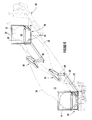
Figure 1 is a perspective view of a system for arranging wind turbine blades according to one embodiment of the present invention; -
Figure 2 is a perspective view of the system shown inFigure 1 with the first tip cradle rotated; -
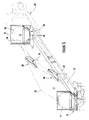
Figure 3 is a perspective view of the system shown inFigure 1 with the second tip cradle opened; -
Figure 4 is a perspective view of the system shown inFigure 3 with wind turbine blades loaded on a commercial carrier; -
Figure 5 is a perspective view of an alternate embodiment of the system shown inFigure 3 ; and, -
Figure 6 is an end view of the system and wind turbine blades shown inFigure 4 . - Reference will now be made in detail to present embodiments of the invention, one or more examples of which are illustrated in the accompanying drawings. The detailed description uses numerical and letter designations to refer to features in the drawings. Like or similar designations in the drawings and description have been used to refer to like or similar parts of embodiments of the invention.
- Each example is provided by way of explanation of the invention, not as a limitation of the invention. In fact, it will be apparent to those skilled in the art that modifications and variations can be made in the present invention without departing from the scope or spirit thereof. For instance, features illustrated or described as part of one embodiment may be used on another embodiment to yield a still further embodiment. Thus, it is intended that the present invention covers such modifications and variations as come within the scope of the appended claims and their equivalents.
-
Figures 1 through 4 provide perspective views of asystem 10 for arranging first and secondwind turbine blades wind turbine blade blade root blade tip blade root studs 24, or other structure known in the art for attaching a wind turbine blade to a rotor of a wind turbine. Thewind turbine blades wind turbine blades wind turbine blades edge 30 to facilitate transferring and transporting the relatively heavy and fragile wind turbine blades. - The system shown in
Figures 1 through 4 arranges the first and secondwind turbine blades blade root blade tip edge 30 is near or proximate to thetrailing edge 32 of the opposite wind turbine blade. In addition, the wind turbine blades are nested so that theconvex surface 26 of one wind turbine blade faces theconcave surface 28 of the other wind turbine blade. - The
system 10 shown inFigures 1 through 4 generally includes first andsecond root cradles second tip cradles tip cradles blade roots blade tips first root cradle 34 and thefirst tip cradle 38 refer to the structures that support the firstwind turbine blade 12, and thesecond root cradle 36 and thesecond tip cradle 40 refer to the structures that support the secondwind turbine blade 14. The first andsecond root cradles first tip cradle 38 is located closer to or proximate to thesecond root cradle 36 to support and cushion theblade tip 20 of the firstwind turbine blade 12, and thesecond tip cradle 40 is located closer to or proximate to thefirst root cradle 34 to support and cushion theblade tip 22 of the secondwind turbine blade 14. - The
root cradles tip cradles cushions 44 or pads that form a seating surface which conforms to the exterior surface of the blade root or blade tip. Thecushions 44 or pads may be configured to completely or partially surround theblade roots blade tips wind turbine blades - The first and
second tip cradles padded surfaces 46 shaped to conform to the shape of thewind turbine blades padded surfaces 46 define afirst end 48 and asecond end 50 in eachtip cradle first end 48 of eachtip cradle edge 30 of thewind turbine blades second end 50 of eachtip cradle wind turbine blades second end 50 may includeadditional cushions 52 to further protect thetrailing edge 32 of thewind turbine blades edges 30. The complementarypadded surfaces 46 may further include ahinge 54 at thefirst end 48 and ahasp 56 or latch at thesecond end 50. Thehinge 54 allows the complementarypadded surfaces 46 to be pivotally separated or opened to receive a wind turbine blade. The complementarypadded surfaces 46 may then be brought back together or closed and held in place by thehasp 56 or latch to hold the wind turbine blade in place. - As shown in
Figures 1 ,2 , and3 , the first andsecond tip cradles second support second supports second root cradles second supports ratchet 62, gear, bearing, or similar structure between eachtip cradle support tip cradle respective support - The
first support 58 is typically closer to or proximate to thesecond root cradle 36, and thesecond support 60 is typically closer to or proximate to thefirst root cradle 34. The first and/orsecond supports Figures 1 through 4 . Alternatively, as shown inFigure 5 , the first andsecond supports Figure 5 , the first andsecond supports commercial carrier 68. - Due to the weight of
wind turbine blades edge 32 of wind turbine blades, wind turbine blades are typically lifted and moved by cranes, hoists, or similar devices with the leadingedge 30 down. As shown inFigure 1 , the complementarypadded surfaces 46 of thefirst tip cradle 38 may be opened, and the firstwind turbine blade 12 may then be transferred proximate to thefirst root cradle 34 with the leadingedge 30 down. Theblade tip 20 may then be positioned in thefirst tip cradle 38, and the complementarypadded surfaces 46 of thefirst tip cradle 38 may then be closed and held shut by thehasp 56. The firstwind turbine blade 12 may then be rotated to the position shown inFigure 2 , with thefirst tip cradle 38 protecting and supporting the leading 30 and trailing 32 edges while the firstwind turbine blade 12 is rotated. As shown inFigure 2 , the complementarypadded surfaces 46 of thefirst tip cradle 38 define afirst support plane 64 angled approximately 20 to 90 degrees with respect to ahorizontal line 65. In particular embodiments, thefirst support plane 64 may be angled approximately 30 to 80 degrees, 40 to 70 degrees, or 45 degrees with respect to thehorizontal line 65. As a result, thefirst tip cradle 38 supports the firstwind turbine blade 12 with thefirst end 48 of thefirst tip cradle 38 higher than thesecond end 50 of thefirst tip cradle 38. - Referring to
Figure 3 , the complementarypadded surfaces 46 of thesecond tip cradle 40 may be opened, and the secondwind turbine blade 14 may then be transferred proximate to thesecond root cradle 36 with the leadingedge 30 down. Theblade tip 22 may then be positioned in thesecond tip cradle 40, and the complementarypadded surfaces 46 of thesecond tip cradle 40 may then be closed and held shut by thehasp 56. The secondwind turbine blade 14 may then be rotated, if necessary, to the position shown inFigure 3 , with thesecond tip cradle 40 protecting and supporting the leading 30 and trailing 32 edges while the secondwind turbine blade 14 is rotated. As shown inFigure 3 , thecomplementary surfaces 46 of thesecond tip cradle 40 define asecond support plane 66 angled approximately 20 to 90 degrees with respect to thehorizontal line 65. In particular embodiments, thesecond support plane 66 may be angled approximately 30 to 80 degrees, 40 to 70 degrees, or 45 degrees with respect to thehorizontal line 65. As a result, thesecond tip cradle 40 supports the secondwind turbine blade 14 with thefirst end 48 of thesecond tip cradle 40 lower than thesecond end 50 of thesecond tip cradle 40. - As shown most clearly in
Figures 1 through 3 , thefirst tip cradle 38 may be at a higher elevation than thesecond tip cradle 40. This difference in elevation between the first and second tip cradles 38, 40 may be accomplished by a difference in length between the first andsecond supports tip cradle support system 10 to nest the first and secondwind turbine blades system 10 andwind turbine blades -
Figure 4 shows thesystem 10 withwind turbine blades commercial carrier 68 for transport over public roads and/or storage. As shown inFigure 4 , the first and second tip cradles 38, 40 and the first and second root cradles 34, 36 support the first and secondwind turbine blades horizontal line 65. In particular embodiments, the first and secondwind turbine blades horizontal line 65. As a result, thesystem 10 arranges the first and secondwind turbine blades system 10 andwind turbine blades -
Figure 6 shows an end view of the system 10 (in phantom) andwind turbine blades Figure 4 . A shipping area 70 for thesystem 10 and thewind turbine blades system 10 andwind turbine blades Figure 6 as a dashed box circumscribing the outer perimeter of thesystem 10 andwind turbine blades system 10, the shipping area has a maximum width of 8½ feet and a maximum height of 13½ feet. It will be appreciated that the shipping area 70 defined by thesystem 10 andwind turbine blades commercial carrier 68. As a result, thesystem 10 arranges thewind turbine blades - This written description uses examples to disclose the invention, including the preferred mode, and also to enable any person skilled in the art to practice the invention, including making and using any devices or systems and performing any incorporated methods. The patentable scope of the invention is defined by the claims, and may include other examples that occur to those skilled in the art. Such other examples are intended to be within the scope of the claims if they include structural elements that do not differ from the literal language of the claims, or if they include equivalent structural elements with insubstantial differences from the literal languages of the claims.
- Various aspects and embodiments of the present invention are defined by the following numbered clauses:
- 1. A system for arranging first and second wind turbine blades comprising:
- a. a first root cradle;
- b. a second root cradle opposed to said first root cradle and separated from said first root cradle;
- c. a first support proximate to said second root cradle;
- d. a first tip cradle rotatably connected to said first support; and,
- e. a second tip cradle proximate to said first root cradle.
- 2. The system of clause 1, wherein said first tip cradle defines a first support plane angled approximately 20 to 90 degrees with respect to a horizon.
- 3. The system of any preceding clause, wherein said first support is connected to at least one of said first root cradle or said second root cradle.
- 4. The system of any preceding clause, wherein said second tip cradle defines a second support plane angled approximately 20 to 90 degrees with respect to a horizon.
- 5. The system of any preceding clause, wherein said first tip cradle includes a first end configured to receive a leading edge of the first wind turbine blade and a second end configured to receive a trailing edge of the first wind turbine blade, and wherein said first end of said first tip cradle is higher than said second end of said first tip cradle.
- 6. The system of any preceding clause, wherein said second tip cradle includes a first end configured to receive a leading edge of the second wind turbine blade and a second end configured to receive a trailing edge of the second wind turbine blade, and wherein said first end of said second tip cradle is lower than said second end of said second tip cradle.
- 7. The system of any preceding clause, wherein at least part of said first tip cradle is at a higher elevation than any part of said second tip cradle.
- 8. The system of any preceding clause, further including a second support proximate said first root cradle.
- 9. The system of any preceding clause, wherein said second support is connected to at least one of said first root cradle or said second root cradle.
- 10. The system of any preceding clause, wherein said second support is pivotally connected to at least one of said first root cradle or said second root cradle.
- 11. The system of any preceding clause, wherein said second tip cradle pivotally connects to said second support.
- 12. The system of any preceding clause, wherein said first and second root cradles and the first and second wind turbine blades define a shipping area having a width less than or equal to 8.5 feet.
- 13. The system of any preceding clause, wherein said first and second root cradles and the first and second wind turbine blades define a shipping area having a height less than or equal to 13.5 feet.
- 14. A method for arranging at least two wind turbine blades, comprising:
- a. transferring a first wind turbine blade proximate to a first root cradle;
- b. rotating the first wind turbine blade at least 90 degrees so that the first wind turbine blade is angled approximately 20 to 90 degrees with respect to a horizon and a trailing edge of the first wind turbine blade is lower than a leading edge of the first wind turbine blade;
- c. transferring a second wind turbine blade proximate to a second root cradle; and,
- d. nesting the second wind turbine blade with the first wind turbine blade.
- 15. The method of any preceding clause, further including supporting the leading edge of the first wind turbine blade while transferring the first wind turbine blade to said first root cradle.
- 16. The method of any preceding clause, further including rotating the second wind turbine blade so that the second wind turbine blade is angled approximately 20 to 90 degrees with respect to the horizon and a trailing edge of the second wind turbine blade is higher than a leading edge of the second wind turbine blade.
- 17. A method for arranging at least two wind turbine blades, comprising:
- a. transferring a first wind turbine blade proximate to a first root cradle;
- b. rotating the first wind turbine blade so that the first wind turbine blade is angled approximately 20 to 90 degrees with respect to a horizon and a trailing edge of the first wind turbine blade is lower than a leading edge of the first wind turbine blade;
- c. transferring a second wind turbine blade proximate to a second root cradle; and,
- d. rotating the second wind turbine blade so that the second wind turbine blade is angled approximately 20 to 90 degrees with respect to the horizon and a trailing edge of the second wind turbine blade is higher than a leading edge of the second wind turbine blade.
- 18. The method of any preceding clause, further including supporting the leading edge of the first wind turbine blade while transferring the first wind turbine blade to said first root cradle.
- 19. The method of any preceding clause, further including rotating the first wind turbine blade at least 90 degrees so that the first wind turbine blade is angled approximately 20 to 90 degrees with respect to a horizon and a trailing edge of the first wind turbine blade is lower than a leading edge of the first wind turbine blade.
- 20. The method of any preceding clause, further including nesting the second wind turbine blade with the first wind turbine blade.
Claims (10)
- A system (10) for arranging first and second wind turbine blades (12, 14) comprising:a. a first root cradle (34);b. a second root cradle (36) opposed to said first root cradle (34) and separated from said first root cradle (34);c. a first support (58) proximate to said second root cradle (36);d. a first tip cradle (38) rotatably connected to said first support (58); and,e. a second tip cradle (40) proximate to said first root cradle (34).
- The system (10) as in claim 1, wherein said first tip cradle (38) defines a first support plane (64) angled approximately 20 to 90 degrees with respect to a horizon (65).
- The system (10) as in any of claims 1 or 2, wherein said first support (58) is connected to at least one of said first root cradle (34) or said second root cradle (36).
- The system (10) as in any of claims 1-3, wherein said first tip cradle (38) includes a first end (48) configured to receive a leading edge (30) of the first wind turbine blade (12) and a second end (50) configured to receive a trailing edge (32) of the first wind turbine blade (12), and wherein said first end (48) of said first tip cradle (38) is higher than said second end (50) of said first tip cradle (38).
- The system (10) as in any of claims 1- 4, wherein said second tip cradle (40) includes a first end (48) configured to receive a leading edge (30) of the second wind turbine blade (14) and a second end (50) configured to receive a trailing edge (32) of the second wind turbine blade (14), and wherein said first end (48) of said second tip cradle (40) is lower than said second end (50) of said second tip cradle (40).
- The system (10) as in any of claims 1-5, wherein said first and second root cradles (34, 36) and the first and second wind turbine blades (12, 14) define a shipping area (70) having a width less than or equal to 8.5 feet.
- The system (10) as in any of claims 1-6, wherein said first and second root cradles (34, 36) and the first and second wind turbine blades (12, 14) define a shipping area (70) having a height less than or equal to 13.5 feet.
- A method for arranging at least two wind turbine blades, comprising:a. transferring a first wind turbine blade (12) proximate to a first root cradle (34);b. rotating the first wind turbine blade (12) at least 90 degrees so that the first wind turbine blade (12) is angled approximately 20 to 90 degrees with respect to a horizon (65) and a trailing edge (32) of the first wind turbine blade (12) is lower than a leading edge (30) of the first wind turbine blade (12);c. transferring a second wind turbine blade (14) proximate to a second root cradle (36); and,d. nesting the second wind turbine blade (14) with the first wind turbine blade (12).
- The method as in claim 8, further including supporting the leading edge (30) of the first wind turbine blade (12) while transferring the first wind turbine blade (12) to said first root cradle (34).
- The method as in any of claims 8 or 9, further including rotating the second wind turbine blade (14) so that the second wind turbine blade (14) is angled approximately 20 to 90 degrees with respect to the horizon (65) and a trailing edge (32) of the second wind turbine blade (14) is higher than a leading edge (30) of the second wind turbine blade (14).
Applications Claiming Priority (1)
| Application Number | Priority Date | Filing Date | Title |
|---|---|---|---|
| US12/632,199 US8177462B2 (en) | 2009-12-07 | 2009-12-07 | System and method for arranging wind turbine blades |
Publications (1)
| Publication Number | Publication Date |
|---|---|
| EP2330291A2 true EP2330291A2 (en) | 2011-06-08 |
Family
ID=43501149
Family Applications (1)
| Application Number | Title | Priority Date | Filing Date |
|---|---|---|---|
| EP10192152A Withdrawn EP2330291A2 (en) | 2009-12-07 | 2010-11-23 | System and method for arranging wind turbine blades |
Country Status (3)
| Country | Link |
|---|---|
| US (1) | US8177462B2 (en) |
| EP (1) | EP2330291A2 (en) |
| CN (1) | CN102086847A (en) |
Cited By (3)
| Publication number | Priority date | Publication date | Assignee | Title |
|---|---|---|---|---|
| DE102011113482A1 (en) | 2011-09-13 | 2013-03-14 | Nordex Energy Gmbh | Protective device for a rotor blade of a wind energy plant |
| EP2669507A1 (en) * | 2012-06-01 | 2013-12-04 | Siemens Aktiengesellschaft | Transportation and stacking of curved blades lying oppositely and above each other |
| EP2912305B1 (en) | 2012-10-26 | 2021-03-03 | LM WP Patent Holding A/S | Method and system for transporting and storing at least two wind turbine blades |
Families Citing this family (9)
| Publication number | Priority date | Publication date | Assignee | Title |
|---|---|---|---|---|
| NZ590008A (en) * | 2008-05-23 | 2012-06-29 | Siemens Ag | A mounting bracket device for mounting a blade of a wind turbine to a transport |
| DK3026258T3 (en) | 2010-08-12 | 2019-10-28 | Lm Wp Patent Holding As | Transport and storage system for wind turbine blades |
| EP2487363A1 (en) * | 2011-01-31 | 2012-08-15 | Siemens Aktiengesellschaft | Lifting system and method for lifting rotor blades of wind turbines |
| US8602700B2 (en) * | 2012-02-16 | 2013-12-10 | General Electric Company | Shipping fixture and method for transporting rotor blades |
| EP3098435B1 (en) * | 2012-10-26 | 2025-01-29 | LM Wind Power A/S | Method and system for transporting and storing at least two wind turbine blades |
| US10066606B2 (en) * | 2014-03-31 | 2018-09-04 | Vestas Wind Systems A/S | Stacking wind turbine blades for sea transport |
| EP3169893B1 (en) * | 2014-07-17 | 2021-01-13 | LM WP Patent Holding A/S | Modular system for transporting wind turbine blades |
| CN109642546B (en) * | 2016-09-02 | 2021-03-16 | Lm风力发电国际技术有限公司 | Transport and storage systems for wind turbine blades |
| EP4112927B1 (en) * | 2021-06-28 | 2024-04-03 | Siemens Gamesa Renewable Energy A/S | Handling arrangement |
Family Cites Families (15)
| Publication number | Priority date | Publication date | Assignee | Title |
|---|---|---|---|---|
| US1996695A (en) * | 1933-05-09 | 1935-04-02 | Jr William J Bigley | Transportation method and means |
| US2335692A (en) | 1943-01-30 | 1943-11-30 | Thomas W Murray | Supporting table and jack |
| US2725241A (en) * | 1952-02-28 | 1955-11-29 | Jr Talbert A Leonard | Wing carrying device for transporting aircraft wings |
| US2808288A (en) | 1954-01-25 | 1957-10-01 | Spencer Safford Loadcraft Inc | Vehicle transportation and storage capsule |
| US4341494A (en) * | 1980-02-13 | 1982-07-27 | Norca Corporation | Variable-length reduced pivot for railway car |
| US4750785A (en) * | 1987-06-22 | 1988-06-14 | Helton Jesse D | Truss transportation trailer |
| US5683213A (en) | 1996-04-29 | 1997-11-04 | High Concrete Structures, Inc. | Loading fixture |
| GB0109515D0 (en) | 2001-04-17 | 2001-06-06 | Neg Micon As | A method for transporting a set of large longitudinal items, a package system to be used by the method and use of such a package system |
| DE10200401A1 (en) * | 2002-01-08 | 2003-07-24 | Aloys Wobben | Device for handling piece goods |
| US20030175089A1 (en) | 2002-03-13 | 2003-09-18 | Preben Almind | Transport container for wind turbine blades |
| DK177128B1 (en) | 2003-07-10 | 2011-12-19 | Lm Glasfiber As | Transport and storage of cranked wind turbine blades |
| DK176923B1 (en) * | 2004-06-29 | 2010-05-17 | Vamdrup Specialtransp Aps | Method for transporting a long wind turbine blade as well as a vehicle for transporting it |
| US20070177954A1 (en) * | 2006-01-31 | 2007-08-02 | General Electric Company | Method and apparatus for containing and/or transporting rotor blades |
| US7713007B2 (en) | 2007-05-31 | 2010-05-11 | General Electric Company | Method and apparatus for containing, storing and/or transporting curved wind turbine rotor blades |
| US7967536B2 (en) | 2008-05-02 | 2011-06-28 | Gamesa Innovation & Technology, S.L. | Blade transportation |
-
2009
- 2009-12-07 US US12/632,199 patent/US8177462B2/en not_active Expired - Fee Related
-
2010
- 2010-11-23 EP EP10192152A patent/EP2330291A2/en not_active Withdrawn
- 2010-12-07 CN CN201010592421XA patent/CN102086847A/en active Pending
Non-Patent Citations (1)
| Title |
|---|
| None |
Cited By (5)
| Publication number | Priority date | Publication date | Assignee | Title |
|---|---|---|---|---|
| DE102011113482A1 (en) | 2011-09-13 | 2013-03-14 | Nordex Energy Gmbh | Protective device for a rotor blade of a wind energy plant |
| EP2570654A2 (en) | 2011-09-13 | 2013-03-20 | Nordex Energy GmbH | Protective device for a blade of a wind turbine |
| DE102011113482B4 (en) * | 2011-09-13 | 2013-04-18 | Nordex Energy Gmbh | Protective device for a rotor blade of a wind energy plant |
| EP2669507A1 (en) * | 2012-06-01 | 2013-12-04 | Siemens Aktiengesellschaft | Transportation and stacking of curved blades lying oppositely and above each other |
| EP2912305B1 (en) | 2012-10-26 | 2021-03-03 | LM WP Patent Holding A/S | Method and system for transporting and storing at least two wind turbine blades |
Also Published As
| Publication number | Publication date |
|---|---|
| US20110135417A1 (en) | 2011-06-09 |
| US8177462B2 (en) | 2012-05-15 |
| CN102086847A (en) | 2011-06-08 |
Similar Documents
| Publication | Publication Date | Title |
|---|---|---|
| US8177462B2 (en) | System and method for arranging wind turbine blades | |
| US8511921B2 (en) | System and method for arranging wind turbine blades | |
| CN106536919B (en) | Modular system for transporting wind turbine blades | |
| US10781834B2 (en) | Method and system for transporting and storing at least two wind turbine blades | |
| US8562302B2 (en) | Wind turbine blade with integrated handling mechanism attachment bores | |
| US7713007B2 (en) | Method and apparatus for containing, storing and/or transporting curved wind turbine rotor blades | |
| EP2411300B1 (en) | Packing method and packing system for three aerogenerator blades | |
| CN100540887C (en) | Packaging device for transporting wind turbine rotor blades | |
| EP2239459A2 (en) | Transport system for transportation of a spar | |
| US20070177954A1 (en) | Method and apparatus for containing and/or transporting rotor blades | |
| CN107667223B (en) | Modular transport and storage system for wind turbine rotor blades | |
| BR102014009598A2 (en) | Wind turbine blade holder arrangement and method of handling a number of wind turbine blades | |
| US9168858B2 (en) | Two or three wind turbine blades as one unit | |
| CN204197598U (en) | A kind of clamping plate type wind electricity blade transport support | |
| CN113446165A (en) | Wind turbine component transport device |
Legal Events
| Date | Code | Title | Description |
|---|---|---|---|
| PUAI | Public reference made under article 153(3) epc to a published international application that has entered the european phase |
Free format text: ORIGINAL CODE: 0009012 |
|
| AK | Designated contracting states |
Kind code of ref document: A2 Designated state(s): AL AT BE BG CH CY CZ DE DK EE ES FI FR GB GR HR HU IE IS IT LI LT LU LV MC MK MT NL NO PL PT RO RS SE SI SK SM TR |
|
| AX | Request for extension of the european patent |
Extension state: BA ME |
|
| STAA | Information on the status of an ep patent application or granted ep patent |
Free format text: STATUS: THE APPLICATION IS DEEMED TO BE WITHDRAWN |
|
| 18D | Application deemed to be withdrawn |
Effective date: 20130601 |
|
| P01 | Opt-out of the competence of the unified patent court (upc) registered |
Effective date: 20230522 |