EP2330104A1 - Glucosyltransferase inhibitor comprising epigallocatechin gallate polymer as active ingredient - Google Patents
Glucosyltransferase inhibitor comprising epigallocatechin gallate polymer as active ingredient Download PDFInfo
- Publication number
- EP2330104A1 EP2330104A1 EP09809791A EP09809791A EP2330104A1 EP 2330104 A1 EP2330104 A1 EP 2330104A1 EP 09809791 A EP09809791 A EP 09809791A EP 09809791 A EP09809791 A EP 09809791A EP 2330104 A1 EP2330104 A1 EP 2330104A1
- Authority
- EP
- European Patent Office
- Prior art keywords
- compound
- glucosyltransferase
- egcg
- trimer
- dental caries
- Prior art date
- Legal status (The legal status is an assumption and is not a legal conclusion. Google has not performed a legal analysis and makes no representation as to the accuracy of the status listed.)
- Granted
Links
- 0 CC(C)(c(c(O[C@]([C@](C1)OC(c(cc2O)cc(O)c2N=O)=O)c(cc2O)cc(O)c2O)c1c(O)c1)c1O)c(c(O)c(C[C@](CC(C(C(*)C(O)=C1O)C=C1O)=O)[C@](c(cc1O)cc(O)c1O)O1)c1c1Cc(c(O)c(C[C@@]([C@](c(cc2O)cc(O)c2O)O2)OC(c(cc3O)cc(C=O)c3O)=O)c2c2)c2O)c1N=O Chemical compound CC(C)(c(c(O[C@]([C@](C1)OC(c(cc2O)cc(O)c2N=O)=O)c(cc2O)cc(O)c2O)c1c(O)c1)c1O)c(c(O)c(C[C@](CC(C(C(*)C(O)=C1O)C=C1O)=O)[C@](c(cc1O)cc(O)c1O)O1)c1c1Cc(c(O)c(C[C@@]([C@](c(cc2O)cc(O)c2O)O2)OC(c(cc3O)cc(C=O)c3O)=O)c2c2)c2O)c1N=O 0.000 description 2
Images


Classifications
-
- A—HUMAN NECESSITIES
- A61—MEDICAL OR VETERINARY SCIENCE; HYGIENE
- A61K—PREPARATIONS FOR MEDICAL, DENTAL OR TOILETRY PURPOSES
- A61K8/00—Cosmetics or similar toiletry preparations
- A61K8/18—Cosmetics or similar toiletry preparations characterised by the composition
- A61K8/30—Cosmetics or similar toiletry preparations characterised by the composition containing organic compounds
- A61K8/49—Cosmetics or similar toiletry preparations characterised by the composition containing organic compounds containing heterocyclic compounds
- A61K8/4973—Cosmetics or similar toiletry preparations characterised by the composition containing organic compounds containing heterocyclic compounds with oxygen as the only hetero atom
- A61K8/498—Cosmetics or similar toiletry preparations characterised by the composition containing organic compounds containing heterocyclic compounds with oxygen as the only hetero atom having 6-membered rings or their condensed derivatives, e.g. coumarin
-
- A—HUMAN NECESSITIES
- A23—FOODS OR FOODSTUFFS; TREATMENT THEREOF, NOT COVERED BY OTHER CLASSES
- A23L—FOODS, FOODSTUFFS OR NON-ALCOHOLIC BEVERAGES, NOT OTHERWISE PROVIDED FOR; PREPARATION OR TREATMENT THEREOF
- A23L33/00—Modifying nutritive qualities of foods; Dietetic products; Preparation or treatment thereof
- A23L33/10—Modifying nutritive qualities of foods; Dietetic products; Preparation or treatment thereof using additives
- A23L33/105—Plant extracts, their artificial duplicates or their derivatives
-
- A—HUMAN NECESSITIES
- A61—MEDICAL OR VETERINARY SCIENCE; HYGIENE
- A61K—PREPARATIONS FOR MEDICAL, DENTAL OR TOILETRY PURPOSES
- A61K31/00—Medicinal preparations containing organic active ingredients
- A61K31/33—Heterocyclic compounds
- A61K31/335—Heterocyclic compounds having oxygen as the only ring hetero atom, e.g. fungichromin
- A61K31/35—Heterocyclic compounds having oxygen as the only ring hetero atom, e.g. fungichromin having six-membered rings with one oxygen as the only ring hetero atom
- A61K31/352—Heterocyclic compounds having oxygen as the only ring hetero atom, e.g. fungichromin having six-membered rings with one oxygen as the only ring hetero atom condensed with carbocyclic rings, e.g. methantheline
- A61K31/353—3,4-Dihydrobenzopyrans, e.g. chroman, catechin
-
- A—HUMAN NECESSITIES
- A61—MEDICAL OR VETERINARY SCIENCE; HYGIENE
- A61P—SPECIFIC THERAPEUTIC ACTIVITY OF CHEMICAL COMPOUNDS OR MEDICINAL PREPARATIONS
- A61P1/00—Drugs for disorders of the alimentary tract or the digestive system
- A61P1/02—Stomatological preparations, e.g. drugs for caries, aphtae, periodontitis
-
- A—HUMAN NECESSITIES
- A61—MEDICAL OR VETERINARY SCIENCE; HYGIENE
- A61P—SPECIFIC THERAPEUTIC ACTIVITY OF CHEMICAL COMPOUNDS OR MEDICINAL PREPARATIONS
- A61P43/00—Drugs for specific purposes, not provided for in groups A61P1/00-A61P41/00
-
- A—HUMAN NECESSITIES
- A61—MEDICAL OR VETERINARY SCIENCE; HYGIENE
- A61Q—SPECIFIC USE OF COSMETICS OR SIMILAR TOILETRY PREPARATIONS
- A61Q11/00—Preparations for care of the teeth, of the oral cavity or of dentures; Dentifrices, e.g. toothpastes; Mouth rinses
-
- C—CHEMISTRY; METALLURGY
- C07—ORGANIC CHEMISTRY
- C07D—HETEROCYCLIC COMPOUNDS
- C07D311/00—Heterocyclic compounds containing six-membered rings having one oxygen atom as the only hetero atom, condensed with other rings
- C07D311/02—Heterocyclic compounds containing six-membered rings having one oxygen atom as the only hetero atom, condensed with other rings ortho- or peri-condensed with carbocyclic rings or ring systems
- C07D311/04—Benzo[b]pyrans, not hydrogenated in the carbocyclic ring
- C07D311/58—Benzo[b]pyrans, not hydrogenated in the carbocyclic ring other than with oxygen or sulphur atoms in position 2 or 4
- C07D311/60—Benzo[b]pyrans, not hydrogenated in the carbocyclic ring other than with oxygen or sulphur atoms in position 2 or 4 with aryl radicals attached in position 2
- C07D311/62—Benzo[b]pyrans, not hydrogenated in the carbocyclic ring other than with oxygen or sulphur atoms in position 2 or 4 with aryl radicals attached in position 2 with oxygen atoms directly attached in position 3, e.g. anthocyanidins
-
- A—HUMAN NECESSITIES
- A23—FOODS OR FOODSTUFFS; TREATMENT THEREOF, NOT COVERED BY OTHER CLASSES
- A23V—INDEXING SCHEME RELATING TO FOODS, FOODSTUFFS OR NON-ALCOHOLIC BEVERAGES AND LACTIC OR PROPIONIC ACID BACTERIA USED IN FOODSTUFFS OR FOOD PREPARATION
- A23V2002/00—Food compositions, function of food ingredients or processes for food or foodstuffs
-
- A—HUMAN NECESSITIES
- A61—MEDICAL OR VETERINARY SCIENCE; HYGIENE
- A61K—PREPARATIONS FOR MEDICAL, DENTAL OR TOILETRY PURPOSES
- A61K2800/00—Properties of cosmetic compositions or active ingredients thereof or formulation aids used therein and process related aspects
- A61K2800/74—Biological properties of particular ingredients
- A61K2800/78—Enzyme modulators, e.g. Enzyme agonists
- A61K2800/782—Enzyme inhibitors; Enzyme antagonists
-
- A—HUMAN NECESSITIES
- A61—MEDICAL OR VETERINARY SCIENCE; HYGIENE
- A61K—PREPARATIONS FOR MEDICAL, DENTAL OR TOILETRY PURPOSES
- A61K9/00—Medicinal preparations characterised by special physical form
- A61K9/0012—Galenical forms characterised by the site of application
- A61K9/0053—Mouth and digestive tract, i.e. intraoral and peroral administration
-
- A—HUMAN NECESSITIES
- A61—MEDICAL OR VETERINARY SCIENCE; HYGIENE
- A61K—PREPARATIONS FOR MEDICAL, DENTAL OR TOILETRY PURPOSES
- A61K9/00—Medicinal preparations characterised by special physical form
- A61K9/0087—Galenical forms not covered by A61K9/02 - A61K9/7023
- A61K9/0095—Drinks; Beverages; Syrups; Compositions for reconstitution thereof, e.g. powders or tablets to be dispersed in a glass of water; Veterinary drenches
Definitions
- the present invention relates to a glucosyltransferase inhibitor containing an epigallocatechin gallate polymer as an active ingredient, and a food and drink in which the inhibitor is added.
- dental caries developmental mechanism is as follows: glucosyltransferase (GTF), which is produced by oral streptococcus, particularly, Streptococcus mutans (hereinafter simply referred to as "S. mutans"), produces sticky and insoluble polysaccharide (glucan) from sucrose in the mouth as a substrate. Bacterial cells of S. mutans adhere onto a tooth surface with the aid of glucan thus produced to form plaque. In the plaque, various microorganisms including S.
- GTF glucosyltransferase
- S. mutans Streptococcus mutans
- plaque formed by oral streptococcus primarily including S. mutans is a cause of dental caries
- suppressing plaque formation can be eventually an effective means for preventing development of dental caries.
- Patent Literature 1 reports that a flavonoid polymer having a molecular weight of 800 to 5000 produced by treating a flavonoid (a catechin) with peroxidase has stronger glucosyltransferase inhibitory action compared to before the treatment.
- Non Patent Literature 1 reports that a flavonoid polymer inhibits the activity of glucosyltransferase derived from Streptococcus sobrinus by 50% in an amount of 2.5 ⁇ g/mL.
- Patent Literature 2 reports that a flavonoid polymer having a molecular weight of 1000 to 10000 and produced by condensing a reduced product of a flavanone/flavanol or a leucocyanidin with a catechin is found to have glucosyltransferase inhibitory activity.
- these flavonoid polymers are a mixture of flavonoid trimer to pentamer or a mixture of a dimer and a trimer thereof.
- the compounds contained in the mixture have not yet been isolated. Therefore, the glucosyltransferase inhibitory activity of each of the compounds has not yet been elucidated.
- Non Patent Literature 2 a mixture of catechins derived from non-fermented tea, i.e., green tea, has been reported to have a glucosyltransferase inhibitory activity (Non Patent Literature 2). However, it has been also reported that a sufficient anti-dental caries action was not obtained in a test using rats.
- Patent Literature 3 Non Patent Literature 3, Non Patent Literature 4 and Non Patent Literature 5
- glucosyltransferase inhibitory activity is enhanced by treating green tea, oolong tea and black tea with heat (Patent Literature 4) and that glucosyltransferase inhibitory activity is enhanced by treating a catechin with heat (Patent Literature 5).
- the present inventors focused on a component contained in tea daily taken and intensively conducted studies in consideration of use as a food and drink. As a result, they found that an EGCG polymer obtained by polymerizing (-)-epigallocatechin-3-O-gallate (hereinafter, also referred to as EGCG), which is a catechin contained in oolong tea, etc., particularly an EGCG trimer, has strong glucosyltransferase inhibitory activity. Based on the finding, the present invention was attained.
- the present invention is as follows.
- R is a galloyl group represented by the following Formula A:
- the present inventors found that a (-)-epigallocatechin-3-O-gallate (EGCG) polymer, particularly a predetermined EGCG dimer and trimer have high glucosyltransferase inhibitory action.
- EGCG glucosyltransferase
- the GTF inhibitor of the present invention can be used as an anti-dental caries agent.
- the GTF inhibitor of the present invention suppresses generation of glucan (a cause of plaque), the effect of suppressing bad breath is also expected.
- the GTF inhibitor of the present invention is derived from EGCG contained in a food and drink daily taken such as oolong tea, it has a high palatability and high safety to a human body. Furthermore, by adding a predetermined amount of GTF inhibitor to a food and drink, a food and drink having a high palatability, safety and an anti-dental caries action can be provided without excessively damaging flavor.
- (-)-Epigallocatechin-3-O-gallate is a major component of a catechin contained in green tea, etc. and a compound having a structure represented by the following Formula:
- an active ingredient contained in the GTF inhibitor of the present invention is the EGCG polymer mentioned above.
- an EGCG polymer having EGCG in which 2 or 3 chroman rings are bonded at position 6 and/or 8 via a methylene group can be preferably used.
- Specific examples of such EGCG polymer include EGCG trimers represented by the following Formula (I), Formula (II) and Formula (III):
- R represents a galloyl group
- EGCG dimer represented by the following Formula (IV):
- the compound of Formula (I) can be expressed as EGCG8:8EGCG6:8EGCG based on the coupling scheme of EGCG (hereinafter, in the specification, referred to as oolong homobisflavan-trimer-1, OHBF-Tri-1 or Tri-1).
- the compound of Formula (II) can be expressed as EGCG6:8EGCG6:8EGCG (hereinafter, in the specification, referred to as oolong homobisflavan-trimer-2, OHBF-Tri-2 or Tri-2).
- the compound of Formula (III) can be expressed as EGCG8:8EGCG6:6EGCG (hereinafter, in the specification, referred to as oolong homobisflavan-trimer-4, OHBF-Tri-4 or Tri-4).
- the compound of Formula (IV) can be expressed as EGCG6:8EGCG.
- the compound of Formula (IV) is reported as a compound contained in oolong tea, etc. and known as oolong homobisflavan-B (OHBF-B). Note that the compounds of Formulas (II) and (III) are novel compounds.
- the EGCG polymers mentioned above can be each produced by reacting epigallocatechin gallate with formaldehyde in a solvent in the presence of an acid.
- Examples of the solvent that can be used in the reaction include alcohols such as methanol, ethanol, n-propanol and isopropanol.
- the amount of solvent used is not particularly limited; however, for example, 20 to 200 parts by mass of solvent can be used relative to 1 part by mass of epigallocatechin gallate.
- Examples of the acid that can be used include inorganic acids such as hydrochloric acid, sulfuric acid and nitric acid and organic acids such as formic acid and acetic acid.
- the amount of acid used is not particularly limited; however, 0.01 to 2 moles of acid can be used relative to 1 mole of epigallocatechin gallate.
- the amount of formaldehyde that can be used is, for example, 1 to 100 moles relative to 1 mole of EGCG.
- Reaction temperature and time may vary depending upon e.g., the amount of solvent to be used; however, for example, reaction temperature is -10 to 50°C, and reaction time is 10 minutes to 12 hours. Typically, the reaction temperature is room temperature (about 25°C).
- the product obtained by the reaction of EGCG with formaldehyde is generally a mixture containing at least two compounds different in coupling scheme of chroman rings by a methylene group.
- compounds of Formulas (I) to (IV) can be isolated by using a known purification method such as open column chromatography using a styrene based adsorption resin such as HP-20 (manufactured by Mitsubishi Chemical Corporation) and a dextran based resin such as Shephadex LH-20 and high performance liquid chromatography (HPLC).
- the EGCG polymer that can be used as a glucosyltransferase inhibitor of the present invention may be in the form of a salt.
- a salt is not particularly limited as long as it is a pharmaceutically acceptable salt or an acceptable salt as a food.
- examples thereof include a salt with a metal element belonging to the first or second family of the periodic table, such as a lithium salt, a sodium salt, a potassium salt, a calcium salt and a magnesium salt.
- a metal salt can be formed with, for example, a phenolic hydroxide group of EGCG.
- a sodium salt of an EGCG trimer can be produced by reacting the EGCG trimer and metallic sodium or sodium hydride in a non-protic solvent to convert a hydroxide group (-OH) contained in the EGCG trimer to a sodium alkoxide group (-ONa).
- a hydroxide group (-OH) contained in the EGCG trimer to a sodium alkoxide group (-ONa).
- all hydroxide groups contained in the EGCG trimer can be converted into sodium alkoxide groups and only part of the hydroxide groups can be converted into sodium alkoxide groups by controlling the amount of metallic sodium or sodium hydride used.
- the active ingredient of the GTF inhibitor of the present invention i.e., EGCG polymer
- an EGCG polymer particularly the compound of the above Formula (I), i.e., oolong homobisflavan-trimer-1, the compound of Formula (II) i.e., oolong homobisflavan-trimer-2, the compound of Formula (III) i.e., oolong homobisflavan-trimer-4, and the compound of Formula (IV) i.e., oolong homobisflavan-B have high glucosyltransferase inhibitory activity.
- the glucosyltransferase inhibitory activity can be measured by using any one of the evaluation methods described in prior-art literatures set forth in Background Art. For example, glucosyltransferase prepared from Streptococcus mutans etc. is added to an aqueous solution containing sucrose, and incubated at about the same temperature (about 37°C) as in the oral cavity for less than 24 hours, preferably about 16 to 20 hours to enzymatically produce glucan from sucrose. Since glucan is insoluble in water, the turbidity of the resultant reaction solution (for example, turbidity at a wavelength of 550 nm) is measured. In this manner, the yield of glucan can be evaluated.
- the glucosyltransferase inhibitor of the present invention inhibits the activity of glucosyltransferase (GTF) to thereby suppress production of glucan (a cause of plaque formation in a mouth), it can be used as an anti-dental caries agent.
- GTF glucosyltransferase
- the glucosyltransferase inhibitor or anti-dental caries agent of the present invention is derived from EGCG contained in a food and drink, such as oolong tea, daily taken, it is highly palatable and highly safe to a human body.
- the glucosyltransferase inhibitor or anti-dental caries agent of the present invention can be added to various types of foods and drinks for preventing dental caries such as tooth decay.
- foods and drinks to which the glucosyltransferase inhibitor or anti-dental caries agent of the present invention is to be added include beverages such as refreshing drinks, tea drinks, liquid tonic medicines, healthy drinks, nutrition drinks, sports drinks and carbonated drinks (including concentrated stock solutions and preparatory powders of these beverages) and foods such as gums, candies, jellies, tablets, health foods, nutrition foods and supplements.
- the addition amount to a food and drink is not particularly limited as long as a desired effect can be obtained, and can be appropriately determined in view of e.g., taste, color and flavor of a food and drink.
- an EGCG polymer when a beverage for anti-dental caries is prepared, an EGCG polymer can be added to the beverage in a concentration of about 0.01 to 1000 ppm.
- the EGCG polymer when an EGCG polymer is added to a solid food, the EGCG polymer can be added in about 0.01 to 5000 ⁇ g/g based on the weight of the solid food.
- the glucosyltransferase inhibitor or anti-dental caries agent of the present invention inhibits the activity of glucosyltransferase (GTF), thereby suppressing generation of glucan, (a cause of plaque formation), it can be used as an oral hygiene product, for example, for preventing tooth decay and bad breath.
- the oral hygiene product according to the present invention include a toothpaste, a mouthwash and a troche.
- These oral hygiene products can be produced using a carrier conventionally used in the art by a conventional process.
- the carrier that can be used include various types of organic or inorganic carrier substances conventionally used as a preparation material.
- additives for a preparation such as a preservative, an antioxidative agent, a coloring agent and a sweetening agent can be blended.
- the addition amount of GTF inhibitor or anti-dental caries agent of the present invention to an oral hygiene product can be appropriately determined depending upon e.g., the form of an oral hygiene product; for example, an EGCG polymer can be added to an oral hygiene product so as to obtain a concentration of about 0.0001 to 10 wt%.
- the elution fraction with 25% CH 3 CN was separated into three fractions (fr. 1 to fr. 3) of 300 ml for each, whereas the elution fraction with 30% CH 3 CN was separated into four fractions (fr .4 to fr. 7) of 300 ml for each.
- the fractionated products obtained by the CHP-20P column purification was further purified by reverse-phase preparative HPLC.
- compound 6 was identified as the compound of Formula (I), namely, oolong homobisflavan-trimer-1. From these results, it was confirmed that compound 4 is an EGCG dimer having a coupling scheme of EGCG8:8EGCG, i.e., oolong homobisflavan-A (OHBF-A); compound 5 is an EGCG dimer having a coupling scheme of EGCG6:8EGCG, i.e., oolong homobisflavan-B (OHBF-B); and compound 6 is a EGCG trimer having a coupling scheme of EGCG8:8EGCG6:8EGCG, i.e., oolong homobisflavan-trimer-1 (in this application, also referred to as OHBF-Tri-1 or Tri-1).
- bond between EGCG moieties expressed as 6:8 or 8:8 represents the state where carbon at position 6 or 8 of A ring of EGCG is crosslinked with a counterpart via a methylene group sandwiched between them.
- the structural formulas of individual compounds are shown below.
- compound 1 gave molecular ions of m/z 1867.3100 [M-H] - and divalent 933.1151 [M-2H] 2- and a molecular formula thereof was calculated as C 91 H 72 O 44 (err.: -11.7 ppm) and estimated as a substance having four EGCG molecules crosslinked with three methylene groups.
- NMR was measured by dissolving compound 2 in CD 3 OH and compound 3 in DMSO-d6 ((CD 3 ) 2 SO). Residual peaks of a proton of CD 3 OH and 13 C, i.e., ⁇ 3.30 and ⁇ 48.97 were used as the internal standards of compound 2. Residual peak of 1 H of DMSO-d6, i.e., ⁇ 2.50 and that of 13 C, i.e., ⁇ 39.43 were used as the internal standards of compound 3.
- Measurement items which were 1 H NMR, 13 C NMR, 1 H ⁇ 13 C ⁇ -HSQC, 1 H ⁇ 13 C ⁇ -HMBC, TOCSY and DQF-COSY, were measured by DMX-750 spectrometer (BRUKER BIOSPIN, Germany).
- compound 2 is the compound of Formula (II) above (more specifically, oolong homobisflavan-trimer-2 and also referred herein to as OHBF-Tri-2 or Tri-2) having a coupling scheme of EGCG6:8EGCG6:8EGCG; and that compound 3 is the compound of Formula (III) above (more specifically, oolong homobisflavan-trimer-4 and also referred herein to as OHBF-Tri-4 or Tri-4) having a coupling scheme of EGCG8:8EGCG6:6EGCG.
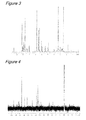
- the 1 H NMR and 13 C NMR spectra of compounds 2 and 3 are shown in Figures 1 to 4 .
- compound 1 was dissolved in DMSO-d6 and subjected to NMR measurement using residual peaks of 1 H and 13 C, i.e., ⁇ 2.50 and ⁇ 39.43, as the internal standards.
- Measurement items which were 1 H NMR, 13 C NMR, 1 H ⁇ 13 C ⁇ -HSQC, 1 H ⁇ 13 C ⁇ -HMBC, TOCSY and DQF-COSY, were measured by DMX-750 spectrometer (BRUKER BIOSPIN, Germany).
- compound 1 is an EGCG tetramer having a coupling scheme of EGCG8:6EGCG8:8EGCG6:8EGCG (oolong homobisflavan-tetramer-2, and also referred herein to as OHBF-Tet-2 or Tet-2).
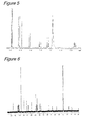
- the 1 H NMR and 13 C NMR spectra of compound 1 are shown in Figure 5 and Figure 6 .
- rGTF was prepared by the method described in the paper of M. matsumoto et al, FEMS Microbiology Letters 228 (2003) 73-80 . More specifically, Escherichia coli XL-2 strain harboring a plasmid pSK6 having a gene encoding glucosyltransferase B (GTFB) of Streptococcus mutans was subjected to shaking culture performed in Luria Bertani liquid medium containing ampicillin (100 ⁇ g/mL) and tetracycline (7.5 ⁇ g/mL) at 37°C for 16 hours.
- GTFB glucosyltransferase B
- Bacterial cells were collected by centrifugally separating the medium, suspended in a 10 mM phosphate buffer (pH 6.5) previously cooled and crushed by an ultrasonic generator (UD201 type, manufactured by Tomy Seiko Co., Ltd., Tokyo) under ice cooling. After crushed, precipitates were centrifugally removed at 12,000 x g for 30 minutes. The resultant supernatant was used as glucosyltransferase B (rGTFB) and put in use in later experiments.
- UD201 type manufactured by Tomy Seiko Co., Ltd., Tokyo
- rGTFC recombinant glucosyltransferase C
- the rGTFB having a specific activity of 503 mU/mg protein and the rGTFC having a specific activity of 6.3 to 22.3 mU/mg protein were used as a mixture.
- the activity 1U represents activity of an enzyme in converting glucose (1.0 mM) derived from sucrose into glucan per minute. Protein was quantified by using the bicinchonine acid method (BCA method)(BCA protein assay kit, manufactured by PIERCE).
- Oolong homobisflavan-A (OHBF-A), oolong homobisflavan B (OHBF-B) and oolong homobisflavan-trimer-1 (Tri-1) obtained in Example 1 and theasinensin A (TSN-A) prepared in accordance with the paper ( Hashimoto, F. Nonaka, G. Nishioka, I. Chem. Pharm. Bull. 36 (5), 1676-1684 (1988 )) were each evaluated for a glucosyltransferase (GTF) inhibitory activity by the following procedure.
- GTF glucosyltransferase
- OHBF-A inhibits the activity of GTFB and slightly enhances the activity of GTFC, conversely. Furthermore, it was found that TSN-A has substantially no effect upon the activity of GTFB and extremely enhances the activity of GTFC, conversely.
- OHBF-B and OHBF-Tri-1 inhibit the activities of both GTFB and GTFC. Particularly, a trimer, OHBF-Tri-1, most strongly inhibits the activities of both GTFB and GTFC compared to other dimer compounds.
- Oolong homobisflavan-trimer-1 (OHBF-Tri-1), oolong homobisflavan-trimer-2 (OHBF-Tri-2), oolong homobisflavan-trimer-4 (OHBF-Tri-4) and oolong homobisflavan-tetramer-2 (OHBF-Tet-2) obtained in Example 1 were each evaluated for a glucosyltransferase (GTF) inhibitory activity by the following procedure.
- GTF glucosyltransferase
- an EGCG tetramer i.e., Tet-2
- Tet-2 slightly inhibited the activity of GTFC; however a significant inhibitory effect on GTFB was not confirmed.
- EGCG trimers, Tri-1, Tri-2, and Tri-4 each have inhibitory activities on GTFB and GTFC.
- the inhibitory action on GTFB was higher than an EGCG tetramer, Tet-2.
- EGCG trimers i.e., Tri-1, Tri-2, and Tri-4
- an EGCG dimer i.e., OHBF-B
- GTF inhibitory activity Particularly, it was found that EGCG trimers, i.e., Tri-1, Tri-2 and Tri-4, have a higher GTF inhibitory activity than EGCG dimers, i.e., OHBF-A, OHBF-B and TSN-A, and an EGCG tetramer, i.e., Tet-2.
- LC-MS/MS of an EGCG polymer was measured by 4000 Q TRAP (manufactured by Applied) using turbo ion spray in the following conditions: Collision energy: 46 eV (nega.), Ion spray voltage: 4500V, Temp: 450°C.
Landscapes
- Health & Medical Sciences (AREA)
- Life Sciences & Earth Sciences (AREA)
- Chemical & Material Sciences (AREA)
- Public Health (AREA)
- General Health & Medical Sciences (AREA)
- Veterinary Medicine (AREA)
- Animal Behavior & Ethology (AREA)
- Organic Chemistry (AREA)
- Epidemiology (AREA)
- Medicinal Chemistry (AREA)
- Pharmacology & Pharmacy (AREA)
- Engineering & Computer Science (AREA)
- Birds (AREA)
- Oral & Maxillofacial Surgery (AREA)
- Nuclear Medicine, Radiotherapy & Molecular Imaging (AREA)
- Food Science & Technology (AREA)
- Chemical Kinetics & Catalysis (AREA)
- Bioinformatics & Cheminformatics (AREA)
- Botany (AREA)
- Mycology (AREA)
- Nutrition Science (AREA)
- General Chemical & Material Sciences (AREA)
- Polymers & Plastics (AREA)
- Pharmaceuticals Containing Other Organic And Inorganic Compounds (AREA)
- Coloring Foods And Improving Nutritive Qualities (AREA)
- Tea And Coffee (AREA)
- Non-Alcoholic Beverages (AREA)
- Pyrane Compounds (AREA)
- Cosmetics (AREA)
- Medicines Containing Plant Substances (AREA)
Abstract
Description
- The present invention relates to a glucosyltransferase inhibitor containing an epigallocatechin gallate polymer as an active ingredient, and a food and drink in which the inhibitor is added.
- Although various hypotheses were proposed as to a cause of dental caries in the past, at present, dental caries is recognized as a bacterial infectious disease based on the chemo-microbial theory of Miller. According to the theory, dental caries developmental mechanism is as follows: glucosyltransferase (GTF), which is produced by oral streptococcus, particularly, Streptococcus mutans (hereinafter simply referred to as "S. mutans"), produces sticky and insoluble polysaccharide (glucan) from sucrose in the mouth as a substrate. Bacterial cells of S. mutans adhere onto a tooth surface with the aid of glucan thus produced to form plaque.
In the plaque, various microorganisms including S. mutans live together and propagate. An organic acid is produced by metabolism of these microorganisms, acts to reduce the pH within the plaque and decalcifies tooth enamel surface. In this manner dental caries develops and progresses.
Furthermore, plaque formation is said to be a cause of not only dental caries but also periodontal disease and bad breath. - As described above, since plaque formed by oral streptococcus primarily including S. mutans is a cause of dental caries, suppressing plaque formation can be eventually an effective means for preventing development of dental caries.
- Recently, as a substance having anti-dental caries action, catechins contained in plants have attracted attention.
Patent Literature 1 reports that a flavonoid polymer having a molecular weight of 800 to 5000 produced by treating a flavonoid (a catechin) with peroxidase has stronger glucosyltransferase inhibitory action compared to before the treatment. -
Non Patent Literature 1 reports that a flavonoid polymer inhibits the activity of glucosyltransferase derived from Streptococcus sobrinus by 50% in an amount of 2.5 µg/mL. -
Patent Literature 2 reports that a flavonoid polymer having a molecular weight of 1000 to 10000 and produced by condensing a reduced product of a flavanone/flavanol or a leucocyanidin with a catechin is found to have glucosyltransferase inhibitory activity. - However, these flavonoid polymers are a mixture of flavonoid trimer to pentamer or a mixture of a dimer and a trimer thereof. The compounds contained in the mixture have not yet been isolated. Therefore, the glucosyltransferase inhibitory activity of each of the compounds has not yet been elucidated.
- Of the tea daily taken, a mixture of catechins derived from non-fermented tea, i.e., green tea, has been reported to have a glucosyltransferase inhibitory activity (Non Patent Literature 2). However, it has been also reported that a sufficient anti-dental caries action was not obtained in a test using rats.
- It has been reported that semi-fermented tea, i.e., oolong tea and their purified products have glucosyltransferase inhibitory activity (
Patent Literature 3,Non Patent Literature 3,Non Patent Literature 4 and Non Patent Literature 5). It is also known that glucosyltransferase inhibitory activity is enhanced by treating green tea, oolong tea and black tea with heat (Patent Literature 4) and that glucosyltransferase inhibitory activity is enhanced by treating a catechin with heat (Patent Literature 5). - However, in any case, it has not been elucidated as to which compound in the mixture derived from tea has the activity.
-
- PTL 1: Japanese Patent Laid-Open No.
6-247959 - PTL 2: Japanese Patent Laid-Open No.
7-242556 - PTL 3: Japanese Patent Laid-Open No.
6-279302 - PTL 4: Japanese Patent Laid-Open No.
3-284625 - PTL 5: Japanese Patent Laid-Open No.
3-284671 -
- NPL 1: FEMS Microbiology Letters 143 (1996) 35-40, Hamada S. et al.
- NPL 2: Caries Res. 25 (1991) 438-443, Otake S. et al.
- NPL 3: Applied and Environmental Microbiology, 59, No. 4 (1993) 968-973, Nakahara K. et al.
- NPL 4: The Nippon Dental review No.622 (August 1994) 179-189, Ooshima T. and Hamada S.
- NPL 5: FEMS Microbiology Letters 228 (2003) 73-80, Matsumoto M. et al.
- As described above, there have been reports on plant extracts, etc. having glucosyltransferase inhibitory activity. However these only report that a mixture derived from a plant extract has the activity; but do not clearly report on a specific active ingredient (compound). Thus it has been desired to identify the active ingredient. Furthermore, in the case where an inhibitor derived from a low palatable plant is used as a food and drink, flavor and safety are presumably affected. Therefore, it has been desired to search an active ingredient derived from a high palatable plant.
- The present inventors focused on a component contained in tea daily taken and intensively conducted studies in consideration of use as a food and drink. As a result, they found that an EGCG polymer obtained by polymerizing (-)-epigallocatechin-3-O-gallate (hereinafter, also referred to as EGCG), which is a catechin contained in oolong tea, etc., particularly an EGCG trimer, has strong glucosyltransferase inhibitory activity. Based on the finding, the present invention was attained.
- More specifically, the present invention is as follows.
- 1. A glucosyltransferase inhibitor containing an epigallocatechin gallate trimer or a salt thereof as an active ingredient.
- 2. The glucosyltransferase inhibitor according to
item 1 above, in which the epigallocatechin gallate trimer is a compound in which chroman rings are bonded at position 6 and/or 8 via a methylene group. - 3. The glucosyltransferase inhibitor according to
item 2 above, in which the epigallocatechin gallate trimer is a compound selected from the group consisting of a compound having the following Formula (I): -

-

-

-

- 4. A glucosyltransferase inhibitor containing, as an active ingredient, a compound represented by the following Formula (IV):

-
- 5. An anti-dental caries agent containing an epigallocatechin gallate trimer or a salt thereof as an active ingredient.
- 6. The anti-dental caries agent according to item 5 above, in which the epigallocatechin gallate trimer is a compound in which chroman rings are bonded at position 6 and/or 8 via a methylene group.
- 7. The anti-dental caries agent according to item 6 above, in which the epigallocatechin gallate trimer is a compound selected from the group consisting of the compound having the above Formula (I), a compound having the above Formula (II) and compound having the above Formula (III) wherein R is a galloyl group represented by the above Formula (A).
- 8. An anti-dental caries agent containing a compound represented by the above Formula (IV) as an active ingredient.
- 9. A food or drink, in which the glucosyltransferase inhibitor or the anti-dental caries agent according to any one of
items 1 to 8 above is added. - 10. The food or drink according to item 9 above, in which the food or drink is a tea beverage.
- 11. An organ hygiene product, in which the glucosyltransferase inhibitor or anti-dental caries agent according to any one of
items 1 to 8 above is added. - The present inventors found that a (-)-epigallocatechin-3-O-gallate (EGCG) polymer, particularly a predetermined EGCG dimer and trimer have high glucosyltransferase inhibitory action. As described above, since glucosyltransferase (hereinafter, also referred to as GTF) produces glucan (a cause of plaque) in a mouth, dental caries can be prevented by inhibiting the activity of GTF. Therefore, the GTF inhibitor of the present invention can be used as an anti-dental caries agent. Furthermore, since the GTF inhibitor of the present invention suppresses generation of glucan (a cause of plaque), the effect of suppressing bad breath is also expected. In addition, since the GTF inhibitor of the present invention is derived from EGCG contained in a food and drink daily taken such as oolong tea, it has a high palatability and high safety to a human body. Furthermore, by adding a predetermined amount of GTF inhibitor to a food and drink, a food and drink having a high palatability, safety and an anti-dental caries action can be provided without excessively damaging flavor.
-
-
Figure 1 shows a 1H NMR spectrum ofcompound 2. -
Figure 2 shows a 13C NMR spectrum ofcompound 2. -
Figure 3 shows a 1H NMR spectrum ofcompound 3. -
Figure 4 shows a 13C NMR spectrum ofcompound 3. -
Figure 5 shows a 1H NMR spectrum ofcompound 1. -
Figure 6 shows a 13C NMR spectrum ofcompound 1. -
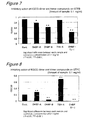
Figure 7 shows the evaluation results of the inhibitory action of each of EGCG dimer and trimer compounds on glucosyltransferase B. -
Figure 8 shows the evaluation results of the inhibitory action of each of EGCG dimer and trimer compounds on glucosyltransferase C. -
Figure 9 shows the evaluation results of the inhibitory action of each of EGCG trimer and tetramer compounds on glucosyl transferase B. -
Figure. 10 shows the evaluation results of the inhibitory action of each of EGCG trimer and tetramer compounds on glucosyltransferase C. - (-)-Epigallocatechin-3-O-gallate (EGCG) is a major component of a catechin contained in green tea, etc. and a compound having a structure represented by the following Formula:
-

- An active ingredient contained in the GTF inhibitor of the present invention is the EGCG polymer mentioned above. In the present invention, in particular, an EGCG polymer having EGCG in which 2 or 3 chroman rings are bonded at position 6 and/or 8 via a methylene group, can be preferably used. Specific examples of such EGCG polymer include EGCG trimers represented by the following Formula (I), Formula (II) and Formula (III):
-

-

-

and EGCG dimer represented by the following Formula (IV): -

- The compound of Formula (I) can be expressed as EGCG8:8EGCG6:8EGCG based on the coupling scheme of EGCG (hereinafter, in the specification, referred to as oolong homobisflavan-trimer-1, OHBF-Tri-1 or Tri-1). Similarly, the compound of Formula (II) can be expressed as EGCG6:8EGCG6:8EGCG (hereinafter, in the specification, referred to as oolong homobisflavan-trimer-2, OHBF-Tri-2 or Tri-2). Furthermore, the compound of Formula (III) can be expressed as EGCG8:8EGCG6:6EGCG (hereinafter, in the specification, referred to as oolong homobisflavan-trimer-4, OHBF-Tri-4 or Tri-4). The compound of Formula (IV) can be expressed as EGCG6:8EGCG. The compound of Formula (IV) is reported as a compound contained in oolong tea, etc. and known as oolong homobisflavan-B (OHBF-B). Note that the compounds of Formulas (II) and (III) are novel compounds.
- The EGCG polymers mentioned above can be each produced by reacting epigallocatechin gallate with formaldehyde in a solvent in the presence of an acid.
- Examples of the solvent that can be used in the reaction include alcohols such as methanol, ethanol, n-propanol and isopropanol. The amount of solvent used is not particularly limited; however, for example, 20 to 200 parts by mass of solvent can be used relative to 1 part by mass of epigallocatechin gallate.
- Examples of the acid that can be used include inorganic acids such as hydrochloric acid, sulfuric acid and nitric acid and organic acids such as formic acid and acetic acid. The amount of acid used is not particularly limited; however, 0.01 to 2 moles of acid can be used relative to 1 mole of epigallocatechin gallate.
- The amount of formaldehyde that can be used is, for example, 1 to 100 moles relative to 1 mole of EGCG.
- Reaction temperature and time may vary depending upon e.g., the amount of solvent to be used; however, for example, reaction temperature is -10 to 50°C, and reaction time is 10 minutes to 12 hours. Typically, the reaction temperature is room temperature (about 25°C).
- The product obtained by the reaction of EGCG with formaldehyde is generally a mixture containing at least two compounds different in coupling scheme of chroman rings by a methylene group. From such a mixture, compounds of Formulas (I) to (IV) can be isolated by using a known purification method such as open column chromatography using a styrene based adsorption resin such as HP-20 (manufactured by Mitsubishi Chemical Corporation) and a dextran based resin such as Shephadex LH-20 and high performance liquid chromatography (HPLC).
- Note that a preparation method for the compound of Formula (I) (OHBF-Tri-1) is described as a synthesis and purification method for "trimer (4)" in Patent Literature (
WO2005/116005 ). Furthermore, a preparation method of the compound of Formula (IV) (OHBF-B) is described in the literature (Chem. Pharm. Bull 37 (12), 3255-3563 (1989)). - The EGCG polymer that can be used as a glucosyltransferase inhibitor of the present invention may be in the form of a salt. Such a salt is not particularly limited as long as it is a pharmaceutically acceptable salt or an acceptable salt as a food. Examples thereof include a salt with a metal element belonging to the first or second family of the periodic table, such as a lithium salt, a sodium salt, a potassium salt, a calcium salt and a magnesium salt. Such a metal salt can be formed with, for example, a phenolic hydroxide group of EGCG.
- For example, a sodium salt of an EGCG trimer can be produced by reacting the EGCG trimer and metallic sodium or sodium hydride in a non-protic solvent to convert a hydroxide group (-OH) contained in the EGCG trimer to a sodium alkoxide group (-ONa). At this time, all hydroxide groups contained in the EGCG trimer can be converted into sodium alkoxide groups and only part of the hydroxide groups can be converted into sodium alkoxide groups by controlling the amount of metallic sodium or sodium hydride used.
- These EGCG polymers can be synthetically obtained; however, as described in Example 5 later, they were found to be present also in oolong tea. Therefore, the active ingredient of the GTF inhibitor of the present invention, i.e., EGCG polymer, can be isolated from tea leaves using the leaves of Camellia sinensis [A1] as a raw material, preferably from fermented tea such as oolong tea and black tea and roasted tea by extraction and purification.
- The present inventors found that an EGCG polymer, particularly the compound of the above Formula (I), i.e., oolong homobisflavan-trimer-1, the compound of Formula (II) i.e., oolong homobisflavan-trimer-2, the compound of Formula (III) i.e., oolong homobisflavan-trimer-4, and the compound of Formula (IV) i.e., oolong homobisflavan-B have high glucosyltransferase inhibitory activity.
- The glucosyltransferase inhibitory activity can be measured by using any one of the evaluation methods described in prior-art literatures set forth in Background Art. For example, glucosyltransferase prepared from Streptococcus mutans etc. is added to an aqueous solution containing sucrose, and incubated at about the same temperature (about 37°C) as in the oral cavity for less than 24 hours, preferably about 16 to 20 hours to enzymatically produce glucan from sucrose. Since glucan is insoluble in water, the turbidity of the resultant reaction solution (for example, turbidity at a wavelength of 550 nm) is measured. In this manner, the yield of glucan can be evaluated. If the yield of glucan low (in other words, turbidity is low), it is said that glucosyltransferase activity is more inhibited than that of the case where the yield of glucan is large (in other words, turbidity is high).
- Since the glucosyltransferase inhibitor of the present invention inhibits the activity of glucosyltransferase (GTF) to thereby suppress production of glucan (a cause of plaque formation in a mouth), it can be used as an anti-dental caries agent.
- Since the glucosyltransferase inhibitor or anti-dental caries agent of the present invention is derived from EGCG contained in a food and drink, such as oolong tea, daily taken, it is highly palatable and highly safe to a human body.
- The glucosyltransferase inhibitor or anti-dental caries agent of the present invention can be added to various types of foods and drinks for preventing dental caries such as tooth decay. Examples of foods and drinks to which the glucosyltransferase inhibitor or anti-dental caries agent of the present invention is to be added include beverages such as refreshing drinks, tea drinks, liquid tonic medicines, healthy drinks, nutrition drinks, sports drinks and carbonated drinks (including concentrated stock solutions and preparatory powders of these beverages) and foods such as gums, candies, jellies, tablets, health foods, nutrition foods and supplements.
- The addition amount to a food and drink is not particularly limited as long as a desired effect can be obtained, and can be appropriately determined in view of e.g., taste, color and flavor of a food and drink. For example, when a beverage for anti-dental caries is prepared, an EGCG polymer can be added to the beverage in a concentration of about 0.01 to 1000 ppm. Furthermore, when an EGCG polymer is added to a solid food, the EGCG polymer can be added in about 0.01 to 5000 µg/g based on the weight of the solid food.
- Since the glucosyltransferase inhibitor or anti-dental caries agent of the present invention inhibits the activity of glucosyltransferase (GTF), thereby suppressing generation of glucan, (a cause of plaque formation), it can be used as an oral hygiene product, for example, for preventing tooth decay and bad breath. Examples of the oral hygiene product according to the present invention include a toothpaste, a mouthwash and a troche. These oral hygiene products can be produced using a carrier conventionally used in the art by a conventional process. Examples of the carrier that can be used include various types of organic or inorganic carrier substances conventionally used as a preparation material. Furthermore, if necessary, additives for a preparation such as a preservative, an antioxidative agent, a coloring agent and a sweetening agent can be blended. The addition amount of GTF inhibitor or anti-dental caries agent of the present invention to an oral hygiene product can be appropriately determined depending upon e.g., the form of an oral hygiene product; for example, an EGCG polymer can be added to an oral hygiene product so as to obtain a concentration of about 0.0001 to 10 wt%.
- The present invention will be described in more detail by way of Examples; however, the present invention is not limited by these.
- Six gram of (-)-epigallocatechin-3-O-gallate (EGCG) (Teavigo (registered trade mark) manufactured by Roche) was dissolved in 120 ml of ethanol containing 0.02N HCl, and a 4% formaldehyde ethanol solution (180 ml) was added and then stirred at room temperature for 4 hours. After completion of the reaction, the resultant reaction solution was diluted 10 fold with pure water and applied on an adsorption resin CHP-20P column (600 ml, 37-75 mm, manufactured by Mitsubishi Chemical Corporation). After washed with water (1200 ml), elution was performed sequentially with 900 ml of 25% CH3CN and 1200 ml of 30% CH3CN. The elution fraction with 25% CH3CN was separated into three fractions (fr. 1 to fr. 3) of 300 ml for each, whereas the elution fraction with 30% CH3CN was separated into four fractions (fr .4 to fr. 7) of 300 ml for each.
- The fractionated products obtained by the CHP-20P column purification was further purified by reverse-phase preparative HPLC.
-
- Column: Develosil ODS-HG-5 (5 cm ϕ x 50 cm, manufactured by Nomura Chemical Co., Ltd.)
- Mobile phase: A: 0.05% TFA/H2O, B: 90% CH3CN/0.05%TFA/H2O,
- Flow rate: 32 ml/min
- Gradient program: isocratic at A80%/B20% (30 min), gradient from A80%/B20% to A60%/B40% (100 min), isocratic at A60%/B40% (20 min)
- Detection: A 280nm
- Sample: fr. 2 to fr. 7 obtained by CHP-20P column purification each were dissolved in 20% CH3CN and the total amount was applied by several times.
- In the above fractionation conditions, individual peaks corresponding to retention time 113 minutes (compound 1), 120 minutes (compound 2), 130 minutes (compound 3) and retention time 85 minutes (compound 4), retention time 106 minutes (compound 5) and retention time 104 minutes (compound 6) were collected.
- The compounds isolated by preparative HPLC were subjected to MS and NMR measurements. Of them, MS of
compounds 4 to 6 were measured by Q-TOF Premier (manufactured by Micromass, UK) in a negative, V mode. As a result, ion peaks thereof were observed respectively at m/z 927.160, 927.163, and 1397.248 [M-H]-. Furthermore, NMR spectrum data ofcompound 4 coincided with the NMR spectrum data of oolong homobisflavan-A described in the literature (Chem. Pharm. Bull 37(12), 3255-3563 (1989)). The NMR spectrum data of compound 5 coincided with the NMR spectrum data of oolong homobisflavan-B described in the literature (Chem. Pharm. Bull 37(12), 3255-3563 (1989)). Furthermore, from the NMR spectrum data of compound 6, compound 6 was identified as the compound of Formula (I), namely, oolong homobisflavan-trimer-1. From these results, it was confirmed thatcompound 4 is an EGCG dimer having a coupling scheme of EGCG8:8EGCG, i.e., oolong homobisflavan-A (OHBF-A); compound 5 is an EGCG dimer having a coupling scheme of EGCG6:8EGCG, i.e., oolong homobisflavan-B (OHBF-B); and compound 6 is a EGCG trimer having a coupling scheme of EGCG8:8EGCG6:8EGCG, i.e., oolong homobisflavan-trimer-1 (in this application, also referred to as OHBF-Tri-1 or Tri-1). Note that the bond between EGCG moieties expressed as 6:8 or 8:8 represents the state where carbon at position 6 or 8 of A ring of EGCG is crosslinked with a counterpart via a methylene group sandwiched between them. The structural formulas of individual compounds are shown below. -

-

-

compound 1 tocompound 3, structural analysis was performed by MS and NMR. MS was measured by Q-TOF Premier (manufactured by Micromass, UK) using ESI equipped with a Z spray ion source as an ion source in a negative, V mode. Mass correction was performed by lock spray at a Cone voltage: 45V, Capillary voltage: 3KV, Source Temp: 80°C, and Desolvation Temp: 180°C. As a reference, leucine enkephalin (m/z 554.2615 [M-H]-) was used. - As a result,
compound 2 gave molecular ions of m/z 1397.2479 [M-H]- and a molecular formula thereof was calculated as C68H54O33 (err.: 0.7 ppm); andcompound 3 gave molecular ions of m/z 1397.2509 [M-H]- and a molecular formula thereof was calculated as C68H54O33 (err.: 2.9 ppm). They were estimated as substances having three EGCG molecules crosslinked with two methylene groups. Furthermore,compound 1 gave molecular ions of m/z 1867.3100 [M-H]- and divalent 933.1151 [M-2H]2- and a molecular formula thereof was calculated as C91H72O44 (err.: -11.7 ppm) and estimated as a substance having four EGCG molecules crosslinked with three methylene groups. - NMR was measured by dissolving
compound 2 in CD3OH andcompound 3 in DMSO-d6 ((CD3)2SO). Residual peaks of a proton of CD3OH and 13C, i.e., δ3.30 and δ48.97 were used as the internal standards ofcompound 2. Residual peak of 1H of DMSO-d6, i.e., δ2.50 and that of 13C, i.e., δ39.43 were used as the internal standards ofcompound 3. Measurement items, which were 1H NMR, 13C NMR, 1H{13C}-HSQC, 1H{13C}-HMBC, TOCSY and DQF-COSY, were measured by DMX-750 spectrometer (BRUKER BIOSPIN, Germany). As a result of the NMR, it was elucidated thatcompound 2 is the compound of Formula (II) above (more specifically, oolong homobisflavan-trimer-2 and also referred herein to as OHBF-Tri-2 or Tri-2) having a coupling scheme of EGCG6:8EGCG6:8EGCG; and thatcompound 3 is the compound of Formula (III) above (more specifically, oolong homobisflavan-trimer-4 and also referred herein to as OHBF-Tri-4 or Tri-4) having a coupling scheme of EGCG8:8EGCG6:6EGCG. The 1H NMR and 13C NMR spectra ofcompounds Figures 1 to 4 . - With respect to oolong homobisflavan-trimer-2 (in CD3OH), signals of 1H NMR observed were δ 6.95, 6.92, 6.90, 6.60, 6.54, 6.44, 6.08, 6.02, 5.57, 5.55, 5.49, 5.18, 5.12, 4.91, 3.86, 3.83, 3.81, 3.76, 3.03, 3.01, 2.94, 2.89, 2.89, 2.82 and signals of 13C NMR observed were δ 167.72, 167.46, 167.37, 156.29, 155.25, 155.08, 154.79, 154.43, 153.64, 152.91, 151.64, 151.20, 147.00, 146.93, 146.38, 146.38, 146.34, 146.29, 140.03, 139.89, 139.89, 134.65, 134.48, 133.85, 130.64, 129.29, 129.10, 121.33, 121.14, 121.14, 110.31, 110.24, 110.24, 109.19, 108.07, 107.42, 107.05, 107.02, 106.79, 106.10, 101.59, 101.00, 100.45, 97.23, 96.71, 80.07, 79.94, 78.45, 70.00, 69.32, 69.28, 27.21, 27.21, 26.81, 17.91, 17.91.
- With respect to oolong homobisflavan-trimer-4 (in DMSO-d6) signals of 1H NMR observed were δ 10.46, 9.18, 9.16, 9.16, 9.12, 9.06, 9.05, 8.90, 8.88, 8.84,8.72, 8.69, 8.69, 8.46, 8.34, 8.05, 8.02, 8.00, 6.81, 6.78, 6.78, 6.52, 6.47, 6.35, 6.03, 5.93, 5.48, 5.46, 5.39, 5.04, 4.95, 4.89, 4.05, 3.95, 3.56, 3.56, 3.06, 3.00, 2.98, 2.76, 2.71, 2.67 and signals of 13C NMR observed were δ 165.11, 165.09, 164.99, 157.66, 154.29, 153.82, 153.48, 153.07, 152.68, 152.23, 152.18, 150.88, 145.56, 145.52, 145.50, 145.26, 145.24, 145.23, 138.43, 138.43, 138.39, 132.34, 132.23, 132.19, 128.34, 128.34, 128.23, 119.17, 119.12, 119.04, 110.35, 110.31, 110.29, 109.19, 108.59, 108.56, 108.51, 106.97, 106.63, 105.26, 105.26, 105.13, 104.73, 101.28, 99.44, 99.41, 98.21, 97.34, 97.15, 96.03, 79.48, 79.07, 78.47, 69.95, 69.39, 69.28, 27.18, 26.98, 26.58, 18.16, 17.13.
- Furthermore,
compound 1 was dissolved in DMSO-d6 and subjected to NMR measurement using residual peaks of 1H and 13C, i.e., δ2.50 and δ39.43, as the internal standards. Measurement items, which were 1H NMR, 13C NMR, 1H{13C}-HSQC, 1H{13C}-HMBC, TOCSY and DQF-COSY, were measured by DMX-750 spectrometer (BRUKER BIOSPIN, Germany). As a result of NMR, it was elucidated thatcompound 1 is an EGCG tetramer having a coupling scheme of EGCG8:6EGCG8:8EGCG6:8EGCG (oolong homobisflavan-tetramer-2, and also referred herein to as OHBF-Tet-2 or Tet-2). The 1H NMR and 13C NMR spectra ofcompound 1 are shown inFigure 5 and Figure 6 . - With respect to oolong homobisflavan-tetramer-2, signals of 1H NMR (in DMSO-d6) observed were δ 9.91, 9.25, 9.16, 8.09, 7.22, 6.81, 6.76, 6.74, 6.52, 5.94, 5.50, 5.38, 4.77, 4.52, 3.95, 3.95, 3.80, 3.54, 2.80, 2.74, 2.73, 2.67 and signals of 13C NMR observed were δ 165.08, 165.01, 154.06, 152.83, 152.35, 151.45, 150.78, 150.26, 145.52, 145.52, 145.24, 145.18, 138.49, 138.44, 132.21, 132.10, 128.42, 127.63, 119.05, 118.95, 108.58, 108.46, 108.46, 106.95, 105.74, 104.92, 104.06, 98.32, 97.81, 76.59, 75.94, 66.69, 66.35,26.33, 25.26, 16.72, 15.99.
- The structural formulas of the individual compounds identified as mentioned above are shown below.
-

-

-

- oolong homobisflavan-A (984 mg), oolong homobisflavan-B (374 mg), oolong homobisflavan-trimer-1 (468 mg), oolong homobisflavan-trimer-2 (73 mg), oolong homobisflavan-trimer-4 (12 mg) and oolong homobisflavan-tetramer-2 (44 mg).
- rGTF was prepared by the method described in the paper of M. matsumoto et al, FEMS Microbiology Letters 228 (2003) 73-80. More specifically, Escherichia coli XL-2 strain harboring a plasmid pSK6 having a gene encoding glucosyltransferase B (GTFB) of Streptococcus mutans was subjected to shaking culture performed in Luria Bertani liquid medium containing ampicillin (100 µg/mL) and tetracycline (7.5 µg/mL) at 37°C for 16 hours. Bacterial cells were collected by centrifugally separating the medium, suspended in a 10 mM phosphate buffer (pH 6.5) previously cooled and crushed by an ultrasonic generator (UD201 type, manufactured by Tomy Seiko Co., Ltd., Tokyo) under ice cooling. After crushed, precipitates were centrifugally removed at 12,000 x g for 30 minutes. The resultant supernatant was used as glucosyltransferase B (rGTFB) and put in use in later experiments.
- Similarly, recombinant glucosyltransferase C (rGTFC) was prepared by using Escherichia coli XL-2 strain harboring a plasmid pSK6 having a gene encoding glucosyltransferase C (GTFC) of Streptococcus mutans and put in use in later experiments.
- The rGTFB having a specific activity of 503 mU/mg protein and the rGTFC having a specific activity of 6.3 to 22.3 mU/mg protein were used as a mixture. The activity 1U represents activity of an enzyme in converting glucose (1.0 mM) derived from sucrose into glucan per minute. Protein was quantified by using the bicinchonine acid method (BCA method)(BCA protein assay kit, manufactured by PIERCE).
- Oolong homobisflavan-A (OHBF-A), oolong homobisflavan B (OHBF-B) and oolong homobisflavan-trimer-1 (Tri-1) obtained in Example 1 and theasinensin A (TSN-A) prepared in accordance with the paper (Hashimoto, F. Nonaka, G. Nishioka, I. Chem. Pharm. Bull. 36 (5), 1676-1684 (1988)) were each evaluated for a glucosyltransferase (GTF) inhibitory activity by the following procedure. Note that theasinensin A (TSN-A) used herein as a reference is a substance in which B rings of EGCG are mutually bonded symmetrically at the 2' positions and having the following structure:
-

- With 2 mL of 0.1M KPB (pH6.0) containing 1% sucrose-containing 0.1% dextran T10, rGTFB or rGTFC (amount corresponding to 15 mU (average value)) obtained in Example 2, and each of the above samples (final concentration: 0.1 mg/mL) were mixed. The mixture was incubated at 37°C overnight. The turbidity (550 nm) of the resultant reaction solution was measured to obtain the yield of glucan insoluble in water. The lower yield of the glucan insoluble in water (in other words, turbidity is low) means that the activity of glucosyltransferase is more inhibited. The results are shown in
Figure 7 and Figure 8 . Note that the control (cont) shown in the figures represents turbidity in the absence of the aforementioned samples. - As shown on
Figures 7 and 8 , it was found that OHBF-A inhibits the activity of GTFB and slightly enhances the activity of GTFC, conversely. Furthermore, it was found that TSN-A has substantially no effect upon the activity of GTFB and extremely enhances the activity of GTFC, conversely. On the other hand, it was found that OHBF-B and OHBF-Tri-1 inhibit the activities of both GTFB and GTFC. Particularly, a trimer, OHBF-Tri-1, most strongly inhibits the activities of both GTFB and GTFC compared to other dimer compounds. - Oolong homobisflavan-trimer-1 (OHBF-Tri-1), oolong homobisflavan-trimer-2 (OHBF-Tri-2), oolong homobisflavan-trimer-4 (OHBF-Tri-4) and oolong homobisflavan-tetramer-2 (OHBF-Tet-2) obtained in Example 1 were each evaluated for a glucosyltransferase (GTF) inhibitory activity by the following procedure.
- With 2 mL of 0.1M KPB (pH6.0) containing 1% sucrose and 0.1% dextran T10, rGTFB or rGTFC (amount corresponding to 15mU (average value)) obtained in Example 2 and each of the above samples (final concentration: 0.05 mg/mL) were mixed. The mixture was incubated at 37°C overnight. The turbidity (550 nm) of the resultant reaction solution was measured to obtain the yield of glucan insoluble in water. The lower yield of the glucan insoluble in water (in other words, turbidity is low) means that the activity of glucosyltransferase is more inhibited. The results are shown in
Figure 9 and Figure 10 . Note that the control (cont) shown in the figures represents turbidity in the absence of the aforementioned samples. - As shown on
Figures 9 and 10 , an EGCG tetramer, i.e., Tet-2, slightly inhibited the activity of GTFC; however a significant inhibitory effect on GTFB was not confirmed. On the other hand, it was confirmed that EGCG trimers, Tri-1, Tri-2, and Tri-4, each have inhibitory activities on GTFB and GTFC. The inhibitory action on GTFB was higher than an EGCG tetramer, Tet-2. - From the aforementioned results, it was found that EGCG trimers, i.e., Tri-1, Tri-2, and Tri-4, and an EGCG dimer, i.e., OHBF-B have high GTF inhibitory activity. Particularly, it was found that EGCG trimers, i.e., Tri-1, Tri-2 and Tri-4, have a higher GTF inhibitory activity than EGCG dimers, i.e., OHBF-A, OHBF-B and TSN-A, and an EGCG tetramer, i.e., Tet-2.
- LC-MS/MS of an EGCG polymer was measured by 4000 Q TRAP (manufactured by Applied) using turbo ion spray in the following conditions: Collision energy: 46 eV (nega.), Ion spray voltage: 4500V, Temp: 450°C.
- As a measurement channel for each compound in MRM (multiple reaction monitoring), 698.40/168.90 (nega. divalent) was used for oolong homobisflavan-trimers, and oolong homobisflavan-trimer-1 was used as a standard substance. A channel of 933.16/168.90 (nega. divalent) was used for oolong homobisflavan-tetramers and oolong homobisflavan-tetramer-2 was used as a standard substance. Measurement was carried out in the following conditions.
- Column: Develosil C30-UG-3 (manufactured by Nomura Chemical Co., Ltd., 3 mmϕ x 150 mm)
- Flow rate: 0.3 ml/min,
- Column Temp.: 40°C
- Mobile phase A: 0.1% HCOOH/H2O,
- Mobile phase B: 0.1% HCOOH/CH3CN
- Gradient program: A91%/B9% (0 min) →A40%/B60% (17 min) →A15%/B85% (17.1 min), subsequently isocratic (17.1 to 19 min) at A15%/B85%
Claims (11)
- A glucosyltransferase inhibitor comprising an epigallocatechin gallate trimer or a salt thereof as an active ingredient.
- The glucosyltransferase inhibitor according to claim 1, wherein the epigallocatechin gallate trimer is a compound in which chroman rings are bonded at position 6 and/or 8 via a methylene group.
- The glucosyltransferase inhibitor according to claim 2, wherein the epigallocatechin gallate trimer is a compound selected from the group consisting of a compound having the following Formula (I):


- A glucosyltransferase inhibitor comprising, as an active ingredient, a compound represented by the following Formula (IV):

- An anti-dental caries agent comprising an epigallocatechin gallate trimer or a salt thereof as an active ingredient.
- The anti-dental caries agent according to claim 5, wherein the epigallocatechin gallate trimer is a compound in which chroman rings are bonded at position 6 and/or 8 via a methylene group.
- The anti-dental caries agent according to claim 6, wherein the epigallocatechin gallate trimer is a compound selected from the group consisting of a compound having the following Formula (I):


- An anti-dental caries agent comprising, as an active ingredient, a compound represented by the following Formula (IV):

- A food or drink, in which the glucosyltransferase inhibitor or the anti-dental caries agent according to any one of claims 1 to 8 is added.
- The food or drink according to claim 9, wherein the food or drink is a tea beverage.
- An oral hygiene product, in which the glucosyltransferase inhibitor or anti-dental caries agent according to any one of claims 1 to 8 is added.
Applications Claiming Priority (2)
| Application Number | Priority Date | Filing Date | Title |
|---|---|---|---|
| JP2008222851A JP5563753B2 (en) | 2008-08-29 | 2008-08-29 | Glucosyltransferase inhibitor containing epigallocatechin gallate polymer as active ingredient |
| PCT/JP2009/064335 WO2010024138A1 (en) | 2008-08-29 | 2009-08-14 | Glucosyltransferase inhibitor comprising epigallocatechin gallate polymer as active ingredient |
Publications (3)
| Publication Number | Publication Date |
|---|---|
| EP2330104A1 true EP2330104A1 (en) | 2011-06-08 |
| EP2330104A4 EP2330104A4 (en) | 2011-09-21 |
| EP2330104B1 EP2330104B1 (en) | 2017-03-01 |
Family
ID=41721307
Family Applications (1)
| Application Number | Title | Priority Date | Filing Date |
|---|---|---|---|
| EP09809791.8A Not-in-force EP2330104B1 (en) | 2008-08-29 | 2009-08-14 | Glucosyltransferase inhibitor containing epigallocatechin gallate polymer as active ingredient |
Country Status (7)
| Country | Link |
|---|---|
| US (1) | US9237996B2 (en) |
| EP (1) | EP2330104B1 (en) |
| JP (1) | JP5563753B2 (en) |
| CN (1) | CN102137853B (en) |
| ES (1) | ES2619525T3 (en) |
| TW (1) | TWI492765B (en) |
| WO (1) | WO2010024138A1 (en) |
Families Citing this family (7)
| Publication number | Priority date | Publication date | Assignee | Title |
|---|---|---|---|---|
| TWI469779B (en) * | 2008-08-29 | 2015-01-21 | Suntory Holdings Ltd | Novel epigallocatechin gallate 4, and its vascular endothelial function enhancer |
| CN105342863B (en) * | 2015-12-11 | 2018-08-24 | 张凌 | Application of the epigallocatechin gallic acid fat in terms of improving dental resin adhesives reparation |
| JP7345250B2 (en) * | 2018-12-27 | 2023-09-15 | 太陽化学株式会社 | Plaque formation prevention agent |
| TWI849041B (en) | 2019-01-24 | 2024-07-21 | 日商住友精化股份有限公司 | Aliphatic polycarbonate, aliphatic polycarbonate composition and use thereof |
| CN109879850B (en) * | 2019-02-26 | 2021-01-05 | 中国农业科学院茶叶研究所 | Method for preparing three polyester catechin monomers |
| JP2022162945A (en) * | 2021-04-13 | 2022-10-25 | 株式会社 伊藤園 | Oral biofilm formation inhibitor |
| CN114763551B (en) * | 2021-12-07 | 2023-09-15 | 西藏自治区农牧科学院农业研究所 | Highland barley cyanidin glycosyltransferase gene and application thereof |
Family Cites Families (30)
| Publication number | Priority date | Publication date | Assignee | Title |
|---|---|---|---|---|
| JPS6011912B2 (en) | 1981-07-30 | 1985-03-28 | 日本新薬株式会社 | tannin |
| JPH01102022A (en) | 1987-10-14 | 1989-04-19 | Advance Co Ltd | Prophylactic for fatness |
| JP2975380B2 (en) * | 1989-08-30 | 1999-11-10 | 三井農林株式会社 | Plaque formation inhibitor |
| JPH03201947A (en) * | 1989-12-29 | 1991-09-03 | Ajinomoto Co Inc | Dessert foods |
| JPH03219872A (en) | 1990-01-25 | 1991-09-27 | Meiji Seika Kaisha Ltd | Lipase inhibitor |
| JPH03228664A (en) | 1990-02-02 | 1991-10-09 | Meiji Seika Kaisha Ltd | Food having function of suppressing lipid digestion and absorption |
| JPH0763294B2 (en) * | 1990-03-30 | 1995-07-12 | サントリー株式会社 | Anti-cariogenic food |
| JPH03284625A (en) | 1990-03-30 | 1991-12-16 | Suntory Ltd | Production of cariostatic substance and use thereof |
| JP2999791B2 (en) * | 1990-03-30 | 2000-01-17 | サントリー株式会社 | Method for enhancing glucosyltransferase inhibitory activity |
| EP0449332B1 (en) | 1990-03-30 | 1995-08-02 | Suntory Limited | Glucosyltransferase inhibitors, as well as dental caries prevention methods and anticarious foods using the same |
| JP3509891B2 (en) | 1993-02-24 | 2004-03-22 | サントリー株式会社 | Flavonoid polymer and glucosyltransferase inhibitor containing the same as active ingredient |
| JP2598873B2 (en) | 1993-08-25 | 1997-04-09 | 株式会社ロッテ | Lipase inhibitor and food and drink to which it is added |
| CA2128293C (en) * | 1993-12-06 | 2002-09-03 | Masayuki Tanabe | Fruit polyphenols and medicinal compositions containing them |
| JP3521155B2 (en) * | 1993-12-06 | 2004-04-19 | ニッカウヰスキー株式会社 | Method for producing fruit polyphenols |
| JPH07242556A (en) | 1994-03-08 | 1995-09-19 | Suntory Ltd | Dental caries-resistant lavonoid polymer and glucosyl transferase-inhibiting agent and food containing the same active ingredient |
| JP3532999B2 (en) | 1995-03-24 | 2004-05-31 | 株式会社ロッテ | Novel tannins and lipase inhibitors containing them as active ingredients |
| JP3828953B2 (en) | 1995-05-24 | 2006-10-04 | 日本製粉株式会社 | Lipase inhibitor |
| DE69633502T2 (en) | 1995-12-26 | 2006-02-23 | Suntory Ltd. | PROCYANIDINE AS THE ACTIVE INGREDIENT AGAINST GRAVITY |
| JP2926471B2 (en) * | 1996-01-19 | 1999-07-28 | 義郎 中松 | Candies for traffic accident prevention, etc. |
| JPH10175874A (en) * | 1996-12-19 | 1998-06-30 | Suntory Ltd | Antiallergic agent |
| JP4507027B2 (en) | 1998-12-04 | 2010-07-21 | 明治乳業株式会社 | MMP inhibitor |
| US8945518B2 (en) | 2002-04-30 | 2015-02-03 | Unigen, Inc. | Formulation of dual eicosanoid system and cytokine system inhibitors for use in the prevention and treatment of oral diseases and conditions |
| JP2004244385A (en) | 2003-02-14 | 2004-09-02 | Pigeon Corp | Anticariogenic oral rinse for infants |
| JP4686173B2 (en) * | 2003-11-05 | 2011-05-18 | 株式会社ニチレイフーズ | Processed acerola containing polyphenol and / or vitamin C |
| JP4668553B2 (en) | 2004-05-27 | 2011-04-13 | サントリーホールディングス株式会社 | Epigallocatechin dimer and trimer having lipase inhibitory activity and / or antioxidant activity |
| TW200630102A (en) * | 2004-10-19 | 2006-09-01 | Unigen Pharmaceuticals Inc | Formulation of dual eicosanoid system and cytokine system inhibitors for use in the prevention and treatment of oral diseases and conditions |
| JP2007176845A (en) | 2005-12-27 | 2007-07-12 | Meiji Yakuhin Kk | Persimmon polyphenol |
| JP5160149B2 (en) * | 2007-06-22 | 2013-03-13 | 明治薬品株式会社 | 柿 Polyphenol oligomer |
| WO2009035047A1 (en) | 2007-09-11 | 2009-03-19 | Suntory Holdings Limited | Food or drink showing improved taste of sweetener |
| TWI529165B (en) * | 2008-08-29 | 2016-04-11 | Suntory Holdings Ltd | Novel epigallocatechin gallate 3-mer, and the use of alpha-glucosidase inhibitors containing epigallocatechin gallate polymers |
-
2008
- 2008-08-29 JP JP2008222851A patent/JP5563753B2/en active Active
-
2009
- 2009-08-14 CN CN2009801339636A patent/CN102137853B/en not_active Expired - Fee Related
- 2009-08-14 US US13/061,073 patent/US9237996B2/en not_active Expired - Fee Related
- 2009-08-14 ES ES09809791.8T patent/ES2619525T3/en active Active
- 2009-08-14 EP EP09809791.8A patent/EP2330104B1/en not_active Not-in-force
- 2009-08-14 WO PCT/JP2009/064335 patent/WO2010024138A1/en not_active Ceased
- 2009-08-24 TW TW098128375A patent/TWI492765B/en not_active IP Right Cessation
Also Published As
| Publication number | Publication date |
|---|---|
| ES2619525T3 (en) | 2017-06-26 |
| US20110150790A1 (en) | 2011-06-23 |
| WO2010024138A1 (en) | 2010-03-04 |
| CN102137853A (en) | 2011-07-27 |
| CN102137853B (en) | 2013-11-06 |
| TW201014837A (en) | 2010-04-16 |
| JP5563753B2 (en) | 2014-07-30 |
| US9237996B2 (en) | 2016-01-19 |
| EP2330104A4 (en) | 2011-09-21 |
| TWI492765B (en) | 2015-07-21 |
| JP2010053110A (en) | 2010-03-11 |
| EP2330104B1 (en) | 2017-03-01 |
Similar Documents
| Publication | Publication Date | Title |
|---|---|---|
| EP2330104B1 (en) | Glucosyltransferase inhibitor containing epigallocatechin gallate polymer as active ingredient | |
| US9375416B2 (en) | Epigallocatechin gallate tetramer and vascular endothelial function improving agent containing the same | |
| EP1754702B1 (en) | Epigallocatechin dimers or trimers having lipase inhibitory activity and/or antioxidative activity | |
| EP0841065B1 (en) | Use of sericin as antioxidants and tyrosinase inhibitors | |
| TWI529165B (en) | Novel epigallocatechin gallate 3-mer, and the use of alpha-glucosidase inhibitors containing epigallocatechin gallate polymers | |
| JPH07285876A (en) | Fruit polyphenols and methods for producing the same, antioxidants, antihypertensive agents, antimutagenic agents, allergy suppressants, anticaries agents and deodorants | |
| WO2012099449A2 (en) | Novel use of flavone-based compound | |
| JP3509891B2 (en) | Flavonoid polymer and glucosyltransferase inhibitor containing the same as active ingredient | |
| EP2700322A1 (en) | Composition containing scirpusin b, and process for producing composition containing scirpusin b | |
| US20110237533A1 (en) | Novel polyphenol compound | |
| US7833553B2 (en) | Sulfur-containing proanthocyanidin oligomer compositon and process for producing the same | |
| EP1728509A1 (en) | Periodontal ligament-protecting agent | |
| US20060134179A1 (en) | Health food product | |
| JP2004315476A (en) | Hyaluronidase inhibitor | |
| JP6347734B2 (en) | Tea-derived cyclooxygenase-2 inhibitor | |
| JP2026017654A (en) | Anti-aging composition comprising persulfide and polyphenol | |
| TWI353847B (en) | Sulfur-containing proanthocyanidin oligomer compos | |
| HK1005932B (en) | Use of sericin as antioxidants and tyrosinase inhibitors |
Legal Events
| Date | Code | Title | Description |
|---|---|---|---|
| PUAI | Public reference made under article 153(3) epc to a published international application that has entered the european phase |
Free format text: ORIGINAL CODE: 0009012 |
|
| 17P | Request for examination filed |
Effective date: 20110310 |
|
| AK | Designated contracting states |
Kind code of ref document: A1 Designated state(s): AT BE BG CH CY CZ DE DK EE ES FI FR GB GR HR HU IE IS IT LI LT LU LV MC MK MT NL NO PL PT RO SE SI SK SM TR |
|
| AX | Request for extension of the european patent |
Extension state: AL BA RS |
|
| A4 | Supplementary search report drawn up and despatched |
Effective date: 20110824 |
|
| RIC1 | Information provided on ipc code assigned before grant |
Ipc: A61P 1/02 20060101ALI20110818BHEP Ipc: A23L 2/52 20060101ALI20110818BHEP Ipc: A23L 1/30 20060101ALI20110818BHEP Ipc: C12N 9/99 20060101ALI20110818BHEP Ipc: A61Q 11/00 20060101ALI20110818BHEP Ipc: A61K 31/353 20060101ALI20110818BHEP Ipc: A61K 8/49 20060101ALI20110818BHEP Ipc: A61P 43/00 20060101ALI20110818BHEP Ipc: C07D 311/62 20060101AFI20110818BHEP |
|
| DAX | Request for extension of the european patent (deleted) | ||
| 17Q | First examination report despatched |
Effective date: 20130430 |
|
| REG | Reference to a national code |
Ref country code: DE Ref legal event code: R079 Ref document number: 602009044545 Country of ref document: DE Free format text: PREVIOUS MAIN CLASS: C07D0311620000 Ipc: A61K0031353000 |
|
| RIC1 | Information provided on ipc code assigned before grant |
Ipc: A61K 31/353 20060101AFI20160628BHEP Ipc: A61P 1/02 20060101ALI20160628BHEP Ipc: A61P 43/00 20060101ALI20160628BHEP Ipc: A23L 2/52 20060101ALI20160628BHEP Ipc: A61Q 11/00 20060101ALI20160628BHEP |
|
| GRAP | Despatch of communication of intention to grant a patent |
Free format text: ORIGINAL CODE: EPIDOSNIGR1 |
|
| INTG | Intention to grant announced |
Effective date: 20160920 |
|
| GRAS | Grant fee paid |
Free format text: ORIGINAL CODE: EPIDOSNIGR3 |
|
| GRAA | (expected) grant |
Free format text: ORIGINAL CODE: 0009210 |
|
| AK | Designated contracting states |
Kind code of ref document: B1 Designated state(s): AT BE BG CH CY CZ DE DK EE ES FI FR GB GR HR HU IE IS IT LI LT LU LV MC MK MT NL NO PL PT RO SE SI SK SM TR |
|
| REG | Reference to a national code |
Ref country code: GB Ref legal event code: FG4D |
|
| REG | Reference to a national code |
Ref country code: CH Ref legal event code: EP Ref country code: AT Ref legal event code: REF Ref document number: 870481 Country of ref document: AT Kind code of ref document: T Effective date: 20170315 |
|
| REG | Reference to a national code |
Ref country code: IE Ref legal event code: FG4D |
|
| REG | Reference to a national code |
Ref country code: DE Ref legal event code: R096 Ref document number: 602009044545 Country of ref document: DE |
|
| REG | Reference to a national code |
Ref country code: ES Ref legal event code: FG2A Ref document number: 2619525 Country of ref document: ES Kind code of ref document: T3 Effective date: 20170626 |
|
| REG | Reference to a national code |
Ref country code: NL Ref legal event code: MP Effective date: 20170301 |
|
| REG | Reference to a national code |
Ref country code: LT Ref legal event code: MG4D |
|
| REG | Reference to a national code |
Ref country code: AT Ref legal event code: MK05 Ref document number: 870481 Country of ref document: AT Kind code of ref document: T Effective date: 20170301 |
|
| REG | Reference to a national code |
Ref country code: FR Ref legal event code: PLFP Year of fee payment: 9 |
|
| PG25 | Lapsed in a contracting state [announced via postgrant information from national office to epo] |
Ref country code: GR Free format text: LAPSE BECAUSE OF FAILURE TO SUBMIT A TRANSLATION OF THE DESCRIPTION OR TO PAY THE FEE WITHIN THE PRESCRIBED TIME-LIMIT Effective date: 20170602 Ref country code: NO Free format text: LAPSE BECAUSE OF FAILURE TO SUBMIT A TRANSLATION OF THE DESCRIPTION OR TO PAY THE FEE WITHIN THE PRESCRIBED TIME-LIMIT Effective date: 20170601 Ref country code: FI Free format text: LAPSE BECAUSE OF FAILURE TO SUBMIT A TRANSLATION OF THE DESCRIPTION OR TO PAY THE FEE WITHIN THE PRESCRIBED TIME-LIMIT Effective date: 20170301 Ref country code: LT Free format text: LAPSE BECAUSE OF FAILURE TO SUBMIT A TRANSLATION OF THE DESCRIPTION OR TO PAY THE FEE WITHIN THE PRESCRIBED TIME-LIMIT Effective date: 20170301 Ref country code: HR Free format text: LAPSE BECAUSE OF FAILURE TO SUBMIT A TRANSLATION OF THE DESCRIPTION OR TO PAY THE FEE WITHIN THE PRESCRIBED TIME-LIMIT Effective date: 20170301 |
|
| PG25 | Lapsed in a contracting state [announced via postgrant information from national office to epo] |
Ref country code: SE Free format text: LAPSE BECAUSE OF FAILURE TO SUBMIT A TRANSLATION OF THE DESCRIPTION OR TO PAY THE FEE WITHIN THE PRESCRIBED TIME-LIMIT Effective date: 20170301 Ref country code: LV Free format text: LAPSE BECAUSE OF FAILURE TO SUBMIT A TRANSLATION OF THE DESCRIPTION OR TO PAY THE FEE WITHIN THE PRESCRIBED TIME-LIMIT Effective date: 20170301 Ref country code: BG Free format text: LAPSE BECAUSE OF FAILURE TO SUBMIT A TRANSLATION OF THE DESCRIPTION OR TO PAY THE FEE WITHIN THE PRESCRIBED TIME-LIMIT Effective date: 20170601 Ref country code: AT Free format text: LAPSE BECAUSE OF FAILURE TO SUBMIT A TRANSLATION OF THE DESCRIPTION OR TO PAY THE FEE WITHIN THE PRESCRIBED TIME-LIMIT Effective date: 20170301 |
|
| PG25 | Lapsed in a contracting state [announced via postgrant information from national office to epo] |
Ref country code: NL Free format text: LAPSE BECAUSE OF FAILURE TO SUBMIT A TRANSLATION OF THE DESCRIPTION OR TO PAY THE FEE WITHIN THE PRESCRIBED TIME-LIMIT Effective date: 20170301 |
|
| PG25 | Lapsed in a contracting state [announced via postgrant information from national office to epo] |
Ref country code: SK Free format text: LAPSE BECAUSE OF FAILURE TO SUBMIT A TRANSLATION OF THE DESCRIPTION OR TO PAY THE FEE WITHIN THE PRESCRIBED TIME-LIMIT Effective date: 20170301 Ref country code: EE Free format text: LAPSE BECAUSE OF FAILURE TO SUBMIT A TRANSLATION OF THE DESCRIPTION OR TO PAY THE FEE WITHIN THE PRESCRIBED TIME-LIMIT Effective date: 20170301 Ref country code: CZ Free format text: LAPSE BECAUSE OF FAILURE TO SUBMIT A TRANSLATION OF THE DESCRIPTION OR TO PAY THE FEE WITHIN THE PRESCRIBED TIME-LIMIT Effective date: 20170301 Ref country code: RO Free format text: LAPSE BECAUSE OF FAILURE TO SUBMIT A TRANSLATION OF THE DESCRIPTION OR TO PAY THE FEE WITHIN THE PRESCRIBED TIME-LIMIT Effective date: 20170301 |
|
| PG25 | Lapsed in a contracting state [announced via postgrant information from national office to epo] |
Ref country code: PT Free format text: LAPSE BECAUSE OF FAILURE TO SUBMIT A TRANSLATION OF THE DESCRIPTION OR TO PAY THE FEE WITHIN THE PRESCRIBED TIME-LIMIT Effective date: 20170703 Ref country code: SM Free format text: LAPSE BECAUSE OF FAILURE TO SUBMIT A TRANSLATION OF THE DESCRIPTION OR TO PAY THE FEE WITHIN THE PRESCRIBED TIME-LIMIT Effective date: 20170301 Ref country code: PL Free format text: LAPSE BECAUSE OF FAILURE TO SUBMIT A TRANSLATION OF THE DESCRIPTION OR TO PAY THE FEE WITHIN THE PRESCRIBED TIME-LIMIT Effective date: 20170301 Ref country code: IS Free format text: LAPSE BECAUSE OF FAILURE TO SUBMIT A TRANSLATION OF THE DESCRIPTION OR TO PAY THE FEE WITHIN THE PRESCRIBED TIME-LIMIT Effective date: 20170701 |
|
| REG | Reference to a national code |
Ref country code: DE Ref legal event code: R097 Ref document number: 602009044545 Country of ref document: DE |
|
| PLBE | No opposition filed within time limit |
Free format text: ORIGINAL CODE: 0009261 |
|
| STAA | Information on the status of an ep patent application or granted ep patent |
Free format text: STATUS: NO OPPOSITION FILED WITHIN TIME LIMIT |
|
| PG25 | Lapsed in a contracting state [announced via postgrant information from national office to epo] |
Ref country code: DK Free format text: LAPSE BECAUSE OF FAILURE TO SUBMIT A TRANSLATION OF THE DESCRIPTION OR TO PAY THE FEE WITHIN THE PRESCRIBED TIME-LIMIT Effective date: 20170301 |
|
| 26N | No opposition filed |
Effective date: 20171204 |
|
| PG25 | Lapsed in a contracting state [announced via postgrant information from national office to epo] |
Ref country code: SI Free format text: LAPSE BECAUSE OF FAILURE TO SUBMIT A TRANSLATION OF THE DESCRIPTION OR TO PAY THE FEE WITHIN THE PRESCRIBED TIME-LIMIT Effective date: 20170301 |
|
| REG | Reference to a national code |
Ref country code: CH Ref legal event code: PL |
|
| PG25 | Lapsed in a contracting state [announced via postgrant information from national office to epo] |
Ref country code: MC Free format text: LAPSE BECAUSE OF FAILURE TO SUBMIT A TRANSLATION OF THE DESCRIPTION OR TO PAY THE FEE WITHIN THE PRESCRIBED TIME-LIMIT Effective date: 20170301 |
|
| PG25 | Lapsed in a contracting state [announced via postgrant information from national office to epo] |
Ref country code: LI Free format text: LAPSE BECAUSE OF NON-PAYMENT OF DUE FEES Effective date: 20170831 Ref country code: CH Free format text: LAPSE BECAUSE OF NON-PAYMENT OF DUE FEES Effective date: 20170831 |
|
| REG | Reference to a national code |
Ref country code: BE Ref legal event code: MM Effective date: 20170831 |
|
| REG | Reference to a national code |
Ref country code: IE Ref legal event code: MM4A |
|
| PG25 | Lapsed in a contracting state [announced via postgrant information from national office to epo] |
Ref country code: LU Free format text: LAPSE BECAUSE OF NON-PAYMENT OF DUE FEES Effective date: 20170814 |
|
| REG | Reference to a national code |
Ref country code: FR Ref legal event code: PLFP Year of fee payment: 10 |
|
| PG25 | Lapsed in a contracting state [announced via postgrant information from national office to epo] |
Ref country code: IE Free format text: LAPSE BECAUSE OF NON-PAYMENT OF DUE FEES Effective date: 20170814 |
|
| PG25 | Lapsed in a contracting state [announced via postgrant information from national office to epo] |
Ref country code: BE Free format text: LAPSE BECAUSE OF NON-PAYMENT OF DUE FEES Effective date: 20170831 |
|
| PG25 | Lapsed in a contracting state [announced via postgrant information from national office to epo] |
Ref country code: MT Free format text: LAPSE BECAUSE OF NON-PAYMENT OF DUE FEES Effective date: 20170814 |
|
| PG25 | Lapsed in a contracting state [announced via postgrant information from national office to epo] |
Ref country code: HU Free format text: LAPSE BECAUSE OF FAILURE TO SUBMIT A TRANSLATION OF THE DESCRIPTION OR TO PAY THE FEE WITHIN THE PRESCRIBED TIME-LIMIT; INVALID AB INITIO Effective date: 20090814 |
|
| PG25 | Lapsed in a contracting state [announced via postgrant information from national office to epo] |
Ref country code: CY Free format text: LAPSE BECAUSE OF NON-PAYMENT OF DUE FEES Effective date: 20170301 |
|
| PG25 | Lapsed in a contracting state [announced via postgrant information from national office to epo] |
Ref country code: MK Free format text: LAPSE BECAUSE OF FAILURE TO SUBMIT A TRANSLATION OF THE DESCRIPTION OR TO PAY THE FEE WITHIN THE PRESCRIBED TIME-LIMIT Effective date: 20170301 |
|
| PG25 | Lapsed in a contracting state [announced via postgrant information from national office to epo] |
Ref country code: TR Free format text: LAPSE BECAUSE OF FAILURE TO SUBMIT A TRANSLATION OF THE DESCRIPTION OR TO PAY THE FEE WITHIN THE PRESCRIBED TIME-LIMIT Effective date: 20170301 |
|
| PGFP | Annual fee paid to national office [announced via postgrant information from national office to epo] |
Ref country code: IT Payment date: 20220712 Year of fee payment: 14 Ref country code: DE Payment date: 20220621 Year of fee payment: 14 |
|
| P01 | Opt-out of the competence of the unified patent court (upc) registered |
Effective date: 20230509 |
|
| PGFP | Annual fee paid to national office [announced via postgrant information from national office to epo] |
Ref country code: GB Payment date: 20230629 Year of fee payment: 15 Ref country code: ES Payment date: 20230901 Year of fee payment: 15 |
|
| PGFP | Annual fee paid to national office [announced via postgrant information from national office to epo] |
Ref country code: FR Payment date: 20230703 Year of fee payment: 15 |
|
| REG | Reference to a national code |
Ref country code: DE Ref legal event code: R119 Ref document number: 602009044545 Country of ref document: DE |
|
| PG25 | Lapsed in a contracting state [announced via postgrant information from national office to epo] |
Ref country code: IT Free format text: LAPSE BECAUSE OF NON-PAYMENT OF DUE FEES Effective date: 20230814 Ref country code: DE Free format text: LAPSE BECAUSE OF NON-PAYMENT OF DUE FEES Effective date: 20240301 |
|
| GBPC | Gb: european patent ceased through non-payment of renewal fee |
Effective date: 20240814 |
|
| PG25 | Lapsed in a contracting state [announced via postgrant information from national office to epo] |
Ref country code: GB Free format text: LAPSE BECAUSE OF NON-PAYMENT OF DUE FEES Effective date: 20240814 |
|
| PG25 | Lapsed in a contracting state [announced via postgrant information from national office to epo] |
Ref country code: FR Free format text: LAPSE BECAUSE OF NON-PAYMENT OF DUE FEES Effective date: 20240831 |
|
| REG | Reference to a national code |
Ref country code: ES Ref legal event code: FD2A Effective date: 20250926 |
|
| PG25 | Lapsed in a contracting state [announced via postgrant information from national office to epo] |
Ref country code: ES Free format text: LAPSE BECAUSE OF NON-PAYMENT OF DUE FEES Effective date: 20240815 |