EP2327710A1 - Anti-microRNA oligonucleotide molecules - Google Patents
Anti-microRNA oligonucleotide molecules Download PDFInfo
- Publication number
- EP2327710A1 EP2327710A1 EP11000587A EP11000587A EP2327710A1 EP 2327710 A1 EP2327710 A1 EP 2327710A1 EP 11000587 A EP11000587 A EP 11000587A EP 11000587 A EP11000587 A EP 11000587A EP 2327710 A1 EP2327710 A1 EP 2327710A1
- Authority
- EP
- European Patent Office
- Prior art keywords
- mir
- molecule
- moiety
- microrna
- modified
- Prior art date
- Legal status (The legal status is an assumption and is not a legal conclusion. Google has not performed a legal analysis and makes no representation as to the accuracy of the status listed.)
- Withdrawn
Links
Images
Classifications
-
- C—CHEMISTRY; METALLURGY
- C12—BIOCHEMISTRY; BEER; SPIRITS; WINE; VINEGAR; MICROBIOLOGY; ENZYMOLOGY; MUTATION OR GENETIC ENGINEERING
- C12N—MICROORGANISMS OR ENZYMES; COMPOSITIONS THEREOF; PROPAGATING, PRESERVING, OR MAINTAINING MICROORGANISMS; MUTATION OR GENETIC ENGINEERING; CULTURE MEDIA
- C12N15/00—Mutation or genetic engineering; DNA or RNA concerning genetic engineering, vectors, e.g. plasmids, or their isolation, preparation or purification; Use of hosts therefor
- C12N15/09—Recombinant DNA-technology
- C12N15/11—DNA or RNA fragments; Modified forms thereof; Non-coding nucleic acids having a biological activity
- C12N15/113—Non-coding nucleic acids modulating the expression of genes, e.g. antisense oligonucleotides; Antisense DNA or RNA; Triplex- forming oligonucleotides; Catalytic nucleic acids, e.g. ribozymes; Nucleic acids used in co-suppression or gene silencing
-
- C—CHEMISTRY; METALLURGY
- C07—ORGANIC CHEMISTRY
- C07H—SUGARS; DERIVATIVES THEREOF; NUCLEOSIDES; NUCLEOTIDES; NUCLEIC ACIDS
- C07H21/00—Compounds containing two or more mononucleotide units having separate phosphate or polyphosphate groups linked by saccharide radicals of nucleoside groups, e.g. nucleic acids
- C07H21/02—Compounds containing two or more mononucleotide units having separate phosphate or polyphosphate groups linked by saccharide radicals of nucleoside groups, e.g. nucleic acids with ribosyl as saccharide radical
-
- C—CHEMISTRY; METALLURGY
- C12—BIOCHEMISTRY; BEER; SPIRITS; WINE; VINEGAR; MICROBIOLOGY; ENZYMOLOGY; MUTATION OR GENETIC ENGINEERING
- C12N—MICROORGANISMS OR ENZYMES; COMPOSITIONS THEREOF; PROPAGATING, PRESERVING, OR MAINTAINING MICROORGANISMS; MUTATION OR GENETIC ENGINEERING; CULTURE MEDIA
- C12N2310/00—Structure or type of the nucleic acid
- C12N2310/10—Type of nucleic acid
- C12N2310/11—Antisense
-
- C—CHEMISTRY; METALLURGY
- C12—BIOCHEMISTRY; BEER; SPIRITS; WINE; VINEGAR; MICROBIOLOGY; ENZYMOLOGY; MUTATION OR GENETIC ENGINEERING
- C12N—MICROORGANISMS OR ENZYMES; COMPOSITIONS THEREOF; PROPAGATING, PRESERVING, OR MAINTAINING MICROORGANISMS; MUTATION OR GENETIC ENGINEERING; CULTURE MEDIA
- C12N2310/00—Structure or type of the nucleic acid
- C12N2310/10—Type of nucleic acid
- C12N2310/11—Antisense
- C12N2310/113—Antisense targeting other non-coding nucleic acids, e.g. antagomirs
-
- C—CHEMISTRY; METALLURGY
- C12—BIOCHEMISTRY; BEER; SPIRITS; WINE; VINEGAR; MICROBIOLOGY; ENZYMOLOGY; MUTATION OR GENETIC ENGINEERING
- C12N—MICROORGANISMS OR ENZYMES; COMPOSITIONS THEREOF; PROPAGATING, PRESERVING, OR MAINTAINING MICROORGANISMS; MUTATION OR GENETIC ENGINEERING; CULTURE MEDIA
- C12N2310/00—Structure or type of the nucleic acid
- C12N2310/10—Type of nucleic acid
- C12N2310/14—Type of nucleic acid interfering nucleic acids [NA]
-
- C—CHEMISTRY; METALLURGY
- C12—BIOCHEMISTRY; BEER; SPIRITS; WINE; VINEGAR; MICROBIOLOGY; ENZYMOLOGY; MUTATION OR GENETIC ENGINEERING
- C12N—MICROORGANISMS OR ENZYMES; COMPOSITIONS THEREOF; PROPAGATING, PRESERVING, OR MAINTAINING MICROORGANISMS; MUTATION OR GENETIC ENGINEERING; CULTURE MEDIA
- C12N2310/00—Structure or type of the nucleic acid
- C12N2310/30—Chemical structure
- C12N2310/31—Chemical structure of the backbone
- C12N2310/314—Phosphoramidates
- C12N2310/3145—Phosphoramidates with the nitrogen in 3' or 5'-position
-
- C—CHEMISTRY; METALLURGY
- C12—BIOCHEMISTRY; BEER; SPIRITS; WINE; VINEGAR; MICROBIOLOGY; ENZYMOLOGY; MUTATION OR GENETIC ENGINEERING
- C12N—MICROORGANISMS OR ENZYMES; COMPOSITIONS THEREOF; PROPAGATING, PRESERVING, OR MAINTAINING MICROORGANISMS; MUTATION OR GENETIC ENGINEERING; CULTURE MEDIA
- C12N2310/00—Structure or type of the nucleic acid
- C12N2310/30—Chemical structure
- C12N2310/31—Chemical structure of the backbone
- C12N2310/315—Phosphorothioates
-
- C—CHEMISTRY; METALLURGY
- C12—BIOCHEMISTRY; BEER; SPIRITS; WINE; VINEGAR; MICROBIOLOGY; ENZYMOLOGY; MUTATION OR GENETIC ENGINEERING
- C12N—MICROORGANISMS OR ENZYMES; COMPOSITIONS THEREOF; PROPAGATING, PRESERVING, OR MAINTAINING MICROORGANISMS; MUTATION OR GENETIC ENGINEERING; CULTURE MEDIA
- C12N2310/00—Structure or type of the nucleic acid
- C12N2310/30—Chemical structure
- C12N2310/32—Chemical structure of the sugar
- C12N2310/321—2'-O-R Modification
-
- C—CHEMISTRY; METALLURGY
- C12—BIOCHEMISTRY; BEER; SPIRITS; WINE; VINEGAR; MICROBIOLOGY; ENZYMOLOGY; MUTATION OR GENETIC ENGINEERING
- C12N—MICROORGANISMS OR ENZYMES; COMPOSITIONS THEREOF; PROPAGATING, PRESERVING, OR MAINTAINING MICROORGANISMS; MUTATION OR GENETIC ENGINEERING; CULTURE MEDIA
- C12N2310/00—Structure or type of the nucleic acid
- C12N2310/50—Physical structure
- C12N2310/53—Physical structure partially self-complementary or closed
- C12N2310/533—Physical structure partially self-complementary or closed having a mismatch or nick in at least one of the strands
Definitions
- RNA silencing is a fundamental mechanism of gene regulation that uses double-stranded RNA (dsRNA) derived 21- to 28-nucleotide (nt) small RNAs to guide mRNA degradation, control mRNA translation or chromatin modification.
- dsRNA double-stranded RNA
- nt 28-nucleotide
- miRNAs 22-nt RNAs
- miRNAs 22-nt RNAs
- dsRNA specific endonucleases from the hairpin precursors.
- the miRNAs are incorporated into ribonucleoprotein particles (miRNPs).
- Plant miRNAs target mRNAs containing sequence segments with high complementarity for degradation or suppress translation of partially complementary mRNAs. Animal miRNAs appear to act predominantly as translational repressors. However, animal miRNAs have also been reported to guide RNA degradation. This indicates that animal miRNPs act like small interfering RNA (siRNA)-induced silencing complexes (RISCs).
- siRNA small interfering RNA
- RISCs small interfering RNA
- microRNAs Due to the ability of microRNAs to induce RNA degradation or repress translation of mRNA which encode important proteins, there is also a need for novel compositions for inhibiting microRNA-indcued cleavage or repression of mRNAs.
- the invention provides an isolated single stranded anti-microRNA molecule comprising a minimum of ten moieties and a maximum of fifty moieties on a molecular backbone, the molecular backbone comprising backbone units, each moiety comprising a base bonded to a backbone unit, each base forming a Watson-Crick base pair with a complementary base wherein at least ten contiguous bases have the same sequence as a sequence of bases in any one of the anti-microRNA molecules shown in Tables 1-4, except that up to thirty percent of the bases pairs may be wobble base pairs, and up to 10% of the contiguous bases may be additions, deletions, mismatches, or combinations thereof; no more than fifty percent of the contiguous moieties contain deoxyribonuleotide backbone units; the moiety in the molecule at the position corresponding to position 11 of the microRNA is non-complementary; and the molecule is capable of inhibiting microRNP activity.
- the invention provides a method for inhibiting microRNP activity in a cell, the microRNP comprising a microRNA molecule, the microRNA molecule comprising a sequences of bases complementary of the sequence of bases in a single stranded anti-microRNA molecule, the method comprising introducing into the cell the single-stranded anti-microRNA molecule comprising a sequence of a minimum of ten moieties and a maximum of fifty moieties on a molecular backbone, the molecular backbone comprising backbone units, each moiety comprising a base bonded to a backbone unit, each base forming a Watson-Crick base pair with a complementary base, wherein at least ten contiguous bases of the anti-microRNA molecule are complementary to the microRNA, except that up to thirty percent of the bases may be substituted by wobble base pairs, and up to ten percent of the at least ten moieties may be additions, deletions, mismatches, or combinations thereof; no more than fifty percent of the contig
- the invention provides an isolated microRNA molecule comprising a minimum of ten moieties and a maximum of fifty moieties on a molecular backbone, the molecular backbone comprising backbone units, each moiety comprising a base bonded to a backbone unit, wherein at least ten contiguous bases have the same sequence as a sequence of bases in any one of the microRNA molecules shown in Table 2, except that up to thirty percent of the bases pairs may be wobble base pairs, and up to 10% of the contiguous bases may be additions, deletions, mismatches, or combinations thereof; and no more than fifty percent of the contiguous moieties contain deoxyribonucleotide backbone units.
- the invention provides an isolated microRNA molecule comprising a minimum of ten moieties and a maximum of fifty moieties on a molecular backbone, the molecular backbone comprising backbone units, each moiety comprising a base bonded to a backbone unit, wherein at least ten contiguous bases have any one of the microRNA sequences shown in Tables 1, 3 and 4, except that up to thirty percent of the bases pairs may be wobble base pairs, and up to 10% of the contiguous bases may be additions, deletions, mismatches, or combinations thereof; no more than fifty percent of the contiguous moieties contain deoxyribonuleotide backbone units; and is modified for increased nuclease resistance.
- the invention provides an isolated single stranded anti-microRNA molecule comprising a minimum of ten moieties and a maximum of fifty moieties on a molecular backbone, the molecular backbone comprising backbone units, each moiety comprising a base bonded to a backbone unit, each base forming a Watson-Crick base pair with a complementary base wherein at least ten contiguous bases have the same sequence as a sequence of bases in any one of the anti-microRNA molecules shown in Tables 1-4, except that up to thirty percent of the bases pairs may be wobble base pairs, and up to 10% of the contiguous bases may be additions, deletions, mismatches, or combinations thereof; no more than fifty percent of the contiguous moieties contain deoxyribonuleotide backbone units; and the molecule is capable of inhibiting microRNP activity.
- the invention provides a method for inhibiting microRNP activity in a cell, the microRNP comprising a microRNA molecule, the microRNA molecule comprising a sequences of bases complementary of the sequence of bases in a single stranded anti-microRNA molecule, the method comprising introducing into the cell the single-stranded anti-microRNA molecule comprising a sequence of a minimum of ten moieties and a maximum of fifty moieties on a molecular backbone, the molecular backbone comprising backbone units, each moiety comprising a base bonded to a backbone unit, each base forming a Watson-Crick base pair with a complementary base, wherein at least ten contiguous bases of the anti-microRNA molecule are complementary to the microRNA, except that up to thirty percent of the bases may be substituted by wobble base pairs, and up to ten percent of the at least ten moieties may be additions, deletions, mismatches, or combinations thereof; and no more than fifty percent
- the invention relates to an isolated single stranded anti-microRNA molecule.
- the molecule comprises a minimum number of ten moieties, preferably a minimum of thirteen, more preferably a minimum of fifteen, even more preferably a minimum of 18, and most preferably a minimum of 21 moieties.
- the anti-microRNA molecule comprises a maximum number of fifty moieties, preferably a maximum of forty, more preferably a maximum of thirty, even more preferably a maximum of twenty-five, and most preferably a maximum of twenty-three moieties.
- a suitable range of minimum and maximum number of moieties may be obtained by combining any of the above minima with any of the above maxima.
- Each moiety comprises a base bonded to a backbone unit.
- a base refers to any one of the nucleic acid bases present in DNA or RNA.
- the base can be a purine or pyrimidine.
- purine bases include adenine (A) and guanine (G).
- pyrimidine bases include thymine (T), cytosine (C) and uracil (U).
- Each base of the moiety forms a Watson-Crick base pair with a complementary base.
- the adenine can be replaced with 2,6-diaminopurine without compromising base-pairing.
- the backbone unit may be any molecular unit that is able stably to bind to a base and to form an oligomeric chain. Suitable backbone units are well known to those in the art.
- suitable backbone units include sugar-phosphate groups, such as the sugar-phosphate groups present in ribonucleotides, deoxyribonucleotides, phosphorothioate deoxyribose groups, N'3-N'5 phosphoroamidate deoxyribose groups, 2'O-alkyl-ribose phosphate groups, 2'-O-alkyl-alkoxy ribose phosphate groups, ribose phosphate group containing a methylene bridge, 2'-Fluororibose phosphate groups, morpholino phosphoroamidate groups, cyclohexene groups, tricycle phosphate groups, and amino acid molecules.
- sugar-phosphate groups such as the sugar-phosphate groups present in ribonucleotides, deoxyribonucleotides, phosphorothioate deoxyribose groups, N'3-N'5 phosphoroamidate deoxyribose groups
- the anti-microRNA molecule comprises at least one moiety which is a ribonucleotide moiety or a deoxyribonucleotide moiety.
- the anti-microRNA molecule comprises at least one moiety which confers increased nuclease resistance.
- the nuclease can be an exonuclease, an endonuclease, or both.
- the exonuclease can be a 3' ⁇ 5 ' exonuclease or a 5' ⁇ 3' exonuclease. Examples of 3' ⁇ 5' human exonuclease include PNPT1, Wemer syndrome helicase, RRP40, RRP41, RRP42, RRP45, and RRP46. Examples of 5' ⁇ 3' exonuclease include XRN2, and FEN1.
- endonucleases examples include Dicer, Drosha, RNase4, Ribonuclease P, Ribonuclease H1, DHP1, ERCC-1 and OGG1.
- nucleases which function as both an exonuclease and an endonuclease include APE1 and EXO1.
- An anti-microRNA molecule comprising at least one moiety which confers increased nuclease resistance means a sequence of moieties wherein at least one moiety is not recognized by a nuclease. Therefore, the nuclease resistance of the molecule is increased compared to a sequence containing only unmodified ribonucleotide, unmodified deoxyribonucleotide or both.
- modified moieties are well known in the art, and were reviewed, for example, by Kurreck, Eur. J. Biochem. 270, 1628-1644 (2003 ).
- a modified moiety can occur at any position in the anti-microRNA molecule.
- the molecule can have at least one modified moiety at the 3' end of the molecule and preferably at least two modified moieties at the 3' end. If it is desirable to protect the molecule against 5' ⁇ 3' exonuclease, the anti-microRNA molecule can have at least one modified moiety and preferably at least two modified moieties at the 5' end of the molecule.
- the anti-microRNA molecule can also have at least one and preferably at least two modified moieties between the 5' and 3' end of the molecule to increase resistance of the molecule to endonucleases. In one embodiment, all of the moieties are nuclease resistant.
- the anti-microRNA molecule comprises at least one modified deoxyribonucleotide moiety.
- Suitable modified deoxyribonucleotide moieties are known in the art.
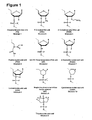
- a suitable example of a modified deoxyribonucleotide moiety is a phosphorothioate deoxyribonucleotide moiety. See structure 1 in figure 1 .
- An anti-microRNA molecule comprising more than one phosphorothioate deoxyribonucleotide moiety is referred to as phosphorothioate (PS) DNA.
- PS phosphorothioate
- a modified deoxyribonucleotide moiety is an N'3-N'5 phosphoroamidate deoxyribonucleotide moiety. See structure 2 in figure 1 .
- An oligonucleotide molecule comprising more than one phosphoroamidate deoxyribonucleotide moiety is referred to as phosphoroamidate (NP) DNA.
- NP phosphoroamidate
- the molecule comprises at least one modified ribonucleotide moiety.
- Suitable modified ribonucleotide moieties are known in the art.
- a suitable example of a modified ribonucleotide moiety is a ribonucleotide moiety that is substituted at the 2' position.
- the substituents at the 2' position may, for example, be a C 1 to C 4 alkyl group.
- the C 1 to C 4 alkyl group may be saturated or unsaturated, and unbranched or branched.
- Some examples of C 1 to C 4 alkyl groups include ethyl, isopropyl, and allyl.
- the preferred C 1 to C 4 alkyl group is methyl. See structure 3 in figure 1 .
- oligoribonucleotide molecule comprising more than one ribonucleotide moeity that is substituted at the 2' position with a C 1 to C 4 alkyl group is referred to as a 2'-O -(C 1 -C 4 alkyl) RNA, e.g.,2'-O-methyl RNA (OMe RNA).
- a 2'-O -(C 1 -C 4 alkyl) RNA e.g.,2'-O-methyl RNA (OMe RNA).
- C 1 to C 4 alkoxy - C 1 to C 4 alkyl group is a substituent at the 2' position of a modified ribonucleotide moiety.
- the C 1 to C 4 alkoxy (alkyloxy) and C 1 to C 4 alkyl group may comprise any of the alkyl groups described above.
- the preferred C 1 to C 4 alkoxy - C 1 to C 4 alkyl group is methoxyethyl. See structure 4 in figure 1 .
- oligonucleotide molecule comprising more than one ribonucleotide moiety that is substituted at the 2' position with a C 1 to C 4 alkoxy-C 1 to C 4 alkyl group is referred to as a 2'-O-(C 1 to C 4 alkoxy - C 4 to C 4 alkyl) RNA, e:g., 2'-O-methoxyethyl RNA (MOE RNA).
- MOE RNA 2'-O-methoxyethyl RNA
- LNA locked nucleic acid
- modified ribonucleotide moiety is a ribonucleotide that is substituted at the 2' position with fluoro group.
- a modified ribonucleotide moiety having a fluoro group at the 2' position is a 2'-fluororibonucleotide moiety.
- moieties are known in the art. Molecules comprising more than one 2'-fluororibonucleotide moiety are referred to herein as 2'-fluororibo nucleic acids (FANA). See structure 7 in figure 1 . Damha et al., J. Am. Chem. Soc. 120, 12976-12977 (1998 ).
- the anti-microRNA molecule comprises at least one base bonded to an amino acid residue.
- Moieties that have at least one base bonded to an amino acid residue will be referred to herein as peptide nucleic acid (PNA) moieties. Such moieties are nuclease resistance, and are known in the art. Molecules having more than one PNA moiety are referred to as peptide nucleic acids. See structure 6 in figure 1 . Nielson, Methods Enzymol.
- the amino acids can be any amino acid, including natural or non-natural amino acids.
- Naturally occurring amino acids include, for example, the twenty most common amino acids normally found in proteins, i.e., alanine (Ala), arginine (Arg), asparagine (Asn), aspartic acid (Asp), cysteine (Cys), glutamine (Glu), glutamic acid (Glu), glycine (Gly), histidine (His), isoleucine (Ileu), leucine (Leu), lysine (Lys), methionine (Met), phenylalanine (Phe), proline (Pro), serine (Ser), threonine (Thr), tryptophan, (Trp), tyrosine (Tyr), and valine (Val).
- the non-natural amino acids may, for example, comprise alkyl, aryl, or alkylaryl groups.
- alkyl amino acids include ⁇ -aminobutyric acid, ⁇ -aminobutyric acid, ⁇ -aminobutyric acid, ⁇ -aminovaleric acid, and ⁇ -aminocaproic acid.
- aryl amino acids include ortho-, meta, and para-aminobenzoic acid.
- alkylaryl amino acids include ortho-, meta-, and para-aminophenylacetic acid, and ⁇ -phenyl- ⁇ -aminobutyric acid.
- Non-naturally occurring amino acids also include derivatives of naturally occurring amino acids.
- the derivative of a naturally occurring amino acid may, for example, include the addition or one or more chemical groups to the naturally occurring amino acid.
- one or more chemical groups can be added to one or more of the 2', 3', 4', 5', or 6' position of the aromatic ring of a phenylalanine or tyrosine residue, or the 4', 5', 6', or 7' position of the benzo ring of a tryptophan residue.
- the group can be any chemical group that can be added to an aromatic ring.
- Some examples of such groups include hydroxyl, C 1 -C 4 alkoxy, amino, methylamino, dimethylamino, nitro, halo (i.e., fluoro, chloro, bromo, or iodo), or branched or unbranched C 1 -C 4 alkyl, such as methyl, ethyl, n-propyl, isopropyl, butyl, isobutyl, or t-butyl.
- halo i.e., fluoro, chloro, bromo, or iodo
- non-naturally occurring amino acids which are derivatives of naturally occurring amino acids include norvaline (Nva), norleucine (Nle), and hydroxyproline (Hyp).
- the amino acids can be identical or different from one another.
- Bases are attached to the amino acid unit by molecular linkages. Examples of linkages are methylene carbonyl, ethylene carbonyl and ethyl linkages. ( Nielsen et al., Peptide Nucleic Acids-Protocols and Applications, Horizon Scientific Press, pages 1-19 ; Nielsen et al., Science 254: 1497-1500 .)
- PNA moiety is N-(2-aminoethyl)-glycine.
- PNA moieties include cyclohexyl PNA, retro-inverso, phosphone, propionyl and aminoproline PNA.
- PNA can be chemically synthesized by methods known in the art, e.g. by modified Fmoc or tBoc peptide synthesis protocols.
- the PNA has many desirable properties, including high melting temperatures (Tm), high base-pairing specificity with nucleic acid and an uncharged molecular backbone. Additionally, the PNA does not confer RNase H sensitivity on the target RNA, and generally has good metabolic stability.
- Peptide nucleic acids are also commercially available from Applied Biosystems (Foster City, California, USA):
- the anti-microRNA molecule comprises at least one morpholino phosphoroamidate nucleotide moiety.
- a morpholino phosphoroamidate nucleotide moiety is a modified moiety which is nuclease resistant. Such moieties are known in the art. Molecules comprising more than one morpholino phosphoroamidate nucleotide moiety are referred to as morpholino (MF) nucleic acids. See structure 8 in figure 1 . Heasman, Dev. Biol. 243, 209-214 (2002 ). Morpholono oligonucleotides are commercially available from Gene Tools LLC (Corvallis, Oregon, USA).
- the anti-microRNA molecule comprises at least one cyclohexene nucleotide moiety.
- a cyclohexene nucleotide moiety is a modified moiety which is nuclease resistant. Such moieties are known in the art. Molecules comprising more than one cyclohexene nucleotide moiety are referred to as cyclohexene nucleic acids (CeNA). See structure 10 in figure 1 . Wang et al., J. Am. Chem. Soc. 122, 8595-8602 (2000 ), Verbeure et al., Nucleic Acids Res. 29, 4941-4947 (2001 ).
- the anti-microRNA molecule comprises at least one tricyclo nucleotide moiety.
- a tricyclo nucleotide moiety is a modified moiety which is nuclease resistant. Such moieties are known in the art. Steffens et al., J. Am. Chem. Soc. 119, 11548-11549 (1997 ), Renneberg et al., J. Am. Chem. Soc.124, 5993-6002 (2002 ). Molecules comprising more than one tricyclo nucleotide moiety are referred to as tricycle nucleic acids (tcDNA). See structure 9 in figure 1 .
- inverted nucleotide caps can be attached to the 5' end, the 3' end, or both ends of the molecule.
- An inverted nucleotide cap refers to a 3' ⁇ 5' sequence of nucleic acids attached to the anti-microRNA molecule at the 5' and/or the 3' end. There is no limit to the maximum number of nucleotides in the inverted cap just as long as it does not interfere with binding of the anti-microRNA molecule to its target microRNA.
- Any nucleotide can be used in the inverted nucleotide cap.
- the inverted nucleotide cap is one nucleotide in length.
- the nucleotide for the inverted cap is generally thymine, but can be any nucleotide such as adenine, guanine, uracil, or cytosine.
- an ethylene glycol compound and/or amino linkers can be attached to the either or both ends of the anti-microRNA molecule.
- Amino linkers can also be used to increase nuclease resistance of the anti-microRNA molecules to endonucleases.
- the table below lists some examples of amino linkers. The below listed amino linker are commercially available from TriLink Biotechnologies, San Diego, CA.
- Chimeric anti-microRNA molecules containing a mixture of any of the moieties mentioned above are also known, and may be made by methods known, in the art. See, for example, references cited above, and Wang et al, Proc. Natl. Acad. Sci. USA 96, 13989-13994 (1999 ), Liang et al., Eur. J. Biochem. 269, 5753-5758 (2002 ), Lok et al., Biochemistry 41, 3457-3467 (2002 ), and Damha et al., J. Am. Chem. Soc. 120, 12976-12977 (2002 ).
- the molecules of the invention comprise at least ten contiguous, preferably at least thirteen contiguous, more preferably at least fifteen contiguous, and even more preferably at least twenty contiguous bases that have the same sequence as a sequence of bases in any one of the anti-microRNA molecules shown in Tables 1-4.
- the anti-microRNA molecules optimally comprise the entire sequence of any one of the anti-microRNA molecule sequences shown in Tables 1-4.
- wobble base pairs refers to either: i) substitution of a cytosine with a uracil, or 2) the substitution of a adenine with a guanine, in the sequence of the anti-microRNA molecule. These wobble base pairs are generally referred to as UG or GU wobbles. Below is a table showing the number of contiguous bases and the maximum number of wobble base pairs in the anti-microRNA molecule:
- up to ten percent, and preferably up to five percent of the contiguous bases can be additions, deletions, mismatches or combinations thereof.
- Additions refer to the insertion in the contiguous sequence of any moiety described above comprising any one of the bases described above.
- Deletions refer to the removal of any moiety present in the contiguous sequence.
- Mismatches refer to the substitution of one of the moieties comprising a base in the contiguous sequence with any of the above described moieties comprising a different base.
- the additions, deletions or mismatches can occur anywhere in the contiguous sequence, for example, at either end of the contiguous sequence or within the contiguous sequence of the anti-microRNA molecule. If the contiguous sequence is relatively short, such as from about ten to about 15 moieties in length, preferably the additions, deletions or mismatches occur at the end of the contiguous sequence. If the contiguous sequence is relatively long, such as a minimum of sixteen contiguous sequences, then the additions, deletions, or mismatches can occur anywhere in the contiguous sequence. Below is a table showing the number of contiguous bases and the maximum number of additions, deletions, mismatches or combinations thereof:
- no more than fifty percent, and preferably no more than thirty percent, of the contiguous moieties contain deoxyribonucleotide backbone units.
- deoxyribonucleotide backbone units below is a table showing the number of contiguous bases and the maximum number of deoxyribonucleotide backbone units:
- the moiety in the anti-RNA molecule at the position corresponding to position 11 of the microRNA is optionally non-complementary to a microRNA.
- the moiety in the anti-microRNA molecule corresponding to position 11 of the microRNA can be rendered non-complementary by an addition, deletion or mismatch as described above.
- the anti-microRNA molecules comprises at least one base, in the at least ten contiguous bases, which is non-complementary to the microRNA and/or comprises an inverted nucleotide cap, ethylene glycol compound or an amino linker.
- the anti-microRNA molecule contains at least one modified moiety in the at least ten contiguous bases and/or comprises an inverted nucleotide cap, ethylene glycol compound or an amino linker.
- the maximum length of the anti-microRNA molecule is 50 moieties. Any number of moieties having any base sequence can be added to the contiguous base sequence. The additional moieties can be added to the 5' end, the 3' end, or to both ends of the contiguous sequence.
- MicroRNA molecules are derived from genomic loci and are produced from specific microRNA genes. Mature microRNA molecules are processed from precursor transcripts that form local hairpin structures. The hairpin structures are typically cleaved by an enzyme known as Dicer, which generates one microRNA duplex. See Bartel, Cell 116, 281-297 (2004 ) for a review on microRNA molecules. The article by Bartel is hereby incorporated by reference.
- microRNA ribonucleoprotein complex A microRNP in, for example, humans, also includes the proteins eIF2C2, the helicase Gemin3, and Gemin 4.
- sequence of bases in the anti-microRNA molecules of the present invention can be derived from a microRNA from any species e.g. such as a fly (e.g., Drosophila melanogaster ) , a worm (e.g., C . elegans).
- a fly e.g., Drosophila melanogaster
- a worm e.g., C . elegans
- the sequence of bases is found in mammals, especially humans ( H. sapiens), mice (e.g., M. musculus ) , and rats (R. norvegicus).
- the anti-microRNA molecule is preferably isolated, which means that it is essentially free of other nucleic acids. Essentially free from other nucleic acids means that it is at least 90%, preferably at least 95% and, more preferably, at least 98% free of other nucleic acids.
- the molecule is essentially pure, which means that the molecules is free not only of other nucleic acids, but also of other materials used in the synthesis of the molecule, such as, for example, enzymes used in the synthesis of the molecule.
- the molecule is at least 90% free, preferably at least 95% free and, more preferably, at least 98% free of such materials.
- the anti-microRNA molecules of the present invention are capable of inhibiting microRNP activity, preferable in a cell.
- Inhibiting microRNP activity refers to the inhibition of cleavage of the microRNA's target sequence or the repression of translation of the microRNA's target sequence.
- the method comprises introducing into the cell a single-stranded microRNA molecule.
- anti-microRNA molecule can be used in the methods of the present invention, as long as the anti-microRNA is complementary, subject to the restrictions described above, to the microRNA present in the microRNP.
- anti-microRNAs include, for example, the anti-microRNA molecules mentioned above (see Table 1-4), and the anti-microRNAs molecules described in international PCT application number WO 03/029459 A2 , the sequences of which are incorporated herein by reference.
- the invention also includes any one of the microRNA molecules having the sequences as shown in Table 2.
- the novel microRNA molecules in Table 2 may optionally be modified as described above for anti-microRNA molecules.
- the other microRNA molecules in Tables 1, 3 and 4 are modified for increased nuclease resistance as described above for anti-microRNA molecules.
- the anti-microRNA molecules and the microRNA molecules of the present invention have numerous in vivo, in vitro, and ex vivo applications.
- the anti-microRNA molecules and microRNA of the present invention may be used as a modulator of the expression of genes which are at least partially complementary to the anti-microRNA molecules and microRNA.
- an appropriate isolated microRNA of the present invention may be introduced into the cell to promote survival.
- an appropriate anti-microRNA molecule can be introduced into the cell in order to inhibit the activity of the microRNA and reduce the harm.
- anti-microRNA molecules and/or microRNAs of the present invention can be introduced into a cell to study the function of the microRNA.
- Any of the anti-microRNA molecules and/or microRNAs listed above can be introduced into a cell for studying their function.
- a microRNA in a cell can be inhibited with a suitable anti-microRNA molecule.
- the function of the microRNA can be inferred by observing changes associated with inhibition of the microRNA in the cell in order to inhibit the activity of the microRNA and reduce the harm.
- the cell can be any cell which expresses microRNA molecules, including the microRNA molecules listed herein.
- the cell can be any cell transfected with an expression vector containing the nucleotide sequence of a microRNA.
- cells include, but are not limited to, endothelial cells, epithelial cells, leukocytes (e.g., T cells, B cells, neutrophils, macrophages, eosinophils, basophils, dendritic cells, natural killer cells and monocytes), stem cells, hemopoietic cells, embryonic cells, cancer cells.
- leukocytes e.g., T cells, B cells, neutrophils, macrophages, eosinophils, basophils, dendritic cells, natural killer cells and monocytes
- the anti-microRNA molecules or microRNAs can be introduced into a cell by any method known to those skilled in the art.
- Useful delivery systems include for example, liposomes and charged lipids. Liposomes typically encapsulate oligonucleotide molecules within their aqueous center. Charged lipids generally form lipid- oligonucleotide molecule complexes as a result of opposing charges.
- liposomes-oligonucleotide molecule complexes or lipid- oligonucleotide molecule complexes are usually internalized by endocytosis.
- the liposomes or charged lipids generally comprise helper lipids which disrupt the endosomal membrane and release the oligonucleotide molecules.
- an anti-microRNA molecule or a microRNA into a cell include use of delivery vehicles, such as dendrimers, biodegradable polymers, polymers of amino acids, polymers of sugars, and oligonucleotide-binding nanoparticles.
- delivery vehicles such as dendrimers, biodegradable polymers, polymers of amino acids, polymers of sugars, and oligonucleotide-binding nanoparticles.
- pluoronic gel as a depot reservoir can be used to deliver the anti-microRNA oligonucleotide molecules over a prolonged period. The above methods are described in, for example, Hughes et al., Drug Discovery Today 6, 303-315 (2001 ); Liang et al. Eur. J. Biochem.
- Targeting of an anti-microRNA molecule or a microRNA to a particular cell can be performed by any method known to those skilled in the art.
- the anti-microRNA molecule or microRNA can be conjugated to an antibody or ligand specifically recognized by receptors on the cell.
- microRNA and anti-microRNA molecules are shown in Tables 1-4 below. Human sequences are indicated with the prefix “hsa.” Mouse sequences are indicated with the prefix “mmu.” Rat sequences are indicated with the prefix “rno.” C. elegan sequences are indicated with the prefix "cel.” Drosophila sequences are indicated with the prefix "dme.” Table 1 : Human, Mouse and Rat microRNA and anti-microRNA sequences. microRNA name microRNA sequence (5' to 3') Anti-microRNA molecule sequence (5' to 3') hsa-miR-100.
- AAAGUGCUUCCCUUUUGUGUGU ACACACAAAAGGGAAGCACUUU mmu-miR-295 AAAGUGCUACUACUUUUGAGUC GACUCAAAAGUAGUAGCACUUU mmu-miR-297 AUGUAUGUGUGCAUGUGCAUGU ACAUGCACAUGCACACAUACAU mmu-miR-298 GGCAGAGGAGGGCUGUUCUUCC GGAAGAACAGCCCUCCUCUGCC mmu-miR-300 UAUGCAAGGGCAAGCUCUCUUC GAAGAGAGCUUGCCCUUGCAUA mmu-miR-31 AGGCAAGAUGCUGGCAUAGCUG CAGCUAUGCCAGCAUCUUGCCU mmu-miR-322 AAACAUGAAGCGCUGCAACACC GGUGUUGCAGCGCUUCAUGUUU mmu-miR-325 CCUAGUAGGUGCUCAGUAAGUG CACUUACUGAGCACCUACUAGG mm
- microRNA name microRNA sequence (5' to 3') Anti-microRNA molecule sequence (5' to 3') hsa-miR-361 UUAUCAGAAUCUCCAGGGGUAC GUACCCCUGGAGAUUCUGAUAA hsa-miR-362 AAUCCUUGGAACCUAGGUGUGA UCACACCUAGGUUCCAAGGAUU hsa-miR-363 AUUGCACGGUAUCCAUCUGUAA UUACAGAUGGAUACCGUGCAAU hsa-miR-364.
- microRNA name microRNA sequence (5' to 3') Anti-microRNA molecule sequence (5' to 3') Cel-let-7 UGAGGUAGUAGGUUGUAUAGUU AACUAUACAACCUACUACCUCA Cel-lin-4 UCCCUGAGACCUCAAGUGUGAG CUCACACUUGAGGUCUCAGGGA Cel-miR-1 UGGAAUGUAAAGAAGUAUGUAG CUACAUACUUCUUUACAUUCCA Cel-miR-2 UAUCACAGCCAGCUUUGAUGUG CACAUCAAAGCUGGCUGUGAUA Cel-miR-34 AGGCAGUGUGGUUAGCUGGUUG CAACCAGCUAACCACACUGCCU Cel-miR-35 UCACCGGGUGGAAACUAGCAGU ACUGCUAGUUUCCACCCGGUGA Cel-36 UCACCGGGUGAAAAUUCGCAUG CAUGCGAAUUUUCACCCGGUGA Cel-miR-37 UCACCGGGUGAACACUUGCAGU ACUGCAAGUGUGU
- microRNA name microRNA sequence (5' to 3') Anti-microRNA molecule sequence (5' to 3') Dme-miR-263a GUUAAUGGCACUGGAAGAAUUC GAAUUCUUCCAGUGCCAUUAAC Dme-miR-184 UGGACGGAGAACUGAUAAGGGC GCCCUUAUCAGUUCCGUCCA Dme-miR-274 UUUUGUGACCGACACUAACGGG CCCGUUAGUGUCGGUCACAAAA Dme-miR-275 UCAGGUACCUGAAGUAGCGCGC GCGCUACUUCAGGUACCUGA Dme-miR-92a CAUUGCACUUGUCCCGGCCUAU AUAGGCCGGGACAAGUGCAAUG Dme-miR-219 UGAUUGUCCAAACGCAAUUCUU AAGAAUUGCGUUUGGACAAUCA Dme-miR-276a UAGGAACUUCAUACCGUGCUCU AGAGCACGGUAUGAAGUUCCUA D
- MiR-21 were synthesized using 5'-silyl, 2'-ACE phosphoramidites (Dharmacon, Lafayette, CO, USA) on 0.2 ⁇ mol synthesis columns using a modified ABI 394 synthesizer (Foster City, CA, USA) ( Scaringe, Methods Enzymol. 317, 3-18 (2001 ) and Scaringe, Methods 23, 206-217 (2001 )).
- the phosphate methyl group was removed by flushing the column with 2 ml of 0.2 M 2-carbamoyl-2-cyanoethylene-1,1-dithiolate trihydrate in DMF/water (98:2 v/v) for 30 min at room temperature.
- the reagent was removed and the column rinsed with 10 ml water followed by 10 ml acetonitrile.
- the oligonucleotide was cleaved and eluted from the solid support by flushing with 1.6 ml of 40% aqueous methylamine over 2 min, collected in a screwcap vial and incubated for 10 min at 55 °C. Subsequently, the base-treated oligonucleotide was dried down in an Eppendorf concentrator to remove methylamine and water.
- the residue was dissolved in sterile 2'-deprotection buffer (400 ⁇ l of 100 mM acetate-TEMED, pH 3.8, for a 0.2 ⁇ mol scale synthesis) and incubated for 30 minutes at 60 °C to remove the 2' ACE group.
- the oligoribonucleotide was precipitated from the acetate-TEMED solution by adding 24 ⁇ l 5 M NaCl and 1.2 ml of absolute ethanol.
- 2'-O-Methyl oligoribonucleotides were synthesized using 5'-DMT, 2'-Omethyl phosphoramidites (Proligo, Hamburg, Germany) on 1 ⁇ mol synthesis columns loaded with 3'-aminomodifier (TFA) C7 Icaa control pore glass support (Cherngenes, MA, USA).
- TFA 3'-aminomodifier
- the aminolinker was added in order to also use the oligonucleotides for conjugation to amino group reactive reagents, such as biotin succinimidyl esters.
- the synthesis products were deprotected for 16 h at 55 °C in 30% aqueous ammonia and then precipitated by the addition of 12 ml absolute 1-butanol.
- sequences of the 2'-O-methyl oligoribonucleotides were 5'-GUCAACAUCAGUCUGAUAAGCUAL (L, 3' aminolinker) for 2'-OMe miR-21, and 5'-AAGGCAAGCUGACCCUGAAGUL for EGFP 2'-OMe antisense, 5'-UGAAGUCCCAGUCGAACGGAAL for EGFP 2'-OMe reverse; the sequence of chimeric 2'-OMe/DNA oligonucleotides was 5'-GTCAACATCAGTCTGATAAGCTA GCG L for 2'-deoxy miR-21 (underlined, 2'-OMe residues), and 5'-AAGGCAAGCTGACCCTGAAGT GCG L for EGFP 2'-deoxy antisense.
- the miR-21 cleavage substrate was prepared by PCR-based extension of the partially complementary synthetic DNA oligonucleotides 5'-GAACAATTGCTTTTACAGATGCACATATCGAGGTGAACATCACGTACGTCAACATCA GTCTGATAAGCTATCGGTTGGCAGAAGCTAT and 5'-GGCATAAAGAATTGAAGAGAGTTTTCACTGCATACGACGATTCTGTGATTTGTATTC AGCCCATATCGTTTCATAGCTTCTGCCAACCGA.
- the extended dsDNA was then used as template for a new PCR with primers 5'- .
- the PCR product was ligated into pCR2.1-TOPO (Invitrogen). Plasmids isolated from sequence-verified clones were used as templates for PCR to produce sufficient template for run-off in vitro transcription reactions using phage RNA polymerases ( Elbashir et al., EMBO 20, 6877-6888 (2001 )). 32 P-Cap-labelling was performed as reported ( Martinez et al., Cell 110, 563-574 (2002 )).
- Plasmids pEGFP-S-21 and pEGFP-A-21 were generated by T4 DNA ligation of preannealed oligodeoxynucleotides 5'-GGCCTCAACATCAGTCTGATAAGCTAGGTACCT and 5'-GGCCAGGTACCTAGCTTATCAGACTGATGTTGA into NotI digested pEGFP-N- 1 (Clontech).
- the plasmid pHcRed-C1 was from Clontech.
- HeLa cell extracts were prepared as described ( Dignam et al., Nucleic Acid Res. 11 1475-1489 (1983 )). 5x10 9 cells from HeLa suspension cultures were collected by centrifugation and washed with PBS (pH7.4). The cell pellet (approx. 15 ml) was re-suspended in two times of its volume with 10mM KCl/1.5 mM MgCl 2 /0.5 mM dithiothreitol/10mM HEPES-KOH (pH 7.9) and homogenized by douncing. The nuclei were then removed by centrifugation of the cell lysate at 1000 g for 10 min.
- the supernatant was spun in an ultracentrifuge for 1 h at 10,5000 g to obtain the cytoplasmic S100 extract.
- the concentration of KCl of the S100 extract was subsequently raised to 100 mM by the addition of 1 M KCl.
- the extract was then supplemented with 10% glycerol and frozen in liquid nitrogen.
- RNA was isolated from 1 ml of S100 extract using the acidic guanidinium thiocyanate-phenol-chloroform extraction method ( Chomczynski et al., Anal. Biochem. 162, 156-159 (1987 )).
- a calibration curve for miR-21 Northern signals was produced by loading increasing amounts (10 to 30000 pg) of synthetically made miR-21 ( Lim et al. et al., Genes & Devel.17, 991-1008 (2003 )).
- Northern blot analysis was performed as described using 30 ⁇ g of total RNA per well ( Lagos-Quintana et al., Science 294, 853-858 (2001 )).
- 2'-O-Methyl oligoribonucleotides or 2'-deoxyoligonucleotides were pre-incubated with HeLa S100 at 30 °C for 20 min prior to the addition of the cap-labeled miR-21 target RNA.
- the concentration of the reaction components were 5 nM target RNA, 1 mM ATP, 0.2 mM GTP, 10 U/ml RNasin (Promega) and 50% HeLa S 100 extract in a final reaction volume of 25 ⁇ l.
- the reaction time was 1.5 h at 30 °C.
- the reaction was stopped by addition of 200 ⁇ l of 300 mM NaCl/25 mM EDTA/20% w/v SDS/200 mM Tris HCl (pH7.5). Subsequently, proteinase K was added to a final concentration of 0.6 mg/ml and the sample was incubated for 15 min at 65 °C. After phenol/chloroform extraction, the RNA was ethanol-precipitated and separated on a 6% denaturing polyacrylamide gel. Radioactivity was detected by phosphorimaging.
- HeLa S3 and HeLa S3/GFP were grown in 5% CO2 at 37 °C in Dulbecco's modified Eagle's medium (DMEM) supplemented with 10% fetal bovine serum (FBS), 100 unit/ml penicillin, and 100 ⁇ g/ml streptomycin.
- DMEM Dulbecco's modified Eagle's medium
- FBS fetal bovine serum
- penicillin 100 unit/ml bovine serum
- streptomycin 100 fetal bovine serum
- 105 cells were plated in 500 ⁇ l DMEM containing 10% FBS per well of a 24-well plate. Plasmid and plasmid/oligonucleotide transfection was carried out with Lipofectamine2000 (Invitrogen).
- 0.2 ⁇ g pEGFP or its derivatives were cotransfected with 0.3 ⁇ g pHcRed with or without 10 pmol of 2'-O-methyl oligoribonucleotide or 10 pmol of 2'-deoxyoligonucleotide per well.
- Fluorescent cell images were recorded on a Zeiss Axiovert 200 inverted fluorescence microscope (Plan-Apochromat 10x/0.45) equipped with Chroma Technology Corp. filter sets 41001 (EGFP) and , 41002c (HcRed) and AxioVision 3.1 software.
- a 24-nucleotide 2'-'O-methyl oligoribonucleotide that contained a 3' C7 aminolinker and was complementary to the longest form of the miR-21 was synthesized.
- the aminolinker was introduced in order to enable post-synthetic conjugation of non-nucleotidic residues such as biotin.
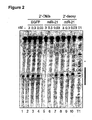
- the control EGFP oligonucleotide did not interfere with miR-21 cleavage even at the highest applied concentration ( Figure 2A , lanes 2-3).
- the activity of miR-21 was completely blocked at a concentration of only 3 nM ( Figure 2A , lane 5), and a concentration of 0.3 nM showed a substantial 60%-70% reduction of cleavage activity ( Figure 2 , lane 6)-
- Figure 2 , lane 1, 7 At a concentration of 0.03 nM, the cleavage activity of miR-21 was not affected when compared to the lysate alone ( Figure 2 , lane 1, 7).
- Antisense 2'-deoxyoligonucleotides (approximately 90% DNA molecules) at concentrations identical to those of 2'-O-methyl oligoribonucleotides, we could not detect blockage of miR-21 induced cleavage ( Figure 2A , lanes 8-10).
- the 2'-deoxynucleotides used in this study were protected against 3'-exonucleases by the addition of three 2'-O-methyl ribonucleotide residues.
- Example 4 Anti MicroRNA-21 2'-O-methyl Oligoribonucleotide Inhibited MicroRN'A-21-Induced Cleavage of Target RNA In Vitro
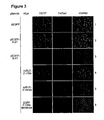
- reporter plasmids that express EGFP mRNA that contains in its 3' UTR a 22-nt sequence complementary to miR-21 (pEGFP-S-21) or in sense orientation to miR-21 (p-EGFP-A-21). Endogenous miRNAs have previously been shown to act like siRNAs by cleaving reporter mRNAs carrying sequences perfectly complementary to miRNA. To monitor transfection efficiency and specific interference with the EGFP indicator plasmids, the far-red fluorescent protein encoding plasmid pHcRed-C1 was cotransfected.
- miRNP complexes can be effectively and sequence-specifically inhibited with 2'-O-methyl oligoribonucleotides antisense to the guide strand positioned in the RNA silencing .complex.
Landscapes
- Health & Medical Sciences (AREA)
- Life Sciences & Earth Sciences (AREA)
- Chemical & Material Sciences (AREA)
- Engineering & Computer Science (AREA)
- Genetics & Genomics (AREA)
- Molecular Biology (AREA)
- Organic Chemistry (AREA)
- Biomedical Technology (AREA)
- Biotechnology (AREA)
- Biochemistry (AREA)
- General Engineering & Computer Science (AREA)
- Bioinformatics & Cheminformatics (AREA)
- Wood Science & Technology (AREA)
- Zoology (AREA)
- General Health & Medical Sciences (AREA)
- Microbiology (AREA)
- Plant Pathology (AREA)
- Physics & Mathematics (AREA)
- Biophysics (AREA)
- Pharmaceuticals Containing Other Organic And Inorganic Compounds (AREA)
- Medicines That Contain Protein Lipid Enzymes And Other Medicines (AREA)
Abstract
Description
- This application is a continuing application of
U.S. Application Serial Number 10/778,908 filed on February 13, 2004U.S. is hereby incorporated by reference in its entirety.Application Serial Number 10/778,908 - The invention claimed herein was made with the help of
grant number 1 R01 GM068476-01 from NIH/NIGMS. The U.S. government has certain rights in the invention. - RNA silencing is a fundamental mechanism of gene regulation that uses double-stranded RNA (dsRNA) derived 21- to 28-nucleotide (nt) small RNAs to guide mRNA degradation, control mRNA translation or chromatin modification. Recently, several hundred novel genes were identified in plants and animals that encode transcripts that contain short dsRNA hairpins.
- Defined 22-nt RNAs, referred to as microRNAs (miRNAs), are reported to be excised by dsRNA specific endonucleases from the hairpin precursors. The miRNAs are incorporated into ribonucleoprotein particles (miRNPs).
- Plant miRNAs target mRNAs containing sequence segments with high complementarity for degradation or suppress translation of partially complementary mRNAs. Animal miRNAs appear to act predominantly as translational repressors. However, animal miRNAs have also been reported to guide RNA degradation. This indicates that animal miRNPs act like small interfering RNA (siRNA)-induced silencing complexes (RISCs).
- Understanding the biological function of miRNAs requires knowledge of their mRNA targets. Bioinformatic approaches have been used to predict mRNA targets, among which transcription factors and proapoptotic genes were prominent candidates. Processes such as Notch signaling, cell proliferation, morphogenesis and axon guidance appear to be controlled by miRNA genes.
- Therefore, there is a need for materials and methods that can help elucidate the function of known and future microRNAs. Due to the ability of microRNAs to induce RNA degradation or repress translation of mRNA which encode important proteins, there is also a need for novel compositions for inhibiting microRNA-indcued cleavage or repression of mRNAs.
- In one embodiment, the invention provides an isolated single stranded anti-microRNA molecule comprising a minimum of ten moieties and a maximum of fifty moieties on a molecular backbone, the molecular backbone comprising backbone units, each moiety comprising a base bonded to a backbone unit, each base forming a Watson-Crick base pair with a complementary base wherein at least ten contiguous bases have the same sequence as a sequence of bases in any one of the anti-microRNA molecules shown in Tables 1-4, except that up to thirty percent of the bases pairs may be wobble base pairs, and up to 10% of the contiguous bases may be additions, deletions, mismatches, or combinations thereof; no more than fifty percent of the contiguous moieties contain deoxyribonuleotide backbone units; the moiety in the molecule at the position corresponding to position 11 of the microRNA is non-complementary; and the molecule is capable of inhibiting microRNP activity.
- In another embodiment, the invention provides a method for inhibiting microRNP activity in a cell, the microRNP comprising a microRNA molecule, the microRNA molecule comprising a sequences of bases complementary of the sequence of bases in a single stranded anti-microRNA molecule, the method comprising introducing into the cell the single-stranded anti-microRNA molecule comprising a sequence of a minimum of ten moieties and a maximum of fifty moieties on a molecular backbone, the molecular backbone comprising backbone units, each moiety comprising a base bonded to a backbone unit, each base forming a Watson-Crick base pair with a complementary base, wherein at least ten contiguous bases of the anti-microRNA molecule are complementary to the microRNA, except that up to thirty percent of the bases may be substituted by wobble base pairs, and up to ten percent of the at least ten moieties may be additions, deletions, mismatches, or combinations thereof; no more than fifty percent of the contiguous moieties contain deoxyribonuleotide backbone units; and the moiety in the molecule at the position corresponding to position 11 of the microRNA is non-complementary.
- In another embodiment, the invention provides an isolated microRNA molecule comprising a minimum of ten moieties and a maximum of fifty moieties on a molecular backbone, the molecular backbone comprising backbone units, each moiety comprising a base bonded to a backbone unit, wherein at least ten contiguous bases have the same sequence as a sequence of bases in any one of the microRNA molecules shown in Table 2, except that up to thirty percent of the bases pairs may be wobble base pairs, and up to 10% of the contiguous bases may be additions, deletions, mismatches, or combinations thereof; and no more than fifty percent of the contiguous moieties contain deoxyribonucleotide backbone units.
- In another embodiment, the invention provides an isolated microRNA molecule comprising a minimum of ten moieties and a maximum of fifty moieties on a molecular backbone, the molecular backbone comprising backbone units, each moiety comprising a base bonded to a backbone unit, wherein at least ten contiguous bases have any one of the microRNA sequences shown in Tables 1, 3 and 4, except that up to thirty percent of the bases pairs may be wobble base pairs, and up to 10% of the contiguous bases may be additions, deletions, mismatches, or combinations thereof; no more than fifty percent of the contiguous moieties contain deoxyribonuleotide backbone units; and is modified for increased nuclease resistance.
- In yet another embodiment, the invention provides an isolated single stranded anti-microRNA molecule comprising a minimum of ten moieties and a maximum of fifty moieties on a molecular backbone, the molecular backbone comprising backbone units, each moiety comprising a base bonded to a backbone unit, each base forming a Watson-Crick base pair with a complementary base wherein at least ten contiguous bases have the same sequence as a sequence of bases in any one of the anti-microRNA molecules shown in Tables 1-4, except that up to thirty percent of the bases pairs may be wobble base pairs, and up to 10% of the contiguous bases may be additions, deletions, mismatches, or combinations thereof; no more than fifty percent of the contiguous moieties contain deoxyribonuleotide backbone units; and the molecule is capable of inhibiting microRNP activity.
- In yet a further embodiment, the invention provides a method for inhibiting microRNP activity in a cell, the microRNP comprising a microRNA molecule, the microRNA molecule comprising a sequences of bases complementary of the sequence of bases in a single stranded anti-microRNA molecule, the method comprising introducing into the cell the single-stranded anti-microRNA molecule comprising a sequence of a minimum of ten moieties and a maximum of fifty moieties on a molecular backbone, the molecular backbone comprising backbone units, each moiety comprising a base bonded to a backbone unit, each base forming a Watson-Crick base pair with a complementary base, wherein at least ten contiguous bases of the anti-microRNA molecule are complementary to the microRNA, except that up to thirty percent of the bases may be substituted by wobble base pairs, and up to ten percent of the at least ten moieties may be additions, deletions, mismatches, or combinations thereof; and no more than fifty percent of the contiguous moieties contain deoxyribonuleotide backbone units.
-
-
Figure 1 shows the modified nucleotide units discussed in the specification. B denotes any one of the following nucleic acid bases: adenosine, cytidine, guanosine, thymine, or uridine. -
Figure 2 . Antisense 2'-O-methyl oligoribonucleotide specifically inhibit miR-21 guided cleavage activity in HeLa cell S100 cytoplasmic extracts. The black bar to the left of the RNase T1 ladder represents the region of the target RNA complementary to miR-21. Oligonucleotides complementary to miR-21 were pre-incubated in S100 extracts prior to the addition of 32P-cap-labelled cleavage substrate. Cleavage bands and T1 hydrolysis bands appear as doublets after a 1-nt slipping of the T7 RNA polymerase near the middle of the transcript indicated by the asterisk. -
Figure 3 . Antisense 2'-O-methyl oligoribonucleotides interfere with endogenous miR-21 RNP cleavage in HeLa cells. HeLa cells were transfected with pHcRed and pEGFP or its derivatives, with or without inhibitory or control oligonucleotides. EGFP and HcRed protein fluorescence were excited and recorded individually by fluorescence microscopy 24 h after transfection. Co-expression of co-transfected reporter plasmids was documented by superimposing of the fluorescence images in the right panel. - The invention relates to an isolated single stranded anti-microRNA molecule. The molecule comprises a minimum number of ten moieties, preferably a minimum of thirteen, more preferably a minimum of fifteen, even more preferably a minimum of 18, and most preferably a minimum of 21 moieties.
- The anti-microRNA molecule comprises a maximum number of fifty moieties, preferably a maximum of forty, more preferably a maximum of thirty, even more preferably a maximum of twenty-five, and most preferably a maximum of twenty-three moieties. A suitable range of minimum and maximum number of moieties may be obtained by combining any of the above minima with any of the above maxima.
- Each moiety comprises a base bonded to a backbone unit. In this specification, a base refers to any one of the nucleic acid bases present in DNA or RNA. The base can be a purine or pyrimidine. Examples of purine bases include adenine (A) and guanine (G). Examples of pyrimidine bases include thymine (T), cytosine (C) and uracil (U). Each base of the moiety forms a Watson-Crick base pair with a complementary base.
- Watson-Crick base pairs as used herein refers to the hydrogen bonding interaction between, for example, the following bases: adenine and thymine (A = T); adenine and uracil (A = U); and cytosine and guanine (C = G). The adenine can be replaced with 2,6-diaminopurine without compromising base-pairing.
- The backbone unit may be any molecular unit that is able stably to bind to a base and to form an oligomeric chain. Suitable backbone units are well known to those in the art.
- For example, suitable backbone units include sugar-phosphate groups, such as the sugar-phosphate groups present in ribonucleotides, deoxyribonucleotides, phosphorothioate deoxyribose groups, N'3-N'5 phosphoroamidate deoxyribose groups, 2'O-alkyl-ribose phosphate groups, 2'-O-alkyl-alkoxy ribose phosphate groups, ribose phosphate group containing a methylene bridge, 2'-Fluororibose phosphate groups, morpholino phosphoroamidate groups, cyclohexene groups, tricycle phosphate groups, and amino acid molecules.
- In one embodiment, the anti-microRNA molecule comprises at least one moiety which is a ribonucleotide moiety or a deoxyribonucleotide moiety.
- In another embodiment, the anti-microRNA molecule comprises at least one moiety which confers increased nuclease resistance. The nuclease can be an exonuclease, an endonuclease, or both. The exonuclease can be a 3'→5 ' exonuclease or a 5'→3' exonuclease. Examples of 3'→5' human exonuclease include PNPT1, Wemer syndrome helicase, RRP40, RRP41, RRP42, RRP45, and RRP46. Examples of 5'→3' exonuclease include XRN2, and FEN1. Examples of endonucleases include Dicer, Drosha, RNase4, Ribonuclease P, Ribonuclease H1, DHP1, ERCC-1 and OGG1. Examples of nucleases which function as both an exonuclease and an endonuclease include APE1 and EXO1.
- An anti-microRNA molecule comprising at least one moiety which confers increased nuclease resistance means a sequence of moieties wherein at least one moiety is not recognized by a nuclease. Therefore, the nuclease resistance of the molecule is increased compared to a sequence containing only unmodified ribonucleotide, unmodified deoxyribonucleotide or both. Such modified moieties are well known in the art, and were reviewed, for example, by Kurreck, Eur. J. Biochem. 270, 1628-1644 (2003).
- A modified moiety can occur at any position in the anti-microRNA molecule. For example, to protect the anti-microRNA molecule against 3'→5' exonucleases, the molecule can have at least one modified moiety at the 3' end of the molecule and preferably at least two modified moieties at the 3' end. If it is desirable to protect the molecule against 5'→3' exonuclease, the anti-microRNA molecule can have at least one modified moiety and preferably at least two modified moieties at the 5' end of the molecule. The anti-microRNA molecule can also have at least one and preferably at least two modified moieties between the 5' and 3' end of the molecule to increase resistance of the molecule to endonucleases. In one embodiment, all of the moieties are nuclease resistant.
- In another embodiment, the anti-microRNA molecule comprises at least one modified deoxyribonucleotide moiety. Suitable modified deoxyribonucleotide moieties are known in the art.
- A suitable example of a modified deoxyribonucleotide moiety is a phosphorothioate deoxyribonucleotide moiety. See
structure 1 infigure 1 . An anti-microRNA molecule comprising more than one phosphorothioate deoxyribonucleotide moiety is referred to as phosphorothioate (PS) DNA. See, for example, Eckstein, Antisense Nucleic Acids Drug Dev. 10, 117-121 (2000). - Another suitable example of a modified deoxyribonucleotide moiety is an N'3-N'5 phosphoroamidate deoxyribonucleotide moiety. See
structure 2 infigure 1 . An oligonucleotide molecule comprising more than one phosphoroamidate deoxyribonucleotide moiety is referred to as phosphoroamidate (NP) DNA. See, for example, Gryaznov et al., J. Am. Chem. Soc.116, 3143-3144 (1994). - In another embodiment, the molecule comprises at least one modified ribonucleotide moiety. Suitable modified ribonucleotide moieties are known in the art.
- A suitable example of a modified ribonucleotide moiety is a ribonucleotide moiety that is substituted at the 2' position. The substituents at the 2' position may, for example, be a C1 to C4 alkyl group. The C1 to C4 alkyl group may be saturated or unsaturated, and unbranched or branched. Some examples of C1 to C4 alkyl groups include ethyl, isopropyl, and allyl. The preferred C1 to C4 alkyl group is methyl. See
structure 3 infigure 1 . An oligoribonucleotide molecule comprising more than one ribonucleotide moeity that is substituted at the 2' position with a C1 to C4 alkyl group is referred to as a 2'-O -(C1-C4 alkyl) RNA, e.g.,2'-O-methyl RNA (OMe RNA). - Another suitable example of a substituent at the 2' position of a modified ribonucleotide moiety is a C1 to C4 alkoxy - C1 to C4 alkyl group. The C1 to C4 alkoxy (alkyloxy) and C1 to C4 alkyl group may comprise any of the alkyl groups described above. The preferred C1 to C4 alkoxy - C1 to C4 alkyl group is methoxyethyl. See
structure 4 infigure 1 . An oligonucleotide molecule comprising more than one ribonucleotide moiety that is substituted at the 2' position with a C1 to C4 alkoxy-C1 to C4 alkyl group is referred to as a 2'-O-(C1 to C4 alkoxy - C4 to C4 alkyl) RNA, e:g., 2'-O-methoxyethyl RNA (MOE RNA). - Another suitable example of a modified ribonucleotide moiety is a ribonucleotide that has a methylene bridge between the 2'-oxygen atom and the 4'-carbon atom. See
structure 5 infigure 1 . An oligoribonucleotide molecule comprising more than one ribonucleotide moiety that has a methylene bridge between the 2'-oxygen atom and the 4'-carbon atom is referred to as locked nucleic acid (LNA). See, for example, Kurreck et al., Nucleic Acids Res. 30, 1911-1918 (2002); Elayadi et al., Curr. Opinion Invest. ); Ørum et al., Curr. Opinion Mol. Ther. 3, 239-243 (2001); Koshkin et al., Tetrahedron 54, 3607-3630 (1998); Obika et al., Tetrahedron Lett.39, 5401-5404 (1998). Locked nucleic acids are commercially available from Proligo (Paris, France and Boulder, Colorado, USA). - Another suitable example of a modified ribonucleotide moiety is a ribonucleotide that is substituted at the 2' position with fluoro group. A modified ribonucleotide moiety having a fluoro group at the 2' position is a 2'-fluororibonucleotide moiety. Such moieties are known in the art. Molecules comprising more than one 2'-fluororibonucleotide moiety are referred to herein as 2'-fluororibo nucleic acids (FANA). See
structure 7 infigure 1 . Damha et al., J. Am. Chem. Soc. 120, 12976-12977 (1998). - In another embodiment, the anti-microRNA molecule comprises at least one base bonded to an amino acid residue. Moieties that have at least one base bonded to an amino acid residue will be referred to herein as peptide nucleic acid (PNA) moieties. Such moieties are nuclease resistance, and are known in the art. Molecules having more than one PNA moiety are referred to as peptide nucleic acids. See
structure 6 infigure 1 . Nielson, Methods Enzymol. 313, 156-164 (1999); Elayadi, et al, id.; Braasch et al., Biochemistry 41, 4503-4509 (2002), Nielsen et al., Science 254, 1497-1500 (1991). - The amino acids can be any amino acid, including natural or non-natural amino acids. Naturally occurring amino acids include, for example, the twenty most common amino acids normally found in proteins, i.e., alanine (Ala), arginine (Arg), asparagine (Asn), aspartic acid (Asp), cysteine (Cys), glutamine (Glu), glutamic acid (Glu), glycine (Gly), histidine (His), isoleucine (Ileu), leucine (Leu), lysine (Lys), methionine (Met), phenylalanine (Phe), proline (Pro), serine (Ser), threonine (Thr), tryptophan, (Trp), tyrosine (Tyr), and valine (Val).
- The non-natural amino acids may, for example, comprise alkyl, aryl, or alkylaryl groups. Some examples of alkyl amino acids include α-aminobutyric acid, β-aminobutyric acid, γ-aminobutyric acid, δ-aminovaleric acid, and ε-aminocaproic acid. Some examples of aryl amino acids include ortho-, meta, and para-aminobenzoic acid. Some examples of alkylaryl amino acids include ortho-, meta-, and para-aminophenylacetic acid, and γ-phenyl-β-aminobutyric acid.
- Non-naturally occurring amino acids also include derivatives of naturally occurring amino acids. The derivative of a naturally occurring amino acid may, for example, include the addition or one or more chemical groups to the naturally occurring amino acid.
- For example, one or more chemical groups can be added to one or more of the 2', 3', 4', 5', or 6' position of the aromatic ring of a phenylalanine or tyrosine residue, or the 4', 5', 6', or 7' position of the benzo ring of a tryptophan residue. The group can be any chemical group that can be added to an aromatic ring. Some examples of such groups include hydroxyl, C1-C4 alkoxy, amino, methylamino, dimethylamino, nitro, halo (i.e., fluoro, chloro, bromo, or iodo), or branched or unbranched C1-C4 alkyl, such as methyl, ethyl, n-propyl, isopropyl, butyl, isobutyl, or t-butyl.
- Furthermore, other examples of non-naturally occurring amino acids which are derivatives of naturally occurring amino acids include norvaline (Nva), norleucine (Nle), and hydroxyproline (Hyp).
- The amino acids can be identical or different from one another. Bases are attached to the amino acid unit by molecular linkages. Examples of linkages are methylene carbonyl, ethylene carbonyl and ethyl linkages. (Nielsen et al., Peptide Nucleic Acids-Protocols and Applications, Horizon Scientific Press, pages 1-19; Nielsen et al., Science 254: 1497-1500.)
- One example of a PNA moiety is N-(2-aminoethyl)-glycine. Further examples of PNA moieties include cyclohexyl PNA, retro-inverso, phosphone, propionyl and aminoproline PNA.
- PNA can be chemically synthesized by methods known in the art, e.g. by modified Fmoc or tBoc peptide synthesis protocols. The PNA has many desirable properties, including high melting temperatures (Tm), high base-pairing specificity with nucleic acid and an uncharged molecular backbone. Additionally, the PNA does not confer RNase H sensitivity on the target RNA, and generally has good metabolic stability.
- Peptide nucleic acids are also commercially available from Applied Biosystems (Foster City, California, USA):
- In another embodiment, the anti-microRNA molecule comprises at least one morpholino phosphoroamidate nucleotide moiety. A morpholino phosphoroamidate nucleotide moiety is a modified moiety which is nuclease resistant. Such moieties are known in the art. Molecules comprising more than one morpholino phosphoroamidate nucleotide moiety are referred to as morpholino (MF) nucleic acids. See
structure 8 infigure 1 . Heasman, Dev. Biol. 243, 209-214 (2002). Morpholono oligonucleotides are commercially available from Gene Tools LLC (Corvallis, Oregon, USA). - In another embodiment, the anti-microRNA molecule comprises at least one cyclohexene nucleotide moiety. A cyclohexene nucleotide moiety is a modified moiety which is nuclease resistant. Such moieties are known in the art. Molecules comprising more than one cyclohexene nucleotide moiety are referred to as cyclohexene nucleic acids (CeNA). See
structure 10 infigure 1 . Wang et al., J. Am. Chem. Soc. 122, 8595-8602 (2000), Verbeure et al., Nucleic Acids Res. 29, 4941-4947 (2001). - In another embodiment, the anti-microRNA molecule comprises at least one tricyclo nucleotide moiety. A tricyclo nucleotide moiety is a modified moiety which is nuclease resistant. Such moieties are known in the art. Steffens et al., J. Am. Chem. Soc. 119, 11548-11549 (1997), Renneberg et al., J. Am. Chem. Soc.124, 5993-6002 (2002). Molecules comprising more than one tricyclo nucleotide moiety are referred to as tricycle nucleic acids (tcDNA). See
structure 9 infigure 1 . - In another embodiment, to increase nuclease resistance of the anti-microRNA molecules of the present invention to exonucleases, inverted nucleotide caps can be attached to the 5' end, the 3' end, or both ends of the molecule. An inverted nucleotide cap refers to a 3'→5' sequence of nucleic acids attached to the anti-microRNA molecule at the 5' and/or the 3' end. There is no limit to the maximum number of nucleotides in the inverted cap just as long as it does not interfere with binding of the anti-microRNA molecule to its target microRNA. Any nucleotide can be used in the inverted nucleotide cap. Typically, the inverted nucleotide cap is one nucleotide in length. The nucleotide for the inverted cap is generally thymine, but can be any nucleotide such as adenine, guanine, uracil, or cytosine.
- Alternatively, an ethylene glycol compound and/or amino linkers can be attached to the either or both ends of the anti-microRNA molecule. Amino linkers can also be used to increase nuclease resistance of the anti-microRNA molecules to endonucleases. The table below lists some examples of amino linkers. The below listed amino linker are commercially available from TriLink Biotechnologies, San Diego, CA.
2'-Deoxycytidine-5-C6 Amino Linker (3' Terminus) 2'-Deoxycytidine-5-C6 Amino Linker (5' or Internal) 3' C3 Amino Linker 3' C6 Amino Linker 3' C7 Amino Linker 5' C12 Amino Linker 5' C3 Amino Linker 5' C6 Amino Linker C7 Internal Amino Linker Thymidine-5-C2 Amino Linker (5' or Internal) Thymidine-5-C6 Amino Linker (3' Terminus) Thymidine-5-C6 Amino Linker (Internal) - Chimeric anti-microRNA molecules containing a mixture of any of the moieties mentioned above are also known, and may be made by methods known, in the art. See, for example, references cited above, and Wang et al, Proc. Natl. Acad. Sci. USA 96, 13989-13994 (1999), Liang et al., Eur. J. Biochem. 269, 5753-5758 (2002), Lok et al., Biochemistry 41, 3457-3467 (2002), and Damha et al., J. Am. Chem. Soc. 120, 12976-12977 (2002).
- The molecules of the invention comprise at least ten contiguous, preferably at least thirteen contiguous, more preferably at least fifteen contiguous, and even more preferably at least twenty contiguous bases that have the same sequence as a sequence of bases in any one of the anti-microRNA molecules shown in Tables 1-4. The anti-microRNA molecules optimally comprise the entire sequence of any one of the anti-microRNA molecule sequences shown in Tables 1-4.
- For the contiguous bases mentioned above, up to thirty percent of the base pairs may be substituted by wobble base pairs. As used herein, wobble base pairs refers to either: i) substitution of a cytosine with a uracil, or 2) the substitution of a adenine with a guanine, in the sequence of the anti-microRNA molecule. These wobble base pairs are generally referred to as UG or GU wobbles. Below is a table showing the number of contiguous bases and the maximum number of wobble base pairs in the anti-microRNA molecule:

- Further, up to ten percent, and preferably up to five percent of the contiguous bases can be additions, deletions, mismatches or combinations thereof. Additions refer to the insertion in the contiguous sequence of any moiety described above comprising any one of the bases described above. Deletions refer to the removal of any moiety present in the contiguous sequence. Mismatches refer to the substitution of one of the moieties comprising a base in the contiguous sequence with any of the above described moieties comprising a different base.
- The additions, deletions or mismatches can occur anywhere in the contiguous sequence, for example, at either end of the contiguous sequence or within the contiguous sequence of the anti-microRNA molecule. If the contiguous sequence is relatively short, such as from about ten to about 15 moieties in length, preferably the additions, deletions or mismatches occur at the end of the contiguous sequence. If the contiguous sequence is relatively long, such as a minimum of sixteen contiguous sequences, then the additions, deletions, or mismatches can occur anywhere in the contiguous sequence. Below is a table showing the number of contiguous bases and the maximum number of additions, deletions, mismatches or combinations thereof:


- Furthermore, no more than fifty percent, and preferably no more than thirty percent, of the contiguous moieties contain deoxyribonucleotide backbone units. Below is a table showing the number of contiguous bases and the maximum number of deoxyribonucleotide backbone units:


- The moiety in the anti-RNA molecule at the position corresponding to position 11 of the microRNA is optionally non-complementary to a microRNA. The moiety in the anti-microRNA molecule corresponding to position 11 of the microRNA can be rendered non-complementary by an addition, deletion or mismatch as described above.
- In another embodiment, if the anti-microRNA molecule comprises only unmodified moieties, then the anti-microRNA molecules comprises at least one base, in the at least ten contiguous bases, which is non-complementary to the microRNA and/or comprises an inverted nucleotide cap, ethylene glycol compound or an amino linker.
- In yet another embodiment, if the at least ten contiguous bases in an anti-microRNA molecule is perfectly (i.e., 100%) complementary to ten contiguous bases in a microRNA, then the anti-microRNA molecule contains at least one modified moiety in the at least ten contiguous bases and/or comprises an inverted nucleotide cap, ethylene glycol compound or an amino linker.
- As stated above, the maximum length of the anti-microRNA molecule is 50 moieties. Any number of moieties having any base sequence can be added to the contiguous base sequence. The additional moieties can be added to the 5' end, the 3' end, or to both ends of the contiguous sequence.
- MicroRNA molecules are derived from genomic loci and are produced from specific microRNA genes. Mature microRNA molecules are processed from precursor transcripts that form local hairpin structures. The hairpin structures are typically cleaved by an enzyme known as Dicer, which generates one microRNA duplex. See Bartel, Cell 116, 281-297 (2004) for a review on microRNA molecules. The article by Bartel is hereby incorporated by reference.
- Each strand of a microRNA is packaged in a microRNA ribonucleoprotein complex (microRNP). A microRNP in, for example, humans, also includes the proteins eIF2C2, the helicase Gemin3, and
Gemin 4. - The sequence of bases in the anti-microRNA molecules of the present invention can be derived from a microRNA from any species e.g. such as a fly (e.g., Drosophila melanogaster), a worm (e.g., C. elegans). Preferably the sequence of bases is found in mammals, especially humans (H. sapiens), mice (e.g., M. musculus), and rats (R. norvegicus).
- The anti-microRNA molecule is preferably isolated, which means that it is essentially free of other nucleic acids. Essentially free from other nucleic acids means that it is at least 90%, preferably at least 95% and, more preferably, at least 98% free of other nucleic acids.
- Preferably, the molecule is essentially pure, which means that the molecules is free not only of other nucleic acids, but also of other materials used in the synthesis of the molecule, such as, for example, enzymes used in the synthesis of the molecule. The molecule is at least 90% free, preferably at least 95% free and, more preferably, at least 98% free of such materials.
- The anti-microRNA molecules of the present invention are capable of inhibiting microRNP activity, preferable in a cell. Inhibiting microRNP activity refers to the inhibition of cleavage of the microRNA's target sequence or the repression of translation of the microRNA's target sequence. The method comprises introducing into the cell a single-stranded microRNA molecule.
- Any anti-microRNA molecule can be used in the methods of the present invention, as long as the anti-microRNA is complementary, subject to the restrictions described above, to the microRNA present in the microRNP. Such anti-microRNAs include, for example, the anti-microRNA molecules mentioned above (see Table 1-4), and the anti-microRNAs molecules described in international
PCT application number WO 03/029459 A2 - The invention also includes any one of the microRNA molecules having the sequences as shown in Table 2. The novel microRNA molecules in Table 2 may optionally be modified as described above for anti-microRNA molecules. The other microRNA molecules in Tables 1, 3 and 4 are modified for increased nuclease resistance as described above for anti-microRNA molecules.
- The anti-microRNA molecules and the microRNA molecules of the present invention have numerous in vivo, in vitro, and ex vivo applications.
- For example, the anti-microRNA molecules and microRNA of the present invention may be used as a modulator of the expression of genes which are at least partially complementary to the anti-microRNA molecules and microRNA. For example, if a particular microRNA is beneficial for the survival of a cell, an appropriate isolated microRNA of the present invention may be introduced into the cell to promote survival. Alternatively, if a particular microRNA is harmful (e.g., induces apoptosis, induces cancer, etc.), an appropriate anti-microRNA molecule can be introduced into the cell in order to inhibit the activity of the microRNA and reduce the harm.
- In addition, anti-microRNA molecules and/or microRNAs of the present invention can be introduced into a cell to study the function of the microRNA. Any of the anti-microRNA molecules and/or microRNAs listed above can be introduced into a cell for studying their function. For example, a microRNA in a cell can be inhibited with a suitable anti-microRNA molecule. The function of the microRNA can be inferred by observing changes associated with inhibition of the microRNA in the cell in order to inhibit the activity of the microRNA and reduce the harm.
- The cell can be any cell which expresses microRNA molecules, including the microRNA molecules listed herein. Alternatively, the cell can be any cell transfected with an expression vector containing the nucleotide sequence of a microRNA.
- Examples of cells include, but are not limited to, endothelial cells, epithelial cells, leukocytes (e.g., T cells, B cells, neutrophils, macrophages, eosinophils, basophils, dendritic cells, natural killer cells and monocytes), stem cells, hemopoietic cells, embryonic cells, cancer cells.
- The anti-microRNA molecules or microRNAs can be introduced into a cell by any method known to those skilled in the art. Useful delivery systems, include for example, liposomes and charged lipids. Liposomes typically encapsulate oligonucleotide molecules within their aqueous center. Charged lipids generally form lipid- oligonucleotide molecule complexes as a result of opposing charges.
- These liposomes-oligonucleotide molecule complexes or lipid- oligonucleotide molecule complexes are usually internalized by endocytosis. The liposomes or charged lipids generally comprise helper lipids which disrupt the endosomal membrane and release the oligonucleotide molecules.
- Other methods for introducing an anti-microRNA molecule or a microRNA into a cell include use of delivery vehicles, such as dendrimers, biodegradable polymers, polymers of amino acids, polymers of sugars, and oligonucleotide-binding nanoparticles. In addition, pluoronic gel as a depot reservoir can be used to deliver the anti-microRNA oligonucleotide molecules over a prolonged period. The above methods are described in, for example, Hughes et al., ); Liang et al. Eur. J. Biochem. 269 5753-5758 (2002); and Becker et al., In Antisense Technology in the Central Nervous System (Leslie, R.A., Hunter, A.J. & Robertson, H.A., eds), pp.147-157, Oxford University Press.
- Targeting of an anti-microRNA molecule or a microRNA to a particular cell can be performed by any method known to those skilled in the art. For example, the anti-microRNA molecule or microRNA can be conjugated to an antibody or ligand specifically recognized by receptors on the cell.
- The sequences of microRNA and anti-microRNA molecules are shown in Tables 1-4 below. Human sequences are indicated with the prefix "hsa." Mouse sequences are indicated with the prefix "mmu." Rat sequences are indicated with the prefix "rno." C. elegan sequences are indicated with the prefix "cel." Drosophila sequences are indicated with the prefix "dme."
Table 1: Human, Mouse and Rat microRNA and anti-microRNA sequences. microRNA name microRNA sequence (5' to 3') Anti-microRNA molecule sequence (5' to 3') hsa-miR-100. AACCCGUAGAUCCGAACUUGUG CACAAGUUCGGAUCUACGGGUU hsa-miR-103 AGCAGCAUUGUACAGGGCUAUG CAUAGCCCUGUACAAUGCUGCU hsa-miR-105-5p UCAAAUGCUCAGACUCCUGUGG CCACAGGAGUCUGAGCAUUUGA hsa-miR-106a AAAAGUGCUUACAGUGCAGGUA UACCUGCACUGUAAGCACUUUU hsa-miR-106b UAAAGUGCUGACAGUGCAGAUA UAUCUGCACUGUCAGCACUUUA hsa-miR-107 AGCAGCAUUGUACAGGGCUAUC GAUAGCCCUGUACAAUGCUGCU hsa-miR-10b UACCCUGUAGAACCGAAUUUGU ACAAAUUCGGUUCUACAGGGUA hsa-miR-128b UCACAGUGAACCGGUCUCUUUC GAAAGAGACCGGUUCACUGUGA hsa-miR-130b CAGUGCAAUGAUGAAAGGGCAU AUGCCCUUUCAUCAUUGCACUG hsa-miR-140-3p UACCACAGGGUAGAACCACGGA UCCGUGGUUCUACCCUGUGGUA hsa-miR-142-5p CCCAUAAAGUAGAAAGCACUAC GUAGUGCUUUCUACUUUAUGGG hsa-miR-151-5p UCGAGGAGCUCACAGUCUAGUA UACUAGACUGUGAGCUCCUCGA hsa-miR-155 UUAAUGCUAAUCGUGAUAGGGG CCCCUAUCACGAUUAGCAUUAA hsa-miR-181a AACAUUCAACGCUGUCGGUGAG CUCACCGACAGCGUUGAAUGUU hsa-miR-181b AACAUUCAUUGCUGUCGGUGGG CCCACCGACAGCAAUGAAUGUU hsa-miR-181c AACAUUCAACCUGUCGGUGAGU ACUCACCGACAGGWGAAUGUU hsa-miR-182 UUUGGCAAUGGUAGAACUCACA UGUGAGUUCUACCAUUGCCAAA hsa-miR-183 UAUGGCACUGGUAGAAUUCACU AGUGAAUUCUACCAGUGCCAUA hsa-miR-184 UGGACGGAGAACUGAUAAGGGU ACCCUUAUCAGUUCUCCGUCCA hsa-miR-185 UGGAGAGAAAGGCAGUUCCUGA UCAGGAACUGCCUUUCUCUCCA hsa-miR-186 CAAAGAAUUCUCCUUUUGGGCU AGCCCAAAAGGAGAAUUCUUUG hsa-miR-187 UCGUGUCUUGUGUUGCAGCCGG CCGGCUGCAACACAAGACACGA hsa-miR-188-3p CUCCCACAUGCAGGGUUUGCAG CUGCAAACCCUGCAUGUGGGAG hsa-miR-188-5p CAUCCCUUGCAUGGUGGAGGGU ACCCUCCACCAUGCAAGGGAUG hsa-miR-189 GUGCCUACUGAGCUGAUAUCAG CUGAUAUCAGCUCAGUAGGCAC hsa-miR-190 UGAUAUGUUUGAUAUAUUAGGU ACCUAAUAUAUCAAACAUAUCA hsa-miR-191 CAACGGAAUCCCAAAAGCAGCU AGCUGCUUUUGGGAUUCCGUUG hsa-miR-192 CUGACCUAUGAAUUGACAGCCA UGGCUGUCAAUUCAUAGGUCAG hsa-miR-193-3p AACUGGCCUACAAAGUCCCAGU ACUGGGACUUUGUAGGCCAGUU hsa-miR-193-5p UGGGUCUUUGCGGGCAAGAUGA UCAUCUUGCCCGCAAAGACCCA hsa-miR-194 UGUAACAGCAACUCCAUGUGGA UCCACAUGGAGUUGCUGUUACA hsa-miR-195 UAGCAGCACAGAAAUAUUGGCA UGCCAAUAUUUCUGUGCUGCUA hsa-miR-196 UAGGUAGUUUCAUGUUGUUGGG CCCAACAACAUGAAACUACCUA hsa-miR-197 UUCACCACCUUCUCCACCCAGC GCUGGGUGGAGAAGGUGGUGAA hsa-miR-198 GGUCCAGAGGGGAGAUAGGUUC GAACCUAUCUCCCCUCUGGACC hsa-miR-199a-3p ACAGUAGUCUGCACAUUGGUUA UAACCAAUGUGCAGACUACUGU hsa-miR-199a-5p CCCAGUGUUCAGACUACCUGUU AACAGGUAGUCUGAACACUGGG hsa-miR-199b CCCAGUGUUUAGACUAUCUGUU AACAGAUAGUCUAAACACUGGG hsa-miR-200a UAACACUGUCUGGUAACGAUGU ACAUCGUUACCAGACAGUGUUA hsa-miR-200b CUCUAAUACUGCCUGGUAAUGA UCAUUACCAGGCAGUAUUAGAG hsa-miR-200c AAUACUGCCGGGUAAUGAUGGA UCCAUCAUUACCCGGCAGUAUU hsa-miR-203 GUGAAAUGUUUAGGACCACUAG CUAGUGGUCCUAAACAUUUCAC hsa-miR-204 UUCCCUUUGUCAUCCUAUGCCU AGGCAUAGGAUGACAAAGGGAA hsa-miR-205 UCCUUCAUUCCACCGGAGUCUG CAGACUCCGGUGGAAUGAAGGA hsa-miR-206 UGGAAUGUAAGGAAGUGUGUGG CCACACACUUCCUUACAUUCCA hsa-miR-208 AUAAGACGAGCAAAAAGCUUGU ACAAGCUUUUUGCUCGUCUUAU hsa-miR-210 CUGUGCGUGUGACAGCGGCUGA UCAGCCGCUGUCACACGCACAG hsa-miR-211 UUCCCUUUGUCAUCCUUCGCCU AGGCGAAGGAUGACAAAGGGAA hsa-miR-212 UAACAGUCUCCAGUCACGGCCA UGGCCGUGACUGGAGACUGUUA hsa-miR-213 ACCAUCGACCGUUGAUUGUACC GGUACAAUCAACGGUCGAUGGU hsa-miR-214 ACAGCAGGCACAGACAGGCAGU ACUGCCUGUCUGUGCCUGCUGU hsa-miR-215 AUGACCUAUGAAUUGACAGACA UGUCUGUCAAUUCAUAGGUCAU hsa-miR-216 UAAUCUCAGCUGGCAACUGUGA UCACAGUUGCCAGCUGAGAUUA hsa-miR-217 UACUGCAUCAGGAACUGAUUGG CCAAUCAGUUCCUGAUGCAGUA hsa-miR-218 UUGUGCUUGAUCUAACCAUGUG CACAUGGUUAGAUCAAGCACAA hsa-miR-219 UGAUUGUCCAAACGCAAUUCUU AAGAAUUGCGUUUGGACAAUCA hsa-miR-220 CCACACCGUAUCUGACACUUUG CAAAGUGUCAGAUACGGUGUGG hsa-miR-221 AGCUACAUUGUCUGCUGGGUUU AAACCCAGCAGACAAUGUAGCU hsa-miR-222 AGCUACAUCUGGCUACUGGGUC GACCCAGUAGCCAGAUGUAGCU hsa-miR-223 UGUCAGUUUGUCAAAUACCCCA UGGGGUAUUUGACAAACUGACA hsa-miR-224 CAAGUCACUAGUGGUUCCGUUU AAACGGAACCACUAGUGACUUG hsa-miR-28-5p AAGGAGCUCACAGUCUAUUGAG CUCAAUAGACUGUGAGCUCCUU hsa-miR-290 CUCAAACUGUGGGGGCACUUUC GAAAGUGCCCCCACAGUUUGAG hsa-miR-296 AGGGCCCCCCCUCAAUCCUGUU AACAGGAUUGAGGGGGGGCCCU hsa-miR-299 UGGUUUACCGUCCCACAUACAU AUGUAUGUGGGACGGUAAACCA hsa-miR-301 CAGUGCAAUAGUAUUGUCAAAG CUUUGACAAUACUAUUGCACUG hsa-miR-302 UAAGUGCWCCAUGUUUUGGUG CACCAAAACAUGGAAGCACUUA hsa-miR-30e UGUAAACAUCCUUGACUGGAAG CUUCCAGUCAAGGAUGUUUACA hsa-miR-320 AAAAGCUGGGUUGAGAGGGCGA UCGCCCUCUCAACCCAGCUUUU hsa-miR-321 UAAGCCAGGGAUUGUGGGUUCG CGAACCCACAAUCCCUGGCUUA hsa-miR-322 AAACAUGAAUUGCUGCUGUAUC GAUACAGCAGCAAUUCAUGUUU hsa-miR-323 GCACAUUACACGGUCGACCUCU AGAGGUCGACCGUGUAAUGUGC hsa-miR-324-3p CCACUGCCCCAGGUGCUGCUGG CCAGCAGCACCUGGGGCAGUGG hsa-miR-324-5p CGCAUCCCCUAGGGCAUUGGUG CACCAAUGCCCUAGGGGAUGCG hsa-miR-326 CCUCUGGGCCCUUCCUCCAGCC GGCUGGAGGAAGGGCCCAGAGG hsa-miR-328 CUGGCCCUCUCUGCCCUUCCGU ACGGAAGGGCAGAGAGGGCCAG hsa-miR-329 AACACACCCAGCUAACCUUUUU AAAAAGGUUAGCUGGGUGUGUU hsa-miR-34a UGGCAGUGUCUUAGCUGGUUGU ACAACCAGCUAAGACACUGCCA hsa-miR-34b AGGCAGUGUCAUUAGCUGAUUG CAAUCAGCUAAUGACACUGCCU hsa-miR-34c AGGCAGUGUAGUUAGCUGAUUG CAAUCAGCUAACUACACUGCCU hsa-miR-92 UAWGCACUUGUCCCGGCCUGU ACAGGCCGGGACAAGUGCAAUA hsa-miR-93 AAAGUGCUGUUCGUGCAGGUAG CUACCUGCACGAACAGCACUUU hsa-miR-95 UUCAACGGGUAUUUAUUGAGCA UGCUCAAUAAAUACCCGUUGAA hsa-miR-96 UUUGGCACUAGCACAUUUUUGC GCAAAAAUGUGCUAGUGCCAAA hsa-miR-98 UGAGGUAGUAAGUUGUAUUGUU AACAAUACAACUUACUACCUCA mmu-miR-106a CAAAGUGCUAACAGUGCAGGUA UACCUGCACUGUUAGCACUUUG mmu-miR-10b CCCUGUAGAACCGAAUUUGUGU ACACAAAUUCGGUUCUACAGGG mmu-miR-135b UAUGGCUUUUCAUUCCUAUGUG CACAUAGGAAUGAAAAGCCAUA mmu-miR-148b UCAGUGCAUCACAGAACUUUGU ACAAAGUUCUGUGAUGCACUGA mmu-miR-151-3p CUAGACUGAGGCUCCUUGAGGA UCCUCAAGGAGCCUCAGUCUAG mmu-miR-155 UUAAUGCUAAUUGUGAUAGGGG CCCCUAUCACAAUUAGCAUUAA mmu-miR-199b CCCAGUGUUUAGACUACCUGUU AACAGGUAGUCUAAACACUGGG mmu-miR-200b UAAUACUGCCUGGUAAUGAUGA UCAUCAUUACCAGGCAGUAUUA mmu-miR-203 UGAAAUGUUUAGGACCACUAGA UCUAGUGGUCCUAAACAUUUCA mmu-miR-211 UUCCCUUUGUCAUCCUUUGCCU AGGCAAAGGAUGACAAAGGGAA mmu-miR-217 UACUGCAUCAGGAACUGACUGG CCAGUCAGUUCCUGAUGCAGUA mmu-miR-224 UAAGUCACUAGUGGUUCCGUUU AAACGGAACCACUAGUGACUUA mmu-miR-28-3p CACUAGAUUGUGAGCUGCUGGA UCCAGCAGCUCACAAUCUAGUG mmu-miR-290 CUCAAACUAUGGGGGCACUUUU AAAAGUGCCCCCAUAGUUUGAG mmu-miR-291-3p AAAGUGCUUCCACUUUGUGUGC GCACACAAAGUGGAAGCACUUU mmu-miR-291-5p CAUCAAAGUGGAGGCCCUCUCU AGAGAGGGCCUCCACUUUGAUG mmu-miR-292-3p AAGUGCCGCCAGGUUUUGAGUG CACUCAAAACCUGGCGGCACUU mmu-miR-292-5p ACUCAAACUGGGGGCUCUUUUG CAAAAGAGCCCCCAGUUUGAGU mmu-miR-293 AGUGCCGCAGAGUUUGUAGUGU ACACUACAAACUCUGCGGCACU mmu-miR-294 . AAAGUGCUUCCCUUUUGUGUGU ACACACAAAAGGGAAGCACUUU mmu-miR-295 AAAGUGCUACUACUUUUGAGUC GACUCAAAAGUAGUAGCACUUU mmu-miR-297 AUGUAUGUGUGCAUGUGCAUGU ACAUGCACAUGCACACAUACAU mmu-miR-298 GGCAGAGGAGGGCUGUUCUUCC GGAAGAACAGCCCUCCUCUGCC mmu-miR-300 UAUGCAAGGGCAAGCUCUCUUC GAAGAGAGCUUGCCCUUGCAUA mmu-miR-31 AGGCAAGAUGCUGGCAUAGCUG CAGCUAUGCCAGCAUCUUGCCU mmu-miR-322 AAACAUGAAGCGCUGCAACACC GGUGUUGCAGCGCUUCAUGUUU mmu-miR-325 CCUAGUAGGUGCUCAGUAAGUG CACUUACUGAGCACCUACUAGG mmu-miR-326 CCUCUGGGCCCUUCCUCCAGUC GACUGGAGGAAGGGCCCAGAGG mmu-miR-330 GCAAAGCACAGGGCCUGCAGAG CUCUGCAGGCCCUGUGCUUUGC mmu-miR-331 GCCCCUGGGCCUAUCCUAGAAC GUUCUAGGAUAGGCCCAGGGGC mmu-miR-337 UUCAGCUCCUAUAUGAUGCCUU AAGGCAUCAUAUAGGAGCUGAA mmu-miR- 338 UCCAGCAUCAGUGAUUUUGUUG CAACAAAAUCUCUGAUGCUGGA mmu-miR-339 UCCCUGUCCUCCAGGAGCUCAC GUGAGCUCCUGGAGGACAGGGA mmu-miR-340 UCCGUCUCAGUUACUUUAUAGC GCUAUAAAGUAACUGAGACGGA mmu-miR-341 UCGAUCGGUCGGUCGGUCAGUC GACUGACCGACCGACCGAUCGA mmu-miR-342 UCUCACACAGAAAUCGCACCCG CGGGUGCGAUUUCUGUGUGAGA mmu-miR-344 UGAUCUAGCCAAAGCCUGACUG CAGUCAGGCUUUGGCUAGAUCA mmu-miR-345 UGCUGACCCCUAGUCCAGUGCU AGCACUGGACUAGGGGUCAGCA mmu-miR-346 UGUCUGCCCGAGUGCCUGCCUC GAGGCAGGCACUCGGGCAGACA mmu-miR-34b UAGGCAGUGUAAUUAGCUGAUU AAUCAGCUAAUUACACUGCCUA mmu-miR-350 UUCACAAAGCCCAUACACUUUC GAAAGUGUAUGGGCUUUGUGAA mu-miR-351 UCCCUGAGGAGCCCUUUGAGCC GGCUCAAAGGGCUCCUCAGGGA mmu-miR-7b UGGAAGACUUGUGAUUUUGUUG CAACAAAAUCACAAGUCUUCCA mmu-miR-92 UAUUGCACUUGUCCCGGCCUGA UCAGGCCGGGACAAGUGCAAUA mmu-miR-93 CAAAGUGCUGUUCGUGCAGGUA UACCUGCACGAACAGCACUUUG rno-miR-327 CCUUGAGGGGCAUGAGGGUAGU ACUACCCUCAUGCCCCUCAAGG rno-miR-333 GUGGUGUGCUAGUUACUUUUGG CCAAAAGUAACUAGCACACCAC rno-miR-335 UCAAGAGCAAUAACGAAAAAUG CAUUUUUCGUUAUUGCUCUUGA rno-miR-336 UCACCCWCCAUAUCUAGUCUC GAGACUAGAUAUGGAAGGGUGA rno-miR-343 UCUCCCUCCGUGUGCCCAGUAU AUACUGGGCACACGGAGGGAGA rno-miR-347 UGUCCCUCUGGGUCGCCCAGCU AGCUGGGCGACCCAGAGGGACA rno-miR-349 CAGCCCUGCUGUCUUAACCUCU AGAGGUUAAGACAGCAGGGCUG rno-miR-352 AGAGUAGUAGGUUGCAUAGUAC GUACUAUGCAACCUACUACUCU Table 2: Novel Human microRNA and anti-microRNA sequences. microRNA name microRNA sequence (5' to 3') Anti-microRNA molecule sequence (5' to 3') hsa-miR-361 UUAUCAGAAUCUCCAGGGGUAC GUACCCCUGGAGAUUCUGAUAA hsa-miR-362 AAUCCUUGGAACCUAGGUGUGA UCACACCUAGGUUCCAAGGAUU hsa-miR-363 AUUGCACGGUAUCCAUCUGUAA UUACAGAUGGAUACCGUGCAAU hsa-miR-364. CGGCGGGGACGGCGAUUGGUCC GGACCAAUCGCCGUCCCCGCCG hsa-miR-365 UAAUGCCCCUAAAAAUCCUUAU AUAAGGAUUUUUAGGGGCAUUA hsa-miR-366 UAACUGGUUGAACAACUGAACC GGUUCAGUUGUUCAACCAGUUA Table 3: C. elegans microRNA and anti-microRNA sequences. microRNA name microRNA sequence (5' to 3') Anti-microRNA molecule sequence (5' to 3') Cel-let-7 UGAGGUAGUAGGUUGUAUAGUU AACUAUACAACCUACUACCUCA Cel-lin-4 UCCCUGAGACCUCAAGUGUGAG CUCACACUUGAGGUCUCAGGGA Cel-miR-1 UGGAAUGUAAAGAAGUAUGUAG CUACAUACUUCUUUACAUUCCA Cel-miR-2 UAUCACAGCCAGCUUUGAUGUG CACAUCAAAGCUGGCUGUGAUA Cel-miR-34 AGGCAGUGUGGUUAGCUGGUUG CAACCAGCUAACCACACUGCCU Cel-miR-35 UCACCGGGUGGAAACUAGCAGU ACUGCUAGUUUCCACCCGGUGA Cel-miR-36 UCACCGGGUGAAAAUUCGCAUG CAUGCGAAUUUUCACCCGGUGA Cel-miR-37 UCACCGGGUGAACACUUGCAGU ACUGCAAGUGUUCACCCGGUGA Cel-miR-38 UCACCGGGAGAAAAACUGGAGU ACUCCAGUUUUUCUCCCGGUGA Cel-miR-39 UCACCGGGUGUAAAUCAGCUUG CAAGCUGAUUUACACCCGGUGA Cel-miR-40 UCACCGGGUGUACAUCAGCUAA UUAGCUGAUGUACACCCGGUGA Cel-miR-41 UCACCGGGUGAAAAAUCACCUA UAGGUGAUUUUUCACCCGGUGA Cel-miR-42 CACCGGGUUAACAUCUACAGAG CUCUGUAGAUGUUAACCCGGUG Cel-miR-43 UAUCACAGUUUACUUGCUGUCG CGACAGCAAGUAAACUGUGAUA Cel-miR-44 UGACUAGAGACACAUUCAGCUU AAGCUGAAUGUGUCUCUAGUCA Cel-miR-45 UGACUAGAGACACAUUCAGCUU AAGCUGAAUGUGUCUCUAGUCA Cel-miR-46 UGUCAUGGAGUCGCUCUCUUCA UGAAGAGAGCGACUCCAUGACA Cel-miR-47 UGUCAUGGAGGCGCUCUCUUCA UGAAGAGAGCGCCUCCAUGACA Cel-miR-48 UGAGGUAGGCUCAGUAGAUGCG CGCAUCUACUGAGCCUACCUCA Cel-miR-49 AAGCACCACGAGAAGCUGCAGA UCUGCAGCUUCUCGUGGUGCUU Cel-miR-50 UGAUAUGUCUGGUAUUCUUGGG CCCAAGAAUACCAGACAUAUCA Cel-miR-51 UACCCGUAGCUCCUAUCCAUGU ACAUGGAUAGGAGCUACGGGUA Cel-miR-52 CACCCGUACAUAUGUUUCCGUG CACGGAAACAUAUGUACGGGUG Cel-miR-53 CACCCGUACAUUUGUUUCCGUG CACGGAAACAAAUGUACGGGUG Cel-miR-54 UACCCGUAAUCUUCAUAAUCCG CGGAUUAUGAAGAUUACGGGUA Cel-miR-55 UACCCGUAUAAGUUUCUGCUGA UCAGCAGAAACUUAUACGGGUA Cel-miR-56 UACCCGUAAUGUUUCCGCUGAG CUCAGCGGAAACAUUACGGGUA Cel-miR-57 UACCCUGUAGAUCGAGCUGUGU ACACAGCUCGAUCUACAGGGUA Cel-miR-58 UGAGAUCGUUCAGUACGGCAAU AUUGCCGUACUGAACGAUCUCA Cel-miR-59 UCGAAUCGUUUAUCAGGAUGAU AUCAUCCUGAUAAACGAUUCGA Cel-miR-60 UAUUAUGCACAUUUUCUAGUUC GAACUAGAAAAUGUGCAUAAUA Cel-miR-61 UGACUAGAACCGUUACUCAUCU AGAUGAGUAACGGUUCUAGUCA Cel-miR-62 UGAUAUGUAAUCUAGCUUACAG CUGUAAGCUAGAUUACAUAUCA Cel-miR-63 AUGACACUGAAGCGAGUUGGAA UUCCAACUCGCUUCAGUGUCAU Cel-miR-64 UAUGACACUGAAGCGUUACCGA UCGGUAACGCUUCAGUGUCAUA Cel-miR-65 UAUGACACUGAAGCGUAACCGA UCGGUUACGCUUCAGUGUCAUA Cel-miR-66 CAUGACACUGAUUAGGGAUGUG CACAUCCCUAAUCAGUGUCAUG Cel-miR-67 UCACAACCUCCUAGAAAGAGUA UACUCUUUCUAGGAGGUUGUGA Cel-miR-68 UCGAAGACUCAAAAGUGUAGAC GUCUACACUUUUGAGUCUUCGA Cel-miR-69 UCGAAAAUUAAAAAGUGUAGAA UUCUACACUUUUUAAUUUUCGA Cel-miR-70 UAAUACGUCGUUGGUGUUUCCA UGGAAACACCAACGACGUAUUA Cel-miR-71 UGAAAGACAUGGGUAGUGAACG CGUUCACUACCCAUGUCUUUCA Cel-miR-72 AGGCAAGAUGUUGGCAUAGCUG CAGCUAUGCCAACAUCUUGCCU Cel-miR-73 UGGCAAGAUGUAGGCAGUUCAG CUGAACUGCCUACAUCUUGCCA Cel-miR-74 UGGCAAGAAAUGGCAGUCUACA UGUAGACUGCCAUUUCUUGCCA Cel-miR-75 UUAAAGCUACCAACCGGCUUCA UGAAGCCGGUUGGUAGCUUUAA Cel-miR-76 UUCGUUGUUGAUGAAGCCUUGA UCAAGGCUUCAUCAACAACGAA Cel-miR-77 UUCAUCAGGCCAUAGCUGUCCA UGGACAGCUAUGGCCUGAUGAA Cel-miR-78 UGGAGGCCUGGUUGUUUGUGCU AGCACAAACAACCAGGCCUCCA Cel-miR-79 AUAAAGCUAGGUUACCAAAGCU AGCUUUGGUAACCUAGCUUUAU Cel-miR-227 AGCUUUCGACAUGAUUCUGAAC GUUCAGAAUCAUGUCGAAAGCU Cel-miR-80 UGAGAUCAUUAGUUGAAAGCCG CGGCUUUCAACUAAUGAUCUCA Cel-miR-81 UGAGAUCAUCGUGAAAGCUAGU ACUAGCUUUCACGAUGAUCUCA Cel-miR-82 UGAGAUCAUCGUGAAAGCCAGU ACUGGCUUUCACGAUGAUCUCA Cel-miR-83 UAGCACCAUAUAAAUUCAGUAA UUACUGAAUUUAUAUGGUGCUA Cel-miR-84 UGAGGUAGUAUGUAAUAUUGUA UACAAUAUUACAUACUACCUCA Cel-miR-85 UACAAAGUAUUUGAAAAGUCGU ACGACUUUUCAAAUACUUUGUA Cel-miR-86 UAAGUGAAUGCUUUGCCACAGU ACUGUGGCAAAGCAUUCACUUA Cel-miR-87 GUGAGCAAAGUUUCAGGUGUGC GCACACCUGAAACUUUGCUCAC Cel-miR-90 UGAUAUGUUGUUUGAAUGCCCC GGGGCAUUCAAACAACAUAUCA Cel-miR-124 UAAGGCACGCGGUGAAUGCCAC GUGGCAUUCACCGCGUGCCUUA Cel-miR-228 AAUGGCACUGCAUGAAUUCACG CGUGAAUUCAUGCAGUGCCAUU Cel-miR-229 AAUGACACUGGUUAUCUUUUCC GGAAAAGAUAACCAGUGUCAUU Cel-miR-230 GUAUUAGUUGUGCGACCAGGAG CUCCUGGUCGCACAACUAAUAC Cel-miR-231 UAAGCUCGUGAUCAACAGGCAG CUGCCUGUUGAUCACGAGCUUA Cel-miR-232 UAAAUGCAUCUUAACUGCGGUG CACCGCAGUUAAGAUGCAUUUA Cel-miR-233 UUGAGCAAUGCGCAUGUGCGGG CCCGCACAUGCGCAUUGCUCAA Cel-miR-234 UUAUUGCUCGAGAAUACCCUUU AAAGGGUAUUCUCGAGCAAUAA Cel-miR-235 UAUUGCACUCUCCCCGGCCUGA UCAGGCCGGGGAGAGUGCAAUA Cel-miR-236 UAAUACUGUCAGGUAAUGACGC GCGUCAUUACCUGACAGUAUUA Cel-miR-237 UCCCUGAGAAUUCUCGAACAGC GCUGUUCGAGAAUUCUCAGGGA Cel-miR-238 UUUGUACUCCGAUGCCAUUCAG CUGAAUGGCAUCGGAGUACAAA Cel-miR-239a UUUGUACUACACAUAGGUACUG CAGUACCUAUGUGUAGUACAAA Cel-miR-239b UUUGUACUACACAAAAGUACUG CAGUACUUUUGUGUAGUACAAA Cel-miR-240 UACUGGCCCCCAAAUCUUCGCU AGCGAAGAUUUGGGGGCCAGUA Cel-miR-241 UGAGGUAGGUGCGAGAAAUGAC GUCAUUUCUCGCACCUACCUCA Cel-miR-242 UUGCGUAGGCCUUUGCUUCGAG CUCGAAGCAAAGGCCUACGCAA Cel-miR-243 CGGUACGAUCGCGGCGGGAUAU AUAUCCCGCCGCGAUCGUACCG Cel-miR-244 UCUUUGGUUGUACAAAGUGGUA UACCACUUUGUACAACCAAAGA Cel-miR-245 AUUGGUCCCCUCCAAGUAGCUC GAGCUACUUGGAGGGGACCAAU Cel-miR-246 UUACAUGUUUCGGGUAGGAGCU AGCUCCUACCCGAAACAUGUAA Cel-miR-247 UGACUAGAGCCUAUUCUCUUCU AGAAGAGAAUAGGCUCUAGUCA Cel-miR-248 UACACGUGCACGGAUAACGCUC GAGCGUUAUCCGUGCACGUGUA Cel-miR-249 UCACAGGACUUUUGAGCGUUGC GCAACGCUCAAAAGUCCUGUGA Cel-miR-250 UCACAGUCAACUGUUGGCAUGG CCAUGCCAACAGUUGACUGUGA Cel-miR-251 UUAAGUAGUGGUGCCGCUCUUA UAAGAGCGGCACCACUACUUAA Cel-miR-252 UAAGUAGUAGUGCCGCAGGUAA UUACCUGCGGCACUACUACUUA Cel-miR-253 CACACCUCACUAACACUGACCA UGGUCAGUGWAGUGAGGUGUG Cel-miR-254 UGCAAAUCUUUCGCGACUGUAG CUACAGUCGCGAAAGAUUUGCA Cel-miR-256 UGGAAUGCAUAGAAGACUGUAC GUACAGUCUUCUAUGCAUUCCA Cel-miR-257 GAGUAUCAGGAGUACCCAGUGA UCACUGGGUACUCCUGAUACUC Cel-miR-258 GGUUUUGAGAGGAAUCCUUUUA UAAAAGGAUUCCUCUCAAAACC Cel-miR-259 AGUAAAUCUCAUCCUAAUCUGG CCAGAUUAGGAUGAGAUUUACU Cel-miR-260 GUGAUGUCGAACUCUUGUAGGA UCCUACAAGAGUUCGACAUCAC. Cel-miR-261 UAGCUUUUUAGUUUUCACGGUG CACCGUGAAAACUAAAAAGCUA Cel-miR-262 GUUUCUCGAUGUUUUCUGAUAC GUAUCAGAAAACAUCGAGAAAC Cel-miR-264 GGCGGGUGGUUGUUGUUAUGGG CCCAUAACAACAACCACCCGCC Cel-miR-265 UGAGGGAGGAAGGGUGGUAUUU AAAUACCACCCUUCCUCCCUCA Cel-miR-266 AGGCAAGACUUUGGCAAAGCUU AAGCUUUGCCAAAGUCUUGCCU Cel-miR-267 CCCGUGAAGUGUCUGCUGCAAU AUUGCAGCAGACACUUCACGGG Cel-miR-268 GGCAAGAAUUAGAAGCAGUUUG CAAACUGCUUCUAAUUCUUGCC Cel-miR-269 GGCAAGACUCUGGCAAAACUUG CAAGUUUUGCCAGAGUCUUGCC Cel-miR-270 GGCAUGAUGUAGCAGUGGAGAU AUCUCCACUGCUACAUCAUGCC Cel-miR-271 UCGCCGGGUGGGAAAGCAUUCG CGAAUGCUUUCCCACCCGGCGA Cel-miR-272 UGUAGGCAUGGGUGUUUGGAAG CUUCCAAACACCCAUGCCUACA Cel-miR-273 UGCCCGUACUGUGUCGGCUGCU AGCAGCCGACACAGUACGGGCA Table 4: Drosophila microRNA and anti-microRNA sequences. microRNA name microRNA sequence (5' to 3') Anti-microRNA molecule sequence (5' to 3') Dme-miR-263a GUUAAUGGCACUGGAAGAAUUC GAAUUCUUCCAGUGCCAUUAAC Dme-miR-184 UGGACGGAGAACUGAUAAGGGC GCCCUUAUCAGUUCUCCGUCCA Dme-miR-274 UUUUGUGACCGACACUAACGGG CCCGUUAGUGUCGGUCACAAAA Dme-miR-275 UCAGGUACCUGAAGUAGCGCGC GCGCGCUACUUCAGGUACCUGA Dme-miR-92a CAUUGCACUUGUCCCGGCCUAU AUAGGCCGGGACAAGUGCAAUG Dme-miR-219 UGAUUGUCCAAACGCAAUUCUU AAGAAUUGCGUUUGGACAAUCA Dme-miR-276a UAGGAACUUCAUACCGUGCUCU AGAGCACGGUAUGAAGUUCCUA Dme-miR-277 UAAAUGCACUAUCUGGUACGAC GUCGUACCAGAUAGUGCAUUUA Dme-miR-278 UCGGUGGGACUUUCGUCCGUUU AAACGGACGAAAGUCCCACCGA Dme-miR-133 UUGGUCCCCUUCAACCAGCUGU ACAGCUGGUUGAAGGGGACCAA ,Dme-miR-279 UGACUAGAUCCACACUCAUUAA UUAAUGAGUGUGGAUCUAGUCA Dme-miR-33 AGGUGCAUUGUAGUCGCAUUGU ACAAUGCGACUACAAUGCACCU Dme-miR-280 UGUAUUUACGUUGCAUAUGAAA UUUCAUAUGCAACGUAAAUACA Dme-miR-281 UGUCAUGGAAUUGCUCUCUUUG CAAAGAGAGCAAUUCCAUGACA Dme-miR-282 AAUCUAGCCUCUACUAGGCUUU AAAGCCUAGUAGAGGCUAGAUU Dme-miR-283 UAAAUAUCAGCUGGUAAUUCUG CAGAAUUACCAGCUGAUAUUUA Dme-miR-284 UGAAGUCAGCAACUUGAUUCCA UGGAAUCAAGUUGCUGACUUCA Dme-miR-34 UGGCAGUGUGGUUAGCUGGUUG CAACCAGCUAACCACACUGCCA Dme-miR-124 UAAGGCACGCGGUGAAUGCCAA UUGGCAUUCACCGCGUGCCUUA Dme-miR-79 UAAAGCUAGAUUACCAAAGCAU AUGCUUUGGUAAUCUAGCUUUA Dme-miR-276b UAGGAACUUAAUACCGUGCUCU AGAGCACGGUAUUAAGUUCCUA Dme-miR-210 UUGUGCGUGUGACAGCGGCUAU AUAGCCGCUGUCACACGCACAA Dme-miR-285 UAGCACCAUUCGAAAUCAGUGC GCACUGAUUUCGAAUGGUGCUA Dme-miR-100 AACCCGUAAAUCCGAACUUGUG CACAAGUUCGGAUUUACGGGUU Dme-miR-92b AAUUGCACUAGUCCCGGCCUGC GCAGGCCGGGACUAGUGCAAUU Dme-miR-286 UGACUAGACCGAACACUCGUGC GCACGAGUGUUCGGUCUAGUCA Dme-miR-287 UGUGUUGAAAAUCGUUUGCACG CGUGCAAACGAUUUUCAACACA Dme-miR-87 UUGAGCAAAAUUUCAGGUGUGU ACACACCUGAAAUUUUGCUCAA Dme-miR-263b CUUGGCACUGGGAGAAUUCACA UGUGAAUUCUCCCAGUGCCAAG Dme-miR-288 UUUCAUGUCGAUUUCAUUUCAU AUGAAAUGAAAUCGACAUGAAA Dme-miR-289 UAAAUAUUUAAGUGGAGCCUGC GCAGGCUCCACUUAAAUAUUUA Dme-bantam UGAGAUCAUUUUGAAAGCUGAU AUCAGCUUUCAAAAUGAUCUCA Dme-miR-303 UUUAGGUUUCACAGGAAACUGG CCAGUUUCCUGUGAAACCUAAA Dme-miR-31b UGGCAAGAUGUCGGAAUAGCUG CAGCUAUUCCGACAUCUUGCCA Dme-miR-304 UAAUCUCAAUUUGUAAAUGUGA UCACAUUUACAAAUUGAGAUUA Dme-miR-305 AUUGUACUUCAUCAGGUGCUCU AGAGCACCUGAUGAAGUACAAU Dme-miR-9c UCUUUGGUAUUCUAGCUGUAGA UCUACAGCUAGAAUACCAAAGA Dme-miR-306 UCAGGUACUUAGUGACUCUCAA UUGAGAGUCACUAAGUACCUGA Dme-miR-9b UCUUUGGUGAUUUUAGCUGUAU AUACAGCUAAAAUCACCAAAGA Dme-miR-125 UCCCUGAGACCCUAACUUGUGA UCACAAGUUAGGGUCUCAGGGA Dme-miR-307 UCACAACCUCCUUGAGUGAGCG CGCUCACUCAAGGAGGUUGUGA Dme-miR-308 AAUCACAGGAUUAUACUGUGAG CUCACAGUAUAAUCCUGUGAUU dme-miR-31a UGGCAAGAUGUCGGCAUAGCUG CAGCUAUGCCGACAUCUUGCCA dme-miR-309 GCACUGGGUAAAGUUUGUCCUA UAGGACAAACUUUACCCAGUGC dme-miR-310 UAUUGCACACUUCCCGGCCUUU AAAGGCCGGGAAGUGUGCAAUA dme-miR-311 UAUUGCACAUUCACCGGCCUGA UCAGGCCGGUGAAUGUGCAAUA dme-miR-312 UAUUGCACUUGAGACGGCCUGA UCAGGCCGUCUCAAGUGCAAUA dme-miR-313 UAUUGCACUUUUCACAGCCCGA UCGGGCUGUGAAAAGUGCAAUA dme-miR-314 UAUUCGAGCCAAUAAGUUCGG CCGAACUUAUUGGCUCGAAUA dme-miR-315 UUUUGAUUGUUGCUCAGAAAGC GCUUUCUGAGCAACAAUCAAAA dme-miR-316 UGUCUUUUUCCGCUUACUGGCG CGCCAGUAAGCGGAAAA.AGACA dme-miR-317 UGAACACAGCUGGUGGUAUCCA UGGAUACCACCAGCUGUGUUCA dme-miR-318 UCACUGGGCUUUGUUUAUCUCA UGAGAUAAACAAAGCCCAGUGA dme-miR-2c UAUCACAGCCAGCUUUGAUGGG CCCAUCAAAGCUGGCUGUGAUA Dme-miR-iab45p ACGUAUACUGAAUGUAUCCUGA UCAGGAUACAUUCAGUAUACGU Dme-miR-iab43p CGGUAUACCUUCAGUAUACGUA UACGUAUACUGAAGGUAUACCG - MiR-21 were synthesized using 5'-silyl, 2'-ACE phosphoramidites (Dharmacon, Lafayette, CO, USA) on 0.2 µmol synthesis columns using a modified ABI 394 synthesizer (Foster City, CA, USA) (Scaringe, Methods Enzymol. 317, 3-18 (2001) and Scaringe, Methods 23, 206-217 (2001)). The phosphate methyl group was removed by flushing the column with 2 ml of 0.2 M 2-carbamoyl-2-cyanoethylene-1,1-dithiolate trihydrate in DMF/water (98:2 v/v) for 30 min at room temperature. The reagent was removed and the column rinsed with 10 ml water followed by 10 ml acetonitrile. The oligonucleotide was cleaved and eluted from the solid support by flushing with 1.6 ml of 40% aqueous methylamine over 2 min, collected in a screwcap vial and incubated for 10 min at 55 °C. Subsequently, the base-treated oligonucleotide was dried down in an Eppendorf concentrator to remove methylamine and water. The residue was dissolved in sterile 2'-deprotection buffer (400 µl of 100 mM acetate-TEMED, pH 3.8, for a 0.2 µmol scale synthesis) and incubated for 30 minutes at 60 °C to remove the 2' ACE group. The oligoribonucleotide was precipitated from the acetate-TEMED solution by adding 24 µl 5 M NaCl and 1.2 ml of absolute ethanol.
- 2'-O-Methyl oligoribonucleotides were synthesized using 5'-DMT, 2'-Omethyl phosphoramidites (Proligo, Hamburg, Germany) on 1 µmol synthesis columns loaded with 3'-aminomodifier (TFA) C7 Icaa control pore glass support (Cherngenes, MA, USA). The aminolinker was added in order to also use the oligonucleotides for conjugation to amino group reactive reagents, such as biotin succinimidyl esters. The synthesis products were deprotected for 16 h at 55 °C in 30% aqueous ammonia and then precipitated by the addition of 12 ml absolute 1-butanol. The full-length product was then gel-purified using a denaturing 20% polyacrylamide gel. 2'-Deoxyoligonucleotides were prepared using 0.2 µmol scale synthesis and standard DNA synthesis reagents (Proligo, Hamburg, Germany).
- The sequences of the 2'-O-methyl oligoribonucleotides were 5'-GUCAACAUCAGUCUGAUAAGCUAL (L, 3' aminolinker) for 2'-OMe miR-21, and 5'-AAGGCAAGCUGACCCUGAAGUL for EGFP 2'-OMe antisense, 5'-UGAAGUCCCAGUCGAACGGAAL for EGFP 2'-OMe reverse; the sequence of chimeric 2'-OMe/DNA oligonucleotides was 5'-GTCAACATCAGTCTGATAAGCTAGCGL for 2'-deoxy miR-21 (underlined, 2'-OMe residues), and 5'-AAGGCAAGCTGACCCTGAAGTGCGL for EGFP 2'-deoxy antisense.
- The miR-21 cleavage substrate was prepared by PCR-based extension of the partially complementary synthetic DNA oligonucleotides 5'-GAACAATTGCTTTTACAGATGCACATATCGAGGTGAACATCACGTACGTCAACATCA GTCTGATAAGCTATCGGTTGGCAGAAGCTAT and 5'-GGCATAAAGAATTGAAGAGAGTTTTCACTGCATACGACGATTCTGTGATTTGTATTC AGCCCATATCGTTTCATAGCTTCTGCCAACCGA. The extended dsDNA was then used as template for a new PCR with primers 5'- . TAATACGACTCACTATAGAACAATTGCTTTTACAG and 5'-ATTTAGGTGACACTATAGGCATAAAGAATTGAAGA to introduce the T7 and SP6 promoter sequences for in vitro transcription. The PCR product was ligated into pCR2.1-TOPO (Invitrogen). Plasmids isolated from sequence-verified clones were used as templates for PCR to produce sufficient template for run-off in vitro transcription reactions using phage RNA polymerases (Elbashir et al., EMBO 20, 6877-6888 (2001)). 32P-Cap-labelling was performed as reported (Martinez et al., Cell 110, 563-574 (2002)).
- Plasmids pEGFP-S-21 and pEGFP-A-21 were generated by T4 DNA ligation of preannealed oligodeoxynucleotides 5'-GGCCTCAACATCAGTCTGATAAGCTAGGTACCT and 5'-GGCCAGGTACCTAGCTTATCAGACTGATGTTGA into NotI digested pEGFP-N- 1 (Clontech). The plasmid pHcRed-C1 was from Clontech.
- HeLa cell extracts were prepared as described (Dignam et al., Nucleic Acid Res. 11 1475-1489 (1983)). 5x10⁹ cells from HeLa suspension cultures were collected by centrifugation and washed with PBS (pH7.4). The cell pellet (approx. 15 ml) was re-suspended in two times of its volume with 10mM KCl/1.5 mM MgCl2/0.5 mM dithiothreitol/10mM HEPES-KOH (pH 7.9) and homogenized by douncing. The nuclei were then removed by centrifugation of the cell lysate at 1000 g for 10 min. The supernatant was spun in an ultracentrifuge for 1 h at 10,5000 g to obtain the cytoplasmic S100 extract. The concentration of KCl of the S100 extract was subsequently raised to 100 mM by the addition of 1 M KCl. The extract was then supplemented with 10% glycerol and frozen in liquid nitrogen.
- 280 µg of total RNA was isolated from 1 ml of S100 extract using the acidic guanidinium thiocyanate-phenol-chloroform extraction method (Chomczynski et al., Anal. Biochem. 162, 156-159 (1987)). A calibration curve for miR-21 Northern signals was produced by loading increasing amounts (10 to 30000 pg) of synthetically made miR-21 (Lim et al. et al., Genes & Devel.17, 991-1008 (2003)). Northern blot analysis was performed as described using 30 µg of total RNA per well (Lagos-Quintana et al., Science 294, 853-858 (2001)).
- 2'-O-Methyl oligoribonucleotides or 2'-deoxyoligonucleotides were pre-incubated with HeLa S100 at 30 °C for 20 min prior to the addition of the cap-labeled miR-21 target RNA. The concentration of the reaction components were 5 nM target RNA, 1 mM ATP, 0.2 mM GTP, 10 U/ml RNasin (Promega) and 50% HeLa S 100 extract in a final reaction volume of 25 µl. The reaction time was 1.5 h at 30 °C. The reaction was stopped by addition of 200 µl of 300 mM NaCl/25 mM EDTA/20% w/v SDS/200 mM Tris HCl (pH7.5). Subsequently, proteinase K was added to a final concentration of 0.6 mg/ml and the sample was incubated for 15 min at 65 °C. After phenol/chloroform extraction, the RNA was ethanol-precipitated and separated on a 6% denaturing polyacrylamide gel. Radioactivity was detected by phosphorimaging.
- HeLa S3 and HeLa S3/GFP were grown in 5% CO2 at 37 °C in Dulbecco's modified Eagle's medium (DMEM) supplemented with 10% fetal bovine serum (FBS), 100 unit/ml penicillin, and 100 µg/ml streptomycin. One day before transfection, 105 cells were plated in 500 µl DMEM containing 10% FBS per well of a 24-well plate. Plasmid and plasmid/oligonucleotide transfection was carried out with Lipofectamine2000 (Invitrogen). 0.2 µg pEGFP or its derivatives were cotransfected with 0.3 µg pHcRed with or without 10 pmol of 2'-O-methyl oligoribonucleotide or 10 pmol of 2'-deoxyoligonucleotide per well. Fluorescent cell images were recorded on a Zeiss Axiovert 200 inverted fluorescence microscope (Plan-Apochromat 10x/0.45) equipped with Chroma Technology Corp. filter sets 41001 (EGFP) and , 41002c (HcRed) and AxioVision 3.1 software.
- In order to assess the ability of modified oligonucleotides to specifically interfere with miRNA function, we used our previously described mammalian biochemical system developed for assaying RISC activity (Martinez et al., Cell 100, 563-574 (2002)). Zamore and colleagues (Hutvágner et al., Science 297, 2056-2050 (2002)) showed that crude cytoplasmic cell lysates and eIF2C2 immunoprecipitates prepared from these lysates contain let-7 RNPs that specifically cleave let-7-complementary target RNAs. We previously reported that in HeLa cells, numerous miRNAs are expressed including several let-7 miRNA variants (Lagos-Quintana et al., Science 294, 853-858 (2001)).
- To assess if other HeLa cell miRNAs are also engaged in RISC like miRNPs we examined the cleavage of a 32P-cap-labelled substrate RNA with a complementary site to the highly expressed miR-21 (Lagos-Quintana et al., Science 294, 853-858 (2001); Mourelatos et al., Genes & Dev.16, 720-728 (2002)). Sequence-specific target RNA degradation was readily observed and appeared to be approximately 2- to 5-fold more effective than cleavage of a similar let-7 target RNA (
Figure 2A ,lane 1, and data not shown). We therefore decided to interfere with miR-21 guided target RNA cleavage. - A 24-nucleotide 2'-'O-methyl oligoribonucleotide that contained a 3' C7 aminolinker and was complementary to the longest form of the miR-21 was synthesized. The aminolinker was introduced in order to enable post-synthetic conjugation of non-nucleotidic residues such as biotin.
- Increasing concentrations of anti miR-21 2'-O-methyl oligoribonucleotide and a control 2'-O-methyl oligoribonucleotide cognate to an EGFP sequence were added to the S100 extract 20 min prior to the addition of 32P-cap-labelled substrate. We determined the concentration of miR-21 in the S 100 extract by quantitative Northern blotting to be 50 pM (Lim et al., Genes & Devel. 17, 991-1008 (2003)).
- The control EGFP oligonucleotide did not interfere with miR-21 cleavage even at the highest applied concentration (
Figure 2A , lanes 2-3). In contrast, the activity of miR-21 was completely blocked at a concentration of only 3 nM (Figure 2A , lane 5), and a concentration of 0.3 nM showed a substantial 60%-70% reduction of cleavage activity (Figure 2 , lane 6)- At a concentration of 0.03 nM, the cleavage activity of miR-21 was not affected when compared to the lysate alone (Figure 2 ,lane 1, 7). - Antisense 2'-deoxyoligonucleotides (approximately 90% DNA molecules) at concentrations identical to those of 2'-O-methyl oligoribonucleotides, we could not detect blockage of miR-21 induced cleavage (
Figure 2A , lanes 8-10). The 2'-deoxynucleotides used in this study were protected against 3'-exonucleases by the addition of three 2'-O-methyl ribonucleotide residues. - In order to monitor the activity of miR-21 in HeLa cells, we constructed reporter plasmids that express EGFP mRNA that contains in its 3' UTR a 22-nt sequence complementary to miR-21 (pEGFP-S-21) or in sense orientation to miR-21 (p-EGFP-A-21). Endogenous miRNAs have previously been shown to act like siRNAs by cleaving reporter mRNAs carrying sequences perfectly complementary to miRNA. To monitor transfection efficiency and specific interference with the EGFP indicator plasmids, the far-red fluorescent protein encoding plasmid pHcRed-C1 was cotransfected.
- Expression of EGFP was observed in HeLa cells transfected with pEGFP and pEGFP-A-21 (
Figure 3 ,rows 1 and 2); but not from those transfected with pEGFP-S-21 (Figure 3 , row 3). However, expression of EGFP from pEGFP-S-21 was restored upon cotransfection with anti miR-21 2'-O-methyl oligoribonucleotide (Figure 3 , row 4). Consistent with our above observation, the 2'-deoxy anti miR-21 oligonucleotide showed no effect (Figure 3 , row 5). Similarly, cotransfection of the EGFP 2'-O-methyl oligoribonucleotide in sense orientation with respect to the EGFP mRNA (or antisense to EGFP guide siRNA) had no effect (Figure 3 ,row 6). - We have demonstrated that miRNP complexes can be effectively and sequence-specifically inhibited with 2'-O-methyl oligoribonucleotides antisense to the guide strand positioned in the RNA silencing .complex.
-
- 1. An isolated single stranded anti-microRNA molecule comprising a minimum of ten moieties and a maximum of fifty moieties on a molecular backbone, the molecular backbone comprising backbone units, each moiety comprising a base bonded to a backbone unit, each base forming a Watson-Crick base pair with a complementary base wherein:
- at least ten contiguous bases have the same sequence as a sequence of bases in any one of the anti-microRNA molecules shown in Tables 1-4, except that up to thirty percent of the bases pairs may be wobble base pairs, and up to 10% of the contiguous bases may be additions, deletions, mismatches, or combinations thereof;
- no more than fifty percent of the contiguous moieties contain deoxyribonuleotide backbone units;
- the moiety in the molecule at the position corresponding to position 11 of the microRNA is non-complementary; and
- the molecule is capable of inhibiting microRNP activity.
- 2. A molecule according to
embodiment 1, wherein up to 5% of the contiguous moieties are additions, deletions, mismatches, or combinations thereof. - 3. A molecule according to
embodiment 1, wherein at least one of the moieties is a deoxyribonucleotide. - 4. A molecule according to
embodiment 3, wherein the deoxyribonucleotide is a modified deoxyribonucleotide moiety. - 5. A molecule according to
embodiment 4, wherein the modified deoxyribonucleotide is a phosphorothioate deoxyribonucleotide moiety. - 6. A molecule according to
embodiment 4, wherein the modified deoxyribonucleotide is N'3-N'5 phosphoroamidate deoxyribonucleotide moiety. - 7. A molecule according to
embodiment 1, wherein at least one of the moieties is a ribonucleotide moiety. - 8. A molecule according to
embodiment 7, wherein at least one of the moieties is a modified ribonucleotide moiety. - 9. A molecule according to
embodiment 8, wherein the modified ribonucleotide is substituted at the 2' position. - 10. A molecule according to
embodiment 9, wherein the substituent at the 2' position is a C1 to C4 alkyl group. - 11. A molecule according to
embodiment 10, wherein the alkyl group is methyl. - 12. A molecule according to
embodiment 10, wherein the alkyl group is allyl. - 13. A molecule according to
embodiment 9, wherein the substituent at the 2' position is a C1 to C4 alkoxy - C1 to C4 alkyl group. - 14. A molecule according to embodiment 13, wherein the C1 to C4 alkoxy - C1 to C4 alkyl group is methoxyethyl.
- 15. A molecule according to
embodiment 8, wherein the modified ribonucleotide has a methylene bridge between the 2'-oxygen atom and the 4'-carbon atom. - 16. A molecule according to
embodiment 1, wherein at least one of the moieties is a peptide nucleic acid moiety. - 17. A molecule according to
embodiment 1, wherein at least one of the moieties is a 2'-fluororibonucleotide moiety. - 18. A molecule according to
embodiment 1, wherein at least one of the moieties is a morpholino phosphoroamidate nucleotide moiety. - 19. A molecule according to
embodiment 1, wherein at least one of the moieties is a tricyclo nucleotide moiety. - 20. A molecule according to
embodiment 1, wherein at least one of the moieties is a cyclohexene nucleotide moiety. - 21. A molecule according to
embodiment 1, wherein the molecule comprises at least one modified moiety for increased nuclease resistance. - 22. A molecule according to
embodiment 21, wherein the nuclease is an exonuclease. - 23. A molecule according to embodiment 22, wherein the molecule comprises at least one modified moiety at the 5' end.
- 24. A molecule according to embodiment 22, wherein the molecule comprises at least two modified moieties at the 5' end.
- 25. A molecule according to embodiment 22, wherein the molecule comprises at least one modified moiety at the 3' end.
- 26. A molecule according to embodiment 22, wherein the molecule comprises at least two modified moieties at the 3' end.
- 27. A molecule according to embodiment 22, wherein the molecule comprises at least one modified moiety at the 5' end and at least one modified moiety at the 3'end.
- 28. A molecule according to embodiment 22, wherein the molecule comprises at least two modified moieties at the 5' end and at least two modified moieties at the 3'end.
- 29. A molecule according to embodiment 22, wherein the molecule comprises a nucleotide cap at the 5' end, the 3' end or both.
- 30. A molecule according to embodiment 22, wherein the molecule comprises an ethylene glycol compound and/or amino linkers at the 5' end, the 3' end, or both.
- 31. A molecule according to
embodiment 1, wherein the nuclease is an endonuclease. - 32. A molecule according to embodiment 31, wherein the molecule comprises at least one modified moiety between the 5' and 3' end.
- 33. A molecule according to embodiment 31, wherein the molecule comprises an ethylene glycol compound and/or amino linker between the 5' end and 3' end.
- 34. A molecule according to
embodiment 1, wherein all of the moieties are nuclease resistant. - 35. A method for inhibiting microRNP activity in a cell, the microRNP comprising a microRNA molecule, the microRNA molecule comprising a sequences of bases complementary of the sequence of bases in a single stranded anti-microRNA molecule, the method comprising introducing into the cell the single-stranded anti-microRNA molecule comprising a sequence of a minimum of ten moieties and a maximum of fifty moieties on a molecular backbone, the molecular backbone comprising backbone units, each moiety comprising a base bonded to a backbone unit, each base forming a Watson-Crick base pair with a complementary base, wherein:
- at least ten contiguous bases of the anti-microRNA molecule are complementary to the microRNA, except that up to thirty percent of the bases may be substituted by wobble base pairs, and up to ten percent of the at least ten moieties are addition, deletions, mismatches, or combinations thereof;
- no more than fifty percent of the contiguous moieties contain deoxyribonuleotide backbone units; and
- the moiety in the molecule at the position corresponding to position 11 of the microRNA is non-complementary.
- 36. A method according to embodiment 35, wherein the anti-microRNA is a human anti-microRNA.
- 37. A method according to embodiment 35, wherein the anti-microRNA is a mouse anti-microRNA.
- 38. A method according to embodiment 35, wherein the anti-microRNA is a rat anti-microRNA.
- 39. A method according to embodiment 35, wherein the ant-microRNA is a drosophila microRNA.
- 40. A method according to embodiment 35, wherein the anti-microRNA is a C. elegans microRNA.
- 41. An isolated microRNA molecule comprising a minimum of ten moieties and a maximum of fifty moieties on a molecular backbone, the molecular backbone comprising backbone units, each moiety comprising a base bonded to a backbone unit wherein:
- at least ten contiguous bases have the same sequence as a sequence of bases in any one of the microRNA molecules shown in Table 2, except that up to thirty percent of the bases pairs may be wobble base pairs, and up to 10% of the contiguous bases are additions, deletions, mismatches, or combinations thereof; and
- no more than fifty percent of the contiguous moieties contain deoxyribonuleotide backbone units.
- 42. A molecule according to embodiment 41 having the sequence shown in Table 2.
- 43. A molecule according to embodiment 41, wherein the molecule is modified for increased nuclease resistance.
- 44. A molecule according to embodiment 41, wherein the moiety at position 11 is an addition , deletion or substitution.
- 45. An isolated microRNA molecule comprising a minimum of ten moieties and a maximum of fifty moieties on a molecular backbone, the molecular backbone comprising backbone units, each moiety comprising a base bonded to a backbone unit wherein:
- at least ten contiguous bases have any one of the microRNA sequences shown in Tables 1, 3 and 4, except that up to thirty percent of the bases pairs may be wobble base pairs, and up to 10% of the contiguous bases are additions, deletions, mismatches, or combinations thereof;
- no more than fifty percent of the contiguous moieties contain deoxyribonuleotide backbone units; and
- is modified for increased nuclease resistance.
- 46. A molecule according to embodiment 45, wherein the molecule is modified for increased nuclease resistance.
- 47. A molecule according to embodiment 45, wherein the moiety at position 11 is an addition, deletion, or substitution.
- 48. An isolated single stranded anti-microRNA molecule comprising a minimum of ten moieties and a maximum of fifty moieties on a molecular backbone, the molecular backbone comprising backbone units, each moiety comprising a base bonded to a backbone unit, each base forming a Watson-Crick base pair with a complementary base wherein:
- at least ten contiguous bases have the same sequence as a sequence of bases in any one of the anti-microRNA molecules shown in Tables 1-4, except that up to thirty percent of the bases pairs may be wobble base pairs, and up to 10% of the contiguous bases may be additions, deletions, mismatches, or combinations thereof;
- no more than fifty percent of the contiguous moieties contain deoxyribonuleotide backbone units; and
- the molecule is capable of inhibiting microRNP activity.
- 49. A method for inhibiting microRNP activity in a cell, the microRNP comprising a microRNA molecule, the microRNA molecule comprising a sequences of bases complementary of the sequence of bases in a single stranded anti-microRNA molecule, the method comprising introducing into the cell the single-stranded anti-microRNA molecule comprising a sequence of a minimum of ten moieties and a maximum of fifty moieties on a molecular backbone, the molecular backbone comprising backbone units, each moiety comprising a base bonded to a backbone unit, each base forming a Watson-Crick base pair with a complementary base, wherein:
- at least ten contiguous bases of the anti-microRNA molecule are complementary to the microRNA, except that up to thirty percent of the bases may be substituted by wobble base pairs, and up to ten percent of the at least ten moieties may be additions, deletions, mismatches, or combinations thereof; and
- no more than fifty percent of the contiguous moieties contain deoxyribonuleotide backbone units.




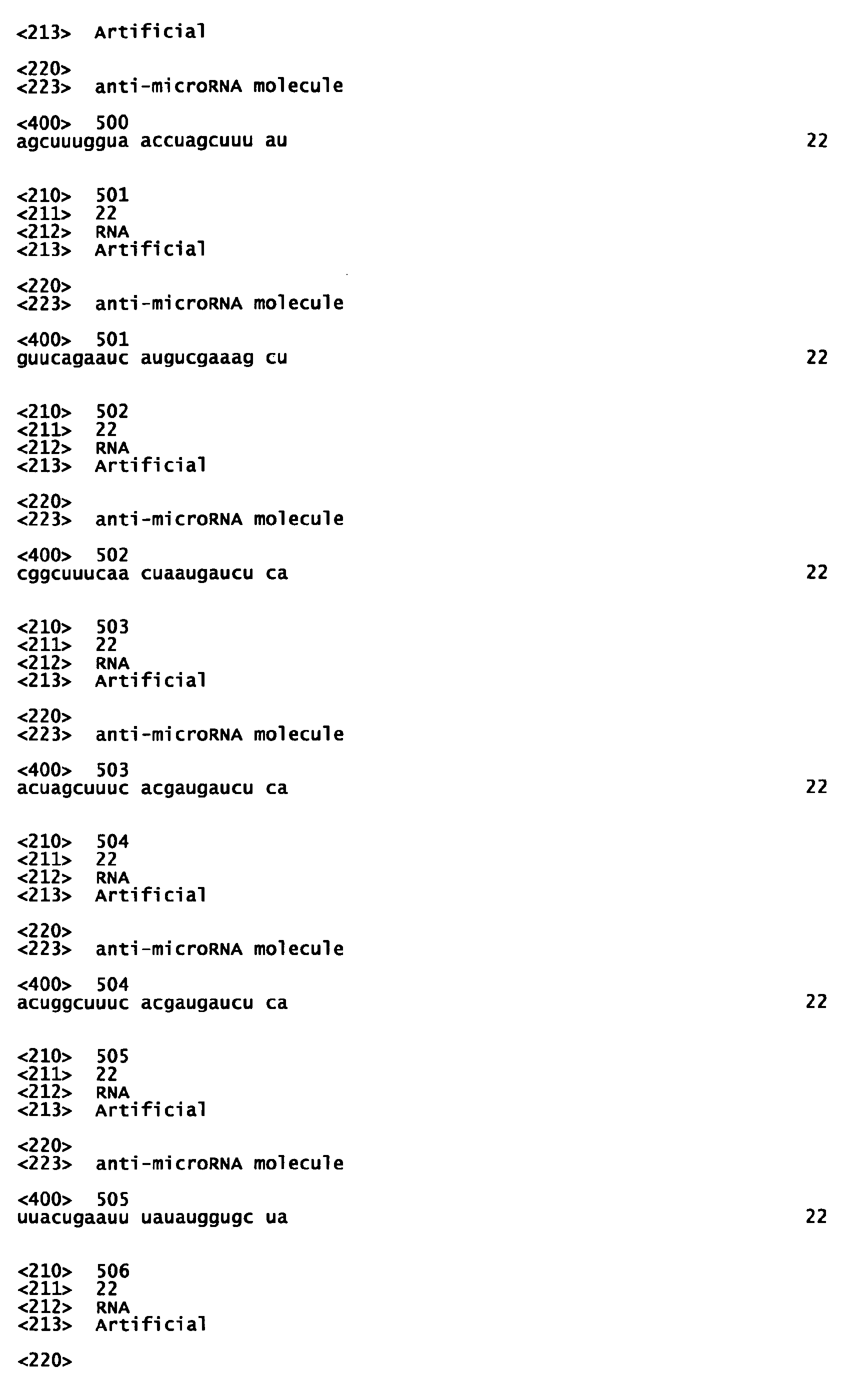
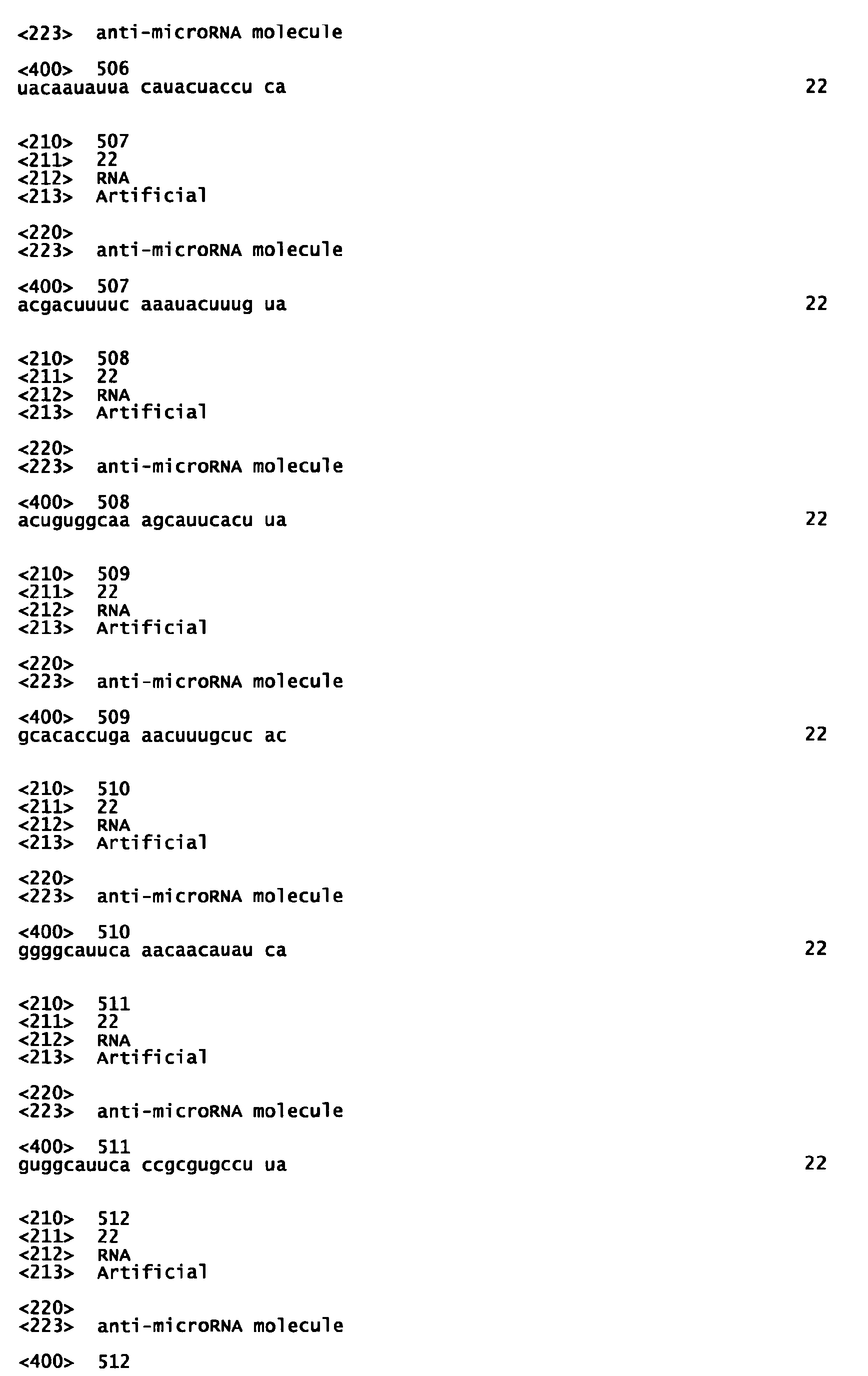

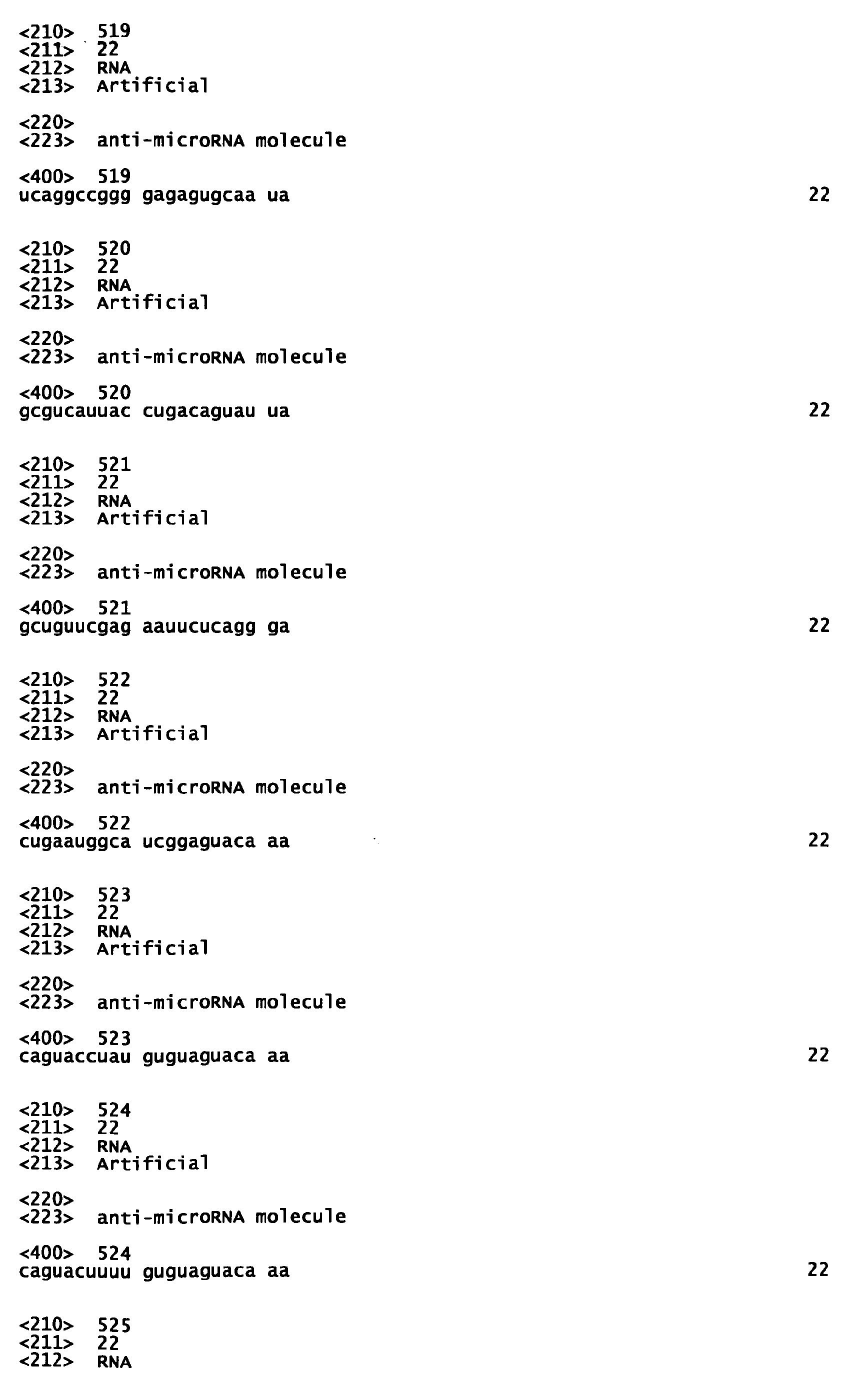


Claims (17)
- An isolated single stranded anti-microRNA molecule comprising the sequence of SEQ ID NO: 445 and having a maximum of fifty moieties .
- A molecule according to claim 1, wherein at least one of the moieties is a deoxyribonucleotide, a ribonucleotide moiety, a peptide nucleic acid moiety, a 2'-fluororibonucleotide moiety, a morpholino phosphoroamidate nucleotide moiety, a tricycle nucleotide moiety, a cyclohexene moiety, or a moiety modified for increased nuclease resistance.
- A molecule according to claim 3, wherein the deoxyribonucleotide is a modified deoxyribonucleotide moiety, such as a phosphorothioate deoxyribonucleotide moiety or a N'3-N'5 phosphoroamidate deoxyribonucleotide moiety.
- A molecule according to claim 2, wherein at least one of the moieties is a modified ribonucleotide moiety.
- A molecule according to claim 4, wherein the modified ribonucleotide is substituted at the 2' position.
- A molecule according to claim 5, wherein the substituent at the 2' position is a C1 to C4 alkyl group, preferably methyl or allyl.
- A molecule according to claim 5, wherein the substituent at the 2' position is a C1 to C4 alkoxy - C1 to C4 alkyl group, preferably methoxyethyl.
- A molecule according to claim 4, wherein the modified ribonucleotide has a methylene bridge between the 2'-oxygen atom and the 4'-carbon atom.
- A molecule according to claim 2, wherein at least one of the moieties is a moiety modified for increased nuclease resistance, and wherein the nuclease is an exonuclease.
- A molecule according to claim 9, wherein the molecule comprises(a) at least one modified moiety at the 5' end;(b) at least two modified moieties at the 5' end;(c) at least one modified moiety at the 3' end;(d) at least two modified moieties at the 3' end;(e) at least one modified moiety at the 5' end and at least one modified moiety at the 3'end;(f) at least two modified moieties at the 5' end and at least two modified moieties at the 3'end;(g) a nucleotide cap at the 5' end, the 3' end or both.(h) an ethylene glycol compound and/or amino linkers at the 5' end, the 3' end, or both.
- A molecule according to claim 2, wherein at least one of the moieties is a moiety modified for increased nuclease resistance, and wherein the nuclease is an endonuclease.
- A molecule according to claim 11, wherein the molecule comprises at least one modified moiety between the 5' and 3' end and/or an ethylene glycol compound and/or amino linker between the 5' end and 3' end.
- A molecule according to claim 1, wherein all of the moieties are nuclease resistant.
- An in vitro method for inhibiting microRNP activity in a cell, the microRNP comprising a microRNA molecule, the microRNA molecule comprising a sequences of bases complementary to the sequence of bases in a single stranded anti-microRNA molecule, the method comprising introducing into the cell the single-stranded anti-microRNA molecule of claim 1.
- A single stranded anti-microRNA molecule for use in inhibiting microRNP activity in a cell, the microRNP comprising a microRNA molecule, the microRNA molecule comprising a sequence of bases complementary to the sequence of bases in the single stranded anti-microRNA molecule of claim 1.
- An isolated microRNA molecule comprising the sequence of SEQ ID NO: 139 and having a maximum of fifty moieties.
- A molecule according to claim 16, wherein the molecule is modified for increased nuclease resistance.
Applications Claiming Priority (3)
| Application Number | Priority Date | Filing Date | Title |
|---|---|---|---|
| US77890804A | 2004-02-13 | 2004-02-13 | |
| US10/845,057 US20050182005A1 (en) | 2004-02-13 | 2004-05-13 | Anti-microRNA oligonucleotide molecules |
| EP05723073A EP1723162A4 (en) | 2004-02-13 | 2005-02-11 | ANTI-MICROARN OLIGONUCLEOTIDE MOLECULES |
Related Parent Applications (1)
| Application Number | Title | Priority Date | Filing Date |
|---|---|---|---|
| EP05723073.2 Division | 2005-02-11 |
Publications (1)
| Publication Number | Publication Date |
|---|---|
| EP2327710A1 true EP2327710A1 (en) | 2011-06-01 |
Family
ID=34838268
Family Applications (1)
| Application Number | Title | Priority Date | Filing Date |
|---|---|---|---|
| EP11000587A Withdrawn EP2327710A1 (en) | 2004-02-13 | 2005-02-11 | Anti-microRNA oligonucleotide molecules |
Country Status (2)
| Country | Link |
|---|---|
| US (1) | US20050182005A1 (en) |
| EP (1) | EP2327710A1 (en) |
Families Citing this family (190)
| Publication number | Priority date | Publication date | Assignee | Title |
|---|---|---|---|---|
| WO1993023569A1 (en) * | 1992-05-11 | 1993-11-25 | Ribozyme Pharmaceuticals, Inc. | Method and reagent for inhibiting viral replication |
| US20030206887A1 (en) * | 1992-05-14 | 2003-11-06 | David Morrissey | RNA interference mediated inhibition of hepatitis B virus (HBV) using short interfering nucleic acid (siNA) |
| US5639647A (en) * | 1994-03-29 | 1997-06-17 | Ribozyme Pharmaceuticals, Inc. | 2'-deoxy-2'alkylnucleotide containing nucleic acid |
| WO1999054459A2 (en) * | 1998-04-20 | 1999-10-28 | Ribozyme Pharmaceuticals, Inc. | Nucleic acid molecules with novel chemical compositions capable of modulating gene expression |
| US20080039414A1 (en) * | 2002-02-20 | 2008-02-14 | Sima Therapeutics, Inc. | RNA interference mediated inhibition of gene expression using chemically modified short interfering nucleic acid (siNA) |
| US8202979B2 (en) * | 2002-02-20 | 2012-06-19 | Sirna Therapeutics, Inc. | RNA interference mediated inhibition of gene expression using chemically modified short interfering nucleic acid |
| US8273866B2 (en) * | 2002-02-20 | 2012-09-25 | Merck Sharp & Dohme Corp. | RNA interference mediated inhibition of gene expression using chemically modified short interfering nucleic acid (SINA) |
| US20070026394A1 (en) * | 2000-02-11 | 2007-02-01 | Lawrence Blatt | Modulation of gene expression associated with inflammation proliferation and neurite outgrowth using nucleic acid based technologies |
| US20050020525A1 (en) * | 2002-02-20 | 2005-01-27 | Sirna Therapeutics, Inc. | RNA interference mediated inhibition of gene expression using chemically modified short interfering nucleic acid (siNA) |
| US20050032733A1 (en) * | 2001-05-18 | 2005-02-10 | Sirna Therapeutics, Inc. | RNA interference mediated inhibition of gene expression using chemically modified short interfering nucleic acid (SiNA) |
| US20050158735A1 (en) * | 2001-05-18 | 2005-07-21 | Sirna Therapeutics, Inc. | RNA interference mediated inhibition of proliferating cell nuclear antigen (PCNA) gene expression using short interfering nucleic acid (siNA) |
| US20060211642A1 (en) * | 2001-05-18 | 2006-09-21 | Sirna Therapeutics, Inc. | RNA inteference mediated inhibition of hepatitis C virus (HVC) gene expression using short interfering nucleic acid (siNA) |
| US20050143333A1 (en) * | 2001-05-18 | 2005-06-30 | Sirna Therapeutics, Inc. | RNA interference mediated inhibition of interleukin and interleukin receptor gene expression using short interfering nucleic acid (SINA) |
| US20050054596A1 (en) * | 2001-11-30 | 2005-03-10 | Mcswiggen James | RNA interference mediated inhibition of vascular endothelial growth factor and vascular endothelial growth factor receptor gene expression using short interfering nucleic acid (siNA) |
| US20050124566A1 (en) * | 2001-05-18 | 2005-06-09 | Sirna Therapeutics, Inc. | RNA interference mediated inhibition of myostatin gene expression using short interfering nucleic acid (siNA) |
| US20050164968A1 (en) * | 2001-05-18 | 2005-07-28 | Sirna Therapeutics, Inc. | RNA interference mediated inhibition of ADAM33 gene expression using short interfering nucleic acid (siNA) |
| US20050277133A1 (en) * | 2001-05-18 | 2005-12-15 | Sirna Therapeutics, Inc. | RNA interference mediated treatment of polyglutamine (polyQ) repeat expansion diseases using short interfering nucleic acid (siNA) |
| US20050176666A1 (en) * | 2001-05-18 | 2005-08-11 | Sirna Therapeutics, Inc. | RNA interference mediated inhibition of GPRA and AAA1 gene expression using short interfering nucleic acid (siNA) |
| US20090299045A1 (en) * | 2001-05-18 | 2009-12-03 | Sirna Therapeutics, Inc. | RNA Interference Mediated Inhibition Of Interleukin and Interleukin Gene Expression Using Short Interfering Nucleic Acid (siNA) |
| US20070042983A1 (en) * | 2001-05-18 | 2007-02-22 | Sirna Therapeutics, Inc. | RNA interference mediated inhibition of gene expression using short interfering nucleic acid (siNA) |
| US20050282188A1 (en) * | 2001-05-18 | 2005-12-22 | Sirna Therapeutics, Inc. | RNA interference mediated inhibition of gene expression using short interfering nucleic acid (siNA) |
| US20050176663A1 (en) * | 2001-05-18 | 2005-08-11 | Sima Therapeutics, Inc. | RNA interference mediated inhibition of protein tyrosine phosphatase type IVA (PRL3) gene expression using short interfering nucleic acid (siNA) |
| US20070093437A1 (en) * | 2001-05-18 | 2007-04-26 | Sirna Therapeutics, Inc. | Rna interference mediated inhibition of xiap gene expression using short interfering nucleic acid (sina) |
| US7517864B2 (en) | 2001-05-18 | 2009-04-14 | Sirna Therapeutics, Inc. | RNA interference mediated inhibition of vascular endothelial growth factor and vascular endothelial growth factor receptor gene expression using short interfering nucleic acid (siNA) |
| US20050164967A1 (en) * | 2001-05-18 | 2005-07-28 | Sirna Therapeutics, Inc. | RNA interference mediated inhibition of platelet-derived endothelial cell growth factor (ECGF1) gene expression using short interfering nucleic acid (siNA) |
| US20040019001A1 (en) * | 2002-02-20 | 2004-01-29 | Mcswiggen James A. | RNA interference mediated inhibition of protein typrosine phosphatase-1B (PTP-1B) gene expression using short interfering RNA |
| US20050159382A1 (en) * | 2001-05-18 | 2005-07-21 | Sirna Therapeutics, Inc. | RNA interference mediated inhibition of polycomb group protein EZH2 gene expression using short interfering nucleic acid (siNA) |
| US20050182007A1 (en) * | 2001-05-18 | 2005-08-18 | Sirna Therapeutics, Inc. | RNA interference mediated inhibition of interleukin and interleukin receptor gene expression using short interfering nucleic acid (SINA) |
| US20050209180A1 (en) * | 2001-05-18 | 2005-09-22 | Sirna Therapeutics, Inc. | RNA interference mediated inhibition of hepatitis C virus (HCV) expression using short interfering nucleic acid (siNA) |
| US20050119212A1 (en) * | 2001-05-18 | 2005-06-02 | Sirna Therapeutics, Inc. | RNA interference mediated inhibition of FAS and FASL gene expression using short interfering nucleic acid (siNA) |
| US20040198682A1 (en) * | 2001-11-30 | 2004-10-07 | Mcswiggen James | RNA interference mediated inhibition of placental growth factor gene expression using short interfering nucleic acid (siNA) |
| US20060241075A1 (en) * | 2001-05-18 | 2006-10-26 | Sirna Therapeutics, Inc. | RNA interference mediated inhibition of desmoglein gene expression using short interfering nucleic acid (siNA) |
| US20050267058A1 (en) * | 2001-05-18 | 2005-12-01 | Sirna Therapeutics, Inc. | RNA interference mediated inhibition of placental growth factor gene expression using short interfering nucleic acid (sINA) |
| CA2526831C (en) * | 2001-05-18 | 2012-07-31 | Sirna Therapeutics, Inc. | Rna interference mediated inhibition of gene expression using chemically modified short interfering nucleic acid (sina) |
| US20050196765A1 (en) * | 2001-05-18 | 2005-09-08 | Sirna Therapeutics, Inc. | RNA interference mediated inhibition of checkpoint Kinase-1 (CHK-1) gene expression using short interfering nucleic acid (siNA) |
| US20050164224A1 (en) * | 2001-05-18 | 2005-07-28 | Sirna Therapeutics, Inc. | RNA interference mediated inhibition of cyclin D1 gene expression using short interfering nucleic acid (siNA) |
| US20070270579A1 (en) * | 2001-05-18 | 2007-11-22 | Sirna Therapeutics, Inc. | RNA interference mediated inhibition of gene expression using short interfering nucleic acid (siNA) |
| US20050159379A1 (en) * | 2001-05-18 | 2005-07-21 | Sirna Therapeutics, Inc | RNA interference mediated inhibition of gastric inhibitory polypeptide (GIP) and gastric inhibitory polypeptide receptor (GIPR) gene expression using short interfering nucleic acid (siNA) |
| US20080188430A1 (en) * | 2001-05-18 | 2008-08-07 | Sirna Therapeutics, Inc. | RNA interference mediated inhibition of hypoxia inducible factor 1 (HIF1) gene expression using short interfering nucleic acid (siNA) |
| US20050176025A1 (en) * | 2001-05-18 | 2005-08-11 | Sirna Therapeutics, Inc. | RNA interference mediated inhibition of B-cell CLL/Lymphoma-2 (BCL-2) gene expression using short interfering nucleic acid (siNA) |
| US20050196781A1 (en) * | 2001-05-18 | 2005-09-08 | Sirna Therapeutics, Inc. | RNA interference mediated inhibition of STAT3 gene expression using short interfering nucleic acid (siNA) |
| US20050159378A1 (en) * | 2001-05-18 | 2005-07-21 | Sirna Therapeutics, Inc. | RNA interference mediated inhibition of Myc and/or Myb gene expression using short interfering nucleic acid (siNA) |
| US20050233344A1 (en) * | 2001-05-18 | 2005-10-20 | Sirna Therapeutics, Inc. | RNA interference mediated inhibition of platelet derived growth factor (PDGF) and platelet derived growth factor receptor (PDGFR) gene expression using short interfering nucleic acid (siNA) |
| US20050196767A1 (en) * | 2001-05-18 | 2005-09-08 | Sirna Therapeutics, Inc. | RNA interference mediated inhibition of GRB2 associated binding protein (GAB2) gene expression using short interfering nucleic acis (siNA) |
| US20060217331A1 (en) * | 2001-05-18 | 2006-09-28 | Sirna Therapeutics, Inc. | Chemically modified double stranded nucleic acid molecules that mediate RNA interference |
| US20050079610A1 (en) * | 2001-05-18 | 2005-04-14 | Sirna Therapeutics, Inc. | RNA interference mediated inhibition of Fos gene expression using short interfering nucleic acid (siNA) |
| US20050233997A1 (en) * | 2001-05-18 | 2005-10-20 | Sirna Therapeutics, Inc. | RNA interference mediated inhibition of matrix metalloproteinase 13 (MMP13) gene expression using short interfering nucleic acid (siNA) |
| US7109165B2 (en) * | 2001-05-18 | 2006-09-19 | Sirna Therapeutics, Inc. | Conjugates and compositions for cellular delivery |
| US20060142225A1 (en) * | 2001-05-18 | 2006-06-29 | Sirna Therapeutics, Inc. | RNA interference mediated inhibition of cyclin dependent kinase-2 (CDK2) gene expression using short interfering nucleic acid (siNA) |
| US20050124569A1 (en) * | 2001-05-18 | 2005-06-09 | Sirna Therapeutics, Inc. | RNA interference mediated inhibition of CXCR4 gene expression using short interfering nucleic acid (siNA) |
| US20050287128A1 (en) * | 2001-05-18 | 2005-12-29 | Sirna Therapeutics, Inc. | RNA interference mediated inhibition of TGF-beta and TGF-beta receptor gene expression using short interfering nucleic acid (siNA) |
| US20030124513A1 (en) * | 2001-05-29 | 2003-07-03 | Mcswiggen James | Enzymatic nucleic acid treatment of diseases or conditions related to levels of HIV |
| US20050222066A1 (en) * | 2001-05-18 | 2005-10-06 | Sirna Therapeutics, Inc. | RNA interference mediated inhibition of vascular endothelial growth factor and vascular endothelial growth factor receptor gene expression using short interfering nucleic acid (siNA) |
| US20050137155A1 (en) * | 2001-05-18 | 2005-06-23 | Sirna Therapeutics, Inc. | RNA interference mediated treatment of Parkinson disease using short interfering nucleic acid (siNA) |
| US9994853B2 (en) | 2001-05-18 | 2018-06-12 | Sirna Therapeutics, Inc. | Chemically modified multifunctional short interfering nucleic acid molecules that mediate RNA interference |
| US20050153914A1 (en) * | 2001-05-18 | 2005-07-14 | Sirna Therapeutics, Inc. | RNA interference mediated inhibition of MDR P-glycoprotein gene expression using short interfering nucleic acid (siNA) |
| US20080161256A1 (en) * | 2001-05-18 | 2008-07-03 | Sirna Therapeutics, Inc. | RNA interference mediated inhibition of gene expression using short interfering nucleic acid (siNA) |
| US20050191618A1 (en) * | 2001-05-18 | 2005-09-01 | Sirna Therapeutics, Inc. | RNA interference mediated inhibition of human immunodeficiency virus (HIV) gene expression using short interfering nucleic acid (siNA) |
| US20050187174A1 (en) * | 2001-05-18 | 2005-08-25 | Sirna Therapeutics, Inc. | RNA interference mediated inhibition of intercellular adhesion molecule (ICAM) gene expression using short interfering nucleic acid (siNA) |
| US20050159381A1 (en) * | 2001-05-18 | 2005-07-21 | Sirna Therapeutics, Inc. | RNA interference mediated inhibition of chromosome translocation gene expression using short interfering nucleic acid (siNA) |
| US20050136436A1 (en) * | 2001-05-18 | 2005-06-23 | Sirna Therapeutics, Inc. | RNA interference mediated inhibition of G72 and D-amino acid oxidase (DAAO) gene expression using short interfering nucleic acid (siNA) |
| US20050159380A1 (en) * | 2001-05-18 | 2005-07-21 | Sirna Therapeutics, Inc. | RNA interference mediated inhibition of angiopoietin gene expression using short interfering nucleic acid (siNA) |
| US20050048529A1 (en) * | 2002-02-20 | 2005-03-03 | Sirna Therapeutics, Inc. | RNA interference mediated inhibition of intercellular adhesion molecule (ICAM) gene expression using short interfering nucleic acid (siNA) |
| US20050288242A1 (en) * | 2001-05-18 | 2005-12-29 | Sirna Therapeutics, Inc. | RNA interference mediated inhibition of RAS gene expression using short interfering nucleic acid (siNA) |
| US20050261219A1 (en) * | 2001-05-18 | 2005-11-24 | Sirna Therapeutics, Inc. | RNA interference mediated inhibition of interleukin and interleukin receptor gene expression using short interfering nucleic acid (siNA) |
| US20040138163A1 (en) * | 2002-05-29 | 2004-07-15 | Mcswiggen James | RNA interference mediated inhibition of vascular edothelial growth factor and vascular edothelial growth factor receptor gene expression using short interfering nucleic acid (siNA) |
| US20070203333A1 (en) * | 2001-11-30 | 2007-08-30 | Mcswiggen James | RNA interference mediated inhibition of vascular endothelial growth factor and vascular endothelial growth factor receptor gene expression using short interfering nucleic acid (siNA) |
| US20050075304A1 (en) * | 2001-11-30 | 2005-04-07 | Mcswiggen James | RNA interference mediated inhibition of vascular endothelial growth factor and vascular endothelial growth factor receptor gene expression using short interfering nucleic acid (siNA) |
| US9181551B2 (en) | 2002-02-20 | 2015-11-10 | Sirna Therapeutics, Inc. | RNA interference mediated inhibition of gene expression using chemically modified short interfering nucleic acid (siNA) |
| WO2003106476A1 (en) * | 2002-02-20 | 2003-12-24 | Sirna Therapeutics, Inc | Nucleic acid mediated inhibition of enterococcus infection and cytolysin toxin activity |
| US9657294B2 (en) | 2002-02-20 | 2017-05-23 | Sirna Therapeutics, Inc. | RNA interference mediated inhibition of gene expression using chemically modified short interfering nucleic acid (siNA) |
| US20050096284A1 (en) * | 2002-02-20 | 2005-05-05 | Sirna Therapeutics, Inc. | RNA interference mediated treatment of polyglutamine (polyQ) repeat expansion diseases using short interfering nucleic acid (siNA) |
| EP1504126B1 (en) | 2002-05-03 | 2014-02-26 | Duke University | A method of regulating gene expression |
| US7923547B2 (en) | 2002-09-05 | 2011-04-12 | Sirna Therapeutics, Inc. | RNA interference mediated inhibition of gene expression using chemically modified short interfering nucleic acid (siNA) |
| US7892793B2 (en) * | 2002-11-04 | 2011-02-22 | University Of Massachusetts | Allele-specific RNA interference |
| AU2003298718A1 (en) * | 2002-11-22 | 2004-06-18 | University Of Massachusetts | Modulation of hiv replication by rna interference |
| US20070270360A1 (en) * | 2003-04-15 | 2007-11-22 | Sirna Therapeutics, Inc. | Rna Interference Mediated Inhibition of Severe Acute Respiratory Syndrome (Sars) Gene Expression Using Short Interfering Nucleic Acid |
| ES2712695T3 (en) * | 2003-06-02 | 2019-05-14 | Univ Massachusetts | Methods and compositions to control the efficiency of RNA silencing |
| AU2004252442B2 (en) * | 2003-06-02 | 2010-04-08 | University Of Massachusetts | Methods and compositions for enhancing the efficacy and specificity of FNAi |
| US7750144B2 (en) | 2003-06-02 | 2010-07-06 | University Of Massachusetts | Methods and compositions for enhancing the efficacy and specificity of RNA silencing |
| EP2530157B1 (en) | 2003-07-31 | 2016-09-28 | Regulus Therapeutics Inc. | Oligomeric compounds and compositions for use in modulation of miRNAs |
| WO2005027980A1 (en) * | 2003-09-12 | 2005-03-31 | University Of Massachusetts | Rna interference for the treatment of gain-of-function disorders |
| US8680063B2 (en) | 2003-09-12 | 2014-03-25 | University Of Massachusetts | RNA interference for the treatment of gain-of-function disorders |
| EP1793674B1 (en) * | 2003-11-26 | 2018-05-30 | University of Massachusetts | Sequence-specific inhibtion of small rna function |
| US20060134787A1 (en) | 2004-12-22 | 2006-06-22 | University Of Massachusetts | Methods and compositions for enhancing the efficacy and specificity of single and double blunt-ended siRNA |
| JP2007523649A (en) | 2004-02-10 | 2007-08-23 | サーナ・セラピューティクス・インコーポレイテッド | Inhibition of gene expression via RNA interference using multifunctional short interfering nucleic acids (multifunctional siNA) |
| US20050273868A1 (en) * | 2004-02-17 | 2005-12-08 | University Of Massachusetts | Methods and compositions for enhancing RISC activity in vitro and in vivo |
| US7842800B2 (en) * | 2004-04-02 | 2010-11-30 | Rosetta Genomics Ltd. | Bioinformatically detectable group of novel regulatory bacterial and bacterial associated oligonucleotides and uses thereof |
| WO2005111211A2 (en) * | 2004-05-14 | 2005-11-24 | Rosetta Genomics Ltd. | Micronas and uses thereof |
| US10508277B2 (en) | 2004-05-24 | 2019-12-17 | Sirna Therapeutics, Inc. | Chemically modified multifunctional short interfering nucleic acid molecules that mediate RNA interference |
| EP2290073A3 (en) * | 2004-05-28 | 2011-08-31 | Asuragen, Inc. | Methods and compositions involving microRNA |
| US20090186353A1 (en) * | 2004-10-04 | 2009-07-23 | Rosetta Genomics Ltd. | Cancer-related nucleic acids |
| US20070259349A1 (en) * | 2006-05-04 | 2007-11-08 | Itzhak Bentwich | Bladder cancer-related nucleic acids |
| CA2857878A1 (en) | 2004-11-12 | 2006-12-28 | Asuragen, Inc. | Methods and compositions involving mirna and mirna inhibitor molecules |
| US20070166724A1 (en) * | 2005-02-07 | 2007-07-19 | Itzhak Bentwich | Micrornas and related nucleic acids |
| WO2007044057A2 (en) | 2005-02-24 | 2007-04-19 | The Ohio State University Research Foundation | Methods for quantifying microrna precursors |
| CN103820562B (en) * | 2005-08-01 | 2015-05-13 | 俄亥俄州立大学研究基金会 | MicroRNA-based methods and compositions for the diagnosis, prognosis and treatment of breast cancer |
| JP2009504782A (en) | 2005-08-18 | 2009-02-05 | アルナイラム ファーマシューティカルズ インコーポレイテッド | Methods and compositions for treating neurological diseases |
| JP2007082436A (en) * | 2005-09-20 | 2007-04-05 | Bioinformatics Institute For Global Good Inc | Method for predicting and identifying target mRNA controlled by functional RNA and method for using the same |
| US8129515B2 (en) | 2006-01-27 | 2012-03-06 | Isis Pharmaceuticals, Inc. | Oligomeric compounds and compositions for the use in modulation of microRNAs |
| ES2448491T3 (en) * | 2006-03-02 | 2014-03-14 | The Ohio State University Research Foundation | MicroRNA expression profile associated with pancreatic cancer |
| EP2261333B1 (en) | 2006-04-03 | 2016-03-30 | Roche Innovation Center Copenhagen A/S | Pharmaceutical composition comprising anti-miRNA antisense oligonucleotides |
| US7955848B2 (en) * | 2006-04-03 | 2011-06-07 | Trustees Of Dartmouth College | MicroRNA biomarkers for human breast and lung cancer |
| US8207325B2 (en) * | 2006-04-03 | 2012-06-26 | Univ. of Copenhagen | MicroRNA biomarkers for human breast and lung cancer |
| DK2666859T3 (en) | 2006-04-03 | 2019-04-08 | Roche Innovation Ct Copenhagen As | PHARMACEUTICAL COMPOSITION CONTAINING ANTI-miRNA ANTISENSE OLIGONUCLEOTIDES |
| US8007790B2 (en) | 2006-04-03 | 2011-08-30 | Stowers Institute For Medical Research | Methods for treating polycystic kidney disease (PKD) or other cyst forming diseases |
| US20090023221A1 (en) * | 2006-05-19 | 2009-01-22 | Exigon A/S | Oligonucleotide probes useful for detection and analysis of microrna precursors |
| CA2653451C (en) * | 2006-05-22 | 2015-12-29 | Alnylam Pharmaceuticals, Inc. | Compositions and methods for inhibiting expression of ikk-b gene |
| US9115389B2 (en) * | 2006-06-30 | 2015-08-25 | Rosetta Genomics Ltd. | Method for detecting a target nucleic acid comprising two portions using probes having a first portion complementary to the first portion of the target nucleic acid and a second portion substantially complementary to the second portion of the target nucleic acid |
| SI2056845T1 (en) | 2006-08-08 | 2018-02-28 | Rheinische Friedrich-Wilhelms-Universitaet Bonn | Structure and use of 5' phosphate oligonucleotides |
| US8343719B2 (en) * | 2006-10-30 | 2013-01-01 | Research Foundation Of State University Of New York | Microrna as biomarker in cancer |
| US20080131878A1 (en) * | 2006-12-05 | 2008-06-05 | Asuragen, Inc. | Compositions and Methods for the Detection of Small RNA |
| WO2009024834A2 (en) * | 2006-12-05 | 2009-02-26 | Rosetta Genomics Ltd | Nucleic acids involved in viral infection |
| WO2008073919A2 (en) * | 2006-12-08 | 2008-06-19 | Asuragen, Inc. | Mir-20 regulated genes and pathways as targets for therapeutic intervention |
| WO2008092099A2 (en) * | 2007-01-26 | 2008-07-31 | Rosetta Genomics, Ltd. | Compositions and methods for treating hematopoietic malignancies |
| WO2009045469A2 (en) | 2007-10-02 | 2009-04-09 | Amgen Inc. | Increasing erythropoietin using nucleic acids hybridizable to micro-rna and precursors thereof |
| ATE553196T1 (en) * | 2007-02-27 | 2012-04-15 | Rosetta Genomics Ltd | COMPOSITION AND METHOD FOR MODULATING CELL PROLIFERATION AND CELL DEATH |
| US9006206B2 (en) | 2007-02-27 | 2015-04-14 | Rosetta Genomics Ltd. | Composition and methods for modulating cell proliferation and cell death |
| US20100273172A1 (en) | 2007-03-27 | 2010-10-28 | Rosetta Genomics Ltd. | Micrornas expression signature for determination of tumors origin |
| US20090105174A1 (en) * | 2007-04-20 | 2009-04-23 | Amgen Inc. | Nucleic acids hybridizable to micro rna and precursors thereof |
| WO2008143774A2 (en) * | 2007-05-01 | 2008-11-27 | University Of Massachusetts | Methods and compositions for locating snp heterozygosity for allele specific diagnosis and therapy |
| EP2152722B1 (en) * | 2007-05-03 | 2016-04-27 | Merck Sharp & Dohme Corp. | Compositions comprising mir34 therapeutic agents for treating cancer |
| WO2009012263A2 (en) * | 2007-07-18 | 2009-01-22 | The Trustees Of Columbia University In The City Of New York | Tissue-specific micrornas and compositions and uses thereof |
| US8138318B2 (en) | 2007-09-13 | 2012-03-20 | Abbott Laboratories | Hepatitis B pre-S2 nucleic acid |
| EP2198050A1 (en) | 2007-09-14 | 2010-06-23 | Asuragen, INC. | Micrornas differentially expressed in cervical cancer and uses thereof |
| ES2463665T3 (en) | 2007-10-04 | 2014-05-28 | Stella Aps | Combination treatment for the treatment of hepatitis C virus infection |
| CA2704043C (en) * | 2007-10-29 | 2018-09-18 | Rosetta Genomics Ltd. | Targeting micrornas for the treatment of liver cancer |
| CA2700215A1 (en) * | 2007-10-31 | 2009-05-07 | Rosetta Genomics Ltd. | Diagnosis and prognosis of specific cancers |
| EP2219680A2 (en) | 2007-11-13 | 2010-08-25 | Isis Pharmaceuticals, Inc. | Compounds and methods for modulating protein expression |
| WO2009070805A2 (en) | 2007-12-01 | 2009-06-04 | Asuragen, Inc. | Mir-124 regulated genes and pathways as targets for therapeutic intervention |
| AU2009207291B2 (en) | 2008-01-27 | 2014-11-06 | Mor Research Applications | Methods and compositions for diagnosing complications of pregnancy |
| EP2268811A1 (en) * | 2008-03-07 | 2011-01-05 | Santaris Pharma A/S | Pharmaceutical compositions for treatment of microrna related diseases |
| JP5653899B2 (en) * | 2008-03-17 | 2015-01-14 | ボード・オブ・リージエンツ,ザ・ユニバーシテイ・オブ・テキサス・システム | Identification of microRNAs involved in the maintenance and regeneration of neuromuscular synapses |
| US8802923B2 (en) | 2008-04-10 | 2014-08-12 | A.B. Seeds Ltd. | Compositions and methods for enhancing oil content in plants |
| WO2009132351A2 (en) * | 2008-04-25 | 2009-10-29 | University Of Medicine And Dentistry Of New Jersey | Anti-sense microrna expression vectors |
| US8916532B2 (en) * | 2008-04-28 | 2014-12-23 | The Trustees Of The University Of Pennsylvania | Methods for enhancing utrophin production via inhibition of microRNA |
| US8258111B2 (en) | 2008-05-08 | 2012-09-04 | The Johns Hopkins University | Compositions and methods related to miRNA modulation of neovascularization or angiogenesis |
| EP2297323A1 (en) | 2008-05-21 | 2011-03-23 | Hartmann, Gunther | 5' triphosphate oligonucleotide with blunt end and uses thereof |
| EP2300017A4 (en) * | 2008-06-05 | 2012-12-12 | Univ New York State Res Found | MIRNAS AS THERAPEUTIC TARGETS IN CANCER |
| WO2009148631A1 (en) * | 2008-06-06 | 2009-12-10 | The Board Of Trustees Of The Leland Stanford Junior University | Role of mirna in t cell leukemia |
| US8492357B2 (en) | 2008-08-01 | 2013-07-23 | Santaris Pharma A/S | Micro-RNA mediated modulation of colony stimulating factors |
| WO2010016064A2 (en) | 2008-08-06 | 2010-02-11 | Rosetta Genomics Ltd. | Gene expression signature for classification of kidney tumors |
| US9068232B2 (en) | 2008-08-06 | 2015-06-30 | Rosetta Genomics Ltd. | Gene expression signature for classification of kidney tumors |
| US9089610B2 (en) * | 2008-08-19 | 2015-07-28 | Nektar Therapeutics | Complexes of small-interfering nucleic acids |
| WO2010027838A1 (en) | 2008-08-27 | 2010-03-11 | The United States Of America, As Represented By The Secretary, Department Of Health And Human Services | Mir 204, mir 211, their anti-mirs, and therapeutic uses of same |
| EP2191834A1 (en) * | 2008-11-26 | 2010-06-02 | Centre National De La Recherche Scientifique (Cnrs) | Compositions and methods for treating retrovirus infections |
| EP2373815A4 (en) * | 2008-12-05 | 2012-09-26 | Univ Ohio State Res Found | MICRO-RNA-RNA BASED METHODS AND COMPOSITIONS FOR DIAGNOSIS AND TREATMENT OF OVARIAN CARCINOMA |
| JP5773535B2 (en) * | 2009-04-24 | 2015-09-02 | ロシュ・イノベーション・センター・コペンハーゲン・アクティーゼルスカブRoche Innovation Center Copenhagen A/S | Pharmaceutical composition for the treatment of HCV patients unresponsive to interferon |
| WO2011021177A2 (en) | 2009-08-19 | 2011-02-24 | Rosetta Genomics Ltd. | Compositions and methods for prognosis and treatment of prostate cancer |
| US8916693B2 (en) | 2009-09-17 | 2014-12-23 | Nektar Therapeutics | Monoconjugated chitosans as delivery agents for small interfering nucleic acids |
| KR101851699B1 (en) | 2009-11-02 | 2018-04-24 | 더 트러스티스 오브 더 유니버시티 오브 펜실바니아 | Foot and mouth disease virus (fmdv) consensus proteins, coding sequences therefor and vaccines made therefrom |
| WO2011088309A1 (en) | 2010-01-14 | 2011-07-21 | Regulus Therapeutics Inc. | Microrna compositions and methods |
| EP2385129A1 (en) * | 2010-05-03 | 2011-11-09 | BASF Plant Science Company GmbH | Enhanced methods for gene regulation in plants |
| WO2011154553A2 (en) | 2010-06-11 | 2011-12-15 | Cellartis Ab | Novel micrornas for the detection and isolaton of human embryonic stem cell-derived cardiac cell types |
| US8933051B2 (en) | 2010-09-30 | 2015-01-13 | University Of Zurich | Treatment of B-cell lymphoma with microRNA |
| EP3766975A1 (en) | 2010-10-29 | 2021-01-20 | Sirna Therapeutics, Inc. | Rna interference mediated inhibition of gene expression using short interfering nucleic acid (sina) |
| CN103648505B (en) * | 2010-11-12 | 2016-09-28 | 俄亥俄州立大学研究基金会 | The material relevant to microRNA-21, mispairing reparation and colorectal carcinoma and method |
| EP2643479B1 (en) | 2010-11-22 | 2017-09-13 | Rosetta Genomics Ltd | Methods and materials for classification of tissue of origin of tumor samples |
| WO2012093384A1 (en) * | 2011-01-03 | 2012-07-12 | Rosetta Genomics Ltd. | Compositions and methods for treatment of ovarian cancer |
| JP2014506789A (en) | 2011-02-03 | 2014-03-20 | マーナ セラピューティクス インコーポレイテッド | miR-124 synthetic mimics |
| WO2012106591A1 (en) | 2011-02-03 | 2012-08-09 | Mirna Therapeutics, Inc. | Synthetic mimics of mir-34 |
| US8871731B2 (en) * | 2011-03-16 | 2014-10-28 | Migagen Therapeutics, Inc. | Micro-RNA for the regulation of cardiac apoptosis and contractile function |
| EP2508530A1 (en) | 2011-03-28 | 2012-10-10 | Rheinische Friedrich-Wilhelms-Universität Bonn | Purification of triphosphorylated oligonucleotides using capture tags |
| EP2723865B1 (en) | 2011-06-21 | 2019-03-27 | Alnylam Pharmaceuticals, Inc. | METHODS FOR DETERMINING ACTIVITY OF RNAi IN A SUBJECT |
| WO2013040251A2 (en) | 2011-09-13 | 2013-03-21 | Asurgen, Inc. | Methods and compositions involving mir-135b for distinguishing pancreatic cancer from benign pancreatic disease |
| EP2773777B1 (en) | 2011-10-31 | 2020-05-13 | University of Utah Research Foundation | Genetic alterations in glioblastoma |
| EP2844745A2 (en) | 2012-02-22 | 2015-03-11 | Brainstem Biotec Ltd. | Generation of neural stem cells and motor neurons |
| WO2013181613A1 (en) * | 2012-05-31 | 2013-12-05 | Research Development Foundation | Mirna for the diagnosis and treatment of autoimmune and inflammatory disease |
| US20150246069A1 (en) * | 2012-07-25 | 2015-09-03 | Ann-Joy Cheng | Method of using sequence of antagomir for developing medicine for inhibiting oral cancer cells from spreading |
| EP2712870A1 (en) | 2012-09-27 | 2014-04-02 | Rheinische Friedrich-Wilhelms-Universität Bonn | Novel RIG-I ligands and methods for producing them |
| CN105338998B (en) | 2013-03-15 | 2021-12-14 | 宾夕法尼亚大学理事会 | Foot-and-mouth disease virus (FMDV) consensus protein, its coding sequence and vaccines made therefrom |
| US20160145628A1 (en) | 2013-06-18 | 2016-05-26 | Ramot At Tel-Aviv University Ltd. | Nanocarrier system for micrornas and uses thereof |
| EP3040084A4 (en) | 2013-08-28 | 2016-11-16 | Senju Pharma Co | Therapeutic agent for ectocornea injury |
| US10758614B2 (en) | 2014-06-09 | 2020-09-01 | The United States Of America, As Represented By The Secretary, Department Of Health And Human Services National Institutes Of Health | Combination therapies targeting tumor-associated stroma or tumor cells and topoisomerase |
| US10799584B2 (en) | 2014-06-09 | 2020-10-13 | The United States Of America, As Represented By The Secretary, Department Of Health And Human Services National Institutes Of Health | Combination therapies using agents that target tumor-associated stroma or tumor cells and alkylating agents |
| US10758613B2 (en) | 2014-06-09 | 2020-09-01 | The United States Of America, As Represented By The Secretary, Department Of Health And Human Services National Intstitutes Of Health | Combination therapies using anti-metabolites and agents that target tumor-associated stroma or tumor cells |
| US11034757B2 (en) | 2014-06-09 | 2021-06-15 | Biomed Valley Discoveries, Inc. | Combination therapies using agents that target tumor-associated stroma or tumor cells and tumor vasculature |
| US11033620B2 (en) | 2014-06-09 | 2021-06-15 | Biomed Valley Discoveries, Inc. | Combination therapies targeting tumor-associated stroma or tumor cells and microtubules |
| WO2015191610A2 (en) | 2014-06-09 | 2015-12-17 | Biomed Valley Discoveries, Inc. | Combination therapies using agents that target tumor-associated stroma or tumor cells and other pathways |
| CN106177990B (en) * | 2014-11-17 | 2020-08-28 | 江苏命码生物科技有限公司 | New precursor miRNA and application thereof in tumor treatment |
| CN107921147B (en) * | 2015-05-05 | 2021-12-24 | 江苏命码生物科技有限公司 | New precursor miRNA and application thereof in tumor treatment |
| HK1254954A1 (en) | 2015-06-29 | 2019-08-02 | Biomed Valley Discoveries, Inc. | Lpt-723 and immune checkpoint inhibitor combinations and methods of treatment |
| WO2018047148A1 (en) | 2016-09-12 | 2018-03-15 | Novartis Ag | Compounds for the inhibition of mirna |
| AU2018309739B2 (en) | 2017-07-31 | 2022-01-27 | The Trustees Of Columbia University In The City Of New York | Compounds, Compositions, and Methods for Treating T-cell Acute Lymphoblastic Leukemia |
| CN110042100B (en) * | 2019-03-07 | 2023-03-10 | 汕头大学 | Application of antisense nucleic acid AMO-miR-307 in preparation of anti-white spot syndrome virus preparation |
| GB201907380D0 (en) * | 2019-05-24 | 2019-07-10 | Cancer Research Tech Ltd | Mediators of gene silencing |
| US20220017971A1 (en) * | 2020-07-15 | 2022-01-20 | Kookmin University Industry Academy Cooperation Foundation | Composition for predicting chemotherapy resistance of ovarian cancer and use thereof |
| WO2022140126A1 (en) | 2020-12-21 | 2022-06-30 | The United States Of America, As Represented By The Secretary, Department Of Health And Human Services | Dna vector and uses thereof for detecting hiv and siv |
| WO2024040126A2 (en) * | 2022-08-16 | 2024-02-22 | The Regents Of The University Of California | Improved glycemic control by administration of micro-rna 192 |
| CN119185347A (en) * | 2024-06-24 | 2024-12-27 | 江苏核泰生物有限公司 | Application of nucleic acid in preparation of medicine for preventing and treating cachexia and application method |
Citations (2)
| Publication number | Priority date | Publication date | Assignee | Title |
|---|---|---|---|---|
| WO2003029459A2 (en) | 2001-09-28 | 2003-04-10 | MAX-PLANCK-Gesellschaft zur Förderung der Wissenschaften e.V. | Micro-rna molecules |
| WO2004048511A2 (en) * | 2002-11-26 | 2004-06-10 | Rosetta Genomics Ltd. | Bioinformatically detectable group of novel viral regulatory genes and uses thereof |
Family Cites Families (1)
| Publication number | Priority date | Publication date | Assignee | Title |
|---|---|---|---|---|
| ATE450621T2 (en) * | 2000-03-30 | 2009-12-15 | Whitehead Biomedical Inst | MEDIATORS OF RNA INTERFERENCE THAT ARE RNA SEQUENCE SPECIFIC |
-
2004
- 2004-05-13 US US10/845,057 patent/US20050182005A1/en not_active Abandoned
-
2005
- 2005-02-11 EP EP11000587A patent/EP2327710A1/en not_active Withdrawn
Patent Citations (2)
| Publication number | Priority date | Publication date | Assignee | Title |
|---|---|---|---|---|
| WO2003029459A2 (en) | 2001-09-28 | 2003-04-10 | MAX-PLANCK-Gesellschaft zur Förderung der Wissenschaften e.V. | Micro-rna molecules |
| WO2004048511A2 (en) * | 2002-11-26 | 2004-06-10 | Rosetta Genomics Ltd. | Bioinformatically detectable group of novel viral regulatory genes and uses thereof |
Non-Patent Citations (43)
| Title |
|---|
| 0RUM ET AL., CURR. OPINION MOL. THER., vol. 3, 2001, pages 239 - 243 |
| BARTEL, CELL, vol. 116, 2004, pages 281 - 297 |
| BECKER ET AL.: "Antisense Technology in the Central Nervous System", OXFORD UNIVERSITY PRESS, pages: 147 - 157 |
| BOUTLA A ET AL: "Developmental defects by antisense-mediated inactivation of micr-RNAs 2 and 13 in Drosophila and the identification of putative target genes", NUCLEIC ACIDS RESEARCH, OXFORD UNIVERSITY PRESS, SURREY, GB, vol. 31, no. 17, 1 September 2003 (2003-09-01), pages 4973 - 4980, XP002993014, ISSN: 0305-1048 * |
| BRAASCH ET AL., BIOCHEMISTRY, vol. 41, 2002, pages 4503 - 4509 |
| CHOMCZYNSKI ET AL., ANAL. BIOCHEM., vol. 162, 1987, pages 156 - 159 |
| DAMHA ET AL., J. AM. CHEM. SOC., vol. 120, 1998, pages 12976 - 12977 |
| DAMHA ET AL., J. AM. CHEM. SOC., vol. 120, 2002, pages 12976 - 12977 |
| DIGNAM ET AL., NUCLEIC ACID RES., vol. 11, 1983, pages 1475 - 1489 |
| ECKSTEIN, ANTISENSE NUCLEIC ACIDS DRUG DEV., vol. 10, 2000, pages 117 - 121 |
| ELAYADI ET AL., CURR. OPINION INVEST. DRUGS, vol. 2, 2001, pages 558 - 561 |
| ELBASHIR ET AL., EMBO, vol. 20, 2001, pages 6877 - 6888 |
| GRYAZNOV ET AL., J. AM. CHEM. SOC., vol. 116, 1994, pages 3143 - 3144 |
| HEASMAN, DEV. BIOL., vol. 243, 2002, pages 209 - 214 |
| HUGHES ET AL., DRUG DISCOVERY TODAY, vol. 6, 2001, pages 303 - 315 |
| HUTVAGNER ET AL., SCIENCE, vol. 297, 2002, pages 2056 - 2050 |
| HUTVÁGNER GYÖRGY ET AL: "Sequence-specific inhibition of small RNA function", PLOS BIOLOGY, PUBLIC LIBRARY OF SCIENCE, US, vol. 2, no. 4, 1 April 2004 (2004-04-01), pages E98, XP002376646, ISSN: 1544-9173 * |
| KAWASAKI H ET AL: "Hes1 is a target of microRNA-23 during retinoic-acid-induced neuronal differentiation of NT2 cells", NATURE 20030619 GB, vol. 423, no. 6942, 19 June 2003 (2003-06-19), pages 838 - 842, XP002573564, ISSN: 0028-0836 * |
| KOSHKIN, TETRAHEDRON, vol. 54, 1998, pages 3607 - 3630 |
| KURRECK ET AL., NUCLEIC ACIDS RES., vol. 30, 2002, pages 1911 - 1918 |
| KURRECK, EUR. J. BIOCHEM., vol. 270, 2003, pages 1628 - 1644 |
| LAGOS-QUINTANA ET AL., SCIENCE, vol. 294, 2001, pages 853 - 858 |
| LIANG ET AL., BUR. J. BIOCHEM., vol. 269, 2002, pages 5753 - 5758 |
| LIANG ET AL., EUR. J. BIOCHEM., vol. 269, 2002, pages 5753 - 5758 |
| LIM ET AL., GENES & DEVEL, vol. 17, 2003, pages 991 - 1008 |
| LOK, BIOCHEMISTRY, vol. 41, 2002, pages 3457 - 3467 |
| MARTINEZ ET AL., CELL, vol. 100, 2002, pages 563 - 574 |
| MARTINEZ ET AL., CELL, vol. 110, 2002, pages 563 - 574 |
| MEISTER G ET AL: "Sequence-specific inhibition of microRNA- and siRNA-induced RNA silencing", RNA, COLD SPRING HARBOR LABORATORY PRESS, WOODBURY, NY, US, vol. 10, no. 3, 24 March 2004 (2004-03-24), pages 544 - 550, XP002996109, ISSN: 1355-8382 * |
| MOURELATOS ET AL., GENES & DEV., vol. 16, 2002, pages 720 - 728 |
| NIELSEN ET AL., SCIENCE, vol. 254, 1991, pages 1497 - 1500 |
| NIELSEN ET AL., SCIENCE, vol. 254, pages 1497 - 1500 |
| NIELSEN ET AL.: "Peptide Nucleic Acids-Protocols and Applications", HORIZON SCIENTIFIC PRESS, pages: 1 - 19 |
| NIELSON, METHODS ENZYMOL., vol. 313, 1999, pages 156 - 164 |
| OBIKA ET AL., TETRAHEDRON LETT., vol. 39, 1998, pages 5401 - 5404 |
| POY MATTHEW N ET AL: "A pancreatic islet-specific microRNA regulates insulin secretion", NATURE, NATURE PUBLISHING GROUP, LONDON, GB, vol. 432, no. 7014, 11 November 2004 (2004-11-11), pages 226 - 230, XP002376643, ISSN: 0028-0836, DOI: 10.1038/NATURE03076 * |
| RENNEBERG ET AL., J. AM. CHEM. SOC., vol. 124, 2002, pages 5993 - 6002 |
| SCARINGE, METHODS ENZYMOL., vol. 317, 2001, pages 3 - 18 |
| SCARINGE, METHODS, vol. 23, 2001, pages 206 - 217 |
| STEFFENS ET AL., J. AM. CHEM. SOC., vol. 119, 1997, pages 11548 - 11549 |
| VERBEURE ET AL., NUCLEIC ACIDS RES., vol. 29, 2001, pages 4941 - 4947 |
| WANG ET AL., J. AM. CHEM. SOC., vol. 122, 2000, pages 8595 - 8602 |
| WANG ET AL., PROC. NATL. ACAD. SCI. USA, vol. 96, 1999, pages 13989 - 13994 |
Also Published As
| Publication number | Publication date |
|---|---|
| US20050182005A1 (en) | 2005-08-18 |
Similar Documents
| Publication | Publication Date | Title |
|---|---|---|
| US8937173B2 (en) | Anti-microRNA oligonucleotide molecules | |
| US20050182005A1 (en) | Anti-microRNA oligonucleotide molecules | |
| CN101031579B (en) | Small RNAs and methods of inhibiting them | |
| CA3081905C (en) | Nucleic acids for inhibiting expression of lpa in a cell | |
| Sproat | Chemistry and applications of oligonucleotide analogues | |
| US20180112216A1 (en) | Segmented micro rna mimetics | |
| EP2631293A2 (en) | Human microRNAs and methods for inhibiting same | |
| CA3174079A1 (en) | Synthetic oligonucleotides having regions of block and cluster modifications | |
| KR20020013519A (en) | Antisense Oligonucleotides Comprising Universal and/or Degenerate Bases | |
| AU2001289448B2 (en) | Chimeric antisense oligonucleotides of arabinofuranose analogues and deoxyribose nucleotides | |
| Crooke | In vitro cellular uptake, distribution, and metabolism of oligonucleotides | |
| JP6882735B2 (en) | Structure-enhanced miRNA inhibitor S-TuD | |
| AU2011239266B2 (en) | Anti-microRNA oligonucleotide molecules | |
| EP1626086A2 (en) | Double-stranded nucleic acid molecules with novel chemical compositions capable of modulating gene expression |
Legal Events
| Date | Code | Title | Description |
|---|---|---|---|
| PUAI | Public reference made under article 153(3) epc to a published international application that has entered the european phase |
Free format text: ORIGINAL CODE: 0009012 |
|
| AC | Divisional application: reference to earlier application |
Ref document number: 1723162 Country of ref document: EP Kind code of ref document: P |
|
| AK | Designated contracting states |
Kind code of ref document: A1 Designated state(s): AT BE BG CH CY CZ DE DK EE ES FI FR GB GR HU IE IS IT LI LT LU MC NL PL PT RO SE SI SK TR |
|
| 17P | Request for examination filed |
Effective date: 20111130 |
|
| 17Q | First examination report despatched |
Effective date: 20120907 |
|
| STAA | Information on the status of an ep patent application or granted ep patent |
Free format text: STATUS: THE APPLICATION HAS BEEN WITHDRAWN |
|
| 18W | Application withdrawn |
Effective date: 20140516 |