EP2327373A1 - Ventral hernia repair with barbed suture - Google Patents
Ventral hernia repair with barbed suture Download PDFInfo
- Publication number
- EP2327373A1 EP2327373A1 EP10252015A EP10252015A EP2327373A1 EP 2327373 A1 EP2327373 A1 EP 2327373A1 EP 10252015 A EP10252015 A EP 10252015A EP 10252015 A EP10252015 A EP 10252015A EP 2327373 A1 EP2327373 A1 EP 2327373A1
- Authority
- EP
- European Patent Office
- Prior art keywords
- mesh
- suture
- barbed suture
- barbed
- surgical
- Prior art date
- Legal status (The legal status is an assumption and is not a legal conclusion. Google has not performed a legal analysis and makes no representation as to the accuracy of the status listed.)
- Granted
Links
Images





Classifications
-
- A—HUMAN NECESSITIES
- A61—MEDICAL OR VETERINARY SCIENCE; HYGIENE
- A61F—FILTERS IMPLANTABLE INTO BLOOD VESSELS; PROSTHESES; DEVICES PROVIDING PATENCY TO, OR PREVENTING COLLAPSING OF, TUBULAR STRUCTURES OF THE BODY, e.g. STENTS; ORTHOPAEDIC, NURSING OR CONTRACEPTIVE DEVICES; FOMENTATION; TREATMENT OR PROTECTION OF EYES OR EARS; BANDAGES, DRESSINGS OR ABSORBENT PADS; FIRST-AID KITS
- A61F2/00—Filters implantable into blood vessels; Prostheses, i.e. artificial substitutes or replacements for parts of the body; Appliances for connecting them with the body; Devices providing patency to, or preventing collapsing of, tubular structures of the body, e.g. stents
- A61F2/0063—Implantable repair or support meshes, e.g. hernia meshes
-
- A—HUMAN NECESSITIES
- A61—MEDICAL OR VETERINARY SCIENCE; HYGIENE
- A61F—FILTERS IMPLANTABLE INTO BLOOD VESSELS; PROSTHESES; DEVICES PROVIDING PATENCY TO, OR PREVENTING COLLAPSING OF, TUBULAR STRUCTURES OF THE BODY, e.g. STENTS; ORTHOPAEDIC, NURSING OR CONTRACEPTIVE DEVICES; FOMENTATION; TREATMENT OR PROTECTION OF EYES OR EARS; BANDAGES, DRESSINGS OR ABSORBENT PADS; FIRST-AID KITS
- A61F2/00—Filters implantable into blood vessels; Prostheses, i.e. artificial substitutes or replacements for parts of the body; Appliances for connecting them with the body; Devices providing patency to, or preventing collapsing of, tubular structures of the body, e.g. stents
- A61F2/0063—Implantable repair or support meshes, e.g. hernia meshes
- A61F2002/0072—Delivery tools therefor
Definitions
- the present disclosure relates to methods and systems for the application of a surgical mesh. More particularly, the present disclosure relates to systems and methods for the in situ application of a hernia mesh during minimally invasive surgery.
- Meshes are used during both laparoscopic and open surgery for repair of many types of defects and or injuries.
- surgical meshes are used as catheter and cannula cuffs, for vascular anastomosis reinforcement, as wound dressings, for chest wall closure, as urinary incontinence slings, and for repair of hernias.
- Surgical meshes are used to provide support to surrounding tissue and as a supplement to standard suturing.
- ventral hernias Hernias that appear at the site of a prior surgical incision or due to a defect in the abdominal wall are often called ventral hernias. Ventral hernias typically occur when an organ protrudes through the muscular wall holding organs in place, often at the site of a previous incision. Any prior abdominal operation, where there is incomplete scar formation or healing of the tissue, may develop a ventral hernia.
- Ventral hernias occur more commonly along a straight line from the xiphoid process of the breastbone down to the pubic bone, and are more complex in these regions. Ventral hernias in this area have a high rate of recurrence if repaired via a simple suture technique under tension. For this reason, it is especially advised that ventral hernias be repaired via a tension free repair method using a mesh.
- ventral hernias may be difficult and complicated operations.
- the weakened tissue of the abdominal wall is re-incised and during repair the weakened tissue may be reinforced using a prosthetic mesh.
- the large incision required to perform this surgery may lead to complications, such as infection.
- large incisions required for open repair are commonly associated with significant postoperative pain.
- Minimally invasive surgery for ventral hernias has shown several benefits including quicker recovery and shorter hospital stays, as well as a significantly reduced risk of infection and hernia recurrence. These benefits are due to both the smaller incision size and the reduced amount of time required to perform the surgery as compared to open surgery.
- trans-abdominal suture knots and tacks to secure the mesh to the tissue may create significant postoperative pain.
- the suture is sub-fascially knotted in place.
- These sub-fascial knots may be a significant source of post operative pain.
- the sub-facial knot may be located over abdominal nerves causing additional pain. Therefore, methods and systems for reducing surgical time and use of sub-fascial knots or tacks are needed.
- the present disclosure includes a method of laparoscopic repair of a ventral hernia.
- the method may include providing a needle, a barbed suture having a distal end attached to the needle and surgical mesh.
- the barbed suture may be attached to the surgical mesh at a proximal end of the barbed suture.
- the surgical mesh, barbed suture, and needle may be rolled to form a rolled mesh with the needle oriented substantially parallel to a longitudinal x-axis of the rolled mesh.
- the barbed suture may be attached to the surgical mesh prior to rolling the mesh.
- the barbed suture may be attached to the surgical mesh through a loop at a proximal end of the barbed suture or with a suture tie at a proximal end of the barbed suture.
- the rolled mesh may then be transferred into a body cavity via a laparoscopic device.
- the laparoscopic device may be, for example, a trocar.
- the rolled mesh may be unrolled and laid under a ventral hernia in an abdominal wall.
- the needle and barbed suture may then be threaded through the surgical mesh and the abdominal wall and then the barbed suture may be trimmed.
- the threading step may include performing a second threading back along a path of the previous threading.
- the second threading may be perpendicular to a path of the previous threading.
- the present disclosure also includes a hernia repair system.
- the hernia repair system may include a surgical mesh, a needle, and a barbed suture having a distal end attached to the needle and a proximal end attached to the surgical mesh.
- the surgical mesh may also include loops through which the needle may be threaded.
- the surgical mesh and barbed suture may be rolled to form a rolled mesh having a needle oriented substantially parallel to a longitudinal axis of the rolled mesh.
- the barbed suture and surgical mesh may be bioabsorbable and/or non-bioabsorbable.
- the barbed suture and/or surgical mesh may include a bioactive agent, such as, analgesics, antispasmodics, and/or anesthetics.
- the present disclosure also includes a method of laparoscopic repair of a ventral hernia.
- the method may include providing a surgical mesh; providing a barbed suture having a proximal end attached to the surgical mesh; rolling the surgical mesh and the barbed suture to form a rolled mesh; transferring the rolled mesh into a body cavity via a laparoscopic device; unrolling and laying the surgical mesh under a ventral hernia in an abdominal wall; attaching a needle to the barbed suture; threading the needle and the barbed suture through the surgical mesh and the abdominal wall; and trimming the barbed suture.
- the threading step may include the step of performing a second threading back along a path of or perpendicular to a path of the previous threading.
- the laparoscopic device may be a trocar.
- the method can also include the step of attaching the barbed suture to the surgical mesh prior to the rolling step.
- the barbed suture may be attached at a proximal end of the barbed suture.
- the attachment may be through a loop at a proximal end of the barbed suture or with a suture tie at a proximal end of said barbed suture.
- the disclosure also includes a hernia repair system including a surgical mesh; a barbed suture having a proximal end attached to the surgical mesh.
- the surgical mesh and the barbed suture may be rolled to form a rolled mesh.
- the barbed suture and surgical mesh may be bioabsorbable and/or non-bioabsorbable.
- the barbed suture and/or the surgical mesh may include a bioactive agent.
- FIG. 1A illustrates an embodiment of a hernia repair system of the disclosure
- FIG. 1B illustrates another embodiment of a hernia repair system of the disclosure
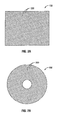
- FIGS. 2A and 2B illustrate embodiments of a mesh of the hernia repair system of FIG. 1 ;
- FIGS. 3A and 3B illustrate embodiments of a barbed suture of the hernia repair system FIG. 1 ;
- FIG. 4 illustrates an embodiment of a mesh of the hernia repair system of FIG. 1 ;
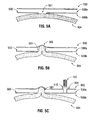
- FIG. 5A is a schematic illustration of a tear in an abdominal wall
- FIG. 5B is a schematic illustration of a ventral hernia
- FIG. 5C is a schematic illustration of an incision and laparoscopic transfer of a hernia repair system of the disclosure
- FIG. 5D is a schematic illustration of an abdominal wall during repair with the hernia repair system of the disclosure.
- FIG. 5E is a schematic illustration of a tear in an abdominal wall following repair with the hernia repair system of the disclosure.
- FIGS. 6A and 6B are schematic illustrations depicting various methods for securing the mesh with barbed sutures in accordance with the present disclosure
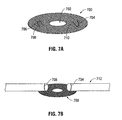
- FIG. 7A illustrates another embodiment of a hernia repair system
- FIG. 7B is a schematic illustration showing a repair of an umbilical hernia with the hernia repair system of FIG. 7A .
- the present disclosure relates to devices, systems, and methods for minimally invasive surgeries such as, endoscopic, laparoscopic, arthroscopic, endoluminal and/or transluminal placement of a surgical mesh at a surgical site.
- surgical mesh is used to refer to any type of patch for use in surgical procedures, such as, for example, meshes that require suturing to the abdominal wall.
- laparoscopic deployment device is used to refer to a deployment device that may be used during minimally invasive surgeries described above.
- proximal will refer to an end of a device that is closer to the user, while the term “distal” will refer to the end of the device that is further from the user.
- Laparoscopic surgical procedures are minimally invasive procedures, which are carried out within the body cavity through use of access ports in conjunction with elongated surgical devices.
- An initial opening in the body tissue enables passage of the endoscopic or laparoscopic device to the interior of the body. Openings include natural passageways of the body or openings, which are created by a tissue piercing device such as a trocar.
- tissue piercing device such as a trocar.
- narrow punctures or incisions are made minimizing trauma to the body cavity and reducing patient recovery time.
- FIG. 1A illustrates an embodiment of a hernia repair system and is generally designated 100.
- the hernia repair system 100 includes a mesh 102, which is suitable for use in situ.
- the mesh 102 includes barbed sutures 104, 106, 108, and 110, each having respective barbs 104a, 106a, 108a, and 110a.
- Each barbed suture 104, 106, 108, and 110 includes a respective needle 114, 116, 118, and 120 attached to a distal end thereof.
- the proximal end of each barbed suture 104, 106, 108, and 110 may be attached to the mesh 102 at respective fixation points 122, 124, 126, and 128.
- any number of barbed sutures and needles sufficient to secure the mesh to the tissue may be included in the hernia repair system.
- the barbed sutures 104, 106, 108, 110 may be attached to the mesh 102 immediately prior to performing the surgical procedure or may be attached to the mesh 102 during manufacturing.
- the barbed sutures 104, 106, 108, 110 may be aligned on the mesh in such a manner that barbs 104a, 106a, 108a, 110a secure, attach or stick respecting sutures 104, 106, 108, 110 to the mesh 102.
- barbed sutures 104, 106, 108, 110 are shown attached to respective needles 114, 116, 118, 120, in some embodiments, the barbed sutures do not include a needle affixed thereto.
- the mesh 102 may also include an anti-adhesion barrier 130 surrounding the edges of the mesh 102.
- the mesh 102 may be any type of mesh for use in surgical repair. Although shown as rectangular or circular in shape, the mesh 102 may be any suitable shape and may include one or more layers. Mesh 102 may be made of multiple fibers 200, or may be made of a single fiber. The fibers 200 may be a monofilament or multi-filament.
- the fibers 200 forming the mesh 102 may be made from a natural material or a synthetic material.
- the fibers 200 may be biodegradable or non-biodegradable. It should of course be understood that any combination of natural, synthetic, bioodegradable and non-biodegradable materials may be used to form the fibers 200.
- biodegradable as used herein is defined to include both bioabsorbable and bioresorbable materials. By biodegradable, it is meant that the materials decompose, or lose structural integrity under body conditions (e.g. enzymatic degradation or hydrolysis) or are broken down (physically or chemically) under physiologic conditions in the body such that the degradation products are excretable or absorbable by the body.
- Representative natural biodegradable polymers include: polysaccharides, such as alginate, dextran, chitin, hyaluronic acid, cellulose, collagen, gelatin, fucans, glycosaminoglycans, and chemical derivatives thereof (substitutions and/or additions of chemical groups, for example, alkyl, alkylene, hydroxylations, oxidations, and other modifications routinely made by those skilled in the art); and proteins, such as albumin, casein, zein, silk, and copolymers and blends thereof, alone or in combination with synthetic polymers.
- polysaccharides such as alginate, dextran, chitin, hyaluronic acid, cellulose, collagen, gelatin, fucans, glycosaminoglycans, and chemical derivatives thereof (substitutions and/or additions of chemical groups, for example, alkyl, alkylene, hydroxylations, oxidations, and other modifications routinely made by those skilled in the art)
- proteins
- Synthetically modified natural polymers include cellulose derivatives, such as alkyl celluloses, hydroxyalkyl celluloses, cellulose ethers, cellulose esters, nitrocelluloses, and chitosan.
- suitable cellulose derivatives include methyl cellulose, ethyl cellulose, hydroxypropyl cellulose, hydroxypropyl methyl cellulose, hydroxybutyl methyl cellulose, cellulose acetate, cellulose propionate, cellulose acetate butyrate, cellulose acetate phthalate, carboxymethyl cellulose, cellulose triacetate, and cellulose sulfate sodium salt. These are collectively referred to herein as "celluloses.”
- Representative synthetic degradable polymers include polyhydroxy acids prepared from lactone monomers, such as glycolide, lactide, caprolactone, ⁇ -caprolactone, valerolactone, and ⁇ -valerolactone, as well as pluronics, carbonates (e.g., trimethylene carbonate, tetramethylene carbonate, and the like), dioxanones (e.g., 1,4-dioxanone and p-dioxanone), 1,dioxepanones (e.g., 1,4-dioxepan-2-one and 1,5-dioxepan-2-one), and combinations thereof.
- lactone monomers such as glycolide, lactide, caprolactone, ⁇ -caprolactone, valerolactone, and ⁇ -valerolactone
- pluronics e.g., trimethylene carbonate, tetramethylene carbonate, and the like
- carbonates e.g., trimethylene carbonate
- Polymers formed therefrom include: polylactides; poly(lactic acid); polyglycolides; poly(glycolic acid); poly(trimethylene carbonate); poly(dioxanone); poly(hydroxybutyric acid); poly(hydroxyvaleric acid); poly(lactide-co-( ⁇ -caprolactone-)); poly(glycolide-co-( ⁇ -caprolactone)); polycarbonates; poly(pseudo amino acids); poly(amino acids); poly(hydroxyalkanoate)s; polyalkylene oxalates; polyoxaesters; polyanhydrides; polyortho esters; and copolymers, block copolymers, homopolymers, blends, and combinations thereof.
- suitable non-bioabsorbable materials from which the fibers 200 may be made include: polyolefins, such as polyethylene and polypropylene including atactic, isotactic, syndiotactic, and blends thereof; polyethylene glycols; polyethylene oxides; ultra high molecular weight polyethylene; copolymers of polyethylene and polypropylene; polyisobutylene and ethylene-alpha olefin copolymers; fluorinated polyolefins, such as fluoroethylenes, fluoropropylenes, fluoroPEGSs, and polytetrafluoroethylene; polyamides, such as nylon and polycaprolactam; polyamines; polyimines; polyesters, such as polyethylene terephthalate and polybutylene terephthalate; aliphatic polyesters; polyethers; polyether-esters, such as polybutester; polytetramethylene ether glycol; 1,4-butanediol;
- the mesh 102 may be formed using any method suitable to forming mesh 102 structures, including but not limited to knitting, weaving, non-woven techniques, and the like. Suitable techniques for making the mesh are within the purview of those skilled in the art.
- the mesh 102 has a three dimensional structure, such as the knitted textiles described in U.S. Patent Nos. 7,021,086 and 6,443,964 the entire contents of which are incorporated by reference herein.
- the mesh 102 may be permanent, such as, for example, a polypropylene mesh.
- a polypropylene mesh These types of meshs are available under the tradenames: PARIETEXTM, PERMACOLTM, and SURGIPROTM manufactured by and commercially available from Tyco Healthcare Group LLP dba Covidien AG, Mansfield, Massachusetts.
- the PERMACOLTM mesh may be used with or without a collagen coating.
- Another mesh that may be used is the PARIETENETM, mesh commercially available from Sofradim, Treivoux, France.
- the mesh 102 may be any shape or size suitable for covering the herniated area and securing the mesh 102 to surrounding tissue.
- the mesh 102 may be preformed to a certain size, such as, for example, a 9 cm diameter round mesh or 50 cm x 50 cm square mesh. In embodiments, the mesh 102 may be cut to a particular size and shape as needed.
- barbed suture 300 may be similar to or the same as barbed sutures 104, 106, 108, 110.
- the suture can be made from a variety of polymers that may be biodegradable or non-biodegradable, such as those listed above for fibers 200.
- Biodegradable barbed sutures are described in U.S. Patent Application No. 11/556,002, filed November 2, 2006 , the entire content of which is incorporated herein by reference.
- the barbed suture may include an elongated body having a barb, and first, second, and third portions being cut at first, second and third angles respective to a longitudinal axis of the elongated body to form the barb, i.e., a compound barbed suture.
- a compound barbed suture may be formed by providing a suture having a longitudinal axis and forming a compound barb along the suture wherein the compound barb defines an inner surface, which includes at least a first portion disposed at a first orientation relative to the longitudinal axis, a second portion disposed at a second orientation relative to the longitudinal axis, and a third portion disposed at a third orientation relative to the longitudinal axis.
- at least one of the first, second, and third portions may be substantially linear.
- at least one of the first, second, and third portions may be substantially non-linear.
- barbs may be formed by making acute angular cuts directly into the suture body, with cut portions pushed outwardly and separated from the body of the suture.
- the depth of the barbs thus formed in the suture body may depend on the diameter of the material and the depth of the cut.
- the barbed suture may be a compound barb suture.
- the compound barb 320 includes two portions 320a, 320b which are disposed at two angles, ⁇ " and ⁇ " relative to a longitudinal axis A-A of the medical device. More specifically, the compound barb 320 includes a first portion 320a formed from the elongate body 310 at a first angle ⁇ ", which is from about 0 degrees to about 90 degrees, in embodiments, from about 30 degrees to about 40 degrees, and in further embodiments, from about 31 degrees to about 38 degrees, relative to a longitudinal axis A-A of the elongate body 310.
- the second portion 320b is formed from the elongate body 310 at a second angle ⁇ " which is from about 0 degrees to about 90 degrees, in embodiments, from about 1 degree to about 10 degrees and in further embodiments, from about 1 degree to about 8 degrees relative to the longitudinal axis A-A of the elongate body 310.
- the elongate body 310 of the barbed suture 300 is in direct contact with tissue "T".
- the elongate body 310 may be in direct contact with tissue "T” for any length "L” of the barbed suture 300 and is not limited to the contact length "L” as shown in FIG. 3B .
- a method of forming a compound barb on a suture includes: forming a first cut in the suture, the first cut having a first ratio of cut depth to diameter of the suture; forming a second cut in the medical device the second cut having a second ratio of cut depth to diameter of the suture; and forming a third cut in the medical device, the third cut having a third ratio of cut depth to diameter of the suture.
- the compound barb 320 and elongated body (suture) 310 and a first ratio of cut depth which is approximately 1% to about 40%, and in certain embodiments, about 10% to about 30% of the diameter of the elongate body 310.
- Compound barbs 320 may include a first ratio of cut depth, which is approximately 1% to about 40%, and in certain embodiments, about 10% to about 30% of the diameter of the elongate body 310.
- Compound barb 320 may include a second ratio of cut depth of approximately 5% to about 50%, and in certain embodiments, about 15% to about 45% of the diameter of elongated body 310.
- Compound barb 320 may include a third ratio of cut depth of approximately 15% to about 50%, and in some embodiments, from about 30% to about 50% the diameter of elongated body 14.
- a plurality of barbs are formed at successive intervals along the longitudinal axis of the suture 300.
- the compound barbed suture of FIG. 3B may be formed, for example, using a cutting element.
- the cutting element may generate ultrasonic energy, which is converted to mechanical energy by the cutting element. This mechanical energy causes displacement of the tool at an ultrasonic frequency powered by an ultrasonic generator.
- the ultrasonic frequency may range in embodiments from about 1 kHz to about 100 kHz; from about 10 kHz to about 90 kHz; or from about 15 kHz to about 50 kHz.
- the ultrasonic signal amplitude may range from about 1 ⁇ to about 125 ⁇ ; in embodiments from about 15 ⁇ to about 60 ⁇ .
- the ratio of the cut depth and the angle of the barbs relative to the suture are variable based on the signal amplitude of ultrasonic energy applied to the cutting element. For example, as the ultrasonic amplitude is increased, the ratio of the cut depth to the diameter and the angle of the barbs are decreased. As the ultrasonic amplitude is decreased, the ratio of the cut is increased.
- the method described above as well as the cutting element are described in U.S. Patent Application No. 12/178,361 filed July 23, 2008 , the entire content of which is incorporated herein by reference.
- suture 300 an embodiment of a barbed suture capable of use with the aspects of the present disclosure is shown generally as suture 300. Although shown as a monofilament thread, it is envisioned that suture 300 may be formed from braided threads, multifilament threads and the like.
- the cross-sectional geometry of suture 300 may be of any suitable shape.
- barbed suture 300 may be formed using any technique within the purview of those skilled in the art, such as, for example, extrusion, molding and/or solvent casting.
- suture 300 may include a yarn made of more than one filament, which may contain multiple filaments of the same or different materials.
- suture 300 may be made using any known technique such as, for example, braiding, weaving or knitting. Filaments may also be combined to produce a non-woven suture.
- Suture 300 may be drawn, oriented, crinkled, twisted, commingled or air entangled to form yarns as part of the suture forming process.
- a multifilament suture may be produced by braiding. The braiding may be done by any method within the purview of those skilled in the art.
- Suture 300 includes a plurality of barbs 302 formed along a length thereof.
- Barbs 302 are radially and longitudinally spaced along suture 300 and may be formed using any suitable method.
- Barbs 302 on suture 300 may extend in the same direction along the entire length thereof, or may instead extend in one direction on a first half of suture 300 and may extend in an opposite direction on a second half of suture 300.
- Proximal end 300a, or distal end 300b, of suture 300 may include a sharpened tip or needle (not shown) configured for penetrating tissue.
- the needle may be any surgical needle as are known to those of skill in the art. In embodiments, the needle may be a straight needle.
- Either or both ends 300a, 300b of suture 300 may include a fixation device (not shown).
- suitable fixation devices 306 include surgical pins, screws, suture anchors, nails, and the like.
- the suture 300 may be attached to the mesh 100 by looping the barbed suture through the mesh.
- a barbed suture such as is disclosed in U.S. Patent Application No. 12/361,962, filed January 29, 2009 , the entire content of which is incorporated herein by reference.
- a compound barbed suture is available commercially as V-LOCTM from Tyco Healthcare Group, LLP (dba Covidien AG, Mansfield, Massachusetts).
- Either or both of the mesh and barbed suture may include a bioactive agent.
- the bioactive agent may be added to the barbed suture as disclosed in U.S. Application No. 11/899,852, filed September 6, 2007 , the entire content of which is incorporated by reference herein.
- bioactive agent as used herein, is used in its broadest sense and includes any substance or mixture of substances that have clinical use. Consequently, bioactive agents may or may not have pharmacological activity per se, e.g., a dye.
- a bioactive agent could be any agent that provides a therapeutic or prophylactic effect, a compound that affects or participates in tissue growth, cell growth, cell differentiation, an anti-adhesive compound, a compound that may be able to invoke a biological action such as an immune response, or could play any other role in one or more biological processes.
- the bioactive agent may be applied to the mesh or barbed suture in any suitable form, e.g., films, powders, liquids, gels, and the like.
- bioactive agents examples include: anti-adhesives; antimicrobials; analgesics; antipyretics; anesthetics; antiepileptics; antihistamines; anti-inflammatories; cardiovascular drugs; diagnostic agents; sympathomimetics; cholinomimetics; antimuscarinics; antispasmodics; hormones; growth factors; muscle relaxants; adrenergic neuron blockers; antineoplastics; immunogenic agents; immunosuppressants; gastrointestinal drugs; diuretics; steroids; lipids; lipopolysaccharides; polysaccharides; platelet activating drugs; clotting factors; and enzymes. It is also intended that combinations of bioactive agents may be used.
- Anti-adhesive agents can be used to prevent adhesions from forming between the mesh and the surrounding tissues opposite the target tissue.
- anti-adhesive agents may be used to prevent adhesions from forming between the coated implantable medical device and the packaging material.
- Some examples of these agents include, but are not limited to hydrophilic polymers such as poly(vinyl pyrrolidone), carboxymethyl cellulose, hyaluronic acid, polyethylene oxide, poly vinyl alcohols, and combinations thereof.
- Suitable antimicrobial agents which may be included as a bioactive agent include: triclosan, also known as 2,4,4'-trichloro-2'-hydroxydiphenyl ether, chlorhexidine and its salts, including chlorhexidine acetate, chlorhexidine gluconate, chlorhexidine hydrochloride, and chlorhexidine sulfate, silver and its salts, including silver acetate, silver benzoate, silver carbonate, silver citrate, silver iodate, silver iodide, silver lactate, silver laurate, silver nitrate, silver oxide, silver palmitate, silver protein, and silver sulfadiazine; polymyxin, tetracycline; aminoglycosides, such as tobramycin and gentamicin; rifampicin; bacitracin; neomycin; chloramphenicol; miconazole; quinolones such as oxolinic acid, norfloxacin, nalidixic acid
- bioactive agents which may be included as a bioactive agent include local anesthetics; non-steroidal antifertility agents; parasympathomimetic agents; psychotherapeutic agents; tranquilizers; decongestants; sedative hypnotics; steroids; sulfonamides; sympathomimetic agents; vaccines; vitamins; antimalarials; anti-migraine agents; anti-parkinson agents such as L-dopa; anti-spasmodics; anticholinergic agents (e.g., oxybutynin); antitussives; bronchodilators; cardiovascular agents, such as coronary vasodilators and nitroglycerin; alkaloids; analgesics; narcotics such as codeine, dihydrocodeinone, meperidine, morphine and the like; non-narcotics, such as salicylates, aspirin, acetaminophen, d-propoxyphene and the like; opioid receptor antagonist
- bioactive agents which may be included in the mesh or suture include: viruses and cells; peptides, polypeptides and proteins, as well as analogs, muteins, and active fragments thereof; immunoglobulins; antibodies; cytokines (e.g., lymphokines, monokines, chemokines); blood clotting factors; hemopoietic factors; interleukins (IL-2, IL-3, IL-4, IL-6); interferons ⁇ -IFN, ⁇ -IFN and ⁇ -IFN); erythropoietin; nucleases; tumor necrosis factor; colony stimulating factors (e.g., GCSF, GM-CSF, MCSF); insulin; anti-tumor agents and tumor suppressors; blood proteins such as fibrin, thrombin, fibrinogen, synthetic thrombin, synthetic fibrin, synthetic fibrinogen; gonadotropins (e.g., FSH, LH, CG, etc.); hormones and
- mesh 102 of the hernia repair system 100 may be rolled with barbed sutures 402, 404 such that respective needles 406, 408 thereof may be oriented parallel to a longitudinal X-axis of mesh 102.
- Barbed sutures 402, 404 may be similar to or the same as barbed sutures 102, 104, 106, 108, and/or 300.
- Barbed sutures 402, 404 may be attached to mesh 102 at fixation points (not shown) in a manner as described above. For example, by looping barbed sutures 402, 404 through mesh 102, or with a fixation device.
- Needles 406, 408 may be similar to or the same as needles 114, 116, 118, 120.
- any number of barbed sutures and needles may be oriented along a longitudinal x-axis of the rolled mesh 102.
- the needles may be threaded through the mesh 102 along the longitudinal X-axis of the rolled mesh 102 to secure the needles during transport.
- Laparoscopic devices are known in the art and include, for example, the devices disclosed in U.S. Patent Application Publication No. 2006/0229640, filed March 29, 2005 ; U.S. Patent Application Publication No. U.S. 2006/0200170, filed March 7, 2005 ; and U.S. Patent Application Publication No. 2006/0200169, filed March 7, 2005 , the entire contents of which are incorporated by reference herein.
- the hernia repair system of the present disclosure provides a single system for transfer of needles, sutures, and mesh needed to perform repair of the hernia. This reduces the time required for separate insertion of each of these tools. Instead, the surgeon may insert the hernia repair system, unroll the mesh, thread the barbed sutures through the abdominal wall where the barbs of the suture may grip the rectus abdominal muscle, and cut the sutures. The traditional use of two sutures per fixation point may be replaced by the use of one barbed suture. There is no need for separate attachment and knotting of the suture to the mesh. This may reduce the time required to complete the surgical procedure.
- the barbed sutures unidirectionally secure the mesh to the tissue, i.e., the barbs prevent the suture from movement in the direction opposite the direction of their insertion. Accordingly, the mesh may be secured to the tissue by the barbed suture and there may be no need for knotting or tacking of the suture.
- Trans-abdominal suture knots and tacks used to secure meshes to tissue may create significant postoperative pain.
- the suture is sub-fascially knotted in place.
- These sub-fascial knots may be a significant source of post-operative pain.
- the sub-facial knot may be located over abdominal nerves causing additional pain.
- Use of the hernia repair system of the present disclosure prevents the need for sub-fascial and/or trans-abdominal suture knots, thereby eliminating post-operative pain caused by these knots.
- a ventral hernia may involve a tear 501, in the abdominal wall 500.
- Abdominal wall 500 is defined by an external side 500a and internal side 500b.
- a surface tissue 502, which covers the external side 500a of abdominal wall 500, may or may not be immediately effected by this tear 501.
- An internal organ 504 located below the internal side 500b of the abdominal wall 500 may not protrude until some form of exertion or use of the muscle located at the abdominal wall 500 forces the internal organ 504 into the tear 501.
- a hernia occurs when internal organ 504 protrudes into the tear 501 of abdominal wall 500. Oftentimes the protrusion creates a bulge 506 in the surface tissue 502.
- an incision 508 may be made through surface tissue 502 and/or abdominal wall 500 in close proximity to tear 501 and a hernia repair system 100, including rolled mesh 102 as described above, may be inserted using trocar 510 or similar laparoscopic device.
- the hernia repair system 100 is unrolled and placed above tear 501 on external side 500a of abdominal wall 500.
- hernia repair system 100 may be placed beneath tear 501 on internal side 500b of abdominal wall.
- a hernia repair system 100 may be positioned above and below tear 501 on both sides of abdominal wall 500.
- the needles may be used to thread barbed sutures 104, 106, 108, 110 through the mesh 102 and the abdominal wall 500.
- hernia repair system 100 seals abdominal wall 500 returning internal organ 504 to its original location and repairing protrusion 506.
- various methods of securing the mesh 102 to the peritoneum 500b of the abdominal wall 500 with a barbed suture 600 may be used by the surgeon.
- the surgeon may thread the barbed sutures 600, 608 from respective fixation points 602, 610, into the abdominal wall 500, through the rectus muscle 604, and through the surface tissue 502.
- barbed sutures 606, 614 may be threaded from respective fixation points 612, 618 into the abdominal wall 500, through the rectus muscle 604, and then threaded at an angle under the surface tissue 502.
- the barbed suture may be angled in any direction.
- FIGS. 7A and 7B Depicted in FIGS. 7A and 7B , is a mesh 700 for repair of umbilical hernias.
- the mesh 700 includes a central opening 702.
- Barbed sutures 704, 706 may be attached to the umbilical mesh at attachment points 708, 710, respectively around opening 702.
- the mesh 700 may be secured beneath the abdominal wall 712 and barbed sutures 704, 706 may be pulled through the abdominal wall 712, thereby securing the mesh 700 to the abdominal wall 712.
- a method of laparoscopic repair of a ventral hernia comprising the steps of:
- the threading step further comprises the step of performing a second threading back along a path of the previous threading.
- the threading step further comprises the step of performing a second threading perpendicular to a path of the previous threading.
- a hernia repair system comprising:
- a method of laparoscopic repair of a ventral hernia comprising the steps of:
- the threading step further comprises the step of performing a second threading back along a path of the previous threading.
- the threading step further comprises the step of performing a second threading perpendicular to a path of the previous threading.
- a hernia repair system comprising:
Landscapes
- Health & Medical Sciences (AREA)
- Cardiology (AREA)
- Oral & Maxillofacial Surgery (AREA)
- Transplantation (AREA)
- Engineering & Computer Science (AREA)
- Biomedical Technology (AREA)
- Heart & Thoracic Surgery (AREA)
- Vascular Medicine (AREA)
- Life Sciences & Earth Sciences (AREA)
- Animal Behavior & Ethology (AREA)
- General Health & Medical Sciences (AREA)
- Public Health (AREA)
- Veterinary Medicine (AREA)
- Surgical Instruments (AREA)
- Materials For Medical Uses (AREA)
Abstract

Description
- The present application claims the benefit of and priority to
U.S. Provisional Application Ser. No. 61/264,922, filed on November 30, 2009 - The present disclosure relates to methods and systems for the application of a surgical mesh. More particularly, the present disclosure relates to systems and methods for the in situ application of a hernia mesh during minimally invasive surgery.
- Meshes are used during both laparoscopic and open surgery for repair of many types of defects and or injuries. For example, surgical meshes are used as catheter and cannula cuffs, for vascular anastomosis reinforcement, as wound dressings, for chest wall closure, as urinary incontinence slings, and for repair of hernias. Surgical meshes are used to provide support to surrounding tissue and as a supplement to standard suturing.
- Hernias that appear at the site of a prior surgical incision or due to a defect in the abdominal wall are often called ventral hernias. Ventral hernias typically occur when an organ protrudes through the muscular wall holding organs in place, often at the site of a previous incision. Any prior abdominal operation, where there is incomplete scar formation or healing of the tissue, may develop a ventral hernia.
- Ventral hernias occur more commonly along a straight line from the xiphoid process of the breastbone down to the pubic bone, and are more complex in these regions. Ventral hernias in this area have a high rate of recurrence if repaired via a simple suture technique under tension. For this reason, it is especially advised that ventral hernias be repaired via a tension free repair method using a mesh.
- Open surgical repairs of ventral hernias may be difficult and complicated operations. The weakened tissue of the abdominal wall is re-incised and during repair the weakened tissue may be reinforced using a prosthetic mesh. The large incision required to perform this surgery may lead to complications, such as infection. In addition, large incisions required for open repair are commonly associated with significant postoperative pain.
- Minimally invasive surgery for ventral hernias has shown several benefits including quicker recovery and shorter hospital stays, as well as a significantly reduced risk of infection and hernia recurrence. These benefits are due to both the smaller incision size and the reduced amount of time required to perform the surgery as compared to open surgery.
- Whether open or minimally invasive, the use of trans-abdominal suture knots and tacks to secure the mesh to the tissue may create significant postoperative pain. In the case of trans-abdominal sutures, the suture is sub-fascially knotted in place. These sub-fascial knots may be a significant source of post operative pain. At times, the sub-facial knot may be located over abdominal nerves causing additional pain. Therefore, methods and systems for reducing surgical time and use of sub-fascial knots or tacks are needed.
- The present disclosure includes a method of laparoscopic repair of a ventral hernia. The method may include providing a needle, a barbed suture having a distal end attached to the needle and surgical mesh. In embodiments, the barbed suture may be attached to the surgical mesh at a proximal end of the barbed suture. The surgical mesh, barbed suture, and needle may be rolled to form a rolled mesh with the needle oriented substantially parallel to a longitudinal x-axis of the rolled mesh. In embodiments, the barbed suture may be attached to the surgical mesh prior to rolling the mesh. In embodiments, the barbed suture may be attached to the surgical mesh through a loop at a proximal end of the barbed suture or with a suture tie at a proximal end of the barbed suture. The rolled mesh may then be transferred into a body cavity via a laparoscopic device. The laparoscopic device may be, for example, a trocar. Following transfer, the rolled mesh may be unrolled and laid under a ventral hernia in an abdominal wall. The needle and barbed suture may then be threaded through the surgical mesh and the abdominal wall and then the barbed suture may be trimmed. In embodiments, the threading step may include performing a second threading back along a path of the previous threading. In embodiments, the second threading may be perpendicular to a path of the previous threading.
- The present disclosure also includes a hernia repair system. The hernia repair system may include a surgical mesh, a needle, and a barbed suture having a distal end attached to the needle and a proximal end attached to the surgical mesh. The surgical mesh may also include loops through which the needle may be threaded. In embodiments, the surgical mesh and barbed suture may be rolled to form a rolled mesh having a needle oriented substantially parallel to a longitudinal axis of the rolled mesh. The barbed suture and surgical mesh may be bioabsorbable and/or non-bioabsorbable. The barbed suture and/or surgical mesh may include a bioactive agent, such as, analgesics, antispasmodics, and/or anesthetics.
- The present disclosure also includes a method of laparoscopic repair of a ventral hernia. The method may include providing a surgical mesh; providing a barbed suture having a proximal end attached to the surgical mesh; rolling the surgical mesh and the barbed suture to form a rolled mesh; transferring the rolled mesh into a body cavity via a laparoscopic device; unrolling and laying the surgical mesh under a ventral hernia in an abdominal wall; attaching a needle to the barbed suture; threading the needle and the barbed suture through the surgical mesh and the abdominal wall; and trimming the barbed suture. The threading step may include the step of performing a second threading back along a path of or perpendicular to a path of the previous threading. The laparoscopic device may be a trocar. The method can also include the step of attaching the barbed suture to the surgical mesh prior to the rolling step. The barbed suture may be attached at a proximal end of the barbed suture. The attachment may be through a loop at a proximal end of the barbed suture or with a suture tie at a proximal end of said barbed suture.
- The disclosure also includes a hernia repair system including a surgical mesh; a barbed suture having a proximal end attached to the surgical mesh. The surgical mesh and the barbed suture may be rolled to form a rolled mesh. The barbed suture and surgical mesh may be bioabsorbable and/or non-bioabsorbable. The barbed suture and/or the surgical mesh may include a bioactive agent.
- The foregoing objects and advantages of the disclosure will become more apparent from the reading of the following description in connection with the accompanying drawings, in which:
-
FIG. 1A illustrates an embodiment of a hernia repair system of the disclosure; -
FIG. 1B illustrates another embodiment of a hernia repair system of the disclosure; -
FIGS. 2A and 2B illustrate embodiments of a mesh of the hernia repair system ofFIG. 1 ; -
FIGS. 3A and3B illustrate embodiments of a barbed suture of the hernia repair systemFIG. 1 ; -
FIG. 4 illustrates an embodiment of a mesh of the hernia repair system ofFIG. 1 ; -
FIG. 5A is a schematic illustration of a tear in an abdominal wall; -
FIG. 5B is a schematic illustration of a ventral hernia; -
FIG. 5C is a schematic illustration of an incision and laparoscopic transfer of a hernia repair system of the disclosure; -
FIG. 5D is a schematic illustration of an abdominal wall during repair with the hernia repair system of the disclosure; -
FIG. 5E is a schematic illustration of a tear in an abdominal wall following repair with the hernia repair system of the disclosure; -
FIGS. 6A and 6B are schematic illustrations depicting various methods for securing the mesh with barbed sutures in accordance with the present disclosure; -
FIG. 7A illustrates another embodiment of a hernia repair system; and -
FIG. 7B is a schematic illustration showing a repair of an umbilical hernia with the hernia repair system ofFIG. 7A . - The present disclosure relates to devices, systems, and methods for minimally invasive surgeries such as, endoscopic, laparoscopic, arthroscopic, endoluminal and/or transluminal placement of a surgical mesh at a surgical site. As used herein the term "surgical mesh" is used to refer to any type of patch for use in surgical procedures, such as, for example, meshes that require suturing to the abdominal wall. Although described herein with reference to a ventral hernia mesh, the method of the disclosure may be used in any surgical repair. As used herein the term "laparoscopic deployment device" is used to refer to a deployment device that may be used during minimally invasive surgeries described above.
- In the drawings and in the description that follows, the term "proximal," as is traditional, will refer to an end of a device that is closer to the user, while the term "distal" will refer to the end of the device that is further from the user.
- Laparoscopic surgical procedures are minimally invasive procedures, which are carried out within the body cavity through use of access ports in conjunction with elongated surgical devices. An initial opening in the body tissue enables passage of the endoscopic or laparoscopic device to the interior of the body. Openings include natural passageways of the body or openings, which are created by a tissue piercing device such as a trocar. During laparoscopic procedures, narrow punctures or incisions are made minimizing trauma to the body cavity and reducing patient recovery time. Although described herein with reference to laparoscopic surgery, the method may be applied to any type of surgery.
- Referring now in specific detail to the drawings, in which like numbers identify similar or identical elements,
FIG. 1A illustrates an embodiment of a hernia repair system and is generally designated 100. Thehernia repair system 100 includes amesh 102, which is suitable for use in situ. Themesh 102 includesbarbed sutures respective barbs barbed suture respective needle barbed suture mesh 102 at respective fixation points 122, 124, 126, and 128. - Although illustrated with four barbed sutures and needles, any number of barbed sutures and needles sufficient to secure the mesh to the tissue may be included in the hernia repair system. In embodiments, there may be one barbed suture per corner. In other embodiments, there may be one barbed suture every 3 centimeters around the perimeter of the mesh. Still in other embodiments, where the mesh is non-rectangular (See
FIG. 1B ) i.e., triangular, circular, etc., there may be one barbed suture approximately every 3 centimeters around the perimeter of the mesh. - With continued reference to
FIG. 1A , thebarbed sutures mesh 102 immediately prior to performing the surgical procedure or may be attached to themesh 102 during manufacturing. - With reference to
FIG. 1B , thebarbed sutures barbs stick respecting sutures mesh 102. Althoughbarbed sutures respective needles mesh 102 may also include ananti-adhesion barrier 130 surrounding the edges of themesh 102. - As shown in
FIG. 2 , themesh 102 may be any type of mesh for use in surgical repair. Although shown as rectangular or circular in shape, themesh 102 may be any suitable shape and may include one or more layers. Mesh 102 may be made ofmultiple fibers 200, or may be made of a single fiber. Thefibers 200 may be a monofilament or multi-filament. - The
fibers 200 forming themesh 102 may be made from a natural material or a synthetic material. Thefibers 200 may be biodegradable or non-biodegradable. It should of course be understood that any combination of natural, synthetic, bioodegradable and non-biodegradable materials may be used to form thefibers 200. The term "biodegradable" as used herein is defined to include both bioabsorbable and bioresorbable materials. By biodegradable, it is meant that the materials decompose, or lose structural integrity under body conditions (e.g. enzymatic degradation or hydrolysis) or are broken down (physically or chemically) under physiologic conditions in the body such that the degradation products are excretable or absorbable by the body. - Representative natural biodegradable polymers include: polysaccharides, such as alginate, dextran, chitin, hyaluronic acid, cellulose, collagen, gelatin, fucans, glycosaminoglycans, and chemical derivatives thereof (substitutions and/or additions of chemical groups, for example, alkyl, alkylene, hydroxylations, oxidations, and other modifications routinely made by those skilled in the art); and proteins, such as albumin, casein, zein, silk, and copolymers and blends thereof, alone or in combination with synthetic polymers.
- Synthetically modified natural polymers include cellulose derivatives, such as alkyl celluloses, hydroxyalkyl celluloses, cellulose ethers, cellulose esters, nitrocelluloses, and chitosan. Examples of suitable cellulose derivatives include methyl cellulose, ethyl cellulose, hydroxypropyl cellulose, hydroxypropyl methyl cellulose, hydroxybutyl methyl cellulose, cellulose acetate, cellulose propionate, cellulose acetate butyrate, cellulose acetate phthalate, carboxymethyl cellulose, cellulose triacetate, and cellulose sulfate sodium salt. These are collectively referred to herein as "celluloses."
- Representative synthetic degradable polymers include polyhydroxy acids prepared from lactone monomers, such as glycolide, lactide, caprolactone, ε-caprolactone, valerolactone, and δ-valerolactone, as well as pluronics, carbonates (e.g., trimethylene carbonate, tetramethylene carbonate, and the like), dioxanones (e.g., 1,4-dioxanone and p-dioxanone), 1,dioxepanones (e.g., 1,4-dioxepan-2-one and 1,5-dioxepan-2-one), and combinations thereof. Polymers formed therefrom include: polylactides; poly(lactic acid); polyglycolides; poly(glycolic acid); poly(trimethylene carbonate); poly(dioxanone); poly(hydroxybutyric acid); poly(hydroxyvaleric acid); poly(lactide-co-(ε-caprolactone-)); poly(glycolide-co-(ε-caprolactone)); polycarbonates; poly(pseudo amino acids); poly(amino acids); poly(hydroxyalkanoate)s; polyalkylene oxalates; polyoxaesters; polyanhydrides; polyortho esters; and copolymers, block copolymers, homopolymers, blends, and combinations thereof.
- Some non-limiting examples of suitable non-bioabsorbable materials from which the
fibers 200 may be made include: polyolefins, such as polyethylene and polypropylene including atactic, isotactic, syndiotactic, and blends thereof; polyethylene glycols; polyethylene oxides; ultra high molecular weight polyethylene; copolymers of polyethylene and polypropylene; polyisobutylene and ethylene-alpha olefin copolymers; fluorinated polyolefins, such as fluoroethylenes, fluoropropylenes, fluoroPEGSs, and polytetrafluoroethylene; polyamides, such as nylon and polycaprolactam; polyamines; polyimines; polyesters, such as polyethylene terephthalate and polybutylene terephthalate; aliphatic polyesters; polyethers; polyether-esters, such as polybutester; polytetramethylene ether glycol; 1,4-butanediol; polyurethanes; acrylic polymers and copolymers; modacrylics; vinyl halide polymers and copolymers, such as polyvinyl chloride; polyvinyl alcohols; polyvinyl ethers, such as polyvinyl methyl ether; polyvinylidene halides, such as polyvinylidene fluoride and polyvinylidene chloride; polyacrylonitrile; polyaryletherketones; polyvinyl ketones; polyvinyl aromatics, such as polystyrene; polyvinyl esters, such as polyvinyl acetate; copolymers of vinyl monomers with each other and olefins, such as etheylene-methyl methacrylate copolymers, acrylonitrile-styrene copolymers, ABS resins, and ethylene-vinyl acetate copolymers; alkyd resins; polycarbonates; polyoxymethylenes; polyphosphazine; polyimides; epoxy resins; aramids, rayon; rayon-triacetate; spandex; silicones; and combinations thereof. - The
mesh 102 may be formed using any method suitable to forming mesh 102 structures, including but not limited to knitting, weaving, non-woven techniques, and the like. Suitable techniques for making the mesh are within the purview of those skilled in the art. In embodiments, themesh 102 has a three dimensional structure, such as the knitted textiles described inU.S. Patent Nos. 7,021,086 and6,443,964 the entire contents of which are incorporated by reference herein. - In embodiments, the
mesh 102 may be permanent, such as, for example, a polypropylene mesh. These types of meshs are available under the tradenames: PARIETEX™, PERMACOL™, and SURGIPRO™ manufactured by and commercially available from Tyco Healthcare Group LLP dba Covidien AG, Mansfield, Massachusetts. The PERMACOL™ mesh may be used with or without a collagen coating. Another mesh that may be used is the PARIETENE™, mesh commercially available from Sofradim, Treivoux, France. - The
mesh 102 may be any shape or size suitable for covering the herniated area and securing themesh 102 to surrounding tissue. Themesh 102 may be preformed to a certain size, such as, for example, a 9 cm diameter round mesh or 50 cm x 50 cm square mesh. In embodiments, themesh 102 may be cut to a particular size and shape as needed. - With reference to
FIGS. 3A and3B ,barbed suture 300 may be similar to or the same asbarbed sutures fibers 200. Biodegradable barbed sutures are described inU.S. Patent Application No. 11/556,002, filed November 2, 2006 - In embodiments, the barbed suture may include an elongated body having a barb, and first, second, and third portions being cut at first, second and third angles respective to a longitudinal axis of the elongated body to form the barb, i.e., a compound barbed suture. A compound barbed suture may be formed by providing a suture having a longitudinal axis and forming a compound barb along the suture wherein the compound barb defines an inner surface, which includes at least a first portion disposed at a first orientation relative to the longitudinal axis, a second portion disposed at a second orientation relative to the longitudinal axis, and a third portion disposed at a third orientation relative to the longitudinal axis. In embodiments, at least one of the first, second, and third portions may be substantially linear. In embodiments, at least one of the first, second, and third portions may be substantially non-linear.
- In some embodiments, barbs may be formed by making acute angular cuts directly into the suture body, with cut portions pushed outwardly and separated from the body of the suture. The depth of the barbs thus formed in the suture body may depend on the diameter of the material and the depth of the cut.
- As shown in
FIG. 3B , the barbed suture may be a compound barb suture. Thecompound barb 320 includes twoportions compound barb 320 includes afirst portion 320a formed from theelongate body 310 at a first angle α", which is from about 0 degrees to about 90 degrees, in embodiments, from about 30 degrees to about 40 degrees, and in further embodiments, from about 31 degrees to about 38 degrees, relative to a longitudinal axis A-A of theelongate body 310. Thesecond portion 320b is formed from theelongate body 310 at a second angle β" which is from about 0 degrees to about 90 degrees, in embodiments, from about 1 degree to about 10 degrees and in further embodiments, from about 1 degree to about 8 degrees relative to the longitudinal axis A-A of theelongate body 310. - The
elongate body 310 of thebarbed suture 300 is in direct contact with tissue "T". Theelongate body 310 may be in direct contact with tissue "T" for any length "L" of thebarbed suture 300 and is not limited to the contact length "L" as shown inFIG. 3B . - In embodiments, a method of forming a compound barb on a suture includes: forming a first cut in the suture, the first cut having a first ratio of cut depth to diameter of the suture; forming a second cut in the medical device the second cut having a second ratio of cut depth to diameter of the suture; and forming a third cut in the medical device, the third cut having a third ratio of cut depth to diameter of the suture.
- In embodiments, the
compound barb 320 and elongated body (suture) 310 and a first ratio of cut depth, which is approximately 1% to about 40%, and in certain embodiments, about 10% to about 30% of the diameter of theelongate body 310. -
Compound barbs 320 may include a first ratio of cut depth, which is approximately 1% to about 40%, and in certain embodiments, about 10% to about 30% of the diameter of theelongate body 310.Compound barb 320 may include a second ratio of cut depth of approximately 5% to about 50%, and in certain embodiments, about 15% to about 45% of the diameter ofelongated body 310.Compound barb 320 may include a third ratio of cut depth of approximately 15% to about 50%, and in some embodiments, from about 30% to about 50% the diameter of elongated body 14. In one embodiment, a plurality of barbs are formed at successive intervals along the longitudinal axis of thesuture 300. - The compound barbed suture of
FIG. 3B may be formed, for example, using a cutting element. The cutting element may generate ultrasonic energy, which is converted to mechanical energy by the cutting element. This mechanical energy causes displacement of the tool at an ultrasonic frequency powered by an ultrasonic generator. The ultrasonic frequency may range in embodiments from about 1 kHz to about 100 kHz; from about 10 kHz to about 90 kHz; or from about 15 kHz to about 50 kHz. The ultrasonic signal amplitude may range from about 1 µ to about 125 µ; in embodiments from about 15 µ to about 60 µ. - The ratio of the cut depth and the angle of the barbs relative to the suture are variable based on the signal amplitude of ultrasonic energy applied to the cutting element. For example, as the ultrasonic amplitude is increased, the ratio of the cut depth to the diameter and the angle of the barbs are decreased. As the ultrasonic amplitude is decreased, the ratio of the cut is increased. The method described above as well as the cutting element are described in
U.S. Patent Application No. 12/178,361 filed July 23, 2008 - As shown in
FIGS. 3A and3B , an embodiment of a barbed suture capable of use with the aspects of the present disclosure is shown generally assuture 300. Although shown as a monofilament thread, it is envisioned thatsuture 300 may be formed from braided threads, multifilament threads and the like. - Although shown having a circular cross-sectional geometry, the cross-sectional geometry of
suture 300 may be of any suitable shape. - With continued reference to
FIGS. 3A and3B ,barbed suture 300 may be formed using any technique within the purview of those skilled in the art, such as, for example, extrusion, molding and/or solvent casting. In some embodiments,suture 300 may include a yarn made of more than one filament, which may contain multiple filaments of the same or different materials. Wheresuture 300 is made of multiple filaments,suture 300 may be made using any known technique such as, for example, braiding, weaving or knitting. Filaments may also be combined to produce a non-woven suture. Suture 300 may be drawn, oriented, crinkled, twisted, commingled or air entangled to form yarns as part of the suture forming process. In one embodiment, a multifilament suture may be produced by braiding. The braiding may be done by any method within the purview of those skilled in the art. -
Suture 300 includes a plurality ofbarbs 302 formed along a length thereof.Barbs 302 are radially and longitudinally spaced alongsuture 300 and may be formed using any suitable method.Barbs 302 onsuture 300 may extend in the same direction along the entire length thereof, or may instead extend in one direction on a first half ofsuture 300 and may extend in an opposite direction on a second half ofsuture 300.Proximal end 300a, ordistal end 300b, ofsuture 300 may include a sharpened tip or needle (not shown) configured for penetrating tissue. The needle may be any surgical needle as are known to those of skill in the art. In embodiments, the needle may be a straight needle. Either or bothends suture 300 may include a fixation device (not shown). Non-limiting examples of suitable fixation devices 306 include surgical pins, screws, suture anchors, nails, and the like. In embodiments, thesuture 300 may be attached to themesh 100 by looping the barbed suture through the mesh. A barbed suture such as is disclosed inU.S. Patent Application No. 12/361,962, filed January 29, 2009 - Either or both of the mesh and barbed suture may include a bioactive agent. The bioactive agent may be added to the barbed suture as disclosed in
U.S. Application No. 11/899,852, filed September 6, 2007 - Examples of classes of bioactive agents, which may be utilized in accordance with the present disclosure include: anti-adhesives; antimicrobials; analgesics; antipyretics; anesthetics; antiepileptics; antihistamines; anti-inflammatories; cardiovascular drugs; diagnostic agents; sympathomimetics; cholinomimetics; antimuscarinics; antispasmodics; hormones; growth factors; muscle relaxants; adrenergic neuron blockers; antineoplastics; immunogenic agents; immunosuppressants; gastrointestinal drugs; diuretics; steroids; lipids; lipopolysaccharides; polysaccharides; platelet activating drugs; clotting factors; and enzymes. It is also intended that combinations of bioactive agents may be used.
- Anti-adhesive agents can be used to prevent adhesions from forming between the mesh and the surrounding tissues opposite the target tissue. In addition, anti-adhesive agents may be used to prevent adhesions from forming between the coated implantable medical device and the packaging material. Some examples of these agents include, but are not limited to hydrophilic polymers such as poly(vinyl pyrrolidone), carboxymethyl cellulose, hyaluronic acid, polyethylene oxide, poly vinyl alcohols, and combinations thereof.
- Suitable antimicrobial agents which may be included as a bioactive agent include: triclosan, also known as 2,4,4'-trichloro-2'-hydroxydiphenyl ether, chlorhexidine and its salts, including chlorhexidine acetate, chlorhexidine gluconate, chlorhexidine hydrochloride, and chlorhexidine sulfate, silver and its salts, including silver acetate, silver benzoate, silver carbonate, silver citrate, silver iodate, silver iodide, silver lactate, silver laurate, silver nitrate, silver oxide, silver palmitate, silver protein, and silver sulfadiazine; polymyxin, tetracycline; aminoglycosides, such as tobramycin and gentamicin; rifampicin; bacitracin; neomycin; chloramphenicol; miconazole; quinolones such as oxolinic acid, norfloxacin, nalidixic acid, pefloxacin, enoxacin and ciprofloxacin; penicillins such as oxacillin and pipracil, nonoxynol 9, fusidic acid, cephalosporins; and combinations thereof. In addition, antimicrobial proteins and peptides such as bovine lactoferrin and lactoferricin B may be included as a bioactive agent.
- Other bioactive agents, which may be included as a bioactive agent include local anesthetics; non-steroidal antifertility agents; parasympathomimetic agents; psychotherapeutic agents; tranquilizers; decongestants; sedative hypnotics; steroids; sulfonamides; sympathomimetic agents; vaccines; vitamins; antimalarials; anti-migraine agents; anti-parkinson agents such as L-dopa; anti-spasmodics; anticholinergic agents (e.g., oxybutynin); antitussives; bronchodilators; cardiovascular agents, such as coronary vasodilators and nitroglycerin; alkaloids; analgesics; narcotics such as codeine, dihydrocodeinone, meperidine, morphine and the like; non-narcotics, such as salicylates, aspirin, acetaminophen, d-propoxyphene and the like; opioid receptor antagonists, such as naltrexone and naloxone; anti-cancer agents; anticonvulsants; anti-emetics; antihistamines; anti-inflammatory agents, such as hormonal agents, hydrocortisone, prednisolone, prednisone, non-hormonal agents, allopurinol, indomethacin, phenylbutazone and the like; prostaglandins and cytotoxic drugs; chemotherapeutics, estrogens; antibacterials; antibiotics; anti-fungals; anti-virals; anticoagulants; anticonvulsants; antidepressants; antihistamines; and immunological agents.
- Other examples of suitable bioactive agents, which may be included in the mesh or suture include: viruses and cells; peptides, polypeptides and proteins, as well as analogs, muteins, and active fragments thereof; immunoglobulins; antibodies; cytokines (e.g., lymphokines, monokines, chemokines); blood clotting factors; hemopoietic factors; interleukins (IL-2, IL-3, IL-4, IL-6); interferons β-IFN, α-IFN and γ-IFN); erythropoietin; nucleases; tumor necrosis factor; colony stimulating factors (e.g., GCSF, GM-CSF, MCSF); insulin; anti-tumor agents and tumor suppressors; blood proteins such as fibrin, thrombin, fibrinogen, synthetic thrombin, synthetic fibrin, synthetic fibrinogen; gonadotropins (e.g., FSH, LH, CG, etc.); hormones and hormone analogs (e.g., growth hormone); vaccines (e.g., tumoral, bacterial and viral antigens); somatostatin; antigens; blood coagulation factors; growth factors (e.g., nerve growth factor, insulin-like growth factor); bone morphogenic proteins; TGF-B; protein inhibitors; protein antagonists; protein agonists; nucleic acids, such as antisense molecules, DNA, RNA, RNAi; oligonucleotides; polynucleotides; and ribozymes.
- With reference to
FIG. 4 mesh 102 of thehernia repair system 100 may be rolled withbarbed sutures respective needles mesh 102.Barbed sutures barbed sutures Barbed sutures barbed sutures mesh 102, or with a fixation device.Needles needles mesh 102. In embodiments, the needles may be threaded through themesh 102 along the longitudinal X-axis of the rolledmesh 102 to secure the needles during transport. - Rolling, folding, or otherwise orienting the mesh with the barbed sutures and needles parallel to the longitudinal x-axis of the rolled
mesh 102 forms a shape more suitable for transfer through a laparoscopic device during laparoscopic surgery. Laparoscopic devices are known in the art and include, for example, the devices disclosed inU.S. Patent Application Publication No. 2006/0229640, filed March 29, 2005 ; U.S. Patent Application Publication No.U.S. 2006/0200170, filed March 7, 2005 ; andU.S. Patent Application Publication No. 2006/0200169, filed March 7, 2005 , the entire contents of which are incorporated by reference herein. - The hernia repair system of the present disclosure provides a single system for transfer of needles, sutures, and mesh needed to perform repair of the hernia. This reduces the time required for separate insertion of each of these tools. Instead, the surgeon may insert the hernia repair system, unroll the mesh, thread the barbed sutures through the abdominal wall where the barbs of the suture may grip the rectus abdominal muscle, and cut the sutures. The traditional use of two sutures per fixation point may be replaced by the use of one barbed suture. There is no need for separate attachment and knotting of the suture to the mesh. This may reduce the time required to complete the surgical procedure. Additionally, the barbed sutures unidirectionally secure the mesh to the tissue, i.e., the barbs prevent the suture from movement in the direction opposite the direction of their insertion. Accordingly, the mesh may be secured to the tissue by the barbed suture and there may be no need for knotting or tacking of the suture.
- Trans-abdominal suture knots and tacks used to secure meshes to tissue may create significant postoperative pain. In the case of trans-abdominal sutures, the suture is sub-fascially knotted in place. These sub-fascial knots may be a significant source of post-operative pain. At times, the sub-facial knot may be located over abdominal nerves causing additional pain. Use of the hernia repair system of the present disclosure prevents the need for sub-fascial and/or trans-abdominal suture knots, thereby eliminating post-operative pain caused by these knots.
- Referring now to
FIGS. 5A-5E , a method of usinghernia repair system 100 to perform a surgical repair procedure is shown and described. With reference toFIG. 5A , a ventral hernia may involve atear 501, in theabdominal wall 500.Abdominal wall 500 is defined by anexternal side 500a andinternal side 500b. Asurface tissue 502, which covers theexternal side 500a ofabdominal wall 500, may or may not be immediately effected by thistear 501. Aninternal organ 504 located below theinternal side 500b of theabdominal wall 500 may not protrude until some form of exertion or use of the muscle located at theabdominal wall 500 forces theinternal organ 504 into thetear 501. Depending on the size and location of thetear 501, exertion may not be needed to cause the organ to protrude. As shown inFIG. 5B , a hernia occurs wheninternal organ 504 protrudes into thetear 501 ofabdominal wall 500. Oftentimes the protrusion creates abulge 506 in thesurface tissue 502. - In order to correct the defect, as depicted in
FIG. 5C , anincision 508 may be made throughsurface tissue 502 and/orabdominal wall 500 in close proximity to tear 501 and ahernia repair system 100, including rolledmesh 102 as described above, may be inserted usingtrocar 510 or similar laparoscopic device. As shown inFIG. 5D , thehernia repair system 100 is unrolled and placed abovetear 501 onexternal side 500a ofabdominal wall 500. In other embodiments,hernia repair system 100 may be placed beneathtear 501 oninternal side 500b of abdominal wall. In still other embodiments, ahernia repair system 100 may be positioned above and belowtear 501 on both sides ofabdominal wall 500. The needles (not shown) may be used to threadbarbed sutures mesh 102 and theabdominal wall 500. As depicted inFIG. 5E hernia repair system 100 sealsabdominal wall 500 returninginternal organ 504 to its original location and repairingprotrusion 506. - As shown in
FIGS. 6A and 6B , various methods of securing themesh 102 to theperitoneum 500b of theabdominal wall 500 with abarbed suture 600 may be used by the surgeon. As shown inFIG. 6A , the surgeon may thread thebarbed sutures abdominal wall 500, through therectus muscle 604, and through thesurface tissue 502. In embodiments, as shown inFIG. 6B ,barbed sutures abdominal wall 500, through therectus muscle 604, and then threaded at an angle under thesurface tissue 502. Although shown at an angle of 90 degrees inFIG. 6B , the barbed suture may be angled in any direction. - Depicted in
FIGS. 7A and 7B , is amesh 700 for repair of umbilical hernias. Themesh 700 includes acentral opening 702.Barbed sutures opening 702. Themesh 700 may be secured beneath theabdominal wall 712 andbarbed sutures abdominal wall 712, thereby securing themesh 700 to theabdominal wall 712. - While the above description contains many specifics, these specifics should not be construed as limitations on the scope of the present disclosure, but merely as exemplifications of preferred embodiments thereof. Those skilled in the art will envision many other possible variations that are within the scope and spirit of the present disclosure.
- The invention may be described by reference to the following numbered paragraphs:
- A method of laparoscopic repair of a ventral hernia, comprising the steps of:
- a. providing a needle;
- b. providing a barbed suture having a distal end attached to said needle;
- c. providing a surgical mesh;
- d. rolling said surgical mesh, said barbed suture, and said needle to form a rolled mesh having said needle oriented substantially parallel to a longitudinal axis of said rolled mesh;
- e. transferring said rolled mesh into a body cavity via a laparoscopic device;
- f. unrolling and laying said surgical mesh under a ventral hernia in an abdominal wall;
- g. threading said needle and barbed suture through said surgical mesh and said abdominal wall; and
- h. trimming said barbed suture.
- The method according to paragraph [0073], wherein the threading step further comprises the step of performing a second threading back along a path of the previous threading.
- The method according to paragraph [0073], wherein the threading step further comprises the step of performing a second threading perpendicular to a path of the previous threading.
- The method according to paragraph [0073], wherein said laparoscopic device is a trocar.
- The method according to paragraph [0073], further comprising the step of attaching said barbed suture to said surgical mesh prior to said rolling step.
- The method according to paragraph [0077], further comprising the step of attaching said barbed suture to said surgical mesh at a proximal end of said barbed suture.
- The method according to paragraph [0077], further comprising the step of attaching said barbed suture to said surgical mesh through a loop at a proximal end of said barbed suture.
- The method according to paragraph [0077], further comprising the step of attaching said barbed suture to said surgical mesh with a suture tie at a proximal end of said barbed suture.
- A hernia repair system, comprising:
- a. a surgical mesh;
- b. a needle;
- c. a barbed suture having a distal end attached to said needle and a proximal end attached to said surgical mesh.
- The hernia repair system of paragraph [0081], wherein said surgical mesh further comprises loops through which said needle is threaded.
- The hernia repair system of paragraph [0081], wherein said surgical mesh and said barbed suture are rolled to form a rolled mesh having said needle oriented substantially parallel to a longitudinal axis of said rolled mesh.
- The hernia repair system of paragraph [0081], wherein said barbed suture is at least one of bioabsorbable and non-bioabsorbable.
- The hernia repair system of paragraph [0081], wherein said surgical mesh is at least one of bioabsorbable and non-bioabsorbable
- The hernia repair system of paragraph [0081], wherein at least one of said barbed suture and said surgical mesh includes a bioactive agent selected from the group consisting of anti-spasmodics, analgesics, and anesthetics.
- A method of laparoscopic repair of a ventral hernia, comprising the steps of:
- a. providing a surgical mesh;
- b. providing a barbed suture having a proximal end attached to said surgical mesh;
- c. rolling said surgical mesh and said barbed suture to form a rolled mesh;
- d. transferring said rolled mesh into a body cavity via a laparoscopic device;
- e. unrolling and laying said surgical mesh under a ventral hernia in an abdominal wall;
- f. attaching a needle to said barbed suture;
- g. threading said needle and said barbed suture through said surgical mesh and said abdominal wall; and
- h. trimming said barbed suture.
- The method according to paragraph [0087], wherein the threading step further comprises the step of performing a second threading back along a path of the previous threading.
- The method according to paragraph [0087], wherein the threading step further comprises the step of performing a second threading perpendicular to a path of the previous threading.
- The method according to paragraph [0087], wherein said laparoscopic device is a trocar.
- The method according to paragraph [0087], further comprising the step of attaching said barbed suture to said surgical mesh prior to said rolling step.
- The method according to paragraph [0091], further comprising the step of attaching said barbed suture to said surgical mesh at a proximal end of said barbed suture.
- The method according to paragraph [0091], further comprising the step of attaching said barbed suture to said surgical mesh through a loop at a proximal end of said barbed suture.
- The method according to paragraph [0091] further comprising the step of attaching said barbed suture to said surgical mesh with a suture tie at a proximal end of said barbed suture.
- A hernia repair system, comprising:
- a. a surgical mesh;
- b. a barbed suture having a proximal end attached to said surgical mesh.
- The hernia repair system of paragraph [0095], wherein said surgical mesh and said barbed suture are rolled to form a rolled mesh.
- The hernia repair system of paragraph [0095], wherein said barbed suture is at least one of bioabsorbable and non-bioabsorbable.
- The hernia repair system of paragraph [0095], wherein said surgical mesh is at least one of bioabsorbable and non-bioabsorbable
- The hernia repair system of paragraph [0095], wherein at least one of said barbed suture and said surgical mesh includes a bioactive agent.
Claims (11)
- A hernia repair system, comprising:a. a surgical mesh;b. a needle;c. a barbed suture having a distal end attached to said needle and a proximal end attached to said surgical mesh.
- The hernia repair system of claim 1, wherein said surgical mesh further comprises loops through which said needle is threaded.
- The hernia repair system of claim 1 or claim 2, wherein said surgical mesh and said barbed suture are rolled to form a rolled mesh having said needle oriented substantially parallel to a longitudinal axis of said rolled mesh.
- The hernia repair system of any preceding claim, wherein said barbed suture is at least one of bioabsorbable and non-bioabsorbable.
- The hernia repair system of any preceding claim, wherein said surgical mesh is at least one of bioabsorbable and non-bioabsorbable
- The hernia repair system of any preceding claim, wherein at least one of said barbed suture and said surgical mesh includes a bioactive agent selected from the group consisting of anti-spasmodics, analgesics, and anesthetics.
- A hernia repair system, comprising:a. a surgical mesh;b. a barbed suture having a proximal end attached to said surgical mesh.
- The hernia repair system of claim 7, wherein said surgical mesh and said barbed suture are rolled to form a rolled mesh.
- The hernia repair system of claim 7 or claim 8, wherein said barbed suture is at least one of bioabsorbable and non-bioabsorbable.
- The hernia repair system of any of claims 7 to 9, wherein said surgical mesh is at least one of bioabsorbable and non-bioabsorbable
- The hernia repair system of claim 10, wherein at least one of said barbed suture and said surgical mesh includes a bioactive agent.
Applications Claiming Priority (2)
| Application Number | Priority Date | Filing Date | Title |
|---|---|---|---|
| US26492209P | 2009-11-30 | 2009-11-30 | |
| US12/943,107 US9398943B2 (en) | 2009-11-30 | 2010-11-10 | Ventral hernia repair with barbed suture |
Publications (2)
| Publication Number | Publication Date |
|---|---|
| EP2327373A1 true EP2327373A1 (en) | 2011-06-01 |
| EP2327373B1 EP2327373B1 (en) | 2013-01-02 |
Family
ID=43736040
Family Applications (1)
| Application Number | Title | Priority Date | Filing Date |
|---|---|---|---|
| EP10252015A Not-in-force EP2327373B1 (en) | 2009-11-30 | 2010-11-29 | Ventral hernia repair with barbed suture |
Country Status (5)
| Country | Link |
|---|---|
| US (1) | US9398943B2 (en) |
| EP (1) | EP2327373B1 (en) |
| JP (1) | JP2011115588A (en) |
| AU (1) | AU2010241507B9 (en) |
| CA (1) | CA2721546C (en) |
Cited By (1)
| Publication number | Priority date | Publication date | Assignee | Title |
|---|---|---|---|---|
| EP3312325A1 (en) * | 2016-10-21 | 2018-04-25 | Sofradim Production | Method for forming a mesh having a barbed suture attached thereto and the mesh thus obtained |
Families Citing this family (88)
| Publication number | Priority date | Publication date | Assignee | Title |
|---|---|---|---|---|
| US8795332B2 (en) | 2002-09-30 | 2014-08-05 | Ethicon, Inc. | Barbed sutures |
| US5931855A (en) | 1997-05-21 | 1999-08-03 | Frank Hoffman | Surgical methods using one-way suture |
| US7056331B2 (en) | 2001-06-29 | 2006-06-06 | Quill Medical, Inc. | Suture method |
| US6773450B2 (en) | 2002-08-09 | 2004-08-10 | Quill Medical, Inc. | Suture anchor and method |
| US20040088003A1 (en) | 2002-09-30 | 2004-05-06 | Leung Jeffrey C. | Barbed suture in combination with surgical needle |
| US8100940B2 (en) | 2002-09-30 | 2012-01-24 | Quill Medical, Inc. | Barb configurations for barbed sutures |
| EP2664283B1 (en) | 2004-05-14 | 2017-06-28 | Ethicon, LLC | Suture devices |
| US20110184441A1 (en) * | 2007-01-10 | 2011-07-28 | Pascal St-Germain | Prosthetic repair patch with integrated sutures and method therefor |
| US20090192530A1 (en) * | 2008-01-29 | 2009-07-30 | Insightra Medical, Inc. | Fortified mesh for tissue repair |
| US20080255612A1 (en) | 2007-04-13 | 2008-10-16 | Angiotech Pharmaceuticals, Inc. | Self-retaining systems for surgical procedures |
| EP2526975B1 (en) * | 2007-09-27 | 2014-06-04 | Ethicon, LLC | Self-retaining sutures including tissue retainers having improved strength |
| US9439746B2 (en) * | 2007-12-13 | 2016-09-13 | Insightra Medical, Inc. | Methods and apparatus for treating ventral wall hernia |
| US20120209301A1 (en) * | 2008-02-21 | 2012-08-16 | Insightra Medical, Inc. | Implant for hernia repair |
| US8940017B2 (en) | 2008-07-31 | 2015-01-27 | Insightra Medical, Inc. | Implant for hernia repair |
| US8916077B1 (en) | 2007-12-19 | 2014-12-23 | Ethicon, Inc. | Self-retaining sutures with retainers formed from molten material |
| CA2709328C (en) | 2007-12-19 | 2017-01-03 | Angiotech Pharmaceuticals, Inc. | Self-retaining sutures with heat-contact mediated retainers |
| US8118834B1 (en) | 2007-12-20 | 2012-02-21 | Angiotech Pharmaceuticals, Inc. | Composite self-retaining sutures and method |
| EP2242430B1 (en) | 2008-01-30 | 2016-08-17 | Ethicon, LLC | Apparatus and method for forming self-retaining sutures |
| WO2009105663A2 (en) | 2008-02-21 | 2009-08-27 | Angiotech Pharmaceuticals, Inc. | Method and apparatus for elevating retainers on self-retaining sutures |
| US8641732B1 (en) | 2008-02-26 | 2014-02-04 | Ethicon, Inc. | Self-retaining suture with variable dimension filament and method |
| BRPI0911132B8 (en) | 2008-04-15 | 2021-06-22 | Angiotech Pharm Inc | suture to be used in a tissue-applied procedure |
| US8961560B2 (en) | 2008-05-16 | 2015-02-24 | Ethicon, Inc. | Bidirectional self-retaining sutures with laser-marked and/or non-laser marked indicia and methods |
| EP3420923A1 (en) | 2008-11-03 | 2019-01-02 | Ethicon, LLC | Length of self-retaining suture and device for using the same |
| US8221396B2 (en) | 2009-08-27 | 2012-07-17 | Silver Bullet Therapeutics, Inc. | Bone implants for the treatment of infection |
| US8927004B1 (en) | 2014-06-11 | 2015-01-06 | Silver Bullet Therapeutics, Inc. | Bioabsorbable substrates and systems that controllably release antimicrobial metal ions |
| US9821094B2 (en) | 2014-06-11 | 2017-11-21 | Silver Bullet Therapeutics, Inc. | Coatings for the controllable release of antimicrobial metal ions |
| US9114197B1 (en) | 2014-06-11 | 2015-08-25 | Silver Bullett Therapeutics, Inc. | Coatings for the controllable release of antimicrobial metal ions |
| US10265435B2 (en) | 2009-08-27 | 2019-04-23 | Silver Bullet Therapeutics, Inc. | Bone implant and systems and coatings for the controllable release of antimicrobial metal ions |
| BR112012028331B1 (en) | 2010-05-04 | 2020-04-28 | Ethicon Endo Surgery Llc | self-retaining suture |
| CA2801271C (en) | 2010-06-11 | 2018-10-30 | Ethicon, Llc | Suture delivery tools for endoscopic and robot-assisted surgery and methods |
| EP2404557A1 (en) * | 2010-07-06 | 2012-01-11 | Tornier, Inc. | Barbed scaffolds |
| US11007296B2 (en) | 2010-11-03 | 2021-05-18 | Ethicon, Inc. | Drug-eluting self-retaining sutures and methods relating thereto |
| EP3138506B1 (en) | 2010-11-09 | 2020-08-26 | Ethicon, LLC | Emergency self-retaining sutures |
| EP2637608B1 (en) | 2010-11-12 | 2016-03-02 | Silver Bullet Therapeutics Inc. | Bone implant and systems that controllably releases silver |
| CN106974683B (en) | 2011-02-04 | 2020-02-21 | 马萨诸塞州大学 | Negative pressure wound closure device |
| US9421132B2 (en) | 2011-02-04 | 2016-08-23 | University Of Massachusetts | Negative pressure wound closure device |
| RU2659454C2 (en) | 2011-03-23 | 2018-07-02 | ЭТИКОН ЭлЭлСи | Self-retaining variable loop sutures |
| US20130172931A1 (en) | 2011-06-06 | 2013-07-04 | Jeffrey M. Gross | Methods and devices for soft palate tissue elevation procedures |
| US9492261B2 (en) * | 2011-09-30 | 2016-11-15 | Covidien Lp | Hernia repair device and method |
| KR101155817B1 (en) * | 2011-10-31 | 2012-06-12 | 김종우 | Implant for tissue lifting |
| US8535339B2 (en) | 2011-12-18 | 2013-09-17 | Via Surgical Ltd. | Apparatus and method for suturing |
| FR2985271B1 (en) * | 2011-12-29 | 2014-01-24 | Sofradim Production | KNITTED PICOTS |
| US20150032135A1 (en) * | 2012-02-28 | 2015-01-29 | Incorpracyl Technologies Ltd. | Tissue support structure |
| US10792142B2 (en) * | 2012-02-28 | 2020-10-06 | Joel Gorman | Implantable areal device for supporting tissue |
| US9186053B2 (en) * | 2012-05-03 | 2015-11-17 | Covidien Lp | Methods of using light to repair hernia defects |
| MX2014014266A (en) | 2012-05-22 | 2015-06-23 | Smith & Nephew | Apparatuses and methods for wound therapy. |
| AU2013291693B2 (en) | 2012-05-22 | 2018-03-01 | Smith & Nephew Plc | Wound closure device |
| AU2013264937B2 (en) | 2012-05-24 | 2018-04-19 | Smith & Nephew Inc. | Devices and methods for treating and closing wounds with negative pressure |
| US9888913B2 (en) | 2012-05-31 | 2018-02-13 | Via Surgical Ltd. | Variable depth surgical fixation |
| RU2015104581A (en) | 2012-07-16 | 2016-09-10 | Смит Энд Нефью, Инк. | DEVICE FOR CLOSING THE Wound USING NEGATIVE PRESSURE |
| US9993245B2 (en) | 2013-03-11 | 2018-06-12 | Via Surgical Ltd. | Surgical tacker with quantity indicator |
| US10124098B2 (en) | 2013-03-13 | 2018-11-13 | Smith & Nephew, Inc. | Negative pressure wound closure device and systems and methods of use in treating wounds with negative pressure |
| BR112015021123A2 (en) | 2013-03-14 | 2017-07-18 | Smith & Nephew | compressible wound fillers and systems and methods for use in treating negative pressure injuries |
| US9204955B2 (en) | 2013-03-29 | 2015-12-08 | King Saud University | Surgical mesh with integrated threads |
| FR3004333B1 (en) | 2013-04-11 | 2019-08-23 | Biom'up | IMPLANTABLE REINFORCEMENT PROSTHESIS, ESPECIALLY FOR THE REINFORCEMENT OF THE ABDOMINAL WALL |
| WO2015061352A2 (en) | 2013-10-21 | 2015-04-30 | Smith & Nephew, Inc. | Negative pressure wound closure device |
| US10052105B2 (en) * | 2013-11-18 | 2018-08-21 | Ethicon, Inc. | Recessed surgical fastening devices |
| CN110974539A (en) | 2014-01-21 | 2020-04-10 | 史密夫及内修公开有限公司 | Collapsible dressing for negative pressure wound therapy |
| US9981121B2 (en) | 2014-04-28 | 2018-05-29 | Medtronic, Inc. | Implantable medical devices, systems and components thereof |
| US9452242B2 (en) | 2014-06-11 | 2016-09-27 | Silver Bullet Therapeutics, Inc. | Enhancement of antimicrobial silver, silver coatings, or silver platings |
| CN107072767B (en) | 2014-09-04 | 2021-11-12 | 杜克大学 | Implantable mesh and method of use |
| US9788827B2 (en) | 2014-09-24 | 2017-10-17 | Ethicon, Inc. | Method and means to attach anchor suture onto mesh implants |
| US10626521B2 (en) * | 2014-12-11 | 2020-04-21 | Tepha, Inc. | Methods of manufacturing mesh sutures from poly-4-hydroxybutyrate and copolymers thereof |
| US9555155B2 (en) | 2014-12-11 | 2017-01-31 | Tepha, Inc. | Methods of orienting multifilament yarn and monofilaments of poly-4-hydroxybutyrate and copolymers thereof |
| KR101534814B1 (en) * | 2015-03-05 | 2015-07-08 | 심길섭 | Mesh assembly |
| ES2821006T3 (en) | 2015-04-23 | 2021-04-23 | Via Surgical Ltd | Surgical Fastener Locking and Delivery Mechanism |
| US11439539B2 (en) | 2015-04-29 | 2022-09-13 | University Of Massachusetts | Negative pressure wound closure device |
| US10575991B2 (en) | 2015-12-15 | 2020-03-03 | University Of Massachusetts | Negative pressure wound closure devices and methods |
| US10596660B2 (en) * | 2015-12-15 | 2020-03-24 | Howmedica Osteonics Corp. | Porous structures produced by additive layer manufacturing |
| US11471586B2 (en) | 2015-12-15 | 2022-10-18 | University Of Massachusetts | Negative pressure wound closure devices and methods |
| US10814049B2 (en) | 2015-12-15 | 2020-10-27 | University Of Massachusetts | Negative pressure wound closure devices and methods |
| CA3158855A1 (en) * | 2015-12-28 | 2017-07-06 | Conmed Corporation | Suture tape construct for providing anchor with non-sliding suture tape |
| AU2017278300B2 (en) | 2016-06-10 | 2022-10-20 | Duke University | Warp knit fabric for textile and medical applications and methods of manufacturing the same |
| KR102427501B1 (en) | 2017-01-13 | 2022-07-29 | 타스 메디컬 | Systems, devices and methods for closing abdominal wall defects |
| WO2019043699A1 (en) | 2017-08-30 | 2019-03-07 | Hadasit Medical Research Services And Development Ltd. | Devices, kits and methods for reducing and/or preventing intra-abdominal adhesions |
| US10842603B1 (en) * | 2017-10-16 | 2020-11-24 | David Lee Street | Sutureless ventral hernia meshing system and method of fixation |
| WO2019079709A1 (en) | 2017-10-19 | 2019-04-25 | C.R.Bard, Inc. | Self-gripping hernia prosthesis |
| RU2697059C1 (en) * | 2018-07-23 | 2019-08-09 | Федеральное государственное бюджетное образовательное учреждение высшего образования "Астраханский государственный медицинский университет" Министерства здравоохранения Российской Федерации (ФГБОУ ВО Астраханский ГМУ Минздрава России) | Method of postoperative seroma treatment in patients with ventral hernias |
| RU2697196C1 (en) * | 2018-07-23 | 2019-08-13 | Федеральное государственное бюджетное образовательное учреждение высшего образования "Астраханский государственный медицинский университет" Министерства здравоохранения Российской Федерации (ФГБОУ ВО Астраханский ГМУ Минздрава России) | Method of postoperative seroma treatment in patients with ventral hernias |
| RU2697058C1 (en) * | 2018-07-23 | 2019-08-09 | Федеральное государственное бюджетное образовательное учреждение высшего образования "Астраханский государственный медицинский университет" Министерства здравоохранения Российской Федерации (ФГБОУ ВО Астраханский ГМУ Минздрава России) | Method of postoperative seroma treatment in patients with ventral hernias |
| EP3879019B1 (en) | 2018-09-27 | 2024-03-27 | Sofradim Production | Bioresorbable knit for hernia repair |
| EP3653171B1 (en) | 2018-11-16 | 2024-08-21 | Sofradim Production | Implants suitable for soft tissue repair |
| EP4778476A2 (en) | 2019-09-28 | 2026-07-22 | Tas Medical Inc. | Systems, devices and methods for tissue fixation and approximating tissue defects |
| KR20220146426A (en) | 2020-01-26 | 2022-11-01 | 타스 메디컬 인코포레이티드 | Medical systems, devices and methods suitable for tissue fixation and tissue defect bonding |
| US12232943B2 (en) | 2021-04-28 | 2025-02-25 | Medos International Sàrl | Systems and methods for using structured tissue augmentation constructs in soft tissue fixation repair |
| RU2766807C1 (en) * | 2021-07-05 | 2022-03-15 | Василий Васильевич Игнатенко | Method for prevention of seroma formation in surgical management of giant postoperative ventral hernias |
| CN114176849B (en) * | 2021-12-31 | 2022-09-06 | 上海交通大学 | Double-layer fiber ring patch, patch clamp, suture needle and fishbone line |
| EP4785903A1 (en) * | 2025-01-31 | 2026-08-05 | Sofradim Production | Hernia mesh with integrated fixation made from barbed yarns |
Citations (8)
| Publication number | Priority date | Publication date | Assignee | Title |
|---|---|---|---|---|
| US6443964B1 (en) | 1997-08-01 | 2002-09-03 | Sofradim Production | Three-dimensional open-worked prosthetic fabric |
| US7021086B2 (en) | 2001-10-05 | 2006-04-04 | Sofradim Production | Three-dimensional filet stitch fabric wall reinforcement |
| US20060200170A1 (en) | 2005-03-07 | 2006-09-07 | Ernest Aranyi | Specimen retrieval apparatus and method of use |
| WO2007047743A2 (en) * | 2005-10-18 | 2007-04-26 | Cook Biotech Incorporated | Medical device with affixation means |
| US7413571B2 (en) * | 2002-08-21 | 2008-08-19 | Kci Licensing, Inc. | Flexible medical closure screen and method |
| WO2009086172A2 (en) * | 2007-12-19 | 2009-07-09 | Angiotech Pharmaceuticals, Inc. | Self-retaining sutures with heat-contact mediated retainers |
| US20090228021A1 (en) * | 2008-03-06 | 2009-09-10 | Leung Jeffrey C | Matrix material |
| US20100069930A1 (en) * | 2008-09-16 | 2010-03-18 | VentralFix, Inc. | Method and apparatus for minimally invasive delivery, tensioned deployment and fixation of secondary material prosthetic devices in patient body tissue, including hernia repair within the patient's herniation site |
Family Cites Families (50)
| Publication number | Priority date | Publication date | Assignee | Title |
|---|---|---|---|---|
| US3123077A (en) | 1964-03-03 | Surgical suture | ||
| US3646615A (en) | 1970-01-26 | 1972-03-07 | Richard A Ness | Reinforcing element for muscles |
| US4769038A (en) | 1986-03-18 | 1988-09-06 | C. R. Bard, Inc. | Prostheses and techniques and repair of inguinal and femoral hernias |
| DE3884743T2 (en) | 1987-10-30 | 1994-01-27 | Howmedica | Device for restoring a tendon or ligament. |
| WO1993017635A1 (en) | 1992-03-04 | 1993-09-16 | C.R. Bard, Inc. | Composite prosthesis and method for limiting the incidence of postoperative adhesions |
| US5743917A (en) | 1993-01-13 | 1998-04-28 | Saxon; Allen | Prosthesis for the repair of soft tissue defects |
| US5425747A (en) | 1993-10-12 | 1995-06-20 | Brotz; Gregory R. | Suture |
| US5584859A (en) | 1993-10-12 | 1996-12-17 | Brotz; Gregory R. | Suture assembly |
| JP3185906B2 (en) * | 1993-11-26 | 2001-07-11 | ニプロ株式会社 | Prosthesis for atrial septal defect |
| ES2206509T3 (en) | 1994-06-06 | 2004-05-16 | Case Western Reserve University | BIOMATRIZ FOR THE REGENERATION OF FABRICS. |
| US6368356B1 (en) | 1996-07-11 | 2002-04-09 | Scimed Life Systems, Inc. | Medical devices comprising hydrogel polymers having improved mechanical properties |
| US5683417A (en) | 1996-08-14 | 1997-11-04 | Cooper; William I. | Suture and method for endoscopic surgery |
| US5931855A (en) | 1997-05-21 | 1999-08-03 | Frank Hoffman | Surgical methods using one-way suture |
| US6692499B2 (en) | 1997-07-02 | 2004-02-17 | Linvatec Biomaterials Oy | Surgical fastener for tissue treatment |
| US6042592A (en) | 1997-08-04 | 2000-03-28 | Meadox Medicals, Inc. | Thin soft tissue support mesh |
| US6383201B1 (en) | 1999-05-14 | 2002-05-07 | Tennison S. Dong | Surgical prosthesis for repairing a hernia |
| GB9912240D0 (en) | 1999-05-27 | 1999-07-28 | Smith & Nephew | Implantable medical devices |
| US6991643B2 (en) | 2000-12-20 | 2006-01-31 | Usgi Medical Inc. | Multi-barbed device for retaining tissue in apposition and methods of use |
| US6270517B1 (en) | 2000-02-04 | 2001-08-07 | Gregory R. Brotz | Suture assembly and method |
| US6645226B1 (en) | 2000-05-19 | 2003-11-11 | Coapt Systems, Inc. | Multi-point tension distribution system device and method of tissue approximation using that device to improve wound healing |
| US7156862B2 (en) | 2000-05-19 | 2007-01-02 | Coapt Systems, Inc. | Multi-point tension distribution system device and method of tissue approximation using that device to improve wound healing |
| US20040010275A1 (en) | 2000-05-19 | 2004-01-15 | Daniel Jacobs | Multi-point tissue tension distribution device and method, a custom-fittable variation |
| US6638312B2 (en) | 2000-08-04 | 2003-10-28 | Depuy Orthopaedics, Inc. | Reinforced small intestinal submucosa (SIS) |
| US7404819B1 (en) | 2000-09-14 | 2008-07-29 | C.R. Bard, Inc. | Implantable prosthesis |
| US6852330B2 (en) | 2000-12-21 | 2005-02-08 | Depuy Mitek, Inc. | Reinforced foam implants with enhanced integrity for soft tissue repair and regeneration |
| US6599323B2 (en) | 2000-12-21 | 2003-07-29 | Ethicon, Inc. | Reinforced tissue implants and methods of manufacture and use |
| US20020103494A1 (en) * | 2001-01-31 | 2002-08-01 | Pacey John Allen | Percutaneous cannula delvery system for hernia patch |
| US7056331B2 (en) | 2001-06-29 | 2006-06-06 | Quill Medical, Inc. | Suture method |
| US20030149447A1 (en) | 2002-02-01 | 2003-08-07 | Morency Steven David | Barbed surgical suture |
| US6736854B2 (en) | 2002-05-10 | 2004-05-18 | C. R. Bard, Inc. | Prosthetic repair fabric with erosion resistant edge |
| US7011688B2 (en) | 2002-05-10 | 2006-03-14 | C.R. Bard, Inc. | Prosthetic repair fabric |
| US6773450B2 (en) | 2002-08-09 | 2004-08-10 | Quill Medical, Inc. | Suture anchor and method |
| US8100940B2 (en) | 2002-09-30 | 2012-01-24 | Quill Medical, Inc. | Barb configurations for barbed sutures |
| US7368124B2 (en) | 2003-03-07 | 2008-05-06 | Depuy Mitek, Inc. | Method of preparation of bioabsorbable porous reinforced tissue implants and implants thereof |
| US8197837B2 (en) | 2003-03-07 | 2012-06-12 | Depuy Mitek, Inc. | Method of preparation of bioabsorbable porous reinforced tissue implants and implants thereof |
| IL154918A0 (en) * | 2003-03-13 | 2003-10-31 | Samuel Eldar | Device and method for deploying and placing a surgical prosthesis mesh |
| US7081135B2 (en) * | 2003-06-09 | 2006-07-25 | Lane Fielding Smith | Mastopexy stabilization apparatus and method |
| US20050283256A1 (en) | 2004-02-09 | 2005-12-22 | Codman & Shurtleff, Inc. | Collagen device and method of preparing the same |
| EP2664283B1 (en) | 2004-05-14 | 2017-06-28 | Ethicon, LLC | Suture devices |
| US7641688B2 (en) | 2004-09-16 | 2010-01-05 | Evera Medical, Inc. | Tissue augmentation device |
| WO2007056297A2 (en) * | 2005-11-07 | 2007-05-18 | Csh Innovations, Inc. | Surgical repair systems and methods of using the same |
| US7871425B2 (en) | 2006-07-28 | 2011-01-18 | Angiotech Pharmaceuticals, Inc. | Minimally-invasive nipple-lift procedure and apparatus |
| WO2008045375A2 (en) | 2006-10-04 | 2008-04-17 | Applied Materials, Inc. | Methods and apparatus for loading and unloading substrate carriers on moving conveyors using feedback |
| US20080167519A1 (en) * | 2007-01-10 | 2008-07-10 | Pascal St-Germain | Prosthetic repair patch with integrated sutures |
| US7947054B2 (en) * | 2007-02-14 | 2011-05-24 | EasyLab Ltd. | Mesh deployment apparatus |
| US20090018655A1 (en) | 2007-07-13 | 2009-01-15 | John Brunelle | Composite Implant for Surgical Repair |
| US8500759B2 (en) * | 2007-09-26 | 2013-08-06 | Ethicon, Inc. | Hernia mesh support device |
| US9439746B2 (en) * | 2007-12-13 | 2016-09-13 | Insightra Medical, Inc. | Methods and apparatus for treating ventral wall hernia |
| US8864776B2 (en) | 2008-04-11 | 2014-10-21 | Covidien Lp | Deployment system for surgical suture |
| US8628545B2 (en) | 2008-06-13 | 2014-01-14 | Covidien Lp | Endoscopic stitching devices |
-
2010
- 2010-11-10 US US12/943,107 patent/US9398943B2/en active Active
- 2010-11-18 CA CA2721546A patent/CA2721546C/en not_active Expired - Fee Related
- 2010-11-18 AU AU2010241507A patent/AU2010241507B9/en not_active Ceased
- 2010-11-29 EP EP10252015A patent/EP2327373B1/en not_active Not-in-force
- 2010-11-30 JP JP2010267787A patent/JP2011115588A/en active Pending
Patent Citations (8)
| Publication number | Priority date | Publication date | Assignee | Title |
|---|---|---|---|---|
| US6443964B1 (en) | 1997-08-01 | 2002-09-03 | Sofradim Production | Three-dimensional open-worked prosthetic fabric |
| US7021086B2 (en) | 2001-10-05 | 2006-04-04 | Sofradim Production | Three-dimensional filet stitch fabric wall reinforcement |
| US7413571B2 (en) * | 2002-08-21 | 2008-08-19 | Kci Licensing, Inc. | Flexible medical closure screen and method |
| US20060200170A1 (en) | 2005-03-07 | 2006-09-07 | Ernest Aranyi | Specimen retrieval apparatus and method of use |
| WO2007047743A2 (en) * | 2005-10-18 | 2007-04-26 | Cook Biotech Incorporated | Medical device with affixation means |
| WO2009086172A2 (en) * | 2007-12-19 | 2009-07-09 | Angiotech Pharmaceuticals, Inc. | Self-retaining sutures with heat-contact mediated retainers |
| US20090228021A1 (en) * | 2008-03-06 | 2009-09-10 | Leung Jeffrey C | Matrix material |
| US20100069930A1 (en) * | 2008-09-16 | 2010-03-18 | VentralFix, Inc. | Method and apparatus for minimally invasive delivery, tensioned deployment and fixation of secondary material prosthetic devices in patient body tissue, including hernia repair within the patient's herniation site |
Cited By (4)
| Publication number | Priority date | Publication date | Assignee | Title |
|---|---|---|---|---|
| EP3312325A1 (en) * | 2016-10-21 | 2018-04-25 | Sofradim Production | Method for forming a mesh having a barbed suture attached thereto and the mesh thus obtained |
| US20180110605A1 (en) * | 2016-10-21 | 2018-04-26 | Sofradim Production | Method for forming a mesh having a barbed suture attached thereto and the mesh thus obtained |
| US10682215B2 (en) * | 2016-10-21 | 2020-06-16 | Sofradim Production | Method for forming a mesh having a barbed suture attached thereto and the mesh thus obtained |
| US11696819B2 (en) | 2016-10-21 | 2023-07-11 | Sofradim Production | Method for forming a mesh having a barbed suture attached thereto and the mesh thus obtained |
Also Published As
| Publication number | Publication date |
|---|---|
| US9398943B2 (en) | 2016-07-26 |
| JP2011115588A (en) | 2011-06-16 |
| US20110130774A1 (en) | 2011-06-02 |
| AU2010241507A1 (en) | 2011-06-16 |
| AU2010241507B2 (en) | 2014-12-11 |
| AU2010241507B8 (en) | 2015-01-15 |
| AU2010241507B9 (en) | 2015-05-07 |
| EP2327373B1 (en) | 2013-01-02 |
| CA2721546C (en) | 2017-10-10 |
| CA2721546A1 (en) | 2011-05-30 |
| AU2010241507A8 (en) | 2015-01-15 |
Similar Documents
| Publication | Publication Date | Title |
|---|---|---|
| EP2327373B1 (en) | Ventral hernia repair with barbed suture | |
| US10820980B2 (en) | Combination three-dimensional surgical implant | |
| EP2353545B1 (en) | Surgical meshes | |
| US9833234B2 (en) | Tissue fixation device | |
| US9220586B2 (en) | Surgical implant and applicator | |
| EP2603147A1 (en) | Barbed implantable devices | |
| US20130204277A1 (en) | Three-dimensional surgical implant | |
| EP2675406A2 (en) | Hernia repair system | |
| CA2881867A1 (en) | Tissue fixation device | |
| EP2359761A1 (en) | Hernia repair system | |
| US10470755B2 (en) | Tissue fixation device | |
| US9011488B2 (en) | Method of closure for thoracotomy and thorascopy incisions | |
| AU2012217625A1 (en) | Hernia repair system |
Legal Events
| Date | Code | Title | Description |
|---|---|---|---|
| PUAI | Public reference made under article 153(3) epc to a published international application that has entered the european phase |
Free format text: ORIGINAL CODE: 0009012 |
|
| AK | Designated contracting states |
Kind code of ref document: A1 Designated state(s): AL AT BE BG CH CY CZ DE DK EE ES FI FR GB GR HR HU IE IS IT LI LT LU LV MC MK MT NL NO PL PT RO RS SE SI SK SM TR |
|
| AX | Request for extension of the european patent |
Extension state: BA ME |
|
| 17P | Request for examination filed |
Effective date: 20111130 |
|
| RIC1 | Information provided on ipc code assigned before grant |
Ipc: A61F 2/00 20060101AFI20120531BHEP |
|
| GRAP | Despatch of communication of intention to grant a patent |
Free format text: ORIGINAL CODE: EPIDOSNIGR1 |
|
| GRAS | Grant fee paid |
Free format text: ORIGINAL CODE: EPIDOSNIGR3 |
|
| GRAA | (expected) grant |
Free format text: ORIGINAL CODE: 0009210 |
|
| RAP1 | Party data changed (applicant data changed or rights of an application transferred) |
Owner name: COVIDIEN LP |
|
| AK | Designated contracting states |
Kind code of ref document: B1 Designated state(s): AL AT BE BG CH CY CZ DE DK EE ES FI FR GB GR HR HU IE IS IT LI LT LU LV MC MK MT NL NO PL PT RO RS SE SI SK SM TR |
|
| REG | Reference to a national code |
Ref country code: GB Ref legal event code: FG4D |
|
| REG | Reference to a national code |
Ref country code: AT Ref legal event code: REF Ref document number: 591129 Country of ref document: AT Kind code of ref document: T Effective date: 20130115 Ref country code: CH Ref legal event code: EP |
|
| REG | Reference to a national code |
Ref country code: IE Ref legal event code: FG4D |
|
| REG | Reference to a national code |
Ref country code: DE Ref legal event code: R096 Ref document number: 602010004430 Country of ref document: DE Effective date: 20130307 |
|
| REG | Reference to a national code |
Ref country code: AT Ref legal event code: MK05 Ref document number: 591129 Country of ref document: AT Kind code of ref document: T Effective date: 20130102 |
|
| REG | Reference to a national code |
Ref country code: NL Ref legal event code: VDEP Effective date: 20130102 |
|
| PG25 | Lapsed in a contracting state [announced via postgrant information from national office to epo] |
Ref country code: SI Free format text: LAPSE BECAUSE OF FAILURE TO SUBMIT A TRANSLATION OF THE DESCRIPTION OR TO PAY THE FEE WITHIN THE PRESCRIBED TIME-LIMIT Effective date: 20130102 |
|
| REG | Reference to a national code |
Ref country code: LT Ref legal event code: MG4D |
|
| PG25 | Lapsed in a contracting state [announced via postgrant information from national office to epo] |
Ref country code: BG Free format text: LAPSE BECAUSE OF FAILURE TO SUBMIT A TRANSLATION OF THE DESCRIPTION OR TO PAY THE FEE WITHIN THE PRESCRIBED TIME-LIMIT Effective date: 20130402 Ref country code: ES Free format text: LAPSE BECAUSE OF FAILURE TO SUBMIT A TRANSLATION OF THE DESCRIPTION OR TO PAY THE FEE WITHIN THE PRESCRIBED TIME-LIMIT Effective date: 20130413 Ref country code: CZ Free format text: LAPSE BECAUSE OF FAILURE TO SUBMIT A TRANSLATION OF THE DESCRIPTION OR TO PAY THE FEE WITHIN THE PRESCRIBED TIME-LIMIT Effective date: 20130102 Ref country code: NO Free format text: LAPSE BECAUSE OF FAILURE TO SUBMIT A TRANSLATION OF THE DESCRIPTION OR TO PAY THE FEE WITHIN THE PRESCRIBED TIME-LIMIT Effective date: 20130402 Ref country code: IS Free format text: LAPSE BECAUSE OF FAILURE TO SUBMIT A TRANSLATION OF THE DESCRIPTION OR TO PAY THE FEE WITHIN THE PRESCRIBED TIME-LIMIT Effective date: 20130502 Ref country code: SE Free format text: LAPSE BECAUSE OF FAILURE TO SUBMIT A TRANSLATION OF THE DESCRIPTION OR TO PAY THE FEE WITHIN THE PRESCRIBED TIME-LIMIT Effective date: 20130102 Ref country code: AT Free format text: LAPSE BECAUSE OF FAILURE TO SUBMIT A TRANSLATION OF THE DESCRIPTION OR TO PAY THE FEE WITHIN THE PRESCRIBED TIME-LIMIT Effective date: 20130102 Ref country code: BE Free format text: LAPSE BECAUSE OF FAILURE TO SUBMIT A TRANSLATION OF THE DESCRIPTION OR TO PAY THE FEE WITHIN THE PRESCRIBED TIME-LIMIT Effective date: 20130102 Ref country code: LT Free format text: LAPSE BECAUSE OF FAILURE TO SUBMIT A TRANSLATION OF THE DESCRIPTION OR TO PAY THE FEE WITHIN THE PRESCRIBED TIME-LIMIT Effective date: 20130102 |
|
| PG25 | Lapsed in a contracting state [announced via postgrant information from national office to epo] |
Ref country code: LV Free format text: LAPSE BECAUSE OF FAILURE TO SUBMIT A TRANSLATION OF THE DESCRIPTION OR TO PAY THE FEE WITHIN THE PRESCRIBED TIME-LIMIT Effective date: 20130102 Ref country code: PL Free format text: LAPSE BECAUSE OF FAILURE TO SUBMIT A TRANSLATION OF THE DESCRIPTION OR TO PAY THE FEE WITHIN THE PRESCRIBED TIME-LIMIT Effective date: 20130102 Ref country code: FI Free format text: LAPSE BECAUSE OF FAILURE TO SUBMIT A TRANSLATION OF THE DESCRIPTION OR TO PAY THE FEE WITHIN THE PRESCRIBED TIME-LIMIT Effective date: 20130102 Ref country code: GR Free format text: LAPSE BECAUSE OF FAILURE TO SUBMIT A TRANSLATION OF THE DESCRIPTION OR TO PAY THE FEE WITHIN THE PRESCRIBED TIME-LIMIT Effective date: 20130403 Ref country code: PT Free format text: LAPSE BECAUSE OF FAILURE TO SUBMIT A TRANSLATION OF THE DESCRIPTION OR TO PAY THE FEE WITHIN THE PRESCRIBED TIME-LIMIT Effective date: 20130502 Ref country code: NL Free format text: LAPSE BECAUSE OF FAILURE TO SUBMIT A TRANSLATION OF THE DESCRIPTION OR TO PAY THE FEE WITHIN THE PRESCRIBED TIME-LIMIT Effective date: 20130102 |
|
| PG25 | Lapsed in a contracting state [announced via postgrant information from national office to epo] |
Ref country code: RS Free format text: LAPSE BECAUSE OF FAILURE TO SUBMIT A TRANSLATION OF THE DESCRIPTION OR TO PAY THE FEE WITHIN THE PRESCRIBED TIME-LIMIT Effective date: 20130102 Ref country code: HR Free format text: LAPSE BECAUSE OF FAILURE TO SUBMIT A TRANSLATION OF THE DESCRIPTION OR TO PAY THE FEE WITHIN THE PRESCRIBED TIME-LIMIT Effective date: 20130102 |
|
| PG25 | Lapsed in a contracting state [announced via postgrant information from national office to epo] |
Ref country code: SK Free format text: LAPSE BECAUSE OF FAILURE TO SUBMIT A TRANSLATION OF THE DESCRIPTION OR TO PAY THE FEE WITHIN THE PRESCRIBED TIME-LIMIT Effective date: 20130102 Ref country code: RO Free format text: LAPSE BECAUSE OF FAILURE TO SUBMIT A TRANSLATION OF THE DESCRIPTION OR TO PAY THE FEE WITHIN THE PRESCRIBED TIME-LIMIT Effective date: 20130102 Ref country code: DK Free format text: LAPSE BECAUSE OF FAILURE TO SUBMIT A TRANSLATION OF THE DESCRIPTION OR TO PAY THE FEE WITHIN THE PRESCRIBED TIME-LIMIT Effective date: 20130102 Ref country code: EE Free format text: LAPSE BECAUSE OF FAILURE TO SUBMIT A TRANSLATION OF THE DESCRIPTION OR TO PAY THE FEE WITHIN THE PRESCRIBED TIME-LIMIT Effective date: 20130102 |
|
| PLBE | No opposition filed within time limit |
Free format text: ORIGINAL CODE: 0009261 |
|
| STAA | Information on the status of an ep patent application or granted ep patent |
Free format text: STATUS: NO OPPOSITION FILED WITHIN TIME LIMIT |
|
| PG25 | Lapsed in a contracting state [announced via postgrant information from national office to epo] |
Ref country code: CY Free format text: LAPSE BECAUSE OF FAILURE TO SUBMIT A TRANSLATION OF THE DESCRIPTION OR TO PAY THE FEE WITHIN THE PRESCRIBED TIME-LIMIT Effective date: 20130102 |
|
| 26N | No opposition filed |
Effective date: 20131003 |
|
| PG25 | Lapsed in a contracting state [announced via postgrant information from national office to epo] |
Ref country code: IT Free format text: LAPSE BECAUSE OF FAILURE TO SUBMIT A TRANSLATION OF THE DESCRIPTION OR TO PAY THE FEE WITHIN THE PRESCRIBED TIME-LIMIT Effective date: 20130102 |
|
| REG | Reference to a national code |
Ref country code: DE Ref legal event code: R097 Ref document number: 602010004430 Country of ref document: DE Effective date: 20131003 |
|
| PG25 | Lapsed in a contracting state [announced via postgrant information from national office to epo] |
Ref country code: MC Free format text: LAPSE BECAUSE OF FAILURE TO SUBMIT A TRANSLATION OF THE DESCRIPTION OR TO PAY THE FEE WITHIN THE PRESCRIBED TIME-LIMIT Effective date: 20130102 |
|
| PG25 | Lapsed in a contracting state [announced via postgrant information from national office to epo] |
Ref country code: SM Free format text: LAPSE BECAUSE OF FAILURE TO SUBMIT A TRANSLATION OF THE DESCRIPTION OR TO PAY THE FEE WITHIN THE PRESCRIBED TIME-LIMIT Effective date: 20130102 |
|
| PG25 | Lapsed in a contracting state [announced via postgrant information from national office to epo] |
Ref country code: TR Free format text: LAPSE BECAUSE OF FAILURE TO SUBMIT A TRANSLATION OF THE DESCRIPTION OR TO PAY THE FEE WITHIN THE PRESCRIBED TIME-LIMIT Effective date: 20130102 |
|
| REG | Reference to a national code |
Ref country code: CH Ref legal event code: PL |
|
| PG25 | Lapsed in a contracting state [announced via postgrant information from national office to epo] |
Ref country code: HU Free format text: LAPSE BECAUSE OF FAILURE TO SUBMIT A TRANSLATION OF THE DESCRIPTION OR TO PAY THE FEE WITHIN THE PRESCRIBED TIME-LIMIT; INVALID AB INITIO Effective date: 20101129 Ref country code: LU Free format text: LAPSE BECAUSE OF NON-PAYMENT OF DUE FEES Effective date: 20131129 Ref country code: LI Free format text: LAPSE BECAUSE OF NON-PAYMENT OF DUE FEES Effective date: 20141130 Ref country code: CH Free format text: LAPSE BECAUSE OF NON-PAYMENT OF DUE FEES Effective date: 20141130 Ref country code: MK Free format text: LAPSE BECAUSE OF FAILURE TO SUBMIT A TRANSLATION OF THE DESCRIPTION OR TO PAY THE FEE WITHIN THE PRESCRIBED TIME-LIMIT Effective date: 20130102 |
|
| PG25 | Lapsed in a contracting state [announced via postgrant information from national office to epo] |
Ref country code: MT Free format text: LAPSE BECAUSE OF FAILURE TO SUBMIT A TRANSLATION OF THE DESCRIPTION OR TO PAY THE FEE WITHIN THE PRESCRIBED TIME-LIMIT Effective date: 20130102 |
|
| REG | Reference to a national code |
Ref country code: FR Ref legal event code: PLFP Year of fee payment: 6 |
|
| REG | Reference to a national code |
Ref country code: FR Ref legal event code: PLFP Year of fee payment: 7 |
|
| PGFP | Annual fee paid to national office [announced via postgrant information from national office to epo] |
Ref country code: GB Payment date: 20161027 Year of fee payment: 7 Ref country code: IE Payment date: 20161024 Year of fee payment: 7 |
|
| REG | Reference to a national code |
Ref country code: FR Ref legal event code: PLFP Year of fee payment: 8 |
|
| GBPC | Gb: european patent ceased through non-payment of renewal fee |
Effective date: 20171129 |
|
| REG | Reference to a national code |
Ref country code: IE Ref legal event code: MM4A |
|
| REG | Reference to a national code |
Ref country code: FR Ref legal event code: PLFP Year of fee payment: 9 |
|
| PG25 | Lapsed in a contracting state [announced via postgrant information from national office to epo] |
Ref country code: AL Free format text: LAPSE BECAUSE OF FAILURE TO SUBMIT A TRANSLATION OF THE DESCRIPTION OR TO PAY THE FEE WITHIN THE PRESCRIBED TIME-LIMIT Effective date: 20130102 Ref country code: IE Free format text: LAPSE BECAUSE OF NON-PAYMENT OF DUE FEES Effective date: 20171129 |
|
| PG25 | Lapsed in a contracting state [announced via postgrant information from national office to epo] |
Ref country code: GB Free format text: LAPSE BECAUSE OF NON-PAYMENT OF DUE FEES Effective date: 20171129 |
|
| PGFP | Annual fee paid to national office [announced via postgrant information from national office to epo] |
Ref country code: FR Payment date: 20231020 Year of fee payment: 14 Ref country code: DE Payment date: 20231019 Year of fee payment: 14 |
|
| REG | Reference to a national code |
Ref country code: DE Ref legal event code: R119 Ref document number: 602010004430 Country of ref document: DE |
|
| PG25 | Lapsed in a contracting state [announced via postgrant information from national office to epo] |
Ref country code: DE Free format text: LAPSE BECAUSE OF NON-PAYMENT OF DUE FEES Effective date: 20250603 |
|
| PG25 | Lapsed in a contracting state [announced via postgrant information from national office to epo] |
Ref country code: FR Free format text: LAPSE BECAUSE OF NON-PAYMENT OF DUE FEES Effective date: 20241130 |