EP2326704B1 - Granular cleaning and disinfecting composition - Google Patents
Granular cleaning and disinfecting composition Download PDFInfo
- Publication number
- EP2326704B1 EP2326704B1 EP09815755.5A EP09815755A EP2326704B1 EP 2326704 B1 EP2326704 B1 EP 2326704B1 EP 09815755 A EP09815755 A EP 09815755A EP 2326704 B1 EP2326704 B1 EP 2326704B1
- Authority
- EP
- European Patent Office
- Prior art keywords
- composition
- water
- percarbonate
- use solution
- acid
- Prior art date
- Legal status (The legal status is an assumption and is not a legal conclusion. Google has not performed a legal analysis and makes no representation as to the accuracy of the status listed.)
- Active
Links
Images


Classifications
-
- A—HUMAN NECESSITIES
- A01—AGRICULTURE; FORESTRY; ANIMAL HUSBANDRY; HUNTING; TRAPPING; FISHING
- A01N—PRESERVATION OF BODIES OF HUMANS OR ANIMALS OR PLANTS OR PARTS THEREOF; BIOCIDES, e.g. AS DISINFECTANTS, AS PESTICIDES OR AS HERBICIDES; PEST REPELLANTS OR ATTRACTANTS; PLANT GROWTH REGULATORS
- A01N37/00—Biocides, pest repellants or attractants, or plant growth regulators containing organic compounds containing a carbon atom having three bonds to hetero atoms with at the most two bonds to halogen, e.g. carboxylic acids
- A01N37/16—Biocides, pest repellants or attractants, or plant growth regulators containing organic compounds containing a carbon atom having three bonds to hetero atoms with at the most two bonds to halogen, e.g. carboxylic acids containing the group; Thio analogues thereof
-
- A—HUMAN NECESSITIES
- A01—AGRICULTURE; FORESTRY; ANIMAL HUSBANDRY; HUNTING; TRAPPING; FISHING
- A01N—PRESERVATION OF BODIES OF HUMANS OR ANIMALS OR PLANTS OR PARTS THEREOF; BIOCIDES, e.g. AS DISINFECTANTS, AS PESTICIDES OR AS HERBICIDES; PEST REPELLANTS OR ATTRACTANTS; PLANT GROWTH REGULATORS
- A01N59/00—Biocides, pest repellants or attractants, or plant growth regulators containing elements or inorganic compounds
-
- C—CHEMISTRY; METALLURGY
- C11—ANIMAL OR VEGETABLE OILS, FATS, FATTY SUBSTANCES OR WAXES; FATTY ACIDS THEREFROM; DETERGENTS; CANDLES
- C11D—DETERGENT COMPOSITIONS; USE OF SINGLE SUBSTANCES AS DETERGENTS; SOAP OR SOAP-MAKING; RESIN SOAPS; RECOVERY OF GLYCEROL
- C11D1/00—Detergent compositions based essentially on surface-active compounds; Use of these compounds as a detergent
- C11D1/66—Non-ionic compounds
-
- C—CHEMISTRY; METALLURGY
- C11—ANIMAL OR VEGETABLE OILS, FATS, FATTY SUBSTANCES OR WAXES; FATTY ACIDS THEREFROM; DETERGENTS; CANDLES
- C11D—DETERGENT COMPOSITIONS; USE OF SINGLE SUBSTANCES AS DETERGENTS; SOAP OR SOAP-MAKING; RESIN SOAPS; RECOVERY OF GLYCEROL
- C11D17/00—Detergent materials or soaps characterised by their shape or physical properties
- C11D17/0039—Coated compositions or coated components in the compositions, (micro)capsules
-
- C—CHEMISTRY; METALLURGY
- C11—ANIMAL OR VEGETABLE OILS, FATS, FATTY SUBSTANCES OR WAXES; FATTY ACIDS THEREFROM; DETERGENTS; CANDLES
- C11D—DETERGENT COMPOSITIONS; USE OF SINGLE SUBSTANCES AS DETERGENTS; SOAP OR SOAP-MAKING; RESIN SOAPS; RECOVERY OF GLYCEROL
- C11D17/00—Detergent materials or soaps characterised by their shape or physical properties
- C11D17/06—Powder; Flakes; Free-flowing mixtures; Sheets
- C11D17/065—High-density particulate detergent compositions
-
- C—CHEMISTRY; METALLURGY
- C11—ANIMAL OR VEGETABLE OILS, FATS, FATTY SUBSTANCES OR WAXES; FATTY ACIDS THEREFROM; DETERGENTS; CANDLES
- C11D—DETERGENT COMPOSITIONS; USE OF SINGLE SUBSTANCES AS DETERGENTS; SOAP OR SOAP-MAKING; RESIN SOAPS; RECOVERY OF GLYCEROL
- C11D3/00—Other compounding ingredients of detergent compositions covered in group C11D1/00
- C11D3/0005—Other compounding ingredients characterised by their effect
- C11D3/0026—Low foaming or foam regulating compositions
-
- C—CHEMISTRY; METALLURGY
- C11—ANIMAL OR VEGETABLE OILS, FATS, FATTY SUBSTANCES OR WAXES; FATTY ACIDS THEREFROM; DETERGENTS; CANDLES
- C11D—DETERGENT COMPOSITIONS; USE OF SINGLE SUBSTANCES AS DETERGENTS; SOAP OR SOAP-MAKING; RESIN SOAPS; RECOVERY OF GLYCEROL
- C11D3/00—Other compounding ingredients of detergent compositions covered in group C11D1/00
- C11D3/16—Organic compounds
- C11D3/36—Organic compounds containing phosphorus
- C11D3/361—Phosphonates, phosphinates or phosphonites
-
- C—CHEMISTRY; METALLURGY
- C11—ANIMAL OR VEGETABLE OILS, FATS, FATTY SUBSTANCES OR WAXES; FATTY ACIDS THEREFROM; DETERGENTS; CANDLES
- C11D—DETERGENT COMPOSITIONS; USE OF SINGLE SUBSTANCES AS DETERGENTS; SOAP OR SOAP-MAKING; RESIN SOAPS; RECOVERY OF GLYCEROL
- C11D3/00—Other compounding ingredients of detergent compositions covered in group C11D1/00
- C11D3/16—Organic compounds
- C11D3/36—Organic compounds containing phosphorus
- C11D3/364—Organic compounds containing phosphorus containing nitrogen
-
- C—CHEMISTRY; METALLURGY
- C11—ANIMAL OR VEGETABLE OILS, FATS, FATTY SUBSTANCES OR WAXES; FATTY ACIDS THEREFROM; DETERGENTS; CANDLES
- C11D—DETERGENT COMPOSITIONS; USE OF SINGLE SUBSTANCES AS DETERGENTS; SOAP OR SOAP-MAKING; RESIN SOAPS; RECOVERY OF GLYCEROL
- C11D3/00—Other compounding ingredients of detergent compositions covered in group C11D1/00
- C11D3/39—Organic or inorganic per-compounds
- C11D3/3902—Organic or inorganic per-compounds combined with specific additives
- C11D3/3905—Bleach activators or bleach catalysts
- C11D3/3907—Organic compounds
- C11D3/3917—Nitrogen-containing compounds
-
- C—CHEMISTRY; METALLURGY
- C11—ANIMAL OR VEGETABLE OILS, FATS, FATTY SUBSTANCES OR WAXES; FATTY ACIDS THEREFROM; DETERGENTS; CANDLES
- C11D—DETERGENT COMPOSITIONS; USE OF SINGLE SUBSTANCES AS DETERGENTS; SOAP OR SOAP-MAKING; RESIN SOAPS; RECOVERY OF GLYCEROL
- C11D3/00—Other compounding ingredients of detergent compositions covered in group C11D1/00
- C11D3/39—Organic or inorganic per-compounds
- C11D3/3902—Organic or inorganic per-compounds combined with specific additives
- C11D3/3905—Bleach activators or bleach catalysts
- C11D3/3907—Organic compounds
- C11D3/3917—Nitrogen-containing compounds
- C11D3/392—Heterocyclic compounds, e.g. cyclic imides or lactames
-
- C—CHEMISTRY; METALLURGY
- C11—ANIMAL OR VEGETABLE OILS, FATS, FATTY SUBSTANCES OR WAXES; FATTY ACIDS THEREFROM; DETERGENTS; CANDLES
- C11D—DETERGENT COMPOSITIONS; USE OF SINGLE SUBSTANCES AS DETERGENTS; SOAP OR SOAP-MAKING; RESIN SOAPS; RECOVERY OF GLYCEROL
- C11D3/00—Other compounding ingredients of detergent compositions covered in group C11D1/00
- C11D3/39—Organic or inorganic per-compounds
- C11D3/3902—Organic or inorganic per-compounds combined with specific additives
- C11D3/3905—Bleach activators or bleach catalysts
- C11D3/3935—Bleach activators or bleach catalysts granulated, coated or protected
-
- C—CHEMISTRY; METALLURGY
- C11—ANIMAL OR VEGETABLE OILS, FATS, FATTY SUBSTANCES OR WAXES; FATTY ACIDS THEREFROM; DETERGENTS; CANDLES
- C11D—DETERGENT COMPOSITIONS; USE OF SINGLE SUBSTANCES AS DETERGENTS; SOAP OR SOAP-MAKING; RESIN SOAPS; RECOVERY OF GLYCEROL
- C11D3/00—Other compounding ingredients of detergent compositions covered in group C11D1/00
- C11D3/39—Organic or inorganic per-compounds
- C11D3/3942—Inorganic per-compounds
-
- C—CHEMISTRY; METALLURGY
- C11—ANIMAL OR VEGETABLE OILS, FATS, FATTY SUBSTANCES OR WAXES; FATTY ACIDS THEREFROM; DETERGENTS; CANDLES
- C11D—DETERGENT COMPOSITIONS; USE OF SINGLE SUBSTANCES AS DETERGENTS; SOAP OR SOAP-MAKING; RESIN SOAPS; RECOVERY OF GLYCEROL
- C11D3/00—Other compounding ingredients of detergent compositions covered in group C11D1/00
- C11D3/48—Medical, disinfecting agents, disinfecting, antibacterial, germicidal or antimicrobial compositions
-
- C—CHEMISTRY; METALLURGY
- C11—ANIMAL OR VEGETABLE OILS, FATS, FATTY SUBSTANCES OR WAXES; FATTY ACIDS THEREFROM; DETERGENTS; CANDLES
- C11D—DETERGENT COMPOSITIONS; USE OF SINGLE SUBSTANCES AS DETERGENTS; SOAP OR SOAP-MAKING; RESIN SOAPS; RECOVERY OF GLYCEROL
- C11D2111/00—Cleaning compositions characterised by the objects to be cleaned; Cleaning compositions characterised by non-standard cleaning or washing processes
- C11D2111/10—Objects to be cleaned
- C11D2111/14—Hard surfaces
- C11D2111/20—Industrial or commercial equipment, e.g. reactors, tubes or engines
Definitions
- the present invention relates to a granular cleaning and disinfecting composition generating a peroxy acid containing use solution upon dissolution in water as well as a method for cleaning and/or disinfecting with a low-foaming peroxy acid containing use solution obtained upon dissolution of the granular composition in water.
- Disinfectants play an important role in an increasing number of industries, and numerous chemical disinfectants have been proposed over the years.
- Preparations based on aldehydes have most widely been employed as chemical disinfectants in various fields.
- Most of these aldehyde-based compositions possess severe disadvantages.
- Many aldehydes are volatile sensitisers and are irritant to the skin, eyes, and respiratory tract.
- a further drawback of aldehyde-based compositions is that they cannot be used for disinfecting objects soiled with organic material since aldehydes tend to denature and coagulate protein material, fixing it on the object to be cleaned, which results in biofilm formation on the object to be disinfected.
- peracetic acid possesses numerous advantageous properties for the use as disinfectants.
- peracetic acid possesses a broad spectrum of biological activity including bactericidal, fungicidal, biocidal, and sporicidal activity over a wide temperature range and even at low temperatures.
- peracetic acid is not deactivated by catalase and peroxidase, the enzymes breaking down hydrogen peroxide. It does not coagulate and/or fix tissues to surfaces, and breaks down to food-safe and environmentally friendly residues (acetic acid, water and oxygen). In addition, it remains active over a wide pH-range and can also be employed in hard water conditions. Solutions of peracetic acid are most commonly prepared from hydrogen peroxide and acetic acid.
- DE 102 14 750 A1 describes a powdered composition comprising a peracetic acid generating system of a peroxide and an acylating agent in combination with non-ionic surfactants.
- This stable-in-storage solid composition allows the inclusion of otherwise non-bleach-stable surfactants which enhance the soil removal and thus allows both, cleaning and disinfection, to be achieved in one single step.
- CA 2569025 describes a powdered composition comprising percarbonate for disinfecting purposes. In both documents a high dissolution rate in water is achieved by using a finely powdered composition containing powdered perborate (either mono- or tetrahydrate) or percarbonate.
- a rapid and residue-free dissolution in water is a prerequisite for the use of a composition to avoid clogging of channels, tubes, and cannulas in narrow-lumened medical instruments such as endoscopes.
- the use solution obtained from the solid composition is low-foaming to avoid insufficient cleaning in the narrow spaces.
- visual inspection of the progress of cleaning is desirable which would be hampered by a strong foam formation. If machine cleaning equipment is used for the cleaning and disinfecting process foaming of the solutions can cause an interruption of the process.
- sodium perborate especially sodium perborate tetrahydrate
- sodium peroxide source Even though sodium perborate, especially sodium perborate tetrahydrate, is widely used as a peroxide source, it may be converted into phytotoxic borone in the aquatic environment and has to be replaced due to environmental and health concerns.
- sodium percarbonate 2Na 2 CO 3 x3H 2 O 2
- It has a respectable dissolution rate in water it is less widely used due to its lower storage stability, decomposing into sodium carbonate, water and oxygen.
- the reaction is catalysed by water, heat, and in the presence of organics and metal ions. Especially during bulk storage self-accelerating decompositions may occur.
- percarbonate is used in powdered form high amounts of stabilizers are necessary which reduces the active oxygen content and further reduces the solubility of the compound. For this reason sodium percarbonate is commercially available commonly in a stabilised form, most commonly as a coated granulate.
- granular compositions offer the possibility of achieving a high bulk density and a low amount of dust emission.
- a severe obstacle is that many acylating agents such as, for example, tetraacetyl ethylendiamine (TAED) are sparely soluble in water.
- TAED tetraacetyl ethylendiamine
- an acceptable rate of dissolution is achieved by using finely divided TAED.
- the use of powdered TAED would result in segregation of the components during transport and storage.
- a further problem associated with the use of percarbonates as a peroxide source is the gas formation (gasing) accompanying the peroxy acid generating reaction of the percarbonate and the acylating agent in water. This gasing is not observed when perborate is used as a peroxide. As a result foam formation is observed in the presence of surfactants, even if low-foaming surfactants are used, which is detrimental especially in cleaning and/or disinfecting narrow-lumened medical instruments such as endoscopes or if a visual inspection of the objects to be cleaned and/or disinfected is desired. On the other hand, especially in cleaning and disinfecting sensitive medical instruments in contact with blood and tissue, additional surfactants are necessary to ensure a thorough cleaning and disinfecting on a reasonable time scale.
- US5691296 A describes a process for making a granular detergent composition comprising the steps of adding to a detergent powder particles of percarbonate having a mean particle size in the range of from 250 to 900 micrometers and a powdery flow aid containing a partially hydrated crystalline sodium aluminosilicate having a moisture content of less than 15%.
- a granular cleaning and disinfecting composition which is both stable in storage and transport, comprising a percarbonate which rapidly and sediment-free dissolves in water generating a low-foaming peroxy acid containing use solution.
- compositions according to the present invention This object has been achieved by the compositions according to the present invention.
- phosphonates reduces the gas formation accompanying the peroxy acid generating reaction of percarbonate and an acylating agent in water.
- surfactants may be present in the inventive compositions obtained thereof without facing the problem of foam formation which is detrimental especially in cleaning and/or disinfecting narrow-lumened medical instruments such as endoscopes or if a visual inspection of the objects to be cleaned and/or disinfected is desired.
- soluble TAED-granulates coated with non-ionic surfactants may be used as a precursor for peracetic acid.
- Phosphonates are well known as stabilisers for peroxides and peracetic acid solutions improving the stability in storage of these compounds.
- the impact of phosphonates on the foam formation or even only the gas evolution in the reaction of peroxides and acylating agents has never been described previously.
- the presence of phosphonates in the solid composition reduces the foam formation, but on the other hand enhances the amount of peracetic acid formed in a use solution obtained by dissolving the solid composition in water.
- the present invention provides granular cleaning and disinfecting compositions generating a peroxy acid containing use solution upon dissolution in water comprising:
- compositions according to the present invention are free-flowable stable granulates, neither decomposing in storage nor segregating in transport, which have a high bulk density thus reducing the expenses for transport and storage and show essentially no dust emission. They dissolve rapidly (within 15 min) and sediment-free in water generating a low-foaming peroxy acid cleaning and/or disinfecting use solution.
- the bulk density is defined as the ratio of the mass of a material to the total volume the material occupies.
- the bulk density was determined according to DIN ISO 697 and DIN 53466. Accordingly, a high bulk density reduces the costs for transport and storage.
- the composition according to the present invention has a bulk density preferably between 0.8 and 1.4 kg/L, more preferably between 0.9 and 1.2 kg/L and most preferred between 0.9 and 1.0 kg/L.
- the percarbonate is sodium percarbonate (2Na 2 CO 3 .3H 2 O 2 ).
- the amount of percarbonate present in compositions according to the present invention preferably ranges from 15 to 60 wt%, more preferably from 20 to 45 wt%.
- the peroxy acid generated is preferably selected from the group of C 2 -C 10 alkyl peroxy acids, more preferably from the group of peracetic acid, perpropionic acid, peroctanoic acid, perdecanoic acid, or mixtures thereof. Most preferably the peroxy acid generated is peracetic acid.
- N-acyl or O-acyl donors may be used.
- the acylating agent is selected from the group containing tetraacetyl glycoluril (TAGU), tetraacetyl ethylendiamine (TAED), diacetyl dioxohexahydratriazine (DADHT), and mixtures thereof.
- the amount of acylating agent present in compositions according to the present invention preferably ranges from 8 to 35 wt%, more preferably from 15 to 25 wt%.
- non-ionic surfactant preferably at least one water-soluble non-ionic surfactant solid at 25 °C is used. In an even more preferred embodiment a water-soluble ethoxylated tallow fatty acid solid at 25 °C is used.
- the amount of the non-ionic surfactant comprised in the composition is preferably 0.5 to 5 wt%, more preferably 1 - 3 wt% and most preferably 2 wt%.
- the phosponate is preferably selected from the group containing 1-hydroxyethane (1,1-diylbiphosphonic acid) (HEDP), nitrilotris(methylenephosphonic acid) (NTMP), diethylenetriaminepentakis(methylenephosphonic acid) (DTPMP), 1,2-diaminoethanetetrakis(methylenephosphonic acid) (EDTMP), their sodium, potassium or ammonium salts, or mixtures thereof.
- HEDP 1-hydroxyethane (1,1-diylbiphosphonic acid)
- NTMP nitrilotris(methylenephosphonic acid)
- DTPMP diethylenetriaminepentakis(methylenephosphonic acid)
- ETMP 1,2-diaminoethanetetrakis(methylenephosphonic acid)
- the amount of phosphonate present in the composition according to the present invention preferably is 0.1 - 3 wt%, more preferably 0.5 - 2 wt%, and
- the composition comprises a mixture of at least two granulates, wherein one granulate comprises the percarbonate and the other granulate comprises the acylating agent.
- the granulate comprising a percarbonate is coated with a water-soluble inorganic salt and the granulate comprising the acylating agent is coated with a water-soluble surfactant.
- a water-soluble surfactant as a coating for the granulate comprising the acylating agent, a high dissolution rate can be achieved.
- the composition may contain one or more additional compounds selected from the group of alkalising agents such as sodium carbonate, buffer systems such a sodium bicarbonate or citric acid anhydrate, complexing agents, corrosion inhibitors such as benzotriazole, granulation auxiliaries, perfume, dyes, solutisers and further surfactants.
- alkalising agents such as sodium carbonate
- buffer systems such as sodium bicarbonate or citric acid anhydrate
- corrosion inhibitors such as benzotriazole
- granulation auxiliaries perfume, dyes, solutisers and further surfactants.
- Preferred embodiments include for example compositions, wherein the pH of a 2wt% use solution is pH 8 or pH 10, stable for at least 24 h, i.e. not deviating from the pH of the initial use solution for more than pH +/- 0.2.
- the amount of sodium perborate comprised in the composition is less than 5.3 wt%, calculated for the theoretical “pure sodium perborate" ("NaBO 4 ").
- NaBO 4 the theoretical "pure sodium perborate”
- the amount of sodium perborate monohydrate is less than 6.5 wt% and the amount of sodium perborate tetrahydrate is less than 10 wt%, respectively.
- More preferably the amount of sodium perborate is less than 0.1 wt% and most preferably the composition is essentially perborate-free.
- compositions according the present invention are essentially dust-free, thus the amount of particles having a particle size smaller than 0.1 mm is less than 3 wt%.
- the amount of particles having a particle size smaller than 0.2 mm is less than 15 wt% and more than 40 wt% of the particles have a particle size between 0.4 and 0.8 mm.
- the amount of particles having a particle size greater than 1.6 mm is preferably below 1 %.
- the present invention further provides a method for cleaning and/or disinfecting objects with a low-foaming peroxy acid containing use solution comprising the steps of:
- This method can be used for cleaning and disinfecting medical, veterinary, live-stock, and food- and beverage-processing equipment and facilities, preferably for manually or automatically disinfecting medical instruments, most preferably endoscopes.
- inventive composition are also suitable as a disinfecting agent in the field of fish-farming.
- compositions 1, 2, and 3 were prepared by mixing the components listed in Table 1. Compositions 1 and 2 are specific embodiments of the present invention, while composition 3 is a reference composition containing essentially the same components as composition 2, except that no phosphonate was added. The missing phosphonate was balanced with sodium carbonate.
- Composition 1 Composition 2
- Composition 3 (reference composition) Coated sodium carbonate peroxyhydrate 40 - 50 10 - 20 10 - 22 Sodium tripolyphosphate - 40 - 50 40 - 50
- compositions 1 and 2 The particle size distribution of compositions 1 and 2 was determined by sieve analysis using an analytical sieving machine type LAVIB S+52 (Siebtechnik GmbH, Mülheim a. d. Ruhr). A set of five sieves with a mesh size of 1.6, 0.8, 0.4, 0.2, and 0.1 mm, respectively, was used. The sieves were arranged in descending mesh size. Exactly 100 g of the granular composition 1 or 2, respectively, were carefully loaded onto the uppermost sieve (mesh size 1.6 mm), then the set of sieves was closed and was vibrated for 120 seconds. Afterwards the residue amount held back on each sieves was rated. For each composition sieve analysis was carried out twice.
- Table 2 gives the particle-size distribution of compositions 1 and 2 in weight percent as an average of two measurements.
- Table 2 Composition 1 Composition 2 Sieve [mm] residue [wt%] residue [wt%] 0 0.5 2.1 0.1 6.7 11.1 0.2 6.3 21.4 0.4 45 50.9 0.8 41.2 15.3 1.6 0.6 0.1
- compositions 1 and 2 respectively was determined according to DIN ISO 697 and DIN 53466.
- Composition 1 has a bulk density of 900 g/L, while the bulk density of composition 2 is 1000 g/L.
- Use solutions containing 2 wt% of compositions 2 and 3 respectively were prepared by dissolving 20 g the composition in 980 g of deionised water with stirring at 500 rpm for 15 minutes. Both mixtures completely dissolved without sediment within 15 minutes. 500 g of each use solution was then filled into a volumetric flask which was closed with a gas pipe. The open end of the gas pipe was introduced into a water-filled graduated volumetric burette in which the gas generated was collected and measured at room temperature. Table 2 lists the average values obtained from two determinations carried out for each sample.
- composition 2 Gas generation from a granular composition with and without phosphonate (composition 2 and 3).
- Table 3 Composition 2 Composition 3 t [min] average volume [mL] average volume [mL] 20 0.1 0.2 60 1.0 2.0 180 5.2 13.2 300 12.1 30.1
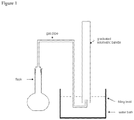
- FIG. 1 The apparatus used for determining the gas generation is depicted in Fig. 1 .
- Figure 2 shows the gas generation of compositions 2 and 3 in dependency on time.
- the amount of peracetic acid generated in the use solution obtained from composition 2 was 1.615 ppm, whilst the use solution obtained from composition 3 (reference composition without phosphonate) was 1.258 ppm.
- the amount of peracetic acid in a 2 wt% use solution of composition 2 was determined according to example 5 after 1, 2, 4, and 7 hours. As can be gathered from Figure 3 the maximum amount of peracetic acid is available only 15 minutes after dissolving the granular composition 2 in water. From that point on the amount of peracetic acid slowly but almost constantly decreases. After 24 hours 187 ppm peracetic acid are present in the remaining use solution. Since peracetic acid mainly decomposes to environmentally friendly acetic acid, water, and oxygen, no special waste treatment is required for excess use solution.
Landscapes
- Chemical & Material Sciences (AREA)
- Life Sciences & Earth Sciences (AREA)
- Engineering & Computer Science (AREA)
- Wood Science & Technology (AREA)
- Chemical Kinetics & Catalysis (AREA)
- Oil, Petroleum & Natural Gas (AREA)
- Organic Chemistry (AREA)
- Inorganic Chemistry (AREA)
- Agronomy & Crop Science (AREA)
- Pest Control & Pesticides (AREA)
- Plant Pathology (AREA)
- Health & Medical Sciences (AREA)
- Dentistry (AREA)
- General Health & Medical Sciences (AREA)
- Zoology (AREA)
- Environmental Sciences (AREA)
- Detergent Compositions (AREA)
- Agricultural Chemicals And Associated Chemicals (AREA)
Description
- The present invention relates to a granular cleaning and disinfecting composition generating a peroxy acid containing use solution upon dissolution in water as well as a method for cleaning and/or disinfecting with a low-foaming peroxy acid containing use solution obtained upon dissolution of the granular composition in water.
- Disinfectants play an important role in an increasing number of industries, and numerous chemical disinfectants have been proposed over the years. Preparations based on aldehydes have most widely been employed as chemical disinfectants in various fields. Most of these aldehyde-based compositions, however, possess severe disadvantages. Many aldehydes are volatile sensitisers and are irritant to the skin, eyes, and respiratory tract. A further drawback of aldehyde-based compositions is that they cannot be used for disinfecting objects soiled with organic material since aldehydes tend to denature and coagulate protein material, fixing it on the object to be cleaned, which results in biofilm formation on the object to be disinfected.
- Organic peroxy acids, on the other hand, have numerous advantageous properties for the use as disinfectants. In particular peracetic acid possesses a broad spectrum of biological activity including bactericidal, fungicidal, biocidal, and sporicidal activity over a wide temperature range and even at low temperatures. Furthermore, peracetic acid is not deactivated by catalase and peroxidase, the enzymes breaking down hydrogen peroxide. It does not coagulate and/or fix tissues to surfaces, and breaks down to food-safe and environmentally friendly residues (acetic acid, water and oxygen). In addition, it remains active over a wide pH-range and can also be employed in hard water conditions. Solutions of peracetic acid are most commonly prepared from hydrogen peroxide and acetic acid.
- However, a general problem with many active chemical disinfectants, also peroxy acids, is the long-term stability of the disinfectant. In many cases the functional group being responsible for the activity of a molecule also renders the molecule inherently unstable. Even equilibrium systems of peracetic acid (PAA) are thermodynamically unstable decomposing into acetic acid, water and oxygen. Especially in concentrated solutions of peracetic acid decomposition may occur rapidly. Further disadvantages of concentrated solutions of peracetic acid are the strong offensive smell and the highly acidic pH which makes these solutions corrosive to surfaces and accounts for the special requirements in transport and storage.
- To avoid these problems several systems have been developed to generate peroxy acids and, in particular, peracetic acid in situ from more stable precursors by reacting a suitable peroxide source with a peroxy acid precursor (activator). This has been realised, for example, by two-pack systems wherein the peroxide source and the activator are provided in two separate containers and are mixed just prior to use.
- More comfortable are "one-pack" solid compositions containing both a peroxide and an acylating agent (activator) which upon dissolution in water react to form the peroxy acid in situ. To achieve a good stability in storage it is important to use stable precursors which do not react or decompose in the solid composition. On the other hand, both precursors have to dissolve rapidly in water to achieve the desired disinfectant concentration in a short time. A further advantage of solid composition which generate the peroxy acid in situ is the fact that additional compounds may be comprised in the composition which would not be stable in concentrated acidic solutions.
-
DE 102 14 750 A1 describes a powdered composition comprising a peracetic acid generating system of a peroxide and an acylating agent in combination with non-ionic surfactants. This stable-in-storage solid composition allows the inclusion of otherwise non-bleach-stable surfactants which enhance the soil removal and thus allows both, cleaning and disinfection, to be achieved in one single step.CA 2569025 describes a powdered composition comprising percarbonate for disinfecting purposes. In both documents a high dissolution rate in water is achieved by using a finely powdered composition containing powdered perborate (either mono- or tetrahydrate) or percarbonate. A rapid and residue-free dissolution in water is a prerequisite for the use of a composition to avoid clogging of channels, tubes, and cannulas in narrow-lumened medical instruments such as endoscopes. For this purpose, it is also of importance that the use solution obtained from the solid composition is low-foaming to avoid insufficient cleaning in the narrow spaces. In addition, especially in manual cleaning and disinfecting processes, visual inspection of the progress of cleaning is desirable which would be hampered by a strong foam formation. If machine cleaning equipment is used for the cleaning and disinfecting process foaming of the solutions can cause an interruption of the process. - Even though sodium perborate, especially sodium perborate tetrahydrate, is widely used as a peroxide source, it may be converted into phytotoxic borone in the aquatic environment and has to be replaced due to environmental and health concerns.
- As an alternative source of solid peroxide sodium percarbonate (2Na2CO3x3H2O2) has been proposed. Although it has a respectable dissolution rate in water it is less widely used due to its lower storage stability, decomposing into sodium carbonate, water and oxygen. The reaction is catalysed by water, heat, and in the presence of organics and metal ions. Especially during bulk storage self-accelerating decompositions may occur. If percarbonate is used in powdered form high amounts of stabilizers are necessary which reduces the active oxygen content and further reduces the solubility of the compound. For this reason sodium percarbonate is commercially available commonly in a stabilised form, most commonly as a coated granulate. Several coatings have been proposed, for example water-insoluble coatings or sodium perborate, both of which are not suitable for the intended use in water-soluble, essentially borate-free cleaning and disinfecting compositions. In addition, most of the coated percarbonates commercially available cannot be used in granular cleaning and disinfecting compositions due to insufficient stability in storage, a slow dissolution rate in water, and/or stickiness of the coating which reduces the flowability and thus the ease of dosing in the cleaning and disinfecting composition.
- In comparison to powdered compositions, granular compositions offer the possibility of achieving a high bulk density and a low amount of dust emission. A severe obstacle, however, is that many acylating agents such as, for example, tetraacetyl ethylendiamine (TAED) are sparely soluble in water. In powdered compositions an acceptable rate of dissolution is achieved by using finely divided TAED. However, in combination with a granular peroxide, the use of powdered TAED would result in segregation of the components during transport and storage.
- A further problem associated with the use of percarbonates as a peroxide source is the gas formation (gasing) accompanying the peroxy acid generating reaction of the percarbonate and the acylating agent in water. This gasing is not observed when perborate is used as a peroxide. As a result foam formation is observed in the presence of surfactants, even if low-foaming surfactants are used, which is detrimental especially in cleaning and/or disinfecting narrow-lumened medical instruments such as endoscopes or if a visual inspection of the objects to be cleaned and/or disinfected is desired. On the other hand, especially in cleaning and disinfecting sensitive medical instruments in contact with blood and tissue, additional surfactants are necessary to ensure a thorough cleaning and disinfecting on a reasonable time scale.
US5691296 A describes a process for making a granular detergent composition comprising the steps of adding to a detergent powder particles of percarbonate having a mean particle size in the range of from 250 to 900 micrometers and a powdery flow aid containing a partially hydrated crystalline sodium aluminosilicate having a moisture content of less than 15%. - Accordingly, it was an object of the present invention to provide a granular cleaning and disinfecting composition, which is both stable in storage and transport, comprising a percarbonate which rapidly and sediment-free dissolves in water generating a low-foaming peroxy acid containing use solution.
- This object has been achieved by the compositions according to the present invention.
- It has surprisingly been found, that the presence of phosphonates reduces the gas formation accompanying the peroxy acid generating reaction of percarbonate and an acylating agent in water. As a consequence, surfactants may be present in the inventive compositions obtained thereof without facing the problem of foam formation which is detrimental especially in cleaning and/or disinfecting narrow-lumened medical instruments such as endoscopes or if a visual inspection of the objects to be cleaned and/or disinfected is desired. As a major advantages readily soluble TAED-granulates coated with non-ionic surfactants may be used as a precursor for peracetic acid.
- Phosphonates are well known as stabilisers for peroxides and peracetic acid solutions improving the stability in storage of these compounds. However, the impact of phosphonates on the foam formation or even only the gas evolution in the reaction of peroxides and acylating agents has never been described previously. More surprisingly, the presence of phosphonates in the solid composition reduces the foam formation, but on the other hand enhances the amount of peracetic acid formed in a use solution obtained by dissolving the solid composition in water.
- The present invention provides granular cleaning and disinfecting compositions generating a peroxy acid containing use solution upon dissolution in water comprising:
- (1) 15 - 60 wt% of a percarbonate,
- (2) 8 - 35 wt% of an acylating agent,
- (3) 0.5 - 5 wt% of a non-ionic surfactant,
- (4) 0.1 - 3 wt% of a phosphonate as a foam inhibitor
- The compositions according to the present invention are free-flowable stable granulates, neither decomposing in storage nor segregating in transport, which have a high bulk density thus reducing the expenses for transport and storage and show essentially no dust emission. They dissolve rapidly (within 15 min) and sediment-free in water generating a low-foaming peroxy acid cleaning and/or disinfecting use solution.
- In a preferred embodiment the composition according to the present invention comprises:
- (1) 20 - 45 wt% of a percarbonate,
- (2) 15 - 25 wt% of an acylating agent,
- (3) 1 - 3 wt% a non-ionic surfactant,
- (4) 0.5 - 2 wt% of a phosphonate.
- The bulk density is defined as the ratio of the mass of a material to the total volume the material occupies. The bulk density was determined according to DIN ISO 697 and DIN 53466. Accordingly, a high bulk density reduces the costs for transport and storage. The composition according to the present invention has a bulk density preferably between 0.8 and 1.4 kg/L, more preferably between 0.9 and 1.2 kg/L and most preferred between 0.9 and 1.0 kg/L.
- It is further preferred that the percarbonate is sodium percarbonate (2Na2CO3.3H2O2). The amount of percarbonate present in compositions according to the present invention preferably ranges from 15 to 60 wt%, more preferably from 20 to 45 wt%.
- The peroxy acid generated is preferably selected from the group of C2-C10 alkyl peroxy acids, more preferably from the group of peracetic acid, perpropionic acid, peroctanoic acid, perdecanoic acid, or mixtures thereof. Most preferably the peroxy acid generated is peracetic acid.
- As an acylating agent N-acyl or O-acyl donors may be used. In a preferred embodiment the acylating agent is selected from the group containing tetraacetyl glycoluril (TAGU), tetraacetyl ethylendiamine (TAED), diacetyl dioxohexahydratriazine (DADHT), and mixtures thereof. The amount of acylating agent present in compositions according to the present invention preferably ranges from 8 to 35 wt%, more preferably from 15 to 25 wt%.
- As a non-ionic surfactant preferably at least one water-soluble non-ionic surfactant solid at 25 °C is used. In an even more preferred embodiment a water-soluble ethoxylated tallow fatty acid solid at 25 °C is used. The amount of the non-ionic surfactant comprised in the composition is preferably 0.5 to 5 wt%, more preferably 1 - 3 wt% and most preferably 2 wt%.
- The phosponate is preferably selected from the group containing 1-hydroxyethane (1,1-diylbiphosphonic acid) (HEDP), nitrilotris(methylenephosphonic acid) (NTMP), diethylenetriaminepentakis(methylenephosphonic acid) (DTPMP), 1,2-diaminoethanetetrakis(methylenephosphonic acid) (EDTMP), their sodium, potassium or ammonium salts, or mixtures thereof. Most preferably the phosphonate is HEDP. The amount of phosphonate present in the composition according to the present invention preferably is 0.1 - 3 wt%, more preferably 0.5 - 2 wt%, and most preferably 1 wt%.
- The composition comprises a mixture of at least two granulates, wherein one granulate comprises the percarbonate and the other granulate comprises the acylating agent.
- The granulate comprising a percarbonate is coated with a water-soluble inorganic salt and the granulate comprising the acylating agent is coated with a water-soluble surfactant. Using a water-soluble surfactant as a coating for the granulate comprising the acylating agent, a high dissolution rate can be achieved. However, without the use of a phosphonate this would result in a disturbing foam formation when percarbonate is used as a peroxide.
- The composition may contain one or more additional compounds selected from the group of alkalising agents such as sodium carbonate, buffer systems such a sodium bicarbonate or citric acid anhydrate, complexing agents, corrosion inhibitors such as benzotriazole, granulation auxiliaries, perfume, dyes, solutisers and further surfactants.
- By using suitable buffer systems, it is possible to ensure a stable pH in the use solution obtained by dissolving a certain amount of the granular composition in water without the need for adjusting the pH of the use solution. Preferred embodiments include for example compositions, wherein the pH of a 2wt% use solution is
pH 8 orpH 10, stable for at least 24 h, i.e. not deviating from the pH of the initial use solution for more than pH +/- 0.2. - The amount of sodium perborate comprised in the composition is less than 5.3 wt%, calculated for the theoretical "pure sodium perborate" ("NaBO4"). Thus the amount of sodium perborate monohydrate is less than 6.5 wt% and the amount of sodium perborate tetrahydrate is less than 10 wt%, respectively. More preferably the amount of sodium perborate is less than 0.1 wt% and most preferably the composition is essentially perborate-free.
- The compositions according the present invention are essentially dust-free, thus the amount of particles having a particle size smaller than 0.1 mm is less than 3 wt%. In a preferred embodiment the amount of particles having a particle size smaller than 0.2 mm is less than 15 wt% and more than 40 wt% of the particles have a particle size between 0.4 and 0.8 mm. The amount of particles having a particle size greater than 1.6 mm is preferably below 1 %.
- The present invention further provides a method for cleaning and/or disinfecting objects with a low-foaming peroxy acid containing use solution comprising the steps of:
- (1) Preparing a use solution by dissolving the composition of the present invention in water;
- (2) Contacting the object to be cleaned and/or disinfected with the use solution obtained in step (1), preferably by immersing the object into the use solution or by applying (for example by spraying) the use solution onto the surface of the object, for a time sufficient to allow for a satisfactory cleaning and/or disinfection;
- (3) Optionally rinsing the object.
- This method can be used for cleaning and disinfecting medical, veterinary, live-stock, and food- and beverage-processing equipment and facilities, preferably for manually or automatically disinfecting medical instruments, most preferably endoscopes. The use solutions obtained from inventive composition are also suitable as a disinfecting agent in the field of fish-farming.
-
-
Fig. 1 shows the apparatus used to monitor the gas generation of the use solution comprising a flask containing the use solution connected to a gas pipe reaching into a water-filled graduated volumetric burette in which the gas generated is being collected and measured. -
Fig. 2 shows the influence of the presence of phosphonate on gasing in peracetic acid-containing use solutions obtained from the compositions according to the present invention. The solid graph shows the volume of gas generated in a 2 wt% use solution containing phosphonate as a foam inhibitor (composition 2), while the dotted line represents the increase in volume due to gas formation in a 2 wt% use solution containing no phosphonate (composition 3). -
Fig. 3 shows the amount of peracetic acid in ppm contained in a 2 wt% use solution over several hours. -
Compositions Compositions composition 3 is a reference composition containing essentially the same components ascomposition 2, except that no phosphonate was added. The missing phosphonate was balanced with sodium carbonate.Table 1: Composition 1Composition 2Composition 3 (reference composition) Coated sodium carbonate peroxyhydrate 40 - 50 10 - 20 10 - 22 Sodium tripolyphosphate - 40 - 50 40 - 50 Solid non-ionic surfactant 1-3 1- 3 1 - 3 Sodium carbonate 2 - 5 10 - 20 10 - 20 Tetrasodium (1-hydroxyethylidene) biphosphonate 0.5 - 2 0.5 - 2 - Corrosion inhibitor 0.5 - 2 0.5 - 2 0.5 - 2 Coated granular TAED 20 - 25 12 - 18 12 - 18 Liquid oxo alcohol EO-PO-adduct 0.5-2 - - Perfume 0.01 - 0.2 - - Sodium bicarbonate 1 - 3 - - Citric acid anhydrate 12 - 18 - - All amounts listed in Table 1 are given in wt% A 2 wt% use solution obtained from dissolving 20 g ofcomposition 1 in 980 g of water had apH 8, while the 2 wt% use solution obtained from dissolving 20 g ofcomposition 2 in 980 g of water had a pH 9.9 - 10. The pH was stable for 24 h at room temperature. - The particle size distribution of
compositions granular composition - Table 2 gives the particle-size distribution of
compositions Table 2: Composition 1Composition 2Sieve [mm] residue [wt%] residue [wt%] 0 0.5 2.1 0.1 6.7 11.1 0.2 6.3 21.4 0.4 45 50.9 0.8 41.2 15.3 1.6 0.6 0.1 - The bulk density of
compositions Composition 1 has a bulk density of 900 g/L, while the bulk density ofcomposition 2 is 1000 g/L. - Use solutions containing 2 wt% of
compositions - Gas generation from a granular composition with and without phosphonate (
composition 2 and 3).Table 3: Composition 2Composition 3 t [min] average volume [mL] average volume [mL] 20 0.1 0.2 60 1.0 2.0 180 5.2 13.2 300 12.1 30.1 - The apparatus used for determining the gas generation is depicted in
Fig. 1 . -
Figure 2 shows the gas generation ofcompositions - To evaluate the amount of peracetic acid generated in the 2 wt% use solutions of the
granular compositions 
- The amount of peracetic acid generated in the use solution obtained from
composition 2 was 1.615 ppm, whilst the use solution obtained from composition 3 (reference composition without phosphonate) was 1.258 ppm. - The amount of peracetic acid in a 2 wt% use solution of
composition 2 was determined according to example 5 after 1, 2, 4, and 7 hours. As can be gathered fromFigure 3 the maximum amount of peracetic acid is available only 15 minutes after dissolving thegranular composition 2 in water. From that point on the amount of peracetic acid slowly but almost constantly decreases. After 24 hours 187 ppm peracetic acid are present in the remaining use solution. Since peracetic acid mainly decomposes to environmentally friendly acetic acid, water, and oxygen, no special waste treatment is required for excess use solution.
characterized in that the composition comprises a mixture of at least two granulates, wherein one granulate comprises the percarbonate and the other granulate comprises the acylating agent,
wherein the granulate comprising percarbonate is coated with a water-soluble inorganic salt and the granulate comprising the acylating agent is coated with a water-soluble surfactant.
Claims (10)
- A granular cleaning and disinfectant composition, generating a peroxy acid containing use solution upon dissolution in water, comprising:(1) 15 - 60 wt% of a percarbonate,(2) 8 - 35 wt% of an acylating agent,(3) 0.5 - 5 wt% a non-ionic surfactant,(4) 0.1 - 3 wt% of a phosphonate as a foam inhibitorhaving a bulk density between 0.5 and 1.4 kg/L,
characterized in that the composition comprises a mixture of at least two granulates, wherein one granulate comprises the percarbonate and the other granulate comprises the acylating agent,
wherein the granulate comprising percarbonate is coated with a water-soluble inorganic salt and the granulate comprising the acylating agent is coated with a water-soluble surfactant. - A composition to according claim 1 characterized in that the composition comprises(1) 20 - 45 wt% of a percarbonate,(2) 15 - 25 wt% of an acylating agent,(3) 1 - 3 wt% a non-ionic surfactant,(4) 0.5 - 2 wt% of a phosphonate.
- A composition according to any of claims 1 to 3 characterized in that the percarbonate is sodium percarbonate.
- A composition according to any of claims 1 to 2 wherein the peroxy acid generated is peracetic acid.
- A composition according to any of claims 1 to 4 characterized in that the acylating agent is selected from the group consisting of tetraacetyl glycoluril (TAGU), tetraacetyl ethylenediamine (TAED), diacetyl dioxohexahydratriazine (DADHT), and mixtures thereof.
- A composition according to any of claims 1 to 5 characterized in that the phosphonate is selected from the group containing 1-hydroxyethane (1,1-diylbiphosphonic acid) (HEDP), nitrilotris(methylenephosphonic acid) (NTMP), diethylenetriaminepentakis(methylenephosphonic acid) (DTPMP), 1,2-diaminoethanetetrakis(methylenephosphonic acid) (EDTMP), their sodium, potassium or ammonium salts, or mixtures thereof.
- A composition according to any of claims 1 to 6 characterized in that the composition contains one or more additional compounds selected from the group of alkalising agents, buffer systems, complexing agents, corrosion inhibitors, granulation auxiliaries, perfume, dyes, solutizers and further surfactants.
- A composition according to any of claims 1 to 6 characterized in that the amount of sodium perborate comprised in the composition is less than 5.3 wt%.
- A method for cleaning and/or disinfecting objects with a low-foaming peroxy acid containing use solution comprising the steps of:(1) Preparing a use solution by dissolving the composition according to any of claims 1 to 8 in water;(2) Contacting the object to be cleaned and/or disinfected with the use solution according to (1), preferably by immersing the object into the use solution or by applying the use solution onto the surface of the object, for a time sufficient to allow for a satisfactory cleaning and/or disinfection;(3) Optionally rinsing the object.
- A method according to claim 9 for cleaning and/or disinfecting medical, veterinary, live-stock and food- and beverage-processing equipment and facilities.
Priority Applications (1)
| Application Number | Priority Date | Filing Date | Title |
|---|---|---|---|
| PL09815755T PL2326704T3 (en) | 2008-09-24 | 2009-09-18 | Granular cleaning and disinfecting composition |
Applications Claiming Priority (2)
| Application Number | Priority Date | Filing Date | Title |
|---|---|---|---|
| US12/236,663 US20100075883A1 (en) | 2008-09-24 | 2008-09-24 | Granular cleaning and disinfecting composition |
| PCT/IB2009/054112 WO2010035199A2 (en) | 2008-09-24 | 2009-09-18 | Granular cleaning and disinfecting composition |
Publications (3)
| Publication Number | Publication Date |
|---|---|
| EP2326704A2 EP2326704A2 (en) | 2011-06-01 |
| EP2326704A4 EP2326704A4 (en) | 2014-07-09 |
| EP2326704B1 true EP2326704B1 (en) | 2018-08-22 |
Family
ID=42038278
Family Applications (1)
| Application Number | Title | Priority Date | Filing Date |
|---|---|---|---|
| EP09815755.5A Active EP2326704B1 (en) | 2008-09-24 | 2009-09-18 | Granular cleaning and disinfecting composition |
Country Status (6)
| Country | Link |
|---|---|
| US (1) | US20100075883A1 (en) |
| EP (1) | EP2326704B1 (en) |
| CN (1) | CN102165053B (en) |
| AU (1) | AU2009298073B2 (en) |
| PL (1) | PL2326704T3 (en) |
| WO (1) | WO2010035199A2 (en) |
Families Citing this family (26)
| Publication number | Priority date | Publication date | Assignee | Title |
|---|---|---|---|---|
| US9045718B2 (en) * | 2007-04-09 | 2015-06-02 | Innovation Services, Inc. | Residue cleaning composition and method |
| GB201010374D0 (en) | 2010-06-21 | 2010-08-04 | Mtp Innovations Ltd | Disinfectant composition |
| US20140328941A1 (en) * | 2011-12-22 | 2014-11-06 | Medivators Inc. | Non-corrosive stable peracetic acid concentrate solution |
| EP2692844A1 (en) * | 2012-08-01 | 2014-02-05 | Chemische Fabrik Dr. Weigert GmbH & Co KG | Cleaner and disinfectant for medical instruments |
| US8871699B2 (en) | 2012-09-13 | 2014-10-28 | Ecolab Usa Inc. | Detergent composition comprising phosphinosuccinic acid adducts and methods of use |
| US20140308162A1 (en) | 2013-04-15 | 2014-10-16 | Ecolab Usa Inc. | Peroxycarboxylic acid based sanitizing rinse additives for use in ware washing |
| US9752105B2 (en) | 2012-09-13 | 2017-09-05 | Ecolab Usa Inc. | Two step method of cleaning, sanitizing, and rinsing a surface |
| US9994799B2 (en) | 2012-09-13 | 2018-06-12 | Ecolab Usa Inc. | Hard surface cleaning compositions comprising phosphinosuccinic acid adducts and methods of use |
| CN103131552A (en) * | 2013-03-15 | 2013-06-05 | 广州立白企业集团有限公司 | Detergent composition containing low-temperature bleaching and activation system |
| BR112015025605B1 (en) | 2013-04-10 | 2023-02-14 | Telefonaktiebolaget Lm Ericsson (Publ) | METHODS FOR PERFORMING AND ENABLING DEVICE-TO-DEVICE AND FIRST USER EQUIPMENT COMMUNICATION |
| GB2522074A (en) | 2014-01-14 | 2015-07-15 | Peracide Uk Ltd | Disinfectant or sanitising composition |
| CN104304315A (en) * | 2014-09-18 | 2015-01-28 | 魏巍 | Stable low-corrosiveness sporicide and its preparation method |
| GB2531246A (en) | 2014-10-07 | 2016-04-20 | Peracide Uk Ltd | Disinfectant wipe dispenser |
| CN104560460A (en) * | 2015-01-27 | 2015-04-29 | 重庆莘苒化工科技有限公司 | High-efficiency descaling agent |
| CN104621180A (en) * | 2015-02-02 | 2015-05-20 | 山东威高药业股份有限公司 | Novel sterilization powder |
| US10280386B2 (en) | 2015-04-03 | 2019-05-07 | Ecolab Usa Inc. | Enhanced peroxygen stability in multi-dispense TAED-containing peroxygen solid |
| US9783766B2 (en) | 2015-04-03 | 2017-10-10 | Ecolab Usa Inc. | Enhanced peroxygen stability using anionic surfactant in TAED-containing peroxygen solid |
| JP6731290B2 (en) * | 2015-06-16 | 2020-07-29 | シーバイエス株式会社 | Powder sterilizing detergent composition |
| US11350640B1 (en) | 2016-08-12 | 2022-06-07 | Zee Company I, Llc | Methods and related apparatus for increasing antimicrobial efficacy in a poultry chiller tank |
| US10974211B1 (en) | 2016-02-17 | 2021-04-13 | Zee Company, Inc. | Peracetic acid concentration and monitoring and concentration-based dosing system |
| US12064732B2 (en) | 2016-02-17 | 2024-08-20 | Zeco, Llc | Methods and related apparatus for providing a processing solution for a food processing application |
| CN105685095A (en) * | 2016-03-22 | 2016-06-22 | 山东威高药业股份有限公司 | Endoscope disinfection sterilizing agent and application of endoscope disinfection sterilizing agent |
| CR20190238A (en) | 2016-10-18 | 2019-08-07 | Sterilex LLC | Ambient moisture-activated surface treatment powder |
| EP3810743B1 (en) | 2018-06-15 | 2024-03-13 | Ecolab USA Inc. | Enhanced peroxygen stability using fatty acid in bleach activating agent containing peroxygen solid |
| CN109392903B (en) * | 2018-11-02 | 2021-04-06 | 广东环凯微生物科技有限公司 | Peroxycarboxylic acid disinfectant and preparation method thereof |
| CN112080350A (en) * | 2020-10-29 | 2020-12-15 | 浙江施维康生物医学材料有限公司 | A kind of high-efficiency powder cleaning agent and preparation method thereof |
Citations (3)
| Publication number | Priority date | Publication date | Assignee | Title |
|---|---|---|---|---|
| DE4316481A1 (en) | 1993-05-17 | 1994-11-24 | Henkel Kgaa | Bleach and disinfectant |
| US5691296A (en) | 1993-07-14 | 1997-11-25 | The Procter & Gamble Company | Percarbonate bleach particles coated with a partially hydrated crystalline aluminosilicate flow aid |
| EP1728762A1 (en) * | 2005-06-01 | 2006-12-06 | SOLVAY (Société Anonyme) | Coated sodium percarbonate particles, process for their preparation, their use and detergent compositions containing them |
Family Cites Families (25)
| Publication number | Priority date | Publication date | Assignee | Title |
|---|---|---|---|---|
| BR8001956A (en) * | 1979-04-06 | 1980-11-25 | Unilever Nv | CLEANING AND CLEANING COMPOSITION |
| FI67092C (en) * | 1980-12-09 | 1985-01-10 | Unilever Nv | BLEKNINGSAKTIVATOR-KORN AVSEDDA FOER TVAETT- OCH / ELLER BLEKNINGSBLANDNINGAR |
| EP0202698B2 (en) * | 1985-05-07 | 1996-01-24 | Akzo Nobel N.V. | P-sulphophenyl alkyl carbonates and their use as bleaching activators |
| ATE53013T1 (en) * | 1985-07-03 | 1990-06-15 | Akzo Nv | P-SULPHOPHENYL CARBONATE AND CLEANING AGENTS CONTAINING THEM. |
| DE3615544A1 (en) * | 1986-05-09 | 1987-11-12 | Henkel Kgaa | METHOD FOR PRE-TREATING DIRTY TEXTILES |
| US5733763A (en) * | 1988-08-19 | 1998-03-31 | Novo Nordisk A/S | Enzyme granulate formed of an enzyme-containing core and an enzyme-containing shell |
| DE4311944A1 (en) * | 1993-04-10 | 1994-10-13 | Degussa | Coated sodium percarbonate particles, process for their preparation and detergent, cleaning and bleaching compositions containing them |
| US5891837A (en) * | 1993-07-14 | 1999-04-06 | The Procter & Gamble Company | Stabilized bleaching compositions |
| US5705466A (en) * | 1993-08-17 | 1998-01-06 | The Procter & Gamble Company | High bulk density granular detergents containing a percarbonate bleach and a powdered silicate |
| EP0644258A1 (en) * | 1993-09-21 | 1995-03-22 | The Procter & Gamble Company | Granular laundry bleaching composition |
| US5716923A (en) * | 1993-11-03 | 1998-02-10 | The Proctor & Gamble Company | Laundry detergent containing a coated percarbonate and an acidification agent to provide delayed lowered pH |
| DE19501117A1 (en) * | 1995-01-17 | 1996-07-18 | Henkel Kgaa | Bleaching detergent in granular form |
| DE69609735T2 (en) * | 1995-10-16 | 2001-04-12 | Unilever N.V., Rotterdam | Encapsulated bleaching agent marriage |
| US5929007A (en) * | 1996-05-24 | 1999-07-27 | Reckitt & Colman Inc. | Alkaline aqueous hard surface cleaning compositions |
| DE19641708A1 (en) * | 1996-10-10 | 1998-04-16 | Clariant Gmbh | Process for the preparation of a coated bleach activator granulate |
| US6551983B1 (en) * | 1998-11-07 | 2003-04-22 | The Procter & Gamble Company | Bleach-containing detergent composition |
| GB9911949D0 (en) * | 1999-05-21 | 1999-07-21 | Unilever Plc | Detergent compositions |
| WO2000078915A1 (en) * | 1999-06-21 | 2000-12-28 | The Procter & Gamble Company | Detergent composition |
| CN1604958A (en) * | 2000-08-30 | 2005-04-06 | 宝洁公司 | Granular bleach activators having improved solubility profiles |
| DE10120263A1 (en) * | 2001-04-25 | 2002-10-31 | Cognis Deutschland Gmbh | Solid surfactant compositions, their manufacture and use |
| DE10214750A1 (en) * | 2002-04-03 | 2003-10-16 | Ecolab Gmbh & Co Ohg | Instrument disinfection |
| DE10313457A1 (en) * | 2003-03-25 | 2004-10-14 | Henkel Kgaa | Washing or cleaning agents |
| ATE399198T1 (en) * | 2003-05-07 | 2008-07-15 | Ciba Holding Inc | BLEACH COMPOSITION AND BLEACH DETERGENT COMPOSITION |
| DE102004005344A1 (en) * | 2004-02-04 | 2005-09-01 | Henkel Kgaa | Machine dishwashing detergent #### |
| DE102005041708A1 (en) * | 2005-09-02 | 2007-03-08 | Henkel Kgaa | cleaning supplies |
-
2008
- 2008-09-24 US US12/236,663 patent/US20100075883A1/en not_active Abandoned
-
2009
- 2009-09-18 CN CN200980137136.4A patent/CN102165053B/en active Active
- 2009-09-18 WO PCT/IB2009/054112 patent/WO2010035199A2/en not_active Ceased
- 2009-09-18 PL PL09815755T patent/PL2326704T3/en unknown
- 2009-09-18 EP EP09815755.5A patent/EP2326704B1/en active Active
- 2009-09-18 AU AU2009298073A patent/AU2009298073B2/en active Active
Patent Citations (3)
| Publication number | Priority date | Publication date | Assignee | Title |
|---|---|---|---|---|
| DE4316481A1 (en) | 1993-05-17 | 1994-11-24 | Henkel Kgaa | Bleach and disinfectant |
| US5691296A (en) | 1993-07-14 | 1997-11-25 | The Procter & Gamble Company | Percarbonate bleach particles coated with a partially hydrated crystalline aluminosilicate flow aid |
| EP1728762A1 (en) * | 2005-06-01 | 2006-12-06 | SOLVAY (Société Anonyme) | Coated sodium percarbonate particles, process for their preparation, their use and detergent compositions containing them |
Also Published As
| Publication number | Publication date |
|---|---|
| CN102165053B (en) | 2013-05-29 |
| PL2326704T3 (en) | 2019-02-28 |
| US20100075883A1 (en) | 2010-03-25 |
| EP2326704A2 (en) | 2011-06-01 |
| AU2009298073A1 (en) | 2010-04-01 |
| WO2010035199A3 (en) | 2010-07-01 |
| EP2326704A4 (en) | 2014-07-09 |
| WO2010035199A2 (en) | 2010-04-01 |
| CN102165053A (en) | 2011-08-24 |
| AU2009298073B2 (en) | 2014-09-18 |
Similar Documents
| Publication | Publication Date | Title |
|---|---|---|
| AU2009298073B2 (en) | Granular cleaning and disinfecting composition | |
| JP5576408B2 (en) | Multi-part kit system for peracetic acid type disinfectant preparation | |
| EP3068222B1 (en) | Disinfectant composition | |
| EP2582236B1 (en) | Disinfectant composition | |
| CZ288552B6 (en) | Aqueous disinfectant composition, process for preparing the aqueous disinfectant composition, two-component system for preparing this disinfectant composition and use thereof | |
| AU2013209372A1 (en) | Cleaning and disinfection agent for medical instruments | |
| JP5663569B2 (en) | Disinfectant composition for hard article and method for sterilizing surface of hard article | |
| JP2005154551A (en) | Sterilizing cleanser composition | |
| EP3223611B1 (en) | Two components disinfecting composition containing peracetic acid and chelating agent | |
| WO2012010198A1 (en) | Solid multi-part composition for cleaning and disinfection | |
| HU229239B1 (en) | Process for disinfecting instruments | |
| CN106942270B (en) | Multi-part kit system for the preparation of disinfectants | |
| CN110150279B (en) | Preparation method for instant and rapid generation of peroxyacetic acid disinfectant | |
| EP1623725A2 (en) | Kit and apparatus for preparing germicidal compositions comprising phthalaldehyde | |
| JP5562947B2 (en) | Composition for disinfection and decontamination of objects contaminated by prions and normal transmission factors | |
| FR2548683A1 (en) | NEW LAUNDRY COMPOSITIONS SUITABLE FOR DISHWASHING DISHWASHERS IN WASHING MACHINES | |
| CA1183752A (en) | Controlled fade effervescing cleanser | |
| JPH02170899A (en) | Granular composition containing bleaching agent and optical brightener, and preparation of said composition | |
| WO2025122568A1 (en) | Delivery systems for peracetic acid | |
| RU2408388C1 (en) | Method for preparing antimicrobial composition and preparation kit | |
| RU2564922C2 (en) | Composition for manufacturing sporocidal compositions of peracetic acid (versions) and set for its realisation | |
| FR3009197A1 (en) | TETRAACETYLETHYLENEDIAMINE COMPOSITION FOR THE GENERATION OF PERACETIC ACID | |
| EP1741451B1 (en) | Use for cleaning and desinfecting in the field of milk production hygiene | |
| JP2006063164A (en) | Detergent composition with low water insoluble content | |
| JPS62280298A (en) | Powdery bleaching composition |
Legal Events
| Date | Code | Title | Description |
|---|---|---|---|
| PUAI | Public reference made under article 153(3) epc to a published international application that has entered the european phase |
Free format text: ORIGINAL CODE: 0009012 |
|
| 17P | Request for examination filed |
Effective date: 20110207 |
|
| AK | Designated contracting states |
Kind code of ref document: A2 Designated state(s): AT BE BG CH CY CZ DE DK EE ES FI FR GB GR HR HU IE IS IT LI LT LU LV MC MK MT NL NO PL PT RO SE SI SK SM TR |
|
| AX | Request for extension of the european patent |
Extension state: AL BA RS |
|
| DAX | Request for extension of the european patent (deleted) | ||
| A4 | Supplementary search report drawn up and despatched |
Effective date: 20140612 |
|
| RIC1 | Information provided on ipc code assigned before grant |
Ipc: C11D 1/79 20060101AFI20140605BHEP Ipc: A01N 27/00 20060101ALI20140605BHEP Ipc: C11D 17/00 20060101ALI20140605BHEP Ipc: C11D 17/06 20060101ALI20140605BHEP Ipc: C11D 3/36 20060101ALI20140605BHEP Ipc: C11D 1/66 20060101ALI20140605BHEP Ipc: C11D 3/39 20060101ALI20140605BHEP |
|
| 17Q | First examination report despatched |
Effective date: 20160330 |
|
| GRAP | Despatch of communication of intention to grant a patent |
Free format text: ORIGINAL CODE: EPIDOSNIGR1 |
|
| STAA | Information on the status of an ep patent application or granted ep patent |
Free format text: STATUS: GRANT OF PATENT IS INTENDED |
|
| INTG | Intention to grant announced |
Effective date: 20180315 |
|
| GRAS | Grant fee paid |
Free format text: ORIGINAL CODE: EPIDOSNIGR3 |
|
| GRAA | (expected) grant |
Free format text: ORIGINAL CODE: 0009210 |
|
| STAA | Information on the status of an ep patent application or granted ep patent |
Free format text: STATUS: THE PATENT HAS BEEN GRANTED |
|
| AK | Designated contracting states |
Kind code of ref document: B1 Designated state(s): AT BE BG CH CY CZ DE DK EE ES FI FR GB GR HR HU IE IS IT LI LT LU LV MC MK MT NL NO PL PT RO SE SI SK SM TR |
|
| REG | Reference to a national code |
Ref country code: GB Ref legal event code: FG4D |
|
| REG | Reference to a national code |
Ref country code: CH Ref legal event code: EP |
|
| REG | Reference to a national code |
Ref country code: AT Ref legal event code: REF Ref document number: 1032486 Country of ref document: AT Kind code of ref document: T Effective date: 20180915 |
|
| REG | Reference to a national code |
Ref country code: IE Ref legal event code: FG4D |
|
| REG | Reference to a national code |
Ref country code: DE Ref legal event code: R096 Ref document number: 602009054073 Country of ref document: DE |
|
| REG | Reference to a national code |
Ref country code: NL Ref legal event code: MP Effective date: 20180822 |
|
| REG | Reference to a national code |
Ref country code: LT Ref legal event code: MG4D |
|
| PG25 | Lapsed in a contracting state [announced via postgrant information from national office to epo] |
Ref country code: BG Free format text: LAPSE BECAUSE OF FAILURE TO SUBMIT A TRANSLATION OF THE DESCRIPTION OR TO PAY THE FEE WITHIN THE PRESCRIBED TIME-LIMIT Effective date: 20181122 Ref country code: NL Free format text: LAPSE BECAUSE OF FAILURE TO SUBMIT A TRANSLATION OF THE DESCRIPTION OR TO PAY THE FEE WITHIN THE PRESCRIBED TIME-LIMIT Effective date: 20180822 Ref country code: LT Free format text: LAPSE BECAUSE OF FAILURE TO SUBMIT A TRANSLATION OF THE DESCRIPTION OR TO PAY THE FEE WITHIN THE PRESCRIBED TIME-LIMIT Effective date: 20180822 Ref country code: IS Free format text: LAPSE BECAUSE OF FAILURE TO SUBMIT A TRANSLATION OF THE DESCRIPTION OR TO PAY THE FEE WITHIN THE PRESCRIBED TIME-LIMIT Effective date: 20181222 Ref country code: NO Free format text: LAPSE BECAUSE OF FAILURE TO SUBMIT A TRANSLATION OF THE DESCRIPTION OR TO PAY THE FEE WITHIN THE PRESCRIBED TIME-LIMIT Effective date: 20181122 Ref country code: SE Free format text: LAPSE BECAUSE OF FAILURE TO SUBMIT A TRANSLATION OF THE DESCRIPTION OR TO PAY THE FEE WITHIN THE PRESCRIBED TIME-LIMIT Effective date: 20180822 Ref country code: GR Free format text: LAPSE BECAUSE OF FAILURE TO SUBMIT A TRANSLATION OF THE DESCRIPTION OR TO PAY THE FEE WITHIN THE PRESCRIBED TIME-LIMIT Effective date: 20181123 Ref country code: FI Free format text: LAPSE BECAUSE OF FAILURE TO SUBMIT A TRANSLATION OF THE DESCRIPTION OR TO PAY THE FEE WITHIN THE PRESCRIBED TIME-LIMIT Effective date: 20180822 |
|
| REG | Reference to a national code |
Ref country code: AT Ref legal event code: MK05 Ref document number: 1032486 Country of ref document: AT Kind code of ref document: T Effective date: 20180822 |
|
| PG25 | Lapsed in a contracting state [announced via postgrant information from national office to epo] |
Ref country code: ES Free format text: LAPSE BECAUSE OF FAILURE TO SUBMIT A TRANSLATION OF THE DESCRIPTION OR TO PAY THE FEE WITHIN THE PRESCRIBED TIME-LIMIT Effective date: 20180822 Ref country code: HR Free format text: LAPSE BECAUSE OF FAILURE TO SUBMIT A TRANSLATION OF THE DESCRIPTION OR TO PAY THE FEE WITHIN THE PRESCRIBED TIME-LIMIT Effective date: 20180822 Ref country code: LV Free format text: LAPSE BECAUSE OF FAILURE TO SUBMIT A TRANSLATION OF THE DESCRIPTION OR TO PAY THE FEE WITHIN THE PRESCRIBED TIME-LIMIT Effective date: 20180822 |
|
| PG25 | Lapsed in a contracting state [announced via postgrant information from national office to epo] |
Ref country code: AT Free format text: LAPSE BECAUSE OF FAILURE TO SUBMIT A TRANSLATION OF THE DESCRIPTION OR TO PAY THE FEE WITHIN THE PRESCRIBED TIME-LIMIT Effective date: 20180822 Ref country code: EE Free format text: LAPSE BECAUSE OF FAILURE TO SUBMIT A TRANSLATION OF THE DESCRIPTION OR TO PAY THE FEE WITHIN THE PRESCRIBED TIME-LIMIT Effective date: 20180822 Ref country code: CZ Free format text: LAPSE BECAUSE OF FAILURE TO SUBMIT A TRANSLATION OF THE DESCRIPTION OR TO PAY THE FEE WITHIN THE PRESCRIBED TIME-LIMIT Effective date: 20180822 Ref country code: RO Free format text: LAPSE BECAUSE OF FAILURE TO SUBMIT A TRANSLATION OF THE DESCRIPTION OR TO PAY THE FEE WITHIN THE PRESCRIBED TIME-LIMIT Effective date: 20180822 Ref country code: IT Free format text: LAPSE BECAUSE OF FAILURE TO SUBMIT A TRANSLATION OF THE DESCRIPTION OR TO PAY THE FEE WITHIN THE PRESCRIBED TIME-LIMIT Effective date: 20180822 |
|
| REG | Reference to a national code |
Ref country code: CH Ref legal event code: PL |
|
| RAP2 | Party data changed (patent owner data changed or rights of a patent transferred) |
Owner name: ECOLAB USA INC. |
|
| REG | Reference to a national code |
Ref country code: DE Ref legal event code: R026 Ref document number: 602009054073 Country of ref document: DE |
|
| PLBI | Opposition filed |
Free format text: ORIGINAL CODE: 0009260 |
|
| PG25 | Lapsed in a contracting state [announced via postgrant information from national office to epo] |
Ref country code: SK Free format text: LAPSE BECAUSE OF FAILURE TO SUBMIT A TRANSLATION OF THE DESCRIPTION OR TO PAY THE FEE WITHIN THE PRESCRIBED TIME-LIMIT Effective date: 20180822 Ref country code: SM Free format text: LAPSE BECAUSE OF FAILURE TO SUBMIT A TRANSLATION OF THE DESCRIPTION OR TO PAY THE FEE WITHIN THE PRESCRIBED TIME-LIMIT Effective date: 20180822 Ref country code: DK Free format text: LAPSE BECAUSE OF FAILURE TO SUBMIT A TRANSLATION OF THE DESCRIPTION OR TO PAY THE FEE WITHIN THE PRESCRIBED TIME-LIMIT Effective date: 20180822 |
|
| REG | Reference to a national code |
Ref country code: DE Ref legal event code: R082 Ref document number: 602009054073 Country of ref document: DE Representative=s name: GODEMEYER BLUM LENZE PATENTANWAELTE, PARTNERSC, DE Ref country code: DE Ref legal event code: R081 Ref document number: 602009054073 Country of ref document: DE Owner name: ECOLAB USA INC., SAINT PAUL, US Free format text: FORMER OWNER: ECOLAB INC., ST. PAUL, MINN., US |
|
| PLAX | Notice of opposition and request to file observation + time limit sent |
Free format text: ORIGINAL CODE: EPIDOSNOBS2 |
|
| REG | Reference to a national code |
Ref country code: BE Ref legal event code: MM Effective date: 20180930 |
|
| 26 | Opposition filed |
Opponent name: THE PROCTER & GAMBLE COMPANY Effective date: 20190522 |
|
| REG | Reference to a national code |
Ref country code: IE Ref legal event code: MM4A |
|
| PG25 | Lapsed in a contracting state [announced via postgrant information from national office to epo] |
Ref country code: LU Free format text: LAPSE BECAUSE OF NON-PAYMENT OF DUE FEES Effective date: 20180918 Ref country code: MC Free format text: LAPSE BECAUSE OF FAILURE TO SUBMIT A TRANSLATION OF THE DESCRIPTION OR TO PAY THE FEE WITHIN THE PRESCRIBED TIME-LIMIT Effective date: 20180822 |
|
| GBPC | Gb: european patent ceased through non-payment of renewal fee |
Effective date: 20181122 |
|
| PG25 | Lapsed in a contracting state [announced via postgrant information from national office to epo] |
Ref country code: IE Free format text: LAPSE BECAUSE OF NON-PAYMENT OF DUE FEES Effective date: 20180918 |
|
| PLAB | Opposition data, opponent's data or that of the opponent's representative modified |
Free format text: ORIGINAL CODE: 0009299OPPO |
|
| PG25 | Lapsed in a contracting state [announced via postgrant information from national office to epo] |
Ref country code: LI Free format text: LAPSE BECAUSE OF NON-PAYMENT OF DUE FEES Effective date: 20180930 Ref country code: CH Free format text: LAPSE BECAUSE OF NON-PAYMENT OF DUE FEES Effective date: 20180930 Ref country code: BE Free format text: LAPSE BECAUSE OF NON-PAYMENT OF DUE FEES Effective date: 20180930 Ref country code: SI Free format text: LAPSE BECAUSE OF FAILURE TO SUBMIT A TRANSLATION OF THE DESCRIPTION OR TO PAY THE FEE WITHIN THE PRESCRIBED TIME-LIMIT Effective date: 20180822 |
|
| R26 | Opposition filed (corrected) |
Opponent name: THE PROCTER & GAMBLE COMPANY Effective date: 20190522 |
|
| PLBB | Reply of patent proprietor to notice(s) of opposition received |
Free format text: ORIGINAL CODE: EPIDOSNOBS3 |
|
| PG25 | Lapsed in a contracting state [announced via postgrant information from national office to epo] |
Ref country code: GB Free format text: LAPSE BECAUSE OF NON-PAYMENT OF DUE FEES Effective date: 20181122 |
|
| PG25 | Lapsed in a contracting state [announced via postgrant information from national office to epo] |
Ref country code: MT Free format text: LAPSE BECAUSE OF NON-PAYMENT OF DUE FEES Effective date: 20180918 |
|
| PG25 | Lapsed in a contracting state [announced via postgrant information from national office to epo] |
Ref country code: TR Free format text: LAPSE BECAUSE OF FAILURE TO SUBMIT A TRANSLATION OF THE DESCRIPTION OR TO PAY THE FEE WITHIN THE PRESCRIBED TIME-LIMIT Effective date: 20180822 |
|
| PG25 | Lapsed in a contracting state [announced via postgrant information from national office to epo] |
Ref country code: PT Free format text: LAPSE BECAUSE OF FAILURE TO SUBMIT A TRANSLATION OF THE DESCRIPTION OR TO PAY THE FEE WITHIN THE PRESCRIBED TIME-LIMIT Effective date: 20180822 Ref country code: HU Free format text: LAPSE BECAUSE OF FAILURE TO SUBMIT A TRANSLATION OF THE DESCRIPTION OR TO PAY THE FEE WITHIN THE PRESCRIBED TIME-LIMIT; INVALID AB INITIO Effective date: 20090918 |
|
| PG25 | Lapsed in a contracting state [announced via postgrant information from national office to epo] |
Ref country code: CY Free format text: LAPSE BECAUSE OF FAILURE TO SUBMIT A TRANSLATION OF THE DESCRIPTION OR TO PAY THE FEE WITHIN THE PRESCRIBED TIME-LIMIT Effective date: 20180822 Ref country code: MK Free format text: LAPSE BECAUSE OF NON-PAYMENT OF DUE FEES Effective date: 20180822 |
|
| PLCK | Communication despatched that opposition was rejected |
Free format text: ORIGINAL CODE: EPIDOSNREJ1 |
|
| REG | Reference to a national code |
Ref country code: DE Ref legal event code: R100 Ref document number: 602009054073 Country of ref document: DE |
|
| PLBN | Opposition rejected |
Free format text: ORIGINAL CODE: 0009273 |
|
| STAA | Information on the status of an ep patent application or granted ep patent |
Free format text: STATUS: OPPOSITION REJECTED |
|
| 27O | Opposition rejected |
Effective date: 20210408 |
|
| P01 | Opt-out of the competence of the unified patent court (upc) registered |
Effective date: 20230503 |
|
| PGFP | Annual fee paid to national office [announced via postgrant information from national office to epo] |
Ref country code: DE Payment date: 20250702 Year of fee payment: 17 |
|
| PGFP | Annual fee paid to national office [announced via postgrant information from national office to epo] |
Ref country code: PL Payment date: 20250710 Year of fee payment: 17 |
|
| PGFP | Annual fee paid to national office [announced via postgrant information from national office to epo] |
Ref country code: FR Payment date: 20250708 Year of fee payment: 17 |