EP2322923A2 - Method for procyanidin analysis - Google Patents
Method for procyanidin analysis Download PDFInfo
- Publication number
- EP2322923A2 EP2322923A2 EP11155795A EP11155795A EP2322923A2 EP 2322923 A2 EP2322923 A2 EP 2322923A2 EP 11155795 A EP11155795 A EP 11155795A EP 11155795 A EP11155795 A EP 11155795A EP 2322923 A2 EP2322923 A2 EP 2322923A2
- Authority
- EP
- European Patent Office
- Prior art keywords
- procyanidin
- flavan
- column
- ols
- water
- Prior art date
- Legal status (The legal status is an assumption and is not a legal conclusion. Google has not performed a legal analysis and makes no representation as to the accuracy of the status listed.)
- Withdrawn
Links
- XFZJEEAOWLFHDH-UHFFFAOYSA-N (2R,2'R,3R,3'R,4R)-3,3',4',5,7-Pentahydroxyflavan(48)-3,3',4',5,7-pentahydroxyflavan Natural products C=12OC(C=3C=C(O)C(O)=CC=3)C(O)CC2=C(O)C=C(O)C=1C(C1=C(O)C=C(O)C=C1O1)C(O)C1C1=CC=C(O)C(O)=C1 XFZJEEAOWLFHDH-UHFFFAOYSA-N 0.000 title claims abstract description 94
- HGVVOUNEGQIPMS-UHFFFAOYSA-N procyanidin Chemical compound O1C2=CC(O)=CC(O)=C2C(O)C(O)C1(C=1C=C(O)C(O)=CC=1)OC1CC2=C(O)C=C(O)C=C2OC1C1=CC=C(O)C(O)=C1 HGVVOUNEGQIPMS-UHFFFAOYSA-N 0.000 title claims abstract description 52
- CWEZAWNPTYBADX-UHFFFAOYSA-N Procyanidin Natural products OC1C(OC2C(O)C(Oc3c2c(O)cc(O)c3C4C(O)C(Oc5cc(O)cc(O)c45)c6ccc(O)c(O)c6)c7ccc(O)c(O)c7)c8c(O)cc(O)cc8OC1c9ccc(O)c(O)c9 CWEZAWNPTYBADX-UHFFFAOYSA-N 0.000 title claims abstract description 50
- MOJZMWJRUKIQGL-FWCKPOPSSA-N Procyanidin C2 Natural products O[C@@H]1[C@@H](c2cc(O)c(O)cc2)Oc2c([C@H]3[C@H](O)[C@@H](c4cc(O)c(O)cc4)Oc4c3c(O)cc(O)c4)c(O)cc(O)c2[C@@H]1c1c(O)cc(O)c2c1O[C@@H]([C@H](O)C2)c1cc(O)c(O)cc1 MOJZMWJRUKIQGL-FWCKPOPSSA-N 0.000 title claims abstract description 50
- 229920002414 procyanidin Polymers 0.000 title claims abstract description 50
- 238000000034 method Methods 0.000 title claims abstract description 41
- 238000004458 analytical method Methods 0.000 title claims abstract description 19
- 229930182497 flavan-3-ol Natural products 0.000 claims abstract description 36
- 150000002206 flavan-3-ols Chemical class 0.000 claims abstract description 34
- 239000000356 contaminant Substances 0.000 claims abstract description 26
- 238000004128 high performance liquid chromatography Methods 0.000 claims abstract description 23
- 238000012360 testing method Methods 0.000 claims abstract description 16
- PFTAWBLQPZVEMU-DZGCQCFKSA-N (+)-catechin Chemical compound C1([C@H]2OC3=CC(O)=CC(O)=C3C[C@@H]2O)=CC=C(O)C(O)=C1 PFTAWBLQPZVEMU-DZGCQCFKSA-N 0.000 claims abstract description 12
- 235000013305 food Nutrition 0.000 claims abstract description 12
- 239000000203 mixture Substances 0.000 claims abstract description 11
- ADRVNXBAWSRFAJ-UHFFFAOYSA-N catechin Natural products OC1Cc2cc(O)cc(O)c2OC1c3ccc(O)c(O)c3 ADRVNXBAWSRFAJ-UHFFFAOYSA-N 0.000 claims abstract description 7
- 235000005487 catechin Nutrition 0.000 claims abstract description 7
- 229950001002 cianidanol Drugs 0.000 claims abstract description 7
- LFQSCWFLJHTTHZ-UHFFFAOYSA-N Ethanol Chemical compound CCO LFQSCWFLJHTTHZ-UHFFFAOYSA-N 0.000 claims description 74
- RYYVLZVUVIJVGH-UHFFFAOYSA-N caffeine Chemical compound CN1C(=O)N(C)C(=O)C2=C1N=CN2C RYYVLZVUVIJVGH-UHFFFAOYSA-N 0.000 claims description 36
- 229920000385 Procyanidin B1 Polymers 0.000 claims description 29
- XFZJEEAOWLFHDH-UKWJTHFESA-N procyanidin B1 Chemical compound C1([C@@H]2[C@H](O)[C@H](C3=C(O)C=C(O)C=C3O2)C=2C(O)=CC(O)=C3C[C@@H]([C@H](OC3=2)C=2C=C(O)C(O)=CC=2)O)=CC=C(O)C(O)=C1 XFZJEEAOWLFHDH-UKWJTHFESA-N 0.000 claims description 29
- XFZJEEAOWLFHDH-NFJBMHMQSA-N Epicatechin-(4beta->8)-catechin Natural products C1([C@@H]2[C@H](O)[C@H](C3=C(O)C=C(O)C=C3O2)C=2C(O)=CC(O)=C3C[C@H]([C@H](OC3=2)C=2C=C(O)C(O)=CC=2)O)=CC=C(O)C(O)=C1 XFZJEEAOWLFHDH-NFJBMHMQSA-N 0.000 claims description 28
- XLYOFNOQVPJJNP-UHFFFAOYSA-N water Substances O XLYOFNOQVPJJNP-UHFFFAOYSA-N 0.000 claims description 26
- WEVYAHXRMPXWCK-UHFFFAOYSA-N Acetonitrile Chemical compound CC#N WEVYAHXRMPXWCK-UHFFFAOYSA-N 0.000 claims description 24
- DTQVDTLACAAQTR-UHFFFAOYSA-N Trifluoroacetic acid Chemical compound OC(=O)C(F)(F)F DTQVDTLACAAQTR-UHFFFAOYSA-N 0.000 claims description 20
- LPHGQDQBBGAPDZ-UHFFFAOYSA-N Isocaffeine Natural products CN1C(=O)N(C)C(=O)C2=C1N(C)C=N2 LPHGQDQBBGAPDZ-UHFFFAOYSA-N 0.000 claims description 18
- VJEONQKOZGKCAK-UHFFFAOYSA-N caffeine Natural products CN1C(=O)N(C)C(=O)C2=C1C=CN2C VJEONQKOZGKCAK-UHFFFAOYSA-N 0.000 claims description 18
- 229960001948 caffeine Drugs 0.000 claims description 18
- XFZJEEAOWLFHDH-HNTGQZGLSA-N Procyanidin B3 Natural products C1([C@@H]2[C@@H](O)[C@@H](C3=C(O)C=C(O)C=C3O2)C=2C(O)=CC(O)=C3C[C@@H]([C@@H](OC3=2)C=2C=C(O)C(O)=CC=2)O)=CC=C(O)C(O)=C1 XFZJEEAOWLFHDH-HNTGQZGLSA-N 0.000 claims description 15
- 229920000236 Procyanidin B3 Polymers 0.000 claims description 15
- XFZJEEAOWLFHDH-AVFWISQGSA-N procyanidin B3 Chemical compound C1([C@@H]2[C@@H](O)[C@@H](C3=C(O)C=C(O)C=C3O2)C=2C(O)=CC(O)=C3C[C@@H]([C@H](OC3=2)C=2C=C(O)C(O)=CC=2)O)=CC=C(O)C(O)=C1 XFZJEEAOWLFHDH-AVFWISQGSA-N 0.000 claims description 15
- 235000013616 tea Nutrition 0.000 claims description 14
- 239000011347 resin Substances 0.000 claims description 13
- 229920005989 resin Polymers 0.000 claims description 13
- OKKJLVBELUTLKV-UHFFFAOYSA-N Methanol Chemical compound OC OKKJLVBELUTLKV-UHFFFAOYSA-N 0.000 claims description 12
- 238000000926 separation method Methods 0.000 claims description 12
- CSCPPACGZOOCGX-UHFFFAOYSA-N Acetone Chemical compound CC(C)=O CSCPPACGZOOCGX-UHFFFAOYSA-N 0.000 claims description 11
- VYPSYNLAJGMNEJ-UHFFFAOYSA-N Silicium dioxide Chemical compound O=[Si]=O VYPSYNLAJGMNEJ-UHFFFAOYSA-N 0.000 claims description 10
- 239000000741 silica gel Substances 0.000 claims description 10
- 229910002027 silica gel Inorganic materials 0.000 claims description 10
- 239000000126 substance Substances 0.000 claims description 8
- QTBSBXVTEAMEQO-UHFFFAOYSA-N Acetic acid Chemical compound CC(O)=O QTBSBXVTEAMEQO-UHFFFAOYSA-N 0.000 claims description 6
- BDAGIHXWWSANSR-UHFFFAOYSA-N methanoic acid Natural products OC=O BDAGIHXWWSANSR-UHFFFAOYSA-N 0.000 claims description 6
- 229920002307 Dextran Polymers 0.000 claims description 5
- HVQAJTFOCKOKIN-UHFFFAOYSA-N flavonol Natural products O1C2=CC=CC=C2C(=O)C(O)=C1C1=CC=CC=C1 HVQAJTFOCKOKIN-UHFFFAOYSA-N 0.000 claims description 5
- 150000002216 flavonol derivatives Chemical class 0.000 claims description 5
- 235000011957 flavonols Nutrition 0.000 claims description 5
- 229930015704 phenylpropanoid Natural products 0.000 claims description 5
- 125000001474 phenylpropanoid group Chemical group 0.000 claims description 5
- 150000001875 compounds Chemical class 0.000 claims description 4
- 235000019253 formic acid Nutrition 0.000 claims description 4
- VLTRZXGMWDSKGL-UHFFFAOYSA-N perchloric acid Chemical compound OCl(=O)(=O)=O VLTRZXGMWDSKGL-UHFFFAOYSA-N 0.000 claims description 4
- 125000004079 stearyl group Chemical group [H]C([*])([H])C([H])([H])C([H])([H])C([H])([H])C([H])([H])C([H])([H])C([H])([H])C([H])([H])C([H])([H])C([H])([H])C([H])([H])C([H])([H])C([H])([H])C([H])([H])C([H])([H])C([H])([H])C([H])([H])C([H])([H])[H] 0.000 claims description 4
- 229920001059 synthetic polymer Polymers 0.000 claims description 4
- YAPQBXQYLJRXSA-UHFFFAOYSA-N theobromine Chemical compound CN1C(=O)NC(=O)C2=C1N=CN2C YAPQBXQYLJRXSA-UHFFFAOYSA-N 0.000 claims description 4
- YNJBWRMUSHSURL-UHFFFAOYSA-N trichloroacetic acid Chemical compound OC(=O)C(Cl)(Cl)Cl YNJBWRMUSHSURL-UHFFFAOYSA-N 0.000 claims description 4
- 229920002554 vinyl polymer Polymers 0.000 claims description 4
- 239000000243 solution Substances 0.000 claims description 3
- OSWFIVFLDKOXQC-UHFFFAOYSA-N 4-(3-methoxyphenyl)aniline Chemical compound COC1=CC=CC(C=2C=CC(N)=CC=2)=C1 OSWFIVFLDKOXQC-UHFFFAOYSA-N 0.000 claims description 2
- 125000000217 alkyl group Chemical group 0.000 claims description 2
- 125000000484 butyl group Chemical group [H]C([*])([H])C([H])([H])C([H])([H])C([H])([H])[H] 0.000 claims description 2
- 239000000463 material Substances 0.000 claims description 2
- 239000012046 mixed solvent Substances 0.000 claims description 2
- 125000002347 octyl group Chemical group [H]C([*])([H])C([H])([H])C([H])([H])C([H])([H])C([H])([H])C([H])([H])C([H])([H])C([H])([H])[H] 0.000 claims description 2
- 238000012856 packing Methods 0.000 claims description 2
- 125000001997 phenyl group Chemical group [H]C1=C([H])C([H])=C(*)C([H])=C1[H] 0.000 claims description 2
- 229940106587 pine bark extract Drugs 0.000 claims description 2
- 235000020741 pine bark extract Nutrition 0.000 claims description 2
- 229920000429 procyanidin dimer Polymers 0.000 claims description 2
- 239000002904 solvent Substances 0.000 claims description 2
- 229960004559 theobromine Drugs 0.000 claims description 2
- 239000011259 mixed solution Substances 0.000 claims 1
- 229930014626 natural product Natural products 0.000 abstract description 9
- 239000002537 cosmetic Substances 0.000 abstract description 8
- 239000003814 drug Substances 0.000 abstract description 7
- OEIJRRGCTVHYTH-UHFFFAOYSA-N Favan-3-ol Chemical compound OC1CC2=CC=CC=C2OC1C1=CC=CC=C1 OEIJRRGCTVHYTH-UHFFFAOYSA-N 0.000 abstract description 2
- XMOCLSLCDHWDHP-IUODEOHRSA-N epi-Gallocatechin Chemical compound C1([C@H]2OC3=CC(O)=CC(O)=C3C[C@H]2O)=CC(O)=C(O)C(O)=C1 XMOCLSLCDHWDHP-IUODEOHRSA-N 0.000 description 15
- 239000000523 sample Substances 0.000 description 13
- 239000003480 eluent Substances 0.000 description 12
- 238000011002 quantification Methods 0.000 description 11
- 241001122767 Theaceae Species 0.000 description 10
- 239000000047 product Substances 0.000 description 9
- WMBWREPUVVBILR-UHFFFAOYSA-N GCG Natural products C=1C(O)=C(O)C(O)=CC=1C1OC2=CC(O)=CC(O)=C2CC1OC(=O)C1=CC(O)=C(O)C(O)=C1 WMBWREPUVVBILR-UHFFFAOYSA-N 0.000 description 8
- XMOCLSLCDHWDHP-UHFFFAOYSA-N L-Epigallocatechin Natural products OC1CC2=C(O)C=C(O)C=C2OC1C1=CC(O)=C(O)C(O)=C1 XMOCLSLCDHWDHP-UHFFFAOYSA-N 0.000 description 6
- DZYNKLUGCOSVKS-UHFFFAOYSA-N epigallocatechin Natural products OC1Cc2cc(O)cc(O)c2OC1c3cc(O)c(O)c(O)c3 DZYNKLUGCOSVKS-UHFFFAOYSA-N 0.000 description 6
- XELZGAJCZANUQH-UHFFFAOYSA-N methyl 1-acetylthieno[3,2-c]pyrazole-5-carboxylate Chemical compound CC(=O)N1N=CC2=C1C=C(C(=O)OC)S2 XELZGAJCZANUQH-UHFFFAOYSA-N 0.000 description 6
- PFTAWBLQPZVEMU-UKRRQHHQSA-N (-)-epicatechin Chemical compound C1([C@H]2OC3=CC(O)=CC(O)=C3C[C@H]2O)=CC=C(O)C(O)=C1 PFTAWBLQPZVEMU-UKRRQHHQSA-N 0.000 description 5
- XMOCLSLCDHWDHP-SWLSCSKDSA-N (+)-Epigallocatechin Natural products C1([C@H]2OC3=CC(O)=CC(O)=C3C[C@@H]2O)=CC(O)=C(O)C(O)=C1 XMOCLSLCDHWDHP-SWLSCSKDSA-N 0.000 description 4
- WMBWREPUVVBILR-GHTZIAJQSA-N (+)-gallocatechin gallate Chemical compound O([C@H]1CC2=C(O)C=C(C=C2O[C@@H]1C=1C=C(O)C(O)=C(O)C=1)O)C(=O)C1=CC(O)=C(O)C(O)=C1 WMBWREPUVVBILR-GHTZIAJQSA-N 0.000 description 4
- 238000010828 elution Methods 0.000 description 4
- 238000005194 fractionation Methods 0.000 description 4
- 238000011084 recovery Methods 0.000 description 4
- 238000002098 selective ion monitoring Methods 0.000 description 4
- 229930013915 (+)-catechin Natural products 0.000 description 3
- 235000007219 (+)-catechin Nutrition 0.000 description 3
- PFTAWBLQPZVEMU-ZFWWWQNUSA-N (+)-epicatechin Natural products C1([C@@H]2OC3=CC(O)=CC(O)=C3C[C@@H]2O)=CC=C(O)C(O)=C1 PFTAWBLQPZVEMU-ZFWWWQNUSA-N 0.000 description 3
- WMBWREPUVVBILR-WIYYLYMNSA-N (-)-Epigallocatechin-3-o-gallate Chemical compound O([C@@H]1CC2=C(O)C=C(C=C2O[C@@H]1C=1C=C(O)C(O)=C(O)C=1)O)C(=O)C1=CC(O)=C(O)C(O)=C1 WMBWREPUVVBILR-WIYYLYMNSA-N 0.000 description 3
- LSHVYAFMTMFKBA-TZIWHRDSSA-N (-)-epicatechin-3-O-gallate Chemical compound O([C@@H]1CC2=C(O)C=C(C=C2O[C@@H]1C=1C=C(O)C(O)=CC=1)O)C(=O)C1=CC(O)=C(O)C(O)=C1 LSHVYAFMTMFKBA-TZIWHRDSSA-N 0.000 description 3
- JPFCOVZKLAXXOE-XBNSMERZSA-N (3r)-2-(3,5-dihydroxy-4-methoxyphenyl)-8-[(2r,3r,4r)-3,5,7-trihydroxy-2-(4-hydroxyphenyl)-3,4-dihydro-2h-chromen-4-yl]-3,4-dihydro-2h-chromene-3,5,7-triol Chemical compound C1=C(O)C(OC)=C(O)C=C1C1[C@H](O)CC(C(O)=CC(O)=C2[C@H]3C4=C(O)C=C(O)C=C4O[C@@H]([C@@H]3O)C=3C=CC(O)=CC=3)=C2O1 JPFCOVZKLAXXOE-XBNSMERZSA-N 0.000 description 3
- LSHVYAFMTMFKBA-UHFFFAOYSA-N ECG Natural products C=1C=C(O)C(O)=CC=1C1OC2=CC(O)=CC(O)=C2CC1OC(=O)C1=CC(O)=C(O)C(O)=C1 LSHVYAFMTMFKBA-UHFFFAOYSA-N 0.000 description 3
- 229920001991 Proanthocyanidin Polymers 0.000 description 3
- 239000002253 acid Substances 0.000 description 3
- 238000001514 detection method Methods 0.000 description 3
- 230000000694 effects Effects 0.000 description 3
- VFSWRBJYBQXUTE-UHFFFAOYSA-N epi-Gallocatechin 3-O-gallate Natural products Oc1ccc2C(=O)C(OC(=O)c3cc(O)c(O)c(O)c3)C(Oc2c1)c4cc(O)c(O)c(O)c4 VFSWRBJYBQXUTE-UHFFFAOYSA-N 0.000 description 3
- LPTRNLNOHUVQMS-UHFFFAOYSA-N epicatechin Natural products Cc1cc(O)cc2OC(C(O)Cc12)c1ccc(O)c(O)c1 LPTRNLNOHUVQMS-UHFFFAOYSA-N 0.000 description 3
- 235000012734 epicatechin Nutrition 0.000 description 3
- 238000002523 gelfiltration Methods 0.000 description 3
- -1 grape seeds Natural products 0.000 description 3
- LSHVYAFMTMFKBA-PZJWPPBQSA-N (+)-catechin-3-O-gallate Chemical compound O([C@H]1CC2=C(O)C=C(C=C2O[C@@H]1C=1C=C(O)C(O)=CC=1)O)C(=O)C1=CC(O)=C(O)C(O)=C1 LSHVYAFMTMFKBA-PZJWPPBQSA-N 0.000 description 2
- 235000007243 (+)-gallocatechin Nutrition 0.000 description 2
- 229930013783 (-)-epicatechin Natural products 0.000 description 2
- 235000007355 (-)-epicatechin Nutrition 0.000 description 2
- WMBWREPUVVBILR-NQIIRXRSSA-N (-)-gallocatechin gallate Chemical compound O([C@@H]1CC2=C(O)C=C(C=C2O[C@H]1C=1C=C(O)C(O)=C(O)C=1)O)C(=O)C1=CC(O)=C(O)C(O)=C1 WMBWREPUVVBILR-NQIIRXRSSA-N 0.000 description 2
- 239000007864 aqueous solution Substances 0.000 description 2
- 229930003944 flavone Natural products 0.000 description 2
- 150000002213 flavones Chemical class 0.000 description 2
- 235000011949 flavones Nutrition 0.000 description 2
- 239000004615 ingredient Substances 0.000 description 2
- 238000005259 measurement Methods 0.000 description 2
- 235000010204 pine bark Nutrition 0.000 description 2
- 239000003495 polar organic solvent Substances 0.000 description 2
- 238000004007 reversed phase HPLC Methods 0.000 description 2
- 229930013884 (+)-gallocatechin Natural products 0.000 description 1
- CXQWRCVTCMQVQX-LSDHHAIUSA-N (+)-taxifolin Chemical compound C1([C@@H]2[C@H](C(C3=C(O)C=C(O)C=C3O2)=O)O)=CC=C(O)C(O)=C1 CXQWRCVTCMQVQX-LSDHHAIUSA-N 0.000 description 1
- LSHVYAFMTMFKBA-CTNGQTDRSA-N (-)-catechin-3-O-gallate Chemical compound O([C@@H]1CC2=C(O)C=C(C=C2O[C@H]1C=1C=C(O)C(O)=CC=1)O)C(=O)C1=CC(O)=C(O)C(O)=C1 LSHVYAFMTMFKBA-CTNGQTDRSA-N 0.000 description 1
- KSEBMYQBYZTDHS-HWKANZROSA-M (E)-Ferulic acid Natural products COC1=CC(\C=C\C([O-])=O)=CC=C1O KSEBMYQBYZTDHS-HWKANZROSA-M 0.000 description 1
- RTAPDZBZLSXHQQ-UHFFFAOYSA-N 8-methyl-3,7-dihydropurine-2,6-dione Chemical class N1C(=O)NC(=O)C2=C1N=C(C)N2 RTAPDZBZLSXHQQ-UHFFFAOYSA-N 0.000 description 1
- 240000004584 Tamarindus indica Species 0.000 description 1
- 235000004298 Tamarindus indica Nutrition 0.000 description 1
- 244000299461 Theobroma cacao Species 0.000 description 1
- 235000009470 Theobroma cacao Nutrition 0.000 description 1
- 235000009754 Vitis X bourquina Nutrition 0.000 description 1
- 235000012333 Vitis X labruscana Nutrition 0.000 description 1
- 240000006365 Vitis vinifera Species 0.000 description 1
- 235000014787 Vitis vinifera Nutrition 0.000 description 1
- 238000002835 absorbance Methods 0.000 description 1
- 239000004480 active ingredient Substances 0.000 description 1
- 239000003463 adsorbent Substances 0.000 description 1
- 230000003078 antioxidant effect Effects 0.000 description 1
- 230000015572 biosynthetic process Effects 0.000 description 1
- 239000008280 blood Substances 0.000 description 1
- 210000004369 blood Anatomy 0.000 description 1
- 238000011088 calibration curve Methods 0.000 description 1
- 210000000692 cap cell Anatomy 0.000 description 1
- 239000007795 chemical reaction product Substances 0.000 description 1
- CXQWRCVTCMQVQX-UHFFFAOYSA-N cis-dihydroquercetin Natural products O1C2=CC(O)=CC(O)=C2C(=O)C(O)C1C1=CC=C(O)C(O)=C1 CXQWRCVTCMQVQX-UHFFFAOYSA-N 0.000 description 1
- 239000000470 constituent Substances 0.000 description 1
- 238000000354 decomposition reaction Methods 0.000 description 1
- 238000004807 desolvation Methods 0.000 description 1
- 238000011161 development Methods 0.000 description 1
- 239000000539 dimer Substances 0.000 description 1
- 239000012156 elution solvent Substances 0.000 description 1
- 239000000284 extract Substances 0.000 description 1
- KSEBMYQBYZTDHS-UHFFFAOYSA-N ferulic acid Natural products COC1=CC(C=CC(O)=O)=CC=C1O KSEBMYQBYZTDHS-UHFFFAOYSA-N 0.000 description 1
- KSEBMYQBYZTDHS-HWKANZROSA-N ferulic acid Chemical compound COC1=CC(\C=C\C(O)=O)=CC=C1O KSEBMYQBYZTDHS-HWKANZROSA-N 0.000 description 1
- 229940114124 ferulic acid Drugs 0.000 description 1
- 235000001785 ferulic acid Nutrition 0.000 description 1
- 230000002209 hydrophobic effect Effects 0.000 description 1
- 230000002401 inhibitory effect Effects 0.000 description 1
- 150000002500 ions Chemical class 0.000 description 1
- 239000007788 liquid Substances 0.000 description 1
- 210000004185 liver Anatomy 0.000 description 1
- 238000002156 mixing Methods 0.000 description 1
- 238000004305 normal phase HPLC Methods 0.000 description 1
- 230000002093 peripheral effect Effects 0.000 description 1
- 239000002798 polar solvent Substances 0.000 description 1
- 150000008442 polyphenolic compounds Chemical class 0.000 description 1
- 235000013824 polyphenols Nutrition 0.000 description 1
- 238000002203 pretreatment Methods 0.000 description 1
- 108090000765 processed proteins & peptides Proteins 0.000 description 1
- 238000004445 quantitative analysis Methods 0.000 description 1
- 239000012488 sample solution Substances 0.000 description 1
- 239000012279 sodium borohydride Substances 0.000 description 1
- 229910000033 sodium borohydride Inorganic materials 0.000 description 1
- 208000010110 spontaneous platelet aggregation Diseases 0.000 description 1
- 230000006641 stabilisation Effects 0.000 description 1
- 238000011105 stabilization Methods 0.000 description 1
- 239000013589 supplement Substances 0.000 description 1
- 238000003786 synthesis reaction Methods 0.000 description 1
- QURCVMIEKCOAJU-UHFFFAOYSA-N trans-isoferulic acid Natural products COC1=CC=C(C=CC(O)=O)C=C1O QURCVMIEKCOAJU-UHFFFAOYSA-N 0.000 description 1
- 238000005406 washing Methods 0.000 description 1
- 239000003643 water by type Substances 0.000 description 1
- 235000014101 wine Nutrition 0.000 description 1
Images

Classifications
-
- G—PHYSICS
- G01—MEASURING; TESTING
- G01N—INVESTIGATING OR ANALYSING MATERIALS BY DETERMINING THEIR CHEMICAL OR PHYSICAL PROPERTIES
- G01N33/00—Investigating or analysing materials by specific methods not covered by groups G01N1/00 - G01N31/00
- G01N33/02—Food
- G01N33/14—Beverages
-
- G—PHYSICS
- G01—MEASURING; TESTING
- G01N—INVESTIGATING OR ANALYSING MATERIALS BY DETERMINING THEIR CHEMICAL OR PHYSICAL PROPERTIES
- G01N30/00—Investigating or analysing materials by separation into components using adsorption, absorption or similar phenomena or using ion-exchange, e.g. chromatography or field flow fractionation
- G01N30/02—Column chromatography
- G01N30/88—Integrated analysis systems specially adapted therefor, not covered by a single one of the groups G01N30/04 - G01N30/86
- G01N2030/8809—Integrated analysis systems specially adapted therefor, not covered by a single one of the groups G01N30/04 - G01N30/86 analysis specially adapted for the sample
- G01N2030/8813—Integrated analysis systems specially adapted therefor, not covered by a single one of the groups G01N30/04 - G01N30/86 analysis specially adapted for the sample biological materials
-
- Y—GENERAL TAGGING OF NEW TECHNOLOGICAL DEVELOPMENTS; GENERAL TAGGING OF CROSS-SECTIONAL TECHNOLOGIES SPANNING OVER SEVERAL SECTIONS OF THE IPC; TECHNICAL SUBJECTS COVERED BY FORMER USPC CROSS-REFERENCE ART COLLECTIONS [XRACs] AND DIGESTS
- Y10—TECHNICAL SUBJECTS COVERED BY FORMER USPC
- Y10T—TECHNICAL SUBJECTS COVERED BY FORMER US CLASSIFICATION
- Y10T436/00—Chemistry: analytical and immunological testing
- Y10T436/14—Heterocyclic carbon compound [i.e., O, S, N, Se, Te, as only ring hetero atom]
- Y10T436/142222—Hetero-O [e.g., ascorbic acid, etc.]
Definitions
- the present invention relates to a method for quantifying procyanidin and flavan-3-ols contained in natural products, foods and drinks, pharmaceuticals and/or cosmetics.
- proanthocyanidin is considered to be among the active ingredients related to "French Paradox” because OPC is also contained in wines ( 1995, Clin. Chim. Acta., 235, 207-219 ).
- OPC is known to have various actions and effects such as an antioxidative action, a peripheral circulation-improving action, a blood flow-improving effect and a liver function-improving effect ( 2004, Japan Food Science, 403, January issue, 40-45 ), as well as a platelet aggregation-inhibiting effect ( JP 2003-527418 A ).
- Previously-known techniques for proanthocyanidin analysis include reversed-phase HPLC by using a high performance liquid chromatograph-mass spectrometer (LC-MS) ( 2003, Biosci. Biotechnol. Biochem., 67(5), 1140-1142 ) and normal phase HPLC by LC-MS using gradient elution ( 2003, J. Agric. Food Chem., 51, 7513-7521 ).
- LC-MS liquid chromatograph-mass spectrometer
- procyanidin in the form of a mixture with other ingredients from tea or supplements has been difficult to separate from such contaminant peaks; thus, these techniques cannot achieve accurate quantification.
- procyanidin a generic name for a mixture of catechin n-mer; n ⁇ 1
- flavan-3-ols in tea products, natural products, foods and drinks, pharmaceuticals and/or cosmetics, which contain procyanidin and flavan-3-ols, without receiving any interference from contaminants.
- the present invention provides a novel method for quantifying procyanidin and flavan-3-ols contained in tea products, natural products, foods and drinks, pharmaceuticals and/or cosmetics.
- procyanidin and flavan-3-ols contained in natural products and/or foods and drinks can be quantified without being affected by contaminants when (a) pretreating a test sample with a dextran-based or vinyl polymer-based resin to remove contaminants (e.g., caffeine) which cannot be separated using hydrophobic adsorbent resins or the like, and (b) effecting high performance liquid chromatography to separate and quantify the fractionated procyanidin and flavan-3-ols.
- contaminants e.g., caffeine
- the present invention provides a method for quantifying procyanidin and flavan-3-ols contained in a test sample, which comprises the following steps:
- the substance to be quantified by the method of the present invention may be any of procyanidin (a generic name for a mixture of catechin n-mer; n ⁇ 1) and flavan-3-ols.
- Flavan-3-ols to be quantified by the method of the present invention include, but are not limited to, catechin, epicatechin, gallocatechin, epigallocatechin, catechin-3-O-gallate, epicatechin-3-O-gallate, gallocatechin-3-O-gallate and epigallocatechin-3-O-gallate.
- Procyanidin to be quantified by the method of the present invention include, but are not limited to, procyanidins B1, B2, B3, B4, B5, B6, B7 and B8.
- the substance to be quantified by the method of the present invention may preferably be procyanidin B1 (PB1) and/or procyanidin B3 (PB3), and more preferably PB1.
- the test sample to be analyzed by the method of the present invention may be any sample expected to contain procyanidin and/or flavan-3-ols, as exemplified by natural products (e.g., grape seeds, tamarind, apple, bark, pine bark-derived polyphenols, tea leaves, cocoa) and/or treated products (e.g., extracts) thereof, foods and drinks, pharmaceuticals, and/or cosmetics.
- a preferred test sample to be analyzed by the method of the present invention is a tea beverage containing procyanidin, and more preferably a tea beverage containing a pine bark extract.
- contaminants which disturb the analysis include methylxanthines (e.g., caffeine, theobromine), phenylpropanoids (e.g., coffeic acid, coumaric acid, ferulic acid), flavones, flavonols, and glycosylated compounds thereof.
- methylxanthines e.g., caffeine, theobromine
- phenylpropanoids e.g., coffeic acid, coumaric acid, ferulic acid
- flavones flavonols
- glycosylated compounds thereof e.g., glycosylated compounds thereof.
- Column resins available for use in the pretreatment include dextran-based resins (e.g., Sephadex LH-20 (Amersham Biosciences)) and hydrophilic vinyl polymer-based gel filtration resins (e.g., TOYOPEARL HW40 (Tosoh Corporation, Japan), TOYOPEARL HW-50 (Tosoh Corporation, Japan)). These resins enable the fractionation between contaminants and procyanidin/flavan-3-ols. Likewise, a packed column Supardex Peptide 10/300 GL (Amersham Biosciences) can also be used for fractionation in the same manner. However, the column resin is not limited to these examples.
- the elution solvent used for charging a test sample onto a column and fractionating procyanidin and flavan-3-ols from contaminants there is no particular limitation on the elution solvent used for charging a test sample onto a column and fractionating procyanidin and flavan-3-ols from contaminants, as long as the solvent achieves fractionation.
- a mixed solvent of water and a water-soluble polar organic solvent such as ethanol, methanol, acetonitrile or acetone, with ethanol being particularly preferred.
- caffeine as a contaminant may be eluted with 0% to 20% ethanol, while phenylpropanoids, flavones and flavonols may be eluted with 20% to 40% ethanol, and finally followed by elution of procyanidin and with 60% to 80% ethanol to obtain the desired procyanidin and flavan-3-ols without containing any contaminant.
- the column used for the analysis may preferably be a reversed-phase column.
- Examples include, but are not limited to, reversed-phase columns packed with a packing material of a silica gel carrier having octadecyl groups chemically attached thereto (ODS), a silica gel carrier having butyl groups chemically attached thereto (C4), a silica gel carrier having octyl groups chemically attached thereto (C8), a silica gel carrier having phenyl groups chemically attached thereto (Ph), a silica gel carrier having C30 alkyl chains chemically attached thereto (C30), a synthetic polymer carrier having octadecyl groups attached thereto (ODP), a reversed-phase synthetic polymer carrier (e.g., Shodex Rspak DE series (Showa Denko ).
- the mobile phase used for HPLC analysis may be water and a water-soluble polar solvent. It is possible to use ethanol, methanol, acetonitrile, acetone or the like at a mixing ratio of 0% to 100% with water.
- the mobile phase is preferably acidified for stabilization of ingredients to be separated and analyzed, and may be mixed with an acid such as trifluoroacetic acid (TPA), formic acid, acetic acid, trichloroacetic acid (TCA) or perchloric acid in an amount of 0.001% to 5%, preferably mixed with 0.05% to 0.1% TFA.
- TPA trifluoroacetic acid
- TCA trichloroacetic acid
- perchloric acid perchloric acid
- an ODS column (Capcellpak C-18 AQ (6 mm x 150 mm, Shiseido Co., Ltd., Japan) is used, and gradient elution is performed at a column temperature of 40°C using 0.05% TFA/water (Eluent A) and 0.05% TPA/90% acetonitrile/water (Eluent B) at a flow rate of 1.2 ml/minute with a gradient of 10% B ⁇ 10% B (10 minutes) and then 10% B ⁇ 35% B (10 minutes).
- Detection may be accomplished by measuring the absorbance at 225 nm (A225 nm), so that procyanidin and flavan-3-ols can be quantified from the peak areas of these individual substances.
- Procyanidin B1 (PB1) (Funakoshi Co., Ltd., Japan) and procyanidin B3 (PB3; synthesized according to Example 4 described later) may be used as standards of procyanidin.
- PB1 and PB3 The structural formulae of PB1 and PB3 are shown in Figure 1 . Under the conditions described above, PB1 is eluted at 10.7 minutes and PB3 at 12.6 minutes.
- Flavan-3-ols i.e., (-) -epicatechin, (-)-epicatechin 3-O-gallate, (-)-epigallocatechin, (-)-epigallocatechin 3-O-gallate, (+)-catechin, (-)-catechin 3-O-gallate, (+)-gallocatechin and (-)-gallocatechin 3-O-gallate were purchased from Wako Pure Chemical Industries, Ltd., Japan.
- (-)-Epicatechin was eluted at 17.6 minutes, (-)-epigallocatechin at 11.1 minutes, (-)-epigallocatechin 3-O-gallate at 18.2 minutes, (+)-catechin at 14.0 minutes, (+)-gallocatechin at 6.4 minutes, and (-)-gallocatechin 3-O-gallate at 19.1 minutes.
- analysis conditions are not limited to those described above, and it is possible to use any conditions which allow quantification.
- the method of the present invention may further comprise mass spectrometer analysis after separation by high performance liquid chromatography.
- the pretreated sample may also be quantified by LC-MS. Separation and quantification by LC-MS may be accomplished by using, for example, but not limited to, the conditions shown in Example 6 below.
- such dimers can be quantified from a chromatogram obtained for the ion at m/z 579([M+H] + ) by selected ion monitoring (SIM).
- SIM selected ion monitoring
- the method of the present invention enables the separation of procyanidin and flavan-3-ols from the other contaminants contained in procyanidin-containing tea products, natural products, foods and drinks and/or cosmetics, thereby achieving separation and quantification of procyanidin and flavan-3-ols contained in such tea products and the like.
- the method of the present invention is suitable as a method for analyzing procyanidin and flava-3-ols in tea products, natural products, foods and drinks, pharmaceuticals and/or cosmetics, without causing their decomposition.
- Capcellpak C-18 AQ (6 mm x 150 mm, Shiseido Co., Ltd., Japan) was used as a column, and gradient elution was performed using 0.05% TFA/water (Eluent A) and 0.05% TFA/90% CH 3 CN/water (Eluent B) at a flow rate of 1.2 ml/minute with a gradient of 10% B ⁇ 10% B (10 minutes) and then 10% B ⁇ 35% B (10 minutes).
- the column temperature was set to 40°C, and detection and quantification were based on measurements of A225 nm and its peak area.
- the HPLC used was Shimadzu LC-2010HT (Shimadzu Corporation, Japan).
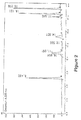
- procyanidin B1 was eluted at 10.7 minutes, procyanidin B3 at 12.6 minutes, catechin at 14.0 minutes, epicatechin at 17.6 minutes, gallocatechin at 6.4 minutes, epigallocatechin at 11.1 minutes, epigallocatechin-3-O-gallate at 18.2 minutes, and gallocatechin-3-O-gallate at 19.1 minutes. This result showed good separation of these substances ( Figure 2 ).
- Procyanidin B3 was synthesized as follows, according to the article ( J. C. S. Perkin I, 1981, Jacobus J. Botha, et al., 1235-1245 ).
- (+)-Taxifolin 500 mg was dissolved in ethanol (50 ml), followed by addition of NaBH 4 (200 mg). After (+)-catechin (1 g) was added and dissolved, the resulting mixture was mixed with HCl and stirred for 1 hour. The reaction product was purified by reversed-phase HPLC to give procyanidin B3 (200 mg).
- the pretreated sample was quantified by LC-MS under the following conditions.
- the mass spectrometer used was Quattro micro (Micromass, Manchester, UK) and the measurement was performed in ESI positive mode under the following conditions: Cone voltage 35 V Collision energy 2 eV Capillary voltage 4000 V Source block Temp. 80°C Desolvation Temp. 350°C.
- HPLC used was Aliance 2795 (Nihon Waters KK, Japan). HPLC conditions are as shown below.
- PB1 was eluted at 7.3 minutes and PB3 at 7.8 minutes.
- Quantification was performed using a calibration curve prepared for the chromatographic area at m/z 579([M+H]') in selected ion monitoring (SIM). When the amount of procyanidin contained in a sample is very small (1 ppm or less), LC-MS quantification will be an effective analysis means.
Landscapes
- Engineering & Computer Science (AREA)
- Food Science & Technology (AREA)
- Health & Medical Sciences (AREA)
- Life Sciences & Earth Sciences (AREA)
- Chemical & Material Sciences (AREA)
- Biochemistry (AREA)
- Physics & Mathematics (AREA)
- Analytical Chemistry (AREA)
- Medicinal Chemistry (AREA)
- General Health & Medical Sciences (AREA)
- General Physics & Mathematics (AREA)
- Immunology (AREA)
- Pathology (AREA)
- Other Investigation Or Analysis Of Materials By Electrical Means (AREA)
- Investigating Or Analysing Biological Materials (AREA)
- Pyrane Compounds (AREA)
- Measuring Or Testing Involving Enzymes Or Micro-Organisms (AREA)
Abstract
Description
- The present invention relates to a method for quantifying procyanidin and flavan-3-ols contained in natural products, foods and drinks, pharmaceuticals and/or cosmetics.
- In terms of efficacy, proanthocyanidin (OPC) is considered to be among the active ingredients related to "French Paradox" because OPC is also contained in wines (1995, Clin. Chim. Acta., 235, 207-219). OPC is known to have various actions and effects such as an antioxidative action, a peripheral circulation-improving action, a blood flow-improving effect and a liver function-improving effect (2004, Japan Food Science, 403, January issue, 40-45), as well as a platelet aggregation-inhibiting effect (
JP 2003-527418 A - Previously-known techniques for proanthocyanidin analysis include reversed-phase HPLC by using a high performance liquid chromatograph-mass spectrometer (LC-MS) (2003, Biosci. Biotechnol. Biochem., 67(5), 1140-1142) and normal phase HPLC by LC-MS using gradient elution (2003, J. Agric. Food Chem., 51, 7513-7521). However, in either of these analysis techniques, procyanidin in the form of a mixture with other ingredients from tea or supplements has been difficult to separate from such contaminant peaks; thus, these techniques cannot achieve accurate quantification. Moreover, there are a very large number of stereoisomers for proanthocyanidin due to the stereoisomerism of its constituents, flavan-3-ols, and compounds available as standards have therefore been limited. For this reason, quantitative analysis has been impossible, except for some known compounds.
- There is a strong demand for the development of a novel analysis method that enables accurate quantification of procyanidin (a generic name for a mixture of catechin n-mer; n ≧ 1) and flavan-3-ols in tea products, natural products, foods and drinks, pharmaceuticals and/or cosmetics, which contain procyanidin and flavan-3-ols, without receiving any interference from contaminants. Thus, the present invention provides a novel method for quantifying procyanidin and flavan-3-ols contained in tea products, natural products, foods and drinks, pharmaceuticals and/or cosmetics.
-
-
Figure 1 shows the structural formulae of procyanidin B1 and procyanidin B3. -
Figure 2 shows an HPLC chromatogram of the fraction eluted with 70% EtOH in the pretreatment step. Analysis conditions are as follows: HPLC system: Shimadzu LC-2010HT (Shimadzu Corporation, Japan); Column: capcellpak C-18 AQ (6 mm x 150 mm, Shiseido Co., Ltd., Japan); Mobile phase: Eluent A: 0.05% TFA/water, Eluent B: 0.05% TFA/90% CH3CN/water; Flow rate: 1.2 ml/minute; Gradient: 10% B → 10% B (10 minutes) and 10% By → 35% B (10 minutes); Column temperature: 40°C; Detection: A225 nm. Under these conditions, procyanidin B1 was eluted at 10.7 minutes, procyanidin B3 at 12.6 minutes, catechin at 14.0 minutes, epicatechin at 17.6 minutes, gallocatechin at 6..4 minutes, epigallocatechin at 11.1 minutes, epigallocatechin-3-O-gallate at 18.2 minutes, and gallocatechin-3-0-gallate at 19.1 minutes, respectively. - As a result of various studies made to achieve the above object, the inventors of the present invention have found that procyanidin and flavan-3-ols contained in natural products and/or foods and drinks can be quantified without being affected by contaminants when (a) pretreating a test sample with a dextran-based or vinyl polymer-based resin to remove contaminants (e.g., caffeine) which cannot be separated using hydrophobic adsorbent resins or the like, and (b) effecting high performance liquid chromatography to separate and quantify the fractionated procyanidin and flavan-3-ols.
- Thus, the present invention provides a method for quantifying procyanidin and flavan-3-ols contained in a test sample, which comprises the following steps:
- a) pretreating the test sample using a column to remove contaminants which affect the analysis of procyanidin and flavan-3-ols; and
- b) effecting high performance liquid chromatography (HPLC) to separate and quantify procyanidin and flavan-3" ols in the solution treated to remove contaminants during the pretreatment step a).
- The substance to be quantified by the method of the present invention may be any of procyanidin (a generic name for a mixture of catechin n-mer; n ≧ 1) and flavan-3-ols. Flavan-3-ols to be quantified by the method of the present invention include, but are not limited to, catechin, epicatechin, gallocatechin, epigallocatechin, catechin-3-O-gallate, epicatechin-3-O-gallate, gallocatechin-3-O-gallate and epigallocatechin-3-O-gallate. Procyanidin to be quantified by the method of the present invention include, but are not limited to, procyanidins B1, B2, B3, B4, B5, B6, B7 and B8. The substance to be quantified by the method of the present invention may preferably be procyanidin B1 (PB1) and/or procyanidin B3 (PB3), and more preferably PB1.
- The test sample to be analyzed by the method of the present invention may be any sample expected to contain procyanidin and/or flavan-3-ols, as exemplified by natural products (e.g., grape seeds, tamarind, apple, bark, pine bark-derived polyphenols, tea leaves, cocoa) and/or treated products (e.g., extracts) thereof, foods and drinks, pharmaceuticals, and/or cosmetics. A preferred test sample to be analyzed by the method of the present invention is a tea beverage containing procyanidin, and more preferably a tea beverage containing a pine bark extract.
- In the analysis of procyanidin and flavan-3-ols in a test sample using high performance liquid chromatography, contaminants which disturb the analysis include methylxanthines (e.g., caffeine, theobromine), phenylpropanoids (e.g., coffeic acid, coumaric acid, ferulic acid), flavones, flavonols, and glycosylated compounds thereof.
- When a reversed-phase (e.g., C8 or C18) carrier is used in an attempt to separate procyanidin and flavan-3-ols from these contaminants, these substances are all adsorbed on the resin and hence eluted at the same time. For this reason, they are impossible to separate from each other or, even where possible, require a very long period of time for their analysis. After a series of studies about conditions which allow separation of procyanidin and flavan-3-ols from these contaminants, the inventors of the present invention have succeeded in separating procyanidin and flavan-3-ols from these contaminants on a gel filtration column with an eluent containing a polar organic solvent. Thus, in the method of the present invention, column separation enables the fractionation of procyanidin and flavan-3-ols from the above contaminants when it is used as a pretreatment.
- Column resins available for use in the pretreatment include dextran-based resins (e.g., Sephadex LH-20 (Amersham Biosciences)) and hydrophilic vinyl polymer-based gel filtration resins (e.g., TOYOPEARL HW40 (Tosoh Corporation, Japan), TOYOPEARL HW-50 (Tosoh Corporation, Japan)). These resins enable the fractionation between contaminants and procyanidin/flavan-3-ols. Likewise, a packed column Supardex Peptide 10/300 GL (Amersham Biosciences) can also be used for fractionation in the same manner. However, the column resin is not limited to these examples.
- In the pretreatment step, there is no particular limitation on the elution solvent used for charging a test sample onto a column and fractionating procyanidin and flavan-3-ols from contaminants, as long as the solvent achieves fractionation. For this purpose, it is possible to use a mixed solvent of water and a water-soluble polar organic solvent such as ethanol, methanol, acetonitrile or acetone, with ethanol being particularly preferred. For example, after a test sample is charged onto a column, caffeine as a contaminant may be eluted with 0% to 20% ethanol, while phenylpropanoids, flavones and flavonols may be eluted with 20% to 40% ethanol, and finally followed by elution of procyanidin and with 60% to 80% ethanol to obtain the desired procyanidin and flavan-3-ols without containing any contaminant.
- Next, the solution treated to remove contaminants in the pretreatment step is analyzed by high performance liquid chromatography (HPLC) to quantify procyanidin and flavan-3-ols contained therein. The column used for the analysis may preferably be a reversed-phase column. Examples include, but are not limited to, reversed-phase columns packed with a packing material of a silica gel carrier having octadecyl groups chemically attached thereto (ODS), a silica gel carrier having butyl groups chemically attached thereto (C4), a silica gel carrier having octyl groups chemically attached thereto (C8), a silica gel carrier having phenyl groups chemically attached thereto (Ph), a silica gel carrier having C30 alkyl chains chemically attached thereto (C30), a synthetic polymer carrier having octadecyl groups attached thereto (ODP), a reversed-phase synthetic polymer carrier (e.g., Shodex Rspak DE series (Showa Denko KK, Japan)), and an amide-functionalized reversed-phase carrier (e.g., Ascentis RIP-Amide (Sigma-Aldrich Japan KK, Japan)).
- The mobile phase used for HPLC analysis may be water and a water-soluble polar solvent. It is possible to use ethanol, methanol, acetonitrile, acetone or the like at a mixing ratio of 0% to 100% with water. The mobile phase is preferably acidified for stabilization of ingredients to be separated and analyzed, and may be mixed with an acid such as trifluoroacetic acid (TPA), formic acid, acetic acid, trichloroacetic acid (TCA) or perchloric acid in an amount of 0.001% to 5%, preferably mixed with 0.05% to 0.1% TFA.
- More specifically, an ODS column (Capcellpak C-18 AQ (6 mm x 150 mm, Shiseido Co., Ltd., Japan) is used, and gradient elution is performed at a column temperature of 40°C using 0.05% TFA/water (Eluent A) and 0.05% TPA/90% acetonitrile/water (Eluent B) at a flow rate of 1.2 ml/minute with a gradient of 10% B → 10% B (10 minutes) and then 10% B → 35% B (10 minutes). Detection may be accomplished by measuring the absorbance at 225 nm (A225 nm), so that procyanidin and flavan-3-ols can be quantified from the peak areas of these individual substances. Procyanidin B1 (PB1) (Funakoshi Co., Ltd., Japan) and procyanidin B3 (PB3; synthesized according to Example 4 described later) may be used as standards of procyanidin. The structural formulae of PB1 and PB3 are shown in
Figure 1 . Under the conditions described above, PB1 is eluted at 10.7 minutes and PB3 at 12.6 minutes. Flavan-3-ols, i.e., (-) -epicatechin, (-)-epicatechin 3-O-gallate, (-)-epigallocatechin, (-)-epigallocatechin 3-O-gallate, (+)-catechin, (-)-catechin 3-O-gallate, (+)-gallocatechin and (-)-gallocatechin 3-O-gallate were purchased from Wako Pure Chemical Industries, Ltd., Japan. (-)-Epicatechin was eluted at 17.6 minutes, (-)-epigallocatechin at 11.1 minutes, (-)-epigallocatechin 3-O-gallate at 18.2 minutes, (+)-catechin at 14.0 minutes, (+)-gallocatechin at 6.4 minutes, and (-)-gallocatechin 3-O-gallate at 19.1 minutes. However, analysis conditions are not limited to those described above, and it is possible to use any conditions which allow quantification. - In another embodiment, the method of the present invention may further comprise mass spectrometer analysis after separation by high performance liquid chromatography. Namely, the pretreated sample may also be quantified by LC-MS. Separation and quantification by LC-MS may be accomplished by using, for example, but not limited to, the conditions shown in Example 6 below. In certain cases such as where only procyanidin dimers are to be quantified by LC-MS, such dimers can be quantified from a chromatogram obtained for the ion at m/z 579([M+H]+) by selected ion monitoring (SIM). When the amount of procyanidin contained in a sample is very small (1 ppm or less), LC-MS quantification will be an effective analysis means.
- The method of the present invention enables the separation of procyanidin and flavan-3-ols from the other contaminants contained in procyanidin-containing tea products, natural products, foods and drinks and/or cosmetics, thereby achieving separation and quantification of procyanidin and flavan-3-ols contained in such tea products and the like. Thus, the method of the present invention is suitable as a method for analyzing procyanidin and flava-3-ols in tea products, natural products, foods and drinks, pharmaceuticals and/or cosmetics, without causing their decomposition.
- The present invention will now be described in more detail by way of the following examples, which are not intended to limit the scope of the invention.
- A column containing water-swollen Sephadex LH-20 (dry weight: 0.25 g; Amersham Biosciences) was loaded with 5 ml of an aqueous solution containing proanthocyanidin B1 (PB1) and caffeine (20 ppm each), washed with 2 ml water and then eluted sequentially with 20%, 40%, 60% and 80% EtOH (2 ml each). After concentration under reduced pressure, each eluted fraction was filled up in a 2 ml measuring flask and provided for HPLC (see Example 3 for analysis conditions) to quantify caffeine and PB1.
Table 1 Eluent % Recovery of caffeine % Recovery of PB1 H2O (non-adsorbed) 74% 0% H2O (washed) 23% 0% 20% EtOH 2.5% 0% 40 % EtOH 0% 0% 60 % EtOH 0% 49% 80% EtOH 0.% 27% - This result indicated that caffeine was substantially eluted with H2O, whereas PB1 was eluted with 60% or more EtOH. This means that caffeine and PB1 can be separated from each other.
- A column containing water-swollen Sephadex LH-20 (dry weight: 0.25 g; Amersham Biosciences) was loaded with 5 ml of a tea product containing flavangenol (pine bark-derived procyanidin), washed with 2 ml water and then eluted sequentially with 35% EtOH (2 ml) and 70% EtOH (4 ml). The fraction eluted with 70% EtOH was concentrated under reduced pressure and then filled up in a 2 ml measuring flask. Each eluted fraction was provided for HPLC (see Example 3 for analysis conditions) to quantify caffeine and PB1. The concentration was calculated on the basis of the initial volume (5 ml).
Table 2 Eluent Caffeine concentration PB1 concentration H2O (non-adsorbed) 100 ppm 0 ppm H2O (washed) 9 ppm 0 ppm 35% EtOH 0.2 ppm 0.08 ppm 70 % EtOH 0 ppm 2.7 ppm - Caffeine was almost completely eluted by washing with water. Subsequently, phenylpropanoids and flavonols were eluted with 35% EtOH, and the desired procyanidin and flavan-3-ol were eluted with 70% EtOH.
- It should be noted that it is also possible to use a tea product which has been taken in a volume of 5 ml, freeze-dried and then reconstituted with 5 ml water before use.
- The fraction treated on Sephadex LH-20 and eluted with water, 35% EtOH or 70% EtOH, as well as the sample solution pretreated to remove contaminants such as caffeine were analyzed by HPLC under the following conditions.
- Analysis conditions: Capcellpak C-18 AQ (6 mm x 150 mm, Shiseido Co., Ltd., Japan) was used as a column, and gradient elution was performed using 0.05% TFA/water (Eluent A) and 0.05% TFA/90% CH3CN/water (Eluent B) at a flow rate of 1.2 ml/minute with a gradient of 10% B → 10% B (10 minutes) and then 10% B → 35% B (10 minutes). The column temperature was set to 40°C, and detection and quantification were based on measurements of A225 nm and its peak area. The HPLC used was Shimadzu LC-2010HT (Shimadzu Corporation, Japan).
- Under these conditions, procyanidin B1 was eluted at 10.7 minutes, procyanidin B3 at 12.6 minutes, catechin at 14.0 minutes, epicatechin at 17.6 minutes, gallocatechin at 6.4 minutes, epigallocatechin at 11.1 minutes, epigallocatechin-3-O-gallate at 18.2 minutes, and gallocatechin-3-O-gallate at 19.1 minutes. This result showed good separation of these substances (
Figure 2 ). - Procyanidin B3 was synthesized as follows, according to the article (J. C. S. Perkin I, 1981, Jacobus J. Botha, et al., 1235-1245).
- (+)-Taxifolin (500 mg) was dissolved in ethanol (50 ml), followed by addition of NaBH4 (200 mg). After (+)-catechin (1 g) was added and dissolved, the resulting mixture was mixed with HCl and stirred for 1 hour. The reaction product was purified by reversed-phase HPLC to give procyanidin B3 (200 mg).
- A column containing water-equilibrated TOYOPEARL HW-40 (1 ml, Tosoh Corporation, Japan) was loaded with 2 ml of an aqueous solution containing procyanidin B1 (PB1) and caffeine (20 ppm each), washed with 2 ml water and then eluted sequentially with 35% EtOH (2 ml) and 70% EtOH (4 ml). Each eluted fraction was provided for HPLC to quantify caffeine and PB1.
Table 3 Eluent % Recovery of caffeine % Recovery of PB1 H2O (Non-adsorbed and washed) 97.3% 0% 35% EtOH 2.5% 1.3% 70 % EtOH 0% 77% - This result indicated that caffeine was substantially eluted with H2O whereas PB1 was eluted with 70% EtOH, as in the case of Sephadex LH-20. This means that caffeine and PB1 can be separated from each other. This pretreatment method was therefore regarded as an effective method with dextran-based gel filtration resins or hydrophilic vinyl polymer-based resins.
- The pretreated sample was quantified by LC-MS under the following conditions.
- The mass spectrometer used was Quattro micro (Micromass, Manchester, UK) and the measurement was performed in ESI positive mode under the following conditions:
Cone voltage 35 V Collision energy 2 eV Capillary voltage 4000 V Source block Temp. 80°C Desolvation Temp. 350°C. - The HPLC used was Aliance 2795 (Nihon Waters KK, Japan). HPLC conditions are as shown below.
- Column: Capcell park C-18 AQ (3 mm φ x 15 cm, Shiseido Co., Ltd., Japan)
- Mobile phase: Eluent A: 0.1% HCOOH/water, Eluent B: 90% CH3CN/0.1% HCOOH/water, flow rate 0.2 ml/minute
- Gradient: 10% B → 35% B (7 minutes) → 70% B (3 minutes)
- Under these conditions, PB1 was eluted at 7.3 minutes and PB3 at 7.8 minutes. Quantification was performed using a calibration curve prepared for the chromatographic area at m/z 579([M+H]') in selected ion monitoring (SIM). When the amount of procyanidin contained in a sample is very small (1 ppm or less), LC-MS quantification will be an effective analysis means.
Claims (18)
- A method for quantifying procyanidin (a generic name for a mixture of catechin n-mer: n ≧ 1) and flavan-3-ols contained in a test sample, which comprises the following steps:a) pretreating the test sample using a column to remove contaminants which affect the analysis of procyanidin and flavan-3-ols; andb) effecting high performance liquid chromatography (HPLC) to separate and quantify procyanidin and flavan-3-ols in the solution treated to remove contaminants during the pretreatment step a).
- The method according to claim 1, wherein the contaminants are one or more substances selected from the group consisting of caffeine, theobromine, phenylpropanoids, flavonols, and glycosylated compounds of phenylpropanoids and flavonols.
- The method according to claim 1 or 2, wherein the test sample is a food or a drink.
- The method according to any one of claims 1 to 3, wherein the test sample is a tea beverage containing procyanidin.
- The method according to any one of claims 1 to 3, wherein the test sample is a tea beverage containing a pine bark extract.
- The method according to any one of claims 1 to 5, wherein the pretreatment step comprises using a column of a dextran-based or vinyl polymer-based resin.
- The method according to any one of claims 1 to 6, wherein the pretreatment step is carried out under conditions where a water/ethanol mixture is used, thereby separating procyanidin and flavan-3-ols from contaminants.
- The method according to any one of claims 1 to 7, wherein the pretreatment step comprises using a column of a dextran-based resin, equilibrating the column with water, loading the sample onto the column, eluting contaminants with water and/or 0% to 40% ethanol, and then collecting procyanidin and flavan-3-ols with 60% or more ethanol.
- The method according to any one of claims 1 to 6, wherein the pretreatment step is carried out under conditions where a mixed solution selected from the group consisting of a water/methanol mixture, a water/ethanol mixture, a water/acetonitrile mixture and a water/acetone mixture is used, thereby separating procyanidin and flavan-3-ols from contaminants.
- The method according to any one of claims 1 to 9, wherein the column for high performance liquid chromatography used in step b) is a reversed-phase column.
- The method according to claim 10, wherein the reversed-phase column is a column packed with a packing material selected from the group consisting of a silica gel carrier having octadecyl groups chemically attached thereto (ODS), a silica gel carrier having butyl groups chemically attached thereto (C4), a silica gel carrier having octyl groups chemically attached thereto (C8), a silica gel carrier having phenyl groups chemically attached thereto (Ph), a silica gel carrier having C30 alkyl chains chemically attached thereto (C30), a synthetic polymer carrier having octadecyl groups attached thereto (ODP), a reversed-phase synthetic polymer carrier, and an amide-functionalized reversed-phase carrier.
- The method according to any one of claims 1 to 11, wherein the mobile phase used in step b) for separation by high performance liquid chromatography is acetonitrile and/or water, each of which may or may not contain TFA (trifluoroacetic acid).
- The method according to claim 12, wherein the mobile phase is a gradient of acetonitrile and water, each of which may or may not contain TFA (trifluoroacetic acid).
- The method according to any one of claims 1 to 11, wherein the mobile phase used in step b) for separation by high performance liquid chromatography comprises a solvent selected from the group consisting of methanol, ethanol, acetonitrile, acetone and a mixed solvent thereof.
- The method according to claim 14, wherein the mobile phase used in step b) for separation by high performance liquid chromatography further comprises TFA (trifluoroacetic acid), formic acid, acetic acid, TCA (trichloroacetic acid) or perchloric acid.
- The method according to any one of claims 1 to 15, wherein the method is for quantifying procyanidin and the procyanidin to be quantified is procyanidin B1 (PB1) and/or procyanidin B3 (PB3).
- The method according to any one of claims 1 to 15, wherein the procyanidin to be quantified is procyanidin B1 (PB1).
- The method according to any one of claims 1 to 17, which is further combined with a mass spectrometer in order to quantify only procyanidin dimers.
Applications Claiming Priority (2)
| Application Number | Priority Date | Filing Date | Title |
|---|---|---|---|
| JP2005191665A JP4942953B2 (en) | 2005-06-30 | 2005-06-30 | Analysis method of procyanidins |
| EP06780775.0A EP1896844B1 (en) | 2005-06-30 | 2006-06-28 | Method for procyanidin analysis |
Related Parent Applications (1)
| Application Number | Title | Priority Date | Filing Date |
|---|---|---|---|
| EP06780775.0 Division | 2006-06-28 |
Publications (2)
| Publication Number | Publication Date |
|---|---|
| EP2322923A2 true EP2322923A2 (en) | 2011-05-18 |
| EP2322923A3 EP2322923A3 (en) | 2012-05-16 |
Family
ID=37067430
Family Applications (2)
| Application Number | Title | Priority Date | Filing Date |
|---|---|---|---|
| EP11155795A Withdrawn EP2322923A3 (en) | 2005-06-30 | 2006-06-28 | Method for procyanidin analysis |
| EP06780775.0A Expired - Lifetime EP1896844B1 (en) | 2005-06-30 | 2006-06-28 | Method for procyanidin analysis |
Family Applications After (1)
| Application Number | Title | Priority Date | Filing Date |
|---|---|---|---|
| EP06780775.0A Expired - Lifetime EP1896844B1 (en) | 2005-06-30 | 2006-06-28 | Method for procyanidin analysis |
Country Status (6)
| Country | Link |
|---|---|
| US (1) | US20090215186A1 (en) |
| EP (2) | EP2322923A3 (en) |
| JP (1) | JP4942953B2 (en) |
| CN (1) | CN1892212A (en) |
| ES (1) | ES2425946T3 (en) |
| WO (1) | WO2007004659A1 (en) |
Families Citing this family (18)
| Publication number | Priority date | Publication date | Assignee | Title |
|---|---|---|---|---|
| JP5091660B2 (en) * | 2007-12-27 | 2012-12-05 | アサヒグループホールディングス株式会社 | Determination of procyanidins |
| US20110220575A1 (en) * | 2008-11-19 | 2011-09-15 | Nandu Deorkar | New chromatographic media based on phenoxy alkyl and alkoxy-or phenoxy-phenyl alkyl ligands |
| CN102141519B (en) * | 2010-12-30 | 2013-03-13 | 浙江现代中药与天然药物研究院有限公司 | Method for detecting procyanidins content |
| CN102818863B (en) * | 2012-06-01 | 2014-02-05 | 浙江康恩贝制药股份有限公司 | Method for identifying proanthocyanidins in ginkgo leaf preparation |
| CN102721759B (en) * | 2012-06-25 | 2013-08-21 | 江南大学 | Method for quickly and efficiently measuring flavanols in wine |
| CN104133004A (en) * | 2013-05-03 | 2014-11-05 | 上海美迪西生物医药有限公司 | Determination method of concentration of 2,3-isatin in plasma sample |
| CN103954700A (en) * | 2014-04-12 | 2014-07-30 | 陕西衡道检测技术有限公司 | Method used for procyanidin content detection and identification |
| CN104820026A (en) * | 2014-05-09 | 2015-08-05 | 广州市中医医院 | Litchi seed dripping pill quality detection method |
| CN105424947B (en) * | 2015-12-28 | 2016-08-24 | 青岛古高生物科技有限公司 | The application of procyanidin and the thrombin time test reagent containing procyanidin |
| CN107843661B (en) * | 2015-12-30 | 2023-02-24 | 晨光生物科技集团股份有限公司 | Method for identifying authenticity of grape seed extract |
| CN109521103B (en) * | 2017-09-18 | 2021-07-30 | 成都中医药大学 | A quality detection method of Sanlejiao oral liquid with both qualitative and quantitative evaluation |
| JP6508741B2 (en) * | 2017-10-02 | 2019-05-08 | 国立研究開発法人農業・食品産業技術総合研究機構 | Method and system for analyzing procyanidins |
| CN111330556A (en) * | 2020-03-07 | 2020-06-26 | 浙江肽达生物科技开发有限公司 | Preparation method of chromatographic separation medium |
| CN112083098A (en) * | 2020-09-09 | 2020-12-15 | 四川新绿色药业科技发展有限公司 | HPLC (high Performance liquid chromatography) characteristic spectrum of ampelopsis japonica formula particles as well as construction method and application thereof |
| GB202105950D0 (en) * | 2021-04-26 | 2021-06-09 | Ge Healthcare Ltd | Analytical HPLC |
| CN113156036B (en) * | 2021-05-25 | 2022-08-05 | 浙江大学 | Method for analyzing proanthocyanidin structure by combining hydrophilic effect and reversed phase liquid chromatography |
| CN114019057B (en) * | 2021-11-09 | 2024-04-02 | 云南省烟草农业科学研究院 | Method for detecting procyanidine content in tobacco leaves |
| CN117007717A (en) * | 2023-08-07 | 2023-11-07 | 汤臣倍健股份有限公司 | Method for determining procyanidine C1 in grape seed extract |
Citations (1)
| Publication number | Priority date | Publication date | Assignee | Title |
|---|---|---|---|---|
| JP2003527418A (en) | 2000-03-22 | 2003-09-16 | マーズ インコーポレイテッド | Use of cocoa procyanidin in combination with acetylsalicylic acid as antiplatelet therapy |
Family Cites Families (5)
| Publication number | Priority date | Publication date | Assignee | Title |
|---|---|---|---|---|
| JP3450080B2 (en) * | 1995-02-01 | 2003-09-22 | 有限会社野々川商事 | Health foods and pharmaceuticals containing procyanidin |
| CN1159019C (en) * | 1996-04-02 | 2004-07-28 | 火星有限公司 | Extractable compounds and their preparation and use |
| JP2000044472A (en) * | 1998-07-30 | 2000-02-15 | Kikkoman Corp | Drugs for preventing or treating diabetic complications |
| KR100509119B1 (en) * | 1999-07-16 | 2005-08-18 | 주식회사 엘지생활건강 | Medicine comprising procyanidine as an effective agent |
| JP4659407B2 (en) * | 2004-07-29 | 2011-03-30 | サントリーホールディングス株式会社 | Analytical method for oligomeric proanthocyanidins (OPC) |
-
2005
- 2005-06-30 JP JP2005191665A patent/JP4942953B2/en not_active Expired - Lifetime
-
2006
- 2006-06-28 ES ES06780775T patent/ES2425946T3/en not_active Expired - Lifetime
- 2006-06-28 WO PCT/JP2006/313348 patent/WO2007004659A1/en not_active Ceased
- 2006-06-28 EP EP11155795A patent/EP2322923A3/en not_active Withdrawn
- 2006-06-28 EP EP06780775.0A patent/EP1896844B1/en not_active Expired - Lifetime
- 2006-06-28 CN CN200610090724.5A patent/CN1892212A/en active Pending
- 2006-06-28 US US11/922,982 patent/US20090215186A1/en not_active Abandoned
Patent Citations (1)
| Publication number | Priority date | Publication date | Assignee | Title |
|---|---|---|---|---|
| JP2003527418A (en) | 2000-03-22 | 2003-09-16 | マーズ インコーポレイテッド | Use of cocoa procyanidin in combination with acetylsalicylic acid as antiplatelet therapy |
Non-Patent Citations (5)
| Title |
|---|
| BIOSCI. BIOTECHNOL. BIOCHEM., vol. 67, no. 5, 2003, pages 1140 - 1142 |
| CLIN. CHIM. ACTA., vol. 235, 1995, pages 207 - 219 |
| J. AGRIC. FOOD CHEM., vol. 51, 2003, pages 7513 - 7521 |
| JACOBUS J. BOTHA ET AL., J. C. S. PERKIN I, 1981, pages 1235 - 1245 |
| JAPAN FOOD SCIENCE, vol. 403, 2004, pages 40 - 45 |
Also Published As
| Publication number | Publication date |
|---|---|
| JP4942953B2 (en) | 2012-05-30 |
| ES2425946T3 (en) | 2013-10-18 |
| WO2007004659A1 (en) | 2007-01-11 |
| EP1896844A1 (en) | 2008-03-12 |
| EP2322923A3 (en) | 2012-05-16 |
| CN1892212A (en) | 2007-01-10 |
| US20090215186A1 (en) | 2009-08-27 |
| EP1896844B1 (en) | 2013-08-07 |
| JP2007010487A (en) | 2007-01-18 |
Similar Documents
| Publication | Publication Date | Title |
|---|---|---|
| EP1896844B1 (en) | Method for procyanidin analysis | |
| Peng et al. | Analysis of pigmented polymers in red wine by reverse phase HPLC | |
| Nakamura et al. | Analysis of proanthocyanidins in grape seed extracts, health foods and grape seed oils | |
| Souquet et al. | Polymeric proanthocyanidins from grape skins | |
| Rostagno et al. | Fast and simultaneous determination of phenolic compounds and caffeine in teas, mate, instant coffee, soft drink and energetic drink by high-performance liquid chromatography using a fused-core column | |
| Khanal et al. | Procyanidin content of grape seed and pomace, and total anthocyanin content of grape pomace as affected by extrusion processing | |
| Kennedy et al. | Analysis of pigmented high-molecular-mass grape phenolics using ion-pair, normal-phase high-performance liquid chromatography | |
| Yanagida et al. | Retention behavior of oligomeric proanthocyanidins in hydrophilic interaction chromatography | |
| Yanagida et al. | Fractionation of apple procyanidins by size-exclusion chromatography | |
| Spencer et al. | Decomposition of cocoa procyanidins in the gastric milieu | |
| Waterhouse et al. | A comparison of methods for quantifying oligomeric proanthocyanidins from grape seed extracts | |
| Gómez-Alonso et al. | HPLC analysis of diverse grape and wine phenolics using direct injection and multidetection by DAD and fluorescence | |
| Fan et al. | Radical-scavenging proanthocyanidins from sea buckthorn seed | |
| KR101166393B1 (en) | Method for analyzing oligomeric proanthocyanidin opc | |
| Yanagida et al. | Separation of proanthocyanidins by degree of polymerization by means of size-exclusion chromatography and related techniques | |
| Toro-Uribe et al. | Characterization of secondary metabolites from green cocoa beans using focusing-modulated comprehensive two-dimensional liquid chromatography coupled to tandem mass spectrometry | |
| Ma et al. | First evidence of epicatechin vanillate in grape seed and red wine | |
| Kelm et al. | Identification and quantitation of flavanols and proanthocyanidins in foods: How good are the datas? | |
| Silva et al. | A fast method using a new hydrophilic–lipophilic balanced sorbent in combination with ultra-high performance liquid chromatography for quantification of significant bioactive metabolites in wines | |
| Michodjehoun-Mestres et al. | Characterisation of highly polymerised prodelphinidins from skin and flesh of four cashew apple (Anacardium occidentale L.) genotypes | |
| JP2007010487A5 (en) | ||
| Tomer et al. | Comparison of the total oxyradical scavenging capacity and oxygen radical absorbance capacity antioxidant assays | |
| CN113009041A (en) | Method for simultaneously determining eight vitamin E isomers in vegetable oil | |
| Colón et al. | Development and application of an analytical procedure for specific migration of green tea compounds in IV gamma nectarine active packaging | |
| Saleh et al. | Recovery of Polyphenolics from Apple Juice Utilizing Adsorbent Polymer Technology. |
Legal Events
| Date | Code | Title | Description |
|---|---|---|---|
| PUAI | Public reference made under article 153(3) epc to a published international application that has entered the european phase |
Free format text: ORIGINAL CODE: 0009012 |
|
| AC | Divisional application: reference to earlier application |
Ref document number: 1896844 Country of ref document: EP Kind code of ref document: P |
|
| AK | Designated contracting states |
Kind code of ref document: A2 Designated state(s): AT BE BG CH CY CZ DE DK EE ES FI FR GB GR HU IE IS IT LI LT LU LV MC NL PL PT RO SE SI SK TR |
|
| RIN1 | Information on inventor provided before grant (corrected) |
Inventor name: FUKUI, YUKO |
|
| PUAL | Search report despatched |
Free format text: ORIGINAL CODE: 0009013 |
|
| AK | Designated contracting states |
Kind code of ref document: A3 Designated state(s): AT BE BG CH CY CZ DE DK EE ES FI FR GB GR HU IE IS IT LI LT LU LV MC NL PL PT RO SE SI SK TR |
|
| RIC1 | Information provided on ipc code assigned before grant |
Ipc: G01N 33/14 20060101AFI20120411BHEP Ipc: G01N 30/88 20060101ALN20120411BHEP |
|
| 17P | Request for examination filed |
Effective date: 20121115 |
|
| 17Q | First examination report despatched |
Effective date: 20140625 |
|
| STAA | Information on the status of an ep patent application or granted ep patent |
Free format text: STATUS: THE APPLICATION IS DEEMED TO BE WITHDRAWN |
|
| 18D | Application deemed to be withdrawn |
Effective date: 20141106 |