EP2320227A1 - Dissolution apparatus comprising beads and process - Google Patents
Dissolution apparatus comprising beads and process Download PDFInfo
- Publication number
- EP2320227A1 EP2320227A1 EP09175011A EP09175011A EP2320227A1 EP 2320227 A1 EP2320227 A1 EP 2320227A1 EP 09175011 A EP09175011 A EP 09175011A EP 09175011 A EP09175011 A EP 09175011A EP 2320227 A1 EP2320227 A1 EP 2320227A1
- Authority
- EP
- European Patent Office
- Prior art keywords
- dosage form
- dissolution
- testing
- active pharmaceutical
- pharmaceutical ingredient
- Prior art date
- Legal status (The legal status is an assumption and is not a legal conclusion. Google has not performed a legal analysis and makes no representation as to the accuracy of the status listed.)
- Granted
Links
Images



Classifications
-
- G—PHYSICS
- G01—MEASURING; TESTING
- G01N—INVESTIGATING OR ANALYSING MATERIALS BY DETERMINING THEIR CHEMICAL OR PHYSICAL PROPERTIES
- G01N33/00—Investigating or analysing materials by specific methods not covered by groups G01N1/00 - G01N31/00
- G01N33/15—Medicinal preparations ; Physical properties thereof, e.g. dissolubility
-
- B—PERFORMING OPERATIONS; TRANSPORTING
- B01—PHYSICAL OR CHEMICAL PROCESSES OR APPARATUS IN GENERAL
- B01F—MIXING, e.g. DISSOLVING, EMULSIFYING OR DISPERSING
- B01F21/00—Dissolving
- B01F21/10—Dissolving using driven stirrers
-
- B—PERFORMING OPERATIONS; TRANSPORTING
- B01—PHYSICAL OR CHEMICAL PROCESSES OR APPARATUS IN GENERAL
- B01F—MIXING, e.g. DISSOLVING, EMULSIFYING OR DISPERSING
- B01F21/00—Dissolving
- B01F21/15—Dissolving comprising constructions for blocking or redispersing undissolved solids, e.g. sieves, separators or guiding constructions
-
- B—PERFORMING OPERATIONS; TRANSPORTING
- B01—PHYSICAL OR CHEMICAL PROCESSES OR APPARATUS IN GENERAL
- B01F—MIXING, e.g. DISSOLVING, EMULSIFYING OR DISPERSING
- B01F31/00—Mixers with shaking, oscillating, or vibrating mechanisms
- B01F31/44—Mixers with shaking, oscillating, or vibrating mechanisms with stirrers performing an oscillatory, vibratory or shaking movement
- B01F31/441—Mixers with shaking, oscillating, or vibrating mechanisms with stirrers performing an oscillatory, vibratory or shaking movement performing a rectilinear reciprocating movement
-
- G—PHYSICS
- G01—MEASURING; TESTING
- G01N—INVESTIGATING OR ANALYSING MATERIALS BY DETERMINING THEIR CHEMICAL OR PHYSICAL PROPERTIES
- G01N13/00—Investigating surface or boundary effects, e.g. wetting power; Investigating diffusion effects; Analysing materials by determining surface, boundary, or diffusion effects
-
- G—PHYSICS
- G01—MEASURING; TESTING
- G01N—INVESTIGATING OR ANALYSING MATERIALS BY DETERMINING THEIR CHEMICAL OR PHYSICAL PROPERTIES
- G01N13/00—Investigating surface or boundary effects, e.g. wetting power; Investigating diffusion effects; Analysing materials by determining surface, boundary, or diffusion effects
- G01N2013/006—Dissolution of tablets or the like
Definitions
- the present invention relates to an apparatus for testing dissolution of an active pharmaceutical ingredient. Furthermore, the present invention relates to a process for testing dissolution of an active pharmaceutical ingredient and a process for assaying or predicting in vivo dissolution of an active pharmaceutical ingredient.
- dissolution testing involves measuring the rate of an active pharmaceutical ingredient (API) release from the dosage form by determining the amount of API that goes into testing media as a function of time. It is commonly employed using a pharmacopeial apparatus under highly standardized conditions. However, the predictive value of the in vitro dissolution profile with regard to the variability in the individual in vivo dissolution characteristics is often poor. For this reason, many attempts have been made to adapt in vitro dissolution testing to better mimic physiological conditions in order to improve the predictability of in vivo dissolution of API from a dosage form.
- Alterations were aimed at modifying the temperature and the composition of the dissolution testing media, specifically the pH, ionic strength, buffer capacity as well as the presence of surfactants such as bile salts and/or the presence of digestive enzymes (e.g., pancreatic enzymes), which may greatly influence the characteristics of release from immediate release and extended release dosage forms.
- additional improvements are necessary to further tune the testing conditions in order to achieve sufficient in vivo predictability.
- API with low solubility can not be instantly released from the extended release dosage form comprising a hydrophilic matrix when exposed to the aqueous media.
- hydrophilic matrix forms a polymeric gel layer immediately after the dosage form gets in contact with the surrounding media, which in turn prevents the API to be released to the media.
- the API is released considerably only after the swollen gel layer erodes.
- polymer matrix erosion contributes substantially to overall release kinetics. In vivo erosion of the dosage form is affected by different hydrodynamic conditions, shear stress and friction forces in gastrointestinal tract. Due to difficulties in mimicking the gastrointestinal in vivo conditions and interplay of various factors there is persistent need for new and simplified dissolution techniques enabling good in vivo predictability.
- the tube was closed, with glass beads and the swollen matrix, turned side ways and the mechanical stress artificially given by shaking the tube horizontally with a shaker. After shaking, the whole content in the tube was returned into the dissolution medium, and the in vitro dissolution test was resumed.
- the present inventive dissolution testing apparatus and process enable dissolution testing of API from various dosage forms with good in vivo predictability.
- the present invention provides an apparatus for testing dissolution of an active pharmaceutical ingredient capable of reciprocating a dosage form up and down in a testing media in combination with beads comprising a density of 1.1 g/ml to 1.5 g/ml and capable of inducing mechanical stress to the dosage form while the apparatus is in operation.
- the present invention further provides a use of beads comprising a density of 1.1 g/ml to 1.5 g/ml for testing dissolution of an active pharmaceutical ingredient from a dosage form.
- the present invention provides a use of beads comprising a density of 1.1 g/ml to 1.5 g/ml in combination with an apparatus for testing dissolution of an active pharmaceutical ingredient capable of reciprocating a dosage form up and down in a testing media for testing dissolution of an active pharmaceutical ingredient from a dosage form.
- the present invention also provides a process for testing dissolution of an active pharmaceutical ingredient comprising reciprocating a dosage form comprising the active pharmaceutical ingredient and beads comprising a density of 1.1 g/ml to 1.5 g/ml up and down in a testing media.
- the present invention yet further provides a process for obtaining a dosage form comprising an active pharmaceutical ingredient with desired dissolution, comprising steps of:
- the present invention provides a process for assaying or predicting in vivo dissolution of an active pharmaceutical ingredient, wherein a dissolution of the active pharmaceutical ingredient while employing process according to any one of claims 1 to 4, 13 or 14 is measured and/or determined.
- an advantage of the concept of the present invention comprising beads of a density of 1.1 g/ml to 1.5 g/ml within the dissolution apparatus that is capable of reciprocating the dosage form up and down is that the dosage form may be exposed to physical stress during dissolution testing without the need to transfer the dosage form manually from the dissolution testing apparatus to other device that is specifically designed to disturb the structure of the dosage form.
- the stress forces can be imposed on the dosage form continuously during dissolution testing without interfering with sampling or sampling interval.
- Said improvement facilitates dissolution of the API from the dosage form in vitro that is commensurate to dissolution in vivo without having to deal with imperfections as for example incomplete dissolution, unnecessary measurement errors or not linear sampling intervals.
- said simple means for simulating interactions with moving solid particles of food or other gastrointestinal mechanical destructive forces enable particularly efficient friction between the dosage form and the beads, as the density of beads lower than 1.1 g/ml to 1.5 g/ml leads to floating of beads and the density higher than 1.1 g/ml to 1.5 g/ml makes the beads sink.
- the lower or higher density lead to unsatisfactory movement of beads during the up-and-down strokes of the apparatus reducing the number of collisions with the dosage form and thus having no significant effect to the dissolution of the dosage form.
- the best effect can be achieved when the dosage form being tested is extended release matrix tablet. Mechanical stress induced by the beads of said density causes the extended release matrix tablet to erode faster and prevents API to be trapped in the swollen polymer gel layer. This in turn leads to faster API release, which is more comparable to the situation in the gastrointestinal (GI) tract. Further advantageous is to apply the present invention in cases where dissolution of API with low solubility needs to be studied.
- a dissolution apparatus comprising an inner tube, like for example a glass cylinder, e.g. apparatus 3 according to the US Pharmacopeiea USP 31 or any similar dissolution apparatus that comprise an outer tube which contain the testing media, an inner tube where normally the dosage form to be analyzed is placed, wherein the top and base of the inner tube are closed with the mesh, and operation of the apparatus involves various rates of dips of inner tube per minute, namely different velocities of up and down movement of the inner tube inside the outer one, wherein the dosage form gets suspended in the testing media during the reciprocating action; dissolution rate of the API will be affected by the agitation and composition of the dissolution medium.
- an inner tube like for example a glass cylinder, e.g. apparatus 3 according to the US Pharmacopeiea USP 31 or any similar dissolution apparatus that comprise an outer tube which contain the testing media, an inner tube where normally the dosage form to be analyzed is placed, wherein the top and base of the inner tube are closed with the mesh
- operation of the apparatus involves various
- the solubility of the tested API can be increased by the addition of higher concentrations of surfactants or by the addition of organic solvents.
- the dissolution medium does not reflect the in vivo conditions in the intestinal tract and can not resemble mechanical forces of GI tract induced on the dosage form, which very often leads to poor in vivo predictability.
- varying pH, ionic strength or increasing the concentration of surfactants avail even less when dissolution of low soluble API from the extended release matrix dosage form is to be determined.
- the present invention remedies said imperfection and provides simple means to induce mechanical forces to the dosage form during dissolution testing.
- Active pharmaceutical ingredient denotes according to the present invention any drug that can be used for treatment or prophylaxis in animal, particularly in a mammal, specifically in human.
- the active pharmaceutical ingredient is selected from the group of analgesics, antiinflammatory agents, anthelmintics, anti-arrhythmic agents, anti-asthma agents, antibacterial agents, anti-viral agents, anticoagulants, anti-depressants, anti-diabetics, antiepileptics, anti-fungal agents, anti-gout agents, anti-hypertensive agents, anti-malarials, anti-migraine agents, anti-muscarinic agents, antineoplastic agents and immunosuppressants, anti-protozoal agents, anti-thyroid agents, anti-tussives, anxiolytic, sedatives, hypnotics, neuroleptics, ⁇ -blockers, cardiac inotropic agents, corticosteroids, diuretics, anti-parkinsonia
- the API has low solubility, namely has solubility of less than 0,5 mg/ml, preferably less than 0.1, in a pH range from 1 to 7.5 at 37°C. Solubility is measured in aqueous solvent. In this way, the present invention provides reliable correlation between in vivo and in vitro dissolution even with compounds having low solubility.
- Dosage form according to the present invention is understood as any single or multi unit solid pharmaceutical formulation, such as for example tablet or capsule, preferably a tablet.
- the dosage form indicates herein extended release matrix pharmaceutical formulation, wherein said formulation comprises a hydrophilic polymer in at least one layer of the pharmaceutical formulation, i.e. in the coating of the coated tablet, a tablet layer of the bilayer tablet or just in a tablet as such, and at least 80 % of the API is dissolved in more than 60 minutes, preferably 2 hours, under the following conditions: using a USP Apparatus 2 placing the pharmaceutical formulation in 900 ml of media that enables sink conditions at 37°C and 75 rpm and measuring the amount of API dissolved at 1 hour.
- dissolution refers to dissolution in the intestine comprising the steps of disintegration of an API or a pharmaceutical formulation comprising the API and following solubilisation of the API.
- Hydrophilic polymer used in the dosage form can be any polymer whose hydration results in formation of the gel layer that controls the release rate of the API. As a rule, the swollen hydrophilic polymer prevents the API to be released from the matrix. Instead the polymer must erode first to expose the API to the media, which solubilizes and dissolves the API.
- Preferred hydrophilic polymers are cellulose or cellulose derivatives such as carboxymethylcellulose sodium, hydroxyethyl cellulose, hydroxypropyl cellulose, hydroxypropyl methylcellulose, or methylcellulose; polyethylene glycol, polyvinylalcohol, alginic acid or its salts, gelatine, starch or pregelatinized starch, xanthan gum, galactomannans and glucomannans, Karaya gum, chitosan, carbopol, carrageenans and other natural gums or resins.
- Hydrophilic polymer can comprise 2 % to 80 % (by weight) of the final dosage form, preferably 2% to 60 %, more preferably 10 % to 50 %.
- the present invention provides the apparatus, process and use, where the dosage form comprises cellulose or cellulose derivatives, or polyethylene glycol.
- the dosage form comprises cellulose or cellulose derivatives, or polyethylene glycol.
- Dosage forms in said embodiments comprising carboxymethylcellulose sodium, hydroxyethyl cellulose, hydroxypropyl cellulose, hydroxypropyl methylcellulose, or methylcellulose, specifically hydroxypropyl methylcellulose are embraced with the present invention.
- the present invention relates to an apparatus for testing dissolution of an active pharmaceutical ingredient capable of reciprocating a dosage form up and down in a testing media in combination with beads comprising a density of 1.1 g/ml to 1.5 g/ml and capable of inducing mechanical stress to the dosage form while the apparatus is in operation.
- the present invention relates to an apparatus for testing dissolution of an active pharmaceutical ingredient comprising an outer compartment (1), inner compartment (3), wherein inner compartment has at least a base (6) perforated, preferably top and the base, and the inner compartment can be reciprocated up and down inside the outer compartment, in combination with the beads comprising a density of 1.1 g/ml to 1.5 g/ml (4).
- Said beads are for use in the inner compartment.
- the apparatus When the apparatus is in operation, the apparatus further comprises testing media (2), wherein testing media is in the outer compartment and at least repeatedly in the inner compartment, a dosage form (5), wherein the dosage form and beads are placed in the inner compartment and beads are capable of inducing mechanical stress to the dosage form, means for taking a sample (7) like for example a sampling probe and means for regulating the temperature of the compartments with the testing media (8), like for example a water bath.
- the inner (3) or outer (1) compartment can be for example a cylinder made of glass.
- the perforated base (6) of the inner compartment is preferably a mesh. While the apparatus is in operation, the dosage form and beads are at least repeatedly in the testing media.
- Means for regulating the temperature (8) can be set at the specific temperature, which in turn leads to setting the temperature of the testing media to the substantially the same temperature, preferably the same temperature. Temperature can be set at physiological temperatures of a mammal, preferably between 25 and 42°C, more preferably between 35 to 40°C and most preferably about 37°C. Schematic presentation of the apparatus is depicted in Fig. 1 .
- the present apparatus may comprise the beads that comprise balls with diameter of at least 4 mm. Said diameter was proved advantageous as it causes beads not to get caught in the gel layer of the swollen dosage form. Instead, the beads remain freely moving and hit the dosage form during the reciprocating movement and thus act abrasively to the gel layer.
- the apparatus further comprises means for mixing a testing media. This feature leads to uniform distribution of the released API in the testing media and thus reduces sampling errors.
- Specific embodiment of the present invention is use of beads comprising a density of 1.1 g/ml to 1.5 g/ml in combination with an apparatus for testing dissolution of an active pharmaceutical ingredient capable of reciprocating a dosage form up and down in a testing media for testing dissolution of an active pharmaceutical ingredient from a dosage form.
- the aforementioned apparatus in combination with said beads is particularly suitable for testing dissolution of an active pharmaceutical ingredient from a dosage form.
- Use of the aforementioned apparatus in combination with said beads for testing dissolution of an active pharmaceutical ingredient from a dosage form is encompassed within the present invention.
- the "beads" employed in the apparatus, process or use of the present invention is a group of small balls, wherein each of the ball is of density of 1.1 g/ml to 1.5 g/ml.
- Beads can be made of metal, glass, natural material such as for example rubber or latex, or synthetic plastic material. It is understood that in cases where the material originally has the density different of 1.1 g/ml to 1.5 g/ml, it must be either compacted to said density or perforated or made hollow.
- polymers and plastic materials are used for manufacture of the beads.
- Examples include acetal, acrylonitrile-butadiene-styrene (ABS), acrylic, bismaleimide (BMI), cellulosic, epoxy (EP), ethylene copolymer, fluoropolymer, ionomer, and ketones such as polyaryletherketone and polyetheretherketone (PEEK), polyamide, polyimide, polybutadiene, polycarbonate (PC), polyethylene, polyethylene terphthalate (PET), and polybutylene terphthalate (PBT), polyester, vinyl ester, polyether block amide (PEBA) resins, polyetherimide, polyolefin, polyphenylene oxide (PPO), polypropylene (PP), polysulphide, polysulphone, or polyphthalamide, silicone, styrene, styrene copolymer, and vinyl.
- ABS acrylonitrile-butadiene-styrene
- BMI bismaleimide
- EP ethylene copolymer
- the manufacturing of the beads can for example comprise molding of material in the ball shape or can involve hot melting, pressing, film drying, thermosetting or cross-linking, room-temperature curing or vulcanizing, solidification with ultraviolet light (UV).
- Present invention also relates to a use of beads comprising a density of 1.1 g/ml to 1.5 g/ml for testing dissolution of an active pharmaceutical ingredient from a dosage form.
- beads for testing dissolution of API when the dosage form is an extended release matrix pharmaceutical formulation are particularly it is useful in cases where API in an extended release matrix pharmaceutical formulation has solubility of less than 0,5 mg/ml, preferably less than 0.1, in a pH range from 1 to 7.5 at 37°C.
- the present invention also relates the a process for testing dissolution of an active pharmaceutical ingredient comprising reciprocating a dosage form comprising the active pharmaceutical ingredient and beads comprising a density of 1.1 g/ml to 1.5 g/ml up and down in a testing media.
- the process involves using the aforementioned apparatus, like for example wherein the beads comprise balls with diameter of at least 4 mm or wherein the beads are at least 25 % of a size of the dosage form.
- the best result is achieved when the dosage form is a extended release matrix pharmaceutical formulation such as tablet.
- the mass of beads used in the process can range from 4 g to 20 g, preferably from 5 g to 15 g, more preferably from 8 g to 12 g, specifically is 8 g.
- the mechanical stress according to the present invention is inevitably put on the dosage form and thus process can be employed without removing the dosage form from the apparatus. This facilitates continuous process and enhances robustness and automatization.
- the process enables to induce mechanical stress throughout the dissolution test until the dosage form is completely disintegrated.
- the dosage form can be transferred from one compartment to the other same compartment in order to perform the process in different testing media.
- a reliably screening for an active pharmaceutical ingredient in predetermined condition or form having the desired dissolution properties is provided.
- the number of extensive and costly in vivo dissolution tests in order to find the pharmaceutical composition having the desired dissolution properties can be significantly reduced.
- the invention provides for an process for obtaining a dosage form comprising an active pharmaceutical ingredient with desired dissolution, comprising steps of:
- composition and/or form used in the process for obtaining the dosage form comprising with desired dissolution vary in pharmaceutically acceptable excipients, amount, particle size and/or polymorphic form, bulk density, charge of the said, technology used for preparing the dosage form (i.e. compression degree).
- condition of the active pharmaceutical ingredient in the process can be selected from particle size, polymorphic forms, bulk density, charge or the route of synthesis of pharmaceutical active ingredient.
- the skilled person will understand how to interpret dissolution data and know how to apply pharmaceutical technology or chemical synthesis techniques in the art to properly modify the composition and/or form in order to arrive at the one with the desired dissolution.
- the sample volumes can be taken at desired time points and analytically analyzed for the amount of API comprised in each sample volume.
- testing media is desirably simulating physiological fluids or buffer systems.
- pH of the testing medium is in a range of pH 1.0 to pH 5.0 simulating conditions in the stomach, about pH 5.0 to 8.0, preferably 6.0 to colon.
- Testing media is normally a buffer solution comprising salts like for example NaCl, KCI, CaCl 2 , bile salts (e.g. sodium taurocholate), phospholipids (e.g. lecithin), organic acid (e.g. maleic acid), fatty acid (e.g.
- the testing media comprises bile salts.
- the bile salts can be present in a concentration range of 0.1 to 50 mM.
- the testing media comprises phospholipids, preferably lecithin.
- the phospholipids can be present in a concentration range of 0.1 to 10 mM.
- the specific buffer solution can be used as a testing media in the process as described above to mimic stomach in a fed or fasted state. For example media like simulated gastric fluid, fasted state simulated intestinal fluid (FaSSIF), fed state simulated intestinal fluid (FeSSIF) and other physiological relevant media can be used.
- sink condition describes a dissolution system wherein the concentration of API is sufficiently dilute so that the dissolution process is not impeded by approach to saturation of the compound of interest, that is the API.
- sink conditions are considered to exist if the volume of dissolution media is equal to or greater than three times necessary to make a saturated solution of the API.
- dissolution of the API is not limited by, or determined by the solubility in the dissolution medium.
- sink conditions do not occur in vivo. The concentration of API in the intestinal tract will reach saturation, and the dissolution rate will then depend on the rate of absorption of the active substance across the intestinal epithelium into the intestinal blood vessels.
- HMPC hydrophilic hydroxypropyl methylcellulose
- the dissolution test procedure using beads was performed as follows: Testing media, which was water, was degassed and 250 ml was poured into each dissolution vessel. Dissolution vessels were placed in water bath to maintain temperature 37°C. 8 g of beads (diameter 8 mm) were weighed and placed into inner compartment (3). Tablets A and B were weighed and placed on top of beads. The dissolution apparatus settings were 1 hour: 20 DPM, 15 min: 40 DPM and the remaining part of the test with 25 DPM. The middle 15 min phase simulates the gastric emptying phase. Sample time points were 1, 2, 4, 6, 8, 10 and 14 hours. After the samples were automatically collected they were analyzed on HPLC system and cumulative amount of the dissolved drug was calculated. Results are depicted in Fig. 2 .
- Dissolution test procedure was performed on the USP apparatus 1 (basket method) at 100 rpm in a phosphate buffer (pH 6.8). Sample time points were again 1, 2, 4, 6, 8, 10 and 14 hours. After the samples were automatically collected they were analyzed on HPLC system and cumulative amount of the dissolved drug was calculated. Results are presented in Fig. 4 .
- Comparative example 2 was performed in the same way as in comparative example 1, only that the agitation was set at 150 rpm and the testing media used was water with 0.8% NaCl and 0.04% KCI. Results are shown in Fig. 5 .
- Apparatus 3 (reciprocating inner tube) was used to test dissolution of the API from the formulations A and B. Agitation rate was set at 1 h at 20 DPM, 15 min at 40 DPM and the remaining test time at 25 DPM. The testing media was water. Cumulative amount of drug released (%) from formulations A and B plotted versus time (h) is depicted in Fig. 7 .
- Test was performed as in comparative example 4. Testing media was hydrogen carbonate buffer, pH 6.5, supplemented with 0.27% NaCl, 0.07% KCI and 0.005% CaCl 2 . Results are shown in Fig. 6 .
- Examples 1 and 2 show better discriminatory power of beads dissolution system than conventional dissolution tests shown in Comparative examples 1 to 5. Tests in examples 1 and 2 are also in good agreement with in vivo data.
- a testing media different from the described may be used, e.g. a relatively strong acidic aqueous media, a media comprising serum albumins or other means for chemically or physically improving solubility of the API to be tested.
- various agitation rates can be applied.
- the composition of the testing media will depend on the intestine conditions, for example fasted state or fed state, to be tested.
- the amount (mass) of beads used can depend on the size or shape of the formulation tested. The same is relevant for the diameter of beads used.
Landscapes
- Chemical & Material Sciences (AREA)
- Health & Medical Sciences (AREA)
- Life Sciences & Earth Sciences (AREA)
- Chemical Kinetics & Catalysis (AREA)
- Analytical Chemistry (AREA)
- General Health & Medical Sciences (AREA)
- Pathology (AREA)
- Immunology (AREA)
- General Physics & Mathematics (AREA)
- Biochemistry (AREA)
- Engineering & Computer Science (AREA)
- Physics & Mathematics (AREA)
- Medicinal Chemistry (AREA)
- Food Science & Technology (AREA)
- Bioinformatics & Cheminformatics (AREA)
- Pharmacology & Pharmacy (AREA)
- Molecular Biology (AREA)
- Biophysics (AREA)
- Medicinal Preparation (AREA)
Abstract
Description
- The present invention relates to an apparatus for testing dissolution of an active pharmaceutical ingredient. Furthermore, the present invention relates to a process for testing dissolution of an active pharmaceutical ingredient and a process for assaying or predicting in vivo dissolution of an active pharmaceutical ingredient.
- Generally, dissolution testing involves measuring the rate of an active pharmaceutical ingredient (API) release from the dosage form by determining the amount of API that goes into testing media as a function of time. It is commonly employed using a pharmacopeial apparatus under highly standardized conditions. However, the predictive value of the in vitro dissolution profile with regard to the variability in the individual in vivo dissolution characteristics is often poor. For this reason, many attempts have been made to adapt in vitro dissolution testing to better mimic physiological conditions in order to improve the predictability of in vivo dissolution of API from a dosage form. Alterations were aimed at modifying the temperature and the composition of the dissolution testing media, specifically the pH, ionic strength, buffer capacity as well as the presence of surfactants such as bile salts and/or the presence of digestive enzymes (e.g., pancreatic enzymes), which may greatly influence the characteristics of release from immediate release and extended release dosage forms. However, for conducting dissolution testing with API of low solubility and being formulated in the extended release dosage form, additional improvements are necessary to further tune the testing conditions in order to achieve sufficient in vivo predictability.
- It was recognized that API with low solubility can not be instantly released from the extended release dosage form comprising a hydrophilic matrix when exposed to the aqueous media.
- The reason is that hydrophilic matrix forms a polymeric gel layer immediately after the dosage form gets in contact with the surrounding media, which in turn prevents the API to be released to the media. The API is released considerably only after the swollen gel layer erodes. Clearly the polymer matrix erosion contributes substantially to overall release kinetics. In vivo erosion of the dosage form is affected by different hydrodynamic conditions, shear stress and friction forces in gastrointestinal tract. Due to difficulties in mimicking the gastrointestinal in vivo conditions and interplay of various factors there is persistent need for new and simplified dissolution techniques enabling good in vivo predictability.
- Several concepts for testing dissolution of APIs are known in prior art.
- The application of simulated gastrointestinal fluids, also defined as 'biorelevant dissolution media', has gained increasing attention in pharmacopeial monographs including the United States Pharmacopeia.
- Kazuhiro Sakoa et al. in Influence of water soluble fillers in hydroxypropylmethylcellulose matrices on in vitro and in vivo drug release, published in the Journal of Controlled Release volume 81, in 2002 on pages 165 to 172 describe broking matrices by spatula to dissolve the matrices in order to correct the 100% drug dissolution. Further it was disclosed that the mechanical stress was given to the matrices by removing the tablets from dissolution media at 1 h after starting the test and transferring the tablets into a 50-ml test-tube with 60 g of glass beads (diameter, 4 mm; density, 2.5 g/cm) and 2 ml of water. The tube was closed, with glass beads and the swollen matrix, turned side ways and the mechanical stress artificially given by shaking the tube horizontally with a shaker. After shaking, the whole content in the tube was returned into the dissolution medium, and the in vitro dissolution test was resumed.
- Ian Borst et al. in the article New and extended applications for USP
drug release apparatus 3 published in Dissolution technologies in February 1997 disclosed adding inert beads of mixed density. - However, when it comes to dissolution testing of poorly soluble APIs, the above indicated prior art apparatus or processes for dissolution testing of APIs frequently fail to properly predict the in vivo performance.
- Therefore, according to the object of the present invention, there is a need for an improved concept for testing dissolution of APIs. The present inventive dissolution testing apparatus and process enable dissolution testing of API from various dosage forms with good in vivo predictability.
- The present invention provides an apparatus for testing dissolution of an active pharmaceutical ingredient capable of reciprocating a dosage form up and down in a testing media in combination with beads comprising a density of 1.1 g/ml to 1.5 g/ml and capable of inducing mechanical stress to the dosage form while the apparatus is in operation.
- The present invention further provides a use of beads comprising a density of 1.1 g/ml to 1.5 g/ml for testing dissolution of an active pharmaceutical ingredient from a dosage form.
- Furthermore the present invention provides a use of beads comprising a density of 1.1 g/ml to 1.5 g/ml in combination with an apparatus for testing dissolution of an active pharmaceutical ingredient capable of reciprocating a dosage form up and down in a testing media for testing dissolution of an active pharmaceutical ingredient from a dosage form.
- The present invention also provides a process for testing dissolution of an active pharmaceutical ingredient comprising reciprocating a dosage form comprising the active pharmaceutical ingredient and beads comprising a density of 1.1 g/ml to 1.5 g/ml up and down in a testing media.
- The present invention yet further provides a process for obtaining a dosage form comprising an active pharmaceutical ingredient with desired dissolution, comprising steps of:
- a) providing at least one dosage form comprising the active pharmaceutical ingredient of predetermined composition and/or form,
- b) subjecting the at least one dosage form comprising the active pharmaceutical ingredient to a process according to any one of
claims 1 to 4, and - c) selecting the dosage form comprising an active pharmaceutical ingredient with desired dissolution,
or - d) providing at least one other dosage form comprising the active pharmaceutical ingredient of predetermined composition and/or form, wherein the at least one other dosage form comprising the active pharmaceutical ingredient vary in composition and/or form from the at least one dosage form comprising active pharmaceutical ingredient, and
- e) subjecting the at least one other dosage form comprising the active pharmaceutical ingredient to a process according to any one of
claims 1 to 4, and - f) selecting the dosage form comprising an active pharmaceutical ingredient with desired dissolution.
- Furthermore, the present invention provides a process for assaying or predicting in vivo dissolution of an active pharmaceutical ingredient, wherein a dissolution of the active pharmaceutical ingredient while employing process according to any one of
claims 1 to 4, 13 or 14 is measured and/or determined. - According to the present invention, it was surprisingly found that realistic physiological conditions of stomach or intestine can be simulated by simple means, even under conditions wherein an API has a poor solubility. Therefore, an exceptional reliable prediction of in vivo dissolution for matrix dosage form comprising API of low solubility is provided. Furthermore, additional advantages over prior art are given. For example, an advantage of the concept of the present invention comprising beads of a density of 1.1 g/ml to 1.5 g/ml within the dissolution apparatus that is capable of reciprocating the dosage form up and down is that the dosage form may be exposed to physical stress during dissolution testing without the need to transfer the dosage form manually from the dissolution testing apparatus to other device that is specifically designed to disturb the structure of the dosage form. Furthermore, the stress forces can be imposed on the dosage form continuously during dissolution testing without interfering with sampling or sampling interval. Said improvement facilitates dissolution of the API from the dosage form in vitro that is commensurate to dissolution in vivo without having to deal with imperfections as for example incomplete dissolution, unnecessary measurement errors or not linear sampling intervals. Besides, said simple means for simulating interactions with moving solid particles of food or other gastrointestinal mechanical destructive forces enable particularly efficient friction between the dosage form and the beads, as the density of beads lower than 1.1 g/ml to 1.5 g/ml leads to floating of beads and the density higher than 1.1 g/ml to 1.5 g/ml makes the beads sink. In either case, the lower or higher density lead to unsatisfactory movement of beads during the up-and-down strokes of the apparatus reducing the number of collisions with the dosage form and thus having no significant effect to the dissolution of the dosage form. Furthermore, the best effect can be achieved when the dosage form being tested is extended release matrix tablet. Mechanical stress induced by the beads of said density causes the extended release matrix tablet to erode faster and prevents API to be trapped in the swollen polymer gel layer. This in turn leads to faster API release, which is more comparable to the situation in the gastrointestinal (GI) tract. Further advantageous is to apply the present invention in cases where dissolution of API with low solubility needs to be studied.
- Conventionally in a dissolution apparatus comprising an inner tube, like for example a glass cylinder,
e.g. apparatus 3 according to the US Pharmacopeiea USP 31 or any similar dissolution apparatus that comprise an outer tube which contain the testing media, an inner tube where normally the dosage form to be analyzed is placed, wherein the top and base of the inner tube are closed with the mesh, and operation of the apparatus involves various rates of dips of inner tube per minute, namely different velocities of up and down movement of the inner tube inside the outer one, wherein the dosage form gets suspended in the testing media during the reciprocating action; dissolution rate of the API will be affected by the agitation and composition of the dissolution medium. However, the solubility of poorly soluble APIs in in vivo relevant dissolution media, such as those described in corresponding documents (e.g. E. Nicolaides et al., Pharmaceutical Research, Vol. 16, No. 12, 1999, p. 1876-1882; J.B. Dressman et al., European Journal of Pharmaceutical Sciences 11 Suppl. 2 (2000), p. 73-80; V.H. Sunesen et al., European Journal of Pharmaceutical Sciences 24 (2005), p. 305-313), where pH, ionic strength or amount of surfactant is varied, is very often too low to obtain useful dissolution data that can be correlated to in vivo data. The solubility of the tested API can be increased by the addition of higher concentrations of surfactants or by the addition of organic solvents. However, in this case, the dissolution medium does not reflect the in vivo conditions in the intestinal tract and can not resemble mechanical forces of GI tract induced on the dosage form, which very often leads to poor in vivo predictability. In addition, varying pH, ionic strength or increasing the concentration of surfactants avail even less when dissolution of low soluble API from the extended release matrix dosage form is to be determined. The present invention remedies said imperfection and provides simple means to induce mechanical forces to the dosage form during dissolution testing. - Active pharmaceutical ingredient (API) denotes according to the present invention any drug that can be used for treatment or prophylaxis in animal, particularly in a mammal, specifically in human. According to any embodiment of the present invention, the active pharmaceutical ingredient is selected from the group of analgesics, antiinflammatory agents, anthelmintics, anti-arrhythmic agents, anti-asthma agents, antibacterial agents, anti-viral agents, anticoagulants, anti-depressants, anti-diabetics, antiepileptics, anti-fungal agents, anti-gout agents, anti-hypertensive agents, anti-malarials, anti-migraine agents, anti-muscarinic agents, antineoplastic agents and immunosuppressants, anti-protozoal agents, anti-thyroid agents, anti-tussives, anxiolytic, sedatives, hypnotics, neuroleptics, β-blockers, cardiac inotropic agents, corticosteroids, diuretics, anti-parkinsonian agents, gastro-intestinal agents, histamine-receptor antagonists, keratolytics, lipid regulating agents, muscle relaxants, anti-anginal agents, nutritional agents, analgesics, sex hormones, stimulants, peptides, peptidomimetics, DNA, RNA, oligodeoxynucleotides, genetic material, proteins, oligonucleotides, and vaccines. Best effect according to the present invention can be observed when the API has low solubility, namely has solubility of less than 0,5 mg/ml, preferably less than 0.1, in a pH range from 1 to 7.5 at 37°C. Solubility is measured in aqueous solvent. In this way, the present invention provides reliable correlation between in vivo and in vitro dissolution even with compounds having low solubility.
- Dosage form according to the present invention is understood as any single or multi unit solid pharmaceutical formulation, such as for example tablet or capsule, preferably a tablet. In particular, the dosage form indicates herein extended release matrix pharmaceutical formulation, wherein said formulation comprises a hydrophilic polymer in at least one layer of the pharmaceutical formulation, i.e. in the coating of the coated tablet, a tablet layer of the bilayer tablet or just in a tablet as such, and at least 80 % of the API is dissolved in more than 60 minutes, preferably 2 hours, under the following conditions: using a
USP Apparatus 2 placing the pharmaceutical formulation in 900 ml of media that enables sink conditions at 37°C and 75 rpm and measuring the amount of API dissolved at 1 hour. The progress of dissolution may also be monitored at various time points. The skilled person would know how to take a sample and determine the dissolved amount of the API. Techniques such as HPLC or UV spectroscopy can be applied. The term "dissolution" as used herein refers to dissolution in the intestine comprising the steps of disintegration of an API or a pharmaceutical formulation comprising the API and following solubilisation of the API. Hydrophilic polymer used in the dosage form can be any polymer whose hydration results in formation of the gel layer that controls the release rate of the API. As a rule, the swollen hydrophilic polymer prevents the API to be released from the matrix. Instead the polymer must erode first to expose the API to the media, which solubilizes and dissolves the API. Preferred hydrophilic polymers are cellulose or cellulose derivatives such as carboxymethylcellulose sodium, hydroxyethyl cellulose, hydroxypropyl cellulose, hydroxypropyl methylcellulose, or methylcellulose; polyethylene glycol, polyvinylalcohol, alginic acid or its salts, gelatine, starch or pregelatinized starch, xanthan gum, galactomannans and glucomannans, Karaya gum, chitosan, carbopol, carrageenans and other natural gums or resins. Hydrophilic polymer can comprise 2 % to 80 % (by weight) of the final dosage form, preferably 2% to 60 %, more preferably 10 % to 50 %. Particularly the present invention provides the apparatus, process and use, where the dosage form comprises cellulose or cellulose derivatives, or polyethylene glycol. Dosage forms in said embodiments comprising carboxymethylcellulose sodium, hydroxyethyl cellulose, hydroxypropyl cellulose, hydroxypropyl methylcellulose, or methylcellulose, specifically hydroxypropyl methylcellulose are embraced with the present invention. - The present invention relates to an apparatus for testing dissolution of an active pharmaceutical ingredient capable of reciprocating a dosage form up and down in a testing media in combination with beads comprising a density of 1.1 g/ml to 1.5 g/ml and capable of inducing mechanical stress to the dosage form while the apparatus is in operation. Particularly the present invention relates to an apparatus for testing dissolution of an active pharmaceutical ingredient comprising an outer compartment (1), inner compartment (3), wherein inner compartment has at least a base (6) perforated, preferably top and the base, and the inner compartment can be reciprocated up and down inside the outer compartment, in combination with the beads comprising a density of 1.1 g/ml to 1.5 g/ml (4). Said beads are for use in the inner compartment. When the apparatus is in operation, the apparatus further comprises testing media (2), wherein testing media is in the outer compartment and at least repeatedly in the inner compartment, a dosage form (5), wherein the dosage form and beads are placed in the inner compartment and beads are capable of inducing mechanical stress to the dosage form, means for taking a sample (7) like for example a sampling probe and means for regulating the temperature of the compartments with the testing media (8), like for example a water bath. The inner (3) or outer (1) compartment can be for example a cylinder made of glass. The perforated base (6) of the inner compartment is preferably a mesh. While the apparatus is in operation, the dosage form and beads are at least repeatedly in the testing media. Means for regulating the temperature (8) can be set at the specific temperature, which in turn leads to setting the temperature of the testing media to the substantially the same temperature, preferably the same temperature. Temperature can be set at physiological temperatures of a mammal, preferably between 25 and 42°C, more preferably between 35 to 40°C and most preferably about 37°C. Schematic presentation of the apparatus is depicted in
Fig. 1 . The present apparatus may comprise the beads that comprise balls with diameter of at least 4 mm. Said diameter was proved advantageous as it causes beads not to get caught in the gel layer of the swollen dosage form. Instead, the beads remain freely moving and hit the dosage form during the reciprocating movement and thus act abrasively to the gel layer. On the other hand, beads with the diameter of less than 4 mm tend to stick to the gel layer and defend the dosage form from further hits of other beads. Thus, the continuous mechanical stress to the dosage form is reduced and in vivo correlation diminished. Also advantageous is when the beads are at least 25 % of a size of the dosage form since it enables to impose significant physical force to the dosage form. The specific embodiments provide for a more realistic simulation of physiological conditions in view of physical factors in GI motility and temperature conditions within a body. Thus, these means further contribute to an improved correlation between in vivo and in vitro dissolution. According to another embodiment the apparatus further comprises means for mixing a testing media. This feature leads to uniform distribution of the released API in the testing media and thus reduces sampling errors. Specific embodiment of the present invention is use of beads comprising a density of 1.1 g/ml to 1.5 g/ml in combination with an apparatus for testing dissolution of an active pharmaceutical ingredient capable of reciprocating a dosage form up and down in a testing media for testing dissolution of an active pharmaceutical ingredient from a dosage form. - The aforementioned apparatus in combination with said beads is particularly suitable for testing dissolution of an active pharmaceutical ingredient from a dosage form. Use of the aforementioned apparatus in combination with said beads for testing dissolution of an active pharmaceutical ingredient from a dosage form is encompassed within the present invention.
- The "beads" employed in the apparatus, process or use of the present invention is a group of small balls, wherein each of the ball is of density of 1.1 g/ml to 1.5 g/ml. Beads can be made of metal, glass, natural material such as for example rubber or latex, or synthetic plastic material. It is understood that in cases where the material originally has the density different of 1.1 g/ml to 1.5 g/ml, it must be either compacted to said density or perforated or made hollow. Preferably polymers and plastic materials are used for manufacture of the beads. Examples include acetal, acrylonitrile-butadiene-styrene (ABS), acrylic, bismaleimide (BMI), cellulosic, epoxy (EP), ethylene copolymer, fluoropolymer, ionomer, and ketones such as polyaryletherketone and polyetheretherketone (PEEK), polyamide, polyimide, polybutadiene, polycarbonate (PC), polyethylene, polyethylene terphthalate (PET), and polybutylene terphthalate (PBT), polyester, vinyl ester, polyether block amide (PEBA) resins, polyetherimide, polyolefin, polyphenylene oxide (PPO), polypropylene (PP), polysulphide, polysulphone, or polyphthalamide, silicone, styrene, styrene copolymer, and vinyl. The manufacturing of the beads can for example comprise molding of material in the ball shape or can involve hot melting, pressing, film drying, thermosetting or cross-linking, room-temperature curing or vulcanizing, solidification with ultraviolet light (UV). Present invention also relates to a use of beads comprising a density of 1.1 g/ml to 1.5 g/ml for testing dissolution of an active pharmaceutical ingredient from a dosage form. Particularly useful are beads for testing dissolution of API when the dosage form is an extended release matrix pharmaceutical formulation. Specifically it is useful in cases where API in an extended release matrix pharmaceutical formulation has solubility of less than 0,5 mg/ml, preferably less than 0.1, in a pH range from 1 to 7.5 at 37°C.
- The present invention also relates the a process for testing dissolution of an active pharmaceutical ingredient comprising reciprocating a dosage form comprising the active pharmaceutical ingredient and beads comprising a density of 1.1 g/ml to 1.5 g/ml up and down in a testing media. Preferably, the process involves using the aforementioned apparatus, like for example wherein the beads comprise balls with diameter of at least 4 mm or wherein the beads are at least 25 % of a size of the dosage form. The best result is achieved when the dosage form is a extended release matrix pharmaceutical formulation such as tablet. The mass of beads used in the process can range from 4 g to 20 g, preferably from 5 g to 15 g, more preferably from 8 g to 12 g, specifically is 8 g.
- The mechanical stress according to the present invention is inevitably put on the dosage form and thus process can be employed without removing the dosage form from the apparatus. This facilitates continuous process and enhances robustness and automatization. In addition, the process enables to induce mechanical stress throughout the dissolution test until the dosage form is completely disintegrated. However, it is understood that the dosage form can be transferred from one compartment to the other same compartment in order to perform the process in different testing media.
- According to this further aspect of the invention, a reliably screening for an active pharmaceutical ingredient in predetermined condition or form having the desired dissolution properties is provided. Thereby, the number of extensive and costly in vivo dissolution tests in order to find the pharmaceutical composition having the desired dissolution properties can be significantly reduced. Furthermore, the invention provides for an process for obtaining a dosage form comprising an active pharmaceutical ingredient with desired dissolution, comprising steps of:
- a) providing at least one dosage form comprising the active pharmaceutical ingredient of predetermined composition and/or form,
- b) subjecting the at least one dosage form comprising the active pharmaceutical ingredient to a process according to any of above embodiments, and
- c) selecting the dosage form comprising an active pharmaceutical ingredient with desired dissolution,
or - d) providing at least one other dosage form comprising the active pharmaceutical ingredient of predetermined composition and/or form, wherein the at least one other dosage form comprising the active pharmaceutical ingredient vary in composition and/or form from the at least one dosage form comprising active pharmaceutical ingredient, and
- e) subjecting the at least one other dosage form comprising the active pharmaceutical ingredient to a process according to any of above embodiments, and
- f) selecting the dosage form comprising an active pharmaceutical ingredient with desired dissolution.
- The composition and/or form used in the process for obtaining the dosage form comprising with desired dissolution vary in pharmaceutically acceptable excipients, amount, particle size and/or polymorphic form, bulk density, charge of the said, technology used for preparing the dosage form (i.e. compression degree). Also the condition of the active pharmaceutical ingredient in the process can be selected from particle size, polymorphic forms, bulk density, charge or the route of synthesis of pharmaceutical active ingredient. The skilled person will understand how to interpret dissolution data and know how to apply pharmaceutical technology or chemical synthesis techniques in the art to properly modify the composition and/or form in order to arrive at the one with the desired dissolution. In every embodiment relating to the testing dissolution of the API the sample volumes can be taken at desired time points and analytically analyzed for the amount of API comprised in each sample volume.
- It is understood that the selection of the testing medium strongly depends on the nature of the API to be tested. To achieve significant in vivo relevant dissolution testing various dissolution media can be used in combination with beads. Testing media chosen is desirably simulating physiological fluids or buffer systems. Preferably the pH of the testing medium is in a range of pH 1.0 to pH 5.0 simulating conditions in the stomach, about pH 5.0 to 8.0, preferably 6.0 to colon. Testing media is normally a buffer solution comprising salts like for example NaCl, KCI, CaCl2 , bile salts (e.g. sodium taurocholate), phospholipids (e.g. lecithin), organic acid (e.g. maleic acid), fatty acid (e.g. sodium oleate) or esters of fatty acid (e.g. gliceryl monooleate). Preferably the testing media comprises bile salts. The bile salts can be present in a concentration range of 0.1 to 50 mM. Particularly, the testing media comprises phospholipids, preferably lecithin. The phospholipids can be present in a concentration range of 0.1 to 10 mM. The specific buffer solution can be used as a testing media in the process as described above to mimic stomach in a fed or fasted state. For example media like simulated gastric fluid, fasted state simulated intestinal fluid (FaSSIF), fed state simulated intestinal fluid (FeSSIF) and other physiological relevant media can be used. To further reflect the physiological conditions in the body the testing media can be replaced or changed during dissolution testing process in order to achieve sink condition. "Sink condition" describes a dissolution system wherein the concentration of API is sufficiently dilute so that the dissolution process is not impeded by approach to saturation of the compound of interest, that is the API. Typically, sink conditions are considered to exist if the volume of dissolution media is equal to or greater than three times necessary to make a saturated solution of the API. Under a sink condition, dissolution of the API is not limited by, or determined by the solubility in the dissolution medium. However, for poorly soluble APIs, sink conditions do not occur in vivo. The concentration of API in the intestinal tract will reach saturation, and the dissolution rate will then depend on the rate of absorption of the active substance across the intestinal epithelium into the intestinal blood vessels.
-
-
Fig. 1 shows a schematic drawing of a dissolution apparatus according to an embodiment of the invention.Fig. 1 depicts the general constitution of the present apparatus for dissolution testing according to an embodiment of the present invention, which comprises an outer compartment (1), inner compartment (3), wherein the inner compartment can be reciprocated up and down inside the outer compartment and the inner compartment has at least a base (6) perforated, preferably top and the base, in combination with the beads comprising a density of 1.1 g/ml to 1.5 g/ml (4). When the apparatus is in operation, the apparatus further comprises testing media (2), wherein testing media is in the outer compartment and in the inner compartment at least while the said is being reciprocated, a dosage form (5), wherein the dosage form and beads are placed in the inner compartment and beads, means for taking a sample (7) like for example a sampling probe and means for regulating the temperature of the compartments with the testing media (8), like for example a water bath. -
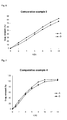
Fig. 2 cumulative amount of drug released (%) from formulations A and B plotted versus time (h); tested with beads dissolution system (USP apparatus 3 in combination with beads of density ranging from 1.1 g/ml to 1.5 g/ml), program: 1 h/ 20 DPM, 15 min/40 DPM, remaining testing time in 25 DPM; media: water. -
Fig. 3 cumulative amount of drug released (%) from formulations A and B plotted versus time (h); tested with beads dissolution system (USP apparatus 3 in combination with beads of density ranging from 1.1 g/ml to 1.5 g/ml), program: 1 h/ 20 DPM, 15 min/40 DPM, remaining testing time in 25 DPM; media: hydrogen carbonate buffer media pH 6.5 + 0.27% NaCl + 0.07% KCI + 0.005% CaCl2 -
Fig. 4 cumulative amount of drug released (%) from formulations A and B plotted versus time (h); tested with USP Apparatus 1 (basket method); 100 rpm, media: phosphate buffer, pH 6.8 -
Fig. 5 cumulative amount of drug released (%) from formulations A and B plotted versus time (h); tested with USP Apparatus 1 (basket method); 150 rpm, media: water + 0.8% NaCl + 0.04% KCI -
Fig. 6 cumulative amount of drug released (%) from formulations A and B plotted versus time (h); tested with USP Apparatus 2 (paddle method); 100 rpm, tablet in sinker, media: water. -
Fig. 7 cumulative amount of drug released (%) from formulations A and B plotted versus time (h); tested with USP Apparatus 3 (reciprocating inner tube); 1 h/ 20 DPM, 15 min/40 DPM, remaining test time in 25 DPM, media: water -
Fig. 8 cumulative amount of drug released (%) from formulations A and B plotted versus time (h); tested with USP Apparatus 3 (reciprocating inner tube); 1 h/ 20 DPM, 15 min/40 DPM, remaining test time in 25 DPM; media: hydrogen carbonate buffer, pH 6.5 + 0.27% NaCl + 0.07% KCI + 0.005% CaCl2. - The following examples are merely illustrative of the present invention and it should not be considered as limiting the scope of the invention in any way. The examples and modifications or other equivalents thereof will become apparent to those versed in the art in the light of the present entire disclosure.
- Two hydrophilic hydroxypropyl methylcellulose (HMPC) matrix tablet formulations (
diameter 8 mm) containing substance with pH independent solubility in water of less than 0.1 mg/ml, pKa 8.8 (weak acid) (formulation A and formulation B) were tested in human relative bioavailability study under fasting conditions. The study was conducted in 26 healthy volunteers in an open-label, randomized, crossover, single dose study design. Both formulations were tested for Cmax and AUC parameters, ratio A/B for both parameters was calculated. The results for Cmax ratio A/B was 122,3% and AUCt A/B ratio was 104,2%. High Cmax ratio was not reflected with conventional in vitro dissolution testing, therefore new method needed to be developed. - In the examples and comparable examples below the results are presented from testing the tablets with apparatus comprising the beads of density of 1.1 g/ml to 1.5 g/ml and with apparatus without said beads, respectively.
- The dissolution test procedure using beads was performed as follows: Testing media, which was water, was degassed and 250 ml was poured into each dissolution vessel. Dissolution vessels were placed in water bath to maintain temperature 37°C. 8 g of beads (
diameter 8 mm) were weighed and placed into inner compartment (3). Tablets A and B were weighed and placed on top of beads. The dissolution apparatus settings were 1 hour: 20 DPM, 15 min: 40 DPM and the remaining part of the test with 25 DPM. The middle 15 min phase simulates the gastric emptying phase. Sample time points were 1, 2, 4, 6, 8, 10 and 14 hours. After the samples were automatically collected they were analyzed on HPLC system and cumulative amount of the dissolved drug was calculated. Results are depicted inFig. 2 . - The dissolution test procedure using beads was performed as in example 1, only that hydrogen carbonate buffer media pH 6.5, further comprising 0.27% NaCl, 0.07% KCI and 0.005% CaCl2 was used as a testing media. Results (cumulative amount of drug released (%) from formulations A and B plotted versus time (h)) are depicted in
Fig. 3 . - Dissolution test procedure was performed on the USP apparatus 1 (basket method) at 100 rpm in a phosphate buffer (pH 6.8). Sample time points were again 1, 2, 4, 6, 8, 10 and 14 hours. After the samples were automatically collected they were analyzed on HPLC system and cumulative amount of the dissolved drug was calculated. Results are presented in
Fig. 4 . - Comparative example 2 was performed in the same way as in comparative example 1, only that the agitation was set at 150 rpm and the testing media used was water with 0.8% NaCl and 0.04% KCI. Results are shown in
Fig. 5 . - In comparable example 3 the dosage forms were tested by using USP Apparatus 2 (paddle method) set at 100 rpm. Tablet was placed in a sinker to avoid sticking and to prevent floating of the tablet in the media after the gel layer is formed. The testing media was water. Results are presented in
Fig. 6 . - Apparatus 3 (reciprocating inner tube) was used to test dissolution of the API from the formulations A and B. Agitation rate was set at 1 h at 20 DPM, 15 min at 40 DPM and the remaining test time at 25 DPM. The testing media was water. Cumulative amount of drug released (%) from formulations A and B plotted versus time (h) is depicted in
Fig. 7 . - Test was performed as in comparative example 4. Testing media was hydrogen carbonate buffer, pH 6.5, supplemented with 0.27% NaCl, 0.07% KCI and 0.005% CaCl2. Results are shown in
Fig. 6 . - Examples 1 and 2 show better discriminatory power of beads dissolution system than conventional dissolution tests shown in Comparative examples 1 to 5. Tests in examples 1 and 2 are also in good agreement with in vivo data.
- The dissolution system described in test Example 1 was used to develop the in vitro-in vivo correlation model for the tested extended release matrix tablet using Gastro Plus simulation software. A good linear correlation between the fraction of the absorbed drug in vivo and in vitro was observed with the r (linear regression coefficient) = 0.925. Based on this model the maximal plasma concentration (Cmax) was predicted and compared with the observed values. The percent prediction error (%PE) was calculated according:

- The average absolute percent prediction error was 7.3% (N=4) and the %PE for each tested matrix tablet was less than 15%, which demonstrates a good internal predictability of the in vivo in vitro correlation.
- No such good in vivo in vitro correlation can be obtained using the conventional dissolution methods without using beads of specific density, which is evident from Comparative examples 1, 2, 3, 4 and 5.
- In the above example, dissolution testing of the model drug is described. As should become apparent, the present invention can be applied for dissolution testing of other APIs formulated in different dosage forms. When testing other APIs, a testing media different from the described may be used, e.g. a relatively strong acidic aqueous media, a media comprising serum albumins or other means for chemically or physically improving solubility of the API to be tested. Also, various agitation rates can be applied. Furthermore, it is understood that the composition of the testing media will depend on the intestine conditions, for example fasted state or fed state, to be tested. Furthermore, the amount (mass) of beads used can depend on the size or shape of the formulation tested. The same is relevant for the diameter of beads used.
Claims (15)
- A process for testing dissolution of an active pharmaceutical ingredient comprising reciprocating a dosage form comprising the active pharmaceutical ingredient and beads comprising a density of 1.1 g/ml to 1.5 g/ml up and down in a testing media.
- The process for testing dissolution of an active pharmaceutical ingredient according to claim 1, wherein the dosage form is an extended release matrix pharmaceutical formulation.
- The process according to claim 1 or 2, wherein the beads are at least 25 % of a size of the dosage form.
- The process according to any one of the claims 1 to 3, wherein the beads comprise balls with diameter of at least 4 mm.
- An apparatus for testing dissolution of an active pharmaceutical ingredient capable of reciprocating a dosage form up and down in a testing media in combination with beads comprising a density of 1.1 g/ml to 1.5 g/ml and capable of inducing mechanical stress to the dosage form while the apparatus is in operation.
- The apparatus for testing dissolution of an active pharmaceutical ingredient capable of reciprocating a dosage form up and down in a testing media in combination with beads according to claim 5, wherein the dosage form and beads are in the testing media while the apparatus is in operation.
- The apparatus for testing dissolution of an active pharmaceutical ingredient capable of reciprocating a dosage form up and down in a testing media in combination with beads according to claim 5 or 6, wherein the beads comprise balls with diameter of at least 4 mm.
- Use of beads comprising a density of 1.1 g/ml to 1.5 g/ml for testing dissolution of an active pharmaceutical ingredient from a dosage form.
- Use of beads according to claim 8, wherein dosage form is an extended release matrix pharmaceutical formulation.
- Use of beads comprising a density of 1.1 g/ml to 1.5 g/ml in combination with an apparatus for testing dissolution of an active pharmaceutical ingredient capable of reciprocating a dosage form up and down in a testing media for testing dissolution of an active pharmaceutical ingredient from a dosage form.
- A process for obtaining a dosage form comprising an active pharmaceutical ingredient with desired dissolution, comprising steps of:a) providing at least one dosage form comprising the active pharmaceutical ingredient of predetermined composition and/or form,b) subjecting the at least one dosage form comprising the active pharmaceutical ingredient to a process according to any one of claims 1 to 4, andc) selecting the dosage form comprising an active pharmaceutical ingredient with desired dissolution,
ord) providing at least one other dosage form comprising the active pharmaceutical ingredient of predetermined composition and/or form, wherein the at least one other dosage form comprising the active pharmaceutical ingredient vary in composition and/or form from the at least one dosage form comprising active pharmaceutical ingredient, ande) subjecting the at least one other dosage form comprising the active pharmaceutical ingredient to a process according to any one of claims 1 to 4, andf) selecting the dosage form comprising an active pharmaceutical ingredient with desired dissolution. - The process according to claim 11, wherein the composition and/or form vary in pharmaceutically acceptable excipients, amount, particle size and/or polymorphic form, bulk density, charge of the said, technology used for preparing the dosage form; or load, particle size and/or polymorphic form, density, charge or the route of synthesis of pharmaceutical active ingredient.
- The process according to any one of claims 1 to 4, 11 or 12, wherein buffer mimicking a fed stomach is used as a testing media.
- The process according to any one of claims 1 to 4, or 11 to 13, further comprising replacing or changing the testing media during dissolution testing.
- A process for assaying or predicting in vivo dissolution of an active pharmaceutical ingredient, wherein a dissolution of the active pharmaceutical ingredient while employing process according to any one of claims 1 to 4, 13 or 14 is measured and/or determined.
Priority Applications (2)
| Application Number | Priority Date | Filing Date | Title |
|---|---|---|---|
| SI200930602T SI2320227T1 (en) | 2009-11-04 | 2009-11-04 | Dissolution apparatus comprising beads and process |
| EP09175011A EP2320227B1 (en) | 2009-11-04 | 2009-11-04 | Dissolution apparatus comprising beads and process |
Applications Claiming Priority (1)
| Application Number | Priority Date | Filing Date | Title |
|---|---|---|---|
| EP09175011A EP2320227B1 (en) | 2009-11-04 | 2009-11-04 | Dissolution apparatus comprising beads and process |
Publications (2)
| Publication Number | Publication Date |
|---|---|
| EP2320227A1 true EP2320227A1 (en) | 2011-05-11 |
| EP2320227B1 EP2320227B1 (en) | 2013-02-20 |
Family
ID=41786193
Family Applications (1)
| Application Number | Title | Priority Date | Filing Date |
|---|---|---|---|
| EP09175011A Active EP2320227B1 (en) | 2009-11-04 | 2009-11-04 | Dissolution apparatus comprising beads and process |
Country Status (2)
| Country | Link |
|---|---|
| EP (1) | EP2320227B1 (en) |
| SI (1) | SI2320227T1 (en) |
Cited By (2)
| Publication number | Priority date | Publication date | Assignee | Title |
|---|---|---|---|---|
| CN110954613A (en) * | 2019-12-06 | 2020-04-03 | 浙江仙琚医药科技有限公司 | Method for measuring dissolution rate of improved soft capsule preparation |
| RU2837929C1 (en) * | 2024-10-01 | 2025-04-07 | Общество с ограниченной ответственностью "Авиационные лакокрасочные технологии" | Method of producing solution from starting material in organic or inorganic solvents |
Citations (1)
| Publication number | Priority date | Publication date | Assignee | Title |
|---|---|---|---|---|
| GB2136123A (en) * | 1983-03-04 | 1984-09-12 | Akbar Noormohammadi | Dissolution Testing Machine |
-
2009
- 2009-11-04 EP EP09175011A patent/EP2320227B1/en active Active
- 2009-11-04 SI SI200930602T patent/SI2320227T1/en unknown
Patent Citations (1)
| Publication number | Priority date | Publication date | Assignee | Title |
|---|---|---|---|---|
| GB2136123A (en) * | 1983-03-04 | 1984-09-12 | Akbar Noormohammadi | Dissolution Testing Machine |
Non-Patent Citations (6)
| Title |
|---|
| AOKI S ET AL: "Determination of the mechanical impact force in the in vitro dissolution test and evaluation of the correlation between in vivo and in vitro release", INTERNATIONAL JOURNAL OF PHARMACEUTICS, ELSEVIER BV, NL, vol. 95, no. 1-3, 30 June 1993 (1993-06-30), pages 67 - 75, XP025568686, ISSN: 0378-5173, [retrieved on 19930630] * |
| DRESSMAN ET AL., EUROPEAN JOURNAL OF PHARMACEUTICAL SCIENCES, vol. 11, no. 2, 2000, pages 73 - 80 |
| E. NICOLAIDES ET AL., PHARMACEUTICAL RESEARCH, vol. 16, no. 12, 1999, pages 1876 - 1882 |
| JOURNAL OF CONTROLLED RELEASE, vol. 81, 2002, pages 165 - 172 |
| MACHIDA Y ET AL: "A NEW METHOD OF DISSOLUTION TESTING FOR OILY DRUG PREPARATIONS USING AN IMPROVED APPARATUS", CHEMICAL AND PHARMACEUTICAL BULLETIN, PHARMACEUTICAL SOCIETY OF JAPAN, TOKYO, JP, vol. 34, no. 6, 1 June 1986 (1986-06-01), pages 2637 - 2641, XP001181375, ISSN: 0009-2363 * |
| V.H. SUNESEN ET AL., EUROPEAN JOURNAL OF PHARMACEUTICAL SCIENCES, vol. 24, 2005, pages 305 - 313 |
Cited By (2)
| Publication number | Priority date | Publication date | Assignee | Title |
|---|---|---|---|---|
| CN110954613A (en) * | 2019-12-06 | 2020-04-03 | 浙江仙琚医药科技有限公司 | Method for measuring dissolution rate of improved soft capsule preparation |
| RU2837929C1 (en) * | 2024-10-01 | 2025-04-07 | Общество с ограниченной ответственностью "Авиационные лакокрасочные технологии" | Method of producing solution from starting material in organic or inorganic solvents |
Also Published As
| Publication number | Publication date |
|---|---|
| SI2320227T1 (en) | 2013-07-31 |
| EP2320227B1 (en) | 2013-02-20 |
Similar Documents
| Publication | Publication Date | Title |
|---|---|---|
| Chawla et al. | A means to address regional variability in intestinal drug absorption | |
| Stops et al. | Floating dosage forms to prolong gastro-retention—The characterisation of calcium alginate beads | |
| Liu et al. | Preparation, formation mechanism and in vitro dynamic digestion behavior of quercetin-loaded liposomes in hydrogels | |
| Pillay et al. | In vitro release modulation from crosslinked pellets for site-specific drug delivery to the gastrointestinal tract: I. Comparison of pH-responsive drug release and associated kinetics | |
| Sharma et al. | Microspheres as drug carriers for controlled drug delivery: a review | |
| Bermejo et al. | Oral controlled release dosage forms: dissolution versus diffusion | |
| Seidlitz et al. | In-vitro dissolution methods for controlled release parenterals and their applicability to drug-eluting stent testing | |
| Berardi et al. | Controlled release properties of zein powder filled into hard gelatin capsules | |
| Neumann et al. | Development of a furosemide-containing expandable system for gastric retention | |
| Ranjan et al. | Recent advances in dissolution testing and their use to improve in vitro–in vivo correlations in oral drug formulations | |
| Pezzini et al. | Applications of USP apparatus 3 in assessing the in vitro release of solid oral dosage forms | |
| Hasan et al. | A key approach on dissolution of pharmaceutical dosage forms | |
| Arora et al. | Formulation and evaluation of mucoadhesive matrix tablets of taro gum: optimization using response surface methodology | |
| WO2021215039A1 (en) | Method and device for evaluating oral absorbability of drug | |
| KR102424237B1 (en) | Oral Delivery of Mammalian Cells for Therapeutic Use | |
| Chavda et al. | Development of bioadhesive chitosan superporous hydrogel composite particles based intestinal drug delivery system | |
| Navamajiti et al. | Silk fibroin-based coatings for pancreatin-dependent drug delivery | |
| Mady et al. | Bioadhesive behaviors of HPMC E5: comparative analysis of various techniques, histological and human radiological evidence | |
| EP2320227B1 (en) | Dissolution apparatus comprising beads and process | |
| Bogataj et al. | Development of a glass-bead device for dissolution testing | |
| Cascone et al. | The influence of dissolution conditions on the drug ADME phenomena | |
| Annisa et al. | A novel formulation of ketoconazole entrapped in alginate with anionic polymer beads for solubility enhancement: Preparation and characterization | |
| Davidovich‐Pinhas et al. | Methods to study mucoadhesive dosage forms | |
| EP3137113A1 (en) | Melt-processed polymeric cellular dosage form | |
| CN113041363A (en) | Magnetic hollow protein microsphere and preparation method and application thereof |
Legal Events
| Date | Code | Title | Description |
|---|---|---|---|
| PUAI | Public reference made under article 153(3) epc to a published international application that has entered the european phase |
Free format text: ORIGINAL CODE: 0009012 |
|
| AK | Designated contracting states |
Kind code of ref document: A1 Designated state(s): AT BE BG CH CY CZ DE DK EE ES FI FR GB GR HR HU IE IS IT LI LT LU LV MC MK MT NL NO PL PT RO SE SI SK SM TR |
|
| AX | Request for extension of the european patent |
Extension state: AL BA RS |
|
| 17P | Request for examination filed |
Effective date: 20111111 |
|
| 17Q | First examination report despatched |
Effective date: 20111209 |
|
| RIC1 | Information provided on ipc code assigned before grant |
Ipc: B01F 1/00 20060101ALI20120518BHEP Ipc: G01N 33/15 20060101AFI20120518BHEP Ipc: B01F 11/00 20060101ALI20120518BHEP Ipc: G01N 13/00 20060101ALI20120518BHEP |
|
| GRAP | Despatch of communication of intention to grant a patent |
Free format text: ORIGINAL CODE: EPIDOSNIGR1 |
|
| GRAS | Grant fee paid |
Free format text: ORIGINAL CODE: EPIDOSNIGR3 |
|
| GRAA | (expected) grant |
Free format text: ORIGINAL CODE: 0009210 |
|
| AK | Designated contracting states |
Kind code of ref document: B1 Designated state(s): AT BE BG CH CY CZ DE DK EE ES FI FR GB GR HR HU IE IS IT LI LT LU LV MC MK MT NL NO PL PT RO SE SI SK SM TR |
|
| REG | Reference to a national code |
Ref country code: GB Ref legal event code: FG4D |
|
| REG | Reference to a national code |
Ref country code: CH Ref legal event code: EP |
|
| REG | Reference to a national code |
Ref country code: AT Ref legal event code: REF Ref document number: 597762 Country of ref document: AT Kind code of ref document: T Effective date: 20130315 |
|
| REG | Reference to a national code |
Ref country code: IE Ref legal event code: FG4D |
|
| REG | Reference to a national code |
Ref country code: DE Ref legal event code: R096 Ref document number: 602009013403 Country of ref document: DE Effective date: 20130418 |
|
| REG | Reference to a national code |
Ref country code: SE Ref legal event code: TRGR |
|
| REG | Reference to a national code |
Ref country code: AT Ref legal event code: MK05 Ref document number: 597762 Country of ref document: AT Kind code of ref document: T Effective date: 20130220 |
|
| REG | Reference to a national code |
Ref country code: NL Ref legal event code: VDEP Effective date: 20130220 |
|
| REG | Reference to a national code |
Ref country code: LT Ref legal event code: MG4D |
|
| PG25 | Lapsed in a contracting state [announced via postgrant information from national office to epo] |
Ref country code: NO Free format text: LAPSE BECAUSE OF FAILURE TO SUBMIT A TRANSLATION OF THE DESCRIPTION OR TO PAY THE FEE WITHIN THE PRESCRIBED TIME-LIMIT Effective date: 20130520 Ref country code: BG Free format text: LAPSE BECAUSE OF FAILURE TO SUBMIT A TRANSLATION OF THE DESCRIPTION OR TO PAY THE FEE WITHIN THE PRESCRIBED TIME-LIMIT Effective date: 20130520 Ref country code: AT Free format text: LAPSE BECAUSE OF FAILURE TO SUBMIT A TRANSLATION OF THE DESCRIPTION OR TO PAY THE FEE WITHIN THE PRESCRIBED TIME-LIMIT Effective date: 20130220 Ref country code: IS Free format text: LAPSE BECAUSE OF FAILURE TO SUBMIT A TRANSLATION OF THE DESCRIPTION OR TO PAY THE FEE WITHIN THE PRESCRIBED TIME-LIMIT Effective date: 20130620 Ref country code: LT Free format text: LAPSE BECAUSE OF FAILURE TO SUBMIT A TRANSLATION OF THE DESCRIPTION OR TO PAY THE FEE WITHIN THE PRESCRIBED TIME-LIMIT Effective date: 20130220 Ref country code: ES Free format text: LAPSE BECAUSE OF FAILURE TO SUBMIT A TRANSLATION OF THE DESCRIPTION OR TO PAY THE FEE WITHIN THE PRESCRIBED TIME-LIMIT Effective date: 20130531 |
|
| PG25 | Lapsed in a contracting state [announced via postgrant information from national office to epo] |
Ref country code: PL Free format text: LAPSE BECAUSE OF FAILURE TO SUBMIT A TRANSLATION OF THE DESCRIPTION OR TO PAY THE FEE WITHIN THE PRESCRIBED TIME-LIMIT Effective date: 20130220 Ref country code: FI Free format text: LAPSE BECAUSE OF FAILURE TO SUBMIT A TRANSLATION OF THE DESCRIPTION OR TO PAY THE FEE WITHIN THE PRESCRIBED TIME-LIMIT Effective date: 20130220 Ref country code: LV Free format text: LAPSE BECAUSE OF FAILURE TO SUBMIT A TRANSLATION OF THE DESCRIPTION OR TO PAY THE FEE WITHIN THE PRESCRIBED TIME-LIMIT Effective date: 20130220 Ref country code: PT Free format text: LAPSE BECAUSE OF FAILURE TO SUBMIT A TRANSLATION OF THE DESCRIPTION OR TO PAY THE FEE WITHIN THE PRESCRIBED TIME-LIMIT Effective date: 20130620 Ref country code: BE Free format text: LAPSE BECAUSE OF FAILURE TO SUBMIT A TRANSLATION OF THE DESCRIPTION OR TO PAY THE FEE WITHIN THE PRESCRIBED TIME-LIMIT Effective date: 20130220 Ref country code: GR Free format text: LAPSE BECAUSE OF FAILURE TO SUBMIT A TRANSLATION OF THE DESCRIPTION OR TO PAY THE FEE WITHIN THE PRESCRIBED TIME-LIMIT Effective date: 20130521 |
|
| PG25 | Lapsed in a contracting state [announced via postgrant information from national office to epo] |
Ref country code: HR Free format text: LAPSE BECAUSE OF FAILURE TO SUBMIT A TRANSLATION OF THE DESCRIPTION OR TO PAY THE FEE WITHIN THE PRESCRIBED TIME-LIMIT Effective date: 20130220 |
|
| PG25 | Lapsed in a contracting state [announced via postgrant information from national office to epo] |
Ref country code: EE Free format text: LAPSE BECAUSE OF FAILURE TO SUBMIT A TRANSLATION OF THE DESCRIPTION OR TO PAY THE FEE WITHIN THE PRESCRIBED TIME-LIMIT Effective date: 20130220 Ref country code: DK Free format text: LAPSE BECAUSE OF FAILURE TO SUBMIT A TRANSLATION OF THE DESCRIPTION OR TO PAY THE FEE WITHIN THE PRESCRIBED TIME-LIMIT Effective date: 20130220 Ref country code: CZ Free format text: LAPSE BECAUSE OF FAILURE TO SUBMIT A TRANSLATION OF THE DESCRIPTION OR TO PAY THE FEE WITHIN THE PRESCRIBED TIME-LIMIT Effective date: 20130220 Ref country code: NL Free format text: LAPSE BECAUSE OF FAILURE TO SUBMIT A TRANSLATION OF THE DESCRIPTION OR TO PAY THE FEE WITHIN THE PRESCRIBED TIME-LIMIT Effective date: 20130220 Ref country code: RO Free format text: LAPSE BECAUSE OF FAILURE TO SUBMIT A TRANSLATION OF THE DESCRIPTION OR TO PAY THE FEE WITHIN THE PRESCRIBED TIME-LIMIT Effective date: 20130220 Ref country code: SK Free format text: LAPSE BECAUSE OF FAILURE TO SUBMIT A TRANSLATION OF THE DESCRIPTION OR TO PAY THE FEE WITHIN THE PRESCRIBED TIME-LIMIT Effective date: 20130220 |
|
| PLBE | No opposition filed within time limit |
Free format text: ORIGINAL CODE: 0009261 |
|
| STAA | Information on the status of an ep patent application or granted ep patent |
Free format text: STATUS: NO OPPOSITION FILED WITHIN TIME LIMIT |
|
| PG25 | Lapsed in a contracting state [announced via postgrant information from national office to epo] |
Ref country code: IT Free format text: LAPSE BECAUSE OF FAILURE TO SUBMIT A TRANSLATION OF THE DESCRIPTION OR TO PAY THE FEE WITHIN THE PRESCRIBED TIME-LIMIT Effective date: 20130220 |
|
| 26N | No opposition filed |
Effective date: 20131121 |
|
| REG | Reference to a national code |
Ref country code: DE Ref legal event code: R097 Ref document number: 602009013403 Country of ref document: DE Effective date: 20131121 |
|
| PG25 | Lapsed in a contracting state [announced via postgrant information from national office to epo] |
Ref country code: MC Free format text: LAPSE BECAUSE OF FAILURE TO SUBMIT A TRANSLATION OF THE DESCRIPTION OR TO PAY THE FEE WITHIN THE PRESCRIBED TIME-LIMIT Effective date: 20130220 |
|
| REG | Reference to a national code |
Ref country code: IE Ref legal event code: MM4A |
|
| PG25 | Lapsed in a contracting state [announced via postgrant information from national office to epo] |
Ref country code: IE Free format text: LAPSE BECAUSE OF NON-PAYMENT OF DUE FEES Effective date: 20131104 |
|
| PG25 | Lapsed in a contracting state [announced via postgrant information from national office to epo] |
Ref country code: SM Free format text: LAPSE BECAUSE OF FAILURE TO SUBMIT A TRANSLATION OF THE DESCRIPTION OR TO PAY THE FEE WITHIN THE PRESCRIBED TIME-LIMIT Effective date: 20130220 |
|
| PG25 | Lapsed in a contracting state [announced via postgrant information from national office to epo] |
Ref country code: CY Free format text: LAPSE BECAUSE OF FAILURE TO SUBMIT A TRANSLATION OF THE DESCRIPTION OR TO PAY THE FEE WITHIN THE PRESCRIBED TIME-LIMIT Effective date: 20130220 Ref country code: TR Free format text: LAPSE BECAUSE OF FAILURE TO SUBMIT A TRANSLATION OF THE DESCRIPTION OR TO PAY THE FEE WITHIN THE PRESCRIBED TIME-LIMIT Effective date: 20130220 |
|
| PG25 | Lapsed in a contracting state [announced via postgrant information from national office to epo] |
Ref country code: MK Free format text: LAPSE BECAUSE OF FAILURE TO SUBMIT A TRANSLATION OF THE DESCRIPTION OR TO PAY THE FEE WITHIN THE PRESCRIBED TIME-LIMIT Effective date: 20130220 Ref country code: HU Free format text: LAPSE BECAUSE OF FAILURE TO SUBMIT A TRANSLATION OF THE DESCRIPTION OR TO PAY THE FEE WITHIN THE PRESCRIBED TIME-LIMIT; INVALID AB INITIO Effective date: 20091104 Ref country code: LU Free format text: LAPSE BECAUSE OF NON-PAYMENT OF DUE FEES Effective date: 20131104 |
|
| PG25 | Lapsed in a contracting state [announced via postgrant information from national office to epo] |
Ref country code: MT Free format text: LAPSE BECAUSE OF FAILURE TO SUBMIT A TRANSLATION OF THE DESCRIPTION OR TO PAY THE FEE WITHIN THE PRESCRIBED TIME-LIMIT Effective date: 20130220 |
|
| REG | Reference to a national code |
Ref country code: FR Ref legal event code: PLFP Year of fee payment: 7 |
|
| REG | Reference to a national code |
Ref country code: FR Ref legal event code: PLFP Year of fee payment: 8 |
|
| REG | Reference to a national code |
Ref country code: FR Ref legal event code: PLFP Year of fee payment: 9 |
|
| REG | Reference to a national code |
Ref country code: FR Ref legal event code: PLFP Year of fee payment: 10 |
|
| PGFP | Annual fee paid to national office [announced via postgrant information from national office to epo] |
Ref country code: FR Payment date: 20221021 Year of fee payment: 14 |
|
| PGFP | Annual fee paid to national office [announced via postgrant information from national office to epo] |
Ref country code: SE Payment date: 20221026 Year of fee payment: 14 Ref country code: GB Payment date: 20221020 Year of fee payment: 14 Ref country code: DE Payment date: 20221018 Year of fee payment: 14 |
|
| PGFP | Annual fee paid to national office [announced via postgrant information from national office to epo] |
Ref country code: CH Payment date: 20221103 Year of fee payment: 14 |
|
| REG | Reference to a national code |
Ref country code: DE Ref legal event code: R119 Ref document number: 602009013403 Country of ref document: DE |
|
| REG | Reference to a national code |
Ref country code: CH Ref legal event code: PL |
|
| REG | Reference to a national code |
Ref country code: SE Ref legal event code: EUG |
|
| PG25 | Lapsed in a contracting state [announced via postgrant information from national office to epo] |
Ref country code: CH Free format text: LAPSE BECAUSE OF NON-PAYMENT OF DUE FEES Effective date: 20231130 |
|
| GBPC | Gb: european patent ceased through non-payment of renewal fee |
Effective date: 20231104 |
|
| PG25 | Lapsed in a contracting state [announced via postgrant information from national office to epo] |
Ref country code: CH Free format text: LAPSE BECAUSE OF NON-PAYMENT OF DUE FEES Effective date: 20231130 |
|
| PG25 | Lapsed in a contracting state [announced via postgrant information from national office to epo] |
Ref country code: SE Free format text: LAPSE BECAUSE OF NON-PAYMENT OF DUE FEES Effective date: 20231105 |
|
| PG25 | Lapsed in a contracting state [announced via postgrant information from national office to epo] |
Ref country code: DE Free format text: LAPSE BECAUSE OF NON-PAYMENT OF DUE FEES Effective date: 20240601 |
|
| PG25 | Lapsed in a contracting state [announced via postgrant information from national office to epo] |
Ref country code: GB Free format text: LAPSE BECAUSE OF NON-PAYMENT OF DUE FEES Effective date: 20231104 |
|
| PG25 | Lapsed in a contracting state [announced via postgrant information from national office to epo] |
Ref country code: FR Free format text: LAPSE BECAUSE OF NON-PAYMENT OF DUE FEES Effective date: 20231130 |
|
| PG25 | Lapsed in a contracting state [announced via postgrant information from national office to epo] |
Ref country code: GB Free format text: LAPSE BECAUSE OF NON-PAYMENT OF DUE FEES Effective date: 20231104 Ref country code: FR Free format text: LAPSE BECAUSE OF NON-PAYMENT OF DUE FEES Effective date: 20231130 Ref country code: DE Free format text: LAPSE BECAUSE OF NON-PAYMENT OF DUE FEES Effective date: 20240601 |
|
| PGFP | Annual fee paid to national office [announced via postgrant information from national office to epo] |
Ref country code: SI Payment date: 20250924 Year of fee payment: 17 |