EP2318062B1 - New biomaterials, their preparation by electrospinning and their use in the biomedical and surgical field - Google Patents
New biomaterials, their preparation by electrospinning and their use in the biomedical and surgical field Download PDFInfo
- Publication number
- EP2318062B1 EP2318062B1 EP09781012.1A EP09781012A EP2318062B1 EP 2318062 B1 EP2318062 B1 EP 2318062B1 EP 09781012 A EP09781012 A EP 09781012A EP 2318062 B1 EP2318062 B1 EP 2318062B1
- Authority
- EP
- European Patent Office
- Prior art keywords
- biomaterials
- fibres
- comprised
- hyaluronic acid
- esterification
- Prior art date
- Legal status (The legal status is an assumption and is not a legal conclusion. Google has not performed a legal analysis and makes no representation as to the accuracy of the status listed.)
- Active
Links
Images
Classifications
-
- A—HUMAN NECESSITIES
- A61—MEDICAL OR VETERINARY SCIENCE; HYGIENE
- A61L—METHODS OR APPARATUS FOR STERILISING MATERIALS OR OBJECTS IN GENERAL; DISINFECTION, STERILISATION OR DEODORISATION OF AIR; CHEMICAL ASPECTS OF BANDAGES, DRESSINGS, ABSORBENT PADS OR SURGICAL ARTICLES; MATERIALS FOR BANDAGES, DRESSINGS, ABSORBENT PADS OR SURGICAL ARTICLES
- A61L27/00—Materials for grafts or prostheses or for coating grafts or prostheses
- A61L27/50—Materials characterised by their function or physical properties, e.g. injectable or lubricating compositions, shape-memory materials, surface modified materials
- A61L27/60—Materials for use in artificial skin
-
- Y—GENERAL TAGGING OF NEW TECHNOLOGICAL DEVELOPMENTS; GENERAL TAGGING OF CROSS-SECTIONAL TECHNOLOGIES SPANNING OVER SEVERAL SECTIONS OF THE IPC; TECHNICAL SUBJECTS COVERED BY FORMER USPC CROSS-REFERENCE ART COLLECTIONS [XRACs] AND DIGESTS
- Y10—TECHNICAL SUBJECTS COVERED BY FORMER USPC
- Y10T—TECHNICAL SUBJECTS COVERED BY FORMER US CLASSIFICATION
- Y10T442/00—Fabric [woven, knitted, or nonwoven textile or cloth, etc.]
- Y10T442/30—Woven fabric [i.e., woven strand or strip material]
- Y10T442/3065—Including strand which is of specific structural definition
-
- Y—GENERAL TAGGING OF NEW TECHNOLOGICAL DEVELOPMENTS; GENERAL TAGGING OF CROSS-SECTIONAL TECHNOLOGIES SPANNING OVER SEVERAL SECTIONS OF THE IPC; TECHNICAL SUBJECTS COVERED BY FORMER USPC CROSS-REFERENCE ART COLLECTIONS [XRACs] AND DIGESTS
- Y10—TECHNICAL SUBJECTS COVERED BY FORMER USPC
- Y10T—TECHNICAL SUBJECTS COVERED BY FORMER US CLASSIFICATION
- Y10T442/00—Fabric [woven, knitted, or nonwoven textile or cloth, etc.]
- Y10T442/60—Nonwoven fabric [i.e., nonwoven strand or fiber material]
- Y10T442/608—Including strand or fiber material which is of specific structural definition
- Y10T442/614—Strand or fiber material specified as having microdimensions [i.e., microfiber]
-
- Y—GENERAL TAGGING OF NEW TECHNOLOGICAL DEVELOPMENTS; GENERAL TAGGING OF CROSS-SECTIONAL TECHNOLOGIES SPANNING OVER SEVERAL SECTIONS OF THE IPC; TECHNICAL SUBJECTS COVERED BY FORMER USPC CROSS-REFERENCE ART COLLECTIONS [XRACs] AND DIGESTS
- Y10—TECHNICAL SUBJECTS COVERED BY FORMER USPC
- Y10T—TECHNICAL SUBJECTS COVERED BY FORMER US CLASSIFICATION
- Y10T442/00—Fabric [woven, knitted, or nonwoven textile or cloth, etc.]
- Y10T442/60—Nonwoven fabric [i.e., nonwoven strand or fiber material]
- Y10T442/608—Including strand or fiber material which is of specific structural definition
- Y10T442/614—Strand or fiber material specified as having microdimensions [i.e., microfiber]
- Y10T442/626—Microfiber is synthetic polymer
Definitions
- the present invention relates to the field of biomaterials produced for biomedical use, in particular of non-woven fabric, wherein fibres obtainable by the electrospinning technique are used.
- hyaluronic acid is a heteropolysaccharide composed of alternating residues of D-glucuronic acid and N-acetyl-D-glucosamine.
- Hyaluronic acid is one of the main molecules constituting the cartilaginous matrix but it also represents the major non-proteinic component of the synovial fluid. Being a highly hydrophile viscoelastic molecule, it imparts lubricating properties to the synovial fluid and for these reasons, for over 30 years HA has been used in the pathology of ostheoarthrosis, especially for treating the pain associated therewith ( Ghosh P. et al., Semin Arthritis Rheum, 2002, 32: 10-37 ).
- the hyaluronic acid contained in the synovial fluid also serves as a viscous lubricant during slow movements while during quick movements, with its elastic properties it absorbs any traumas or microtraumas that may affect the articulation; in pathological situations both the concentration of HA and its mean molecular weight decrease considerably, altering the physiological features of the synovial fluid.
- HA plays a fundamental role in the tissue healing process both from the structural point of view (in the extracellular matrix organization and in the control of its hydration) and as stimulating substance for a large number of processes wherein it intervenes either directly or indirectly (clotting, phagocyte activity, fibroblast proliferation, neovascularization, riepitelization, etc.)
- HA therefore plays an important role in the biological organism both as structural and mechanical support of tissues, and as active component in the physiology of tissue cells such as skin, tendons, muscles and cartilage.
- Hyaluronic acid esters are, among the derivatives of HA, particularly important in the process of forming new engineered tissues, since they can be processed into different shapes for making biomaterials usable for tissue reconstruction.
- the use of HA derivatives for making fibres (EP 0618817 B1 ) is in fact known, which processed as non-woven, make up a biomaterial in the form of three-dimensional matrix (free from cellular component) usable in the dermatological field; moreover, the above three-dimensional structures may be charged with mesenchymal cells and kept in vitro for a time required for favoring the proliferation and/or the partial differentiation thereof (EP 0863776 B1 ), for forming new artificial tissue to be implanted in vivo.
- biomaterials have particular biocompatibility features totally matching those of hyaluronic acid as is, but having a different biodegradability and so, when implanted in vivo, the residence time in situ is considerably higher than that of unmodified HA, thus allowing the reconstruction of the damaged tissue ( Campoccia D. et al., Biomaterials, 1998, 19: 2101-2127 ).
- Electrospinning technique which allows making ultra-thin fibres through the stretching carried out by an electrical field.
- a polymer solution is obtained according to this technique, using a polar solvent that may therefore make the solution conductive.
- a drop of the polymer solution is introduced, generally by a needle connected to earth, inside a very strong electrical field obtained by placing a screen with a large potential difference in front of the needle itself.
- the drop is attracted in the form of many small drops towards the screen and a very fine spray is formed, but under certain condition of surface tension and viscosity of the solution, the drop is stretched and an immediate evaporation of the solvent occurs by the effect of the large surface it takes on, thus obtaining polymer fibres having a nanometric diameter (even 50 nanometres).
- WO 93/11803 A discloses non-woven fabric materials comprising fibres of hyaluronic acid benzyl ester with diameter of tens of microns.
- the fibres are produced by wet extrusion in DMSO.
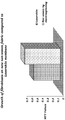
- Figure 1 shows the growth data of fibroblasts on the non-woven fabric according to the invention compared to a control biomaterial.
- Objects of the invention are new biomaterials in the form of fibres, tissues and non-woven fabric materials comprising fibres of hyaluronic acid benzyl ester with a % of esterification comprised between 50 - 100% having diameter smaller than a micron.
- the fibres may be composed of hyaluronic acid benzyl ester with a % of esterification comprised between 50 - 100% associated with esters of alginic acid or other natural, semi-synthetic or synthetic polymers.
- the woven fabric and the non-woven fabric prepared by the electrospinning technique may contain a single type of fibre or it may consist of different fibres consisting of various polymers.
- the subject biomaterials may comprise fibres consisting of at least an HA benzyl ester with a % of esterification comprised between 50 - 100% in combination with another polymer, or woven and non-woven fabrics with fibres at least 1 % made of HA benzyl ester with a % of esterification comprised between 50 - 100% and for the rest consisting of other polymers.
- Natural polymers that may be selected as components of the new biomaterial comprise collagen, hyaluronic acid, cellulose, chitin, chitosan, pectin, pectic acid, agar, agarose, gellan, alginic acid, starch, natural gum and polyglycan.
- Semi-synthetic polymers comprise cross-linked collagen and hyaluronic acid, and chemically modified derivatives of the natural polymers listed above.
- Synthetic polymers comprise polylactic acid, polyglycolic acid, copolymers of polylactic and polyglycolic acid, polycaprolacton and polyurethane.
- esters of hyaluronic acid it is meant esters of hyaluronic acid with benzyl ester (Hyaff 11) with a % of esterification comprised between 50 and 100%, preferably benzyl ester with a % of esterification comprised between 50 - 75% and 80 - 100%.
- a further object of the present invention is the improvement of the process of preparation of the new biomaterials by electrospinning of Hyaff 11 derivatives having a % of esterification comprised between 50 - 75%, in fact the powders of said derivatives are insoluble in the hereinafter reported solvents and therefore the Hyaff esterified from 50 - 75% would be not usable for the preparation of biomaterials by electrospinning.
- the Applicant surprisingly found that it is possible to solubilise, and therefore to stretch/work in an electric field, mixtures comprising Hyaff esterified 50-75% when the Hyaff is mixed up with polyvinylpirrolidone (PVP) in a w/w rate of 80:20 and preferably 87/13.
- PVP polyvinylpirrolidone
- Hyaff 11 esterified 80 - 100% without mixing with PVP since they are perfectly soluble in the hereinafter reported solvents.
- the advantages in using Hyaff 11 partially esterified are various, in particular they give the possibility of working a polysaccharide in the wanted form of biomaterial, choosing the preferred degradation time in vivo, and therefore the time of permanence in situ , in a way dependent on the kind of tissue which must be reconstructed: a longer time for cartilaginous or bone tissues and shorter for skin tissues.
- Solvents for preparing the solutions to be subjected to electrospinning according to the invention are normally selected from 1,1,1,3,3,3-hexafluoro-2-isopropanol and mixtures in all proportions of dimethyl sulfoxide and 1,1,1,3,3,3-hexafluoro-2-isopropanol and dimethylformamide (DMF) in admixture with 1,1,1,3,3,3-hexafluoro-2-isopropanol.
- DMF dimethylformamide
- concentrations of the solutions preferably of hyaluronic acid ester, according to the invention are normally comprised between 0.01 and 200 g/L, preferably between 10 and 50 g/L, more preferably between 15 and 30 g/L.
- the fibres are manufactured starting from the above solutions as described above in the comment to the state of the art.
- the distances between the polymer source and the fibre collection plane is comprised between 1 and 50 cm, preferably between 10 and 15 cm, and the high voltage values are comprised between 1 and 160 kV, preferably between 40 and 60 kV.
- the fibres thus obtained normally have a diameter comprised between 0.01 ⁇ m and 1.0 ⁇ m, preferably of 0.1 ⁇ m.
- Woven and non-woven fabric sheets are prepared with the fibres thus made essentially according to the prior art. Moreover it is possible to coat synthetic devices in order to increase their bio-compatibility in vivo.
- the fibres are evenly and randomly laid on the collection plane thanks to the strength of the electrical field received, and the make thereof takes place in the same electrical field.
- the fibres make a non-woven fabric thanks to the adherence of the fibres to each other and to the possible presence of traces of residual solvent that afterwards are eliminated.
- the fibres deposited according to a predefined drawing allow to obtain a bio-material in the form of woven fabric.
- the collection is made on a plane, connected to earth, which may either be stationary or rotating, and with different shapes.
- the Applicant has run comparative tests (described below) using a non-woven fabric based on a benzyl ester of HA having 100% esterification produced with an electrospinning technique, compared to the biomaterial called Hyalomatrix®, composed of benzyl ester of HA with 100% esterification, also processed as a non-woven fabric, and Laserskin®, holey membrane of benzyl ester of HA with 100% esterification.
- Hyalomatrix® is a three-dimensional matrix used by the man skilled in the art especially for the absorption of the exudate present in burns and/or in skin wounds
- Laserskin® is a known bi-dimensional support used for the growth of fibroblasts in the bioengineered regeneration of derma/skin.
- the test is run on a number of 5 pieces for each product and for each test required.
- the test is run with the same surface of the two products (2X2 cm) and for surface unit with the same weight of the product.
- the solvent for running the test is a sterile saline (sodium chloride 0.9%).
- the sample may be moved for favoring the imbibition thereof.
- This datum is very important since, the dry weight of the product being equal, an absorbing surface is obtained that is 3 times larger that allows, for example, a greater absorption of the exudate of a burn and/or skin wound than the products known in the art, without the need of compressing the wound with the selected dressing.
- Hyalomatrix® non-woven fabric dry weight: 30mg, surface: 3 fold less than the above, thus: 2 cm 2 , absorption for wettability (without compression): 2 to 2.5 fold the dry weight, therefore: 60-75g.
- the dry weight being equal, the new dressing absorbs an amount of exudate 4 times higher with a surface 3 times larger without compression of the wound or of the burn treated.
- Dermic fibroblasts were collected, upon informed consent, from subjects undergoing a surgery that had no alterations of the connective tissue.
- the isolated fibroblasts from biopsies were grown in DMEM containing 10% FCS.
- Fibroblasts between the third and the sixth step were seeded at a density of 500.000 per cm 2 of the biomaterials described above.
- the above biomaterials were kept for 7 days at 37°C in an atmosphere of 95% air and 5% CO2.
- Test MTT tetrazolium salt subject to redox reaction only by the mitochondrial enzymes of vital fibroblasts ( Dezinot F. et al., J Immunol Methods, 1986, 22(89): 271-277 ).
- the cells are incubated with a solution MTT 0.5 mg/ml for 3 hours.
- the dye is extracted from the cells by an extraction solution (90% isopropanol, 10% DMSO) for the readout at 540nm/660 nm.
- Figure 1 shows the considerable increase (more than 30%) of the growth of fibroblasts on the new non-woven fabric compared to the control biomaterial. Proliferation, for the compactness of the new substrate, takes place in two dimensions, whereas the non-woven fabric Hyalomatrix®, known in the art, only shows a three-dimensional proliferation and for this reason a membrane, Laserskin®, wherein the cell proliferation takes place in two dimensions, was used as control/comparison matrix.
- the new biomaterial related to the thickness of its fibres, it was possible to prepare non-woven fabrics that appear like porous surfaces whereon the fibroblasts can "anchor" better than a smooth surface like that of a Laserskin® membrane, the substrate normally used by the man skilled in the art for the proliferation of skin cells. Therefore, the material produced according to the electrospinning technique will better favor the skin regeneration in the case it is used as treatment for skin wounds.
- the new biomaterials in the form of fibre, woven fabric or non-woven fabric of the present invention may advantageously be used in various types of micro-surgeries in dermatology, odontology, stomatology, otorhinolaryngology, orthopaedics, neurosurgery and in the surgery of internal organs, wherein it is necessary to use a substance that may be metabolized by the organism and which is capable of facilitating the flap-take, the riepitelization of membrane mucosa, the stabilization of grafts and cavity filling.
- they may advantageously be used as buffer means in nose and inner ear surgery, for forming/regenerating new bioengineered tissues either in association or not with differentiated or undifferentiated cells, and finally for making new advanced dressings to use in the management of burns and skin wounds (comprising ulcers of various etiology, surgical wounds and abrasions) since, as proved above, they favor the exudate absorption and skin regeneration.
- a solution of ester of hyaluronic acid HYAFF 11 prepared at 15 g/L in 1,1,1,3,3,3-hexafluoro-2-isopropanol is spun in an electrical field at 54kV voltage.
- the fibres are formed in the space between the source and the revolving collecting cylinder, connected to earth, where afterwards they are laid for making the non-woven fabric. In this case, the distance is 15 cm.
- a solution of ester of hyaluronic acid HYAFF 11/p75 at 30 g/L in 1,1,1,3,3,3-hexafluoro-2-isopropanol was prepared under light stirring.
- the obtained solution is added with polyvinylpirrolidone (PVD) in order to increase the solubility in the solvent.
- PVD polyvinylpirrolidone
- the preferred ratio HYAFF/PVD is 87:13.
- the solution thus obtained is spun in the electrical field at a voltage value of 42 kV and a distance of 12 cm.
- the solution thus obtained is spun in the electrical field at a voltage value of 40kV and a distance of 12 cm.
- the solution thus obtained is spun in the electrical field at a voltage value of 50kV and a distance of 12 cm.
Landscapes
- Health & Medical Sciences (AREA)
- Chemical & Material Sciences (AREA)
- Dermatology (AREA)
- Medicinal Chemistry (AREA)
- Oral & Maxillofacial Surgery (AREA)
- Transplantation (AREA)
- Epidemiology (AREA)
- Life Sciences & Earth Sciences (AREA)
- Animal Behavior & Ethology (AREA)
- General Health & Medical Sciences (AREA)
- Public Health (AREA)
- Veterinary Medicine (AREA)
- Materials For Medical Uses (AREA)
- Spinning Methods And Devices For Manufacturing Artificial Fibers (AREA)
Description
- The present invention relates to the field of biomaterials produced for biomedical use, in particular of non-woven fabric, wherein fibres obtainable by the electrospinning technique are used.
- As is known, hyaluronic acid (HA) is a heteropolysaccharide composed of alternating residues of D-glucuronic acid and N-acetyl-D-glucosamine.
- It is a linear chain polymer with molecular weight that may range between 50,000 and 13 x 106 Da, according to the source it is obtained from and to the methods of preparation used.
- It is found in nature in pericellular gels, in the fundamental substance of the connective tissue of vertebrate organisms (of which it is one of the main components), in vitreous humor and in the umbilical cord.
- Hyaluronic acid is one of the main molecules constituting the cartilaginous matrix but it also represents the major non-proteinic component of the synovial fluid. Being a highly hydrophile viscoelastic molecule, it imparts lubricating properties to the synovial fluid and for these reasons, for over 30 years HA has been used in the pathology of ostheoarthrosis, especially for treating the pain associated therewith (Ghosh P. et al., Semin Arthritis Rheum, 2002, 32: 10-37).
- In fact, at an articular level the hyaluronic acid contained in the synovial fluid also serves as a viscous lubricant during slow movements while during quick movements, with its elastic properties it absorbs any traumas or microtraumas that may affect the articulation; in pathological situations both the concentration of HA and its mean molecular weight decrease considerably, altering the physiological features of the synovial fluid.
- It has also been proved that HA plays a fundamental role in the tissue healing process both from the structural point of view (in the extracellular matrix organization and in the control of its hydration) and as stimulating substance for a large number of processes wherein it intervenes either directly or indirectly (clotting, phagocyte activity, fibroblast proliferation, neovascularization, riepitelization, etc.) (Weigel P. et al., J Theoretical Biol, 1986:219-234; Abatangelo G. et al., J Surg Res, 1983, 35:410-416; Goa K. et al., Drugs, 1994, 47:536-566).
- Such widely recognized properties have long been used for preparing dressings used for treating wounds, ulcers and skin wounds of various origin.
- HA therefore plays an important role in the biological organism both as structural and mechanical support of tissues, and as active component in the physiology of tissue cells such as skin, tendons, muscles and cartilage.
- Hyaluronic acid esters are, among the derivatives of HA, particularly important in the process of forming new engineered tissues, since they can be processed into different shapes for making biomaterials usable for tissue reconstruction. The use of HA derivatives for making fibres (
EP 0618817 B1 ) is in fact known, which processed as non-woven, make up a biomaterial in the form of three-dimensional matrix (free from cellular component) usable in the dermatological field; moreover, the above three-dimensional structures may be charged with mesenchymal cells and kept in vitro for a time required for favoring the proliferation and/or the partial differentiation thereof (EP 0863776 B1 ), for forming new artificial tissue to be implanted in vivo. - The above biomaterials have particular biocompatibility features totally matching those of hyaluronic acid as is, but having a different biodegradability and so, when implanted in vivo, the residence time in situ is considerably higher than that of unmodified HA, thus allowing the reconstruction of the damaged tissue (Campoccia D. et al., Biomaterials, 1998, 19: 2101-2127).
- The so-called Electrospinning technique is known, which allows making ultra-thin fibres through the stretching carried out by an electrical field.
- A polymer solution is obtained according to this technique, using a polar solvent that may therefore make the solution conductive.
- A drop of the polymer solution is introduced, generally by a needle connected to earth, inside a very strong electrical field obtained by placing a screen with a large potential difference in front of the needle itself. The drop is attracted in the form of many small drops towards the screen and a very fine spray is formed, but under certain condition of surface tension and viscosity of the solution, the drop is stretched and an immediate evaporation of the solvent occurs by the effect of the large surface it takes on, thus obtaining polymer fibres having a nanometric diameter (even 50 nanometres).
- It should be noted that while the literature on this technique is very large, to date it has found poor application in the industry. UM IC ET AL: "Electro-Spinning and Electro-Blowing of Hyaluronic acid",BIOMACROMOLECULES, ACS, WASHINGTON, DC, US, vol. 5, no. 4, 5 July 2004 (2004-07-05), pages 1428-1436, discloses non-woven fabric materials comprising electrospun fibres of hyaluronic acid having diameter smaller than 1 micron.
-
WO 93/11803 A -
Figure 1 shows the growth data of fibroblasts on the non-woven fabric according to the invention compared to a control biomaterial. - Objects of the invention are new biomaterials in the form of fibres, tissues and non-woven fabric materials comprising fibres of hyaluronic acid benzyl ester with a % of esterification comprised between 50 - 100% having diameter smaller than a micron.
- It has now been surprisingly found that by subjecting solutions composed of HA benzyl ester with a % of esterification comprised between 50 - 100% to electrospinning it is possible to obtain fibres with a diameter below a micron that allow making biomaterials in the form of non-woven fabric or woven fabric. The fibres may be composed of hyaluronic acid benzyl ester with a % of esterification comprised between 50 - 100% associated with esters of alginic acid or other natural, semi-synthetic or synthetic polymers. The woven fabric and the non-woven fabric prepared by the electrospinning technique may contain a single type of fibre or it may consist of different fibres consisting of various polymers. Therefore, the subject biomaterials may comprise fibres consisting of at least an HA benzyl ester with a % of esterification comprised between 50 - 100% in combination with another polymer, or woven and non-woven fabrics with fibres at least 1 % made of HA benzyl ester with a % of esterification comprised between 50 - 100% and for the rest consisting of other polymers.
- Natural polymers that may be selected as components of the new biomaterial comprise collagen, hyaluronic acid, cellulose, chitin, chitosan, pectin, pectic acid, agar, agarose, gellan, alginic acid, starch, natural gum and polyglycan.
- Semi-synthetic polymers comprise cross-linked collagen and hyaluronic acid, and chemically modified derivatives of the natural polymers listed above.
- Synthetic polymers comprise polylactic acid, polyglycolic acid, copolymers of polylactic and polyglycolic acid, polycaprolacton and polyurethane.
- According to the invention, by esters of hyaluronic acid it is meant esters of hyaluronic acid with benzyl ester (Hyaff 11) with a % of esterification comprised between 50 and 100%, preferably benzyl ester with a % of esterification comprised between 50 - 75% and 80 - 100%.
- A further object of the present invention is the improvement of the process of preparation of the new biomaterials by electrospinning of Hyaff 11 derivatives having a % of esterification comprised between 50 - 75%, in fact the powders of said derivatives are insoluble in the hereinafter reported solvents and therefore the Hyaff esterified from 50 - 75% would be not usable for the preparation of biomaterials by electrospinning. However the Applicant surprisingly found that it is possible to solubilise, and therefore to stretch/work in an electric field, mixtures comprising Hyaff esterified 50-75% when the Hyaff is mixed up with polyvinylpirrolidone (PVP) in a w/w rate of 80:20 and preferably 87/13.
- Moreover it is possible to prepare solutions comprising Hyaff 11 esterified 80 - 100% without mixing with PVP since they are perfectly soluble in the hereinafter reported solvents. The advantages in using Hyaff 11 partially esterified are various, in particular they give the possibility of working a polysaccharide in the wanted form of biomaterial, choosing the preferred degradation time in vivo, and therefore the time of permanence in situ, in a way dependent on the kind of tissue which must be reconstructed: a longer time for cartilaginous or bone tissues and shorter for skin tissues.
- Solvents for preparing the solutions to be subjected to electrospinning according to the invention are normally selected from 1,1,1,3,3,3-hexafluoro-2-isopropanol and mixtures in all proportions of dimethyl sulfoxide and 1,1,1,3,3,3-hexafluoro-2-isopropanol and dimethylformamide (DMF) in admixture with 1,1,1,3,3,3-hexafluoro-2-isopropanol.
- The concentrations of the solutions preferably of hyaluronic acid ester, according to the invention, are normally comprised between 0.01 and 200 g/L, preferably between 10 and 50 g/L, more preferably between 15 and 30 g/L.
- The fibres are manufactured starting from the above solutions as described above in the comment to the state of the art.
- Preferably, according to the invention the distances between the polymer source and the fibre collection plane is comprised between 1 and 50 cm, preferably between 10 and 15 cm, and the high voltage values are comprised between 1 and 160 kV, preferably between 40 and 60 kV.
- The fibres thus obtained normally have a diameter comprised between 0.01µm and 1.0µm, preferably of 0.1µm.
- Woven and non-woven fabric sheets are prepared with the fibres thus made essentially according to the prior art. Moreover it is possible to coat synthetic devices in order to increase their bio-compatibility in vivo.
- In particular, the fibres are evenly and randomly laid on the collection plane thanks to the strength of the electrical field received, and the make thereof takes place in the same electrical field. The fibres make a non-woven fabric thanks to the adherence of the fibres to each other and to the possible presence of traces of residual solvent that afterwards are eliminated. The fibres deposited according to a predefined drawing allow to obtain a bio-material in the form of woven fabric.
- The collection is made on a plane, connected to earth, which may either be stationary or rotating, and with different shapes.
- The new biomaterials object of the present invention substantially differ from the woven fabrics and non-woven fabrics according to the prior art for the reasons listed below:
- 1. triple increase of the contact surface area with the in vivo tissue treated, the weight of the subject biomaterial being equal to that of reference/control according to the prior art;
- 2. greater compactness and thus smaller volume, the surface unit being equal compared to the reference/control biomaterial;
- 3. considerable increase of wettability (up to 5 times) compared to the reference/control biomaterial;
- 4. bi-dimensional cell growth;
- 5. considerable increase of cellular proliferation compared to a control growth carried out on reference material, consisting of the same derivative processed in the shape of a membrane for ensuring a bi-dimensional proliferation like the new subject biomaterials.
- To prove what stated, the Applicant has run comparative tests (described below) using a non-woven fabric based on a benzyl ester of HA having 100% esterification produced with an electrospinning technique, compared to the biomaterial called Hyalomatrix®, composed of benzyl ester of HA with 100% esterification, also processed as a non-woven fabric, and Laserskin®, holey membrane of benzyl ester of HA with 100% esterification. Hyalomatrix® is a three-dimensional matrix used by the man skilled in the art especially for the absorption of the exudate present in burns and/or in skin wounds, whereas Laserskin® is a known bi-dimensional support used for the growth of fibroblasts in the bioengineered regeneration of derma/skin.
- Comparison of the absorption and wettability properties of the new non-woven fabric produced with the electrospinning technique with Hyalomatrix®
- The test is run on a number of 5 pieces for each product and for each test required.
- The test is run with the same surface of the two products (2X2 cm) and for surface unit with the same weight of the product.
- The solvent for running the test is a sterile saline (sodium chloride 0.9%).
- The results are shown in the table.
Absorption with the same surface Absorption with the same weight Wettability Hyalomatrix® 1st test: 9 fold the dry weight 1st test: 10 fold the dry weight 1st test: 2 fold the dry weight 2nd test: 8 fold the dry weight 2nd test: 10 fold the dry weight 2nd test: 2 fold the dry weight 3rd test: 10 fold the dry weight 3rd test: 9 fold the dry weight 3rd test: 2.5 fold the dry weight 4th test: 10 fold the dry weight 4th test: 11 fold the dry weight 4th test: 2 fold the dry weight 5th test: 9 fold the dry weight 5th test: 9 fold the dry weight 5th test: 2.5 fold the dry weight Non-woven fabric (produced with the electrospinning technique) 1st test: 8 fold the dry weight 1st test: 9 fold the dry weight 1st test: 8 fold the dry weight 2nd test: 8 fold the dry weight 2nd test: 9 fold the dry weight 2nd test: 8 fold the dry weight 3rd test: 9 fold the dry weight 3rd test: 8 fold the dry weight 3rd test: 9 fold the dry weight 4th test: 8 fold the dry weight 4th test: 9 fold the dry weight 4th test: 10 fold the dry weight 5th test: 9 fold the dry weight 5th test: 8 fold the dry weight 5th test: 9 fold the dry weight - The tests run on the wettability of materials follow a procedure that requires the placement of the material inside a container (Petri dish) and adding a known amount of saline. The products should not be moved for any reason.
- For the absorption test, applying the same sample treatment procedure as described for wettability, the sample may be moved for favoring the imbibition thereof.
- Results: while for the new non-woven fabric object of the present invention the absorption values match those of wettability, for the Hyalomatrix® non-woven fabric, which represents the state of the art, it is clear that wettability tests are about 4 times lower than both the Hyalomatrix® absorption values and the wettability test of the new biomaterial. Moreover, it is important to point out that the product weight being equal, the new non-woven fabric has a contact surface area 3 times larger than that of the known product.
- This datum is very important since, the dry weight of the product being equal, an absorbing surface is obtained that is 3 times larger that allows, for example, a greater absorption of the exudate of a burn and/or skin wound than the products known in the art, without the need of compressing the wound with the selected dressing.
- Example: non-woven fabric from electrospinning: dry weight: 30mg, surface: 6 cm2, absorption for wettability (without compression): 8 to 10 fold the dry weight, therefore: 240-300mg.
- Hyalomatrix® non-woven fabric: dry weight: 30mg, surface: 3 fold less than the above, thus: 2 cm2, absorption for wettability (without compression): 2 to 2.5 fold the dry weight, therefore: 60-75g. End result: the dry weight being equal, the new dressing absorbs an amount of exudate 4 times higher with a surface 3 times larger without compression of the wound or of the burn treated.
- Assessment of the cellular viability of human fibroblasts seeded on the new non-woven product made with the electrospinning technique compared to Laserskin®, holey membrane of benzyl ester of HA
Experimental rationale: Human fibroblasts were seeded at a density of 500,000 cell/cm2 on 1 cmX1 cm pieces of tested materials. - At 7 days the samples were subject to MTT test for assessing the cellular viability.
- Dermic fibroblasts were collected, upon informed consent, from subjects undergoing a surgery that had no alterations of the connective tissue. The isolated fibroblasts from biopsies were grown in DMEM containing 10% FCS. Fibroblasts between the third and the sixth step were seeded at a density of 500.000 per cm2 of the biomaterials described above. The above biomaterials were kept for 7 days at 37°C in an atmosphere of 95% air and 5% CO2.
- The culture medium is added with ascorbic acid 50 µg/ml. Test MTT: tetrazolium salt subject to redox reaction only by the mitochondrial enzymes of vital fibroblasts (Dezinot F. et al., J Immunol Methods, 1986, 22(89): 271-277).
- Briefly, the cells are incubated with a solution MTT 0.5 mg/ml for 3 hours. At the end of the incubation, the dye is extracted from the cells by an extraction solution (90% isopropanol, 10% DMSO) for the readout at 540nm/660 nm.
- Results:
Figure 1 shows the considerable increase (more than 30%) of the growth of fibroblasts on the new non-woven fabric compared to the control biomaterial. Proliferation, for the compactness of the new substrate, takes place in two dimensions, whereas the non-woven fabric Hyalomatrix®, known in the art, only shows a three-dimensional proliferation and for this reason a membrane, Laserskin®, wherein the cell proliferation takes place in two dimensions, was used as control/comparison matrix. Thanks to the compactness of the new biomaterial, related to the thickness of its fibres, it was possible to prepare non-woven fabrics that appear like porous surfaces whereon the fibroblasts can "anchor" better than a smooth surface like that of a Laserskin® membrane, the substrate normally used by the man skilled in the art for the proliferation of skin cells. Therefore, the material produced according to the electrospinning technique will better favor the skin regeneration in the case it is used as treatment for skin wounds. - The new biomaterials in the form of fibre, woven fabric or non-woven fabric of the present invention may advantageously be used in various types of micro-surgeries in dermatology, odontology, stomatology, otorhinolaryngology, orthopaedics, neurosurgery and in the surgery of internal organs, wherein it is necessary to use a substance that may be metabolized by the organism and which is capable of facilitating the flap-take, the riepitelization of membrane mucosa, the stabilization of grafts and cavity filling. Moreover, they may advantageously be used as buffer means in nose and inner ear surgery, for forming/regenerating new bioengineered tissues either in association or not with differentiated or undifferentiated cells, and finally for making new advanced dressings to use in the management of burns and skin wounds (comprising ulcers of various etiology, surgical wounds and abrasions) since, as proved above, they favor the exudate absorption and skin regeneration.
- The invention shall be more and better understood in the light of the following examples.
- A solution of ester of hyaluronic acid HYAFF 11 prepared at 15 g/L in 1,1,1,3,3,3-hexafluoro-2-isopropanol is spun in an electrical field at 54kV voltage. The fibres are formed in the space between the source and the revolving collecting cylinder, connected to earth, where afterwards they are laid for making the non-woven fabric. In this case, the distance is 15 cm.
- A solution of ester of hyaluronic acid HYAFF 11/p75 at 30 g/L in 1,1,1,3,3,3-hexafluoro-2-isopropanol was prepared under light stirring. The obtained solution is added with polyvinylpirrolidone (PVD) in order to increase the solubility in the solvent. The preferred ratio HYAFF/PVD is 87:13.
- The solution thus obtained is spun in the electrical field at a voltage value of 42 kV and a distance of 12 cm.
- A solution of ester of hyaluronic acid HYAFF 11/p80 at 40 g/L in 1,1,1,3,3,3-hexafluoro-2-isopropanol was prepared under light stirring.
- The solution thus obtained is spun in the electrical field at a voltage value of 40kV and a distance of 12 cm.
- A solution of ester of hyaluronic acid HYAFF 11 at 50 g/L in 1,1,1,3,3,3-hexafluoro-2-isopropanol was prepared under light stirring.
- The solution thus obtained is spun in the electrical field at a voltage value of 50kV and a distance of 12 cm.
Claims (17)
- Biomaterials in the form of woven or non-woven fabric comprising fibres having diameter smaller than a micron of hyaluronic acid derivatives made of hyaluronic acid benzyl ester with a % of esterification comprised between 50 - 100% obtained by electrospinning technique.
- Biomaterials according to Claim 1 wherein said fibres have diameter comprised between 0,01 µm and 1,0 µm.
- Biomaterials according to Claim 2 wherein said fibres have diameter of 0,1 µm.
- Biomaterials according to Claim 1 wherein said derivatives are used in combination or associated with esters of alginic acid or other natural, semi-synthetic or synthetic polymers.
- Biomaterials according to claims 1 - 4 consisting of a unique kind of fibres or fibres consisting of various polymers.
- Biomaterials according to claim 5 comprising fibres consisting of at least fibres of HA benzyl ester with a % of esterification comprised between 50 - 100% in combination with another polymer or fibres consisting of at least 1% of HA esters and for the rest of natural, semi-synthetic or synthetic polymers.
- Biomaterials according to claims 4 and 6 wherein said natural polymers are chosen among: collagen, hyaluronic acid, cellulose, chitin, chitosan, pectin, pectic acid, agar, agarose, gellan, alginic acid, starches, natural gums, polyglycans.
- Biomaterials according to claims 4 and 6 wherein said semi-synthetic polymers are chosen among: cross-linked collagen and hyaluronic acid and chemically modified derivatives of the polymers according to claim 6.
- Biomaterials according to Claims 4 and 6 wherein said synthetic polymers are chosen among: polylactic acid, polyglycolic acid, copolymers of polylactic and polyglycolic acid, polycaprolacton and polyurethane.
- Fibres having diameter smaller than a micron of hyaluronic acid derivatives made of HA benzyl ester with a % of esterification comprised between 50 - 100% obtained by electrospinning technique.
- Biomaterials and fibres according to claims 1 - 10 for the preparation of coatings, medication tools and/or bioengineered biomaterials.
- Biomaterials and fibres according to Claims 1 - 10 for use in a method of absorption of the exudate present in burns and/or in skin wounds or for the growth of fibroblasts in the regeneration of derma/skin.
- Biomaterials and fibres according to Claims 11-12 for use in dermatology, odontology, stomatology, otorhinolaryngology, orthopaedics, neurosurgery and in the surgery of internal organs
- Biomaterials and fibres according to Claims 11-12 for use as tampons in the surgical treatment of nose and ears.
- Biomaterials accordig to Claim 1 wherein said % of esterification is comprised between 50 - 75%.
- Biomaterials according to claim 1 wherein said % of esterification is comprised between 80 - 100%
- Process for the preparation by electrospinning of biomaterials and fibres wherein:- a hyaluronic acid benzyl ester with a % of esterification comprised between 50 - 75% is mixed up with polyvinylpirrolidone (PVP) in a w/w rate of 80:20, preferably 87:13;- the mixture is solubilised in the appropriate solvent;- the solution is submitted to electrospinning.
Applications Claiming Priority (2)
| Application Number | Priority Date | Filing Date | Title |
|---|---|---|---|
| ITFI2008A000143A IT1391734B1 (en) | 2008-07-29 | 2008-07-29 | NEW BIOMATERIALS, THEIR PREPARATION FOR ELECTROSPINNING AND THEIR USE IN BIOMEDICAL AND SURGICAL FIELDS. |
| PCT/EP2009/059535 WO2010012653A2 (en) | 2008-07-29 | 2009-07-24 | New biomaterials, their preparation by electrospinning and their use in the biomedical and surgical field |
Publications (2)
| Publication Number | Publication Date |
|---|---|
| EP2318062A2 EP2318062A2 (en) | 2011-05-11 |
| EP2318062B1 true EP2318062B1 (en) | 2017-04-05 |
Family
ID=40481772
Family Applications (1)
| Application Number | Title | Priority Date | Filing Date |
|---|---|---|---|
| EP09781012.1A Active EP2318062B1 (en) | 2008-07-29 | 2009-07-24 | New biomaterials, their preparation by electrospinning and their use in the biomedical and surgical field |
Country Status (8)
| Country | Link |
|---|---|
| US (1) | US8865964B2 (en) |
| EP (1) | EP2318062B1 (en) |
| DK (1) | DK2318062T3 (en) |
| ES (1) | ES2630039T3 (en) |
| HU (1) | HUE033846T2 (en) |
| IT (1) | IT1391734B1 (en) |
| PL (1) | PL2318062T3 (en) |
| WO (1) | WO2010012653A2 (en) |
Cited By (1)
| Publication number | Priority date | Publication date | Assignee | Title |
|---|---|---|---|---|
| CN107754016A (en) * | 2017-10-31 | 2018-03-06 | 无锡中科光远生物材料有限公司 | A kind of preparation method of polylactic acid/chitosan composite nano fiber scaffold for heart tissue engineering |
Families Citing this family (12)
| Publication number | Priority date | Publication date | Assignee | Title |
|---|---|---|---|---|
| US9428817B2 (en) * | 2010-07-30 | 2016-08-30 | Nike, Inc. | Footwear and other products incorporating cultured leather |
| EP3129464B1 (en) | 2014-04-10 | 2019-08-28 | The Trustees of Columbia University in the City of New York | Methods, compositions, and systems for activation and expansion of cells |
| CZ2014451A3 (en) | 2014-06-30 | 2016-01-13 | Contipro Pharma A.S. | Antitumor composition based on hyaluronic acid and inorganic nanoparticles, process of its preparation and use |
| CZ309295B6 (en) | 2015-03-09 | 2022-08-10 | Contipro A.S. | Self-supporting, biodegradable film based on hydrophobized hyaluronic acid, method of its preparation and use |
| CZ306479B6 (en) | 2015-06-15 | 2017-02-08 | Contipro A.S. | A method of crosslinking polysaccharides by using photolabile protecting groups |
| CZ306662B6 (en) | 2015-06-26 | 2017-04-26 | Contipro A.S. | Sulphated polysaccharides derivatives, the method of their preparation, the method of their modification and the use |
| WO2017192776A1 (en) | 2016-05-03 | 2017-11-09 | The Trustees Of Columbia University In The City Of New York | Method for improving expansion of t cells from patients |
| CZ308106B6 (en) | 2016-06-27 | 2020-01-08 | Contipro A.S. | Unsaturated derivatives of polysaccharides, their preparation and their use |
| US10590577B2 (en) | 2016-08-02 | 2020-03-17 | Fitesa Germany Gmbh | System and process for preparing polylactic acid nonwoven fabrics |
| US11441251B2 (en) | 2016-08-16 | 2022-09-13 | Fitesa Germany Gmbh | Nonwoven fabrics comprising polylactic acid having improved strength and toughness |
| CN107412881B (en) * | 2017-08-01 | 2020-10-16 | 浙江理工大学 | Preparation method of composite enhanced artificial skin receptor |
| IL275811B2 (en) | 2018-01-02 | 2025-05-01 | Cartiheal 2009 Ltd | Implantation protocol for optimized solid substrates for promoting cell and tissue growth |
Family Cites Families (12)
| Publication number | Priority date | Publication date | Assignee | Title |
|---|---|---|---|---|
| US5824335A (en) * | 1991-12-18 | 1998-10-20 | Dorigatti; Franco | Non-woven fabric material comprising auto-crosslinked hyaluronic acid derivatives |
| IT1254170B (en) * | 1991-12-18 | 1995-09-11 | Mini Ricerca Scient Tecnolog | COMPOSITE MEMBRANES FOR GUIDED REGENERATION OF FABRICS |
| IT1254704B (en) * | 1991-12-18 | 1995-10-09 | Mini Ricerca Scient Tecnolog | NON-WOVEN FABRIC ESSENTIALLY CONSTITUTED FROM DERIVATIVES OF HYALURONIC ACID |
| US20040018226A1 (en) * | 1999-02-25 | 2004-01-29 | Wnek Gary E. | Electroprocessing of materials useful in drug delivery and cell encapsulation |
| US20070225631A1 (en) * | 2002-10-04 | 2007-09-27 | Bowlin Gary L | Sealants for Skin and Other Tissues |
| US7083697B2 (en) * | 2002-12-30 | 2006-08-01 | Boston Scientific Scimed, Inc. | Porous spun polymeric structures and method of making same |
| WO2005065079A2 (en) * | 2003-11-10 | 2005-07-21 | Angiotech International Ag | Medical implants and fibrosis-inducing agents |
| US20070299043A1 (en) * | 2005-10-03 | 2007-12-27 | Hunter William L | Anti-scarring drug combinations and use thereof |
| US8883190B2 (en) * | 2006-12-01 | 2014-11-11 | Wake Forest University Health Sciences | Urologic devices incorporating collagen inhibitors |
| WO2008072379A1 (en) * | 2006-12-13 | 2008-06-19 | Fujifilm Corporation | Method for producing modified biopolymer and method for crosslinking biopolymers |
| US8414356B2 (en) * | 2008-10-31 | 2013-04-09 | The Invention Science Fund I, Llc | Systems, devices, and methods for making or administering frozen particles |
| US8246576B2 (en) * | 2009-05-18 | 2012-08-21 | Surmodics, Inc. | Method and apparatus for delivery of a therapeutic agent with an expandable medical device |
-
2008
- 2008-07-29 IT ITFI2008A000143A patent/IT1391734B1/en active
-
2009
- 2009-07-24 ES ES09781012.1T patent/ES2630039T3/en active Active
- 2009-07-24 HU HUE09781012A patent/HUE033846T2/en unknown
- 2009-07-24 PL PL09781012T patent/PL2318062T3/en unknown
- 2009-07-24 WO PCT/EP2009/059535 patent/WO2010012653A2/en not_active Ceased
- 2009-07-24 US US13/056,541 patent/US8865964B2/en active Active
- 2009-07-24 EP EP09781012.1A patent/EP2318062B1/en active Active
- 2009-07-24 DK DK09781012.1T patent/DK2318062T3/en active
Non-Patent Citations (1)
| Title |
|---|
| None * |
Cited By (1)
| Publication number | Priority date | Publication date | Assignee | Title |
|---|---|---|---|---|
| CN107754016A (en) * | 2017-10-31 | 2018-03-06 | 无锡中科光远生物材料有限公司 | A kind of preparation method of polylactic acid/chitosan composite nano fiber scaffold for heart tissue engineering |
Also Published As
| Publication number | Publication date |
|---|---|
| DK2318062T3 (en) | 2017-06-19 |
| EP2318062A2 (en) | 2011-05-11 |
| WO2010012653A2 (en) | 2010-02-04 |
| WO2010012653A3 (en) | 2010-06-24 |
| PL2318062T3 (en) | 2017-09-29 |
| IT1391734B1 (en) | 2012-01-27 |
| ITFI20080143A1 (en) | 2010-01-30 |
| US20110196328A1 (en) | 2011-08-11 |
| ES2630039T3 (en) | 2017-08-17 |
| US8865964B2 (en) | 2014-10-21 |
| HUE033846T2 (en) | 2018-01-29 |
Similar Documents
| Publication | Publication Date | Title |
|---|---|---|
| DK2318062T3 (en) | New biomaterials, their production by electrospinning and their use in the field of biomedicine and surgery | |
| AU757102B2 (en) | Cross-linked hyaluronic acids and medical uses thereof | |
| Li et al. | Hyaluronic acid oligosaccharides modified mineralized collagen and chitosan with enhanced osteoinductive properties for bone tissue engineering | |
| Aghmiuni et al. | Fabrication of 3D hybrid scaffold by combination technique of electrospinning-like and freeze-drying to create mechanotransduction signals and mimic extracellular matrix function of skin | |
| Westin et al. | Differentiation of dental pulp stem cells into chondrocytes upon culture on porous chitosan-xanthan scaffolds in the presence of kartogenin | |
| DE69534759T2 (en) | Polyanionic polysaccharides and hydrophobic bioabsorbable polymer-containing compositions | |
| US20090087469A1 (en) | Alginate-based nanofibers and related scaffolds | |
| AU765563B2 (en) | Three-dimensional structures containing hyaluronic acid derivatives obtained by the supercritical antisolvent technique | |
| Bazmandeh et al. | Hyaluronic acid coated electrospun chitosan-based nanofibers prepared by simultaneous stabilizing and coating | |
| Rajora et al. | Evaluating neem gum-polyvinyl alcohol (NGP-PVA) blend nanofiber mat as a novel platform for wound healing in murine model | |
| ITPD980037A1 (en) | SULFATED HYALURONIC ACID AND ITS DERIVATIVES COVALENTLY LINKED TO SYNTHETIC POLYMERS FOR THE PREPARATION OF BIOMATERIALS AND FOR COATING | |
| Ye et al. | Sulfated glyco-based hydrogels as self-healing, adhesive, and anti-inflammatory dressings for wound healing | |
| KR100545404B1 (en) | Nonwoven fabric consisting of chitin or chitosan nanofibers (superfine fibers) | |
| Pitarresi et al. | Electrospinning of α, β-poly (N-2-hydroxyethyl)-dl-aspartamide-graft-polylactic acid to produce a fibrillar scaffold | |
| CN112023108A (en) | Three-dimensional dressing and preparation method thereof | |
| Wu et al. | Biomaterials for Peripheral Nerve Injury Repair | |
| MEESA et al. | Characterization of nanofibrous scaffolds from blends of gelatin/PCL/CMC for hard tissue engineering application | |
| Radu et al. | Fibrous polymers in textile prospect for tissue engineering development | |
| Leon Leal | Fabrication and Charcaterization of Pullulan-Collagen Nanofibers via Forcespinning | |
| Liu et al. | An oxygen-releasing dual-modified chitosan/oxidized hyaluronic acid hydrogel with integrated antibacterial and hemostatic properties for accelerated wound healing | |
| Leon | Fabrication and Characterization of Pullulan/Collagen/Chondroitin Sulfate Nanofibers via Forcespinning | |
| Nandhini et al. | PREPARATION AND CHARACTERISATION OF COLLAGEN/CHITOSAN/SODIUM ALGINATE BIOCOMPOSITE ELECTROSPUN NANOFIBERS | |
| Federico | Advanced electrospun matrices based on polysaccharide derivatives for applications in regenerative medicine | |
| DE102012219880B4 (en) | METHOD FOR SOLID PHASE SULPHATING OF POLY (D-GLUCOSAMINE-CO-N-D-ACETYLGLUCOSAMINE) EN | |
| US20210030917A1 (en) | Nanofibrous adhesion barrier |
Legal Events
| Date | Code | Title | Description |
|---|---|---|---|
| PUAI | Public reference made under article 153(3) epc to a published international application that has entered the european phase |
Free format text: ORIGINAL CODE: 0009012 |
|
| 17P | Request for examination filed |
Effective date: 20110225 |
|
| AK | Designated contracting states |
Kind code of ref document: A2 Designated state(s): AT BE BG CH CY CZ DE DK EE ES FI FR GB GR HR HU IE IS IT LI LT LU LV MC MK MT NL NO PL PT RO SE SI SK SM TR |
|
| AX | Request for extension of the european patent |
Extension state: AL BA RS |
|
| DAX | Request for extension of the european patent (deleted) | ||
| 17Q | First examination report despatched |
Effective date: 20120319 |
|
| GRAP | Despatch of communication of intention to grant a patent |
Free format text: ORIGINAL CODE: EPIDOSNIGR1 |
|
| INTG | Intention to grant announced |
Effective date: 20161018 |
|
| GRAS | Grant fee paid |
Free format text: ORIGINAL CODE: EPIDOSNIGR3 |
|
| GRAA | (expected) grant |
Free format text: ORIGINAL CODE: 0009210 |
|
| RAP1 | Party data changed (applicant data changed or rights of an application transferred) |
Owner name: ANIKA THERAPEUTICS S.R.L. |
|
| AK | Designated contracting states |
Kind code of ref document: B1 Designated state(s): AT BE BG CH CY CZ DE DK EE ES FI FR GB GR HR HU IE IS IT LI LT LU LV MC MK MT NL NO PL PT RO SE SI SK SM TR |
|
| REG | Reference to a national code |
Ref country code: GB Ref legal event code: FG4D |
|
| REG | Reference to a national code |
Ref country code: CH Ref legal event code: EP |
|
| REG | Reference to a national code |
Ref country code: AT Ref legal event code: REF Ref document number: 881194 Country of ref document: AT Kind code of ref document: T Effective date: 20170415 |
|
| REG | Reference to a national code |
Ref country code: IE Ref legal event code: FG4D |
|
| REG | Reference to a national code |
Ref country code: DE Ref legal event code: R096 Ref document number: 602009045247 Country of ref document: DE |
|
| REG | Reference to a national code |
Ref country code: CH Ref legal event code: NV Representative=s name: IPWAY DI FRANCESCO FABIO AND CO., CH |
|
| REG | Reference to a national code |
Ref country code: DK Ref legal event code: T3 Effective date: 20170613 |
|
| REG | Reference to a national code |
Ref country code: SE Ref legal event code: TRGR |
|
| REG | Reference to a national code |
Ref country code: FR Ref legal event code: PLFP Year of fee payment: 9 |
|
| REG | Reference to a national code |
Ref country code: NL Ref legal event code: FP |
|
| REG | Reference to a national code |
Ref country code: ES Ref legal event code: FG2A Ref document number: 2630039 Country of ref document: ES Kind code of ref document: T3 Effective date: 20170817 |
|
| REG | Reference to a national code |
Ref country code: LT Ref legal event code: MG4D |
|
| REG | Reference to a national code |
Ref country code: NO Ref legal event code: T2 Effective date: 20170405 |
|
| PG25 | Lapsed in a contracting state [announced via postgrant information from national office to epo] |
Ref country code: HR Free format text: LAPSE BECAUSE OF FAILURE TO SUBMIT A TRANSLATION OF THE DESCRIPTION OR TO PAY THE FEE WITHIN THE PRESCRIBED TIME-LIMIT Effective date: 20170405 Ref country code: FI Free format text: LAPSE BECAUSE OF FAILURE TO SUBMIT A TRANSLATION OF THE DESCRIPTION OR TO PAY THE FEE WITHIN THE PRESCRIBED TIME-LIMIT Effective date: 20170405 Ref country code: LT Free format text: LAPSE BECAUSE OF FAILURE TO SUBMIT A TRANSLATION OF THE DESCRIPTION OR TO PAY THE FEE WITHIN THE PRESCRIBED TIME-LIMIT Effective date: 20170405 Ref country code: GR Free format text: LAPSE BECAUSE OF FAILURE TO SUBMIT A TRANSLATION OF THE DESCRIPTION OR TO PAY THE FEE WITHIN THE PRESCRIBED TIME-LIMIT Effective date: 20170706 |
|
| PG25 | Lapsed in a contracting state [announced via postgrant information from national office to epo] |
Ref country code: BG Free format text: LAPSE BECAUSE OF FAILURE TO SUBMIT A TRANSLATION OF THE DESCRIPTION OR TO PAY THE FEE WITHIN THE PRESCRIBED TIME-LIMIT Effective date: 20170705 Ref country code: IS Free format text: LAPSE BECAUSE OF FAILURE TO SUBMIT A TRANSLATION OF THE DESCRIPTION OR TO PAY THE FEE WITHIN THE PRESCRIBED TIME-LIMIT Effective date: 20170805 Ref country code: LV Free format text: LAPSE BECAUSE OF FAILURE TO SUBMIT A TRANSLATION OF THE DESCRIPTION OR TO PAY THE FEE WITHIN THE PRESCRIBED TIME-LIMIT Effective date: 20170405 |
|
| REG | Reference to a national code |
Ref country code: DE Ref legal event code: R097 Ref document number: 602009045247 Country of ref document: DE |
|
| REG | Reference to a national code |
Ref country code: HU Ref legal event code: AG4A Ref document number: E033846 Country of ref document: HU |
|
| PG25 | Lapsed in a contracting state [announced via postgrant information from national office to epo] |
Ref country code: RO Free format text: LAPSE BECAUSE OF FAILURE TO SUBMIT A TRANSLATION OF THE DESCRIPTION OR TO PAY THE FEE WITHIN THE PRESCRIBED TIME-LIMIT Effective date: 20170405 Ref country code: EE Free format text: LAPSE BECAUSE OF FAILURE TO SUBMIT A TRANSLATION OF THE DESCRIPTION OR TO PAY THE FEE WITHIN THE PRESCRIBED TIME-LIMIT Effective date: 20170405 Ref country code: SK Free format text: LAPSE BECAUSE OF FAILURE TO SUBMIT A TRANSLATION OF THE DESCRIPTION OR TO PAY THE FEE WITHIN THE PRESCRIBED TIME-LIMIT Effective date: 20170405 |
|
| PLBE | No opposition filed within time limit |
Free format text: ORIGINAL CODE: 0009261 |
|
| STAA | Information on the status of an ep patent application or granted ep patent |
Free format text: STATUS: NO OPPOSITION FILED WITHIN TIME LIMIT |
|
| PG25 | Lapsed in a contracting state [announced via postgrant information from national office to epo] |
Ref country code: SM Free format text: LAPSE BECAUSE OF FAILURE TO SUBMIT A TRANSLATION OF THE DESCRIPTION OR TO PAY THE FEE WITHIN THE PRESCRIBED TIME-LIMIT Effective date: 20170405 |
|
| 26N | No opposition filed |
Effective date: 20180108 |
|
| PG25 | Lapsed in a contracting state [announced via postgrant information from national office to epo] |
Ref country code: SI Free format text: LAPSE BECAUSE OF FAILURE TO SUBMIT A TRANSLATION OF THE DESCRIPTION OR TO PAY THE FEE WITHIN THE PRESCRIBED TIME-LIMIT Effective date: 20170405 |
|
| REG | Reference to a national code |
Ref country code: FR Ref legal event code: PLFP Year of fee payment: 10 |
|
| PG25 | Lapsed in a contracting state [announced via postgrant information from national office to epo] |
Ref country code: MT Free format text: LAPSE BECAUSE OF NON-PAYMENT OF DUE FEES Effective date: 20170724 |
|
| PG25 | Lapsed in a contracting state [announced via postgrant information from national office to epo] |
Ref country code: MC Free format text: LAPSE BECAUSE OF FAILURE TO SUBMIT A TRANSLATION OF THE DESCRIPTION OR TO PAY THE FEE WITHIN THE PRESCRIBED TIME-LIMIT Effective date: 20170405 |
|
| PG25 | Lapsed in a contracting state [announced via postgrant information from national office to epo] |
Ref country code: CY Free format text: LAPSE BECAUSE OF NON-PAYMENT OF DUE FEES Effective date: 20170405 |
|
| PG25 | Lapsed in a contracting state [announced via postgrant information from national office to epo] |
Ref country code: MK Free format text: LAPSE BECAUSE OF FAILURE TO SUBMIT A TRANSLATION OF THE DESCRIPTION OR TO PAY THE FEE WITHIN THE PRESCRIBED TIME-LIMIT Effective date: 20170405 |
|
| PG25 | Lapsed in a contracting state [announced via postgrant information from national office to epo] |
Ref country code: TR Free format text: LAPSE BECAUSE OF FAILURE TO SUBMIT A TRANSLATION OF THE DESCRIPTION OR TO PAY THE FEE WITHIN THE PRESCRIBED TIME-LIMIT Effective date: 20170405 |
|
| PG25 | Lapsed in a contracting state [announced via postgrant information from national office to epo] |
Ref country code: PT Free format text: LAPSE BECAUSE OF FAILURE TO SUBMIT A TRANSLATION OF THE DESCRIPTION OR TO PAY THE FEE WITHIN THE PRESCRIBED TIME-LIMIT Effective date: 20170405 |
|
| REG | Reference to a national code |
Ref country code: AT Ref legal event code: UEP Ref document number: 881194 Country of ref document: AT Kind code of ref document: T Effective date: 20170405 |
|
| PGFP | Annual fee paid to national office [announced via postgrant information from national office to epo] |
Ref country code: HU Payment date: 20250723 Year of fee payment: 17 |
|
| PGFP | Annual fee paid to national office [announced via postgrant information from national office to epo] |
Ref country code: LU Payment date: 20250721 Year of fee payment: 17 Ref country code: NL Payment date: 20250721 Year of fee payment: 17 |
|
| PGFP | Annual fee paid to national office [announced via postgrant information from national office to epo] |
Ref country code: ES Payment date: 20250826 Year of fee payment: 17 |
|
| PGFP | Annual fee paid to national office [announced via postgrant information from national office to epo] |
Ref country code: DE Payment date: 20250722 Year of fee payment: 17 Ref country code: DK Payment date: 20250725 Year of fee payment: 17 |
|
| PGFP | Annual fee paid to national office [announced via postgrant information from national office to epo] |
Ref country code: NO Payment date: 20250725 Year of fee payment: 17 |
|
| PGFP | Annual fee paid to national office [announced via postgrant information from national office to epo] |
Ref country code: IT Payment date: 20250724 Year of fee payment: 17 Ref country code: PL Payment date: 20250711 Year of fee payment: 17 |
|
| PGFP | Annual fee paid to national office [announced via postgrant information from national office to epo] |
Ref country code: BE Payment date: 20250718 Year of fee payment: 17 Ref country code: GB Payment date: 20250722 Year of fee payment: 17 |
|
| PGFP | Annual fee paid to national office [announced via postgrant information from national office to epo] |
Ref country code: FR Payment date: 20250725 Year of fee payment: 17 Ref country code: AT Payment date: 20250722 Year of fee payment: 17 |
|
| PGFP | Annual fee paid to national office [announced via postgrant information from national office to epo] |
Ref country code: CH Payment date: 20250801 Year of fee payment: 17 Ref country code: SE Payment date: 20250722 Year of fee payment: 17 |
|
| PGFP | Annual fee paid to national office [announced via postgrant information from national office to epo] |
Ref country code: CZ Payment date: 20250715 Year of fee payment: 17 Ref country code: IE Payment date: 20250723 Year of fee payment: 17 |