EP2309385A1 - Software configuration management method and system - Google Patents
Software configuration management method and system Download PDFInfo
- Publication number
- EP2309385A1 EP2309385A1 EP09802783A EP09802783A EP2309385A1 EP 2309385 A1 EP2309385 A1 EP 2309385A1 EP 09802783 A EP09802783 A EP 09802783A EP 09802783 A EP09802783 A EP 09802783A EP 2309385 A1 EP2309385 A1 EP 2309385A1
- Authority
- EP
- European Patent Office
- Prior art keywords
- software
- software component
- product
- database
- component
- Prior art date
- Legal status (The legal status is an assumption and is not a legal conclusion. Google has not performed a legal analysis and makes no representation as to the accuracy of the status listed.)
- Withdrawn
Links
Images












Classifications
-
- G—PHYSICS
- G06—COMPUTING OR CALCULATING; COUNTING
- G06F—ELECTRIC DIGITAL DATA PROCESSING
- G06F8/00—Arrangements for software engineering
- G06F8/70—Software maintenance or management
- G06F8/71—Version control; Configuration management
Definitions
- the present invention relates to an automatic program configuration apparatus which retrieves a plurality of software components from a software component database storing existing software components, and combines them to automatically create a source code of a new product program, and particularly to configuration management of the above described software component database and product groups.
- a copied file may be utilized as it is, or a copied file may be utilized in a revised form.
- software utilizes other software, but it itself may also be utilized in the development of other software. That is, software utilizes other software as a derivation origin file, but it also can be utilized as a derivation origin file by other software.
- Software may be revised after it has been developed. At this time, if the revised content is one that should be committed to a derivation destination file, the content needs to be surely committed to the derivation destination file. Moreover, if the revised content is one that should be committed in a derivation origin file, the content needs to be surely committed in the derivation origin file. For example, the revised content is a correction of a bug, the revised content needs to be committed to all other derivation files. That is, maintenance management of software is needed.
- JP Patent Publication (Kokai) No. 2007-279883 describes a file configuration management apparatus which retains a correspondence relationship between a derivation origin file and a derivation destination file to prevent a failure to commit revisions between files which are in the correspondence relationship.
- the file configuration management apparatus performs the configuration management only in the unit of files and is unable to perform the configuration management in the unit of software components that make up a file.
- a software component represents an arbitrary set of text strings such as functions, procedures, statements, and the like included in a source file.
- JP Patent Publication (Kokai) No. 2007-102380 describes that a plurality of software components stored in a software component database is managed by use of a macro description. Thereby, replacement with a revised software component can be automated.
- Patent Document 1 JP Patent Publication (Kokai) No. 2007-279883
- Patent Document 2 JP Patent Publication (Kokai) No. 2007-102380
- JP Patent Publication (Kokai) No. 2007-102380 does not present any configuration management method of the software component database and the software products created from the database. That is, the patent document does not present a method of committing a revision of a software component to a software product that uses the software component when the software component included in a software component database is revised. Moreover, it also does not present a method of adding a new software component to a software component database.
- a software configuration management system includes a software component database which stores a software component that is a constituent element of a source file for making up a software product as a tree structure, and stores the software component in correspondence with a configuration information element that makes up the tree structure, and a software product management unit which stores a plurality of software products that are created by combining software components stored in the software component database, and accepts transmission/reception of data from a software component database management client which manages the software component database from outside, and a software product operation client which manages the software product management unit from outside.
- the software configuration management system of the present invention comprises:
- the software configuration management system of the present example includes a software configuration management server 100, a software component database management client 150, and software product operation clients 160 and 164.
- the software component database management client 150 and software product operation clients 160 and 164 may be present in plural in number.
- the software configuration management server 100 includes a configuration management unit 110, a software component database management unit 120, and a software product management unit 130.
- the configuration management unit 110 includes a database operation IF 111, a synchronization unit 112, a correspondence table update unit 113, and a product operation IF 114.
- the software component database management unit 120 includes a software component database 121, a software component/product correspondence table 122, and update information 123.
- a plurality of software components are stored in the software component database 121.
- a software component which is a constituent element of a source file which makes up a software product, represents a set of arbitrary text strings, such as functions, procedures, statements, and the like included in a source file.
- the software product management unit 130 manages a plurality of software products created from software components stored in the software component database 121. To be more specific, the managing is performed such that each software product is paired with a source file group making up that software product.
- software component/file correspondence information 132 corresponds to a software product 131
- software component/file correspondence information 134 corresponds to a software product 133.
- the software component database manager 150A manages the software component database 121 by using a software component database management client 150. Modifications of the software component database 121 include two types of modifications: that is, an outgoing modification and an incoming modification.
- An outgoing modification is one that is created by the software component database manager 150A subjecting a software component to editing processing via the software component database management client 150.
- An incoming modification is one that is caused by a modification of the software product 131, 133 stored in the software product management unit 130. That is, when the software product 131 or 133 stored in the software product management unit 130 is modified, such modification is automatically committed to software components stored in the software component database 121 of the software component database management unit 120. The latest content is stored in the software component database 121 by a synchronization processing by the synchronization unit 112. That is the incoming modification.
- the software component database manager 150A makes a copy of the latest content of the software component database 121 via a database operation unit 151 of the software component database management client 150, and stores it in the client 150. This is referred to as a local copy 152.
- a first copy of the content of the software component database 121 to the software component database management client 150 is referred to as a base copy 153.
- the local copy 152 is used and the base copy 153 is not used.
- the software component database manager 150A edits the local copy 152 and commits the edited content to the software component database 121 via the database operation unit 151. Thus, an outgoing modification is made.
- Comparing the local copy 152 with the base copy 153 will allow the detection of outgoing modifications of the software component database 121. Comparing the latest content of the software component database 121 with the base copy 153 will allow the detection of incoming modifications. The latest content of the software component database 121 is sometimes referred to as a remote copy. Comparing the remote copy with the base copy 153 will allow the detection of incoming modifications. Such comparison method is referred to as a 3-way comparison.
- a software product developer 160A manages the software product 131, 133 by using a software product operation client 160.
- the modification of the software product 131, 133 stored in the software product management unit 130 includes two types: an outgoing modification and an incoming modification.
- An outgoing modification is one that is created by the software product developer 160A editing a software product via the software product operation client 160.
- An incoming modification is one that is caused by a modification of a software component stored in the software component database 121 of the software component database management unit 120. That is, when a modification of the software component stored in the software component database 121 is made, such modification is automatically committed to the software product 131, 133 stored in the software product management unit 130. When one software product 131 stored in the software product management unit 130 is modified, such modification is automatically committed to other software product 133 stored in the software product management unit 130. In the software product 131, 133 stored in the software product management unit 130, the latest content is stored through a synchronization processing by the synchronization unit. This is an incoming modification.
- the software product developer 160A copies the latest content of the software product 131 via a product operation unit 161 of the software product operation client 160, and stores it in the software product operation client 160. This is referred to as a local copy 162.
- a first copy of the content of the software product 131 to the software product operation client 160 is referred to as a base copy 163.
- the local copy is used and the base copy 163 is not used.
- the software product developer 160A edits the local copy 162 and commits the edited content to the software product 131 via the product operation unit 161. Thus, an outgoing modification of the software product 131 is made.
- Comparing the local copy 162 with the base copy 163 allows the detection of outgoing modifications of the software product 131. Comparing the latest content of the software product 131 with the base copy 163 allows the detection of incoming modifications of the software product 131. The latest content of the software product 131 is sometimes referred to as a remote copy. Comparing the remote copy with the base copy 163 allows the detection of incoming modifications. Such comparison method is referred to as a 3-way comparison.
- an outgoing modification of the software component database 121 created by the software component database management client 150 automatically leads to an incoming modification of the software product 131, 133 stored in the software product management unit 130.
- An outgoing modification of the software product 131 created by the software product operation client 160 automatically leads to an incoming modification of software components stored in the software component database 121 and the other software product 133 stored in the software product management unit 130.
- a software component/product correspondence table 122 may be used as the software component database management unit 120 and the software product management unit 130.
- an existing version management system such as CVS and Subversion may be used as the software component database management unit 120 and the software product management unit 130.
- CVS and Subversion may be used as the software component database management unit 120 and the software product management unit 130.
- a client program for the version management system can be used as it is.
- the software component database management client 150 one according to the present invention will be used.
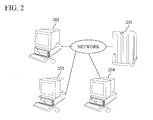
- Figure 2 illustrates an example of the hardware configuration of a software configuration management system of the present invention.
- This example shows a case in which the software configuration management server 100 in Figure 1 is installed in a server 201, the software component database management client 150 is installed in a computer 202, and the software product operation clients 160 and 164 are installed in computers 203 and 204, respectively.
- the software component database management client 150 and the software product operation client 160 may be installed in the same computer.
- the configuration management unit 110, the software component database management unit 120, and the software product management unit 130 making up a configuration management server 100 may be installed in different servers respectively.
- FIG 3 illustrates an example of the data structure of the software component database 121 of the software configuration management server 100 of Figure 1 .
- all the software components included in the software component database 121 are managed by a single tree.
- the tree is made up of nodes 300, 302, 304, 306, and 308 and in boxes representing each node, "node ID", "type”, and further “cardinality” are shown.
- the node ID of the node 306 is "BooleanWeight", while the node ID of the node 304 is "WeightSensor”.
- the type of the node 306 is "Feature", while the type of the node 304 is "Group”.
- a "Group” type node represents a group which integrates lower nodes.
- a node represents options. If a node is selected, a software component corresponding to the node is retrieved from the software component database 121. Therefore, this tree structure is utilized as the configuration information of the software components. For example, when a new software product is created, desired nodes are selected. When the node 306 is selected, the software component 307 is retrieved from the software component database 121, and when the node 308 is selected, the software component 309 is retrieved from the software component database 121. The retrieved software components 307 and 309 are integrated into a source file for making up the new software product.
- the nodes 306 and 308 are included in "Group" type node 304. Even when either of the nodes 306 and 308 is selected, a software component 305 corresponding to the node 304 is retrieved from the software component database 121. The retrieved software component 305 is integrated into a source file making up the new software product as a common component.
- the software component database 121 has a tree structure for managing software components. Therefore, when creating a software product, the software component database 121 has an important role to provide information of software components which make up that product.
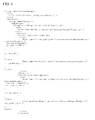
- Figure 4 illustrates an example of the description in XML of the data structure of the software component database 121 shown in Figure 3 .
- XML is a markup language in which a user can define a tag of its own. It is noted that as the markup language for describing the software component database 121 of the present example, SGML, etc. other than XML may be used.
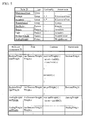
- Figure 5 illustrates an example of the representation by using a relational database of the software component database 121 shown in Figure 3 .
- the table of Figure 5A shows the relationship among the node ID, type, cardinality, and parent node ID.
- the table of Figure 5B shows the relationship among the software component ID, path, contents, and parent node ID.
- the Parent node ID shows nodes of upper hierarchical levels in the tree structure of Figure 3 .
- Figure 6 illustrates an example of the software component/product correspondence table 122 of the software configuration management server 100 of Figure 1 .
- the software component/product correspondence table 122 indicates the relationship between a software component ID and a software product which uses the software component. This example indicates that software products A, B, and C are created by utilizing the software component database 121 shown in Figure 3 . For example, the software component corresponding to the software component ID "Light/initLight" is used in the software products A and C.
- Searching the software component/product correspondence table 122 with a software component ID as the search key enables the identification of a software product group including the software component. Therefore, utilizing the software component/product correspondence table 122 enables the management of the histories of software products created by utilizing software components stored in the software component database 121.
- FIG 7 illustrates an example of the update information 123 of the software configuration management server 100 of Figure 1 .
- the update information 123 indicates the relationship among the software component ID, software products, and update time and date of the software component. This example indicates that the content of the software component corresponding to the software component ID "AnalogWeight/initWeight" stored in the software component database 121 is committed from the software product A at 11:17:47, March 19th, 2008.
- the update information 123 manages the update histories of software components stored in the software component database 121, which are performed based on the modification of the software products.
- Figure 8 illustrates an example of the software component/file correspondence information 132 and 134 of the software configuration management server 100 of Figure 1 .
- the software component/file correspondence information indicates the relationship among the software component ID, the source file including the software component, and the start and end lines of the source file. This example shows that the software component corresponding to the software component ID "AnalogWeight/intitWeight" is the 4-th line to the 36-th line of the source file "/src/Sensors/Weight/Weight.c".
- Figure 9 illustrates an example of a source file embedded with software component/file correspondence information.
- annotations 901 to 904 are inserted at the head and tail of each software component.
- These annotations include software component IDs. Therefore, interpreting these annotations enables the identification of the correspondence between the software component and the source file.
- Figure 10 illustrates an example of the processing to detect and to display an outgoing modification and an incoming modification of the software product 131 stored in the software product management unit 130.
- the software product developer 160A inputs an instruction to execute the processing to detect an outgoing modification and an incoming modification of the software product 131 at the software product operation client 160.
- the product operation unit 161 of the software product operation client 160 performs the following processing.
- the product operation unit 161 compares the local copy 162 with the base copy 163 to detect an outgoing modification from the difference therebetween.
- the product operation unit 161 compares the software product 131 (remote copy) stored in the software product management unit 130 with the base copy 163 to detect an incoming modification from the difference therebetween.
- the product operation unit 161 displays a screen as shown in Figure 11 .
- Figure 11 illustrates an example of a screen to show the detection result of an outgoing modification and incoming modification of a software product.
- the screen of Figure 11 is created by the product operation unit 161 at step 1003 of Figure 10 .
- This example indicates that outgoing modifications have been detected in software component IDs "intitBeep” and “beep” corresponding to a source file "src/Actuators/Beeper/Beeper.c” of the local copy 162.
- the rightward arrow indicates an outgoing modification.
- the example indicates that an incoming modification is detected in a software component ID "initWeight" corresponding to a source file "src/Sensors/Weight/Weight.c" of the software product 131.
- a leftward arrow indicates an incoming modification.
- a screen shown in Figure 12 when the software product developer 160A designates the software component ID "initWeight" by a mouse pointer 1101 and instructs details display, a screen shown in Figure 12 is displayed.
- Figure 12 illustrates an example of the screen showing details of a software component ID "initWeight" for which an incoming modification has been detected.
- the screen of Figure 12 is displayed when in the screen of Figure 11 , the software product developer 160A designates the software component ID "initWeight" and instructs details display with the mouse pointer 1101.
- Figure 13 illustrates an example of the processing in the product operation unit 161 to commit an outgoing modification of a software product to the base copy, the software component database 121 and other soft products stored in the software product management unit 130.
- the processing of Figure 13 is executed when in Figure 11 , the software product developer 160A designates the software component for which an outgoing modification has been performed with the mouse pointer 1101 and instructs the commitment to the software component database 121 and the base copy 163.
- the product operation unit 161 commits the outgoing modification included in the designated software component to the base copy 163. That is, the outgoing modification included in the local copy 162 is committed to the base copy 163.
- the software product ID, software component ID, and the content of software component are transmitted to a product operation IF 114 of the software configuration management server 100.
- the product operation IF 114 of the software configuration management server 100 receives the software product ID, software component ID, and the content of software component designated by the software product operation client 160.
- the synchronization unit 112 of the software configuration management server 100 commits the revised content of the software component to the software component database 121 according to the processing shown in Figure 14 .
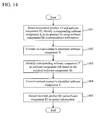
- Figure 14 illustrates an example of the processing to commit an outgoing modification of a software product to the software component database 121 and other software products stored in the software product management unit 130.
- This processing is executed by the synchronization unit 112 of the software configuration management server 100.
- the synchronization unit 112 searches the software component/product correspondence table 122 with the designated software product ID and the software component ID as the search key. That is, all the software products including the designated software component ID are detected from the software products stored in the software product management unit 130, and further a software component "X" included in the software products is detected.
- the synchronization unit 112 commits the content of the designated software component to the software component "X" stored in the software product management unit 130.
- the synchronization unit 112 searches the software component/product correspondence table 122 with the designated software component ID as the search key. That is, all the software products including the designated software component ID are detected from the software components stored in the software component database 121 to detect a software component "Y" included in the software products.
- the synchronization unit 112 commits the content of the designated software component to the software component "Y" stored in the software component database 121.
- the received software product ID and the software component ID are recorded with a current time in the update information 123.
- step 1402 all the software products including the software component ID "beep” are retrieved from the software products stored in the software product management unit 130, and an outgoing modification is committed thereto.
- step 1404 all the software components including the software component ID "beep" of the software components stored in the software component database 121 are retrieved, and an outgoing modification is committed thereto.
- the software component database manager 150A performs the management of the software component database 121.
- the software component database manager 150A detects a modification of the software product 131 stored in the software product management unit 130, the modification content is committed to other software products 133 stored in the software product management unit 130.
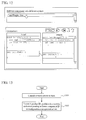
- Figure 15 illustrates an example of the processing to detect and to display an outgoing modification and incoming modification of the software component database 121.
- the software component database manager 150A inputs an instruction to execute the processing to detect an outgoing and incoming modifications of the software component database 121 at the software component database management client 150.
- the database operation unit 151 of the software component database management client 150 performs the following processing.
- the database operation unit 151 compares the local copy 152 with the base copy 153 to detect an outgoing modification from the difference therebetween.
- the database operation unit 151 compares the software component database 121 with the base copy 163 to detect an incoming modification from the difference therebetween.
- the database operation unit 151 displays a screen as shown in Figure 16 .
- Figure 16 illustrates an example of the screen to indicate the detection result of an outgoing and incoming modifications of the software component database 121.
- the screen of Figure 16 is created by the database operation unit 151 at step 1503 of Figure 15 .
- This example indicates that an outgoing modification has been detected in a software component ID "initWeight", which is attached to the node indicated by a path "MicrowaveOven/Sensors/WeightSensor/AnalogWeight", of the local copy 152.
- a rightward arrow indicates an outgoing modification.
- FIG. 3 indicates that incoming modifications have been detected in software component IDs "initBeep” and “beep” which are attached to the node indicated by a path "MicrowaveOven/Actuators/Beeper" of the software component database 121 shown in Figure 3 .
- a leftward arrow indicates an incoming modification.
- the software component database manager 150A designates a software component ID "initWeight" with the mouse pointer 1601 and instructs details display, for example, a screen as shown in Figure 12 is displayed.
- the software component database manager 150A designates the software component for which an incoming modification has been made with a mouse pointer 1601 and to press a commitment button 1610
- the database operation unit 151 instructs the software configuration management system to execute the processing shown in Figure 17 .
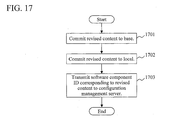
- Figure 17 illustrates an example of the processing in the database operation unit 151 when an incoming modification of the software component database 121 is committed to the local copy 152, the base copy 153, and the software product 133.
- the processing of Figure 17 is executed by the database operation unit 151 of the software component database management client 150 when a software component for which an incoming modification has been made is designated on the screen of Figure 16 and a commitment button 1610 is pressed.
- the database operation unit 151 retrieves the latest content of the designated software component from the component database 121 and commits it to the base copy 153.
- the database operation unit 151 retrieves the latest content of the designated software component from the software component database 121, and commits it to the local copy 152.
- the database operation unit 151 transmits the designated Software component ID and the content of the software component to the software configuration management server 100.
- the product operation IF 114 of the software configuration management server 100 receives the Software component ID and the content of the software component transmitted from the software component database management client 150.
- the synchronization unit 112 of the software configuration management server 100 commits the revised content of the software component to the software product 133 stored in the software product management unit 130 according to the processing shown in Figure 18 .
- Figure 18 illustrates an example of the processing to commit an incoming modification of the software component database 121 to the software product 133 stored in the software product management unit 130. That is, the process to commit a modification of the software product 131 stored in the software product management unit 130 to other software products 133 is shown.
- This processing is executed by the synchronization unit 112 of the software configuration management server 100.
- the synchronization unit 112 searches the software component/product correspondence table 122 with a software component ID transmitted from the software component database management client 150 as the search key. Thereby, all the software products including the received software component ID are detected.
- steps 1802 to 1804 are executed on each software product.
- the software component/file correspondence information 132, 134 is searched with the received software component ID as the search key. Thereby, a software component "X" included in each software product is identified.
- the software component database 121 is searched with the received software component ID as the search key. Thereby, a software component "Y” having the received software component ID of the software components stored in the software component database 121 is identified. At step 1804, the content of the software component "Y” is committed to the software component "X".
- the software product developer 164A can know a revision made on the software component database 121 as an incoming modification through the screen as shown in Figure 11 .
- the synchronization unit 112 performs the processing to commit an incoming modification of the software component database 121 to other software products 133 stored in the software product management unit 130.
- the software component database manager 150A designates a software component for which an incoming modification has been made with a mouse pointer 1601 and presses a modification cancel button 1611
- the database operation unit 151 instructs the software configuration management system to execute the processing shown in Figure 19 .
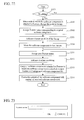
- Figure 19 illustrates an example of the processing to cancel an incoming modification of the software component database 121 caused by a modification of the software product 131, and to commit an outgoing modification.
- the database operation unit 151 of the software component database management client 150 transmits the content of the software component and its software component ID in the local copy 152 to the software configuration management server 100.
- the database operation IF 111 of the software configuration management server 100 receives the content of the software component and its software component ID in the local copy 152.
- the synchronization unit 112 executes the processing shown in Figure 20 and cancels the modification. That is, the software configuration management system of the present invention overwrites the software component in the software component database 121 with the content of the local copy 152. Therefore, an incoming modification of the software component stored in the software component database 121 caused by a modification of the software product 131 is cancelled. Moreover, the software component database 121 is committed with the content of the local copy 152, that is, an outgoing modification of the software component.
- Figure 20 illustrates an example of the processing to cancel an incoming modification of the software component database 121 caused by a modification of the software product 131 and commit an outgoing modification.
- the synchronization unit 112 searches the software component database 121 with the received software component ID as the search key. Thereby, all the software components corresponding to the software component ID are retrieved.
- the content of the software component in the received local copy 152 is committed to the retrieved software components.
- the update information 123 is searched with the received software component ID as the search key. Thereby, the software product which has made a modification to the received software component ID for the last time is identified.
- the software component/file correspondence information is searched with the received software component ID as the search key.
- the software product developer 160A can know the cancelling of the modification of the software component database 121 created by the software component database management client 150 as an incoming modification through the screen as shown in Figure 11 .
- Figure 21 illustrates the processing to add a software component, for which an incoming modification has been made, to the software component database 121 as a new software component. That is, a software component, for which an incoming modification caused by modification of the software product 131 has been made, is added as a new software component.
- the database operation unit 151 transmits the content of the software component in the local copy 152 designated by the software component database manager 150A, and the software component ID thereof to the software configuration management server 100.
- the correspondence table update unit 113 of the software configuration management server 100 performs the processing shown in Figure 22 .
- the correspondence table update unit 113 duplicates a software component as a new software component and adds it to the software component database 121 .
- description will be made on a case in which a new software component is added to the data structure of the software component database 121 shown in Figure 3 .
- the correspondence table update unit 113 detects a corresponding software component in the software component database 121 with the received software component ID as the search key. Next, it is checked whether or not the node to which the detected software component is attached has a sibling node.
- step 2201 When the concerned node has no sibling node, the process proceeds to step 2201, and when the concerned node has a sibling node, the process proceeds to step 2211.
- step 2211 description will be made on a case in which a software component 307 which has been attached to the node 306 of Figure 3 , or a software component 331 which has been attached to the node 330 is detected.
- the process proceeds to step 2211.
- the result is as shown in Figure 24 .
- step 2201 In the case of software component 331 of Figure 3 , since it has no sibling node, the process moves to step 2201. As a consequence, the result is as shown in Figure 25 .
- step 2201 when the node identified at step 2200 is of a "Feature” type, the same node is changed to a "Group” type.
- the process moves on to the next step. Since the node 330 of Figure 3 is of a "Feature” type, it is changed to a "Group” type.
- the node 330 of Figure 3 is changed to a node 2500 in Figure 25 .
- step 2202 the screen shown in Figure 23 is displayed. In the screen shown in Figure 23 , an item is displayed in which the name of a new "Feature" type node is to be input.
- the software component database manager 150A inputs the name of a "Feature" type node thereinto.
- the correspondence table update unit 113 accepts the name of the "Feature” type node.
- the new "Feature” type node is added as a child of the "Group” type node created at step 2201.
- a new "Feature” type node 2510 is attached.
- a software component attached to a "Group” type node is moved to the "Feature” type node which has been added at step 2203.
- the software component 331 of Figure 3 is attached to the "Feature" type node which has been added as a software component 2511.
- a screen as shown in Figure 23 is displayed.
- the software component database manager 150A inputs a name of a "Feature” type node thereto.
- the correspondence table update unit 113 accepts the name of the "Feature” type node.
- the new "Feature” type node is added as a sibling of the sibling node identified at step 2200 or a new node added at step 2203.
- a new "Feature” type node 2400 is added.
- a new "Feature" type node 2512 is added.
- a node to which a software component corresponding to the received software component ID is attached is detected. All of other software components attached to this node are copied to new node which has been added at step 2212, and are assigned new software component IDs, respectively.
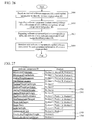
- Figure 27 shows the processing in which the correspondence table update unit 113 updates the software component/product correspondence table 122 and the software component/file correspondence information 132,134 resulting from a modification of the software product 131.
- Figure 27 shows the result of updating the software component/product correspondence table 122 shown in Figure 6 .
- the correspondence table update unit 113 first searches update information 123 based on the received software component ID to identify the ID of the software product 131 which has made a modification to the corresponding software component for the last time.
- the software product 131 should include new software components.
- a column for the new software component ID which is assigned at step 2213 of Figure 22 is added for the software component/product correspondence table 122, and a software product ID is assigned.
- "NewAnalogWeight/initWeight" 2703 and “NewAnalogWeight/getWeight” 2704 are added as IDs for new software components.
- the above described software product ID is deleted from the column of former software component ID corresponding to a new software component ID.
- the ID of the software product 131 "Product A” is deleted from the columns of the former software component ID "AnalowWeight/initWeight” 2701 and "AnalogWeight/getWeight” 2702.
- step 2604 the software component/file correspondence information 132 corresponding to the software product 131 is updated based on the new software component ID.
- Figure 28 illustrates an example that the correspondence table update unit 113 has updated the software component/file correspondence information 132 shown in Figure 9 .
- the correspondence table update unit 113 updates the software component ID included in the annotation inserted in the head of the software component with a new software component ID.
- the software component database manager 150A instructs commitment of modifications of software components in the software product 131 to the software component database 121. Further, the software component database manager 150A instructs addition of modified software components in the software product 131 to the software component database 121 as new software components.
- the software configuration management system of the present invention automatically modifies the tree structure of the software component database 121 and updates the software component/file correspondence information 132 corresponding to the software component/product correspondence table 122 and the software product 131. Therefore, modifications of software components are surely committed mutually between software components and software product groups.
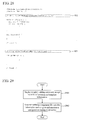
- Figure 16 when the software component database manager 150A designates a software component, for which an incoming modification has been made, by using a mouse pointer 1601 and presses an "ADD ONLY DIFFERENCE PART AS NEW COMPONENT" button 1613, the software configuration management system of the present invention executes the processing of Figure 29 . That is, former software components are deleted, and a new software component group with the designated difference part as a variable and with a common part as a template is added to the software component database 121.
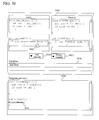
- the database operation unit 151 displays the template editing screen shown in Figure 30 .
- the database operation unit 151 accepts a template and a plurality of variable information from the software component database manager 150A via the template editing screen.
- a difference part display region 3002 of the template editing screen On the left side of a difference part display region 3002 of the template editing screen, the content of software components in the local copy corresponding to the designated software component will be displayed. On the right side of the difference part display region 3002 of the template editing screen, software components in the software component database will be displayed. Moreover, a difference part will be displayed with a color different from that of the background.
- a difference part When the difference part is selected with a mouse pointer 3001 and a variable addition 3010 button is pressed, new variables are added in a variable list table 3020 and inputs of variable names are accepted. In this example, "initMode" is being input as the variable name. A plurality of variables can be accepted.
- variable part 3031 is represented as "$ ⁇ initMode ⁇ ". This is based on the template syntax of Velocity (http://jakarta.apache.org/velocity/) which is a template engine.
- each variable information includes both text strings in the local copy 152 corresponding to a variable name and a difference part, and text strings in the software component database 121.
- text strings in the local copy 152 included in the variable information are referred to as former variables, and text strings in the software component database 121 are referred to as new variables.
- the database operation unit 151 transmits an accepted variable and template along with a software component ID corresponding to the designated software component to the software configuration management server 100.
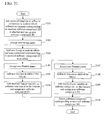
- the correspondence table update unit 113 of the software configuration management server 100 performs the processing shown in Figure 31 .
- the software configuration management server 100 receives a variable and a template from the software component database management client 150 via a database operation IF 111.
- the correspondence table update unit 113 identifies a corresponding software component in the software component database 121 based on the received software component ID.
- the received template is added as a new software component, and a new software component ID is assigned.
- a new software component 3200 is added to a node "AnalogWeight" 308 as a template.
- steps 3102 to 3109 are executed for each received variable information.
- the screen shown in Figure 23 is displayed to accept a new "Group" type node name.
- a new "Group” type node which has the accepted node name, is added as a child to the node to which a template is attached.
- a new node "ConversionMode” 3201 is attached to the node 308.
- the screen shown in Figure 23 is displayed to accept a new "Feature" type node name.
- step 3105 a new "Feature" type node, which has the accepted node name, is added as a child to the node which has been added at step 3102.
- a "Continuous" node 3202 is added.
- a received former variable is added as a new software component, and a new software component ID is assigned, respectively.
- a new software component 3203 is added.
- the screen shown in Figure 23 is displayed to accept a new "Feature" type node name.
- a new "Feature" type node, which has the accepted node name is added as a child to the node which has been added at step 3102.
- a "OneShot" node 3204 is added.
- the received new variable is added as a new software component and a new software component ID is assigned, respectively.
- a new software component 3205 is added.
- the software component corresponding to the received software component ID is deleted from the software component database 121.
- the software component 309 which had been attached to a node "AnalogWeight" 308 is deleted.
- Figure 32 shows the result of the correspondence table update unit 113 adding a variable and template to the component database 121 as a new software component.
- a new software component 3200 is attached as a template.
- new software components 3203, 3205 are attached. Therefore, two software products are represented: those are a new software product with the software component 3200 as a template and with software component 3203 as a modified part, and a new software product with the software component 3200 as a template and with the software component 3205 as a modified part.
- Figure 34 shows the result of updating the software component/product correspondence table 122 shown in Figure 6 .
- the correspondence table update unit 113 searches the update information 123 based on the received software component ID to identify the ID of the software product 131 which has made a modification to the corresponding software component for the last time.
- This software product 131 should include a source file in which a new variable and a template are combined.
- a column of the new software component ID which has been added at steps 3103 and 3109 shown in Figure 31 is added to the soft component/product correspondence table 122 and the above described software product ID is assigned.
- the columns of new software component IDs 3410, 3411 and 3412 are added.
- the above described software product IDs are deleted from the columns of the received software component ID in the soft component/product correspondence table 122.
- the IDs "Product A” and “Product B” of the software products A and B are deleted from the column 3401 of the ID "AnalogWeight/initWeight" of the former software component corresponding thereto.
- step 3304 based on the contents of the added template and new variable and new software component IDs thereof, the software component/file correspondence information 132 corresponding to the above described software product 131 is updated.
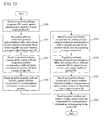
- step 3305 the software component/product correspondence table 122 is searched with the received software component ID as a key, the ID of the software product group which uses corresponding software components is identified. The same software product group will include a source file in which a former variable and a template are combined.
- step 3306 a column of the new sort component ID which has been added at step 3106 shown in Figure 31 is added to the soft component/product correspondence table 122 and the ID of the above described software product group is assigned.
- step 3307 the ID of the above described software product group is deleted from the column of the received software component ID in the soft component/product correspondence table 122.
- "AnalogWeight/ConversionMode/initWeightCommon" 3410 is added as a new software component ID corresponding to the template, "AnalogWeight/ConversionMode/Continuous/initWeight” 3411 as a new software component ID corresponding to the former variable, and "AnalogWeight/ConversionMode/OneShot/initWeight” 3412 as a new software component ID corresponding to a new variable.
- step 3308 based on the contents of the added template and the former variable and the new software component IDs thereof, the software component/file correspondence information corresponding to the above described software product group is updated.
- Figure 35 illustrates an example that the correspondence table update unit 113 has updated the software component/file correspondence information 132 shown in Figure 9 .
- the correspondence table update unit 113 has updated the software component ID included in the annotation inserted at the head of the software component with a new software component ID corresponding to the template.
- new annotations are inserted at the head and tail of the variable portion, and a new software component ID corresponding to a new variable or former variable is included in the annotation inserted at the head.
- the software component database manager 150A instructs addition of only a modified part of the software component as a new software component to the software component database 121.
- the software configuration management system of the present invention automatically modifies the tree structure of the software component database 121 and updates the software component/file correspondence information 132 corresponding to the software component/product correspondence table 122 and the software product 131. Therefore, modifications of software components are surely committed mutually between software components and software product groups.
- the present invention even when a new software component is added to a software component database, or a software component is divided, it is possible to surely commit revisions made on a software component to the software component database and the software product group created from the database. Further, it is possible to create a new software product from the software component database. As a result, even when the numbers of software components and software products increase extensively, configuration management of the software component database and the software product groups is made possible, thereby improving the efficiency of the development of software products.
Landscapes
- Engineering & Computer Science (AREA)
- Software Systems (AREA)
- General Engineering & Computer Science (AREA)
- Theoretical Computer Science (AREA)
- Computer Security & Cryptography (AREA)
- Physics & Mathematics (AREA)
- General Physics & Mathematics (AREA)
- Stored Programmes (AREA)
- Information Retrieval, Db Structures And Fs Structures Therefor (AREA)
Abstract
It is possible to surely commit a revision made on a software component in a software component database and a software product group and to create a new software product from the same database. Provided is a software configuration management system which includes a software component database and a software product management unit and accepts data transmission/reception from a software component database management client and a software product operation client. The software configuration management system further includes: a component-product correspondence table, component-file correspondence information, a synchronization unit for mutually committing a modification of the software component database and a modification of a software product; update information; and a correspondence table update unit.
Description
- The present invention relates to an automatic program configuration apparatus which retrieves a plurality of software components from a software component database storing existing software components, and combines them to automatically create a source code of a new product program, and particularly to configuration management of the above described software component database and product groups.
- In general, when new software is developed, a copy of a source file that has been formerly developed is utilized. A copied file may be utilized as it is, or a copied file may be utilized in a revised form.
- In this way, software utilizes other software, but it itself may also be utilized in the development of other software. That is, software utilizes other software as a derivation origin file, but it also can be utilized as a derivation origin file by other software.
- Software may be revised after it has been developed. At this time, if the revised content is one that should be committed to a derivation destination file, the content needs to be surely committed to the derivation destination file. Moreover, if the revised content is one that should be committed in a derivation origin file, the content needs to be surely committed in the derivation origin file. For example, the revised content is a correction of a bug, the revised content needs to be committed to all other derivation files. That is, maintenance management of software is needed.
-
JP Patent Publication (Kokai) No. 2007-279883 - However, the file configuration management apparatus according to
JP Patent Publication (Kokai) No. 2007-279883 - In recent years, upon development of new software, a plurality of software components are retrieved from a software component database which stores existing software components, and they are combined to automatically create a source file of a new program.
- However, in this case, maintenance work of the software component database becomes necessary. For example, when a bug is found in a software component stored in the software component database, it is necessary to revise the bug and replace the software component with a revised one. Moreover, a new software component may be added to the software component database. In particular, when the software components stored in the software component database becomes large in number, the maintenance work thereof will become complicated.
-
JP Patent Publication (Kokai) No. 2007-102380
[Patent Document 1]JP Patent Publication (Kokai) No. 2007-279883
[Patent Document 2]JP Patent Publication (Kokai) No. 2007-102380 - However,
JP Patent Publication (Kokai) No. 2007-102380 - In order to mutually commit a revision of a software component between a software component database and s software product group created from the database, it is conceivable to retain a correspondence relationship of software components as in
JP Patent Publication (Kokai) No. 2007-279883 - However, when a new software component is added to the software component database or a software component is divided, it is necessary to update the correspondence relationship of software components. Moreover, a source file making up a software product is made up of a plurality of software components, and each software component is inserted into any location in the source file. Therefore, it is necessary to maintain the correspondence relationship between the software components and the source file in each software product. Moreover, it is necessary to update the correspondence relationship according to an addition of a new software component, and the like. Further, in order to create a new software product form the software component database, software component configuration information for selecting/retrieving a necessary software component from the software component database is needed. Therefore, it is also necessary to update the software component configuration information according to an addition of a new software component to the software component database.
- It is an object of the present invention to enable the commitment of a modification that is made on a software component to a software component database and a software product group, and to enable the creation of a new software product from the software component database in a configuration management system of a software component database and a software product group, even after a new software component is added to the software component database or a software component is divided.
- According to the present invention, a software configuration management system includes a software component database which stores a software component that is a constituent element of a source file for making up a software product as a tree structure, and stores the software component in correspondence with a configuration information element that makes up the tree structure, and a software product management unit which stores a plurality of software products that are created by combining software components stored in the software component database, and accepts transmission/reception of data from a software component database management client which manages the software component database from outside, and a software product operation client which manages the software product management unit from outside.
- The software configuration management system of the present invention comprises:
- a component/product correspondence table which records the relationship between a software component and a software product including the software component for all the software components stored in the software component database;
- component/file correspondence information which records information for determining the relationship between a software component included in a software product and a source file for each of the software products stored in the software product management unit;
- a synchronization unit which commits a modification of the software component database to a software product stored in the software product management unit, or commits a modification of a software product stored in the software product management unit to the software component database, based on the component/product correspondence table and the component/file correspondence information according to an instruction from the software component database management client or the software product operation client;
- update information which records histories of modifications of software components being mutually committed by the synchronization unit; and
- a correspondence table update unit which updates the software components stored in the software component database, the component/product correspondence table, the update information, and the component/file correspondence information in response to an instruction from the software component database management client.
- According to the present invention, even when a new software component is added to a software component database, or a software component is divided, revisions made on a software component can be surely committed to the software component database and the software product group created from the database, and also a new software product can be created from the database.
-
-
Figure 1 illustrates an example of functional blocks of a software configuration management system according to the present invention. -
Figure 2 illustrates a hardware configuration example of the software configuration management system according to the present invention. -
Figure 3 illustrates an example of the representation by a logical tree structure of a software component database of the software configuration management server according to the present invention. -
Figure 4 illustrates an example in which the content of a software component database of a software configuration management server according to the present invention is described in XML. -
Figure 5 illustrates an example in which the content of a software component database of a software configuration management server according to the present invention is displayed by a relational database table. -
Figure 6 illustrates an example of a soft compartment/product correspondence table of the software configuration management server according to the present invention. -
Figure 7 illustrates an example of update information of the software configuration management server according to the present invention. -
Figure 8 illustrates an example of software component/file correspondence information of the software configuration management server according to the present invention. -
Figure 9 illustrates an example in which software component/file correspondence information of the software configuration management server according to the present invention is embedded in a source file. -
Figure 10 illustrates an example of the processing, in a product operation unit of a software product operation client according to the present invention, to retrieve the difference between the local copy of a software product in the software product operation client and the software product in a software product management unit. -
Figure 11 illustrates a screen example to display, in the product operation unit of a software product operation client according to the present invention, the result of the retrieval of the difference between the local copy of a software product in the software product operation client and the software product in a software product management unit. -
Figure 12 illustrates a screen example to display the details of a difference part of a software component in the product operation unit of the software product operation client, or the data base operation unit of the software component database management client according to the present invention. -
Figure 13 illustrates an example of the processing to commit a revised content in a software product to a software component database in the product operation unit of the software product operation client according to the present invention. -
Figure 14 illustrates an example of the processing to commit a revised content in a software product to a software component database in a synchronization unit of the software configuration management sever according to the present invention. -
Figure 15 illustrates an example of the processing to retrieve the difference between a local copy of a software component database in the software component database management client and the software component database, in a database operation unit of the software component database management client according to the present invention. -
Figure 16 illustrates a screen example to display the result of retrieval of the difference between a local copy of a software component database in the software component database management client and the software component database, in the database operation unit of the software component database management client according to the present invention. -
Figure 17 illustrates an example of the processing to commit a revised content in a software component database to the local copy of the software component database in the database operation unit of the software component database management client according to the present invention. -
Figure 18 illustrates an example of the processing to commit a revised content in a software component database to the software component database in the synchronization unit of the software configuration management server according to the present invention. -
Figure 19 illustrates an example of the processing to cancel a revision in the software component database in the database operation unit of the software component database management client according to the present invention. -
Figure 20 illustrates an example of the processing to cancel a revision in the software component database in the synchronization unit of the software configuration management server according to the present invention. -
Figure 21 illustrates an example of the processing to add a software component which is modified in the software component database to the software component database as a new software component, in the database operation unit of the software component database management client according to the present invention. -
Figure 22 illustrates an example of the processing to add a software component which is modified in the software component database to the software component database as a new software component, in a correspondence table update unit of the software configuration management server according to the present invention. -
Figure 23 illustrates a screen example to accept a node name when a new node is added in a logical tree making up the software component database, in the correspondence table update unit of the software configuration management server according to the present invention. -
Figure 24 illustrates an example of the addition of a new software component in the software component database of the software configuration management server according to the present invention. -
Figure 25 illustrates an example of the addition of a new software component in the software component database of the software configuration management server according to the present invention. -
Figure 26 illustrates an example of the processing to add a software component modified in the software component database to the software component database as a new software component, in the correspondence table update unit of the software configuration management server according to the present invention. -
Figure 27 illustrates an example of the software component/product correspondence table updated by the correspondence update unit in the software configuration management server according to the present invention. -
Figure 28 illustrates an example of software component/file correspondence information updated by the correspondence table update unit in the software configuration management server according to the present invention. -
Figure 29 illustrates an example of the processing to add only a difference part to the software component database as a new software component for the software component modified in the software component database, in the database operation unit of the software component database management client according to the present invention. -
Figure 30 illustrates an example of a template editing screen in the database operation unit of the software component database management client according to the present invention. -
Figure 31 illustrates an example of the processing to add only a difference part to the software component database as a new software component for the software component modified in the software component database, in the correspondence table update unit of the software configuration management server according to the present invention. -
Figure 32 illustrates an example in which only a difference part is added to the software component database as a new software component for the software component modified in the software component database, in the software component database of the software configuration management server according to the present invention. -
Figure 33 illustrates an example of the processing to add only a difference part to the software component database as a new software component for software components modified in the software component database, in the correspondence table update unit of the software configuration management server according to the present invention. -
Figure 34 illustrates an example of a software component/product correspondence table updated by the correspondence table update unit in the software configuration management server according to the present invention. -
Figure 35 illustrates an example of software component/file correspondence information updated by the correspondence table update unit in the software configuration management server according to the present invention. -
- 100
- Software configuration management server
- 110
- Configuration management unit
- 111
- Database operation IF
- 112
- Synchronization unit
- 113
- Correspondence table update unit
- 114
- Product operation IF
- 120
- Software component database management unit
- 121
- Software component database
- 122
- Software component/product correspondence table
- 123
- Update information
- 130
- Software product management unit
- 131
- Software product A
- 132
- Software component/file correspondence information corresponding to software product A
- 133
- Software product B
- 134
- Software component/file correspondence information corresponding to software product B
- 150
- Software component database management client
- 150A
- Software component database manager
- 151
- Database operation unit
- 152
- Local copy of software component database
- 153
- Base copy of software component database
- 160
- Software product operation client
- 160A
- Developer of software product A
- 161
- Product operation unit
- 162
- Local copy of software product A
- 163
- Base copy of software product A
- Referring to
Figure 1 , an example of a software configuration management system according to the present invention will be described. The software configuration management system of the present example includes a softwareconfiguration management server 100, a software componentdatabase management client 150, and softwareproduct operation clients database management client 150 and softwareproduct operation clients - The software
configuration management server 100 includes aconfiguration management unit 110, a software componentdatabase management unit 120, and a softwareproduct management unit 130. Theconfiguration management unit 110 includes a database operation IF 111, asynchronization unit 112, a correspondencetable update unit 113, and a product operation IF 114. The software componentdatabase management unit 120 includes asoftware component database 121, a software component/product correspondence table 122, and updateinformation 123. A plurality of software components are stored in thesoftware component database 121. A software component, which is a constituent element of a source file which makes up a software product, represents a set of arbitrary text strings, such as functions, procedures, statements, and the like included in a source file. - The software
product management unit 130 manages a plurality of software products created from software components stored in thesoftware component database 121. To be more specific, the managing is performed such that each software product is paired with a source file group making up that software product. In the example shown inFigure 1 , software component/file correspondence information 132 corresponds to asoftware product 131 and software component/file correspondence information 134 corresponds to asoftware product 133. - The software
component database manager 150A manages thesoftware component database 121 by using a software componentdatabase management client 150. Modifications of thesoftware component database 121 include two types of modifications: that is, an outgoing modification and an incoming modification. - An outgoing modification is one that is created by the software
component database manager 150A subjecting a software component to editing processing via the software componentdatabase management client 150. An incoming modification is one that is caused by a modification of thesoftware product product management unit 130. That is, when thesoftware product product management unit 130 is modified, such modification is automatically committed to software components stored in thesoftware component database 121 of the software componentdatabase management unit 120. The latest content is stored in thesoftware component database 121 by a synchronization processing by thesynchronization unit 112. That is the incoming modification. - A method of creating an outgoing modification of the
software component database 121 will be described. The softwarecomponent database manager 150A makes a copy of the latest content of thesoftware component database 121 via adatabase operation unit 151 of the software componentdatabase management client 150, and stores it in theclient 150. This is referred to as alocal copy 152. On the other hand, a first copy of the content of thesoftware component database 121 to the software componentdatabase management client 150 is referred to as abase copy 153. When performing an outgoing modification, thelocal copy 152 is used and thebase copy 153 is not used. The softwarecomponent database manager 150A edits thelocal copy 152 and commits the edited content to thesoftware component database 121 via thedatabase operation unit 151. Thus, an outgoing modification is made. - Comparing the
local copy 152 with thebase copy 153 will allow the detection of outgoing modifications of thesoftware component database 121. Comparing the latest content of thesoftware component database 121 with thebase copy 153 will allow the detection of incoming modifications. The latest content of thesoftware component database 121 is sometimes referred to as a remote copy. Comparing the remote copy with thebase copy 153 will allow the detection of incoming modifications. Such comparison method is referred to as a 3-way comparison. When an outgoing modification of thesoftware component database 121 is detected, it is committed to thebase copy 153 and thesoftware product software component database 121 is detected, it is committed to both thebase copy 153 and thelocal copy 152. - A
software product developer 160A manages thesoftware product product operation client 160. The modification of thesoftware product product management unit 130 includes two types: an outgoing modification and an incoming modification. - An outgoing modification is one that is created by the
software product developer 160A editing a software product via the softwareproduct operation client 160. An incoming modification is one that is caused by a modification of a software component stored in thesoftware component database 121 of the software componentdatabase management unit 120. That is, when a modification of the software component stored in thesoftware component database 121 is made, such modification is automatically committed to thesoftware product product management unit 130. When onesoftware product 131 stored in the softwareproduct management unit 130 is modified, such modification is automatically committed toother software product 133 stored in the softwareproduct management unit 130. In thesoftware product product management unit 130, the latest content is stored through a synchronization processing by the synchronization unit. This is an incoming modification. - A method of creating an outgoing modification of the
software product 131 will be described. Thesoftware product developer 160A copies the latest content of thesoftware product 131 via aproduct operation unit 161 of the softwareproduct operation client 160, and stores it in the softwareproduct operation client 160. This is referred to as alocal copy 162. On the other hand, a first copy of the content of thesoftware product 131 to the softwareproduct operation client 160 is referred to as abase copy 163. When performing an outgoing modification, the local copy is used and thebase copy 163 is not used. Thesoftware product developer 160A edits thelocal copy 162 and commits the edited content to thesoftware product 131 via theproduct operation unit 161. Thus, an outgoing modification of thesoftware product 131 is made. - Comparing the
local copy 162 with thebase copy 163 allows the detection of outgoing modifications of thesoftware product 131. Comparing the latest content of thesoftware product 131 with thebase copy 163 allows the detection of incoming modifications of thesoftware product 131. The latest content of thesoftware product 131 is sometimes referred to as a remote copy. Comparing the remote copy with thebase copy 163 allows the detection of incoming modifications. Such comparison method is referred to as a 3-way comparison. When an outgoing modification of thesoftware product 131 is detected, it is committed to both thebase copy 163 and thesoftware component database 121. When an incoming modification of thesoftware product 131 is detected, it is committed to both of thebase copy 163 and thelocal copy 162. - According to the present invention, an outgoing modification of the
software component database 121 created by the software componentdatabase management client 150 automatically leads to an incoming modification of thesoftware product product management unit 130. - An outgoing modification of the
software product 131 created by the softwareproduct operation client 160 automatically leads to an incoming modification of software components stored in thesoftware component database 121 and theother software product 133 stored in the softwareproduct management unit 130. - It is noted that in order to perform the version management of the
software component database 121, a software component/product correspondence table 122, updateinformation 123,software products file correspondence information database management unit 120 and the softwareproduct management unit 130. In this case, as the softwareproduct operation clients database management client 150, one according to the present invention will be used. -
Figure 2 illustrates an example of the hardware configuration of a software configuration management system of the present invention. This example shows a case in which the softwareconfiguration management server 100 inFigure 1 is installed in aserver 201, the software componentdatabase management client 150 is installed in acomputer 202, and the softwareproduct operation clients computers database management client 150 and the softwareproduct operation client 160 may be installed in the same computer. Moreover, theconfiguration management unit 110, the software componentdatabase management unit 120, and the softwareproduct management unit 130 making up aconfiguration management server 100 may be installed in different servers respectively. -
Figure 3 illustrates an example of the data structure of thesoftware component database 121 of the softwareconfiguration management server 100 ofFigure 1 . According to the present example, all the software components included in thesoftware component database 121 are managed by a single tree. The tree is made up ofnodes node 306 is "BooleanWeight", while the node ID of thenode 304 is "WeightSensor". The type of thenode 306 is "Feature", while the type of thenode 304 is "Group". A "Group" type node represents a group which integrates lower nodes. - A node represents options. If a node is selected, a software component corresponding to the node is retrieved from the
software component database 121. Therefore, this tree structure is utilized as the configuration information of the software components. For example, when a new software product is created, desired nodes are selected. When thenode 306 is selected, thesoftware component 307 is retrieved from thesoftware component database 121, and when thenode 308 is selected, thesoftware component 309 is retrieved from thesoftware component database 121. The retrievedsoftware components - The
nodes type node 304. Even when either of thenodes software component 305 corresponding to thenode 304 is retrieved from thesoftware component database 121. The retrievedsoftware component 305 is integrated into a source file making up the new software product as a common component. - As so far described, the
software component database 121 has a tree structure for managing software components. Therefore, when creating a software product, thesoftware component database 121 has an important role to provide information of software components which make up that product. -
Figure 4 illustrates an example of the description in XML of the data structure of thesoftware component database 121 shown inFigure 3 . XML is a markup language in which a user can define a tag of its own. It is noted that as the markup language for describing thesoftware component database 121 of the present example, SGML, etc. other than XML may be used. -
Figure 5 illustrates an example of the representation by using a relational database of thesoftware component database 121 shown inFigure 3 . The table of Figure 5A shows the relationship among the node ID, type, cardinality, and parent node ID. The table of Figure 5B shows the relationship among the software component ID, path, contents, and parent node ID. The Parent node ID shows nodes of upper hierarchical levels in the tree structure ofFigure 3 . -
Figure 6 illustrates an example of the software component/product correspondence table 122 of the softwareconfiguration management server 100 ofFigure 1 . The software component/product correspondence table 122 indicates the relationship between a software component ID and a software product which uses the software component. This example indicates that software products A, B, and C are created by utilizing thesoftware component database 121 shown inFigure 3 . For example, the software component corresponding to the software component ID "Light/initLight" is used in the software products A and C. - Searching the software component/product correspondence table 122 with a software component ID as the search key enables the identification of a software product group including the software component. Therefore, utilizing the software component/product correspondence table 122 enables the management of the histories of software products created by utilizing software components stored in the
software component database 121. -
Figure 7 illustrates an example of theupdate information 123 of the softwareconfiguration management server 100 ofFigure 1 . Theupdate information 123 indicates the relationship among the software component ID, software products, and update time and date of the software component. This example indicates that the content of the software component corresponding to the software component ID "AnalogWeight/initWeight" stored in thesoftware component database 121 is committed from the software product A at 11:17:47, March 19th, 2008. Theupdate information 123 manages the update histories of software components stored in thesoftware component database 121, which are performed based on the modification of the software products. -
Figure 8 illustrates an example of the software component/file correspondence information configuration management server 100 ofFigure 1 . The software component/file correspondence information indicates the relationship among the software component ID, the source file including the software component, and the start and end lines of the source file. This example shows that the software component corresponding to the software component ID "AnalogWeight/intitWeight" is the 4-th line to the 36-th line of the source file "/src/Sensors/Weight/Weight.c". -
Figure 9 illustrates an example of a source file embedded with software component/file correspondence information. In this example,annotations 901 to 904 are inserted at the head and tail of each software component. These annotations include software component IDs. Therefore, interpreting these annotations enables the identification of the correspondence between the software component and the source file. - Next, the case in which the
software product developer 160A performs the management of the software products will be described. When thesoftware product developer 160A modifies the source file of thesoft product 131 stored in the softwareproduct management unit 130 ofFigure 1 , the modified content is committed to the software component of thesoftware component database 121 and further committed toother software products 133 stored in the softwareproduct management unit 130. Hereafter, concurrently with the description of the processing, operation of each unit making up the software configuration management system of the present invention will be described in detail. -
Figure 10 illustrates an example of the processing to detect and to display an outgoing modification and an incoming modification of thesoftware product 131 stored in the softwareproduct management unit 130. Thesoftware product developer 160A inputs an instruction to execute the processing to detect an outgoing modification and an incoming modification of thesoftware product 131 at the softwareproduct operation client 160. Thereby, theproduct operation unit 161 of the softwareproduct operation client 160 performs the following processing. Atstep 1001, theproduct operation unit 161 compares thelocal copy 162 with thebase copy 163 to detect an outgoing modification from the difference therebetween. Next, atstep 1002, theproduct operation unit 161 compares the software product 131 (remote copy) stored in the softwareproduct management unit 130 with thebase copy 163 to detect an incoming modification from the difference therebetween. Lastly, atstep 1003, theproduct operation unit 161 displays a screen as shown inFigure 11 . -
Figure 11 illustrates an example of a screen to show the detection result of an outgoing modification and incoming modification of a software product. The screen ofFigure 11 is created by theproduct operation unit 161 atstep 1003 ofFigure 10 . This example indicates that outgoing modifications have been detected in software component IDs "intitBeep" and "beep" corresponding to a source file "src/Actuators/Beeper/Beeper.c" of thelocal copy 162. As illustrated, the rightward arrow indicates an outgoing modification. Moreover, the example indicates that an incoming modification is detected in a software component ID "initWeight" corresponding to a source file "src/Sensors/Weight/Weight.c" of thesoftware product 131. As illustrated, a leftward arrow indicates an incoming modification. Moreover, on the screen shown inFigure 11 , when thesoftware product developer 160A designates the software component ID "initWeight" by amouse pointer 1101 and instructs details display, a screen shown inFigure 12 is displayed. - In
Figure 11 , when thesoftware product developer 160A designates the software component for which an incoming modification has been made using themouse pointer 1101 and to instruct the commitment to thelocal copy 162 and thebase copy 163, theproduct operation unit 161 retrieves a software product from the softwareproduct management unit 130 and commits it to thelocal copy 162 and thebase copy 163. InFigure 11 , when thesoftware product developer 160A designates the software component for which an outgoing modification has been made using themouse pointer 1101 to instruct commitment to thebase copy 163, thesoftware component database 121, and other software products stored in the softwareproduct management unit 130, theproduct operation unit 161 executes the processing shown inFigures 13 and14 . -
Figure 12 illustrates an example of the screen showing details of a software component ID "initWeight" for which an incoming modification has been detected. The screen ofFigure 12 is displayed when in the screen ofFigure 11 , thesoftware product developer 160A designates the software component ID "initWeight" and instructs details display with themouse pointer 1101. -
Figure 13 illustrates an example of the processing in theproduct operation unit 161 to commit an outgoing modification of a software product to the base copy, thesoftware component database 121 and other soft products stored in the softwareproduct management unit 130. The processing ofFigure 13 is executed when inFigure 11 , thesoftware product developer 160A designates the software component for which an outgoing modification has been performed with themouse pointer 1101 and instructs the commitment to thesoftware component database 121 and thebase copy 163. Atstep 1301, theproduct operation unit 161 commits the outgoing modification included in the designated software component to thebase copy 163. That is, the outgoing modification included in thelocal copy 162 is committed to thebase copy 163. Next, atstep 1302, the software product ID, software component ID, and the content of software component are transmitted to a product operation IF 114 of the softwareconfiguration management server 100. The product operation IF 114 of the softwareconfiguration management server 100 receives the software product ID, software component ID, and the content of software component designated by the softwareproduct operation client 160. Next, thesynchronization unit 112 of the softwareconfiguration management server 100 commits the revised content of the software component to thesoftware component database 121 according to the processing shown inFigure 14 . -
Figure 14 illustrates an example of the processing to commit an outgoing modification of a software product to thesoftware component database 121 and other software products stored in the softwareproduct management unit 130. This processing is executed by thesynchronization unit 112 of the softwareconfiguration management server 100. Atstep 1401, thesynchronization unit 112 searches the software component/product correspondence table 122 with the designated software product ID and the software component ID as the search key. That is, all the software products including the designated software component ID are detected from the software products stored in the softwareproduct management unit 130, and further a software component "X" included in the software products is detected. Next, atstep 1402, thesynchronization unit 112 commits the content of the designated software component to the software component "X" stored in the softwareproduct management unit 130. - Next, at
step 1403, thesynchronization unit 112 searches the software component/product correspondence table 122 with the designated software component ID as the search key. That is, all the software products including the designated software component ID are detected from the software components stored in thesoftware component database 121 to detect a software component "Y" included in the software products. Atstep 1404, thesynchronization unit 112 commits the content of the designated software component to the software component "Y" stored in thesoftware component database 121. - Lastly, the received software product ID and the software component ID are recorded with a current time in the
update information 123. - Suppose, for example, that the
software product developer 160A designates a software component ID "beep" on the screen shown inFigure 11 . Atstep 1402, all the software products including the software component ID "beep" are retrieved from the software products stored in the softwareproduct management unit 130, and an outgoing modification is committed thereto. Moreover, atstep 1404, all the software components including the software component ID "beep" of the software components stored in thesoftware component database 121 are retrieved, and an outgoing modification is committed thereto. - Next, a case in which the software
component database manager 150A performs the management of thesoftware component database 121 will be described. When the softwarecomponent database manager 150A detects a modification of thesoftware product 131 stored in the softwareproduct management unit 130, the modification content is committed toother software products 133 stored in the softwareproduct management unit 130. -
Figure 15 illustrates an example of the processing to detect and to display an outgoing modification and incoming modification of thesoftware component database 121. The softwarecomponent database manager 150A inputs an instruction to execute the processing to detect an outgoing and incoming modifications of thesoftware component database 121 at the software componentdatabase management client 150. Thereby, thedatabase operation unit 151 of the software componentdatabase management client 150 performs the following processing. Atstep 1501, thedatabase operation unit 151 compares thelocal copy 152 with thebase copy 153 to detect an outgoing modification from the difference therebetween. Next, atstep 1502, thedatabase operation unit 151 compares thesoftware component database 121 with thebase copy 163 to detect an incoming modification from the difference therebetween. Lastly, atstep 1503, thedatabase operation unit 151 displays a screen as shown inFigure 16 . -
Figure 16 illustrates an example of the screen to indicate the detection result of an outgoing and incoming modifications of thesoftware component database 121. The screen ofFigure 16 is created by thedatabase operation unit 151 atstep 1503 ofFigure 15 . This example indicates that an outgoing modification has been detected in a software component ID "initWeight", which is attached to the node indicated by a path "MicrowaveOven/Sensors/WeightSensor/AnalogWeight", of thelocal copy 152. As illustrated, a rightward arrow indicates an outgoing modification. Moreover, the figure indicates that incoming modifications have been detected in software component IDs "initBeep" and "beep" which are attached to the node indicated by a path "MicrowaveOven/Actuators/Beeper" of thesoftware component database 121 shown inFigure 3 . As illustrated, a leftward arrow indicates an incoming modification. - On the screen shown in
Figure 16 , the softwarecomponent database manager 150A designates a software component ID "initWeight" with themouse pointer 1601 and instructs details display, for example, a screen as shown inFigure 12 is displayed. - When, on the screen shown in
Figure 16 , the softwarecomponent database manager 150A designates the software component for which an incoming modification has been made with amouse pointer 1601 and to press acommitment button 1610, thedatabase operation unit 151 instructs the software configuration management system to execute the processing shown inFigure 17 . -
Figure 17 illustrates an example of the processing in thedatabase operation unit 151 when an incoming modification of thesoftware component database 121 is committed to thelocal copy 152, thebase copy 153, and thesoftware product 133. The processing ofFigure 17 is executed by thedatabase operation unit 151 of the software componentdatabase management client 150 when a software component for which an incoming modification has been made is designated on the screen ofFigure 16 and acommitment button 1610 is pressed. Atstep 1701, thedatabase operation unit 151 retrieves the latest content of the designated software component from thecomponent database 121 and commits it to thebase copy 153. Next, atstep 1702, thedatabase operation unit 151 retrieves the latest content of the designated software component from thesoftware component database 121, and commits it to thelocal copy 152. Atstep 1703, thedatabase operation unit 151 transmits the designated Software component ID and the content of the software component to the softwareconfiguration management server 100. The product operation IF 114 of the softwareconfiguration management server 100 receives the Software component ID and the content of the software component transmitted from the software componentdatabase management client 150. Next, thesynchronization unit 112 of the softwareconfiguration management server 100 commits the revised content of the software component to thesoftware product 133 stored in the softwareproduct management unit 130 according to the processing shown inFigure 18 . -
Figure 18 illustrates an example of the processing to commit an incoming modification of thesoftware component database 121 to thesoftware product 133 stored in the softwareproduct management unit 130. That is, the process to commit a modification of thesoftware product 131 stored in the softwareproduct management unit 130 toother software products 133 is shown. This processing is executed by thesynchronization unit 112 of the softwareconfiguration management server 100. First, atstep 1801, thesynchronization unit 112 searches the software component/product correspondence table 122 with a software component ID transmitted from the software componentdatabase management client 150 as the search key. Thereby, all the software products including the received software component ID are detected. Next,steps 1802 to 1804 are executed on each software product. Atstep 1802, the software component/file correspondence information - Next, at
step 1803, thesoftware component database 121 is searched with the received software component ID as the search key. Thereby, a software component "Y" having the received software component ID of the software components stored in thesoftware component database 121 is identified. Atstep 1804, the content of the software component "Y" is committed to the software component "X". - According to the present invention, the
software product developer 164A can know a revision made on thesoftware component database 121 as an incoming modification through the screen as shown inFigure 11 . Thesynchronization unit 112 performs the processing to commit an incoming modification of thesoftware component database 121 toother software products 133 stored in the softwareproduct management unit 130. - When, on the screen shown in
Figure 16 , the softwarecomponent database manager 150A designates a software component for which an incoming modification has been made with amouse pointer 1601 and presses a modification cancelbutton 1611, thedatabase operation unit 151 instructs the software configuration management system to execute the processing shown inFigure 19 . -
Figure 19 illustrates an example of the processing to cancel an incoming modification of thesoftware component database 121 caused by a modification of thesoftware product 131, and to commit an outgoing modification. Atstep 1901, thedatabase operation unit 151 of the software componentdatabase management client 150 transmits the content of the software component and its software component ID in thelocal copy 152 to the softwareconfiguration management server 100. The database operation IF 111 of the softwareconfiguration management server 100 receives the content of the software component and its software component ID in thelocal copy 152. - The
synchronization unit 112 executes the processing shown inFigure 20 and cancels the modification. That is, the software configuration management system of the present invention overwrites the software component in thesoftware component database 121 with the content of thelocal copy 152. Therefore, an incoming modification of the software component stored in thesoftware component database 121 caused by a modification of thesoftware product 131 is cancelled. Moreover, thesoftware component database 121 is committed with the content of thelocal copy 152, that is, an outgoing modification of the software component. -
Figure 20 illustrates an example of the processing to cancel an incoming modification of thesoftware component database 121 caused by a modification of thesoftware product 131 and commit an outgoing modification. Atstep 2001, thesynchronization unit 112 searches thesoftware component database 121 with the received software component ID as the search key. Thereby, all the software components corresponding to the software component ID are retrieved. Next, atstep 2002, the content of the software component in the receivedlocal copy 152 is committed to the retrieved software components. Next, atstep 2003, theupdate information 123 is searched with the received software component ID as the search key. Thereby, the software product which has made a modification to the received software component ID for the last time is identified. Atstep 2004, the software component/file correspondence information is searched with the received software component ID as the search key. Thereby, a corresponding software component "X" included in the software product is identified. Lastly, atstep 2005, the content of the received software component is committed to the software component "X". As so far described, thesoftware product developer 160A can know the cancelling of the modification of thesoftware component database 121 created by the software componentdatabase management client 150 as an incoming modification through the screen as shown inFigure 11 . - On the screen shown in
Figure 16 , when the softwarecomponent database manager 150A designates a software component, for which an incoming modification has been made, by using amouse pointer 1601, and presses an "ADDITION AS NEW COMPONENT"button 1612, thedatabase operation unit 151 instructs the software configuration management system to execute the processing shown inFigure 21 . -
Figure 21 illustrates the processing to add a software component, for which an incoming modification has been made, to thesoftware component database 121 as a new software component. That is, a software component, for which an incoming modification caused by modification of thesoftware product 131 has been made, is added as a new software component. - At
step 2101, thedatabase operation unit 151 transmits the content of the software component in thelocal copy 152 designated by the softwarecomponent database manager 150A, and the software component ID thereof to the softwareconfiguration management server 100. The correspondencetable update unit 113 of the softwareconfiguration management server 100 performs the processing shown inFigure 22 . - Referring to
Figures 22, 23 ,24 and25 , an example of the processing in which the correspondencetable update unit 113 duplicates a software component as a new software component and adds it to thesoftware component database 121 will be described. Here, description will be made on a case in which a new software component is added to the data structure of thesoftware component database 121 shown inFigure 3 . Atstep 2200, the correspondencetable update unit 113 detects a corresponding software component in thesoftware component database 121 with the received software component ID as the search key. Next, it is checked whether or not the node to which the detected software component is attached has a sibling node. When the concerned node has no sibling node, the process proceeds to step 2201, and when the concerned node has a sibling node, the process proceeds to step 2211. Here, description will be made on a case in which asoftware component 307 which has been attached to thenode 306 ofFigure 3 , or asoftware component 331 which has been attached to thenode 330 is detected. In the case of thesoftware component 307 ofFigure 3 , since it has a sibling node, the process proceeds to step 2211. As a consequence, the result is as shown inFigure 24 . In the case ofsoftware component 331 ofFigure 3 , since it has no sibling node, the process moves to step 2201. As a consequence, the result is as shown inFigure 25 . - At
step 2201, when the node identified atstep 2200 is of a "Feature" type, the same node is changed to a "Group" type. When the node identified atstep 2200 is of a "Group" type, the process moves on to the next step. Since thenode 330 ofFigure 3 is of a "Feature" type, it is changed to a "Group" type. Thenode 330 ofFigure 3 is changed to anode 2500 inFigure 25 . Atstep 2202, the screen shown inFigure 23 is displayed. In the screen shown inFigure 23 , an item is displayed in which the name of a new "Feature" type node is to be input. The softwarecomponent database manager 150A inputs the name of a "Feature" type node thereinto. Thus, the correspondencetable update unit 113 accepts the name of the "Feature" type node. Next, atstep 2203, the new "Feature" type node is added as a child of the "Group" type node created atstep 2201. InFigure 25 , a new "Feature"type node 2510 is attached. Atstep 2204, a software component attached to a "Group" type node is moved to the "Feature" type node which has been added atstep 2203. InFigure 25 , thesoftware component 331 ofFigure 3 is attached to the "Feature" type node which has been added as asoftware component 2511. - Next, at
step 2211, a screen as shown inFigure 23 is displayed. The softwarecomponent database manager 150A inputs a name of a "Feature" type node thereto. The correspondencetable update unit 113 accepts the name of the "Feature" type node. Next, atstep 2212, the new "Feature" type node is added as a sibling of the sibling node identified atstep 2200 or a new node added atstep 2203. InFigure 24 , a new "Feature"type node 2400 is added. InFigure 25 , a new "Feature"type node 2512 is added. - At
step 2213, a node to which a software component corresponding to the received software component ID is attached is detected. All of other software components attached to this node are copied to new node which has been added atstep 2212, and are assigned new software component IDs, respectively. - In
Figure 24 , while the content of thesoftware component 309 attached to a node "AnalogWeight" 308 is that before the modification of thesoftware product 131 which has been transmitted from the software componentdatabase management client 150 has been committed, the content of anew software component 2401 attached to the new node "NewAnalogWeight" 2400 is that after the modification of thesoftware product 131 which has been transmitted from the software componentdatabase management client 150 has been committed. InFigure 25 , asoftware component 2511 attached to a new node "OriginalStartButton" 2510 is one before the modification of thesoftware product 131 which has been transmitted from the software componentdatabase management client 150 has been committed. Moreover, the content of anew software component 2513 attached to a new node "NewStartButton" 2512 is that after the modification of thesoftware product 131 which has been transmitted from thesoftware product 131 has been committed. - Referring to
Figures 26, 27 and28 , the processing in which the correspondencetable update unit 113 updates the software component/product correspondence table 122 and the software component/file correspondence information 132,134 resulting from a modification of thesoftware product 131.Figure 27 shows the result of updating the software component/product correspondence table 122 shown inFigure 6 . - At
step 2601, the correspondencetable update unit 113 first searches updateinformation 123 based on the received software component ID to identify the ID of thesoftware product 131 which has made a modification to the corresponding software component for the last time. Thesoftware product 131 should include new software components. - At
step 2602, a column for the new software component ID which is assigned atstep 2213 ofFigure 22 is added for the software component/product correspondence table 122, and a software product ID is assigned. In the example ofFigure 27 , "NewAnalogWeight/initWeight" 2703 and "NewAnalogWeight/getWeight" 2704 are added as IDs for new software components. - Next, at
step 2603, the above described software product ID is deleted from the column of former software component ID corresponding to a new software component ID. In the example ofFigure 27 , the ID of thesoftware product 131 "Product A" is deleted from the columns of the former software component ID "AnalowWeight/initWeight" 2701 and "AnalogWeight/getWeight" 2702. - Lastly, at
step 2604, the software component/file correspondence information 132 corresponding to thesoftware product 131 is updated based on the new software component ID. -
Figure 28 illustrates an example that the correspondencetable update unit 113 has updated the software component/file correspondence information 132 shown inFigure 9 . In this example, the correspondencetable update unit 113 updates the software component ID included in the annotation inserted in the head of the software component with a new software component ID. - According to the present invention, the software
component database manager 150A instructs commitment of modifications of software components in thesoftware product 131 to thesoftware component database 121. Further, the softwarecomponent database manager 150A instructs addition of modified software components in thesoftware product 131 to thesoftware component database 121 as new software components. - Thereby, the software configuration management system of the present invention automatically modifies the tree structure of the
software component database 121 and updates the software component/file correspondence information 132 corresponding to the software component/product correspondence table 122 and thesoftware product 131. Therefore, modifications of software components are surely committed mutually between software components and software product groups. - According to the present invention, it is possible to maintain the mutual commitment of modifications of software components between the
software component database 121 and all the software product groups in the softwareproduct management unit 130. - Now, description will be made referring to
Figures 29 and30 . InFigure 16 , when the softwarecomponent database manager 150A designates a software component, for which an incoming modification has been made, by using amouse pointer 1601 and presses an "ADD ONLY DIFFERENCE PART AS NEW COMPONENT"button 1613, the software configuration management system of the present invention executes the processing ofFigure 29 . That is, former software components are deleted, and a new software component group with the designated difference part as a variable and with a common part as a template is added to thesoftware component database 121. - At
step 2901, thedatabase operation unit 151 displays the template editing screen shown inFigure 30 . Thedatabase operation unit 151 accepts a template and a plurality of variable information from the softwarecomponent database manager 150A via the template editing screen. - Now, description will be made referring to
Figure 30 . On the left side of a differencepart display region 3002 of the template editing screen, the content of software components in the local copy corresponding to the designated software component will be displayed. On the right side of the differencepart display region 3002 of the template editing screen, software components in the software component database will be displayed. Moreover, a difference part will be displayed with a color different from that of the background. When the difference part is selected with amouse pointer 3001 and avariable addition 3010 button is pressed, new variables are added in a variable list table 3020 and inputs of variable names are accepted. In this example, "initMode" is being input as the variable name. A plurality of variables can be accepted. Further, in atemplate preview region 3030, the content of the template is displayed withvariable parts 3031 being highlighted. In this example, thevariable part 3031 is represented as "${initMode}". This is based on the template syntax of Velocity (http://jakarta.apache.org/velocity/) which is a template engine. - It is noted that each variable information includes both text strings in the
local copy 152 corresponding to a variable name and a difference part, and text strings in thesoftware component database 121. Hereafter, text strings in thelocal copy 152 included in the variable information are referred to as former variables, and text strings in thesoftware component database 121 are referred to as new variables. - At
step 2902, thedatabase operation unit 151 transmits an accepted variable and template along with a software component ID corresponding to the designated software component to the softwareconfiguration management server 100. The correspondencetable update unit 113 of the softwareconfiguration management server 100 performs the processing shown inFigure 31 . - Referring to
Figures 31 and32 , the processing that the correspondencetable update unit 113 adds a variable and a template to thesoftware component database 121 as a new software component will be described. Here, description will be made by taking an example in which a variable and template are added to the data structure of thesoftware component database 121 shown inFigure 3 as a new software component. The softwareconfiguration management server 100 receives a variable and a template from the software componentdatabase management client 150 via a database operation IF 111. - First, at
step 3101, the correspondencetable update unit 113 identifies a corresponding software component in thesoftware component database 121 based on the received software component ID. To the node which is attached to the software component, the received template is added as a new software component, and a new software component ID is assigned. In the example ofFigure 32 , anew software component 3200 is added to a node "AnalogWeight" 308 as a template. - Next,
steps 3102 to 3109 are executed for each received variable information. First, atstep 3102, the screen shown inFigure 23 is displayed to accept a new "Group" type node name. Next, atstep 3103, a new "Group" type node, which has the accepted node name, is added as a child to the node to which a template is attached. In the example ofFigure 32 , a new node "ConversionMode" 3201 is attached to thenode 308. Next, atstep 3104, the screen shown inFigure 23 is displayed to accept a new "Feature" type node name. Next, atstep 3105, a new "Feature" type node, which has the accepted node name, is added as a child to the node which has been added atstep 3102. In the example ofFigure 32 , a "Continuous"node 3202 is added. Next, atstep 3106, to this node, a received former variable is added as a new software component, and a new software component ID is assigned, respectively. In the example ofFigure 32 , anew software component 3203 is added. Next, atstep 3107, the screen shown inFigure 23 is displayed to accept a new "Feature" type node name. Next, atstep 3108, a new "Feature" type node, which has the accepted node name, is added as a child to the node which has been added atstep 3102. In the example ofFigure 32 , a "OneShot"node 3204 is added. Next, atstep 3109, to this node, the received new variable is added as a new software component and a new software component ID is assigned, respectively. In the example ofFigure 32 , anew software component 3205 is added. Lastly, atstep 3110, the software component corresponding to the received software component ID is deleted from thesoftware component database 121. In the example ofFigure 32 , thesoftware component 309 which had been attached to a node "AnalogWeight" 308 is deleted. -
Figure 32 shows the result of the correspondencetable update unit 113 adding a variable and template to thecomponent database 121 as a new software component. In this example, in place of thesoftware component 309 which is attached to the node "AnalogWeight" 308, anew software component 3200 is attached as a template. As a variable,new software components software component 3200 as a template and withsoftware component 3203 as a modified part, and a new software product with thesoftware component 3200 as a template and with thesoftware component 3205 as a modified part. - Referring to
Figures 33 ,34 and35 , the processing that the correspondencetable update unit 113 updates the software component/product correspondence table 122 and the software component/file correspondence information Figure 34 shows the result of updating the software component/product correspondence table 122 shown inFigure 6 . - At
step 3301, the correspondencetable update unit 113, first, searches theupdate information 123 based on the received software component ID to identify the ID of thesoftware product 131 which has made a modification to the corresponding software component for the last time. Thissoftware product 131 should include a source file in which a new variable and a template are combined. Then, atstep 3302, a column of the new software component ID which has been added atsteps Figure 31 is added to the soft component/product correspondence table 122 and the above described software product ID is assigned. In the example ofFigure 33 , the columns of newsoftware component IDs step 3303, the above described software product IDs are deleted from the columns of the received software component ID in the soft component/product correspondence table 122. In the example ofFigure 34 , the IDs "Product A" and "Product B" of the software products A and B are deleted from thecolumn 3401 of the ID "AnalogWeight/initWeight" of the former software component corresponding thereto. - Next, at
step 3304, based on the contents of the added template and new variable and new software component IDs thereof, the software component/file correspondence information 132 corresponding to the above describedsoftware product 131 is updated. Next, atstep 3305, the software component/product correspondence table 122 is searched with the received software component ID as a key, the ID of the software product group which uses corresponding software components is identified. The same software product group will include a source file in which a former variable and a template are combined. Then, atstep 3306, a column of the new sort component ID which has been added atstep 3106 shown inFigure 31 is added to the soft component/product correspondence table 122 and the ID of the above described software product group is assigned. - Then, at
step 3307, the ID of the above described software product group is deleted from the column of the received software component ID in the soft component/product correspondence table 122. In the example ofFigure 34 ,
"AnalogWeight/ConversionMode/initWeightCommon" 3410 is added as a new software component ID corresponding to the template,
"AnalogWeight/ConversionMode/Continuous/initWeight" 3411 as a new software component ID corresponding to the former variable, and
"AnalogWeight/ConversionMode/OneShot/initWeight" 3412 as a new software component ID corresponding to a new variable. - Lastly, at
step 3308, based on the contents of the added template and the former variable and the new software component IDs thereof, the software component/file correspondence information corresponding to the above described software product group is updated. -
Figure 35 illustrates an example that the correspondencetable update unit 113 has updated the software component/file correspondence information 132 shown inFigure 9 . In this example, the correspondencetable update unit 113 has updated the software component ID included in the annotation inserted at the head of the software component with a new software component ID corresponding to the template. Moreover, new annotations are inserted at the head and tail of the variable portion, and a new software component ID corresponding to a new variable or former variable is included in the annotation inserted at the head. - According to the present invention, the software
component database manager 150A instructs addition of only a modified part of the software component as a new software component to thesoftware component database 121. - Thereby, the software configuration management system of the present invention automatically modifies the tree structure of the
software component database 121 and updates the software component/file correspondence information 132 corresponding to the software component/product correspondence table 122 and thesoftware product 131. Therefore, modifications of software components are surely committed mutually between software components and software product groups. - According to the present invention, it is possible to maintain the mutual commitment of modifications of software components between the
software component database 121 and all the software product groups in the softwareproduct management unit 130. - According to the present invention, even when a new software component is added to a software component database, or a software component is divided, it is possible to surely commit revisions made on a software component to the software component database and the software product group created from the database. Further, it is possible to create a new software product from the software component database. As a result, even when the numbers of software components and software products increase extensively, configuration management of the software component database and the software product groups is made possible, thereby improving the efficiency of the development of software products.
- According to the present invention, it is possible to store not only software but also any text document with a modular structure in a software component database and, based thereon, to automatically configure text files of a new document. Further, maintenance and management of such software component database is possible.
Claims (7)
- A software configuration management system including a software component database which stores at least a software component that is a constituent element of a source file for making up a software product as a tree structure, and stores the software component in correspondence with a configuration information element that makes up the tree structure, and a software product management unit which stores a plurality of software products that are created by combining software components stored in the software component database, and adapted to accept transmission/reception of data from a software component database management client which manages the software component database from outside, and a software product operation client which operates the software product management unit from outside, the software configuration management system comprising:a component/product correspondence table which records the relationship between a software component and a software product including the software component for all the software components stored in the software component database;component/file correspondence information which records information for determining the relationship between a software component included in a software product and a source file for each of the software products stored in the software product management unit;a synchronization unit which commits a modification of the software component database to a software product stored in the software product management unit, or commits a modification of a software product stored in the software product management unit to the software component database, based on the component/product correspondence table and the component/file correspondence information according to an instruction from the software component database management client or the software product operation client;update information which records histories of modifications of software components being mutually committed by the synchronization unit; anda correspondence table update unit which updates the software components stored in the software component database, the component/product correspondence table, the update information, and the component/file correspondence information in response to an instruction from the software component database management client.
- The software configuration management system according to claim 1, wherein
upon receiving from the software component database management client a command to add a software component, which has been modified due to commitment of a modification of a software product stored in the software product management unit, out of the software products stored in the software component database, to the software component database as a new software component,
the correspondence table update unit accepts a new configuration information element name and, on the tree structure of the software component database, and
adds a new configuration information element that has the element name to a position which is in sibling relation with a configuration information element corresponding to the software component, thereby making the software component correspond to a first configuration information element and making the software component before the modification of the software component correspond to a second configuration information element. - The software configuration management system according to claim 1, wherein
upon receiving from the software component database management client a command to add a first software component, which has been modified due to commitment of a modification of a software product stored in the software product management unit, out of the software products stored in the software component database, to the software component database as a second new software component,
the correspondence table update unit identifies the software product based on the update information;
records the correspondence between the second software component and the software product in the component-product correspondence table;
deletes the correspondence between the first software component and the software product from the component/product correspondence table; and
performs updating on the component/file correspondence information corresponding to the software product so that a second software component can be identified from a source file in which a second software component is combined. - The software configuration management system according to claim 1, wherein
upon receiving from the software component database management client a command to add only a modified part of the software component, which has been modified due to commitment of a modification of a software product stored in the software product management unit, out of the software products stored in the software component database, to the software component database as a new software component,
the correspondence table update unit accepts first, second and third new configuration information element names;
on the tree structure of the software component database, adds a first new configuration information element having the first element name to a position which is in child relation with a configuration information element corresponding to the software component;
adds a second new configuration information element having the second element name to a position of a child of the first new configuration information element;
adds a third new configuration information element having the third element name to a position of a child of the first new configuration information element;
adds a new software component including a common part different from the modified part as a template in correspondence with the first new configuration information element; adds a new software component, in which a part of the modified part corresponding to before modification is configured to be a variable which can be inserted into the template, in correspondence with the second new configuration information element;
adds a new software component, in which a part of the modified part corresponding to after modification is configured to be a variable which can be inserted into the template, in correspondence with the third new configuration information element; and
deletes the software component from the tree structure of the software component database. - The software configuration management system according to claim 1, wherein
when regarding the software component modified due to commitment of a modification of a software product stored in the software product management unit out of the software products stored in the software component database, a common part before or after modification is added to the software component database as a first new software component, and modified parts before and after modification are added to the software component database as second and third new software components, respectively,
the correspondence table update unit identifies the software product based on the modification information;
records the correspondences between the first, second and third new software components and the software product in the component/product correspondence table;
deletes the correspondence between the software component and the software product from the component/product correspondence table; and
performs updating on the component/file correspondence information corresponding to the software product so that the first and third software components can be identified from a source file in which the first and third software components are combined. - The software configuration management system according to claim 1, wherein
when the correspondence table update unit receives from the software component database management client a command to add only a modified part of a software component relating to the software component which has been modified due to commitment of a modification of a software product stored in the software product management unit, out of the software products stored in the software component database, to the software component database as a new software component,
the correspondence table update unit accepts a portion of a variable from a user to add a new software component with a common part different from the modified part as a template and with a part of the modified part as the variable which can be inserted into the template in the tree structure of the software component database. - A method of managing a software configuration management system made up of a computer including: a software component database which stores at least a software component that is a constituent element of a source file for making up a software product as a tree structure, and stores the software component in correspondence with a configuration information element that makes up the tree structure; a software product management unit which stores a plurality of software products that are created by combining software components stored in the software component database; and a component/product correspondence table that records the relationship between the software component and a software product including the software component for all the software components stored in the software component database, the method comprising:when a modification of the software component database is made via a software component database management client which is an external computer, committing the modification to the software products stored in the software product management unit, andwhen a modification of the software product stored in the software product management unit is made via a software product operation client which is an external computer, committing the modification to the software component database.
Applications Claiming Priority (2)
| Application Number | Priority Date | Filing Date | Title |
|---|---|---|---|
| JP2008195353A JP4907610B2 (en) | 2008-07-29 | 2008-07-29 | Software configuration management method and system |
| PCT/JP2009/059788 WO2010013538A1 (en) | 2008-07-29 | 2009-05-28 | Software configuration management method and system |
Publications (1)
| Publication Number | Publication Date |
|---|---|
| EP2309385A1 true EP2309385A1 (en) | 2011-04-13 |
Family
ID=41610245
Family Applications (1)
| Application Number | Title | Priority Date | Filing Date |
|---|---|---|---|
| EP09802783A Withdrawn EP2309385A1 (en) | 2008-07-29 | 2009-05-28 | Software configuration management method and system |
Country Status (4)
| Country | Link |
|---|---|
| US (1) | US8452742B2 (en) |
| EP (1) | EP2309385A1 (en) |
| JP (1) | JP4907610B2 (en) |
| WO (1) | WO2010013538A1 (en) |
Families Citing this family (35)
| Publication number | Priority date | Publication date | Assignee | Title |
|---|---|---|---|---|
| US20140189645A1 (en) * | 2012-04-27 | 2014-07-03 | Aselsan Elektronik Sanayi Ve Ticaret Anonim Sirketi | Method for dynamic configuration management and an apparatus thereof |
| US9792201B2 (en) | 2012-12-11 | 2017-10-17 | Nec Corporation | Test support device and test support method |
| US10628136B2 (en) * | 2013-05-24 | 2020-04-21 | Tata Consultancy Services Limited | Internet of things (IoT) application development |
| CN103605503A (en) * | 2013-08-09 | 2014-02-26 | 张秋金 | Tea production processing management software |
| US9690564B2 (en) * | 2013-09-10 | 2017-06-27 | International Business Machines Corporation | Runtime detection of software configurations and upgrades |
| CN104573075A (en) * | 2015-01-26 | 2015-04-29 | 浪潮(北京)电子信息产业有限公司 | Management method and system for research and development of application codes |
| US10140120B2 (en) | 2015-06-15 | 2018-11-27 | International Business Machines Corporation | Context-specific view of a hierarchical data structure |
| US10621526B2 (en) * | 2015-11-09 | 2020-04-14 | Dassault Systemes Americas Corp. | Exporting hierarchical data from a product lifecycle management (PLM) system to a source code management (SCM) system |
| US10621524B2 (en) * | 2015-11-09 | 2020-04-14 | Dassault Systemes Americas Corp. | Exporting hierarchical data from a source code management (SCM) system to a product lifecycle management (PLM) system |
| US10140350B2 (en) * | 2015-11-09 | 2018-11-27 | Dassault Systemes Americas Corp. | Bi-directional synchronization of data between a product lifecycle management (PLM) system and a source code management (SCM) system |
| US10223074B2 (en) | 2015-12-11 | 2019-03-05 | International Business Machines Corporation | Determining the identity of software in software containers |
| JP6565894B2 (en) * | 2015-12-28 | 2019-08-28 | キヤノンマーケティングジャパン株式会社 | Server, information processing apparatus, processing method, and program |
| US10614064B2 (en) * | 2017-05-03 | 2020-04-07 | Servicenow, Inc. | Class path based database operations |
| US10732948B2 (en) * | 2017-12-01 | 2020-08-04 | Jpmorgan Chase Bank, N.A. | System and method for implementing automated deployment |
| US11023218B1 (en) * | 2017-12-31 | 2021-06-01 | Wells Fargo Bank, N.A. | Metadata driven product configuration management |
| US11375043B2 (en) | 2019-03-06 | 2022-06-28 | Citizen Watch Co., Ltd. | Program management system, external device and terminal device for controlling a program developer's ability to access, publish and manage marketing of a program |
| JP6874176B2 (en) * | 2019-03-06 | 2021-05-19 | シチズン時計株式会社 | Program management system and external devices |
| CN110187912B (en) * | 2019-05-16 | 2022-03-29 | 华为技术有限公司 | Node selection method and device |
| CN110795090A (en) * | 2019-11-01 | 2020-02-14 | 神州数码融信软件有限公司 | Software configuration management system construction method and device |
| CN111736897B (en) * | 2020-06-16 | 2023-06-09 | 建信金融科技有限责任公司 | Software development method, device and equipment |
| US11893385B2 (en) | 2021-02-17 | 2024-02-06 | Open Weaver Inc. | Methods and systems for automated software natural language documentation |
| US11921763B2 (en) | 2021-02-24 | 2024-03-05 | Open Weaver Inc. | Methods and systems to parse a software component search query to enable multi entity search |
| US11836202B2 (en) | 2021-02-24 | 2023-12-05 | Open Weaver Inc. | Methods and systems for dynamic search listing ranking of software components |
| US11836069B2 (en) | 2021-02-24 | 2023-12-05 | Open Weaver Inc. | Methods and systems for assessing functional validation of software components comparing source code and feature documentation |
| US12106094B2 (en) | 2021-02-24 | 2024-10-01 | Open Weaver Inc. | Methods and systems for auto creation of software component reference guide from multiple information sources |
| US11947530B2 (en) | 2021-02-24 | 2024-04-02 | Open Weaver Inc. | Methods and systems to automatically generate search queries from software documents to validate software component search engines |
| US11960492B2 (en) | 2021-02-24 | 2024-04-16 | Open Weaver Inc. | Methods and systems for display of search item scores and related information for easier search result selection |
| US12271866B2 (en) | 2021-02-26 | 2025-04-08 | Open Weaver Inc. | Methods and systems for creating software ecosystem activity score from multiple sources |
| US12197912B2 (en) | 2021-02-26 | 2025-01-14 | Open Weaver Inc. | Methods and systems for scoring quality of open source software documentation |
| US12164915B2 (en) | 2021-02-26 | 2024-12-10 | Open Weaver Inc. | Methods and systems to classify software components based on multiple information sources |
| US11853745B2 (en) | 2021-02-26 | 2023-12-26 | Open Weaver Inc. | Methods and systems for automated open source software reuse scoring |
| US12602221B2 (en) | 2021-06-28 | 2026-04-14 | Hitachi Astemo, Ltd. | Software component update system, and software component update method |
| US12189788B2 (en) | 2023-06-12 | 2025-01-07 | Endor Labs Inc | Identifying and addressing potential vulnerabilities in third-party code |
| US12499031B2 (en) | 2023-06-12 | 2025-12-16 | Endor Labs Inc | Impact analysis of changes in third-party software components on downstream users |
| US12277126B2 (en) | 2023-06-30 | 2025-04-15 | Open Weaver Inc. | Methods and systems for search and ranking of code snippets using machine learning models |
Family Cites Families (18)
| Publication number | Priority date | Publication date | Assignee | Title |
|---|---|---|---|---|
| JPH05216636A (en) | 1992-02-06 | 1993-08-27 | Nec Corp | Information resource management device |
| JP3423098B2 (en) | 1995-02-17 | 2003-07-07 | 富士通株式会社 | Software asset management method and system |
| US6901433B2 (en) * | 1995-06-07 | 2005-05-31 | Microsoft Corporation | System for providing users with a filtered view of interactive network directory obtains from remote properties cache that provided by an on-line service |
| US7987427B1 (en) * | 1996-05-10 | 2011-07-26 | Apple Inc. | Graphical editor for program files |
| CA2340472C (en) * | 2001-03-12 | 2004-11-09 | Ibm Canada Limited-Ibm Canada Limitee | Incremental actions relating to notify and target models |
| US7418665B2 (en) * | 2002-10-16 | 2008-08-26 | Shaun Savage | Portable cross platform database accessing method and system |
| JP2004252719A (en) * | 2003-02-20 | 2004-09-09 | Mitsubishi Electric Corp | Data management device, data management method, and data management program |
| US20050044531A1 (en) * | 2003-06-09 | 2005-02-24 | Erc-Ip, Llc | Methods and systems for deploying computer source code |
| US7913248B1 (en) * | 2004-03-26 | 2011-03-22 | Adobe Systems Incorporated | System and method for installing one or more programs, and at least a portion of their environment |
| JP2006079212A (en) * | 2004-09-07 | 2006-03-23 | Sony Global Solutions Kk | Program design management method, program design management system, program design management apparatus, and program design management program |
| US8117293B1 (en) * | 2005-01-05 | 2012-02-14 | Smith Micro Software, Inc. | Method of receiving, storing, and providing device management parameters and firmware updates to application programs within a mobile device |
| JP4488227B2 (en) | 2005-09-30 | 2010-06-23 | オムロン株式会社 | Debugging method of control component having variability and debugging support apparatus |
| US8726267B2 (en) * | 2006-03-24 | 2014-05-13 | Red Hat, Inc. | Sharing software certification and process metadata |
| JP2007279883A (en) | 2006-04-04 | 2007-10-25 | Hitachi Ltd | File configuration management system |
| US8302073B2 (en) * | 2006-06-15 | 2012-10-30 | International Business Machines Corporation | Moving and copying dependencies along with source code |
| JP2008165388A (en) * | 2006-12-27 | 2008-07-17 | Jfe Steel Kk | Program update management system, program update management method, and computer program |
| JP2008165497A (en) | 2006-12-28 | 2008-07-17 | Casio Comput Co Ltd | Information processing apparatus and program |
| US20080209399A1 (en) * | 2007-02-27 | 2008-08-28 | Michael Bonnet | Methods and systems for tracking and auditing intellectual property in packages of open source software |
-
2008
- 2008-07-29 JP JP2008195353A patent/JP4907610B2/en not_active Expired - Fee Related
-
2009
- 2009-05-28 EP EP09802783A patent/EP2309385A1/en not_active Withdrawn
- 2009-05-28 US US12/920,350 patent/US8452742B2/en not_active Expired - Fee Related
- 2009-05-28 WO PCT/JP2009/059788 patent/WO2010013538A1/en not_active Ceased
Non-Patent Citations (1)
| Title |
|---|
| See references of WO2010013538A1 * |
Also Published As
| Publication number | Publication date |
|---|---|
| JP4907610B2 (en) | 2012-04-04 |
| WO2010013538A1 (en) | 2010-02-04 |
| US8452742B2 (en) | 2013-05-28 |
| US20110055153A1 (en) | 2011-03-03 |
| JP2010033373A (en) | 2010-02-12 |
Similar Documents
| Publication | Publication Date | Title |
|---|---|---|
| US8452742B2 (en) | Software configuration management method and system | |
| US6539399B1 (en) | Stand alone data management system for facilitating sheet metal part production | |
| US9304764B2 (en) | Automated merging in a software development environment | |
| US8205189B2 (en) | Method and system for definition control in a data repository application | |
| US20180081661A1 (en) | Optimization for Multi-Project Package Manager | |
| JP4613214B2 (en) | Software automatic configuration device | |
| JP2000148461A (en) | Method and apparatus for synchronizing software model and existing source code | |
| WO2009042267A1 (en) | Method and system for indexing, relating and managing information about entities | |
| US20200104107A1 (en) | Systems and methods for deploying software products to environments | |
| KR20150070395A (en) | Program and electronic manual display device | |
| US11030391B2 (en) | Document creation support system | |
| CN117555782A (en) | Test case management methods, devices, equipment, media and program products | |
| JP2003316829A (en) | Design work support equipment | |
| EP4713767A1 (en) | Automated application lifecycle management | |
| US20030220939A1 (en) | Information processing system, information processing method, and information processing program | |
| CN119621133A (en) | A JAX-RS interface document generation method, device, equipment and medium | |
| JP2001265760A (en) | Document history management device and document history management method | |
| JP2021039579A (en) | Document creation support system | |
| JP6206924B2 (en) | Form file data processing method, program and apparatus thereof | |
| JP3036720B2 (en) | Hierarchical data search device and maintenance parts search device | |
| JP3689596B2 (en) | Product development process management system | |
| JP2002014864A (en) | Database Linked Web Page Construction System | |
| JP5277065B2 (en) | Document reference system and method, document reference management apparatus, and program | |
| JP2020115317A (en) | Management device, method, and program | |
| JP2003271625A (en) | Network search system and method |
Legal Events
| Date | Code | Title | Description |
|---|---|---|---|
| PUAI | Public reference made under article 153(3) epc to a published international application that has entered the european phase |
Free format text: ORIGINAL CODE: 0009012 |
|
| 17P | Request for examination filed |
Effective date: 20110228 |
|
| AK | Designated contracting states |
Kind code of ref document: A1 Designated state(s): AT BE BG CH CY CZ DE DK EE ES FI FR GB GR HR HU IE IS IT LI LT LU LV MC MK MT NL NO PL PT RO SE SI SK TR |
|
| AX | Request for extension of the european patent |
Extension state: AL BA RS |
|
| DAX | Request for extension of the european patent (deleted) | ||
| STAA | Information on the status of an ep patent application or granted ep patent |
Free format text: STATUS: THE APPLICATION IS DEEMED TO BE WITHDRAWN |
|
| 18D | Application deemed to be withdrawn |
Effective date: 20151201 |