EP2309268A1 - Method for immunoassay using latex particles - Google Patents
Method for immunoassay using latex particles Download PDFInfo
- Publication number
- EP2309268A1 EP2309268A1 EP10176153A EP10176153A EP2309268A1 EP 2309268 A1 EP2309268 A1 EP 2309268A1 EP 10176153 A EP10176153 A EP 10176153A EP 10176153 A EP10176153 A EP 10176153A EP 2309268 A1 EP2309268 A1 EP 2309268A1
- Authority
- EP
- European Patent Office
- Prior art keywords
- latex particles
- fluorescent
- substance
- μeq
- latex
- Prior art date
- Legal status (The legal status is an assumption and is not a legal conclusion. Google has not performed a legal analysis and makes no representation as to the accuracy of the status listed.)
- Withdrawn
Links
- 239000002245 particle Substances 0.000 title claims abstract description 156
- 239000004816 latex Substances 0.000 title claims abstract description 152
- 229920000126 latex Polymers 0.000 title claims abstract description 152
- 238000000034 method Methods 0.000 title claims abstract description 59
- 238000003018 immunoassay Methods 0.000 title description 12
- 239000000126 substance Substances 0.000 claims abstract description 110
- 125000000896 monocarboxylic acid group Chemical group 0.000 claims abstract description 28
- 238000004519 manufacturing process Methods 0.000 claims abstract description 23
- 238000003556 assay Methods 0.000 claims abstract description 22
- PPBRXRYQALVLMV-UHFFFAOYSA-N Styrene Chemical compound C=CC1=CC=CC=C1 PPBRXRYQALVLMV-UHFFFAOYSA-N 0.000 claims description 50
- 238000006116 polymerization reaction Methods 0.000 claims description 27
- SMZOUWXMTYCWNB-UHFFFAOYSA-N 2-(2-methoxy-5-methylphenyl)ethanamine Chemical compound COC1=CC=C(C)C=C1CCN SMZOUWXMTYCWNB-UHFFFAOYSA-N 0.000 claims description 14
- NIXOWILDQLNWCW-UHFFFAOYSA-N 2-Propenoic acid Natural products OC(=O)C=C NIXOWILDQLNWCW-UHFFFAOYSA-N 0.000 claims description 14
- 239000000178 monomer Substances 0.000 claims description 11
- 239000003505 polymerization initiator Substances 0.000 claims description 11
- 229920001577 copolymer Polymers 0.000 claims description 10
- CERQOIWHTDAKMF-UHFFFAOYSA-N Methacrylic acid Chemical compound CC(=C)C(O)=O CERQOIWHTDAKMF-UHFFFAOYSA-N 0.000 claims description 7
- 239000007900 aqueous suspension Substances 0.000 claims description 7
- USHAGKDGDHPEEY-UHFFFAOYSA-L potassium persulfate Chemical group [K+].[K+].[O-]S(=O)(=O)OOS([O-])(=O)=O USHAGKDGDHPEEY-UHFFFAOYSA-L 0.000 claims description 6
- 238000003271 compound fluorescence assay Methods 0.000 claims description 4
- 239000003431 cross linking reagent Substances 0.000 claims description 4
- 239000000243 solution Substances 0.000 description 30
- 239000000427 antigen Substances 0.000 description 25
- 108091007433 antigens Proteins 0.000 description 25
- 102000036639 antigens Human genes 0.000 description 25
- 238000006243 chemical reaction Methods 0.000 description 21
- 239000000523 sample Substances 0.000 description 21
- 238000005259 measurement Methods 0.000 description 16
- 239000012901 Milli-Q water Substances 0.000 description 15
- 239000007864 aqueous solution Substances 0.000 description 14
- 239000007850 fluorescent dye Substances 0.000 description 14
- 238000005119 centrifugation Methods 0.000 description 12
- 238000001514 detection method Methods 0.000 description 12
- 230000004520 agglutination Effects 0.000 description 11
- 239000000758 substrate Substances 0.000 description 11
- 238000003756 stirring Methods 0.000 description 10
- 230000015572 biosynthetic process Effects 0.000 description 9
- 150000001732 carboxylic acid derivatives Chemical class 0.000 description 8
- 230000005284 excitation Effects 0.000 description 8
- 230000003287 optical effect Effects 0.000 description 8
- XLYOFNOQVPJJNP-UHFFFAOYSA-N water Chemical compound O XLYOFNOQVPJJNP-UHFFFAOYSA-N 0.000 description 8
- 238000005406 washing Methods 0.000 description 7
- FAPWRFPIFSIZLT-UHFFFAOYSA-M Sodium chloride Chemical compound [Na+].[Cl-] FAPWRFPIFSIZLT-UHFFFAOYSA-M 0.000 description 6
- 239000000463 material Substances 0.000 description 6
- 229910052751 metal Inorganic materials 0.000 description 6
- 239000002184 metal Substances 0.000 description 6
- 238000001917 fluorescence detection Methods 0.000 description 5
- 239000000203 mixture Substances 0.000 description 5
- 238000012360 testing method Methods 0.000 description 5
- DHMQDGOQFOQNFH-UHFFFAOYSA-N Glycine Chemical compound NCC(O)=O DHMQDGOQFOQNFH-UHFFFAOYSA-N 0.000 description 4
- 241001465754 Metazoa Species 0.000 description 4
- WYURNTSHIVDZCO-UHFFFAOYSA-N Tetrahydrofuran Chemical compound C1CCOC1 WYURNTSHIVDZCO-UHFFFAOYSA-N 0.000 description 4
- 150000001875 compounds Chemical class 0.000 description 4
- 238000009826 distribution Methods 0.000 description 4
- 239000012530 fluid Substances 0.000 description 4
- PCHJSUWPFVWCPO-UHFFFAOYSA-N gold Chemical compound [Au] PCHJSUWPFVWCPO-UHFFFAOYSA-N 0.000 description 4
- 239000010931 gold Substances 0.000 description 4
- 229910052737 gold Inorganic materials 0.000 description 4
- 239000007787 solid Substances 0.000 description 4
- 239000007790 solid phase Substances 0.000 description 4
- 239000006228 supernatant Substances 0.000 description 4
- 241000283707 Capra Species 0.000 description 3
- ZMXDDKWLCZADIW-UHFFFAOYSA-N N,N-Dimethylformamide Chemical compound CN(C)C=O ZMXDDKWLCZADIW-UHFFFAOYSA-N 0.000 description 3
- 241000283973 Oryctolagus cuniculus Species 0.000 description 3
- 241001494479 Pecora Species 0.000 description 3
- 241000700159 Rattus Species 0.000 description 3
- HEMHJVSKTPXQMS-UHFFFAOYSA-M Sodium hydroxide Chemical compound [OH-].[Na+] HEMHJVSKTPXQMS-UHFFFAOYSA-M 0.000 description 3
- 239000006185 dispersion Substances 0.000 description 3
- 230000000694 effects Effects 0.000 description 3
- 239000003792 electrolyte Substances 0.000 description 3
- 239000003999 initiator Substances 0.000 description 3
- 238000002372 labelling Methods 0.000 description 3
- 238000000691 measurement method Methods 0.000 description 3
- 239000012528 membrane Substances 0.000 description 3
- 239000003960 organic solvent Substances 0.000 description 3
- 230000035945 sensitivity Effects 0.000 description 3
- 239000011780 sodium chloride Substances 0.000 description 3
- 238000003786 synthesis reaction Methods 0.000 description 3
- MYRTYDVEIRVNKP-UHFFFAOYSA-N 1,2-Divinylbenzene Chemical compound C=CC1=CC=CC=C1C=C MYRTYDVEIRVNKP-UHFFFAOYSA-N 0.000 description 2
- 238000005160 1H NMR spectroscopy Methods 0.000 description 2
- OZAIFHULBGXAKX-UHFFFAOYSA-N 2-(2-cyanopropan-2-yldiazenyl)-2-methylpropanenitrile Chemical compound N#CC(C)(C)N=NC(C)(C)C#N OZAIFHULBGXAKX-UHFFFAOYSA-N 0.000 description 2
- CSCPPACGZOOCGX-UHFFFAOYSA-N Acetone Chemical compound CC(C)=O CSCPPACGZOOCGX-UHFFFAOYSA-N 0.000 description 2
- KAKZBPTYRLMSJV-UHFFFAOYSA-N Butadiene Chemical compound C=CC=C KAKZBPTYRLMSJV-UHFFFAOYSA-N 0.000 description 2
- 101100455522 Caenorhabditis elegans spr-5 gene Proteins 0.000 description 2
- 239000004471 Glycine Substances 0.000 description 2
- 241000699666 Mus <mouse, genus> Species 0.000 description 2
- FXHOOIRPVKKKFG-UHFFFAOYSA-N N,N-Dimethylacetamide Chemical compound CN(C)C(C)=O FXHOOIRPVKKKFG-UHFFFAOYSA-N 0.000 description 2
- 210000004027 cell Anatomy 0.000 description 2
- 239000000084 colloidal system Substances 0.000 description 2
- 230000002860 competitive effect Effects 0.000 description 2
- 238000000402 conductometric titration Methods 0.000 description 2
- 230000005684 electric field Effects 0.000 description 2
- 238000011156 evaluation Methods 0.000 description 2
- 238000009472 formulation Methods 0.000 description 2
- 230000001900 immune effect Effects 0.000 description 2
- 230000001678 irradiating effect Effects 0.000 description 2
- 229920002223 polystyrene Polymers 0.000 description 2
- 239000000047 product Substances 0.000 description 2
- 239000012488 sample solution Substances 0.000 description 2
- 210000002966 serum Anatomy 0.000 description 2
- 239000003381 stabilizer Substances 0.000 description 2
- 239000004094 surface-active agent Substances 0.000 description 2
- YLQBMQCUIZJEEH-UHFFFAOYSA-N tetrahydrofuran Natural products C=1C=COC=1 YLQBMQCUIZJEEH-UHFFFAOYSA-N 0.000 description 2
- 239000011534 wash buffer Substances 0.000 description 2
- WYGWHHGCAGTUCH-UHFFFAOYSA-N 2-[(2-cyano-4-methylpentan-2-yl)diazenyl]-2,4-dimethylpentanenitrile Chemical compound CC(C)CC(C)(C#N)N=NC(C)(C#N)CC(C)C WYGWHHGCAGTUCH-UHFFFAOYSA-N 0.000 description 1
- JQXYBDVZAUEPDL-UHFFFAOYSA-N 2-methylidene-5-phenylpent-4-enoic acid Chemical compound OC(=O)C(=C)CC=CC1=CC=CC=C1 JQXYBDVZAUEPDL-UHFFFAOYSA-N 0.000 description 1
- FRIBMENBGGCKPD-UHFFFAOYSA-N 3-(2,3-dimethoxyphenyl)prop-2-enal Chemical compound COC1=CC=CC(C=CC=O)=C1OC FRIBMENBGGCKPD-UHFFFAOYSA-N 0.000 description 1
- 239000004342 Benzoyl peroxide Substances 0.000 description 1
- OMPJBNCRMGITSC-UHFFFAOYSA-N Benzoylperoxide Chemical compound C=1C=CC=CC=1C(=O)OOC(=O)C1=CC=CC=C1 OMPJBNCRMGITSC-UHFFFAOYSA-N 0.000 description 1
- 101100298998 Caenorhabditis elegans pbs-3 gene Proteins 0.000 description 1
- 108090000790 Enzymes Proteins 0.000 description 1
- 102000004190 Enzymes Human genes 0.000 description 1
- 108060003951 Immunoglobulin Proteins 0.000 description 1
- YIVJZNGAASQVEM-UHFFFAOYSA-N Lauroyl peroxide Chemical compound CCCCCCCCCCCC(=O)OOC(=O)CCCCCCCCCCC YIVJZNGAASQVEM-UHFFFAOYSA-N 0.000 description 1
- 239000007987 MES buffer Substances 0.000 description 1
- 241000699670 Mus sp. Species 0.000 description 1
- 229910019142 PO4 Inorganic materials 0.000 description 1
- 229920001213 Polysorbate 20 Polymers 0.000 description 1
- 239000004793 Polystyrene Substances 0.000 description 1
- 229920002125 Sokalan® Polymers 0.000 description 1
- QAOWNCQODCNURD-UHFFFAOYSA-N Sulfuric acid Chemical compound OS(O)(=O)=O QAOWNCQODCNURD-UHFFFAOYSA-N 0.000 description 1
- 238000002835 absorbance Methods 0.000 description 1
- 238000010521 absorption reaction Methods 0.000 description 1
- WRVRNZNDLRUXSW-UHFFFAOYSA-N acetic acid;prop-2-enoic acid Chemical compound CC(O)=O.OC(=O)C=C WRVRNZNDLRUXSW-UHFFFAOYSA-N 0.000 description 1
- 239000002253 acid Substances 0.000 description 1
- XECAHXYUAAWDEL-UHFFFAOYSA-N acrylonitrile butadiene styrene Chemical compound C=CC=C.C=CC#N.C=CC1=CC=CC=C1 XECAHXYUAAWDEL-UHFFFAOYSA-N 0.000 description 1
- 239000004676 acrylonitrile butadiene styrene Substances 0.000 description 1
- 229920000122 acrylonitrile butadiene styrene Polymers 0.000 description 1
- 235000019400 benzoyl peroxide Nutrition 0.000 description 1
- 239000005018 casein Substances 0.000 description 1
- BECPQYXYKAMYBN-UHFFFAOYSA-N casein, tech. Chemical compound NCCCCC(C(O)=O)N=C(O)C(CC(O)=O)N=C(O)C(CCC(O)=N)N=C(O)C(CC(C)C)N=C(O)C(CCC(O)=O)N=C(O)C(CC(O)=O)N=C(O)C(CCC(O)=O)N=C(O)C(C(C)O)N=C(O)C(CCC(O)=N)N=C(O)C(CCC(O)=N)N=C(O)C(CCC(O)=N)N=C(O)C(CCC(O)=O)N=C(O)C(CCC(O)=O)N=C(O)C(COP(O)(O)=O)N=C(O)C(CCC(O)=N)N=C(O)C(N)CC1=CC=CC=C1 BECPQYXYKAMYBN-UHFFFAOYSA-N 0.000 description 1
- 235000021240 caseins Nutrition 0.000 description 1
- 230000007910 cell fusion Effects 0.000 description 1
- 239000003153 chemical reaction reagent Substances 0.000 description 1
- SQNNHEYXAJPPKH-UHFFFAOYSA-N chloroethene;prop-2-enoic acid Chemical compound ClC=C.OC(=O)C=C SQNNHEYXAJPPKH-UHFFFAOYSA-N 0.000 description 1
- 238000007796 conventional method Methods 0.000 description 1
- 239000012228 culture supernatant Substances 0.000 description 1
- 239000008367 deionised water Substances 0.000 description 1
- 229910021641 deionized water Inorganic materials 0.000 description 1
- 230000008021 deposition Effects 0.000 description 1
- 238000003366 endpoint assay Methods 0.000 description 1
- 238000002474 experimental method Methods 0.000 description 1
- 238000002795 fluorescence method Methods 0.000 description 1
- 239000012634 fragment Substances 0.000 description 1
- ZSDPJPHNMOTSQZ-UHFFFAOYSA-N hydroxy propan-2-yl carbonate Chemical compound CC(C)OC(=O)OO ZSDPJPHNMOTSQZ-UHFFFAOYSA-N 0.000 description 1
- 238000005286 illumination Methods 0.000 description 1
- 102000018358 immunoglobulin Human genes 0.000 description 1
- 238000009533 lab test Methods 0.000 description 1
- 239000007788 liquid Substances 0.000 description 1
- 229920003145 methacrylic acid copolymer Polymers 0.000 description 1
- 229940117841 methacrylic acid copolymer Drugs 0.000 description 1
- NBIIXXVUZAFLBC-UHFFFAOYSA-K phosphate Chemical compound [O-]P([O-])([O-])=O NBIIXXVUZAFLBC-UHFFFAOYSA-K 0.000 description 1
- 239000010452 phosphate Substances 0.000 description 1
- 239000008363 phosphate buffer Substances 0.000 description 1
- 230000000704 physical effect Effects 0.000 description 1
- 210000002381 plasma Anatomy 0.000 description 1
- 229920003229 poly(methyl methacrylate) Polymers 0.000 description 1
- 229920000642 polymer Polymers 0.000 description 1
- 239000004926 polymethyl methacrylate Substances 0.000 description 1
- 239000000256 polyoxyethylene sorbitan monolaurate Substances 0.000 description 1
- 235000010486 polyoxyethylene sorbitan monolaurate Nutrition 0.000 description 1
- 229920002689 polyvinyl acetate Polymers 0.000 description 1
- 239000011118 polyvinyl acetate Substances 0.000 description 1
- 108090000623 proteins and genes Proteins 0.000 description 1
- 238000000746 purification Methods 0.000 description 1
- 238000007789 sealing Methods 0.000 description 1
- 150000003384 small molecules Chemical group 0.000 description 1
- 239000002904 solvent Substances 0.000 description 1
- 238000001179 sorption measurement Methods 0.000 description 1
- 210000004989 spleen cell Anatomy 0.000 description 1
- 238000004448 titration Methods 0.000 description 1
Images


Classifications
-
- G—PHYSICS
- G01—MEASURING; TESTING
- G01N—INVESTIGATING OR ANALYSING MATERIALS BY DETERMINING THEIR CHEMICAL OR PHYSICAL PROPERTIES
- G01N33/00—Investigating or analysing materials by specific methods not covered by groups G01N1/00 - G01N31/00
- G01N33/48—Biological material, e.g. blood, urine; Haemocytometers
- G01N33/50—Chemical analysis of biological material, e.g. blood, urine; Testing involving biospecific ligand binding methods; Immunological testing
- G01N33/58—Chemical analysis of biological material, e.g. blood, urine; Testing involving biospecific ligand binding methods; Immunological testing involving labelled substances
- G01N33/585—Chemical analysis of biological material, e.g. blood, urine; Testing involving biospecific ligand binding methods; Immunological testing involving labelled substances with a particulate label, e.g. coloured latex
-
- G—PHYSICS
- G01—MEASURING; TESTING
- G01N—INVESTIGATING OR ANALYSING MATERIALS BY DETERMINING THEIR CHEMICAL OR PHYSICAL PROPERTIES
- G01N33/00—Investigating or analysing materials by specific methods not covered by groups G01N1/00 - G01N31/00
- G01N33/48—Biological material, e.g. blood, urine; Haemocytometers
- G01N33/50—Chemical analysis of biological material, e.g. blood, urine; Testing involving biospecific ligand binding methods; Immunological testing
- G01N33/53—Immunoassay; Biospecific binding assay; Materials therefor
- G01N33/543—Immunoassay; Biospecific binding assay; Materials therefor with an insoluble carrier for immobilising immunochemicals
- G01N33/54313—Immunoassay; Biospecific binding assay; Materials therefor with an insoluble carrier for immobilising immunochemicals the carrier being characterised by its particulate form
-
- G—PHYSICS
- G01—MEASURING; TESTING
- G01N—INVESTIGATING OR ANALYSING MATERIALS BY DETERMINING THEIR CHEMICAL OR PHYSICAL PROPERTIES
- G01N33/00—Investigating or analysing materials by specific methods not covered by groups G01N1/00 - G01N31/00
- G01N33/48—Biological material, e.g. blood, urine; Haemocytometers
- G01N33/50—Chemical analysis of biological material, e.g. blood, urine; Testing involving biospecific ligand binding methods; Immunological testing
- G01N33/53—Immunoassay; Biospecific binding assay; Materials therefor
- G01N33/543—Immunoassay; Biospecific binding assay; Materials therefor with an insoluble carrier for immobilising immunochemicals
- G01N33/54393—Improving reaction conditions or stability, e.g. by coating or irradiation of surface, by reduction of non-specific binding, by promotion of specific binding
Definitions
- the present invention relates to a method for immunoassay using latex particles.
- Fluorescence detection is a method that involves: irradiating a sample which is considered to contain a substance to be detected, which emits fluorescence when excited by light with a specific wavelength, with excitation light having such specific wavelength; and detecting fluorescence at such time, so as to confirm the presence of the substance to be detected.
- a substance to be detected is not a fluorescent material
- a fluorescent-dye-labeled substance specifically binding to a substance to be detected is caused to come into contact with a sample; and then fluorescence is detected in the same manner as that described above, so as to confirm that binding has taken place; that is, the presence of the substance to be detected.
- JP Patent Publication (Kokai) No. 10-307141 (1998 ) A and the like in order to improve sensitivity.
- This method involves, for the generation of plasmon resonance, providing a sensor chip provided with a metal layer within a given region on a transparent support, causing excitation light to enter at a given angle greater than the total angle of reflection from the side of a face opposite to the face (of the support) on which the metal layer is formed with respect to the boundary between the support and a metal membrane; generating a surface plasmon on the metal layer by irradiation with the excitation light; and thus exciting a fluorescent substance using the effects of electric field enhancement.
- the present invention has been completed based on these findings.
- the present invention provides a method for assay which comprises steps of (1) causing a substance to be detected to come into contact with or compete with binding substance-labeled fluorescent latex particles which are obtained by causing a binding substance to bind to fluorescent latex particles, and (2) measuring fluorescence from the binding substance-labeled fluorescent latex particles, wherein:
- the latex is obtained by soap-free polymerization.
- the latex is a copolymer containing styrene as a monomer.
- the latex is a copolymer of styrene, and acrylic acid or methacrylic acid.
- the average particle size of latex particles and/or fluorescent latex particles is from 150 nm to 330 nm.
- the average particle size of latex particles and/or fluorescent latex particles is from 190 nm to 270 nm.
- the binding substance is an antibody against a substance to be detected.
- fluorescence is measured by surface plasmon fluorescence assay or epifluorescence assay.
- the present invention further provides a method for producing latex particles in which the amount of COOH groups existing on the surfaces of latex particles is from 40 ⁇ eq/g to 300 ⁇ eq/g, which comprises performing polymerization by adding a polymerization initiator dropwise to an aqueous suspension containing styrene and acrylic acid or methacrylic acid wherein a concentration of the styrene is 1.4M or less.
- the aqueous suspension is raised to 75°C to 95°C before addition of the polymerization initiator.
- the polymerization initiator is potassium persulfate.
- latex particles can be provided that can exert sufficient performance in an immunoassay by adjusting the amount of COOH groups on the surfaces of latex particles to 40 ⁇ eq/g-300 ⁇ eq/g,
- the background due to nonspecific adsorption is extremely low, so that high sensitivity evaluation can be performed for the value of signal,
- the latex particles of the present invention are advantageous in that their production reproducibility is high.
- Latex particles used in the present invention are Latex particles used in the present invention.
- Latex particles to be used in the present invention are characterized in that the amount of COOH groups on the surfaces is from 40 ⁇ eq/g to 300 ⁇ eq/g.
- the amount of COOH groups on the surfaces of latex particles can be measured by measuring electric conductivity. Specifically, the amount of COOH groups on the latex surface can be determined by performing conductometric titration according to a method described in Journal of Colloid and Interface Science 49(3), pp 425-432, 1974 using a pH meter (e.g., a pH meter D-54 (HORIBA, Ltd.)). Specifically, determination is performed as described below. A latex sample, the weight of which has been precisely measured, is diluted with deionized water.
- a set of both a pH meter and an electrode of a Thomas-Servant electric conductivity apparatus is placed in a diluted latex dispersion liquid. Latex is stirred and then the pH of the latex sample is adjusted with a dilute NaOH solution to pH 11.5 ⁇ 0.2. The sample is increased by 0.50 ml at a time with 0.421 N H 2 SO 4 for titration. Electric conductivity and pH are analyzed as functions of acid consumption until the pH reaches about 2.4.
- an amount of COOH groups ranging from 40 ⁇ eq/g to 300 ⁇ eq/g is synonymous with an amount of COOH groups ranging from 40 ⁇ mol/g to 300 ⁇ mol/g.
- the latex material examples include polystyrene, a styrene-acrylic acid copolymer, a styrene-methacrylic acid copolymer, a styrene-glycidyl(meth)acrylate copolymer, a styrene-styrene sulfonate copolymer, a methacrylic acid polymer, an acrylic acid polymer, an acrylonitrile-butadiene-styrene copolymer, a vinyl chloride-acrylic acid ester copolymer, and polyvinyl acetate acrylate.
- the latex is preferably a copolymer containing at least styrene as a monomer and is particularly preferably a copolymer of styrene, and acrylic acid or methacrylic acid.
- Latex can be produced by any polymerization method.
- soap-free polymerization is preferred for latex production.
- the average particle size of latex particles differs depending on particle material, the concentration range for determination of a substance to be detected, measurement instruments, and the like.
- the average particle size is preferably from 150 nm to 330 nm, and further preferably from 190 nm to 270 nm.
- latex particle size generally depends on the amount of surface COOH groups.
- the lower the amount of surface COOH groups the higher the average particle size. This is because the lower the amount of carboxylic acid, the lower the charge repulsion among latex particles. Moreover, this is particularly because, in a soap-free polymerization system, it becomes difficult for latex to stably exist in water.
- polymerization is preferably performed via a process for production of latex particles as described below or a method based thereon.
- Latex particles having an amount of COOH groups (existing on their surfaces) ranging from 40 ⁇ eq/g to 300 ⁇ eq/g, which are used in the present invention contain, according to a particularly preferred embodiment, styrene and acrylic acid or methacrylic acid. Furthermore, such latex particles can be produced by adding a polymerization initiator dropwise to an aqueous suspension (in which the concentration of styrene is 1.4 M or less) so as to perform polymerization. The use of an aqueous suspension in which the concentration of styrene is higher than 1.4 M is not preferred, since latex particles generated in the polymerization system bind to each other, resulting in an increased average particle size for the generated latex.
- the temperature of an aqueous suspension is preferably raised to 75°C-95°C before the addition of a polymerization initiator.
- the initiator is decomposed simultaneously with the addition thereof and then radicals in the polymerization system are generated at once, so that monomer consumption can be initiated.
- Such regulation of temperature is preferred, since it has effects of equalizing latex particle size.
- a polymerization initiator to be used in the present invention is not particularly limited, as long as polymerization can be performed therewith, and known polymerization initiators can be used.
- polymerization can be performed using potassium persulfate, 2,2'-azobisisobutyronitrile, 2,2'-azobis(2,4-dimethyl)valeronitrile, 2,2'-azobis4-methoxy-2,4-dimethylvaleronitrile, benzoyl peroxide, 2,4-dichloroperoxide, isopropyl peroxycarbonate, cumene hydroperoxide, lauroyl peroxide, or the like.
- polymerization can be performed using potassium persulfate.
- the amount of a polymerization initiator to be used herein is preferably about 0.1% to 5% by weight of a monomer composition.
- polymerization can be performed in the presence of a crosslinking agent.
- a crosslinking agent that can be used herein include, but are not limited to, divinylbenzene and 1,4 butadiene.
- Latex particles to be used in the present invention are preferably fluorescent substances.
- the particles of such latex can be directly used as fluorescent latex particles.
- fluorescent latex particles can be produced by adding a fluorescent substance (e.g., fluorescent dye) to the latex.
- fluorescent latex particles can be produced by adding a fluorescent dye to a solution of latex particles containing water and a water soluble organic solvent and then stirring the mixture, for example.
- the concentration of latex in a solution of latex particles is preferably from 0.1% by weight to 10% by weight.
- the solution preferably contains an electrolyte.
- an electrolyte NaCl is preferred, and the concentration of an electrolyte in a solution is preferably from 1 mM to 500 mM.
- a water soluble organic solvent contained in a solution of latex particles tetrahydrofuran (THF), dimethylformiamide (DMF), dimethylacetamide (DMAc), or acetone is preferred.
- the percentage of a water soluble organic solvent to water is preferably about from 10% to 80%.
- fluorescent latex particles containing latex particles and a fluorescent substance refers to both: fluorescent latex particles when latex itself obtained by polymerization as described in (2) above is fluorescent; and fluorescent latex particles obtained by addition of a fluorescent substance (e.g., fluorescent dye) to latex when the latex obtained by polymerization is non-fluorescent.
- a fluorescent substance e.g., fluorescent dye
- the latex particles of the present invention can be used in fluorescence assay by causing a binding substance to bind to the latex particles.
- the term "binding substance" used herein may refer to a substance that binds to a sensor part via a substance to be detected or a competitive substance that binds to a sensor part competitively with a substance to be detected.
- an antigen is a substance to be detected in fluorescence assay for detection of an antigen-antibody reaction and an assay is performed by a sandwich method
- an immobilization layer is composed of a primary antibody (immobilized antibody) specifically binding to the antigen and a binding substance is composed of a second antibody specifically binding to the antigen.
- a binding substance may be composed of an antibody specifically binding to an antigen or a competitive antigen binding to an immobilized antibody competitively with an antigen.
- a binding substance is a second antibody specifically binding to an antigen
- examples of such antibody specifically binding to an antigen are not particularly limited.
- antiserum prepared from the serum of an animal immunized with a substance to be detected an immunoglobulin fraction purified from antiserum, a monoclonal antibody obtained by cell fusion using spleen cells of an animal immunized with a substance to be detected, or fragments thereof [e.g., F(ab')2, Fab, Fab', or Fv] can be used.
- Such antibody can be prepared by a conventional method.
- antibodies that can be used herein may be modified antibodies such as chimeric antibodies, commercially available antibodies, and antibodies prepared by a known method from animal serum or culture supernatants. Fragmented antibodies can be used regardless of animal species, subclass, and the like.
- antibodies that can be used in the present invention are antibodies from mice, rats, goats, rabbits, sheep, or the like. Specific examples thereof include mouse IgG, mouse IgM, rat IgG, rat IgM, rabbit IgG, rabbit IgM, goat IgG, goat IgM, sheep IgG, and sheep IgM.
- Such antibodies may be either polyclonal or monoclonal.
- a fragmented antibody is a molecule prepared from a complete antibody having at least one antigen binding site. Specific examples thereof include Fab and F(ab')2. These fragmented antibodies are molecules obtained by treatment with enzymes, or chemical treatment, or gene engineering techniques.
- a solution containing an antibody is added to an aqueous solution of fluorescent latex particles, and then the mixture is stirred.
- a WSC Product No. 01-62-0011, Wako Pure Chemical Industries, Ltd.
- a glycine aqueous solution is further added to the solution, the solution is stirred, and then fluorescent latex particles are precipitated by centrifugation.
- Supernatants are removed, a PBS solution is added, and then fluorescent latex particles are re-dispersed using an ultrasonic washing machine. Alter removal of supernatants by further centrifugation, a PBS solution containing 1% BSA is added to cause re-dispersion of fluorescent latex particles, so that a solution of antibody-bound fluorescent latex particles can be obtained.
- the present invention further relates to a method for assay which comprises steps of: (1) causing a substance to be detected to come into contact with or to compete with binding substance-labeled fluorescent latex particles obtained by causing a binding substance to bind to the fluorescent latex particles of the present invention; and (2) measuring the fluorescence of the above binding substance-labeled fluorescent latex particles.
- the method for assay according to the present invention should be construed according to the broadest possible conception, including detection of the presence or the absence of a substance to be detected or measurement (that is, determination) of the amount of a substance to be detected.
- Examples of the assay unlimitedly include generally known immunological measurement methods.
- a sandwich method and a competition method will be described below as specific embodiments of the assay of the present invention, but the present invention is not limited thereto.
- a substance to be detected can be measured by the following procedures, for example, but measurement is not limited thereto.
- a primary antibody and a second antibody having specificity to a substance to be detected (antigen) are prepared in advance.
- the primary antibody is immobilized on a solid phase, such as a substrate, and then the second antibody is caused to bind to fluorescent latex particles, so that antibody-labeled fluorescent latex particles are prepared.
- a test sample (or an extract thereof) that can contain a substance to be detected (antigen) and antibody-labeled fluorescent latex particles are brought into contact with each other on a substrate.
- an antigen-antibody reaction takes place between the substance to be detected and antibody-labeled fluorescent latex particles and between the substance to be detected and a substrate.
- Such antigen-antibody reaction can be performed in a manner similar to a general antigen-antibody reaction.
- a primary antibody immobilized on the substrate, the substance to be detected (antigen), and a second antibody binding to fluorescent latex particles form an immune complex.
- the sandwich method after a reaction among a primary antibody immobilized on a substrate, a substance to be detected (antigen), and a second antibody binding to fluorescent latex particles is completed, the second antibody that formed no immune complex described above is removed, followed by washing.
- the degree of formation of the above immune complex is detected as fluorescence intensity, so that the concentration of the substance to be detected and the like can be measured.
- a substance to be detected can be measured by the following procedures, for example, but such measurement is not particularly limited thereto.
- the competition method is known as a technique for detection of an antigen that is a low molecular weight compound that cannot be assayed by the sandwich method.
- a primary antibody having specificity to a substance to be detected is prepared in advance. Then the primary antibody is caused to bind to fluorescent latex particles.
- a substance (to be detected) itself having affinity for the primary antibody or a compound having a site analogous to a substance to be detected and an epitope for the primary antibody which is similar to the substance to be detected is immobilized on a solid phase, such as a substrate. Then a test sample (or an extract thereof) that can contain the substance to be detected (antigen) and the primary antibody-bound fluorescent latex particles are brought into contact with the substrate.
- an antigen-antibody reaction takes place on the substrate between the primary antibody and the substance (to be detected) itself having affinity for the primary antibody or a compound having an epitope for the primary antibody which is similar to the substance to be detected.
- the substance to be detected (antigen) binds to the primary antibody.
- the subsequent antigen-antibody reaction (on the substrate) with the substance (to be detected) itself having affinity for the primary antibody or a compound having a site analogous to the substance to be detected and having an epitope for the primary antibody which is similar to the substance to be detected is inhibited.
- binding resulting from such antigen-antibody reaction does not take place.
- fluorescent latex particles that have formed no immune complex which was described above are removed. Subsequently, the degree of formation of the above immune complex is detected as fluorescence intensity, so that the concentration of the substance to be detected and the like can be measured.
- a substance to be detected itself, or a compound having a site analogous to a substance to be detected and having an epitope for a primary antibody which is similar to the substance to be detected is caused to bind to fluorescent latex particles.
- the primary antibody having specificity to the substance to be detected may be immobilized on a solid phase, such as a substrate.
- the concentration of the substance to be detected and the like can be measured by performing an antigen-antibody reaction in the same way as mentioned above.
- a method for detection of fluorescence in the present invention is not particularly limited.
- fluorescence intensity can be detected using an instrument capable of detecting fluorescence intensity.
- a specific example is a microplate reader or a biosensor for surface plasmon fluorescence (SPF) detection using surface plasmon excitation, Detection of fluorescence intensity is generally completed within a given period of time after an antigen-antibody reaction, such as within several minutes to several hours.
- the concentration of a substance to be detected can be determined based on the relationship between fluorescence intensity and the concentration of the substance to be detected.
- the type of measurement of fluorescence may be plate reader measurement or flow measurement.
- SPF detection using surface plasmon excitation can be performed via measurement with sensitivity which is higher than that in the case of a fluorescence detection method using epi-illumination excitation (hereafter, referred to as an "epi-fluorescence method").
- a sensor that can be used as the above surface plasmon fluorescence (SPF) biosensor for example, as disclosed in JP Patent Publication (Kokai) No. 2008-249361A , comprises an optical waveguide formed from a material that excitation light with a given wavelength can penetrate, a metal membrane formed on a surface of the optical waveguide, a light source for generation of an optical beam, an optical system for causing the optical beam to enter the optical waveguide at an angle of incidence by which surface plasmon is generated toward the boundary between the optical waveguide and the metal membrane, and a fluorescence detection means for detecting fluorescence generated as a result of excitation by the evanescent wave enhanced by the surface plasmon.
- SPF surface plasmon fluorescence
- the surface plasmon fluorescence (SPF) detection system using fluorescent particles of the present invention is different from a latex agglutination method.
- a latex agglutination method antibody sensitized latex in a latex reagent and an antigen in a specimen bind to each other to undergo agglutination as a result of an antibody reaction.
- the resulting agglutinates increase with time and then the agglutinates are irradiated with far-red light.
- a manner of quantifying the concentration of the antigen based on the thus obtained change in absorbance per unit time is a latex agglutination method.
- Agglutinates resulting from an antigen-antibody reaction as a result of immunonephelometry are very small, so that the optical detection of the degree of agglutination within a low-concentration range in cases in which the amount of the antigen is low is difficult
- an antigen-antibody reaction appears in the form of apparent latex agglutination. Therefore, even when the amount of an antigen within a low-concentration range is low, large agglutinates appear and even slight changes in agglutinates can be optically captured.
- Examples of such method include a turbidimetric method by which the formation of agglutinates is detected as an increase in turbidity, a method by which the formation of agglutinates is detected as a change in particle size distribution or average particle size, and an integrating sphere turbidity method that comprises measuring a change in forward-scattered light due to the formation of agglutinates using integrating sphere and then comparing the ratio thereof with the intensity of transmitted light.
- Examples of the above measurement methods include a rate assay that involves obtaining at least two measurement values at different time points, and then finding the degree of agglutination based on the difference (an increase) occurring between these time points (that is, rate of increase), and, an end point assay that involves generally obtaining one measured value at a time point thought to be an end point of the reaction and then finding the degree of agglutination based on the measured value.
- Examples of an automatic apparatus for clinical laboratory tests which is appropriate for immunological latex agglutination reaction measurement, include commercially available automatic analyzers such as the Hitachi 7070, 7150, 7170, LPIA-A700, and S500.
- Soap-free polymerization is preferred for particle production, since antibody immobilization is difficult when a surfactant is present upon antibody labeling. However, it is difficult to perform soap-free polymerization, when the particle size is 200 nm or less. Also, with a particle size of 300 nm or more, evaluation was impossible because of agglutination after antibody labeling. Therefore, an experiment was conducted with the particle size narrowed down to 200 nm to 250 nm. The results are shown in the following Examples.
- the particle size was measured using the ZETA SIZER (Sysmex) Nano series. Samples were prepared to have a concentration of 0.01 % and then measured using 10 mM Phosphate pH 7.0 (800 ⁇ L). The parameters are as follows. Polystyren latex: RI: 1.590; Absorption: 0.01; solvent: water; temperature: 25°C; viscosity, 0.8872 cP; RI: 1.330 Also, the amount of carboxylic acid in latex was determined by performing conductometric titration according to the method described in the Journal of Colloid and Interface Science 49 (3), pp 425-432, 974 using a pH meter D-54 (HORIBA, Ltd.).
- Styrene (Wako Pure Chemical Industries, Ltd.) (30 g) (288 mmol) and 1 g (56 mol) of acrylic acid (Wako Pure Chemical Industries, Ltd.) were suspended and dissolved in 100 mL of milli-Q water.
- An aqueous solution prepared by dissolving 0.2 g of KPS (Wako Pure Chemical Industries, Ltd.) in 10 mL at 85°C was added thereto, followed by 6 hours of stirring at 65°C and 250 rpm. Subsequently, 3 hours of centrifugation was performed 3 times at 8000 rpm and then the resultant was finally re-dispersed in milli-Q water.
- Fig. 2 shows the results of examining the concentration of a monomer (styrene) to be introduced.
- concentration for introduction was lowered, the amount of carboxylic acid introduced was low and the production of particles having a particle size of 275 nm became possible.
- Styrene (Wako Pure Chemical Industries, Ltd.) (30 g) (288 mmol) and 0.5 g (7 mmol) of acrylic acid (Wako Pure Chemical Industries, Ltd.) were suspended in 660 mL of milli-Q water, the temperature was raised to 85°C, and then an aqueous solution prepared by dissolving 1 g of KPS (Wako Pure Chemical Industries, Ltd.) in 10 mL was added thereto, followed by 6 hours of stirring at 85°C and 250 rpm. Subsequently, 3 hours of centrifugation was performed 3 times at 10,000 rpm and then the resultant was finally re-dispersed in milli-Q water.
- Styrene (Wako Pure Chemical Industries, Ltd.) (30 g) (288 mmol) and 3 g (42 mmol) of acrylic acid (Wako Pure Chemical Industries, Ltd.) were suspended in 440 mL of milli-Q water, the temperature was raised to 85°C, and then an aqueous solution prepared by dissolving 1 g of KPS (Wako Pure Chemical Industries, Ltd.) in 10 mL was added thereto, followed by 6 hours of stirring at 85°C and 250 rpm. Subsequently, 3 hours of centrifugation was performed 3 times at 10,000 rpm and then the resultant was finally re-dispersed in milli-Q water.
- Styrene (Wako Pure Chemical Industries, Ltd.) (30 g) (288 mmol) and 6 g (84 mmol) of acrylic acid (Wako Pure Chemical Industries, Ltd.) were suspended in 330 mL of milli-Q water, the temperature was raised to 85°C, and then an aqueous solution prepared by dissolving 1 g of KPS (Wako Pure Chemical Industries, Ltd.) in 10 mL was added thereto, followed by 6 hours of stirring at 85°C and 250 rpm. Subsequently, 3 hours of centrifugation was performed 3 times at 10,000 rpm and then the resultant was finally re-dispersed in milli-Q water.
- Styrene (Wako Pure Chemical Industries, Ltd.) (30 g) (288 mmol) and 6 g (83 mmol) of acrylic acid (Wako Pure Chemical Industries, Ltd.) were suspended in 220 mL of milli-Q water, the temperature was raised to 85°C, and then an aqueous solution prepared by dissolving 1 g of KPS (Wako Pure Chemical Industries, Ltd.) in 10 mL was added thereto, followed by 6 hours of stirring at 85°C and 250 rpm. Subsequently, 3 hours of centrifugation was performed 3 times at 10,000 rpm and then the resultant was finally re-dispersed in milli-Q water.
- Styrene (Wako Pure Chemical Industries, Ltd.) (30 g) (288 mmol) and 1 g (14 mmol) of acrylic acid (Wako Pure Chemical Industries, Ltd.) were suspended in 660 mL of milli-Q water, the temperature was raised to 85°C, and then an aqueous solution prepared by dissolving 1 g of KPS (Wako Pure Chemical Industries, Ltd.) in 10 mL was added thereto, followed by 6 hours of stirring at 85°C and 250 rpm. Subsequently, 3 hours of centrifugation was performed 3 times at 10,000 rpm and then the resultant was finally re-dispersed in milli-Q water.
- Latex particles (sample Nos. (1)-(5) as listed in Table 1) (13.4% solid, 745 ⁇ L) were dissolved in 9.255 mL of 500 mM NaCl aqueous solution, and then 10 mL of dimethylformamide (DMF) was added, followed by 30 minutes of stirring at room temperature with shielding from light. Subsequently, 0.5 mg (50 ⁇ DMF solution) of a fluorescent dye BODIPY650/665 (Invitrogen) was added, and then the resultant was stirred at room temperature for 30 minutes. Purification was performed by repeating centrifugation (15,000 rpm, 60 minutes, 4°C) and re-dispersion into 1 ⁇ PBS 3 times. Finally, 5 mL of milli-Q water was added, so as to adjust the solid content concentration to 2% solid.
- DMF dimethylformamide
- PBS (pH 7.4) solution 500 ⁇ L containing 1% BSA was then added, and then fluorescent latex particles were re-dispersed, so that a 1% (w/v) solution of anti-hCG antibody-bound fluorescent latex particles was obtained.
- anti-hCG 5008 SP-5 JgG1 (Medix) was used on the solid phase and anti-alpha subunit 6601 SPR-5 (IgG2a (Medix)) was used on the fluorescent particles.
- PBS solutions phosphate buffer of 1% BSA which contain 0 pM, 0.9 pM, 9 pM, or 90 pM purified hCG antigen were prepared, and were used as sample solutions.
- concentration of 0 pM indicates the 1% BSA PBS solution itself.
- each sample solution 5 ⁇ L each of the 1% anti-hCG antibody-bound fluorescent label solution prepared by the above procedures was added and mixed, so as to prepare a reaction solution.
- Fluorescent signals from the measurement area were measured at a plurality of different time points while causing the reaction solution to flow down on the measurement area using a sample cell. Fluorescent signals were measured by irradiating the region in which a complex (antibody-antigen-antibody) was formed on the gold film with an NIR laser from the side at which no antibody was bound so as to generate an evanescent wave. An evanescent wave reached only a region in the vicinity of the gold film and then excited mainly the label contained in the above sandwich complex, so as to emit fluorescence.
- Example 5 Examination of reproducibility and appropriate production method of sample (2) exerting good immunoassay performance in SPF detection method
- Styrene (Wako Pure Chemical Industries, Ltd.) (30 g) (288 mmol) and 4 g (56 mmol) of acrylic acid (Wako Pure Chemical Industries, Ltd) were suspended in 480 mL of milli-Q water, the temperature was raised to 85°C, and then an aqueous solution prepared by dissolving 1.16 g of KPS (Wako Pure Chemical Industries, Ltd.) in 10 mL was added thereto, followed by 6 hours of stirring at 85°C and 250 rpm, Subsequently, 3 hours of centrifugation was performed 3 times at 10,000 rpm, and then the resultant was finally re-dispersed in milli-Q water.
- Example 7 Particle size distribution and surfaces COOH amount before and after introduction of fluorescent dye
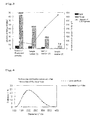
- Fig. 4 shows the results of examining the particle size distribution before and after introduction of a fluorescent dye (BODIPY650/665: Invitrogen). It was demonstrated that the particle size did not change before and after the introduction of a fluorescent dye.
Landscapes
- Health & Medical Sciences (AREA)
- Life Sciences & Earth Sciences (AREA)
- Immunology (AREA)
- Engineering & Computer Science (AREA)
- Chemical & Material Sciences (AREA)
- Urology & Nephrology (AREA)
- Hematology (AREA)
- Biomedical Technology (AREA)
- Molecular Biology (AREA)
- Medicinal Chemistry (AREA)
- Analytical Chemistry (AREA)
- Cell Biology (AREA)
- Pathology (AREA)
- Food Science & Technology (AREA)
- Biotechnology (AREA)
- Physics & Mathematics (AREA)
- Microbiology (AREA)
- Biochemistry (AREA)
- General Health & Medical Sciences (AREA)
- General Physics & Mathematics (AREA)
- Chemical Kinetics & Catalysis (AREA)
- Investigating, Analyzing Materials By Fluorescence Or Luminescence (AREA)
- Investigating Or Analysing Materials By The Use Of Chemical Reactions (AREA)
- Polymerisation Methods In General (AREA)
- Addition Polymer Or Copolymer, Post-Treatments, Or Chemical Modifications (AREA)
Abstract
An object of the present invention is to provide latex particles with high production reproducibility, by which a sufficiently high value of signal ΔS (= value of signal - value of noise) can be realized in immunodiagnosis. The present invention provides a method for assay which comprises steps of (1) causing a substance to be detected to come into contact with or compete with binding substance-labeled fluorescent latex particles which are obtained by causing a binding substance to bind to fluorescent latex particles, and (2) measuring fluorescence from the binding substance-labeled fluorescent latex particles, wherein: (a) the fluorescent latex particles are obtained by adding a fluorescent substance to latex particles characterized in that the amount of COOH groups existing on the surfaces of the latex particles is from 40 µeq/g to 300 µeq/g, or (b) the fluorescent latex particles contain latex particles and a fluorescent substance, which are characterized in that the amount of COOH groups existing on the surfaces of the fluorescent latex particles is from 40 µeq/g to 300 µeq/g.
Description
- The present invention relates to a method for immunoassay using latex particles.
- Conventionally, fluorescence detection has been broadly used as a simple and highly sensitive measurement method for biomeasurement and the like. Fluorescence detection is a method that involves: irradiating a sample which is considered to contain a substance to be detected, which emits fluorescence when excited by light with a specific wavelength, with excitation light having such specific wavelength; and detecting fluorescence at such time, so as to confirm the presence of the substance to be detected. Also, the following is widely performed: when a substance to be detected is not a fluorescent material, a fluorescent-dye-labeled substance specifically binding to a substance to be detected is caused to come into contact with a sample; and then fluorescence is detected in the same manner as that described above, so as to confirm that binding has taken place; that is, the presence of the substance to be detected.
- Also, regarding such fluorescence detection, a method that uses the effects of electric field enhancement based on plasmon resonance is proposed in
JP Patent Publication (Kokai) No. 10-307141 (1998 - The aforementioned conventional immunodiagnosis is still problematic in that a sufficient signal value (ΔS (= value of signal - value of noise)) cannot be obtained. An object to be achieved by the present invention is to resolve the problems of the conventional art described above. Specifically, an object to be achieved by the present invention is to provide a method for immunoassay by which a sufficiently high value of signal ΔS (= value of signal - value of noise) can be realized in immunodiagnosis using latex particles with high production reproducibility, and a method for producing such latex particles.
- As a result of intensive studies to achieve the above object, the present inventors have discovered that: latex particles with high production reproducibility can be provided by adjusting the amount of COOH groups existing on the surfaces of latex particles to 40-300 µeq/g; and an immunoassay can be performed, by which a sufficiently high value of signal ΔS (= value of signal - value of noise) can be realized with the use of such latex particles. The present invention has been completed based on these findings.
- The present invention provides a method for assay which comprises steps of (1) causing a substance to be detected to come into contact with or compete with binding substance-labeled fluorescent latex particles which are obtained by causing a binding substance to bind to fluorescent latex particles, and (2) measuring fluorescence from the binding substance-labeled fluorescent latex particles, wherein:
- (a) the fluorescent latex particles are obtained by adding a fluorescent substance to latex particles characterized in that the amount of COOH groups existing on the surfaces of the latex particles is from 40 µeq/g to 300 µeq/g, or
- (b) the fluorescent latex particles contain latex particles and a fluorescent substance, which are characterized in that the amount of COOH groups existing on the surfaces of the fluorescent latex particles is from 40 µeq/g to 300 µeq/g.
- Preferably, the latex is obtained by soap-free polymerization.
- Preferably, the latex is a copolymer containing styrene as a monomer.
- Preferably, the latex is a copolymer of styrene, and acrylic acid or methacrylic acid.
- Preferably, the average particle size of latex particles and/or fluorescent latex particles is from 150 nm to 330 nm.
- Preferably, the average particle size of latex particles and/or fluorescent latex particles is from 190 nm to 270 nm.
- Preferably, the binding substance is an antibody against a substance to be detected. Preferably, in step (2), fluorescence is measured by surface plasmon fluorescence assay or epifluorescence assay.
- The present invention further provides a method for producing latex particles in which the amount of COOH groups existing on the surfaces of latex particles is from 40 µeq/g to 300 µeq/g, which comprises performing polymerization by adding a polymerization initiator dropwise to an aqueous suspension containing styrene and acrylic acid or methacrylic acid wherein a concentration of the styrene is 1.4M or less.
- Preferably, the aqueous suspension is raised to 75°C to 95°C before addition of the polymerization initiator.
- Preferably, the polymerization initiator is potassium persulfate.
- Preferably, polymerization is performed in the presence of a crosslinking agent. According to the present invention, latex particles can be provided that can exert sufficient performance in an immunoassay by adjusting the amount of COOH groups on the surfaces of latex particles to 40 µeq/g-300 µeq/g, In an immunoassay using the fluorescent latex particles of the present invention, the background due to nonspecific adsorption is extremely low, so that high sensitivity evaluation can be performed for the value of signal, Also, the latex particles of the present invention are advantageous in that their production reproducibility is high.
-
-
Fig. 1 shows the relationship ([M] = 2.9 M) between the amount of carboxylic acid introduced and the particle size. -
Fig. 2 shows the relationship between the amount of carboxylic acid introduced and the particle size. -
Fig. 3 shows the results of SPF immunoassay using fluorescent latex particles. -
Fig. 4 shows the results of measuring particle size distribution before and after introduction of a fluorescent dye. -
Fig. 5 shows the results of measuring Zeta potentials before and after introduction of a fluorescent dye. - Preferred Embodiments of the Invention
- The present invention will be further described in detail as follows.
- Latex particles to be used in the present invention are characterized in that the amount of COOH groups on the surfaces is from 40 µeq/g to 300 µeq/g. The amount of COOH groups on the surfaces of latex particles can be measured by measuring electric conductivity. Specifically, the amount of COOH groups on the latex surface can be determined by performing conductometric titration according to a method described in Journal of Colloid and Interface Science 49(3), pp 425-432, 1974 using a pH meter (e.g., a pH meter D-54 (HORIBA, Ltd.)). Specifically, determination is performed as described below. A latex sample, the weight of which has been precisely measured, is diluted with deionized water. A set of both a pH meter and an electrode of a Thomas-Serfass electric conductivity apparatus is placed in a diluted latex dispersion liquid. Latex is stirred and then the pH of the latex sample is adjusted with a dilute NaOH solution to pH 11.5 ± 0.2. The sample is increased by 0.50 ml at a time with 0.421 N H2SO4 for titration. Electric conductivity and pH are analyzed as functions of acid consumption until the pH reaches about 2.4.
- In addition, an amount of COOH groups ranging from 40 µeq/g to 300 µeq/g is synonymous with an amount of COOH groups ranging from 40 µmol/g to 300 µmol/g.
- Specific examples of the latex material include polystyrene, a styrene-acrylic acid copolymer, a styrene-methacrylic acid copolymer, a styrene-glycidyl(meth)acrylate copolymer, a styrene-styrene sulfonate copolymer, a methacrylic acid polymer, an acrylic acid polymer, an acrylonitrile-butadiene-styrene copolymer, a vinyl chloride-acrylic acid ester copolymer, and polyvinyl acetate acrylate. The latex is preferably a copolymer containing at least styrene as a monomer and is particularly preferably a copolymer of styrene, and acrylic acid or methacrylic acid.
- Methods for producing latex are not particularly limited, and latex can be produced by any polymerization method. However, since antibody immobilization becomes difficult when a surfactant is present during the labeling of an antibody, soap-free polymerization is preferred for latex production.
- The average particle size of latex particles differs depending on particle material, the concentration range for determination of a substance to be detected, measurement instruments, and the like. The average particle size is preferably from 150 nm to 330 nm, and further preferably from 190 nm to 270 nm.
- Regarding the relationship between the average particle size of latex particles and the amount of surface COOH groups, latex particle size generally depends on the amount of surface COOH groups. The lower the amount of surface COOH groups, the higher the average particle size. This is because the lower the amount of carboxylic acid, the lower the charge repulsion among latex particles. Moreover, this is particularly because, in a soap-free polymerization system, it becomes difficult for latex to stably exist in water. Hence, for synthesis of latex particles having a particle size within a preferred range and having an amount of surface COOH groups within a preferred range in the present invention, polymerization is preferably performed via a process for production of latex particles as described below or a method based thereon.
- Latex particles having an amount of COOH groups (existing on their surfaces) ranging from 40 µeq/g to 300 µeq/g, which are used in the present invention, contain, according to a particularly preferred embodiment, styrene and acrylic acid or methacrylic acid. Furthermore, such latex particles can be produced by adding a polymerization initiator dropwise to an aqueous suspension (in which the concentration of styrene is 1.4 M or less) so as to perform polymerization. The use of an aqueous suspension in which the concentration of styrene is higher than 1.4 M is not preferred, since latex particles generated in the polymerization system bind to each other, resulting in an increased average particle size for the generated latex.
- Also, the temperature of an aqueous suspension is preferably raised to 75°C-95°C before the addition of a polymerization initiator. Through such temperature increase, the initiator is decomposed simultaneously with the addition thereof and then radicals in the polymerization system are generated at once, so that monomer consumption can be initiated. Such regulation of temperature is preferred, since it has effects of equalizing latex particle size.
- A polymerization initiator to be used in the present invention is not particularly limited, as long as polymerization can be performed therewith, and known polymerization initiators can be used. For example, polymerization can be performed using potassium persulfate, 2,2'-azobisisobutyronitrile, 2,2'-azobis(2,4-dimethyl)valeronitrile, 2,2'-azobis4-methoxy-2,4-dimethylvaleronitrile, benzoyl peroxide, 2,4-dichloroperoxide, isopropyl peroxycarbonate, cumene hydroperoxide, lauroyl peroxide, or the like. Particularly preferably, polymerization can be performed using potassium persulfate. The amount of a polymerization initiator to be used herein is preferably about 0.1% to 5% by weight of a monomer composition.
- Also, polymerization can be performed in the presence of a crosslinking agent. Examples of a crosslinking agent that can be used herein include, but are not limited to, divinylbenzene and 1,4 butadiene.
- Latex particles to be used in the present invention are preferably fluorescent substances. When latex itself obtained by polymerization as described in (2) above is fluorescent, the particles of such latex can be directly used as fluorescent latex particles. When latex obtained by polymerization is non-fluorescent, fluorescent latex particles can be produced by adding a fluorescent substance (e.g., fluorescent dye) to the latex. Specifically, fluorescent latex particles can be produced by adding a fluorescent dye to a solution of latex particles containing water and a water soluble organic solvent and then stirring the mixture, for example. The concentration of latex in a solution of latex particles is preferably from 0.1% by weight to 10% by weight. The solution preferably contains an electrolyte. As an electrolyte, NaCl is preferred, and the concentration of an electrolyte in a solution is preferably from 1 mM to 500 mM. Also, as a water soluble organic solvent contained in a solution of latex particles, tetrahydrofuran (THF), dimethylformiamide (DMF), dimethylacetamide (DMAc), or acetone is preferred. The percentage of a water soluble organic solvent to water is preferably about from 10% to 80%.
- The term "fluorescent latex particles containing latex particles and a fluorescent substance" as used herein refers to both: fluorescent latex particles when latex itself obtained by polymerization as described in (2) above is fluorescent; and fluorescent latex particles obtained by addition of a fluorescent substance (e.g., fluorescent dye) to latex when the latex obtained by polymerization is non-fluorescent.
- The latex particles of the present invention can be used in fluorescence assay by causing a binding substance to bind to the latex particles. Here, the term "binding substance" used herein may refer to a substance that binds to a sensor part via a substance to be detected or a competitive substance that binds to a sensor part competitively with a substance to be detected. For example, when an antigen is a substance to be detected in fluorescence assay for detection of an antigen-antibody reaction and an assay is performed by a sandwich method, an immobilization layer is composed of a primary antibody (immobilized antibody) specifically binding to the antigen and a binding substance is composed of a second antibody specifically binding to the antigen. Also, when an assay is performed by a competition method, a binding substance may be composed of an antibody specifically binding to an antigen or a competitive antigen binding to an immobilized antibody competitively with an antigen.
- When a binding substance is a second antibody specifically binding to an antigen, examples of such antibody specifically binding to an antigen are not particularly limited. For example, antiserum prepared from the serum of an animal immunized with a substance to be detected, an immunoglobulin fraction purified from antiserum, a monoclonal antibody obtained by cell fusion using spleen cells of an animal immunized with a substance to be detected, or fragments thereof [e.g., F(ab')2, Fab, Fab', or Fv] can be used. Such antibody can be prepared by a conventional method. Moreover, such antibodies that can be used herein may be modified antibodies such as chimeric antibodies, commercially available antibodies, and antibodies prepared by a known method from animal serum or culture supernatants. Fragmented antibodies can be used regardless of animal species, subclass, and the like. For example, antibodies that can be used in the present invention are antibodies from mice, rats, goats, rabbits, sheep, or the like. Specific examples thereof include mouse IgG, mouse IgM, rat IgG, rat IgM, rabbit IgG, rabbit IgM, goat IgG, goat IgM, sheep IgG, and sheep IgM. Such antibodies may be either polyclonal or monoclonal. A fragmented antibody is a molecule prepared from a complete antibody having at least one antigen binding site. Specific examples thereof include Fab and F(ab')2. These fragmented antibodies are molecules obtained by treatment with enzymes, or chemical treatment, or gene engineering techniques.
- Next, a method for binding an antibody to fluorescent latex is described. A solution containing an antibody is added to an aqueous solution of fluorescent latex particles, and then the mixture is stirred. Subsequently, a WSC (Product No. 01-62-0011, Wako Pure Chemical Industries, Ltd.) aqueous solution is added to the solution and then the resultant is stirred. A glycine aqueous solution is further added to the solution, the solution is stirred, and then fluorescent latex particles are precipitated by centrifugation. Supernatants are removed, a PBS solution is added, and then fluorescent latex particles are re-dispersed using an ultrasonic washing machine. Alter removal of supernatants by further centrifugation, a PBS solution containing 1% BSA is added to cause re-dispersion of fluorescent latex particles, so that a solution of antibody-bound fluorescent latex particles can be obtained.
- The present invention further relates to a method for assay which comprises steps of: (1) causing a substance to be detected to come into contact with or to compete with binding substance-labeled fluorescent latex particles obtained by causing a binding substance to bind to the fluorescent latex particles of the present invention; and (2) measuring the fluorescence of the above binding substance-labeled fluorescent latex particles.
- The method for assay according to the present invention should be construed according to the broadest possible conception, including detection of the presence or the absence of a substance to be detected or measurement (that is, determination) of the amount of a substance to be detected. Examples of the assay unlimitedly include generally known immunological measurement methods. Hereafter, a sandwich method and a competition method will be described below as specific embodiments of the assay of the present invention, but the present invention is not limited thereto.
- With the use of a sandwich method, a substance to be detected can be measured by the following procedures, for example, but measurement is not limited thereto. First, a primary antibody and a second antibody having specificity to a substance to be detected (antigen) are prepared in advance. Next, the primary antibody is immobilized on a solid phase, such as a substrate, and then the second antibody is caused to bind to fluorescent latex particles, so that antibody-labeled fluorescent latex particles are prepared. Subsequently, a test sample (or an extract thereof) that can contain a substance to be detected (antigen) and antibody-labeled fluorescent latex particles are brought into contact with each other on a substrate. When a substance to be detected is present in a test sample, an antigen-antibody reaction takes place between the substance to be detected and antibody-labeled fluorescent latex particles and between the substance to be detected and a substrate. Such antigen-antibody reaction can be performed in a manner similar to a general antigen-antibody reaction. As a result, when a substance to be detected is present in a test sample, a primary antibody immobilized on the substrate, the substance to be detected (antigen), and a second antibody binding to fluorescent latex particles form an immune complex. In the sandwich method, after a reaction among a primary antibody immobilized on a substrate, a substance to be detected (antigen), and a second antibody binding to fluorescent latex particles is completed, the second antibody that formed no immune complex described above is removed, followed by washing. The degree of formation of the above immune complex is detected as fluorescence intensity, so that the concentration of the substance to be detected and the like can be measured. In addition, there is a positive correlation between fluorescence intensity and the concentration of a substance to be detected.
- With the use of a competition method, a substance to be detected can be measured by the following procedures, for example, but such measurement is not particularly limited thereto. The competition method is known as a technique for detection of an antigen that is a low molecular weight compound that cannot be assayed by the sandwich method.
- First, a primary antibody having specificity to a substance to be detected (antigen) is prepared in advance. Then the primary antibody is caused to bind to fluorescent latex particles. A substance (to be detected) itself having affinity for the primary antibody or a compound having a site analogous to a substance to be detected and an epitope for the primary antibody which is similar to the substance to be detected is immobilized on a solid phase, such as a substrate. Then a test sample (or an extract thereof) that can contain the substance to be detected (antigen) and the primary antibody-bound fluorescent latex particles are brought into contact with the substrate. When no substance to be detected is present in the test sample, an antigen-antibody reaction takes place on the substrate between the primary antibody and the substance (to be detected) itself having affinity for the primary antibody or a compound having an epitope for the primary antibody which is similar to the substance to be detected. On the other hand, when a substance to be detected is present, the substance to be detected (antigen) binds to the primary antibody. Hence, the subsequent antigen-antibody reaction (on the substrate) with the substance (to be detected) itself having affinity for the primary antibody or a compound having a site analogous to the substance to be detected and having an epitope for the primary antibody which is similar to the substance to be detected is inhibited. Thus, binding resulting from such antigen-antibody reaction does not take place. After the reaction between an immobilized material having affinity for the primary antibody and the primary antibody binding to fluorescent latex particles is completed, fluorescent latex particles that have formed no immune complex which was described above are removed. Subsequently, the degree of formation of the above immune complex is detected as fluorescence intensity, so that the concentration of the substance to be detected and the like can be measured.
- Alternatively, according to another embodiment, when an assay is performed by a competition method, "a substance to be detected itself, or a compound having a site analogous to a substance to be detected and having an epitope for a primary antibody which is similar to the substance to be detected" is caused to bind to fluorescent latex particles. The primary antibody having specificity to the substance to be detected (antigen) may be immobilized on a solid phase, such as a substrate. Also in this case, the concentration of the substance to be detected and the like can be measured by performing an antigen-antibody reaction in the same way as mentioned above.
- A method for detection of fluorescence in the present invention is not particularly limited. For example, fluorescence intensity can be detected using an instrument capable of detecting fluorescence intensity. A specific example is a microplate reader or a biosensor for surface plasmon fluorescence (SPF) detection using surface plasmon excitation, Detection of fluorescence intensity is generally completed within a given period of time after an antigen-antibody reaction, such as within several minutes to several hours. Through detection of the degree of formation of the above immune complex via fluorescence intensity, the concentration of a substance to be detected can be determined based on the relationship between fluorescence intensity and the concentration of the substance to be detected. The type of measurement of fluorescence may be plate reader measurement or flow measurement. In addition, surface plasmon fluorescence (SPF) detection using surface plasmon excitation can be performed via measurement with sensitivity which is higher than that in the case of a fluorescence detection method using epi-illumination excitation (hereafter, referred to as an "epi-fluorescence method").
- A sensor that can be used as the above surface plasmon fluorescence (SPF) biosensor, for example, as disclosed in
JP Patent Publication (Kokai) No. 2008-249361A - The surface plasmon fluorescence (SPF) detection system using fluorescent particles of the present invention is different from a latex agglutination method. In the latex agglutination method, antibody sensitized latex in a latex reagent and an antigen in a specimen bind to each other to undergo agglutination as a result of an antibody reaction. The resulting agglutinates increase with time and then the agglutinates are irradiated with far-red light. A manner of quantifying the concentration of the antigen based on the thus obtained change in absorbance per unit time is a latex agglutination method. Agglutinates resulting from an antigen-antibody reaction as a result of immunonephelometry are very small, so that the optical detection of the degree of agglutination within a low-concentration range in cases in which the amount of the antigen is low is difficult Hence, conventionally in a latex agglutination method by which relatively large latex particles (of the µm size) are sensitized with an antibody, an antigen-antibody reaction appears in the form of apparent latex agglutination. Therefore, even when the amount of an antigen within a low-concentration range is low, large agglutinates appear and even slight changes in agglutinates can be optically captured. Examples of such method include a turbidimetric method by which the formation of agglutinates is detected as an increase in turbidity, a method by which the formation of agglutinates is detected as a change in particle size distribution or average particle size, and an integrating sphere turbidity method that comprises measuring a change in forward-scattered light due to the formation of agglutinates using integrating sphere and then comparing the ratio thereof with the intensity of transmitted light. Examples of the above measurement methods include a rate assay that involves obtaining at least two measurement values at different time points, and then finding the degree of agglutination based on the difference (an increase) occurring between these time points (that is, rate of increase), and, an end point assay that involves generally obtaining one measured value at a time point thought to be an end point of the reaction and then finding the degree of agglutination based on the measured value. Examples of an automatic apparatus for clinical laboratory tests, which is appropriate for immunological latex agglutination reaction measurement, include commercially available automatic analyzers such as the Hitachi 7070, 7150, 7170, LPIA-A700, and S500.
- The present invention will be further specifically described by the following Examples, but the present invention is not limited to the Examples.
- Soap-free polymerization is preferred for particle production, since antibody immobilization is difficult when a surfactant is present upon antibody labeling. However, it is difficult to perform soap-free polymerization, when the particle size is 200 nm or less. Also, with a particle size of 300 nm or more, evaluation was impossible because of agglutination after antibody labeling. Therefore, an experiment was conducted with the particle size narrowed down to 200 nm to 250 nm. The results are shown in the following Examples.
- In the following Examples, the particle size was measured using the ZETA SIZER (Sysmex) Nano series. Samples were prepared to have a concentration of 0.01 % and then measured using 10 mM Phosphate pH 7.0 (800 µL). The parameters are as follows. Polystyren latex: RI: 1.590; Absorption: 0.01; solvent: water; temperature: 25°C; viscosity, 0.8872 cP; RI: 1.330 Also, the amount of carboxylic acid in latex was determined by performing conductometric titration according to the method described in the Journal of Colloid and Interface Science 49 (3), pp 425-432, 974 using a pH meter D-54 (HORIBA, Ltd.).
- The results of examining soap-free polymerization using styrene, acrylic acid, and potassium persulfate (KPS) are as described below.
-
Fig. 1 shows the relationship between the amount of carboxylic acid on particle surfaces and the particle size ([M] = 2.9 M). At a monomer concentration of 2.9 mol.L-1, particle size was determined depending on the amount of carboxylic acid on particle surfaces, independent of the amount of the initiator (the ratio of [M]/[I] was introduced). - Styrene (Wako Pure Chemical Industries, Ltd.) (30 g) (288 mmol) and 1 g (56 mol) of acrylic acid (Wako Pure Chemical Industries, Ltd.) were suspended and dissolved in 100 mL of milli-Q water. An aqueous solution prepared by dissolving 0.2 g of KPS (Wako Pure Chemical Industries, Ltd.) in 10 mL at 85°C was added thereto, followed by 6 hours of stirring at 65°C and 250 rpm. Subsequently, 3 hours of centrifugation was performed 3 times at 8000 rpm and then the resultant was finally re-dispersed in milli-Q water.
-
Fig. 2 shows the results of examining the concentration of a monomer (styrene) to be introduced. When the concentration for introduction was lowered, the amount of carboxylic acid introduced was low and the production of particles having a particle size of 275 nm became possible. - A method for producing latex particles having the physical properties listed in Table 1 below is described as follows,
Table 1: Sample No. Particle size (nm) Amount of COOH group (µeq./g) (1) 203 nm 56 (2) 199 nm 265 (3) 214 nm 420 (4) 264nm 417 (5) 254 nm 84 - Styrene (Wako Pure Chemical Industries, Ltd.) (30 g) (288 mmol) and 3 g (42 mmol) of acrylic acid (Wako Pure Chemical Industries, Ltd.) were suspended in 440 mL of milli-Q water, the temperature was raised to 85°C, and then an aqueous solution prepared by dissolving 1 g of KPS (Wako Pure Chemical Industries, Ltd.) in 10 mL was added thereto, followed by 6 hours of stirring at 85°C and 250 rpm. Subsequently, 3 hours of centrifugation was performed 3 times at 10,000 rpm and then the resultant was finally re-dispersed in milli-Q water.
- Styrene (Wako Pure Chemical Industries, Ltd.) (30 g) (288 mmol) and 6 g (84 mmol) of acrylic acid (Wako Pure Chemical Industries, Ltd.) were suspended in 330 mL of milli-Q water, the temperature was raised to 85°C, and then an aqueous solution prepared by dissolving 1 g of KPS (Wako Pure Chemical Industries, Ltd.) in 10 mL was added thereto, followed by 6 hours of stirring at 85°C and 250 rpm. Subsequently, 3 hours of centrifugation was performed 3 times at 10,000 rpm and then the resultant was finally re-dispersed in milli-Q water.
- Styrene (Wako Pure Chemical Industries, Ltd.) (30 g) (288 mmol) and 6 g (83 mmol) of acrylic acid (Wako Pure Chemical Industries, Ltd.) were suspended in 220 mL of milli-Q water, the temperature was raised to 85°C, and then an aqueous solution prepared by dissolving 1 g of KPS (Wako Pure Chemical Industries, Ltd.) in 10 mL was added thereto, followed by 6 hours of stirring at 85°C and 250 rpm. Subsequently, 3 hours of centrifugation was performed 3 times at 10,000 rpm and then the resultant was finally re-dispersed in milli-Q water.
- Styrene (Wako Pure Chemical Industries, Ltd.) (30 g) (288 mmol) and 1 g (14 mmol) of acrylic acid (Wako Pure Chemical Industries, Ltd.) were suspended in 660 mL of milli-Q water, the temperature was raised to 85°C, and then an aqueous solution prepared by dissolving 1 g of KPS (Wako Pure Chemical Industries, Ltd.) in 10 mL was added thereto, followed by 6 hours of stirring at 85°C and 250 rpm. Subsequently, 3 hours of centrifugation was performed 3 times at 10,000 rpm and then the resultant was finally re-dispersed in milli-Q water.
- Latex particles (sample Nos. (1)-(5) as listed in Table 1) (13.4% solid, 745 µL) were dissolved in 9.255 mL of 500 mM NaCl aqueous solution, and then 10 mL of dimethylformamide (DMF) was added, followed by 30 minutes of stirring at room temperature with shielding from light. Subsequently, 0.5 mg (50 µ DMF solution) of a fluorescent dye BODIPY650/665 (Invitrogen) was added, and then the resultant was stirred at room temperature for 30 minutes. Purification was performed by repeating centrifugation (15,000 rpm, 60 minutes, 4°C) and re-dispersion into 1×
PBS 3 times. Finally, 5 mL of milli-Q water was added, so as to adjust the solid content concentration to 2% solid. - 250 µL of 50 mM MES buffer (pH 6.0) solution containing 2 mg/mL anti-hCG monoclonal antibody Anti-alpha subunit 6601 SPR-5 (IgG2a (Medix)) was added to 250 µL of an aqueous solution of 2% (solid content concentration) fluorescent latex particles prepared in Example 2, followed by 15 minutes of stirring at room temperature. Subsequently, 5 µL of a 10 mg/mL WSC (Product No. 01-62-0011, Wako Pure Chemical Industries, Ltd.) aqueous solution was added and the solution was stirred at room temperature for 2 hours. 2 mol/L glycine aqueous solution (25 µL) was added thereto and then the solution was stirred for 30 minutes. Fluorescent latex particles were then precipitated by centrifugation (15,000 rpm, 4°C, 15 minutes). Supernatants were removed, 500 µL of a PBS solution (pH 7.4) was added, and then fluorescent latex particles were re-dispersed using an ultrasonic washing machine. Centrifugation (15,000 rpm., 4°C, 15 minutes) was further performed and then supernatants were removed. PBS (pH 7.4) solution (500 µL) containing 1% BSA was then added, and then fluorescent latex particles were re-dispersed, so that a 1% (w/v) solution of anti-hCG antibody-bound fluorescent latex particles was obtained.
- Regarding antibodies of sandwich pair, anti-hCG 5008 SP-5 JgG1) (Medix) was used on the solid phase and anti-alpha subunit 6601 SPR-5 (IgG2a (Medix)) was used on the fluorescent particles.
- An antibody solution was spotted onto a gold film using a chip comprising polymethylmethacrylate as a substrate on which a gold film had been deposited, so that the antibody was immobilized. Subsequently, immunoassay was performed according to the following procedures by using antibody-labeled fluorescent particles prepared in Example 3.
- Before attachment of an upper wall onto the top of a fluid path of the sensor chip, 100 µL of 150 mM sodium chloride solution of anti-hCG monoclonal antibody Anti-hCG 5008 SP-5 (IgG1) (Medix) adjusted to 10 µg/mL was added to a measurement area of the sensor chip. The sensor chip was left to stand at room temperature for 1 hour. The antibody solution was removed and then the sensor chip was washed with a previously prepared washing buffer (PBS (pH 7.4) containing 0.05% (w/v) Tween-20) (300 µL/washing, 3 times). After washing, to block the unadsorbed portion of the antibody, 300 µL of PBS (pH 7.4) containing 1% casein was added and then the resultant was left to stand for 1 hour at room temperature. After washing with the above washing buffer, 300 µL of Immunoassay Stabilizer (ABI) was added as a stabilizer to each well, and then the wells were left to stand at room temperature for 30 minutes. The solution was removed and then moisture was completely removed in a dryer. After treatment of binding of the anti-hCG antibody, the fluid path of the sensor chip was sealed using a lid material, and then a fluid path sensor chip was prepared. Ultrasonic deposition or the like can be employed for sealing of the fluid path.
- PBS solutions (phosphate buffer) of 1% BSA which contain 0 pM, 0.9 pM, 9 pM, or 90 pM purified hCG antigen were prepared, and were used as sample solutions. The concentration of 0 pM indicates the 1% BSA PBS solution itself.
- To 500 µL of each sample solution, 5 µL each of the 1% anti-hCG antibody-bound fluorescent label solution prepared by the above procedures was added and mixed, so as to prepare a reaction solution. Fluorescent signals from the measurement area were measured at a plurality of different time points while causing the reaction solution to flow down on the measurement area using a sample cell. Fluorescent signals were measured by irradiating the region in which a complex (antibody-antigen-antibody) was formed on the gold film with an NIR laser from the side at which no antibody was bound so as to generate an evanescent wave. An evanescent wave reached only a region in the vicinity of the gold film and then excited mainly the label contained in the above sandwich complex, so as to emit fluorescence. The fluorescence was detected using a photodiode. At this time, a pump was connected to an air hole of the sample cell and pump suction was performed at a constant flow rate (linear velocity) of 1.4 mm/s. Measurement was performed while sending 300 µL of the reaction solution onto the measurement area.
Fig. 3 shows the results of evaluating the density of trapped antigens using a blood plasma system in SPF measurement, in order to evaluate the performance of immunoassay. Specifically,Fig. 3 shows the results of comparing each type of fluorescent particles using ΔS = value of signal - value of noise. - Reaction conditions:
- Primary reaction: 10 minutes;
- Flow rate: 10 µL/minute;
- Flow time: 5 minutes;
- Washing time: 5 minutes
- Styrene (Wako Pure Chemical Industries, Ltd.) (30 g) (288 mmol) and 4 g (56 mmol) of acrylic acid (Wako Pure Chemical Industries, Ltd) were suspended in 480 mL of milli-Q water, the temperature was raised to 85°C, and then an aqueous solution prepared by dissolving 1.16 g of KPS (Wako Pure Chemical Industries, Ltd.) in 10 mL was added thereto, followed by 6 hours of stirring at 85°C and 250 rpm, Subsequently, 3 hours of centrifugation was performed 3 times at 10,000 rpm, and then the resultant was finally re-dispersed in milli-Q water.
- The results of examining polymerization reproducibility under conditions of [M]/[I] = 80 M, [St]/[AA]= 5.12, [M] = 1.72 M, 80°C, and 4 hours are shown in Table 2 below.
Table 2: Sample No. Particle size/nm (DLS) COOH/µeq·g-1 (electric conductivity) Mn(Mw/Mn) (GPC) Remaining monomer (styrene)/% (1H-NMR) (6) 229 252 20.700(2.98) <0.1% (7) 223 290 20.500(2.89) <0.1% (8) 224 269 23.800(2.86) <0.1% - Examination of formulation for synthesis of latex particles (particle size of 200-210 nm; around 60-120 µmol/g) Polymerization reproducibility was examined under conditions of [M]/[I]=80, M=0.45mol·L-1, [St]/[AA]=26.18, 80°C, and 6 hours.
Table 3: Lot No. Particle size/nm (DLS) COOH/µeq·g-1 (electric conductivity) Mn (Mw/Mn) (GPC) Remaining monomer (styrene)/% (1H-NMR) (9) 222 106 17,100 (4.21) <0.1% (10) 223 * 43,300 (5.37) 1.3 (11) 219 * 23,100 (4.78) 2.4 *Unmeasured - Reproducibility of the particle size was satisfactory, but the molecular weight was unstable and monomers remained. It is difficult to achieve polymerization reproducibility in case of latex particles having low amounts of carboxylic acid.
-
Fig. 4 shows the results of examining the particle size distribution before and after introduction of a fluorescent dye (BODIPY650/665: Invitrogen). It was demonstrated that the particle size did not change before and after the introduction of a fluorescent dye. - Also, electric conductivity cannot be measured after introduction of a fluorescent dye. The surface COOH amount was evaluated before and after the introduction of a fluorescent dye (BODIPY650/665: Invitrogen) using Zeta potential as an index.
Fig. 5 shows the results. The surface COOH amount did not substantially change before and after the introduction of then fluorescent dye.
Claims (12)
- A method for assay which comprises steps of (1) causing a substance to be detected to come into contact with or compete with binding substance-labeled fluorescent latex particles which are obtained by causing a binding substance to bind to fluorescent latex particles, and (2) measuring fluorescence from the binding substance-labeled fluorescent latex particles, wherein:(a) the fluorescent latex particles are obtained by adding a fluorescent substance to latex particles characterized in that the amount of COOH groups existing on the surfaces of the latex particles is from 40 µeq/g to 300 µeq/g, or(b) the fluorescent latex particles contain latex particles and a fluorescent substance, which are characterized in that the amount of COOH groups existing on the surfaces of the fluorescent latex particles is from 40 µeq/g to 300 µeq/g.
- The method for assay according to claim 1, wherein the latex is obtained by soap-free polymerization.
- The method for assay according to claim 1, wherein the latex is a copolymer containing styrene as a monomer.
- The method for assay according to claim 1, wherein the latex is a copolymer of styrene, and acrylic acid or methacrylic acid.
- The method for assay according to claim 1, wherein the average particle size of latex particles and/or fluorescent latex particles is from 150 nm to 330 nm.
- The method for assay according to claim 1, wherein the average particle size of latex particles and/or fluorescent latex particles is from 190 nm to 270 nm.
- The method for assay according to claim 1, wherein the binding substance is an antibody against a substance to be detected.
- The method for assay according to claim 1, wherein in step (2), fluorescence is measured by surface plasmon fluorescence assay or epifluorescence assay.
- A method for producing latex particles in which the amount of COOH groups existing on the surfaces of latex particles is from 40 µeq/g to 300 µeq/g, which comprises performing polymerization by adding a polymerization initiator dropwise to an aqueous suspension containing styrene and acrylic acid or methacrylic acid wherein a concentration of the styrene is 1.4 M or less.
- The method according to claim 9, wherein the aqueous suspension is raised to 75°C to 95°C before addition of the polymerization initiator.
- The method according to claim 9, wherein the polymerization initiator is potassium persulfate.
- The method according to claim 9, wherein polymerization is performed in the presence of a crosslinking agent.
Applications Claiming Priority (1)
| Application Number | Priority Date | Filing Date | Title |
|---|---|---|---|
| JP2009210605A JP5317899B2 (en) | 2009-09-11 | 2009-09-11 | Immunoassay method using latex particles |
Publications (1)
| Publication Number | Publication Date |
|---|---|
| EP2309268A1 true EP2309268A1 (en) | 2011-04-13 |
Family
ID=42830702
Family Applications (1)
| Application Number | Title | Priority Date | Filing Date |
|---|---|---|---|
| EP10176153A Withdrawn EP2309268A1 (en) | 2009-09-11 | 2010-09-10 | Method for immunoassay using latex particles |
Country Status (4)
| Country | Link |
|---|---|
| US (1) | US20110065213A1 (en) |
| EP (1) | EP2309268A1 (en) |
| JP (1) | JP5317899B2 (en) |
| CN (1) | CN102023209B (en) |
Families Citing this family (2)
| Publication number | Priority date | Publication date | Assignee | Title |
|---|---|---|---|---|
| JP5363631B2 (en) * | 2011-09-28 | 2013-12-11 | 富士フイルム株式会社 | Method for detecting a target substance using fluorescent particles |
| CN108700581A (en) * | 2016-02-29 | 2018-10-23 | 富士胶片株式会社 | Method for the measured substance in the kit of the measured substance in quantitative Biosample and quantitative Biosample |
Citations (3)
| Publication number | Priority date | Publication date | Assignee | Title |
|---|---|---|---|---|
| JPH10307141A (en) | 1997-04-14 | 1998-11-17 | Boehringer Mannheim Gmbh | Simultaneous detection of biomolecule interactions using plasmon resonance and fluorescence detection |
| FR2841156A1 (en) * | 2002-06-19 | 2003-12-26 | Bio Merieux | NOVEL FLUORESCENT MAGNETIC PARTICLES, AS WELL AS CONJUGATES OF SUCH PARTICLES, AND DIAGNOSTIC, THERAPEUTIC OR PROPHYLACTIC COMPOSITIONS CONTAINING THEM |
| JP2008249361A (en) | 2007-03-29 | 2008-10-16 | Fujifilm Corp | Surface plasmon sensor and immunological measurement method |
Family Cites Families (6)
| Publication number | Priority date | Publication date | Assignee | Title |
|---|---|---|---|---|
| US5326692B1 (en) * | 1992-05-13 | 1996-04-30 | Molecular Probes Inc | Fluorescent microparticles with controllable enhanced stokes shift |
| JP3182819B2 (en) * | 1991-11-14 | 2001-07-03 | ジェイエスアール株式会社 | Immunochromatographic method |
| JP3478939B2 (en) * | 1997-02-24 | 2003-12-15 | 積水化学工業株式会社 | Carrier for immunodiagnosis |
| KR100878093B1 (en) * | 2001-04-11 | 2009-01-14 | 라피드 바이오센서 시스템스 리미티드 | Biological measurement system and method for detecting pathogens using the same |
| CN101213226A (en) * | 2005-07-01 | 2008-07-02 | 霍夫曼-拉罗奇有限公司 | Carboxylated latex particles |
| JP2009139214A (en) * | 2007-12-06 | 2009-06-25 | Konica Minolta Holdings Inc | Polymer particulate dispersed object, composition for measurement including it, and detecting method of material to be tested using it |
-
2009
- 2009-09-11 JP JP2009210605A patent/JP5317899B2/en not_active Expired - Fee Related
-
2010
- 2010-09-09 CN CN201010281100.8A patent/CN102023209B/en not_active Expired - Fee Related
- 2010-09-10 US US12/879,524 patent/US20110065213A1/en not_active Abandoned
- 2010-09-10 EP EP10176153A patent/EP2309268A1/en not_active Withdrawn
Patent Citations (3)
| Publication number | Priority date | Publication date | Assignee | Title |
|---|---|---|---|---|
| JPH10307141A (en) | 1997-04-14 | 1998-11-17 | Boehringer Mannheim Gmbh | Simultaneous detection of biomolecule interactions using plasmon resonance and fluorescence detection |
| FR2841156A1 (en) * | 2002-06-19 | 2003-12-26 | Bio Merieux | NOVEL FLUORESCENT MAGNETIC PARTICLES, AS WELL AS CONJUGATES OF SUCH PARTICLES, AND DIAGNOSTIC, THERAPEUTIC OR PROPHYLACTIC COMPOSITIONS CONTAINING THEM |
| JP2008249361A (en) | 2007-03-29 | 2008-10-16 | Fujifilm Corp | Surface plasmon sensor and immunological measurement method |
Non-Patent Citations (6)
| Title |
|---|
| AOKI ET AL: "Voltammetric electrodes coated with carboxyl latex particles", JOURNAL OF ELECTROANALYTICAL CHEMISTRY AND INTERFACIALELECTRO CHEMISTRY, ELSEVIER, AMSTERDAM, NL LNKD- DOI:10.1016/J.JELECHEM.2007.09.035, vol. 613, no. 1, 1 February 2008 (2008-02-01), pages 1 - 8, XP022494324, ISSN: 0022-0728 * |
| JOURNAL OF COLLOID AND INTERFACE SCIENCE, vol. 49, no. 3, 1974, pages 425 - 432 |
| KANG K ET AL: "The immobilization of trypsin on soap-free P(MMA-EA-AA) latex particles", MATERIALS SCIENCE AND ENGINEERING C, ELSEVIER SCIENCE S.A, CH LNKD- DOI:10.1016/J.MSEC.2005.07.020, vol. 26, no. 4, 1 May 2006 (2006-05-01), pages 664 - 669, XP025137779, ISSN: 0928-4931, [retrieved on 20060501] * |
| KHREICH N ET AL: "Detection of Staphylococcus enterotoxin B using fluorescent immunoliposomes as label for immunochromatographic testing", ANALYTICAL BIOCHEMISTRY, ACADEMIC PRESS INC, NEW YORK LNKD- DOI:10.1016/J.AB.2008.02.032, vol. 377, no. 2, 15 June 2008 (2008-06-15), pages 182 - 188, XP022701428, ISSN: 0003-2697, [retrieved on 20080318] * |
| LUECK M ET AL: "Analysis of plasma protein adsorption on polymeric nanoparticles with different surface characteristics", JOURNAL OF BIOMEDICAL MATERIALS RESEARCH, WILEY, NEW YORK, NY, US, vol. 39, no. 4, 5 March 1998 (1998-03-05), pages 478 - 485, XP009139871, ISSN: 0021-9304 * |
| MEDINA MARJORIE B: "Development of a fluorescent latex microparticle immunoassay for the detection of staphylococcal enterotoxin B (SEB).", JOURNAL OF AGRICULTURAL AND FOOD CHEMISTRY 12 JUL 2006 LNKD- PUBMED:16819899, vol. 54, no. 14, 12 July 2006 (2006-07-12), pages 4937 - 4942, XP002604810, ISSN: 0021-8561 * |
Also Published As
| Publication number | Publication date |
|---|---|
| JP5317899B2 (en) | 2013-10-16 |
| CN102023209B (en) | 2014-11-05 |
| CN102023209A (en) | 2011-04-20 |
| US20110065213A1 (en) | 2011-03-17 |
| JP2011059003A (en) | 2011-03-24 |
Similar Documents
| Publication | Publication Date | Title |
|---|---|---|
| US7867785B2 (en) | Carrier particle latex for assay reagent and assay reagent | |
| KR100778102B1 (en) | Reproducible cohesive immunoassays and reagents | |
| EP2389289A1 (en) | Apparatus and methods for detecting inflammation using quantum dots | |
| JPWO2002018953A1 (en) | Highly reproducible agglutination immunoassay method and reagents | |
| US7226777B2 (en) | Turbidimetric immunoassay and an apparatus therefor | |
| JP4853666B2 (en) | Target substance detection method, mixed particles, and target substance detection reagent | |
| US20120196385A1 (en) | Assay method and kit for assay employing sensor chip for fluorescent measuring apparatus utilizing surface plasmon-field enhanced fluorescence spectrometry | |
| JP5026251B2 (en) | Detection method and quantification method of detection target | |
| CN111868527B (en) | Kit, assay kit and assay method | |
| EP2309268A1 (en) | Method for immunoassay using latex particles | |
| JP5288349B2 (en) | Immunological analysis reagent and immunological analysis method | |
| EP2088428B1 (en) | Process for producing polymer particles | |
| US6548310B1 (en) | Particle for diagnostic agent and turbidmetric immunoassay using the same | |
| US20130052632A1 (en) | Method for sensing a chemical | |
| WO2010041736A1 (en) | Assay method using surface plasmon | |
| JP4556605B2 (en) | Target substance measurement method and reagent | |
| JP2008215816A (en) | Hollow polymer particles for immunodiagnosis, method for producing the same, and reagent for immunodiagnosis | |
| US20240077479A1 (en) | Detection system and method for the migrating cell | |
| JP2013053902A (en) | Quantitative analysis method for measuring fluorescence amount using surface plasmon field-enhanced fluorescence spectroscopy, quantitative analysis kit used therefor, and analyte dissociation inhibitor | |
| CN101405602A (en) | A chemical sensing device | |
| JP2009019894A (en) | Detection method of substance by surface plasmon resonance | |
| JPH11258238A (en) | Reagent kit for immunological agglutination measurement |
Legal Events
| Date | Code | Title | Description |
|---|---|---|---|
| PUAI | Public reference made under article 153(3) epc to a published international application that has entered the european phase |
Free format text: ORIGINAL CODE: 0009012 |
|
| AK | Designated contracting states |
Kind code of ref document: A1 Designated state(s): AL AT BE BG CH CY CZ DE DK EE ES FI FR GB GR HR HU IE IS IT LI LT LU LV MC MK MT NL NO PL PT RO SE SI SK SM TR |
|
| AX | Request for extension of the european patent |
Extension state: BA ME RS |
|
| 17P | Request for examination filed |
Effective date: 20111013 |
|
| STAA | Information on the status of an ep patent application or granted ep patent |
Free format text: STATUS: THE APPLICATION HAS BEEN WITHDRAWN |
|
| 18W | Application withdrawn |
Effective date: 20150408 |