EP2307007B1 - Sphingosine 1 phosphate receptor modulators and their use to treat muscle inflammation - Google Patents
Sphingosine 1 phosphate receptor modulators and their use to treat muscle inflammation Download PDFInfo
- Publication number
- EP2307007B1 EP2307007B1 EP09780938.8A EP09780938A EP2307007B1 EP 2307007 B1 EP2307007 B1 EP 2307007B1 EP 09780938 A EP09780938 A EP 09780938A EP 2307007 B1 EP2307007 B1 EP 2307007B1
- Authority
- EP
- European Patent Office
- Prior art keywords
- ethyl
- trifluoromethyl
- benzyloxyimino
- propionic acid
- benzylamino
- Prior art date
- Legal status (The legal status is an assumption and is not a legal conclusion. Google has not performed a legal analysis and makes no representation as to the accuracy of the status listed.)
- Not-in-force
Links
Classifications
-
- A—HUMAN NECESSITIES
- A61—MEDICAL OR VETERINARY SCIENCE; HYGIENE
- A61K—PREPARATIONS FOR MEDICAL, DENTAL OR TOILETRY PURPOSES
- A61K31/00—Medicinal preparations containing organic active ingredients
- A61K31/33—Heterocyclic compounds
- A61K31/395—Heterocyclic compounds having nitrogen as a ring hetero atom, e.g. guanethidine or rifamycins
- A61K31/397—Heterocyclic compounds having nitrogen as a ring hetero atom, e.g. guanethidine or rifamycins having four-membered rings, e.g. azetidine
-
- A—HUMAN NECESSITIES
- A61—MEDICAL OR VETERINARY SCIENCE; HYGIENE
- A61P—SPECIFIC THERAPEUTIC ACTIVITY OF CHEMICAL COMPOUNDS OR MEDICINAL PREPARATIONS
- A61P21/00—Drugs for disorders of the muscular or neuromuscular system
-
- A—HUMAN NECESSITIES
- A61—MEDICAL OR VETERINARY SCIENCE; HYGIENE
- A61P—SPECIFIC THERAPEUTIC ACTIVITY OF CHEMICAL COMPOUNDS OR MEDICINAL PREPARATIONS
- A61P29/00—Non-central analgesic, antipyretic or antiinflammatory agents, e.g. antirheumatic agents; Non-steroidal antiinflammatory drugs [NSAID]
-
- A—HUMAN NECESSITIES
- A61—MEDICAL OR VETERINARY SCIENCE; HYGIENE
- A61P—SPECIFIC THERAPEUTIC ACTIVITY OF CHEMICAL COMPOUNDS OR MEDICINAL PREPARATIONS
- A61P43/00—Drugs for specific purposes, not provided for in groups A61P1/00-A61P41/00
Definitions
- the present invention relates generally to specific sphingosine 1 phosphate (S1 P) receptor modulators, and more specifically to their use to treat polymyositis and dermatomyositis.
- S1 P sphingosine 1 phosphate
- Polymyositis is an immune-mediated disorder leading to an inflammation of the muscles. It results in weakness that can be severe. Polymyositis is a chronic illness with periods of increased symptoms, called flares or relapses, and minimal or no symptoms, known as remissions.
- Compound A as defined in the first aspect for use in preventing, inhibiting or treating an inflammatory condition selected from polymyositis or dermatomyositis.
- an inflammatory condition such as polymyosisitis, dermatomyositis and nerve-muscle diseases e.g. muscular dystrophies and inclusion body myositis, in a subject in need thereof, comprising administering to said subject a therapeutically effective amount of an S1P receptor modulator as defined in the first aspect.
- a pharmaceutical composition comprising an S1 P receptor modulator as defined in the first aspect for use in preventing, inhibiting or treating an inflammatory condition selected from polymyositis or dermatomyositis together with one or more pharmaceutically acceptable diluents or carriers therefor.
- S1 P receptor modulators of, or of interest in the invention are compounds of formula la or Ib, e.g. as disclosed in WO 04/103306A , WO 05/000833 , WO 05/103309 or WO 05/113330 .
- the S1 P receptor modulator may be a compound of formula Ia or Ib as defined below: wherein
- R 1 is phenyl, naphthyl or thienyl optionally substituted by C 6-10 aryl, C 6-10 arylC 1-4 alkyl, C 2-9 heteroaryl, C 2-9 heteroarylC 14 alkyl, C 3-8 cycloalkyl, C 3-8 cycloalkylC 1-4 alkyl, C 3-8 heterocycloalkyl, C 3-8 heterocycloalkylC 1-4 alkyl or C 1-6 alkyl; wherein any aryl, heteroaryl, cycloalkyl or heterocycloalkyl group of R 1 can be optionally substituted by one to five radicals chosen from halo, C 1-6 alkyl, C 1 - 6 alkoxy, halo-substituted-C 1-6 alkyl and halo-substituted-C 1-6 alkoxy; and any alkyl group of R 1 can optionally have a methylene replaced by an atom or
- R 1 is chosen from: wherein the asterisk is the point of attachment of R 1 with W;
- R 8 is C 6-10 aryl, C 6-10 arylC 14 alkyl, C 2-9 heteroaryl, C 2-9 heteroarylC 1-4 alkyl, C 3-8 cycloalkyl, C 3-8 cycloalkylC 1-4 alkyl, C 38 heterocycloalkyl, C 3-8 heterocycloalkylC 1-4 alkyl or C 1-6 alkyl; wherein any aryl, heteroaryl, cycloalkyl or heterocycloalkyl group of R 8 can be optionally substituted by one to three radicals chosen from halo, C 1-6 alkyl, C 1-6 alkoxy, halo-substituted-C 1-6 alkyl and halo-substituted-C 1-6 alkoxy; and any alkyl group of R 8 can optionally have a methylene replaced by an atom or group chosen from -S-,
- A is -C(O)OH; and Z is chosen from: wherein the left and right asterisks of Z indicate the point of attachment between -C(R 3 )(R 4 )- and A of Formula la or Ib, respectively; R 6 is chosen from hydrogen and C 1-6 alkyl; and R 3 and R 4 are both hydrogen.
- Y is chosen from phenyl, pyridinyl, thienyl and furanyl; wherein any phenyl, pyridinyl, thienyl or furanyl of Y is optionally substituted with 1 to 3 radicals chosen from methyl, ethyl, cyclopropyl, chloro, bromo, fluoro and methoxy; or where Y is phenyl, R 6 can be attached to a carbon atom of Y to form 3,4-dihydro-1H-isoquinolin-2-yl.
- W is a bond or methylene;
- R 1 is chosen from: wherein R 8 is chosen from phenyl, cyclohexyl, thienyl, 3,3-dimethyl-butyl, pyridinyl, cyclopentyl and piperidinyl; wherein R 8 can be optionally substituted by 1 to 3 radicals chosen from trifluoromethyl, methoxy, fluoro, triflouromethoxy and methyl; and R 9 is chosen from trifluoromethyl, fluoro, methyl, chloro, methoxy and ethyl.
- Preferred compounds of the invention or of interest in the invention include:
- Prodrugs are compounds that are converted into an active drug form after administration, through one or more chemical or biochemical transformations.
- Forms of the compound of the present invention that are readily converted into the claimed compound under physiological conditions are prodrugs of the claimed compound.
- Examples of prodrugs include forms where a hydroxyl group is acylated to form a relatively labile ester such as an acetate ester, and forms where an amine group is acylated with the carboxylate group of glycine or an L-amino acid such as serine, forming an amide bond that is particularly susceptible to hydrolysis by common metabolic enzymes.
- Compounds of Formula la or Ib can exist in free form or in salt form, e.g. addition salts with inorganic or organic acids. Where hydroxyl groups are present, these groups can also be present in salt form, e.g. an ammonium salt or salts with metals such as lithium, sodium, potassium, calcium, zinc or magnesium, or a mixture thereof. Compounds of Formula la or Ib and their salts in hydrate or solvate form are also part of or of interest in the invention.
- a preferred compound of formula la is e.g. 1- ⁇ 4-[1-(4-cyclohexyl-3-trifluoromethyl-benzyloxyimino)-ethyl]-2-ethyl-benzyl ⁇ -azetidine-3-carboxylic acid (Compound A), or a pharmaceutically acceptable salt thereof.
- alkyl, alkoxy, alkenyl or alkynyl may be straight or branched.
- Halo or halogen means F, Cl, Br or I, preferably F or Cl.
- Halo-substituted alkyl groups and compounds can be partially halogenated or perhalogenated, whereby in the case of multiple halogenation, the halogen substituents can be identical or different.
- a preferred perhalogenated alkyl group is for example trifluoromethyl or trifluoromethoxy.
- Any double bonds can be in the cis- or trans- configuration.
- Alkylene” and “alkenylene” are divalent radicals derived from “alkyl” and “alkenyl” groups, respectively.
- any alkyl group of R 1 can be optionally interrupted by a member of the group selected from -S-, -S(O)-, -S(O) 2 -, -NR 20 - and -O- (wherein R 20 is hydrogen or C 1-6 alkyl).
- R 20 is hydrogen or C 1-6 alkyl.
- These groups include -CH 2 -O-CH 2 -, -CH 2 -S(O) 2 -CH 2 -, -(CH 2 ) 2 -NR20-CH2-, -CH2-O-(CH2)2-, and the like.
- Aryl means a monocyclic or fused bicyclic aromatic ring assembly containing six to ten ring carbon atoms.
- aryl e.g. C6-10aryl
- a fused bicyclic ring can be partially saturated, for example, 1,2,3,4-tetrahydro-naphthalene, and the like.
- Heteroaryl means aryl, as defined in this application, with the addition of at least one heteroatom moiety selected from N, O or S, and each ring is comprised of 5 to 6 ring atoms, unless otherwise stated.
- C2heteroaryl includes oxadiazole, triazole, and the like.
- C9heteroaryl includes quinoline, 1,2,3,4-tetrahydro-quinoline, and the like.
- C2-9heteroaryl as used in this application includes thienyl, pyridinyl, furanyl, isoxazolyl, benzoxazolyl or benzo[1,3]dioxolyl, preferably thienyl, furanyl or pyridinyl.
- a fused bicyclic heteroaryl ring system can be partially saturated, for example, 2,3-dihydro-1H-isoindole, 1,2,3,4-tetrahydro-quinoline, and the like.
- Inflammatory myopathies include, but are not limited to muscle inflammations, polymyositis, dermatomyositis, nerve-muscle diseases such as muscular dystrophies, and inclusion body myositis (IBM).
- S1P receptor modulators of or of interest in the invention have an inhibitory effect on inflammatory myopathies, e.g. polymyositis.
- S1 P receptor modulator of the invention Daily dosages required in practicing the method of the present invention when a S1 P receptor modulator of the invention alone is used will vary depending upon, for example, the compound used, the host, the mode of administration and the severity of the condition to be treated.
- a preferred daily dosage range is about from 0.01 to 100 mg as a single dose or in divided doses.
- Suitable daily dosages for patients are on the order of from e.g. 0.03 to 2.5 mg/kg per body weight.
- the S1P receptor modulators of or of interest in the invention may be administered by any conventional route, in particular enterally, e.g. orally, e.g. in the form of tablets, capsules, parenterally, e.g. in the form of injectable solutions or suspensions, or topically, e.g.
- Suitable unit dosage forms for oral administration comprise from ca. 0.5 to about 100 mg, e.g. 1 to 50 mg S1 P receptor modulator of the invention, together with one or more pharmaceutically acceptable diluents or carriers therefore.
- the compounds of Formula la or Ib may be administered as the sole active ingredient or in conjunction with, e.g. as an adjuvant to, other drugs e.g. immunosuppressive or immunomodulating agents or other anti-inflammatory agents.
- other drugs e.g. immunosuppressive or immunomodulating agents or other anti-inflammatory agents.
- the compounds of Formula la or Ib may be used in combination with a calcineurin inhibitor, e.g. cyclosporin A or FK 506; an ascomycin having immunosuppressive properties, e.g.
- ABT-281, ASM981, etc. corticosteroids; cyclophosphamide; azathioprene; methotrexate; leflunomide; mizoribine; mycophenolic acid; mycophenolate mofetil; 15-deoxyspergualine or an immunosuppressive homologue, analogue or derivative thereof; immunosuppressive monoclonal antibodies, e.g. monoclonal antibodies to leukocyte receptors, e.g. MHC, CD2, CD3, CD4, CD7, CD8, CD25, CD28, CD40. CD45, CD58, CD80, CD86 or their ligands; other immunomodulatory compounds, e.g.
- a recombinant binding molecule having at least a portion of the extracellular domain of CTLA4 or a mutant thereof, e.g. an at least extracellular portion of CTLA4 or a mutant thereof joined to a non-CTLA4 protein sequence, e.g. CTLA4Ig (for ex. designated ATCC 68629) or a mutant thereof, e.g. LEA29Y ; adhesion molecule inhibitors, e.g. LFA-1 antagonists, ICAM-1 or -3 antagonists, VCAM-4 antagonists or VLA-4 antagonists.
- the compounds for use in the aspects of the invention may, for example, be prepared by the methods specified in WO 2004/103306 .
- skMC Human skeletal muscle cells are obtained from Cambrex (#CC-2561). For experiments skMC stocks are thawed and maintained in SkBM (Lonza CC-3161) containing 20% FCS and 0.1% gentamycin at 37°C, 5% CO 2 . After 4-5 days cells are seeded for experiments onto six-well plates coated with matrigel (450,000/well) and grown at 37°C, 5% CO 2 for one day. Cells are then washed 3x with SkBM and differentiated into myotubes with SkBM containing 1 ⁇ M SB431542 (ALK4/5 inhibitor; Sigma #S4317) for 4 days (SB431542 is removed 24h prior cell treatment).
- SB431542 is removed 24h prior cell treatment.
- Myotubes are then treated with test compound either in the absence or in the presence of a cytokine cocktail (TNF ⁇ 10 ng/ml, IL-1ß 2 ng/ml, IFN ⁇ 10 ng/ml) for 24h in SkBM plus 0.1% gentamycin, washed once with CSB buffer: 80mM pipes, 5nM EGTA, 1 mM MgCl 6H 2 0 and 4% PEG35000 (Fluka #94646) and fixed with 4% paraformaldehyde (Electron Microscopy Sciences #15714) in CSB for 15 min at room temperature.
- a cytokine cocktail TNF ⁇ 10 ng/ml, IL-1ß 2 ng/ml, IFN ⁇ 10 ng/ml
- CSB buffer 80mM pipes, 5nM EGTA, 1 mM MgCl 6H 2 0 and 4% PEG35000 (Fluka #94646) and fixed with 4% paraformaldeh
- Cells are then rinsed with CSB, permeabilized with 0.2% Triton X-100 (Merk #1.12298.0100) for 20 min at room temperature, rinsed with CSB and blocked with 10% normal goat serum blocking solution (Zymed Laboratories #50-062Z) for 20 min at room temperature.
- Primary antibody anti-myosin heavy chain antibody; Upstate #05-716) diluted 1:500 in PBS containing 1.5% goat serum is added for 1h at room temperature.
- Myotubes are then washed 2x with CSB (5 min/wash) then add secondary antibody (Alexa Fluor 488 F(ab'); Invitrogen #A11017) diluted 1:750 in PBS is added for 1 h at room temperature.
- Myotubes are washed once with CSB (10 min) then with PBS (Invitrogen # 14190) and double distilled water. Finally, ProLong Gold antifade reagent with DAPI (Invitrogen #P36931) is added and myotubes are photographed. Average diameters of at least 40 myotubes are measured for each condition at three points separated by 50 ⁇ m along the length of the myotube.
- controllable muscle-specific promoter system to up-regulate MHC class I in the skeletal muscle of mice, as described e.g. in K. Nagaraju et al (PNAS, August 1, 2000, Vol 97, No. 16, p 9209-9214 ), the content thereof being included by reference.
- mice transgenic for both a transactivator (tTA) under the control of a muscle creatine kinase promoter (T + ) and the tetracycline-responsive element (TRE)-H-2K b (H + ) are used.
- H + T + mice the binding of a tetracycline analog to tTA prevents transactivator from binding to the TRE region, thereby preventing target gene expression.
- the transgenic H-2K b expression can be induced by removing the tetracycline analog and suppressed by administering it.
- Mice having only the tetracycline-responsive element (TRE)-H-2Kb (H + ,) serve as control.
- H + T + mice develop clinical, biochemical, histological, and immunological features similar to human myositis. First signs of disease are muscle weakness (about 3 months of age in females, i.e. 2 months after transgene induction).
- Behavioral assays are used to measure developing muscle weakness (e.g. treadmill, RotaRod, open field locomotor activity, running wheel, grip test).
- Other readouts of the model include blood markers indicative for muscle damage (CK, GOT etc.), and histopathology and immunohistochemistry of skeletal muscle (incl. mononuclear cell infiltrate, CD3 + T cell infiltrate, ICAM, etc.).
- Compounds in the therapeutic mode may start around 3 months of age in female mice (2 month after transgene induction), when first clinical signs of muscle weakness occur and may last e.g. for 2 months.
- Compounds are applied to mice having both transgenes, H + T + and mice having only the tetracycline-responsive element (TRE)-H-2Kb (H + , control). Vehicle-treated animals are compared to compound-treated animals.
- TRE tetracycline-responsive element
- prophylactic mode starts from day of transgene induction.
- therapeutic and prophylactic treatment mode can be combined with other therapeutics, like e.g. prednisone or comparable steroids.
Landscapes
- Health & Medical Sciences (AREA)
- General Health & Medical Sciences (AREA)
- Life Sciences & Earth Sciences (AREA)
- Chemical & Material Sciences (AREA)
- Veterinary Medicine (AREA)
- Medicinal Chemistry (AREA)
- Animal Behavior & Ethology (AREA)
- Public Health (AREA)
- Pharmacology & Pharmacy (AREA)
- Epidemiology (AREA)
- Organic Chemistry (AREA)
- General Chemical & Material Sciences (AREA)
- Chemical Kinetics & Catalysis (AREA)
- Nuclear Medicine, Radiotherapy & Molecular Imaging (AREA)
- Engineering & Computer Science (AREA)
- Bioinformatics & Cheminformatics (AREA)
- Physical Education & Sports Medicine (AREA)
- Neurology (AREA)
- Orthopedic Medicine & Surgery (AREA)
- Pain & Pain Management (AREA)
- Rheumatology (AREA)
- Pharmaceuticals Containing Other Organic And Inorganic Compounds (AREA)
- Medicines That Contain Protein Lipid Enzymes And Other Medicines (AREA)
- Dermatology (AREA)
- Acyclic And Carbocyclic Compounds In Medicinal Compositions (AREA)
- Heterocyclic Carbon Compounds Containing A Hetero Ring Having Nitrogen And Oxygen As The Only Ring Hetero Atoms (AREA)
- Medicines Containing Material From Animals Or Micro-Organisms (AREA)
Description
- The present invention relates generally to specific sphingosine 1 phosphate (S1 P) receptor modulators, and more specifically to their use to treat polymyositis and dermatomyositis.
- Polymyositis is an immune-mediated disorder leading to an inflammation of the muscles. It results in weakness that can be severe. Polymyositis is a chronic illness with periods of increased symptoms, called flares or relapses, and minimal or no symptoms, known as remissions.
- M.H. BEERS: "The Merk Manual" 1999 refers to the treatment of polymyositis using corticosteroids.
- The therapy of such muscle inflammation diseases, and in particular polymyositis, is only partially effective, and in most cases only offers a short delay in disease progression despite anti-inflammatory and immunosuppressive treatment. Accordingly, there is a need for agents which are effective in the inhibition or treatment of muscle diseases, e.g. polymyositis, including reduction of, alleviation of, stabilization of or relief from the symptoms which affect the muscles.
- In accordance with a first aspect of the invention, there is provided the use of 1-{4-[1-(4-cyclohexyl-3-trifluoromethyl-benzyloxyimino)-ethyl]-2-ethyl-benzyl}-azetidine-3-carboxylic acid (Compound A) and the N-oxide derivatives thereof and the pharmacologically acceptable salts, solvates or hydrates thereof, in the preparation of a medicament for preventing, inhibiting or treating an inflammatory condition selected from polymyositis or dermatomyositis.
- In accordance with a second aspect of the invention, there is provided Compound A as defined in the first aspect for use in preventing, inhibiting or treating an inflammatory condition selected from polymyositis or dermatomyositis.
- Of interest in the invention, is a method for preventing, inhibiting or treating an inflammatory condition such as polymyosisitis, dermatomyositis and nerve-muscle diseases e.g. muscular dystrophies and inclusion body myositis, in a subject in need thereof, comprising administering to said subject a therapeutically effective amount of an S1P receptor modulator as defined in the first aspect.
- In accordance with a further aspect of the invention, there is provided a pharmaceutical composition comprising an S1 P receptor modulator as defined in the first aspect for use in preventing, inhibiting or treating an inflammatory condition selected from polymyositis or dermatomyositis together with one or more pharmaceutically acceptable diluents or carriers therefor.
-
- Figures 1(a) and 1(b) show the beneficial effects of the compounds of the invention on cytokine induced myotube atrophy.
- Figure 1(a) shows myotube diameter following exposure to DMSO (control); varying concentrations of compound A; and cytokine with varying concentrations of compound A.
- Figure 1(b) shows myotube diameter as a percentage of the control myotube diameter (exposed to the DMSO control) following exposure to varying concentrations of compound A; and cytokine with varying concentrations of compound A.
- S1 P receptor modulators of, or of interest in the invention are compounds of formula la or Ib, e.g. as disclosed in
WO 04/103306A WO 05/000833 WO 05/103309 WO 05/113330 - For example, the S1 P receptor modulator may be a compound of formula Ia or Ib as defined below:

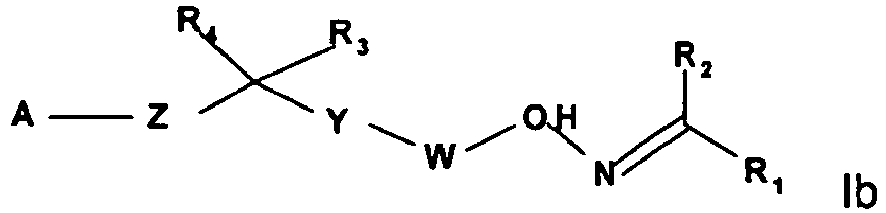
- A is -C(O)OR5, -OP(O)(OR5)2, -P(O)(OR5)2, -S(O)2OR5, -P(O)(R5)OR5 or 1H-tetrazol-5-yl, R5 being H or C1-6alkyl;
- W is a bond, C1-3alkylene or C2-3alkenylene;
- Y is C6-10aryl or C2-9heteroaryl e.g. C3-9heteroaryl, optionally substituted by 1 to 3 radicals selected from halogen, -OH, -NO2, C1-6alkyl, C1-6alkoxy; halo-substituted C1-6alkyl and halo-substituted C1-6alkoxy;
- Z is chosen from:


WO 04/103306A - R1 is C6-10aryl or C2-9heteroaryl e.g C3-9heteroaryl, optionally substituted by C1-6alkyl, C610aryl, C6-10arylC1-4alkyl, C3-9heteroaryl, C3-9heteroarylC1-4alkyl, C3-8cycloalkyl, C3-8cycloalkylC14alkyl, C3-8heterocycloalkyl or C3-8heterocycloalkylC1-4alkyl; wherein any aryl, heteroaryl, cycloalkyl or heterocycloalkyl of R1 may be substituted by 1 to 5 groups selected from halogen, C1-6alkyl, C1-6alkoxy and halo substituted-C1-6alkyl or -C1-6alkoxy; and any alkyl group of R1 can optionally have a methylene replaced by an atom or group chosen from -S-, -S(O)-, -S(O)2-, -NR5- and -O-; wherein R5 is chosen from hydrogen or C1-6alkyl;
- R2 is H, C1-6alkyl, halo substituted C1-6alkyl, C2-6alkenyl or C2-6alkynyl: and each of R3 or R4, independently, is H, halogen, OH, C1-6alkyl, C1-6alkoxy or halo substituted C1-6alkyl or C1-6alkoxy;
- For these compounds of Formula la or Ib, in one embodiment R1 is phenyl, naphthyl or thienyl optionally substituted by C6-10aryl, C6-10arylC1-4alkyl, C2-9heteroaryl, C2-9heteroarylC14alkyl, C3-8cycloalkyl, C3-8cycloalkylC1-4alkyl, C3-8heterocycloalkyl, C3-8heterocycloalkylC1-4alkyl or C1-6alkyl; wherein any aryl, heteroaryl, cycloalkyl or heterocycloalkyl group of R1 can be optionally substituted by one to five radicals chosen from halo, C1-6alkyl, C1-6alkoxy, halo-substituted-C1-6alkyl and halo-substituted-C1-6alkoxy; and any alkyl group of R1 can optionally have a methylene replaced by an atom or group chosen from -S-, -S(O)-, -S(O)2-, -NR5- and -O-; wherein R5 is hydrogen or C1-6alkyl.
- In another embodiment, Y is chosen from:


- In a further embodiment, R1 is chosen from:

- In another embodiment, A is -C(O)OH; and Z is chosen from:


- In a further embodiment, Y is chosen from phenyl, pyridinyl, thienyl and furanyl; wherein any phenyl, pyridinyl, thienyl or furanyl of Y is optionally substituted with 1 to 3 radicals chosen from methyl, ethyl, cyclopropyl, chloro, bromo, fluoro and methoxy; or where Y is phenyl, R6 can be attached to a carbon atom of Y to form 3,4-dihydro-1H-isoquinolin-2-yl.
- In another embodiment, W is a bond or methylene; R1 is chosen from:

- Preferred compounds of the invention or of interest in the invention include:
- 3-{4-[1-(2-Trifluoromethyl-biphenyl-4-ylmethoxyimino)-ethyl]-benzylamino}-propionic acid, 3-{4-[1-(4-Cyclohexyl-3-trifluoromethyl-benzyloxyimino)-ethyl]-2-ethyl-benzylamino}-propionic acid, 1-{4-[1-(4-Cyclohexyl-3-trifluoromethyl-benzyloxyimino)-ethyl]-2-ethyl-benzyl}-azetidine-3-carboxylic acid, 3-({2-Chloro-6-[1-(4-cyclohexyl-3-trifluoromethyl-benzyloxyimino)-ethyl]-pyridin-3-ylmethyl}-amino)-propionic acid, 3-({6-[1-(4-Cyclohexyl-3-trifluoromethyl-benzyloxyimino)-ethyl]-2-ethyl-pyridin-3-ylmethyl}-amino)-propionic acid, 3-{4-[1-(Biphenyl-4-ylmethoxyimino)-ethyl]-benzylamino}-propionic acid, 4-{4-[1-(Biphenyl-4-ylmethoxyimino)-ethyl]-benzyiamino}-butyric acid, 1-{4-[1-(Biphenyl-4-ylmethoxyimino)-ethyl]-benzyl}-azetidine-3-carboxylic acid, 1-{4-[1-(Biphenyl-4-ylmethoxyimino)-ethyl]-benzyl}-piperidine-3-carboxylic acid, {4-[1-(Biphenyl-4-ylmethoxyimino)-ethyl]-benzylamino}-acetic acid, 3-{4-[1-(Biphenyl-4-ylmethoxyimino)-ethyl]-benzylamino}-cyclopentanecarboxytic acid, 3-{4-[1-(4'-Trifluoromethyl-biphenyl-4-ytmethoxyimino)-ethyl]-benzylamino}-propionic acid, 3-{4-[1-(5-Phenyl-furan-2-ylmethoxyimino)-ethyl]-benzylamino}-propionic acid, 3-{4-[1-(3'-Trifluoromethyl-biphenyl-4-ylmethoxyimino)-ethyl]-benzylamino}-propionic acid, 3-{4-[1-(3-Trifluoromethyl-biphenyl-4-ylmethoxyimino)-ethyl]-benzylamino}-propionic acid, 3-{4-[1-(4'-Methoxy-biphenyl-4-ylmethoxyimino)-ethyl]-benzylamino}-propionic acid, 3-{4-[1-(Biphenyl-3-ylmethoxyimino)-ethyl]-benzylamino}-propionic acid, 3-{4-[1-(4-Thiophen-2-yl-benzyloxyimino)-ethyl]-benzylamino}-propionic acid, 3-{4-[1-(4-Thiophen-2-yl-3-trifluoromethyl-benzyloxyimino)-ethyl]-benzylamino}-propionic acid, 3-{4-[1-(4'-Fluoro-biphenyl-4-ylmethoxyimino)-ethyl]-benzylamino}-propionic acid, 3-{4-[1-(4'-Trifluoromethoxy-biphenyl-4-ylmethoxyimino)-ethyl]-benzylamino}-propionic acid, 3-{4-[1-(3'-Trifluoromethoxy-biphenyl-4-ylmethoxyimino)-ethyl]-benzylamino}-propionic acid, 1-{4-[1-(2-Trifluoromethyl-biphenyl-4-ylmethoxyimino)-ethyl]-benzyl}-azetidine-3-carboxylic acid, 1-{4-[1-(2-Trifluoromethyl-biphenyl-4-ylmethoxyimino)-ethyl]-benzyl}-pyrrolidine-3-carboxylic acid, 1-{4-[1-(2-Trifluoromethyl-biphenyl-4-ylmethoxyimino)-ethyl]-benzyl}-piperidine-3-carboxylic acid, 3-{4-[1-(3'-Methoxy-biphenyl-4-ylmethoxyimino)-ethyl]-benzylamino}-propionic acid, 2-Hydroxy-3-{4-[1-(2-trifluoromethyl-biphenyl-4-ylmethoxyimino)-ethyl]-benzylamino}-propionic acid, 3-{4-[1-(4'-Methyl-biphenyl-4-ylmethoxyimino)-ethyl]-benzylamino}-propionic acid, 3-{4-[1-(4-Phenyl-thiophen-2-ylmethoxyimino)-ethyl]-benzylamino}-propionic acid, 1-{4-[1-(Biphenyl-4-ylmethoxyimino)-ethyl]-benzyl}-pyrrolidine-3-carboxylic acid, 3-{4-[1-(4-Furan-3-yl-benzyloxyimino)-ethyl]-benzylamino}-propionic acid, 3-{4-[1-(4-Thiophen-3-yl-3-trifluoromethyl-benzyloxyimino)-ethyl]-benzylamino}-propionic acid, 3-{4-[1-(4-Thiophen-3-yl-2-trifluoromethyl-benzyloxyimino)-ethyl]-benzylamino}-propionic acid, 2-Fluoro-3-{4-[1-(2-trifluoromethyl-biphenyl-4-ylmethoxyimino)-ethyl]-benzylamino}-propionic acid, 3-{4-[1-(2-Trifluoromethyl-biphenyl-4-ylmethoxyimino)-ethyl]-benzylamino}-butyric acid, 3-{4-[1-(5-Phenyl-thiophen-2-ylmethoxyimino)-ethyl]-benzylamino}-propionic acid, 3-{4-[1-(4-Cyclohexyl-benzyloxyimino)-ethyl]-benzylamino}-propionic acid, 3-{4-[1-(3-Fluoro-biphenyl-4-ylmethoxyimino)-ethyl]-benzylamino}-propionic acid, 3-{4-[1-(4'-Fluoro-2-trifluoromethyl-biphenyl-4-ylmethoxyimino)-ethyl]-benzylamino}-propionic acid, 3-{4-[1-(4'-Methyl-2-trifluoromethyl-biphenyl-4-ylmethoxyimino)-ethyl]-benzylamino}-propionic acid, 3-{4-[1-(4-Furan-2-yl-3-trifluoromethyl-benzyloxyimino)-ethyl]-benzylamino}-propionic acid, 3-{4-[1-(2'-Fluoro-2-trifluoromethyl-biphenyl-4-ylmethoxyimino)-ethyl]-benzylamino}-propionic acid, 3-(4-{1-[4-(3,3-Dimethyl-butyl)-3-trifluoromethyl-benzyloxyimino]-ethyl}-benzylamino)-propionic acid, 3-{4-[1-(4-Furan-3-yl-3-trifluoromethyl-benzyloxyimino)-ethyl]-benzylamino}-propionic acid, 3-{4-[1-(4-Pyridin-3-yl-benzyloxyimino)-ethyl]-benzylamino}-propionic acid, 3-{4-[1-(4-Pyridin-4-yl-benzyloxyimino)-ethyl]-benzylamino}-propionic acid, 3-{4-[1-(2-Fluoro-biphenyl-4-ylmethoxyimino)-ethyl]-benzylamino}-propionic acid, 3-({2-Methoxy-6-[1-(2-trifluoromethyl-biphenyl-4-ylmethoxyimino)-ethyl]-pyridin-3-ylmethyl}-amino)-propionic acid, 3-{4-[1-(4-Cyclohexyl-3-trifluoromethyl-benzyloxyimino)-ethyl]-2-ethyl-benzylamino}-propionic acid, 3-{4-[1-(4-Cyclohexyl-3-trifluoromethyl-benzyloxyimino)-ethyl]-benzylamino}-propionic acid, 3-{2-Bromo-4-[1-(4-cyclohexyl-3-trifluoromethyl-benzyloxyimino)-ethyl]-benzylamino}-propionic acid, 3-{4-[1-(4-Cyclopentyl-3-trifluoromethyl-benzyloxyimino)-ethyt]-benzylamino}-propionic acid, 3-{2-Chloro-4-[1-(4-cyclohexyl-3-trifluoromethyl-benzyloxyimino)-ethyl]-benzylamino}-propionic acid, 3-({6-[1-(4-Cyclohexyl-3-trifluoromethyl-benzyloxyimino)-ethyl]-pyridin-3-ylmethyl}-amino)-propionic acid, 3-({5-[1-(4-Cyclohexyl-3-trifluoromethyl-benzyloxyimino)-ethyl]-thiophen-2-ylmethyl}-amino)-propionic acid, 3-({5-[1-(4-Cyclohexyl-3-trifluoromethyl-benzyloxyimino)-ethyl]-pyridin-2-ylmethyl}-amino)-propionic acid, 3-({5-[1-(4-Cyclohexyl-3-trifluoromethyl-benzyloxyimino)-ethyl]-furan-2-ylmethyl}-amino)-propionic acid, 3-({2-[1-(4-Cyclohexyl-3-trifluoromethyl-benzyloxyimino)-ethyl]-pyridin-4-ylmethyl}-amino)-propionic acid, 3-{4-[1-(4-Cyclohexyl-3-fluoro-benzyloxyimino)-ethyl]-benzylamino}-propionic acid, 3-{2-Chloro-4-[1-(4-cyclohexyl-3-trifluoromethyl-benzyloxyimino)-ethyl]-benzylamino}-propionic acid, 1-{6-[1-(4-Cyclohexyl-3-trifluoromethyl-benzyfoxyimino)-ethyl]-2-ethyl-pyridin-3-ylmethyl}-azetidine-3-carboxylic acid, 3-{2-Ethyl-4-[1-(4-piperidin-1-yl-3-trifluoromethyl-benzyloxyimino)-ethyl]-benzylamino}-propionic acid, 3-{4-[1-(4-Cyclohexyl-3-methyl-benzyloxyimino)-ethyl]-2-ethyl-benzylamino}-propionic acid, 3-{4-[1-(3-Chloro-4-cyclohexyl-benzyloxyimino)-ethyl]-2-ethyl-benzylamino}-propionic acid, 3-{4-[1-(4-Cyclohexyl-3-methoxy-benzyloxyimino)-ethyl]-2-ethyl-benzylamino}-propionic acid, 1-{4-[1-(4-Cyclohexyl-3-methoxy-benzyloxyimino)-ethyl]-2-ethyl-benzyl}-azetidine-3-carboxylic acid, 3-{4-[1-(4-Cyclohexyl-3-trifluoromethyl-benzyloxyimino)-ethyl]-2-methyl-benzylamino}-propionic acid, 1-{4-[1-(4-Cyclohexyl-3-trifluoromethyl-benzyloxyimino)-ethyl]-2-methyl-benzyl}-azetidine-3-carboxylic acid, 3-{4-[1-(4-Cyclohexyl-3-trifluoromethyl-benzyloxyimino)-ethyl]-2-cyclopropyl-benzylamino}-propionic acid, 1-{4-[1-(4-Cyclohexyl-3-trifluoromethyl-benzyloxyimino)-ethyl]-2-cyclopropyl-benzyl}-azetidine-3-carboxylic acid, 3-{2-Ethyl-4-[1-(2-trifluoromethyl-biphenyl-4-ylmethoxyimino)-ethyl]-benzylamino}-propionic acid, 1-{4-[1-(4-Cyclohexyl-3-ethyl-benzyloxyimino)-ethyl]-2-ethyl-benzyl}-azetidine-3-carboxylic acid, 1-{4-[1-(4-Cyclohexyl-3-methyl-benzyloxyimino)-ethyl]-2-ethyl-benzyl}-azetidine-3-carboxylic acid, 1-{2-Chloro-4-[1-(4-cyclohexyl-3-ethyl-benzyloxyimino)-ethyl]-benzyl}-azetidine-3-carboxylic acid, 3-{2-Chloro-4-[1-(4-cyclohexyl-3-ethyl-benzyloxyimino)-ethyl]-benzylamino}-propionic acid, 3-{4-[1-(4-Cyclohexyl-3-trifluoromethyl-benzyloxyimino)-ethyl]-2-fluoro-benzylamino}-propionic acid, 1-{4-[1-(4-Cyclohexyl-3-trifluoromethyl-benzyloxyimino)-ethyl]-2-fluoro-benzyl}-azetidine-3-carboxylic acid, 3-{6-[1-(4-Cyclohexyl-3-trifluoromethyl-benzyloxyimino)-ethyl]-3,4-dihydro-1 H-isoquinolin-2-yl}-propionic acid, 3-{6-[1-(4-Cyclohexyl-3-ethyl-benzyloxyimino)-ethyl]-3,4-dihydro-1H-isoquinolin-2-yl}-propionic acid, 3-{4-[1-(2-Trifluoromethyl-biphenyl-4-yl)-ethylideneaminooxymethyl]-benzylamino}-propionic acid, 3-{4-[1-(4-Cyclohexyl-3-trifluoromethyl-phenyl)-ethylideneaminooxymethyl]-benzylamino}-propionic acid, 3-{4-[1-(4-Cyclohexyl-3-trifluoromethyl-phenyl)-ethylideneaminooxymethyl]-2-ethyl-benzylamino}-propionic acid, 1-{4-[1-(4-Cyclohexyl-3-trifluoromethyl-phenyl)-ethylideneaminooxymethyl]-2-ethyl-benzyl}-azetidine-3-carboxylic acid and 1-{4-[1-(4-Cyclohexyl-3-ethyl-phenyl)-ethylideneaminooxymethyl]-2-ethyl-benzyl}-azetidine-3-carboxylic acid.
- Of interest in the invention are forms of the compound that have the hydroxyl or amine group present in a protected form; these function as prodrugs. Prodrugs are compounds that are converted into an active drug form after administration, through one or more chemical or biochemical transformations. Forms of the compound of the present invention that are readily converted into the claimed compound under physiological conditions are prodrugs of the claimed compound. Examples of prodrugs include forms where a hydroxyl group is acylated to form a relatively labile ester such as an acetate ester, and forms where an amine group is acylated with the carboxylate group of glycine or an L-amino acid such as serine, forming an amide bond that is particularly susceptible to hydrolysis by common metabolic enzymes.
- When the compounds of Formula la or Ib have asymmetric centers in the molecule, various optical isomers are obtained. Of interest in the present invention are enantiomers, racemates, diastereoisomers and mixtures thereof. Moreover, when the compounds of Formula Ia or Ib include geometric isomers, of interest in the present invention are cis-compounds, trans-compounds and mixtures thereof. Similar considerations apply in relation to starting materials exhibiting asymmetric carbon atoms or unsaturated bonds as mentioned above.
- Compounds of Formula la or Ib can exist in free form or in salt form, e.g. addition salts with inorganic or organic acids. Where hydroxyl groups are present, these groups can also be present in salt form, e.g. an ammonium salt or salts with metals such as lithium, sodium, potassium, calcium, zinc or magnesium, or a mixture thereof. Compounds of Formula la or Ib and their salts in hydrate or solvate form are also part of or of interest in the invention.
- A preferred compound of formula la is e.g. 1-{4-[1-(4-cyclohexyl-3-trifluoromethyl-benzyloxyimino)-ethyl]-2-ethyl-benzyl}-azetidine-3-carboxylic acid (Compound A), or a pharmaceutically acceptable salt thereof.
- Unless otherwise stated, alkyl, alkoxy, alkenyl or alkynyl may be straight or branched.
- Halo or halogen means F, Cl, Br or I, preferably F or Cl. Halo-substituted alkyl groups and compounds can be partially halogenated or perhalogenated, whereby in the case of multiple halogenation, the halogen substituents can be identical or different. A preferred perhalogenated alkyl group is for example trifluoromethyl or trifluoromethoxy.
- Any double bonds can be in the cis- or trans- configuration. "Alkynyl" as a group and as structural element of other groups and compounds contains at least one C = C triple bond and can also contain one or more C=C double bonds, and can, so far as possible, be either straight-chain or branched. Any cycloalkyl group, alone or as a structural element of other groups can contain from 3 to 8 carbon atoms, preferably from 3 to 6 carbon atoms. "Alkylene" and "alkenylene" are divalent radicals derived from "alkyl" and "alkenyl" groups, respectively. In this application, any alkyl group of R1 can be optionally interrupted by a member of the group selected from -S-, -S(O)-, -S(O)2-, -NR20- and -O- (wherein R20 is hydrogen or C1-6alkyl). These groups include -CH2-O-CH2-, -CH2-S(O)2-CH2-, -(CH2)2-NR20-CH2-, -CH2-O-(CH2)2-, and the like.
- "Aryl" means a monocyclic or fused bicyclic aromatic ring assembly containing six to ten ring carbon atoms. For example aryl, e.g. C6-10aryl, can be phenyl, biphenyl or naphthyl, such as phenyl or naphthyl, preferably phenyl. A fused bicyclic ring can be partially saturated, for example, 1,2,3,4-tetrahydro-naphthalene, and the like.
- "Heteroaryl" means aryl, as defined in this application, with the addition of at least one heteroatom moiety selected from N, O or S, and each ring is comprised of 5 to 6 ring atoms, unless otherwise stated. For example, C2heteroaryl includes oxadiazole, triazole, and the like. C9heteroaryl includes quinoline, 1,2,3,4-tetrahydro-quinoline, and the like. C2-9heteroaryl as used in this application includes thienyl, pyridinyl, furanyl, isoxazolyl, benzoxazolyl or benzo[1,3]dioxolyl, preferably thienyl, furanyl or pyridinyl. A fused bicyclic heteroaryl ring system can be partially saturated, for example, 2,3-dihydro-1H-isoindole, 1,2,3,4-tetrahydro-quinoline, and the like.
- Inflammatory myopathies include, but are not limited to muscle inflammations, polymyositis, dermatomyositis, nerve-muscle diseases such as muscular dystrophies, and inclusion body myositis (IBM).
- It has now been found that the S1P receptor modulators of or of interest in the invention have an inhibitory effect on inflammatory myopathies, e.g. polymyositis.
- In a series of further specific or alternative embodiments of or of interest in the present invention there is provided:
- 1.1 A method for preventing, inhibiting or treating muscle inflammation or inflammatory myopathies, e.g. polymyositis, in a subject in need thereof, comprising administering to said subject a therapeutically effective amount of a S1 P receptor modulator of the invention modulator, e.g. a compound of formulae la or Ib, e.g. Compound A.
- 1.2 A method for alleviating or delaying progression of the symptoms of an inflammatory myopathy, e.g. polymyositis, in a subject in need thereof, in which method muscle inflammation associated with said disease is prevented or inhibited, comprising administering to said subject a therapeutically effective amount of a S1P receptor modulator of the invention, e.g. a compound of formulae la or Ib, e.g. Compound A.
- 1.3 A method for reducing or preventing or alleviating relapses in an inflammatory myopathy, e.g. polymyositis, in a subject in need thereof, in which method muscle inflammation associated with said disease is prevented or inhibited, comprising administering to said subject a therapeutically effective amount of a S1P receptor modulator of the invention, e.g. a compound of formulae la or Ib, e.g. Compound A.
- 1.4 A method for slowing progression of an inflammatory myopathy, e.g. polymyositis, in a subject being in a relapsing-remitting phase of the disease, in which method muscle inflammation associated with said disease is prevented or inhibited, comprising administering to said subject a therapeutically effective amount of a S1 P receptor modulator of the invention modulator, e.g. a compound of formulae I or Ib, e.g. Compound A.
- 2. A pharmaceutical composition for use in any one of the methods 1.1 to 1.5, comprising a S1 P receptor modulator of the invention, e.g. a compound of formulae la or Ib, e.g. Compound A, as defined hereinabove, together with one or more pharmaceutically acceptable diluents or carriers therefor.
- 3. A S1 P receptor modulator of the invention, e.g. a compound of formula la or Ib, e.g. Compound A, as defined herein above, for use in any one of the methods 1.1 to 1.5.
- 4. A S1P receptor modulator of the invention, e.g. a compound of formula la or Ib, e.g. Compound A, as defined herein above, for use in the preparation of a medicament for use in anyone of the methods 1.1 to 1.5.
- 5. Use of a S1 P receptor modulator of the invention, e.g. a compound of formula la or Ib, e.g. Compound A as defined herein above, in any one of the methods 1.1 to 1.5 e.g. 1.1.
- 6. Use of a S1P receptor modulator of the invention, e.g. a compound of formulae la or Ib, e.g. Compound A as defined herein above, in the preparation of a medicament for use in a method according to one of the methods 1.1 to 1.5 e.g. 1.1.
- 7. A method, use, or pharmaceutical composition according to any one of the preceding paragraphs 1.1-1.5 and 2-6 wherein the S1P receptor modulator of the invention is 1-{4-[1-(4-cyclohexyl-3-trifluoromethyl-benzyloxyimino)-ethyl]-2-ethyl-benzyl}-azetidine-3-carboxylic acid in free form or in a pharmaceutically acceptable salt form.
- Daily dosages required in practicing the method of the present invention when a S1 P receptor modulator of the invention alone is used will vary depending upon, for example, the compound used, the host, the mode of administration and the severity of the condition to be treated. A preferred daily dosage range is about from 0.01 to 100 mg as a single dose or in divided doses. Suitable daily dosages for patients are on the order of from e.g. 0.03 to 2.5 mg/kg per body weight. The S1P receptor modulators of or of interest in the invention may be administered by any conventional route, in particular enterally, e.g. orally, e.g. in the form of tablets, capsules, parenterally, e.g. in the form of injectable solutions or suspensions, or topically, e.g. in the form of lotions, gels, ointments or creams, or in a nasal or a suppository form. Suitable unit dosage forms for oral administration comprise from ca. 0.5 to about 100 mg, e.g. 1 to 50 mg S1 P receptor modulator of the invention, together with one or more pharmaceutically acceptable diluents or carriers therefore.
- The compounds of Formula la or Ib may be administered as the sole active ingredient or in conjunction with, e.g. as an adjuvant to, other drugs e.g. immunosuppressive or immunomodulating agents or other anti-inflammatory agents. For example the compounds of Formula la or Ib may be used in combination with a calcineurin inhibitor, e.g. cyclosporin A or FK 506; an ascomycin having immunosuppressive properties, e.g. ABT-281, ASM981, etc.; corticosteroids; cyclophosphamide; azathioprene; methotrexate; leflunomide; mizoribine; mycophenolic acid; mycophenolate mofetil; 15-deoxyspergualine or an immunosuppressive homologue, analogue or derivative thereof; immunosuppressive monoclonal antibodies, e.g. monoclonal antibodies to leukocyte receptors, e.g. MHC, CD2, CD3, CD4, CD7, CD8, CD25, CD28, CD40. CD45, CD58, CD80, CD86 or their ligands; other immunomodulatory compounds, e.g. a recombinant binding molecule having at least a portion of the extracellular domain of CTLA4 or a mutant thereof, e.g. an at least extracellular portion of CTLA4 or a mutant thereof joined to a non-CTLA4 protein sequence, e.g. CTLA4Ig (for ex. designated ATCC 68629) or a mutant thereof, e.g. LEA29Y ; adhesion molecule inhibitors, e.g. LFA-1 antagonists, ICAM-1 or -3 antagonists, VCAM-4 antagonists or VLA-4 antagonists.
- The compounds for use in the aspects of the invention may, for example, be prepared by the methods specified in
WO 2004/103306 . - Utility of 1-{4-[1-(4-cyclohexyl-3-trifluoromethyl-benzyloxyimino)-ethyl]-2-ethyl-benzyl}-azetidine-3-carboxylic acid (Compound A), in preventing or treating an inflammatory myopathy, e.g. polymyositis, as hereinabove specified, may be demonstrated in vitro, in animal test methods as well as in clinic, for example in accordance with the methods hereinafter described.
- Human skeletal muscle (skMC) cells are obtained from Cambrex (#CC-2561). For experiments skMC stocks are thawed and maintained in SkBM (Lonza CC-3161) containing 20% FCS and 0.1% gentamycin at 37°C, 5% CO2. After 4-5 days cells are seeded for experiments onto six-well plates coated with matrigel (450,000/well) and grown at 37°C, 5% CO2 for one day. Cells are then washed 3x with SkBM and differentiated into myotubes with SkBM containing 1µM SB431542 (ALK4/5 inhibitor; Sigma #S4317) for 4 days (SB431542 is removed 24h prior cell treatment). Myotubes are then treated with test compound either in the absence or in the presence of a cytokine cocktail (TNFα 10 ng/ml, IL-1ß 2 ng/ml, IFNγ 10 ng/ml) for 24h in SkBM plus 0.1% gentamycin, washed once with CSB buffer: 80mM pipes, 5nM EGTA, 1 mM MgCl 6H20 and 4% PEG35000 (Fluka #94646) and fixed with 4% paraformaldehyde (Electron Microscopy Sciences #15714) in CSB for 15 min at room temperature. Cells are then rinsed with CSB, permeabilized with 0.2% Triton X-100 (Merk #1.12298.0100) for 20 min at room temperature, rinsed with CSB and blocked with 10% normal goat serum blocking solution (Zymed Laboratories #50-062Z) for 20 min at room temperature. Primary antibody (anti-myosin heavy chain antibody; Upstate #05-716) diluted 1:500 in PBS containing 1.5% goat serum is added for 1h at room temperature. Myotubes are then washed 2x with CSB (5 min/wash) then add secondary antibody (Alexa Fluor 488 F(ab'); Invitrogen #A11017) diluted 1:750 in PBS is added for 1 h at room temperature. Myotubes are washed once with CSB (10 min) then with PBS (Invitrogen # 14190) and double distilled water. Finally, ProLong Gold antifade reagent with DAPI (Invitrogen #P36931) is added and myotubes are photographed. Average diameters of at least 40 myotubes are measured for each condition at three points separated by 50 µm along the length of the myotube.
- Human primary myoblasts, differentiated for 4 days and treated with cytokine cocktail for 24 h, fixed, and assayed for changes in myotube diameters show distinct atrophic phenotype with an approx. 20% decrease in myotube diameter as compared to vehicle control. Addition of Compound A at a concentration of 1 nM is sufficient to block almost completely the cytokine-induced atrophy. Higher concentrations of Compound A exert the same effect. The results are shown in Figures 1(a) and 1(b).
- In vivo: controllable muscle-specific promoter system to up-regulate MHC class I in the skeletal muscle of mice, as described e.g. in K. Nagaraju et al (PNAS, August 1, 2000, Vol 97, No. 16, p 9209-9214), the content thereof being included by reference.
- Briefly, mice transgenic for both a transactivator (tTA) under the control of a muscle creatine kinase promoter (T+) and the tetracycline-responsive element (TRE)-H-2Kb (H+) are used. In H+T+ mice, the binding of a tetracycline analog to tTA prevents transactivator from binding to the TRE region, thereby preventing target gene expression. Thus, the transgenic H-2Kb expression can be induced by removing the tetracycline analog and suppressed by administering it. Mice having only the tetracycline-responsive element (TRE)-H-2Kb (H+,) serve as control. H+T+ mice develop clinical, biochemical, histological, and immunological features similar to human myositis. First signs of disease are muscle weakness (about 3 months of age in females, i.e. 2 months after transgene induction).
- Behavioral assays are used to measure developing muscle weakness (e.g. treadmill, RotaRod, open field locomotor activity, running wheel, grip test). Other readouts of the model include blood markers indicative for muscle damage (CK, GOT etc.), and histopathology and immunohistochemistry of skeletal muscle (incl. mononuclear cell infiltrate, CD3+T cell infiltrate, ICAM, etc.).
- Application of compound in the therapeutic mode may start around 3 months of age in female mice (2 month after transgene induction), when first clinical signs of muscle weakness occur and may last e.g. for 2 months. Compounds are applied i.p., s.c. or via sirup drops into the mouth. Oral gavage is not recommended due to dystrophy of pharyngeal muscles. Groups of n=8 mice are used. Compounds are applied to mice having both transgenes, H+T+ and mice having only the tetracycline-responsive element (TRE)-H-2Kb (H+, control). Vehicle-treated animals are compared to compound-treated animals.
- Application of compound in the prophylactic mode starts from day of transgene induction. Both, therapeutic and prophylactic treatment mode can be combined with other therapeutics, like e.g. prednisone or comparable steroids.
Claims (4)
- The compound 1-{4-[1-(4-Cyclohexyl-3-trifluoromethyl-benzyloxyimino)-ethyl]-2-ethyl-benzyl}-azetidine-3-carboxylic acid,
and the N-oxide derivatives thereof; and the pharmacologically acceptable salts, solvates or hydrates thereof,
for use in preventing, inhibiting or treating an inflammatory condition selected from polymyositis or dermatomyositis. - The compound 1-{4-[1-(4-Cyclohexyl-3-trifluoromethyl-benzyloxyimino)-ethyl]-2-ethyl-benzyl}-azetidine-3-carboxylic acid as specified in claim 1,
and the pharmacologically acceptable salts thereof,
for use in preventing, inhibiting or treating an inflammatory condition selected from polymyositis or dermatomyositis. - The use of compound 1-{4-[1-(4-Cyclohexyl-3-trifluoromethyl-benzyloxyimino)-ethyl]-2-ethyl-benzyl}-azetidine-3-carboxylic acid as specified in claim 1,
and the N-oxide derivatives thereof; and the pharmacologically acceptable salts, solvates or hydrates thereof,
in the manufacture of a medicament for preventing, inhibiting or treating an inflammatory condition selected from polymyositis or dermatomyositis. - The use of 1-{4-[1-(4-cyclohexyl-3-trifluoromethyl-benzyloxyimino)-ethyl]-2-ethyl-benzyl}-azetidine-3-carboxylic acid as specified in claim 1, or a pharmaceutically acceptable salt thereof, in the manufacture of a medicament for preventing, inhibiting or treating an inflammatory condition selected from polymyositis or dermatomyositis.
Priority Applications (6)
| Application Number | Priority Date | Filing Date | Title |
|---|---|---|---|
| HRP20141152AT HRP20141152T1 (en) | 2008-07-23 | 2009-07-22 | SFINGOZIN-1-PHOSPHATE RECEPTOR MODULATORS AND THEIR USE FOR THE TREATMENT OF MUSCLE INFLAMMATION |
| PL09780938T PL2307007T3 (en) | 2008-07-23 | 2009-07-22 | Sphingosine 1 phosphate receptor modulators and their use to treat muscle inflammation |
| SI200931043T SI2307007T1 (en) | 2008-07-23 | 2009-07-22 | Sphingosine 1 phosphate receptor modulators and their use to treat muscle inflammation |
| EP13191721.3A EP2695615A3 (en) | 2008-07-23 | 2009-07-22 | Sphingosine 1 phosphate receptor modulators and their use to treat muscle inflammation |
| EP09780938.8A EP2307007B1 (en) | 2008-07-23 | 2009-07-22 | Sphingosine 1 phosphate receptor modulators and their use to treat muscle inflammation |
| CY20141100894T CY1115662T1 (en) | 2008-07-23 | 2014-10-30 | MODIFICATIONS OF 1-PHOSPHORIC SPHENGINE RECEPTORS AND USE FOR TREATMENT OF MUSCLE INFLAMMATION |
Applications Claiming Priority (3)
| Application Number | Priority Date | Filing Date | Title |
|---|---|---|---|
| EP08161005 | 2008-07-23 | ||
| PCT/EP2009/059440 WO2010010127A1 (en) | 2008-07-23 | 2009-07-22 | Sphingosine 1 phosphate receptor modulators and their use to treat muscle inflammation |
| EP09780938.8A EP2307007B1 (en) | 2008-07-23 | 2009-07-22 | Sphingosine 1 phosphate receptor modulators and their use to treat muscle inflammation |
Related Child Applications (2)
| Application Number | Title | Priority Date | Filing Date |
|---|---|---|---|
| EP13191721.3A Division EP2695615A3 (en) | 2008-07-23 | 2009-07-22 | Sphingosine 1 phosphate receptor modulators and their use to treat muscle inflammation |
| EP13191721.3A Division-Into EP2695615A3 (en) | 2008-07-23 | 2009-07-22 | Sphingosine 1 phosphate receptor modulators and their use to treat muscle inflammation |
Publications (2)
| Publication Number | Publication Date |
|---|---|
| EP2307007A1 EP2307007A1 (en) | 2011-04-13 |
| EP2307007B1 true EP2307007B1 (en) | 2014-08-27 |
Family
ID=40090418
Family Applications (2)
| Application Number | Title | Priority Date | Filing Date |
|---|---|---|---|
| EP13191721.3A Withdrawn EP2695615A3 (en) | 2008-07-23 | 2009-07-22 | Sphingosine 1 phosphate receptor modulators and their use to treat muscle inflammation |
| EP09780938.8A Not-in-force EP2307007B1 (en) | 2008-07-23 | 2009-07-22 | Sphingosine 1 phosphate receptor modulators and their use to treat muscle inflammation |
Family Applications Before (1)
| Application Number | Title | Priority Date | Filing Date |
|---|---|---|---|
| EP13191721.3A Withdrawn EP2695615A3 (en) | 2008-07-23 | 2009-07-22 | Sphingosine 1 phosphate receptor modulators and their use to treat muscle inflammation |
Country Status (24)
| Country | Link |
|---|---|
| US (2) | US9149459B2 (en) |
| EP (2) | EP2695615A3 (en) |
| JP (2) | JP5878015B2 (en) |
| KR (2) | KR101608108B1 (en) |
| CN (1) | CN102105144B (en) |
| AU (1) | AU2009273259B2 (en) |
| BR (1) | BRPI0916232A2 (en) |
| CA (1) | CA2730751A1 (en) |
| CL (1) | CL2011000138A1 (en) |
| CY (1) | CY1115662T1 (en) |
| DK (1) | DK2307007T3 (en) |
| ES (1) | ES2522345T3 (en) |
| HR (1) | HRP20141152T1 (en) |
| IL (2) | IL210550A (en) |
| MA (1) | MA32557B1 (en) |
| MX (1) | MX2011000881A (en) |
| NZ (1) | NZ590328A (en) |
| PL (1) | PL2307007T3 (en) |
| PT (1) | PT2307007E (en) |
| RU (1) | RU2521286C2 (en) |
| SG (1) | SG10201503157PA (en) |
| SI (1) | SI2307007T1 (en) |
| WO (1) | WO2010010127A1 (en) |
| ZA (1) | ZA201100166B (en) |
Families Citing this family (10)
| Publication number | Priority date | Publication date | Assignee | Title |
|---|---|---|---|---|
| CA2733508A1 (en) * | 2008-08-18 | 2010-02-25 | David Leppert | Compounds for the treatment of peripheral neuropathies |
| SG191286A1 (en) | 2011-01-07 | 2013-07-31 | Novartis Ag | Immunosuppressant formulations |
| WO2012097330A2 (en) * | 2011-01-14 | 2012-07-19 | University Of Washington | Compositions and methods for treating degenerative muscle conditions |
| FR3000959B1 (en) | 2013-01-14 | 2015-08-21 | Holis Technologies | NOVEL SYNTHETIC INTERMEDIATES FOR ACCEDING WITH GOOD YIELDS TO SPHINGOSINE, CERAMIDE AND SPHINGOMYELIN DERIVATIVES |
| WO2016135644A1 (en) | 2015-02-26 | 2016-09-01 | Novartis Ag | Treatment of autoimmune disease in a patient receiving additionally a beta-blocker |
| ES2874627T3 (en) | 2015-06-18 | 2021-11-05 | Cytoo | High-throughput and functional screening method for muscle-related biological processes and disorders |
| EP3400211A1 (en) | 2016-01-04 | 2018-11-14 | Auspex Pharmaceuticals, Inc. | Azetidine modulators of the sphingosine 1-phosphate receptor |
| US11629124B2 (en) | 2017-03-09 | 2023-04-18 | Novartis Ag | Solid forms comprising an oxime ether compound, compositions and methods of use thereof |
| WO2022037525A1 (en) * | 2020-08-20 | 2022-02-24 | 南京明德新药研发有限公司 | Acetophenone oxime compound and application thereof |
| CN119776509A (en) * | 2023-10-08 | 2025-04-08 | 华东师范大学 | Application of Ndufa10 gene and S1pr4 gene mutations in diagnosis, prediction and treatment of myopathy |
Citations (1)
| Publication number | Priority date | Publication date | Assignee | Title |
|---|---|---|---|---|
| WO2010072703A1 (en) * | 2008-12-22 | 2010-07-01 | Novartis Ag | Dosage regimen of an s1p receptor agonist |
Family Cites Families (20)
| Publication number | Priority date | Publication date | Assignee | Title |
|---|---|---|---|---|
| BR9507016A (en) * | 1994-03-10 | 1997-09-09 | Bayer Ag | Oxime derivatives |
| AR035411A1 (en) | 2000-12-29 | 2004-05-26 | Fujisawa Pharmaceutical Co | USE OF A TACROLIMUS DERIVATIVE TO MANUFACTURE A NEUROTROPHIC AGENT, COMPOSITIONS AND MANUFACTURING ITEMS OR KITS THAT UNDERSTAND IT, METHOD FOR MANUFACTURING AN AGENT THAT UNDERSTANDS AND FABRICS AND GRAINTS WITH A NERVOUS CELL TREATED WITH THIS COMPOSITE |
| AU2002320470A1 (en) * | 2001-07-11 | 2003-01-29 | Musc Foundation For Research Development | Modulators of ceramidase and methods of use based thereon |
| DE60329073D1 (en) * | 2002-01-18 | 2009-10-15 | Merck & Co Inc | EDG RECEPTOR AGONISTS |
| EP1469863A2 (en) * | 2002-01-18 | 2004-10-27 | Merck & Co., Inc. | Selective s1p1/edg1 receptor agonists |
| TW200424187A (en) | 2003-04-04 | 2004-11-16 | Hoffmann La Roche | New oxime derivatives and their use as pharmaceutically active agents |
| MY150088A (en) | 2003-05-19 | 2013-11-29 | Irm Llc | Immunosuppressant compounds and compositions |
| EP1628967B1 (en) | 2003-05-19 | 2014-04-09 | Irm Llc | Immunosuppressant compounds and compositions |
| AU2004240649A1 (en) * | 2003-05-19 | 2004-12-02 | Irm, Llc | Immunosuppressant compounds and compositions |
| CA2556398A1 (en) * | 2004-02-16 | 2005-08-25 | Laboratorios Del Dr. Esteve S.A. | Substituted azetidine compounds as cyclooxygenase-1-cyclooxygenase-2 inhibitors, and their preparation and use as medicaments |
| UA74941C2 (en) | 2004-04-26 | 2006-02-15 | Fos Internat S A | A metal-thermal process for producing magnesium and vacuum induction furnace for realizing the same |
| WO2005113330A1 (en) | 2004-05-05 | 2005-12-01 | Adler, Richard, S. | Systems and methods for protecting ship from attack on the surface or under water |
| CA2583681A1 (en) * | 2004-10-22 | 2006-05-04 | Merck & Co., Inc. | 2-(aryl)azacyclylmethyl carboxylates, sulfonates, phosphonates, phosphinates and heterocycles as s1p receptor agonists |
| EP2384749A1 (en) * | 2004-11-29 | 2011-11-09 | Novartis AG | Dosage regimen of an S1P receptor agonist |
| US7919519B2 (en) * | 2005-11-23 | 2011-04-05 | Epix Pharmaceuticals Inc. | S1P receptor modulating compounds and use thereof |
| BRPI0715950A2 (en) * | 2006-08-17 | 2013-07-30 | Univ Chicago | treatment of inflammatory diseases |
| CA2662673A1 (en) * | 2006-09-21 | 2008-03-27 | Martin Bolli | Phenyl derivatives and their use as immunomodulators |
| JO2701B1 (en) * | 2006-12-21 | 2013-03-03 | جلاكسو جروب ليميتد | Compounds |
| CA2684385A1 (en) * | 2007-04-19 | 2008-10-30 | Glaxo Group Limited | Oxadiazole substituted indazole derivatives for use as sphingosine 1-phosphate (s1p) agonists |
| TW200920355A (en) * | 2007-09-06 | 2009-05-16 | Lexicon Pharmaceuticals Inc | Compositions and methods for treating immunological and inflammatory diseases and disorders |
-
2009
- 2009-07-22 RU RU2011106356/15A patent/RU2521286C2/en not_active IP Right Cessation
- 2009-07-22 US US13/055,206 patent/US9149459B2/en not_active Expired - Fee Related
- 2009-07-22 DK DK09780938.8T patent/DK2307007T3/en active
- 2009-07-22 EP EP13191721.3A patent/EP2695615A3/en not_active Withdrawn
- 2009-07-22 WO PCT/EP2009/059440 patent/WO2010010127A1/en not_active Ceased
- 2009-07-22 CN CN200980129023XA patent/CN102105144B/en not_active Expired - Fee Related
- 2009-07-22 HR HRP20141152AT patent/HRP20141152T1/en unknown
- 2009-07-22 CA CA2730751A patent/CA2730751A1/en not_active Abandoned
- 2009-07-22 JP JP2011519165A patent/JP5878015B2/en not_active Expired - Fee Related
- 2009-07-22 EP EP09780938.8A patent/EP2307007B1/en not_active Not-in-force
- 2009-07-22 BR BRPI0916232A patent/BRPI0916232A2/en not_active IP Right Cessation
- 2009-07-22 PL PL09780938T patent/PL2307007T3/en unknown
- 2009-07-22 AU AU2009273259A patent/AU2009273259B2/en not_active Ceased
- 2009-07-22 SG SG10201503157PA patent/SG10201503157PA/en unknown
- 2009-07-22 PT PT97809388T patent/PT2307007E/en unknown
- 2009-07-22 MX MX2011000881A patent/MX2011000881A/en active IP Right Grant
- 2009-07-22 NZ NZ590328A patent/NZ590328A/en not_active IP Right Cessation
- 2009-07-22 KR KR1020117004026A patent/KR101608108B1/en not_active Expired - Fee Related
- 2009-07-22 SI SI200931043T patent/SI2307007T1/en unknown
- 2009-07-22 ES ES09780938.8T patent/ES2522345T3/en active Active
- 2009-07-22 KR KR1020167007756A patent/KR101624098B1/en not_active Expired - Fee Related
-
2011
- 2011-01-06 ZA ZA2011/00166A patent/ZA201100166B/en unknown
- 2011-01-10 IL IL210550A patent/IL210550A/en not_active IP Right Cessation
- 2011-01-21 CL CL2011000138A patent/CL2011000138A1/en unknown
- 2011-02-11 MA MA33608A patent/MA32557B1/en unknown
-
2014
- 2014-09-19 JP JP2014191854A patent/JP2015038100A/en not_active Withdrawn
- 2014-10-30 CY CY20141100894T patent/CY1115662T1/en unknown
-
2016
- 2016-01-14 IL IL243612A patent/IL243612A0/en unknown
- 2016-02-26 US US15/054,888 patent/US20160175282A1/en not_active Abandoned
Patent Citations (1)
| Publication number | Priority date | Publication date | Assignee | Title |
|---|---|---|---|---|
| WO2010072703A1 (en) * | 2008-12-22 | 2010-07-01 | Novartis Ag | Dosage regimen of an s1p receptor agonist |
Also Published As
Similar Documents
| Publication | Publication Date | Title |
|---|---|---|
| US9149459B2 (en) | Sphingosine 1 phosphate receptor modulators and their use to treat muscle inflammation | |
| US20180237374A1 (en) | Substituted Aromatic Compounds and Related Method for the Treatment of Fibrosis | |
| EA030068B1 (en) | Autotaxin inhibitor compounds | |
| US20240390399A1 (en) | Materials and methods for suppressing and/or treating bone related diseases and symptoms | |
| US8987471B2 (en) | Substituted dihydropyrazoles as sphingosine receptor modulators | |
| HK1155096B (en) | Sphingosine 1 phosphate receptor modulators and their use to treat muscle inflammation | |
| AU2013209344B2 (en) | Sphingosine 1 phosphate receptor modulators and their use to treat muscle inflammation | |
| HK1191559A (en) | Sphingosine 1 phosphate receptor modulators and their use to treat muscle inflammation | |
| EP1086682B1 (en) | Utilization of aryl(or heteroaryl)azolylcarbinol derivatives in the preparation of a medicament for the treatment of neurogenic inflammation | |
| US20120142740A1 (en) | Novel alkene derivatives as sphingosine 1-phosphate (s1p) receptor modulators | |
| US9000016B2 (en) | 1,3,4-Oxadiazoles-2-thio derivatives as sphingosine-1 phosphate receptors modulators | |
| US8871755B2 (en) | Alkene azetidine derivatives as sphingosine 1-phosphate (S1P) receptor modulators | |
| US8541582B2 (en) | Phenyl bicyclic methyl amine derivatives as sphingosine-1 phosphate receptors modulators | |
| US20060094742A1 (en) | Prostaglandin EP4 antagonists | |
| US9120784B2 (en) | 1,3,4-oxadiazoles-2-thio azetidine derivatives as sphingosine-1 phosphate receptors modulators | |
| US20150057253A1 (en) | Alkyl derivatives as sphingosine-1 phosphate receptors modulators | |
| JP2023503470A5 (en) | ||
| US20140228325A1 (en) | Alkene derivatives as sphingosine 1-phosphate (s1p) receptor modulators | |
| US20140235588A1 (en) | Substituted 1h-pyrazol-1,2,4-oxadiazole derivatives as sphingosine receptor modulators |
Legal Events
| Date | Code | Title | Description |
|---|---|---|---|
| PUAI | Public reference made under article 153(3) epc to a published international application that has entered the european phase |
Free format text: ORIGINAL CODE: 0009012 |
|
| 17P | Request for examination filed |
Effective date: 20110223 |
|
| AK | Designated contracting states |
Kind code of ref document: A1 Designated state(s): AT BE BG CH CY CZ DE DK EE ES FI FR GB GR HR HU IE IS IT LI LT LU LV MC MK MT NL NO PL PT RO SE SI SK SM TR |
|
| AX | Request for extension of the european patent |
Extension state: AL BA RS |
|
| DAX | Request for extension of the european patent (deleted) | ||
| 17Q | First examination report despatched |
Effective date: 20111111 |
|
| REG | Reference to a national code |
Ref country code: HK Ref legal event code: DE Ref document number: 1155096 Country of ref document: HK |
|
| GRAP | Despatch of communication of intention to grant a patent |
Free format text: ORIGINAL CODE: EPIDOSNIGR1 |
|
| INTG | Intention to grant announced |
Effective date: 20140411 |
|
| GRAS | Grant fee paid |
Free format text: ORIGINAL CODE: EPIDOSNIGR3 |
|
| GRAA | (expected) grant |
Free format text: ORIGINAL CODE: 0009210 |
|
| AK | Designated contracting states |
Kind code of ref document: B1 Designated state(s): AT BE BG CH CY CZ DE DK EE ES FI FR GB GR HR HU IE IS IT LI LT LU LV MC MK MT NL NO PL PT RO SE SI SK SM TR |
|
| REG | Reference to a national code |
Ref country code: GB Ref legal event code: FG4D |
|
| REG | Reference to a national code |
Ref country code: CH Ref legal event code: EP |
|
| REG | Reference to a national code |
Ref country code: AT Ref legal event code: REF Ref document number: 684167 Country of ref document: AT Kind code of ref document: T Effective date: 20140915 |
|
| REG | Reference to a national code |
Ref country code: IE Ref legal event code: FG4D |
|
| REG | Reference to a national code |
Ref country code: DE Ref legal event code: R096 Ref document number: 602009026323 Country of ref document: DE Effective date: 20141009 |
|
| REG | Reference to a national code |
Ref country code: DK Ref legal event code: T3 Effective date: 20141105 |
|
| REG | Reference to a national code |
Ref country code: SE Ref legal event code: TRGR |
|
| REG | Reference to a national code |
Ref country code: PT Ref legal event code: SC4A Free format text: AVAILABILITY OF NATIONAL TRANSLATION Effective date: 20141107 |
|
| REG | Reference to a national code |
Ref country code: ES Ref legal event code: FG2A Ref document number: 2522345 Country of ref document: ES Kind code of ref document: T3 Effective date: 20141114 |
|
| REG | Reference to a national code |
Ref country code: HR Ref legal event code: TUEP Ref document number: P20141152 Country of ref document: HR |
|
| REG | Reference to a national code |
Ref country code: HK Ref legal event code: GR Ref document number: 1155096 Country of ref document: HK |
|
| REG | Reference to a national code |
Ref country code: NL Ref legal event code: T3 |
|
| REG | Reference to a national code |
Ref country code: NO Ref legal event code: T2 Effective date: 20140827 |
|
| REG | Reference to a national code |
Ref country code: EE Ref legal event code: FG4A Ref document number: E009882 Country of ref document: EE Effective date: 20141114 |
|
| REG | Reference to a national code |
Ref country code: HR Ref legal event code: T1PR Ref document number: P20141152 Country of ref document: HR |
|
| REG | Reference to a national code |
Ref country code: GR Ref legal event code: EP Ref document number: 20140402149 Country of ref document: GR Effective date: 20141121 |
|
| REG | Reference to a national code |
Ref country code: SK Ref legal event code: T3 Ref document number: E 17471 Country of ref document: SK |
|
| REG | Reference to a national code |
Ref country code: PL Ref legal event code: T3 |
|
| REG | Reference to a national code |
Ref country code: DE Ref legal event code: R097 Ref document number: 602009026323 Country of ref document: DE |
|
| REG | Reference to a national code |
Ref country code: HU Ref legal event code: AG4A Ref document number: E023040 Country of ref document: HU |
|
| PLBE | No opposition filed within time limit |
Free format text: ORIGINAL CODE: 0009261 |
|
| STAA | Information on the status of an ep patent application or granted ep patent |
Free format text: STATUS: NO OPPOSITION FILED WITHIN TIME LIMIT |
|
| 26N | No opposition filed |
Effective date: 20150528 |
|
| PGFP | Annual fee paid to national office [announced via postgrant information from national office to epo] |
Ref country code: LU Payment date: 20150729 Year of fee payment: 7 |
|
| PGFP | Annual fee paid to national office [announced via postgrant information from national office to epo] |
Ref country code: NL Payment date: 20150709 Year of fee payment: 7 |
|
| REG | Reference to a national code |
Ref country code: RO Ref legal event code: EPE |
|
| PGFP | Annual fee paid to national office [announced via postgrant information from national office to epo] |
Ref country code: DE Payment date: 20150714 Year of fee payment: 7 Ref country code: FI Payment date: 20150709 Year of fee payment: 7 Ref country code: CZ Payment date: 20150703 Year of fee payment: 7 Ref country code: DK Payment date: 20150713 Year of fee payment: 7 Ref country code: GB Payment date: 20150722 Year of fee payment: 7 Ref country code: CH Payment date: 20150713 Year of fee payment: 7 Ref country code: IE Payment date: 20150709 Year of fee payment: 7 Ref country code: NO Payment date: 20150709 Year of fee payment: 7 |
|
| PGFP | Annual fee paid to national office [announced via postgrant information from national office to epo] |
Ref country code: AT Payment date: 20150625 Year of fee payment: 7 Ref country code: SE Payment date: 20150713 Year of fee payment: 7 |
|
| PGFP | Annual fee paid to national office [announced via postgrant information from national office to epo] |
Ref country code: IT Payment date: 20150727 Year of fee payment: 7 |
|
| PG25 | Lapsed in a contracting state [announced via postgrant information from national office to epo] |
Ref country code: MC Free format text: LAPSE BECAUSE OF FAILURE TO SUBMIT A TRANSLATION OF THE DESCRIPTION OR TO PAY THE FEE WITHIN THE PRESCRIBED TIME-LIMIT Effective date: 20140827 |
|
| REG | Reference to a national code |
Ref country code: HR Ref legal event code: ODRP Ref document number: P20141152 Country of ref document: HR Payment date: 20160610 Year of fee payment: 8 |
|
| REG | Reference to a national code |
Ref country code: FR Ref legal event code: PLFP Year of fee payment: 8 |
|
| PGFP | Annual fee paid to national office [announced via postgrant information from national office to epo] |
Ref country code: HR Payment date: 20160610 Year of fee payment: 8 Ref country code: GR Payment date: 20160614 Year of fee payment: 8 Ref country code: ES Payment date: 20160613 Year of fee payment: 8 Ref country code: BG Payment date: 20160610 Year of fee payment: 8 |
|
| PGFP | Annual fee paid to national office [announced via postgrant information from national office to epo] |
Ref country code: IS Payment date: 20160608 Year of fee payment: 8 Ref country code: RO Payment date: 20160607 Year of fee payment: 8 Ref country code: LT Payment date: 20160627 Year of fee payment: 8 Ref country code: FR Payment date: 20160613 Year of fee payment: 8 Ref country code: TR Payment date: 20160624 Year of fee payment: 8 Ref country code: SK Payment date: 20160613 Year of fee payment: 8 Ref country code: PL Payment date: 20160616 Year of fee payment: 8 Ref country code: BE Payment date: 20160613 Year of fee payment: 8 |
|
| PGFP | Annual fee paid to national office [announced via postgrant information from national office to epo] |
Ref country code: EE Payment date: 20160704 Year of fee payment: 8 |
|
| PGFP | Annual fee paid to national office [announced via postgrant information from national office to epo] |
Ref country code: SI Payment date: 20160622 Year of fee payment: 8 Ref country code: HU Payment date: 20160616 Year of fee payment: 8 Ref country code: PT Payment date: 20160722 Year of fee payment: 8 Ref country code: CY Payment date: 20160629 Year of fee payment: 8 Ref country code: LV Payment date: 20160706 Year of fee payment: 8 |
|
| REG | Reference to a national code |
Ref country code: DE Ref legal event code: R119 Ref document number: 602009026323 Country of ref document: DE |
|
| REG | Reference to a national code |
Ref country code: DK Ref legal event code: EBP Effective date: 20170131 |
|
| REG | Reference to a national code |
Ref country code: NO Ref legal event code: MMEP |
|
| REG | Reference to a national code |
Ref country code: CH Ref legal event code: PL |
|
| REG | Reference to a national code |
Ref country code: NL Ref legal event code: MM Effective date: 20160801 |
|
| REG | Reference to a national code |
Ref country code: SE Ref legal event code: EUG |
|
| REG | Reference to a national code |
Ref country code: AT Ref legal event code: MM01 Ref document number: 684167 Country of ref document: AT Kind code of ref document: T Effective date: 20160722 |
|
| GBPC | Gb: european patent ceased through non-payment of renewal fee |
Effective date: 20160722 |
|
| PG25 | Lapsed in a contracting state [announced via postgrant information from national office to epo] |
Ref country code: NO Free format text: LAPSE BECAUSE OF NON-PAYMENT OF DUE FEES Effective date: 20160731 Ref country code: CH Free format text: LAPSE BECAUSE OF NON-PAYMENT OF DUE FEES Effective date: 20160731 Ref country code: NL Free format text: LAPSE BECAUSE OF NON-PAYMENT OF DUE FEES Effective date: 20160801 Ref country code: SE Free format text: LAPSE BECAUSE OF NON-PAYMENT OF DUE FEES Effective date: 20160723 Ref country code: FI Free format text: LAPSE BECAUSE OF NON-PAYMENT OF DUE FEES Effective date: 20160722 Ref country code: DE Free format text: LAPSE BECAUSE OF NON-PAYMENT OF DUE FEES Effective date: 20170201 Ref country code: LI Free format text: LAPSE BECAUSE OF NON-PAYMENT OF DUE FEES Effective date: 20160731 |
|
| REG | Reference to a national code |
Ref country code: IE Ref legal event code: MM4A |
|
| PG25 | Lapsed in a contracting state [announced via postgrant information from national office to epo] |
Ref country code: AT Free format text: LAPSE BECAUSE OF NON-PAYMENT OF DUE FEES Effective date: 20160722 Ref country code: GB Free format text: LAPSE BECAUSE OF NON-PAYMENT OF DUE FEES Effective date: 20160722 Ref country code: CZ Free format text: LAPSE BECAUSE OF NON-PAYMENT OF DUE FEES Effective date: 20160722 Ref country code: SM Free format text: LAPSE BECAUSE OF FAILURE TO SUBMIT A TRANSLATION OF THE DESCRIPTION OR TO PAY THE FEE WITHIN THE PRESCRIBED TIME-LIMIT Effective date: 20140827 |
|
| PG25 | Lapsed in a contracting state [announced via postgrant information from national office to epo] |
Ref country code: IE Free format text: LAPSE BECAUSE OF NON-PAYMENT OF DUE FEES Effective date: 20160722 |
|
| PG25 | Lapsed in a contracting state [announced via postgrant information from national office to epo] |
Ref country code: IT Free format text: LAPSE BECAUSE OF NON-PAYMENT OF DUE FEES Effective date: 20160722 Ref country code: LU Free format text: LAPSE BECAUSE OF NON-PAYMENT OF DUE FEES Effective date: 20160722 |
|
| REG | Reference to a national code |
Ref country code: HR Ref legal event code: PBON Ref document number: P20141152 Country of ref document: HR Effective date: 20170722 |
|
| PG25 | Lapsed in a contracting state [announced via postgrant information from national office to epo] |
Ref country code: DK Free format text: LAPSE BECAUSE OF NON-PAYMENT OF DUE FEES Effective date: 20160731 |
|
| REG | Reference to a national code |
Ref country code: LT Ref legal event code: MM4D Effective date: 20170722 |
|
| REG | Reference to a national code |
Ref country code: EE Ref legal event code: MM4A Ref document number: E009882 Country of ref document: EE Effective date: 20170731 |
|
| REG | Reference to a national code |
Ref country code: SK Ref legal event code: MM4A Ref document number: E 17471 Country of ref document: SK Effective date: 20170722 |
|
| REG | Reference to a national code |
Ref country code: FR Ref legal event code: ST Effective date: 20180330 |
|
| PG25 | Lapsed in a contracting state [announced via postgrant information from national office to epo] |
Ref country code: CY Free format text: LAPSE BECAUSE OF NON-PAYMENT OF DUE FEES Effective date: 20170722 Ref country code: RO Free format text: LAPSE BECAUSE OF NON-PAYMENT OF DUE FEES Effective date: 20170722 Ref country code: LT Free format text: LAPSE BECAUSE OF NON-PAYMENT OF DUE FEES Effective date: 20170722 Ref country code: HU Free format text: LAPSE BECAUSE OF NON-PAYMENT OF DUE FEES Effective date: 20170723 |
|
| REG | Reference to a national code |
Ref country code: SI Ref legal event code: KO00 Effective date: 20180320 |
|
| REG | Reference to a national code |
Ref country code: BE Ref legal event code: FP Effective date: 20141024 Ref country code: BE Ref legal event code: MM Effective date: 20170731 |
|
| PG25 | Lapsed in a contracting state [announced via postgrant information from national office to epo] |
Ref country code: IS Free format text: LAPSE BECAUSE OF FAILURE TO SUBMIT A TRANSLATION OF THE DESCRIPTION OR TO PAY THE FEE WITHIN THE PRESCRIBED TIME-LIMIT Effective date: 20180131 Ref country code: GR Free format text: LAPSE BECAUSE OF NON-PAYMENT OF DUE FEES Effective date: 20180208 Ref country code: LV Free format text: LAPSE BECAUSE OF NON-PAYMENT OF DUE FEES Effective date: 20170722 Ref country code: SK Free format text: LAPSE BECAUSE OF NON-PAYMENT OF DUE FEES Effective date: 20170722 Ref country code: HR Free format text: LAPSE BECAUSE OF NON-PAYMENT OF DUE FEES Effective date: 20170722 Ref country code: SI Free format text: LAPSE BECAUSE OF NON-PAYMENT OF DUE FEES Effective date: 20170723 Ref country code: FR Free format text: LAPSE BECAUSE OF NON-PAYMENT OF DUE FEES Effective date: 20170731 Ref country code: PT Free format text: LAPSE BECAUSE OF NON-PAYMENT OF DUE FEES Effective date: 20180122 Ref country code: EE Free format text: LAPSE BECAUSE OF NON-PAYMENT OF DUE FEES Effective date: 20170731 |
|
| PG25 | Lapsed in a contracting state [announced via postgrant information from national office to epo] |
Ref country code: MK Free format text: LAPSE BECAUSE OF FAILURE TO SUBMIT A TRANSLATION OF THE DESCRIPTION OR TO PAY THE FEE WITHIN THE PRESCRIBED TIME-LIMIT Effective date: 20140827 |
|
| PG25 | Lapsed in a contracting state [announced via postgrant information from national office to epo] |
Ref country code: BE Free format text: LAPSE BECAUSE OF NON-PAYMENT OF DUE FEES Effective date: 20170731 |
|
| PG25 | Lapsed in a contracting state [announced via postgrant information from national office to epo] |
Ref country code: MT Free format text: LAPSE BECAUSE OF NON-PAYMENT OF DUE FEES Effective date: 20170722 |
|
| PGFP | Annual fee paid to national office [announced via postgrant information from national office to epo] |
Ref country code: MT Payment date: 20160722 Year of fee payment: 8 |
|
| REG | Reference to a national code |
Ref country code: ES Ref legal event code: FD2A Effective date: 20181105 |
|
| PG25 | Lapsed in a contracting state [announced via postgrant information from national office to epo] |
Ref country code: BG Free format text: LAPSE BECAUSE OF NON-PAYMENT OF DUE FEES Effective date: 20180206 Ref country code: PL Free format text: LAPSE BECAUSE OF NON-PAYMENT OF DUE FEES Effective date: 20170722 |
|
| PG25 | Lapsed in a contracting state [announced via postgrant information from national office to epo] |
Ref country code: ES Free format text: LAPSE BECAUSE OF NON-PAYMENT OF DUE FEES Effective date: 20170723 |
|
| PG25 | Lapsed in a contracting state [announced via postgrant information from national office to epo] |
Ref country code: TR Free format text: LAPSE BECAUSE OF NON-PAYMENT OF DUE FEES Effective date: 20170722 |