EP2303458B1 - Nucleic acid extraction apparatus - Google Patents
Nucleic acid extraction apparatus Download PDFInfo
- Publication number
- EP2303458B1 EP2303458B1 EP09770351.6A EP09770351A EP2303458B1 EP 2303458 B1 EP2303458 B1 EP 2303458B1 EP 09770351 A EP09770351 A EP 09770351A EP 2303458 B1 EP2303458 B1 EP 2303458B1
- Authority
- EP
- European Patent Office
- Prior art keywords
- nucleic acid
- supporting member
- extracting apparatus
- tube
- acid extracting
- Prior art date
- Legal status (The legal status is an assumption and is not a legal conclusion. Google has not performed a legal analysis and makes no representation as to the accuracy of the status listed.)
- Active
Links
Images



Classifications
-
- C—CHEMISTRY; METALLURGY
- C12—BIOCHEMISTRY; BEER; SPIRITS; WINE; VINEGAR; MICROBIOLOGY; ENZYMOLOGY; MUTATION OR GENETIC ENGINEERING
- C12M—APPARATUS FOR ENZYMOLOGY OR MICROBIOLOGY; APPARATUS FOR CULTURING MICROORGANISMS FOR PRODUCING BIOMASS, FOR GROWING CELLS OR FOR OBTAINING FERMENTATION OR METABOLIC PRODUCTS, i.e. BIOREACTORS OR FERMENTERS
- C12M1/00—Apparatus for enzymology or microbiology
- C12M1/24—Apparatus for enzymology or microbiology tube or bottle type
-
- C—CHEMISTRY; METALLURGY
- C12—BIOCHEMISTRY; BEER; SPIRITS; WINE; VINEGAR; MICROBIOLOGY; ENZYMOLOGY; MUTATION OR GENETIC ENGINEERING
- C12N—MICROORGANISMS OR ENZYMES; COMPOSITIONS THEREOF; PROPAGATING, PRESERVING, OR MAINTAINING MICROORGANISMS; MUTATION OR GENETIC ENGINEERING; CULTURE MEDIA
- C12N15/00—Mutation or genetic engineering; DNA or RNA concerning genetic engineering, vectors, e.g. plasmids, or their isolation, preparation or purification; Use of hosts therefor
- C12N15/09—Recombinant DNA-technology
- C12N15/10—Processes for the isolation, preparation or purification of DNA or RNA
- C12N15/1003—Extracting or separating nucleic acids from biological samples, e.g. pure separation or isolation methods; Conditions, buffers or apparatuses therefor
-
- B—PERFORMING OPERATIONS; TRANSPORTING
- B01—PHYSICAL OR CHEMICAL PROCESSES OR APPARATUS IN GENERAL
- B01L—CHEMICAL OR PHYSICAL LABORATORY APPARATUS FOR GENERAL USE
- B01L3/00—Containers or dishes for laboratory use, e.g. laboratory glassware; Droppers
- B01L3/50—Containers for the purpose of retaining a material to be analysed, e.g. test tubes
- B01L3/502—Containers for the purpose of retaining a material to be analysed, e.g. test tubes with fluid transport, e.g. in multi-compartment structures
-
- B—PERFORMING OPERATIONS; TRANSPORTING
- B01—PHYSICAL OR CHEMICAL PROCESSES OR APPARATUS IN GENERAL
- B01L—CHEMICAL OR PHYSICAL LABORATORY APPARATUS FOR GENERAL USE
- B01L3/00—Containers or dishes for laboratory use, e.g. laboratory glassware; Droppers
- B01L3/50—Containers for the purpose of retaining a material to be analysed, e.g. test tubes
- B01L3/502—Containers for the purpose of retaining a material to be analysed, e.g. test tubes with fluid transport, e.g. in multi-compartment structures
- B01L3/5021—Test tubes specially adapted for centrifugation purposes
-
- C—CHEMISTRY; METALLURGY
- C12—BIOCHEMISTRY; BEER; SPIRITS; WINE; VINEGAR; MICROBIOLOGY; ENZYMOLOGY; MUTATION OR GENETIC ENGINEERING
- C12M—APPARATUS FOR ENZYMOLOGY OR MICROBIOLOGY; APPARATUS FOR CULTURING MICROORGANISMS FOR PRODUCING BIOMASS, FOR GROWING CELLS OR FOR OBTAINING FERMENTATION OR METABOLIC PRODUCTS, i.e. BIOREACTORS OR FERMENTERS
- C12M1/00—Apparatus for enzymology or microbiology
-
- B—PERFORMING OPERATIONS; TRANSPORTING
- B01—PHYSICAL OR CHEMICAL PROCESSES OR APPARATUS IN GENERAL
- B01L—CHEMICAL OR PHYSICAL LABORATORY APPARATUS FOR GENERAL USE
- B01L2200/00—Solutions for specific problems relating to chemical or physical laboratory apparatus
- B01L2200/06—Fluid handling related problems
- B01L2200/0631—Purification arrangements, e.g. solid phase extraction [SPE]
-
- B—PERFORMING OPERATIONS; TRANSPORTING
- B01—PHYSICAL OR CHEMICAL PROCESSES OR APPARATUS IN GENERAL
- B01L—CHEMICAL OR PHYSICAL LABORATORY APPARATUS FOR GENERAL USE
- B01L2300/00—Additional constructional details
- B01L2300/06—Auxiliary integrated devices, integrated components
- B01L2300/0681—Filter
-
- B—PERFORMING OPERATIONS; TRANSPORTING
- B01—PHYSICAL OR CHEMICAL PROCESSES OR APPARATUS IN GENERAL
- B01L—CHEMICAL OR PHYSICAL LABORATORY APPARATUS FOR GENERAL USE
- B01L2300/00—Additional constructional details
- B01L2300/06—Auxiliary integrated devices, integrated components
- B01L2300/069—Absorbents; Gels to retain a fluid
-
- B—PERFORMING OPERATIONS; TRANSPORTING
- B01—PHYSICAL OR CHEMICAL PROCESSES OR APPARATUS IN GENERAL
- B01L—CHEMICAL OR PHYSICAL LABORATORY APPARATUS FOR GENERAL USE
- B01L2300/00—Additional constructional details
- B01L2300/08—Geometry, shape and general structure
- B01L2300/0832—Geometry, shape and general structure cylindrical, tube shaped
Definitions
- the present invention relates to a nucleic acid extracting apparatus, and more particularly, it relates to a nucleic acid extracting apparatus that uses a hydrogel column as a supporting member.
- nucleic acid contaminating material dissolves nucleic acid to be tested and causes an error in measurement of nucleic acid quantity.
- a contaminating material includes a low-molecular material such as fat, an enzyme inhibitor, an enzyme such as a protein, a polysaccharide, and a polynucleotide.
- a method for extracting nucleic acid from a cell includes a method in which a specimen including the cell is solubilized by being processed with sodium dodecyl sulfate (SDS) or proteinase K and then protein is denaturalized and eliminated with penyol so as to refine the nucleic acid.
- SDS sodium dodecyl sulfate
- penyol penyol
- a kit using a column has become a basic tool for nucleic acid extraction in order to reduce the above-stated problems.
- This tool uses a method with silica or fiberglass that uniquely combines with nucleic acid, and the method dissolves a cell by processing it with a chaotropic reagent and refines nucleic acid molecules from protein and other materials in the cell by using a structural interactive mechanism between a water molecule and nucleic acid.
- the fiberglass or silica film has a low-combination ratio with a cell metabolic material, and therefore relatively highly-concentrated nucleic acid can be obtained.
- this method is more simple compared to the phenol extraction method, this method has drawbacks in complexity of operation and time consumption because the chaotropic reagent or ethanol that strongly blocks an enzyme reaction such as PCR should be completely eliminated.
- a method for directly refining nucleic acid by using a filter has been disclosed in the Internal Publication No. WO 00/21973 .
- a cell is attached to a filter by passing a specimen through the filter, the attached cell is dissolved and filtered through the filter, and then nucleic acid attached to the filter is washed and eluted.
- the filter should be selected in accordance with a cell type.
- the present invention has been made in an effort to provide an extracting apparatus that can more stably and easily extract nucleic acid.
- a nucleic acid extracting apparatus is as defined in Claim 1 hereof.
- the apparatus may further include a housing in which the tube is inserted and connected with the outlet, and having one side formed in a closed pipe shape.
- the supporting member may be formed of an agarose gel, and the agarose gel may include 1% to 2% agarose. Further, the agarose gel may include 0.5% to 5% agarose.
- the injection groove may be formed in a center portion of the supporting member.
- the supporting member may be adhered to an inner surface of the tube, and the supporting member may have a shape that corresponds to the internal shape of the tube.
- the nucleic acid extracting apparatus extracts nucleic acid from a cell
- the cell may be a biological sample that may be one selected from a group of an animal sample, a plant sample, or a microscopic organism sample, or may be a human-derived cell that includes blood, blood serum, blood plasma, bone marrow, urine, feces, sputum, cell aspirate, tissue, and a tissue-derived material.
- the nucleic acid extracting apparatus may be provided in a centrifugal separator, and the nucleic acid may be DNA.
- the nucleic acid extracting apparatus may be applied to nucleic acid extraction in a DNA chip test, and may be applied to nucleic acid extraction in point-of-care testing.
- nucleic acid can be easily extracted without impurities by using a hydrogel supporting member as a filter.
- pure nucleic acid can be obtained by using agarose gel as the hydrogel supporting member.
- Nucleic acid recovery efficiency is improved by forming an injection groove in the hydrogel supporting member.
- nucleic acid is more easily extracted while reducing damage to the nucleic acid by forming a pressure-reducing hole in a tube.
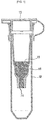
- FIG. 1 is a cross-sectional view of a nucleic acid extracting apparatus.
- a nucleic acid extracting apparatus includes a housing 12 that forms an external shape of the nucleic acid extracting apparatus, a tube 14 that is inserted into the housing 12, a hydrogel supporting member 16 made of hydrogel installed inside the tube 14, and a cover 13 that covers the tube 14.
- the housing 12 is formed of a cylindrical pipe having a space therein, and a lower portion thereof is closed. In addition, the interior diameter of the housing 12 is gradually decreased toward the bottom thereof so that extracted nucleic acid or acid can be collected therein.
- the tube 14 is inserted inside the housing, and a space is formed therein for containing a cell extract.
- An outlet 24 that is open bottomward is formed in a lower portion of the tube 14 so that nucleic acid can move to the housing therethrough.
- the interior diameter of the outlet 24 is smaller than other portions thereof for passing only nucleic acid excluding proteins and the like therethrough.
- the supporting member 16 is provided in the tube 14, and has a shape that corresponds to the internal shape of the tube 14.
- the shape is approximately columnar, and has a solid of revolution shape.
- the supporting member 16 in the present exemplary apparatus is formed of agarose gel that can be easily formed and is harmless to the human body.
- the invention is not limited thereto, and various hydrogels can be applied.
- the supporting member 16 includes agarose in a concentration of 1.0% to 2.0%, and the volume thereof may be 300 ⁇ l to 600 ⁇ l.
- the hydrogel column 16 can include agarose at 0.5% to 5.0%.
- the hydrogel column of supporting member 16 includes the agarose at less than 5.0% in order to prevent the hydrogel column of supporting member 16 from being easily broken.
- the agarose is included at more than 5.0%, the pore size thereof is reduced so that the nucleic acid cannot pass through the hydrogel column of supporting member 16.
- the size of the pores is relatively large, and therefore it is desirable to include 0.5% or more agarose.
- the hydrogel column of supporting member 16 includes less than 0.5% agarose, the size of the pores becomes too large, and the hydrogel column 16 may by broken due to pressure or a foreign material may be separated through the agarose gel column.
- the hydrogel is a polymer material that can contain moisture, and has a three-dimensional network structure in which molecules are connected to each other by chemical and physical combinations.
- the hydrogel contains moisture by a hydrophilic functional group, capillary action, and osmotic pressure. Accordingly, the hydrogel has superior air permeability and percolate absorption, and is friendly to blood, body fluids, and body tissue.
- the supporting member 16 is hydrophilic and has the three- dimensional network structure, and therefore it can function as a nucleic acid filter during the centrifugal separation process. That is, since the nucleic acid included in the cell extract is small in size and is hydrophilic, it may pass through the pores formed in the supporting member 16 and be emitted through the outlet 24. However, a relatively large and non-aqueous phase liquid impurity such as a protein cannot pass through the supporting member 16 so that it remains in the tube 14.
- the cell extract refers to a mixture that includes cell components obtained by destroying the cell.
- the cell may be formed of a biological sample of an animal, a plant, or a microscopic organism.
- the cell may be a human-derived cell that includes blood, blood serum, blood plasma, bone marrow, urine, feces, sputum, cell aspirate, tissue, and a tissue-derived material.
- the cell extract can be made by adding a lysis buffer into a container in which a cell is contained, and the lysis buffer may be formed of various commercially available materials.
- a proteinase K which is a protein hydrolase or an RNase which is a ribo DNAase may be further included in addition to the lysis buffer.
- the supporting member 16 is formed in the tube 14.
- the supporting member 16 is formed of an agarose gel including 2% agarose.
- concentration of the agarose may be variously changed in accordance with viscosity or concentration of the sample.
- the agarose After adding the agarose to distilled water, the agarose is dissolved by heating the mixture. Then, the agarose aqueous solution is added into the tube 14 and then the tube 14 is left at room temperature so as to form the column-shaped supporting member 16 made of hydrogel.
- the cell extract is inserted into the tube 14 where the supporting member 16 is formed and then a centrifugal separating process is performed.
- the centrifugal separating process is performed three times, each time taking 5 minutes, at 2000rpm in a micro-centrifugal separator.
- DNA passes through the supporting member 16 made of hydrogel and is emitted to the housing 12 through the outlet 24, and foreign materials such as proteins that cannot pass through the hydrogel remain behind.
- the nucleic acid is extracted by using the centrifugal separator, but the present invention is not limited thereto. Therefore, the nucleic acid can be extracted by using pressure or an electrical method, and in this case, the supporting member 16 is used as a filter.
- the extracted nucleic acid may be used in a genome test or a DNA chip test. That is, the nucleic acid extracting apparatus according to the present exemplary embodiment can be applied to nucleic acid extraction in a genome test or a DNA chip test.
- the nucleic acid extracting apparatus may be applied in nucleic acid extraction in a point-of-care test (generally referred to as POC test).
- POC test is a test that can be performed to diagnose a disease of a patient at a clinic or hospital setting or at the home of a patient.
- the nucleic acid extracting apparatus can be portably used since it can extract nucleic acid with a simple structure, and therefore nucleic acid extracted by the portably extracting apparatus can be easily applied to the POC test.
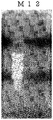
- FIG. 2 shows an electrophoresis result of DNA collected by using the housing 12.
- FIG. 2 is an electrophoresis photo of genomic DNA of an MC3T3 osteoblast separated by using the nucleic acid extracting apparatus according to the invention.
- lane M is a standard DNA marker
- lane 1 and lane 2 are electrophoresis results of the genomic DNA of the MC 3T3 osteoblast obtained by using a method according to the present invention.
- FIG. 3 is a photo of a polymerase chain reaction result for checking purity of the genomic DNA of the MC3T3 osteoblast separated by using the nucleic acid extracting apparatus according to the present invention
- lane M is a standard DNA marker
- lane 1 is an electrophoresis result after amplifying glyceraldehyde-3-phosphate dehydrogenase (G3PHD) in the genomic DNA of the MC3T3 osteoblast obtained by using the method according to the present invention.
- Lanes 2 and 3 are electrophoresis results after amplifying G3PHD in genomic DNA of the MC3T3 osteoblast obtained by using a commercially available genomic DNA extracting apparatus.
- DNA is applied as the nucleic acid, but the present invention is not limited thereto. That is, the present exemplary apparatus can be applied to nucleic acid separation of various kinds, such as RNA.
- a test that included a hybridization process was selected from among tests using DNA.
- HPV DNA chip test was performed on a result of the DNA extraction.
- an electrophoresis reading was performed after a general PCR test.
- the specimen was HPV-58, and Proteinase K at 20 ⁇ l, a specimen for HPV test at 400 ⁇ l, and a lysis buffer at 200 ⁇ l were added into a tube where the agarose gel supporting member was present, and then centrifugal separation was performed three times for 5 minutes each time at 2000RPM/200RCF.
- a supporting member having a volume of 0.3ml and a supporting member having a volume of 0.6ml were used as the agarose supporting member.
- the general PCR test and the DNA chip test for obtaining HPV type information could be performed on both the 0.3ml and 0.8ml supporting members when agarose gel of 2% was used.
- Table 1 shows experiment conditions of each lane. 0.3 ml 0.6 ml Specimen No. 1 2 3 4 5 6 Agarose concentration 1.0% 1.5% 2.0% 1.0% 1.5% 2.0% Agarose pore size 150nm 500nm 150nm 500nm Electrophoresis result - - + - - + HPV DNA Chip Pos 58 Pos 58 Pos 58 Fail Fail Pos 58
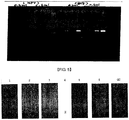
- FIG. 4 is a photo showing an electrophoresis result after a PCR test was performed
- FIG. 5 is a photo of a DNA chip test result.
- the general PCR test and the DNA chip test for obtaining HPV type information could be performed on both the 0.3ml and 0.6ml supporting members when agarose gel of 2% was used.
- nucleic acid was extracted by using a commonly used nucleic acid extracting apparatus and the nucleic acid extracting apparatus of Figure 1 , and then recovery ratios of each method were compared by measuring concentrations of the extracted nucleic acid.
- HPV-18 was used as a specimen, and proteinase K at 20 ⁇ l, DNA extraction specimen at 200 ⁇ l, and lysis buffer at 200 ⁇ l were added to the specimen, and centrifugal separation was performed on the mixture at 2000RPM/200RCF for 15 minutes.
- the agarose gel at a concentration of 2.0% and the hydrogel supporting members respectively having 0.3ml and 0.6ml volumes were used.
- the commonly-used nucleic acid extracting method provides 14 ⁇ g/ml, that is, approximately a 21.5% recovery rate, and 2% agarose gel 0.3ml and 0.6ml respectively provided 19 ⁇ g/ml and 10 ⁇ g/ml, that is, approximately 29.2% and 15.4% recovery rates. Therefore, the result of the comparison demonstrates that the efficiency of the nucleic acid extracting apparatus of Figure 1 is included within a range for clinical application. As described, the nucleic acid extracting apparatus of Figure 1 is particularly advantageous to extract DNA of a biological specimen.
- FIG. 6 is a cross-sectional view of a second exemplary nucleic acid extracting apparatus not forming part of the invention as claimed.
- a nucleic acid extracting apparatus includes a cylindrical housing 12, a tube 14 inserted inside the housing 12, a supporting member 17 made of hydrogel and provided in the tube 14, and a cover 19 that covers the tube 14.
- An injection groove 18 is formed inside the supporting member 17 according to the present exemplary apparatus.
- the injection groove 18 is formed in a center portion of the hydrogel supporting member 17, and may be formed in a cylindrical shape.
- Such an injection groove 18 can contain cell extract, and reduces a distance between an outlet 24 and the cell extract, thereby improving nucleic acid recovery efficiency.
- a plurality of micropores are formed in the supporting member 17, and nucleic acid is emitted to the outlet 24 through the plurality of micropores during the centrifugal separation process. Accordingly, when the distance between the cell extract and the outlet 24 is decreased, the nucleic acid can more easily pass through the supporting member 17 so that the nucleic acid recovery efficiency can be improved.
- FIG. 7 is a cross-sectional view of a nucleic acid extracting apparatus according to an exemplary embodiment of the present invention.
- a nucleic acid extracting apparatus includes a cylindrical housing 12, a tube 14 inserted into the housing 12, a supporting member 17 made of hydrogel and installed inside the tube 14, and a cover 19 that covers the tube 14.
- a plurality of pressure reducing holes 15 are formed at an external circumference of the tube 14 where the supporting member 17 is disposed, and the pressure holes 15 reduce pressure generated due to the centrifugal force.
- an injection groove 18 is formed in the supporting member 17, and the pressure reducing holes 15 are formed at a side of the injection groove 18. Accordingly, nucleic acid in the injection groove 18 can be emitted to the housing 12 through the pressure reducing holes 15 so that the nucleic acid recovery efficiency can be further improved.
Landscapes
- Chemical & Material Sciences (AREA)
- Health & Medical Sciences (AREA)
- Engineering & Computer Science (AREA)
- Life Sciences & Earth Sciences (AREA)
- Bioinformatics & Cheminformatics (AREA)
- Biomedical Technology (AREA)
- Genetics & Genomics (AREA)
- Zoology (AREA)
- Biotechnology (AREA)
- General Health & Medical Sciences (AREA)
- Organic Chemistry (AREA)
- Wood Science & Technology (AREA)
- Analytical Chemistry (AREA)
- General Engineering & Computer Science (AREA)
- Biochemistry (AREA)
- Chemical Kinetics & Catalysis (AREA)
- Microbiology (AREA)
- Clinical Laboratory Science (AREA)
- Hematology (AREA)
- Physics & Mathematics (AREA)
- Molecular Biology (AREA)
- Plant Pathology (AREA)
- Biophysics (AREA)
- Crystallography & Structural Chemistry (AREA)
- Medicinal Chemistry (AREA)
- Sustainable Development (AREA)
- Apparatus Associated With Microorganisms And Enzymes (AREA)
- Treatment Of Liquids With Adsorbents In General (AREA)
- Centrifugal Separators (AREA)
- Solid-Sorbent Or Filter-Aiding Compositions (AREA)
- Measuring Or Testing Involving Enzymes Or Micro-Organisms (AREA)
Description
- The present invention relates to a nucleic acid extracting apparatus, and more particularly, it relates to a nucleic acid extracting apparatus that uses a hydrogel column as a supporting member.
- Recently, as causes of diseases has been explained at the gene level based on results of human genome studies, demand for modification and biochemical analysis of biological specimens for the purpose of cure and prevention of diseases has increased. In addition, a technique for extracting and analyzing nucleic acid from biological specimens or cell-included specimens is demanded not only for diagnosis of disease but also in various fields such as new drug discovery and development, pretesting for viral or bacteria infection, and forensic medicine.
- When nucleic acid is extracted, low-purity nucleic acid suppresses or disturbs a hybridization reaction such as with Southern blotting and a chemical reaction such as an enzyme reaction, and nucleic acid contaminating material dissolves nucleic acid to be tested and causes an error in measurement of nucleic acid quantity. Such a contaminating material includes a low-molecular material such as fat, an enzyme inhibitor, an enzyme such as a protein, a polysaccharide, and a polynucleotide.
- In order to maintain a high-purity nucleic acid for application to molecular biology, various methods have been developed for solving the above-stated problems.
- A method for extracting nucleic acid from a cell includes a method in which a specimen including the cell is solubilized by being processed with sodium dodecyl sulfate (SDS) or proteinase K and then protein is denaturalized and eliminated with penyol so as to refine the nucleic acid. However, the phenol extraction method takes a long time since it includes many steps, and nucleic acid extraction efficiency greatly depends on skill of a worker.
- Therefore, recently, a kit using a column has become a basic tool for nucleic acid extraction in order to reduce the above-stated problems. This tool uses a method with silica or fiberglass that uniquely combines with nucleic acid, and the method dissolves a cell by processing it with a chaotropic reagent and refines nucleic acid molecules from protein and other materials in the cell by using a structural interactive mechanism between a water molecule and nucleic acid.
- The fiberglass or silica film has a low-combination ratio with a cell metabolic material, and therefore relatively highly-concentrated nucleic acid can be obtained. Although this method is more simple compared to the phenol extraction method, this method has drawbacks in complexity of operation and time consumption because the chaotropic reagent or ethanol that strongly blocks an enzyme reaction such as PCR should be completely eliminated.
- Recently, a method for directly refining nucleic acid by using a filter has been disclosed in the Internal
Publication No. WO 00/21973 - The above information disclosed in this Background section is only for enhancement of understanding of the background of the invention and therefore it may contain information that does not form the prior art that is already known in this country to a person of ordinary skill in the art.
- Wang Z et al: "Isolation of DNA Fragments from Agarose Gel by Centrifugation", Nucleic Acids Research, Oxford University Press, GB, vol 22, ;
US6120985 A ; Watanabe M: "Rapid and inexpensive recovery method of DNA fragments from agarose and polyacrylamide gels by a cotton-wool column tube" Nucleic Acids Symposium Series, Oxford University Press, GB, ; Alexander N Gubin et al: "A pressure-extrusion method for DNA extraction from agarose gels", Analytical Biochemistry, Academic Press, Inc, New York, vol 258 ;EP 1566209 A1 andUS 2007/221563 A1 each disclose an apparatus suitable for nucleic acid extraction comprising a pipe-shaped tube having an open outlet at one end thereof and a hydrogel inside the tube. - To solve the above problems, the present invention has been made in an effort to provide an extracting apparatus that can more stably and easily extract nucleic acid.
- A nucleic acid extracting apparatus according to an exemplary embodiment of the present invention is as defined in
Claim 1 hereof. - The apparatus may further include a housing in which the tube is inserted and connected with the outlet, and having one side formed in a closed pipe shape. The supporting member may be formed of an agarose gel, and the agarose gel may include 1% to 2% agarose. Further, the agarose gel may include 0.5% to 5% agarose.
- The injection groove may be formed in a center portion of the supporting member. The supporting member may be adhered to an inner surface of the tube, and the supporting member may have a shape that corresponds to the internal shape of the tube.
- The nucleic acid extracting apparatus extracts nucleic acid from a cell, and the cell may be a biological sample that may be one selected from a group of an animal sample, a plant sample, or a microscopic organism sample, or may be a human-derived cell that includes blood, blood serum, blood plasma, bone marrow, urine, feces, sputum, cell aspirate, tissue, and a tissue-derived material.
- The nucleic acid extracting apparatus may be provided in a centrifugal separator, and the nucleic acid may be DNA. In addition, the nucleic acid extracting apparatus may be applied to nucleic acid extraction in a DNA chip test, and may be applied to nucleic acid extraction in point-of-care testing.
- According to the exemplary embodiment of the present invention, nucleic acid can be easily extracted without impurities by using a hydrogel supporting member as a filter. In addition, pure nucleic acid can be obtained by using agarose gel as the hydrogel supporting member.
- Nucleic acid recovery efficiency is improved by forming an injection groove in the hydrogel supporting member.
- Further, nucleic acid is more easily extracted while reducing damage to the nucleic acid by forming a pressure-reducing hole in a tube.
-
-
FIG. 1 is a cross-sectional view of a nucleic acid extracting apparatus falling outside the scope of the invention as claimed but that usefully illustrates some principles of the invention. -
FIG. 2 is an electrophoresis photo of a genomic DNA of MC3T3 osteoblast separated by using the nucleic acid extracting apparatus according to the present invention. -
FIG. 3 is a photo of a polymerase chain reaction result for checking purity of the genomic DNA of the MC3T3 osteoblast separated by using the nucleic acid extracting apparatus according to the present invention. -
FIG. 4 is a photo of an electrophoresis result after PCR of nucleic acid of an HPV cell extracted by using the nucleic acid extracting apparatus according to the first exemplary embodiment of the present invention. -
FIG. 5 is a photo of a nucleic acid chip test result of nucleic acid of the HPV cell extracted by using the nucleic acid extracting apparatus according to the first exemplary embodiment of the present invention. -
FIG. 6 is a cross-sectional view of a nucleic acid extracting apparatus also falling outside the scope of the invention. -
FIG. 7 is a cross-sectional view of a nucleic acid extracting apparatus according to an exemplary embodiment of the present invention. -
12: housing 13: cover 14: tube 15: pressure reducing hole 16: hydrogel supporting member 18: injection groove 24: outlet - The present invention will be described more fully hereinafter with reference to the accompanying drawings, in which exemplary embodiments of the invention are shown. As those skilled in the art would realize, the described embodiments may be modified in various different ways, all without departing from the spirit or scope of the present invention. The drawings and description are to be regarded as illustrative in nature and not restrictive. Like reference numerals designate like elements throughout the specification.
-
FIG. 1 is a cross-sectional view of a nucleic acid extracting apparatus. - Referring to
FIG. 1 , a nucleic acid extracting apparatus includes ahousing 12 that forms an external shape of the nucleic acid extracting apparatus, atube 14 that is inserted into thehousing 12, ahydrogel supporting member 16 made of hydrogel installed inside thetube 14, and acover 13 that covers thetube 14. - The
housing 12 is formed of a cylindrical pipe having a space therein, and a lower portion thereof is closed. In addition, the interior diameter of thehousing 12 is gradually decreased toward the bottom thereof so that extracted nucleic acid or acid can be collected therein. Thetube 14 is inserted inside the housing, and a space is formed therein for containing a cell extract. Anoutlet 24 that is open bottomward is formed in a lower portion of thetube 14 so that nucleic acid can move to the housing therethrough. The interior diameter of theoutlet 24 is smaller than other portions thereof for passing only nucleic acid excluding proteins and the like therethrough. - The supporting
member 16 is provided in thetube 14, and has a shape that corresponds to the internal shape of thetube 14. Here, the shape is approximately columnar, and has a solid of revolution shape. - The supporting
member 16 in the present exemplary apparatus is formed of agarose gel that can be easily formed and is harmless to the human body. However, the invention is not limited thereto, and various hydrogels can be applied. - The supporting
member 16 includes agarose in a concentration of 1.0% to 2.0%, and the volume thereof may be 300µl to 600µl. - In application of a centrifugal separating method, when the concentration of the agarose is lower than 1.0% in the hydrogel column of supporting
member 16, the hydrogel column can be easily broken during the centrifugal separation process, and when the concentration of the agarose is higher than 2.0%, an aperture becomes too small to sufficiently extract the nucleic acid. - When pressure or an electrical method is used, the
hydrogel column 16 can include agarose at 0.5% to 5.0%. When extracting nucleic acid by using pressure, it is desirable that the hydrogel column of supportingmember 16 includes the agarose at less than 5.0% in order to prevent the hydrogel column of supportingmember 16 from being easily broken. When the agarose is included at more than 5.0%, the pore size thereof is reduced so that the nucleic acid cannot pass through the hydrogel column of supportingmember 16. - In addition, when the electrical method is used, it is advantageous when the size of the pores is relatively large, and therefore it is desirable to include 0.5% or more agarose. When the hydrogel column of supporting
member 16 includes less than 0.5% agarose, the size of the pores becomes too large, and thehydrogel column 16 may by broken due to pressure or a foreign material may be separated through the agarose gel column. - The hydrogel is a polymer material that can contain moisture, and has a three-dimensional network structure in which molecules are connected to each other by chemical and physical combinations. In addition, the hydrogel contains moisture by a hydrophilic functional group, capillary action, and osmotic pressure. Accordingly, the hydrogel has superior air permeability and percolate absorption, and is friendly to blood, body fluids, and body tissue.
- The supporting
member 16 is hydrophilic and has the three- dimensional network structure, and therefore it can function as a nucleic acid filter during the centrifugal separation process. That is, since the nucleic acid included in the cell extract is small in size and is hydrophilic, it may pass through the pores formed in the supportingmember 16 and be emitted through theoutlet 24. However, a relatively large and non-aqueous phase liquid impurity such as a protein cannot pass through the supportingmember 16 so that it remains in thetube 14. - A process for extracting nucleic acid by using the nucleic acid extracting apparatus according to the present exemplary apparatus will now be described in further detail.
- First, a cell extract is obtained. Here, the cell extract refers to a mixture that includes cell components obtained by destroying the cell.
- The cell may be formed of a biological sample of an animal, a plant, or a microscopic organism. In addition, the cell may be a human-derived cell that includes blood, blood serum, blood plasma, bone marrow, urine, feces, sputum, cell aspirate, tissue, and a tissue-derived material.
- The cell extract can be made by adding a lysis buffer into a container in which a cell is contained, and the lysis buffer may be formed of various commercially available materials. In addition, a proteinase K which is a protein hydrolase or an RNase which is a ribo DNAase may be further included in addition to the lysis buffer.
- Next, the supporting
member 16 is formed in thetube 14. In this case, the supportingmember 16 is formed of an agarose gel including 2% agarose. However, the concentration of the agarose may be variously changed in accordance with viscosity or concentration of the sample. - After adding the agarose to distilled water, the agarose is dissolved by heating the mixture. Then, the agarose aqueous solution is added into the
tube 14 and then thetube 14 is left at room temperature so as to form the column-shaped supportingmember 16 made of hydrogel. - The cell extract is inserted into the
tube 14 where the supportingmember 16 is formed and then a centrifugal separating process is performed. In this case, the centrifugal separating process is performed three times, each time taking 5 minutes, at 2000rpm in a micro-centrifugal separator. - During the centrifugal separating process, DNA passes through the supporting
member 16 made of hydrogel and is emitted to thehousing 12 through theoutlet 24, and foreign materials such as proteins that cannot pass through the hydrogel remain behind. - In the present exemplary apparatus, the nucleic acid is extracted by using the centrifugal separator, but the present invention is not limited thereto. Therefore, the nucleic acid can be extracted by using pressure or an electrical method, and in this case, the supporting
member 16 is used as a filter. - The extracted nucleic acid may be used in a genome test or a DNA chip test. That is, the nucleic acid extracting apparatus according to the present exemplary embodiment can be applied to nucleic acid extraction in a genome test or a DNA chip test.
- In addition, the nucleic acid extracting apparatus according to the present exemplary embodiment may be applied in nucleic acid extraction in a point-of-care test (generally referred to as POC test). The POC test is a test that can be performed to diagnose a disease of a patient at a clinic or hospital setting or at the home of a patient. The nucleic acid extracting apparatus can be portably used since it can extract nucleic acid with a simple structure, and therefore nucleic acid extracted by the portably extracting apparatus can be easily applied to the POC test.
-
FIG. 2 shows an electrophoresis result of DNA collected by using thehousing 12.FIG. 2 is an electrophoresis photo of genomic DNA of an MC3T3 osteoblast separated by using the nucleic acid extracting apparatus according to the invention. InFIG. 2 , lane M is a standard DNA marker, andlane 1 andlane 2 are electrophoresis results of the genomic DNA of the MC 3T3 osteoblast obtained by using a method according to the present invention. -
FIG. 3 is a photo of a polymerase chain reaction result for checking purity of the genomic DNA of the MC3T3 osteoblast separated by using the nucleic acid extracting apparatus according to the present invention - In
FIG. 3 , lane M is a standard DNA marker, andlane 1 is an electrophoresis result after amplifying glyceraldehyde-3-phosphate dehydrogenase (G3PHD) in the genomic DNA of the MC3T3 osteoblast obtained by using the method according to the present invention.Lanes - In the present exemplary apparatus, DNA is applied as the nucleic acid, but the present invention is not limited thereto. That is, the present exemplary apparatus can be applied to nucleic acid separation of various kinds, such as RNA.
- An experiment for measuring a DNA extraction possibility and a proper gel concentration level from clinical specimens by using an agarose gel supporting member was performed.
- In order to exclude an influence of a PCR reaction inhibitor, a test that included a hybridization process was selected from among tests using DNA. One among cervical swab specimens on which a human papilloma virus (HPV) DNA chip test was selected and DNA extraction was performed on the selected specimen by using a nucleic acid extracting apparatus with an agarose gel supporting member, and an HPV DNA chip test was performed on a result of the DNA extraction. In order to estimate sensitivity, an electrophoresis reading was performed after a general PCR test. The specimen was HPV-58, and Proteinase K at 20µl, a specimen for HPV test at 400µl, and a lysis buffer at 200µl were added into a tube where the agarose gel supporting member was present, and then centrifugal separation was performed three times for 5 minutes each time at 2000RPM/200RCF. As the agarose supporting member, a supporting member having a volume of 0.3ml and a supporting member having a volume of 0.6ml were used.
- When reading a result of the general PCR test with electrophoresis, results of both the 0.3ml and 0.6ml columns could be read only at a 2% agarose gel concentration. Meanwhile, in the DNA chip test in which a result can be obtained even if the number of DNA copies is low, an accurate HPV type result could be obtained in an agarose gel concentration of 1 %, 1.5%, and 2% in the 0.3ml supporting member and in an agarose gel concentration of 2% in the 0.6ml supporting member.
- According to the results of the present experiment, the general PCR test and the DNA chip test for obtaining HPV type information could be performed on both the 0.3ml and 0.8ml supporting members when agarose gel of 2% was used.
- The following Table 1 shows experiment conditions of each lane.
0.3 mℓ 0.6 mℓ Specimen No. 1 2 3 4 5 6 Agarose concentration 1.0% 1.5% 2.0% 1.0% 1.5% 2.0% Agarose pore size 150nm 500nm 150nm 500nm Electrophoresis result - - + - - + HPV DNA Chip Pos 58 Pos 58 Pos 58 Fail Fail Pos 58 -
FIG. 4 is a photo showing an electrophoresis result after a PCR test was performed, andFIG. 5 is a photo of a DNA chip test result. - As shown in
FIG. 4 and FIG. 5 , when a result of a general PCR test is read with electrophoresis, the result could be read only when both of the 0.3ml and 0.6ml columns are in an agarose gel of 2%. Meanwhile, in the DNA chip test in which a result can be obtained even though the number of DNA copies is low, an accurate HPV type result could be obtained in agarose gel of 1%, 1.5%, and 2% in the 0.3ml supporting member and in agarose gel of 2% in the 0.6ml supporting member. - According to the results of the experiment, the general PCR test and the DNA chip test for obtaining HPV type information could be performed on both the 0.3ml and 0.6ml supporting members when agarose gel of 2% was used.
- An experiment was performed to compare the nucleic acid extracting apparatus according to the present exemplary apparatus with a nucleic acid extracting method that has been commonly used so as to evaluate the nucleic acid extraction efficiency of the illustrated nucleic acid extracting apparatus.
- For nucleic acid extraction of a clinical specimen stored in the nucleic acid extracted state, nucleic acid was extracted by using a commonly used nucleic acid extracting apparatus and the nucleic acid extracting apparatus of
Figure 1 , and then recovery ratios of each method were compared by measuring concentrations of the extracted nucleic acid. - HPV-18 was used as a specimen, and proteinase K at 20µl, DNA extraction specimen at 200µl, and lysis buffer at 200µl were added to the specimen, and centrifugal separation was performed on the mixture at 2000RPM/200RCF for 15 minutes. In the experiment, the agarose gel at a concentration of 2.0% and the hydrogel supporting members respectively having 0.3ml and 0.6ml volumes were used. With reference to DNA-acid concentration of 65µg/ml of DNA extract used in the test, the commonly-used nucleic acid extracting method provides 14µg/ml, that is, approximately a 21.5% recovery rate, and 2% agarose gel 0.3ml and 0.6ml respectively provided 19µg/ml and 10µg/ml, that is, approximately 29.2% and 15.4% recovery rates. Therefore, the result of the comparison demonstrates that the efficiency of the nucleic acid extracting apparatus of
Figure 1 is included within a range for clinical application. As described, the nucleic acid extracting apparatus ofFigure 1 is particularly advantageous to extract DNA of a biological specimen. -
FIG. 6 is a cross-sectional view of a second exemplary nucleic acid extracting apparatus not forming part of the invention as claimed. - Referring to
FIG. 6 , a nucleic acid extracting apparatus includes acylindrical housing 12, atube 14 inserted inside thehousing 12, a supportingmember 17 made of hydrogel and provided in thetube 14, and acover 19 that covers thetube 14. - An
injection groove 18 is formed inside the supportingmember 17 according to the present exemplary apparatus. Theinjection groove 18 is formed in a center portion of thehydrogel supporting member 17, and may be formed in a cylindrical shape. Such aninjection groove 18 can contain cell extract, and reduces a distance between anoutlet 24 and the cell extract, thereby improving nucleic acid recovery efficiency. A plurality of micropores are formed in the supportingmember 17, and nucleic acid is emitted to theoutlet 24 through the plurality of micropores during the centrifugal separation process. Accordingly, when the distance between the cell extract and theoutlet 24 is decreased, the nucleic acid can more easily pass through the supportingmember 17 so that the nucleic acid recovery efficiency can be improved. -
FIG. 7 is a cross-sectional view of a nucleic acid extracting apparatus according to an exemplary embodiment of the present invention. - Referring to
FIG. 7 , a nucleic acid extracting apparatus according to the present exemplary embodiment includes acylindrical housing 12, atube 14 inserted into thehousing 12, a supportingmember 17 made of hydrogel and installed inside thetube 14, and acover 19 that covers thetube 14. - A plurality of
pressure reducing holes 15 are formed at an external circumference of thetube 14 where the supportingmember 17 is disposed, and the pressure holes 15 reduce pressure generated due to the centrifugal force. In addition, aninjection groove 18 is formed in the supportingmember 17, and thepressure reducing holes 15 are formed at a side of theinjection groove 18. Accordingly, nucleic acid in theinjection groove 18 can be emitted to thehousing 12 through thepressure reducing holes 15 so that the nucleic acid recovery efficiency can be further improved. - While this invention has been described in connection with what is presently considered to be a practical exemplary embodiment, it is to be understood that the invention is not limited to the disclosed embodiment, but, on the contrary, is intended to cover various modifications and equivalent arrangements included within the scope of the appended claims.
Claims (8)
- A nucleic acid extracting apparatus comprising:a pipe-shaped tube (14) having an open outlet (24) at one end thereof; anda hydrogel column in use filtering impurities excluding an extracting target material and provided as a supporting member (16) inside the tube (14),characterised in that an injection groove (18) extending in the length direction of the tube (14) is formed on an upper surface of the supporting member (16), anda plurality of pressure reducing holes (15) that contact the supporting member (16) are formed at an external circumference of the tube (14).
- The nucleic acid extracting apparatus of claim 1, further comprising a housing in which the tube (14) is inserted and connected with the outlet (24), and having one side formed in a closed pipe shape.
- The nucleic acid extracting apparatus claim 1, wherein the supporting member (16) is formed of an agarose gel.
- The nucleic acid extracting apparatus of claim 3, wherein the agarose gel includes 1% to 2% agarose.
- The nucleic acid extracting apparatus of claim 3, wherein the agarose gel includes 0.5% to 5% agarose.
- The nucleic acid extracting apparatus of claim 1, wherein the injection groove is formed in a center portion of the supporting member (16).
- The nucleic acid extracting apparatus of claim 1, wherein the supporting member (16) is adhered to an inner surface of the tube (14).
- The nucleic acid extracting apparatus of claim 1, wherein the supporting member (16) has a shape that corresponds to the internal shape of the tube (14).
Applications Claiming Priority (2)
| Application Number | Priority Date | Filing Date | Title |
|---|---|---|---|
| KR1020080061902A KR101005924B1 (en) | 2008-06-27 | 2008-06-27 | Nucleic Acid Extraction Device |
| PCT/KR2009/003340 WO2009157679A1 (en) | 2008-06-27 | 2009-06-22 | Nucleic acid extraction apparatus |
Publications (3)
| Publication Number | Publication Date |
|---|---|
| EP2303458A1 EP2303458A1 (en) | 2011-04-06 |
| EP2303458A4 EP2303458A4 (en) | 2014-09-24 |
| EP2303458B1 true EP2303458B1 (en) | 2017-09-20 |
Family
ID=41444697
Family Applications (1)
| Application Number | Title | Priority Date | Filing Date |
|---|---|---|---|
| EP09770351.6A Active EP2303458B1 (en) | 2008-06-27 | 2009-06-22 | Nucleic acid extraction apparatus |
Country Status (6)
| Country | Link |
|---|---|
| US (1) | US8815572B2 (en) |
| EP (1) | EP2303458B1 (en) |
| JP (1) | JP5202732B2 (en) |
| KR (1) | KR101005924B1 (en) |
| CN (1) | CN102137719B (en) |
| WO (1) | WO2009157679A1 (en) |
Cited By (1)
| Publication number | Priority date | Publication date | Assignee | Title |
|---|---|---|---|---|
| EP4574263A1 (en) * | 2023-12-22 | 2025-06-25 | Yokogawa Electric Corporation | Filter suction holder, nucleic acid extraction system, and nucleic acid extraction method |
Families Citing this family (28)
| Publication number | Priority date | Publication date | Assignee | Title |
|---|---|---|---|---|
| KR101069115B1 (en) * | 2010-04-02 | 2011-09-30 | 주식회사 인트론바이오테크놀로지 | Columns for the extraction of biochemicals from biological samples |
| US9476812B2 (en) | 2010-04-21 | 2016-10-25 | Dna Electronics, Inc. | Methods for isolating a target analyte from a heterogeneous sample |
| US20110262989A1 (en) | 2010-04-21 | 2011-10-27 | Nanomr, Inc. | Isolating a target analyte from a body fluid |
| US8629264B2 (en) | 2011-05-19 | 2014-01-14 | Blood Cell Storage, Inc. | Gravity flow fluidic device for nucleic acid extraction |
| EP2726595A1 (en) | 2011-07-01 | 2014-05-07 | Qiagen GmbH | Filter module in biomolecule isolation |
| WO2013101741A1 (en) | 2011-12-30 | 2013-07-04 | Abbott Molecular, Inc. | Channels with cross-sectional thermal gradients |
| WO2014046942A1 (en) | 2012-09-18 | 2014-03-27 | Cynvenio Biosystems, Inc. | Spin elute tube |
| US9434940B2 (en) | 2012-12-19 | 2016-09-06 | Dna Electronics, Inc. | Methods for universal target capture |
| US9551704B2 (en) | 2012-12-19 | 2017-01-24 | Dna Electronics, Inc. | Target detection |
| US10000557B2 (en) | 2012-12-19 | 2018-06-19 | Dnae Group Holdings Limited | Methods for raising antibodies |
| US9599610B2 (en) | 2012-12-19 | 2017-03-21 | Dnae Group Holdings Limited | Target capture system |
| US9995742B2 (en) | 2012-12-19 | 2018-06-12 | Dnae Group Holdings Limited | Sample entry |
| CN103146569B (en) * | 2013-03-12 | 2013-12-25 | 刘泽文 | Centrifugal tube structure for extracting DNA (deoxyribonucleic acid) by adopting silicon bead method |
| KR102078831B1 (en) | 2013-03-12 | 2020-04-03 | 삼성디스플레이 주식회사 | flexible display device with the flexible touch screen panel |
| CN104130941B (en) * | 2013-05-03 | 2015-11-25 | 常熟市雷号医疗器械有限公司 | The centrifuge shield structure of separation and Extraction DNA |
| KR101507234B1 (en) * | 2013-07-17 | 2015-03-31 | 로레알 | biomolecule extraction device and method thereof |
| DE102014216016A1 (en) * | 2014-08-13 | 2016-02-18 | Axagarius Gmbh & Co. Kg | Device for the purification of nucleic acids |
| CN107002077A (en) * | 2014-11-07 | 2017-08-01 | 约翰霍普金斯大学 | For the method without chaotropic agent and non-volatile thing from plasma purification nucleic acid |
| CN104593252B (en) * | 2015-01-12 | 2017-02-22 | 国家纳米科学中心 | Sample pretreatment and amplification integrated nucleic acid analysis system based on pipette tip and application of system |
| EP3458862B1 (en) * | 2016-05-17 | 2020-04-22 | Integrated Nano-Technologies, Inc. | Disposable cartridge with filtration column assembly for diagnostic assay system |
| CN106367323A (en) * | 2016-09-13 | 2017-02-01 | 东北农业大学 | Continuous fermentation device for slime producing bacteria |
| WO2019181106A1 (en) * | 2018-03-19 | 2019-09-26 | 株式会社村田製作所 | Filtration device |
| CN112469810B (en) | 2018-07-03 | 2024-10-11 | 株式会社村田制作所 | Filtration recovery device and filtration recovery method |
| US11344880B2 (en) * | 2018-11-30 | 2022-05-31 | Hans-Werner Heinrich | Centrifuge tube separation system, and methods of use |
| CN112226338B (en) * | 2020-10-20 | 2021-08-24 | 广州吉源生物科技有限公司 | A nucleic acid extraction and purification device |
| CN113181985B (en) * | 2021-04-09 | 2025-05-16 | 中国标准化研究院 | A centrifugal assembly capable of adjusting the centrifugal degree of filtered liquid |
| WO2023139272A1 (en) * | 2022-01-24 | 2023-07-27 | Scipio Bioscience | Gelation device with piston |
| CN116651532A (en) * | 2023-07-20 | 2023-08-29 | 广州国家实验室 | Application of a microporous partition, reagent tube, manufacturing device and experimental method |
Family Cites Families (12)
| Publication number | Priority date | Publication date | Assignee | Title |
|---|---|---|---|---|
| US4750982A (en) | 1985-03-21 | 1988-06-14 | Lifecodes Corp. | Process and apparatus for purifying and concentrating DNA from crude mixtures containing DNA |
| DE4143639C2 (en) | 1991-12-02 | 2002-10-24 | Qiagen Gmbh | Process for the isolation and purification of nucleic acids |
| US6120985A (en) | 1997-10-31 | 2000-09-19 | Bbi Bioseq, Inc. | Pressure-enhanced extraction and purification |
| JP2002516663A (en) * | 1998-04-02 | 2002-06-11 | リー キュンジル | Glass microfiber column and method for producing and purifying plasmid DNA using the same (glass microfiber column method for preparation and purification of plasmid DNA using the same method) |
| KR19980086562A (en) * | 1998-04-02 | 1998-12-05 | 이경일 | Glass microfiber column and plasmid DNA production method using the same |
| EP1301591A4 (en) * | 2000-07-13 | 2004-05-26 | Invitrogen Corp | METHOD AND COMPOSITIONS FOR QUICK PROTEIN AND PEPTIDE EXTRACTION AND INSULATION USING LYSIS MATRIZE |
| JP3396218B2 (en) * | 2001-05-21 | 2003-04-14 | オリンパス光学工業株式会社 | Nucleic acid detection method |
| US7229595B2 (en) * | 2001-06-15 | 2007-06-12 | Molecular Devices Corporation | Filtration column devices and methods of filtering therewith |
| US7482169B2 (en) * | 2002-07-15 | 2009-01-27 | Phynexus, Inc. | Low dead volume extraction column device |
| US7682818B2 (en) * | 2003-03-28 | 2010-03-23 | Fujifilm Corporation | Apparatus for separating and purifying nucleic acid and method for separating and purifying nucleic acid |
| WO2005037988A2 (en) | 2003-10-20 | 2005-04-28 | Fuji Photo Film Co., Ltd. | Nucleic acid-adsorbing porous membrane for separating and purifying nucleic acid and apparatus for separating and purifying nucleic acid |
| US7240572B2 (en) | 2004-02-18 | 2007-07-10 | Millipore Corporation | Vacuum assisted affinity chromatography device and method |
-
2008
- 2008-06-27 KR KR1020080061902A patent/KR101005924B1/en not_active Expired - Fee Related
-
2009
- 2009-06-22 CN CN200980134053.XA patent/CN102137719B/en not_active Expired - Fee Related
- 2009-06-22 JP JP2011516118A patent/JP5202732B2/en not_active Expired - Fee Related
- 2009-06-22 US US13/001,441 patent/US8815572B2/en active Active
- 2009-06-22 WO PCT/KR2009/003340 patent/WO2009157679A1/en not_active Ceased
- 2009-06-22 EP EP09770351.6A patent/EP2303458B1/en active Active
Non-Patent Citations (1)
| Title |
|---|
| None * |
Cited By (1)
| Publication number | Priority date | Publication date | Assignee | Title |
|---|---|---|---|---|
| EP4574263A1 (en) * | 2023-12-22 | 2025-06-25 | Yokogawa Electric Corporation | Filter suction holder, nucleic acid extraction system, and nucleic acid extraction method |
Also Published As
| Publication number | Publication date |
|---|---|
| US8815572B2 (en) | 2014-08-26 |
| JP5202732B2 (en) | 2013-06-05 |
| CN102137719A (en) | 2011-07-27 |
| CN102137719B (en) | 2015-03-04 |
| EP2303458A1 (en) | 2011-04-06 |
| KR101005924B1 (en) | 2011-01-06 |
| US20110300609A1 (en) | 2011-12-08 |
| KR20100001826A (en) | 2010-01-06 |
| EP2303458A4 (en) | 2014-09-24 |
| JP2011525805A (en) | 2011-09-29 |
| WO2009157679A1 (en) | 2009-12-30 |
Similar Documents
| Publication | Publication Date | Title |
|---|---|---|
| US8815572B2 (en) | Nucleic acid extraction apparatus | |
| EP2315619B1 (en) | Nucleic acid extraction method | |
| US9624252B2 (en) | Selective nucleic acid fragment recovery | |
| JP6735276B2 (en) | System and method for collecting nucleic acid samples | |
| KR100505380B1 (en) | Instrument and method for collecting nucleic acids | |
| Byrnes et al. | A portable, pressure driven, room temperature nucleic acid extraction and storage system for point of care molecular diagnostics | |
| TW201928055A (en) | One-step isolation, concentration and/or purification of nucleic acids using ATPS-embedded microfluidic device | |
| WO2025056079A1 (en) | Primer for detecting pathogenic microorganisms on basis of rpa-crispr/cas12a and use of primer | |
| KR101423635B1 (en) | Microchannel, nucleic acid recovery device and nucleic acid recovery method | |
| CA2348054C (en) | Processes and means for the isolation and purification of nucleic acids at surfaces | |
| US20240301394A1 (en) | Devices and methods for electrophoretic extraction of nucleic acids from biological samples | |
| EP4382204A1 (en) | Device for integrated processing of biological samples | |
| US20250327062A1 (en) | Nucleic acid elution liquid and nucleic acid elution method using said nucleic acid elution liquid | |
| Jarallah et al. | Design of a new rapid and efficient kit for extracting DNA from blood sample | |
| EP4442823A1 (en) | Nucleic acid extraction method using porous ion charge crystal | |
| CN119410627A (en) | Nucleic acid extraction and purification kit and its application | |
| CN121427904A (en) | A nucleic acid washing solution and its application | |
| CN117385001A (en) | Method for concentrating and enriching pathogens in water body, product and application | |
| CN110724684A (en) | Method and device for extracting biological sample DNA | |
| CN114641302A (en) | Rapid isolation and collection of microbial RNA from biological samples | |
| Cameron et al. | Evaluation of Genomic DNA Purification from Human Whole Blood using the Maxwell® CSC Automated Nucleic Acid Extraction System and Maxwell® CSC Blood Reagents |
Legal Events
| Date | Code | Title | Description |
|---|---|---|---|
| PUAI | Public reference made under article 153(3) epc to a published international application that has entered the european phase |
Free format text: ORIGINAL CODE: 0009012 |
|
| 17P | Request for examination filed |
Effective date: 20110125 |
|
| AK | Designated contracting states |
Kind code of ref document: A1 Designated state(s): AT BE BG CH CY CZ DE DK EE ES FI FR GB GR HR HU IE IS IT LI LT LU LV MC MK MT NL NO PL PT RO SE SI SK TR |
|
| AX | Request for extension of the european patent |
Extension state: AL BA RS |
|
| DAX | Request for extension of the european patent (deleted) | ||
| A4 | Supplementary search report drawn up and despatched |
Effective date: 20140827 |
|
| RIC1 | Information provided on ipc code assigned before grant |
Ipc: B01L 3/14 20060101AFI20140821BHEP Ipc: B01L 3/00 20060101ALI20140821BHEP Ipc: C12N 15/10 20060101ALI20140821BHEP |
|
| 17Q | First examination report despatched |
Effective date: 20151123 |
|
| GRAP | Despatch of communication of intention to grant a patent |
Free format text: ORIGINAL CODE: EPIDOSNIGR1 |
|
| STAA | Information on the status of an ep patent application or granted ep patent |
Free format text: STATUS: GRANT OF PATENT IS INTENDED |
|
| INTG | Intention to grant announced |
Effective date: 20170412 |
|
| GRAS | Grant fee paid |
Free format text: ORIGINAL CODE: EPIDOSNIGR3 |
|
| GRAA | (expected) grant |
Free format text: ORIGINAL CODE: 0009210 |
|
| STAA | Information on the status of an ep patent application or granted ep patent |
Free format text: STATUS: THE PATENT HAS BEEN GRANTED |
|
| AK | Designated contracting states |
Kind code of ref document: B1 Designated state(s): AT BE BG CH CY CZ DE DK EE ES FI FR GB GR HR HU IE IS IT LI LT LU LV MC MK MT NL NO PL PT RO SE SI SK TR |
|
| REG | Reference to a national code |
Ref country code: GB Ref legal event code: FG4D |
|
| REG | Reference to a national code |
Ref country code: CH Ref legal event code: EP |
|
| REG | Reference to a national code |
Ref country code: AT Ref legal event code: REF Ref document number: 929723 Country of ref document: AT Kind code of ref document: T Effective date: 20171015 |
|
| REG | Reference to a national code |
Ref country code: IE Ref legal event code: FG4D |
|
| REG | Reference to a national code |
Ref country code: DE Ref legal event code: R096 Ref document number: 602009048459 Country of ref document: DE |
|
| REG | Reference to a national code |
Ref country code: NL Ref legal event code: MP Effective date: 20170920 |
|
| PG25 | Lapsed in a contracting state [announced via postgrant information from national office to epo] |
Ref country code: SE Free format text: LAPSE BECAUSE OF FAILURE TO SUBMIT A TRANSLATION OF THE DESCRIPTION OR TO PAY THE FEE WITHIN THE PRESCRIBED TIME-LIMIT Effective date: 20170920 Ref country code: FI Free format text: LAPSE BECAUSE OF FAILURE TO SUBMIT A TRANSLATION OF THE DESCRIPTION OR TO PAY THE FEE WITHIN THE PRESCRIBED TIME-LIMIT Effective date: 20170920 Ref country code: LT Free format text: LAPSE BECAUSE OF FAILURE TO SUBMIT A TRANSLATION OF THE DESCRIPTION OR TO PAY THE FEE WITHIN THE PRESCRIBED TIME-LIMIT Effective date: 20170920 Ref country code: NO Free format text: LAPSE BECAUSE OF FAILURE TO SUBMIT A TRANSLATION OF THE DESCRIPTION OR TO PAY THE FEE WITHIN THE PRESCRIBED TIME-LIMIT Effective date: 20171220 Ref country code: HR Free format text: LAPSE BECAUSE OF FAILURE TO SUBMIT A TRANSLATION OF THE DESCRIPTION OR TO PAY THE FEE WITHIN THE PRESCRIBED TIME-LIMIT Effective date: 20170920 |
|
| REG | Reference to a national code |
Ref country code: LT Ref legal event code: MG4D |
|
| REG | Reference to a national code |
Ref country code: AT Ref legal event code: MK05 Ref document number: 929723 Country of ref document: AT Kind code of ref document: T Effective date: 20170920 |
|
| PG25 | Lapsed in a contracting state [announced via postgrant information from national office to epo] |
Ref country code: GR Free format text: LAPSE BECAUSE OF FAILURE TO SUBMIT A TRANSLATION OF THE DESCRIPTION OR TO PAY THE FEE WITHIN THE PRESCRIBED TIME-LIMIT Effective date: 20171221 Ref country code: BG Free format text: LAPSE BECAUSE OF FAILURE TO SUBMIT A TRANSLATION OF THE DESCRIPTION OR TO PAY THE FEE WITHIN THE PRESCRIBED TIME-LIMIT Effective date: 20171220 Ref country code: LV Free format text: LAPSE BECAUSE OF FAILURE TO SUBMIT A TRANSLATION OF THE DESCRIPTION OR TO PAY THE FEE WITHIN THE PRESCRIBED TIME-LIMIT Effective date: 20170920 |
|
| PG25 | Lapsed in a contracting state [announced via postgrant information from national office to epo] |
Ref country code: NL Free format text: LAPSE BECAUSE OF FAILURE TO SUBMIT A TRANSLATION OF THE DESCRIPTION OR TO PAY THE FEE WITHIN THE PRESCRIBED TIME-LIMIT Effective date: 20170920 |
|
| PG25 | Lapsed in a contracting state [announced via postgrant information from national office to epo] |
Ref country code: ES Free format text: LAPSE BECAUSE OF FAILURE TO SUBMIT A TRANSLATION OF THE DESCRIPTION OR TO PAY THE FEE WITHIN THE PRESCRIBED TIME-LIMIT Effective date: 20170920 Ref country code: CZ Free format text: LAPSE BECAUSE OF FAILURE TO SUBMIT A TRANSLATION OF THE DESCRIPTION OR TO PAY THE FEE WITHIN THE PRESCRIBED TIME-LIMIT Effective date: 20170920 Ref country code: PL Free format text: LAPSE BECAUSE OF FAILURE TO SUBMIT A TRANSLATION OF THE DESCRIPTION OR TO PAY THE FEE WITHIN THE PRESCRIBED TIME-LIMIT Effective date: 20170920 Ref country code: RO Free format text: LAPSE BECAUSE OF FAILURE TO SUBMIT A TRANSLATION OF THE DESCRIPTION OR TO PAY THE FEE WITHIN THE PRESCRIBED TIME-LIMIT Effective date: 20170920 |
|
| PG25 | Lapsed in a contracting state [announced via postgrant information from national office to epo] |
Ref country code: AT Free format text: LAPSE BECAUSE OF FAILURE TO SUBMIT A TRANSLATION OF THE DESCRIPTION OR TO PAY THE FEE WITHIN THE PRESCRIBED TIME-LIMIT Effective date: 20170920 Ref country code: SK Free format text: LAPSE BECAUSE OF FAILURE TO SUBMIT A TRANSLATION OF THE DESCRIPTION OR TO PAY THE FEE WITHIN THE PRESCRIBED TIME-LIMIT Effective date: 20170920 Ref country code: IS Free format text: LAPSE BECAUSE OF FAILURE TO SUBMIT A TRANSLATION OF THE DESCRIPTION OR TO PAY THE FEE WITHIN THE PRESCRIBED TIME-LIMIT Effective date: 20180120 Ref country code: IT Free format text: LAPSE BECAUSE OF FAILURE TO SUBMIT A TRANSLATION OF THE DESCRIPTION OR TO PAY THE FEE WITHIN THE PRESCRIBED TIME-LIMIT Effective date: 20170920 Ref country code: EE Free format text: LAPSE BECAUSE OF FAILURE TO SUBMIT A TRANSLATION OF THE DESCRIPTION OR TO PAY THE FEE WITHIN THE PRESCRIBED TIME-LIMIT Effective date: 20170920 |
|
| REG | Reference to a national code |
Ref country code: DE Ref legal event code: R097 Ref document number: 602009048459 Country of ref document: DE |
|
| PLBE | No opposition filed within time limit |
Free format text: ORIGINAL CODE: 0009261 |
|
| STAA | Information on the status of an ep patent application or granted ep patent |
Free format text: STATUS: NO OPPOSITION FILED WITHIN TIME LIMIT |
|
| PG25 | Lapsed in a contracting state [announced via postgrant information from national office to epo] |
Ref country code: DK Free format text: LAPSE BECAUSE OF FAILURE TO SUBMIT A TRANSLATION OF THE DESCRIPTION OR TO PAY THE FEE WITHIN THE PRESCRIBED TIME-LIMIT Effective date: 20170920 |
|
| 26N | No opposition filed |
Effective date: 20180621 |
|
| PG25 | Lapsed in a contracting state [announced via postgrant information from national office to epo] |
Ref country code: SI Free format text: LAPSE BECAUSE OF FAILURE TO SUBMIT A TRANSLATION OF THE DESCRIPTION OR TO PAY THE FEE WITHIN THE PRESCRIBED TIME-LIMIT Effective date: 20170920 |
|
| REG | Reference to a national code |
Ref country code: CH Ref legal event code: PL |
|
| GBPC | Gb: european patent ceased through non-payment of renewal fee |
Effective date: 20180622 |
|
| REG | Reference to a national code |
Ref country code: BE Ref legal event code: MM Effective date: 20180630 |
|
| REG | Reference to a national code |
Ref country code: IE Ref legal event code: MM4A |
|
| PG25 | Lapsed in a contracting state [announced via postgrant information from national office to epo] |
Ref country code: MC Free format text: LAPSE BECAUSE OF FAILURE TO SUBMIT A TRANSLATION OF THE DESCRIPTION OR TO PAY THE FEE WITHIN THE PRESCRIBED TIME-LIMIT Effective date: 20170920 Ref country code: LU Free format text: LAPSE BECAUSE OF NON-PAYMENT OF DUE FEES Effective date: 20180622 |
|
| PG25 | Lapsed in a contracting state [announced via postgrant information from national office to epo] |
Ref country code: CH Free format text: LAPSE BECAUSE OF NON-PAYMENT OF DUE FEES Effective date: 20180630 Ref country code: GB Free format text: LAPSE BECAUSE OF NON-PAYMENT OF DUE FEES Effective date: 20180622 Ref country code: FR Free format text: LAPSE BECAUSE OF NON-PAYMENT OF DUE FEES Effective date: 20180630 Ref country code: IE Free format text: LAPSE BECAUSE OF NON-PAYMENT OF DUE FEES Effective date: 20180622 Ref country code: LI Free format text: LAPSE BECAUSE OF NON-PAYMENT OF DUE FEES Effective date: 20180630 |
|
| PG25 | Lapsed in a contracting state [announced via postgrant information from national office to epo] |
Ref country code: BE Free format text: LAPSE BECAUSE OF NON-PAYMENT OF DUE FEES Effective date: 20180630 |
|
| PG25 | Lapsed in a contracting state [announced via postgrant information from national office to epo] |
Ref country code: MT Free format text: LAPSE BECAUSE OF NON-PAYMENT OF DUE FEES Effective date: 20180622 |
|
| PG25 | Lapsed in a contracting state [announced via postgrant information from national office to epo] |
Ref country code: TR Free format text: LAPSE BECAUSE OF FAILURE TO SUBMIT A TRANSLATION OF THE DESCRIPTION OR TO PAY THE FEE WITHIN THE PRESCRIBED TIME-LIMIT Effective date: 20170920 |
|
| PG25 | Lapsed in a contracting state [announced via postgrant information from national office to epo] |
Ref country code: HU Free format text: LAPSE BECAUSE OF FAILURE TO SUBMIT A TRANSLATION OF THE DESCRIPTION OR TO PAY THE FEE WITHIN THE PRESCRIBED TIME-LIMIT; INVALID AB INITIO Effective date: 20090622 Ref country code: PT Free format text: LAPSE BECAUSE OF FAILURE TO SUBMIT A TRANSLATION OF THE DESCRIPTION OR TO PAY THE FEE WITHIN THE PRESCRIBED TIME-LIMIT Effective date: 20170920 |
|
| PG25 | Lapsed in a contracting state [announced via postgrant information from national office to epo] |
Ref country code: CY Free format text: LAPSE BECAUSE OF FAILURE TO SUBMIT A TRANSLATION OF THE DESCRIPTION OR TO PAY THE FEE WITHIN THE PRESCRIBED TIME-LIMIT Effective date: 20170920 Ref country code: MK Free format text: LAPSE BECAUSE OF NON-PAYMENT OF DUE FEES Effective date: 20170920 |
|
| PGFP | Annual fee paid to national office [announced via postgrant information from national office to epo] |
Ref country code: DE Payment date: 20250624 Year of fee payment: 17 |