EP2295387A1 - Cured materals and method of making such materials - Google Patents
Cured materals and method of making such materials Download PDFInfo
- Publication number
- EP2295387A1 EP2295387A1 EP20090252191 EP09252191A EP2295387A1 EP 2295387 A1 EP2295387 A1 EP 2295387A1 EP 20090252191 EP20090252191 EP 20090252191 EP 09252191 A EP09252191 A EP 09252191A EP 2295387 A1 EP2295387 A1 EP 2295387A1
- Authority
- EP
- European Patent Office
- Prior art keywords
- curing
- component
- surface area
- temperature
- oil
- Prior art date
- Legal status (The legal status is an assumption and is not a legal conclusion. Google has not performed a legal analysis and makes no representation as to the accuracy of the status listed.)
- Withdrawn
Links
- 239000000463 material Substances 0.000 title claims abstract description 73
- 238000004519 manufacturing process Methods 0.000 title claims abstract description 11
- 239000000203 mixture Substances 0.000 claims abstract description 54
- 238000000034 method Methods 0.000 claims abstract description 31
- 235000015112 vegetable and seed oil Nutrition 0.000 claims abstract description 27
- 239000008158 vegetable oil Substances 0.000 claims abstract description 27
- 239000003054 catalyst Substances 0.000 claims abstract description 8
- 239000000049 pigment Substances 0.000 claims abstract description 8
- 239000004014 plasticizer Substances 0.000 claims abstract description 6
- 239000000654 additive Substances 0.000 claims abstract description 5
- 239000000945 filler Substances 0.000 claims abstract description 5
- 239000003921 oil Substances 0.000 claims description 42
- 235000019198 oils Nutrition 0.000 claims description 42
- 238000005056 compaction Methods 0.000 claims description 24
- 239000002245 particle Substances 0.000 claims description 16
- 239000002699 waste material Substances 0.000 claims description 13
- OKTJSMMVPCPJKN-UHFFFAOYSA-N Carbon Chemical compound [C] OKTJSMMVPCPJKN-UHFFFAOYSA-N 0.000 claims description 8
- 239000004566 building material Substances 0.000 claims description 7
- 235000014113 dietary fatty acids Nutrition 0.000 claims description 7
- 239000000194 fatty acid Substances 0.000 claims description 7
- 229930195729 fatty acid Natural products 0.000 claims description 7
- 150000004665 fatty acids Chemical class 0.000 claims description 7
- 239000002131 composite material Substances 0.000 claims description 5
- 239000011343 solid material Substances 0.000 claims description 5
- 239000002600 sunflower oil Substances 0.000 claims description 5
- 239000011449 brick Substances 0.000 claims description 4
- 229910052799 carbon Inorganic materials 0.000 claims description 4
- 239000004927 clay Substances 0.000 claims description 4
- 229910052500 inorganic mineral Inorganic materials 0.000 claims description 4
- 239000011707 mineral Substances 0.000 claims description 4
- -1 tiles Substances 0.000 claims description 4
- 231100000331 toxic Toxicity 0.000 claims description 4
- 230000002588 toxic effect Effects 0.000 claims description 4
- 229910000831 Steel Inorganic materials 0.000 claims description 3
- 238000010276 construction Methods 0.000 claims description 3
- 239000000835 fiber Substances 0.000 claims description 3
- 239000011521 glass Substances 0.000 claims description 3
- 231100001261 hazardous Toxicity 0.000 claims description 3
- 239000002920 hazardous waste Substances 0.000 claims description 3
- 239000000944 linseed oil Substances 0.000 claims description 3
- 230000003014 reinforcing effect Effects 0.000 claims description 3
- 239000010959 steel Substances 0.000 claims description 3
- 238000005728 strengthening Methods 0.000 claims description 3
- 239000010891 toxic waste Substances 0.000 claims description 3
- 235000017060 Arachis glabrata Nutrition 0.000 claims description 2
- 244000105624 Arachis hypogaea Species 0.000 claims description 2
- 235000010777 Arachis hypogaea Nutrition 0.000 claims description 2
- 235000018262 Arachis monticola Nutrition 0.000 claims description 2
- 240000002791 Brassica napus Species 0.000 claims description 2
- 235000004977 Brassica sinapistrum Nutrition 0.000 claims description 2
- 244000060011 Cocos nucifera Species 0.000 claims description 2
- 235000013162 Cocos nucifera Nutrition 0.000 claims description 2
- 244000068988 Glycine max Species 0.000 claims description 2
- 235000010469 Glycine max Nutrition 0.000 claims description 2
- 244000020551 Helianthus annuus Species 0.000 claims description 2
- 235000003222 Helianthus annuus Nutrition 0.000 claims description 2
- 240000006240 Linum usitatissimum Species 0.000 claims description 2
- 235000004431 Linum usitatissimum Nutrition 0.000 claims description 2
- 240000007817 Olea europaea Species 0.000 claims description 2
- 240000008042 Zea mays Species 0.000 claims description 2
- 235000005824 Zea mays ssp. parviglumis Nutrition 0.000 claims description 2
- 235000002017 Zea mays subsp mays Nutrition 0.000 claims description 2
- 239000000828 canola oil Substances 0.000 claims description 2
- 239000003240 coconut oil Substances 0.000 claims description 2
- 235000005822 corn Nutrition 0.000 claims description 2
- 235000012343 cottonseed oil Nutrition 0.000 claims description 2
- 238000001125 extrusion Methods 0.000 claims description 2
- 235000004426 flaxseed Nutrition 0.000 claims description 2
- 239000003365 glass fiber Substances 0.000 claims description 2
- 229910003480 inorganic solid Inorganic materials 0.000 claims description 2
- 235000020232 peanut Nutrition 0.000 claims description 2
- 230000003068 static effect Effects 0.000 claims description 2
- 230000002787 reinforcement Effects 0.000 claims 2
- 239000003575 carbonaceous material Substances 0.000 claims 1
- 238000010438 heat treatment Methods 0.000 description 24
- VYPSYNLAJGMNEJ-UHFFFAOYSA-N Silicium dioxide Chemical compound O=[Si]=O VYPSYNLAJGMNEJ-UHFFFAOYSA-N 0.000 description 20
- 238000004061 bleaching Methods 0.000 description 19
- 239000004576 sand Substances 0.000 description 16
- 230000003647 oxidation Effects 0.000 description 14
- 238000007254 oxidation reaction Methods 0.000 description 14
- 239000000047 product Substances 0.000 description 13
- 230000000694 effects Effects 0.000 description 9
- 102100023053 Band 4.1-like protein 5 Human genes 0.000 description 6
- 101001049973 Homo sapiens Band 4.1-like protein 5 Proteins 0.000 description 6
- QVGXLLKOCUKJST-UHFFFAOYSA-N atomic oxygen Chemical compound [O] QVGXLLKOCUKJST-UHFFFAOYSA-N 0.000 description 6
- 239000001301 oxygen Substances 0.000 description 6
- 229910052760 oxygen Inorganic materials 0.000 description 6
- 238000006116 polymerization reaction Methods 0.000 description 6
- 230000005855 radiation Effects 0.000 description 5
- 230000002269 spontaneous effect Effects 0.000 description 4
- 235000019486 Sunflower oil Nutrition 0.000 description 3
- 238000005336 cracking Methods 0.000 description 3
- 230000007423 decrease Effects 0.000 description 3
- 238000007670 refining Methods 0.000 description 3
- IJGRMHOSHXDMSA-UHFFFAOYSA-N Atomic nitrogen Chemical compound N#N IJGRMHOSHXDMSA-UHFFFAOYSA-N 0.000 description 2
- XEEYBQQBJWHFJM-UHFFFAOYSA-N Iron Chemical compound [Fe] XEEYBQQBJWHFJM-UHFFFAOYSA-N 0.000 description 2
- PXHVJJICTQNCMI-UHFFFAOYSA-N Nickel Chemical compound [Ni] PXHVJJICTQNCMI-UHFFFAOYSA-N 0.000 description 2
- 230000009286 beneficial effect Effects 0.000 description 2
- 230000000740 bleeding effect Effects 0.000 description 2
- 238000005266 casting Methods 0.000 description 2
- 230000000052 comparative effect Effects 0.000 description 2
- 238000009792 diffusion process Methods 0.000 description 2
- 238000002474 experimental method Methods 0.000 description 2
- 239000000383 hazardous chemical Substances 0.000 description 2
- 239000000377 silicon dioxide Substances 0.000 description 2
- 239000003440 toxic substance Substances 0.000 description 2
- XLYOFNOQVPJJNP-UHFFFAOYSA-N water Substances O XLYOFNOQVPJJNP-UHFFFAOYSA-N 0.000 description 2
- MFEVGQHCNVXMER-UHFFFAOYSA-L 1,3,2$l^{2}-dioxaplumbetan-4-one Chemical compound [Pb+2].[O-]C([O-])=O MFEVGQHCNVXMER-UHFFFAOYSA-L 0.000 description 1
- RYGMFSIKBFXOCR-UHFFFAOYSA-N Copper Chemical compound [Cu] RYGMFSIKBFXOCR-UHFFFAOYSA-N 0.000 description 1
- 241000196324 Embryophyta Species 0.000 description 1
- 229910000003 Lead carbonate Inorganic materials 0.000 description 1
- 235000019738 Limestone Nutrition 0.000 description 1
- 229910000004 White lead Inorganic materials 0.000 description 1
- HCHKCACWOHOZIP-UHFFFAOYSA-N Zinc Chemical compound [Zn] HCHKCACWOHOZIP-UHFFFAOYSA-N 0.000 description 1
- QCWXUUIWCKQGHC-UHFFFAOYSA-N Zirconium Chemical compound [Zr] QCWXUUIWCKQGHC-UHFFFAOYSA-N 0.000 description 1
- 239000002253 acid Substances 0.000 description 1
- 239000004411 aluminium Substances 0.000 description 1
- 229910052782 aluminium Inorganic materials 0.000 description 1
- XAGFODPZIPBFFR-UHFFFAOYSA-N aluminium Chemical compound [Al] XAGFODPZIPBFFR-UHFFFAOYSA-N 0.000 description 1
- PNEYBMLMFCGWSK-UHFFFAOYSA-N aluminium oxide Inorganic materials [O-2].[O-2].[O-2].[Al+3].[Al+3] PNEYBMLMFCGWSK-UHFFFAOYSA-N 0.000 description 1
- 238000004458 analytical method Methods 0.000 description 1
- 239000002969 artificial stone Substances 0.000 description 1
- 239000011230 binding agent Substances 0.000 description 1
- 239000006227 byproduct Substances 0.000 description 1
- 230000003197 catalytic effect Effects 0.000 description 1
- 238000006243 chemical reaction Methods 0.000 description 1
- 239000003795 chemical substances by application Substances 0.000 description 1
- 229910052570 clay Inorganic materials 0.000 description 1
- 239000004035 construction material Substances 0.000 description 1
- 229910052802 copper Inorganic materials 0.000 description 1
- 239000010949 copper Substances 0.000 description 1
- 230000003226 decolorizating effect Effects 0.000 description 1
- 238000009826 distribution Methods 0.000 description 1
- 238000001704 evaporation Methods 0.000 description 1
- 230000008020 evaporation Effects 0.000 description 1
- 239000003925 fat Substances 0.000 description 1
- 239000010419 fine particle Substances 0.000 description 1
- 239000010881 fly ash Substances 0.000 description 1
- 230000005484 gravity Effects 0.000 description 1
- 239000005337 ground glass Substances 0.000 description 1
- 230000002209 hydrophobic effect Effects 0.000 description 1
- 239000012535 impurity Substances 0.000 description 1
- 238000011065 in-situ storage Methods 0.000 description 1
- 230000006698 induction Effects 0.000 description 1
- 239000004615 ingredient Substances 0.000 description 1
- 150000002500 ions Chemical class 0.000 description 1
- 229910052742 iron Inorganic materials 0.000 description 1
- 239000006028 limestone Substances 0.000 description 1
- 235000021388 linseed oil Nutrition 0.000 description 1
- 229910052751 metal Inorganic materials 0.000 description 1
- 239000002184 metal Substances 0.000 description 1
- 239000002480 mineral oil Substances 0.000 description 1
- 239000012184 mineral wax Substances 0.000 description 1
- 229910052759 nickel Inorganic materials 0.000 description 1
- 229910052757 nitrogen Inorganic materials 0.000 description 1
- 239000010451 perlite Substances 0.000 description 1
- 235000019362 perlite Nutrition 0.000 description 1
- 229920000642 polymer Polymers 0.000 description 1
- 239000011148 porous material Substances 0.000 description 1
- 239000000843 powder Substances 0.000 description 1
- 238000003825 pressing Methods 0.000 description 1
- 238000002203 pretreatment Methods 0.000 description 1
- 239000002994 raw material Substances 0.000 description 1
- 239000012779 reinforcing material Substances 0.000 description 1
- 230000000630 rising effect Effects 0.000 description 1
- 150000003839 salts Chemical class 0.000 description 1
- 238000001179 sorption measurement Methods 0.000 description 1
- 238000003860 storage Methods 0.000 description 1
- 239000000126 substance Substances 0.000 description 1
- 239000004753 textile Substances 0.000 description 1
- 239000010409 thin film Substances 0.000 description 1
- 239000010936 titanium Substances 0.000 description 1
- 229910052719 titanium Inorganic materials 0.000 description 1
- 239000010913 used oil Substances 0.000 description 1
- 230000004580 weight loss Effects 0.000 description 1
- 229910052725 zinc Inorganic materials 0.000 description 1
- 239000011701 zinc Substances 0.000 description 1
- 229910052726 zirconium Inorganic materials 0.000 description 1
Images

Classifications
-
- C—CHEMISTRY; METALLURGY
- C04—CEMENTS; CONCRETE; ARTIFICIAL STONE; CERAMICS; REFRACTORIES
- C04B—LIME, MAGNESIA; SLAG; CEMENTS; COMPOSITIONS THEREOF, e.g. MORTARS, CONCRETE OR LIKE BUILDING MATERIALS; ARTIFICIAL STONE; CERAMICS; REFRACTORIES; TREATMENT OF NATURAL STONE
- C04B26/00—Compositions of mortars, concrete or artificial stone, containing only organic binders, e.g. polymer or resin concrete
- C04B26/003—Oil-based binders, e.g. containing linseed oil
-
- C—CHEMISTRY; METALLURGY
- C04—CEMENTS; CONCRETE; ARTIFICIAL STONE; CERAMICS; REFRACTORIES
- C04B—LIME, MAGNESIA; SLAG; CEMENTS; COMPOSITIONS THEREOF, e.g. MORTARS, CONCRETE OR LIKE BUILDING MATERIALS; ARTIFICIAL STONE; CERAMICS; REFRACTORIES; TREATMENT OF NATURAL STONE
- C04B26/00—Compositions of mortars, concrete or artificial stone, containing only organic binders, e.g. polymer or resin concrete
- C04B26/006—Waste materials as binder
-
- C—CHEMISTRY; METALLURGY
- C04—CEMENTS; CONCRETE; ARTIFICIAL STONE; CERAMICS; REFRACTORIES
- C04B—LIME, MAGNESIA; SLAG; CEMENTS; COMPOSITIONS THEREOF, e.g. MORTARS, CONCRETE OR LIKE BUILDING MATERIALS; ARTIFICIAL STONE; CERAMICS; REFRACTORIES; TREATMENT OF NATURAL STONE
- C04B2111/00—Mortars, concrete or artificial stone or mixtures to prepare them, characterised by specific function, property or use
- C04B2111/00474—Uses not provided for elsewhere in C04B2111/00
- C04B2111/00767—Uses not provided for elsewhere in C04B2111/00 for waste stabilisation purposes
-
- Y—GENERAL TAGGING OF NEW TECHNOLOGICAL DEVELOPMENTS; GENERAL TAGGING OF CROSS-SECTIONAL TECHNOLOGIES SPANNING OVER SEVERAL SECTIONS OF THE IPC; TECHNICAL SUBJECTS COVERED BY FORMER USPC CROSS-REFERENCE ART COLLECTIONS [XRACs] AND DIGESTS
- Y02—TECHNOLOGIES OR APPLICATIONS FOR MITIGATION OR ADAPTATION AGAINST CLIMATE CHANGE
- Y02W—CLIMATE CHANGE MITIGATION TECHNOLOGIES RELATED TO WASTEWATER TREATMENT OR WASTE MANAGEMENT
- Y02W30/00—Technologies for solid waste management
- Y02W30/50—Reuse, recycling or recovery technologies
- Y02W30/91—Use of waste materials as fillers for mortars or concrete
Definitions
- the present invention relates to cured materials, especially building materials cast and casting materials, materials for isolating or encapsulating toxic and/or hazardous substances, and a method of manufacturing the cured materials from vegetable oils and minerals and a method for treating vegetable oil containing wastes, e.g. spent bleaching earth.
- GB 1 466 236 describes a method of manufacturing artificial stone by mixing together chalk, white lead (lead carbonate), linseed oil, white spirit and a colour pigment; the mixture is spread out, divided into blocks, dried and then cured, e.g. at temperatures of 450°F (232°C) for 7 hours.
- WO 2001/74948 describes a method of making construction blocks by mixing dry sand with 5% by weight of vegetable oil (based on the weight of the sand), compacting the mixture into moulds and curing the mixture in the moulds at a temperature of 200 or 230°C for 1 to 12 hours.
- the resulting blocks have a strength of 412 to 2537 psi (2.8 to 17.5 Mpa), depending on the duration of curing.
- Other materials can be used instead of sand but they are not exemplified.
- the amount of vegetable oil that can be used is said to be 2% to 20% of the weight of the sand but the maximum amount used in the worked embodiments is 5%.
- Curing is done while the material is still in the mould, which is probably because the samples are fragile in their raw state so they could not be removed from the moulds without damage. As compared to curing of a block following removal from the mould, curing within the mould requires a longer curing time or a higher curing temperature in order to achieve the same level. It is also likely that amounts of oil in the exemplified embodiments cannot be higher than 5 % without the danger of the oil bleeding out, as taught in WO 2008/117077 below.
- WO 2008/117077 describes a method of making construction materials by mixing partially cured vegetable oil with an aggregate, typically limestone aggregate having a particle size of less than 10mm, compacting the resulting mixture at pressures of 1-12 MPa and curing it at temperatures of up to 250°C.
- an aggregate typically limestone aggregate having a particle size of less than 10mm
- This specification teaches that, by removing the aggregate/oil mixture from a mould after compaction and before curing, a stronger block can be obtained.
- the amount of vegetable oil should not be above about 5% since the oil bleeds out of the mixture.
- the use of partially cured oil decreases the curing time and provides a more complete polymerisation, especially at the centre of the material; it also helps bind the aggregate while in the raw stage since partially cured oil is more viscous than uncured (raw) oil. Compressive strengths up to 33Mpa were obtained for samples containing 5% oil compacted at 12MPa and cured at 160°C for 24 hours.
- the present invention provides a method of making a cured material comprising compacting a mixture of:
- the surface area is by nitrogen adsorption at 77°K and using the BET (Brunauer, Emmet and Teller ) model to analyse the data.
- BET Brunauer, Emmet and Teller
- the surface area of a material is very low, e.g. sand, such that the above methodology does not work, it can be calculated from the particle size distribution of the material.
- the unsaturated vegetable oil is thoroughly mixed with the fine particle size, high surface area material (component b)), and the other ingredients (component c) and component d)) and the mix is compacted.
- the compaction may be performed at a predetermined compaction pressure or performed to achieve a predetermined density.
- the compaction pressure may be at least 0.2MPa, e.g. 1-30 MPa, for example 3-12MPa.
- the surface area of the material of component b) is sufficiently high to initiate spontaneous oxidation and self-heating of the oil.
- self-heating is intended to convey that the temperature of the curing mixture will increase to above the ambient temperature and especially to more than 20°C, e.g. to more than 40°C, above the temperature of its surroundings, which may be the interior of a furnace or oven.
- the temperature rise should be measured at the centre of a sample, e.g. using a thermocouple.
- the "self-heating" aspect of the present invention allows the mixture to cure at a temperature higher than its ambient surroundings, which in some cases avoids the need to conduct the curing in a furnace while in other cases, where a furnace is used, the temperature of the furnace can be maintained at a lower temperature since the self-heating effect will increase the temperature of the curing mixture itself; this results in a considerable saving in energy as compared to the situation in which no self-heating occurs, in which case, the furnace must be maintained at the curing temperature. It may be necessary to heat the mixture up to a minimum temperature before the oxidation and self-heating is initiated and becomes self-sustaining. When the oil oxidation nears completion, the difference in temperature between the interior of the mixture and the surroundings will reduce.
- the above-quoted temperatures of 20° and 40° are the maximum temperature differences between the curing mixture and the surroundings that occur in the course of curing; the maximum temperature in the curing mixture will generally be found in the interior of the mixture.
- the present invention therefore provides a significant saving in energy as compared to the prior art where polymerisation appears to be slower (at a given temperature of the surroundings) or energy is required to maintain the curing composition at a higher temperature.
- the high surface area component b) catalyses the oxidation and polymerisation of the oil, allowing it to precede more quickly than the prior are and so releasing the energy during the oxidation and polymerisation reaction in a shorter time period, giving rise to a significant increase in temperature within the curing mixture.
- Curing temperatures given herein are the temperatures of the curing materials themselves and, as explained above, this can be substantially higher than the ambient temperature.
- the temperature can be taken remotely by measuring the infrared radiation emitted during curing as is well-known or using a thermocouple embedded into a test sample of the curing material.
- the temperature rise in the centre of the curing material will be greater than at the surface but there is a correlation between the surface and the interior of a sample, which can be found by simple experiments for the curing conditions and compositions concerned so that, during production, only the surface temperatures need be measured, e.g. using an ir temperature sensor.
- the mixture is heated in a first step to an initial low temperature, where the oil oxidation is initiated and the mixture is maintained at this temperature for a limited time period, followed by a second step at a higher temperature.
- the two step process reduces the occurrence of cracking, which can occur if the whole of the curing takes place at the temperature of the second step.
- the physical and chemical properties of the polymerised vegetable oil composite are suitable for various applications; it can be used, for example,
- the vegetable oil (component a)) must be able to undergo an oxidation polymerisation reaction and is, for example, an unsaturated vegetable oil or a fatty acid or a mixture thereof. It may be a raw (unused) or waste oil (for example used frying oil); oils that may be used include corn, cottonseed, peanut, olive, soybean, rapeseed, sunflower, linseed, coconut and canola oils or a mix of these.
- the oil content in the mix should be between 4 and 60 wt % (based on the total weights of components a) to d)); the minimum amount will be dictated by the desired properties of the product since generally the greater the amount of oil, the greater is the strength of the final cured product.
- the amount may be at least 5%, such as at least 10% and may be at least 20%.
- the maximum amount of oil will be dictated by the ability of the mixture to retain the oil without bleeding when compacted prior to curing. This will depend on the compaction pressure and the nature of the other components of the mixture but the maximum may be 40%, for example 30% such as 20 or 25%.
- component b The material having a high surface area (component b)), will generally be a predominantly inorganic solid material (e.g. a mineral such as clay, alumina, silica, perlite, etc...but may also be carbon based such as an activated carbon.
- component b) may be bleaching earth (also known as “activated bleaching earth”, “bleaching clay” or “activated Fuller's earth”), which is used as a decolourising agent in the refining of vegetable oils, animal fats, mineral oils and waxes.
- Spent bleaching earth is a byproduct of the refining of vegetable oils and contains a substantial proportion of oil as well as impurities removed during the refining process.
- spent bleaching earth already contains components a) and b) above and so can be used directly, optionally with the addition of other components in the present invention. Since spent bleaching earth is a waste product that has to be disposed of, this aspect of the present invention also has the advantage that it avoids the need for such disposal, e.g. in landfill sites, as well as making a useful product.
- the specific surface area of component b) and the amount of this component are such that the oil undergoes an oxidation and polymerisation reaction that is self-heating, i.e. the temperature of the curing material is higher than the ambient temperature.
- the specific surface area of component b) should be between 1 and 5000 m 2 /g, and typically between 10 and 1000 m 2 /g.
- the inclusion of the material having a high surface area (component b)) in the composition requires a much lower energy input than the use of lower surface area materials, e.g. sand.
- a high surface area material need not necessarily have to have a small grain size since it could be formed of porous grains so that the internal pore volume provides a high internal surface area). However it is better if the high surface area material also has a small grain size, e.g. a grain diameter smaller than 10 ⁇ m and generally less than 1 ⁇ m, as this minimises the dissipation of heat to the surroundings.
- the amount of component b) may be 10 to 96%, e.g. 50 - 92%, such as 60 - 90%, for example 80 - 90% (based on the total weights of components a) to d)).
- Components c) and d) are optional.
- Component c) adds to the strength of the cured composition, limits shrinkage during curing and also makes the product cheaper; component c) may include fine aggregates, e.g. sand, small gravel, ground glass and fly ash, having a particle size less than 15mm, e.g. 0.05 mm to 15 mm.
- the actual maximum particle size will depend on the actual use since thin tiles can only accommodate aggregates having relatively small particle sizes bricks and blocks can accommodate much larger aggregate particle sizes.
- the maximum size for some applications will be 5mm, e.g. 3mm, such as 1mm.
- the particle size of component c) may be at least 0.05mm, such as at least 0.1mm.
- component c), especially sand and other mineral powders, having a particle size of 0.05 to 2mm is particularly beneficial in controlling shrinkage during curing.
- the polymerised oil When used for encapsulating hazardous and/or toxic waste, such waste may be present in the composition as component c).
- particle sizes are quoted herein, we mean that at least 80% by weight of the particles in the material have the quoted size and may include a minor proportion (20% or less, e.g. 10% or less, such as 5% or less) outside those limits
- Component d) includes materials that are customarily added to building materials, e.g. plasticisers and pigments, but may also include catalysts that catalyse the oxidation and polymerisation reaction, e.g. iron, copper, nickel, zinc, zirconium, aluminium and titanium ions or materials that give rise to such ions in situ.
- the catalysts may be naturally present in the material of the other components.
- the cured material can also be reinforced by incorporating, for example steel or other reinforcing or strengthening materials such as glass fibres of other types of fibre.
- the mix is pressed in a suitable mould using static or dynamic compaction or extrusion. This may involve hand compaction methods or uniaxial or isostatic compaction.
- the compaction pressure will depend on a number of factors:
- pressures up to about 30 MPa may be used.
- the compacted material (e.g. brick/block/tile/beam/column/arch) is removed from the mould for curing in air.
- the exposure of the material to oxygen in the air can cause a thin film of oil on the high surface area solid material (component b)) to spontaneously heat.
- the compacted raw mix may need additional heating to initiate the spontaneous heating reactions and complete the curing process.
- the mixed components a) to d) are at a temperature of between 80 and 150°C when they are compacted.
- the curing process can be complete in a relatively short time after removal of the material from the mould, typically less than 90 minutes but thicker materials may require longer curing time.
- the presence of oil polymerisation metal catalysts in the mix will also affect the curing time.
- curing can be achieved at temperatures between 60 and 260°C, typically 100 to 220°C, for 0.5 to 12 hours and typically between 1 to 4 hours.
- an initial temperature above about 180°C can lead to the product cracking, which is believed to be due to differential shrinkage, water evaporation or the escape of entrapped air.
- a two-stage or multi-stage curing process may be preferred over a one-stage process. It has been found that this can avoid cracking of samples during curing.
- samples are initially cured at low temperature (60°C -150°C, e.g. 80 - 120°C, such as 90 - 110°C) for 0.5 to 2 hours before being cured at temperatures of 180-260°C (e.g.
- Curing temperatures given herein are the temperatures of the curing materials themselves and, as explained above, this can be substantially higher than the ambient temperature.
- the temperature can be taken remotely by measuring the infrared radiation emitted during curing as is well-known or using a thermocouple embedded into a test sample of the curing material. The temperature rise in the centre of the curing material will be greater than at the surface
- the curing temperature is prevented from rising too high by controlling the degree of compaction and the external temperature around the curing material.
- the curing process in either the one-stage curing process or the multi-stage process may also use microwave radiation and/or ultra-violet light to trigger the oxidation and polymerisation reactions, although ultraviolet radiation does is not always effective since it can sometimes cause the oxidation and polymerisation reaction to occur only on the surface of the compacted material since the radiation cannot penetrate deeply into the material..
- the surfaces of the compacted material should preferably not be obstructed (or only obstructed to the minimum extent feasible) so that the maximum available surface area is exposed to air, allowing as large an amount of oxygen as possible to diffuse into the material.
- tiles made of the compacted material should be cured while standing on one of their sides rather than on one of their major flat faces.
- the described binder system Because of the rate of heat evolution during curing due to the presence of the high surface area material, the described binder system has a low embodied energy, i.e. low amount of energy is consumed during the making or manufacturing of the material and can use renewable materials and/or waste materials and so it is an environmentally beneficial product. Furthermore, the material can be recycled at the end of its product life.
- the present invention also provides a product comprising a cured compacted mixture of:
- the cured oil weighs less than the uncured oil; the weight loss is generally from 5 to 15% and can even be as high as 20%.
- the material of the present invention satisfies the following important considerations, which are key for many applications
- the product suitable for encapsulating hazardous and toxic waste; if used for this application, the waste is pulverised and, as stated above, may be present in the composition as component c).
- Acid activated bleaching earth having a specific surface area ⁇ 250m 2 /g (representing component b)) was thoroughly mixed with refined sunflower oil Unilever brand (component a)) at room temperature. Two mixtures were prepared at the following ratios of total weight:
- SAND, BE, SAND 37 and SAND5 were used as controls, i.e. they are not in accordance with the present invention, while BE5, BE37 and SBE are in accordance with the present invention, although BE5 is not a preferred embodiment since it contains an amount of oil at the lowest limit of that allowed.
- BE5 (Bleaching earth with an oil content of 5%) was only subjected to a slight heating effect ( ⁇ 15°C rise in the temperature). No heating effect has occurred in either SAND5, SAND37, SAND (no oil) or BE (no oil) and their temperatures remained almost equal to that of the oven temperature during the complete period of the test.
- Example 2 The same experiment as in Example 1 was repeated for BE37 but at room temperature (-23°C) and the results are shown in Figure 2 . It was noticed that the self-heating effect also occurred even at room temperature. After an induction period of -100minutes, the temperature of the bleaching earth started to increase and reached a maximum of ⁇ 120°C after 180 minutes. The self-heating phenomenon lasted for more than 2hours and 30 minutes.
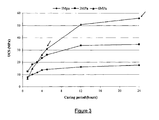
- Cylindrical samples having a ratio of height to diameter of 2 were prepared by pressing spent bleaching earth (SBE), a high surface area waste material containing 37 ⁇ 40% sunflower oil and 60 to 63% bleaching earth by total weight.
- the samples were prepared using uniaxial compaction pressures of 1, 3 and 6Mpa. Pressed samples were removed from their moulds and cured for 1,2,3,4,5,12 and 24 hours at 150°C. Samples were cooled down and tested for their UCS.
- Figure 3 shows the development of the UCS with time. The results show a significant decrease in the curing time and temperature needed to achieve high strength results as compared to the prior art methods of WO01/74948 and WO5008/117077 .
- An UCS of 31 Mpa has been achieved for SBE samples pressed at 6Mpa and cured at 150°C for 5hours compared with the highest UCS of 33MPa being reported in WO 2008/117077 for samples pressed at 12MPa (double the compaction pressure) and cured for 24 hours (almost five times longer curing period) at 160°C (10°C higher).
- the highest UCS in the present example (56Mpa) for samples pressed at 6MPa and cured at 150°C for 24 hours which is a level of strength that has not been reported in the above prior art documents for vegetable oil polymer composite materials.
- Example 1 and 2 show how it is possible to generate heat by mixing the oil with a high surface area catalytic material compared with sand. They also show that the heating effects begin to manifest themselves when the amount of oils exceed 4 or 5% and increase significantly when the oil content is higher.
- Example 3 shows the development of the unconfined compressive strength (UCS) with time for monolithic UCS samples. The results show a significant decrease in the curing period and temperature needed to achieve UCS results similar to those being reported in the prior art
- Example 4 shows how very high strengths (- 70MPa) can be achieved using the multi stage curing regime being proposed, which was not achieved using a one stage curing regime of the prior art.
Landscapes
- Chemical & Material Sciences (AREA)
- Engineering & Computer Science (AREA)
- Ceramic Engineering (AREA)
- Materials Engineering (AREA)
- Structural Engineering (AREA)
- Organic Chemistry (AREA)
- Chemical Kinetics & Catalysis (AREA)
- General Chemical & Material Sciences (AREA)
- Oil, Petroleum & Natural Gas (AREA)
- Processing Of Solid Wastes (AREA)
Abstract
The present invention provides a method of making a cured material and cured materials made by the method. The method comprises compacting a mixture of:
a) 4% to 60% of at least one oxidisable and polymerisable vegetable oil, e.g. an unsaturated vegetable oil; and
b) 10% to 96% of a material having a high surface area between 1 and 5000 m2/g;
c) 0% to 80% of filler having a surface area of less than 1 m2/g and
d) 0% to 10% of other additives, e.g. plasticisers, pigments and catalysts; the percentages being calculated on the basis of the combined weight of a) to d),
and curing the compacted mixture.
a) 4% to 60% of at least one oxidisable and polymerisable vegetable oil, e.g. an unsaturated vegetable oil; and
b) 10% to 96% of a material having a high surface area between 1 and 5000 m2/g;
c) 0% to 80% of filler having a surface area of less than 1 m2/g and
d) 0% to 10% of other additives, e.g. plasticisers, pigments and catalysts; the percentages being calculated on the basis of the combined weight of a) to d),
and curing the compacted mixture.
The presence of the material having a high surface area causes the temperature in the compacted material to rise above the ambient temperature, thereby allowing the curing in a furnace with a lower ambient temperature (top two lines in Figure 1 ).
Description
- The present invention relates to cured materials, especially building materials cast and casting materials, materials for isolating or encapsulating toxic and/or hazardous substances, and a method of manufacturing the cured materials from vegetable oils and minerals and a method for treating vegetable oil containing wastes, e.g. spent bleaching earth.
- It is known that certain vegetable oils and fatty acids can polymerise in the presence of oxygen; the polymerisation involves the simultaneous oxidation of the oil or fatty acids.
-
GB 1 466 236 -
WO 2001/74948 WO 2008/117077 below. -
WO 2008/117077 describes a method of making construction materials by mixing partially cured vegetable oil with an aggregate, typically limestone aggregate having a particle size of less than 10mm, compacting the resulting mixture at pressures of 1-12 MPa and curing it at temperatures of up to 250°C. This specification teaches that, by removing the aggregate/oil mixture from a mould after compaction and before curing, a stronger block can be obtained. This specification teaches that the amount of vegetable oil should not be above about 5% since the oil bleeds out of the mixture. The use of partially cured oil decreases the curing time and provides a more complete polymerisation, especially at the centre of the material; it also helps bind the aggregate while in the raw stage since partially cured oil is more viscous than uncured (raw) oil. Compressive strengths up to 33Mpa were obtained for samples containing 5% oil compacted at 12MPa and cured at 160°C for 24 hours. - The present invention provides a method of making a cured material comprising compacting a mixture of:
- a) 4% to 60% of at least one oxidisable and polymerisable vegetable oil, e.g. an unsaturated vegetable oil; and
- b) 10% to 96% of a material having a high surface area between 1 and 5000 m2/g;
- c) 0% to 80% of filler having a surface area of less than 1 m2/g and
- d) 0% to 10% of other additives, e.g. plasticisers, pigments and catalysts; the percentages being calculated on the basis of the combined weight of a) to d),
- The surface area is by nitrogen adsorption at 77°K and using the BET (Brunauer, Emmet and Teller ) model to analyse the data. However, if the surface area of a material is very low, e.g. sand, such that the above methodology does not work, it can be calculated from the particle size distribution of the material.
- The unsaturated vegetable oil is thoroughly mixed with the fine particle size, high surface area material (component b)), and the other ingredients (component c) and component d)) and the mix is compacted. In order to achieve a consistent product, the compaction may be performed at a predetermined compaction pressure or performed to achieve a predetermined density. The compaction pressure may be at least 0.2MPa, e.g. 1-30 MPa, for example 3-12MPa.
- The surface area of the material of component b) is sufficiently high to initiate spontaneous oxidation and self-heating of the oil. The term "self-heating" is intended to convey that the temperature of the curing mixture will increase to above the ambient temperature and especially to more than 20°C, e.g. to more than 40°C, above the temperature of its surroundings, which may be the interior of a furnace or oven. The temperature rise should be measured at the centre of a sample, e.g. using a thermocouple. The "self-heating" aspect of the present invention allows the mixture to cure at a temperature higher than its ambient surroundings, which in some cases avoids the need to conduct the curing in a furnace while in other cases, where a furnace is used, the temperature of the furnace can be maintained at a lower temperature since the self-heating effect will increase the temperature of the curing mixture itself; this results in a considerable saving in energy as compared to the situation in which no self-heating occurs, in which case, the furnace must be maintained at the curing temperature. It may be necessary to heat the mixture up to a minimum temperature before the oxidation and self-heating is initiated and becomes self-sustaining. When the oil oxidation nears completion, the difference in temperature between the interior of the mixture and the surroundings will reduce. The above-quoted temperatures of 20° and 40° are the maximum temperature differences between the curing mixture and the surroundings that occur in the course of curing; the maximum temperature in the curing mixture will generally be found in the interior of the mixture.
The present invention therefore provides a significant saving in energy as compared to the prior art where polymerisation appears to be slower (at a given temperature of the surroundings) or energy is required to maintain the curing composition at a higher temperature. - While not desiring to be bound by any theory, it is believed that the high surface area component b) catalyses the oxidation and polymerisation of the oil, allowing it to precede more quickly than the prior are and so releasing the energy during the oxidation and polymerisation reaction in a shorter time period, giving rise to a significant increase in temperature within the curing mixture.
- Curing temperatures given herein are the temperatures of the curing materials themselves and, as explained above, this can be substantially higher than the ambient temperature. The temperature can be taken remotely by measuring the infrared radiation emitted during curing as is well-known or using a thermocouple embedded into a test sample of the curing material. The temperature rise in the centre of the curing material will be greater than at the surface but there is a correlation between the surface and the interior of a sample, which can be found by simple experiments for the curing conditions and compositions concerned so that, during production, only the surface temperatures need be measured, e.g. using an ir temperature sensor.
- In a preferred embodiment, the mixture is heated in a first step to an initial low temperature, where the oil oxidation is initiated and the mixture is maintained at this temperature for a limited time period, followed by a second step at a higher temperature. The two step process reduces the occurrence of cracking, which can occur if the whole of the curing takes place at the temperature of the second step.
- The physical and chemical properties of the polymerised vegetable oil composite are suitable for various applications; it can be used, for example,
- to form building materials such as tiles, bricks, blocks, beams, columns and arches for use in the construction industry,
- as casting materials.
- for encapsulating or for isolating toxic and/or hazardous substances for subsequent storage, for example wastes containing soluble salts and materials (the term "soluble" materials includes materials that are sparingly soluble), and especially wastes that can damage the environment, which are often called "ecotoxic" materials.
- to form composite materials in combination with reinforcing materials, especially fibres such as glass and carbon fibres or textile fibres. The composite is particularly useful in the built environment due to its light weight and high dimensional stability in extreme change of temperature conditions.
- The vegetable oil (component a)) must be able to undergo an oxidation polymerisation reaction and is, for example, an unsaturated vegetable oil or a fatty acid or a mixture thereof. It may be a raw (unused) or waste oil (for example used frying oil); oils that may be used include corn, cottonseed, peanut, olive, soybean, rapeseed, sunflower, linseed, coconut and canola oils or a mix of these. The oil content in the mix should be between 4 and 60 wt % (based on the total weights of components a) to d)); the minimum amount will be dictated by the desired properties of the product since generally the greater the amount of oil, the greater is the strength of the final cured product. The amount may be at least 5%, such as at least 10% and may be at least 20%. The maximum amount of oil will be dictated by the ability of the mixture to retain the oil without bleeding when compacted prior to curing. This will depend on the compaction pressure and the nature of the other components of the mixture but the maximum may be 40%, for example 30% such as 20 or 25%.
- The material having a high surface area (component b)), will generally be a predominantly inorganic solid material (e.g. a mineral such as clay, alumina, silica, perlite, etc...but may also be carbon based such as an activated carbon. In one embodiment, component b) may be bleaching earth (also known as "activated bleaching earth", "bleaching clay" or "activated Fuller's earth"), which is used as a decolourising agent in the refining of vegetable oils, animal fats, mineral oils and waxes. Spent bleaching earth is a byproduct of the refining of vegetable oils and contains a substantial proportion of oil as well as impurities removed during the refining process. Therefore, such spent bleaching earth already contains components a) and b) above and so can be used directly, optionally with the addition of other components in the present invention. Since spent bleaching earth is a waste product that has to be disposed of, this aspect of the present invention also has the advantage that it avoids the need for such disposal, e.g. in landfill sites, as well as making a useful product.
- In a preferred embodiment, the specific surface area of component b) and the amount of this component are such that the oil undergoes an oxidation and polymerisation reaction that is self-heating, i.e. the temperature of the curing material is higher than the ambient temperature. This only happens when component b) has a high surface area,; the specific surface area of component b) should be between 1 and 5000 m2/g, and typically between 10 and 1000 m2/g. However, even if the oxidation and polymerisation of the oil is fully not self-heating, the inclusion of the material having a high surface area (component b)) in the composition requires a much lower energy input than the use of lower surface area materials, e.g. sand.
- A high surface area material need not necessarily have to have a small grain size since it could be formed of porous grains so that the internal pore volume provides a high internal surface area). However it is better if the high surface area material also has a small grain size, e.g. a grain diameter smaller than 10µm and generally less than 1µm, as this minimises the dissipation of heat to the surroundings.
- The amount of component b) may be 10 to 96%, e.g. 50 - 92%, such as 60 - 90%, for example 80 - 90% (based on the total weights of components a) to d)).
- Components c) and d) are optional. Component c) adds to the strength of the cured composition, limits shrinkage during curing and also makes the product cheaper; component c) may include fine aggregates, e.g. sand, small gravel, ground glass and fly ash, having a particle size less than 15mm, e.g. 0.05 mm to 15 mm. The actual maximum particle size will depend on the actual use since thin tiles can only accommodate aggregates having relatively small particle sizes bricks and blocks can accommodate much larger aggregate particle sizes. The maximum size for some applications will be 5mm, e.g. 3mm, such as 1mm. The particle size of component c) may be at least 0.05mm, such as at least 0.1mm. The addition of component c), especially sand and other mineral powders, having a particle size of 0.05 to 2mm is particularly beneficial in controlling shrinkage during curing.
- When the polymerised oil is used for encapsulating hazardous and/or toxic waste, such waste may be present in the composition as component c).
- Where particle sizes are quoted herein, we mean that at least 80% by weight of the particles in the material have the quoted size and may include a minor proportion (20% or less, e.g. 10% or less, such as 5% or less) outside those limits
- Component d) includes materials that are customarily added to building materials, e.g. plasticisers and pigments, but may also include catalysts that catalyse the oxidation and polymerisation reaction, e.g. iron, copper, nickel, zinc, zirconium, aluminium and titanium ions or materials that give rise to such ions in situ. The catalysts may be naturally present in the material of the other components.
- The cured material can also be reinforced by incorporating, for example steel or other reinforcing or strengthening materials such as glass fibres of other types of fibre.
- The mix is pressed in a suitable mould using static or dynamic compaction or extrusion. This may involve hand compaction methods or uniaxial or isostatic compaction. The compaction pressure will depend on a number of factors:
- (1) the greater the compaction pressure, the lower is the porosity of the compacted mix. Oxygen is necessary for the curing to the oil and must diffuse into the material from the atmosphere. If the porosity of the compacted material is too low, this could hinder oxygen diffusion and prolong curing. Higher compaction pressures can generally be tolerated for relatively thin materials than for thicker materials since oxygen has a shorter diffusion distance to travel to reach the centre of the materials.
- (2) Generally, the lower the porosity, the longer is the required curing time and so if a short curing time is needed, the compaction pressure should be kept relatively low.
- (3) High compaction pressures will generally produce a stronger, higher density product.
- Typically pressures up to about 30 MPa may be used.
- The compacted material (e.g. brick/block/tile/beam/column/arch) is removed from the mould for curing in air. Depending on a number of factors, including the temperature of the mixing and compaction, the oil used and the degree of compaction, the exposure of the material to oxygen in the air can cause a thin film of oil on the high surface area solid material (component b)) to spontaneously heat. However with some combinations of some vegetable oils and some degrees of compaction, or if the oil and solid material are mixed at room temperature, e.g. below 60°C, the compacted raw mix may need additional heating to initiate the spontaneous heating reactions and complete the curing process. In one example of the method, the mixed components a) to d) are at a temperature of between 80 and 150°C when they are compacted. The curing process can be complete in a relatively short time after removal of the material from the mould, typically less than 90 minutes but thicker materials may require longer curing time. The presence of oil polymerisation metal catalysts in the mix will also affect the curing time. Typically curing can be achieved at temperatures between 60 and 260°C, typically 100 to 220°C, for 0.5 to 12 hours and typically between 1 to 4 hours.
- In some circumstances, an initial temperature above about 180°C can lead to the product cracking, which is believed to be due to differential shrinkage, water evaporation or the escape of entrapped air. Depending on the degree of compaction and the vegetable oil content, a two-stage or multi-stage curing process may be preferred over a one-stage process. It has been found that this can avoid cracking of samples during curing. In one version of the method, samples are initially cured at low temperature (60°C -150°C, e.g. 80 - 120°C, such as 90 - 110°C) for 0.5 to 2 hours before being cured at temperatures of 180-260°C (e.g. 190 - 240, such as 200 - 230°C) until curing is complete, which may be for 0.5 to 12 hours and typically between 1 to 4 hours. The most efficient combination of low and high temperatures depends on the applied compaction pressure, the oil content and the surface area of the solid material and so should be optimised for the specific combination used.
- Curing temperatures given herein are the temperatures of the curing materials themselves and, as explained above, this can be substantially higher than the ambient temperature. The temperature can be taken remotely by measuring the infrared radiation emitted during curing as is well-known or using a thermocouple embedded into a test sample of the curing material. The temperature rise in the centre of the curing material will be greater than at the surface
- The curing temperature is prevented from rising too high by controlling the degree of compaction and the external temperature around the curing material.
- The curing process in either the one-stage curing process or the multi-stage process may also use microwave radiation and/or ultra-violet light to trigger the oxidation and polymerisation reactions, although ultraviolet radiation does is not always effective since it can sometimes cause the oxidation and polymerisation reaction to occur only on the surface of the compacted material since the radiation cannot penetrate deeply into the material..
- During curing, the surfaces of the compacted material should preferably not be obstructed (or only obstructed to the minimum extent feasible) so that the maximum available surface area is exposed to air, allowing as large an amount of oxygen as possible to diffuse into the material. Thus, for example, tiles made of the compacted material should be cured while standing on one of their sides rather than on one of their major flat faces.
- Because of the rate of heat evolution during curing due to the presence of the high surface area material, the described binder system has a low embodied energy, i.e. low amount of energy is consumed during the making or manufacturing of the material and can use renewable materials and/or waste materials and so it is an environmentally beneficial product. Furthermore, the material can be recycled at the end of its product life.
- The present invention also provides a product comprising a cured compacted mixture of:
- a) 4% to 50% of at least one cured oxidised and polymerised vegetable oil or fatty acid, e.g. an unsaturated vegetable oil; and
- b) 10% to 96% of a material having a high surface area between 1 and 5000 m2/g;
- c) 0% to 40% of one or more fillers having surface area less than 1 m2/g, e.g. a particle size of 0.05 mm to 15 mm; and
- d) 0% to 10% of other additives, e.g. plasticisers, pigments and catalysts; the percentages being calculated on the basis of the combined weight of a) to d).
- The cured oil weighs less than the uncured oil; the weight loss is generally from 5 to 15% and can even be as high as 20%.
- The material of the present invention satisfies the following important considerations, which are key for many applications
- 1- it is relatively light compared to comparable building materials made from clay (it can have a specific gravity of about 1),
- 2- it has a high dimensional stability, which is important in building materials;
- 3- it has high strength, e.g. unconfined compressive strength (UCS) in excess of 50MPa has been achieved, as reported below;
- 4- it has a low carbon footprint as the main components (a) and (b) being used are (or can be) either renewable plant-based materials (oil and fatty acids) or waste materials (e.g. spent bleaching earth and used oils), and the curing process is energy efficient;
- 5- it can have a low production cost as a result of the use of waste materials and low energy requirement.
- 6- it is hydrophobic and does not absorb significant amounts of water
- 7- depending on the raw material being used, it can have a relatively low pH (about 4) compared to a lot of building materials; such a low pH can be achieved if bleaching earths are used as component b).
- The above properties makes the product suitable for encapsulating hazardous and toxic waste; if used for this application, the waste is pulverised and, as stated above, may be present in the composition as component c).
- There will now be described, by way of example only some examples of the materials and methods of the present invention, the results being shown in the graphs of
Figures 1 to 3 : - Acid activated bleaching earth (BE) having a specific surface area ∼250m2/g (representing component b)) was thoroughly mixed with refined sunflower oil Unilever brand (component a)) at room temperature. Two mixtures were prepared at the following ratios of total weight:
- Mixture 1: 63% of component b) and 37% of component a), which will be referred to as BE37)
- Mixture 2: 95% of component b) and 5% of component a), which will be referred to as BE5)
- Two comparative mixtures were also made that were the same as Mixtures 1 and 2 except that fine silica sand (SAND) was used to replace the bleaching earth as component b) of the mixtures; the two additional comparative mixtures will be referred to as SAND37 and SAND5). The sand had a specific surface area less than 1m2/g
- Three further composition was tested, namely
- 100% of the above sand (SAND)
- 100% bleaching earth (BE) and
- spent bleaching earth (SBE), a waste material which is composed of 63% of bleaching earth and 37% of unbleached sunflower oil (which contains more pigments and oxidation products than refined oil).
- SAND, BE, SAND 37 and SAND5 were used as controls, i.e. they are not in accordance with the present invention, while BE5, BE37 and SBE are in accordance with the present invention, although BE5 is not a preferred embodiment since it contains an amount of oil at the lowest limit of that allowed.
- All mixtures were put rounded glass plates to a depth of - 4cm. The plates was introduced into a 110°C oven. A thermocouple was used to measure the change in the internal temperature of the mixtures with time.
- The results are shown in
Figures 1 and 2 . Both SBE and BE37 heated at 110°C underwent a self-heating effect reaching a maximum temperature of over 240°C (Figure 1 ). The self- heating of SBE started after 20 minutes from the beginning of the test and reached its maximum temperature of 240°C after 140 minutes. For the BE37, the self-heating started after 40 minutes and reached its maximum of over 240°C after 150 minutes. It's worth noting that the self-heating phenomenon lasted for - 3hours and 20 minutes for both SBE and BE37 during which a significant amount of extra energy was being released. - BE5 (Bleaching earth with an oil content of 5%) was only subjected to a slight heating effect (∼15°C rise in the temperature). No heating effect has occurred in either SAND5, SAND37, SAND (no oil) or BE (no oil) and their temperatures remained almost equal to that of the oven temperature during the complete period of the test.
- The same experiment as in Example 1 was repeated for BE37 but at room temperature (-23°C) and the results are shown in
Figure 2 . It was noticed that the self-heating effect also occurred even at room temperature. After an induction period of -100minutes, the temperature of the bleaching earth started to increase and reached a maximum of ∼120°C after 180 minutes. The self-heating phenomenon lasted for more than 2hours and 30 minutes. - Cylindrical samples having a ratio of height to diameter of 2 were prepared by pressing spent bleaching earth (SBE), a high surface area waste material containing 37∼40% sunflower oil and 60 to 63% bleaching earth by total weight. The samples were prepared using uniaxial compaction pressures of 1, 3 and 6Mpa. Pressed samples were removed from their moulds and cured for 1,2,3,4,5,12 and 24 hours at 150°C. Samples were cooled down and tested for their UCS.
-
Figure 3 shows the development of the UCS with time. The results show a significant decrease in the curing time and temperature needed to achieve high strength results as compared to the prior art methods ofWO01/74948 WO5008/117077 . An UCS of 31 Mpa has been achieved for SBE samples pressed at 6Mpa and cured at 150°C for 5hours compared with the highest UCS of 33MPa being reported inWO 2008/117077 for samples pressed at 12MPa (double the compaction pressure) and cured for 24 hours (almost five times longer curing period) at 160°C (10°C higher). The highest UCS in the present example (56Mpa) for samples pressed at 6MPa and cured at 150°C for 24 hours, which is a level of strength that has not been reported in the above prior art documents for vegetable oil polymer composite materials. - Two sets of SBE samples were pressed at 10 MPa to form cylindrical samples of height to diameter ratio of 2. After removal from their moulds, one set was heated at 150°C for 48 hours and the other set was preheated at 110°C for 2 hours followed by heating at 150°C for 48 hours. At the end of the curing period, samples were cooled down then tested for their UCS. The UCS of the preheated samples (two stage heating) reached 69MPa while those which underwent no pre-treatment (one stage heating) developed severe cracks, which precluded meaningful tests.
- In summary, Example 1 and 2 show how it is possible to generate heat by mixing the oil with a high surface area catalytic material compared with sand. They also show that the heating effects begin to manifest themselves when the amount of oils exceed 4 or 5% and increase significantly when the oil content is higher. Example 3, shows the development of the unconfined compressive strength (UCS) with time for monolithic UCS samples. The results show a significant decrease in the curing period and temperature needed to achieve UCS results similar to those being reported in the prior art Example 4 shows how very high strengths (- 70MPa) can be achieved using the multi stage curing regime being proposed, which was not achieved using a one stage curing regime of the prior art.
Claims (15)
- A method of making a cured material comprising compacting a mixture of:a) 4% to 60% of at least one oxidisable and polymerisable vegetable oil or fatty acid, e.g. an unsaturated vegetable oil; andb) 10% to 96% of a material having a high surface area between 1 and 5000 m2/g;c) 0% to 80% of filler having a surface area below 1 m2/g and especially a particle size of 0.05 mm to 15 mm; andd) 0% to 10% of other additives, e.g. plasticisers, pigments and catalysts; the percentages being calculated on the basis of the combined weight of a) to d),and curing the compacted mixture.
- A method as claimed in claim 1, wherein the vegetable oil (component a)) is selected from corn, cottonseed, peanut, olive, soybean, rapeseed, sunflower, linseed, coconut and canola oils or a mix of these.
- A method as claimed in claim 1 or claim 2, wherein the amount of unsaturated oil is at least 5%, such as at least 8 or 10% and may be at least 20 and/or is less than 60%, for example less than 50%, such as 30 to 45%.
- A method as claimed in any preceding claim, wherein the material having a high surface area (component b)) is predominantly inorganic solid material, e.g. a mineral such as clay, or a carbon based material such as an activated carbon.
- A method as claimed in any preceding claim, wherein component b) has a specific surface area of 10 to and 1000 m2/g.
- A method as claimed in any preceding claim, wherein the amount of component b) is 40 - 90%, such as 50 - 80%, for example 55 - 75%.
- A method as claimed in any preceding claim, wherein component c) is hazardous or toxic.
- A method as claimed in any preceding claim, wherein component c) is particulate and has a particle size not greater than 5mm, e.g. 3mm, such as not greater than 1 mm and a particle size that is not less than 0.05mm, such as not less than 0.01 mm, e.g. has a has a particle size of 0.05 to 2mm.
- A method as claimed in any preceding claim, wherein the amount of component c) is 0 - 40%, such as 10 - 30%, for example 15 - 25% by weight based on the total weight of components a) to d).
- A method as claimed in any preceding claim, wherein the mix is pressed in a mould using static or dynamic compaction, e.g. using hand compaction methods or uniaxial or isostatic compaction, or extrusion, for example at a pressure of up to about 30 MPa.
- A method as claimed in any preceding claim, wherein the components are mixed at an elevated temperature, e.g. of 60 to 260°C, for example 80 to 150°C or the components are heated after mixing to such a temperature.
- A method as claimed in any preceding claim, wherein the curing takes place in at least two stages:a) in a first stage curing is effected at a temperature of 60°C -150°C, e.g. 80 - 120°C, such as 90 - 110°C for 0.5 to 2 hours andb) in a second stage at a temperatures of 180-260°C (e.g. 190 - 240, such as 200 - 230°C) until curing is complete.
- A building or encapsulating product comprising a cured compacted mixture of:a) 4% to 50% of at least one cured oxidisable and polymerisable vegetable oil or fatty acid, e.g. an unsaturated vegetable oil; andb) 10% to 96% of a material having a high surface area between 1 and 5000 m2/g;c) 0% to 40% of one or more fillers having surface area less than 1 m2/g, e.g. a particle size of 0.05 mm to 15 mm; andd) 0% to 10% of other additives, e.g. plasticisers, pigments and catalysts; the percentages being calculated on the basis of the combined weight of a) to d).
- A building, cast or encapsulating product as claimed in claim 13 that includes reinforcement, for example steel or other reinforcing or strengthening materials such as glass fibres or other types of fibre.
- Use of a product as claimed in claim 13 of claim 14:- for encapsulating toxic or hazardous waste, wherein the waste is pulverised and is present in the composition as component c)- as building materials or cast materials, such as tiles, bricks, blocks, beams, columns and arches for use in the construction and other industries- for forming a composite material, together with reinforcement, such as steel strands or other reinforcing or strengthening materials such as glass or carbon fibres or other types of fibre.
Priority Applications (2)
| Application Number | Priority Date | Filing Date | Title |
|---|---|---|---|
| EP20090252191 EP2295387A1 (en) | 2009-09-15 | 2009-09-15 | Cured materals and method of making such materials |
| PCT/GB2010/001703 WO2011033250A1 (en) | 2009-09-15 | 2010-09-09 | Cured materials and method of making such materials |
Applications Claiming Priority (1)
| Application Number | Priority Date | Filing Date | Title |
|---|---|---|---|
| EP20090252191 EP2295387A1 (en) | 2009-09-15 | 2009-09-15 | Cured materals and method of making such materials |
Publications (1)
| Publication Number | Publication Date |
|---|---|
| EP2295387A1 true EP2295387A1 (en) | 2011-03-16 |
Family
ID=41258744
Family Applications (1)
| Application Number | Title | Priority Date | Filing Date |
|---|---|---|---|
| EP20090252191 Withdrawn EP2295387A1 (en) | 2009-09-15 | 2009-09-15 | Cured materals and method of making such materials |
Country Status (2)
| Country | Link |
|---|---|
| EP (1) | EP2295387A1 (en) |
| WO (1) | WO2011033250A1 (en) |
Citations (6)
| Publication number | Priority date | Publication date | Assignee | Title |
|---|---|---|---|---|
| DE162858C (en) * | ||||
| DE116261C (en) * | ||||
| FR439651A (en) * | 1911-04-13 | 1912-06-20 | Henri Morin | Insulating product and process for its manufacture |
| GB1466236A (en) | 1973-12-18 | 1977-03-02 | Down P | Type of manufactured artificial stone |
| WO2001074948A1 (en) | 2000-03-30 | 2001-10-11 | University Of Alaska Fairbanks | Construction materials and soil stabilization using vegetable oil |
| WO2008117077A2 (en) | 2007-03-26 | 2008-10-02 | University Of Leeds | Vegetable oil based construction materials |
-
2009
- 2009-09-15 EP EP20090252191 patent/EP2295387A1/en not_active Withdrawn
-
2010
- 2010-09-09 WO PCT/GB2010/001703 patent/WO2011033250A1/en not_active Ceased
Patent Citations (6)
| Publication number | Priority date | Publication date | Assignee | Title |
|---|---|---|---|---|
| DE162858C (en) * | ||||
| DE116261C (en) * | ||||
| FR439651A (en) * | 1911-04-13 | 1912-06-20 | Henri Morin | Insulating product and process for its manufacture |
| GB1466236A (en) | 1973-12-18 | 1977-03-02 | Down P | Type of manufactured artificial stone |
| WO2001074948A1 (en) | 2000-03-30 | 2001-10-11 | University Of Alaska Fairbanks | Construction materials and soil stabilization using vegetable oil |
| WO2008117077A2 (en) | 2007-03-26 | 2008-10-02 | University Of Leeds | Vegetable oil based construction materials |
Non-Patent Citations (1)
| Title |
|---|
| ZOOROB, E, FORTH,J.P & BAILEY,H.K: "Vegeblock: Masonry Units from Recycled Waste and Vegetable Oil", ICSW 2006 THE 21ST INTERNATIONAL CONFERENCE ON SOLID WASTE TECHNOLOGY AND MANAGEMENT, 26 March 2006 (2006-03-26), pages 511 - 520, XP008119073, ISSN: 1091-8043 * |
Also Published As
| Publication number | Publication date |
|---|---|
| WO2011033250A1 (en) | 2011-03-24 |
Similar Documents
| Publication | Publication Date | Title |
|---|---|---|
| Thakur et al. | Resource efficiency impact on marble waste recycling towards sustainable green construction materials | |
| Görhan et al. | The effect of curing on the properties of metakaolin and fly ash-based geopolymer paste | |
| RU2622557C2 (en) | Production method for light ceramic materials | |
| CN102770393B (en) | Fly ash processing and articles incorporating fly ash compositions | |
| US20220033307A1 (en) | Sintered geopolymer compositions and articles | |
| JP2014532027A5 (en) | ||
| JP5775112B2 (en) | Cast body, castable composition, and production method thereof | |
| KR102241908B1 (en) | Method for producing lightweight concrete bricks with reduced cement | |
| CN101922201A (en) | Coal ash heat-preserving sintered brick/building block and production technology thereof | |
| JP5435255B2 (en) | Geopolymer solidified product using sewage sludge molten slag as active filler and method for producing the same | |
| Irfan-ul-Hassan et al. | Development and sustainability assessment of red mud-based green bricks: Techno-economic and environmental performance | |
| CN101565295A (en) | Method using mud and sludge for sintering brick | |
| KR100588488B1 (en) | Pulp Sludge Ash Composition for Construction Materials | |
| Tonnayopas | Green building bricks made with clays and sugar cane bagasse ash | |
| Saranya et al. | Recycling of bagasse ash and rice husk ash in the production of bricks | |
| WO2011033250A1 (en) | Cured materials and method of making such materials | |
| US11629097B2 (en) | Method for producing construction aggregate from fly ash and the aggregate obtained with this method | |
| WO2021191213A1 (en) | Method for producing ceramic wares | |
| CN100480208C (en) | Production method of sintering brick by using drilling mud | |
| CN105271994A (en) | Autoclaved aerated lime brick and preparation method thereof | |
| JP2010064902A (en) | Calcium carbonate molded body utilizing broken stone-broken powder, and method for producing the same | |
| KR102936016B1 (en) | High performance cement concrete composition and manufacturing method of concrete product using the same | |
| JP2005126282A (en) | Method for firing and sintering incineration ash and sintered material obtained by the same | |
| Kim | The fabrication of artificial fine aggregates using stone sludge and spent bleaching clay | |
| Rodriguez et al. | Utilization of foundry waste to produce ceramic matrix composites |
Legal Events
| Date | Code | Title | Description |
|---|---|---|---|
| PUAI | Public reference made under article 153(3) epc to a published international application that has entered the european phase |
Free format text: ORIGINAL CODE: 0009012 |
|
| AK | Designated contracting states |
Kind code of ref document: A1 Designated state(s): AT BE BG CH CY CZ DE DK EE ES FI FR GB GR HR HU IE IS IT LI LT LU LV MC MK MT NL NO PL PT RO SE SI SK SM TR |
|
| AX | Request for extension of the european patent |
Extension state: AL BA RS |
|
| STAA | Information on the status of an ep patent application or granted ep patent |
Free format text: STATUS: THE APPLICATION IS DEEMED TO BE WITHDRAWN |
|
| 18D | Application deemed to be withdrawn |
Effective date: 20110917 |