EP2291946B2 - Erzeugung von kryptographischen schlüsseln - Google Patents
Erzeugung von kryptographischen schlüsseln Download PDFInfo
- Publication number
- EP2291946B2 EP2291946B2 EP08784926.1A EP08784926A EP2291946B2 EP 2291946 B2 EP2291946 B2 EP 2291946B2 EP 08784926 A EP08784926 A EP 08784926A EP 2291946 B2 EP2291946 B2 EP 2291946B2
- Authority
- EP
- European Patent Office
- Prior art keywords
- key
- entity
- cryptographic
- authentication
- cryptographic keys
- Prior art date
- Legal status (The legal status is an assumption and is not a legal conclusion. Google has not performed a legal analysis and makes no representation as to the accuracy of the status listed.)
- Active
Links
Images

Classifications
-
- H—ELECTRICITY
- H04—ELECTRIC COMMUNICATION TECHNIQUE
- H04L—TRANSMISSION OF DIGITAL INFORMATION, e.g. TELEGRAPHIC COMMUNICATION
- H04L9/00—Cryptographic mechanisms or cryptographic arrangements for secret or secure communications; Network security protocols
- H04L9/08—Key distribution or management, e.g. generation, sharing or updating, of cryptographic keys or passwords
- H04L9/0861—Generation of secret information including derivation or calculation of cryptographic keys or passwords
-
- H—ELECTRICITY
- H04—ELECTRIC COMMUNICATION TECHNIQUE
- H04L—TRANSMISSION OF DIGITAL INFORMATION, e.g. TELEGRAPHIC COMMUNICATION
- H04L9/00—Cryptographic mechanisms or cryptographic arrangements for secret or secure communications; Network security protocols
- H04L9/08—Key distribution or management, e.g. generation, sharing or updating, of cryptographic keys or passwords
- H04L9/0816—Key establishment, i.e. cryptographic processes or cryptographic protocols whereby a shared secret becomes available to two or more parties, for subsequent use
- H04L9/0838—Key agreement, i.e. key establishment technique in which a shared key is derived by parties as a function of information contributed by, or associated with, each of these
-
- H—ELECTRICITY
- H04—ELECTRIC COMMUNICATION TECHNIQUE
- H04L—TRANSMISSION OF DIGITAL INFORMATION, e.g. TELEGRAPHIC COMMUNICATION
- H04L9/00—Cryptographic mechanisms or cryptographic arrangements for secret or secure communications; Network security protocols
- H04L9/06—Cryptographic mechanisms or cryptographic arrangements for secret or secure communications; Network security protocols the encryption apparatus using shift registers or memories for block-wise or stream coding, e.g. DES systems or RC4; Hash functions; Pseudorandom sequence generators
- H04L9/065—Encryption by serially and continuously modifying data stream elements, e.g. stream cipher systems, RC4, SEAL or A5/3
-
- H—ELECTRICITY
- H04—ELECTRIC COMMUNICATION TECHNIQUE
- H04L—TRANSMISSION OF DIGITAL INFORMATION, e.g. TELEGRAPHIC COMMUNICATION
- H04L9/00—Cryptographic mechanisms or cryptographic arrangements for secret or secure communications; Network security protocols
- H04L9/08—Key distribution or management, e.g. generation, sharing or updating, of cryptographic keys or passwords
- H04L9/0816—Key establishment, i.e. cryptographic processes or cryptographic protocols whereby a shared secret becomes available to two or more parties, for subsequent use
- H04L9/0819—Key transport or distribution, i.e. key establishment techniques where one party creates or otherwise obtains a secret value, and securely transfers it to the other(s)
-
- H—ELECTRICITY
- H04—ELECTRIC COMMUNICATION TECHNIQUE
- H04L—TRANSMISSION OF DIGITAL INFORMATION, e.g. TELEGRAPHIC COMMUNICATION
- H04L9/00—Cryptographic mechanisms or cryptographic arrangements for secret or secure communications; Network security protocols
- H04L9/08—Key distribution or management, e.g. generation, sharing or updating, of cryptographic keys or passwords
- H04L9/0861—Generation of secret information including derivation or calculation of cryptographic keys or passwords
- H04L9/0866—Generation of secret information including derivation or calculation of cryptographic keys or passwords involving user or device identifiers, e.g. serial number, physical or biometrical information, DNA, hand-signature or measurable physical characteristics
-
- H—ELECTRICITY
- H04—ELECTRIC COMMUNICATION TECHNIQUE
- H04L—TRANSMISSION OF DIGITAL INFORMATION, e.g. TELEGRAPHIC COMMUNICATION
- H04L9/00—Cryptographic mechanisms or cryptographic arrangements for secret or secure communications; Network security protocols
- H04L9/08—Key distribution or management, e.g. generation, sharing or updating, of cryptographic keys or passwords
- H04L9/0861—Generation of secret information including derivation or calculation of cryptographic keys or passwords
- H04L9/0869—Generation of secret information including derivation or calculation of cryptographic keys or passwords involving random numbers or seeds
-
- H—ELECTRICITY
- H04—ELECTRIC COMMUNICATION TECHNIQUE
- H04L—TRANSMISSION OF DIGITAL INFORMATION, e.g. TELEGRAPHIC COMMUNICATION
- H04L9/00—Cryptographic mechanisms or cryptographic arrangements for secret or secure communications; Network security protocols
- H04L9/08—Key distribution or management, e.g. generation, sharing or updating, of cryptographic keys or passwords
- H04L9/0891—Revocation or update of secret information, e.g. encryption key update or rekeying
-
- H—ELECTRICITY
- H04—ELECTRIC COMMUNICATION TECHNIQUE
- H04L—TRANSMISSION OF DIGITAL INFORMATION, e.g. TELEGRAPHIC COMMUNICATION
- H04L9/00—Cryptographic mechanisms or cryptographic arrangements for secret or secure communications; Network security protocols
- H04L9/14—Cryptographic mechanisms or cryptographic arrangements for secret or secure communications; Network security protocols using a plurality of keys or algorithms
-
- H—ELECTRICITY
- H04—ELECTRIC COMMUNICATION TECHNIQUE
- H04L—TRANSMISSION OF DIGITAL INFORMATION, e.g. TELEGRAPHIC COMMUNICATION
- H04L9/00—Cryptographic mechanisms or cryptographic arrangements for secret or secure communications; Network security protocols
- H04L9/32—Cryptographic mechanisms or cryptographic arrangements for secret or secure communications; Network security protocols including means for verifying the identity or authority of a user of the system or for message authentication, e.g. authorization, entity authentication, data integrity or data verification, non-repudiation, key authentication or verification of credentials
- H04L9/3271—Cryptographic mechanisms or cryptographic arrangements for secret or secure communications; Network security protocols including means for verifying the identity or authority of a user of the system or for message authentication, e.g. authorization, entity authentication, data integrity or data verification, non-repudiation, key authentication or verification of credentials using challenge-response
-
- H—ELECTRICITY
- H04—ELECTRIC COMMUNICATION TECHNIQUE
- H04W—WIRELESS COMMUNICATION NETWORKS
- H04W12/00—Security arrangements; Authentication; Protecting privacy or anonymity
- H04W12/04—Key management, e.g. using generic bootstrapping architecture [GBA]
-
- H—ELECTRICITY
- H04—ELECTRIC COMMUNICATION TECHNIQUE
- H04W—WIRELESS COMMUNICATION NETWORKS
- H04W12/00—Security arrangements; Authentication; Protecting privacy or anonymity
- H04W12/04—Key management, e.g. using generic bootstrapping architecture [GBA]
- H04W12/041—Key generation or derivation
-
- H—ELECTRICITY
- H04—ELECTRIC COMMUNICATION TECHNIQUE
- H04W—WIRELESS COMMUNICATION NETWORKS
- H04W12/00—Security arrangements; Authentication; Protecting privacy or anonymity
- H04W12/04—Key management, e.g. using generic bootstrapping architecture [GBA]
- H04W12/043—Key management, e.g. using generic bootstrapping architecture [GBA] using a trusted network node as an anchor
- H04W12/0431—Key distribution or pre-distribution; Key agreement
-
- H—ELECTRICITY
- H04—ELECTRIC COMMUNICATION TECHNIQUE
- H04W—WIRELESS COMMUNICATION NETWORKS
- H04W12/00—Security arrangements; Authentication; Protecting privacy or anonymity
- H04W12/06—Authentication
-
- H—ELECTRICITY
- H04—ELECTRIC COMMUNICATION TECHNIQUE
- H04W—WIRELESS COMMUNICATION NETWORKS
- H04W12/00—Security arrangements; Authentication; Protecting privacy or anonymity
- H04W12/06—Authentication
- H04W12/062—Pre-authentication
-
- H—ELECTRICITY
- H04—ELECTRIC COMMUNICATION TECHNIQUE
- H04L—TRANSMISSION OF DIGITAL INFORMATION, e.g. TELEGRAPHIC COMMUNICATION
- H04L2209/00—Additional information or applications relating to cryptographic mechanisms or cryptographic arrangements for secret or secure communication H04L9/00
- H04L2209/24—Key scheduling, i.e. generating round keys or sub-keys for block encryption
-
- H—ELECTRICITY
- H04—ELECTRIC COMMUNICATION TECHNIQUE
- H04L—TRANSMISSION OF DIGITAL INFORMATION, e.g. TELEGRAPHIC COMMUNICATION
- H04L2209/00—Additional information or applications relating to cryptographic mechanisms or cryptographic arrangements for secret or secure communication H04L9/00
- H04L2209/80—Wireless
-
- H—ELECTRICITY
- H04—ELECTRIC COMMUNICATION TECHNIQUE
- H04L—TRANSMISSION OF DIGITAL INFORMATION, e.g. TELEGRAPHIC COMMUNICATION
- H04L2463/00—Additional details relating to network architectures or network communication protocols for network security covered by H04L63/00
- H04L2463/061—Additional details relating to network architectures or network communication protocols for network security covered by H04L63/00 applying further key derivation, e.g. deriving traffic keys from a pair-wise master key
Definitions
- the present invention generally relates to a technique for generating cryptographic keys. Particularly, the invention relates to a cryptographic key generation technique that provides a high-level of security.
- the Authentication and Key Agreement protocol is a challenge-response based protocol that uses symmetric cryptography.
- the main goals of AKA include mutual authentication by two entities communicating with each other and establishment of cryptographic keys for protecting the communication exchanged in-between.
- a variant of AKA is the UMTS AKA, included in the security architecture standardized by 3GPP for 3G mobile communication networks in the Technical Specification 3G TS 33.102.
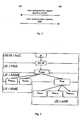
- UMTS AKA The basic concept of UMTS AKA is shown in Fig. 1 .
- the UMTS AKA protocol is run between a user equipment (UE) and a network entity (NE).
- the network entity initiates the AKA by sending a user authentication request to the UE.
- a random challenge, or random code (RAND), and an Authentication Token (AUTN) are sent to the UE.
- RAND random challenge, or random code
- AUTN Authentication Token
- the UE Upon receipt of the RAND and the AUTN, the UE, among other things, computes a Cipher Key (CK) and an Integrity Key (IK) and then uses them for ciphering and integrity functions.
- CK Cipher Key
- IK Integrity Key
- the 3GPP is also undertaking the standardization of so-called "beyond-3G" communication networks.
- SAE System Architecture Evolution
- LTE Long Term Evaluation
- SAE/LTE Long Term Evaluation
- 3GPP TR 33.821 recommended a key hierarchy for deriving more cryptographic keys for use in SAE/LTE.
- Fig. 2 shows this key hierarchy.
- K a long-term cryptographic key shared between the Universal Subscriber Identity Module (USIM) of the UE and the Authentication Center (AuC) residing in the network.
- USIM Universal Subscriber Identity Module
- AuC Authentication Center
- One level down is a pair of cryptographic keys CK and IK which are derived by the UE, particularly by the USIM thereof, in a same or similar manner as the UMTS AKA operation mentioned above.
- K ASME is derived by the UE from CK, IK, and, if necessary, some other parameters.
- K ASME is transferred from AuC to the access network, particularly to the Access Securing Management Entity (ASME) of the SAE/LTE network, and then shared between the UE and the network.
- ASME Access Securing Management Entity
- MME Mobility Management Entitiy
- K ASME KDF CK ⁇ IK , 0 ⁇ x 02 ⁇ PLMN _ ID ⁇ ⁇ other _ parameter >
- KDF is based on a Generic Bootstrapping Architecture (GBA) key derivation function (KDF).
- GBA Generic Bootstrapping Architecture
- the GBA KDF may make use of cryptographic hash functions such as the Secure Hash Algorithm (SHA) hash functions.
- SHA Secure Hash Algorithm
- SHA-256 is a highly secure variant since it is considered collision resistant and acts like a pseudorandom function.
- SHA-256 is a Secure Hash Algorithm hash function with a digest (output) length of 256 bits.
- the PLMN_ID is an identifier of the network serving the UE.
- the standardizing body of the GBA KDF specification (ETSI/SAGE, the Special Algorithm Group of Experts) has noted the above problem and recommended including the UE's Private User Identity (IMPI) in ⁇ other_parameter> to avoid collisions between different UEs.
- IMPI Private User Identity
- a random code such as the RAND may also be included in ⁇ other_parameter>. This is described in a liaison statement from ETSI/SAGE to 3GPP SA3 (in 3GPP document number S3 - 030219).
- KDF CK IMPI KDF CK IMPI .
- IK CK'
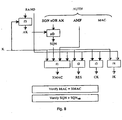
- a typical UE-side cryptographic algorithm is the Milenage algorithm which is shown in Fig. 9 .
- Ek denotes the Advanced Encryption Standard (AES) algorithm, also known as the Rijndael algorithm, using key K (stored in the AuC and USIM of UE).
- AES Advanced Encryption Standard
- Rijndael Rijndael algorithm
- WO 2005/032201 A relates to enhanced security design for cryptography in mobile communication systems.
- 3GPP Change Request 33.105 version 3.4.0 relates to anonymity key computation during re-synchronization.
- WO 2004/075584 A relates to a first cryptographic key and a second cryptographic key created by a mobile radio terminal and by a computer of a home network by using authentication key materials. The first cryptographic key is transmitted to a computer of a visited network, and the second cryptographic key is transmitted to an application server.
- a method for generating a cryptographic key involves, among others, the following features:
- the cryptographic key is used for, among others, protecting the communication between two entities.
- the method is carried out by the first entity.
- the method forms a part of an Authentication and Key Agreement procedure which is initiated by the second entity.
- the method comprises providing at least two parameters, wherein the first parameter either comprises or is derived from a set of cryptographic keys which have been computed by the first entity by running the Authentication and Key Agreement procedure; and the second parameter either comprises or is derived from a token having a different value each time the Authentication and Key Agreement procedure is initiated by the second entity for the first entity (in other words, the value of the token is never the same for any two Authentication and Key Agreement procedures); and applying a key derivation function to generate a cryptographic key based on the provided parameters.
- a parameter comprises X may mean that the variable X, in its string format, forms the parameter or a part thereof.
- the expression "a parameter is derived from X” may mean that the parameter is the result of applying certain functions, such as mathematical functions, to at least the variable X. Examples of the functions include, but are not limited to, arithmetic operations, logic operations, string operations, and any combination thereof. The arithmetic operation may be addition, subtraction, multiplication, etc., and any meaningful combinations thereof.
- the logic operation may be AND, OR, Exclusive OR (xOR), NOT, etc., and any meaningful combinations thereof.
- the string operation may be Concatenation, Reverse, Replace, etc., and any meaningful combinations thereof. Further, the arithmetic operation, the logic operation and the string operation may be combined.
- the token mentioned above may comprise or be derived from a sequence number (SQN) indicating the number of times that the Authentication and Key Agreement procedure has been initiated by the second entity for the first entity. With each initiation, the SQN may be incremented by the second entity. This mechanism ensures that the token has a different value for each Authentication and Key Agreement procedure initiated.
- SQL sequence number
- the token can take many forms.
- the SQN itself may be the token.
- the token may be derived from the SQN using an algorithm involving certain mathematical operations, such as at least one of an arithmetic operation, a logic operation and a string operation.
- the token may comprise or be derived from an Authentication Token (AUTN) constructed by the second entity based on the SQN and delivered to the first entity. This construction and delivery may be part of the Authentication and Key Agreement procedure.
- AUTN Authentication Token
- the token may comprise an exclusive OR of the SQN and an Anonymity Key (AK). More specifically, the token may be a concatenation of the exclusive OR of the SQN and the Anonymity Key (AK), an Authentication and Key Management Field (AMF), and a Message Authentication Code (MAC).
- AK Anonymity Key
- AMF Authentication and Key Management Field
- MAC Message Authentication Code
- the second parameter may further comprise or be derived from a random challenge, or random code (RAND).
- RAND random challenge, or random code
- the RAND may be generated by the second entity and delivered to the first entity as part of the Authentication and Key Agreement procedure.
- the second parameter may yet further comprise or be derived from an identifier of the first entity.
- This identifier may be a Private User Identity (IMPI) or an International Mobile Subscriber Identity (IMSI).
- IMPI Private User Identity
- IMSI International Mobile Subscriber Identity
- the second parameter may comprise or be derived from an identifier of a communications network and particularly the serving network of the first entity.
- this identifier could be a Public Land Mobile Network Identifier (PLMN_ID).
- the second parameter may comprise or be derived from a concatenation of 0x02, a PLMN_ID, a RAND, an IMPI or IMSI, and the token. This could be expressed as 0 ⁇ x 02 ⁇ PLMN _ ID ⁇ RAND ⁇ IMPI ⁇ token .
- this parameter comprises or is derived from a set of cryptographic keys which have been obtained by the first entity by running the Authentication and Key Agreement procedure.
- the set of cryptographic keys may comprise or be derived from a Cipher Key (CK) and an Integrity Key (IK).
- the CK and IK may be the cipher key and integrity key computed by the first entity based on an AUTN and an RAND.
- the AUTN and the RAND may be delivered from the second entity. This computation as well as the delivery of the AUTN and the RAND may form parts of the Authentication and Key Agreement procedure.
- the first parameter may comprise or be derived from a concatenation of CK and IK. This may be mathematically expressed as CK ⁇ IK .
- the method described herein generates a cryptographic key.
- This key may be shared at least by the first entity and the second entity, in any subsequent communication there between.
- this key may be the K ASME referred to in the "key hierarchy" of Fig. 2 , which may be shared by the first entity and an Access Security Management Entity (ASME) of the second entity.
- ASME Access Security Management Entity
- the method may be extended to comprise applying one or more further key derivation functions so as to generate more cryptographic keys.
- Such generation is based on, or makes use of, the cryptographic key generated in the basic, unextended method described above, e.g. K ASME .
- the cryptographic keys generated by the extended method may include at least one of a set of cryptographic keys for protecting the Non-Access Stratum (NAS) traffic; a set of cryptographic keys for the protection of Radio Resource Control (RRC) traffic; a set of cryptographic keys for the protection of User Plane (UP) traffic; and an intermediate cryptographic key, such as K eNB , for deriving the cryptographic keys for protecting the RRC traffic and/or the cryptographic keys for protecting the UP traffic.
- RRC Radio Resource Control
- UP User Plane
- K eNB an intermediate cryptographic key
- the set of cryptographic keys for protecting the NAS traffic may comprise a key for protecting the NAS traffic with an encryption algorithm (K NASenc ) and/or another key for protecting the NAS traffic with an integrity algorithm (K NASint ).
- the set of cryptographic keys for the protection of RRC traffic may comprise a key for protecting the RRC traffic with an encryption algorithm (K RRCenc ) and/or another key for protecting the RRC traffic with an integrity algorithm (K RRCint ).
- the set of cryptographic keys for the protection of UP traffic may comprise a key for protecting the UP traffic with an encryption algorithm (K UPenc ).
- the "first entity” may be a user equipment, such as a mobile station.
- the “second entity” may be an entity located within a communications network, hence a “network entity”. Particularly, the second entity may be located in a SAE/LTE network.
- the second entity may comprise an Authentication Center (AuC)/Home Subscriber Server (HSS) and a Mobility Management Entity (MME).
- the MME may be responsible for the initiation of the Authentication and Key Agreement procedure for the first entity.
- the cryptographic keys generated may be generated by the AuC/HSS and be shared by the first entity and the MME.
- the AuC/HSS may increment the SQN, particularly each time the Authentication and Key Agreement procedure is initiated for the first entity. Further, the AuC/HSS may also construct the AUTN based on the SQN.
- the Authentication and Key Agreement procedure referred to herein may be performed by the first and second entities in a cooperative manner.
- the Authentication and Key Agreement procedure may be based on the UMTS AKA protocol.
- the key derivation function referred to by the method may be a Generic Bootstrapping Architecture (GBA) key derivation function.
- GBA Generic Bootstrapping Architecture
- a Generic Bootstrapping Architecture key derivation function may employ a Secure Hash Algorithm (SHA) hash function.
- SHA Secure Hash Algorithm
- SHA-256 Secure Hash Algorithm hash function with a digest of a length of 256 bits
- a computer program product comprises program code portions for performing the steps of the method described herein when the computer program product is executed on a computer system for a computing device.
- the computer program product may be stored on a computer-readable reporting medium.
- the solution can be practiced by means of hardware, software, or a combined hardware/software approach.
- a device adapted to generate a cryptographic key for a communications entity can perform an Authentication and Key Agreement procedure, of which the generation of the cryptographic key may be a part thereof.
- the device comprises a first component adapted to provide at least two parameters, wherein the first parameter may comprise or be derived from a set of cryptographic keys having been computed by the communications entity by running the Authentication and Key Agreement procedure, and the second parameter may comprise or be derived from a token having a different value each time the Authentication and Key Agreement procedure is initiated for the communications entity.
- the device further comprises a second component adapted to execute a key derivation function so as to generate a cryptographic key based on the provided parameters.
- the token may take many possible forms.
- the token may comprise or be derived from a SQN indicating the number of times the Authentication and Key Agreement procedure has been initiated for the communications entity.
- the SQN itself is the token.
- the token may be derived from the SQN using an algorithm involving at least one of arithmetic operation, logic operation and string operation.
- the token may comprise or be derived from an AUTN that is constructed based on the SQN and delivered to the communications entity, wherein this construction and delivery form parts of the security operation.
- the second parameter may also comprise or be derived from a RAND.
- the RAND may be delivered to the communications entity as part of the security operation.
- the second parameter may comprise or be derived from an identifier of the communications entity.
- An example of the identifier is a Private User Identity (IMPI) of the communications entity.
- the second parameter may comprise or be derived from an identifier of the serving network of the communications entity. This identifier could be a Public Land Mobile Network Identifier (PLMN_ID).
- PLMN_ID Public Land Mobile Network Identifier
- a particular example of the second parameter may comprise or be derived from a concatenation of 0x02, a PLMN_ID, a RAND, an IMPI or an IMSI, and the token.
- the second parameter may be expressed as 0 ⁇ x 02 ⁇ PLMN _ ID ⁇ RAND ⁇ IMPI ⁇ token .
- the first parameter may comprise or be derived from a set of cryptographic keys.
- this set of cryptographic keys may comprise a Cipher Key (CK) and an Integrity Key (IK) which have been computed by the communications entity as part of the security operation.
- the set of cryptographic keys may be derived from the Cipher Key and the Integrity Key.
- the first parameter may comprise or be derived from a concatenation of CK and IK, which may be expressed as CK ⁇ IK .
- the device can generate not only the cryptographic key based on the provided first and second parameters, but also more cryptographic keys based on the cryptographic key generated. In doing so, the device may be adapted to apply one or more further key derivation functions so as to generate the more cryptographic keys based on the cryptographic key having been generated.
- These "more cryptographic keys” may comprise at least one of a set of cryptographic keys for the protection of Non-Access Stratum (NAS) traffic, a set of cryptographic keys for the protection of Radio Resource Control (RRC) traffic, a set of cryptographic keys for the protection of User Plane (UP) traffic, and an intermediate cryptographic key K eNB for deriving the cryptographic keys for the protection of RRC traffic and/or the cryptographic keys for the protection of UP traffic.
- NAS Non-Access Stratum
- RRC Radio Resource Control
- UP User Plane
- K eNB intermediate cryptographic key K eNB for deriving the cryptographic keys for the protection of RRC traffic and/or the cryptographic keys for the protection of UP traffic.
- the communications entity referred to above may be a user equipment, such as a mobile station (e. g., a mobile telephone or a network card).
- a mobile station e. g., a mobile telephone or a network card.
- a user equipment comprising the device presented above is provided.
- the user equipment may be a mobile station.
- a system comprising the user equipment mentioned above.
- the system also comprises a network entity.
- the network entity may be used within a SAE/LTE network.
- the network entity may comprise an AuC/HSS and a MME.
- the MME may be responsible for initiating the security operation for the user equipment.
- the AuC/HSS may generate the cryptographic key.
- the cryptographic keys generated may be shared by the user equipment and the MME.
- the AuC/HSS may increment the SQN, particularly each time the security operation is initiated for the user equipment. Further, the AuC/HSS may also construct the AUTN based on the SQN.
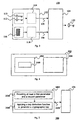
- Fig. 3 shows an embodiment of a device 100 adapted to generate a cryptographic key for a communications entity (not shown in Fig. 3 ).
- the communications entity is adapted to run a security operation.
- the device 100 comprises a first component 102 and a second component 104.
- the first component 102 is adapted to provide at least two parameters, figuratively shown at the arrows 106 and 108.
- the first parameter 106 comprises or is derived from a set of cryptographic keys 110 and 112. (Although two keys are shown in the figure, the set of cryptographic keys may include any number of keys.)
- the set of cryptographic keys has been computed by the communications entity by running the security operation.
- the derivation of the set of cryptographic keys 110 and 112 into the first parameter 106 is figuratively shown as a block 114.
- the second parameter 108 comprises or is derived from a token 116.
- the token 116 has a different value each time the security operation is initiated for the communications entity.
- the derivation of the token 116 into the second parameter 108 is figuratively shown as a block 118.
- the second component 104 of the device 100 is adapted to run a key derivation function to generate a cryptographic key 120 based on the provided parameters 106 and 108.
- the device 100 may be comprised in a communications entity 202, which may be a UE, such as a mobile station.
- the communications entity 202 may be any suitable kind of communications entity capable of accommodating the device 100.
- the system comprises a network entity 204, which may reside in a SAE/LTE network.
- the network entity 204 may comprise an AuC or HSS and a MME. It may also be another communications entity in a SAE/LTE network.
- a diagram 300 illustrating an embodiment of a method for generating a cryptographic key is shown in Fig. 5 .
- the key generated is used for protecting the communication between two entities.
- the first entity 302 may correspond to the communications entity 202 as shown in Fig. 4
- the second entity 304 may correspond to the network entity 204 of Fig. 4 .
- the first entity may be a UE.
- the embodiment is not limited to a UE-network entity scenario. Instead, it can be applied to any two communications entities in general.
- the MME may be responsible for initiating the security operation for the communications entity 202.
- the cryptographic keys generated may be shared by the MME and the communications entity 202.
- the method embodiment is carried out by the first entity 302 as part of a security operation figuratively illustrated at the arrow 300', which is initiated by the second entity 304 (particularly by the MME thereof) for the first entity 302.
- the embodiment itself comprises two steps, 306 and 308.
- Step 306 provides at least two parameters (106 and 108 of Fig. 3 ).
- the first parameter comprises or is derived from a set of cryptographic keys (110 and 112 as shown in Fig. 3 ) which have been computed by the first entity 302 by running the security operation 300'.
- the second parameter comprises or is derived from a token (116 as shown in Fig. 3 ) which has a different value each time the security operation 300' is initiated by the second entity 304 for the first entity 302.
- a key derivation function is applied to generate a cryptographic key (120 as shown in Fig. 3 ) based on the provided parameters (106 and 108 as shown in Fig. 3 ).
- the cryptographic key generation may be part of the UMTS AKA operation.
- the UMTS AKA is based on the implementation that the UE, particularly the USIM thereof, and the AuC/HSS in the UE's Home Environment (HE) share a user specific secret key K, certain message authentication functions f1, f2 and certain cryptographic key generation functions f3, f4, f5.
- the USIM and the AuC/HSS keep track of counters, or sequence numbers SQN UE and SQN HE respectively to support network authentication. For instance, the AuC/HSS may increment the SQN HE , particularly each time the security operation is initiated for the first entity.
- the UMTS AKA operation comprises a number of procedures, including Generation of Authentication Vectors (AV), and Authentication and Key Establishment.
- AV Authentication Vectors
- the purpose of the AV procedure is to provide the SN/VLR (or MME) with an array of fresh AVs from the UE's HE to perform a number of user authentications.
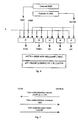
- Generation of Authentication Vectors by the HE is illustrated in Fig. 6 .
- the AuC/HSS upon receipt of a request from the SN/VLR, the AuC/HSS sends an ordered array of n Authentication Vectors AV (1...n) to the SN/VLR.
- Each AV comprises a random number (or random challenge) RAND, an expected response XRES, a cipher key CK, an integrity key IK and an authentication token AUTN.
- the AuC/HSS starts with generating a fresh sequence number SQN and an unpredictable challenge RAND. Subsequently the following values are computed:
- the authentication token AUTN (SQN xOR AK) ⁇ AMF ⁇ MAC is constructed. It may be constructed by the AuC/HSS.
- the array of AVs is sent back to the requesting SN/VLR in an authentication response.
- Each AV is valid for one (and only one) authentication and key agreement between the SN/VLR and the USIM.
- the next procedure of the UMTS AKA operation is to mutually authenticate and establish new cipher and integrity keys between the SN/VLR and the UE.
- This process is illustrated in Fig. 7 .
- the SN/VLR initiates an authentication and key agreement, it selects the next AV from the array and sends the parameters RAND and AUTN to the UE.
- the USIM checks whether AUTN can be accepted and, if so, produces a response RES which is sent back to the SN/VLR.
- the UE's procedures are shown in Fig. 8 .
- the SN/VLR Upon receipt of user authentication response the SN/VLR compares RES with the expected response XRES from the selected authentication vector. If XRES equals RES then the authentication of the user has been accepted. The newly computed keys CK and IK will then be transferred by the USIM and the SN/VLR to the entities which perform ciphering and integrity functions.
- any token having a different value each time the UMTS AKA operation is initiated by the network for the UE is feasible.
- SQN xOR AK (forming part of AUTN) may be used since it (by the above analysis) has the required uniqueness property.
- the cryptographic key generation technique described here above presents numerous advantages. For example, it guarantees uniqueness of KDF inputs. Hence, it successfully avoids the commissions brought about by possible identical inputs. With this technique, the cryptographic key generated shall be able to meet, for example, the high-level security requirements in SAE/LTE systems. As a further advantage, the technique can be implemented based on already deployed USIMs without requiring any USIM replacement. Another specific advantage with using AUTN rather than SQN is that the invention can be implemented in the mobile terminal (outside the USIM).
Landscapes
- Engineering & Computer Science (AREA)
- Computer Security & Cryptography (AREA)
- Computer Networks & Wireless Communication (AREA)
- Signal Processing (AREA)
- Mobile Radio Communication Systems (AREA)
- Information Transfer Between Computers (AREA)
Claims (17)
- Verfahren zum Erzeugen eines kryptographischen Schlüssels (120) zum Schutz einer mobilen Kommunikation zwischen zwei Funktionseinheiten (202, 204), wobei das Verfahren durch die erste Funktionseinheit (202, 302) als ein Teil einer Authentifizierungs- und Schlüsselvereinbarungs- (AKA-) Prozedur auf der Grundlage eines UMTS-AKA-Protokolls durchgeführt wird, das durch die zweite Funktionseinheit (204, 304) initiiert ist, wobei das Verfahren durch die Schritte gekennzeichnet ist:- Bereitstellen (306) von zumindest zwei Parametern (106, 108), wobei der erste Parameter (106) einen Satz von kryptographischen Schlüsseln (110, 112) umfasst oder aus diesem abgeleitet ist, der durch die erste Funktionseinheit (202) durch Ausführen der AKA-Prozedur berechnet wurde, und der zweite Parameter eine Marke (116) umfasst oder aus dieser abgeleitet ist, die jedes Mal einen unterschiedlichen Wert aufweist, wenn die AKA-Prozedur durch die zweite Funktionseinheit (204, 304) für die erste Funktionseinheit (202, 302) initiiert wird; und- Anwenden (308) einer Schlüsselherleitungsfunktion, um einen kryptographischen Schlüssel (120) auf der Grundlage der bereitgestellten Parameter (106, 108) zu erzeugen;wobei die Marke (116) eine Verknüpfung des Exklusiv-ODER einer Sequenznummer <SQN> und eines Anonymitätsschlüssels <AK>, eines Authentifizierungs- und Schlüsselverwaltungsfelds <AMF> und eines Nachrichtenauthentifizierungscodes <MAC> ist, wobei die SQN die Anzahl anzeigt, wie oft die AKA-Prozedur durch die zweite Funktionseinheit (204, 304) für die erste Funktionseinheit (202, 302) initiiert wurde, und
wobei der AK ein kryptographischer Schlüssel ist, der durch eine Schlüsselerzeugungsfunktion f5 unter Verwendung einer Zufalls-Challenge gemäß dem UMTS-AKA-Protokoll erzeugt wurde. - Verfahren gemäß zumindest einem der vorangegangenen Ansprüche, wobei der Satz von kryptographischen Schlüsseln (110, 112), der in dem ersten Parameter (106) umfasst ist oder aus dem der erste Parameter (106) hergeleitet ist, einen Chiffrierschlüssel <CK> (110) und einen Integritätsschlüssel <IK> (112) umfasst oder aus diesen hergeleitet ist.
- Verfahren gemäß einem der vorangegangenen Ansprüche, weiterhin umfassend den Schritt:- Anwenden einer oder mehrerer weiterer Schlüsselherleitungsfunktionen, um mehr kryptographische Schlüssel auf der Grundlage des erzeugten kryptographischen Schlüssels (120) zu erzeugen.
- Verfahren gemäß Anspruch 3, wobei die mehreren kryptographischen Schlüssel zumindest einen der Folgenden umfassen:- einen Satz von kryptographischen Schlüsseln für den Schutz von Verkehr der Nichtzugriffsschicht <NAS>;- einen Satz von kryptographischen Schlüsseln für den Schutz von Verkehr der Funkressourcensteuerung <RRC>;- einen Satz von kryptographischen Schlüsseln für den Schutz von Verkehr der Benutzerebene <UP>; und- einen zwischenliegenden kryptographischen Schlüssel <keNB> zum Herleiten der kryptographischen Schlüssel für den Schutz von RRC-Verkehr und/oder der kryptographischen Schlüssel zum Schutz des UP-Verkehrs.
- Verfahren gemäß einem der vorangegangenen Ansprüche, wobei die erste Funktionseinheit (202, 302) eine Benutzereinrichtung ist.
- Verfahren gemäß einem der vorangegangenen Ansprüche, wobei die zweite Funktionseinheit (204, 304) eine Netzwerkfunktionseinheit ist.
- Verfahren gemäß Anspruch 6, wobei die zweite Funktionseinheit (204, 304) in einem Netzwerk der Systemarchitekturevolution <SAE>/langfristigen Evolution <LTE> ansässig ist.
- Verfahren gemäß Anspruch 6 oder 7, wobei die zweite Funktionseinheit (204, 304) ein/einen Authentifizierungszentrum <AuC>/Heimteilnehmerserver <HSS> und eine Mobilitätsverwaltungsfunktionseinheit <MME> umfasst.
- Verfahren gemäß einem der vorangegangenen Ansprüche, wobei die Authentifizierungs- und Schlüsselvereinbarungsprozedur kooperativ durch die erste (202, 302) und die zweite (204, 304) Funktionseinheit durchgeführt wird.
- Computerprogrammprodukt, gekennzeichnet durch Computerprogrammcodeabschnitte zum Ausführen der Schritte des Verfahrens gemäß zumindest einem der vorangegangenen Ansprüche, wenn das Computerprogrammprodukt auf einem Computersystem läuft.
- Computerprogrammprodukt gemäß Anspruch 10, wobei das Computerprogrammprodukt auf einem computerlesbaren Aufzeichnungsmedium gespeichert ist.
- Vorrichtung (100), die eingerichtet ist, um einen kryptographischen Schlüssel (120) für eine mobile Kommunikationsfunktionseinheit (202, 302) zu erzeugen, die eingerichtet ist, um eine Authentifizierungs- und Schlüsselvereinbarungsprozedur auf der Grundlage eines UMTS-AKA-Protokolls auszuführen, wobei die Vorrichtung (100) gekennzeichnet ist durch:- eine erste Komponente (102), die eingerichtet ist, um zumindest zwei Parameter (106, 108) bereitzustellen, wobei der erste Parameter (106) einen Satz von kryptographischen Schlüsseln (110, 112) umfasst oder aus diesem hergeleitet ist, der durch die mobile Kommunikationsfunktionseinheit (202, 302) durch Ausführen der AKA-Prozedur berechnet wurde, und der zweite Parameter (108) eine Marke (116) umfasst oder aus dieser hergeleitet ist, wobei die zumindest zwei bereitgestellten Parameter jedes Mal einen unterschiedlichen Wert aufweisen, wenn die AKA-Prozedur für die mobile Kommunikationsfunktionseinheit (202, 302) initiiert wird; und- eine zweite Komponente (104), die eingerichtet ist, um eine Schlüsselherleitungsfunktion auszuführen, um einen kryptographischen Schlüssel (120) auf der Grundlage der bereitgestellten Parameter (106, 108) zu erzeugen;wobei die Marke (116) eine Verknüpfung des Exklusiv-ODER einer Sequenznummer <SQN> und eines Anonymitätsschlüssels (AK), eines Authentifizierungs- und Schlüsselverwaltungsfelds <AMF> und eines Nachrichtenauthentifizierungscodes <MAC> ist, wobei die SQN die Anzahl anzeigt, wie oft die AKA-Prozedur für die mobile Kommunikationsfunktionseinheit (202, 302) initiiert wurde, und wobei der AK ein kryptographischer Schlüssel ist, der durch eine Schlüsselerzeugungsfunktion f5 unter Verwendung einer Zufalls-Challenge gemäß dem UMTS-AKA-Protokoll erzeugt ist.
- Vorrichtung (100) gemäß Anspruch 12, wobei der Satz von kryptographischen Schlüsseln (110, 112), die in dem ersten Parameter (106) umfasst sind oder aus denen der erste Parameter (106) hergeleitet ist, einen Chiffrierschlüssel <CK> (110) und einen Integritätsschlüssel <IK> (112) umfasst oder aus diesen hergeleitet ist, die durch die mobile Kommunikationsfunktionseinheit (202, 302) als ein Teil der Authentifizierungs- und Schlüsselvereinbarungsprozedur berechnet wurden.
- Vorrichtung (100) gemäß zumindest einem der Ansprüche 12 bis 13, die weiterhin eingerichtet ist, um eine oder mehrere weitere Schlüsselherleitungsfunktionen anzuwenden, um mehr kryptographische Schlüssel auf der Grundlage des erzeugten kryptographischen Schlüssels (120) zu erzeugen.
- Benutzereinrichtung (202), gekennzeichnet durch die Vorrichtung (100) gemäß zumindest einem der Ansprüche 12 bis 14.
- System, umfassend die Benutzereinrichtung (202, 302) gemäß Anspruch 15 und eine Netzwerkfunktionseinheit (304).
- System gemäß Anspruch 16, wobei die Netzwerkfunktionseinheit (304) zur Verwendung in einem SAE/LTE-Netzwerk dient.
Priority Applications (7)
| Application Number | Priority Date | Filing Date | Title |
|---|---|---|---|
| EP12005934.0A EP2528268B3 (de) | 2008-06-06 | 2008-07-21 | Generierung von kryptographische Schlüssel |
| PL12005934T PL2528268T6 (pl) | 2008-06-06 | 2008-07-21 | Generowanie klucza kryptograficznego |
| EP13003646.0A EP2658163B3 (de) | 2008-06-06 | 2008-07-21 | Kryptographische Schlüsselerzeugung |
| PL08784926T PL2291946T5 (pl) | 2008-06-06 | 2008-07-21 | Generowanie klucza kryptograficznego |
| EP17166183.8A EP3242436A1 (de) | 2008-06-06 | 2008-07-21 | Generierung von kryptographische schlüssel |
| DK12005934.0T DK2528268T6 (da) | 2008-06-06 | 2008-07-21 | Generering af krypteringsnøgle |
| PL13003646T PL2658163T6 (pl) | 2008-06-06 | 2008-07-21 | Generowanie klucza kryptograficznego |
Applications Claiming Priority (2)
| Application Number | Priority Date | Filing Date | Title |
|---|---|---|---|
| US5938608P | 2008-06-06 | 2008-06-06 | |
| PCT/EP2008/005960 WO2009146729A1 (en) | 2008-06-06 | 2008-07-21 | Cryptographic key generation |
Related Child Applications (7)
| Application Number | Title | Priority Date | Filing Date |
|---|---|---|---|
| EP12005934.0A Division-Into EP2528268B3 (de) | 2008-06-06 | 2008-07-21 | Generierung von kryptographische Schlüssel |
| EP12005934.0A Division EP2528268B3 (de) | 2008-06-06 | 2008-07-21 | Generierung von kryptographische Schlüssel |
| EP13003646.0A Division EP2658163B3 (de) | 2008-06-06 | 2008-07-21 | Kryptographische Schlüsselerzeugung |
| EP13003646.0A Division-Into EP2658163B3 (de) | 2008-06-06 | 2008-07-21 | Kryptographische Schlüsselerzeugung |
| EP17166183.8A Division EP3242436A1 (de) | 2008-06-06 | 2008-07-21 | Generierung von kryptographische schlüssel |
| EP17166183.8A Division-Into EP3242436A1 (de) | 2008-06-06 | 2008-07-21 | Generierung von kryptographische schlüssel |
| EP12005934.0 Division-Into | 2012-08-17 |
Publications (3)
| Publication Number | Publication Date |
|---|---|
| EP2291946A1 EP2291946A1 (de) | 2011-03-09 |
| EP2291946B1 EP2291946B1 (de) | 2012-12-26 |
| EP2291946B2 true EP2291946B2 (de) | 2020-06-03 |
Family
ID=40527985
Family Applications (4)
| Application Number | Title | Priority Date | Filing Date |
|---|---|---|---|
| EP08784926.1A Active EP2291946B2 (de) | 2008-06-06 | 2008-07-21 | Erzeugung von kryptographischen schlüsseln |
| EP17166183.8A Withdrawn EP3242436A1 (de) | 2008-06-06 | 2008-07-21 | Generierung von kryptographische schlüssel |
| EP12005934.0A Active EP2528268B3 (de) | 2008-06-06 | 2008-07-21 | Generierung von kryptographische Schlüssel |
| EP13003646.0A Active EP2658163B3 (de) | 2008-06-06 | 2008-07-21 | Kryptographische Schlüsselerzeugung |
Family Applications After (3)
| Application Number | Title | Priority Date | Filing Date |
|---|---|---|---|
| EP17166183.8A Withdrawn EP3242436A1 (de) | 2008-06-06 | 2008-07-21 | Generierung von kryptographische schlüssel |
| EP12005934.0A Active EP2528268B3 (de) | 2008-06-06 | 2008-07-21 | Generierung von kryptographische Schlüssel |
| EP13003646.0A Active EP2658163B3 (de) | 2008-06-06 | 2008-07-21 | Kryptographische Schlüsselerzeugung |
Country Status (20)
| Country | Link |
|---|---|
| US (3) | US8340288B2 (de) |
| EP (4) | EP2291946B2 (de) |
| JP (5) | JP4792135B2 (de) |
| KR (1) | KR101274392B1 (de) |
| CN (2) | CN102057617B (de) |
| AU (1) | AU2008357317B2 (de) |
| BR (1) | BRPI0822761B1 (de) |
| CA (1) | CA2722186C (de) |
| CL (1) | CL2009001359A1 (de) |
| DK (2) | DK2291946T4 (de) |
| ES (3) | ES2400020T5 (de) |
| IL (1) | IL209799A (de) |
| MA (1) | MA32613B1 (de) |
| MX (1) | MX2010012033A (de) |
| MY (1) | MY146687A (de) |
| NZ (1) | NZ589294A (de) |
| PL (3) | PL2528268T6 (de) |
| RU (1) | RU2480925C2 (de) |
| WO (1) | WO2009146729A1 (de) |
| ZA (1) | ZA201008200B (de) |
Families Citing this family (53)
| Publication number | Priority date | Publication date | Assignee | Title |
|---|---|---|---|---|
| US20080114772A1 (en) * | 2006-11-14 | 2008-05-15 | Fabrice Jogand-Coulomb | Method for connecting to a network location associated with content |
| US20080112562A1 (en) * | 2006-11-14 | 2008-05-15 | Fabrice Jogand-Coulomb | Methods for linking content with license |
| US8327454B2 (en) * | 2006-11-14 | 2012-12-04 | Sandisk Technologies Inc. | Method for allowing multiple users to access preview content |
| US8079071B2 (en) * | 2006-11-14 | 2011-12-13 | SanDisk Technologies, Inc. | Methods for accessing content based on a session ticket |
| US20080114693A1 (en) * | 2006-11-14 | 2008-05-15 | Fabrice Jogand-Coulomb | Method for allowing content protected by a first DRM system to be accessed by a second DRM system |
| US8763110B2 (en) * | 2006-11-14 | 2014-06-24 | Sandisk Technologies Inc. | Apparatuses for binding content to a separate memory device |
| EP2177074B1 (de) * | 2007-08-15 | 2017-10-04 | Telefonaktiebolaget LM Ericsson (publ) | Verfahren und vorrichtung für sicherheit in early ims |
| US7522723B1 (en) * | 2008-05-29 | 2009-04-21 | Cheman Shaik | Password self encryption method and system and encryption by keys generated from personal secret information |
| CN102595399B (zh) * | 2008-06-23 | 2017-02-01 | 华为技术有限公司 | 密钥衍生方法、设备及系统 |
| GB0822599D0 (en) * | 2008-12-11 | 2009-01-21 | Vodafone Plc | Securing network rejection |
| US8296836B2 (en) * | 2010-01-06 | 2012-10-23 | Alcatel Lucent | Secure multi-user identity module key exchange |
| US9215220B2 (en) * | 2010-06-21 | 2015-12-15 | Nokia Solutions And Networks Oy | Remote verification of attributes in a communication network |
| US20120142315A1 (en) * | 2010-12-06 | 2012-06-07 | Jong-Moon Chung | Method for authentication and key establishment in a mobile communication system and method of operating a mobile station and a visitor location register |
| US8990554B2 (en) | 2011-06-30 | 2015-03-24 | Verizon Patent And Licensing Inc. | Network optimization for secure connection establishment or secure messaging |
| US9154527B2 (en) | 2011-06-30 | 2015-10-06 | Verizon Patent And Licensing Inc. | Security key creation |
| US8943318B2 (en) | 2012-05-11 | 2015-01-27 | Verizon Patent And Licensing Inc. | Secure messaging by key generation information transfer |
| US9270453B2 (en) | 2011-06-30 | 2016-02-23 | Verizon Patent And Licensing Inc. | Local security key generation |
| US8762723B2 (en) | 2011-07-07 | 2014-06-24 | Verayo, Inc. | Cryptographic security using fuzzy credentials for device and server communications |
| US9215076B1 (en) | 2012-03-27 | 2015-12-15 | Amazon Technologies, Inc. | Key generation for hierarchical data access |
| US8892865B1 (en) | 2012-03-27 | 2014-11-18 | Amazon Technologies, Inc. | Multiple authority key derivation |
| CN110290523B (zh) * | 2012-12-28 | 2022-12-27 | 北京三星通信技术研究有限公司 | 配置和传输加密密匙的方法 |
| WO2014109602A1 (en) | 2013-01-11 | 2014-07-17 | Lg Electronics Inc. | Method and apparatus for applying security information in wireless communication system |
| PL3018850T3 (pl) | 2013-01-30 | 2017-10-31 | Ericsson Telefon Ab L M | Generowanie klucza bezpieczeństwa dla połączeń podwójnych |
| JP2014192612A (ja) | 2013-03-26 | 2014-10-06 | Toshiba Corp | 生成装置、暗号化装置、復号装置、生成方法、暗号化方法、復号方法およびプログラム |
| GB2518255A (en) * | 2013-09-13 | 2015-03-18 | Vodafone Ip Licensing Ltd | Communicating with a machine to machine device |
| FR3018371B1 (fr) * | 2014-03-10 | 2016-05-06 | Commissariat Energie Atomique | Procede et systeme de chiffrement/dechiffrement de donnees a cle distante et verification prealable de jeton |
| US10484187B2 (en) * | 2014-05-20 | 2019-11-19 | Nokia Technologies Oy | Cellular network authentication |
| CN106465110B (zh) | 2014-05-20 | 2020-05-12 | 诺基亚技术有限公司 | 蜂窝认证中的异常处理 |
| FR3022053B1 (fr) * | 2014-06-06 | 2018-02-02 | Oberthur Technologies | Procede d'authentification d'une premiere entite electronique par une seconde entite electronique et entite electronique mettant en œuvre un tel procede |
| EP3261286A4 (de) * | 2015-02-16 | 2018-09-12 | Nec Corporation | Kommunikationssystem, knotenvorrichtung, kommunikationsendgerät, schlüsselverwaltungsverfahren und nichttemporäres computerlesbares medium mit darauf gespeichertem programm |
| KR101675088B1 (ko) * | 2015-04-30 | 2016-11-10 | 성균관대학교산학협력단 | Mtc에서의 네트워크와의 상호 인증 방법 및 시스템 |
| US10931644B2 (en) | 2015-06-23 | 2021-02-23 | Telefonaktiebolaget Lm Ericsson (Publ) | Methods, network nodes, mobile entity, computer programs and computer program products for protecting privacy of a mobile entity |
| EP3446518B1 (de) * | 2016-04-19 | 2022-01-05 | Nokia Solutions and Networks Oy | Unterstützung bei der netzwerkauthorisierung |
| WO2018009821A1 (en) * | 2016-07-07 | 2018-01-11 | Nokia Solutions And Networks Oy | Machine type communication using mobile originated short messaging service without mobile station international subscriber directory number |
| WO2018013124A1 (en) * | 2016-07-14 | 2018-01-18 | Digital Asset Holdings | Digital asset platform |
| EP3471365A4 (de) * | 2016-07-15 | 2019-06-19 | Huawei Technologies Co., Ltd. | Verfahren und vorrichtung zur schlüsselerfassung |
| EP3285512A1 (de) * | 2016-08-17 | 2018-02-21 | Gemalto Sa | Authentifizierungsserver eines zellularen kommunikationsnetzwerks und zugehörige uicc |
| CN106789057B (zh) * | 2016-11-28 | 2020-05-22 | 航天恒星科技有限公司 | 卫星通信协议下的密钥协商方法及系统 |
| KR102549946B1 (ko) * | 2017-01-09 | 2023-06-30 | 삼성전자주식회사 | 이동통신 환경에서 단말의 초기 접속 요청 메시지를 라우팅하는 방법 및 관련 파라미터 |
| JP6441390B2 (ja) * | 2017-01-26 | 2018-12-19 | 株式会社東芝 | 生成装置、暗号化装置、復号装置、生成方法、暗号化方法、復号方法およびプログラム |
| JP6745403B2 (ja) * | 2017-04-11 | 2020-08-26 | 華為技術有限公司Huawei Technologies Co.,Ltd. | ネットワーク認証方法、デバイス、およびシステム |
| EP4221290A1 (de) * | 2017-06-23 | 2023-08-02 | Motorola Mobility LLC | Verfahren und vorrichtung zur implementierung trägerspezifischer änderungen als teil einer verbindungsrekonfiguration, die auf die verwendeten sicherheitsschlüssel wirkt |
| GB2578408B (en) * | 2017-08-29 | 2022-04-20 | Bosch Gmbh Robert | Methods and systems for linear key agreement with forward secrecy using an insecure shared communication medium |
| KR101835076B1 (ko) * | 2017-11-15 | 2018-04-19 | 곽권섭 | 보안강화 eps-aka 프로토콜을 이용한 이동통신 가입자 인증 방법 |
| DE102018133605B4 (de) * | 2018-12-27 | 2023-03-02 | Bachmann Gmbh | Verfahren und Vorrichtung zur Prüfung der Integrität von Modulen einer Windkraftanlage |
| US12081972B2 (en) * | 2019-01-18 | 2024-09-03 | Qualcomm Incorporated | Protection of sequence numbers in authentication and key agreement protocol |
| EP3720039B1 (de) * | 2019-04-05 | 2024-09-04 | Siemens Aktiengesellschaft | Verfahren für das konfigurieren eines sicherheitsmoduls mit mindestens einem abgeleiteten schlüssel |
| CN111628985A (zh) * | 2020-05-22 | 2020-09-04 | 深圳市有方科技股份有限公司 | 安全访问控制方法、装置、计算机设备和存储介质 |
| US12120225B2 (en) * | 2020-09-25 | 2024-10-15 | Renesas Electronics Corporation | Secure key generation and management in open and secure processor environments |
| US11924350B2 (en) | 2021-07-29 | 2024-03-05 | Digital Asset (Switzerland) GmbH | Cryptographically enforced partial blinding for distributed system |
| US11647392B1 (en) | 2021-12-16 | 2023-05-09 | Bank Of America Corporation | Systems and methods for context-aware mobile application session protection |
| CN115021913B (zh) * | 2022-06-14 | 2024-05-31 | 中国信息通信研究院 | 工业互联网标识解析体系密钥生成方法、系统与存储介质 |
| JP2024155131A (ja) * | 2023-04-20 | 2024-10-31 | キオクシア株式会社 | 情報処理システム |
Family Cites Families (17)
| Publication number | Priority date | Publication date | Assignee | Title |
|---|---|---|---|---|
| US7131006B1 (en) * | 1999-11-15 | 2006-10-31 | Verizon Laboratories Inc. | Cryptographic techniques for a communications network |
| GB0004178D0 (en) | 2000-02-22 | 2000-04-12 | Nokia Networks Oy | Integrity check in a communication system |
| US20030053629A1 (en) * | 2001-09-14 | 2003-03-20 | Koninklijke Philips Electronics N.V. | USB authentication interface |
| DE10307403B4 (de) | 2003-02-20 | 2008-01-24 | Siemens Ag | Verfahren zum Bilden und Verteilen kryptographischer Schlüssel in einem Mobilfunksystem und Mobilfunksystem |
| EP1671511B2 (de) * | 2003-09-26 | 2018-03-21 | Telefonaktiebolaget LM Ericsson (publ) | Verbesserter sicherheitsentwurf für die kryptographie in mobilkommunikationssystemen |
| GB2407236B (en) * | 2003-10-17 | 2006-04-05 | Toshiba Res Europ Ltd | Methods and apparatus for secure data communication links |
| EP1626598A1 (de) * | 2004-06-21 | 2006-02-15 | Axalto SA | Verfahren zur Sicherung eines Authentifizierungs- und Schlüsselverteilungsprotokolls |
| US7461268B2 (en) * | 2004-07-15 | 2008-12-02 | International Business Machines Corporation | E-fuses for storing security version data |
| US20060046690A1 (en) | 2004-09-02 | 2006-03-02 | Rose Gregory G | Pseudo-secret key generation in a communications system |
| US7558957B2 (en) * | 2005-04-18 | 2009-07-07 | Alcatel-Lucent Usa Inc. | Providing fresh session keys |
| US20060236116A1 (en) * | 2005-04-18 | 2006-10-19 | Lucent Technologies, Inc. | Provisioning root keys |
| WO2007062689A1 (en) * | 2005-12-01 | 2007-06-07 | Telefonaktiebolaget Lm Ericsson (Publ) | Method and apparatus for distributing keying information |
| ATE445976T1 (de) * | 2006-01-24 | 2009-10-15 | British Telecomm | Verfahren und system zur rekursiven authentifikation in einem mobilnetz |
| US20070271458A1 (en) * | 2006-05-22 | 2007-11-22 | Peter Bosch | Authenticating a tamper-resistant module in a base station router |
| JP5060081B2 (ja) | 2006-08-09 | 2012-10-31 | 富士通株式会社 | フレームを暗号化して中継する中継装置 |
| EP2087634B1 (de) | 2006-11-01 | 2016-07-20 | Telefonaktiebolaget LM Ericsson (publ) | Telekommunikationssysteme und verschlüsselung von steuernachrichten in solchen systemen |
| JP5396300B2 (ja) * | 2010-02-08 | 2014-01-22 | オルガノ株式会社 | 電気式脱イオン水製造装置 |
-
2008
- 2008-07-21 DK DK08784926.1T patent/DK2291946T4/da active
- 2008-07-21 CN CN2008801296369A patent/CN102057617B/zh active Active
- 2008-07-21 MX MX2010012033A patent/MX2010012033A/es active IP Right Grant
- 2008-07-21 EP EP08784926.1A patent/EP2291946B2/de active Active
- 2008-07-21 ES ES08784926T patent/ES2400020T5/es active Active
- 2008-07-21 NZ NZ589294A patent/NZ589294A/en unknown
- 2008-07-21 BR BRPI0822761-6A patent/BRPI0822761B1/pt active IP Right Grant
- 2008-07-21 PL PL12005934T patent/PL2528268T6/pl unknown
- 2008-07-21 EP EP17166183.8A patent/EP3242436A1/de not_active Withdrawn
- 2008-07-21 PL PL13003646T patent/PL2658163T6/pl unknown
- 2008-07-21 KR KR1020117000216A patent/KR101274392B1/ko active Active
- 2008-07-21 DK DK12005934.0T patent/DK2528268T6/da active
- 2008-07-21 PL PL08784926T patent/PL2291946T5/pl unknown
- 2008-07-21 CN CN201310606861.XA patent/CN103746794B/zh active Active
- 2008-07-21 ES ES13003646T patent/ES2617067T7/es active Active
- 2008-07-21 US US12/996,214 patent/US8340288B2/en active Active
- 2008-07-21 EP EP12005934.0A patent/EP2528268B3/de active Active
- 2008-07-21 CA CA2722186A patent/CA2722186C/en active Active
- 2008-07-21 RU RU2010149890/08A patent/RU2480925C2/ru active
- 2008-07-21 ES ES12005934T patent/ES2637313T7/es active Active
- 2008-07-21 AU AU2008357317A patent/AU2008357317B2/en active Active
- 2008-07-21 EP EP13003646.0A patent/EP2658163B3/de active Active
- 2008-07-21 JP JP2011511982A patent/JP4792135B2/ja active Active
- 2008-07-21 WO PCT/EP2008/005960 patent/WO2009146729A1/en not_active Ceased
- 2008-07-21 MY MYPI2010005654A patent/MY146687A/en unknown
-
2009
- 2009-06-04 CL CL2009001359A patent/CL2009001359A1/es unknown
-
2010
- 2010-11-16 ZA ZA2010/08200A patent/ZA201008200B/en unknown
- 2010-12-06 IL IL209799A patent/IL209799A/en active IP Right Grant
-
2011
- 2011-03-07 MA MA33674A patent/MA32613B1/fr unknown
- 2011-07-22 JP JP2011161346A patent/JP2011254512A/ja active Pending
-
2012
- 2012-11-12 US US13/674,226 patent/US8953793B2/en active Active
-
2013
- 2013-12-05 JP JP2013252327A patent/JP2014078985A/ja active Pending
-
2014
- 2014-08-01 US US14/449,219 patent/US9326142B2/en active Active
-
2015
- 2015-12-10 JP JP2015241380A patent/JP6121512B2/ja active Active
-
2017
- 2017-03-29 JP JP2017065703A patent/JP6492115B2/ja active Active
Also Published As
Similar Documents
| Publication | Publication Date | Title |
|---|---|---|
| EP2291946B2 (de) | Erzeugung von kryptographischen schlüsseln | |
| KR100625503B1 (ko) | 무선 통신 시스템에서 비밀 공유 데이터를 갱신하는 방법 | |
| Saxena et al. | Authentication protocol for an IoT-enabled LTE network | |
| Ouaissa et al. | New security level of authentication and key agreement protocol for the IoT on LTE mobile networks | |
| Leu et al. | Improving security level of LTE authentication and key agreement procedure | |
| HK1151907A (en) | Cryptographic key generation | |
| Choudhury | Relaxing trust requirement in 3GPP mobile systems for improved subscriber identity privacy | |
| Audestad | Mobile Security |
Legal Events
| Date | Code | Title | Description |
|---|---|---|---|
| PUAI | Public reference made under article 153(3) epc to a published international application that has entered the european phase |
Free format text: ORIGINAL CODE: 0009012 |
|
| 17P | Request for examination filed |
Effective date: 20101118 |
|
| AK | Designated contracting states |
Kind code of ref document: A1 Designated state(s): AT BE BG CH CY CZ DE DK EE ES FI FR GB GR HR HU IE IS IT LI LT LU LV MC MT NL NO PL PT RO SE SI SK TR |
|
| AX | Request for extension of the european patent |
Extension state: AL BA MK RS |
|
| 17Q | First examination report despatched |
Effective date: 20110720 |
|
| DAX | Request for extension of the european patent (deleted) | ||
| GRAP | Despatch of communication of intention to grant a patent |
Free format text: ORIGINAL CODE: EPIDOSNIGR1 |
|
| RAP1 | Party data changed (applicant data changed or rights of an application transferred) |
Owner name: TELEFONAKTIEBOLAGET LM ERICSSON (PUBL) |
|
| GRAS | Grant fee paid |
Free format text: ORIGINAL CODE: EPIDOSNIGR3 |
|
| GRAA | (expected) grant |
Free format text: ORIGINAL CODE: 0009210 |
|
| AK | Designated contracting states |
Kind code of ref document: B1 Designated state(s): AT BE BG CH CY CZ DE DK EE ES FI FR GB GR HR HU IE IS IT LI LT LU LV MC MT NL NO PL PT RO SE SI SK TR |
|
| REG | Reference to a national code |
Ref country code: GB Ref legal event code: FG4D |
|
| REG | Reference to a national code |
Ref country code: CH Ref legal event code: EP |
|
| REG | Reference to a national code |
Ref country code: AT Ref legal event code: REF Ref document number: 590937 Country of ref document: AT Kind code of ref document: T Effective date: 20130115 |
|
| REG | Reference to a national code |
Ref country code: DE Ref legal event code: R096 Ref document number: 602008021177 Country of ref document: DE Effective date: 20130307 |
|
| REG | Reference to a national code |
Ref country code: DK Ref legal event code: T3 |
|
| REG | Reference to a national code |
Ref country code: RO Ref legal event code: EPE |
|
| REG | Reference to a national code |
Ref country code: ES Ref legal event code: FG2A Ref document number: 2400020 Country of ref document: ES Kind code of ref document: T3 Effective date: 20130405 |
|
| REG | Reference to a national code |
Ref country code: NL Ref legal event code: T3 |
|
| REG | Reference to a national code |
Ref country code: NO Ref legal event code: T2 Effective date: 20121226 |
|
| PG25 | Lapsed in a contracting state [announced via postgrant information from national office to epo] |
Ref country code: LT Free format text: LAPSE BECAUSE OF FAILURE TO SUBMIT A TRANSLATION OF THE DESCRIPTION OR TO PAY THE FEE WITHIN THE PRESCRIBED TIME-LIMIT Effective date: 20121226 Ref country code: SE Free format text: LAPSE BECAUSE OF FAILURE TO SUBMIT A TRANSLATION OF THE DESCRIPTION OR TO PAY THE FEE WITHIN THE PRESCRIBED TIME-LIMIT Effective date: 20121226 Ref country code: FI Free format text: LAPSE BECAUSE OF FAILURE TO SUBMIT A TRANSLATION OF THE DESCRIPTION OR TO PAY THE FEE WITHIN THE PRESCRIBED TIME-LIMIT Effective date: 20121226 Ref country code: HR Free format text: LAPSE BECAUSE OF FAILURE TO SUBMIT A TRANSLATION OF THE DESCRIPTION OR TO PAY THE FEE WITHIN THE PRESCRIBED TIME-LIMIT Effective date: 20121226 |
|
| REG | Reference to a national code |
Ref country code: AT Ref legal event code: MK05 Ref document number: 590937 Country of ref document: AT Kind code of ref document: T Effective date: 20121226 |
|
| REG | Reference to a national code |
Ref country code: DE Ref legal event code: R082 Ref document number: 602008021177 Country of ref document: DE Representative=s name: BURCHARDI, THOMAS, DIPL.-ING. UNIV., DE |
|
| REG | Reference to a national code |
Ref country code: LT Ref legal event code: MG4D |
|
| PG25 | Lapsed in a contracting state [announced via postgrant information from national office to epo] |
Ref country code: SI Free format text: LAPSE BECAUSE OF FAILURE TO SUBMIT A TRANSLATION OF THE DESCRIPTION OR TO PAY THE FEE WITHIN THE PRESCRIBED TIME-LIMIT Effective date: 20121226 Ref country code: LV Free format text: LAPSE BECAUSE OF FAILURE TO SUBMIT A TRANSLATION OF THE DESCRIPTION OR TO PAY THE FEE WITHIN THE PRESCRIBED TIME-LIMIT Effective date: 20121226 Ref country code: GR Free format text: LAPSE BECAUSE OF FAILURE TO SUBMIT A TRANSLATION OF THE DESCRIPTION OR TO PAY THE FEE WITHIN THE PRESCRIBED TIME-LIMIT Effective date: 20130327 |
|
| REG | Reference to a national code |
Ref country code: PL Ref legal event code: T3 |
|
| REG | Reference to a national code |
Ref country code: EE Ref legal event code: FG4A Ref document number: E007920 Country of ref document: EE Effective date: 20130326 |
|
| PG25 | Lapsed in a contracting state [announced via postgrant information from national office to epo] |
Ref country code: SK Free format text: LAPSE BECAUSE OF FAILURE TO SUBMIT A TRANSLATION OF THE DESCRIPTION OR TO PAY THE FEE WITHIN THE PRESCRIBED TIME-LIMIT Effective date: 20121226 Ref country code: BE Free format text: LAPSE BECAUSE OF FAILURE TO SUBMIT A TRANSLATION OF THE DESCRIPTION OR TO PAY THE FEE WITHIN THE PRESCRIBED TIME-LIMIT Effective date: 20121226 Ref country code: BG Free format text: LAPSE BECAUSE OF FAILURE TO SUBMIT A TRANSLATION OF THE DESCRIPTION OR TO PAY THE FEE WITHIN THE PRESCRIBED TIME-LIMIT Effective date: 20130326 Ref country code: CZ Free format text: LAPSE BECAUSE OF FAILURE TO SUBMIT A TRANSLATION OF THE DESCRIPTION OR TO PAY THE FEE WITHIN THE PRESCRIBED TIME-LIMIT Effective date: 20121226 Ref country code: AT Free format text: LAPSE BECAUSE OF FAILURE TO SUBMIT A TRANSLATION OF THE DESCRIPTION OR TO PAY THE FEE WITHIN THE PRESCRIBED TIME-LIMIT Effective date: 20121226 Ref country code: IS Free format text: LAPSE BECAUSE OF FAILURE TO SUBMIT A TRANSLATION OF THE DESCRIPTION OR TO PAY THE FEE WITHIN THE PRESCRIBED TIME-LIMIT Effective date: 20130426 |
|
| PG25 | Lapsed in a contracting state [announced via postgrant information from national office to epo] |
Ref country code: PT Free format text: LAPSE BECAUSE OF FAILURE TO SUBMIT A TRANSLATION OF THE DESCRIPTION OR TO PAY THE FEE WITHIN THE PRESCRIBED TIME-LIMIT Effective date: 20130426 |
|
| PLBI | Opposition filed |
Free format text: ORIGINAL CODE: 0009260 |
|
| PLAX | Notice of opposition and request to file observation + time limit sent |
Free format text: ORIGINAL CODE: EPIDOSNOBS2 |
|
| 26 | Opposition filed |
Opponent name: SONY CORPORATION Effective date: 20130926 |
|
| REG | Reference to a national code |
Ref country code: HU Ref legal event code: AG4A Ref document number: E017453 Country of ref document: HU |
|
| PG25 | Lapsed in a contracting state [announced via postgrant information from national office to epo] |
Ref country code: CY Free format text: LAPSE BECAUSE OF FAILURE TO SUBMIT A TRANSLATION OF THE DESCRIPTION OR TO PAY THE FEE WITHIN THE PRESCRIBED TIME-LIMIT Effective date: 20121226 |
|
| REG | Reference to a national code |
Ref country code: DE Ref legal event code: R026 Ref document number: 602008021177 Country of ref document: DE Effective date: 20130926 |
|
| PG25 | Lapsed in a contracting state [announced via postgrant information from national office to epo] |
Ref country code: MC Free format text: LAPSE BECAUSE OF FAILURE TO SUBMIT A TRANSLATION OF THE DESCRIPTION OR TO PAY THE FEE WITHIN THE PRESCRIBED TIME-LIMIT Effective date: 20121226 |
|
| REG | Reference to a national code |
Ref country code: CH Ref legal event code: PL |
|
| PLAF | Information modified related to communication of a notice of opposition and request to file observations + time limit |
Free format text: ORIGINAL CODE: EPIDOSCOBS2 |
|
| REG | Reference to a national code |
Ref country code: IE Ref legal event code: MM4A |
|
| PG25 | Lapsed in a contracting state [announced via postgrant information from national office to epo] |
Ref country code: LI Free format text: LAPSE BECAUSE OF NON-PAYMENT OF DUE FEES Effective date: 20130731 Ref country code: CH Free format text: LAPSE BECAUSE OF NON-PAYMENT OF DUE FEES Effective date: 20130731 |
|
| PLBB | Reply of patent proprietor to notice(s) of opposition received |
Free format text: ORIGINAL CODE: EPIDOSNOBS3 |
|
| PG25 | Lapsed in a contracting state [announced via postgrant information from national office to epo] |
Ref country code: IE Free format text: LAPSE BECAUSE OF NON-PAYMENT OF DUE FEES Effective date: 20130721 |
|
| PLAB | Opposition data, opponent's data or that of the opponent's representative modified |
Free format text: ORIGINAL CODE: 0009299OPPO |
|
| R26 | Opposition filed (corrected) |
Opponent name: SONY CORPORATION Effective date: 20130926 |
|
| PG25 | Lapsed in a contracting state [announced via postgrant information from national office to epo] |
Ref country code: MT Free format text: LAPSE BECAUSE OF FAILURE TO SUBMIT A TRANSLATION OF THE DESCRIPTION OR TO PAY THE FEE WITHIN THE PRESCRIBED TIME-LIMIT Effective date: 20121226 |
|
| PG25 | Lapsed in a contracting state [announced via postgrant information from national office to epo] |
Ref country code: LU Free format text: LAPSE BECAUSE OF NON-PAYMENT OF DUE FEES Effective date: 20130721 |
|
| RDAF | Communication despatched that patent is revoked |
Free format text: ORIGINAL CODE: EPIDOSNREV1 |
|
| APBM | Appeal reference recorded |
Free format text: ORIGINAL CODE: EPIDOSNREFNO |
|
| APBP | Date of receipt of notice of appeal recorded |
Free format text: ORIGINAL CODE: EPIDOSNNOA2O |
|
| APAH | Appeal reference modified |
Free format text: ORIGINAL CODE: EPIDOSCREFNO |
|
| APBQ | Date of receipt of statement of grounds of appeal recorded |
Free format text: ORIGINAL CODE: EPIDOSNNOA3O |
|
| REG | Reference to a national code |
Ref country code: FR Ref legal event code: PLFP Year of fee payment: 9 |
|
| REG | Reference to a national code |
Ref country code: FR Ref legal event code: PLFP Year of fee payment: 10 |
|
| REG | Reference to a national code |
Ref country code: FR Ref legal event code: PLFP Year of fee payment: 11 |
|
| APBU | Appeal procedure closed |
Free format text: ORIGINAL CODE: EPIDOSNNOA9O |
|
| PLAY | Examination report in opposition despatched + time limit |
Free format text: ORIGINAL CODE: EPIDOSNORE2 |
|
| PLBC | Reply to examination report in opposition received |
Free format text: ORIGINAL CODE: EPIDOSNORE3 |
|
| PLAY | Examination report in opposition despatched + time limit |
Free format text: ORIGINAL CODE: EPIDOSNORE2 |
|
| PLBC | Reply to examination report in opposition received |
Free format text: ORIGINAL CODE: EPIDOSNORE3 |
|
| RIC2 | Information provided on ipc code assigned after grant |
Ipc: H04L 9/32 20060101ALI20190911BHEP Ipc: H04W 12/04 20090101ALI20190911BHEP Ipc: H04L 9/08 20060101AFI20190911BHEP Ipc: H04W 12/06 20090101ALI20190911BHEP |
|
| PUAH | Patent maintained in amended form |
Free format text: ORIGINAL CODE: 0009272 |
|
| STAA | Information on the status of an ep patent application or granted ep patent |
Free format text: STATUS: PATENT MAINTAINED AS AMENDED |
|
| 27A | Patent maintained in amended form |
Effective date: 20200603 |
|
| AK | Designated contracting states |
Kind code of ref document: B2 Designated state(s): AT BE BG CH CY CZ DE DK EE ES FI FR GB GR HR HU IE IS IT LI LT LU LV MC MT NL NO PL PT RO SE SI SK TR |
|
| REG | Reference to a national code |
Ref country code: DE Ref legal event code: R102 Ref document number: 602008021177 Country of ref document: DE |
|
| REG | Reference to a national code |
Ref country code: NL Ref legal event code: FP |
|
| REG | Reference to a national code |
Ref country code: DK Ref legal event code: T4 Effective date: 20200827 |
|
| REG | Reference to a national code |
Ref country code: EE Ref legal event code: LD4A Ref document number: E007920 Country of ref document: EE |
|
| REG | Reference to a national code |
Ref country code: NO Ref legal event code: TB2 |
|
| REG | Reference to a national code |
Ref country code: ES Ref legal event code: DC2A Ref document number: 2400020 Country of ref document: ES Kind code of ref document: T5 Effective date: 20210309 |
|
| PGFP | Annual fee paid to national office [announced via postgrant information from national office to epo] |
Ref country code: PL Payment date: 20220705 Year of fee payment: 15 |
|
| P01 | Opt-out of the competence of the unified patent court (upc) registered |
Effective date: 20230523 |
|
| PGFP | Annual fee paid to national office [announced via postgrant information from national office to epo] |
Ref country code: HU Payment date: 20250704 Year of fee payment: 18 |
|
| PGFP | Annual fee paid to national office [announced via postgrant information from national office to epo] |
Ref country code: NL Payment date: 20250726 Year of fee payment: 18 |
|
| PGFP | Annual fee paid to national office [announced via postgrant information from national office to epo] |
Ref country code: ES Payment date: 20250801 Year of fee payment: 18 |
|
| PGFP | Annual fee paid to national office [announced via postgrant information from national office to epo] |
Ref country code: DK Payment date: 20250725 Year of fee payment: 18 Ref country code: DE Payment date: 20250729 Year of fee payment: 18 |
|
| PGFP | Annual fee paid to national office [announced via postgrant information from national office to epo] |
Ref country code: NO Payment date: 20250729 Year of fee payment: 18 |
|
| PGFP | Annual fee paid to national office [announced via postgrant information from national office to epo] |
Ref country code: TR Payment date: 20250711 Year of fee payment: 18 Ref country code: IT Payment date: 20250721 Year of fee payment: 18 |
|
| PGFP | Annual fee paid to national office [announced via postgrant information from national office to epo] |
Ref country code: GB Payment date: 20250728 Year of fee payment: 18 |
|
| PGFP | Annual fee paid to national office [announced via postgrant information from national office to epo] |
Ref country code: FR Payment date: 20250725 Year of fee payment: 18 |
|
| PGFP | Annual fee paid to national office [announced via postgrant information from national office to epo] |
Ref country code: EE Payment date: 20250711 Year of fee payment: 18 |
|
| PGFP | Annual fee paid to national office [announced via postgrant information from national office to epo] |
Ref country code: RO Payment date: 20250707 Year of fee payment: 18 |