EP2290172A2 - A pool cleaning vehicle having improved logic - Google Patents
A pool cleaning vehicle having improved logic Download PDFInfo
- Publication number
- EP2290172A2 EP2290172A2 EP10174398A EP10174398A EP2290172A2 EP 2290172 A2 EP2290172 A2 EP 2290172A2 EP 10174398 A EP10174398 A EP 10174398A EP 10174398 A EP10174398 A EP 10174398A EP 2290172 A2 EP2290172 A2 EP 2290172A2
- Authority
- EP
- European Patent Office
- Prior art keywords
- vehicle
- pool
- pump
- motor
- water
- Prior art date
- Legal status (The legal status is an assumption and is not a legal conclusion. Google has not performed a legal analysis and makes no representation as to the accuracy of the status listed.)
- Withdrawn
Links
Images


Classifications
-
- E—FIXED CONSTRUCTIONS
- E04—BUILDING
- E04H—BUILDINGS OR LIKE STRUCTURES FOR PARTICULAR PURPOSES; SWIMMING OR SPLASH BATHS OR POOLS; MASTS; FENCING; TENTS OR CANOPIES, IN GENERAL
- E04H4/00—Swimming or splash baths or pools
- E04H4/14—Parts, details or accessories not otherwise provided for
- E04H4/16—Parts, details or accessories not otherwise provided for specially adapted for cleaning
- E04H4/1654—Self-propelled cleaners
Definitions
- This invention relates to the field of pool cleaning devices and more particularly to domestic or industrial swimming pool cleaners. More particularly, this invention relates to those pool cleaners that are wall climbing and capable of breaking the surface of the water with their own propulsion.
- Porat, above discloses a vehicle that continues its regular or primary speed on the way up a wall, but then on the return down, slows for a pre-determined period of time, until, hopefully, reaching the pool bottom, and then returning to the primary speed.
- a pool cleaning device10 climbing a pool wall 20.
- pool cleaning devices require a near neutral buoyancy in order to effectively go about cleaning the pool. Air entering the device 10 housing 40 can easily de-stabilize the required buoyancy causing the device 10 to fall from the wall, "head over heels" or to turtle. Once the device 10 turtles, it must manually be turned over and re-started.
- the Porat patent discloses a two speed motor to slow down the device 10 on its return down the wall.
- the housing of Porat is provided with an air opening which, it is hoped will evacuate enough air once the vehicle begins its return down the wall to prevent destabilization.
- the combination of the opening plus the slow speed are thought by Porat to accomplish its purpose of preventing de-stabilization and thereby more effectively cleaning the pool.
- the swimming pool cleaning device in accordance with this invention, comprises:
- the vehicle consistent with the invention herein offers the ability to use a pump having a single speed motor. As disclosed with Porat, above, in order to accomplish that disclosed invention a two speed motor is required.
- the vehicle is provided with a two speed motor.
- the motor has a first primary speed, which is used to cleaning the pool surfaces and to even cause the vehicle to break the surface.
- the motor also has a descent speed, which is a speed in excess of the primary speed, causing the vehicle to descend at an even greater speed than which it ascended the pool wall during cleaning.
- the two speed motor embodiment is provided with event driven logic, which senses when the vehicle approaches the target distance from the pool water surface.
- the target distance may cause the vehicle to actually break the surface of the water.
- the logic associated with the vehicle is time and event driven. It can be statistically predicted that given a certain size pool having a known height for the walls, how long a period of time, it will take for the vehicle going a known rate of speed to climb the walls. Thus, the target distance, at which point the pump shuts off, can be predicted with reasonable accuracy using a timing scheme.
- the vehicle logic includes a timing device.
- the logic means is a combination of event and timing logic.
- the vehicle has a low center of gravity in an exemplary embodiment.
- An exemplary embodiment of the logic means for the vehicle comprises the steps of:
- the first predetermined period of time is between 30 and 120 seconds.
- the second predetermined period is between 3 and 20 seconds.
- the predetermined period of time for shut off is between .2 and 5 seconds.
- the pool cleaning vehicle 100 includes a housing 120 having a body shell 122 and a frame (not shown).
- the shell 122 is removably attached to the frame.
- the frame includes a base (not illustrated).
- the shell 122 includes a water outlet for removing water from the housing 120.
- the vehicle 100 has a combination of event and timing logic. As illustrated in Fig. 1 and Figs. 3 - 5 , the logic includes a command to start the vehicle 100. Upon starting, the vehicle 100 moves forward. As illustrated particularly in Fig. 3 , the vehicle moves forward until encountering a wall.
- the vehicle 100 includes a sensor, for example a mercury switch, which conveys information that the vehicle has, in fact, encountered, a wall.
- the vehicle also includes timing means. So, for example, if the vehicle travels forward for a predetermined time without the sensor sensing the wall, the vehicle is sent a signal to stop and reverse direction.
- the predetermined time for traveling in a first direction is typically set between 30 and 120 seconds.
- the time delay is set depending upon the length and width of the pool as well as the running speed of the pool cleaner.
- the vehicle will reach the wall before timing out and reversing direction. Once the vehicle reaches the wall, the sensor will sense the climbing motion and begin another timer phase. In the climbing timer phase, the vehicle will climb a predetermined time.
- the climbing phase is timed differently each time a climb is made. These times are set randomly and encourage the maximum cleaning possible because each pool is constructed differently and each cleaning cycle potentially begins at different locations in a swimming pool. By making the cleaning pattern more random, the entire pool is covered regardless of pool configuration or where the pool cleaner starts its cleaning cycle.
- the vehicle will break the surface of the water and allow air into the housing 120.
- the vehicle 100 needs to have a methodology and structure for releasing the acquired air in the housing.
- the logic in connection with the vehicle 100 includes a methodology for releasing air from the housing 110 and for keeping the vehicle 100 stable. After the climbing phase has timed out, the pump is shut off and stays off for a predetermined time. In an exemplary embodiment, the pump shut off time is from .2 seconds to 5 seconds.
- the vehicle 100 drifts. In typical operation, the vehicle will drift away from the wall while the pump is shut off. Additionally, the vehicle will drift downward toward the bottom.
- the rate and amount of drift depends upon the buoyancy of the vehicle. Typically, such a vehicle has relatively neutral buoyancy and will drift to the bottom at a relatively slow pace. While it drifts, the pool cleaner may also rotate caused by flotation and gravity, depending upon the vehicle's position orientation at the beginning of the drifting orientation. The pump motor shuts off, randomly, and changes course after the pool cleaner contacts the side wall or pool bottom. Such methodology provides the pool cleaning vehicle more random running time and therefore a better cleaning pattern.
- the logic may also be event driven. For example, encountering or not encountering a wall is an event. Upon an event taking place, such as either encountering or not countering a wall, breaking the surface of the water, the motor through the logic herein is directed to another phase.
- the logic initiates vehicle movement and then upon encountering a wall, activates a sensor, which relays information relative to the distance the vehicle is from the surface of the water.
- the sensor in an exemplary embodiment also relays when the vehicle or any part thereof has broken the surface of the water.
- the vehicle motor Upon the vehicle being a predetermined distance from the surface of the water, the vehicle motor is shut off and the vehicle is allowed to drift away from the water. Upon the sensor relaying information where the vehicle is in relation to the surface of the water, the logic re-initiates the motor and begins to move the vehicle again.
- the motor moves the vehicle at the same speed it was previously moving the vehicle. This has the added advantage of a vehicle having only a one speed motor.
- the vehicle may have a two speed motor.
- the second speed is called hereinafter, the descent speed and is a speed faster than the original travel speed.
- the normal travel speed of the vehicle 100 is maintained or in the latter embodiment, actually increased.
- the only concession to the release of air and caution against instability is the motor shut off for a short duration to time.
- the vehicle 100 has a relatively low center of gravity.
- the motor and even additional ballast may be adjusted to accomplish the principle of using a vehicle 100 having such a low center of gravity.
Landscapes
- Engineering & Computer Science (AREA)
- Architecture (AREA)
- Civil Engineering (AREA)
- Structural Engineering (AREA)
- Cleaning In General (AREA)
- Vehicle Cleaning, Maintenance, Repair, Refitting, And Outriggers (AREA)
- Structures Of Non-Positive Displacement Pumps (AREA)
Abstract
Description
- This application is relates to three other of Applicant's filings, which are filed concurrently with this application. Those filings are Attorney Docket No. JHUI1951, JHUI1952 and JHUI1946. Upon receiving serial numbers for all three cases, Applicant will amend this section of the application to include those serial numbers. Additionally, each of those applications is specifically incorporated in full in this application, as if they were word for word written here. They are incorporated in full for all purposes.
- This invention relates to the field of pool cleaning devices and more particularly to domestic or industrial swimming pool cleaners. More particularly, this invention relates to those pool cleaners that are wall climbing and capable of breaking the surface of the water with their own propulsion.
- As noted in earlier patents, notably Porat
US 6,099,658 , it is increasingly important to clean a pool in the fastest time possible, while doing a thorough job. Efficiency is the most sought after goal in the industry. In the past, pool cleaning vehicles that could climb walls needed to proceed more slowly as they did so, to prevent becoming unstable, especially on the way down. - Porat, above, discloses a vehicle that continues its regular or primary speed on the way up a wall, but then on the return down, slows for a pre-determined period of time, until, hopefully, reaching the pool bottom, and then returning to the primary speed.
- It was thought that on way down, in order not to destabilize the vehicle, the slower speed would be required. While, for typical known pool cleaning devices, this may or may not be effective, the net result is to slow down the cleaning of the pool. So ironically, the very thing that Porat is attempting to solve, namely, time efficient cleaning of the pool, is, at least, somewhat adversely affected by the proposed solution.
- In Porat's defense, it must be said that the de-stabilization of the device would be more time costly than merely slowing down the device. For example, if the condition know as turtling occurs, namely where the vehicle is stuck upside down, on it's cover as illustrated in
Fig. 2 (prior art), clearly this will take more time than merely slowing down the vehicle as it returns down a wall. - As described in
Fig. 2 , there is shown a pool cleaning device10 climbing apool wall 20. As thedevice 10 breaks the surface of thewater 30, air enters the device. As is well known in the art, pool cleaning devices require a near neutral buoyancy in order to effectively go about cleaning the pool. Air entering thedevice 10housing 40 can easily de-stabilize the required buoyancy causing thedevice 10 to fall from the wall, "head over heels" or to turtle. Once thedevice 10 turtles, it must manually be turned over and re-started. - As noted above, the Porat patent discloses a two speed motor to slow down the
device 10 on its return down the wall. The housing of Porat is provided with an air opening which, it is hoped will evacuate enough air once the vehicle begins its return down the wall to prevent destabilization. The combination of the opening plus the slow speed are thought by Porat to accomplish its purpose of preventing de-stabilization and thereby more effectively cleaning the pool. - It is also worthy of note that the motor of Porat must be two speed in order to accomplish its disclosed purpose.
- As noted above, slowing down the vehicle is in direct contrast to the stated need of cleaning the pool surface as quickly and as effectively as possible. What is needed a pool cleaning vehicle that includes both structure and logic that minimize the possibility of de-stabilization as well as thoroughly clean the pool surfaces as quickly as possible.
- It is an object of the pool cleaning device in accordance with this invention to provide a cleaning vehicle having logic means for causing the vehicle to move about the surface of the pool, including the upright walls, in a fast and efficient manner for cleaning.
- It is an additional object of the pool cleaning device in accordance with this invention to provide a pool cleaning vehicle having on-board logic means for enabling the vehicle to climb a pool wall, shut a pump within for a very short duration of time, and resume operation of the pump and travel speed.
- It is an additional object of the pool cleaning device in accordance with this invention to provide a pool cleaning vehicle, which discourages de-stabilization during the cleaning operation.
- It is an additional of object of the pool cleaning device in accordance with this invention to provide a pool cleaning vehicle capable of breaking the surface of the water and capable of releasing air entering the housing without de-stabilizing the vehicle during the cleaning operation.
- Consistent with the above stated objects of the invention described above and those that will be understood hereinafter, the swimming pool cleaning device in accordance with this invention, comprises:
- a pool cleaning vehicle including a housing;
- the housing having:
- a body shell and a frame, the shell being removable attached to the frame,
- the frame including a base and the shell including an outlet;
- the vehicle including a filtration system having a pump motor for pumping pool water through filtration system, the pump creating a suction force, the suction force being sufficient to allow the vehicle to climb the pool walls;
- the vehicle having being able to climb the pool walls and break the surface of the water;
- the vehicle including logic means for first, initiating vehicle movement, second, shutting off pump, and third, re-starting pump;
- sensor means for determining the distance between vehicle surface of water, the sensor means in communication with the vehicle logic means; and
- the logic means causing the pump to operate at a first primary speed, shutting off the pump upon reaching a predetermined distance in relation to the surface of the water, returning the pump to the first primary speed after shut off.
- Unlike previously disclosed pool cleaning device, the vehicle consistent with the invention herein, offers the ability to use a pump having a single speed motor. As disclosed with Porat, above, in order to accomplish that disclosed invention a two speed motor is required.
- In an exemplary embodiment of the pool cleaning device in accordance with the invention herein, the vehicle is provided with a two speed motor. The motor has a first primary speed, which is used to cleaning the pool surfaces and to even cause the vehicle to break the surface. The motor also has a descent speed, which is a speed in excess of the primary speed, causing the vehicle to descend at an even greater speed than which it ascended the pool wall during cleaning.
- In an exemplary embodiment, the two speed motor embodiment is provided with event driven logic, which senses when the vehicle approaches the target distance from the pool water surface. As used herein, the target distance may cause the vehicle to actually break the surface of the water.
- In another exemplary embodiment, the logic associated with the vehicle is time and event driven. It can be statistically predicted that given a certain size pool having a known height for the walls, how long a period of time, it will take for the vehicle going a known rate of speed to climb the walls. Thus, the target distance, at which point the pump shuts off, can be predicted with reasonable accuracy using a timing scheme. In that embodiment, the vehicle logic includes a timing device.
- In yet another exemplary embodiment in accordance with the vehicle of the invention, the logic means is a combination of event and timing logic.
- In order to prevent turtling or de-stabilization, the vehicle has a low center of gravity in an exemplary embodiment.
- An exemplary embodiment of the logic means for the vehicle, comprises the steps of:
- initiating the vehicle drive means for movement along the surface of the pool;
- moving the vehicle until contact with the wall is sensed by a sensor;
- timing vehicle movement, if no wall is sensed within a first predetermined period of time, vehicle direction is reversed;
- upon sensing a wall, timing the movement for a second predetermined period of time;
- after reaching the second predetermined period of time, shutting off the drive means for a third predetermined period of time;
- after reaching the third pre-determined time for shut off, re-starting the motor; and
- repeating the above pattern.
- In an exemplary embodiment, the first predetermined period of time is between 30 and 120 seconds. The second predetermined period is between 3 and 20 seconds. And, the predetermined period of time for shut off is between .2 and 5 seconds.
- It is an advantage of the pool cleaning vehicle in accordance with this invention to provide a vehicle for cleaning pools which does so in a more efficient manner than prior such devices.
- It is also an advantage to provide such a cleaning vehicle, which provides for improved efficiency in cleaning, while having a single speed motor.
-
-
Fig. 1 illustrates an exemplary embodiment of the logic used by the pool cleaning vehicle in accordance with this invention. -
Fig. 2 . illustrates a typical prior art pool cleaning device of the kind described in the Background above. -
Fig. 3 . illustrates an exemplary embodiment of the pool cleaning vehicle in accordance with this invention going about its normal cleaning operation. -
Fig. 4 . illustrates the exemplary embodiment of the pool cleaning vehicle in accordance with this invention breaking the surface of the water. -
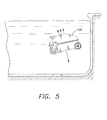
Fig. 5 illustrates another exemplary embodiment of the pool cleaning device in accordance with this invention entering free fall. - To better illustrate the objects and advantages of the pool cleaning vehicle in accordance this invention, a detailed description of the drawing is provided below. As will be appreciated by those skilled in the art, the exemplary embodiments are provided for explanation only and are not to be for purposes of limiting the scope of the invention.
-
Fig. 1 illustrates a schematic of the logic, which forms an integral part of the structure of the pool cleaning vehicle in accordance this invention. -
Fig. 2 has been previously described and as noted above illustrates a typical prior art device reaching and even breaking the surface of the pool water. Thereafter, as illustrated, the pool cleaning device becomes de-stabilized. In this case, the destabilization causes the device to turtle, rolling over on its back. In the turtle position, the user must make manual correction. Quite clearly, the normal operation of cleaning the pool is interrupted, delayed and intervention by the user prevents automation of the operation. Additionally, unless the device has shut-off safeguards, the turtling can result in motor burnout and device replacement. -
Fig. 3 illustrates the normal operation of the pool cleaning vehicle in accordance this invention. The vehicle includes a drive means (not illustrated) for moving the vehicle about the surface of the pool. The vehicle further includes a filtration system having a pump motor for pumping pool water through the vehicle filtration system (not illustrated). The pump creates a suction force sufficient to allow the vehicle to climb the pool walls. In an exemplary embodiment, the motor for the drive means and the pump are one and the same. - The
pool cleaning vehicle 100 includes ahousing 120 having abody shell 122 and a frame (not shown). Theshell 122 is removably attached to the frame. The frame includes a base (not illustrated). Theshell 122 includes a water outlet for removing water from thehousing 120. - In an exemplary embodiment, the
vehicle 100 has a combination of event and timing logic. As illustrated inFig. 1 andFigs. 3 - 5 , the logic includes a command to start thevehicle 100. Upon starting, thevehicle 100 moves forward. As illustrated particularly inFig. 3 , the vehicle moves forward until encountering a wall. - The
vehicle 100 includes a sensor, for example a mercury switch, which conveys information that the vehicle has, in fact, encountered, a wall. The vehicle also includes timing means. So, for example, if the vehicle travels forward for a predetermined time without the sensor sensing the wall, the vehicle is sent a signal to stop and reverse direction. - In an exemplary embodiment, the predetermined time for traveling in a first direction is typically set between 30 and 120 seconds. The time delay is set depending upon the length and width of the pool as well as the running speed of the pool cleaner.
- Typically, the vehicle will reach the wall before timing out and reversing direction. Once the vehicle reaches the wall, the sensor will sense the climbing motion and begin another timer phase. In the climbing timer phase, the vehicle will climb a predetermined time.
- In an exemplary embodiment, the climbing phase is timed differently each time a climb is made. These times are set randomly and encourage the maximum cleaning possible because each pool is constructed differently and each cleaning cycle potentially begins at different locations in a swimming pool. By making the cleaning pattern more random, the entire pool is covered regardless of pool configuration or where the pool cleaner starts its cleaning cycle.
- In some of the climbs, the vehicle will break the surface of the water and allow air into the
housing 120. Thus, thevehicle 100 needs to have a methodology and structure for releasing the acquired air in the housing. - In an exemplary embodiment, the logic in connection with the
vehicle 100 includes a methodology for releasing air from the housing 110 and for keeping thevehicle 100 stable. After the climbing phase has timed out, the pump is shut off and stays off for a predetermined time. In an exemplary embodiment, the pump shut off time is from .2 seconds to 5 seconds. - During the pump shut off phase, the
vehicle 100 drifts. In typical operation, the vehicle will drift away from the wall while the pump is shut off. Additionally, the vehicle will drift downward toward the bottom. - The rate and amount of drift depends upon the buoyancy of the vehicle. Typically, such a vehicle has relatively neutral buoyancy and will drift to the bottom at a relatively slow pace. While it drifts, the pool cleaner may also rotate caused by flotation and gravity, depending upon the vehicle's position orientation at the beginning of the drifting orientation. The pump motor shuts off, randomly, and changes course after the pool cleaner contacts the side wall or pool bottom. Such methodology provides the pool cleaning vehicle more random running time and therefore a better cleaning pattern.
- After reaching the predetermined time out for pump shut off, a signal is sent to the pump to re-start. The pattern described above is repeated until the pool is cleaned based upon the main pool timer.
- The logic may also be event driven. For example, encountering or not encountering a wall is an event. Upon an event taking place, such as either encountering or not countering a wall, breaking the surface of the water, the motor through the logic herein is directed to another phase.
- For example, in an exemplary embodiment, the logic initiates vehicle movement and then upon encountering a wall, activates a sensor, which relays information relative to the distance the vehicle is from the surface of the water. The sensor in an exemplary embodiment also relays when the vehicle or any part thereof has broken the surface of the water.
- Upon the vehicle being a predetermined distance from the surface of the water, the vehicle motor is shut off and the vehicle is allowed to drift away from the water. Upon the sensor relaying information where the vehicle is in relation to the surface of the water, the logic re-initiates the motor and begins to move the vehicle again.
- In an exemplary embodiment, the motor moves the vehicle at the same speed it was previously moving the vehicle. This has the added advantage of a vehicle having only a one speed motor. Of course, in other embodiment, the vehicle may have a two speed motor. The second speed is called hereinafter, the descent speed and is a speed faster than the original travel speed.
- It will be appreciated that despite the fact that the above-described embodiment includes a two-speed motor, that such an embodiment is still novel in the art. This is because previous disclosures have all been concerned with such pool cleaning devices, which would easily de-stabilize once air entered the housing. In order to release the air from breaking the surface of the water, it was previously thought that the air needed to be released slowly and therefore the progress of the device was slowed and as a result the rate of descent was slowed. Overall, this was effective because the vehicle did not turtle as shown in
Fig. 2 , but still the progress of cleaning the pool was slowed because the rate of descent was slowed over the normal travel speed. Additionally, prior disclosures require the pool cleaner with both pump motor and drive motor running to remain at the surface a significant amount of time in order to move sidewise. This methodology further slows down the cleaning process. - In either of the two described embodiments, the normal travel speed of the
vehicle 100 is maintained or in the latter embodiment, actually increased. The only concession to the release of air and caution against instability is the motor shut off for a short duration to time. - In order to accomplish the above objects of the invention and to be consistent with the structure of the
vehicle 100, thevehicle 100 has a relatively low center of gravity. For example, in prior disclosures, such as serial number12//100,414 having a filing date April 10, 2008 12//044,931 having a filing date of Mar 7, 2008 vehicle 100 having such a low center of gravity. - While the foregoing detailed description has described several embodiments of the cleaning vehicle in accordance with this invention, it is to be understood that the above description is illustrative only and not limiting of the disclosed invention. It will be appreciated there are also various modifications of the intake ports and their location on the cleaning vehicle are suitable for use in the exemplary embodiments discussed above and that there are numerous embodiments that are not mentioned but within the scope and spirit of this invention. Thus, the invention is to be limited only by the claims as set forth below.
Claims (17)
- A pool cleaning vehicle having a drive means for moving the vehicle about the surface of the pool, comprising:a housing including:a body shell and a frame, the shell being removable attached to the frame, the frame including a base and the shell including an outlet;
the vehicle including a filtration system having a pump motor for pumping pool water through filtration system, the pump motor creating a suction force, the suction force being sufficient to allow the vehicle to climb the pool walls, the pump motor operating the drive means;
the vehicle able to climb the pool walls and to break the surface of the water;
the vehicle including logic means for first, initiating vehicle movement, second, shutting off pump, and third, re-starting pump; and
the logic means causing the pump to operate at a first primary speed, shutting off the pump upon reaching a predetermined distance in relation to the surface of the water, returning the pump to the first primary speed after shut off. - The pool cleaning vehicle as set forth in Claim 1, wherein the vehicle includes sensor means for determining the distance between vehicle surface of water, the sensor means in communication with the vehicle logic means.
- The pool cleaning vehicle as set forth in Claim 1, wherein the vehicle has a low center of gravity for discouraging turtling.
- The pool cleaning vehicle as set forth in Claim 1, wherein the vehicle drive means and pump comprises a single electrical motor.
- The pool cleaning vehicle as set forth in Claim 4, wherein the motor has a first primary speed and a second faster speed, and wherein the logic means signals the vehicle to operate at the second faster speed after motor shut off and including means for sensing that the bottom of the pool has been reached and thereafter, the logic means returning the vehicle to the first primary speed.
- The pool cleaning vehicle as set forth in Claim 4, wherein the vehicle moves along the pool surface at the primary speed, shuts off and upon re-activation by the logic means, while the vehicle is descending the pool wall, the logic means sends a signal to the vehicle to operate at the faster descent speed for a pre-determined time; after a pre-determined period of time, the logic means sends a signal to the motor to return to the primary speed.
- A pool cleaning vehicle having a drive means for moving the vehicle about the surface of the pool, the vehicle including a filtration system having a pump motor for pumping pool water through the vehicle filtration system, the pump creating a suction force, the suction force being sufficient to allow the vehicle to climb the pool walls, comprising:a housing including:a body shell and a frame, the shell being removable attached to the frame, the frame including a base and the shell including an outlet;
sensor means for determining when the vehicle breaks the surface of the water; and
event driven logic means to determine, first when to initiate the drive means; second, to determine when the vehicle breaks the surface of the water; third, to shut off the pump and drive motor when the vehicle breaks the surface of the water; fourth, to re-activate the pump and drive motor when the vehicle breaks the surface of the water. - A pool cleaning vehicle having a drive means for moving the vehicle about the surface of the pool, the vehicle including a filtration system having a pump motor for pumping pool water through the vehicle filtration system, the pump creating a suction force, the suction force being sufficient to allow the vehicle to climb the pool walls, comprising:a housing including:a body shell and a frame, the shell being removable attached to the frame, the frame including a base and the shell including an outlet;
sensor means for determining when the vehicle is climbing a wall; andtime driven logic means, initiating pump shut off after a pre-determined time when vehicle begins climbing the pool wall; andre-starting the pump in a pre-determined time after shut off. - The pool cleaning vehicle as set forth in any of Claims 1, 7 and 8, wherein the vehicle releases air through the outlet after motor shut off.
- A pool cleaning vehicle having a drive means for moving the vehicle about the surface of the pool, the vehicle including a filtration system having a pump motor for pumping pool water through the vehicle filtration system, the pump creating a suction force, the suction force being sufficient to allow the vehicle to climb the pool walls, and the vehicle including logic means, the logic means comprising the steps of:initiating the vehicle drive means for movement along the surface of the pool;moving the vehicle until contact with the wall is sensed by a sensor;timing vehicle movement, if no wall is sensed within a first predetermined period of time, vehicle direction is reversed;upon sensing a wall, timing the movement for a second predetermined period of time;after reaching the second predetermined period of time, shutting off the drive means for a third predetermined period of time;after reaching the third pre-determined time for shut off, re-starting the motor; andrepeating the above pattern.
- The pool cleaning vehicle as set forth in Claim 10, wherein the first predetermined period of time is between 30 and 120 seconds.
- The pool cleaning vehicle as set forth in Claim 10, wherein the second predetermined period is between 3 and 20 seconds.
- The pool cleaning vehicle as set forth in Claim 10, wherein the third predetermined period of time is between .2 and 5 seconds.
- A pool cleaning vehicle having a drive means for moving the vehicle about the surface of the pool, the vehicle including a first sensor for sensing an encounter with a pool wall, a second sensor for sensing the distance between the pool water surface and the vehicle and a third sensor for sensing a predetermined vehicle travel distance, the vehicle including a filtration system having a pump motor for pumping pool water through the vehicle filtration system, the pump creating a suction force, the suction force being sufficient to allow the vehicle to climb the pool walls, and the pump motor serving as a motor for the drive means and the vehicle including logic means, the logic means performing the steps of:initiating the vehicle drive means for movement along the surface of the pool;moving the vehicle until contact with a wall is sensed by a sensor;or, in the alternative after going a predetermined travel distance, reversing the direction of the vehicle;upon sensing a wall, activating a new travel distance sensor and causing the vehicle to travel a second predetermined distance;after reaching the second predetermined distance, shutting off the drive means and activating the sensor for sensing the distance from the surface of the water;upon receiving a predetermined distance from the surface of the water, reactiving the motor;after reaching the third pre-determined time for shut off, re-starting the motor; andrepeating the above pattern.
- The pool cleaning vehicle as set forth in Claim 14, wherein the vehicle includes a two speed motor and whereupon reactivating the motor, the motor operates at a second speed faster than the first speed.
- The pool cleaning vehicle as set forth in Claim 10, wherein the motor operates at the second faster speed until a predetermined distance from the surface of the pool is reached and thereafter returning the motor to the slower first speed.
- The pool cleaning vehicle as set forth in any of Claims 14, wherein the vehicle releases air through the outlet after motor shut off.
Applications Claiming Priority (1)
| Application Number | Priority Date | Filing Date | Title |
|---|---|---|---|
| US12/551,098 US8623201B2 (en) | 2009-08-31 | 2009-08-31 | Pool cleaning vehicle having improved logic |
Publications (2)
| Publication Number | Publication Date |
|---|---|
| EP2290172A2 true EP2290172A2 (en) | 2011-03-02 |
| EP2290172A3 EP2290172A3 (en) | 2012-09-19 |
Family
ID=43091734
Family Applications (1)
| Application Number | Title | Priority Date | Filing Date |
|---|---|---|---|
| EP10174398A Withdrawn EP2290172A3 (en) | 2009-08-31 | 2010-08-27 | A pool cleaning vehicle having improved logic |
Country Status (3)
| Country | Link |
|---|---|
| US (1) | US8623201B2 (en) |
| EP (1) | EP2290172A3 (en) |
| CN (1) | CN102003090B (en) |
Cited By (2)
| Publication number | Priority date | Publication date | Assignee | Title |
|---|---|---|---|---|
| WO2013060984A1 (en) * | 2011-10-27 | 2013-05-02 | Zodiac Pool Care Europe | Apparatus for cleaning a submerged surface with semi‑automatic return command |
| EP3510216B1 (en) * | 2016-09-06 | 2024-11-06 | Zodiac Pool Systems, Inc. | Buoyant automatic cleaners |
Families Citing this family (25)
| Publication number | Priority date | Publication date | Assignee | Title |
|---|---|---|---|---|
| FR2954381B1 (en) * | 2009-12-22 | 2013-05-31 | Zodiac Pool Care Europe | IMMERED SURFACE CLEANER APPARATUS HAVING AN ACCELEROMETRIC DEVICE DETECTING GRAVITATIONAL ACCELERATION |
| US8792869B2 (en) * | 2011-05-18 | 2014-07-29 | Qualcomm Incorporated | Method and apparatus for using proximity sensing for augmented reality gaming |
| US9388595B2 (en) * | 2012-07-10 | 2016-07-12 | Aqua Products, Inc. | Pool cleaning system and method to automatically clean surfaces of a pool using images from a camera |
| FR3008442B1 (en) * | 2013-07-11 | 2015-08-21 | Hexagone | METHOD OF CLEANING A BASIN USING A ROBOT |
| CN104199447B (en) * | 2014-08-18 | 2017-02-15 | 江苏科技大学 | underwater structure detection robot control system and motion control method |
| US20180155945A1 (en) * | 2015-05-29 | 2018-06-07 | Aqua Products, Inc. | Self-propelled robotic swimming pool cleaner with extendible arms for climbing out of a swiiming pool |
| US10619371B2 (en) | 2015-06-22 | 2020-04-14 | Aqua Products, Inc. | Robotic cleaner with extended brush assembly |
| US20190243379A1 (en) * | 2016-09-08 | 2019-08-08 | Aquatron Robotic Technology Ltd. | Navigation of robotic pool cleaner |
| US10550594B2 (en) | 2017-04-20 | 2020-02-04 | International Business Machines Corporation | Automated cleaning device |
| US10214933B2 (en) | 2017-05-11 | 2019-02-26 | Hayward Industries, Inc. | Pool cleaner power supply |
| IL259196B (en) | 2018-05-08 | 2021-07-29 | Aquatron Robotic Tech Ltd | Robot for cleaning pools with a limitation of climbing on stairs |
| CN108661361A (en) * | 2018-05-29 | 2018-10-16 | 广东工业大学 | A kind of swimming pool cleaning device |
| CN111350383A (en) * | 2018-12-21 | 2020-06-30 | 宝时得科技(中国)有限公司 | Cleaning robot |
| CN210239261U (en) | 2019-05-21 | 2020-04-03 | 明达实业(厦门)有限公司 | Wheel brush fixing structure of pool cleaner |
| USD939795S1 (en) | 2019-10-31 | 2021-12-28 | Intex Marketing Ltd. | Pool cleaning device |
| CN110886522A (en) * | 2019-11-04 | 2020-03-17 | 杭州西子智能停车股份有限公司 | a vehicle carrier |
| USD1089909S1 (en) | 2021-04-02 | 2025-08-19 | Intex Industries Xiamen Co. Ltd. | Pool cleaning device |
| CN114687594B (en) * | 2022-04-28 | 2025-07-29 | 浙江阔创科技有限公司 | Gesture stable structure of swimming pool dirt sucking machine |
| CN116166018A (en) * | 2023-02-21 | 2023-05-26 | 湖北一沐电子科技有限公司 | Swimming pool cleaning robot control method and device |
| CN118582091A (en) * | 2023-03-01 | 2024-09-03 | 东莞标宝智能科技有限公司 | A pool cleaning machine |
| CN118686464A (en) * | 2023-03-23 | 2024-09-24 | 兆略有限公司 | A pool cleaning machine and a wall climbing method thereof |
| EP4517465A3 (en) * | 2023-04-27 | 2025-06-11 | Xingmai Innovation Technology (Suzhou) Co., Ltd. | Moving devices used in liquid and pool cleaning robots |
| US12516538B2 (en) | 2023-04-27 | 2026-01-06 | Xingmai Innovation Technology (Suzhou) Co., Ltd. | Swimming pool robot and method for controlling swimming pool robot |
| AU2024262807A1 (en) | 2023-04-27 | 2025-08-21 | Xingmai Innovation Technology (Suzhou) Co., Ltd. | Moving apparatus, cleaning device, and cleaning device control method |
| WO2025201313A1 (en) * | 2024-03-25 | 2025-10-02 | 深圳库犸科技有限公司 | Cleaning robot |
Citations (3)
| Publication number | Priority date | Publication date | Assignee | Title |
|---|---|---|---|---|
| US5337434A (en) * | 1993-04-12 | 1994-08-16 | Aqua Products, Inc. | Directional control means for robotic swimming pool cleaners |
| US6099658A (en) | 1998-09-29 | 2000-08-08 | Aqua Products Inc. | Apparatus and method of operation for high-speed swimming pool cleaner |
| US10041408B2 (en) | 2015-02-13 | 2018-08-07 | United Technologies Corporation | Turbine engine with a turbo-compressor |
Family Cites Families (9)
| Publication number | Priority date | Publication date | Assignee | Title |
|---|---|---|---|---|
| US6412133B1 (en) * | 1999-01-25 | 2002-07-02 | Aqua Products, Inc. | Water jet reversing propulsion and directional controls for automated swimming pool cleaners |
| US6627074B2 (en) * | 2001-01-30 | 2003-09-30 | Filter Specialists, Inc. | Filter element for swimming pool cleaner |
| CN1743630A (en) * | 2004-09-02 | 2006-03-08 | 卓景顾问有限公司 | Pool cleaner and cleaning method thereof |
| WO2007047827A1 (en) * | 2005-10-18 | 2007-04-26 | Aquatron Inc. | Customized programmable pool cleaner method and apparatus |
| CN100497871C (en) * | 2006-03-07 | 2009-06-10 | 卓景顾问有限公司 | Water power driven pool cleaning machine |
| CN100593621C (en) * | 2007-04-03 | 2010-03-10 | 水疗动力有限公司 | pool cleaning machine |
| CN101285348A (en) * | 2007-04-10 | 2008-10-15 | 胜利宝有限公司 | pool cleaning machine |
| CN100507188C (en) * | 2008-09-04 | 2009-07-01 | 付桂兰 | A swimming pool automatic cleaning machine |
| CN101481957B (en) * | 2009-02-05 | 2011-06-08 | 天津望圆工贸有限责任公司 | Remote control ordered swimming pool cleaning robot and ordered cleaning method thereof |
-
2009
- 2009-08-31 US US12/551,098 patent/US8623201B2/en not_active Expired - Fee Related
-
2010
- 2010-08-27 EP EP10174398A patent/EP2290172A3/en not_active Withdrawn
- 2010-08-31 CN CN 201010271496 patent/CN102003090B/en not_active Expired - Fee Related
Patent Citations (3)
| Publication number | Priority date | Publication date | Assignee | Title |
|---|---|---|---|---|
| US5337434A (en) * | 1993-04-12 | 1994-08-16 | Aqua Products, Inc. | Directional control means for robotic swimming pool cleaners |
| US6099658A (en) | 1998-09-29 | 2000-08-08 | Aqua Products Inc. | Apparatus and method of operation for high-speed swimming pool cleaner |
| US10041408B2 (en) | 2015-02-13 | 2018-08-07 | United Technologies Corporation | Turbine engine with a turbo-compressor |
Cited By (4)
| Publication number | Priority date | Publication date | Assignee | Title |
|---|---|---|---|---|
| WO2013060984A1 (en) * | 2011-10-27 | 2013-05-02 | Zodiac Pool Care Europe | Apparatus for cleaning a submerged surface with semi‑automatic return command |
| FR2981970A1 (en) * | 2011-10-27 | 2013-05-03 | Zodiac Pool Care Europe | IMMEREDE SURFACE CLEANER APPARATUS WITH SEMI-AUTOMATIC RETURN CONTROL |
| US9487963B2 (en) | 2011-10-27 | 2016-11-08 | Zodiac Pool Care Europe | Apparatus for cleaning submerged surfaces with a semi-automatic return command |
| EP3510216B1 (en) * | 2016-09-06 | 2024-11-06 | Zodiac Pool Systems, Inc. | Buoyant automatic cleaners |
Also Published As
| Publication number | Publication date |
|---|---|
| CN102003090B (en) | 2013-05-15 |
| US20110049023A1 (en) | 2011-03-03 |
| CN102003090A (en) | 2011-04-06 |
| US8623201B2 (en) | 2014-01-07 |
| EP2290172A3 (en) | 2012-09-19 |
Similar Documents
| Publication | Publication Date | Title |
|---|---|---|
| US8623201B2 (en) | Pool cleaning vehicle having improved logic | |
| ES2281948T3 (en) | APPLIANCE AND OPERATION PROCEDURE FOR A HIGH SPEED POOL CLEANER. | |
| CN101555730B (en) | pool cleaning vehicle | |
| AU2015242489B2 (en) | Swimming-pool cleaning robot with adjustable pumping power | |
| ES2783886T3 (en) | Self-propelled pool cleaning robot | |
| AU2012328263B2 (en) | Apparatus for cleaning a submerged surface with semi-automatic return command | |
| EP1472425A4 (en) | SWIMMING POOL CLEANING DEVICE | |
| US10400467B2 (en) | Swimming pool cleaning device with obstacle clearing system | |
| PT1200693E (en) | AQUATIC RESCUE AND SAFETY DEVICE | |
| CN105905253A (en) | Cleaning robot for pollution floaters on water surface | |
| ES2140029T3 (en) | CONTROL FOR AN ELECTRICALLY OPERATED CHANGE MECHANISM. | |
| ES2234962T3 (en) | PROCEDURE AND APPARATUS FOR CLEANING POOLS. | |
| CN201250528Y (en) | Automatically-reversing device of swimming pool cleaner | |
| CN103015513A (en) | Toilet bowl device | |
| AU2020326394B2 (en) | Systems and methods of operating automatic swimming pool cleaners with enhanced cycle times | |
| ES2606979T3 (en) | Procedure for cleaning a tank using a robot | |
| CN109365436A (en) | A cleaning robot in a closed environment and its cleaning method | |
| KR20230149948A (en) | Rake fixed position apparatus of screen of waste removal machine | |
| KR200259071Y1 (en) | Apparatus for cleaning tunnel | |
| CN1743630A (en) | Pool cleaner and cleaning method thereof | |
| JP2007029328A (en) | Self-propelled vacuum cleaner and its program | |
| JP3778858B2 (en) | Floating stage structure | |
| CN121755503A (en) | Control method of automatic pool cleaning device, automatic pool cleaning device and computer storage medium | |
| WO2008020423A3 (en) | Swimming pool cleaner control | |
| CN115415294A (en) | A deep groundwater precipitation device for soil and groundwater restoration |
Legal Events
| Date | Code | Title | Description |
|---|---|---|---|
| PUAI | Public reference made under article 153(3) epc to a published international application that has entered the european phase |
Free format text: ORIGINAL CODE: 0009012 |
|
| AK | Designated contracting states |
Kind code of ref document: A2 Designated state(s): AL AT BE BG CH CY CZ DE DK EE ES FI FR GB GR HR HU IE IS IT LI LT LU LV MC MK MT NL NO PL PT RO SE SI SK SM TR |
|
| AX | Request for extension of the european patent |
Extension state: BA ME RS |
|
| 17P | Request for examination filed |
Effective date: 20110316 |
|
| PUAL | Search report despatched |
Free format text: ORIGINAL CODE: 0009013 |
|
| AK | Designated contracting states |
Kind code of ref document: A3 Designated state(s): AL AT BE BG CH CY CZ DE DK EE ES FI FR GB GR HR HU IE IS IT LI LT LU LV MC MK MT NL NO PL PT RO SE SI SK SM TR |
|
| AX | Request for extension of the european patent |
Extension state: BA ME RS |
|
| RIC1 | Information provided on ipc code assigned before grant |
Ipc: E04H 4/16 20060101AFI20120816BHEP |
|
| RAP1 | Party data changed (applicant data changed or rights of an application transferred) |
Owner name: SMARTPOOL, INCORPORATED |
|
| RAP1 | Party data changed (applicant data changed or rights of an application transferred) |
Owner name: SMARTPOOL LLC |
|
| RAP1 | Party data changed (applicant data changed or rights of an application transferred) |
Owner name: SMARTPOOL LLC |
|
| 17Q | First examination report despatched |
Effective date: 20140613 |
|
| STAA | Information on the status of an ep patent application or granted ep patent |
Free format text: STATUS: THE APPLICATION IS DEEMED TO BE WITHDRAWN |
|
| 18D | Application deemed to be withdrawn |
Effective date: 20141224 |