EP2289951A1 - Partially hydrogenated aromatic polymer and method for partionally hydrogenating aromatic polymer - Google Patents
Partially hydrogenated aromatic polymer and method for partionally hydrogenating aromatic polymer Download PDFInfo
- Publication number
- EP2289951A1 EP2289951A1 EP10174519A EP10174519A EP2289951A1 EP 2289951 A1 EP2289951 A1 EP 2289951A1 EP 10174519 A EP10174519 A EP 10174519A EP 10174519 A EP10174519 A EP 10174519A EP 2289951 A1 EP2289951 A1 EP 2289951A1
- Authority
- EP
- European Patent Office
- Prior art keywords
- hydrogenated
- polymer
- block
- vinyl aromatic
- percent
- Prior art date
- Legal status (The legal status is an assumption and is not a legal conclusion. Google has not performed a legal analysis and makes no representation as to the accuracy of the status listed.)
- Granted
Links
Images


Classifications
-
- C—CHEMISTRY; METALLURGY
- C08—ORGANIC MACROMOLECULAR COMPOUNDS; THEIR PREPARATION OR CHEMICAL WORKING-UP; COMPOSITIONS BASED THEREON
- C08F—MACROMOLECULAR COMPOUNDS OBTAINED BY REACTIONS ONLY INVOLVING CARBON-TO-CARBON UNSATURATED BONDS
- C08F8/00—Chemical modification by after-treatment
- C08F8/04—Reduction, e.g. hydrogenation
-
- C—CHEMISTRY; METALLURGY
- C08—ORGANIC MACROMOLECULAR COMPOUNDS; THEIR PREPARATION OR CHEMICAL WORKING-UP; COMPOSITIONS BASED THEREON
- C08C—TREATMENT OR CHEMICAL MODIFICATION OF RUBBERS
- C08C19/00—Chemical modification of rubber
- C08C19/02—Hydrogenation
-
- C—CHEMISTRY; METALLURGY
- C08—ORGANIC MACROMOLECULAR COMPOUNDS; THEIR PREPARATION OR CHEMICAL WORKING-UP; COMPOSITIONS BASED THEREON
- C08F—MACROMOLECULAR COMPOUNDS OBTAINED BY REACTIONS ONLY INVOLVING CARBON-TO-CARBON UNSATURATED BONDS
- C08F112/00—Homopolymers of compounds having one or more unsaturated aliphatic radicals, each having only one carbon-to-carbon double bond, and at least one being terminated by an aromatic carbocyclic ring
- C08F112/02—Monomers containing only one unsaturated aliphatic radical
- C08F112/04—Monomers containing only one unsaturated aliphatic radical containing one ring
- C08F112/06—Hydrocarbons
-
- C—CHEMISTRY; METALLURGY
- C08—ORGANIC MACROMOLECULAR COMPOUNDS; THEIR PREPARATION OR CHEMICAL WORKING-UP; COMPOSITIONS BASED THEREON
- C08F—MACROMOLECULAR COMPOUNDS OBTAINED BY REACTIONS ONLY INVOLVING CARBON-TO-CARBON UNSATURATED BONDS
- C08F236/00—Copolymers of compounds having one or more unsaturated aliphatic radicals, at least one having two or more carbon-to-carbon double bonds
- C08F236/02—Copolymers of compounds having one or more unsaturated aliphatic radicals, at least one having two or more carbon-to-carbon double bonds the radical having only two carbon-to-carbon double bonds
- C08F236/04—Copolymers of compounds having one or more unsaturated aliphatic radicals, at least one having two or more carbon-to-carbon double bonds the radical having only two carbon-to-carbon double bonds conjugated
- C08F236/10—Copolymers of compounds having one or more unsaturated aliphatic radicals, at least one having two or more carbon-to-carbon double bonds the radical having only two carbon-to-carbon double bonds conjugated with vinyl-aromatic monomers
-
- C—CHEMISTRY; METALLURGY
- C08—ORGANIC MACROMOLECULAR COMPOUNDS; THEIR PREPARATION OR CHEMICAL WORKING-UP; COMPOSITIONS BASED THEREON
- C08F—MACROMOLECULAR COMPOUNDS OBTAINED BY REACTIONS ONLY INVOLVING CARBON-TO-CARBON UNSATURATED BONDS
- C08F297/00—Macromolecular compounds obtained by successively polymerising different monomer systems using a catalyst of the ionic or coordination type without deactivating the intermediate polymer
- C08F297/02—Macromolecular compounds obtained by successively polymerising different monomer systems using a catalyst of the ionic or coordination type without deactivating the intermediate polymer using a catalyst of the anionic type
- C08F297/04—Macromolecular compounds obtained by successively polymerising different monomer systems using a catalyst of the ionic or coordination type without deactivating the intermediate polymer using a catalyst of the anionic type polymerising vinyl aromatic monomers and conjugated dienes
Definitions
- the present invention relates to partially hydrogenating unsaturated polymer, more particularly unsaturated polymer containing vinyl aromatic groups, under the condition of heterogeneous catalyst.
- conjugated diene and vinyl aromatic groups such as tri-block or penta-block copolymer of styrene-butadiene or styrene-isoprene
- polymer improvers for example, adhesives, soles, and polymer improvers.
- the conjugated diene group and vinyl aromatic group are prone to cracking due to heat or oxidation if exposed to ultra-violet light or other unfavorable environment, and thus become unstable.
- Substantially saturating the polymers by hydrogenation may improve the stability of the polymers, which are broadly used in flexible materials, biomedical material, etc.
- There are many patents involved in this technology such as US 5,352,744 which discloses a completely hydrogenated polymer having a saturation degree higher than 99.5% for aromatic/polydiene groups.
- US 6,841,626 also discloses a hydrogenated polymer with a saturation degree of polystyrene group in 98.4 %.
- the partial saturation technology provides polymers with saturation degrees of aromatic groups either too high or too low.
- the saturation degree higher than 90% is unflavored due to the loss of chain flexibility.
- the saturation degree lower than 20% is also undesired due to the insufficient stability. Therefore, there is a need to provide a new partially hydrogenated polymer with an appropriate saturation degree to fit the application requirements.
- One aspect of the present invention is to provide a partially hydrogenated polymer with an appropriate saturation degree, i.e. the appropriate amount of double bond on the aromatic block.
- the present invention provides a hydrogenated polymer, comprising at least one hydrogenated conjugated diene block; and at least one hydrogenated vinyl aromatic block having a carbon ring linking with a backbone of the hydrogenated polymer, wherein the average weight percent of the hydrogenated vinyl aromatic block(s) having only one and two double bonds on the carbon ring is between 1-30 wt %, preferably between 2-20wt % based on the total weight of the hydrogenated polymer.
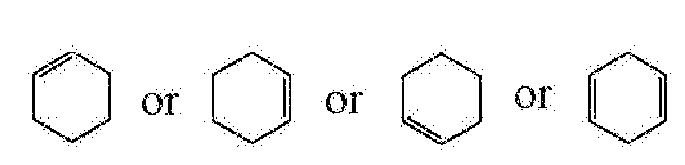
- Another aspect of the present invention is to partially hydrogenate the conjugated diene block and the aromatic block of the polymers using heterogeneous catalyst. More particularly, the hydrogenation level of conjugated diene polymer block is greater than 95% while the aromatic group is converted to a moiety such as cyclohexene, cyclohexane or cyclohexadiene via partial hydrogenation.
- the hydrogenation level of the aromatic block is between 20% ⁇ 90%, more preferably between 25% ⁇ 80%, and more preferably between 30% ⁇ 60%. That is to keep an appropriate amount of double bond on the carbon ring, so as to facilitate the following functionalization reactions or partial crosslinking reactions
- the present invention provides a hydrogenated polymer, consisting essentially of at least one hydrogenated vinyl aromatic block having a carbon ring linking with a backbone of the hydrogenated polymer. That is, the hydrogenated polymer is in absence of hydrogenated conjugated diene block.
- the average weight percent of the hydrogenated vinyl aromatic block(s) having only one and two double bonds on the carbon ring is between 1-30 wt%, preferably between 2-20 wt%, most preferably between 2-15wt % based on the total weight of the hydrogenated polymer.
- Another aspect of the present invention is to partially hydrogenate the aromatic block of the polymer in absence of conjugated diene using heterogeneous catalyst. More particularly, the aromatic group is converted to a moiety such as cyclohexene, cyclohexane or cyclohexadiene via partial hydrogenation.
- the hydrogenation level of the aromatic block is between 20% ⁇ 90%, more preferably between 25% ⁇ 80%, and more preferably between 30% ⁇ 60%. That is, the hydrogenation level of the aromatic group is optimized to keep an appropriate amount of double bonds on the carbon ring, so as to facilitate the following functionalization reactions or partial crosslinking reactions.
- the invention still includes other aspects to resolve other problems, some of which will be described in detail together with the abovementioned aspects in the following detail description.
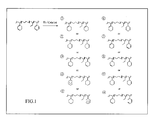
- FIG. 1 shows some exemplary embodiments of the first hydrogenated polymers in
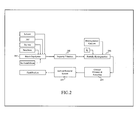
- FIG. 2 shows a process for manufacturing the first hydrogenated polymer in
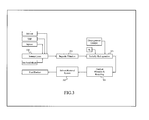
- FIG. 3 shows a process for manufacturing the second hydrogenated polymer in accordance with an embodiment of the present invention.
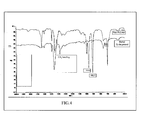
- FIG. 4 shows the FT-IR spectrums of the based polymer (i.e. polymer without hydrogenation) and the hydrogenated block copolymer in accordance with an embodiment of the present invention.
- FIG. 5 shows the H-NMR spectrum of the hydrogenated block copolymer in
- FIG. 6 shows the H-NMR spectrum of partial hydrogenated polystyrene in
- FIG. 7 shows the H-NMR spectrum of the hydrogenated tri-block copolymer in
- FIG. 8 shows the 2D H-MBC (Heteronuclear multiple bond coherence) spectrum of the hydrogenated tri-block copolymer in accordance with one embodiment of the present invention.
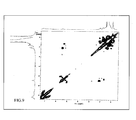
- FIG. 9 shows the 2D COSY (Correlation spectroscopy) spectrum of the hydrogenated tri-block copolymer in accordance with one embodiment of the present invention.
- the hydrogenated polymers of the present invention can be classified into two classes.
- the first class is a first hydrogenated polymer including at least one hydrogenated vinyl aromatic block and at least one hydrogenated conjugated diene block.
- the total weight average molecular weight (Mw) of the first hydrogenated polymer is from 5,000 to 400,000, more preferably from 5,000 to 200,000, most preferably from 20,000 to 100,000.
- the total weight average molecular weight (Mw) is determined by gel permeation chromatography (GPC) that is familiar to the skilled person in the art.
- the first hydrogenated polymer is characterized in that the average weight percent of the hydrogenated vinyl aromatic block(s) having only one and two double bonds on the carbon ring is between 1-30 wt%, preferably between 2-20wt % based on the total weight of the first hydrogenated polymer, which is determined using nuclear magnetic resonance apparatus (NMR).
- NMR nuclear magnetic resonance apparatus
- the first hydrogenated polymer is further characterized in that the average hydrogenation level for the hydrogenated vinyl aromatic block is between 20 percent and 90 percent, preferably between 25 percent and 80 percent; and more preferably between 30 percent and 60 percent; and the average hydrogenation level for the hydrogenated conjugated diene block is preferably greater than 95 percent.
- the average hydrogenation level is determined using UV-VIS spectroscopy that is familiar to the skilled person in the art.
- the chemical structure of the first hydrogenated polymer is depicted as below, but not limited thereto:
- FIG. 1 also shows some exemplary embodiments of the first hydrogenated polymers in accordance with the present invention.
- the first hydrogenated polymer includes from 5 to 95 weight percent hydrogenated vinyl aromatic polymer and 5 to 95 weight percent hydrogenated conjugated diene polymer, based on the total weight of the hydrogenated block copolymer.
- the vinyl aromatic monomer is styrene and the conjugated diene monomer is butadiene or isoprene.
- the hydrogenated polybutadiene is obtained from the hydrogenation of a polybutadiene.
- the hydrogenated conjugated diene polymer is hydrogenated polyisoprene.
- the monomers of the present invention are not limited to styrene, butadiene and isoprene. Any suitable derivatives thereof can be used in the present invention.
- a monomer of the hydrogenated vinyl aromatic block can be independently selected from the group consisting of styrene, all isomers of methylstyrene, all isomers of ethylstyrene, cyclohexylstyrene, vinyl biphenyl, 1-vinyl-5-hexyl naphthalene, vinyl naphthalene, vinyl anthracene, and any combination thereof.
- a monomer of the hydrogenated conjugated diene block can be independently selected from the group consisting of 1,3-butadiene, 2,3-dimethyl-1,3-butadiene, 3-butyl-1,3- octadiene, isoprene, 1-methylbutadiene, 2-phenyl-1,3-butadiene, and any combination thereof.
- the second class is a second hydrogenated polymer essentially consisting of at least one hydrogenated vinyl aromatic block. That is, the second hydrogenated polymer is in absence of hydrogenated conjugated diene block.
- the total weight average molecular weight (Mw) of the second hydrogenated polymer is from 5,000 to 150,000, more preferably from 5,000 to 100,000.
- the total weight average molecular weight (Mw) is determined by gel permeation chromatography (GPC) that is familiar to the skilled person in the art.
- the second hydrogenated polymer is characterized in that the average weight percent (DB%) of the hydrogenated vinyl aromatic block(s) having only one and two double bonds on the carbon ring is preferably between 1-30 wt%, more preferably between 2-20 wt%, most preferably between 2-15 wt % based on the total weight of the second hydrogenated polymer, which is determined using nuclear magnetic resonance apparatus (NMR).
- NMR nuclear magnetic resonance apparatus
- the DB% determination method is described is described in the following paragraphs.
- the second hydrogenated polymer is further characterized in that the average hydrogenation level for the hydrogenated vinyl aromatic block is between 20 percent and 90 percent, preferably between 25 percent and 80 percent; and more preferably between 30 percent and 60 percent.
- the average hydrogenation level is determined using UV-VIS spectroscopy that is familiar to the skilled person in the art.
- the vinyl aromatic monomer is styrene.
- the monomers of the present invention are not limited to styrene. Any suitable derivatives thereof can be used in the present invention.
- a monomer of the hydrogenated vinyl aromatic block can be independently selected from the group consisting of styrene, all isomers of methylstyrene, all isomers of ethylstyrene, cyclohexylstyrene, vinyl biphenyl, 1-vinyl-5-hexyl naphthalene, vinyl naphthalene, vinyl anthracene, and any combination thereof.
- FIG. 2 shows a process for manufacturing the first hydrogenated polymer in accordance with an embodiment of the present invention.
- the process is performed by way of Steps 201-205, but not limited thereto.
- Step 201 is to form block copolymer through polymerization.
- Step 202 is to remove impurities.
- Step 203 is to partially hydrogenate the block copolymer.
- Step 204 is to recover the catalyst for reuse.
- Step 205 is to remove the solvent.
- a polymerization initiator such as an organolithium compound, is used to form a block copolymer.
- the block copolymer has a weight average molecular weight between 5,000 and 400,000, more preferably between 5,000 and 200,000, and most preferably between 20,000 to 100,000.
- the block copolymer is a triblock copolymer of vinyl aromatic polymer block - conjugated diene polymer block - vinyl aromatic polymer block.
- the block copolymer is a pentablock copolymer of vinyl aromatic polymer block - conjugated diene polymer block - vinyl aromatic polymer block - conjugated diene polymer block - vinyl aromatic polymer block.
- the weight ratio of the vinyl aromatic polymer block to the conjugated diene polymer block in the block copolymer is from about 5: 95 to about 95:5, preferably.from about 10:90 to about 90:10
- the block copolymer of a vinyl aromatic polymer block and a conjugated diene polymer block is hydrogenated by contacting with a hydrogenating agent, such as hydrogen gas, in the presence of a hydrogenation catalyst to obtain a polymer solution including a partially hydrogenated block copolymer having a hydrogenation level of greater than 20 percent and less than 90 percent.
- the hydrogenation catalyst includes an element from Group VIII transition metal of the periodic table, and is preferably selected from a group consisting of a palladium, ruthenium, and nickel.
- the hydrogenation catalyst support includes BaSO 4 , Al 2 O 3 , TiO 2 , ZrO 2 , active carbon, and any combination thereof.
- the hydrogenation catalyst support is preferably with pore sizes only distributed less than 500 angstrom because the pore sizes greater than 500 angstrom tends to raise the hydrogenation level due to the increased contact surface area.
- the pore size distribution is measured using gas adsorption/desorption isotherm that is familiar to the skilled person in the art.
- Step 204 of this embodiment is performed to filter the catalyst from the polymer solution.
- an antioxidant such as hindered phenolic antioxidant, is added into the polymer solution.
- Step 205 is performed in which the solvent is removed from the polymer solution by a flash devolatilization at a temperature of 200°C to 300°C and a pressure of 1 to 10 Bar(s) to obtain a concentrated polymer solution with a residual solvent in an amount of 1 to 50 weight percent based on the total weight of the concentrated polymer solution.
- the residual solvent is removed from the concentrated polymer solution by a devolatilizer at a pressure below 100 torrs to isolate the hydrogenated block copolymer, and more preferably below 10 torrs.
- the devolatilizer may be a twin-screw extruder or a film evaporator.
- the concentrated polymer solution is performed by a twin-screw extruder at a temperature of 200°C to 300°C.
- FIG. 3 shows a process for manufacturing the second hydrogenated polymer in accordance with an embodiment of the present invention.
- the process is performed by way of Steps 301-305, but not limited thereto.
- Step 301 is to form a polymer through polymerization.
- Step 302 is to remove impurities.
- Step 303 is to partially hydrogenate the polymer.
- Step 304 is to recover the catalyst for reuse.
- Step 305 is to remove the solvent.
- a polymerization initiator such as an organolithium compound
- Step 302 is performed in which the organolithium compound is optionally filtered.
- the vinyl aromatic polymer has a weight average molecular weight between 5,000 and 150,000, and more preferably between 5,000 and 100,000.
- the vinyl aromatic polymer is hydrogenated by contacting with a hydrogenating agent, such as hydrogen gas, in the presence of a hydrogenation catalyst to obtain a polymer solution including a partially hydrogenated block having a hydrogenation level of greater than 20 percent and less than 90 percent.
- a hydrogenating agent such as hydrogen gas
- the hydrogenation catalyst includes an element from Group VIII transition metal of the periodic table, and is preferably selected from a group consisting of a palladium, ruthenium, and nickel.
- the hydrogenation catalyst support includes BaSO 4 , Al 2 O 3 , TiO 2 , ZrO 2 , active carbon and any combination thereof.
- the hydrogenation catalyst support is preferably with pore sizes only distributed less than 500 angstrom because the pore sizes greater than 500 angstrom tends to raise the hydrogenation level due to the increased contact surface area.
- the pore size distribution is measured using gas adsorption/desorption isotherm that is familiar to the skilled person in the art.
- Step 304 of this embodiment is performed to filter the catalyst from the polymer solution.
- an antioxidant such as hindered phenolic antioxidant, is added into the polymer solution.
- Step 305 is performed in which the solvent is removed from the polymer solution by a flash devolatilization at a temperature of 200°C to 300°C and a pressure of 1 to 10 Bar(s) to obtain a concentrated polymer solution with a residual solvent in an amount of 1 to 50 weight percent based on the total weight of the concentrated polymer solution.
- the residual solvent is removed from the concentrated polymer solution by a devolatilizer at a pressure below 100 torrs to isolate the hydrogenated polymer, and more preferably below 10 torrs.
- the devolatilizer may be a twin-screw extruder or a film evaporator.
- the concentrated polymer solution is performed by a twin-screw extruder at a temperature of 200°C to 300°C.
- Embodiments 1-7 show the preferred examples of making the first hydrogenated polymers.
- the process of polymerization utilizes the cyclohexane as solvent with slight tetrahydrofuran (THF) as polar modifier and sec-butyllithium as polymerization initiator.
- THF tetrahydrofuran
- Styrene, butadiene or isoprene is used as reaction monomers.
- the solvent, promoter and monomer can be purified by activated alumina.
- the reaction is performed in an autoclave with an agitator.
- the reaction process is summarized as following steps:
- 1,245 g of solution with polystyrene - polybutadiene - polystyrene triblock copolymer having a weight average molecular weight (Mw) of 22,000 may be obtained.
- the monomers of butadiene and styrene are added separately.
- the monomers may add at the same time for getting random type copolymers.
- the hydrogenated block copolymers are sampled and processed by FT-IR or H-NMR to analyze its microstructure.
- FIG. 4 shows the FT-IR spectrums of the based polymer (i.e. polymer without hydrogenation) and the hydrogenated block copolymer.
- the hydrogenated block copolymers gives a relatively unapparent adsorption band for trans- and vinyl structures, which indicates that C-C double bonds of the polybutadienes were mostly hydrogenated.
- a new distinct adsorption peak at about 1400 cm -1 may represent the bending of CH 2 of cyclohexene.
- FIG. 5 shows the H-NMR spectrum of the hydrogenated block copolymer, which indicates that most of the polybutadienes on the SBSBS pentablock copolymer are hydrogenated.
- certain NMR peaks at the range of 6.0 to 7.5ppm represent the adsorption of styrene group without being hydrogenated during the hydrogenation.
- New distinct NMR peaks at the range of 5.0 - 5.5 ppm demonstrate the partial hydrogenation of the aromatic portions of the hydrogenated block copolymer.
- the peaks at the range of 5.0 to 5.3 ppm represent the adsorption of vinyl cyclohexadiene group (i.e. having two double bonds) generated during the hydrogenation.
- the peaks at the range of 5.3 to 5.5 ppm represent the adsorption of vinyl cyclohexene group(i.e. having one double bond) generated during the hydrogenation.
- DB% for hydrogenated polymers referred herein is determined using nuclear magnetic resonance apparatus (NMR).
- NMR nuclear magnetic resonance apparatus
- the DB% determination method for Penta-Block copolymer is now described through Embodiment 2 by referring to FIG. 5 .
- DB% vinyl cyclohexene represents a ratio with only one double bond on the carbon ring
- DB% vinyl cyclohexadiene represents a ratio with two double bonds on the carbon ring.
- DB% is therefore obtained from the following equation, wherein R represents the amount ratio of the styrene monomer based on the total amount of the polymer prior to hydrogenation, and S represents the amount ratio of styrene group without being hydrogenated during the hydrogenation based on the total amount of the hydrogenated polymer. Note that S is also regarded as an unhydrogenation degree of styrene group in the hydrogenated polymer, which can be obtained from the hydrogenation level determined by UV-VIS.
- the DB% determination method for the hydrogenated tri-block copolymer can be obtained in the same manner as aforementioned.
- FIG. 7 shows the H-NMR spectrum of the hydrogenated tri-block copolymer.
- FIG. 8 shows the 2D H-MBC (Heteronuclear multiple bond coherence) spectrum of the hydrogenated tri-block copolymer.
- FIG. 9 shows the 2D COSY (Correlation spectroscopy) spectrum of the hydrogenated tri-block copolymer.
- Embodiments 8-13 show the preferred examples of making the second hydrogenated polymers.
- the process of polymerization utilizes the cyclohexane as solvent with slight tetrahydrofuran (THF) as polar modifier and sec-butyllithium as polymerization initiator.
- Styrene is used as reaction monomers.
- the solvent, promoter and monomer can be purified by activated alumina.
- the reaction is performed in an autoclave with an agitator. The reaction process is summarized as following steps:
- a H-NMR spectrum of partial hydrogenated polystyrene for Embodiment 8 is shown as FIG. 6 . Details for the embodiments 9-13 are omitted, as they are similar to the details of embodiments 8. Table II as below shows the determinations of the results from embodiments 8-13.
- the DB% determination method for the hydrogenated polystyrene can be obtained in the same manner as aforementioned. Note for polystyrene, R (i.e. the amount ratio of the styrene monomer based on the total amount of the polymer prior to hydrogenation) is equal to 1. Ex.
- Catalyst Composition Pore Size in diameter( ⁇ ) Polymer Type Mw H 2 Pressure (Kg/cm 2 ) Reaction Time (min) Hydrog enation level % DB % 8 10%Ru/Al 2 O 3 300 PS 15,400 60 160 70 3.7 9 Pd/ Carbon 40 PS 30,000 39 180 20 7.1 10 10%Ru/ZrO 2 197 PS 15,400 60 380 58 4.0 11 10%Ru/Al 2 O 3 300 PS 15,400 60 300 65 8.1 12 10%Ru/TiO 2 256 PS 15,400 60 320 63 12.7 13 10% Ru/Al 2 O 3 300 PS 23,200 50 250 30 2.2
- the present invention also includes partial hydrogenation of star block copolymers made from the linear block copolymers as aforementioned.
- the star block copolymers may have poly nucleuses (i.e. polyalkenyl coupling agents) and polymeric arms linked to the nucleuses.
- the arms may include homopolymers or copolymers of conjugated dienes and vinyl aromatics.
- the star block copolymers can be prepared by forming the linear block polymers having active lithium atom on one end of the polymer chains; coupling the ends of the polymer chains with a multifunctional compound to add the polymer chain on to each functional group of the multifunctional compound.
- Another aspect of the present invention is to provide a functionalized hydrogenated block copolymer by reacting the hydrogenated block copolymer with a functional group compound.
- Suitable functional group compounds include the acid anhydrides, acid halides, acid amides, sulfones, oxazolines, epoxies, isocyanates and amino group.
- the functional group compound may have a carboxyl group and a group derived therefrom, such as a carboxyl group and a salt thereof, an ester group, an amide group and an acid anhydride group.
- the functionalization reaction may be performed in the presence of a radical initiator including such substances as peroxides and azo compounds.
- the functional group may be bound to a ring of the hydrogenated block copolymer.
- the functionalized hydrogenated block copolymer may be used as an improver for dispersibility of inorganic fillers, polarity, and reactivity and heat resistance in the thermoplastic resins.
Landscapes
- Chemical & Material Sciences (AREA)
- Health & Medical Sciences (AREA)
- Chemical Kinetics & Catalysis (AREA)
- Medicinal Chemistry (AREA)
- Polymers & Plastics (AREA)
- Organic Chemistry (AREA)
- General Chemical & Material Sciences (AREA)
- Inorganic Chemistry (AREA)
- Addition Polymer Or Copolymer, Post-Treatments, Or Chemical Modifications (AREA)
- Graft Or Block Polymers (AREA)
Abstract
Description
- The present invention relates to partially hydrogenating unsaturated polymer, more particularly unsaturated polymer containing vinyl aromatic groups, under the condition of heterogeneous catalyst.
- Polymers containing conjugated diene and vinyl aromatic groups, such as tri-block or penta-block copolymer of styrene-butadiene or styrene-isoprene, have already been commercialized in many applications, for example, adhesives, soles, and polymer improvers. However, the conjugated diene group and vinyl aromatic group are prone to cracking due to heat or oxidation if exposed to ultra-violet light or other unfavorable environment, and thus become unstable.
- Substantially saturating the polymers by hydrogenation may improve the stability of the polymers, which are broadly used in flexible materials, biomedical material, etc. There are many patents involved in this technology, such as
US 5,352,744 which discloses a completely hydrogenated polymer having a saturation degree higher than 99.5% for aromatic/polydiene groups.US 6,841,626 also discloses a hydrogenated polymer with a saturation degree of polystyrene group in 98.4 %. - However, currently the partial saturation technology provides polymers with saturation degrees of aromatic groups either too high or too low. The saturation degree higher than 90% is unflavored due to the loss of chain flexibility. The saturation degree lower than 20% is also undesired due to the insufficient stability. Therefore, there is a need to provide a new partially hydrogenated polymer with an appropriate saturation degree to fit the application requirements.
- One aspect of the present invention is to provide a partially hydrogenated polymer with an appropriate saturation degree, i.e. the appropriate amount of double bond on the aromatic block.
- In one embodiment, the present invention provides a hydrogenated polymer, comprising at least one hydrogenated conjugated diene block; and at least one hydrogenated vinyl aromatic block having a carbon ring linking with a backbone of the hydrogenated polymer, wherein the average weight percent of the hydrogenated vinyl aromatic block(s) having only one and two double bonds on the carbon ring is between 1-30 wt %, preferably between 2-20wt % based on the total weight of the hydrogenated polymer.
- Another aspect of the present invention is to partially hydrogenate the conjugated diene block and the aromatic block of the polymers using heterogeneous catalyst. More particularly, the hydrogenation level of conjugated diene polymer block is greater than 95% while the aromatic group is converted to a moiety such as cyclohexene, cyclohexane or cyclohexadiene via partial hydrogenation. For avoiding the undesired properties as aforementioned, the hydrogenation level of the aromatic block is between 20% ∼ 90%, more preferably between 25%∼80%, and more preferably between 30%∼60%. That is to keep an appropriate amount of double bond on the carbon ring, so as to facilitate the following functionalization reactions or partial crosslinking reactions
- In another embodiment, the present invention provides a hydrogenated polymer, consisting essentially of at least one hydrogenated vinyl aromatic block having a carbon ring linking with a backbone of the hydrogenated polymer. That is, the hydrogenated polymer is in absence of hydrogenated conjugated diene block. The average weight percent of the hydrogenated vinyl aromatic block(s) having only one and two double bonds on the carbon ring is between 1-30 wt%, preferably between 2-20 wt%, most preferably between 2-15wt % based on the total weight of the hydrogenated polymer.
- Another aspect of the present invention is to partially hydrogenate the aromatic block of the polymer in absence of conjugated diene using heterogeneous catalyst. More particularly, the aromatic group is converted to a moiety such as cyclohexene, cyclohexane or cyclohexadiene via partial hydrogenation. For avoiding from the undesired properties as aforementioned, the hydrogenation level of the aromatic block is between 20% ∼ 90%, more preferably between 25%∼80%, and more preferably between 30%∼60%. That is, the hydrogenation level of the aromatic group is optimized to keep an appropriate amount of double bonds on the carbon ring, so as to facilitate the following functionalization reactions or partial crosslinking reactions.
- The invention still includes other aspects to resolve other problems, some of which will be described in detail together with the abovementioned aspects in the following detail description.
-
FIG. 1 shows some exemplary embodiments of the first hydrogenated polymers in -
FIG. 2 shows a process for manufacturing the first hydrogenated polymer in -
FIG. 3 shows a process for manufacturing the second hydrogenated polymer in accordance with an embodiment of the present invention. -
FIG. 4 shows the FT-IR spectrums of the based polymer (i.e. polymer without hydrogenation) and the hydrogenated block copolymer in accordance with an embodiment of the present invention. -
FIG. 5 shows the H-NMR spectrum of the hydrogenated block copolymer in -
FIG. 6 shows the H-NMR spectrum of partial hydrogenated polystyrene in -
FIG. 7 shows the H-NMR spectrum of the hydrogenated tri-block copolymer in -
FIG. 8 shows the 2D H-MBC (Heteronuclear multiple bond coherence) spectrum of the hydrogenated tri-block copolymer in accordance with one embodiment of the present invention. -
FIG. 9 shows the 2D COSY (Correlation spectroscopy) spectrum of the hydrogenated tri-block copolymer in accordance with one embodiment of the present invention. - The preferred embodiments of the present invention will now be described in greater details by referring to the drawings that accompany the present application. Descriptions of well-known components, materials, and process techniques are omitted so as to not unnecessarily obscure the embodiments of the invention.
- The first hydrogenated polymer
- The hydrogenated polymers of the present invention can be classified into two classes. The first class is a first hydrogenated polymer including at least one hydrogenated vinyl aromatic block and at least one hydrogenated conjugated diene block. The total weight average molecular weight (Mw) of the first hydrogenated polymer is from 5,000 to 400,000, more preferably from 5,000 to 200,000, most preferably from 20,000 to 100,000. The total weight average molecular weight (Mw) is determined by gel permeation chromatography (GPC) that is familiar to the skilled person in the art. The first hydrogenated polymer is characterized in that the average weight percent of the hydrogenated vinyl aromatic block(s) having only one and two double bonds on the carbon ring is between 1-30 wt%, preferably between 2-20wt % based on the total weight of the first hydrogenated polymer, which is determined using nuclear magnetic resonance apparatus (NMR). This average weight percent for determining the amount of one double bond and two double bonds on the aromatic block can be referred as DB% herein and after. The DB% determination method is described in the following paragraphs. The first hydrogenated polymer is further characterized in that the average hydrogenation level for the hydrogenated vinyl aromatic block is between 20 percent and 90 percent, preferably between 25 percent and 80 percent; and more preferably between 30 percent and 60 percent; and the average hydrogenation level for the hydrogenated conjugated diene block is preferably greater than 95 percent. The average hydrogenation level is determined using UV-VIS spectroscopy that is familiar to the skilled person in the art. The chemical structure of the first hydrogenated polymer is depicted as below, but not limited thereto:
-

- A:
-

- B :
-


-
FIG. 1 also shows some exemplary embodiments of the first hydrogenated polymers in accordance with the present invention. The first hydrogenated polymer includes from 5 to 95 weight percent hydrogenated vinyl aromatic polymer and 5 to 95 weight percent hydrogenated conjugated diene polymer, based on the total weight of the hydrogenated block copolymer. In one embodiment, the vinyl aromatic monomer is styrene and the conjugated diene monomer is butadiene or isoprene. In one embodiment, the hydrogenated polybutadiene is obtained from the hydrogenation of a polybutadiene. In one embodiment, the hydrogenated conjugated diene polymer is hydrogenated polyisoprene. Note that the monomers of the present invention are not limited to styrene, butadiene and isoprene. Any suitable derivatives thereof can be used in the present invention. For example, a monomer of the hydrogenated vinyl aromatic block can be independently selected from the group consisting of styrene, all isomers of methylstyrene, all isomers of ethylstyrene, cyclohexylstyrene, vinyl biphenyl, 1-vinyl-5-hexyl naphthalene, vinyl naphthalene, vinyl anthracene, and any combination thereof. A monomer of the hydrogenated conjugated diene block can be independently selected from the group consisting of 1,3-butadiene, 2,3-dimethyl-1,3-butadiene, 3-butyl-1,3- octadiene, isoprene, 1-methylbutadiene, 2-phenyl-1,3-butadiene, and any combination thereof. - The second hydrogenated polymer
- The second class is a second hydrogenated polymer essentially consisting of at least one hydrogenated vinyl aromatic block. That is, the second hydrogenated polymer is in absence of hydrogenated conjugated diene block. The total weight average molecular weight (Mw) of the second hydrogenated polymer is from 5,000 to 150,000, more preferably from 5,000 to 100,000. The total weight average molecular weight (Mw) is determined by gel permeation chromatography (GPC) that is familiar to the skilled person in the art. The second hydrogenated polymer is characterized in that the average weight percent (DB%) of the hydrogenated vinyl aromatic block(s) having only one and two double bonds on the carbon ring is preferably between 1-30 wt%, more preferably between 2-20 wt%, most preferably between 2-15 wt % based on the total weight of the second hydrogenated polymer, which is determined using nuclear magnetic resonance apparatus (NMR). The DB% determination method is described is described in the following paragraphs. The second hydrogenated polymer is further characterized in that the average hydrogenation level for the hydrogenated vinyl aromatic block is between 20 percent and 90 percent, preferably between 25 percent and 80 percent; and more preferably between 30 percent and 60 percent. The average hydrogenation level is determined using UV-VIS spectroscopy that is familiar to the skilled person in the art.
- In one embodiment, the vinyl aromatic monomer is styrene. Note that the monomers of the present invention are not limited to styrene. Any suitable derivatives thereof can be used in the present invention. For example, a monomer of the hydrogenated vinyl aromatic block can be independently selected from the group consisting of styrene, all isomers of methylstyrene, all isomers of ethylstyrene, cyclohexylstyrene, vinyl biphenyl, 1-vinyl-5-hexyl naphthalene, vinyl naphthalene, vinyl anthracene, and any combination thereof.
- Process for manufacturing the first hydrogenated polymer
-
FIG. 2 shows a process for manufacturing the first hydrogenated polymer in accordance with an embodiment of the present invention. In this embodiment, the process is performed by way of Steps 201-205, but not limited thereto. Step 201 is to form block copolymer through polymerization. Step 202 is to remove impurities. Step 203 is to partially hydrogenate the block copolymer. Step 204 is to recover the catalyst for reuse. Step 205 is to remove the solvent. Please note that the detail descriptions here are recited for exemplary purpose only rather than limitations. For example, the present invention does not require the specific order to perform the process. Step 201, a polymerization initiator, such as an organolithium compound, is used to form a block copolymer. After the polymerization,Step 202 is performed in which the organolithium compound is optionally filtered. In some embodiments, the block copolymer has a weight average molecular weight between 5,000 and 400,000, more preferably between 5,000 and 200,000, and most preferably between 20,000 to 100,000. In one embodiment, the block copolymer is a triblock copolymer of vinyl aromatic polymer block - conjugated diene polymer block - vinyl aromatic polymer block. In another embodiment, the block copolymer is a pentablock copolymer of vinyl aromatic polymer block - conjugated diene polymer block - vinyl aromatic polymer block - conjugated diene polymer block - vinyl aromatic polymer block. In one embodiment, the weight ratio of the vinyl aromatic polymer block to the conjugated diene polymer block in the block copolymer is from about 5: 95 to about 95:5, preferably.from about 10:90 to about 90:10 - Then, in
Step 203, the block copolymer of a vinyl aromatic polymer block and a conjugated diene polymer block is hydrogenated by contacting with a hydrogenating agent, such as hydrogen gas, in the presence of a hydrogenation catalyst to obtain a polymer solution including a partially hydrogenated block copolymer having a hydrogenation level of greater than 20 percent and less than 90 percent. The hydrogenation catalyst includes an element from Group VIII transition metal of the periodic table, and is preferably selected from a group consisting of a palladium, ruthenium, and nickel. The hydrogenation catalyst support includes BaSO4, Al2O3, TiO2, ZrO2, active carbon, and any combination thereof. Additionally, it should be noted that the hydrogenation catalyst support is preferably with pore sizes only distributed less than 500 angstrom because the pore sizes greater than 500 angstrom tends to raise the hydrogenation level due to the increased contact surface area. The pore size distribution is measured using gas adsorption/desorption isotherm that is familiar to the skilled person in the art. Then, Step 204 of this embodiment is performed to filter the catalyst from the polymer solution. Following that, an antioxidant, such as hindered phenolic antioxidant, is added into the polymer solution. - Then Step 205 is performed in which the solvent is removed from the polymer solution by a flash devolatilization at a temperature of 200°C to 300°C and a pressure of 1 to 10 Bar(s) to obtain a concentrated polymer solution with a residual solvent in an amount of 1 to 50 weight percent based on the total weight of the concentrated polymer solution. The residual solvent is removed from the concentrated polymer solution by a devolatilizer at a pressure below 100 torrs to isolate the hydrogenated block copolymer, and more preferably below 10 torrs. The devolatilizer may be a twin-screw extruder or a film evaporator. In this embodiment, the concentrated polymer solution is performed by a twin-screw extruder at a temperature of 200°C to 300°C.
- Process for manufacturing the second hydrogenated polymer
-
FIG. 3 shows a process for manufacturing the second hydrogenated polymer in accordance with an embodiment of the present invention. In this embodiment, the process is performed by way of Steps 301-305, but not limited thereto. Step 301 is to form a polymer through polymerization. Step 302 is to remove impurities. Step 303 is to partially hydrogenate the polymer. Step 304 is to recover the catalyst for reuse. Step 305 is to remove the solvent. Please note that the detail descriptions here are recited for exemplary purpose only rather than limitations. For example, the present invention does not require the specific order to perform the process. In Step, a polymerization initiator, such as an organolithium compound, is used to form a vinyl aromatic polymer. After the polymerization,Step 302 is performed in which the organolithium compound is optionally filtered. In some embodiments, the vinyl aromatic polymer has a weight average molecular weight between 5,000 and 150,000, and more preferably between 5,000 and 100,000. - Then, in
Step 303, the vinyl aromatic polymer is hydrogenated by contacting with a hydrogenating agent, such as hydrogen gas, in the presence of a hydrogenation catalyst to obtain a polymer solution including a partially hydrogenated block having a hydrogenation level of greater than 20 percent and less than 90 percent. The hydrogenation catalyst includes an element from Group VIII transition metal of the periodic table, and is preferably selected from a group consisting of a palladium, ruthenium, and nickel. The hydrogenation catalyst support includes BaSO4, Al2O3, TiO2, ZrO2, active carbon and any combination thereof. Additionally, it should be noted that the hydrogenation catalyst support is preferably with pore sizes only distributed less than 500 angstrom because the pore sizes greater than 500 angstrom tends to raise the hydrogenation level due to the increased contact surface area. The pore size distribution is measured using gas adsorption/desorption isotherm that is familiar to the skilled person in the art. Then, Step 304 of this embodiment is performed to filter the catalyst from the polymer solution. Following that, an antioxidant, such as hindered phenolic antioxidant, is added into the polymer solution. - Then Step 305 is performed in which the solvent is removed from the polymer solution by a flash devolatilization at a temperature of 200°C to 300°C and a pressure of 1 to 10 Bar(s) to obtain a concentrated polymer solution with a residual solvent in an amount of 1 to 50 weight percent based on the total weight of the concentrated polymer solution. The residual solvent is removed from the concentrated polymer solution by a devolatilizer at a pressure below 100 torrs to isolate the hydrogenated polymer, and more preferably below 10 torrs. The devolatilizer may be a twin-screw extruder or a film evaporator. In this embodiment, the concentrated polymer solution is performed by a twin-screw extruder at a temperature of 200°C to 300°C.
- Embodiments 1-7 show the preferred examples of making the first hydrogenated polymers.
-
Embodiment 1 of the Hydrogenated Tri-Block Copolymer - A. Polymerization
- The process of polymerization utilizes the cyclohexane as solvent with slight tetrahydrofuran (THF) as polar modifier and sec-butyllithium as polymerization initiator. Styrene, butadiene or isoprene is used as reaction monomers. The solvent, promoter and monomer can be purified by activated alumina. The reaction is performed in an autoclave with an agitator. The reaction process is summarized as following steps:
- 1.1 Add 1,100g of cyclohexane and 4g of THF
- 1.2 Heat the temperature to 50°C
- 1.3 Add 22.3g of styrene
- 1.4 Add 5.5g of initiator to initiate the reaction
- 1.5 Keep the reaction for 30 mins
- 1.6 Add 93.3g of butadiene
- 1.7 Keep the reaction for 60 mins
- 1.8 Add 22.3g of styrene
- 1.9 Keep the reaction for 30 mins
- 1.10 Add 0.2g of methanol as terminator to terminate the reaction
- Thereafter, 1,245 g of solution with polystyrene - polybutadiene - polystyrene triblock copolymer having a weight average molecular weight (Mw) of 22,000 may be obtained. In this embodiment, the monomers of butadiene and styrene are added separately. In another embodiment, the monomers may add at the same time for getting random type copolymers.
- B. Partially Hydrogenation
- 2.1 Add 200ml of triblock copolymer solution in the autoclave (Total solid: 12%)
- 2.2 Add 3.0 g of Ru-Al2O3 catalyst (i.e. having 10% of Ru on the support Al2O3 )
- 2.3 Purge with five times of Nitrogen gas and three times of Hydrogen gas
- 2.4 Build the pressure of Hydrogen gas to 60 kg/cm2
- 2.5 Heat the temperature and maintain at 170°C
- 2.6 Keep the reaction for 200 mins.
-
Embodiment 2 of the hydrogenated Penta-Block Copolymer - A. Polymerization
- 1.1 Add 2320g of cyclohexane and 6.9g of THF
- 1.2 Heat the temperature to 50°C
- 1.3 Add 40.95g of styrene
- 1.4 Add 6.8g of initiator to initiate the reaction
- 1.5 Keep the reaction for 30 mins
- 1.6 Add 143.3g of butadiene
- 1.7 Keep the reaction for 45 mins
- 1.8 Add 40.95g of styrene
- 1.9 Keep the reaction for 30 mins
- 1.10 Add 143.3g of butadiene
- 1.11 Keep the reaction for 45 mins
- 1.12 Add 40.95g of styrene
- 1.13 Keep the reaction for 30 mins
- 1.14 Add 0.2g of methanol as terminator to terminate the reaction
- Thereafter, 2736g of solution with polystyrene - polybutadiene - polystyrene - polybutadiene - polystyrene pentablock copolymer having a weight average molecular weight (Mw) of 65000 may be obtained.
- B. Partially Hydrogenation
- 2.1 Add 2000ml of pentablock copolymer solution in the autoclave (Total solid: 7%)
- 2.2 Add 3.5g of Pd-C catalyst (Pd-C: Palladium on active carbon, having 10% of Palladium)
- 2.3 Purge with five times of Nitrogen gas and three times of Hydrogen gas
- 2.4 Build the pressure of Hydrogen gas to 38 kg/cm2
- 2.5 Heat the temperature and maintain at 170°C
- 2.6 Keep the reaction for 240 mins
- The hydrogenated block copolymers are sampled and processed by FT-IR or H-NMR to analyze its microstructure.
- FT-IR analysis (penta- Block SBSBS Copolymer)
-
FIG. 4 shows the FT-IR spectrums of the based polymer (i.e. polymer without hydrogenation) and the hydrogenated block copolymer. In comparison to the based polymer, the hydrogenated block copolymers gives a relatively unapparent adsorption band for trans- and vinyl structures, which indicates that C-C double bonds of the polybutadienes were mostly hydrogenated. A new distinct adsorption peak at about 1400 cm-1 may represent the bending of CH2 of cyclohexene. - NMR analysis (penta- Block SBSBS Copolymer)
-
FIG. 5 shows the H-NMR spectrum of the hydrogenated block copolymer, which indicates that most of the polybutadienes on the SBSBS pentablock copolymer are hydrogenated. InFIG. 5 , certain NMR peaks at the range of 6.0 to 7.5ppm represent the adsorption of styrene group without being hydrogenated during the hydrogenation. New distinct NMR peaks at the range of 5.0 - 5.5 ppm demonstrate the partial hydrogenation of the aromatic portions of the hydrogenated block copolymer. The peaks at the range of 5.0 to 5.3 ppm represent the adsorption of vinyl cyclohexadiene group (i.e. having two double bonds) generated during the hydrogenation. The peaks at the range of 5.3 to 5.5 ppm represent the adsorption of vinyl cyclohexene group(i.e. having one double bond) generated during the hydrogenation. - DB% for hydrogenated polymers referred herein is determined using nuclear magnetic resonance apparatus (NMR). The DB% determination method for Penta-Block copolymer is now described through
Embodiment 2 by referring toFIG. 5 . Firstly, it should be noted that in this embodiment, DB% vinyl cyclohexene represents a ratio with only one double bond on the carbon ring, and DB% vinyl cyclohexadiene represents a ratio with two double bonds on the carbon ring. DB% is therefore obtained from the following equation, wherein R represents the amount ratio of the styrene monomer based on the total amount of the polymer prior to hydrogenation, and S represents the amount ratio of styrene group without being hydrogenated during the hydrogenation based on the total amount of the hydrogenated polymer. Note that S is also regarded as an unhydrogenation degree of styrene group in the hydrogenated polymer, which can be obtained from the hydrogenation level determined by UV-VIS. -


- The DB% determination method for the hydrogenated tri-block copolymer can be obtained in the same manner as aforementioned.
- NMR analysis (Tri-Block SBS Copolymer):
FIG. 7 shows the H-NMR spectrum of the hydrogenated tri-block copolymer. - NMR analysis (Tri-Block SBS Copolymer):
FIG. 8 shows the 2D H-MBC (Heteronuclear multiple bond coherence) spectrum of the hydrogenated tri-block copolymer. - NMR analysis (Tri-Block SBS Copolymer):
FIG. 9 shows the 2D COSY (Correlation spectroscopy) spectrum of the hydrogenated tri-block copolymer. - Details for the embodiments 3-7 are omitted, as they are similar to the details of embodiments 1-2. Table I below shows the determinate results for the embodiments 1-7.
Ex. Catalyst Composition Pore Size in diameter (Å) Polymer Type Mw H2 Pressure (Kg/cm2) Reactio n Time (min) Hydrog enation level % DB % 1 10%Ru/Al2O3 300 SBS 22,000 60 200 45 17.2 2 10% Pd/ Carbon 40 SBSBS 65,000 38 240 30 3.1 3 10% Pd/ Carbon 40 SBSBS 65,000 38 90 20 2.6 4 10%RU/Al2O3 300 SBS 22,000 60 300 70 9.6 5 10%RU/Al2O3 300 SBS 22,000 60 420 85 2.5 6 10%RU/Al2O3 300 SBS 100,000 60 350 70 7.9 7 10%Ru/TiO2 256 SBS 54,000 60 300 55 13.0 - Embodiments 8-13 show the preferred examples of making the second hydrogenated polymers.
- Embodiment 8 of the hydrogenated polystyrene
- A. Polymerization
- The process of polymerization utilizes the cyclohexane as solvent with slight tetrahydrofuran (THF) as polar modifier and sec-butyllithium as polymerization initiator. Styrene is used as reaction monomers. The solvent, promoter and monomer can be purified by activated alumina. The reaction is performed in an autoclave with an agitator. The reaction process is summarized as following steps:
- 1.1 Add 1100g of cyclohexane and 1g of THF
- 1.2 Heat the temperature to 45°C
- 1.3 Add 150g of styrene
- 1.4 Add 4.61 g of initiator to initiate the reaction
- 1.5 Keep the reaction for 30 mins
- 1.6 Add 0.2g of methanol as terminator to terminate the reaction
- Thereafter, 1250g of solution with polystyrene having a weight average molecular weight (Mw) of 15,400 may be obtained.
- B. Partially Hydrogenation
- 2.1 Add 1100ml of polystyrene solution in the autoclave (Total solid: 12%)
- 2.2 Add 3.5g of Ru/Al2O3 catalyst (Ru/Al2O3: Ruthenium on Al2O3, having 10% of Ruthenium)
- 2.3 Purge with five times of Nitrogen gas and three times of Hydrogen gas
- 2.4 Build the pressure of Hydrogen gas to 60 kg/cm2
- 2.5 Heat the temperature and maintain at 170°C
- 2.6 Keep the reaction for 160 mins.
- A H-NMR spectrum of partial hydrogenated polystyrene for Embodiment 8 is shown as
FIG. 6 . Details for the embodiments 9-13 are omitted, as they are similar to the details of embodiments 8. Table II as below shows the determinations of the results from embodiments 8-13. The DB% determination method for the hydrogenated polystyrene can be obtained in the same manner as aforementioned. Note for polystyrene, R (i.e. the amount ratio of the styrene monomer based on the total amount of the polymer prior to hydrogenation) is equal to 1.Ex. Catalyst Composition Pore Size in diameter(Å ) Polymer Type Mw H2 Pressure (Kg/cm2) Reaction Time (min) Hydrog enation level % DB % 8 10%Ru/Al2O3 300 PS 15,400 60 160 70 3.7 9 Pd/ Carbon 40 PS 30,000 39 180 20 7.1 10 10%Ru/ZrO2 197 PS 15,400 60 380 58 4.0 11 10%Ru/Al2O3 300 PS 15,400 60 300 65 8.1 12 10%Ru/TiO2 256 PS 15,400 60 320 63 12.7 13 10% Ru/Al2O3 300 PS 23,200 50 250 30 2.2 - The present invention also includes partial hydrogenation of star block copolymers made from the linear block copolymers as aforementioned. The star block copolymers may have poly nucleuses (i.e. polyalkenyl coupling agents) and polymeric arms linked to the nucleuses. The arms may include homopolymers or copolymers of conjugated dienes and vinyl aromatics. The star block copolymers can be prepared by forming the linear block polymers having active lithium atom on one end of the polymer chains; coupling the ends of the polymer chains with a multifunctional compound to add the polymer chain on to each functional group of the multifunctional compound.
- Applications of the hydrogenated copolymer
- Another aspect of the present invention is to provide a functionalized hydrogenated block copolymer by reacting the hydrogenated block copolymer with a functional group compound. Suitable functional group compounds include the acid anhydrides, acid halides, acid amides, sulfones, oxazolines, epoxies, isocyanates and amino group. For example, the functional group compound may have a carboxyl group and a group derived therefrom, such as a carboxyl group and a salt thereof, an ester group, an amide group and an acid anhydride group. The functionalization reaction may be performed in the presence of a radical initiator including such substances as peroxides and azo compounds. The functional group may be bound to a ring of the hydrogenated block copolymer. The functionalized hydrogenated block copolymer may be used as an improver for dispersibility of inorganic fillers, polarity, and reactivity and heat resistance in the thermoplastic resins.
- Although a specific preferred embodiment of the present invention has been described in the detailed description above, the description is not intended to limit the invention to the particular forms of embodiments disclosed therein, since they are to be recognized as illustrative rather than restrictive and it will be obvious to those skilled in the art that the invention is not so limited. Persons skilled in the art should understand that they could make various changes, substitutions and alterations herein without departing from the spirit and scope of the invention in its broadest form.
Claims (11)
- A hydrogenated polymer, comprising:at least one hydrogenated vinyl aromatic block having a carbon ring linking with a backbone of the hydrogenated polymer, wherein:the average weight percent of the hydrogenated vinyl aromatic block(s) having only one and two double bonds on the carbon ring is between 1-30wt % based on the total weight of the hydrogenated polymer.
- A hydrogenated polymer according to claim 1, further comprising at least one hydrogenated conjugated diene block
- A hydrogenated polymer according to claim 2, wherein the average hydrogenation level for the hydrogenated conjugated diene block is greater than 95 percent.
- A hydrogenated polymer according to any one of claims 1 to 3, wherein the average weight percent of the hydrogenated vinyl aromatic block(s) having only one and two double bonds on the carbon ring is between 2-20 wt % based on the total weight of the hydrogenated polymer.
- A hydrogenated polymer according to any one of claims 1 to 4, wherein the average hydrogenation level for the hydrogenated vinyl aromatic block is between 20 percent and 90 percent.
- A hydrogenated polymer according to claim 5, wherein the average hydrogenation level for the hydrogenated vinyl aromatic block is between 25 percent and 80 percent.
- A hydrogenated polymer according to claim 6, wherein the average hydrogenation level for the hydrogenated vinyl aromatic block is between 30 percent and 60 percent.
- A method for partially hydrogenating polymer, comprising:providing a polymer having at least one vinyl aromatic block; andhydrogenating the polymer in presence of a heterogeneous catalyst on a support selected from the group consisting of BaSO4, Al2O3, TiO2, ZrO2, active carbon and any combination thereof to obtain a hydrogenated polymer according to any one of claim 1 to 7.
- A method for partially hydrogenating polymer according to claim 8, wherein the polymer having at least one vinyl aromatic block further has at least one conjugated diene block.
- A method according to claim 8 or 9, wherein the heterogeneous catalyst comprises a metal selected from the group consisting of Palladium, Ruthenium, Nickel, and any combination thereof.
- A method according to any one of claims 8 to 10, wherein the support only has pore sizes distributed less than 500 angstrom.
Applications Claiming Priority (1)
| Application Number | Priority Date | Filing Date | Title |
|---|---|---|---|
| US23799909P | 2009-08-28 | 2009-08-28 |
Publications (2)
| Publication Number | Publication Date |
|---|---|
| EP2289951A1 true EP2289951A1 (en) | 2011-03-02 |
| EP2289951B1 EP2289951B1 (en) | 2015-02-25 |
Family
ID=42942203
Family Applications (1)
| Application Number | Title | Priority Date | Filing Date |
|---|---|---|---|
| EP20100174519 Active EP2289951B1 (en) | 2009-08-28 | 2010-08-30 | Partially hydrogenated aromatic polymer and method for partionally hydrogenating aromatic polymer |
Country Status (7)
| Country | Link |
|---|---|
| US (1) | US9051396B2 (en) |
| EP (1) | EP2289951B1 (en) |
| JP (2) | JP2011057981A (en) |
| KR (2) | KR20110023827A (en) |
| CN (1) | CN102002137B (en) |
| ES (1) | ES2536886T3 (en) |
| TW (1) | TWI439478B (en) |
Cited By (2)
| Publication number | Priority date | Publication date | Assignee | Title |
|---|---|---|---|---|
| WO2013128041A1 (en) | 2012-02-29 | 2013-09-06 | Dynasol Elastómeros, S.A. | Hydrogenated aromatic alkenyl and diene copolymers containing comonomers that have silyl hydride units and functionalized analogues thereof |
| EP3312202A1 (en) * | 2012-08-31 | 2018-04-25 | TSRC Corporation | Method for hydrogenating polymer and hydrogenated polymer thereof |
Families Citing this family (4)
| Publication number | Priority date | Publication date | Assignee | Title |
|---|---|---|---|---|
| TWI586693B (en) * | 2013-07-23 | 2017-06-11 | 財團法人工業技術研究院 | Method for selectively hydrogenating copolymer |
| TWI524938B (en) * | 2013-09-30 | 2016-03-11 | 台橡股份有限公司 | Catalyst composition, method for hydrogenating styrenic block copolymers, and hydrogenated polymer |
| ES2816007T3 (en) * | 2017-01-25 | 2021-03-31 | Tsrc Corp | Thermoplastic elastomer composition for cross-linked foam and use thereof |
| CN109836547A (en) * | 2017-11-29 | 2019-06-04 | 中国石油化工股份有限公司 | Five block styrene analog thermoplastic elastomers of a kind of hydrogenation and preparation method thereof |
Citations (4)
| Publication number | Priority date | Publication date | Assignee | Title |
|---|---|---|---|---|
| DE2033779A1 (en) * | 1970-07-08 | 1972-01-20 | Hoechst Ag | Solution adhesive compsns - contg alpha-methyl styrene/diene copolymers |
| US5352744A (en) | 1993-03-15 | 1994-10-04 | University Of Minnesota | Method for hydrogenating polymers and products therefrom |
| JP2002082202A (en) * | 2000-09-08 | 2002-03-22 | Asahi Kasei Corp | Optical resin material |
| US6841626B1 (en) | 1999-02-05 | 2005-01-11 | Bayer Aktiengesellschaft | Method for hydrogenating aromatic polymers in the presence of special catalysts |
Family Cites Families (14)
| Publication number | Priority date | Publication date | Assignee | Title |
|---|---|---|---|---|
| DE1222260B (en) * | 1963-12-26 | 1966-08-04 | Shell Int Research | Process for the catalytic hydrogenation of block copolymers |
| JPH0794496B2 (en) * | 1987-11-18 | 1995-10-11 | 日本合成ゴム株式会社 | Optical material |
| JP2995884B2 (en) * | 1991-03-18 | 1999-12-27 | 三菱化学株式会社 | Hydrogenated vinyl aromatic hydrocarbon polymer composition and optical disk substrate |
| JP3094555B2 (en) | 1991-10-03 | 2000-10-03 | 三菱化学株式会社 | Method for producing hydrogenated styrene resin |
| JP2794223B2 (en) * | 1994-02-01 | 1998-09-03 | 旭化成工業株式会社 | A polymer containing a novel modified cyclic molecular structural unit |
| JPH09124864A (en) * | 1995-10-27 | 1997-05-13 | Arakawa Chem Ind Co Ltd | Aromatic vinyl-based resin composition |
| JP4255150B2 (en) * | 1998-09-18 | 2009-04-15 | 旭化成ケミカルズ株式会社 | Polymer hydrogenation process |
| US6350820B1 (en) * | 1999-06-11 | 2002-02-26 | The Dow Chemical Company | Hydrogenated block copolymers and optical media discs produced therefrom |
| CN1123580C (en) * | 1999-08-16 | 2003-10-08 | 陶氏化学公司 | Hydrogenated block copolymers and optical media discs produced therefrom |
| JP4208176B2 (en) * | 2001-08-10 | 2009-01-14 | 旭化成ケミカルズ株式会社 | Functional group-containing block copolymer and composition thereof |
| US7385010B2 (en) * | 2005-03-18 | 2008-06-10 | Lanxess Inc. | Hydrogenation of diene-based polymer latex |
| JP2008045074A (en) * | 2006-08-21 | 2008-02-28 | Kuraray Co Ltd | Method for producing hydrogenated polymer |
| US8519057B2 (en) * | 2007-06-01 | 2013-08-27 | Exxonmobil Chemical Patents Inc. | Impact modification and functionalization of copolymers of olefins and dienes |
| JP5109533B2 (en) * | 2007-08-24 | 2012-12-26 | 三菱瓦斯化学株式会社 | Aromatic polymer hydrogenation catalyst |
-
2010
- 2010-08-27 TW TW99128811A patent/TWI439478B/en active
- 2010-08-27 US US12/870,467 patent/US9051396B2/en active Active
- 2010-08-30 ES ES10174519.8T patent/ES2536886T3/en active Active
- 2010-08-30 KR KR1020100084077A patent/KR20110023827A/en not_active Ceased
- 2010-08-30 CN CN201010269493.0A patent/CN102002137B/en active Active
- 2010-08-30 EP EP20100174519 patent/EP2289951B1/en active Active
- 2010-08-30 JP JP2010192164A patent/JP2011057981A/en active Pending
-
2013
- 2013-07-11 KR KR1020130081843A patent/KR101678675B1/en active Active
-
2014
- 2014-11-14 JP JP2014231152A patent/JP5987041B2/en active Active
Patent Citations (4)
| Publication number | Priority date | Publication date | Assignee | Title |
|---|---|---|---|---|
| DE2033779A1 (en) * | 1970-07-08 | 1972-01-20 | Hoechst Ag | Solution adhesive compsns - contg alpha-methyl styrene/diene copolymers |
| US5352744A (en) | 1993-03-15 | 1994-10-04 | University Of Minnesota | Method for hydrogenating polymers and products therefrom |
| US6841626B1 (en) | 1999-02-05 | 2005-01-11 | Bayer Aktiengesellschaft | Method for hydrogenating aromatic polymers in the presence of special catalysts |
| JP2002082202A (en) * | 2000-09-08 | 2002-03-22 | Asahi Kasei Corp | Optical resin material |
Cited By (2)
| Publication number | Priority date | Publication date | Assignee | Title |
|---|---|---|---|---|
| WO2013128041A1 (en) | 2012-02-29 | 2013-09-06 | Dynasol Elastómeros, S.A. | Hydrogenated aromatic alkenyl and diene copolymers containing comonomers that have silyl hydride units and functionalized analogues thereof |
| EP3312202A1 (en) * | 2012-08-31 | 2018-04-25 | TSRC Corporation | Method for hydrogenating polymer and hydrogenated polymer thereof |
Also Published As
| Publication number | Publication date |
|---|---|
| CN102002137A (en) | 2011-04-06 |
| US20110098412A1 (en) | 2011-04-28 |
| JP2015071773A (en) | 2015-04-16 |
| JP5987041B2 (en) | 2016-09-06 |
| TW201107358A (en) | 2011-03-01 |
| ES2536886T3 (en) | 2015-05-29 |
| TWI439478B (en) | 2014-06-01 |
| EP2289951B1 (en) | 2015-02-25 |
| KR20110023827A (en) | 2011-03-08 |
| KR20130095693A (en) | 2013-08-28 |
| US9051396B2 (en) | 2015-06-09 |
| KR101678675B1 (en) | 2016-11-22 |
| CN102002137B (en) | 2015-07-01 |
| JP2011057981A (en) | 2011-03-24 |
Similar Documents
| Publication | Publication Date | Title |
|---|---|---|
| EP2289951B1 (en) | Partially hydrogenated aromatic polymer and method for partionally hydrogenating aromatic polymer | |
| WO2009128397A1 (en) | Adhesive composition | |
| JP4476493B2 (en) | Hydrogenated block copolymer | |
| EP2272878B1 (en) | Coupled polymers and manufacturing method thereof | |
| JPH048443B2 (en) | ||
| EP1169358B1 (en) | Hydrogenated block copolymers | |
| JPH0339301A (en) | Hydrogenation of unsaturated polymer having nitrile group | |
| EP1404730B1 (en) | Core-hydrogenated block copolymers having an asymmetric structure | |
| KR101528898B1 (en) | Catalyst composition, method for hydrogenating styrenic block copolymers, and hydrogenated polymer | |
| EP3312202B1 (en) | Method for hydrogenating polymer and hydrogenated polymer thereof | |
| JP2004091531A5 (en) | ||
| JP4627637B2 (en) | Surface protection film | |
| JPH10259221A (en) | Thermoplastic elastomer and its production |
Legal Events
| Date | Code | Title | Description |
|---|---|---|---|
| PUAI | Public reference made under article 153(3) epc to a published international application that has entered the european phase |
Free format text: ORIGINAL CODE: 0009012 |
|
| AK | Designated contracting states |
Kind code of ref document: A1 Designated state(s): AL AT BE BG CH CY CZ DE DK EE ES FI FR GB GR HR HU IE IS IT LI LT LU LV MC MK MT NL NO PL PT RO SE SI SK SM TR |
|
| AX | Request for extension of the european patent |
Extension state: BA ME RS |
|
| 17P | Request for examination filed |
Effective date: 20110902 |
|
| 17Q | First examination report despatched |
Effective date: 20111118 |
|
| RIN1 | Information on inventor provided before grant (corrected) |
Inventor name: HOU, HUNG-CHIEH Inventor name: LO, MAN-YIN |
|
| GRAJ | Information related to disapproval of communication of intention to grant by the applicant or resumption of examination proceedings by the epo deleted |
Free format text: ORIGINAL CODE: EPIDOSDIGR1 |
|
| RIC1 | Information provided on ipc code assigned before grant |
Ipc: C08F 12/00 20060101ALN20140807BHEP Ipc: C08F 8/04 20060101AFI20140807BHEP Ipc: C08F 297/04 20060101ALN20140807BHEP |
|
| GRAP | Despatch of communication of intention to grant a patent |
Free format text: ORIGINAL CODE: EPIDOSNIGR1 |
|
| INTG | Intention to grant announced |
Effective date: 20140915 |
|
| RIC1 | Information provided on ipc code assigned before grant |
Ipc: C08F 12/00 20060101ALN20140905BHEP Ipc: C08F 8/04 20060101AFI20140905BHEP Ipc: C08F 297/04 20060101ALN20140905BHEP |
|
| GRAS | Grant fee paid |
Free format text: ORIGINAL CODE: EPIDOSNIGR3 |
|
| GRAA | (expected) grant |
Free format text: ORIGINAL CODE: 0009210 |
|
| AK | Designated contracting states |
Kind code of ref document: B1 Designated state(s): AL AT BE BG CH CY CZ DE DK EE ES FI FR GB GR HR HU IE IS IT LI LT LU LV MC MK MT NL NO PL PT RO SE SI SK SM TR |
|
| REG | Reference to a national code |
Ref country code: GB Ref legal event code: FG4D |
|
| RIN1 | Information on inventor provided before grant (corrected) |
Inventor name: HOU, HUNG-CHIEH Inventor name: LO, MAN-YIN |
|
| REG | Reference to a national code |
Ref country code: CH Ref legal event code: EP |
|
| REG | Reference to a national code |
Ref country code: IE Ref legal event code: FG4D |
|
| REG | Reference to a national code |
Ref country code: DE Ref legal event code: R096 Ref document number: 602010022447 Country of ref document: DE Effective date: 20150409 |
|
| REG | Reference to a national code |
Ref country code: AT Ref legal event code: REF Ref document number: 711940 Country of ref document: AT Kind code of ref document: T Effective date: 20150415 |
|
| REG | Reference to a national code |
Ref country code: ES Ref legal event code: FG2A Ref document number: 2536886 Country of ref document: ES Kind code of ref document: T3 Effective date: 20150529 |
|
| REG | Reference to a national code |
Ref country code: NL Ref legal event code: VDEP Effective date: 20150225 |
|
| REG | Reference to a national code |
Ref country code: AT Ref legal event code: MK05 Ref document number: 711940 Country of ref document: AT Kind code of ref document: T Effective date: 20150225 |
|
| REG | Reference to a national code |
Ref country code: LT Ref legal event code: MG4D |
|
| PG25 | Lapsed in a contracting state [announced via postgrant information from national office to epo] |
Ref country code: LT Free format text: LAPSE BECAUSE OF FAILURE TO SUBMIT A TRANSLATION OF THE DESCRIPTION OR TO PAY THE FEE WITHIN THE PRESCRIBED TIME-LIMIT Effective date: 20150225 Ref country code: NO Free format text: LAPSE BECAUSE OF FAILURE TO SUBMIT A TRANSLATION OF THE DESCRIPTION OR TO PAY THE FEE WITHIN THE PRESCRIBED TIME-LIMIT Effective date: 20150525 Ref country code: SE Free format text: LAPSE BECAUSE OF FAILURE TO SUBMIT A TRANSLATION OF THE DESCRIPTION OR TO PAY THE FEE WITHIN THE PRESCRIBED TIME-LIMIT Effective date: 20150225 Ref country code: FI Free format text: LAPSE BECAUSE OF FAILURE TO SUBMIT A TRANSLATION OF THE DESCRIPTION OR TO PAY THE FEE WITHIN THE PRESCRIBED TIME-LIMIT Effective date: 20150225 Ref country code: HR Free format text: LAPSE BECAUSE OF FAILURE TO SUBMIT A TRANSLATION OF THE DESCRIPTION OR TO PAY THE FEE WITHIN THE PRESCRIBED TIME-LIMIT Effective date: 20150225 |
|
| PG25 | Lapsed in a contracting state [announced via postgrant information from national office to epo] |
Ref country code: LV Free format text: LAPSE BECAUSE OF FAILURE TO SUBMIT A TRANSLATION OF THE DESCRIPTION OR TO PAY THE FEE WITHIN THE PRESCRIBED TIME-LIMIT Effective date: 20150225 Ref country code: AT Free format text: LAPSE BECAUSE OF FAILURE TO SUBMIT A TRANSLATION OF THE DESCRIPTION OR TO PAY THE FEE WITHIN THE PRESCRIBED TIME-LIMIT Effective date: 20150225 Ref country code: GR Free format text: LAPSE BECAUSE OF FAILURE TO SUBMIT A TRANSLATION OF THE DESCRIPTION OR TO PAY THE FEE WITHIN THE PRESCRIBED TIME-LIMIT Effective date: 20150526 Ref country code: IS Free format text: LAPSE BECAUSE OF FAILURE TO SUBMIT A TRANSLATION OF THE DESCRIPTION OR TO PAY THE FEE WITHIN THE PRESCRIBED TIME-LIMIT Effective date: 20150625 |
|
| PG25 | Lapsed in a contracting state [announced via postgrant information from national office to epo] |
Ref country code: NL Free format text: LAPSE BECAUSE OF FAILURE TO SUBMIT A TRANSLATION OF THE DESCRIPTION OR TO PAY THE FEE WITHIN THE PRESCRIBED TIME-LIMIT Effective date: 20150225 |
|
| PG25 | Lapsed in a contracting state [announced via postgrant information from national office to epo] |
Ref country code: EE Free format text: LAPSE BECAUSE OF FAILURE TO SUBMIT A TRANSLATION OF THE DESCRIPTION OR TO PAY THE FEE WITHIN THE PRESCRIBED TIME-LIMIT Effective date: 20150225 Ref country code: CZ Free format text: LAPSE BECAUSE OF FAILURE TO SUBMIT A TRANSLATION OF THE DESCRIPTION OR TO PAY THE FEE WITHIN THE PRESCRIBED TIME-LIMIT Effective date: 20150225 Ref country code: RO Free format text: LAPSE BECAUSE OF FAILURE TO SUBMIT A TRANSLATION OF THE DESCRIPTION OR TO PAY THE FEE WITHIN THE PRESCRIBED TIME-LIMIT Effective date: 20150225 Ref country code: SK Free format text: LAPSE BECAUSE OF FAILURE TO SUBMIT A TRANSLATION OF THE DESCRIPTION OR TO PAY THE FEE WITHIN THE PRESCRIBED TIME-LIMIT Effective date: 20150225 Ref country code: DK Free format text: LAPSE BECAUSE OF FAILURE TO SUBMIT A TRANSLATION OF THE DESCRIPTION OR TO PAY THE FEE WITHIN THE PRESCRIBED TIME-LIMIT Effective date: 20150225 |
|
| REG | Reference to a national code |
Ref country code: DE Ref legal event code: R097 Ref document number: 602010022447 Country of ref document: DE |
|
| PG25 | Lapsed in a contracting state [announced via postgrant information from national office to epo] |
Ref country code: PL Free format text: LAPSE BECAUSE OF FAILURE TO SUBMIT A TRANSLATION OF THE DESCRIPTION OR TO PAY THE FEE WITHIN THE PRESCRIBED TIME-LIMIT Effective date: 20150225 |
|
| PLBE | No opposition filed within time limit |
Free format text: ORIGINAL CODE: 0009261 |
|
| STAA | Information on the status of an ep patent application or granted ep patent |
Free format text: STATUS: NO OPPOSITION FILED WITHIN TIME LIMIT |
|
| 26N | No opposition filed |
Effective date: 20151126 |
|
| PG25 | Lapsed in a contracting state [announced via postgrant information from national office to epo] |
Ref country code: SI Free format text: LAPSE BECAUSE OF FAILURE TO SUBMIT A TRANSLATION OF THE DESCRIPTION OR TO PAY THE FEE WITHIN THE PRESCRIBED TIME-LIMIT Effective date: 20150225 |
|
| PG25 | Lapsed in a contracting state [announced via postgrant information from national office to epo] |
Ref country code: LU Free format text: LAPSE BECAUSE OF FAILURE TO SUBMIT A TRANSLATION OF THE DESCRIPTION OR TO PAY THE FEE WITHIN THE PRESCRIBED TIME-LIMIT Effective date: 20150830 Ref country code: MC Free format text: LAPSE BECAUSE OF FAILURE TO SUBMIT A TRANSLATION OF THE DESCRIPTION OR TO PAY THE FEE WITHIN THE PRESCRIBED TIME-LIMIT Effective date: 20150225 |
|
| REG | Reference to a national code |
Ref country code: CH Ref legal event code: PL |
|
| GBPC | Gb: european patent ceased through non-payment of renewal fee |
Effective date: 20150830 |
|
| PG25 | Lapsed in a contracting state [announced via postgrant information from national office to epo] |
Ref country code: CH Free format text: LAPSE BECAUSE OF NON-PAYMENT OF DUE FEES Effective date: 20150831 Ref country code: LI Free format text: LAPSE BECAUSE OF NON-PAYMENT OF DUE FEES Effective date: 20150831 |
|
| PG25 | Lapsed in a contracting state [announced via postgrant information from national office to epo] |
Ref country code: BE Free format text: LAPSE BECAUSE OF FAILURE TO SUBMIT A TRANSLATION OF THE DESCRIPTION OR TO PAY THE FEE WITHIN THE PRESCRIBED TIME-LIMIT Effective date: 20150225 |
|
| REG | Reference to a national code |
Ref country code: IE Ref legal event code: MM4A |
|
| REG | Reference to a national code |
Ref country code: FR Ref legal event code: PLFP Year of fee payment: 7 |
|
| PG25 | Lapsed in a contracting state [announced via postgrant information from national office to epo] |
Ref country code: IE Free format text: LAPSE BECAUSE OF NON-PAYMENT OF DUE FEES Effective date: 20150830 Ref country code: GB Free format text: LAPSE BECAUSE OF NON-PAYMENT OF DUE FEES Effective date: 20150830 |
|
| PG25 | Lapsed in a contracting state [announced via postgrant information from national office to epo] |
Ref country code: MT Free format text: LAPSE BECAUSE OF FAILURE TO SUBMIT A TRANSLATION OF THE DESCRIPTION OR TO PAY THE FEE WITHIN THE PRESCRIBED TIME-LIMIT Effective date: 20150225 |
|
| PG25 | Lapsed in a contracting state [announced via postgrant information from national office to epo] |
Ref country code: HU Free format text: LAPSE BECAUSE OF FAILURE TO SUBMIT A TRANSLATION OF THE DESCRIPTION OR TO PAY THE FEE WITHIN THE PRESCRIBED TIME-LIMIT; INVALID AB INITIO Effective date: 20100830 Ref country code: SM Free format text: LAPSE BECAUSE OF FAILURE TO SUBMIT A TRANSLATION OF THE DESCRIPTION OR TO PAY THE FEE WITHIN THE PRESCRIBED TIME-LIMIT Effective date: 20150225 Ref country code: BG Free format text: LAPSE BECAUSE OF FAILURE TO SUBMIT A TRANSLATION OF THE DESCRIPTION OR TO PAY THE FEE WITHIN THE PRESCRIBED TIME-LIMIT Effective date: 20150225 |
|
| PG25 | Lapsed in a contracting state [announced via postgrant information from national office to epo] |
Ref country code: CY Free format text: LAPSE BECAUSE OF FAILURE TO SUBMIT A TRANSLATION OF THE DESCRIPTION OR TO PAY THE FEE WITHIN THE PRESCRIBED TIME-LIMIT Effective date: 20150225 |
|
| REG | Reference to a national code |
Ref country code: FR Ref legal event code: PLFP Year of fee payment: 8 |
|
| PG25 | Lapsed in a contracting state [announced via postgrant information from national office to epo] |
Ref country code: TR Free format text: LAPSE BECAUSE OF FAILURE TO SUBMIT A TRANSLATION OF THE DESCRIPTION OR TO PAY THE FEE WITHIN THE PRESCRIBED TIME-LIMIT Effective date: 20150225 |
|
| PG25 | Lapsed in a contracting state [announced via postgrant information from national office to epo] |
Ref country code: MK Free format text: LAPSE BECAUSE OF FAILURE TO SUBMIT A TRANSLATION OF THE DESCRIPTION OR TO PAY THE FEE WITHIN THE PRESCRIBED TIME-LIMIT Effective date: 20150225 Ref country code: PT Free format text: LAPSE BECAUSE OF FAILURE TO SUBMIT A TRANSLATION OF THE DESCRIPTION OR TO PAY THE FEE WITHIN THE PRESCRIBED TIME-LIMIT Effective date: 20150225 |
|
| REG | Reference to a national code |
Ref country code: FR Ref legal event code: PLFP Year of fee payment: 9 |
|
| PG25 | Lapsed in a contracting state [announced via postgrant information from national office to epo] |
Ref country code: AL Free format text: LAPSE BECAUSE OF FAILURE TO SUBMIT A TRANSLATION OF THE DESCRIPTION OR TO PAY THE FEE WITHIN THE PRESCRIBED TIME-LIMIT Effective date: 20150225 |
|
| REG | Reference to a national code |
Ref country code: DE Ref legal event code: R082 Ref document number: 602010022447 Country of ref document: DE Representative=s name: KILBURN & STRODE LLP, NL |
|
| PGFP | Annual fee paid to national office [announced via postgrant information from national office to epo] |
Ref country code: ES Payment date: 20250902 Year of fee payment: 16 |
|
| PGFP | Annual fee paid to national office [announced via postgrant information from national office to epo] |
Ref country code: DE Payment date: 20250702 Year of fee payment: 16 |
|
| PGFP | Annual fee paid to national office [announced via postgrant information from national office to epo] |
Ref country code: IT Payment date: 20250722 Year of fee payment: 16 |
|
| PGFP | Annual fee paid to national office [announced via postgrant information from national office to epo] |
Ref country code: FR Payment date: 20250703 Year of fee payment: 16 |