EP2289904A1 - Inhibitors of microbial infections - Google Patents
Inhibitors of microbial infections Download PDFInfo
- Publication number
- EP2289904A1 EP2289904A1 EP09380127A EP09380127A EP2289904A1 EP 2289904 A1 EP2289904 A1 EP 2289904A1 EP 09380127 A EP09380127 A EP 09380127A EP 09380127 A EP09380127 A EP 09380127A EP 2289904 A1 EP2289904 A1 EP 2289904A1
- Authority
- EP
- European Patent Office
- Prior art keywords
- group
- formula
- saturated
- methoxy
- scaffold
- Prior art date
- Legal status (The legal status is an assumption and is not a legal conclusion. Google has not performed a legal analysis and makes no representation as to the accuracy of the status listed.)
- Withdrawn
Links
- 208000015181 infectious disease Diseases 0.000 title claims abstract description 33
- 239000003112 inhibitor Substances 0.000 title description 10
- 230000000813 microbial effect Effects 0.000 title description 3
- 150000001875 compounds Chemical class 0.000 claims abstract description 56
- 239000003814 drug Substances 0.000 claims abstract description 17
- 201000003176 Severe Acute Respiratory Syndrome Diseases 0.000 claims abstract description 14
- 201000008827 tuberculosis Diseases 0.000 claims abstract description 12
- 201000011001 Ebola Hemorrhagic Fever Diseases 0.000 claims abstract description 10
- 208000001490 Dengue Diseases 0.000 claims abstract description 9
- 206010012310 Dengue fever Diseases 0.000 claims abstract description 9
- 208000005176 Hepatitis C Diseases 0.000 claims abstract description 9
- 208000025729 dengue disease Diseases 0.000 claims abstract description 9
- 230000002265 prevention Effects 0.000 claims abstract description 9
- 239000000412 dendrimer Substances 0.000 claims description 38
- 229920000736 dendritic polymer Polymers 0.000 claims description 32
- 125000000956 methoxy group Chemical group [H]C([H])([H])O* 0.000 claims description 32
- 229920006395 saturated elastomer Polymers 0.000 claims description 32
- 125000002496 methyl group Chemical group [H]C([H])([H])* 0.000 claims description 28
- -1 methoxy (-OCH3) Chemical group 0.000 claims description 21
- 125000000217 alkyl group Chemical group 0.000 claims description 20
- 125000003178 carboxy group Chemical group [H]OC(*)=O 0.000 claims description 20
- 125000005647 linker group Chemical group 0.000 claims description 20
- KDYFGRWQOYBRFD-UHFFFAOYSA-N succinic acid Chemical compound OC(=O)CCC(O)=O KDYFGRWQOYBRFD-UHFFFAOYSA-N 0.000 claims description 17
- IJGRMHOSHXDMSA-UHFFFAOYSA-N Atomic nitrogen Chemical group N#N IJGRMHOSHXDMSA-UHFFFAOYSA-N 0.000 claims description 16
- 125000002924 primary amino group Chemical group [H]N([H])* 0.000 claims description 16
- 229920000962 poly(amidoamine) Polymers 0.000 claims description 13
- 125000005842 heteroatom Chemical group 0.000 claims description 12
- 125000000623 heterocyclic group Chemical group 0.000 claims description 12
- 125000002887 hydroxy group Chemical group [H]O* 0.000 claims description 12
- 239000002904 solvent Substances 0.000 claims description 12
- XBDQKXXYIPTUBI-UHFFFAOYSA-N dimethylselenoniopropionate Natural products CCC(O)=O XBDQKXXYIPTUBI-UHFFFAOYSA-N 0.000 claims description 11
- 229910052739 hydrogen Inorganic materials 0.000 claims description 11
- DUWWHGPELOTTOE-UHFFFAOYSA-N n-(5-chloro-2,4-dimethoxyphenyl)-3-oxobutanamide Chemical compound COC1=CC(OC)=C(NC(=O)CC(C)=O)C=C1Cl DUWWHGPELOTTOE-UHFFFAOYSA-N 0.000 claims description 11
- 235000019260 propionic acid Nutrition 0.000 claims description 11
- JCXJVPUVTGWSNB-UHFFFAOYSA-N Nitrogen dioxide Chemical compound O=[N]=O JCXJVPUVTGWSNB-UHFFFAOYSA-N 0.000 claims description 10
- FZWLAAWBMGSTSO-UHFFFAOYSA-N Thiazole Chemical group C1=CSC=N1 FZWLAAWBMGSTSO-UHFFFAOYSA-N 0.000 claims description 10
- 125000003118 aryl group Chemical group 0.000 claims description 10
- 125000001072 heteroaryl group Chemical group 0.000 claims description 10
- 125000000449 nitro group Chemical group [O-][N+](*)=O 0.000 claims description 10
- 125000004122 cyclic group Chemical group 0.000 claims description 9
- 229910052757 nitrogen Chemical group 0.000 claims description 9
- 125000001797 benzyl group Chemical group [H]C1=C([H])C([H])=C(C([H])=C1[H])C([H])([H])* 0.000 claims description 8
- 125000001449 isopropyl group Chemical group [H]C([H])([H])C([H])(*)C([H])([H])[H] 0.000 claims description 8
- 229920000642 polymer Polymers 0.000 claims description 8
- 230000002378 acidificating effect Effects 0.000 claims description 7
- 239000001257 hydrogen Substances 0.000 claims description 7
- LVZWSLJZHVFIQJ-UHFFFAOYSA-N Cyclopropane Chemical compound C1CC1 LVZWSLJZHVFIQJ-UHFFFAOYSA-N 0.000 claims description 6
- QEVGZEDELICMKH-UHFFFAOYSA-N Diglycolic acid Chemical group OC(=O)COCC(O)=O QEVGZEDELICMKH-UHFFFAOYSA-N 0.000 claims description 6
- 125000003545 alkoxy group Chemical group 0.000 claims description 6
- 239000002502 liposome Substances 0.000 claims description 6
- 125000001997 phenyl group Chemical group [H]C1=C([H])C([H])=C(*)C([H])=C1[H] 0.000 claims description 6
- 239000001384 succinic acid Substances 0.000 claims description 6
- 150000003573 thiols Chemical class 0.000 claims description 6
- UFHFLCQGNIYNRP-UHFFFAOYSA-N Hydrogen Chemical compound [H][H] UFHFLCQGNIYNRP-UHFFFAOYSA-N 0.000 claims description 5
- NINIDFKCEFEMDL-UHFFFAOYSA-N Sulfur Chemical group [S] NINIDFKCEFEMDL-UHFFFAOYSA-N 0.000 claims description 5
- 239000005864 Sulphur Chemical group 0.000 claims description 5
- QVGXLLKOCUKJST-UHFFFAOYSA-N atomic oxygen Chemical group [O] QVGXLLKOCUKJST-UHFFFAOYSA-N 0.000 claims description 5
- 239000001301 oxygen Substances 0.000 claims description 5
- 229910052760 oxygen Inorganic materials 0.000 claims description 5
- 125000001160 methoxycarbonyl group Chemical group [H]C([H])([H])OC(*)=O 0.000 claims description 4
- 150000004702 methyl esters Chemical class 0.000 claims description 4
- 239000002105 nanoparticle Substances 0.000 claims description 4
- 239000000872 buffer Substances 0.000 claims description 3
- QJGQUHMNIGDVPM-UHFFFAOYSA-N nitrogen group Chemical group [N] QJGQUHMNIGDVPM-UHFFFAOYSA-N 0.000 claims description 3
- 239000000546 pharmaceutical excipient Substances 0.000 claims description 3
- 239000000654 additive Substances 0.000 claims description 2
- 239000003963 antioxidant agent Substances 0.000 claims description 2
- 230000003078 antioxidant effect Effects 0.000 claims description 2
- 239000011230 binding agent Substances 0.000 claims description 2
- 239000004067 bulking agent Substances 0.000 claims description 2
- 239000002738 chelating agent Substances 0.000 claims description 2
- 239000003085 diluting agent Substances 0.000 claims description 2
- 239000007884 disintegrant Substances 0.000 claims description 2
- 239000003995 emulsifying agent Substances 0.000 claims description 2
- 239000000945 filler Substances 0.000 claims description 2
- 239000000796 flavoring agent Substances 0.000 claims description 2
- 235000013355 food flavoring agent Nutrition 0.000 claims description 2
- 238000007918 intramuscular administration Methods 0.000 claims description 2
- 238000001990 intravenous administration Methods 0.000 claims description 2
- 239000000314 lubricant Substances 0.000 claims description 2
- 239000003607 modifier Substances 0.000 claims description 2
- 239000003002 pH adjusting agent Substances 0.000 claims description 2
- 239000004014 plasticizer Substances 0.000 claims description 2
- 239000003755 preservative agent Substances 0.000 claims description 2
- 239000003381 stabilizer Substances 0.000 claims description 2
- 238000007920 subcutaneous administration Methods 0.000 claims description 2
- 229910052727 yttrium Inorganic materials 0.000 claims description 2
- 239000008194 pharmaceutical composition Substances 0.000 claims 3
- 125000004435 hydrogen atom Chemical group [H]* 0.000 claims 2
- 238000011200 topical administration Methods 0.000 claims 1
- OKKJLVBELUTLKV-UHFFFAOYSA-N Methanol Chemical compound OC OKKJLVBELUTLKV-UHFFFAOYSA-N 0.000 description 53
- 239000000243 solution Substances 0.000 description 25
- 210000004027 cell Anatomy 0.000 description 24
- XEKOWRVHYACXOJ-UHFFFAOYSA-N Ethyl acetate Chemical compound CCOC(C)=O XEKOWRVHYACXOJ-UHFFFAOYSA-N 0.000 description 22
- 108010037897 DC-specific ICAM-3 grabbing nonintegrin Proteins 0.000 description 20
- 238000006243 chemical reaction Methods 0.000 description 19
- HEDRZPFGACZZDS-UHFFFAOYSA-N Chloroform Chemical compound ClC(Cl)Cl HEDRZPFGACZZDS-UHFFFAOYSA-N 0.000 description 18
- 241000725303 Human immunodeficiency virus Species 0.000 description 18
- 210000001744 T-lymphocyte Anatomy 0.000 description 16
- HEDRZPFGACZZDS-MICDWDOJSA-N Trichloro(2H)methane Chemical compound [2H]C(Cl)(Cl)Cl HEDRZPFGACZZDS-MICDWDOJSA-N 0.000 description 16
- TUCNEACPLKLKNU-UHFFFAOYSA-N acetyl Chemical compound C[C]=O TUCNEACPLKLKNU-UHFFFAOYSA-N 0.000 description 16
- 241000700605 Viruses Species 0.000 description 13
- OKKJLVBELUTLKV-MZCSYVLQSA-N Deuterated methanol Chemical compound [2H]OC([2H])([2H])[2H] OKKJLVBELUTLKV-MZCSYVLQSA-N 0.000 description 12
- 238000001644 13C nuclear magnetic resonance spectroscopy Methods 0.000 description 11
- 238000005160 1H NMR spectroscopy Methods 0.000 description 11
- 230000015572 biosynthetic process Effects 0.000 description 11
- 235000019439 ethyl acetate Nutrition 0.000 description 11
- 239000011541 reaction mixture Substances 0.000 description 11
- 238000003786 synthesis reaction Methods 0.000 description 11
- 238000004809 thin layer chromatography Methods 0.000 description 11
- GHYOCDFICYLMRF-UTIIJYGPSA-N (2S,3R)-N-[(2S)-3-(cyclopenten-1-yl)-1-[(2R)-2-methyloxiran-2-yl]-1-oxopropan-2-yl]-3-hydroxy-3-(4-methoxyphenyl)-2-[[(2S)-2-[(2-morpholin-4-ylacetyl)amino]propanoyl]amino]propanamide Chemical compound C1(=CCCC1)C[C@@H](C(=O)[C@@]1(OC1)C)NC([C@H]([C@@H](C1=CC=C(C=C1)OC)O)NC([C@H](C)NC(CN1CCOCC1)=O)=O)=O GHYOCDFICYLMRF-UTIIJYGPSA-N 0.000 description 10
- YMWUJEATGCHHMB-UHFFFAOYSA-N Dichloromethane Chemical compound ClCCl YMWUJEATGCHHMB-UHFFFAOYSA-N 0.000 description 10
- 230000002924 anti-infective effect Effects 0.000 description 10
- 241000713772 Human immunodeficiency virus 1 Species 0.000 description 9
- YXFVVABEGXRONW-UHFFFAOYSA-N Toluene Chemical compound CC1=CC=CC=C1 YXFVVABEGXRONW-UHFFFAOYSA-N 0.000 description 9
- 229940125797 compound 12 Drugs 0.000 description 9
- RAXXELZNTBOGNW-UHFFFAOYSA-N imidazole Natural products C1=CNC=N1 RAXXELZNTBOGNW-UHFFFAOYSA-N 0.000 description 9
- 239000011734 sodium Substances 0.000 description 9
- 244000052769 pathogen Species 0.000 description 8
- WQZGKKKJIJFFOK-QTVWNMPRSA-N D-mannopyranose Chemical compound OC[C@H]1OC(O)[C@@H](O)[C@@H](O)[C@@H]1O WQZGKKKJIJFFOK-QTVWNMPRSA-N 0.000 description 7
- WSFSSNUMVMOOMR-UHFFFAOYSA-N Formaldehyde Chemical compound O=C WSFSSNUMVMOOMR-UHFFFAOYSA-N 0.000 description 7
- 238000000816 matrix-assisted laser desorption--ionisation Methods 0.000 description 7
- CSCPPACGZOOCGX-UHFFFAOYSA-N Acetone Chemical compound CC(C)=O CSCPPACGZOOCGX-UHFFFAOYSA-N 0.000 description 6
- JGFZNNIVVJXRND-UHFFFAOYSA-N N,N-Diisopropylethylamine (DIPEA) Chemical compound CCN(C(C)C)C(C)C JGFZNNIVVJXRND-UHFFFAOYSA-N 0.000 description 6
- JUJWROOIHBZHMG-UHFFFAOYSA-N Pyridine Chemical compound C1=CC=NC=C1 JUJWROOIHBZHMG-UHFFFAOYSA-N 0.000 description 6
- WYURNTSHIVDZCO-UHFFFAOYSA-N Tetrahydrofuran Chemical compound C1CCOC1 WYURNTSHIVDZCO-UHFFFAOYSA-N 0.000 description 6
- 238000003818 flash chromatography Methods 0.000 description 6
- 230000005764 inhibitory process Effects 0.000 description 6
- 239000000203 mixture Substances 0.000 description 6
- 239000000047 product Substances 0.000 description 6
- 0 CCC(C(*C)*(C*1)*=*)C1*(C)(C)* Chemical compound CCC(C(*C)*(C*1)*=*)C1*(C)(C)* 0.000 description 5
- OKTJSMMVPCPJKN-UHFFFAOYSA-N Carbon Chemical compound [C] OKTJSMMVPCPJKN-UHFFFAOYSA-N 0.000 description 5
- 241000725619 Dengue virus Species 0.000 description 5
- 241001115402 Ebolavirus Species 0.000 description 5
- 238000004458 analytical method Methods 0.000 description 5
- 150000002703 mannose derivatives Chemical class 0.000 description 5
- 239000012299 nitrogen atmosphere Substances 0.000 description 5
- 230000001717 pathogenic effect Effects 0.000 description 5
- 238000000746 purification Methods 0.000 description 5
- 235000000346 sugar Nutrition 0.000 description 5
- 239000000725 suspension Substances 0.000 description 5
- RGSFGYAAUTVSQA-UHFFFAOYSA-N Cyclopentane Chemical compound C1CCCC1 RGSFGYAAUTVSQA-UHFFFAOYSA-N 0.000 description 4
- SRBFZHDQGSBBOR-IOVATXLUSA-N D-xylopyranose Chemical compound O[C@@H]1COC(O)[C@H](O)[C@H]1O SRBFZHDQGSBBOR-IOVATXLUSA-N 0.000 description 4
- DHMQDGOQFOQNFH-UHFFFAOYSA-N Glycine Chemical compound NCC(O)=O DHMQDGOQFOQNFH-UHFFFAOYSA-N 0.000 description 4
- 208000031886 HIV Infections Diseases 0.000 description 4
- 241000711549 Hepacivirus C Species 0.000 description 4
- VYPSYNLAJGMNEJ-UHFFFAOYSA-N Silicium dioxide Chemical compound O=[Si]=O VYPSYNLAJGMNEJ-UHFFFAOYSA-N 0.000 description 4
- 230000000840 anti-viral effect Effects 0.000 description 4
- 229940079593 drug Drugs 0.000 description 4
- 238000000034 method Methods 0.000 description 4
- 238000012544 monitoring process Methods 0.000 description 4
- 239000003921 oil Substances 0.000 description 4
- 102000005962 receptors Human genes 0.000 description 4
- 108020003175 receptors Proteins 0.000 description 4
- RZVAJINKPMORJF-UHFFFAOYSA-N Acetaminophen Chemical compound CC(=O)NC1=CC=C(O)C=C1 RZVAJINKPMORJF-UHFFFAOYSA-N 0.000 description 3
- QTBSBXVTEAMEQO-UHFFFAOYSA-N Acetic acid Chemical compound CC(O)=O QTBSBXVTEAMEQO-UHFFFAOYSA-N 0.000 description 3
- 239000007821 HATU Substances 0.000 description 3
- 208000037357 HIV infectious disease Diseases 0.000 description 3
- ZCQWOFVYLHDMMC-UHFFFAOYSA-N Oxazole Chemical compound C1=COC=N1 ZCQWOFVYLHDMMC-UHFFFAOYSA-N 0.000 description 3
- RWRDLPDLKQPQOW-UHFFFAOYSA-N Pyrrolidine Chemical compound C1CCNC1 RWRDLPDLKQPQOW-UHFFFAOYSA-N 0.000 description 3
- 229920005654 Sephadex Polymers 0.000 description 3
- 239000012507 Sephadex™ Substances 0.000 description 3
- PMZURENOXWZQFD-UHFFFAOYSA-L Sodium Sulfate Chemical compound [Na+].[Na+].[O-]S([O-])(=O)=O PMZURENOXWZQFD-UHFFFAOYSA-L 0.000 description 3
- SRVFFFJZQVENJC-IHRRRGAJSA-N aloxistatin Chemical compound CCOC(=O)[C@H]1O[C@@H]1C(=O)N[C@@H](CC(C)C)C(=O)NCCC(C)C SRVFFFJZQVENJC-IHRRRGAJSA-N 0.000 description 3
- 238000003556 assay Methods 0.000 description 3
- 239000012298 atmosphere Substances 0.000 description 3
- 125000006364 carbonyl oxy methylene group Chemical group [H]C([H])([*:2])OC([*:1])=O 0.000 description 3
- 238000010828 elution Methods 0.000 description 3
- 238000002474 experimental method Methods 0.000 description 3
- 208000033519 human immunodeficiency virus infectious disease Diseases 0.000 description 3
- 210000000987 immune system Anatomy 0.000 description 3
- 238000011534 incubation Methods 0.000 description 3
- 210000004698 lymphocyte Anatomy 0.000 description 3
- 230000001404 mediated effect Effects 0.000 description 3
- 239000012074 organic phase Substances 0.000 description 3
- 229920001223 polyethylene glycol Polymers 0.000 description 3
- 238000002360 preparation method Methods 0.000 description 3
- 230000008569 process Effects 0.000 description 3
- UMJSCPRVCHMLSP-UHFFFAOYSA-N pyridine Natural products COC1=CC=CN=C1 UMJSCPRVCHMLSP-UHFFFAOYSA-N 0.000 description 3
- 239000007787 solid Substances 0.000 description 3
- 239000007921 spray Substances 0.000 description 3
- 125000000999 tert-butyl group Chemical group [H]C([H])([H])C(*)(C([H])([H])[H])C([H])([H])[H] 0.000 description 3
- YLQBMQCUIZJEEH-UHFFFAOYSA-N tetrahydrofuran Natural products C=1C=COC=1 YLQBMQCUIZJEEH-UHFFFAOYSA-N 0.000 description 3
- 239000013638 trimer Substances 0.000 description 3
- 230000003612 virological effect Effects 0.000 description 3
- 238000005406 washing Methods 0.000 description 3
- XLYOFNOQVPJJNP-UHFFFAOYSA-N water Substances O XLYOFNOQVPJJNP-UHFFFAOYSA-N 0.000 description 3
- WFDIJRYMOXRFFG-UHFFFAOYSA-N Acetic anhydride Chemical compound CC(=O)OC(C)=O WFDIJRYMOXRFFG-UHFFFAOYSA-N 0.000 description 2
- XDTMQSROBMDMFD-UHFFFAOYSA-N Cyclohexane Chemical compound C1CCCCC1 XDTMQSROBMDMFD-UHFFFAOYSA-N 0.000 description 2
- 239000003154 D dimer Substances 0.000 description 2
- HMFHBZSHGGEWLO-SOOFDHNKSA-N D-ribofuranose Chemical compound OC[C@H]1OC(O)[C@H](O)[C@@H]1O HMFHBZSHGGEWLO-SOOFDHNKSA-N 0.000 description 2
- 229920002307 Dextran Polymers 0.000 description 2
- 229930091371 Fructose Natural products 0.000 description 2
- 239000005715 Fructose Substances 0.000 description 2
- RFSUNEUAIZKAJO-ARQDHWQXSA-N Fructose Chemical compound OC[C@H]1O[C@](O)(CO)[C@@H](O)[C@@H]1O RFSUNEUAIZKAJO-ARQDHWQXSA-N 0.000 description 2
- WQZGKKKJIJFFOK-GASJEMHNSA-N Glucose Natural products OC[C@H]1OC(O)[C@H](O)[C@@H](O)[C@@H]1O WQZGKKKJIJFFOK-GASJEMHNSA-N 0.000 description 2
- 239000004471 Glycine Substances 0.000 description 2
- 241000282414 Homo sapiens Species 0.000 description 2
- QNAYBMKLOCPYGJ-REOHCLBHSA-N L-alanine Chemical compound C[C@H](N)C(O)=O QNAYBMKLOCPYGJ-REOHCLBHSA-N 0.000 description 2
- FFEARJCKVFRZRR-BYPYZUCNSA-N L-methionine Chemical compound CSCC[C@H](N)C(O)=O FFEARJCKVFRZRR-BYPYZUCNSA-N 0.000 description 2
- KZSNJWFQEVHDMF-BYPYZUCNSA-N L-valine Chemical compound CC(C)[C@H](N)C(O)=O KZSNJWFQEVHDMF-BYPYZUCNSA-N 0.000 description 2
- 229920000057 Mannan Polymers 0.000 description 2
- 241000187479 Mycobacterium tuberculosis Species 0.000 description 2
- 239000007832 Na2SO4 Substances 0.000 description 2
- KDLHZDBZIXYQEI-UHFFFAOYSA-N Palladium Chemical compound [Pd] KDLHZDBZIXYQEI-UHFFFAOYSA-N 0.000 description 2
- ONIBWKKTOPOVIA-UHFFFAOYSA-N Proline Natural products OC(=O)C1CCCN1 ONIBWKKTOPOVIA-UHFFFAOYSA-N 0.000 description 2
- KAESVJOAVNADME-UHFFFAOYSA-N Pyrrole Chemical compound C=1C=CNC=1 KAESVJOAVNADME-UHFFFAOYSA-N 0.000 description 2
- PYMYPHUHKUWMLA-LMVFSUKVSA-N Ribose Natural products OC[C@@H](O)[C@@H](O)[C@@H](O)C=O PYMYPHUHKUWMLA-LMVFSUKVSA-N 0.000 description 2
- MTCFGRXMJLQNBG-UHFFFAOYSA-N Serine Natural products OCC(N)C(O)=O MTCFGRXMJLQNBG-UHFFFAOYSA-N 0.000 description 2
- WQDUMFSSJAZKTM-UHFFFAOYSA-N Sodium methoxide Chemical compound [Na+].[O-]C WQDUMFSSJAZKTM-UHFFFAOYSA-N 0.000 description 2
- YTPLMLYBLZKORZ-UHFFFAOYSA-N Thiophene Chemical compound C=1C=CSC=1 YTPLMLYBLZKORZ-UHFFFAOYSA-N 0.000 description 2
- AYFVYJQAPQTCCC-UHFFFAOYSA-N Threonine Natural products CC(O)C(N)C(O)=O AYFVYJQAPQTCCC-UHFFFAOYSA-N 0.000 description 2
- 239000004473 Threonine Substances 0.000 description 2
- KZSNJWFQEVHDMF-UHFFFAOYSA-N Valine Natural products CC(C)C(N)C(O)=O KZSNJWFQEVHDMF-UHFFFAOYSA-N 0.000 description 2
- 208000036142 Viral infection Diseases 0.000 description 2
- 235000004279 alanine Nutrition 0.000 description 2
- HMFHBZSHGGEWLO-UHFFFAOYSA-N alpha-D-Furanose-Ribose Natural products OCC1OC(O)C(O)C1O HMFHBZSHGGEWLO-UHFFFAOYSA-N 0.000 description 2
- 239000005557 antagonist Substances 0.000 description 2
- 230000000181 anti-adherent effect Effects 0.000 description 2
- 239000004599 antimicrobial Substances 0.000 description 2
- 239000008346 aqueous phase Substances 0.000 description 2
- PYMYPHUHKUWMLA-UHFFFAOYSA-N arabinose Natural products OCC(O)C(O)C(O)C=O PYMYPHUHKUWMLA-UHFFFAOYSA-N 0.000 description 2
- SRBFZHDQGSBBOR-UHFFFAOYSA-N beta-D-Pyranose-Lyxose Natural products OC1COC(O)C(O)C1O SRBFZHDQGSBBOR-UHFFFAOYSA-N 0.000 description 2
- WQZGKKKJIJFFOK-VFUOTHLCSA-N beta-D-glucose Chemical compound OC[C@H]1O[C@@H](O)[C@H](O)[C@@H](O)[C@@H]1O WQZGKKKJIJFFOK-VFUOTHLCSA-N 0.000 description 2
- 230000001588 bifunctional effect Effects 0.000 description 2
- 230000005540 biological transmission Effects 0.000 description 2
- 239000002041 carbon nanotube Substances 0.000 description 2
- 229910021393 carbon nanotube Inorganic materials 0.000 description 2
- 125000006297 carbonyl amino group Chemical group [H]N([*:2])C([*:1])=O 0.000 description 2
- 230000003197 catalytic effect Effects 0.000 description 2
- 229920001429 chelating resin Polymers 0.000 description 2
- 239000003153 chemical reaction reagent Substances 0.000 description 2
- 238000003501 co-culture Methods 0.000 description 2
- 239000006071 cream Substances 0.000 description 2
- PDXRQENMIVHKPI-UHFFFAOYSA-N cyclohexane-1,1-diol Chemical group OC1(O)CCCCC1 PDXRQENMIVHKPI-UHFFFAOYSA-N 0.000 description 2
- 235000018417 cysteine Nutrition 0.000 description 2
- XUJNEKJLAYXESH-UHFFFAOYSA-N cysteine Natural products SCC(N)C(O)=O XUJNEKJLAYXESH-UHFFFAOYSA-N 0.000 description 2
- 231100000433 cytotoxic Toxicity 0.000 description 2
- 230000001472 cytotoxic effect Effects 0.000 description 2
- 210000004443 dendritic cell Anatomy 0.000 description 2
- MWRBNPKJOOWZPW-CLFAGFIQSA-N dioleoyl phosphatidylethanolamine Chemical compound CCCCCCCC\C=C/CCCCCCCC(=O)OCC(COP(O)(=O)OCCN)OC(=O)CCCCCCC\C=C/CCCCCCCC MWRBNPKJOOWZPW-CLFAGFIQSA-N 0.000 description 2
- 238000012377 drug delivery Methods 0.000 description 2
- 230000009977 dual effect Effects 0.000 description 2
- 150000002118 epoxides Chemical class 0.000 description 2
- 239000006260 foam Substances 0.000 description 2
- 239000000499 gel Substances 0.000 description 2
- 239000008103 glucose Substances 0.000 description 2
- 229910002804 graphite Inorganic materials 0.000 description 2
- 239000010439 graphite Substances 0.000 description 2
- DMEGYFMYUHOHGS-UHFFFAOYSA-N heptamethylene Natural products C1CCCCCC1 DMEGYFMYUHOHGS-UHFFFAOYSA-N 0.000 description 2
- 238000004896 high resolution mass spectrometry Methods 0.000 description 2
- 238000001727 in vivo Methods 0.000 description 2
- 230000002401 inhibitory effect Effects 0.000 description 2
- 230000003993 interaction Effects 0.000 description 2
- 239000007788 liquid Substances 0.000 description 2
- 125000003588 lysine group Chemical group [H]N([H])C([H])([H])C([H])([H])C([H])([H])C([H])([H])C([H])(N([H])[H])C(*)=O 0.000 description 2
- 125000000311 mannosyl group Chemical group C1([C@@H](O)[C@@H](O)[C@H](O)[C@H](O1)CO)* 0.000 description 2
- 239000011159 matrix material Substances 0.000 description 2
- 230000007246 mechanism Effects 0.000 description 2
- 239000012528 membrane Substances 0.000 description 2
- 210000004379 membrane Anatomy 0.000 description 2
- 229930182817 methionine Natural products 0.000 description 2
- GRVDJDISBSALJP-UHFFFAOYSA-N methyloxidanyl Chemical compound [O]C GRVDJDISBSALJP-UHFFFAOYSA-N 0.000 description 2
- 230000003278 mimic effect Effects 0.000 description 2
- 229920005615 natural polymer Polymers 0.000 description 2
- 239000006072 paste Substances 0.000 description 2
- 239000000825 pharmaceutical preparation Substances 0.000 description 2
- 150000003904 phospholipids Chemical class 0.000 description 2
- 229920000333 poly(propyleneimine) Polymers 0.000 description 2
- 239000000843 powder Substances 0.000 description 2
- 239000011347 resin Substances 0.000 description 2
- 229920005989 resin Polymers 0.000 description 2
- 229910052938 sodium sulfate Inorganic materials 0.000 description 2
- 150000008163 sugars Chemical class 0.000 description 2
- 239000004474 valine Substances 0.000 description 2
- 230000009385 viral infection Effects 0.000 description 2
- 125000003903 2-propenyl group Chemical group [H]C([*])([H])C([H])=C([H])[H] 0.000 description 1
- TVZRAEYQIKYCPH-UHFFFAOYSA-N 3-(trimethylsilyl)propane-1-sulfonic acid Chemical compound C[Si](C)(C)CCCS(O)(=O)=O TVZRAEYQIKYCPH-UHFFFAOYSA-N 0.000 description 1
- UZEFHQIOSJWWSB-UHFFFAOYSA-N 4-azidobenzenesulfonamide Chemical compound NS(=O)(=O)C1=CC=C(N=[N+]=[N-])C=C1 UZEFHQIOSJWWSB-UHFFFAOYSA-N 0.000 description 1
- MITGKKFYIJJQGL-UHFFFAOYSA-N 9-(4-chlorobenzoyl)-6-methylsulfonyl-2,3-dihydro-1H-carbazol-4-one Chemical compound ClC1=CC=C(C(=O)N2C3=CC=C(C=C3C=3C(CCCC2=3)=O)S(=O)(=O)C)C=C1 MITGKKFYIJJQGL-UHFFFAOYSA-N 0.000 description 1
- VHUUQVKOLVNVRT-UHFFFAOYSA-N Ammonium hydroxide Chemical compound [NH4+].[OH-] VHUUQVKOLVNVRT-UHFFFAOYSA-N 0.000 description 1
- 241000894006 Bacteria Species 0.000 description 1
- 102100035875 C-C chemokine receptor type 5 Human genes 0.000 description 1
- 101710149870 C-C chemokine receptor type 5 Proteins 0.000 description 1
- 102100031650 C-X-C chemokine receptor type 4 Human genes 0.000 description 1
- XMWRBQBLMFGWIX-UHFFFAOYSA-N C60 fullerene Chemical class C12=C3C(C4=C56)=C7C8=C5C5=C9C%10=C6C6=C4C1=C1C4=C6C6=C%10C%10=C9C9=C%11C5=C8C5=C8C7=C3C3=C7C2=C1C1=C2C4=C6C4=C%10C6=C9C9=C%11C5=C5C8=C3C3=C7C1=C1C2=C4C6=C2C9=C5C3=C12 XMWRBQBLMFGWIX-UHFFFAOYSA-N 0.000 description 1
- WVZXCBUNMVHMII-UHFFFAOYSA-N CCC1CC=CC(C)C1 Chemical compound CCC1CC=CC(C)C1 WVZXCBUNMVHMII-UHFFFAOYSA-N 0.000 description 1
- 238000002965 ELISA Methods 0.000 description 1
- PIICEJLVQHRZGT-UHFFFAOYSA-N Ethylenediamine Chemical compound NCCN PIICEJLVQHRZGT-UHFFFAOYSA-N 0.000 description 1
- 238000004252 FT/ICR mass spectrometry Methods 0.000 description 1
- JZNWSCPGTDBMEW-UHFFFAOYSA-N Glycerophosphorylethanolamin Natural products NCCOP(O)(=O)OCC(O)CO JZNWSCPGTDBMEW-UHFFFAOYSA-N 0.000 description 1
- 108010027044 HIV Core Protein p24 Proteins 0.000 description 1
- 101000922348 Homo sapiens C-X-C chemokine receptor type 4 Proteins 0.000 description 1
- WRYCSMQKUKOKBP-UHFFFAOYSA-N Imidazolidine Chemical compound C1CNCN1 WRYCSMQKUKOKBP-UHFFFAOYSA-N 0.000 description 1
- 108090001090 Lectins Proteins 0.000 description 1
- 102000004856 Lectins Human genes 0.000 description 1
- 102000018656 Mitogen Receptors Human genes 0.000 description 1
- 108010052006 Mitogen Receptors Proteins 0.000 description 1
- 102000015636 Oligopeptides Human genes 0.000 description 1
- 108010038807 Oligopeptides Proteins 0.000 description 1
- WTKZEGDFNFYCGP-UHFFFAOYSA-N Pyrazole Chemical compound C=1C=NNC=1 WTKZEGDFNFYCGP-UHFFFAOYSA-N 0.000 description 1
- CZPWVGJYEJSRLH-UHFFFAOYSA-N Pyrimidine Chemical compound C1=CN=CN=C1 CZPWVGJYEJSRLH-UHFFFAOYSA-N 0.000 description 1
- 240000004808 Saccharomyces cerevisiae Species 0.000 description 1
- 229910004161 SiNa Inorganic materials 0.000 description 1
- UIIMBOGNXHQVGW-UHFFFAOYSA-M Sodium bicarbonate Chemical class [Na+].OC([O-])=O UIIMBOGNXHQVGW-UHFFFAOYSA-M 0.000 description 1
- ZMANZCXQSJIPKH-UHFFFAOYSA-N Triethylamine Chemical compound CCN(CC)CC ZMANZCXQSJIPKH-UHFFFAOYSA-N 0.000 description 1
- WREOTYWODABZMH-DTZQCDIJSA-N [[(2r,3s,4r,5r)-3,4-dihydroxy-5-[2-oxo-4-(2-phenylethoxyamino)pyrimidin-1-yl]oxolan-2-yl]methoxy-hydroxyphosphoryl] phosphono hydrogen phosphate Chemical compound O[C@@H]1[C@H](O)[C@@H](COP(O)(=O)OP(O)(=O)OP(O)(O)=O)O[C@H]1N(C=C\1)C(=O)NC/1=N\OCCC1=CC=CC=C1 WREOTYWODABZMH-DTZQCDIJSA-N 0.000 description 1
- 239000002253 acid Substances 0.000 description 1
- 239000000443 aerosol Substances 0.000 description 1
- 125000001931 aliphatic group Chemical group 0.000 description 1
- 150000001412 amines Chemical class 0.000 description 1
- 230000000845 anti-microbial effect Effects 0.000 description 1
- 229960005475 antiinfective agent Drugs 0.000 description 1
- 230000001640 apoptogenic effect Effects 0.000 description 1
- 238000013459 approach Methods 0.000 description 1
- 125000004429 atom Chemical group 0.000 description 1
- 210000003719 b-lymphocyte Anatomy 0.000 description 1
- 125000003236 benzoyl group Chemical group [H]C1=C([H])C([H])=C(C([H])=C1[H])C(*)=O 0.000 description 1
- 239000003012 bilayer membrane Substances 0.000 description 1
- 239000012267 brine Substances 0.000 description 1
- 150000001720 carbohydrates Chemical class 0.000 description 1
- 235000014633 carbohydrates Nutrition 0.000 description 1
- 229910052799 carbon Inorganic materials 0.000 description 1
- 238000001460 carbon-13 nuclear magnetic resonance spectrum Methods 0.000 description 1
- 239000003054 catalyst Substances 0.000 description 1
- 230000021164 cell adhesion Effects 0.000 description 1
- 230000030833 cell death Effects 0.000 description 1
- 230000001413 cellular effect Effects 0.000 description 1
- 239000001913 cellulose Substances 0.000 description 1
- 229920002678 cellulose Polymers 0.000 description 1
- 239000000919 ceramic Substances 0.000 description 1
- 230000008859 change Effects 0.000 description 1
- 239000003795 chemical substances by application Substances 0.000 description 1
- 229940125758 compound 15 Drugs 0.000 description 1
- 238000001816 cooling Methods 0.000 description 1
- SBTSVTLGWRLWOD-UHFFFAOYSA-L copper(ii) triflate Chemical compound [Cu+2].[O-]S(=O)(=O)C(F)(F)F.[O-]S(=O)(=O)C(F)(F)F SBTSVTLGWRLWOD-UHFFFAOYSA-L 0.000 description 1
- 239000012228 culture supernatant Substances 0.000 description 1
- 238000013461 design Methods 0.000 description 1
- 238000011161 development Methods 0.000 description 1
- IJKVHSBPTUYDLN-UHFFFAOYSA-N dihydroxy(oxo)silane Chemical compound O[Si](O)=O IJKVHSBPTUYDLN-UHFFFAOYSA-N 0.000 description 1
- 239000000539 dimer Substances 0.000 description 1
- 230000008034 disappearance Effects 0.000 description 1
- 231100000673 dose–response relationship Toxicity 0.000 description 1
- 230000000694 effects Effects 0.000 description 1
- 239000000839 emulsion Substances 0.000 description 1
- 239000013604 expression vector Substances 0.000 description 1
- 238000001914 filtration Methods 0.000 description 1
- 238000009472 formulation Methods 0.000 description 1
- 229910003472 fullerene Inorganic materials 0.000 description 1
- PCHJSUWPFVWCPO-UHFFFAOYSA-N gold Chemical compound [Au] PCHJSUWPFVWCPO-UHFFFAOYSA-N 0.000 description 1
- 229910052737 gold Inorganic materials 0.000 description 1
- 239000010931 gold Substances 0.000 description 1
- 239000008187 granular material Substances 0.000 description 1
- 239000007902 hard capsule Substances 0.000 description 1
- 208000006454 hepatitis Diseases 0.000 description 1
- 231100000283 hepatitis Toxicity 0.000 description 1
- 230000002209 hydrophobic effect Effects 0.000 description 1
- 238000013383 initial experiment Methods 0.000 description 1
- 229910010272 inorganic material Inorganic materials 0.000 description 1
- 239000011147 inorganic material Substances 0.000 description 1
- 238000005040 ion trap Methods 0.000 description 1
- JEIPFZHSYJVQDO-UHFFFAOYSA-N iron(III) oxide Inorganic materials O=[Fe]O[Fe]=O JEIPFZHSYJVQDO-UHFFFAOYSA-N 0.000 description 1
- CTAPFRYPJLPFDF-UHFFFAOYSA-N isoxazole Chemical compound C=1C=NOC=1 CTAPFRYPJLPFDF-UHFFFAOYSA-N 0.000 description 1
- 238000002372 labelling Methods 0.000 description 1
- 239000002523 lectin Substances 0.000 description 1
- 239000003446 ligand Substances 0.000 description 1
- 150000002632 lipids Chemical group 0.000 description 1
- 239000006210 lotion Substances 0.000 description 1
- 238000005621 mannosylation reaction Methods 0.000 description 1
- 238000004949 mass spectrometry Methods 0.000 description 1
- 229910052751 metal Inorganic materials 0.000 description 1
- 239000002184 metal Substances 0.000 description 1
- 229910001092 metal group alloy Inorganic materials 0.000 description 1
- 150000002739 metals Chemical class 0.000 description 1
- XELZGAJCZANUQH-UHFFFAOYSA-N methyl 1-acetylthieno[3,2-c]pyrazole-5-carboxylate Chemical compound CC(=O)N1N=CC2=C1C=C(C(=O)OC)S2 XELZGAJCZANUQH-UHFFFAOYSA-N 0.000 description 1
- 230000003641 microbiacidal effect Effects 0.000 description 1
- 244000000010 microbial pathogen Species 0.000 description 1
- 229940124561 microbicide Drugs 0.000 description 1
- 230000002297 mitogenic effect Effects 0.000 description 1
- 239000002808 molecular sieve Substances 0.000 description 1
- 210000004400 mucous membrane Anatomy 0.000 description 1
- 230000035772 mutation Effects 0.000 description 1
- 239000002071 nanotube Substances 0.000 description 1
- 239000013642 negative control Substances 0.000 description 1
- 230000007935 neutral effect Effects 0.000 description 1
- 238000000655 nuclear magnetic resonance spectrum Methods 0.000 description 1
- 239000002674 ointment Substances 0.000 description 1
- 230000003287 optical effect Effects 0.000 description 1
- 239000007800 oxidant agent Substances 0.000 description 1
- 244000045947 parasite Species 0.000 description 1
- 238000007911 parenteral administration Methods 0.000 description 1
- 230000035515 penetration Effects 0.000 description 1
- 150000008104 phosphatidylethanolamines Chemical class 0.000 description 1
- 230000000704 physical effect Effects 0.000 description 1
- 229920000728 polyester Polymers 0.000 description 1
- 239000013641 positive control Substances 0.000 description 1
- 239000002243 precursor Substances 0.000 description 1
- 102000004196 processed proteins & peptides Human genes 0.000 description 1
- 108090000765 processed proteins & peptides Proteins 0.000 description 1
- AOHJOMMDDJHIJH-UHFFFAOYSA-N propylenediamine Chemical compound CC(N)CN AOHJOMMDDJHIJH-UHFFFAOYSA-N 0.000 description 1
- 125000006239 protecting group Chemical group 0.000 description 1
- 238000000425 proton nuclear magnetic resonance spectrum Methods 0.000 description 1
- USPWKWBDZOARPV-UHFFFAOYSA-N pyrazolidine Chemical compound C1CNNC1 USPWKWBDZOARPV-UHFFFAOYSA-N 0.000 description 1
- 238000010791 quenching Methods 0.000 description 1
- 238000011160 research Methods 0.000 description 1
- 238000001896 rotating frame Overhauser effect spectroscopy Methods 0.000 description 1
- 239000004054 semiconductor nanocrystal Substances 0.000 description 1
- 239000000741 silica gel Substances 0.000 description 1
- 229910002027 silica gel Inorganic materials 0.000 description 1
- 229910052709 silver Inorganic materials 0.000 description 1
- 239000004332 silver Substances 0.000 description 1
- 238000001542 size-exclusion chromatography Methods 0.000 description 1
- URGAHOPLAPQHLN-UHFFFAOYSA-N sodium aluminosilicate Chemical compound [Na+].[Al+3].[O-][Si]([O-])=O.[O-][Si]([O-])=O URGAHOPLAPQHLN-UHFFFAOYSA-N 0.000 description 1
- HPALAKNZSZLMCH-UHFFFAOYSA-M sodium;chloride;hydrate Chemical compound O.[Na+].[Cl-] HPALAKNZSZLMCH-UHFFFAOYSA-M 0.000 description 1
- 239000007901 soft capsule Substances 0.000 description 1
- 238000001228 spectrum Methods 0.000 description 1
- 238000010561 standard procedure Methods 0.000 description 1
- 239000000126 substance Substances 0.000 description 1
- 125000001424 substituent group Chemical group 0.000 description 1
- 239000006228 supernatant Substances 0.000 description 1
- 238000006557 surface reaction Methods 0.000 description 1
- 239000004094 surface-active agent Substances 0.000 description 1
- 239000006188 syrup Substances 0.000 description 1
- 235000020357 syrup Nutrition 0.000 description 1
- FPGGTKZVZWFYPV-UHFFFAOYSA-M tetrabutylammonium fluoride Chemical compound [F-].CCCC[N+](CCCC)(CCCC)CCCC FPGGTKZVZWFYPV-UHFFFAOYSA-M 0.000 description 1
- RAOIDOHSFRTOEL-UHFFFAOYSA-N tetrahydrothiophene Chemical compound C1CCSC1 RAOIDOHSFRTOEL-UHFFFAOYSA-N 0.000 description 1
- 230000001225 therapeutic effect Effects 0.000 description 1
- 238000002560 therapeutic procedure Methods 0.000 description 1
- 229930192474 thiophene Natural products 0.000 description 1
- 231100000419 toxicity Toxicity 0.000 description 1
- 230000001988 toxicity Effects 0.000 description 1
- 238000001890 transfection Methods 0.000 description 1
- FTVLMFQEYACZNP-UHFFFAOYSA-N trimethylsilyl trifluoromethanesulfonate Chemical compound C[Si](C)(C)OS(=O)(=O)C(F)(F)F FTVLMFQEYACZNP-UHFFFAOYSA-N 0.000 description 1
Images


Classifications
-
- C—CHEMISTRY; METALLURGY
- C07—ORGANIC CHEMISTRY
- C07H—SUGARS; DERIVATIVES THEREOF; NUCLEOSIDES; NUCLEOTIDES; NUCLEIC ACIDS
- C07H15/00—Compounds containing hydrocarbon or substituted hydrocarbon radicals directly attached to hetero atoms of saccharide radicals
- C07H15/20—Carbocyclic rings
- C07H15/207—Cyclohexane rings not substituted by nitrogen atoms, e.g. kasugamycins
-
- A—HUMAN NECESSITIES
- A61—MEDICAL OR VETERINARY SCIENCE; HYGIENE
- A61P—SPECIFIC THERAPEUTIC ACTIVITY OF CHEMICAL COMPOUNDS OR MEDICINAL PREPARATIONS
- A61P31/00—Antiinfectives, i.e. antibiotics, antiseptics, chemotherapeutics
- A61P31/12—Antivirals
Definitions
- the present invention finds application in the field of medicine and, in particular, it relates to new inhibitors of microbial infections.
- pathogens such as viruses, bacteria, yeasts and parasites
- HIV Human Immunodeficiency Virus
- Ebola virus Dengue virus
- Hepatitis virus Hepatitis virus
- SARS SARS and Mycobacterium tuberculosis
- the interaction of highly mannosylated glycans with specific lectin receptors in immune system is an initial and essential step allowing the penetration of the pathogen within the host cells.
- anti-adhesive mechanism by which such antagonists would work interferes with the pathogenic action of the pathogenic microorganisms, without killing it.
- Therapies based on anti-microbial drugs which kill pathogens apply a strong selective pressure to the microbial population, which in turns favours the emergence of resistant strains: hence the never-ending search for new, more powerful agents capable of fighting such strains. For viruses, this is particularly evident as a consequence of the rapid rate of mutations of viral population.
- the approach using anti-adhesive molecules would prevent infection while avoiding pathogen selective mechanisms, thus simply making the pathogen non harmful.
- Mannan is known to inhibit viral uptake in cellular studies ( Lin G. et al J. Virol. 2003, 77, 1337-46 ) but it cannot be used in vivo because it does not cross mucosal tissues and, as a consequence, it is unlikely to reach its target. Mannan is also highly cytotoxic and mitogenic, which limits its therapeutic applications in vivo ( Nagase, T. et al. Microbiol. Immunol., 1984, 28, 997-1007 ).
- the present invention accordingly, provides new inhibitors of infections, which do not favour the emergence of resistant strains, has lower toxicity, may be applied topically and could cross mucoses significantly better compared to the already known compounds.
- the present invention discloses the compounds having inhibition activity of claims 1 to 12.
- the present invention concerns a process for the preparation of the compounds of the invention.
- Fig. 1 shows the results of the trans-infection of CD4+ T lymphocytes by BaL-virus after exposure to BTHP1/DC-SIGN+ cells preincubated with the virus and with variable quantities of compound 12. The results are averages for lymphocytes donated by three random donors.
- Fig. 2 shows the results of the trans-infection of CD4+ T lymphocytes assays for compound 2b and 12.
- Fig. 3 shows the results of the trans-infection of CD4+ T lymphocytes with BaL-virus for compound 12 and 2b when the experiment is performed washing the B-THP-1/DC-SIGN+ cells after incubation with the inhibitors and before incubation with the virus.
- Fig. 1 shows the results of the trans-infection of CD4+ T lymphocytes by BaL-virus after exposure to BTHP1/DC-SIGN+ cells preincubated with the virus and with variable quantities of compound 12. The results are averages for lymphocytes donated by three random donors.
- Fig. 2 shows the results of the
- FIG. 4 shows the results of the trans-infection of CD4+ T lymphocytes obtained from two different donors by BaL-virus after exposure to BTHP1/DC-SIGN+ cells preincubated with the virus and with variable quantities of compound 12.
- Donor P1 is genetically not susceptible to HIV infection
- donor P2 is genetically susceptible to HIV infection
- Fig. 5 shows the results of the trans-infection of CD4+ T lymphocytes by HIV-1 strain V6 after exposure to BTHP1/DC-SIGN+ cells preincubated with the virus and with variable quantities of compound 12. The results are averages for lymphocytes donated by three random donors.
- Fig. 5 shows the results of the trans-infection of CD4+ T lymphocytes obtained from two different donors by BaL-virus after exposure to BTHP1/DC-SIGN+ cells preincubated with the virus and with variable quantities of compound 12. The results are averages for lymphocytes donated by three random donors.
- Fig. 6 shows the results of the trans-infection of CD4+ T lymphocytes by HIV-1 strain V17 after exposure to BTHP1/DC-SIGN+ cells preincubated with the virus and with variable quantities of compound 12. The results are averages for lymphocytes donated by three random donors.
- Fig. 7 shows the percentage of 7-AAD positive BTHP1/DC-SIGN+ cells in the absence or in the presence of the inhibitors.
- Fig. 8 shows the results of the trans-infection of CD4+ T lymphocytes by HIV-1 strain IIIB after exposure to BTHP1/DC-SIGN+ cells preincubated with the virus and with variable quantities of compound 12.
- Fig. 9 shows the results of the trans-infection of CD4+ T lymphocytes by HIV-1 strain 89,6 (dual tropic) after exposure to BTHP1/DC-SIGN+ cells preincubated with the virus and with variable quantities of compound 12.
- Fig. 9 shows the results of the trans-infection of CD4+ T lymphocytes by HIV-1 strain 89,6 (dual tropic) after exposure to BTHP1/DC-SIGN+ cells preincubated with the virus and with variable quantities of compound 12.
- FIG. 10 shows the results of the trans-infection of CD4+ T lymphocytes by HIV Bal after exposure to BTHP1/DC-SIGN+ cells preincubated with the virus and with variable quantities (10 and 100 ⁇ M) of compounds 12, analogue tetravalent mannose (Man4), analogue tetravalent pseudo-dimannose (12a), boltorn third generation dendrimers mannosylated (G3Man32) and ps-diMannosylated (G3PS-di24) which is a third generation dendrimer based on 2,2'-bis(methoxyol)propanoic acid (bis-MPA).
- Man4 analogue tetravalent mannose
- 12a analogue tetravalent pseudo-dimannose
- G3Man32 boltorn third generation dendrimers mannosylated
- G3PS-di24 ps-diMannosylated
- Fig. 11 shows a preferred compound of the invention 12 (SARA 133).
- Fig. 12 shows some 2,2'-bis(methoxyol)propanoic acid (bis-MPA) based dendrimers, while Fig. 13 shows poly(amidoamine) (PAMAM) based dendrons and dendrimers within the present invention.
- bis-MPA 2,2'-bis(methoxyol)propanoic acid
- PAMAM poly(amidoamine)
- X is a saccharidic or pseudosaccharidic unit
- Y is a linker
- Z is a scaffold
- a z is the functionality of the scaffold Z, i.e. the number of X unit it can bind, which is comprised between 1 and 150.
- X is a M'-D-M group, wherein:
- K is a mannose residue
- M results any of the following: wherein Q and n are above disclosed and the resulting X moiety thus has any of the following formula: wherein R is H and R 1 , R 2 , Q and n have the same meaning as above disclosed.
- Y is a bifunctional linker, which is capable of binding the X moiety to one end and the Z scaffold to the other end; in particular, it can be a single bond, so that the scaffold Z is directly linked to each X moiety or Y may be an heteroatom, an amino acidic residue selected from a glycine, an alanine, a valine, a cysteine, a threonine, a serine, a proline, a methionine or a lysine residue or Y is a succinic acid or a diglycolic acid residue.
- heteroatom refer to any atom other than carbon or hydrogen and preferable refers to nitrogen, oxygen or sulphur; accordingly, heterocycle, heterocyclic ring or heteroaromatic ring refer to cycles, cyclic ring or aromatic ring, respectively, which comprise one or more heteroatoms.
- heterocycle or heterocyclic ring include tetrahydrofuran, tetrahydrothiophene, pyrrolidine, imidazolidine, pyrazolidine, while heteroaromatic rings include, for instance, furan, thiophene, pyrrole, imidazole, pyridine, pyrimidine, oxazole, isoxazole, pyrazole, etc.
- preferred compounds are those of formula (I) above, wherein R 1 is H, M is -O-CH 2 -CH 2 -NH-, a is 1 and Y is a succinic acid residue.
- the compounds of the invention are those wherein R 2 is methoxy (-OCH 3 ) or is -NH-R 3 , wherein R 3 is an A group selected among cyclopropan, cyclohexil, phenyl, benzyl or benzyl meta or para substituted with methoxy (-OCH 3 ), nitro (-NO 2 ), carboxy (-COOH), methylester (-COOCH 3 ), methyl (-CH 3 ), methoxy (-OCH 3 ), amino (-NH 2 ), isopropyl (-CH(CH 3 ) 2 ) or R 3 is 1,3, thiazole or methyl substituted 1,3-thiazole; alternatively, R 3 is a methyl group (CH 3 ) substituted with the above mentioned A groups.
- the preferred X moieties are those of the following Table I: Table I wherein Q is an heteroatom as above disclosed, preferably nitrogen, which is bond to the Z scaffold through the Y linker.
- Z may be selected among liposomes, nanoparticles, polymers, dendrimers or dendrons.
- Liposome in particular, may be composed of naturally-derived phospholipids with mixed lipid chains like phosphatidylethanolamine or of surfactant components like dioleoylphosphatidylethanolamine (DOPE), etc.
- DOPE dioleoylphosphatidylethanolamine
- they consist in phospholipid vesicles that have a bilayer membrane structure similar to that of the biological membrane and an internal aqueous phase.
- Their amphiphilic nature enables liposomes to transport hydrophilic drugs entrapped within their aqueous interior and hydrophobic drugs dissolved into the membrane.
- the liposome surface can be modified with ligans and/or polymers to increase drug delivery specifity (see, for instance, Torchilin, V. P. Nat. Rev. Drug Discov. 2005, 4, 145-160 ).
- Inorganic nanoparticles may be a type of multivalent compound which have a central core composed by inorganic material (metals, ceramic, semiconductor nanocrystals, etc.) that define their physical properties. They may be made of gold, silver, Fe 2 O 3 , metal alloys, etc. while the core is surrounded by a functionalized linker or ligands (aliphatic chain, PEG, dextran or mixture thereof) to increase drug delivery specifity ( Parak, W. J. Chem. Soc. Rev., 2008, 37, 1896 - 1908 ).
- inorganic material metal, ceramic, semiconductor nanocrystals, etc.
- They may be made of gold, silver, Fe 2 O 3 , metal alloys, etc. while the core is surrounded by a functionalized linker or ligands (aliphatic chain, PEG, dextran or mixture thereof) to increase drug delivery specifity ( Parak, W. J. Chem. Soc. Rev., 2008, 37, 1896 - 1908 ).
- Carbon nanotubes belong to the family of fullerenes and are formed of coaxial graphite sheets rolled up into cylinders, in the form of single (one graphite sheet) or multi-walled concentric nanotubes. Carbon nanotubes can also be rendered water soluble by surface functionalization ( Pilizu, S. et al., J. Nanosci. Nanotechnol., 2006, 6, 1883-1904 ).
- Suitable polymers which may be used as the Z scaffold comprise both artificial and natural polymers.
- artificial polymers include poly(ethylene glycol)(PEG), poly(amidoamine), poly(propyleneamine) (POPAM), poly(propyleneimine) (PPI), etc.
- natural polymers include peptides, oligopeptides and sugars, such as, for instance, dextran, cellulose, etc.
- Suitable scaffolds may be aromatic based, ethylene diamine based or propylene diamine based.
- the Z scaffold is a polyester dendron based on 2,2'-bis(methoxyol)propanoic acid (bis-MPA), such as the dendron or is a first or second or higher generation dendrimer based on 2,2'-bis(methoxyol)propanoic acid (bis-MPA) such as
- Z is a poly(amidoamine) (PAMAM) dendron or dendrimer (see, for instance, at Fig. 13 )
- the dendrimer is the third generation dendrimer based on 2,2'-bis(methoxyol)propanoic acid (bis-MPA): and the X moiety is is excluded from the present invention.
- bis-MPA 2,2'-bis(methoxyol)propanoic acid
- the compounds of the invention have the general formula (Ia): [X-Y] aw -W (Ia) wherein X is a saccharidic or pseudo-saccharidic unit, Y has the same meaning as above disclosed and wherein aw is the functionality of the W dendron scaffold and it is comprised between 1 and 100.
- X is a M'-D-M group, wherein:
- Y is a bifunctional linker, which is capable of binding the X moiety to one end and the dendron W scaffold to the other end; in particular, it can be a single bond, so that the dendron scaffold W is directly linked to each X moiety or Y may be an heteroatom, an amino acidic residue selected from a glycine, an alanine, a valine, a cysteine, a threonine, a serine, a proline, a methionine or a lysine residue, a succinic acid or a diglycolic acid residue.
- preferred compounds within formula (Ia) above are compounds of formula 12 or 12a below: wherein R and R 1 is H and R 2 is -OCH 3 and wherein R 1 is H and R 2 is -OCH 3 .
- the compounds of the invention are those of formula (Ib): [X-Y] aj -J (Ib) wherein X is a saccharidic or pseudosaccharidic unit of formula M-D-M', wherein M' is of formula wherein R 1 is H, D is of formula wherein R 2 may be hydroxyl (-OH), alkoxy (-O-R'), wherein R' is a C1-C8 linear or branched, saturated or unsaturated alkyl chain and is preferably a methoxy group (-OCH 3 ), or R 2 is -N-R 3 2 , wherein each R 3 may be independently H, a C1-C8 linear or branched, saturated or unsaturated alkyl chain, optionally substituted with an A group, wherein the A group is a C3-C6 saturated or partially unsaturated cyclic- or heterocyclic ring or a C5-C6 aromatic or heteroaromatic ring, optionally
- M is preferably and the resulting X moiety has the following formula wherein R, R 1 , R 2 , Q and n having the same meaning as above disclosed.
- said dendrimer based on 2,2'-bis(methoxyol)propanoic is a first or second generation or higher generation bis(methoxyol)propanoic (bis-MPA) based dendrimers (see, for instance, at Fig. 12 ).
- a preferred compound within formula (Ib) is below compound 15 prepared as disclosed in Example 3, wherein R 1 is H, R 2 is methoxy (-OCH 3 ), R is H, n is 1, Q is nitrogen, Y is a succinic acid residue and G3 is the J scaffold, which is a third generation 2,2'-bis(methoxyol)propanoic (bis-MPA) based dendrimer.
- the dendrimer scaffold J may be a poly(amidoamine) (M) based dendrimer (see, for instance, at Fig. 13 ).
- said method includes the step of providing an hydroxyl-protected M moiety, which first shall be deprotected at the 6-OH group. Then, a suitable precursor of the D moiety, such as, for instance, an epoxyde, is reacted in order to give the M-D dimer. The dimer is then added to a solution of the scaffold, which already bears the linker Y moiety, in order to obtain a compound of the invention.
- a suitable precursor of the D moiety such as, for instance, an epoxyde
- the M-D dimer above obtained is further coupled to a suitably protected M' moiety thus yielding the trimer, which is then treated to remove the protecting group of both the M and M' moieties and further deprotected and optionally reduced to provide the final M'-D-M trimer.
- HIV virus Human Immunodeficiency Virus
- Dengue virus Dengue virus
- Ebola virus Hepatitis C virus
- SARS Sepatitis C virus
- Mycobacterium tuberculosis HIV virus
- HIV virus Human Immunodeficiency Virus
- Dengue virus Dengue virus
- Ebola virus Hepatitis C virus
- SARS Sepatitis C virus
- Mycobacterium tuberculosis infections HIV virus (Human Immunodeficiency Virus), Dengue virus, Ebola virus, Hepatitis C virus, SARS and Mycobacterium tuberculosis infections.
- the compounds of formula (I) having the X moieties of Table I or the one of formula as antiinfective and anti-viral medicaments against HIV virus (Human Immunodeficiency Virus), Dengue virus, Ebola virus, Hepatitis C virus, SARS and Mycobacterium tuberculosis infections.
- the compounds 12 and 12a for the treatment and/or prevention of HIV (Human Immunodeficiency Virus), Dengue, Ebola, Hepatitis C, SARS and Mycobacterium tuberculosis infections.
- HIV Human Immunodeficiency Virus
- the invention provides the use of the compound of formula wherein aj is 32 and J is a third generation 2,2'-bis(methoxyol)propanoic acid (bis-MPA) based dendrimer for the treatment and/or prevention of HIV (Human Immunodeficiency Virus), Dengue, Ebola, Hepatitis C, SARS and Mycobacterium tuberculosis infections.
- bis-MPA 2,2'-bis(methoxyol)propanoic acid
- the disclosed compounds may be formulated in a suitable effective amount together with suitable pharmaceutically acceptable excipients according to the specific form of administration and/or additives selected in the group comprising diluent, solvents, bulking agents, fillers, reological modifier, stabilizers, binders, lubricants, disintegrant, preservatives, pH adjusting agents, buffers, antioxidant, chelating agents, plasticizer, polymers, emulsifiers, edulcorants, flavoring agents, alone or in combination thereof, to give a pharmaceutical preparation as per a further embodiment of the invention.
- suitable pharmaceutically acceptable excipients selected in the group comprising diluent, solvents, bulking agents, fillers, reological modifier, stabilizers, binders, lubricants, disintegrant, preservatives, pH adjusting agents, buffers, antioxidant, chelating agents, plasticizer, polymers, emulsifiers, edulcorants, flavoring agents, alone or in combination thereof, to give a pharmaceutical
- compositions of the present invention may be administered by various route of administration, such as, for instance, oral, including buccal or sublingual administration; rectal; nasal; transdermal; vaginal; or parenteral, including subcutaneous, intramuscular, intravenous or intradermal route or topically.
- route of administration such as, for instance, oral, including buccal or sublingual administration; rectal; nasal; transdermal; vaginal; or parenteral, including subcutaneous, intramuscular, intravenous or intradermal route or topically.
- oral administration they can be prepared in the form of hard or soft capsules, tables, powders or granules; solutions syrups or suspensions in aqueous or non-aqueous liquids; edible foams or whips; or either oil-in-water or water-in-oil liquid emulsions.
- sprays or drops may be prepared; for vaginal administration they may be prepared as pessaries, tampons, creams, gels, pastes, foams or spray formulations; for parenteral administration, aqueous and non-aqueous sterile injectable solutions or suspensions may be prepared.
- the compounds of the invention are administered topically, for instance, in the form of ointments, creams, suspensions, lotions, powders, solutions, pastes, gels, sprays, aerosols or oils.
- ointments creams, suspensions, lotions, powders, solutions, pastes, gels, sprays, aerosols or oils.
- NMR spectra were recorded at 25°C and 30 °C with Bruke r spectrometers. Chemical shifts 1 H and 13 C NMR spectra are expressed in ppm relative to TMS or to DSS for spectra recorded in D 2 O.
- the cyclohexanediol moiety is numbered as in Fig. 5 .
- Subscripts D refer to the cyclohexanediol (ps-Man) residue of 7 and 9 and 2.
- Mass spectrometry was performed with a ThermoFisher LCQ apparatus (ESI ionization), or ion-trap ESI Esquire 6000 from Bruker, or an Microflex apparatus (MALDI ionization) from Bruker, or Apex II ICR FTMS (ESI ionization - HR-MS).
- Optical rotations [ ⁇ ] D were measured in a 1-dm path-length cell with 1 mL capacity on a Perkin-Elmer 241 polarimeter.
- Thin layer chromatography (TLC) was carried out with precoated Merck F254 silica gel plates. Unless otherwise specified the TLC were revealed with molibdic reagent.
- B-THP-1/DC-SIGN cells are derived from B-THP-1 human B cell line by transfection of DC-SIGN expression vector in order to express high levels of the DC-SIGN receptor.
- This cell line supports efficient DC-SIGN mediated HIV transmission and is a wide-used model system to mimic HIV capture and transmission to T-lymphocytes by dendritic cells (see, as a general reference, Geijtenbeek, T.B.H.; Torensma, R.; Van Vliet, S.J.; van Duijnhoven, G.C.F.; Adema, G.J:; van Kooyk, Y.; Figdor, C.G. Cell, 2000, 100, 575- 585 ).
- B-THP-1/DC-SIGN cells were preincubated for 30 minutes either in the presence or in the absence of the DC-SIGN inhibitors prior to 3 hours exposure to the virus (the R5 tropic laboratory-adapted strain HIV-1 BaL) in the continued presence of inhibitors.
- Mannan is known to inhibit DC-SIGN mediated viral infection ( Geijtenbeek, T.B.H.; Torensma, R.; Van Vliet, S.J.; van Duijnhoven, G.C.F.; Adema, G.J:; van Kooyk, Y.; Figdor, C.G. Cell, 2000, 100, 575- 585 ; Hong, P.W.-P. et al, J.
- Dose-response curves were obtained for 12 using CD4+ T lymphocytes from healthy donors who are either genetically resistant (P1) or genetically susceptible (P2) to HIV infection.
- B-THP-1/DC-SIGN cells were challenged with HIV-1 (BaL strain) in the presence of increasing concentrations of 12 .
- Figure 10 shows the anti-infective activity of a group of multivalent compounds.
- 12 and 12a are within the present invention
- Man4 is a tetravalent presentation of mannose on the same scaffold
- G3PS-di24 is a fully succinylated BH30 dendrimer (which is a third generation dendrimer based on 2,2'-bis(methoxyol)propanoic acid (bis-MPA)) presenting 24-26 copies of the amine derived from 1 (see above);
- G3Man32 is a fully succinylated BH30 dendrimer presenting 32 copies of mannose.
- the infection data in Figure 10 show that mannosylation alone affords compounds which are unable to block the infection.
- Both the tetramannosylated dendron Man4 and the full BH30 dendrimer presenting 32 copies of mannose G3Man32 do not reduce the infection level below 30%, even at 100 ⁇ M concentration.
- the tetravalent pseudo-disaccharide 12a is active at 100 ⁇ M.
- 12 has the same anti-infective activity with respect to G3PS-di24 at the same concentration, but its molecular weight is about 4 times lower.
- 12 is chemically defined and is easier and cheaper to be produced.
- bis-MPA 2,2'-bis(methoxyol)propanoic
- bis-MPA bis(methoxyol)propanoic
Landscapes
- Health & Medical Sciences (AREA)
- Chemical & Material Sciences (AREA)
- Organic Chemistry (AREA)
- Life Sciences & Earth Sciences (AREA)
- General Health & Medical Sciences (AREA)
- Medicinal Chemistry (AREA)
- Public Health (AREA)
- General Chemical & Material Sciences (AREA)
- Communicable Diseases (AREA)
- Nuclear Medicine, Radiotherapy & Molecular Imaging (AREA)
- Virology (AREA)
- Pharmacology & Pharmacy (AREA)
- Animal Behavior & Ethology (AREA)
- Oncology (AREA)
- Chemical Kinetics & Catalysis (AREA)
- Veterinary Medicine (AREA)
- Engineering & Computer Science (AREA)
- Biochemistry (AREA)
- Biotechnology (AREA)
- Genetics & Genomics (AREA)
- Molecular Biology (AREA)
- Pharmaceuticals Containing Other Organic And Inorganic Compounds (AREA)
- Organic Low-Molecular-Weight Compounds And Preparation Thereof (AREA)
Abstract
The present invention finds application in the field of medicine and, in particular, it relates to new compounds for the treatment and/or prevention of HIV; Ebola, Dengue, Hepatitis C, SARS or tuberculosis infections.
Description
- The present invention finds application in the field of medicine and, in particular, it relates to new inhibitors of microbial infections.
- Recognition of highly-glycosylated structures displayed at the surface of several pathogens such as viruses, bacteria, yeasts and parasites appears to play a key role in the infection process of many pathogens and it is considered to be an interesting new target for the design of anti-infective agents. At least for some pathogens, including Human Immunodeficiency Virus (HIV), Dengue virus, Ebola virus, Hepatitis virus, SARS and Mycobacterium tuberculosis, the interaction of highly mannosylated glycans with specific lectin receptors in immune system is an initial and essential step allowing the penetration of the pathogen within the host cells. By inhibiting glycans-mediated pathogen recognition, thus the initial stages of the infection could be prevented. The anti-adhesive mechanism by which such antagonists would work interferes with the pathogenic action of the pathogenic microorganisms, without killing it. Therapies based on anti-microbial drugs which kill pathogens apply a strong selective pressure to the microbial population, which in turns favours the emergence of resistant strains: hence the never-ending search for new, more powerful agents capable of fighting such strains. For viruses, this is particularly evident as a consequence of the rapid rate of mutations of viral population. The approach using anti-adhesive molecules would prevent infection while avoiding pathogen selective mechanisms, thus simply making the pathogen non harmful.
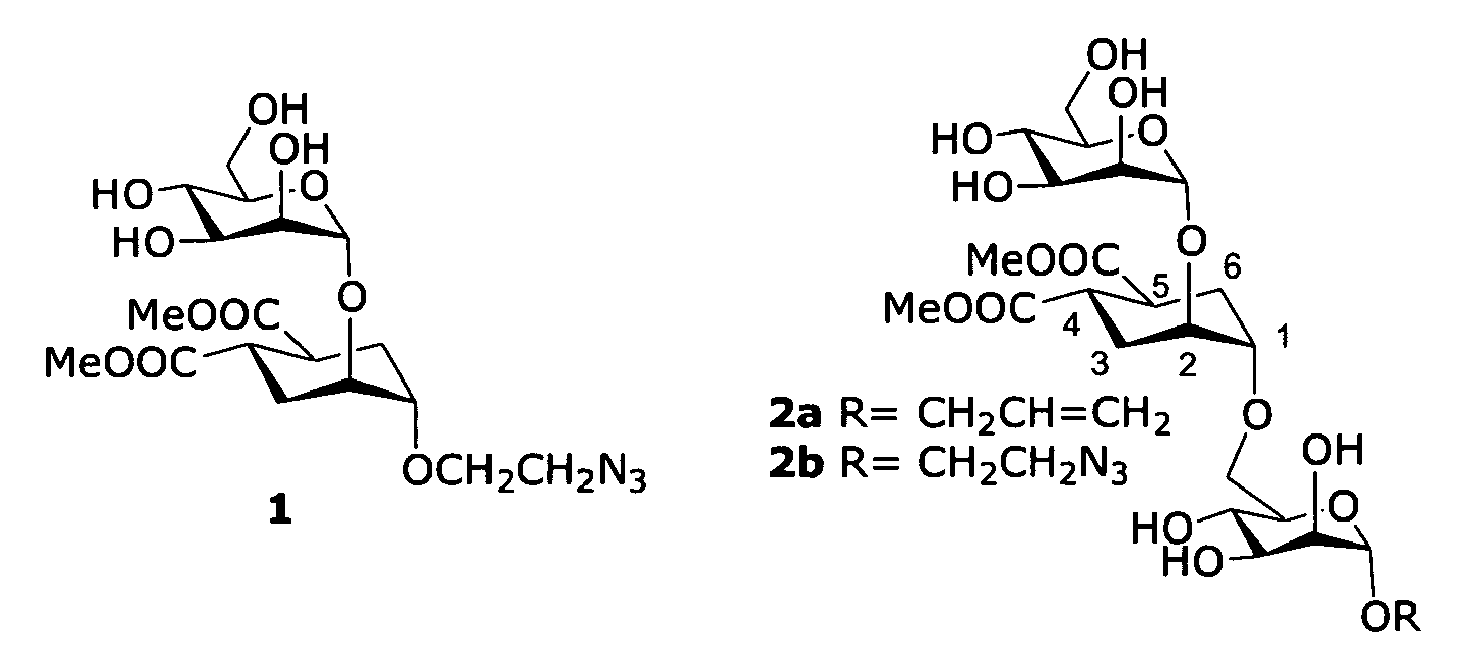
- It has recently been reported that the pseudo-disaccharide 1 (see below), mimicking the three-dimensional structure and conformational behavior of a mannose disaccharide (Mana1-2Man), binds to one of the immune system receptors mentioned above, the dendritic cell receptor DC-SIGN, and exhibits moderate anti-infective action in a Ebola virus infection model (Reina J.J. et al. ChemMedChem, 2007, 2, 1030 - 1036). Multivalent, polymannosylated compounds were shown to bind to the same receptor and to inhibit its interaction to gp120-coated SPR chips (Rojo et al FEBS Letters 2006, 580, 2402-2408).
- The pseudo-trisaccharide 2a below (R=allyl) was recently designed as a mimic of the linear mannotrioside α-Man-(1-2)-a-Man-(1-6)-a-Man- by replacing the central mannose moiety with a carbocyclic diol (Mari, S.; Sánchez-Medina, I.; Mereghetti, P.; Belvisi, L.; Jiménez-Barbero, J.; Bernardi, A. Carb. Res. 2007, 342, 1859- 1868).
- It is the general consensus that the development of efficient, low-cost microbicides and entry inhibitor molecules that can be applied topically to prevent sexually transmitted HIV infections should be given high priority. Mannan is known to inhibit viral uptake in cellular studies (Lin G. et al J. Virol. 2003, 77, 1337-46) but it cannot be used in vivo because it does not cross mucosal tissues and, as a consequence, it is unlikely to reach its target. Mannan is also highly cytotoxic and mitogenic, which limits its therapeutic applications in vivo (Nagase, T. et al. Microbiol. Immunol., 1984, 28, 997-1007).
- Therefore, there is a need in the field of medicine for new compounds which are effective in inhibiting infections mediated by immune system lectins, including DC-SIGN which would be active as well as scarcely cytotoxic.
- The present invention, accordingly, provides new inhibitors of infections, which do not favour the emergence of resistant strains, has lower toxicity, may be applied topically and could cross mucoses significantly better compared to the already known compounds.
- In a first object, the present invention discloses the compounds having inhibition activity of
claims 1 to 12. - In a second object, the present invention concerns a process for the preparation of the compounds of the invention.
- It is a third object the use of the compounds of the invention as a medicament for the treatment and/or prevention of HIV; Ebola, Dengue, Hepatitis C, SARS or tuberculosis infections as per claims 13 to 17.
- It is a forth object of the invention a pharmaceutical preparation comprising one or more of the compounds of the invention as per claims 18 to 20.
-
Fig. 1 shows the results of the trans-infection of CD4+ T lymphocytes by BaL-virus after exposure to BTHP1/DC-SIGN+ cells preincubated with the virus and with variable quantities ofcompound 12. The results are averages for lymphocytes donated by three random donors.Fig. 2 shows the results of the trans-infection of CD4+ T lymphocytes assays forcompound Fig. 3 shows the results of the trans-infection of CD4+ T lymphocytes with BaL-virus forcompound Fig. 4 shows the results of the trans-infection of CD4+ T lymphocytes obtained from two different donors by BaL-virus after exposure to BTHP1/DC-SIGN+ cells preincubated with the virus and with variable quantities ofcompound 12. Donor P1 is genetically not susceptible to HIV infection, donor P2 is genetically susceptible to HIV infectionFig. 5 shows the results of the trans-infection of CD4+ T lymphocytes by HIV-1 strain V6 after exposure to BTHP1/DC-SIGN+ cells preincubated with the virus and with variable quantities ofcompound 12. The results are averages for lymphocytes donated by three random donors.Fig. 6 shows the results of the trans-infection of CD4+ T lymphocytes by HIV-1 strain V17 after exposure to BTHP1/DC-SIGN+ cells preincubated with the virus and with variable quantities ofcompound 12. The results are averages for lymphocytes donated by three random donors.Fig. 7 shows the percentage of 7-AAD positive BTHP1/DC-SIGN+ cells in the absence or in the presence of the inhibitors. -
Fig. 8 shows the results of the trans-infection of CD4+ T lymphocytes by HIV-1 strain IIIB after exposure to BTHP1/DC-SIGN+ cells preincubated with the virus and with variable quantities ofcompound 12.Fig. 9 shows the results of the trans-infection of CD4+ T lymphocytes by HIV-1 strain 89,6 (dual tropic) after exposure to BTHP1/DC-SIGN+ cells preincubated with the virus and with variable quantities ofcompound 12.Fig. 10 shows the results of the trans-infection of CD4+ T lymphocytes by HIV Bal after exposure to BTHP1/DC-SIGN+ cells preincubated with the virus and with variable quantities (10 and 100 µM) ofcompounds 12, analogue tetravalent mannose (Man4), analogue tetravalent pseudo-dimannose (12a), boltorn third generation dendrimers mannosylated (G3Man32) and ps-diMannosylated (G3PS-di24) which is a third generation dendrimer based on 2,2'-bis(methoxyol)propanoic acid (bis-MPA). -
Fig. 11 shows a preferred compound of the invention 12 (SARA 133).Fig. 12 shows some 2,2'-bis(methoxyol)propanoic acid (bis-MPA) based dendrimers, whileFig. 13 shows poly(amidoamine) (PAMAM) based dendrons and dendrimers within the present invention. - As for the first object of the invention, there are provided compounds of general formula (I):
[X-Y]az-Z (I)
wherein X is a saccharidic or pseudosaccharidic unit, Y is a linker, Z is a scaffold and az is the functionality of the scaffold Z, i.e. the number of X unit it can bind, which is comprised between 1 and 150.
In particular, according to the present invention, X is a M'-D-M group, wherein: - M' is a saccharidic or pseudo-saccharidic non-reducing end unit, that is to say a sugar residue or a sugar residue having one or more modified ring substituents, respectively, which is not capable of reducing the oxidizing agents such as Tollens reagents (AgO), of formula

D is of formula
M is -(O-CH2-CH2)n-Q or -(O-CH2-CH2-CH2)n-Q, wherein Q is an heteroatom which is bound to the Z scaffold through the Y linker and n is 1 to 3, so that the resulting X moiety may have any of the following general formulas: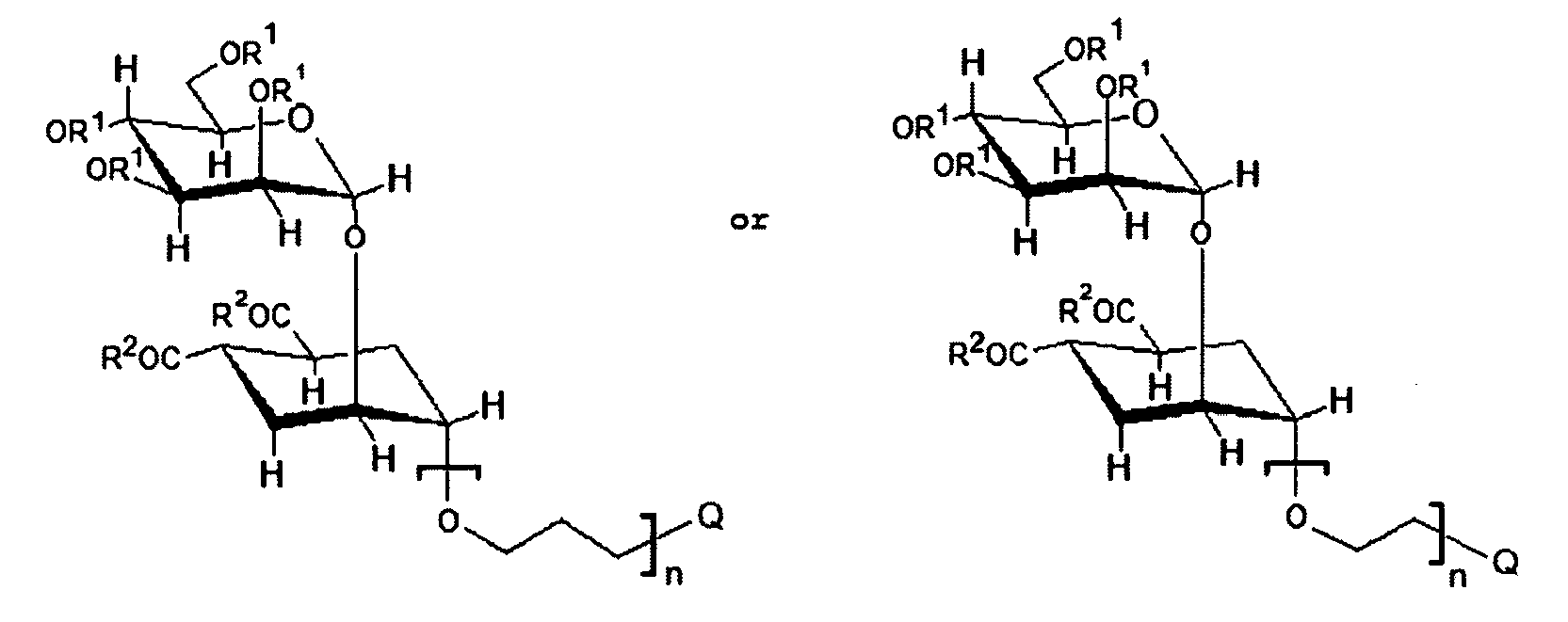
M is of formula K-O-(CH2-CH2)n-Q, wherein K is a saccharidic residue selected from the group comprising a mannose, glucose, fructose, ribose, xylose or a galactose residue and Q and n are as above disclosed. - In a preferred embodiment, within formula (I), K is a mannose residue, thus M results any of the following:


- Within formula (I), Y is a bifunctional linker, which is capable of binding the X moiety to one end and the Z scaffold to the other end; in particular, it can be a single bond, so that the scaffold Z is directly linked to each X moiety or Y may be an heteroatom, an amino acidic residue selected from a glycine, an alanine, a valine, a cysteine, a threonine, a serine, a proline, a methionine or a lysine residue or Y is a succinic acid or a diglycolic acid residue.
- In the above disclosure and within the present invention, unless otherwise provided, the term heteroatom refer to any atom other than carbon or hydrogen and preferable refers to nitrogen, oxygen or sulphur; accordingly, heterocycle, heterocyclic ring or heteroaromatic ring refer to cycles, cyclic ring or aromatic ring, respectively, which comprise one or more heteroatoms. For instance, heterocycle or heterocyclic ring include tetrahydrofuran, tetrahydrothiophene, pyrrolidine, imidazolidine, pyrazolidine, while heteroaromatic rings include, for instance, furan, thiophene, pyrrole, imidazole, pyridine, pyrimidine, oxazole, isoxazole, pyrazole, etc.
- According to an embodiment of the invention, preferred compounds are those of formula (I) above, wherein R1 is H, M is -O-CH2-CH2-NH-, a is 1 and Y is a succinic acid residue.
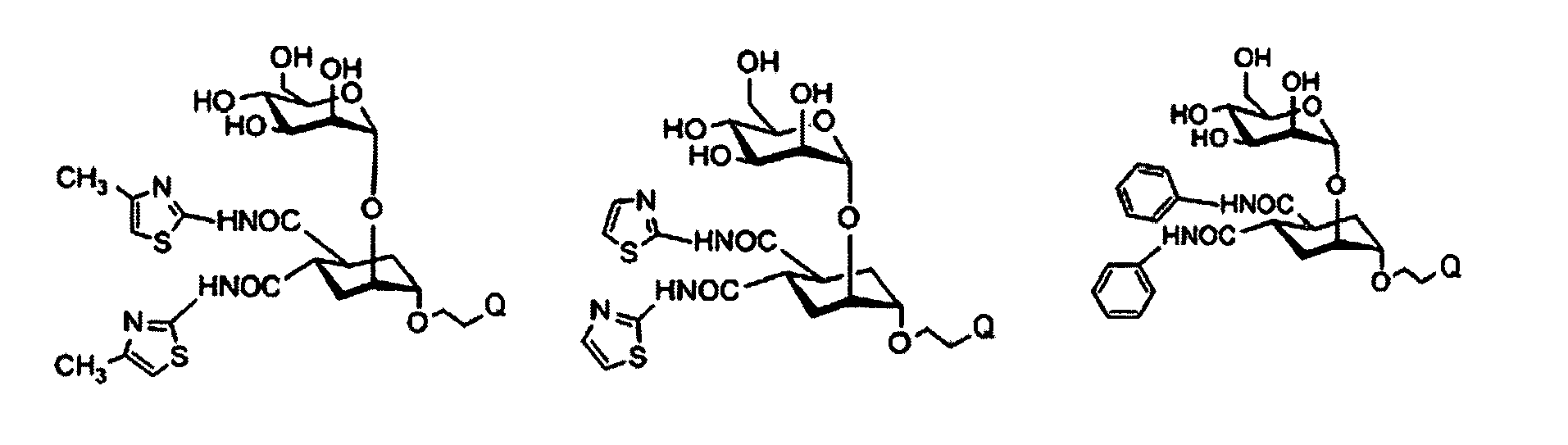
- According to a more preferred embodiment, in particular, the compounds of the invention are those wherein R2 is methoxy (-OCH3) or is -NH-R3, wherein R3 is an A group selected among cyclopropan, cyclohexil, phenyl, benzyl or benzyl meta or para substituted with methoxy (-OCH3), nitro (-NO2), carboxy (-COOH), methylester (-COOCH3), methyl (-CH3), methoxy (-OCH3), amino (-NH2), isopropyl (-CH(CH3)2) or R3 is 1,3, thiazole or methyl substituted 1,3-thiazole; alternatively, R3 is a methyl group (CH3) substituted with the above mentioned A groups.
- Thus, the preferred X moieties are those of the following Table I:
Table I


- As for the scaffold moiety, within the compounds of formula (I), Z may be selected among liposomes, nanoparticles, polymers, dendrimers or dendrons. Liposome, in particular, may be composed of naturally-derived phospholipids with mixed lipid chains like phosphatidylethanolamine or of surfactant components like dioleoylphosphatidylethanolamine (DOPE), etc. In particular, they consist in phospholipid vesicles that have a bilayer membrane structure similar to that of the biological membrane and an internal aqueous phase. Their amphiphilic nature enables liposomes to transport hydrophilic drugs entrapped within their aqueous interior and hydrophobic drugs dissolved into the membrane. Moreover, the liposome surface can be modified with ligans and/or polymers to increase drug delivery specifity (see, for instance, Torchilin, V. P. Nat. Rev. Drug Discov. 2005, 4, 145-160).
- Inorganic nanoparticles, in particular, may be a type of multivalent compound which have a central core composed by inorganic material (metals, ceramic, semiconductor nanocrystals, etc.) that define their physical properties. They may be made of gold, silver, Fe2O3, metal alloys, etc. while the core is surrounded by a functionalized linker or ligands (aliphatic chain, PEG, dextran or mixture thereof) to increase drug delivery specifity (Parak, W. J. Chem. Soc. Rev., 2008, 37, 1896 - 1908).
- Carbon nanotubes belong to the family of fullerenes and are formed of coaxial graphite sheets rolled up into cylinders, in the form of single (one graphite sheet) or multi-walled concentric nanotubes. Carbon nanotubes can also be rendered water soluble by surface functionalization (Pilizu, S. et al., J. Nanosci. Nanotechnol., 2006, 6, 1883-1904).
- Suitable polymers, which may be used as the Z scaffold comprise both artificial and natural polymers. For instance, artificial polymers include poly(ethylene glycol)(PEG), poly(amidoamine), poly(propyleneamine) (POPAM), poly(propyleneimine) (PPI), etc., while natural polymers include peptides, oligopeptides and sugars, such as, for instance, dextran, cellulose, etc.
- Other suitable scaffolds may be aromatic based, ethylene diamine based or propylene diamine based.
- In particular, in a preferred embodiment, the Z scaffold is a polyester dendron based on 2,2'-bis(methoxyol)propanoic acid (bis-MPA), such as the dendron


- Alternatively, Z is a poly(amidoamine) (PAMAM) dendron or dendrimer (see, for instance, at
Fig. 13 ) - Within the compounds of formula (I), the one wherein when the dendrimer is the third generation dendrimer based on 2,2'-bis(methoxyol)propanoic acid (bis-MPA):
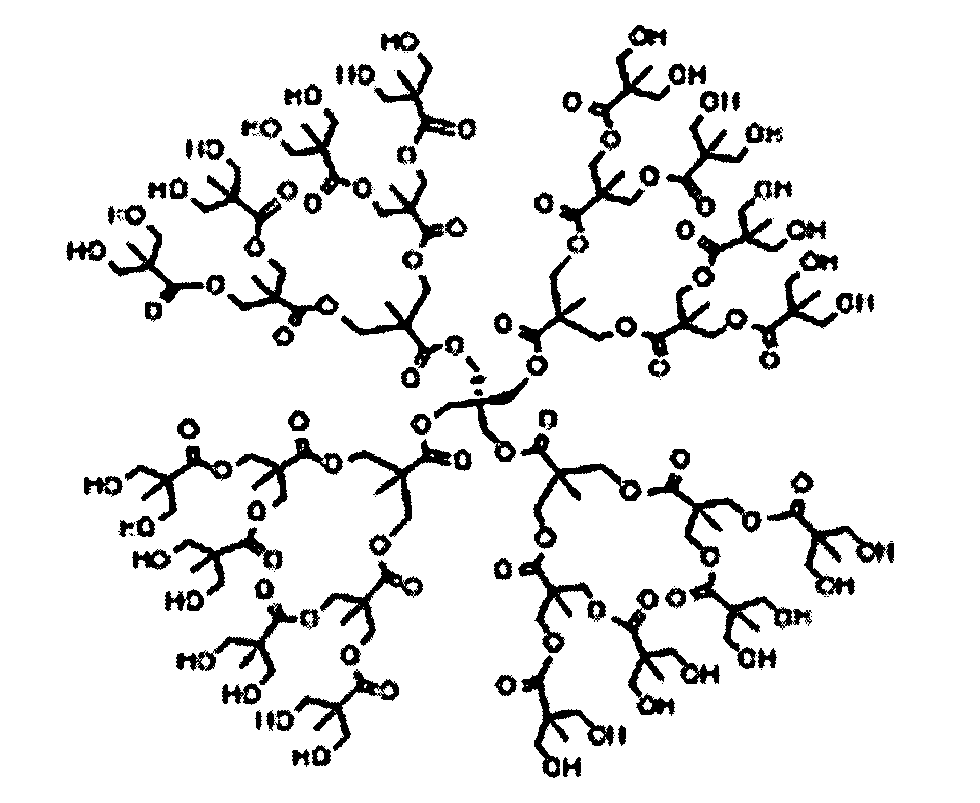

- According to a second aspect of the first object, the compounds of the invention have the general formula (Ia):
[X-Y]aw-W (Ia)
wherein X is a saccharidic or pseudo-saccharidic unit, Y has the same meaning as above disclosed and wherein aw is the functionality of the W dendron scaffold and it is comprised between 1 and 100. In particular, according to the present invention, X is a M'-D-M group, wherein: - M' is a saccharidic or pseudo-saccharidic non-reducing end unit of formula

D is of formula
M is -(O-CH2-CH2)n-Q or -(O-CH2-CH2-CH2)n-Q, wherein Q is an heteroatom which is bound to the W scaffold through the Y linker and n is 1 to 3, so that the resulting X moiety may have any of the following general formulas:
M is of formula K-O-(CH2-CH2)n-Q, wherein K is a saccharidic residue selected from the group comprising a mannose, glucose, fructose, ribose, xylose or a galactose residue, n is 1 to 3 and Q is an heteroatom bond to the W dendron scaffold through the Y linker, so that the X resulting moiety is:
- Within formula (Ia), Y is a bifunctional linker, which is capable of binding the X moiety to one end and the dendron W scaffold to the other end; in particular, it can be a single bond, so that the dendron scaffold W is directly linked to each X moiety or Y may be an heteroatom, an amino acidic residue selected from a glycine, an alanine, a valine, a cysteine, a threonine, a serine, a proline, a methionine or a lysine residue, a succinic acid or a diglycolic acid residue. Accordingly, preferred compounds within formula (Ia) above are compounds of
formula 

- As per a second aspect of the first object, the compounds of the invention are those of formula (Ib):
[X-Y]aj-J (Ib)
wherein X is a saccharidic or pseudosaccharidic unit of formula M-D-M', wherein
M' is of formula
D is of formula

R2 is -N-R3 2 as above disclosed and M is -(O-CH2-CH2)n-Q or -(O-CH2-CH2-CH2)n-Q, wherein Q, Y and n are as above disclosed, wherein each R3 may be independently H, a C1-C8 linear or branched, saturated or unsaturated alkyl chain, optionally substituted with an above disclosed A group; Y is a linker selected from an amino acidic residue or a succinic acid or diglycolic acid residue, J is a first or second or higher generation dendrimer based on 2,2'-bis(methoxyol)propanoic acid (bis-MPA) or a poly(amidoamine) (PAMAM) based dendrimer and aJ is the functionality of the scaffold J and is comprised between 1 and 150. - Within formula (Ib) above, M is preferably


- In particular, in a preferred embodiment, said dendrimer based on 2,2'-bis(methoxyol)propanoic (bis-MPA) is a first or second generation or higher generation bis(methoxyol)propanoic (bis-MPA) based dendrimers (see, for instance, at
Fig. 12 ). - According to the above, a preferred compound within formula (Ib) is below compound 15

third generation 2,2'-bis(methoxyol)propanoic (bis-MPA) based dendrimer. - Alternatively, the dendrimer scaffold J may be a poly(amidoamine) (M) based dendrimer (see, for instance, at
Fig. 13 ). - According to a second object of the invention, there is provided a process for the preparation of the compounds of the invention.
- In particular, said method includes the step of providing an hydroxyl-protected M moiety, which first shall be deprotected at the 6-OH group. Then, a suitable precursor of the D moiety, such as, for instance, an epoxyde, is reacted in order to give the M-D dimer. The dimer is then added to a solution of the scaffold, which already bears the linker Y moiety, in order to obtain a compound of the invention.
- In order to prepare the M'-D-M trimeric X moiety, the M-D dimer above obtained is further coupled to a suitably protected M' moiety thus yielding the trimer, which is then treated to remove the protecting group of both the M and M' moieties and further deprotected and optionally reduced to provide the final M'-D-M trimer.
- Finally, to a solution of the scaffold already bearing the linker Y moiety, there is added a suitable amount of the M'-D-M trimer.
- In a third object of the invention, there is disclosed the use of the compounds of formula (I) as antiinfective and anti-viral medicaments against HIV virus (Human Immunodeficiency Virus), Dengue virus, Ebola virus, Hepatitis C virus, SARS and Mycobacterium tuberculosis.
- In another aspect of said third object, there is provided the use of the compounds of formula (Ia) as antiinfective and anti-viral medicaments against HIV virus (Human Immunodeficiency Virus), Dengue virus, Ebola virus, Hepatitis C virus, SARS and Mycobacterium tuberculosis infections.
- It is a further aspect of the present invention, the use of the compounds of formula (Ib) as antiinfective and anti-viral medicaments against HIV virus (Human Immunodeficiency Virus), Dengue virus, Ebola virus, Hepatitis C virus, SARS and Mycobacterium tuberculosis infections.
- In a preferred embodiment, there is disclosed the use of the compounds of formula (I) having the X moieties of Table I or the one of formula

- In a still preferred embodiment of the invention, there is provided the use of the
compounds - In a still further embodiment, the invention provides the use of the compound of formula

third generation 2,2'-bis(methoxyol)propanoic acid (bis-MPA) based dendrimer for the treatment and/or prevention of HIV (Human Immunodeficiency Virus), Dengue, Ebola, Hepatitis C, SARS and Mycobacterium tuberculosis infections. - For the purposes of a forth embodiment of the present invention, the disclosed compounds may be formulated in a suitable effective amount together with suitable pharmaceutically acceptable excipients according to the specific form of administration and/or additives selected in the group comprising diluent, solvents, bulking agents, fillers, reological modifier, stabilizers, binders, lubricants, disintegrant, preservatives, pH adjusting agents, buffers, antioxidant, chelating agents, plasticizer, polymers, emulsifiers, edulcorants, flavoring agents, alone or in combination thereof, to give a pharmaceutical preparation as per a further embodiment of the invention.
- The preparations of the present invention may be administered by various route of administration, such as, for instance, oral, including buccal or sublingual administration; rectal; nasal; transdermal; vaginal; or parenteral, including subcutaneous, intramuscular, intravenous or intradermal route or topically.
- In particular, for oral administration, they can be prepared in the form of hard or soft capsules, tables, powders or granules; solutions syrups or suspensions in aqueous or non-aqueous liquids; edible foams or whips; or either oil-in-water or water-in-oil liquid emulsions. Alternatively, for nasal administration sprays or drops may be prepared; for vaginal administration they may be prepared as pessaries, tampons, creams, gels, pastes, foams or spray formulations; for parenteral administration, aqueous and non-aqueous sterile injectable solutions or suspensions may be prepared.
- In a particularly preferred embodiment, the compounds of the invention are administered topically, for instance, in the form of ointments, creams, suspensions, lotions, powders, solutions, pastes, gels, sprays, aerosols or oils. The present invention will be further better detailed in the following Experimental Section.
- NMR spectra were recorded at 25°C and 30 °C with Bruke r spectrometers. Chemical shifts 1H and 13C NMR spectra are expressed in ppm relative to TMS or to DSS for spectra recorded in D2O. The cyclohexanediol moiety is numbered as in
Fig. 5 . Subscripts D refer to the cyclohexanediol (ps-Man) residue of 7 and 9 and 2. Mass spectrometry was performed with a ThermoFisher LCQ apparatus (ESI ionization), or ion-trap ESI Esquire 6000 from Bruker, or an Microflex apparatus (MALDI ionization) from Bruker, or Apex II ICR FTMS (ESI ionization - HR-MS). Optical rotations [α]D were measured in a 1-dm path-length cell with 1 mL capacity on a Perkin-Elmer 241 polarimeter. Thin layer chromatography (TLC) was carried out with precoated Merck F254 silica gel plates. Unless otherwise specified the TLC were revealed with molibdic reagent. Flash chromatography (FC) was carried out with Macherey-Nagel silica gel 60 (230-400 mesh). Final dendritic compounds were purified by size exclusion chromatography using sephadex LH20 from GE Healthcare Life Science. Solvents were dried by standard procedures and reactions requiring anhydrous conditions were run under nitrogen. Known compounds have been previously described 8, 6 (Mari, S.; Posteri, H.; Marcou, G.; Potenza, D.; Micheli, F.; Cañada, F. J.; Jiménez-Barbero, J.; Bernardi, A. Eur. J. Org. Chem. 2004, 5119-5225) 4 (Lingrong Gu et al, Biomacromolecules, 2008, 9, 2408-2418) 5 (Lingrong Gu et al, Biomacromolecules, 2008, 9, 2408-2418; Pathak, A. K. et al, Carbohydrate Research, 2004, 339, 683-691) and 13 (Arce, E. et al. Bioconjugate Chem., 2003, 14, 817-823). -


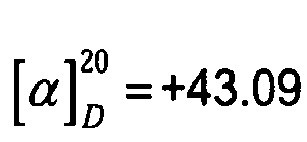
- To a solution of the silylmannopyranoside previously obtained (3.10 g, 6.33 mmol, 1 eq) in dry THF (63 mL) at 0°C under nitroge n atmosphere 1.81 mL of acetic acid were added slowly (31.65 mmol, 5 eq). The solution was then warmed at room temperature and 7.60 mL (7.60 mmol, 1.2 eq) of TBAF 1 M in dry THF were added.
- The reaction was stirred overnight at room temperature. After completion (TLC 2:1 ETP:EtOAc) the solution was diluted with brine and then extracted with EtOAc. The organic phases were collected, dried over Na2SO4, and the solvent was evaporated at reduced pressure. The crude was purified by flash chromatography (4:6 Hex:EtOAc) obtaining 1.71 g of pure product 3 (72%).

-

- To a solution of the epoxide 6 (100 mg, 0.467 mmol, 1eq.) and the mannose derivative 3 (525 mg, 1.400 mmol, 3 eq.) in CH2Cl2 (1 ml) the catalyst Cu(OTf)2 was added (17 mg, 0.047 mmol, 0.1 eq.).
- The solution was stirred at room temperature under nitrogen atmosphere overnight. The reaction was followed by TLC (92:8 CH2Cl2: acetone). After completion the solution was diluted with a [1:1] mixture of NH4Clsat and NH4OH and then extracted with EtOAc. The organic phase was washed with NH4Clsat till the disappearance of the light blue colour of the aqueous phase, then dried over Na2SO4. The solvent was evaporated at reduced pressure, giving a crude that was purified by flash chromatography (95:5 CHCl3:acetone). 147mg of pure 7 were obtained (yield 53%).

-

- A mixture of the acceptor 7 (53.2 mg, 0.0902 mmol, 1 eq) and the donor 8 (80.2 mg, 0.1083 mmol, 1.2 eq) was co-evaporated with toluene three times, then powdered molecular sieves 4A acid washed were added; the mixture was kept under vacuum for few hours and then dissolved with dry CH2Cl2 (1.8 mL). After cooling at -20°C, TMSOTf (3 µl, 0.018 mmol, 0. 2 eq.) was added and the reaction mixture was stirred at that temperature. The reaction was monitored by TLC (7:3 CH2Cl2:EtOAc and 7:3 Toluene:EtOAc): after 20 minutes the reaction was finished.
- In order to quench the reaction NEt3 was added. The mixture was brought to room temperature and filtered over a celite pad, then the solvent was evaporated at reduced pressure obtaining 140 mg of crude as a white solid. The purification was performed by flash chromatography (8:2 Toluene:EtOAc) leading to 9 (86 mg, 82%) as a white solid.

-


-

- To a solution of the
compound 2b (27.4mg, 0.044 mmol, 1eq) in MeOH (2.2mL) a catalytic amount of Pd on carbon was added. The suspension was put under hydrogen atmosphere and stirred at room temperature monitoring by TLC (CHCl3:MeOH:H2O [75:25:3]) After one hour the reaction was finished, the reaction mixture was filtered over a celite pad and the solvent was evaporated at reduced pressure, obtaining 26 mg of pure product 10 (99%).
1H-NMR (400 MHz, CD3OD) δ (ppm): 4.95 (d, 1H, H1M, J1-2 = 1 Hz), 4.79 (d, 1 H, H1M', J1'-2' = 1.6 Hz), 4.07 (bs, 1 H, D2), 3.90-3.81 (m, 4H, H2M, H2M', H6B M, H6B M'), 3.80-3.74 (m, 3H, D1, H7B, H6A M'), 3.74-3.54 (m, H, H6A M, H3M, H3M', H4M', H5M', H5M, H4M), 3.66 (s, 6H, OCH3), 3.54-3.46 (m, 1 H, H7A), 3.00 (dt, 1 H, D5, JD5-D4=JD5-D6ax=12 Hz, JD5-D6eq= 4 Hz), 2.90-2.78 (m, 1H, D4), 2.84 (t, 2H, H8, J7-8 = 5.2 Hz), 2.16 (app d, 1H, D6ax, Jgem= 13.6 Hz), 2.04 (app d, 1H, D3ax, Jgem= 14.0 Hz), 1.83 (t, 1H, D3eq), 1.75 (t, 1H, D6eq). 13C-NMR (100 MHz, CD3OD) δ (ppm): 177.25, 177.02 (COOCH3), 101.87 (C1M'), 100.37 (C1M), 76.06 (C1D), 75.52 (C4M), 74.08 (C4M'), 72.66, 72.57, 72.52 (C2M, C2M', C3M, C3M'), 71.98 (C2D), 70.36 (C6M'), 70.01 (C6M), 68.68, 68.59 (C5M, C5M'), 63.01 (C7), 52.36 (OCH3), 42.13 (C8), 40.39 (C4D), 40.15 (C5D), 28.91 (C6D), 28.34 (C3D). MS (ESI) : Calculated for [C24H42NO16]+ = 600.25, experimental = 600.3. -
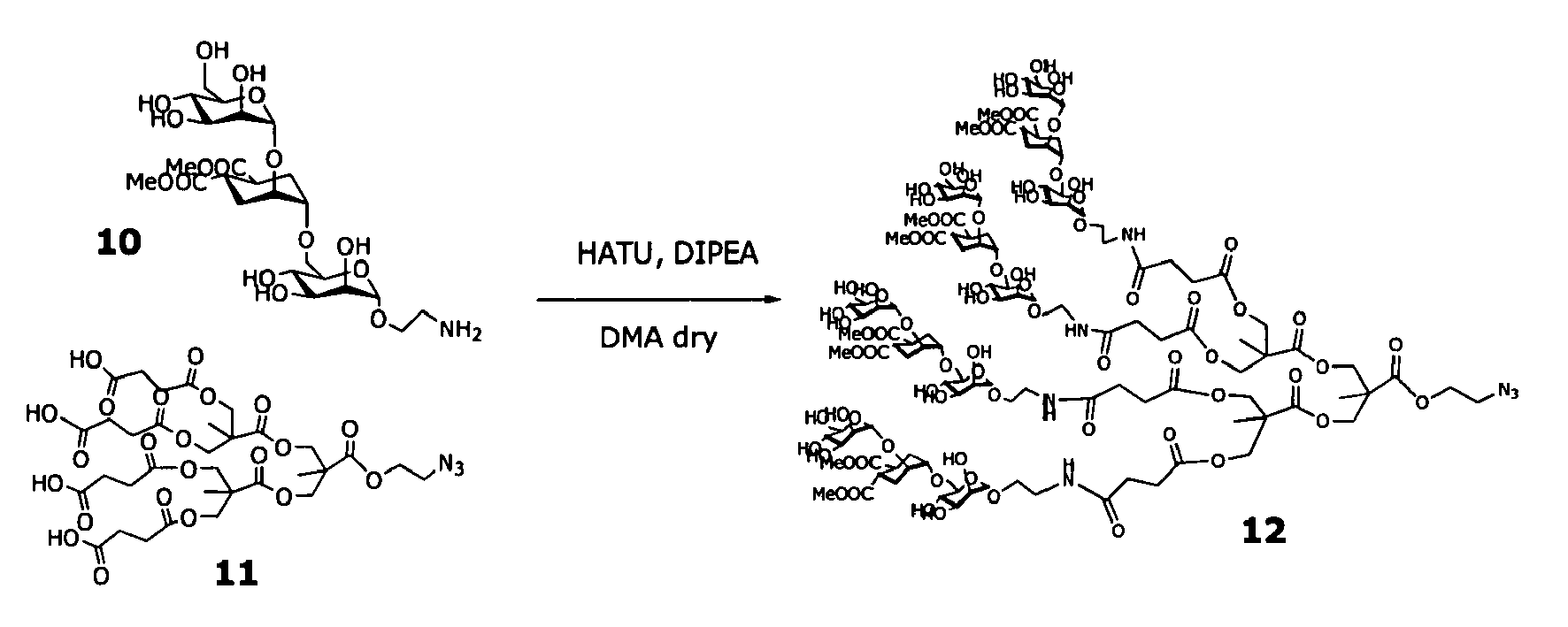
- To a solution of the scaffold dendron 11 (4.5 mg, 0.00539 mmol, 1 eq) in 100 µL of dry DMA under nitrogen atmosphere, HATU (17 mg, 0.04336 mmol, 8 eq) and DIPEA (15 µL, 0.0867 mmol, 16 eq) were added. After 15 minutes a solution of 10 (26 mg, 0.04336 mmol, 8eq) in dry DMA (170 µL) was added. The reaction was stirred at room temperature for 3 days. MALDI mass analysis of a sample of the reaction mixture showed the completion of the reaction. The reaction mixture was diluted in methanol and charged directly onto a LH-20 Sephadex column in methanol. Slow elution led to the purification of the
product 12 that was isolated in good yield (15.6 mg, 92% yield).
MS (MALDI) Calculated for [C129H201N7O82+Na]+ = 3184.97, experimental = 3184.6. -

- To a solution of the azide 1 (71.9 mg, 0.1551 mmol, 1eq) in MeOH (7.8 mL) a catalytic amount of Pd on carbon was added. The suspension was put under hydrogen atmosphere and stirred at room temperature monitoring by TLC ([8:2] CHCl3:MeOH). After two hours the reaction was finished, the reaction mixture was filtered over a celite pad and the solvent was evaporated at reduced pressure, obtaining 68 mg of pure product 13 (quantitative yield).

13C-NMR (100 MHz, CD3OD) δ (ppm): 177.0, 176.9 (COOCH3); 100.3 (C1M); 76.0 (C1D); 75.6 (C4M); 72.5, 72.4 (C2M, C3M); 72.1 (C2D); 69.8 (C7); 68.7 (C5M); 63.1 (C6M); 52.5, 52.4 (COOCH3); 41.9 (C8); 40.4, 40.2 (C4D, C5D); 29.0 (C6D); 28.2 (C3D).
HR-MS (ESI) for C18H31NO11; [M+Na]+ calculated: 460.17893; experimental: 460.17826. -

The reaction mixture was diluted in methanol and charged directly onto a LH-20 Sephadex column in methanol. Slow elution led to the purification of theproduct 12a, which was isolated in good yield (16.9 mg, 94% yield).
13C-NMR (100 MHz, D2O) δ (ppm): 177.4, 177.2, 174.1, 174.0, 173.8, 173.7 (COOCH3, COOCH2, CONH); 98.6 (C1M); 73.8 (C1D); 73.5 (C4M); 71.0, 70.5 (C2D, C2M, C3M); 66.9 (C7); 66.8 (C5M); 65.9 (OCH2 a, OCH2 b); 64.8 (OCH2CH2N3); 61.0 (C6M); 52.6 (CH3O); 49.4 (CH2N3); 46.6, 46.4 (Cquat a", b"); 39.4 (C8); 39.0 (C4D, C5D); 30.1 (CH2CONH); 29.3 (CH2COO); 27.0, 26.7 (C6D, C3D), 16.9 (CH3 a', b').
MS (ESI) for [C105H161N7O62]: [M+2Na]++ calculated = 1279.7, experimental = 1279.2.
MS (MALDI, matrix DHB) [M+Na]+ calculated =2536.4, experimental = 2537.2. - Synthesis of third generation bis(methoxyol)propanoic (bis-MPA) based dendrimer bearing α(1,2) α(1,6)pseudomannotriose 15

- To a solution of the third generation bis(methoxyol)propanoic (bis-MPA) based dendrimer 14 (7.6 mg, 0.001153 mmol, 1 eq) in 100 µL of dry DMA under nitrogen atmosphere, HATU (28.1 mg, 0.074 mmol, 64 eq) and DIPEA (26 µL, 0.148 mmol, 128 eq) were added. After 15 minutes a solution of 10 (35.7 mg, 0.06 mmol, 52 eq) in dry DMA (230 µL) was added. The reaction was stirred at room temperature for 2 days. MALDI mass analysis of a sample of the reaction mixture showed the completion of the reaction.
- The reaction mixture was diluted in methanol and charged directly onto a LH-20 Sephadex column in methanol. Slow elution led to the purification of the product 15 that was isolated in good yield (25.5 mg, 88% yield). 1H-NMR (400 MHz, D2O) δ (ppm): 5.00 (s, H1M'), 4.84 (s, H1M), 4.40-4.10 (m, OCH2CH2N3, CH2O a, CH2O b, CH2O c), 4.04 (s, D2), 3.97 (bs, H2M'), 3.92 (s, H2M), 3.89-3.53 (m, H3M', H6M'B, H6M B, D1, H6M'A, H6M A, H3M, H4M, H4M', H7, H5M, H5M', CH2N3), 3.69 (s, COOCH3), 3.68 (s, COOCH3), 3.49-3.34 (m, 8H, H8), 3.00-2.85 (m, D4, D5), 2.73-2.59 (m, CH2COO), 2.59-2.46 (m, CH2CONH), 2.27-2.03 (m, D6eq, D3eq), 1.89-1.71 (m, D6ax D3ax), 1.40-1.15 (m, CH3 a', CH3 b', CH3 c'). 13C-NMR (100 MHz, D2O) δ (ppm): 177.3, 177.0, 173.5, 173.0, 98.7, 74.7, 73.5, 72.2, 71.0, 70.9, 70.7, 70.6, 70.1, 68.2, 67.1, 66.9, 66.2, 65.4, 61.1, 52.6, 46.4, 39.1, 39.0, 39.0, 30.1, 29.2, 27.2, 26.9, 17.3. MS (MALDI, matrix: SIN): distribution centered on 30 sugar loaded, for 32 sugars [M+Na]+ calculated: 25222.75, found: 25227.9.
- B-THP-1/DC-SIGN cells are derived from B-THP-1 human B cell line by transfection of DC-SIGN expression vector in order to express high levels of the DC-SIGN receptor. This cell line supports efficient DC-SIGN mediated HIV transmission and is a wide-used model system to mimic HIV capture and transmission to T-lymphocytes by dendritic cells (see, as a general reference, Geijtenbeek, T.B.H.; Torensma, R.; Van Vliet, S.J.; van Duijnhoven, G.C.F.; Adema, G.J:; van Kooyk, Y.; Figdor, C.G. Cell, 2000, 100, 575- 585). B-THP-1/DC-SIGN cells were preincubated for 30 minutes either in the presence or in the absence of the DC-SIGN inhibitors prior to 3 hours exposure to the virus (the R5 tropic laboratory-adapted strain HIV-1 BaL) in the continued presence of inhibitors. Mannan is known to inhibit DC-SIGN mediated viral infection (Geijtenbeek, T.B.H.; Torensma, R.; Van Vliet, S.J.; van Duijnhoven, G.C.F.; Adema, G.J:; van Kooyk, Y.; Figdor, C.G. Cell, 2000, 100, 575- 585; Hong, P.W.-P. et al, J. Virol., 2002, 76(24), 12855-12865; Lin G. et al J. Virol. 2003, 77, 1337-46) and was used as positive control. Non transfected B-THP-1 cells were used as a negative control in initial experiments. After washing, the B-THP-1/DC-SIGN cells were co-cultured with activated CD4+ T lymphocytes from healthy volunteer donors. Viral infection of CD4+ T lymphocytes was assessed by measuring the concentration of the HIV core protein p24 in the co-culture supernatants by ELISA. Each point was obtained in triplicate using CD4+ T lymphocytes from three different donors.
- The results obtained for compound 12 (SARA 133) are reported in
Figure 1 . In particular, at 50 µM, the compound appears to reduce by over 90% the trans-infection of CD4+ T lymphocytes; moreover, at 100 µM and at 250 µM inhibition is almost complete.Figures 8 andFigure 9 show the results of the same experiment performed with HIV-1 strain IIIB and HIV-1 strain 89,6 (dual tropic), respectively. - In
Figure 2 the data for HIV-1 BaL infection are compared to those obtained using themonovalent antagonist 2b, which clearly needs a much higher concentration to reach a similar inhibition level. - Even more striking is the comparison obtained when the B-THP-1/DC-SIGN cells were first incubated with the inhibitors and then washed with buffer before adding the virus (BaL). In this case (
Figure 3 ) thetetravalent system 12 showed surprising cell adhesion properties, which resulted in a still efficient antiinfective action with >94% of inhibition at 250 µM, the lowest concentration tested in this type of assay. On the contrary, the monovalent compound was unable to persist on the cell surface, even when used at 5 mM concentration, leading to no antiinfective activity in the trans-infection assay (Figure 3 ). Dose-response curves were obtained for 12 using CD4+ T lymphocytes from healthy donors who are either genetically resistant (P1) or genetically susceptible (P2) to HIV infection. B-THP-1/DC-SIGN cells were challenged with HIV-1 (BaL strain) in the presence of increasing concentrations of 12. After washing and co-culture with the CD4+ T lymphocytes analysis of p24 concentration in the supernatants allowed to assess viral infection. Each point was obtained in duplicate. At 100 µM the inhibition of infection was complete for both donors and a 5 µM IC50 could be estimated (Figure 4 ). - Infection studies were performed not only on laboratory adapted HIV strains but also on viral strains isolated from patients. In particular clades V6 (CCR5 tropic) (
Figure 5 ) and V17 (CXCR4 tropic) (Figure 6 ) were tested: 12 showed >99% inhibition at 50 µM concentration.
7-aminoactinomicin D (7-AAD) labelling of the cells after the incubation period and cytofluorimetric analysis showed that the anti-infective properties of the inhibitors are real and not an epiphenomenon, due to cell death. Thus, the data for 12 shown inFigure 7 indicate that the percentage of 7-AAD positive cells (apoptotic cells) did not change significantly in the absence of the compound or in its presence up to 250 µM (the highest concentration tested in the infection studies). Similar data were obtained after incubating the cells with 12 for 24 hours (not shown). -
Figure 10 shows the anti-infective activity of a group of multivalent compounds. 12 and 12a are within the present invention, Man4 is a tetravalent presentation of mannose on the same scaffold; G3PS-di24 is a fully succinylated BH30 dendrimer (which is a third generation dendrimer based on 2,2'-bis(methoxyol)propanoic acid (bis-MPA)) presenting 24-26 copies of the amine derived from 1 (see above); G3Man32 is a fully succinylated BH30 dendrimer presenting 32 copies of mannose. - The infection data in
Figure 10 show that mannosylation alone affords compounds which are unable to block the infection. Both the tetramannosylated dendron Man4 and the full BH30 dendrimer presenting 32 copies of mannose G3Man32 do not reduce the infection level below 30%, even at 100 µM concentration. Thetetravalent pseudo-disaccharide 12a is active at 100 µM.
12 has the same anti-infective activity with respect to G3PS-di24 at the same concentration, but its molecular weight is about 4 times lower. Advantageously, 12 is chemically defined and is easier and cheaper to be produced. - The compounds within the another embodiment of the invention wherein within the meaning of X, M is

is a first or second or higher generation bis(methoxyol)propanoic (bis-MPA) based dendrimer (see, for instance, atFig. 12 ), surprisingly show to be more active than G3PS-di24 as well.
Claims (20)
- A compound of general formula (I):
[X-Y]az-Z (I)
wherein X is a saccharidic or pseudosaccharidic unit of formula M-D-M', wherein M' is of formula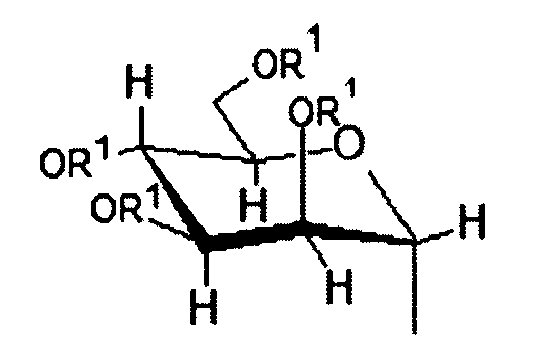


- A compound of formula (I) according to claim 1, wherein R2 is methoxy or is -NHR3, wherein R3 is an A group selected among cyclopropan, cyclohexil, phenyl, benzyl or benzyl meta or para substituted with methoxy (-OCH3), nitro (-NO2), carboxy (-COOH), methylester (-COOCH3), methyl (-CH3), methoxy (-OCH3), amino (-NH2), isopropyl (-CH(CH3)2) or R3 is 1,3, thiazole or methyl substituted 1,3-thiazole or R3 is a methyl group (-CH3) substituted with any of said A groups.
- A compound according to claims 1 or 2 having any one of the following X moieties:


- A compound according to any of the preceding claims, wherein the linker Y is a succinic acid residue.
- A compound according to any of the preceding claims wherein the Z scaffold is selected from liposomes, nanoparticles, polymers, bis(methoxyol)propanoic (bis-MPA) based dendrons and first or second or higher generation bis(methoxyol)propanoic (bis-MPA) based dendrimers or PAMAM based dendrons or dendrimers.
- A compound according to any of the preceding claims wherein the Z scaffold is any of the following:


- A compound having the general formula (Ia):
[X-Y]aw-W (Ia)
wherein X is a saccharidic or pseudosaccharidic unit of formula M-D-M', wherein M' is of formula


- A compound according to any one of the preceding claims having the following formula:

- A compound according to any one of the preceding claims having the following formula:

-NHR3, wherein R3 is an A group selected in the group comprising cyclopropan, cyclohexil, phenyl, benzyl or benzyl meta or para substituted with methoxy (-OCH3), nitro (-NO2), carboxy (-COOH), methylester (-COOCH3), methyle (-CH3), methoxy (-OCH3), amino (-NH2), isopropyl (-CH(CH3)2) or R3 is 1,3, thiazole or methyl substituted 1,3-thiazole; or R3 is a methyl group (-CH3) substituted with said A group. - A compound having the general formula (Ib),
[X-Y]aj-J (Ib)
wherein X is a saccharidic or pseudosaccharidic unit of formula M-D-M', wherein M' is of formula
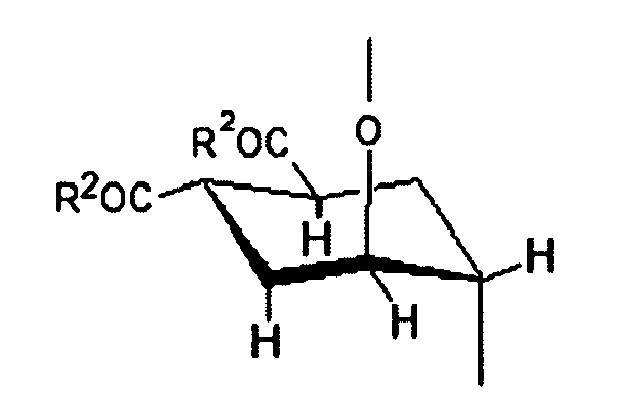

- A compound according to claim 10, wherein the J scaffold is any of the following


- A compound according to claim 10 or 11 of formula

- Use of the compounds of formula [X-Y]az-Z (I) as a medicament for the treatment and/or prevention of HIV, Ebola, Dengue, Hepatitis C, SARS or tuberculosis infections.
- Use of the compounds of formula [X-Y]aw-W (Ia) as a medicament for the treatment and/or prevention of HIV, Ebola, Dengue, Hepatitis C, SARS or tuberculosis infections.
- Use of the compounds of formula [X-Y]aj-J (Ib) as a medicament for the treatment and/or prevention of HIV, Ebola, Dengue, Hepatitis C, SARS or tuberculosis infections.
- Use of the compound of formula


-NHR3, wherein R3 is an A group selected in the group comprising cyclopropan, cyclohexil, phenyl, benzyl or benzyl meta or para substituted with methoxy (-OCH3), nitro (-NO2), carboxy (-COOH), methylester (-COOCH3), methyle (-CH3), methoxy (-OCH3), amino (-NH2), isopropyl (-CH(CH3)2) or R3 is 1,3, thiazole or methyl substituted 1,3-thiazole; or R3 is a methyl group (-CH3) substituted with said A group, as a medicament for the treatment and/or prevention of HIV, Ebola, Dengue, Hepatitis C, SARS or tuberculosis infections. - Use of the compound of claim 12 as a medicament for the treatment and/or prevention of HIV, Ebola, Dengue, Hepatitis C, SARS or tuberculosis infections.
- A pharmaceutical composition comprising a suitable effective amount of one or more of the compounds according to claims 1 to 12 together with pharmaceutically acceptable excipients.
- The pharmaceutical composition according to claims 18, wherein said excipients and/or additives selected in the group comprising diluent, solvents, bulking agents, fillers, reological modifier, stabilizers, binders, lubricants, disintegrant, preservatives, pH adjusting agents, buffers, antioxidant, chelating agents, plasticizer, polymers, emulsifiers, edulcorants, flavoring agents, alone or in combination thereof.
- The pharmaceutical composition of any one of claim 18 or 19 for the oral, including buccal or sublingual; rectal; nasal; transdermal; vaginal; or parenteral, including subcutaneous, intramuscular, intravenous or intradermal or topical administration.
Priority Applications (2)
| Application Number | Priority Date | Filing Date | Title |
|---|---|---|---|
| EP09380127A EP2289904A1 (en) | 2009-07-03 | 2009-07-03 | Inhibitors of microbial infections |
| PCT/EP2010/058662 WO2011000721A1 (en) | 2009-07-03 | 2010-06-18 | Inhibitors of microbial infections |
Applications Claiming Priority (1)
| Application Number | Priority Date | Filing Date | Title |
|---|---|---|---|
| EP09380127A EP2289904A1 (en) | 2009-07-03 | 2009-07-03 | Inhibitors of microbial infections |
Publications (1)
| Publication Number | Publication Date |
|---|---|
| EP2289904A1 true EP2289904A1 (en) | 2011-03-02 |
Family
ID=41258950
Family Applications (1)
| Application Number | Title | Priority Date | Filing Date |
|---|---|---|---|
| EP09380127A Withdrawn EP2289904A1 (en) | 2009-07-03 | 2009-07-03 | Inhibitors of microbial infections |
Country Status (2)
| Country | Link |
|---|---|
| EP (1) | EP2289904A1 (en) |
| WO (1) | WO2011000721A1 (en) |
Families Citing this family (3)
| Publication number | Priority date | Publication date | Assignee | Title |
|---|---|---|---|---|
| CN103131754B (en) * | 2011-11-24 | 2014-07-30 | 深圳华大基因科技服务有限公司 | Method for detecting nucleic acid hydroxylmethylation modification, and application thereof |
| FR2992647B1 (en) * | 2012-07-02 | 2016-04-01 | Centre Nat Rech Scient | GLYCOSIDE DERIVATIVES, THEIR PREPARATION AND THEIR USE AS PROSTHETIC GROUPS |
| EP3498724B1 (en) | 2016-06-30 | 2023-06-21 | Kyowa Kirin Co., Ltd. | Nucleic acid complex |
Citations (1)
| Publication number | Priority date | Publication date | Assignee | Title |
|---|---|---|---|---|
| WO2007033329A1 (en) * | 2005-09-14 | 2007-03-22 | University Of Maryland Biotechnology Institute Off. Of Research Admin./ Tech.Dev. | Synthetic polyvalent carbohydrates as components of microbicides |
-
2009
- 2009-07-03 EP EP09380127A patent/EP2289904A1/en not_active Withdrawn
-
2010
- 2010-06-18 WO PCT/EP2010/058662 patent/WO2011000721A1/en not_active Ceased
Patent Citations (1)
| Publication number | Priority date | Publication date | Assignee | Title |
|---|---|---|---|---|
| WO2007033329A1 (en) * | 2005-09-14 | 2007-03-22 | University Of Maryland Biotechnology Institute Off. Of Research Admin./ Tech.Dev. | Synthetic polyvalent carbohydrates as components of microbicides |
Non-Patent Citations (18)
| Title |
|---|
| A. BERNARDI, PAVEL CHESHEV: "Interfering with the Sugar Code: Design and Synthesis of Oligosaccharide Mimics", CHEMISTRY A EUROPEAN JOURNAL, vol. 14, 2008, pages 7434 - 7441, XP002554586 * |
| ARCE, E. ET AL., BIOCONJUGATE CHEM., vol. 14, 2003, pages 817 - 823 |
| GEIJTENBEEK, T.B.H. ET AL., CELL, vol. 100, 2000, pages 575 - 585 |
| J. ROJO, R. DELGADO: "Dendrimers and Dendritic Polymers as Anti-infective Agents: New Antimicrobial Strategies for Therapeutic Drugs", ANTI-INFECTIVE AGENTS IN MEDICINAL CHEMISTRY, vol. 6, 2007, pages 151 - 174, XP002554588 * |
| J. ROJO, R. DELGADO: "Glycodendritic structures: promising new antiviral drugs", JOURNAL OF ANTIMICROBIAL CHEMOTHERAPY, vol. 54, 2004, pages 579 - 581, XP002554589 * |
| LIN G. ET AL., J. VIROL., vol. 77, 2003, pages 1337 - 46 |
| LINGRONG GU ET AL., BIOMACROMOLECULES, vol. 9, 2008, pages 2408 - 2418 |
| MARI ET AL: "Synthesis and conformational analysis of an alpha-d-mannopyranosyl-(1 >2)-alpha-d-mannopyranosyl-(1->6)-alpha-d-mannopyranose mimic", CARBOHYDRATE RESEARCH, ELSEVIER SCIENTIFIC PUBLISHING COMPANY. AMSTERDAM, NL, vol. 342, no. 12-13, 16 July 2007 (2007-07-16), pages 1859 - 1868, XP022155737, ISSN: 0008-6215 * |
| MARI, S. ET AL., CARB. RES., vol. 342, 2007, pages 1859 - 1868 |
| MARI, S. ET AL., EUR. J. ORG. CHEM., 2004, pages 5119 - 5225 |
| NAGASE, T. ET AL., MICROBIOL. IMMUNOL., vol. 28, 1984, pages 997 - 1007 |
| PARAK, W., J. CHEM. SOC. REV., vol. 37, 2008, pages 1896 - 1908 |
| PATHAK, A. K. ET AL., CARBOHYDRATE RESEARCH, vol. 339, 2004, pages 683 - 691 |
| PILIZU, S. ET AL., J. NANOSCI. NANOTECHNOL., vol. 6, 2006, pages 1883 - 1904 |
| REINA J.J. ET AL., CHEMMEDCHEM, vol. 2, 2007, pages 1030 - 1036 |
| REINA, JOSE J. ET AL: "1,2-Mannobioside mimic: synthesis, DC-SIGN interaction by NMR and docking, and antiviral activity", CHEMMEDCHEM , 2(7), 1030-1036 CODEN: CHEMGX; ISSN: 1860-7179, 2007, XP002554587 * |
| ROJO ET AL., FEBS LETTERS, vol. 580, 2006, pages 2402 - 2408 |
| TORCHILIN, V. P., NAT. REV. DRUG DISCOV., vol. 4, 2005, pages 145 - 160 |
Also Published As
| Publication number | Publication date |
|---|---|
| WO2011000721A1 (en) | 2011-01-06 |
Similar Documents
| Publication | Publication Date | Title |
|---|---|---|
| AU2008314505B2 (en) | Novel sulfated oligosaccharide derivatives | |
| Weymouth-Wilson | The role of carbohydrates in biologically active natural products | |
| EP3197907B1 (en) | Vaccines against streptococcus pneumoniae serotype 8 | |
| FR2814463A1 (en) | NOVEL POLYSACCHARIDES WITH ANTITHROMBOTIC ACTIVITY COMPRISING AT LEAST ONE COVALENT BINDING WITH BIOTIN OR A BIOTINE DERIVATIVE | |
| CN103781472B (en) | Synthesis and application of propofol side derivatives | |
| CN103702670A (en) | Synthesis and use of glycoside pro-drug analogs | |
| US10596272B2 (en) | Vaccines against Streptococcus pneumoniae serotype 5 | |
| WO2011000721A1 (en) | Inhibitors of microbial infections | |
| Trant et al. | Synthesis, self-assembly, and immunological activity of α-galactose-functionalized dendron–lipid amphiphiles | |
| EP2123662A1 (en) | Trehalose compound, process for production of the compound, and immuno-stimulative agent comprising the compound | |
| CA2355097A1 (en) | Inositol-containing hexasaccharides, their synthesis and their uses | |
| WO2008033543A2 (en) | Halogenated alkyl di- and trisaccharides, pharmaceutical formulations, diagnostic kits and methods of treatment | |
| WO2007009265A1 (en) | NOVEL β-CYCLODEXTRIN-BASED MOLECULES AND DRUG DELIVERY COMPOSITIONS | |
| KR20090074226A (en) | Compounds that interfere with blood clotting | |
| KR102166783B1 (en) | Novel trehalose-cored amphiphiles and uses thereof | |
| JP4930929B2 (en) | Sialyl lactosamine binding dendrimer compounds | |
| FR2739857A1 (en) | NOVEL 2 ", 3" -DIDESOXYGLYCOSIDE DERIVATIVES OF EPIPODOPHYLLOTOXIN, PROCESS FOR THE PREPARATION THEREOF, USE THEREOF AS MEDICAMENT AND USE THEREOF FOR ANTICANCER TREATMENT | |
| AU2012273838A1 (en) | Multivalent (beta) - 1 - 2 - linked mannose oligosaccharides as immunostimulatory compounds and uses thereof | |
| EP3582789B1 (en) | Multivalent fucose derivatives for use as a drug | |
| AU658277B2 (en) | Amino sugar derivatives | |
| JP5283033B2 (en) | Sialyl α (2 → 6) lactose-containing compound and use thereof | |
| JP5481731B2 (en) | Method for producing sugar chain dendrimer containing thiasialoside type oligosaccharide and use thereof | |
| JP4246358B2 (en) | Multimers of polyene macrolide antibiotics | |
| Dondoni et al. | Multivalent Glycocalixarenes: Synthesis and Molecular Recognition | |
| Cobo Cardenete | Glycolipids: synthesis and multivalent systems |
Legal Events
| Date | Code | Title | Description |
|---|---|---|---|
| PUAI | Public reference made under article 153(3) epc to a published international application that has entered the european phase |
Free format text: ORIGINAL CODE: 0009012 |
|
| AK | Designated contracting states |
Kind code of ref document: A1 Designated state(s): AT BE BG CH CY CZ DE DK EE ES FI FR GB GR HR HU IE IS IT LI LT LU LV MC MK MT NL NO PL PT RO SE SI SK SM TR |
|
| AX | Request for extension of the european patent |
Extension state: AL BA RS |
|
| STAA | Information on the status of an ep patent application or granted ep patent |
Free format text: STATUS: THE APPLICATION IS DEEMED TO BE WITHDRAWN |
|
| 18D | Application deemed to be withdrawn |
Effective date: 20110903 |