EP2288272B1 - Variable pitch mascara brush - Google Patents
Variable pitch mascara brush Download PDFInfo
- Publication number
- EP2288272B1 EP2288272B1 EP09749588A EP09749588A EP2288272B1 EP 2288272 B1 EP2288272 B1 EP 2288272B1 EP 09749588 A EP09749588 A EP 09749588A EP 09749588 A EP09749588 A EP 09749588A EP 2288272 B1 EP2288272 B1 EP 2288272B1
- Authority
- EP
- European Patent Office
- Prior art keywords
- core
- brush
- coating surfaces
- bristles
- distal end
- Prior art date
- Legal status (The legal status is an assumption and is not a legal conclusion. Google has not performed a legal analysis and makes no representation as to the accuracy of the status listed.)
- Active
Links
Images


Classifications
-
- A—HUMAN NECESSITIES
- A46—BRUSHWARE
- A46B—BRUSHES
- A46B9/00—Arrangements of the bristles in the brush body
- A46B9/02—Position or arrangement of bristles in relation to surface of the brush body, e.g. inclined, in rows, in groups
- A46B9/021—Position or arrangement of bristles in relation to surface of the brush body, e.g. inclined, in rows, in groups arranged like in cosmetics brushes, e.g. mascara, nail polish, eye shadow
-
- A—HUMAN NECESSITIES
- A45—HAND OR TRAVELLING ARTICLES
- A45D—HAIRDRESSING OR SHAVING EQUIPMENT; EQUIPMENT FOR COSMETICS OR COSMETIC TREATMENTS, e.g. FOR MANICURING OR PEDICURING
- A45D34/00—Containers or accessories specially adapted for handling liquid toiletry or cosmetic substances, e.g. perfumes
- A45D34/04—Appliances specially adapted for applying liquid, e.g. using roller or ball
- A45D34/042—Appliances specially adapted for applying liquid, e.g. using roller or ball using a brush or the like
-
- A—HUMAN NECESSITIES
- A45—HAND OR TRAVELLING ARTICLES
- A45D—HAIRDRESSING OR SHAVING EQUIPMENT; EQUIPMENT FOR COSMETICS OR COSMETIC TREATMENTS, e.g. FOR MANICURING OR PEDICURING
- A45D40/00—Casings or accessories specially adapted for storing or handling solid or pasty toiletry or cosmetic substances, e.g. shaving soaps or lipsticks
- A45D40/26—Appliances specially adapted for applying pasty paint, e.g. using roller, using a ball
- A45D40/262—Appliances specially adapted for applying pasty paint, e.g. using roller, using a ball using a brush or the like
-
- A—HUMAN NECESSITIES
- A45—HAND OR TRAVELLING ARTICLES
- A45D—HAIRDRESSING OR SHAVING EQUIPMENT; EQUIPMENT FOR COSMETICS OR COSMETIC TREATMENTS, e.g. FOR MANICURING OR PEDICURING
- A45D40/00—Casings or accessories specially adapted for storing or handling solid or pasty toiletry or cosmetic substances, e.g. shaving soaps or lipsticks
- A45D40/26—Appliances specially adapted for applying pasty paint, e.g. using roller, using a ball
- A45D40/262—Appliances specially adapted for applying pasty paint, e.g. using roller, using a ball using a brush or the like
- A45D40/265—Appliances specially adapted for applying pasty paint, e.g. using roller, using a ball using a brush or the like connected to the cap of the container
-
- A—HUMAN NECESSITIES
- A46—BRUSHWARE
- A46B—BRUSHES
- A46B3/00—Brushes characterised by the way in which the bristles are fixed or joined in or on the brush body or carrier
- A46B3/02—Brushes characterised by the way in which the bristles are fixed or joined in or on the brush body or carrier by pitch, resin, cement, or other adhesives
-
- A—HUMAN NECESSITIES
- A46—BRUSHWARE
- A46B—BRUSHES
- A46B2200/00—Brushes characterized by their functions, uses or applications
- A46B2200/10—For human or animal care
- A46B2200/1046—Brush used for applying cosmetics
- A46B2200/1053—Cosmetics applicator specifically for mascara
-
- A—HUMAN NECESSITIES
- A46—BRUSHWARE
- A46B—BRUSHES
- A46B2200/00—Brushes characterized by their functions, uses or applications
- A46B2200/10—For human or animal care
- A46B2200/1046—Brush used for applying cosmetics
- A46B2200/1053—Cosmetics applicator specifically for mascara
- A46B2200/106—Cosmetics applicator specifically for mascara including comb like element
Definitions
- the present invention relates to devices for applying compositions, in particular cosmetic compositions on hairs, and in particular on hairs such as the eyelashes or eyebrow hairs.
- a twisted wire mascara brush has an axially elongated twisted wire core with a multiplicity of fibers such as bristles clamped at their midpoints in the core and extending radially outwardly therefrom; the core is constituted of two lengths of wire, which may be initially separate or may be opposed legs of a single U-shaped wire, twisted together into a helix to hold the bristles between them.
- the bristles are more or less uniformly distributed for at least most of the length of the brush, and the overall shape of the brush (i.e., the notional envelope defined by the tips of the bristles) has a rectilinear axis and a simple circular cross-section, being cylindrical, frustoconical, or a tandem arrangement of proximal cylindrical and distal frustoconical portions.
- twisted-in-wire mascara brushes have certain disadvantages.
- One such disadvantage would be the finite number of ways fibres can be used to create an application surface for the mascara while at the same time serving a market continually looking for differentiation.
- a conventional twisted-wire brush offers essentially only one kind of brush profile for use both to transfer the mascara from the container to the face and to apply the mascara to the eye lashes.
- mascara brushes having structures other than uniformly distributed bristle arrays with simple cylindrical and/or conical envelopes of circular cross-section; but the diversity of possible configurations of twisted-in-wire brushes is restricted by the requirement to trim the bristles in order to achieve desired shapes, and the difficulty of forming and positioning cutters to effect such trimming.
- the brush may be loaded with too great a quantity of mascara.
- Such an overloaded brush may lead to unwanted effects following application onto the lashes, such as clumping.
- the excess cosmetic product tends to accumulate onto the brush surface and dry out thereby reducing the separation ability of the brush bristles.
- the unused cosmetic product trapped between the brush bristles will be reinserted into the container before a next application and therefore will become mixed with the container's supply, increasing the chances of pollution and contamination.
- a mascara brush which provides improved product retention capabilities through a configuration of coating surfaces arranged in a plurality of rows extending helically lengthwise of the mascara brush core.
- a mascara brush configuration which provides a variable quantity of mascara to be retained in different brush areas and applied to different lash areas for providing a variety of makeup effects within a single application.
- FIGS. 1-4 illustrate a mascara brush 10 embodying the present invention.
- This brush includes a molded plastic body 11 comprising an elongated cylindrical core 12 with an initially rectilinear long geometric axis, a proximal end 14 and a distal end 16, and a multiplicity of bristles or fibers 18 projecting laterally outwardly from the core (transversely of the core axis) over a major portion of the length of the core from its distal end toward its proximal end.
- the proximal end portion of the core is formed as a shank 20, being bristle-free and (in this particular embodiment) slightly larger in diameter than the remainder of the core.
- a small flange 22 is provided between the shank and the bristle-bearing portion of the core in this embodiment.
- the brush 10 is designed to be mounted at its proximal end in a stem (not shown) of an applicator handle (also not shown) which includes a cap (not shown) for closing the neck of a container of mascara, such that when the cap is seated on the container neck, the brush is positioned within the container in contact with mascara.
- an applicator handle also not shown
- the cap for closing the neck of a container of mascara, such that when the cap is seated on the container neck, the brush is positioned within the container in contact with mascara.
- the user grasps the cap and withdraws the brush, transporting a quantity of mascara on and between the brush bristles for application to the eyelashes.
- Manipulating the cap the user brings the mascara-laden brush into contact with lashes for deposit and distribution of the mascara on the lashes.
- the coating surfaces 19 are arranged in a plurality of rows extending helically lengthwise of the core 12 and spaced laterally around the core 12 periphery.
- the coating surfaces 19 are therefore said to be describing a helix 17, each coating surface 19 being a helical turn.
- the core 12 has a substantially circular periphery as seen in cross-section, of radius r.
- the coating surfaces 19 have a ring-like shape, with an inner radius equal to the radius r of the core 12, and an outer radius R.
- the peripheral rim 21 of the coating surfaces 19 also defines a substantially circular path.
- the coating surfaces can be said to have a radial depth (R-r) equal to a difference between the outer radius R and the inner radius r.
- the helix 17 has an essentially constant outer radius R, such that all coating surfaces 19 have the same surface area.
- the helix 17 could be a spiral, with helical turns having monotonically increasing or decreasing radii. In such embodiments the surface area of each coating surface 19 would be variable.
- more than one helix 17 of coating surface 19 can be present around the core.
- two helices of coating surfaces could be arranged around the core 12 in a non-overlapping way, for example by choosing the pitch of a first helix to be a multiple of the pitch of the second helix.
- the helix shown in Fig. 1 has coating surfaces 19 having a peripheral rim 21 defining a substantially circular path, i.e. the coating surfaces 19 have a disk or ring-like shape.
- the outer radius R is constant for a given coating surface 19.
- various alternative cross-sectional shapes of the helix are however possible, such as elliptical, rectangular, triangular, polygonal, etc.
- the outer radius R varies for a given coating surface 19.
- the individual cross-sectional shapes may be used, not only for an entire helix, but the helix' cross-section may vary in shape along its length to provide further control over the bristle arrangement and distribution.
- the axial distance P N between consecutive rows of coating surfaces 19, the pitch of the helix varies longitudinally along the core.
- the axial distance Po between a first and a second coating surface 19 is larger than the distance Pi between a second and a third coating surface 19, while the distance P2 ⁇ Pi ⁇ Po, and so on.
- the axial distance separating consecutive rows of coating surfaces 19 is the smallest.
- the axial distance P N between consecutive rows decreases along the direction from the proximal end 14 of the core towards the distal end of the core 16.
- the axial distance P N between consecutive rows could also increase along the direction from the proximal end 14 of the core towards the distal end of the core 16.
- the axial distance P N between consecutive rows could decrease over a portion of the core 12 in the longitudinal direction and increase over another portion of the core 12.
- the separations between adjacent rows of coating surfaces 19 effectively form reservoir gaps which retain mascara for application.
- the reservoir gaps become filled with mascara when the brush is immersed in a container of mascara supply.
- the reservoir gaps, defined by the axial distance between consecutive rows of coating surfaces 19, have variable volume at different areas of the brush, becoming loaded with more or less product.
- the axial distance between consecutive rows of coating surfaces 19 decreases along the direction from the proximal end 14 of the core towards the distal end 16 of the core.
- the coating surfaces 19 at the distal end 16 of the core 12 are more densely distributed providing a brush area retaining less product.
- Such a brush application area will provide a separating effect and improved lash definition.
- the coating surfaces 19 at the proximal end 14 of the core 12 are more loosely distributed providing a brush area retaining more product.
- Such a brush area will provide a thickening effect to lashes.
- a user can advantageously insert the brush into the container and load, in a single gesture, an amount of product providing a separating effect and thickening effect to different lash areas.
- the coating surfaces 19 are advantageously provided with bristles 18 distributed on a peripheral rim 21 thereof.
- the bristles 18 are arrayed in a plurality of longitudinal rows extending lengthwise of the core 12.
- the bristles 14 can either be uniformly distributed around the entire rim 21 surface of each coating surface 19 or be provided on only a part thereof.
- the bristles 14 could be provided on only certain coating surfaces 19, such that certain coating surfaces 19, in one or more brush areas, are bristle-free.
- the density of the bristles, their shape and material can also vary as it will be apparent to one skilled in the art, without departing from the nature and scope of the present invention.
- the bristles 18 have a conical shape and a free end with a radius of 0,05 mm.
- the bristle length 1 is 1,5 mm.
- the core 12 has a bristle-bearing distal portion 19,10 mm in axial length and 1,60 mm in diameter and a proximal shank portion 9,02 mm in axial length and 3,2 mm in diameter, separated by an integral flange 4,3 mm wide.
- the core radius (r) may be in a range of 0.8 mm to 2.5 mm
- the helix radius (R) may be in a range of 2 mm to 3 mm
- the bristle length (1) may be in a range of 1 mm to 4 mm, preferably between 1 and 2 mm.
- the radial depth (R-r) may be in a range of 0.5 to 2.2 mm.
- the bristle conicity G is, in one embodiment, of 10°, but will vary depending on the bristle length 1.
- the core 12 may be 17-18 ⁇ 10 mm in axial length.
- Each coating surface 19 can have a thickness at least as large as the thickness of the bristle base (if the peripheral rim 21 includes bristles) or otherwise, any suitable thickness.
- the number of coating surfaces 19 is generally comprised between 15 and 30, but will vary depending on the length of the brush 10 and the thickness of the coating surfaces 19.
- the outer envelope defined by the brush 10 is generally smaller than 8 mm in diameter.
- the outer envelope diameter of the brush 10 is generally chosen smaller than the diameter of the wiper.
- the difference between the wiper diameter and the stem diameter can be about 1 mm.
- the core 12 and coating surfaces 19, or more particularly the core 12 and bristles 18 together are molded integrally of a suitable plastic material such as (for example) a "HYTREL(R)” thermoplastic polyester elastomer commercially available from DuPont, a “PELLETHANE(TM)” thermoplastic polyurethane elastomer commercially available from Dow, or "T-BLEND(TM)” compounded thermoplastic material composed primarily of SBS or SEBS.
- suitable plastic materials may include polyamide, liquid silicone rubber, etc.
- the brush may be made of a compounded thermoplastic material composed primarily of "PELLETHANE(TM)” polyurethane elastomer (100% straight or blended), or composed primarily of “HYTREL(R)” polyester elastomer (100% straight or blended), or composed primarily of LDPE and/or "CHEVRON EXACT(TM)” elastomer.
- the molding operation is a standard injection molding process, which is familiar to persons skilled in the art. It employs a mold cavity having the configuration of the brush body to be made; for economy of production, a single mold may have a plurality (e.g., eight) of such cavities.
- the brush 10 of the present invention could be manufactured through bi-injection molding, whereby different materials may be used for the core 12 and the helix 17.
- a shape-retaining wire 24 extends longitudinally through the center of the brush core 12, from end to end thereof, essentially coaxially with the core.
- the distal end of the wire is disposed at the distal end 16 of the core 12, the proximal end of the wire extends through and beyond the proximal end 14 of the core 12, so as to be received within a stem of an applicator handle (not shown).
- the wire 24, in this embodiment of the invention, is a manually bendable but substantially non-resilient metal wire that is self-sustaining in shape, i.e., capable of retaining its shape whether axially rectilinear or in any curved shape into which it may be bent, typically a bend or curve imparted to the core.
- wires suitable for use as the wire 24 are stainless steel wires of 0.0240, 0.0286, 0.0320 and 0.0350 inch gauge.
- the core 12 and bristles 18 are molded integrally of a suitable plastic material such as (for example) a "HYTREL " thermoplastic polyester elastomer commercially available from DuPont, a "PELLETHANE” thermoplastic polyurethane elastomer commercially available from Dow, of "T-BLENDTM” compounded thermoplastic material composed primarily of SBS or SEBS.
- a suitable plastic material such as (for example) a "HYTREL " thermoplastic polyester elastomer commercially available from DuPont, a “PELLETHANE” thermoplastic polyurethane elastomer commercially available from Dow, of "T-BLENDTM” compounded thermoplastic material composed primarily of SBS or SEBS.
- the molding operation is a standard injection molding process, which is familiar to persons skilled in the art. It employs a mold cavity having the configuration of the brush body to be made; for economy of production, a single mold may have a plurality (e.g., eight) of such cavities.
- a particular advantage of molded plastic mascara brushes, as opposed to twisted-in-wire brushes, is their freedom from constraint as to envelope shape and arrangement of bristles, owing to the versatility of the molding process.
- bristle dimensions and arrangement e.g. with bristles aligned in rows spaced apart by unequal distances and/or with different bristle spacing in different rows
- the notional envelope defined by the bristle tips may include a first cylindrical portion, extending from the flange toward the distal end of the brush, and a second, frustoconical portion extending from the first cylindrical portion to the distal end and tapering to a minimum diameter at the brush distal end.
- first envelope portion the bristles all have the same length, but in the second portion they become progressively shorter in the direction toward the distal end.
- bristle arrangements and configurations may be used for performance of various functions such as lengthening, building and separation of the lashes.
Landscapes
- Brushes (AREA)
Description
- The present invention relates to devices for applying compositions, in particular cosmetic compositions on hairs, and in particular on hairs such as the eyelashes or eyebrow hairs.
- Mascara brushes of the type commonly referred to as "twisted wire" brushes are well known and widely used in the cosmetics industry. A twisted wire mascara brush has an axially elongated twisted wire core with a multiplicity of fibers such as bristles clamped at their midpoints in the core and extending radially outwardly therefrom; the core is constituted of two lengths of wire, which may be initially separate or may be opposed legs of a single U-shaped wire, twisted together into a helix to hold the bristles between them. Typically, the bristles are more or less uniformly distributed for at least most of the length of the brush, and the overall shape of the brush (i.e., the notional envelope defined by the tips of the bristles) has a rectilinear axis and a simple circular cross-section, being cylindrical, frustoconical, or a tandem arrangement of proximal cylindrical and distal frustoconical portions.
- Although the combination of a twisted wire core and a radiating array of bristles clamped in the core provides an acceptable brush structure for uses exemplified by the application of mascara, twisted-in-wire mascara brushes have certain disadvantages.. One such disadvantage would be the finite number of ways fibres can be used to create an application surface for the mascara while at the same time serving a market continually looking for differentiation. Moreover, a conventional twisted-wire brush offers essentially only one kind of brush profile for use both to transfer the mascara from the container to the face and to apply the mascara to the eye lashes. To enable improved application, it would be beneficial to provide mascara brushes having structures other than uniformly distributed bristle arrays with simple cylindrical and/or conical envelopes of circular cross-section; but the diversity of possible configurations of twisted-in-wire brushes is restricted by the requirement to trim the bristles in order to achieve desired shapes, and the difficulty of forming and positioning cutters to effect such trimming.
- It has also been proposed heretofore to employ plastic brushes and combs as mascara applicators.
- There nevertheless remains a need for designs affording or permitting enhanced functional versatility (e.g., thickening, lengthening and separation as well as delivery of mascara to the lashes). In particular, there is a need for a mascara design that satisfies two requirements for achieving a pleasing make-up effect on the lashes: first, the retention and application of mascara to the lashes and second, the combing and separation of the lashes to which the mascara has been applied.
- Various prior art injection-molded applicators have attempted to satisfy these requirements, using different bristle shapes, as well as a variety of bristle row distributions, densities, etc.
- It is known from
US 4, 964, 429 andUS 6,616,366 , for example, to arrange teeth in one or more rows extending helically around and along the stem. Such an arrangement, which replicates the distribution of bristles of a traditional twisted wire mascara brush, is known to provide advantageous effects in terms of hair combing and separation. - The amount of mascara retained between the fingers of these applicators has nevertheless found to be insufficient to provide the desired amount of product on the application surface.
- Indeed, such brush configurations do not enable a sufficient quantity of cosmetic product to be collected whenever the brush is dipped into the container and especially following withdrawal from the container. The user is therefore forced to repeatedly insert the applicator into the container to load more product which may lead to contamination of the container's supply.
- In other cases, if the cosmetic product is more viscous, the brush may be loaded with too great a quantity of mascara. Such an overloaded brush may lead to unwanted effects following application onto the lashes, such as clumping. Furthermore, the excess cosmetic product tends to accumulate onto the brush surface and dry out thereby reducing the separation ability of the brush bristles. Also, the unused cosmetic product trapped between the brush bristles will be reinserted into the container before a next application and therefore will become mixed with the container's supply, increasing the chances of pollution and contamination.
- There exists therefore a need for a mascara brush which provides sufficient product retention capabilities.
- It is also known to provide adjustable mascara brushes having coating surfaces in which the axial distance between each coating surface is adjustable. Such a mascara brush, described for example in
US 3,998,235 , allows a user to vary the distance between the coating surfaces by acting upon a helical spring structure which compresses or expands. Unfortunately, with such an applicator, following adjustment, the axial distance of separation between the coating surfaces is constant, that is, the amount of product loaded between each pair of consecutive coating surfaces is the same. A single application effect will therefore be provided when the mascara brush is used. - Therefore, there exists a need for a mascara brush configuration that allows more than one metered quantity of mascara to be retained and applied.
- Accordingly, there is provided a mascara brush which provides improved product retention capabilities through a configuration of coating surfaces arranged in a plurality of rows extending helically lengthwise of the mascara brush core.
- Furthermore, there is provided a mascara brush configuration which provides a variable quantity of mascara to be retained in different brush areas and applied to different lash areas for providing a variety of makeup effects within a single application.
- In a broad aspect of the present invention, there is provided a brush for applying mascara or the like according to claim 1.
- Further features and advantages of the invention will be apparent from the detailed description hereinbelow set forth, together with the accompanying drawings.
-
-
Fig. 1 is a plan view of a mascara brush embodying the present invention in a particular form; -
Fig. 2 is a side view of the brush ofFIG. 1 ; -
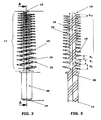
Fig. 3 is a sectional view of the brush ofFIG. 1 ; -
Fig. 4 is a view of the distal end of the brush ofFIG. 1 ; -
Fig. 5 is an enlarged fragmentary view of a bristle portion of the brush ofFIG. 1 ; and -
Fig. 6 is a sectional view of an embodiment of a brush having a wire extending longitudinally through the brush. -
FIGS. 1-4 illustrate amascara brush 10 embodying the present invention. This brush includes a molded plastic body 11 comprising an elongatedcylindrical core 12 with an initially rectilinear long geometric axis, aproximal end 14 and adistal end 16, and a multiplicity of bristles orfibers 18 projecting laterally outwardly from the core (transversely of the core axis) over a major portion of the length of the core from its distal end toward its proximal end. The proximal end portion of the core is formed as ashank 20, being bristle-free and (in this particular embodiment) slightly larger in diameter than the remainder of the core. Asmall flange 22 is provided between the shank and the bristle-bearing portion of the core in this embodiment. - In common with conventional mascara brushes, the
brush 10 is designed to be mounted at its proximal end in a stem (not shown) of an applicator handle (also not shown) which includes a cap (not shown) for closing the neck of a container of mascara, such that when the cap is seated on the container neck, the brush is positioned within the container in contact with mascara. When opening the container, the user grasps the cap and withdraws the brush, transporting a quantity of mascara on and between the brush bristles for application to the eyelashes. Manipulating the cap, the user brings the mascara-laden brush into contact with lashes for deposit and distribution of the mascara on the lashes. - As seen in
Fig. 1 , thecoating surfaces 19 are arranged in a plurality of rows extending helically lengthwise of thecore 12 and spaced laterally around thecore 12 periphery. Thecoating surfaces 19 are therefore said to be describing ahelix 17, eachcoating surface 19 being a helical turn. - In the embodiment shown in
Fig. 1 , thecore 12 has a substantially circular periphery as seen in cross-section, of radius r. Thecoating surfaces 19 have a ring-like shape, with an inner radius equal to the radius r of thecore 12, and an outer radius R. Theperipheral rim 21 of thecoating surfaces 19 also defines a substantially circular path. The coating surfaces can be said to have a radial depth (R-r) equal to a difference between the outer radius R and the inner radius r. - In one embodiment of the present invention the
helix 17 has an essentially constant outer radius R, such that allcoating surfaces 19 have the same surface area. In other embodiments thehelix 17 could be a spiral, with helical turns having monotonically increasing or decreasing radii. In such embodiments the surface area of eachcoating surface 19 would be variable. - In yet a different embodiment of the present invention, more than one
helix 17 ofcoating surface 19 can be present around the core. In such an embodiment, two helices of coating surfaces could be arranged around thecore 12 in a non-overlapping way, for example by choosing the pitch of a first helix to be a multiple of the pitch of the second helix. - The helix shown in
Fig. 1 hascoating surfaces 19 having aperipheral rim 21 defining a substantially circular path, i.e. thecoating surfaces 19 have a disk or ring-like shape. In such an embodiment, the outer radius R is constant for a givencoating surface 19. Beside the circular cross-sectional helix shown, various alternative cross-sectional shapes of the helix are however possible, such as elliptical, rectangular, triangular, polygonal, etc. In such other embodiments, the outer radius R varies for a givencoating surface 19. - Furthermore, the individual cross-sectional shapes may be used, not only for an entire helix, but the helix' cross-section may vary in shape along its length to provide further control over the bristle arrangement and distribution.
- For a
helix 17 such as the one shown inFig. 1 , the axial distance PN between consecutive rows of coating surfaces 19, the pitch of the helix, varies longitudinally along the core. As shown inFig. 3 , the axial distance Po between a first and asecond coating surface 19 is larger than the distance Pi between a second and athird coating surface 19, while the distance P2<Pi<Po, and so on. At thedistal end 16 of thebrush 10, the axial distance separating consecutive rows of coating surfaces 19 is the smallest. - In the embodiment shown in
Fig. 3 , the axial distance PN between consecutive rows decreases along the direction from theproximal end 14 of the core towards the distal end of thecore 16. The axial distance PN between consecutive rows could also increase along the direction from theproximal end 14 of the core towards the distal end of thecore 16. Alternatively, the axial distance PN between consecutive rows could decrease over a portion of the core 12 in the longitudinal direction and increase over another portion of thecore 12. - A variety of configurations of the axial distance between rows of coating surfaces 19 varying longitudinally along the core 12 are within the scope of the present invention.
- The separations between adjacent rows of coating surfaces 19 effectively form reservoir gaps which retain mascara for application. The reservoir gaps become filled with mascara when the brush is immersed in a container of mascara supply. The reservoir gaps, defined by the axial distance between consecutive rows of coating surfaces 19, have variable volume at different areas of the brush, becoming loaded with more or less product.
- In the embodiment shown in
Fig. 1 , the axial distance between consecutive rows of coating surfaces 19 decreases along the direction from theproximal end 14 of the core towards thedistal end 16 of the core. In such a configuration, the coating surfaces 19 at thedistal end 16 of the core 12 are more densely distributed providing a brush area retaining less product. Such a brush application area will provide a separating effect and improved lash definition. Conversely, the coating surfaces 19 at theproximal end 14 of the core 12 are more loosely distributed providing a brush area retaining more product. Such a brush area will provide a thickening effect to lashes. - Using the brush of the present invention, a user can advantageously insert the brush into the container and load, in a single gesture, an amount of product providing a separating effect and thickening effect to different lash areas.
- In the present invention, the coating surfaces 19 are advantageously provided with
bristles 18 distributed on aperipheral rim 21 thereof. In one particular configuration thebristles 18 are arrayed in a plurality of longitudinal rows extending lengthwise of thecore 12. Thebristles 14 can either be uniformly distributed around theentire rim 21 surface of eachcoating surface 19 or be provided on only a part thereof. Alternatively or additionally, thebristles 14 could be provided on only certain coating surfaces 19, such that certain coating surfaces 19, in one or more brush areas, are bristle-free. - The density of the bristles, their shape and material can also vary as it will be apparent to one skilled in the art, without departing from the nature and scope of the present invention.
- In one particular embodiment, the
bristles 18 have a conical shape and a free end with a radius of 0,05 mm. The bristle length 1 is 1,5 mm. Thecore 12 has a bristle-bearingdistal portion - Stated more broadly, in embodiments of this general type, and as shown in
Fig. 5 , the core radius (r) may be in a range of 0.8 mm to 2.5 mm, the helix radius (R) may be in a range of 2 mm to 3 mm and the bristle length (1) may be in a range of 1 mm to 4 mm, preferably between 1 and 2 mm. The radial depth (R-r) may be in a range of 0.5 to 2.2 mm. The bristle conicity G is, in one embodiment, of 10°, but will vary depending on the bristle length 1. The core 12 may be 17-18 ±10 mm in axial length. - Each
coating surface 19 can have a thickness at least as large as the thickness of the bristle base (if theperipheral rim 21 includes bristles) or otherwise, any suitable thickness. The number of coating surfaces 19 is generally comprised between 15 and 30, but will vary depending on the length of thebrush 10 and the thickness of the coating surfaces 19. - As shown in
Fig. 4 , the outer envelope defined by thebrush 10 is generally smaller than 8 mm in diameter. The outer envelope diameter of thebrush 10 is generally chosen smaller than the diameter of the wiper. The difference between the wiper diameter and the stem diameter can be about 1 mm. - The
core 12 and coating surfaces 19, or more particularly thecore 12 and bristles 18 together are molded integrally of a suitable plastic material such as (for example) a "HYTREL(R)" thermoplastic polyester elastomer commercially available from DuPont, a "PELLETHANE(TM)" thermoplastic polyurethane elastomer commercially available from Dow, or "T-BLEND(TM)" compounded thermoplastic material composed primarily of SBS or SEBS. Other suitable materials may include polyamide, liquid silicone rubber, etc. - That is to say, by way of nonlimiting illustration, the brush may be made of a compounded thermoplastic material composed primarily of "PELLETHANE(TM)" polyurethane elastomer (100% straight or blended), or composed primarily of "HYTREL(R)" polyester elastomer (100% straight or blended), or composed primarily of LDPE and/or "CHEVRON EXACT(TM)" elastomer. The molding operation is a standard injection molding process, which is familiar to persons skilled in the art. It employs a mold cavity having the configuration of the brush body to be made; for economy of production, a single mold may have a plurality (e.g., eight) of such cavities.
- Alternatively, the
brush 10 of the present invention could be manufactured through bi-injection molding, whereby different materials may be used for thecore 12 and thehelix 17. - In an alternative embodiment of the invention, shown in
Fig. 6 , a shape-retainingwire 24 extends longitudinally through the center of thebrush core 12, from end to end thereof, essentially coaxially with the core. Thus, the distal end of the wire is disposed at thedistal end 16 of the core 12, the proximal end of the wire extends through and beyond theproximal end 14 of the core 12, so as to be received within a stem of an applicator handle (not shown). - The
wire 24, in this embodiment of the invention, is a manually bendable but substantially non-resilient metal wire that is self-sustaining in shape, i.e., capable of retaining its shape whether axially rectilinear or in any curved shape into which it may be bent, typically a bend or curve imparted to the core. Examples of wires suitable for use as thewire 24 are stainless steel wires of 0.0240, 0.0286, 0.0320 and 0.0350 inch gauge. - The
core 12 and bristles 18 are molded integrally of a suitable plastic material such as (for example) a "HYTREL " thermoplastic polyester elastomer commercially available from DuPont, a "PELLETHANE " thermoplastic polyurethane elastomer commercially available from Dow, of "T-BLENDTM" compounded thermoplastic material composed primarily of SBS or SEBS. The molding operation is a standard injection molding process, which is familiar to persons skilled in the art. It employs a mold cavity having the configuration of the brush body to be made; for economy of production, a single mold may have a plurality (e.g., eight) of such cavities. Awire 24 is inserted into each mold cavity before the plastic material is introduced, so that the brush body is molded over the wire. - A particular advantage of molded plastic mascara brushes, as opposed to twisted-in-wire brushes, is their freedom from constraint as to envelope shape and arrangement of bristles, owing to the versatility of the molding process. Thus, bristle dimensions and arrangement (e.g. with bristles aligned in rows spaced apart by unequal distances and/or with different bristle spacing in different rows) can be designed and provided for performance of one or more functions incident to mascara application, such as lash building or thickening, lengthening and separation.
- The notional envelope defined by the bristle tips may include a first cylindrical portion, extending from the flange toward the distal end of the brush, and a second, frustoconical portion extending from the first cylindrical portion to the distal end and tapering to a minimum diameter at the brush distal end. As will be appreciated, within the first envelope portion the bristles all have the same length, but in the second portion they become progressively shorter in the direction toward the distal end.
- A variety of bristle arrangements and configurations (e.g., including elimination of the conical shape of the bristle) may be used for performance of various functions such as lengthening, building and separation of the lashes.
- While the above description has been made with respect to an applicator adapted for the application of mascara to lashes, similar applicators could be used for the application of a variety of liquid, semi-liquid, creamy, paste-like or viscous cosmetics materials to keratinous or other surfaces, without departing from the scope of the present invention.
Claims (14)
- A brush (10) for applying mascara or the like, comprising:- an elongated core (12),- a plurality of coating surfaces (19) axially spaced along the elongated core (12), and- bristles (18) distributed on a peripheral rim (21) of said coating surfaces (19), wherein the core has a distal end (16) and a proximal end (14), the coating surfaces (19) are distributed around the core (12) over a substantial portion of the length of the core (12) extending from the distal end (16) thereof, the proximal end (14) of the core (12) is formed as a coating surface-free shank (20) for attachment to an applicator handle, and the coating surfaces (19) are arranged in a plurality of rows forming turns of at least one helix (17) extending lengthwise of the core (12) and spaced laterally around the core periphery,characterized in that the axial distance between consecutive rows of coating surfaces (19) varies longitudinally along the core (12).
- A brush (10) as claimed in claim 1, wherein the core (12) has a substantially circular periphery as seen in cross-section and the peripheral rim (21) at the coating surfaces (19) defining a substantially circular path, the coating surfaces (19) having a ring-like shape having an inner radius r, defined by a radius of the core (12), and an outer radius R, the coating surfaces (19) have a radial depth (R-r) equal to a difference between the outer radius R and the inner radius r.
- A brush (10) as claimed in claim 1, wherein each of the bristles (18) has a length 1 and is arrayed in a plurality of longitudinal rows extending lengthwise of the core.
- A brush (10) as claimed in claim 2, wherein each of the bristles (18) has a length 1 and being arrayed in a plurality of longitudinal rows extending lengthwise of the core (12) and wherein 1 is in the range 1-4 mm.
- A brush (10) as claimed in claim 3, wherein the bristles (18) are distributed only on a portion of the peripheral rim (21).
- A brush (10) as claimed in claim 3, wherein the bristles (18) and the coating surfaces (19) are integrally moulded.
- A brush (10) as claimed in claim 3, wherein the bristles (18) are spaced laterally along the peripheral rim (21) of the coating surfaces (19) at unequal angular distances from each other.
- A brush (10) as claimed in claim 1, wherein the notional envelope defined by the coating surfaces (19) tapers toward the distal end (16).
- A brush (10) as claimed in claim 3, wherein, the lengths of the bristles (18) in the longitudinal rows vary progressively along the length of the core (12) such that the tips of the bristles (18) cooperatively define a notional envelope that decreases in a direction from the distal end (16) to the proximal end (14).
- A brush (10) as claimed in claim 3, wherein the bristles (18) are distributed such that there are at least two zones, disposed in tandem lengthwise of the core (12), differing from each other in bristle density.
- A brush (10) as claimed in claim 1, wherein the axial distance between the consecutive rows decreases along the direction from the proximal end (14) of the core towards the distal end (16) of the core.
- A brush (10) as defined in claim 1, made of any of the following materials:- a thermoplastic polyurethane elastomer;- a compounded thermoplastic material composed primarily of SBS or SEBS;- a thermoplastic "HYTREL(R)" polyester elastomer 100% straight or blended;- a compounded thermoplastic material composed primarily of LDPE and "CHEVRON EXACT(TM)" elastomer.
- A brush (10) as defined in claim 1, wherein the coating surfaces (19) are arranged as two helices around the core (12) in a non-overlapping way.
- A brush (10) as defined in claim 2, wherein r is in the range 0.8-2.5 mm, R is in the range 2-3 mm and (R-r) is in the range 0.5-2.2 mm.
Applications Claiming Priority (2)
| Application Number | Priority Date | Filing Date | Title |
|---|---|---|---|
| US5461508P | 2008-05-20 | 2008-05-20 | |
| PCT/EP2009/003477 WO2009141098A1 (en) | 2008-05-20 | 2009-05-15 | Variable pitch mascara brush |
Publications (2)
| Publication Number | Publication Date |
|---|---|
| EP2288272A1 EP2288272A1 (en) | 2011-03-02 |
| EP2288272B1 true EP2288272B1 (en) | 2012-12-05 |
Family
ID=41130412
Family Applications (1)
| Application Number | Title | Priority Date | Filing Date |
|---|---|---|---|
| EP09749588A Active EP2288272B1 (en) | 2008-05-20 | 2009-05-15 | Variable pitch mascara brush |
Country Status (4)
| Country | Link |
|---|---|
| US (1) | US9232851B2 (en) |
| EP (1) | EP2288272B1 (en) |
| CN (2) | CN105581502A (en) |
| WO (1) | WO2009141098A1 (en) |
Families Citing this family (28)
| Publication number | Priority date | Publication date | Assignee | Title |
|---|---|---|---|---|
| EP2329744B1 (en) | 2009-12-02 | 2014-03-05 | Albéa Services | Cosmetic applicator brush |
| US9066573B2 (en) * | 2010-06-04 | 2015-06-30 | Zen Design Solutions Limited | Cosmetic applicator |
| US8448650B2 (en) * | 2011-10-28 | 2013-05-28 | Avon Products, Inc. | Cosmetic applicator |
| FR3013951B1 (en) * | 2013-12-02 | 2017-01-20 | Oreal | APPLICATOR OF A COSMETIC, MAKE-UP OR CARE PRODUCT ON LACQUERS OR EYEBROWS |
| CA2975253A1 (en) * | 2014-01-27 | 2015-07-30 | Brush Solutions, LLC | Scrubber system |
| HUE032148T2 (en) | 2014-03-06 | 2017-09-28 | Tepe Munhygienprodukter Ab | Interdental cleaner |
| FR3026283B1 (en) * | 2014-09-30 | 2016-12-09 | Oreal | APPLICATOR OF A COSMETIC, MAKE-UP OR CARE PRODUCT, ON LASHES AND / OR EYEBROWS |
| US10271636B2 (en) * | 2014-11-10 | 2019-04-30 | Illinois Tool Works Inc. | Archimedes brush for semiconductor cleaning |
| USD812380S1 (en) * | 2015-04-15 | 2018-03-13 | Brivaplast S.R.L. | Mascara brush |
| USD780462S1 (en) * | 2015-08-04 | 2017-03-07 | Brivaplast S.R.L. | Mascara brush |
| USD796213S1 (en) * | 2015-10-15 | 2017-09-05 | Brivaplast S.R.L. | Mascara brush |
| CN109475224A (en) | 2016-06-08 | 2019-03-15 | 马蒂埃尔斯塑胶工业公司 | Applicator device for applying fluid or paste-like products on keratin fibers |
| US11166450B2 (en) | 2016-11-02 | 2021-11-09 | Bird B Gone Llc | Devices and methods for repelling avian pests |
| FR3059527B1 (en) * | 2016-12-02 | 2019-01-25 | L'oreal | APPLICATOR OF MASCARA |
| USD855333S1 (en) * | 2017-01-26 | 2019-08-06 | Tsuchiya Tsco Co., Ltd. | Brush roller |
| CN110248569A (en) * | 2017-01-31 | 2019-09-17 | Elc 管理有限责任公司 | Molding bristle brush including scroll section |
| USD859848S1 (en) * | 2018-01-03 | 2019-09-17 | Brivaplast S.R.L. | Mascara brush |
| EP3520650B1 (en) * | 2018-01-31 | 2024-10-02 | Tung Hing Plastic Manufactory Limited | Improved hair brushes and methods of manufacture thereof |
| KR102557203B1 (en) * | 2018-04-20 | 2023-07-21 | 주식회사 인터워크 코리아 | Tool for applying cosmetics to eyelash |
| CN208192513U (en) * | 2018-05-08 | 2018-12-07 | 汕头市京华塑胶有限公司 | A kind of silica gel brush velvet apple head |
| US20200069038A1 (en) * | 2018-08-31 | 2020-03-05 | L'oréal | Kits for applying cosmetic compositions |
| FR3090297B1 (en) * | 2018-12-19 | 2021-10-15 | Oreal | Spiral cosmetic applicator |
| EP3937724B1 (en) | 2019-03-13 | 2026-05-06 | Sanderson Macleod, Inc. | Brush assembly and method of manufacturing a brush |
| TWI700075B (en) * | 2019-04-09 | 2020-08-01 | 開季潔實業有限公司 | Interdental brush |
| US11700933B2 (en) * | 2019-04-30 | 2023-07-18 | Cleaner Jack Co., Ltd. | Interdental brush |
| USD952353S1 (en) * | 2019-08-02 | 2022-05-24 | Ningbo Rotchi Business Co., Ltd. | Pipe brush |
| WO2022115427A1 (en) | 2020-11-24 | 2022-06-02 | Sanderson Macleod, Inc. | Brush or swab assembly and method of manufacturing a brush or swab |
| CN114698923A (en) * | 2022-02-18 | 2022-07-05 | 洽兴包装工业(中国)有限公司 | Mascara brush with whirlwind-shaped bristles |
Family Cites Families (38)
| Publication number | Priority date | Publication date | Assignee | Title |
|---|---|---|---|---|
| US3998235A (en) * | 1975-11-24 | 1976-12-21 | Plough, Inc. | Adjustable mascara applicator |
| US4527575A (en) | 1981-09-14 | 1985-07-09 | The Bridgeport Metal Goods Manufacturing Co. | Contoured flocked cosmetics brush flexers |
| US4404977A (en) * | 1981-09-14 | 1983-09-20 | The Bridgeport Metal Goods Manufacturing Company | Cosmetics brush |
| US4886387A (en) * | 1984-06-01 | 1989-12-12 | Estee Lauder, Inc. | Cosmetic container and applicator |
| FR2607373B1 (en) * | 1986-11-28 | 1989-02-24 | Oreal | BRUSH FOR APPLYING MASCARA ON EYELASHES |
| GB8707086D0 (en) | 1987-03-25 | 1987-04-29 | Cole R D | Cosmetics applicator |
| FR2650162B1 (en) * | 1989-07-26 | 1991-11-08 | Oreal | BRUSH FOR APPLYING MASCARA TO EYELASHES AND MANUFACTURING METHOD |
| US5482059A (en) * | 1995-04-03 | 1996-01-09 | Estee Lauder Inc. | Triple zone mascara brush |
| FR2724296B1 (en) * | 1994-09-12 | 1997-06-20 | Sanofi Sa | APPLICATOR ASSEMBLY FOR A COSMETIC PRODUCT, SUCH AS A MASCARA |
| DE19911763A1 (en) | 1999-03-16 | 2000-09-21 | Coronet Werke Gmbh | Applicator brush for liquid or pasty agents, especially for decorative cosmetics such as mascara |
| US6279583B1 (en) * | 1999-12-10 | 2001-08-28 | Color Access, Inc. | Mascara brush with multi-length fibers and method of making the same |
| US6295994B1 (en) * | 1999-12-21 | 2001-10-02 | Color Access, Inc. | Brush applicator with added helix |
| FR2810861B1 (en) * | 2000-06-30 | 2002-09-06 | Oreal | DEVICE FOR APPLYING A PRODUCT TO KERATINIC FIBERS, IN PARTICULAR EYELASHES OR EYEBROWS |
| US6345626B1 (en) * | 2000-07-21 | 2002-02-12 | Color Access, Inc. | Mascara applicator having compressible array of discs |
| FR2812176B1 (en) * | 2000-07-26 | 2003-01-10 | Oreal | APPLICATOR FOR APPLYING A PRODUCT TO KERATINIC FIBERS, APPLICATION ASSEMBLY PROVIDED WITH SUCH AN APPLICATOR, AND USE OF SUCH AN ASSEMBLY |
| FR2859082B1 (en) * | 2003-08-29 | 2006-11-24 | Oreal | COSMETIC PRODUCT APPLICATOR |
| US7762269B2 (en) * | 2005-06-02 | 2010-07-27 | The Procter & Gamble Company | Cosmetic applicator |
| WO2007042061A1 (en) * | 2005-10-12 | 2007-04-19 | Schwan-Stabilo Cosmetics Gmbh & Co. Kg | Dip applicator |
| FR2902984B1 (en) * | 2006-06-28 | 2009-03-20 | Oreal | DEVICE FOR APPLYING A PRODUCT ON LACQUERS OR EYEILS. |
| FR2903283B1 (en) * | 2006-07-05 | 2008-10-17 | Alcan Packaging Beauty Serv | METHOD FOR MANUFACTURING COSMETIC PRODUCT APPLICATORS |
| US8096306B2 (en) * | 2006-07-12 | 2012-01-17 | Albea Services | Molded plastic mascara brush |
| USD539547S1 (en) * | 2006-07-31 | 2007-04-03 | Conair Corporation | Hair brush |
| US8746258B2 (en) * | 2006-08-16 | 2014-06-10 | Albea Services | Cosmetic applicators and methods of manufacture |
| US8245716B2 (en) * | 2006-09-11 | 2012-08-21 | Albea Services | Flocked cosmetic applicators, methods of manufacture and dispensers including such applicators |
| FR2906692B1 (en) * | 2006-10-09 | 2009-10-09 | Alcan Packaging Beauty Serv | TYPICALLY ORIENTED MULTIPLE ELEMENTS COSMETIC PRODUCT APPLICATOR. |
| FR2910255B1 (en) * | 2006-12-21 | 2009-08-21 | Oreal | APPLICATOR FOR APPLYING A COSMETIC PRODUCT ON KERATINIC MATERIALS |
| US20080163885A1 (en) * | 2007-01-05 | 2008-07-10 | Volker Schrepf | Dual hemisphere cosmetic brush |
| US8485201B2 (en) * | 2007-02-21 | 2013-07-16 | The Procter & Gamble Company | Cosmetic applicator with torque limiter |
| FR2913572B1 (en) * | 2007-03-16 | 2009-06-05 | Chanel Parfums Beaute Soc Par | APPLICATOR FOR APPLYING A PRODUCT ON THE LASHES |
| FR2918547B1 (en) * | 2007-07-11 | 2011-04-01 | Chanel Parfums Beaute | APPLICATOR FOR MAKE UP OF LASHES AND / OR EYEILS WITH A SILL. |
| US8079373B2 (en) * | 2007-09-18 | 2011-12-20 | The Proctor & Gamble Company | Applicator with helical applicator surface |
| US20090071500A1 (en) * | 2007-09-18 | 2009-03-19 | The Procter & Gamble Company | Applicator system with helical applicator surface and source |
| FR2933854B1 (en) * | 2008-07-16 | 2011-08-26 | Oreal | APPLICATOR TO COMBINE OR APPLY A PRODUCT ON LACQUERS OR EYEBROWS. |
| FR2943226B1 (en) * | 2009-03-20 | 2011-06-03 | Oreal | APPLICATOR FOR APPLYING A COSMETIC, MAKE-UP OR CARE PRODUCT, AND METHOD OF MANUFACTURE |
| FR2945418B1 (en) * | 2009-05-15 | 2012-09-21 | Oreal | DEVICE FOR CONDITIONING AND APPLICATION. |
| USD637004S1 (en) * | 2009-10-02 | 2011-05-03 | Alcan Packaging Beauty Services | Applicator for cosmetics |
| FR2958130B1 (en) * | 2010-03-30 | 2012-06-08 | Oreal | APPLICATOR FOR APPLYING A PRODUCT ON LASHES AND / OR EYEILS. |
| FR2958134B1 (en) * | 2010-04-06 | 2012-10-26 | Oreal | MIXED APPLICATOR FOR PRODUCT APPLICATION ON LACQUERS |
-
2009
- 2009-05-15 CN CN201610108685.0A patent/CN105581502A/en active Pending
- 2009-05-15 EP EP09749588A patent/EP2288272B1/en active Active
- 2009-05-15 CN CN2009801260802A patent/CN102088888A/en active Pending
- 2009-05-15 WO PCT/EP2009/003477 patent/WO2009141098A1/en not_active Ceased
- 2009-05-15 US US12/993,720 patent/US9232851B2/en not_active Expired - Fee Related
Also Published As
| Publication number | Publication date |
|---|---|
| US20110067725A1 (en) | 2011-03-24 |
| WO2009141098A1 (en) | 2009-11-26 |
| US9232851B2 (en) | 2016-01-12 |
| CN105581502A (en) | 2016-05-18 |
| CN102088888A (en) | 2011-06-08 |
| EP2288272A1 (en) | 2011-03-02 |
Similar Documents
| Publication | Publication Date | Title |
|---|---|---|
| US9232851B2 (en) | Variable pitch mascara brush | |
| JP4458217B2 (en) | Method for manufacturing an applicator brush | |
| CN101835402B (en) | Applicator for combing or applying composition to eyelashes and/or eyebrows | |
| EP2488061B1 (en) | A device for applying a composition to the eyelashes or the eyebrows | |
| US8851087B2 (en) | Applicator for applying a composition to the eyelashes | |
| US8151807B2 (en) | Brush assembly with molded brush sleeve | |
| JP2010221040A (en) | APPLICATOR FOR APPLYING COMPOSITION FOR MAKEUP, MAKEUP OR CARE PRODUCT AND METHOD FOR PRODUCING THE SA | |
| EP3462977B1 (en) | Cosmetic applicator having one molded and one non-molded brush | |
| US8122895B2 (en) | Applicator for applying a composition to the eyelashes | |
| CN101835401A (en) | Applicator for combing or applying composition to eyelashes or eyebrows | |
| CN101507551B (en) | an applicator used to apply a substance to the eyelashes or eyebrows | |
| CN101801236A (en) | Grooved make-up applicator for eyelashes and/or eyebrows | |
| JP2008114071A (en) | Applicator for applying compounds to eyelashes or eyebrows | |
| EP2770867B1 (en) | Cosmetic applicator | |
| CN105813499B (en) | Applicator for applying beauty, makeup or skin care products to eyelashes or eyelids | |
| JP2022552294A (en) | mascara applicator | |
| JP2016523650A (en) | Device for applying cosmetic products | |
| EP1491112B1 (en) | Brush with helical reinforcing element | |
| EP2595501A1 (en) | An applicator and a packaging and applicator device including such an applicator | |
| KR20040078068A (en) | An applicator and a packaging and applicator device including such an applicator | |
| CN107105880A (en) | Applicator for applying beauty, makeup or care products to eyelashes and/or eyebrows | |
| WO2018095689A1 (en) | Brush for applying a product to the eyelashes or eyebrows | |
| HK40003256A (en) | Cosmetic applicator having one molded and one non-molded brush |
Legal Events
| Date | Code | Title | Description |
|---|---|---|---|
| PUAI | Public reference made under article 153(3) epc to a published international application that has entered the european phase |
Free format text: ORIGINAL CODE: 0009012 |
|
| 17P | Request for examination filed |
Effective date: 20101220 |
|
| AK | Designated contracting states |
Kind code of ref document: A1 Designated state(s): AT BE BG CH CY CZ DE DK EE ES FI FR GB GR HR HU IE IS IT LI LT LU LV MC MK MT NL NO PL PT RO SE SI SK TR |
|
| AX | Request for extension of the european patent |
Extension state: AL BA RS |
|
| DAX | Request for extension of the european patent (deleted) | ||
| RAP1 | Party data changed (applicant data changed or rights of an application transferred) |
Owner name: ALBEA SERVICES |
|
| GRAP | Despatch of communication of intention to grant a patent |
Free format text: ORIGINAL CODE: EPIDOSNIGR1 |
|
| GRAS | Grant fee paid |
Free format text: ORIGINAL CODE: EPIDOSNIGR3 |
|
| GRAA | (expected) grant |
Free format text: ORIGINAL CODE: 0009210 |
|
| AK | Designated contracting states |
Kind code of ref document: B1 Designated state(s): AT BE BG CH CY CZ DE DK EE ES FI FR GB GR HR HU IE IS IT LI LT LU LV MC MK MT NL NO PL PT RO SE SI SK TR |
|
| REG | Reference to a national code |
Ref country code: GB Ref legal event code: FG4D |
|
| REG | Reference to a national code |
Ref country code: CH Ref legal event code: EP |
|
| REG | Reference to a national code |
Ref country code: AT Ref legal event code: REF Ref document number: 586793 Country of ref document: AT Kind code of ref document: T Effective date: 20121215 |
|
| REG | Reference to a national code |
Ref country code: IE Ref legal event code: FG4D |
|
| REG | Reference to a national code |
Ref country code: DE Ref legal event code: R096 Ref document number: 602009011748 Country of ref document: DE Effective date: 20130131 |
|
| REG | Reference to a national code |
Ref country code: AT Ref legal event code: MK05 Ref document number: 586793 Country of ref document: AT Kind code of ref document: T Effective date: 20121205 |
|
| PG25 | Lapsed in a contracting state [announced via postgrant information from national office to epo] |
Ref country code: ES Free format text: LAPSE BECAUSE OF FAILURE TO SUBMIT A TRANSLATION OF THE DESCRIPTION OR TO PAY THE FEE WITHIN THE PRESCRIBED TIME-LIMIT Effective date: 20130316 Ref country code: NO Free format text: LAPSE BECAUSE OF FAILURE TO SUBMIT A TRANSLATION OF THE DESCRIPTION OR TO PAY THE FEE WITHIN THE PRESCRIBED TIME-LIMIT Effective date: 20130305 Ref country code: LT Free format text: LAPSE BECAUSE OF FAILURE TO SUBMIT A TRANSLATION OF THE DESCRIPTION OR TO PAY THE FEE WITHIN THE PRESCRIBED TIME-LIMIT Effective date: 20121205 Ref country code: SE Free format text: LAPSE BECAUSE OF FAILURE TO SUBMIT A TRANSLATION OF THE DESCRIPTION OR TO PAY THE FEE WITHIN THE PRESCRIBED TIME-LIMIT Effective date: 20121205 Ref country code: FI Free format text: LAPSE BECAUSE OF FAILURE TO SUBMIT A TRANSLATION OF THE DESCRIPTION OR TO PAY THE FEE WITHIN THE PRESCRIBED TIME-LIMIT Effective date: 20121205 |
|
| REG | Reference to a national code |
Ref country code: NL Ref legal event code: VDEP Effective date: 20121205 |
|
| REG | Reference to a national code |
Ref country code: LT Ref legal event code: MG4D |
|
| PG25 | Lapsed in a contracting state [announced via postgrant information from national office to epo] |
Ref country code: PL Free format text: LAPSE BECAUSE OF FAILURE TO SUBMIT A TRANSLATION OF THE DESCRIPTION OR TO PAY THE FEE WITHIN THE PRESCRIBED TIME-LIMIT Effective date: 20121205 Ref country code: LV Free format text: LAPSE BECAUSE OF FAILURE TO SUBMIT A TRANSLATION OF THE DESCRIPTION OR TO PAY THE FEE WITHIN THE PRESCRIBED TIME-LIMIT Effective date: 20121205 Ref country code: GR Free format text: LAPSE BECAUSE OF FAILURE TO SUBMIT A TRANSLATION OF THE DESCRIPTION OR TO PAY THE FEE WITHIN THE PRESCRIBED TIME-LIMIT Effective date: 20130306 Ref country code: SI Free format text: LAPSE BECAUSE OF FAILURE TO SUBMIT A TRANSLATION OF THE DESCRIPTION OR TO PAY THE FEE WITHIN THE PRESCRIBED TIME-LIMIT Effective date: 20121205 |
|
| PG25 | Lapsed in a contracting state [announced via postgrant information from national office to epo] |
Ref country code: AT Free format text: LAPSE BECAUSE OF FAILURE TO SUBMIT A TRANSLATION OF THE DESCRIPTION OR TO PAY THE FEE WITHIN THE PRESCRIBED TIME-LIMIT Effective date: 20121205 |
|
| PG25 | Lapsed in a contracting state [announced via postgrant information from national office to epo] |
Ref country code: BE Free format text: LAPSE BECAUSE OF FAILURE TO SUBMIT A TRANSLATION OF THE DESCRIPTION OR TO PAY THE FEE WITHIN THE PRESCRIBED TIME-LIMIT Effective date: 20121205 Ref country code: EE Free format text: LAPSE BECAUSE OF FAILURE TO SUBMIT A TRANSLATION OF THE DESCRIPTION OR TO PAY THE FEE WITHIN THE PRESCRIBED TIME-LIMIT Effective date: 20121205 Ref country code: SK Free format text: LAPSE BECAUSE OF FAILURE TO SUBMIT A TRANSLATION OF THE DESCRIPTION OR TO PAY THE FEE WITHIN THE PRESCRIBED TIME-LIMIT Effective date: 20121205 Ref country code: CZ Free format text: LAPSE BECAUSE OF FAILURE TO SUBMIT A TRANSLATION OF THE DESCRIPTION OR TO PAY THE FEE WITHIN THE PRESCRIBED TIME-LIMIT Effective date: 20121205 Ref country code: IS Free format text: LAPSE BECAUSE OF FAILURE TO SUBMIT A TRANSLATION OF THE DESCRIPTION OR TO PAY THE FEE WITHIN THE PRESCRIBED TIME-LIMIT Effective date: 20130405 Ref country code: BG Free format text: LAPSE BECAUSE OF FAILURE TO SUBMIT A TRANSLATION OF THE DESCRIPTION OR TO PAY THE FEE WITHIN THE PRESCRIBED TIME-LIMIT Effective date: 20130305 |
|
| PG25 | Lapsed in a contracting state [announced via postgrant information from national office to epo] |
Ref country code: RO Free format text: LAPSE BECAUSE OF FAILURE TO SUBMIT A TRANSLATION OF THE DESCRIPTION OR TO PAY THE FEE WITHIN THE PRESCRIBED TIME-LIMIT Effective date: 20121205 Ref country code: PT Free format text: LAPSE BECAUSE OF FAILURE TO SUBMIT A TRANSLATION OF THE DESCRIPTION OR TO PAY THE FEE WITHIN THE PRESCRIBED TIME-LIMIT Effective date: 20130405 Ref country code: NL Free format text: LAPSE BECAUSE OF FAILURE TO SUBMIT A TRANSLATION OF THE DESCRIPTION OR TO PAY THE FEE WITHIN THE PRESCRIBED TIME-LIMIT Effective date: 20121205 |
|
| PLBE | No opposition filed within time limit |
Free format text: ORIGINAL CODE: 0009261 |
|
| STAA | Information on the status of an ep patent application or granted ep patent |
Free format text: STATUS: NO OPPOSITION FILED WITHIN TIME LIMIT |
|
| PG25 | Lapsed in a contracting state [announced via postgrant information from national office to epo] |
Ref country code: DK Free format text: LAPSE BECAUSE OF FAILURE TO SUBMIT A TRANSLATION OF THE DESCRIPTION OR TO PAY THE FEE WITHIN THE PRESCRIBED TIME-LIMIT Effective date: 20121205 |
|
| 26N | No opposition filed |
Effective date: 20130906 |
|
| PG25 | Lapsed in a contracting state [announced via postgrant information from national office to epo] |
Ref country code: CY Free format text: LAPSE BECAUSE OF FAILURE TO SUBMIT A TRANSLATION OF THE DESCRIPTION OR TO PAY THE FEE WITHIN THE PRESCRIBED TIME-LIMIT Effective date: 20121205 |
|
| PG25 | Lapsed in a contracting state [announced via postgrant information from national office to epo] |
Ref country code: MC Free format text: LAPSE BECAUSE OF FAILURE TO SUBMIT A TRANSLATION OF THE DESCRIPTION OR TO PAY THE FEE WITHIN THE PRESCRIBED TIME-LIMIT Effective date: 20121205 Ref country code: IT Free format text: LAPSE BECAUSE OF FAILURE TO SUBMIT A TRANSLATION OF THE DESCRIPTION OR TO PAY THE FEE WITHIN THE PRESCRIBED TIME-LIMIT Effective date: 20121205 |
|
| REG | Reference to a national code |
Ref country code: CH Ref legal event code: PL |
|
| REG | Reference to a national code |
Ref country code: DE Ref legal event code: R097 Ref document number: 602009011748 Country of ref document: DE Effective date: 20130906 |
|
| GBPC | Gb: european patent ceased through non-payment of renewal fee |
Effective date: 20130515 |
|
| PG25 | Lapsed in a contracting state [announced via postgrant information from national office to epo] |
Ref country code: HR Free format text: LAPSE BECAUSE OF FAILURE TO SUBMIT A TRANSLATION OF THE DESCRIPTION OR TO PAY THE FEE WITHIN THE PRESCRIBED TIME-LIMIT Effective date: 20130731 Ref country code: DE Free format text: LAPSE BECAUSE OF NON-PAYMENT OF DUE FEES Effective date: 20131203 Ref country code: LI Free format text: LAPSE BECAUSE OF NON-PAYMENT OF DUE FEES Effective date: 20130531 Ref country code: CH Free format text: LAPSE BECAUSE OF NON-PAYMENT OF DUE FEES Effective date: 20130531 |
|
| REG | Reference to a national code |
Ref country code: DE Ref legal event code: R119 Ref document number: 602009011748 Country of ref document: DE Effective date: 20131203 |
|
| REG | Reference to a national code |
Ref country code: IE Ref legal event code: MM4A |
|
| PG25 | Lapsed in a contracting state [announced via postgrant information from national office to epo] |
Ref country code: GB Free format text: LAPSE BECAUSE OF NON-PAYMENT OF DUE FEES Effective date: 20130515 Ref country code: IE Free format text: LAPSE BECAUSE OF NON-PAYMENT OF DUE FEES Effective date: 20130515 |
|
| PG25 | Lapsed in a contracting state [announced via postgrant information from national office to epo] |
Ref country code: MT Free format text: LAPSE BECAUSE OF FAILURE TO SUBMIT A TRANSLATION OF THE DESCRIPTION OR TO PAY THE FEE WITHIN THE PRESCRIBED TIME-LIMIT Effective date: 20121205 |
|
| PG25 | Lapsed in a contracting state [announced via postgrant information from national office to epo] |
Ref country code: TR Free format text: LAPSE BECAUSE OF FAILURE TO SUBMIT A TRANSLATION OF THE DESCRIPTION OR TO PAY THE FEE WITHIN THE PRESCRIBED TIME-LIMIT Effective date: 20121205 |
|
| PG25 | Lapsed in a contracting state [announced via postgrant information from national office to epo] |
Ref country code: HU Free format text: LAPSE BECAUSE OF FAILURE TO SUBMIT A TRANSLATION OF THE DESCRIPTION OR TO PAY THE FEE WITHIN THE PRESCRIBED TIME-LIMIT; INVALID AB INITIO Effective date: 20090515 Ref country code: MK Free format text: LAPSE BECAUSE OF FAILURE TO SUBMIT A TRANSLATION OF THE DESCRIPTION OR TO PAY THE FEE WITHIN THE PRESCRIBED TIME-LIMIT Effective date: 20121205 Ref country code: LU Free format text: LAPSE BECAUSE OF NON-PAYMENT OF DUE FEES Effective date: 20130515 |
|
| REG | Reference to a national code |
Ref country code: FR Ref legal event code: PLFP Year of fee payment: 7 |
|
| REG | Reference to a national code |
Ref country code: FR Ref legal event code: PLFP Year of fee payment: 8 |
|
| REG | Reference to a national code |
Ref country code: FR Ref legal event code: PLFP Year of fee payment: 9 |
|
| REG | Reference to a national code |
Ref country code: FR Ref legal event code: PLFP Year of fee payment: 10 |
|
| P01 | Opt-out of the competence of the unified patent court (upc) registered |
Effective date: 20230417 |
|
| PGFP | Annual fee paid to national office [announced via postgrant information from national office to epo] |
Ref country code: FR Payment date: 20250530 Year of fee payment: 17 |