EP2285799B1 - Method for preparing argatroban monohydrate - Google Patents
Method for preparing argatroban monohydrate Download PDFInfo
- Publication number
- EP2285799B1 EP2285799B1 EP09730279.8A EP09730279A EP2285799B1 EP 2285799 B1 EP2285799 B1 EP 2285799B1 EP 09730279 A EP09730279 A EP 09730279A EP 2285799 B1 EP2285799 B1 EP 2285799B1
- Authority
- EP
- European Patent Office
- Prior art keywords
- peak
- angle
- relative intensity
- argatroban
- monohydrate
- Prior art date
- Legal status (The legal status is an assumption and is not a legal conclusion. Google has not performed a legal analysis and makes no representation as to the accuracy of the status listed.)
- Not-in-force
Links
Images





Classifications
-
- C—CHEMISTRY; METALLURGY
- C07—ORGANIC CHEMISTRY
- C07D—HETEROCYCLIC COMPOUNDS
- C07D401/00—Heterocyclic compounds containing two or more hetero rings, having nitrogen atoms as the only ring hetero atoms, at least one ring being a six-membered ring with only one nitrogen atom
- C07D401/02—Heterocyclic compounds containing two or more hetero rings, having nitrogen atoms as the only ring hetero atoms, at least one ring being a six-membered ring with only one nitrogen atom containing two hetero rings
- C07D401/12—Heterocyclic compounds containing two or more hetero rings, having nitrogen atoms as the only ring hetero atoms, at least one ring being a six-membered ring with only one nitrogen atom containing two hetero rings linked by a chain containing hetero atoms as chain links
Definitions
- the present invention relates to a method for preparing argatroban monohydrate. Said method enables argatroban to be obtained in three different crystalline forms i.e. in the form of argatroban monohydrate, purified argatroban and argatroban anhydrous, each having specific and new physico-chemical characteristics.
- the present invention also relates to a different isolated form, namely purified argatroban.
- the described process comprises the synthesis of an intermediate N G -substituted-N 2 - quinolinesulphonyl-L-argininamide from which the desired compound is obtained by catalyzed hydrogenolysis or acidolysis and catalyzed hydrogenation.
- the general conditions provided for the hydrogenolysis and hydrogenation reaction are: i) inert solvents (methanol, ethanol, tetrahydrofuran or dioxane); ii) presence of a catalyst (Raney nickel, palladium, platinum, ruthenium, rhodium); iii) hydrogen atmosphere at a pressure between 1 and 100 kg/cm 2 and preferably between 5 and 50 kg/cm 2 ; iv) temperature between 0oC and 200oC and preferably between 50oC and 150oC; v) reaction temperature from 2 hours to 120 hours.
- inert solvents methanol, ethanol, tetrahydrofuran or dioxane
- a catalyst Raney nickel, palladium, platinum, ruthenium, rhodium
- hydrogen atmosphere at a pressure between 1 and 100 kg/cm 2 and preferably between 5 and 50 kg/cm 2
- iv) temperature between 0oC and 200oC and preferably between 50oC
- example (E) concerns the preparation of (2 R ,4 R )-1-[N G -nitro-N 2 -(3-methyl-8-quinolinesulphonyl)-L-arginyl]-4-methyl-2-piperidine carboxylic acid.
- This compound represents the starting compound for argatroban preparation by catalytic reduction in the presence of Pd/C.
- the crude argatroban obtained is then purified by extraction with chloroform, treatment with a saturated sodium bicarbonate solution and, after solvent evaporation, re-crystallization from ethanol or from 15% alcohol in water.
- patent application CN 1,951,937 (filing date 10th November 2006 ) described a method for preparing hydrated argatroban by treating argatroban with large quantities of water (more than 60 and up to 80 volumes of distilled water per gram of argatroban) at a temperature of 80-100oC for a time of 0.5-1 hour and crystallization by cooling.
- Argatroban is a compound of wide therapeutic use, for which reason the need still exists to provide a compound of pharmaceutically acceptable quality obtained by easily industrialized and economically convenient methods.
- this form is preferable for the applicative purpose since the anhydrous form is unstable and tends to become hydrated and/or wet. Moreover it crystallizes only with difficulty at the correct ratio between the diastereoisomers.
- a first main purpose of the present invention is therefore to provide a method for preparing argatroban monohydrate usable as active principle of pharmaceutical quality for the preparation of proprietary drugs.
- a further purpose is to obtain said active principle by a synthesis and purification process which enables it to be obtained with a good yield and very high purity.
- the preparation method of argatroban monohydrate according to the invention consists of preparing crude argatroban, preferably starting from the compound (2 R ,4 R )-1-[N G -nitro-N 2 -(3-methyl-8-quinolinesulphonyl)-L-arginyl]-4-methyl-2-piperidine carboxylic acid according to the known synthesis process of catalyzed hydrogenation and hydrogenolysis, then treating it to be purified and separated from the reaction mass into the monohydrate forum by controlled crystallization in a methanol/water solvent.
- argatroban monohydrate is prepared by separating an intermediate consisting of purified argatroban which is then treated to be transformed into the monohydrate form by the previously mentioned process of crystallization from methanol/water.
- the preparation by separation of the purified intermediate is to be preferred, as this intermediate presents new and distinctive characteristics and allows argatroban monohydrate to be obtained with high purity and with the correct diastereoisomer ratio.
- the invention hence relates to the preparation of argatroban monohydrate and optionally to argatroban anhydrous.
- the present invention provides a method for preparing argatroban monohydrate comprising at least the step of:
- the crystalline precipitate consisting of argatroban monohydrate, obtained either by the continuous mode or in two steps by separating the purified argatroban intermediate, can be dried under nitrogen flow or under vacuum at a temperature comprised from 50°C and 80oC for at least 8 hours.
- argatroban monohydrate By subjecting the obtained argatroban monohydrate to re-crystallization from water by quickly cooling to a temperature of 15oC in a time not greater than 2 minutes, argatroban anhydrous can be obtained, shown to possess new physico-chemical characteristics.
- the invention relates to the obtained and isolated purified argatroban having the physico-chemical characteristics described below and reported in the claim that follow.
- the starting compound for preparing argatroban monohydrate is (2 R ,4 R )-1-[N G -nitro-N 2 -(3-methyl-8-quinolinosulphyl)-L-arginyl]-4-methyl-2-piperidine carboxylic acid ( II ) already described in US 4,258,192 and EP 8746 .
- said compound ( II ) is subjected to a hydrogenation and hydrogenolysis catalyzed by a catalyst consisting of palladium on carbon (Pd/C) in a solvent formed from methanol in the presence of acetic acid in which the v/v ratio between the two is comprised between 1 (acetic acid) and 4-16 (alcohol) and the ratio between the starting compound ( II ) and acetic acid in w/v is comprised between 0.5 and 2.5.
- the hydrogenation reaction is conducted under hydrogen atmosphere in the manner known to an expert skilled in the art and preferably at a pressure from 6 to 12 bar and at temperatures from 50oC to 100oC for a time comprised between 6 and 18 hours.
- the Pd/C catalyst is removed from the reaction mass, said obtained mass then being heated to temperatures between 40oC and 80oC and concentrated to at least half its volume.
- the mixture thus obtained can be optionally treated with an aqueous solution of a base preferably chosen from sodium hydroxide, sodium bicarbonate and ammonia at a concentration between 10 and 30%, to bring the pH of the mixture itself to between 7.0 and 7.5.
- a base preferably chosen from sodium hydroxide, sodium bicarbonate and ammonia at a concentration between 10 and 30%
- the solution thus obtained is diluted with water to obtain a crystallization solvent for argatroban monohydrate (I) formed of a mixture of water and methyl alcohol in which the methyl alcohol has a concentration between 10 and 20%.
- the MetOH:water crystallization solvent is in a quantity up to 50 volumes per gram of argatroban ( III ) and preferably up to 40 volumes and more preferably comprised from 25 to 35 volumes, the MetOH:water ratio being preferably 1:7 v/v.
- Crystallization is subsequently achieved by: adding a decolorizing carbon, heating the mass at the reflux temperature and maintaining it under stirring for a time comprised between 1 and 3 hours followed by filtering the carbon and controlled cooling for a time comprised between 11-17 hours to bring the mixture from reflux temperature to 15-25oC, but preferably to 20oC.
- the mass is subjected to the following temperature gradient: heating to 90-95oC, maintenance at reflux temperature from 1 to 3 hours, preferably for 2 hours, cooling to 70-75oC in at least one hour and maintenance at this temperature for at least one hour, cooling to 20oC in a time comprised between 2 and 6 hours, preferably in 4 hours, and maintenance at this temperature for at least 6 hours.
- the crystalline precipitate which forms is argatroban monohydrate (I) with the physico-chemical characteristics described hereinafter.
- the controlled and gradual cooling is at the following temperature gradient: heating to 90-95oC, maintenance at reflux temperature for a time between 1 and 3 hours, cooling to 70-75oC in at least one hour and maintenance at this temperature for at least one hour, cooling to 20oC in a time comprised between 2 and 6 hours and maintenance at this temperature for at least 6 hours.
- a step of drying under nitrogen flow or under vacuum at a temperature comprised from 50 °C and 80oC for at least 8 hours can be further comprise.
- the synthesis reaction is conducted as aforedescribed and on completion of hydrogenation, after cooling to room temperature, the Pd/C catalyst is removed from the obtained mass. Said mass is then heated to a temperature from 40oC to 80oC and concentrated to at least a stirrable residue.
- the residue containing crude argatroban ( III ) is dissolved in an organic solvent, being preferably dichloromethane.
- the mixture thus obtained can be optionally treated with an aqueous solution of a base preferably chosen from sodium hydroxide, sodium bicarbonate and ammonia at a concentration between 10 and 30%, to bring the pH of the mixture itself to between 7.0 and 7.5.
- a base preferably chosen from sodium hydroxide, sodium bicarbonate and ammonia at a concentration between 10 and 30%, to bring the pH of the mixture itself to between 7.0 and 7.5.
- the base is then removed either by washing the organic phase with water or under vacuum.
- a crystallization solvent selected from isopropyl alcohol and normal-propyl alcohol is added to the obtained mixture after treating the crude argatroban ( III ) with a base.
- the crystallization solvent is isopropyl alcohol; the mixture is heated to the solvent reflux temperature, the chlorinated solvent being removed by distillation, then cooled to 0-20°C.
- purified argatroban ( IV ) is obtained which, from the analyses carried out, proves to be solvated with the crystallization alcohol, in particular isopropanol, and has the physico-chemical characteristics described below.
- This crystalline precipitate is then treated to obtain argatroban monohydrate ( I ) as previously described after solubilization of the purified argatroban ( IV ) in a methanol:water mixture as previously described.
- the controlled and gradual cooling is at the following temperature gradient: heating to 90-95oC, maintenance at reflux temperature for a time between 1 and 3 hours, cooling to 70-75oC in at least one hour and maintenance at this temperature for at least one hour, cooling to 20oC in a time comprised between 2 and 6 hours and maintenance at this temperature for at least 6 hours.
- a step of drying under nitrogen flow or under vacuum at a temperature comprised from 50°C and 80oC for at least 8 hours can be further comprise.
- the preparation method of the argatroban monohydrate according to the invention proves to fulfill the purposes of the same.
- the yields of argatroban monohydrate obtained are between 65% and 70%; the obtained compound has shown a purity at least equal to or higher than 99%, a KF of at least 3.4% and an isomer ratio of 65:35 ⁇ 2.
- the argatroban monohydrate obtainable with the method according to the invention has an impurity profile where any single impurity is less than 0.1% and preferably below 0.03%. Accordingly the purity of the argatroban monohydrate is at least equal to or higher than 99.0% and preferably at least of or higher than 99.8%.
- argatroban anhydrous ( V ) can be obtained from argatroban monohydrate, this being obtained either in a continuous mode or in two distinct steps, by re-dissolving in water the obtained crystalline precipitate, consisting of argatroban monohydrate ( I ), heating the solution to a temperature between 75o and 100oC, preferably 80oC, removing the un-dissolved residues, then quickly cooling the solution to 10oC-20oC, preferably to 15oC, in a time of 2 minutes and maintaining it at said temperature for a period of up to 1 hour.
- the argatroban obtained in this manner is anhydrous and has the physico-chemical characteristics described hereinafter.
- Differential scanning calorimetry DSC
- thermogravimetric analysis TGA: Differential scanning calorimetry was carried out using a perforated aluminium crucible.
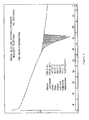
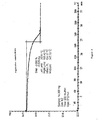
- the argatroban monohydrate shows an endothermic event at about 150oC.
- Figure 2 gives a typical DSC profile.
- the endothermic phenomenon represents water loss and subsequent melting of the compound. Water loss is clearly demonstrated by the thermogravimetric analysis profile in figure 3 .
- Thermogravimetric analysis shows that the compound appears as a monohydrate, as the water loss is 3.68% in a temperature range from 85-177°C, a value which totally fits the theoretical value of 3.42%.
- the high temperature range for weight loss being greater than 175oC, also indicates that the nature of the contained water is of crystalline type;
- DSC Differential scanning calorimetry
- TGA thermogravimetric analysis
- thermogravimetric analysis is shown in figure 7 .
- the loss of around 1% in weight within a temperature range of between 25o and 140oC is ascribable to the presence of a small quantity of water of imbibition;
- DSC Differential scanning calorimetry
- TGA thermogravimetric analysis
- DSC Differential scanning calorimetry
- thermogravimetric analysis with regard to the thermogravimetric analysis, a substantial difference between the curves of monohydrate and anhydrous argatroban can again be seen, indicating the fact that the respective weight losses are different in nature ( fig. 14 ).
- Figure 15 gives a comparison between the diffractometry profiles of argatroban anhydrous, argatroban monohydrate and purified argatroban. As is evident from the superimposition, the three crystalline structures are clearly different.
- Example 1 treatment of crude argatroban with NaOH and separation of the purified argatroban with isopropanol
- a one-litre glass autoclave was fed with 60 g of (2 R ,4 R )-1-[N G -nitro-N 2 -(3-methyl-8-quinolinesulphonyl)-L-arginyl]-4-methyl-2-piperidine carboxylic acid, 480 ml of methanol, 120 ml of acetic acid and 20 g of palladium on 5% carbon (60% wetted).
- the mixture thus obtained was treated, under vigorous stirring, at 85oC in a 8.5 bar hydrogen atmosphere for 8.5 hours.
- the mass was then cooled to room temperature and the catalyst removed by filtration.
- Example 2 treatment of the crude argatroban with NaOH and crystallization from normal propanol
- a one-litre glass autoclave was fed with 50 g of (2 R ,4 R )-1-[N G -nitro-N 2 -(3-methyl-8-quinolinesulphonyl)-L-arginyl]-4-methyl-2-piperidine carboxylic acid, 375 ml of methanol, 95 ml of acetic acid and 16.4 g of palladium on 5% carbon (60% wetted).
- the mass was then cooled to room temperature and the catalyst removed by filtration.
- the obtained solution was concentrated to a residue under reduced pressure.
- Example 3 treatment of crude argatroban without neutralization and with crystallization from isopropanol
- Example 4 treatment of crude argatroban with NH 3 to directly obtain the monohydrate form
- a 250 ml glass autoclave was fed with 20 g of (2 R ,4 R )-1-[N G -nitro-N 2 -(3-methyl-8-quinolinesulphonyl)-L-arginyl]-4-methyl-2-piperidine carboxylic acid ( II ), 160 ml of methanol, 10.4 ml of acetic acid and 5.6 g of palladium on 5% carbon (50% wetted).
- the mass was then cooled to room temperature and the catalyst removed by filtration.
- the obtained solution was concentrated at atmospheric pressure.
- Example 5 crystallization with 35 volumes of water and 5.5 volumes of methanol
- a jacketed steel reactor was fed with 2218 g of purified (2 R ,4 R )-4-methyl-1-[N 2 -[(1,2,3,4-tetrahydro-3-methyl-8-quinolylsulphonyl]-L-arginyl]pipecolic acid ( IV ), 12192 ml of methanol and 77647 ml of demineralized water.
- the solution was then brought to reflux and maintained at this temperature for 2 hours, cooled to the temperature of initial crystallization (75oC) over a period of 1 hour, maintained at this temperature for 1 hour, then cooled to 20oC over 4.5 hours and left under stirring for 6 hours.
Landscapes
- Chemical & Material Sciences (AREA)
- Organic Chemistry (AREA)
- Pharmaceuticals Containing Other Organic And Inorganic Compounds (AREA)
- Plural Heterocyclic Compounds (AREA)
- Hydrogenated Pyridines (AREA)
Description
- The present invention relates to a method for preparing argatroban monohydrate. Said method enables argatroban to be obtained in three different crystalline forms i.e. in the form of argatroban monohydrate, purified argatroban and argatroban anhydrous, each having specific and new physico-chemical characteristics. The present invention also relates to a different isolated form, namely purified argatroban.
-
US patent 4,201,863 (6th May 1980 ) andEP 8746 (filed on 22nd August 1979 US 4,210,863 andEP 8746 EP 8746 -
US 4,258,192 (24th March 1981 ) (continuation-in-part of the aforesaid patent applicationUS 4,201,863 ) and the same patent applicationEP 8746 US 4,258,192 and 2(E) and 3 inEP 8746 - Said polymorphic forms are described instead in the publication Biochem. Biophys. Res. Comm. 1981, 101, 440-446 in the context of stereoisomer preparation. The monohydrate polymorph of the (2R,4R) stereoisomer is prepared by re-crystallization from ethanol/water and the reported characteristics are: m.p. 176-180°C; [α]D 27 +76.1 ° (
c 1, 0.2N HCl). -
US 5,925,760 (20th July 1999 ) andEP 0823430 (filed 4th August, 1997 ) subsequently describe a new method for preparing argatroban by means of a new intermediate N2-(3-methyl-8-quinolinesulphonyl)-N G nitro-L-arginine. In particular the patent makes reference to the preparation of a crystalline monohydrate form of argatroban, referring back to examples (D) and (E) of Japanese patent publication No.(Hei)-2-31055/1990 - More recently, patent application
CN 1,951,937 (filing date 10th November 2006 ) described a method for preparing hydrated argatroban by treating argatroban with large quantities of water (more than 60 and up to 80 volumes of distilled water per gram of argatroban) at a temperature of 80-100ºC for a time of 0.5-1 hour and crystallization by cooling. The water content reported is comprised between 3.3 and 3.8% and the ratio of dextroisomer R to levoisomer S is R:S = 63-67 : 37-33. Argatroban is a compound of wide therapeutic use, for which reason the need still exists to provide a compound of pharmaceutically acceptable quality obtained by easily industrialized and economically convenient methods. With regard to the monohydrate, this form is preferable for the applicative purpose since the anhydrous form is unstable and tends to become hydrated and/or wet. Moreover it crystallizes only with difficulty at the correct ratio between the diastereoisomers. - A first main purpose of the present invention is therefore to provide a method for preparing argatroban monohydrate usable as active principle of pharmaceutical quality for the preparation of proprietary drugs. A further purpose is to obtain said active principle by a synthesis and purification process which enables it to be obtained with a good yield and very high purity.
- For the previously indicated purposes the preparation method of argatroban monohydrate according to the invention consists of preparing crude argatroban, preferably starting from the compound (2R,4R)-1-[NG-nitro-N2-(3-methyl-8-quinolinesulphonyl)-L-arginyl]-4-methyl-2-piperidine carboxylic acid according to the known synthesis process of catalyzed hydrogenation and hydrogenolysis, then treating it to be purified and separated from the reaction mass into the monohydrate forum by controlled crystallization in a methanol/water solvent. Preferably argatroban monohydrate is prepared by separating an intermediate consisting of purified argatroban which is then treated to be transformed into the monohydrate form by the previously mentioned process of crystallization from methanol/water. The preparation by separation of the purified intermediate is to be preferred, as this intermediate presents new and distinctive characteristics and allows argatroban monohydrate to be obtained with high purity and with the correct diastereoisomer ratio.
- Furthermore, it has been surprisingly found that an argatroban anhydrous having new and distinctive physico-chemical characteristics can be subsequently obtained from argatroban monohydrate.
- In a first aspect the invention hence relates to the preparation of argatroban monohydrate and optionally to argatroban anhydrous.
- Therefore, the present invention provides a method for preparing argatroban monohydrate comprising at least the step of:
- concentrating a reaction mass containing crude argatroban to a stirrable residue;
- dissolving the residue containing crude argatroban with an organic solvent and separating a purified argatroban by crystallization by treating the organic solution with a crystallization medium solvent selected from isopropanol and normal-propanol;
- separating argatroban monohydrate by re-crystallizing the purified argatroban isolated in the preceding step from a methanol and water mixture solution by adding a decolorizing carbon, heating the mass at the reflux temperature then subjecting it to carbon filtering and to controlled and gradual cooling from the reflux temperature to a temperature between 15-25°C in a time comprised between 11-17 hours.
- The crystalline precipitate consisting of argatroban monohydrate, obtained either by the continuous mode or in two steps by separating the purified argatroban intermediate, can be dried under nitrogen flow or under vacuum at a temperature comprised from 50°C and 80ºC for at least 8 hours. By subjecting the obtained argatroban monohydrate to re-crystallization from water by quickly cooling to a temperature of 15ºC in a time not greater than 2 minutes, argatroban anhydrous can be obtained, shown to possess new physico-chemical characteristics.
- In a second aspect, therefore, the invention relates to the obtained and isolated purified argatroban having the physico-chemical characteristics described below and reported in the claim that follow.
- The advantages attainable with the present invention will be clear to an expert of the art from the following detailed description of particular embodiments of the method and from the compounds obtainable therewith given as non-limiting examples, with reference to the following figures.
-
-
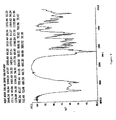
Figure 1 : the figure shows a representative I.R. spectrum of crystalline argatroban monohydrate obtained by crystallization from a solvent consisting of methanol and water according to the described method. -
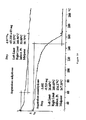
Figure 2 : the figure shows the differential scanning calorimetry (DSC) for a representative sample of argatroban monohydrate obtained by crystallization from a solvent consisting of methanol and water according to the described method. -
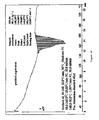
Figure 3 : the figure shows a thermogravimetric analysis of a representative sample of argatroban monohydrate obtained by crystallization from a solvent consisting of methanol and water according to the described method. -
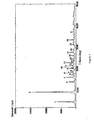
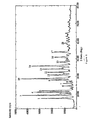
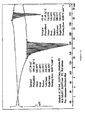
Figure 4 : the figure shows a diffractometry (XRPD) profile of argatroban monohydrate obtained by crystallization from a solvent consisting of methanol and water according to the described method. -
Figure 5 : the figure shows a representative I.R. spectrum of argatroban anhydrous obtained from argatroban monohydrate by the described method. -
Figure 6 : the figure shows the differential scanning calorimetry (DSC) for a representative sample of argatroban anhydrous obtained from argatroban monohydrate by the described method. -
Figure 7 : the figure shows a thermogravimetric analysis of a representative sample of argatroban anhydrous obtained from argatroban monohydrate by the described method. -
Figure 8 : the figure shows a diffractometry (XRPD) profile of argatroban anhydrous obtained from argatroban monohydrate by the described method. -
Figure 9 : the figure shows a representative I.R. spectrum of purified argatroban obtained by the described method. -
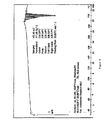
Figure 10 : the figure shows the differential scanning calorimetry (DSC) for a representative sample of purified argatroban obtained by the described method. -
Figure 11 : the figure shows a thermogravimetric analysis of a representative sample of purified argatroban obtained by the described method. -
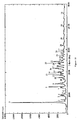
Figure 12 : the figure shows a diffractometry (XRPD) profile of purified argatroban. -
Figure 13 : the figure shows a comparison between the DSC for argatroban anhydrous (2°peak) and the corresponding monohydrate (1°peak) form obtained by the described method. -
Figure 14 : the figure shows a comparison between the thermogravimetric analyses of argatroban anhydrous (upper curve) and monohydrate (lower curve) obtained by the described method. -
Figure 15 : the figure shows a comparison between the XRPD diffractograms of the monohydrate, purified and anhydrous species obtained by the described method. - The process for preparing argatroban monohydrate of the present invention derives from the following scheme:

- In the argatroban monohydrate preparation method of the invention, comprising the steps reported in the Summary, the starting compound for preparing argatroban monohydrate is (2R,4R)-1-[NG-nitro-N2-(3-methyl-8-quinolinosulphyl)-L-arginyl]-4-methyl-2-piperidine carboxylic acid (II) already described in
US 4,258,192 andEP 8746 - For the purposes of the present invention said compound (II) is subjected to a hydrogenation and hydrogenolysis catalyzed by a catalyst consisting of palladium on carbon (Pd/C) in a solvent formed from methanol in the presence of acetic acid in which the v/v ratio between the two is comprised between 1 (acetic acid) and 4-16 (alcohol) and the ratio between the starting compound (II) and acetic acid in w/v is comprised between 0.5 and 2.5. The hydrogenation reaction is conducted under hydrogen atmosphere in the manner known to an expert skilled in the art and preferably at a pressure from 6 to 12 bar and at temperatures from 50ºC to 100ºC for a time comprised between 6 and 18 hours.
- When the process is in the continuous mode, after cooling to room temperature, the Pd/C catalyst is removed from the reaction mass, said obtained mass then being heated to temperatures between 40ºC and 80ºC and concentrated to at least half its volume.
- The mixture thus obtained can be optionally treated with an aqueous solution of a base preferably chosen from sodium hydroxide, sodium bicarbonate and ammonia at a concentration between 10 and 30%, to bring the pH of the mixture itself to between 7.0 and 7.5.
- The solution thus obtained is diluted with water to obtain a crystallization solvent for argatroban monohydrate (I) formed of a mixture of water and methyl alcohol in which the methyl alcohol has a concentration between 10 and 20%. The MetOH:water crystallization solvent is in a quantity up to 50 volumes per gram of argatroban (III) and preferably up to 40 volumes and more preferably comprised from 25 to 35 volumes, the MetOH:water ratio being preferably 1:7 v/v. Crystallization is subsequently achieved by: adding a decolorizing carbon, heating the mass at the reflux temperature and maintaining it under stirring for a time comprised between 1 and 3 hours followed by filtering the carbon and controlled cooling for a time comprised between 11-17 hours to bring the mixture from reflux temperature to 15-25ºC, but preferably to 20ºC. In particular the mass is subjected to the following temperature gradient: heating to 90-95ºC, maintenance at reflux temperature from 1 to 3 hours, preferably for 2 hours, cooling to 70-75ºC in at least one hour and maintenance at this temperature for at least one hour, cooling to 20ºC in a time comprised between 2 and 6 hours, preferably in 4 hours, and maintenance at this temperature for at least 6 hours. The crystalline precipitate which forms is argatroban monohydrate (I) with the physico-chemical characteristics described hereinafter.
- Considering all the step hereinabove reported in this first embodiment the preparation method of argatroban monohydrate comprises the steps of:
- preparing the crude argatroban from (2R,4R)-1-[NG-nitro-N2-(3-methyl-8-quinolinesulphonyl)-L-arginyl]-4-methyl-2-piperidine carboxylic acid in methanol/acetic acid;
- concentrating the reaction mass up to at least half of the volume;
- optionally treating the reaction mass with an aqueous solution of a base to bring the pH of the mixture itself to between 7.0 and 7.5;
- crystallizing the argatroban monohydrate by forming a crystallization medium solvent consisting of a mixture of methanol:water, wherein the methyl alcohol has a concentration between 10 and 20%, and subjecting the mass to an addition of carbon and to a heating at the reflux temperature then subjecting it to carbon filtration and to controlled and gradual cooling from the reflux temperature to a temperature between 15-25ºC in a time comprised between 11-17 hours.
- In particular, the controlled and gradual cooling is at the following temperature gradient: heating to 90-95ºC, maintenance at reflux temperature for a time between 1 and 3 hours, cooling to 70-75ºC in at least one hour and maintenance at this temperature for at least one hour, cooling to 20ºC in a time comprised between 2 and 6 hours and maintenance at this temperature for at least 6 hours. A step of drying under nitrogen flow or under vacuum at a temperature comprised from 50 °C and 80ºC for at least 8 hours can be further comprise.
- The synthesis reaction is conduced as aforedescribed and on completion of hydrogenation, after cooling to room temperature, the Pd/C catalyst is removed from the obtained mass. Said mass is then heated to a temperature from 40ºC to 80ºC and concentrated to at least a stirrable residue.
- The residue containing crude argatroban (III) is dissolved in an organic solvent, being preferably dichloromethane.
- The mixture thus obtained can be optionally treated with an aqueous solution of a base preferably chosen from sodium hydroxide, sodium bicarbonate and ammonia at a concentration between 10 and 30%, to bring the pH of the mixture itself to between 7.0 and 7.5. Optionally in case of excess, the base is then removed either by washing the organic phase with water or under vacuum.
- In this case a crystallization solvent selected from isopropyl alcohol and normal-propyl alcohol is added to the obtained mixture after treating the crude argatroban (III) with a base. Preferably for the purposes of the present invention the crystallization solvent is isopropyl alcohol; the mixture is heated to the solvent reflux temperature, the chlorinated solvent being removed by distillation, then cooled to 0-20°C. In this step, purified argatroban (IV) is obtained which, from the analyses carried out, proves to be solvated with the crystallization alcohol, in particular isopropanol, and has the physico-chemical characteristics described below.
- This crystalline precipitate is then treated to obtain argatroban monohydrate (I) as previously described after solubilization of the purified argatroban (IV) in a methanol:water mixture as previously described.
- Separation of the purified argatroban by crystallization from normal-propanol or isopropanol allows a more efficient preparation in terms of argatroban monohydrate yield and purity and moreover a better processability of the product and reliability of the process, as propanol alcohols are better for these aspects than ethanol. As a crystallization solvent, ethanol, in case of even slight volumetrical errors, can actually cause significant yield reductions with negative consequences on the diastereoisomer ratio. This would lead to greater difficulties in achieving the correct diastereoisomer ratio in the subsequent crystallization. With methanol, this effect is accentuated. The solvate obtained, indicated herein as purified argatroban, as well as being new, instead exhibits crystalline characteristics such as to greatly facilitate its purification and isolation without negatively affecting the diastereoisomer ratio.
- Considering all the step hereinabove reported in this second embodiment the preparation method of argatroban monohydrate comprises the steps of:
- preparing the crude argatroban from (2R,4R)-1-[NG-nitro-N2-(3-methyl-8-quinolinesulphonyl)-L-arginyl]-4-methyl-2-piperidine carboxylic acid in methanol/acetic acid;
- optionally treating the reaction mass with an aqueous solution of a base to bring the pH of the mixture itself to between 7.0 and 7.5;
- concentrating the reaction mass containing crude argatroban to a stirrable residue;
- dissolving the residue containing crude argatroban with an organic solvent and separating the- purified argatroban by crystallization by treating the organic solution with a crystallization solvent selected from isopropanol and normal-propanol;
- separating argatroban monohydrate by re-crystallizing the purified argatroban isolated in the preceding step from a solvent medium consisting of a mixture of methanol:water, wherein the methyl alcohol has a concentration between 10 and 20%, and subjecting the mass to an addition of decolorizing carbon, a heating at the reflux temperature then subjecting it to carbon filtration and controlled and gradual cooling to a temperature between 15-25ºC in a time comprised between 11-17 hours.
- In particular, the controlled and gradual cooling is at the following temperature gradient: heating to 90-95ºC, maintenance at reflux temperature for a time between 1 and 3 hours, cooling to 70-75ºC in at least one hour and maintenance at this temperature for at least one hour, cooling to 20ºC in a time comprised between 2 and 6 hours and maintenance at this temperature for at least 6 hours. A step of drying under nitrogen flow or under vacuum at a temperature comprised from 50°C and 80ºC for at least 8 hours can be further comprise.
- The preparation method of the argatroban monohydrate according to the invention proves to fulfill the purposes of the same.
- In fact, the yields of argatroban monohydrate obtained, either in the case of a continuous step or a two step preparation, are between 65% and 70%; the obtained compound has shown a purity at least equal to or higher than 99%, a KF of at least 3.4% and an isomer ratio of 65:35 ± 2.
- With regard to the purity, the argatroban monohydrate obtainable with the method according to the invention has an impurity profile where any single impurity is less than 0.1% and preferably below 0.03%. Accordingly the purity of the argatroban monohydrate is at least equal to or higher than 99.0% and preferably at least of or higher than 99.8%.
- Optionally, argatroban anhydrous (V) can be obtained from argatroban monohydrate, this being obtained either in a continuous mode or in two distinct steps, by re-dissolving in water the obtained crystalline precipitate, consisting of argatroban monohydrate (I), heating the solution to a temperature between 75º and 100ºC, preferably 80ºC, removing the un-dissolved residues, then quickly cooling the solution to 10ºC-20ºC, preferably to 15ºC, in a time of 2 minutes and maintaining it at said temperature for a period of up to 1 hour.
- The argatroban obtained in this manner is anhydrous and has the physico-chemical characteristics described hereinafter.
- The analytical data of (2R,4R)-4-methyl-1-[N2-[(1,2,3,4-tetrahydro-3-methyl-8-quinolylsulphonyl]-L-arginyl]pipecolic acid monohydrate (I) are given below:
Empirical formula: C23H38N6O6S; Molecular weight: 526.65; Molecular composition: C H N S Calculated (%): 52.45 7.27 15.96 6.09 Found (%): 52.46 7.30 15.95 6.11; Purity by HPLC: 99.0% - 99.8%; I.R. (KBr): 3416, 1272, 1157 cm-1. A representative I.R. spectrum of argatroban monohydrate obtained by the described method is shown in figure 1 ;Optical rotation power: [α]D 27= +78 (c=1 mg/ml in 0.2 N HCl); Melting point: 176-182ºC. Melting point was determined using glass capillary tubes; - Differential scanning calorimetry (DSC) and thermogravimetric analysis (TGA): Differential scanning calorimetry was carried out using a perforated aluminium crucible. The argatroban monohydrate shows an endothermic event at about 150ºC.
Figure 2 gives a typical DSC profile. The endothermic phenomenon represents water loss and subsequent melting of the compound. Water loss is clearly demonstrated by the thermogravimetric analysis profile infigure 3 . Thermogravimetric analysis shows that the compound appears as a monohydrate, as the water loss is 3.68% in a temperature range from 85-177°C, a value which totally fits the theoretical value of 3.42%. The high temperature range for weight loss, being greater than 175ºC, also indicates that the nature of the contained water is of crystalline type; - Analysis by X-ray diffractometry: argatroban monohydrate appears as a white crystalline solid. The peaks relating to argatroban monohydrate and shown. in
figure 4 are summarized in the table 1 below:Table 1 Peak No. Angle (2θ) Relative intensity (%) 1 4.680 43 2 9.230 100 3 13.850 18 4 15.980 23 5 17.120 12 6 18.040 10 7 18.430 14 8 18.950 10 9 20.080 16 10 20.560 12 11 21.260 10 12 21.590 11 13 22.820 24 14 23.740 8 15 24.480 11 16 26.140 12 17 27.620 16 18 28.980 8 19 31.320 10 20 33.440 17 21 37.210 8 - The description of a representative sample of (2R,4R)-4-methyl-1-[N2-[(1,2,3,4-tetrahydro-3-methyl-8-quinolyl)sulphonyl]-L-arginyl]pipecolic acid in anhydrous form (V), and a comparison with the corresponding monohydrate form are given below:
Molecular formula: C23H36N6O5S; Molecular weight: 508.63; Melting point: 220ºC with decomposition; I.R. (KBr): 3432, 1265, 1164. A representative I.R. spectrum of the argatroban anhydrous obtained by the described method is shown in figure 5 ; - Differential scanning calorimetry (DSC) and thermogravimetric analysis (TGA): Differential scanning calorimetry and thermogravimetric analysis were carried out under the same conditions adopted for the argatroban monohydrate analysis.
Figure 6 gives a representative DSC analysis of an argatroban anhydrous sample. The argatroban anhydrous shows an endothermic event at about 215ºC. The endothermic phenomenon is associated with melting of the compound. - The thermogravimetric analysis is shown in
figure 7 . The loss of around 1% in weight within a temperature range of between 25º and 140ºC is ascribable to the presence of a small quantity of water of imbibition; - X-ray diffraction: the XRPD analysis was carried out by following the procedure described for argatroban monohydrate. The following table 2 gives a summary of the peaks shown in
figure 8 :Table 2 Peak No. Angle (2θ) Relative intensity (%) 1 7.790 64 2 9.560 95 3 10.480 27 4 11.320 75 5 12.120 61 6 14.640 23 7 16.010 25 8 16.940 14 9 18.030 45 10 18.900 100 11 20.960 47 12 22.550 53 13 24.370 61 14 26.170 81 15 28.300 32 16 30.960 40 17 33.970 40 18 38.930 23 - The analytical data of purified (2R,4R)-4-methyl-1-[N2-[(1,2,3,4-tetrahydro-3-methyl-8-quinolyl)sulphonyl]-L-arginyl]pipecolic acid (IV) solvated with isopropanol are given below:
- I.R. (KBr): 3399, 1270, 1160 cm-1. A representative I.R. spectrum of argatroban solvated with iPrOH obtained by the described method is given in
figure 9 ; - Melting point: 183-185ºC. Melting point determination was carried out using glass capillary tubes;
- Differential scanning calorimetry (DSC) and thermogravimetric analysis (TGA): differential scanning calorimetry was carried out using a perforated aluminium crucible. The argatroban solvated with isopropanol has an endothermic peak at about 160ºC.
Figure 10 gives a typical DSC profile. The endothermic event represents solvent loss and melting of the compound. Solvent loss is clearly demonstrated from the thermogravimetric analysis profile infigure 11 . Thermogravimetric analysis shows that the compound appears as a solvate with isopropanol, as the solvent loss is 9.0%, a value which totally fits the theoretical value of 10.55% for a monosolvate form. The high temperature range for weight loss, being between 70ºC and 176ºC, also indicates that the nature of the contained solvent is of crystalline type; - Analysis by X-ray diffraction: the argatroban solvated with isopropanol appears as a white crystalline solid. The peaks obtained for argatroban solvated with isopropanol and shown in
figure 12 are summarized in the table 3 below:Table 3 Peak No. Angle (2θ) Relative intensity (%) 1 6.800 100 2 7.840 12 3 9.800 13 4 10.020 13 5 10.700 6 6 11.780 5 7 13.080 12 8 13.540 32 9 14.540 21 10 16.900 8 11 17.540 18 12 18.640 14 13 19.060 13 14 19.620 13 15 20.000 20 16 21.420 16 17 21.780 21 18 22.660 15 19 23.680 15 20 24.080 16 21 24.740 25 22 25.340 9 23 26.480 10 24 27.580 10 25 28.220 7 26 29.120 8 27 29.740 11 28 31.820 9 29 34.840 7 30 40.580 6 - Differential scanning calorimetry (DSC): as can be seen by comparison, the DSC profile of argatroban monohydrate differs considerably from the profile noted for the anhydrous compound. In this respect argatroban monohydrate has an endothermic peak at about 160ºC whereas that of argatroban anhydrous is shown at 220ºC (
figure 13 ). - Thermogravimetric analysis (TGA): with regard to the thermogravimetric analysis, a substantial difference between the curves of monohydrate and anhydrous argatroban can again be seen, indicating the fact that the respective weight losses are different in nature (
fig. 14 ). -
Figure 15 gives a comparison between the diffractometry profiles of argatroban anhydrous, argatroban monohydrate and purified argatroban. As is evident from the superimposition, the three crystalline structures are clearly different. - The examples given below for the purposes of non limiting illustration of the synthesis process of the invention, relate to the different steps that form the method in its entirety and refer to the previously reported scheme.
- A one-litre glass autoclave was fed with 60 g of (2R,4R)-1-[NG-nitro-N2-(3-methyl-8-quinolinesulphonyl)-L-arginyl]-4-methyl-2-piperidine carboxylic acid, 480 ml of methanol, 120 ml of acetic acid and 20 g of palladium on 5% carbon (60% wetted). The mixture thus obtained was treated, under vigorous stirring, at 85ºC in a 8.5 bar hydrogen atmosphere for 8.5 hours.
- The mass was then cooled to room temperature and the catalyst removed by filtration. The obtained solution was concentrated to a residue under reduced pressure. 600 ml of methylene chloride, 300 ml of water and 75 ml of an aqueous solution of 30% sodium hydroxide were added to the oily residue obtained until the residual acetic acid was neutralized (pH=7.5). 30 ml of methanol were then added and the mixture maintained under agitation for 1 hour. The aqueous phase was removed and the organic phase washed twice with 300 ml of water adding each time the necessary quantity of methanol to achieve a good separation.
- The solution in methylene chloride (a third of the total solution) thus obtained was then percolated into a 500 ml jacketed reactor containing 120 ml of 2-propanol. The mass was then heated and 200 ml of solvent were distilled off. The solution was then cooled to 0ºC over a period of 2 hours and maintained at this temperature for 3 hours.
- The solid obtained by crystallization was filtered off and dried at 50ºC under vacuum for 16 hours, giving 16.0 g of purified (2R,4R)-4-methyl-1-[N2-[(1,2,3,4-tetrahydro-3-methyl-8- quinolylsulphonyl]-L-arginyl]pipecolic acid (IV). Yield = 86%.
- A one-litre glass autoclave was fed with 50 g of (2R,4R)-1-[NG-nitro-N2-(3-methyl-8-quinolinesulphonyl)-L-arginyl]-4-methyl-2-piperidine carboxylic acid, 375 ml of methanol, 95 ml of acetic acid and 16.4 g of palladium on 5% carbon (60% wetted).
- The mixture thus obtained was treated, under vigorous stirring, at 85ºC in a 8.5 bar hydrogen atmosphere for 8 hours.
- The mass was then cooled to room temperature and the catalyst removed by filtration. The obtained solution was concentrated to a residue under reduced pressure.
- 570 ml of methylene chloride was added to the oily residue obtained and the solution divided into two parts. Half of the obtained solution was fed into a jacketed 1-litre glass reactor and to it 120 ml of water were added. The acetic acid residue was then neutralized by addition of a 30% sodium hydroxide solution until pH=7.5 was achieved. In order to obtain a net separation between the organic phase and
aqueous phase 12 ml of methanol were then added. The mixture was maintained under stirring for 1 hour, then the aqueous phase was removed and the organic phase washed twice with 120 ml of water, adding each time the necessary quantity of methanol to achieve a good separation. - The solution in methylene chloride thus obtained was then percolated into a 500 ml jacketed reactor containing 140 ml of 1-propanol. The mass was then heated to 55ºC to distil off the dichloromethane present. The solution was then cooled to 0ºC over a period of 2 hours and maintained at this temperature for 2 hours.
- The solid obtained by crystallization was filtered off and dried at 50ºC under vacuum for 16 hours, giving 17.0 g of purified (2R,4R)-4-methyl-1-[N2-[(1,2,3,4-tetrahydro-3-methyl-8- quinolylsulphonyl]-L-arginyl]pipecolic acid (IV). Yield = 73%.
- Half of the compound (III) solution in dichloromethane obtained in example 2 was extracted twice with a mixture of 120 ml of water and 12 ml of methanol.
- The solution in methylene chloride thus obtained was then percolated into a 500 ml jacketed reactor containing 140 ml of 2-propanol, the mass obtained was concentrated by distillation.
- When the distillation was complete the temperature was brought to 90ºC, the mass left under agitation for 1 hour, cooled to 20ºC and finally to 0ºC where it was maintained for 2 hours.
- The solid obtained by crystallization was filtered off and dried at 50ºC under vacuum for 16 hours to give 21.5 g of purified (2R,4R)-4-methyl-1-[N2-[(1,2,3,4-tetrahydro-3-methyl-8-quinolylsulphonyl]-L-arginyl]pipecolic acid (IV). Yield = 93%.
- A 250 ml glass autoclave was fed with 20 g of (2R,4R)-1-[NG-nitro-N2-(3-methyl-8-quinolinesulphonyl)-L-arginyl]-4-methyl-2-piperidine carboxylic acid (II), 160 ml of methanol, 10.4 ml of acetic acid and 5.6 g of palladium on 5% carbon (50% wetted).
- The mixture thus obtained was treated, under vigorous stirring, at 85ºC in a 9 bar hydrogen atmosphere for 8 hours.
- The mass was then cooled to room temperature and the catalyst removed by filtration. The obtained solution was concentrated at atmospheric pressure.
- After having distilled 60 ml of solvent, the solution was cooled to 0ºC and neutralized with 12 ml of an aqueous solution of 30% ammonia.
- Excess ammonia was removed under vacuum, then 700 ml of water were added to the reaction mixture. The solution obtained was heated at reflux (at about 95ºC), maintained under stirring at this temperature for 1 hour, then cooled to 20ºC over a period of 4 hours and maintained at this temperature for 8 hours.
- The crystalline precipitate was filtered off and dried at 80ºC at atmospheric pressure and nitrogen flow for 8 hours to give 15.8 g of argatroban monohydrate (I) (HPLC purity = 99.8%; isomer ratio = 63.8:36.2; KF = 3.5%). Yield = 82.4%.
- A jacketed steel reactor was fed with 2218 g of purified (2R,4R)-4-methyl-1-[N2-[(1,2,3,4-tetrahydro-3-methyl-8-quinolylsulphonyl]-L-arginyl]pipecolic acid (IV), 12192 ml of methanol and 77647 ml of demineralized water. The mixture obtained, to which were added 66.6 g of decolorizing carbon, was heated at reflux and maintained at this temperature for 1 hour under nitrogen. The carbon was then removed under hot conditions by filtration.
- The solution was then brought to reflux and maintained at this temperature for 2 hours, cooled to the temperature of initial crystallization (75ºC) over a period of 1 hour, maintained at this temperature for 1 hour, then cooled to 20ºC over 4.5 hours and left under stirring for 6 hours.
- The solid obtained by crystallization was filtered off, washed with 2218 ml of demineralized water and dried at 55ºC under reduced pressure for 12 hours to give 1998 g of (2R,4R)-4-methyl-1-[N2-[(1,2,3,4-tetrahydro-3-methyl-8-quinolylsulphonyl]-L-arginyl]pipecolic acid (I) monohydrate. (HPLC purity = 99.9%; isomer ratio = 63.2:36.8; KF = 3.5%). Yield = 87%.
- A jacketed glass reactor was fed with 100 ml of water and brought to 80ºC; 0.8 g of argatroban monohydrate was added at this temperature. The mass was maintained under stirring for 10 minutes at this temperature then the un-dissolved residue was removed by filtration. The mother liquors were quickly cooled to 15ºC (in about 2 minutes) and maintained at this temperature for 1 hour. The obtained solid was separated by filtration and dried at 80ºC at atmospheric pressure for 10 hours in a nitrogen flow, giving 0.5 g of argatroban anhydrous (HPLC purity = 99.9%; isomer ratio = 60.6:39.4; KF = 0.26%).
Yield 65%.
Claims (11)
- A method for preparing argatroban monohydrate comprising at least the steps of:- concentrating a reaction mass containing crude argatroban to a stirrable residue;- dissolving the residue containing crude argatroban with an organic solvent and separating by crystallization a purified argatroban by treating the organic solution with a crystallization medium solvent selected from isopropanol and normal-propanol;- separating argatroban monohydrate by re-crystallizing the purified argatroban isolated in the preceding step from a methanol and water mixture solution by adding decolorizing carbon, heating at the reflux temperature followed by carbon filtering and controlled cooling from the reflux temperature to a temperature between 15 and 25ºC in a time between 11-17 hours.
- The method for preparing argatroban monohydrate according to claim 1, wherein the crystallization medium solvent is isopropanol.
- The method for preparing argatroban monohydrate according to claim 1, further comprising the step of:- preparing the crude argatroban from (2R,4R)-1-[NG-nitro-N2-(3-methyl-8-quinolinesulphonyl)-L-arginyl]-4-methyl-2-piperidine carboxylic acid in methanol/acetic acid.
- The method for preparing argatroban monohydrate according to claim 1, wherein the reaction mass is treated with an aqueous solution of a base to bring the pH of the mixture itself to between 7.0 and 7.5.
- The method for preparing argatroban monohydrate according to claim 4, wherein the base solution is selected from sodium hydroxide, sodium bicarbonate and ammonia at a concentration comprised between 10 and 30%.
- The method for preparing argatroban monohydrate according to claim 1, wherein the crystallization or re-crystallization from methanol and water is achieved by subjecting the mass to the following temperature gradient: heating to 90-95ºC, maintenance at reflux temperature for a time between 1 and 3 hours, cooling to 70-75ºC in at least one hour and maintenance at this temperature for at least one hour, cooling to 20ºC in a time comprised between 2 and 6 hours and maintenance at this temperature for at least 6 hours.
- The method according to claim 1, wherein the methyl alcohol and water mixture medium solvent has a concentration of between 10 and 20% of alcohol and is in a quantity up to 50 volumes per gram of purified argatroban.
- The method for preparing argatroban monohydrate according to claim 1 further comprising the step of drying the obtained crystalline precipitate consisting of argatroban monohydrate.
- A method for preparing argatroban monohydrate comprising the steps as defined in the claims from 1 to 8.
- A method for preparing argatroban anhydrous comprising at least the steps of:- preparing argatroban monohydrate according to a method as defined in one of the claims 1-8;- re-crystallizing thereof after dissolution in water by quickly cooling to a temperature of 10-20ºC in a time not greater than 2 minutes.
- Purified argatroban characterized by having:- melting point of 183-185ºC;- I.R. spectrum (KBr) (cm-1) of 3399, 1270, 1160;- differential scanning calorimetry with an endothermic event at about 160ºC;- XRPD: Peak No. 1 Angle (2θ) 6.800, Relative intensity (%) 100; Peak No. 2 Angle (2θ) 7.840, Relative intensity (%) 12; Peak No. 3 Angle (2θ) 9.800, Relative intensity (%) 13; Peak No. 4 Angle (2θ) 10.020, Relative intensity (%) 13; Peak No. 5 Angle (2θ) 10.700, Relative intensity (%) 6; Peak No. 6 Angle (2θ) 11.780, Relative intensity (%) 5; Peak No. 7 Angle (2θ) 13.080, Relative intensity (%) 12; Peak No. 8 Angle (2θ) 13.540, Relative intensity (%) 32; Peak No. 9 Angle (2θ) 14.540, Relative intensity (%) 21; Peak No. 10 Angle (2θ) 16.900, Relative intensity (%) 8; Peak No. 11 Angle (2θ) 17.540, Relative intensity (%) 18; Peak No. 12 Angle (2θ) 18.640, Relative intensity (%) 14; Peak No. 13 Angle (2θ) 19.060, Relative intensity (%) 13; Peak No. 14 Angle (2θ) 19.620, Relative intensity (%) 13; Peak No. 15 Angle (2θ) 20.000, Relative intensity (%) 20; Peak No. 16 Angle (2θ) 21.420, Relative intensity (%) 16; Peak No. 17 Angle (2θ) 21.780, Relative intensity (%) 21; Peak No. 18 Angle (2θ) 22.660, Relative intensity (%) 15; Peak No. 19 Angle (2θ) 23.680, Relative intensity (%) 15; Peak No. 20 Angle (2θ) 24.080, Relative intensity (%) 16; Peak No. 21 Angle (2θ) 24.740, Relative intensity (%) 25; Peak No. 22 Angle (2θ) 25.340, Relative intensity (%) 9; Peak No. 23 Angle (2θ) 26.480, Relative intensity (%) 10; Peak No. 24 Angle (2θ) 27.580, Relative intensity (%) 10; Peak No. 25 Angle (2θ) 28.220, Relative intensity (%) 7; Peak No. 26 Angle (2θ) 29.120, Relative intensity (%) 8; Peak No. 27 Angle (2θ) 29.740, Relative intensity (%) 11; Peak No. 28 Angle (2θ) 31.820, Relative intensity (%) 9; Peak No. 29 Angle (2θ) 34.840, Relative intensity (%) 7; Peak No. 30 Angle (2θ) 40.580, Relative intensity (%) 6; andbeing solvated with isopropanol.
Priority Applications (4)
| Application Number | Priority Date | Filing Date | Title |
|---|---|---|---|
| SI200931194T SI2285799T1 (en) | 2008-04-07 | 2009-04-06 | Method for preparing argatroban monohydrate |
| EP13189067.5A EP2687522A1 (en) | 2008-04-07 | 2009-04-06 | A polymorph of argatroban monohydrate and a process for its synthesis |
| HRP20150456TT HRP20150456T1 (en) | 2008-04-07 | 2009-04-06 | METHOD OF PREPARATION OF ARGATROBAN MONOHYDRATES |
| PL09730279T PL2285799T3 (en) | 2008-04-07 | 2009-04-06 | Method for preparing argatroban monohydrate |
Applications Claiming Priority (2)
| Application Number | Priority Date | Filing Date | Title |
|---|---|---|---|
| IT000106A ITPD20080106A1 (en) | 2008-04-07 | 2008-04-07 | METHOD OF PREPARATION OF MONOHYDRATE ARGATROBAN |
| PCT/EP2009/054085 WO2009124906A2 (en) | 2008-04-07 | 2009-04-06 | Method for preparing argatroban monohydrate |
Related Child Applications (2)
| Application Number | Title | Priority Date | Filing Date |
|---|---|---|---|
| EP13189067.5A Division EP2687522A1 (en) | 2008-04-07 | 2009-04-06 | A polymorph of argatroban monohydrate and a process for its synthesis |
| EP13189067.5A Division-Into EP2687522A1 (en) | 2008-04-07 | 2009-04-06 | A polymorph of argatroban monohydrate and a process for its synthesis |
Publications (2)
| Publication Number | Publication Date |
|---|---|
| EP2285799A2 EP2285799A2 (en) | 2011-02-23 |
| EP2285799B1 true EP2285799B1 (en) | 2015-02-25 |
Family
ID=40297115
Family Applications (2)
| Application Number | Title | Priority Date | Filing Date |
|---|---|---|---|
| EP09730279.8A Not-in-force EP2285799B1 (en) | 2008-04-07 | 2009-04-06 | Method for preparing argatroban monohydrate |
| EP13189067.5A Withdrawn EP2687522A1 (en) | 2008-04-07 | 2009-04-06 | A polymorph of argatroban monohydrate and a process for its synthesis |
Family Applications After (1)
| Application Number | Title | Priority Date | Filing Date |
|---|---|---|---|
| EP13189067.5A Withdrawn EP2687522A1 (en) | 2008-04-07 | 2009-04-06 | A polymorph of argatroban monohydrate and a process for its synthesis |
Country Status (13)
| Country | Link |
|---|---|
| US (1) | US8378106B2 (en) |
| EP (2) | EP2285799B1 (en) |
| JP (1) | JP5696035B2 (en) |
| CA (1) | CA2719778C (en) |
| DK (1) | DK2285799T3 (en) |
| ES (1) | ES2537067T3 (en) |
| HR (1) | HRP20150456T1 (en) |
| HU (1) | HUE025930T2 (en) |
| IT (1) | ITPD20080106A1 (en) |
| PL (1) | PL2285799T3 (en) |
| PT (1) | PT2285799E (en) |
| SI (1) | SI2285799T1 (en) |
| WO (1) | WO2009124906A2 (en) |
Cited By (1)
| Publication number | Priority date | Publication date | Assignee | Title |
|---|---|---|---|---|
| CN105218627A (en) * | 2015-11-19 | 2016-01-06 | 天津市亨必达化学合成物有限公司 | A kind of purification process of argatroban chiral intermediate hydrolyzate |
Families Citing this family (6)
| Publication number | Priority date | Publication date | Assignee | Title |
|---|---|---|---|---|
| ITMI20110545A1 (en) | 2011-04-04 | 2012-10-05 | Lundbeck Pharmaceuticals Italy S P A | METHOD FOR THE PREPARATION OF PROCESS INTERMEDIATES FOR THE SYNTHESIS OF MONOHYDRATE ARGATROBAN |
| CN102408468B (en) * | 2011-09-20 | 2012-11-21 | 海南灵康制药有限公司 | Argatroban compound and preparation method thereof |
| CN103772486B (en) * | 2014-01-06 | 2016-01-20 | 天津大学 | A kind of argatroban new crystal and preparation method thereof |
| CN110452285B (en) * | 2019-09-12 | 2021-05-25 | 北京悦康科创医药科技股份有限公司 | Argatroban single crystal and culture method and application thereof |
| CN110981934B (en) * | 2019-11-12 | 2021-05-25 | 鲁南制药集团股份有限公司 | Synthetic method of argatroban hydrate |
| CN111961114A (en) * | 2020-08-03 | 2020-11-20 | 扬州中宝药业股份有限公司 | Argatroban intermediate and preparation method and application thereof |
Family Cites Families (9)
| Publication number | Priority date | Publication date | Assignee | Title |
|---|---|---|---|---|
| US4201863A (en) * | 1974-11-08 | 1980-05-06 | Mitsubishi Chemical Industries, Limited | N2 -Arylsulfonyl-L-argininamides and the pharmaceutically acceptable salts thereof |
| US4210863A (en) | 1977-03-28 | 1980-07-01 | Huntron Instruments, Inc. | Extendible probe for use with test instruments |
| US4258192A (en) | 1977-12-16 | 1981-03-24 | Mitsubishi Chemical Industries Limited | N2 -Arylsulfonyl-L-argininamides and the pharmaceutically acceptable salts thereof |
| IE48623B1 (en) | 1978-08-31 | 1985-03-20 | Mitsubishi Chem Ind | Alpha-(n-arylsulfonyl-l-argininamides,processes for their preparation and pharmaceutical compositions containing these substances |
| JPS5533499A (en) * | 1978-08-31 | 1980-03-08 | Mitsubishi Chem Ind Ltd | N2-arylsulfonyl-l-arginineamide and its pharmaceutically acceptable salt |
| JPH0627535B2 (en) | 1988-07-18 | 1994-04-13 | 株式会社メント研究所 | Continuously variable transmission |
| ES2166937T3 (en) * | 1996-08-07 | 2002-05-01 | Mitsubishi Chem Corp | METHOD FOR PREPARING N2-ARILSULFONIL-L-ARGININAMIDS. |
| JPH10101649A (en) * | 1996-08-07 | 1998-04-21 | Mitsubishi Chem Corp | Method for producing N2-arylsulfonyl-L-argininamides |
| CN100427480C (en) * | 2006-11-10 | 2008-10-22 | 天津市炜杰科技有限公司 | Process for preparing argatroban hydrate |
-
2008
- 2008-04-07 IT IT000106A patent/ITPD20080106A1/en unknown
-
2009
- 2009-04-06 PT PT97302798T patent/PT2285799E/en unknown
- 2009-04-06 PL PL09730279T patent/PL2285799T3/en unknown
- 2009-04-06 CA CA2719778A patent/CA2719778C/en active Active
- 2009-04-06 JP JP2011503414A patent/JP5696035B2/en active Active
- 2009-04-06 HR HRP20150456TT patent/HRP20150456T1/en unknown
- 2009-04-06 EP EP09730279.8A patent/EP2285799B1/en not_active Not-in-force
- 2009-04-06 SI SI200931194T patent/SI2285799T1/en unknown
- 2009-04-06 HU HUE09730279A patent/HUE025930T2/en unknown
- 2009-04-06 DK DK09730279T patent/DK2285799T3/en active
- 2009-04-06 US US12/935,512 patent/US8378106B2/en active Active
- 2009-04-06 EP EP13189067.5A patent/EP2687522A1/en not_active Withdrawn
- 2009-04-06 ES ES09730279.8T patent/ES2537067T3/en active Active
- 2009-04-06 WO PCT/EP2009/054085 patent/WO2009124906A2/en not_active Ceased
Cited By (1)
| Publication number | Priority date | Publication date | Assignee | Title |
|---|---|---|---|---|
| CN105218627A (en) * | 2015-11-19 | 2016-01-06 | 天津市亨必达化学合成物有限公司 | A kind of purification process of argatroban chiral intermediate hydrolyzate |
Also Published As
| Publication number | Publication date |
|---|---|
| JP2011516519A (en) | 2011-05-26 |
| SI2285799T1 (en) | 2015-07-31 |
| EP2687522A1 (en) | 2014-01-22 |
| EP2285799A2 (en) | 2011-02-23 |
| WO2009124906A2 (en) | 2009-10-15 |
| ITPD20080106A1 (en) | 2009-10-08 |
| PT2285799E (en) | 2015-07-01 |
| CA2719778A1 (en) | 2009-10-15 |
| CA2719778C (en) | 2016-07-26 |
| WO2009124906A3 (en) | 2009-12-03 |
| US20110028726A1 (en) | 2011-02-03 |
| HRP20150456T1 (en) | 2015-07-03 |
| DK2285799T3 (en) | 2015-04-27 |
| US8378106B2 (en) | 2013-02-19 |
| JP5696035B2 (en) | 2015-04-08 |
| ES2537067T3 (en) | 2015-06-02 |
| PL2285799T3 (en) | 2015-08-31 |
| HUE025930T2 (en) | 2016-05-30 |
Similar Documents
| Publication | Publication Date | Title |
|---|---|---|
| EP2687522A1 (en) | A polymorph of argatroban monohydrate and a process for its synthesis | |
| US9828380B2 (en) | Efficient method for the preparation of tofacitinib citrate | |
| TWI518081B (en) | 1-triazole-2-butanol derivative | |
| TW200927144A (en) | A crystalline synthetic intermediate for preparation of a DPP-IV inhibitor and method of purification thereof | |
| EA012911B1 (en) | Process for production of highly pure polymorph (i) donepezil hydrochloride | |
| WO2018193090A2 (en) | Process for preparation of eliglustat hemitartrate and intermediates thereof | |
| EP2094693B1 (en) | A method for the preparation of solifenacin | |
| EP2421853B1 (en) | Synthesis of 3-{[(2r)-1-methylpyrrolidin-2-yl]methyl}-5-[2-(phenylsulfonyl)ethyl]-1h-indole | |
| US7795438B2 (en) | Processes for producing 1-benzyl-4-[(5,6-dimethoxy-1indanon)-2-yl]methylpiperidine and hydrochloride | |
| KR20070062946A (en) | Method for preparing the optical isomer of amlodipine with high optical purity | |
| US20170107193A1 (en) | Crystalline lenalidomide process | |
| WO2017021466A1 (en) | A process for preparation of solid ivabradine hydrochloride | |
| EP2072510A1 (en) | Crystalline form of azelastine | |
| WO2015109377A1 (en) | Process for preparing donepezil hydrochloride forms i and iii; and an intermediate compound thereof | |
| EP3068746B1 (en) | Process for the preparation of enantiomerically pure 1-aminoindan | |
| JP4260941B2 (en) | Azetidine-3-ol | |
| WO2011051957A2 (en) | A process for the preparation of donepezil hydrochloride | |
| KR20080064141A (en) | Method for preparing benzyloxypyrrolidine derivative and method for preparing optically active benzyloxypyrrolidine derivative hydrochloride powder | |
| CN110540520B (en) | Method for purifying donepezil | |
| US7750153B2 (en) | Process for the preparation of didanosine using novel intermediates | |
| CN122070273A (en) | Novel process for the preparation of (3R) -fluoropyrrolidine hydrochloride | |
| EP3247697A1 (en) | Process and intermediates for the racemization of enantiomerically enriched 1-aminoindane | |
| WO2010010058A1 (en) | Method of preparing anhydrous alfusozin hydrochloride | |
| WO2011002076A1 (en) | Method for producing lactam compound and production intermediate thereof |
Legal Events
| Date | Code | Title | Description |
|---|---|---|---|
| PUAI | Public reference made under article 153(3) epc to a published international application that has entered the european phase |
Free format text: ORIGINAL CODE: 0009012 |
|
| 17P | Request for examination filed |
Effective date: 20101105 |
|
| AK | Designated contracting states |
Kind code of ref document: A2 Designated state(s): AT BE BG CH CY CZ DE DK EE ES FI FR GB GR HR HU IE IS IT LI LT LU LV MC MK MT NL NO PL PT RO SE SI SK TR |
|
| AX | Request for extension of the european patent |
Extension state: AL BA RS |
|
| DAX | Request for extension of the european patent (deleted) | ||
| 17Q | First examination report despatched |
Effective date: 20111222 |
|
| GRAP | Despatch of communication of intention to grant a patent |
Free format text: ORIGINAL CODE: EPIDOSNIGR1 |
|
| INTG | Intention to grant announced |
Effective date: 20140602 |
|
| GRAS | Grant fee paid |
Free format text: ORIGINAL CODE: EPIDOSNIGR3 |
|
| GRAP | Despatch of communication of intention to grant a patent |
Free format text: ORIGINAL CODE: EPIDOSNIGR1 |
|
| INTG | Intention to grant announced |
Effective date: 20150105 |
|
| GRAA | (expected) grant |
Free format text: ORIGINAL CODE: 0009210 |
|
| AK | Designated contracting states |
Kind code of ref document: B1 Designated state(s): AT BE BG CH CY CZ DE DK EE ES FI FR GB GR HR HU IE IS IT LI LT LU LV MC MK MT NL NO PL PT RO SE SI SK TR |
|
| REG | Reference to a national code |
Ref country code: GB Ref legal event code: FG4D |
|
| REG | Reference to a national code |
Ref country code: CH Ref legal event code: EP |
|
| REG | Reference to a national code |
Ref country code: IE Ref legal event code: FG4D |
|
| REG | Reference to a national code |
Ref country code: DE Ref legal event code: R096 Ref document number: 602009029543 Country of ref document: DE Effective date: 20150409 |
|
| REG | Reference to a national code |
Ref country code: AT Ref legal event code: REF Ref document number: 711868 Country of ref document: AT Kind code of ref document: T Effective date: 20150415 |
|
| REG | Reference to a national code |
Ref country code: DK Ref legal event code: T3 Effective date: 20150420 Ref country code: FR Ref legal event code: PLFP Year of fee payment: 7 |
|
| REG | Reference to a national code |
Ref country code: HR Ref legal event code: TUEP Ref document number: P20150456 Country of ref document: HR |
|
| REG | Reference to a national code |
Ref country code: CH Ref legal event code: NV Representative=s name: KEMIA SA, CH |
|
| REG | Reference to a national code |
Ref country code: NL Ref legal event code: T3 |
|
| REG | Reference to a national code |
Ref country code: ES Ref legal event code: FG2A Ref document number: 2537067 Country of ref document: ES Kind code of ref document: T3 Effective date: 20150602 |
|
| REG | Reference to a national code |
Ref country code: PT Ref legal event code: SC4A Free format text: AVAILABILITY OF NATIONAL TRANSLATION Effective date: 20150522 |
|
| REG | Reference to a national code |
Ref country code: HR Ref legal event code: T1PR Ref document number: P20150456 Country of ref document: HR |
|
| REG | Reference to a national code |
Ref country code: AT Ref legal event code: MK05 Ref document number: 711868 Country of ref document: AT Kind code of ref document: T Effective date: 20150225 |
|
| REG | Reference to a national code |
Ref country code: LT Ref legal event code: MG4D |
|
| PG25 | Lapsed in a contracting state [announced via postgrant information from national office to epo] |
Ref country code: SE Free format text: LAPSE BECAUSE OF FAILURE TO SUBMIT A TRANSLATION OF THE DESCRIPTION OR TO PAY THE FEE WITHIN THE PRESCRIBED TIME-LIMIT Effective date: 20150225 Ref country code: NO Free format text: LAPSE BECAUSE OF FAILURE TO SUBMIT A TRANSLATION OF THE DESCRIPTION OR TO PAY THE FEE WITHIN THE PRESCRIBED TIME-LIMIT Effective date: 20150525 Ref country code: LT Free format text: LAPSE BECAUSE OF FAILURE TO SUBMIT A TRANSLATION OF THE DESCRIPTION OR TO PAY THE FEE WITHIN THE PRESCRIBED TIME-LIMIT Effective date: 20150225 |
|
| PG25 | Lapsed in a contracting state [announced via postgrant information from national office to epo] |
Ref country code: IS Free format text: LAPSE BECAUSE OF FAILURE TO SUBMIT A TRANSLATION OF THE DESCRIPTION OR TO PAY THE FEE WITHIN THE PRESCRIBED TIME-LIMIT Effective date: 20150625 Ref country code: AT Free format text: LAPSE BECAUSE OF FAILURE TO SUBMIT A TRANSLATION OF THE DESCRIPTION OR TO PAY THE FEE WITHIN THE PRESCRIBED TIME-LIMIT Effective date: 20150225 Ref country code: GR Free format text: LAPSE BECAUSE OF FAILURE TO SUBMIT A TRANSLATION OF THE DESCRIPTION OR TO PAY THE FEE WITHIN THE PRESCRIBED TIME-LIMIT Effective date: 20150526 Ref country code: LV Free format text: LAPSE BECAUSE OF FAILURE TO SUBMIT A TRANSLATION OF THE DESCRIPTION OR TO PAY THE FEE WITHIN THE PRESCRIBED TIME-LIMIT Effective date: 20150225 |
|
| REG | Reference to a national code |
Ref country code: PL Ref legal event code: T3 |
|
| PG25 | Lapsed in a contracting state [announced via postgrant information from national office to epo] |
Ref country code: CZ Free format text: LAPSE BECAUSE OF FAILURE TO SUBMIT A TRANSLATION OF THE DESCRIPTION OR TO PAY THE FEE WITHIN THE PRESCRIBED TIME-LIMIT Effective date: 20150225 Ref country code: EE Free format text: LAPSE BECAUSE OF FAILURE TO SUBMIT A TRANSLATION OF THE DESCRIPTION OR TO PAY THE FEE WITHIN THE PRESCRIBED TIME-LIMIT Effective date: 20150225 Ref country code: RO Free format text: LAPSE BECAUSE OF FAILURE TO SUBMIT A TRANSLATION OF THE DESCRIPTION OR TO PAY THE FEE WITHIN THE PRESCRIBED TIME-LIMIT Effective date: 20150225 Ref country code: SK Free format text: LAPSE BECAUSE OF FAILURE TO SUBMIT A TRANSLATION OF THE DESCRIPTION OR TO PAY THE FEE WITHIN THE PRESCRIBED TIME-LIMIT Effective date: 20150225 |
|
| REG | Reference to a national code |
Ref country code: DE Ref legal event code: R097 Ref document number: 602009029543 Country of ref document: DE |
|
| PG25 | Lapsed in a contracting state [announced via postgrant information from national office to epo] |
Ref country code: MC Free format text: LAPSE BECAUSE OF FAILURE TO SUBMIT A TRANSLATION OF THE DESCRIPTION OR TO PAY THE FEE WITHIN THE PRESCRIBED TIME-LIMIT Effective date: 20150225 Ref country code: LU Free format text: LAPSE BECAUSE OF FAILURE TO SUBMIT A TRANSLATION OF THE DESCRIPTION OR TO PAY THE FEE WITHIN THE PRESCRIBED TIME-LIMIT Effective date: 20150406 |
|
| PLBE | No opposition filed within time limit |
Free format text: ORIGINAL CODE: 0009261 |
|
| STAA | Information on the status of an ep patent application or granted ep patent |
Free format text: STATUS: NO OPPOSITION FILED WITHIN TIME LIMIT |
|
| 26N | No opposition filed |
Effective date: 20151126 |
|
| REG | Reference to a national code |
Ref country code: FR Ref legal event code: PLFP Year of fee payment: 8 |
|
| REG | Reference to a national code |
Ref country code: HU Ref legal event code: AG4A Ref document number: E025930 Country of ref document: HU |
|
| PG25 | Lapsed in a contracting state [announced via postgrant information from national office to epo] |
Ref country code: BE Free format text: LAPSE BECAUSE OF FAILURE TO SUBMIT A TRANSLATION OF THE DESCRIPTION OR TO PAY THE FEE WITHIN THE PRESCRIBED TIME-LIMIT Effective date: 20150225 |
|
| REG | Reference to a national code |
Ref country code: CH Ref legal event code: NV Representative=s name: IPWAY DI FRANCESCO FABIO AND CO., CH |
|
| PG25 | Lapsed in a contracting state [announced via postgrant information from national office to epo] |
Ref country code: MT Free format text: LAPSE BECAUSE OF FAILURE TO SUBMIT A TRANSLATION OF THE DESCRIPTION OR TO PAY THE FEE WITHIN THE PRESCRIBED TIME-LIMIT Effective date: 20150225 |
|
| REG | Reference to a national code |
Ref country code: FR Ref legal event code: PLFP Year of fee payment: 9 |
|
| PG25 | Lapsed in a contracting state [announced via postgrant information from national office to epo] |
Ref country code: BG Free format text: LAPSE BECAUSE OF FAILURE TO SUBMIT A TRANSLATION OF THE DESCRIPTION OR TO PAY THE FEE WITHIN THE PRESCRIBED TIME-LIMIT Effective date: 20150225 |
|
| PG25 | Lapsed in a contracting state [announced via postgrant information from national office to epo] |
Ref country code: CY Free format text: LAPSE BECAUSE OF FAILURE TO SUBMIT A TRANSLATION OF THE DESCRIPTION OR TO PAY THE FEE WITHIN THE PRESCRIBED TIME-LIMIT Effective date: 20150225 |
|
| PG25 | Lapsed in a contracting state [announced via postgrant information from national office to epo] |
Ref country code: TR Free format text: LAPSE BECAUSE OF FAILURE TO SUBMIT A TRANSLATION OF THE DESCRIPTION OR TO PAY THE FEE WITHIN THE PRESCRIBED TIME-LIMIT Effective date: 20150225 |
|
| REG | Reference to a national code |
Ref country code: FR Ref legal event code: PLFP Year of fee payment: 10 |
|
| PG25 | Lapsed in a contracting state [announced via postgrant information from national office to epo] |
Ref country code: MK Free format text: LAPSE BECAUSE OF FAILURE TO SUBMIT A TRANSLATION OF THE DESCRIPTION OR TO PAY THE FEE WITHIN THE PRESCRIBED TIME-LIMIT Effective date: 20150225 |
|
| REG | Reference to a national code |
Ref country code: HR Ref legal event code: ODRP Ref document number: P20150456 Country of ref document: HR Payment date: 20190228 Year of fee payment: 11 |
|
| REG | Reference to a national code |
Ref country code: HR Ref legal event code: ODRP Ref document number: P20150456 Country of ref document: HR Payment date: 20200225 Year of fee payment: 12 |
|
| REG | Reference to a national code |
Ref country code: HR Ref legal event code: ODRP Ref document number: P20150456 Country of ref document: HR Payment date: 20210406 Year of fee payment: 13 |
|
| PGFP | Annual fee paid to national office [announced via postgrant information from national office to epo] |
Ref country code: CH Payment date: 20210416 Year of fee payment: 13 |
|
| REG | Reference to a national code |
Ref country code: HR Ref legal event code: ODRP Ref document number: P20150456 Country of ref document: HR Payment date: 20220401 Year of fee payment: 14 |
|
| REG | Reference to a national code |
Ref country code: CH Ref legal event code: PL |
|
| PG25 | Lapsed in a contracting state [announced via postgrant information from national office to epo] |
Ref country code: LI Free format text: LAPSE BECAUSE OF NON-PAYMENT OF DUE FEES Effective date: 20220430 Ref country code: CH Free format text: LAPSE BECAUSE OF NON-PAYMENT OF DUE FEES Effective date: 20220430 |
|
| PGFP | Annual fee paid to national office [announced via postgrant information from national office to epo] |
Ref country code: NL Payment date: 20230215 Year of fee payment: 15 |
|
| REG | Reference to a national code |
Ref country code: HR Ref legal event code: ODRP Ref document number: P20150456 Country of ref document: HR Payment date: 20230302 Year of fee payment: 15 |
|
| PGFP | Annual fee paid to national office [announced via postgrant information from national office to epo] |
Ref country code: IE Payment date: 20230209 Year of fee payment: 15 Ref country code: FR Payment date: 20230208 Year of fee payment: 15 |
|
| PGFP | Annual fee paid to national office [announced via postgrant information from national office to epo] |
Ref country code: PL Payment date: 20230203 Year of fee payment: 15 Ref country code: IT Payment date: 20230310 Year of fee payment: 15 Ref country code: HR Payment date: 20230302 Year of fee payment: 15 Ref country code: GB Payment date: 20230216 Year of fee payment: 15 |
|
| PGFP | Annual fee paid to national office [announced via postgrant information from national office to epo] |
Ref country code: PT Payment date: 20230405 Year of fee payment: 15 Ref country code: ES Payment date: 20230511 Year of fee payment: 15 Ref country code: DK Payment date: 20230414 Year of fee payment: 15 Ref country code: DE Payment date: 20230207 Year of fee payment: 15 |
|
| PGFP | Annual fee paid to national office [announced via postgrant information from national office to epo] |
Ref country code: SI Payment date: 20230224 Year of fee payment: 15 Ref country code: HU Payment date: 20230308 Year of fee payment: 15 Ref country code: FI Payment date: 20230411 Year of fee payment: 15 |
|
| REG | Reference to a national code |
Ref country code: HR Ref legal event code: PBON Ref document number: P20150456 Country of ref document: HR Effective date: 20240406 |
|
| REG | Reference to a national code |
Ref country code: DE Ref legal event code: R119 Ref document number: 602009029543 Country of ref document: DE |
|
| REG | Reference to a national code |
Ref country code: DK Ref legal event code: EBP Effective date: 20240430 |
|
| REG | Reference to a national code |
Ref country code: NL Ref legal event code: MM Effective date: 20240501 |
|
| PG25 | Lapsed in a contracting state [announced via postgrant information from national office to epo] |
Ref country code: PT Free format text: LAPSE BECAUSE OF NON-PAYMENT OF DUE FEES Effective date: 20241007 |
|
| GBPC | Gb: european patent ceased through non-payment of renewal fee |
Effective date: 20240406 |
|
| PG25 | Lapsed in a contracting state [announced via postgrant information from national office to epo] |
Ref country code: PT Free format text: LAPSE BECAUSE OF NON-PAYMENT OF DUE FEES Effective date: 20241007 |
|
| PG25 | Lapsed in a contracting state [announced via postgrant information from national office to epo] |
Ref country code: DE Free format text: LAPSE BECAUSE OF NON-PAYMENT OF DUE FEES Effective date: 20241105 |
|
| PG25 | Lapsed in a contracting state [announced via postgrant information from national office to epo] |
Ref country code: NL Free format text: LAPSE BECAUSE OF NON-PAYMENT OF DUE FEES Effective date: 20240501 Ref country code: FI Free format text: LAPSE BECAUSE OF NON-PAYMENT OF DUE FEES Effective date: 20240406 |
|
| PG25 | Lapsed in a contracting state [announced via postgrant information from national office to epo] |
Ref country code: GB Free format text: LAPSE BECAUSE OF NON-PAYMENT OF DUE FEES Effective date: 20240406 |
|
| PG25 | Lapsed in a contracting state [announced via postgrant information from national office to epo] |
Ref country code: FR Free format text: LAPSE BECAUSE OF NON-PAYMENT OF DUE FEES Effective date: 20240430 |
|
| PG25 | Lapsed in a contracting state [announced via postgrant information from national office to epo] |
Ref country code: HR Free format text: LAPSE BECAUSE OF NON-PAYMENT OF DUE FEES Effective date: 20240406 |
|
| PG25 | Lapsed in a contracting state [announced via postgrant information from national office to epo] |
Ref country code: NL Free format text: LAPSE BECAUSE OF NON-PAYMENT OF DUE FEES Effective date: 20240501 Ref country code: HR Free format text: LAPSE BECAUSE OF NON-PAYMENT OF DUE FEES Effective date: 20240406 Ref country code: GB Free format text: LAPSE BECAUSE OF NON-PAYMENT OF DUE FEES Effective date: 20240406 Ref country code: FR Free format text: LAPSE BECAUSE OF NON-PAYMENT OF DUE FEES Effective date: 20240430 Ref country code: FI Free format text: LAPSE BECAUSE OF NON-PAYMENT OF DUE FEES Effective date: 20240406 Ref country code: DE Free format text: LAPSE BECAUSE OF NON-PAYMENT OF DUE FEES Effective date: 20241105 |
|
| PG25 | Lapsed in a contracting state [announced via postgrant information from national office to epo] |
Ref country code: HU Free format text: LAPSE BECAUSE OF NON-PAYMENT OF DUE FEES Effective date: 20240407 |
|
| PG25 | Lapsed in a contracting state [announced via postgrant information from national office to epo] |
Ref country code: DK Free format text: LAPSE BECAUSE OF NON-PAYMENT OF DUE FEES Effective date: 20240430 |
|
| PG25 | Lapsed in a contracting state [announced via postgrant information from national office to epo] |
Ref country code: IE Free format text: LAPSE BECAUSE OF NON-PAYMENT OF DUE FEES Effective date: 20240406 |
|
| PG25 | Lapsed in a contracting state [announced via postgrant information from national office to epo] |
Ref country code: PL Free format text: LAPSE BECAUSE OF NON-PAYMENT OF DUE FEES Effective date: 20240406 |
|
| PG25 | Lapsed in a contracting state [announced via postgrant information from national office to epo] |
Ref country code: IT Free format text: LAPSE BECAUSE OF NON-PAYMENT OF DUE FEES Effective date: 20240406 |
|
| REG | Reference to a national code |
Ref country code: ES Ref legal event code: FD2A Effective date: 20250527 |
|
| PG25 | Lapsed in a contracting state [announced via postgrant information from national office to epo] |
Ref country code: ES Free format text: LAPSE BECAUSE OF NON-PAYMENT OF DUE FEES Effective date: 20240407 |
|
| REG | Reference to a national code |
Ref country code: SI Ref legal event code: KO00 Effective date: 20240407 |