EP2284761A2 - Image forming apparatus, image processing apparatus, and image delivery system - Google Patents
Image forming apparatus, image processing apparatus, and image delivery system Download PDFInfo
- Publication number
- EP2284761A2 EP2284761A2 EP10170759A EP10170759A EP2284761A2 EP 2284761 A2 EP2284761 A2 EP 2284761A2 EP 10170759 A EP10170759 A EP 10170759A EP 10170759 A EP10170759 A EP 10170759A EP 2284761 A2 EP2284761 A2 EP 2284761A2
- Authority
- EP
- European Patent Office
- Prior art keywords
- authentication
- information
- servers
- server
- image
- Prior art date
- Legal status (The legal status is an assumption and is not a legal conclusion. Google has not performed a legal analysis and makes no representation as to the accuracy of the status listed.)
- Granted
Links
Images



Classifications
-
- G—PHYSICS
- G06—COMPUTING OR CALCULATING; COUNTING
- G06F—ELECTRIC DIGITAL DATA PROCESSING
- G06F21/00—Security arrangements for protecting computers, components thereof, programs or data against unauthorised activity
- G06F21/30—Authentication, i.e. establishing the identity or authorisation of security principals
- G06F21/31—User authentication
- G06F21/40—User authentication by quorum, i.e. whereby two or more security principals are required
-
- G—PHYSICS
- G06—COMPUTING OR CALCULATING; COUNTING
- G06F—ELECTRIC DIGITAL DATA PROCESSING
- G06F21/00—Security arrangements for protecting computers, components thereof, programs or data against unauthorised activity
- G06F21/30—Authentication, i.e. establishing the identity or authorisation of security principals
- G06F21/31—User authentication
-
- G—PHYSICS
- G06—COMPUTING OR CALCULATING; COUNTING
- G06F—ELECTRIC DIGITAL DATA PROCESSING
- G06F21/00—Security arrangements for protecting computers, components thereof, programs or data against unauthorised activity
- G06F21/30—Authentication, i.e. establishing the identity or authorisation of security principals
- G06F21/31—User authentication
- G06F21/41—User authentication where a single sign-on provides access to a plurality of computers
-
- G—PHYSICS
- G06—COMPUTING OR CALCULATING; COUNTING
- G06F—ELECTRIC DIGITAL DATA PROCESSING
- G06F21/00—Security arrangements for protecting computers, components thereof, programs or data against unauthorised activity
- G06F21/60—Protecting data
- G06F21/606—Protecting data by securing the transmission between two devices or processes
- G06F21/608—Secure printing
-
- H—ELECTRICITY
- H04—ELECTRIC COMMUNICATION TECHNIQUE
- H04L—TRANSMISSION OF DIGITAL INFORMATION, e.g. TELEGRAPHIC COMMUNICATION
- H04L63/00—Network architectures or network communication protocols for network security
- H04L63/08—Network architectures or network communication protocols for network security for authentication of entities
Definitions
- the present invention generally relates to a user authentication technique using plural authentication servers.
- MFP multifunction peripheral
- An image delivery system capable of increasing the efficiency of document computerization and delivery is also important.
- An image delivery system typically includes an image input device (such as a scanner) and a delivery managing server.
- an image input device such as a scanner
- a delivery managing server multiple menus of various delivery processes adapted for various operations and purposes may be registered. For example, a user selects a process menu suitable for a particular operation on an operating panel (operating unit) of a scanner.
- Japanese Laid-Open Patent Application No. 2006-018640 discloses that a delivery process and an image conversion process may be provided as plug-ins, so that a user or an administrator can combine such plug-ins in a desired manner to create an input workflow, an image conversion workflow, and an output workflow. Using such workflows, an image data delivery process may be performed.
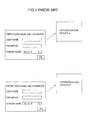
- FIG. 1 illustrates a conventional authentication process where an information processing apparatus is connected to plural authentication servers A and B.
- the image processing apparatus is connected to the authentication servers A and B, once a user selects one of the authentication servers A or B for an authentication process, another user using the other authentication server cannot perform an authentication process.
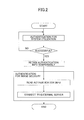
- FIG. 2 is a flowchart of a conventional authentication process in such an image delivery system.
- a user selects an authentication server for system utilization.
- an authentication process is performed by the selected authentication server based on the input of authentication information (such as user ID, password, and domain name).
- authentication information such as user ID, password, and domain name.
- the authentication information is temporarily retained and used for an authentication process in the later stage.
- the initial-stage authentication information may be used for the later-stage authentication process.
- the later-stage authentication process when separate authentication servers are designated for the initial-stage authentication process and the later-stage authentication process, if one authentication server is selected for the initial-stage authentication process, the other authentication server cannot be utilized for the later-stage image delivery process, so that the later-stage process cannot be performed.
- the disadvantages of the prior art are overcome by the present invention which, in one aspect, is an image forming apparatus connected to plural authentication servers.
- the image forming apparatus includes an acquiring unit configured to acquire user identifying information identifying a user and a password; a selecting unit configured to select server identifying information identifying two or more of the plural authentication servers; an authentication process unit configured to transmit the user identifying information and the password to the two or more authentication servers identified by the selected server identifying information, and acquire an authentication result from the two or more authentication servers.
- the authentication process unit determines that authentication is successful upon reception of the authentication result indicating successful authentication by at least one of the two or more authentication servers.
- the image forming apparatus further includes a process unit configured to process image data upon determination of successful authentication by the authentication process unit.
- the present invention further provides an image delivery system in which plural authentication servers, an image forming apparatus, and an image processing apparatus are connected via a network.
- the image forming apparatus includes an image acquiring unit configured to acquire image data; an information acquiring unit configured to acquire user identifying information identifying a user and a password; a selecting unit configured to select server identifying information identifying two or more of the plural authentication servers; and an authentication process unit configured to transmit the user identifying information and the password to the two or more authentication servers identified by the selected server identifying information, and receive an authentication result from the two or more authentication servers.
- the authentication process unit determines that authentication is successful upon reception of the authentication result indicating successful authentication by at least one of the two or more authentication servers.
- the image forming apparatus further includes a transmit unit configured to transmit the image data to the image processing apparatus upon determination of successful authentication by the authentication process unit.
- the image processing apparatus includes a receive unit configured to receive the image data from the image forming apparatus; and a delivery unit configured to deliver the received image data in accordance with a workflow defining one or more processes.
- the present invention provides an authentication method for performing an authentication process with plural authentication servers.
- the method includes acquiring user identification information identifying a user and a password; selecting server identifying information identifying two or more of the plural authentication servers; transmitting the user identification information and the password to the two or more authentication servers selected by the selecting step and acquiring an authentication result from the two or more authentication servers; and determining that authentication is successful upon reception of the authentication result indicating successful authentication by at least one of the two or more authentication servers.
- FIG. 3 illustrates an image delivery system 1 according to Embodiment 1.
- the image delivery system 1 includes a MFP (multifunction peripheral) 10, plural authentication servers 20, an image processing server 30, an image managing server 40, and an information processing terminal 50, which are connected via a network.
- the information processing terminal 50 may include a personal computer, a PDA (personal data assistant), and the like.
- the MFP 10 is an example of an image forming apparatus.
- the MFP 10 may include the multiple functions of a scanner, a copier, a printer, and a facsimile machine.
- the MFP 10 may be configured to generate image data by scanning a recording medium, such as a sheet of paper, and then transmit the image data to the image processing server 30.
- the MFP 10 is described in greater detail later.
- the image data generated by the MFP 10 may include document image data.
- the authentication servers 20 acquire user information and a password from a device connected to the network to perform authentication.
- the authentication servers 20 may include a LDAP (Light Weight Directory Access Protocol) server.
- the image processing server 30 may include a computer, such as a workstation, configured to receive the image data scanned by the MFP 10 and perform various processes, such as a delivery process, in accordance with a designated workflow.
- the workflow may include a mail transmit workflow, a FAX transmit workflow, and a folder delivery workflow.
- the image processing server 30 implements a workflow based on input image data.
- the workflow may be configured by a user for performing a document storage or delivery process.
- the image processing server 30 also provides an image processing function. The details of the image processing server 30 are described later.
- the image processing server 30 may be incorporated within the MFP 10.
- the image managing server 40 stores and manages image data delivered from the image processing server 30.
- the image managing server 40 may be configured to require authentication by Active Directory.
- the information processing terminal 50 may be configured such that an administrating tool for data delivery is started up by an administrator, and then plug-ins for input, image conversion, and output processes are successively selected so as to create a workflow.
- the number of the MFPs, the various servers, and the information processing terminals connected to the network is not particularly limited.
- a workflow may be created within the MFP 10.
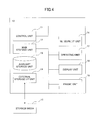
- FIG. 4 is a block diagram of a hardware structure of the MFP 10.
- the MFP 10 includes a control unit 11, a main storage unit 12, an auxiliary storage unit 13, an external storage I/F (interface) unit 14, a network I/F unit 16, an operating unit 17, a display unit 18, and an engine unit 19.
- the control unit 11 may include a CPU configured to control various units and perform data calculations and processing in a computer.
- the control unit 11 may also provide a processing unit for executing a program stored in the main storage unit 12. For example, the control unit 11 receives data from an input device or a storage unit, processes or calculates the data, and then outputs a result to an output device or the storage unit in accordance with the program.
- the main storage unit 12 may include a ROM (Read Only Memory) or a RAM (Random Access Memory) in which an OS (operating system) that is basic software executed by the control unit 11, an application software program and various other data may be saved or temporarily stored.
- the auxiliary storage unit 13 may include a HDD (Hard Disk Drive) configured to store data used by the application software program.
- the external storage I/F unit 14 provides an interface between the MFP 10 and a recording medium 15 (such as a flash memory) via a data transmission channel, such as a USB (Universal Serial Bus) cable.
- the recording medium 15 may store a program that is installed into the MFP 10 via the external storage I/F unit 14.
- the network I/F unit 16 provides an interface between the MFP 10 and a peripheral device.
- the peripheral device may have a communication function and may be connected via a network, such as a LAN (Local Area Network) or WAN (Wide Area Network), using a wired or wireless data transmission channel.
- the operating unit 17 and the display unit 18 may include a LCD (Liquid Crystal Display) unit having key switches (hardware keys) and a touch panel function (including GUI (Graphical User Interface) software keys).
- the operating unit 17 and the display unit 18 thus provide a display unit and an input unit providing a user interface (UI) allowing utilization of the functions of the MFP 10 by a user.
- the engine unit 19 may include a plotter or a scanner unit that actually performs an image formation process.
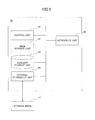
- FIG. 5 is a block diagram of a hardware structure of the image processing server 30.
- the image processing server 30 includes a control unit 31, a main storage unit 32, an auxiliary storage unit 33, an external storage I/F unit 34, and a network I/F unit 36.
- the control unit 31 may include a CPU configured to control various units and process or calculate data in a computer.
- the control unit 31 may also provide a processing unit for executing a program stored in the main storage unit 32. For example, the control unit 31 receives data from an input device or a storage unit, processes or calculates the data, and then outputs a result to an output device or the storage unit.
- the main storage unit 32 may include a ROM (Read Only Memory) and a RAM (Random Access Memory) in which an OS that is basic software executed by the control unit 31, and an application software program and various data may be saved or temporarily stored.
- the auxiliary storage unit 33 may include a HDD configured to store data used by an application software program.
- the external storage I/F unit 34 provides an interface between the image processing server 30 and a recording medium 15 (such as a flash memory) connected via a data transmission channel, such as a USB cable.
- the recording medium 15 may store a program that is installed into the image processing server 30 via the external storage I/F unit 34.
- the network I/F unit 36 provides an interface between the image processing server 30 and a peripheral device having a communication function.
- the peripheral device may be connected via a network, such as a LAN (Local Area Network) or a WAN (Wide Area Network), using a wired or wireless data transmission channel.
- the image processing server 30 may also include an operating unit or a display unit.
- FIG. 6 is a block diagram of a functional structure of the MFP 10.
- the MFP 10 includes an image reading unit 100, a receiving unit 101, an authentication information acquiring unit 102, an authentication process unit 103, a storage unit 104, and a communications unit 105.
- the image reading unit 100 acquires image data by reading an original sheet using a scan function (not illustrated).
- the image data may be received via facsimile, or acquired via the information processing terminal 50.
- the receiving unit 101 receives a request from a user for utilization of the image delivery system ( FIG. 3 ).
- the receiving unit 101 considers a workflow execution instruction as a system utilization request.
- a workflow execution instruction may be entered on the operating unit 17 or the display unit 18.
- the receiving unit 101 Upon reception of such a system utilization request, the receiving unit 101 notifies the authentication information acquiring unit 102.
- the authentication information acquiring unit 102 In response to the notification of system utilization request from the receiving unit 101, the authentication information acquiring unit 102 causes an authentication information acquiring screen to be displayed on the display unit 18, and then acquires authentication information entered or selected on the authentication information acquiring screen.
- the details of the authentication information acquiring unit 102 will be described later with reference to FIGs. 7 and 8 .
- FIG. 8 is a block diagram of a functional structure of the authentication information acquiring unit 102.
- the authentication information acquiring unit 102 includes a common information acquiring unit 121 and a unique information selecting unit 122.
- the common information acquiring unit 121 causes the display unit 18 to display an authentication information acquiring screen on which a user can enter user identifying information (such as a user ID or a user name) and a password.
- user identifying information such as a user ID or a user name
- password a password
- the common information acquiring unit 121 acquires user identifying information and a password, which may be together referred to as "common information”.
- the unique information selecting unit 122 causes the display unit 18 to display an authentication information acquiring screen for allowing a user to select identifying information (such as a domain name) of plural authentication servers set in the system.
- the unique information selecting unit 122 can acquire the identifying information (authentication server identifying information) of the selected plural authentication servers.
- the authentication server identifying information may be referred to as "unique information”.
- FIG. 9 illustrates an example of the authentication information acquiring screen.
- the authentication information acquiring screen includes the input fields for a user name and a password, so that the common information acquiring unit 121 can acquire the common information (user name and password). Further, the authentication information acquiring screen includes fields for plural domain names, so that the unique information acquiring unit 122 can acquire the selected plural domain names.
- the illustrated example includes two domain name fields, three or more domain name fields may be provided.
- the authentication process unit 103 acquires the common information (user identifying information and password) and the unique information (authentication server identifying information) from the authentication information acquiring unit 102 as authentication information. The authentication process unit 103 then transmits the common information to the authentication servers indicated by the authentication server identifying information successively, and then acquires authentication results from the authentication servers. If there is at least one authentication result indicating successful authentication, the authentication process unit 103 determines that authentication is successful and transmits the authentication information to the image processing server 30 via the communications unit 105.
- the authentication process unit 103 When a required domain name (or required authentication server) is set, the authentication process unit 103 does not recognize successful authentication unless the authentication server designated by the required domain name indicates successful authentication.
- the storage unit 104 may be configured to store plug-ins for an input process, an image conversion process, and an output process, and also one or more workflows combining the plug-ins.
- the storage unit 104 is not necessarily required.
- workflow information may be acquired from the storage unit 306 of the image processing server 30.
- the communications unit 105 may be configured to transmit or receive device information and image data.
- the communications unit 105 transmits the common information (authentication information) to the authentication servers, or transmits image data and a workflow process request made by a user to the image processing server 30.
- Such transmission and reception of image data may be included in an image data process.
- the image processing server 30 includes a workflow setting unit 301, a communications unit 302, a job executing unit 303, a workflow control unit 304, a workflow process unit 305, a storage unit 306, an authentication method registration unit 307, and a storage unit 308.
- the workflow setting unit 301 may be configured to store a workflow based on a combination of the plug-ins for the input that is set by a user, image conversion, and output processes, in the storage unit 306 in XML format.
- the workflow setting unit 301 may also be configured to set an authentication method for a workflow.
- FIG. 10 illustrates an example of an authentication method setting screen.
- the authentication method setting screen of FIG. 10 is an example of an authentication profile screen for workflows that may appear when an administrator opens an administrating tool of the image processing server 30 using the information processing terminal 50. As illustrated in FIG. 10 , the administrator can set plural authentication methods for a workflow. The administrator can also set a required authentication method (or required authentication server).
- the communications unit 302 may be configured to transmit or receive device information or image data.
- the communications unit 302 receives image data from the MFP 10 and transmits a result of image processing of the image data to a workflow delivery destination.
- the communications unit 302 may also receive authentication information from the MFP 10.
- the communications unit 302, upon reception of a workflow process request (job request) from the MFP 10, may output workflow identifying information or bibliographic information (such as address information) of each workflow process to the job executing unit 303.
- the job executing unit 303 executes a job in accordance with a request from the MFP 10. For example, the job executing unit 303 sends a workflow process request to the workflow control unit 304 and also outputs workflow identifying information, bibliographic information of a workflow process, and image data.
- the workflow control unit 304 controls the execution of a process contained in the workflow.
- the workflow control unit 304 accesses an authentication server indicated by the unique information contained in the authentication information acquired from the MFP 10, and causes the authentication server to perform an authentication process using the common information contained in the authentication information.
- the workflow control unit 304 upon reception of a successful authentication result from the authentication server set in the workflow, the workflow control unit 304 causes the relevant workflow process to be performed. If the authentication result indicates unsuccessful authentication, the workflow control unit 304 records an authentication error in a log.
- the workflow process unit 305 implements a workflow in response to a process execution instruction from the workflow control unit 304 and then performs a delivery process.
- the workflow process unit 305 executes the processes contained in the workflow in order of flow and then delivers image data to a delivery destination.
- the processes performed by the workflow process unit 305 may include an allocating process, an image process, and a delivery process (output process).
- the allocating process may involve determining where image data should be delivered. For example, the allocating process determines whether the image data should be delivered to a folder or transmitted to a mail server, based on the last process contained in the workflow.
- the image process refers to a process of image conversion, such as PDF conversion or TIFF conversion.
- the delivery process refers to a process of delivering image data to one or more delivery destinations determined by the allocating process.
- the workflow process unit 305 may be configured to perform at least a delivery process.
- the storage unit 306 may be configured to store plug-ins for an input process, an image conversion process, and an output process, and also one or more workflows combining the various plug-ins.
- the storage unit 306 may also store workflow information indicating an authentication method set for a workflow.
- FIG. 11 illustrates a data structure of workflow information.
- authentication methods 1 and 2 are set for a workflow ID 1.
- a required authentication 1 (see FIG. 9 ) is also set for the workflow ID 1.
- delivery processes of "File storage” and "Mail transmission” are set for ID 1. Either or both of these delivery processes may be performed based on a user selection.
- the authentication method numbers correspond to authentication method IDs as will be described later. The setting of the required authentication is not necessarily required.
- the authentication method registration unit 307 causes information of authentication methods used in the system ("authentication method information") to be stored in the storage unit 308.
- the authentication method information may include an authentication process ID, authentication process content, an address, and a domain name.
- FIG. 12 illustrates a data structure of the authentication method information stored in the storage unit 308.
- the authentication method information includes an ID, an authentication process content, an address, and a domain name that are associated with one another.
- the authentication method ID 1 is associated with the process content "LDAP”, the address "192.168.1.xxx”, and the domain name "AAA.co.jp".
- the domain names in the authentication method information correspond to the alternative domain names shown in the authentication information acquiring screen illustrated in FIG. 8 . While in FIGs. 11 and 12 , the information is shown in a table format, the same information may be stored in XML format.
- the authentication information acquiring unit 102 of the MFP 10 upon detection of a workflow executing operation in step S11, causes the authentication information acquiring screen to be displayed, such as illustrated in FIG. 8 .
- the "workflow executing operation” herein refers to the actual execution of a process following the pressing of a workflow executing button by a user.
- step S12 the user inputs or selects authentication information. Specifically, the common information including a user name and a password may be input, while the unique information including an authentication server domain name may be selected. Two or more items of unique information may be selected.
- step S13 the authentication process unit 103 acquires the authentication information acquired by the authentication information acquiring unit 102, and then transmits the common information to the authentication servers designated by the unique information, so that the designated authentication servers can perform authentication.
- step S14 the authentication process unit 103 records an authentication result received from the designated authentication servers in a memory (not illustrated).
- step S15 the authentication process unit 103 determines if any of the authentication servers that performed authentication involves a required authentication. If the determination in step S15 indicates NO (no required authentication), the process goes to step S16. If the determination result is YES, the process goes to step S17.
- step S16 the authentication process unit 103 determines whether at least one of the authentication results stored in memory indicates successful authentication. If the determination in step S16 indicates YES (at least one successful authentication), the process goes to step S18. If NO (no successful authentication), the process goes to step S19.
- step S17 the authentication process unit 103 determines whether the authentication results of all required authentications stored in memory indicate successful authentication. If the determination in step S17 indicates YES (all required authentications were successful), the process goes to step S18. If the determination indicates NO (not all required authentications were successful), the routine goes to step S19. In step S18, the authentication process unit 103 determines that authentication has succeeded, and grants utilization of the system. In step S19, the authentication process unit 103 determines that authentication has failed, and therefore returns to step S11 to cause the display of the authentication information acquiring screen again.
- authentication is performed by plural authentication servers based on the authentication information entered by the user. If any of the authentication servers indicates successful authentication, it is determined that authentication has succeeded. When one or more required authentications are set, successful authentication may be determined only when all of the required authentications are successful.
- an authentication process for actually performing a delivery process after utilization of the system is granted is described (later-stage authentication). For example, when a scanned image needs to be saved in a file in a file server (such as the image managing server 40), access to the image managing server 40 requires authentication.
- FIG. 14 is a flowchart of the later-stage authentication process for the delivery process.
- the workflow control unit 304 acquires the first unique information in the authentication information acquired from the MFP 10.
- the workflow control unit 304 causes the authentication server designated by the acquired unique information to perform authentication in an attempt to access the image managing server 40.
- the workflow control unit 304 determines whether connection to the image managing server 40 has been successful. If the determination in step S23 indicates that the connection is successful, the process goes to step S26; If not, the process goes to step S24.
- step S24 the workflow control unit 304 attempts to acquire the next unique information.
- step S25 it is determined whether the next unique information has been acquired. If acquired, the process returns to S22, and the workflow control unit 304 attempts to connect to the image managing server 40 again using the acquired unique information. If the determination in S25 indicates an unsuccessful result, the workflow control unit 304 goes to step S27.
- step S26 because connection to the image managing server 40 has been successful, the workflow control unit 304 delivers the image data to the image managing server 40.
- step S27 because the attempt to connect to the image managing server 40 has been unsuccessful, the workflow control unit 304 performs an error process in which an error is recorded in a log.
- FIG. 15A illustrates an authentication method in which the image managing server 40 includes an authentication unit 401.
- the workflow control unit 304 attempts authentication for access to the image managing server 40 using the common information of the acquired authentication information. If the user name and password entered at the time of system utilization match the user name and password in the authentication unit 401, connection to the image managing server 40 is allowed.
- FIG. 15B illustrates the other method of authentication in which the image managing server 40 performs authentication using an authentication server 20.
- the authentication process illustrated in FIG. 14 is performed.
- the workflow control unit 304 transmits the common information to the authentication server 20 designated by the unique information of the acquired authentication information, so that the designated authentication server 20 can perform an authentication process.
- the workflow control unit 304 of the image processing apparatus 30 allows connection to the image managing server 40 if the acquired unique information contains an ID of the authentication server 20 for connection to the image managing server 40.
- the same authentication information used at the time of utilization of the system can be reused when later authentication is required.
- LDAP and Active Directory use the same user name and password
- an authentication process for connecting to the image managing server 40 in a later-stage process can be performed using the authentication information (unique information) for Active Directory.
- the MFP 60 includes the image processing server 30 described with reference to Embodiment 1.
- FIG. 16 is a block diagram of a functional structure of the MFP 60.
- the MFP 60 in which the image processing server 30 according to Embodiment 1 is incorporated, provides basically the same functions that the MFP 10 ( FIG. 6 ) and the image processing server 30 ( FIG. 7 ) provide.
- the processes according to Embodiment 1 can be performed by the MFP 60 alone.
- An authentication system may be applied to a system in which an information processing apparatus is connected to plural authentication servers.
- a program executed by the image processing server or the MFP according to Embodiment 1 or 2 may be recorded in a computer-readable recording medium, such as a CD-ROM, a flexible disc (FD), a CD-R, or a DVD (Digital Versatile Disk), in an installable or executable file format.
- a program executed by the image processing server or the MFP according to Embodiment 1 or 2 may be stored in a computer connected to a network, such as the Internet, so that the program can be downloaded via the network into the information processing server or the MFP.
- a program may also be provided or distributed via a network such as the Internet.
- the program may be provided in a ROM and the like and then the ROM may be supplied to the information processing server or the MFP.
- the program executed by the image processing server or the MFP according to Embodiment 1 or 2 may have a modular structure including the various units of the embodiments of the present invention.
- a CPU (processor) as a hardware unit may be configured to read the program from any of the aforementioned recording media and execute the program, so that the various units can be loaded into a main storage unit in order to realize the various units.
- an image processing apparatus connected to plural authentication servers includes an image acquiring unit configured to acquire image data; a common information acquiring unit configured to acquire common information including user identifying information identifying a user and a password; a unique information acquiring unit configured to acquire unique information including server identifying information identifying two or more of the plural authentication servers; an authentication process unit configured to transmit the common information to the two or more authentication servers identified by the unique information, and acquire an authentication result from the two or more authentication servers, wherein the authentication process unit determines that authentication is successful upon reception of the authentication result indicating successful authentication by at least one of the two or more authentication servers; and a process unit configured to process the acquired image data upon determination of successful authentication by the authentication process unit.
- the authentication process unit is configured to determine that authentication is successful upon successful authentication by at least one of the two or more authentication servers that is designated as a required authentication server by the server identifying information.
- the authentication process unit is configured to transmit common information to the authentication servers identified by unique information successively from one authentication server to another, wherein the common information includes the user identifying information and the password, and the unique information includes the selected server identifying information.
Landscapes
- Engineering & Computer Science (AREA)
- Computer Security & Cryptography (AREA)
- Theoretical Computer Science (AREA)
- Computer Hardware Design (AREA)
- General Physics & Mathematics (AREA)
- General Engineering & Computer Science (AREA)
- Physics & Mathematics (AREA)
- Software Systems (AREA)
- Health & Medical Sciences (AREA)
- Bioethics (AREA)
- General Health & Medical Sciences (AREA)
- Facsimiles In General (AREA)
- Accessory Devices And Overall Control Thereof (AREA)
Abstract
Description
- The present invention generally relates to a user authentication technique using plural authentication servers.
- With the increased awareness about the importance of information security, user authentication is increasingly required when utilizing an information processing apparatus and the like installed in offices and other places. For example, a multifunction peripheral (MFP), which is an example of an information processing apparatus, may require user authentication using an IC card.
- Meanwhile, increasing numbers of corporations are connecting MFPs and other image input/output devices to networks. Image input/output devices play an important role in enhancing work efficiency. An image delivery system capable of increasing the efficiency of document computerization and delivery is also important. An image delivery system typically includes an image input device (such as a scanner) and a delivery managing server. In the delivery managing server, multiple menus of various delivery processes adapted for various operations and purposes may be registered. For example, a user selects a process menu suitable for a particular operation on an operating panel (operating unit) of a scanner.
- Japanese Laid-Open Patent Application No.
2006-018640 -
FIG. 1 illustrates a conventional authentication process where an information processing apparatus is connected to plural authentication servers A and B. In this conventional example, although the image processing apparatus is connected to the authentication servers A and B, once a user selects one of the authentication servers A or B for an authentication process, another user using the other authentication server cannot perform an authentication process. - In an image delivery system, an authentication process may be performed separately for the utilization of the system ("initial stage"), and the later process of image delivery ("later stage") due to security considerations.
FIG. 2 is a flowchart of a conventional authentication process in such an image delivery system. First a user selects an authentication server for system utilization. Then, an authentication process is performed by the selected authentication server based on the input of authentication information (such as user ID, password, and domain name). Upon successful authentication, the authentication information is temporarily retained and used for an authentication process in the later stage. - Thus, in the conventional image delivery system, the initial-stage authentication information may be used for the later-stage authentication process. In this case, when separate authentication servers are designated for the initial-stage authentication process and the later-stage authentication process, if one authentication server is selected for the initial-stage authentication process, the other authentication server cannot be utilized for the later-stage image delivery process, so that the later-stage process cannot be performed.
- The disadvantages of the prior art are overcome by the present invention which, in one aspect, is an image forming apparatus connected to plural authentication servers. The image forming apparatus includes an acquiring unit configured to acquire user identifying information identifying a user and a password; a selecting unit configured to select server identifying information identifying two or more of the plural authentication servers; an authentication process unit configured to transmit the user identifying information and the password to the two or more authentication servers identified by the selected server identifying information, and acquire an authentication result from the two or more authentication servers. The authentication process unit determines that authentication is successful upon reception of the authentication result indicating successful authentication by at least one of the two or more authentication servers. The image forming apparatus further includes a process unit configured to process image data upon determination of successful authentication by the authentication process unit.
- In another aspect, the present invention further provides an image delivery system in which plural authentication servers, an image forming apparatus, and an image processing apparatus are connected via a network. The image forming apparatus includes an image acquiring unit configured to acquire image data; an information acquiring unit configured to acquire user identifying information identifying a user and a password; a selecting unit configured to select server identifying information identifying two or more of the plural authentication servers; and an authentication process unit configured to transmit the user identifying information and the password to the two or more authentication servers identified by the selected server identifying information, and receive an authentication result from the two or more authentication servers. The authentication process unit determines that authentication is successful upon reception of the authentication result indicating successful authentication by at least one of the two or more authentication servers. The image forming apparatus further includes a transmit unit configured to transmit the image data to the image processing apparatus upon determination of successful authentication by the authentication process unit. The image processing apparatus includes a receive unit configured to receive the image data from the image forming apparatus; and a delivery unit configured to deliver the received image data in accordance with a workflow defining one or more processes.
- In another aspect, the present invention provides an authentication method for performing an authentication process with plural authentication servers. The method includes acquiring user identification information identifying a user and a password; selecting server identifying information identifying two or more of the plural authentication servers; transmitting the user identification information and the password to the two or more authentication servers selected by the selecting step and acquiring an authentication result from the two or more authentication servers; and determining that authentication is successful upon reception of the authentication result indicating successful authentication by at least one of the two or more authentication servers.
-
-
FIG. 1 illustrates an authentication process in which an authentication server is selected according to a conventional technique; -
FIG. 2 illustrates a conventional authentication process in an image delivery system; -
FIG. 3 illustrates an image delivery system according toEmbodiment 1 of the present invention; -
FIG. 4 is a block diagram of a hardware structure of a MFP according toEmbodiment 1; -
FIG. 5 is a block diagram of a hardware structure of an image processing server according toEmbodiment 1; -
FIG. 6 is a block diagram of a functional structure of the MFP according toEmbodiment 1; -
FIG. 7 is a block diagram of an image processing server according toEmbodiment 1; -
FIG. 8 is a block diagram of a functional structure of an authentication information acquiring unit; -
FIG. 9 is an example of an authentication information acquiring screen; -
FIG. 10 is an example of an authentication method setting screen; -
FIG. 11 illustrates a data structure of workflow information; -
FIG. 12 illustrates a data structure of authentication method information; -
FIG. 13 is a flowchart of an authentication process at the time of utilization of a system according toEmbodiment 1; -
FIG. 14 is a flowchart of an authentication process in a delivery process; -
FIG. 15A illustrates an authentication process performed by an image managing server; -
FIG. 15B illustrates an authentication process performed by an authentication server; and -
FIG. 16 is a block diagram of a functional structure of an MFP according toEmbodiment 2. - Various embodiments of the present invention are described with reference to the attached drawings, in which like reference numerals refer to identical or functionally-similar elements throughout the separate views.
- Although the following description of the embodiments of the present invention refer to a MFP an image input apparatus for inputting image data, this is merely an example. In accordance with other embodiments of the present invention, a scanner, a facsimile, or a copier may be used as an image input apparatus.
-
FIG. 3 illustrates animage delivery system 1 according to Embodiment 1. Theimage delivery system 1 includes a MFP (multifunction peripheral) 10,plural authentication servers 20, animage processing server 30, animage managing server 40, and aninformation processing terminal 50, which are connected via a network. Theinformation processing terminal 50 may include a personal computer, a PDA (personal data assistant), and the like. TheMFP 10 is an example of an image forming apparatus. - The MFP 10 may include the multiple functions of a scanner, a copier, a printer, and a facsimile machine. The
MFP 10 may be configured to generate image data by scanning a recording medium, such as a sheet of paper, and then transmit the image data to theimage processing server 30. TheMFP 10 is described in greater detail later. The image data generated by theMFP 10 may include document image data. - The
authentication servers 20 acquire user information and a password from a device connected to the network to perform authentication. Theauthentication servers 20 may include a LDAP (Light Weight Directory Access Protocol) server. Theimage processing server 30 may include a computer, such as a workstation, configured to receive the image data scanned by theMFP 10 and perform various processes, such as a delivery process, in accordance with a designated workflow. The workflow may include a mail transmit workflow, a FAX transmit workflow, and a folder delivery workflow. - The
image processing server 30 implements a workflow based on input image data. The workflow may be configured by a user for performing a document storage or delivery process. Thus, theimage processing server 30 also provides an image processing function. The details of theimage processing server 30 are described later. Theimage processing server 30 may be incorporated within theMFP 10. - The
image managing server 40 stores and manages image data delivered from theimage processing server 30. Theimage managing server 40 may be configured to require authentication by Active Directory. - The
information processing terminal 50 may be configured such that an administrating tool for data delivery is started up by an administrator, and then plug-ins for input, image conversion, and output processes are successively selected so as to create a workflow. The number of the MFPs, the various servers, and the information processing terminals connected to the network is not particularly limited. When theimage processing server 30 is incorporated within theMFP 10, a workflow may be created within theMFP 10. - Next, a hardware structure of the
MFP 10 and theimage processing server 30 is described.FIG. 4 is a block diagram of a hardware structure of theMFP 10. TheMFP 10 includes acontrol unit 11, amain storage unit 12, anauxiliary storage unit 13, an external storage I/F (interface)unit 14, a network I/F unit 16, an operatingunit 17, adisplay unit 18, and anengine unit 19. - The
control unit 11 may include a CPU configured to control various units and perform data calculations and processing in a computer. Thecontrol unit 11 may also provide a processing unit for executing a program stored in themain storage unit 12. For example, thecontrol unit 11 receives data from an input device or a storage unit, processes or calculates the data, and then outputs a result to an output device or the storage unit in accordance with the program. - The
main storage unit 12 may include a ROM (Read Only Memory) or a RAM (Random Access Memory) in which an OS (operating system) that is basic software executed by thecontrol unit 11, an application software program and various other data may be saved or temporarily stored. Theauxiliary storage unit 13 may include a HDD (Hard Disk Drive) configured to store data used by the application software program. - The external storage I/
F unit 14 provides an interface between theMFP 10 and a recording medium 15 (such as a flash memory) via a data transmission channel, such as a USB (Universal Serial Bus) cable. Therecording medium 15 may store a program that is installed into theMFP 10 via the external storage I/F unit 14. The network I/F unit 16 provides an interface between theMFP 10 and a peripheral device. The peripheral device may have a communication function and may be connected via a network, such as a LAN (Local Area Network) or WAN (Wide Area Network), using a wired or wireless data transmission channel. - The operating
unit 17 and thedisplay unit 18 may include a LCD (Liquid Crystal Display) unit having key switches (hardware keys) and a touch panel function (including GUI (Graphical User Interface) software keys). The operatingunit 17 and thedisplay unit 18 thus provide a display unit and an input unit providing a user interface (UI) allowing utilization of the functions of theMFP 10 by a user. Theengine unit 19 may include a plotter or a scanner unit that actually performs an image formation process. -
FIG. 5 is a block diagram of a hardware structure of theimage processing server 30. In the illustrated example, theimage processing server 30 includes acontrol unit 31, amain storage unit 32, anauxiliary storage unit 33, an external storage I/F unit 34, and a network I/F unit 36. Thecontrol unit 31 may include a CPU configured to control various units and process or calculate data in a computer. Thecontrol unit 31 may also provide a processing unit for executing a program stored in themain storage unit 32. For example, thecontrol unit 31 receives data from an input device or a storage unit, processes or calculates the data, and then outputs a result to an output device or the storage unit. - The
main storage unit 32 may include a ROM (Read Only Memory) and a RAM (Random Access Memory) in which an OS that is basic software executed by thecontrol unit 31, and an application software program and various data may be saved or temporarily stored. Theauxiliary storage unit 33 may include a HDD configured to store data used by an application software program. - The external storage I/
F unit 34 provides an interface between theimage processing server 30 and a recording medium 15 (such as a flash memory) connected via a data transmission channel, such as a USB cable. Therecording medium 15 may store a program that is installed into theimage processing server 30 via the external storage I/F unit 34. - The network I/
F unit 36 provides an interface between theimage processing server 30 and a peripheral device having a communication function. The peripheral device may be connected via a network, such as a LAN (Local Area Network) or a WAN (Wide Area Network), using a wired or wireless data transmission channel. Theimage processing server 30 may also include an operating unit or a display unit. -
FIG. 6 is a block diagram of a functional structure of theMFP 10. TheMFP 10 includes animage reading unit 100, a receivingunit 101, an authenticationinformation acquiring unit 102, anauthentication process unit 103, astorage unit 104, and acommunications unit 105. The typical functions of a conventional MFP, such as a print function, a copy function, and a FAX function, are included but not illustrated. - The
image reading unit 100 acquires image data by reading an original sheet using a scan function (not illustrated). The image data may be received via facsimile, or acquired via theinformation processing terminal 50. The receivingunit 101 receives a request from a user for utilization of the image delivery system (FIG. 3 ). For example, the receivingunit 101 considers a workflow execution instruction as a system utilization request. A workflow execution instruction may be entered on the operatingunit 17 or thedisplay unit 18. Upon reception of such a system utilization request, the receivingunit 101 notifies the authenticationinformation acquiring unit 102. - In response to the notification of system utilization request from the receiving
unit 101, the authenticationinformation acquiring unit 102 causes an authentication information acquiring screen to be displayed on thedisplay unit 18, and then acquires authentication information entered or selected on the authentication information acquiring screen. The details of the authenticationinformation acquiring unit 102 will be described later with reference toFIGs. 7 and8 . -
FIG. 8 is a block diagram of a functional structure of the authenticationinformation acquiring unit 102. In the illustrated example, the authenticationinformation acquiring unit 102 includes a commoninformation acquiring unit 121 and a uniqueinformation selecting unit 122. The commoninformation acquiring unit 121 causes thedisplay unit 18 to display an authentication information acquiring screen on which a user can enter user identifying information (such as a user ID or a user name) and a password. Thus, the commoninformation acquiring unit 121 acquires user identifying information and a password, which may be together referred to as "common information". - The unique
information selecting unit 122 causes thedisplay unit 18 to display an authentication information acquiring screen for allowing a user to select identifying information (such as a domain name) of plural authentication servers set in the system. Thus, the uniqueinformation selecting unit 122 can acquire the identifying information (authentication server identifying information) of the selected plural authentication servers. The authentication server identifying information may be referred to as "unique information". -
FIG. 9 illustrates an example of the authentication information acquiring screen. In the illustrated example, the authentication information acquiring screen includes the input fields for a user name and a password, so that the commoninformation acquiring unit 121 can acquire the common information (user name and password). Further, the authentication information acquiring screen includes fields for plural domain names, so that the uniqueinformation acquiring unit 122 can acquire the selected plural domain names. Although the illustrated example includes two domain name fields, three or more domain name fields may be provided. - Referring back to
FIG. 6 , theauthentication process unit 103 acquires the common information (user identifying information and password) and the unique information (authentication server identifying information) from the authenticationinformation acquiring unit 102 as authentication information. Theauthentication process unit 103 then transmits the common information to the authentication servers indicated by the authentication server identifying information successively, and then acquires authentication results from the authentication servers. If there is at least one authentication result indicating successful authentication, theauthentication process unit 103 determines that authentication is successful and transmits the authentication information to theimage processing server 30 via thecommunications unit 105. - When a required domain name (or required authentication server) is set, the
authentication process unit 103 does not recognize successful authentication unless the authentication server designated by the required domain name indicates successful authentication. - The
storage unit 104 may be configured to store plug-ins for an input process, an image conversion process, and an output process, and also one or more workflows combining the plug-ins. Thestorage unit 104 is not necessarily required. When thestorage unit 104 is not provided, workflow information may be acquired from thestorage unit 306 of theimage processing server 30. - The
communications unit 105 may be configured to transmit or receive device information and image data. For example, thecommunications unit 105 transmits the common information (authentication information) to the authentication servers, or transmits image data and a workflow process request made by a user to theimage processing server 30. Such transmission and reception of image data may be included in an image data process. - Referring to
FIG. 7 , a functional structure of theimage processing server 30 is described. Theimage processing server 30 includes aworkflow setting unit 301, acommunications unit 302, ajob executing unit 303, aworkflow control unit 304, aworkflow process unit 305, astorage unit 306, an authenticationmethod registration unit 307, and astorage unit 308. - The
workflow setting unit 301 may be configured to store a workflow based on a combination of the plug-ins for the input that is set by a user, image conversion, and output processes, in thestorage unit 306 in XML format. Theworkflow setting unit 301 may also be configured to set an authentication method for a workflow.FIG. 10 illustrates an example of an authentication method setting screen. The authentication method setting screen ofFIG. 10 is an example of an authentication profile screen for workflows that may appear when an administrator opens an administrating tool of theimage processing server 30 using theinformation processing terminal 50. As illustrated inFIG. 10 , the administrator can set plural authentication methods for a workflow. The administrator can also set a required authentication method (or required authentication server). - Referring to
FIG. 7 , thecommunications unit 302 may be configured to transmit or receive device information or image data. For example, thecommunications unit 302 receives image data from theMFP 10 and transmits a result of image processing of the image data to a workflow delivery destination. Thecommunications unit 302 may also receive authentication information from theMFP 10. Thecommunications unit 302, upon reception of a workflow process request (job request) from theMFP 10, may output workflow identifying information or bibliographic information (such as address information) of each workflow process to thejob executing unit 303. - The
job executing unit 303 executes a job in accordance with a request from theMFP 10. For example, thejob executing unit 303 sends a workflow process request to theworkflow control unit 304 and also outputs workflow identifying information, bibliographic information of a workflow process, and image data. In response to the workflow process request from thejob executing unit 303, theworkflow control unit 304 controls the execution of a process contained in the workflow. In a case where an authentication method is set for the workflow, theworkflow control unit 304 accesses an authentication server indicated by the unique information contained in the authentication information acquired from theMFP 10, and causes the authentication server to perform an authentication process using the common information contained in the authentication information. - In this case, upon reception of a successful authentication result from the authentication server set in the workflow, the
workflow control unit 304 causes the relevant workflow process to be performed. If the authentication result indicates unsuccessful authentication, theworkflow control unit 304 records an authentication error in a log. - The
workflow process unit 305 implements a workflow in response to a process execution instruction from theworkflow control unit 304 and then performs a delivery process. Thus, theworkflow process unit 305 executes the processes contained in the workflow in order of flow and then delivers image data to a delivery destination. The processes performed by theworkflow process unit 305 may include an allocating process, an image process, and a delivery process (output process). The allocating process may involve determining where image data should be delivered. For example, the allocating process determines whether the image data should be delivered to a folder or transmitted to a mail server, based on the last process contained in the workflow. - The image process refers to a process of image conversion, such as PDF conversion or TIFF conversion. The delivery process refers to a process of delivering image data to one or more delivery destinations determined by the allocating process. The
workflow process unit 305 may be configured to perform at least a delivery process. Thestorage unit 306 may be configured to store plug-ins for an input process, an image conversion process, and an output process, and also one or more workflows combining the various plug-ins. Thestorage unit 306 may also store workflow information indicating an authentication method set for a workflow. -
FIG. 11 illustrates a data structure of workflow information. In the illustrated example,authentication methods workflow ID 1. A required authentication 1 (seeFIG. 9 ) is also set for theworkflow ID 1. Further, delivery processes of "File storage" and "Mail transmission" are set forID 1. Either or both of these delivery processes may be performed based on a user selection. The authentication method numbers correspond to authentication method IDs as will be described later. The setting of the required authentication is not necessarily required. - The authentication
method registration unit 307 causes information of authentication methods used in the system ("authentication method information") to be stored in thestorage unit 308. The authentication method information may include an authentication process ID, authentication process content, an address, and a domain name. -
FIG. 12 illustrates a data structure of the authentication method information stored in thestorage unit 308. In the illustrated example, the authentication method information includes an ID, an authentication process content, an address, and a domain name that are associated with one another. For example, theauthentication method ID 1 is associated with the process content "LDAP", the address "192.168.1.xxx", and the domain name "AAA.co.jp". - The domain names in the authentication method information correspond to the alternative domain names shown in the authentication information acquiring screen illustrated in
FIG. 8 . While inFIGs. 11 and12 , the information is shown in a table format, the same information may be stored in XML format. - Next, an authentication process at the time of utilization of the system (initial stage) is described with reference to a flowchart of
FIG. 13 . In the illustrated example, upon detection of a workflow executing operation in step S11, the authenticationinformation acquiring unit 102 of theMFP 10 causes the authentication information acquiring screen to be displayed, such as illustrated inFIG. 8 . The "workflow executing operation" herein refers to the actual execution of a process following the pressing of a workflow executing button by a user. - In step S12, the user inputs or selects authentication information. Specifically, the common information including a user name and a password may be input, while the unique information including an authentication server domain name may be selected. Two or more items of unique information may be selected. In step S13, the
authentication process unit 103 acquires the authentication information acquired by the authenticationinformation acquiring unit 102, and then transmits the common information to the authentication servers designated by the unique information, so that the designated authentication servers can perform authentication. - In step S14, the
authentication process unit 103 records an authentication result received from the designated authentication servers in a memory (not illustrated). In step S15, theauthentication process unit 103 determines if any of the authentication servers that performed authentication involves a required authentication. If the determination in step S15 indicates NO (no required authentication), the process goes to step S16. If the determination result is YES, the process goes to step S17. In step S16, theauthentication process unit 103 determines whether at least one of the authentication results stored in memory indicates successful authentication. If the determination in step S16 indicates YES (at least one successful authentication), the process goes to step S18. If NO (no successful authentication), the process goes to step S19. - In step S17, the
authentication process unit 103 determines whether the authentication results of all required authentications stored in memory indicate successful authentication. If the determination in step S17 indicates YES (all required authentications were successful), the process goes to step S18. If the determination indicates NO (not all required authentications were successful), the routine goes to step S19. In step S18, theauthentication process unit 103 determines that authentication has succeeded, and grants utilization of the system. In step S19, theauthentication process unit 103 determines that authentication has failed, and therefore returns to step S11 to cause the display of the authentication information acquiring screen again. - Thus, authentication is performed by plural authentication servers based on the authentication information entered by the user. If any of the authentication servers indicates successful authentication, it is determined that authentication has succeeded. When one or more required authentications are set, successful authentication may be determined only when all of the required authentications are successful.
- Next, an authentication process for actually performing a delivery process after utilization of the system is granted is described (later-stage authentication). For example, when a scanned image needs to be saved in a file in a file server (such as the image managing server 40), access to the
image managing server 40 requires authentication. -
FIG. 14 is a flowchart of the later-stage authentication process for the delivery process. In step S21, theworkflow control unit 304 acquires the first unique information in the authentication information acquired from theMFP 10. In step S22, theworkflow control unit 304 causes the authentication server designated by the acquired unique information to perform authentication in an attempt to access theimage managing server 40. In step S23, theworkflow control unit 304 determines whether connection to theimage managing server 40 has been successful. If the determination in step S23 indicates that the connection is successful, the process goes to step S26; If not, the process goes to step S24. - In step S24, the
workflow control unit 304 attempts to acquire the next unique information. In step S25, it is determined whether the next unique information has been acquired. If acquired, the process returns to S22, and theworkflow control unit 304 attempts to connect to theimage managing server 40 again using the acquired unique information. If the determination in S25 indicates an unsuccessful result, theworkflow control unit 304 goes to step S27. In step S26, because connection to theimage managing server 40 has been successful, theworkflow control unit 304 delivers the image data to theimage managing server 40. In step S27, because the attempt to connect to theimage managing server 40 has been unsuccessful, theworkflow control unit 304 performs an error process in which an error is recorded in a log. - For accessing the
image managing server 40, two authentication methods are considered.FIG. 15A illustrates an authentication method in which theimage managing server 40 includes anauthentication unit 401. In this method, theworkflow control unit 304 attempts authentication for access to theimage managing server 40 using the common information of the acquired authentication information. If the user name and password entered at the time of system utilization match the user name and password in theauthentication unit 401, connection to theimage managing server 40 is allowed. -
FIG. 15B illustrates the other method of authentication in which theimage managing server 40 performs authentication using anauthentication server 20. In this case, the authentication process illustrated inFIG. 14 is performed. Specifically, theworkflow control unit 304 transmits the common information to theauthentication server 20 designated by the unique information of the acquired authentication information, so that the designatedauthentication server 20 can perform an authentication process. Theworkflow control unit 304 of theimage processing apparatus 30 allows connection to theimage managing server 40 if the acquired unique information contains an ID of theauthentication server 20 for connection to theimage managing server 40. - Thus, in the later-stage process following the grant of utilization of the system, the same authentication information used at the time of utilization of the system can be reused when later authentication is required. For example, when LDAP and Active Directory use the same user name and password, by performing authentication not just by LDAP but also by Active Directory at the time of utilization of the system, an authentication process for connecting to the
image managing server 40 in a later-stage process can be performed using the authentication information (unique information) for Active Directory. - Next, an
MFP 60 according toEmbodiment 2 is described. TheMFP 60 includes theimage processing server 30 described with reference toEmbodiment 1.FIG. 16 is a block diagram of a functional structure of theMFP 60. TheMFP 60, in which theimage processing server 30 according toEmbodiment 1 is incorporated, provides basically the same functions that the MFP 10 (FIG. 6 ) and the image processing server 30 (FIG. 7 ) provide. Thus, in accordance withEmbodiment 2, the processes according toEmbodiment 1 can be performed by theMFP 60 alone. - An authentication system according to an embodiment of the present invention may be applied to a system in which an information processing apparatus is connected to plural authentication servers.
- A program executed by the image processing server or the MFP according to
Embodiment Embodiment - The program executed by the image processing server or the MFP according to
Embodiment - In accordance with an embodiment of the present invention, an image processing apparatus connected to plural authentication servers includes an image acquiring unit configured to acquire image data; a common information acquiring unit configured to acquire common information including user identifying information identifying a user and a password; a unique information acquiring unit configured to acquire unique information including server identifying information identifying two or more of the plural authentication servers; an authentication process unit configured to transmit the common information to the two or more authentication servers identified by the unique information, and acquire an authentication result from the two or more authentication servers, wherein the authentication process unit determines that authentication is successful upon reception of the authentication result indicating successful authentication by at least one of the two or more authentication servers; and a process unit configured to process the acquired image data upon determination of successful authentication by the authentication process unit.
- In another embodiment of the present invention, in the image processing apparatus, the authentication process unit is configured to determine that authentication is successful upon successful authentication by at least one of the two or more authentication servers that is designated as a required authentication server by the server identifying information.
- In another embodiment of the present invention, in the image processing apparatus, the authentication process unit is configured to transmit common information to the authentication servers identified by unique information successively from one authentication server to another, wherein the common information includes the user identifying information and the password, and the unique information includes the selected server identifying information.
- Although this invention has been described in detail with reference to embodiments, variations and modifications exist within the scope and spirit of the invention as described and defined in the following claims.
Claims (8)
- An image forming apparatus connected to plural authentication servers, the image forming apparatus comprising:an acquiring unit configured to acquire user identifying information identifying a user and a password;a selecting unit configured to select server identifying information identifying two or more of the plural authentication servers;an authentication process unit configured to
transmit the user identifying information and the password to the two or more authentication servers identified by the selected server identifying information, and
acquire an authentication result from the two or more authentication servers,
wherein the authentication process unit determines that authentication is successful upon reception of the authentication result indicating successful authentication by at least one of the two or more authentication servers; anda process unit configured to process image data upon determination of successful authentication by the authentication process unit. - The image forming apparatus according to claim 1, wherein the authentication process unit is configured to determine that authentication is successful upon successful authentication by at least one of the two or more authentication servers that are designated as a required authentication server by the server identifying information.
- The image forming apparatus according to claim 1, wherein the authentication process unit is configured to transmit common information to the two or more authentication servers identified by unique information successively from one authentication server to another,
wherein the common information includes the user identifying information and the password information, and the unique information includes the selected server identifying information. - An image delivery system in which plural authentication servers, an image forming apparatus, and an image processing apparatus are connected via a network,
the image forming apparatus including:an image acquiring unit configured to acquire image data;an information acquiring unit configured to acquire user identifying information identifying a user and a password;a selecting unit configured to select server identifying information identifying two or more of the plural authentication servers; andan authentication process unit configured to transmit the user identifying information and the password to the two or more authentication servers identified by the selected server identifying information, andreceive an authentication result from the two or more authentication servers,wherein the authentication process unit determines that authentication is successful upon reception of the authentication result indicating successful authentication by at least one of the two or more authentication servers; anda transmit unit configured to transmit the image data to the image processing apparatus upon determination of successful authentication by the authentication process unit,the image processing apparatus including:a receive unit configured to receive the image data from the image forming apparatus; anda delivery unit configured to deliver the received image data in accordance with a workflow defining one or more processes. - The image delivery system according to claim 4, wherein, when the two or more of the authentication servers are designated in the workflow,
the authentication process unit is configured to transmit authentication information including the server identifying information identifying the at least one authentication server indicating successful authentication to the image processing apparatus,
the receive unit is configured to receive the authentication information, and
the delivery unit is configured to allow a delivery process for the image data of the workflow upon successful authentication by at least one of the two or more authentication servers identified by the server identifying information included in the authentication information. - An authentication method for performing an authentication process with plural authentication servers, comprising:acquiring user identification information identifying a user and a password;selecting server identifying information identifying two or more of the plural authentication servers;transmitting the user identification information and the password to the two or more authentication servers selected by the selecting step and acquiring an authentication result from the two or more authentication servers; anddetermining that authentication is successful upon reception of the authentication result indicating successful authentication by at least one of the two or more authentication servers.
- The authentication method according to claim 6, wherein the determining step includes determining that authentication is successful upon successful authentication by at least one of the two or more authentication servers that are designated as a required authentication server by the server identifying information.
- The authentication method according to claim 6, further comprising transmitting common information to the two or more authentication servers identified by unique information successively from one authentication server to another,
wherein the common information includes the user identifying information and the password information, and the unique information includes the selected server identifying information.
Applications Claiming Priority (1)
| Application Number | Priority Date | Filing Date | Title |
|---|---|---|---|
| JP2009174612A JP5446544B2 (en) | 2009-07-27 | 2009-07-27 | Image forming apparatus, image processing apparatus, image distribution system, and authentication processing method |
Publications (3)
| Publication Number | Publication Date |
|---|---|
| EP2284761A2 true EP2284761A2 (en) | 2011-02-16 |
| EP2284761A3 EP2284761A3 (en) | 2016-05-25 |
| EP2284761B1 EP2284761B1 (en) | 2020-03-04 |
Family
ID=43033058
Family Applications (1)
| Application Number | Title | Priority Date | Filing Date |
|---|---|---|---|
| EP10170759.4A Active EP2284761B1 (en) | 2009-07-27 | 2010-07-26 | Image forming apparatus, image processing apparatus, and image delivery system |
Country Status (4)
| Country | Link |
|---|---|
| US (1) | US9223957B2 (en) |
| EP (1) | EP2284761B1 (en) |
| JP (1) | JP5446544B2 (en) |
| CN (1) | CN101968837B (en) |
Families Citing this family (12)
| Publication number | Priority date | Publication date | Assignee | Title |
|---|---|---|---|---|
| JP5867783B2 (en) | 2011-12-22 | 2016-02-24 | ブラザー工業株式会社 | Image processing apparatus and program |
| CN103455786A (en) * | 2012-05-28 | 2013-12-18 | 北京山海经纬信息技术有限公司 | Image recognition method and system |
| JP5904034B2 (en) * | 2012-06-28 | 2016-04-13 | コニカミノルタ株式会社 | Authentication control apparatus, authentication system, and program |
| JP6464755B2 (en) | 2014-03-18 | 2019-02-06 | 株式会社リコー | Information processing apparatus, information processing method, and program |
| JP6561501B2 (en) | 2015-03-10 | 2019-08-21 | 株式会社リコー | Apparatus, authentication system, authentication processing method, authentication processing program, and storage medium |
| JP6493071B2 (en) * | 2015-07-30 | 2019-04-03 | 株式会社リコー | Information processing system, information processing apparatus, information processing method, and program |
| JP6519431B2 (en) * | 2015-09-30 | 2019-05-29 | セイコーエプソン株式会社 | Print management server, printer driver management system, printer driver management program, and information processing apparatus |
| US11212439B2 (en) | 2018-07-24 | 2021-12-28 | Ricoh Company, Ltd. | Communication terminal, display method, and non-transitory computer-readable medium for displaying images and controller |
| CN110059457B (en) * | 2018-11-05 | 2020-06-30 | 阿里巴巴集团控股有限公司 | Body-building method and device |
| JP7234699B2 (en) * | 2019-03-05 | 2023-03-08 | ブラザー工業株式会社 | Application program and information processing device |
| JP7490471B2 (en) * | 2020-07-01 | 2024-05-27 | キヤノン株式会社 | Image processing device and method |
| JP2023147005A (en) * | 2022-03-29 | 2023-10-12 | 富士フイルムビジネスイノベーション株式会社 | Information processing device, information processing system and program |
Citations (1)
| Publication number | Priority date | Publication date | Assignee | Title |
|---|---|---|---|---|
| JP2006018640A (en) | 2004-07-02 | 2006-01-19 | Fuji Xerox Co Ltd | Information input device and information input control program |
Family Cites Families (16)
| Publication number | Priority date | Publication date | Assignee | Title |
|---|---|---|---|---|
| GB2349960A (en) * | 1999-05-08 | 2000-11-15 | Ibm | Secure password provision |
| JP2002269043A (en) * | 2001-03-09 | 2002-09-20 | Canon Inc | Information processing apparatus, information processing system, user authentication processing method, and storage medium |
| US7228417B2 (en) * | 2002-02-26 | 2007-06-05 | America Online, Inc. | Simple secure login with multiple-authentication providers |
| JP2006093875A (en) * | 2004-09-21 | 2006-04-06 | Konica Minolta Business Technologies Inc | Device of writing information on use of device, image-forming apparatus having same, and device system |
| JP2007026294A (en) * | 2005-07-20 | 2007-02-01 | Ntt Resonant Inc | Authentication method and authentication system |
| JP4844104B2 (en) | 2005-11-30 | 2011-12-28 | 富士ゼロックス株式会社 | Authentication agent device and authentication method |
| JP2007295294A (en) * | 2006-04-25 | 2007-11-08 | Murata Mach Ltd | Facsimile device |
| JP4849962B2 (en) * | 2006-06-06 | 2012-01-11 | 株式会社リコー | Image processing apparatus, authentication server selection method, and program |
| JP4267011B2 (en) * | 2006-08-24 | 2009-05-27 | キヤノン株式会社 | Image forming apparatus, authority control server, and image forming system |
| JP4893269B2 (en) * | 2006-11-28 | 2012-03-07 | コニカミノルタビジネステクノロジーズ株式会社 | Authentication system and authentication method |
| JP4391532B2 (en) | 2007-01-16 | 2009-12-24 | シャープ株式会社 | Control device, program, computer-readable recording medium, communication system, and control method |
| JP4336721B2 (en) | 2007-04-10 | 2009-09-30 | シャープ株式会社 | Control system, program, computer-readable recording medium, image device control system |
| JP2009020742A (en) | 2007-07-12 | 2009-01-29 | Ricoh Co Ltd | Additional function providing program, additional function providing method, and information processing apparatus |
| JP5046781B2 (en) | 2007-07-31 | 2012-10-10 | 株式会社リコー | Authentication system, authentication control method, image forming apparatus, and authentication server apparatus |
| JP2009043038A (en) | 2007-08-09 | 2009-02-26 | Ricoh Co Ltd | Data distribution apparatus, data distribution system, and data distribution method |
| JP5303975B2 (en) | 2008-03-18 | 2013-10-02 | 株式会社リコー | DATA DISTRIBUTION DEVICE, DATA DISTRIBUTION SYSTEM, ERROR NOTIFICATION METHOD, PROGRAM THEREOF, AND RECORDING MEDIUM CONTAINING THE PROGRAM |
-
2009
- 2009-07-27 JP JP2009174612A patent/JP5446544B2/en not_active Expired - Fee Related
-
2010
- 2010-07-22 US US12/805,288 patent/US9223957B2/en active Active
- 2010-07-23 CN CN201010236598.6A patent/CN101968837B/en not_active Expired - Fee Related
- 2010-07-26 EP EP10170759.4A patent/EP2284761B1/en active Active
Patent Citations (1)
| Publication number | Priority date | Publication date | Assignee | Title |
|---|---|---|---|---|
| JP2006018640A (en) | 2004-07-02 | 2006-01-19 | Fuji Xerox Co Ltd | Information input device and information input control program |
Also Published As
| Publication number | Publication date |
|---|---|
| CN101968837B (en) | 2014-05-07 |
| JP5446544B2 (en) | 2014-03-19 |
| JP2011028577A (en) | 2011-02-10 |
| US9223957B2 (en) | 2015-12-29 |
| EP2284761B1 (en) | 2020-03-04 |
| CN101968837A (en) | 2011-02-09 |
| US20110023102A1 (en) | 2011-01-27 |
| EP2284761A3 (en) | 2016-05-25 |
Similar Documents
| Publication | Publication Date | Title |
|---|---|---|
| US9223957B2 (en) | Image forming apparatus, image processing apparatus and image delivery system | |
| JP5231620B2 (en) | Server device | |
| US10855853B2 (en) | Image processing apparatus, control method thereof, and storage medium for transmission of image data | |
| US8363242B2 (en) | Image processing apparatus and image processing apparatus control method for requesting an external apparatus to transmit image data | |
| EP2383676B1 (en) | Image transmission apparatus and method of controlling image transmission apparatus | |
| US20100214600A1 (en) | Image forming apparatus, delivery system, image processing method, program, and recording medium | |
| US9019527B2 (en) | Image forming apparatus, image processing apparatus, image processing system, image processing method, program, and recording medium | |
| JP5713580B2 (en) | COMMUNICATION DEVICE, ITS CONTROL METHOD, AND PROGRAM | |
| JP5088351B2 (en) | E-mail transmission device and program | |
| JP5158654B2 (en) | Image processing system, control method therefor, program, and recording medium recording program | |
| EP1942439A2 (en) | Document management system, method, and program, and image forming apparatus | |
| JP5630101B2 (en) | Information processing system, image forming apparatus, authentication server, processing method thereof, and program | |
| CN114979395B (en) | Image processing apparatus and control method thereof | |
| JP2012242849A (en) | Image processing device | |
| JP2012014424A (en) | Image forming apparatus, authentication system, method for processing image forming apparatus, and program for the same | |
| JP5062011B2 (en) | Image transmission system, image transmission apparatus, and program | |
| JP2011015323A (en) | Image forming apparatus, processing method thereof and program | |
| JP2007094541A (en) | Peripheral device, control method thereof, and program for causing computer to perform processing in peripheral device | |
| JP2014179108A (en) | Authentication system, image forming device, user management device, processing method thereof, and program | |
| JP2011186527A (en) | Image management device, image forming device, control method and control program for image management system, and recording medium | |
| JP2007274403A (en) | User certificate registration method and user signature transmission method in image processing apparatus | |
| JP6838497B2 (en) | Information processing system and information processing method | |
| US9019539B2 (en) | Image data transmission apparatus, image data transmission method, and computer-readable storage medium for computer program configured to send image data to a plurality of destinations using separate methods | |
| JP2012044386A (en) | Document delivery system, document delivery apparatus, template search program and recording medium | |
| JP2015012453A (en) | Information processing apparatus, processing method of the same, and program |
Legal Events
| Date | Code | Title | Description |
|---|---|---|---|
| PUAI | Public reference made under article 153(3) epc to a published international application that has entered the european phase |
Free format text: ORIGINAL CODE: 0009012 |
|
| 17P | Request for examination filed |
Effective date: 20100726 |
|
| AK | Designated contracting states |
Kind code of ref document: A2 Designated state(s): AL AT BE BG CH CY CZ DE DK EE ES FI FR GB GR HR HU IE IS IT LI LT LU LV MC MK MT NL NO PL PT RO SE SI SK SM TR |
|
| AX | Request for extension of the european patent |
Extension state: BA ME RS |
|
| PUAL | Search report despatched |
Free format text: ORIGINAL CODE: 0009013 |
|
| AK | Designated contracting states |
Kind code of ref document: A3 Designated state(s): AL AT BE BG CH CY CZ DE DK EE ES FI FR GB GR HR HU IE IS IT LI LT LU LV MC MK MT NL NO PL PT RO SE SI SK SM TR |
|
| AX | Request for extension of the european patent |
Extension state: BA ME RS |
|
| STAA | Information on the status of an ep patent application or granted ep patent |
Free format text: STATUS: REQUEST FOR EXAMINATION WAS MADE |
|
| RBV | Designated contracting states (corrected) |
Designated state(s): AL AT BE BG CH CY CZ DE DK EE ES FI FR GB GR HR HU IE IS IT LI LT LU LV MC MK MT NL NO PL PT RO SE SI SK SM TR |
|
| R17P | Request for examination filed (corrected) |
Effective date: 20100726 |
|
| STAA | Information on the status of an ep patent application or granted ep patent |
Free format text: STATUS: EXAMINATION IS IN PROGRESS |
|
| 17Q | First examination report despatched |
Effective date: 20180607 |
|
| REG | Reference to a national code |
Ref country code: DE Ref legal event code: R079 Ref document number: 602010063320 Country of ref document: DE Free format text: PREVIOUS MAIN CLASS: G06F0021200000 Ipc: G06F0021400000 |
|
| GRAP | Despatch of communication of intention to grant a patent |
Free format text: ORIGINAL CODE: EPIDOSNIGR1 |
|
| STAA | Information on the status of an ep patent application or granted ep patent |
Free format text: STATUS: GRANT OF PATENT IS INTENDED |
|
| RIC1 | Information provided on ipc code assigned before grant |
Ipc: G06F 21/40 20130101AFI20190920BHEP Ipc: G06F 21/60 20130101ALI20190920BHEP |
|
| INTG | Intention to grant announced |
Effective date: 20191021 |
|
| GRAS | Grant fee paid |
Free format text: ORIGINAL CODE: EPIDOSNIGR3 |
|
| GRAA | (expected) grant |
Free format text: ORIGINAL CODE: 0009210 |
|
| STAA | Information on the status of an ep patent application or granted ep patent |
Free format text: STATUS: THE PATENT HAS BEEN GRANTED |
|
| AK | Designated contracting states |
Kind code of ref document: B1 Designated state(s): AL AT BE BG CH CY CZ DE DK EE ES FI FR GB GR HR HU IE IS IT LI LT LU LV MC MK MT NL NO PL PT RO SE SI SK SM TR |
|
| REG | Reference to a national code |
Ref country code: GB Ref legal event code: FG4D |
|
| RIN1 | Information on inventor provided before grant (corrected) |
Inventor name: IKEDA, YASUYUKI |
|
| REG | Reference to a national code |
Ref country code: CH Ref legal event code: EP |
|
| REG | Reference to a national code |
Ref country code: AT Ref legal event code: REF Ref document number: 1241211 Country of ref document: AT Kind code of ref document: T Effective date: 20200315 |
|
| REG | Reference to a national code |
Ref country code: DE Ref legal event code: R096 Ref document number: 602010063320 Country of ref document: DE |
|
| REG | Reference to a national code |
Ref country code: IE Ref legal event code: FG4D |
|
| REG | Reference to a national code |
Ref country code: NL Ref legal event code: FP |
|
| PG25 | Lapsed in a contracting state [announced via postgrant information from national office to epo] |
Ref country code: FI Free format text: LAPSE BECAUSE OF FAILURE TO SUBMIT A TRANSLATION OF THE DESCRIPTION OR TO PAY THE FEE WITHIN THE PRESCRIBED TIME-LIMIT Effective date: 20200304 Ref country code: NO Free format text: LAPSE BECAUSE OF FAILURE TO SUBMIT A TRANSLATION OF THE DESCRIPTION OR TO PAY THE FEE WITHIN THE PRESCRIBED TIME-LIMIT Effective date: 20200604 |
|
| PG25 | Lapsed in a contracting state [announced via postgrant information from national office to epo] |
Ref country code: LV Free format text: LAPSE BECAUSE OF FAILURE TO SUBMIT A TRANSLATION OF THE DESCRIPTION OR TO PAY THE FEE WITHIN THE PRESCRIBED TIME-LIMIT Effective date: 20200304 Ref country code: GR Free format text: LAPSE BECAUSE OF FAILURE TO SUBMIT A TRANSLATION OF THE DESCRIPTION OR TO PAY THE FEE WITHIN THE PRESCRIBED TIME-LIMIT Effective date: 20200605 Ref country code: SE Free format text: LAPSE BECAUSE OF FAILURE TO SUBMIT A TRANSLATION OF THE DESCRIPTION OR TO PAY THE FEE WITHIN THE PRESCRIBED TIME-LIMIT Effective date: 20200304 Ref country code: HR Free format text: LAPSE BECAUSE OF FAILURE TO SUBMIT A TRANSLATION OF THE DESCRIPTION OR TO PAY THE FEE WITHIN THE PRESCRIBED TIME-LIMIT Effective date: 20200304 Ref country code: BG Free format text: LAPSE BECAUSE OF FAILURE TO SUBMIT A TRANSLATION OF THE DESCRIPTION OR TO PAY THE FEE WITHIN THE PRESCRIBED TIME-LIMIT Effective date: 20200604 |
|
| REG | Reference to a national code |
Ref country code: LT Ref legal event code: MG4D |
|
| PG25 | Lapsed in a contracting state [announced via postgrant information from national office to epo] |
Ref country code: LT Free format text: LAPSE BECAUSE OF FAILURE TO SUBMIT A TRANSLATION OF THE DESCRIPTION OR TO PAY THE FEE WITHIN THE PRESCRIBED TIME-LIMIT Effective date: 20200304 Ref country code: RO Free format text: LAPSE BECAUSE OF FAILURE TO SUBMIT A TRANSLATION OF THE DESCRIPTION OR TO PAY THE FEE WITHIN THE PRESCRIBED TIME-LIMIT Effective date: 20200304 Ref country code: ES Free format text: LAPSE BECAUSE OF FAILURE TO SUBMIT A TRANSLATION OF THE DESCRIPTION OR TO PAY THE FEE WITHIN THE PRESCRIBED TIME-LIMIT Effective date: 20200304 Ref country code: PT Free format text: LAPSE BECAUSE OF FAILURE TO SUBMIT A TRANSLATION OF THE DESCRIPTION OR TO PAY THE FEE WITHIN THE PRESCRIBED TIME-LIMIT Effective date: 20200729 Ref country code: IS Free format text: LAPSE BECAUSE OF FAILURE TO SUBMIT A TRANSLATION OF THE DESCRIPTION OR TO PAY THE FEE WITHIN THE PRESCRIBED TIME-LIMIT Effective date: 20200704 Ref country code: CZ Free format text: LAPSE BECAUSE OF FAILURE TO SUBMIT A TRANSLATION OF THE DESCRIPTION OR TO PAY THE FEE WITHIN THE PRESCRIBED TIME-LIMIT Effective date: 20200304 Ref country code: SK Free format text: LAPSE BECAUSE OF FAILURE TO SUBMIT A TRANSLATION OF THE DESCRIPTION OR TO PAY THE FEE WITHIN THE PRESCRIBED TIME-LIMIT Effective date: 20200304 Ref country code: EE Free format text: LAPSE BECAUSE OF FAILURE TO SUBMIT A TRANSLATION OF THE DESCRIPTION OR TO PAY THE FEE WITHIN THE PRESCRIBED TIME-LIMIT Effective date: 20200304 Ref country code: SM Free format text: LAPSE BECAUSE OF FAILURE TO SUBMIT A TRANSLATION OF THE DESCRIPTION OR TO PAY THE FEE WITHIN THE PRESCRIBED TIME-LIMIT Effective date: 20200304 |
|
| REG | Reference to a national code |
Ref country code: AT Ref legal event code: MK05 Ref document number: 1241211 Country of ref document: AT Kind code of ref document: T Effective date: 20200304 |
|
| REG | Reference to a national code |
Ref country code: DE Ref legal event code: R097 Ref document number: 602010063320 Country of ref document: DE |
|
| PLBE | No opposition filed within time limit |
Free format text: ORIGINAL CODE: 0009261 |
|
| STAA | Information on the status of an ep patent application or granted ep patent |
Free format text: STATUS: NO OPPOSITION FILED WITHIN TIME LIMIT |
|
| PG25 | Lapsed in a contracting state [announced via postgrant information from national office to epo] |
Ref country code: AT Free format text: LAPSE BECAUSE OF FAILURE TO SUBMIT A TRANSLATION OF THE DESCRIPTION OR TO PAY THE FEE WITHIN THE PRESCRIBED TIME-LIMIT Effective date: 20200304 Ref country code: DK Free format text: LAPSE BECAUSE OF FAILURE TO SUBMIT A TRANSLATION OF THE DESCRIPTION OR TO PAY THE FEE WITHIN THE PRESCRIBED TIME-LIMIT Effective date: 20200304 Ref country code: IT Free format text: LAPSE BECAUSE OF FAILURE TO SUBMIT A TRANSLATION OF THE DESCRIPTION OR TO PAY THE FEE WITHIN THE PRESCRIBED TIME-LIMIT Effective date: 20200304 |
|
| 26N | No opposition filed |
Effective date: 20201207 |
|
| PG25 | Lapsed in a contracting state [announced via postgrant information from national office to epo] |
Ref country code: MC Free format text: LAPSE BECAUSE OF FAILURE TO SUBMIT A TRANSLATION OF THE DESCRIPTION OR TO PAY THE FEE WITHIN THE PRESCRIBED TIME-LIMIT Effective date: 20200304 Ref country code: PL Free format text: LAPSE BECAUSE OF FAILURE TO SUBMIT A TRANSLATION OF THE DESCRIPTION OR TO PAY THE FEE WITHIN THE PRESCRIBED TIME-LIMIT Effective date: 20200304 Ref country code: SI Free format text: LAPSE BECAUSE OF FAILURE TO SUBMIT A TRANSLATION OF THE DESCRIPTION OR TO PAY THE FEE WITHIN THE PRESCRIBED TIME-LIMIT Effective date: 20200304 |
|
| REG | Reference to a national code |
Ref country code: CH Ref legal event code: PL |
|
| REG | Reference to a national code |
Ref country code: BE Ref legal event code: MM Effective date: 20200731 |
|
| PG25 | Lapsed in a contracting state [announced via postgrant information from national office to epo] |
Ref country code: CH Free format text: LAPSE BECAUSE OF NON-PAYMENT OF DUE FEES Effective date: 20200731 Ref country code: LI Free format text: LAPSE BECAUSE OF NON-PAYMENT OF DUE FEES Effective date: 20200731 Ref country code: LU Free format text: LAPSE BECAUSE OF NON-PAYMENT OF DUE FEES Effective date: 20200726 |
|
| PG25 | Lapsed in a contracting state [announced via postgrant information from national office to epo] |
Ref country code: BE Free format text: LAPSE BECAUSE OF NON-PAYMENT OF DUE FEES Effective date: 20200731 |
|
| PG25 | Lapsed in a contracting state [announced via postgrant information from national office to epo] |
Ref country code: IE Free format text: LAPSE BECAUSE OF NON-PAYMENT OF DUE FEES Effective date: 20200726 |
|
| PGFP | Annual fee paid to national office [announced via postgrant information from national office to epo] |
Ref country code: NL Payment date: 20210721 Year of fee payment: 12 |
|
| PGFP | Annual fee paid to national office [announced via postgrant information from national office to epo] |
Ref country code: FR Payment date: 20210728 Year of fee payment: 12 |
|
| PGFP | Annual fee paid to national office [announced via postgrant information from national office to epo] |
Ref country code: GB Payment date: 20210722 Year of fee payment: 12 |
|
| PG25 | Lapsed in a contracting state [announced via postgrant information from national office to epo] |
Ref country code: TR Free format text: LAPSE BECAUSE OF FAILURE TO SUBMIT A TRANSLATION OF THE DESCRIPTION OR TO PAY THE FEE WITHIN THE PRESCRIBED TIME-LIMIT Effective date: 20200304 Ref country code: MT Free format text: LAPSE BECAUSE OF FAILURE TO SUBMIT A TRANSLATION OF THE DESCRIPTION OR TO PAY THE FEE WITHIN THE PRESCRIBED TIME-LIMIT Effective date: 20200304 Ref country code: CY Free format text: LAPSE BECAUSE OF FAILURE TO SUBMIT A TRANSLATION OF THE DESCRIPTION OR TO PAY THE FEE WITHIN THE PRESCRIBED TIME-LIMIT Effective date: 20200304 |
|
| PG25 | Lapsed in a contracting state [announced via postgrant information from national office to epo] |
Ref country code: MK Free format text: LAPSE BECAUSE OF FAILURE TO SUBMIT A TRANSLATION OF THE DESCRIPTION OR TO PAY THE FEE WITHIN THE PRESCRIBED TIME-LIMIT Effective date: 20200304 Ref country code: AL Free format text: LAPSE BECAUSE OF FAILURE TO SUBMIT A TRANSLATION OF THE DESCRIPTION OR TO PAY THE FEE WITHIN THE PRESCRIBED TIME-LIMIT Effective date: 20200304 |
|
| PGFP | Annual fee paid to national office [announced via postgrant information from national office to epo] |
Ref country code: DE Payment date: 20220620 Year of fee payment: 13 |
|
| REG | Reference to a national code |
Ref country code: NL Ref legal event code: MM Effective date: 20220801 |
|
| GBPC | Gb: european patent ceased through non-payment of renewal fee |
Effective date: 20220726 |
|
| PG25 | Lapsed in a contracting state [announced via postgrant information from national office to epo] |
Ref country code: FR Free format text: LAPSE BECAUSE OF NON-PAYMENT OF DUE FEES Effective date: 20220731 |
|
| PG25 | Lapsed in a contracting state [announced via postgrant information from national office to epo] |
Ref country code: GB Free format text: LAPSE BECAUSE OF NON-PAYMENT OF DUE FEES Effective date: 20220726 |
|
| PG25 | Lapsed in a contracting state [announced via postgrant information from national office to epo] |
Ref country code: NL Free format text: LAPSE BECAUSE OF NON-PAYMENT OF DUE FEES Effective date: 20220801 |
|
| REG | Reference to a national code |
Ref country code: DE Ref legal event code: R119 Ref document number: 602010063320 Country of ref document: DE |
|
| PG25 | Lapsed in a contracting state [announced via postgrant information from national office to epo] |
Ref country code: DE Free format text: LAPSE BECAUSE OF NON-PAYMENT OF DUE FEES Effective date: 20240201 |