EP2281551A1 - Method for growing or nourishing head hair - Google Patents
Method for growing or nourishing head hair Download PDFInfo
- Publication number
- EP2281551A1 EP2281551A1 EP09750562A EP09750562A EP2281551A1 EP 2281551 A1 EP2281551 A1 EP 2281551A1 EP 09750562 A EP09750562 A EP 09750562A EP 09750562 A EP09750562 A EP 09750562A EP 2281551 A1 EP2281551 A1 EP 2281551A1
- Authority
- EP
- European Patent Office
- Prior art keywords
- hair
- washing
- hair growth
- alkali metal
- microbubble
- Prior art date
- Legal status (The legal status is an assumption and is not a legal conclusion. Google has not performed a legal analysis and makes no representation as to the accuracy of the status listed.)
- Withdrawn
Links
Images


Classifications
-
- A—HUMAN NECESSITIES
- A61—MEDICAL OR VETERINARY SCIENCE; HYGIENE
- A61Q—SPECIFIC USE OF COSMETICS OR SIMILAR TOILETRY PREPARATIONS
- A61Q7/00—Preparations for affecting hair growth
-
- A—HUMAN NECESSITIES
- A61—MEDICAL OR VETERINARY SCIENCE; HYGIENE
- A61K—PREPARATIONS FOR MEDICAL, DENTAL OR TOILETRY PURPOSES
- A61K8/00—Cosmetics or similar toiletry preparations
- A61K8/18—Cosmetics or similar toiletry preparations characterised by the composition
- A61K8/19—Cosmetics or similar toiletry preparations characterised by the composition containing inorganic ingredients
-
- A—HUMAN NECESSITIES
- A61—MEDICAL OR VETERINARY SCIENCE; HYGIENE
- A61K—PREPARATIONS FOR MEDICAL, DENTAL OR TOILETRY PURPOSES
- A61K8/00—Cosmetics or similar toiletry preparations
- A61K8/18—Cosmetics or similar toiletry preparations characterised by the composition
- A61K8/19—Cosmetics or similar toiletry preparations characterised by the composition containing inorganic ingredients
- A61K8/20—Halogens; Compounds thereof
-
- A—HUMAN NECESSITIES
- A61—MEDICAL OR VETERINARY SCIENCE; HYGIENE
- A61K—PREPARATIONS FOR MEDICAL, DENTAL OR TOILETRY PURPOSES
- A61K8/00—Cosmetics or similar toiletry preparations
- A61K8/18—Cosmetics or similar toiletry preparations characterised by the composition
- A61K8/19—Cosmetics or similar toiletry preparations characterised by the composition containing inorganic ingredients
- A61K8/23—Sulfur; Selenium; Tellurium; Compounds thereof
-
- A—HUMAN NECESSITIES
- A61—MEDICAL OR VETERINARY SCIENCE; HYGIENE
- A61K—PREPARATIONS FOR MEDICAL, DENTAL OR TOILETRY PURPOSES
- A61K8/00—Cosmetics or similar toiletry preparations
- A61K8/18—Cosmetics or similar toiletry preparations characterised by the composition
- A61K8/30—Cosmetics or similar toiletry preparations characterised by the composition containing organic compounds
- A61K8/64—Proteins; Peptides; Derivatives or degradation products thereof
- A61K8/66—Enzymes
-
- A—HUMAN NECESSITIES
- A61—MEDICAL OR VETERINARY SCIENCE; HYGIENE
- A61Q—SPECIFIC USE OF COSMETICS OR SIMILAR TOILETRY PREPARATIONS
- A61Q5/00—Preparations for care of the hair
- A61Q5/02—Preparations for cleaning the hair
-
- A—HUMAN NECESSITIES
- A61—MEDICAL OR VETERINARY SCIENCE; HYGIENE
- A61K—PREPARATIONS FOR MEDICAL, DENTAL OR TOILETRY PURPOSES
- A61K2800/00—Properties of cosmetic compositions or active ingredients thereof or formulation aids used therein and process related aspects
- A61K2800/20—Chemical, physico-chemical or functional or structural properties of the composition as a whole
- A61K2800/22—Gas releasing
Definitions
- the present invention relates to a hair growth method that includes washing hair using a washing agent that includes a microbubble washing composition including a protease and a lipase, and microbubbles.
- a method that uses a hair growth agent including 6-benzylaminopurine (6-benzyladenine) and a derivative thereof (Patent Document 1), a method that uses a skin cosmetic preparation (Patent Document 2), a method that uses a hair growth agent including an extract of Coleus forskohlii (Patent Documents 3 and 4), a hair/scalp washing agent that contains an anionic surfactant, a percutaneous absorption accelerator, and a bactericidal component, a percutaneous absorption accelerator, and a method of promoting percutaneous absorption of an active ingredient of a hair growth agent that includes washing hair using the hair/scalp washing agent before using a hair growth agent that contains an active ingredient (Patent Document 5), and the like have been known as a method that aims at preventing skin aging and activating the cells.
- a hair growth method that achieves a high hair growth effect has been proposed in the field of hair growth agents. However, a sufficient hair growth effect has not been achieved.
- a method that washes the pores in the scalp has been employed so that a medicine easily reaches the roots of the hair, and exhibits a sufficient hair growth effect. Specifically, if the pores in the scalp are blocked with sebum, a medicine cannot reach the roots of the hair, and does not exhibit a sufficient hair growth effect.
- Patent Document 6 discloses a hair washing method that includes covering a head with a washing cap, discharging a washing agent into the washing cap, and scrubbing the scalp with a brush or the like inserted into the washing cap. In this case, however, the pores cannot be sufficiently washed, and the scalp may be damaged when scrubbing the scalp with a brush.
- Patent Document 7 discloses a hair washing method that utilizes a hair washing apparatus that includes a discharge section that discharges a washing agent into a washing cap that covers a head, and a recovery section that recovers the washing agent discharged from the washing cap, wherein the washing agent recovered by the recovery section is discharged from the discharge section, mixed with microbubbles, and circulated.
- Patent Document 8 discloses a microbubble washing method that washes a human body or an animal using a washing agent that includes a microbubble washing composition containing a protease and a lipase, and microbubbles.
- Patent Document 8 discloses that the washing method disclosed in Patent Document 8 exhibits an effect of reliably removing sebum and old keratin adhering to the surface of the pores of a human body or an animal and wastes inside the pores within a short time, and keeping the skin clean for a long time, an effect of preventing skin diseases, and an effect of accelerating the healing of skin disease.
- these documents do not disclose that a hair growth effect is obtained by combining microbubbles with a given washing agent.
- An object of the present invention is to provide a hair growth method that exhibits an excellent hair growth effect.
- the inventors repeatedly washed hair every given period (about twice a week) using a washing agent that includes a microbubble washing composition including a protease and a lipase, and microbubbles by applying the method disclosed in Patent Document 8.
- a hair growth effect can be obtained without using a hair growth agent or a hair tonic.
- the inventors also found that a more excellent hair growth effect can be obtained by applying a commercially available hair growth agent or hair tonic to the hair after washing the hair using the washing agent.
- the present invention provides the following hair growth method (see (1) to (7)).
- a hair growth effect can be obtained without using a hair growth agent or a hair tonic.
- a more excellent hair growth effect can be obtained by applying a commercially available hair growth agent or hair tonic to the hair after washing the hair.
- a hair growth method includes repeatedly washing hair using a washing agent that includes a microbubble washing composition and microbubbles, the microbubble washing composition including a protease and a lipase.
- the protease included in the microbubble washing composition (hereinafter may be referred to as "composition") according to one embodiment of the present invention is an enzyme that catalyzes hydrolysis of a peptide bond.
- the protease has a specific optimum pH, and is classified as an acidic proteinase, a neutral proteinase, or an alkaline proteinase. Any of these proteases may be used in the present invention without specific limitations.
- protease examples include, but are not limited to, chymotrypsin, subtilisin, pepsin, cathepsin D, thermolysin, papain, caspase, bromelain, actinidin, ficin, trypsin, pancreatin, and the like. These proteases may be used either individually or in combination.
- protease examples include Protin AC10F (manufactured by Daiwa Kasei K.K.), Savinase, Alcalase, Esperase, Durazyme (manufactured by Novozymes), Maxapem, Maxatase (manufactured by Gist-brocades), Bioplaze (manufactured by Nagase Biochemicals, Ltd.), and the like.
- pancreatin it is preferable to use at least pancreatin in order to obtain excellent washing effects. It is more preferable to use pancreatin and another protease in combination.
- the amount of protease used is not particularly limited.
- the protease is preferably used in an amount of 0.01 to 0.5 wt%, and more preferably 0.2 to 0.3 wt%, based on the total amount of the composition.
- the lipase included in the composition according to one embodiment of the present invention is an enzyme that hydrolyzes fats into glycerol and a fatty acid.
- the lipase examples include, but are not limited to, a lipase derived from Rhizopus arrhizus, a lipase derived from Aspergillus niger, and a lipase derived from a mold such as Rhizopus delemar; a lipase derived from yeast such as Candida cylindracea; a lipase derived from a bacteria such as Pseudomonas; a lipase that is present in the digestive tract tissues of a ruminant during a lactation period, such as pregastric lipase or oral lipase; pig liver lipase; and the like. These lipases may be used either individually or in combination. It is preferable to use two or more lipases in order to obtain more excellent washing effects.
- lipase examples include Sumizyme NLS (manufactured by Shin-Nihon Kagaku Kogyo, Co., Ltd.), Lipase M “Amano” 10, Lipase M “Amano” 10, Lipase G “Amano” 50, Lipase F-AP15, Lipase AY “Amano” 30G, Lipase R “Amano” G, Lipase T “Amano”, Lipase MER “Amano” (manufactured by Amano Enzyme Inc.), Picantase R8000, Picantase A (manufactured by Robin), Toyozyme and LIP (manufactured by Toyobo Co., Ltd.), Lilipase A-10FG, Lilipase AF-5 (manufactured by Nagase ChemteX Corporation), Grindamyl EXEL639 (manufactured by Danisco Culter Japan), Clear-
- the lipase is normally used in an amount of 0.1 to 1.0 wt%, and preferably 0.3 to 0.8 wt%, based on the total amount of the composition.
- the composition according to the present invention does not include a surfactant from the viewpoint of obtaining more excellent washing effects.
- the composition does not include a surfactant, the composition does not irritate the eyes even if the composition gets in the eyes when washing hair.
- composition according to the present invention further include an alkali metal salt in addition to the protease and the lipase.
- the alkali metal salt improves the washing effects, softens water (warm water), and functions as a filler.
- alkali metal salt examples include, but are not limited to, alkali metal carbonates such as sodium carbonate and potassium carbonate; alkali metal hydrogen carbonates such as sodium hydrogen carbonate and potassium hydrogen carbonate; alkali metal sulfates such as sodium sulfate and potassium sulfate; alkali halides such as sodium chloride and potassium chloride; alkali metal salts of boron such as sodium tetraborate (borax) and sodium borate; alkali metal silicates such as sodium silicate; alkali metal sulfides such as sodium sulfide; alkali metal nitrates such as sodium nitrate; alkali metal phosphates such as sodium phosphate and sodium dihydrogen phosphate; thiosulfates of an alkali metal such as sodium thiosulfate; and the like. These alkali metal salts may be used either individually or in combination.
- the composition according to the present invention include at least one alkali metal salt selected from the group consisting of alkali metal carbonates, alkali metal hydrogen carbonates, alkali metal sulfates, alkali halides, and alkali metal salts of boron. It is more preferable that the composition include at least one alkali metal salt selected from the group consisting of sodium hydrogen carbonate, sodium sulfate, and borax. It is particularly preferable that the composition include sodium hydrogen carbonate, sodium sulfate, and borax.
- the alkali metal salt is normally used in an amount of 80 to 99.5 wt%, and preferably 95 to 99 wt%.
- sodium hydrogen carbonate is preferably used in an amount of 10 to 35 wt%, and particularly preferably 20 to 30 wt%, based on the total amount of the composition
- sodium sulfate is preferably used in an amount of 30 to 70 wt%, and particularly preferably 40 to 60 wt%, based on the total amount of the composition
- borax is preferably used in an amount of 10 to 35 wt%, and particularly preferably 20 to 30 wt%, based on the total amount of the composition.
- the composition according to the present invention further include a silica-based desiccant.
- the desiccant stabilizes the potency of the protease and the lipase.
- examples of the silica-based desiccant include Sylysia (porous fine silica powder) and the like.
- the silica-based desiccant is normally used in an amount of 0.01 to 1 wt%, and preferably 0.1 to 0.2 wt%.
- composition according to the present invention may optionally further include an additional component.
- additional component include inorganic salts other than the above alkali metal salts, a perfume, a coloring agent, an antiseptic agent, an antibacterial agent, a tackiness agent, a therapeutic component, and other additives normally used for a washing agent.
- inorganic salts other than the alkali metal salts include magnesium salts such as magnesium carbonate and magnesium sulfate; calcium salts such as calcium carbonate, calcium nitrate, calcium thiosulfate, and calcium hydrogen phosphate; alum; and the like.
- the amount of inorganic salts may be appropriately determined insofar as the effects of the microbubble washing composition are not impaired.
- perfumes examples include essential oils such as abies oil, angelica oil, anise oil, copaiba balsam, basil oil, bay oil, bergamot oil, birch oil, rosewood oil, cajabute oil, cassia oil, acacia oil, cedar wood oil, chamomile oil, cinnamon oil, cinnamon leaf oil, citronella oil, elemi oil, eucalyptus oil, geranium oil, white-cedar leaf oil, cypress oil, lavandin oil, lavender oil, lemon oil, mint oil, neroli oil, nutmeg oil, oakmoss oil, ocotea oil, patchouli oil, palmarosa oil, plai oil, rose oil, rosemary oil, sandalwood oil, vetiver oil, and ylang ylang oil; synthetic perfumes such as synthetic musk (e.g., limonene, terpinolene, p-cymene, 9-decenol, mugol, myrcenol,
- a dye As the coloring agent, a dye, a natural pigment, an inorganic dye, and the like may be used.
- the dye include Red No. 2, Red No. 3, Red No. 102, Red No. 104-1, Red No. 105-1, Red No. 106, Red No. 213, Red No. 227, Red No. 230-1, Yellow No. 4, Yellow No. 5, Yellow No. 201, Yellow No. 201-1, Yellow No. 203, Orange No. 205, Green No. 3, Green No. 201, Green No. 204, Blue No. 1, Blue No. 2, Blue No. 205, Violet No. 201, Brown No. 201, and the like.
- Examples of the natural pigment include a chlorophyll, a gardenia, a flavonoid, a carotinoide, a quinone, and a riboflavin.
- the inorganic dye examples include titanium dioxide, talc, kaolin, mica, magnesium silicate, silicic anhydride, calcium carbonate, magnesium carbonate, and the like. These coloring agents may be used either individually or in combination.
- the coloring agent is normally used in an amount of 0 to 0.5 wt%, and preferably 0.1 to 0.2 wt%.
- antiseptic agent examples include sodium benzoate, methyl p-hydroxybenzoate, ethyl p-hydroxybenzoate, propyl p-hydroxybenzoate, butyl p-hydroxybenzoate, isobutyl p-hydroxybenzoate, benzyl alcohol, benzalkonium chloride, and the like.
- tackiness agent examples include hydroxyethylcellulose, hydroxypropylmethylcellulose, methylcellulose, xanthan gum, polyethylene glycol distearate, polyethylene glycol monostearate, and the like.
- composition according to the present invention may be produced by an arbitrary method.
- a mixture of the protease, the lipase, and other optional components is homogenously stirred (mixed) using a stirrer such as a Vert-o-Mix, a Nauta mixer, a universal mixer/stirrer, a ribbon mixer, a V-shaped mixer, or the like to prepare a powder.
- a stirrer such as a Vert-o-Mix, a Nauta mixer, a universal mixer/stirrer, a ribbon mixer, a V-shaped mixer, or the like to prepare a powder.
- the composition according to the present invention can reliably remove sebum and old keratin adhering to the surface of the pores of the skin within a short time, and keep the skin clean for a long time. Since the composition according to the present invention does not damage hair due to low irritation properties, the composition can be safely used for a person having a sensitive skin, an elderly person having a weak skin, or a human suffering from skin diseases.
- the hair growth method according to the present invention includes repeatedly washing hair using a washing agent that includes the composition according to the present invention and microbubbles.
- the hair growth method according to the present invention includes adding an appropriate amount of the composition according to the present invention to clean water (or warm water) to prepare a washing agent, introducing microbubbles into the washing agent, and repeatedly washing hair using the washing agent.
- the expression "repeatedly washing hair” used herein refers to washing hair at least twice at a given interval.
- the expression “at a given interval” used herein refers to washing hair once every three days.
- the given interval is not particularly limited. An interval of about 1 to 3 times a week is normally employed according to the present invention. Hair is repeatedly washed until the desired hair growth effect is achieved. The period is normally from about several weeks to about one year. A sufficient hair growth effect can be obtained by repeatedly washing hair for such a period at the above intervals.
- the composition according to the present invention is normally used in an amount of 1 to 10 g, and preferably 3 to 7 g, per 6 to 10 liters of water.
- the microbubble washing time is usually about one minute to several tens of minutes, although the time varies depending on the type and concentration of the microbubble washing composition, the washing portion, and the like.
- the washing temperature is not particularly limited, but is preferably 20 to 40°C from the viewpoint of achieving excellent washing effects and relaxation.
- the method according to the present invention can reliably remove sebum and old keratin adhering to the surfaces of the pores within a short time and keep the skin clean for a long time, an excellent hair growth effect can be obtained by bringing out the original hair growth effect.
- washing agent including the microbubbles does not adversely affect the cells of a human body, does not damage hair, and is environmentally friendly, the washing agent can be used safely.
- the microbubbles are minute bubbles having a diameter of 50 ⁇ m or less, and are reduced in size and disappear (collapse) in water, differing from normal bubbles.
- the microbubbles remove dirt due to impact waves that occur when the microbubbles break.
- the microbubbles carry negative ions, and disappear in water while bonding to dirt (positive ions) and floating, so that the dirt floats.
- minute microbubbles can reach the interior of the pores to adsorb and remove wastes.
- a washing agent including the microbubbles is normally produced using a microbubble generator described below. Since water has a high surface tension, it is impossible to produce bubbles having a diameter of 100 ⁇ m or less by normal bubbling.
- the microbubble generator is not particularly limited insofar as microbubbles can be produced.
- a known microbubble generator may be used.
- Examples of the microbubble generator include a device that produces microbubbles in a venturi tube (tube with a narrow constriction) or a shower head including an orifice plate (doughnut plate with a center opening) (e.g., JP-A-2006-116518 and Japanese Patent Application No.
- 2006-77553 a device that produces microbubbles by injecting a liquid mixed with a gas into a main pipe disposed in a liquid, and causing the liquid to collide with a collision wall disposed downstream of the main pipe (e.g., JP-A-2005-334869 ); a device that produces microbubbles by injecting pressurized air into water through a mesh member or a porous plate with a minute pore size using a pressurized air supply source such as an air pump (e.g., JP-A-2006-68631 ); a device that produces microbubbles by producing a whirling water stream, and shearing air using the water stream (e.g., JP-A-2003-126665 ); and the like.
- a pressurized air supply source such as an air pump
- JP-A-2006-68631 a device that produces microbubbles by producing a whirling water stream, and shearing air using the water stream
- Examples of the method of washing hair using the washing agent including the microbubbles include (i) a method that includes placing a washing agent obtained by adding an appropriate amount of the composition to clean water (or warm water) in a container such as a tank, introducing the washing agent into a microbubble generator by an appropriate method, introducing microbubbles into the washing agent using the microbubble generator, and washing hair while discharging the washing agent including the microbubbles from a shower nozzle; (ii) a method that includes placing clean water (or warm water) in a washing bath, adding an appropriate amount of the composition according to one embodiment of the present invention to the washing bath to prepare a washing agent, introducing water (or warm water) including microbubbles into the washing agent from a nozzle connected to a microbubble generator to prepare a washing agent including microbubbles, and washing hair using the resulting washing agent; and the like. These methods may be used in combination.
- the washing agent After washing the hair, the washing agent is removed by rinsing the washing agent out of the hair with water or warm water, for example.
- braided hair such as dreadlocks can be directly washed using the washing agent that includes the microbubble washing composition including a protease and a lipase, and microbubbles.
- a hair washing apparatus shown in FIG. 1 was used in the examples (this apparatus is disclosed in JP-A-2007-252434 ).
- the hair washing apparatus shown in FIG. 1 has the following configuration.
- reference numeral 1 indicates a main body
- reference numeral 2 indicates a discharge tube
- reference numeral 3 indicates a washing cap
- reference numeral 4 indicates a recovery tube
- reference numeral 5 indicates a filter unit
- reference numeral 6 indicates a cartridge tank
- reference numeral 7 indicates a nozzle unit.
- the main body 1 is charged with warm water that is supplied from the cartridge tank 6 and includes the microbubble washing composition that includes the protease and the lipase.
- Warm water (30 to 40°C) including the washing composition is discharged from the main body 1 together with microbubbles, and supplied to the washing cap 3 through the discharge tube 2 to wash the hair.
- the washing agent is recovered from the washing cap 3 into the filter unit 5 through the recovery tube 4.
- the filter unit 5 removes hair and dirt (e.g., dandruff) from the washing agent.
- the washing agent then enters the cartridge tank 6.
- the discharge tube 2 is suspended by the suspension tool S at an appropriate position.
- the hair (scalp) of a subject male, thirties was washed twice a week using the hair washing apparatus shown in FIG. 1 over about five months.
- the washing time per operation was about 15 minutes.
- 2 ml of a commercially available hair tonic ("Karoyan Gush" manufactured by Daiichi Sankyo Healthcare Co., Ltd.) was applied to the hair.
- FIG. 2 shows a photograph of the hair of the subject with time. As shown in FIG. 2 , a significant hair growth effect was observed by washing the hair (scalp) twice a week over about five months.
- the hair (scalp) of a subject male, sixties was washed twice a week using the hair washing apparatus shown in FIG. 1 over about five months.
- the washing time per operation was about 15 minutes.
- 2 ml of a commercially available hair tonic ("Karoyan Gush" manufactured by Daiichi Sankyo Healthcare Co., Ltd.) was applied to the hair.
- FIG. 3 shows a photograph of the hair of the subject with time. As shown in FIG. 3 , a significant hair growth effect was observed by washing the hair (scalp) twice a week over about five months.
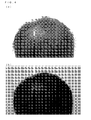
- FIG. 4 shows a photograph of the hair of the subject with time.
- (a) indicates a photograph taken on September 24, 2008
- (b) indicates a photograph taken on April 3, 2009.
- a significant hair growth effect was observed by washing the hair (scalp) twice a week over about six months.
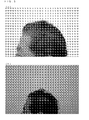
- FIG. 5 shows a photograph of the hair of the subject with time.
- (a) indicates a photograph taken on September 12, 2008
- (b) indicates a photograph taken on April 3, 2009.
- a significant hair growth effect was observed by washing the hair (scalp) twice a week over about six months.
Landscapes
- Health & Medical Sciences (AREA)
- Life Sciences & Earth Sciences (AREA)
- Animal Behavior & Ethology (AREA)
- General Health & Medical Sciences (AREA)
- Public Health (AREA)
- Veterinary Medicine (AREA)
- Birds (AREA)
- Epidemiology (AREA)
- Chemical & Material Sciences (AREA)
- Inorganic Chemistry (AREA)
- Dermatology (AREA)
- Cosmetics (AREA)
Abstract
A hair growth method includes repeatedly washing hair using a washing agent that includes a microbubble washing composition and microbubbles, the microbubble washing composition including a protease and a lipase. The hair growth method exhibits an excellent hair growth effect.
Description
- The present invention relates to a hair growth method that includes washing hair using a washing agent that includes a microbubble washing composition including a protease and a lipase, and microbubbles.
- The number of people who are troubled with hair loss, thinning hair, and the like has increased year by year. Young people have increasingly suffered from hair loss in a modem stress society. Therefore, development of a hair growth method that achieves a high hair growth effect has been desired.
- For example, a method that uses a hair growth agent including 6-benzylaminopurine (6-benzyladenine) and a derivative thereof (Patent Document 1), a method that uses a skin cosmetic preparation (Patent Document 2), a method that uses a hair growth agent including an extract of Coleus forskohlii (
Patent Documents 3 and 4), a hair/scalp washing agent that contains an anionic surfactant, a percutaneous absorption accelerator, and a bactericidal component, a percutaneous absorption accelerator, and a method of promoting percutaneous absorption of an active ingredient of a hair growth agent that includes washing hair using the hair/scalp washing agent before using a hair growth agent that contains an active ingredient (Patent Document 5), and the like have been known as a method that aims at preventing skin aging and activating the cells. - A hair growth method that achieves a high hair growth effect has been proposed in the field of hair growth agents. However, a sufficient hair growth effect has not been achieved.
- A method that washes the pores in the scalp has been employed so that a medicine easily reaches the roots of the hair, and exhibits a sufficient hair growth effect. Specifically, if the pores in the scalp are blocked with sebum, a medicine cannot reach the roots of the hair, and does not exhibit a sufficient hair growth effect.
- For example,
Patent Document 6 discloses a hair washing method that includes covering a head with a washing cap, discharging a washing agent into the washing cap, and scrubbing the scalp with a brush or the like inserted into the washing cap. In this case, however, the pores cannot be sufficiently washed, and the scalp may be damaged when scrubbing the scalp with a brush. - Patent Document 7 discloses a hair washing method that utilizes a hair washing apparatus that includes a discharge section that discharges a washing agent into a washing cap that covers a head, and a recovery section that recovers the washing agent discharged from the washing cap, wherein the washing agent recovered by the recovery section is discharged from the discharge section, mixed with microbubbles, and circulated. Patent Document 8 discloses a microbubble washing method that washes a human body or an animal using a washing agent that includes a microbubble washing composition containing a protease and a lipase, and microbubbles. Patent Document 8 discloses that the washing method disclosed in Patent Document 8 exhibits an effect of reliably removing sebum and old keratin adhering to the surface of the pores of a human body or an animal and wastes inside the pores within a short time, and keeping the skin clean for a long time, an effect of preventing skin diseases, and an effect of accelerating the healing of skin disease. However, these documents do not disclose that a hair growth effect is obtained by combining microbubbles with a given washing agent.
-
- Patent Document 1:
JP-A-05-320028 - Patent Document 2:
JP-A-07-233037 - Patent Document 3:
JP-A-08-176005 - Patent Document 4:
JP-A-09-157138 - Patent Document 5:
JP-A-2007-31376 - Patent Document 6:
JP-A-2003-210240 - Patent Document 7:
JP-A-2007-252434 - Patent Document 8:
JP-A-2008-94726 - The present invention was conceived in view of the above situation. An object of the present invention is to provide a hair growth method that exhibits an excellent hair growth effect.
- In order to achieve the above object, the inventors repeatedly washed hair every given period (about twice a week) using a washing agent that includes a microbubble washing composition including a protease and a lipase, and microbubbles by applying the method disclosed in Patent Document 8. Surprisingly, the inventors found that a hair growth effect can be obtained without using a hair growth agent or a hair tonic. The inventors also found that a more excellent hair growth effect can be obtained by applying a commercially available hair growth agent or hair tonic to the hair after washing the hair using the washing agent. These findings have led to the completion of the present invention.
- Specifically, the present invention provides the following hair growth method (see (1) to (7)).
- (1) A hair growth method comprising repeatedly washing hair using a washing agent that includes a microbubble washing composition and microbubbles, the microbubble washing composition including a protease and a lipase.
- (2) The hair growth method according to (1), wherein the microbubble washing composition includes the protease in an amount of 0.01 to 0.5 wt% based on the total amount of the microbubble washing composition, and includes the lipase in an amount of 0.1 to 1.0 wt% based on the total amount of the microbubble washing composition.
- (3) The hair growth method according to (1) or (2), wherein the microbubble washing composition does not include a surfactant.
-
- (4) The hair growth method according to any one of (1) to (3), wherein the microbubble washing composition further includes at least one alkali metal salt selected from the group consisting of alkali metal carbonates, alkali metal hydrogen carbonates, alkali metal sulfates, alkali halides, and alkali metal salts of boron.
- (5) The hair growth method according to (4), wherein the microbubble washing composition includes the alkali metal salt in an amount of 80 to 99.5 wt% based on the total amount of the microbubble washing composition.
- (6) The hair growth method according to any one of (1) to (5), wherein the hair is washed 1 to 3 times a week.
- (7) The hair growth method according to any one of (1) to (6), further comprising applying a given amount of a hair growth agent or a hair tonic to the hair after washing the hair.
- According to the present invention, a hair growth effect can be obtained without using a hair growth agent or a hair tonic. A more excellent hair growth effect can be obtained by applying a commercially available hair growth agent or hair tonic to the hair after washing the hair.
-
-
FIG. 1 is a view showing the configuration of a hair washing apparatus used in the examples. -
FIG. 2 shows a photograph of the hair (scalp) of a male subject with time (Example 1). -
FIG. 3 shows a photograph of the hair (scalp) of a male subject with time (Example 2). -
FIG. 4 shows a photograph of the hair (scalp) of a male subject with time (Example 3). -
FIG. 5 shows a photograph of the hair (scalp) of a male subject with time (Example 4). - A hair growth method according to one embodiment of the present invention includes repeatedly washing hair using a washing agent that includes a microbubble washing composition and microbubbles, the microbubble washing composition including a protease and a lipase.
- The protease included in the microbubble washing composition (hereinafter may be referred to as "composition") according to one embodiment of the present invention is an enzyme that catalyzes hydrolysis of a peptide bond.
- The protease has a specific optimum pH, and is classified as an acidic proteinase, a neutral proteinase, or an alkaline proteinase. Any of these proteases may be used in the present invention without specific limitations.
- Examples of the protease include, but are not limited to, chymotrypsin, subtilisin, pepsin, cathepsin D, thermolysin, papain, caspase, bromelain, actinidin, ficin, trypsin, pancreatin, and the like.
These proteases may be used either individually or in combination. - Specific examples of the protease include Protin AC10F (manufactured by Daiwa Kasei K.K.), Savinase, Alcalase, Esperase, Durazyme (manufactured by Novozymes), Maxapem, Maxatase (manufactured by Gist-brocades), Bioplaze (manufactured by Nagase Biochemicals, Ltd.), and the like.
- It is preferable to use at least pancreatin in order to obtain excellent washing effects. It is more preferable to use pancreatin and another protease in combination.
- The amount of protease used is not particularly limited. The protease is preferably used in an amount of 0.01 to 0.5 wt%, and more preferably 0.2 to 0.3 wt%, based on the total amount of the composition.
- The lipase included in the composition according to one embodiment of the present invention is an enzyme that hydrolyzes fats into glycerol and a fatty acid.
- Examples of the lipase include, but are not limited to, a lipase derived from Rhizopus arrhizus, a lipase derived from Aspergillus niger, and a lipase derived from a mold such as Rhizopus delemar; a lipase derived from yeast such as Candida cylindracea; a lipase derived from a bacteria such as Pseudomonas; a lipase that is present in the digestive tract tissues of a ruminant during a lactation period, such as pregastric lipase or oral lipase; pig liver lipase; and the like.
These lipases may be used either individually or in combination. It is preferable to use two or more lipases in order to obtain more excellent washing effects. - Specific examples of the lipase include Sumizyme NLS (manufactured by Shin-Nihon Kagaku Kogyo, Co., Ltd.), Lipase M "Amano" 10, Lipase M "Amano" 10, Lipase G "Amano" 50, Lipase F-AP15, Lipase AY "Amano" 30G, Lipase R "Amano" G, Lipase T "Amano", Lipase MER "Amano" (manufactured by Amano Enzyme Inc.), Picantase R8000, Picantase A (manufactured by Robin), Toyozyme and LIP (manufactured by Toyobo Co., Ltd.), Lilipase A-10FG, Lilipase AF-5 (manufactured by Nagase ChemteX Corporation), Grindamyl EXEL639 (manufactured by Danisco Culter Japan), Clear-Lens Lipo, Liporaze, Lipex, Lipozyme, Resinase, Paratase, Greasex, Lipopan, Novozyme 435, Lecitase (manufactured by Novozymes), Lipase MY, Lipase OF, Lipase PL, Lipase QLM, Lipase AL, Phospholipase D (manufactured by Meito Sangyo Co., Ltd.), Enzylon AKG (manufactured by Rakuto Kasei Industrial Co., Ltd.), Phospholipase Al (manufactured by Sankyo Lifetech Co., Ltd.), Lipomod 699L, Lysomax PF (manufactured by Genencor Kyowa Co., Ltd.), and the like.
- The lipase is normally used in an amount of 0.1 to 1.0 wt%, and preferably 0.3 to 0.8 wt%, based on the total amount of the composition.
- It is preferable that the composition according to the present invention does not include a surfactant from the viewpoint of obtaining more excellent washing effects. When the composition does not include a surfactant, the composition does not irritate the eyes even if the composition gets in the eyes when washing hair.
- It is preferable that the composition according to the present invention further include an alkali metal salt in addition to the protease and the lipase.
- The alkali metal salt improves the washing effects, softens water (warm water), and functions as a filler.
- Examples of the alkali metal salt include, but are not limited to, alkali metal carbonates such as sodium carbonate and potassium carbonate; alkali metal hydrogen carbonates such as sodium hydrogen carbonate and potassium hydrogen carbonate; alkali metal sulfates such as sodium sulfate and potassium sulfate; alkali halides such as sodium chloride and potassium chloride; alkali metal salts of boron such as sodium tetraborate (borax) and sodium borate; alkali metal silicates such as sodium silicate; alkali metal sulfides such as sodium sulfide; alkali metal nitrates such as sodium nitrate; alkali metal phosphates such as sodium phosphate and sodium dihydrogen phosphate; thiosulfates of an alkali metal such as sodium thiosulfate; and the like.
These alkali metal salts may be used either individually or in combination. - It is preferable that the composition according to the present invention include at least one alkali metal salt selected from the group consisting of alkali metal carbonates, alkali metal hydrogen carbonates, alkali metal sulfates, alkali halides, and alkali metal salts of boron. It is more preferable that the composition include at least one alkali metal salt selected from the group consisting of sodium hydrogen carbonate, sodium sulfate, and borax. It is particularly preferable that the composition include sodium hydrogen carbonate, sodium sulfate, and borax.
- The alkali metal salt is normally used in an amount of 80 to 99.5 wt%, and preferably 95 to 99 wt%.
When the washing composition according to the present invention includes sodium hydrogen carbonate, sodium sulfate, and borax, sodium hydrogen carbonate is preferably used in an amount of 10 to 35 wt%, and particularly preferably 20 to 30 wt%, based on the total amount of the composition, sodium sulfate is preferably used in an amount of 30 to 70 wt%, and particularly preferably 40 to 60 wt%, based on the total amount of the composition, and borax is preferably used in an amount of 10 to 35 wt%, and particularly preferably 20 to 30 wt%, based on the total amount of the composition. - It is preferable that the composition according to the present invention further include a silica-based desiccant.
The desiccant stabilizes the potency of the protease and the lipase. Examples of the silica-based desiccant include Sylysia (porous fine silica powder) and the like.
The silica-based desiccant is normally used in an amount of 0.01 to 1 wt%, and preferably 0.1 to 0.2 wt%. - The composition according to the present invention may optionally further include an additional component.
Examples of the additional component include inorganic salts other than the above alkali metal salts, a perfume, a coloring agent, an antiseptic agent, an antibacterial agent, a tackiness agent, a therapeutic component, and other additives normally used for a washing agent. - Examples of inorganic salts other than the alkali metal salts include magnesium salts such as magnesium carbonate and magnesium sulfate; calcium salts such as calcium carbonate, calcium nitrate, calcium thiosulfate, and calcium hydrogen phosphate; alum; and the like. The amount of inorganic salts may be appropriately determined insofar as the effects of the microbubble washing composition are not impaired.
- Examples of the perfume include essential oils such as abies oil, angelica oil, anise oil, copaiba balsam, basil oil, bay oil, bergamot oil, birch oil, rosewood oil, cajabute oil, cassia oil, acacia oil, cedar wood oil, chamomile oil, cinnamon oil, cinnamon leaf oil, citronella oil, elemi oil, eucalyptus oil, geranium oil, white-cedar leaf oil, cypress oil, lavandin oil, lavender oil, lemon oil, mint oil, neroli oil, nutmeg oil, oakmoss oil, ocotea oil, patchouli oil, palmarosa oil, plai oil, rose oil, rosemary oil, sandalwood oil, vetiver oil, and ylang ylang oil; synthetic perfumes such as synthetic musk (e.g., limonene, terpinolene, p-cymene, 9-decenol, mugol, myrcenol, borneol, vetiverol, t-butylcyclohexanol, anisole, anethole, safrole, citral, citronellal, cinnamaldehyde, anise aldehyde, cyclamen aldehyde, citral, acetophenone, benzophenone, acetonaphthone, nerone, and nitromusk), geranyl acetate, bornyl acetate, phenylethyl acetate, myrcenyl acetate, methyl benzoate, methyl cinnamate, methyl anthranilate, synthetic oakmoss, and coumarin; and the like.
The perfume is normally used in an amount of 0 to 0.5 wt%, and preferably 0.1 to 0.3 wt%. - As the coloring agent, a dye, a natural pigment, an inorganic dye, and the like may be used.
Examples of the dye include Red No. 2, Red No. 3, Red No. 102, Red No. 104-1, Red No. 105-1, Red No. 106, Red No. 213, Red No. 227, Red No. 230-1, Yellow No. 4, Yellow No. 5, Yellow No. 201, Yellow No. 201-1, Yellow No. 203, Orange No. 205, Green No. 3, Green No. 201, Green No. 204, Blue No. 1, Blue No. 2, Blue No. 205, Violet No. 201, Brown No. 201, and the like. - Examples of the natural pigment include a chlorophyll, a gardenia, a flavonoid, a carotinoide, a quinone, and a riboflavin.
- Examples of the inorganic dye include titanium dioxide, talc, kaolin, mica, magnesium silicate, silicic anhydride, calcium carbonate, magnesium carbonate, and the like.
These coloring agents may be used either individually or in combination.
The coloring agent is normally used in an amount of 0 to 0.5 wt%, and preferably 0.1 to 0.2 wt%. - Examples of the antiseptic agent include sodium benzoate, methyl p-hydroxybenzoate, ethyl p-hydroxybenzoate, propyl p-hydroxybenzoate, butyl p-hydroxybenzoate, isobutyl p-hydroxybenzoate, benzyl alcohol, benzalkonium chloride, and the like.
- Examples of the tackiness agent include hydroxyethylcellulose, hydroxypropylmethylcellulose, methylcellulose, xanthan gum, polyethylene glycol distearate, polyethylene glycol monostearate, and the like.
- The composition according to the present invention may be produced by an arbitrary method. For example, a mixture of the protease, the lipase, and other optional components is homogenously stirred (mixed) using a stirrer such as a Vert-o-Mix, a Nauta mixer, a universal mixer/stirrer, a ribbon mixer, a V-shaped mixer, or the like to prepare a powder.
- The composition according to the present invention can reliably remove sebum and old keratin adhering to the surface of the pores of the skin within a short time, and keep the skin clean for a long time.
Since the composition according to the present invention does not damage hair due to low irritation properties, the composition can be safely used for a person having a sensitive skin, an elderly person having a weak skin, or a human suffering from skin diseases. - The hair growth method according to the present invention includes repeatedly washing hair using a washing agent that includes the composition according to the present invention and microbubbles.
- Specifically, the hair growth method according to the present invention includes adding an appropriate amount of the composition according to the present invention to clean water (or warm water) to prepare a washing agent, introducing microbubbles into the washing agent, and repeatedly washing hair using the washing agent.
- The expression "repeatedly washing hair" used herein refers to washing hair at least twice at a given interval. The expression "at a given interval" used herein refers to washing hair once every three days. The given interval is not particularly limited. An interval of about 1 to 3 times a week is normally employed according to the present invention. Hair is repeatedly washed until the desired hair growth effect is achieved. The period is normally from about several weeks to about one year. A sufficient hair growth effect can be obtained by repeatedly washing hair for such a period at the above intervals.
- When producing the washing agent, the composition according to the present invention is normally used in an amount of 1 to 10 g, and preferably 3 to 7 g, per 6 to 10 liters of water.
- The microbubble washing time is usually about one minute to several tens of minutes, although the time varies depending on the type and concentration of the microbubble washing composition, the washing portion, and the like.
The washing temperature is not particularly limited, but is preferably 20 to 40°C from the viewpoint of achieving excellent washing effects and relaxation. - Since the method according to the present invention can reliably remove sebum and old keratin adhering to the surfaces of the pores within a short time and keep the skin clean for a long time, an excellent hair growth effect can be obtained by bringing out the original hair growth effect.
- Since the washing agent including the microbubbles does not adversely affect the cells of a human body, does not damage hair, and is environmentally friendly, the washing agent can be used safely.
- The microbubbles are minute bubbles having a diameter of 50 µm or less, and are reduced in size and disappear (collapse) in water, differing from normal bubbles. The microbubbles remove dirt due to impact waves that occur when the microbubbles break. The microbubbles carry negative ions, and disappear in water while bonding to dirt (positive ions) and floating, so that the dirt floats. When using the washing agent including the microbubbles to wash a human body or an animal, minute microbubbles can reach the interior of the pores to adsorb and remove wastes.
- A washing agent including the microbubbles is normally produced using a microbubble generator described below. Since water has a high surface tension, it is impossible to produce bubbles having a diameter of 100 µm or less by normal bubbling.
- The microbubble generator is not particularly limited insofar as microbubbles can be produced. A known microbubble generator may be used. Examples of the microbubble generator include a device that produces microbubbles in a venturi tube (tube with a narrow constriction) or a shower head including an orifice plate (doughnut plate with a center opening) (e.g.,
JP-A-2006-116518 2006-77553 JP-A-2005-334869 JP-A-2006-68631 JP-A-2003-126665 2006-77553 - Examples of the method of washing hair using the washing agent including the microbubbles include (i) a method that includes placing a washing agent obtained by adding an appropriate amount of the composition to clean water (or warm water) in a container such as a tank, introducing the washing agent into a microbubble generator by an appropriate method, introducing microbubbles into the washing agent using the microbubble generator, and washing hair while discharging the washing agent including the microbubbles from a shower nozzle; (ii) a method that includes placing clean water (or warm water) in a washing bath, adding an appropriate amount of the composition according to one embodiment of the present invention to the washing bath to prepare a washing agent, introducing water (or warm water) including microbubbles into the washing agent from a nozzle connected to a microbubble generator to prepare a washing agent including microbubbles, and washing hair using the resulting washing agent; and the like. These methods may be used in combination.
- When using the method (i), it is preferable to circulate the washing agent while removing contaminants and the like using a filter in order to efficiently utilize the washing agent.
- After washing the hair, the washing agent is removed by rinsing the washing agent out of the hair with water or warm water, for example.
- Moreover, braided hair such as dreadlocks can be directly washed using the washing agent that includes the microbubble washing composition including a protease and a lipase, and microbubbles.
- The present invention is further described below by way of examples. Note that the present invention is not limited to the following examples.
A hair washing apparatus shown inFIG. 1 was used in the examples (this apparatus is disclosed inJP-A-2007-252434 FIG. 1 has the following configuration. - In
FIG. 1 , reference numeral 1 indicates a main body,reference numeral 2 indicates a discharge tube,reference numeral 3 indicates a washing cap, reference numeral 4 indicates a recovery tube,reference numeral 5 indicates a filter unit,reference numeral 6 indicates a cartridge tank, and reference numeral 7 indicates a nozzle unit.
As shown inFIG. 1 , the main body 1 is charged with warm water that is supplied from thecartridge tank 6 and includes the microbubble washing composition that includes the protease and the lipase. Warm water (30 to 40°C) including the washing composition is discharged from the main body 1 together with microbubbles, and supplied to thewashing cap 3 through thedischarge tube 2 to wash the hair. The washing agent is recovered from thewashing cap 3 into thefilter unit 5 through the recovery tube 4. Thefilter unit 5 removes hair and dirt (e.g., dandruff) from the washing agent. The washing agent then enters thecartridge tank 6. Thedischarge tube 2 is suspended by the suspension tool S at an appropriate position. - The hair (scalp) of a subject (male, thirties) was washed twice a week using the hair washing apparatus shown in
FIG. 1 over about five months. The washing time per operation was about 15 minutes. After washing the hair, 2 ml of a commercially available hair tonic ("Karoyan Gush" manufactured by Daiichi Sankyo Healthcare Co., Ltd.) was applied to the hair.FIG. 2 shows a photograph of the hair of the subject with time. As shown inFIG. 2 , a significant hair growth effect was observed by washing the hair (scalp) twice a week over about five months. - The hair (scalp) of a subject (male, sixties) was washed twice a week using the hair washing apparatus shown in
FIG. 1 over about five months. The washing time per operation was about 15 minutes. After washing the hair, 2 ml of a commercially available hair tonic ("Karoyan Gush" manufactured by Daiichi Sankyo Healthcare Co., Ltd.) was applied to the hair.FIG. 3 shows a photograph of the hair of the subject with time. As shown inFIG. 3 , a significant hair growth effect was observed by washing the hair (scalp) twice a week over about five months. - The hair (scalp) of a subject (male, fifties) was washed twice a week using the hair washing apparatus shown in
FIG. 1 over about seven months. The washing time per operation was about 15 minutes. After washing the hair, 2 ml of a commercially available hair tonic ("Karoyan Gush" manufactured by Daiichi Sankyo Healthcare Co., Ltd.) was applied to the hair.FIG. 4 shows a photograph of the hair of the subject with time. InFIG. 4, (a) indicates a photograph taken on September 24, 2008, and (b) indicates a photograph taken on April 3, 2009. As shown inFIG. 4 , a significant hair growth effect was observed by washing the hair (scalp) twice a week over about six months. - The hair (scalp) of a subject (male, thirties) was washed twice a week using the hair washing apparatus shown in
FIG. 1 over about seven months. The washing time per operation was about 15 minutes. After washing the hair, 2 ml of a commercially available hair tonic ("Karoyan Gush" manufactured by Daiichi Sankyo Healthcare Co., Ltd.) was applied to the hair.FIG. 5 shows a photograph of the hair of the subject with time. InFIG. 5, (a) indicates a photograph taken on September 12, 2008, and (b) indicates a photograph taken on April 3, 2009. As shown inFIG. 5 , a significant hair growth effect was observed by washing the hair (scalp) twice a week over about six months. - 1: main body, 2: discharge tube, 3: washing cap, 4: recovery tube, 5: filter unit, 6: cartridge tank, 7: nozzle unit
Claims (7)
- A hair growth method comprising repeatedly washing hair using a washing agent that includes a microbubble washing composition and microbubbles, the microbubble washing composition including a protease and a lipase.
- The hair growth method according to claim 1, wherein the microbubble washing composition includes the protease in an amount of 0.01 to 0.5 wt% based on the total amount of the microbubble washing composition, and includes the lipase in an amount of 0.1 to 1.0 wt% based on the total amount of the microbubble washing composition.
- The hair growth method according to claim 1 or 2, wherein the microbubble washing composition does not include a surfactant.
- The hair growth method according to any one of claims 1 to 3, wherein the microbubble washing composition further includes at least one alkali metal salt selected from the group consisting of alkali metal carbonates, alkali metal hydrogen carbonates, alkali metal sulfates, alkali halides, and alkali metal salts of boron.
- The hair growth method according to claim 4, wherein the microbubble washing composition includes the alkali metal salt in an amount of 80 to 99.5 wt% based on the total amount of the microbubble washing composition.
- The hair growth method according to any one of claims 1 to 5, wherein the hair is washed 1 to 3 times a week.
- The hair growth method according to any one of claims 1 to 6, further comprising applying a given amount of a hair growth agent or a hair tonic to the hair after washing the hair.
Applications Claiming Priority (3)
| Application Number | Priority Date | Filing Date | Title |
|---|---|---|---|
| JP2008130512 | 2008-05-19 | ||
| JP2008131893 | 2008-05-20 | ||
| PCT/JP2009/059187 WO2009142200A1 (en) | 2008-05-19 | 2009-05-19 | Method for growing or nourishing head hair |
Publications (1)
| Publication Number | Publication Date |
|---|---|
| EP2281551A1 true EP2281551A1 (en) | 2011-02-09 |
Family
ID=41340133
Family Applications (1)
| Application Number | Title | Priority Date | Filing Date |
|---|---|---|---|
| EP09750562A Withdrawn EP2281551A1 (en) | 2008-05-19 | 2009-05-19 | Method for growing or nourishing head hair |
Country Status (4)
| Country | Link |
|---|---|
| US (1) | US20110108049A1 (en) |
| EP (1) | EP2281551A1 (en) |
| JP (1) | JPWO2009142200A1 (en) |
| WO (1) | WO2009142200A1 (en) |
Families Citing this family (2)
| Publication number | Priority date | Publication date | Assignee | Title |
|---|---|---|---|---|
| JP6089152B2 (en) | 2013-12-13 | 2017-03-01 | レスターシー エルエルシイRestorsea, Llc | Exfoliating hair retention promoting formulation |
| US9433564B2 (en) | 2014-05-16 | 2016-09-06 | Restorsea, Llc | Biphasic cosmetic |
Family Cites Families (37)
| Publication number | Priority date | Publication date | Assignee | Title |
|---|---|---|---|---|
| US2691636A (en) * | 1954-10-12 | naoocchs | ||
| US4556554A (en) * | 1981-06-01 | 1985-12-03 | Germaine Monteil Cosmetiques Corp. | Immobilized enzymes |
| DK571587D0 (en) * | 1987-11-02 | 1987-11-02 | Novo Industri As | ENZYMATIC DETERGENT COMPOSITION |
| US5160655A (en) * | 1989-02-27 | 1992-11-03 | Lever Brothers Company, Division Of Conopco, Inc. | Aqueous structured liquid detergent compositions containing selected peroxygen bleach compounds |
| US5053222A (en) * | 1989-06-07 | 1991-10-01 | Shiseido Company Ltd. | Hair cosmetic composition |
| FI931359A7 (en) * | 1990-09-28 | 1993-03-26 | Procter & Gamble | Detergent compositions containing polyhydroxy fatty acid amide and alkyl ester sulfonate surfactants |
| JP2636118B2 (en) * | 1991-09-10 | 1997-07-30 | 三省製薬株式会社 | Hair restorer |
| DE4231945C2 (en) * | 1991-09-25 | 1996-05-23 | Matsushita Electric Works Ltd | System for mixing carbon dioxide in bath water |
| JPH07233037A (en) | 1993-12-29 | 1995-09-05 | Sansho Seiyaku Co Ltd | Skin cosmetic |
| US5448966A (en) * | 1994-08-26 | 1995-09-12 | Mckinnon; Brenda | Automatic animal washing system |
| JP3533737B2 (en) | 1994-12-21 | 2004-05-31 | ライオン株式会社 | Bioaging agent and skin composition |
| US5657719A (en) * | 1995-07-24 | 1997-08-19 | Whan; Chin-Fa | Strainer structure for aquarium |
| JPH09157138A (en) | 1995-12-07 | 1997-06-17 | Lion Corp | Hair restorer |
| US6106828A (en) * | 1996-02-15 | 2000-08-22 | Novo Nordisk A/S | Conjugation of polypeptides |
| US5769029A (en) * | 1996-11-04 | 1998-06-23 | Marshall; William J. | Animal bathing and drying system |
| US6416756B1 (en) * | 1997-01-10 | 2002-07-09 | Novozymes A/S | Modified protease having 5 to 13 covalently coupled polymeric molecules for skin care |
| US5904735A (en) * | 1997-08-04 | 1999-05-18 | Lever Brothers Company | Detergent compositions containing polyethyleneimines for enhanced stain removal |
| US6451953B1 (en) * | 1997-12-18 | 2002-09-17 | Sun Drilling Products, Corp. | Chain entanglement crosslinked polymers |
| JP2000095651A (en) * | 1998-07-21 | 2000-04-04 | Kao Corp | Scalp cleanser |
| JP2000095961A (en) * | 1998-09-24 | 2000-04-04 | Kakuyokai | Ylidoid compound, preparation thereof and dyeing method using same |
| US6121215A (en) * | 1999-08-27 | 2000-09-19 | Phyzz, Inc. | Foaming effervescent bath product |
| US6548467B2 (en) * | 1999-09-02 | 2003-04-15 | The Procter & Gamble Company | Sanitizing compositions and methods |
| AU2001288880A1 (en) * | 2000-09-11 | 2002-03-26 | The Procter And Gamble Company | Laundry articles and methods for combined cleaning and care of fabrics |
| DE60128259T2 (en) * | 2000-12-14 | 2007-08-30 | Unilever N.V. | ENZYMATIC DETERGENT COMPOSITIONS |
| DE10121463A1 (en) * | 2001-05-02 | 2003-02-27 | Henkel Kgaa | New alkaline protease variants and washing and cleaning agents containing these new alkaline protease variants |
| JP2002326924A (en) * | 2001-05-07 | 2002-11-15 | Hayashibara Biochem Lab Inc | Facial wash |
| US6662600B1 (en) * | 2002-08-07 | 2003-12-16 | Tennant Company | Foamed cleaning liquid dispensing system |
| JP3763521B2 (en) | 2001-10-26 | 2006-04-05 | 株式会社オ−ラテック | Micro bubble generator |
| JP3984060B2 (en) | 2002-01-22 | 2007-09-26 | リコーエレメックス株式会社 | Scalp washer and anti-scattering hood for scalp washer |
| US20050026299A1 (en) * | 2003-07-31 | 2005-02-03 | Arindam Bhattacharjee | Chemical arrays on a common carrier |
| JP4884693B2 (en) | 2004-04-28 | 2012-02-29 | 独立行政法人科学技術振興機構 | Micro bubble generator |
| JP3782090B2 (en) | 2004-09-01 | 2006-06-07 | 資源開発株式会社 | Cleaning device and bubble generating nozzle used in the same |
| JP2006077553A (en) | 2004-09-13 | 2006-03-23 | Kunieda:Kk | Manufacturing method of thin tatami, and thin tatami |
| JP2006116518A (en) | 2004-10-25 | 2006-05-11 | Fujio Negoro | Shower for generating microbubble |
| JP2007031376A (en) | 2005-07-28 | 2007-02-08 | Lion Corp | Hair and scalp cleaning agents, transdermal absorption enhancers, and transdermal absorption promotion methods |
| JP4869754B2 (en) | 2006-03-20 | 2012-02-08 | 有限会社ターレス | Head washing device |
| JP2008094726A (en) | 2006-10-06 | 2008-04-24 | Towa Koso Kk | Composition for microbubble cleaning, method for microbubble cleaning and apparatus for microbubble cleaning |
-
2009
- 2009-05-19 WO PCT/JP2009/059187 patent/WO2009142200A1/en not_active Ceased
- 2009-05-19 EP EP09750562A patent/EP2281551A1/en not_active Withdrawn
- 2009-05-19 US US12/993,306 patent/US20110108049A1/en not_active Abandoned
- 2009-05-19 JP JP2010513024A patent/JPWO2009142200A1/en active Pending
Non-Patent Citations (1)
| Title |
|---|
| See references of WO2009142200A1 * |
Also Published As
| Publication number | Publication date |
|---|---|
| JPWO2009142200A1 (en) | 2011-09-29 |
| WO2009142200A1 (en) | 2009-11-26 |
| US20110108049A1 (en) | 2011-05-12 |
Similar Documents
| Publication | Publication Date | Title |
|---|---|---|
| US7635671B2 (en) | Microbubble washing composition, microbubble washing method, and microbubble washing apparatus | |
| JP2011516163A (en) | Oral hygiene compositions and tools and methods | |
| US6743434B1 (en) | Carbonic emulsion skin care compositions and method for removing chemically bound residues and mineral deposits from hair | |
| EP2281551A1 (en) | Method for growing or nourishing head hair | |
| JP5795159B2 (en) | Cleaning method for goods | |
| US9566228B2 (en) | Bubble type waterless shampoo composition | |
| EP2338462B1 (en) | Braided hair washing method | |
| AU2008201031B2 (en) | Microbubble washing composition, microbubble washing method, and microbubble washing apparatus | |
| US20240082106A1 (en) | Microbubble washing device and microbubble washing method | |
| CN1051700C (en) | Cosmetic compositions | |
| CN101564360A (en) | Micro-bubble washing composition, micro-bubble washing method and micro-bubble washing equipment | |
| HK1115821B (en) | Microbubble washing composition, microbubble washing method, and microbubble washing apparatus | |
| NZ566312A (en) | Microbubble washing composition comprising a protease and a lipase, microbubble washing method, and microbubble washing apparatus | |
| CN1028720C (en) | Shampoo capable of dredging collaterals and growing hair | |
| JP2008081483A (en) | Molecular peeling method and peeling agent | |
| KR101225958B1 (en) | Foot cleansing Composition containing immobilized protease | |
| JP2011000151A (en) | Hair or cuticle treatment apparatus, hair and scalp washing method, permanent wave treatment method for hair, coloring treatment method for hair, and beauty method | |
| JPH0296510A (en) | Cosmetic | |
| JP2001213740A (en) | Detergent composition | |
| JP2001226226A (en) | Agent for removing scalp cornoid lamella | |
| CN111840145A (en) | Cosmetic for removing scars and pockmarks and use method thereof | |
| JP2024145603A (en) | Skin penetration enhancer for royal jelly | |
| KR20230022466A (en) | Natural shampoo-bar and manufacturing method thereof | |
| JP2005225849A (en) | Hair restoration agent to be washed off in use | |
| JPH09208433A (en) | Sebum remover and method for removing of sebum |
Legal Events
| Date | Code | Title | Description |
|---|---|---|---|
| PUAI | Public reference made under article 153(3) epc to a published international application that has entered the european phase |
Free format text: ORIGINAL CODE: 0009012 |
|
| 17P | Request for examination filed |
Effective date: 20101112 |
|
| AK | Designated contracting states |
Kind code of ref document: A1 Designated state(s): AT BE BG CH CY CZ DE DK EE ES FI FR GB GR HR HU IE IS IT LI LT LU LV MC MK MT NL NO PL PT RO SE SI SK TR |
|
| AX | Request for extension of the european patent |
Extension state: AL BA RS |
|
| DAX | Request for extension of the european patent (deleted) | ||
| STAA | Information on the status of an ep patent application or granted ep patent |
Free format text: STATUS: THE APPLICATION HAS BEEN WITHDRAWN |
|
| 18W | Application withdrawn |
Effective date: 20130207 |