EP2280573A2 - Reducing power consumption of indoor base stations - Google Patents
Reducing power consumption of indoor base stations Download PDFInfo
- Publication number
- EP2280573A2 EP2280573A2 EP10167929A EP10167929A EP2280573A2 EP 2280573 A2 EP2280573 A2 EP 2280573A2 EP 10167929 A EP10167929 A EP 10167929A EP 10167929 A EP10167929 A EP 10167929A EP 2280573 A2 EP2280573 A2 EP 2280573A2
- Authority
- EP
- European Patent Office
- Prior art keywords
- base station
- human presence
- antenna
- indoor
- motion sensor
- Prior art date
- Legal status (The legal status is an assumption and is not a legal conclusion. Google has not performed a legal analysis and makes no representation as to the accuracy of the status listed.)
- Withdrawn
Links
Images

Classifications
-
- H—ELECTRICITY
- H04—ELECTRIC COMMUNICATION TECHNIQUE
- H04W—WIRELESS COMMUNICATION NETWORKS
- H04W52/00—Power management, e.g. Transmission Power Control [TPC] or power classes
- H04W52/02—Power saving arrangements
- H04W52/0209—Power saving arrangements in terminal devices
- H04W52/0251—Power saving arrangements in terminal devices using monitoring of local events, e.g. events related to user activity
- H04W52/0254—Power saving arrangements in terminal devices using monitoring of local events, e.g. events related to user activity detecting a user operation or a tactile contact or a motion of the device
-
- H—ELECTRICITY
- H04—ELECTRIC COMMUNICATION TECHNIQUE
- H04W—WIRELESS COMMUNICATION NETWORKS
- H04W52/00—Power management, e.g. Transmission Power Control [TPC] or power classes
- H04W52/02—Power saving arrangements
- H04W52/0203—Power saving arrangements in the radio access network or backbone network of wireless communication networks
- H04W52/0206—Power saving arrangements in the radio access network or backbone network of wireless communication networks in access points, e.g. base stations
-
- H—ELECTRICITY
- H04—ELECTRIC COMMUNICATION TECHNIQUE
- H04W—WIRELESS COMMUNICATION NETWORKS
- H04W88/00—Devices specially adapted for wireless communication networks, e.g. terminals, base stations or access point devices
- H04W88/08—Access point devices
-
- Y—GENERAL TAGGING OF NEW TECHNOLOGICAL DEVELOPMENTS; GENERAL TAGGING OF CROSS-SECTIONAL TECHNOLOGIES SPANNING OVER SEVERAL SECTIONS OF THE IPC; TECHNICAL SUBJECTS COVERED BY FORMER USPC CROSS-REFERENCE ART COLLECTIONS [XRACs] AND DIGESTS
- Y02—TECHNOLOGIES OR APPLICATIONS FOR MITIGATION OR ADAPTATION AGAINST CLIMATE CHANGE
- Y02D—CLIMATE CHANGE MITIGATION TECHNOLOGIES IN INFORMATION AND COMMUNICATION TECHNOLOGIES [ICT], I.E. INFORMATION AND COMMUNICATION TECHNOLOGIES AIMING AT THE REDUCTION OF THEIR OWN ENERGY USE
- Y02D30/00—Reducing energy consumption in communication networks
- Y02D30/70—Reducing energy consumption in communication networks in wireless communication networks
Definitions
- the present invention is comprised within the field of mobile telecommunications, and more specifically in a system, method and indoor antenna for reducing power consumption in base stations providing indoor coverage.
- the present invention solves the commented problems by providing a switch-on/switch-off cell based on movement.
- the present invention saves power consumption for all radio systems, including 2G and 3G.
- the invention relates to a system for reducing power consumption of base stations providing indoor coverage according to claim 1, to a method according to claim 8 and to an indoor antenna according to claim 14.
- Preferred embodiments of the system and of the method are defined in the dependent claims.
- the present solution proposes to switch off the indoor cells when there are no users, and to switch them on when users are present again.
- Cell switching-off means that all carriers and all pilots inside the carriers will be off.
- Cells will be switched on or off thanks to a motion sensor integrated into the antenna, that will send messages to the base station depending on movement detection: if movement (people), station will be on, and if not movement (not people), station will be off; additionally there will be hysteresis parameters in order to avoid ping-pong.
- the system comprises a base station, at least one indoor antenna connected to the base station providing coverage in an indoor coverage area, and means for detecting human presence in a detection area.
- the base station is configured to:
- the base station can be further configured to, in case human presence has not been detected but traffic in the base station has been detected, check if there is coverage from at least one neighbour cell, and in that case switch off the base station.
- the means for detecting human presence comprises at least one motion sensor.
- Said means preferable comprise a motion sensor integrated in each antenna, each motion sensor being fed through the RF cable used for the communication between the corresponding antenna and the base station; the base station being configured to receive the information provided by each motion sensor through said RF cable.
- the system can also comprise a bias T for each antenna to send DC power to each motion sensor.
- the detection area is preferably comprised within the indoor coverage area.
- the detection area can also be close to the indoor coverage area, for instance for detecting vehicles entering a tunnel.
- the corresponding method proposed by the invention comprises:
- the method can further comprise, in case human presence has not been detected but traffic in the base station has been detected, checking if there is coverage from at least one neighbour cell, and in that case switching off the base station.
- the indoor antenna also proposed by the present invention, for reducing power consumption of a base station providing indoor coverage, is configured to be connected to the base station and comprises a motion sensor integrated in the antenna, the motion sensor being configured to:
- Indoor coverage is normally provided through base stations 1 (nodes B, microcells or repeaters), and there are normally several indoor antennas 2 (small size) distributed along the place (floors of the building, tunnel, etc), and all of them connected to the same base station, as it can be seen in Figure 1 .
- switching off means that all carriers and all pilots inside the carriers will be off.
- a bias “T” is used to insert DC power into an AC signal to power remote antenna amplifiers or other devices. It is usually positioned at the receiving end of the coaxial cable to pass DC power from an external source to the coaxial cable running to powered device.
- a bias “T” consists of a feed inductor to deliver DC to a connector on the device side and a blocking capacitor to keep DC from passing through to the receiver. The RF signal is connected directly from one connector to the other with only the blocking capacitor in series.
- optimization traffic algorithm in order to minimize power consumption and guarantee coverage available only when needed, the present invention proposes the next algorithm, to be executed in the base station 1, that take into account human and machine-to-machine traffic.
- the algorithm is shown in Figure 4 .
- the off-to-on transition will be done automatically, to guarantee 100% time coverage, and the on-to-off transition can be configured with a threshold time x, in order to avoid ping-pong, so the base station 1 will be maintained on until it passes a certain time (a timer can be configured) after the last movement detected to avoid switching off and on continuously.
- This algorithm can be run 24 hours a day or only in pre-defined hours of the day/week through some parameters defining the starting time and the final time.
Landscapes
- Engineering & Computer Science (AREA)
- Computer Networks & Wireless Communication (AREA)
- Signal Processing (AREA)
- Mobile Radio Communication Systems (AREA)
Abstract
- receive (40) the information provided by the means for detecting human presence;
- check (42), according to said information, if human presence has been detected in the detection area, and in that case switch on (44) the base station (1); if human presence has not been detected in the detection area:
- check (45) if there is no traffic in the base station (1) during a predetermined period of time, and in that case switch off (46) the base station (1).
Description
- The present invention is comprised within the field of mobile telecommunications, and more specifically in a system, method and indoor antenna for reducing power consumption in base stations providing indoor coverage.
- It is typical in mobile networks (2G, 3G, LTE, etc) to provide indoor coverage in offices, tunnels, commercial centres, etc. This indoor coverage is always available, even when there are not users, and the result in these cases is a waste of energy, and an unnecessary cost for the operators.
- So, for example, it is very typical to provide an indoor coverage in offices, and coverage is available during the night or during the weekends, although there are not people working or there is no machine-to-machine communications, wasting energy.
- The present invention solves the commented problems by providing a switch-on/switch-off cell based on movement. The present invention saves power consumption for all radio systems, including 2G and 3G.
- The invention relates to a system for reducing power consumption of base stations providing indoor coverage according to
claim 1, to a method according to claim 8 and to an indoor antenna according to claim 14. Preferred embodiments of the system and of the method are defined in the dependent claims. - The present solution proposes to switch off the indoor cells when there are no users, and to switch them on when users are present again. Cell switching-off means that all carriers and all pilots inside the carriers will be off. Cells will be switched on or off thanks to a motion sensor integrated into the antenna, that will send messages to the base station depending on movement detection: if movement (people), station will be on, and if not movement (not people), station will be off; additionally there will be hysteresis parameters in order to avoid ping-pong.
- The system comprises a base station, at least one indoor antenna connected to the base station providing coverage in an indoor coverage area, and means for detecting human presence in a detection area. The base station is configured to:
- receive the information provided by the means for detecting human presence;
- check, according to said information, if human presence has been detected in the detection area, and in that case switch on the base station;
- check if there is no traffic in the base station during a predetermined period of time, and in that case switch off the base station.
- The base station can be further configured to, in case human presence has not been detected but traffic in the base station has been detected, check if there is coverage from at least one neighbour cell, and in that case switch off the base station.
- In a preferred embodiment, the means for detecting human presence comprises at least one motion sensor. Said means preferable comprise a motion sensor integrated in each antenna, each motion sensor being fed through the RF cable used for the communication between the corresponding antenna and the base station; the base station being configured to receive the information provided by each motion sensor through said RF cable. The system can also comprise a bias T for each antenna to send DC power to each motion sensor.
- The detection area is preferably comprised within the indoor coverage area. The detection area can also be close to the indoor coverage area, for instance for detecting vehicles entering a tunnel.
- The corresponding method proposed by the invention comprises:
- detecting human presence in a detection area,
- receiving the base station the information provided by the means for detecting human presence;
- checking, according to said information, if human presence has been detected in the detection area, and in that case switching on the base station;
- checking if there is no traffic in the base station during a predetermined period of time, and in that case switching off the base station.
- The method can further comprise, in case human presence has not been detected but traffic in the base station has been detected, checking if there is coverage from at least one neighbour cell, and in that case switching off the base station.
- The indoor antenna, also proposed by the present invention, for reducing power consumption of a base station providing indoor coverage, is configured to be connected to the base station and comprises a motion sensor integrated in the antenna, the motion sensor being configured to:
- be fed through the RF cable used for the communication between the antenna and the base station;
- send, to the base station and through the RF cable, its control signals.
- A series of drawings which aid in better understanding the invention and which are expressly related with an embodiment of said invention, presented as a non-limiting example thereof, are very briefly described below.
-
Figure 1 shows an indoor coverage situation according to the state of the art. -
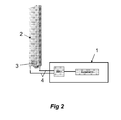
Figure 2 shows a sensor integrated into the antenna to detect movement, according to a first embodiment of the present invention. -
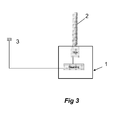
Figure 3 shows another embodiment of the invention, in which the motion sensor is not integrated in the antenna. -
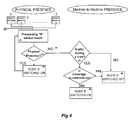
Figure 4 shows the optimization traffic algorithm according to the invention. - Indoor coverage is normally provided through base stations 1 (nodes B, microcells or repeaters), and there are normally several indoor antennas 2 (small size) distributed along the place (floors of the building, tunnel, etc), and all of them connected to the same base station, as it can be seen in
Figure 1 . - It is important to remark that although most of the traffic in the cells are coming from mobiles used by people, there can be machine-to-machine communications, and therefore the solution proposes to switch off the indoor cells when there are not users and there is not machine-to-machine traffic in the cell, and to switch on the cell where there are users or machine-to-machine traffic. In this context, switching off means that all carriers and all pilots inside the carriers will be off.
- Solution to switch on /switch off system can be done in two steps:
- Human traffic detection.
- Optimization traffic algorithm.
- There are two kind of possible traffic: human and machine-to-machine. The first step is focused in the human traffic.
- The proposal to detect human traffic is through a motion detector, and to do it, there are different options:
- Integrate a
motion sensor 3 into theantenna 2, as shown inFigure 2 . Innovation of this option is that sensor is integrated into theantenna 2, and it means that the communication between themotion sensor 3 and the base station 1 (e.g., node B) will be done trough thesame RF cable 4 than the communication between theantenna 2 and thebase station 1, so it will make much easier the installation in case of anew antenna 2 installed, and also in case anolder antenna 2 is replaced. It is possible to send the DC power to feed themotion sensor 3 and the control signals over thesame RF cables 4. The control signals can be sent using a different band of the RF and the DC power using a bias "T" device. - A bias "T" is used to insert DC power into an AC signal to power remote antenna amplifiers or other devices. It is usually positioned at the receiving end of the coaxial cable to pass DC power from an external source to the coaxial cable running to powered device. A bias "T" consists of a feed inductor to deliver DC to a connector on the device side and a blocking capacitor to keep DC from passing through to the receiver. The RF signal is connected directly from one connector to the other with only the blocking capacitor in series.
- On the other side, movement could be detected any time, as there is a continue communication between the
motion sensor 3 of theantenna 2 and thebase station 1. - A
motion sensor 3 separated of the antenna 2 (Figure 3 ), that could be needed in case of some specific applications, like tunnels, as cars have a high speed and it is necessary to guarantee that once the car is inside the "indoor coverage area" the base station is working fine, somotion detector 3 should be meters out of the tunnel. - There could be other options to detect the human presence as video-surveillance system, doors movement, steps ground detection, but the preferred ones are the above systems.
- Regarding the second step, optimization traffic algorithm, in order to minimize power consumption and guarantee coverage available only when needed, the present invention proposes the next algorithm, to be executed in the
base station 1, that take into account human and machine-to-machine traffic. The algorithm is shown inFigure 4 . - Steps followed by the algorithm are:
- First of all, human presence in the area is checked. The
base station 1process 41 the N (supposing there are N antennas controlled by this base station 1) results of movement detected in each antenna 2 (like the ones described inFigure 1 ), which is theinput 40 for thebase station 1. The base station checks 42 if there is human presence. In case there is not movement detection in any of theantennas 2, the final output will be not movement in the area (reference 43), and in case there is movement detection in any of the antennas, the final output will be movement in the area, so the base station will be switched on (reference 44). - Once it is determined that there are no people in the area, it is checked if there is any machine-to-machine communication, and in this case, traffic of the cell will be checked 45.
- ○ If there is no traffic detection in the
base station 1 during the last x minutes (being x a configurable parameter), it will mean that there is no machine-to-machine communication, sobase station 1 will be switched off 46. For example, this x parameter can be set at 1, 2, 3 hours, because the operator knows the traffic profile of the machine-to-machine, ensuring that given a typical behaviour in that cell, if there is no traffic during this time, there is no machine-to-machine traffic in the cell. - ○ If there is traffic in the
base station 1, it will mean that some machine-to-machine communication is established, so it will be checked 47 if there is coverage from other base station, reading in the signalling flow of the communication if there are neighbour cells or not, or with a parameter indicating this.- If there is coverage from other neighbour cells (called umbrella cell), node B will be switched off 46.
- if the is no coverage from other neighbour cells, node B will be kept switched on 44.
- ○ If there is no traffic detection in the
- Therefore, the off-to-on transition will be done automatically, to guarantee 100% time coverage, and the on-to-off transition can be configured with a threshold time x, in order to avoid ping-pong, so the
base station 1 will be maintained on until it passes a certain time (a timer can be configured) after the last movement detected to avoid switching off and on continuously. - This algorithm can be run 24 hours a day or only in pre-defined hours of the day/week through some parameters defining the starting time and the final time.
Claims (14)
- System for reducing power consumption of base stations providing indoor coverage, the system comprising a base station (1) and at least one indoor antenna (2) connected to the base station (1) providing coverage in an indoor coverage area; characterized in that it further comprises means for detecting human presence in a detection area, and in that the base station (1) is configured to:- receive (40) the information provided by the means for detecting human presence;- check (42), according to said information, if human presence has been detected in the detection area, and in that case switch on (44) the base station (1);if human presence has not been detected in the detection area:- check (45) if there is no traffic in the base station (1) during a predetermined period of time, and in that case switch off (46) the base station (1).
- System according to claim 1, characterized in that the base station (1) is further configured to, in case human presence has not been detected but traffic in the base station (1) has been detected, check (47) if there is coverage from at least one neighbour cell, and in that case switch off (46) the base station (1).
- System according to any of previous claims, characterized in that the means for detecting human presence comprises at least one motion sensor (3).
- System according to the previous claim, characterized in that the means for detecting human presence comprises a motion sensor (3) integrated in each antenna (2), each motion sensor (3) being fed through the RF cable (4) used for the communication between the corresponding antenna (2) and the base station (1); the base station (1) being configured to receive (40) the information provided by each motion sensor (3) through said RF cable (4).
- System according to the previous claim, characterized in that it comprises a bias T for each antenna (2) to send DC power to each motion sensor (3).
- System according to any of claims 1-5, characterized in that the detection area is comprised within the indoor coverage area.
- System according to any of claims 1-3, characterized in that the detection area is close to the indoor coverage area.
- Method for reducing power consumption of base stations providing indoor coverage, the base station (1) being connected to at least one indoor antenna (2) providing coverage in an indoor coverage area; characterized in that it comprises:- detecting human presence in a detection area,- receiving (40) the base station (1) the information provided by the means for detecting human presence;- checking (42), according to said information, if human presence has been detected in the detection area, and in that case switching on (44) the base station (1);if human presence has not been detected in the detection area:- checking (45) if there is no traffic in the base station (1) during a predetermined period of time, and in that case switching off (46) the base station (1).
- Method according to claim 8, characterized in that it further comprises, in case human presence has not been detected but traffic in the base station (1) has been detected, checking (47) if there is coverage from at least one neighbour cell, and in that case switching off (46) the base station (1).
- Method according to any of claims 8-9, characterized in that the detection of human presence is carried out by at least one motion sensor (3).
- Method according to the previous claim, characterized in that a motion sensor (3) is integrated in each antenna (2) and fed through the RF cable (4) used for the communication between the corresponding antenna (2) and the base station (1); the receiving (40) of the information provided by each motion sensor (3) being carried out through said RF cable (4).
- Method according to any of claims 8-11, characterized in that the detection area is comprised within the indoor coverage area.
- Method according to any of claims 8-10, characterized in that the detection area is close to the indoor coverage area.
- Indoor antenna for reducing power consumption of a base station (1) providing indoor coverage, the indoor antenna (2) being configured to be connected to the base station (1), characterized in that it comprises a motion sensor (3) integrated in the antenna (2), the motion sensor (3) being configured to:- be fed through the RF cable (4) used for the communication between the antenna (2) and the base station (1);- send, to the base station (1) and through the RF cable (4), its control signals.
Applications Claiming Priority (1)
| Application Number | Priority Date | Filing Date | Title |
|---|---|---|---|
| ES200930381A ES2382280B1 (en) | 2009-06-30 | 2009-06-30 | SYSTEM, METHOD AND INTERNAL ANTENNA TO REDUCE THE POWER CONSUMPTION OF BASE STATIONS THAT PROVIDE INTERIOR COVERAGE. |
Publications (2)
| Publication Number | Publication Date |
|---|---|
| EP2280573A2 true EP2280573A2 (en) | 2011-02-02 |
| EP2280573A3 EP2280573A3 (en) | 2013-07-24 |
Family
ID=42790821
Family Applications (1)
| Application Number | Title | Priority Date | Filing Date |
|---|---|---|---|
| EP10167929.8A Withdrawn EP2280573A3 (en) | 2009-06-30 | 2010-06-30 | Reducing power consumption of indoor base stations |
Country Status (3)
| Country | Link |
|---|---|
| US (1) | US8320966B2 (en) |
| EP (1) | EP2280573A3 (en) |
| ES (1) | ES2382280B1 (en) |
Cited By (2)
| Publication number | Priority date | Publication date | Assignee | Title |
|---|---|---|---|---|
| CN110381466A (en) * | 2019-07-10 | 2019-10-25 | 哈尔滨工程大学 | The automatic switch switching method of the road side base station of car networking |
| US12028804B2 (en) | 2021-03-08 | 2024-07-02 | Qualcomm Incorporated | Network-supported power management for base stations |
Families Citing this family (8)
| Publication number | Priority date | Publication date | Assignee | Title |
|---|---|---|---|---|
| CN102405674B (en) * | 2011-04-25 | 2016-03-30 | 华为技术有限公司 | Wireless router control method and wireless router |
| CN105531963B (en) * | 2013-07-17 | 2019-08-13 | 华为技术有限公司 | System and method for multi-target cell shutdown in wireless network |
| FR3013936A1 (en) * | 2013-11-25 | 2015-05-29 | Orange | SYSTEM FOR SAVING ENERGY IN A WIRELESS COMMUNICATIONS NETWORK |
| US9638792B2 (en) * | 2014-07-09 | 2017-05-02 | Verizon Patent And Licensing Inc. | Method and apparatus for detecting obstacles in propagation path of a wireless communication signal |
| CN106941711A (en) * | 2016-01-04 | 2017-07-11 | 中国移动通信集团公司 | Method, the device of a kind of base station and base station energy-saving with detecting user |
| US10313967B2 (en) | 2017-04-13 | 2019-06-04 | Microsoft Technology Licensing, Llc | Power efficient base station |
| CN112954780A (en) * | 2021-02-18 | 2021-06-11 | 深圳国人无线通信有限公司 | Small base station and energy-saving method thereof |
| CN113891435A (en) * | 2021-09-23 | 2022-01-04 | 新华三技术有限公司 | Base station control method and device and electronic equipment |
Family Cites Families (11)
| Publication number | Priority date | Publication date | Assignee | Title |
|---|---|---|---|---|
| JP2004165953A (en) * | 2002-11-13 | 2004-06-10 | Canon Inc | Wireless communication system |
| US20060253570A1 (en) * | 2005-01-25 | 2006-11-09 | Pratik Biswas | Self-organizing sensor node network |
| JP2006270853A (en) * | 2005-03-25 | 2006-10-05 | Matsushita Electric Works Ltd | Wireless adaptive intercom system |
| US7567791B2 (en) * | 2005-09-19 | 2009-07-28 | Qualcomm Incorporated | Wireless terminal methods and apparatus for use in a wireless communications system that uses a multi-mode base station |
| US7844273B2 (en) * | 2006-07-14 | 2010-11-30 | Lgc Wireless, Inc. | System for and method of for providing dedicated capacity in a cellular network |
| CN101395935B (en) * | 2007-04-28 | 2012-12-19 | 华为技术有限公司 | Method and system for interference reduction through proximity based transmission mode change |
| US20090040106A1 (en) * | 2007-05-25 | 2009-02-12 | Le Quoc M | Cellular Antennas and Communications Methods |
| EP2056628A1 (en) * | 2007-10-30 | 2009-05-06 | Nokia Siemens Networks Oy | Communication network element and method of switching activity states |
| US20100056184A1 (en) * | 2008-08-26 | 2010-03-04 | Motorola, Inc. | Presence-aware cellular communication system and method |
| US8526406B2 (en) * | 2008-12-23 | 2013-09-03 | At&T Mobility Ii Llc | Femtocell call management |
| US8996016B2 (en) * | 2009-01-05 | 2015-03-31 | Google Technology Holdings LLC | Method for identifying user equipment to a femtocell |
-
2009
- 2009-06-30 ES ES200930381A patent/ES2382280B1/en active Active
-
2010
- 2010-06-30 EP EP10167929.8A patent/EP2280573A3/en not_active Withdrawn
- 2010-06-30 US US12/827,187 patent/US8320966B2/en not_active Expired - Fee Related
Non-Patent Citations (1)
| Title |
|---|
| None |
Cited By (3)
| Publication number | Priority date | Publication date | Assignee | Title |
|---|---|---|---|---|
| CN110381466A (en) * | 2019-07-10 | 2019-10-25 | 哈尔滨工程大学 | The automatic switch switching method of the road side base station of car networking |
| CN110381466B (en) * | 2019-07-10 | 2022-07-15 | 哈尔滨工程大学 | Automatic switch switching method for road side base station of Internet of vehicles |
| US12028804B2 (en) | 2021-03-08 | 2024-07-02 | Qualcomm Incorporated | Network-supported power management for base stations |
Also Published As
| Publication number | Publication date |
|---|---|
| ES2382280B1 (en) | 2013-05-08 |
| US20100331049A1 (en) | 2010-12-30 |
| EP2280573A3 (en) | 2013-07-24 |
| US8320966B2 (en) | 2012-11-27 |
| ES2382280A1 (en) | 2012-06-06 |
Similar Documents
| Publication | Publication Date | Title |
|---|---|---|
| US8320966B2 (en) | Reducing power consumption of indoor base stations | |
| DE102012208641B4 (en) | Micro-cellular base station and communication system for a vehicle | |
| US10667120B2 (en) | Mobile communication system, service platform, network parameter control method, and non-transitory computer readable medium | |
| US6223056B1 (en) | Systems and methods for dynamically controlling a variable power amplifier | |
| AU5477298A (en) | Repeater for radio signals | |
| EP2584842A1 (en) | Wireless communication system, wireless base station, and power supply control method | |
| CN113193892B (en) | Low-power 5G room dividing system and method | |
| EP3289651B1 (en) | Methods and computer program for increasing reliability and resiliency in a radio base station | |
| US20160044612A1 (en) | Wireless communication device and transmission-power control device | |
| US20240205800A1 (en) | Prioritization of multiple discovery resource types | |
| EP2661927B1 (en) | Method for controlling the activity of a base station entity in a mobile communication network, base station entity and mobile communication network | |
| CN106100685B (en) | Power switching device based on low-power-consumption Bluetooth technology | |
| US8989797B2 (en) | Radio communication system, radio base station, and power consumption control method | |
| US8670795B2 (en) | Transmission power control method, wireless communication system and terminal apparatus | |
| US20240129897A1 (en) | Network-assisted transmission collision avoidance in vehicle-to-vehicle communications | |
| KR100693178B1 (en) | Street light control method and device using mobile communication network | |
| EP3883218B1 (en) | User device | |
| EP3491849B1 (en) | Method for transmitting downlink communication data from a mobile communication network to a plurality of internet-of-things communication devices and mobile communication network. | |
| KR20160050964A (en) | Coverage automatic regulation method that use antenna built-in type WAVE base station device | |
| CN115802462B (en) | Energy saving method and system for repeater system on road network | |
| US12167322B2 (en) | Wireless terminal station device, management station device, wireless communication system and wireless communication method | |
| CN208094556U (en) | A kind of TDD-LTE signal downlinks Self-excitation Detection device | |
| CN208209968U (en) | A kind of TD-SCDMA signal downlink Self-excitation Detection device | |
| CN108377503B (en) | Signal coverage device, signal coverage system and field deployment method | |
| KR101539918B1 (en) | Femtocell access point device for sleep mode operation, and method thereof |
Legal Events
| Date | Code | Title | Description |
|---|---|---|---|
| PUAI | Public reference made under article 153(3) epc to a published international application that has entered the european phase |
Free format text: ORIGINAL CODE: 0009012 |
|
| AK | Designated contracting states |
Kind code of ref document: A2 Designated state(s): AL AT BE BG CH CY CZ DE DK EE ES FI FR GB GR HR HU IE IS IT LI LT LU LV MC MK MT NL NO PL PT RO SE SI SK SM TR |
|
| AX | Request for extension of the european patent |
Extension state: BA ME RS |
|
| RIC1 | Information provided on ipc code assigned before grant |
Ipc: H04W 52/02 20090101AFI20130215BHEP Ipc: H04W 88/08 20090101ALI20130215BHEP |
|
| PUAL | Search report despatched |
Free format text: ORIGINAL CODE: 0009013 |
|
| AK | Designated contracting states |
Kind code of ref document: A3 Designated state(s): AL AT BE BG CH CY CZ DE DK EE ES FI FR GB GR HR HU IE IS IT LI LT LU LV MC MK MT NL NO PL PT RO SE SI SK SM TR |
|
| AX | Request for extension of the european patent |
Extension state: BA ME RS |
|
| RIC1 | Information provided on ipc code assigned before grant |
Ipc: H04W 52/02 20090101AFI20130614BHEP Ipc: H04W 88/08 20090101ALI20130614BHEP |
|
| 17P | Request for examination filed |
Effective date: 20140122 |
|
| RBV | Designated contracting states (corrected) |
Designated state(s): AL AT BE BG CH CY CZ DE DK EE ES FI FR GB GR HR HU IE IS IT LI LT LU LV MC MK MT NL NO PL PT RO SE SI SK SM TR |
|
| 17Q | First examination report despatched |
Effective date: 20180129 |
|
| STAA | Information on the status of an ep patent application or granted ep patent |
Free format text: STATUS: THE APPLICATION HAS BEEN WITHDRAWN |
|
| 18W | Application withdrawn |
Effective date: 20180716 |