EP2278502A1 - Deleting data stream overload - Google Patents
Deleting data stream overload Download PDFInfo
- Publication number
- EP2278502A1 EP2278502A1 EP10007389A EP10007389A EP2278502A1 EP 2278502 A1 EP2278502 A1 EP 2278502A1 EP 10007389 A EP10007389 A EP 10007389A EP 10007389 A EP10007389 A EP 10007389A EP 2278502 A1 EP2278502 A1 EP 2278502A1
- Authority
- EP
- European Patent Office
- Prior art keywords
- data
- load shedding
- data stream
- data quality
- tuple
- Prior art date
- Legal status (The legal status is an assumption and is not a legal conclusion. Google has not performed a legal analysis and makes no representation as to the accuracy of the status listed.)
- Ceased
Links
Images





Classifications
-
- H—ELECTRICITY
- H04—ELECTRIC COMMUNICATION TECHNIQUE
- H04L—TRANSMISSION OF DIGITAL INFORMATION, e.g. TELEGRAPHIC COMMUNICATION
- H04L47/00—Traffic control in data switching networks
- H04L47/10—Flow control; Congestion control
- H04L47/32—Flow control; Congestion control by discarding or delaying data units, e.g. packets or frames
-
- G—PHYSICS
- G06—COMPUTING OR CALCULATING; COUNTING
- G06F—ELECTRIC DIGITAL DATA PROCESSING
- G06F16/00—Information retrieval; Database structures therefor; File system structures therefor
- G06F16/20—Information retrieval; Database structures therefor; File system structures therefor of structured data, e.g. relational data
- G06F16/24—Querying
- G06F16/245—Query processing
- G06F16/2455—Query execution
- G06F16/24568—Data stream processing; Continuous queries
-
- H—ELECTRICITY
- H04—ELECTRIC COMMUNICATION TECHNIQUE
- H04L—TRANSMISSION OF DIGITAL INFORMATION, e.g. TELEGRAPHIC COMMUNICATION
- H04L43/00—Arrangements for monitoring or testing data switching networks
- H04L43/08—Monitoring or testing based on specific metrics, e.g. QoS, energy consumption or environmental parameters
-
- H—ELECTRICITY
- H04—ELECTRIC COMMUNICATION TECHNIQUE
- H04L—TRANSMISSION OF DIGITAL INFORMATION, e.g. TELEGRAPHIC COMMUNICATION
- H04L43/00—Arrangements for monitoring or testing data switching networks
- H04L43/16—Threshold monitoring
-
- H—ELECTRICITY
- H04—ELECTRIC COMMUNICATION TECHNIQUE
- H04L—TRANSMISSION OF DIGITAL INFORMATION, e.g. TELEGRAPHIC COMMUNICATION
- H04L47/00—Traffic control in data switching networks
- H04L47/10—Flow control; Congestion control
-
- H—ELECTRICITY
- H04—ELECTRIC COMMUNICATION TECHNIQUE
- H04L—TRANSMISSION OF DIGITAL INFORMATION, e.g. TELEGRAPHIC COMMUNICATION
- H04L47/00—Traffic control in data switching networks
- H04L47/10—Flow control; Congestion control
- H04L47/19—Flow control; Congestion control at layers above the network layer
-
- H—ELECTRICITY
- H04—ELECTRIC COMMUNICATION TECHNIQUE
- H04L—TRANSMISSION OF DIGITAL INFORMATION, e.g. TELEGRAPHIC COMMUNICATION
- H04L47/00—Traffic control in data switching networks
- H04L47/10—Flow control; Congestion control
- H04L47/22—Traffic shaping
-
- H—ELECTRICITY
- H04—ELECTRIC COMMUNICATION TECHNIQUE
- H04L—TRANSMISSION OF DIGITAL INFORMATION, e.g. TELEGRAPHIC COMMUNICATION
- H04L47/00—Traffic control in data switching networks
- H04L47/10—Flow control; Congestion control
- H04L47/24—Traffic characterised by specific attributes, e.g. priority or QoS
- H04L47/2475—Traffic characterised by specific attributes, e.g. priority or QoS for supporting traffic characterised by the type of applications
-
- H—ELECTRICITY
- H04—ELECTRIC COMMUNICATION TECHNIQUE
- H04L—TRANSMISSION OF DIGITAL INFORMATION, e.g. TELEGRAPHIC COMMUNICATION
- H04L43/00—Arrangements for monitoring or testing data switching networks
- H04L43/04—Processing captured monitoring data, e.g. for logfile generation
Definitions
- the invention relates generally to data stream processing, and, more specifically, to deleting overload in data streams.
- Typical data stream sources provide potentially high arrival rates (such as, transactions in financial markets and production monitoring events), but sufficient resources may not be available for the required workload of numerous queries.
- the critical resources during stream aggregations are computational power and stream bandwidth, while joins suffer from limited memory capacity.
- data streams tend to have dramatic peak overloads in data volume for temporary timeframes (for example, evening web traffic, high event rates during critical states in production processes, and so on). In some instances, it is impractical or impossible to provide resources to fully handle such a peak load.
- accurate data stream processing is most critical in such situations of high and bursty data load.
- a method to analyze tuples in a data stream and delete tuples from the data stream based on quality information obtained from the tuples is presented.
- tuples in a data stream may be deleted based on the value of one quality dimension as a priority over other quality dimensions.
- potential load shedding actions may be tested to evaluate which out of a set of possible load shedding actions is to be performed.
- Embodiments may be used in systems for collecting and processing data in the form of data streams. Such systems may periodically experience overloads which may result in inaccurate processing of results because of the inability of a system to process overloads.
- a data stream may be a real-time, continuous, ordered (implicitly by arrival time or explicitly by timestamp) sequence of data items, collected with a certain stream rate over a given period of time.
- the quality of data in a data stream may be analyzed to determine which parts of the data in the data stream to retain and which parts to delete. By deleting parts of the data in the data stream, overload on system resources is reduced. Also, by retaining data of higher quality, the result of the processing of the data stream may be improved, that is, the resulting processed data will be of better quality.
- Quality of data being processed by an application or system of an embodiment can be measured to determine, among other things, the utility of the data for specific applications, data use scenarios and so on.
- Various data quality dimensions may be applicable to various circumstances depending on applications and/or data use scenarios. Examples of data quality dimensions include timeliness, completeness, confidence, accessibility, readability, and so on.
- Data quality may represent metadata information that describes the utility of any data item or any set of data items for a specific use scenario.
- a data quality of a data item or a set of data items may be described by a set of data quality dimensions each describing a specific data quality aspect, such as accuracy, confidence, completeness, timeliness, added-value, relevancy, accessibility, readability, and so on.
- the respective data quality dimensions have to be measured.
- the completeness of a set of data items constitutes the ratio of available recorded data items in a database or data stream in comparison with real world data information.
- accuracy may describe the difference between a recorded data item in a database or data stream and the real world information represented by this data item, such that the accuracy may describe typing errors or sensor measurement errors.
- a system processing streaming data may be configured with specific instructions to be applied to the processing of data in the event of an overload.
- An operator is typically an operation used in the processing of data.
- data processing is the process of applying a set of operators to data in a certain sequence.
- Some exemplary operators include selection, projection, join, interpolation, aggregation, and so on. Some operators may have attributes and some may not.
- a data stream may include a continuous stream of m tuples ⁇ , that may have n attribute values A i for all 1 ⁇ i ⁇ n and a timestamp t.
- a tuple is a data item in a data stream.
- a tuple may include raw data and metadata about the raw data.
- the metadata in the tuple may include various measurements such as, but not limited to, a timestamp, measurements for quality dimensions of the tuple, and so on.
- system resources may be compared to the workload of incoming data streams and queries.
- some portions of the data stream may need to be deleted, that is some tuples may be deleted and some tuples may be preserved.
- Deleting tuples from a data stream is also referred to as "load shedding" or "load shedding action”.
- load shedding or "load shedding action”.
- tuples in the data stream may be rated according to some criteria.
- tuples may be rated according to data quality information included in metadata in the tuples.
- load shedding may be performed based on data quality information.
- tuples of lower data quality are discarded with a higher probability than tuples of high quality.
- more high quality tuples may remain in the data stream and the data quality of processing results (that is, processed data after the processing of the data stream completes) is improved and the data loss due to discarding overload tuples may be compensated. For example, aggregations are more precise and join result sets are more complete.
- by rating tuples according to their quality and discarding tuples with less quality than a specified value the quality of the data resulting from the processing of the data stream may be improved.
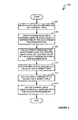
- Figure 1 is a flow diagram of an embodiment for performing load shedding based on data quality information.
- a data stream is received.
- the data stream is received from one or more sensors.
- a threshold for acceptance is calculated for the data stream.
- tuples may be rated according to a total data quality value.
- a total data quality value may be, for example, an aggregated value of monitored data quality dimensions.
- a data quality dimension to be improved may take precedence before other data quality dimensions and tuples in the data stream may be rated according to the value of the quality dimension that needs to be improved (i.e. the one that takes precedence).
- Figure 2 is a flow diagram of an embodiment for deleting data stream overload.
- the data quality information of a tuple in a data stream is received.
- the data stream may be split in partitions (i.e. segments) to facilitate data quality assessment and to enable the processing of smaller amounts of data at a time.
- the data stream may be split in consecutive, non-overlapping data quality windows and data quality information may be aggregated for the data quality window, i.e. a set of data quality information describing the quality of a set (window) of data items of a data stream may be averaged to compute the window-wise data quality.
- the window-wise data quality used for a quality-driven load shedding may be computed as the maximum or minimum of the data quality information of the data items of this respective window.
- a data stream may be split in data quality windows according to various criteria, for example, a count of data stream tuples or a time interval.
- the size of a data quality window may be constant and in some embodiments the size of a data quality window may change over time.
- a major challenge during the load shedding based on data quality information is posed by the fact, that a straight-forward ordering of data items in a data stream according to their data quality information blocks the continuous data stream processing and transfer. To order the data items all data items with their data quality information are required, which is not the case in data stream applications. Therefore, other methods have to be found to evaluate the data quality of a data item and derive the appropriate load shedding activity of retaining or deleting the data item.
- One embodiment may use the data quality distribution of all data items in the data stream that have been processed in the past.
- the use of the data quality distribution allows the determination of an acceptance threshold for the data quality of the current data item.
- the acceptance threshold may be defined as the inverse cumulative distribution function at the point of the required load shedding rate, i.e. the amount of data items that have to be deleted from the data stream given in the required load shedding rate determines the acceptance threshold of the data quality.
- the data quality distribution may be described by a histogram of all incoming data quality values.
- the data quality distribution may be assumed to be a normal distribution and may be described by the mean value and variance value of the incoming data quality values.
- the mean value and the variance value of the data quality distribution of tuples processed so far are updated.
- the data quality distribution may represent the frequency of occurrence of data quality values of tuples processed in the data stream.
- a threshold for acceptance is computed.
- the threshold for acceptance is updated for each current tuple, as the mean value and the variance value and the load shedding rate change with each tuple processed in the stream.
- the load shedding rate may be calculated as the ratio of tuples remaining in the stream and the total number of tuples.
- the threshold for acceptance may be used to appraise tuples in the data stream according to their data quality.
- the threshold for acceptance may separate tuples with high quality that are to be kept in the stream and low quality tuples that are to be deleted.
- a value representing the total data quality of the tuple is calculated.
- a probability to delete the tuple is calculated based on the distance between the threshold for acceptance and the total data quality of the tuple.
- a Bernoulli sampling is performed with the calculated probability to execute the required load shedding and to discard the tuple if it is of low quality.
- Such a choice of distance may provide a sampling probability p ⁇ 1 when ⁇ b and a small sampling probability p ⁇ 0 if b ⁇ .
- Figure 3 is a flow diagram of an embodiment for calculating a total data quality value of a tuple.
- the total data quality of the tuple may be calculated as an aggregation of the values of the quality dimensions of the tuple.
- the values of the quality dimensions of the tuple are aggregated to a scalar value.
- a tuple is selected.
- the values for quality dimensions are obtained.
- each value is assigned a weight to facilitate the focus on data quality dimensions of interest.
- the weighted values are normalized.
- the weighted normalized values are aggregated to a scalar value. In one embodiment, this value is the total quality scalar value of the tuple used in process block 210 of Figure 2 .
- a tuple in a data stream is assumed to have
- an analysis is performed on scalar values, that is, the value of q is a numerical value.
- deleting data overload in a data stream may focus on improving the data quality dimension completeness of the resulting data after the processing of the data stream.
- This embodiment may be used to improve the completeness of the result set of a data stream join, where a memory capacity of the storage to store the incoming data stream tuples, that be will joined, is restricted.
- the data quality dimension completeness is prioritized and tuples and a data stream are analyzed to determine if the values of the data quality dimension of each tuple is higher or lower than a desirable value.
- tuples may be evaluated according to the value of their completeness. A threshold for acceptance with a focus on completeness may be computed.
- the system may have a storage (with a restricted memory capacity) to store tuples with a completeness higher than the computed threshold for acceptance. If a tuple has a value in the data quality dimension completeness higher than the threshold for acceptance, it is stored to the storage and the tuple that has the lowest completeness in the storage is deleted. If a tuple has a value in the data quality dimension completeness lower than the threshold for acceptance, it is deleted. Thus, over time, the storage may store the tuples with the highest completeness.
- Figure 4 is a flow diagram of an embodiment for improving data quality dimension completeness in a data stream using a load shedding approach for tuples.
- the value of the data quality dimension completeness is obtained from the current tuple in the data stream.
- the lowest completeness value of tuples stored in a storage is obtained.
- the completeness value obtained from the current tuple is compared to the completeness value obtained from the storage. If the completeness value of the tuple is lower than the completeness value obtained from storage, the tuple is deleted at process block 412.
- the tuple that had that lowest completeness value in the storage is deleted from the storage. If the tuple has a completeness value higher than the lowest completeness value obtained from the storage, the tuple is saved to the storage and the tuple with the lowest completeness value in the storage is deleted from the storage at process block 410.
- the data quality of the resulting data after the processing of the data stream may be improved by evaluating the outcome of a potential deletion of a tuple. It is necessary to evaluate the outcome because deleting or keeping a tuple may affect the resulting data quality of the resulting data after the data stream is processed. For example, deleting a tuple may lead to a better data quality of the resulting data after the data stream is processed, if the tuple has values in the quality dimensions lower than the average of the data stream or deleting it might have a positive impact on the error introduced by the information loss due to load shedding, i.e. deleting it might decrease the variance of the data items in the data stream.
- a tuple has high data quality values or keeping it might have a positive impact on the error introduced by the information loss due to load shedding, i.e. keeping it might decrease the variance of the data items in the data stream
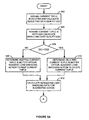
- FIG. 5A is a flow diagram of a first part of a process of an embodiment for evaluating load shedding actions and performing load shedding action that is determined to deliver a better outcome.
- a data quality DQ1 is calculated.
- DQ1 represents the resulting data quality in the data stream if the tuple being processed is deleted.
- a data quality DQ2 is calculated.
- DQ2 represents the resulting data quality in the data stream if the tuple being processed is kept.
- DQ1 is compared to DQ2.
- DQ1 is lower than DQ2, at process block 508, it is determined that keeping the tuple in the data stream may lead to better quality in the data stream and a load shedding action to keep the tuple is suggested. If DQ1 is higher than DQ2, at process block 510, it is determined that deleting the tuple is the better option for the quality of the data stream and a load shedding action for deleting the tuple is suggested. At process block 512, a suggested load shedding rate is calculated for the suggested load shedding action.
- Figure 5B is a flow diagram of a second part of a process of an embodiment for evaluating load shedding actions and performing load shedding action that is determined to deliver a better outcome.
- a method of the statistical process control is applied to stabilize the load shedding execution and guarantee the required load shedding rate.
- Exponential smoothing is a technique commonly used for repeated measurements to produce smoothed data for forecasts. The exponentially smoothed average of the load shedding rate achieved so far is updated with the suggested load shedding rate to achieve a smooth trend.
- the lower and upper bounds of this interval are the control interval bounds, which are updated and used to decide which load shedding action should be performed.
- the required load shedding rate is the load shedding rate required by the system to process the data stream without overload.
- the suggested load shedding rate is compared to this control interval around the required load shedding rate, so that small temporary derivations from the required load shedding rate are enabled to allow for the improvement of the resulting data quality of the data stream.
- the required load shedding rate is guaranteed despite these temporary derivations for the overall data stream.
- the suggested load shedding rate is compared to the updated control interval bounds. If the suggested load shedding rate is higher than the higher bound of the updated control interval bounds, it is determined that the tuple should be deleted at process block 520. It is determined that the tuple should be deleted, because, if the suggested load shedding rate is higher than the higher bound of the control interval bounds, then the required load shedding rate can not be achieved with the suggested load shedding action and the tuple has to be deleted to guarantee the required reduction of the system overload (that is, overload in the data stream). If the suggested load shedding rate is lower than the lower bound of the updated control interval bounds, it is determined that unused capacity exists in the system, and the tuple should not be deleted.
- process block 522 it is decided to keep the tuple and the process described in Figure 2 is executed to determine the best load shedding action to perform with respect to improving the data quality in the data stream. If the suggested load shedding rate is within the updated control interval bounds, it is determined that the required load shedding rate can be achieved and the suggested load shedding action is performed at process block 524.
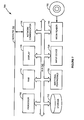
- FIG. 6 is a block diagram of an embodiment for deleting data overload in a data stream.
- the system 600 includes a set of sensors 602 to collect streaming data.
- An analysis module 604 may obtain the data collected by the set of sensors 602.
- the analysis module may be stored on a memory 612 and loaded in a processor 610 to perform operations during runtime of the system 600.
- the analysis module may analyze the data quality information in the data stream as a whole, or the data quality information of a tuple in the data stream, or both.
- the analysis module may analyze the quality information in the data stream and which tuples in the data stream may be deleted to improve the overall data quality of the data stream.
- the load shedding module 608 in the system 600 may be stored in the memory 612 and may be loaded in the processor 610 to perform load shedding during the runtime of the system 600.
- the analysis module 604 may determine which tuples in the data stream should be deleted and send instructions using the processor to the load shedding module to delete the designated tuples.
- the system 600 also includes a testing module 606.
- the testing module 606 is used to test alternative scenarios for load shedding.
- the testing module may test alternative scenarios for load shedding in the data stream and determine if a required load shedding rate is achievable.
- a required load shedding rate may depend on the available capacity and resources in the system 600. To determine if an overload exists, system resources are compared to the workload of all incoming data streams and queries.
- the system 600 requires the resulting processed data to have an optimal value of the data quality dimension completeness.
- the analysis module 604 may calculate the completeness of tuples and tuples with high completeness may be sent through the processor 610 to be stored on the memory.
- the testing module 606 may test each consecutive tuple to determine if the completeness of the tuple is higher or lower compared to the lowest completeness stored in the memory 612.
- the testing module may send instructions to the load shedding module 608 to delete a tuple if the tuple is of unacceptable quality as compared to the tuples already stored to the memory 612.
- the process as described in Figure 1 may be performed by components as described in Figure 6 .
- process as described in Figure 2 may be performed by components as described in Figure 6 .
- the process as described in Figure 3 may be performed by components as described in Figure 6 .
- the process as described in Figure 4 may be performed by components as described in Figure 6 .
- the process as described in Figure 5A may be performed by components as described in Figure 6 .
- the process as described in Figure 5B may be performed by components as described in Figure 6 .
- Some example embodiments of the invention may include the above-illustrated modules and methods being written as one or more software components. These components, and the functionality associated with each, may be used by client, server, or peer computer systems. These components may be written in any computer programming languages including object-oriented computer languages such as C++, and Java. The functionality described herein may be distributed among different components and may be linked to each other via application programming interfaces and compiled into one complete server and/or client application. Furthermore, these components may be linked together via distributed programming protocols. Some example embodiments of the invention may include remote procedure calls being used to implement one or more of these components across a distributed programming environment.
- a logic level may reside on a first computer system that is remotely located from a second computer system containing an interface level (e.g., a graphical user interface).
- an interface level e.g., a graphical user interface
- Computer readable medium should be taken to include a single medium or multiple media that stores one or more sets of instructions.
- computer readable medium should also be taken to include medium that is capable of tangibly storing or encoding instructions for execution by a computer system and that causes the computer system to perform any of the methods described herein.
- FIG. 7 is a block diagram of an exemplary computer system 700.
- the computer system 700 includes a processor 705 that executes programming code tangibly stored on a computer readable medium 755 to perform the above-illustrated methods of the invention.
- the computer system 700 includes a media reader 740 to read the programming code from the computer readable medium 755 and store the code in storage 710 or in random access memory (RAM) 715.
- the storage 710 provides a large space for keeping static data where the programming code could be stored for later execution. From the programming code, a series of instructions are generated and dynamically stored in the RAM 715.
- the processor 705 reads instructions from the RAM 715 and performs actions as instructed.
- the computer system 700 further includes a display 725 to provide visual information to users, an input device 730 to provide a user with means for entering data and interfere with computer system 700, one or more additional peripherals 720 to further expand the capabilities of the computer system 700, and a network communicator 735 to connect the computer system 700 to a network 750.
- the components of the computer system 700 are interconnected via a bus 745.
Landscapes
- Engineering & Computer Science (AREA)
- Computer Networks & Wireless Communication (AREA)
- Signal Processing (AREA)
- Theoretical Computer Science (AREA)
- Environmental & Geological Engineering (AREA)
- Computational Linguistics (AREA)
- Data Mining & Analysis (AREA)
- Databases & Information Systems (AREA)
- Physics & Mathematics (AREA)
- General Engineering & Computer Science (AREA)
- General Physics & Mathematics (AREA)
- Information Retrieval, Db Structures And Fs Structures Therefor (AREA)
Abstract
Description
- The invention relates generally to data stream processing, and, more specifically, to deleting overload in data streams.
- As most data stream sources exhibit bursty data rates, data stream management systems must recurrently cope with overloads that exceed the average workload to a considerable degree. To guarantee lowlatency processing results, load has to be shed from the stream, when data rates overstress system resources. There exist numerous load shedding strategies to delete excess data. However, there may be consequent data loss that may lead to incomplete and/or inaccurate results during the ongoing stream processing.
- Typical data stream sources provide potentially high arrival rates (such as, transactions in financial markets and production monitoring events), but sufficient resources may not be available for the required workload of numerous queries. For example, the critical resources during stream aggregations are computational power and stream bandwidth, while joins suffer from limited memory capacity. Furthermore, data streams tend to have dramatic peak overloads in data volume for temporary timeframes (for example, evening web traffic, high event rates during critical states in production processes, and so on). In some instances, it is impractical or impossible to provide resources to fully handle such a peak load. However, accurate data stream processing is most critical in such situations of high and bursty data load.
- A system and method to delete overload in a data stream to maximize the data quality of processing results are described.
- In one embodiment, a method to analyze tuples in a data stream and delete tuples from the data stream based on quality information obtained from the tuples is presented.
- In one embodiment, tuples in a data stream may be deleted based on the value of one quality dimension as a priority over other quality dimensions.
- In one embodiment, potential load shedding actions may be tested to evaluate which out of a set of possible load shedding actions is to be performed.
- The invention is illustrated by way of example and not by way of limitation in the figures of the accompanying drawings in which like references indicate similar elements. It should be noted that references to "an" or "one" embodiment in this disclosure are not necessarily to the same embodiment, and such references mean at least one.
-
Figure 1 is a flow diagram of an embodiment for performing load shedding based on data quality information. -
Figure 2 is a flow diagram of another embodiment for deleting data stream overload based on data quality information. -
Figure 3 is a flow diagram of an embodiment for calculating a total data quality value of a tuple. -
Figure 4 is a flow diagram of an embodiment for improving data quality dimension completeness in a data stream using a load shedding approach for tuples. -
Figure 5A is a flow diagram of a first part of a process of an embodiment for evaluating load shedding actions and performing load shedding action that is determined to deliver a better outcome. -
Figure 5B is a flow diagram of a second part of a process of an embodiment for evaluating load shedding actions and performing load shedding action that is determined to deliver a better outcome. -
Figure 6 is a block diagram of an embodiment for deleting data overload in a data stream. -
Figure 7 is a block diagram of another embodiment for a system for deleting data overload in a data stream. - Embodiments of systems and methods for deleting overload in a data stream are described herein. In the following description, numerous specific details are set forth to provide a thorough understanding of embodiments of the invention. One skilled in the relevant art will recognize, however, that the invention can be practiced without one or more of the specific details, or with other methods, components, materials, etc. In other instances, well-known structures, materials, or operations are not shown or described in detail to avoid obscuring aspects of the invention.
- Reference throughout this specification to "one embodiment" or "this embodiment" means that a particular feature, structure, or characteristic described in connection with the embodiment is included in at least one embodiment of the present invention. Thus, the appearances of the phrases "in one embodiment" or "in this embodiment" in various places throughout this specification are not necessarily all referring to the same embodiment. Furthermore, the particular features, structures, or characteristics may be combined in any suitable manner in one or more embodiments.
- Embodiments may be used in systems for collecting and processing data in the form of data streams. Such systems may periodically experience overloads which may result in inaccurate processing of results because of the inability of a system to process overloads. A data stream may be a real-time, continuous, ordered (implicitly by arrival time or explicitly by timestamp) sequence of data items, collected with a certain stream rate over a given period of time. In one embodiment, the quality of data in a data stream may be analyzed to determine which parts of the data in the data stream to retain and which parts to delete. By deleting parts of the data in the data stream, overload on system resources is reduced. Also, by retaining data of higher quality, the result of the processing of the data stream may be improved, that is, the resulting processed data will be of better quality. Quality of data being processed by an application or system of an embodiment can be measured to determine, among other things, the utility of the data for specific applications, data use scenarios and so on. Various data quality dimensions may be applicable to various circumstances depending on applications and/or data use scenarios. Examples of data quality dimensions include timeliness, completeness, confidence, accessibility, readability, and so on.
- Data quality may represent metadata information that describes the utility of any data item or any set of data items for a specific use scenario. A data quality of a data item or a set of data items may be described by a set of data quality dimensions each describing a specific data quality aspect, such as accuracy, confidence, completeness, timeliness, added-value, relevancy, accessibility, readability, and so on. To measure a data quality of a data item or a set of data items, the respective data quality dimensions have to be measured. For example, the completeness of a set of data items constitutes the ratio of available recorded data items in a database or data stream in comparison with real world data information. In another example, accuracy may describe the difference between a recorded data item in a database or data stream and the real world information represented by this data item, such that the accuracy may describe typing errors or sensor measurement errors.
- A system processing streaming data may be configured with specific instructions to be applied to the processing of data in the event of an overload. An operator is typically an operation used in the processing of data. In other words, data processing is the process of applying a set of operators to data in a certain sequence. Some exemplary operators include selection, projection, join, interpolation, aggregation, and so on. Some operators may have attributes and some may not.
- A data stream may include a continuous stream of m tuples τ, that may have n attribute values A i for all 1 ≤ i ≤ n and a timestamp t. A tuple is a data item in a data stream. A tuple may include raw data and metadata about the raw data. The metadata in the tuple may include various measurements such as, but not limited to, a timestamp, measurements for quality dimensions of the tuple, and so on.
- To determine if an overload exists in the system, system resources may be compared to the workload of incoming data streams and queries. To overcome an overload some portions of the data stream may need to be deleted, that is some tuples may be deleted and some tuples may be preserved. Deleting tuples from a data stream is also referred to as "load shedding" or "load shedding action". To determine which tuples are to be kept, and which tuples are to be deleted from a data stream (that is, load shedding is to be performed), tuples in the data stream may be rated according to some criteria.
- In one embodiment, tuples may be rated according to data quality information included in metadata in the tuples. In one embodiment, load shedding may be performed based on data quality information. In the embodiment, tuples of lower data quality are discarded with a higher probability than tuples of high quality. Thus, more high quality tuples may remain in the data stream and the data quality of processing results (that is, processed data after the processing of the data stream completes) is improved and the data loss due to discarding overload tuples may be compensated. For example, aggregations are more precise and join result sets are more complete. In one embodiment, by rating tuples according to their quality and discarding tuples with less quality than a specified value, the quality of the data resulting from the processing of the data stream may be improved.
-
Figure 1 is a flow diagram of an embodiment for performing load shedding based on data quality information. Referring toFigure 1 , atprocess block 102, a data stream is received. In one embodiment, the data stream is received from one or more sensors. Atprocess block 104, a threshold for acceptance is calculated for the data stream. Atprocess block 106, it is determined if a tuple should be deleted or retained in the data stream based on the threshold for acceptance. - In one embodiment, tuples may be rated according to a total data quality value. A total data quality value may be, for example, an aggregated value of monitored data quality dimensions. In another embodiment, there may be a need to improve a specific data quality dimension. In such an embodiment, a data quality dimension to be improved may take precedence before other data quality dimensions and tuples in the data stream may be rated according to the value of the quality dimension that needs to be improved (i.e. the one that takes precedence). In another embodiment, there may be a set of criteria for improving the data stream and a check may be performed to determine if the goals for the improvement of the data quality in the data stream can be achieved.
-
Figure 2 is a flow diagram of an embodiment for deleting data stream overload. Referring toFigure 2 , atprocess block 202, the data quality information of a tuple in a data stream is received. In one embodiment, the data stream may be split in partitions (i.e. segments) to facilitate data quality assessment and to enable the processing of smaller amounts of data at a time. - In one embodiment, the data stream may be split in consecutive, non-overlapping data quality windows and data quality information may be aggregated for the data quality window, i.e. a set of data quality information describing the quality of a set (window) of data items of a data stream may be averaged to compute the window-wise data quality. In another embodiment, the window-wise data quality used for a quality-driven load shedding may be computed as the maximum or minimum of the data quality information of the data items of this respective window. Thus, the data quality volume transferred in the data stream is reduced and the evaluation performance of data quality information for a quality-driven load shedding is improved. A data stream may be split in data quality windows according to various criteria, for example, a count of data stream tuples or a time interval. In some embodiments, the size of a data quality window may be constant and in some embodiments the size of a data quality window may change over time.
- A major challenge during the load shedding based on data quality information is posed by the fact, that a straight-forward ordering of data items in a data stream according to their data quality information blocks the continuous data stream processing and transfer. To order the data items all data items with their data quality information are required, which is not the case in data stream applications. Therefore, other methods have to be found to evaluate the data quality of a data item and derive the appropriate load shedding activity of retaining or deleting the data item. One embodiment may use the data quality distribution of all data items in the data stream that have been processed in the past.
- The use of the data quality distribution allows the determination of an acceptance threshold for the data quality of the current data item. The acceptance threshold may be defined as the inverse cumulative distribution function at the point of the required load shedding rate, i.e. the amount of data items that have to be deleted from the data stream given in the required load shedding rate determines the acceptance threshold of the data quality. In one embodiment, the data quality distribution may be described by a histogram of all incoming data quality values. In another embodiment, the data quality distribution may be assumed to be a normal distribution and may be described by the mean value and variance value of the incoming data quality values.
- At
process block 206, the mean value and the variance value of the data quality distribution of tuples processed so far are updated. The data quality distribution may represent the frequency of occurrence of data quality values of tuples processed in the data stream. With these updated values and a load shedding rate, atblock 208, a threshold for acceptance is computed. The threshold for acceptance is updated for each current tuple, as the mean value and the variance value and the load shedding rate change with each tuple processed in the stream. The load shedding rate may be calculated as the ratio of tuples remaining in the stream and the total number of tuples. To determine if an overload exists, system resources are compared to the workload of all incoming data streams and queries. The threshold for acceptance may be used to appraise tuples in the data stream according to their data quality. The threshold for acceptance may separate tuples with high quality that are to be kept in the stream and low quality tuples that are to be deleted. Atprocess block 210, a value representing the total data quality of the tuple is calculated. - At
process block 212, a probability to delete the tuple is calculated based on the distance between the threshold for acceptance and the total data quality of the tuple. Atprocess block 214, a Bernoulli sampling is performed with the calculated probability to execute the required load shedding and to discard the tuple if it is of low quality. In one embodiment, the Bernoulli probability p Bemou/li = d≻(θ,b), where θ is the total data quality of the tuple and b is the computed threshold for acceptance, may be computed from the sigmoid quality distance:
- Such a choice of distance may provide a sampling probability p→1 when θ<<b and a small sampling probability p→0 if b<<θ. The case where b=θ maybe modeled with pBemoulli = 0.5.
-
Figure 3 is a flow diagram of an embodiment for calculating a total data quality value of a tuple. The total data quality of the tuple may be calculated as an aggregation of the values of the quality dimensions of the tuple. In one embodiment, the values of the quality dimensions of the tuple are aggregated to a scalar value. In one embodiment, the total data quality of the tuple may be defined as the weighted average of the data quality information in each dimension qi with mean value µ(qi ) and standard deviation σ(qi ) such that
- Referring to
Figure 3 , atprocess block 302, a tuple is selected. Atprocess block 304, the values for quality dimensions are obtained. Atprocess block 306, each value is assigned a weight to facilitate the focus on data quality dimensions of interest. Atprocess block 308, the weighted values are normalized. Atprocess block 310, the weighted normalized values are aggregated to a scalar value. In one embodiment, this value is the total quality scalar value of the tuple used in process block 210 ofFigure 2 . In one embodiment, a tuple in a data stream is assumed to have |Q| data quality dimensions where q∈Q may represent any of these data quality dimensions. In one embodiment, an analysis is performed on scalar values, that is, the value of q is a numerical value. In the embodiment, the total data quality of the tuple is denoted by θ, where θ is an aggregated value of the quality dimensions under analysis, such that θ=θ(q 1,q 2,...,q|Q|). Thus, to appraise tuples in a data stream it is determined which tuples in the data stream are "higher" and which are "lower", meaning which tuples are of higher total quality. For example, a first tuple x 1 exceeds a tuple x 2 if the respective total data quality is smaller such that x 1 ≻ x 2 ≡θ1 <θ2. - In one embodiment, deleting data overload in a data stream may focus on improving the data quality dimension completeness of the resulting data after the processing of the data stream. This embodiment may be used to improve the completeness of the result set of a data stream join, where a memory capacity of the storage to store the incoming data stream tuples, that be will joined, is restricted. Thus, the data quality dimension completeness is prioritized and tuples and a data stream are analyzed to determine if the values of the data quality dimension of each tuple is higher or lower than a desirable value. To improve the data quality dimension completeness, tuples may be evaluated according to the value of their completeness. A threshold for acceptance with a focus on completeness may be computed. In one embodiment, it is the goal of a system processing the data stream to improve completeness. The system may have a storage (with a restricted memory capacity) to store tuples with a completeness higher than the computed threshold for acceptance. If a tuple has a value in the data quality dimension completeness higher than the threshold for acceptance, it is stored to the storage and the tuple that has the lowest completeness in the storage is deleted. If a tuple has a value in the data quality dimension completeness lower than the threshold for acceptance, it is deleted. Thus, over time, the storage may store the tuples with the highest completeness.
-
Figure 4 is a flow diagram of an embodiment for improving data quality dimension completeness in a data stream using a load shedding approach for tuples. Referring toFigure 4 , atprocess block 402, the value of the data quality dimension completeness is obtained from the current tuple in the data stream. Atprocess block 404, the lowest completeness value of tuples stored in a storage is obtained. Atprocess block 408, the completeness value obtained from the current tuple is compared to the completeness value obtained from the storage. If the completeness value of the tuple is lower than the completeness value obtained from storage, the tuple is deleted atprocess block 412. If the completeness value of the tuple is higher than the completeness value obtained from the storage, the tuple that had that lowest completeness value in the storage is deleted from the storage. If the tuple has a completeness value higher than the lowest completeness value obtained from the storage, the tuple is saved to the storage and the tuple with the lowest completeness value in the storage is deleted from the storage atprocess block 410. - In another embodiment, the data quality of the resulting data after the processing of the data stream may be improved by evaluating the outcome of a potential deletion of a tuple. It is necessary to evaluate the outcome because deleting or keeping a tuple may affect the resulting data quality of the resulting data after the data stream is processed. For example, deleting a tuple may lead to a better data quality of the resulting data after the data stream is processed, if the tuple has values in the quality dimensions lower than the average of the data stream or deleting it might have a positive impact on the error introduced by the information loss due to load shedding, i.e. deleting it might decrease the variance of the data items in the data stream. In another example, if a tuple has high data quality values or keeping it might have a positive impact on the error introduced by the information loss due to load shedding, i.e. keeping it might decrease the variance of the data items in the data stream, it may be beneficial to preserve the tuple in the data stream and thus improve the data quality of the resulting data after the data stream is processed. Therefore, the two potential outcomes are evaluated so that a decision can be made about which of the two options is better for the resulting data quality of the resulting data after the data stream is processed.
-
Figure 5A is a flow diagram of a first part of a process of an embodiment for evaluating load shedding actions and performing load shedding action that is determined to deliver a better outcome. Referring toFigure 5A , atprocess block 502, a data quality DQ1 is calculated. DQ1 represents the resulting data quality in the data stream if the tuple being processed is deleted. Atprocess block 504, a data quality DQ2 is calculated. DQ2 represents the resulting data quality in the data stream if the tuple being processed is kept. Atprocess block 506, DQ1 is compared to DQ2. If DQ1 is lower than DQ2, atprocess block 508, it is determined that keeping the tuple in the data stream may lead to better quality in the data stream and a load shedding action to keep the tuple is suggested. If DQ1 is higher than DQ2, atprocess block 510, it is determined that deleting the tuple is the better option for the quality of the data stream and a load shedding action for deleting the tuple is suggested. Atprocess block 512, a suggested load shedding rate is calculated for the suggested load shedding action. -
Figure 5B is a flow diagram of a second part of a process of an embodiment for evaluating load shedding actions and performing load shedding action that is determined to deliver a better outcome. Atprocess block 514, a method of the statistical process control is applied to stabilize the load shedding execution and guarantee the required load shedding rate. In one embodiment, the process control method may be the exponentially weighted smoothed average (EWSA), that ensures stable system behavior, such that
where j describes the timestamp of the data stream processing for all 0 ≤ j ≤ ∞, rj+1 is the currently suggested load shedding rate and β is the smoothing parameter describing the degree of performed smoothing. Exponential smoothing is a technique commonly used for repeated measurements to produce smoothed data for forecasts. The exponentially smoothed average of the load shedding rate achieved so far is updated with the suggested load shedding rate to achieve a smooth trend. With the help of the EWSA the suggested load shedding rate converges to the required load shedding rate. Atprocess block 516, using the EWSA, an interval [lowerBound, upperBound] is defined around the required load shedding rate, such that upperBound = rLS and lowerBound=rLS - ρ•σ(EWSA), where rLS is the required load shedding rate, ρ describes the quantile of the confidence probability ρ (e.g. ρ=2,58 for p=99%) and σ(EWSA) describes the variance of the exponentially smoothed average. - Thus, the lower and upper bounds of this interval are the control interval bounds, which are updated and used to decide which load shedding action should be performed. The required load shedding rate is the load shedding rate required by the system to process the data stream without overload. The suggested load shedding rate is compared to this control interval around the required load shedding rate, so that small temporary derivations from the required load shedding rate are enabled to allow for the improvement of the resulting data quality of the data stream. By using the smoothed trend of the EWSA, the required load shedding rate is guaranteed despite these temporary derivations for the overall data stream.
- At
process block 518, the suggested load shedding rate is compared to the updated control interval bounds. If the suggested load shedding rate is higher than the higher bound of the updated control interval bounds, it is determined that the tuple should be deleted atprocess block 520. It is determined that the tuple should be deleted, because, if the suggested load shedding rate is higher than the higher bound of the control interval bounds, then the required load shedding rate can not be achieved with the suggested load shedding action and the tuple has to be deleted to guarantee the required reduction of the system overload (that is, overload in the data stream). If the suggested load shedding rate is lower than the lower bound of the updated control interval bounds, it is determined that unused capacity exists in the system, and the tuple should not be deleted. Thus, atprocess block 522, it is decided to keep the tuple and the process described inFigure 2 is executed to determine the best load shedding action to perform with respect to improving the data quality in the data stream. If the suggested load shedding rate is within the updated control interval bounds, it is determined that the required load shedding rate can be achieved and the suggested load shedding action is performed atprocess block 524. -
Figure 6 is a block diagram of an embodiment for deleting data overload in a data stream. Thesystem 600 includes a set ofsensors 602 to collect streaming data. Ananalysis module 604 may obtain the data collected by the set ofsensors 602. The analysis module may be stored on amemory 612 and loaded in aprocessor 610 to perform operations during runtime of thesystem 600. In one embodiment, the analysis module may analyze the data quality information in the data stream as a whole, or the data quality information of a tuple in the data stream, or both. In one embodiment, the analysis module may analyze the quality information in the data stream and which tuples in the data stream may be deleted to improve the overall data quality of the data stream. Theload shedding module 608 in thesystem 600 may be stored in thememory 612 and may be loaded in theprocessor 610 to perform load shedding during the runtime of thesystem 600. In one embodiment, theanalysis module 604 may determine which tuples in the data stream should be deleted and send instructions using the processor to the load shedding module to delete the designated tuples. - The
system 600 also includes atesting module 606. In one embodiment thetesting module 606 is used to test alternative scenarios for load shedding. The testing module may test alternative scenarios for load shedding in the data stream and determine if a required load shedding rate is achievable. A required load shedding rate may depend on the available capacity and resources in thesystem 600. To determine if an overload exists, system resources are compared to the workload of all incoming data streams and queries. - In an alternative embodiment, the
system 600 requires the resulting processed data to have an optimal value of the data quality dimension completeness. In this embodiment, theanalysis module 604 may calculate the completeness of tuples and tuples with high completeness may be sent through theprocessor 610 to be stored on the memory. Thetesting module 606 may test each consecutive tuple to determine if the completeness of the tuple is higher or lower compared to the lowest completeness stored in thememory 612. In one embodiment, the testing module may send instructions to theload shedding module 608 to delete a tuple if the tuple is of unacceptable quality as compared to the tuples already stored to thememory 612. - In one embodiment, the process as described in
Figure 1 may be performed by components as described inFigure 6 . - In one embodiment, process as described in
Figure 2 may be performed by components as described inFigure 6 . - In one embodiment, the process as described in
Figure 3 may be performed by components as described inFigure 6 . - In one embodiment, the process as described in
Figure 4 may be performed by components as described inFigure 6 . - In one embodiment, the process as described in
Figure 5A may be performed by components as described inFigure 6 . - In one embodiment, the process as described in
Figure 5B may be performed by components as described inFigure 6 . - Some example embodiments of the invention may include the above-illustrated modules and methods being written as one or more software components. These components, and the functionality associated with each, may be used by client, server, or peer computer systems. These components may be written in any computer programming languages including object-oriented computer languages such as C++, and Java. The functionality described herein may be distributed among different components and may be linked to each other via application programming interfaces and compiled into one complete server and/or client application. Furthermore, these components may be linked together via distributed programming protocols. Some example embodiments of the invention may include remote procedure calls being used to implement one or more of these components across a distributed programming environment. For example, a logic level may reside on a first computer system that is remotely located from a second computer system containing an interface level (e.g., a graphical user interface). These first and second computer systems can be configured in a server-client, peer-to-peer, or other configurations.
- Software components described above are tangibly stored on a machine readable medium including a computer readable medium. The term "computer readable medium" should be taken to include a single medium or multiple media that stores one or more sets of instructions. The term "computer readable medium" should also be taken to include medium that is capable of tangibly storing or encoding instructions for execution by a computer system and that causes the computer system to perform any of the methods described herein.
-
Figure 7 is a block diagram of anexemplary computer system 700. Thecomputer system 700 includes aprocessor 705 that executes programming code tangibly stored on a computerreadable medium 755 to perform the above-illustrated methods of the invention. Thecomputer system 700 includes amedia reader 740 to read the programming code from the computerreadable medium 755 and store the code instorage 710 or in random access memory (RAM) 715. Thestorage 710 provides a large space for keeping static data where the programming code could be stored for later execution. From the programming code, a series of instructions are generated and dynamically stored in theRAM 715. Theprocessor 705 reads instructions from theRAM 715 and performs actions as instructed. According to one embodiment of the invention, thecomputer system 700 further includes adisplay 725 to provide visual information to users, an input device 730 to provide a user with means for entering data and interfere withcomputer system 700, one or moreadditional peripherals 720 to further expand the capabilities of thecomputer system 700, and anetwork communicator 735 to connect thecomputer system 700 to anetwork 750. The components of thecomputer system 700 are interconnected via a bus 745. - The above description of illustrated embodiments of the invention, including what is described in the Abstract, is not intended to be exhaustive or to limit the invention to the precise forms disclosed. While specific embodiments of, and examples for, the invention are described herein for illustrative purposes, various equivalent modifications are possible within the scope of the invention, as those skilled in the relevant art will recognize.
- These modifications can be made to the invention in light of the above detailed description. The terms used in the following claims should not be construed to limit the invention to the specific embodiments disclosed in the specification and the claims. Rather, the scope of the invention is to be determined entirely by the following claims, which are to be construed in accordance with established doctrines of claim interpretation.
Claims (13)
- A computerized method, comprising:receiving (102) a data stream from one or more sensors;calculating (104) a data quality threshold for acceptance of the data stream received from the one or more sensors; anddetermining (106) if a tuple should be retained in the data stream or deleted from the data stream based on the data quality threshold for acceptance.
- The computerized method according to claim 1, further comprising:receiving (202) data quality information of a current tuple in the data stream;updating (206) a mean value and a variance value of a data quality distribution in the data stream processed prior the current tuple in the data stream;calculating (208) the threshold for acceptance using a load shedding rate and the updated mean value and the updated variance value of the quality distribution in the data stream;calculating (210) a total data quality value of the current tuple;calculating (212) a probability to delete the current tuple; anddeleting (214) the current tuple based on applying Bernoulli-sampling with the calculated probability.
- The computerized method according to claim 2, wherein calculating the total data quality value of the current tuple in the data stream comprises:obtaining (304) values for one or more data quality dimensions of the current tuple;assigning (306) weights to each value of the one or more data quality dimensions of the current tuple;normalizing (308) the weighted values of the one or more quality dimensions of the current tuple; andaggregating (310) the weighted normalized values to a total data quality scalar value.
- The computerized method according to claim 2 or 3, further comprising obtaining the load shedding rate, the load shedding rate to determine the ratio of the number of tuples remaining in the data stream and the total number of tuples in the data stream.
- The computerized method according to any one of claims 2 to 4, wherein the data quality information comprises values for one or more data quality dimensions.
- The computerized method according to any one of claims 1 to 5, further comprising:obtaining (404) a lowest completeness value from a storage, the lowest completeness value to be used to calculate the threshold for acceptance;storing (410) a current tuple in the data stream to the storage if the completeness value of the current tuple is higher than the calculated threshold for acceptance; anddeleting (412) the current tuple in the data stream if the completeness value of the current tuple is lower than the calculated threshold for acceptance.
- The computerized method according to any one of claims 1 to 6, further comprising:calculating (502) a first data quality value, the first data quality value to represent the resulting data quality of processed data if a current tuple is deleted;calculating (504) a second data quality value, the second data quality value to represent the data quality of the processed data if the current tuple is retained;evaluating (506) if the first data quality value is higher than the second data quality value;suggesting a load shedding action based on the outcome of the evaluation,
wherein if the first data quality value is higher than the second data quality value, the load shedding action is deleting (510) the current tuple from the data stream and
if the first data quality value is lower than the second data quality value, the load shedding action is to retain (508) the current tuple in the data stream;calculating (512) a suggested load shedding rate based on the load shedding action;updating (514) an exponentially weighted smoothed average (EWSA) of a load shedding rate reflecting the status of the data stream prior to the current tuple; andupdating (516) control interval bounds around a required load shedding rate. - The computerized method according to claim 7, wherein the required load shedding rate is the load shedding rate required to utilize a resource capacity in a system.
- The computerized method according to claim 7 or 8, further comprising:comparing (518) the suggested load shedding rate to the updated control interval bounds;performing (524) the load shedding action if the suggested load shedding rate is within the updated control interval bounds;deleting (520) the currently processed tuple if the suggested load shedding rate is higher than the upper bound of the updated control interval bounds; andperforming (522) additional analysis of the data quality information of the current tuple if the suggested load shedding rate is lower than the lower bound of the updated control interval bounds.
- A computerized system, including a processor (610), the processor (610) communicating with a memory (612) storing instructions, the system comprising:a set of sensors (602) to collect streaming data for a set of operations generating data at a rate, wherein the streaming data includes a set of tuples, each tuple to hold data and metadata;an analysis module (604) to obtain streaming data from the set of sensors (602) and analyze the data quality of the streaming data; anda load shedding module (608) to determine if a tuple in the streaming data should be preserved or deleted based on the data quality of the tuple.
- The system according to claim 10, further comprising a testing module (606) to test if a load shedding rate can be achieved against a set of conditions.
- The system according to claim 10 or 11, wherein the analysis module (604) is further to:analyze the outcome of potential load shedding actions;determine which of the potential load shedding actions delivers a better outcome; andsend instructions to the load shedding module (608) to perform the load shedding action which was determined to deliver the better outcome.
- A machine-readable storage device having machine readable instructions tangibly stored thereon for deleting data stream overload which when executed by the machine, cause the machine to perform a method according to any one of claims 1 to 9.
Applications Claiming Priority (1)
| Application Number | Priority Date | Filing Date | Title |
|---|---|---|---|
| US12/504,670 US8180914B2 (en) | 2009-07-17 | 2009-07-17 | Deleting data stream overload |
Publications (1)
| Publication Number | Publication Date |
|---|---|
| EP2278502A1 true EP2278502A1 (en) | 2011-01-26 |
Family
ID=42669512
Family Applications (1)
| Application Number | Title | Priority Date | Filing Date |
|---|---|---|---|
| EP10007389A Ceased EP2278502A1 (en) | 2009-07-17 | 2010-07-16 | Deleting data stream overload |
Country Status (2)
| Country | Link |
|---|---|
| US (1) | US8180914B2 (en) |
| EP (1) | EP2278502A1 (en) |
Families Citing this family (18)
| Publication number | Priority date | Publication date | Assignee | Title |
|---|---|---|---|---|
| US20110202634A1 (en) * | 2010-02-12 | 2011-08-18 | Surya Kumar Kovvali | Charging-invariant and origin-server-friendly transit caching in mobile networks |
| US8799480B2 (en) | 2010-07-19 | 2014-08-05 | Movik Networks | Content pre-fetching and CDN assist methods in a wireless mobile network |
| US8396828B2 (en) * | 2010-09-14 | 2013-03-12 | Microsoft Corporation | Providing lightweight multidimensional online data storage for web service usage reporting |
| US9438656B2 (en) | 2012-01-11 | 2016-09-06 | International Business Machines Corporation | Triggering window conditions by streaming features of an operator graph |
| US9430117B2 (en) | 2012-01-11 | 2016-08-30 | International Business Machines Corporation | Triggering window conditions using exception handling |
| US9015339B2 (en) | 2012-04-25 | 2015-04-21 | International Business Machines Corporation | Monitoring streams buffering to optimize operator procressing |
| US9460131B2 (en) * | 2012-05-04 | 2016-10-04 | International Business Machines Corporation | Data stream quality management for analytic environments |
| US9384302B2 (en) * | 2013-06-17 | 2016-07-05 | International Business Machines Corporation | Generating differences for tuple attributes |
| US9489387B2 (en) | 2014-01-15 | 2016-11-08 | Avigilon Corporation | Storage management of data streamed from a video source device |
| US9460235B2 (en) * | 2014-06-30 | 2016-10-04 | International Business Machines Corporation | Supplementing a tuple with a derived value |
| US10355905B2 (en) * | 2014-07-11 | 2019-07-16 | Lg Electronics Inc. | Method and apparatus for transmitting Wi-Fi signals in unlicensed spectrum in wireless communication system |
| US10255304B2 (en) | 2014-09-30 | 2019-04-09 | International Business Machines Corporation | Removal of garbage data from a database |
| US10031934B2 (en) | 2014-09-30 | 2018-07-24 | International Business Machines Corporation | Deleting tuples using separate transaction identifier storage |
| US10061810B2 (en) * | 2015-04-13 | 2018-08-28 | International Business Machines Corporation | Limiting tuple creation at the tuple level |
| US9864779B2 (en) | 2015-06-15 | 2018-01-09 | International Business Machines Corporation | Suppressing stream functionality to expedite preferred data |
| US11372861B2 (en) * | 2020-07-08 | 2022-06-28 | International Business Machines Corporation | Streams runtime processing rate adjustment |
| US11263103B2 (en) * | 2020-07-31 | 2022-03-01 | International Business Machines Corporation | Efficient real-time data quality analysis |
| US11204851B1 (en) * | 2020-07-31 | 2021-12-21 | International Business Machines Corporation | Real-time data quality analysis |
Citations (4)
| Publication number | Priority date | Publication date | Assignee | Title |
|---|---|---|---|---|
| US20060184527A1 (en) * | 2005-02-16 | 2006-08-17 | Ibm Corporation | System and method for load shedding in data mining and knowledge discovery from stream data |
| US20070226188A1 (en) * | 2006-03-27 | 2007-09-27 | Theodore Johnson | Method and apparatus for data stream sampling |
| WO2007109446A1 (en) * | 2006-03-21 | 2007-09-27 | At & T Corp. | Query-aware sampling of data streams |
| EP1983437A1 (en) * | 2007-04-20 | 2008-10-22 | Sap Ag | Determining of data quality in data streams |
Family Cites Families (3)
| Publication number | Priority date | Publication date | Assignee | Title |
|---|---|---|---|---|
| FR2830094B1 (en) * | 2001-09-27 | 2004-12-10 | Cit Alcatel | METHOD AND DEVICE FOR SIMULATING THE BEHAVIOR OF A NETWORK, ALLOWING SIZING ON DEMAND |
| US8112247B2 (en) * | 2006-03-24 | 2012-02-07 | International Business Machines Corporation | Resource adaptive spectrum estimation of streaming data |
| US9158837B2 (en) * | 2007-10-10 | 2015-10-13 | International Business Machines Corporation | Methods and apparatus for adaptive source filtering and load shedding for data stream processing |
-
2009
- 2009-07-17 US US12/504,670 patent/US8180914B2/en active Active
-
2010
- 2010-07-16 EP EP10007389A patent/EP2278502A1/en not_active Ceased
Patent Citations (4)
| Publication number | Priority date | Publication date | Assignee | Title |
|---|---|---|---|---|
| US20060184527A1 (en) * | 2005-02-16 | 2006-08-17 | Ibm Corporation | System and method for load shedding in data mining and knowledge discovery from stream data |
| WO2007109446A1 (en) * | 2006-03-21 | 2007-09-27 | At & T Corp. | Query-aware sampling of data streams |
| US20070226188A1 (en) * | 2006-03-27 | 2007-09-27 | Theodore Johnson | Method and apparatus for data stream sampling |
| EP1983437A1 (en) * | 2007-04-20 | 2008-10-22 | Sap Ag | Determining of data quality in data streams |
Non-Patent Citations (6)
| Title |
|---|
| ABADI D J ET AL: "The Design of the Borealis Stream Processing Engine", 4 January 2005 (2005-01-04), pages 277 - 289, XP002594430, Retrieved from the Internet <URL:http://www.cidrdb.org/cidr2005/papers/P23.pdf> * |
| ANJA KLEIN ET AL: "Representing Data Quality for Streaming and Static Data", DATA ENGINEERING WORKSHOP, 2007 IEEE 23RD INTERNATIONAL CONFERENCE ON, IEEE, PI, 15 April 2007 (2007-04-15), pages 3 - 10, XP031189238, ISBN: 978-1-4244-0831-3 * |
| BABCOCK B ET AL: "Load Shedding Techniques for Data Stream Systems", INTERNET CITATION, 2003, XP002443545, Retrieved from the Internet <URL:http://www-cs-students.stanford.edu/ datar/papers/mpds03.pdf> [retrieved on 20070720] * |
| KLEIN, ANJA: "Datenqualität in Sensordatenströmen", 19 June 2009 (2009-06-19), TU Dresden Germany, pages 1 - 215, XP009138594, Retrieved from the Internet <URL:http://www.qucosa.de/fileadmin/data/qucosa/documents/2758/Diss_AnjaKlein_Datenqualit%C3%A4tInSensordatenstr%C3%B6men.pdf> [retrieved on 20100910] * |
| SHAWN R JEFFERY ET AL: "Declarative Support for Sensor Data Cleaning", 1 January 2006, PERVASIVE COMPUTING LECTURE NOTES IN COMPUTER SCIENCE;;LNCS, SPRINGER, BERLIN, DE, PAGE(S) 83 - 100, ISBN: 978-3-540-33894-9, XP019031543 * |
| TATBUL N ET AL: "Load Shedding in a Data Stream Manager", PROCEEDINGS OF THE TWENTY-NINTH INTERNATIONAL CONFERENCE ON VERY LARGE DATABASES : BERLIN, GERMANY, 9 - 12 SEPTEMBER, 2003, MORGAN KAUFMAN, ORLANDO, FLA, vol. 29, 9 September 2003 (2003-09-09), pages 309 - 320, XP002594428, ISBN: 978-0-12-722442-8 * |
Also Published As
| Publication number | Publication date |
|---|---|
| US8180914B2 (en) | 2012-05-15 |
| US20110016469A1 (en) | 2011-01-20 |
Similar Documents
| Publication | Publication Date | Title |
|---|---|---|
| US8180914B2 (en) | Deleting data stream overload | |
| US12475615B2 (en) | Systems and methods for trending patterns within time-series data | |
| EP1806658B1 (en) | Analyzing method and device | |
| US9804943B2 (en) | Estimating service resource consumption based on response time | |
| EP3951598B1 (en) | Methods and systems for detecting anomalies in cloud services based on mining time-evolving graphs | |
| US10318366B2 (en) | System and method for relationship based root cause recommendation | |
| WO2021072890A1 (en) | Traffic abnormality monitoring method and apparatus based on model, and device and storage medium | |
| CN115794407A (en) | Calculation resource allocation method, device, electronic device and non-volatile storage medium | |
| CN110365503A (en) | An index determination method and related equipment | |
| CN109981744B (en) | Data distribution method and device, storage medium and electronic equipment | |
| US12603938B2 (en) | Method and internet of things system for loading gas data of smart gas | |
| US9235463B2 (en) | Device and method for fault management of smart device | |
| CN110572297A (en) | Evaluation method, server and storage medium of network performance | |
| US12001309B2 (en) | Method and apparatus for predicting application service response time in communication system | |
| US20180020048A1 (en) | Computer-executable server load monitoring method, apparatus performing the same and storage medium storing the same | |
| CN119154997A (en) | High-speed data transmission method and system for micro-computing equipment | |
| CN110502495A (en) | A kind of log collecting method and device of application server | |
| CN117130851B (en) | High-performance computing cluster operation efficiency evaluation method and system | |
| CN118101344B (en) | Transmission security identification system, method and medium for 5G message | |
| CN119232623A (en) | Abnormality detection method and device for core network and storage medium | |
| WO2026085875A1 (en) | Task switching method, apparatus, electronic device and storage medium | |
| CN120223553B (en) | Dynamic resource optimization method and system based on large model incremental learning | |
| CN121277652B (en) | An efficient method for dynamic task scheduling in GPUs for quantum-resistant cryptography | |
| CN121750543A (en) | Channel route self-adaption method and system based on multidimensional dynamic health degree scoring | |
| CN120128217A (en) | A method, device, equipment, medium and product for determining an aggregation node of a power data communication network |
Legal Events
| Date | Code | Title | Description |
|---|---|---|---|
| PUAI | Public reference made under article 153(3) epc to a published international application that has entered the european phase |
Free format text: ORIGINAL CODE: 0009012 |
|
| AK | Designated contracting states |
Kind code of ref document: A1 Designated state(s): AL AT BE BG CH CY CZ DE DK EE ES FI FR GB GR HR HU IE IS IT LI LT LU LV MC MK MT NL NO PL PT RO SE SI SK SM TR |
|
| AX | Request for extension of the european patent |
Extension state: BA ME RS |
|
| 17P | Request for examination filed |
Effective date: 20110720 |
|
| RAP1 | Party data changed (applicant data changed or rights of an application transferred) |
Owner name: SAP SE |
|
| 17Q | First examination report despatched |
Effective date: 20161013 |
|
| STAA | Information on the status of an ep patent application or granted ep patent |
Free format text: STATUS: EXAMINATION IS IN PROGRESS |
|
| STAA | Information on the status of an ep patent application or granted ep patent |
Free format text: STATUS: THE APPLICATION HAS BEEN REFUSED |
|
| 18R | Application refused |
Effective date: 20191108 |