EP2276720B1 - Improved systems and processes for the production of isophthalic acid and terephthalic acid - Google Patents
Improved systems and processes for the production of isophthalic acid and terephthalic acid Download PDFInfo
- Publication number
- EP2276720B1 EP2276720B1 EP09722918.1A EP09722918A EP2276720B1 EP 2276720 B1 EP2276720 B1 EP 2276720B1 EP 09722918 A EP09722918 A EP 09722918A EP 2276720 B1 EP2276720 B1 EP 2276720B1
- Authority
- EP
- European Patent Office
- Prior art keywords
- xylene
- stream
- feed stream
- ipa
- ethylbenzene
- Prior art date
- Legal status (The legal status is an assumption and is not a legal conclusion. Google has not performed a legal analysis and makes no representation as to the accuracy of the status listed.)
- Not-in-force
Links
Images


Classifications
-
- C—CHEMISTRY; METALLURGY
- C07—ORGANIC CHEMISTRY
- C07C—ACYCLIC OR CARBOCYCLIC COMPOUNDS
- C07C7/00—Purification; Separation; Use of additives
- C07C7/005—Processes comprising at least two steps in series
-
- C—CHEMISTRY; METALLURGY
- C07—ORGANIC CHEMISTRY
- C07C—ACYCLIC OR CARBOCYCLIC COMPOUNDS
- C07C51/00—Preparation of carboxylic acids or their salts, halides or anhydrides
- C07C51/16—Preparation of carboxylic acids or their salts, halides or anhydrides by oxidation
- C07C51/21—Preparation of carboxylic acids or their salts, halides or anhydrides by oxidation with molecular oxygen
- C07C51/255—Preparation of carboxylic acids or their salts, halides or anhydrides by oxidation with molecular oxygen of compounds containing six-membered aromatic rings without ring-splitting
- C07C51/265—Preparation of carboxylic acids or their salts, halides or anhydrides by oxidation with molecular oxygen of compounds containing six-membered aromatic rings without ring-splitting having alkyl side chains which are oxidised to carboxyl groups
-
- C—CHEMISTRY; METALLURGY
- C07—ORGANIC CHEMISTRY
- C07C—ACYCLIC OR CARBOCYCLIC COMPOUNDS
- C07C51/00—Preparation of carboxylic acids or their salts, halides or anhydrides
- C07C51/42—Separation; Purification; Stabilisation; Use of additives
- C07C51/43—Separation; Purification; Stabilisation; Use of additives by change of the physical state, e.g. crystallisation
-
- C—CHEMISTRY; METALLURGY
- C07—ORGANIC CHEMISTRY
- C07C—ACYCLIC OR CARBOCYCLIC COMPOUNDS
- C07C63/00—Compounds having carboxyl groups bound to a carbon atoms of six-membered aromatic rings
- C07C63/14—Monocyclic dicarboxylic acids
- C07C63/15—Monocyclic dicarboxylic acids all carboxyl groups bound to carbon atoms of the six-membered aromatic ring
- C07C63/24—1,3 - Benzenedicarboxylic acid
-
- C—CHEMISTRY; METALLURGY
- C07—ORGANIC CHEMISTRY
- C07C—ACYCLIC OR CARBOCYCLIC COMPOUNDS
- C07C63/00—Compounds having carboxyl groups bound to a carbon atoms of six-membered aromatic rings
- C07C63/14—Monocyclic dicarboxylic acids
- C07C63/15—Monocyclic dicarboxylic acids all carboxyl groups bound to carbon atoms of the six-membered aromatic ring
- C07C63/26—1,4 - Benzenedicarboxylic acid
-
- C—CHEMISTRY; METALLURGY
- C08—ORGANIC MACROMOLECULAR COMPOUNDS; THEIR PREPARATION OR CHEMICAL WORKING-UP; COMPOSITIONS BASED THEREON
- C08G—MACROMOLECULAR COMPOUNDS OBTAINED OTHERWISE THAN BY REACTIONS ONLY INVOLVING UNSATURATED CARBON-TO-CARBON BONDS
- C08G63/00—Macromolecular compounds obtained by reactions forming a carboxylic ester link in the main chain of the macromolecule
- C08G63/02—Polyesters derived from hydroxycarboxylic acids or from polycarboxylic acids and polyhydroxy compounds
- C08G63/12—Polyesters derived from hydroxycarboxylic acids or from polycarboxylic acids and polyhydroxy compounds derived from polycarboxylic acids and polyhydroxy compounds
- C08G63/16—Dicarboxylic acids and dihydroxy compounds
- C08G63/18—Dicarboxylic acids and dihydroxy compounds the acids or hydroxy compounds containing carbocyclic rings
- C08G63/181—Acids containing aromatic rings
- C08G63/183—Terephthalic acids
Definitions
- Meta-xylene and Para-xylene are valuable chemical intermediates used in the production of isophthalic acid and terephthalic acid (IPA/TA (or CIPA/CTA)), purified or crude, used in the production of resins.
- IPA/TA isophthalic acid and terephthalic acid
- CIPA/CTA CIPA/CTA
- Meta-xylene may be derived from mixtures of C 8 aromatics separated from such raw materials as petroleum naphthas, particularly reformates, wherein the mixture of xylenes is usually made by fractional distillation or selective solvent extraction.
- the C 8 aromatics in such mixtures and their properties are: Freezing Point (°C.) Boiling Point (°C.) Density (Kg/m 3 ) Ethylbenzene -95.0 136.2 869.9 Para-xylene 13.2 138.5 863.9 Meta-xylene -47.4 138.8 866.3 Ortho-xylene -25.4 144.0 883.1
- C 8 aromatics there are various sources of mixtures of C 8 aromatics.
- One such source is catalytically reformed naphthas and pyrolysis distillates.
- Other sources include but are not limited to alkylation, dealkylation or alkyl group transfer, such as TDP, toluene alkylation, transalkylation, and/or the like.
- the C 8 aromatic fractions from naphthas and pyrolysis distillates vary quite widely in composition and will usually be in the range of 10 wt % to 32 wt % ethylbenzene (EB) with the balance, xylenes, being divided approximately 50 wt % meta-xylene and 25 wt % each of para-xylene and ortho-xylene.
- EB ethylbenzene
- ethylbenzene The boiling point of ethylbenzene is very close to those of para-xylene and meta-xylene. Complete removal of ethylbenzene from the charge by conventional methods, e.g., distillation, is usually impractical due to cost factors. Ethylbenzene may be removed by other processes such as selective adsorption, like the process disclosed in US 4,021,499 ; US 4,079,094 ; US 4,108,415 ; and, US 4,497,972 . Typically, ethylbenzene is converted catalytically in an isomerizer-separator loop.
- IPA/TA isophthalic acid and terephthalic acid
- Various embodiments of the present invention generally comprise systems and processes for the conversion of a feed stream comprising at least one C 8 aromatic into a product stream comprising isophthalic acid and terephthalic acid (IPA/TA).
- An embodiment of processes of the present invention discloses a process for producing a product stream comprising isophthalic acid and terephthalic acid (IPA/TA) from a feed stream consisting of orthoxylene, meta-xylene, para-xylene, and ethylbenzene, said process having the steps a - g in the indicated order:
- Exemplary, non-limiting embodiments and/or disclosures of process for the production of isophthalic acid and purified terephthalic acid include, but are not limited to, 7,285,684; 7,271,286; 6,562,997; 6,187,569; 6,461,840; 5,739,384; 5,068,406; 4,978,741; 4,855,492; and, 4,046,782.
- a "fluid” is a continuous, amorphous substance whose molecules move freely past one another and that has the tendency to assume the shape of its container, for example, a liquid or a gas.
- membrane apparatus means and refers to flat sheet membranes, spiral wound flat sheet membranes, tubesheets, tubular tube membranes, hollow fiber membranes, and/or other membranes commonly used in industry.
- mixed xylene or “mixed xylenes” means and refers to an aromatic stream of hydrocarbons comprising 20 to 80 wt % meta-xylene, 10 to 60 wt % para-xylene, optionally 10 to 60 wt % ortho-xylene, and optionally 0.1 to 30 wt % ethylbenzene.
- terephthalic acid or isophthalic acid singularly are capable of being the same, or highly related, and can be accomplished with a system as is described in Figure 2 .
- the starting feedstock, after conversion, of para-xylene will yield terephthalic acid and the starting feed stock of meta-xylene will yield isophthalic acid.
- a xylene stream 5 is fed to an oxidizer 10.
- An oxygenated gas typically air or pure oxygen, is fed into oxidizer 10 with a catalyst and solvent system.
- Stream 15 removed from oxidizer 10, an acid form of stream 5, is then separated, such as by a filter 20, wherein the catalysts and/or solvent can be recycled or removed/purged.
- stream 35 comprising a crude acid of the xylene of stream 5
- a dissolver typically containing water or other solvent at an elevated temperature to aid dissolution.
- stream 35 is capable of being stored in a silo 40 until needed for use or for other reactions as may be desired.
- Common products at this stage are either crude terephthalic acid (CTA) or crude isophthalic acid (C-IPA).
- Stream 55 is then fed to a hydrogenation reactor system 60 to aid in removal of impurities from stream 55.
- impurities present in stream 55 react with the hydrogen and the impurity products formed are capable of being separated from the acid, such as by filter, sieve, centrifugation, cyclone separators and/or the like.
- Stream 65 withdrawn from system 60 is then cooled and crystallized, such as in a crystallization system 70.
- Impurities are capable of being removed through at least one separation system 80.
- Separation system 80 if present, is capable of containing a variety of centrifuges, wash systems filters and or the like.
- the resulting product stream 95 is then dried in a dryer 90.
- the contents of product stream 95 can be stored in a product silo 100.
- Common products at this stage are either purified terephthalic acid (PTA) or pure isophthalic acid (IPA).
- PTA and IPA have not been produced in a useable product stream together.
- various embodiments of the present invention comprise a process and/or system for converting a feed stream comprising at least meta-xylene, para-xylene, and ethylbenzene, and optionally ortho-xylene, into at least one product stream comprising isophthalic acid and terephthalic acid (IPA/TA), the process comprising the steps of:
- the product stream comprising IPA/TA is produced in a proportion between 0.2% and 10.0% IPA and 90% and 99.8% TA. In yet an alternate embodiment, the product stream comprising IPA/TA is produced in a proportion between 0.1% and 25.0% IPA and 75% and 99.9% TA. In an alternate embodiment, the product stream comprising IPA/TA is produced in a proportion between 0.1 % and 99.9% IPA and 1.0% and 99.9% TA. In general, an embodiment of a process of the present invention can be modified to produce IPA/TA in any desired proportion.
- the feed stream comprises from 1 wt % to 40 wt % ethylbenzene, from 20 wt % to 80 wt % meta-xylene, from 5 wt % to 30 wt % ortho-xylene, and from 0.5 wt % to 40 wt % para-xylene.
- the hydrocarbon feed stream comprises from 1 wt % to 20 wt % ethylbenzene, from 50 wt % to 65 wt % meta-xylene, from 20 wt % to 30 wt % ortho-xylene, and from 0 5 wt % to 5 wt % para-xylene.
- the hydrocarbon feed stream comprises from 0.1 wt % to 50 wt % ethylbenzene, from 0.1 wt % to 99.9 wt % meta-xylene, from 0.1 wt % to 99.9 wt % ortho-xylene, and from 0.1 wt % to 99.9 wt % para-xylene.
- the feed stream comprises a mixed xylene feed stream comprising 20% ethyl benzene, 20% ortho-xylene, 40% meta-xylene, and 20% para-xylene.
- IPA and/or TA has many uses.
- a very popular use is the production of IPA and TA based polymers and resins.
- a very common example is the use of IPA and PTA based polymers to produce polyester bottles.
- various embodiments of the present invention contemplate adjusting the proportion of IP/TA by adding excess para-xylene or excess meta-xylene to the ortho-benzene depleted feed stream.
- the excess para-xylene and/or meta-xylene will enable the process to be adjusted and result in the production of more of either IPA or TA after oxidation, thereby enabling the ratios to be adjusted as required by a polymer producer.
- any solvent will work with various embodiments of the present invention, as would be appreciated by one of ordinary skill in the art.
- a non-exclusive list of solvents for use in oxidation include acetic acid, water, other acids.
- all catalysts useful for oxidation are capable of use with various embodiments of the present invention.
- a non-exclusive list of catalysts include cobalt, manganese, bromine, fluorine.
- the meta-xylene and para-xylene stream will contain catalyst and solvent that must be removed, such as by a filter and a dryer.
- the catalyst is separated from the product stream and can be recycled or discarded.
- the solvent collected can be recycled or passed off as waste.
- Various dryers and/or filters are capable of performing the separating and/or drying.
- the product stream comprises a crude, or not purified, product stream comprising C-TA and C-IPA.
- the C-TA and C-IPA can be further processed to produce a product stream comprising purified TA and purified IPA.
- the crude IPA/TA is re-dissolved in a solvent, separated and/or dried to produce a purified stream comprising IPA/TA or pure IPA/PTA.
- the purified IPA and PTA can be separated, if desired, into separate products.
- any aromatic C 8 mixture containing ethylbenzene and a xylene may be used as feed to the process of this invention.
- the feed stream comprises from 1 wt % to 25 wt % ethylbenzene, from 20 wt % to 80 wt % meta-xylene, from 5 wt % to 30 wt % ortho-xylene, and from 0.5 wt % to 20 wt % para-xylene.
- the hydrocarbon feed stream comprises from 1 wt % to 20 wt % ethylbenzene, from 50 wt % to 65 wt % meta-xylene, from 20 wt % to 30 wt % ortho-xylene, and from 0 5 wt % to 5 wt % para-xylene.
- the feed stream comprises a mixed xylene feed stream comprising 20% ethyl benzene, 20% ortho-xylene, 40% meta-xylene, and 20% para-xylene.
- a feed stream 201 comprising a feed of meta-xylene and para-xylene is fed into an oxidizer 200.
- Oxidizer 200 contains at least one of a solvent and a catalyst with an oxygenated gas or air being fed in as stream 202. The feed remains in oxidizer 200 for a period of time sufficient to effect oxidation of the xylenes to the respective acidic form, i.e., the para-xylene to TA and meta-xylene to IPA.
- An overhead or off gas from an upper portion of oxidizer 200 is capable of being removed as stream 202 wherein the off gas can be treated such as through a condenser 208 and/or other unit such that the release of off gas, other than through an environmentally controlled manner, is reduced or eliminated.
- a stream 205 comprising oxidized feed stream 201, catalyst, and solvent is removed as stream 205.
- a separation apparatus such as filter 210, is used to remove catalyst and/or solvent from stream 205 resulting in a stream 215. Recovered catalysts is collected in a recovery unit 220 and reprocessed in stream 221 into oxidizer 200.
- Stream 215 is then dried in dryer 230 to eliminate residual moisture and/or solvent.
- Dried crude TA and IPA (crude product) is then withdrawn as stream 235 and passed into a storage tank 240.
- crude product is withdrawn as stream 245 and fed to dissolver 250 which may use various solvents, heat, and/or pressure to effect dissolution of the crude product, as is common in the art.
- the crude acid is fed as stream 255 to a hydrogenation reactor 260, where the impurities are reacted with hydrogen and the products formed are able to be separated from the acid.
- the resulting stream 265 is then crystallized in a series of crystallizers 270 and then fed as stream 275 to a separation device 280.
- a stream 285 is then dried in dryer 290 wherein a mixture of Pure Terephthalic and Isophthalic acid is withdrawn as a stream 295.
- a mixed xylene feed stream comprising 20% ethyl benzene, 20% ortho-xylene, 40% meta-xylene, and 20% para-xylene, after conversion according to a process of the present invention, has been projected to produce Isophthalic acid and Terephthalic in a ratio of approximately 2:1.
- the xylene feed stream is in a ratio of 0.1 to 10.0: 0.5 to 10.0.
- the xylene feed stream is in a ratio of 1.0 to 5.0: 1.0 to 5.0.
- FIG. 4 A process for removing a mixture of crude TA and IPA is illustrated in Figure 4 .
- storage tank or silo 300 containing a mixture of CTA and C-IPA is fed as stream 305 to a dissolver 310 which contains acids and/or other solvents capable of dissolving CTA and C-IPA.
- Stream 315 withdrawn from the dissolver is fed to removal zone 320 where the material is selectively crystallized, filtered, centrifuged, and/or the like, wherein CTA is separated out in stream 325 as CTA which can be dried in a dryer 340 and produced as a product 350 or be subject to further purification.
- Stream 322 comprises a C-IPA and solvent.
- a solvent displacement system 360 such as a column 370, is used to aid in removing the solvent from the C-IPA.
- Stream 372 comprising recovered solvent is fed back into dissolver 310 and a C-IPA product 380 is produced which may be subject to further purification.
- the above described feedstock may be contacted with the catalyst system under suitable conversion conditions to effect hydrogenation.
- suitable conversion conditions include a temperature of from about 200°C. to about 550°C., a pressure of from 0 pascal (0 psi) to about 6894757.28 pascal (1000 psi), a WHSV of between about 0.1 hr -1 and about 200 -1 , and an H 2 /HC molar ratio of between about 0.2 and about 10.
- An alternative to these conversion conditions may include a temperature of from about 325°C.
- the WHSV is based on the weight of catalyst composition, i.e., the total weight of active catalyst and, if used, a binder.
- the oxidation of the xylenes to CTA and C-IPA takes place in a agitated reactor in which air is injected through nozzles.
- a mixture of xylenes, solvent such as acetic acid, and catalyst is fed to the reactor.
- the air feed rate is controlled according to the O 2 content in the reactor off-gas which is monitored and recorded by dedicated process gas analyzers.
- the reaction temperature is about 200°C and the pressure is about 1.6 MPa. Heat generated by the oxidation reactor is removed by the vaporization of solvent and reaction water.
- the form and the particle size of the catalyst are not critical to the present invention and may vary depending, for example, on the type of reaction system employed.
- Non-limiting examples of the shapes of the catalyst in the present invention include balls, pebbles, spheres, extrudates, channeled monoliths, honeycombed monoliths, microspheres, pellets, or structural shapes, such as lobes, trilobes, quadralobes, pills, cakes, honeycombs, powders, granules, and the like, formed using conventional methods, such as extrusion or spray drying.
- the catalyst may be soluble in the reaction medium comprising solvent and the aromatic carboxylic acid precursor(s) or, alternatively, a heterogeneous catalyst may be used.
- the catalyst whether homogeneous or heterogeneous, typically comprises one or more heavy metal compounds, e.g. cobalt and/or manganese compounds, and may optionally include a hydrogenation promoter.
- the catalyst is palladium.
- the catalyst may be suitably located within the reaction zone so as to secure contact between the continuously flowing reaction medium and the catalyst.
- the catalyst may be suitably supported and/or constrained within the reaction zone to secure such contact without unduly constricting the flow cross-section.
- the heterogeneous catalyst may be coated on or otherwise applied to, or embodied in, static elements (e.g. elements forming an openwork structure) positioned of within the reaction zone so that the reaction medium flows over the same.
- static elements e.g. elements forming an openwork structure
- the catalyst may be in the form of mobile pellets, particles, finely divided form, metal sponge form or the like with means being provided if necessary to confine the same to the reaction zone so that, in operation, the catalyst pellets etc become suspended or immersed in the reaction medium flowing through the reaction zone.
- the use of a heterogeneous catalyst in any of these ways confers the advantage of being able to confine the catalysis effect to a well-defined zone so that, once the reaction medium has traversed the zone, further hydrogenation takes place at a reduced rate or may be significantly suppressed.
- a support for the hydrogenation catalyst can be less catalytically active or even inert to the hydrogenation reaction.
- the support may be porous and typically has a surface area, including the area of the pores on the surface, of at least 15 m 2 /gm to 500 m 2 /gm, e.g. from 50 m 2 /gm to 200 m 2 /gm, with a surface area of about 80 m 2 /gm to about 150 m 2 /gm being preferred.
- the catalyst support materials should be substantially corrosion resistant and substantially oxidation resistant under the conditions prevailing.
- the support component of the oxidation catalyst may be pure or a composite of materials, the latter being employed for example to impart desired chemical or physical characteristics to the catalyst.
- the catalyst support material comprises zirconium dioxide.
- the support is carbon. In general, any catalyst will function with various embodiments of the present invention.
Landscapes
- Chemical & Material Sciences (AREA)
- Organic Chemistry (AREA)
- Engineering & Computer Science (AREA)
- Oil, Petroleum & Natural Gas (AREA)
- Analytical Chemistry (AREA)
- Water Supply & Treatment (AREA)
- Health & Medical Sciences (AREA)
- Chemical Kinetics & Catalysis (AREA)
- Medicinal Chemistry (AREA)
- Polymers & Plastics (AREA)
- Crystallography & Structural Chemistry (AREA)
- Organic Low-Molecular-Weight Compounds And Preparation Thereof (AREA)
Description
- Background. Meta-xylene and Para-xylene are valuable chemical intermediates used in the production of isophthalic acid and terephthalic acid (IPA/TA (or CIPA/CTA)), purified or crude, used in the production of resins. Currently, there is much demand for resins that are used in the production of bottles. This market is expected to grow substantially in the coming years.
- Meta-xylene may be derived from mixtures of C8 aromatics separated from such raw materials as petroleum naphthas, particularly reformates, wherein the mixture of xylenes is usually made by fractional distillation or selective solvent extraction. The C8 aromatics in such mixtures and their properties are:
Freezing Point (°C.) Boiling Point (°C.) Density (Kg/m3) Ethylbenzene -95.0 136.2 869.9 Para-xylene 13.2 138.5 863.9 Meta-xylene -47.4 138.8 866.3 Ortho-xylene -25.4 144.0 883.1 - There are various sources of mixtures of C8 aromatics. One such source is catalytically reformed naphthas and pyrolysis distillates. Other sources include but are not limited to alkylation, dealkylation or alkyl group transfer, such as TDP, toluene alkylation, transalkylation, and/or the like. The C8 aromatic fractions from naphthas and pyrolysis distillates vary quite widely in composition and will usually be in the range of 10 wt % to 32 wt % ethylbenzene (EB) with the balance, xylenes, being divided approximately 50 wt % meta-xylene and 25 wt % each of para-xylene and ortho-xylene.
- The boiling point of ethylbenzene is very close to those of para-xylene and meta-xylene. Complete removal of ethylbenzene from the charge by conventional methods, e.g., distillation, is usually impractical due to cost factors. Ethylbenzene may be removed by other processes such as selective adsorption, like the process disclosed in
US 4,021,499 ;US 4,079,094 ;US 4,108,415 ; and,US 4,497,972 . Typically, ethylbenzene is converted catalytically in an isomerizer-separator loop. - In many processes for xylene isomerization, conversion of ethylbenzene is frustrated because at least a portion of the xylenes tend to also convert to other species. Thus, although catalytic removal of ethylbenzene is possible, operating conditions are still selected to balance the disadvantages of xylene loss by dealkylation or transalkylation with the conversion of ethylbenzene, thus depleting the available meta-xylene or para-xylene available to produce the corresponding isophthalic and/or teraphthalic acids (IPA and/or TA(CTA)). Accordingly, a need exists in the art for balanced systems and processes for the conversion of a feed stream comprising at least one C8 aromatic into a product stream comprising isophthalic acid and terephthalic acid (IPA/TA).
GB 748 276 - Various embodiments of the present invention generally comprise systems and processes for the conversion of a feed stream comprising at least one C8 aromatic into a product stream comprising isophthalic acid and terephthalic acid (IPA/TA). An embodiment of processes of the present invention discloses a process for producing a product stream comprising isophthalic acid and terephthalic acid (IPA/TA) from a feed stream consisting of orthoxylene, meta-xylene, para-xylene, and ethylbenzene, said process having the steps a - g in the indicated order:
- a. removing ethylbenzene from said feed stream to produce an ethylbenzene depleted feed stream;
- b. removing ortho-xylene from said ethylbenzene depleted feed stream to produce an ortho-xylene depleted feed stream containing meta-xylene and para-xylene;
- c. oxidising said ortho-xylene depleted feed stream to produce a product stream, said product stream comprising IPA/TA in a proportion between 0.5% and 99.5% IPA and 0.5% and 99.5% TA;
- d. drying said product stream in a dryer to remove residual solvent and water;
- e. removing a substantially purified IPA/TA product stream;
- f. dissolving said product stream; and
- g. separating said IPA and said TA from said dissolved product stream.
- In order that the manner in which the above recited and other advantages and objects of the invention are obtained, a more particular description of the invention briefly described above will be rendered by reference to specific embodiments thereof, which are illustrated, in the appended drawings. The invention will be described with additional specificity and detail through the use of the accompanying drawings in which:
-
Figure 1 is an illustration of an embodiment of a flow diagram showing an embodiment of a process of the present invention. -
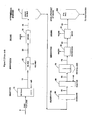
Figure 2 is an illustration of a flow diagram showing a prior art system for the production of terephthalic acid (with the p-xylene feedstock) or isophthalic acid (if p-xylene feedstock were substituted by m-xylene feedstock). -
Figure 3 is an illustration of an alternate embodiment of a system of the present invention. -
Figure 4 is an illustration of an alternate embodiment of a system of the present invention. - Exemplary, non-limiting embodiments and/or disclosures of process for the production of isophthalic acid and purified terephthalic acid include, but are not limited to, 7,285,684; 7,271,286; 6,562,997; 6,187,569; 6,461,840; 5,739,384; 5,068,406; 4,978,741; 4,855,492; and, 4,046,782.
- As used herein, a "fluid" is a continuous, amorphous substance whose molecules move freely past one another and that has the tendency to assume the shape of its container, for example, a liquid or a gas.
- As used herein, "membrane apparatus" means and refers to flat sheet membranes, spiral wound flat sheet membranes, tubesheets, tubular tube membranes, hollow fiber membranes, and/or other membranes commonly used in industry.
- As used herein, the term "mixed xylene" or "mixed xylenes" means and refers to an aromatic stream of hydrocarbons comprising 20 to 80 wt % meta-xylene, 10 to 60 wt % para-xylene, optionally 10 to 60 wt % ortho-xylene, and optionally 0.1 to 30 wt % ethylbenzene.
- Typically, various processes for producing terephthalic acid or isophthalic acid singularly are capable of being the same, or highly related, and can be accomplished with a system as is described in
Figure 2 . Generally, the starting feedstock, after conversion, of para-xylene will yield terephthalic acid and the starting feed stock of meta-xylene will yield isophthalic acid. - In the embodiment of a prior art process or system for the production of terephthalic acid or isophthalic acid illustrated in
Figure 2 , axylene stream 5 is fed to anoxidizer 10. An oxygenated gas, typically air or pure oxygen, is fed intooxidizer 10 with a catalyst and solvent system.Stream 15 removed fromoxidizer 10, an acid form ofstream 5, is then separated, such as by afilter 20, wherein the catalysts and/or solvent can be recycled or removed/purged. - After separation,
stream 35, comprising a crude acid of the xylene ofstream 5, is fed to a dissolver, typically containing water or other solvent at an elevated temperature to aid dissolution. Optionally,stream 35 is capable of being stored in asilo 40 until needed for use or for other reactions as may be desired. Common products at this stage are either crude terephthalic acid (CTA) or crude isophthalic acid (C-IPA). -
Stream 55 is then fed to ahydrogenation reactor system 60 to aid in removal of impurities fromstream 55. Typically, impurities present instream 55 react with the hydrogen and the impurity products formed are capable of being separated from the acid, such as by filter, sieve, centrifugation, cyclone separators and/or the like. -
Stream 65 withdrawn fromsystem 60 is then cooled and crystallized, such as in acrystallization system 70. Impurities are capable of being removed through at least oneseparation system 80.Separation system 80, if present, is capable of containing a variety of centrifuges, wash systems filters and or the like. Theresulting product stream 95 is then dried in adryer 90. Optionally, the contents ofproduct stream 95 can be stored in aproduct silo 100. Common products at this stage are either purified terephthalic acid (PTA) or pure isophthalic acid (IPA). Heretofore, however, PTA and IPA have not been produced in a useable product stream together. - Accordingly, in general, various embodiments of the present invention comprise a process and/or system for converting a feed stream comprising at least meta-xylene, para-xylene, and ethylbenzene, and optionally ortho-xylene, into at least one product stream comprising isophthalic acid and terephthalic acid (IPA/TA), the process comprising the steps of:
- a. removing ethylbenzene from the feed stream to produce an ethylbenzene depleted feed stream;
- b. removing ortho-xylene from the ethylbenzene depleted feed stream to produce an ortho-xylene depleted feed stream;
- c. oxidizing the ortho-xylene depleted feed stream to produce the product stream, the product stream comprising IPA/TA in a proportion between 0.5% and 99.5% IPA and 0.5% and 99.5% TA.
- In an alternate embodiment, the product stream comprising IPA/TA is produced in a proportion between 0.2% and 10.0% IPA and 90% and 99.8% TA. In yet an alternate embodiment, the product stream comprising IPA/TA is produced in a proportion between 0.1% and 25.0% IPA and 75% and 99.9% TA. In an alternate embodiment, the product stream comprising IPA/TA is produced in a proportion between 0.1 % and 99.9% IPA and 1.0% and 99.9% TA. In general, an embodiment of a process of the present invention can be modified to produce IPA/TA in any desired proportion.
- In general, the feed stream comprises from 1 wt % to 40 wt % ethylbenzene, from 20 wt % to 80 wt % meta-xylene, from 5 wt % to 30 wt % ortho-xylene, and from 0.5 wt % to 40 wt % para-xylene. In an alternate, the hydrocarbon feed stream comprises from 1 wt % to 20 wt % ethylbenzene, from 50 wt % to 65 wt % meta-xylene, from 20 wt % to 30 wt % ortho-xylene, and from 0 5 wt % to 5 wt % para-xylene. In an alternate, the hydrocarbon feed stream comprises from 0.1 wt % to 50 wt % ethylbenzene, from 0.1 wt % to 99.9 wt % meta-xylene, from 0.1 wt % to 99.9 wt % ortho-xylene, and from 0.1 wt % to 99.9 wt % para-xylene. In alternate embodiment, the feed stream comprises a mixed xylene feed stream comprising 20% ethyl benzene, 20% ortho-xylene, 40% meta-xylene, and 20% para-xylene.
- The production of IPA and/or TA has many uses. A very popular use is the production of IPA and TA based polymers and resins. A very common example is the use of IPA and PTA based polymers to produce polyester bottles.
- Referring now to
Figure 1 , an embodiment of a base flow diagram depicting generalized process steps is disclosed. In general, various embodiments of the present invention, depending upon the feed stream conditions, comprise the steps of - obtaining a
stream 115 of a mixture ofxylenes 110, such as a mixed xylenes stream; - removing
ethyl benzene 120 from the stream of the mixture ofxylenes 115 to produce an ethylbenzene depletedstream 125; - removing ortho-
xylene 130 and heavier components from the mixture ofxylenes 115 to obtain a stream comprising meta-xylene andpara-xylene 135; - optionally adding excess para-xylene and/or meta-xylene (not shown);
- co-oxidizing 150 the stream comprising meta-xylene and
para-xylene 145 wherein the resulting stream comprises the acids of the meta-xylene and thepara-xylene 155; - separating/drying 160 the resulting
stream 155; - optionally purifying 170 the resulting
stream 165 to produce aproduct stream 172 comprising isophthalic acid and terephthalic acid (IPA/TA); - optionally dissolving 180
stream 175 wherein IPA and TA are placed in solution; - optionally removing 190
stream 185 to produce astream 192 comprising TA and/or astream 195 comprising IPA. - Various other operational arrangements exist and would be understood by one of ordinary skill in the art, such as, but not limited to arranging the ortho-xylene removal zone before the ethyl benzene removal zone, or, using a single zone for the removal of ortho-xylene and ethyl benzene.
- Prior to oxidizing the feed stream comprising para-xylene and meta-xylene, various embodiments of the present invention contemplate adjusting the proportion of IP/TA by adding excess para-xylene or excess meta-xylene to the ortho-benzene depleted feed stream. The excess para-xylene and/or meta-xylene will enable the process to be adjusted and result in the production of more of either IPA or TA after oxidation, thereby enabling the ratios to be adjusted as required by a polymer producer.
- Generally, any solvent will work with various embodiments of the present invention, as would be appreciated by one of ordinary skill in the art. A non-exclusive list of solvents for use in oxidation include acetic acid, water, other acids. Likewise, generally, all catalysts useful for oxidation are capable of use with various embodiments of the present invention. A non-exclusive list of catalysts include cobalt, manganese, bromine, fluorine.
- After oxidation, the meta-xylene and para-xylene stream will contain catalyst and solvent that must be removed, such as by a filter and a dryer. The catalyst is separated from the product stream and can be recycled or discarded. The solvent collected can be recycled or passed off as waste. Various dryers and/or filters are capable of performing the separating and/or drying. At this point, the product stream comprises a crude, or not purified, product stream comprising C-TA and C-IPA.
- The C-TA and C-IPA can be further processed to produce a product stream comprising purified TA and purified IPA. In an embodiment, the crude IPA/TA is re-dissolved in a solvent, separated and/or dried to produce a purified stream comprising IPA/TA or pure IPA/PTA. In further embodiments, the purified IPA and PTA can be separated, if desired, into separate products.
- In general, any aromatic C8 mixture containing ethylbenzene and a xylene may be used as feed to the process of this invention. In general, the feed stream comprises from 1 wt % to 25 wt % ethylbenzene, from 20 wt % to 80 wt % meta-xylene, from 5 wt % to 30 wt % ortho-xylene, and from 0.5 wt % to 20 wt % para-xylene. In an alternate, the hydrocarbon feed stream comprises from 1 wt % to 20 wt % ethylbenzene, from 50 wt % to 65 wt % meta-xylene, from 20 wt % to 30 wt % ortho-xylene, and from 0 5 wt % to 5 wt % para-xylene. In alternate embodiment, the feed stream comprises a mixed xylene feed stream comprising 20% ethyl benzene, 20% ortho-xylene, 40% meta-xylene, and 20% para-xylene.
- Now referring to
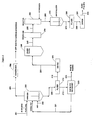
Figure 3 , an embodiment of a system for performing a process of the present invention is disclosed. In general, afeed stream 201 comprising a feed of meta-xylene and para-xylene is fed into anoxidizer 200. In this exemplary embodiment, it is contemplated that ethylbenzene plus toluene, and heavier components such as ortho-xylene have already been removed and/or minimized.Oxidizer 200 contains at least one of a solvent and a catalyst with an oxygenated gas or air being fed in asstream 202. The feed remains inoxidizer 200 for a period of time sufficient to effect oxidation of the xylenes to the respective acidic form, i.e., the para-xylene to TA and meta-xylene to IPA. - An overhead or off gas from an upper portion of
oxidizer 200 is capable of being removed asstream 202 wherein the off gas can be treated such as through acondenser 208 and/or other unit such that the release of off gas, other than through an environmentally controlled manner, is reduced or eliminated. - After oxidizing, a
stream 205 comprising oxidizedfeed stream 201, catalyst, and solvent is removed asstream 205. A separation apparatus, such asfilter 210, is used to remove catalyst and/or solvent fromstream 205 resulting in astream 215. Recovered catalysts is collected in arecovery unit 220 and reprocessed instream 221 intooxidizer 200. -
Stream 215 is then dried indryer 230 to eliminate residual moisture and/or solvent. Dried crude TA and IPA (crude product) is then withdrawn asstream 235 and passed into astorage tank 240. - When a purified TA and IPA is desired, crude product is withdrawn as
stream 245 and fed to dissolver 250 which may use various solvents, heat, and/or pressure to effect dissolution of the crude product, as is common in the art. - The crude acid is fed as
stream 255 to ahydrogenation reactor 260, where the impurities are reacted with hydrogen and the products formed are able to be separated from the acid. The resultingstream 265 is then crystallized in a series ofcrystallizers 270 and then fed asstream 275 to aseparation device 280. Astream 285 is then dried indryer 290 wherein a mixture of Pure Terephthalic and Isophthalic acid is withdrawn as astream 295. - A mixed xylene feed stream comprising 20% ethyl benzene, 20% ortho-xylene, 40% meta-xylene, and 20% para-xylene, after conversion according to a process of the present invention, has been projected to produce Isophthalic acid and Terephthalic in a ratio of approximately 2:1. In various other embodiments, the xylene feed stream is in a ratio of 0.1 to 10.0: 0.5 to 10.0. In an alternate embodiment, , the xylene feed stream is in a ratio of 1.0 to 5.0: 1.0 to 5.0.
- A process for removing a mixture of crude TA and IPA is illustrated in
Figure 4 . Generally, storage tank or silo 300 containing a mixture of CTA and C-IPA is fed asstream 305 to adissolver 310 which contains acids and/or other solvents capable of dissolving CTA and C-IPA.Stream 315 withdrawn from the dissolver is fed toremoval zone 320 where the material is selectively crystallized, filtered, centrifuged, and/or the like, wherein CTA is separated out instream 325 as CTA which can be dried in adryer 340 and produced as aproduct 350 or be subject to further purification. -
Stream 322 comprises a C-IPA and solvent. Asolvent displacement system 360, such as acolumn 370, is used to aid in removing the solvent from the C-IPA.Stream 372 comprising recovered solvent is fed back intodissolver 310 and a C-IPA product 380 is produced which may be subject to further purification. - In accordance with the present invention, the above described feedstock may be contacted with the catalyst system under suitable conversion conditions to effect hydrogenation. Examples of these conversion conditions include a temperature of from about 200°C. to about 550°C., a pressure of from 0 pascal (0 psi) to about 6894757.28 pascal (1000 psi), a WHSV of between about 0.1 hr-1 and about 200-1, and an H2/HC molar ratio of between about 0.2 and about 10. An alternative to these conversion conditions may include a temperature of from about 325°C. to about 475°C., a pressure of from about 344737.86 pascal (50 psi) to about 2757902.91 pascal (400 psi), a WHSV of between about 3 hr-1 and about 50 hr-1, and a H2 /HC molar ratio of between about 1 and about 5. The WHSV is based on the weight of catalyst composition, i.e., the total weight of active catalyst and, if used, a binder.
- In various embodiments, the oxidation of the xylenes to CTA and C-IPA takes place in a agitated reactor in which air is injected through nozzles. A mixture of xylenes, solvent such as acetic acid, and catalyst is fed to the reactor. The air feed rate is controlled according to the O2 content in the reactor off-gas which is monitored and recorded by dedicated process gas analyzers. The reaction temperature is about 200°C and the pressure is about 1.6 MPa. Heat generated by the oxidation reactor is removed by the vaporization of solvent and reaction water.
- The form and the particle size of the catalyst are not critical to the present invention and may vary depending, for example, on the type of reaction system employed. Non-limiting examples of the shapes of the catalyst in the present invention include balls, pebbles, spheres, extrudates, channeled monoliths, honeycombed monoliths, microspheres, pellets, or structural shapes, such as lobes, trilobes, quadralobes, pills, cakes, honeycombs, powders, granules, and the like, formed using conventional methods, such as extrusion or spray drying.
- In general, the catalyst may be soluble in the reaction medium comprising solvent and the aromatic carboxylic acid precursor(s) or, alternatively, a heterogeneous catalyst may be used. The catalyst, whether homogeneous or heterogeneous, typically comprises one or more heavy metal compounds, e.g. cobalt and/or manganese compounds, and may optionally include a hydrogenation promoter. In an embodiment, the catalyst is palladium.
- Where the catalyst is in heterogeneous form, it may be suitably located within the reaction zone so as to secure contact between the continuously flowing reaction medium and the catalyst. In this event, the catalyst may be suitably supported and/or constrained within the reaction zone to secure such contact without unduly constricting the flow cross-section. For instance, the heterogeneous catalyst may be coated on or otherwise applied to, or embodied in, static elements (e.g. elements forming an openwork structure) positioned of within the reaction zone so that the reaction medium flows over the same. Such static elements may additionally serve to enhance mixing of the reactants as they pass through the reaction zone. Alternatively the catalyst may be in the form of mobile pellets, particles, finely divided form, metal sponge form or the like with means being provided if necessary to confine the same to the reaction zone so that, in operation, the catalyst pellets etc become suspended or immersed in the reaction medium flowing through the reaction zone. The use of a heterogeneous catalyst in any of these ways confers the advantage of being able to confine the catalysis effect to a well-defined zone so that, once the reaction medium has traversed the zone, further hydrogenation takes place at a reduced rate or may be significantly suppressed.
- A support for the hydrogenation catalyst can be less catalytically active or even inert to the hydrogenation reaction. The support may be porous and typically has a surface area, including the area of the pores on the surface, of at least 15 m2/gm to 500 m2/gm, e.g. from 50 m2/gm to 200 m2/gm, with a surface area of about 80 m2/gm to about 150 m2/gm being preferred. The catalyst support materials should be substantially corrosion resistant and substantially oxidation resistant under the conditions prevailing. The support component of the oxidation catalyst may be pure or a composite of materials, the latter being employed for example to impart desired chemical or physical characteristics to the catalyst. In an embodiment, the catalyst support material comprises zirconium dioxide. In an alternate embodiment, the support is carbon. In general, any catalyst will function with various embodiments of the present invention.
Claims (7)
- A process for producing a product stream comprising isophthalic acid and terephthalic acid (IPA/TA) from a feed stream consisting of ortho-xylene, meta-xylene, para-xylene, and ethylbenzene, said process having the steps a - g in the indicated order:a. removing ethylbenzene from said feed stream to produce an ethylbenzene depleted feed stream;b. removing ortho-xylene from said ethylbenzene depleted feed stream to produce an ortho-xylene depleted feed stream containing meta-xylene and para-xylene;c. oxidising said ortho-xylene depleted feed stream to produce a product stream, said product stream comprising IPA/TA in a proportion between 0.5% and 99.5% IPA and 0.5% and 99.5% TA;d. drying said product stream in a dryer to remove residual solvent and water;e. removing a substantially purified IPA/TA product stream;f. dissolving said product stream; andg. separating said IPA and said TA from said dissolved product stream.
- The process of claim 1, wherein one of either para-xylene or meta-xylene is added to said ethylbenzene depleted and ortho-xylene depleted feed stream of step (b).
- The process of claim 1, wherein said step of removing ethylbenzene from said feed stream is performed using selective adsorption onto a molecular sieve type of media.
- The process of claim 1, wherein said feed stream comprises a mixed xylene feed stream comprising 20% ethyl benzene, 20% ortho-xylene, 40% meta-xylene, and 20% para-xylene.
- The process of claim 4, wherein said feed stream comes from at least one of a catalytic reforming unit or process, a steam cracking unit or process, a coking unit or process, a pyrolysis oil unit or process, an aromatics alkylation unit or process, or transalkylation.
- The process of claim 1, wherein said produce stream comprises IPA/TA in a proportion of 2.0% IPA and 98% TA.
- The process of claim 1, wherein said ethylbenzene is present in said feed stream in an amount of 1 wt% to 25 wt%, wherein said meta-xylene is present in said feed stream in an amount of 20 wt % to 80 wt %, wherein said ortho-xylene is present in said feed stream in an amount of 5 wt % to 30 wt %, and wherein said para-xylene is present in said feed stream in an amount of 0.5 wt % to 20 wt %.
Applications Claiming Priority (2)
| Application Number | Priority Date | Filing Date | Title |
|---|---|---|---|
| US3761208P | 2008-03-18 | 2008-03-18 | |
| PCT/US2009/037514 WO2009117487A2 (en) | 2008-03-18 | 2009-03-18 | Improved systems and processes for the production of isophthalic acid and terephthalic acid |
Publications (3)
| Publication Number | Publication Date |
|---|---|
| EP2276720A2 EP2276720A2 (en) | 2011-01-26 |
| EP2276720A4 EP2276720A4 (en) | 2012-05-02 |
| EP2276720B1 true EP2276720B1 (en) | 2015-07-29 |
Family
ID=41091516
Family Applications (1)
| Application Number | Title | Priority Date | Filing Date |
|---|---|---|---|
| EP09722918.1A Not-in-force EP2276720B1 (en) | 2008-03-18 | 2009-03-18 | Improved systems and processes for the production of isophthalic acid and terephthalic acid |
Country Status (10)
| Country | Link |
|---|---|
| US (1) | US9040746B2 (en) |
| EP (1) | EP2276720B1 (en) |
| JP (1) | JP5514186B2 (en) |
| KR (2) | KR20100132981A (en) |
| CN (2) | CN105732256B (en) |
| BR (1) | BRPI0909130A2 (en) |
| MX (1) | MX2010010112A (en) |
| PT (1) | PT2276720E (en) |
| RU (1) | RU2496764C2 (en) |
| WO (1) | WO2009117487A2 (en) |
Families Citing this family (11)
| Publication number | Priority date | Publication date | Assignee | Title |
|---|---|---|---|---|
| RU2010152022A (en) * | 2008-05-23 | 2012-06-27 | ДжиТиСи ТЕКНОЛОДЖИ ЭлПи (US) | CATALYTIC SYSTEMS FOR ACID PRODUCTION |
| BR112014026053B1 (en) * | 2012-04-20 | 2021-06-29 | The Coca-Cola Company | BIO-FOR-XYLENE PREPARATION METHOD |
| CN106565457B (en) * | 2015-10-09 | 2020-09-08 | 中国石化仪征化纤有限责任公司 | Method for preparing two products of polymer-grade terephthalic acid and isophthalic acid by taking mixed aromatic hydrocarbon as raw material |
| CN106220489B (en) * | 2016-07-25 | 2018-12-18 | 浙江大学 | The method for producing M-phthalic acid as raw material using paraxylene raffinate |
| CN106167451B (en) * | 2016-07-25 | 2018-12-18 | 浙江大学 | The method of meta-xylene and ethylbenzene multistep cooxidation production aromatic carboxylic acids |
| CN108003006A (en) * | 2017-11-17 | 2018-05-08 | 杭州多向流化学科技有限公司 | A kind of method that terephthalic acid (TPA) and M-phthalic acid are produced using C8 aronmatic as raw material |
| CN108484888A (en) * | 2018-01-23 | 2018-09-04 | 浙江省现代纺织工业研究院 | A kind of preparation method of inorganic modified paraxylene |
| CN108359082A (en) * | 2018-01-23 | 2018-08-03 | 浙江省现代纺织工业研究院 | A kind of preparation method of composite modified paraxylene |
| CN108341939A (en) * | 2018-01-23 | 2018-07-31 | 浙江省现代纺织工业研究院 | A kind of preparation method of hydridization paraxylene |
| DE102020123772B4 (en) | 2020-09-11 | 2022-08-25 | Rittec Umwelttechnik Gmbh | Process for preparing a terephthalic acid mixture |
| WO2024030756A1 (en) * | 2022-08-03 | 2024-02-08 | Eastman Chemical Company | Naphtha production from recycled content pyrolysis oil as feedstock to fluidized catalytic cracker |
Family Cites Families (34)
| Publication number | Priority date | Publication date | Assignee | Title |
|---|---|---|---|---|
| GB748276A (en) * | 1953-02-11 | 1956-04-25 | Ici Ltd | Manufacture of iso-and tere-phthalic acids |
| GB787084A (en) * | 1954-05-03 | 1957-12-04 | California Research Corp | Isomerization of xylene |
| BE560192A (en) * | 1956-08-20 | |||
| US3683018A (en) * | 1969-05-26 | 1972-08-08 | Standard Oil Co | Integrated oxidation of isomeric xylene mixture to isomeric phthalic acid mixture and separation of mixture of isomeric phthalic acids into individual isomer products |
| JPS4919268B1 (en) * | 1970-04-30 | 1974-05-16 | ||
| SU485105A1 (en) * | 1973-07-23 | 1975-09-25 | Всесоюзный Научно-Исследовательский И Проектный Институт Мономеров | The method of obtaining a mixture of iso-and terephthalic acids |
| US3917734A (en) * | 1974-04-08 | 1975-11-04 | Universal Oil Prod Co | Process for the separation of ethylbenzene |
| US4046782A (en) | 1975-05-08 | 1977-09-06 | John Kollar | Process for the industrial production of ethylene oxide and aromatic acid |
| US3998901A (en) | 1975-07-14 | 1976-12-21 | Universal Oil Products Company | Separation of ethylbenzene with an adsorbent comprising sr and k exchanged x or y zeolite |
| US4021499A (en) | 1975-11-05 | 1977-05-03 | Uop Inc. | Process for separating ethylbenzene |
| US4185073A (en) * | 1976-07-26 | 1980-01-22 | Standard Oil Company (Indiana) | Apparatus for iso- or terephthalic acid production in and recovery from benzoic acid-water solvent system |
| US4108415A (en) | 1977-05-11 | 1978-08-22 | Guyray Industries, Inc. (Entire) | Rocker suspension system |
| US4313015A (en) * | 1980-02-07 | 1982-01-26 | Uop Inc. | Separation process |
| US4497972A (en) | 1983-10-11 | 1985-02-05 | Uop Inc. | Process for the separation of ethylbenzene |
| US4978741A (en) | 1988-01-29 | 1990-12-18 | Questra Chemicals Corp. | Method for preparing essentially haze-free isophthalic acid- and polymethylolalkanoic acid-containing resins |
| US4855492A (en) | 1988-05-27 | 1989-08-08 | Amoco Corporation | Process for production of aromatic polycarboxylic acids |
| US5068406A (en) | 1989-09-06 | 1991-11-26 | Amoco Corporation | Compartmented oxidation method |
| IT1262941B (en) * | 1992-06-15 | 1996-07-22 | Enichem Spa | PROCEDURE FOR THE SEPARATION OF MIXTURES OF AROMATIC HYDROCARBONS C8 |
| ES2104512B1 (en) | 1995-09-21 | 1998-07-01 | Interquisa | INDUSTRIAL PROCEDURE FOR THE MANUFACTURE OF AROMATIC CARBOXYL ACIDS. |
| KR19990031350A (en) * | 1997-10-10 | 1999-05-06 | 장용균 | Heat-adhesive polyester film and its manufacturing method |
| HUP0100656A3 (en) * | 1997-12-15 | 2002-03-28 | Shell Int Research | Method for produce aromatic carboxylic acids |
| JP4817496B2 (en) * | 1998-05-29 | 2011-11-16 | ジーティーシー テクノロジー エルピー | Process for producing purified terephthalic acid and isophthalic acid from mixed xylene |
| JP2000007588A (en) * | 1998-06-22 | 2000-01-11 | Teijin Ltd | Reaction mixture comprising para-xylene and meta-xylene and method for producing the same |
| US6187569B1 (en) | 1998-07-02 | 2001-02-13 | E. I. Du Pont De Nemours And Company | Microbial production of terephthalic acid and isophthalic acid |
| FR2782714B1 (en) | 1998-08-26 | 2000-09-29 | Inst Francais Du Petrole | CO-PRODUCTION PROCESS OF METAXYLENE AND PARAXYLENE |
| KR100549107B1 (en) * | 1999-04-28 | 2006-02-06 | 삼성토탈 주식회사 | Method of producing aromatic polycarboxylic acid |
| US6143926A (en) * | 1999-09-21 | 2000-11-07 | E. I. Du Pont De Nemours And Company | Process for producing pure terephthalic acid with improved recovery of precursors, solvent and methyl acetate |
| EP1257520A1 (en) | 2000-01-21 | 2002-11-20 | BP Corporation North America Inc. | Production of high purity aromatic carboxylic acid by oxidation in benzoic acid and water solvent |
| CN1229179C (en) | 2000-04-04 | 2005-11-30 | 大赛璐化学工业株式会社 | Method for separating imide compounds |
| FR2822820B1 (en) * | 2001-03-29 | 2003-05-30 | Inst Francais Du Petrole | PARAXYLENE AND METAXYLENE CO-PRODUCTION PROCESS COMPRISING TWO SEPARATION STEPS |
| KR100909752B1 (en) | 2002-03-07 | 2009-07-29 | 도레이 카부시키가이샤 | Polyester film and gas barrier polyester film |
| ITMI20021423A1 (en) | 2002-06-27 | 2003-12-29 | Eurotecnica Dev & Licensing S | PROCESS FOR THE SEPARATION OF THE WATER PRODUCED IN THE CATALYTIC OXIDATION OF AROMATIC HYDROCARBONS WITH POLYCARBOXY AROMATIC ACIDS |
| BRPI0506962A (en) | 2004-01-22 | 2007-06-26 | Univ Pittsburgh | composition and methods of production of aromatic carboxylic acids |
| CN102603593A (en) * | 2004-04-09 | 2012-07-25 | Gtc技术公司 | Purification of carboxylic acids by complexation with selective solvents |
-
2009
- 2009-03-18 EP EP09722918.1A patent/EP2276720B1/en not_active Not-in-force
- 2009-03-18 JP JP2011500923A patent/JP5514186B2/en not_active Expired - Fee Related
- 2009-03-18 KR KR1020107023063A patent/KR20100132981A/en not_active Ceased
- 2009-03-18 WO PCT/US2009/037514 patent/WO2009117487A2/en not_active Ceased
- 2009-03-18 BR BRPI0909130A patent/BRPI0909130A2/en not_active IP Right Cessation
- 2009-03-18 MX MX2010010112A patent/MX2010010112A/en active IP Right Grant
- 2009-03-18 RU RU2010142410/04A patent/RU2496764C2/en not_active IP Right Cessation
- 2009-03-18 CN CN201610121303.8A patent/CN105732256B/en active Active
- 2009-03-18 CN CN200980109527.5A patent/CN102015608A/en active Pending
- 2009-03-18 KR KR1020167017322A patent/KR101704370B1/en active Active
- 2009-03-18 PT PT97229181T patent/PT2276720E/en unknown
- 2009-03-18 US US12/933,413 patent/US9040746B2/en not_active Expired - Fee Related
Also Published As
| Publication number | Publication date |
|---|---|
| BRPI0909130A2 (en) | 2015-11-24 |
| CN105732256B (en) | 2019-06-28 |
| KR20100132981A (en) | 2010-12-20 |
| EP2276720A2 (en) | 2011-01-26 |
| CN102015608A (en) | 2011-04-13 |
| RU2010142410A (en) | 2012-04-27 |
| RU2496764C2 (en) | 2013-10-27 |
| KR20160081992A (en) | 2016-07-08 |
| KR101704370B1 (en) | 2017-02-07 |
| JP5514186B2 (en) | 2014-06-04 |
| US9040746B2 (en) | 2015-05-26 |
| JP2011517667A (en) | 2011-06-16 |
| MX2010010112A (en) | 2010-12-06 |
| WO2009117487A2 (en) | 2009-09-24 |
| EP2276720A4 (en) | 2012-05-02 |
| WO2009117487A3 (en) | 2009-12-03 |
| US20110057147A1 (en) | 2011-03-10 |
| PT2276720E (en) | 2015-10-15 |
| CN105732256A (en) | 2016-07-06 |
Similar Documents
| Publication | Publication Date | Title |
|---|---|---|
| US9040746B2 (en) | Systems and processes for the production of isophthalic acid and terephthalic acid | |
| KR101314005B1 (en) | Improved recovery of energy during the production of aromatic carboxylic acids | |
| JP6527523B2 (en) | Continuous process for producing aromatic carboxylic acids | |
| US7718836B2 (en) | Integrated process for the production of 2,6-dimethylnaphthalene | |
| KR20080103983A (en) | General purpose oxidation byproduct purge method | |
| JPH08119899A (en) | Method for producing aromatic carboxylic acids | |
| WO2009143531A2 (en) | Catalyst systems for the production of acids |
Legal Events
| Date | Code | Title | Description |
|---|---|---|---|
| PUAI | Public reference made under article 153(3) epc to a published international application that has entered the european phase |
Free format text: ORIGINAL CODE: 0009012 |
|
| 17P | Request for examination filed |
Effective date: 20101018 |
|
| AK | Designated contracting states |
Kind code of ref document: A2 Designated state(s): AT BE BG CH CY CZ DE DK EE ES FI FR GB GR HR HU IE IS IT LI LT LU LV MC MK MT NL NO PL PT RO SE SI SK TR |
|
| AX | Request for extension of the european patent |
Extension state: AL BA RS |
|
| RIN1 | Information on inventor provided before grant (corrected) |
Inventor name: WELLER, JOSEPH, P. Inventor name: GENTRY, JOSEPH, G. Inventor name: JIN, WEIHUA Inventor name: DING, ZHONG, YI Inventor name: BALL, GEORGE, A. |
|
| DAX | Request for extension of the european patent (deleted) | ||
| A4 | Supplementary search report drawn up and despatched |
Effective date: 20120329 |
|
| RIC1 | Information provided on ipc code assigned before grant |
Ipc: C07C 63/26 20060101ALI20120323BHEP Ipc: C07C 15/073 20060101ALI20120323BHEP Ipc: C07C 63/24 20060101ALI20120323BHEP Ipc: C07C 51/265 20060101AFI20120323BHEP Ipc: C07C 7/04 20060101ALI20120323BHEP Ipc: C07C 15/08 20060101ALI20120323BHEP Ipc: C07C 7/13 20060101ALI20120323BHEP Ipc: C08G 63/183 20060101ALI20120323BHEP |
|
| 17Q | First examination report despatched |
Effective date: 20121212 |
|
| GRAP | Despatch of communication of intention to grant a patent |
Free format text: ORIGINAL CODE: EPIDOSNIGR1 |
|
| RIC1 | Information provided on ipc code assigned before grant |
Ipc: C07C 15/073 20060101ALI20150116BHEP Ipc: C08G 63/183 20060101ALI20150116BHEP Ipc: C07C 15/08 20060101ALI20150116BHEP Ipc: C07C 7/13 20060101ALI20150116BHEP Ipc: C07C 63/24 20060101ALI20150116BHEP Ipc: C07C 63/26 20060101ALI20150116BHEP Ipc: C07C 51/265 20060101AFI20150116BHEP Ipc: C07C 7/04 20060101ALI20150116BHEP Ipc: C07C 7/00 20060101ALI20150116BHEP |
|
| INTG | Intention to grant announced |
Effective date: 20150211 |
|
| GRAS | Grant fee paid |
Free format text: ORIGINAL CODE: EPIDOSNIGR3 |
|
| GRAA | (expected) grant |
Free format text: ORIGINAL CODE: 0009210 |
|
| AK | Designated contracting states |
Kind code of ref document: B1 Designated state(s): AT BE BG CH CY CZ DE DK EE ES FI FR GB GR HR HU IE IS IT LI LT LU LV MC MK MT NL NO PL PT RO SE SI SK TR |
|
| REG | Reference to a national code |
Ref country code: GB Ref legal event code: FG4D |
|
| REG | Reference to a national code |
Ref country code: CH Ref legal event code: EP |
|
| REG | Reference to a national code |
Ref country code: AT Ref legal event code: REF Ref document number: 739136 Country of ref document: AT Kind code of ref document: T Effective date: 20150815 |
|
| REG | Reference to a national code |
Ref country code: IE Ref legal event code: FG4D |
|
| REG | Reference to a national code |
Ref country code: DE Ref legal event code: R096 Ref document number: 602009032493 Country of ref document: DE |
|
| REG | Reference to a national code |
Ref country code: PT Ref legal event code: SC4A Free format text: AVAILABILITY OF NATIONAL TRANSLATION Effective date: 20150916 |
|
| REG | Reference to a national code |
Ref country code: AT Ref legal event code: MK05 Ref document number: 739136 Country of ref document: AT Kind code of ref document: T Effective date: 20150729 |
|
| REG | Reference to a national code |
Ref country code: LT Ref legal event code: MG4D |
|
| REG | Reference to a national code |
Ref country code: NL Ref legal event code: MP Effective date: 20150729 |
|
| PG25 | Lapsed in a contracting state [announced via postgrant information from national office to epo] |
Ref country code: GR Free format text: LAPSE BECAUSE OF FAILURE TO SUBMIT A TRANSLATION OF THE DESCRIPTION OR TO PAY THE FEE WITHIN THE PRESCRIBED TIME-LIMIT Effective date: 20151030 Ref country code: LV Free format text: LAPSE BECAUSE OF FAILURE TO SUBMIT A TRANSLATION OF THE DESCRIPTION OR TO PAY THE FEE WITHIN THE PRESCRIBED TIME-LIMIT Effective date: 20150729 Ref country code: FI Free format text: LAPSE BECAUSE OF FAILURE TO SUBMIT A TRANSLATION OF THE DESCRIPTION OR TO PAY THE FEE WITHIN THE PRESCRIBED TIME-LIMIT Effective date: 20150729 Ref country code: NO Free format text: LAPSE BECAUSE OF FAILURE TO SUBMIT A TRANSLATION OF THE DESCRIPTION OR TO PAY THE FEE WITHIN THE PRESCRIBED TIME-LIMIT Effective date: 20151029 Ref country code: LT Free format text: LAPSE BECAUSE OF FAILURE TO SUBMIT A TRANSLATION OF THE DESCRIPTION OR TO PAY THE FEE WITHIN THE PRESCRIBED TIME-LIMIT Effective date: 20150729 |
|
| PG25 | Lapsed in a contracting state [announced via postgrant information from national office to epo] |
Ref country code: PL Free format text: LAPSE BECAUSE OF FAILURE TO SUBMIT A TRANSLATION OF THE DESCRIPTION OR TO PAY THE FEE WITHIN THE PRESCRIBED TIME-LIMIT Effective date: 20150729 Ref country code: AT Free format text: LAPSE BECAUSE OF FAILURE TO SUBMIT A TRANSLATION OF THE DESCRIPTION OR TO PAY THE FEE WITHIN THE PRESCRIBED TIME-LIMIT Effective date: 20150729 Ref country code: ES Free format text: LAPSE BECAUSE OF FAILURE TO SUBMIT A TRANSLATION OF THE DESCRIPTION OR TO PAY THE FEE WITHIN THE PRESCRIBED TIME-LIMIT Effective date: 20150729 Ref country code: SE Free format text: LAPSE BECAUSE OF FAILURE TO SUBMIT A TRANSLATION OF THE DESCRIPTION OR TO PAY THE FEE WITHIN THE PRESCRIBED TIME-LIMIT Effective date: 20150729 Ref country code: HR Free format text: LAPSE BECAUSE OF FAILURE TO SUBMIT A TRANSLATION OF THE DESCRIPTION OR TO PAY THE FEE WITHIN THE PRESCRIBED TIME-LIMIT Effective date: 20150729 Ref country code: IS Free format text: LAPSE BECAUSE OF FAILURE TO SUBMIT A TRANSLATION OF THE DESCRIPTION OR TO PAY THE FEE WITHIN THE PRESCRIBED TIME-LIMIT Effective date: 20151129 |
|
| PG25 | Lapsed in a contracting state [announced via postgrant information from national office to epo] |
Ref country code: NL Free format text: LAPSE BECAUSE OF FAILURE TO SUBMIT A TRANSLATION OF THE DESCRIPTION OR TO PAY THE FEE WITHIN THE PRESCRIBED TIME-LIMIT Effective date: 20150729 |
|
| PG25 | Lapsed in a contracting state [announced via postgrant information from national office to epo] |
Ref country code: CZ Free format text: LAPSE BECAUSE OF FAILURE TO SUBMIT A TRANSLATION OF THE DESCRIPTION OR TO PAY THE FEE WITHIN THE PRESCRIBED TIME-LIMIT Effective date: 20150729 Ref country code: DK Free format text: LAPSE BECAUSE OF FAILURE TO SUBMIT A TRANSLATION OF THE DESCRIPTION OR TO PAY THE FEE WITHIN THE PRESCRIBED TIME-LIMIT Effective date: 20150729 Ref country code: EE Free format text: LAPSE BECAUSE OF FAILURE TO SUBMIT A TRANSLATION OF THE DESCRIPTION OR TO PAY THE FEE WITHIN THE PRESCRIBED TIME-LIMIT Effective date: 20150729 Ref country code: IT Free format text: LAPSE BECAUSE OF FAILURE TO SUBMIT A TRANSLATION OF THE DESCRIPTION OR TO PAY THE FEE WITHIN THE PRESCRIBED TIME-LIMIT Effective date: 20150729 Ref country code: SK Free format text: LAPSE BECAUSE OF FAILURE TO SUBMIT A TRANSLATION OF THE DESCRIPTION OR TO PAY THE FEE WITHIN THE PRESCRIBED TIME-LIMIT Effective date: 20150729 |
|
| REG | Reference to a national code |
Ref country code: DE Ref legal event code: R097 Ref document number: 602009032493 Country of ref document: DE |
|
| PG25 | Lapsed in a contracting state [announced via postgrant information from national office to epo] |
Ref country code: RO Free format text: LAPSE BECAUSE OF FAILURE TO SUBMIT A TRANSLATION OF THE DESCRIPTION OR TO PAY THE FEE WITHIN THE PRESCRIBED TIME-LIMIT Effective date: 20150729 |
|
| PLBE | No opposition filed within time limit |
Free format text: ORIGINAL CODE: 0009261 |
|
| STAA | Information on the status of an ep patent application or granted ep patent |
Free format text: STATUS: NO OPPOSITION FILED WITHIN TIME LIMIT |
|
| 26N | No opposition filed |
Effective date: 20160502 |
|
| PG25 | Lapsed in a contracting state [announced via postgrant information from national office to epo] |
Ref country code: SI Free format text: LAPSE BECAUSE OF FAILURE TO SUBMIT A TRANSLATION OF THE DESCRIPTION OR TO PAY THE FEE WITHIN THE PRESCRIBED TIME-LIMIT Effective date: 20150729 Ref country code: BE Free format text: LAPSE BECAUSE OF NON-PAYMENT OF DUE FEES Effective date: 20160331 |
|
| REG | Reference to a national code |
Ref country code: DE Ref legal event code: R119 Ref document number: 602009032493 Country of ref document: DE |
|
| PG25 | Lapsed in a contracting state [announced via postgrant information from national office to epo] |
Ref country code: LU Free format text: LAPSE BECAUSE OF FAILURE TO SUBMIT A TRANSLATION OF THE DESCRIPTION OR TO PAY THE FEE WITHIN THE PRESCRIBED TIME-LIMIT Effective date: 20160318 Ref country code: MC Free format text: LAPSE BECAUSE OF FAILURE TO SUBMIT A TRANSLATION OF THE DESCRIPTION OR TO PAY THE FEE WITHIN THE PRESCRIBED TIME-LIMIT Effective date: 20150729 |
|
| REG | Reference to a national code |
Ref country code: CH Ref legal event code: PL |
|
| GBPC | Gb: european patent ceased through non-payment of renewal fee |
Effective date: 20160318 |
|
| REG | Reference to a national code |
Ref country code: IE Ref legal event code: MM4A |
|
| PG25 | Lapsed in a contracting state [announced via postgrant information from national office to epo] |
Ref country code: BE Free format text: LAPSE BECAUSE OF FAILURE TO SUBMIT A TRANSLATION OF THE DESCRIPTION OR TO PAY THE FEE WITHIN THE PRESCRIBED TIME-LIMIT Effective date: 20150729 |
|
| REG | Reference to a national code |
Ref country code: FR Ref legal event code: ST Effective date: 20161130 |
|
| PG25 | Lapsed in a contracting state [announced via postgrant information from national office to epo] |
Ref country code: CH Free format text: LAPSE BECAUSE OF NON-PAYMENT OF DUE FEES Effective date: 20160331 Ref country code: GB Free format text: LAPSE BECAUSE OF NON-PAYMENT OF DUE FEES Effective date: 20160318 Ref country code: LI Free format text: LAPSE BECAUSE OF NON-PAYMENT OF DUE FEES Effective date: 20160331 Ref country code: IE Free format text: LAPSE BECAUSE OF NON-PAYMENT OF DUE FEES Effective date: 20160318 Ref country code: DE Free format text: LAPSE BECAUSE OF NON-PAYMENT OF DUE FEES Effective date: 20161001 Ref country code: FR Free format text: LAPSE BECAUSE OF NON-PAYMENT OF DUE FEES Effective date: 20160331 |
|
| PG25 | Lapsed in a contracting state [announced via postgrant information from national office to epo] |
Ref country code: MT Free format text: LAPSE BECAUSE OF FAILURE TO SUBMIT A TRANSLATION OF THE DESCRIPTION OR TO PAY THE FEE WITHIN THE PRESCRIBED TIME-LIMIT Effective date: 20150729 |
|
| PG25 | Lapsed in a contracting state [announced via postgrant information from national office to epo] |
Ref country code: HU Free format text: LAPSE BECAUSE OF FAILURE TO SUBMIT A TRANSLATION OF THE DESCRIPTION OR TO PAY THE FEE WITHIN THE PRESCRIBED TIME-LIMIT; INVALID AB INITIO Effective date: 20090318 Ref country code: CY Free format text: LAPSE BECAUSE OF FAILURE TO SUBMIT A TRANSLATION OF THE DESCRIPTION OR TO PAY THE FEE WITHIN THE PRESCRIBED TIME-LIMIT Effective date: 20150729 |
|
| PG25 | Lapsed in a contracting state [announced via postgrant information from national office to epo] |
Ref country code: MT Free format text: LAPSE BECAUSE OF FAILURE TO SUBMIT A TRANSLATION OF THE DESCRIPTION OR TO PAY THE FEE WITHIN THE PRESCRIBED TIME-LIMIT Effective date: 20160331 Ref country code: MK Free format text: LAPSE BECAUSE OF FAILURE TO SUBMIT A TRANSLATION OF THE DESCRIPTION OR TO PAY THE FEE WITHIN THE PRESCRIBED TIME-LIMIT Effective date: 20150729 |
|
| PG25 | Lapsed in a contracting state [announced via postgrant information from national office to epo] |
Ref country code: BG Free format text: LAPSE BECAUSE OF FAILURE TO SUBMIT A TRANSLATION OF THE DESCRIPTION OR TO PAY THE FEE WITHIN THE PRESCRIBED TIME-LIMIT Effective date: 20150729 |
|
| PG25 | Lapsed in a contracting state [announced via postgrant information from national office to epo] |
Ref country code: PT Free format text: LAPSE BECAUSE OF NON-PAYMENT OF DUE FEES Effective date: 20161220 |
|
| PG25 | Lapsed in a contracting state [announced via postgrant information from national office to epo] |
Ref country code: TR Free format text: LAPSE BECAUSE OF NON-PAYMENT OF DUE FEES Effective date: 20160318 |