EP2275529A2 - Process for the preparation of aspartate and derived amino acids employing a microorganism with enhanced glyoxylate shunt - Google Patents
Process for the preparation of aspartate and derived amino acids employing a microorganism with enhanced glyoxylate shunt Download PDFInfo
- Publication number
- EP2275529A2 EP2275529A2 EP10183233A EP10183233A EP2275529A2 EP 2275529 A2 EP2275529 A2 EP 2275529A2 EP 10183233 A EP10183233 A EP 10183233A EP 10183233 A EP10183233 A EP 10183233A EP 2275529 A2 EP2275529 A2 EP 2275529A2
- Authority
- EP
- European Patent Office
- Prior art keywords
- aspartate
- met
- production
- glyoxylate
- icl
- Prior art date
- Legal status (The legal status is an assumption and is not a legal conclusion. Google has not performed a legal analysis and makes no representation as to the accuracy of the status listed.)
- Withdrawn
Links
- CKLJMWTZIZZHCS-REOHCLBHSA-N L-aspartic acid Chemical compound OC(=O)[C@@H](N)CC(O)=O CKLJMWTZIZZHCS-REOHCLBHSA-N 0.000 title claims abstract description 63
- 229940009098 aspartate Drugs 0.000 title claims abstract description 59
- HHLFWLYXYJOTON-UHFFFAOYSA-N glyoxylic acid Chemical compound OC(=O)C=O HHLFWLYXYJOTON-UHFFFAOYSA-N 0.000 title claims abstract description 38
- 238000000034 method Methods 0.000 title claims description 15
- 244000005700 microbiome Species 0.000 title claims description 15
- 238000002360 preparation method Methods 0.000 title claims description 5
- 229940024606 amino acid Drugs 0.000 title description 12
- 150000001413 amino acids Chemical class 0.000 title description 10
- 230000000694 effects Effects 0.000 claims abstract description 45
- 239000002207 metabolite Substances 0.000 claims abstract description 41
- 238000004519 manufacturing process Methods 0.000 claims abstract description 31
- 239000002243 precursor Substances 0.000 claims abstract description 8
- 230000003247 decreasing effect Effects 0.000 claims abstract description 7
- 101150067967 iclR gene Proteins 0.000 claims description 24
- 108090000623 proteins and genes Proteins 0.000 claims description 24
- 230000014509 gene expression Effects 0.000 claims description 13
- 108010075869 Isocitrate Dehydrogenase Proteins 0.000 claims description 10
- 102000012011 Isocitrate Dehydrogenase Human genes 0.000 claims description 10
- FFEARJCKVFRZRR-BYPYZUCNSA-N L-methionine Chemical compound CSCC[C@H](N)C(O)=O FFEARJCKVFRZRR-BYPYZUCNSA-N 0.000 claims description 10
- 229930182817 methionine Natural products 0.000 claims description 10
- 238000000855 fermentation Methods 0.000 claims description 9
- 230000004151 fermentation Effects 0.000 claims description 9
- 101150115959 fadR gene Proteins 0.000 claims description 8
- 239000000047 product Substances 0.000 claims description 8
- 239000002609 medium Substances 0.000 claims description 7
- 230000002238 attenuated effect Effects 0.000 claims description 5
- 239000001963 growth medium Substances 0.000 claims description 5
- 230000015572 biosynthetic process Effects 0.000 claims description 4
- 239000002028 Biomass Substances 0.000 claims description 3
- 239000000470 constituent Substances 0.000 claims description 3
- 238000012262 fermentative production Methods 0.000 claims description 3
- 238000002955 isolation Methods 0.000 claims description 3
- WPAMZTWLKIDIOP-UCORVYFPSA-N 2-keto-3-deoxy-L-galactonic acid Chemical compound OC[C@H](O)[C@@H](O)CC(=O)C(O)=O WPAMZTWLKIDIOP-UCORVYFPSA-N 0.000 claims description 2
- 241000894006 Bacteria Species 0.000 claims description 2
- 102000001390 Fructose-Bisphosphate Aldolase Human genes 0.000 claims description 2
- 108010068561 Fructose-Bisphosphate Aldolase Proteins 0.000 claims description 2
- 229910019142 PO4 Inorganic materials 0.000 claims description 2
- 239000007795 chemical reaction product Substances 0.000 claims description 2
- 239000010452 phosphate Substances 0.000 claims description 2
- 238000011084 recovery Methods 0.000 claims description 2
- 108010055693 tartronate-semialdehyde synthase Proteins 0.000 claims description 2
- 239000012190 activator Substances 0.000 claims 1
- 102000004190 Enzymes Human genes 0.000 abstract description 18
- 108090000790 Enzymes Proteins 0.000 abstract description 18
- 238000006243 chemical reaction Methods 0.000 abstract description 13
- 108091034117 Oligonucleotide Proteins 0.000 description 26
- JLCPHMBAVCMARE-UHFFFAOYSA-N [3-[[3-[[3-[[3-[[3-[[3-[[3-[[3-[[3-[[3-[[3-[[5-(2-amino-6-oxo-1H-purin-9-yl)-3-[[3-[[3-[[3-[[3-[[3-[[5-(2-amino-6-oxo-1H-purin-9-yl)-3-[[5-(2-amino-6-oxo-1H-purin-9-yl)-3-hydroxyoxolan-2-yl]methoxy-hydroxyphosphoryl]oxyoxolan-2-yl]methoxy-hydroxyphosphoryl]oxy-5-(5-methyl-2,4-dioxopyrimidin-1-yl)oxolan-2-yl]methoxy-hydroxyphosphoryl]oxy-5-(6-aminopurin-9-yl)oxolan-2-yl]methoxy-hydroxyphosphoryl]oxy-5-(6-aminopurin-9-yl)oxolan-2-yl]methoxy-hydroxyphosphoryl]oxy-5-(6-aminopurin-9-yl)oxolan-2-yl]methoxy-hydroxyphosphoryl]oxy-5-(6-aminopurin-9-yl)oxolan-2-yl]methoxy-hydroxyphosphoryl]oxyoxolan-2-yl]methoxy-hydroxyphosphoryl]oxy-5-(5-methyl-2,4-dioxopyrimidin-1-yl)oxolan-2-yl]methoxy-hydroxyphosphoryl]oxy-5-(4-amino-2-oxopyrimidin-1-yl)oxolan-2-yl]methoxy-hydroxyphosphoryl]oxy-5-(5-methyl-2,4-dioxopyrimidin-1-yl)oxolan-2-yl]methoxy-hydroxyphosphoryl]oxy-5-(5-methyl-2,4-dioxopyrimidin-1-yl)oxolan-2-yl]methoxy-hydroxyphosphoryl]oxy-5-(6-aminopurin-9-yl)oxolan-2-yl]methoxy-hydroxyphosphoryl]oxy-5-(6-aminopurin-9-yl)oxolan-2-yl]methoxy-hydroxyphosphoryl]oxy-5-(4-amino-2-oxopyrimidin-1-yl)oxolan-2-yl]methoxy-hydroxyphosphoryl]oxy-5-(4-amino-2-oxopyrimidin-1-yl)oxolan-2-yl]methoxy-hydroxyphosphoryl]oxy-5-(4-amino-2-oxopyrimidin-1-yl)oxolan-2-yl]methoxy-hydroxyphosphoryl]oxy-5-(6-aminopurin-9-yl)oxolan-2-yl]methoxy-hydroxyphosphoryl]oxy-5-(4-amino-2-oxopyrimidin-1-yl)oxolan-2-yl]methyl [5-(6-aminopurin-9-yl)-2-(hydroxymethyl)oxolan-3-yl] hydrogen phosphate Polymers Cc1cn(C2CC(OP(O)(=O)OCC3OC(CC3OP(O)(=O)OCC3OC(CC3O)n3cnc4c3nc(N)[nH]c4=O)n3cnc4c3nc(N)[nH]c4=O)C(COP(O)(=O)OC3CC(OC3COP(O)(=O)OC3CC(OC3COP(O)(=O)OC3CC(OC3COP(O)(=O)OC3CC(OC3COP(O)(=O)OC3CC(OC3COP(O)(=O)OC3CC(OC3COP(O)(=O)OC3CC(OC3COP(O)(=O)OC3CC(OC3COP(O)(=O)OC3CC(OC3COP(O)(=O)OC3CC(OC3COP(O)(=O)OC3CC(OC3COP(O)(=O)OC3CC(OC3COP(O)(=O)OC3CC(OC3COP(O)(=O)OC3CC(OC3COP(O)(=O)OC3CC(OC3COP(O)(=O)OC3CC(OC3COP(O)(=O)OC3CC(OC3CO)n3cnc4c(N)ncnc34)n3ccc(N)nc3=O)n3cnc4c(N)ncnc34)n3ccc(N)nc3=O)n3ccc(N)nc3=O)n3ccc(N)nc3=O)n3cnc4c(N)ncnc34)n3cnc4c(N)ncnc34)n3cc(C)c(=O)[nH]c3=O)n3cc(C)c(=O)[nH]c3=O)n3ccc(N)nc3=O)n3cc(C)c(=O)[nH]c3=O)n3cnc4c3nc(N)[nH]c4=O)n3cnc4c(N)ncnc34)n3cnc4c(N)ncnc34)n3cnc4c(N)ncnc34)n3cnc4c(N)ncnc34)O2)c(=O)[nH]c1=O JLCPHMBAVCMARE-UHFFFAOYSA-N 0.000 description 26
- 229930027917 kanamycin Natural products 0.000 description 25
- 229960000318 kanamycin Drugs 0.000 description 25
- SBUJHOSQTJFQJX-NOAMYHISSA-N kanamycin Chemical compound O[C@@H]1[C@@H](O)[C@H](O)[C@@H](CN)O[C@@H]1O[C@H]1[C@H](O)[C@@H](O[C@@H]2[C@@H]([C@@H](N)[C@H](O)[C@@H](CO)O2)O)[C@H](N)C[C@@H]1N SBUJHOSQTJFQJX-NOAMYHISSA-N 0.000 description 25
- 229930182823 kanamycin A Natural products 0.000 description 25
- 239000013612 plasmid Substances 0.000 description 20
- 238000012217 deletion Methods 0.000 description 18
- 230000037430 deletion Effects 0.000 description 18
- KHPXUQMNIQBQEV-UHFFFAOYSA-N oxaloacetic acid Chemical compound OC(=O)CC(=O)C(O)=O KHPXUQMNIQBQEV-UHFFFAOYSA-N 0.000 description 17
- 230000000717 retained effect Effects 0.000 description 17
- 108020003285 Isocitrate lyase Proteins 0.000 description 15
- 229960005091 chloramphenicol Drugs 0.000 description 15
- WIIZWVCIJKGZOK-RKDXNWHRSA-N chloramphenicol Chemical compound ClC(Cl)C(=O)N[C@H](CO)[C@H](O)C1=CC=C([N+]([O-])=O)C=C1 WIIZWVCIJKGZOK-RKDXNWHRSA-N 0.000 description 15
- 102100034229 Citramalyl-CoA lyase, mitochondrial Human genes 0.000 description 12
- 108020004687 Malate Synthase Proteins 0.000 description 12
- 230000004102 tricarboxylic acid cycle Effects 0.000 description 12
- ZSLZBFCDCINBPY-ZSJPKINUSA-N acetyl-CoA Chemical compound O[C@@H]1[C@H](OP(O)(O)=O)[C@@H](COP(O)(=O)OP(O)(=O)OCC(C)(C)[C@@H](O)C(=O)NCCC(=O)NCCSC(=O)C)O[C@H]1N1C2=NC=NC(N)=C2N=C1 ZSLZBFCDCINBPY-ZSJPKINUSA-N 0.000 description 10
- 235000001014 amino acid Nutrition 0.000 description 10
- WQZGKKKJIJFFOK-GASJEMHNSA-N Glucose Natural products OC[C@H]1OC(O)[C@H](O)[C@@H](O)[C@@H]1O WQZGKKKJIJFFOK-GASJEMHNSA-N 0.000 description 9
- 239000008103 glucose Substances 0.000 description 9
- 241001583810 Colibri Species 0.000 description 8
- 238000010222 PCR analysis Methods 0.000 description 8
- 230000003321 amplification Effects 0.000 description 8
- ODBLHEXUDAPZAU-UHFFFAOYSA-N isocitric acid Chemical compound OC(=O)C(O)C(C(O)=O)CC(O)=O ODBLHEXUDAPZAU-UHFFFAOYSA-N 0.000 description 8
- 239000006166 lysate Substances 0.000 description 8
- 238000003199 nucleic acid amplification method Methods 0.000 description 8
- DTBNBXWJWCWCIK-UHFFFAOYSA-K phosphonatoenolpyruvate Chemical compound [O-]C(=O)C(=C)OP([O-])([O-])=O DTBNBXWJWCWCIK-UHFFFAOYSA-K 0.000 description 7
- 241000588724 Escherichia coli Species 0.000 description 6
- 101150020692 Gipr gene Proteins 0.000 description 6
- 101100332755 Mus musculus Edar gene Proteins 0.000 description 6
- 101100332756 Oryzias latipes edar gene Proteins 0.000 description 6
- 108091000080 Phosphotransferase Proteins 0.000 description 6
- AYFVYJQAPQTCCC-UHFFFAOYSA-N Threonine Natural products CC(O)C(N)C(O)=O AYFVYJQAPQTCCC-UHFFFAOYSA-N 0.000 description 6
- 239000004473 Threonine Substances 0.000 description 6
- 101150118781 icd gene Proteins 0.000 description 6
- 102000020233 phosphotransferase Human genes 0.000 description 6
- 239000000758 substrate Substances 0.000 description 6
- KDXKERNSBIXSRK-YFKPBYRVSA-N L-lysine Chemical compound NCCCC[C@H](N)C(O)=O KDXKERNSBIXSRK-YFKPBYRVSA-N 0.000 description 5
- AYFVYJQAPQTCCC-GBXIJSLDSA-N L-threonine Chemical compound C[C@@H](O)[C@H](N)C(O)=O AYFVYJQAPQTCCC-GBXIJSLDSA-N 0.000 description 5
- KDXKERNSBIXSRK-UHFFFAOYSA-N Lysine Natural products NCCCCC(N)C(O)=O KDXKERNSBIXSRK-UHFFFAOYSA-N 0.000 description 5
- 239000004472 Lysine Substances 0.000 description 5
- 238000004520 electroporation Methods 0.000 description 5
- 238000003780 insertion Methods 0.000 description 5
- 230000037431 insertion Effects 0.000 description 5
- 229940049920 malate Drugs 0.000 description 5
- BJEPYKJPYRNKOW-UHFFFAOYSA-N malic acid Chemical compound OC(=O)C(O)CC(O)=O BJEPYKJPYRNKOW-UHFFFAOYSA-N 0.000 description 5
- 230000037361 pathway Effects 0.000 description 5
- 229930029653 phosphoenolpyruvate Natural products 0.000 description 5
- 101150014006 thrA gene Proteins 0.000 description 5
- 238000010361 transduction Methods 0.000 description 5
- 230000026683 transduction Effects 0.000 description 5
- HEDRZPFGACZZDS-UHFFFAOYSA-N Chloroform Chemical compound ClC(Cl)Cl HEDRZPFGACZZDS-UHFFFAOYSA-N 0.000 description 4
- CSNNHWWHGAXBCP-UHFFFAOYSA-L Magnesium sulfate Chemical compound [Mg+2].[O-][S+2]([O-])([O-])[O-] CSNNHWWHGAXBCP-UHFFFAOYSA-L 0.000 description 4
- 102000004160 Phosphoric Monoester Hydrolases Human genes 0.000 description 4
- 108090000608 Phosphoric Monoester Hydrolases Proteins 0.000 description 4
- 101150094017 aceA gene Proteins 0.000 description 4
- 101150036393 aceB gene Proteins 0.000 description 4
- 101150063051 hom gene Proteins 0.000 description 4
- 238000011534 incubation Methods 0.000 description 4
- 230000035772 mutation Effects 0.000 description 4
- 230000026731 phosphorylation Effects 0.000 description 4
- 238000006366 phosphorylation reaction Methods 0.000 description 4
- 235000018102 proteins Nutrition 0.000 description 4
- 102000004169 proteins and genes Human genes 0.000 description 4
- 230000001105 regulatory effect Effects 0.000 description 4
- KDYFGRWQOYBRFD-UHFFFAOYSA-L succinate(2-) Chemical compound [O-]C(=O)CCC([O-])=O KDYFGRWQOYBRFD-UHFFFAOYSA-L 0.000 description 4
- UKAUYVFTDYCKQA-UHFFFAOYSA-N -2-Amino-4-hydroxybutanoic acid Natural products OC(=O)C(N)CCO UKAUYVFTDYCKQA-UHFFFAOYSA-N 0.000 description 3
- 101100350224 Bacillus subtilis (strain 168) pdhB gene Proteins 0.000 description 3
- 101100236536 Corynebacterium glutamicum (strain ATCC 13032 / DSM 20300 / BCRC 11384 / JCM 1318 / LMG 3730 / NCIMB 10025) glcB gene Proteins 0.000 description 3
- PEDCQBHIVMGVHV-UHFFFAOYSA-N Glycerine Chemical compound OCC(O)CO PEDCQBHIVMGVHV-UHFFFAOYSA-N 0.000 description 3
- UKAUYVFTDYCKQA-VKHMYHEASA-N L-homoserine Chemical compound OC(=O)[C@@H](N)CCO UKAUYVFTDYCKQA-VKHMYHEASA-N 0.000 description 3
- AGPKZVBTJJNPAG-WHFBIAKZSA-N L-isoleucine Chemical compound CC[C@H](C)[C@H](N)C(O)=O AGPKZVBTJJNPAG-WHFBIAKZSA-N 0.000 description 3
- 101100406344 Pseudomonas aeruginosa (strain ATCC 15692 / DSM 22644 / CIP 104116 / JCM 14847 / LMG 12228 / 1C / PRS 101 / PAO1) aceF gene Proteins 0.000 description 3
- 108010053763 Pyruvate Carboxylase Proteins 0.000 description 3
- 238000013019 agitation Methods 0.000 description 3
- 238000010276 construction Methods 0.000 description 3
- 239000012634 fragment Substances 0.000 description 3
- RAXXELZNTBOGNW-UHFFFAOYSA-N imidazole Natural products C1=CNC=N1 RAXXELZNTBOGNW-UHFFFAOYSA-N 0.000 description 3
- 229960000310 isoleucine Drugs 0.000 description 3
- AGPKZVBTJJNPAG-UHFFFAOYSA-N isoleucine Natural products CCC(C)C(N)C(O)=O AGPKZVBTJJNPAG-UHFFFAOYSA-N 0.000 description 3
- 230000004048 modification Effects 0.000 description 3
- 238000012986 modification Methods 0.000 description 3
- QTBSBXVTEAMEQO-UHFFFAOYSA-M Acetate Chemical group CC([O-])=O QTBSBXVTEAMEQO-UHFFFAOYSA-M 0.000 description 2
- 108700028369 Alleles Proteins 0.000 description 2
- 108010070255 Aspartate-ammonia ligase Proteins 0.000 description 2
- 101100242035 Bacillus subtilis (strain 168) pdhA gene Proteins 0.000 description 2
- UXVMQQNJUSDDNG-UHFFFAOYSA-L Calcium chloride Chemical compound [Cl-].[Cl-].[Ca+2] UXVMQQNJUSDDNG-UHFFFAOYSA-L 0.000 description 2
- OKTJSMMVPCPJKN-UHFFFAOYSA-N Carbon Chemical compound [C] OKTJSMMVPCPJKN-UHFFFAOYSA-N 0.000 description 2
- KRKNYBCHXYNGOX-UHFFFAOYSA-K Citrate Chemical compound [O-]C(=O)CC(O)(CC([O-])=O)C([O-])=O KRKNYBCHXYNGOX-UHFFFAOYSA-K 0.000 description 2
- 101100182965 Escherichia coli (strain K12) maeA gene Proteins 0.000 description 2
- 241000702191 Escherichia virus P1 Species 0.000 description 2
- 101100123255 Komagataeibacter xylinus aceC gene Proteins 0.000 description 2
- TWRXJAOTZQYOKJ-UHFFFAOYSA-L Magnesium chloride Chemical compound [Mg+2].[Cl-].[Cl-] TWRXJAOTZQYOKJ-UHFFFAOYSA-L 0.000 description 2
- 101100134871 Pseudomonas aeruginosa (strain ATCC 15692 / DSM 22644 / CIP 104116 / JCM 14847 / LMG 12228 / 1C / PRS 101 / PAO1) aceE gene Proteins 0.000 description 2
- LCTONWCANYUPML-UHFFFAOYSA-M Pyruvate Chemical compound CC(=O)C([O-])=O LCTONWCANYUPML-UHFFFAOYSA-M 0.000 description 2
- 102100039895 Pyruvate carboxylase, mitochondrial Human genes 0.000 description 2
- 240000004808 Saccharomyces cerevisiae Species 0.000 description 2
- 101150001446 aceK gene Proteins 0.000 description 2
- 230000004913 activation Effects 0.000 description 2
- 101150070136 axeA gene Proteins 0.000 description 2
- 230000033228 biological regulation Effects 0.000 description 2
- 230000006696 biosynthetic metabolic pathway Effects 0.000 description 2
- 239000001110 calcium chloride Substances 0.000 description 2
- 229910001628 calcium chloride Inorganic materials 0.000 description 2
- 229910052799 carbon Inorganic materials 0.000 description 2
- 230000001413 cellular effect Effects 0.000 description 2
- 238000005119 centrifugation Methods 0.000 description 2
- 230000001351 cycling effect Effects 0.000 description 2
- 230000030609 dephosphorylation Effects 0.000 description 2
- 238000006209 dephosphorylation reaction Methods 0.000 description 2
- 238000004128 high performance liquid chromatography Methods 0.000 description 2
- 238000002744 homologous recombination Methods 0.000 description 2
- 230000006801 homologous recombination Effects 0.000 description 2
- 230000005764 inhibitory process Effects 0.000 description 2
- 238000011081 inoculation Methods 0.000 description 2
- 229910052943 magnesium sulfate Inorganic materials 0.000 description 2
- 239000008057 potassium phosphate buffer Substances 0.000 description 2
- 230000010076 replication Effects 0.000 description 2
- 239000006228 supernatant Substances 0.000 description 2
- 238000012546 transfer Methods 0.000 description 2
- 238000011144 upstream manufacturing Methods 0.000 description 2
- 238000003260 vortexing Methods 0.000 description 2
- 125000003088 (fluoren-9-ylmethoxy)carbonyl group Chemical group 0.000 description 1
- KPGXRSRHYNQIFN-UHFFFAOYSA-N 2-oxoglutaric acid Chemical compound OC(=O)CCC(=O)C(O)=O KPGXRSRHYNQIFN-UHFFFAOYSA-N 0.000 description 1
- OSJPPGNTCRNQQC-UWTATZPHSA-N 3-phospho-D-glyceric acid Chemical compound OC(=O)[C@H](O)COP(O)(O)=O OSJPPGNTCRNQQC-UWTATZPHSA-N 0.000 description 1
- 108010092060 Acetate kinase Proteins 0.000 description 1
- 102000005291 Adenylosuccinate synthase Human genes 0.000 description 1
- 108010056443 Adenylosuccinate synthase Proteins 0.000 description 1
- 102000053640 Argininosuccinate synthases Human genes 0.000 description 1
- 108700024106 Argininosuccinate synthases Proteins 0.000 description 1
- 108010005694 Aspartate 4-decarboxylase Proteins 0.000 description 1
- 102000004625 Aspartate Aminotransferases Human genes 0.000 description 1
- 108010003415 Aspartate Aminotransferases Proteins 0.000 description 1
- 102000030907 Aspartate Carbamoyltransferase Human genes 0.000 description 1
- 108700016171 Aspartate ammonia-lyases Proteins 0.000 description 1
- 108010055400 Aspartate kinase Proteins 0.000 description 1
- 101000742087 Bacillus subtilis (strain 168) ATP-dependent threonine adenylase Proteins 0.000 description 1
- 101100066244 Bacillus subtilis (strain 168) fadF gene Proteins 0.000 description 1
- 241000186031 Corynebacteriaceae Species 0.000 description 1
- 241000186216 Corynebacterium Species 0.000 description 1
- 108020004414 DNA Proteins 0.000 description 1
- 101100380328 Dictyostelium discoideum asns gene Proteins 0.000 description 1
- 101100410642 Dictyostelium discoideum purC/E gene Proteins 0.000 description 1
- 108091000126 Dihydroorotase Proteins 0.000 description 1
- KCXVZYZYPLLWCC-UHFFFAOYSA-N EDTA Chemical compound OC(=O)CN(CC(O)=O)CCN(CC(O)=O)CC(O)=O KCXVZYZYPLLWCC-UHFFFAOYSA-N 0.000 description 1
- 241000588921 Enterobacteriaceae Species 0.000 description 1
- 108010046276 FLP recombinase Proteins 0.000 description 1
- 101100028493 Haloferax volcanii (strain ATCC 29605 / DSM 3757 / JCM 8879 / NBRC 14742 / NCIMB 2012 / VKM B-1768 / DS2) pan2 gene Proteins 0.000 description 1
- 108010064711 Homoserine dehydrogenase Proteins 0.000 description 1
- WHUUTDBJXJRKMK-VKHMYHEASA-N L-glutamic acid Chemical compound OC(=O)[C@@H](N)CCC(O)=O WHUUTDBJXJRKMK-VKHMYHEASA-N 0.000 description 1
- 239000007993 MOPS buffer Substances 0.000 description 1
- OFOBLEOULBTSOW-UHFFFAOYSA-N Malonic acid Chemical compound OC(=O)CC(O)=O OFOBLEOULBTSOW-UHFFFAOYSA-N 0.000 description 1
- 241001465754 Metazoa Species 0.000 description 1
- GNISQJGXJIDKDJ-YFKPBYRVSA-N O-succinyl-L-homoserine Chemical compound OC(=O)[C@@H](N)CCOC(=O)CCC(O)=O GNISQJGXJIDKDJ-YFKPBYRVSA-N 0.000 description 1
- 102000004316 Oxidoreductases Human genes 0.000 description 1
- 108090000854 Oxidoreductases Proteins 0.000 description 1
- 108700023175 Phosphate acetyltransferases Proteins 0.000 description 1
- 102000045595 Phosphoprotein Phosphatases Human genes 0.000 description 1
- 108700019535 Phosphoprotein Phosphatases Proteins 0.000 description 1
- 101710104378 Putative malate oxidoreductase [NAD] Proteins 0.000 description 1
- 102000018120 Recombinases Human genes 0.000 description 1
- 108010091086 Recombinases Proteins 0.000 description 1
- 108700005075 Regulator Genes Proteins 0.000 description 1
- NAQGHJTUZRHGAC-ZZZDFHIKSA-N SAICAR Chemical compound NC1=C(C(=O)N[C@@H](CC(O)=O)C(O)=O)N=CN1[C@H]1[C@H](O)[C@H](O)[C@@H](COP(O)(O)=O)O1 NAQGHJTUZRHGAC-ZZZDFHIKSA-N 0.000 description 1
- 241000607142 Salmonella Species 0.000 description 1
- 101100066242 Salmonella typhimurium (strain LT2 / SGSC1412 / ATCC 700720) fadE gene Proteins 0.000 description 1
- 101100492609 Talaromyces wortmannii astC gene Proteins 0.000 description 1
- 241000623377 Terminalia elliptica Species 0.000 description 1
- 101000774739 Thermus thermophilus Aspartokinase Proteins 0.000 description 1
- 102000003929 Transaminases Human genes 0.000 description 1
- 108090000340 Transaminases Proteins 0.000 description 1
- 108091023040 Transcription factor Proteins 0.000 description 1
- 102000040945 Transcription factor Human genes 0.000 description 1
- 101100354953 Treponema denticola (strain ATCC 35405 / DSM 14222 / CIP 103919 / JCM 8153 / KCTC 15104) pyrBI gene Proteins 0.000 description 1
- 229930003779 Vitamin B12 Natural products 0.000 description 1
- 101150116772 aatA gene Proteins 0.000 description 1
- 238000002835 absorbance Methods 0.000 description 1
- LIPOUNRJVLNBCD-UHFFFAOYSA-N acetyl dihydrogen phosphate Chemical compound CC(=O)OP(O)(O)=O LIPOUNRJVLNBCD-UHFFFAOYSA-N 0.000 description 1
- -1 amino acid aspartate Chemical class 0.000 description 1
- 239000003242 anti bacterial agent Substances 0.000 description 1
- 229940088710 antibiotic agent Drugs 0.000 description 1
- 101150118463 argG gene Proteins 0.000 description 1
- 101150062095 asnA gene Proteins 0.000 description 1
- 101150057409 asnB gene Proteins 0.000 description 1
- 101150005925 aspC gene Proteins 0.000 description 1
- 230000009286 beneficial effect Effects 0.000 description 1
- 238000004364 calculation method Methods 0.000 description 1
- 230000006860 carbon metabolism Effects 0.000 description 1
- 230000021523 carboxylation Effects 0.000 description 1
- 238000006473 carboxylation reaction Methods 0.000 description 1
- FDJOLVPMNUYSCM-WZHZPDAFSA-L cobalt(3+);[(2r,3s,4r,5s)-5-(5,6-dimethylbenzimidazol-1-yl)-4-hydroxy-2-(hydroxymethyl)oxolan-3-yl] [(2r)-1-[3-[(1r,2r,3r,4z,7s,9z,12s,13s,14z,17s,18s,19r)-2,13,18-tris(2-amino-2-oxoethyl)-7,12,17-tris(3-amino-3-oxopropyl)-3,5,8,8,13,15,18,19-octamethyl-2 Chemical compound [Co+3].N#[C-].N([C@@H]([C@]1(C)[N-]\C([C@H]([C@@]1(CC(N)=O)C)CCC(N)=O)=C(\C)/C1=N/C([C@H]([C@@]1(CC(N)=O)C)CCC(N)=O)=C\C1=N\C([C@H](C1(C)C)CCC(N)=O)=C/1C)[C@@H]2CC(N)=O)=C\1[C@]2(C)CCC(=O)NC[C@@H](C)OP([O-])(=O)O[C@H]1[C@@H](O)[C@@H](N2C3=CC(C)=C(C)C=C3N=C2)O[C@@H]1CO FDJOLVPMNUYSCM-WZHZPDAFSA-L 0.000 description 1
- 150000001875 compounds Chemical class 0.000 description 1
- 101150100742 dapL gene Proteins 0.000 description 1
- 238000001212 derivatisation Methods 0.000 description 1
- 230000000368 destabilizing effect Effects 0.000 description 1
- 230000008030 elimination Effects 0.000 description 1
- 238000003379 elimination reaction Methods 0.000 description 1
- 230000002255 enzymatic effect Effects 0.000 description 1
- 238000001704 evaporation Methods 0.000 description 1
- 230000008020 evaporation Effects 0.000 description 1
- 235000013305 food Nutrition 0.000 description 1
- 238000002290 gas chromatography-mass spectrometry Methods 0.000 description 1
- 238000012224 gene deletion Methods 0.000 description 1
- 229930195712 glutamate Natural products 0.000 description 1
- 238000000338 in vitro Methods 0.000 description 1
- 239000000411 inducer Substances 0.000 description 1
- 238000009776 industrial production Methods 0.000 description 1
- 101150109249 lacI gene Proteins 0.000 description 1
- 238000006977 lyase reaction Methods 0.000 description 1
- 101150108859 maeB gene Proteins 0.000 description 1
- 229910001629 magnesium chloride Inorganic materials 0.000 description 1
- 235000019341 magnesium sulphate Nutrition 0.000 description 1
- 230000007246 mechanism Effects 0.000 description 1
- 108020004999 messenger RNA Proteins 0.000 description 1
- 101150040895 metJ gene Proteins 0.000 description 1
- 230000037353 metabolic pathway Effects 0.000 description 1
- 238000010369 molecular cloning Methods 0.000 description 1
- 101150116541 nadB gene Proteins 0.000 description 1
- 235000016709 nutrition Nutrition 0.000 description 1
- 230000035764 nutrition Effects 0.000 description 1
- 230000002018 overexpression Effects 0.000 description 1
- GVHDEPBYZJVXBV-UHFFFAOYSA-N oxaldehydic acid;phenylhydrazine Chemical compound OC(=O)C=O.NNC1=CC=CC=C1 GVHDEPBYZJVXBV-UHFFFAOYSA-N 0.000 description 1
- 101150081585 panB gene Proteins 0.000 description 1
- 239000008188 pellet Substances 0.000 description 1
- HKOOXMFOFWEVGF-UHFFFAOYSA-N phenylhydrazine Chemical compound NNC1=CC=CC=C1 HKOOXMFOFWEVGF-UHFFFAOYSA-N 0.000 description 1
- 229940067157 phenylhydrazine Drugs 0.000 description 1
- 230000001124 posttranscriptional effect Effects 0.000 description 1
- 101150002764 purA gene Proteins 0.000 description 1
- 101150028995 purC gene Proteins 0.000 description 1
- 101150105087 purC1 gene Proteins 0.000 description 1
- 238000000746 purification Methods 0.000 description 1
- 101150098691 pyrB gene Proteins 0.000 description 1
- 101150011748 pyrL gene Proteins 0.000 description 1
- 230000006798 recombination Effects 0.000 description 1
- 238000005215 recombination Methods 0.000 description 1
- 230000009467 reduction Effects 0.000 description 1
- 238000001448 refractive index detection Methods 0.000 description 1
- 230000022532 regulation of transcription, DNA-dependent Effects 0.000 description 1
- 108091008146 restriction endonucleases Proteins 0.000 description 1
- 238000011218 seed culture Methods 0.000 description 1
- 238000006884 silylation reaction Methods 0.000 description 1
- 238000002741 site-directed mutagenesis Methods 0.000 description 1
- 239000001509 sodium citrate Substances 0.000 description 1
- NLJMYIDDQXHKNR-UHFFFAOYSA-K sodium citrate Chemical compound O.O.[Na+].[Na+].[Na+].[O-]C(=O)CC(O)(CC([O-])=O)C([O-])=O NLJMYIDDQXHKNR-UHFFFAOYSA-K 0.000 description 1
- 229960000268 spectinomycin Drugs 0.000 description 1
- UNFWWIHTNXNPBV-WXKVUWSESA-N spectinomycin Chemical compound O([C@@H]1[C@@H](NC)[C@@H](O)[C@H]([C@@H]([C@H]1O1)O)NC)[C@]2(O)[C@H]1O[C@H](C)CC2=O UNFWWIHTNXNPBV-WXKVUWSESA-N 0.000 description 1
- 230000007480 spreading Effects 0.000 description 1
- 238000003892 spreading Methods 0.000 description 1
- 230000000087 stabilizing effect Effects 0.000 description 1
- 238000003860 storage Methods 0.000 description 1
- 239000013589 supplement Substances 0.000 description 1
- 239000000725 suspension Substances 0.000 description 1
- 238000003786 synthesis reaction Methods 0.000 description 1
- 238000012360 testing method Methods 0.000 description 1
- 238000005891 transamination reaction Methods 0.000 description 1
- 238000013518 transcription Methods 0.000 description 1
- 230000035897 transcription Effects 0.000 description 1
- 230000002103 transcriptional effect Effects 0.000 description 1
- 230000009466 transformation Effects 0.000 description 1
- 238000012795 verification Methods 0.000 description 1
- 239000011715 vitamin B12 Substances 0.000 description 1
- 235000019163 vitamin B12 Nutrition 0.000 description 1
Images

Classifications
-
- C—CHEMISTRY; METALLURGY
- C12—BIOCHEMISTRY; BEER; SPIRITS; WINE; VINEGAR; MICROBIOLOGY; ENZYMOLOGY; MUTATION OR GENETIC ENGINEERING
- C12P—FERMENTATION OR ENZYME-USING PROCESSES TO SYNTHESISE A DESIRED CHEMICAL COMPOUND OR COMPOSITION OR TO SEPARATE OPTICAL ISOMERS FROM A RACEMIC MIXTURE
- C12P13/00—Preparation of nitrogen-containing organic compounds
- C12P13/04—Alpha- or beta- amino acids
- C12P13/20—Aspartic acid; Asparagine
-
- C—CHEMISTRY; METALLURGY
- C12—BIOCHEMISTRY; BEER; SPIRITS; WINE; VINEGAR; MICROBIOLOGY; ENZYMOLOGY; MUTATION OR GENETIC ENGINEERING
- C12P—FERMENTATION OR ENZYME-USING PROCESSES TO SYNTHESISE A DESIRED CHEMICAL COMPOUND OR COMPOSITION OR TO SEPARATE OPTICAL ISOMERS FROM A RACEMIC MIXTURE
- C12P13/00—Preparation of nitrogen-containing organic compounds
- C12P13/04—Alpha- or beta- amino acids
- C12P13/06—Alanine; Leucine; Isoleucine; Serine; Homoserine
-
- C—CHEMISTRY; METALLURGY
- C12—BIOCHEMISTRY; BEER; SPIRITS; WINE; VINEGAR; MICROBIOLOGY; ENZYMOLOGY; MUTATION OR GENETIC ENGINEERING
- C12P—FERMENTATION OR ENZYME-USING PROCESSES TO SYNTHESISE A DESIRED CHEMICAL COMPOUND OR COMPOSITION OR TO SEPARATE OPTICAL ISOMERS FROM A RACEMIC MIXTURE
- C12P13/00—Preparation of nitrogen-containing organic compounds
- C12P13/04—Alpha- or beta- amino acids
- C12P13/08—Lysine; Diaminopimelic acid; Threonine; Valine
-
- C—CHEMISTRY; METALLURGY
- C12—BIOCHEMISTRY; BEER; SPIRITS; WINE; VINEGAR; MICROBIOLOGY; ENZYMOLOGY; MUTATION OR GENETIC ENGINEERING
- C12P—FERMENTATION OR ENZYME-USING PROCESSES TO SYNTHESISE A DESIRED CHEMICAL COMPOUND OR COMPOSITION OR TO SEPARATE OPTICAL ISOMERS FROM A RACEMIC MIXTURE
- C12P13/00—Preparation of nitrogen-containing organic compounds
- C12P13/04—Alpha- or beta- amino acids
- C12P13/12—Methionine; Cysteine; Cystine
Definitions
- the present invention relates to increasing the production of aspartate or aspartate-derived metabolites by boosting the activity of the glyoxylate shunt. This is accomplished by increasing the activity of glyoxylate shunt specific enzymes and decreasing the activity of reactions consuming glyoxylate and its precursors.
- amino acids and their derivatives are important precursors in the pharmaceutical industry and added to a wide variety of food and feed as supplements.
- Several amino acids, such as glutamate, lysine and threonine are produced using their natural biosynthetic pathways.
- the amino acid aspartate serves as the precursor for the production of other amino acids, such as lysine, threonine, isoleucine and methionine.
- Aspartate is produced from oxaloacetate, which is a central metabolite of the citric acid cycle.
- Oxaloacetate can be transformed into a molecule of citrate by accepting a molecule of acetyl-CoA, a reaction that is part of the citrate cycle or it can leave the citrate cycle via a transamination reaction that yields aspartate.
- oxaloacetate fulfils a pure acceptor role and is regenerated during a round of the cycle. Keeping the oxaloacetate pool at a constant level is thus a prerequisite for sufficient citrate cycle activity, which in turn is important for the cellular energy balance. Therefore oxaloacetate that is withdrawn from the cycle needs to be replenished. In E . coli this is accomplished by several different reactions known as anaplerotic pathways. If E .
- coli grows on glucose in a synthetic minimal medium, most of the oxaloacetate required is produced by carboxylation of phosphoenol pyruvate (PEP), a reaction catalyzed by PEP carboxylase ( Kay et al., PNAS 1999, 96, 823-28 and references therein).
- PEP phosphoenol pyruvate
- oxaloacetate is produced via the glyoxylate cycle (Tricarboxylic acid cycle and glyoxylate bypass, reviewed in Neidhardt, F. C. (Ed. in Chief), R. Curtiss III, J. L. Ingraham, E. C. C. Lin, K. B. Low, B. Magasanik, W. S. Reznikoff, M.
- isocitrate is cleaved into succinate and glyoxylate, a reaction that is catalyzed by isocitrate lyase, encoded by the aceA gene.
- Succinate directly enters the citric acid cycle and is converted into oxaloacetate.
- Glyoxylate is converted into malate by incorporating a molecule of acetyl-CoA derived from acetate (see fig. 1 ), a reaction catalyzed by the enzyme, malate synthase, encoded by ace B.
- Malate also enters the citrate cycle and is converted into oxaloacetate.
- another oxaloacetate molecule is generated and can leave the citric acid cycle to be transformed into aspartate.
- the entry of carbon into the glyoxylate shunt is regulated on the transcriptional and posttranscriptional level. Transcriptional regulation is exerted on the ace BAK operon by the IclR repressor.
- AceBAK encode malate synthase, isocitrate lyase and isocitrate kinase/phosphatase, respectively.
- the icl R gene is negatively autoregulated and activated by the FadR protein.
- the activity of isocitrate dehydrogenase, encoded by the icd gene is regulated posttranscriptionally. Isocitrate dehydrogenase and isocitrate lyase compete for the common substrate isocitrate.
- the entry into the glyoxylate pathway depends in part on the regulation of the isocitrate dehydrogenase enzyme.
- Isocitrate dehydrogenase activity is modulated by its phosphorylation or dephosphorylation catalyzed by AceK. Phosphorylation reduces the activity of Icd and dephosphorylation reactivates the Icd enzyme. If AceK acts as kinase or phosphatase depends on the presence of several metabolites. Depletion of isocitrate and 3-phosphoglycerate stimulates kinase activity; the presence of pyruvate and AMP inhibits the kinase function thus favoring the phosphatase activity (see also Neidhard).
- the invention is based on the discovery that an increase in the activity of the glyoxylate shunt can boost the production of aspartate and aspartate-derived metabolites.
- the invention relates to optimizing a method for the production of aspartate or aspartate-derived metabolites by up-regulating the activity of the glyoxylate shunt and/or decreasing isocitrate dehydrogenase activity. This can be accomplished by directly overexpressing the activity of the enzymes isocitrate lyase and malate synthase, by decreasing their repression through the attenuation, preferentially deletion of the gene icl R, or through the deletion of fad R.
- a further increase in the production of aspartate or its derivatives can be achieved by reducing the consumption of glyoxylate and its precursors.
- the invention concerns a method for the production of aspartate or its derivatives by culture of a microorganism in an appropriate culture medium and recovery of the aspartate derivative from the culture medium, wherein the microorganism is transformed to enhance the activity of the glyoxylate shunt.
- the invention further relates to microorganisms, preferentially enterobacteriaceae, coryneform bacteria or yeast, into which the aforementioned modifications were integrated.
- the invention describes a method for the fermentative production and purification of aspartate and its derivatives using microorganisms with the described properties, comprising
- amino acids lysine, threonine, isoleucine and methionine preferably methionine.
- Aspartate-derived metabolites especially the amino acids lysine, threonine and methionine are produced in industrial scale and mainly used in the nutrition of animals and in pharmaceutical applications. Difficult to synthesize chemically as pure L-stereoisomers, some of these amino acids are produced more economically by fermentation. This requires strong production of aspartate and thus a strong efflux of the acceptor molecule oxaloacetate from the citric acid cycle. To counteract the efflux of this acceptor C4 dicarboxylic acid, the oxaloacetate pool needs to be replenished via anaplerotic reactions.
- the object of this invention is thus an innovative way to increase the production of oxaloacetate that in tum can leave the citric acid cycle and be transaminated to aspartate. This is accomplished by (i) increasing the activity of the glyoxylate pathway specific enzymes AceA and AceB, (ii) decreasing the activity of isocitrate dehydrogenase that competes with the first enzyme of the glyoxylate shunt, isocitrate lyase, for the substrate isocitrate and (iii) by reducing glyoxylate consuming reactions.
- the glyoxylate shunt is an anaplerotic pathway that diverges from the citric acid cycle.
- the common substrate isocitrate is converted into glyoxylate and succinate, a reaction catalyzed by isocitrate lyase encoded by the ace A gene.
- glyoxylate is transformed into malate using acetyl-CoA, a reaction catalyzed by malate synthase, encoded by the ace B gene.
- Entry into the glyoxylate shunt is regulated on the transcripdonal level by the transcription factor Ic1R that represses the ace BAK operon and by regulating the enzymatic activity of isocitrate dehydrogenase, encoded by the icd gene, via phosphorylation.
- the corresponding kinase/ phosphatase is encoded by the ace K gene.
- Object of the invention is the increased expression, especially overexpression of the glyoxylate pathway specific enzymes, isocitrate lyase and malate synthase.
- the corresponding genes ace A and ace B may be encoded chromosomally or extrachromosomally. Chromosomally there may be one or several copies on the genome that can be introduced by methods of recombination known to the expert in the field. Extrachromosomally genes may be carried by different types of plasmids that differ with respect to their origin of replication and thus their copy number in the cell.
- pSC101, RK2 low copy number plasmids with tight replication
- pACYC, pRSF1010 low copy number plasmids
- pSK bluescript II high copy number plasmids
- genes ace A and ace B may be expressed using promoters with different strength that need or need not to be induced by inducer molecules. Examples are the promoters Ptrc, Ptac, Plac, the lambda promoter cI or other promoters known to the expert in the field.
- Expression of the two genes may be boosted or reduced by elements stabilizing or destabilizing the corresponding messenger RNA ( Carrier and Keasling (1998) Biotechnol. Prog. 15, 58-64 ) or the protein (e.g. GST tags, Amersham Biosciences)
- the present invention also relates to microorganisms that contain one or several alleles encoding isocitrate dehydrogenase and/or malate synthase according to the invention.
- Such strains are characterized by the fact that they possess a carbon metabolism that permits the increased synthesis of oxaloacetate.
- an increase in isocitrate lyase and malate synthase activity is achieved by attenuating the expression of the gene icl R encoding a repressor of the ace BAK operon. Attenuation is defined as the reduced expression obtained by decreasing the force of the proper promoter or introducing artificial promoters upstream of icl R, or possibly as the complete elimination of the icl R gene.
- the activity of isocitrate lyase and malate synthase are increased by attenuating, or preferentially eliminating the activation of icl R transcription through FadR. This may be accomplished by attenuating, preferentially eliminating the expression of FadR or by deleting the binding sites of FadR in the icl R promoter.
- the activity of isocitrate dehydrogenase that competes with isocitrate lyase for substrate is attenuated. This can be accomplished by introducing artificial promoters that drive the expression of the icd gene or possibly by introducing mutations into the led enzyme that reduce its activity. Since the activity of Icd is reduced by phosphorylation it may also be controlled by introducing mutant ace K genes that have increased kinase activity or reduced phosphatase activity compared to the wildtype AceK enzyme.
- the production of oxaloacetate and thus aspartate and its derived metabolites is further increased by attenuating the expression of genes involved in the consumption of glyoxylate, such as the gene gcl, encoding glyoxylate carboligase or eda encoding 2-keto 3-deoxygluconate 6-phosphate aldolase ( Vlahos & Dekker (1986) JBC 261, pp. 11049-11055 ).
- a further increase of the production of aspartate and aspartate-derived metabolites is obtained by increasing the expression, preferentially by overexpressing other genes that are involved in the production of aspartate or its precursor oxaloacetate. These are the genes by preference pp c, encoding phosphoenol pyruvate (PEP) carboxylase and /or pyruvate carboxylase (pyc).
- PEP phosphoenol pyruvate
- pyc pyruvate carboxylase
- the PEP carboxylase may not be feed-back inhibited by aspartate.
- the expressed pyruvate carboxylase enzyme may be insensible to feed-back inhibition by aspartate and not require activation by acetyl-phosphate.
- the activity of the enzyme phosphoenolpyruvate carboxykinase, encoded by the pck gene, may be attenuated, preferentially deleted. Additional mutations that reduce the activity of acetate kinase and phosphotransacetylase encoded by the pta-ack A operon may allow the strain to regain vitality. Attenuating the activity of the malic enzyme encoded by sfcA may also reduce futile cycling.
- Another embodiment of the invention describes the fermentative production of aspartate or one of its derived metabolites, in particular methionine, based on a strain incorporating the mutations described above.
- the production strain is fermented under industrial conditions that are known to the expert in the field.
- the desired aspartate derived metabolite can be present inside the cells or in the fermentation broth.
- the invention comprises also a method for the isolation of the desired metabolite that is known to the expert in the field.
- constituents or biomass from 0 to 100 percent of the fermentation broth may be retained during the preparation of the desired product.
- a microorganism that is optimized for the production of aspartate-derived metabolites that harbors the modifications described above is also object of the invention.
- This microorganism is preferentially yeast, a Corynebacterium or Enterobacterium.
- yeast a Corynebacterium or Enterobacterium.
- Figure 1 shows the Citrate and Glyoxylate cycle. Shown are the major reactions of the two metabolic pathways including metabolites and genes encoding the relevant enzyme activities.
- the oligonucleotides DfadRF and DfadRR were used to amplify the chloramphenicol resistance cassette from the plasmid pKD3.
- the PCR product obtained was then introduced by electroporation into the strain MG1655 (pKD46), in which the Red recombinase enzyme expressed permitted the homologous recombination.
- Chloramphenicol resistant transformants were selected and the insertion of the resistance cassette verified by a PCR analysis with the oligonucleotides fadRF and fadRR defined below.
- the strain retained was designated MG1655 ⁇ fad R::Cm
- fadRF (SEQ ID NO 3) : ccggggagcagcgggtagcatttcagggcc (homologous to the sequence from 12323741 to 1233770).
- fadRR SEQ ID NO 4 : cgccggttccgactggctggaaacgctgc (homologous to the sequence from 1235176 to 1235348).
- met J gene encoding the methionine repressor was deleted and feedback resistant mutants of met A ( metA*11 ) were introduced into the ⁇ met J mutant.
- Chloramphenicol resistant transformants were then selected and the deletion of the gene ( ⁇ fad R::Cm) was verified by PCR analysis with the oligonucleotides fadRF and fadRR. The strain retained was designated MG1655 metA*11 ⁇ met J ⁇ fad R::Cm.
- the chloramphenicol resistance cassette can then be eliminated.
- the plasmid pCP20 carrying FLP recombinase acting at the FRT sites of the chloramphenicol resistance cassette was introduced into the recombinant strain by electroporation. After a series of cultures at 42°C, the loss of the chloramphenicol resistance cassette was verified by PCR analysis with the same oligonucleotides as used previously (fadRF and fadRR). The strain retained is designated MG1655 metA*11 ⁇ met J ⁇ fad R.
- a thrA* allele with reduced feed-back resistance to threonine is expressed from the plasmid pCL1920 ( Lerner & Inouye, 1990, NAR 18, 15 p 4631 ) using the promoter Ptrc.
- plasmid pME101-thrA*1 thr A was PCR amplified from genomic DNA using the following oligonucleotides:
- the PCR amplified fragment is cut with the restriction enzymes Bsp HI and Sma I and cloned into the Nco I / Sma I sites of the vector pTRC99A (Stratagene).
- the plasmid pME101 is constructed as follows.
- the plasmid pCL1920 is PCR amplified using the oligonucleotides PME101F and PME101R and the Bst Z17I- Xmn I fragment from the vector pTRC99A harboring the lacI gene and the Ptrc promoter is inserted into the amplified vector.
- the resulting vector and the vector harboring the thr A gene are restricted by Apa I and Sma I and the thr A containing fragment is cloned into the vector pME101.
- the mutation F318S is introduced by site-directed mutagenesis (Stratagene) using the oligonucleotides ThrAF F318S for and ThrAR F318S, resulting in the vector pME101-thrA * 1.
- the plasmid pME101- thr A*1 was then introduced into the strain MG1655 metA*11 ⁇ met J ⁇ fad R::Cm, yielding MG1655 metA*11 ⁇ met J ⁇ fad R (pME101- thr A*1).
- the icl R gene deletion was introduced in the MG1655 metA*11 ⁇ met J strain using the strategy described by Datsenko and Wanner (see above) with the following oligonucleotides:
- the oligonucleotides DiclF and DiclR were used to amplify the kanamycin resistance cassette from the plasmid pKD4.
- the PCR product obtained was then introduced by electroporation into the strain MG1655 met A*11 ⁇ met J (pKD46). Kanamycin resistant transformants were selected and the insertion of the resistance cassette verified by PCR using the oligonucleotides iclF and iclR defined below.
- the strain retained is designated MG1655 met A*11 ⁇ met J ⁇ icl R::Km
- IclF (SEQ ID NO 13) : cctttgaggtcgcatggccagtcggc (homologous to the sequence from 4221558 to 4221533).
- iclR (SEQ ID NO 14) : gctttttaatagaggcgtcgccagctccttgcc (homologous to the sequence from 4219917 to 4219949).
- the pME101- thr A*1 plasmid was then introduced in the strain MG1655 met A*11 ⁇ met J ⁇ icl R::Km.
- the kanamycin resistance cassette was eliminated using the strategy described above.
- the loss of the kanamycin resistance cassette was verified by a PCR analysis with the same oligonucleotides as those used previously (iclF and iclR).
- the strain retained is designated MG1655 met A*11 ⁇ met J ⁇ icl R .
- the deletion ⁇ fad R::Cm was transferred into the strain MG1655 met A*11 ⁇ met J ⁇ icl R::Km by P1 phage transduction as previously described using the phage lysate of the strain MG1655 ⁇ fad R::Cm.
- kanamycin resistant transformants Chloramphenicol and at the same time kanamycin resistant transformants were selected and the deletions ⁇ icl R::Km and ⁇ fad R::Cm verified by PCR with the oligonucleotides fadRF, fadRR and iclF, iclR.
- the strain retained was designated MG1655 met A*11 ⁇ met J ⁇ f ad R::Cm ⁇ icl R::Km.
- the plasmid pME101-thrA * 1 was then introduced in the strain MG1655 met A*11 ⁇ met J ⁇ fad R::Cm ⁇ icl R::Km.
- kanamycin and chloramphenicol resistance cassettes were eliminated and their loss verified by PCR analysis with the same oligonucleotides as those used previously (fadF, fadR and iclF, iclR).
- the strain retained was designated MG1655 met A*11 ⁇ mef J ⁇ fad R ⁇ icl R.
- the plasmid pME101- thr A*1 was introduced giving the strain MG1655 met A*11 ⁇ met J ⁇ fad R ⁇ icl R (pME101- thr A*1).
- the MG1655 ⁇ gcl ::Km was constructed using the method of Datsenko and Wanner as described with the following oligonucleotides :
- the oligonucleotides DgclF and DgipR were used to amplify the kanamycin resistance cassette from the plasmid pKD4.
- the PCR product obtained is then introduced by electroporation into the strain MG1655 (pKD46). Kanamycin resistant transformants were selected and the insertion of the resistance cassette was verified by PCR with the oligonucleotides gclF and gipR defined below.
- the strain retained was designated MG1655 ⁇ gcl ::Km.
- gclF (SEQ ID NO 17) : ggatatgcccaccttgctgaagg (homologous to the sequence from 532795 to 532817).
- gipR (SEQ ID NO 18) : cgcttagtttcaatcggggaaatgg (homologous to the sequence from 536114 to 536090).
- Kanamycin resistant transformants were selected and the deletion of the gene ( ⁇ gcl ::Km) was verified by PCR with the oligonucleotides gclF and gipR (defined above). The strain retained was designated MG1655 met A*11 ⁇ met J ⁇ icl R ⁇ gcl ::Km.
- the plasmid pNE101- thr A*1 was then introduced in the strain MG1655 met A*11 ⁇ met J ⁇ icl R ⁇ gcl ::Km.
- the kanamycin resistance cassette was eliminated as described and its loss verified by PCR with the oligonucleotides gclF and gipR (see above). The strain retained was designated MG1655 met A*11 ⁇ met J ⁇ icl R ⁇ gcl.
- the MG1655 ⁇ edd-eda ::Km was constructed using the method of Datsenko & Wanner as described with the following oligonucleotides :
- the oligonucleotides DeddF and DedaR were used to amplify the kanamycin resistance cassette from the plasmid pKD4.
- the PCR product obtained was then introduced by electroporation into the strain MG1655 met A*11 (pKD46). Kanamycin resistant transformants were then selected and the insertion of the resistance cassette was verified by PCR analysis with the oligonucleotides eddF and edaR defined below.
- the strain retained was designated MG1655 met A*11 ⁇ edd-eda ::Km.
- eddF (SEQ ID NO 21) : Gggtagactccattactgaggcgtgggcg (homologous to the sequence from 1932996 to 1932968).
- edaR SEQ ID NO 22
- ccacatgataccgggatggtgacg homologous to the sequence from 1929754 to1929777.
- the deletion ⁇ edd-eda ::Km was transduced into strain MG1655 me tA*11 ⁇ mef J ⁇ icl R using a P1 phage lysate of the strain MG1655 ⁇ edd-eda ::Km .
- Kanamycin resistant transformants were selected and the deletion of the gene ( ⁇ edd-eda ::Km) was verified by PCR analysis with the oligonucleotides eddF and edaR.
- the strain retained was designated MG1655 met A*11 ⁇ met J ⁇ icl R ⁇ edd-eda ::Km.
- the plasmid pME101- thr A*1 was then introduced in the strain MG1655 met A*11 ⁇ met J ⁇ icl R ⁇ edd-eda ::Km.
- the kanamycin resistance cassette was eliminated as described and its loss was verified by PCR analysis with the oligonucleotides eddF and edaR, described above. The strain retained was designated MG1655 met A*11 ⁇ met J ⁇ icl R ⁇ edd-eda.
- the MG1655 ⁇ edd-eda ::Cm was constructed in the strain MG1655 met A*11 as described for the kanamycin resistant mutant, only that in this case the vector pKD3 carrying a chloramphenicol resistance was used.
- the plasmid pME101- thr A *1 was then introduced in the strain MG1655 met A*11 ⁇ met J ⁇ icl R ⁇ gcl ::Km ⁇ edd-eda ::Cm.
- kanamycin and chloramphenicol resistance cassettes were eliminated as described and their loss was verified by PCR with the oligonucleotides eddF, edaR and gclF, gipR described above.
- the strain retained was designated MG1655 met A*11 ⁇ met J ⁇ icl R ⁇ gcl ⁇ edd-eda.
- Antibiotics (Spectinomycin, Kanamycin, Chloramphenicol) were added if necessary at a concentration of 50 mg/l.
- Table1 Cultivation conditions of Erlenmeyer flask cultures used for the determination of aspartate derived metabolites. Abbreviations: CT cultivation time; T temperature.
- Extracellular metabolites were analyzed in the final culture. Amino acids were quantified by HPLC after OPA/Fmoc derivatization and other relevant metabolites were analyzed using GC-MS after silylation. Glucose concentrations were determined by HPLC analysis using refractive index detection. For the calculation of the aspartate metabolite yield the evaporation during the culture was taken into account. Table 2. Sum of major aspartate-derived metabolites (Asp: O-succinylhomoserine, homoserine, threonine, lysine, methionine, isoleucine) produced in batch culture and yield of aspartate derived metabolites with respect to consumed glucose.
- Amino acids were quantified by HPLC after OPA/Fmoc derivatization and other relevant metabolites were analyzed using GC-MS after silylation. Glucose concentrations were determined by HPLC analysis using refractive index detection. For the calculation of the aspartate metabolite
- AceA isocitrate lyase
- AceB malate synthase
- isocitrate lyase activity For the determination of isocitrate lyase activity (AceA) five ⁇ l extract were assayed in 50 mM imidazole, 100 mM KCl, 1 mM EDTA, 5 mM MgSO4, 20 mM phenylhydrazine, 5 mM isocitrate for 30 minutes at 25°C. Isocitrate lyase activity was determined according to the rate of glyoxylate phenylhydrazine complex formed that absorbs at 324 nm.
- Malate synthase activity was determined by assaying 10 ⁇ l extract in 50 mM potassium phosphate buffer (pH 6.5), 5 mM MgCl 2 , 0.1 mM Acetyl-CoA, 2 mM glyoxylate. Malate synthase activity was determined according to the reduction in absorbance at 232 nm that is caused by the consumption of acetyl-CoA used for the production of malate.
- Genotype AceA AceB MG1655 met A*11 ⁇ met J (pME101- thr A*1) 618 242 MG1655 met A*11 ⁇ met J ⁇ icl R (pME101- thr A*1) 1342 733 MG1655 met A*11 ⁇ met J ⁇ fad R (pME101- thr A*1) 580 257 MG1655 met A*11 ⁇ met J ⁇ icl R ⁇ fad R (pME101- thr A*1) 1304 675
Landscapes
- Organic Chemistry (AREA)
- Chemical & Material Sciences (AREA)
- Engineering & Computer Science (AREA)
- Zoology (AREA)
- Life Sciences & Earth Sciences (AREA)
- Wood Science & Technology (AREA)
- Chemical Kinetics & Catalysis (AREA)
- Microbiology (AREA)
- General Chemical & Material Sciences (AREA)
- Biotechnology (AREA)
- Health & Medical Sciences (AREA)
- Biochemistry (AREA)
- Bioinformatics & Cheminformatics (AREA)
- General Engineering & Computer Science (AREA)
- General Health & Medical Sciences (AREA)
- Genetics & Genomics (AREA)
- Preparation Of Compounds By Using Micro-Organisms (AREA)
- Micro-Organisms Or Cultivation Processes Thereof (AREA)
Abstract
Description
- The present invention relates to increasing the production of aspartate or aspartate-derived metabolites by boosting the activity of the glyoxylate shunt. This is accomplished by increasing the activity of glyoxylate shunt specific enzymes and decreasing the activity of reactions consuming glyoxylate and its precursors.
- Amino acids and their derivatives are important precursors in the pharmaceutical industry and added to a wide variety of food and feed as supplements. Several amino acids, such as glutamate, lysine and threonine are produced using their natural biosynthetic pathways. In natural amino acid biosynthesis the amino acid aspartate serves as the precursor for the production of other amino acids, such as lysine, threonine, isoleucine and methionine. Aspartate is produced from oxaloacetate, which is a central metabolite of the citric acid cycle. Oxaloacetate can be transformed into a molecule of citrate by accepting a molecule of acetyl-CoA, a reaction that is part of the citrate cycle or it can leave the citrate cycle via a transamination reaction that yields aspartate. In the citrate cycle oxaloacetate fulfils a pure acceptor role and is regenerated during a round of the cycle. Keeping the oxaloacetate pool at a constant level is thus a prerequisite for sufficient citrate cycle activity, which in turn is important for the cellular energy balance. Therefore oxaloacetate that is withdrawn from the cycle needs to be replenished. In E. coli this is accomplished by several different reactions known as anaplerotic pathways. If E. coli grows on glucose in a synthetic minimal medium, most of the oxaloacetate required is produced by carboxylation of phosphoenol pyruvate (PEP), a reaction catalyzed by PEP carboxylase (Kay et al., PNAS 1999, 96, 823-28 and references therein). If the carbon source is acetate, oxaloacetate is produced via the glyoxylate cycle (Tricarboxylic acid cycle and glyoxylate bypass, reviewed in Neidhardt, F. C. (Ed. in Chief), R. Curtiss III, J. L. Ingraham, E. C. C. Lin, K. B. Low, B. Magasanik, W. S. Reznikoff, M. Riley, M. Schaechter, and H. E. Umbarger (eds). 1996. Escherichia coli and Salmonella: Cellular and Molecular Biology. American Society for Microbiology). In this cycle isocitrate is cleaved into succinate and glyoxylate, a reaction that is catalyzed by isocitrate lyase, encoded by the aceA gene. Succinate directly enters the citric acid cycle and is converted into oxaloacetate. Glyoxylate is converted into malate by incorporating a molecule of acetyl-CoA derived from acetate (see
fig. 1 ), a reaction catalyzed by the enzyme, malate synthase, encoded by aceB. Malate also enters the citrate cycle and is converted into oxaloacetate. Thus another oxaloacetate molecule is generated and can leave the citric acid cycle to be transformed into aspartate. - The entry of carbon into the glyoxylate shunt is regulated on the transcriptional and posttranscriptional level. Transcriptional regulation is exerted on the aceBAK operon by the IclR repressor. AceBAK encode malate synthase, isocitrate lyase and isocitrate kinase/phosphatase, respectively. The iclR gene is negatively autoregulated and activated by the FadR protein. The activity of isocitrate dehydrogenase, encoded by the icd gene, is regulated posttranscriptionally. Isocitrate dehydrogenase and isocitrate lyase compete for the common substrate isocitrate. Since the Km value for isocitrate is significantly higher for the isocitrate lyase reaction, the entry into the glyoxylate pathway depends in part on the regulation of the isocitrate dehydrogenase enzyme. Isocitrate dehydrogenase activity is modulated by its phosphorylation or dephosphorylation catalyzed by AceK. Phosphorylation reduces the activity of Icd and dephosphorylation reactivates the Icd enzyme. If AceK acts as kinase or phosphatase depends on the presence of several metabolites. Depletion of isocitrate and 3-phosphoglycerate stimulates kinase activity; the presence of pyruvate and AMP inhibits the kinase function thus favoring the phosphatase activity (see also Neidhard).
- A strong production of aspartate is a prerequisite for the industrial production of aspartate-derived amino acids. In E. coli this has been accomplished by increasing PEP carboxylase activity by expressing feed-back desensitized PEP carboxylase enzymes (Patent
EP0723011B1 by Ajinomoto ) or heterologous pyruvate carboxylases (patentUS6455284 ). In addition, the deletion of oxaloacetate or malate consuming enzymes, such as pyruvate carboxykinase, encoded by the pck gene, or the malic enzymes encoded by sfcA and maeB, is important for the production of aspartate derived metabolites. An increase of glyoxylate shunt activity has been shown to be beneficial for the production of succinate (Lin, H., Bennett, G. N. San, K-Y. 2005, Biotechnol and Bioeng 89, 148-156). Here we demonstrate that an increase in the activity of the glyoxylate shunt specific enzymes together with a decrease in the consumption of glyoxylate and its precursors can boost the production of aspartate-derived metabolites. - The invention is based on the discovery that an increase in the activity of the glyoxylate shunt can boost the production of aspartate and aspartate-derived metabolites. Thus the invention relates to optimizing a method for the production of aspartate or aspartate-derived metabolites by up-regulating the activity of the glyoxylate shunt and/or decreasing isocitrate dehydrogenase activity. This can be accomplished by directly overexpressing the activity of the enzymes isocitrate lyase and malate synthase, by decreasing their repression through the attenuation, preferentially deletion of the gene iclR, or through the deletion of fadR. A further increase in the production of aspartate or its derivatives can be achieved by reducing the consumption of glyoxylate and its precursors.
- Thus the invention concerns a method for the production of aspartate or its derivatives by culture of a microorganism in an appropriate culture medium and recovery of the aspartate derivative from the culture medium, wherein the microorganism is transformed to enhance the activity of the glyoxylate shunt.
- The invention further relates to microorganisms, preferentially enterobacteriaceae, coryneform bacteria or yeast, into which the aforementioned modifications were integrated. Finally the invention describes a method for the fermentative production and purification of aspartate and its derivatives using microorganisms with the described properties, comprising
- a) Fermentation of the microorganism producing the desired metabolite
- b) Concentration of the desired product in the cells of the bacteria or in the medium and
- c) Isolation of the desired metabolite/ constituents of the fermentation broth and/or the biomass optionally remaining in portions or in the total amount (0-100%) in the end product.
- According to the present invention, "aspartate derived metabolites" or "aspartate derivatives" means any compounds or products synthesized/produced by a microorganism using aspartate as substrate or co-substrate upstream in the biosynthesis pathway. Preferred "aspartate derived metabolites" or "aspartate derivatives" are selected among the amino acids lysine, threonine, isoleucine and methionine, preferably methionine.
- Aspartate-derived metabolites, especially the amino acids lysine, threonine and methionine are produced in industrial scale and mainly used in the nutrition of animals and in pharmaceutical applications. Difficult to synthesize chemically as pure L-stereoisomers, some of these amino acids are produced more economically by fermentation. This requires strong production of aspartate and thus a strong efflux of the acceptor molecule oxaloacetate from the citric acid cycle. To counteract the efflux of this acceptor C4 dicarboxylic acid, the oxaloacetate pool needs to be replenished via anaplerotic reactions.
- The object of this invention is thus an innovative way to increase the production of oxaloacetate that in tum can leave the citric acid cycle and be transaminated to aspartate. This is accomplished by (i) increasing the activity of the glyoxylate pathway specific enzymes AceA and AceB, (ii) decreasing the activity of isocitrate dehydrogenase that competes with the first enzyme of the glyoxylate shunt, isocitrate lyase, for the substrate isocitrate and (iii) by reducing glyoxylate consuming reactions.
- The glyoxylate shunt is an anaplerotic pathway that diverges from the citric acid cycle. In the glyoxylate shunt the common substrate isocitrate is converted into glyoxylate and succinate, a reaction catalyzed by isocitrate lyase encoded by the aceA gene. In the second reaction of the glyoxylate cycle glyoxylate is transformed into malate using acetyl-CoA, a reaction catalyzed by malate synthase, encoded by the aceB gene. Entry into the glyoxylate shunt is regulated on the transcripdonal level by the transcription factor Ic1R that represses the aceBAK operon and by regulating the enzymatic activity of isocitrate dehydrogenase, encoded by the icd gene, via phosphorylation. The corresponding kinase/ phosphatase is encoded by the aceK gene.
- Object of the invention is the increased expression, especially overexpression of the glyoxylate pathway specific enzymes, isocitrate lyase and malate synthase. For this purpose the corresponding genes aceA and aceB may be encoded chromosomally or extrachromosomally. Chromosomally there may be one or several copies on the genome that can be introduced by methods of recombination known to the expert in the field. Extrachromosomally genes may be carried by different types of plasmids that differ with respect to their origin of replication and thus their copy number in the cell. They may be present as 1-5 copies, ca 20 or up to 500 copies corresponding to low copy number plasmids with tight replication (pSC101, RK2), low copy number plasmids (pACYC, pRSF1010) or high copy number plasmids (pSK bluescript II).
- The genes aceA and aceB may be expressed using promoters with different strength that need or need not to be induced by inducer molecules. Examples are the promoters Ptrc, Ptac, Plac, the lambda promoter cI or other promoters known to the expert in the field.
- Expression of the two genes may be boosted or reduced by elements stabilizing or destabilizing the corresponding messenger RNA (Carrier and Keasling (1998) Biotechnol. Prog. 15, 58-64) or the protein (e.g. GST tags, Amersham Biosciences)
- The present invention also relates to microorganisms that contain one or several alleles encoding isocitrate dehydrogenase and/or malate synthase according to the invention.
- Such strains are characterized by the fact that they possess a carbon metabolism that permits the increased synthesis of oxaloacetate.
- In another embodiment of the invention an increase in isocitrate lyase and malate synthase activity is achieved by attenuating the expression of the gene iclR encoding a repressor of the aceBAK operon. Attenuation is defined as the reduced expression obtained by decreasing the force of the proper promoter or introducing artificial promoters upstream of iclR, or possibly as the complete elimination of the iclR gene.
- In another object of the invention the activity of isocitrate lyase and malate synthase are increased by attenuating, or preferentially eliminating the activation of iclR transcription through FadR. This may be accomplished by attenuating, preferentially eliminating the expression of FadR or by deleting the binding sites of FadR in the iclR promoter.
- In another embodiment of the invention the activity of isocitrate dehydrogenase that competes with isocitrate lyase for substrate is attenuated. This can be accomplished by introducing artificial promoters that drive the expression of the icd gene or possibly by introducing mutations into the led enzyme that reduce its activity. Since the activity of Icd is reduced by phosphorylation it may also be controlled by introducing mutant aceK genes that have increased kinase activity or reduced phosphatase activity compared to the wildtype AceK enzyme.
- In another preferred embodiment of the invention the production of oxaloacetate and thus aspartate and its derived metabolites is further increased by attenuating the expression of genes involved in the consumption of glyoxylate, such as the gene gcl, encoding glyoxylate carboligase or eda encoding 2-keto 3-deoxygluconate 6-phosphate aldolase (Vlahos & Dekker (1986) JBC 261, pp. 11049-11055).
- A further increase of the production of aspartate and aspartate-derived metabolites is obtained by increasing the expression, preferentially by overexpressing other genes that are involved in the production of aspartate or its precursor oxaloacetate. These are the genes by preference ppc, encoding phosphoenol pyruvate (PEP) carboxylase and /or pyruvate carboxylase (pyc). In a preferential application of the invention the PEP carboxylase may not be feed-back inhibited by aspartate. The expressed pyruvate carboxylase enzyme may be insensible to feed-back inhibition by aspartate and not require activation by acetyl-phosphate.
- To reduce futile cycling between C4 and C3 metabolites the activity of the enzyme phosphoenolpyruvate carboxykinase, encoded by the pck gene, may be attenuated, preferentially deleted. Additional mutations that reduce the activity of acetate kinase and phosphotransacetylase encoded by the pta-ackA operon may allow the strain to regain vitality. Attenuating the activity of the malic enzyme encoded by sfcA may also reduce futile cycling.
- Expressing higher levels of aspC encoding aspartate aminotransferase may also increase aspartate production.
- To further increase the production of aspartate the following genes encoding enzymes involved in the transformation of aspartate may be attenuated:
- aspA encoding aspartase
- purC encoding SAICAR synthase
- purA encoding adenylosuccinate synthase
- pyrB, pyrL encoding aspartate carbamoyl transferase
- asnA encoding aspartate ammonia ligase
- asnB encoding asparagine synthetase B
- argG encoding argininosuccinate synthase
- panB encoding aspartate decarboxylase
- nadB aspartate oxidase
- araT encoding aromatic-amino-acid: 2-oxoglutarate aminotransferase
- Another embodiment of the invention describes the fermentative production of aspartate or one of its derived metabolites, in particular methionine, based on a strain incorporating the mutations described above. In this method the production strain is fermented under industrial conditions that are known to the expert in the field. After the fermentation the desired aspartate derived metabolite can be present inside the cells or in the fermentation broth. The invention comprises also a method for the isolation of the desired metabolite that is known to the expert in the field. In a specific embodiment constituents or biomass from 0 to 100 percent of the fermentation broth may be retained during the preparation of the desired product.
- A microorganism that is optimized for the production of aspartate-derived metabolites that harbors the modifications described above is also object of the invention. This microorganism is preferentially yeast, a Corynebacterium or Enterobacterium. Here we have described and exemplified the application for an Escherichia coli strain. This, however, does not exclude similar applications in other microorganisms.
-
Figure 1 shows the Citrate and Glyoxylate cycle. Shown are the major reactions of the two metabolic pathways including metabolites and genes encoding the relevant enzyme activities. - To delete the fadR gene the homologous recombination strategy described by Datsenko & Wanner (2000) was used. This strategy allows the insertion of a chloramphenicol or a kanamycin resistance cassette, while deleting the gene completely or in part. For this purpose the following oligonucleotides were used:
- DfadRF (SEQ ID NO 1)
- a region (lower case) homologous to the sequence (1234172-1234251) of the gene fadR (reference sequence on the website http://genolist.pasteur.fr/Colibri/),
- a region (upper case) for the amplification of the chloramphenicol resistance cassette (reference sequence in Datsenko, K.A. & Wanner, B.L., 2000, PNAS, 97: 6640-6645),
- a region (lower case) homologous to the sequence (1234874-1234795) of the gene fadR (reference sequence on the website http://genolist.pasteur.fr/Colibri/),
- a region (upper case) for the amplification of the chloramphenicol resistance cassette,
- The oligonucleotides DfadRF and DfadRR were used to amplify the chloramphenicol resistance cassette from the plasmid pKD3. The PCR product obtained was then introduced by electroporation into the strain MG1655 (pKD46), in which the Red recombinase enzyme expressed permitted the homologous recombination. Chloramphenicol resistant transformants were selected and the insertion of the resistance cassette verified by a PCR analysis with the oligonucleotides fadRF and fadRR defined below. The strain retained was designated MG1655 ΔfadR::Cm
- fadRF (SEQ ID NO 3) : ccggggagcagcgggtagcatttcagggcc (homologous to the sequence from 12323741 to 1233770).
- fadRR (SEQ ID NO 4) : cgccggttccgactggctggaaacgctgc (homologous to the sequence from 1235176 to 1235348).
- To boost methionine biosynthesis the metJ gene encoding the methionine repressor was deleted and feedback resistant mutants of metA (metA*11) were introduced into the ΔmetJ mutant. These constructions have been described in patent application PCT IB2004/001901. The strain retained was designated MG1655 metA*11 ΔmetJ.
- To transfer the deletion ΔfadR::Cm into the strain MG1655 metA*11 ΔmetJ, the method of phage P1 transduction was used. The protocol followed was implemented in 2 steps with the preparation of the phage lysate of the strain MG1655 ΔfadR::Cm and the subsequent transduction into strain MG1655 metA*11 ΔmetJ.
-
- Inoculation with 100 µl of an overnight culture of the strain MG1655 ΔfadR::Cm of 10 ml of LB + Km 50 µg/ml + glucose 0.2% + CaCl2 5 mM.
- Incubation for 30 min at 37°C with shaking.
- Addition of 100 µl of phage lysate P1 prepared on the strain MG1655 (about 1.109 phage/ml)
- Shaking at 37°C for 3 hours until all the cells were lysed.
- Addition of 200 µl chloroform and vortexing.
- Centrifugation for 10 min at 4500 g to eliminate cell debris.
- Transfer of supernatant to a sterile tube and addition of 200 µl chloroform.
- Storage of lysate at 4°C.
-
- Centrifuging for 10 min at 1500 g of 5 ml of an overnight culture of the strain MG1655 metA*11 ΔmetJ in LB medium.
- Suspension of the cell pellet in 2.5 ml of 10 mM MgSO4, 5 mM CaCl2
- Control tubes: 100 µl cells 100 µl phages P1 of strain MG1655 (ΔfadR::Cm)
- Test tube: 100 µl of cells + 100 µl of phages P1 of the strain MG1655 (ΔfadR::Cm)
- Incubation for 30 min at 30°C without shaking.
- Addition of 100 µl of 1 M sodium citrate in each tube and vortexing.
- Addition of 1 ml ofLB
- Incubation for 1 hour at 37°C with shaking
- Spreading on dishes LB + Km 50 µg/ml after centrifuging of tubes for 3 min at 7000 rpm.
- Incubation at 37°C overnight.
- Chloramphenicol resistant transformants were then selected and the deletion of the gene (ΔfadR::Cm) was verified by PCR analysis with the oligonucleotides fadRF and fadRR. The strain retained was designated MG1655 metA*11 ΔmetJ ΔfadR::Cm.
- The chloramphenicol resistance cassette can then be eliminated. The plasmid pCP20 carrying FLP recombinase acting at the FRT sites of the chloramphenicol resistance cassette was introduced into the recombinant strain by electroporation. After a series of cultures at 42°C, the loss of the chloramphenicol resistance cassette was verified by PCR analysis with the same oligonucleotides as used previously (fadRF and fadRR). The strain retained is designated MG1655 metA*11 ΔmetJ ΔfadR.
- To further boost the production of homoserine the aspartokinase/homoserine a thrA* allele with reduced feed-back resistance to threonine is expressed from the plasmid pCL1920 (Lerner & Inouye, 1990, NAR 18, 15 p 4631) using the promoter Ptrc. For the construction of plasmid pME101-thrA*1 thrA was PCR amplified from genomic DNA using the following oligonucleotides:
- BspH1thrA (SEQ ID NO 5): ttaTCATGAgagtgttgaagttcggcggtacatcagtggc
- Sma1thrA (SEQ ID NO 6): ttaCCCGGGccgccgccccgagcacatcaaacccgacgc
- The PCR amplified fragment is cut with the restriction enzymes BspHI and SmaI and cloned into the NcoI / SmaI sites of the vector pTRC99A (Stratagene). For the expression from a low copy vector the plasmid pME101 is constructed as follows. The plasmid pCL1920 is PCR amplified using the oligonucleotides PME101F and PME101R and the BstZ17I-XmnI fragment from the vector pTRC99A harboring the lacI gene and the Ptrc promoter is inserted into the amplified vector. The resulting vector and the vector harboring the thrA gene are restricted by ApaI and SmaI and the thrA containing fragment is cloned into the vector pME101. To relieve ThrA from feed-back inhibition the mutation F318S is introduced by site-directed mutagenesis (Stratagene) using the oligonucleotides ThrAF F318S for and ThrAR F318S, resulting in the vector pME101-thrA*1.
- PME101F (SEQ ID NO 7): Ccgacagtaagacgggtaagcctg
- PME101R (SEQ ID NO 8): Agcttagtaaagccctcgctag
- ThrAF F318S (Smal) (SEQ ID NO 9): Ccaatctgaataacatggeaatgtccagcgtttctggcccggg
- ThrAR F318S (Smal) (SEQ ID NO 10): Cccgggccagaaacgctggacattgccatgttattcagattgg
- The plasmid pME101-thrA*1was then introduced into the strain MG1655 metA*11 ΔmetJ ΔfadR::Cm, yielding MG1655 metA*11 ΔmetJ ΔfadR (pME101-thrA*1).
- The iclR gene deletion was introduced in the MG1655 metA*11 ΔmetJ strain using the strategy described by Datsenko and Wanner (see above) with the following oligonucleotides:
- DiclF (SEQ ID NO 11):
with

- a region (lower case) homologous to the sequence (4221202-221120) of the gene iclR (reference sequence on the website http://genolist.pasteur.fr/Colibri/),
- a region (upper case) for the amplification of the kanamycin resistance cassette (reference sequence in Datsenko, K.A. & Wanner, B.L., 2000, PNAS, 97: 6640-6645),
- DiclR (SEQ ID NO 12):
with

- a region (lower case) homologous to the sequence (4220386-4220465) of the gene iclR (reference sequence on the website http://genolist.pasteur.fr/Colibri/),
- a region (upper case) for the amplification of the kanamycin resistance cassette,
- The oligonucleotides DiclF and DiclR were used to amplify the kanamycin resistance cassette from the plasmid pKD4. The PCR product obtained was then introduced by electroporation into the strain MG1655 metA*11 ΔmetJ (pKD46). Kanamycin resistant transformants were selected and the insertion of the resistance cassette verified by PCR using the oligonucleotides iclF and iclR defined below. The strain retained is designated MG1655 metA*11 ΔmetJ ΔiclR::Km
- IclF (SEQ ID NO 13) : cctttgaggtcgcatggccagtcggc (homologous to the sequence from 4221558 to 4221533).
- iclR (SEQ ID NO 14) : gctttttaatagaggcgtcgccagctccttgcc (homologous to the sequence from 4219917 to 4219949).
- The pME101-thrA*1 plasmid was then introduced in the strain MG1655 metA*11 ΔmetJ ΔiclR::Km.
- The kanamycin resistance cassette was eliminated using the strategy described above. The loss of the kanamycin resistance cassette was verified by a PCR analysis with the same oligonucleotides as those used previously (iclF and iclR).
- The strain retained is designated MG1655 metA*11 ΔmetJ ΔiclR.
- The deletion ΔfadR::Cm was transferred into the strain MG1655 metA*11 ΔmetJ ΔiclR::Km by P1 phage transduction as previously described using the phage lysate of the strain MG1655 ΔfadR::Cm.
- Chloramphenicol and at the same time kanamycin resistant transformants were selected and the deletions ΔiclR::Km and ΔfadR::Cm verified by PCR with the oligonucleotides fadRF, fadRR and iclF, iclR. The strain retained was designated MG1655 metA*11 ΔmetJ ΔfadR::Cm ΔiclR::Km.
- The plasmid pME101-thrA*1 was then introduced in the strain MG1655 metA*11 ΔmetJ ΔfadR::Cm ΔiclR::Km.
- The kanamycin and chloramphenicol resistance cassettes were eliminated and their loss verified by PCR analysis with the same oligonucleotides as those used previously (fadF, fadR and iclF, iclR). The strain retained was designated MG1655 metA*11 ΔmefJ ΔfadR ΔiclR. Subsequently the plasmid pME101-thrA*1 was introduced giving the strain MG1655 metA*11 ΔmetJ ΔfadR ΔiclR (pME101-thrA*1).
- The MG1655 Δgcl::Km was constructed using the method of Datsenko and Wanner as described with the following oligonucleotides :
- DgclF (SEQ ID NO 15):
with

- a region (lower case) homologous to the sequence (533142-533222) of the region of the gene gcl (reference sequence on the website http://genolist.pasteur.fr/Colibri/),
- a region (upper case) for the amplification of the kanamycin resistance cassette (reference sequence in Datsenko, K.A. & Wanner, B.L., 2000, PNAS, 97: 6640-6645),
- DgipR (SEQ ID NO 16)

- a region (lower case) homologous to the sequence (535720-535640) of the region of the gene gcl (reference sequence on the website http://genolist.pasteur.fr/Colibri/),
- a region (upper case) for the amplification of the kanamycin resistance cassette,
- The oligonucleotides DgclF and DgipR were used to amplify the kanamycin resistance cassette from the plasmid pKD4. The PCR product obtained is then introduced by electroporation into the strain MG1655 (pKD46). Kanamycin resistant transformants were selected and the insertion of the resistance cassette was verified by PCR with the oligonucleotides gclF and gipR defined below. The strain retained was designated MG1655 Δgcl::Km.
- gclF (SEQ ID NO 17) : ggatatgcccaccttgctgaagg (homologous to the sequence from 532795 to 532817).
- gipR (SEQ ID NO 18) : cgcttagtttcaatcggggaaatgg (homologous to the sequence from 536114 to 536090).
- The deletion of Δgcl::Km was transduced into strain MG1655 metA*11 ΔmetJ ΔiclR using a phage P1 lysate of the strain MG1655 Δgcl::Km
- Kanamycin resistant transformants were selected and the deletion of the gene (Δgcl::Km) was verified by PCR with the oligonucleotides gclF and gipR (defined above). The strain retained was designated MG1655 metA*11 ΔmetJ ΔiclR Δgcl::Km.
- The plasmid pNE101-thrA*1 was then introduced in the strain MG1655 metA*11 ΔmetJ ΔiclR Δgcl::Km.
- The kanamycin resistance cassette was eliminated as described and its loss verified by PCR with the oligonucleotides gclF and gipR (see above). The strain retained was designated MG1655 metA*11 ΔmetJ ΔiclR Δgcl.
- The MG1655 Δedd-eda::Km was constructed using the method of Datsenko & Wanner as described with the following oligonucleotides :
- DeddF (SEQ ID NO 19)

- with
- a region (lower case) homologous to the sequence (1932582-1932499) of the region of the genes edd-eda (reference sequence on the website http://genolist.pasteur.fr/Colibri/),
- a region (upper case) for the amplification of the kanamycin resistance cassette (reference sequence in Datsenko, K.A. & Wanner, B.L., 2000, PNAS, 97: 6640-6645),
- DedaR (SEQ ID NO 20)

- a region (lower case) homologous to the sequence (1930144-1930223) of the region of the genes edd-eda (reference sequence on the website http://genolist.pasteur.fr/Colibri/),
- a region (upper case) for the amplification of the kanamycin resistance cassette,
- The oligonucleotides DeddF and DedaR were used to amplify the kanamycin resistance cassette from the plasmid pKD4. The PCR product obtained was then introduced by electroporation into the strain MG1655 metA*11 (pKD46). Kanamycin resistant transformants were then selected and the insertion of the resistance cassette was verified by PCR analysis with the oligonucleotides eddF and edaR defined below. The strain retained was designated MG1655 metA*11 Δedd-eda::Km.
- eddF (SEQ ID NO 21) : Gggtagactccattactgaggcgtgggcg (homologous to the sequence from 1932996 to 1932968).
- edaR (SEQ ID NO 22) : ccacatgataccgggatggtgacg (homologous to the sequence from 1929754 to1929777).
- The deletion Δedd-eda::Km was transduced into strain MG1655 metA*11 ΔmefJ ΔiclR using a P1 phage lysate of the strain MG1655 Δedd-eda::Km. Kanamycin resistant transformants were selected and the deletion of the gene (Δedd-eda::Km) was verified by PCR analysis with the oligonucleotides eddF and edaR. The strain retained was designated MG1655 metA*11 ΔmetJ ΔiclR Δedd-eda::Km.
- The plasmid pME101-thrA*1 was then introduced in the strain MG1655 metA*11 ΔmetJ ΔiclR Δedd-eda::Km.
- The kanamycin resistance cassette was eliminated as described and its loss was verified by PCR analysis with the oligonucleotides eddF and edaR, described above. The strain retained was designated MG1655 metA*11 ΔmetJ ΔiclR Δedd-eda.
- The MG1655 Δedd-eda::Cm was constructed in the strain MG1655 metA*11 as described for the kanamycin resistant mutant, only that in this case the vector pKD3 carrying a chloramphenicol resistance was used.
- The deletion Δedd-eda::Cm, was then transduced into strain MG1655 metA*11 ΔmetJ ΔiclR Δgcl::Km by P1 phage transduction using a phage lysate of the strain MG1655 Δedd-eda::Cm.
- Chloramphenicol and at the same time kanamycin resistant transformants were selected and the deletions of the genes Δedd-eda::Cm and Δgcl::Km were verified by PCR with the oligonucleotides eddF, edaR and gclf, gipR (defined above). The strain retained was designated MG1655 metA*11 ΔmetJ ΔiclR Δgel::Km Δedd-eda::Cm.
- The plasmid pME101-thrA*1 was then introduced in the strain MG1655 metA*11 ΔmetJ ΔiclR Δgcl::Km Δedd-eda::Cm.
- The kanamycin and chloramphenicol resistance cassettes were eliminated as described and their loss was verified by PCR with the oligonucleotides eddF, edaR and gclF, gipR described above. The strain retained was designated MG1655 metA*11 ΔmetJ ΔiclR Δgcl Δedd-eda.
- Strains with modifications that increase the production of aspartate derived metabolites were analyzed in Erlenmeyer flask cultures. Two subsequent seed cultures served to inoculate the cultures from which extracellular metabolites were quantified and the total aspartate yield was calculated. Table 1 gives details about the exact cultivation conditions. Luria Bertani (LB) medium (Molecular cloning (2001) Sambrook J. & Russel D. W. (eds) volume 3) supplemented with 2.5 g/l glucose and modified M9 medium (Anderson, 1946, Proc. Natl. Acad. Sci. USA 32:120-128) that was supplemented with 5 g/l MOPS, 16 g/l glucose and 10 mg/l vitamin B12 were used. Antibiotics (Spectinomycin, Kanamycin, Chloramphenicol) were added if necessary at a concentration of 50 mg/l.
Table1: Cultivation conditions of Erlenmeyer flask cultures used for the determination of aspartate derived metabolites. Abbreviations: CT cultivation time; T temperature. Culture MEDIUM INOCULATION CULTIVATION CONDITIONS 1st SEED 5 ml LB From glycerol stock CT = 8h ; T = 37°C Agitation = 200rpm 2nd SEED 25 ml modified M9 2,5 ml of 1st Seed CT = 8h; T = 37°C Agitation = 200rpm FINAL CULTURE 50 ml modified M9 Volume of 2nd Seed required to obtain an OD600 of 0,4 CT = 16h T = 37°C Agitation = 200rpm - Extracellular metabolites were analyzed in the final culture. Amino acids were quantified by HPLC after OPA/Fmoc derivatization and other relevant metabolites were analyzed using GC-MS after silylation. Glucose concentrations were determined by HPLC analysis using refractive index detection. For the calculation of the aspartate metabolite yield the evaporation during the culture was taken into account.
Table 2. Sum of major aspartate-derived metabolites (Asp: O-succinylhomoserine, homoserine, threonine, lysine, methionine, isoleucine) produced in batch culture and yield of aspartate derived metabolites with respect to consumed glucose. Genotype Asp (mmol/g DW) yield: Asp (mol)/ glucose (mol) % MG1655 metA*11 ΔmetJ (pME101-thrA*1) 0.86 1.87 MG1655 metA*11 ΔmetJ ΔiclR (pME101-thrA*1) 1.00 223 MG1655 metA*11 ΔmetJ ΔiclR Δedd-eda(pME101-thrA*1) 1.09 2.45 MG1655 metA*11 ΔmetJ ΔfadR (pME101-thrA*1) 127 2.80 MG1655 metA*11 ΔmetJ ΔiclR ΔfadR (pME101-thrA*1) 1.02 2.36 - As can be seen from table 2 the amount of aspartate-derived metabolites is significantly increased upon deletion of iclR and/or fadR thus demonstrating that the deletion of the glyoxylate shunt regulation is crucial for the production of aspartate-derived metabolites. Similarly the yield of aspartate derived metabolites with respect to the consumed glucose is significantly increased. Deletion of edd-eda further increases the production of aspartate derived metabolites in the iclR deletion mutant.
- The activities of isocitrate lyase (AceA) and malate synthase (AceB) were determined in vitro. E. coli strains were cultured in minimal medium with 5 g/l glucose and harvested at mid log phase. Cells were resuspended in cold potassium phosphate buffer and sonicated on ice (Branson sonifier, 70W). After centrifugation, proteins contained in the supernatants were quantified (Bradford, 1976).
- For the determination of isocitrate lyase activity (AceA) five µl extract were assayed in 50 mM imidazole, 100 mM KCl, 1 mM EDTA, 5 mM MgSO4, 20 mM phenylhydrazine, 5 mM isocitrate for 30 minutes at 25°C. Isocitrate lyase activity was determined according to the rate of glyoxylate phenylhydrazine complex formed that absorbs at 324 nm.
- Malate synthase activity was determined by assaying 10 µl extract in 50 mM potassium phosphate buffer (pH 6.5), 5 mM MgCl2, 0.1 mM Acetyl-CoA, 2 mM glyoxylate. Malate synthase activity was determined according to the reduction in absorbance at 232 nm that is caused by the consumption of acetyl-CoA used for the production of malate.
- As can be seen from table 3 the deletion of iclR increases significantly the activity of AceA and AceB. This can explain the increased production of aspartate-derived metabolites shown in table 2 above. In contrast in the DfadR mutant the activity of these two enzymes is not increased indicating that another independent unidentified mechanism must be operative that increases the production of aspartate-derived metabolite.
Table 3. Isocitrate lyase activity (AceA) and malate synthase activity (AceB) in mUI/mg protein in strains in which the regulatory genes fadR and iclR were deleted. Genotype AceA AceB MG1655 metA*11 ΔmetJ (pME101-thrA*1) 618 242 MG1655 metA*11 ΔmetJ ΔiclR (pME101-thrA*1) 1342 733 MG1655 metA*11 ΔmetJ ΔfadR (pME101-thrA*1) 580 257 MG1655 metA*11 ΔmetJ ΔiclR ΔfadR (pME101- thrA*1) 1304 675 


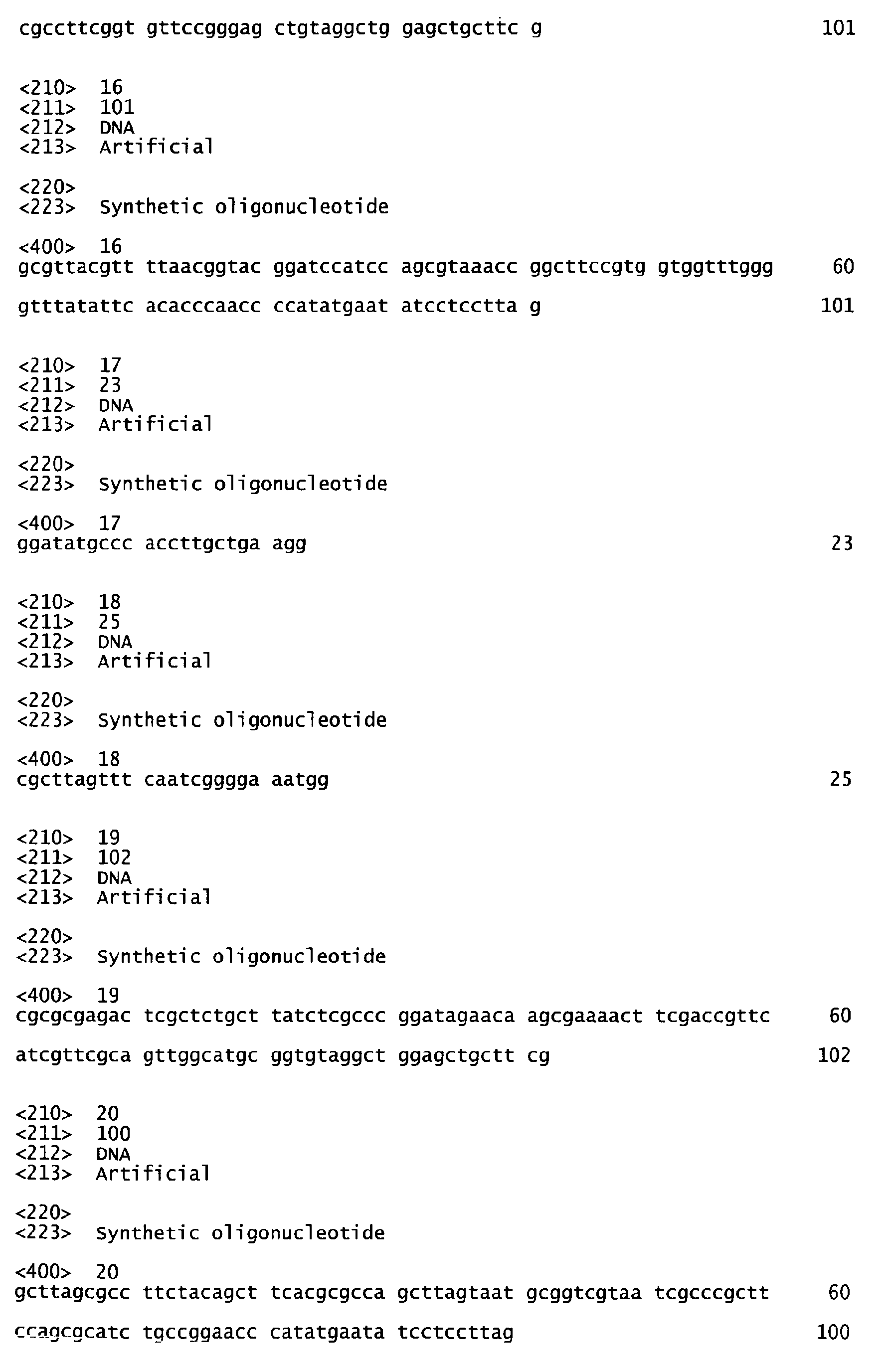

with
cccctgaatggctaaatcacccggcagatttttctgcatccggtgccaaatctcgccactctcatgcccatagcgacgC ATATGAATATCCTCCTTAG
with
Claims (6)
- A method for the production of aspartate or its derivatives by culture of a microorganism in an appropriate culture medium, and recovery of the aspartate derivative from the culture medium,
wherein the microorganism is transformed to enhance the activity of the glyoxylate shunt, by attenuating the expression of at least one gene selectioned among the following :• icd encoding isocitrate dehydrogenase• gcl encoding glyoxylate carboligase• eda encoding 2-keto 3-deoxy gluconate 6-phosphate aldolase• fadR encoding an activator of iclR, the repressor of the glyoxylate shunt. - The method of claim 1, wherein the expression of the gene iclR is attenuated.
- A method as claimed in one of claims 1 to 2 in which the expression of additional genes involved in the production of aspartate or its derived metabolites is increased.
- A method as claimed in one of claims 1 to 3 in which the expression of genes decreasing the production of aspartate or its derived metabolites is attenuated.
- A method for the fermentative preparation of aspartate or a derived metabolite, in particular methionine its precursors or derivatives as claimed in one of claims 1 to 4 comprising :a) Fermentation of the microorganism producing the desired metabo liteb) Concentration of the desired product in the cells of the bacteria or in the medium andc) Isolation of the desired metabolite/ constituents of the fermentation broth and/or the biomass optionally remaining in portions or in the total amount (0-100%) in the end product.
- A microorganism used for the fermentative production of aspartate or its derived metabolites, in particular methionine, in which the biosynthesis of aspartate or its derivatives is optimized as described in claims 1 to 5.
Applications Claiming Priority (2)
| Application Number | Priority Date | Filing Date | Title |
|---|---|---|---|
| PCT/IB2005/003071 WO2007017710A1 (en) | 2005-08-11 | 2005-08-11 | Process for the preparation of aspartate and derived amino acids like lysine, threonine, isoleucine, methionine, homoserine, or valine employing a microorganism with enhanced isocitrate lyase and/or malate synthase expression |
| EP06792801A EP1913128A1 (en) | 2005-08-11 | 2006-08-11 | Process for the preparation of aspartate and derived amino acids like lysine, threonine, isoleucine, methionine, or homoserine employing a microorganism with enhanced isocitrate lyase and/or malate synthase expression |
Related Parent Applications (2)
| Application Number | Title | Priority Date | Filing Date |
|---|---|---|---|
| EP06792801.0 Division | 2006-08-11 | ||
| WOPCT/EP2006/065270 Previously-Filed-Application | 2006-08-11 |
Publications (2)
| Publication Number | Publication Date |
|---|---|
| EP2275529A2 true EP2275529A2 (en) | 2011-01-19 |
| EP2275529A3 EP2275529A3 (en) | 2012-09-12 |
Family
ID=36997798
Family Applications (2)
| Application Number | Title | Priority Date | Filing Date |
|---|---|---|---|
| EP06792801A Withdrawn EP1913128A1 (en) | 2005-08-11 | 2006-08-11 | Process for the preparation of aspartate and derived amino acids like lysine, threonine, isoleucine, methionine, or homoserine employing a microorganism with enhanced isocitrate lyase and/or malate synthase expression |
| EP10183233A Withdrawn EP2275529A3 (en) | 2005-08-11 | 2006-08-11 | Process for the preparation of aspartate and derived amino acids employing a microorganism with enhanced glyoxylate shunt |
Family Applications Before (1)
| Application Number | Title | Priority Date | Filing Date |
|---|---|---|---|
| EP06792801A Withdrawn EP1913128A1 (en) | 2005-08-11 | 2006-08-11 | Process for the preparation of aspartate and derived amino acids like lysine, threonine, isoleucine, methionine, or homoserine employing a microorganism with enhanced isocitrate lyase and/or malate synthase expression |
Country Status (3)
| Country | Link |
|---|---|
| US (1) | US20080233617A1 (en) |
| EP (2) | EP1913128A1 (en) |
| WO (2) | WO2007017710A1 (en) |
Cited By (1)
| Publication number | Priority date | Publication date | Assignee | Title |
|---|---|---|---|---|
| CN105296411A (en) * | 2015-11-24 | 2016-02-03 | 南京工业大学 | Genetically engineered bacterium for producing L-aspartic acid by monosaccharide fermentation and construction method and application thereof |
Families Citing this family (19)
| Publication number | Priority date | Publication date | Assignee | Title |
|---|---|---|---|---|
| US20110207183A1 (en) * | 2008-04-30 | 2011-08-25 | Basf Se | Production Process for Fine Chemicals Using Microorganisms with Reduced Isocitrate Dehydrogenase Activity |
| CN102159720A (en) * | 2008-04-30 | 2011-08-17 | 赢创德固赛有限公司 | Method for producing methionine using a microorganism having reduced isocitrate dehydrogenase activity |
| RU2411289C2 (en) * | 2008-09-30 | 2011-02-10 | Закрытое акционерное общество "Научно-исследовательский институт Аджиномото-Генетика" (ЗАО АГРИ) | Pantoea genus bacteria, producer of l-aspartate or metabolite, which is derivative of l-aspartate, and method of producing l-aspartate or metabolite which is derivative of l-aspartate |
| EP2379730B1 (en) | 2008-12-31 | 2015-07-22 | Metabolic Explorer | Method for the preparation of diols |
| FR2951195B1 (en) | 2009-10-14 | 2014-01-31 | Roquette Freres | COMPOSITION RICH IN METHIONINE FOR ANIMAL FEEDING |
| JP5819316B2 (en) | 2009-12-30 | 2015-11-24 | メタボリック エクスプローラー | Increased production of methionine by overexpression of succinate dehydrogenase |
| RU2010101135A (en) * | 2010-01-15 | 2011-07-20 | Закрытое акционерное общество "Научно-исследовательский институт "Аджиномото-Генетика" (ЗАО АГРИ) (RU) | BACTERIA OF THE ENTEROBACTERIACEAE FAMILY - PRODUCER OF L-ASAPPARATE OR METABOLITES, L-ASPARATE DERIVATIVES, AND METHOD OF PRODUCING L-ASAPPARATE OR METABOLITES, PRODUCED L-ASAPPARATE |
| JP5719434B2 (en) * | 2010-06-15 | 2015-05-20 | パク グアン インダストリアル カンパニー リミテッドPaik Kwang Industrial Co., Ltd. | Production method of aspartic acid amino acids using microorganisms |
| EP2588598B1 (en) | 2010-07-02 | 2016-03-09 | Metabolic Explorer | Method for the preparation of hydroxy acids |
| TWI500768B (en) | 2010-07-05 | 2015-09-21 | Metabolic Explorer Sa | Method for the preparation of 1,3-propanediol from sucrose |
| EP2540834A1 (en) | 2011-06-29 | 2013-01-02 | Metabolic Explorer | Method for the preparation of 1,3-propanediol |
| EP2766492B1 (en) | 2011-10-11 | 2018-06-06 | Metabolic Explorer | Fermentative production of prenol |
| FR2983870B1 (en) | 2011-12-08 | 2015-07-17 | Roquette Freres | METHIONINE COMPOSITION FOR ANIMAL FEEDING |
| EP2647718A3 (en) | 2012-04-06 | 2014-12-24 | Metabolic Explorer | Process for producing 5-aminopentanoate empolying a recombinant microorganism |
| WO2014049382A2 (en) | 2012-09-26 | 2014-04-03 | Metabolic Explorer | Ethylenediamine fermentative production by a recombinant microorganism |
| RU2018128142A (en) | 2016-01-08 | 2020-02-10 | Эвоник Дегусса Гмбх | METHOD FOR PRODUCING L-METHIONINE ON ENZYMATIC TECHNOLOGY |
| CN112458032B (en) * | 2019-09-06 | 2023-04-07 | 南京盛德生物科技研究院有限公司 | Construction and application of escherichia coli recombinant bacteria for synthesizing glycine by using glucose |
| CN116656580A (en) * | 2021-09-23 | 2023-08-29 | 胡丹 | Recombinant bacteria with high production of aspartic acid derivatives and its preparation method and application |
| CN115948266A (en) * | 2023-01-06 | 2023-04-11 | 大连理工大学 | Method for enhancing utilization of acetic acid by microorganisms |
Citations (2)
| Publication number | Priority date | Publication date | Assignee | Title |
|---|---|---|---|---|
| EP0723011B1 (en) | 1993-08-24 | 2002-07-03 | Ajinomoto Co., Inc. | Variant phosphoenolpyruvate carboxylase, gene thereof, and process for producing amino acid |
| US6455284B1 (en) | 1998-04-13 | 2002-09-24 | The University Of Georgia Research Foundation, Inc. | Metabolically engineered E. coli for enhanced production of oxaloacetate-derived biochemicals |
Family Cites Families (10)
| Publication number | Priority date | Publication date | Assignee | Title |
|---|---|---|---|---|
| US20030087381A1 (en) * | 1998-04-13 | 2003-05-08 | University Of Georgia Research Foundation, Inc. | Metabolically engineered organisms for enhanced production of oxaloacetate-derived biochemicals |
| US7892798B2 (en) * | 1999-06-25 | 2011-02-22 | Evonik Degussa Gmbh | Nucleic acid molecules encoding metabolic regulatory proteins from Corynebacterium glutamicum, useful for increasing the production of methionone by a microorganism |
| US7220571B2 (en) * | 2000-09-28 | 2007-05-22 | Archer-Daniels-Midland Company | Escherichia coli strains which over-produce L-threonine and processes for the production of L-threonine by fermentation |
| DE10154102A1 (en) * | 2001-11-02 | 2003-05-15 | Degussa | Process for the fermentative production of L-amino acids using strains of the Enterobacteriaceae family |
| EP1362866A1 (en) * | 2002-05-16 | 2003-11-19 | Basf Aktiengesellschaft | Use of the repressor glxR for the synthesis of lysine in Corynebacterium glutamicum |
| KR100505797B1 (en) * | 2002-10-11 | 2005-08-04 | 씨제이 주식회사 | A Mutated Microorganism Having A Knockout fadR Gene On Chromosome And A Process For Producing L-Threonine Using Said Mutant |
| DE10249642A1 (en) * | 2002-10-24 | 2004-05-13 | Consortium für elektrochemische Industrie GmbH | Feedback-resistant homoserine transsuccinylases with modified C-terminus |
| CN100520793C (en) * | 2003-07-29 | 2009-07-29 | 味之素株式会社 | Method for determination of metabolic flux affecting production of useful material |
| WO2005087940A1 (en) * | 2004-03-11 | 2005-09-22 | Wisconsin Alumni Research Foundation | Genetically altered microorganisms with modified metabolism |
| JP4771437B2 (en) * | 2004-08-27 | 2011-09-14 | ライス ユニバーシティー | Mutant E. with increased succinic acid production E. coli strain |
-
2005
- 2005-08-11 WO PCT/IB2005/003071 patent/WO2007017710A1/en not_active Ceased
-
2006
- 2006-08-11 US US11/997,732 patent/US20080233617A1/en not_active Abandoned
- 2006-08-11 EP EP06792801A patent/EP1913128A1/en not_active Withdrawn
- 2006-08-11 WO PCT/EP2006/065270 patent/WO2007017526A1/en not_active Ceased
- 2006-08-11 EP EP10183233A patent/EP2275529A3/en not_active Withdrawn
Patent Citations (2)
| Publication number | Priority date | Publication date | Assignee | Title |
|---|---|---|---|---|
| EP0723011B1 (en) | 1993-08-24 | 2002-07-03 | Ajinomoto Co., Inc. | Variant phosphoenolpyruvate carboxylase, gene thereof, and process for producing amino acid |
| US6455284B1 (en) | 1998-04-13 | 2002-09-24 | The University Of Georgia Research Foundation, Inc. | Metabolically engineered E. coli for enhanced production of oxaloacetate-derived biochemicals |
Non-Patent Citations (8)
| Title |
|---|
| "Escherichia coli and Salmonella: Cellular and Molecular Biology", 1996, AMERICAN SOCIETY FOR MICROBIOLOGY |
| "Molecular cloning", vol. 3, 2001 |
| ANDERSON, PROC. NATL. ACAD. SCI. USA, vol. 32, 1946, pages 120 - 128 |
| CARRIER; KEASLING, BIOTECHNOL. PROG, vol. 15, 1998, pages 58 - 64 |
| DATSENKO, K.A.; WANNER, B.L., PNAS, vol. 97, 2000, pages 6640 - 6645 |
| KAY ET AL., PNAS, vol. 96, 1999, pages 823 - 28 |
| LIN, H.; BENNETT, G. N.; SAN, K-Y., BIOTECHNOL AND BIOENG, vol. 89, 2005, pages 148 - 156 |
| VLAHOS; DEKKER, JBC, vol. 261, 1986, pages 11049 - 11055 |
Cited By (2)
| Publication number | Priority date | Publication date | Assignee | Title |
|---|---|---|---|---|
| CN105296411A (en) * | 2015-11-24 | 2016-02-03 | 南京工业大学 | Genetically engineered bacterium for producing L-aspartic acid by monosaccharide fermentation and construction method and application thereof |
| CN105296411B (en) * | 2015-11-24 | 2019-03-08 | 南京工业大学 | Genetically engineered bacterium for producing L-aspartic acid by monosaccharide fermentation and construction method and application thereof |
Also Published As
| Publication number | Publication date |
|---|---|
| WO2007017526A1 (en) | 2007-02-15 |
| US20080233617A1 (en) | 2008-09-25 |
| EP1913128A1 (en) | 2008-04-23 |
| EP2275529A3 (en) | 2012-09-12 |
| WO2007017710A1 (en) | 2007-02-15 |
Similar Documents
| Publication | Publication Date | Title |
|---|---|---|
| US20080233617A1 (en) | Process for the Preparation of a Aspartate and Derived Amino Acids Like Lysine, Threonine, Isoleucine, Methionine, or Homoserine Employing Microorganism with Enhanced Isocitrate Lyase and/or Malate Synthase Expression | |
| Ginesy et al. | Metabolic engineering of Escherichia coli for enhanced arginine biosynthesis | |
| Wang et al. | Production of L-valine from metabolically engineered Corynebacterium glutamicum | |
| Vogt et al. | Pushing product formation to its limit: metabolic engineering of Corynebacterium glutamicum for L-leucine overproduction | |
| US8148137B2 (en) | Mutant microorganism having improved production ability of branched amino acid and method for preparing branched amino acid using the same | |
| Yin et al. | Co-expression of feedback-resistant threonine dehydratase and acetohydroxy acid synthase increase L-isoleucine production in Corynebacterium glutamicum | |
| Ikeda et al. | Amino acid production by Corynebacterium glutamicum | |
| Park et al. | Rational design of Escherichia coli for L-isoleucine production | |
| CN103087971B (en) | Increase methionine yield | |
| CN106868066A (en) | The method for producing the microorganism of O acetylhomoserines and O acetylhomoserines being produced using the microorganism | |
| JP6327152B2 (en) | Self-inducible expression system and its use to produce useful metabolites using Enterobacteriaceae bacteria | |
| CN105492616A (en) | Method for producing l-leucine, l-valine, l-isoleucine, alpha-ketoisovalerate, alpha-keto-beta-methylvalerate, or alpha-ketoisocaproate using recombinant corynebacteria that contain the ilvbn operon which can be induced by propionate | |
| Zhang et al. | Enhanced l-ornithine production by systematic manipulation of l-ornithine metabolism in engineered Corynebacterium glutamicum S9114 | |
| WO2007140816A1 (en) | Glycolic acid production by fermentation from renewable resources | |
| Zhao et al. | Expression regulation of multiple key genes to improve L-threonine in Escherichia coli | |
| US20160053236A1 (en) | Composition and methods for the production of l-homoalanine | |
| Zou et al. | High‐level production of d‐pantothenic acid from glucose by fed‐batch cultivation of Escherichia coli | |
| Dong et al. | Microbial metabolic engineering for L-threonine production | |
| Ding et al. | Deletion of arcA, iclR, and tdcC in Escherichia coli to Improve L‐Threonine Production | |
| Zhao et al. | Overexpression of ribosome elongation factor G and recycling factor increases L-isoleucine production in Corynebacterium glutamicum | |
| EP1899472B1 (en) | Altered glyoxylate shunt for improved production of aspartate-derived amino acids and chemicals | |
| WO2024223833A1 (en) | Genetically modified microorganism for producing ectoine | |
| Luo et al. | Application of RecET-Cre/loxP system in Corynebacterium glutamicum ATCC14067 for l-leucine production | |
| Liu et al. | Reconstruction the feedback regulation of amino acid metabolism to develop a non-auxotrophic L-threonine producing Corynebacterium glutamicum | |
| Sun et al. | Metabolic Engineering of Escherichia coli for the Production of l-Homoserine |
Legal Events
| Date | Code | Title | Description |
|---|---|---|---|
| PUAI | Public reference made under article 153(3) epc to a published international application that has entered the european phase |
Free format text: ORIGINAL CODE: 0009012 |
|
| AC | Divisional application: reference to earlier application |
Ref document number: 1913128 Country of ref document: EP Kind code of ref document: P |
|
| AK | Designated contracting states |
Kind code of ref document: A2 Designated state(s): AT BE BG CH CY CZ DE DK EE ES FI FR GB GR HU IE IS IT LI LT LU LV MC NL PL PT RO SE SI SK TR |
|
| RIC1 | Information provided on ipc code assigned before grant |
Ipc: C12N 1/21 20060101AFI20120423BHEP Ipc: C12P 13/20 20060101ALI20120423BHEP Ipc: C12P 13/08 20060101ALI20120423BHEP Ipc: C12P 13/12 20060101ALI20120423BHEP Ipc: C12P 13/06 20060101ALI20120423BHEP |
|
| PUAL | Search report despatched |
Free format text: ORIGINAL CODE: 0009013 |
|
| AK | Designated contracting states |
Kind code of ref document: A3 Designated state(s): AT BE BG CH CY CZ DE DK EE ES FI FR GB GR HU IE IS IT LI LT LU LV MC NL PL PT RO SE SI SK TR |
|
| RIC1 | Information provided on ipc code assigned before grant |
Ipc: C12N 1/21 20060101AFI20120807BHEP Ipc: C12P 13/08 20060101ALI20120807BHEP Ipc: C12P 13/12 20060101ALI20120807BHEP Ipc: C12P 13/20 20060101ALI20120807BHEP Ipc: C12P 13/06 20060101ALI20120807BHEP |
|
| STAA | Information on the status of an ep patent application or granted ep patent |
Free format text: STATUS: THE APPLICATION IS DEEMED TO BE WITHDRAWN |
|
| 18D | Application deemed to be withdrawn |
Effective date: 20130301 |